Category: HealthcareServices

  • Metabolic Syndrome Market Size and Demand Forecast 2026–2030

    Metabolic Syndrome Market Size and Demand Forecast 2026–2030

    Uncover key drivers, emerging technologies, and competitive movements shaping the metabolic syndrome market from 2026–2035 with trusted insights from The Business Research Company

    What market expansion outlook does the Metabolic Syndrome Market show for the 2026–2030 period?

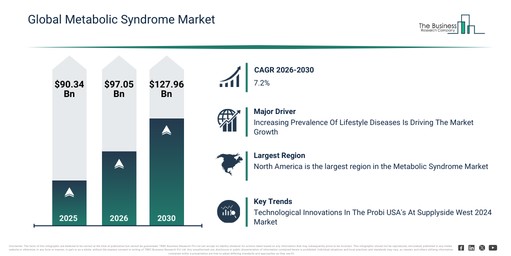
    The metabolic syndrome market size has experienced substantial expansion in recent years. It is forecast to grow from $90.34 billion in 2025 to $97.05 billion in 2026, demonstrating a compound annual growth rate (CAGR) of 7.4%. Historically, this growth can be attributed to the increasing global prevalence of obesity, a rise in insulin resistance diagnosis rates, greater public awareness of metabolic diseases, the expansion of preventive healthcare programs, and an increasing incidence of cardiovascular complications.

    The metabolic syndrome market is projected to experience substantial growth in the coming years, reaching $127.96 billion by 2030, exhibiting a compound annual growth rate (CAGR) of 7.2%. This expansion during the forecast period is driven by factors such as the increasing adoption of digital therapeutics, greater investment in lifestyle modification platforms, the growing use of remote metabolic monitoring, the broadening of personalized diet and fitness solutions, and the increased integration of AI-based metabolic assessment tools. Key trends anticipated during this period encompass the development of precision-based metabolic disorder management, the emergence of AI-driven algorithms for early risk detection, the rise of cloud-based health monitoring platforms, IoT-integrated solutions for lifestyle tracking, and the expansion of sustainable metabolic health programs.

    Access Your Free Sample Report for In-Depth Market Insights:

    https://www.thebusinessresearchcompany.com/sample.aspx?id=21218&type=smp

    What Drivers Are Shaping The Development Of The Metabolic Syndrome Market?

    The rising incidence of lifestyle diseases is expected to propel the metabolic testing market moving forward. These conditions are primarily defined as health issues stemming from unhealthy habits and behaviors rather than genetic or infectious causes. Typical lifestyle diseases encompass obesity, cancer, type 2 diabetes, osteoporosis, and various mental health disorders. The widespread occurrence of lifestyle diseases is linked to sedentary lifestyles, unhealthy diets, increasing stress levels, and extensive use of tobacco and alcohol. Metabolic syndrome plays a crucial role in worsening lifestyle diseases by establishing a systemic environment that promotes chronic inflammation, impaired metabolic functions, and higher cardiovascular risks. For instance, in June 2024, data from the National Health Service England, a UK-based government department, indicated that 3,615,330 individuals were diagnosed with non-diabetic hyperglycemia, also known as pre-diabetes in 2023, marking an 18% increase from the 3,065,825 cases recorded in 2022. Therefore, the increasing prevalence of lifestyle diseases will drive the metabolic testing market.

    What Segment Types Are Examined In The Metabolic Syndrome Market?

    The metabolic syndrome market covered in this report is segmented –

    1) By Type: Type 1 Metabolic Syndrome, Type 2 Metabolic Syndrome, Type 3 Metabolic Syndrome

    2) By Risk Factors: Obesity, Insulin Resistance, High Blood Pressure, High Cholesterol

    3) By Treatment: Medication, Lifestyle Changes, Other Treatments

    4) By Route Of Administration: Oral, Parenteral, Other Route Of Administrations

    5) By End User: Hospitals, Homecare, Specialty Centres, Other End Users

    Subsegments:

    1) By Type 1 Metabolic Syndrome: Insulin Resistance Syndrome, Abdominal Obesity Syndrome, Hyperglycemia Syndrome

    2) By Type 2 Metabolic Syndrome: Elevated Blood Pressure Syndrome, Dyslipidemia Syndrome, Low HDL Cholesterol Syndrome

    3) By Type 3 Metabolic Syndrome: Atherosclerotic Cardiovascular Disease Syndrome, Non-Alcoholic Fatty Liver Disease Syndrome, Chronic Inflammation Syndrome

    Which Innovation Trends Are Advancing Developments Within The Metabolic Syndrome Market?

    Leading companies operating within the metabolic syndrome market are focusing on developing innovative solutions, including clinically supported probiotic options, to enhance the condition’s management, treatment, and prevention. A clinically supported probiotic solution is a probiotic product that has undergone rigorous clinical testing to validate its health benefits and safety for human consumption. For instance, in October 2024, Probi USA, a US-based manufacturer of clinically proven biotics, launched metabolic health. This product combines two probiotic strains, Lactiplantibacillus plantarum 299v (LP299V) and Lacticaseibacillus paracasei 8700:2 (L. Paracasei 8700:2). LP299V supports cardiovascular health by improving cholesterol levels, inflammation, and blood vessel function, backed by 230+ publications and eight clinical trials. L. Paracasei 8700:2, with 30+ publications, aids blood pressure regulation, cholesterol management, and weight control.

    Who Are The Core Companies Influencing Trends In The Metabolic Syndrome Market?

    Major companies operating in the metabolic syndrome market are Novo Nordisk A/S, Sanofi S.A., Boehringer Ingelheim GmbH, Eli Lilly and Company, AstraZeneca PLC, Biocon Ltd., Bristol-Myers Squibb Company, Cipla Limited, Herbalife International of America Inc., Abbott Laboratories, Johnson & Johnson Private Limited, Medtronic plc, WW International Inc., Jenny Craig, Takeda Pharmaceutical Company Limited, Pfizer Inc., Novartis AG, F. Hoffmann-La Roche AG, Merck & Co. Inc., Gilead Sciences, GlaxoSmithKline plc, AbbVie Inc., Regeneron Pharmaceuticals, Sun Pharmaceutical Industries Ltd., Esperion Therapeutics Inc.

    Access The Complete Report For Deeper Market Insights:

    https://www.thebusinessresearchcompany.com/report/metabolic-syndrome-global-market-report

    Which Region Is Projected To Lead The Metabolic Syndrome Market During The Forecast Period?

    North America was the largest region in the metabolic syndrome market in 2025. Asia-Pacific is expected to be the fastest-growing region in the forecast period. The regions covered in the metabolic syndrome market report are Asia-Pacific, South East Asia, Western Europe, Eastern Europe, North America, South America, Middle East, Africa.

    Request Your Customized Metabolic Syndrome Market Research Report for Competitive Advantage:

    https://www.thebusinessresearchcompany.com/customise?id=21218&type=smp

    Browse Through More Reports Similar to the Global Metabolic Syndrome Market 2026, By The Business Research Company

    Dumping Syndrome Market Report 2026

    https://www.thebusinessresearchcompany.com/report/dumping-syndrome-global-market-report

    Peptide Based Metabolic Disorders Therapeutics Market Report 2026

    https://www.thebusinessresearchcompany.com/report/peptide-based-metabolic-disorders-therapeutics-global-market-report

    Insuman Market Report 2026

    https://www.thebusinessresearchcompany.com/report/insuman-global-market-report

    Get in touch with us:

    The Business Research Company: https://www.thebusinessresearchcompany.com/

    Americas +1 310-496-7795

    Asia +44 7882 955267 & +91 8897263534

    Europe +44 7882 955267

    Email us at info@tbrc.info

    Follow us on:

    LinkedIn: https://in.linkedin.com/company/the-business-research-company

    YouTube: https://www.youtube.com/channel/UC24_fI0rV8cR5DxlCpgmyFQ

    Global Market Model: https://www.thebusinessresearchcompany.com/global-market-model
  • RNA Sequencing Services Market Forecast 2026–2035: How to Leverage Market Growth

    RNA Sequencing Services Market Forecast 2026–2035: How to Leverage Market Growth

    Uncover key drivers, emerging technologies, and competitive movements shaping the rna sequencing services market from 2026–2035 with trusted insights from The Business Research Company

    Starting from its 2026 valuation, what market size is the RNA Sequencing Services Market expected to reach by 2030?

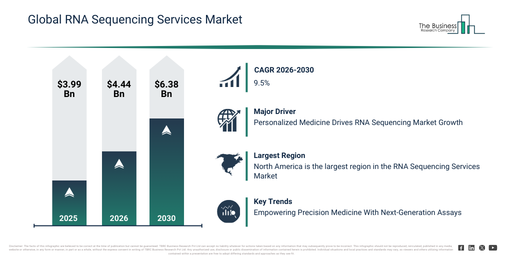
    The rna sequencing services market has seen swift growth over recent years. Its value is projected to increase from $3.99 billion in 2025 to $4.44 billion in 2026, achieving a compound annual growth rate (CAGR) of 11.2%. The expansion observed historically can be linked to several factors, including a rise in genomic research funding, the proliferation of academic and government research endeavors, the increasing application of sequencing in fundamental biology studies, the decreasing expenses associated with sequencing technologies, and greater access to sequencing service providers.

    The rna sequencing services market size is projected to experience robust expansion over the coming years. This market is anticipated to reach $6.38 billion by 2030, exhibiting a compound annual growth rate (CAGR) of 9.5%. Several factors will drive this growth during the forecast period, including the increasing embrace of precision medicine approaches, a heightened need for transcriptomic data in diagnostics, an expansion of pharmaceutical research and development activities, the growing incorporation of AI-driven data analytics, and increased outsourcing of sequencing services. Key trends for the forecast period encompass a rising requirement for high-throughput transcriptomic analysis, the increasing uptake of NGS-based rna sequencing, the broadening of bioinformatics-integrated sequencing services, an escalating application of rna sequencing in clinical research, and an intensified emphasis on data accuracy and reproducibility.

    Access Your Free Sample Report for In-Depth Market Insights:

    https://www.thebusinessresearchcompany.com/sample.aspx?id=14991&type=smp

    What Drivers Are Driving Adoption Within The RNA Sequencing Services Market?

    The increasing need for customized medical care significantly fuels the expansion of the RNA sequencing services market. Personalized medicine involves adapting medical treatments to specific individual characteristics, such as genetics or lifestyle, to optimize effectiveness and minimize adverse reactions. The rising demand for personalized medicine stems from its potential to deliver more effective therapies, advancements in genomics, the growing complexity of diseases, and regulatory backing. RNA sequencing services play a crucial role in identifying disease subtypes, discovering biomarkers, pinpointing therapeutic targets, predicting treatment responses, and monitoring disease progression and treatment outcomes. Personalized medicine approaches utilize RNA sequencing technologies to provide individualized and effective medications that target the unique molecular characteristics of each patient. For instance, in February 2024, the Personalized Medicine Coalition, a US-based non-profit organization, reported that the FDA (Food and Drug Administration) approved 16 novel personalized therapies for patients with rare diseases in 2023, which is an increase from six in 2022. The personalized treatments newly sanctioned for 2023 also comprised seven cancer drugs and three for other diseases and conditions. Thus, the escalating requirement for personalized medicine is driving the growth of the RNA sequencing services market moving forward.

    How Is The RNA Sequencing Services Market Organized Into Various Segments?

    The rna sequencing services market covered in this report is segmented –

    1) By Type: Ribosomal RNA (rRNA), Transfer RNA (tRNA), Long non-coding RNA (lncRNA)

    2) By Sequencing Method: Next Generation Sequencing Methods, Other Sequencing Methods

    3) By Application Area: Research Purposes, Diagnostic Purposes

    4) By End Users: Academic And Government Institutes And Research Centers, Hospitals And Clinics, Pharmaceutical And Biotechnology Companies, Other End Users

    Subsegments:

    1) By Ribosomal RNA (rRNA): Total RRNA Sequencing, RRNA Depletion

    2) By Transfer RNA (tRNA): TRNA Profiling, TRNA Sequencing

    3) By Long Non-Coding RNA (lncRNA): lncRNA Profiling, lncRNA Sequencing

    Which Trends Are Guiding The Evolution Of The RNA Sequencing Services Market?

    Major companies operating in the RNA sequencing services market are increasingly focusing on automation, exemplified by the next-generation sequencing (NGS) assay, to mitigate potential human error and enhance the efficiency and accuracy of data generation and analysis. The RNA next-generation sequencing (RNA-seq) assay is recognized as a powerful tool in molecular biology and genomics for analyzing the transcriptome of a biological sample. For instance, in June 2023, Tempus, a US-based precision medicine technology company, launched its new standalone RNA next-generation sequencing assay, known as Tempus xR. This innovative assay, tailored for solid tumors, provides a comprehensive analysis of the entire transcriptome, highlighting clinically significant fusions in over 100 targeted genes, along with altered splicing for MET Exon 14 and EGFRvIII. Recognizing the importance of RNA sequencing data, Tempus has historically integrated both RNA and DNA sequencing into its standard xT broad-panel assay. Now, clients are offered the flexibility to order each test separately or simultaneously, with the option to augment xR with specific Tempus algorithmic tests. This offering is designed to serve physicians with a particular interest in RNA fusions or altered splicing, as well as providers, researchers, and biopharma companies seeking detailed RNA sequencing analysis of their existing samples.

    Who Are The Prominent Global Companies Shaping The RNA Sequencing Services Market Landscape?

    Major companies operating in the rna sequencing services market are Thermo Fisher Scientific Inc., Illumina Inc., Qiagen NV, BGI Genomics Co Ltd, Azenta Inc., Novogene Co Ltd, Genewiz Inc., Diagenode LLC, CD Genomics, CeGaT GmbH, Lexogen GmbH, BaseClear BV, Active Motif Inc., Microsynth AG, Genomax Technologies Pte Ltd, Creative Biogene, SeqMatic LLC, Genohub Inc., Otogenetics, LC Sciences, Admera Health, Arraystar Inc., IGA Technology, Yaazh Xenomics, Novaseq Services Ltd

    Access The Complete Report For Deeper Market Insights:

    https://www.thebusinessresearchcompany.com/report/rna-sequencing-services-global-market-report

    Which Geographic Areas Are Emerging As Strong Markets For The RNA Sequencing Services Market?

    North America was the largest region in the RNA sequencing services market in 2025. Asia-Pacific is expected to be the fastest-growing region in the forecast period. The regions covered in the rna sequencing services market report are Asia-Pacific, South East Asia, Western Europe, Eastern Europe, North America, South America, Middle East, Africa.

    Request Your Customized RNA Sequencing Services Market Research Report for Competitive Advantage:

    https://www.thebusinessresearchcompany.com/customise?id=14991&type=smp

    Browse Through More Reports Similar to the Global RNA Sequencing Services Market 2026, By The Business Research Company

    Genomics Services Market Report 2026

    https://www.thebusinessresearchcompany.com/report/genomics-services-global-market-report

    Ngs Based Rna Sequencing Market Report 2026

    https://www.thebusinessresearchcompany.com/report/ngs-based-rna-sequencing-global-market-report

    Ribonucleic Acid Rna Sequencing Market Report 2026

    https://www.thebusinessresearchcompany.com/report/ribonucleic-acid-rna-sequencing-global-market-report

    Get in touch with us:

    The Business Research Company: https://www.thebusinessresearchcompany.com/

    Americas +1 310-496-7795

    Asia +44 7882 955267 & +91 8897263534

    Europe +44 7882 955267

    Email us at info@tbrc.info

    Follow us on:

    LinkedIn: https://in.linkedin.com/company/the-business-research-company

    YouTube: https://www.youtube.com/channel/UC24_fI0rV8cR5DxlCpgmyFQ

    Global Market Model: https://www.thebusinessresearchcompany.com/global-market-model
  • Practice Management System Industry Poised for Rapid Growth, Forecast to Touch $22 Billion by 2030 at 8.4% CAGR

    Practice Management System Industry Poised for Rapid Growth, Forecast to Touch $22 Billion by 2030 at 8.4% CAGR

    Uncover key drivers, emerging technologies, and competitive movements shaping the practice management system market from 2026–2035 with trusted insights from The Business Research Company

    What total market size is anticipated for the Practice Management System Market in 2030?

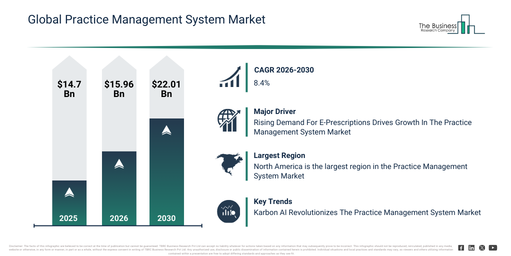
    The practice management system market has experienced significant growth in recent years. Its valuation is set to rise from $14.7 billion in 2025 to $15.96 billion in 2026, demonstrating a compound annual growth rate (CAGR) of 8.6%. This historical growth can be attributed to factors such as the increasing digitization of healthcare administration, the growing complexity of billing and claims processing, a rising demand for operational efficiency, the expansion of outpatient care facilities, and the increasing adoption of healthcare IT systems.

    The practice management system market size is anticipated to experience robust growth in the coming years, with projections indicating an expansion to $22.01 billion by 2030, at a compound annual growth rate (CAGR) of 8.4%. This expected growth throughout the forecast period is primarily due to factors such as increasing investments in cloud healthcare platforms, a rising utilization of AI-driven administrative tools, the expansion of telehealth-integrated systems, a growing emphasis on cybersecurity compliance, and an increasing demand for scalable software solutions. Significant trends emerging in the forecast period include the increasing adoption of cloud-based practice solutions, a rising demand for integrated billing and EHR systems, a heightened focus on workflow automation, the expansion of data analytics and reporting capabilities, and an enhanced emphasis on regulatory compliance.

    Access Your Free Sample Report for In-Depth Market Insights:

    https://www.thebusinessresearchcompany.com/sample.aspx?id=13516&type=smp

    What Drivers Are Influencing Production Trends In The Practice Management System Market?

    The rising adoption of e-prescriptions is anticipated to fuel the expansion of the practice management system market in the future. E-prescriptions are defined as electronic forms of conventional paper prescriptions, which healthcare providers transmit electronically to pharmacies or dispensing bodies, usually through dedicated software or systems. Within e-prescriptions, the practice management system aids in automatically populating patient details, ensuring safe prescribing of controlled substances, and issuing alerts and warnings. For example, in May 2024, data from the World Health Organization, an international agency headquartered in Switzerland, revealed that the utilization of digital prescriptions in England reached 3.1 million repeat prescriptions monthly in 2024, marking an increase of over 45% from the prior year. Consequently, the growing prevalence of e-prescriptions is a key factor propelling the practice management system market’s growth.

    Which Segment Groups Are Influencing The Practice Management System Market?

    The practice management system market covered in this report is segmented –

    1) By Product Type: Standalone, Integrated

    2) By Component: Software, Service

    3) By Mode of Delivery: On-premise, Cloud-based

    4) By End User: Pharmacies, Diagnostic Laboratories, Hospitals, Other End Users

    Subsegments:

    1) By Standalone: Billing And Invoicing Software, Scheduling And Appointment Management Software, Patient Registration And Record Management Software, Revenue Cycle Management (RCM) Solutions, Reporting And Analytics Software

    2) By Integrated: Electronic Health Records (EHR) Integration, Laboratory Management System Integration, Patient Portal And Communication Integration, Accounting And Financial Management Integration, Hospital Information System (HIS) Integration, Telemedicine And Virtual Care Integration

    What Upcoming Trends Are Likely To Define The Future Path Of The Practice Management System Market?

    Major companies within the practice management system market are prioritizing the adoption of novel technologies, such as Karbon AI, to boost their profitability in the sector. Karbon AI is a GPT-powered artificial intelligence tool embedded within industry-leading accounting practice management software, crafted to enhance the working efficiency of accountants. Illustratively, in May 2023, Karbon Inc., a prominent US-based provider of collaborative practice management platforms for accounting firms, launched Karbon AI, a GPT-based artificial intelligence solution that significantly improves the productivity of accounting firms. Karbon AI offers functionalities like summarizing lengthy emails, assessing email inboxes, and generating email drafts.

    Who Are The Primary Competitors In The Global Practice Management System Market?

    Major companies operating in the practice management system market are McKesson Corporation, Henry Schein Inc., EPIC Systems Corporation, Allscripts Healthcare Solutions Inc., Athenahealth Inc., CompuGroup Medical SE & Co. KGaA, eClinicalWorks LLC, NextGen Healthcare Information Systems LLC, Medical Information Technology Inc., Practo Technologies Pvt. Ltd., AdvantEdge Healthcare Solutions Inc., CareCloud Corporation, Greenway Health LLC, Modernizing Medicine Inc., Kareo Inc., Advanced Data Systems Corporation, PracticeSuite Inc., AdvancedMD Inc., Practice Fusion Inc., Luma Health, WRS Health, OfficeAlly Inc., DrChrono Inc., TherapyNotes LLC, SimplePractice LLC, CollaborateMD Inc., Accumedic Computer Systems Inc., Cerner Corporation, Oracle Cerner, CPSI Inc.

    Access The Complete Report For Deeper Market Insights:

    https://www.thebusinessresearchcompany.com/report/practice-management-system-global-market-report

    Which Global Regions Are Shaping The Competitive Landscape Of The Practice Management System Market?

    North America was the largest region in the practice management system market in 2025. Asia-Pacific is expected to be the fastest-growing region in the forecast period. The regions covered in the practice management system market report are Asia-Pacific, South East Asia, Western Europe, Eastern Europe, North America, South America, Middle East, Africa.

    Request Your Customized Practice Management System Market Research Report for Competitive Advantage:

    https://www.thebusinessresearchcompany.com/customise?id=13516&type=smp

    Browse Through More Reports Similar to the Global Practice Management System Market 2026, By The Business Research Company

    Healthcare Learning Management System Market Report 2026

    https://www.thebusinessresearchcompany.com/report/healthcare-learning-management-system-global-market-report

    Legal Practice Management Software Market Report 2026

    https://www.thebusinessresearchcompany.com/report/legal-practice-management-software-global-market-report

    Accounting Practice Management Software Market Report 2026

    https://www.thebusinessresearchcompany.com/report/accounting-practice-management-software-global-market-report

    Get in touch with us:

    The Business Research Company: https://www.thebusinessresearchcompany.com/

    Americas +1 310-496-7795

    Asia +44 7882 955267 & +91 8897263534

    Europe +44 7882 955267

    Email us at info@tbrc.info

    Follow us on:

    LinkedIn: https://in.linkedin.com/company/the-business-research-company

    YouTube: https://www.youtube.com/channel/UC24_fI0rV8cR5DxlCpgmyFQ

    Global Market Model: https://www.thebusinessresearchcompany.com/global-market-model
  • Global Ringworm Treatment Market 2026–2030: Forecast Insights for Business Planning

    Global Ringworm Treatment Market 2026–2030: Forecast Insights for Business Planning

    Uncover key drivers, emerging technologies, and competitive movements shaping the ringworm treatment market from 2026–2035 with trusted insights from The Business Research Company

    Across 2026–2030, what is the expected market valuation path of the Ringworm Treatment Market?

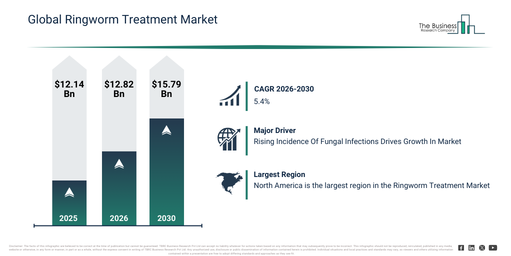
    The ringworm treatment market has experienced robust expansion over the past few years. Projections indicate its value will increase from $12.14 billion in 2025 to $12.82 billion in 2026, demonstrating a compound annual growth rate (CAGR) of 5.6%. Historically, this expansion is a result of factors such as the increasing occurrence of fungal skin infections, greater understanding of proper personal hygiene, improved accessibility to retail pharmacy channels, the broad presence of topical antifungal medicines, and more frequent identification of dermatological conditions.

    The ringworm treatment market is anticipated to experience substantial expansion over the upcoming years. This market is projected to reach $15.79 billion by 2030, exhibiting a compound annual growth rate (CAGR) of 5.4%. This projected growth is driven by several factors, including an increasing need for effective and long-term antifungal solutions, the growing popularity of online pharmacy distribution channels, heightened efforts in managing antifungal resistance, broader application of combination therapies, and expanding healthcare accessibility across developing markets. Key trends expected during this period involve a surge in demand for broad-spectrum antifungal treatments, the increasing utilization of combination drug formulations, a growing inclination towards topical remedies, the proliferation of over-the-counter antifungal products, and a stronger emphasis on strategies to prevent recurrence.

    Access Your Free Sample Report for In-Depth Market Insights:

    https://www.thebusinessresearchcompany.com/sample.aspx?id=21279&type=smp

    Which Drivers Are Supporting The Rise Of The Ringworm Treatment Market?

    The expanding occurrence of fungal infections is projected to stimulate the growth of the ringworm treatment market in the future. Fungal infections are conditions resulting from the proliferation or invasion of fungi within the body, causing symptoms that can impact various organs and tissues. This increase in fungal infection prevalence stems from factors such as enhanced use of immunosuppressive therapies, global warming, and a rising number of individuals with weakened immune systems. Ringworm treatment addresses these infections through effective antifungal therapies, preventing their spread, minimizing complications, and controlling infection rates, particularly in vulnerable groups. For example, in May 2025, the Centers for Disease Control and Prevention, a US-based public health agency, reported that in the United States, fungal diseases are linked to approximately 7,300 deaths, 130,000 hospitalizations, and 13 million outpatient visits annually, with the total national economic burden estimated at roughly $19 billion. Consequently, the increasing incidence of fungal infections is boosting the ringworm treatment market’s expansion. The enhancement of healthcare facilities is anticipated to drive the ringworm treatment market forward. Healthcare facilities are institutions that provide medical care and services, including hospitals, clinics, and diagnostic centers, for patient treatment and support. These facilities are improving due to factors like increased investment in healthcare infrastructure, a focus on patient-centered care, population expansion, and an aging demographic. Ringworm treatment contributes to the improvement of healthcare facilities by fostering specialized dermatological care development, improving patient education on fungal infections, and promoting the adoption of effective, accessible treatment options, which in turn helps healthcare systems to expand their capacity to manage skin-related diseases more efficiently and enhance overall public health outcomes. As an illustration, in September 2025, the Department of Health and Social Care, a UK-based government department, noted that NHS acute trust productivity increased by 2.7% over the previous year, surpassing the government’s target set for the April 2024 to March 2025 period. Thus, the improvement of healthcare facilities is fueling the growth of the ringworm treatment market.

    What Segments Are Identified Within The Structure Of The Ringworm Treatment Market?

    The ringworm treatment market covered in this report is segmented –

    1) By Drug Classes: Antifungals, Combination Drugs

    2) By Treatment Types: Tinea Corpois, Tinea Pedis, Tinea Cruris, Tinea Capitis, Tinea Manuum, Other Treatment Types

    3) By Route Of Administrations: Topical, Oral

    4) By Distribution Channels: Hospital Pharmacies, Retail Pharmacies, Online Pharmacies

    Subsegments:

    1) By Antifungals: Topical Antifungals, Oral Antifungals, Antifungal Shampoos

    2) By Combination Drugs: Antifungal Plus Steroid Combinations, Antifungal Plus Antiseptic Combinations

    Which Key Players Are Driving Competition In The Ringworm Treatment Market?

    Major companies operating in the ringworm treatment market are Pfizer Inc., Merck And Co Inc., Bayer Healthcare, Sanofi Aventis, Abbott Laboratories, Novartis AG, GlaxoSmithKline Plc, Teva Pharmaceutical Industries Ltd, Sun Pharmaceutical Industries Ltd, Perrigo Company plc, Aurobindo Pharma Ltd, Dr Reddys Laboratories Ltd, Cipla Ltd, Intas Pharmaceuticals Ltd, Zydus Group, Glenmark Pharmaceuticals Inc, Biocon Limited, Torrent Pharmaceuticals Ltd, Taro Pharmaceutical Industries Ltd, Lupin Limited, Amneal Pharmaceuticals LLC, Hikma Pharmaceuticals plc, Alkem Laboratories Ltd, Mankind Pharma Ltd

    Access The Complete Report For Deeper Market Insights:

    https://www.thebusinessresearchcompany.com/report/ringworm-treatment-global-market-report

    Which Region Is Projected To Lead The Ringworm Treatment Market During The Forecast Period?

    North America was the largest region in the ringworm treatment market in 2025. Asia-Pacific is expected to be the fastest-growing region in the forecast period. The regions covered in the ringworm treatment market report are Asia-Pacific, South East Asia, Western Europe, Eastern Europe, North America, South America, Middle East, Africa.

    Request Your Customized Ringworm Treatment Market Research Report for Competitive Advantage:

    https://www.thebusinessresearchcompany.com/customise?id=21279&type=smp

    Browse Through More Reports Similar to the Global Ringworm Treatment Market 2026, By The Business Research Company

    Histoplasmosis Treatment Market Report 2026

    https://www.thebusinessresearchcompany.com/report/histoplasmosis-treatment-global-market-report

    Aspergillosis Treatment Market Report 2026

    https://www.thebusinessresearchcompany.com/report/aspergillosis-treatment-global-market-report

    Allergy Treatment Market Report 2026

    https://www.thebusinessresearchcompany.com/report/allergy-treatment-global-market-report

    Get in touch with us:

    The Business Research Company: https://www.thebusinessresearchcompany.com/

    Americas +1 310-496-7795

    Asia +44 7882 955267 & +91 8897263534

    Europe +44 7882 955267

    Email us at info@tbrc.info

    Follow us on:

    LinkedIn: https://in.linkedin.com/company/the-business-research-company

    YouTube: https://www.youtube.com/channel/UC24_fI0rV8cR5DxlCpgmyFQ

    Global Market Model: https://www.thebusinessresearchcompany.com/global-market-model
  • Metabolic Dysfunction-Associated Steatohepatitis (MASH) Treatment Market Outlook: Growth and Forecast Highlights 2030

    Metabolic Dysfunction-Associated Steatohepatitis (MASH) Treatment Market Outlook: Growth and Forecast Highlights 2030

    Uncover key drivers, emerging technologies, and competitive movements shaping the metabolic dysfunction-associated steatohepatitis (mash) treatment market from 2026–2035 with trusted insights from The Business Research Company

    What level of growth is expected in the Metabolic Dysfunction-Associated Steatohepatitis (MASH) Treatment Market between 2026 and 2030?

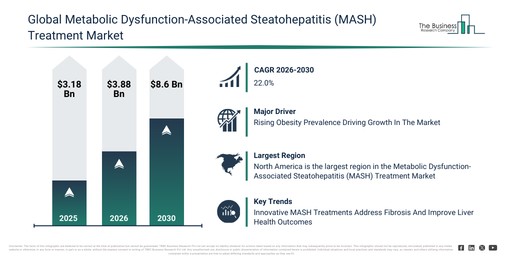
    The metabolic dysfunction-associated steatohepatitis (mash) treatment market size has experienced substantial growth in recent years. This market is anticipated to expand from $3.18 billion in 2025 to $3.88 billion in 2026, demonstrating a compound annual growth rate (CAGR) of 22.2%. Several factors have driven its historical development, including the increasing prevalence of obesity, the rising incidence of type 2 diabetes, enhanced awareness of liver health disorders, improved diagnostic testing capabilities, and the early adoption of lifestyle modification programs.

    The metabolic dysfunction-associated steatohepatitis (mash) treatment market size is projected for substantial expansion in the coming years, expected to reach $8.6 billion by 2030, driven by a compound annual growth rate (CAGR) of 22.0%. This anticipated growth can be credited to the rising adoption of GLP-1 agonists, advancements in antifibrotic drug development, increasing access to digital liver monitoring tools, broader utilization of bariatric surgery, and a growing emphasis on personalized metabolic therapies. Notable trends within this forecast period include the proliferation of precision liver disease therapeutics, AI-powered solutions for early detection and risk stratification, cloud-based systems for liver health data management, IoT-integrated approaches for lifestyle and medication monitoring, and the development of sustainable and preventive metabolic health programs.

    Access Your Free Sample Report for In-Depth Market Insights:

    https://www.thebusinessresearchcompany.com/sample.aspx?id=20876&type=smp

    Which Drivers Are Expected To Impact The Metabolic Dysfunction-Associated Steatohepatitis (MASH) Treatment Market During The Forecast Period?

    The rising incidence of obesity is expected to fuel the expansion of the metabolic dysfunction-associated steatohepatitis (MASH) treatment market in the future. Obesity is a medical condition defined by an excessive accumulation of body fat that can adversely affect overall health, typically measured by a body mass index (BMI) of 30 or higher. The global prevalence of obesity is growing, primarily driven by sedentary lifestyles, unhealthy eating patterns, and metabolic risk factors. Metabolic Dysfunction-Associated Steatohepatitis (MASH) treatment in the context of obesity focuses on addressing insulin resistance, reducing liver fat, and improving metabolic health through lifestyle modifications and targeted therapies. For instance, in March 2023, according to the World Heart Foundation, a Switzerland-based non-government global cardiovascular community, roughly 2.3 billion adults and children worldwide are currently obese or overweight, and this figure is projected to reach 2.7 billion by 2025 if the current obesity trend continues. Therefore, the increasing prevalence of obesity is stimulating growth in the metabolic dysfunction-associated steatohepatitis (MASH) treatment market.

    Which Segments Are Driving Activity In The Metabolic Dysfunction-Associated Steatohepatitis (MASH) Treatment Market?

    The metabolic dysfunction-associated steatohepatitis (mash) treatment market covered in this report is segmented –

    1) By Treatment: Drug, Therapy

    2) By Distribution Channel: Hospital Pharmacies, Online Pharmacies, Retail Pharmacies

    3) By End-User: Hospitals, Specialty Clinics, Homecare, Other End-User

    Subsegments:

    1) By Drug: Antifibrotic Agents, Antidiabetic Drugs, Lipid-Lowering Agents, Vitamin E, Obeticholic Acid (OCA), GLP-1 Agonists

    2) By Therapy: Pharmacotherapy, Lifestyle Modifications (Dietary Changes, Exercise), Bariatric Surgery, Liver Transplantation

    Which Competitive Trends Are Impacting The Structure Of The Metabolic Dysfunction-Associated Steatohepatitis (MASH) Treatment Market?

    Leading companies in the metabolic dysfunction-associated steatohepatitis (MASH) treatment market are concentrating on producing cutting-edge products, such as liver fibrosis treatment solutions, to offer therapeutic options for individuals afflicted with metabolic dysfunction-associated steatohepatitis (MASH) and moderate to severe liver fibrosis. These liver fibrosis treatment solutions primarily target the fundamental origins of liver damage through adjustments to lifestyle, antiviral drugs, and nascent antifibrotic treatments, with the goal of halting or reversing fibrosis progression and enhancing liver function. As an illustration, in March 2024, Madrigal Pharmaceuticals, Inc., a US-based biopharmaceutical company, announced the FDA approval of Rezdiffra (resmetirom), which stands as the first-ever treatment for metabolic dysfunction-associated steatohepatitis (MASH) with moderate to severe liver fibrosis. Rezdiffra is a daily oral tablet that exhibited effectiveness in resolving MASH without fibrosis worsening and improving liver fibrosis during phase 3 clinical trials. This significant advance provides a non-invasive treatment alternative, doing away with the necessity for liver biopsies, and substantially improves patient access and outcomes in managing fatty liver disease.

    Which Major Industry Participants Are Leading The Metabolic Dysfunction-Associated Steatohepatitis (MASH) Treatment Market Growth?

    Major companies operating in the metabolic dysfunction-associated steatohepatitis (mash) treatment market are Pfizer Inc., Johnson & Johnson, Merck & Co. Inc., Sanofi SA, AstraZeneca PLC, Novartis AG, Eli Lilly and Company, Gilead Sciences Inc., Boehringer Ingelheim International GmbH, Novo Nordisk A/S, Apollo Health and Lifestyle Limited, Jenny Craig, Nutrisystem, Madrigal Pharmaceuticals, Anoos Clinic, Galectin Therapeutics Inc., Galmed Pharmaceuticals, Hepion Pharmaceuticals, Inventiva, NGM Biopharmaceuticals, Sagimet Biosciences, Viking Therapeutics, Terns Pharma, Genfit SA

    Access The Complete Report For Deeper Market Insights:

    https://www.thebusinessresearchcompany.com/report/metabolic-dysfunction-associated-steatohepatitis-mash-treatment-global-market-report

    Which Region Currently Holds The Largest Share Of The Metabolic Dysfunction-Associated Steatohepatitis (MASH) Treatment Market?

    North America was the largest region in the metabolic dysfunction-associated steatohepatitis (MASH) treatment market in 2025. Asia-Pacific is expected to be the fastest-growing region in the forecast period. The regions covered in the metabolic dysfunction-associated steatohepatitis (mash) treatment market report are Asia-Pacific, South East Asia, Western Europe, Eastern Europe, North America, South America, Middle East, Africa.

    Request Your Customized Metabolic Dysfunction-Associated Steatohepatitis (MASH) Treatment Market Research Report for Competitive Advantage:

    https://www.thebusinessresearchcompany.com/customise?id=20876&type=smp

    Browse Through More Reports Similar to the Global Metabolic Dysfunction-Associated Steatohepatitis (MASH) Treatment Market 2026, By The Business Research Company

    Fatty Liver Treatment Market Report 2026

    https://www.thebusinessresearchcompany.com/report/fatty-liver-treatment-global-market-report

    Non Alcoholic Steatohepatitis Treatment Market Report 2026

    https://www.thebusinessresearchcompany.com/report/non-alcoholic-steatohepatitis-treatment-global-market-report

    Non Alcoholic Steatohepatitis Biomarkers Market Report 2026

    https://www.thebusinessresearchcompany.com/report/non-alcoholic-steatohepatitis-biomarkers-global-market-report

    Get in touch with us:

    The Business Research Company: https://www.thebusinessresearchcompany.com/

    Americas +1 310-496-7795

    Asia +44 7882 955267 & +91 8897263534

    Europe +44 7882 955267

    Email us at info@tbrc.info

    Follow us on:

    LinkedIn: https://in.linkedin.com/company/the-business-research-company

    YouTube: https://www.youtube.com/channel/UC24_fI0rV8cR5DxlCpgmyFQ

    Global Market Model: https://www.thebusinessresearchcompany.com/global-market-model
  • Postpartum Depression Treatment Market Performance Outlook 2026–2030: Revenue to Hit $1.81 Billion at 7.2% CAGR

    Postpartum Depression Treatment Market Performance Outlook 2026–2030: Revenue to Hit $1.81 Billion at 7.2% CAGR

    Uncover key drivers, emerging technologies, and competitive movements shaping the postpartum depression treatment market from 2026–2035 with trusted insights from The Business Research Company

    What is the expected shift in the Postpartum Depression Treatment Market’s size between 2026 and 2030?

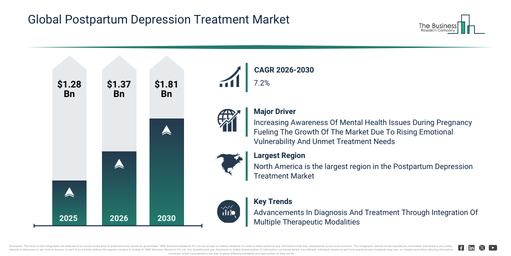
    The postpartum depression treatment market has demonstrated significant expansion in recent years. It is anticipated to increase from $1.28 billion in 2025 to $1.37 billion in 2026, achieving a compound annual growth rate (CAGR) of 7.5%. The historical development of this market is linked to factors such as increased clinical identification of postpartum depression, the restricted availability of specialized treatment avenues, a reliance on standard antidepressants, the expansion of mental health services within hospitals, and the rising application of psychotherapy.

    The market for postpartum depression treatment is projected to experience substantial growth in the upcoming years, reaching $1.81 billion by 2030, exhibiting a compound annual growth rate (CAGR) of 7.2%. This anticipated expansion over the forecast period is fueled by factors such as the increasing authorization of new postpartum therapies, a surge in investments directed towards maternal mental health research, the broadening of outpatient and home-based care options, an escalating need for personalized medical treatments, and the greater incorporation of digital therapeutic solutions. Key developments expected during this timeframe involve the rising adoption of combination therapy strategies, the increasing utilization of telepsychiatry in postpartum care, a growing requirement for fast-acting antidepressant medications, the widening availability of hormone-based treatment alternatives, and an intensified emphasis on individualized treatment paths.

    Access Your Free Sample Report for In-Depth Market Insights:

    https://www.thebusinessresearchcompany.com/sample.aspx?id=23479&type=smp

    Which Drivers Are Shaping Strategic Decisions In The Postpartum Depression Treatment Market?

    The heightened understanding of mental health challenges during pregnancy is projected to drive the expansion of the postpartum depression treatment market in the coming period. These issues encompass a spectrum of emotional, psychological, and psychiatric conditions capable of impacting a woman throughout her pregnancy. The rise in such mental health issues during pregnancy is attributable to elevated stress and hormonal shifts, which can intensify emotional susceptibility and hinder women’s capacity to manage physical, social, and psychological pressures. Postpartum depression treatment works to improve mental health by easing symptoms such as sadness, anxiety, and fatigue, bolstering emotional resilience, and fostering stronger mother-child attachment. For instance, data from October 2024, provided by the Maternal Mental Health Leadership Alliance (MMHLA), a US-based nonprofit dedicated to enhancing maternal mental health, indicates that maternal mental health conditions are the most frequent pregnancy complication, impacting 800,000 U.S. families annually, with 75% remaining untreated, thereby creating enduring risks for mothers, babies, and families. Consequently, the growing awareness surrounding mental health issues during pregnancy is propelling the growth of the postpartum depression treatment market.

    What Segment Classifications Make Up The Postpartum Depression Treatment Market?

    The postpartum depression treatment market covered in this report is segmented –

    1) By Type: Postpartum Anxiety, Postpartum Blues, Postpartum Post-Traumatic Stress Disorder (PTSD), Postpartum Obsessive-Compulsive Disorder (OCD), Postpartum Panic Disorder, Postpartum Psychosis

    2) By Treatment Type: Antidepressants, Hormone Therapy, Psychotherapy, Other Treatment Types

    3) By Patient Demographics: Adolescents, Adults

    4) By Distribution Channel: Hospital Pharmacies, Retail Pharmacies, Online Pharmacies

    Subsegments:

    1) By Postpartum Anxiety: Cognitive Behavioral Therapy (CBT), Antidepressant Medications, Hormonal Therapy, Support Groups And Counseling

    2) By Postpartum Blues: Psychotherapy, Supportive Care, Short-Term Medication

    3) By Postpartum Post-Traumatic Stress Disorder (PTSD): Trauma-Focused Cognitive Behavioral Therapy (TF-CBT), Eye Movement Desensitization And Reprocessing (EMDR), Medication, Peer Support Groups

    4) By Postpartum Obsessive-Compulsive Disorder (OCD): Exposure And Response Prevention (ERP), Antidepressant Medications (SSRIs), Cognitive Behavioral Therapy (CBT), Supportive Therapy

    5) By Postpartum Panic Disorder: Cognitive Behavioral Therapy (CBT), Antidepressants And Anti-Anxiety Medications, Relaxation Techniques, Psychotherapy

    6) By Postpartum Psychosis: Antipsychotic Medications, Mood Stabilizers, Electroconvulsive Therapy (ECT)

    Which Trends Are Shaping Activity Within The Postpartum Depression Treatment Market?

    Major companies operating in the postpartum depression treatment market are increasingly focusing on advancements in both diagnosis and treatment, particularly through innovations like prescription digital postpartum depression treatment, to enhance patient outcomes and improve accessibility to care. Prescription digital postpartum depression treatment refers to clinically validated digital therapeutics (DTx) prescribed by healthcare providers for managing and treating postpartum depression (PPD). As an example, in April 2024, Curio Digital Therapeutics Inc., a US-based digital health company, announced that MamaLift Plus received Food and Drug Administration (FDA) clearance, making it the first prescription digital therapeutic for postpartum depression (PPD). This eight-week program delivers digital CBT, BAT, IPT, and DBT via a mobile device under healthcare provider supervision. A pivotal study revealed a significantly higher rate of clinically meaningful improvement in EPDS scores among MamaLift Plus users compared to a control group. This clearance now offers women a non-pharmaceutical alternative for treating mild to moderate PPD.

    Which Key Market Players Are Investing In Expansion And Innovation Within The Postpartum Depression Treatment Market?

    Major companies operating in the postpartum depression treatment market are LifeStance Health Inc., Max Healthcare Institute Limited, American Well Corporation, Sakra Premium Hospital Private Limited, Talkspace Inc., Mental Health America, Seven Cups Inc., Marinus Pharmaceuticals Inc., Beyond Blue Ltd, Blooming Wellness Center, Sage Therapeutics Inc., Nurx Inc., Curio Digital Therapeutics Inc., Genesis Lifestyle Medicine, Postpartum Society Of Florida, TalktoAngel, The Motherhood Center, Otsuka Pharmaceutical Co Ltd, Lundbeck A S, Eli Lilly And Company, Pfizer Inc., Johnson And Johnson

    Access The Complete Report For Deeper Market Insights:

    https://www.thebusinessresearchcompany.com/report/postpartum-depression-treatment-global-market-report

    Which Regions Are Poised For Strategic Growth In The Postpartum Depression Treatment Market?

    North America was the largest region in the postpartum depression treatment market in 2025. Asia-Pacific is expected to be the fastest-growing region in the forecast period. The regions covered in the postpartum depression treatment market report are Asia-Pacific, South East Asia, Western Europe, Eastern Europe, North America, South America, Middle East, Africa.

    Request Your Customized Postpartum Depression Treatment Market Research Report for Competitive Advantage:

    https://www.thebusinessresearchcompany.com/customise?id=23479&type=smp

    Browse Through More Reports Similar to the Global Postpartum Depression Treatment Market 2026, By The Business Research Company

    Major Depressive Disorder Market Report 2026

    https://www.thebusinessresearchcompany.com/report/major-depressive-disorder-global-market-report

    Postpartum Health Supplements Market Report 2026

    https://www.thebusinessresearchcompany.com/report/postpartum-health-supplements-global-market-report

    Antidepressant Market Report 2026

    https://www.thebusinessresearchcompany.com/report/antidepressant-global-market-report

    Get in touch with us:

    The Business Research Company: https://www.thebusinessresearchcompany.com/

    Americas +1 310-496-7795

    Asia +44 7882 955267 & +91 8897263534

    Europe +44 7882 955267

    Email us at info@tbrc.info

    Follow us on:

    LinkedIn: https://in.linkedin.com/company/the-business-research-company

    YouTube: https://www.youtube.com/channel/UC24_fI0rV8cR5DxlCpgmyFQ

    Global Market Model: https://www.thebusinessresearchcompany.com/global-market-model
  • Richter Syndrome Market Outlook 2026–2035: Growth Drivers and Industry Forecast

    Richter Syndrome Market Outlook 2026–2035: Growth Drivers and Industry Forecast

    Uncover key drivers, emerging technologies, and competitive movements shaping the richter syndrome market from 2026–2035 with trusted insights from The Business Research Company

    What size range is anticipated for the Richter Syndrome Market from 2026 to 2030?

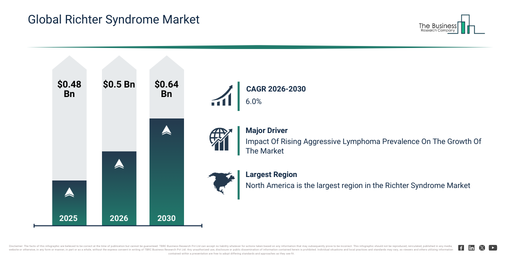
    The richter syndrome market has shown robust expansion in recent years. Its valuation is projected to increase from $0.48 billion in 2025 to $0.5 billion in 2026, achieving a compound annual growth rate (CAGR) of 6.2%. This historical expansion can be ascribed to several contributing factors, such as the increasing incidence of chronic lymphocytic leukemia, the restricted efficacy of existing traditional therapies, heightened awareness regarding aggressive lymphoma transformations, the broadening of oncology research centers, and the accessibility of various chemotherapy regimens.

    The Richter Syndrome market is projected to experience substantial expansion over the coming years, reaching a valuation of $0.64 billion by 2030, propelled by a compound annual growth rate (CAGR) of 6.0%. This anticipated growth during the forecast period is primarily driven by factors such as the accelerated development of innovative immunotherapies, a surge in the embrace of precision oncology strategies, the broadening of stem cell transplantation initiatives, increased financial commitments to rare cancer investigations, and a sharpened emphasis on individualized patient treatment routes. Key developments anticipated within the same period encompass the wider acceptance of targeted therapies and immunotherapies, a heightened concentration on prompt diagnosis and risk assessment, the increasing application of combined treatment methods, an expansion of clinical investigations and trials, and improved integration of supportive and palliative care.

    Access Your Free Sample Report for In-Depth Market Insights:

    https://www.thebusinessresearchcompany.com/sample.aspx?id=21278&type=smp

    What Drivers Are Affecting Demand In The Richter Syndrome Market?

    The increasing occurrence of aggressive lymphoma is anticipated to boost the expansion of the Richter syndrome market. Lymphoma, a form of cancer, begins in the lymphatic system, an integral part of the body’s immune defense, impacting lymph nodes and other related tissues. This surge in aggressive lymphoma cases stems from enhanced diagnostic methods, an aging demographic, and heightened public awareness, which together contribute to more diagnoses. Addressing aggressive lymphoma, Richter syndrome treatment employs a range of strategies including intense chemotherapy, specific targeted therapies like BTK and BCL-2 inhibitors, monoclonal antibodies, and advanced interventions such as CAR T-cell therapy and stem cell transplantation. These methods aim to control disease progression, improve patient responses, and prolong survival, alongside integrating new therapies and clinical trials for resistant cases. For instance, in January 2025, the American Cancer Society, a US-based non-profit organization, estimates that about 80,350 people (45,140 males and 35,210 females) will be diagnosed with non-Hodgkin lymphoma (NHL), with approximately 19,390 (11,060 males and 8,330 females) projected to succumb to the illness. Consequently, the rising prevalence of aggressive lymphoma is fueling the growth of the Richter syndrome market.

    Which Segments Are Gaining Traction In The Richter Syndrome Market?

    The richter syndrome market covered in this report is segmented –

    1) By Disease Type: Chronic Lymphocytic Leukemia (CLL)-Associated Richter Syndrome, Non-CLL-Associated Richter Syndrome

    2) By Treatment Type: Chemotherapy, Targeted Therapy, Immunotherapy, Immune Checkpoint Inhibitors, Stem Cell Transplantation, Supportive Care And Palliative Treatments

    3) By Route Of Administration: Oral, Intravenous

    4) By Distribution Channel: Hospital Pharmacies, Retail Pharmacies, Online Pharmacies

    5) By End-User: Hospitals, Specialty Clinics, Cancer Treatment Centers, Research And Academic Institutes

    Subsegments:

    1) By Chronic Lymphocytic Leukemia (CLL)-Associated Richter Syndrome: Transformation To Diffuse Large B-cell Lymphoma, Transformation To Hodgkin Lymphoma

    2) By Non-CLL-Associated Richter Syndrome: De Novo Diffuse Large B-cell Lymphoma, De Novo Hodgkin Lymphoma

    Who Are The Top-Performing Companies In The Richter Syndrome Market In Recent Years?

    Major companies operating in the richter syndrome market are Pfizer Inc., Janssen Pharmaceuticals Inc., F Hoffmann La Roche Ltd, AbbVie Inc., Bristol Myers Squibb Company, AstraZeneca PLC, Novartis AG, Takeda Pharmaceutical Company Limited, Gilead Sciences Inc., Chugai Pharmaceutical Co Ltd, Genentech Inc., Incyte Corporation, Kyowa Kirin Co Ltd, Celltrion Healthcare Co Ltd, BeiGene Ltd, Nippon Shinyaku Co Ltd, MorphoSys AG, TG Therapeutics Inc., Amgen Inc., Sanofi SA, Bayer AG, Daiichi Sankyo Company, Merck And Co Inc., Seagen Inc., Roche Diagnostics Oncology

    Access The Complete Report For Deeper Market Insights:

    https://www.thebusinessresearchcompany.com/report/richter-syndrome-global-market-report

    Which Region Currently Holds The Largest Share Of The Richter Syndrome Market?

    North America was the largest region in the richter syndrome market in 2025. Asia-Pacific is expected to be the fastest-growing region in the forecast period. The regions covered in the richter syndrome market report are Asia-Pacific, South East Asia, Western Europe, Eastern Europe, North America, South America, Middle East, Africa.

    Request Your Customized Richter Syndrome Market Research Report for Competitive Advantage:

    https://www.thebusinessresearchcompany.com/customise?id=21278&type=smp

    Browse Through More Reports Similar to the Global Richter Syndrome Market 2026, By The Business Research Company

    Panic Disorders Market Report 2026

    https://www.thebusinessresearchcompany.com/report/panic-disorders-global-market-report

    Ataxia Market Report 2026

    https://www.thebusinessresearchcompany.com/report/ataxia-global-market-report

    Earthquake Insurance Market Report 2026

    https://www.thebusinessresearchcompany.com/report/earthquake-insurance-global-market-report

    Get in touch with us:

    The Business Research Company: https://www.thebusinessresearchcompany.com/

    Americas +1 310-496-7795

    Asia +44 7882 955267 & +91 8897263534

    Europe +44 7882 955267

    Email us at info@tbrc.info

    Follow us on:

    LinkedIn: https://in.linkedin.com/company/the-business-research-company

    YouTube: https://www.youtube.com/channel/UC24_fI0rV8cR5DxlCpgmyFQ

    Global Market Model: https://www.thebusinessresearchcompany.com/global-market-model
  • Metabolic Biomarker Testing Market Insights Report: Opportunities and Drivers 2030

    Metabolic Biomarker Testing Market Insights Report: Opportunities and Drivers 2030

    Uncover key drivers, emerging technologies, and competitive movements shaping the metabolic biomarker testing market from 2026–2035 with trusted insights from The Business Research Company

    How much is the Metabolic Biomarker Testing Market valued at in 2026, and what valuation is forecast for 2030?

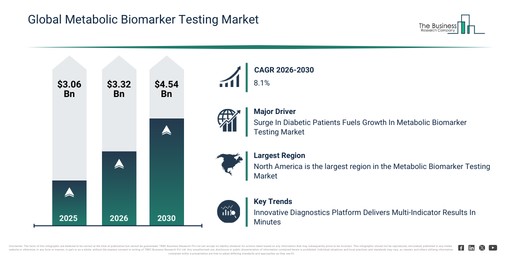
    The metabolic biomarker testing market has experienced robust expansion recently. This market is projected to expand from $3.06 billion in 2025 to $3.32 billion in 2026, exhibiting a compound annual growth rate (CAGR) of 8.5%. Its historical development is linked to factors such as progress in analytical chemistry techniques, the rise in chronic and metabolic disorders, enhanced utilization of laboratory diagnostics, increased clinical research endeavors, and the accessibility of high-throughput testing platforms.

    The market for metabolic biomarker testing is projected to experience robust expansion over the coming years. Its value is anticipated to reach $4.54 billion by 2030, driven by a compound annual growth rate (CAGR) of 8.1%. This projected growth during the forecast period stems from factors such as a heightened demand for personalized healthcare solutions, increasing investments in precision diagnostics, the expansion of preventive health screening programs, the growing application of AI-driven data interpretation, and increased collaboration among diagnostics and pharmaceutical companies. Key developments expected in this period encompass the rising adoption of metabolomics-based diagnostics, a surge in the use of biomarkers in personalized medicine, the increasing integration of advanced analytical techniques, the broadening of early disease detection applications, and an enhanced emphasis on data-driven clinical decision making.

    Access Your Free Sample Report for In-Depth Market Insights:

    https://www.thebusinessresearchcompany.com/sample.aspx?id=20573&type=smp

    What Drivers Are Influencing The Growth Of The Metabolic Biomarker Testing Market?

    The increasing occurrence of diabetes is projected to fuel the expansion of the metabolic biomarker testing market in the future. Diabetes is a long-term health condition marked by elevated blood sugar levels, resulting from the body’s incapacity to generate or efficiently utilize insulin. This rise in diabetes is largely attributed to unhealthy dietary habits, particularly the significant intake of processed items and sweetened beverages, alongside inactive lifestyles defined by very little physical movement. Furthermore, an aging demographic and a familial history of diabetes elevate the risk, suggesting a genetic susceptibility. Metabolic biomarker testing assists in the diagnosis, tracking, and treatment of metabolic conditions like diabetes, offering molecular-level insights into metabolic processes and deviations. For example, data from April 2025, provided by the International Diabetes Federation (IDF), a Belgium based diabetes advocacy organization, revealed that the global population of adults (age 20–79 years) living with diabetes reached 589 million, showing a significant increase from previous years. The overall count of adults with diabetes is anticipated to climb to 853 million by 2050. Consequently, the growing prevalence of diabetes is set to spur the expansion of the metabolic biomarker testing market.

    How Is The Metabolic Biomarker Testing Market Organized Into Various Segments?

    The metabolic biomarker testing market covered in this report is segmented –

    1) By Type: Separation Techniques, Detection Techniques, Other Types

    2) By Indication: Cancer, Cardiovascular Disorders, Neurological Disorders, Inborn Errors Of Metabolism, Other Indications

    3) By Application: Drug Assessment, Nutrigenomics, Toxicology Testing, Personalized Medicine, Other Applications

    4) By End User: Pharma And Biotech Companies, Diagnostic Tool Companies, Clinical Laboratories

    Subsegments:

    1) By Separation Techniques: Chromatography, Capillary Electrophoresis, Mass Spectrometry (MS), Liquid-Liquid Extraction, Solid-Phase Extraction

    2) By Detection Techniques: Enzyme-Linked Immunosorbent Assay (ELISA), Fluorescence-Based Detection, Electrochemical Detection, Nuclear Magnetic Resonance (NMR), Immunoassays

    3) By Other Types: Metabolomics Profiling, Spectroscopy Techniques

    What Industry Trends Are Transforming The Metabolic Biomarker Testing Market?

    Major companies within the metabolic biomarker testing market are concentrating on developing innovative solutions, such as lab-quality home blood testing platforms, to satisfy the growing demand for convenient, accurate, and timely metabolic health monitoring. These lab-quality home blood testing platforms are compact, user-friendly devices engineered for at-home use, providing results comparable to those obtained from traditional laboratory tests. For example, in January 2023, SiPhox Health, Inc., a U.S.-based health technology company, launched the world’s first lab-quality home blood testing platform, offering individuals the capability to monitor multiple metabolic biomarkers from the comfort of their homes. This platform incorporates proprietary technology to guarantee high accuracy, delivers real-time results through an associated app, and supports a wide range of metabolic health assessments, including glucose, lipid profiles, and other key indicators. Its unique blend of lab-grade precision and at-home accessibility facilitates more frequent monitoring, early detection of metabolic disorders, and personalized health management.

    Who Are The Prominent Global Companies Shaping The Metabolic Biomarker Testing Market Landscape?

    Major companies operating in the metabolic biomarker testing market are Thermo Fisher Scientific Inc., Danaher Corporation, Agilent Technologies Inc., PerkinElmer Inc., bioMérieux S.A., LECO Corporation, Shimadzu Corporation, Waters Corporation, Bio-Rad Laboratories Inc., Bruker Corporation, SCIEX, Promega Corporation, Cayman Chemical Company, Metabolon Inc., Biocrates Life Sciences AG, Human Metabolome Technologies Inc., KineMed Inc., Evosep Biosystems A/S, Creative Proteomics Inc., Lipotype GmbH, Metabolomic Diagnostics Ltd, Stemina Biomarker Discovery Inc., Chenomx Inc., GlycoPath Pty Ltd

    Access The Complete Report For Deeper Market Insights:

    https://www.thebusinessresearchcompany.com/report/metabolic-biomarker-testing-global-market-report

    How Does The Metabolic Biomarker Testing Market Perform Across Major Global Regions?

    North America was the largest region in the metabolic biomarker testing market in 2025. The regions covered in the metabolic biomarker testing market report are Asia-Pacific, South East Asia, Western Europe, Eastern Europe, North America, South America, Middle East, Africa.

    Request Your Customized Metabolic Biomarker Testing Market Research Report for Competitive Advantage:

    https://www.thebusinessresearchcompany.com/customise?id=20573&type=smp

    Browse Through More Reports Similar to the Global Metabolic Biomarker Testing Market 2026, By The Business Research Company

    Non Alcoholic Steatohepatitis Biomarkers Market Report 2026

    https://www.thebusinessresearchcompany.com/report/non-alcoholic-steatohepatitis-biomarkers-global-market-report

    Renal Biomarkers Market Report 2026

    https://www.thebusinessresearchcompany.com/report/renal-biomarkers-global-market-report

    Cancer Biomarker Market Report 2026

    https://www.thebusinessresearchcompany.com/report/cancer-biomarker-global-market-report

    Get in touch with us:

    The Business Research Company: https://www.thebusinessresearchcompany.com/

    Americas +1 310-496-7795

    Asia +44 7882 955267 & +91 8897263534

    Europe +44 7882 955267

    Email us at info@tbrc.info

    Follow us on:

    LinkedIn: https://in.linkedin.com/company/the-business-research-company

    YouTube: https://www.youtube.com/channel/UC24_fI0rV8cR5DxlCpgmyFQ

    Global Market Model: https://www.thebusinessresearchcompany.com/global-market-model
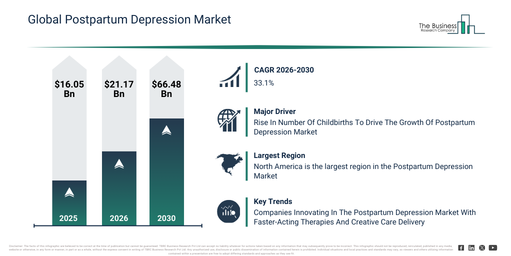
  • Global Postpartum Depression Market Set for Strong Expansion, Reaching $66.47 Billion With 33.1% CAGR by 2030

    Global Postpartum Depression Market Set for Strong Expansion, Reaching $66.47 Billion With 33.1% CAGR by 2030

    Uncover key drivers, emerging technologies, and competitive movements shaping the postpartum depression market from 2026–2035 with trusted insights from The Business Research Company

    What growth pattern is forecast for the Postpartum Depression Market size between 2026 and 2035?

    The postpartum depression market size has undergone substantial expansion in recent years. It is anticipated to grow from $16.05 billion in 2025 to $21.17 billion in 2026, at a compound annual growth rate (CAGR) of 31.9%. The historical growth of this market can be attributed to several factors, including the increasing recognition of maternal mental health disorders, limited early screening practices, prevalent underdiagnosis in postpartum care settings, a reliance on traditional counseling approaches, and the growth of hospital-based maternal care services.

    The postpartum depression market size is anticipated to experience substantial growth over the upcoming years, projected to reach $66.48 billion by 2030, exhibiting a compound annual growth rate (CAGR) of 33.1%. This expansion during the forecast period is propelled by factors such as the greater uptake of digital screening instruments, an increased emphasis on proactive maternal healthcare, the widening availability of tele-mental health services, rising investments in women’s mental well-being initiatives, and the deeper incorporation of mental health support into obstetric care. Key developments expected in this period encompass heightened public awareness and screening for postpartum mental health, greater acceptance of digital platforms for mental wellness, a stronger focus on prompt diagnosis and intervention, the extension of community-based assistance programs, and improved integration of mental health services within maternal care pathways.

    Access Your Free Sample Report for In-Depth Market Insights:

    https://www.thebusinessresearchcompany.com/sample.aspx?id=13024&type=smp

    Which Drivers Are Impacting Market Performance In The Postpartum Depression Market?

    An increasing number of childbirths is anticipated to fuel the expansion of the postpartum depression market. Childbirth describes the natural process of a baby exiting the mother’s uterus, typically through the vaginal canal. This rise in births contributes to the postpartum depression market because postpartum depression (PPD) is a prevalent mental health condition affecting women post-delivery, manifesting in symptoms such as sadness, anxiety, fatigue, and challenges in maternal-infant bonding. As an illustration, a report from the Centers for Disease Control and Prevention, a US-based national public health organization, indicated that in January 2023, the United States experienced a 1% rise in recorded births, reaching a total of 3,664,292, relative to the prior year. Consequently, the increasing volume of childbirths is stimulating growth within the postpartum depression market.

    What Segment Types Are Examined In The Postpartum Depression Market?

    The postpartum depression market covered in this report is segmented –

    1) By Types: Postpartum Blues, Postpartum Anxiety, Postpartum Obsessive Compulsive Disorder, Postpartum Panic Disorder, Postpartum Post-Traumatic Stress Disorder, Postpartum Psychosis, Other Types

    2) By Treatment: Psychotherapy, Medication, Supplements, Other Treatments

    3) By Route of Administration: Oral, Parenteral, Other Route Of Administration

    4) By Distribution Channel: Hospital Pharmacy, Retail Pharmacy, Online Pharmacy, Other Distribution Channels

    5) By End-Users: Hospitals, Specialty Clinics, Homecare, Other End-Users

    Subsegments:

    1) By Postpartum Blues: Mild Emotional Disturbances, Short-term Mood Swings

    2) By Postpartum Anxiety: Generalized Anxiety Disorder (GAD), Panic Attacks

    3) By Postpartum Obsessive Compulsive Disorder: Intrusive Thoughts, Compulsive Behaviors

    4) By Postpartum Panic Disorder: Sudden Panic Attacks, Physical Symptoms

    5) By Postpartum Post-Traumatic Stress Disorder (PTSD): Trauma Response To Childbirth, Flashbacks And Anxiety

    6) By Postpartum Psychosis: Hallucinations, Severe Mood Swings

    7) By Other Types: Mixed Mood Disorders, Comorbid Conditions With Postpartum

    Which Trends Are Influencing The Development Of The Postpartum Depression Market?

    Major companies operating in the postpartum depression market are focusing on new product innovations, including regulatory milestones to advance the development and potential approval pathway of zuranolone for major depressive disorder and postpartum depression. A regulatory milestone denotes a crucial event in a drug or medical product’s lifecycle, signaling progress within the approval or compliance framework established by governmental authorities. For instance, in February 2023, Biogen Inc., a US-based biotechnology company, and Sage Therapeutics Inc., a US-based biopharmaceutical company, announced that the United States Food and Drug Administration (FDA) had accepted the submission of a New Drug Application (NDA) for zuranolone for the treatment of major depressive disorder (MDD) and postpartum depression (PPD). Zuranolone is an investigational medication being evaluated as a 14-day, once-daily, rapid-acting oral therapy for individuals with MDD and PPD. This neuroactive steroid functions as a positive allosteric modulator of GABA-A receptors, representing a distinct mechanism of action. It is designed to work in persons with depression by quickly resetting dysregulated neural networks to help restore brain function. Zuranolone influences brain networks responsible for mood, arousal, behavior, and cognition.

    Who Are The Core Companies Influencing Trends In The Postpartum Depression Market?

    Major companies operating in the postpartum depression market are Pfizer Inc., Johnson & Johnson, Merck & Co., AbbVie Inc., Novartis AG, Sanofi SA, Bristol Myers Squibb Co., AstraZeneca plc, GlaxoSmithKline LLC, Takeda Pharmaceutical Company, Eli Lilly and Company, Viatris Inc., Teva Pharmaceutical Industries Ltd., Biogen Inc., Sun Pharmaceutical Industries Ltd., Lupin Pharmaceuticals, Mallinckrodt Pharmaceuticals plc, Sage Therapeutics Inc., Otsuka Pharmaceutical Co. Ltd., Lundbeck A S, Janssen Pharmaceuticals, Aurobindo Pharma Ltd.

    Access The Complete Report For Deeper Market Insights:

    https://www.thebusinessresearchcompany.com/report/postpartum-depression-global-market-report

    Which Regions Are Projected To Dominate The Postpartum Depression Market In The Coming Years?

    North America was the largest region in the postpartum depression market in 2025. The regions covered in the postpartum depression market report are Asia-Pacific, South East Asia, Western Europe, Eastern Europe, North America, South America, Middle East, Africa.

    Request Your Customized Postpartum Depression Market Research Report for Competitive Advantage:

    https://www.thebusinessresearchcompany.com/customise?id=13024&type=smp

    Browse Through More Reports Similar to the Global Postpartum Depression Market 2026, By The Business Research Company

    Antidepressant Market Report 2026

    https://www.thebusinessresearchcompany.com/report/antidepressant-global-market-report

    Postpartum Health Supplements Market Report 2026

    https://www.thebusinessresearchcompany.com/report/postpartum-health-supplements-global-market-report

    Major Depressive Disorder Market Report 2026

    https://www.thebusinessresearchcompany.com/report/major-depressive-disorder-global-market-report

    Get in touch with us:

    The Business Research Company: https://www.thebusinessresearchcompany.com/

    Americas +1 310-496-7795

    Asia +44 7882 955267 & +91 8897263534

    Europe +44 7882 955267

    Email us at info@tbrc.info

    Follow us on:

    LinkedIn: https://in.linkedin.com/company/the-business-research-company

    YouTube: https://www.youtube.com/channel/UC24_fI0rV8cR5DxlCpgmyFQ

    Global Market Model: https://www.thebusinessresearchcompany.com/global-market-model
  • Ribose-Nucleic Acid (RNA)-Based Therapeutics Market 2026–2030: Emerging Trends and Forecast Opportunities

    Ribose-Nucleic Acid (RNA)-Based Therapeutics Market 2026–2030: Emerging Trends and Forecast Opportunities

    Uncover key drivers, emerging technologies, and competitive movements shaping the ribose-nucleic acid (rna)-based therapeutics market from 2026–2035 with trusted insights from The Business Research Company

    How is the Ribose-Nucleic Acid (RNA)-Based Therapeutics Market size predicted to change over the forecast window of 2026–2035?

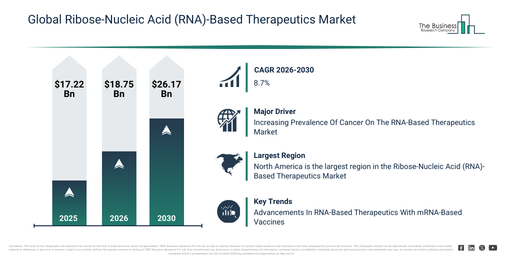
    The market for ribose-nucleic acid (rna)-based therapeutics has experienced robust expansion in recent times. This market is projected to expand from $17.22 billion in 2025 to $18.75 billion by 2026, exhibiting a compound annual growth rate (CAGR) of 8.9%. Historically, this expansion has been driven by factors such as progress in molecular biology research, the early achievements of rna-based drugs, the broadening scope of genetic disease investigations, a rise in pharmaceutical R&D spending, and an enhanced comprehension of gene regulation.

    The ribose-nucleic acid (rna)-based therapeutics market size is anticipated to experience substantial growth in the coming years. It is projected to expand to $26.17 billion by 2030, exhibiting a compound annual growth rate (CAGR) of 8.7%. This expansion during the forecast period is fueled by factors such as a rise in regulatory approvals for rna therapies, escalating demand for personalized medicine, the broadening of oncology-focused rna pipelines, increased investments in delivery technologies, and more frequent collaborations between biotech firms. Key trends anticipated in the forecast period encompass the increasing development of rna-based targeted therapies, a greater adoption of sirna and aso technologies, an intensified focus on rare and genetic disorders, the expansion of clinical trials for rna therapeutics, and innovations enhancing drug delivery systems.

    Access Your Free Sample Report for In-Depth Market Insights:

    https://www.thebusinessresearchcompany.com/sample.aspx?id=18454&type=smp

    Which Drivers Are Contributing To The Expansion Of The Ribose-Nucleic Acid (RNA)-Based Therapeutics Market?

    The ribose-nucleic acid (RNA)-based therapeutics market is anticipated to expand in the future, driven by the rising incidence of cancer. Cancer is defined as a disease characterized by the uncontrolled proliferation and dissemination of aberrant cells, which can prove fatal if left untreated. The higher occurrence of cancer can be attributed to factors such as an aging demographic, shifts in lifestyle, increased exposure to various risks, and enhanced diagnostic techniques. RNA-based therapeutics present a promising approach to cancer treatment, as they directly target the genetic and molecular pathways involved in the disease. For example, data from August 2023 provided by the Australian Institute of Health and Welfare, an Australia-based government health body, indicated that approximately 151,000 individuals were diagnosed with cancer (excluding basal cell carcinomas (BCC) and squamous cell carcinomas (SCC) of the skin) in 2021, with projections showing this number will rise to 185,000 by 2030. Consequently, the growing incidence of cancer is a key factor propelling the ribose-nucleic acid (RNA)-based therapeutics market.

    What Segment Categories Are Covered In The Ribose-Nucleic Acid (RNA)-Based Therapeutics Market?

    The ribose-nucleic acid (rna)-based therapeutics market covered in this report is segmented –

    1) By Type: RNA Interference (RNAi), RNA Antisense

    2) By Technology: Enabling Technology, Enabled Technology

    3) By Therapeutic Area: Oncology, Genetic Disorder, Ophthalmology, Hematological Disorders, Acute Hepatic Porphyria (AHP), Other Therapeutic Areas

    4) By End User: Research Institutes, Hospitals And Clinics

    Subsegments:

    1) By RNA Interference (RNAi): Small Interfering RNA (siRNA), MicroRNA (miRNA)

    2) By RNA Antisense: Antisense Oligonucleotides (ASOs), Antisense RNA

    What Long-Term Trends Are Expected To Shape The Future Of The Ribose-Nucleic Acid (RNA)-Based Therapeutics Market?

    Companies operating in the ribose nucleic acid (RNA)-based therapeutics market are primarily focused on developing innovative medical solutions, such as messenger RNA (mRNA)-based booster vaccines. These efforts aim to improve the effectiveness of immunization, address newly emerging viral variants, and increase the overall durability of immunity provided by vaccines. An mRNA-based booster vaccine functions by using messenger RNA to instruct cells to generate a protein, which then enhances the body’s immune response against a specific pathogen. For example, in June 2023, Gennova Biopharmaceuticals Ltd., an India-based pharmaceutical company, introduced GEMCOVAC-OM, recognized as India’s first mRNA booster vaccine specifically targeting the Omicron variant of COVID-19. This booster is considered vital due to the original vaccines’ limited efficacy against the Omicron variant. By utilizing mRNA technology, GEMCOVAC-OM works to boost immunity and deliver enhanced protection against the evolving virus.

    Which Leading Companies Dominate The Ribose-Nucleic Acid (RNA)-Based Therapeutics Market Share?

    Major companies operating in the ribose-nucleic acid (rna)-based therapeutics market are F Hoffmann La Roche AG, Eli Lilly And Company, Novo Nordisk AS, Regeneron Pharmaceuticals, Biogen Inc., BioNTech, Alnylam Pharmaceuticals, Sarepta Therapeutics, Ionis Pharmaceuticals, Akcea Therapeutics Inc, Arrowhead Pharmaceuticals, Dicerna Pharmaceuticals, Wave Life Sciences, Quark Pharmaceuticals, Tekmira Pharmaceuticals, ReCode Therapeutics, Arbutus Biopharma Corporation, Benitec Biopharma Inc., Olix Pharmaceuticals, Alltrna Inc., Orbital Therapeutics, Moderna Inc., CureVac NV, Silence Therapeutics plc, ProQR Therapeutics NV

    Access The Complete Report For Deeper Market Insights:

    https://www.thebusinessresearchcompany.com/report/ribose-nucleic-acid-rna-based-therapeutics-global-market-report

    How Does The Ribose-Nucleic Acid (RNA)-Based Therapeutics Market Perform Across Major Global Regions?

    North America was the largest region in the ribose-nucleic acid (RNA)-based therapeutics market in 2025. The regions covered in the ribose-nucleic acid (rna)-based therapeutics market report are Asia-Pacific, South East Asia, Western Europe, Eastern Europe, North America, South America, Middle East, Africa.

    Request Your Customized Ribose-Nucleic Acid (RNA)-Based Therapeutics Market Research Report for Competitive Advantage:

    https://www.thebusinessresearchcompany.com/customise?id=18454&type=smp

    Browse Through More Reports Similar to the Global Ribose-Nucleic Acid (RNA)-Based Therapeutics Market 2026, By The Business Research Company

    Rna Targeting Small Molecules Therapeutics Market Report 2026

    https://www.thebusinessresearchcompany.com/report/rna-targeting-small-molecules-therapeutics-global-market-report

    Mrna Therapeutics Market Report 2026

    https://www.thebusinessresearchcompany.com/report/mrna-therapeutics-global-market-report

    Nucleic Acid Based Gene Therapy Market Report 2026

    https://www.thebusinessresearchcompany.com/report/nucleic-acid-based-gene-therapy-global-market-report

    Get in touch with us:

    The Business Research Company: https://www.thebusinessresearchcompany.com/

    Americas +1 310-496-7795

    Asia +44 7882 955267 & +91 8897263534

    Europe +44 7882 955267

    Email us at info@tbrc.info

    Follow us on:

    LinkedIn: https://in.linkedin.com/company/the-business-research-company

    YouTube: https://www.youtube.com/channel/UC24_fI0rV8cR5DxlCpgmyFQ

    Global Market Model: https://www.thebusinessresearchcompany.com/global-market-model