Category: HealthcareServices

  • Retinal Vein Occlusion Market Trends and Insights: Global Forecast to 2030

    Retinal Vein Occlusion Market Trends and Insights: Global Forecast to 2030

    Uncover key drivers, emerging technologies, and competitive movements shaping the retinal vein occlusion market from 2026–2035 with trusted insights from The Business Research Company

    What is the expected shift in the Retinal Vein Occlusion Market’s size between 2026 and 2030?

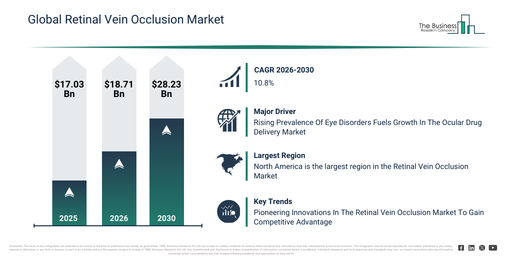
    The retinal vein occlusion market has experienced significant expansion in recent years. It is forecast to increase from $17.03 billion in 2025 to $18.71 billion in 2026, registering a compound annual growth rate (CAGR) of 9.9%. Historically, this growth has been influenced by factors such as the increasing prevalence of hypertension and diabetes, growing awareness of retinal vascular diseases, improved availability of diagnostic imaging tools, expansion of ophthalmology departments, and rising clinical research activities.

    The retinal vein occlusion market size is projected to experience significant growth in the coming years, with an anticipated rise to $28.23 billion by 2030, demonstrating a compound annual growth rate (CAGR) of 10.8%. This growth during the forecast period is primarily attributed to an expanding aging population, a burgeoning demand for minimally invasive treatments, the broadening scope of personalized ophthalmic care, increasing investments in retinal disease research, and the rising adoption of combination therapy approaches. Major trends expected within this period include a greater uptake of anti-VEGF therapies, increased utilization of advanced retinal imaging diagnostics, an intensified focus on the early detection of vascular disorders, the expansion of outpatient ophthalmic treatment models, and enhanced monitoring of disease progression.

    Access Your Free Sample Report for In-Depth Market Insights:

    https://www.thebusinessresearchcompany.com/sample.aspx?id=13058&type=smp

    Which Drivers Are Shaping Strategic Decisions In The Retinal Vein Occlusion Market?

    The expanding occurrence of eye conditions is projected to boost the ocular drug delivery market’s expansion moving forward. These disorders encompass numerous ailments impacting the eyes, sight, or their adjacent structures. Simultaneously, a rise in renal vein occlusion cases fuels expansion in the renal vein occlusion market, stimulating the need for advanced diagnostic tools and therapies. For example, as reported by the Royal National Institute of Blind People (RNIB), a charity focused on sight loss in the UK, in October 2023, eye care outpatient visits in the UK surpassed eight million in 2021/22, marking the highest volume across all specialties. Furthermore, the population experiencing sight loss, currently over two million, is projected to increase to over four million by 2050. Consequently, the growing occurrence of eye disorders will stimulate the retinal vein occlusion market.

    What Segment Categories Are Covered In The Retinal Vein Occlusion Market?

    The retinal vein occlusion market covered in this report is segmented –

    1) By Type: Branch Retinal Vein Occlusion, Central Retinal Vein Occlusion

    2) By Condition: Non-Ischemic, Ischemic

    3) By Diagnosis: Optical Coherence Tomography, Fundoscopic Examination, Fluorescein Angiography

    4) By Treatment: Antivascular Endothelial Growth Factor, Corticosteroid Drugs, Laser Retinal Photocoagulation

    5) By End User: Hospitals And Clinics, Research And Academics Centers, Other End-Users

    Subsegments:

    1) By Branch Retinal Vein Occlusion: Non-Ischemic Branch Retinal Vein Occlusion, Ischemic Branch Retinal Vein Occlusion

    2) By Central Retinal Vein Occlusion: Non-ischemic Central Retinal Vein Occlusion, Ischemic Central Retinal Vein Occlusion

    Which Trends Are Influencing The Development Of The Retinal Vein Occlusion Market?

    Leading companies active in the retinal vein occlusion market are concentrating on developing innovative advancements, such as advanced pattern-scanning laser platforms, to improve treatment precision, operational efficiency, and personalized patient disease management. These next-generation pattern-scanning laser platforms are sophisticated ophthalmic laser systems that combine high-speed pattern delivery, tissue-sparing energy modulation, and multimodal laser capabilities to enhance therapeutic outcomes for retinal vascular disorders. For example, in April 2023, Iridex Corporation, a US-based ophthalmic medical technology company, introduced the next-generation Iridex PASCAL. This new platform provides a cutting-edge technology package that integrates rapid and accurate pattern scanning capabilities, endpoint management technology, pattern scanning laser trabeculoplasty, and micropulse technology within a more compact, ergonomically designed integrated laser platform, aiming to deliver individualized care to patients suffering from retinal disease.

    Which Major Firms Are Strengthening Their Position In The Retinal Vein Occlusion Market?

    Major companies operating in the retinal vein occlusion market are Pfizer Inc., Roche Holding AG, Merck And Co Inc., Bayer AG, Novartis AG, Allergan PLC, Regeneron Pharmaceuticals Inc., Bausch Health Companies Inc., Carl Zeiss AG, Santen Pharmaceutical Co Ltd, Lumenis Ltd, Coherus Biosciences Inc., Genentech Inc., Topcon Corporation, Nidek Co Ltd, IRIDEX Corporation, Alimera Sciences Inc., Ocular Therapeutix Inc., EyePoint Pharmaceuticals Inc., Kodiak Sciences Inc., Ellex Medical Lasers Ltd, Adverum Biotechnologies Inc., Outlook Therapeutics Inc., Annexin Pharmaceuticals AB, Ingenia Therapeutics Inc., Samsung Bioepis

    Access The Complete Report For Deeper Market Insights:

    https://www.thebusinessresearchcompany.com/report/retinal-vein-occlusion-global-market-report

    Which Region Is Anticipated To See The Fastest Growth In The Retinal Vein Occlusion Market?

    North America was the largest region in the retinal vein occlusion market in 2025. Asia-Pacific is expected to be the fastest-growing region in the forecast period. The regions covered in the retinal vein occlusion market report are Asia-Pacific, South East Asia, Western Europe, Eastern Europe, North America, South America, Middle East, Africa.

    Request Your Customized Retinal Vein Occlusion Market Research Report for Competitive Advantage:

    https://www.thebusinessresearchcompany.com/customise?id=13058&type=smp

    Browse Through More Reports Similar to the Global Retinal Vein Occlusion Market 2026, By The Business Research Company

    Vein Illuminator Market Report 2026

    https://www.thebusinessresearchcompany.com/report/vein-illuminator-global-market-report

    Retinal Vein Occlusion Treatment Market Report 2026

    https://www.thebusinessresearchcompany.com/report/retinal-vein-occlusion-treatment-global-market-report

    Chronic Venous Occlusions Treatment Market Report 2026

    https://www.thebusinessresearchcompany.com/report/chronic-venous-occlusions-treatment-global-market-report

    Get in touch with us:

    The Business Research Company: https://www.thebusinessresearchcompany.com/

    Americas +1 310-496-7795

    Asia +44 7882 955267 & +91 8897263534

    Europe +44 7882 955267

    Email us at info@tbrc.info

    Follow us on:

    LinkedIn: https://in.linkedin.com/company/the-business-research-company

    YouTube: https://www.youtube.com/channel/UC24_fI0rV8cR5DxlCpgmyFQ

    Global Market Model: https://www.thebusinessresearchcompany.com/global-market-model
  • Global Population Health Management Market Report 2026: Emerging Trends and Growth Scenarios

    Global Population Health Management Market Report 2026: Emerging Trends and Growth Scenarios

    Uncover key drivers, emerging technologies, and competitive movements shaping the population health management market from 2026–2035 with trusted insights from The Business Research Company

    What are the forecasted starting (2026) and ending (2030) market sizes for the Population Health Management Market?

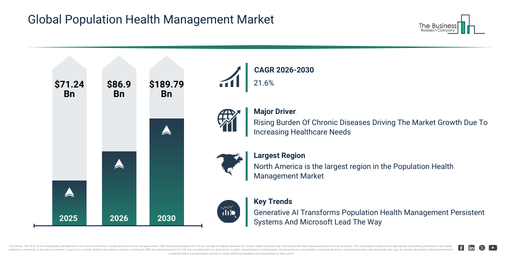
    The population health management market size has demonstrated significant expansion in recent years. This market is projected to expand from $71.24 billion in 2025 to $86.9 billion in 2026, achieving a compound annual growth rate (CAGR) of 22.0%. The growth observed in the historic period is attributable to increasing healthcare digitization, adoption of electronic health records, rising burden of chronic diseases, expansion of managed care models, and a growing focus on care coordination.

    The population health management market is poised for significant expansion in the coming years. Its size is expected to reach $189.79 billion by 2030, driven by a compound annual growth rate (CAGR) of 21.6%. This anticipated growth during the forecast period is fueled by several factors, including increased investments in population analytics platforms, a growing demand for preventive care management, the expansion of cloud-based healthcare solutions, the rising integration of AI-driven decision support, and a greater emphasis on outcome-based reimbursement models. Prominent trends for this period encompass the increasing adoption of data-driven care models, a surge in the use of predictive analytics within healthcare, the deeper integration of care coordination platforms, the wider implementation of value-based care programs, and enhanced patient engagement solutions.

    Access Your Free Sample Report for In-Depth Market Insights:

    https://www.thebusinessresearchcompany.com/sample.aspx?id=6924&type=smp

    What Drivers Are Supporting Technological Adoption In The Population Health Management Market?

    An increasing prevalence of chronic illnesses is anticipated to drive expansion in the population health management market moving ahead. These are persistent health issues necessitating continuous medical care and oversight for prolonged durations. The escalating load of chronic diseases largely stems from older populations, who are more frequently impacted by numerous long-term conditions demanding consistent healthcare oversight. This increasing burden fuels the need for integrated care networks, proactive health initiatives, and data-informed strategies to efficiently oversee patient groups and mitigate healthcare expenses. As an illustration, the National Health Service, a UK-based government department, reported in June 2024 that during 2023, the NHS identified an additional 549,000 individuals in England susceptible to type 2 diabetes. This brought the overall count of those with non-diabetic hyperglycemia, or pre-diabetes, registered with a GP, to 3,615,330. This marked a considerable rise from 3,065,825 in 2022, indicating an increase of nearly 20%. Consequently, the increasing prevalence of chronic diseases is a key factor propelling expansion in the population health management market.

    What Segment Types Are Examined In The Population Health Management Market?

    The population health management market covered in this report is segmented –

    1) By Component: Software, Service

    2) By Mode Of Delivery: On Premise, Cloud-Based

    3) By End-User: Providers, Payers, Other End-Users

    Subsegments:

    1) By Software: Data Management Software, Analytics Software, Reporting Software, Other Software Solutions

    2) By Service: Consulting Services, Implementation Services, Support and Maintenance Services, Other Services

    How Are New Market Trends Shaping The Landscape Of The Population Health Management Market?

    Leading companies in the population health management market are concentrating on developing generative AI-powered population health management (PHM) solutions. These initiatives are aimed at enhancing predictive analytics capabilities, personalizing patient care experiences, improving the precision of clinical decision-making, and optimizing healthcare delivery processes to achieve better health outcomes for various populations. Generative AI itself is a category of artificial intelligence designed to create new content, data, or solutions by learning from established data patterns. A relevant illustration of this trend occurred in February 2024, when Persistent Systems Inc, an India-based company, collaborated with Microsoft Corp, a US-based company, to introduce a Generative AI-powered Population Health Management (PHM) solution. This particular solution leverages the capabilities of Microsoft Azure OpenAI Service and Dynamics 365 Customer Insights to analyze Electronic Health Records (EHR). The integration facilitates the extraction of essential patient information, including unstructured clinical notes, which account for as much as 80% of EHR data.

    Who Are The Prominent Global Companies Shaping The Population Health Management Market Landscape?

    Major companies operating in the population health management market are McKesson Corporation, Accenture plc, IBM Corporation, Deloitte Touche Tohmatsu Limited, Optum Inc., Koninklijke Philips NV, Cerner Corporation, Epic Systems Corporation, Allscripts Healthcare LLC, Athenahealth Inc., Evolent Health Inc., Conifer Health Solutions, Cotiviti Inc., Lumeris Inc., MEDecision Inc., The Advisory Board Company, eClinicalWorks LLC., NextGen Healthcare Inc., Health Catalyst Inc., Verscend Technologies Inc., Orion Health Group Ltd., Citra Health Solutions Inc., RedBrick Health Corporation, Lightbeam Health Solutions, Enli Health Intelligence Inc., Persivia Inc., Welltok Inc., Forward Health Group Inc., Arcadia Inc., Health EC LLC, Jvion Inc., ZeOmega Inc.

    Access The Complete Report For Deeper Market Insights:

    https://www.thebusinessresearchcompany.com/report/population-health-management-global-market-report

    Which Geographic Areas Are Emerging As Strong Markets For The Population Health Management Market?

    North America was the largest region in the population health management market in 2025. Asia-Pacific is expected to be the fastest-growing region in the forecast period. The regions covered in the population health management market report are Asia-Pacific, South East Asia, Western Europe, Eastern Europe, North America, South America, Middle East, Africa.

    Request Your Customized Population Health Management Market Research Report for Competitive Advantage:

    https://www.thebusinessresearchcompany.com/customise?id=6924&type=smp

    Browse Through More Reports Similar to the Global Population Health Management Market 2026, By The Business Research Company

    Healthcare Workforce Management System Market Report 2026

    https://www.thebusinessresearchcompany.com/report/healthcare-workforce-management-system-global-market-report

    Facility Management Services Market Report 2026

    https://www.thebusinessresearchcompany.com/report/facility-management-services-global-market-report

    Healthcare Facility Management Market Report 2026

    https://www.thebusinessresearchcompany.com/report/healthcare-facility-management-global-market-report

    Get in touch with us:

    The Business Research Company: https://www.thebusinessresearchcompany.com/

    Americas +1 310-496-7795

    Asia +44 7882 955267 & +91 8897263534

    Europe +44 7882 955267

    Email us at info@tbrc.info

    Follow us on:

    LinkedIn: https://in.linkedin.com/company/the-business-research-company

    YouTube: https://www.youtube.com/channel/UC24_fI0rV8cR5DxlCpgmyFQ

    Global Market Model: https://www.thebusinessresearchcompany.com/global-market-model
  • Global Retinal Detachment Market Report 2026–2030: Data-Driven Growth Insights

    Global Retinal Detachment Market Report 2026–2030: Data-Driven Growth Insights

    Uncover key drivers, emerging technologies, and competitive movements shaping the retinal detachment market from 2026–2035 with trusted insights from The Business Research Company

    What growth pattern is forecast for the Retinal Detachment Market size between 2026 and 2035?

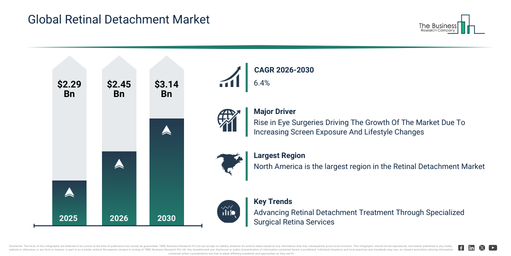
    The retinal detachment market has experienced substantial growth in recent years. It is projected to expand from $2.29 billion in 2025 to $2.45 billion in 2026, demonstrating a compound annual growth rate (CAGR) of 6.7%. This historic growth can be linked to the increasing prevalence of age-related eye disorders, a higher incidence of diabetic retinopathy, the broader availability of ophthalmic surgical expertise, the expansion of hospital ophthalmology departments, and improved access to retinal care services.

    The retinal detachment market is projected to experience substantial expansion in the coming years. This market is anticipated to reach $3.14 billion by 2030, exhibiting a compound annual growth rate (CAGR) of 6.4%. Several factors are contributing to this growth during the forecast period, including an expanding elderly demographic, wider implementation of sophisticated surgical instruments, increased financial commitments to ophthalmic research, the proliferation of specialized retinal facilities, and a rising need for timely therapeutic interventions. Key developments expected during this period involve a greater embrace of minimally invasive retinal surgical procedures, the more frequent application of advanced vitrectomy methods, enhanced incorporation of high-resolution retinal imaging, the enlargement of initiatives for early diagnosis and screening, and a heightened emphasis on outcomes related to preserving vision.

    Access Your Free Sample Report for In-Depth Market Insights:

    https://www.thebusinessresearchcompany.com/sample.aspx?id=23500&type=smp

    Which Drivers Are Impacting Market Performance In The Retinal Detachment Market?

    The retinal detachment market is anticipated to expand due to the rising volume of eye surgeries. These medical interventions involve operations on the eye to correct visual impairments, address diseases, or mend injuries. The escalation in eye surgeries stems from extended screen time leading to digital eye strain and deteriorating vision, often resulting in conditions like cataracts and myopia requiring surgery; additionally, evolving lifestyles and greater reliance on digital gadgets contribute to a surge in ocular problems. Furthermore, retinal detachment itself fuels innovation in eye surgeries, demanding new techniques and technologies to restore sight, boost surgical accuracy, and better patient results. An illustration of this trend is observed in 2023, where, as reported by the Eye Bank Association of America, a US transplant organization, domestic keratoplasty procedures saw a 2.7% increase, climbing from 49,597 in 2022 to 50,925 in 2023. Consequently, the growing frequency of eye surgeries is a key factor driving the expansion of the retinal detachment market.

    Which Segments Are Contributing To The Growth Of The Retinal Detachment Market?

    The retinal detachment market covered in this report is segmented –

    1) By Condition Type: Rhegmatogenous Retinal Detachment, Tractional Retinal Detachment, Exudative Retinal Detachment

    2) By Treatment: Photocoagulation, Cryopexy, Pneumatic Retinopexy, Scleral Buckling, Vitrectomy

    3) By End User: Hospitals And Clinics, Specialty Centers, Other End Users

    Subsegments:

    1) By Rhegmatogenous Retinal Detachment: Retinal Tears, Retinal Holes, Giant Retinal Tears

    2) By Tractional Retinal Detachment: Diabetic Tractional Detachment, Proliferative Vitreoretinopathy (PVR), Retinopathy of Prematurity (ROP)

    3) By Exudative Retinal Detachment: Inflammatory Disorders, Tumors, Vascular Disorders

    What Trends Are Expected To Impact The Competitive Landscape Of The Retinal Detachment Market?

    Leading companies within the retinal detachment market are concentrating on developing innovative services, such as surgical retina services, to improve treatment outcomes and enhance patient care. A surgical retina service involves establishing a specialized medical program or facility designed to offer advanced surgical treatments for various retinal conditions. These services are dedicated to diagnosing and treating disorders impacting the retina, including retinal detachment, macular holes, diabetic retinopathy, and age-related macular degeneration. For instance, in July 2024, NYC Health + Hospitals/Harlem, a US-based teaching hospital, initiated a new Surgical Retina Service to bolster its ophthalmological capabilities for addressing complex retinal conditions in the Harlem community. This service, developed in partnership with Columbia University Irving Medical Center’s Edward S. Harkness Eye Institute, which provided technical assistance, is focused on diagnosing and treating diverse retinal diseases, with retinal detachment being one of the most common indications for retinal surgery.

    Who Are The Primary Competitors In The Global Retinal Detachment Market?

    Major companies operating in the retinal detachment market are Alcon Vision LLC, Bausch And Lomb Incorporated, Carl Zeiss Meditec AG, Santen Pharmaceutical Co Ltd, Optos plc, IRIDEX Corporation, Keeler Ltd, Lombart Instrument Inc, Ellex Medical Lasers Ltd, Millennium Surgical Corp, iCare World iCare Finland Oy, Surtex Instruments Limited, Lumibird Medical, NIDEK Co Ltd, ONL Therapeutics Inc, FCI Ophthalmics, Topcon Corporation, Haag Streit Group, Leica Microsystems, Oculus Optikgeraete GmbH, Johnson And Johnson Vision, EssilorLuxottica

    Access The Complete Report For Deeper Market Insights:

    https://www.thebusinessresearchcompany.com/report/retinal-detachment-global-market-report

    Which Global Regions Are Shaping The Competitive Landscape Of The Retinal Detachment Market?

    North America was the largest region in the retinal detachment market in 2025. Asia-Pacific is expected to be the fastest-growing region in the forecast period. The regions covered in the retinal detachment market report are Asia-Pacific, South East Asia, Western Europe, Eastern Europe, North America, South America, Middle East, Africa.

    Request Your Customized Retinal Detachment Market Research Report for Competitive Advantage:

    https://www.thebusinessresearchcompany.com/customise?id=23500&type=smp

    Browse Through More Reports Similar to the Global Retinal Detachment Market 2026, By The Business Research Company

    Retinal Vein Occlusion Treatment Market Report 2026

    https://www.thebusinessresearchcompany.com/report/retinal-vein-occlusion-treatment-global-market-report

    Retinal Vein Occlusion Market Report 2026

    https://www.thebusinessresearchcompany.com/report/retinal-vein-occlusion-global-market-report

    Retinal Biologics Market Report 2026

    https://www.thebusinessresearchcompany.com/report/retinal-biologics-global-market-report

    Get in touch with us:

    The Business Research Company: https://www.thebusinessresearchcompany.com/

    Americas +1 310-496-7795

    Asia +44 7882 955267 & +91 8897263534

    Europe +44 7882 955267

    Email us at info@tbrc.info

    Follow us on:

    LinkedIn: https://in.linkedin.com/company/the-business-research-company

    YouTube: https://www.youtube.com/channel/UC24_fI0rV8cR5DxlCpgmyFQ

    Global Market Model: https://www.thebusinessresearchcompany.com/global-market-model
  • Menorrhalgia Market Growth Projection: Expected to Surpass $29.36 Billion by 2030 at 6% CAGR

    Menorrhalgia Market Growth Projection: Expected to Surpass $29.36 Billion by 2030 at 6% CAGR

    Uncover key drivers, emerging technologies, and competitive movements shaping the menorrhalgia market from 2026–2035 with trusted insights from The Business Research Company

    What is the expected shift in the Menorrhalgia Market’s size between 2026 and 2030?

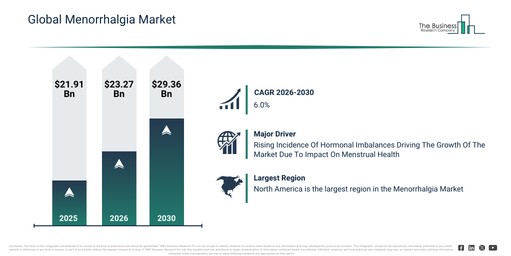
    The menorrhalgia market size has shown robust expansion in recent years. This market is expected to increase from $21.91 billion in 2025 to $23.27 billion in 2026, demonstrating a compound annual growth rate (CAGR) of 6.2%. During prior periods, this growth was primarily due to the high prevalence of hormonal imbalances, a rise in the incidence of uterine fibroids and polyps, restricted awareness of abnormal menstrual bleeding, the widespread application of oral hormonal therapies, and the expansion of gynecology clinics.

    The menorrhalgia market is projected to experience substantial growth over the coming years, reaching a valuation of $29.36 billion by 2030, driven by a compound annual growth rate (CAGR) of 6.0%. This anticipated expansion throughout the forecast period stems from factors such as increasing demand for fertility-preserving treatments, wider adoption of long-acting intrauterine systems, a heightened emphasis on women’s reproductive health, expanded access to gynecological care in emerging markets, and greater acceptance of non-hormonal therapies. Key trends anticipated during this period encompass a rising preference for non-hormonal treatment options, enhanced awareness and earlier diagnosis of menorrhagia, an uptick in the utilization of minimally invasive and intrauterine therapies, the broadening of personalized gynecological treatment plans, and a greater focus on managing anemia and improving patients’ quality of life.

    Access Your Free Sample Report for In-Depth Market Insights:

    https://www.thebusinessresearchcompany.com/sample.aspx?id=22052&type=smp

    Which Drivers Are Shaping Strategic Decisions In The Menorrhalgia Market?

    The menorrhalgia market is anticipated to expand moving forward, driven by the escalating frequency of hormonal imbalances. These imbalances denote disturbances within the body’s endocrine system, where hormones are either overly abundant or deficient, leading to various health issues such as weight fluctuations, mood shifts, fatigue, or reproductive complications. The rise in hormonal imbalances is attributable to lifestyle choices, environmental factors, and specific medical conditions. Modern lifestyles, encompassing poor dietary habits, significant stress levels, and inadequate physical activity, interfere with normal hormone production and regulation. Hormonal imbalances can exacerbate menorrhalgia (painful menstruation) by disrupting the regular menstrual cycle and affecting the uterine environment. As an illustration, in January 2025, the World Health Organization, an intergovernmental organization located in Switzerland, stated that polycystic ovary syndrome is a significant public health concern and one of the most prevalent hormonal disorders in women of reproductive age, affecting an estimated 6–13% annually. Therefore, the increasing occurrence of hormonal imbalances is a key factor boosting the growth of the menorrhagia market.

    What Segment Classifications Make Up The Menorrhalgia Market?

    The menorrhalgia market covered in this report is segmented –

    1) By Therapeutics: Hormonal Agents, Non-Hormonal Agents

    2) By Route Of Administration: Oral, Vaginal, Transdermal, Intrauterine, Other Routes Of Administration

    3) By Distribution Channel: Retail Pharmacies, Hospital Pharmacies, Online Pharmacies

    Subsegments:

    1) By Hormonal Agents: Combined Oral Contraceptives (COCs), Progestins, Gonadotropin-Releasing Hormone (GnRH) Agonists, Levonorgestrel-Releasing Intrauterine Systems (LNG-IUS), Danazol, Selective Estrogen Receptor Modulators (SERMs)

    2) By Non-Hormonal Agents: Non-Steroidal Anti-Inflammatory Drugs (NSAIDs), Tranexamic Acid, Antifibrinolytics, Iron Supplements, Herbal And Natural Remedies

    Which Major Industry Participants Are Leading The Menorrhalgia Market Growth?

    Major companies operating in the menorrhalgia market are AbbVie Inc., Bayer HealthCare Pharmaceuticals Inc., Boston Scientific Corporation, Johns Hopkins Health System Corporation, Aegea Medical Inc., Emory Healthcare Inc., Hologic Inc., Dr Reddys Laboratories Ltd., Meril Life Sciences Pvt Ltd, ASKA Pharmaceutical Holdings Co Ltd, Ferring Pharmaceuticals Group, Xanodyne Pharmaceuticals Inc., Pregna International Ltd., HLL Lifecare Limited, Actiza Pharmaceutical Pvt Ltd, Wellona Pharma, OCON Healthcare Ltd, Pfizer Inc., Medtronic plc, Myovant Sciences Ltd, Gedeon Richter Plc, Cooper Surgical Inc, Olympus Corporation, Takeda Pharmaceutical Company Limited, Novartis AG.

    Access The Complete Report For Deeper Market Insights:

    https://www.thebusinessresearchcompany.com/report/menorrhalgia-global-market-report

    Which Region Currently Holds The Largest Share Of The Menorrhalgia Market?

    North America was the largest region in the menorrhalgia market in 2025. The regions covered in the menorrhalgia market report are Asia-Pacific, South East Asia, Western Europe, Eastern Europe, North America, South America, Middle East, Africa.

    Request Your Customized Menorrhalgia Market Research Report for Competitive Advantage:

    https://www.thebusinessresearchcompany.com/customise?id=22052&type=smp

    Browse Through More Reports Similar to the Global Menorrhalgia Market 2026, By The Business Research Company

    Cyclic Heavy Menstrual Bleeding Market Report 2026

    https://www.thebusinessresearchcompany.com/report/cyclic-heavy-menstrual-bleeding-global-market-report

    Endometriosis Market Report 2026

    https://www.thebusinessresearchcompany.com/report/endometriosis-global-market-report

    Neuropathic Pain Market Report 2026

    https://www.thebusinessresearchcompany.com/report/neuropathic-pain-global-market-report

    Get in touch with us:

    The Business Research Company: https://www.thebusinessresearchcompany.com/

    Americas +1 310-496-7795

    Asia +44 7882 955267 & +91 8897263534

    Europe +44 7882 955267

    Email us at info@tbrc.info

    Follow us on:

    LinkedIn: https://in.linkedin.com/company/the-business-research-company

    YouTube: https://www.youtube.com/channel/UC24_fI0rV8cR5DxlCpgmyFQ

    Global Market Model: https://www.thebusinessresearchcompany.com/global-market-model
  • Population Genomics Market Forecast 2026: Where the Industry Is Headed

    Population Genomics Market Forecast 2026: Where the Industry Is Headed

    Uncover key drivers, emerging technologies, and competitive movements shaping the population genomics market from 2026–2035 with trusted insights from The Business Research Company

    What upper market value could the Population Genomics Market reach by 2030 starting from 2026 levels?

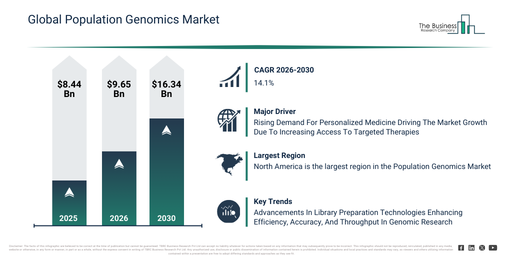
    The population genomics market has experienced rapid expansion in recent years. Projections indicate it will increase from $8.44 billion in 2025 to $9.65 billion by 2026, achieving a compound annual growth rate (CAGR) of 14.4%. This historical growth is attributable to several factors, including the expansion of national genomics initiatives, increased research funding for population studies, development in biobank infrastructure, advancements in sequencing technologies, and a heightened demand for genetic diversity studies.

    The population genomics market is projected for rapid expansion in the coming years, with its size expected to reach $16.34 billion by 2030, demonstrating a compound annual growth rate (CAGR) of 14.1%. This growth during the forecast period is primarily driven by the expanding application of population genomics in personalized medicine, a rise in investments for global genomics collaborations, the broader adoption of AI-driven genomic interpretation, increased utilization of genomics in public health planning, and the growing integration of scalable data management systems. Key trends anticipated for this period encompass the increased deployment of large-scale population sequencing projects, a rising adoption of advanced variant annotation tools, the deepening integration of population genomics with clinical research, the expansion of cloud-based genomics platforms, and a heightened emphasis on data standardization.

    Access Your Free Sample Report for In-Depth Market Insights:

    https://www.thebusinessresearchcompany.com/sample.aspx?id=28305&type=smp

    Which Drivers Are Influencing Long-Term Growth In The Population Genomics Market?

    The increasing need for personalized medical treatments is projected to fuel the expansion of the population genomics market in the future. Personalized medicine involves customizing medical care according to an individual’s unique genetic makeup. This surge in demand is fueled by the falling costs of genomic technologies, which in turn broadens access to specific, targeted treatments. Population genomics aids personalized medicine by identifying genetic differences prevalent within particular groups, allowing medical professionals to tailor therapies and medications for improved efficacy and safety, considering each patient’s genetic profile. For example, data from February 2024, released by the US-based non-profit Personalized Medicine Coalition, shows that the FDA cleared 16 new personalized therapies for individuals with rare diseases in 2023, a significant rise from only six such approvals in 2022. Consequently, the growing requirement for personalized medicine is a key force behind the expansion of the population genomics market.

    Which Segments Are Driving Activity In The Population Genomics Market?

    The population genomics market covered in this report is segmented –

    1) By Product And Service: Consumables, Instruments, Services, Software

    2) By Sample Type: Human, Animal, Plant, Microbial

    3) By Application: Pharmacogenomics, Disease Research, Ancestry And Evolution, Personalized Medicine, Other Applications

    4) By End-User: Academic And Research Institutes, Pharmaceutical And Biotechnology Companies, Hospitals And Clinics, Other End-Users

    Subsegments:

    1) By Consumables: Reagents, Kits, Probes And Assay Panels, Enzymes, Buffers And Media, Sample Collection And Storage Materials

    2) By Instruments: Sequencers, PCR And qPCR Instruments, Microarray Platforms, Sample Preparation And Extraction Instruments, Imaging Systems, Automation And Robotics Systems

    3) By Services: Sequencing Services, Genotyping Services, Bioinformatics And Data Analysis Services, Sample Preparation Services, Custom Assay Development

    4) By Software: Data Analysis Software, Genome Assembly Software, Variant Calling And Annotation Software, Cloud-Based Genomics Platforms, Laboratory Information Management Systems (LIMS)

    Which Trends Are Expected To Influence The Population Genomics Market In The Upcoming Years?

    Leading companies in the population genomics market are concentrating on developing advanced solutions, such as ultra-high-throughput library preparation kits, to enhance sample consistency, streamline large-scale sequencing workflows, and reduce per-sample processing costs. Ultra-high-throughput library preparation kits are specialized Next-Generation Sequencing (NGS) workflow tools that facilitate the rapid preparation, normalization, and pooling of hundreds to thousands of DNA or RNA samples in a single, scalable process, making them suitable for population-wide genomic studies. For example, in October 2024, Twist Bioscience Corporation, a US-based biotechnology company, introduced FlexPrep, an ultra-high-throughput library preparation kit. This kit features Normalization by Ligation (NBL) technology, which eliminates the need for upfront sample quantification, early pooling, and multiplexing to simplify the handling of variable input samples. It also includes a proprietary Twist-developed enzyme that supports high-volume, cost-efficient processing for population genomics NGS applications.

    Which Key Players Are Driving Competition In The Population Genomics Market?

    Major companies operating in the population genomics market are F. Hoffmann-La Roche Ltd., Thermo Fisher Scientific Inc., Labcorp Holdings Inc., Regeneron Pharmaceuticals Inc., Eurofins Scientific SE, Illumina Inc., Charles River Laboratories, Bio-Rad Laboratories Inc., QIAGEN N.V., Myriad Genetics Inc., Takara Bio Inc, BGI Genomics Co. Ltd., Invitae Corporation, 23andMe Inc., Color Genomics Inc., Helix OpCo LLC, Personalis Inc., Centogene N.V., Genomics England Limited, Veritas Genetics Inc., Genuity Science, Gene by Gene Ltd., Nebula Genomics Inc., Ancestry.com LLC.

    Access The Complete Report For Deeper Market Insights:

    https://www.thebusinessresearchcompany.com/report/population-genomics-global-market-report

    Which Region Is Projected To Lead The Population Genomics Market During The Forecast Period?

    North America was the largest region in the population genomics market in 2025. Asia-Pacific is expected to be the fastest-growing region in the forecast period. The regions covered in the population genomics market report are Asia-Pacific, South East Asia, Western Europe, Eastern Europe, North America, South America, Middle East, Africa.

    Request Your Customized Population Genomics Market Research Report for Competitive Advantage:

    https://www.thebusinessresearchcompany.com/customise?id=28305&type=smp

    Browse Through More Reports Similar to the Global Population Genomics Market 2026, By The Business Research Company

    Consumer Genomics Market Report 2026

    https://www.thebusinessresearchcompany.com/report/consumer-genomics-global-market-report

    Genomics Services Market Report 2026

    https://www.thebusinessresearchcompany.com/report/genomics-services-global-market-report

    Ai In Genomics Market Report 2026

    https://www.thebusinessresearchcompany.com/report/ai-in-genomics-global-market-report

    Get in touch with us:

    The Business Research Company: https://www.thebusinessresearchcompany.com/

    Americas +1 310-496-7795

    Asia +44 7882 955267 & +91 8897263534

    Europe +44 7882 955267

    Email us at info@tbrc.info

    Follow us on:

    LinkedIn: https://in.linkedin.com/company/the-business-research-company

    YouTube: https://www.youtube.com/channel/UC24_fI0rV8cR5DxlCpgmyFQ

    Global Market Model: https://www.thebusinessresearchcompany.com/global-market-model
  • Retail Clinics And In Store Healthcare Market Dynamics 2026: Future Outlook and Key Insights

    Retail Clinics And In Store Healthcare Market Dynamics 2026: Future Outlook and Key Insights

    Uncover key drivers, emerging technologies, and competitive movements shaping the retail clinics and in store healthcare market from 2026–2035 with trusted insights from The Business Research Company

    How much larger will the Retail Clinics And In Store Healthcare Market be in 2030 compared with 2026?

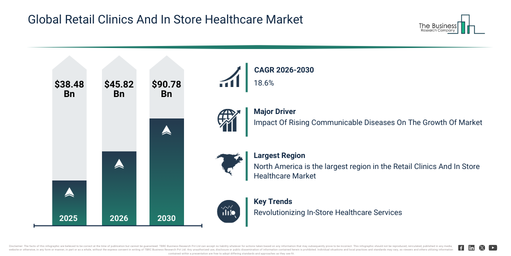
    The retail clinics and in store healthcare market size has experienced significant expansion recently. This market is projected to increase from $38.48 billion in 2025 to $45.82 billion in 2026, achieving a compound annual growth rate (CAGR) of 19.1%. The historical growth in this sector is attributable to increasing healthcare access gaps, rising consumer preference for retail-based care, expansion of pharmacy-led health services, growth in outpatient service demand, and increasing preventive care awareness.

    The retail clinics and in store healthcare market is poised for significant expansion in the coming years, projected to reach $90.78 billion by 2030, exhibiting a compound annual growth rate (CAGR) of 18.6%. This anticipated growth during the forecast period stems from several factors, including heightened investments in integrated retail healthcare networks, a surge in the adoption of insurance-linked retail services, the broadening of chronic care offerings, the expanded utilization of digital health platforms, and increased collaboration between retailers and healthcare providers. Key trends for the forecast period encompass greater integration of in-store healthcare services, a rise in the uptake of preventive and wellness programs, the expansion of chronic disease management within retail environments, increasing reliance on digital payment and insurance models, and an intensified focus on patient convenience and accessibility.

    Access Your Free Sample Report for In-Depth Market Insights:

    https://www.thebusinessresearchcompany.com/sample.aspx?id=21275&type=smp

    What Drivers Are Guiding Growth Patterns In The Retail Clinics And In Store Healthcare Market?

    The increasing occurrence of communicable diseases is anticipated to drive the expansion of the retail clinics and in-store healthcare market in the future. These illnesses originate from infectious agents like bacteria, viruses, fungi, or parasites and can spread among individuals via diverse transmission methods. The growth in communicable diseases stems from issues such as inadequate sanitation, insufficient vaccination, and congested living environments. Retail clinics and in-store healthcare services play a crucial role in tackling communicable diseases by offering easy access to preventative measures, immunizations, and prompt diagnosis, which in turn curtails infection spread and fosters improved public health. For example, data from March 2024 by the Centers for Disease Control and Prevention, a US government body, indicated that the tuberculosis (TB) rate climbed by 15%, moving from 2.5 cases per 100,000 persons in 2022 to 2.9 in 2023. Consequently, the increasing incidence of communicable diseases is propelling the expansion of the retail clinics and in-store healthcare market.

    How Is The Retail Clinics And In Store Healthcare Market Divided Into Segments?

    The retail clinics and in store healthcare market covered in this report is segmented –

    1) By Service Type: Acute Care, Preventive Care, Wellness And Screening, Chronic Disease Management

    2) By Ownership: Retail-Owned, Hospital-Owned, Independent

    3) By Payment Mode: Insurance, Out-Of-Pocket

    4) By Application: Big Box Retailer, Drugstore Chain, Grocery Chain, Standalone Drug Store

    Subsegments:

    1) By Acute Care: Treatment For Minor Injuries, Treatment For Common Illnesses, Infections And Skin Conditions

    2) By Preventive Care: Vaccinations And Immunizations, Health Risk Assessments, Counseling And Education On Lifestyle Changes

    3) By Wellness And Screening: Blood Pressure Monitoring, Cholesterol And Blood Glucose Screening, Weight Management And Body Composition Analysis

    4) By Chronic Disease Management: Diabetes Management, Hypertension Monitoring, Asthma And COPD Management

    Which Trends Are Guiding The Evolution Of The Retail Clinics And In Store Healthcare Market?

    Leading companies in the retail clinics and in-store healthcare market are concentrating on developing advanced solutions, such as innovative in-store comprehensive healthcare services, to boost customer convenience. These in-store comprehensive healthcare services provide a spectrum of medical provisions directly within a retail setting, including enhanced pharmacy and healthcare services, enabling customers to manage their well-being at a single location. For example, in November 2024, Tesco plc, a UK-based retail company, introduced its initial health zone, a novel store concept being trialed at the refurbished Cheshunt Extra store. This concept merges food, health, and wellness product ranges with improved pharmacy and healthcare services, offering patrons advice, treatment, and virtual GP appointments for various health concerns. The goal is to simplify well-being management and deliver the convenience of in-store shopping.

    Which Key Market Players Are Investing In Expansion And Innovation Within The Retail Clinics And In Store Healthcare Market?

    Major companies operating in the retail clinics and in store healthcare market are Walmart Inc., CVS Health Corporation, Walgreens Boots Alliance Inc., The Kroger Co., Albertsons Companies Inc., Tesco PLC, Publix Super Markets Inc., Loblaw Companies Limited, H E B LP, Asda Stores Limited, Rite Aid Corporation, Giant Eagle Inc., Lloyds Pharmacy Limited, Superdrug Stores PLC, Waitrose And Partners, Bashas Inc., Safeway Inc., RediClinic LLC, MinuteClinic LLC, Take Care Health Systems

    Access The Complete Report For Deeper Market Insights:

    https://www.thebusinessresearchcompany.com/report/retail-clinics-and-in-store-healthcare-global-market-report

    Which Regions Are Poised For Strategic Growth In The Retail Clinics And In Store Healthcare Market?

    North America was the largest region in the retail clinics and the in-store healthcare market in 2025. Asia-Pacific is expected to be the fastest-growing region in the forecast period. The regions covered in the retail clinics and in store healthcare market report are Asia-Pacific, South East Asia, Western Europe, Eastern Europe, North America, South America, Middle East, Africa.

    Request Your Customized Retail Clinics And In Store Healthcare Market Research Report for Competitive Advantage:

    https://www.thebusinessresearchcompany.com/customise?id=21275&type=smp

    Browse Through More Reports Similar to the Global Retail Clinics And In Store Healthcare Market 2026, By The Business Research Company

    Pharmacies And Drug Stores Market Report 2026

    https://www.thebusinessresearchcompany.com/report/pharmacies-and-drug-stores-global-market-report

    Pharmacies And Healthcare Stores Market Report 2026

    https://www.thebusinessresearchcompany.com/report/pharmacies-and-healthcare-stores-global-market-report

    Other Health And Personal Care Stores Market Report 2026

    https://www.thebusinessresearchcompany.com/report/other-health-and-personal-care-stores-global-market-report

    Get in touch with us:

    The Business Research Company: https://www.thebusinessresearchcompany.com/

    Americas +1 310-496-7795

    Asia +44 7882 955267 & +91 8897263534

    Europe +44 7882 955267

    Email us at info@tbrc.info

    Follow us on:

    LinkedIn: https://in.linkedin.com/company/the-business-research-company

    YouTube: https://www.youtube.com/channel/UC24_fI0rV8cR5DxlCpgmyFQ

    Global Market Model: https://www.thebusinessresearchcompany.com/global-market-model
  • Menopause Digital Hormone Balancing App Market Forecast 2026–2035: How to Leverage Market Growth

    Menopause Digital Hormone Balancing App Market Forecast 2026–2035: How to Leverage Market Growth

    Uncover key drivers, emerging technologies, and competitive movements shaping the menopause digital hormone balancing app market from 2026–2035 with trusted insights from The Business Research Company

    What growth pattern is forecast for the Menopause Digital Hormone Balancing App Market size between 2026 and 2035?

    The menopause digital hormone balancing app market size has experienced swift expansion over recent years. It is projected to increase from $1.52 billion in 2025 to $1.79 billion in 2026, demonstrating a compound annual growth rate (CAGR) of 17.3%. This historic growth is primarily due to several factors, including growing awareness of menopause health management, increasing smartphone penetration among women, rising adoption of digital health solutions, the expansion of wellness-focused mobile apps, and an increased focus on preventive healthcare.

    The menopause digital hormone balancing app market is projected for significant expansion over the coming years. Its valuation is set to reach $3.35 billion by 2030, driven by a compound annual growth rate (CAGR) of 17.0%. This projected growth is fueled by several factors, including a heightened demand for tailored digital therapeutics, greater integration with wearable health devices, the proliferation of subscription-based health applications, an expanding emphasis on comprehensive menopause care, and the rising adoption of AI-powered health insights. Key trends anticipated during this period encompass the wider embrace of personalized menopause management apps, expanded utilization of symptom tracking and analytical tools, increasing integration of hormone monitoring capabilities, the broadening of virtual health coaching offerings, and a sharpened emphasis on user-focused app design.

    Access Your Free Sample Report for In-Depth Market Insights:

    https://www.thebusinessresearchcompany.com/sample.aspx?id=28265&type=smp

    Which Drivers Are Impacting Market Performance In The Menopause Digital Hormone Balancing App Market?

    The rising adoption of smartphones is expected to propel the growth of the menopause digital hormone balancing app market going forward. Smartphone penetration refers to the percentage of a population or target market that owns or actively uses a smartphone. The increase in smartphone penetration is driven by the greater affordability of smartphones, making them accessible to a larger population. Higher smartphone penetration aids menopause digital hormone balancing apps by expanding their potential user base, enabling more women to conveniently access symptom tracking, hormone monitoring, lifestyle guidance, and educational resources on their devices. For instance, in February 2023, according to the GSM Association (GSMA), a UK-based industry organization representing mobile network operators and companies, smartphone penetration in sub-Saharan Africa is projected to significantly rise, reaching 87% by 2030, up from 51% in 2022. Therefore, the increasing smartphone penetration is a key driver for the growth of the menopause digital hormone balancing app market.

    What Segment Types Are Examined In The Menopause Digital Hormone Balancing App Market?

    The menopause digital hormone balancing app market covered in this report is segmented –

    1) By App Type: Symptom Tracking, Hormone Monitoring, Lifestyle Management, Educational Apps, Other App Types

    2) By Platform: iPhone Operating System, Android, Web-Based

    3) By Subscription Model: Free, Paid, Freemium

    4) By End-User: Women, Healthcare Providers, Clinics, Other End-Users

    Subsegments:

    1) By Symptom Tracking: Hot Flashes, Mood Swings, Sleep Disturbances

    2) By Hormone Monitoring: Estrogen Levels, Progesterone Levels, Testosterone Levels

    3) By Lifestyle Management: Nutrition Guidance, Exercise Regimens, Stress Management

    4) By Educational Apps: Menopause Education, Hormone Therapy Information, Bone Health

    5) By Other App Types: Community Support Platforms, Virtual Consultations, Medication Reminders

    What Trends Are Projected To Support The Growth Of The Menopause Digital Hormone Balancing App Market?

    Companies operating in the menopause digital hormone balancing app market are prioritizing the creation of advanced solutions, such as a clinical decision-support engine. This technology facilitates the structured collection of patient data and its real-time evaluation against evidence-based menopause pathways, enabling the provision of personalized management recommendations at the point of care. A clinical decision-support engine is defined as a software system designed to assist healthcare professionals in making informed and evidence-based decisions about patient care, offering structured guidance and recommendations based on patient-specific data. For example, in July 2025, University College London Hospitals (UCLH), a UK-based healthcare provider specializing in women’s health and menopause care, partnered with University College London (UCL) to launch the MENO.pause app. This digital clinical decision-support platform is developed to aid clinicians in managing patients’ menopause symptoms. The app integrates evidence-based clinical guidelines from the National Institute for Health and Care Excellence (NICE), the British Menopause Society (BMS), and the British Gynaecological Cancer Society (BGCS), providing personalized treatment recommendations based on patient history and risk factors. Moreover, the platform assists in risk stratification for high-risk patients, optimizes hormone replacement therapy (HRT) decisions, and simplifies referral pathways for complex or specialist cases through an intuitive, workflow-integrated interface suitable for use in primary and secondary care.

    Who Are The Prominent Global Companies Shaping The Menopause Digital Hormone Balancing App Market Landscape?

    Major companies operating in the menopause digital hormone balancing app market are Chorus Health Inc., Noom Inc., Maven Clinic Co., Forth Ltd., Join Olivia AB, Clue by BioWink GmbH, Balance App Ltd., Peppy Health Ltd., Elektra Health Inc., Eli Health Inc., FemTech Health Inc., Health and Her Ltd., Hormona Ltd., Lisa Health Inc., Mira Fertility Inc., Oova Life Inc., Stella LLC, Vira Health Ltd., Wild AI Ltd., Gennev Inc.

    Access The Complete Report For Deeper Market Insights:

    https://www.thebusinessresearchcompany.com/report/menopause-digital-hormone-balancing-app-global-market-report

    How Does The Menopause Digital Hormone Balancing App Market Perform Across Major Global Regions?

    North America was the largest region in the menopause digital hormone balancing app market in 2025. Asia-Pacific is expected to be the fastest-growing region in the forecast period. The regions covered in the menopause digital hormone balancing app market report are Asia-Pacific, South East Asia, Western Europe, Eastern Europe, North America, South America, Middle East, Africa.

    Request Your Customized Menopause Digital Hormone Balancing App Market Research Report for Competitive Advantage:

    https://www.thebusinessresearchcompany.com/customise?id=28265&type=smp

    Browse Through More Reports Similar to the Global Menopause Digital Hormone Balancing App Market 2026, By The Business Research Company

    Hormone Therapy Market Report 2026

    https://www.thebusinessresearchcompany.com/report/hormone-therapy-global-market-report

    Womens Health App Market Report 2026

    https://www.thebusinessresearchcompany.com/report/womens-health-app-global-market-report

    Menopause Market Report 2026

    https://www.thebusinessresearchcompany.com/report/menopause-global-market-report

    Get in touch with us:

    The Business Research Company: https://www.thebusinessresearchcompany.com/

    Americas +1 310-496-7795

    Asia +44 7882 955267 & +91 8897263534

    Europe +44 7882 955267

    Email us at info@tbrc.info

    Follow us on:

    LinkedIn: https://in.linkedin.com/company/the-business-research-company

    YouTube: https://www.youtube.com/channel/UC24_fI0rV8cR5DxlCpgmyFQ

    Global Market Model: https://www.thebusinessresearchcompany.com/global-market-model
  • Pompe Disease Industry Growth Insights: Revenue Forecast to 2030

    Pompe Disease Industry Growth Insights: Revenue Forecast to 2030

    Uncover key drivers, emerging technologies, and competitive movements shaping the pompe disease market from 2026–2035 with trusted insights from The Business Research Company

    What level of CAGR-driven expansion is anticipated in the Pompe Disease Market between 2026 and 2030?

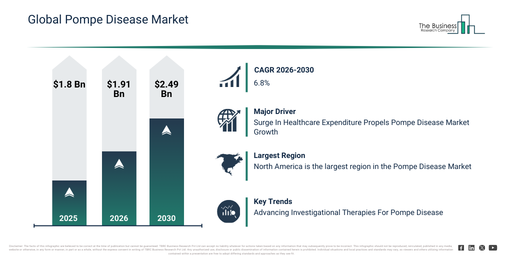
    The pompe disease market has experienced robust expansion in recent years. Its valuation is predicted to rise from $1.8 billion in 2025 to $1.91 billion in 2026, exhibiting a compound annual growth rate (CAGR) of 6.2%. The historical increase can be attributed to several factors such as advancements in newborn screening programs, the introduction of approved ERT treatments, a greater understanding of rare genetic disorders, the broadening of genetic testing capabilities, and the establishment of more specialty care centers.

    The pompe disease market size is projected to experience substantial growth over the coming years. It is anticipated to expand to $2.49 billion by 2030, demonstrating a compound annual growth rate (CAGR) of 6.8%. This expansion during the forecast period is fueled by escalating investments in gene and cell therapies, intensified research into next-generation ERTs, the widening application of personalized medicine approaches, improved access to rare disease diagnostics, and a heightened focus on early intervention strategies. Prominent trends expected in the forecast period include the increasing uptake of enzyme replacement therapy, a greater emphasis on early genetic screening, the evolving development of gene therapy approaches, the growth of specialized treatment centers, and improved long-term disease management.

    Access Your Free Sample Report for In-Depth Market Insights:

    https://www.thebusinessresearchcompany.com/sample.aspx?id=11906&type=smp

    What Drivers Are Affecting Demand-Supply Dynamics In The Pompe Disease Market?

    Rising healthcare expenditure is projected to boost the Pompe disease market moving forward. This expenditure encompasses financial resources directed by governments, insurers, and private organizations toward enhancing medical services, strengthening diagnostic capabilities, and expanding treatment access. The need for greater healthcare investment is growing as health systems prioritize early detection, management of rare diseases, and improved patient outcomes. Such increased spending supports the broader adoption of enzyme replacement therapies and novel innovations, providing superior care and an improved quality of life for individuals with Pompe disease. For instance, a report from the UK-based government department, the Office for National Statistics, indicated in May 2023 that healthcare spending in the UK escalated by 5.6% between 2022 and 2023, a notable increase compared to the 0.9% growth in 2022. The UK’s healthcare expenditure amounted to around $317.63 billion (£292 billion) in 2023. Thus, the expansion in healthcare expenditure is expected to propel the Pompe disease market.

    How Is The Pompe Disease Market Organized Into Various Segments?

    The pompe disease market covered in this report is segmented –

    1) By Type: Classic Infantile Form, Non-Classic Infantile Form, Late-Onset Form, Other Types

    2) By Diagnosis: Blood Test, Genetic Test, Prenatal Test, Other Diagnosis

    3) By Route Of Administration: Intravenous Administration, Parenteral, Other Routes Of Administrations

    4) By Therapy Type: Enzyme Replacement Therapy (ERT), Pharmacological Chaperone Therapy, Gene Therapy, Other Therapies

    5) By End Users: Hospitals Or Clinics, Specialty Metabolic Treatment Centers, Researchers, Other End-Users

    Subsegments:

    1) By Classic Infantile Form: Early-Onset Classic Pompe Disease, Severe Classic Pompe Disease

    2) By Non-Classic Infantile Form: Mild Non-Classic Infantile Pompe Disease, Variants of Non-Classic Infantile Form

    3) By Late-Onset Form: Adult-Onset Pompe Disease, Juvenile-Onset Pompe Disease

    4) By Other Types: Pre-Symptomatic Pompe Patients, Other Rare Variants of Pompe Disease

    What Trends Are Driving The Growth Trajectory Of The Pompe Disease Market?

    Leading companies in the Pompe disease market are concentrating on forming strategic partnerships to bolster product innovation, extend their market presence, and enhance animal health solutions. A strategic partnership typically denotes a cooperative arrangement between two or more organizations, where they integrate their resources, expertise, and efforts to achieve mutual goals. For example, in June 2024, Shionogi & Company, Limited, a Japanese pharmaceutical firm, finalized a global licensing agreement with Maze Therapeutics, a US-based biotechnology company, for MZE001, an experimental oral drug aimed at Pompe disease. Shionogi obtained exclusive rights to MZE001 and its related intellectual property for an upfront payment of $150 million, in addition to potential milestone and royalty payments. This agreement was concluded after undergoing the necessary 30-day review period under U.S. antitrust law (HSR Act).

    Who Are The Top-Performing Companies In The Pompe Disease Market In Recent Years?

    Major companies operating in the pompe disease market are Sanofi S.A., Genzyme Corporation, Amicus Therapeutics Inc., BioMarin Pharmaceutical, Ultragenyx Pharmaceutical, Valerion Therapeutics LLC, Protalix BioTherapeutics, AVROBIO Inc., Abeona Therapeutics Inc., Sangamo BioSciences Inc., Asklepios BioPharmaceutical Inc., Audentes Therapeutics Inc., Genethon, Akashi Therapeutics, M6P Therapeutics, Aro Biotherapeutics Company, Avidity Biosciences Inc., Maze Therapeutics Inc., Novartis AG, F. Hoffmann-La Roche AG, Spark Therapeutics Inc., REGENXBIO Inc.

    Access The Complete Report For Deeper Market Insights:

    https://www.thebusinessresearchcompany.com/report/pompe-disease-global-market-report

    Which Region Currently Holds The Largest Share Of The Pompe Disease Market?

    North America was the largest region in the pompe disease market in 2025. The regions covered in the pompe disease market report are Asia-Pacific, South East Asia, Western Europe, Eastern Europe, North America, South America, Middle East, Africa.

    Request Your Customized Pompe Disease Market Research Report for Competitive Advantage:

    https://www.thebusinessresearchcompany.com/customise?id=11906&type=smp

    Browse Through More Reports Similar to the Global Pompe Disease Market 2026, By The Business Research Company

    Primary Care Poc Diagnostics Market Report 2026

    https://www.thebusinessresearchcompany.com/report/primary-care-poc-diagnostics-global-market-report

    Gestational Trophoblastic Disease Market Report 2026

    https://www.thebusinessresearchcompany.com/report/gestational-trophoblastic-disease-global-market-report

    Poc Medical Imaging Market Report 2026

    https://www.thebusinessresearchcompany.com/report/poc-medical-imaging-global-market-report

    Get in touch with us:

    The Business Research Company: https://www.thebusinessresearchcompany.com/

    Americas +1 310-496-7795

    Asia +44 7882 955267 & +91 8897263534

    Europe +44 7882 955267

    Email us at info@tbrc.info

    Follow us on:

    LinkedIn: https://in.linkedin.com/company/the-business-research-company

    YouTube: https://www.youtube.com/channel/UC24_fI0rV8cR5DxlCpgmyFQ

    Global Market Model: https://www.thebusinessresearchcompany.com/global-market-model
  • Retail Clinics Market Research: Growth Projections and Trends 2030

    Retail Clinics Market Research: Growth Projections and Trends 2030

    Uncover key drivers, emerging technologies, and competitive movements shaping the retail clinics market from 2026–2035 with trusted insights from The Business Research Company

    Starting from its 2026 valuation, what market size is the Retail Clinics Market expected to reach by 2030?

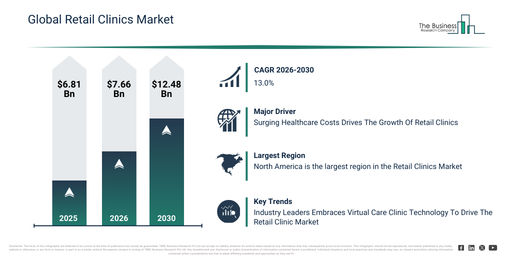
    The retail clinics market has experienced substantial expansion in recent years. It is anticipated to expand from $6.81 billion in 2025 to $7.66 billion in 2026, achieving a compound annual growth rate (CAGR) of 12.5%. This historical growth can be attributed to several factors, including the increasing strain on traditional healthcare systems, rising consumer desire for convenient services, the expansion of clinics located within pharmacies, escalating healthcare expenses, and the growing acceptance of walk-in care models.

    The retail clinics market size is projected to experience substantial growth in the upcoming years, expanding to $12.48 billion by 2030, at a compound annual growth rate (CAGR) of 13.0%. This anticipated growth during the forecast period is primarily driven by factors such as the increasing adoption of hybrid care models, heightened investments in retail healthcare infrastructure, the expanding integration of telehealth services, a broader range of chronic care offerings within retail clinics, and an intensified focus on value-based care delivery. Noteworthy trends predicted for this period include the wider expansion of retail-based healthcare models, a rising demand for convenient primary care services, the growing implementation of point-of-care diagnostics, the integration of digital health records in retail clinics, and an increased emphasis on preventive care services.

    Access Your Free Sample Report for In-Depth Market Insights:

    https://www.thebusinessresearchcompany.com/sample.aspx?id=10388&type=smp

    What Drivers Are Driving Adoption Within The Retail Clinics Market?

    The escalating expenditures on healthcare are anticipated to stimulate the expansion of the retail clinic market in the foreseeable future. These costs encompass all expenditures associated with medical care, treatments, and health-related products aimed at preserving or enhancing personal well-being. The increasing expenses of conventional healthcare services have prompted individuals to seek more economical options, thereby boosting the demand for retail clinics, which provide cost-effective and clear pricing. For example, as reported by the American Medical Association (AMA), a US-based professional body, in April 2025, health spending in the U.S. climbed by 7.5% in 2023, totaling $4.9 trillion, with an average of approximately $14,570 per person. This represents a significant increase from the 4.6% growth observed in 2022. Consequently, the escalating healthcare expenses are a primary driver for the expansion of the retail clinics market.

    What Segments Are Included Within The Retail Clinics Market?

    The retail clinics market covered in this report is segmented –

    1) By Service Type: Preventive Care, Immunization, Minor Illness, Injury Treatment, Other Service Types

    2) By Service Model: Membership, Insurance-Based Model, Fee-For-Service

    3) By Ownership: Standalone, Hospital-Owned, Investor-Owned, Other Ownerships

    4) By Application: Vaccination, Point-Of-Care, Clinical Chemistry And Immunoassay, Other Applications

    5) By End Use: Stores, Malls, Hospitals, Other End Uses

    Subsegments:

    1) By Preventive Care: Health Screenings, Wellness Exams, Chronic Disease Management

    2) By Immunization: Vaccinations For Children, Adult Vaccinations, Travel Vaccinations

    3) By Minor Illness: Cold And Flu Treatment, Allergies, Ear Infections

    4) By Injury Treatment: Sprains And Strains, Minor Cuts And Burns, Fracture Management

    5) By Other Service Types: Physical Exams, Lab Testing, Health Education And Counseling

    What Trends Are Projected To Support The Growth Of The Retail Clinics Market?

    Major companies operating in the retail clinic market are concentrating on developing technological innovations, like virtual care clinics, to gain a competitive edge in the market. A virtual care clinic describes a healthcare delivery system that offers medical services, consultations, and support remotely through digital and online technologies. For instance, in August 2023, Amazon Inc., a US-based e-commerce company, announced the introduction of the ‘Amazon Clinic’. This service is intended to connect users with healthcare providers for treating a wide array of diseases, such as migraines, sinus infections, and acne. Through the Amazon Clinic platform, individuals can select their health concern, choose a healthcare provider, and then complete a brief questionnaire.

    Who Are The Core Companies Influencing Trends In The Retail Clinics Market?

    Major companies operating in the retail clinics market are The Kroger Co., CVS Health Corporation, Rite Aid Corp., Walmart Inc., Walgreen Co., NextCare, Bellin Health Systems, Aurora Health Care, Sutter Health, Kaiser Foundation Health Plan Inc., Geisinger Health, Centennial Medical Group, Access Health, AtlantiCare, RediClinic LLC, Wellness Express LLC, MedExpress Urgent Care, Concentra Inc., The Little Clinic, FastMed Urgent Care, CityMD, U.S. HealthWorks Inc., Fastcare, Carespot

    Access The Complete Report For Deeper Market Insights:

    https://www.thebusinessresearchcompany.com/report/retail-clinics-global-market-report

    Which Regions Are Projected To Dominate The Retail Clinics Market In The Coming Years?

    North America was the largest region in the retail clinics market in 2025. The regions covered in the retail clinics market report are Asia-Pacific, South East Asia, Western Europe, Eastern Europe, North America, South America, Middle East, Africa.

    Request Your Customized Retail Clinics Market Research Report for Competitive Advantage:

    https://www.thebusinessresearchcompany.com/customise?id=10388&type=smp

    Browse Through More Reports Similar to the Global Retail Clinics Market 2026, By The Business Research Company

    Pharmacies And Drug Stores Market Report 2026

    https://www.thebusinessresearchcompany.com/report/pharmacies-and-drug-stores-global-market-report

    Retail Market Report 2026

    https://www.thebusinessresearchcompany.com/report/retail-global-market-report

    Pharmacies And Healthcare Stores Market Report 2026

    https://www.thebusinessresearchcompany.com/report/pharmacies-and-healthcare-stores-global-market-report

    Get in touch with us:

    The Business Research Company: https://www.thebusinessresearchcompany.com/

    Americas +1 310-496-7795

    Asia +44 7882 955267 & +91 8897263534

    Europe +44 7882 955267

    Email us at info@tbrc.info

    Follow us on:

    LinkedIn: https://in.linkedin.com/company/the-business-research-company

    YouTube: https://www.youtube.com/channel/UC24_fI0rV8cR5DxlCpgmyFQ

    Global Market Model: https://www.thebusinessresearchcompany.com/global-market-model
  • Global Primary Care POC Diagnostics Market 2026–2030: Forecast Insights for Business Planning

    Global Primary Care POC Diagnostics Market 2026–2030: Forecast Insights for Business Planning

    Uncover key drivers, emerging technologies, and competitive movements shaping the primary care poc diagnostics market from 2026–2035 with trusted insights from The Business Research Company

    What size range is anticipated for the Primary Care POC Diagnostics Market from 2026 to 2030?

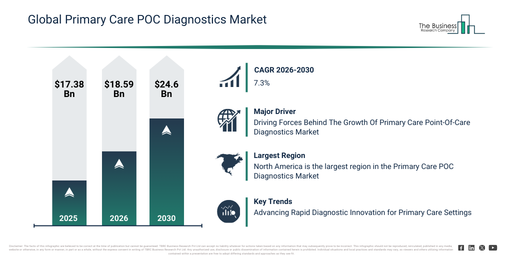
    The primary care poc diagnostics market size has experienced strong growth in recent years. This market is projected to expand from $17.38 billion in 2025 to $18.59 billion by 2026, exhibiting a compound annual growth rate (CAGR) of 7.0%. Historically, this growth can be attributed to factors such as the rising prevalence of infectious and chronic diseases, broader adoption of glucose and cardiometabolic testing, the expansion of primary care diagnostic capabilities, increased use of over-the-counter diagnostic products, and improved accessibility of rapid tests.

    The primary care poc diagnostics market is projected to experience substantial expansion in the coming years. It is anticipated to reach $24.6 billion by 2030, exhibiting a compound annual growth rate (CAGR) of 7.3%. This projected growth during the forecast period can be primarily attributed to factors such as the increasing demand for decentralized diagnostic solutions, the rising incorporation of AI-enabled diagnostics, the broadening of telehealth-supported testing services, a heightened emphasis on preventive health screening, and increased investments in personalized diagnostic approaches. Key trends observed within this forecast period include the expanding adoption of rapid diagnostic testing, the growing integration of digital point-of-care devices, an escalating demand for at-home diagnostic kits, the expansion of multiplex testing platforms, and a strengthened focus on early disease detection.

    Access Your Free Sample Report for In-Depth Market Insights:

    https://www.thebusinessresearchcompany.com/sample.aspx?id=15642&type=smp

    What Drivers Are Affecting Demand In The Primary Care POC Diagnostics Market?

    The primary care POC diagnostics market is expected to see growth propelled by the increasing prevalence of infectious diseases. These conditions stem from pathogenic microorganisms such as bacteria, viruses, fungi, or parasites. They spread directly or indirectly between individuals through contact with contaminated surfaces, air, water, or vectors like insects. Contributing factors to their widespread nature include poor environmental conditions, urbanization, antimicrobial resistance, and insufficient vaccination coverage. Primary care POC diagnostics are crucial tools in diverse healthcare settings, combating these diseases by enabling early detection, timely treatment, and effective control measures. For instance, in March 2025, the Centers for Disease Control and Prevention (CDC), a US federal agency, reported that tuberculosis cases escalated from 9,622 in 2023 to 10,347 in 2024, an 8% increase, with the incidence rate also climbing from 2.9 to 3.0 per 100,000 population, a 6% rise. Hence, the rising prevalence of infectious diseases is a significant driver for the primary care POC diagnostics market.

    Which Segments Are Gaining Traction In The Primary Care POC Diagnostics Market?

    The primary care poc diagnostics market covered in this report is segmented –

    1) By Product: Glucose Monitoring, Cardiometabolic Testing Products, Infectious Disease Testing Products, Coagulation Testing Products, Pregnancy And Fertility Testing Products, Tumor Or Cancer Marker Testing Products, Cholesterol Testing Products, Hematology Testing Products, Drug-Of-Abuse (DOA) Testing Products, Other Products

    2) By Prescription: Prescription Based, Over-The-Counter (OTC) Testing

    3) By End-Use: Hospitals, Diagnostic Centers, Research Laboratories, Home-Care Settings, Other End-Uses

    Subsegments:

    1) By Glucose Monitoring: Blood Glucose Meters, Continuous Glucose Monitoring (Cgm) Systems, Test Strips For Glucose Meters, Glucose Control Solutions

    2) By Cardiometabolic Testing Products: Blood Pressure Monitors, Lipid Profile Testing Kits, Hemoglobin A1c Testing Kits, Ecg Or Ecg Monitors, Hba1c Point-Of-Care Devices

    3) By Infectious Disease Testing Products: Rapid Strep Tests, Influenza (Flu) Testing Kits, Covid-19 Rapid Tests, Hiv Rapid Testing Kits, Hepatitis Testing Kits, Malaria Rapid Diagnostic Tests (Rdts), Other Infectious Disease Tests

    4) By Coagulation Testing Products: Prothrombin Time (Pt) Testing Kits, International Normalized Ratio (Inr) Monitors, Activated Partial Thromboplastin Time (Aptt) Testing Kits, Coagulation Control Solutions, Whole Blood Coagulation Monitors

    5) By Pregnancy And Fertility Testing Products: Home Pregnancy Tests (Urine-Based), Ovulation Prediction Kits, Pregnancy Test Strips, Fertility Monitoring Devices

    6) By Tumor Or Cancer Marker Testing Products: Psa (Prostate-specific Antigen) Testing Kits, Cea (Carcinoembryonic Antigen) Testing Kits, Ca-125 (Ovarian Cancer Marker) Kits, Her2 Testing Kits, Other Tumor Marker Test Kits

    7) By Cholesterol Testing Products: Total Cholesterol Testing Kits, Ldl Or Hdl Testing Kits, Triglyceride Testing Kits, Point-Of-Care Lipid Panel Devices

    8) By Hematology Testing Products: Hemoglobin Test Kits, Hematocrit Testing Kits, Complete Blood Count (Cbc) Kits, Point-Of-Care Hematology Analyzers, Hemoglobin A1c Testing Devices

    9) By Drug-Of-Abuse (Doa) Testing Products: Urine Drug Tests, Oral Fluid Drug Tests, Saliva-Based Drug Tests, Blood-Based Drug Tests, Breath Alcohol Tests

    10) By Other Products: Allergy Testing Kits, Urinalysis Test Strips, Vitamin And Mineral Deficiency Testing Kits, Point-Of-Care Liver Function Tests, Kidney Function Testing Products, Blood Gas Testing Devices

    Which Trends Are Guiding The Evolution Of The Primary Care POC Diagnostics Market?

    Major companies operating in the primary care POC diagnostics market are focusing on developing advanced microfluidic-based rapid susceptibility testing to enhance timely antibiotic decision-making. Such microfluidic rapid susceptibility testing employs tiny fluid channels to swiftly isolate and cultivate bacteria, enabling early identification of their responsiveness to different antimicrobials and reducing the waiting period for results. For instance, in June 2023, Sysmex Corporation, a Japan-based diagnostic solutions company, launched the PA-100 AST System, which features proprietary microfluidic technology. This system can detect bacteria from urine samples in about 15 minutes and provide antimicrobial susceptibility test (AST) results in as little as 30 minutes at the initial clinic visit. The analyzer is compact, desktop-sized, and utilizes reagent cartridges into which samples are directly placed for automatic measurement. Healthcare professionals lacking specialized lab training can operate it easily. By accelerating diagnostics, the device supports appropriate antimicrobial use during first patient visits and assists in the global fight against antimicrobial resistance.

    Who Are The Primary Competitors In The Global Primary Care POC Diagnostics Market?

    Major companies operating in the primary care poc diagnostics market are Hoffmann-La Roche Ltd, Abbott Laboratories, Siemens Healthineers AG, Becton, Dickinson And Company, bioMerieux SA, Quidel Corporation, Sysmex Corporation, Bio-Rad Laboratories Inc., Nova Biomedical Corporation, Randox Laboratories Ltd, Ortho Clinical Diagnostics, Nipro Corporation, OraSure Technologies, Meridian Bioscience Inc, DiaSorin SpA, Sekisui Diagnostics LLC, EKF Diagnostics Holdings plc, Trinity Biotech plc, Fujirebio Diagnostics Inc., Immunodiagnostic Systems Holdings PLC, Quotient Limited, AccuBioTech Co. Ltd., bioMedomics Inc.

    Access The Complete Report For Deeper Market Insights:

    https://www.thebusinessresearchcompany.com/report/primary-care-poc-diagnostics-global-market-report

    Which Global Regions Are Shaping The Competitive Landscape Of The Primary Care POC Diagnostics Market?

    North America was the largest region in the primary care POC diagnostics market in 2025. Asia-Pacific is expected to be the fastest-growing region in the forecast period. The regions covered in the primary care poc diagnostics market report are Asia-Pacific, South East Asia, Western Europe, Eastern Europe, North America, South America, Middle East, Africa.

    Request Your Customized Primary Care POC Diagnostics Market Research Report for Competitive Advantage:

    https://www.thebusinessresearchcompany.com/customise?id=15642&type=smp

    Browse Through More Reports Similar to the Global Primary Care POC Diagnostics Market 2026, By The Business Research Company

    Poc Medical Imaging Market Report 2026

    https://www.thebusinessresearchcompany.com/report/poc-medical-imaging-global-market-report

    Point Of Care Diagnostics Market Report 2026

    https://www.thebusinessresearchcompany.com/report/point-of-care-diagnostics-global-market-report

    Clinical Diagnostics Market Report 2026

    https://www.thebusinessresearchcompany.com/report/clinical-diagnostics-global-market-report

    Get in touch with us:

    The Business Research Company: https://www.thebusinessresearchcompany.com/

    Americas +1 310-496-7795

    Asia +44 7882 955267 & +91 8897263534

    Europe +44 7882 955267

    Email us at info@tbrc.info

    Follow us on:

    LinkedIn: https://in.linkedin.com/company/the-business-research-company

    YouTube: https://www.youtube.com/channel/UC24_fI0rV8cR5DxlCpgmyFQ

    Global Market Model: https://www.thebusinessresearchcompany.com/global-market-model