Category: HealthcareServices

  • Emerging Growth Drivers in the Transitional Care Management Services Market Landscape: Surge In Chronic Diseases Drives Growth Of Transitional Care Management Services Market

    Emerging Growth Drivers in the Transitional Care Management Services Market Landscape: Surge In Chronic Diseases Drives Growth Of Transitional Care Management Services Market

    Claim your 30% discount on Global Market Reports with code ONLINE30. Limited time only.

    How Has The Transitional Care Management Services Market Growth Evolved From 2024 To 2025, And What’s Ahead?

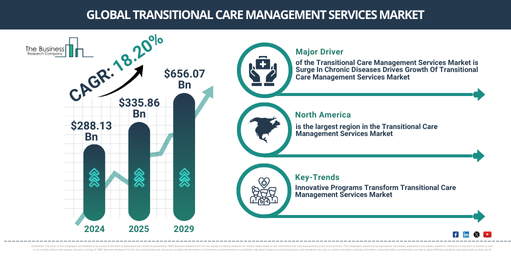
    In recent years, the market size for transitional care management services has experienced rapid expansion. Projections predict it will increase from $288.13 billion in 2024 to $335.86 billion in 2025, equivalent to a compound annual growth rate (CAGR) of 16.6%. The impressive growth in the past can be linked to modifications in healthcare policies, an emphasis on value-based care, efforts to decrease hospital readmissions, cooperation between healthcare providers, and a focus on patient-centered care.

    The market for transitional care management services is projected to witness significant expansion in the forthcoming years. The market value is projected to reach$656.07 billion by 2029, growing at a compound annual growth rate (CAGR) of 18.2%. The predicted growth during the forecast period is associated with factors such as patient involvement solutions, care coordination policy support, broadened healthcare accessibility, data analysis, and predictive modeling, along with patient-centered medical home models. The forecast period will see major trends such as the incorporation of telehealth, a shift towards patient-centric care, enhanced collaboration and care coordination, technologies for remote patient observation, and a focus on managing chronic diseases.

    Download a free sample to assess the report’s scope and structure:

    https://www.thebusinessresearchcompany.com/sample.aspx?id=9911&type=smp

    Which Primay Drivers Are Accelerating Growth in the Transitional Care Management Services Market?

    The increasing prevalence of chronic diseases is anticipated to boost the growth of the transitional care management services market. Chronic diseases are broadly defined as illnesses that last for at least a year and require ongoing medical attention, hindering routine activities, or both. These diseases comprise non-communicable ailments such as heart disease, cancer, chronic lung disease, and diabetes. Transitional care management (TCM) services help prevent chronic illness by ensuring continuity of care when patients transition from one healthcare setting to another. TCM remedies encompass self-education management, planning of discharge, and systematic follow-ups, which all help patients cope with chronic diseases and pre-empt complications. For example, as per a report issued by the National Institutes of Health (NIH), a biomedical research organization based in the US, the number of individuals aged 50 and above with at least one chronic disease is projected to grow by 99.5% in America in 2023, escalating from 71.522 million in 2020 to 142.66 million in 2050. Moreover, the figure of people living with multimorbidity is set to increase by 91.16%, rising from 7.8304 million in 2020 up to 14.968 million in 2050. Consequently, the swelling numbers of patients suffering from chronic diseases are fueling the growth of the transitional care management services market.

    Which Primary Segments of the Transitional Care Management Services Market Are Driving Growth and Industry Transformations?

    The transitional care management servicesmarket covered in this report is segmented –

    1) By Service: Patient TCM Services; Healthcare TCM Services; Billing TCM Services; Documenting TCM Services; Other Services

    2) By Disease Type: Cardiovascular Diseases; Diabetes; Cancer; Asthma; Chronic Obstructive Pulmonary Disorders; Other Diseases

    3) By Application: Inpatient Settings; Community Settings

    Subsegments:

    1) By Patient TCM Services: Care Coordination; Medication Management

    2) By Healthcare TCM Services: Follow-Up Visits; Health Monitoring

    3) By Billing TCM Services: Claims Processing; Insurance Verification

    4) By Documenting TCM Services: Care Plans; Progress Notes

    5) By Other Services: Training And Education; Telehealth Support

    Request customized data on this market:

    https://www.thebusinessresearchcompany.com/customise?id=9911&type=smp

    Which Regions Are Key Players in the Growth of the #Which Primay Drivers Are Accelerating Growth in the Transitional Care Management Services Market?# Market?

    North America was the largest region in the transitional care management services market in 2024. Asia-Pacific is expected to be the fastest-growing region in the transitional care management services market report during the forecast period. The regions covered in the transitional care management services market report are Asia-Pacific, Western Europe, Eastern Europe, North America, South America, Middle East, Africa

    Which Technological Trends Are Reshaping the Transitional Care Management Services Industry Dynamics?

    The emergence of product innovations is a prominent trend making headway in the transitional care management services market. Several major entities in this sector are zeroing in on creating novel solutions to maintain their market standing. For example, in May 2022, PharMerica Inc, an American healthcare firm, unveiled the Continuing Care Transitional Care Management Program designed to resolve issues associated with care continuity upon residents shifting from skilled nursing facilities to their homes. The program encapsulates home-based primary care and nurse hub outreach services delivered by BrightSpring Health Services to ensure a secure home transition for medically intricate clients, particularly those using 8 to 12 medications or those with numerous chronic conditions or comorbidities. This initiative sets new standards in transitional care management by guaranteeing residents coming home from a skilled nursing facility get access to an extensive selection of person-focused, practical treatments needed to stay healthy at home.

    View the full report here:

    https://www.thebusinessresearchcompany.com/report/transitional-care-management-services-global-market-report

    What Parameters Are Used to Define the Transitional Care Management Services Market?

    Transitional care management TCM refers to a collection of services that assists patients in transitioning from one healthcare environment to another, such as from a hospital to a primary care physician. It is used to guarantee continuity of treatment, minimize avoidable bad outcomes, and limit possibly avoidable readmissions and medical mistakes in the 30 days following discharge from the acute care environment.

    Purchase the full report and get a swift delivery:

    https://www.thebusinessresearchcompany.com/purchaseoptions.aspx?id=9911

    About The Business Research Company:

    With over 15000+ reports from 27 industries covering 60+ geographies, The Business Research Company has built a reputation for offering comprehensive, data-rich research and insights. Armed with 1,500,000 datasets, the optimistic contribution of in-depth secondary research, and unique insights from industry leaders, you can get the information you need to stay ahead in the game.

    Get in touch with us:

    The Business Research Company: https://www.thebusinessresearchcompany.com/

    Americas +1 310-496-7795

    Europe +44 7882 955267

    Asia & Others +44 7882 955267 & +91 8897263534

    Email us at info@tbrc.info

    Follow us on:

    LinkedIn: https://in.linkedin.com/company/the-business-research-company

    YouTube: https://www.youtube.com/channel/UC24_fI0rV8cR5DxlCpgmyFQ

    Global Market Model: https://www.thebusinessresearchcompany.com/global-market-model
  • Viral And Non-Viral Vector Manufacturing Market Trends 2025-2034: Growth, Strategic Insights, and Opportunities Ahead

    Claim your 30% discount on Global Market Reports with code ONLINE30. Limited time only.

    How Has The Viral And Non-Viral Vector Manufacturing Market Size Shifted, And What Is the Outlook Through 2034?

    The market size for manufacturing viral and non-viral vectors has shown a quick expansion lately. There is an expected rise from $8.67 billion in 2024 to $10.28 billion in 2025 indicating a compound annual growth rate (CAGR) of 18.5%. Factors supporting this growth in the historical phase include an increase in genetic disorders, advancements in biotechnology, escalated funding in gene therapy research, heightened consciousness of personalized medicine, and regulatory encouragement for gene therapy advancement.

    The market size for manufacturing viral and non-viral vectors is set to experience remarkable growth in the forthcoming years. The market is projected to expand to $22.01 billion by 2029, at a compound annual growth rate (CAGR) of 21.0%. The surge during the forecast period can be credited to the escalating demand for gene therapies, the broadening scope in the treatment of rare diseases, an upswing in investments towards biomanufacturing infrastructure, and the increasing endorsement of precision medicine. In the forecast period, key market trends will include the emergence of more advanced viral vectors, augmented utilization of CRISPR or cas9 technology in vector production, emphasis on scalable and cost-efficient manufacturing procedures, a rising preference for non-viral vectors, and progress in cell and gene therapy manufacturing technologies.

    Download a free sample to assess the report’s scope and structure:

    https://www.thebusinessresearchcompany.com/sample.aspx?id=12570&type=smp

    What Are the Major Market Drivers Behind the Rising Adoption of Viral And Non-Viral Vector Manufacturing Market?

    The growth of the viral and non-viral vector manufacturing markets is projected to be driven by the escalating occurrence of genetic disorders. These disorders are entirely or partially caused by variations from the normal DNA sequence. Therapeutic genes are delivered to target cells by viral vectors, replacing or supplementing the faulty genes responsible for genetic disorders. Non-viral vectors, on the other hand, are commonly employed in ex vivo gene therapy techniques, where cells are genetically altered outside the body and then reintroduced into the patient. For example, the International Diabetes Federation, a Belgian diabetes federation, reported in June 2022 that the global prevalence of diabetes had risen to 10.5%, with more than half (44.7%) of those affected still undiagnosed and about 783 million adults, or one in eight individuals, predicted to have diabetes by 2045. As a result, the upward trend in the occurrence of genetic disorders stimulates the expansion of the viral and non-viral vector manufacturing market.

    Which Key Market Segments Comprise the Viral And Non-Viral Vector Manufacturing Market and Drive Its Revenue Growth?

    The viral and non-viral vector manufacturingmarket covered in this report is segmented –

    1) By Vector Type: Viral Vector; Non-Viral Vector

    2) By Disease: Cancer; Genetic Disease; Infectious Disease; Cardiovascular Disease; Other Diseases

    3) By Application: Gene Therapy; Vaccinology; Cell Therapy; Other Applications

    Subsegments:

    1) By Viral Vector: Adenoviral Vectors; Lentiviral Vectors; AAV (Adeno-Associated Virus) Vectors; Retroviral Vectors; Other Viral Vectors

    2) By Non-Viral Vector: Plasmid DNA; Lipid-Based Vectors; Nanoparticles; Electroporation-Based Vectors; Other Non-Viral Vectors

    Request customized data on this market:

    https://www.thebusinessresearchcompany.com/customise?id=12570&type=smp

    Which Areas Are Leading Regions in the Viral And Non-Viral Vector Manufacturing Market Expansion Across the Globe?

    North America was the largest region in the viral and non-viral vector manufacturing market in 2024. The regions covered in the viral and non-viral vector manufacturing market report are Asia-Pacific, Western Europe, Eastern Europe, North America, South America, Middle East, Africa

    What Are the Strategic Trends Steering theViral And Non-Viral Vector Manufacturing Market Direction?

    Technological innovation is emerging as a significant trend in the viral and non-viral vector production markets, with key industry players creating advanced solutions to maintain their market standing. For instance, Merck KGaA, a German science and technology firm, unveiled the VirusExpress 293 Adeno-Associated Virus (AAV) Production Platform in August 2022. This company is one of the pioneers in offering a comprehensive viral vector manufacturing package, encompassing AAV, Lentiviral, CDMO, CTO, and process development. This groundbreaking platform assists biopharmaceutical companies in reducing development costs and time, while also speeding up the transition to clinical manufacture.

    View the full report here:

    https://www.thebusinessresearchcompany.com/report/viral-and-non-viral-vector-manufacturing-global-market-report

    How Is the Viral And Non-Viral Vector Manufacturing Market Conceptually Defined?

    Viral and non-viral vector manufacturing refers to producing viral and non-viral vectors, tools that deliver genetic material into cells. Viral vectors treat human diseases and are used in anticancer and gene therapies. Non-viral vectors are utilized for a variety of gene therapy applications, particularly for the creation of vaccines and the treatment of cancer.

    Purchase the full report and get a swift delivery:

    https://www.thebusinessresearchcompany.com/purchaseoptions.aspx?id=12570

    About The Business Research Company:

    With over 15000+ reports from 27 industries covering 60+ geographies, The Business Research Company has built a reputation for offering comprehensive, data-rich research and insights. Armed with 1,500,000 datasets, the optimistic contribution of in-depth secondary research, and unique insights from industry leaders, you can get the information you need to stay ahead in the game.

    Get in touch with us:

    The Business Research Company: https://www.thebusinessresearchcompany.com/

    Americas +1 310-496-7795

    Europe +44 7882 955267

    Asia & Others +44 7882 955267 & +91 8897263534

    Email us at info@tbrc.info

    Follow us on:

    LinkedIn: https://in.linkedin.com/company/the-business-research-company

    YouTube: https://www.youtube.com/channel/UC24_fI0rV8cR5DxlCpgmyFQ

    Global Market Model: https://www.thebusinessresearchcompany.com/global-market-model
  • Blood And Blood ComponentsMarket Overview 2025–2034: CAGR Trends, Long-Term Growth Paths, and Business Implications

    Blood And Blood ComponentsMarket Overview 2025–2034: CAGR Trends, Long-Term Growth Paths, and Business Implications

    Claim your 30% discount on Global Market Reports with code ONLINE30. Limited time only.

    What Are the Key Milestones in the Blood And Blood Components Market’s Growth Trajectory From 2025 To 2034?

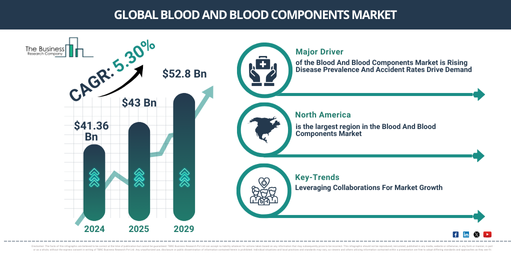
    The market size for blood and blood components has been on a steady growth trajectory in the preceding years. The market is projected to expand from $41.36 billion in 2024 to $43 billion in 2025, reflecting a compound annual growth rate (CAGR) of 4.0%. Factors propelling the growth in the historic period include a surge in the number of trauma cases and road accidents, an aging population, higher incomes and living standards, increased spending on healthcare, and heightened consciousness about blood donation.

    The market for blood and blood components is anticipated to experience significant growth in the coming years, with an expected valuation of$52.8 billion in 2029″ and a compound annual growth rate (CAGR) of 5.3%. This projected growth during the forecast period can be attributed to factors such as the rise in chronic diseases, governmental initiatives, and an increasing demand for whole blood. The key trends during this period are expected to revolve around collaborations with other market players, the introduction of innovative products, emphasis on research and development (R&D) activities, the utilization of IoT-based products to prevent blood and blood component contamination, and a focus on blood transfusion management.

    Download a free sample to assess the report’s scope and structure:

    https://www.thebusinessresearchcompany.com/sample.aspx?id=2573&type=smp

    What Are the Primary Drivers Supporting the Market Growth of the Blood And Blood Components Market?

    The rise in trauma incidents and road accidents is propelling the growth of the blood and blood components market. Trauma conditions, such as hemorrhage, can drastically reduce blood volume to dangerously low levels, which the body can’t replenish quickly. Moreover, hefty blood loss from road accidents necessitates instant replenishment. Such situations necessitate the transfusion of blood and its components into the patient. For example, per the Transport Accident Commission, a government agency based in Australia, in 2023, deaths on Victorian roads climbed to 295 people, a 22.4% rise (54 more deaths) compared to 2022. Besides, the number of fatal accidents rose by 22 (9%), from the 239 in the previous year, to 261. The escalating incidents of road accidents and diseases, along with a surge in trauma cases, are boosting the blood demand and hence, propelling the market growth.

    Which Primary Segments of the Blood And Blood Components Market Are Driving Growth and Industry Transformations?

    The blood and blood componentsmarket covered in this report is segmented –

    1) By Product: Whole Blood, Blood Components

    2) By Blood Components: Red Blood Cells, Platelets, Plasma, White Blood Cells

    3) By End-User: Hospitals, Ambulatory Surgical Centers, Others

    4) By Application: Anemia, Trauma and Surgery, Cancer Treatment, Bleeding Disorders

    Subsegments:

    1) By Whole Blood: Donor Whole Blood; Autologous Whole Blood

    2) By Blood Components: Red Blood Cells (RBCs); Platelets; Plasma; White Blood Cells (WBCs)

    Request customized data on this market:

    https://www.thebusinessresearchcompany.com/customise?id=2573&type=smp

    Which Regions Are Key Players in the Growth of the #What Are the Primary Drivers Supporting the Market Growth of the Blood And Blood Components Market?# Market?

    North America was the largest region in the blood and blood components market in 2024. Western Europe was the second largest region in the global blood and blood components market analysis. The regions covered in the blood and blood components market report are Asia-Pacific, Western Europe, Eastern Europe, North America, South America, Middle East, Africa

    What Are the Most Significant Market Trends in the Blood And Blood Components Market?

    One of the most noteworthy trends that have been observed in the blood and blood components market is the escalating number of partnerships and alliances among the market participants. These collaborations are methods adopted by businesses to broaden their influence, augment their customer pool, and promote awareness in the market. For instance, the American Red Cross joined forces with HealthStream to launch a novel program for healthcare establishments. Likewise, the Blood Center of Wisconsin linked up with SysLogic Inc., to examine the potential of RFID technology in improving patient safety during the collection and transfusion of blood products.

    View the full report here:

    https://www.thebusinessresearchcompany.com/report/blood-and-blood-components-global-market-report

    What Parameters Are Used to Define the Blood And Blood Components Market?

    Blood and Blood Components refers to the different parts of blood, such as red blood cells, white blood cells, platelets, and plasma, separated for medical use. These components are used to treat various conditions like anemia, clotting disorders, and immune deficiencies. Each component is transfused based on the patient’s specific needs for recovery.

    Purchase the full report and get a swift delivery:

    https://www.thebusinessresearchcompany.com/purchaseoptions.aspx?id=2573

    About The Business Research Company:

    With over 15000+ reports from 27 industries covering 60+ geographies, The Business Research Company has built a reputation for offering comprehensive, data-rich research and insights. Armed with 1,500,000 datasets, the optimistic contribution of in-depth secondary research, and unique insights from industry leaders, you can get the information you need to stay ahead in the game.

    Get in touch with us:

    The Business Research Company: https://www.thebusinessresearchcompany.com/

    Americas +1 310-496-7795

    Europe +44 7882 955267

    Asia & Others +44 7882 955267 & +91 8897263534

    Email us at info@tbrc.info

    Follow us on:

    LinkedIn: https://in.linkedin.com/company/the-business-research-company

    YouTube: https://www.youtube.com/channel/UC24_fI0rV8cR5DxlCpgmyFQ

    Global Market Model: https://www.thebusinessresearchcompany.com/global-market-model
  • Top Trends Driving Innovation and Change in the 4D Printing In Healthcare Market: Technological Integration Revolutionizing 4D Printing in Healthcare Market

    Top Trends Driving Innovation and Change in the 4D Printing In Healthcare Market: Technological Integration Revolutionizing 4D Printing in Healthcare Market

    Claim your 30% discount on Global Market Reports with code ONLINE30. Limited time only.

    What is the Anticipated CAGR of the 4D Printing In Healthcare Market, and What Factors Will Drive It?

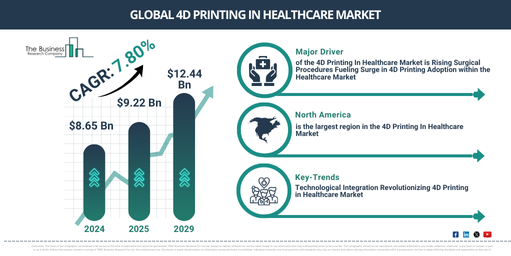
    Recently, the market size for 4D printing in healthcare has seen substantial growth. Projected to rise from $8.65 billion in 2024 to $9.22 billion in 2025, it showcases a compound annual growth rate (CAGR) of 6.6%. Factors such as the demand for patient-specific solutions, advancements in tissue engineering and bioprinting, 3D printing technology innovation, and materials development contributed to the growth during the historic period.

    In the forthcoming years, the 4D printing in healthcare market size is poised for substantial growth, poised to hit $12.44 billion in 2029 at a composite yearly growth percentage (CAGR) of 7.8%. Growth projections for the forecast period are influenced by factors such as advancements in personalized medicine, breakthroughs in material science and tissue engineering, and the increasing healthcare needs of an aging population. Notable trends for the said period include personalized implants and prosthetics, innovative responsive drug delivery systems, bioresorbable and biocompatible constructs, smart wearable technology for treatment and monitoring, and strides in tissue engineering and regenerative medicine.

    Download a free sample to assess the report’s scope and structure:

    https://www.thebusinessresearchcompany.com/sample.aspx?id=14032&type=smp

    What External and Internal Drivers Are Contributing to the Growth of the4D Printing In Healthcare Market?

    The escalation in the frequency of surgical procedures is anticipated to stimulate the expansion of the healthcare market’s 4D printing domain. This printing technology enables the production of personally modified medical implants and devices, designed according to the unique anatomical structure of every patient. With the rise in the volume of surgeries, the necessity for customized medical interventions is also augmenting, intending to amplify surgical results and the recuperation process of patients. 4D printing technology caters to the possibility of producing intricate structures, which can be tailored to patient-specific requirements, thereby escalating the efficiency of the treatment and contentment of the patients. For instance, the Austin Publishing Group, a publishing company based in the United States, reported in May 2023 that every year, over 300 million major surgeries are administered by the global healthcare system. Therefore, the accelerating rate of surgical procedures is kindling the escalation of 4D printing’s role in the healthcare market.

    What Segment Types Define the 4D Printing In Healthcare Market Structure?

    The 4D printing in healthcaremarket covered in this report is segmented –

    1) By Type: Fused Deposition Modeling (FDM); PolyJet; Stereolithography; Selective Laser Sintering (SLS)

    2) By Component: Equipment; 3D Printers; 3D Bioprinters; Programmable Materials; Shape-Memory Materials; Hydrogels; Living Cells; Software And Services

    3) By End-User: Hospitals And Clinics; Dental Laboratories; Other End-Users

    Subsegments:

    1) By Fused Deposition Modeling (FDM): Thermoplastic Materials; Biodegradable Polymers; Composite Materials

    2) By PolyJet: Rigid Materials; Flexible Materials; Biocompatible Materials

    3) By Stereolithography: Photopolymer Resins; Dental Resins; Bio-resins

    4) By Selective Laser Sintering (SLS): Nylon Powder; Metal Powders; Polymer Powders

    Request customized data on this market:

    https://www.thebusinessresearchcompany.com/customise?id=14032&type=smp

    Which Geographic Areas Hold the Strongest Growth Potential in the 4D Printing In Healthcare Market?

    North America was the largest region in the 4D printing in healthcare market in 2024. Asia-Pacific is expected to be the fastest-growing region in the forecast period. The regions covered in the 4d printing in healthcare market report are Asia-Pacific, Western Europe, Eastern Europe, North America, South America, Middle East, Africa.

    What Long-Term Trends Are Transforming the Competitive Landscape of the 4D Printing In Healthcare Market?

    Key players in the 4D printing for healthcare market are striving to develop new technological goods, for example, 4D designs, to enhance their earnings. The concept of 4D designs is referred to as three-dimensional (3D) models with the inclusion of time as the fourth dimension. A case in point, 4D Biomaterials, a biotech company based in the UK, introduced 4Degra, a photocurable polymer made of polycarbonate urethane. This polymer is appropriate for a variety of medical device uses, ranging from soft and bendable to hard and stiff, and is produced using a unique polycarbonate-urethane chemistry from 4D Biomaterials. Several photocurable additive processes at micro and macro scale, such as DLP, LCD, SLA, and two-photon lithography, can cast, coat, or 3D print 4Degra resins.

    View the full report here:

    https://www.thebusinessresearchcompany.com/report/4d-printing-in-healthcare-global-market-report

    What Is the Definition of the 4D Printing In Healthcare Market?

    4D printing in healthcare refers to the fabrication of customized medical devices, implants, and structures using materials that can self-transform or change shape in response to external stimuli over time. This technology builds upon 3D printing by introducing an additional dimension of functionality, enabling the printed objects to alter their shape, properties, or functionality after manufacturing.

    Purchase the full report and get a swift delivery:

    https://www.thebusinessresearchcompany.com/purchaseoptions.aspx?id=14032

    About The Business Research Company:

    With over 15000+ reports from 27 industries covering 60+ geographies, The Business Research Company has built a reputation for offering comprehensive, data-rich research and insights. Armed with 1,500,000 datasets, the optimistic contribution of in-depth secondary research, and unique insights from industry leaders, you can get the information you need to stay ahead in the game.

    Get in touch with us:

    The Business Research Company: https://www.thebusinessresearchcompany.com/

    Americas +1 310-496-7795

    Europe +44 7882 955267

    Asia & Others +44 7882 955267 & +91 8897263534

    Email us at info@tbrc.info

    Follow us on:

    LinkedIn: https://in.linkedin.com/company/the-business-research-company

    YouTube: https://www.youtube.com/channel/UC24_fI0rV8cR5DxlCpgmyFQ

    Global Market Model: https://www.thebusinessresearchcompany.com/global-market-model
  • Strategic Growth Drivers Shaping the Tissue Engineering Market Outlook 2025- 2034:Rising Prevalence Of Chronic Diseases And Trauma Emergencies Fueling Tissue Engineering Market Growth

    Strategic Growth Drivers Shaping the Tissue Engineering Market Outlook 2025- 2034:Rising Prevalence Of Chronic Diseases And Trauma Emergencies Fueling Tissue Engineering Market Growth

    Claim your 30% discount on Global Market Reports with code ONLINE30. Limited time only.

    What is the Projected CAGR for the Tissue Engineering Market Size from 2025 to 2034?

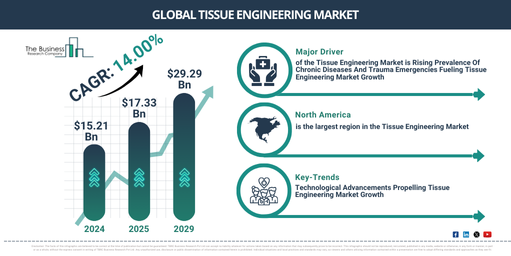
    In recent years, the tissue engineering market has seen vigorous growth. Projected to expand from $15.21 billion in 2024 to $17.33 billion in 2025, it exhibits a compound annual growth rate (CAGR) of 13.9%. Factors contributing to this growth in the historic duration include progress in biomaterials, an increasing aging demographic, a rise in chronic disease incidents, regulatory backing for regenerative medicine, and patient demand for organ transplants.

    The size of the tissue engineering market is projected to experience a swift expansion in the forthcoming years. The market is expected to escalate to $29.29 billion by 2029 with a compound annual growth rate (CAGR) of 14.0%. This predicted increase during the estimation period can be credited to precision medicine strategies, a growing emphasis on immunomodulation, wider applications in the field of orthopedics, amplified funding and investment, and a higher incidence of chronic illnesses. The estimated period will also witness key trends such as the incorporation of nanotechnology, use of 3D cell culture methods, the evolution of organ-on-a-chip technology, integration of artificial intelligence, and the discovery of innovative cell sources.

    Download a free sample to assess the report’s scope and structure:

    https://www.thebusinessresearchcompany.com/sample.aspx?id=9535&type=smp

    Which Factors and External Forces Are Driving Demand in the Tissue Engineering Market?

    The rise in the occurrence of chronic illnesses and trauma emergencies is anticipated to fuel the expansion of the tissue engineering market. Generally, chronic diseases are long-term health conditions that last for over 3 months and can usually be managed but not cured and trauma emergencies are sudden and severe physical injuries that necessitate urgent medical attention such as traumatic brain injuries. Tissue engineering is preferred by healthcare professionals due to its various benefits in managing chronic health problems and trauma to prevent final-stage treatment failures like autologous or allograft transplantation, xenotransplantation, and artificial substitutes. For example, a 2023 report by the World Health Organization (WHO), an agency based in the US, whose main task is to promote global health, manage health emergencies, and endorse health policies worldwide, stated that around 2.4 billion people worldwide are living with chronic diseases. This steady increase in such conditions like diabetes, and cardiovascular diseases underscores the immediate requirement for advanced healthcare treatments, like tissue engineering solutions. Furthermore, the Centers for Disease Control and Prevention (CDC) declared in 2023 that traumatic brain injuries (TBIs) continue to be of significant concern in the United States, registering nearly 223,000 hospital admissions and 60,000 deaths annually, thereby underscoring the necessity for potent interventions. Thus, the mounting incidence of chronic diseases and trauma emergencies is projected to steer considerable growth in the tissue engineering market.

    Which Segments in the Tissue Engineering Offer the Most Growth?

    The tissue engineeringmarket covered in this report is segmented –

    1) By Type: Synthetic Scaffold Material; Biologically Derived Scaffold Material; Other Types

    2) By Application: Orthopedics And Musculoskeletal; Neurology; Cardiovascular; Skin And Integumentary; Dental; Other Applications

    3) By End-User: Hospitals And Clinics; Ambulatory Facilities

    Subsegments:

    1) By Synthetic Scaffold Material: Polymeric Scaffolds; Ceramic Scaffolds; Composite Scaffolds

    2) By Biologically Derived Scaffold Material: Natural Polymers; Decellularized Tissues; Hydrogels

    3) By Other Types: Self-Healing Scaffolds; Smart Scaffolds

    Request customized data on this market:

    https://www.thebusinessresearchcompany.com/customise?id=9535&type=smp

    What Are the Fastest-Growing Geographies in the #Which Factors and External Forces Are Driving Demand in the Tissue Engineering Market?# Market?

    North America was the largest region in the tissue engineering market in 2024. Asia-Pacific is expected to be the fastest-growing region in the tissue engineering market during the forecast period. The regions covered in the tissue engineering market report are Asia-Pacific, Western Europe, Eastern Europe, North America, South America, Middle East, Africa

    Which Cutting-Edge Market Trends Are Expected to Drive theTissue Engineering Market’s Growth?

    The primary trend gaining traction in the tissue engineering market is technological innovation. Major businesses operating within this market are investing in product research and development to create better, more effective solutions, thus solidifying their market standing. For instance, CytoNest Inc., an American company that specializes in the construction of scalable 3D cell culture platforms for adherent cell production, launched its first commercial product in August 2024. This product, named CytoSurge 3D fiber scaffold, is designed to enhance cell manufacturing and tissue engineering functionality. It serves various sectors such as cell research, biopharmaceuticals, cell therapeutics, and the development of cultured meat and seafood.

    View the full report here:

    https://www.thebusinessresearchcompany.com/report/tissue-engineering-global-market-report

    What Are the Key Elements That Define the Tissue Engineering Market?

    Tissue engineering refers to the biomedical engineering discipline that involves integrated techniques from biology and engineering to produce 3-D tissue and cellular products in-vivo as well as in in-vitro conditions by altering cell growth conditions and using suitable cell isolates from donor tissue and biocompatible scaffold materials. It uses various techniques to restore, repair, maintain, and improve the function of tissue by replacing or restoring damaged tissue to provide improvement in human body functions.

    Purchase the full report and get a swift delivery:

    https://www.thebusinessresearchcompany.com/purchaseoptions.aspx?id=9535

    About The Business Research Company:

    With over 15000+ reports from 27 industries covering 60+ geographies, The Business Research Company has built a reputation for offering comprehensive, data-rich research and insights. Armed with 1,500,000 datasets, the optimistic contribution of in-depth secondary research, and unique insights from industry leaders, you can get the information you need to stay ahead in the game.

    Get in touch with us:

    The Business Research Company: https://www.thebusinessresearchcompany.com/

    Americas +1 310-496-7795

    Europe +44 7882 955267

    Asia & Others +44 7882 955267 & +91 8897263534

    Email us at info@tbrc.info

    Follow us on:

    LinkedIn: https://in.linkedin.com/company/the-business-research-company

    YouTube: https://www.youtube.com/channel/UC24_fI0rV8cR5DxlCpgmyFQ

    Global Market Model: https://www.thebusinessresearchcompany.com/global-market-model
  • Biohacking Outlook 2034: Key Drivers, Trends, and Market Frontiers

    Biohacking Outlook 2034: Key Drivers, Trends, and Market Frontiers

    Claim your 30% discount on Global Market Reports with code ONLINE30. Limited time only.

    How Has The Biohacking Market Size Shifted, And What Is the Outlook Through 2034?

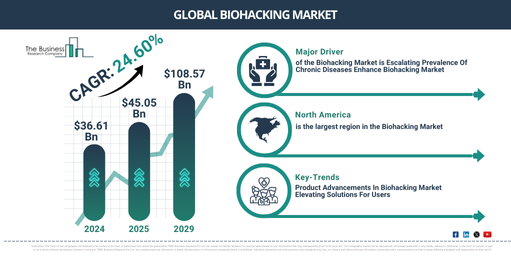
    The biohacking industry has seen robust expansion in the previous years. The market, which is expected to accomplish a valuation of $36.61 billion in 2024, is projected to surmount a value of $45.05 billion in 2025, amassing an impressive compound annual growth rate (CAGR) of 23.0%. The exponential upturn during the historic period can be credited to the escalation in health consciousness, availability of information, the flourishing of entrepreneurial culture, and the rise of the quantified self-movement.

    The market size for biohacking is anticipated to witness substantial expansion in the coming years, escalating to $108.57 billion in 2029 at a Compound Annual Growth Rate (CAGR) of 24.6%. This surge during the prediction phase can be linked to factors such as the emphasis on anti-aging and longevity, cognitive enhancement and nootropics, mainstream inclusion, corporate health programs, and regulatory milieu. Key trends predicted during this time frame encompass biohacking for improved longevity and anti-aging, biohacking-oriented wearables and tools, cognitive augmentation, and nootropics, biohacking for optimizing sleep, in addition to genetic modification and CRISPR technology.

    Download a free sample to assess the report’s scope and structure:

    https://www.thebusinessresearchcompany.com/sample.aspx?id=7316&type=smp

    How Are Key Drivers in the Industry Acting as Catalysts for the Growth of theBiohacking Market?

    The increase in chronic diseases is anticipated to boost the biohacking market’s expansion. Chronic ailments are typically long-term conditions that can potentially augment over time. These diseases can be combated using biohacking techniques like enhancing body nutrition, mediation through intermittent fasting, hydrogen inhalation therapy, amongst others. As an example, the National Centre for Biotechnology Information (NCBI), a component of the US-based National Library of Medicine, predicted in January 2023 that by 2050, there would be a 99.5% increase in the number of individuals over 50 having at least one chronic disease, escalating from 71.522 million in 2020 to 142.66 million. Consequently, the escalating occurrence of chronic diseases is propelling the expansion of the biohacking market.

    Which Segments in the Biohacking Offer the Most Growth?

    The biohackingmarket covered in this report is segmented –

    1) By Product: Wearables; Implants (Chips); Gene Modification Kits; Smart Drugs; Supplements; Mobile Apps; Other Products

    2) By Component: Solution; Services

    3) By Application: Synthetic Biology; Genetic Engineering; Forensic Science; Diagnosis And Treatment; Drug Testing

    4) By End-User: Pharmaceutical And Biotechnology Companies; Hospitals And Clinics; Forensic Laboratories; Research And Academic Institutes; Other End Users

    Subsegments:

    1) By Wearables: Fitness Trackers; Sleep Monitors; Health Monitors

    2) By Implants (Chips): RFID Implants; Biometric Sensors; Neurostimulator Devices

    3) By Gene Modification Kits: CRISPR Kits; Gene Editing Tools; Synthetic Biology Kits

    4) By Smart Drugs: Nootropics; Cognitive Enhancers; Mood Enhancers

    5) By Supplements: Nutraceuticals; Herbal Supplements; Performance Enhancers

    6) By Mobile Apps: Health Tracking Apps; Biofeedback Apps; Habit Tracking Apps

    7) By Other Products: DIY Biology Kits; Home Lab Equipment; Biometric Testing Devices

    Request customized data on this market:

    https://www.thebusinessresearchcompany.com/customise?id=7316&type=smp

    What Are the Fastest-Growing Geographies in the #How Are Key Drivers in the Industry Acting as Catalysts for the Growth of theBiohacking Market?# Market?

    North America was the largest region in the biohacking market in 2024. North America is expected to be the fastest-growing region in the forecast period. The regions covered in the biohacking market report are Asia-Pacific, Western Europe, Eastern Europe, North America, South America, Middle East, Africa.

    What Are the Current Market Growth and Trends in the Biohacking Industry?

    The emergence of product advancement is a main trend becoming more prevalent in the biohacking market. Major players in this industry are concentrating on developing advanced products to solidify their market dominance. Take for example, Velovita, a US-based biohacking solutions company, launched a dietary supplement called Zlem in January 2022. This potent bio-hacking formula assists in improving the quality of sleep and managing weight. With over 20 ingredients, Zlem not only facilitates better sleep and fat burning during rest at night, but also aids in body detoxification providing users with a balanced and healthy mindset every morning.

    View the full report here:

    https://www.thebusinessresearchcompany.com/report/biohacking-global-market-report

    What Are the Key Elements That Define the Biohacking Market?

    Biohacking, also known as human augmentation or human enhancement, is a type of do-it-yourself biology that aims to improve ability, fitness, and wellbeing through intentional interventions.

    Purchase the full report and get a swift delivery:

    https://www.thebusinessresearchcompany.com/purchaseoptions.aspx?id=7316

    About The Business Research Company:

    With over 15000+ reports from 27 industries covering 60+ geographies, The Business Research Company has built a reputation for offering comprehensive, data-rich research and insights. Armed with 1,500,000 datasets, the optimistic contribution of in-depth secondary research, and unique insights from industry leaders, you can get the information you need to stay ahead in the game.

    Get in touch with us:

    The Business Research Company: https://www.thebusinessresearchcompany.com/

    Americas +1 310-496-7795

    Europe +44 7882 955267

    Asia & Others +44 7882 955267 & +91 8897263534

    Email us at info@tbrc.info

    Follow us on:

    LinkedIn: https://in.linkedin.com/company/the-business-research-company

    YouTube: https://www.youtube.com/channel/UC24_fI0rV8cR5DxlCpgmyFQ

    Global Market Model: https://www.thebusinessresearchcompany.com/global-market-model
  • Major Drivers Propelling the Growth oh theTele Intensive Care Unit Market Forward: Tele Intensive Care Market Benefits From Growing Focus On Medication Safety

    Major Drivers Propelling the Growth oh theTele Intensive Care Unit Market Forward: Tele Intensive Care Market Benefits From Growing Focus On Medication Safety

    Claim your 30% discount on Global Market Reports with code ONLINE30. Limited time only.

    What Is the Current and Projected Market Size of the Tele Intensive Care Unit Market Through 2034?

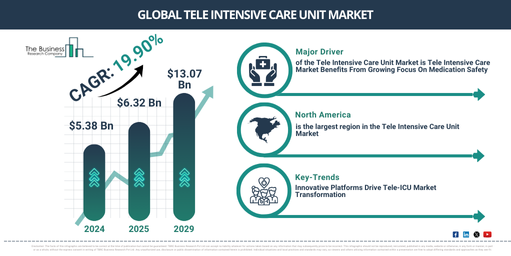
    The tele-intensive care unit market has witnessed rapid expansion in recent years. Its size is projected to increase from $5.38 billion in 2024 to $6.32 billion in 2025, with a compound annual growth rate (CAGR) of 17.6%. Factors contributing to this growth during the historic period include the impact of the COVID-19 pandemic, early adoption and pilot schemes, greater emphasis on patient outcomes, a lack of intensive care specialists, and the emergence of telemedicine.

    In the coming years, the tele intensive care unit market is projected to experience substantial growth, increasing to$13.07 billion by 2029 with a compound annual growth rate (CAGR) of 19.9%. Factors contributing to this growth during the forecast period include a scarceness of intensivists, educational undertakings, the management of chronic diseases from a distance, incorporations with healthcare systems, regulatory progressions, and the continuation post-pandemic. The anticipated trends during the forecast period consist of improved geographic reach, affordability, a focus on patient-centred care, and advancements in technology.

    Download a free sample to assess the report’s scope and structure:

    https://www.thebusinessresearchcompany.com/sample.aspx?id=8164&type=smp

    Which Major Market Drivers Are Expected to Boost the Growth Potential of the Tele Intensive Care Unit Market?

    The tele-intensive care unit market is experiencing growth due to a surge in the prevalence of medication errors. Defined as any preventable instances that may lead to inappropriate drug use, medication errors have shown a rising trend. The benefits of tele-intensive care, such as a reduction in prescription errors with alerts and timely reminders from physicians, along with the capacity to guide patients regarding drug interactions, make it all the more important. For example, a research paper by the National Institutes of Health (NIH), a biomedical research institution based in the US, pointed out in July 2022 that between 7,000 and 9,000 deaths in the US each year, arise due to medication errors. More than 7 million patients are impacted, and the annual cost to manage patients with medication-related errors exceeds $40 billion. Hence, the tele-intensive care unit market expansion is propelled by the increasing cases of medication errors.

    Which Key Market Segments Comprise the Tele Intensive Care Unit Market and Drive Its Revenue Growth?

    The tele intensive care unitmarket covered in this report is segmented –

    1) By Type: Centralized Models; Decentralized Models; Other Models

    2) By Type Of Management: Intensivist; Open; Co-Managed; Open With Consultants; Other Type Of Management

    3) By Component: Hardware; Software

    4) By End User: Hospitals; Clinics; Other End Users

    Subsegments:

    1) By Centralized Models: Single Hub With Multiple Remote ICUs; Centralized Monitoring Systems; Integrated Care Coordination Platforms

    2) By Decentralized Models: Distributed Care Teams Across Multiple Locations; Localized Monitoring With Remote Support; Hybrid Care Models

    3) By Other Models: Mobile Tele-ICU Units; Cloud-Based Tele-ICU Solutions; Specialized Tele-ICU Applications

    Request customized data on this market:

    https://www.thebusinessresearchcompany.com/customise?id=8164&type=smp

    Which Areas Are Leading Regions in the Tele Intensive Care Unit Market Expansion Across the Globe?

    North America was the largest region in the tele intensive care unit market in 2024. The regions covered in the tele intensive care unit market report are Asia-Pacific, Western Europe, Eastern Europe, North America, South America, Middle East, Africa.

    What Are the Key Market Trends in theTele Intensive Care Unit Market Over the Coming Years?

    The rise in technological advancements is a notable trend in the tele-intensive care unit market. To maintain their market standing, leading companies are developing innovative platforms. An illustration of this is the TeleCritical Care Program initiated by the US-based company, VA New York Harbor Healthcare System, in June 2022. The program, stationed in Brooklyn VA Medical Center’s Intensive Care Unit, offers remote intensive care to patients through sophisticated telehealth technology. This Tele-ICU initiative gives access to specialty experts who provide round-the-clock bedside services for critically ill patients, to the in-house medical team.

    View the full report here:

    https://www.thebusinessresearchcompany.com/report/tele-intensive-care-unit-global-market-report

    How Is the Tele Intensive Care Unit Market Conceptually Defined?

    Tele intensive care refers to the use of telecommunications infrastructure to deliver consultations and enables off-site clinicians to consult on patient care through interaction with bedside workers. It helps to collect and monitor patient health data for real-time monitoring of disease slowdown, diagnostics, and long-term treatment.

    Purchase the full report and get a swift delivery:

    https://www.thebusinessresearchcompany.com/purchaseoptions.aspx?id=8164

    About The Business Research Company:

    With over 15000+ reports from 27 industries covering 60+ geographies, The Business Research Company has built a reputation for offering comprehensive, data-rich research and insights. Armed with 1,500,000 datasets, the optimistic contribution of in-depth secondary research, and unique insights from industry leaders, you can get the information you need to stay ahead in the game.

    Get in touch with us:

    The Business Research Company: https://www.thebusinessresearchcompany.com/

    Americas +1 310-496-7795

    Europe +44 7882 955267

    Asia & Others +44 7882 955267 & +91 8897263534

    Email us at info@tbrc.info

    Follow us on:

    LinkedIn: https://in.linkedin.com/company/the-business-research-company

    YouTube: https://www.youtube.com/channel/UC24_fI0rV8cR5DxlCpgmyFQ

    Global Market Model: https://www.thebusinessresearchcompany.com/global-market-model
  • Global Autoimmune Disease Diagnosis Market Trends: Regional Breakdowns and Strategic Insights

    Global Autoimmune Disease Diagnosis Market Trends: Regional Breakdowns and Strategic Insights

    Claim your 30% discount on Global Market Reports with code ONLINE30. Limited time only.

    How Has the Autoimmune Disease Diagnosis Market Growth Performance Trended Historically, And What Lies Ahead?

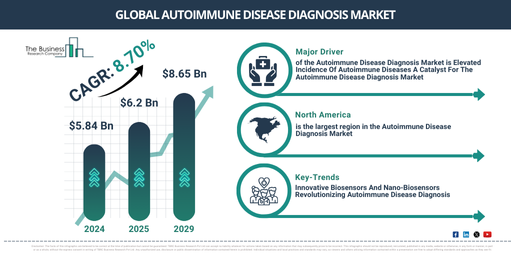
    In recent times, there has been a notable expansion in the market size for diagnosing autoimmune diseases. It is forecasted to rise from $5.84 billion in 2024 to approximately $6.2 billion in 2025, experiencing a compound annual growth rate (CAGR) of 6.2%. The historical growth within this sector can be accredited to escalating occurrences of autoimmune diseases, the evolution of emerging markets, a surge in healthcare spending, and the heightened prevalence of these diseases in women.

    The market size of autoimmune disease diagnosis is predicted to witness significant expansion in the coming years, reaching a valuation of$8.65 billion by 2029, with a compound annual growth rate (CAGR) of 8.7%. The anticipated surge during the forecast period can be traced back to factors such as heightened investments in AI diagnostics, robust economic progress, growing cognizance about autoimmune maladies, and biomarker identification. Key market trends projected for this period include forming partnerships with other market leaders, funding artificial intelligence startups, collaboration with government entities, and the production of rapid at-home testing kits.

    Download a free sample to assess the report’s scope and structure:

    https://www.thebusinessresearchcompany.com/sample.aspx?id=3231&type=smp

    What Are the Major Market Drivers Behind the Rising Adoption of Autoimmune Disease Diagnosis Market?

    The upswing in autoimmune diseases is a significant factor propelling the expansion of the autoimmune disease diagnosis market. Drawing from data provided by Multiple Sclerosis Australia, a non-profit organization committed to research and advocacy for victims of multiple sclerosis, it was reported in February 2023 that the number of Multiple Sclerosis patients in Australia had escalated to 33,335 in 2021. This figure represents a 30% (7,728) increase from the previous tally of 25,607 over the last four years. Consequently, the global upsurge in autoimmune disease incidence is fuelling the growth of the autoimmune disease diagnosis market.

    Which Key Market Segments Comprise the Autoimmune Disease Diagnosis Market and Drive Its Revenue Growth?

    The autoimmune disease diagnosismarket covered in this report is segmented –

    1) By Product: Consumables And Assay Kits, Instruments

    2) By End User: Clinical Laboratories, Hospitals, Others

    3) By Test Type: Routine Laboratory Tests, Autoantibodies Tests, Immunologic Tests, Other Tests

    Subsegments:

    1) By Consumables And Assay Kits: ELISA Kits; Reagents And Test Kits; Sample Collection And Preservation Devices; Control And Calibration Materials

    2) By Instruments: Immunoassay Analyzers; Flow Cytometers; Luminometers; Microscopes; Other Diagnostic Devices

    Request customized data on this market:

    https://www.thebusinessresearchcompany.com/customise?id=3231&type=smp

    Which Areas Are Leading Regions in the Autoimmune Disease Diagnosis Market Expansion Across the Globe?

    North America was the largest region in the autoimmune disease diagnosis market in 2024. Western Europe was the second largest region in the autoimmune disease diagnosis market share. The regions covered in the autoimmune disease diagnosis market report are Asia-Pacific, Western Europe, Eastern Europe, North America, South America, Middle East, Africa

    What Are the Strategic Trends Steering theAutoimmune Disease Diagnosis Market Direction?

    In the autoimmune disease diagnosis market, biosensors and nano biosensors for swift detection serve as innovative tools for identifying antibodies. These are heavily favored due to their affordability, heightened sensitivity, user-friendly nature, multiplexing capabilities, and speedy diagnosis. Aside from measuring antibody count in the human blood serum with remarkable precision, these tools also gauge antibody activity, as they utilize portable optical label-free biosensors that operate on the principles of spectral correlation interferometry. This point-of-care technology proves to be more comprehensive, insightful, prompt, and accurate in diagnosing autoimmune diseases in comparison to traditional methods.

    View the full report here:

    https://www.thebusinessresearchcompany.com/report/autoimmune-disease-diagnosis-global-market-report

    How Is the Autoimmune Disease Diagnosis Market Conceptually Defined?

    Autoimmune disease diagnosis refers to the diagnosis of diseases in which the production of antibodies takes place in the body which attacks and destroys healthy cells in the body. These include Crohn’s disease, rheumatoid arthritis, Hashimoto’s disease, multiple sclerosis, Grave’s disease, psoriasis, coeliac disease, type 1 diabetes, lupus, and inflammatory bowel syndrome, and are diagnosed by immunological tests.

    Purchase the full report and get a swift delivery:

    https://www.thebusinessresearchcompany.com/purchaseoptions.aspx?id=3231

    About The Business Research Company:

    With over 15000+ reports from 27 industries covering 60+ geographies, The Business Research Company has built a reputation for offering comprehensive, data-rich research and insights. Armed with 1,500,000 datasets, the optimistic contribution of in-depth secondary research, and unique insights from industry leaders, you can get the information you need to stay ahead in the game.

    Get in touch with us:

    The Business Research Company: https://www.thebusinessresearchcompany.com/

    Americas +1 310-496-7795

    Europe +44 7882 955267

    Asia & Others +44 7882 955267 & +91 8897263534

    Email us at info@tbrc.info

    Follow us on:

    LinkedIn: https://in.linkedin.com/company/the-business-research-company

    YouTube: https://www.youtube.com/channel/UC24_fI0rV8cR5DxlCpgmyFQ

    Global Market Model: https://www.thebusinessresearchcompany.com/global-market-model

  • $21.8 Billion Forecast for Xenotransplantation Market by 2029, Backed by Demand and Innovation

    $21.8 Billion Forecast for Xenotransplantation Market by 2029, Backed by Demand and Innovation

    Claim your 30% discount on Global Market Reports with code ONLINE30. Limited time only.

    What Are the Key Milestones in the Xenotransplantation Market’s Growth Trajectory From 2025 To 2034?

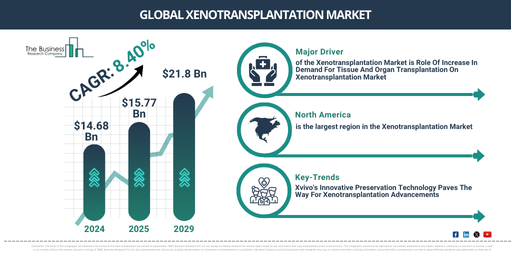
    The size of the xenotransplantation market has steadily increased in the past few years. The growth is expected to continue from $14.68 billion in 2024 to $15.77 billion in 2025, boasting a compound annual growth rate (CAGR) of 7.4%. Factors contributing to this growth throughout the historical period include rising demand for organ transplants, advancements in animal breeding and surgical techniques, an increase in clinical trials, as well as progression in regulatory approvals.

    The market size of xenotransplantation is predicted to experience significant expansion in the coming years, reaching a value of $21.8 billion in 2029, with a compound annual growth rate of 8.4%. The projected growth in this timeframe is anticipated to be driven by factors such as global healthcare infrastructure, public funding, telemedicine, public perception and acceptance, and the application of AI. Key trends expected throughout this period involve personalized xenotransplantation, multi-organ transplants, association with precision medicine, long-term monitoring solutions, and the employment of blockchain.

    Download a free sample to assess the report’s scope and structure:

    https://www.thebusinessresearchcompany.com/sample.aspx?id=8326&type=smp

    What Are the Core Market Drivers Propelling Growth in the Xenotransplantation Industry?

    The xenotransplantation market is predicted to expand due to the rising need for tissue and organ transplants. Hereditary illnesses such as polycystic kidney disease, cystic fibrosis, or heart malfunction can often necessitate organ transplantation for a significant number of individuals. However, the massive demand for transplanted organs has created a scarcity. Xenotransplantation offers a solution to this issue by substituting human organs with those of nonhuman origin. As an illustration, the United Network for Organ Sharing, a non-profit scientific and educational organization based in the US, reported in January 2023 that America performed 42,887 organ transplants in 2022. This is a 3.7 percent rise from 2021 and sets a new annual record. Hence, the surge in demand for tissue and organ transplantation is expected to fuel the xenotransplantation market’s growth.

    How Is the Xenotransplantation Market Segmented?

    The xenotransplantationmarket covered in this report is segmented –

    1) By Products: Organ Preservation Solutions; Transplant Diagnostics; Tissue Products

    2) By Treatment: Analgesic; Immunosuppressant; Other Treatments

    3) By Applications: Heart; Kidney; Other Organs

    4) By End-Users: Hospitals; Transplant Centers; Other End-Users

    Subsegments:

    1) By Organ Preservation Solutions: Hypothermic Preservation Solutions; Normothermic Preservation Solutions; Organ Storage Solutions

    2) By Transplant Diagnostics: Pre-Transplant Compatibility Testing; Post-Transplant Monitoring; Molecular Diagnostics

    3) By Tissue Products: Xenograft Tissue Products; Tissue Engineered Products; Biological Scaffolds

    Request customized data on this market:

    https://www.thebusinessresearchcompany.com/customise?id=8326&type=smp

    Which Regions Are Driving the Next Phase of the Xenotransplantation Market Growth?

    North America was the largest region in the xenotransplantation market in 2024. The regions covered in the xenotransplantation market report are Asia-Pacific, Western Europe, Eastern Europe, North America, South America, Middle East, Africa.

    What Key Market Trends and Innovations Are Shaping the Future of the Xenotransplantation Industry?

    Major firms in the xenotransplantation market are adopting new technologies such as preservation technology to improve preservation techniques and effectiveness for sensitive organs. This technology encompasses various tools and approaches to sustain and protect the value of crucial entities, data, or environments over time. For example, in January 2022, XVIVO, a medical technology firm from Sweden with a focus on creating optimized solutions for organ, tissue, and cell preservation, pioneered an efficient method for the storage and transportation of donated hearts. The biggest challenge currently facing the transplant sector is the scarcity of organs. Consequently, only a small number of patients with terminal heart disease get the opportunity for transplants, and many sadly pass away while waiting for a new organ. Xenotransplantation, or the transplantation from different species, is a potential solution to this severe shortfall. A recent, pioneering study using XVIVO’s heart preservation technology has demonstrated long-term survival following the xenotransplantation of genetically modified pig hearts into primates.

    View the full report here:

    https://www.thebusinessresearchcompany.com/report/xenotransplantation-global-market-report

    How Is the Xenotransplantation Market Defined and What Are Its Core Parameters?

    Xenotransplantation is a procedure in which live nonhuman animal cells, tissues, or organs are transplanted, implanted, or infused into a human recipient. It also involves the transplantation, implantation, or infusion of human body fluids, cells, tissues, or organs after having had ex vivo contact with living nonhuman animal cells, tissues, or organs.

    Purchase the full report and get a swift delivery:

    https://www.thebusinessresearchcompany.com/purchaseoptions.aspx?id=8326

    About The Business Research Company:

    With over 15000+ reports from 27 industries covering 60+ geographies, The Business Research Company has built a reputation for offering comprehensive, data-rich research and insights. Armed with 1,500,000 datasets, the optimistic contribution of in-depth secondary research, and unique insights from industry leaders, you can get the information you need to stay ahead in the game.

    Get in touch with us:

    The Business Research Company: https://www.thebusinessresearchcompany.com/

    Americas +1 310-496-7795

    Europe +44 7882 955267

    Asia & Others +44 7882 955267 & +91 8897263534

    Email us at info@tbrc.info

    Follow us on:

    LinkedIn: https://in.linkedin.com/company/the-business-research-company

    YouTube: https://www.youtube.com/channel/UC24_fI0rV8cR5DxlCpgmyFQ

    Global Market Model: https://www.thebusinessresearchcompany.com/global-market-model