Category: HealthcareServices

  • 2025–2029 Home Rehabilitation Products And Services Market Outlook: Regional Trends and Growth Forecast

    2025–2029 Home Rehabilitation Products And Services Market Outlook: Regional Trends and Growth Forecast

    Claim your 30% discount on Global Market Reports with code ONLINE30. Limited time only.

    Claim your 30% discount on Global Market Reports with code ONLINE30. Limited time only.

    What Are the Forecasted Growth Rate and Market Size of the Home Rehabilitation Products And Services Market?

    The market for home rehabilitation products and services has notably expanded in the recent past. The market value is expected to escalate from $99.56 billion in 2024 to $106.64 billion in 2025, growing at a compound annual growth rate (CAGR) of 7.1%. The historical growth of this market can be credited to factors such as state backing and repayment policies, the requirement for post-operation recovery, proliferation of distance-rehabilitation services, affordability over institutional treatment, and an uptick in rates of disability.

    There is forecasted to be a significant rise in the market size for home rehabilitation products and services in the coming years. This market is predicted to reach $139.00 billion by 2029, expanding at a compound annual growth rate (CAGR) of 6.9%. The expected growth during the forecasted period can be credited to the escalating prevalence of non-communicable diseases (NCDs), endeavors to contain healthcare costs, increasing demand for post-acute and post-surgical recovery, heightened awareness regarding early rehabilitation and preventive care, and the consumer shift towards home-based care. Upcoming trends in this forecast period include the advent of AI-aided rehabilitation devices, wearable monitoring technology, assistance from rehabilitation robots, integration with smart homes and IoT-enabled remote physiological monitoring.

    Download The Free Sample Report Here:

    https://www.thebusinessresearchcompany.com/sample.aspx?id=25784&type=smp

    Which Factor Is Shaping The Future Of The Home Rehabilitation Products And Services Market?

    The expected surge in remote patient monitoring is positioned to boost the expansion of the market for home rehabilitation products and services. Remote patient monitoring (RPM) involves the use of digital technologies to record and track health data from patients outside of traditional medical environments, enabling healthcare providers to oversee and manage patient progress from afar. The surge in remote patient monitoring comes as a result of increasing demand for home-based care, especially for the elderly or individuals recuperating from surgeries or injuries, or those managing chronic conditions. These home rehabilitation products and services facilitate remote patient monitoring by equipping patients with necessary tools and therapies right at their homes while concurrently allowing healthcare providers to keep track of their progress, compliance, and recovery in real time. To illustrate, a recent study by Vivalink Inc., a healthcare technology firm based in the US, stated in August 2023 that 81% of healthcare professionals currently utilize remote patient monitoring (RPM), a dramatic increase from 20% in 2021, indicating a growth of 305%. Furthermore, 84% of these current RPM users anticipate to broaden their utilization in 2024. Consequently, the surge in remote patient monitoring is fostering the growth of the home rehabilitation products and services market.

    What Is The Segment-Wise Breakdown Of The Home Rehabilitation Products And Services Market?

    The home rehabilitation products and services market covered in this report is segmented –

    1) By Product Type: General Aids, Positioning Devices, Body Support Devices, Wheelchairs

    2) By Service Type: Occupational Therapy, Speech Therapy, Physical Therapy, Respiratory Therapy

    3) By Distribution Channel: Retail Store, Online Channel

    4) By Application: Disabilities, Geriatric People

    5) By End User: Homecare, Hospitals And Clinics, Ambulatory Care Center, Nursing Care Center

    Subsegments:

    1) By General Aids: Walkers, Crutches, Canes, Reaching Aids, Dressing Aids

    2) By Positioning Devices: Patient Transfer Boards, Slide Sheets, Bed Positioning Pillows, Wheelchair Cushions, Limb Positioning Supports

    3) By Body Support Devices: Braces And Orthotic Supports, Cervical Collars, Back Supports, Knee And Ankle Supports, Compression Garments

    4) By Wheelchairs: Manual Wheelchairs, Electric (Powered) Wheelchairs, Transport Wheelchairs, Standing Wheelchairs, Reclining Wheelchairs

    Which Trends Are Redefining The Future Landscape Of The Home Rehabilitation Products And Services Industry?

    Key players in the home rehabilitation products and services sector are concentrating their efforts on developing innovative solutions like comprehensive telehealth platforms. These platforms are geared towards improving remote healthcare management, encouraging treatment adherence, and offering patients a continuous recovery journey between a clinical setting and their homes. These fully integrated telehealth platforms operate as cloud-based digital healthcare systems that bind together remote patient monitoring, video consultations, and data analytics. They effectively facilitate a direct connection between patients and healthcare providers for real-time guidance and tracking of rehabilitation progress. For example, Ekso Bionics Holdings Inc., a company based in the US that specializes in medical exoskeletons, introduced their EksoNR GaitCoach software in January 2024. This software plays a critical role in enhancing gait training during rehabilitation therapy. It serves as an analytical tool that delivers instant intelligent feedback regarding patients’ gait, assessing crucial parameters such as step symmetry, stride length, swing time, and trunk lean. By alerting therapists of any deviations in gait in a systematic manner, it allows them to make necessary and precise adjustments during training. Furthermore, the software enables dynamic control, allowing modifications to swing and stance assistance as and when needed, thus personalizing therapy to suit each patient’s unique requirements.

    Which Companies Hold The Largest Market Share In The Home Rehabilitation Products And Services Sector?

    Major companies operating in the home rehabilitation products and services market are Medline Industries LP, Stryker Corporation, Bayada Home Health Care Inc., Maxim Healthcare Services Inc., LHC Group Inc., Enovis Corporation, Invacare Corporation, Norco Inc., Arjo Inc., Amedisys Inc., Drive DeVilbiss Healthcare LLC, Performance Health LLC, Handicare Stairlifts International, AliMed Inc., GF Health Products Inc., Dynatronics Corporation, Prism Medical Ltd., Ekso Bionics Holdings Inc., LL Corpus Cogere Inc., Medical Depot Inc.

    Get The Full Report Here:

    https://www.thebusinessresearchcompany.com/report/home-rehabilitation-products-and-services-global-market-report

    How Does Regional Performance Compare Across The Home Rehabilitation Products And Services Industry?

    North America was the largest region in the home rehabilitation products and services market in 2024. Asia-Pacific is expected to be the fastest-growing region in the forecast period. The regions covered in the home rehabilitation products and services market report are Asia-Pacific, Western Europe, Eastern Europe, North America, South America, Middle East, Africa.

    Request For A Customized Report:

    https://www.thebusinessresearchcompany.com/customise?id=25784&type=smp

    About The Business Research Company:

    With over 15000+ reports from 27 industries covering 60+ geographies, The Business Research Company has built a reputation for offering comprehensive, data-rich research and insights. Armed with 1,500,000 datasets, the optimistic contribution of in-depth secondary research, and unique insights from industry leaders, you can get the information you need to stay ahead in the game.

    Get in touch with us:

    The Business Research Company: https://www.thebusinessresearchcompany.com/

    Americas +1 310-496-7795

    Asia +44 7882 955267 & +91 8897263534

    Europe +44 7882 955267

    Email us at info@tbrc.info

    Follow us on:

    LinkedIn: https://in.linkedin.com/company/the-business-research-company

    YouTube: https://www.youtube.com/channel/UC24_fI0rV8cR5DxlCpgmyFQ

    Global Market Model: https://www.thebusinessresearchcompany.com/global-market-model

  • Emerging Trends and Growth Drivers in the Hereditary Testing Market Through 2029

    Emerging Trends and Growth Drivers in the Hereditary Testing Market Through 2029

    Claim your 30% discount on Global Market Reports with code ONLINE30. Limited time only.

    Claim your 30% discount on Global Market Reports with code ONLINE30. Limited time only.

    How Large Is the Hereditary Testing Market Expected to Be in 2029?

    In the past few years, there has been a significant increase in the size of the hereditary testing market. This market is projected to expand from $6.05 billion in 2024 to $6.62 billion in 2025, with a Compound Annual Growth Rate (CAGR) of 9.3%. Various factors have contributed to the historic growth of this market, including a rise in parental age, broader use in assessing cancer risk, increasing requirement for early diagnosis and prevention, the escalating impact of rare and chronic illnesses, improved access to genetic counseling services, and an increase in the use of hereditary testing in the realm of reproductive health.

    The genetic testing market is projected to undergo significant expansion in the upcoming years, expected to reach $9.35 billion by 2029 and experiencing a compound annual growth rate (CAGR) of 9.0%. Factors contributing to this projected growth during the forecast period include the rise in cooperative efforts between public and private genomic ventures, the growing need for non-invasive prenatal screening (NIPT), an increase in the availability of genetic testing panels and kits, their frequent use in broad-based population screening programs, and a heightened focus on prophylactic and precision public health initiatives. Key trends anticipated for the forecast period include advancements in next-generation sequencing (NGS), technological breakthroughs in non-invasive prenatal testing (NIPT), evolution of bioinformatics platforms, progress in point-of-care genetic testing apparatus, and improvements in multi-gene panel testing.

    Download The Free Sample Report Here:

    https://www.thebusinessresearchcompany.com/sample.aspx?id=25782&type=smp

    What Are The Contributors To Demand In The Hereditary Testing Market?

    The growth of the hereditary testing market is expected to be driven by the escalating occurrence of genetic disorders. These disorders can be traced back to defects or mutations in a person’s’s DNA, either due to inheritance from one or both parents or by spontaneous occurrence. A factor contributing to the rising genetic disorders is the advancing age of parents, increasing the chances of hereditary mutations being transmitted to their children. Hereditary testing plays a crucial role in supporting patients with genetic disorders by facilitating early diagnosis, guiding individualized treatment options, and assisting in family planning choices by identifying inherited mutations. The Cystic Fibrosis Trust, a charity based in the UK, documented a hike in cystic fibrosis patient registration in October 2024, recording 11,318 in 2023, an increase from 11,148 in the previous year. Therefore, the escalating prevalence of genetic disorders is propelling the growth of the hereditary testing market.

    What Segmentation Categories Are Included In The Hereditary Testing Market Analysis?

    The hereditary testing market covered in this report is segmented –

    1) By Test Type: Predictive Testing, Carrier Testing, Prenatal Testing, Newborn Screening, Diagnostic Testing, Other Test Types

    2) By Sample Type: Blood Samples, Saliva Samples, Tissue Samples, Buccal Swabs, Urine Samples

    3) By Technology Used: Next-Generation Sequencing (NGS), Polymerase Chain Reaction (PCR), Sanger Sequencing, Microarray Technology, Whole Genome Sequencing (WGS)

    4) By Application: Oncology, Cardiovascular Diseases, Neurological Disorders, Metabolic Disorders, Other Applications

    5) By End User: Hospitals, Diagnostic Laboratories, Research Institutes, Pharmaceutical Companies, Patients And Consumers

    Subsegments:

    1) By Predictive Testing: Breast Cancer 1 (BRCA1) and Breast Cancer 2 (BRCA2) Gene Mutation Testing, Lynch Syndrome Testing, Familial Hypercholesterolemia Testing, Huntington’s Disease Testing, Cardiomyopathy Genetic Testing

    2) By Carrier Testing: Cystic Fibrosis Carrier Screening, Tay-Sachs Carrier Screening, Spinal Muscular Atrophy (SMA) Carrier Screening, Thalassemia Carrier Screening, Sickle Cell Carrier Testing

    3) By Prenatal Testing: Non-Invasive Prenatal Testing (NIPT), Chorionic Villus Sampling (CVS), Amniocentesis, Expanded Carrier Screening (Prenatal Context), Cell-Free Fetal Deoxyribonucleic Acid Testing

    4) By Newborn Screening: Phenylketonuria (PKU) Screening, Congenital Hypothyroidism Screening, Cystic Fibrosis Screening, Sickle Cell Disease Screening, Hearing Loss and Metabolic Disorder Panels

    5) By Diagnostic Testing: Rare Disease Genetic Testing, Inherited Cancer Diagnostic Testing, Cardiogenetic Diagnostic Panels, Neurogenetic Disorder Testing, Monogenic Disease Panels

    6) By Other Test Types: Pharmacogenomics Testing, Preimplantation Genetic Diagnosis (PGD), Whole Exome Sequencing (WES), Whole Genome Sequencing (WGS), Mitochondrial Deoxyribonucleic Acid Testing

    What Upcoming Trends Are Expected To Impact The Hereditary Testing Market Globally?

    The hereditary testing market is noticing a trend where key players are focusing their efforts on improving the technology in genetic test kits to increase the precision of testing, lessen turnaround times, and enhance detection of a wider variety of genetic mutations. Genetic test kits are diagnostic tools used to examine an individual’s DNA to detect genetic mutations related to inherited diseases or risks. For instance, in July 2023, Devyser Diagnostics AB, a leading biotech firm from Sweden known for developing, producing, and selling DNA diagnostic kits specifically for hereditary disease testing, introduced two innovative next-generation sequencing kits – Devyser LynchFAP and Devyser BRCA PALB2. Devyser LynchFAP has a unique feature that facilitates comprehensive analysis of PMS2 (successfully dealing with the obstacles associated with its pseudogene PMS2CL) together with nine other crucial genes associated with hereditary colorectal cancer syndromes. On the other hand, Devyser BRCA PALB2 is a compact single-tube solution designed to screen BRCA1, BRCA2, and PALB2 mutations, applicable to both blood and tumor samples. It is optimized to make lab processes more streamlined and provides effective, user-friendly sequencing along with dedicated software to ensure reliable detection of hereditary cancer risks.

    Who Are The Top-Ranked Companies In The Hereditary Testing Market Today?

    Major companies operating in the hereditary testing market are F. Hoffmann-La Roche Ltd., Thermo Fisher Scientific Inc., Laboratory Corporation of America Holdings, Quest Diagnostics Incorporated, Agilent Technologies Inc., Illumina Inc., CooperSurgical Inc., QIAGEN N.V, Natera Inc., Myriad Genetics Inc., Fulgent Genetics Inc, Invitae Corporation, GeneDx LLC, Twist Bioscience Corporation, Color Health Inc., MedGenome Inc, SOPHiA GENETICS SA, Gene By Gene Ltd., Dante Labs Inc., 23mofang Co. Ltd.

    Get The Full Report Here:

    https://www.thebusinessresearchcompany.com/report/hereditary-testing-global-market-report

    How Is Hereditary Testing Market Adoption Varying Across Different Regions And Sectors?

    North America was the largest region in the hereditary testing market in 2024. Asia-Pacific is expected to be the fastest-growing region in the forecast period. The regions covered in the hereditary testing market report are Asia-Pacific, Western Europe, Eastern Europe, North America, South America, Middle East, Africa.

    Request For A Customized Report:

    https://www.thebusinessresearchcompany.com/customise?id=25782&type=smp

    About The Business Research Company:

    With over 15000+ reports from 27 industries covering 60+ geographies, The Business Research Company has built a reputation for offering comprehensive, data-rich research and insights. Armed with 1,500,000 datasets, the optimistic contribution of in-depth secondary research, and unique insights from industry leaders, you can get the information you need to stay ahead in the game.

    Get in touch with us:

    The Business Research Company: https://www.thebusinessresearchcompany.com/

    Americas +1 310-496-7795

    Asia +44 7882 955267 & +91 8897263534

    Europe +44 7882 955267

    Email us at info@tbrc.info

    Follow us on:

    LinkedIn: https://in.linkedin.com/company/the-business-research-company

    YouTube: https://www.youtube.com/channel/UC24_fI0rV8cR5DxlCpgmyFQ

    Global Market Model: https://www.thebusinessresearchcompany.com/global-market-model
  • Healthcare Third-Party Logistics Market Revenue Outlook: Strategic Insights and Forecast to 2029

    Healthcare Third-Party Logistics Market Revenue Outlook: Strategic Insights and Forecast to 2029

    Claim your 30% discount on Global Market Reports with code ONLINE30. Limited time only.

    Claim your 30% discount on Global Market Reports with code ONLINE30. Limited time only.

    How Much Is the Global Healthcare Third-Party Logistics Market Valued at Present and by 2029?

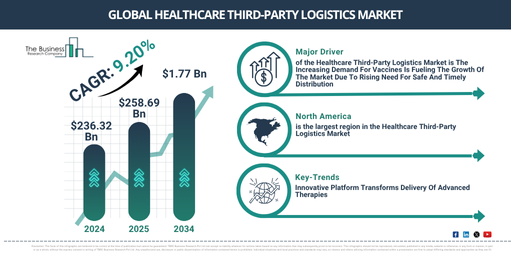
    In recent times, there has been a significant increase in the size of the healthcare third-party logistics market, which is expected to escalate from $236.32 billion in 2024 to $258.69 billion in 2025, indicating a compound annual growth rate (CAGR) of 9.5%. The previous growth can be linked to various factors such as higher levels of logistics functions outsourcing, a surge in the use of automated storage systems, increased demand for biologics and vaccines, growing intricacy of healthcare supply chains, and the escalating costs in healthcare.

    The market size of healthcare third-party logistics is anticipated to experience robust growth in the coming years, with a projected increase to $367.88 billion by 2029, maintaining a compound annual growth rate (CAGR) of 9.2%. This growth during the forecast period is predominantly driven by the escalating demand for effective supply chain management, the surging requirement for temperature-controlled logistics, the extension of biopharmaceutical companies’ distribution networks, concentration on regulatory compliance, and the increasing demand for direct-to-patient deliveries. Key trends to watch out for during the forecast period comprise advancements in cold chain logistics, digital tracking system integration, technology-centric inventory management, evolvements in real-time monitoring, and digital technology innovations.

    Download The Free Sample Report Here:

    https://www.thebusinessresearchcompany.com/sample.aspx?id=25779&type=smp

    #What Drivers Are Influencing Growth In The Healthcare Third-Party Logistics Market?

    The escalating necessity for vaccines is predicted to stimulate the expansion of the healthcare third-party logistics market in the future. Vaccines are essentially biological substances that mimic an infection to activate the body’s immune system into identifying and combating specific diseases, without actually causing the disease. The surge in demand for vaccines can be attributed to the growing incidence of infectious diseases, as greater protection is needed against common health risks. Healthcare third-party logistics play a vital role in enhancing vaccines by ensuring their secure, punctual, and temperature-regulated transportation and storage throughout their supply chain. For example, the World Health Organization, an intergovernmental organization based in Switzerland reported in July 2024, that global coverage for the initial dose of the HPV vaccine among girls had grown from 20% in 2022, to 27% in 2023, with an ambition of achieving 90% by 2030. Therefore, the rising demand for vaccines is fuelling the growth of healthcare third-party logistics market.

    What Are The Main Segments Identified In The Healthcare Third-Party Logistics Market Research?

    The healthcare third-party logistics market covered in this report is segmented –

    1) By Type: Cold Chain Logistics, Non-Cold Chain Logistics

    2) By Mode Of Transport: Ground Transportation, Air Cargo, Ocean Freight

    3) By Technology: Automated Storage And Retrieval Systems, Warehouse Management Systems, Transportation Management Systems, Blockchain, Internet of Things, Artificial Intelligence And Machine Learning, Robotics

    4) By Temperature Control: Ambient, Controlled, Refrigerated, Frozen, Cryogenic

    5) By End User: Pharmaceutical And Biopharmaceutical Companies, Hospitals And Clinics, Medical Device Manufacturers, Research Laboratories, Healthcare Providers, Other End Users

    Subsegments:

    1) By Cold Chain Logistics: Refrigerated Storage, Refrigerated Transportation, Packaging Solutions for Temperature-Sensitive Products, Cold Chain Monitoring Systems, Specialized Cold Chain Warehousing

    2) By Non-Cold Chain Logistics: Warehousing And Storage, Transportation Management, Inventory Management, Order Fulfillment Services, Packaging And Labeling

    What Are The Leading Trends And Opportunities In The Healthcare Third-Party Logistics Sector?

    Top organizations in the healthcare third-party logistics market are honing their focus on the creation of innovative solutions like specialized cell and gene therapy logistics platforms. These platforms have been designed to handle the accurate, time-bound, and temperature-dependent transport and storage of delicate biological therapies used in personalized medicine. As a demonstration, McKesson Corporation, a leading healthcare corporation based in the US, introduced Inspirogene in October 2024. This is a specifically designed business unit that aids in the commercialization of cell and gene therapies using leading-edge third-party logistics and specialty distribution services. This avant-garde solution combines complex supply chain management, temperature-dependent storage, and real-time monitoring to ensure product quality, on-time delivery, and efficient dissemination of vital vaccines and therapies. Inspirogene caters to the distinct logistical needs of cell and gene therapies by offering a flexible platform that not only simplifies their delivery but also aids their market introduction with accuracy and dependability.

    Which Companies Play A Key Role In The Development Of The Healthcare Third-Party Logistics Market?

    Major companies operating in the healthcare third-party logistics market are McKesson Corporation, Cencora Inc, Cardinal Health Inc, Federal Express Corporation, A.P. Moller – Maersk A/S, Kuhne + Nagel International AG, Schenker AG, CEVA Logistics India Private Limited, GEODIS SA, Rhenus SE And Co. KG, XPO Inc., Agility Logistics Private Limited, Allcargo Logistics Limited, Noatum Logistics India Private Limited, Barrett Distribution Centers Inc., UPS Supply Chain Solutions Inc., Buske Logistics Inc., Falcon International LLC, DHL Supply Chain India Private Limited, Coldman Logistics Private Limited.

    Get The Full Report Here:

    https://www.thebusinessresearchcompany.com/report/healthcare-third-party-logistics-global-market-report

    What Are The Key Regional Developments Shaping The Healthcare Third-Party Logistics Market?

    North America was the largest region in the healthcare third-party logistics market in 2024. Asia-Pacific is expected to be the fastest-growing region in the forecast period. The regions covered in the healthcare third-party logistics market report are Asia-Pacific, Western Europe, Eastern Europe, North America, South America, Middle East, Africa.

    Request For A Customized Report:

    https://www.thebusinessresearchcompany.com/customise?id=25779&type=smp

    About The Business Research Company:

    With over 15000+ reports from 27 industries covering 60+ geographies, The Business Research Company has built a reputation for offering comprehensive, data-rich research and insights. Armed with 1,500,000 datasets, the optimistic contribution of in-depth secondary research, and unique insights from industry leaders, you can get the information you need to stay ahead in the game.

    Get in touch with us:

    The Business Research Company: https://www.thebusinessresearchcompany.com/

    Americas +1 310-496-7795

    Asia +44 7882 955267 & +91 8897263534

    Europe +44 7882 955267

    Email us at info@tbrc.info

    Follow us on:

    LinkedIn: https://in.linkedin.com/company/the-business-research-company

    YouTube: https://www.youtube.com/channel/UC24_fI0rV8cR5DxlCpgmyFQ

    Global Market Model: https://www.thebusinessresearchcompany.com/global-market-model

  • 2025 Healthcare Information Technology (IT) Outsourcing Market Outlook: Opportunities, Growth Trends, and Strategic Analysis

    2025 Healthcare Information Technology (IT) Outsourcing Market Outlook: Opportunities, Growth Trends, and Strategic Analysis

    Claim your 30% discount on Global Market Reports with code ONLINE30. Limited time only.

    Claim your 30% discount on Global Market Reports with code ONLINE30. Limited time only.

    How Will the Healthcare Information Technology (IT) Outsourcing Market Evolve in Terms of Growth and Size by 2029?

    The market for outsourcing in healthcare information technology (IT) has seen robust growth in the previous years. A surge from $58.09 billion in 2024 to $63.84 billion in 2025 is expected, boasting a compound annual growth rate (CAGR) of 9.9%. The growth observed in the historical period can be credited to factors such as the digitization of healthcare records, internationalization of healthcare services, increasing programs for managing chronic diseases, rising uptake of digital health solutions, and growth in services based on the cloud.

    The market size for healthcare information technology (IT) outsourcing is projected to witness significant expansion in the coming years, escalating to a value of $92.36 billion by 2029, growing at a compound annual growth rate (CAGR) of 9.7%. The predicted growth during the forecast period is due to the escalating requirement for scalable IT solutions, increasing demand for remote patient monitoring, growing global elderly population, the necessity for IT tools for enhancing efficiency and remote care, as well as worldwide regulatory growth. The forecast period will also likely see trends such as AI-enabled chatbots and virtual health aids, utilization of blockchain for medical records and consent management, edge computing for immediate healthcare data, robotic process automation (RPA) in healthcare management, platforms offering interoperability using HL7 FHIR standards, and cybersecurity delivered as a service in the healthcare industry.

    Download The Free Sample Report Here:

    https://www.thebusinessresearchcompany.com/sample.aspx?id=25777&type=smp

    What factors are expected to fuel Healthcare Information Technology (IT) Outsourcing market growth in the coming years?

    The increased embrace of digital health solutions is anticipated to catalyze the expansion of the healthcare IT outsourcing market in the future. Digital health solutions encompass tech-driven tools and platforms that accentuate healthcare delivery, patient engagement, and all-encompassing health management through advancements such as telemedicine, mobile applications, and wearable technology. There is a mounting trend in the adoption of these solutions as healthcare providers are looking for more economical methods of providing care, leveraging technologies like telemedicine and remote monitoring to curtail hospital visits and make operations more efficient. Healthcare IT outsourcing bolsters digital health by providing expert knowledge and the necessary infrastructure to effectively manage data, strengthen security, and expedite the roll-out of digital health solutions. As an example, in February 2023, as per the report issued by Rock Health, a venture capital company based in the US, 80% of all participants confirmed that they had utilized telemedicine services at least once in their lives, an upward movement of 8 percentage points from 72% in 2021. As such, the increased integration of digital health solutions is propelling the expansion of the healthcare IT outsourcing market.

    What Are The Key Findings From The Segmentation Analysis Of The Healthcare Information Technology (IT) Outsourcing Market?

    The healthcare information technology (it) outsourcing market covered in this report is segmented –

    1) By Type: Provider Healthcare IT Outsourcing, Electronic Health Records (EHR), Payers Healthcare IT Outsourcing, Operational Healthcare IT Outsourcing, Life Sciences Healthcare IT Outsourcing, Information Technology (IT) Infrastructure Outsourcing

    2) By Technology: Artificial Intelligence And Machine Learning, Blockchain Technology, Internet Of Things, Big Data Analytics, Cybersecurity Solutions

    3) By Deployment Model: On-Premises, Cloud-Based, Hybrid

    4) By End User: Healthcare Provider System, Pharmaceutical, Biotechnology, Clinical Research Organization (CRO), Health Insurance

    Subsegments:

    1) By Provider Healthcare IT Outsourcing: Hospital Information Technology Outsourcing, Clinic Information Technology Outsourcing, Ambulatory Care Information Technology Outsourcing

    2) By Electronic Health Records (EHR): EHR Implementation Outsourcing, EHR Maintenance And Support, EHR Data Migration Services

    3) By Payers Healthcare IT Outsourcing: Claims Processing Outsourcing, Member Management Outsourcing, Billing And Payment Services Outsourcing

    4) By Operational Healthcare IT Outsourcing: Revenue Cycle Management (RCM), Medical Coding And Billing, Appointment Scheduling And Patient Management

    5) By Life Sciences Healthcare IT Outsourcing: Clinical Data Management, Regulatory Compliance And Reporting, Drug Safety And Pharmacovigilance

    6) By Information Technology (IT) Infrastructure Outsourcing: Network Management, Data Center Management, Cloud Infrastructure Services

    Which Trends Are Expected To Shape The Future Of The Healthcare Information Technology (IT) Outsourcing Market?

    Pioneering corporations in the healthcare IT outsourcing sector are focusing their efforts on creating cutting-edge solutions, such as brand-aligned healthcare outsourcing, to meet the increasing demand for personalized patient involvement, streamlined operations, and distinctive service delivery. This brand-aligned healthcare outsourcing method provides outsourced healthcare services in line with a healthcare organization’s unique brand identity, ensuring consistent, personalized, high-quality patient interactions at every point of contact. For example, in March 2025, Clear Harbor LLC, a US customer care and BPO company, unveiled a specific brand-aligned healthcare outsourcing solution aimed at offering personalized, empathetic patient experiences for healthcare facilities and systems. This new service applies Clear Harbor’s well-established brand-aligned outsourcing model to the healthcare sector’s unique sensitivities and adherence requirements, ensuring patient interactions mirror the values of the provider’s brand, exhibiting empathy and clarity. The solution incorporates nearly offshore contact centers operated by native English-speaking representatives with training in healthcare compliance and adult education principles, placing importance on privacy, adherence to HIPAA regulations, and compassionate dialogue.

    What Are The Most Active Companies In The Healthcare Information Technology (IT) Outsourcing Market Today?

    Major companies operating in the healthcare information technology (it) outsourcing market are McKesson Corporation, Optum Inc., Dell Technologies Inc., Accenture plc, International Business Machines Corporation, Oracle Corporation, Hewlett Packard Enterprise Company, Tata Consultancy Services Limited, Capgemini SE, NTT DATA Corporation, Siemens Healthineers AG, Cognizant Technology Solutions Corporation, Koninklijke Philips N.V., GE HealthCare Technologies Inc., Infosys Limited, DXC Technology Company, Wipro Limited, Epic Systems Corporation, Change Healthcare Holdings LLC, Exela Technologies Inc., Omega Healthcare Management Services Private Limited, Veradigm Inc.

    Get The Full Report Here:

    https://www.thebusinessresearchcompany.com/report/healthcare-information-technology-it-outsourcing-global-market-report

    Which Regional Markets Are Attracting The Most Investment In Healthcare Information Technology (IT) Outsourcing?

    North America was the largest region in the healthcare information technology (IT) outsourcing market in 2024. Asia-Pacific is expected to be the fastest-growing region in the forecast period. The regions covered in the healthcare information technology (it) outsourcing market report are Asia-Pacific, Western Europe, Eastern Europe, North America, South America, Middle East, Africa.

    Request For A Customized Report:

    https://www.thebusinessresearchcompany.com/customise?id=25777&type=smp

    About The Business Research Company:

    With over 15000+ reports from 27 industries covering 60+ geographies, The Business Research Company has built a reputation for offering comprehensive, data-rich research and insights. Armed with 1,500,000 datasets, the optimistic contribution of in-depth secondary research, and unique insights from industry leaders, you can get the information you need to stay ahead in the game.

    Get in touch with us:

    The Business Research Company: https://www.thebusinessresearchcompany.com/

    Americas +1 310-496-7795

    Asia +44 7882 955267 & +91 8897263534

    Europe +44 7882 955267

    Email us at info@tbrc.info

    Follow us on:

    LinkedIn: https://in.linkedin.com/company/the-business-research-company

    YouTube: https://www.youtube.com/channel/UC24_fI0rV8cR5DxlCpgmyFQ

    Global Market Model: https://www.thebusinessresearchcompany.com/global-market-model

  • Global Insights: Healthcare Digital Experience Platform Market Expected to Surpass $4.34  Billion by 2029

    Global Insights: Healthcare Digital Experience Platform Market Expected to Surpass $4.34 Billion by 2029

    Claim your 30% discount on Global Market Reports with code ONLINE30. Limited time only.

    Claim your 30% discount on Global Market Reports with code ONLINE30. Limited time only.

    What CAGR Is Anticipated for the Healthcare Digital Experience Platform Market Through 2029?

    The market size for the healthcare digital experience platform has seen significant expansion in the past few years. The market is estimated to go from $1.89 billion in 2024 and escalate to $2.23 billion in 2025, accounting for a compound annual growth rate (CAGR) of 18.3%. Factors contributing to the growth during the historic period include the implementation of electronic health records, expanding telehealth services, increasing demand for patient engagement tools, optimization of healthcare workflow, and regulatory forces driving digital transformation.

    Expectations are high for the healthcare digital experience platform market, with anticipated rapid expansion in the coming years. The predicted market size is $4.34 billion by 2029, showing a compound annual growth rate (CAGR) of 18.1%. This growth during the forecast period is credited to factors such as the rising demand for tailored patient experiences, widespread use of AI in healthcare, increased utilization of remote monitoring, focus on data sharing and interoperability, and substantial investments in the IT infrastructure of healthcare. Noteworthy trends in the forecast period include the incorporation of artificial intelligence and machine learning, adoption of cloud-based digital experience platforms, application of real-time analytics, and predictive insights, compatibility with wearable and IoT devices, and the improvement of cybersecurity and data privacy solutions.

    Download The Free Sample Report Here:

    https://www.thebusinessresearchcompany.com/sample.aspx?id=25776&type=smp

    What Market Forces Are Driving The Healthcare Digital Experience Platform Sector In 2025 And Beyond?

    The growth of the healthcare digital experience platform market is poised to be driven by the increasing acceptance of telehealth. Telehealth, which employs digital communication technologies to provide healthcare services and consultations remotely, is gaining traction due to its enhanced accessibility. It permits patients to access timely medical advice and care from their homes, eradicating the need for commuting. The integration and utilization of telehealth are made easier by a healthcare digital experience platform, which offers simplified, intuitive digital interfaces, aggregating patient information, appointment arrangement, and timely communication. This ensures a streamlined and customized healthcare experience. For example, the Department of Health and Aged Care in Australia reported in March 2024 that telehealth had its most usage in 2022-23 by GPs (20%) and allied health (12%). GPs and non-GP specialists were responsible for 75% and 48% of all video consultations, respectively. Therefore, the escalating acceptance of telehealth is fuelling the expansion of the healthcare digital experience platform market.

    How Is The Global Healthcare Digital Experience Platform Market Categorized By Segments?

    The healthcare digital experience platform market covered in this report is segmented –

    1) By Component: Platform, Services

    2) By Delivery Mode: On-Premises, Cloud Based

    3) By Technology: Mobile Technology, Artificial Intelligence And Machine Learning, Internet of Medical Things (IoMT), Telemedicine Solutions

    4) By Application: Business-To-Consumer (B2C), Business-To-Business (B2B), Other Applications

    5) By End Use: Hospitals And Clinics, Healthcare Payers, Other End Uses

    Subsegments:

    1) By Platform: Patient Engagement Platforms, Provider Engagement Platforms, Data Analytics Platforms, Cloud-Based Platforms, Mobile Health Platforms, Virtual Care Platforms

    2) By Services: Implementation And Integration Services, Consulting Services, Support And Maintenance Services, Training And Education Services, Managed Services, Custom Development Services

    What Long-Term Trends Are Likely To Affect The Healthcare Digital Experience Platform Market?

    Leading businesses in the healthcare digital experience platform market are concentrating their efforts on the creation of innovative technologies such as generative artificial intelligence (AI)-enabled clinical documentation mechanisms to enhance administrative workflows and escalate the productivity of clinicians. These generative AI-driven documentation tools, which employ AI models and natural language processing, are capable of transcribing, summarizing, and creating clinical documentation from patient-care provider conversations, thereby considerably cutting back manual data entry. As an example, in October 2023, the US tech giant Microsoft Corporation rolled out Dragon Ambient eXperience (DAX) Copilot, a tool powered by generative AI intended to craft real-time clinical summaries from exam room and telehealth discussions. This tool, when securely incorporated with Electronic Health Record (EHR) systems, can decrease the burden of documentation on medical practitioners by roughly 40 minutes per day. With its capability to accurately and securely record medical dialogues, it enhances care quality, mitigates burnout and uplifts patient-clinician interactions, hence marking itself as a groundbreaking innovation in the healthcare digital experience platform market.

    Which Firms Are Considered Leaders In The Healthcare Digital Experience Platform Market Space?

    Major companies operating in the healthcare digital experience platform market are Optum Inc., Microsoft Corporation, Accenture plc, International Business Machines Corporation, Oracle Corporation, Salesforce Inc., Cognizant Technology Solutions Corporation, GE HealthCare Technologies Inc., Infosys Limited, Adobe Inc., DXC Technology Company, Wipro Limited, Open Text Corporation, SoftServe Inc., Veradigm Inc., Sitecore A/S, Optimizely Inc., Innovaccer Inc., Liferay Inc., Acquia Inc.

    Get The Full Report Here:

    https://www.thebusinessresearchcompany.com/report/healthcare-digital-experience-platform-global-market-report

    What Role Do Regional Policies And Investments Play In Healthcare Digital Experience Platform Market Expansion?

    North America was the largest region in the healthcare digital experience platform market in 2024. Asia-Pacific is expected to be the fastest-growing region in the forecast period. The regions covered in the healthcare digital experience platform market report are Asia-Pacific, Western Europe, Eastern Europe, North America, South America, Middle East, Africa.

    Request For A Customized Report:

    https://www.thebusinessresearchcompany.com/customise?id=25776&type=smp

    About The Business Research Company:

    With over 15000+ reports from 27 industries covering 60+ geographies, The Business Research Company has built a reputation for offering comprehensive, data-rich research and insights. Armed with 1,500,000 datasets, the optimistic contribution of in-depth secondary research, and unique insights from industry leaders, you can get the information you need to stay ahead in the game.

    Get in touch with us:

    The Business Research Company: https://www.thebusinessresearchcompany.com/

    Americas +1 310-496-7795

    Asia +44 7882 955267 & +91 8897263534

    Europe +44 7882 955267

    Email us at info@tbrc.info

    Follow us on:

    LinkedIn: https://in.linkedin.com/company/the-business-research-company

    YouTube: https://www.youtube.com/channel/UC24_fI0rV8cR5DxlCpgmyFQ

    Global Market Model: https://www.thebusinessresearchcompany.com/global-market-model

  • Future Demand and Leading Companies Shaping the Dental Services Organization Market to 2029

    Future Demand and Leading Companies Shaping the Dental Services Organization Market to 2029

    Claim your 30% discount on Global Market Reports with code ONLINE30. Limited time only.

    Claim your 30% discount on Global Market Reports with code ONLINE30. Limited time only.

    What Is the Estimated Industry Valuation for the Dental Services Organization Sector?

    In recent times, the dental services organization market has witnessed a significant expansion. The market, valued at $136.52 billion in 2024, is projected to surge to $161.36 billion in 2025, demonstrating a compound annual growth rate (CAGR) of 18.2%. This considerable growth during the past period is due to factors such as the rising application of digital dental technologies, an uptick in the demand for non-clinical support services, increased awareness about oral hygiene, a growth in dental insurance coverage, and a rise in urbanization and disposable income.

    The market size of dental service organizations is projected to witness a swift expansion in the upcoming years, reaching $312.69 billion by 2029 with an 18% compound annual growth rate (CAGR). The growth anticipated during this period can be linked to the heightened demand for economical dental care, the escalating emergence of dental diseases, the expanded implementation of group practice models, the growth of private equity investments, and an aging population. Key trends to watch during the forecast period entail the incorporation of technology in practice management systems, advancement in dental imaging technologies, progress in teledentistry platforms, technology-fueled revenue cycle management, and the synergy of electronic health records.

    Download The Free Sample Report Here:

    https://www.thebusinessresearchcompany.com/sample.aspx?id=25743&type=smp

    What Forces Are Driving The Growth Of The Dental Services Organization Market?

    The rise in oral health issues is projected to fuel the expansion of the dental services organization market in the future. Oral health issues include problems that impact the mouth, teeth, and gums, such as tooth decay, gum disease, and oral infections. This surge in oral health problems can be largely attributed to the growing intake of sugar-laden food and drinks, which promote bacterial activity leading to tooth decay and gum disease. Dental services organizations assist in managing administrative duties, enabling dental professionals to devote more time to providing quality care and enhancing accessibility, efficiency, and uniformity across various dental clinics. The World Health Organization, a US-based international body, noted in March 2025 that there were about 389,846 new cases of lip and oral cavity cancers globally in 2022, leading to approximately 188,438 deaths. Hence, the escalating incidence of oral health issues is spurring the expansion of the dental services organization market.

    How Is The Dental Services Organization Industry Segmented Across Key Parameters?

    The dental services organization market covered in this report is segmented –

    1) By Type: Internal Self-Managed Dental Services Organization, Dental Services Organization Providing Only Operations Management Services, Private Equity Engaged Dental Services Organization

    2) By Service: Human Resources, Marketing And Branding, Accounting, Medical Supplies Procurement, Other Services

    3) By Practice Model: Single Specialty, Multi-Specialty, Corporate Owned, Independent Practitioner Networks, Franchise Models

    4) By Application: Dental Digitization, Medical Instruments, Dental Non-Clinical Support (Funding, Administration, Operations), Other Applications

    5) By End-Use: Dental Surgeons, Endodontists, General Dentists, Other End User

    Subsegments:

    1) By Internal Self-Managed Dental Services Organization: Practice-Owned Support Functions, Dentist-Led Operational Oversight, In-House Administrative Teams

    2) By Dental Services Organization Providing Only Operations Management Services: Third-Party Administrative Support, Information Technology And Infrastructure Management Services, Operational Efficiency Consultants

    3) By Private Equity Engaged Dental Services Organization: Private Equity-Owned Multi-Practice Networks, Investor-Led Growth Platforms, Buy-And-Build Consolidation Models

    What Notable Trends Are Shaping The Direction Of The Dental Services Organization Market?

    Major firms involved in the dental services organization market are prioritizing the development of superior technologies, such as the clinical artificial intelligence platform in an effort to improve diagnostic precision, simplify treatment plans, and optimize patient care results. A clinical artificial intelligence platform is a technology-based system that utilizes artificial intelligence to evaluate medical information, aid in diagnosing ailments, proposing treatment strategies, and boosting the precision and effectiveness of clinical treatment. As an example, Dental Care Alliance LLC, a dental support organization based in the United States, established a partnership with Overjet Inc., an American dental AI firm, in July 2024. The aim of this alliance is to incorporate advanced AI technologies into DCA’s widespread practice network, providing innovative capabilities to dental healthcare providers and patients across the nation. To ensure seamless adoption and the greatest possible impact from the AI implementation, DCA has initiated comprehensive training and support initiatives for its providers, which include detailed sessions conducted by Overjet’s clinical staff.

    Which Companies Currently Dominate The Competitive Landscape In The Dental Services Organization Industry?

    Major companies operating in the dental services organization market are Heartland Dental LLC., Pacific Dental Services LLC., 123Dentist Inc., Smile Brands Inc., Affordable Care LLC., Aspen Dental Management Inc., My Dentist Company, Brident Dental & Orthodontics Inc., Great Expressions Dental Centers Inc., Dental Care Alliance LLC., Park Dental Partners Inc., American Dental Partners Inc., MB2 Dental Solutions LLC., North American Dental Group LLC., Elite Dental Partners LLC., Rock Dental Arkansas PLLC, Guardian Dentistry Partners LLC., Sunrise Dental, Premier Care Dental Management LLC., Bayshore Dental Services LLC.

    Get The Full Report Here:

    https://www.thebusinessresearchcompany.com/report/dental-services-organization-global-market-report

    Which Geographic Regions Are Driving Demand In The Dental Services Organization Market?

    North America was the largest region in the dental services organization market in 2024. Asia-Pacific is expected to be the fastest-growing region in the forecast period. The regions covered in the dental services organization market report are Asia-Pacific, Western Europe, Eastern Europe, North America, South America, Middle East, Africa.

    Request For A Customized Report:

    https://www.thebusinessresearchcompany.com/customise?id=25743&type=smp

    About The Business Research Company:

    With over 15000+ reports from 27 industries covering 60+ geographies, The Business Research Company has built a reputation for offering comprehensive, data-rich research and insights. Armed with 1,500,000 datasets, the optimistic contribution of in-depth secondary research, and unique insights from industry leaders, you can get the information you need to stay ahead in the game.

    Get in touch with us:

    The Business Research Company: https://www.thebusinessresearchcompany.com/

    Americas +1 310-496-7795

    Asia +44 7882 955267 & +91 8897263534

    Europe +44 7882 955267

    Email us at info@tbrc.info

    Follow us on:

    LinkedIn: https://in.linkedin.com/company/the-business-research-company

    YouTube: https://www.youtube.com/channel/UC24_fI0rV8cR5DxlCpgmyFQ

    Global Market Model: https://www.thebusinessresearchcompany.com/global-market-model

  • In-Depth Health Check-Up Market Report: Business Trends, Growth Factors, and Forecast to 2029

    Claim your 30% discount on Global Market Reports with code ONLINE30. Limited time only.

    Claim your 30% discount on Global Market Reports with code ONLINE30. Limited time only.

    What Are the Forecasted Growth Rate and Market Size of the Health Check-Up Market?

    The market size for health check-ups has experienced substantial growth in the recent past. The projections indicate an increase from $46.57 billion in 2024 to $49.98 billion in 2025, with a compound annual growth rate (CAGR) of 7.3%. The increase in the historic period can be linked to factors such as the surge in chronic diseases, government screening programs, growth of private diagnostic services, enhanced health insurance coverage, and heightened awareness amongst the burgeoning urban middle class.

    The market for health check-ups is projected to witness significant growth in the coming years, escalating to $65.63 billion in 2029 with a compound annual growth rate (CAGR) of 7.1%. This predicted growth during the forecast period may be associated with the surge in preventative genetic testing, compulsory occupational health guidelines, the growth of the digital health ecosystem, the heightened demand for preventative healthcare, and the increasing embracing of telemedicine. The forecast period is also anticipated to see major trends such as the fusion with telehealth platforms, AI-powered risk prediction tools, wearable technology and remote monitoring, progressive diagnostic technologies, the growth of digital health platforms, and the implementation of health tracking technologies.

    Download The Free Sample Report Here:

    https://www.thebusinessresearchcompany.com/sample.aspx?id=25774&type=smp

    Which Factor Is Shaping The Future Of The Health Check-Up Market?

    The expanding interest in preventive healthcare is anticipated to stimulate the expansion of health check-up market in the future. The concept of preventive healthcare involves taking preemptive actions such as health tests, inoculations, and lifestyle modifications to curb the incidence of diseases or to identify them early, thereby enhancing health results. The appeal for preventive healthcare is on the rise as more individuals understand the importance of early disease identification for effective treatment results and lowering long-term healthcare expenses. Health check-ups aid preventive healthcare by enabling early discovery of possible health issues prior to symptom manifestation, decreasing the chance of severe illness and fostering better long-term health results. As an example, data from the UK Health Security Agency, a government department in the UK, revealed that in 2025, the recorded annual coverage of the 6-in-1 vaccine in England increased by 0.1 percentage points reaching 91.2%, and the coverage for the MenB vaccine also went up by 0.1 percentage points to 91%, signifying a positive progression in preventive healthcare engagements. Thus, the rising appeal for preventive healthcare is fueling the expansion of health check-up market.

    What Is The Segment-Wise Breakdown Of The Health Check-Up Market?

    The health check-up market covered in this report is segmented –

    1) By Type: General Health Check-Up, Preventive Health Check-Up, Specialized Health Check-Up, Routine And Wellness Health Check-Up

    2) By Age Group: 0-18 Years, 19-30 Years, 31-45 Years, 46-60 Years, 61 Years And Above

    3) By Technology: Automated Analyzers, Imaging Systems, Biomarkers

    4) By Application: Cardiovascular Diseases, Metabolic Disorders, Cancer, Inflammatory Conditions, Musculoskeletal Disorders, Neurological Conditions, Other Applications

    5) By End-User: Hospital-Based Laboratories, Standalone Laboratories, Central Laboratories, Ambulatory Care Centers, Other End-Users

    Subsegments:

    1) By General Health Check-Up: Basic Physical Examination, Vital Signs Monitoring, Blood Tests, Urine Analysis, Chest X-Ray, ECG (Electrocardiogram)

    2) By Preventive Health Check-Up: Cancer Screenings, Cardiovascular Risk Assessment, Diabetes Screening, Hypertension Screening, Obesity And BMI Evaluation, Immunization And Vaccination Review

    3) By Specialized Health Check-Up: Cardiac Health Check-Up, Neurological Health Check-Up, Renal Function Check-Up, Gastrointestinal Health Check-Up, Pulmonary Function Tests, Women’s And Men’s Health Packages

    4) By Routine And Wellness Health Check-Up: Annual Health Check-Up, Executive Health Packages, Corporate Or Employee Wellness Check-Up, Lifestyle Disease Screening, Nutritional Assessment, Fitness And Stress Assessment

    Which Trends Are Redefining The Future Landscape Of The Health Check-Up Industry?

    Foremost entities in the health check-up market are channeling their efforts into crafting advanced solutions, such as artificial intelligence (AI)-driven digital health checkup platforms. With the objective to bolster diagnostic precision, facilitate testing processes, and render personalized health evaluations, these platforms leverage artificial intelligence to scrutinize medical data, thus facilitating an expedited, highly accurate, and personalized health assessment. For example, Ubie Inc., a health tech startup rooted in the US, introduced an AI-driven digital health tool named the Checkup platform in March 2024. This platform, structured to assist patients monitor their health, handle medications and augment communication with healthcare professionals, permits users to monitor symptoms, vital signs, and specific health metrics like asthma. Equipped with automated reminders for medications and appointments, the platform also allows the sharing of health updates directly with patient’s care teams. Centralizing health data and integrating it into Ubie’s wider ecosystem, Checkup aims to make self-care management more straightforward, diminish fragmentation across health tools, and promote enhanced health outcomes for both patients and healthcare providers.

    Which Companies Hold The Largest Market Share In The Health Check-Up Sector?

    Major companies operating in the health check-up market are Kaiser Foundation Health Plan Inc., Niva Bupa Health Insurance Company Limited, Laboratory Corporation of America Holdings, Quest Diagnostics Incorporated, Eurofins Scientific SE, SYNLAB International GmbH, Nuffield Health, Unilabs International S.A., Raffles Medical Group Ltd., ARUP Laboratories, Max Healthcare Institute Limited, Samsung Medical Center, Thyrocare Technologies Limited, Dr. Lal PathLabs Limited, Acu-Med Medical Group Inc., Metropolis Healthcare Limited, The Cooper Clinic Inc., Healthway Medical Group Limited, Mediway Medical Group, Sun Medical Center, Tokyo Midtown Medical Corporation

    Get The Full Report Here:

    https://www.thebusinessresearchcompany.com/report/health-check-up-global-market-report

    How Does Regional Performance Compare Across The Health Check-Up Industry?

    North America was the largest region in the health check-up market in 2024. Asia-Pacific is expected to be the fastest-growing region in the forecast period. The regions covered in the health check-up market report are Asia-Pacific, Western Europe, Eastern Europe, North America, South America, Middle East, Africa.

    Request For A Customized Report:

    https://www.thebusinessresearchcompany.com/customise?id=25774&type=smp

    About The Business Research Company:

    With over 15000+ reports from 27 industries covering 60+ geographies, The Business Research Company has built a reputation for offering comprehensive, data-rich research and insights. Armed with 1,500,000 datasets, the optimistic contribution of in-depth secondary research, and unique insights from industry leaders, you can get the information you need to stay ahead in the game.

    Get in touch with us:

    The Business Research Company: https://www.thebusinessresearchcompany.com/

    Americas +1 310-496-7795

    Asia +44 7882 955267 & +91 8897263534

    Europe +44 7882 955267

    Email us at info@tbrc.info

    Follow us on:

    LinkedIn: https://in.linkedin.com/company/the-business-research-company

    YouTube: https://www.youtube.com/channel/UC24_fI0rV8cR5DxlCpgmyFQ

    Global Market Model: https://www.thebusinessresearchcompany.com/global-market-model
  • Strategic Report on Gender Reassignment Surgery Market: Growth Opportunities and Emerging Challenges

    Strategic Report on Gender Reassignment Surgery Market: Growth Opportunities and Emerging Challenges

    Claim your 30% discount on Global Market Reports with code ONLINE30. Limited time only.

    Claim your 30% discount on Global Market Reports with code ONLINE30. Limited time only.

    How Much Is the Global Gender Reassignment Surgery Market Valued at Present and by 2029?

    The market size for gender reassignment surgery has experienced robust growth in the past few years. It is forecasted to expand from $1.77 billion in 2024 to $1.93 billion in 2025, reflecting a compound annual growth rate (CAGR) of 9.3%. Factors such as enhanced societal understanding of transgender rights, greater representation of transgender people in media and public conversations, increasing legal acknowledgment of gender identity, better healthcare access in city regions, and expanding insurance packages for gender-confirming surgeries, contributed to this growth during the historical era.

    The market size for gender reassignment surgery is expected to witness robust growth in the coming years, anticipated to expand to $2.73 billion in 2029 at a compound annual growth rate (CAGR) of 9.0%. The drivers of growth during the forecast period include the increasing global adoption of inclusive healthcare policies, heightened governmental support for gender-affirming care, an escalation in diagnoses of gender dysphoria, the broadening inclusion of gender-affirming care in public health systems, and a greater focus on mental health parity. Key trends during the forecast period include the implementation of robotic-assisted surgical techniques, the enhancement of accuracy in reconstructive procedures, the progression of tissue engineering applications for genital reconstruction, improvements in postoperative care protocols, and advancements in anesthesia and pain management techniques.

    Download The Free Sample Report Here:

    https://www.thebusinessresearchcompany.com/sample.aspx?id=25769&type=smp

    #What Drivers Are Influencing Growth In The Gender Reassignment Surgery Market?

    An increase in the population of transgender and non-binary individuals is predicted to spur the expansion of the gender reassignment surgery market. These individuals differ in their gender identity from their assigned sex at birth, with non-binary ones identifying outside the traditional classifications of male and female. This surge in their count is widely due to the increased awareness and recognition among the society, resulting into empowering individuals to embrace their true identity openly. The essence of gender reassignment surgery is to align the physical appearance of transgender and non-binary individuals with their actual gender identity, thus improving their mental health, self-esteem and overall life quality. For example, as per the World Population Review in September 2022, Germany and Sweden boasted the largest percentage of transgender, gender-fluid or nonbinary individuals accounting for approximately 3% of their respective populations, while ten other countries evenly matched the estimated global average at 2%. Therefore, the surge in the count of transgender and non-binary individuals is promoting the expansion of the gender reassignment surgery market. The surge in the preference for personalized healthcare due to advancements in genetic testing and custom treatment methods is anticipated to stimulate the growth of the gender reassignment surgery market. Personalized healthcare is a model of providing medical care that is specifically adjusted to suit an individual’s unique genetic makeup, personal lifestyle choices, and environmental factors. The growth in tailored healthcare approaches is principally due to the advancements in genetic testing, providing more accurate diagnoses and individual-specific treatments. Personalized healthcare fuels the demand for gender reassignment surgery, allowing for care plans to be adjusted to each individual’s hormonal balance, psychological state, and overall health, thereby enhancing safety and results. For instance, according to the Personalized Medicine Coalition in February 2024, the FDA presented its approval for 16 personalized therapies in 2023 to treat rare diseases, which indicated a rise from the six such treatments sanctioned in 2022. Hence, the rising preference for personalized healthcare is contributing to the expansion of the gender reassignment surgery market.

    What Are The Main Segments Identified In The Gender Reassignment Surgery Market Research?

    The gender reassignment surgery market covered in this report is segmented –

    1) By Type: Male To Female, Female To Male

    2) By Technology: Minimally Invasive Techniques, Robotic-Assisted Surgery, Traditional Open Surgery

    3) By Distribution Channel: Public Healthcare Systems, Private Healthcare Providers

    4) By End-User: Hospitals, Specialty Clinics, Ambulatory Surgical Centers (ASCs)

    Subsegments:

    1) By Male To Female: Penectomy, Clitoroplasty, Labiaplasty, Urethral Repositioning, Electrolysis Or Laser Hair Removal

    2) By Female To Male: Vaginectomy, Urethral Lengthening, Testicular Implantation, Monsplasty, Glansplasty

    What Are The Leading Trends And Opportunities In The Gender Reassignment Surgery Sector?

    Key players in the gender reassignment surgery market are putting their efforts towards launching revolutionary solutions like integrated care centers, which seeks to amplify access to holistic and culturally sensitive care for individuals identifying as transgender. The idea behind integrated care centers is to provide medical, mental health, and social support services in a single location which enhances coordination and comprehensiveness of care. For instance, Mount Sinai Health System, a major academic medical organization based in the US, unveiled the Center for Transgender Medicine and Surgery in March 2023. The center offers a wide array of services such as hormone treatment, surgical assistance, mental health support, and primary healthcare. All these services are handled by one coordinated team of specialists making the healthcare process for transgender individuals more streamlined and accessible rather than being scattered across different locations. The center also takes pride in its inclusive intake measures and specific training programs that ensure culturally sensitive care. Furthermore, the use of practices that are rooted in data enhance the effectiveness of care in a primary urban hospital system.

    Which Companies Play A Key Role In The Development Of The Gender Reassignment Surgery Market?

    Major companies operating in the gender reassignment surgery market are Kaiser Permanente, The Regents of the University of California, Mayo Clinic, Cleveland Clinic, New York Presbyterian Hospital, Cedars-Sinai Medical Centre, Vancouver Coastal Health, Mount Sinai Hospital, Boston Medical Center Corporation, Sheba Medical Center, Ghent University Hospital, Rochester Regional Health System, Chettawut Plastic Surgery Center, GRS Montreal Inc., Moein Surgical Arts, Phuket Plastic Surgery Institute, Regents of the University of Michigan, Rumer Cosmetic Surgery, Sava Perovic Foundation Surgery, The London Transgender Clinic, CNY Cosmetic & Reconstructive Surgery, Amish Hospital, IM Gender Clinic

    Get The Full Report Here:

    https://www.thebusinessresearchcompany.com/report/gender-reassignment-surgery-global-market-report

    What Are The Key Regional Developments Shaping The Gender Reassignment Surgery Market?

    North America was the largest region in the gender reassignment surgery market in 2024. Asia-Pacific is expected to be the fastest-growing region in the forecast period. The regions covered in the gender reassignment surgery market report are Asia-Pacific, Western Europe, Eastern Europe, North America, South America, Middle East, Africa.

    Request For A Customized Report:

    https://www.thebusinessresearchcompany.com/customise?id=25769&type=smp

    About The Business Research Company:

    With over 15000+ reports from 27 industries covering 60+ geographies, The Business Research Company has built a reputation for offering comprehensive, data-rich research and insights. Armed with 1,500,000 datasets, the optimistic contribution of in-depth secondary research, and unique insights from industry leaders, you can get the information you need to stay ahead in the game.

    Get in touch with us:

    The Business Research Company: https://www.thebusinessresearchcompany.com/

    Americas +1 310-496-7795

    Asia +44 7882 955267 & +91 8897263534

    Europe +44 7882 955267

    Email us at info@tbrc.info

    Follow us on:

    LinkedIn: https://in.linkedin.com/company/the-business-research-company

    YouTube: https://www.youtube.com/channel/UC24_fI0rV8cR5DxlCpgmyFQ

    Global Market Model: https://www.thebusinessresearchcompany.com/global-market-model
  • Dental Charting Software Market Revenue Outlook: Strategic Insights and Forecast to 2029

    Dental Charting Software Market Revenue Outlook: Strategic Insights and Forecast to 2029

    Claim your 30% discount on Global Market Reports with code ONLINE30. Limited time only.

    Claim your 30% discount on Global Market Reports with code ONLINE30. Limited time only.

    How Will the Dental Charting Software Market Evolve in Terms of Growth and Size by 2029?

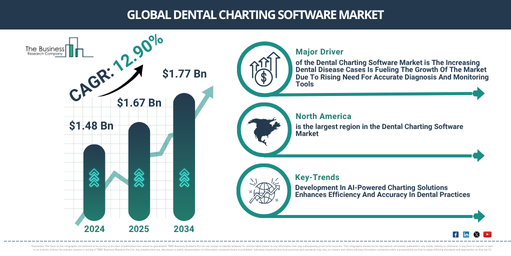
    In recent times, the dental charting software market size has seen rapid expansion. Projected growth is from $1.48 billion in 2024 to an estimated $1.67 billion in 2025, with a compound annual growth rate (CAGR) of 13.2%. Factors influencing this growth during the historic period include an upturn in uptake of digital dental records, an escalating demand for competent management of patient data, an increase in dental visits and consciousness about oral health, an emerging necessity for workflow automation in dental clinics, and a surge in the utilization of technology for dental education.

    In the forthcoming years, there is a projection for swift expansion in the dental charting software market. The anticipated compound annual growth rate (CAGR) is 12.9%, taking the market worth up to $2.71 billion by 2029. Multiple factors such as the upswing in the use of cloud-based dental solutions, a higher emphasis on patient-focused care, the augmented integration of AI and analytics in dental software, growing dental service networks worldwide, alongside a surge in demand for real-time data and mobility contribute to the growth in the forecast period. The forecast period also signals some major trends including advancements in AI-enabled dental diagnostics, increased integration with imaging and radiology tools, the creation of mobile-responsive charting applications, budding innovation in voice-activated dental charting, and progress in interoperability with the electronic health records (EHR) systems.

    Download The Free Sample Report Here:

    https://www.thebusinessresearchcompany.com/sample.aspx?id=25737&type=smp

    What factors are expected to fuel Dental Charting Software market growth in the coming years?

    The proliferation of dental diseases is anticipated to stimulate the expansion of the dental charting software market. Dental diseases encompass health issues impacting the teeth and gums, such as oral infections, cavities, and periodontal disease. This surge in dental diseases is majorly caused by poor oral hygiene and lifestyle habits, leading to gum inflammation and plaque buildup. Dental charting software assists in identifying and managing dental issues by digitally recording details like tooth damage, cavities, and gum problems. It facilitates accurate tracking over time, optimizes treatment planning, and improves dentist-patient interactions. For example, the American Cancer Society, a professional organization based in the US, predicts that by January 2025, about 59,660 new cases of oral cavity and oropharyngeal cancer will be diagnosed in the United States, with an expected 12,770 related deaths within the year. Hence, the growing dental disease cases are fueling the growth of the dental charting software market.

    What Are The Key Findings From The Segmentation Analysis Of The Dental Charting Software Market?

    The dental charting software market covered in this report is segmented –

    1) By Component: Software, Services

    2) By Charting Type: Traditional Charting, Digital Charting

    3) By Deployment Mode: Cloud-Based, Web-Based, On-Premises

    4) By Application: Patient Management, Treatment Planning, Billing And Insurance, Other Applications

    5) By End-User: Dental Clinics, Dental Hospitals, Dental Laboratories, Academic Institutions

    Subsegments:

    1) By Software: On-Premise Software, Cloud-Based Software, Mobile Application Software, Integrated Practice Management Software, Standalone Dental Charting Software

    2) By Services: Installation And Integration Services, Training And Education Services, Maintenance And Support Services, Consulting Services, Data Migration Services

    Which Trends Are Expected To Shape The Future Of The Dental Charting Software Market?

    Prominent enterprises in the dental charting software industry are keen on advancing technology, for instance, incorporating AI into dental charting solutions to augment patient results via automated charting coupled with immediate data interpretation. AI-powered dental charting solutions bank on artificial intelligence to not only capture but also update patient’s dental records such as conditions and treatments automatically. This enhances clinical efficiency by lessening manual interference and providing accurate and instantaneous charting. In the context of this, Denti.AI, a dental software firm based in Canada, introduced Auto-Chart software in January 2023 that got approved by the Food and Drug Administration (FDA). This software proves beneficial for dental experts by automatically interpreting intraoral and extraoral 2D x-ray images to detect and number teeth, identify teeth that are missing and acknowledge dental restorations like implants, crowns, and fillings. When integrated with practice management systems, Denti.AI’s Auto-Chart streamlines dental charting, thereby reducing the time and labor needed by up to 70% and enhancing precision and system effectiveness in dental practices.

    What Are The Most Active Companies In The Dental Charting Software Market Today?

    Major companies operating in the dental charting software market are Henry Schein Inc., Carestream Dental, CareStack, Planet DDS, ADSTRA SYSTEMS INC., ABELSoft Inc., Praktika, ClearDent, Open Dental software, Ortho2, XLDent, DentiMax, iDentalSoft, BestoSys, Panda Perio, Tab32, Dentiflow, Allisone, Adit Dental Software, DentScribe.

    Get The Full Report Here:

    https://www.thebusinessresearchcompany.com/report/dental-charting-software-global-market-report

    Which Regional Markets Are Attracting The Most Investment In Dental Charting Software?

    North America was the largest region in the dental charting software market in 2024. Asia-Pacific is expected to be the fastest-growing region in the forecast period. The regions covered in the dental charting software market report are Asia-Pacific, Western Europe, Eastern Europe, North America, South America, Middle East, Africa.

    Request For A Customized Report:

    https://www.thebusinessresearchcompany.com/customise?id=25737&type=smp

    About The Business Research Company:

    With over 15000+ reports from 27 industries covering 60+ geographies, The Business Research Company has built a reputation for offering comprehensive, data-rich research and insights. Armed with 1,500,000 datasets, the optimistic contribution of in-depth secondary research, and unique insights from industry leaders, you can get the information you need to stay ahead in the game.

    Get in touch with us:

    The Business Research Company: https://www.thebusinessresearchcompany.com/

    Americas +1 310-496-7795

    Asia +44 7882 955267 & +91 8897263534

    Europe +44 7882 955267

    Email us at info@tbrc.info

    Follow us on:

    LinkedIn: https://in.linkedin.com/company/the-business-research-company

    YouTube: https://www.youtube.com/channel/UC24_fI0rV8cR5DxlCpgmyFQ

    Global Market Model: https://www.thebusinessresearchcompany.com/global-market-model

  • Industry Forecast: eHealth 2.0 Market to Generate $686.26  Billion Revenue by 2029

    Industry Forecast: eHealth 2.0 Market to Generate $686.26 Billion Revenue by 2029

    Claim your 30% discount on Global Market Reports with code ONLINE30. Limited time only.

    Claim your 30% discount on Global Market Reports with code ONLINE30. Limited time only.

    How Much Is the Global eHealth 2.0 Market Valued at Present and by 2029?

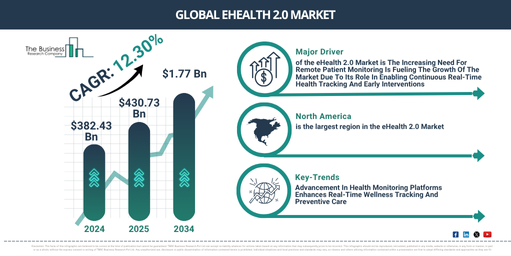
    In recent years, the eHealth 2.0 market has experienced a significant expansion. Its size is projected to increase from $382.43 billion in 2024 to $430.73 billion in 2025, with a compound annual growth rate (CAGR) of 12.6%. This substantial growth in the previous years is due to multiple factors such as the increased knowledge and understanding of digital health tools, a surge in the usage of wearable health technology, escalating government backing of eHealth schemes, the growing incorporation of Information and Communication Technology (ICT) in healthcare, and the rising popularity of telehealth consultation platforms.

    Expectations are high for the eHealth 2.0 market, with a projected rapid growth in the coming years. Predictions estimate that this market will rise to $686.26 billion by 2029, with a compound annual growth rate (CAGR) of 12.3%. This growth, expected in the forecast period, is due to the expanded use of AI in healthcare, increased demand for custom-tailored medicine, rise in funding for digital health startups, growing adoption of blockchain for securing health data, and an amplified emphasis on care that is centered around the patient. Upcoming trends during the forecast period include advancements in technologies for remote monitoring, the emergence of virtual health assistants, enhancement of mobile health app features, progression in interoperability standards and the evolution of predictive analytics in healthcare.

    Download The Free Sample Report Here:

    https://www.thebusinessresearchcompany.com/sample.aspx?id=25759&type=smp

    #What Drivers Are Influencing Growth In The eHealth 2.0 Market?

    The escalating necessity for monitoring patients remotely is predicted to fuel the development of the eHealth 2.0 market. Remote patient monitoring (RPM), which utilizes digital solutions to gather and transfer patient health information from non-clinical environments, promotes prompt interventions and decreases hospital visits. Due to a rise in chronic disease prevalence, the demand for RPM is growing as it allows consistent health surveillance, which enables early intervention and lessens the need for regular hospital trips. RPM facilitates eHealth 2.0 by obtaining real-time health information from beyond clinical environments, promoting personalized and preventive healthcare. It offers timely observations for initial intervention, thereby lightening the burden on hospitals and enhancing patient engagement. For example, in August 2023, as per Vivalink, a healthcare technology firm based in the US, the utilization of RPM by clinicians dramatically jumped to 81% from just 20% in 2021, marking a 305% increment. Moreover, 84% of existing RPM users plan to broaden their application of this technology in 2024. Hence, the growing requirement for RPM is stimulating the expansion of the eHealth 2.0 market.

    What Are The Main Segments Identified In The eHealth 2.0 Market Research?

    The ehealth 2.0 market covered in this report is segmented –

    1) By Type: Telemedicine, Electronic Health Records (EHRS), E-Prescription, Remote Patient Monitoring, Mobile Health (mHealth), Health Information Exchange (HIE), Other Types

    2) By Service: Monitoring, Diagnostic, Treatment

    3) By End-User: Healthcare Providers, Insurers, Other End-Users

    Subsegments:

    1) By Telemedicine: Real-time Telemedicine, Store-And-Forward Telemedicine, Remote Patient Monitoring Telemedicine, Mobile Health (mHealth) Telemedicine

    2) By Electronic Health Records (EHRs): Web-Based Electronic Health Records (EHRs), Client Server-Based Electronic Health Records (EHRs), Hybrid Electronic Health Records (EHRs)

    3) By E-Prescription: Controlled Substances E-Prescription, Non-Controlled Substances E-Prescription, Renewal And Refill E-Prescription

    4) By Remote Patient Monitoring: Chronic Disease Monitoring, Post-Acute Care Monitoring, Wearable Device Monitoring

    5) By Mobile Health (mHealth): Fitness And Wellness Apps, Chronic Disease Management Apps, Medication Management Apps, Women’s Health Apps

    6) By Health Information Exchange (HIE): Directed Exchange, Query-Based Exchange, Consumer-Mediated Exchange

    7) By Other Types: Clinical Decision Support Systems, Medical Imaging Systems, Patient Portals, Healthcare Analytics Platforms

    What Are The Leading Trends And Opportunities In The eHealth 2.0 Sector?

    Leading firms in the eHealth 2.0 market are putting their efforts towards the creation of cutting-edge technology, like health and fitness tracking systems, to promote active patient participation and encourage proactive healthcare management. These digital solutions in the form of health and fitness tracking systems constantly monitor essential signs, activity patterns, and general health. They aid both the users and healthcare providers in handling health issues, setting objectives, and making preventive care choices. For instance, in August 2024, the Chinese firm Huawei Technologies Co., Ltd., known for their health monitoring equipment, introduced their latest HUAWEI TruSense System. This system aims to give more precise, all-inclusive, and real-time insights into health for wearable devices. TruSense combines high-end sensors and algorithms to oversee over 60 health parameters like heart rate, stress levels, mood, respiratory health, and calorie count, providing quicker and more thorough health reports than its predecessors.

    Which Companies Play A Key Role In The Development Of The eHealth 2.0 Market?

    Major companies operating in the ehealth 2.0 market are CVS Health, Optum Inc., International Business Machines Corporation, Oracle Corporation, Siemens Healthineers, GE Healthcare, Athenahealth, Teladoc Health, eClinicalWorks, Telecare Corporation, Veradigm, Doximity, American Well, Greenway Health, Tebra Technologies Inc., AdvancedMD, Doctor on Demand, Medisafe, AMD Global Telemedicine, CompuMed Inc.

    Get The Full Report Here:

    https://www.thebusinessresearchcompany.com/report/ehealth-20-global-market-report

    What Are The Key Regional Developments Shaping The eHealth 2.0 Market?

    North America was the largest region in the eHealth 2.0 market in 2024. Asia-Pacific is expected to be the fastest-growing region in the forecast period. The regions covered in the ehealth 2.0 market report are Asia-Pacific, Western Europe, Eastern Europe, North America, South America, Middle East, Africa.

    Request For A Customized Report:

    https://www.thebusinessresearchcompany.com/customise?id=25759&type=smp

    About The Business Research Company:

    With over 15000+ reports from 27 industries covering 60+ geographies, The Business Research Company has built a reputation for offering comprehensive, data-rich research and insights. Armed with 1,500,000 datasets, the optimistic contribution of in-depth secondary research, and unique insights from industry leaders, you can get the information you need to stay ahead in the game.

    Get in touch with us:

    The Business Research Company: https://www.thebusinessresearchcompany.com/

    Americas +1 310-496-7795

    Asia +44 7882 955267 & +91 8897263534

    Europe +44 7882 955267

    Email us at info@tbrc.info

    Follow us on:

    LinkedIn: https://in.linkedin.com/company/the-business-research-company

    YouTube: https://www.youtube.com/channel/UC24_fI0rV8cR5DxlCpgmyFQ

    Global Market Model: https://www.thebusinessresearchcompany.com/global-market-model