Category: HealthcareServices

  • Global Insights: Inpatient Services Market Expected to Surpass $2,326.38  Billion by 2029

    Global Insights: Inpatient Services Market Expected to Surpass $2,326.38 Billion by 2029

    Claim your 30% discount on Global Market Reports with code ONLINE30. Limited time only.

    Claim your 30% discount on Global Market Reports with code ONLINE30. Limited time only.

    How Will the Inpatient Services Market Evolve in Terms of Growth and Size by 2029?

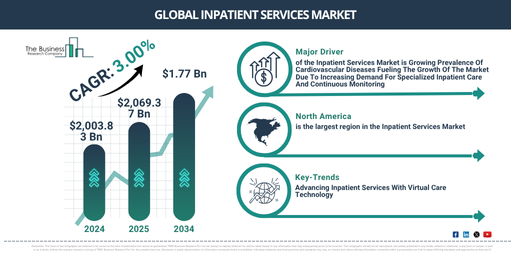
    The market for inpatient services has been expanding consistently in the past few years. The market is set to increase from $2,003.83 billion in 2024 to $2,069.37 billion in 2025, with a compound annual growth rate (CAGR) of 3.3%. Factors such as an aging population, a higher incidence of chronic illnesses, increasing healthcare spending, expansion in insurance coverage, and an increased call for specialized care have been key to this growth during the historical era.

    A consistent increase in the size of the inpatient services market is anticipated over the coming years, with projections pointing to its expansion to $2,326.38 billion in 2029, a 3.0% compound annual growth rate. This growth trajectory in the forecast period is associated with several factors including increased awareness of mental health issues, advancements in personalized medicine, incorporation of artificial intelligence and data analytics in hospital settings, evolution of hybrid care models, and an elevated emphasis on infection control and patient safeguarding. Key trends that are expected during the forecast period encompass AI-enabled clinical decision-making, remote monitoring of patients, the use of robots in surgeries, enhancements in electronic health records, and the implementation of real-time location systems.

    Download The Free Sample Report Here:

    https://www.thebusinessresearchcompany.com/sample.aspx?id=25797&type=smp

    What factors are expected to fuel Inpatient Services market growth in the coming years?

    The surge in cardiovascular disorders is anticipated to fuel the expansion of the inpatient services market in the future. These disorders encompass a variety of ailments affecting the heart and blood vessels, such as coronary artery disease, heart failure, arrhythmias, and stroke. This uptick in cardiovascular diseases is primarily linked to inactive lifestyles, which lead to obesity, deteriorating heart health, and heightened risk of hypertension and diabetes. Patients with cardiovascular disease augment the demand for inpatient services as they necessitate hospitalization for treatments, consistent surveillance, and emergency medical attention. This leads to an increased need for bed spaces, specialized medical personnel, and superior medical apparatus. For example, in January 2025, as per the American Heart Association, a US-based nonprofit organization, there were 131,454 deaths primarily attributed to high blood pressure in 2022. Similarly, in January 2024, the same organization reported 124,508 deaths primarily due to high blood pressure in 2021. Hence, the escalating prevalence of cardiovascular diseases is propelling the growth of the inpatient services market.

    What Are The Key Findings From The Segmentation Analysis Of The Inpatient Services Market?

    The inpatient services market covered in this report is segmented –

    1) By Service: Acute Care Services, Chronic Disease Management, Rehabilitation Services, Psychiatric Services, Palliative Care

    2) By Treatment: Cardiovascular Disorders, Cancer, Musculoskeletal Diseases, Emergency And Trauma, Respiratory Disorder, Gastroenterology, Central Nervous System Disorders, Pregnancy And Postpartum Care, Urology And Nephrology Disorders, Other Treatments

    3) By Specialty: Cardiology, Oncology, Orthopedic, Neurology, General Medicine

    4) By Ownership: Publicly Or Government-Owned, Not-For-Profit Privately Owned, For-Profit Privately Owned

    5) By End User: Patients, Healthcare Providers, Other End Users

    Subsegments:

    1) By Acute Care Services: Emergency Care, Intensive Care Unit (ICU) Services, Surgical Care, Trauma Care, Post-Operative Care

    2) By Chronic Disease Management: Diabetes Management, Cardiovascular Disease Management, Chronic Respiratory Disease Care, Renal Disease Management, Cancer Care Management

    3) By Rehabilitation Services: Physical Therapy, Occupational Therapy, Speech And Language Therapy, Neurological Rehabilitation, Orthopedic Rehabilitation

    4) By Psychiatric Services: Inpatient Psychiatric Hospitals, Substance Abuse And Detoxification Services, Geriatric Psychiatric Services, Adolescent And Child Psychiatry, Dual Diagnosis Treatment

    5) By Palliative Care: Hospice Care, Pain And Symptom Management, End-Of-Life Care, Bereavement Support, Home-Based Palliative Care

    Which Trends Are Expected To Shape The Future Of The Inpatient Services Market?

    Prominent businesses in the inpatient services sector are emphasizing the use of innovative technologies like inpatient television integration to facilitate virtual care delivery, reduce clinical staff workload, and support offsite clinical operations. This integration of inpatient television converts in-room televisions into versatile care instruments allowing remote monitoring, patient consultation, education, and organizing patient discharge, thereby increasing care teams’ workflow adaptability. For example, in November 2023, the latest version of the Care Experience Platform (CXP) was introduced by Oneview Healthcare, a Health-tech organization based in Ireland. This new platform features the Virtual Care API, enabling hospitals to use Oneview’s patient TV system for virtual care in the inpatient setting, including remote observation and nursing assistance. Also, the platform integrates effortlessly with third-party virtual care systems, permitting clinicians to launch telehealth sessions right from the electronic medical record (EMR). It facilitates both pre-arranged and instant video consultations, thereby enhancing accessibility and efficiency of patient care.

    What Are The Most Active Companies In The Inpatient Services Market Today?

    Major companies operating in the inpatient services market are Kaiser Permanente, HCA Healthcare, Ascension Health, Fresenius Medical Care, Tenet Healthcare Corporation, Sutter Health, Mayo Clinic, Cleverland Clinic, Universal Health Services Inc., Community Health Systems (CHS), Advent Health, NewYork-Presbyterian Hospital, Ramsay Healthcare, Massachusetts General Hospital, UCLA Medical Centers, Cedars-Sinai, Mediclinic International, The Hospitals Contribution Fund of Australia Limited, The Johns Hopkins Hospital, Bangkok Dusit Medical Services, Singapore Health Services, Life Healthcare Group, Keio University (Medical Services), Burjeel Holdings, THE ROYAL MELBOURNE HOSPITAL, Fortis Healthcare, Apollo Hospitals Enterprise Ltd., West Suffolk NHS Foundation Trust, Royal Papworth Hospital NHS Foundation Trust, Max Healthcare.

    Get The Full Report Here:

    https://www.thebusinessresearchcompany.com/report/inpatient-services-global-market-report

    Which Regional Markets Are Attracting The Most Investment In Inpatient Services?

    North America was the largest region in the inpatient services market in 2024. Asia-Pacific is expected to be the fastest-growing region in the forecast period. The regions covered in the inpatient services market report are Asia-Pacific, Western Europe, Eastern Europe, North America, South America, Middle East, Africa.

    Request For A Customized Report:

    https://www.thebusinessresearchcompany.com/customise?id=25797&type=smp

    About The Business Research Company:

    With over 15000+ reports from 27 industries covering 60+ geographies, The Business Research Company has built a reputation for offering comprehensive, data-rich research and insights. Armed with 1,500,000 datasets, the optimistic contribution of in-depth secondary research, and unique insights from industry leaders, you can get the information you need to stay ahead in the game.

    Get in touch with us:

    The Business Research Company: https://www.thebusinessresearchcompany.com/

    Americas +1 310-496-7795

    Asia +44 7882 955267 & +91 8897263534

    Europe +44 7882 955267

    Email us at info@tbrc.info

    Follow us on:

    LinkedIn: https://in.linkedin.com/company/the-business-research-company

    YouTube: https://www.youtube.com/channel/UC24_fI0rV8cR5DxlCpgmyFQ

    Global Market Model: https://www.thebusinessresearchcompany.com/global-market-model

  • 2025–2029 Clinical Trial Investigative Site Network Market Outlook: Regional Trends and Growth Forecast

    2025–2029 Clinical Trial Investigative Site Network Market Outlook: Regional Trends and Growth Forecast

    Claim your 30% discount on Global Market Reports with code ONLINE30. Limited time only.

    Claim your 30% discount on Global Market Reports with code ONLINE30. Limited time only.

    What Is the Outlook for the Clinical Trial Investigative Site Network Market Heading Into 2029?

    In recent times, the market size of the clinical trial investigative site network has been showing robust growth. The market, which is projected to rise from $8.01 billion in 2024 to $8.71 billion in 2025, reflects a compound annual growth rate (CAGR) of 8.7%. Factors that have contributed to this growth during the historic period include a surge in chronic and infectious diseases, internationalization of clinical trials, expansion in the field of oncology, growth of the pharmaceutical sector, and increased government funding for clinical research.

    The market size for the clinical trial investigative site network is predicted to experience robust growth in the ensuing years, soaring to $12.03 billion in 2029 with a compound annual growth rate (CAGR) of 8.4%. This escalation anticipated in the forecast duration is due to burgeoning investments in precision and adaptive clinical trial structures, escalating collaborations amidst pharmaceutical corporations and clinical site networks, enlargement of therapeutic regions beyond oncology, a mounting count of platform and adaptive trials, and an expanding pipeline of biologics and personalized medicine. Crucial trends perceived within the forecast period encompass the incorporation of cohesive digital platforms, AI-backed patient enrollment tools, decentralized clinical trials (DCT) empowerment, blockchain for preserving data honesty and transparency, as well as cloud-based site management systems.

    Download The Free Sample Report Here:

    https://www.thebusinessresearchcompany.com/sample.aspx?id=25721&type=smp

    Which Factors Are Pushing The Clinical Trial Investigative Site Network Market Forward?

    The clinical trial investigative site network market is expected to burgeon due to the escalating need for clinical research activity. Essentially, clinical research activity includes organized attempts to design and analyze clinical studies with the goal of advancing medical knowledge or public health. This need is fueled by the growing requirement for innovative treatments for chronic and complex diseases, intensifying efforts towards creating safe and successful drugs and medical equipment via thorough clinical trials. A clinical trial investigative site network enables centralized management, speedier implementation, and consistent quality across multiple trial venues for clinical research activity. Specifically, in December 2024, the National Library of Medicine (NLM), a leading US-based biomedical library, registered 520,884 clinical trials globally, marking a considerable leap from roughly 477,207 in mid-2023. This translates to almost a 20% rise in just over one year, signifying an ongoing and dynamic growth in global clinical research activity. As a result, the burgeoning need for clinical research activity is a key factor propelling the expansion of the clinical trial investigative site network market.

    Which Segment Held The Largest Share In The Clinical Trial Investigative Site Network Market In 2025?

    The clinical trial investigative site network market covered in this report is segmented –

    1) By Type Of Clinical Trials: Interventional Trials, Observational Trials, Expanded Access Trials, Adaptive Trials

    2) By Site Type: Academic Medical Centers, Community Hospitals, Specialized Research Institutions, Private Practices, Site Management Organizations (SMOs)

    3) By Application: Oncology, Cardiology, Central Nervous System, Pain Management, Endocrine, Other Applications

    4) By End-Use: Pharmaceutical And Biopharmaceutical Companies, Medical Device Companies, Other End-Uses

    Subsegments:

    1) By Type of Interventional Trials: Phase I, Phase II, Phase III, Phase IV

    2) By Type of Observational Trials: Cohort Studies, Case-Control Studies, Cross-Sectional Studies, Longitudinal Studies

    3) By Type of Expanded Access Trials: Individual Patient Access, Intermediate-Size Patient Populations, Treatment IND Or Protocol Programs, Emergency Use Access

    4) By Type of Adaptive Trials: Dose-Finding Adaptive Trials, Sample Size Re-estimation Trials, Adaptive Randomization Trials, Seamless Phase II Or III Trials

    How Are Key Trends Driving Expansion In The Clinical Trial Investigative Site Network Industry?

    Companies operating in the clinical trial investigative site network market, such as IQVIA Inc., are shifting their focus onto the development of innovative solutions. These solutions, like single sign-on platforms, are designed to improve operational efficiency by streamlining site operations, augmenting data access, and enhancing the efficiency of trials. Single sign-on platforms are authentication systems that enable users to access multiple systems with a single login credential set, thereby simplifying user access, bolstering security, and minimizing the resource-intensiveness of managing numerous logins. In June 2024, IQVIA Inc., an American clinical research and health technology company, introduced One Home for Sites. It has been engineered as a consolidated clinical trial platform aimed at simplifying site workflows and boosting trial efficiency. The principal features of this platform include single sign-on access (which simplifies user login across various trial systems), centralized study dashboards (for improved oversight of ongoing trials), and integrated communication tools (to promote collaboration amongst sponsors, CROs, and site teams). The platform also facilitates automated workflows, document management, and real-time performance analytics, thus empowering sites to lessen administrative complexity, augment regulatory compliance, and hasten trial execution with enhanced efficiency as well as transparency.

    Which Organizations Are Driving Progress In The Clinical Trial Investigative Site Network Industry?

    Major companies operating in the clinical trial investigative site network market are IQVIA Inc., ICON plc, SGS Société Générale de Surveillance SA., Fortrea Holdings Inc., Medpace Holdings Inc., ClinChoice Inc., Velocity Clinical Research Inc., NVISION Clinical Research LLC, George Clinical, Medical Research Network Limited, MAC Clinical Research Ltd., FOMAT Medical Research Inc., Clara Health Inc., WCG Clinical, Access Clinical Trials Inc., KV Clinical Research, SMO-Pharmina, Clinical Research Network LLC, CenExel Clinical Research, EMS Healthcare Ltd.

    Get The Full Report Here:

    https://www.thebusinessresearchcompany.com/report/clinical-trial-investigative-site-network-global-market-report

    Which Region Is Expected To Experience The Highest Growth In The Clinical Trial Investigative Site Network Industry?

    North America was the largest region in the clinical trial investigative site network market in 2024. Asia-Pacific is expected to be the fastest-growing region in the forecast period. The regions covered in the clinical trial investigative site network market report are Asia-Pacific, Western Europe, Eastern Europe, North America, South America, Middle East, Africa.

    Request For A Customized Report:

    https://www.thebusinessresearchcompany.com/customise?id=25721&type=smp

    About The Business Research Company:

    With over 15000+ reports from 27 industries covering 60+ geographies, The Business Research Company has built a reputation for offering comprehensive, data-rich research and insights. Armed with 1,500,000 datasets, the optimistic contribution of in-depth secondary research, and unique insights from industry leaders, you can get the information you need to stay ahead in the game.

    Get in touch with us:

    The Business Research Company: https://www.thebusinessresearchcompany.com/

    Americas +1 310-496-7795

    Asia +44 7882 955267 & +91 8897263534

    Europe +44 7882 955267

    Email us at info@tbrc.info

    Follow us on:

    LinkedIn: https://in.linkedin.com/company/the-business-research-company

    YouTube: https://www.youtube.com/channel/UC24_fI0rV8cR5DxlCpgmyFQ

    Global Market Model: https://www.thebusinessresearchcompany.com/global-market-model

  • Latest Market Developments in Clinical Risk Grouping Solution Industry: Forecast 2025–2029

    Latest Market Developments in Clinical Risk Grouping Solution Industry: Forecast 2025–2029

    Claim your 30% discount on Global Market Reports with code ONLINE30. Limited time only.

    Claim your 30% discount on Global Market Reports with code ONLINE30. Limited time only.

    What Does the Forecast Indicate for the Clinical Risk Grouping Solution Market From 2025 to 2029?

    In the recent past, the market size for the clinical risk grouping solution has seen swift expansion. The expected growth projection is from $0.61 billion in 2024 to $0.69 billion in 2025, with a compound annual growth rate (CAGR) of 12.6%. The growth observed in the historical period is due to factors such as increased regulatory support for value-based healthcare, rise in digitization of healthcare data, growing healthcare expenses, adoption of electronic health records (EHR), and expansion of risk adjustment programs.

    The market for clinical risk grouping solutions is projected to experience substantial expansion in the coming years, reaching $1.10 billion by 2029, with a compound annual growth rate of 12.4%. This surge during the forecasted period is attributable to factors such as the rise in personalized healthcare management, expansion of government-sponsored health programs, heightened demand for predictive analytics, intensified focus on public health management, and an increasing aging population. Notable trends in the forecasted span include AI and machine learning integration, real-time risk classification tools, compatibility with electronic health records, inclusion of considerations for social determinants of health data, and cloud-based risk solution deployment.

    Download The Free Sample Report Here:

    https://www.thebusinessresearchcompany.com/sample.aspx?id=25720&type=smp

    What Elements Are Contributing To Growth In The Clinical Risk Grouping Solution Market?

    The clinical risk grouping solution market’s expansion is anticipated to be driven by the growing acceptance of electronic health records (EHRs). EHRs are computerized versions of paper patient charts, offering immediate, patient-focused records available to certified users. The rising implementation of EHRs is primarily motivated by the mounting need for effective data handling. Healthcare providers are focusing on improving patient information storage, accessibility, and cross-departmental coordination for superior clinical choices and patient outcomes. The increased usage of EHRs bolsters clinical risk grouping solutions by providing extensive, immediate patient details, allowing for precise risk categorization and more successful population health management. For example, the Department of Health and Social Care, a governmental department in the UK, stated in June 2022 that by March 2025, every NHS trust is projected to have adopted EHRs, a surge from the 90% that had incorporated them by December 2023. Therefore, the growth of the clinical risk grouping solution market is being fueled by the escalating adoption of EHRs.

    Which Segments Are Detailed In The Global Clinical Risk Grouping Solution Market Report?

    The clinical risk grouping solution market covered in this report is segmented –

    1) By Component: Software, Services

    2) By Product: Dashboard Analytics, Scorecard And Data Visualization Tools, Risk Reporting Solutions

    3) By Deployment: Private Cloud, Public Cloud, Hybrid Cloud

    4) By Application: Population Health Management, Chronic Disease Management, Clinical Decision Support, Fraud Detection And Prevention, Other Applications

    5) By End-use: Hospitals And Clinics, Ambulatory Surgical Centers, Long Term Care Centers, Other End-Users

    Subsegments:

    1) By Software: Dashboard Analytics, Scorecard And Data Visualization Tools, Risk Reporting Solutions

    2) By Services: Implementation Services, Consulting Services, Support And Maintenance

    Which Emerging Trends And Strategic Shifts Are Shaping The Clinical Risk Grouping Solution Market?

    Premier firms in the clinical risk grouping solution market are concentrating their efforts on creating inventive solutions like AI-powered coding platforms. These aim to improve coding precision and simplify the risk evaluation processes. Such coding platforms employ advanced AI technologies, including natural language processing and machine learning, to scrutinize clinical data and correctly assign medical codes. They assist by automating the coding procedure, reducing human inaccuracies, boosting coding productivity, and guaranteeing precise risk adjustment for superior remuneration and care organization. For instance, in August 2022, Reveleer Inc., a healthcare technology firm located in the USA, introduced Risk Adjustment 2.0. This AI-powered coding platform uses machine learning, natural language processing (NLP), and intelligent automation for improved coding precision, streamlined clinical data scrutiny, and optimized risk adjustment processes for health plans and risk-bearing providers. The platform is structured to operate as a virtual team participant, aiding coding teams by assessing intricate clinical data and applying tailored rule sets to assure the precise capture of hierarchical condition categories (HCCs).

    Who Are The Key Contributors To Growth In The Clinical Risk Grouping Solution Market?

    Major companies operating in the clinical risk grouping solution market are Optum Inc., 3M Corporation, Solventum, Conduent Inc., Epic Systems Corporation, Cotiviti Inc., Nuance Communications Inc., Health Catalyst Inc., Edifecs Inc., Innovaccer Inc., Cedar Gate Technologies, Reveleer, ZeOmega, MedeAnalytics Inc., Lightbeam Health Solutions, Apixio, HealthEC LLC, CareEvolution, HBI Solutions, 4S Information Systems.

    Get The Full Report Here:

    https://www.thebusinessresearchcompany.com/report/clinical-risk-grouping-solution-global-market-report

    Which Region Is Projected To Lead The Clinical Risk Grouping Solution Market By 2025?

    North America was the largest region in the clinical risk grouping solution market in 2024. Asia-Pacific is expected to be the fastest-growing region in the forecast period. The regions covered in the clinical risk grouping solution market report are Asia-Pacific, Western Europe, Eastern Europe, North America, South America, Middle East, Africa.

    Request For A Customized Report:

    https://www.thebusinessresearchcompany.com/customise?id=25720&type=smp

    About The Business Research Company:

    With over 15000+ reports from 27 industries covering 60+ geographies, The Business Research Company has built a reputation for offering comprehensive, data-rich research and insights. Armed with 1,500,000 datasets, the optimistic contribution of in-depth secondary research, and unique insights from industry leaders, you can get the information you need to stay ahead in the game.

    Get in touch with us:

    The Business Research Company: https://www.thebusinessresearchcompany.com/

    Americas +1 310-496-7795

    Asia +44 7882 955267 & +91 8897263534

    Europe +44 7882 955267

    Email us at info@tbrc.info

    Follow us on:

    LinkedIn: https://in.linkedin.com/company/the-business-research-company

    YouTube: https://www.youtube.com/channel/UC24_fI0rV8cR5DxlCpgmyFQ

    Global Market Model: https://www.thebusinessresearchcompany.com/global-market-model

  • CAGR of 10.4% Projected for Catastrophic Antiphospholipid Syndrome Market From 2025 to 2029

    CAGR of 10.4% Projected for Catastrophic Antiphospholipid Syndrome Market From 2025 to 2029

    Claim your 30% discount on Global Market Reports with code ONLINE30. Limited time only.

    Claim your 30% discount on Global Market Reports with code ONLINE30. Limited time only.

    What Is the Current and Projected Market Size of the Catastrophic Antiphospholipid Syndrome Industry?

    The market size of catastrophic antiphospholipid syndrome has significantly expanded recently. Predictions show an increase from $3.76 billion in 2024 to $4.16 billion in 2025, illustrating a compound annual growth rate (CAGR) of 10.7%. This prior growth is mainly due to the rising utilization of plasmapheresis and intravenous immunoglobulin (IVIG), greater access to biologics and monoclonal antibodies, the amplification of patient support initiatives as well as rare disease advocacy, an increase in clinical trials that explore targeted therapies, and a surge in healthcare expenditure.

    Anticipated to experience swift expansion in the next few years, the catastrophic antiphospholipid syndrome market is projected to reach a worth of $6.17 billion in 2029, with a compound annual growth rate (CAGR) of 10.4%. The predicted growth in coming years can be linked to factors such as the growing incidence of autoimmune diseases, the rising consciousness among medical practitioners, the expanding use of immunosuppressive treatments, an increased occurrence of complications related to thrombosis, and a higher demand for sophisticated diagnostic instruments. The forecast period also notes major trends such as the progress in autoantibody identification technologies, the creation of diagnostic tools at the point-of-care, the inclusion of artificial intelligence into clinical decision support systems, technological advances in immunoassay platforms, and the production of targeted biologics and monoclonal antibodies.

    Download The Free Sample Report Here:

    https://www.thebusinessresearchcompany.com/sample.aspx?id=25718&type=smp

    #Which Factors Are Currently Driving The Growth Of The Catastrophic Antiphospholipid Syndrome Market?

    The escalating occurrence of autoimmune disorders is anticipated to drive the expansion of the catastrophic antiphospholipid syndrome market moving forward. Autoimmune disorders arise due to an overly active immune response attacking the individual’s own healthy cells and tissues. The rise in such conditions is partly due to higher exposure to environmental pollutants that tamper with the immune system and lead to abnormal immunological responses. Autoimmune disorders accelerate catastrophic antiphospholipid syndrome by instigating the formation of antiphospholipid antibodies, causing extensive blood clotting and multiple organ failures. For instance, the Crohn’s and Colitis Foundation of Canada reported in June 2023 that Canada had 322,600 patients with inflammatory bowel disease in 2023, predicted to escalate to 470,000 by 2035, with annual new cases growing from 11,000 to 14,000. Consequently, the escalating prevalence of autoimmune disorders is facilitating the expansion of the catastrophic antiphospholipid syndrome market. Effect Of Growing Healthcare Spending On The Market Growth Due To Improved Access To Progressive Treatments And Diagnostics

    How Is The Global Catastrophic Antiphospholipid Syndrome Market Structured In Terms Of Segments?

    The catastrophic antiphospholipid syndrome market covered in this report is segmented –

    1) By Treatment: Anticoagulants, Immunosuppressive Therapy, Plasma Exchange Therapy (Plasmapheresis), Intravenous Immunoglobulin (IVIG), Other Treatments

    2) By Route Of Administration: Oral, Parenteral

    3) By Diagnostic Tools: Blood Testing, Imaging Techniques, Genetic Testing

    4) By End-User: Hospitals, Specialty clinics, Ambulatory surgical centers, Other End-Users

    Subsegments:

    1) By Anticoagulants: Heparin, Low Molecular Weight Heparin (LMWH), Warfarin, Direct Oral Anticoagulants (DOACs), Fondaparinux

    2) By Immunosuppressive Therapy: Corticosteroids, Cyclophosphamide, Azathioprine, Mycophenolate Mofetil, Methotrexate

    3) By Plasma Exchange Therapy (Plasmapheresis): Therapeutic Plasma Exchange (Tpe), Double Filtration Plasmapheresis (Dfpp), Centrifugal Plasmapheresis, Membrane-Based Plasmapheresis

    4) By Intravenous Immunoglobulin (Ivig): Standard Intravenous Immunoglobulin (Ivig), High-Dose Intravenous Immunoglobulin (Ivig), Liquid Intravenous Immunoglobulin (Ivig), Lyophilized Intravenous Immunoglobulin (Ivig)

    5) By Other Treatments: Monoclonal Antibodies, Complement Inhibitors, Antiplatelet Agents, Anti-Tumor Necrosis Factor (Tnf) Agents, Organ Support Therapies

    Who Are The Main Participants Shaping The Catastrophic Antiphospholipid Syndrome Market Landscape?

    Major companies operating in the catastrophic antiphospholipid syndrome market are Pfizer Inc., F. Hoffmann-La Roche Ltd., Merck KGaA, Bayer AG, Sanofi S.A., Bristol-Myers Squibb Company, AstraZeneca PLC., Abbott Laboratories, Novartis AG., Fresenius Kabi AG., Eli Lilly and Company, Boehringer Ingelheim International GmbH, Apotex Inc., Dr. Reddy’s Laboratories Ltd., Hikma Pharmaceuticals PLC, Aspen Pharmacare Holdings Limited, Zydus Lifesciences Limited, LEO Pharma A/S, Kedrion Biopharma Inc., Amphastar Pharmaceuticals Inc.

    Get The Full Report Here:

    https://www.thebusinessresearchcompany.com/report/catastrophic-antiphospholipid-syndrome-global-market-report

    Which Region Currently Holds The Largest Share In The Catastrophic Antiphospholipid Syndrome Market?

    North America was the largest region in the catastrophic antiphospholipid syndrome market in 2024. Asia-Pacific is expected to be the fastest-growing region in the forecast period. The regions covered in the catastrophic antiphospholipid syndrome market report are Asia-Pacific, Western Europe, Eastern Europe, North America, South America, Middle East, Africa.

    Request For A Customized Report:

    https://www.thebusinessresearchcompany.com/customise?id=25718&type=smp

    About The Business Research Company:

    With over 15000+ reports from 27 industries covering 60+ geographies, The Business Research Company has built a reputation for offering comprehensive, data-rich research and insights. Armed with 1,500,000 datasets, the optimistic contribution of in-depth secondary research, and unique insights from industry leaders, you can get the information you need to stay ahead in the game.

    Get in touch with us:

    The Business Research Company: https://www.thebusinessresearchcompany.com/

    Americas +1 310-496-7795

    Asia +44 7882 955267 & +91 8897263534

    Europe +44 7882 955267

    Email us at info@tbrc.info

    Follow us on:

    LinkedIn: https://in.linkedin.com/company/the-business-research-company

    YouTube: https://www.youtube.com/channel/UC24_fI0rV8cR5DxlCpgmyFQ

    Global Market Model: https://www.thebusinessresearchcompany.com/global-market-model

  • Cancer Treatment Facilities Market Revenue Outlook: Strategic Insights and Forecast to 2029

    Cancer Treatment Facilities Market Revenue Outlook: Strategic Insights and Forecast to 2029

    Claim your 30% discount on Global Market Reports with code ONLINE30. Limited time only.

    Claim your 30% discount on Global Market Reports with code ONLINE30. Limited time only.

    What CAGR Is Anticipated for the Cancer Treatment Facilities Market Through 2029?

    The market size for cancer treatment facilities has seen robust growth in the past and is predicted to expand from $44.63 billion in 2024 to $48.27 billion in 2025, showing a compound annual growth rate (CAGR) of 8.1%. Factors contributing to this upward trend in the past include the increasing number of cancer cases, the growing elderly population, heightened awareness leading to early detection, the wider acceptance of modern therapies, and an increase in healthcare spending.

    In the coming years, the cancer treatment facilities market is anticipated to experience robust growth, with a projected increase to 65.44 billion in 2029 and a compound annual growth rate (CAGR) of 7.9%. This progressive development in the forecast period can be credited to the expanded access to health insurance, the escalating demand for personalized medical treatments, the growth of medical tourism pertaining to cancer care, enhanced investment in cancer research and infrastructure, and the burgeoning incorporation of artificial intelligence and digital healthcare technologies. Some significant trends anticipated in the forecast period involve the evolution of radiation therapy technologies, the inclusion of artificial intelligence in oncology, technology-powered surgical robots, advancements in personalized and genomic medicine, and improvements in imaging and diagnostic equipment.

    Download The Free Sample Report Here:

    https://www.thebusinessresearchcompany.com/sample.aspx?id=25716&type=smp

    What Market Forces Are Driving The Cancer Treatment Facilities Sector In 2025 And Beyond?

    The escalating rates of cancer are anticipated to drive expansion in the cancer treatment facilities market. Cancer comprises a collection of diseases defined by uncontrolled growth and the spread of anomalous cells within the body. Various factors contribute to the incidence of cancer, the foremost being the aging population, which increases the number of individuals in age brackets that face a significantly higher risk of cancer. Cancer treatment facilities play a crucial role by facilitating early diagnosis, innovative treatment strategies, and ongoing care, all essential components for enhancing patient survival rates and their overall quality of life. For example, a report released by the Australia-based Leukaemia Foundation in February 2023 anticipates that between 2022 and 2035, over 7,000 children, 6,000 young adults, and 108,000 adults aged 25–65 will be diagnosed with blood cancers, primarily acute lymphoblastic leukemia (ALL), acute myeloid leukemia (AML), and non-Hodgkin lymphoma. As such, the surge in cancer prevalence is fueling the expansion of the cancer treatment facilities market.

    How Is The Global Cancer Treatment Facilities Market Categorized By Segments?

    The cancer treatment facilities market covered in this report is segmented –

    1) By Cancer Type: Blood Cancer, Breast Cancer, Prostate Cancer, Gastrointestinal Cancer, Colorectal Cancer, Lung Cancer, Other Cancer Types

    2) By Treatment Type: Cancer Surgery, Chemotherapy, Radiation Therapy, Immunotherapy, Bone Marrow Transplantation, Other Treatment Types

    3) By Provider: Hospitals, Cancer Centers

    Subsegments:

    1) By Blood Cancer: Leukemia, Lymphoma, Multiple Myeloma, Myelodysplastic Syndromes (MDS), Myeloproliferative Neoplasms (MPNs)

    2) By Breast Cancer: Hormone Receptor Positive (HR+), HER2-Positive Breast Cancer, Triple-Negative Breast Cancer (TNBC), Inflammatory Breast Cancer, Male Breast Cancer

    3) By Prostate Cancer: Localized Prostate Cancer, Advanced Or Metastatic Prostate Cancer, Castration-Resistant Prostate Cancer (CRPC), Hormone-Sensitive Prostate Cancer (HSPC)

    4) By Gastrointestinal Cancer: Stomach (Gastric) Cancer, Esophageal Cancer, Liver Cancer (Hepatocellular Carcinoma), Pancreatic Cancer, Bile Duct Cancer (Cholangiocarcinoma)

    5) By Colorectal Cancer: Colon Cancer, Rectal Cancer, Early-Stage Colorectal Cancer, Metastatic Colorectal Cancer, Familial Adenomatous Polyposis (FAP)-Associated Cancer

    6) By Lung Cancer: Non-Small Cell Lung Cancer (NSCLC), Small Cell Lung Cancer (SCLC), EGFR Mutation-Positive Lung Cancer, ALK-Positive Lung Cancer, PD-L1 Expressing Lung Cancer

    7) By Other Cancer Types: Skin Cancer, Bladder Cancer, Cervical Cancer, Ovarian Cancer, Kidney (Renal Cell) Cancer, Head And Neck Cancer, Thyroid Cancer, Brain Tumors

    What Long-Term Trends Are Likely To Affect The Cancer Treatment Facilities Market?

    Top firms in the cancer treatment facilities market are increasingly prioritizing cutting-edge treatment innovations like electron beam therapy to boost the accuracy and efficacy of cancer treatments. Electron beam therapy uses high-energy electrons to specifically target cancers located close to the body’s surface. As an illustration, in October 2024, the UAE-based healthcare organization, Aster DM Healthcare Limited, introduced Intraoperative electron radiation therapy (IOeRT) to their cancer treatment facilities. IOeRT has distinctive characteristics, such as the ability to deliver a high dose of a single fraction electron beam straight to the tumor bed during surgery, utilizing direct visualization to accurately target any remaining cancer cells while manually protecting or pulling back healthy tissues. The employment of high-energy electrons, usually ranging from 4 to 12 MeV, ensures a sharp drop in dosage, thus minimizing radiation exposure to the deeper layers of the body.

    Which Firms Are Considered Leaders In The Cancer Treatment Facilities Market Space?

    Major companies operating in the cancer treatment facilities market are Kaiser Permanente, HCA Healthcare Inc., CommonSpirit Health, Ascension Health, Trinity Health Corporation, Tenet Healthcare Corporation, Adventist Health System Sunbelt Healthcare Corporation, Universal Health Services Inc., Community Health Systems Inc., Ramsay Health Care Limited, Sutter Health, Stanford Health Care, Netcare Limited, Allegheny Health Network, IHH Healthcare Berhad, Fortis Healthcare, LifePoint Health Inc., Aster DM Healthcare Limited, Prime Healthcare Services Inc., Providence Health & Services.

    Get The Full Report Here:

    https://www.thebusinessresearchcompany.com/report/cancer-treatment-facilities-global-market-report

    What Role Do Regional Policies And Investments Play In Cancer Treatment Facilities Market Expansion?

    Asia-Pacific was the largest region in the cancer treatment facilities market in 2024, and it is expected to be the fastest-growing region in the forecast period. The regions covered in the cancer treatment facilities market report are Asia-Pacific, Western Europe, Eastern Europe, North America, South America, Middle East, Africa.

    Request For A Customized Report:

    https://www.thebusinessresearchcompany.com/customise?id=25716&type=smp

    About The Business Research Company:

    With over 15000+ reports from 27 industries covering 60+ geographies, The Business Research Company has built a reputation for offering comprehensive, data-rich research and insights. Armed with 1,500,000 datasets, the optimistic contribution of in-depth secondary research, and unique insights from industry leaders, you can get the information you need to stay ahead in the game.

    Get in touch with us:

    The Business Research Company: https://www.thebusinessresearchcompany.com/

    Americas +1 310-496-7795

    Asia +44 7882 955267 & +91 8897263534

    Europe +44 7882 955267

    Email us at info@tbrc.info

    Follow us on:

    LinkedIn: https://in.linkedin.com/company/the-business-research-company

    YouTube: https://www.youtube.com/channel/UC24_fI0rV8cR5DxlCpgmyFQ

    Global Market Model: https://www.thebusinessresearchcompany.com/global-market-model

  • Global Biotechnology And Pharmaceutical Services Outsourcing Market Forecast to Reach $94.91  Billion by 2029, Driven by 7.2% CAGR

    Global Biotechnology And Pharmaceutical Services Outsourcing Market Forecast to Reach $94.91 Billion by 2029, Driven by 7.2% CAGR

    Claim your 30% discount on Global Market Reports with code ONLINE30. Limited time only.

    Claim your 30% discount on Global Market Reports with code ONLINE30. Limited time only.

    How Much Is the Global Biotechnology And Pharmaceutical Services Outsourcing Market Valued at Present and by 2029?

    The market size of biotechnology and pharmaceutical services outsourcing has witnessed a robust growth in the past years. The market which is projected to increase from $66.87 billion in 2024 to $71.87 billion in 2025, will experience a compound annual growth rate (CAGR) of 7.5%. Factors such as the need for therapeutic expertise and global trial design, escalating count of orphan drug and rare disease trials, rising development of biologics and biosimilars, increased utilization of lab testing and analytical services, as well as the advancement of virtual biotech companies have contributed to this historical growth.

    The biotechnology and pharmaceutical services outsourcing industry is projected to experience significant expansion in the coming years, with an anticipated market size of $94.91 billion by 2029, exhibiting a compound annual growth rate of 7.2%. The projected growth during this period is associated with the mounting pressure for expedited drug approvals, the international expansion of clinical research endeavors, an increase in the global volume of clinical trials, a surge in the outsourcing of phase I-IV trials, and the prioritization of adaptive and decentralized trials. The upcoming trends during this period incorporate the uptake of cloud-based platforms for instantaneous collaboration, the application of AI and Machine Learning in drug discovery and development phases, enhanced bioinformatics and data analytics, the introduction of automation and robotics into laboratory services, along with the implementation of electronic data capture systems.

    Download The Free Sample Report Here:

    https://www.thebusinessresearchcompany.com/sample.aspx?id=25709&type=smp

    #What Drivers Are Influencing Growth In The Biotechnology And Pharmaceutical Services Outsourcing Market?

    The surge in clinical research activities is projected to contribute significantly to the expansion of the biotechnology and pharmaceutical services outsourcing market. Clinical research involves the participation of humans in a thorough inquiry, aiming to deepen our comprehension of health conditions and verify the efficacy and safety of medical procedures. The escalation in clinical research is predominantly fueled by the mounting prevalence of chronic diseases, requiring the invention and evaluation of novel therapies to improve patient care. The outsourcing of biotechnology and pharmaceutical services aids clinical research by delivering access to advanced infrastructure and expert opinion, thus ensuring the global execution of trials in an efficient, cost-effective, and regulation-abiding manner. For example, in November 2023, the UK experienced a 4.3% yearly growth in the number of industry-led clinical trials as per the Association of the British Pharmaceutical Industry, a trade association based in the UK. The count grew from 394 in 2021 to 411 in 2022. Hence, the amplified activity in clinical research propels the growth of the biotechnology and pharmaceutical services outsourcing market.

    What Are The Main Segments Identified In The Biotechnology And Pharmaceutical Services Outsourcing Market Research?

    The biotechnology and pharmaceutical services outsourcing market covered in this report is segmented –

    1) By Service: Consulting, Regulatory Affairs, Product Design And Development, Auditing And Assessment, Product Maintenance, Training And Education, Other Services

    2) By Application: Oncology, Neurology, Cardiovascular, Infectious Diseases

    3) By End-Use: Pharma, Biotech

    Subsegments:

    1) By Consulting: Strategic Consulting, Market Access Consulting, Commercialization Strategy, Portfolio Management, Technology And Digital Transformation Consulting

    2) By Regulatory Affairs: Regulatory Submissions, Compliance And Risk Management, Product Registration, Labeling And Packaging Review, Regulatory Intelligence

    3) By Product Design And Development: Formulation Development, Preclinical Development, Bioprocess Development, Analytical Development, Drug Delivery System Design

    4) By Auditing And Assessment: Good Manufacturing Practice (GMP) Audits, Good Clinical Practice (GCP) Audits, Quality System Audits, Supplier And Vendor Audits, Risk Assessments

    5) By Product Maintenance: Lifecycle Management, Change Management, Technical Support, Software And IT System Updates, Compliance Monitoring

    6) By Training And Education: Regulatory Training, Good Laboratory Practice (GLP) Training, Pharmacovigilance Training, Clinical Trial Training, Quality Management Systems Training

    7) By Other Services: Intellectual Property Support, Medical Writing, Data Management And Biostatistics, Pharmacovigilance And Drug Safety, Translation And Localization Services

    What Are The Leading Trends And Opportunities In The Biotechnology And Pharmaceutical Services Outsourcing Sector?

    In the biotechnology and pharmaceutical services outsourcing market, leading firms are concentrating on creating innovative solutions like cloud-based platforms. These platforms, accessed via the internet, enable users to utilize computing resources such as storage, software and processing power, bypassing the need for local servers or devices. For example, Charles River Labs, a non-clinical contract research organization based in the U.S., unveiled a cloud-based platform named Apollo in March 2023 to enhance toxicology studies. This platform offers a unique benefit by facilitating clients’ access to a broad array of study data, aiding in safety and toxicology evaluations. The platform comes with self-service attributes that empower users to track the progress of studies, analyze data, and independently retrieve crucial documents. A standout feature of this platform is a quoting tool, fostering more precise and efficient budget planning.

    Which Companies Play A Key Role In The Development Of The Biotechnology And Pharmaceutical Services Outsourcing Market?

    Major companies operating in the biotechnology and pharmaceutical services outsourcing market are Thermo Fisher Scientific Inc., Boehringer Ingelheim, LabCorp Holdings, IQVIA Inc., ICON plc., Eurofins Scientific SE, Lonza Group Ltd., Syneos Health, Catalent Inc., Charles River Laboratories, Samsung Biologics Co. Ltd., WuXi Biologics, Recipharm AB, Medpace Holdings Inc., Curia Inc., CordenPharma Corp., Parexel International Ltd., Lachman Consultants, Concept Heidelberg GmbH, The Quantic Group Ltd.

    Get The Full Report Here:

    https://www.thebusinessresearchcompany.com/report/biotechnology-and-pharmaceutical-services-outsourcing-global-market-report

    What Are The Key Regional Developments Shaping The Biotechnology And Pharmaceutical Services Outsourcing Market?

    North America was the largest region in the biotechnology and pharmaceutical services outsourcing market in 2024. Asia-Pacific is expected to be the fastest-growing region in the forecast period. The regions covered in the biotechnology and pharmaceutical services outsourcing market report are Asia-Pacific, Western Europe, Eastern Europe, North America, South America, Middle East, Africa.

    Request For A Customized Report:

    https://www.thebusinessresearchcompany.com/customise?id=25709&type=smp

    About The Business Research Company:

    With over 15000+ reports from 27 industries covering 60+ geographies, The Business Research Company has built a reputation for offering comprehensive, data-rich research and insights. Armed with 1,500,000 datasets, the optimistic contribution of in-depth secondary research, and unique insights from industry leaders, you can get the information you need to stay ahead in the game.

    Get in touch with us:

    The Business Research Company: https://www.thebusinessresearchcompany.com/

    Americas +1 310-496-7795

    Asia +44 7882 955267 & +91 8897263534

    Europe +44 7882 955267

    Email us at info@tbrc.info

    Follow us on:

    LinkedIn: https://in.linkedin.com/company/the-business-research-company

    YouTube: https://www.youtube.com/channel/UC24_fI0rV8cR5DxlCpgmyFQ

    Global Market Model: https://www.thebusinessresearchcompany.com/global-market-model
  • 2025–2029 Assistive Technology For Low Vision Market Outlook: Regional Trends and Growth Forecast

    2025–2029 Assistive Technology For Low Vision Market Outlook: Regional Trends and Growth Forecast

    Claim your 30% discount on Global Market Reports with code ONLINE30. Limited time only.

    Claim your 30% discount on Global Market Reports with code ONLINE30. Limited time only.

    What Does the Forecast Indicate for the Assistive Technology For Low Vision Market From 2025 to 2029?

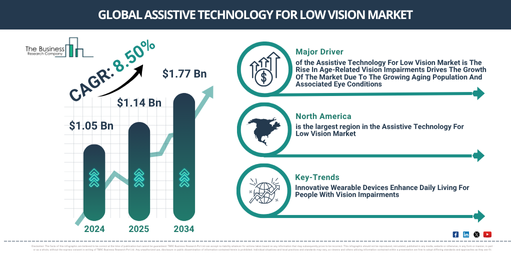
    The market for assistive technology targeting low vision has seen robust growth in the recent past. It is projected to escalate from $1.05 billion in 2024 to $1.14 billion in 2025, marking a compound annual growth rate (CAGR) of 8.7%. The substantial growth witnessed in the historic period is linked to several factors; heightened prevalence of age-affected macular degeneration, an upswing in the diabetic demographic causing retinopathy, escalating awareness concerning low vision aids, augmented government backing for vision rehabilitation, and a rise in the occurrence of glaucoma and cataracts.

    A significant surge is projected in the assistive technology for low vision market, with it anticipated to expand to $1.57 billion by 2029, experiencing a compound annual growth rate (CAGR) of 8.5%. Various factors driving the growth within the predicted timeline are an increased use of transportable and wearable low vision equipment, a rise in funding for assistive tech startups, an uptick in telehealth and remote vision evaluation services, more customization of assistive tools, and an escalated use of smartphones. Key trends within this predicted timeframe include the creation of navigation aids based on artificial intelligence, development of cost-effective assistive devices, compatibility with smartphones and tablets, inclusion into mainstream platforms, and advances in text-to-speech technology.

    Download The Free Sample Report Here:

    https://www.thebusinessresearchcompany.com/sample.aspx?id=25700&type=smp

    What Elements Are Contributing To Growth In The Assistive Technology For Low Vision Market?

    The rise in age-related vision impairments is anticipated to spur the expansion of the assistive technology market for low-vision. These impairments signify the gradual degradation in vision that naturally occurs with aging, encompassing conditions like age-related macular degeneration, cataracts, glaucoma, and diabetic retinopathy. The escalating prevalence of these vision problems primarily stems from the growing elderly population, who are more prone to eye issues such as macular degeneration, cataracts, and glaucoma that develop with age. Low-vision assistive technology aids age-related vision impairments by amplifying remaining visual function, which enables older adults to remain autonomous in their daily routines. For example, as per the World Health Organization, a United Nations agency based in Switzerland dedicated to health, globally, nearly 2.2 billion people suffer from vision impairment, either for near or distance vision, as of August 2023. Nevertheless, it’s projected that only 36% of individuals with refractive errors causing distance vision impairment and just 17% of those with vision impairment due to cataracts have received appropriate treatment. Thus, the escalating prevalence of age-related vision impairments is propelling the expansion of the assistive technology market for low-vision.

    Which Segments Are Detailed In The Global Assistive Technology For Low Vision Market Report?

    The assistive technology for low vision market covered in this report is segmented –

    1) By Product Type: Electronic Magnifiers, Screen Readers, Optical Magnifiers, Video Magnifiers, Smartphone Applications

    2) By Technology Type: Low-Tech Solutions, High-Tech Solutions, Assistive Robotics, Wearable Technology, Augmented Reality Solutions

    3) By Application: Blind Schools, Enterprises And Social Organizations, Personal Use, Federations And Hospitals

    4) By Distribution Channel: Online Retail, Brick-And-Mortar Stores, Direct Sales, Third-Party Distributors, Wholesale Suppliers

    5) By End-User: Individuals, Educational Institutions, Healthcare Providers, Senior Care Facilities, Government Organizations

    Subsegments:

    1) By Electronic Magnifiers: Desktop Electronic Magnifiers, Portable Electronic Magnifiers, Wearable Electronic Magnifiers

    2) By Screen Readers: Windows-Based Screen Readers, Mac Operating System Based Screen Readers, Android-Based Screen Readers, Linux-Based Screen Readers

    3) By Optical Magnifiers: Handheld Magnifiers, Stand Magnifiers, Spectacle Magnifiers, Dome Magnifiers

    4) By Video Magnifiers: Closed-Circuit Television-Based Video Magnifiers, Head-Mounted Video Magnifiers, Portable Video Magnifiers

    5) By Smartphone Applications: Text-to-Speech Apps, Object Recognition Apps, Navigation And Wayfinding Apps, Magnification And Contrast Adjustment Apps

    Which Emerging Trends And Strategic Shifts Are Shaping The Assistive Technology For Low Vision Market?

    Prominent firms in the assistive technology arena for those with low vision, are working towards creating advanced solutions like wearable electronic low vision equipment. These innovations seek to improve visual assistance and broadly better the lives of those who use them. These wearable devices are lightweight, mobile gadgets employed by users, utilizing technology such as cameras and screens to improve a visually impaired person’s perception. For instance, eSight Corporation, a Canadian tech firm, introduced an advanced assistive device named eSight Go, in January 2023. This device, created specifically for legally blind individuals, comprises high-definition OLED screens, a high-resolution smart autofocus camera, and an expansive 45° field of view that maintains the natural peripheral vision, ensuring a fully mobile experience. The device’s lightweight and wireless design supports magnification up to 24x and provides customizable color and contrast settings. This delivers enhanced visual clarity and comfort for continued daily usage, especially beneficial for those suffering from central vision loss.

    Who Are The Key Contributors To Growth In The Assistive Technology For Low Vision Market?

    Major companies operating in the assistive technology for low vision market are Vispero Holdings LLC, HumanWare Group, Freedom Scientific Inc., Aira Tech Corp., Low Vision International AB, IrisVision Global Inc., SELVAS Healthcare Inc., KAPSYS PTE. LTD., Sight and Sound Technology, Envision Technologies B.V., American Thermoform Corporation, Dot Incorporation Ltd, Optelec B.V., ViewPlus Technologies Inc., VisionAid Technologies Limited., Access Ingenuity LLC, Zoomax Technology Co. Limited, OrCam Technologies Ltd., Chuck Cohen Technology Inc., Quantum Reading Learning Vision.

    Get The Full Report Here:

    https://www.thebusinessresearchcompany.com/report/assistive-technology-for-low-vision-global-market-report

    Which Region Is Projected To Lead The Assistive Technology For Low Vision Market By 2025?

    North America was the largest region in the assistive technology for low vision market in 2024. The regions covered in the assistive technology for low vision market report are Asia-Pacific, Western Europe, Eastern Europe, North America, South America, Middle East, Africa.

    Request For A Customized Report:

    https://www.thebusinessresearchcompany.com/customise?id=25700&type=smp

    About The Business Research Company:

    With over 15000+ reports from 27 industries covering 60+ geographies, The Business Research Company has built a reputation for offering comprehensive, data-rich research and insights. Armed with 1,500,000 datasets, the optimistic contribution of in-depth secondary research, and unique insights from industry leaders, you can get the information you need to stay ahead in the game.

    Get in touch with us:

    The Business Research Company: https://www.thebusinessresearchcompany.com/

    Americas +1 310-496-7795

    Asia +44 7882 955267 & +91 8897263534

    Europe +44 7882 955267

    Email us at info@tbrc.info

    Follow us on:

    LinkedIn: https://in.linkedin.com/company/the-business-research-company

    YouTube: https://www.youtube.com/channel/UC24_fI0rV8cR5DxlCpgmyFQ

    Global Market Model: https://www.thebusinessresearchcompany.com/global-market-model

  • Global Acute Care Telemedicine Market Forecast to Reach $66.59  Billion by 2029, Driven by 17.7% CAGR

    Global Acute Care Telemedicine Market Forecast to Reach $66.59 Billion by 2029, Driven by 17.7% CAGR

    Claim your 30% discount on Global Market Reports with code ONLINE30. Limited time only.

    Claim your 30% discount on Global Market Reports with code ONLINE30. Limited time only.

    What Is the Current and Projected Market Size of the Acute Care Telemedicine Industry?

    The size of the acute care telemedicine market has experienced swift growth in the past few years. It is set to rise from a value of $28.34 billion in 2024 to $34.66 billion in 2025, reflecting a compound annual growth rate (CAGR) of 18.1%. This significant growth during the historic period is due to several factors including an increase in demand for real-time consultations with specialists, a higher incidence of chronic and acute health conditions, a growing lack of critical care professionals in rural areas, inflated healthcare costs which necessitates more efficient delivery models, as well as increased investments and funding directed towards telehealth infrastructure.

    Anticipated to witness substantial expansion in the upcoming years, the acute care telemedicine market size is projected to escalate to $66.59 billion by 2029, registering a compound annual growth rate (CAGR) of 17.7%. The projected growth during the anticipated period can be credited to the escalating demand for round-the-clock emergency medical services, improved regulatory backing and repayment policies, and the growing installation of telemedicine carts in emergency divisions. Additionally, the surge in the demand for management of infectious diseases within acute care settings and the increasing utilization of remote monitoring and wearable devices in emergency care also contribute to the growth. Key trends during this projected phase include enhancements in real-time video communication tools, progress in 5G and superior connectivity infrastructure, advancements in the mobile telehealth divisions and portable carts, technology-fueled remote monitoring for acute conditions, and strides in clinical workflow automation and tele-triage.

    Download The Free Sample Report Here:

    https://www.thebusinessresearchcompany.com/sample.aspx?id=25688&type=smp

    #Which Factors Are Currently Driving The Growth Of The Acute Care Telemedicine Market?

    The escalation in the need for monitoring patients remotely is predicted to fuel the growth of the acute care telemedicine market in the future. The practice of remotely handling patient health data through digital technology, which is then shared with healthcare providers for evaluation and sustained care management, is what is known as remote patient monitoring. The escalating need to monitor patients remotely is due to the increasing occurrence of chronic illnesses that necessitate consistent health monitoring and timely interference, intended to prevent any further complications and to cut down on hospital admissions. Acute care telemedicine plays a crucial role in facilitating remote patient monitoring by making swift clinical responses and real-time evaluations possible, in response to any critical changes in a patient’s health condition even beyond traditional healthcare settings. For example, ElectroIQ, a US-based tech and electronics firm reported a 20% increase in the sales of remote monitoring devices in January 2025, owing to the growing interest in home-based healthcare. Consequently, the escalating need for remote patient monitoring is acting as a catalyst for the growth of the acute care telemedicine market.

    How Is The Global Acute Care Telemedicine Market Structured In Terms Of Segments?

    The acute care telemedicine market covered in this report is segmented –

    1) By Product Type: Telehealth Units, Telemedicine Carts, Portable Telemedicine Systems

    2) By Delivery: Clinician To Patient, Clinician To Clinician

    3) By Connectivity: Local Area Network (LAN), Wireless

    4) By Application: Emergency Medicine, Critical Care, Remote Patient Monitoring

    5) By End User: Hospitals, Clinics, Ambulatory Surgical Centers, Other End Users

    Subsegments:

    1) By Telehealth Units: Fixed Telehealth Stations, Wall-Mounted Telehealth Systems, Integrated Telemedicine Workstations

    2) By Telemedicine Carts: Basic Telemedicine Carts, Advanced and High-Acuity Telemedicine Carts, Specialty-Specific Carts

    3) By Portable Telemedicine Systems: Handheld Telemedicine Devices, Mobile App-Based Telehealth Tools, Wearable Telemonitoring Devices

    What Trends Are Currently Influencing Growth In The Acute Care Telemedicine Market?

    Leading businesses in the acute care telemedicine sector are prioritizing technological innovations like digital health platforms to improve efficacy in clinical workflow, care coordination in real-time, and expandability of telemedicine services in various acute care environments. These digital health platforms are comprehensive software solutions that facilitate service delivery, administration, and coordination in healthcare through digital tools. They allow immediate communication, remote surveillance, data analytics, and streamlined clinical processes. For example, Avel eCare, a telemedicine provider in the US, introduced Avel eSync, their unique clinical workflow platform in May 2024. It’s designed to facilitate telemedicine deployment in different care environments. The platform has customizable clinical processes, sophisticated scheduling tools, secure video functionality, and combined analytics to assist data-driven decision-making. Avel eSync was created to improve telemedicine services between clinicians, permitting healthcare institutions to customize workflows for specific fields such as emergency care, intensive care units (ICU), behavioural health, and elderly care while adhering to regulatory, credentialing and licensing standards.

    Who Are The Main Participants Shaping The Acute Care Telemedicine Market Landscape?

    Major companies operating in the acute care telemedicine market are Koninklijke Philips N.V., Mercy Health, AMN Healthcare Inc., MedStar Health, Teladoc Health, Apollo Hospitals, U.S. Acute Care Solutions LLC, Enghouse Systems Limited, American Well Corporation, ScienceSoft USA Corporation, Health Tap Inc., K Health Inc., Caregility, Eagle Telemedicine, SynergenX Health, RelyMD Inc., Orbit Health, eVisit LLC, Teledigm Health, Vitalchat Inc., GenieMD Inc.

    Get The Full Report Here:

    https://www.thebusinessresearchcompany.com/report/acute-care-telemedicine-global-market-report

    Which Region Currently Holds The Largest Share In The Acute Care Telemedicine Market?

    North America was the largest region in the acute care telemedicine market in 2024. Asia-Pacific is expected to be the fastest-growing region in the forecast period. The regions covered in the acute care telemedicine market report are Asia-Pacific, Western Europe, Eastern Europe, North America, South America, Middle East, Africa.

    Request For A Customized Report:

    https://www.thebusinessresearchcompany.com/customise?id=25688&type=smp

    About The Business Research Company:

    With over 15000+ reports from 27 industries covering 60+ geographies, The Business Research Company has built a reputation for offering comprehensive, data-rich research and insights. Armed with 1,500,000 datasets, the optimistic contribution of in-depth secondary research, and unique insights from industry leaders, you can get the information you need to stay ahead in the game.

    Get in touch with us:

    The Business Research Company: https://www.thebusinessresearchcompany.com/

    Americas +1 310-496-7795

    Asia +44 7882 955267 & +91 8897263534

    Europe +44 7882 955267

    Email us at info@tbrc.info

    Follow us on:

    LinkedIn: https://in.linkedin.com/company/the-business-research-company

    YouTube: https://www.youtube.com/channel/UC24_fI0rV8cR5DxlCpgmyFQ

    Global Market Model: https://www.thebusinessresearchcompany.com/global-market-model
  • Emerging Trends and Growth Drivers in the Visual Impairment Market Through 2029

    Emerging Trends and Growth Drivers in the Visual Impairment Market Through 2029

    Claim your 30% discount on Global Market Reports with code ONLINE30. Limited time only.

    Claim your 30% discount on Global Market Reports with code ONLINE30. Limited time only.

    How Large Is the Visual Impairment Market Expected to Be in 2029?

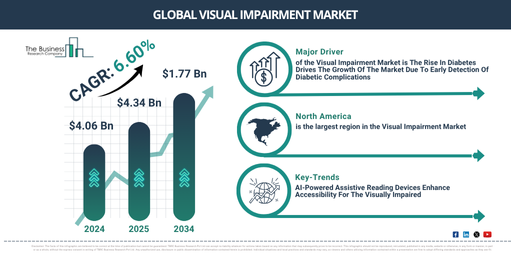
    In recent times, the market size for visual impairment has seen robust growth. It is projected to increase from $4.06 billion in 2024 to $4.34 billion in 2025, marking this growth with a compound annual growth rate (CAGR) of 6.8%. Numerous factors have contributed to this development during the historic period, including the rising incidences of eye disorders related to aging, the ongoing increase in diabetic retinopathy cases among the elderly, escalating incidences of glaucoma and macular degeneration worldwide, school-based vision screening initiatives’ evolving popularity, along with an increasing incidence of work-related eye injuries within the industrial sectors.

    The market size of visual impairment is anticipated to witness robust growth in the upcoming years, reaching $5.60 billion by 2029 with a compound annual growth rate (CAGR) of 6.6%. This growth during the projected period can be ascribed to a variety of factors such as the rise in older population prone to vision problems, elevated demand for electronic visual aids for low vision, increased healthcare expenditure in developing countries, mounting occurrence of myopia in youngsters and teenagers, and enhanced accessibility of wearable devices for vision improvement. Among the significant trends for the predicted period are the development of multilingual voice assistants, creation of mobile-based navigation applications, incorporation of haptic feedback systems, application of machine learning algorithms, and innovation in voice-controlled devices.

    Download The Free Sample Report Here:

    https://www.thebusinessresearchcompany.com/sample.aspx?id=25932&type=smp

    What Are The Contributors To Demand In The Visual Impairment Market?

    The growing occurrences of diabetes are anticipated to drive advances in the visual impairment market. This enduring metabolic disorder, which is identified by heightened blood glucose levels, results from malfunctions in insulin production, its function, or both. The increase in diabetes incidences is mainly related to unhealthy lifestyles like poor nutrition, lack of exercise, and elevated stress, leading to weight gain and insulin resistance. Signs of visual impairment can act as early indicators of diabetes complications, encouraging prompt detection and treatment, thereby averting further health complications. Notably, conditions such as diabetic retinopathy often manifest before any other visible symptoms, facilitating earlier medical intervention and improved disease control. For example, in April 2023, Diabetes UK (a UK-based British Diabetic Association) reported that 4.3 million individuals in the UK have now been diagnosed with diabetes, equating to a nearly 149,000 increase from the prior year. Additionally, more than 2.4 million people across the country are now recognized as having a high risk of developing type 2 diabetes. Hence, the escalating prevalence of diabetes is catalyzing the expansion of the visual impairment market.

    What Segmentation Categories Are Included In The Visual Impairment Market Analysis?

    The visual impairment market covered in this report is segmented –

    1) By Type: Educational Devices And Software, Mobility Devices, Low Vision Devices, Other Types

    2) By Product Type: Assistive Technologies, Optical Devices, Non-Optical Devices, Other Product Types

    3) By Application: Blind Schools, Enterprises And Social Organizations, Personal Use, Hospitals, Other Applications

    4) By Distribution Channel: Online Stores, Specialty Stores, Retail Pharmacies, Other Distribution Channel

    Subsegments:

    1) By Educational Devices And Software: Screen Readers, Braille Displays, Braille Notetakers, Accessible Learning Platforms, Tactile Graphics Tools

    2) By Mobility Devices: White Canes, Smart Canes, Guide Robots, Wearable Mobility Assistants, Electronic Travel Aids

    3) By Low Vision Devices: Optical Magnifiers, Video Magnifiers, Screen Magnification Software, Telescopic Glasses, Wearable Low Vision Glasses

    4) By Other Types: Smart Home Assistive Devices, Voice-Activated Assistants, Vision Therapy Tools, Accessibility Apps, Braille Printers And Embossers

    Which Trends Are Redefining The Future Landscape Of The Visual Impairment Industry?

    In the visual impairment market, leading corporations are concentrating on forming cutting-edge solutions including artificial intelligence-assisted reading tools to increase readability and autonomy for those with vision loss. These tools, assisted by artificial intelligence, use technologies like text recognition and speech synthesis to support individuals with visual impairments to articulate printed or digital text audibly. For example, in August 2023, OrCam Technologies Ltd., a company based in Israel specializing in assistive technology, introduced OrCam Read 3. This unique all-in-one device aims to assist people suffering from vision loss or reading exhaustion. The innovative device rapidly vocalizes printed, handwritten, and digital text, recognizes faces, and scans barcodes, providing users with enhanced independence. It also functions as an intelligent magnifier and fixed reader, integrating advanced operations such as text summarization, smart navigation, and hands-free usage for a fluid and all-encompassing reading encounter.

    Who Are The Top-Ranked Companies In The Visual Impairment Market Today?

    Major companies operating in the visual impairment market are Eschenbach Optik GmbH, OrCam Technologies Ltd., NV Access Limited, Vispero Holdings Inc., HumanWare Group Inc., Freedom Scientific Inc., Aira Tech Corp., Enhanced Vision Systems Inc., MeiraGTx Holdings plc, Dolphin Computer Access Ltd., IrisVision Global Inc., Zoomax Technology Co. Limited, Ablenet Inc., HIMS Inc., Sight and Sound Technology, Bionic Vision Technologies Pty Ltd, Optelec U.S. Inc., Pixium-Vision, Low Vision International AB, Envision Technologies B.V.

    Get The Full Report Here:

    https://www.thebusinessresearchcompany.com/report/visual-impairment-global-market-report

    How Is Visual Impairment Market Adoption Varying Across Different Regions And Sectors?

    North America was the largest region in the visual impairment market in 2024. Asia-Pacific is expected to be the fastest-growing region in the forecast period. The regions covered in the visual impairment market report are Asia-Pacific, Western Europe, Eastern Europe, North America, South America, Middle East, Africa.

    Request For A Customized Report:

    https://www.thebusinessresearchcompany.com/customise?id=25932&type=smp

    About The Business Research Company:

    With over 15000+ reports from 27 industries covering 60+ geographies, The Business Research Company has built a reputation for offering comprehensive, data-rich research and insights. Armed with 1,500,000 datasets, the optimistic contribution of in-depth secondary research, and unique insights from industry leaders, you can get the information you need to stay ahead in the game.

    Get in touch with us:

    The Business Research Company: https://www.thebusinessresearchcompany.com/

    Americas +1 310-496-7795

    Asia +44 7882 955267 & +91 8897263534

    Europe +44 7882 955267

    Email us at info@tbrc.info

    Follow us on:

    LinkedIn: https://in.linkedin.com/company/the-business-research-company

    YouTube: https://www.youtube.com/channel/UC24_fI0rV8cR5DxlCpgmyFQ

    Global Market Model: https://www.thebusinessresearchcompany.com/global-market-model
  • Industry Forecast: Virtual Care Market to Generate $50.28  Billion Revenue by 2029

    Industry Forecast: Virtual Care Market to Generate $50.28 Billion Revenue by 2029

    Claim your 30% discount on Global Market Reports with code ONLINE30. Limited time only.

    Claim your 30% discount on Global Market Reports with code ONLINE30. Limited time only.

    What Does the Forecast Indicate for the Virtual Care Market From 2025 to 2029?

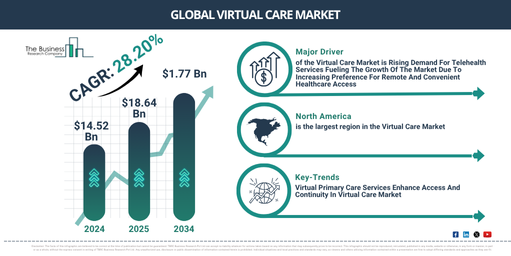
    There has been substantial growth in the size of the virtual care market in the past few years. Its projected increase from $14.52 billion in 2024 to $18.64 billion in 2025, which represents a compound annual growth rate (CAGR) of 28.4%, is indicative of this trend. Factors contributing to growth during the historical period include heightened use of telemedicine, an upswing in chronic disease incidence, escalating patient preference for distant care, costly healthcare services, and growing utilization of smartphones and internet.

    Projected to experience significant expansion in the coming years, the size of the virtual care market is anticipated to reach $50.28 billion by 2029, with a compound annual growth rate (CAGR) of 28.2%. This growth throughout the predicted period can be attributed to several factors including an increased demand for accessible healthcare, growing support and funding from governments, an enhanced focus on patient-centric care, greater adoption of remote monitoring, and higher investments in healthcare. The forecast period will witness major trends such as the evolution of digital health platforms, the integration of diagnostics powered by artificial intelligence, remote monitoring enabled by technology, advancements in hybrid care models, and the development of wearable health devices.

    Download The Free Sample Report Here:

    https://www.thebusinessresearchcompany.com/sample.aspx?id=25930&type=smp

    What Elements Are Contributing To Growth In The Virtual Care Market?

    The escalating necessity for telehealth solutions is projected to boost the expansion of the virtual care market in the future. Telehealth solutions involve the utilization of digital tools for the distant delivery of healthcare, establishing a virtual connection between patients and care providers for consultations, diagnoses, supervision, and treatment. The growing acceptance of telehealth solutions stems from the desire of individuals for quick, more accessible, and safer means to healthcare services for online consultations, continuous monitoring, and travel reduction. Through telehealth services, virtual care facilitates patients in remotely accessing medical professionals, enhancing the access, ease, and ongoing treatment, and diminishing the necessity for face-to-face meetings. For instance, as per the study published by Rock Health, a venture capital firm based in the US, in February 2023, 80% of all the participants declared the usage of telemedicine services somewhen in their lifetime, an escalation of 8 percentage points (PP) from 72% in 2021. Hence, the escalating necessity for telehealth solutions is propelling the expansion of the virtual care market.

    Which Segments Are Detailed In The Global Virtual Care Market Report?

    The virtual care market covered in this report is segmented –

    1) By Component: Hardware, Software, Services

    2) By Consultation Type: Video Consultation, Audio Consultation, Messaging

    3) By Technology Type: Video Conferencing, Wearable Devices, Mobile Health Applications, Health Information Systems, Remote Monitoring Devices

    4) By Application: Diagnostics, Therapeutics, Monitoring And Consultation, Preventive Care, Rehabilitation Services, Other Applications

    5) By End User: Patients, Healthcare Providers, Government Organizations, Corporate Wellness Programs, Other End Users

    Subsegments:

    1) By Hardware: Wearable Devices, Remote Patient Monitoring Devices, Telecommunication Devices, Diagnostic Devices

    2) By Software: Telehealth Platforms, Mobile Health Applications, Virtual Consultation Software, Remote Monitoring Software

    3) By Services: Remote Patient Monitoring Services, Teleconsultation Services, Technical Support And Maintenance, Training And Implementation Services

    What Upcoming Trends Are Expected To Impact The Virtual Care Market Globally?

    Leading businesses in the virtual care market are prioritizing the launch of cutting-edge solutions like virtual primary care services in order to improve care quality, foster better patient involvement and widen the scope of healthcare services. The term ‘virtual primary care service’ signifies the distant provision of ordinary healthcare services such as routine check-ups and chronic disease management, facilitated through digital modes of communication like video or phone consultations. For example, in January 2023, CVS Health, a healthcare firm based in the US, unveiled Virtual Primary Care. This is a digital health platform that provides virtual primary care consultations and around-the-clock on-demand care, focusing on improving access, convenience and care continuity for patients across the country. This ingenious virtual care platform offers instant access to primary care and smooth coordination between virtual and traditional face-to-face services. The platform exhibits great versatility and is effective in managing a diverse range of health conditions, ranging from regular check-ups to chronic illness care, by capitalizing on digital connectivity and synchronized care teams to ensure enhanced access and continuity of care.

    Who Are The Key Contributors To Growth In The Virtual Care Market?

    Major companies operating in the virtual care market are Medtronic plc, Siemens Healthcare GmbH, Koninklijke Philips N.V., GE Healthcare Limited, Teladoc Health Inc., Comarch S.A., American Well Corporation, MDLive Inc., Doctor on Demand Inc., Talkspace Inc., AMC Health Inc., 98point6 Technologies, Altibbi Inc., GlobalMed Inc., Binah.ai Ltd., InTouch Health Inc., Vivify Health Inc., VSee Lab Inc., Biotricity Inc., eVisit Inc., Aerotel Medical Systems Ltd., Chiron Health Inc.

    Get The Full Report Here:

    https://www.thebusinessresearchcompany.com/report/virtual-care-global-market-report

    Which Region Is Projected To Lead The Virtual Care Market By 2025?

    North America was the largest region in the virtual care market in 2024. Asia-Pacific is expected to be the fastest-growing region in the forecast period. The regions covered in the virtual care market report are Asia-Pacific, Western Europe, Eastern Europe, North America, South America, Middle East, Africa.

    Request For A Customized Report:

    https://www.thebusinessresearchcompany.com/customise?id=25930&type=smp

    About The Business Research Company:

    With over 15000+ reports from 27 industries covering 60+ geographies, The Business Research Company has built a reputation for offering comprehensive, data-rich research and insights. Armed with 1,500,000 datasets, the optimistic contribution of in-depth secondary research, and unique insights from industry leaders, you can get the information you need to stay ahead in the game.

    Get in touch with us:

    The Business Research Company: https://www.thebusinessresearchcompany.com/

    Americas +1 310-496-7795

    Asia +44 7882 955267 & +91 8897263534

    Europe +44 7882 955267

    Email us at info@tbrc.info

    Follow us on:

    LinkedIn: https://in.linkedin.com/company/the-business-research-company

    YouTube: https://www.youtube.com/channel/UC24_fI0rV8cR5DxlCpgmyFQ

    Global Market Model: https://www.thebusinessresearchcompany.com/global-market-model