Category: Medical Equipment

  • Artificial Intelligence (AI)-Driven Augmented Reality (AR) Surgical Telementoring Market Insights Report: Opportunities and Drivers 2030

    Artificial Intelligence (AI)-Driven Augmented Reality (AR) Surgical Telementoring Market Insights Report: Opportunities and Drivers 2030

    Uncover key drivers, emerging technologies, and competitive movements shaping the direct-to-consumer (d2c) brands market from 2026–2035 with trusted insights from The Business Research Company

    By how much is the Artificial Intelligence (AI)-Driven Augmented Reality (AR) Surgical Telementoring Market expected to grow between 2026 and 2030?

    The artificial intelligence (ai)-driven augmented reality (ar) surgical telementoring market size has experienced rapid expansion in recent years. It is projected to increase from $1.71 billion in 2025 to $2.2 billion in 2026, achieving a compound annual growth rate (CAGR) of 28.2%. The growth observed in the historic period was driven by the shortage of skilled surgeons, widespread telemedicine adoption, increasing surgical training demand, improvements in connectivity, and the implementation of pilot telementoring programs.

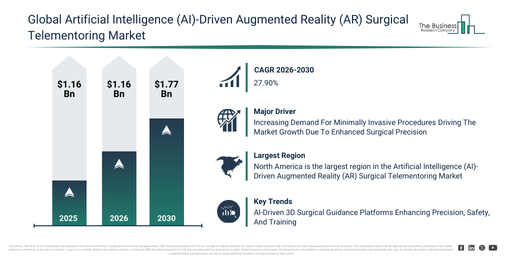
    The artificial intelligence (ai)-driven augmented reality (ar) surgical telementoring market is projected to experience rapid expansion in the coming years. This market is anticipated to reach a size of $5.88 billion by 2030, demonstrating a compound annual growth rate (CAGR) of 27.9%. Factors contributing to this growth during the forecast period include the broadening of 5G networks, increasing adoption of AI-guided surgical procedures, advancements in global surgical education, improved access to healthcare in rural areas, and the rising need for complex surgeries. Key trends anticipated for the forecast period encompass remote surgical collaboration, the development of real-time surgical visualization, enhanced access to specialists in distant regions, improved precision in surgical guidance, and the overall enhancement of surgical training.

    Access Your Free Sample Report for In-Depth Market Insights:

    https://www.thebusinessresearchcompany.com/sample.aspx?id=28911&type=smp

    Which Drivers Are Influencing Market Acceleration In The Artificial Intelligence (AI)-Driven Augmented Reality (AR) Surgical Telementoring Market?

    The escalating demand for minimally invasive procedures is projected to drive the expansion of the artificial intelligence (AI)-driven augmented reality (AR) surgical telementoring market moving forward. Minimally invasive procedures involve surgical methods using small incisions and specialized instruments to reduce patient trauma, pain, and recovery periods in contrast to traditional open surgery. This growing demand for minimally invasive approaches is primarily due to an aging population increasingly requiring surgical interventions, who also seek faster recuperation and shorter hospital stays. These sophisticated minimally invasive surgical techniques necessitate advanced guidance systems that leverage AI and AR technologies to provide real-time visualization and expert remote assistance during complex operations, thereby enhancing surgical precision, reducing errors, and improving patient outcomes. As an illustration, the British Association of Aesthetic Plastic Surgeons, a UK-based surgical organization, indicated in April 2025 that cosmetic surgical procedures increased by 5% between 2023 and 2024, totaling 27,462 procedures performed in 2024. Thus, the rising demand for minimally invasive procedures is fostering the growth of the artificial intelligence (AI)-driven augmented reality (AR) surgical telementoring market.

    What Segments Are Identified Within The Structure Of The Artificial Intelligence (AI)-Driven Augmented Reality (AR) Surgical Telementoring Market?

    The artificial intelligence (ai)-driven augmented reality (ar) surgical telementoring market covered in this report is segmented –

    1) By Component: Hardware, Software, Services

    2) By Deployment Mode: On-Premises, Cloud-Based

    3) By Application: General Surgery, Orthopedic Surgery, Neurosurgery, Cardiovascular Surgery, Other Applications

    4) By End-User: Hospitals, Ambulatory Surgical Centers, Specialty Clinics, Other End-Users

    Subsegments:

    1) By Hardware: Surgical Imaging Cameras, Depth Sensing Modules, Optical Tracking Systems, Electromagnetic Tracking Systems, Head Mounted Displays, Three Dimensional Monitors, Spatial Computing Sensors, Graphics Processing Unit Accelerators

    2) By Software: Real Time Computer Vision Algorithms, Three Dimensional Reconstruction Engines, Spatial Registration And Mapping, Annotation And Telestration Tools, Streaming And Telepresence Platform, Workflow Orchestration And Case Management

    3) By Services: Site Assessment And Readiness Planning, Installation And Commissioning, Clinical Workflow Design And Optimization, Staff Training And Credentialing Support, Remote Proctoring Program Setup

    What Industry Trends Are Transforming The Artificial Intelligence (AI)-Driven Augmented Reality (AR) Surgical Telementoring Market?

    Leading companies in the artificial intelligence (AI)-driven augmented reality (AR) surgical telementoring market are prioritizing the creation of advanced products like real-time 3D surgical guidance platforms to boost surgical accuracy, minimize radiation exposure, and enhance training capabilities. These real-time 3D surgical guidance platforms leverage AI and AR technologies to offer surgeons dynamic, segmented perspectives of patient anatomy during procedures, enabling them to make well-informed decisions and assess surgical success instantly. For instance, in April 2025, Proprio, a US-based AI-powered surgical technology company, unveiled its Paradigm platform, which features AI-guided visualization and data-driven insights. This platform integrates multimodal data, including CT, MRI, and operative plans, to deliver real-time 3D anatomical mapping, much like Google Maps for surgery. Paradigm adapts to changes within the patient’s body, equipping surgeons with tools and insights to improve outcomes. Across the first 50 surgeries utilizing Paradigm, surgical teams successfully placed hundreds of implants with positive results in a variety of challenging operations, ranging from scoliosis to collapsed discs. On average, employing Paradigm reduced the necessity for radiation-based imaging by 10 times, as both experienced surgeons and newer residents used the technology to navigate complex body structures safely and swiftly to achieve their objectives.

    Which Major Firms Are Strengthening Their Position In The Artificial Intelligence (AI)-Driven Augmented Reality (AR) Surgical Telementoring Market?

    Major companies operating in the artificial intelligence (ai)-driven augmented reality (ar) surgical telementoring market are Microsoft Corporation, Johnson & Johnson, Medtronic plc, Siemens Healthineers AG, Stryker Corporation, Koninklijke Philips NV, Intuitive Surgical Inc, Olympus Corporation, Karl Storz SE & Co KG, Osso VR Inc, Augmedics Ltd, VirtaMed AG, Surgical Theater Inc, Medivis Inc, Vuzix Corporation, XACT Robotics Inc, FundamentalVR Ltd, SentiAR Inc, EchoPixel Inc, VSI HoloMedicine.

    Access The Complete Report For Deeper Market Insights:

    https://www.thebusinessresearchcompany.com/report/artificial-intelligence-ai-driven-augmented-reality-ar-surgical-telementoring-global-market-report

    Which Region Is Anticipated To See The Fastest Growth In The Artificial Intelligence (AI)-Driven Augmented Reality (AR) Surgical Telementoring Market?

    North America was the largest region in the artificial intelligence (AI)-driven augmented reality (AR) surgical telementoring market in 2025. The regions covered in the artificial intelligence (AI)-driven augmented reality (ar) surgical telementoring market report are Asia-Pacific, South East Asia, Western Europe, Eastern Europe, North America, South America, Middle East, Africa.

    Request Your Customized Artificial Intelligence (AI)-Driven Augmented Reality (AR) Surgical Telementoring Market Research Report for Competitive Advantage:

    https://www.thebusinessresearchcompany.com/customise?id=28911&type=smp

    Browse Through More Reports Similar to the Global Artificial Intelligence (AI)-Driven Augmented Reality (AR) Surgical Telementoring Market 2026, By The Business Research Company

    Ai In Virtual Reality And Augmented Reality Global Market Report 2026

    https://www.thebusinessresearchcompany.com/report/ai-in-virtual-reality-and-augmented-reality-global-market-report

    Augmented Intelligence Global Market Report 2026

    https://www.thebusinessresearchcompany.com/report/augmented-intelligence-global-market-report

    Ar Or Vr Medical Simulation Global Market Report 2026

    https://www.thebusinessresearchcompany.com/report/ar-or-vr-medical-simulation-global-market-report

    Get in touch with us:

    The Business Research Company: https://www.thebusinessresearchcompany.com/

    Americas +1 310-496-7795

    Asia +44 7882 955267 & +91 8897263534

    Europe +44 7882 955267

    Email us at info@tbrc.info

    Follow us on:

    LinkedIn: https://in.linkedin.com/company/the-business-research-company
  • Artificial Intelligence (AI) In In Vitro Diagnostics (IVD) Industry Poised for Rapid Growth, Forecast to Touch $7 Billion by 2030 at 18.1% CAGR

    Artificial Intelligence (AI) In In Vitro Diagnostics (IVD) Industry Poised for Rapid Growth, Forecast to Touch $7 Billion by 2030 at 18.1% CAGR

    Uncover key drivers, emerging technologies, and competitive movements shaping the digital papanicolaou (pap) smear analyzer market from 2026–2035 with trusted insights from The Business Research Company

    What long-term size projections exist for the Artificial Intelligence (AI) In In Vitro Diagnostics (IVD) Market covering 2026–2035?

    The artificial intelligence (AI) in in vitro diagnostics (IVD) market has experienced substantial expansion in recent years. This market is forecasted to increase from $3.04 billion in 2025 to $3.6 billion in 2026, achieving a compound annual growth rate (CAGR) of 18.4%. The historical growth can be attributed to various factors, including an elevated demand for precise diagnostics, the development of laboratory infrastructure, a growing prevalence of chronic diseases, the adoption of digital diagnostic tools, and advancements in biomarker research.

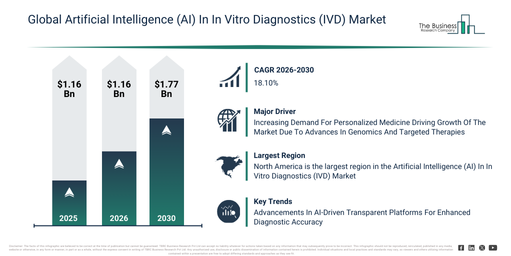
    The artificial intelligence (ai) in in vitro diagnostics (ivd) market is projected to experience swift expansion over the coming years. This market is set to reach $7.01 billion by 2030, demonstrating a compound annual growth rate (CAGR) of 18.1%. Key factors driving this growth during the forecast period include the proliferation of cloud-based diagnostic platforms, the fusion of AI with genomics, the emergence of point-of-care AI diagnostics, rising investments in personalized medicine, and a heightened need for quick and economical testing solutions. Significant trends anticipated in this period encompass AI-enabled laboratory automation, predictive diagnostics for diseases, data-driven interpretation of tests, cloud-based diagnostic platforms, and individualized patient profiling.

    Access Your Free Sample Report for In-Depth Market Insights:

    https://www.thebusinessresearchcompany.com/sample.aspx?id=28120&type=smp

    Which Drivers Are Impacting The Competitive Landscape Of The Artificial Intelligence (AI) In In Vitro Diagnostics (IVD) Market?

    The rising need for personalized medicine is projected to stimulate the growth of artificial intelligence (AI) in in vitro diagnostics (IVD) market in the future. Personalized medicine defines a healthcare strategy that tailors prevention, diagnosis, and treatment based on an individual’s genetic profile, lifestyle, and environment. This approach is gaining traction as advancements in genomic data and sequencing technologies enable more accurate, targeted, and effective treatments customized for individual patients. Artificial intelligence (AI) in in vitro diagnostics (IVD) supports personalized medicine by analyzing complex diagnostic data to pinpoint patient-specific disease patterns, which facilitates precise, timely, and customized treatment decisions. For instance, in February 2024, the Personalized Medicine Coalition, a US-based non-profit organization, reported that the FDA approved 16 new personalized treatments for rare disease patients in 2023, an increase from six in 2022. The new personalized treatments approved in 2023 also encompassed seven cancer drugs and three for other diseases and conditions. Therefore, the expanding demand for personalized medicine is fueling the growth of artificial intelligence (AI) in in vitro diagnostics (IVD) market.

    What Leading Segments Are Studied In The Artificial Intelligence (AI) In In Vitro Diagnostics (IVD) Market?

    The artificial intelligence (ai) in in vitro diagnostics (ivd) market covered in this report is segmented –

    1) By Component: Software, Hardware, Services

    2) By Technology: Machine Learning, Natural Language Processing, Computer Vision, Robotics Process Automation, Deep Learning

    3) By Deployment Model: Cloud-Based, On-Premise, Hybrid

    4) By Application: Diagnostic Imaging, Laboratory Testing, Pathology, Genomics, Personalized Medicine

    5) By End User: Hospitals And Clinics, Diagnostic Laboratories, Research Institutes, Pharmaceutical Companies, Medical Device Manufacturers

    Subsegments:

    1) By Software: Diagnostic Algorithms, Data Analytics Platforms, Decision Support Systems

    2) By Hardware: Laboratory Instruments, Imaging Devices, Point-Of-Care Devices

    3) By Services: Consulting And Implementation, Maintenance And Support, Training And Education

    Which Trends Are Shaping Activity Within The Artificial Intelligence (AI) In In Vitro Diagnostics (IVD) Market?

    Major companies operating within the artificial intelligence (AI) in in vitro diagnostics (IVD) market are directing their efforts toward developing sophisticated solutions, particularly CE-IVDR-certified transparent AI platforms, to elevate diagnostic accuracy, streamline operational processes, and support individualized patient care. A CE-IVDR-certified transparent AI platform signifies an AI system utilized for in vitro diagnostics that adheres to EU regulatory standards and delivers clear, auditable, and comprehensible decision-making. As an example, in May 2025, Diagnostics.ai, a UK-based diagnostic testing company, launched PCR.AI, a smart solution designed to accelerate and enhance PCR diagnostics. This tool automates and speeds up the interpretation of real-time PCR diagnostics with over 99.9% accuracy. It offers transparency by explicitly demonstrating how each result is generated, ensuring regulatory compliance and strengthening clinical trust. This significantly improves laboratory efficiency, reduces errors, and supports seamless regulatory adherence for molecular diagnostics.

    Which Key Players Are Driving Competition In The Artificial Intelligence (AI) In In Vitro Diagnostics (IVD) Market?

    Major companies operating in the artificial intelligence (ai) in in vitro diagnostics (ivd) market are Roche Diagnostics GmbH, Thermo Fisher Scientific Inc., Abbott Laboratories, Danaher Corporation, Siemens Healthineers AG, Illumina Inc., Hologic Inc., Sysmex Corporation, QIAGEN N.V., Tempus Labs Inc., BillionToOne Inc., PathAI Inc., Proscia Inc., Indica Labs Inc., Visiopharm A/S, aetherAI Co. Ltd., Ibex Medical Analytics Ltd., Mindpeak GmbH, OncoHost Ltd., Qritive, Aiforia Technologies Oyj

    Access The Complete Report For Deeper Market Insights:

    https://www.thebusinessresearchcompany.com/report/artificial-intelligence-ai-in-in-vitro-diagnostics-ivd-global-market-report

    Which Region Is Projected To Lead The Artificial Intelligence (AI) In In Vitro Diagnostics (IVD) Market During The Forecast Period?

    North America was the largest region in the artificial intelligence (AI) in in vitro diagnostics (IVD) market in 2025. Asia-Pacific is expected to be the fastest-growing region in the forecast period. The regions covered in the artificial intelligence (AI) in in vitro diagnostics (ivd) market report are Asia-Pacific, South East Asia, Western Europe, Eastern Europe, North America, South America, Middle East, Africa.

    Request Your Customized Artificial Intelligence (AI) In In Vitro Diagnostics (IVD) Market Research Report for Competitive Advantage:

    https://www.thebusinessresearchcompany.com/customise?id=28120&type=smp

    Browse Through More Reports Similar to the Global Artificial Intelligence (AI) In In Vitro Diagnostics (IVD) Market 2026, By The Business Research Company

    Artificial Intelligence In The Diagnostic Global Market Report 2026

    https://www.thebusinessresearchcompany.com/report/artificial-intelligence-in-the-diagnostic-global-market-report

    Ai In Cancer Diagnostics Global Market Report 2026

    https://www.thebusinessresearchcompany.com/report/ai-in-cancer-diagnostics-global-market-report

    Ai In Medical Devices Global Market Report 2026

    https://www.thebusinessresearchcompany.com/report/ai-in-medical-devices-global-market-report

    Get in touch with us:

    The Business Research Company: https://www.thebusinessresearchcompany.com/

    Americas +1 310-496-7795

    Asia +44 7882 955267 & +91 8897263534

    Europe +44 7882 955267

    Email us at info@tbrc.info

    Follow us on:

    LinkedIn: https://in.linkedin.com/company/the-business-research-company
  • Artificial Intelligence (AI) In Endoscopy Market Performance Outlook 2026–2030: Revenue to Hit $46.53 Billion at 28% CAGR

    Artificial Intelligence (AI) In Endoscopy Market Performance Outlook 2026–2030: Revenue to Hit $46.53 Billion at 28% CAGR

    Uncover key drivers, emerging technologies, and competitive movements shaping the digital neuro biomarkers market from 2026–2035 with trusted insights from The Business Research Company

    What total market size is anticipated for the Artificial Intelligence (AI) In Endoscopy Market in 2030?

    The artificial intelligence (ai) in endoscopy market size has experienced substantial expansion in recent years. This market is projected to expand from $13.52 billion in 2025 to $17.34 billion in 2026, exhibiting a compound annual growth rate (CAGR) of 28.3%. Historically, this growth has been driven by factors including the increasing incidence of gastrointestinal and colorectal diseases, the inherent limitations of conventional endoscopic interpretation, a rise in endoscopy procedure volumes, greater awareness regarding early cancer detection, and the widespread adoption of digital endoscopy platforms.

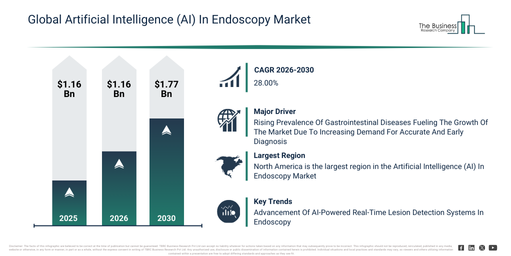
    The artificial intelligence (ai) in endoscopy market size is anticipated to experience substantial growth over the coming years. By 2030, it is projected to reach $46.53 billion, exhibiting a compound annual growth rate (CAGR) of 28.0%. This expansion during the forecast period is fueled by advancements in machine learning algorithms for medical imaging, a rise in investments in AI-enabled healthcare solutions, the broader use of minimally invasive diagnostic procedures, increasing acceptance of clinical decision support tools, and supportive regulatory frameworks for AI-based medical devices. Significant trends for this period include the growing adoption of real-time lesion detection during endoscopy, increased integration of AI software with existing endoscopic systems, a rising demand for enhanced diagnostic accuracy and a reduction in missed lesions, the expansion of AI-assisted training and simulation in endoscopy, and a greater emphasis on workflow efficiency and procedure standardization.

    Access Your Free Sample Report for In-Depth Market Insights:

    https://www.thebusinessresearchcompany.com/sample.aspx?id=25698&type=smp

    What Drivers Are Influencing Production Trends In The Artificial Intelligence (AI) In Endoscopy Market?

    The increasing occurrence of gastrointestinal illnesses is projected to fuel the expansion of the artificial intelligence (AI) in endoscopy market in the future. These conditions encompass various disorders impacting the digestive system, resulting in signs like abdominal discomfort, distension, and changes in bowel habits. The rise in gastrointestinal ailments stems from the escalating intake of ultra-processed foods, which disturb the gut’s microbial balance and foster long-term inflammation and digestive problems. Artificial intelligence (AI) in endoscopy enhances the identification of gastrointestinal diseases through precise real-time image analysis for anomaly detection. This technology facilitates prompt treatment, reduces diagnostic mistakes, and betters patient results. For example, in December 2023, data from the IBD Registry, a UK-based non-profit organization, revealed that in 2023, the count of individuals with inflammatory bowel disease (IBD) enrolling in the IBD Registry expanded to surpass 5,300, marking an increment of over 3,000 compared to 2022. Consequently, the escalating incidence of gastrointestinal conditions is propelling the artificial intelligence (AI) in endoscopy market.

    Which Segment Groups Are Influencing The Artificial Intelligence (AI) In Endoscopy Market?

    The artificial intelligence (ai) in endoscopy market covered in this report is segmented –

    1) By Product Type: Artificial Intelligence-Driven Imaging Systems, Artificial Intelligence-Powered Endoscopic Equipment, Wearable Endoscopy Devices, Consumables Used In Artificial Intelligence Endoscopy, Software Solutions For Artificial Intelligence Integration

    2) By Functionality: Image Capture And Processing, Data Management, Enhanced Visualization, Real-Time Decision Support, Training And Simulation Systems

    3) By Application: Gastrointestinal Endoscopy, Respiratory Endoscopy, Urological Endoscopy, Pancreatic Endoscopy, Neurological Endoscopy

    4) By End-User: Hospitals, Endoscopy Centers, Outpatient Surgical Centers, Research Institutions, Specialized Clinics

    Subsegments:

    1) By Artificial Intelligence-Driven Imaging Systems: High Definition Imaging Platforms, Three-Dimensional (3D) Visualization Systems, Fluorescence-Based Imaging Devices, Low Light Sensitivity Imaging Systems, Contrast-Enhanced Endoscopic Imaging Systems

    2) By Artificial Intelligence-Powered Endoscopic Equipment: Flexible Endoscopic Systems With Artificial Intelligence Integration, Rigid Endoscopic Systems With Artificial Intelligence Support, Capsule-Based Endoscopic Devices With Smart Processing, Robotic Assisted Endoscopic Instrumentation, Navigation-Enabled Endoscopic Equipment With Artificial Intelligence

    3) By Wearable Endoscopy Devices: Swallowable Capsule Endoscopy Units, Sensor Integrated Wearable Endoscopy Devices, Wireless Data Enabled Endoscopic Monitoring Devices, Artificial Intelligence-Based Wearable Imaging Systems, Miniature High Resolution Endoscopic Cameras

    4) By Consumables Used In Artificial Intelligence Endoscopy: Biopsy Forceps Compatible With Artificial Intelligence Systems, Single Use Endoscopic Protective Sheaths, Medical-Grade Contrast Media For Enhanced Imaging, Artificial Intelligence Compatible Irrigation Tubing, Disposable Accessories For Visualization And Sampling

    5) By Software Solutions For Artificial Intelligence Integration: Real-Time Lesion Detection Software Modules, Computer-Aided Diagnostic Imaging Platforms, Cloud-Based Endoscopic Data Management Systems, Image Segmentation And Classification Software Tools, Data Visualization And Automated Reporting Interfaces

    Which Trends Are Influencing The Development Of The Artificial Intelligence (AI) In Endoscopy Market?

    Leading companies operating within the artificial intelligence in endoscopy market are prioritizing the development of advanced technologies, such as AI-powered real-time lesion detection systems, to improve clinical decision-making during gastrointestinal examinations. These artificial intelligence-powered real-time lesion detection systems are sophisticated software tools designed to continuously analyze live endoscopic video feeds, accurately identifying and highlighting suspicious lesions, including polyps and tumors, throughout endoscopic procedures. For example, Ainex Corporation, a medical technology company based in Singapore, launched its Endoscopy AI system in August 2024 to enhance the real-time detection and diagnosis of gastrointestinal abnormalities during endoscopic procedures. This system integrates advanced machine learning algorithms to detect gastrointestinal lesions in real time across both upper and lower endoscopy. It significantly boosts diagnostic accuracy, minimizes false positives, and improves the visualization of mucosal abnormalities. The product’s design aims to streamline clinical workflows, reduce overall procedure time, and improve the early detection of gastrointestinal cancers and various other conditions.

    Who Are The Top-Performing Companies In The Artificial Intelligence (AI) In Endoscopy Market In Recent Years?

    Major companies operating in the artificial intelligence (ai) in endoscopy market are Medtronic plc, Fujifilm Holdings Corporation, Olympus Corporation, Iterative Health, CapsoVision Inc, EndoSoft Inc, Mauna Kea Technologies SA, LPixel Inc, Sky Engine Limited, Endovision Limited, BioCam Sp z o o, MAIA Labs Inc, Magentiq Eye Ltd, EndoSurg AI Inc, iEndoscopic GmbH, Intelliscopes LLC, Odin Vision, Wision AI, NEC Corporation Medical AI, Shanghai Wision AI Co Ltd, Shanghai Ankon Technologies Co Ltd, Fujifilm Medical AI Solutions

    Access The Complete Report For Deeper Market Insights:

    https://www.thebusinessresearchcompany.com/report/artificial-intelligence-ai-in-endoscopy-global-market-report

    Which Region Currently Holds The Largest Share Of The Artificial Intelligence (AI) In Endoscopy Market?

    North America was the largest region in the artificial intelligence (AI) in endoscopy market in 2025. Asia-Pacific is expected to be the fastest-growing region in the forecast period. The regions covered in the artificial intelligence (AI) in endoscopy market report are Asia-Pacific, South East Asia, Western Europe, Eastern Europe, North America, South America, Middle East, Africa.

    Request Your Customized Artificial Intelligence (AI) In Endoscopy Market Research Report for Competitive Advantage:

    https://www.thebusinessresearchcompany.com/customise?id=25698&type=smp

    Browse Through More Reports Similar to the Global Artificial Intelligence (AI) In Endoscopy Market 2026, By The Business Research Company

    Ai In Medical Diagnostics Global Market Report 2026

    https://www.thebusinessresearchcompany.com/report/ai-in-medical-diagnostics-global-market-report

    Ai In Medical Devices Global Market Report 2026

    https://www.thebusinessresearchcompany.com/report/ai-in-medical-devices-global-market-report

    Ai Based Surgical Robots Global Market Report 2026

    https://www.thebusinessresearchcompany.com/report/ai-based-surgical-robots-global-market-report

    Get in touch with us:

    The Business Research Company: https://www.thebusinessresearchcompany.com/

    Americas +1 310-496-7795

    Asia +44 7882 955267 & +91 8897263534

    Europe +44 7882 955267

    Email us at info@tbrc.info

    Follow us on:

    LinkedIn: https://in.linkedin.com/company/the-business-research-company
  • Global Bifurcation Lesions Market Report 2026–2035: Key Forecasts and Growth Areas

    Global Bifurcation Lesions Market Report 2026–2035: Key Forecasts and Growth Areas

    Uncover key drivers, emerging technologies, and competitive movements shaping the medical magnets market from 2026–2035 with trusted insights from The Business Research Company

    How is the Bifurcation Lesions Market size predicted to change over the forecast window of 2026–2035?

    The market size for bifurcation lesions has shown substantial growth in recent years. This market is expected to expand from $2.84 billion in 2025 to $3.1 billion in 2026, achieving a compound annual growth rate (CAGR) of 9.4%. Historically, this expansion has been driven by an increasing incidence of coronary artery disease, a rise in interventional cardiology procedures, the adoption of stenting as an alternative to surgical bypass, the presence of specialized bifurcation stents, and improved clinical expertise in performing complex interventions.

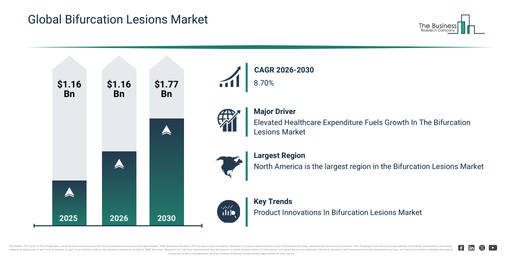
    The bifurcation lesions market size is set for significant expansion in the upcoming period. It is projected to achieve a value of $4.34 billion by 2030, growing at a compound annual growth rate (CAGR) of 8.7%. This anticipated growth is attributable to factors such as the increasing utilization of precision-guided coronary interventions, a rising demand for next-generation stent technologies, the broadening availability of personalized cardiovascular treatments, enhanced integration of imaging and analytics, and an increasing emphasis on procedural success rates. Key developments expected during the forecast period include the expanding adoption of advanced stent techniques for managing complex lesions, a growing reliance on imaging-guided bifurcation interventions, an increasing preference for drug-eluting stents, the expansion of minimally invasive coronary procedures, and a greater focus on achieving long-term vessel patency.

    Access Your Free Sample Report for In-Depth Market Insights:

    https://www.thebusinessresearchcompany.com/sample.aspx?id=7414&type=smp

    Which Drivers Are Contributing To The Expansion Of The Bifurcation Lesions Market?

    Rising healthcare spending is anticipated to propel the expansion of the bifurcation lesions market in the future. Healthcare spending encompasses all financial disbursements for medical treatments, preventive strategies, public health programs, rehabilitation services, community wellness activities, and medical research. Greater expenditure on healthcare enables medical institutions to acquire cutting-edge equipment and technologies, such as sophisticated interventional cardiology devices utilized for managing bifurcation lesions. As an illustration, in May 2024, the Office for National Statistics, a UK-based government department, reported that overall healthcare expenditure experienced a 5.6% increase in nominal terms during 2023, marking a 0.9% growth compared to the figures from 2022. Consequently, the growing healthcare expenditure is fueling the expansion of the bifurcation lesions market.

    What Segment Categories Are Covered In The Bifurcation Lesions Market?

    The bifurcation lesions market covered in this report is segmented –

    1) By Type: One-Stent, Two-Stent

    2) By Application: Coronary Vascular, Peripheral Vascular

    3) By End-User: Hospitals & Cardiac Care Centers, Ambulatory Surgical Centers, Specialty Clinics, Diagnostic Centers

    Subsegments:

    1) By One-Stent: Single-Stent Deployment, Balloon-Expandable Stents, Self-Expanding Stents

    2) By Two-Stent: Crush Technique, T- or Y-Configuration Stenting, Side Branch Stenting Techniques

    What Trends Are Reshaping The Dynamics Of The Bifurcation Lesions Market?

    Leading firms in the bifurcation lesions market are creating novel products, like drug-eluting coronary stent systems, with the aim of expanding their customer reach, boosting sales, and generating higher revenue. These systems are medical devices utilized in interventional cardiology for addressing coronary artery disease. For example, in August 2023, Medtronic Plc, a medical device company from Ireland, introduced the Onyx Frontier drug-eluting stent (DES) specifically for managing non-left main bifurcation lesions through the provisional stenting technique. A key feature of this product lies in its improved design, which includes an innovative dual-layer balloon, a smaller crossing profile, and enhanced catheter flexibility. These advancements lead to a 16% increase in deliverability when contrasted with the previous Resolute Onyx DES, without compromising radial strength. Beyond the upgraded delivery system, Onyx Frontier offers a wide array of sizes, suitable for patients needing diameters between 2.0 mm and 5.0 mm. Significantly, its 4.50-5.00 mm sizes can expand up to 6.00 mm, specifically targeting the treatment of extra-large vessels, such as those in the left main artery. Onyx Frontier retains the identical clinical data and indications as Resolute Onyx, encompassing approval for managing bifurcation lesions, left main percutaneous coronary intervention (PCI), and a suggested one-month dual antiplatelet therapy (DAPT) for patients at high risk of bleeding.

    Which Key Players Are Driving Competition In The Bifurcation Lesions Market?

    Major companies operating in the bifurcation lesions market are Boston Scientific Corporation, Terumo Medical Corporation, Spectranetics Corporation, Medtronic plc, Abbott Laboratories, Biosensors International Group Ltd., B. Braun Melsungen AG, Cook Medical LLC, Cordis Corporation, InspireMD Inc., MicroPort Scientific Corporation, OrbusNeich Medical Company Limited, Biotronik SE & Co. KG, Medinol Ltd., Meril Life Sciences Pvt. Ltd., Sahajanand Medical Technologies Pvt. Ltd., Elixir Medical Corporation, Veryan Medical Ltd., Zorion Medical Inc., Svelte Medical Systems Inc., Amaranth Medical Inc., Cardiva Medical Inc.

    Access The Complete Report For Deeper Market Insights:

    https://www.thebusinessresearchcompany.com/report/bifurcation-lesions-global-market-report

    Which Region Is Projected To Lead The Bifurcation Lesions Market During The Forecast Period?

    North America was the largest region in the bifurcation lesions market in 2025. Asia-Pacific is expected to be the fastest-growing region in the forecast period. The regions covered in the bifurcation lesions market report are Asia-Pacific, South East Asia, Western Europe, Eastern Europe, North America, South America, Middle East, Africa.

    Request Your Customized Bifurcation Lesions Market Research Report for Competitive Advantage:

    https://www.thebusinessresearchcompany.com/customise?id=7414&type=smp

    Browse Through More Reports Similar to the Global Bifurcation Lesions Market 2026, By The Business Research Company

    Furfural Derivatives Global Market Report 2026

    https://www.thebusinessresearchcompany.com/report/furfural-derivatives-global-market-report

    Anaplastic Astrocytoma Global Market Report 2026

    https://www.thebusinessresearchcompany.com/report/anaplastic-astrocytoma-global-market-report

    Capital Exchange Ecosystem Global Market Report 2026

    https://www.thebusinessresearchcompany.com/report/capital-exchange-ecosystem-global-market-report

    Get in touch with us:

    The Business Research Company: https://www.thebusinessresearchcompany.com/

    Americas +1 310-496-7795

    Asia +44 7882 955267 & +91 8897263534

    Europe +44 7882 955267

    Email us at info@tbrc.info

    Follow us on:

    LinkedIn: https://in.linkedin.com/company/the-business-research-company
  • Benign Prostatic Hyperplasia (BPH) Treatment Devices And Equipment Market 2026–2030: Forecast, Innovation, and Competitive Trends

    Benign Prostatic Hyperplasia (BPH) Treatment Devices And Equipment Market 2026–2030: Forecast, Innovation, and Competitive Trends

    Uncover key drivers, emerging technologies, and competitive movements shaping the medical imaging reconstruction artificial intelligence (ai) market from 2026–2035 with trusted insights from The Business Research Company

    What market expansion outlook does the Benign Prostatic Hyperplasia (BPH) Treatment Devices And Equipment Market show for the 2026–2030 period?

    The market size for benign prostatic hyperplasia (bph) treatment devices and equipment has shown strong expansion in recent years. It is anticipated to grow from $1.34 billion in 2025 to $1.43 billion in 2026, progressing at a compound annual growth rate (CAGR) of 6.3%. Historically, this growth can be attributed to the rising prevalence of benign prostatic hyperplasia, increased awareness regarding urological disorders, the adoption of transurethral procedures, the expansion of urology departments in hospitals, and improvements in endoscopic surgical tools.

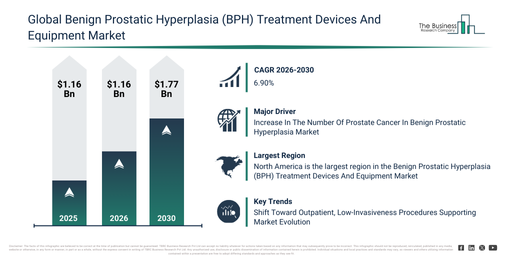
    The benign prostatic hyperplasia (bph) treatment devices and equipment market size is projected to experience robust expansion over the coming years. It is anticipated to grow to $1.86 billion by 2030, achieving a compound annual growth rate (CAGR) of 6.9%. This projected growth during the forecast period is attributable to an expanding aging male population, a heightened preference for minimally invasive therapies, the proliferation of outpatient urology clinics, increased adoption of laser and implant-based treatments, and a greater emphasis on reducing hospital stays. Significant trends within the forecast period encompass a rising uptake of minimally invasive bph treatment devices, the growing use of laser-based prostate therapies, an increasing demand for implant-based treatment options, the expansion of office-based bph procedures, and an enhanced focus on patient comfort and recovery.

    Access Your Free Sample Report for In-Depth Market Insights:

    https://www.thebusinessresearchcompany.com/sample.aspx?id=2431&type=smp

    What Drivers Are Shaping The Development Of The Benign Prostatic Hyperplasia (BPH) Treatment Devices And Equipment Market?

    The benign prostatic hyperplasia market is anticipated to grow due to the increasing number of prostate cancer cases. Prostate cancer is a malignancy that develops in the prostate gland, a small, walnut-sized organ located just beneath the bladder in males. A rise in prostate cancer diagnoses frequently leads more elderly men to seek medical evaluation for prostate-related conditions, which in turn facilitates the identification and management of benign prostatic hyperplasia. For illustration, according to information from February 2023, provided by the American Society of Clinical Oncology (ASCO), a US-based professional organization that publishes patient details on the cancer.net website, an estimated 288,300 men in the United States had prostate cancer in 2023, while 268,490 new cases and 34,500 deaths from prostate cancer were reported in 2022. Therefore, the growing incidence of prostate cancer cases is a key driver for the benign prostatic hyperplasia market’s expansion.

    Which Segments Are Contributing To The Growth Of The Benign Prostatic Hyperplasia (BPH) Treatment Devices And Equipment Market?

    The benign prostatic hyperplasia (bph) treatment devices and equipment market covered in this report is segmented –

    1) By Product: Resectoscopes, Radiofrequency Ablation Device, Urology Lasers, Prostatic Stents, Implants

    2) By Procedure Type: Transurethral Needle Ablation (TUNA), Transurethral Resection Of Prostate (TURP), Transurethral Incision Of Prostate (TUIP), Transurethral Microwave Thermotherapy (TUMT), Laser Surgery, Other Procedure Types

    3) By End-User: Hospitals, Ambulatory Surgical Centres (ASC), Clinics, Specialty Urology Centers

    Subsegments:

    1) By Resectoscopes: Bipolar Resectoscopes, Monopolar Resectoscopes, High-Performance Resectoscopes

    2) By Radiofrequency Ablation Device: Single-Needle Radiofrequency Ablation, Multi-Needle Radiofrequency Ablation

    3) By Urology Lasers: Holmium Lasers, Diode Lasers, Green Light Lasers

    4) By Prostatic Stents: Temporary Prostatic Stents, Permanent Prostatic Stents

    5) By Implants: Prostatic Urethral Lift (PUL) Implants, Balloon-Expandable Stents, Permanent Implants for BPH Treatment

    How Are New Market Trends Shaping The Landscape Of The Benign Prostatic Hyperplasia (BPH) Treatment Devices And Equipment Market?

    Leading companies in the benign prostatic hyperplasia (BPH) treatment devices and equipment market are focusing on developing innovative, minimally invasive solutions, such as temporarily implantable devices, which expand access to outpatient treatment and reduce reliance on long-term medication or tissue-removal procedures. These temporarily implantable BPH devices are single-use or short-term implants designed to reshape the prostatic urethra and relieve lower urinary tract symptoms (LUTS) caused by an enlarged prostate. For instance, in February 2025, Olympus, a Japan-based medical technology company, announced a milestone for its iTind device with expanded availability across major APAC markets (Thailand, Australia, Hong Kong, Singapore, India and a planned launch in Korea), highlighting that the iTind procedure is a minimally invasive, clinic-room option that can be performed under local anaesthesia and supported by a comprehensive physician training programme to aid clinical adoption. The iTind is a temporarily implantable nitinol device that reshapes the prostatic urethra to improve urinary flow and patient quality of life, and recent guideline and reimbursement developments are helping accelerate its adoption.

    Who Are The Top-Performing Companies In The Benign Prostatic Hyperplasia (BPH) Treatment Devices And Equipment Market In Recent Years?

    Major companies operating in the benign prostatic hyperplasia (bph) treatment devices and equipment market are Karl Storz, Lumenis Ltd., Olympus Corporation, Urologix LLC, Boston Scientific Inc., NeoTract Inc., OmniGuide Inc., ProArc Medical Ltd., Urotech Devices, Prostalund Operations AB, NxThera Inc., Richard Wolf GmbH, Coloplast A/S, Biolitec AG, BVM Medical, Convergent Laser Technologies, Cook Medical, GreenLight Technologies, PROCEPT BioRobotics, Quanta System

    Access The Complete Report For Deeper Market Insights:

    https://www.thebusinessresearchcompany.com/report/benign-prostatic-hyperplasia-bph-treatment-devices-and-equipment-global-market-report

    Which Region Currently Holds The Largest Share Of The Benign Prostatic Hyperplasia (BPH) Treatment Devices And Equipment Market?

    North America was the largest region in the benign prostatic hyperplasia (BPH) treatment devices and equipment market in 2025. Western Europe was the second-largest region in the global benign prostatic hyperplasia (BPH) treatment devices and equipment market. The regions covered in the benign prostatic hyperplasia (bph) treatment devices and equipment market report are Asia-Pacific, South East Asia, Western Europe, Eastern Europe, North America, South America, Middle East, Africa.

    Request Your Customized Benign Prostatic Hyperplasia (BPH) Treatment Devices And Equipment Market Research Report for Competitive Advantage:

    https://www.thebusinessresearchcompany.com/customise?id=2431&type=smp

    Browse Through More Reports Similar to the Global Benign Prostatic Hyperplasia (BPH) Treatment Devices And Equipment Market 2026, By The Business Research Company

    Drugs For Benign Prostatic Hypertrophy Global Market Report 2026

    https://www.thebusinessresearchcompany.com/report/drugs-for-benign-prostatic-hypertrophy-global-market-report

    Prostate Cancer Drugs Global Market Report 2026

    https://www.thebusinessresearchcompany.com/report/prostate-cancer-drugs-global-market-report

    Prostate Cancer Nuclear Medicine Diagnostics Global Market Report 2026

    https://www.thebusinessresearchcompany.com/report/prostate-cancer-nuclear-medicine-diagnostics-global-market-report

    Get in touch with us:

    The Business Research Company: https://www.thebusinessresearchcompany.com/

    Americas +1 310-496-7795

    Asia +44 7882 955267 & +91 8897263534

    Europe +44 7882 955267

    Email us at info@tbrc.info

    Follow us on:

    LinkedIn: https://in.linkedin.com/company/the-business-research-company
  • Bed-Exit Warning Robot Market Forecast 2026–2035: Data Trends and Industry Insights

    Bed-Exit Warning Robot Market Forecast 2026–2035: Data Trends and Industry Insights

    Uncover key drivers, emerging technologies, and competitive movements shaping the medical imaging picture archiving and communication system (pacs) market from 2026–2035 with trusted insights from The Business Research Company

    What level of growth is expected in the Bed-Exit Warning Robot Market between 2026 and 2030?

    The bed-exit warning robot market has seen significant expansion in recent years. This market is predicted to increase from $1.55 billion in 2025 to $1.8 billion in 2026, achieving a compound annual growth rate (CAGR) of 16.3%. Key factors contributing to its historical growth include a rising elderly population, a high frequency of patient falls, limited efficiency in caregiver monitoring, evolving hospital safety standards, and the early implementation of robotics within healthcare settings.

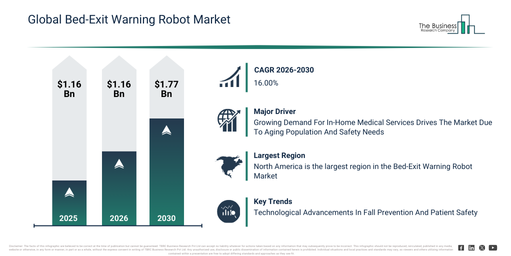
    The bed-exit warning robot market is anticipated to experience substantial growth over the next few years. It is projected to expand to $3.26 billion by 2030, exhibiting a compound annual growth rate (CAGR) of 16.0%. This growth during the forecast period can be attributed to the integration of AI with robotic monitoring, the expansion of smart hospital infrastructure, increasing homecare automation, the rising adoption of wearable alert devices, and enhanced government support for patient safety technology. Noteworthy trends for the forecast period include AI-enabled fall prediction systems, IoT-based patient monitoring, smart robotics for assisted mobility, cloud-based alert management platforms, and predictive analytics for elderly care.

    Access Your Free Sample Report for In-Depth Market Insights:

    https://www.thebusinessresearchcompany.com/sample.aspx?id=28957&type=smp

    Which Drivers Are Expected To Impact The Bed-Exit Warning Robot Market During The Forecast Period?

    The increasing inclination towards receiving medical care at home is anticipated to boost the expansion of the bed-exit warning robot market. These services encompass healthcare and medical attention provided directly within a patient’s home, covering areas like nursing support, therapeutic interventions, and chronic condition management. The growing need for in-home medical assistance is fueled by an aging demographic, with seniors opting for home-based healthcare due to the comfort, convenience, and ongoing oversight it offers for their long-term health issues. Within in-home medical services, the bed-exit warning robot plays a crucial role by notifying caregivers about unsafe bed exits, thereby averting falls, facilitating prompt support, and aiding the constant supervision of the elderly or those with impaired mobility. For example, data released by the US Department of Health and Human Services in August 2025 indicated that approximately 1 million individuals were enrolled in remote patient monitoring in 2024, representing a 27% rise compared to 2023. Consequently, the heightened preference for in-home medical solutions is serving as a key impetus for the expansion of the bed-exit warning robot market.

    How Is The Bed-Exit Warning Robot Market Divided Into Segments?

    The bed-exit warning robot market covered in this report is segmented –

    1) By Product Type: Pressure Sensor-Based, Infrared Sensor-Based

    2) By Distribution Channel: Direct Sales, Distributors, Online Retail, Other Distribution Channels

    3) By Application: Hospitals, Nursing Homes, Home Care, Rehabilitation Centers, Other Applications

    4) By End-User: Adults, Pediatrics, Elderly

    Subsegments:

    1) By Pressure Sensor-Based: Capacitive Pressure Sensors, Resistive Pressure Sensors, Piezoelectric Pressure Sensors

    2) By Infrared Sensor-Based: Active Infrared Sensors, Passive Infrared Sensors, Dual Infrared Sensors

    Which Trends Are Expected To Influence The Bed-Exit Warning Robot Market In The Upcoming Years?

    Leading companies in the bed-exit warning robot market are concentrating on developing advanced strategies, such as real-time fall prevention alerts, to improve patient safety and allow for quick caregiver intervention. A real-time fall prevention alert system continuously monitors a patient’s movements and promptly informs caregivers or activates automated safety measures when a potential bed exit or fall risk is detected. For instance, in September 2025, Tochtech Technologies Inc., a digital healthcare company based in Canada, launched an AI-driven predictive bed exit capability for its award-winning Toch Sleepsense device, intended to anticipate patient movements and reduce fall risks. This feature provides caregivers with essential advance alerts before a resident leaves the bed, facilitating timely action and significantly lowering fall risks. This non-invasive, real-time solution enhances safety and supports better care by monitoring sleep quality, vital signs, and movement without disturbing the resident. Its objective is to transform senior care by preventing injuries, improving response times, and enhancing overall well-being through intelligent, data-driven insights.

    Which Leading Companies Dominate The Bed-Exit Warning Robot Market Share?

    Major companies operating in the bed-exit warning robot market are Vayyar Imaging Ltd, Emfit Ltd, Smart Caregiver Corporation, EarlySense Ltd, CarePredict Inc, CareView Communications Inc, Linet Group SE, Stryker Corporation, Arjo AB, VirtuSense Technologies Pvt. Ltd., Lunderg AB, Tunstall Healthcare Group Ltd, Ascom Holding AG, Stanley Healthcare, Securitas Healthcare, Kami Vision, BAM Labs, Joerns Healthcare, Invacare Corporation, Völker Sensify, Nurse Assist

    Access The Complete Report For Deeper Market Insights:

    https://www.thebusinessresearchcompany.com/report/bed-exit-warning-robot-global-market-report

    How Does The Bed-Exit Warning Robot Market Perform Across Major Global Regions?

    North America was the largest region in the bed-exit warning robot in 2025. Asia-Pacific is expected to be the fastest-growing region in the forecast period. The regions covered in the bed-exit warning robot market report are Asia-Pacific, South East Asia, Western Europe, Eastern Europe, North America, South America, Middle East, Africa.

    Request Your Customized Bed-Exit Warning Robot Market Research Report for Competitive Advantage:

    https://www.thebusinessresearchcompany.com/customise?id=28957&type=smp

    Browse Through More Reports Similar to the Global Bed-Exit Warning Robot Market 2026, By The Business Research Company

    Smart Bed Global Market Report 2026

    https://www.thebusinessresearchcompany.com/report/smart-bed-global-market-report

    Robot End Effector Global Market Report 2026

    https://www.thebusinessresearchcompany.com/report/robot-end-effector-global-market-report

    Medical Bed Global Market Report 2026

    https://www.thebusinessresearchcompany.com/report/medical-bed-global-market-report

    Get in touch with us:

    The Business Research Company: https://www.thebusinessresearchcompany.com/

    Americas +1 310-496-7795

    Asia +44 7882 955267 & +91 8897263534

    Europe +44 7882 955267

    Email us at info@tbrc.info

    Follow us on:

    LinkedIn: https://in.linkedin.com/company/the-business-research-company
  • Base-Editing Tools Market Outlook 2026–2030: Key Business Drivers and Trends

    Base-Editing Tools Market Outlook 2026–2030: Key Business Drivers and Trends

    Uncover key drivers, emerging technologies, and competitive movements shaping the marine plywood panels market from 2026–2035 with trusted insights from The Business Research Company

    How much is the Base-Editing Tools Market valued at in 2026, and what valuation is forecast for 2030?

    The base-editing tools market has witnessed substantial growth in recent years. Its value is expected to increase from $1.83 billion in 2025 to $2.22 billion in 2026, achieving a compound annual growth rate (CAGR) of 21.7%. Historically, this expansion has been driven by factors such as the early adoption of crispr-cas systems, the availability of research funding, an increase in academic-genomic collaborations, rising awareness of genetic disorders, and advancements in enzyme engineering.

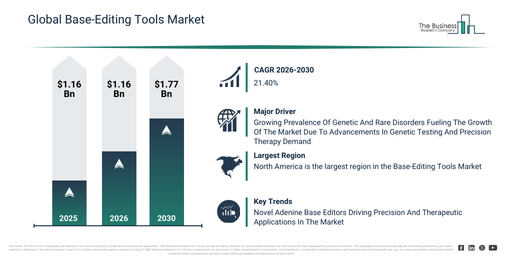
    The base-editing tools market size is projected to undergo significant expansion in the coming years. This market is expected to reach $4.82 billion by 2030, demonstrating a compound annual growth rate (CAGR) of 21.4%. The projected growth during this period stems from factors such as increasing demand for precision medicine, the rise of biotechnology startups, favorable regulatory approvals for base-editing applications, its integration with AI-driven analytics, and greater adoption in agricultural biotechnology. Significant trends foreseen in the forecast period include the development of personalized gene editing solutions, integration with laboratory information systems (LIS), enhanced automation in base editing workflows, the use of cloud-based data analysis platforms, and advancements in predictive modeling for genetic outcomes.

    Access Your Free Sample Report for In-Depth Market Insights:

    https://www.thebusinessresearchcompany.com/sample.aspx?id=28148&type=smp

    What Drivers Are Influencing The Growth Of The Base-Editing Tools Market?

    The increasing incidence of genetic and rare disorders is anticipated to propel the expansion of the base-editing tools market. These conditions are defined as medical ailments resulting from alterations or mutations within an individual’s genes or chromosomes, frequently impacting a small segment of the populace and occasionally passed down through generations. The occurrence of genetic and rare disorders is on the rise, primarily due to advancements in genomic testing and newborn screening, which enable earlier and more precise identification of cases that were previously undiagnosed. Base-editing tools facilitate the exact rectification of genetic mutations, thereby aiding in the diagnosis and management of rare and inherited conditions. Their role in improving genetic testing and enabling specific therapies contributes significantly to sophisticated diagnostics, tailored interventions, and the possibility of cures. As an illustration, data from May 2024, provided by the National Health Service, a UK-based government department, indicates that in England, roughly 17,000 individuals are affected by sickle cell disease, an inherited blood disorder, with approximately 250 new diagnoses annually. Consequently, the increasing prevalence of genetic and rare disorders fuels the expansion of the base-editing tools market.

    What Segments Are Included Within The Base-Editing Tools Market?

    The base-editing tools market covered in this report is segmented –

    1) By Product Type: Deoxyribonucleic Acid (DNA) Base Editors, Ribonucleic Acid (RNA) Base Editors, Other Product Types

    2) By Application: Genetic Research, Drug Development, Disease Modeling, Agricultural Biotechnology, Other Applications

    3) By End-User: Academic And Research Institutes, Biotechnology And Pharmaceutical Companies, Contract Research Organizations, Other End-Users

    Subsegments:

    1) By Deoxyribonucleic Acid (DNA) Base Editors: Cytosine Base Editors, Adenine Base Editors, Dual Base Editors, Prime Editors

    2) By Ribonucleic Acid (RNA) Base Editors: Cytidine Deaminase Based Editors, Adenosine Deaminase Based Editors, Programmable Ribonucleic Acid (RNA) Editors

    3) By Other Product Types: Delivery Systems, Research Reagents, Computational Tools, Screening Platforms

    What Trends Are Driving The Growth Trajectory Of The Base-Editing Tools Market?

    Leading companies in the base-editing tools market are concentrating on introducing advanced solutions, such as novel adenine base editors, to enhance the precision and efficiency of gene editing. These novel adenine base editors are sophisticated genome editing tools that facilitate the exact conversion of adenine (A) to guanine (G) in DNA without causing double-stranded breaks, thereby enabling secure and specific genetic modifications. For instance, in October 2024, Metagenomi, Inc., a US-based precision genetic medicines company, unveiled new ABEs capable of editing a broad spectrum of genomic targets with over 95% targetability. These editors allow for precise base conversions with minimal off-target effects in tested cell lines and support multiplex gene editing, which can lead to a significant functional protein reduction in primary T-cells. The platform is also compatible with various non-viral delivery methods and engineered Cas variants, making it suitable for both in vivo genome editing and ex vivo cell therapies, including CAR-T treatments.

    Who Are The Major Companies Operating In The Base-Editing Tools Market?

    Major companies operating in the base-editing tools market are Thermo Fisher Scientific Inc., Danaher Corporation, Merck KGaA, Revvity Inc., GenScript Biotech Corporation, Beam Therapeutics Inc., CRISPR Therapeutics AG, Maravai LifeSciences Holdings Inc., Aldevron L.L.C., Arcturus Therapeutics Holdings Inc., ElevateBio LLC, Editas Medicine Inc., Synthego Corporation, Metagenomi Inc., Intellia Therapeutics Inc., Mammoth Biosciences Inc., Verve Therapeutics Inc., Precede Biosciences Inc., Cellectis S.A., Creative Biogene Inc., Bio Palette Co. Ltd., Prime Medicine Inc., Base Therapeutics.

    Access The Complete Report For Deeper Market Insights:

    https://www.thebusinessresearchcompany.com/report/base-editing-tools-global-market-report

    Which Region Is Anticipated To See The Fastest Growth In The Base-Editing Tools Market?

    North America was the largest region in the base-editing tools market in 2025. Asia-Pacific is expected to be the fastest-growing region in the forecast period. The regions covered in the base-editing tools market report are Asia-Pacific, South East Asia, Western Europe, Eastern Europe, North America, South America, Middle East, Africa.

    Request Your Customized Base-Editing Tools Market Research Report for Competitive Advantage:

    https://www.thebusinessresearchcompany.com/customise?id=28148&type=smp

    Browse Through More Reports Similar to the Global Base-Editing Tools Market 2026, By The Business Research Company

    Metadata Management Tools Global Market Report 2026

    https://www.thebusinessresearchcompany.com/report/metadata-management-tools-global-market-report

    Waterbased Adhesives Global Market Report 2026

    https://www.thebusinessresearchcompany.com/report/waterbased-adhesives-global-market-report

    Design Editing Rendering Software Global Market Report 2026

    https://www.thebusinessresearchcompany.com/report/design-editing-rendering-software-global-market-report

    Get in touch with us:

    The Business Research Company: https://www.thebusinessresearchcompany.com/

    Americas +1 310-496-7795

    Asia +44 7882 955267 & +91 8897263534

    Europe +44 7882 955267

    Email us at info@tbrc.info

    Follow us on:

    LinkedIn: https://in.linkedin.com/company/the-business-research-company
  • Bariatric Transport Wheelchairs Market Future Outlook: Strong Growth Expected Toward $1.63 Billion by 2030

    Bariatric Transport Wheelchairs Market Future Outlook: Strong Growth Expected Toward $1.63 Billion by 2030

    Uncover key drivers, emerging technologies, and competitive movements shaping the manual tray sealers market from 2026–2035 with trusted insights from The Business Research Company

    What upper market value could the Bariatric Transport Wheelchairs Market reach by 2030 starting from 2026 levels?

    The bariatric transport wheelchairs market size has experienced strong growth in recent years. It is anticipated to expand from $1.18 billion in 2025 to $1.26 billion in 2026, demonstrating a compound annual growth rate (CAGR) of 6.8%. This historical growth can be attributed to factors such as increasing rates of obesity, a rising demand for bariatric patient mobility solutions, the expansion of long-term care facilities, a growing necessity for assisted patient transport, and the broader availability of specialized wheelchairs.

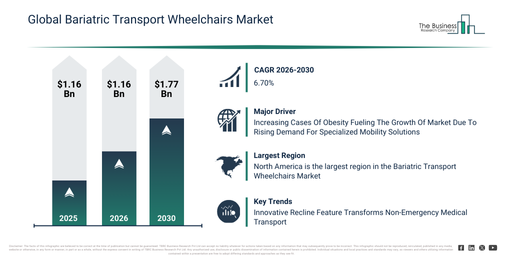
    The bariatric transport wheelchairs market is projected to experience robust expansion in the coming years. Its value is anticipated to reach $1.63 billion by 2030, demonstrating a compound annual growth rate (CAGR) of 6.7%. This projected growth during the forecast period is attributable to factors such as a rise in the aging population experiencing mobility constraints, an escalating need for home healthcare devices, an increasing emphasis on designing inclusive medical equipment, the broadening of bariatric care provisions, and greater purchasing by healthcare establishments. Key trends expected during the forecast timeframe encompass a surge in the need for strengthened mobility aids, a heightened focus on ensuring patient safety and comfort, a growing embrace of collapsible and easy-to-transport designs, the development of materials that are both lightweight and high-capacity, and a greater consideration for caregiver ergonomics.

    Access Your Free Sample Report for In-Depth Market Insights:

    https://www.thebusinessresearchcompany.com/sample.aspx?id=24166&type=smp

    Which Drivers Are Influencing Long-Term Growth In The Bariatric Transport Wheelchairs Market?

    The rising incidence of obesity is anticipated to drive the expansion of the bariatric transport wheelchairs market in the future. Obesity is defined as a medical state characterized by an accumulation of excessive body fat, potentially detrimental to an individual’s health. The surge in obesity cases stems from evolving lifestyles, inadequate dietary practices, and decreased physical activity, consequently elevating the need for specialized healthcare devices to assist those with restricted mobility. Bariatric transport wheelchairs cater to individuals with obesity by providing robust frames and broader seating areas, thereby guaranteeing secure and comfortable movement. These wheelchairs alleviate physical exertion for caregivers through easy maneuverability and improve patient transfers within medical environments. For example, as reported in May 2025 by the Food and Agriculture Organization of the United Nations, an Italy-based food security organization, around 2.5 billion adults aged 18 and older were overweight in 2022, with 890 million categorized as obese, accounting for 43% of the worldwide adult population. Furthermore, projections indicate that by 2030, more than one billion adults globally will be affected by obesity. Consequently, the rising instances of obesity are fueling the expansion of the bariatric transport wheelchairs market.

    How Is The Bariatric Transport Wheelchairs Market Divided Into Segments?

    The bariatric transport wheelchairs market covered in this report is segmented –

    1) By Product Type: Bariatric Transport Wheelchairs, Powered Bariatric Transport Wheelchairs, Transport Wheelchairs

    2) By Weight Capacity: 300 To 350 Pounds (lbs), 301 To 400 Pounds (lbs), 401 To 500 Pounds (lbs), Over 500 Pounds (lbs)

    3) By Application: Healthcare Facilities, Home Care, Transportation Services, Emergency Services

    4) By End User: Adult, Adult Bariatric Patients, Geriatric

    Subsegments:

    1) By Bariatric Transport Wheelchairs: Bariatric Folding Transport Wheelchairs, Bariatric Rigid Frame Transport Wheelchairs, Bariatric Reclining Transport Wheelchairs, Bariatric Tilt-In-Space Transport Wheelchairs

    2) By Powered Bariatric Transport Wheelchairs: Powered Bariatric Transport Wheelchairs, Powered Bariatric Transport Wheelchairs, Powered Bariatric Transport Wheelchairs, Powered Bariatric Transport Wheelchairs, Powered Bariatric Reclining Transport Wheelchairs

    3) By Transport Wheelchairs: Standard Transport Wheelchairs, Lightweight Transport Wheelchairs, Heavy-Duty Transport Wheelchairs, Foldable Transport Wheelchairs

    What Industry Trends Are Transforming The Bariatric Transport Wheelchairs Market?

    Leading companies in the bariatric transport wheelchairs market are concentrating on developing innovative products, such as the 90-degree recline, to elevate patient comfort, bolster safety during transport, and provide more respectful and adaptable mobility options for individuals with limited movement or higher weight requirements. The 90-degree recline capability enables the chair’s backrest to tilt completely flat, transforming an upright seated posture into a horizontal position. For instance, in March 2025, Mity Inc., a US-based manufacturer of healthcare mobility solutions, unveiled Traversa, an advanced bariatric transport wheelchair engineered to enhance patient mobility, comfort, and caregiver efficiency during medical transport. This innovative bariatric transport wheelchair, which includes a 90-degree recline, integrates advanced mobility technology, an ergonomic design, and adaptive features to improve patient comfort, boost caregiver productivity, and address the evolving demands of modern healthcare environments. The Traversa is specifically designed to optimize non-emergency medical transport through its easy reclining and tilting functions and single-operator usability, thereby increasing operational efficiency and reducing labor costs.

    Which Key Market Players Are Investing In Expansion And Innovation Within The Bariatric Transport Wheelchairs Market?

    Major companies operating in the bariatric transport wheelchairs market are Medline Industries LP, Invacare Corporation, GF Health Products Inc., Graham-Field Health Products, Dynarex Corporation, Nova Medical Products, Karman Healthcare Inc., ProHeal Healthcare Private Limited, Z&Z Medical Inc., Forza Medi Pvt. Ltd., Drive DeVilbiss Healthcare, Sunrise Medical, Cardinal Health Inc., McKesson Corporation, Joerns Healthcare, Arjo, Hillrom (Baxter), Stryker Corporation, Med-Mizer Inc., Winco Mfg. LLC

    Access The Complete Report For Deeper Market Insights:

    https://www.thebusinessresearchcompany.com/report/bariatric-transport-wheelchairs-global-market-report

    Which Regions Are Poised For Strategic Growth In The Bariatric Transport Wheelchairs Market?

    North America was the largest region in the bariatric transport wheelchairs market in 2025. Asia-Pacific is expected to be the fastest-growing region in the forecast period. The regions covered in the bariatric transport wheelchairs market report are Asia-Pacific, South East Asia, Western Europe, Eastern Europe, North America, South America, Middle East, Africa.

    Request Your Customized Bariatric Transport Wheelchairs Market Research Report for Competitive Advantage:

    https://www.thebusinessresearchcompany.com/customise?id=24166&type=smp

    Browse Through More Reports Similar to the Global Bariatric Transport Wheelchairs Market 2026, By The Business Research Company

    Bariatric Surgery Devices Global Market Report 2026

    https://www.thebusinessresearchcompany.com/report/bariatric-surgery-devices-global-market-report

    Electric Wheelchair Market 2026

    https://www.thebusinessresearchcompany.com/report/electric-wheelchair-market

    Wheelchair Accessible Vehicle Converter Global Market Report 2026

    https://www.thebusinessresearchcompany.com/report/wheelchair-accessible-vehicle-converter-global-market-report

    Get in touch with us:

    The Business Research Company: https://www.thebusinessresearchcompany.com/

    Americas +1 310-496-7795

    Asia +44 7882 955267 & +91 8897263534

    Europe +44 7882 955267

    Email us at info@tbrc.info

    Follow us on:

    LinkedIn: https://in.linkedin.com/company/the-business-research-company
  • Revenue of the Bariatric Surgery Devices Market Predicted to Achieve $3.52 Billion by 2030, Driven by 9.8% CAGR

    Revenue of the Bariatric Surgery Devices Market Predicted to Achieve $3.52 Billion by 2030, Driven by 9.8% CAGR

    Uncover key drivers, emerging technologies, and competitive movements shaping the mammography workstation market from 2026–2035 with trusted insights from The Business Research Company

    What level of CAGR-driven expansion is anticipated in the Bariatric Surgery Devices Market between 2026 and 2030?

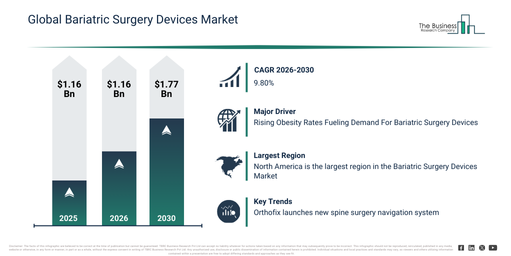
    The bariatric surgery devices market size has seen rapid expansion in recent years. It is projected to increase from $2.2 billion in 2025 to $2.43 billion in 2026, achieving a compound annual growth rate (CAGR) of 10.2%. This growth observed in the historic period is largely due to the escalating prevalence of obesity and severe obesity, the broadening of bariatric surgery programs, enhanced surgeon expertise in minimally invasive procedures, a rising acceptance of surgical weight loss solutions, and the availability of advanced surgical instruments.

    The bariatric surgery devices market is projected to experience substantial expansion over the upcoming years. This market is set to reach $3.53 billion by 2030, exhibiting a compound annual growth rate (CAGR) of 9.8%. The anticipated growth during this period stems from factors such as heightened demand for non-invasive bariatric interventions, increased capital expenditure on robotic surgery platforms, the proliferation of specialized bariatric facilities, a strengthened emphasis on ensuring patient safety and quicker convalescence, and the greater uptake of sophisticated energy-based surgical instruments. Key trends for the forecast duration encompass the increasing acceptance of minimally invasive bariatric devices, an uptick in the utilization of robotic-assisted bariatric surgery tools, expanding demand for stapling and energy-based devices, the broadening availability of non-invasive weight loss solutions, and a heightened emphasis on surgical accuracy.

    Access Your Free Sample Report for In-Depth Market Insights:

    https://www.thebusinessresearchcompany.com/sample.aspx?id=6683&type=smp

    What Drivers Are Affecting Demand-Supply Dynamics In The Bariatric Surgery Devices Market?

    The increasing number of individuals with obesity plays a crucial role in expanding the bariatric surgery devices market. Obesity is defined as the unhealthy or excessive build-up of body fat that can negatively impact a person’s health. Globally, obesity has emerged as a significant public health issue recently, contributing considerably to worldwide mortality and morbidity. The increasing adoption of surgical interventions by obese individuals worldwide to reduce fat accumulation is projected to elevate the demand for bariatric surgery devices. For example, as reported in May 2025 by the Office for Health Improvement & Disparities, a UK-based government department, indicating a persistent rise, approximately 64.5 percent of adults in England were either overweight or obese in 2023–2024, an increase from 64.0 percent in 2022–2023. Consequently, a rise in the obese population will foster the expansion of the bariatric surgery devices market.

    What Segments Are Included Within The Bariatric Surgery Devices Market?

    The bariatric surgery devices market covered in this report is segmented –

    1) By Type: Minimally Invasive Surgical Devices, Stapling Devices, Energy Or Vessel Sealing Devices, Suturing Devices, Accessories, Non-Invasive Surgical Devices

    2) By Procedure: Sleeve Gastrectomy, Gastric Bypass, Revision Bariatric Surgery, Non-Invasive Bariatric Surgery, Adjustable Gastric Banding, Mini-gastric Bypass, Biliopancreatic Diversion With Duodenal Switch

    3) By End User: Clinics, Hospitals, Specialty Centers, Ambulatory Surgical Centers

    Subsegments:

    1) By Minimally Invasive Surgical Devices: Laparoscopic Adjustable Gastric Banding Systems, Laparoscopic Sleeve Gastrectomy Kits, Robotic-Assisted Surgical Devices

    2) By Stapling Devices: Linear Staplers, Circular Staplers, Endoscopic Staplers

    3) By Energy Or Vessel Sealing Devices: Ultrasonic Devices, Radiofrequency Devices, Electrosurgical Devices

    4) By Suturing Devices: Automatic Suturing Devices, Manual Suturing Devices

    5) By Accessories: Trocar And Cannula Systems, Bariatric Surgery Instruments, Laparoscopic Graspers And Scissors

    6) By Non-Invasive Surgical Devices: Intragastric Balloons, Endoscopic Sleeve Gastroplasty Devices

    What Trends Are Reshaping The Dynamics Of The Bariatric Surgery Devices Market?

    Companies within the bariatric surgery devices market are prioritizing technological advancements, such as new spine surgery navigation, to refine surgical techniques and elevate patient care. This advanced spine surgery navigation utilizes real-time imaging, robotic assistance, and augmented reality to boost the precision and safety of spinal procedures. For example, Johnson & Johnson MedTech, a US-based medical device and technology firm, introduced ECHELON ENDOPATH in October 2024, representing a significant stride in surgical technology designed to improve bariatric surgery devices. This innovative buttressing device offers sterile, bioabsorbable reinforcement for staple lines, thereby reducing the risk of complications like internal bleeding during and after operations. The launch of the ECHELON ENDOPATH SLR is especially pertinent for bariatric surgeons, as studies show that approximately 70% of these professionals employ staple line reinforcement techniques in sleeve gastrectomy procedures.

    Who Are The Core Companies Influencing Trends In The Bariatric Surgery Devices Market?

    Major companies operating in the bariatric surgery devices market are Medtronic Plc, Johnson & Johnson, Apollo Endosurgery Inc., Intuitive Surgical Inc., Aspire Bariatrics Inc., ReShape Lifesciences Inc., Cousin Biotech, USGI Medical Inc., TransEnterix Inc., Olympus Corporation, Spatz FGIA Inc., GI Dynamics Inc., Mediflex Surgical Products, Bariatric Solutions GmbH, W. L. Gore & Associates Inc., Conmed Corporation, Standard Bariatrics Inc., Covidien Plc, EndoGastric Solutions Inc., Mediflex Surgical Products

    Access The Complete Report For Deeper Market Insights:

    https://www.thebusinessresearchcompany.com/report/bariatric-surgery-devices-global-market-report

    Which Regions Are Projected To Dominate The Bariatric Surgery Devices Market In The Coming Years?

    North America was the largest region in the bariatric surgery devices market in 2025. Asia-Pacific is expected to be the fastest-growing region in the forecast period. The regions covered in the bariatric surgery devices market report are Asia-Pacific, South East Asia, Western Europe, Eastern Europe, North America, South America, Middle East, Africa.

    Request Your Customized Bariatric Surgery Devices Market Research Report for Competitive Advantage:

    https://www.thebusinessresearchcompany.com/customise?id=6683&type=smp

    Browse Through More Reports Similar to the Global Bariatric Surgery Devices Market 2026, By The Business Research Company

    Liposuction Surgery Devices Global Market Report 2026

    https://www.thebusinessresearchcompany.com/report/liposuction-surgery-devices-global-market-report

    Gastrointestinal Devices Global Market Report 2026

    https://www.thebusinessresearchcompany.com/report/gastrointestinal-devices-global-market-report

    Cardiovascular Surgery Devices And Equipment Global Market Report 2026

    https://www.thebusinessresearchcompany.com/report/cardiovascular-surgery-devices-and-equipment-global-market-report

    Get in touch with us:

    The Business Research Company: https://www.thebusinessresearchcompany.com/

    Americas +1 310-496-7795

    Asia +44 7882 955267 & +91 8897263534

    Europe +44 7882 955267

    Email us at info@tbrc.info

    Follow us on:

    LinkedIn: https://in.linkedin.com/company/the-business-research-company
  • Balloon Valvuloplasty Device Sector Forecast Shows Robust Momentum, Climbing to $3.35 Billion With 5.3% CAGR

    Balloon Valvuloplasty Device Sector Forecast Shows Robust Momentum, Climbing to $3.35 Billion With 5.3% CAGR

    Uncover key drivers, emerging technologies, and competitive movements shaping the magnetic overband separator market from 2026–2035 with trusted insights from The Business Research Company

    What long-term size projections exist for the Balloon Valvuloplasty Device Market covering 2026–2035?

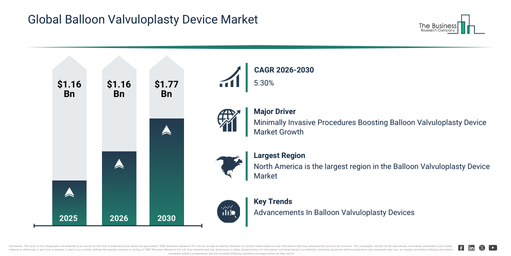
    The balloon valvuloplasty device market has shown significant growth over recent years. This market is forecast to increase from $2.57 billion in 2025 to $2.73 billion in 2026, achieving a compound annual growth rate (CAGR) of 5.9%. Factors contributing to its historical expansion include a rise in the prevalence of cardiac valve stenosis, the early embrace of minimally invasive interventional cardiology procedures, the evolution of standard and compliant balloon technologies, the proliferation of hospital-based cardiac catheterization labs, and an uptick in treatment volumes for pediatric congenital heart conditions.

    The balloon valvuloplasty device market is projected to experience substantial growth over the coming years, reaching $3.35 billion by 2030, exhibiting a compound annual growth rate (CAGR) of 5.3%. This anticipated growth during the forecast period is fueled by several factors, including an expanding elderly demographic experiencing aortic and mitral valve stenosis, an increasing need for high-pressure and scoring balloon devices, broader implementation of balloon valvuloplasty in ambulatory and specialized clinics, a growing inclination towards non-surgical cardiac treatment methods, and continuous advancements in balloon materials and device design. Key trends for the forecast period encompass a heightened preference for minimally invasive valve repair interventions, the escalating acceptance of balloon valvuloplasty as a substitute for open-heart surgery, its expanding application in pediatric and adult congenital heart valve conditions, the proliferation of valve dilation procedures within specialized cardiology centers, and a concentrated effort on enhancing patient results and reducing recovery durations.

    Access Your Free Sample Report for In-Depth Market Insights:

    https://www.thebusinessresearchcompany.com/sample.aspx?id=17090&type=smp

    Which Drivers Are Impacting The Competitive Landscape Of The Balloon Valvuloplasty Device Market?

    The growing preference for minimally invasive surgical methods is anticipated to boost the expansion of the balloon valvuloplasty device market in the coming period. These procedures involve medical interventions conducted via small cuts or natural bodily orifices, leading to less tissue damage and quicker healing than conventional operations. The increasing adoption of minimally invasive techniques stems from their shorter recuperation periods, decreased likelihood of complications, and less post-surgical discomfort when contrasted with traditional surgical methods. Specifically, balloon valvuloplasty devices find application in minimally invasive operations to expand constricted heart valves, enhance circulation, and alleviate symptoms. As an illustration, in January 2024, Intuitive Surgical Inc., a US-based producer of robotic goods, announced the deployment of 415 da Vinci surgical systems (robotic systems employing a minimally invasive approach) during the fourth quarter of 2023, marking a 12% rise over 2022. Consequently, the heightened preference for minimally invasive interventions is fueling the expansion of the balloon valvuloplasty device market.

    What Leading Segments Are Studied In The Balloon Valvuloplasty Device Market?

    The balloon valvuloplasty device market covered in this report is segmented –

    1) By Product Type: Standard Balloon, Cutting Balloon, Scoring Balloon, High-Pressure Balloon, Low-Pressure Balloon

    2) By Age Group: Pediatric, Adult

    3) By End-use: Hospitals, Ambulatory Surgical Centers, Specialty Clinics, Other End Uses

    Subsegments:

    1) By Standard Balloon: Non-Compliant Balloons, Compliant Balloons

    2) By Cutting Balloon: Single-Cutting Balloon, Multi-Cutting Balloon

    3) By Scoring Balloon: Single-Score Balloons, Dual-Score Balloons

    4) By High-Pressure Balloon: Non-Compliant High-Pressure Balloons, Compliant High-Pressure Balloons

    5) By Low-Pressure Balloon: Semi-Compliant Low-Pressure Balloons, Non-Compliant Low-Pressure Balloons

    How Are New Market Trends Shaping The Landscape Of The Balloon Valvuloplasty Device Market?

    Leading firms within the balloon valvuloplasty device market are concentrating on creating sophisticated offerings, including Pacing Guidewires, to secure a market advantage. This specialized wire, a pacing guidewire, facilitates temporary cardiac pacing during the procedure, guaranteeing a steady heart rhythm as the balloon catheter is introduced and expanded to widen the constricted valve. An example of this is Teleflex Incorporated, a US-based medical device company, which obtained approval from the Food and Drug Administration (FDA) in June 2023 for its Wattson Temporary Pacing Guidewire. This novel instrument is specifically engineered for deployment during transcatheter aortic valve replacement (TAVR) and balloon aortic valvuloplasty (BAV) procedures. The Wattson Temporary Pacing Guidewire provides a dual capability, assisting both valve insertion and ventricular bipolar pacing throughout these structural heart interventions. Its design incorporates a flexible distal pigtail form, numerous electrodes, and a bipolar configuration, intended to mitigate the danger of ventricular perforation while ensuring dependable electrical capture during swift pacing.

    Which Major Industry Participants Are Leading The Balloon Valvuloplasty Device Market Growth?

    Major companies operating in the balloon valvuloplasty device market are Boston Scientific Corporation, Medtronic plc, Abbott Laboratories, Edwards Lifesciences Corporation, Terumo Corporation, B Braun Melsungen AG, Cook Medical Incorporated, Balton Sp z o o, Meril Life Sciences Pvt Ltd, JenaValve Technology Inc, Osypka Medical GmbH, Scitech Medical, Translumina GmbH, AndraTec GmbH, Palex Medical SA, Biosensors International Group Ltd, Hexacath, MicroPort Scientific Corporation, Lepu Medical Technology Beijing Co Ltd, QT Vascular Ltd

    Access The Complete Report For Deeper Market Insights:

    https://www.thebusinessresearchcompany.com/report/balloon-valvuloplasty-device-global-market-report

    Which Region Is Expected To Experience The Fastest Growth In The Balloon Valvuloplasty Device Market?

    North America was the largest region in the balloon valvuloplasty device market in 2025. Asia-Pacific is expected to be the fastest-growing region in the forecast period. The regions covered in the balloon valvuloplasty device market report are Asia-Pacific, South East Asia, Western Europe, Eastern Europe, North America, South America, Middle East, Africa.

    Request Your Customized Balloon Valvuloplasty Device Market Research Report for Competitive Advantage:

    https://www.thebusinessresearchcompany.com/customise?id=17090&type=smp

    Browse Through More Reports Similar to the Global Balloon Valvuloplasty Device Market 2026, By The Business Research Company

    Angioplasty Balloons Global Market Report 2026

    https://www.thebusinessresearchcompany.com/report/angioplasty-balloons-global-market-report

    Biopsy Devices Global Market Report 2026

    https://www.thebusinessresearchcompany.com/report/biopsy-devices-global-market-report

    Pta Balloon Catheter Global Market Report 2026

    https://www.thebusinessresearchcompany.com/report/pta-balloon-catheter-global-market-report

    Get in touch with us:

    The Business Research Company: https://www.thebusinessresearchcompany.com/

    Americas +1 310-496-7795

    Asia +44 7882 955267 & +91 8897263534

    Europe +44 7882 955267

    Email us at info@tbrc.info

    Follow us on:

    LinkedIn: https://in.linkedin.com/company/the-business-research-company