Category: Medical Equipment

  • Balloon Introducer System Market Anticipated to Record Steady Gains, Advancing to $5.22 Billion by 2030

    Balloon Introducer System Market Anticipated to Record Steady Gains, Advancing to $5.22 Billion by 2030

    Uncover key drivers, emerging technologies, and competitive movements shaping the longevity supplements market from 2026–2035 with trusted insights from The Business Research Company

    What total market size is anticipated for the Balloon Introducer System Market in 2030?

    The balloon introducer system market has experienced rapid expansion in recent years. This market is projected to increase from $3.27 billion in 2025 to $3.6 billion in 2026, reflecting a compound annual growth rate (CAGR) of 10.1%. The growth observed in the past can be ascribed to elements such as the restricted availability of advanced balloon introducers, the widespread use of conventional normal balloons, a rise in the incidence of coronary artery diseases, enhanced interventional capabilities within hospitals, and the growing implementation of stent graft procedures.

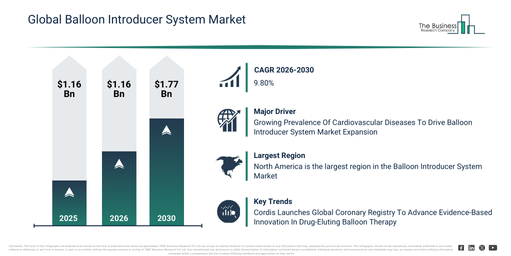
    The balloon introducer system market size is projected to experience substantial growth over the next few years. It is forecast to expand to $5.23 billion by 2030, driven by a compound annual growth rate (CAGR) of 9.8%. This expansion during the forecast period can be attributed to the advancement of cutting and scoring balloon introducers, the increased adoption of drug-coated balloons, a rise in neurovascular intervention procedures, the growing acceptance of ambulatory surgical centers, and the integration of smart and automated delivery systems. Prominent trends for the same period include the increasing uptake of drug-coated balloon technologies, the expansion of minimally invasive cardiovascular procedures, a developing preference for rapid exchange and over-the-wire systems, greater awareness of peripheral and neurovascular disease treatments, and a strong focus on enhancing catheterization laboratory efficiency and workflow optimization.

    Access Your Free Sample Report for In-Depth Market Insights:

    https://www.thebusinessresearchcompany.com/sample.aspx?id=19328&type=smp

    What Drivers Are Influencing Production Trends In The Balloon Introducer System Market?

    The increasing incidence of cardiovascular diseases is projected to drive the expansion of the balloon introducer system market moving forward. These diseases encompass conditions affecting the heart and blood vessels, including ailments such as heart attacks, strokes, and hypertension. The escalating prevalence of cardiovascular diseases is attributable to the global rise in obesity and diabetes, compounded by widespread sedentary lifestyles and unhealthy dietary practices. A balloon introducer system facilitates minimally invasive procedures designed to open blocked blood vessels, thereby enhancing blood flow in the treatment of cardiovascular disease. For instance, the Australian Institute Of Health And Welfare, an Australia-based government agency, reported in October 2025 that an estimated 57,100 adults aged 25 and above experienced acute coronary events in 2023, averaging approximately 156 incidents per day. Therefore, the rise in cardiovascular diseases is accelerating the growth of the balloon introducer system market.

    Which Segment Groups Are Influencing The Balloon Introducer System Market?

    The balloon introducer system market covered in this report is segmented –

    1) By Product Type: Normal Balloon, Cutting And Scoring Balloon, Drug-Coated Balloon, Stent Graft Balloon Introducer

    2) By Technology: Rapid Exchange, Over The Wire, Fixed Wire Balloon Catheter

    3) By Application: Coronary Artery Diseases, Peripheral Artery Diseases, Neurovascular Diseases

    4) By End User: Hospitals, Ambulatory Surgical Centers, Catheterization Laboratories

    Subsegments:

    1) By Normal Balloon: Standard Balloon Introducers, Specialty Balloon Introducers

    2) By Cutting And Scoring Balloon: Cutting Balloon Introducers, Scoring Balloon Introducers

    3) By Drug-Coated Balloon: Paclitaxel-Coated Balloons, Sirolimus-Coated Balloons

    4) By Stent Graft Balloon Introducer: Stent Graft Delivery Systems, Balloon Expandable Stent Graft Introducers

    Which Trends Are Expected To Influence The Balloon Introducer System Market In The Upcoming Years?

    Leading companies in the balloon introducer system market are concentrating on developing evidence-based product innovation and initiating large-scale clinical programs to verify performance in real-world environments, as demonstrated by Cordis’ establishment of the SELUTION Global Coronary Registry. For instance, in May 2025, Cordis Corporation, a US-based medical technology company, announced the unveiling of its SELUTION Global Coronary Registry, a major effort designed to evaluate real-world outcomes of the SELUTION SLR Drug-Eluting Balloon in up to 10,000 patients across the globe. This extensive, five-year registry is set to reinforce the data already generated through pre-clinical studies, proof-of-concept trials, and five ongoing Level-1 randomized studies. Supported by a respected global steering committee of leading interventional cardiologists, the program aims to deepen understanding of DEB use in contemporary PCI practice. With strong initial data and growing clinical interest, Cordis is solidifying its commitment to evidence-based innovation and anticipates sharing significant findings later this year.

    Who Are The Prominent Global Companies Shaping The Balloon Introducer System Market Landscape?

    Major companies operating in the balloon introducer system market are Cardinal Health Inc., Johnson & Johnson, Abbott Laboratories, Medtronic plc, Boston Scientific Corporation, B. Braun Melsungen AG, Terumo Corporation, Nipro Corporation, Cook Medical Inc., Teleflex Incorporated, BIOTRONIK SE & Co. KG, Merit Medical Systems Inc., MicroPort Scientific Corporation, Blue Sail Medical Co. Ltd., Asahi Intecc Co. Ltd., Japan Lifeline Co. Ltd., AngioDynamics Inc., OrbusNeich Medical, Biosensors International Group Ltd., Alvimedica Medical Technologies, Hexacath, Cardionovum GmbH, Concept Medical Inc, Endocor GmbH

    Access The Complete Report For Deeper Market Insights:

    https://www.thebusinessresearchcompany.com/report/balloon-introducer-system-global-market-report

    Which Geographic Areas Are Emerging As Strong Markets For The Balloon Introducer System Market?

    North America was the largest region in the balloon introducer system market in 2025. The regions covered in the balloon introducer system market report are Asia-Pacific, South East Asia, Western Europe, Eastern Europe, North America, South America, Middle East, Africa.

    Request Your Customized Balloon Introducer System Market Research Report for Competitive Advantage:

    https://www.thebusinessresearchcompany.com/customise?id=19328&type=smp

    Browse Through More Reports Similar to the Global Balloon Introducer System Market 2026, By The Business Research Company

    Drug Coated Balloons Global Market Report 2026

    https://www.thebusinessresearchcompany.com/report/drug-coated-balloons-global-market-report

    Drug Eluting Balloons Catheters Global Market Report 2026

    https://www.thebusinessresearchcompany.com/report/drug-eluting-balloons-catheters-global-market-report

    Hyperspectral Imaging System Global Market Report 2026

    https://www.thebusinessresearchcompany.com/report/hyperspectral-imaging-system-global-market-report

    Get in touch with us:

    The Business Research Company: https://www.thebusinessresearchcompany.com/

    Americas +1 310-496-7795

    Asia +44 7882 955267 & +91 8897263534

    Europe +44 7882 955267

    Email us at info@tbrc.info

    Follow us on:

    LinkedIn: https://in.linkedin.com/company/the-business-research-company
  • Balance Rehabilitation Virtual Reality Pods Industry Poised for Rapid Growth, Forecast to Touch $3.27 Billion by 2030 at 16% CAGR

    Balance Rehabilitation Virtual Reality Pods Industry Poised for Rapid Growth, Forecast to Touch $3.27 Billion by 2030 at 16% CAGR

    Uncover key drivers, emerging technologies, and competitive movements shaping the longevity retreats market from 2026–2035 with trusted insights from The Business Research Company

    What is the expected shift in the Balance Rehabilitation Virtual Reality Pods Market’s size between 2026 and 2030?

    The market for balance rehabilitation virtual reality pods has experienced rapid expansion over recent years. This market is projected to expand from $1.56 billion in 2025 to $1.81 billion by 2026, demonstrating a compound annual growth rate (CAGR) of 16.3%. Historically, this expansion has been driven by factors such as a rise in the prevalence of balance disorders, the integration of VR technology within rehabilitation centers, advancements in VR hardware, initial applications of AI in therapeutic settings, and an increase in clinical research focused on neurorehabilitation.

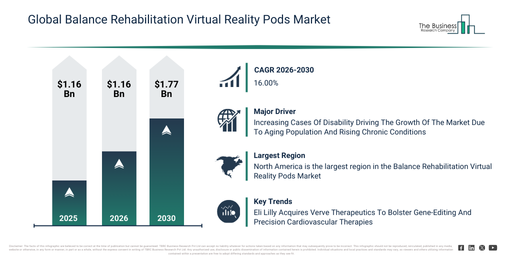
    The balance rehabilitation virtual reality pods market is projected to experience substantial expansion in the coming years. This market is forecast to reach $3.28 billion by 2030, exhibiting a compound annual growth rate (CAGR) of 16.0%. Key drivers for this projected growth include the wider adoption of home-based VR rehabilitation, the integration of AI analytics, a rising need for personalized therapy, increased regulatory approvals for VR rehabilitation devices, and their growing use among geriatric and pediatric populations. Significant trends anticipated during the forecast period encompass gamified balance therapy, remote patient monitoring, motion-tracking rehabilitation, AI-based progress analytics, and personalized VR therapy programs.

    Access Your Free Sample Report for In-Depth Market Insights:

    https://www.thebusinessresearchcompany.com/sample.aspx?id=28147&type=smp

    Which Drivers Are Shaping Strategic Decisions In The Balance Rehabilitation Virtual Reality Pods Market?

    The growing incidence of disability is projected to fuel the expansion of the balance rehabilitation virtual reality pods market moving forward. Disability encompasses various impairments, limitations in activities, and restrictions on participation that impact an individual’s capacity to perform daily tasks, frequently stemming from neurological disorders, aging, injuries, or chronic illnesses. The rise in disability cases is linked to the global aging demographic, as increasing age raises the likelihood of developing chronic conditions like stroke, arthritis, and neurodegenerative diseases, which often result in difficulties with mobility, balance, and overall functional ability. Balance rehabilitation virtual reality pods offer significant advantages to individuals with disabilities by providing a secure, controlled setting where patients can practice balance exercises and navigate complex virtual scenarios, thereby reducing the risk of falls, boosting confidence, and supporting effective functional recovery. For instance, in July 2025, Eurostat, the Luxembourg-based statistical office of the European Union, reported that in 2024, 28.8% of people with a disability faced a risk of poverty or social exclusion, in contrast to 17.9% of individuals without limitations. Consequently, the increasing cases of disability are propelling the growth of the balance rehabilitation virtual reality pods market. The expanding healthcare expenditure is anticipated to drive the future growth of the balance rehabilitation virtual reality pods market. Healthcare expenditure refers to the total financial resources allocated to healthcare services, encompassing medical treatments, hospital care, medications, and public health initiatives, by governments, private businesses, and individuals. The escalating demand for healthcare spending is attributed to the increasing prevalence of chronic diseases, which necessitate ongoing and expensive treatments. Elevated healthcare expenditure significantly enhances balance rehabilitation virtual reality pods by facilitating investment in advanced rehabilitation technologies. This spending supports the integration of immersive VR therapy solutions within clinics and hospitals, thereby improving patient access, increasing the effectiveness of therapy, and ultimately leading to better rehabilitation outcomes. For instance, in May 2024, the Office for National Statistics, a UK-based government department, indicated that total healthcare expenditure saw a 5.6% increase in nominal terms in 2023, representing a 0.9% growth compared to 2022. Therefore, the rising healthcare expenditure is a key driver for the growth of the balance rehabilitation virtual reality pods market.

    What Segment Classifications Make Up The Balance Rehabilitation Virtual Reality Pods Market?

    The balance rehabilitation virtual reality pods market covered in this report is segmented –

    1) By Product: Stationary Virtual Reality Pods, Portable Virtual Reality Pods

    2) By Technology: Non-Immersive Virtual Reality, Semi-Immersive Virtual Reality, Fully Immersive Virtual Reality

    3) By Distribution Channel: Direct Sales, Online Retail, Distributors

    4) By Application: Hospitals And Clinics, Rehabilitation Centers, Home Care Settings, Other Applications

    5) By End-User: Adults, Pediatrics, Geriatrics

    Subsegments:

    1) By Stationary Virtual Reality Pods: Single-User Systems, Multi-User Systems, Therapy-Centric Pods, Assessment Pods, Immersive Pods

    2) By Portable Virtual Reality Pods: Compact Kits, Wearable Systems, Tablet-Based Systems, Modular Kits, Mobile App-Integrated Systems

    What Trends Are Driving The Growth Trajectory Of The Balance Rehabilitation Virtual Reality Pods Market?

    Major companies within the balance rehabilitation virtual reality pods market are concentrating on developing sophisticated solutions, such as AI-driven adaptive therapy software, to improve treatment personalization, boost patient engagement, and equip clinicians with accurate, data-driven progress monitoring. This AI-driven adaptive therapy software functions as an advanced algorithmic system that utilizes real-time performance data to automatically modify exercise difficulty and parameters, thereby establishing a continuously optimized, individualized rehabilitation protocol designed to maximize recovery. For instance, in September 2024, Interacoustics A/S, a manufacturer of diagnostic and therapeutic solutions based in Denmark, unveiled its Virtualis balance rehabilitation system, which incorporates immersive virtual reality technology. Patients use a head-mounted display offering a broad field of view to participate in various gamified exercises intended to enhance motivation and balance during vestibular and neurological rehabilitation. This innovation signifies Interacoustics’ calculated move into integrated digital therapeutics, delivering objective, data-driven therapy to better patient outcomes and providing clinicians with sophisticated tools for evaluation and tracking progress.

    Which Key Players Are Driving Competition In The Balance Rehabilitation Virtual Reality Pods Market?

    Major companies operating in the balance rehabilitation virtual reality pods market are Interacoustics A/S., MindMaze SA, XRHealth, Vicon Motion Systems Ltd., Ekso Bionics Holdings Inc., Tyromotion GmbH, Bertec Corporation, Reha Stim Medtec AG, balanceback, THERA-Trainer, DIH Technologies Corp., Saebo Inc., NEURO REHAB VR, KineQuantum SAS, Movendo Technology S.r.l., Protokinetics LLC, Silverfit Ltd., zebris Medical GmbH, LPG Group Ltd., Sensing Future Technologies.

    Access The Complete Report For Deeper Market Insights:

    https://www.thebusinessresearchcompany.com/report/balance-rehabilitation-virtual-reality-pods-global-market-report

    Which Region Is Projected To Lead The Balance Rehabilitation Virtual Reality Pods Market During The Forecast Period?

    North America was the largest region in the balance rehabilitation virtual reality pods market in 2025. Asia-Pacific is expected to be the fastest-growing region in the forecast period. The regions covered in the balance rehabilitation virtual reality pods market report are Asia-Pacific, South East Asia, Western Europe, Eastern Europe, North America, South America, Middle East, Africa.

    Request Your Customized Balance Rehabilitation Virtual Reality Pods Market Research Report for Competitive Advantage:

    https://www.thebusinessresearchcompany.com/customise?id=28147&type=smp

    Browse Through More Reports Similar to the Global Balance Rehabilitation Virtual Reality Pods Market 2026, By The Business Research Company

    Rehabilitation Equipment Global Market Report 2026

    https://www.thebusinessresearchcompany.com/report/rehabilitation-equipment-global-market-report

    Rehabilitation Robotics Global Market Report 2026

    https://www.thebusinessresearchcompany.com/report/rehabilitation-robotics-global-market-report

    Virtual Reality Vr Fitness Game Global Market Report 2026

    https://www.thebusinessresearchcompany.com/report/virtual-reality-vr-fitness-game-global-market-report

    Get in touch with us:

    The Business Research Company: https://www.thebusinessresearchcompany.com/

    Americas +1 310-496-7795

    Asia +44 7882 955267 & +91 8897263534

    Europe +44 7882 955267

    Email us at info@tbrc.info

    Follow us on:

    LinkedIn: https://in.linkedin.com/company/the-business-research-company
  • Balance Assessment Systems Market Performance Outlook 2026–2030: Revenue to Hit $2.53 Billion at 10.9% CAGR

    Balance Assessment Systems Market Performance Outlook 2026–2030: Revenue to Hit $2.53 Billion at 10.9% CAGR

    Uncover key drivers, emerging technologies, and competitive movements shaping the longevity hotel market from 2026–2035 with trusted insights from The Business Research Company

    What growth pattern is forecast for the Balance Assessment Systems Market size between 2026 and 2035?

    The balance assessment systems market has experienced swift expansion in recent years. Its valuation is projected to increase from $1.51 billion in 2025 to $1.68 billion in 2026, demonstrating a compound annual growth rate (CAGR) of 11.2%. The growth observed in the past can be linked to factors such as an increase in fall-related injuries, the growing aging population, the adoption of rehabilitation technology, the need for objective balance measurement, and sports performance analysis.

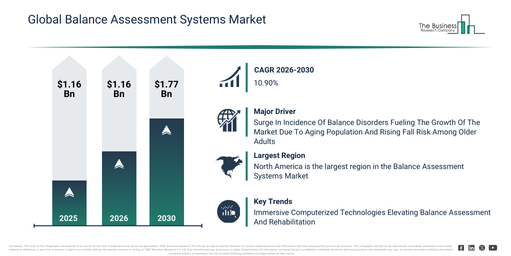
    The balance assessment systems market size is anticipated to experience swift expansion over the coming years. This market is projected to reach $2.53 billion by 2030, exhibiting a compound annual growth rate (CAGR) of 10.9%. Factors contributing to this growth during the forecast period include AI-based movement analytics, home-based balance testing, an increase in neurological disorder diagnostics, the expansion of sports medicine, and the integration of tele-rehabilitation. Key developments expected in this period encompass computerized balance analysis, wearable sensor-based assessment, gait and posture evaluation, virtual reality balance testing, and remote balance monitoring.

    Access Your Free Sample Report for In-Depth Market Insights:

    https://www.thebusinessresearchcompany.com/sample.aspx?id=30206&type=smp

    Which Drivers Are Impacting Market Performance In The Balance Assessment Systems Market?

    The future expansion of the balance assessment systems market is anticipated to be driven by the rising occurrence of balance disorders. These conditions are characterized by an individual feeling unsteady, dizzy, or experiencing a sensation of spinning or movement even when stationary. The increase in balance disorders primarily stems from the growing aging population, as age-related changes in the inner ear, vision, and muscle strength make older adults more susceptible to dizziness, instability, and falls. Balance assessment systems are instrumental in diagnosing and managing these disorders by precisely measuring postural stability, body sway, and coordination, thereby enabling clinicians to identify underlying vestibular or neurological issues and develop targeted rehabilitation programs for improved balance and mobility. For instance, in 2024, the Stroke Foundation, an Australia-based organization developing national stroke guidelines, reported that in 2023, an estimated 440,481 Australians were living with stroke, and 45,785 new stroke events were recorded that year. Annual incident strokes are projected to rise to 72,000 by 2050, marking an increase of about 57.3%, which signals a substantial escalation in future service demand and long-term care costs. Therefore, the increasing incidence of balance disorders is driving the growth of the balance assessment systems market.

    What Segment Types Are Examined In The Balance Assessment Systems Market?

    The balance assessment systems market covered in this report is segmented –

    1) By Product Type: Portable Balance Assessment Systems, Non-Portable Balance Assessment Systems

    2) By Application: Hospitals, Clinics, Rehabilitation Centers, Other Applications

    3) By End User: Adults, Pediatrics, Geriatrics

    Subsegments:

    1) By Portable Balance Assessment Systems: Wearable Sensor Based Balance Assessment Systems, Portable Force Plate Balance Assessment Systems, Portable Posturography Balance Assessment Systems, Handheld Vestibular Assessment Devices

    2) By Non Portable Balance Assessment Systems: Static Posturography Balance Assessment Systems, Dynamic Posturography Balance Assessment Systems, Force Platform Balance Assessment Systems, Virtual Reality Based Balance Assessment Systems, Gait And Balance Analysis Treadmill Systems

    What Upcoming Trends Are Likely To Define The Future Path Of The Balance Assessment Systems Market?

    Major companies operating in the balance assessment systems market are prioritizing the development and integration of computerized assessment solutions, including advanced immersive virtual reality-based computerized dynamic posturography platforms, to offer objective, data-rich balance evaluation and rehabilitation in real time. The integration of computerized assessment solutions involves the deployment of software-driven systems, which incorporate components such as force plates, motion sensors, and sophisticated analytics. These systems quantify postural control and vestibular function while concurrently guiding tailored therapy within interactive digital environments. For example, in September 2024, Interacoustics A/S, a Denmark-based manufacturer and supplier of diverse diagnostic equipment, unveiled its Virtualis balance rehabilitation solutions, comprising MotionVR, StaticVR, and BalanceVR. These specific systems combine dynamic and static force plates with fully immersive virtual reality technology to replicate real-life surfaces and situations, capturing precise postural responses for clinical use. This enables healthcare professionals to customize assessment and training modules, such as those for sensory organization, adaptation, and functional balance tasks, for each patient, objectively monitor their progression, and assist individuals suffering from dizziness and other balance disorders in regaining confidence and improving their daily functioning.

    Who Are The Top-Performing Companies In The Balance Assessment Systems Market In Recent Years?

    Major companies operating in the balance assessment systems market are Kistler Group, Bertec Corporation, Advanced Mechanical Technology Inc., zebris Medical GmbH, TecnoBody S.r.l., Balance Tracking Systems Inc., Vestibular Technologies LLC, NeuroEquilibrium Diagnostic Systems Pvt. Ltd., BioSensics LLC, Motek Medical, Natus Medical Incorporated, Biodex Medical Systems, Hocoma AG, DIERS International GmbH, Xsens Technologies, Qualisys AB, Noraxon USA Inc., AMTI Force Platforms, Charnwood Dynamics, Balance Systems SRL

    Access The Complete Report For Deeper Market Insights:

    https://www.thebusinessresearchcompany.com/report/global-balance-assessment-systems-market-report

    Which Region Currently Holds The Largest Share Of The Balance Assessment Systems Market?

    North America was the largest region in the balance assessment systems market in 2025. Asia-Pacific is expected to be the fastest-growing region in the forecast period. The regions covered in the balance assessment systems market report are Asia-Pacific, South East Asia, Western Europe, Eastern Europe, North America, South America, Middle East, Africa.

    Request Your Customized Balance Assessment Systems Market Research Report for Competitive Advantage:

    https://www.thebusinessresearchcompany.com/customise?id=30206&type=smp

    Browse Through More Reports Similar to the Global Balance Assessment Systems Market 2026, By The Business Research Company

    Load Balancer Global Market Report 2026

    https://www.thebusinessresearchcompany.com/report/load-balancer-global-market-report

    Patient Monitoring Devices Market 2026

    https://www.thebusinessresearchcompany.com/report/patient-monitoring-devices-market

    Balance Shafts Global Market Report 2026

    https://www.thebusinessresearchcompany.com/report/balance-shafts-global-market-report

    Get in touch with us:

    The Business Research Company: https://www.thebusinessresearchcompany.com/

    Americas +1 310-496-7795

    Asia +44 7882 955267 & +91 8897263534

    Europe +44 7882 955267

    Email us at info@tbrc.info

    Follow us on:

    LinkedIn: https://in.linkedin.com/company/the-business-research-company
  • Global Baby Thermometers Market Set for Strong Expansion, Reaching $21.67 Billion With 9.7% CAGR by 2030

    Global Baby Thermometers Market Set for Strong Expansion, Reaching $21.67 Billion With 9.7% CAGR by 2030

    Uncover key drivers, emerging technologies, and competitive movements shaping the longevity clinic market from 2026–2035 with trusted insights from The Business Research Company

    How much larger will the Baby Thermometers Market be in 2030 compared with 2026?

    The baby thermometers market has experienced considerable growth in recent years. It is forecast to grow from $13.49 billion in 2025 to $14.96 billion in 2026, achieving a compound annual growth rate (CAGR) of 10.9%. The market’s historic expansion can be attributed to an increase in infant healthcare awareness, a rise in home-based child temperature monitoring, the adoption of digital thermometers as replacements for mercury devices, the demand for safer and non-invasive temperature measurement, and the expansion of pediatric healthcare product retailing.

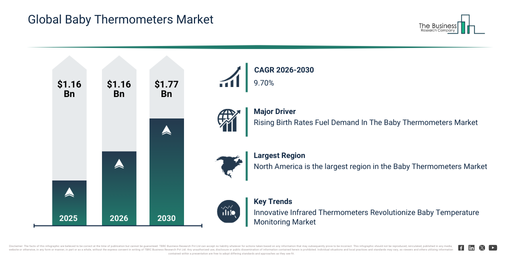
    The baby thermometers market is anticipated to experience substantial expansion over the coming years. Its valuation is predicted to reach $21.68 billion by 2030, expanding at a compound annual growth rate (CAGR) of 9.7%.

    This growth during the forecast timeframe is attributable to several factors, including an expanding population of newborns and infants in developing economies, an increasing inclination towards infrared and non-contact thermometers, a greater need for portable and travel-convenient baby thermometers, a heightened focus on hygienic and infection-free temperature assessment, and the proliferation of online and pharmacy-based sales channels for baby care products.

    Significant trends expected within this period encompass a rising preference for non-contact and infrared baby thermometers, an escalating demand for rapid-reading and child-appropriate thermometer designs, a growing adoption of models featuring flexible tips, waterproof capabilities, and pediatric-specific attributes, the broadening application of baby thermometers for use at home, during travel, and for general portability, and an overarching emphasis on comfort, safety, and simplicity in monitoring infant temperatures.

    Access Your Free Sample Report for In-Depth Market Insights:

    https://www.thebusinessresearchcompany.com/sample.aspx?id=16622&type=smp

    What Drivers Are Guiding Growth Patterns In The Baby Thermometers Market?

    The growth of the baby thermometers market is anticipated to be significantly propelled by rising birth rates. Birth rates are defined as the count of live births per 1,000 people within a population over a specific period, usually one year. Several factors contribute to these increasing birth rates, such as advancements in healthcare leading to reduced infant mortality, cultural shifts favoring larger families, economic stability encouraging family planning, and supportive government policies promoting childbirth and family development. Baby thermometers are essential tools for monitoring the temperatures of newborns to ensure their stability and to promptly detect any signs of fever or illness. They deliver quick and accurate readings, which are critical for facilitating timely medical care when required. For example, a report from the National Vital Statistics Reports in April 2024, issued by the US-based National Vital Statistics System (NVSS), indicated that female birth rates rose by 1% to 5% among women aged 25–29 and 35–44, and experienced a 12% surge among women aged 45–49. Therefore, the expansion of the baby thermometers market is being driven by these increasing birth rates.

    Which Segments Are Driving Activity In The Baby Thermometers Market?

    The baby thermometers market covered in this report is segmented –

    1) By Type: Rectal, Oral, Infrared, Ear Canal, Pacifier, Armpit

    2) By Thermometer Type: Digital Baby Thermometers, Infrared Baby Thermometers, Pacifier Baby Thermometers, Smart Baby Thermometers

    3) By Connectivity: Non-Connected Baby Thermometers, Connected Baby Thermometers

    4) By Distribution Channel: Retail Store, Online Store, Supermarket, Pharma Store

    5) By Application: Home Use, Clinical Use, Travel And Portable Use, Other Applications

    Subsegments:

    1) By Rectal Thermometers: Digital Rectal Thermometers, Flexible Tip Rectal Thermometers, Disposable Rectal Thermometers, Fast-Read Rectal Thermometers, Waterproof Rectal Thermometers

    2) By Oral Thermometers: Digital Oral Thermometers, Flexible Tip Oral Thermometers, Quick-Read Oral Thermometers, Non-Contact Oral Thermometers, Oral Thermometers With Memory Recall

    3) By Infrared Thermometers: Non-Contact Infrared Thermometers, Forehead Infrared Thermometers, Temporal Artery (Forehead) Infrared Thermometers, Dual-Mode Infrared Thermometers (Forehead And Ear), Touchless Infrared Thermometers

    4) By Ear Canal Thermometers: Digital Ear Thermometers, Infrared Ear Thermometers, Disposable Ear Thermometer Covers, Fast-Reading Ear Thermometers, Pediatric-Specific Ear Thermometers

    5) By Pacifier Thermometers: Digital Pacifier Thermometers, Flexible Tip Pacifier Thermometers, Bpa-Free Pacifier Thermometers, Pacifier Thermometers With Memory Function, Thermometer Pacifiers For Infants

    6) By Armpit (Axillary) Thermometers: Digital Axillary Thermometers, Mercury-Free Axillary Thermometers, Flexible Tip Armpit Thermometers, Fast-Reading Axillary Thermometers, Pediatric-Specific Axillary Thermometers

    Which Trends Are Shaping Activity Within The Baby Thermometers Market?

    Leading companies in the baby thermometers market are unveiling innovative products, such as infrared thermometers, to gain a competitive advantage. Infrared thermometers leverage infrared technology to measure temperature without physical contact, typically by scanning the forehead or ear, thus providing quick and hygienic readings. These devices see widespread use in both medical environments and households for non-invasive and rapid temperature monitoring. For example, in July 2023, Tenovi, a US-based remote patient monitoring (RPM) solution, released a cellular-enabled Infrared Thermometer. This new FDA-approved infrared thermometer empowers patients to automatically transmit real-time temperature data to doctors and clinicians. By merging infrared temperature measurement with cellular connectivity, a cellular-enabled infrared thermometer facilitates real-time data transfer and remote oversight. Its cellular functionality supports seamless data logging and centralized access via cloud systems in large-scale settings like medical institutions, manufacturing facilities, and field sites. Many versions are engineered for resilience, frequently featuring resistance to dust, water, and the ability to withstand high temperatures, thereby guaranteeing dependable operation in various environments.

    Which Leading Companies Dominate The Baby Thermometers Market Share?

    Major companies operating in the baby thermometers market are Braun GmbH, Omron Healthcare, Exergen Corporation, Microlife Corporation, American Diagnostic Corporation, Contec Medical Systems Co Ltd, Geratherm Medical AG, Kinsa Inc, Withings, Vicks (The Procter & Gamble Company) , Beurer GmbH, Easywell Biomedicals Inc, Berrcom, Rossmax International Ltd, Innovo Medical Group Inc, TempTraq, Elepho, Raiing Medical, Zhongshan Bisen Plastic Electronic Products Co Ltd

    Access The Complete Report For Deeper Market Insights:

    https://www.thebusinessresearchcompany.com/report/baby-thermometers-global-market-report

    How Does The Baby Thermometers Market Perform Across Major Global Regions?

    North America was the largest region in the baby thermometers market in 2025. Asia-Pacific is expected to be the fastest-growing region in the forecast period. The regions covered in the baby thermometers market report are Asia-Pacific, South East Asia, Western Europe, Eastern Europe, North America, South America, Middle East, Africa.

    Request Your Customized Baby Thermometers Market Research Report for Competitive Advantage:

    https://www.thebusinessresearchcompany.com/customise?id=16622&type=smp

    Browse Through More Reports Similar to the Global Baby Thermometers Market 2026, By The Business Research Company

    Infrared Thermometers Global Market Report 2026

    https://www.thebusinessresearchcompany.com/report/infrared-thermometers-global-market-report

    Temperature Sensor Global Market Report 2026

    https://www.thebusinessresearchcompany.com/report/temperature-sensor-global-market-report

    Temperature Monitoring Devices Global Market Report 2026

    https://www.thebusinessresearchcompany.com/report/temperature-monitoring-devices-global-market-report

    Get in touch with us:

    The Business Research Company: https://www.thebusinessresearchcompany.com/

    Americas +1 310-496-7795

    Asia +44 7882 955267 & +91 8897263534

    Europe +44 7882 955267

    Email us at info@tbrc.info

    Follow us on:

    LinkedIn: https://in.linkedin.com/company/the-business-research-company
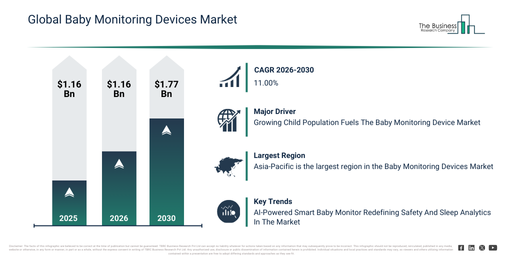
  • Baby Monitoring Devices Market Growth Projection: Expected to Surpass $8.64 Billion by 2030 at 11% CAGR

    Baby Monitoring Devices Market Growth Projection: Expected to Surpass $8.64 Billion by 2030 at 11% CAGR

    Uncover key drivers, emerging technologies, and competitive movements shaping the longevity biotech market from 2026–2035 with trusted insights from The Business Research Company

    Starting from its 2026 valuation, what market size is the Baby Monitoring Devices Market expected to reach by 2030?

    The baby monitoring devices market has experienced rapid expansion in its size over recent years. Projections indicate it will expand from $5.14 billion in 2025 to $5.7 billion by 2026, demonstrating a compound annual growth rate (CAGR) of 11.0%. Factors contributing to this historical growth include an increase in urbanization alongside nuclear family formations, heightened parental awareness concerning infant safety, a rise in the adoption of consumer electronics, enhanced internet connectivity, and the proliferation of e-commerce distribution channels.

    The baby monitoring devices market is projected to experience substantial expansion in the coming years. This market is forecast to reach $8.65 billion by 2030, exhibiting a compound annual growth rate (CAGR) of 11.0%. Several factors will drive this growth during the forecast period, including the escalating demand for smart home integration, the increasing embrace of AI-powered infant monitoring, the proliferation of remote childcare options, a heightened emphasis on cybersecurity features, and improvements in sensor accuracy through technological advancements. Key trends anticipated within this period involve the rising uptake of smart baby monitors offering app connectivity, a heightened need for video and night vision monitoring capabilities, the expanding incorporation of AI-based audio and motion detection, the wider availability of wireless and Wi-Fi enabled devices, and an intensified commitment to data privacy and security.

    Access Your Free Sample Report for In-Depth Market Insights:

    https://www.thebusinessresearchcompany.com/sample.aspx?id=8440&type=smp

    What Drivers Are Driving Adoption Within The Baby Monitoring Devices Market?

    An anticipated increase in the child population is poised to fuel the expansion of the baby monitoring device market. This demographic is defined as individuals aged 0 to 17 residing in any specific geographical area, whether a village, city, state, province, country, or continent. Parents frequently utilize baby monitoring devices to safeguard their infants’ security and welfare. For newborns and infants, these tools are frequently regarded as vital, offering parents peace of mind and enabling prompt responses to their baby’s requirements. As an illustration, data from 2023 by the Federal Interagency Forum on Child and Family – a consortium of 23 Federal government agencies focused on children and families research and activities – indicated that the United States recorded 72.5 million children in 2022. This total is projected to increase to 78.2 million by the year 2050. Consequently, the expanding child population acts as a significant catalyst for the growth of the baby monitoring device market.

    How Is The Baby Monitoring Devices Market Organized Into Various Segments?

    The baby monitoring devices market covered in this report is segmented –

    1) By Type: Internet Baby Monitor, Video Baby Monitor, Audio Baby Monitor

    2) By Mode Of Connection: Wired, Wireless

    3) By Application: Home And Family Care, Daycare And Childcare Centers, Neonatal And Pediatric Care Units, Other Applications

    Subsegments:

    1) By Internet Baby Monitor: Wi-Fi Baby Monitors, Smart Baby Monitors With App Connectivity

    2) By Video Baby Monitor: Traditional Video Monitors, Pan-And-Tilt Video Monitors, Night Vision Video Monitors

    3) By Audio Baby Monitor: Standard Audio Monitors, DECT Audio Monitors, Two-Way Communication Audio Monitors

    Which Trends Are Influencing The Development Of The Baby Monitoring Devices Market?

    Major companies operating in the baby monitoring devices market are concentrating on introducing AI-driven smart solutions, such as AI-based smart baby monitoring devices, to secure a competitive edge. An AI-based smart baby monitoring device is a technologically advanced system designed to supervise and guarantee the safety and welfare of infants. For instance, in September 2023, VTech, a Hong Kong-based parenting technology company, unveiled the V-Care VC2105 Smart Nursery Baby Monitor. This product harnesses unique local AI capabilities, delivering baby sleep analytics and real-time notifications, with the goal of creating an optimal baby monitoring system in the market. Parents can ensure a safe and calm sleep environment for their babies and eliminate restless evenings with the assistance of cutting-edge local AI-powered technology. The 5-inch, 720p High-Definition Parent Unit Display enables parents to observe their child from home, or they can use a smartphone for remote monitoring. In addition to offering valuable sleep analysis and benefits, this Over-the-Crib WiFi video baby monitor provides parents with a complete view of their infants. With Sleep Analytics, parents can maximize their babies’ sleep efficiency by identifying when they sleep the longest or how frequently they are visited throughout the night.

    Who Are The Major Companies Operating In The Baby Monitoring Devices Market?

    Major companies operating in the baby monitoring devices market are Dorel Industries Inc., Samsung Electronics Co. Ltd., Angelcare Monitors Inc., Motorola Solutions Inc., iBaby Labs Inc., VTech Holdings Limited, Summer Infant Inc., Nanit Inc., Owlet Baby Care Inc., Respisense, Safetosleep, Miku Inc., Infant Optics, MOBI Technologies Inc., Panasonic Corporation, Levana Infotech Pvt. Ltd., Baby Delight Inc., Invidyo LLC, Snuza Inc., Foscam LLC, Mayborn Group Limited, Arlo Technologies Inc.

    Access The Complete Report For Deeper Market Insights:

    https://www.thebusinessresearchcompany.com/report/baby-monitoring-devices-global-market-report

    Which Region Is Anticipated To See The Fastest Growth In The Baby Monitoring Devices Market?

    Asia-Pacific was the largest region in the baby monitoring devices market in 2025. The regions covered in the baby monitoring devices market report are Asia-Pacific, South East Asia, Western Europe, Eastern Europe, North America, South America, Middle East, Africa.

    Request Your Customized Baby Monitoring Devices Market Research Report for Competitive Advantage:

    https://www.thebusinessresearchcompany.com/customise?id=8440&type=smp

    Browse Through More Reports Similar to the Global Baby Monitoring Devices Market 2026, By The Business Research Company

    Fetal And Neonatal Monitoring Devices Global Market Report 2026

    https://www.thebusinessresearchcompany.com/report/fetal-and-neonatal-monitoring-devices-global-market-report

    Home Health Monitoring Devices Global Market Report 2026

    https://www.thebusinessresearchcompany.com/report/home-health-monitoring-devices-global-market-report

    Fetal And Neonatal Monitoring Devices Global Market Report 2026

    https://www.thebusinessresearchcompany.com/report/fetal-and-neonatal-monitoring-devices-global-market-report

    Get in touch with us:

    The Business Research Company: https://www.thebusinessresearchcompany.com/

    Americas +1 310-496-7795

    Asia +44 7882 955267 & +91 8897263534

    Europe +44 7882 955267

    Email us at info@tbrc.info

    Follow us on:

    LinkedIn: https://in.linkedin.com/company/the-business-research-company
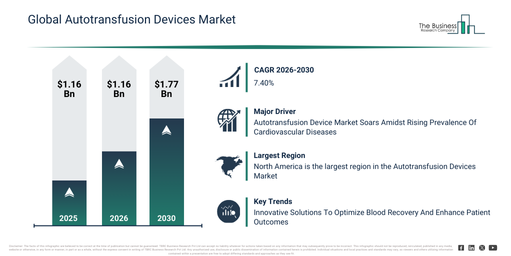
  • Autotransfusion Devices Market Forecast 2026–2035: How to Leverage Market Growth

    Autotransfusion Devices Market Forecast 2026–2035: How to Leverage Market Growth

    Uncover key drivers, emerging technologies, and competitive movements shaping the long-chain polyamide market from 2026–2035 with trusted insights from The Business Research Company

    Across 2026–2030, what is the expected market valuation path of the Autotransfusion Devices Market?

    The autotransfusion devices market has experienced significant expansion recently. Its size is projected to increase from $1.26 billion in 2025 to $1.35 billion in 2026, demonstrating a compound annual growth rate (CAGR) of 7.0%. Historically, this growth has been driven by factors such as a greater number of surgical procedures, increasing worries about inadequate blood supplies, heightened understanding of risks associated with transfusions, the uptake of intraoperative blood recovery methods, and the proliferation of trauma care centers.

    The autotransfusion devices market is anticipated to experience robust expansion over the coming years. Projections indicate it will reach $1.8 billion by 2030, exhibiting a compound annual growth rate (CAGR) of 7.4%. This expansion during the forecast period is driven by a heightened emphasis on economical surgical care, the increasing integration of minimally invasive surgical techniques, the broadening scope of patient blood management initiatives, an escalating need for automated autotransfusion equipment, and ongoing advancements in disposable medical supplies. Key developments foreseen for this period encompass a greater uptake of blood-saving technologies, increased application of autologous transfusion during surgical procedures, a rising preference for sophisticated cell salvage systems, the wider deployment of autotransfusion for emergency situations, and a stronger commitment to patient blood management.

    Access Your Free Sample Report for In-Depth Market Insights:

    https://www.thebusinessresearchcompany.com/sample.aspx?id=10275&type=smp

    Which Drivers Are Supporting The Rise Of The Autotransfusion Devices Market?

    The rising need for blood conservation strategies is anticipated to fuel the expansion of the autotransfusion devices market. Blood conservation during surgical interventions involves efforts to prevent allogeneic blood transfusions both during and post-surgery, aiming to enhance patient health results and safeguard their rights. Within surgical contexts, autotransfusion devices are employed to minimize blood loss and achieve better patient outcomes. For example, a report released in June 2023 by the World Health Organization (WHO), a Switzerland-based intergovernmental body, indicated that 73% of reporting countries, or 125 out of 171, possessed a national blood policy. Furthermore, a total of 66% of reporting countries, or 113 out of 171, have specific laws addressing the safety and quality of blood transfusion; this includes 79% of high-income countries, 63% of middle-income countries, and 39% of low-income countries. Consequently, the heightened demand for blood conservation is propelling the growth of the autotransfusion devices market.

    What Segments Are Identified Within The Structure Of The Autotransfusion Devices Market?

    The autotransfusion devices market covered in this report is segmented –

    1) By Product Type: Autotransfusion Systems, Consumables And Accessories

    2) By Application: Cardiovascular Surgeries, Orthopedic Surgeries, Neurological Surgeries, Other Applications

    3) By End-Use: Hospitals, Trauma Centers & Emergency Departments, Other End Users

    Subsegments:

    1) By Autotransfusion Systems: Surgical Autotransfusion Systems, Emergency Autotransfusion Systems, Continuous Flow Autotransfusion Systems

    2) By Consumables And Accessories: Collection Reservoirs, Blood Filters, Tubing Sets, Pumps, Anticoagulants

    What Trends Are Expected To Impact The Competitive Landscape Of The Autotransfusion Devices Market?

    Key players within the autotransfusion devices market are directing their efforts towards creating technologically advanced solutions, including next-generation intelligent control software designed to boost precision, efficiency, and patient outcomes during blood transfusions. This intelligent control software employs advanced algorithms to optimize blood recovery, processing, and reinfusion in real-time, thereby improving both efficiency and patient safety. As an illustration, Haemonetics Corporation, a US-based provider of blood and plasma supplies and services, disclosed in March 2023 the U.S. Food and Drug Administration (FDA) clearance for its Cell Saver Elite+ Autotransfusion System. This system features next-generation software engineered to maximize red blood cell recovery during surgical procedures involving potential medium to high blood loss. Such an innovative upgrade streamlines autotransfusion operations, diminishes the necessity for allogeneic transfusions, and ultimately enhances patient outcomes.

    Which Major Firms Are Strengthening Their Position In The Autotransfusion Devices Market?

    Major companies operating in the autotransfusion devices market are Haemonetics Corporation, Medtronic plc, LivaNova plc, Terumo Corporation, Fresenius SE & Co. KGaA, B. Braun Melsungen AG, Asahi Kasei Medical Co. Ltd., Getinge AB, Baxter International Inc., Nipro Corporation, Teleflex Incorporated, Stryker Corporation, Braile Biomédica, Redax S.p.A., Gen World Medical Devices Corporation, Beijing ZKSK Technology Co. Ltd., Beijing Jingjing Medical Equipment Co. Ltd., Brightwake Ltd., Dideco, Atrium Medical Technologies

    Access The Complete Report For Deeper Market Insights:

    https://www.thebusinessresearchcompany.com/report/autotransfusion-devices-global-market-report

    Which Region Is Anticipated To See The Fastest Growth In The Autotransfusion Devices Market?

    North America was the largest region in the autotransfusion devices market in 2025. Asia-Pacific is expected to be the fastest-growing region in the global autotransfusion devices market during the forecast period. The regions covered in the autotransfusion devices market report are Asia-Pacific, South East Asia, Western Europe, Eastern Europe, North America, South America, Middle East, Africa.

    Request Your Customized Autotransfusion Devices Market Research Report for Competitive Advantage:

    https://www.thebusinessresearchcompany.com/customise?id=10275&type=smp

    Browse Through More Reports Similar to the Global Autotransfusion Devices Market 2026, By The Business Research Company

    Infusion Pump Global Market Report 2026

    https://www.thebusinessresearchcompany.com/report/infusion-pump-global-market-report

    Perfusion Systems Global Market Report 2026

    https://www.thebusinessresearchcompany.com/report/perfusion-systems-global-market-report

    Drug Infusion Systems Global Market Report 2026

    https://www.thebusinessresearchcompany.com/report/drug-infusion-systems-global-market-report

    Get in touch with us:

    The Business Research Company: https://www.thebusinessresearchcompany.com/

    Americas +1 310-496-7795

    Asia +44 7882 955267 & +91 8897263534

    Europe +44 7882 955267

    Email us at info@tbrc.info

    Follow us on:

    LinkedIn: https://in.linkedin.com/company/the-business-research-company
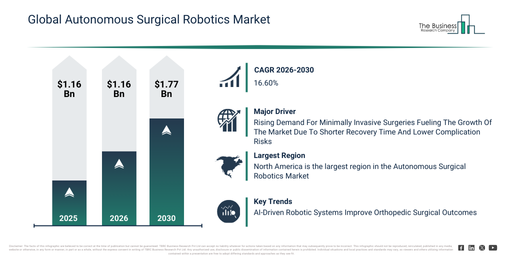
  • Global Autonomous Surgical Robotics Market 2026–2030: Forecast Insights for Business Planning

    Global Autonomous Surgical Robotics Market 2026–2030: Forecast Insights for Business Planning

    Uncover key drivers, emerging technologies, and competitive movements shaping the live commerce market from 2026–2035 with trusted insights from The Business Research Company

    What size range is anticipated for the Autonomous Surgical Robotics Market from 2026 to 2030?

    The autonomous surgical robotics market has seen its size increase considerably in recent years. It is anticipated to expand from $2.61 billion in 2025 to $3.05 billion in 2026, exhibiting a compound annual growth rate (CAGR) of 16.9%. The market’s historical growth can be linked to factors such as a strong reliance on manual surgical procedures, the initial uptake of basic robotic-assisted surgery, restricted AI capabilities within operating rooms, the increasing demand for complex surgeries, and the developing hospital infrastructure in developed regions.

    The autonomous surgical robotics market is anticipated to experience swift growth in the upcoming years. It is projected to reach $5.64 billion by 2030, demonstrating a compound annual growth rate (CAGR) of 16.6%. This expansion during the forecast period can be attributed to advancements in autonomous surgical robotics, the integration of AI and machine learning algorithms, an increase in robotic surgery applications across various specialties, heightened investments in smart operating rooms, and rising healthcare expenditure in emerging economies. Key trends for the forecast period include the increasing adoption of minimally invasive surgical procedures, a growing demand for precision and accuracy in surgeries, the incorporation of real-time data analytics into surgical procedures, the expansion of robotic surgery into developing markets, and a focus on reducing human error and enhancing patient outcomes.

    Access Your Free Sample Report for In-Depth Market Insights:

    https://www.thebusinessresearchcompany.com/sample.aspx?id=27218&type=smp

    What Drivers Are Affecting Demand In The Autonomous Surgical Robotics Market?

    The increasing need for minimally invasive operations is anticipated to drive expansion within the autonomous surgical robotics sector. These procedures involve medical actions carried out via small cuts or apertures, which lessens patient injury and shortens recuperation periods. The appeal of minimally invasive surgical techniques is growing because they provide quicker healing, lower complication risks, less discomfort, and smaller marks, thus attracting patients who prefer faster and safer treatment alternatives. Autonomous surgical robots improve minimally invasive operations by delivering accurate and steady robotic support, thereby decreasing the necessity for extensive cuts. These systems boost surgical precision and patient results, simultaneously cutting down on recovery duration and mitigating surgeon tiredness. As an illustration, in June 2024, the American Society of Plastic Surgeons, a US-based non-profit, reported a 7% increase in minimally invasive procedures in 2023 relative to 2022. Consequently, the growing preference for minimally invasive surgical methods is fueling the expansion of the autonomous surgical robotics market.

    Which Segments Are Gaining Traction In The Autonomous Surgical Robotics Market?

    The autonomous surgical robotics market covered in this report is segmented –

    1) By Type: Interventional Surgical Robots, Assisted Surgical Robots, Minimally Invasive Surgical Robots, Other Types

    2) By Application: Urology Surgery, Orthopedic Surgery, Cardiology Surgery, Neurology Surgery, Other Applications

    3) By End-Users: Hospitals, Ambulatory Surgery Centers, Other End-Users

    Subsegments:

    1) By Interventional Surgical Robots: Catheter-Based Interventional Robots, Endovascular Robots, Interventional Radiology Robots, Percutaneous Robots

    2) By Assisted Surgical Robots: Robotic Arm Systems, Robotic Navigation Systems, Robotic Visualization Platforms, Robotic Positioning Systems

    3) By Minimally Invasive Surgical Robots: Laparoscopic Robots, Thoracoscopic Robots, Robotic Endoscopes, Single-Port Surgical Robots

    4) By Other Types: Orthopedic Surgical Robots, Neurosurgical Robots, Dental Surgical Robots, Microsurgical Robots, Autonomous Surgical Robots

    Which Trends Are Guiding The Evolution Of The Autonomous Surgical Robotics Market?

    Prominent companies in the autonomous surgical robotics market are concentrating on creating sophisticated products, such as fully autonomous guidance systems, to elevate precision, enhance surgical results, and alleviate surgeon exhaustion. Fully autonomous guidance systems are intelligent robotic platforms that assist surgeons by independently performing pre-planned surgical steps with high accuracy. For example, in July 2023, Stryker Corporation, a US-based medical technology company, unveiled the Ortho Q Guidance system. This advanced robotic surgical system is tailored for orthopedic procedures, featuring AI-driven automation that enables it to execute bone resections and implant placements without manual intervention. The system boasts a state-of-the-art camera with improved optical tracking, a dual-PC architecture for immediate data processing, and implant-agnostic software compatible with express knee, precision knee, and versatile hip procedures. Furthermore, this system incorporates real-time intraoperative adjustments and predictive analytics, which ensure optimal alignment and mitigate the risk of human error.

    Who Are The Primary Competitors In The Global Autonomous Surgical Robotics Market?

    Major companies operating in the autonomous surgical robotics market are Johnson & Johnson, Medtronic plc, Stryker Corporation, Intuitive Surgical Inc., Zimmer Biomet Holdings Inc., Smith & Nephew plc, Globus Medical Inc., Renishaw plc, Memic Innovative Surgery Ltd., CMR Surgical Ltd., Noah Medical Inc., THINK Surgical Inc., Medical Microinstruments S.p.A., Distalmotion SA, Moon Surgical SAS, Activ Surgical Inc., Curexo Inc., Virtual Incision Corporation, Andromeda Surgical Inc, Beijing Tuodao Medical Technology Co. Ltd.

    Access The Complete Report For Deeper Market Insights:

    https://www.thebusinessresearchcompany.com/report/autonomous-surgical-robotics-global-market-report

    Which Global Regions Are Shaping The Competitive Landscape Of The Autonomous Surgical Robotics Market?

    North America was the largest region in the autonomous surgical robotics market in 2025. Asia-Pacific is expected to be the fastest-growing region in the forecast period. The regions covered in the autonomous surgical robotics market report are Asia-Pacific, South East Asia, Western Europe, Eastern Europe, North America, South America, Middle East, Africa.

    Request Your Customized Autonomous Surgical Robotics Market Research Report for Competitive Advantage:

    https://www.thebusinessresearchcompany.com/customise?id=27218&type=smp

    Browse Through More Reports Similar to the Global Autonomous Surgical Robotics Market 2026, By The Business Research Company

    Plastic Wire Rolling Machine Global Market Report 2026

    https://www.thebusinessresearchcompany.com/report/plastic-wire-rolling-machine-global-market-report

    Yarn Winding Machine Global Market Report 2026

    https://www.thebusinessresearchcompany.com/report/yarn-winding-machine-global-market-report

    Rolled And Drawn Steel Global Market Report 2026

    https://www.thebusinessresearchcompany.com/report/rolled-and-drawn-steel-global-market-report

    Get in touch with us:

    The Business Research Company: https://www.thebusinessresearchcompany.com/

    Americas +1 310-496-7795

    Asia +44 7882 955267 & +91 8897263534

    Europe +44 7882 955267

    Email us at info@tbrc.info

    Follow us on:

    LinkedIn: https://in.linkedin.com/company/the-business-research-company
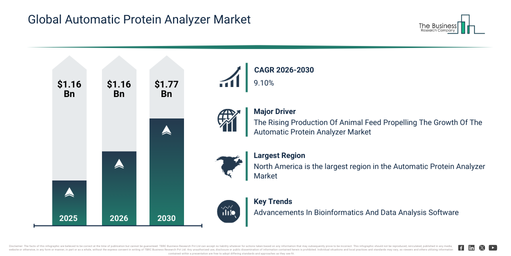
  • Automatic Protein Analyzer Market Outlook 2026–2035: Growth Drivers and Industry Forecast

    Automatic Protein Analyzer Market Outlook 2026–2035: Growth Drivers and Industry Forecast

    Uncover key drivers, emerging technologies, and competitive movements shaping the lithium-ion battery recycling market from 2026–2035 with trusted insights from The Business Research Company

    How is the Automatic Protein Analyzer Market size predicted to change over the forecast window of 2026–2035?

    The automatic protein analyzer market has shown considerable growth in recent years. It is projected to expand from $5.65 billion in 2025 to $6.18 billion in 2026, exhibiting a compound annual growth rate (CAGR) of 9.5%. The historical rise in this market can be attributed to factors such as limited automation in protein analysis, a dependence on manual spectrophotometry and chromatography methods, the expansion of clinical research laboratories, an increase in protein-based diagnostics, and the development of proteomics research.

    The automatic protein analyzer market is anticipated to show robust growth in the upcoming years. Its value is projected to reach $8.76 billion by 2030, driven by a compound annual growth rate (CAGR) of 9.1%. This growth during the forecast period is fueled by the development of advanced mass spectrometry and hplc analyzers, the increasing acceptance of capillary electrophoresis systems, a heightened demand for biomarker identification and ptm analysis, the integration of artificial intelligence (AI) and machine learning for protein data, and the expansion of clinical diagnostics and drug discovery applications. Significant trends expected in this period include a rising need for high-throughput protein analysis, the broadening of proteomics and biomarker research, greater adoption in clinical diagnostics and drug discovery, integration with laboratory automation systems, and a focus on accuracy, sensitivity, and rapid analysis.

    Access Your Free Sample Report for In-Depth Market Insights:

    https://www.thebusinessresearchcompany.com/sample.aspx?id=20500&type=smp

    Which Drivers Are Contributing To The Expansion Of The Automatic Protein Analyzer Market?

    The increasing output of animal feed is anticipated to boost the expansion of the automatic protein analyzer market in the future. Animal feed encompasses all nourishment provided to domesticated creatures, such as livestock and pets, to foster their development, well-being, and yield. The expansion in animal feed production stems from various causes, including a heightened global appetite for goods derived from animals, an increase in livestock rearing, innovations in feed recipes, and the necessity for effective and sustainable feeding methods to support enhanced animal productivity. Automatic protein analyzers improve the efficacy and exactness of feed composition by delivering comprehensive data on protein concentrations, which aids in satisfying the escalating need for premium animal feed and refining overall feed administration. For instance, in March 2024, data from the Agriculture and Horticulture Development Board, a UK-based statutory levy board, indicated that in 2022-2023, poultry feed production amounted to 3,434.1 Mt, and subsequently climbed to 3,567.5 Mt in 2023-2024, showing a 3.9% increase. Consequently, the escalating volume of animal feed production is fueling the advancement of the automatic protein analyzer market.

    What Segment Categories Are Covered In The Automatic Protein Analyzer Market?

    The automatic protein analyzer market covered in this report is segmented –

    1) By Type Of Analyzer: Capillary Electrophoresis Based Analyzers, High-Performance Liquid Chromatography Based Analyzers, Mass Spectrometry-Based Analyzers

    2) By Protein Type: Intact Proteins, Protein Fragments, Post Translational Modifications (PTMs), Biomarkers, Other Protein Types

    3) By Throughput: Low Throughput, Medium Throughput, High Throughput, Ultra High Throughput

    4) By Application: Clinical Diagnostics, Drug Discovery, Proteomics Research, Forensic Analysis, Other Applications

    Subsegments:

    1) By Capillary Electrophoresis Based Analyzers: Capillary Zone Electrophoresis (CZE), Capillary Gel Electrophoresis (CGE), Capillary Isoelectric Focusing (CIEF), Capillary Electrochromatography (CEC)

    2) By High-Performance Liquid Chromatography (HPLC) Based Analyzers: Reversed-Phase HPLC (RP-HPLC), Size-Exclusion Chromatography (SEC), Ion-Exchange Chromatography (IEX), Affinity Chromatography

    3) By Mass Spectrometry Based Analyzers: Matrix-Assisted Laser Desorption Or Ionization Time-Of-Flight (MALDI-TOF), Electrospray Ionization (ESI) Mass Spectrometry, Tandem Mass Spectrometry (MS/MS), Quadrupole Mass Spectrometry

    What Trends Are Projected To Support The Growth Of The Automatic Protein Analyzer Market?

    Major companies engaged in the automatic protein analyzer market are prioritizing the development of advanced products, such as bioinformatics and data analysis software, to gain a competitive edge. Bioinformatics and data analysis software play a vital role in managing and interpreting complex biological data, particularly across fields like proteomics, genomics, and systems biology. For instance, in January 2024, Agilent Technologies Inc., a US-based consumer electronics company, unveiled a new automated parallel capillary electrophoresis system specifically for protein analysis. The Agilent ProteoAnalyzer system significantly boosts efficiency, versatility, and reliability, especially within protein quality control workflows. Automating the separation and data processing, alongside simplifying sample preparation steps, streamlines the entire analysis workflow, thereby improving efficiency and reducing training and related labor costs.

    Which Key Market Players Are Investing In Expansion And Innovation Within The Automatic Protein Analyzer Market?

    Major companies operating in the automatic protein analyzer market are Roche Holding AG, Avantor Inc., Agilent Technologies Inc., PerkinElmer Inc., Beckman Coulter Inc., Horiba Ltd., Biobase, Malvern Panalytical, Agappe Diagnostics Switzerland GmbH, ProteinSimple, Bioneer Corporation, Nanion Technologies GmbH, Genrui Biotech Inc., Rayto Life and Analytical Sciences Co. Ltd., Goldsite Diagnostics Inc., Thermo Fisher Scientific Inc., Bruker Corporation, Shimadzu Corporation, Waters Corporation, Bio-Rad Laboratories Inc., Danaher Corporation, Hitachi High-Tech Corporation, JEOL Ltd., Oxford Instruments plc, Sartorius AG

    Access The Complete Report For Deeper Market Insights:

    https://www.thebusinessresearchcompany.com/report/automatic-protein-analyzer-global-market-report

    Which Regions Are Poised For Strategic Growth In The Automatic Protein Analyzer Market?

    North America was the largest region in the automatic protein analyzer market in 2025. The regions covered in the automatic protein analyzer market report are Asia-Pacific, South East Asia, Western Europe, Eastern Europe, North America, South America, Middle East, Africa.

    Request Your Customized Automatic Protein Analyzer Market Research Report for Competitive Advantage:

    https://www.thebusinessresearchcompany.com/customise?id=20500&type=smp

    Browse Through More Reports Similar to the Global Automatic Protein Analyzer Market 2026, By The Business Research Company

    Therapeutic Proteins Global Market Report 2026

    https://www.thebusinessresearchcompany.com/report/therapeutic-proteins-global-market-report

    Protein Labelings Global Market Report 2026

    https://www.thebusinessresearchcompany.com/report/protein-labelings-global-market-report

    Protein Inhibitor Global Market Report 2026

    https://www.thebusinessresearchcompany.com/report/protein-inhibitor-global-market-report

    Get in touch with us:

    The Business Research Company: https://www.thebusinessresearchcompany.com/

    Americas +1 310-496-7795

    Asia +44 7882 955267 & +91 8897263534

    Europe +44 7882 955267

    Email us at info@tbrc.info

    Follow us on:

    LinkedIn: https://in.linkedin.com/company/the-business-research-company
  • Automatic Pill Dispenser Market 2026–2030: Emerging Trends and Forecast Opportunities

    Automatic Pill Dispenser Market 2026–2030: Emerging Trends and Forecast Opportunities

    Uncover key drivers, emerging technologies, and competitive movements shaping the linen loss prevention analytics market from 2026–2035 with trusted insights from The Business Research Company

    What market expansion outlook does the Automatic Pill Dispenser Market show for the 2026–2030 period?

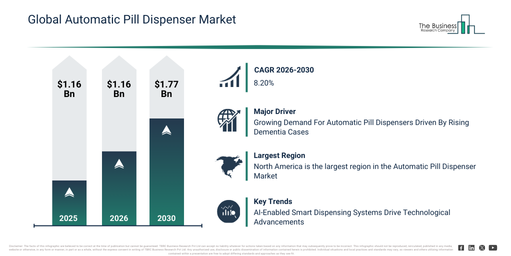
    The automatic pill dispenser market has experienced substantial expansion in recent years. It is projected to grow from $3.12 billion in 2025 to $3.38 billion in 2026, exhibiting a compound annual growth rate (CAGR) of 8.3%. The historical increase in this market can be attributed to several factors, including the rising medication usage among the aging population, the expansion of home healthcare and assisted living services, the early implementation of automatic dispensers in hospital and retail pharmacies, the imperative to reduce medication administration errors and missed doses, and the development of centralized medication dispensing workflows.

    The automatic pill dispenser market size is projected to undergo significant expansion over the next few years, with an anticipated rise to $4.63 billion by 2030, demonstrating a compound annual growth rate (CAGR) of 8.2%. This expected growth throughout the forecast period can be attributed to the increasing prevalence of neurodegenerative disorders and dementia, a growing demand for solutions that promote medication adherence in home settings, an emerging preference for decentralized and mobile pill dispensers, greater utilization for multi-drug and chronic disease therapy management, and the expansion of pharmacy-led patient monitoring and care coordination programs. Prominent trends for the upcoming period include the escalating adoption of automatic pill dispensers in elderly and dementia care, the increasing application of scheduled medication dispensing for chronic disease management, the expansion of automatic dispensers into home healthcare and remote care environments, their growing deployment in nursing homes and assisted living facilities, and a dedicated focus on reducing missed doses and enhancing medication compliance.

    Access Your Free Sample Report for In-Depth Market Insights:

    https://www.thebusinessresearchcompany.com/sample.aspx?id=18233&type=smp

    What Drivers Are Shaping The Development Of The Automatic Pill Dispenser Market?

    The escalating prevalence of dementia cases is projected to boost the automatic pill dispenser market moving forward. Dementia is characterized as a collection of symptoms that significantly impair memory, thinking, and social abilities, interfering substantially with daily functions. Various conditions, including Alzheimer’s disease, vascular issues, and Lewy body dementia, are recognized causes. The rise in dementia cases largely stems from an aging population, heightened awareness, and improved diagnostic practices. Automatic pill dispensers are employed in dementia care to guarantee accurate and timely medication administration, which helps mitigate the risk of missed or incorrect doses. As an illustration, in April 2024, the Alzheimer’s Association reported that approximately 6.9 million Americans aged 65 and older were afflicted with Alzheimer’s dementia, an increase from 6.7 million noted in the 2023 report. Thus, the growing number of dementia cases is a key driver for the automatic pill dispenser market’s expansion.

    Which Segments Are Contributing To The Growth Of The Automatic Pill Dispenser Market?

    The automatic pill dispenser market covered in this report is segmented –

    1) By Type: Centralized Automatic Dispenser, Decentralized Automatic Dispenser, Other Types

    2) By Indication: Physical Disability, Neurodegenerative Disorders And Dementia, Other Indications

    3) By Application: Hospital Pharmacy, Retail Pharmacy, Home Healthcare

    Subsegments:

    1) By Centralized Automatic Dispenser: Hospital-Based Pill Dispensers, Pharmacy-Based Pill Dispensers, Large-Scale Healthcare Facility Dispensers

    2) By Decentralized Automatic Dispenser: Home-Based Pill Dispensers, Nursing Home-Based Pill Dispensers, Point-Of-Care Dispensers (Clinics, Small Healthcare Units)

    3) By Other Types: Mobile Pill Dispensers, Pill Dispensers With Medication Tracking Features, Custom-Designed Dispensers For Specific Applications

    Which Trends Are Influencing The Performance And Direction Of The Automatic Pill Dispenser Market?

    Leading companies operating in the automatic pill dispenser market are increasingly concentrating on AI-powered and cloud-integrated medication management. These encompass smart automated dispensing systems that unify real-time inventory tracking, remote oversight, and automated optimization. Such advanced dispensers utilize AI and connectivity to elevate medication safety, adherence, and operational efficiency. Illustratively, in April 2024, Omnicell, a US-based pharmacy automation company, launched its XT Amplify innovation program for the XT Automated Dispensing System. This program features XTExtend for enhanced interoperability, MedChill for secure temperature-controlled storage with real-time visibility, and SupplyXpert for data-driven inventory optimization, thereby highlighting the market’s pivot towards intelligent, connected dispensing technologies.

    Who Are The Core Companies Influencing Trends In The Automatic Pill Dispenser Market?

    Major companies operating in the automatic pill dispenser market are McKesson Corporation, Omnicell Inc., MedMinder Systems Inc, Capsa Healthcare, Hero Health Inc., Swisslog Healthcare, ARxIUM Inc., Aesynt Inc., PillDrill Inc., Talyst LLC, Yuyama Co Ltd, InstyMeds Corporation, E-pill Medication Reminders, MedaCube, MedReady Inc., PharmaSystems Inc., Tunstall Healthcare Group Ltd, Koninklijke Philips N.V., CareRX Inc., RxSafe Inc.

    Access The Complete Report For Deeper Market Insights:

    https://www.thebusinessresearchcompany.com/report/automatic-pill-dispenser-global-market-report

    Which Regions Are Projected To Dominate The Automatic Pill Dispenser Market In The Coming Years?

    North America was the largest region in the automatic pill dispenser market in 2025. Asia-Pacific is expected to be the fastest-growing region in the forecast period. The regions covered in the automatic pill dispenser market report are Asia-Pacific, South East Asia, Western Europe, Eastern Europe, North America, South America, Middle East, Africa.

    Request Your Customized Automatic Pill Dispenser Market Research Report for Competitive Advantage:

    https://www.thebusinessresearchcompany.com/customise?id=18233&type=smp

    Browse Through More Reports Similar to the Global Automatic Pill Dispenser Market 2026, By The Business Research Company

    Dispensing Pharmacy Packaging Machine Global Market Report 2026

    https://www.thebusinessresearchcompany.com/report/dispensing-pharmacy-packaging-machine-global-market-report

    Central Fill Pharmacy Automation Global Market Report 2026

    https://www.thebusinessresearchcompany.com/report/central-fill-pharmacy-automation-global-market-report

    Electronic Soap Dispenser Global Market Report 2026

    https://www.thebusinessresearchcompany.com/report/electronic-soap-dispenser-global-market-report

    Get in touch with us:

    The Business Research Company: https://www.thebusinessresearchcompany.com/

    Americas +1 310-496-7795

    Asia +44 7882 955267 & +91 8897263534

    Europe +44 7882 955267

    Email us at info@tbrc.info

    Follow us on:

    LinkedIn: https://in.linkedin.com/company/the-business-research-company
  • Global Automatic Immunohistochemical Staining Instrument Market Forecast 2026–2035: Long-Term Growth Insights

    Global Automatic Immunohistochemical Staining Instrument Market Forecast 2026–2035: Long-Term Growth Insights

    Uncover key drivers, emerging technologies, and competitive movements shaping the line insulators market from 2026–2035 with trusted insights from The Business Research Company

    What level of growth is expected in the Automatic Immunohistochemical Staining Instrument Market between 2026 and 2030?

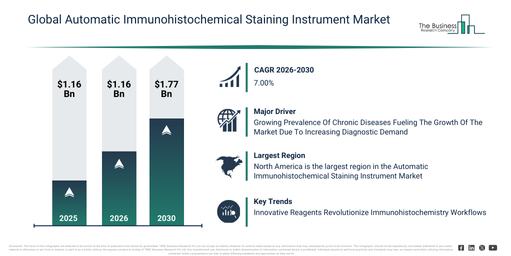
    The market size for automatic immunohistochemical staining instruments has demonstrated strong expansion in recent years. This market is set to increase from $1.3 billion in 2025 to $1.4 billion in 2026, exhibiting a compound annual growth rate (CAGR) of 7.1%. Historically, this growth can be linked to several factors, including increasing cancer diagnostic testing volumes, the broadening of pathology laboratory infrastructure, a greater reliance on immunohistochemistry for disease diagnosis, the expanding availability of automated laboratory instruments, and a rising demand for consistent diagnostic results.

    The automatic immunohistochemical staining instrument market is projected to experience substantial growth over the coming years. This market is set to reach a value of $1.83 billion by 2030, exhibiting a compound annual growth rate (CAGR) of 7.0%. Several factors are driving this expansion during the forecast period, including the increased embrace of precision oncology diagnostics, rising investments in digital pathology platforms, the escalating need for laboratory automation, the broadened development of companion diagnostics, and a heightened emphasis on personalized medicine strategies. Key trends anticipated during this period encompass the growing implementation of fully automated IHC staining systems, a surge in demand for high-throughput diagnostic processes, the increasing incorporation of digital pathology compatibility, the spread of standardized and reproducible staining methods, and an intensified focus on optimizing workflow efficiency within laboratories.

    Access Your Free Sample Report for In-Depth Market Insights:

    https://www.thebusinessresearchcompany.com/sample.aspx?id=24164&type=smp

    Which Drivers Are Expected To Impact The Automatic Immunohistochemical Staining Instrument Market During The Forecast Period?

    The rising incidence of chronic illnesses is anticipated to fuel the expansion of the automatic immunohistochemical staining instrument market. These conditions are defined as persistent health issues that usually advance gradually and necessitate continuous care, encompassing diabetes, heart disease, hypertension, arthritis, chronic respiratory diseases, cancer, and obesity. This surge in chronic disease cases stems from evolving lifestyles, poor nutritional choices, and insufficient physical movement, all of which lead to enduring health issues. Automatic immunohistochemical staining instruments improve diagnostic precision through accurate and efficient tissue examination, rendering them crucial for identifying chronic ailments. These instruments streamline procedures by offering rapid, automated staining, thereby boosting diagnostic reliability and facilitating earlier discovery of diseases. For example, data from June 2024, released by the National Health Service, a UK government body, indicated that 3,615,330 people registered with a general practitioner (GP) were found to have non-diabetic hyperglycemia or pre-diabetes in 2023. This represented an 18% rise from the 3,065,825 cases recorded in 2022. Consequently, the expanding occurrence of chronic conditions is stimulating the advancement of the automatic immunohistochemical staining instrument market.

    How Is The Automatic Immunohistochemical Staining Instrument Market Divided Into Segments?

    The automatic immunohistochemical staining instrument market covered in this report is segmented –

    1) By Product Type: Fully Automated Stainers, Semi-Automated Stainers, Manual Stainers

    2) By Technology: Slide Staining, Tissue Staining, Fluorescent Staining

    3) By Consumables: Antibodies, Staining Kits, Slides, Coverslips

    4) By Application: Oncology, Cardiovascular Diseases, Neurological Disorders, Infectious Diseases

    5) By End-User: Hospitals, Diagnostic Laboratories, Academic Institutes, Research Laboratories

    Subsegments:

    1) By Fully Automated Stainers: Compact Automated Stainers, High-Throughput Stainers, Benchtop Automated Stainers

    2) By Semi-Automated Stainers: Programmable Stainers, Timer-Based Stainers, Hybrid Stainers

    3) By Manual Stainers: Dip-Type Manual Stainers, Rotary Manual Stainers, Handheld Staining Kits

    What Long-Term Trends Are Expected To Shape The Future Of The Automatic Immunohistochemical Staining Instrument Market?

    Leading firms within the automatic immunohistochemical staining instrument market are concentrating efforts on creating novel answers, such as antibody alternative reagents, aiming to boost tissue analysis’s accuracy, efficiency, and versatility while simultaneously decreasing expenses and bolstering consistency. An antibody alternative reagent is defined as a molecule not derived from antibodies, for instance, an aptamer, affirmer, or antibody mimetic, capable of precise attachment to target antigens, and which serves as a substitute for traditional antibodies in investigative, diagnostic, or treatment contexts. As an illustration, in March 2023, Aptamer Group plc, a UK-based biotechnology company, introduced Optimer-Fc, a novel reagent designed for use in automated immunohistochemistry (IHC) workflows. Optimer-Fc provides a groundbreaking non-antibody option for immunohistochemistry, broadening the scope of target identification and elevating the specificity of assays. It seamlessly incorporates into automated immunohistochemistry (IHC) workflows for precise identification of established and novel biomarkers.

    Which Major Industry Participants Are Leading The Automatic Immunohistochemical Staining Instrument Market Growth?

    Major companies operating in the automatic immunohistochemical staining instrument market are F. Hoffmann-La Roche AG, Thermo Fisher Scientific, Agilent Technologies, Leica Biosystems, Sakura Finetek, Olympus Corporation, Biocare Medical, Celnovte Biotechnology Co. Ltd., BioGenex Laboratories, Diagnostic BioSystems, ADS Biotec, Fuzhou Maixin Biotech Co. Ltd., Shenzhen Dartmon Biotechnology Co. Ltd., Ventana Medical Systems, Dako (Agilent Pathology), Nichirei Biosciences Inc., Abcam plc, Bio-Rad Laboratories, Milestone Medical, Medite GmbH

    Access The Complete Report For Deeper Market Insights:

    https://www.thebusinessresearchcompany.com/report/automatic-immunohistochemical-staining-instrument-global-market-report

    Which Region Is Expected To Experience The Fastest Growth In The Automatic Immunohistochemical Staining Instrument Market?

    North America was the largest region in the automatic immunohistochemical staining instrument market in 2025. Asia-Pacific is expected to be the fastest-growing region in the forecast period. The regions covered in the automatic immunohistochemical staining instrument market report are Asia-Pacific, South East Asia, Western Europe, Eastern Europe, North America, South America, Middle East, Africa.

    Request Your Customized Automatic Immunohistochemical Staining Instrument Market Research Report for Competitive Advantage:

    https://www.thebusinessresearchcompany.com/customise?id=24164&type=smp

    Browse Through More Reports Similar to the Global Automatic Immunohistochemical Staining Instrument Market 2026, By The Business Research Company

    Immunohematology Global Market Report 2026

    https://www.thebusinessresearchcompany.com/report/immunohematology-global-market-report

    Immunofluorescence Assay Global Market Report 2026

    https://www.thebusinessresearchcompany.com/report/immunofluorescence-assay-global-market-report

    Immunohistochemistry Ihc Global Market Report 2026

    https://www.thebusinessresearchcompany.com/report/immunohistochemistry-ihc-global-market-report

    Get in touch with us:

    The Business Research Company: https://www.thebusinessresearchcompany.com/

    Americas +1 310-496-7795

    Asia +44 7882 955267 & +91 8897263534

    Europe +44 7882 955267

    Email us at info@tbrc.info

    Follow us on:

    LinkedIn: https://in.linkedin.com/company/the-business-research-company