Category: Medical Equipment

  • Global Home Sleep Apnea Testing Devices Industry Trends: Where the Market Is Headed by 2029

    Global Home Sleep Apnea Testing Devices Industry Trends: Where the Market Is Headed by 2029

    Unlock Global Insights – Save 20% on Market Reports with Code ONLINE20

    How Is The Home Sleep Apnea Testing Devices Market Size Likely To Evolve From 2025 Through 2034?

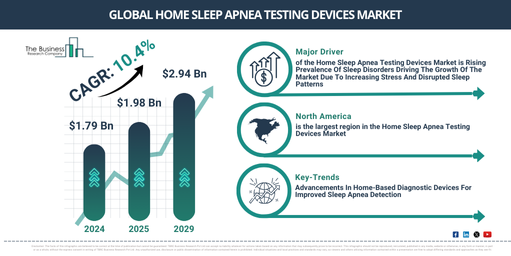
    The home sleep apnea testing devices market size has seen rapid growth in recent years. It is projected to increase from $1.79 billion in 2024 to $1.98 billion in 2025, exhibiting a compound annual growth rate (CAGR) of 10.8%. This historic growth can be attributed to the rising prevalence of sleep apnea, enhanced awareness and diagnosis rates, an escalating incidence of comorbid conditions, an increasing number of sleep clinics and diagnostic centers, and a growing patient preference for non-invasive testing.

    The home sleep apnea testing devices market is projected to experience swift expansion over the coming years. Its valuation is anticipated to reach $2.94 billion by 2029, demonstrating a compound annual growth rate (CAGR) of 10.4%. This anticipated growth during the forecast period stems from factors such as the expanding embrace of telemedicine, heightened understanding among primary care physicians, an increasing emphasis on individualized sleep therapy, greater investment in sleep research, and the growing demographic of aging populations. Key developments expected within this period involve innovations in portable sleep monitoring devices, technological progress in cloud-based data management, advancements in wireless and wearable technologies, integration with telemedicine platforms, and the evolution of multi-parameter monitoring.

    Unlock Your Free Sample Report for Exclusive Market Data:

    https://www.thebusinessresearchcompany.com/sample.aspx?id=27308&type=smp

    Which Drivers Are Shaping The Home Sleep Apnea Testing Devices Industry’s Market Share?

    The rising occurrence of sleep disorders is anticipated to drive the expansion of the home sleep apnea testing devices market in the coming years. Sleep disorders are health conditions that disrupt normal sleep cycles, influencing sleep quality, duration, or timing, which can result in daytime impairments. The increase in sleep disorders is linked to elevated stress and anxiety levels, as these factors hinder the body’s capacity to relax and maintain healthy sleep patterns. Home sleep apnea testing (HSAT) devices help diagnose sleep disorders by monitoring breathing patterns, airflow, and oxygen saturation during sleep in a home environment, thereby enabling the early detection and management of conditions such as obstructive sleep apnea. For instance, in November 2023, the National Health Service (NHS), a government agency in the UK, reported that 64.9% of individuals aged 17–23 experienced sleep problems on three or more nights in the previous week, a rate higher than that recorded in children aged 8–16. The prevalence was considerably greater in young women (74.7%) compared to young men (55.7%). Therefore, the growing incidence of sleep disorders is fueling the growth of the home sleep apnea testing devices market.

    What Are The Primary Types Of Segments Analyzed In The Home Sleep Apnea Testing Devices Market?

    The home sleep apnea testing devices market covered in this report is segmented

    1) By Device Type: Portable Monitoring Devices, Home Sleep Tests (HST), Wearable Sleep Trackers, Monitoring And Diagnostic Equipment

    2) By Technology: Oximetry, Actigraphy, Polysomnography, Other Technologies

    3) By Patient Age Group: Adults (Aged 18-64), Seniors (Aged 65 And Above), Pediatric Patients (Aged 0-17), Middle-Aged Adults (Aged 45-64)

    4) By Distribution Channel: Direct Sales, Online Sales, Retail Pharmacies, Health Care Institutions

    5) By End User: Individuals (Home Users), Healthcare Providers, Diagnostic Laboratories, Sleep Centers

    Subsegments:

    1) By Portable Monitoring Devices: Type III Monitors, Wireless Portable Monitors, Type IV Monitors

    2) By Home Sleep Tests (HST): Unattended Home Sleep Test Devices, Self-Applied Home Sleep Test Kits

    3) By Wearable Sleep Trackers: Wrist-Worn Devices, Headbands, Ring-Based Trackers

    4) By Monitoring And Diagnostic Equipment: Oximeters, Nasal Flow Sensors, Respiratory Effort Belts

    What Are The Major Trends Driving The Growth Of The Home Sleep Apnea Testing Devices Market?

    Leading companies in the home sleep apnea testing devices market are prioritizing the development of technological advancements, such as home-based diagnostic devices. This strategic focus aims to improve patient convenience, increase diagnostic accuracy, and facilitate the early detection and management of sleep apnea. A home-based diagnostic device refers to a portable medical instrument that allows individuals to monitor and record crucial physiological indicators, including airflow, oxygen saturation, and breathing patterns, within their personal home environment to diagnose conditions like sleep apnea. For instance, in April 2025, ResMed Inc., a US-based medical device company, introduced NightOwl, a compact, wireless solution designed for sleep apnea diagnosis. This product features a precise, disposable fingertip sensor made for home use, which gathers up to 10 nights of data to capture sleep variability and improve diagnostic outcomes. Its key benefits include straightforward self-application, the absence of bulky equipment, minimal sleep disruption, automatically scored results available to clinicians through a cloud platform, and complete disposability for user convenience and infection control.

    Who Are The Core Companies Influencing The Home Sleep Apnea Testing Devices Market Landscape?

    Major companies operating in the home sleep apnea testing devices market are Koninklijke Philips N.V., ZOLL Itamar, ResMed Inc., Nihon Kohden Corporation, Contec Medical Systems Co. Ltd., Bittium Corporation, Cadwell Industries Inc., BMC Medical Co. Ltd, SOMNOmedics AG., Compumedics Limited, Allengers Medical Systems Limited, Advanced Brain Monitoring Inc., BetterNight, Acurable Limited, ApneaMed, Belun Technology Company Limited, Braebon Medical Corporation, DormoTech Medical GmbH, Nox Medical ehf., Onera Health B.V., and PranaQ Ltd.

    Download The Full Report For Exclusive Market Findings:

    https://www.thebusinessresearchcompany.com/report/home-sleep-apnea-testing-devices-global-market-report

    Which Region Is Projected To Lead The Home Sleep Apnea Testing Devices Market During The Forecast Period?

    North America was the largest region in the home sleep apnea testing devices market in 2024. Asia-Pacific is expected to be the fastest-growing region in the forecast period. The regions covered in the home sleep apnea testing devices market report are Asia-Pacific, Western Europe, Eastern Europe, North America, South America, Middle East, Africa.

    Request A Customized Version Of The Home Sleep Apnea Testing Devices Market Report:

    https://www.thebusinessresearchcompany.com/customise?id=27308&type=smp

    Browse Through More Reports Similar to the Global Home Sleep Apnea Testing Devices Market 2025, By The Business Research Company

    Modular Flooring Global Market Report 2025

    https://www.thebusinessresearchcompany.com/report/modular-flooring-global-market-report

    Hard Surface Flooring Global Market Report 2025

    https://www.thebusinessresearchcompany.com/report/hard-surface-flooring-global-market-report

    Industrial Flooring Global Market Report 2025

    https://www.thebusinessresearchcompany.com/report/industrial-flooring-global-market-report

    Get in touch with us:

    The Business Research Company: https://www.thebusinessresearchcompany.com/

    Americas +1 310-496-7795

    Asia +44 7882 955267 & +91 8897263534

    Europe +44 7882 955267

    Email us at info@tbrc.info

    Follow us on:

    LinkedIn: https://in.linkedin.com/company/the-business-research-company

    YouTube: https://www.youtube.com/channel/UC24_fI0rV8cR5DxlCpgmyFQ

    Global Market Model: https://www.thebusinessresearchcompany.com/global-market-model
  • Hollow-Fiber Bioreactors Industry Forecast to Hit $2.14 Billion by 2029 With a Strong 9.3% CAGR

    Hollow-Fiber Bioreactors Industry Forecast to Hit $2.14 Billion by 2029 With a Strong 9.3% CAGR

    Unlock Global Insights – Save 20% on Market Reports with Code ONLINE20

    What Are The Growth Projections For The Hollow-Fiber Bioreactors Market Size During 2025–2029?

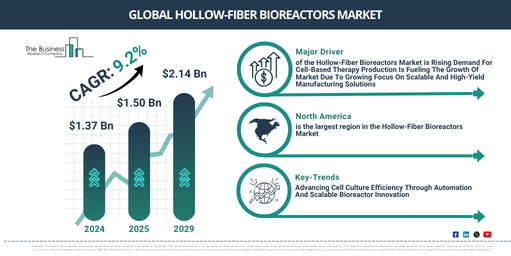
    The hollow-fiber bioreactors market has demonstrated strong expansion over recent years. It is projected to increase from $1.37 billion in 2024 to $1.50 billion in 2025, achieving a compound annual growth rate (CAGR) of 9.6%. Historically, this growth has been driven by the escalating production of monoclonal antibodies, a surge in vaccine manufacturing requirements, increased research funding directed towards cell culture, advancements in ultrafiltration membrane capabilities, and the broader implementation of single-use bioprocessing platforms.

    The market for hollow-fiber bioreactors is projected to experience robust expansion over the coming years. This market is anticipated to reach a value of $2.14 billion by 2029, exhibiting a compound annual growth rate (CAGR) of 9.2%. Factors driving this growth during the forecast period include the increasing number of approved cell-based therapies, the expansion of the regenerative medicine sector, the rising incidence of chronic and degenerative illnesses, a transition towards continuous manufacturing methods, and an escalating need for personalized medicine. Key trends anticipated in this period encompass the creation of nano-structured polymer composite membranes, the incorporation of real-time sensors and automation, the utilization of artificial intelligence to optimize processes, progress in surface functionalization techniques, and investigations into biodegradable hollow-fiber materials.

    Unlock Your Free Sample Report for Exclusive Market Data:

    https://www.thebusinessresearchcompany.com/sample.aspx?id=27307&type=smp

    What Are The Drivers Pushing New Developments In The Hollow-Fiber Bioreactors Market?

    The anticipated expansion of the hollow-fiber bioreactors market is linked to the increasing need for cell-based therapy production. This production involves creating therapeutic goods from living cells to address or manage various conditions such as cancers, autoimmune disorders, and genetic illnesses. The escalating demand for cell-based therapy production stems from a growing requirement for scalable and consistent manufacturing platforms capable of handling high cell densities without compromising the quality of the product. Hollow-fiber bioreactors facilitate cell-based therapy production by providing a closed system with a large surface area, allowing for efficient expansion and harvesting of therapeutic cells under regulated conditions. For instance, in December 2024, the International Federation of Pharmaceutical Manufacturers and Associations, a Switzerland-based non-profit organization, reported the introduction of six first-in-class cell and gene treatments in 2023, representing a 50% increase from the three introduced in 2022. Consequently, the rising demand for cell-based therapy production is a key driver for the growth of the hollow-fiber bioreactors market. The increasing prevalence of personalized medicine is expected to drive the growth of the hollow-fiber bioreactors market in the coming years. Personalized medicine describes a healthcare methodology that customizes treatment and health decisions to align with the unique characteristics, requirements, and genetic profile of each patient. The rise of personalized medicine is attributed to the increasing adoption of advanced diagnostic technologies that precisely identify disease mechanisms specific to patients, as healthcare providers strive to enhance treatment outcomes and minimize trial-and-error in selecting therapies. Hollow-fiber bioreactors contribute to personalized medicine by enabling scalable, high-quality cell culture production, which supports the development of therapies tailored to individual patients. For instance, in February 2024, according to the Personalized Medicine Coalition, a US-based hospital and health care organization, the Food and Drug Administration (FDA), a US-based federal agency, approved 16 new personalized treatments for rare disease patients in 2023, an increase from six in 2022. Therefore, the growing prevalence of personalized medicine is a significant factor driving the expansion of the hollow-fiber bioreactors market.

    Which Key Segments Fueling The Hollow-Fiber Bioreactors Market?

    The hollow-fiber bioreactors market covered in this report is segmented

    1) By Product Type: Single-Use Hollow-Fiber Bioreactors, Reusable Hollow-Fiber Bioreactors

    2) By Application: Cell Culture, Tissue Engineering, Biopharmaceutical Production, Wastewater Treatment, Other Applications

    3) By End-User: Pharmaceutical And Biotechnology Companies, Research Institutes, Contract Research Organizations, Other End-Users

    Subsegments:

    1) By Single-Use Hollow-Fiber Bioreactors: Pre-Assembled Single-Use Hollow-Fiber Bioreactors, Modular Single-Use Hollow-Fiber Bioreactors, Customizable Single-Use Hollow-Fiber Bioreactors, High-Throughput Single-Use Hollow-Fiber Bioreactors, Automated Single-Use Hollow-Fiber Bioreactors

    2) By Reusable Hollow-Fiber Bioreactors: Fixed-Bed Reusable Hollow-Fiber Bioreactors, Modular Reusable Hollow-Fiber Bioreactors, High-Capacity Reusable Hollow-Fiber Bioreactors, Multipurpose Reusable Hollow-Fiber Bioreactors, Clean-In-Place Reusable Hollow-Fiber Bioreactors

    What Are The Major Trends Driving The Growth Of The Hollow-Fiber Bioreactors Market?

    Leading firms within the hollow-fiber bioreactors market are concentrating on creating sophisticated setups, such as automated dual-compartment systems. This development aims to boost the effectiveness and expandability of cell cultures, allowing researchers and producers to fine-tune cell proliferation and simplify bioprocessing for cutting-edge treatments. An automated dual-compartment system signifies its capacity to govern cell culture autonomously and separately, both within the hollow fibers and the adjacent environment for nutrient exchange, thereby maximizing cell growth and operational effectiveness. As an example, in September 2022, Terumo Blood and Cell Technologies Inc., an American medical technology corporation, introduced its Quantum Flex Cell Expansion System. This product employs a continuous perfusion-based, semipermeable hollow-fiber membrane to establish a self-contained and automated environment for cell culture. It provides two different bioreactor sizes, ensuring adaptability and expandability to attain the necessary cell counts. Its integrated Cell Processing Application software facilitates fleet administration, simplifies the scaling of processes, and guarantees adherence to good manufacturing practices. The design of this system aims to advance both autologous and allogeneic applications, alongside the creation of viral vectors and exosomes, by incorporating automation at an earlier stage and minimizing the necessity for bridging studies and technology transfers.

    Which Major Industry Participants Are Leading The Hollow-Fiber Bioreactors Market Growth?

    Major companies operating in the hollow-fiber bioreactors market are General Electric Company, Veolia Environnement S.A., Thermo Fisher Scientific Inc., Mitsubishi Chemical Corporation, Kubota Corporation, DuPont de Nemours Inc., MANN+HUMMEL GmbH, Alfa Laval AB, Sartorius AG, Repligen Corporation, Shenzhen Dreamemway Environmental Products Co. Ltd., FiberCell Systems Inc., Reynolds Culligan Water, Shanghai MegaVision Membrane Engineering & Technology Co. Ltd., Memfill Tech Private Limited, FibraCast Inc., iMemFlo Membrane Technology Co. Ltd., Guangdong Skyview Environmental Science and Technology Co. Ltd., PHILOS Co. Ltd., and Blufox Engineering Pvt. Ltd.

    Download The Full Report For Exclusive Market Findings:

    https://www.thebusinessresearchcompany.com/report/hollow-fiber-bioreactors-global-market-report

    What Are The Key Regional Factors Influencing The Hollow-Fiber Bioreactors Market Growth?

    North America was the largest region in the hollow-fiber bioreactors market in 2024. Asia-Pacific is expected to be the fastest-growing region in the forecast period. The regions covered in the hollow-fiber bioreactors market report are Asia-Pacific, Western Europe, Eastern Europe, North America, South America, Middle East, Africa.

    Request A Customized Version Of The Hollow-Fiber Bioreactors Market Report:

    https://www.thebusinessresearchcompany.com/customise?id=27307&type=smp

    Browse Through More Reports Similar to the Global Hollow-Fiber Bioreactors Market 2025, By The Business Research Company

    Property And Casualty Insurance Global Market Report 2025

    https://www.thebusinessresearchcompany.com/report/property-and-casualty-insurance-global-market-report

    Mortgage Brokerage Services Global Market Report 2025

    https://www.thebusinessresearchcompany.com/report/mortgage-brokerage-services-global-market-report

    Mortgage Lender Global Market Report 2025

    https://www.thebusinessresearchcompany.com/report/mortgage-lender-global-market-report

    Get in touch with us:

    The Business Research Company: https://www.thebusinessresearchcompany.com/

    Americas +1 310-496-7795

    Asia +44 7882 955267 & +91 8897263534

    Europe +44 7882 955267

    Email us at info@tbrc.info

    Follow us on:

    LinkedIn: https://in.linkedin.com/company/the-business-research-company

    YouTube: https://www.youtube.com/channel/UC24_fI0rV8cR5DxlCpgmyFQ

    Global Market Model: https://www.thebusinessresearchcompany.com/global-market-model
  • High Speed Laser Ablation System Market to Reach $2.63 Billion by 2029, Growing at a CAGR of 8.7%

    High Speed Laser Ablation System Market to Reach $2.63 Billion by 2029, Growing at a CAGR of 8.7%

    Unlock Global Insights – Save 20% on Market Reports with Code ONLINE20

    What Is The Global Market Value Of The High Speed Laser Ablation System Industry In 2025?

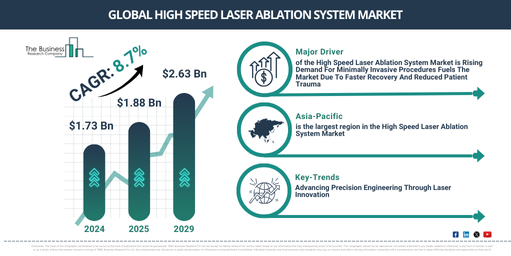
    The high speed laser ablation system market has demonstrated substantial expansion in its size over recent years. Its value is projected to climb from $1.73 billion in 2024 to $1.88 billion in 2025, representing a compound annual growth rate (CAGR) of 9.1%. The historical rise in this market can be ascribed to the increasing embrace of precision micromachining, heightened investments in semiconductor fabrication facilities, a growing need for rapid prototyping, escalating environmental concerns, and an increasing requirement for miniaturized electronic components.

    The high speed laser ablation system market is anticipated to experience robust expansion in the coming years. This market is projected to reach a valuation of $2.63 billion by 2029, demonstrating a compound annual growth rate (CAGR) of 8.7%. Key factors driving this growth during the forecast period include greater investments in medical device innovation, an escalating shift towards smart manufacturing and Industry 4.0 principles, enhanced government funding for scientific investigations, a burgeoning need for cleanroom-suitable tools, and expanded worldwide investment in quantum and photonic technologies. Significant trends expected within the forecast timeframe encompass improvements in ultrafast laser technologies, progress in beam-shaping and delivery mechanisms, enhancements in fiber laser systems, a technology-led transition towards contactless production methods, and breakthroughs in femtosecond laser micromachining.

    Unlock Your Free Sample Report for Exclusive Market Data:

    https://www.thebusinessresearchcompany.com/sample.aspx?id=27306&type=smp

    What Are The Emerging Market Drivers Creating New Opportunities In The High Speed Laser Ablation System Industry?

    Future growth in the high-speed laser ablation system market is anticipated to be propelled by the rising demand for minimally invasive procedures. These medical techniques utilize small cuts and specialized instruments to lessen tissue harm, discomfort, and recuperation periods. The proliferation of minimally invasive procedures stems from their ability to offer quicker patient recovery, diminished pain, and reduced hospital durations. Within minimally invasive procedures, high-speed laser ablation systems are instrumental, as they precisely eliminate or vaporize specific tissues while causing minimal harm to adjacent regions, thereby facilitating accurate treatment, smaller incisions, and accelerated healing. An illustrative example comes from June 2024, when the American Society of Plastic Surgeons, a US-based professional body, reported that the total number of minimally invasive procedures conducted in 2023 was nearly 25.4 million, marking a 7% rise from 2022. Consequently, the growing need for minimally invasive procedures is fueling the expansion of the high-speed laser ablation system market.

    How Is The High Speed Laser Ablation System Market Classified Into Different Segments?

    The high speed laser ablation system market covered in this report is segmented

    1) By Laser Type: Ultrafast, Nanosecond, Picosecond, Femtosecond

    2) By Application: Industrial Manufacturing, Medical And Healthcare, Scientific Research, Semiconductor And Electronics

    3) By End-Use Industry: Automotive, Aerospace And Defense, Electronics And Semiconductor, Medical Devices, Research Institutions, Energy And Power, Other Industries

    Subsegments:

    1) By Ultrafast Lasers: Mode-Locked Lasers, Fiber Lasers, Solid-State Lasers

    2) By Nanosecond Lasers: Q-Switched Nd:Yag Lasers, Excimer Lasers, Diode-Pumped Solid-State Lasers

    3) By Picosecond Lasers: Picosecond Fiber Lasers, Solid-State Picosecond Lasers, Mode-Locked Semiconductor Lasers

    4) By Femtosecond Lasers: Ti:Sapphire Lasers, Femtosecond Fiber Lasers, Diode-Pumped Femtosecond Lasers

    What Trends Are Expected To Drive The High Speed Laser Ablation System Market?

    Leading companies in the high-speed laser ablation system market are prioritizing the creation of advanced technologies, including micromachining and 3D surface processing solutions. These innovations aim to achieve greater accuracy, minimize material waste, and facilitate the production of future microscale devices. Micromachining and 3D surface processing solutions are defined as laser-based techniques employed to precisely alter or remove material at micro-scale levels, enabling the creation of intricate, high-precision components. For example, in June 2024, GF Machining Solutions GmbH, a Swiss machine industry firm, introduced its groundbreaking LASER S 500 (U) to provide exceptionally precise texturing and engraving for intricate 3D surfaces. This advanced laser micromachining system is tailored for high-precision 3D surface processing in sectors such as electronics, medical technology, and watchmaking. It achieves unparalleled accuracy (±5 µm), exceptionally fine surface finishes (Ra 0.1 µm), and high-speed productivity, supported by thermoregulated components, high-dynamics motors, and a high-speed 3D scanner. Featuring extensive configurability with three- or five-axis options and nanosecond or femtosecond laser sources, the system is adept at micro-shaping, engraving, texturing, and structuring on both hard and brittle materials like silicon carbide, alumina, and tungsten carbide, as well as softer metals.

    Who Are The Prominent Global Companies Shaping The High Speed Laser Ablation System Market?

    Major companies operating in the high speed laser ablation system market are Hitachi Ltd., Thermo Fisher Scientific Inc., KEYENCE Corporation, Teledyne Technologies Incorporated, Lumentum Holdings Inc., IPG Photonics Corporation, Resonetics Inc., Ekspla, Laserax Inc., Preco LLC., LasX Industries Ltd., SCHWIND eye-tech-solutions GmbH, Pantec Biosolutions AG., Applied Spectra Inc., Intelligent Imaging Innovations Inc., Jenoptik AG., JPT Laser, Clark-MXR Inc., PolarOnyx Inc., Quantum Composers Inc., Suresh Indu Lasers Pvt. Ltd., Laser Photonics LLC.

    Download The Full Report For Exclusive Market Findings:

    https://www.thebusinessresearchcompany.com/report/high-speed-laser-ablation-system-global-market-report

    How Do Regional Market Performances Compare Within The High Speed Laser Ablation System Industry?

    Asia-Pacific was the largest region in the high speed laser ablation system market in 2024. The regions covered in the high speed laser ablation system market report are Asia-Pacific, Western Europe, Eastern Europe, North America, South America, Middle East, Africa.

    Request A Customized Version Of The High Speed Laser Ablation System Market Report:

    https://www.thebusinessresearchcompany.com/customise?id=27306&type=smp

    Browse Through More Reports Similar to the Global High Speed Laser Ablation System Market 2025, By The Business Research Company

    Mortgage Servicing Software Global Market Report 2025

    https://www.thebusinessresearchcompany.com/report/mortgage-servicing-software-global-market-report

    Mortgage Lender Global Market Report 2025

    https://www.thebusinessresearchcompany.com/report/mortgage-lender-global-market-report

    Mortgage Brokerage Services Global Market Report 2025

    https://www.thebusinessresearchcompany.com/report/mortgage-brokerage-services-global-market-report

    Get in touch with us:

    The Business Research Company: https://www.thebusinessresearchcompany.com/

    Americas +1 310-496-7795

    Asia +44 7882 955267 & +91 8897263534

    Europe +44 7882 955267

    Email us at info@tbrc.info

    Follow us on:

    LinkedIn: https://in.linkedin.com/company/the-business-research-company

    YouTube: https://www.youtube.com/channel/UC24_fI0rV8cR5DxlCpgmyFQ

    Global Market Model: https://www.thebusinessresearchcompany.com/global-market-model
  • Global Heavy Payload Robotic Arm Market Projected to Expand at 7.5% CAGR by 2029

    Global Heavy Payload Robotic Arm Market Projected to Expand at 7.5% CAGR by 2029

    Unlock Global Insights – Save 20% on Market Reports with Code ONLINE20

    How Much Was The Heavy Payload Robotic Arm Market Worth In 2025, And What Is Its Anticipated Value By 2029?

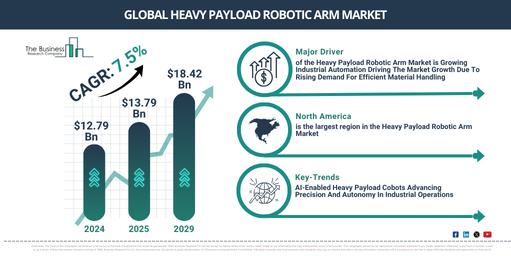
    The heavy payload robotic arm market has experienced robust growth over the past few years. It is projected to expand from $12.79 billion in 2024 to $13.79 billion in 2025, at a compound annual growth rate (CAGR) of 7.9%. This historical expansion can be attributed to several factors: increasing demand for automation in manufacturing, a growing need for high-precision material handling, a heightened focus on worker safety and injury reduction, the increasing adoption of robotics in the automotive and aerospace industries, and the expanded use of robotic arms in hazardous environments.

    The market for heavy payload robotic arms is projected to experience robust expansion over the coming years. This market is anticipated to reach $18.42 billion by 2029, exhibiting a compound annual growth rate (CAGR) of 7.5%. This growth during the projected period stems from several factors, including the escalating demand for smart factories and Industry 4.0 integration, the heightened requirement for automation in heavy-duty logistics, a greater emphasis on energy-efficient robotic solutions, expanding investments in industrial automation within developing economies, and the increasing call for customizable and scalable robotic systems. Key developments expected in the forecast period encompass progress in autonomous navigation and path planning, novel approaches in modular robotic arm designs, the incorporation of AI and machine learning for adaptive control, improvements in sensor technologies for immediate feedback, and the creation of lightweight yet resilient materials.

    Unlock Your Free Sample Report for Exclusive Market Data:

    https://www.thebusinessresearchcompany.com/sample.aspx?id=27303&type=smp

    What Are The Top Growth Drivers Impacting The Heavy Payload Robotic Arm Market Outlook?

    The expansion of industrial automation is anticipated to propel the heavy payload robotic arms market forward. Industrial automation involves utilizing control systems, machinery, and advanced technology to manage industrial processes with minimal human intervention. This rise in automation is primarily driven by the increasing demand for higher productivity, as automated systems enable faster production rates, improved precision, and reduced operational downtime compared to manual operations. Heavy payload robotic arms enhance industrial automation by accurately and swiftly handling heavy materials, thereby boosting productivity, reducing labor needs, and improving safety in manufacturing. For instance, in September 2023, the International Federation of Robotics, a Germany-based professional non-profit organization, reported 553,052 industrial robot installations in factories worldwide, reflecting a 5% year-on-year growth rate in 2022. Therefore, increasing industrial automation is a significant driver for the growth of the heavy payload robotic arms market.

    What Are The Major Segment Types Covered In The Heavy Payload Robotic Arm Market?

    The heavy payload robotic arm market covered in this report is segmented

    1) By Type: Articulated, Cartesian, Selective Compliance Assembly Robot Arm (SCARA), Cylindrical, Other Types

    2) By Payload Capacity: Up To 500 Kilograms (Kg), 500 Kilograms (Kg) To 1000 Kilograms (Kg), 1000 Kilograms (Kg) To 2000 Kilograms (Kg), Above 2000 Kilograms (Kg)

    3) By Control System: Manual Control, Programmable Logic Controller (PLC), Computer-Based Control Systems, Wireless Control Systems

    4) By Application: Material Handling, Welding And Metal Fabrication, Palletizing And Packaging, Other Applications

    5) By End-User Industry: Automotive, Healthcare, Electrical Or Electronics, Metal And Machinery, Chemical, Construction, Other End-Users

    Subsegments:

    1) By Articulated: Four Axis Robotic Arm, Five Axis Robotic Arm, Six Axis Robotic Arm, Seven Axis Robotic Arm

    2) By Cartesian: Two Axis Cartesian Robot, Three Axis Cartesian Robot, Four Axis Cartesian Robot, Gantry Type Cartesian Robot

    3) By Selective Compliance Assembly Robot Arm (SCARA): Horizontal Arm Selective Compliance Assembly Robot Arm (SCARA) Robot, Vertically Articulated Selective Compliance Assembly Robot Arm (SCARA) Robot, Single Arm Selective Compliance Assembly Robot Arm (SCARA) Robot, Dual Arm Selective Compliance Assembly Robot Arm (SCARA) Robot

    4) By Cylindrical: Fixed Base Cylindrical Robot, Mobile Base Cylindrical Robot, Dual Arm Cylindrical Robot, Telescopic Cylindrical Robot

    5) By Other Types: Spherical Robotic Arm, Delta Robotic Arm, Polar Robotic Arm, Hybrid Robotic Arm

    Which Market Trends Are Creating New Opportunities In The Heavy Payload Robotic Arm Industry?

    Leading entities within the heavy payload robotic arm market are concentrating on creating sophisticated offerings, specifically heavy payload collaborative robots (cobots), to facilitate effortless interaction between human operators and machinery across challenging industrial contexts. Such a cobot represents a collaborative robotic arm engineered to function concurrently with humans, managing substantial and weighty loads securely. It integrates a significant lifting capability with sophisticated safety mechanisms and broad adaptability for various industrial sectors. Illustratively, during May 2024, Techman Robot Inc., a collaborative robot producer based in Taiwan, introduced its TM30S. This particular model is an advanced heavy payload robotic arm, boasting a maximum payload capacity of 35 kg and an impressive reach of 1,702 mm. The TM30S incorporates integrated smart vision along with a 3D camera, employing AI recognition technology to discern object dimensions and placement. This capability allows the robot to execute operations like palletizing, pick-and-place, and material handling independently of pre-established stacking configurations. This innovation facilitates real-time object identification, dynamic path generation, and effective mixed-case palletizing. It underscores the increasing inclination towards incorporating AI-powered vision systems to elevate operational accuracy and self-governance within intricate industrial settings.

    Which Leading Companies Dominate The Heavy Payload Robotic Arm Market Share?

    Major companies operating in the heavy payload robotic arm market are Mitsubishi Electric Corporation, ABB Ltd., Kawasaki Heavy Industries Ltd., Seiko Epson Corporation, Hyundai Heavy Industries Co. Ltd., FANUC Corporation, Yaskawa Electric Corporation, Stäubli International AG, NACHI-FUJIKOSHI CORP., Comau S.p.A., SIASUN Robot & Automation Co. Ltd., Scott Technology Limited, Vulcan Engineering Co. Inc., Ellison Technologies Inc., Apex Automation and Robotics Pty. Ltd., TM Robotics Ltd., OTC DAIHEN Inc., Black-I Robotics Inc., CHAIFU Industries Co. Ltd., GS Automatic Co. Ltd.

    Download The Full Report For Exclusive Market Findings:

    https://www.thebusinessresearchcompany.com/report/heavy-payload-robotic-arm-global-market-report

    Which Regional Markets Are Contributing Most To The Heavy Payload Robotic Arm Industry Expansion?

    North America was the largest region in the heavy payload robotic arm market in 2024. Asia-Pacific is expected to be the fastest-growing region in the forecast period. The regions covered in the heavy payload robotic arm market report are Asia-Pacific, Western Europe, Eastern Europe, North America, South America, Middle East, Africa.

    Request A Customized Version Of The Heavy Payload Robotic Arm Market Report:

    https://www.thebusinessresearchcompany.com/customise?id=27303&type=smp

    Browse Through More Reports Similar to the Global Heavy Payload Robotic Arm Market 2025, By The Business Research Company

    Docks Construction Global Market Report 2025

    https://www.thebusinessresearchcompany.com/report/docks-construction-global-market-report

    Docks Global Market Report 2025

    https://www.thebusinessresearchcompany.com/report/docks-global-market-report

    Containerized Data Center Global Market Report 2025

    https://www.thebusinessresearchcompany.com/report/containerized-data-center-global-market-report

    Get in touch with us:

    The Business Research Company: https://www.thebusinessresearchcompany.com/

    Americas +1 310-496-7795

    Asia +44 7882 955267 & +91 8897263534

    Europe +44 7882 955267

    Email us at info@tbrc.info

    Follow us on:

    LinkedIn: https://in.linkedin.com/company/the-business-research-company

    YouTube: https://www.youtube.com/channel/UC24_fI0rV8cR5DxlCpgmyFQ

    Global Market Model: https://www.thebusinessresearchcompany.com/global-market-model
  • Wheelchair Lift Market Expansion Outlook: $3.51 Billion by 2029 Forecast

    Wheelchair Lift Market Expansion Outlook: $3.51 Billion by 2029 Forecast

    Unlock Global Insights – Save 20% on Market Reports with Code ONLINE20

    #What Is The Projected Market Size Of The Wheelchair Lift Market By 2029?

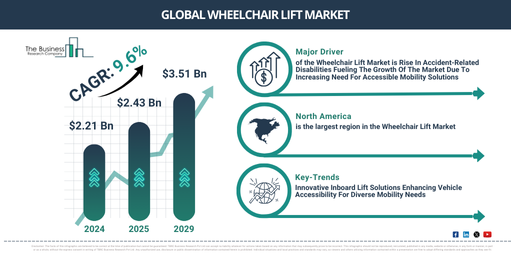
    The wheelchair lift market has witnessed rapid expansion in recent years. Its valuation is set to climb from $2.21 billion in 2024 to $2.43 billion in 2025, reflecting a compound annual growth rate (CAGR) of 10.0%. This market’s past growth can be ascribed to several factors, including the increasing incorporation of smart technologies into mobility devices, heightened awareness of inclusive infrastructure, a rise in temporary disabilities stemming from sports and occupational injuries, growing urban development necessitating compliant accessibility systems, and an increased emphasis on independent living among people with mobility challenges.

    The wheelchair lift market is projected to experience substantial expansion in the coming years. This market is anticipated to reach $3.51 billion by 2029, growing at a compound annual growth rate (CAGR) of 9.6%. Factors driving this growth during the forecast period include greater investments in smart city infrastructure, a growing incidence of chronic conditions affecting mobility, increased requirements for post-operative rehabilitation, enhanced backing from insurance and healthcare initiatives, and an increasing need for tailored and space-efficient lift solutions. Key trends expected over the forecast period encompass improvements in sensor-based safety functionalities, the creation of energy-efficient lift systems, innovations in designs that save space and are foldable, progress in remote-controlled and app-integrated functionalities, and the emergence of outdoor lift models designed to withstand various weather conditions.

    Unlock Your Free Sample Report for Exclusive Market Data:

    https://www.thebusinessresearchcompany.com/sample.aspx?id=27445&type=smp

    Which Factors And Drivers Are Influencing The Wheelchair Lift Market In 2025?

    An increase in accident-related disabilities is anticipated to drive the expansion of the wheelchair lifts market in the future. Disabilities encompass physical or mental health conditions that impede an individual’s ability to perform routine daily tasks. Accidental impairments are escalating because of dense road traffic and irresponsible driving, leading to more severe collisions and consequent enduring physical limitations. Wheelchair lifts offer secure and autonomous mobility solutions for those with accident-induced disabilities, facilitating effortless access to and egress from vehicles and structures. For example, data from February 2025, released by the Bureau of Labor Statistics, a US-based government agency, indicated that the employment-population ratio for people with disabilities increased by 1.2% from 2022 to 2023. Furthermore, in 2024, approximately 13% of the overall population comprised individuals with disabilities. Consequently, the growing incidence of disabilities stemming from accidents is fueling the growth of the wheelchair lifts market.

    How Is The Wheelchair Lift Market Segmented?

    The wheelchair lift market covered in this report is segmented

    1) By Product Type: Vertical Wheelchair Lifts, Inclined Wheelchair Lifts, Portable Wheelchair Lifts

    2) By Mechanism Type: Hydraulic Wheelchair Lifts, Electric Wheelchair Lifts, Mechanical Wheelchair Lifts

    3) By Distribution Channel: Direct Sale, Online Retail, Distributors And Dealers, Wholesale

    4) By End Use Application: Residential, Healthcare Facilities, Public Buildings, Commercial Spaces

    Subsegments:

    1) By Vertical Wheelchair Lifts: Hydraulic Vertical Lifts, Electric Vertical Lifts, Pneumatic Vertical Lifts

    2) By Inclined Wheelchair Lifts: Straight Inclined Lifts, Curved Inclined Lifts, Track-Mounted Inclined Lifts

    3) By Portable Wheelchair Lifts: Mobile Wheelchair Lifts, Foldable Wheelchair Lifts, Manual Portable Lifts

    Which Trends Are Impacting The Wheelchair Lift Market?

    Leading companies in the wheelchair lifts market are concentrating on developing advanced solutions, such as inboard lifts, to facilitate easier integration into a vehicle’s interior. Inboard lifts are systems installed within vehicles that assist in raising and positioning wheelchairs, thereby enabling safe and convenient access for users. For instance, in August 2024, Passenger Lift Solutions (PLS), a UK-based manufacturer of wheelchair lifts, introduced the EA4 inboard lift for wheelchair-accessible vehicles. It is specifically designed to meet a wide array of mobility needs, including those of wheelchair users and individuals with limited movement. The lift presents three platform styles—solid, vertical split, and horizontal fold—all crafted to enhance comfort and accessibility. Its modular design supports rapid installation and uncomplicated maintenance, making it suitable for both rear and side door configurations. With adjustable platform sizes and a weight capacity ranging from 400 to 500 kg, the EA4 offers flexible solutions for diverse passenger and vehicle requirements.

    Which Leading Companies Dominate The Wheelchair Lift Market Share?

    Major companies operating in the wheelchair lift market are BraunAbility, D.I.D – Daido Kogyo Co. Ltd., Stannah Lifts, Cibes Lift, Bruno Independent Living Aids Inc., Garaventa Lift GmbH, Ricon Corporation, Savaria Corporation, Terry Lifts, Stiltz Ltd., AMF Bruns Mobility, Arrow Lift, AmeriGlide Inc., Discount Ramps LLC, Adaptive Engineering Inc., Wabtec Corporation, Handi Lift Inc., ACME Home Elevator Inc., BC Lift, and Butler Mobility Products.

    Download The Full Report For Exclusive Market Findings:

    https://www.thebusinessresearchcompany.com/report/wheelchair-lift-global-market-report

    How Does The Wheelchair Lift Market Perform Across Key Geographic Regions?

    North America was the largest region in the wheelchair lift market in 2024. Asia-Pacific is expected to be the fastest-growing region in the forecast period. The regions covered in the wheelchair lift market report are Asia-Pacific, Western Europe, Eastern Europe, North America, South America, Middle East, Africa.

    Request A Customized Version Of The Wheelchair Lift Market Report:

    https://www.thebusinessresearchcompany.com/customise?id=27445&type=smp

    Browse Through More Reports Similar to the Global Wheelchair Lift Market 2025, By The Business Research Company

    Woodworking Machinery Global Market Report 2025

    https://www.thebusinessresearchcompany.com/report/woodworking-machinery-global-market-report

    Wood Manufacturing Global Market Report 2025

    https://www.thebusinessresearchcompany.com/report/wood-manufacturing-global-market-report

    Wooden Furniture Global Market Report 2025

    https://www.thebusinessresearchcompany.com/report/wooden-furniture-global-market-report

    Get in touch with us:

    The Business Research Company: https://www.thebusinessresearchcompany.com/

    Americas +1 310-496-7795

    Asia +44 7882 955267 & +91 8897263534

    Europe +44 7882 955267

    Email us at info@tbrc.info

    Follow us on:

    LinkedIn: https://in.linkedin.com/company/the-business-research-company

    YouTube: https://www.youtube.com/channel/UC24_fI0rV8cR5DxlCpgmyFQ

    Global Market Model: https://www.thebusinessresearchcompany.com/global-market-model
  • Global Vascular Allografts Market Overview: Trends Shaping Growth to 2029

    Global Vascular Allografts Market Overview: Trends Shaping Growth to 2029

    Unlock Global Insights – Save 20% on Market Reports with Code ONLINE20

    What Is The Global Market Value Of The Vascular Allografts Industry In 2025?

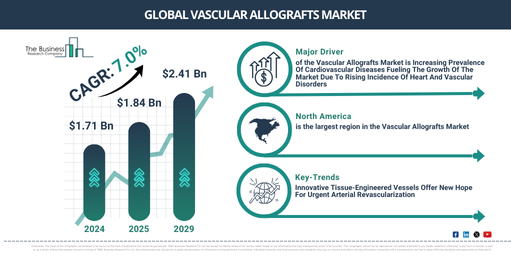
    The vascular allografts market size has experienced robust expansion in recent years. It is forecast to grow from $1.71 billion in 2024 to $1.84 billion in 2025, at a compound annual growth rate (CAGR) of 7.4%. This historical growth can be ascribed to the increasing prevalence of cardiovascular diseases, growing demand for vascular grafts in bypass surgeries, a rising number of vascular trauma cases requiring grafts, increasing awareness about organ transplantation benefits, and the growing adoption of vascular allografts in reconstructive surgeries.

    The vascular allografts market size is projected to experience robust growth in the coming years, with an estimated value of $2.41 billion by 2029, expanding at a compound annual growth rate (CAGR) of 7.0%. This growth during the forecast period is primarily attributed to rising healthcare expenditure in developing regions, an increasing number of regulatory approvals for vascular allograft products, growing awareness of minimally invasive vascular repair techniques, expanded use of vascular allografts in diabetic limb salvage procedures, and a rising demand for customized and patient-specific vascular grafts. Key trends anticipated in this period include advancements in tissue preservation technology, the development of advanced biomaterials for vascular grafts, innovations in cryopreservation methods, the integration of regenerative medicine techniques, progress in 3D bioprinting for vascular grafts, and enhanced imaging for graft compatibility.

    Unlock Your Free Sample Report for Exclusive Market Data:

    https://www.thebusinessresearchcompany.com/sample.aspx?id=27443&type=smp

    What Are The Drivers Pushing New Developments In The Vascular Allografts Market?

    The expanding occurrence of cardiovascular diseases is projected to drive the future expansion of the vascular allografts market. These diseases encompass various conditions impacting the heart and circulatory system, specifically naming coronary heart disease, heart failure, stroke, and hypertension. The rising incidence of cardiovascular diseases is largely linked to inadequate dietary habits, with excessive intake of saturated fats, trans fats, added sugars, and sodium leading to elevated blood pressure, obesity, and heightened cholesterol levels. Vascular allografts improve treatment possibilities for cardiovascular diseases by offering immediately available donor blood vessels, which are suitable for individuals with compromised or unhealthy vessels. These allografts enhance surgical results through restoring adequate blood circulation, minimizing complications, and fostering sustained cardiovascular well-being. As an illustration, in January 2024, data from the American Heart Association, a US-based nonprofit, indicated that the age-adjusted death rate from cardiovascular disease reached 233.3 per 100,000 in 2022, representing a 4.0% rise from 224.4 per 100,000 in 2021. Consequently, the growing occurrence of cardiovascular diseases is propelling the expansion of the vascular allografts market.

    What Are The Major Segment Types Covered In The Vascular Allografts Market?

    The vascular allografts market covered in this report is segmented

    1) By Type: Cortical Allograft, Cancellous Allograft, Corticocancellous Allograft

    2) By Material Type: Biologic Materials, Synthetic Materials, Composite Materials, Polymer-Based Materials

    3) By Application: Cardiovascular Surgery, Peripheral Vascular Surgery, Transplant Surgery, Repair Of Congenital Defects

    4) By Distribution Channel: Direct Sales, Online Sales, Distributors, Medical Supply Stores

    5) By End-User: Hospitals, Ambulatory Surgical Centers (ASCs), Specialty Clinics, Research And Academic Institutions

    Subsegments:

    1) By Cortical Allograft: Fresh Frozen Cortical Allograft, Freeze Dried Cortical Allograft, Demineralized Cortical Allograft

    2) By Cancellous Allograft: Fresh Frozen Cancellous Allograft, Freeze Dried Cancellous Allograft, Demineralized Cancellous Allograft

    3) By Corticocancellous Allograft: Fresh Frozen Corticocancellous Allograft, Freeze Dried Corticocancellous Allograft, Demineralized Corticocancellous Allograft

    Which Market Trends Are Creating New Opportunities In The Vascular Allografts Industry?

    Leading companies active in the vascular allografts market are concentrating on developing advanced products, such as bioengineered graft materials, to improve graft durability, biocompatibility, and integration with the host tissue. Bioengineered graft material refers to specifically designed vascular grafts that are created utilizing advanced biological and engineering techniques. As an illustration, in February 2025, Humacyte Inc., a US-based biotechnology company, introduced Symvess, a bioengineered vascular graft specifically designed for adults needing urgent revascularization due to extremity arterial injuries when autologous vein grafts are not an option. Symvess is engineered to remodel into the patient’s own tissue over time, thus decreasing the risk of rejection and improving long-term outcomes. This graft also minimizes the requirement for immunosuppressive drugs, presenting a substantial advantage in trauma and emergency surgical settings.

    Which Key Market Players Are Investing In Expansion And Innovation Of Vascular Allografts Market?

    Major companies operating in the vascular allografts market are Medtronic plc, Boston Scientific Corporation, Terumo Corporation, W. L. Gore & Associates Inc., Dentsply Sirona Inc., Integra LifeSciences Holdings Corporation, MicroPort Scientific Corporation, Bioventus Inc., KLS Martin Group, MTF Biologics, MTF Biologics, ZimVie Inc., B. Braun Melsungen AG, Artivion Inc., MiMedx Group Inc., RTI Surgical Inc, LeMaitre Vascular Inc., LifeNet Health Inc., Xtant Medical Holdings Inc., Biotech Dental.

    Download The Full Report For Exclusive Market Findings:

    https://www.thebusinessresearchcompany.com/report/vascular-allografts-global-market-report

    What Are The Regional Market Dynamics Impacting The Vascular Allografts Industry?

    North America was the largest region in the vascular allografts market in 2024. Asia-Pacific is expected to be the fastest-growing region in the forecast period. The regions covered in the vascular allografts market report are Asia-Pacific, Western Europe, Eastern Europe, North America, South America, Middle East, Africa.

    Request A Customized Version Of The Vascular Allografts Market Report:

    https://www.thebusinessresearchcompany.com/customise?id=27443&type=smp

    Browse Through More Reports Similar to the Global Vascular Allografts Market 2025, By The Business Research Company

    Artificial Lift System Global Market Report 2025

    https://www.thebusinessresearchcompany.com/report/artificial-lift-system-global-market-report

    Turbine Motor Global Market Report 2025

    https://www.thebusinessresearchcompany.com/report/turbine-motor-global-market-report

    Electric Motors Global Market Report 2025

    https://www.thebusinessresearchcompany.com/report/electric-motors-global-market-report

    Get in touch with us:

    The Business Research Company: https://www.thebusinessresearchcompany.com/

    Americas +1 310-496-7795

    Asia +44 7882 955267 & +91 8897263534

    Europe +44 7882 955267

    Email us at info@tbrc.info

    Follow us on:

    LinkedIn: https://in.linkedin.com/company/the-business-research-company

    YouTube: https://www.youtube.com/channel/UC24_fI0rV8cR5DxlCpgmyFQ

    Global Market Model: https://www.thebusinessresearchcompany.com/global-market-model
  • Global Tubeless Insulin Pump Industry Trends: Where the Market Is Headed by 2029

    Global Tubeless Insulin Pump Industry Trends: Where the Market Is Headed by 2029

    Unlock Global Insights – Save 20% on Market Reports with Code ONLINE20

    How Much Was The Tubeless Insulin Pump Market Worth In 2025, And What Is Its Anticipated Value By 2029?

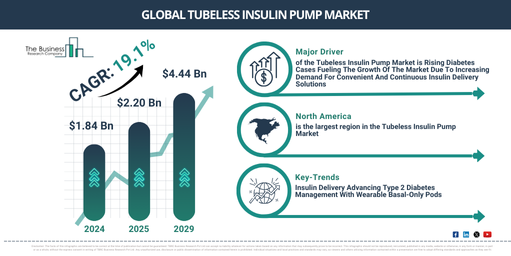
    The tubeless insulin pump market has experienced rapid expansion in recent years. Its size is set to expand from $1.84 billion in 2024 to $2.20 billion in 2025, exhibiting a compound annual growth rate (CAGR) of 19.5%. This growth observed in the past can be ascribed to an increase in diabetes prevalence, a heightened requirement for convenient and discreet insulin delivery, greater knowledge of diabetes management, enhanced reimbursement policies, patients favoring pain-free insulin administration, and the widening availability of home healthcare solutions.

    The tubeless insulin pump market is poised for significant expansion over the coming years, with projections indicating a rise to $4.44 billion by 2029, achieving a compound annual growth rate (CAGR) of 19.1%. This projected growth throughout the forecast period stems from several key factors, including the rising need for discreet and convenient insulin delivery methods, a heightened emphasis on individualized diabetes care, broader coverage through reimbursement policies for sophisticated insulin devices, and expanded public understanding through digital health initiatives.

    Key developments anticipated in this market during the forecast period encompass the incorporation of AI-powered glucose monitoring, improved smartphone application connectivity, the reduction in size of patch devices, the widespread implementation of closed-loop systems, and the embrace of wearable health technologies.

    Unlock Your Free Sample Report for Exclusive Market Data:

    https://www.thebusinessresearchcompany.com/sample.aspx?id=27440&type=smp

    Which Industry Drivers Are Expected To Accelerate The Tubeless Insulin Pump Market From 2025 To 2029?

    The future expansion of the tubeless insulin pump market is anticipated, propelled by the escalating prevalence of diabetes. This chronic health condition is characterized by elevated blood sugar, stemming from the body’s compromised ability to produce or properly utilize insulin. The rise in diabetes cases is largely due to increasing obesity rates, which are closely linked to poor diets and insufficient physical activity. Tubeless insulin pumps play a role in diabetes management by delivering continuous, controlled insulin doses without the necessity of multiple daily injections, thereby effectively assisting in blood sugar regulation. For example, in June 2023, the Institute for Health Metrics and Evaluation, a US-based public health research institute, disclosed that over half a billion people globally were afflicted with diabetes. This count is projected to more than double, reaching 1.3 billion individuals by 2050. Hence, the increasing instances of diabetes are a primary catalyst for the growth of the tubeless insulin pump market.

    What Are The Key Segments In The Tubeless Insulin Pump Market?

    The tubeless insulin pump market covered in this report is segmented

    1) By Product: Wearable Insulin Pump, Implantable Insulin Pump

    2) By Technology: Continuous Glucose Monitoring (CGM) Integrated Pumps, Standard Tubeless Pumps

    3) By End User: Hospitals, Pharmacies, E-Commerce, Other End Users

    Subsegments:

    1) By Wearable Insulin Pump: Patch Pumps, Remote-Controlled Pumps, Bluetooth-Enabled Pumps, Disposable Pumps, Reusable Pumps

    2) By Implantable Insulin Pump: Programmable Implantable Pumps, Refillable Implantable Pumps, Microelectromechanical System (MEMS)-Based Pumps, Long-Acting Implantable Pumps, Biocompatible Coated Pumps

    Which Ongoing Trends Are Expected To Shape The Tubeless Insulin Pump Market Outlook?

    Major companies active in the tubeless insulin pump market are prioritizing the development of advanced solutions, including basal-only insulin pods, to offer a simplified, cost-effective insulin delivery method for individuals with type 2 diabetes who solely need background insulin support. A basal-only insulin pod is a wearable pump designed to deliver continuous background insulin to regulate blood sugar, primarily for those diagnosed with type 2 diabetes. For example, in April 2023, Insulet Corporation, a US-based medical device company, launched Omnipod GO, an insulin delivery device authorized for use by persons with type 2 diabetes age 18 or older and who would typically receive daily injections of long-acting insulin. Omnipod GO is a wearable, independent insulin delivery device that delivers a constant rate of rapid-acting insulin for 72 hours. Additionally, it features a tubeless and waterproof pod that comes with seven different pre-programmed daily rates ranging from 10 to 40 units each day, and it functions without the necessity of a mobile device for regulation.

    Who Are The Prominent Global Companies Shaping The Tubeless Insulin Pump Market?

    Major companies operating in the tubeless insulin pump market are F. Hoffmann-La Roche AG, Sanofi SA, Abbott Laboratories, Medtronic plc, Eli Lilly and Company, Becton Dickinson & Company, Fresenius Kabi AG, Terumo Corporation, Insulet Corporation, Tandem Diabetes Care Inc., Ypsomed AG, Ascensia Diabetes Care, MicroTech Medical, Menarini Diagnostics, Bigfoot Biomedical, Debiotech SA, Medtrum Technologies Inc., Diabeloop, SOOIL Development, and Beta Bionics.

    Download The Full Report For Exclusive Market Findings:

    https://www.thebusinessresearchcompany.com/report/tubeless-insulin-pump-global-market-report

    Which Geographies Are Emerging As Strong Markets For The Tubeless Insulin Pump Industry?

    North America was the largest region in the tubeless insulin pump market in 2024. Asia-Pacific is expected to be the fastest-growing region in the forecast period. The regions covered in the tubeless insulin pump market report are Asia-Pacific, Western Europe, Eastern Europe, North America, South America, Middle East, Africa.

    Request A Customized Version Of The Tubeless Insulin Pump Market Report:

    https://www.thebusinessresearchcompany.com/customise?id=27440&type=smp

    Browse Through More Reports Similar to the Global Tubeless Insulin Pump Market 2025, By The Business Research Company

    Vertical Farming Global Market Report 2025

    https://www.thebusinessresearchcompany.com/report/vertical-farming-global-market-report

    Buildings Construction Global Market Report 2025

    https://www.thebusinessresearchcompany.com/report/buildings-construction-global-market-report

    Construction Global Market Report 2025

    https://www.thebusinessresearchcompany.com/report/construction-global-market-report

    Get in touch with us:

    The Business Research Company: https://www.thebusinessresearchcompany.com/

    Americas +1 310-496-7795

    Asia +44 7882 955267 & +91 8897263534

    Europe +44 7882 955267

    Email us at info@tbrc.info

    Follow us on:

    LinkedIn: https://in.linkedin.com/company/the-business-research-company

    YouTube: https://www.youtube.com/channel/UC24_fI0rV8cR5DxlCpgmyFQ

    Global Market Model: https://www.thebusinessresearchcompany.com/global-market-model
  • Point-Of-Care-Testing (POCT) Market Forecast 2025–2034: Where Businesses Should Invest Next

    Point-Of-Care-Testing (POCT) Market Forecast 2025–2034: Where Businesses Should Invest Next

    Unlock Global Insights – Save 20% on Market Reports with Code ONLINE20

    What Is The Predicted Market Size Trajectory For The Point-Of-Care-Testing (POCT) Market From 2025 To 2034?

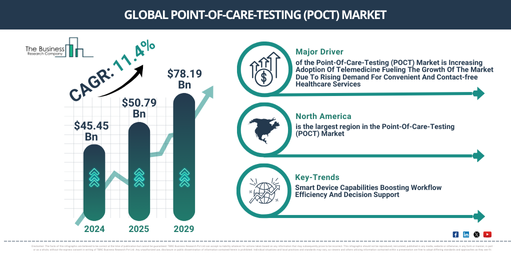
    The point-of-care-testing (POCT) market has experienced rapid expansion in recent years. Its valuation is set to climb from $45.45 billion in 2024 to $50.79 billion by 2025, demonstrating a compound annual growth rate (CAGR) of 11.8%. This historical growth can be ascribed to a heightened focus on personalized medicine, escalating investments within healthcare infrastructure, an increase in emergency care situations, the expanded utilization of point-of-care molecular testing, and the rising integration of AI in diagnostic processes.

    The point-of-care-testing (POCT) market is anticipated to experience significant growth in the coming years. It is projected to expand to $78.19 billion by 2029, achieving a compound annual growth rate (CAGR) of 11.4%. The expansion during the forecast period can be attributed to factors such as increasing demand for personalized medicine, the rise of telehealth and remote monitoring trends, improved healthcare access in developing markets, the expanding application of POCT in non-traditional environments, and the rising adoption of wearable diagnostic devices. Key trends for the forecast period involve advancements in multiplex testing platforms, the creation of portable molecular diagnostic devices, innovations in smartphone-based diagnostic tools, progress in connectivity and data integration, and the development of AI-powered POCT solutions.

    Unlock Your Free Sample Report for Exclusive Market Data:

    https://www.thebusinessresearchcompany.com/sample.aspx?id=27391&type=smp

    What Are The Key Drivers Of Growth In The Point-Of-Care-Testing (POCT) Market?

    The expanding use of telemedicine is projected to fuel the growth of the point-of-care-testing (POCT) market moving forward. Telemedicine involves providing medical care remotely through digital communication platforms like video calls, phone conversations, or secure messaging. Its uptake stems from an increasing need for accessible, prompt, and contact-free healthcare, a demand significantly boosted by the COVID-19 pandemic. Point-of-care testing (POCT) complements telemedicine by delivering swift, accurate diagnostic outcomes that can be instantly shared with remote healthcare professionals. As an illustration, a survey conducted by Rock Health, a US-based health technology company, among 8,014 respondents from July 12 to August 22, 2022, revealed in February 2023 that 76% of individuals aged over 55 had utilized telemedicine. Furthermore, 80% of all respondents indicated having accessed care via telemedicine at some point, representing an 8% increase from 72% in 2021. Consequently, the growing integration of telemedicine is a key factor propelling the expansion of the point-of-care-testing (POCT) market.

    What Are The Leading Segments Analyzed In The Point-Of-Care-Testing (POCT) Market?

    The point-of-care-testing (POCT) market covered in this report is segmented

    1) By Type: Blood Glucose Testing, Infectious Diseases Testing, Cardiac Markers Testing, Coagulation Testing, Pregnancy And Fertility Testing, Blood Gas Or Electrolytes Testing, Urinalysis Testing, Other Types

    2) By Mode Of Purchase: Over-The-Counter Products, Prescribed Based Products

    3) By Technology: Immunoassays, Molecular Diagnostics, Microbial Detection, Polymerase Chain Reaction (PCR) Testing, Biochemical Testing

    4) By End-User: Clinical Laboratories, Ambulatory Care Facilities And Physician Offices, Pharmacies, Retail Clinics And E-Comm Platforms, Hospitals, Critical Care Centres, Urgent Care Centres, Home Care And Self-Testing, Other End-Users

    Subsegments:

    1) By Blood Glucose Testing: Self-Monitoring Blood Glucose Devices, Continuous Glucose Monitoring Devices, Flash Glucose Monitoring Devices

    2) By Infectious Diseases Testing: Human Immunodeficiency Virus (HIV) Testing, Hepatitis Testing, Influenza Testing, COVID-19 Testing, Other Infectious Diseases Testing

    3) By Cardiac Markers Testing: Troponin Testing, Creatine Kinase-MB (CK-MB) Testing, Myoglobin Testing, B-type Natriuretic Peptide (BNP) Testing

    4) By Coagulation Testing: Prothrombin Time (PT) Testing, Activated Partial Thromboplastin Time (aPTT) Testing, International Normalized Ratio (INR) Testing

    5) By Pregnancy And Fertility Testing: Pregnancy Test Kits, Ovulation Test Kits, Fertility Hormone Testing

    6) By Blood Gas Or Electrolytes Testing: Arterial Blood Gas Testing, Venous Blood Gas Testing, Electrolyte Testing

    7) By Urinalysis Testing: Urine Chemistry Analysis, Microscopic Urine Analysis, Urine Culture Testing

    8) By Other Types: Drug Abuse Testing, Allergy Testing, Cholesterol Testing, Thyroid Function Testing

    What Are The Major Trends Driving The Growth Of The Point-Of-Care-Testing (POCT) Market?

    Leading companies in the point-of-care-testing (POCT) market are concentrating on creating innovative products, such as blood glucose management solutions, to enhance diagnostic speed, accuracy, and patient results in near-patient environments. Blood glucose management solutions denote the instruments, apparatuses, and systems utilized for monitoring, tracking, and regulating blood sugar levels to manage conditions like diabetes. For example, in January 2022, F. Hoffmann-La Roche AG, a Switzerland-based pharmaceutical company, introduced the Cobas pulse system. The Cobas pulse system presents a next-generation connected platform that merges advanced point-of-care blood glucose testing with smart device functionalities. It allows for effortless integration with hospital information technology (IT) systems for automatic result transmission and real-time clinical data availability. The device also supports healthcare applications to improve decision support and operational efficiency at the patient’s side.

    Who Are The Key Multinational Companies Dominating The Point-Of-Care-Testing (POCT) Market?

    Major companies operating in the point-of-care-testing (POCT) market are Johnson & Johnson, F. Hoffmann-La Roche Ltd., Thermo Fisher Scientific Inc., Abbott Laboratories, Danaher Corporation, Siemens Healthineers AG, Becton Dickinson and Company, Zoetis Inc., BioMérieux SA, QuidelOrtho Corporation, Sysmex Corporation, Bio-Rad Laboratories Inc., QIAGEN NV, Nova Biomedical Corporation, LifeScan Inc., Ascensia Diabetes Care Holdings AG, Trividia Health Inc., Trinity Biotech Plc, SiPhox Inc., and Sinocare Inc.

    Download The Full Report For Exclusive Market Findings:

    https://www.thebusinessresearchcompany.com/report/point-of-care-testing-poct-global-market-report

    What Are The Regional Market Dynamics Impacting The Point-Of-Care-Testing (POCT) Industry?

    North America was the largest region in the point-of-care testing (POCT) market in 2024. Asia-Pacific is expected to be the fastest-growing region in the forecast period. The regions covered in the point-of-care-testing (POCT) market report are Asia-Pacific, Western Europe, Eastern Europe, North America, South America, Middle East, Africa.

    Request A Customized Version Of The Point-Of-Care-Testing (POCT) Market Report:

    https://www.thebusinessresearchcompany.com/customise?id=27391&type=smp

    Browse Through More Reports Similar to the Global Point-Of-Care-Testing (POCT) Market 2025, By The Business Research Company

    Precast Concrete Market 2025

    https://www.thebusinessresearchcompany.com/report/precast-concrete-market

    Precast Construction Global Market Report 2025

    https://www.thebusinessresearchcompany.com/report/precast-construction-global-market-report

    Modular And Prefabricated Nonresidential Building Construction Global Market Report 2025

    https://www.thebusinessresearchcompany.com/report/modular-and-prefabricated-nonresidential-building-construction-global-market-report

    Get in touch with us:

    The Business Research Company: https://www.thebusinessresearchcompany.com/

    Americas +1 310-496-7795

    Asia +44 7882 955267 & +91 8897263534

    Europe +44 7882 955267

    Email us at info@tbrc.info

    Follow us on:

    LinkedIn: https://in.linkedin.com/company/the-business-research-company

    YouTube: https://www.youtube.com/channel/UC24_fI0rV8cR5DxlCpgmyFQ

    Global Market Model: https://www.thebusinessresearchcompany.com/global-market-model

  • Global Transcatheter Mitral Valve Market Size Projected to Reach $2.28 Billion During the Forecast Period

    Global Transcatheter Mitral Valve Market Size Projected to Reach $2.28 Billion During the Forecast Period

    Unlock Global Insights – Save 20% on Market Reports with Code ONLINE20

    How Does The Market Size Of The Transcatheter Mitral Valve Industry Compare Between 2025 And 2029?

    The transcatheter mitral valve market has experienced robust expansion in recent years. This market is expected to grow from $1.47 billion in 2024 to $1.61 billion in 2025, achieving a compound annual growth rate (CAGR) of 9.5%. The notable growth observed historically stems from the rising adoption of minimally invasive cardiac surgeries, successful outcomes in clinical trials for initial TMVR devices, the enhancement of hospital infrastructure in developed regions, an increase in the prevalence of rheumatic heart disease in low-income nations, and the expansion of training programs designed for interventional cardiologists.

    The transcatheter mitral valve market is anticipated to experience substantial expansion in the coming years. This market is projected to reach $2.28 billion by 2029, exhibiting a compound annual growth rate (CAGR) of 9.1%. Several factors will fuel this growth during the forecast period. These include a rising preference for catheter-based treatments among younger demographics, an expanding array of advanced transcatheter mitral valve replacement products in development, enhanced emphasis on early detection via artificial intelligence-powered imaging, an increasing number of regulatory clearances for TMV devices, and the incorporation of real-time navigation and imaging systems into transcatheter mitral valve interventions. Key trends expected over the forecast period encompass improvements in artificial intelligence-driven imaging for evaluating valves, the application of advanced material coatings to boost biocompatibility, the creation of customized transcatheter mitral valve solutions utilizing 3D printing, advancements in the flexibility and accuracy of delivery catheters, and the adoption of digital twin technology for meticulous procedural planning.

    Unlock Your Free Sample Report for Exclusive Market Data:

    https://www.thebusinessresearchcompany.com/sample.aspx?id=27437&type=smp

    What Are The Main Drivers Boosting The Transcatheter Mitral Valve Industry’s Expansion?

    The escalating incidence of cardiac conditions is projected to stimulate the expansion of the transcatheter mitral valve market in the coming years. Heart diseases are impairments that disrupt the heart’s structure or function, thereby diminishing its efficiency in pumping blood. The increasing occurrence of heart diseases is primarily influenced by aging populations, as the age-related deterioration of the heart and blood vessels heightens vulnerability to conditions such as mitral valve regurgitation, heart failure, and arrhythmias. A transcatheter mitral valve assists in treating heart disease by repairing or replacing a damaged mitral valve to re-establish healthy blood flow between the heart’s chambers, improving cardiac performance and easing symptoms. For instance, in October 2024, information from the Centers for Disease Control and Prevention, a US-based government agency, indicated that in 2022, coronary heart disease was the most widespread form of heart disease, leading to 371,506 deaths. Annually in the United States, approximately 805,000 individuals experience a heart attack, with new cases (605,000) occurring nearly three times more often than recurring cases (200,000). Thus, the growing prevalence of heart diseases is fueling the growth of the transcatheter mitral valve market.

    What Are The Different Segment Classifications Within The Transcatheter Mitral Valve Market?

    The transcatheter mitral valve market covered in this report is segmented

    1) By Product: Transcatheter Mitral Valve Replacement, Transcatheter Mitral Valve Repair

    2) By Indication: Mitral Stenosis, Mitral Regurgitation

    3) By End-User: Hospitals, Ambulatory Surgical Centers, Cardiac Catheterization Laboratories

    Subsegments:

    1) By Transcatheter Mitral Valve Replacement: Self-Expanding Valves, Balloon-Expandable Valves

    2) By Transcatheter Mitral Valve Repair: Annuloplasty Devices, Chordal Repair Devices, Edge-To-Edge Repair Devices

    What Trends Are Redefining The Transcatheter Mitral Valve Market Dynamics?

    Leading companies in the transcatheter mitral valve market are concentrating on developing advanced products, such as transcatheter mitral valve replacement systems, to broaden treatment options for high-risk or inoperable patients. Transcatheter mitral valve replacement (TMVR) systems denote a minimally invasive medical device that substitutes a damaged or diseased mitral valve in the heart with an artificial valve using a catheter-based approach, thereby avoiding the necessity for open-heart surgery. For example, in May 2025, Abbott Laboratories, a US-based medical device company, introduced Tendyne, which gained approval from the Food and Drug Administration (FDA). It is a self-expanding, nitinol-framed valve offered in multiple sizes to accommodate diverse anatomies and can be entirely repositioned or retrieved during implantation. Delivered via a small incision in the chest, the system facilitates a minimally invasive procedure typically finished in about 1.5 hours. Designed for expedited recovery, the system enables most patients to be discharged within three days, presenting a transformative solution for high-risk mitral valve patients who lack viable surgical alternatives.

    Which Leading Companies Dominate The Transcatheter Mitral Valve Market Share?

    Major companies operating in the transcatheter mitral valve market are Abbott Laboratories, Medtronic Inc, Boston Scientific Corporation, Edwards Lifesciences Corporation, Meril Life Sciences Private Limited, MicroPort Scientific Corporation, Venus Medtech Inc., Cardiac Dimensions Inc., JenaValve Technology Inc., Ancora Heart Inc, Peijia Medical Limited, Micro Interventional Devices Inc., 4C Medical Technologies Inc., NeoChord Inc., Xeltis AG, Valcare Medical Inc., Colibri Heart Valve LLC, MitrAssist Ltd., HighLife SAS, Navigate Cardiac Structures Inc., Cardiovalve Ltd.

    Download The Full Report For Exclusive Market Findings:

    https://www.thebusinessresearchcompany.com/report/transcatheter-mitral-valve-global-market-report

    How Do Regional Market Performances Compare Within The Transcatheter Mitral Valve Industry?

    North America was the largest region in the transcatheter mitral valve market in 2024. Asia-Pacific is expected to be the fastest-growing region in the forecast period. The regions covered in the transcatheter mitral valve market report are Asia-Pacific, Western Europe, Eastern Europe, North America, South America, Middle East, Africa.

    Request A Customized Version Of The Transcatheter Mitral Valve Market Report:

    https://www.thebusinessresearchcompany.com/customise?id=27437&type=smp

    Browse Through More Reports Similar to the Global Transcatheter Mitral Valve Market 2025, By The Business Research Company

    Nanomaterials Global Market Report 2025

    https://www.thebusinessresearchcompany.com/report/nanomaterials-global-market-report

    Titanium Global Market Report 2025

    https://www.thebusinessresearchcompany.com/report/titanium-global-market-report

    Carbon Nanomaterials Global Market Report 2025

    https://www.thebusinessresearchcompany.com/report/carbon-nanomaterials-global-market-report

    Get in touch with us:

    The Business Research Company: https://www.thebusinessresearchcompany.com/

    Americas +1 310-496-7795

    Asia +44 7882 955267 & +91 8897263534

    Europe +44 7882 955267

    Email us at info@tbrc.info

    Follow us on:

    LinkedIn: https://in.linkedin.com/company/the-business-research-company

    YouTube: https://www.youtube.com/channel/UC24_fI0rV8cR5DxlCpgmyFQ

    Global Market Model: https://www.thebusinessresearchcompany.com/global-market-model

  • Global Point-of-Care Technology Market Analysis 2025–2029: Opportunities for Strategic Growth

    Global Point-of-Care Technology Market Analysis 2025–2029: Opportunities for Strategic Growth

    Unlock Global Insights – Save 20% on Market Reports with Code ONLINE20

    How Much Larger Is The Point-of-Care Technology Market Expected To Become By 2029 Compared With Its 2025 Level?

    The point-of-care technology market has demonstrated significant expansion in recent years. Its valuation is projected to rise from $39.33 billion in 2024 to $43.21 billion in 2025, reflecting a compound annual growth rate (CAGR) of 9.9%. This historical growth can be attributed to several factors, including the increasing decentralization of healthcare provision, the critical demand for real-time diagnosis in emergency situations, the escalating need for rapid infection screening, the expanded deployment of mobile testing units, and an intensified focus on cost-efficient diagnostic procedures.

    The point-of-care technology market is projected to experience substantial expansion in the coming years, set to reach $62.16 billion by 2029, exhibiting a compound annual growth rate (CAGR) of 9.5%. This anticipated growth during the forecast period is largely driven by the emergence of telemedicine platforms, an increased focus on personalized and predictive healthcare, broader adoption of home-based health monitoring solutions, and governmental efforts promoting decentralized testing. Key trends anticipated during this period encompass progress in artificial intelligence-powered diagnostic algorithms, the creation of portable multiplex testing devices, advancements in wearable health monitoring tools, improvements in cloud-based data integration, and the establishment of home-based telehealth ecosystems.

    Unlock Your Free Sample Report for Exclusive Market Data:

    https://www.thebusinessresearchcompany.com/sample.aspx?id=27390&type=smp

    Which Drivers Are Supporting Growth Of The Point-of-Care Technology Market?

    The increasing occurrence of chronic diseases is anticipated to drive expansion in the point-of-care technology market moving ahead. These are long-lasting health conditions requiring ongoing management and changes to one’s way of life. A rise in inactive lifestyles, characterized by prolonged sitting and limited physical activity, contributes to the growing incidence of chronic illnesses, elevating the risk of ailments like heart conditions and diabetes. Point-of-care technology supports the management of chronic conditions through quick, accessible diagnostic tests performed at the patient’s location, proving highly effective in clinical environments, private residences, and distant healthcare scenarios. This technology minimizes treatment delays by delivering immediate results, thereby enhancing patient oversight and the overall convenience of healthcare delivery. As an example, in June 2024, the National Health Service, a UK-based government department, reported that 3,615,330 individuals registered with a general practitioner (GP) had been diagnosed with non-diabetic hyperglycemia or pre-diabetes in 2023. This represented an 18% increase from the 3,065,825 cases recorded in 2022. Consequently, the increasing prevalence of chronic illnesses is a significant driver for the expansion of the point-of-care technology market.

    What Are The Segment Types Shaping The Point-of-Care Technology Market?

    The point-of-care technology market covered in this report is segmented

    1) By Product Type: Diagnostics Devices, Monitoring Devices, Therapeutic Devices, Data Management Systems

    2) By Ownership Model: Standalone Solutions, Integrated Solutions, Cloud-Based Solutions

    3) By Technology: Microfluidics, Polymerase Chain Reaction (PCR), Immunoassays

    4) By Application: Infectious Disease Testing, Glucose Monitoring, Cardiometabolic Monitoring, Pregnancy And Fertility Testing, Other Applications

    5) By End-User: Hospitals, Clinics, Homecare Settings, Ambulatory Surgical Centers

    Subsegments:

    1) By Diagnostics Devices: Blood Glucose Monitoring Devices, Infectious Disease Testing Devices, Cardiac Marker Testing Devices, Coagulation Testing Devices, Pregnancy And Fertility Testing Devices, Urinalysis Testing Devices, Hematology Testing Devices, Cholesterol Testing Devices

    2) By Monitoring Devices: Vital Signs Monitoring Devices, Continuous Glucose Monitoring Devices, Cardiac Monitoring Devices, Respiratory Monitoring Devices

    3) By Therapeutic Devices: Insulin Delivery Devices, Nebulizers, Dialysis Machines, Infusion Pumps

    4) By Data Management Systems: Point Of Care (POC) Data Integration Systems, Point Of Care (POC) Middleware Solutions, Point Of Care (POC) Data Analytics Platforms

    What Trends Are Expected To Drive The Point-of-Care Technology Market?

    Leading companies in the point-of-care technology market are prioritizing the creation of technologically advanced solutions, specifically AI-powered diagnostic platforms, to boost accuracy, speed, and accessibility in identifying diseases. AI-powered diagnostic platforms are sophisticated systems that harness artificial intelligence to rapidly analyze medical data, facilitating real-time, on-site testing for critical ailments like cancer. For instance, in February 2025, Avitia Inc., a Canada-based point-of-care diagnostics firm, unveiled an AI-powered platform designed for quick and immediate cancer testing. This platform merges machine learning algorithms with portable diagnostic devices, empowering healthcare providers to perform fast, precise cancer screening outside conventional laboratory settings. This innovation shortens turnaround times, enhances early detection, and minimizes requirements for complex infrastructure, thereby making advanced diagnostics more attainable in remote or underserved areas.

    Which Leading Players Are Enhancing Their Point-of-Care Technology Market Presence Worldwide?

    Major companies operating in the point-of-care technology market are F. Hoffmann-La Roche AG, Thermo Fisher Scientific Inc., Abbott Laboratories, Danaher Corporation, Siemens Healthineers AG, Hologic Inc., bioMérieux SA, Quidel Corporation, Sysmex Corporation, Cepheid Inc., Radiometer Medical ApS, Nova Biomedical, Sekisui Diagnostics LLC, Abaxis Inc., BHR Biosynex, EKF Diagnostics Holdings plc, Acon Laboratories Inc., Trinity Biotech plc, Chembio Diagnostics Inc., Arkray Inc., Orchard Software Corporation, Point of Care Biomedical Private Limited.

    Download The Full Report For Exclusive Market Findings:

    https://www.thebusinessresearchcompany.com/report/point-of-care-technology-global-market-report

    Which Region Shows The Highest Potential For Future Expansion In The Point-of-Care Technology Market?

    North America was the largest region in the point-of-care technology market in 2024. Asia-Pacific is expected to be the fastest-growing region in the forecast period. The regions covered in the point-of-care technology market report are Asia-Pacific, Western Europe, Eastern Europe, North America, South America, Middle East, Africa.

    Request A Customized Version Of The Point-of-Care Technology Market Report:

    https://www.thebusinessresearchcompany.com/customise?id=27390&type=smp

    Browse Through More Reports Similar to the Global Point-of-Care Technology Market 2025, By The Business Research Company

    Concrete Sealer Global Market Report 2025

    https://www.thebusinessresearchcompany.com/report/concrete-sealer-global-market-report

    Aerospace Adhesives And Sealants Global Market Report 2025

    https://www.thebusinessresearchcompany.com/report/aerospace-adhesives-and-sealants-global-market-report

    Surgical Sealants And Adhesives Market 2025

    https://www.thebusinessresearchcompany.com/report/surgical-sealants-and-adhesives-market

    Get in touch with us:

    The Business Research Company: https://www.thebusinessresearchcompany.com/

    Americas +1 310-496-7795

    Asia +44 7882 955267 & +91 8897263534

    Europe +44 7882 955267

    Email us at info@tbrc.info

    Follow us on:

    LinkedIn: https://in.linkedin.com/company/the-business-research-company

    YouTube: https://www.youtube.com/channel/UC24_fI0rV8cR5DxlCpgmyFQ

    Global Market Model: https://www.thebusinessresearchcompany.com/global-market-model