Category: Medical Equipment

  • Global Tendon Allograft Market Projected to Expand at 10.6% CAGR by 2029

    Global Tendon Allograft Market Projected to Expand at 10.6% CAGR by 2029

    Unlock Global Insights – Save 20% on Market Reports with Code ONLINE20

    How Much Larger Is The Tendon Allograft Market Expected To Become By 2029 Compared With Its 2025 Level?

    The tendon allograft market size has seen substantial growth over recent years. It is projected to expand from $1.38 billion in 2024 to $1.53 billion in 2025, exhibiting a compound annual growth rate (CAGR) of 11.0%. This historical growth can be ascribed to a heightened awareness regarding tendon repair procedures, the increasing occurrence of sports injuries, a rise in orthopedic surgeries, growing demand for minimally invasive surgical options, and the enhanced availability of allograft tissues.

    The tendon allograft market is poised for significant expansion in the coming years, with its size projected to reach $2.29 billion by 2029, exhibiting a compound annual growth rate (CAGR) of 10.7%. This anticipated growth throughout the forecast period is primarily driven by an increasing emphasis on joint preservation surgeries, the broader adoption of tissue engineering, a rising prevalence of musculoskeletal disorders, enhanced government support for regenerative medicine, and a growing demand for customized tendon allografts. Furthermore, prominent trends for the forecast period include advancements in tissue processing technologies, sophisticated graft customization techniques, innovations in scaffold materials, the integration of 3D printing with tendon grafts, and progress in biologics aimed at improving graft acceptance.

    Unlock Your Free Sample Report for Exclusive Market Data:

    https://www.thebusinessresearchcompany.com/sample.aspx?id=27435&type=smp

    What Are The Key Drivers Of Growth In The Tendon Allograft Market?

    The increasing occurrence of sports injuries is anticipated to drive the expansion of the tendon allograft market in the future. Sports injuries refer to physical harm sustained during athletic activities or exercise, affecting muscles, ligaments, tendons, bones, or joints. The incidence of such injuries is rising due to greater participation in sports and physical activities, exposing more individuals to the risk of injury. Tendon allografts facilitate recovery from sports injuries by supplying ready-to-use tendon tissue for surgical repair, making them ideal for athletes and active individuals. They restore tendon function by supporting tissue integration and healing, improving mobility, and accelerating the return to sports. For instance, in 2024, according to the U.S. National Safety Council, a US-based public health and safety organization, the number of sports and recreational injuries reached 564,845, an increase from 482,886 injuries in 2023. Therefore, the growing incidence of sports injuries is propelling the growth of the tendon allograft market.

    Which Key Segments Fueling The Tendon Allograft Market?

    The tendon allograft market covered in this report is segmented

    1) By Type Of Allograft: Flexor Tendons, Extensor Tendons, Patellar Tendons, Achilles Tendons, Other Types

    2) By Product Type: Soft Tissue Allografts, Cartilage Allografts, Bone Allografts

    3) By Application: Orthopedic, Dental, Cardiovascular, Wound Care, Other Applications

    4) By Distribution Channel: Direct Sales, Distributors, Online Sales, Surgical Centers, Hospitals

    5) By End-User: Hospitals, Ambulatory Surgical Centers, Specialty Clinics, Rehabilitation Centers, Research Institutions

    Subsegments:

    1) By Flexor Tendons: Finger Flexor Tendon, Wrist Flexor Tendon, Elbow Flexor Tendon, Other Flexor Tendons

    2) By Extensor Tendons: Finger Extensor Tendon, Wrist Extensor Tendon, Elbow Extensor Tendon, Other Extensor Tendons

    3) By Patellar Tendons: Patellar Tendon Mid-Substance, Patellar Tendon Tibial Attachment, Patellar Tendon Quadriceps Attachment

    4) By Achilles Tendons: Achilles Tendon Mid-Substance, Achilles Tendon Calcaneal Attachment

    5) By Other Types: Rotator Cuff Tendons, Hamstring Tendons, Plantaris Tendons, Other Miscellaneous Tendons

    Which Key Trends Are Expected To Influence The Tendon Allograft Market In The Coming Years?

    Major companies within the tendon allograft market are increasingly focusing on the development of advanced products, such as bioengineered grafts, to improve tissue integration and facilitate healing. Bioengineered grafts are tissues crafted in a lab or modified, designed to replace or repair damaged body tissues, thereby promoting recovery and restoring functionality. For instance, in July 2022, AlloSource Inc., a US-based nonprofit organization, unveiled a new quadriceps tendon allograft as an addition to its AlloConnex line, which includes tendons, ligaments, and fascia. This product line presents a comprehensive bioengineered assortment of tissues, including Achilles, anterior tibialis, gracilis, peroneus longus, posterior tibialis, semitendinosus, quadriceps, and patellar ligaments, offered in various configurations such as single strand, double strand, double bundle, and pre-shaped options, to meet diverse surgical requirements. All these tissues are processed using AlloSource’s proprietary AlloTrue cleansing method, which effectively removes blood and lipids and reduces viable microorganisms while preserving the essential biomechanical properties necessary for successful transplantation. This quadriceps tendon stands as a robust alternative for cruciate ligament procedures and is offered both with and without the bone block to accommodate different surgical techniques.

    Which Global Market Leaders Are Shaping The Future Of The Tendon Allograft Sector?

    Major companies operating in the tendon allograft market are Medtronic plc, Stryker Corporation, Stryker Corporation, Regeneration Technologies Inc., Zimmer Biomet Holdings Inc., Smith & Nephew plc, Arthrex Inc., Conmed Corporation, MTF Biologics, Orthofix Medical Inc., B. Braun Melsungen AG, MiMedx Group Inc., LifeNet Health Inc., AlloSource Inc., Xtant Medical Holdings Inc., Vivex Biomedical Inc., JRF Ortho Inc., Bone Bank Allografts, Curasan AG, EvoLogics GmbH.

    Download The Full Report For Exclusive Market Findings:

    https://www.thebusinessresearchcompany.com/report/tendon-allograft-global-market-report

    What Regional Growth Trends Are Shaping The Tendon Allograft Market Outlook?

    North America was the largest region in the tendon allograft market in 2024. Asia-Pacific is expected to be the fastest-growing region in the forecast period. The regions covered in the tendon allograft market report are Asia-Pacific, Western Europe, Eastern Europe, North America, South America, Middle East, Africa.

    Request A Customized Version Of The Tendon Allograft Market Report:

    https://www.thebusinessresearchcompany.com/customise?id=27435&type=smp

    Browse Through More Reports Similar to the Global Tendon Allograft Market 2025, By The Business Research Company

    Core Banking Software Global Market Report 2025

    https://www.thebusinessresearchcompany.com/report/core-banking-software-global-market-report

    Digital Banking Platform Global Market Report 2025

    https://www.thebusinessresearchcompany.com/report/digital-banking-platform-global-market-report

    Banking Encryption Software Global Market Report 2025

    https://www.thebusinessresearchcompany.com/report/banking-encryption-software-global-market-report

    Get in touch with us:

    The Business Research Company: https://www.thebusinessresearchcompany.com/

    Americas +1 310-496-7795

    Asia +44 7882 955267 & +91 8897263534

    Europe +44 7882 955267

    Email us at info@tbrc.info

    Follow us on:

    LinkedIn: https://in.linkedin.com/company/the-business-research-company

    YouTube: https://www.youtube.com/channel/UC24_fI0rV8cR5DxlCpgmyFQ

    Global Market Model: https://www.thebusinessresearchcompany.com/global-market-model

  • Temporary Mechanical Circulatory Support Device Market to Grow at a CAGR of 9% from 2025 to 2029

    Temporary Mechanical Circulatory Support Device Market to Grow at a CAGR of 9% from 2025 to 2029

    Unlock Global Insights – Save 20% on Market Reports with Code ONLINE20

    #What Are The Current (2025) And Forecast (2029) Sizes Of The Temporary Mechanical Circulatory Support Device Market?

    The temporary mechanical circulatory support device market size has experienced substantial expansion in recent years. It is projected to increase from $2.43 billion in 2024 to $2.66 billion in 2025, at a compound annual growth rate (CAGR) of 9.5%. This growth observed in the historic period is attributable to the increasing incidence of acute myocardial infarction, a rising prevalence of heart failure, the greater use of intra-aortic balloon pumps, a growing aging population, and an increasing awareness of temporary support options.

    The market for temporary mechanical circulatory support devices is projected to experience substantial expansion over the upcoming years. This market is anticipated to reach a valuation of $3.76 billion by 2029, exhibiting a compound annual growth rate (CAGR) of 9.1%. Factors contributing to this growth during the projection period include an escalating demand for minimally invasive methods of cardiac support, an enlarging waiting list for heart transplants, a higher occurrence of high-risk percutaneous coronary intervention (PCI) procedures, broader application in pediatric cardiac treatment, and enhanced expenditure on healthcare. Key developments expected in this timeframe encompass the incorporation of artificial intelligence (AI) for monitoring patients, the creation of magnetically levitated pumps, improvements in biocompatible and anti-thrombotic materials, the integration of 3D-printed components for personalized solutions, and breakthroughs in cloud-connected hemodynamic analytics.

    Unlock Your Free Sample Report for Exclusive Market Data:

    https://www.thebusinessresearchcompany.com/sample.aspx?id=27434&type=smp

    Which Drivers Are Supporting Growth Of The Temporary Mechanical Circulatory Support Device Market?

    The growing occurrence of cardiovascular diseases is anticipated to boost the expansion of the temporary mechanical circulatory support device market in the future. Cardiovascular diseases (CVD) encompass a variety of conditions affecting the heart and blood vessels, leading to issues such as heart attacks, strokes, and hypertension. The increase in CVDs is linked to an aging global population, as older age heightens the risk of developing heart and vascular problems. Temporary mechanical circulatory support devices aid patients with cardiovascular diseases by offering provisional support to heart function and enhancing circulation during critical events like heart failure or cardiogenic shock. For instance, in January 2025, according to the American Heart Association, a US-based non-profit organization, approximately 942,000 individuals in the US died from cardiovascular disease (CVD) in 2022, compared to 19.41 million deaths worldwide in 2021. Consequently, the rising prevalence of cardiovascular diseases is acting as a key catalyst for growth within the temporary mechanical circulatory support device market.

    How Is The Temporary Mechanical Circulatory Support Device Market Classified Into Different Segments?

    The temporary mechanical circulatory support device market covered in this report is segmented

    1) By Type: Left Ventricular Support Devices, Right Support Devices, Biventricular Support Devices

    2) By Technology: Pneumatic Devices, Mechanical Pumps, Biomimetic Devices, Hybrid Systems, Novel Wearable Devices

    3) By Application: Cardiogenic Shock, Bridge To Transplantation, Bridge To Recovery, High-Risk Cardiac Procedures, Other Medical Conditions

    4) By End User: Hospitals, Cardiac Surgery Centers, Outpatient Surgical Facilities, Research And Academic Institutions, Other Healthcare Institutions

    Subsegment:

    1) By Left Ventricular Support Devices: Intra-Aortic Balloon Pump, Percutaneous Ventricular Assist Device, Extracorporeal Membrane Oxygenation

    2) By Right Support Devices: Right Ventricular Assist Device, Extracorporeal Membrane Oxygenation, Percutaneous Right Ventricular Assist Device

    3) By Biventricular Support Devices: Biventricular Assist Device, Temporary Total Artificial Heart, Extracorporeal Membrane Oxygenation

    What Are The Major Trends Driving The Growth Of The Temporary Mechanical Circulatory Support Device Market?

    Companies operating within the temporary mechanical circulatory support device market are prioritizing the development of advanced solutions, such as sensor-assisted microaxial blood pumps. These solutions aim to deliver enhanced heart support, thereby improving patient outcomes and enabling more precise management of cardiac conditions during critical care. Sensor-assisted microaxial blood pumps are compact, implantable devices equipped with built-in sensors to monitor and adjust blood flow in real time, providing accurate mechanical support to the heart. For example, in October 2022, Abiomed Inc., a US-based medical device company, launched Impella RP Flex with SmartAssist. This product is a temporary right ventricular support pump featuring internal jugular venous access, dual sensor technology for real-time hemodynamic monitoring, and an anticoagulant-free purge system. These innovations enhance patient mobility, simplify pump management, and reduce the risk of bleeding. The technology further aids in early detection and adjustment of pump function, supporting precise patient care.

    Which Industry Leaders Are Driving Innovation Across The Temporary Mechanical Circulatory Support Device Market?

    Major companies operating in the temporary mechanical circulatory support device market are Johnson & Johnson, Abbott Laboratories, Medtronic Plc, Fresenius Medical Care AG & Co. KGaA, Boston Scientific Corporation, Terumo Corporation, Getinge AB, Meril Life Sciences Pvt. Ltd., Teleflex Incorporated, LivaNova PLC, MicroPort Scientific Corporation, Supira Medical Inc., Magenta Medical Ltd., CorWave SA, Jarvik Heart Inc., Carmat SAS, Procyrion Inc., BiVACOR Inc., CardioBridge GmbH, and BrioHealth Solutions Inc.

    Download The Full Report For Exclusive Market Findings:

    https://www.thebusinessresearchcompany.com/report/temporary-mechanical-circulatory-support-device-global-market-report

    Which Regional Markets Are Contributing Most To The Temporary Mechanical Circulatory Support Device Industry Expansion?

    North America was the largest region in the temporary mechanical circulatory support device market in 2024. Asia-Pacific is expected to be the fastest-growing region in the forecast period. The regions covered in the temporary mechanical circulatory support device market report are Asia-Pacific, Western Europe, Eastern Europe, North America, South America, Middle East, Africa.

    Request A Customized Version Of The Temporary Mechanical Circulatory Support Device Market Report:

    https://www.thebusinessresearchcompany.com/customise?id=27434&type=smp

    Browse Through More Reports Similar to the Global Temporary Mechanical Circulatory Support Device Market 2025, By The Business Research Company

    Roof Insulation Global Market Report 2025

    https://www.thebusinessresearchcompany.com/report/roof-insulation-global-market-report

    Liquid Roofing Global Market Report 2025

    https://www.thebusinessresearchcompany.com/report/liquid-roofing-global-market-report

    Automotive Roof System Global Market Report 2025

    https://www.thebusinessresearchcompany.com/report/automotive-roof-system-global-market-report

    Get in touch with us:

    The Business Research Company: https://www.thebusinessresearchcompany.com/

    Americas +1 310-496-7795

    Asia +44 7882 955267 & +91 8897263534

    Europe +44 7882 955267

    Email us at info@tbrc.info

    Follow us on:

    LinkedIn: https://in.linkedin.com/company/the-business-research-company

    YouTube: https://www.youtube.com/channel/UC24_fI0rV8cR5DxlCpgmyFQ

    Global Market Model: https://www.thebusinessresearchcompany.com/global-market-model
  • Point Of Care Hematology Diagnostics Market Size Forecast: Revenue and CAGR by 2029

    Point Of Care Hematology Diagnostics Market Size Forecast: Revenue and CAGR by 2029

    Unlock Global Insights – Save 20% on Market Reports with Code ONLINE20

    What Market Value Is The Point Of Care Hematology Diagnostics Industry Expected To Reach By 2029, Starting From 2025 Levels?

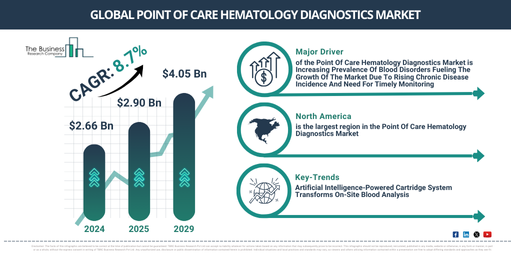
    The point of care hematology diagnostics market has experienced substantial growth in recent years. It is projected to increase from $2.66 billion in 2024 to $2.90 billion in 2025, achieving a compound annual growth rate (CAGR) of 9.1%. This historical expansion can be attributed to several factors including the rising prevalence of hematological disorders, the increasing adoption of decentralized healthcare settings, a growing focus on early disease detection, escalating healthcare expenditures in emerging markets, and the expanding use of portable diagnostic devices.

    The point of care hematology diagnostics market size is anticipated to undergo substantial growth in the upcoming years. This market is projected to expand to $4.05 billion by 2029, exhibiting a compound annual growth rate (CAGR) of 8.7%. This expansion during the forecast period is primarily fueled by the increasing embrace of personalized medicine, a rising need for immediate clinical decisions, the expanding requirement for home healthcare diagnostics, the growing occurrence of blood-related disorders, and heightened awareness regarding preventive healthcare. Significant developments expected in this period include advanced connectivity features in hematology analyzers, novel methods in sample preparation, the integration of artificial intelligence into diagnostic instruments, innovations in single-cell analysis, the adoption of cloud-based data platforms, and progress in lab-on-a-chip solutions.

    Unlock Your Free Sample Report for Exclusive Market Data:

    https://www.thebusinessresearchcompany.com/sample.aspx?id=27388&type=smp

    What Are The Drivers Pushing New Developments In The Point Of Care Hematology Diagnostics Market?

    The anticipated expansion of the point-of-care hematology diagnostics market is driven by the growing occurrence of blood disorders. These disorders are conditions impacting blood components like red blood cells, white blood cells, platelets, or plasma. The heightened incidence of blood disorders largely stems from the increasing prevalence of chronic illnesses, which directly affect blood health and necessitate continuous monitoring. Point-of-care hematology diagnostics facilitate prompt detection and oversight of blood disorders by delivering fast, precise results at or close to the patient’s location, thereby allowing for quicker clinical judgments and enhanced disease management. For example, data from April 2024 by the Perth Blood Institute, an Australia-based non-profit, indicated that individuals diagnosed with hemophilia – a genetic condition causing prolonged bleeding due to insufficient clotting factors – reached 257,146 in 2022, an increase from 233,577 in 2021. Consequently, the growing occurrence of blood disorders is fueling the expansion of the point-of-care hematology diagnostics market.

    What Are The Primary Types Of Segments Analyzed In The Point Of Care Hematology Diagnostics Market?

    The point of care hematology diagnostics market covered in this report is segmented

    1) By Type: Complete Blood Count, Coagulation Testing, Hemoglobin Testing, Anemia Diagnosis, Other Types

    2) By Product: Consumables, Systems

    3) By Mode Of Prescription: Prescription Based Product, Over-The-Counter Based Product

    4) By End User: Diagnostic Centers, Hospitals, Blood Banks, Transfusion Centers, Other End Users

    Subsegments:

    1) By Complete Blood Count: White Blood Cell Count, Red Blood Cell Count, Platelet Count, Hematocrit, Hemoglobin Concentration, Mean Corpuscular Volume (MCV)

    2) By Coagulation Testing: Prothrombin Time (PT), Activated Partial Thromboplastin Time (aPTT), International Normalized Ratio (INR), D-Dimer Test, Fibrinogen Level

    3) By Hemoglobin Testing: Total Hemoglobin, Glycated Hemoglobin (HbA1c), Oxyhemoglobin, Carboxyhemoglobin, Methemoglobin

    4) By Anemia Diagnosis: Iron Studies, Vitamin B12 Levels, Folate Levels, Reticulocyte Count, Ferritin Test, Transferrin Saturation

    5) By Other Types: Blood Typing And Crossmatching, Erythrocyte Sedimentation Rate, Malaria Parasite Detection, Sickle Cell Screening, C-Reactive Protein Testing

    What Long-Term Trends Will Shape The Future Growth Of The Point Of Care Hematology Diagnostics Industry?

    Leading companies within the point-of-care hematology diagnostics market are prioritizing the creation of technologically advanced solutions, such as cartridge-based AI-powered hematology analyzers, to provide swift, precise, and on-site blood analysis for enhanced patient outcomes. Cartridge-based AI-powered hematology analyzers function as compact diagnostic tools, employing single-use reagent cartridges and artificial intelligence algorithms to rapidly and accurately examine blood samples at the point of care. As an example, in September 2024, Zoetis Inc., a US-based veterinary health company, introduced Vetscan OptiCell, a cartridge-based, AI-powered hematology analyzer specifically designed for veterinary applications. This cutting-edge system delivers rapid, reference laboratory-quality complete blood count (CBC) results in minutes directly at the point of care, concurrently minimizing maintenance and hands-on operational time. It incorporates advanced AI-driven image analysis alongside viscoelastic focusing technology that precisely positions cells for clear visualization, allowing for accurate blood cell classification and automated identification of abnormalities, thus ensuring efficient and reliable veterinary diagnostics.

    Who Are The Primary Competitors In The Global Point Of Care Hematology Diagnostics Market?

    Major companies operating in the point of care hematology diagnostics market are F. Hoffmann-La Roche Ltd., Thermo Fisher Scientific Inc., Abbott Laboratories, Danaher Corporation, Siemens Healthineers AG, Shenzhen Mindray Bio-Medical Electronics Co. Ltd., Sysmex Corporation, HORIBA Ltd., Nova Biomedical Corp., S.D. Sight Diagnostics Ltd., EKF Diagnostics Holdings plc., Medsource Ozone Biomedicals Pvt. Ltd., BioSystems S.A., Chengdu Seamaty Technology Co. Ltd., Drucker Diagnostics LLC, Diamond Diagnostics Inc., DIAGON Kft., BioMedomics Inc., Norma Instruments Zrt., PixCell Medical Technologies Ltd.

    Download The Full Report For Exclusive Market Findings:

    https://www.thebusinessresearchcompany.com/report/point-of-care-hematology-diagnostics-global-market-report

    Which Geographies Are Emerging As Strong Markets For The Point Of Care Hematology Diagnostics Industry?

    North America was the largest region in the point of care hematology market in 2024. Asia-Pacific is expected to be the fastest-growing region in the forecast period. The regions covered in the point of care hematology diagnostics market report are Asia-Pacific, Western Europe, Eastern Europe, North America, South America, Middle East, Africa.

    Request A Customized Version Of The Point Of Care Hematology Diagnostics Market Report:

    https://www.thebusinessresearchcompany.com/customise?id=27388&type=smp

    Browse Through More Reports Similar to the Global Point Of Care Hematology Diagnostics Market 2025, By The Business Research Company

    Pre Engineered Buildings Global Market Report 2025

    https://www.thebusinessresearchcompany.com/report/pre-engineered-buildings-global-market-report

    Architectural And Structural Metals Global Market Report 2025

    https://www.thebusinessresearchcompany.com/report/architectural-and-structural-metals-global-market-report

    Architectural And Structural Metals Global Market Report 2025

    https://www.thebusinessresearchcompany.com/report/architectural-and-structural-metals-global-market-report

    Get in touch with us:

    The Business Research Company: https://www.thebusinessresearchcompany.com/

    Americas +1 310-496-7795

    Asia +44 7882 955267 & +91 8897263534

    Europe +44 7882 955267

    Email us at info@tbrc.info

    Follow us on:

    LinkedIn: https://in.linkedin.com/company/the-business-research-company

    YouTube: https://www.youtube.com/channel/UC24_fI0rV8cR5DxlCpgmyFQ

    Global Market Model: https://www.thebusinessresearchcompany.com/global-market-model

  • Global Syndromic Multiplex Diagnostics Market Trends and Growth Analysis 2025–2029

    Global Syndromic Multiplex Diagnostics Market Trends and Growth Analysis 2025–2029

    Unlock Global Insights – Save 20% on Market Reports with Code ONLINE20

    By How Much Is The Syndromic Multiplex Diagnostics Market Expected To Expand Between 2025 And 2029?

    The syndromic multiplex diagnostics market size has experienced rapid expansion in recent years. It is anticipated to increase from $3.11 billion in 2024 to $3.43 billion in 2025, reflecting a compound annual growth rate (CAGR) of 10.0%. This historical growth can be linked to a heightened demand for swift and accurate diagnostic solutions, greater awareness concerning early disease identification, an increase in hospital-acquired infections, the expanding adoption of molecular diagnostics, rising healthcare expenditure, and an increasing requirement for point-of-care testing.

    The syndromic multiplex diagnostics market is anticipated to experience substantial expansion over the upcoming years. Projections indicate it will reach a valuation of $4.96 billion by 2029, achieving a compound annual growth rate (CAGR) of 9.7%. This projected growth during the forecast timeframe is primarily driven by several factors: escalating investments in research and development efforts, increased uptake in settings with limited resources, the expansion of healthcare infrastructure within developing nations, a rise in government programs aimed at controlling infectious diseases, and an increasing need for decentralized diagnostic options. Key trends anticipated in this period encompass enhancements in multiplex polymerase chain reaction (PCR) technologies, novel developments in microfluidics and lab-on-chip systems, sophisticated automation in sample handling, breakthroughs in point-of-care molecular platforms, the incorporation of cloud-based diagnostic data frameworks, and progress in portable diagnostic devices.

    Unlock Your Free Sample Report for Exclusive Market Data:

    https://www.thebusinessresearchcompany.com/sample.aspx?id=27427&type=smp

    Which Major Market Drivers Are Shaping The Future Of The Syndromic Multiplex Diagnostics Market?

    The projected growth of the syndromic multiplex diagnostics market is expected to be propelled by the increasing prevalence of infectious diseases. Infectious diseases are defined as illnesses caused by harmful microorganisms such as bacteria, viruses, fungi, or parasites that invade the body and multiply, leading to symptoms and health complications. The surge in infectious diseases is driven by increased global travel, as it accelerates the spread of pathogens across borders and populations. Syndromic multiplex diagnostics enhance infectious disease management by enabling rapid and simultaneous detection of multiple pathogens from a single sample. They improve diagnostic accuracy and speed, supporting timely treatment decisions and better patient outcomes. For instance, in March 2023, according to the Centers for Disease Control and Prevention, a US-based national public health organization, there were 8,331 cases of tuberculosis (TB) reported in 2022, an increase of 5.9% from 7,874 cases in 2021. Therefore, the increasing prevalence of infectious diseases is driving the growth of the syndromic multiplex diagnostics market.

    What Are The Leading Segments Analyzed In The Syndromic Multiplex Diagnostics Market?

    The syndromic multiplex diagnostics market covered in this report is segmented

    1) By Product Type: Instruments, Reagents, Software And Services

    2) By Sample Type: Blood Samples, Urine Samples, Saliva Samples, Tissue Samples

    3) By Technology: Polymerase Chain Reaction, Mass Spectrometry, Nucleic Acid Amplification Tests, Next-Generation Sequencing

    4) By Application: Infectious Diseases, Respiratory Diseases, Gastrointestinal Diseases, Sexually Transmitted Infections, Central Nervous System Diseases

    5) By End User: Clinical Laboratories, Hospitals, Pharmaceutical And Biotechnology Companies, Research Institutes, Other End Users

    Subsegments:

    1) By Instruments: Real-Time Polymerase Chain Reaction (PCR) Systems, Microfluidic-Based Systems, Automated Sample-To-Answer Systems, Cartridge-Based Systems, Multiplex Polymerase Chain Reaction (PCR) Platforms

    2) By Reagents: Assay Panels, Primers And Probes, Enzymes, Buffers And Solutions, Sample Preparation Reagents

    3) By Software And Services: Data Analysis Software, Cloud-Based Diagnostic Platforms, Integration And Connectivity Solutions, Technical Support Services, Maintenance And Calibration Services, Training And Installation Services

    What Key Innovation Trends Are Fueling Advancements In The Syndromic Multiplex Diagnostics Market?

    Leading firms within the syndromic multiplex diagnostics market are prioritizing the creation of cutting-edge solutions, including AI-enhanced diagnostic algorithms, with the aim of improving the rapidity, precision, and thoroughness of pathogen identification. These AI-enhanced diagnostic algorithms represent sophisticated computational instruments that utilize artificial intelligence, specifically machine learning and deep learning methodologies, to process intricate clinical and laboratory information for quicker and more precise disease detection. An example of this trend is Qiagen N.V., a Netherlands-based molecular diagnostics company, which introduced two syndromic testing panels, the Gastrointestinal Panel 2 and the Meningitis and Encephalitis Panel, for its QIAstat Dx platform in January 2024. Such panels facilitate the swift and precise diagnosis of infectious ailments through the identification of numerous pathogens within a single test, thereby enhancing clinical decision-making and ultimately improving patient outcomes. Furthermore, the QIAstat-Dx system incorporates advanced data analytics capabilities, assisting healthcare professionals in the effective identification and management of outbreaks of infectious diseases.

    Which Major Industry Participants Are Leading The Syndromic Multiplex Diagnostics Market Growth?

    Major companies operating in the syndromic multiplex diagnostics market are Roche Molecular Systems Inc., Abbott Laboratories, Becton Dickinson and Company, Hologic Inc., Bio‑Rad Laboratories Inc., Qiagen N.V., Cepheid, Bosch Healthcare Solutions GmbH, Biocartis NV, Luminex Corporation, Curetis GmbH, Accelerate Diagnostics Inc., Applied BioCode Inc., Ador Diagnostics Ltd., Akonni Biosystems Inc., Alveo Technologies Inc., Atlas Genetics Ltd., BioFire Diagnostics LLC, Nanomix Inc., Primerdesign Ltd.

    Download The Full Report For Exclusive Market Findings:

    https://www.thebusinessresearchcompany.com/report/syndromic-multiplex-diagnostics-global-market-report

    Which Geographies Are Emerging As Strong Markets For The Syndromic Multiplex Diagnostics Industry?

    North America was the largest region in the syndromic multiplex diagnostics market in 2024. Asia-Pacific is expected to be the fastest-growing region in the forecast period. The regions covered in the syndromic multiplex diagnostics market report are Asia-Pacific, Western Europe, Eastern Europe, North America, South America, Middle East, Africa.

    Request A Customized Version Of The Syndromic Multiplex Diagnostics Market Report:

    https://www.thebusinessresearchcompany.com/customise?id=27427&type=smp

    Browse Through More Reports Similar to the Global Syndromic Multiplex Diagnostics Market 2025, By The Business Research Company

    Scissor Lift Global Market Report 2025

    https://www.thebusinessresearchcompany.com/report/scissor-lift-global-market-report

    Lifting Equipment Global Market Report 2025

    https://www.thebusinessresearchcompany.com/report/lifting-equipment-global-market-report

    Artificial Lift System Global Market Report 2025

    https://www.thebusinessresearchcompany.com/report/artificial-lift-system-global-market-report

    Get in touch with us:

    The Business Research Company: https://www.thebusinessresearchcompany.com/

    Americas +1 310-496-7795

    Asia +44 7882 955267 & +91 8897263534

    Europe +44 7882 955267

    Email us at info@tbrc.info

    Follow us on:

    LinkedIn: https://in.linkedin.com/company/the-business-research-company

    YouTube: https://www.youtube.com/channel/UC24_fI0rV8cR5DxlCpgmyFQ

    Global Market Model: https://www.thebusinessresearchcompany.com/global-market-model

  • Global Point Of Care Devices Market Trends and Growth Analysis 2025–2029

    Global Point Of Care Devices Market Trends and Growth Analysis 2025–2029

    Unlock Global Insights – Save 20% on Market Reports with Code ONLINE20

    What Is The Anticipated Size Of The Point Of Care Devices Market Over The Five-Year Period 2025–2029?

    The point of care devices market has demonstrated substantial growth in recent years. It is forecast to expand from $28.70 billion in 2024 to $31.46 billion in 2025, achieving a compound annual growth rate (CAGR) of 9.6%. This historical increase can be linked to factors such as increased recognition of early disease detection, the growing uptake of portable healthcare equipment, an escalating demand for decentralized diagnostic services, rising governmental efforts to enhance healthcare access, and an overall rise in global healthcare spending.

    The point of care devices market is projected to experience robust expansion over the coming years. It is anticipated to reach $44.84 billion by 2029, exhibiting a compound annual growth rate (CAGR) of 9.3%. This anticipated growth during the forecast period stems from several factors, including the expanding use of wireless and connected devices, a heightened emphasis on point-of-care testing in distant regions, a growing focus on economical diagnostic solutions, escalating investments in healthcare infrastructure, the increasing occurrence of infectious diseases, and a rising need for multi-parameter testing instruments. Key trends expected within this period encompass progress in lab-on-a-chip technology, the creation of artificial intelligence-driven diagnostic platforms, novelties in smartphone-integrated testing devices, enhancements in multiplex testing capabilities, and the emergence of cloud-connected point-of-care systems.

    Unlock Your Free Sample Report for Exclusive Market Data:

    https://www.thebusinessresearchcompany.com/sample.aspx?id=27387&type=smp

    What Are The Emerging Market Drivers Creating New Opportunities In The Point Of Care Devices Industry?

    The increasing need for diagnostic imaging is anticipated to boost the expansion of the point-of-care devices market in the future. Diagnostic imaging involves methods and procedures to generate visual depictions of the body’s internal structures for medical assessment and treatment. This demand for diagnostic imaging is on the rise because more chronic diseases require timely and precise diagnosis. Point-of-care devices improve diagnostic imaging capabilities with their compact and portable designs, making them suitable for various healthcare environments like clinics, patient bedsides, and distant locations. They also shorten the time to results by delivering quick and accurate imaging outcomes, which enhances clinical choices and the effectiveness of patient care. A relevant example shows that, as per a February 2025 survey by the National Library of Medicine, a US-based federal government, involving 348,214,053 insured individuals across Medicare fee-for-service, Medicare Advantage, Medicaid, and commercial insurance from 2018 to 2022, imaging utilization is expected to be 16.9% to 26.9% greater in 2055 than in 2023. Consequently, the rising demand for diagnostic imaging is fueling the growth of the point-of-care devices market.

    Which Key Segments Fueling The Point Of Care Devices Market?

    The point of care devices market covered in this report is segmented

    1) By Type Of Device: Diagnostic Devices, Therapeutic Devices, Monitoring Devices, Treatment Devices, Support Devices

    2) By Technology: Biochemical Technology, Microfluidics, Immunoassay Technology, Nucleic Acid Testing, Wearable Technology

    3) By Application: Cardiology, Diabetes Management, Infectious Diseases, Oncology, Pediatrics

    4) By Distribution Channel: Direct Sales, Distributors, Online Sales, Retail Pharmacies, Healthcare Institutions

    5) By End User: Hospitals, Clinics, Home Care Settings, Diagnostic Laboratories, Emergency Medical Services (EMS)

    Subsegments:

    1) By Diagnostic Devices: Blood Glucose Monitors, Hematology Analyzers, Coagulation Analyzers, Urinalysis Devices, Molecular Diagnostics

    2) By Therapeutic Devices: Infusion Pumps, Respiratory Therapy Devices, Pain Management Devices, Wound Care Devices, Dialysis Devices

    3) By Monitoring Devices: Vital Signs Monitors, Cardiac Monitors, Pulse Oximeters, Temperature Monitors, Respiratory Monitors

    4) By Treatment Devices: Defibrillators, Surgical Devices, Laser Therapy Devices, Physical Therapy Devices

    5) By Support Devices: Sample Collection Devices, Specimen Transport Devices, Data Management Devices, Calibration And Maintenance Devices

    Which Market Trends Are Creating New Opportunities In The Point Of Care Devices Industry?

    Key companies operating in the point-of-care devices market are focusing on developing technologically advanced solutions, such as artificial intelligence-powered handheld ultrasound systems, to enhance diagnostic precision and portability. These artificial intelligence-enhanced handheld ultrasound systems are portable imaging tools that leverage AI algorithms to assist in capturing and interpreting ultrasound images for quicker and more accurate diagnoses. For instance, in October 2023, Koninklijke Philips N.V., a Netherlands-based healthcare technology company, introduced the Compact 5000 Series, an AI-augmented point-of-care ultrasound system. This portable device offers superior image quality combined with sophisticated AI-driven automation for measurements and streamlined workflows, allowing for rapid and accurate diagnostics across various healthcare settings. It boasts user-friendly controls, accommodates multiple transducers, and integrates smoothly with telemedicine platforms to facilitate collaborative remote clinical care.

    Which Key Market Players Are Investing In Expansion And Innovation Of Point Of Care Devices Market?

    Major companies operating in the point of care devices market are Johnson & Johnson, F. Hoffmann-La Roche AG, Thermo Fisher Scientific Inc., Abbott Laboratories, Danaher Corporation, Siemens Healthineers AG, Becton, Dickinson and Company, Hologic Inc., BioMérieux SA, Quidel Corporation, OraSure Technologies Inc., Nova Biomedical Corporation, Sekisui Diagnostics LLC, Abaxis Inc., EKF Diagnostics Holdings plc, Trinity Biotech plc, Chembio Diagnostics Inc., PTS Diagnostics LLC, MeMed, Alere Inc., Diagnostics For All Inc.

    Download The Full Report For Exclusive Market Findings:

    https://www.thebusinessresearchcompany.com/report/point-of-care-devices-global-market-report

    Which Region Is Projected To Lead The Point Of Care Devices Market During The Forecast Period?

    North America was the largest region in the point of care devices market in 2024. Asia-Pacific is expected to be the fastest-growing region in the forecast period. The regions covered in the point of care devices market report are Asia-Pacific, Western Europe, Eastern Europe, North America, South America, Middle East, Africa.

    Request A Customized Version Of The Point Of Care Devices Market Report:

    https://www.thebusinessresearchcompany.com/customise?id=27387&type=smp

    Browse Through More Reports Similar to the Global Point Of Care Devices Market 2025, By The Business Research Company

    Ai In Inventory Management Global Market Report 2025

    https://www.thebusinessresearchcompany.com/report/ai-in-inventory-management-global-market-report

    Artificial Intelligence Ai In Asset Management Global Market Report 2025

    https://www.thebusinessresearchcompany.com/report/artificial-intelligence-ai-in-asset-management-global-market-report

    Artificial Intelligence Ai In Retail Global Market Report 2025

    https://www.thebusinessresearchcompany.com/report/artificial-intelligence-ai-in-retail-global-market-report

    Get in touch with us:

    The Business Research Company: https://www.thebusinessresearchcompany.com/

    Americas +1 310-496-7795

    Asia +44 7882 955267 & +91 8897263534

    Europe +44 7882 955267

    Email us at info@tbrc.info

    Follow us on:

    LinkedIn: https://in.linkedin.com/company/the-business-research-company

    YouTube: https://www.youtube.com/channel/UC24_fI0rV8cR5DxlCpgmyFQ

    Global Market Model: https://www.thebusinessresearchcompany.com/global-market-model

  • Superconducting Magnet For Medical Magnetic Resonance Imaging (MRI) System Industry Insights: Market Forecast to 2029

    Superconducting Magnet For Medical Magnetic Resonance Imaging (MRI) System Industry Insights: Market Forecast to 2029

    Unlock Global Insights – Save 20% on Market Reports with Code ONLINE20

    How Much Was The Superconducting Magnet For Medical Magnetic Resonance Imaging (MRI) System Market Worth In 2025, And What Is Its Anticipated Value By 2029?

    The superconducting magnet for medical magnetic resonance imaging (MRI) system market size has experienced significant growth recently. It is forecast to grow from $1.97 billion in 2024 to $2.13 billion in 2025, achieving a compound annual growth rate (CAGR) of 8.1%. This expansion in the past can be attributed to a number of factors, including increasing demand for high-resolution imaging, an increase in diagnostic imaging procedures, the rising prevalence of chronic diseases, government investments in medical imaging, a growing aging population, and rising awareness of early disease detection.

    The superconducting magnet for medical magnetic resonance imaging (MRI) system market is anticipated to experience substantial expansion over the coming years, reaching a valuation of $2.87 billion by 2029, exhibiting a compound annual growth rate (CAGR) of 7.8%. This projected increase during the forecast period is primarily driven by several factors, including the advancement of compact superconducting magnets, wider penetration into emerging healthcare sectors, a surge in demand for outpatient imaging facilities, the evolution of personalized medicine, and the increasing requirement for non-invasive diagnostic tools. Key developments anticipated within this timeframe involve a move towards greater magnetic field strengths, the proliferation of helium-free and zero boil-off magnet innovations, continuous improvements in superconducting materials, the creation of compact superconducting magnet setups, and a heightened focus on environmental sustainability and operational effectiveness.

    Unlock Your Free Sample Report for Exclusive Market Data:

    https://www.thebusinessresearchcompany.com/sample.aspx?id=27425&type=smp

    Which Factors And Drivers Are Influencing The Superconducting Magnet For Medical Magnetic Resonance Imaging (MRI) System Market In 2025?

    The escalating requirement for diagnostic imaging is anticipated to boost the expansion of the superconducting magnet for medical magnetic resonance imaging (MRI) system market in the coming period. Diagnostic imaging encompasses methods and procedures employed to generate visual depictions of a body’s internal structures for clinical examination and medical treatment. This heightened need for diagnostic imaging stems from the increasing incidence of chronic illnesses that necessitate prompt and precise diagnosis. Superconducting magnets for medical magnetic resonance imaging (MRI) system meet the needs of diagnostic imaging by facilitating high-field strength, which guarantees sharper and more accurate scans. These magnets enhance diagnostic accuracy while simultaneously shortening scan durations, thereby improving patient flow and operational effectiveness in clinical settings. As an illustration, in February 2025, a survey conducted by the National Library of Medicine, a US-based federal government entity, involving 348,214,053 insured individuals with Medicare fee-for-service, Medicare Advantage, Medicaid, and commercial insurance from 2018 to 2022, indicated that imaging utilization is predicted to be 16.9% to 26.9% greater in 2055 compared to 2023. Consequently, the rising demand for diagnostic imaging is propelling the growth of the superconducting magnet for medical magnetic resonance imaging (MRI) system market.

    What Are The Different Segment Classifications Within The Superconducting Magnet For Medical Magnetic Resonance Imaging (MRI) System Market?

    The superconducting magnet for medical magnetic resonance imaging (MRI) system market covered in this report is segmented

    1) By Type: Low-Temperature Superconductors (LTS), High-Temperature Superconductors (HTS)

    2) By System Type: Open Magnetic Resonance Imaging (MRI) Systems, Closed Magnetic Resonance Imaging (MRI) Systems, Dedicated Magnetic Resonance Imaging (MRI) Systems For Specific Applications

    3) By Magnetic Field Strength: 1.5 Tesla, 3 Tesla, 7 Tesla, Ultra-High Field Magnetic Resonance Imaging (MRI)

    4) By Application: Neurological Imaging, Musculoskeletal Imaging, Cardiac Imaging, Pediatric Imaging, Oncology Imaging

    5) By End-User: Hospitals, Diagnostic Imaging Centers, Research Institutions, Academic Medical Centers

    Subsegments:

    1) By Low-Temperature Superconductors (LTS): Niobium-Titanium (NbTi), Niobium-Tin (Nb₃Sn), Other Low-Temperature Superconductors (LTS) Materials

    2) By High-Temperature Superconductors (HTS): Yttrium Barium Copper Oxide (YBCO), Bismuth Strontium Calcium Copper Oxide (BSCCO), Other High-Temperature Superconductors (HTS) Materials

    Which Competitive Trends Are Defining The Superconducting Magnet For Medical Magnetic Resonance Imaging (MRI) System Market Structure?

    Leading companies operating in the superconducting magnet for medical magnetic resonance imaging (MRI) system market are prioritizing the development of technologically advanced products, such as sealed magnet systems, to decrease helium consumption, improve operational efficiency, and boost system reliability. Sealed magnet systems are superconducting magnet technologies engineered to function with minimal or zero helium boil-off by enclosing the cryogen within a fully sealed, maintenance-free cryostat. For example, in February 2025, GE HealthCare Technologies Inc., a US-based health technology company, unveiled Freelium, a next-generation sealed magnet platform designed to provide high-quality MRI imaging using less than 1% of the helium typically required by conventional systems. Freelium operates without the need for additional cooling or power infrastructure and integrates intelligent sensor technology for remote monitoring and automated recovery, thereby reducing the reliance on field engineers. This sealed design also simplifies transport and installation, contributing to more equitable access to magnetic resonance imaging (MRI) services.

    Which Key Players Are Driving Competition In The Superconducting Magnet For Medical Magnetic Resonance Imaging (MRI) System Market?

    Major companies operating in the superconducting magnet for medical magnetic resonance imaging (mri) system market are Hitachi Medical Corporation, Siemens Healthineers AG, Fujifilm Healthcare Corporation, Philips Medical Systems Nederland B.V., GE Healthcare Technologies Inc., Bruker Corporation, Shanghai United Imaging Healthcare Co. Ltd., Oxford Instruments plc, Canon Medical Systems Corporation, Japan Superconductor Technology Inc., Tesla Engineering Ltd., Cryogenic Ltd., Alltech Medical Systems America Inc., Aurora Imaging Technology Inc., American Magnetics Inc., Cryomagnetics Inc., Scientific Magnetics Ltd., Western Superconducting Technologies Co. Ltd., Yangzhou Kindsway Biotech Co. Ltd., Ningbo Jansen Superconducting Technologies Co. Ltd.

    Download The Full Report For Exclusive Market Findings:

    https://www.thebusinessresearchcompany.com/report/superconducting-magnet-for-medical-magnetic-resonance-imaging-mri-system-global-market-report

    What Are The Key Regional Factors Influencing The Superconducting Magnet For Medical Magnetic Resonance Imaging (MRI) System Market Growth?

    North America was the largest region in the superconducting magnet for medical magnetic resonance imaging (MRI) system market in 2024. Asia-Pacific is expected to be the fastest-growing region in the forecast period. The regions covered in the superconducting magnet for medical magnetic resonance imaging (MRI) system market report are Asia-Pacific, Western Europe, Eastern Europe, North America, South America, Middle East, Africa.

    Request A Customized Version Of The Superconducting Magnet For Medical Magnetic Resonance Imaging (MRI) System Market Report:

    https://www.thebusinessresearchcompany.com/customise?id=27425&type=smp

    Browse Through More Reports Similar to the Global Superconducting Magnet For Medical Magnetic Resonance Imaging (MRI) System Market 2025, By The Business Research Company

    Concrete Repair Mortars Global Market Report 2025

    https://www.thebusinessresearchcompany.com/report/concrete-repair-mortars-global-market-report

    Mortar Mixing Equipment Global Market Report 2025

    https://www.thebusinessresearchcompany.com/report/mortar-mixing-equipment-global-market-report

    Decorative Concrete Global Market Report 2025

    https://www.thebusinessresearchcompany.com/report/decorative-concrete-global-market-report

    Get in touch with us:

    The Business Research Company: https://www.thebusinessresearchcompany.com/

    Americas +1 310-496-7795

    Asia +44 7882 955267 & +91 8897263534

    Europe +44 7882 955267

    Email us at info@tbrc.info

    Follow us on:

    LinkedIn: https://in.linkedin.com/company/the-business-research-company

    YouTube: https://www.youtube.com/channel/UC24_fI0rV8cR5DxlCpgmyFQ

    Global Market Model: https://www.thebusinessresearchcompany.com/global-market-model

  • Plasmonic Laser Ablation Device Market Forecast: What to Expect by 2029

    Plasmonic Laser Ablation Device Market Forecast: What to Expect by 2029

    Unlock Global Insights – Save 20% on Market Reports with Code ONLINE20

    What Are The Forecasted Market Size Estimates For The Plasmonic Laser Ablation Device Market Between 2025 And 2029?

    The plasmonic laser ablation device market size has witnessed substantial expansion in recent years. This market is projected to expand from $1.35 billion in 2024 to $1.50 billion in 2025, demonstrating a compound annual growth rate (CAGR) of 10.6%. The historic period’s growth can be attributed to factors such as the increasing prevalence of cancer and chronic diseases, rising investment in medical research and clinical trials, the growing integration of plasmonic technology in biomedical applications, its expanding adoption in material science and nanotechnology, and a heightened emphasis on patient safety and recovery.

    The plasmonic laser ablation device market is projected to experience substantial growth over the next few years. It is forecast to attain a size of $2.21 billion by 2029, exhibiting a compound annual growth rate (CAGR) of 10.2%. This expansion during the outlook period can be attributed to the increasing deployment of femtosecond and nanosecond laser pulses, a growing demand for outpatient and day-care surgeries, the expanding trend of precision medicine, broader adoption in dermatological and cosmetic procedures, and the rising need for image-guided surgical technologies. Noteworthy trends for the forecast period encompass improvements in femtosecond and nanosecond laser technologies, the integration of real-time imaging systems, progress in biocompatible nanoparticle formulations, advancements in surface plasmon resonance (SPR) monitoring, and developments in photothermal and photomechanical effects.

    Unlock Your Free Sample Report for Exclusive Market Data:

    https://www.thebusinessresearchcompany.com/sample.aspx?id=27386&type=smp

    Which Drivers Are Impacting The Plasmonic Laser Ablation Device Market?

    The plasmonic laser ablation device market is projected to expand due to the growing demand for minimally invasive procedures. These medical techniques, which involve small incisions or natural orifices and specialized instruments, are chosen for their ability to lessen pain, scarring, and recovery periods. The rising adoption of minimally invasive procedures stems from their faster patient recovery times, enabling a quicker return to daily routines and fewer complications. Plasmonic laser ablation devices play a crucial role in these procedures by enabling highly accurate and localized tissue removal, thereby minimizing thermal damage to surrounding areas, reducing incision sizes, and accelerating the healing process. For example, data from the American Society of Plastic Surgeons in June 2024 revealed that approximately 25.4 million minimally invasive procedures were carried out in 2023, marking a 7% increase compared to 2022. Consequently, the escalating demand for minimally invasive procedures is fueling the expansion of the plasmonic laser ablation device market. The plasmonic laser ablation device market is anticipated to grow due to increasing healthcare expenditure. Healthcare expenditure encompasses the overall spending by individuals, governments, and organizations on medical services, treatments, and health-related resources. This spending is on the rise, primarily driven by an aging population that typically requires more extensive and expensive medical attention for chronic conditions and age-related ailments. Elevated healthcare spending facilitates the advancement and adoption of sophisticated technologies, such as plasmonic laser ablation devices, by providing financial support for research, acquisition, and their incorporation into clinical settings. For instance, in March 2022, the Centers for Medicare and Medicaid Services (CMS) projected that the annual national health spending would increase by an average of 5.1% between 2021 and 2030, eventually reaching approximately $6.8 trillion by 2030. Thus, increasing healthcare expenditures are serving as a significant driver for the growth of the plasmonic laser ablation device market.

    How Is The Plasmonic Laser Ablation Device Market Classified Into Different Segments?

    The plasmonic laser ablation device market covered in this report is segmented

    1) By Type: Yttrium Aluminum Garnet Laser, Carbon Dioxide Laser, Other Types

    2) By Device Type: Pulsed Plasmonic Laser Ablation Devices, Continuous Wave Plasmonic Laser Ablation Devices, Femtosecond Plasmonic Laser Ablation Devices, Nanosecond Plasmonic Laser Ablation Devices

    3) By Technology: Surface Plasmon Resonance (SPR) Technology, Nanoparticle Mediated Laser Ablation, Optical Coherence Tomography (OCT)

    4) By Application: Medical Applications, Material Processing, Research And Development

    5) By End-User: Hospitals, Research Institutes, Manufacturing Industries, Other Users

    Subsegments:

    1) By Yttrium Aluminum Garnet: Nanosecond Yttrium Aluminum Garnet Laser, Picosecond Yttrium Aluminum Garnet Laser, Q-switched Yttrium Aluminum Garnet Laser

    2) By Carbon Dioxide (CO₂) Laser: Continuous Wave Carbon Dioxide Laser, Pulsed Carbon Dioxide Laser, rational Carbon Dioxide Laser

    3) By Other Types: Femtosecond Laser, Excimer Laser, Ultrafast Laser

    Who Are The Core Companies Influencing The Plasmonic Laser Ablation Device Market Landscape?

    Major companies operating in the plasmonic laser ablation device market are Mitsubishi Electric Corporation, Boston Scientific Corporation, Trumpf Group, Coherent Corp., Han’s Laser Technology Industry Group Co. Ltd., Lumentum Holdings Inc., Thorlabs Inc., Edmund Optics Inc, Jenoptik AG, Universal Laser Systems Inc., Cincinnati Incorporated, Epilog Laser, RPMC Lasers, Dongguan Mactron Technology Co. Ltd., Aesthetic World, Astanza Laser LLC, Boss Laser LLc, Quantum Composers, Laser Photonics Corporation, Medioxra LLP.

    Download The Full Report For Exclusive Market Findings:

    https://www.thebusinessresearchcompany.com/report/plasmonic-laser-ablation-device-global-market-report

    What Are The Key Regional Factors Influencing The Plasmonic Laser Ablation Device Market Growth?

    North America was the largest region in the plasmonic laser ablation device market in 2024. Asia-Pacific is expected to be the fastest-growing region in the forecast period. The regions covered in the plasmonic laser ablation device market report are Asia-Pacific, Western Europe, Eastern Europe, North America, South America, Middle East, Africa.

    Request A Customized Version Of The Plasmonic Laser Ablation Device Market Report:

    https://www.thebusinessresearchcompany.com/customise?id=27386&type=smp

    Browse Through More Reports Similar to the Global Plasmonic Laser Ablation Device Market 2025, By The Business Research Company

    Precast Concrete Market 2025

    https://www.thebusinessresearchcompany.com/report/precast-concrete-market

    Precast Construction Global Market Report 2025

    https://www.thebusinessresearchcompany.com/report/precast-construction-global-market-report

    Ready Mix Concrete Global Market Report 2025

    https://www.thebusinessresearchcompany.com/report/ready-mix-concrete-global-market-report

    Get in touch with us:

    The Business Research Company: https://www.thebusinessresearchcompany.com/

    Americas +1 310-496-7795

    Asia +44 7882 955267 & +91 8897263534

    Europe +44 7882 955267

    Email us at info@tbrc.info

    Follow us on:

    LinkedIn: https://in.linkedin.com/company/the-business-research-company

    YouTube: https://www.youtube.com/channel/UC24_fI0rV8cR5DxlCpgmyFQ

    Global Market Model: https://www.thebusinessresearchcompany.com/global-market-model

  • Suction And Aspiration Devices Market Size and Growth Forecast for Businesses 2025–2029

    Suction And Aspiration Devices Market Size and Growth Forecast for Businesses 2025–2029

    Unlock Global Insights – Save 20% on Market Reports with Code ONLINE20

    What Is The Future Market Size Estimation For The Suction And Aspiration Devices Market Covering 2025–2034?

    The market for suction and aspiration devices has experienced significant growth over recent years. Projections indicate a rise from $1.08 billion in 2024 to $1.18 billion by 2025, demonstrating a compound annual growth rate (CAGR) of 9.5%. This historical expansion can be linked to a global increase in surgical procedures, a growing prevalence of respiratory ailments, an uptick in emergency care admissions, wider acceptance in dental settings, and the escalating need for portable suction equipment.

    The suction and aspiration devices market is anticipated to show substantial growth in the upcoming years. It is projected to expand to $1.68 billion by 2029, achieving a compound annual growth rate (CAGR) of 9.1%. This expansion during the forecast period is primarily driven by the increasing demand for minimally invasive surgeries, the growing necessity for advanced critical care infrastructure, the escalating prevalence of chronic diseases, broader utilization in home healthcare settings, and a heightened focus on patient safety and recovery. Significant trends expected during this period involve technological advancements in battery-powered suction devices, innovations leading to quiet and compact suction units, developments in disposable suction accessories, increased investment in portable medical equipment design, and novel approaches in dual-powered aspiration systems.

    Unlock Your Free Sample Report for Exclusive Market Data:

    https://www.thebusinessresearchcompany.com/sample.aspx?id=27424&type=smp

    What Are The Key Drivers Of Growth In The Suction And Aspiration Devices Market?

    The rising incidence of respiratory illnesses is projected to fuel the expansion of the suction and aspiration devices market moving forward. Respiratory diseases are defined as medical conditions that impact the lungs and other components of the respiratory system, which are essential for breathing. This escalating occurrence of respiratory diseases is attributed to air pollution, as prolonged exposure to pollutants like particulate matter and nitrogen dioxide causes damage to the lungs and airways, resulting in conditions such as asthma, COPD, and various other chronic respiratory illnesses. Suction and aspiration devices play a vital role in respiratory care by efficiently clearing airways, enabling consistent airway management, and mitigating the risk of complications, thereby becoming crucial in critical and emergency environments for enhancing patient outcomes with respiratory conditions. For instance, in June 2025, the Office for Health Improvement and Disparities, a UK-based government agency, indicated that the North East and Yorkshire NHS England region recorded the highest respiratory disease admission rate in 2024, at 1,765 admissions per 100,000 population (ranging from 1,753 to 1,777), marking a 7% increase compared to the previous year. Consequently, the increasing prevalence of respiratory diseases is propelling the growth of the suction and aspiration devices market.

    What Are The Primary Types Of Segments Analyzed In The Suction And Aspiration Devices Market?

    The suction and aspiration devices market covered in this report is segmented

    1) By Type: Alternating Current (AC) Powered Devices, Battery Powered Devices, Dual Powered Devices, Manually Operated Devices

    2) By Portability: Hand Held Suction Device, Wall Mounted Suction Device

    3) By Vacuum System: Electrically Powered, Manual, Venturi

    4) By Application: Airway Clearing, Surgical Applications, Research And Diagnostics

    5) By End User: Gastric, Respiratory, Wound Section, Delivery Rooms, Other End Users

    Subsegments:

    1) By Alternating Current (AC) Powered Devices: Wall-Mounted Suction Units, Portable AC-Powered Aspirators, High-Vacuum Suction Devices, Continuous Suction Systems

    2) By Battery Powered Devices: Rechargeable Handheld Suction Devices, Battery-Powered Portable Suction Pumps, Emergency Medical Suction Units, Pediatric Battery Suction Devices

    3) By Dual Powered Devices: AC Or DC Convertible Suction Systems, Hybrid Emergency Aspirators, Field-Deployable Suction Units, Multi-Mode Hospital Suction Devices

    4) By Manually Operated Devices: Handheld Manual Suction Pumps, Foot-Operated Suction Devices, Manual Mucus Extractors, Manual Resuscitator With Suction Integration

    What Are The Latest Industry Trends Transforming The Suction And Aspiration Devices Market?

    Leading companies in the suction and aspiration devices market are concentrating on developing advanced solutions, such as first-line mechanical thrombectomy techniques, to improve procedural speed, safety, and clinical outcomes in acute ischemic stroke treatment. These first-line mechanical thrombectomy techniques refer to the initial method utilized to extract a blood clot from a blocked cerebral artery during an ischemic stroke. For instance, in May 2025, Imperative Care Inc., a US-based medical technology company, introduced a dual-catheter stroke aspiration system specifically for removing oxygen-blocking blood clots. This dual-catheter stroke aspiration system boasts distinct features, including simultaneous proximal and distal aspiration, which allows for continuous clot engagement and removal; a dual-lumen design that minimizes the requirement for multiple device exchanges; enhanced trackability and flexibility to navigate tortuous cerebral vessels; a strong and consistent suction force for effective clot retrieval; and an ergonomic, physician-friendly design that boosts procedural efficiency and control during acute ischemic stroke interventions.

    Who Are The Top Performing Companies In The Suction And Aspiration Devices Market In Recent Years?

    Major companies operating in the suction and aspiration devices market are Cardinal Health Inc., Medtronic Plc, Stryker Corporation, Boston Scientific Corporation, Draegerwerk AG & Co. KGaA, Cook Medical Inc., Schuco International KG, Penumbra Inc., Laerdal Medical AS, Drive DeVilbiss Healthcare, B. Braun Melsungen AG, Karl Storz SE & Co. KG, Integra Biosciences AG, Amsino International Inc., Labcoco Corporation, Precision Medical Inc., SunMed LLC, Allied Healthcare Products Inc., Pacific Hospital Supply Co. Ltd., and Medicop Inc.

    Download The Full Report For Exclusive Market Findings:

    https://www.thebusinessresearchcompany.com/report/suction-and-aspiration-devices-global-market-report

    How Do Regional Market Performances Compare Within The Suction And Aspiration Devices Industry?

    North America was the largest region in the suction and aspiration devices market in 2024. Asia-Pacific is expected to be the fastest-growing region in the forecast period. The regions covered in the suction and aspiration devices market report are Asia-Pacific, Western Europe, Eastern Europe, North America, South America, Middle East, Africa.

    Request A Customized Version Of The Suction And Aspiration Devices Market Report:

    https://www.thebusinessresearchcompany.com/customise?id=27424&type=smp

    Browse Through More Reports Similar to the Global Suction And Aspiration Devices Market 2025, By The Business Research Company

    Plywood Market 2025

    https://www.thebusinessresearchcompany.com/report/plywood-market

    Dental Veneers Global Market Report 2025

    https://www.thebusinessresearchcompany.com/report/dental-veneers-global-market-report

    Dental Veneers Global Market Report 2025

    https://www.thebusinessresearchcompany.com/report/dental-veneers-global-market-report

    Get in touch with us:

    The Business Research Company: https://www.thebusinessresearchcompany.com/

    Americas +1 310-496-7795

    Asia +44 7882 955267 & +91 8897263534

    Europe +44 7882 955267

    Email us at info@tbrc.info

    Follow us on:

    LinkedIn: https://in.linkedin.com/company/the-business-research-company

    YouTube: https://www.youtube.com/channel/UC24_fI0rV8cR5DxlCpgmyFQ

    Global Market Model: https://www.thebusinessresearchcompany.com/global-market-model

  • Global Smart Wearable Snore Detector Industry Trends: Where the Market Is Headed by 2029

    Global Smart Wearable Snore Detector Industry Trends: Where the Market Is Headed by 2029

    Unlock Global Insights – Save 20% on Market Reports with Code ONLINE20

    How Much Larger Is The Smart Wearable Snore Detector Market Expected To Become By 2029 Compared With Its 2025 Level?

    The smart wearable snore detector market size has demonstrated rapid growth in recent years. This market is projected to expand from $0.82 billion in 2024 to $0.93 billion by 2025, exhibiting a compound annual growth rate (CAGR) of 12.6%. Historically, this expansion has been driven by several factors, including an uptick in diagnosis rates, the development of telemedicine services, a heightened prevalence of comorbidities, an escalating number of clinical trials, and an increase in regulatory approvals.

    The smart wearable snore detector market size is anticipated to experience swift expansion over the coming years. This market is projected to reach $1.47 billion by 2029, exhibiting a compound annual growth rate (CAGR) of 12.2%. Factors contributing to this growth during the forecast period include increasing public understanding of sleep-related health problems, the growing occurrence of obstructive sleep apnea, escalating healthcare spending, and an expanding middle-class demographic. Key developments expected within the forecast timeframe encompass advances in technology, connectivity with smartwatches, incorporation into mobile health dashboards, the assimilation of wearable snore data, and the creation of artificial intelligence models.

    Unlock Your Free Sample Report for Exclusive Market Data:

    https://www.thebusinessresearchcompany.com/sample.aspx?id=27420&type=smp

    What Are The Emerging Market Drivers Creating New Opportunities In The Smart Wearable Snore Detector Industry?

    The smart wearable snore detector market is anticipated to expand as public awareness of sleep health issues continues to rise. Sleep health awareness represents the increasing public recognition of how essential sufficient and quality sleep is for overall well-being, productivity, and preventing disease. This understanding of sleep health concerns is intensifying due to the growing acknowledgment of the connection between poor sleep and chronic conditions like obesity, diabetes, and cardiovascular disease. Smart wearable snore detectors contribute to this awareness by offering real-time insights and data that assist users in identifying and addressing potential sleep disorders early. For instance, in December 2023, the Sleep Foundation, a US-based organization dedicated to promoting sleep health through evidence-based information and research, reported that approximately 37% of U.S. adults in 2023 indicated a worsening of their sleep quality, compared to 28% in previous years. Consequently, the increasing awareness of sleep health issues is driving the growth of the smart wearable snore detector market.

    What Are The Emerging Segments Gaining Attention In The Smart Wearable Snore Detector Market?

    The smart wearable snore detector market covered in this report is segmented

    1) By Product Type: Wristband Snore Detectors, Patch Snore Detectors, Headband Snore Detectors, Other Products

    2) By Technology: Sound-Based, Vibration-Based, Motion Sensor-Based, Other Technologies

    3) By Distribution Channel: Online Stores, Pharmacies, Specialty Stores, Other Distribution Channels

    4) By Application: Home Care, Sleep Clinics, Hospitals, Other Applications

    Subsegments:

    1) By Wristband Snore Detectors: Vibration-Based Snore Alerts, Bluetooth-Enabled Wristbands, Sleep Tracking Integrated Wristbands, Adjustable Sensitivity Bands.

    2) By Patch Snore Detectors: Adhesive Chest Patches, Throat Vibration Patches, Multi-Sensor Sleep Patches, Disposable Snore Detection Patches

    3) By Headband Snore Detectors: Electroencephalogram-Based Headbands, Bone Conduction Feedback Headbands, Sleep Position Monitoring Headbands, Wireless Smart Headbands

    4) By Other Products: Smart Neckbands, In-Ear Snore Monitors, Jaw-Support Wearables, Smart Sleep Masks With Snore Detection

    What Are The Major Trends Driving The Growth Of The Smart Wearable Snore Detector Market?

    Major companies operating in the smart wearable snore detector market are concentrating on developing technologically advanced products, such as AI-powered biofeedback-enabled wristbands, aimed at monitoring snoring patterns, improving sleep quality, and reducing episodes of sleep-disordered breathing. AI-powered biofeedback-enabled wristbands are smart wearables that leverage artificial intelligence to track body signals and provide gentle feedback, like vibrations, to help users modify behaviors or alleviate problems such as snoring. For example, in September 2024, AppYea Inc., an Israel-based digital health company, launched the AppySleep device, an advanced AI-driven wearable wristband designed to assist in reducing snoring and monitoring sleep patterns. It connects smoothly to a smartphone app, detecting snoring and abnormal breathing during sleep. When snoring is identified, it gently vibrates to prompt the user to shift positions, often encouraging side-sleeping for enhanced airflow. The vibration settings can be customized to individual preferences. The app furnishes users with comprehensive sleep insights, including snoring data, breathing patterns, and progress graphs. Additionally, users receive access to a personal cloud account to monitor long-term improvements in sleep quality.

    Which Industry Leaders Are Driving Innovation Across The Smart Wearable Snore Detector Market?

    Major companies operating in the smart wearable snore detector market are Samsung Electronics Co. Ltd., Koninklijke Philips N.V., Fitbit Inc., Zeus Sleep Inc., Ozlo Inc., Hupnos Inc., Imagimob AB, VVFLY Electronics Co. Ltd., Meditas Ltd., AppYea Inc., Beddr Inc., Shenzhen Xinhui Technology Co. Ltd., Snore Circle, Wellue Health, Go2Silence, Sleepmi, Walkervo, Snooor Ltd., ELBME, AMAZHEAL.

    Download The Full Report For Exclusive Market Findings:

    https://www.thebusinessresearchcompany.com/report/smart-wearable-snore-detector-global-market-report

    How Does The Smart Wearable Snore Detector Market Perform Across Key Geographic Regions?

    North America was the largest region in the smart wearable snore detector market in 2024. Asia-Pacific is expected to be the fastest-growing region in the forecast period. The regions covered in the smart wearable snore detector market report are Asia-Pacific, Western Europe, Eastern Europe, North America, South America, Middle East, Africa.

    Request A Customized Version Of The Smart Wearable Snore Detector Market Report:

    https://www.thebusinessresearchcompany.com/customise?id=27420&type=smp

    Browse Through More Reports Similar to the Global Smart Wearable Snore Detector Market 2025, By The Business Research Company

    Nanomaterials Global Market Report 2025

    https://www.thebusinessresearchcompany.com/report/nanomaterials-global-market-report

    Nanotechnology In Energy Applications Global Market Report 2025

    https://www.thebusinessresearchcompany.com/report/nanotechnology-in-energy-applications-global-market-report

    Smart Polymers Global Market Report 2025

    https://www.thebusinessresearchcompany.com/report/smart-polymers-global-market-report

    Get in touch with us:

    The Business Research Company: https://www.thebusinessresearchcompany.com/

    Americas +1 310-496-7795

    Asia +44 7882 955267 & +91 8897263534

    Europe +44 7882 955267

    Email us at info@tbrc.info

    Follow us on:

    LinkedIn: https://in.linkedin.com/company/the-business-research-company

    YouTube: https://www.youtube.com/channel/UC24_fI0rV8cR5DxlCpgmyFQ

    Global Market Model: https://www.thebusinessresearchcompany.com/global-market-model

  • Smart Wearable Kidney Monitor Industry Forecast to Hit $2.09 Billion by 2029 With a Strong 18.2% CAGR

    Smart Wearable Kidney Monitor Industry Forecast to Hit $2.09 Billion by 2029 With a Strong 18.2% CAGR

    Unlock Global Insights – Save 20% on Market Reports with Code ONLINE20

    #What Are The Current (2025) And Forecast (2029) Sizes Of The Smart Wearable Kidney Monitor Market?

    The smart wearable kidney monitor market size has seen significant expansion in recent years. It is anticipated to expand from $0.91 billion in 2024 to $1.07 billion in 2025, achieving an 18.6% compound annual growth rate (CAGR). The driving forces behind this past growth include increased investment in digital health startups focusing on nephrology, a rise in government initiatives, an uptick in clinical trials, the expansion of home-based healthcare services, and the proliferation of digital health startups.

    The smart wearable kidney monitor market size is anticipated to expand rapidly in the coming years, projected to reach $2.10 billion by 2029, exhibiting a compound annual growth rate (CAGR) of 18.2%. This growth over the forecast period is fueled by increasing healthcare expenditures, a rising prevalence of chronic kidney diseases, greater penetration of e-commerce platforms, the growing incidence of diabetes and hypertension, and an increasing number of kidney transplant procedures. Significant trends during this period are expected to include the integration of telemedicine, the incorporation of artificial intelligence, the miniaturization of sensors, and continuous advancements in biosensor technology.

    Unlock Your Free Sample Report for Exclusive Market Data:

    https://www.thebusinessresearchcompany.com/sample.aspx?id=27419&type=smp

    Which Drivers Are Impacting The Smart Wearable Kidney Monitor Market?

    The rising volume of kidney transplant operations is anticipated to drive expansion in the smart wearable kidney monitor market in the future. These procedures involve surgically implanting a healthy donor kidney into a patient experiencing kidney failure to restore normal renal function. The increasing incidence of chronic kidney disease (CKD) is leading to a greater number of such transplant operations, as more individuals advance to end-stage renal failure, necessitating transplantation for survival. Smart wearable kidney monitors support post-transplant care by offering continuous, non-invasive monitoring of kidney activity, which facilitates the early identification of potential complications. Such devices assist in personalized treatment strategies and help lessen hospital admissions, thereby enhancing outcomes after transplantation and improving convenience for patients. For instance, the U.S. Department of Health & Human Services, a US-based government agency, reported in January 2025 that the number of kidney transplants totaled 27,759 in 2024, representing a 1.6% increase compared to 2023. Consequently, this rise in kidney transplant operations fuels the expansion of the smart wearable kidney monitor market.

    What Are The Major Segment Types Covered In The Smart Wearable Kidney Monitor Market?

    The smart wearable kidney monitor market covered in this report is segmented

    1) By Product Type: Patch-Based Monitors, Wristband Monitors, Belt Monitors, Other Types

    2) By Distribution Channel: Online, Offline

    3) By Application: Chronic Kidney Disease Monitoring, Dialysis Monitoring, Post-Transplant Monitoring, Other Applications

    4) By End-User: Hospitals And Clinics, Home Care Settings, Ambulatory Surgical Centers, Other End-Users

    Subsegments:

    1) By Patch-Based Monitors: Electrolyte Monitoring Patches, Hydration Monitoring Patches, Uremic Toxin Monitoring Patches, Hemodynamic Monitoring Patches, Multi-Parameter Biomarker Monitoring Patches

    2) By Wristband Monitors: Potassium Monitoring Wristbands, Fluid Balance Tracking Wristbands, Blood Pressure Monitoring Wristbands, Heart Rate And Vital Sign Monitoring Wristbands, Smart Alert-Enabled Wristbands

    3) By Belt Monitors: Dialysate Flow Tracking Belts, Portable Hemodialysis Support Belts, Renal Function Monitoring Belts, Wireless Data-Transmission Belts

    4) By Other Types: Smart Clothing With Embedded Renal Sensors, Implantable Kidney Monitoring Devices, Clip-On Monitoring Modules, Wearable Artificial Kidney Devices, Sensor-Integrated Headbands Or Chest Straps

    What Are The Major Trends Driving The Growth Of The Smart Wearable Kidney Monitor Market?

    Prominent companies operating in the smart wearable kidney monitor market are concentrating on developing technologically advanced products, such as biowearable sensors, with the goal of enhancing accuracy, improving patient outcomes, and enabling real-time monitoring of chronic kidney disease (CKD). Biowearable sensors are compact, non-invasive devices that continuously track key biomarkers related to kidney function, including creatinine and urea levels, through the analysis of sweat or interstitial fluid. For instance, in April 2024, Metyos, a France-based biowearable technology company, introduced a biowearable sensor device. This lightweight, wrist-worn biosensor measures critical kidney biomarkers in real time, furnishing patients and healthcare providers with continuous data for better disease management. The biowearable device leverages advanced nanotechnology and AI-driven analytics to detect early signs of kidney dysfunction, thereby reducing the need for frequent blood tests and hospital visits. Additionally, the device synchronizes with a mobile app, offering personalized health insights and alerts for abnormal biomarker levels, which facilitates proactive care and timely medical intervention.

    Who Are The Key Multinational Companies Dominating The Smart Wearable Kidney Monitor Market?

    Major companies operating in the smart wearable kidney monitor market are Cardinal Peak Inc., KidneyX, Alio Inc., Nephria Bio Inc., Vivance Technologies Inc., GFR90 Inc., Kite Medical Ltd., Metyos SAS, Proton Intelligence Inc., Kalium Health Ltd., WearTech Applied Research Center.

    Download The Full Report For Exclusive Market Findings:

    https://www.thebusinessresearchcompany.com/report/smart-wearable-kidney-monitor-global-market-report

    Which Region Is Expected To Witness The Fastest Growth In The Smart Wearable Kidney Monitor Market?

    North America was the largest region in the smart wearable kidney monitor market in 2024. Asia-Pacific is expected to be the fastest-growing region in the forecast period. The regions covered in the smart wearable kidney monitor market report are Asia-Pacific, Western Europe, Eastern Europe, North America, South America, Middle East, Africa.

    Request A Customized Version Of The Smart Wearable Kidney Monitor Market Report:

    https://www.thebusinessresearchcompany.com/customise?id=27419&type=smp

    Browse Through More Reports Similar to the Global Smart Wearable Kidney Monitor Market 2025, By The Business Research Company

    Nanomaterials Global Market Report 2025

    https://www.thebusinessresearchcompany.com/report/nanomaterials-global-market-report

    Smart Polymers Global Market Report 2025

    https://www.thebusinessresearchcompany.com/report/smart-polymers-global-market-report

    Nanotechnology In Energy Applications Global Market Report 2025

    https://www.thebusinessresearchcompany.com/report/nanotechnology-in-energy-applications-global-market-report

    Get in touch with us:

    The Business Research Company: https://www.thebusinessresearchcompany.com/

    Americas +1 310-496-7795

    Asia +44 7882 955267 & +91 8897263534

    Europe +44 7882 955267

    Email us at info@tbrc.info

    Follow us on:

    LinkedIn: https://in.linkedin.com/company/the-business-research-company

    YouTube: https://www.youtube.com/channel/UC24_fI0rV8cR5DxlCpgmyFQ

    Global Market Model: https://www.thebusinessresearchcompany.com/global-market-model