Category: Medical Equipment

  • Comprehensive Forecast: Refurbished Dental Equipment And Maintenance Market Share, Growth, and Opportunities Through 2029

    Comprehensive Forecast: Refurbished Dental Equipment And Maintenance Market Share, Growth, and Opportunities Through 2029

    Claim your 30% discount on Global Market Reports with code ONLINE30. Limited time only.

    Claim your 30% discount on Global Market Reports with code ONLINE30. Limited time only.

    What Are the Forecasted Growth Rate and Market Size of the Refurbished Dental Equipment And Maintenance Market?

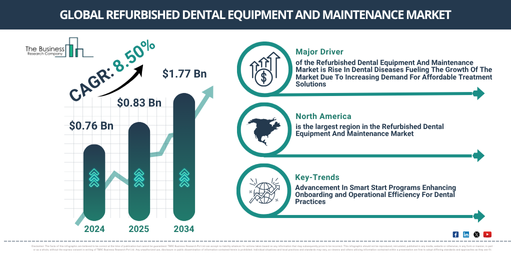
    There has been a robust growth in the market size of refurbished dental equipment and maintenance in the past few years. It’s projected to expand from $0.76 billion in 2024 to about $0.83 billion in 2025, with a compound annual growth rate (CAGR) of 8.8%. The historical growth is credited to the upsurge in small and independent dental practices, increased oral health screening initiatives, expansion in dental education, increased sales of refurbished digital diagnostic devices, and the escalating demand for mobile dental clinics.

    In the coming years, a significant increase is anticipated in the market size of refurbished dental equipment and maintenance, projected to reach $1.15 billion in 2029 with a compound annual growth rate (CAGR) of 8.5%. The expansion in the geriatric population, escalating healthcare costs, rising adoption of refurbished medical appliances, increase in dental clinics, and growth of dental tourism can be credited for this uptick during the forecasted period. Key market trends for this duration include improvements in refurbishment technology, advanced integration of sterilization and hygiene, innovation in digitized dental equipment, introduction of AI in dental diagnostics, and progress in environmentally friendly packaging and logistics.

    Download The Free Sample Report Here:

    https://www.thebusinessresearchcompany.com/sample.aspx?id=25894&type=smp

    Which Factor Is Shaping The Future Of The Refurbished Dental Equipment And Maintenance Market?

    The increasing occurrences of dental health issues are set to amplify the expansion of the refurbished dental equipment and maintenance market. Dental diseases negatively impact the teeth, gums, and other oral tissues and are characterized by conditions such as tooth decay and gum disease. The escalation in dental health issues is predominantly triggered by the increased intake of processed and sugary foods which encourage plaque accumulation and acid generation, resulting in tooth decay and gum issues. The refurbished dental equipment and maintenance market aids in the control of dental diseases by offering cost-effective access to critical diagnostic and treatment equipment thereby improving patient care and outcomes. For instance, the British Dental Association reported in March 2023, that the rate of dental decay among 5-year-olds was 35.1% in deprived regions and 13.5% in affluent regions in 2022, indicating over 21.6% disparity in oral health. Hence, the escalating prevalence of dental diseases is fuelling the growth of the refurbished dental equipment and maintenance market. There is an upward trend in healthcare expenses that is predicted to stimulate the growth of the refurbished dental equipment and maintenance market. Healthcare spending pertains to the cumulative outlay on health services, healthcare products, and public health initiatives in a country or area. The increasing burden of prolonged diseases is leading to higher healthcare costs as managing such conditions involves ongoing treatment, diagnostics, and monitoring. An increase in healthcare expenditure promotes cost-effective alternatives, thereby encouraging dental clinics to invest in refurbished devices and maintenance services to manage costs while maintaining quality care. In April 2025, the American Medical Association reported that the U.S health expenditure had increased by 7.5% to reach $4.9 trillion in 2023, or $14,570 per person. This was a significant rise over the 4.6% growth recorded in 2022. Therefore, the rise in healthcare costs is facilitating the growth of the refurbished dental equipment and maintenance market.

    What Is The Segment-Wise Breakdown Of The Refurbished Dental Equipment And Maintenance Market?

    The refurbished dental equipment and maintenance market covered in this report is segmented –

    1) By Product: Specialized Dental Equipment, Intraoral Cameras, Chairside Computer-Aided Design Or Computer-Aided Manufacturing Systems, 3D Imaging Systems, Surgical Microscopes, Dental Lasers, Endodontic Equipment, Cone Beam Computed Tomography, Systems, Other Products

    2) By Service Type: Preventive Maintenance, Corrective Maintenance, Emergency Repairs, Routine Check-Ups

    3) By Application: Dental Chairs, X-Ray Machines, Ultrasonic Scalers, Suction Units

    4) By End User: Hospitals, Independent Dental Clinics, Ambulatory Surgical Centers, Other End Users

    Subsegments:

    1) By Specialized Dental Equipment: Operatory Lights, Dental Chairs and Stools, Delivery Systems, Cuspidors, Compressors and Vacuum Systems

    2) By Intraoral Cameras: Universal Serial Bus Intraoral Cameras, Wireless Intraoral Cameras, Handheld Intraoral Cameras, High Definition Intraoral Cameras, Autofocus Intraoral Cameras

    3) By Chairside Computer-Aided Design or Computer-Aided Manufacturing Systems: Scanners, Milling Machines, Design Software, Integrated Workstations

    4) By 3D Imaging Systems: Intraoral Three-Dimensional Scanners, Extraoral Three-Dimensional Scanners, Three-Dimensional Facial Scanners, Optical Impression Systems

    5) By Surgical Microscopes: Floor-Mounted Microscopes, Wall-Mounted Microscopes, Ceiling-Mounted Microscopes, Tabletop Microscopes

    6) By Dental Lasers: Diode Lasers, Carbon Dioxide Lasers, Erbium-Doped Yttrium Aluminum Garnet Lasers, Neodymium-Doped Yttrium Aluminum Garnet Lasers, Soft Tissue Lasers, Hard Tissue Lasers

    7) By Endodontic Equipment: Apex Locators, Endodontic Motors, Obturation Units, Rotary Endodontic Systems, Irrigation Devices

    8) By Cone Beam Computed Tomography Systems: Standalone Cone Beam Computed Tomography Units, Integrated Cone Beam Computed Tomography with Panoramic X-ray, Mobile Cone Beam Computed Tomography Units, Medium and Large Field-of-View Cone Beam Computed Tomography Systems

    9) By Systems: Refurbished Dental Radiology Systems, Refurbished Dental Laser Systems, Refurbished Dental Chairs and Delivery Systems, Refurbished Dental Suction and Compressor Systems, Refurbished Sterilization and Infection Control Systems, Refurbished Digital Imaging and Sensor Systems, Refurbished Dental Milling Systems

    10) By Other Products: Autoclaves and Sterilizers, Ultrasonic Cleaners, Amalgamators, High-Speed and Low-Speed Handpieces, Suction Units, X-ray Film Processors

    How Are Key Trends Driving Expansion In The Refurbished Dental Equipment And Maintenance Industry?

    Major firms in the market for maintenance and refurbished dental equipment are emphasizing on the creation of innovative platforms such as smart start programs. These are aimed at improving customer introduction, guaranteeing top-notch equipment functionality from the start, and offering extensive training and assistance for their smooth incorporation into dental practices. Smart Start initiatives are structured guiding solutions tailored to assist dental practices in the efficient set up and management of refurnished equipment through professional support and guidance. For example, A-dec Inc., a dental apparatus firm based in the United States, unveiled a certified pre-owned equipment platform in February 2024, which permits dental practices to acquire certified, refurbished apparatus directly from authorized sellers. This program entails a thorough multi-point check-up and refurbishing process implemented by A-dec experts who replace high-wear elements with new, genuine components to assure quality and dependability. Each certified piece is supplemented with brand-new upholstery available in a variety of color options. It also comes with a three-year parts warranty and unrestricted access to A-dec customer care and assistance.

    Which Companies Hold The Largest Market Share In The Refurbished Dental Equipment And Maintenance Sector?

    Major companies operating in the refurbished dental equipment and maintenance market are Henry Schein Inc., DentalEZ Inc., DuraPro Health, Aseptico Inc., Renew Digital LLC, Independent Dental Inc., A & K Dental Equipment, Capital Dental Equipment, Dental Equipment Liquidators Inc., SPS Dental Inc., Superior DDS, ABC Dentalworks Inc., Collins Dental Equipment Inc., Dental Planet LLC, Sunrise Dental Equipment Inc., American Dental Refurbishment Inc., Pre-Owned Dental Inc., Bimedis Inc., KB Dental Consulting Inc., DIV Dental Equipments

    Get The Full Report Here:

    https://www.thebusinessresearchcompany.com/report/refurbished-dental-equipment-and-maintenance-global-market-report

    How Does Regional Performance Compare Across The Refurbished Dental Equipment And Maintenance Industry?

    North America was the largest region in the refurbished dental equipment and maintenance market in 2024. The regions covered in the refurbished dental equipment and maintenance market report are Asia-Pacific, Western Europe, Eastern Europe, North America, South America, Middle East, Africa.

    Request For A Customized Report:

    https://www.thebusinessresearchcompany.com/customise?id=25894&type=smp

    About The Business Research Company:

    With over 15000+ reports from 27 industries covering 60+ geographies, The Business Research Company has built a reputation for offering comprehensive, data-rich research and insights. Armed with 1,500,000 datasets, the optimistic contribution of in-depth secondary research, and unique insights from industry leaders, you can get the information you need to stay ahead in the game.

    Get in touch with us:

    The Business Research Company: https://www.thebusinessresearchcompany.com/

    Americas +1 310-496-7795

    Asia +44 7882 955267 & +91 8897263534

    Europe +44 7882 955267

    Email us at info@tbrc.info

    Follow us on:

    LinkedIn: https://in.linkedin.com/company/the-business-research-company

    YouTube: https://www.youtube.com/channel/UC24_fI0rV8cR5DxlCpgmyFQ

    Global Market Model: https://www.thebusinessresearchcompany.com/global-market-model
  • Medical Crutches Market Revenue Outlook: Strategic Insights and Forecast to 2029

    Medical Crutches Market Revenue Outlook: Strategic Insights and Forecast to 2029

    Claim your 30% discount on Global Market Reports with code ONLINE30. Limited time only.

    Claim your 30% discount on Global Market Reports with code ONLINE30. Limited time only.

    What Is the Outlook for the Medical Crutches Market Heading Into 2029?

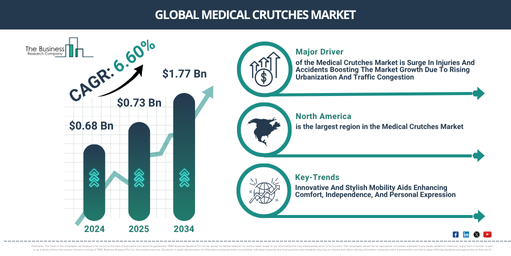
    In recent times, the market size for medical crutches has experienced significant growth. It is predicted to increase from $0.68 billion in 2024 to $0.73 billion in 2025, with a compound annual growth rate (CAGR) of 6.8%. The historic period’s growth can be credited to the escalating demand for home healthcare solutions, augmentation in healthcare expenditure, a surge in sports-related injuries, an intensified focus on rehabilitation and physical therapy, and an increasing rate of disabilities due to chronic diseases.

    Over the next few years, the market size for medical crutches is anticipated to experience significant growth, reaching $0.94 billion by 2029 with a compound annual growth rate (CAGR) of 6.6%. The projected increase during the forecasted period can be linked to several factors: a rise in musculoskeletal injuries, an aging population, increased frequency of orthopedic conditions, improved awareness of mobility aids, and an uptick in trauma and accident cases. Prominent trends for the forecast period comprise of the technological advancement in the design of crutches, the addition of smart sensors, enhancements in shock absorption systems, progress in foldable and adjustable crutches, and the development of wearable healthcare devices.

    Download The Free Sample Report Here:

    https://www.thebusinessresearchcompany.com/sample.aspx?id=25821&type=smp

    Which Factors Are Pushing The Medical Crutches Market Forward?

    The escalating instances of injuries and accidents are set to champion the expansion of the medical crutches market for the foreseeable future. These injuries and accidents involve unforeseen events that lead to bodily damage requiring medical care, frequently. The surge in these mishaps is predominantly linked to increasing urbanization and traffic congestion, as they significantly raise the threat of accidents, slips, and other perils in densely populated areas. Medical crutches provide support and stability for individuals affected by injuries and accidents, relieving weight on the injured limb, and allowing safe and efficient movement during the recovery process. Specifically, records from the Transport Accident Commission, a government agency in Australia, showed that December 2024 witnessed 267 fatal accidents on Victorian roads, which is a rise of 20 compared to the 247 fatal accidents documented in the previous 12 months ending June 2023. Hence, the escalating cases of injuries and accidents are fuelling the expansion of the medical crutches market. Influence Of Rising Healthcare Expenditure On Market Expansion Due To Aging Demographic And Need for Affordable Mobility Solutions

    Which Segment Held The Largest Share In The Medical Crutches Market In 2025?

    The medical crutches market covered in this report is segmented –

    1) By Product: Underarm Crutch, Forearm Crutch, Tetrapod Crutch, Leg Support Crutch, Platform Crutch, Other Types

    2) By Material: Wood, Metal Alloys, Carbon Or Glass Fiber Reinforced Composites, Thermoplastic, Carbon Fiber Reinforced Polymer

    3) By Distribution Channel: Hospital Pharmacies, Retail Pharmacies, Online Stores

    4) By Application: Post-Operative Recovery, Chronic Conditions, Short-Term Use, Long-Term Use

    5) By End User: Home Healthcare, Hospitals And Clinics, Rehabilitation Centers, Nursing Homes

    Subsegments:

    1) By Underarm Crutch: Adjustable Underarm Crutch, Padded Underarm Crutch, Non-Adjustable Underarm Crutch

    2) By Forearm Crutch: Open Cuff Forearm Crutch,, Ergonomic Grip Forearm Crutch, Closed Cuff Forearm Crutch

    3) By Tetrapod Crutch: Fixed Base Tetrapod Crutch, Offset Handle Tetrapod Crutch, Adjustable Height Tetrapod Crutch

    4) By Leg Support Crutch: Hands-Free Leg Support Crutch, Platform Leg Support Crutch, Knee Crutch

    5) By Platform Crutch: Adjustable Platform Crutch, Padded Platform Crutch, Fixed Platform Crutch

    6) By Other Types: Smart Crutches, Pediatric Crutches, Foldable Crutches

    How Are Key Trends Driving Expansion In The Medical Crutches Industry?

    Key players in the medical crutches market are concentrating on designing innovative products such as personal mobility aids, with the objective of increasing user comfort, promoting better mobility, and facilitating rapid recovery for individuals grappling with temporary or chronic mobility issues. Personal mobility aids entail assistive tools developed to aid persons with mobility restrictions in moving independently and securely. These tools encompass products like crutches, canes, walkers, wheelchairs, and mobility scooters. For example, Cool Crutches Ltd., a medical device firm headquartered in the UK, introduced a glitter assortment of walking sticks and crutches in October 2022. These are designed not only for functionality but with an aesthetic appeal that enhances user confidence and help mitigate pain and blisters, thereby making the use of mobility aids more pleasurable and empowering for individuals with disabilities or other injuries. The aim is to provide practical and sturdy support, allowing users to express their personality, especially during celebratory instances like Christmas.

    Which Organizations Are Driving Progress In The Medical Crutches Industry?

    Major companies operating in the medical crutches market are Cardinal Health Inc., Walgreens Boots Alliance, Medline Industries LP, Ottobock SE & Co. KGaA, Invacare Corporation, Drive Medical, Sunrise Medical, GF Health Products Inc., Breg Inc., Drive DeVilbiss Healthcare, Vive Health, AMG Medical Inc., Aidacare, Carex Health Brands, Nova Medical Products, Tynor Orthotics Pvt. Ltd., Chinesport S.p.A., Ergoactives Inc., iWALKFree Inc., Ossenberg GmbH, MABIS Healthcare, Millennial Medical LLC.

    Get The Full Report Here:

    https://www.thebusinessresearchcompany.com/report/medical-crutches-global-market-report

    Which Region Is Expected To Experience The Highest Growth In The Medical Crutches Industry?

    North America was the largest region in the medical crutches market in 2024. Asia-Pacific is expected to be the fastest-growing region in the forecast period. The regions covered in the medical crutches market report are Asia-Pacific, Western Europe, Eastern Europe, North America, South America, Middle East, Africa.

    Request For A Customized Report:

    https://www.thebusinessresearchcompany.com/customise?id=25821&type=smp

    About The Business Research Company:

    With over 15000+ reports from 27 industries covering 60+ geographies, The Business Research Company has built a reputation for offering comprehensive, data-rich research and insights. Armed with 1,500,000 datasets, the optimistic contribution of in-depth secondary research, and unique insights from industry leaders, you can get the information you need to stay ahead in the game.

    Get in touch with us:

    The Business Research Company: https://www.thebusinessresearchcompany.com/

    Americas +1 310-496-7795

    Asia +44 7882 955267 & +91 8897263534

    Europe +44 7882 955267

    Email us at info@tbrc.info

    Follow us on:

    LinkedIn: https://in.linkedin.com/company/the-business-research-company

    YouTube: https://www.youtube.com/channel/UC24_fI0rV8cR5DxlCpgmyFQ

    Global Market Model: https://www.thebusinessresearchcompany.com/global-market-model
  • Future Demand and Leading Companies Shaping the Rare Cell Isolation Market to 2029

    Future Demand and Leading Companies Shaping the Rare Cell Isolation Market to 2029

    Claim your 30% discount on Global Market Reports with code ONLINE30. Limited time only.

    Claim your 30% discount on Global Market Reports with code ONLINE30. Limited time only.

    What Is the Estimated Industry Valuation for the Rare Cell Isolation Sector?

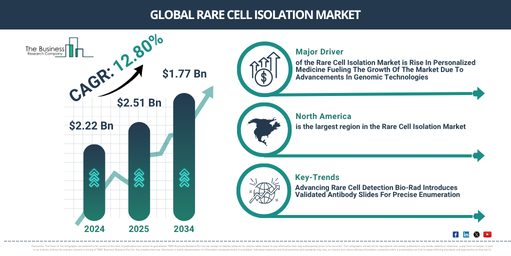
    The market size for rare cell isolation has experienced rapid expansion in recent years. It is projected to surge from $2.22 billion in 2024 to $2.51 billion in 2025, translating to a compound annual growth rate (CAGR) of 13.0%. This growth during the historical period can be credited to its early utilization in research related to cancer, increased financial backing in scholarly life science research, initial progression in immunomagnetic separation, a surge in demand for prenatal genetic testing, and the rise of stem cell research in the healthcare sector.

    In the forthcoming years, a swift expansion is anticipated in the rare cell isolation market, elevating its worth to about $4.06 billion by 2029 with a compound annual growth rate (CAGR) of 12.8%. This considerable increase during the prediction phase is largely due to the upswing in liquid biopsy-based diagnostics, substantial expansion in precision oncology programs, the rise in circulating tumor cell analyses, an escalating need for non-invasive testing procedures, and the emerging use in cell therapy development. Significant trends during this anticipated period would include developments in 3D microfluidic isolation systems, advanced isolation techniques that prioritize cell viability, comprehensive platforms for downstream analysis, the application of artificial intelligence and machine learning in rare cell isolation, along with the emergence of point-of-care rare cell isolation devices.

    Download The Free Sample Report Here:

    https://www.thebusinessresearchcompany.com/sample.aspx?id=25893&type=smp

    What Forces Are Driving The Growth Of The Rare Cell Isolation Market?

    Expectations are high that the rising demand for personalized medicine will spur the growth of the rare cell isolation market in the upcoming years. Personalized medicine is a medical model that tailors care and treatment to an individual’s specific genetic makeup, lifestyle, and environmental factors. This surge in the adoption of personalized medicine can be attributed to advancements in genomic technologies, which have expedited genetic testing and made it more economically viable. Rare cell isolation plays a crucial role in personalized medicine as it facilitates the accurate analysis of individual patients’ circulating tumor cells, fetal cells, or immune cells. This allows medical practitioners to customize treatment strategies based on the unique molecular and genetic profiles of these cells. For instance, the Personalized Medicine Coalition, a US-based professional membership organization, revealed that in February 2024, the Food and Drug Administration (FDA) approved 16 new personalized medicines in 2023, a significant rise from the 6 approved in 2022. Consequently, the increasing demand for personalized medicine is significantly influencing the growth of the rare cell isolation market.

    How Is The Rare Cell Isolation Industry Segmented Across Key Parameters?

    The rare cell isolation market covered in this report is segmented –

    1) By Product: Reagents And Kits, Instruments

    2) By Technology: Magnetic Bead Separation, Fluorescence-Activated Cell Sorting

    3) By Cell Type: Circulating Tumor Cells, Stem Cells, Fetal Cells

    Subsegments:

    1) By Reagents And Kits: Antibodies And Magnetic Beads, Microfluidic Reagents, Density Gradient Media, Cell Separation Buffers, Staining And Labeling Reagents, Nucleic Acid Isolation Kits, Consumables

    2) By Instruments: Magnetic-Activated Cell Sorting (MACS) Systems, Fluorescence-Activated Cell Sorting (FACS) Instruments, Microfluidic-Based Cell Isolation Devices, High-Throughput Cell Sorters, Automated Cell Analyzers, Centrifuges For Cell Isolation, Dielectrophoresis-Based Instruments

    Which Trends Are Expected To Shape The Future Of The Rare Cell Isolation Market?

    In the rare cell isolation industry, predominant players are shifting their focus towards groundbreaking advancements like rare cell and circulating tumor cell enumeration. This shift is to improve the accuracy, effectiveness, and scalability of identifying rare cells in cancer diagnostics and customized medical applications. Rare cell and circulating tumor cell enumeration is a technique to find and calculate rare cells, such as cancer cells, in blood or other specimens for disease observance and studies. For instance, in March 2024, Celselect Slides Validated Antibodies, a pioneering solution for rare cell and circulating tumour cell enumeration, was launched by Bio-Rad Laboratories, an American life sciences company. This solution offers unique characteristics like pre confirmed antibody panels intended especially for Celselect Slides, ensuring uniform staining quality and suitability with the Celselect platform for rare cell capturing. It cater to high-content imaging, regulated enumeration, and variable panel design, promoting applications in cancer studies and liquid biopsy workflows. This invention simplifies rare cell-analysis by decrementing assay development time and adding to reliability in downstream single-cell analysis workflows.

    Which Companies Currently Dominate The Competitive Landscape In The Rare Cell Isolation Industry?

    Major companies operating in the rare cell isolation market are F. Hoffmann-La Roche Ltd, Thermo Fisher Scientific Inc., Danaher Corporation, Merck KGaA , GE Healthcare Technologies Inc., Corning Incorporated, Lonza Group AG, Terumo BCT Inc., Bio-Rad Laboratories Inc., QIAGEN N.V., PerkinElmer Inc. , Bio-Techne Corporation, STEMCELL Technologies Inc., Miltenyi Biotec B.V. & Co KG, Izon Science Limited, RareCyte Inc., Akadeum Life Sciences Inc., NanoCellect Biomedical Inc., CELLENION SASU, Applied Cells Inc.

    Get The Full Report Here:

    https://www.thebusinessresearchcompany.com/report/rare-cell-isolation-global-market-report

    Which Geographic Regions Are Driving Demand In The Rare Cell Isolation Market?

    North America was the largest region in the rare cell isolation market in 2024. Asia-Pacific is expected to be the fastest-growing region in the forecast period. The regions covered in the rare cell isolation market report are Asia-Pacific, Western Europe, Eastern Europe, North America, South America, Middle East, Africa.

    Request For A Customized Report:

    https://www.thebusinessresearchcompany.com/customise?id=25893&type=smp

    About The Business Research Company:

    With over 15000+ reports from 27 industries covering 60+ geographies, The Business Research Company has built a reputation for offering comprehensive, data-rich research and insights. Armed with 1,500,000 datasets, the optimistic contribution of in-depth secondary research, and unique insights from industry leaders, you can get the information you need to stay ahead in the game.

    Get in touch with us:

    The Business Research Company: https://www.thebusinessresearchcompany.com/

    Americas +1 310-496-7795

    Asia +44 7882 955267 & +91 8897263534

    Europe +44 7882 955267

    Email us at info@tbrc.info

    Follow us on:

    LinkedIn: https://in.linkedin.com/company/the-business-research-company

    YouTube: https://www.youtube.com/channel/UC24_fI0rV8cR5DxlCpgmyFQ

    Global Market Model: https://www.thebusinessresearchcompany.com/global-market-model
  • 2025–2029 Rapid Tests Market Outlook: Regional Trends and Growth Forecast

    2025–2029 Rapid Tests Market Outlook: Regional Trends and Growth Forecast

    Claim your 30% discount on Global Market Reports with code ONLINE30. Limited time only.

    Claim your 30% discount on Global Market Reports with code ONLINE30. Limited time only.

    How Large Is the Rapid Tests Market Expected to Be in 2029?

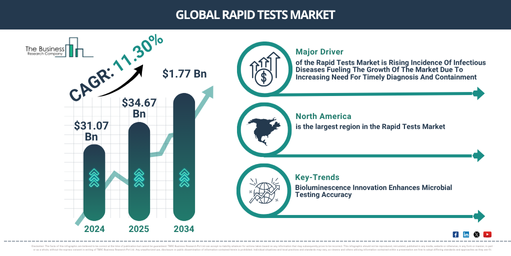
    The market size for rapid tests has experienced a significant expansion in the past few years. The market, which was worth $31.07 billion in 2024, is forecasted to reach $34.67 billion in 2025, witnessing a compound annual growth rate (CAGR) of 11.6%. The historical growth can be credited to factors such as the increasing instances of infectious diseases, the escalating demand for point-of-care diagnostics, the heightened awareness around early disease identification, the growing necessity for swift and precise test results, and the rise in healthcare expenditure and its accessibility.

    The market size for rapid tests is projected to witness substantial growth in the ensuing years, with an estimated valuation of $53.17 billion in 2029 and a compound annual growth rate (CAGR) of 11.3%. The growth during the anticipated period is largely due to the increased usage of home-based testing kits, a heightened focus on tailor-made medicine, a surge in the demand for fast testing in emerging markets, and a broadening application of rapid tests in unconventional environments. Key trends expected throughout this period include advancements in microfluidic technologies, enhanced biosensor incorporation in test kits, innovations in multiplex rapid test platforms, the utilisation of artificial intelligence (AI) in diagnostic processes, and progress in portable diagnostic device technology.

    Download The Free Sample Report Here:

    https://www.thebusinessresearchcompany.com/sample.aspx?id=25892&type=smp

    What Are The Contributors To Demand In The Rapid Tests Market?

    The escalating occurrence of contagious illnesses is projected to boost the expansion of the rapid tests market in the future. These diseases are typically brought on by damaging microorganisms like bacteria, viruses, fungi, or parasites and can be directly or indirectly transmitted from one individual to another. The travel-associated escalation in these diseases’ prevalence contributes to the swift cross-border circulation of pathogens. Rapid tests play a crucial role in curbing infectious maladies by offering immediate and precise detection at care points, which paves the way for prompt treatment and segregation. They bolster public health initiatives by shortening diagnostic lags, enhancing disease control, and curtailing infectious dispersion. For example, the UK Health Security Agency, a government body based in the UK, reported in February 2024 that tuberculosis cases in England (a transmittable bacterial infection largely affecting the lungs) had risen by 10.7%, from 4,380 in 2022 to 4,850 in 2023. As such, the managing of infectious diseases propels the rapid tests market’s growth.

    What Segmentation Categories Are Included In The Rapid Tests Market Analysis?

    The rapid tests market covered in this report is segmented –

    1) By Product: Instruments, Consumables, Other Products

    2) By Contaminants: Pathogens, Allergens, Meat Speciation, Pesticides, Other Contaminants

    3) By Technology: Polymerase Chain Reaction (PCR)-Based, Immunoassay-Based, Chromatography-Based, Spectroscopy-Based

    4) By Application: Cardiology, Oncology, Pregnancy And Fertility, Toxicology, Glucose Monitoring, Infectious Disease, Other Applications

    5) By End User: Hospitals And Clinics, Diagnostic Laboratories, Home Care, Other End-Users

    Subsegments:

    1) By Instruments: Portable Analyzers, Benchtop Analyzers, Handheld Devices, Readers Or Scanners, Multiplex Analyzers

    2) By Consumables: Test Strips, Test Cassettes Or Cartridges, Reagents, Sample Collection Devices, Control And Calibration Materials

    3) By Other Products: Software And Data Management Systems, Accessories, Maintenance And Service Kits, Packaging Materials, Training And Support Materials

    What Long-Term Trends Are Likely To Affect The Rapid Tests Market?

    The focus of major corporations in the rapid tests market is to devise technologically superior solutions like advanced bioluminescence technology, to expedite and improve the precision and sensitivity of pathogen discovery. Advanced bioluminescence technology involves the application of luminescent biochemical reactions, often with luciferase enzymes and substrates, to identify the existence of microorganisms or biological markers. For instance, in March 2025, Nelson Labs, a provider of testing services based in the US, introduced a rapid sterility testing method. This novel testing method shortens the conventional 14-day incubation phase to as few as six days by leveraging advanced bioluminescence technology. This system identifies microbial adenosine triphosphate (ATP), an indicator of living organisms, by gauging the light produced during the bioluminescent reaction. The detection of microbial contamination is automated, precision is increased, and regulatory conformity is assured, making way for quicker, dependable product launch without sacrificing safety.

    Who Are The Top-Ranked Companies In The Rapid Tests Market Today?

    Major companies operating in the rapid tests market are Pfizer Inc., F. Hoffmann-La Roche AG, Abbott Laboratories, Thermo Fisher Scientific Inc., Siemens Healthineers, BioMérieux SA, Quidel Corporation, Bio‑Rad Laboratories Inc., PerkinElmer Inc., OraSure Technologies Inc., SEKISUI Diagnostics LLC, Trivitron Healthcare Pvt. Ltd., Ellume Limited, Access Bio Inc., ACON Laboratories Inc., CTK Biotech Inc., iHealth Labs Inc., Wondfo USA Co. Ltd., InBios International Inc., Lab Care Diagnostics India Pvt. Ltd., Immunostics Inc., Aptitude Medical Systems Inc., Nano-Ditech Corporation, Azure Biotech Inc., Beijing Hotgen Biotech Co. Ltd., CorDx Inc., Genabio Diagnostics Inc., Maxim Biomedical Inc., OSANG LLC, Watmind USA.

    Get The Full Report Here:

    https://www.thebusinessresearchcompany.com/report/rapid-tests-global-market-report

    How Is Rapid Tests Market Adoption Varying Across Different Regions And Sectors?

    North America was the largest region in the rapid tests market in 2024. Asia-Pacific is expected to be the fastest-growing region in the forecast period. The regions covered in the rapid tests market report are Asia-Pacific, Western Europe, Eastern Europe, North America, South America, Middle East, Africa.

    Request For A Customized Report:

    https://www.thebusinessresearchcompany.com/customise?id=25892&type=smp

    About The Business Research Company:

    With over 15000+ reports from 27 industries covering 60+ geographies, The Business Research Company has built a reputation for offering comprehensive, data-rich research and insights. Armed with 1,500,000 datasets, the optimistic contribution of in-depth secondary research, and unique insights from industry leaders, you can get the information you need to stay ahead in the game.

    Get in touch with us:

    The Business Research Company: https://www.thebusinessresearchcompany.com/

    Americas +1 310-496-7795

    Asia +44 7882 955267 & +91 8897263534

    Europe +44 7882 955267

    Email us at info@tbrc.info

    Follow us on:

    LinkedIn: https://in.linkedin.com/company/the-business-research-company

    YouTube: https://www.youtube.com/channel/UC24_fI0rV8cR5DxlCpgmyFQ

    Global Market Model: https://www.thebusinessresearchcompany.com/global-market-model
  • Global Insights: Lyophilization Equipment Market Expected to Surpass $11.03  Billion by 2029

    Global Insights: Lyophilization Equipment Market Expected to Surpass $11.03 Billion by 2029

    Claim your 30% discount on Global Market Reports with code ONLINE30. Limited time only.

    Claim your 30% discount on Global Market Reports with code ONLINE30. Limited time only.

    What Is the Current and Projected Market Size of the Lyophilization Equipment Industry?

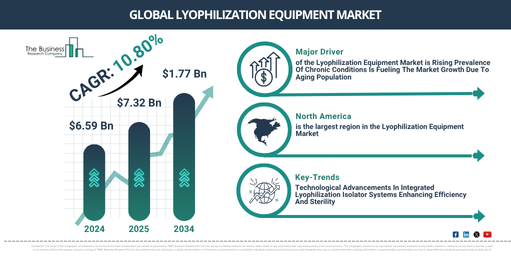
    The market size for lyophilization equipment has seen substantial growth recently. It is projected to expand from a volume of $6.59 billion in 2024 to $7.32 billion in 2025, with a compound annual growth rate (CAGR) of 11.0%. Factors leading to this growth during the historic period include increased demand for vaccines, hikes in the adoption of biopharmaceuticals, heightened emphasis on preservation, a rise in the demand for stability, an increasing need for storage capacity, and a growing necessity for shelf life.

    The market size for lyophilization equipment is anticipated to witness significant expansion in the coming years, eventually reaching $11.03 billion by 2029, with a compound annual growth rate (CAGR) of 10.8%. The projected growth during this period is believed to be due to several factors such as the increased attention towards cold chain, growing demand for tailored solutions, an upsurge in pharmaceutical production capacity, a higher preference for freeze-drying, and augmented regulatory compliance standards. Key trends for the forecasted period consist of the incorporation of automated control systems, the rise of technology-driven data analytics tools, progress in continuous lyophilization, improvements in multi-parameter devices, and advancements in energy-efficient systems.

    Download The Free Sample Report Here:

    https://www.thebusinessresearchcompany.com/sample.aspx?id=25818&type=smp

    #Which Factors Are Currently Driving The Growth Of The Lyophilization Equipment Market?

    The escalation in the rate of chronic health conditions is anticipated to drive the expansion of the lyophilization equipment market. Chronic health conditions are prolonged health issues that last over a year and often necessitate long-term medical supervision or restrict everyday tasks. This uptick in chronic conditions can be attributed to the aging population who are more susceptible to enduring diseases such as heart disease, diabetes, and arthritis. Lyophilization devices play a crucial role in managing these chronic conditions by enabling the dependable, long-lasting preservation of biopharmaceuticals and injectable drugs that are routinely used in their treatment. This technology ensures that such vital treatments remain reliable, unharmed, and easily accessible for patients who need continuous medical care. For example, as per the National Health Service, a government department in the UK, in 2023, GP records showed that 3,615,330 people were diagnosed with pre-diabetes, also known as non-diabetic hyperglycemia, indicating an 18% rise from 3,065,825 cases in 2022. Therefore, the increasing instances of chronic conditions underpin the expansion of the lyophilization equipment market.

    How Is The Global Lyophilization Equipment Market Structured In Terms Of Segments?

    The lyophilization equipment market covered in this report is segmented –

    1) By Type Of Lyophilization Equipment: Freeze Dryers, Pharmaceutical Lyophilizers, Laboratory Freeze Dryers, Industrial Freeze Dryers, Portable Freeze Dryers

    2) By Product Form: Powders, Cakes, Granules, Semi-Solid Forms

    3) By Technology: Manifold Lyophilization, Tray Lyophilization, Batch Freeze Drying, Continuous Freeze Drying

    4) By Application: Autoimmune Diseases, Respiratory Diseases, Gastrointestinal Disorders, Oncology, Cardiovascular Diseases, Infectious Diseases, Metabolic Disorders, Other Applications

    5) By End User: Pharmaceutical Companies, Biotechnology Firms, Academic And Research Institutions, Food Manufacturers, Contract Research Organizations (CROs)

    Subsegments:

    1) By Freeze Dryers: Tray Freeze Dryers, Manifold Freeze Dryers, Rotary Freeze Dryers

    2) By Pharmaceutical Lyophilizers: Pilot-Scale Pharmaceutical Lyophilizers, Production-Scale Pharmaceutical Lyophilizers, GMP Pharmaceutical Lyophilizers

    3) By Laboratory Freeze Dryers: Benchtop Laboratory Freeze Dryers, Floor-Standing Laboratory Freeze Dryers, Small-Scale Research Freeze Dryers

    4) By Industrial Freeze Dryers: Food Processing Industrial Freeze Dryers, Bulk Production Industrial Freeze Dryers, Continuous Industrial Freeze Dryers

    5) By Portable Freeze Dryers: Home-Use Portable Freeze Dryers, Field-Use Portable Freeze Dryers, Compact Research Portable Freeze Dryers

    What Trends Are Currently Influencing Growth In The Lyophilization Equipment Market?

    In order to improve efficiency, sterility, and process control, top firms in the lyophilization equipment market are focusing on technological innovations, like integrated lyophilization isolator systems. These devices are enclosed within a sterile, hermetically sealed environment for freeze-drying purposes, ensuring contamination is minimized during the lyophilization process. To illustrate, Dara Coolvacuum, a freeze-drying machinery equipped with an array of lyophilization solutions, was launched by NJM, a Canada-based automated pharmaceutical packaging firm, in July 2022. The machinery is designed to enable precise temperature regulation, energy conservation, and scalability for production across all batch sizes, at the same time improving product consistency and extend its shelf life. With unique features like advanced automation enabled by SCADA software providing real-time monitoring, compact design for efficient space utilization, energy-conserving vacuum systems, adjustable design for ease in transitioning from research and development to commercial production, and smooth integration with aseptic filling lines within isolators to ensure sterility during lyophilization, it meets all specifications.

    Who Are The Main Participants Shaping The Lyophilization Equipment Market Landscape?

    Major companies operating in the lyophilization equipment market are GEA Group AG, Azbil Corporation, ATS Automation Tooling Systems Inc., OPTIMA packaging group GmbH, Dara Pharmaceutical Equipment, Büchi Labortechnik AG, Tofflon Science and Technology Group Co Ltd., Spinco Biotech Pvt Ltd., Labconco Corporation, Hosokawa Micron Powder Systems, HOF Sonderanlagenbau GmbH, Harvest Righ LLC, Cuddon Freeze Dry, ZIRBUS technology GmbH, MechaTech Systems Ltd., IlShin BioBase Co Ltd., SP Industries Inc., Millrock Technology Inc., Tofflon Dehui Pharmaceutical Equipment Co Ltd., Freeze Drying Systems Pvt Ltd.

    Get The Full Report Here:

    https://www.thebusinessresearchcompany.com/report/lyophilization-equipment-global-market-report

    Which Region Currently Holds The Largest Share In The Lyophilization Equipment Market?

    North America was the largest region in the lyophilization equipment market in 2024. Asia-Pacific is expected to be the fastest-growing region in the forecast period. The regions covered in the lyophilization equipment market report are Asia-Pacific, Western Europe, Eastern Europe, North America, South America, Middle East, Africa.

    Request For A Customized Report:

    https://www.thebusinessresearchcompany.com/customise?id=25818&type=smp

    About The Business Research Company:

    With over 15000+ reports from 27 industries covering 60+ geographies, The Business Research Company has built a reputation for offering comprehensive, data-rich research and insights. Armed with 1,500,000 datasets, the optimistic contribution of in-depth secondary research, and unique insights from industry leaders, you can get the information you need to stay ahead in the game.

    Get in touch with us:

    The Business Research Company: https://www.thebusinessresearchcompany.com/

    Americas +1 310-496-7795

    Asia +44 7882 955267 & +91 8897263534

    Europe +44 7882 955267

    Email us at info@tbrc.info

    Follow us on:

    LinkedIn: https://in.linkedin.com/company/the-business-research-company

    YouTube: https://www.youtube.com/channel/UC24_fI0rV8cR5DxlCpgmyFQ

    Global Market Model: https://www.thebusinessresearchcompany.com/global-market-model
  • Emerging Trends and Growth Drivers in the Quantitative Polymerase Chain Reaction (qPCR) Instruments Market Through 2029

    Emerging Trends and Growth Drivers in the Quantitative Polymerase Chain Reaction (qPCR) Instruments Market Through 2029

    Claim your 30% discount on Global Market Reports with code ONLINE30. Limited time only.

    Claim your 30% discount on Global Market Reports with code ONLINE30. Limited time only.

    What Does the Forecast Indicate for the Quantitative Polymerase Chain Reaction (qPCR) Instruments Market From 2025 to 2029?

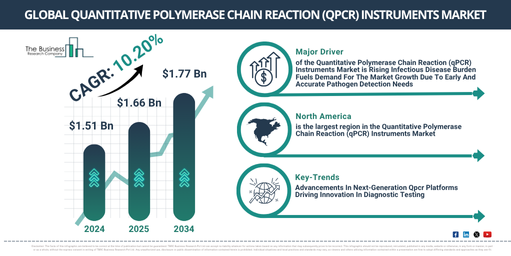
    In past years, the market size for quantitative polymerase chain reaction (qPCR) tools has seen notable expansion. It is anticipated to grow from $1.51 billion in 2024 to $1.66 billion in 2025, at a compound annual growth rate (CAGR) of 10.4%. This growth in the historical period is mainly due to an increased incidence of chronic illnesses, the growing use of qPCR in genetic and genome research, the rise in private and public investment in life sciences, the increasing acceptance of point-of-care diagnostic tools, and a rise in demand for high-efficiency testing systems.

    A rapid expansion in the quantitative polymerase chain reaction (qPCR) instruments market is expected in the upcoming years, projected to reach $2.45 billion by 2029 with a compound annual growth rate (CAGR) of 10.2%. Factors contributing to this surge during the forecast period include a higher incidence of infectious diseases, an increasing demand for personalized medical care, the growing application of qPCR in the field of oncology, the rising adoption of qPCR in clinical labs, and an intensified focus on early disease detection. Key trends for the forecast period include advancements in qPCR platforms, the incorporation of automation technologies, progress in microfluidics, the creation of multiplex qPCR technologies, and the inclusion of cloud-based data management systems.

    Download The Free Sample Report Here:

    https://www.thebusinessresearchcompany.com/sample.aspx?id=25890&type=smp

    What Elements Are Contributing To Growth In The Quantitative Polymerase Chain Reaction (qPCR) Instruments Market?

    The rise in infectious diseases is predicted to fuel the expansion of the quantitative polymerase chain reaction (qPCR) instruments market. Infectious diseases, triggered by harmful microorganisms like bacteria, viruses, fungi, or parasites, can spread directly or indirectly among people. The proliferation of these diseases is linked to the increase in global travel, which allows pathogens to swiftly move across boundaries. Quantitative polymerase chain reaction (qPCR) instruments help in fighting infectious diseases by permitting quick, sensitive, and accurate pathogen detection, which aids in immediate diagnosis and effective disease treatment. For example, GOV.UK, a UK-based government division, recorded that the count of tuberculosis (TB) incidences in England rose from 4,380 in 2022 to 4,850 in 2023. Consequently, the escalating prevalence of infectious diseases is propelling the growth of the quantitative polymerase chain reaction (qPCR) instruments market.

    Which Segments Are Detailed In The Global Quantitative Polymerase Chain Reaction (qPCR) Instruments Market Report?

    The quantitative polymerase chain reaction (qpcr) instruments market covered in this report is segmented –

    1) By Product Type: Quantitative Polymerase Chain Reaction Systems, Reagents And Consumables, Software

    2) By Instrument: 7500, Viia 7 Dx, Cobas 4800, Cfx96, Smartcycler, Genexpert, Rotor-Gene Q, Rotor-Gene Q 5plex Hrm System, Biofire Filmarray Systems, Other Instruments

    3) By Application: Gene Expression, Genotyping, Pathogen Detection, Diagnostics, Other Applications

    4) By End-Users: Diagnostic Laboratories, Hospitals And Clinics, Pharma And Biotech Companies, Other End-Users

    Subsegments:

    1) By Quantitative Polymerase Chain Reaction (qPCR) Systems: Real-Time Polymerase Chain Reaction Systems, Portable Or Compact qPCR Devices, Digital Polymerase Chain Reaction Systems

    2) By Reagents And Consumables: Master Mixes, Buffers And Enzymes, Primers

    3) By Software: Data Analysis Software, Cloud-Based Analytics Platforms, Instrument Control Software

    Which Trends Are Redefining The Future Landscape Of The Quantitative Polymerase Chain Reaction (qPCR) Instruments Industry?

    Major players in the quantitative polymerase chain reaction (qPCR) equipment industry are emphasizing on introducing innovative solutions, including next-gen qPCR systems, in order to enhance test accuracy, augment operational efficiency, and solidify their market status in the diagnostic sector. The term next-gen qPCR platform denotes an advanced molecular diagnostic mechanism aimed to offer high sensitivity, quicker processing, wider multiplexing, and more extensive automation, which leads to improved testing accuracy and precision. For example, Roche Holding AG, a pharmaceutical firm based in Switzerland, launched the LightCycler PRO System, which offers enhanced qPCR capabilities with better speed, accuracy, and automatic functions. It assures trustworthy, adaptable, and efficient real-time PCR outcomes for both clinical and research utilizations, armed with progressive multiplexing elements, easy-to-use software, and accurate temperature regulation for consistent outcomes. The system’s prominent advantages involve a swift amendment to evolving test requirements, optimized workflows with simplified data management, and a superior user interface encompassing a larger touchscreen and smooth system amalgamation.

    Who Are The Key Contributors To Growth In The Quantitative Polymerase Chain Reaction (qPCR) Instruments Market?

    Major companies operating in the quantitative polymerase chain reaction (qpcr) instruments market are F. Hoffmann-La Roche AG., Thermo Fisher Scientific Inc., Danaher Corporation, Becton, Dickinson and Company, Agilent Technologies Inc., Illumina Inc., Bio-Rad Laboratories Inc., QIAGEN N.V., Eppendorf SE, Cepheid Inc., Takara Bio Inc., bioMérieux SA, Analytik Jena GmbH, Standard BioTools Inc., Hangzhou Bioer Technology Co. Ltd., BioTeke Corporation, GeneReach Biotechnology Corp., Anitoa Systems LLC, Blue-Ray Biotech Corp., Chai Biotechnologies, Bio Molecular Systems Pty Ltd., Azure Biosystems Inc.

    Get The Full Report Here:

    https://www.thebusinessresearchcompany.com/report/quantitative-polymerase-chain-reaction-qpcr-instruments-global-market-report

    Which Region Is Projected To Lead The Quantitative Polymerase Chain Reaction (qPCR) Instruments Market By 2025?

    North America was the largest region in the quantitative polymerase chain reaction (qPCR) instruments market in 2024. Asia-Pacific is expected to be the fastest-growing region in the forecast period. The regions covered in the quantitative polymerase chain reaction (qpcr) instruments market report are Asia-Pacific, Western Europe, Eastern Europe, North America, South America, Middle East, Africa.

    Request For A Customized Report:

    https://www.thebusinessresearchcompany.com/customise?id=25890&type=smp

    About The Business Research Company:

    With over 15000+ reports from 27 industries covering 60+ geographies, The Business Research Company has built a reputation for offering comprehensive, data-rich research and insights. Armed with 1,500,000 datasets, the optimistic contribution of in-depth secondary research, and unique insights from industry leaders, you can get the information you need to stay ahead in the game.

    Get in touch with us:

    The Business Research Company: https://www.thebusinessresearchcompany.com/

    Americas +1 310-496-7795

    Asia +44 7882 955267 & +91 8897263534

    Europe +44 7882 955267

    Email us at info@tbrc.info

    Follow us on:

    LinkedIn: https://in.linkedin.com/company/the-business-research-company

    YouTube: https://www.youtube.com/channel/UC24_fI0rV8cR5DxlCpgmyFQ

    Global Market Model: https://www.thebusinessresearchcompany.com/global-market-model
  • 2025 Analysis: Opportunities and Risks in the Evolving Lyme Disease Testing Market

    2025 Analysis: Opportunities and Risks in the Evolving Lyme Disease Testing Market

    Claim your 30% discount on Global Market Reports with code ONLINE30. Limited time only.

    Claim your 30% discount on Global Market Reports with code ONLINE30. Limited time only.

    How Will the Lyme Disease Testing Market Evolve in Terms of Growth and Size by 2029?

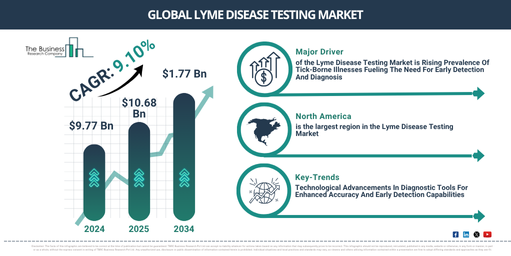
    There has been substantial growth in the market size for Lyme disease testing in the past few years. The market is projected to increase from $9.77 billion in 2024 to $10.68 billion in 2025, representing a compound annual growth rate (CAGR) of 9.3%. Factors contributing to the growth during the historic period include an escalating demand for early detection of diseases, an increase in the availability of sophisticated diagnostic tools, a surge in tick populations due to changes in climate, an increase in government funding directed towards controlling vector-borne diseases, and an expansion in healthcare infrastructure in both rural areas and endemic regions.

    The market size for testing lyme disease is anticipated to witness substantial expansion in the upcoming years, with projections indicating a growth to $15.11 billion by 2029, at a compound annual growth rate (CAGR) of 9.1%. This predicted growth during the forecasted period can be credited to a surge in travel to regions where the disease is prevalent, increased application of multiplex diagnostic technologies, a growing trend of outdoor recreational activities, a heightened demand for home-testing kits and an escalation in concerns related to co-infections from other tick-borne diseases. Key market trends projected for the forecast period encompass advances in molecular diagnostic techniques, breakthroughs in biomarker research, innovative technology in point-of-care testing devices, progress in lab-on-a-chip (microfluidic) technology, and improvements in immunoassay technologies.

    Download The Free Sample Report Here:

    https://www.thebusinessresearchcompany.com/sample.aspx?id=25817&type=smp

    What factors are expected to fuel Lyme Disease Testing market growth in the coming years?

    The lyme disease testing market is anticipated to grow owing to the increasing occurrence of tick-borne diseases. These diseases, spread to humans through bites from ticks, tiny parasites that thrive in grassy, remote, or forested areas, cause a surge in Lyme disease testing. Climate change, exacerbating the geographic spread of ticks, results in increased exposure and infection rates, fueling the demand for tick-borne illness treatments. Tick-borne illnesses, being the principal transmission method for Lyme disease, necessitate timely detection and diagnosis to efficiently manage the escalating infection cases. As an illustration, the Centers for Disease Control and Prevention, a federal public health agency based in the US, reported 71,346 cases of tick-borne disease in July 2024, a significant increase from 36,177 cases in 2021. Consequently, the growing incidence of tick-borne diseases is stimulating the expansion of the lyme disease testing market.

    What Are The Key Findings From The Segmentation Analysis Of The Lyme Disease Testing Market?

    The lyme disease testing market covered in this report is segmented –

    1) By Test Type: Serological Tests, Nucleic Acid Tests, Urine Antigen Tests, Other Test Types

    2) By Testing Methodology: Enzyme-Linked Immunosorbent Assay (ELISA), Weste Blot, Polymerase Chain Reaction (PCR), Immunofluorescence Assay (IFA), Other Emerging Technologies

    3) By Disease Stage: Early Lyme Disease, Disseminated Lyme Disease, Chronic Lyme Disease, Asymptomatic Lyme Disease Detection

    4) By Sample Type: Blood, Urine, Cerebrospinal Fluid(CSF), Other Blood Samples

    5) By End-User: Hospitals And Clinics, Diagnostic Laboratories, Home Care Settings, Research Institutions, Public Health Organizations

    Subsegments:

    1) By Serological Tests: Enzyme-Linked Immunosorbent Assay, Western Blot, Immunofluorescence Assay (IFA), Line Immunoassay (LIA)

    2) By Nucleic Acid Tests: Polymerase Chain Reaction (PCR), Loop-Mediated Isothermal Amplification (LAMP), Next-Generation Sequencing (NGS)

    3) By Urine Antigen Tests: Lateral Flow Assay, Enzyme Immunoassay (EIA), Immunoblot Urine Tests

    4) By Other Test Types: Culture-Based Tests, Tick-Borne Co-Infection Panels, Artificial Intelligence-Assisted Diagnostic Tools

    Which Trends Are Expected To Shape The Future Of The Lyme Disease Testing Market?

    A significant focus for leading companies in the Lyme disease testing market is the progression of innovative diagnostic tools. Their aim is to enhance the precision of tests, streamline the process, and facilitate early detection of the illness. Diagnostic tools encompass various medical devices, kits, or innovative technologies that can detect Lyme disease by identifying specific antibodies, antigens, or the genetic presence related to Borrelia burgdorferi bacteria. To illustrate, EpitogenX Ltd, a biotech company based in the UK, unveiled a state-of-the-art Lyme Disease Diagnostic Kit in August 2024. Developed using their unique EpitoGen platform, this ELISA-based assay includes approximately 120 unique Borrelia epitopes, ensuring high accuracy and sensitivity. It is specifically designed for research use (RUO) and offers early, strain-specific detection. Furthermore, it can be tailored to suit a variety of lab applications. With its intended use for research and diagnostic laboratories, it promises to augment detection precision and provide more comprehensive understanding of Lyme disease.

    What Are The Most Active Companies In The Lyme Disease Testing Market Today?

    Major companies operating in the lyme disease testing market are Roche Holding AG, Thermo Fisher Scientific Inc., Labcorp Holdings Inc., Quest Diagnostics Incorporated, Eurofins Scientific, BIOMÉRIEUX, Quidel Corporation, Bio-Rad Laboratories Inc., QIAGEN N.V., DiaSorin S.p.A, Meridian Bioscience, Everlywell, Trinity Biotech, T2 Biosystems, IGeneX, Viramed Biotech AG, Ceres Nanosciences, Galaxy Diagnostics, Novatein Biosciences, Lyme Diagnostics Ltd

    Get The Full Report Here:

    https://www.thebusinessresearchcompany.com/report/lyme-disease-testing-global-market-report

    Which Regional Markets Are Attracting The Most Investment In Lyme Disease Testing?

    North America was the largest region in the lyme disease testing market in 2024. Asia-Pacific is expected to be the fastest-growing region in the forecast period. The regions covered in the lyme disease testing market report are Asia-Pacific, Western Europe, Eastern Europe, North America, South America, Middle East, Africa.

    Request For A Customized Report:

    https://www.thebusinessresearchcompany.com/customise?id=25817&type=smp

    About The Business Research Company:

    With over 15000+ reports from 27 industries covering 60+ geographies, The Business Research Company has built a reputation for offering comprehensive, data-rich research and insights. Armed with 1,500,000 datasets, the optimistic contribution of in-depth secondary research, and unique insights from industry leaders, you can get the information you need to stay ahead in the game.

    Get in touch with us:

    The Business Research Company: https://www.thebusinessresearchcompany.com/

    Americas +1 310-496-7795

    Asia +44 7882 955267 & +91 8897263534

    Europe +44 7882 955267

    Email us at info@tbrc.info

    Follow us on:

    LinkedIn: https://in.linkedin.com/company/the-business-research-company

    YouTube: https://www.youtube.com/channel/UC24_fI0rV8cR5DxlCpgmyFQ

    Global Market Model: https://www.thebusinessresearchcompany.com/global-market-model
  • CAGR of 24.3% Projected for Pulsed Field Ablation Market From 2025 to 2029

    CAGR of 24.3% Projected for Pulsed Field Ablation Market From 2025 to 2029

    Claim your 30% discount on Global Market Reports with code ONLINE30. Limited time only.

    Claim your 30% discount on Global Market Reports with code ONLINE30. Limited time only.

    How Much Is the Global Pulsed Field Ablation Market Valued at Present and by 2029?

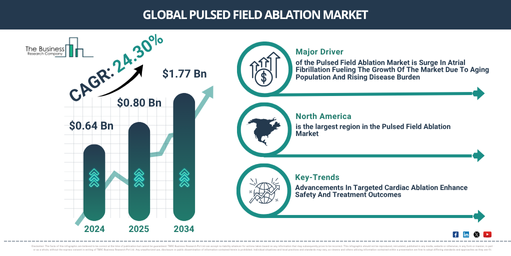
    The market size for pulsed field ablation has seen a significant surge in recent years. An impressive growth is projected, starting from $0.64 billion in 2024 up to $0.80 billion in 2025, with a 24.5% compound annual growth rate (CAGR). The mounting progression during the historic phase is a byproduct of factors including the escalated acceptance of minimal invasive heart procedures, growing instances of atrial fibrillation, greater understanding of advanced ablation technologies, increased financial commitments to research on cardiac electrophysiology, and the heightened demand for safer and quicker methods of ablation.

    The market size of pulsed field ablation is predicted to experience substantial growth over the next few years, expanding to a considerable value of $1.91 billion in 2029, with a compound annual growth rate (CAGR) of 24.3%. Several factors can account for this growth in the forecasted timeframe, including an increased acceptance of pulsed field ablation technology, a growing occurrence of cardiac arrhythmias, significant investment in R&D, enhanced knowledge within the healthcare provider community, and an increasing preference for minimally invasive cardiac treatments. The forecast period is also expected to witness key trends like advancements in pulsed field ablation tools, innovation in catheter structure, merging of imaging technologies with ablation systems, increased implementation of artificial intelligence for optimizing procedures, and the creation of compact and easy-to-use ablation platforms.

    Download The Free Sample Report Here:

    https://www.thebusinessresearchcompany.com/sample.aspx?id=25889&type=smp

    #What Drivers Are Influencing Growth In The Pulsed Field Ablation Market?

    The increasing incidence of atrial fibrillation is projected to boost the expansion of the pulsed field ablation market. Atrial fibrillation, a condition characterized by irregular and frequently fast heart rhythm, carries a heightened risk of stroke and heart-related issues. The growing number of individuals suffering from atrial fibrillation is related to the ageing population since the chances of having this heart rhythm disorder significantly escalate with age. Pulsed field ablation offers a solution to atrial fibrillation, utilizing directed electrical pulses to selectively eliminate heart tissue responsible for irregular rhythms. This approach provides a quicker, safer, and more accurate alternative to conventional ablation techniques. The Australian Institute of Health and Welfare reported in December 2024 that atrial fibrillation resulted in 2,600 deaths and contributed to an additional 15,500 in Australia in 2022. The death rates were 1.3 times higher in men and over 62% of the deaths occurred in those aged 85 or above, who had a risk that was 7.4 times higher than those in the 75–84 age group. Consequently, the escalating incidence of atrial fibrillation fuels the growth of the pulsed field ablation market.

    What Are The Main Segments Identified In The Pulsed Field Ablation Market Research?

    The pulsed field ablation market covered in this report is segmented –

    1) By Components: Catheters, Generators

    2) By Indication: Atrial Fibrillation, Non-Atrial Fibrillation

    3) By Source Of Ablation: Pulsed Field Energy, Pulsed Field And Radiofrequency Energy, Pulsed Field And Cryoablation Energy

    4) By Application Area: Ablation, Ablation And Mapping

    5) By End Use: Hospitals, Cardiac Catheterization Labs, Ambulatory Surgical Centers, Other End Uses

    Subsegments:

    1) By Catheters: Single-use Catheters, Reusable Catheters, Diagnostic Catheters, Therapeutic Catheters, Balloon Catheters, Mapping Catheters

    2) By Generators: Monopolar Generators, Bipolar Generators, Pulsed Power Generators, Radiofrequency Generators With Pulsed Field Ablation Capability, Portable Generators, Fixed Or Stationary Generators

    What Notable Trends Are Shaping The Direction Of The Pulsed Field Ablation Market?

    Leading firms in the Pulsed Field Abllation (PFA) market are directing their efforts towards technological advancements like selective tissue ablation. This aim is underpinned by the desire to improve procedural safety and effectiveness, minimizing harm to nearby healthy tissues, reducing healing periods, and enhancing enduring treatment results for patients suffering from cardiac arrhythmias. Selective tissue ablation involves specifically targeting and destroying disease-ridden cells or tissues, while keeping the adjacent healthy structures intact. For example, Abbott, a health company based in the US, obtained CE Mark approval for its Volt Pulsed Field Ablation System in March 2025. The system is designed to treat irregular heartbeats and perfectly links to Abbott’s EnSite X electrophysiology platform, improving procedural visualization and navigation. The unveiling of the Volt system marks a significant evolution in electrophysiology technology, as it offers superior procedural efficiency, precise imaging, and correct ablation for atrial fibrillation treatment. This cutting-edge device is expected to enhance patient outcomes and facilitate more efficient cardiac treatment.

    Which Companies Play A Key Role In The Development Of The Pulsed Field Ablation Market?

    Major companies operating in the pulsed field ablation market are Johnson & Johnson, Abbott Laboratories, Medtronic plc, Siemens Healthineers AG, Boston Scientific Corporation, ConMed, AtriCure Inc., AngioDynamics Inc., CardioFocus Inc., Galvanize Therapeutics Inc., Kardium Inc., Acutus Medical Inc., AtriAN Medical Ltd., Field Medical Inc., Thermedical Inc., Adagio Medical Inc., Arga Medtech Inc., Mirai Medical, Pulse Biosciences Inc., AccuPulse Medical Inc.

    Get The Full Report Here:

    https://www.thebusinessresearchcompany.com/report/pulsed-field-ablation-global-market-report

    What Are The Key Regional Developments Shaping The Pulsed Field Ablation Market?

    North America was the largest region in the pulsed field ablation market in 2024. Asia-Pacific is expected to be the fastest-growing region in the forecast period. The regions covered in the pulsed field ablation market report are Asia-Pacific, Western Europe, Eastern Europe, North America, South America, Middle East, Africa.

    Request For A Customized Report:

    https://www.thebusinessresearchcompany.com/customise?id=25889&type=smp

    About The Business Research Company:

    With over 15000+ reports from 27 industries covering 60+ geographies, The Business Research Company has built a reputation for offering comprehensive, data-rich research and insights. Armed with 1,500,000 datasets, the optimistic contribution of in-depth secondary research, and unique insights from industry leaders, you can get the information you need to stay ahead in the game.

    Get in touch with us:

    The Business Research Company: https://www.thebusinessresearchcompany.com/

    Americas +1 310-496-7795

    Asia +44 7882 955267 & +91 8897263534

    Europe +44 7882 955267

    Email us at info@tbrc.info

    Follow us on:

    LinkedIn: https://in.linkedin.com/company/the-business-research-company

    YouTube: https://www.youtube.com/channel/UC24_fI0rV8cR5DxlCpgmyFQ

    Global Market Model: https://www.thebusinessresearchcompany.com/global-market-model
  • Low Vision Electronic Visual Aids Industry Poised for Rapid Expansion, Projected to Hit $1.69  Billion by 2029

    Low Vision Electronic Visual Aids Industry Poised for Rapid Expansion, Projected to Hit $1.69 Billion by 2029

    Claim your 30% discount on Global Market Reports with code ONLINE30. Limited time only.

    Claim your 30% discount on Global Market Reports with code ONLINE30. Limited time only.

    What Are the Latest Market Insights for the Low Vision Electronic Visual Aids Industry?

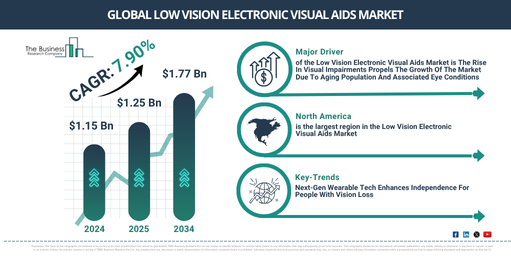
    The market size for electronic visual aids for low vision has experienced significant growth in the recent past. The projected growth is from $1.15 billion in 2024 to $1.25 billion in 2025, indicating a compound annual growth rate (CAGR) of 8.2%. The historic growth in this sector is due to factors like enhanced awareness of vision impairment, an increasing number of older people, escalating cases of chronic eye diseases, improved accessibility to eye care in metropolitan areas, an increased uptake of electronic magnifiers, and increased financial backing for research in the field of low vision.

    In the coming years, the market size for low vision electronic visual aids is projected to witness robust growth, escalating to $1.69 billion in 2029, with a compound annual growth rate of 7.9%. The key factors fuelling this growth trajectory are the rising use of advanced technology in supportive devices, increased demand for wearable equipment to improve vision, escalating instances of diseases such as diabetes and hypertension, a growing preference for home-based healthcare services, and a surge in online purchases of support devices. Major trends anticipated during this period include the development of customized user interfaces, integration with smart device ecosystems, the innovation of augmented reality applications, multi-sensory feedback innovation, and personalization of training algorithms.

    Download The Free Sample Report Here:

    https://www.thebusinessresearchcompany.com/sample.aspx?id=25815&type=smp

    What Forces Are Driving The Growth Of The Low Vision Electronic Visual Aids Industry?

    Anticipated expansion of the low vision electronic visual aids market is largely attributed to the increasing instances of vision loss. This term is applicable to an extensive array of vision issues, which can’t be completely addressed with regular eyeglasses, contacts, medications, or surgical procedures, causing a person’s vision clarity to be compromised. The main reason for this increasing trend is an aged population experiencing vision problems such as cataracts, macular degeneration, and glaucoma, commonly associated with aging. Electronic visual aids for low-vision individuals assist in improving whatever vision they still possess via magnification, digital image processing, and contrast adjustments. These aids positively impact their daily life by fostering enhanced self-reliance. The World Health Organization, a specialist UN agency based in Switzerland, reported in August 2023 that worldwide, a minimum of 2.2 billion people are affected by a near or far vision condition. Yet, it is projected that merely 36% of individuals affected by far vision issues due to refractive mistakes and a mere 17% of those suffering from sight problems because of cataracts have received proper medical care. As a consequence, the increasing instances of vision loss are stimulating the growth of the low vision electronic visual aids market.

    What Is The Overview Of Market Segmentation In The Low Vision Electronic Visual Aids Industry?

    The low vision electronic visual aids market covered in this report is segmented –

    1) By Type: Portable Electronic Magnifiers, Closed Circuit Television, Voice Readers, Other Types

    2) By Technology: Optical Devices, Electronic Magnifiers, Text-to-Speech Devices, Speech Recognition Systems

    3) By Application: Reading Assistance, Navigation Assistance, Social Interaction And Communication, Entertainment

    4) By Distribution Channel: Online Retail, Specialty Stores, Optical Stores, Other Distribution Channels

    5) By End-User: Individuals, Hospitals And Clinics, Rehabilitation Centers, Educational Institutions

    Subsegments:

    1) By Portable Electronic Magnifiers: Handheld Magnifiers, Stand Magnifiers, Wearable Magnifiers, Digital Magnifier Tablets

    2) By Closed Circuit Television: Desktop Closed Circuit Television Systems, Transportable Closed Circuit Television Systems, Wearable Closed Circuit Television Devices, Closed Circuit Television With Text-To-Speech Integration

    3) By Voice Readers: Screen Readers, Book Readers, Optical Character Recognition-Based Readers, Smart Audio Assistants For Reading

    4) By Other Types: Braille Notetakers, Smart Glasses, Screen Magnification Software, Navigation Aids

    What Future Market Trends Are Projected For The Low Vision Electronic Visual Aids Industry?

    The key players in the low vision electronic visual aids market are turning their attention to the creation of cutting-edge solutions, including AI-operated wearable smart glasses, in an effort to improve real-time visual comprehension and promote independent operation for users. These smart glasses are advanced electronic visual aids that utilize AI-based image analysis, object identification, and voice feedback to assist low vision individuals in better perceiving and interacting with their environment. For instance, in August 2024, Eyedaptic Inc., a US-based medical technology firm, introduced EYE6 with Ivy, a revolutionary wearable visual aid designed specifically for individuals suffering from age-related macular degeneration and other retinal issues. These compact smart glasses combine superior vision improvement technology with an AI-based assistant named Ivy, capable of reading texts, recognizing objects, describing environments, and supporting users in 99 different languages, thus enhancing their autonomy. With features such as full HD 1080p displays, hand-free voice control, and the ability for remote upgrades, EYE6 offers a smooth, personalized user experience for those living with low vision problems.

    Who Are The Primary Players Operating Across The Global Low Vision Electronic Visual Aids Market?

    Major companies operating in the low vision electronic visual aids market are Rehan Electronics Co. Ltd., Eschenbach Optik GmbH, Vispero, HumanWare Group, Freedom Scientific Inc., IrisVision Global Inc., VisionAid International Ltd., Zoomax Technology Co. Ltd., HIMS Inc., LS And S Products Inc., SHG Technologies LLC, Clarity Vision Limited, CTECH Low Vision And Blindness Solutions, Low Vision International AB, NuEyes Technologies Inc., Optelec U.S. Inc., Reinecker Vision GmbH, Quantum Reading Learning Vision, Optima Low Vision Services LTD, OrCam Technologies Ltd.

    Get The Full Report Here:

    https://www.thebusinessresearchcompany.com/report/low-vision-electronic-visual-aids-global-market-report

    Which Region Offers The Most Growth Potential For The Low Vision Electronic Visual Aids Market Through 2029?

    North America was the largest region in the low vision electronic visual aids market in 2024. Asia-Pacific is expected to be the fastest-growing region in the forecast period. The regions covered in the low vision electronic visual aids market report are Asia-Pacific, Western Europe, Eastern Europe, North America, South America, Middle East, Africa.

    Request For A Customized Report:

    https://www.thebusinessresearchcompany.com/customise?id=25815&type=smp

    About The Business Research Company:

    With over 15000+ reports from 27 industries covering 60+ geographies, The Business Research Company has built a reputation for offering comprehensive, data-rich research and insights. Armed with 1,500,000 datasets, the optimistic contribution of in-depth secondary research, and unique insights from industry leaders, you can get the information you need to stay ahead in the game.

    Get in touch with us:

    The Business Research Company: https://www.thebusinessresearchcompany.com/

    Americas +1 310-496-7795

    Asia +44 7882 955267 & +91 8897263534

    Europe +44 7882 955267

    Email us at info@tbrc.info

    Follow us on:

    LinkedIn: https://in.linkedin.com/company/the-business-research-company

    YouTube: https://www.youtube.com/channel/UC24_fI0rV8cR5DxlCpgmyFQ

    Global Market Model: https://www.thebusinessresearchcompany.com/global-market-model
  • Global Low Vision Electronic Glasses Market Forecast to Reach $1.50  Billion by 2029, Driven by 11.4% CAGR

    Global Low Vision Electronic Glasses Market Forecast to Reach $1.50 Billion by 2029, Driven by 11.4% CAGR

    Claim your 30% discount on Global Market Reports with code ONLINE30. Limited time only.

    Claim your 30% discount on Global Market Reports with code ONLINE30. Limited time only.

    What Are the Forecasted Growth Rate and Market Size of the Low Vision Electronic Glasses Market?

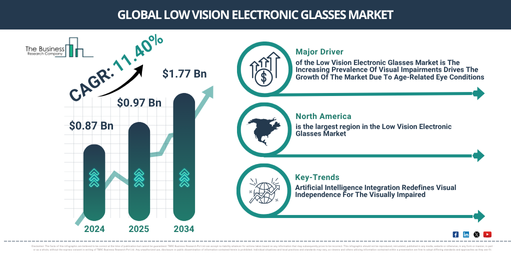
    The market for low vision electronic glasses has experienced rapid expansion in recent years. The market size, pegged at $0.87 billion in 2024, is predicted to increase to $0.97 billion in 2025 at a compound annual growth rate (CAGR) of 11.6%. The surge during the historic period was due to factors such as a growing number of cases of age-related macular degeneration, an increase in instances of diabetic retinopathy, amplified understanding of vision assistance technologies, increased government backing for disability aids, and a surge in the number of vision rehabilitation programs.

    In the next few years, the market for low vision electronic glasses is projected to experience swift expansion, reaching a value of $1.50 billion in 2029 with a CAGR of 11.4%. This growth in the projected period is prompted by factors such as increased usage of smart wearable devices in healthcare, availability of affordable electronic glasses, emphasis on inclusive and assistive technological policies, growing demand for hands-free assistive mechanisms, and the burgeoning e-commerce and online availability of assistive devices. Noteworthy trends for the forecast period encompass development towards compact, wearable technology, the creation of personalized vision enhancing algorithms, the establishment of multi-sensory feedback mechanisms, the incorporation of voice-controlled interfaces, and progress in real-time text-to-speech conversion technologies.

    Download The Free Sample Report Here:

    https://www.thebusinessresearchcompany.com/sample.aspx?id=25814&type=smp

    Which Factor Is Shaping The Future Of The Low Vision Electronic Glasses Market?

    The anticipated rise in visual impairments is projected to boost the low vision electronic glasses market’s expansion. Visual impairments point to a substantial vision loss that can’t be fully rectified by glasses, contact lenses, medication, or surgery, influencing an individual’s potential to carry out day-to-day tasks. The intensifying incidence of visual impairments chiefly stems from aging populations, as eye conditions like cataracts, glaucoma, and macular degeneration shoot up drastically with age. Electronic glasses for individuals with low vision bolster the remaining vision by magnifying, adjusting contrast, and processing images in real-time, facilitating more independence in routine activities. For example, in August 2023, the World Health Organization, a specialized agency of the United Nations for health based in Switzerland, stated that globally, a minimum of 2.2 billion people suffer from near or distance vision impairment. However, it is assessed that only 36% of individuals with distance vision impairment owing to refractive errors and merely 17% of those with vision impairment because of cataracts have received suitable treatment. Consequently, the escalating prevalence of visual impairments is propelling the low vision electronic glasses market’s growth.

    What Is The Segment-Wise Breakdown Of The Low Vision Electronic Glasses Market?

    The low vision electronic glasses market covered in this report is segmented –

    1) By Product Type: Wearable Glasses, Smart Glasses, Augmented Reality Glasses, Night Vision Glasses

    2) By Technology: Optical Technology, Digital Technology, Adaptive Technology, Artificial Intelligence Integrated Technology

    3) By Application: Personal Use, Professional Use

    4) By Distribution Channel: Online Retail, Offline Retail, Direct Sales, Healthcare Providers

    5) By End-User: Individuals With Visual Impairments, Healthcare Institutions, Educational Institutions, Occupational Rehabilitation Centers

    Subsegments:

    1) By Wearable Glasses: Head-Mounted Low Vision Glasses, Clip-on Assistive Glasses, Full-Frame Digital Glasses

    2) By Smart Glasses: Voice-Controlled Smart Glasses, Bluetooth-Enabled Visual Aid Glasses, Integrated Camera Smart Glasses

    3) By Augmented Reality Glasses: Augmented Reality Glasses For Object Recognition, Augmented Reality Navigation Assistance Glasses, Augmented Reality Text-to-Speech Glasses

    4) By Night Vision Glasses: Infrared-Based Vision Glasses, Thermal Imaging Glasses for Low Vision, Low-Light Enhancement Glasses

    Which Trends Are Redefining The Future Landscape Of The Low Vision Electronic Glasses Industry?

    Leading businesses in the low vision electronic glasses industry are concentrating on creating innovative solutions like AI-powered smart glasses to improve visibility and self-reliance for visually impaired individuals. These AI-powered smart glasses are wearable technology that employ artificial intelligence to boost vision by identifying objects, verbalizing text, and adjusting images in real time to aid those with vision issues. For example, in August 2024, Eyedaptic Inc., a US-based vision technology firm, introduced the EYE6 smart glasses – an advanced wearable designed to help those with central vision loss. Using a mix of augmented reality and AI-enhanced vision improvement, these smart glasses render real-time image optimization, boosting image clarity and contrast for users. These glasses also feature a lightweight and subtle design, hands-free operation, support for 99 languages via a multilingual visual assistant, and features like text reading, environment description, and daily activity assistance.

    Which Companies Hold The Largest Market Share In The Low Vision Electronic Glasses Sector?

    Major companies operating in the low vision electronic glasses market are Eschenbach Optik GmbH, OrCam Technologies Ltd., Soliddd Corp., Enhanced Vision Systems Inc., Vuzix Corporation, Zoomax Technology Co. Ltd., IrisVision Global Inc., Acesight, Ceciaa SAS, Envision Technologies BV, Everysight Ltd, Eyedaptic Inc., GiveVision Ltd., NuEyes Technologies Inc., OXSIGHT Ltd., Second Sight Medical Products Inc., SHG Technologies LLC, Vision Buddy Inc., VisionAid Technologies Ltd., LS And S LLC.

    Get The Full Report Here:

    https://www.thebusinessresearchcompany.com/report/low-vision-electronic-glasses-global-market-report

    How Does Regional Performance Compare Across The Low Vision Electronic Glasses Industry?

    North America was the largest region in the low vision electronic glasses market in 2024. Asia-Pacific is expected to be the fastest-growing region in the forecast period. The regions covered in the low vision electronic glasses market report are Asia-Pacific, Western Europe, Eastern Europe, North America, South America, Middle East, Africa.

    Request For A Customized Report:

    https://www.thebusinessresearchcompany.com/customise?id=25814&type=smp

    About The Business Research Company:

    With over 15000+ reports from 27 industries covering 60+ geographies, The Business Research Company has built a reputation for offering comprehensive, data-rich research and insights. Armed with 1,500,000 datasets, the optimistic contribution of in-depth secondary research, and unique insights from industry leaders, you can get the information you need to stay ahead in the game.

    Get in touch with us:

    The Business Research Company: https://www.thebusinessresearchcompany.com/

    Americas +1 310-496-7795

    Asia +44 7882 955267 & +91 8897263534

    Europe +44 7882 955267

    Email us at info@tbrc.info

    Follow us on:

    LinkedIn: https://in.linkedin.com/company/the-business-research-company

    YouTube: https://www.youtube.com/channel/UC24_fI0rV8cR5DxlCpgmyFQ

    Global Market Model: https://www.thebusinessresearchcompany.com/global-market-model