Category: Medical Equipment

  • Outlook for Low Vision Assistive Devices Market: Key Developments and Future Strategies to 2029

    Outlook for Low Vision Assistive Devices Market: Key Developments and Future Strategies to 2029

    Claim your 30% discount on Global Market Reports with code ONLINE30. Limited time only.

    Claim your 30% discount on Global Market Reports with code ONLINE30. Limited time only.

    What Is the Estimated Industry Valuation for the Low Vision Assistive Devices Sector?

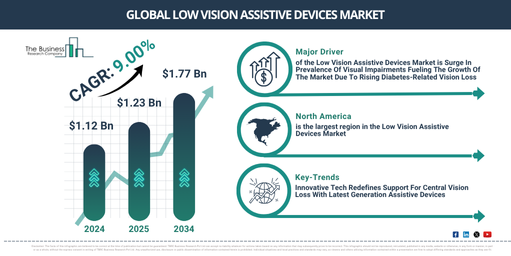
    The market size of assistive devices for low vision has seen considerable growth over recent years. The market is projected to expand from $1.12 billion in 2024 to $1.23 billion in 2025, indicating a compound annual growth rate (CAGR) of 9.3%. Several factors contributed to this growth historically, including an increase in vision impairment, a surge in the aging population, heightened demand for aids that promote independent living, growing awareness of assistive technologies, and a rise in governmental support for disabilities.

    The market for low vision assistive devices is predicted to experience significant expansion in the upcoming years, reaching $1.73 billion by 2029 at a consistent annual growth rate of 9.0%. Factors contributing to this predicted expansion throughout the forecast period include the increasing utilisation of AI-enabled smart assistive devices, a surge in healthcare spending on vision care, broader availability of assistive technology in emerging markets, an upswing in chronic eye disorders, and growing emphasis on home-based and personalised vision solutions. Key trends for the forecasted period encompass advancements in wearable low-vision technology, innovative portable electronic magnifiers, the incorporation of artificial intelligence in vision aids, development in smartphone-assisted apps, and the merging of IoT with low-vision devices.

    Download The Free Sample Report Here:

    https://www.thebusinessresearchcompany.com/sample.aspx?id=25813&type=smp

    What Forces Are Driving The Growth Of The Low Vision Assistive Devices Market?

    The rise in visual impairments is predicted to trigger the expansion of the market for low vision assistive devices. Visual impairments cover a spectrum of conditions, from partial sight to total blindness, that cannot be fully rectified with traditional glasses or lenses. This increase in such impairments is linked to the surge in diabetes patients, since diabetes commonly results in retinal damage and gradual vision loss. Assistive devices for low-vision help counteract the incidence of visual impairments by augmenting residual sight, facilitating daily tasks, and enhancing self-sufficiency and life quality for those with poor vision. For example, in February 2025, Vision Australia reported, according to Developing Australia Communities, an organization centered on empowering disabled individuals, that 453,000 Australians are either blind or have low vision. It’s a figure that is expected to climb to 564,000 by 2030. Consequently, the rising prevalence of visual impairments is catalyzing the expansion of the low-vision assistive devices market.

    How Is The Low Vision Assistive Devices Industry Segmented Across Key Parameters?

    The low vision assistive devices market covered in this report is segmented –

    1) By Product Type: Magnifiers, Reading Devices, Wearable Devices, Screen Readers, Other Product Types

    2) By Application: Education, Healthcare, Personal Use

    3) By Distribution Channel: Online Stores, Specialty Stores, Optical Stores, Other Distribution Channels

    4) By End-User: Children, Adults, Elderly

    Subsegments:

    1) By Magnifiers: Handheld Magnifiers, Stand Magnifiers, Electronic Magnifiers, Pocket Magnifiers

    2) By Reading Devices: Optical Character Recognition (OCR) Devices, Text-To-Speech Devices, Desktop Video Magnifiers, Portable Reading Machines

    3) By Wearable Devices: Smart Glasses, Head-Mounted Displays (HMDs), Augmented Reality (AR)-Based Devices, Camera-Based Wearable Systems

    4) By Screen Readers: Software-Based Screen Readers, Web-Based Screen Readers, Mobile Screen Readers, Braille Display Integrated Readers

    5) By Other Product Types: Braille Embossers, Tactile Graphics Devices, Speech-To-Text Converters, Audio Books And E-Readers

    What Notable Trends Are Shaping The Direction Of The Low Vision Assistive Devices Market?

    Prominent businesses in the low vision assistive devices market are prioritizing the development of cutting-edge technologies, such as the newest generation of aides for the visually impaired. Their aim is to boost visual precision, self-reliance, and movement for individuals suffering from central vision impairment. This newest generation of aids integrates high-definition imaging, real-time image processing, and wearable organic light-emitting diode (OLED) display systems. Together, they create improved imagery that flawlessly interacts with the user’s residual vision, while maintaining peripheral awareness. As an example, eSight, a Canadian assistive technology firm, introduced the eSight Go wearable technology in July 2025. The product sports a 12-megapixel camera with 4K resolution, dual high-definition OLED screens, and a broad 45-degree field of view, giving users an authentic and immersive viewing experience. The device also has added benefits such as superior image stabilization, a user-friendly interface, and a neck-mounted battery pack for comfortable everyday use. The goal of these futuristic assistive technologies is to allow users to maintain complete mobility and actively engage in everyday activities, be it at school, work, home, or in social settings, thus catering to over 20 distinct vision impairments globally.

    Which Companies Currently Dominate The Competitive Landscape In The Low Vision Assistive Devices Industry?

    Major companies operating in the low vision assistive devices market are HIMS Inc., OrCam Technologies Ltd., AudioEye Inc., HumanWare Group, Freedom Scientific Inc., eSight Corporation, IrisVision Global Inc., Zoomax Technology Co. Limited, Optelec U.S. Inc., Cobolt Systems Ltd., NuEyes Technologies Inc., Vision Buddy Inc., Acesight, Eyedaptic Inc., LVI Low Vision International AB, Reinecker Vision GmbH, Ash Technologies Ltd., RevoSight Inc., Joint Optical Reflective Display, Clarity.

    Get The Full Report Here:

    https://www.thebusinessresearchcompany.com/report/low-vision-assistive-devices-global-market-report

    Which Geographic Regions Are Driving Demand In The Low Vision Assistive Devices Market?

    North America was the largest region in the low vision assistive devices market in 2024. The regions covered in the low vision assistive devices market report are Asia-Pacific, Western Europe, Eastern Europe, North America, South America, Middle East, Africa.

    Request For A Customized Report:

    https://www.thebusinessresearchcompany.com/customise?id=25813&type=smp

    About The Business Research Company:

    With over 15000+ reports from 27 industries covering 60+ geographies, The Business Research Company has built a reputation for offering comprehensive, data-rich research and insights. Armed with 1,500,000 datasets, the optimistic contribution of in-depth secondary research, and unique insights from industry leaders, you can get the information you need to stay ahead in the game.

    Get in touch with us:

    The Business Research Company: https://www.thebusinessresearchcompany.com/

    Americas +1 310-496-7795

    Asia +44 7882 955267 & +91 8897263534

    Europe +44 7882 955267

    Email us at info@tbrc.info

    Follow us on:

    LinkedIn: https://in.linkedin.com/company/the-business-research-company

    YouTube: https://www.youtube.com/channel/UC24_fI0rV8cR5DxlCpgmyFQ

    Global Market Model: https://www.thebusinessresearchcompany.com/global-market-model
  • Key Market Drivers, Trends, and Forecast for the Global Low Vision And Blind Aids Products Industry

    Key Market Drivers, Trends, and Forecast for the Global Low Vision And Blind Aids Products Industry

    Claim your 30% discount on Global Market Reports with code ONLINE30. Limited time only.

    Claim your 30% discount on Global Market Reports with code ONLINE30. Limited time only.

    How Large Is the Low Vision And Blind Aids Products Market Expected to Be in 2029?

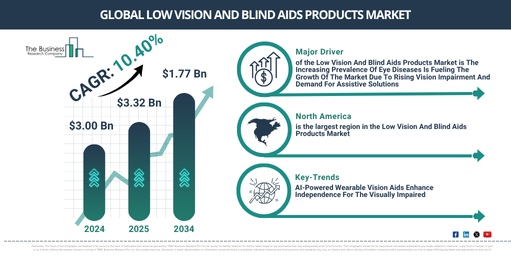
    In recent times, the market size for products assisting the blind and those with low vision has experienced rapid expansion. The market is projected to enlarge from 2024’s $3.00 billion to $3.32 billion in 2025, with a compound annual growth rate (CAGR) of 10.7%. The expansion witnessed in the historic period can be ascribed to factors such as the escalating global prevalence of vision disorders related to aging, the growing occurrence of diabetes-related visual impairments, an increasing older population, heightened awareness regarding visual disabilities, and increased support for disability services from both government and non-profit organizations.

    The market for products that aid the visually impaired and blind is projected to witness robust expansion in the ensuing years. The market value is anticipated to reach $4.95 billion by 2029, growing at a compound annual growth rate (CAGR) of 10.4%. The predicted growth within this period can be credited to the escalating participation of individuals with visual impairments in education and vocational activities, soaring healthcare spending in developing economies, endorsements from international disability rights structures, expansion in dedicated training and rehabilitation services, along with growing compliance demand for digital accessibility. Predominant trends within the forecast period encompass the progression of artificial intelligence for identifying objects and text, the introduction of wearable sensory navigation technologies, shrinkage of electronic assistive components, creation of voice-activated and touch-responsive user interfaces, and the advent of cloud-based data synchronization for accessibility tools.

    Download The Free Sample Report Here:

    https://www.thebusinessresearchcompany.com/sample.aspx?id=25812&type=smp

    What Are The Contributors To Demand In The Low Vision And Blind Aids Products Market?

    The escalating incidence of eye disorders is anticipated to fuel the expansion of the market for low vision and blind aids products. These diseases threaten the normal functioning and structure of the eyes, potentially leading to loss of vision or total blindness. The excessive use of screens, leading to eye fatigue and early emergence of visual problems, contributes to the surge in eye diseases. Products designed for persons with low vision and blindness maximize remaining vision or provide alternative non-visual methods for data access. These aids significantly improve day-to-day functioning, mobility, and self-sufficiency for those with irreversible vision loss. For example, the Centers for Disease Control and Prevention (CDC), a federal agency based in the U.S., reported in May 2024 that over 90 million Americans over the age of 40 suffer from vision issues. By 2050, the number of vision impairment and blindness cases in the U.S. is expected to increase by 150%. The prevalence of diabetic retinopathy, cataracts, and conditions like glaucoma and macular degeneration are also expected to rise by 72%, 87%, and double, respectively. Hence, the escalating incidence of eye diseases propels the expansion of the market for low vision and blind aids products.

    What Segmentation Categories Are Included In The Low Vision And Blind Aids Products Market Analysis?

    The low vision and blind aids products market covered in this report is segmented –

    1) By Product Type: Optical Aids, Non-Optical Aids, Electronic Aids, Assistive Software, Wearable Technology

    2) By Age Group: Children, Adults, Seniors, Teenagers, Middle-Aged

    3) By Distribution Channel: Online Stores, Retail Pharmacies, Supermarkets Or Hypermarkets, Specialty Stores, Direct Sales

    4) By Application: Blind School, Disabled Persons Federation And Hospital, Enterprises And Social Organizations

    5) By End-User: Individuals, Healthcare Professionals, Educational Institutions, Community Organizations, Government Agencies

    Subsegments:

    1) By Optical Aids: Magnifying Glasses, Telescopic Glasses, Spectacle-Mounted Magnifiers, Handheld Magnifiers, Stand Magnifiers

    2) By Non-Optical Aids: Braille Books, Large Print Materials, Tactile Graphics, Signature Guides, Writing Templates

    3) By Electronic Aids: Video Magnifiers, Digital Readers, Screen Enlargers, Electronic Braille Displays, Talking Devices

    4) By Assistive Software: Screen Readers, Screen Magnification Software, Text-To-Speech Software, Optical Character Recognition (OCR) Tools, Navigation And Mapping Software

    5) By Wearable Technology: Smart Glasses, Artificial Intelligence (AI)-Powered Vision Aids, Wearable Cameras, Voice-Enabled Smart Devices, Haptic Feedback Wearables

    What Upcoming Trends Are Expected To Impact The Low Vision And Blind Aids Products Market Globally?

    Leading corporations in the low vision and blind aids products market are putting their focus on creating advanced items like AI-driven wearable vision aids to enhance functional independence and life quality for those experiencing retinal disorders and vision loss. An AI-driven wearable vision aid is an intelligent device worn on the head, combining artificial intelligence with vision-improvement technologies, enabling those with visual impairments to understand visual data, carry out daily activities, and independently navigate their surroundings. For example, Eyedaptic, a US-company that specializes in vision-enhancement solutions, introduced EYE6 with Ivy in August 2024. This new AI-enabled visual aid is designed for individuals with age-related macular degeneration and other retinal disorders. The EYE6 employs advanced multimodal generative AI and broad language model skills to aid users in text reading, object recognition, and understanding different surroundings in 99 languages. Specially designed for people with age-related macular degeneration and other retinal disorders, these lightweight smart glasses unite high-definition visual improvement with an interactive AI assistant, fostering greater independence and regular task management.

    Who Are The Top-Ranked Companies In The Low Vision And Blind Aids Products Market Today?

    Major companies operating in the low vision and blind aids products market are Eschenbach Optik GmbH, Tobii Dynavox, OrCam Inc., Perkins School for the Blind, Vispero, HumanWare, Freedom Scientific, MaxiAids, Enhanced Vision, Dolphin Computer Access, Zoomax, IRIS Vision, SELVAS Healthcare Inc., LS&S LLC, LVI Low Vision International, VisionAid, Eurobraille, HHW Care Products (India) Private Limited, Nippon Telesoft Co. Ltd., Help Tech GmbH & Co. KG

    Get The Full Report Here:

    https://www.thebusinessresearchcompany.com/report/low-vision-and-blind-aids-products-global-market-report

    How Is Low Vision And Blind Aids Products Market Adoption Varying Across Different Regions And Sectors?

    North America was the largest region in the low vision and blind aids products market in 2024. Asia-Pacific is expected to be the fastest-growing region in the forecast period. The regions covered in the low vision and blind aids products market report are Asia-Pacific, Western Europe, Eastern Europe, North America, South America, Middle East, Africa.

    Request For A Customized Report:

    https://www.thebusinessresearchcompany.com/customise?id=25812&type=smp

    About The Business Research Company:

    With over 15000+ reports from 27 industries covering 60+ geographies, The Business Research Company has built a reputation for offering comprehensive, data-rich research and insights. Armed with 1,500,000 datasets, the optimistic contribution of in-depth secondary research, and unique insights from industry leaders, you can get the information you need to stay ahead in the game.

    Get in touch with us:

    The Business Research Company: https://www.thebusinessresearchcompany.com/

    Americas +1 310-496-7795

    Asia +44 7882 955267 & +91 8897263534

    Europe +44 7882 955267

    Email us at info@tbrc.info

    Follow us on:

    LinkedIn: https://in.linkedin.com/company/the-business-research-company

    YouTube: https://www.youtube.com/channel/UC24_fI0rV8cR5DxlCpgmyFQ

    Global Market Model: https://www.thebusinessresearchcompany.com/global-market-model
  • Strategic Report on Low Endotoxin Gelatin Market: Growth Opportunities and Emerging Challenges

    Strategic Report on Low Endotoxin Gelatin Market: Growth Opportunities and Emerging Challenges

    Claim your 30% discount on Global Market Reports with code ONLINE30. Limited time only.

    Claim your 30% discount on Global Market Reports with code ONLINE30. Limited time only.

    What Is the Outlook for the Low Endotoxin Gelatin Market Heading Into 2029?

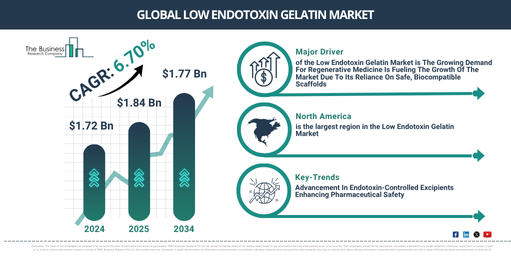
    In the past few years, the size of the low endotoxin gelatin market has seen a considerable rise. Projected growth estimates that it will expand from $1.72 billion in 2024 to $1.84 billion in 2025, with a compound annual growth rate (CAGR) of 7.0%. This growth during the historical period can be credited to the escalating demand for biocompatible materials in the pharmaceutical sector, its increased application in the production of vaccines and biologics, heightened concerns about endotoxin contamination, the extension of processes for gelatin purification, and an intensifying regulatory focus on injectable-grade excipients.

    The market for low endotoxin gelatin is set to experience robust expansion in the coming years, with its size projected to reach $2.38 billion in 2029, climbing at a compound annual growth rate (CAGR) of 6.7%. Factors contributing to this anticipated expansion during the forecast period include increased investment in biopharmaceutical research and development, a surge in the adoption of tissue engineering and regenerative medicine, a rise in the demand for cell culture alongside 3D bioprinting applications, stricter quality measures for parenteral products, and a growing predilection for gelatin that’s not derived from animals. Key trends predicted for the forecast period encompass the progression of plant-based and recombinant low-endotoxin gelatin, its incorporation into cutting-edge drug delivery systems, the employment of personalized medicine formulations, an upswing in research and development activities, and the automation of quality control and endotoxin testing.

    Download The Free Sample Report Here:

    https://www.thebusinessresearchcompany.com/sample.aspx?id=25811&type=smp

    Which Factors Are Pushing The Low Endotoxin Gelatin Market Forward?

    Anticipated expansion in the field of regenerative medicine will likely stimulate the development of the low endotoxin gelatin market. The term regenerative medicine covers therapies created to restore normal function by repairing, replacing, or regenerating human cells, tissues, or organs. The need for these therapies is escalating due to higher rates of chronic disease, with more people requiring advanced treatments that can regenerate damaged tissues, improving long-term health outcomes. Low endotoxin gelatin facilitates this type of medicine by providing a safe, compatible structure that encourages cellular development and tissue rejuvenation with a minimal immune response. Its superior purity makes it an excellent fit for complex cell therapies and tissue engineering. The American Society of Gene & Cell Therapy (ASGCT), a professional organization based in the US, and Citeline, a US provider of drugs and devices, reported in July 2023 that the end of the first quarter of 2023 saw 247 gene therapies in Phase II. This had risen by 5% to 260 by the end of the second quarter. Thus, the swelling demand for regenerative medicine is fuelling the progression of the low endotoxin gelatin market.

    Which Segment Held The Largest Share In The Low Endotoxin Gelatin Market In 2025?

    The low endotoxin gelatin market covered in this report is segmented –

    1) By Type: Type A (Acid Process Gelatin), Type B (Alkaline Process Gelatin)

    2) By Product Type: Porcine Gelatin, Bovine Gelatin, Fish Gelatin, Other Product Types

    3) By Formulation: Powder, Granules, Liquid, Sheet, Other Formulations

    4) By Application: Drug Delivery Systems, Tissue Engineering, Cell Culture, Stabilizing Agents, Thickening Agents

    5) By End-User: Pharmaceuticals, Biotechnology, Food And Beverage, Cosmetics, Research Laboratories

    Subsegments:

    1) By Type A (Acid Process Gelatin): Porcine Skin Gelatin, Fast Setting Gelatin, Low Bloom Gelatin, Pharmaceutical Grade Type A, Biotech Application Grade

    2) By Type B (Alkaline Process Gelatin): Bovine Hide Gelatin, High Bloom Gelatin, Slow Dissolving Gelatin, Injectable Grade Type B, Regenerative Medicine Grade

    How Are Key Trends Driving Expansion In The Low Endotoxin Gelatin Industry?

    Major players in the low endotoxin gelatin industry are prioritizing the production of advanced solutions like endotoxin-controlled excipients to amplify the security and efficiency of medicine concoctions. Endotoxin-controlled excipients, ingredients of high purity, are utilized to diminish the levels of endotoxins in pharmaceutical formulations, consequently fortifying the safety and dependability of sensitive products like injectables, biologics, along with cell-based treatments. For instance, in January 2025, GELITA, a manufacturer of gelatin and collagen peptides based in Germany, introduced products named VACCIPRO and MEDELLAPRO. These excipients, structurally highly purified, superior medical-grade gelatins and collagen peptides tailored for progressive bioscience uses like vaccine stabilization, medical gadgetry, and 3D bioprinting, adhering to rigid endotoxin control prerequisites to guarantee product safety and patient wellbeing in pharmaceutical and medical healthcare surroundings.

    Which Organizations Are Driving Progress In The Low Endotoxin Gelatin Industry?

    Major companies operating in the low endotoxin gelatin market are Nagase & Co. Ltd., Darling Ingredients, GELITA AG, PB Leiner, Nippi Inc., Nitta Gelatin Inc., Weishardt Group, Sterling Biotech Limited, Narmada Gelatines Ltd., Great Lakes Gelatin Company, Kenney & Ross Limited, Junca Gelatines SL, Trobas Gelatine BV, Lapi Gelatine S.p.a., Ewald-Gelatine GmbH, Niksan Pharmaceutical, Geltech, India Gelatine & Chemicals Ltd., Reinert Gruppe Ingredients GmbH, Jilin Tianzheng Biotechnology Co. Ltd., Yasin gelatin.

    Get The Full Report Here:

    https://www.thebusinessresearchcompany.com/report/low-endotoxin-gelatin-global-market-report

    Which Region Is Expected To Experience The Highest Growth In The Low Endotoxin Gelatin Industry?

    North America was the largest region in the low endotoxin gelatin market in 2024. Asia-Pacific is expected to be the fastest-growing region in the forecast period. The regions covered in the low endotoxin gelatin market report are Asia-Pacific, Western Europe, Eastern Europe, North America, South America, Middle East, Africa.

    Request For A Customized Report:

    https://www.thebusinessresearchcompany.com/customise?id=25811&type=smp

    About The Business Research Company:

    With over 15000+ reports from 27 industries covering 60+ geographies, The Business Research Company has built a reputation for offering comprehensive, data-rich research and insights. Armed with 1,500,000 datasets, the optimistic contribution of in-depth secondary research, and unique insights from industry leaders, you can get the information you need to stay ahead in the game.

    Get in touch with us:

    The Business Research Company: https://www.thebusinessresearchcompany.com/

    Americas +1 310-496-7795

    Asia +44 7882 955267 & +91 8897263534

    Europe +44 7882 955267

    Email us at info@tbrc.info

    Follow us on:

    LinkedIn: https://in.linkedin.com/company/the-business-research-company

    YouTube: https://www.youtube.com/channel/UC24_fI0rV8cR5DxlCpgmyFQ

    Global Market Model: https://www.thebusinessresearchcompany.com/global-market-model
  • In-Depth Powered Mobility Devices Market Report: Business Trends, Growth Factors, and Forecast to 2029

    In-Depth Powered Mobility Devices Market Report: Business Trends, Growth Factors, and Forecast to 2029

    Claim your 30% discount on Global Market Reports with code ONLINE30. Limited time only.

    Claim your 30% discount on Global Market Reports with code ONLINE30. Limited time only.

    How Large Is the Powered Mobility Devices Market Expected to Be in 2029?

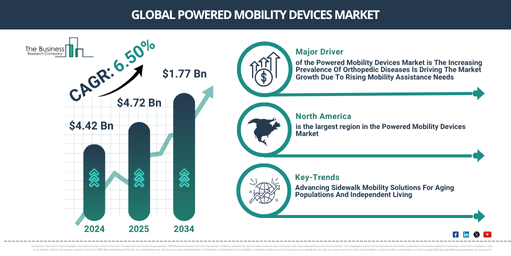
    Over recent years, there’s been noticeable robust growth in the market size of powered mobility devices. It is projected to increase from $4.42 billion in 2024 to $4.72 billion in 2025, with a compound annual growth rate (CAGR) of 6.8%. Factors contributing to this growth over the historical period include the increase in the worldwide elderly population, a surge in mobility impairments, a climbing incidence of chronic diseases that affect movement, growth in the healthcare infrastructure in developed areas, and an upsurge in the demand for healthcare services based at home.

    The market size for powered mobility devices is projected to witness a significant surge in the upcoming years, and is anticipated to reach $6.07 billion in 2029, with a compound annual growth rate (CAGR) of 6.5%. The expansion in this forecasted time frame is largely attributable to accelerating demand in emergent economies, enhancing focus on the inclusion of infrastructure and urban amenities, escalating investment in healthcare in underdeveloped nations, growing emphasis on aging-in-place approaches, and broadened health insurance coverage for supportive devices. Foreseen trends for this period include the integration of smart sensors for real-time health inspection, creation of sturdy and lightweight materials, the utilization of artificial intelligence for adaptive mobility management, progress in battery technology for extended coverage and efficacy, and integration with the Internet of Things (IoT) for improved device interconnectivity.

    Download The Free Sample Report Here:

    https://www.thebusinessresearchcompany.com/sample.aspx?id=25882&type=smp

    What Are The Contributors To Demand In The Powered Mobility Devices Market?

    The escalating occurrence of diseases impacting the musculoskeletal system is projected to fuel the expansion of the powered mobility devices market. Orthopedic conditions pertains to an extensive range of ailments that affect body parts such as bones, joints, ligaments, tendons, and muscles, often leading to pain, decreased mobility, and functional deficits. The escalation in occurrence of orthopedic diseases is predominantly influenced by elements like aging population, inactive lifestyles, and increased occurrences of obesity and chronic diseases, as these factors cumulatively exert more mechanical pressure on the musculoskeletal system and hamper its inherent capacity to restore and uphold structural coherence. Powered mobility devices offer a significant contribution by enhancing mobility, minimizing physical exertion, and ameliorating the overall living standard for people afflicted by orthopedic constraints. For example, in March 2023, data released by the Office for Health Improvement and Disparities, a government department based in the UK, revealed that the percentage of individuals over the age of 16 reporting a long-term musculoskeletal (MSK) condition such as arthritis or persistent back or joint problems, increased from 17.0% in 2021 to 17.6% in 2022. Consequently, the rising incidence of orthopedic diseases is propelling the growth of the powered mobility devices market.

    What Segmentation Categories Are Included In The Powered Mobility Devices Market Analysis?

    The powered mobility devices market covered in this report is segmented –

    1) By Product Type: Powered Wheelchairs, Power Operated Vehicles, Power Add-On Or Propulsion-Assist Units

    2) By Propulsion Type: Battery Electric, Fuel Cell Electric, Hybrid Electric Diesel

    3) By Distribution Channel: Home Care Providers, Online Stores, Retail Stores

    4) By Application: Pediatric, Adult

    5) By End Use: Home Care, Rehabilitation Centers, Hospitals, Other End Use

    Subsegments:

    1) By Powered Wheelchairs: Rear-Wheel Drive Powered Wheelchairs, Front-Wheel Drive Powered Wheelchairs, Mid-Wheel Drive Powered Wheelchairs, Standing Powered Wheelchairs

    2) By Power Operated Vehicles: Three-Wheeled Mobility Scooters, Four-Wheeled Mobility Scooters, Heavy-Duty Mobility Scooters, Foldable Mobility Scooters

    3) By Power Add-On Or Propulsion-Assist Units: Rear-Mounted Power Assist Devices, Wheel Hub-Integrated Power Assist Units, Hand Rim-Activated Power Assist Units, Towing-Style Power Assist Units

    What Notable Trends Are Shaping The Direction Of The Powered Mobility Devices Market?

    Mainstream companies in the powered mobility devices market are directing their attention towards the creation of advanced innovations like sidewalk mobility vehicles. These vehicles aim to mitigate mobility issues among the elderly population and facilitate autonomous movement in everyday activities. A sidewalk mobility vehicle is a compact, battery-powered transportation tool that aids people with diminished walking endurance. It permits safe and smooth locomotion alongside pedestrians on pathways. For instance, Toyota Motor Corporation, a Japanese automotive production company, unveiled the C+walk S in March 2023. This three-wheeled electric mobility device is specifically created for sidewalk usage, providing adjustable speed limit options up to 6 kilometers per hour. It has a small turning radius and includes an obstacle detection feature with automatic deceleration to enhance pedestrian safety. The device’s design is focused on the user, featuring a low step height for effortless boarding, a detachable lithium-ion battery that can be charged at home, and safety measures like slope detection and turning speed regulation. These features make it a reliable mobility aid for older adults and those with diminished walking abilities.

    Who Are The Top-Ranked Companies In The Powered Mobility Devices Market Today?

    Major companies operating in the powered mobility devices market are Ottobock SE & Co. KGaA, Invacare Corporation, Numotion, Drive Medical GmbH, Permobil AB, National Seating & Mobility Inc., Pride Mobility Products Corporation, Kymco Healthcare, GF Health Products Inc., Hoveround Corporation, Golden Technologies Inc., WHILL Inc., Merits Health Products Co. Ltd., Carex Health Brands Inc., MEYRA GmbH, Recare Ltd., Decon AB, Ostrich Mobility Instruments Pvt. Ltd., Karma Medical Products, Airwheel Holding Limited, MYFRIDO, Karman Healthcare Inc., LEVO AG, Magic Mobility, Shoprider Mobility Products, Batec Mobility, KD Smart Chair, Efligo Mobility Global.

    Get The Full Report Here:

    https://www.thebusinessresearchcompany.com/report/powered-mobility-devices-global-market-report

    How Is Powered Mobility Devices Market Adoption Varying Across Different Regions And Sectors?

    North America was the largest region in the powered mobility devices market in 2024. Asia-Pacific is expected to be the fastest-growing region in the forecast period. The regions covered in the powered mobility devices market report are Asia-Pacific, Western Europe, Eastern Europe, North America, South America, Middle East, Africa.

    Request For A Customized Report:

    https://www.thebusinessresearchcompany.com/customise?id=25882&type=smp

    About The Business Research Company:

    With over 15000+ reports from 27 industries covering 60+ geographies, The Business Research Company has built a reputation for offering comprehensive, data-rich research and insights. Armed with 1,500,000 datasets, the optimistic contribution of in-depth secondary research, and unique insights from industry leaders, you can get the information you need to stay ahead in the game.

    Get in touch with us:

    The Business Research Company: https://www.thebusinessresearchcompany.com/

    Americas +1 310-496-7795

    Asia +44 7882 955267 & +91 8897263534

    Europe +44 7882 955267

    Email us at info@tbrc.info

    Follow us on:

    LinkedIn: https://in.linkedin.com/company/the-business-research-company

    YouTube: https://www.youtube.com/channel/UC24_fI0rV8cR5DxlCpgmyFQ

    Global Market Model: https://www.thebusinessresearchcompany.com/global-market-model
  • Powder Absorbable Hemostat Industry Poised for Rapid Expansion, Projected to Hit $3.27  Billion by 2029

    Powder Absorbable Hemostat Industry Poised for Rapid Expansion, Projected to Hit $3.27 Billion by 2029

    Claim your 30% discount on Global Market Reports with code ONLINE30. Limited time only.

    Claim your 30% discount on Global Market Reports with code ONLINE30. Limited time only.

    What Is the Outlook for the Powder Absorbable Hemostat Market Heading Into 2029?

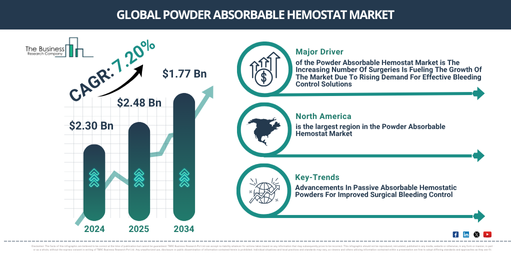
    Over the past few years, the size of the powder absorbable hemostat market has shown significant growth. Forecasted to ascend from $2.30 billion in 2024 to $2.48 billion in 2025, the market will experience a compound annual growth rate (CAGR) of 7.5%. Several factors contribute to this historical period growth such as the increase in surgical procedures, the expansion of minimally invasive surgeries, rising awareness around the management of surgical bleeding, increased usage in military and emergency medical situations, and the increasing number of FDA approvals and product launches.

    Expectations are high for robust growth in the powder absorbable hemostat market in the coming years. The market is projected to reach $3.27 billion by 2029, with a compound annual growth rate (CAGR) of 7.2%. This projected growth in the forecast period can be tied to factors such as an increase in the elderly population, a spotlight on minimizing surgical complications and time, a rise in outpatient and ambulatory surgeries, enhancements in healthcare infrastructure in growing economies, and an uptick in investments in bioresorbable and plant-based formulations. Noteworthy trends for the forecasted timeline include a shift toward biologically sourced and plant-based hemostatic agents, the inclusion of hemostatic powders in robotic and laparoscopic surgeries, the extension of usage beyond hospitals to emergency and field settings, an emphasis on enhancing shelf life and stability at room temperature, and strategic alliances and acquisitions.

    Download The Free Sample Report Here:

    https://www.thebusinessresearchcompany.com/sample.aspx?id=25881&type=smp

    Which Factors Are Pushing The Powder Absorbable Hemostat Market Forward?

    The powder absorbable hemostat market is anticipated to expand due to the escalating number of surgeries. Surgeries, whether manual or instrument-assisted, are medical procedures designed to treat injuries or ailments, or improve physical function. This increase in surgeries is largely attributed to the mounting prevalence of chronic diseases, which often necessitate surgical intervention for effective management. This surge in surgeries enhances the need for effective bleeding control, thereby promoting the application of powder absorbable hemostats. They offer swift and accurate hemostasis, making them particularly beneficial in sensitive or minimally invasive procedures, thereby boosting patient outcomes. For instance, statistics from the British Association of Aesthetic Plastic Surgeons, a surgical body based in the UK, show that in 2022, there were 31,057 cosmetic surgeries in the UK. This indicates a significant surge of 102% compared to the previous year. Consequently, the burgeoning count of surgeries is propelling the growth of the powder absorbable hemostat market.

    Which Segment Held The Largest Share In The Powder Absorbable Hemostat Market In 2025?

    The powder absorbable hemostat market covered in this report is segmented –

    1) By Product Type: Collagen-Based Hemostats, Gelatin-Based Hemostats, Cellulose-Based Hemostats, Combination Hemostats

    2) By Formulation: Powder Formulations, Ready-To-Use Formulations, Pre-Mixed Formulations, Custom Formulations

    3) By Distribution Channel: Direct Sales, Distributors, Online Sales Platforms, Pharmacies, Other Distribution Channels

    4) By Application: Surgical Procedures, Trauma Care, Orthopedic Surgeries, Cardiovascular Surgeries

    5) By End-User: Hospitals, Ambulatory Surgical Centers, Specialty Clinics, Outpatient Surgery Facilities, Other End-Users

    Subsegments:

    1) By Collagen-Based Hemostats: Bovine Collagen Hemostats, Porcine Collagen Hemostats, Synthetic Collagen Hemostats

    2) By Gelatin-Based Hemostats: Porcine Gelatin Hemostats, Bovine Gelatin Hemostats, Recombinant Gelatin Hemostats

    3) By Cellulose-Based Hemostats: Oxidized Regenerated Cellulose (ORC) Hemostats, Oxidized Cellulose Hemostats, Carboxymethyl Cellulose Hemostats

    4) By Combination Hemostats: Collagen + Gelatin Combination Hemostats, Collagen + Cellulose Combination Hemostats, Gelatin + Cellulose Combination Hemostats, Multi-component (Collagen + Gelatin + Cellulose) Hemostats

    What Upcoming Trends Are Expected To Impact The Powder Absorbable Hemostat Market Globally?

    Leading businesses in the powder absorbable hemostat market are channeling their efforts towards the production of innovative merchandise, such as plant-based polysaccharide absorbable hemostat powder. The goal is to improve clotting efficacy and ensure safer surgical procedures. This type of powder is produced from purified natural starch and is designed to absorb blood swiftly, thereby inciting clotting. It is entirely bioresorbable, hence, does not necessitate removal after usage. For instance, in July 2023, Baxter International Inc., a healthcare firm based in the U.S., launched PERCLOT, a starch-derived passive absorbable hemostatic powder in the country. This product is specifically made for patients with intact coagulation to manage mild bleeding during surgery. The granules of this product quickly absorb water, generating a gelled adhesive matrix that serves as a mechanical barrier to bleeding and encourages the accumulation of platelets, red blood cells and coagulation proteins. This product enhances Baxter’s hemostat range, assisting in the reduction of blood transfusion and complications hence minimising the general care costs.

    Which Organizations Are Driving Progress In The Powder Absorbable Hemostat Industry?

    Major companies operating in the powder absorbable hemostat market are Johnson & Johnson, Becton, Dickinson and Company, Baxter International, Integra LifeSciences Corporation, CryoLife Inc., Hangzhou Singclean Medical Products Co. Ltd, Star Alliance, Gelita Medical GmbH, Algan Grup Sağlık Hizmetleri, Ferrosan Medical Devices, Hemostasis LLC, Vascular Solutions Inc., CuraMedical B.V., BioCer Entwicklungs‑GmbH, Medcura Inc., Starch Medical Inc., Aegis Lifesciences, Turkish Healthcare, George & George MediSurg Ltd, Hemostat Medical GmbH

    Get The Full Report Here:

    https://www.thebusinessresearchcompany.com/report/powder-absorbable-hemostat-global-market-report

    Which Region Is Expected To Experience The Highest Growth In The Powder Absorbable Hemostat Industry?

    North America was the largest region in the powder absorbable hemostat market in 2024. Asia-Pacific is expected to be the fastest-growing region in the forecast period. The regions covered in the powder absorbable hemostat market report are Asia-Pacific, Western Europe, Eastern Europe, North America, South America, Middle East, Africa.

    Request For A Customized Report:

    https://www.thebusinessresearchcompany.com/customise?id=25881&type=smp

    About The Business Research Company:

    With over 15000+ reports from 27 industries covering 60+ geographies, The Business Research Company has built a reputation for offering comprehensive, data-rich research and insights. Armed with 1,500,000 datasets, the optimistic contribution of in-depth secondary research, and unique insights from industry leaders, you can get the information you need to stay ahead in the game.

    Get in touch with us:

    The Business Research Company: https://www.thebusinessresearchcompany.com/

    Americas +1 310-496-7795

    Asia +44 7882 955267 & +91 8897263534

    Europe +44 7882 955267

    Email us at info@tbrc.info

    Follow us on:

    LinkedIn: https://in.linkedin.com/company/the-business-research-company

    YouTube: https://www.youtube.com/channel/UC24_fI0rV8cR5DxlCpgmyFQ

    Global Market Model: https://www.thebusinessresearchcompany.com/global-market-model
  • Global Polyetheretherketone (PEEK) Implants Market Forecast to Reach $2.12  Billion by 2029, Driven by 8.2% CAGR

    Global Polyetheretherketone (PEEK) Implants Market Forecast to Reach $2.12 Billion by 2029, Driven by 8.2% CAGR

    Claim your 30% discount on Global Market Reports with code ONLINE30. Limited time only.

    Claim your 30% discount on Global Market Reports with code ONLINE30. Limited time only.

    What Does the Forecast Indicate for the Polyetheretherketone (PEEK) Implants Market From 2025 to 2029?

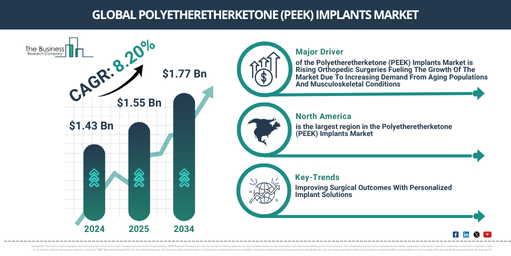
    The market size for polyetheretherketone (PEEK) implants has witnessed substantial growth in recent times. It is set to increase from $1.43 billion in 2024 to $1.55 billion in 2025, registering a compound annual growth rate (CAGR) of 8.5%. Factors driving this growth during the historic period include enhanced demand for biocompatible materials, an increase in spinal and orthopedic surgeries, a surge in the aging population, broadening applications of dental implants, and escalating occurrence of events necessitating reconstructive and cranial implants.

    The market for polyetheretherketone (PEEK) implants is slated for substantial expansion in the coming years, with its value projected to peak at $2.12 billion in 2029 at a compound annual growth rate (CAGR) of 8.2%. Several factors can explain this projected growth over the forecast period, including a surge in its use within robot-assisted surgeries, the proliferation of outpatient surgical centres, increased healthcare spending, an upturn in reimbursement policies for high-end implants, and heightened emphasis on cost-effective implants. Key trends anticipated over the forecast duration comprise 3D-printed implants specific to patients, anatomical modelling software driven by artificial intelligence, hybrid PEEK composites, implant production assisted by robots, and sophisticated implants equipped with integrated sensors.

    Download The Free Sample Report Here:

    https://www.thebusinessresearchcompany.com/sample.aspx?id=25880&type=smp

    What Elements Are Contributing To Growth In The Polyetheretherketone (PEEK) Implants Market?

    The polyetheretherketone (PEEK) implants market anticipates an upward trend due to the escalating number of orthopedic surgical procedures. Orthopedic surgeries address ailments related to the musculoskeletal system, often calling for the use of implants for restoration or substitution. Such conditions, which affect bones, joints, ligaments, tendons, and muscles, are becoming more prevalent primarily due to the aging world population. These conditions, including arthritis, joint degeneration, and fractures, become more prevalent as life expectancy rises and thus, the need for surgeries to preserve mobility and life quality also escalates. PEEK implants serve as a robust, biocompatible replacement to metal implants in orthopedic operations, offering strength, flexibility, and radiolucency for enhanced imaging and long-term bone or joint stabilization. For example, the UK Health Security Agency (UKHSA) reported an increase of 7.3% in the number of surgeries under mandatory orthopedic surveillance during the financial years of 2022 and 2023, growing from 102,027 procedures. Hence, the surging number of orthopedic surgeries is accelerating growth in the polyetheretherketone (PEEK) implants market.

    Which Segments Are Detailed In The Global Polyetheretherketone (PEEK) Implants Market Report?

    The polyetheretherketone (peek) implants market covered in this report is segmented –

    1) By Type: Interbody Devices, Screws, Fixation Plates, Rods, Cages

    2) By Application: Spinal Fusion, Trauma Surgery, Craniomaxillofacial Surgery, Sports Medicine

    3) By End User: Hospitals And Clinics, Ambulatory Surgical Centers, Other End Users

    Subsegments:

    1) By Interbody Devices: Cervical Interbody Cages, Lumbar Interbody Cages, Thoracic Interbody Cages, 3D-printed Interbody Implants

    2) By Screws: Pedicle Screws, Cortical Screws, Cannulated Screws, Locking Screws

    3) By Fixation Plates: Cranial Fixation Plates, Maxillofacial Fixation Plates, Orthopedic Trauma Plates, Spinal Fixation Plates

    4) By Rods: Spinal Stabilization Rods, Dynamic Stabilization Rods, Posterior Fixation Rods, Custom Contoured Rods

    5) By Cages: Anterior Lumbar Interbody Fusion (ALIF) Cages, Posterior Lumbar Interbody Fusion (PLIF) Cages, Transforaminal Lumbar Interbody Fusion (TLIF) Cages, Expandable Cages

    How Are Key Trends Driving Expansion In The Polyetheretherketone (PEEK) Implants Industry?

    In the polyetheretherketone (PEEK) implants industry, leading businesses are focusing on technology advancements like 3D-printed implants to enhance patient-specific customization, improve surgical results, and expedite recovery periods. A 3D-printed implant is a tailor-made medical device manufactured using additive manufacturing technology to match the unique anatomy of a patient, enhancing fitting, functionality, and overall treatment results. For instance, in April 2024, 3D Systems, Inc., an American 3D printing solutions company, gained 510(k) clearance from the U.S FDA for its VSP PEEK Cranial Implant, a 3D-printed patient-specific cranial implant solution. Its product includes a fully FDA-approved workflow comprising advanced segmentation and 3D modeling software, the EXT 220 MED 3D printer from 3D Systems, Evonik’s VESTAKEEP i4 3DF PEEK material, and a standardized manufacturing process. This technology, backed by additive manufacturing, facilitates the development of custom cranial implants using up to 85% less material than conventional machining methods, significantly bringing down costs related to expensive implant-grade PEEK.

    Who Are The Key Contributors To Growth In The Polyetheretherketone (PEEK) Implants Market?

    Major companies operating in the polyetheretherketone (peek) implants market are Johnson & Johnson, Evonik Industries AG, Stryker Corporation, Solvay S.A., NuVasive Inc., 3D Systems Inc., Victrex plc, Treace Medical Concepts Inc., Zypeek Medical Technology Co. Ltd., Innovasis Inc., Jilin Joinature Polymer Co. Ltd., HAPPE Spine LLC, Cavendish Implants Ltd., Xilloc Medical Int B.V., In2Bones Global Inc., Sintx Technologies Inc., Junsun Medical Technology Co. Ltd., Invibio Ltd., Dental Technology Services Ltd., Quick Implants NZ Limited

    Get The Full Report Here:

    https://www.thebusinessresearchcompany.com/report/polyetheretherketone-peek-implants-global-market-report

    Which Region Is Projected To Lead The Polyetheretherketone (PEEK) Implants Market By 2025?

    North America was the largest region in the polyetheretherketone (PEEK) implants market in 2024. Asia-Pacific is expected to be the fastest-growing region in the forecast period. The regions covered in the polyetheretherketone (peek) implants market report are Asia-Pacific, Western Europe, Eastern Europe, North America, South America, Middle East, Africa.

    Request For A Customized Report:

    https://www.thebusinessresearchcompany.com/customise?id=25880&type=smp

    About The Business Research Company:

    With over 15000+ reports from 27 industries covering 60+ geographies, The Business Research Company has built a reputation for offering comprehensive, data-rich research and insights. Armed with 1,500,000 datasets, the optimistic contribution of in-depth secondary research, and unique insights from industry leaders, you can get the information you need to stay ahead in the game.

    Get in touch with us:

    The Business Research Company: https://www.thebusinessresearchcompany.com/

    Americas +1 310-496-7795

    Asia +44 7882 955267 & +91 8897263534

    Europe +44 7882 955267

    Email us at info@tbrc.info

    Follow us on:

    LinkedIn: https://in.linkedin.com/company/the-business-research-company

    YouTube: https://www.youtube.com/channel/UC24_fI0rV8cR5DxlCpgmyFQ

    Global Market Model: https://www.thebusinessresearchcompany.com/global-market-model
  • Outlook for Polyether Ether Ketone (PEEK) Interbody Devices Market: Key Developments and Future Strategies to 2029

    Outlook for Polyether Ether Ketone (PEEK) Interbody Devices Market: Key Developments and Future Strategies to 2029

    Claim your 30% discount on Global Market Reports with code ONLINE30. Limited time only.

    Claim your 30% discount on Global Market Reports with code ONLINE30. Limited time only.

    How Much Is the Global Polyether Ether Ketone (PEEK) Interbody Devices Market Valued at Present and by 2029?

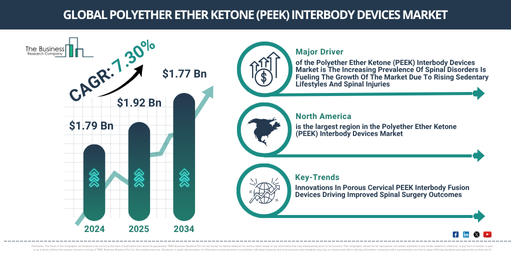
    The market size for polyether ether ketone (PEEK) interbody devices has seen robust growth lately. The market, which stood at $1.79 billion in 2024, is expected to escalate to $1.92 billion in 2025, registering a compound annual growth rate (CAGR) of 7.6%. The substantial growth during the historical period has been due to factors such as rising use in non-medical sectors, growth in medical tourism, increased demand for MRI-compatible implants, improved clinical results, as well as an increase in the number of chronic back pain cases.

    The market for polyether ether ketone (PEEK) interbody devices is projected to witness robust growth in the coming years, expanding to $2.56 billion by 2029, with a compound annual growth rate (CAGR) of 7.3%. Factors contributing to growth during the projected period include an increase in spinal disorders, rising vehicle manufacturing, expansion of the automotive industry, increasing healthcare spending, and a growing demand for hybrid material devices. Key trends expected during the forecast period involve advancements in technology, medical technology progression, adoption of progressive spinal implants, the innovative capabilities of PEEK technology, and the introduction of advanced surgical procedures.

    Download The Free Sample Report Here:

    https://www.thebusinessresearchcompany.com/sample.aspx?id=25879&type=smp

    #What Drivers Are Influencing Growth In The Polyether Ether Ketone (PEEK) Interbody Devices Market?

    The growth of the PEEK interbody devices market is likely to be driven by the escalating prevalence of spinal disorders. Spinal disorders, encompassing ailments that affect the spine’s bones, discs, nerves, and muscles, are on the rise due to sedentary lifestyles. Extended periods of sitting and lack of physical activity result in weakened spinal support muscles and increased spine strain. PEEK interbody devices play a critical role in spinal disorder treatment by offering robust yet flexible support between vertebrae, fostering spinal stability, prompting natural bone growth, and maintaining imaging clarity during subsequent scans. For example, Spinal Cord Inc., a US-based resource for people impacted by spinal cord injuries and their families, reported around 18,000 new spinal cord injury (SCI) cases in May 2023. It also estimated approximately 302,000 people living with SCI across the country. Hence, the rising prevalence of spinal disorders is fuelling the PEEK interbody devices market’s growth.

    What Are The Main Segments Identified In The Polyether Ether Ketone (PEEK) Interbody Devices Market Research?

    The polyether ether ketone (peek) interbody devices market covered in this report is segmented –

    1) By Product Type: Posterolateral Fusion Devices, Interbody Fusion Devices, Anterior Lumbar Interbody Fusion Devices (Alif), Extreme Lateral Interbody Fusion Devices (Xlif), Posterior Lumbar Interbody Fusion Devices (Plif), Transforaminal Lumbar Interbody Fusion Devices (Tlif), Other Devices

    2) By Application: Spinal Fusion Surgery, Degenerative Disc Disease, Spinal Trauma, Spinal Deformity

    3) By Distribution Channel: Direct Sales, Online Sales, Third-Party Distributors

    4) By End-User: Hospitals And Clinics, Ambulatory Surgery Clinics, Other End-Users

    Subsegments:

    1) By Posterolateral Fusion Devices: Single-Level Devices, Multi-Level Devices, Expandable Devices

    2) By Interbody Fusion Devices: Cervical Fusion Devices, Lumbar Fusion Devices, Hybrid Devices

    3) By Anterior Lumbar Interbody Fusion Devices (ALIF): Flat-Profile Devices, Curved-Profile Devices, Cage-Style Devices

    4) By Extreme Lateral Interbody Fusion Devices (XLIF): Plated Devices, Cage-Style Devices, Oblique Devices

    5) By Posterior Lumbar Interbody Fusion Devices (PLIF): Lordotic Devices, Flat-Cage Devices, Mesh Or Porous Devices

    6) By Transforaminal Lumbar Interbody Fusion Devices (TLIF): Hollow Devices, Expandable Cages, Radiolucent Devices

    7) By Other Devices: Miniature Interbody Fusion Devices, Biocomposite Devices, Modular Devices

    Which Trends Are Expected To Shape The Future Of The Polyether Ether Ketone (PEEK) Interbody Devices Market?

    Leading businesses in the PEEK interbody device market are prioritising the creation of novel products like the porous cervical IBF system to enhance osseointegration, boost implant stability, and speed up patient recovery. The porous cervical IBF system is a specialised medical implant used in spinal surgeries, especially for cervical spine fusion procedures. It’s strategically designed to substitute damaged or worn out cervical intervertebral discs and to foster bone growth between neighbouring vertebrae, thereby stabilising the spine. For instance, in August 2022, Innovasis, a medical device organization based in the US, obtained 510(k) approval from the US Food and Drug Administration for its HAcancellous PEEK-C, an innovative hydroxyapatite (HA) porous PEEK interbody fusion device meant for cervical spine operations. The device, intended for single-level anterior cervical discectomy and fusion (ACDF) procedures in the C2 and T1 sections in skeletally mature patients suffering from degenerative disc disease, incorporates a porous structure amalgamated with hydroxyapatite (HA) to aid bone growth and expedite fusion. This product introduction aims to enhance spinal fusion results by promoting superior bone integration and encouraging faster fusion.

    Which Companies Play A Key Role In The Development Of The Polyether Ether Ketone (PEEK) Interbody Devices Market?

    Major companies operating in the polyether ether ketone (peek) interbody devices market are Medtronic Inc., Stryker Corporation, Zimmer Biomet Holdings Inc., Globus Medical Inc., NuVasive Inc., Orthofix Medical Inc., Exactech Inc., Xtant Medical Holdings Inc., Alphatec Spine Inc., Spinal Elements Inc., Providence Medical Technology Inc., FossiLabs LLC, Life Spine Inc., Curiteva Inc., Medacta International S.A., LDR Holding Corporation, Cavendish Implants Limited, SINTX Technologies Inc., In2Bones Global Inc., and Xilloc Medical International B.V.

    Get The Full Report Here:

    https://www.thebusinessresearchcompany.com/report/polyether-ether-ketone-peek-interbody-devices-global-market-report

    What Are The Key Regional Developments Shaping The Polyether Ether Ketone (PEEK) Interbody Devices Market?

    North America was the largest region in the polyether ether ketone (PEEK) interbody devices market in 2024. Asia-Pacific is expected to be the fastest-growing region in the forecast period. The regions covered in the polyether ether ketone (peek) interbody devices market report are Asia-Pacific, Western Europe, Eastern Europe, North America, South America, Middle East, Africa.

    Request For A Customized Report:

    https://www.thebusinessresearchcompany.com/customise?id=25879&type=smp

    About The Business Research Company:

    With over 15000+ reports from 27 industries covering 60+ geographies, The Business Research Company has built a reputation for offering comprehensive, data-rich research and insights. Armed with 1,500,000 datasets, the optimistic contribution of in-depth secondary research, and unique insights from industry leaders, you can get the information you need to stay ahead in the game.

    Get in touch with us:

    The Business Research Company: https://www.thebusinessresearchcompany.com/

    Americas +1 310-496-7795

    Asia +44 7882 955267 & +91 8897263534

    Europe +44 7882 955267

    Email us at info@tbrc.info

    Follow us on:

    LinkedIn: https://in.linkedin.com/company/the-business-research-company

    YouTube: https://www.youtube.com/channel/UC24_fI0rV8cR5DxlCpgmyFQ

    Global Market Model: https://www.thebusinessresearchcompany.com/global-market-model
  • Comprehensive Forecast: Leukapheresis Device Market Share, Growth, and Opportunities Through 2029

    Comprehensive Forecast: Leukapheresis Device Market Share, Growth, and Opportunities Through 2029

    Claim your 30% discount on Global Market Reports with code ONLINE30. Limited time only.

    Claim your 30% discount on Global Market Reports with code ONLINE30. Limited time only.

    How Will the Leukapheresis Device Market Evolve in Terms of Growth and Size by 2029?

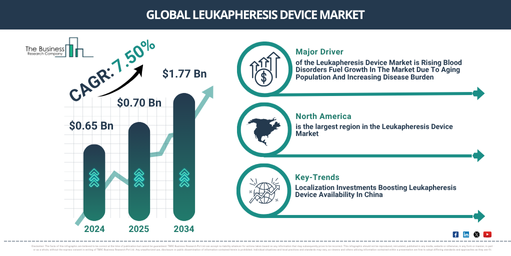
    The market size for leukapheresis devices has significantly expanded in the past few years. The market will escalate from $0.65 billion in 2024 to $0.70 billion in 2025, with a compound annual growth rate (CAGR) of 7.7%. Factors driving growth in the historical period include the surging demand for personalized medicine, an enhanced emphasis on research and development, an increase in clinical trials, a growing elderly population, and a rising preference for minimally invasive procedures.

    In the forthcoming years, the leukapheresis device market is poised for robust expansion. By 2029, it is projected to reach $0.94 billion, with a compound annual growth rate (CAGR) of 7.5%. This predicted surge in the projection period can be ascribed to the escalating prevalence of blood-associated disorders, increasing cancer incidences, the surging demand for peripheral blood stem cell collection, the expanding utilization of leukapheresis in cellular therapies, and escalating investment in regenerative medicine and immunotherapy. Key trends for the projection period encompass advancements in apheresis device technology, the incorporation of automation and digital interfaces, progress in point-of-care leukapheresis technology, advancements in closed-loop leukapheresis systems, and technological enhancements in cell separation efficiency.

    Download The Free Sample Report Here:

    https://www.thebusinessresearchcompany.com/sample.aspx?id=25807&type=smp

    What factors are expected to fuel Leukapheresis Device market growth in the coming years?

    The leukapheresis device market is poised for growth due to the increasing cases of diseases related to blood. These disorders affect the formation or operation of blood cells, which can lead to issues with blood clotting, immune response, or oxygen transport. A rise in these disorders is predominantly ascribed to the aging population who are at a higher risk of conditions like leukemia, anemia, and other hematological conditions. Leukapheresis devices offer help in managing these disorders by selectively removing surplus or abnormal white blood cells from the blood, thereby easing symptoms and reducing complications in diseases such as leukemia and autoimmune disorders. For example, the Leukaemia Foundation, an Australian non-profit organization, reported in May 2024 that around 19,403 Australians were diagnosed with blood cancers such as leukemia, lymphoma, or myeloma in 2022, which translates to an average of 53 cases each day, or one every 27 minutes. Currently, about 135,000 Australians are living with a blood cancer or disorder, a number that is expected to reach over 275,000 by 2035. Hence, the increasing instances of diseases related to blood are accelerating the expansion of the leukapheresis device market.

    What Are The Key Findings From The Segmentation Analysis Of The Leukapheresis Device Market?

    The leukapheresis device market covered in this report is segmented –

    1) By Device Type: Therapeutic Leukapheresis, Cytapheresis, Stem Cell Collection, Research Applications, Leukapheresis Columns and Cell Separators, Leukapheresis Disposables, Apheresis Devices

    2) By Component: Leukapheresis Machine, Blood Collection Set , Medical Consumables , Filters

    3) By End User: Hospitals, Academic Research Institutes, Pharmaceutical And Biotechnology Companies, Blood Component Providers, Blood Centers

    Subsegments:

    1) By Therapeutic Leukapheresis: Leukemia Treatment Systems, Sepsis Treatment Leukapheresis Units, Autoimmune Disease Management Devices

    2) By Cytapheresis: Plateletpheresis Devices, Lymphapheresis Units, Erythrocytapheresis Systems

    3) By Stem Cell Collection: Peripheral Blood Stem Cell (PBSC) Collection Devices, Umbilical Cord Blood Collection Systems, Bone Marrow Stem Cell Apheresis Systems

    4) By Research Applications: Cell Separation Systems for Research and Development, Clinical Trial Apheresis Platforms, Academic Laboratory Leukapheresis Devices

    5) By Leukapheresis Columns And Cell Separators: Adsorption Columns, Membrane-Based Cell Separation Systems, Centrifugal Cell Separators

    6) By Leukapheresis Disposables: Tubing Sets, Needles And Catheters, Collection Bags

    7) By Apheresis Devices: Continuous Flow Apheresis Machines, Portable Or Mobile Apheresis Units, Intermittent Flow Apheresis Systems

    Which Trends Are Expected To Shape The Future Of The Leukapheresis Device Market?

    Leading firms in the leukapheresis device market are concentrating their efforts on increasing their manufacturing capabilities in local regions to promote national health goals and provide better access to high caliber therapeutic devices. The investment in regional production aids in the establishment of supply chains that are both effective and adaptable. This, in turn, guarantees punctual deliveries, lowers reliance on imports, and makes advanced cell and blood collection systems more affordable. In November 2024, as a case in point, the US-based medical tech firm, Terumo Blood and Cell Technologies, forged a partnership with Terumo Medical Products (Hangzhou) Co., Ltd., a subsidiary in China, to commence local production in Hangzhou. This tactical move includes the local production of essential leukapheresis products such as the Trima Accel Automated Blood Collection System and the Spectra Optia Apheresis System, which are widely utilized in China for therapeutic apheresis, stem cell gathering, and blood component separation.

    What Are The Most Active Companies In The Leukapheresis Device Market Today?

    Major companies operating in the leukapheresis device market are Fresenius SE and Co. KGaA, Asahi Kasei Medical Co. Ltd, Baxter International Inc., Grifols S.A., TERUMO BCT INC., Kaneka Corporation, Charles River Laboratories International Inc., Mallinckrodt Pharmaceuticals, Nikkiso Co. Ltd., Haemonetics Corporation, Miltenyi Biotec GmbH, Macopharma, Precision for Medicine Inc., B. Braun Melsungen AG, BioIVT LLC, AllCells LLC, Kawasumi Laboratories Inc., Beijing Zksk Technology Co. Ltd., Puriblood Medical Co. Ltd, Medica S.p.A.

    Get The Full Report Here:

    https://www.thebusinessresearchcompany.com/report/leukapheresis-device-global-market-report

    Which Regional Markets Are Attracting The Most Investment In Leukapheresis Device?

    North America was the largest region in the leukapheresis device market in 2024. The regions covered in the leukapheresis device market report are Asia-Pacific, Western Europe, Eastern Europe, North America, South America, Middle East, Africa.

    Request For A Customized Report:

    https://www.thebusinessresearchcompany.com/customise?id=25807&type=smp

    About The Business Research Company:

    With over 15000+ reports from 27 industries covering 60+ geographies, The Business Research Company has built a reputation for offering comprehensive, data-rich research and insights. Armed with 1,500,000 datasets, the optimistic contribution of in-depth secondary research, and unique insights from industry leaders, you can get the information you need to stay ahead in the game.

    Get in touch with us:

    The Business Research Company: https://www.thebusinessresearchcompany.com/

    Americas +1 310-496-7795

    Asia +44 7882 955267 & +91 8897263534

    Europe +44 7882 955267

    Email us at info@tbrc.info

    Follow us on:

    LinkedIn: https://in.linkedin.com/company/the-business-research-company

    YouTube: https://www.youtube.com/channel/UC24_fI0rV8cR5DxlCpgmyFQ

    Global Market Model: https://www.thebusinessresearchcompany.com/global-market-model

  • Future Demand and Leading Companies Shaping the LASIK Eye Surgery Devices Market to 2029

    Future Demand and Leading Companies Shaping the LASIK Eye Surgery Devices Market to 2029

    Claim your 30% discount on Global Market Reports with code ONLINE30. Limited time only.

    Claim your 30% discount on Global Market Reports with code ONLINE30. Limited time only.

    What CAGR Is Anticipated for the LASIK Eye Surgery Devices Market Through 2029?

    Recently, there has been robust growth in the scope of the LASIK eye surgery devices market. Projected to escalate from $2.24 billion in 2024 to $2.40 billion in 2025, the market is expected to witness a compound annual growth rate (CAGR) of 7.0%. This growth in the past period is due to factors such as the increasing number of refractive errors, the growing preference for minimally invasive procedures, heightened awareness about vision correction, a rise in disposable income, the expansion of medical tourism, and an increased number of eye care clinics.

    Expectations are high for a buoyant expansion in the LASIK eye surgery devices market in the coming years, with its value predicted to hit $3.12 billion in 2029, reflecting a compound annual growth rate (CAGR) of 6.7%. Several factors are set to fuel this growth over the forecast period, including an aging population, an increase in screen time among the younger population, advanced adoption of femtosecond lasers, broader insurance coverage, a surge in demand from emerging economies, and a preference for outpatient procedures. Dominant trends over the forecast period will include wavefront-guided technology utilization, the adoption of artificial intelligence, bespoke treatment plan development, an inclination towards bladeless techniques, a rising preference for SMILE surgery, and a shift toward ambulatory surgical establishments.

    Download The Free Sample Report Here:

    https://www.thebusinessresearchcompany.com/sample.aspx?id=25806&type=smp

    What Market Forces Are Driving The LASIK Eye Surgery Devices Sector In 2025 And Beyond?

    The projected rise in myopia cases worldwide anticipates a boost in the growth of the LASIK eye surgery devices market. Myopia, or nearsightedness, allows a person to clearly see close objects while struggling with distant ones appearing blurry. This vision condition is traced back to extended periods in front of a screen, causing strain on the eyes and, in turn, fast-tracking eye elongation. LASIK eye surgery devices effectively rectify this condition by offering accuracy in long-term remediation of nearsightedness, reshaping the cornea to enhance distant vision while significantly lowering reliance on glasses or contact lenses. For example, the Canadian Association of Optometrists, a professional body for optometrists in Canada, stated in September 2024 that myopia is affecting nearly 30% of the worldwide population and it is widely prevalent. The speculation also suggests that the myopia cases globally, by the year 2050, would potentially reach an alarming 50% of the global population. Thus, the rising myopia cases stimulate the growth of the LASIK eye surgery devices market.

    How Is The Global LASIK Eye Surgery Devices Market Categorized By Segments?

    The lasik eye surgery devices market covered in this report is segmented –

    1) By Product Type: Excimer Lasers, Femtosecond Lasers, Microkeratomes, Other Product Types

    2) By Procedure Type: Laser-Assisted In Situ Keratomileusis (LASIK), Photorefractive Keratectomy (PRK), Laser-Assisted Sub-Epithelial Keratectomy (LASEK), Small Incision Lenticule Extraction (SMILE), Other Procedures

    3) By Application: Myopia, Hyperopia, Astigmatism, Other Applications

    4) By End User: Hospitals, Ambulatory Surgical Centers, Ophthalmology Clinics, Eye Research Institutes, Other End Users

    Subsegments:

    1) By Excimer Lasers: Wavefront-Guided Excimer Lasers, Topography-Guided Excimer Lasers, Conventional Excimer Lasers, Flying Spot Lasers, Scanning Slit Lasers

    2) By Femtosecond Lasers: Low-Pulse Energy Femtosecond Lasers, High-Pulse Energy Femtosecond Lasers, Femtosecond Lasers For Flap Creation, Femtosecond Lasers For SMILE Procedures

    3) By Microkeratomes: Manual Microkeratomes, Automated Microkeratomes, Disposable Blade Systems, Adjustable Depth Microkeratomes

    4) By Other Product Types: Surgical Blades, Eye Trackers, Wavefront Aberrometers, Pupil Tracking Systems, Diagnostic Imaging Devices

    What Long-Term Trends Are Likely To Affect The LASIK Eye Surgery Devices Market?

    Dominant firms in the LASIK eye surgery equipment industry are emphasizing on the creation of innovative solutions like personalized LASIK treatments. This approach will help them maintain a competitive position in the market. The unique aspect about personalized LASIK treatments is that they offer increased accuracy as the processes are tailored according to the distinct eye attributes of each individual. This results in better visual improvement and decrease in side effects. For instance, Alcon, an eye care firm based in Switzerland, unveiled the WaveLight Plus in April 2025. WaveLight Plus is an advanced laser-assisted in situ keratomileusis (LASIK) platform that utilizes ray tracing technology to improve the precision and safety of surgeries, and delivers fully personalized vision correction with superior visual results. This unique LASIK eye surgery device boasts of advanced wavefront-guided ablation, real-time eye monitoring, and customizable treatment options, making it capable of highly accurate corneal reshaping and improved visual outcomes. Additionally, it facilitates safer and more personalized vision correction procedures.

    Which Firms Are Considered Leaders In The LASIK Eye Surgery Devices Market Space?

    Major companies operating in the lasik eye surgery devices market are Alcon Inc., Bausch & Lomb Incorporated, Johnson & Johnson Vision Care Inc., Carl Zeiss Meditec AG, Trivitron Healthcare Private Limited, Ziemer Ophthalmic Systems AG, MORIA S.A., LightMed Corporation, Network Medical Products Ltd., SCHWIND eye-tech-solutions GmbH & Co. KG, Crescent Surgical & Medical Equipment, Optikon 2000 S.p.A., Fluence Technology Inc., NIDEK CO. LTD., LaserSight Technologies Inc., iVis Technologies S.r.l., Med-Logics Inc., Appasamy Associates Private Limited, Eye Medicare Incorporated, Shaanxi Xingmao Industry Co. Ltd.

    Get The Full Report Here:

    https://www.thebusinessresearchcompany.com/report/lasik-eye-surgery-devices-global-market-report

    What Role Do Regional Policies And Investments Play In LASIK Eye Surgery Devices Market Expansion?

    North America was the largest region in the LASIK eye surgery devices market in 2024. Asia-Pacific is expected to be the fastest-growing region in the forecast period. The regions covered in the lasik eye surgery devices market report are Asia-Pacific, Western Europe, Eastern Europe, North America, South America, Middle East, Africa.

    Request For A Customized Report:

    https://www.thebusinessresearchcompany.com/customise?id=25806&type=smp

    About The Business Research Company:

    With over 15000+ reports from 27 industries covering 60+ geographies, The Business Research Company has built a reputation for offering comprehensive, data-rich research and insights. Armed with 1,500,000 datasets, the optimistic contribution of in-depth secondary research, and unique insights from industry leaders, you can get the information you need to stay ahead in the game.

    Get in touch with us:

    The Business Research Company: https://www.thebusinessresearchcompany.com/

    Americas +1 310-496-7795

    Asia +44 7882 955267 & +91 8897263534

    Europe +44 7882 955267

    Email us at info@tbrc.info

    Follow us on:

    LinkedIn: https://in.linkedin.com/company/the-business-research-company

    YouTube: https://www.youtube.com/channel/UC24_fI0rV8cR5DxlCpgmyFQ

    Global Market Model: https://www.thebusinessresearchcompany.com/global-market-model

  • 2025–2029 Lancet Market Outlook: Regional Trends and Growth Forecast

    2025–2029 Lancet Market Outlook: Regional Trends and Growth Forecast

    Claim your 30% discount on Global Market Reports with code ONLINE30. Limited time only.

    Claim your 30% discount on Global Market Reports with code ONLINE30. Limited time only.

    What Are the Latest Market Insights for the Lancet Industry?

    The lancet market’s expansion has been swift in the previous few years. A rise from $2.52 billion in 2024 to $2.80 billion in 2025, equating to a compound annual growth rate (CAGR) of 11.2%, is expected in the market size. The exponential growth during the historical period can be traced back to the increasing occurrence of diabetes, the escalating usage of self-monitoring blood glucose, the amplified spending on healthcare, the growing middle-class demographic, and the rising inclination for home diagnostics.

    Anticipated to experience swift expansion in the coming years, the lancet market is projected to reach $4.25 billion by 2029, boasting a compound annual growth rate (CAGR) of 11.0%. Factors fuelling growth during the forecast period may include a surge in diabetes incidences, consistent increase in chronic illnesses, an upswing in the elderly population, greater inclination towards home healthcare, and growing occurrence of infectious diseases. Notable emerging trends over the forecasted period consist of progressions in lancet design, the incorporation of intelligent features, technological advancements in home-based diagnosis, safety lancet enhancements, and improvement in minimally invasive sampling techniques.

    Download The Free Sample Report Here:

    https://www.thebusinessresearchcompany.com/sample.aspx?id=25805&type=smp

    What Forces Are Driving The Growth Of The Lancet Industry?

    The lancet market is on an upward trajectory due to the rising incidence of diabetes. This enduring health issue has an impact on how the body utilizes food for energy owing to challenges with insulin use or production. Unhealthy lifestyle practices like inadequate diet, lack of exercise, and a climbing obesity rate are primary contributors to the increasing rate of diabetes. These factors can lead to insulin resistance and heightened levels of blood sugar. Lancets play a crucial role in managing diabetes by facilitating routine checks of blood glucose via safe and accurate fingertip pricks. This is critical for keeping diabetes in check, spotting glucose spikes early, and making prompt changes in lifestyle, diet, or medication in order to ward off further complications. As per data from the American Diabetes Association, a non-profit organization located in the US, in November 2023, around 25.5 million US citizens, equating to 7.6% of the total population, were confirmed to have diabetes in 2022, which indicates growth when compared to previous years. Consequently, the escalating prevalence of diabetes is aiding the growth of the lancet market.

    What Is The Overview Of Market Segmentation In The Lancet Industry?

    The lancet market covered in this report is segmented –

    1) By Type: Safety Lancet, Push Button Safety Lancet, Pressure Activated Safety Lancet, Side Button Safety Lancet, Personal Lancet

    2) By Gauze Size: 22 Gauze And Below, 23 Gauze –33 Gauze, Above 33 Gauze

    3) By Application: Glucose Testing, Hemoglobin Testing, Coagulation Testing, Cholesterol Testing, Allergy Testing, Neonatal Testing, Other Applications

    4) By End User: Hospitals, Clinics, Ambulatory Surgery Centers, Homecare Settings, Other End Users

    Subsegments:

    1) By Safety Lancet: Needle Lancet, Blade Lancet, Laser Lancet

    2) By Push Button Safety Lancet: Fixed Depth Push Button Lancet, Adjustable Depth Push Button Lancet

    3) By Pressure Activated Safety Lancet: Contact Activated Lancet, Spring-Loaded Pressure Lancet

    4) By Side Button Safety Lancet: Retractable Needle Side Button Lancet, Non-Retractable Needle Side Button Lancet

    5) By Personal Lancet: Reusable Personal Lancet, Single-Use Personal Lancet

    What Future Market Trends Are Projected For The Lancet Industry?

    Leading businesses in the lancet market are utilizing cutting-edge technologies such as total path control vertical-drive systems to increase sample accuracy and decrease the discomfort associated with blood collection. Essentially, this technology guides the lancet needle in a direct, upward path during insertion and withdrawal, minimizing lateral movement and thus reducing tissue injury, vibrations, and pain. This results in a more accurate and less painful blood drawing experience for individuals. To illustrate, SteriLance Medical (Suzhou) Inc., a medical device manufacturer based in China, released the OneStep lancing gadget and SoftSense lancets in Spain in July 2025. This unveiled a cap-free, hidden-needle lancing approach that employs the uniquely patented total path control vertical-drive technology for nearly painless blood collection and increased user security. This one-step tool has a four-stage process of insert, twist, press, and eject, simplifying the lancing procedure by decreasing preparatory tasks by about 70% in comparison to standard lancing pens.

    Who Are The Primary Players Operating Across The Global Lancet Market?

    Major companies operating in the lancet market are Cardinal Health Inc., F. Hoffmann-La Roche Ltd, Abbott Laboratories, Becton Dickinson and Company, Terumo Corporation, SARSTEDT AG & Co. KG, B. Braun Melsungen AG, Owen Mumford Limited, Amkay Products Pvt. Ltd, Quest Medical Inc., NARANG MEDICAL LIMITED, GBUK GROUP LIMITED, ARKRAY HEALTHCARE PRIVATE LIMITED, Sterimed Medical Devices Private Limited, MediPoint Holdings, MediPurpose Pte. Ltd, Carelife USA Inc., Germaine Laboratories Inc., Shandong Lianfa Medical Plastic Products Co. Ltd, Ambimed Healthcare Private Limited.

    Get The Full Report Here:

    https://www.thebusinessresearchcompany.com/report/lancet-global-market-report

    Which Region Offers The Most Growth Potential For The Lancet Market Through 2029?

    North America was the largest region in the lancet market in 2024. Asia-Pacific is expected to be the fastest-growing region in the forecast period. The regions covered in the lancet market report are Asia-Pacific, Western Europe, Eastern Europe, North America, South America, Middle East, Africa.

    Request For A Customized Report:

    https://www.thebusinessresearchcompany.com/customise?id=25805&type=smp

    About The Business Research Company:

    With over 15000+ reports from 27 industries covering 60+ geographies, The Business Research Company has built a reputation for offering comprehensive, data-rich research and insights. Armed with 1,500,000 datasets, the optimistic contribution of in-depth secondary research, and unique insights from industry leaders, you can get the information you need to stay ahead in the game.

    Get in touch with us:

    The Business Research Company: https://www.thebusinessresearchcompany.com/

    Americas +1 310-496-7795

    Asia +44 7882 955267 & +91 8897263534

    Europe +44 7882 955267

    Email us at info@tbrc.info

    Follow us on:

    LinkedIn: https://in.linkedin.com/company/the-business-research-company

    YouTube: https://www.youtube.com/channel/UC24_fI0rV8cR5DxlCpgmyFQ

    Global Market Model: https://www.thebusinessresearchcompany.com/global-market-model