Category: Medical Equipment

  • Global Personalized Knee Implants Market Landscape: Trends and Market Share to 2029

    Global Personalized Knee Implants Market Landscape: Trends and Market Share to 2029

    Claim your 30% discount on Global Market Reports with code ONLINE30. Limited time only.

    Claim your 30% discount on Global Market Reports with code ONLINE30. Limited time only.

    What Are the Forecasted Growth Rate and Market Size of the Personalized Knee Implants Market?

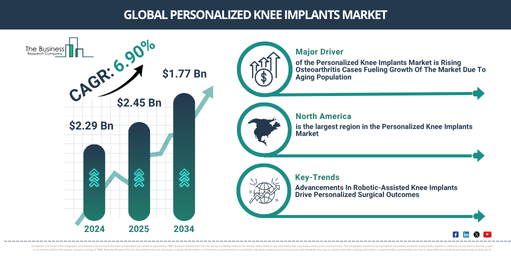
    The market for personalized knee implants has seen substantial growth in recent years. It is predicted to grow from a net worth of $2.29 billion in 2024 to an impressive $2.45 billion in 2025 – this represents a compound annual growth rate (CAGR) of 7.1%. Such robust growth in the historic period can be traced back to advancements in imaging and diagnostic procedures, the implementation of government healthcare policies that encourage such advancements, growing patient awareness about alternative joint replacement methods, a rise in the preference for knee replacement surgeries, and an increasing demand for superior surgical outcomes post-procedure.

    In the forthcoming years, the market size of personalized knee implants is anticipated to witness robust growth. It is projected to reach $3.20 billion by 2029, expanding at a compound annual growth rate (CAGR) of 6.9%. Several factors contribute to this potential growth in the forecast period. These include the rising concern for patient-specific fit and alignment of implants, increased emphasis on speedy recovery following surgery, broader insurance coverage, an upsurge in sports-related and trauma-induced knee injuries, and escalating health care expenses. Foreseen trends during this period involve the application of virtual reality for surgical planning and training, utilisation of wearable devices for post-surgery monitoring, the incorporation of augmented reality in surgical assistance, and the integration of nanotechnology and remote patient monitoring with implants.

    Download The Free Sample Report Here:

    https://www.thebusinessresearchcompany.com/sample.aspx?id=25874&type=smp

    Which Factor Is Shaping The Future Of The Personalized Knee Implants Market?

    The personalized knee implants market is set to experience significant growth due to the rising prevalence of osteoarthritis. This degenerative joint disease gradually diminishes the cartilage cushioning the ends of bones, resulting in pain, stiffness, and decreased joint mobility. The prevalence increases with aging, a factor that also contributes to the overall wear and tear of joint cartilage. Personalized knee implants, designed to perfectly fit each patient’s unique anatomy, improve joint alignment, alleviate pain, and enhance mobility more efficiently than traditional implants. As an illustration, a report by the Australian Institute of Health and Welfare, a government organization based in Australia, established that in June 2024, osteoarthritis was responsible for 143,410 disability-adjusted years (DALYs) (4.46 per 1,000 individuals) in 2023 and 2,314 fatalities (8.9 per 100,000) in 2022. These figures represented 2.5% of the total disease burden and 1.2% of all deaths, respectively. Consequently, the rising frequency of osteoarthritis is propelling the growth of the personalized knee implants market.

    What Is The Segment-Wise Breakdown Of The Personalized Knee Implants Market?

    The personalized knee implants market covered in this report is segmented –

    1) By Type: Femoral, Tibia, Patella

    2) By Fixation Material: Cemented, Cementless, Hybrid

    3) By Material: Metal-On-Plastic, Ceramic-On-Plastic, Metal-On-Metal, Ceramic-On-Ceramic

    4) By Procedure: Primary, Partial, Revision

    5) By End Use: Hospitals, Ambulatory Surgical Centers, Other End Uses

    Subsegments:

    1) By Femoral Type: Standard Femoral Implants, Customized Femoral Implants, Gender-Specific Femoral Implants

    2) By Tibia Type: Standard Tibial Implants, Customized Tibial Implants, Modular Tibial Baseplates

    3) By Patella Type: Standard Patellar Implants, Customized Patellar Implants, Patellar Resurfacing Implants

    What Upcoming Trends Are Expected To Impact The Personalized Knee Implants Market Globally?

    Major firms in the personalized knee implants market are concentrating on technological innovations like robotic-assisted total knee arthroplasty to improve surgical accuracy, implant alignment precision, patient-specific customization, and the overall clinical outcome. Primarily, robotic-assisted total knee arthroplasty is a knee replacement surgery procedure that employs a robotic system to assist the surgeon in executing the operation with increased precision. For instance, THINK Surgical, Inc., a company based in the US that supplies robotic surgical systems, launched and initially used the Freedom Total Knee Implant in April 2025. This marked the first utilization of the TMINI miniature robotic system by Maxx Orthopedics. The Freedom total knee implant brings a high level of patient-focused customization while preserving surgical efficiency. The implant includes a design that spares bone, leading to less bone extraction during implantation and presents various sizing and configuration alternatives tailored to each patient’s anatomy. The TMINI system supports both cemented and cementless fixation and features a polyethylene insert optimized for better wear resistance and smooth articulation. It aims to offer natural knee motion, stability throughout the movement range, and enduring durability.

    Which Companies Hold The Largest Market Share In The Personalized Knee Implants Sector?

    Major companies operating in the personalized knee implants market are Stryker Corporation, DePuy Synthes Inc., Zimmer Biomet Holdings Inc., Smith & Nephew plc, Arthrex Inc., Stanmore Implants Worldwide Ltd, Globus Medical Inc., Exactech Inc., Medacta International SA, Corin Group PLC, MicroPort Orthopedics Inc., B. Braun Melsungen AG, LimaCorporate S.p.A., Baumer S.A., Waldemar Link GmbH & Co. KG, THINK Surgical Inc., Signature Orthopaedics Pty Ltd, Maxx Orthopedics Inc., restor3d Inc., NanoKnee LLC

    Get The Full Report Here:

    https://www.thebusinessresearchcompany.com/report/personalized-knee-implants-global-market-report

    How Does Regional Performance Compare Across The Personalized Knee Implants Industry?

    North America was the largest region in the personalized knee implants market in 2024. Asia-Pacific is expected to be the fastest-growing region in the forecast period. The regions covered in the personalized knee implants market report are Asia-Pacific, Western Europe, Eastern Europe, North America, South America, Middle East, Africa.

    Request For A Customized Report:

    https://www.thebusinessresearchcompany.com/customise?id=25874&type=smp

    About The Business Research Company:

    With over 15000+ reports from 27 industries covering 60+ geographies, The Business Research Company has built a reputation for offering comprehensive, data-rich research and insights. Armed with 1,500,000 datasets, the optimistic contribution of in-depth secondary research, and unique insights from industry leaders, you can get the information you need to stay ahead in the game.

    Get in touch with us:

    The Business Research Company: https://www.thebusinessresearchcompany.com/

    Americas +1 310-496-7795

    Asia +44 7882 955267 & +91 8897263534

    Europe +44 7882 955267

    Email us at info@tbrc.info

    Follow us on:

    LinkedIn: https://in.linkedin.com/company/the-business-research-company

    YouTube: https://www.youtube.com/channel/UC24_fI0rV8cR5DxlCpgmyFQ

    Global Market Model: https://www.thebusinessresearchcompany.com/global-market-model

  • Comprehensive Forecast: Personalized Cranial Implant Market Share, Growth, and Opportunities Through 2029

    Claim your 30% discount on Global Market Reports with code ONLINE30. Limited time only.

    Claim your 30% discount on Global Market Reports with code ONLINE30. Limited time only.

    What Is the Estimated Industry Valuation for the Personalized Cranial Implant Sector?

    In the past few years, the personalized cranial implant market has seen a significant surge in growth. The industry, which was valued at $0.90 billion in 2024, is predicted to rise to $0.96 billion in 2025 with a compound annual growth rate (CAGR) of 7.1%. The historical growth can be credited to several factors such as a higher prevalence of traumatic brain injuries, the escalating adoption of 3D printing in the healthcare sector, increasing instances of neurosurgical procedures, greater understanding and recognition of cranial reconstruction, and a surge in demand for aesthetic restoration after a head injury.

    Anticipated to experience considerable expansion in the imminent years, the personalized cranial implant market is projected to rise to $1.25 billion by 2029, advancing at a compound annual growth rate (CAGR) of 6.8%. This projected growth for the upcoming years can be credited to a surge in the elderly population presenting cranial defects, growing preference for tailor-made implants, increasing healthcare funding in developing economies, gradual expansion of neurorehabilitation facilities, and an increasing inclination towards biocompatible materials. Significant trends in the forecast period consist of progress in 3D printing technology, the evolution of biocompatible and lightweight implant materials, assimilation of artificial intelligence in cranial surgery procedures, advancements in surgical navigation systems, and ongoing research and development in the field of regenerative cranial solutions.

    Download The Free Sample Report Here:

    https://www.thebusinessresearchcompany.com/sample.aspx?id=25873&type=smp

    What Forces Are Driving The Growth Of The Personalized Cranial Implant Market?

    The growing number of Traumatic Brain Injuries (TBIs) is anticipated to fuel the expansion of the personalized cranial implant market. TBIs are injuries to the brain resulting from external mechanical pressures. Enhanced public consciousness of the risks associated with head injuries, combined with advancements in medical diagnostic technology, has led to an increased prevalence of these injuries. Personalized cranial implants play a significant role in the treatment of traumatic brain injuries, providing tailor-made skull reconstruction that enhances brain safety, appearance, and the recovery process of the patient. As an example, the Tennessee Department of Health, a US government agency, reported a 2.4% increase in the number of patients registered in the Traumatic Brain Injury (TBI) database in 2024, compared to the number in 2023. Consequently, the escalating frequency of traumatic brain injuries and cranial defects is driving growth in the personalized cranial implant industry.

    How Is The Personalized Cranial Implant Industry Segmented Across Key Parameters?

    The personalized cranial implant market covered in this report is segmented –

    1) By Implant Material: Titanium, Polymethylmethacrylate (PMMA), Polyether Ether Ketone (PEEK), Other Implant Materials

    2) By Indication: Traumatic Brain Injury, Oncology (Tumor Resection), Congenital Disorders, Infections, Cosmetic Or Deformity Correction

    3) By End Use: Hospitals, Ambulatory Surgical Centers, Other End Uses

    Subsegments:

    1) By Titanium: Pure Titanium, Titanium Alloy, Mesh Titanium Implants, Solid Titanium Plates

    2) By Polymethylmethacrylate: Preformed Polymethylmethacrylate Implants, Hand-Molded Polymethylmethacrylate, Custom Molded Polymethylmethacrylate, Antibiotic-Impregnated Polymethylmethacrylate

    3) By Polyether Ether Ketone: Standard Polyether Ether Ketone Implants, Reinforced Polyether Ether Ketone Implants, Three-Dimensionally Printed Polyether Ether Ketone Implants, Patient-Specific Polyether Ether Ketone Implants

    4) By Other Implant Materials: Ceramic Implants, Composite Material Implants, Bioactive Glass Implants, Bioresorbable Polymer Implants

    How Are Key Trends Driving Expansion In The Personalized Cranial Implant Industry?

    Leading firms in the personalized cranial implant industry are turning their attention to progressive technologies such as onsite hospital sterile 3D printing, in an effort to optimize production and enhance customization in implant delivery. Onsite hospital sterile 3D printing technology employs cleanroom-compatible 3D printers, designed to manufacture medical-grade implants within healthcare settings. This minimizes the risk of contamination and expedites the process. In the context, the US-based additive manufacturing organization, 3D Systems, introduced the VSP PEEK Cranial Implant in April 2024. This revolutionary cranial implant solution applies high-performance PEEK components and an FDA-approved 3D printing procedure, encompassing modeling software, a sterile-context 3D printer, and a simplified post-processing platform. The design is aimed at replicating the mechanical properties of human bone, with superior features including biocompatibility, radiolucency, and resistivity to bodily fluids. The innovative system cuts material usage by up to 85% when compared with conventional methods, hence dramatically reducing costs. The quick sterile onsite deployment enriches surgical planning and results, making it a pivotal asset in cranioplasty and neurosurgery.

    Which Companies Currently Dominate The Competitive Landscape In The Personalized Cranial Implant Industry?

    Major companies operating in the personalized cranial implant market are Johnson & Johnson Services Inc., Medtronic PLC, Stryker Corporation, Zimmer Biomet Holdings Inc., Renishaw PLC, KLS Martin Group, B. Braun Melsungen AAG, Medartis Holding AG, CranioTech GmbH, evonos GmbH & Co. KG, Matrix Surgical USA LLC, Jeil Medical Corporation, Anatomics Pty Ltd., Calavera Surgical Design Inc., KELYNIAM Global Incorporated, Xilloc Medical B.V., INCREDIBLE AM Private Limited, Poriferous LLC, LUCID Implants Private Limited, Ortho Baltic Joint-Stock Company.

    Get The Full Report Here:

    https://www.thebusinessresearchcompany.com/report/personalized-cranial-implant-global-market-report

    Which Geographic Regions Are Driving Demand In The Personalized Cranial Implant Market?

    North America was the largest region in the personalized cranial implant market in 2024. Asia-Pacific is expected to be the fastest-growing region in the forecast period. The regions covered in the personalized cranial implant market report are Asia-Pacific, Western Europe, Eastern Europe, North America, South America, Middle East, Africa.

    Request For A Customized Report:

    https://www.thebusinessresearchcompany.com/customise?id=25873&type=smp

    About The Business Research Company:

    With over 15000+ reports from 27 industries covering 60+ geographies, The Business Research Company has built a reputation for offering comprehensive, data-rich research and insights. Armed with 1,500,000 datasets, the optimistic contribution of in-depth secondary research, and unique insights from industry leaders, you can get the information you need to stay ahead in the game.

    Get in touch with us:

    The Business Research Company: https://www.thebusinessresearchcompany.com/

    Americas +1 310-496-7795

    Asia +44 7882 955267 & +91 8897263534

    Europe +44 7882 955267

    Email us at info@tbrc.info

    Follow us on:

    LinkedIn: https://in.linkedin.com/company/the-business-research-company

    YouTube: https://www.youtube.com/channel/UC24_fI0rV8cR5DxlCpgmyFQ

    Global Market Model: https://www.thebusinessresearchcompany.com/global-market-model
  • CAGR of 10.1% Projected for Intravenous Therapy Solutions Market From 2025 to 2029

    CAGR of 10.1% Projected for Intravenous Therapy Solutions Market From 2025 to 2029

    Claim your 30% discount on Global Market Reports with code ONLINE30. Limited time only.

    Claim your 30% discount on Global Market Reports with code ONLINE30. Limited time only.

    How Large Is the Intravenous Therapy Solutions Market Expected to Be in 2029?

    In recent times, the market size for intravenous therapy solutions has seen a significant rise. The market, which was valued at $11.95 billion in 2024, is predicted to escalate to $13.17 billion in 2025, demonstrating a compound annual growth rate (CAGR) of 10.3%. The expansion during the historical period can be credited to factors such as an increase in hospital admissions, a rise in surgical operations, a growing prevalence of dehydration, a higher incidence of chronic illnesses, and improvements in healthcare infrastructure accessibility.

    The market size for intravenous therapy solutions is forecasted to experience a swift expansion in the coming years, ballooning to $19.33 billion in 2029 with a 10.1% Compound Annual Growth Rate (CAGR). The escalation predicted for this period is associated with factors such as the growth in the aging demographic, the broadening of home health care services, an uptick in the need for quick rehydration therapy, a surge in the occurrences of gastrointestinal conditions, and the heightened utilization of disposable IV parts. Key trends during the forecast period encompass advancements in the IV medication delivery mechanisms, a transition towards home-based IV treatment, the incorporation of intelligent infusion pumps, an increase in biological and specialty drug infusions, and a growing inclination towards personalized IV nutritional therapy.

    Download The Free Sample Report Here:

    https://www.thebusinessresearchcompany.com/sample.aspx?id=25802&type=smp

    What Are The Contributors To Demand In The Intravenous Therapy Solutions Market?

    The intravenous therapy solutions market is predicted to expand due to the rising demand for minimally invasive therapies. These are medical treatments that entail tiny incisions or entry points into the body, often leading to faster recovery and fewer complications. The increasing demand for these therapies is due to their capability to lessen postoperative discomfort, consequently speeding up patient recuperation and enhancing overall comfort during the healing phase. Intravenous therapy solutions bolster minimally invasive treatments by facilitating the effective administration of vital fluids, medicines, and nutrients straight into the bloodstream, thus ensuring top-notch patient care and quicker healing. For example, the American Society of Plastic Surgeons, a non-profit organization based in the US, stated in June 2024 that minimally invasive procedures had risen by 7% in 2023, surpassing surgical procedures by 2%. Thus, the increasing desire for minimally invasive treatments is propelling the intravenous (IV) therapy solutions market’s expansion.

    What Segmentation Categories Are Included In The Intravenous Therapy Solutions Market Analysis?

    The intravenous therapy solutions market covered in this report is segmented –

    1) By Product Type: Crystalloids, Colloids, Blood Products, Other Product Types

    2) By Application: Fluid And Electrolyte Imbalance, Nutritional Support, Medication Administration, Blood Transfusion, Other Applications

    3) By End-User: Hospitals, Clinics, Ambulatory Surgical Centers, Home Care Settings, Other End-Users

    Subsegments:

    1) By Crystalloids: Normal Saline (0.9% Sodium Chloride), Half Normal Saline (0.45% Sodium Chloride), Lactated Ringer’s Solution, Dextrose Solutions, Hypertonic Saline

    2) By Colloids: Albumin, Dextran, Hydroxyethyl Starch (HES), Gelatin

    3) By Blood Products: Packed Red Blood Cells (PRBCs), Platelets, Fresh Frozen Plasma (FFP), Cryoprecipitate

    4) By Other Product: Intravenous Immunoglobulins (IVIG), Parenteral Nutrition Solutions, Specialty Intravenous Drugs And Additives

    What Upcoming Trends Are Expected To Impact The Intravenous Therapy Solutions Market Globally?

    Leading organizations in the intravenous therapy solutions market are concentrating on producing cutting-edge solutions such as ready-to-use drug infusions to improve the effectiveness of treatments and minimize preparation time in clinical environments. The concept of ready-to-use drug infusion pertains to pre-blended, pre-labelled intravenous (IV) medications that are prepared in standard doses and packaging, thereby eliminating the need for compounding or dilution on-site. Take for example, in May 2024, B. Braun Medical Inc., a manufacturing company based in the US, released Levetiracetam in Sodium Chloride Injection, a ready-to-use IV anticonvulsant solution. The product is intended for treating seizures and comes in standardized volumes and concentrations, thus negating the requirement for dilution or compounding at the point of care. The IV formulation of Levetiracetam is pre-mixed in a flexible container, which guarantees precise dosing, diminishes the chance of contamination, and increases convenience for healthcare professionals in emergency and inpatient scenarios.

    Who Are The Top-Ranked Companies In The Intravenous Therapy Solutions Market Today?

    Major companies operating in the intravenous therapy solutions market are Pfizer Inc., Johnson & Johnson, Otsuka Pharmaceutical Co. Ltd., Baxter International Inc., Fresenius Kabi AG, Grifols S.A., Terumo Corporation, Dr. Reddy’s Laboratories Limited, Sichuan Kelun Pharmaceutical Co. Ltd., Teleflex Incorporated, Hikma Pharmaceuticals PLC, ICU Medical Inc., Biocon Limited, B. Braun Melsungen Aktiengesellschaft, JW Life Science Corporation, AdvaCare Pharma USA, Soxa Formulations & Research Pvt. Ltd., Vifor Pharma Management Ltd., Aetos Pharma Private Limited, LXIR Medilabs Private Limited

    Get The Full Report Here:

    https://www.thebusinessresearchcompany.com/report/intravenous-therapy-solutions-global-market-report

    How Is Intravenous Therapy Solutions Market Adoption Varying Across Different Regions And Sectors?

    North America was the largest region in the intravenous therapy solutions market in 2024. The regions covered in the intravenous therapy solutions market report are Asia-Pacific, Western Europe, Eastern Europe, North America, South America, Middle East, Africa.

    Request For A Customized Report:

    https://www.thebusinessresearchcompany.com/customise?id=25802&type=smp

    About The Business Research Company:

    With over 15000+ reports from 27 industries covering 60+ geographies, The Business Research Company has built a reputation for offering comprehensive, data-rich research and insights. Armed with 1,500,000 datasets, the optimistic contribution of in-depth secondary research, and unique insights from industry leaders, you can get the information you need to stay ahead in the game.

    Get in touch with us:

    The Business Research Company: https://www.thebusinessresearchcompany.com/

    Americas +1 310-496-7795

    Asia +44 7882 955267 & +91 8897263534

    Europe +44 7882 955267

    Email us at info@tbrc.info

    Follow us on:

    LinkedIn: https://in.linkedin.com/company/the-business-research-company

    YouTube: https://www.youtube.com/channel/UC24_fI0rV8cR5DxlCpgmyFQ

    Global Market Model: https://www.thebusinessresearchcompany.com/global-market-model

  • Future Demand and Leading Companies Shaping the Personal Protective Equipment For Infection Control Market to 2029

    Future Demand and Leading Companies Shaping the Personal Protective Equipment For Infection Control Market to 2029

    Claim your 30% discount on Global Market Reports with code ONLINE30. Limited time only.

    Claim your 30% discount on Global Market Reports with code ONLINE30. Limited time only.

    How Large Is the Personal Protective Equipment For Infection Control Market Expected to Be in 2029?

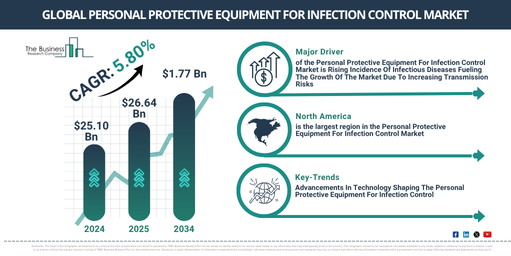
    In recent times, the market for personal protective equipment that aids in infection control has seen substantial growth. The market value, which stood at $25.10 billion in 2024, is predicted to reach $26.64 billion in 2025, indicating a compound annual growth rate (CAGR) of 6.1%. This growth during the historic period is associated with multiple factors including rising fears over hospital-acquired infections, the enforcement of more stringent workplace safety laws, expanding healthcare infrastructure, an upswing in surgical procedures, governmental stockpiling programs, and a surge in medical tourism.

    The market size of personal protective equipment for infection control is forecasted to experience robust growth in the imminent years, projecting a rise to $33.43 billion by 2029 at a compound annual growth rate (CAGR) of 5.8%. This anticipated growth for the future years can be credited to factors such as the aging international population, the ascension of telehealth and home healthcare initiatives, enhanced infection control protocols, growth of ambulatory surgical centers, and heightened investments in the sphere of public health. Significant trends for this forecast period comprise the invention of smart personal protective equipment, novel tech innovations in the fabrication of PPE materials, progressive changes in infection control technologies, sophisticated filtration technologies, and their integration with telehealth and IoT platforms.

    Download The Free Sample Report Here:

    https://www.thebusinessresearchcompany.com/sample.aspx?id=25872&type=smp

    What Are The Contributors To Demand In The Personal Protective Equipment For Infection Control Market?

    The escalating instances of infectious illnesses are anticipated to fuel the expansion of the personal protective equipment for infection control market in the future. Pathogenic microorganisms like bacteria, viruses, fungi, or parasites cause infectious diseases that can be transferred either directly or indirectly from one individual to another, or from animals or the environment to people. The urban lifestyle preference coupled with increased global travel, which expedites the spread of diseases, accounts for the upsurge in infectious diseases. Personal protective equipment (PPE) for infection control helps lower the prevalence of infectious diseases by providing healthcare workers and individuals a physical barrier against pathogens, thereby avoiding direct contact with infectious agents. For example, as per a report by the UK Health Security Agency in March 2025, hospital admission rates for infectious diseases and infections in England between 2023 and 2024 were almost double for individuals residing in the most deprived 20% of areas compared to those in the least deprived areas. Additionally, GOV.UK revealed in February 2024 that tuberculosis (TB) cases in England had surged from 4,380 in 2022 to 4,850 in 2023, showing a 10.7% increase. Accordingly, the accelerating incidence of infectious diseases is propelling the growth of the personal protective equipment for infection control market.

    What Segmentation Categories Are Included In The Personal Protective Equipment For Infection Control Market Analysis?

    The personal protective equipment for infection control market covered in this report is segmented –

    1) By Product Type: Gloves, Face Masks, Gowns And Coveralls, Eye Protection, Respirators

    2) By Material Type: Latex, Nitrile, Polyethylene, Polypropylene, Other Advanced Materials

    3) By Distribution Channel: Direct Sales, Online Retail, Traditional Retail, Catalog Sales, Wholesalers And Distributors

    4) By Application Area: Infection Prevention, Occupational Safety, Emergency Response, Aerosol Transmission Protection, Healthcare Settings

    5) By End-User: Hospitals, Ambulatory Surgical Centers, Pharmacies, Diagnostic Laboratories, Public Health Institutions

    Subsegments:

    1) By Gloves: Disposable Gloves, Sterile Gloves, Non-Sterile Gloves, Latex Gloves, Nitrile Gloves, Vinyl Gloves, Polyethylene Gloves

    2) By Face Masks: Surgical Masks, N95 Respirators, KN95 Masks, Cloth Masks, Respirator Masks With Valves, Face Shields

    3) By Gowns And Coveralls: Isolation Gowns, Surgical Gowns, Coveralls, Reusable Gowns, Disposable Gowns, Fluid-Resistant Gowns

    4) By Eye Protection: Safety Goggles, Face Shields, Protective Glasses, Prescription Safety Glasses

    5) By Respirators: Half-Face Respirators, Full-Face Respirators, Powered Air-Purifying Respirators (PAPR), Reusable Respirators, Disposable Respirators

    Which Trends Are Expected To Shape The Future Of The Personal Protective Equipment For Infection Control Market?

    Leading firms in the personal protective equipment for infection control sector are rolling out new and inventive solutions, such as cutting-edge personal protective shields, to boost user safety, enhance comfort, and provide improved defense against airborne diseases. The term cutting-edge personal protective shields is associated with advanced body and face protectors, constructed with superior materials, ergonomic designs, and augmented protective features for premium protection against contagious agents. An apt example is the March 2025 launch of the Steri-Shield 8 personal protection system by Stryker Corporation, an American medical technology firm. This state-of-the-art personal protective equipment (PPE) is intended for medical professionals and includes a customizable helmet that offers a dependable and tailored fit with its three contact points, including a separate ponytail path for individuals with longer hair. The system provides enhanced visibility thanks to a 22% increase in the field of view and a bright helmet light, as well as a revamped fan system that cools the frontal and posterior neck regions for heightened comfort. The system is available in three toga styles, all offering AAMI level 4 (2012) protection and thus ensuring the utmost barrier against fluid and microbial agents. Furthermore, the system includes a redesigned battery and a more effective charging station, demonstrating Stryker’s dedication to both innovation and usability in PPE.

    Who Are The Top-Ranked Companies In The Personal Protective Equipment For Infection Control Market Today?

    Major companies operating in the personal protective equipment for infection control market are Cardinal Health Inc., Honeywell International Inc., 3M Company, Kimberly-Clark Corporation, Stryker Corporation, DuPont de Nemours Inc., STERIS plc, ELIS UK Limited, Ansell Limited, SHOWA Group, SAS Safety Corp., Moldex-Metric Inc., Uvex Arbeitsschutz GmbH, MEC Industries Inc., Alpha Pro Tech Ltd., Polyco Healthline Ltd., Berner International GmbH, Gateway Safety Inc., Plasti Surge Industries Pvt. Ltd., Phillips Safety Products Inc., Franz Mensch GmbH, Univet S.p.A., Dastex Reinraumzubehör GmbH & Co. KG

    Get The Full Report Here:

    https://www.thebusinessresearchcompany.com/report/personal-protective-equipment-for-infection-control-global-market-report

    How Is Personal Protective Equipment For Infection Control Market Adoption Varying Across Different Regions And Sectors?

    North America was the largest region in the personal protective equipment for infection control market in 2024. Asia-Pacific is expected to be the fastest-growing region in the forecast period. The regions covered in the personal protective equipment for infection control market report are Asia-Pacific, Western Europe, Eastern Europe, North America, South America, Middle East, Africa.

    Request For A Customized Report:

    https://www.thebusinessresearchcompany.com/customise?id=25872&type=smp

    About The Business Research Company:

    With over 15000+ reports from 27 industries covering 60+ geographies, The Business Research Company has built a reputation for offering comprehensive, data-rich research and insights. Armed with 1,500,000 datasets, the optimistic contribution of in-depth secondary research, and unique insights from industry leaders, you can get the information you need to stay ahead in the game.

    Get in touch with us:

    The Business Research Company: https://www.thebusinessresearchcompany.com/

    Americas +1 310-496-7795

    Asia +44 7882 955267 & +91 8897263534

    Europe +44 7882 955267

    Email us at info@tbrc.info

    Follow us on:

    LinkedIn: https://in.linkedin.com/company/the-business-research-company

    YouTube: https://www.youtube.com/channel/UC24_fI0rV8cR5DxlCpgmyFQ

    Global Market Model: https://www.thebusinessresearchcompany.com/global-market-model

  • Industry Forecast: Intraoral Flat Panel Detector Market to Generate $2.62  Billion Revenue by 2029

    Industry Forecast: Intraoral Flat Panel Detector Market to Generate $2.62 Billion Revenue by 2029

    Claim your 30% discount on Global Market Reports with code ONLINE30. Limited time only.

    Claim your 30% discount on Global Market Reports with code ONLINE30. Limited time only.

    What Is the Outlook for the Intraoral Flat Panel Detector Market Heading Into 2029?

    The size of the intraoral flat panel detector market has seen a swift increase in recent years. The market, which stood at $1.48 billion in 2024, is predicted to reach $1.66 billion in 2025 with a compound annual growth rate (CAGR) of 12.3%. The notable growth during the historic phase was driven by factors like the increasing acceptance of digital radiography, a surge in demand for cosmetic dentistry, the rise in dental issues among the elderly, favorable reimbursement policies, and an increase in the requirement for point-of-care dental diagnostics.

    It is anticipated that the market size for intraoral flat panel detectors will appreciably augment in the forthcoming years. By 2029, the market is predicted to reach a value of $2.62 billion, with a compound annual growth rate (CAGR) of 12.1%. This development in the prognosis stretch can be accredited to factors such as the rise in dental tourism in developing economies, the proliferation of dental clinics and imaging centers, heightened awareness about preliminary detection of oral ailments, increased utilization of cloud-based mechanisms for image storage, and a growing inclination towards environmentally sound imaging systems. Significant trends projected for the forecast period encompass the migration towards cordless intraoral detectors, the miniaturization of detector technology, the amalgamation with 3d dental imaging solutions, advancements in dental imaging technology, and confluence with artificial intelligence.

    Download The Free Sample Report Here:

    https://www.thebusinessresearchcompany.com/sample.aspx?id=25801&type=smp

    Which Factors Are Pushing The Intraoral Flat Panel Detector Market Forward?

    The increased number of dental disorders is anticipated to fuel the growth of the intraoral flat panel detector market in the future. Dental disorders, which include conditions affecting the teeth and oral cavity like tooth decay, gum disease, and oral infections, are on the rise largely due to insufficient oral care. The improper or irregular brushing, flossing, and dental appointments can lead to plaque accumulation and bacterial development, resulting in cavities, gum disease, and even tooth loss. The intraoral flat panel detector assists in diagnosing these dental disorders more accurately by offering high-resolution digital imagery that allows for early identification and accurate evaluation of oral health. The World Health Organization offered an example of this in March 2025, stating that oral diseases are anticipated to impact approximately 3.7 billion individuals globally each year. Thus, the increasing prevalence of dental disorders is boosting the intraoral flat panel detector market’s growth. The accelerating investments in dental care, spurred by a growing demand for advanced diagnostic imaging technologies, are positively impacting the intraoral flat panel detector market. Such investments, made by governments, private entities, or individuals, aim to enhance oral healthcare infrastructure and services. The rise in these investments can be attributed to a growing awareness about oral health. This increasing awareness is reflected in the growing number of individuals who understand the importance of regular dental check-ups, preventative care, and early treatments for general health and to avoid expensive complications. Financial input into dental care thus enables the introduction of advanced imaging technologies like intraoral flat panel detectors, offering clinics the ability to update diagnostic equipment, in turn, leading to more accurate, efficient, and patient-friendly dental examinations. An illustration of this was presented by the US-based federal agency, Centers for Medicare & Medicaid Services, in December 2023. The agency reported that dental services spending had seen a substantial growth rate of 18.2% in 2021, rising just 0.3% in 2022 to reach $165.3 billion. Consequently, the increased investments in dental care are fuelling the intraoral flat panel detector market’s growth.

    Which Segment Held The Largest Share In The Intraoral Flat Panel Detector Market In 2025?

    The intraoral flat panel detector market covered in this report is segmented –

    1) By Product Type: Direct Conversion Detectors, Indirect Conversion Detectors

    2) By Technology: Complementary Metal-Oxide-Semiconductor (C-MOS), Thin Film Transistors (TFT)

    3) By Application: Diagnostic Imaging, Treatment Planning

    4) By Distribution Channel: Direct Sales, Online Retail, Distributors And Wholesalers

    5) By End-User: Dental Clinics, Hospitals

    Subsegments:

    1) By Direct Conversion Detectors: Amorphous Selenium (a-Se) Detectors, Cadmium Telluride (CdTe) Detectors, Cadmium Zinc Telluride (CZT) Detectors

    2) By Indirect Conversion Detectors: Cesium Iodide (CsI) Scintillators, Gadolinium Oxysulfide (GOS) Scintillators, Sodium Iodide (NaI) Scintillators

    How Are Key Trends Driving Expansion In The Intraoral Flat Panel Detector Industry?

    Leading firms in the intraoral flat panel detector market are turning to cutting-edge technologies like indium gallium zinc oxide thin-film transistor (IGZO-TFT) technology to improve image resolution and minimize radiation dosage. IGZO-TFT technology, a semiconductor used in flat panel displays, outperforms traditional amorphous silicon in terms of higher electron mobility. It enhances image quality with its higher resolution, quicker response times, and reduced power consumption in intraoral flat panel detectors. For example, in March 2025, the Finland-headquartered semiconductor manufacturer, Detection Technology Plc, introduced the X-Panel 2520z FOM, a revolutionary flat panel detector that redefines dental imaging. This one-of-a-kind 25 cm x 20 cm detector employs advanced IGZO-TFT technology, becoming the biggest of its type to integrate this advancement. The X-Panel 2520z FOM provides a field of view that is 95% larger and 30% better resolution than conventional a-Si panels, facilitating the acquisition of high-clarity, full-resolution cone beam computed tomography (CBCT) scans. It also doubles the frame rate of traditional detectors, reaching up to 50 fps, thus expediting workflow without compromising image quality.

    Which Organizations Are Driving Progress In The Intraoral Flat Panel Detector Industry?

    Major companies operating in the intraoral flat panel detector market are Dentsply Sirona Inc., Planmeca Oy, DEXIS LLC, Teledyne DALSA Inc., Acteon Group Ltd., Dabi Atlante Equipamentos Médicos Odontológicos Ltda., Polaroid B.V., Vatech Co. Ltd., Trixell S.A.S., XDR Radiology LLC, Trident S.r.l., Apixia Inc., DentiMax LLC, Owandy Radiology S.A.S., Ningbo Runyes Medical Instrument Co. Ltd., Video Dental Concepts Inc., FONA Dental s.r.o., HDXWILL Co. Ltd., Saevo Equipamentos Odontológicos Ltda., Simple and Smart

    Get The Full Report Here:

    https://www.thebusinessresearchcompany.com/report/intraoral-flat-panel-detector-global-market-report

    Which Region Is Expected To Experience The Highest Growth In The Intraoral Flat Panel Detector Industry?

    North America was the largest region in the intraoral flat panel detector market in 2024. Asia-Pacific is expected to be the fastest-growing region in the forecast period. The regions covered in the intraoral flat panel detector market report are Asia-Pacific, Western Europe, Eastern Europe, North America, South America, Middle East, Africa.

    Request For A Customized Report:

    https://www.thebusinessresearchcompany.com/customise?id=25801&type=smp

    About The Business Research Company:

    With over 15000+ reports from 27 industries covering 60+ geographies, The Business Research Company has built a reputation for offering comprehensive, data-rich research and insights. Armed with 1,500,000 datasets, the optimistic contribution of in-depth secondary research, and unique insights from industry leaders, you can get the information you need to stay ahead in the game.

    Get in touch with us:

    The Business Research Company: https://www.thebusinessresearchcompany.com/

    Americas +1 310-496-7795

    Asia +44 7882 955267 & +91 8897263534

    Europe +44 7882 955267

    Email us at info@tbrc.info

    Follow us on:

    LinkedIn: https://in.linkedin.com/company/the-business-research-company

    YouTube: https://www.youtube.com/channel/UC24_fI0rV8cR5DxlCpgmyFQ

    Global Market Model: https://www.thebusinessresearchcompany.com/global-market-model
  • 2025–2029 Peripheral Interventions Market Outlook: Regional Trends and Growth Forecast

    2025–2029 Peripheral Interventions Market Outlook: Regional Trends and Growth Forecast

    Claim your 30% discount on Global Market Reports with code ONLINE30. Limited time only.

    Claim your 30% discount on Global Market Reports with code ONLINE30. Limited time only.

    What Is the Outlook for the Peripheral Interventions Market Heading Into 2029?

    The market size for peripheral interventions has been on a strong upward trajectory in recent years. It is projected to escalate from $9.16 billion in 2024 to $10.00 billion in 2025, with a compound annual growth rate (CAGR) of 9.1%. The substantial growth during the historic period can be accredited to the increasing prevalence of diabetes and hypertension, higher demand for outpatient and same-day medical procedures, expansion of awareness and screening programs, mounting clinical validation and sanctioning of innovative devices, and the increasing toll of lifestyle-associated disorders.

    The market size for peripheral interventions is predicted to experience significant expansion in the coming years, with the value projected to reach $14.06 billion in 2029, reflecting a compound annual growth rate (CAGR) of 8.9%. The augmentation over the forecast period can be linked to the increasing appeal for vascular access processes and patients favoring shorter durations of hospitalization. Further contributing factors include the rising access to compensation for peripheral operations, the increasing emphasis on early detection via imaging technologies, and the expanding accessibility of healthcare in rural and underserviced areas. Key trends observed in the forecast period comprise advances in intravascular imaging technologies, the evolution of technology in drug-eluting devices, progress in robotic-assisted peripheral interventions, the inclusion of telehealth and remote supervising systems, and advancements in biodegradable stents and scaffolds.

    Download The Free Sample Report Here:

    https://www.thebusinessresearchcompany.com/sample.aspx?id=25871&type=smp

    Which Factors Are Pushing The Peripheral Interventions Market Forward?

    The anticipated increase in demand for minimally invasive procedures is predicted to fuel the rise of the peripheral interventions market. Such procedures involve surgical interventions or surgeries performed through minuscule incisions or naturally occurring body openings, leading to less trauma, diminished pain, and expedited recovery compared to traditional open surgery. Enhanced precision and safety in operations, brought about by improvements in surgical technologies and medical imaging, are the key drivers of this surge in minimally invasive procedures. Peripheral interventions augment minimally invasive procedures by facilitating targeted treatment of vascular conditions via small incisions, thus obviating the need for open surgery. For instance, the American Society of Plastic Surgeons, a professional body based in the US, reported that approximately 25.4 million minimally invasive procedures were done in 2023, depicting an increase of 7% compared to 2022. Consequently, the mounting demand for minimally invasive procedures is pushing forward the expansion of the peripheral interventions market.

    Which Segment Held The Largest Share In The Peripheral Interventions Market In 2025?

    The peripheral interventions market covered in this report is segmented –

    1) By Product Type: Catheters, Sheath, Stents, Guide Wires, Atherectomy Devices, Embolic Devices, Thrombectomy Devices, Inferior Vena Cava (IVC) Filters, Other Types

    2) By Technology: Drug-Eluting Stents, Balloon-Expandable Stents, Self-Expanding Stents, Rotational Atherectomy, Directional Atherectomy

    3) By Application: Peripheral Artery Disease, Venous Thromboembolism, Other Applications

    4) By End User: Hospitals, Ambulatory Surgical Centers, Clinics, Research Institutes

    Subsegments:

    1) By Catheters: Angiographic Catheters, Balloon Catheters, Guiding Catheters, Support Catheters

    2) By Sheath: Introducer Sheaths, Guiding Sheaths

    3) By Stents: Bare Metal Stents, Drug-Eluting Stents, Covered Stents, Self-Expanding Stents, Balloon-Expandable Stents

    4) By Guide Wires: Hydrophilic Guide Wires, Nitinol Guide Wires, Stainless Steel Guide Wires

    5) By Atherectomy Devices: Directional Atherectomy Devices, Rotational Atherectomy Devices, Orbital Atherectomy Devices, Laser Atherectomy Devices

    6) By Embolic Devices: Embolization Coils, Embolic Protection Devices, Liquid Embolic Agents

    7) By Thrombectomy Devices: Mechanical Thrombectomy Devices, Aspiration Thrombectomy Devices, Rheolytic Thrombectomy Devices

    8) By Inferior Vena Cava (IVC) Filters: Permanent Filters, Retrievable Filters

    9) By Other Types: Vascular Closure Devices, Hemostatic Agents, Guide Catheter

    What Long-Term Trends Are Likely To Affect The Peripheral Interventions Market?

    In an effort to improve the safety and effectiveness of treating calcified peripheral artery disease, major corporations in the peripheral interventions market are concentrating on creating innovative solutions such as peripheral intravascular lithotripsy catheters. These are devices that utilize sonic pressure waves to dissolve calcified plaque in peripheral arteries, thus simplifying and securing the processes of angioplasty or stent placement. For instance, Shockwave Medical Inc., a U.S. medical device company, unveiled the Shockwave Javelin Peripheral IVL Catheter in March 2025. This is an advanced forward IVL platform engineered for patients with peripheral artery disease (PAD) who have difficult-to-cross, severely calcified lesions. With a 150 cm working length and a single distal emitter that emits up to 120 shockwave pulses, this unique catheter produces a spherical energy field that alters calcium and allows the device to traverse extremely narrow or blocked vessels where other devices might fail. Clinical studies showed that the Javelin’s safety and effectiveness are on par with current balloon-based IVL catheters, thereby introducing a revolutionary method for addressing intricate calcified peripheral lesions and enhancing procedural success for PAD patients.

    Which Organizations Are Driving Progress In The Peripheral Interventions Industry?

    Major companies operating in the peripheral interventions market are Cardinal Health Inc., Johnson & Johnson, Abbott Laboratories, Medtronic plc, Siemens Healthineers AG, Becton Dickinson and Company, Koninklijke Philips N.V., Stryker Corporation, Boston Scientific Corporation, B. Braun Melsungen AG, Terumo Corporation, Nipro Corporation, Getinge AB, Teleflex Incorporated, Cook Group Incorporated, Merit Medical Systems Inc., Lepu Medical Technology (Beijing) Co. Ltd., Cordis Corporation, MicroPort Scientific Corporation, Penumbra Inc., W. L. Gore & Associates Inc., Reflow Medical Inc., ArtVentive Medical Group Inc.

    Get The Full Report Here:

    https://www.thebusinessresearchcompany.com/report/peripheral-interventions-global-market-report

    Which Region Is Expected To Experience The Highest Growth In The Peripheral Interventions Industry?

    North America was the largest region in the peripheral interventions market in 2024. Asia-Pacific is expected to be the fastest-growing region in the forecast period. The regions covered in the peripheral interventions market report are Asia-Pacific, Western Europe, Eastern Europe, North America, South America, Middle East, Africa.

    Request For A Customized Report:

    https://www.thebusinessresearchcompany.com/customise?id=25871&type=smp

    About The Business Research Company:

    With over 15000+ reports from 27 industries covering 60+ geographies, The Business Research Company has built a reputation for offering comprehensive, data-rich research and insights. Armed with 1,500,000 datasets, the optimistic contribution of in-depth secondary research, and unique insights from industry leaders, you can get the information you need to stay ahead in the game.

    Get in touch with us:

    The Business Research Company: https://www.thebusinessresearchcompany.com/

    Americas +1 310-496-7795

    Asia +44 7882 955267 & +91 8897263534

    Europe +44 7882 955267

    Email us at info@tbrc.info

    Follow us on:

    LinkedIn: https://in.linkedin.com/company/the-business-research-company

    YouTube: https://www.youtube.com/channel/UC24_fI0rV8cR5DxlCpgmyFQ

    Global Market Model: https://www.thebusinessresearchcompany.com/global-market-model

  • Intraocular Lens (IOL) Implants Market Revenue Outlook: Strategic Insights and Forecast to 2029

    Intraocular Lens (IOL) Implants Market Revenue Outlook: Strategic Insights and Forecast to 2029

    Claim your 30% discount on Global Market Reports with code ONLINE30. Limited time only.

    Claim your 30% discount on Global Market Reports with code ONLINE30. Limited time only.

    What Does the Forecast Indicate for the Intraocular Lens (IOL) Implants Market From 2025 to 2029?

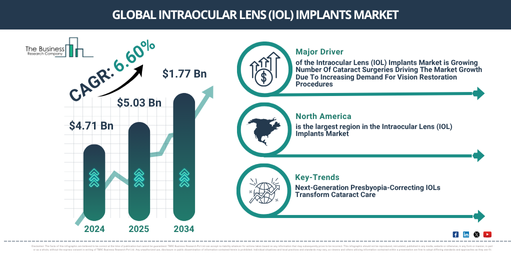
    There’s been significant expansion in the market size for intraocular lens (IOL) implants in the past few years. The market is expected to swell from $4.71 billion in 2024 to $5.03 billion in 2025, marking a compound annual growth rate (CAGR) of 6.9%. Several factors have driven this growth in the historical period, including an aging population, the increased prevalence of cataracts, heightened awareness of eye health, a surge in the adoption of monofocal lenses, and a rise in the number of minimally invasive surgeries.

    The market size for intraocular lens (IOL) implants is projected to experience substantial growth over the next few years, reaching $6.51 billion by 2029 with an annual compound growth rate (CAGR) of 6.6%. Factors contributing to this predicted expansion during the forecast period include a surge in demand for premium IOLs, a rise in outpatient cataract procedures, an inclination towards femtosecond laser-assisted surgery, government-led vision care initiatives, and broader access in burgeoning markets. The forecast period is also expected to see prominent trends such as a shift towards toric and multifocal IOLs, advances in surgical techniques, the inclusion of AI in ophthalmology, the creation of light-adjustable lenses, and a growing partiality for personalized vision correction.

    Download The Free Sample Report Here:

    https://www.thebusinessresearchcompany.com/sample.aspx?id=25800&type=smp

    What Elements Are Contributing To Growth In The Intraocular Lens (IOL) Implants Market?

    An increase in cataract procedures is projected to push forward the expansion of the intraocular lens (IOL) implants market. The surgical removal of an eye’s opaque lens – cataract surgery – involves replacing it with a synthetic intraocular lens to regain clear vision. The rising occurrences of these procedures can be largely attributed to the growing older population, as it is more common for elderly individuals to develop cataracts. This heightens their vulnerability to vision damage that necessitates surgical treatment. IOL implants enhance the cataract operation by substituting the eye’s foggy natural lens with a transparent synthetic one, thereby re-establishing sharp vision and enhancing overall visual result. This also lessens the reliance on prescription glasses and facilitates a speedier recovery paired with long-term visual consistency. Reportedly, in April 2022, EyeWorld Magazine, a US-based ophthalmology journal, announced that approximately 9,750 cataract surgeons in the U.S conducted 4.6 million procedures in 2022, averaging 472 surgeries per surgeon. It is projected that by 2030, about 10,000 surgeons are anticipated to carry out approximately 600 cases per year. For this reason, the rising incidences of cataract surgeries are fueling the expansion of the IOL implants market.

    Which Segments Are Detailed In The Global Intraocular Lens (IOL) Implants Market Report?

    The intraocular lens (iol) implants market covered in this report is segmented –

    1) By Types: Non-Foldable Intraocular Lens (IOL) Implants, Foldable Intraocular Lens (IOL) Implants

    2) By Material Of Intraocular Lens (IOL): Silicone Intraocular Lens, Polymethyl Methacrylate (PMMA) Intraocular Lens, Hydrophilic Acrylic Intraocular Lens, Hydrophobic Acrylic Intraocular Lens, Combination Materials Intraocular Lens

    3) By Surgical Technique: Phacoemulsification, Extracapsular Cataract Extraction (ECCE), Small Incision Cataract Surgery (SICS), Femtosecond Laser-Assisted Surgery

    4) By Application: Cataract Surgery, Refractive Surgery, Presbyopia Correction, Secondary Intraocular Lens Implantation

    5) By End User: Hospitals, Ambulatory Surgical Centers (ASCs), Ophthalmology Clinics, Eye Research Institutes, Other End Users

    Subsegments:

    1) By Non-Foldable Intraocular Lens (IOL) Implants: Rigid Polymethyl Methacrylate (PMMA) Intraocular Lenses, Anterior Chamber Intraocular Lenses, Posterior Chamber Intraocular Lenses

    2) By Foldable Intraocular Lens (IOL) Implants: Hydrophilic Acrylic Intraocular Lenses, Hydrophobic Acrylic Intraocular Lenses, Silicone Intraocular Lenses, Collamer Intraocular Lenses

    Which Emerging Trends And Strategic Shifts Are Shaping The Intraocular Lens (IOL) Implants Market?

    Leading corporations in the intraocular lens (IOL) implants market are working towards the creation of ground-breaking products, such as state-of-the-art presbyopia-correcting lenses, with an aim to advance visual outcomes and decrease the necessity for patients to wear glasses. The state-of-the-art presbyopia-correcting lenses are a newer form of intraocular lenses purposed to reinstate clear vision at a variety of distances, including near, intermediate, and far, for those suffering from presbyopia. By limiting or completely doing away with the requirement for reading glasses or bifocals post cataract surgery, these lenses offer their patients an increase in visual independence and an improved standard of life. For instance, in June 2025, US pharmaceutical industry giant Johnson & Johnson introduced the Tecnis Odyssey next-generation intraocular lens (IOL), a complete visual range presbyopia-correcting lens. This lens is designed to accomplish clear vision at all distances and in diverse illumination circumstances, this improved visual outcomes while decreasing patients’ need for glasses. This revolutionary product pairs cutting-edge optics with a distinct diffractive surface to provide continuous, high-contrast sight, and is specially designed to diminish night-time vision issues like halos and glare, providing cataract patients with increased visual autonomy and an elevated lifestyle quality.

    Who Are The Key Contributors To Growth In The Intraocular Lens (IOL) Implants Market?

    Major companies operating in the intraocular lens (iol) implants market are Bausch & Lomb Incorporated, Carl Zeiss Meditec AG, Appasamy Associates Private Limited, STAAR Surgical Company, Aurolab, Lenstec Inc., Rayner Intraocular Lenses Limited, Omni Lens Private Limited, Ophtec B.V., Hanita Lenses R.C.A Ltd., Shanghai Haohai Biological Technology Co. Ltd., Biotech Vision Care Pvt. Ltd., HumanOptics AG, Soleko S.p.A., Care Group Sight Solutions Private Limited, Cristalens Industrie SAS, SAV-IOL SA, Eyebright Medical Technology (Beijing) Co. Ltd., Eagle Optics Pvt. Ltd., SIFI S.p.A.

    Get The Full Report Here:

    https://www.thebusinessresearchcompany.com/report/intraocular-lens-iol-implants-global-market-report

    Which Region Is Projected To Lead The Intraocular Lens (IOL) Implants Market By 2025?

    North America was the largest region in the intraocular lens (IOL) implants market in 2024. Asia-Pacific is expected to be the fastest-growing region in the forecast period. The regions covered in the intraocular lens (iol) implants market report are Asia-Pacific, Western Europe, Eastern Europe, North America, South America, Middle East, Africa.

    Request For A Customized Report:

    https://www.thebusinessresearchcompany.com/customise?id=25800&type=smp

    About The Business Research Company:

    With over 15000+ reports from 27 industries covering 60+ geographies, The Business Research Company has built a reputation for offering comprehensive, data-rich research and insights. Armed with 1,500,000 datasets, the optimistic contribution of in-depth secondary research, and unique insights from industry leaders, you can get the information you need to stay ahead in the game.

    Get in touch with us:

    The Business Research Company: https://www.thebusinessresearchcompany.com/

    Americas +1 310-496-7795

    Asia +44 7882 955267 & +91 8897263534

    Europe +44 7882 955267

    Email us at info@tbrc.info

    Follow us on:

    LinkedIn: https://in.linkedin.com/company/the-business-research-company

    YouTube: https://www.youtube.com/channel/UC24_fI0rV8cR5DxlCpgmyFQ

    Global Market Model: https://www.thebusinessresearchcompany.com/global-market-model

  • 2025 Interatrial Shunt Devices Market Outlook: Opportunities, Growth Trends, and Strategic Analysis

    2025 Interatrial Shunt Devices Market Outlook: Opportunities, Growth Trends, and Strategic Analysis

    Claim your 30% discount on Global Market Reports with code ONLINE30. Limited time only.

    Claim your 30% discount on Global Market Reports with code ONLINE30. Limited time only.

    What Is the Current and Projected Market Size of the Interatrial Shunt Devices Industry?

    The market for interatrial shunt devices has seen a swift expansion in the recent past. The market size is projected to increase from $2.63 billion in 2024 to $2.90 billion in 2025, with a compound annual growth rate (CAGR) of 10.5%. Several factors contributed to this growth during the historical period, such as increasing clinical proof of the devices’ efficacy and safety, heightened demand for effective management of pulmonary hypertension, a surge in cases of comorbidities, a rise in regulatory approvals for experimental shunt systems, and a growing preference for outpatient and ambulatory cardiac care.

    The market size of interatrial shunt devices is predicted to witness accelerated expansion in the coming years, reaching $4.28 billion by 2029, with a composite yearly growth rate (CAGR) of 10.2%. Factors contributing to this growth during the predicted period include an escalating occurrence of heart failure, an expanding aged population, growing education about less invasive heart treatments, an increase in healthcare costs, and an upsurge in the adoption of catheter-centered procedures. Noteworthy trends during the expected period consist of technological innovations in shunt device materials, diminution of interventional devices driven by technology, integration of instant imaging and navigation systems, improvements in catheter-centric delivery systems, and advancements in hemodynamic monitoring technology.

    Download The Free Sample Report Here:

    https://www.thebusinessresearchcompany.com/sample.aspx?id=25798&type=smp

    #Which Factors Are Currently Driving The Growth Of The Interatrial Shunt Devices Market?

    The increasing incidence of heart failure is predicted to boost the expansion of the market for interatrial shunt devices in the future. Heart failure is characterized by the heart’s inefficiency to effectively distribute blood, leading to insufficient delivery of necessary oxygen and nutrients to body tissues. The escalating occurrence of hypertension that gradually deteriorates the heart’s pumping capacity triggers the rise in heart failure cases. Interatrial shunt devices provide a solution for heart failure by creating a small aperture between the left and right atria, enabling the excessive pressure in the overburdened left side of the heart to be transferred to the right, thereby mitigating pulmonary congestion and enhancing symptoms. For example, in September 2024, the Heart Failure Society of America, a professional organization based in the US, noted that around 6.7 million American adults above the age of 20 were living with heart failure. They expect this number to escalate to 11.4 million by 2050. Consequently, the uphill prevalence of heart failure fuels the growth of the market for interatrial shunt devices.

    How Is The Global Interatrial Shunt Devices Market Structured In Terms Of Segments?

    The interatrial shunt devices market covered in this report is segmented –

    1) By Device Type: Implantable Shunt Devices, Temporary Shunt Devices

    2) By Delivery Method: Surgical Delivery, Transcatheter Delivery

    3) By Material: Nitinol, Polyester, Polyproplene

    4) By Application: Congenital Heart Disease, Heart Failure, Stroke Prevention

    5) By End-User: Hospitals, Ambulatory Surgical Centers, Cardiac Catheterization Laboratories, Other Users

    Subsegments:

    1) By Implantable Shunt Devices: Single-Lumen Shunt Devices, Expandable Shunt Devices, Multi-Lumen Shunt Devices

    2) By Temporary Shunt Devices: Balloon-Assisted Shunt Devices, Percutaneous Temporary Shunt Devices, Catheter-Based Shunt Devices

    What Trends Are Currently Influencing Growth In The Interatrial Shunt Devices Market?

    Leading companies in the interatrial shunt devices market are concentrating on the invention of advanced solutions like the first-in-human (FIH) clinical trial, which is used to examine the potency and safety of new shunt devices in reducing left atrial pressure in heart failure patients. The FIH clinical trial is regarded as the first stage in testing an innovative medical device or drug on humans to evaluate its safety, tolerability, and preliminary effectiveness after accomplishing successful preclinical studies. For example, Adona Medical Inc., a medical technology company based in the US, triumphantly accomplished participant recruitment for its first ATHENS-HF FIH clinical trial in January 2025. The trial featured a new interatrial shunt design for treating heart failure patients. Notably, this device is among the game changers that fuse therapeutic shunting with integrated bi-atrial pressure monitoring, aiming to administer a more personalized and adaptive method to heart failure management.

    Who Are The Main Participants Shaping The Interatrial Shunt Devices Market Landscape?

    Major companies operating in the interatrial shunt devices market are Johnson & Johnson, Abbott Laboratories, Medtronic plc., Terumo Corporation, Edwards Lifesciences Corporation, Cook Medical, Integra LifeSciences Holdings Corporation, Lepu Medical Technology (Beijing) Co. Ltd., B. Braun Melsungen AG., W. L. Gore & Associates Inc., Venus Medtech Inc., Occlutech Holding AG., Wuhan Vickor Medical Technology Co. Ltd., Corvia Medical Inc., Xeltis BV, Alleviant Medical Inc., Cerevasc Inc., Adona Medical Inc., Carag AG., InterShunt Technologies Inc.

    Get The Full Report Here:

    https://www.thebusinessresearchcompany.com/report/interatrial-shunt-devices-global-market-report

    Which Region Currently Holds The Largest Share In The Interatrial Shunt Devices Market?

    North America was the largest region in the interatrial shunt devices market in 2024. Asia-Pacific is expected to be the fastest-growing region in the forecast period. The regions covered in the interatrial shunt devices market report are Asia-Pacific, Western Europe, Eastern Europe, North America, South America, Middle East, Africa.

    Request For A Customized Report:

    https://www.thebusinessresearchcompany.com/customise?id=25798&type=smp

    About The Business Research Company:

    With over 15000+ reports from 27 industries covering 60+ geographies, The Business Research Company has built a reputation for offering comprehensive, data-rich research and insights. Armed with 1,500,000 datasets, the optimistic contribution of in-depth secondary research, and unique insights from industry leaders, you can get the information you need to stay ahead in the game.

    Get in touch with us:

    The Business Research Company: https://www.thebusinessresearchcompany.com/

    Americas +1 310-496-7795

    Asia +44 7882 955267 & +91 8897263534

    Europe +44 7882 955267

    Email us at info@tbrc.info

    Follow us on:

    LinkedIn: https://in.linkedin.com/company/the-business-research-company

    YouTube: https://www.youtube.com/channel/UC24_fI0rV8cR5DxlCpgmyFQ

    Global Market Model: https://www.thebusinessresearchcompany.com/global-market-model

  • 2025 Analysis: Opportunities and Risks in the Evolving In-Line UV-Vis Spectroscopy Market

    2025 Analysis: Opportunities and Risks in the Evolving In-Line UV-Vis Spectroscopy Market

    Claim your 30% discount on Global Market Reports with code ONLINE30. Limited time only.

    Claim your 30% discount on Global Market Reports with code ONLINE30. Limited time only.

    What CAGR Is Anticipated for the In-Line UV-Vis Spectroscopy Market Through 2029?

    The market size of in-line UV-vis spectroscopy has experienced substantial growth in recent years. Its development is projected to escalate from $1.16 billion in 2024 to $1.25 billion in 2025, achieving a compound annual growth rate (CAGR) of 7.9%. The upward trend during the historic period can be connected to a surge in investment for pharmaceutical manufacturing, increased funding for life sciences equipment, an escalation in chronic diseases occurrences, a boost in industrial wastewater surveillance ventures, and an expansion in food safety examination.

    Expectations are high for the in-line UV-vis spectroscopy market as it is forecast to expand considerably in the upcoming years, with a projected value of $1.68 billion by 2029, exhibiting a compound annual growth rate (CAGR) of 7.7%. This anticipated growth can be linked to factors such as heightened government efforts in drug discovery, the rising demand for strict quality control, increasing necessity for food analysis, deepening worries about food safety, and the surge of industrialization. Key trends predicted for this period include technological improvement, AI integration, emergence of multi-parameter sensors, the introduction of cloud-based data management systems, and progress in fiber optic technology.

    Download The Free Sample Report Here:

    https://www.thebusinessresearchcompany.com/sample.aspx?id=25796&type=smp

    What Market Forces Are Driving The In-Line UV-Vis Spectroscopy Sector In 2025 And Beyond?

    Heightened activities in drug discovery and development are set to boost the expansion of the in-line UV-vis spectroscopy market. These activities imply methodical procedures to identify new therapeutic substances and advance them via research, testing, and regulatory approvals for medical use. The growth in drug discovery and development ventures is a result of biotechnology advancements which expedite target identification and simplify the creation of more efficient, personalized treatments. In-line UV-vis spectroscopy plays a crucial role in these activities by giving real-time reports of chemical reactions and concentrations of compounds, which improves process efficiency, accuracy, and decision-making. For example, data from the Association of the British Pharmaceutical Industry, a UK-based trade association, shows an increase of clinical trials initiated by the industry from 411 in 2022 to 426 in 2023. Hence, the boom in drug discovery and development activities is a driving force for the in-line UV-vis spectroscopy market’s growth. The expansion of the pharmaceutical industry due to the rising prevalence of chronic ailments is expected to boost the in-line UV-vis spectroscopy market. The pharmaceutical industry, which primarily involves researching, creating, producing, and distributing medicines to prevent and treat diseases, is experiencing growth. This industry’s growth is fuelled by the rising prevalence of chronic diseases which necessitates regular medication and continuous drug development to manage intricate health conditions. The in-line UV-Vis spectroscopy advances pharmaceutical industry operations by allowing real-time supervision of essential processes, improving product quality, ensuring regulatory adherence, and minimizing production downtime. As per the European Federation of Pharmaceutical Industries and Associations (EFPIA), a Belgium-based trade association, Europe’s total pharmaceutical production reached $422,803 million (€390,000 million) in 2023, which was an increase from $393,857 million (€363,300 million) in 2022. The pharmaceutical industry’s growth, therefore, stimulates the expansion of the in-line UV-vis spectroscopy market.

    How Is The Global In-Line UV-Vis Spectroscopy Market Categorized By Segments?

    The in-line uv-vis spectroscopy market covered in this report is segmented –

    1) By Product Type: Single Beam Ultraviolet-Visible Spectrophotometers, Double Beam Ultraviolet-Visible Spectrophotometers, Multi-Mode Ultraviolet-Visible Spectrophotometers, Portable Ultraviolet-Visible Spectrophotometers, Scanning Ultraviolet-Visible Spectrophotometers

    2) By Technology: Traditional Ultraviolet-Visible Spectroscopy, Fiber Optic Ultraviolet-Visible Spectroscopy, Microvolume Ultraviolet-Visible Spectroscopy, Array-Based Ultraviolet-Visible Spectroscopy, Near Infrared Spectroscopy Integration

    3) By Sales Channel: Direct Sales, Online Retailers, Distributors And Resellers, Aftermarket Parts And Services, Consultancy And Technical Support Services

    4) By Application: Quality Control, Research And Development, Clinical Diagnostics, Process Monitoring, Raw Material Analysis

    5) By End-User : Plastics Industry, Chemical Industry, Food And Beverages, Pharmaceutical Industry, Painting And Coating Industry, Other End Users

    Subsegments:

    1) By Single Beam Ultraviolet-Visible Spectrophotometers: Basic Laboratory Analyzers, Educational Instruments, Entry-Level Pharmaceutical Testing Devices

    2) By Double Beam Ultraviolet-Visible Spectrophotometers: Research-Grade Analytical Instruments, Quality Control and Assurance Systems, High-Precision Diagnostic Tools

    3) By Multi-Mode Ultraviolet-Visible Spectrophotometers: Ultraviolet-Visible with Fluorescence Detection, Ultraviolet-Visible with Infrared Capability, Ultraviolet-Visible with Microplate Reader Integration

    4) By Portable Ultraviolet-Visible Spectrophotometers: Handheld Field Analyzers, Battery-Operated Devices, Environmental Monitoring Tools

    5) By Scanning Ultraviolet-Visible Spectrophotometers: High-Throughput Scanning Systems, Material Testing Spectrometers, Automated Validation and Calibration Units

    Which Firms Are Considered Leaders In The In-Line UV-Vis Spectroscopy Market Space?

    Major companies operating in the in-line uv-vis spectroscopy market are Thermo Fisher Scientific Inc., ABB Ltd., Agilent Technologies Inc., PerkinElmer Inc., Mettler-Toledo International Inc., Shimadzu Corporation, Bruker Corporation, HORIBA Scientific, Hach Company, Hamamatsu Photonics K.K., Metrohm AG, X-Rite Incorporated, Analytik Jena GmbH, Malvern Panalytical Ltd., SPECTRO Analytical Instruments GmbH, Ocean Insight, Avantes Inc., JASCO Inc., Biochrom Ltd., StellarNet Inc.

    Get The Full Report Here:

    https://www.thebusinessresearchcompany.com/report/in-line-uv-vis-spectroscopy-global-market-report

    What Role Do Regional Policies And Investments Play In In-Line UV-Vis Spectroscopy Market Expansion?

    North America was the largest region in the In-line uv-vis spectroscopy market in 2024. Asia-Pacific is expected to be the fastest-growing region in the forecast period. The regions covered in the in-line uv-vis spectroscopy market report are Asia-Pacific, Western Europe, Eastern Europe, North America, South America, Middle East, Africa.

    Request For A Customized Report:

    https://www.thebusinessresearchcompany.com/customise?id=25796&type=smp

    About The Business Research Company:

    With over 15000+ reports from 27 industries covering 60+ geographies, The Business Research Company has built a reputation for offering comprehensive, data-rich research and insights. Armed with 1,500,000 datasets, the optimistic contribution of in-depth secondary research, and unique insights from industry leaders, you can get the information you need to stay ahead in the game.

    Get in touch with us:

    The Business Research Company: https://www.thebusinessresearchcompany.com/

    Americas +1 310-496-7795

    Asia +44 7882 955267 & +91 8897263534

    Europe +44 7882 955267

    Email us at info@tbrc.info

    Follow us on:

    LinkedIn: https://in.linkedin.com/company/the-business-research-company

    YouTube: https://www.youtube.com/channel/UC24_fI0rV8cR5DxlCpgmyFQ

    Global Market Model: https://www.thebusinessresearchcompany.com/global-market-model

  • Inhaler Corticosteroid Device Industry Poised for Rapid Expansion, Projected to Hit $21.77  Billion by 2029

    Inhaler Corticosteroid Device Industry Poised for Rapid Expansion, Projected to Hit $21.77 Billion by 2029

    Claim your 30% discount on Global Market Reports with code ONLINE30. Limited time only.

    Claim your 30% discount on Global Market Reports with code ONLINE30. Limited time only.

    What Are the Forecasted Growth Rate and Market Size of the Inhaler Corticosteroid Device Market?

    The market for inhaler corticosteroid devices has seen substantial growth in recent times. Its value is expected to rise from $15.75 billion in 2024 to $16.83 billion in 2025, with a compound annual growth rate (CAGR) of 6.9%. This growth during the historic period is likely due to factors such as increased spending on healthcare, a rise in the aging population, beneficial government policies, ongoing research and development activities, and high levels of disposable income.

    In the coming years, the inhaler corticosteroid device market size is anticipated to experience substantial growth, expanding to $21.77 billion by 2029 with a compound annual growth rate (CAGR) of 6.6%. This growth during the projected period can be ascribed to increasing instances of respiratory illnesses, heightened awareness around respiratory health, significant funding in respiratory technologies, an amplified emphasis on health consciousness, and a growing prevalence of smoking addiction. Key trends to watch during this forecast period include the incorporation of advanced technologies, creation of combination treatments, digital inhalers that supply live data, progressive enhancements in inhaler technology, and the application of data analytics in inhaler devices.

    Download The Free Sample Report Here:

    https://www.thebusinessresearchcompany.com/sample.aspx?id=25794&type=smp

    Which Factor Is Shaping The Future Of The Inhaler Corticosteroid Device Market?

    The growth of the inhaler corticosteroid device market is anticipated to be fueled by the escalating occurrence of respiratory diseases. Respiratory illnesses encompass a variety of conditions that impact the lungs and airways, obstructing proper and efficient breathing in individuals. The escalation in respiratory disorders can be linked to increasing air pollution, which exposes people to harmful particles that can damage the lungs and lead to chronic diseases such as asthma and bronchitis. Inhaler corticosteroid devices are employed to manage these diseases by providing anti-inflammatory drugs directly to the lungs, aiding in the reduction of inflammation and enhancement of breathing. For example, in June 2025, the UK-based government department, the Office for Health Improvement and Disparities, noted that in the financial year ending 2024, England had 854,922 emergency hospital admissions for respiratory disorders. This corresponded to a rate of 1,428 (with a range of 1,424 to 1,432) per 100,000 population, symbolizing a 7% increase from the previous year. Thus, with the rise in respiratory disease prevalence, the inhaler corticosteroid device market is experiencing a surge in growth.

    What Is The Segment-Wise Breakdown Of The Inhaler Corticosteroid Device Market?

    The inhaler corticosteroid device market covered in this report is segmented –

    1) By Product Type: Metered-Dose Inhalers, Dry Powder Inhalers, Soft Mist Inhalers

    2) By Formulation Type: Fluticasone Propionate, Budesonide, Beclomethasone, Mometasone Furoate

    3) By Distribution Channel: Online Pharmacies, Retail Pharmacies, Direct Sales, Hospital Pharmacies

    4) By Application: Asthma, Chronic Obstructive Pulmonary Disease (COPD), Other Applications

    5) By End-User: Hospitals, Homecare, Specialty Clinics, Other End-Users

    Subsegments:

    1) By Metered-Dose Inhalers: Conventional Metered-Dose Inhalers, Breath-Actuated Metered-Dose Inhalers, Spacer-Integrated Metered-Dose Inhalers

    2) By Dry Powder Inhalers: Single-Dose Dry Powder Inhalers, Multi-Dose Dry Powder Inhalers, Reservoir Dry Powder Inhalers

    3) By Soft Mist Inhalers: Manual Soft Mist Inhalers, Battery-Operated Soft Mist Inhalers

    Which Trends Are Redefining The Future Landscape Of The Inhaler Corticosteroid Device Industry?

    Leading corporations in the inhaler corticosteroid device industry are shifting their focus towards developing novel solutions. One such example is the reformation of rescue inhalers – a combination of albuterol and budesonide. These modified inhalers not only improve the effectiveness of treatment but also provide a merged, dual-action therapy in one device. A combination of albuterol and budesonide initiates a twin-action rescue inhaler which delivers a bronchodilator (albuterol) for immediate opening up of the airways and a corticosteroid (budesonide) to alleviate inflammation. This enables swift symptom relief and long-term management of asthma in one device. To illustrate, AstraZeneca PLC, a pharmaceutical firm based in the UK, launched the first-ever and only FDA-approved rescue inhaler that integrates albuterol and budesonide for adult asthma patients, named AIRSUPRA, in January 2024. This inhaler is designed for use as needed, facilitating relief from acute bronchoconstriction symptoms and simultaneously reducing inflammation in airways, hence mitigating the threat of serious asthma flare-ups. This new creation, combining a short-acting beta2-agonist (albuterol) and an inhaled corticosteroid (budesonide) in a single device was approved following clinical trials showing its superior prevention of asthma attacks compared to albuterol alone.

    Which Companies Hold The Largest Market Share In The Inhaler Corticosteroid Device Sector?

    Major companies operating in the inhaler corticosteroid device market are AstraZeneca PLC, Novartis AG, GlaxoSmithKline plc, Boehringer Ingelheim International GmbH, Teva Pharmaceutical Industries Ltd., Teijin Pharma Limited, Sun Pharmaceutical Industries Limited, Aurobindo Pharma Limited, Chiesi Farmaceutici S.p.A., Cipla Limited, Hikma Pharmaceuticals PLC, Amneal Pharmaceuticals Inc., Mundipharma International Limited, Lupin Limited, Zydus Lifesciences Limited, Recipharm AB, Glenmark Pharmaceuticals Limited, Orion Corporation, Beximco Pharmaceuticals Limited, PARI Medical Holding GmbH, Kos Pharmaceuticals Inc.

    Get The Full Report Here:

    https://www.thebusinessresearchcompany.com/report/inhaler-corticosteroid-device-global-market-report

    How Does Regional Performance Compare Across The Inhaler Corticosteroid Device Industry?

    North America was the largest region in the inhaler corticosteroid device market in 2024. Asia-Pacific is expected to be the fastest-growing region in the forecast period. The regions covered in the inhaler corticosteroid device market report are Asia-Pacific, Western Europe, Eastern Europe, North America, South America, Middle East, Africa.

    Request For A Customized Report:

    https://www.thebusinessresearchcompany.com/customise?id=25794&type=smp

    About The Business Research Company:

    With over 15000+ reports from 27 industries covering 60+ geographies, The Business Research Company has built a reputation for offering comprehensive, data-rich research and insights. Armed with 1,500,000 datasets, the optimistic contribution of in-depth secondary research, and unique insights from industry leaders, you can get the information you need to stay ahead in the game.

    Get in touch with us:

    The Business Research Company: https://www.thebusinessresearchcompany.com/

    Americas +1 310-496-7795

    Asia +44 7882 955267 & +91 8897263534

    Europe +44 7882 955267

    Email us at info@tbrc.info

    Follow us on:

    LinkedIn: https://in.linkedin.com/company/the-business-research-company

    YouTube: https://www.youtube.com/channel/UC24_fI0rV8cR5DxlCpgmyFQ

    Global Market Model: https://www.thebusinessresearchcompany.com/global-market-model