Category: Medical Equipment

  • Aseptic Isolators Market Growth Potential: What The Latest Forecast Reveals

    Aseptic Isolators Market Growth Potential: What The Latest Forecast Reveals

    Built to provide research that’s more actionable and strategically valuable, The Business Research Company’s 2026 market reports include market attractiveness analysis, total addressable market sizing, company benchmarking matrices, interactive Excel dashboards, broader supply chain intelligence, emerging startup tracking, and in-depth product insights.

    Aseptic Isolators Market Forecast: What Value Will The Market Reach By 2030?

    The aseptic isolators market has experienced rapid expansion in recent years. Its valuation is set to climb from $7.12 billion in 2025 to $7.88 billion in 2026, at a compound annual growth rate (CAGR) of 10.6%. The historical growth of this market can be attributed to factors such as the constrained availability of aseptic isolator technologies, a reliance on open isolator systems, strict sterility requirements in pharmaceutical production, the expansion of hospital and laboratory infrastructure, and the increasing need for sterile compounding.

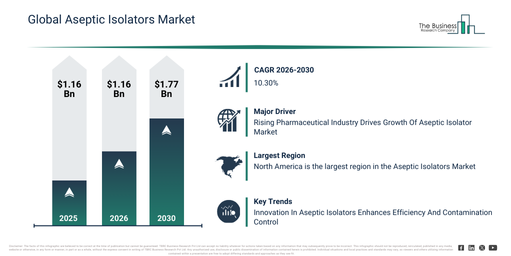
    The aseptic isolators market size is projected for substantial expansion over the coming years, with expectations to reach $11.65 billion in 2030, exhibiting a compound annual growth rate (CAGR) of 10.3%. This anticipated growth can be linked to various factors, including the progression of advanced closed isolators, the wider availability of modular and portable isolator systems, an increase in biologics and vaccine manufacturing, the integration of automation and smart manufacturing, and stricter regulatory compliance and industry certifications. Key developments expected during this period involve a greater embrace of closed isolators for sterile production, an increasing need for modular and compact designs, a heightened emphasis on HEPA filtration and contamination prevention, an expansion in pharmaceutical and biotechnology research uses, and the incorporation of aseptic isolators into laboratory automation setups.

    Get A Free Sample Report With In-Depth Market Insights:

    https://thebusinessresearchcompany.com/sample_request?id=99755597&type=smp&name=Aseptic%20Isolators%20Market%20Report%202026&utm_source=Blogs&utm_medium=Paid&utm_campaign=Sep_PR

    Aseptic Isolators Market Growth Factors Behind Sustained Expansion

    The expanding pharmaceutical sector is anticipated to propel the growth of the aseptic isolator market in the future. This industry concentrates on the investigation, development, production, and commercialization of medicines designed to enhance health outcomes. The pharmaceutical industry is experiencing growth due to an escalating need for innovative therapies, advancements in drug development technologies, and increasing healthcare demands globally. Aseptic isolators find application in the pharmaceutical industry to maintain a sterile setting for the safe manufacturing and manipulation of drugs, thereby averting contamination during essential production processes. For instance, in August 2025, according to the European Federation of Pharmaceutical Industries and Associations (EFPIA), a Belgium-based trade association representing the pharmaceutical industry, the sector invested approximately ($60364.80 million) €52,400 million in R&D across Europe in 2023. Therefore, the burgeoning pharmaceutical industry is a significant driver for the growth of the aseptic isolator market.

    Aseptic Isolators Market Segmentation And Category Overview

    The aseptic isolators market covered in this report is segmented –

    1) By Type: Open Isolator, Closed Isolator

    2) By Configuration: Floor Standing, Modular, Mobile, Compact, Tabletop, Portable

    3) By Application: Hospital, Pharmaceutical Market, Biotechnology Company, Laboratory Research, Other Applications

    Subsegments:

    1) By Open Isolator: Single-Chamber Open Isolators, Multi-Chamber Open Isolators, Laminar Flow Open Isolators, Low-Pressure Open Isolators, Sterile Compounding Open Isolators, Open Isolators For Cell Culture And Research

    2) By Closed Isolator: Single-Chamber Closed Isolators, Multi-Chamber Closed Isolators, Glovebox-Style Closed Isolators, Positive Pressure Closed Isolators, Negative Pressure Closed Isolators, Closed Isolators For Pharmaceutical Manufacturing, Closed Isolators For Sterile Product Filling

    Aseptic Isolators Market Industry Trends Fueling Future Revenue Growth

    Leading companies within the aseptic isolators market are concentrating on developing innovative products, such as new isolators, to improve operational effectiveness and contamination management in pharmaceutical and biotechnological manufacturing. An isolator is equipment crafted to establish a controlled setting by completely separating a process or substance from its surroundings. For aseptic uses, isolators are employed to shield pharmaceutical products from contamination and to protect operators from exposure to hazardous materials. For example, in June 2023, Getinge, a medical technology company based in Sweden, introduced the ISOPRIME, a new rigid-wall isolator specifically designed for common aseptic applications. This novel product aims to enhance safety and efficiency in environments that require strict contamination controls. The ISOPRIME is offered as an economical choice that maintains high quality and performance. It targets customers seeking modular isolator solutions that facilitate continuous operations while upholding rigorous standards in aseptic processes.

    Aseptic Isolators Market Competitive Overview And Top Companies

    Major companies operating in the aseptic isolators market are STERIS Corporation, Getinge AB, Syntegon Technology GmbH, Extract Technology Ltd., Hosokawa Micron Ltd., Harro Höfliger Verpackungsmaschinen GmbH, SKAN AG, NuAire Inc., Germfree Laboratories Inc., Comecer S.p.A., Grand River Aseptic Manufacturing, Esco Lifesciences Group, Baker Company, Tema Sinergie S.p.A., EREA Pharma, Jacomex, Azbil Corporation, Flow Sciences Inc, IsoTech Design, Shanghai Tofflon Science and Technology, M Braun Inertgas Systeme GmbH, Fedegari Autoclavi S.p.A., ILC Dover

    View The Full Aseptic Isolators Market Report:

    https://thebusinessresearchcompany.com/report/aseptic-isolators-global-market-report?utm_source=Blogs&utm_medium=Paid&utm_campaign=Sep_PR

    Aseptic Isolators Market Top Region: Where Does Most Revenue Come From?

    North America was the largest region in the aseptic isolators market in 2025. The regions covered in the aseptic isolators market report are Asia-Pacific, South East Asia, Western Europe, Eastern Europe, North America, South America, Middle East, Africa.

    Reach Out To Our Team:

    The Business Research Company: https://www.thebusinessresearchcompany.com/

    Americas: +1 310-496-7795

    Asia: +44 7882 955267 & +91 8897263534

    Europe: +44 7882 955267

    Email us at: marketing@tbrc.info

    Follow us on:

    LinkedIn: https://in.linkedin.com/company/the-business-research-company

    YouTube: https://www.youtube.com/channel/UC24_fI0rV8cR5DxlCpgmyFQ

    Global Market Model: https://www.thebusinessresearchcompany.com/global-market-model
  • Cardiovascular Devices Market Analysis 2026: Market Size, Growth Trends And Industry Outlook

    Cardiovascular Devices Market Analysis 2026: Market Size, Growth Trends And Industry Outlook

    Backed by market attractiveness analysis, total addressable market sizing, company benchmarking matrices, interactive Excel dashboards, wider supply chain intelligence, emerging startup coverage, and detailed product-level insights, The Business Research Company’s 2026 market reports are designed to offer research that is more actionable and strategically valuable than ever.

    Cardiovascular Devices Market CAGR Outlook And Future Development

    The cardiovascular devices market has experienced robust expansion in recent years. Its size is projected to increase from $72.22 billion in 2025 to $76.6 billion in 2026, demonstrating a compound annual growth rate (CAGR) of 6.1%. Historically, this growth has stemmed from factors such as the increasing incidence of cardiovascular diseases, the wider adoption of interventional cardiology procedures, advancements in surgical methods, the expanding infrastructure for cardiac care, and the greater deployment of implantable cardiac devices.

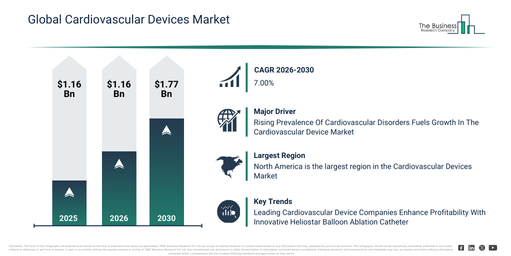
    The cardiovascular devices market size is anticipated to experience robust growth over the next few years. This market is projected to expand to $100.37 billion in 2030, demonstrating a compound annual growth rate (CAGR) of 7.0%. This forecasted growth is attributable to several factors, including the escalating demand for structural heart interventions, the increasing adoption of AI-assisted cardiac diagnostics, the expansion of outpatient cardiovascular procedures, growing investments in next-generation cardiovascular devices, and continuous innovation in biocompatible and smart materials. Significant trends during the forecast period encompass the increasing integration of minimally invasive cardiovascular devices, the rising utilization of transcatheter therapies, the growing incorporation of advanced imaging-guided interventions, the expansion of remote cardiac monitoring solutions, and an enhanced focus on device miniaturization and precision.

    Get A Free Sample Report With In-Depth Market Insights:

    https://thebusinessresearchcompany.com/sample_request?id=18414392&type=smp&name=Cardiovascular%20Devices%20Market%20Report%202026&utm_source=Blogs&utm_medium=Paid&utm_campaign=Sep_PR

    Cardiovascular Devices Market Demand Drivers Opening New Revenue Streams

    The expanding occurrence of cardiovascular conditions is projected to fuel the expansion of the cardiovascular device market in the future. These disorders are defined as a range of health issues impacting the heart and blood vessels, covering diverse ailments and conditions of the circulatory system. This increasing occurrence stems from factors like an aging demographic, inactive routines, inadequate nutrition, and an escalation in conditions like high blood pressure and diabetes. The cardiovascular device market facilitates this development by providing instruments that aid heart performance and blood circulation for individuals with compromised or failing hearts. For example, data from January 2024, released by the American Heart Association, a US-based non-profit organization, indicated that the age-adjusted death rate attributed to cardiovascular disease rose to 233.3 per 100,000 in 2024, marking an increase of 4.0% from 224.4 per 100,000 in 2023. Consequently, the heightened prevalence of cardiovascular disorders is propelling the growth of the cardiovascular device market.

    Cardiovascular Devices Market Segment Landscape: Which Areas Lead Development?

    The cardiovascular devices market covered in this report is segmented –

    1) By Type: Cardiovascular Surgery Devices And Equipment, Cardiac Rhythm Management (CRM) Devices And Equipment, Interventional Cardiology Devices And Equipment, Defibrillator Devices And Equipment, Peripheral Vascular Devices And Equipment, Prosthetic Heart Valve Devices And Equipment, Electrophysiology Devices And Equipment, Cardiac Assist Devices And Equipment

    2) By Type of Expenditure: Public, Private

    3) By End User: Hospitals And Clinics, Cardiac Care Centers And Specialty Clinics, Other End Users

    Subsegments:

    1) By Cardiovascular Surgery Devices And Equipment: Coronary Artery Bypass Graft (CABG) Equipment, Heart Valve Repair And Replacement Devices, Aortic Aneurysm Repair Devices, Cardiopulmonary Bypass Equipment, Other Cardiovascular Surgery Devices

    2) By Cardiac Rhythm Management (CRM) Devices And Equipment: Pacemakers, Defibrillators, Cardiac Resynchronization Therapy (CRT) Devices

    3) By Interventional Cardiology Devices And Equipment: Stents (Drug-Eluting, Bare-Metal), Catheters (Balloon, Diagnostic, Guiding), Angioplasty Equipment, Guidewires, Other Interventional Cardiology Devices

    4) By Defibrillator Devices And Equipment: Implantable Cardioverter Defibrillators (ICDs), Automated External Defibrillators (AEDs), Wearable Defibrillators, External Defibrillators

    5) By Peripheral Vascular Devices And Equipment: Peripheral Stents, Balloons (Peripheral Angioplasty), Embolic Protection Devices, Endovenous Laser Devices, Other Peripheral Vascular Devices

    6) By Prosthetic Heart Valve Devices And Equipment: Mechanical Heart Valves, Biological Heart Valves, Transcatheter Heart Valves (TAVR), Other Prosthetic Heart Valve Devices

    7) By Electrophysiology Devices And Equipment: Ablation Catheters, Electrophysiology Mapping Systems, ECG And EKG Systems, Cardiac Mapping And Navigation Systems, Other Electrophysiology Devices

    8) By Cardiac Assist Devices And Equipment: Ventricular Assist Devices (LVADs), Intra-Aortic Balloon Pumps, Total Artificial Heart, Extracorporeal Membrane Oxygenation (ECMO), Other Cardiac Assist Devices

    Cardiovascular Devices Market Trends Powering Strategic Industry Growth

    Leading companies within the cardiovascular devices market are dedicating efforts to developing advanced interventional solutions, such as drug-coated balloon catheters, to effectively treat challenging coronary conditions and enhance long-term patient outcomes. A drug-coated balloon catheter serves as a minimally invasive instrument that both dilates a constricted coronary artery segment and simultaneously delivers an antiproliferative drug, for example, paclitaxel, to the arterial wall, thus aiding in the prevention of restenosis without implanting a permanent scaffold. For instance, in March 2024, Boston Scientific, a US-based medical device manufacturer, obtained U.S. FDA approval for its Agent drug-coated balloon catheter, which is the first device of its kind sanctioned for treating coronary in-stent restenosis (ISR). This device demonstrated significant effectiveness in mitigating the recurrence of vessel narrowing during a study involving 480 patients, providing interventional cardiologists with a non-stent alternative for ISR management.

    Cardiovascular Devices Market Top Companies Driving Competitive Growth

    Major companies operating in the cardiovascular devices market are Medtronic plc, Boston Scientific Corporation, Abbott Laboratories, Edwards Lifesciences Corporation, Johnson & Johnson, Terumo Corporation, Getinge AB, Teleflex Incorporated, Becton Dickinson and Company, Siemens Healthineers AG, Fresenius SE & Co. KGaA, GE HealthCare Technologies Inc., Stryker Corporation, B. Braun Medical Pvt. Ltd., Baxter International Inc., Fujifilm Holdings Corporation, Canon Medical Systems Corporation, MicroPort Scientific America Inc., W. L. Gore & Associates Inc., AngioDynamics Inc., CryoLife Inc., Endologix LLC, Lombard Medical Limited, Avinger Inc., Abiomed Inc., Biosensors International Group Ltd., Biotronik SE & Co. KG, CeloNova BioSciences Inc., LeMaitre Vascular Inc.

    View The Full Cardiovascular Devices Market Report:

    https://thebusinessresearchcompany.com/report/cardiovascular-devices-global-market-report?utm_source=Blogs&utm_medium=Paid&utm_campaign=Sep_PR

    Cardiovascular Devices Market Global Footprint: Which Region Leads The Industry?

    North America was the largest region in the global cardiovascular devices market in 2025. Western Europe was the second largest region in the global cardiovascular devices market. Africa. was the smallest region in the global cardiovascular devices market. The regions covered in the cardiovascular devices market report are Asia-Pacific, South East Asia, Western Europe, Eastern Europe, North America, South America, Middle East, Africa.

    Reach Out To Our Team:

    The Business Research Company: https://www.thebusinessresearchcompany.com/

    Americas: +1 310-496-7795

    Asia: +44 7882 955267 & +91 8897263534

    Europe: +44 7882 955267

    Email us at: marketing@tbrc.info

    Follow us on:

    LinkedIn: https://in.linkedin.com/company/the-business-research-company

    YouTube: https://www.youtube.com/channel/UC24_fI0rV8cR5DxlCpgmyFQ

    Global Market Model: https://www.thebusinessresearchcompany.com/global-market-model

  • Aseptic Connectors And Welders Market Growth Outlook: Why Analysts Expect Continued Expansion

    Aseptic Connectors And Welders Market Growth Outlook: Why Analysts Expect Continued Expansion

    Backed by market attractiveness analysis, total addressable market sizing, company benchmarking matrices, interactive Excel dashboards, wider supply chain intelligence, emerging startup coverage, and detailed product-level insights, The Business Research Company’s 2026 market reports are designed to offer research that is more actionable and strategically valuable than ever.

    Aseptic Connectors And Welders Market Size Outlook: How Quickly Will Revenue Expand Through 2030?

    The aseptic connectors and welders market has seen rapid expansion in recent years. It is anticipated to grow from $2.04 billion in 2025 to $2.41 billion in 2026, achieving a compound annual growth rate (CAGR) of 18.1%. The historical growth of this market can be linked to factors such as increasing biologics production, reliance on stainless steel piping systems, the growing need for sterile fluid transfer, the expansion of pharmaceutical manufacturing facilities, and the adoption of aseptic processing standards.

    The aseptic connectors and welders market size is anticipated to experience substantial growth over the next few years, with its value projected to reach $4.67 billion in 2030, demonstrating a compound annual growth rate (CAGR) of 18.0%. This growth during the forecast period is driven by several factors, including the expansion of single-use bioprocessing systems, an increasing demand for flexible manufacturing solutions, the proliferation of contract manufacturing organizations (CMOs), a heightened regulatory emphasis on sterility assurance, and technological innovations in aseptic welding equipment. Prominent trends expected in this period involve the wider adoption of single-use aseptic connectors, a growing need for contamination-free bioprocessing, their expanded application in upstream and downstream bioprocessing, the expansion of fill-finish and sterile manufacturing operations, and the standardization of tubing and fluid transfer systems.

    Get A Free Sample Report With In-Depth Market Insights:

    https://thebusinessresearchcompany.com/sample_request?id=38243471&type=smp&name=Aseptic%20Connectors%20And%20Welders%20Market%20Report%202026&utm_source=Blogs&utm_medium=Paid&utm_campaign=Sep_PR

    Aseptic Connectors And Welders Market Demand Drivers Opening New Revenue Streams

    Increased financial commitment to the biomanufacturing sector is anticipated to drive the future expansion of the aseptic connectors and welders market. The biomanufacturing sector specializes in producing biological products through the use of living cells, organisms, or biological systems. This sector’s growth is attributed to the escalating demand for biologics, which are complex treatments necessitating specialized production techniques to address rising global healthcare demands. Aseptic connectors and welders assist the biomanufacturing sector by enabling sterile, closed-system fluid transfers, effectively minimizing contamination risks and guaranteeing product safety during crucial production phases. For example, federal investments in biomanufacturing in the US, as per the White House Office of Science and Technology Policy in November 2024, surged from $2.7 billion following the 2022 Bioeconomy Executive Order to more than $3.5 billion by 2024. Thus, the escalating investment in the biomanufacturing sector is a key driver for the growth of the aseptic connectors and welders market.

    Aseptic Connectors And Welders Market Segment Outlook: Which Categories Are Growing Fastest?

    The aseptic connectors and welders market covered in this report is segmented –

    1) By Product: Aseptic Connectors, Aseptic Welders

    2) By Application: Upstream Bioprocessing, Downstream Bioprocessing, Harvest And Fill-finish Operations

    3) By End-User: Biopharmaceutical And Pharmaceutical Companies, Original Equipment Manufacturers (OEMs), Contract Research Organizations (CROs) And Contract Manufacturing Organizations (CMOs), Academic And Research Institutes

    Subsegments:

    1) By Aseptic Connectors: Single-Use Aseptic Connectors, Multi-Use Aseptic Connectors, Gendered Connectors, Genderless Connectors, Steam-In-Place Connectors, Tubing-To-Tubing Connectors, Container-To-Tubing Connectors

    2) By Aseptic Welders: Automatic Tube Welders, Manual Tube Welders, Benchtop Aseptic Welders, Portable Aseptic Welders, Large Bore Tube Welders

    Aseptic Connectors And Welders Market Trends Powering Strategic Industry Growth

    Leading companies in the aseptic connectors and welders market are prioritizing the development of advanced technologies, such as aseptic genderless large-diameter flow path connectors, to enhance high-volume sterile fluid transfer across biopharmaceutical processes. These aseptic genderless large-diameter flow path connectors are engineered to enable high-flow sterile transfers without requiring gendered fittings, thereby supporting single-use technologies (SUTs) and improving process flexibility in large-scale biomanufacturing. For instance, in April 2023, Colder Products Company (CPC), a US-based fluid handling solutions provider, unveiled the AseptiQuik W Series Connectors. This connector solution boasts a 1-1/2-inch flow path, capable of transferring hundreds of liters per minute, which notably reduces fluid transfer times for processes utilizing up to 5,000-liter containers. With hose barb termination sizes spanning from 1 inch to 1-1/2 inches and a sanitary flange option, it is optimized for media, buffer, and cell culture processes. The aseptic, genderless design not only guarantees sterile, closed connections but also simplifies operations by removing mating orientation problems, positioning it as a critical innovation for supporting the scalability and efficiency of modern biopharmaceutical production.

    Aseptic Connectors And Welders Market Competitive Landscape: Which Companies Lead The Industry?

    Major companies operating in the aseptic connectors and welders market are Saint Gobain SA, Thermo Fisher Scientific Inc, Merck KGaA, GE Healthcare Technologies Inc, Cytiva, Sartorius AG, Nordson Corporation, Repligen Corporation, Pall Corporation, Watson Marlow Fluid Technology Solutions, Shanghai LePure Biotech Co Ltd, Meissner Filtration Products Inc, Colder Products Company, Foxx Life Sciences, Aseptconn AG, BioPharma Dynamics Ltd, TBL Performance Plastics LLC, Vante Biopharm, AdvantaPure, CPC AseptiQuik, Entegris Inc, Parker Hannifin Bioprocessing

    View The Full Aseptic Connectors And Welders Market Report:

    https://thebusinessresearchcompany.com/report/aseptic-connectors-and-welders-global-market-report?utm_source=Blogs&utm_medium=Paid&utm_campaign=Sep_PR

    Aseptic Connectors And Welders Market Regional Breakdown: Where Is Demand Concentrated?

    North America was the largest region in the aseptic connectors and welders market in 2025. Asia-Pacific is expected to be the fastest-growing region in the forecast period. The regions covered in the aseptic connectors and welders market report are Asia-Pacific, South East Asia, Western Europe, Eastern Europe, North America, South America, Middle East, Africa.

    Reach Out To Our Team:

    The Business Research Company: https://www.thebusinessresearchcompany.com/

    Americas: +1 310-496-7795

    Asia: +44 7882 955267 & +91 8897263534

    Europe: +44 7882 955267

    Email us at: marketing@tbrc.info

    Follow us on:

    LinkedIn: https://in.linkedin.com/company/the-business-research-company

    YouTube: https://www.youtube.com/channel/UC24_fI0rV8cR5DxlCpgmyFQ

    Global Market Model: https://www.thebusinessresearchcompany.com/global-market-model
  • Cardiovascular Catheters Market Forecast To 2030: Starting From $33.24 Billion In 2026

    Cardiovascular Catheters Market Forecast To 2030: Starting From $33.24 Billion In 2026

    Featuring market attractiveness scoring, total addressable market sizing, company benchmarking matrices, interactive Excel dashboards, deeper supply chain intelligence, emerging startup tracking, and granular product-level insights, The Business Research Company’s 2026 market reports are built to deliver research that is both more actionable and more strategically valuable.

    Cardiovascular Catheters Market Set To Climb From $23.83 Billion In 2026 To $33.24 Billion By 2030

    The cardiovascular catheters market has demonstrated significant expansion in recent years. It is anticipated to grow from $21.87 billion in 2025 to $23.83 billion in 2026, exhibiting a compound annual growth rate (CAGR) of 9.0%. The historical growth of this market can be attributed to several factors including the reliance on conventional catheter technologies, a rising prevalence of cardiovascular diseases, an expanding infrastructure of hospitals and clinics, restricted access to advanced therapeutic procedures, and a heightened awareness of minimally invasive cardiovascular treatments.

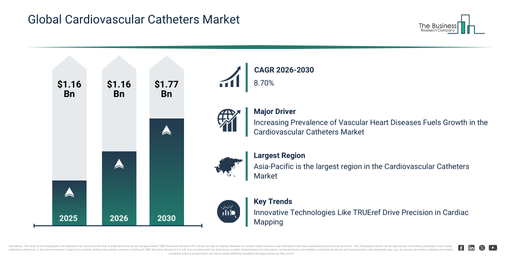
    The cardiovascular catheters market size is projected to experience robust expansion over the coming years. This market is expected to reach $33.24 billion in 2030, progressing at a compound annual growth rate (CAGR) of 8.7%. The anticipated growth during the forecast period is driven by the development of advanced therapeutic and diagnostic catheters, an increasing demand for outpatient and ambulatory surgical interventions, the integration with imaging and digital monitoring systems, a rise in cardiovascular procedure volumes, and the adoption of biocompatible and smart catheter materials. Significant trends during this period include the growing preference for minimally invasive procedures, an increase in coronary artery disease interventions, expanded application of electrophysiology and ablation catheters, the broadening of stent delivery and angioplasty balloon uses, and a strong focus on catheter material innovation and biocompatibility.

    Get A Free Sample Report With In-Depth Market Insights:

    https://thebusinessresearchcompany.com/sample_request?id=43447543&type=smp&name=Cardiovascular%20Catheters%20Market%20Report%202026&utm_source=Blogs&utm_medium=Paid&utm_campaign=Sep_PR

    Cardiovascular Catheters Market Growth Backed By Core Demand Fundamentals

    The rising incidence of vascular heart diseases is anticipated to fuel the expansion of the cardiovascular catheter market moving forward. These conditions encompass a range of ailments affecting either the blood vessels supplying the heart or those located within the heart itself. Shifts in lifestyle habits such as diet and physical activity, an aging global demographic, and the increasing rates of conditions like diabetes and hypertension are all contributors to vascular heart diseases. Cardiovascular catheters aid patients with these diseases by enabling minimally invasive procedures for diagnosing, treating, and managing issues such as blocked arteries and abnormal heart rhythms, resulting in faster recovery and better patient outcomes. For instance, in January 2024, according to the American Heart Association, a US-based nonprofit organization, the number of deaths attributed to cardiovascular diseases reached 931,578, a rise from 928,741 in 2023. Additionally, the age-adjusted death rate from cardiovascular disease also experienced a modest increase, reaching 233.3 per 100,000, indicating a 4.0% surge from the prior year’s rate of 224.4 per 100,000. Hence, the growing prevalence of vascular heart diseases is a key driver for the cardiovascular catheters market.

    Cardiovascular Catheters Market Segments: Where Is Growth Concentrated?

    The cardiovascular catheters market covered in this report is segmented –

    1) By Product: Cardiovascular Therapeutic Catheters, Cardiovascular Diagnostic Catheters

    2) By Application: Coronary Artery Diseases (CAD), Cardiac Arrhythmia, Heart Failure, Other Applications

    3) By End User: Hospitals, Clinics, Ambulatory Surgical Centers

    Subsegments:

    1) By Cardiovascular Therapeutic Catheters: Angioplasty Balloons, Stent Delivery Catheters, Catheters for Ablation Therapy, Intracardiac Catheters, Thrombectomy Catheters

    2) By Cardiovascular Diagnostic Catheters: Coronary Angiography Catheters, Pressure Monitoring Catheters, Electrophysiology Catheters, Intravenous Catheters for Diagnostic Imaging

    Cardiovascular Catheters Market Growth Trends Reshaping The Competitive Landscape

    Leading companies in the cardiovascular catheters market are creating innovative products featuring advanced technologies, such as TRUEref technology, to boost the accuracy and reliability of cardiac mapping. TRUEref technology improves cardiovascular catheters by supplying precise reference signals during cardiac mapping, enhancing the accuracy of arrhythmia identification, and enabling more effective and targeted treatments. For instance, in July 2023, Biosense Webster Inc., a US-based company and a part of Johnson & Johnson MedTech, released the OPTRELL mapping catheter, a high-density diagnostic catheter utilizing TRUEref technology. This OPTRELL mapping catheter with TRUEref technology, supported by the CARTO 3 System, delivers high-definition electrophysiological mapping with 48 small electrodes, empowering clinicians to map complex cardiac arrhythmias with greater precision and devise more effective ablation strategies.

    Cardiovascular Catheters Market Leading Players And Competitive Positioning

    Major companies operating in the cardiovascular catheters market are Abbott Laboratories, Medtronic plc, Johnson & Johnson MedTech, Koninklijke Philips N.V., Stryker Corporation, Boston Scientific Corporation, B. Braun Melsungen AG, Terumo Corporation, Edwards Lifesciences Corporation, W. L. Gore & Associates Inc., ZOLL Medical Corporation, Nipro Corporation, Cook Group Incorporated, Biotronik SE & Co. KG, Merit Medical Systems Inc., LivaNova plc, Cordis Corporation, Asahi Intecc Co. Ltd., AngioDynamics Inc., Endologix Inc., Wellinq, Cardionovum GmbH, Avinger Inc., CathRx, Andocor NV

    View The Full Cardiovascular Catheters Market Report:

    https://thebusinessresearchcompany.com/report/cardiovascular-catheters-global-market-report?utm_source=Blogs&utm_medium=Paid&utm_campaign=Sep_PR

    Cardiovascular Catheters Market Regional Distribution: Which Areas Power Market Growth?

    Asia-Pacific was the largest region in the cardiovascular catheters market in 2025. North America is expected to be the fastest-growing region in the forecast period. The regions covered in the cardiovascular catheters market report are Asia-Pacific, South East Asia, Western Europe, Eastern Europe, North America, South America, Middle East, Africa.

    Reach Out To Our Team:

    The Business Research Company: https://www.thebusinessresearchcompany.com/

    Americas: +1 310-496-7795

    Asia: +44 7882 955267 & +91 8897263534

    Europe: +44 7882 955267

    Email us at: marketing@tbrc.info

    Follow us on:

    LinkedIn: https://in.linkedin.com/company/the-business-research-company

    YouTube: https://www.youtube.com/channel/UC24_fI0rV8cR5DxlCpgmyFQ

    Global Market Model: https://www.thebusinessresearchcompany.com/global-market-model

  • Cardiovascular And Soft Tissue Repair Patches Market Size In 2026 And Beyond: Understanding Future Growth Potential

    Cardiovascular And Soft Tissue Repair Patches Market Size In 2026 And Beyond: Understanding Future Growth Potential

    Built to provide research that’s more actionable and strategically valuable, The Business Research Company’s 2026 market reports include market attractiveness analysis, total addressable market sizing, company benchmarking matrices, interactive Excel dashboards, broader supply chain intelligence, emerging startup tracking, and in-depth product insights.

    Cardiovascular And Soft Tissue Repair Patches Market Forecast: Value Set To Climb From $5.41 Billion To $8.09 Billion

    The market size for cardiovascular and soft tissue repair patches has seen rapid expansion in recent years. It is projected to grow from $4.85 billion in 2025 to $5.41 billion in 2026, at a compound annual growth rate (CAGR) of 11.4%. This historical growth can be attributed to several factors, including the increasing incidence of congenital heart defects, the expansion of cardiovascular surgical procedures, the adoption of synthetic repair patches, advancements in biomaterial science, and the growing availability of specialized cardiac surgery centers.

    The cardiovascular and soft tissue repair patches market size is anticipated to undergo significant expansion in the coming years. This market is projected to reach $8.09 billion by 2030, growing at a compound annual growth rate (CAGR) of 10.6%. The expansion during the forecast period is fueled by an increasing demand for regenerative cardiovascular treatments, rising investments in tissue engineering research, the proliferation of advanced cardiac reconstruction procedures, a growing emphasis on absorbable patch materials, and the increasing adoption of personalized repair solutions. Prominent trends for the forecast period include the increasing integration of biologic repair patches, a rising use of tissue-engineered materials, an intensifying focus on regenerative cardiac therapies, the expansion of minimally invasive patch implantation techniques, and an enhanced emphasis on biocompatibility and healing.

    Get A Free Sample Report With In-Depth Market Insights:

    https://thebusinessresearchcompany.com/sample_request?id=63082910&type=smp&name=Cardiovascular%20And%20Soft%20Tissue%20Repair%20Patches%20Market%20Report%202026&utm_source=Blogs&utm_medium=Paid&utm_campaign=Sep_PR

    Cardiovascular And Soft Tissue Repair Patches Market Growth Catalysts And Demand Drivers

    The increasing prevalence of cardiovascular diseases is projected to drive the growth of the cardiovascular and soft tissue repair patches market in the coming years. Cardiovascular diseases (CVDs) are a collection of conditions impacting the heart and blood vessels, including heart attacks, strokes, and hypertension, often resulting from poor diet, insufficient exercise, smoking, and genetics. The rising occurrence of these diseases is primarily influenced by aging populations, unhealthy lifestyle choices, and an increase in risk factors such as obesity, diabetes, and high blood pressure. Cardiovascular and soft tissue repair patches are utilized in these conditions to reinforce or substitute damaged heart or blood vessel tissues, thereby restoring their structural integrity and proper function. For example, in January 2024, the American Heart Association, a US-based non-profit organization, reported that the age-adjusted death rate from cardiovascular disease rose to 233.3 per 100,000 in 2024, marking a 4.0% increase from 224.4 per 100,000 in 2023. Consequently, the growing prevalence of cardiovascular disease is a key factor propelling the expansion of the cardiovascular and soft tissue repair patches market.

    Cardiovascular And Soft Tissue Repair Patches Market Segment Analysis: What Are The Core Market Categories?

    The cardiovascular and soft tissue repair patches market covered in this report is segmented –

    1) By Raw Materials: ePTFE, Biomaterial and Tissue-Engineered Material, Other Raw Materials

    2) By Product: Synthetic Patch, Biologic Patch

    3) By Application: Cardiac Repair, Atrial Septal Defect, Ventricular Septal Defect, Tetralogy Of Fallot, Right Ventricular Outflow Tract Reconstruction, Vascular Repair And Reconstruction, Transposition Of The Great Vessels

    4) By End User: Hospitals, Ambulatory Surgical Centers, Specialty Clinics

    Subsegments:

    1) By ePTFE (Expanded Polytetrafluoroethylene): Non-Absorbable ePTFE Patches, Absorbable ePTFE Patches

    2) By Biomaterial and Tissue-Engineered Material: Collagen-Based Patches, Synthetic Polymer-Based Patches, Decellularized Tissue Patches

    3) By Other Raw Materials: Silicones, Hydrogel-Based Materials, Natural Materials

    Cardiovascular And Soft Tissue Repair Patches Market Trends Shaping Long-Term Demand

    Leading companies within the cardiovascular and soft tissue repair patches market are dedicating their efforts to developing advanced expandable, bio-integrative surgical patches. This focus addresses the growing demand for long-lasting, biocompatible implants capable of accommodating patient growth and reducing the necessity for further interventions. An expandable, bio-integrative patch is constructed from a blend of bio-absorbable and non-absorbable yarns, forming a knitted structure that is then coated with cross-linked gelatin. After surgical placement, the absorbable elements progressively degrade, allowing the patient’s native tissue to grow into and encompass the remaining non-absorbable mesh. This mechanism helps to diminish foreign-body responses and inflammation while enabling the patch to enlarge in parallel with the patient’s physical development. For instance, in July 2023, Teijin Limited, a Japan-based materials and healthcare firm, obtained manufacturing and marketing approval from Japan’s Ministry of Health for SYNFOLIUM (development code OFT G1). This innovative surgical patch features a knitted composition of both bio-absorbable and permanent yarns, enveloped in cross-linked gelatin to prevent blood loss. Subsequently, indigenous tissue permeates and supersedes the biodegradable fibers, thereby promoting regeneration, while the enduring structure retains its integrity and expands to align with physiological growth. Because of its specific construction, SYNFOLIUM can significantly mitigate risks frequently associated with traditional synthetic or static patches, such as calcification, stiffening, or adverse immune reactions.

    Cardiovascular And Soft Tissue Repair Patches Market Competitive Overview And Top Companies

    Major companies operating in the cardiovascular and soft tissue repair patches market are B. Braun, Baxter International Inc., CorMatrix Cardiovascular Inc., CryoLife Inc., Edwards Lifesciences Corporation, LeMaitre Vascular Inc., Anteris Technologies Limited, Abbott Laboratories, Terumo Medical Corporation, Integra LifeSciences Corporation, W. L. Gore & Associates Inc., Medtronic Inc., LifeCell Corporation, ACell Inc., Tissue Regenix Group Plc, Aroa Biosurgery Ltd., LifeNet Health Inc., Cook Medical, Getinge AB, Glycar SA Pty Ltd., Biointegral Surgical Inc., Admedus Ltd., Johnson & Johnson, Stryker Corporation, Zimmer Biomet, Smith & Nephew plc, Organogenesis Inc.

    View The Full Cardiovascular And Soft Tissue Repair Patches Market Report:

    https://thebusinessresearchcompany.com/report/cardiovascular-and-soft-tissue-repair-patches-global-market-report?utm_source=Blogs&utm_medium=Paid&utm_campaign=Sep_PR

    Cardiovascular And Soft Tissue Repair Patches Market Leading Geography: Which Region Contributes The Most Revenue?

    North America was the largest region in the cardiovascular and soft tissue repair patches market in 2025. Asia-Pacific is expected to be the fastest-growing region in the forecast period. The regions covered in the cardiovascular and soft tissue repair patches market report are Asia-Pacific, South East Asia, Western Europe, Eastern Europe, North America, South America, Middle East, Africa.

    Reach Out To Our Team:

    The Business Research Company: https://www.thebusinessresearchcompany.com/

    Americas: +1 310-496-7795

    Asia: +44 7882 955267 & +91 8897263534

    Europe: +44 7882 955267

    Email us at: marketing@tbrc.info

    Follow us on:

    LinkedIn: https://in.linkedin.com/company/the-business-research-company

    YouTube: https://www.youtube.com/channel/UC24_fI0rV8cR5DxlCpgmyFQ

    Global Market Model: https://www.thebusinessresearchcompany.com/global-market-model

  • Cardiopulmonary Stress Testing Systems Market Reaches $7.53 Billion In 2026: Key Developments Shaping Expansion

    Cardiopulmonary Stress Testing Systems Market Reaches $7.53 Billion In 2026: Key Developments Shaping Expansion

    Backed by market attractiveness analysis, total addressable market sizing, company benchmarking matrices, interactive Excel dashboards, wider supply chain intelligence, emerging startup coverage, and detailed product-level insights, The Business Research Company’s 2026 market reports are designed to offer research that is more actionable and strategically valuable than ever.

    Cardiopulmonary Stress Testing Systems Market Revenue Growth On Track For A 5.6% CAGR Through 2030

    The market size for cardiopulmonary stress testing systems has shown significant growth in recent years. It is anticipated to increase from $5.75 billion in 2025 to $6.06 billion in 2026, achieving a compound annual growth rate (CAGR) of 5.6%. This historical expansion can be attributed to the rising prevalence of cardiovascular diseases, the increased incorporation of exercise testing in clinical care, the development of hospital diagnostic services, the expanding adoption of non-invasive monitoring tools, and the availability of advanced physiological sensors.

    The cardiopulmonary stress testing systems market is projected to experience substantial expansion over the upcoming years. This market is anticipated to reach a valuation of $7.53 billion by 2030, exhibiting a compound annual growth rate (CAGR) of 5.6%. This anticipated growth throughout the forecast period stems from factors such as a heightened demand for customized cardiac evaluations, the escalating use of AI-driven diagnostic analytics, the expansion of initiatives in preventive cardiology, the increasing incorporation of wearable monitoring tools, and an amplified emphasis on healthcare outcomes. Key developments expected during this period involve the wider embrace of integrated CPET systems, an uptick in the utilization of digital stress ECG platforms, the broader implementation of sophisticated respiratory monitoring equipment, the evolution of data-informed exercise testing methodologies, and a stronger emphasis on prognostic cardiac diagnostics.

    Get A Free Sample Report With In-Depth Market Insights:

    https://thebusinessresearchcompany.com/sample_request?id=41370311&type=smp&name=Cardiopulmonary%20Stress%20Testing%20Systems%20Market%20Report%202026&utm_source=Blogs&utm_medium=Paid&utm_campaign=Sep_PR

    Cardiopulmonary Stress Testing Systems Market Opportunity Drivers: What’s Unlocking New Revenue Potential?

    The growing occurrence of cardiovascular diseases is projected to boost the expansion of the cardiopulmonary stress testing systems market in the future. Cardiovascular diseases (CVDs) encompass various conditions impacting the heart and blood vessels. Factors contributing to the rising prevalence of cardiovascular diseases include poor dietary habits, lack of physical activity, and increased urbanization. Cardiopulmonary stress testing systems evaluate cardiovascular health by analyzing heart and lung function during physical exertion, providing crucial information for developing personalized exercise regimens suited to a patient’s functional abilities and cardiovascular constraints. For example, data from October 2024 from the Centers for Disease Control and Prevention (CDC), a US-based national public health agency of the United States, revealed that in 2023, cardiovascular disease was responsible for 919,032 deaths, representing approximately one out of every three lives lost. Consequently, the rising incidence of cardiovascular diseases is stimulating the growth of the cardiopulmonary stress testing systems market.

    Cardiopulmonary Stress Testing Systems Market Segment Breakdown: Which Categories Lead On Revenue?

    The cardiopulmonary stress testing systems market covered in this report is segmented –

    1) By Product: Cardiopulmonary Exercise Testing (CPET) Systems, Stress ECG, Pulse Oximeters, Stress Blood Pressure Monitors

    2) By Application: Oxygen Uptake, Carbon Dioxide, Minute Ventilation, Anaerobic Threshold

    3) By End User: Hospitals, Specialty Clinics Or Cardiology Clinics, Ambulatory Surgical Centers, Diagnostic Centers

    Subsegments:

    1) By Cardiopulmonary Exercise Testing (CPET) Systems: Metabolic Measurement Systems, Treadmill Ergometers, Cycle Ergometers, Software For CPET Analysis

    2) By Stress ECG: Resting ECG Systems, Portable Stress ECG Systems, Digital Stress ECG Systems, Wireless Stress ECG Monitors

    3) By Pulse Oximeters: Fingertip Pulse Oximeters, Handheld Pulse Oximeters, Tabletop Pulse Oximeters, Wearable Pulse Oximeters

    4) By Stress Blood Pressure Monitors: Automated Blood Pressure Monitors, Digital Blood Pressure Monitors, Portable Blood Pressure Monitors, Ambulatory Blood Pressure Monitors

    Cardiopulmonary Stress Testing Systems Market Innovation Trends Shaping Future Development

    Companies prominent within the cardiopulmonary stress testing system market are concentrating on integrating AI-powered diagnostic advancements, specifically intelligent metabolic analyzers that provide automated real-time interpretation of respiratory and cardiac data generated during exercise. These intelligent metabolic analyzers represent advanced CPET devices that utilize embedded algorithms to examine oxygen consumption, carbon dioxide output, heart-rate responses, and ventilation efficiency during physical exertion, thereby assisting clinicians in achieving quicker and more precise diagnostic insights. As an illustration, in 2023, COSMED S.r.l., an Italy-based medical diagnostics company, unveiled the Q-NRG Max, a state-of-the-art metabolic assessment system featuring automated data-analysis processes, enhanced accuracy for breath-by-breath gas exchange, and a portable clinical design optimized for cardiopulmonary stress evaluations.

    Cardiopulmonary Stress Testing Systems Market Competitive Landscape: Which Companies Lead The Industry?

    Major companies operating in the cardiopulmonary stress testing systems market are General Electric, Siemens Healthineers AG, Koninklijke Philips N.V., Masimo Corporation, Nihon Kohden Corporation, Welch Allyn, Fukuda Denshi Co Ltd, Spacelabs Healthcare, Schiller AG, Vyaire Medical Inc, Nonin Medical Inc, MGC Diagnostic Corporation, SunTech Medical Inc, COSMED srl, Allengers Medical Systems Ltd, Nasiff Associates Inc, Clarity Medical, Medisoft srl, Ergometrics Inc, Cardiac Science Corporation, Cardiopulmonary Corporation

    View The Full Cardiopulmonary Stress Testing Systems Market Report:

    https://thebusinessresearchcompany.com/report/cardiopulmonary-stress-testing-systems-global-market-report?utm_source=Blogs&utm_medium=Paid&utm_campaign=Sep_PR

    Cardiopulmonary Stress Testing Systems Market Regional Outlook: Where Is Opportunity Concentrated?

    North America was the largest region in the cardiopulmonary stress testing systems market in 2025. The regions covered in the cardiopulmonary stress testing systems market report are Asia-Pacific, South East Asia, Western Europe, Eastern Europe, North America, South America, Middle East, Africa.

    Reach Out To Our Team:

    The Business Research Company: https://www.thebusinessresearchcompany.com/

    Americas: +1 310-496-7795

    Asia: +44 7882 955267 & +91 8897263534

    Europe: +44 7882 955267

    Email us at: marketing@tbrc.info

    Follow us on:

    LinkedIn: https://in.linkedin.com/company/the-business-research-company

    YouTube: https://www.youtube.com/channel/UC24_fI0rV8cR5DxlCpgmyFQ

    Global Market Model: https://www.thebusinessresearchcompany.com/global-market-model

  • Cardiopulmonary Bypass Accessory Equipment Market Growth Outlook For 2026: Drivers, Trends And Future Opportunities

    Cardiopulmonary Bypass Accessory Equipment Market Growth Outlook For 2026: Drivers, Trends And Future Opportunities

    Featuring market attractiveness scoring, total addressable market sizing, company benchmarking matrices, interactive Excel dashboards, deeper supply chain intelligence, emerging startup tracking, and granular product-level insights, The Business Research Company’s 2026 market reports are built to deliver research that is both more actionable and more strategically valuable.

    Cardiopulmonary Bypass Accessory Equipment Market Value Growth And Long-Term Outlook

    The cardiopulmonary bypass accessory equipment market has shown significant growth in recent years. Its size is expected to expand from $16.59 billion in 2025 to $17.73 billion in 2026, achieving a compound annual growth rate (CAGR) of 6.9%. This historical growth can be attributed to several factors, including an increase in open heart surgical procedures, the rising prevalence of cardiovascular diseases, greater adoption of cardiopulmonary bypass techniques, the expansion of hospital infrastructure for cardiac surgery, and improved survival rates in cardiac operations.

    The cardiopulmonary bypass accessory equipment market is projected to experience substantial expansion over the coming years, reaching $23.1 billion by 2030, exhibiting a compound annual growth rate (CAGR) of 6.8%. This anticipated growth during the forecast period is driven by several factors, including an increasing number of intricate cardiac and lung transplant operations, a heightened need for better patient safety during surgery, the proliferation of specialized cardiac surgical facilities, broader availability of advanced cardiac treatment in developing markets, and increased funding for enhancing surgical quality. Key trends expected over this period involve a surge in demand for sophisticated blood temperature management accessories, a greater emphasis on microemboli filtration and overall patient well-being, the rising use of disposable CPB accessory equipment, an expansion of CPB application in intricate cardiac procedures, and greater uniformity of CPB accessories within surgical guidelines.

    Get A Free Sample Report With In-Depth Market Insights:

    https://thebusinessresearchcompany.com/sample_request?id=35407118&type=smp&name=Cardiopulmonary%20Bypass%20Accessory%20Equipment%20Market%20Report%202026&utm_source=Blogs&utm_medium=Paid&utm_campaign=Sep_PR

    Cardiopulmonary Bypass Accessory Equipment Market Growth Momentum: What Factors Are Shaping Demand?

    The increasing occurrence of acute respiratory failure is anticipated to fuel expansion in the cardiopulmonary bypass accessory equipment market. This condition arises when the respiratory system is unable to perform one or both of its vital gas exchange functions, specifically oxygenation or the elimination of carbon dioxide. The rise in acute respiratory failure can be attributed to multiple elements, such as an older demographic, various infectious diseases, and certain medical interventions. To meet the need for sophisticated respiratory assistance, cardiopulmonary bypass equipment delivers extensive oxygenation and ventilation solutions within ICUs and hospitals, thus managing intricate respiratory distress scenarios efficiently. For example, data from April 2024 published by the Australian Bureau of Statistics, an Australian-based government agency, indicated 361 deaths due to respiratory syncytial virus (RSV) in 2023, an increase from 241 in 2022. Consequently, the expanding occurrence of acute respiratory failure is propelling the growth of the cardiopulmonary bypass accessory equipment market.

    Cardiopulmonary Bypass Accessory Equipment Market Segmentation: How Does The Market Break Down By Category?

    The cardiopulmonary bypass accessory equipment market covered in this report is segmented –

    1) By Product Type: Single Roller Pump, Double Roller Pump

    2) By Operation: Manually Operated, Electrically Operated, Battery Operated

    3) By Distribution Channel: Direct Tender, Third-Party Distributor

    4) By Application: Lung Transplant Operation, Cardiac Surgery, Other Applications

    5) By End-Use: Hospitals, Surgical Centers, Other End-Uses

    Subsegments:

    1) By Single Roller Pump: Disposable Single Roller Pump, Reusable Single Roller Pump

    2) By Double Roller Pump: Disposable Double Roller Pump, Reusable Double Roller Pump

    Cardiopulmonary Bypass Accessory Equipment Market Trends Redefining Industry Growth

    Leading companies in the cardiopulmonary bypass accessory equipment market are focused on creating sophisticated perfusion systems. These systems aim to guarantee secure and efficient cardiopulmonary bypass procedures by incorporating advanced functionalities and streamlined clinical processes. Such a perfusion system typically includes a cutting-edge heart-lung machine (HLM) along with accurate sensing technology, enabling decisions based on data for secure cardiopulmonary bypass (CPB) management. An example of this innovation is LiveNova PLC, a UK-based firm specializing in cardiac surgery devices, which introduced the Essenz Heart-Lung Machine (HLM) and Essenz Patient Monitor in March 2023. These two components combine to create the Essenz Perfusion System. The Essenz heart-lung machine system, built upon LivaNova’s established S5 HLM, improves both clinical operations and the standard of patient care. This device incorporates various features designed to prevent air bubbles and potential emboli from entering the patient’s circulation, thereby reducing the likelihood of stroke and other complications. Furthermore, it includes intra-operative quality indicator thresholds and goal-directed perfusion (GDP) modules, facilitating tailored patient care approaches.

    Cardiopulmonary Bypass Accessory Equipment Market Competitive Landscape: Who Leads The Industry?

    Major companies operating in the cardiopulmonary bypass accessory equipment market are Medtronic plc, Getinge AB, LivaNova PLC, Terumo Corporation, Edwards Lifesciences Corporation, Braile Biomédica, EUROSETS S.r.l., MicroPort Scientific Corporation, Nipro Corporation, Xenios AG, Tianjin Medical, CalMed Technology Inc., Avalon Laboratories LLC, Boston Scientific Corporation, ALung Technologies Inc., Kewei (Guangzhou) Medical Instrument Co Ltd, SynCardia Systems LLC, Hemovent GmbH, Elite LifeCare, Technowood International Pte Ltd

    View The Full Cardiopulmonary Bypass Accessory Equipment Market Report:

    https://thebusinessresearchcompany.com/report/cardiopulmonary-bypass-accessory-equipment-global-market-report?utm_source=Blogs&utm_medium=Paid&utm_campaign=Sep_PR

    Cardiopulmonary Bypass Accessory Equipment Market Geographic Landscape: Which Region Leads Industry Growth?

    North America was the largest region in the cardiopulmonary bypass accessory equipment market in 2025. The regions covered in the cardiopulmonary bypass accessory equipment market report are Asia-Pacific, South East Asia, Western Europe, Eastern Europe, North America, South America, Middle East, Africa.

    Reach Out To Our Team:

    The Business Research Company: https://www.thebusinessresearchcompany.com/

    Americas: +1 310-496-7795

    Asia: +44 7882 955267 & +91 8897263534

    Europe: +44 7882 955267

    Email us at: marketing@tbrc.info

    Follow us on:

    LinkedIn: https://in.linkedin.com/company/the-business-research-company

    YouTube: https://www.youtube.com/channel/UC24_fI0rV8cR5DxlCpgmyFQ

    Global Market Model: https://www.thebusinessresearchcompany.com/global-market-model

  • Aseptic Connectors And Welder Market Forecast Insights: The Road To $4.67 Billion By 2030

    Aseptic Connectors And Welder Market Forecast Insights: The Road To $4.67 Billion By 2030

    Featuring market attractiveness scoring, total addressable market sizing, company benchmarking matrices, interactive Excel dashboards, deeper supply chain intelligence, emerging startup tracking, and granular product-level insights, The Business Research Company’s 2026 market reports are built to deliver research that is both more actionable and more strategically valuable.

    Aseptic Connectors And Welder Market Size, Value And Growth Trajectory Through 2030

    The market for aseptic connectors and welders has experienced swift expansion recently. This market is projected to expand from $2.04 billion in 2025 to $2.41 billion in 2026, demonstrating a compound annual growth rate (CAGR) of 18.1%. Historically, this growth was driven by factors such as the initial limited uptake of aseptic welding technologies, a dependency on manual connector systems, the expansion of biopharmaceutical production, rigorous sterility and regulatory demands, and the introduction of early single-use technologies.

    The aseptic connectors and welder market size is anticipated to experience substantial expansion in the coming years. It is projected to reach $4.67 billion in 2030, demonstrating a compound annual growth rate (CAGR) of 18.0%. This growth during the forecast period is driven by factors such as increasing automation within bioprocessing, rising investments in single-use and modular systems, the expansion of contract manufacturing organizations (CMOs) and contract research organizations (CROs), technological advancements in genderless and multi-use connectors, and the growing production of biologics and vaccines. Prominent trends for this period include a greater adoption of single-use aseptic connectors, an increased demand for automated tube welding systems, improved sterility and contamination control measures, the broadening of biopharmaceutical upstream and downstream processes, and the integration of modular and flexible manufacturing systems.

    Get A Free Sample Report With In-Depth Market Insights:

    https://thebusinessresearchcompany.com/sample_request?id=53892028&type=smp&name=Aseptic%20Connectors%20And%20Welder%20Market%20Report%202026&utm_source=Blogs&utm_medium=Paid&utm_campaign=Sep_PR

    Aseptic Connectors And Welder Market Growth Backed By Core Demand Fundamentals

    The increasing need for biopharmaceutical manufacturing is anticipated to boost the aseptic connectors and welders market in the future. Biopharmaceutical manufacturing involves creating medicinal drugs from living organisms, such as monoclonal antibodies, proteins, and enzymes. This rise in biopharmaceutical output stems from breakthroughs in biotechnology, encouraging regulatory policies, and a greater call for innovative treatments. Aseptic connectors and welders facilitate biopharmaceutical production through sterile, contamination-free fluid transfers, thereby guaranteeing product purity and adherence to stringent regulatory requirements. As an illustration, in March 2024, the U.S. Food and Drug Administration, a US-based regulatory body, reported that in 2023, it sanctioned 55 new molecular entities. Of these, 12 were therapeutic antibodies and five were non-antibody protein drugs, together making up approximately 31% of all approved drugs. Consequently, the expanding demand for biopharmaceutical production is stimulating the expansion of the aseptic connectors and welders market.

    Aseptic Connectors And Welder Market Segment Landscape: Which Areas Lead Development?

    The aseptic connectors and welder market covered in this report is segmented –

    1) By Product: Aseptic Connectors, Aseptic Welders

    2) By Application: Upstream Bioprocessing, Downstream Bioprocessing, Harvest And Fill-finish Operations

    3) By End-Use: Biopharmaceutical And Pharmaceutical Companies, Original Equipment Manufacturers, Contract Research Organizations (CROs) And Contract Manufacturing Organizations (CMOs), Academic And Research Institutes

    Subsegments:

    1) By Aseptic Connectors: Single-Use Aseptic Connectors, Multi-Use Aseptic Connectors, Genderless Aseptic Connectors, Hose Barb Connectors, Threaded Connectors

    2) By Aseptic Welders: Automatic Tube Welders, Manual Tube Welders, Sterile Tube Welders, Bench-Top Welders, Portable Aseptic Welders

    Aseptic Connectors And Welder Market Growth Trends Reshaping The Competitive Landscape

    Companies operating within the aseptic connectors and welders market are increasingly focusing on rapid technological innovation in sterile connection systems, such as aseptic micro-connectors, to enhance the precision of fluid transfer, minimize contamination risks, and support next-generation bioprocessing applications. Aseptic micro-connectors are compact, sterile connection devices specifically designed to ensure contamination-free fluid transfer in critical biopharmaceutical and medical processes, especially when precise handling of small volumes is crucial. For instance, in September 2024, Colder Products Company (CPC), a US-based bioprocessing connection solutions provider, introduced a new aseptic micro-connector engineered for use in freeze cassettes during cell and gene therapy (CGT) processing. This innovative connector allows for secure, sterile connections at the ultralow temperatures required for cryopreservation, thereby helping to maintain cell viability and product quality. By integrating directly into freeze cassettes, the new micro-connector streamlines CGT workflows, reduces the risk of contamination, and improves efficiency in managing these sensitive therapies.

    Aseptic Connectors And Welder Market Competitive Landscape: Who Leads The Industry?

    Major companies operating in the aseptic connectors and welder market are Merck KGaA, Compagnie de Saint-Gobain, Thermo Fisher Scientific Inc., Danaher Corporation, Global Life Sciences Solutions USA LLC, Parker-Hannifin Corporation, Dover Corporation, Terumo BCT Inc., Sartorius Aktiengesellschaft, Liquidyne Process Technologies Inc., Entegris Inc., Nordson Corporation, Repligen Corporation, Watson-Marlow Limited, Colder Products Company, LePure Biotech Co. Ltd., Meissner Filtration Products Inc., Eldon James Corporation, Foxx Life Sciences LLC, SaniSure Inc., Aseptic Group S.A.S., NewAge Industries Inc.

    View The Full Aseptic Connectors And Welder Market Report:

    https://thebusinessresearchcompany.com/report/aseptic-connectors-and-welder-global-market-report?utm_source=Blogs&utm_medium=Paid&utm_campaign=Sep_PR

    Aseptic Connectors And Welder Market Geographic Landscape: Which Region Dominates Industry Growth?

    North America was the largest region in the aseptic connectors and welders market in 2025. Asia-Pacific is expected to be the fastest-growing region in the forecast period. The regions covered in the aseptic connectors and welder market report are Asia-Pacific, South East Asia, Western Europe, Eastern Europe, North America, South America, Middle East, Africa.

    Reach Out To Our Team:

    The Business Research Company: https://www.thebusinessresearchcompany.com/

    Americas: +1 310-496-7795

    Asia: +44 7882 955267 & +91 8897263534

    Europe: +44 7882 955267

    Email us at: marketing@tbrc.info

    Follow us on:

    LinkedIn: https://in.linkedin.com/company/the-business-research-company

    YouTube: https://www.youtube.com/channel/UC24_fI0rV8cR5DxlCpgmyFQ

    Global Market Model: https://www.thebusinessresearchcompany.com/global-market-model

  • Cardiogenomics Testing Panels Market Size Forecast From 2026 To 2030: Key Industry Trends

    Cardiogenomics Testing Panels Market Size Forecast From 2026 To 2030: Key Industry Trends

    Built to provide research that’s more actionable and strategically valuable, The Business Research Company’s 2026 market reports include market attractiveness analysis, total addressable market sizing, company benchmarking matrices, interactive Excel dashboards, broader supply chain intelligence, emerging startup tracking, and in-depth product insights.

    Cardiogenomics Testing Panels Market Poised To Hit $2.78 Billion By 2030 With A 12.3% CAGR

    The cardiogenomics testing panels market has experienced significant expansion recently and is projected to grow from $1.55 billion in 2025 to $1.75 billion in 2026, demonstrating a compound annual growth rate (CAGR) of 12.6%. Contributing factors to this historical expansion include an increasing prevalence of cardiovascular diseases, restricted availability of genetic testing, heightened awareness of inherited cardiac disorders, the widespread use of conventional cardiovascular diagnostic techniques, and the elevated expense associated with initial sequencing technologies.

    The cardiogenomics testing panels market is projected to experience significant expansion in the coming years. This market is forecast to reach a value of $2.78 billion by 2030, achieving a compound annual growth rate (CAGR) of 12.3%. This expansion during the forecast period is fueled by advancements in next-generation sequencing (NGS), the incorporation of AI and bioinformatics into diagnostic processes, governmental support for precision medicine, the rising use of multi-gene and whole exome panels, and a heightened need for tailored cardiovascular care. Key developments anticipated during this time involve personalized genetic risk profiling, diagnostic tools powered by AI, the rise of tele-cardiology and remote monitoring, the consolidation of multi-gene panels, and sophisticated bioinformatics platforms.

    Get A Free Sample Report With In-Depth Market Insights:

    https://thebusinessresearchcompany.com/sample_request?id=12214120&type=smp&name=Cardiogenomics%20Testing%20Panels%20Market%20Report%202026&utm_source=Blogs&utm_medium=Paid&utm_campaign=Sep_PR

    Cardiogenomics Testing Panels Market Expansion Drivers: What’s Shaping Future Growth?

    The expanding occurrence of inherited cardiovascular diseases is projected to drive the growth of the cardiogenomics testing panels market moving forward. Inherited cardiovascular diseases (ICDs) are a category of heart and blood vessel disorders that are genetically passed from parents to children. The increase in inherited cardiovascular diseases primarily stems from advancements in genetic testing and diagnostics, which enable more accurate identification of previously undiagnosed conditions. Cardiogenomics testing panels aid in addressing inherited cardiovascular diseases by analyzing a patient’s genes to pinpoint mutations causing hereditary heart conditions, thus facilitating early diagnosis, risk assessment, and customized treatment plans. For instance, in February 2025, according to the Joint Strategic Needs Assessment, a UK-based community health center, in 2023, Blackpool recorded 185 deaths from cardiovascular disease, compared to 178 deaths in 2022. Therefore, the increasing prevalence of inherited cardiovascular diseases is fueling the growth of the cardiogenomics testing panels market.

    Cardiogenomics Testing Panels Market Segment Trends And Revenue Contributors

    The cardiogenomics testing panels market covered in this report is segmented –

    1) By Product Type: Single-Gene Panels, Multi-Gene Panels, Whole Exome Sequencing Panels

    2) By Technology: Next-Generation Sequencing, PCR-Based Testing, Microarray, Other Technologies

    3) By Application: Inherited Cardiovascular Diseases, Arrhythmias, Cardiomyopathies, Congenital Heart Diseases, Other Appications

    4) By End User: Hospitals And Clinics, Diagnostic Laboratories, Academic And Research Institutes, Other End Users

    Subsegments:

    1) By Single-Gene Panels: Ion Channel Gene Panels, Structural Heart Disease Gene Panels, Arrhythmia Gene Panels

    2) By Multi-Gene Panels: Cardiomyopathy Panels, Arrhythmia Panels, Congenital Heart Disease Panels

    3) By Whole Exome Sequencing Panels: Targeted Cardiovascular Exome Panels, Comprehensive Exome Panels, Research-Oriented Exome Panels

    Cardiogenomics Testing Panels Market Company Landscape And Competitive Strategy

    Major companies operating in the cardiogenomics testing panels market are F. Hoffmann-La Roche Ltd., Thermo Fisher Scientific Inc., Laboratory Corporation of America Holdings, Quest Diagnostics Incorporated, Eurofins Scientific SE, Illumina Inc., Actia Group, Invitae Corporation, Fulgent Genetics Inc., GeneDx Inc., Ambry Genetics Corporation, Helix OpCo Inc., Centogene Gmbh, Blueprint Genetics Inc., Strand Life Sciences Pvt. Ltd., Genes2Me Pvt. Ltd., BioAro Inc., GENinCode Plc, Igenomix S.L., Asper Biotech Ltd.

    View The Full Cardiogenomics Testing Panels Market Report:

    https://thebusinessresearchcompany.com/report/cardiogenomics-testing-panels-global-market-report?utm_source=Blogs&utm_medium=Paid&utm_campaign=Sep_PR

    Cardiogenomics Testing Panels Market Largest Region: Which Geography Holds The Biggest Share?

    North America was the largest region in the cardiogenomics testing panels market in 2025. Asia-Pacific is expected to be the fastest-growing region in the forecast period. The regions covered in the cardiogenomics testing panels market report are Asia-Pacific, South East Asia, Western Europe, Eastern Europe, North America, South America, Middle East, Africa.

    Reach Out To Our Team:

    The Business Research Company: https://www.thebusinessresearchcompany.com/

    Americas: +1 310-496-7795

    Asia: +44 7882 955267 & +91 8897263534

    Europe: +44 7882 955267

    Email us at: marketing@tbrc.info

    Follow us on:

    LinkedIn: https://in.linkedin.com/company/the-business-research-company

    YouTube: https://www.youtube.com/channel/UC24_fI0rV8cR5DxlCpgmyFQ

    Global Market Model: https://www.thebusinessresearchcompany.com/global-market-model

  • Artificial Vital Organs And Medical Bionics Market Explained: What Is Fueling Growth To $70.67 Billion By 2030?

    Artificial Vital Organs And Medical Bionics Market Explained: What Is Fueling Growth To $70.67 Billion By 2030?

    Built to provide research that’s more actionable and strategically valuable, The Business Research Company’s 2026 market reports include market attractiveness analysis, total addressable market sizing, company benchmarking matrices, interactive Excel dashboards, broader supply chain intelligence, emerging startup tracking, and in-depth product insights.

    Artificial Vital Organs And Medical Bionics Market CAGR Outlook And Future Development

    The artificial vital organs and medical bionics market has demonstrated substantial expansion in recent years. It is projected to expand from $46.95 billion in 2025 to $51.07 billion in 2026, achieving a compound annual growth rate (CAGR) of 8.8%. The expansion witnessed in the historical timeframe is primarily attributable to factors such as the restricted accessibility of artificial organ technologies, the elevated cost associated with early bionic devices, the prevalent dependence on mechanical organ systems, the escalating occurrence of organ failure, and the initial regulatory clearances granted for medical bionic devices.

    The market for artificial vital organs and medical bionics is projected to experience substantial expansion over the coming years. This market is anticipated to reach a valuation of $70.67 billion by 2030, exhibiting a compound annual growth rate (CAGR) of 8.5%. Key factors driving this growth during the projection period include progress in electronic and intelligent bionic devices, increasing research and development (R&D) investments for artificial organs, wider acceptance of minimally invasive implantation techniques, the expansion of personalized medicine and tailored patient solutions, and the increasing availability of bionic therapies through hospitals and clinics. Significant trends expected within the forecast timeframe encompass the growing acceptance of artificial heart and kidney devices, enhanced integration of neural implants and bionic organs, advancements in rehabilitation and assistive technologies, a stronger focus on customizable and patient-specific solutions, and the broadening of clinical trials and research applications.

    Get A Free Sample Report With In-Depth Market Insights:

    https://thebusinessresearchcompany.com/sample_request?id=90929804&type=smp&name=Artificial%20Vital%20Organs%20And%20Medical%20Bionics%20Market%20Report%202026&utm_source=Blogs&utm_medium=Paid&utm_campaign=Sep_PR

    Artificial Vital Organs And Medical Bionics Market Growth Catalysts And Demand Drivers

    The increasing frequency of organ failures is projected to boost the expansion of the Artificial Vital Organs And Medical Bionics Market. Organ failure represents a severe condition where one or multiple organs lose their capacity to perform essential roles, resulting in significant health complications and potentially life-threatening outcomes. The growing incidence of organ failures is attributable to higher rates of chronic illnesses like diabetes, hypertension, and heart disease, alongside hereditary conditions and genetic predispositions that can lead to organ malfunction. Artificial vital organs and medical bionics offer solutions for organ failures by providing life-sustaining assistance and restoring critical functions for patients with damaged organs. For example, in January 2025, the Organ Procurement and Transplantation Network, a US-based non-profit scientific organ donation transplantation system, reported that organ transplants surpassed 48,000 in 2024, indicating a 3.3 percent increase from the transplants carried out in 2023. Consequently, the escalating occurrence of organ failures is set to propel the growth of the Artificial Vital Organs And Medical Bionics Market. The growing demographic of the elderly population is anticipated to stimulate the expansion of the Artificial Vital Organs And Medical Bionics Market moving forward. The elderly population encompasses individuals aged 60 or 65 and older, who often require specialized care and services due to health and lifestyle challenges associated with aging. This demographic is expanding due to enhanced life expectancy, driven by improvements in healthcare and living standards. Artificial vital organs and medical bionics provide support to the elderly by substituting or enhancing failing biological functions, thereby improving their mobility, independence, and overall quality of life. As an illustration, in January 2024, a report from the Population Reference Bureau, a US-based non-profit organization dedicated to collecting statistics for research and academic purposes, indicated that the number of Americans aged 65 and older is expected to increase from 58 million in 2022 to 82 million by 2050, representing a 47% rise. During this period, the proportion of this age group within the total U.S. population is projected to grow from 17% to 23%. Therefore, the expanding elderly population is a key driver for the growth of the Artificial Vital Organs And Medical Bionics Market.

    Artificial Vital Organs And Medical Bionics Market Segments: Where Is Growth Concentrated?

    The artificial vital organs and medical bionics market covered in this report is segmented –

    1) By Type: Artificial Vital Organs, Medical Bionics

    2) By Technology: Mechanical, Electronic

    3) By Application: Hospitals, Clinics, Other Applications

    Subsegments:

    1) By Artificial Vital Organs: Artificial Heart, Artificial Kidney, Artificial Liver, Artificial Lungs, Artificial Pancreas

    2) By Medical Bionics: Bionic Limbs, Bionic Eyes, Bionic Ears, Neural Implants, Bionic Organs

    Artificial Vital Organs And Medical Bionics Market Trends Shaping Long-Term Demand

    Major companies operating in the artificial vital organs and medical bionics market are engaged in developing advanced products, such as the bionic pancreas, to enhance patient outcomes and address the growing demand for sophisticated medical solutions. A bionic pancreas represents an advanced medical device designed to automate blood sugar regulation for individuals with diabetes by mimicking the natural functions of a healthy pancreas. For instance, in December 2023, Beta Bionics Inc., a US-based medical technology firm, launched the iLet Bionic Pancreas, an autonomous insulin delivery system that simplifies diabetes management through automatic adjustment of insulin delivery based on the user’s weight. This development eliminates the necessity for healthcare providers to configure complex settings like correction factors, insulin-to-carb ratios, or pre-set basal rates, thereby lessening the burden on both patients and medical professionals.

    Artificial Vital Organs And Medical Bionics Market Company Landscape And Competitive Strategy

    Major companies operating in the artificial vital organs and medical bionics market are Abiomed Inc., Abbott Laboratories, Medtronic Plc, Fresenius Medical Care AG, Asahi Kasei Corporation, Boston Scientific Corporation, Biomet Inc., Terumo Corporation, Edwards Lifesciences Corporation, Otto Bock Healthcare GmbH, Nikkiso Co. Ltd., Cochlear Ltd., Ossur, Cirtec Medical, Heartware International Inc., Berlin Heart GmbH, SynCardia Systems LLC, Ekso Bionics Holdings Inc., Jarvik Heart Inc., CARMAT, Iwalk Inc., BiVACOR Inc., Nano Retina Inc., Second Sight Medical Products Inc., St. Jude Medical Inc.

    View The Full Artificial Vital Organs And Medical Bionics Market Report:

    https://thebusinessresearchcompany.com/report/artificial-vital-organs-and-medical-bionics-global-market-report?utm_source=Blogs&utm_medium=Paid&utm_campaign=Sep_PR

    Artificial Vital Organs And Medical Bionics Market Largest Region: Which Geography Holds The Highest Market Share?

    North America was the largest region in the artificial vital organs and medical bionics market in 2025. Asia-Pacific is expected to be the fastest-growing region in the forecast period. The regions covered in the artificial vital organs and medical bionics market report are Asia-Pacific, South East Asia, Western Europe, Eastern Europe, North America, South America, Middle East, Africa.

    Reach Out To Our Team:

    The Business Research Company: https://www.thebusinessresearchcompany.com/

    Americas: +1 310-496-7795

    Asia: +44 7882 955267 & +91 8897263534

    Europe: +44 7882 955267

    Email us at: marketing@tbrc.info

    Follow us on:

    LinkedIn: https://in.linkedin.com/company/the-business-research-company

    YouTube: https://www.youtube.com/channel/UC24_fI0rV8cR5DxlCpgmyFQ

    Global Market Model: https://www.thebusinessresearchcompany.com/global-market-model