Category: Medical Equipment

  • Cardiac Valve Market 2026: Market Size, Growth Drivers And Emerging Opportunities

    Cardiac Valve Market 2026: Market Size, Growth Drivers And Emerging Opportunities

    Backed by market attractiveness analysis, total addressable market sizing, company benchmarking matrices, interactive Excel dashboards, wider supply chain intelligence, emerging startup coverage, and detailed product-level insights, The Business Research Company’s 2026 market reports are designed to offer research that is more actionable and strategically valuable than ever.

    Cardiac Valve Market Size And Revenue Outlook Through 2030

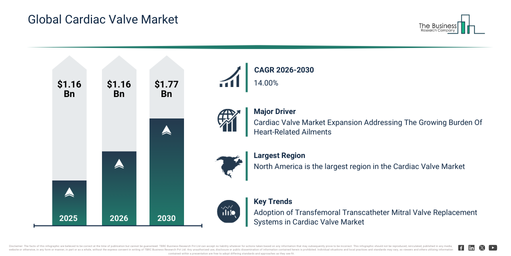
    The cardiac valve market size has experienced significant growth in recent years. It is projected to expand from $12.41 billion in 2025 to $14.24 billion in 2026, achieving a compound annual growth rate (CAGR) of 14.8%. This growth during the historic period can be linked to a rising incidence of valvular heart diseases, the expansion of cardiac surgery programs, increased adoption of mechanical heart valves, advancements in surgical valve techniques, and improved availability of cardiac care facilities.

    The cardiac valve market size is projected to experience substantial growth in the coming years. It is expected to expand to $24.02 billion by 2030, achieving a compound annual growth rate (CAGR) of 14.0%. This anticipated growth during the forecast period can be attributed to factors such as the increasing demand for transcatheter interventions, a rising focus on cardiac care for the elderly, the expansion of hybrid cardiac procedures, growing investments in next-generation valve technologies, and the increasing adoption of patient-specific valve solutions. Significant trends throughout the forecast period include the increasing adoption of transcatheter valve procedures, a rising demand for bioprosthetic heart valves, a growing preference for minimally invasive valve replacement, the expansion of advanced valve repair techniques, and an enhanced focus on valve durability and performance.

    Get A Free Sample Report With In-Depth Market Insights:

    https://thebusinessresearchcompany.com/sample_request?id=94652529&type=smp&name=Cardiac%20Valve%20Market%20Report%202026&utm_source=Blogs&utm_medium=Paid&utm_campaign=Sep_PR

    Cardiac Valve Market Development Factors: What’s Supporting Demand?

    An increasing occurrence of cardiovascular diseases is projected to drive the expansion of the cardiac valve market. The incidence of cardiovascular disease has progressively risen, attributed to elements like smoking, obesity, insufficient physical activity, and other burdens on the cardiovascular system. The main reason for coronary artery disease is the accumulation of fatty plaques in the arteries. These consistent increases in heart-related conditions have boosted the demand for cardiac valves to treat heart valve problems. For instance, in October 2024, as per the Centers for Disease Control, a US-based government agency, in 2023, approximately 919,032 people died from cardiovascular disease, accounting for 1 in every 3 deaths. Thus, the growing prevalence of cardiovascular diseases will fuel the growth of the cardiac valve market.

    Cardiac Valve Market Segment Analysis Spotlighting Growth Areas

    The cardiac valve market covered in this report is segmented –

    1) By Type: Tissue Heart Valves, Transcatheter Heart Valves, Mechanical Heart Valves

    2) By Position: Aortic Valve, Mitral Valve, Other Positions

    3) By Treatment: Cardiac Valve Repair, Cardiac Valve Replacement

    4) By End-Users: Hospital And Clinics, Specialty Centers, Cardiac Research Institute, Other End Users

    Subsegments:

    1) By Tissue Heart Valves: Bioprosthetic Valves (e.g., porcine, bovine), Homograft Valves

    2) By Transcatheter Heart Valves: Transcatheter Aortic Valve Replacement (TAVR / TAVI) Valves, Transcatheter Mitral Valve Replacement (TMVR) Valves

    3) By Mechanical Heart Valves: Tilting Disc Valves, Bileaflet Valves, Caged Ball Valves

    Cardiac Valve Market Transformation Trends: What Innovations Are Driving Change?

    Leading companies in the cardiac valve market are concentrating on developing technological advancements, such as transfemoral transcatheter mitral valve replacement (TMVR) systems, to cater to the increasing demand for minimally invasive therapies within an aging population experiencing rising rates of mitral regurgitation. A transfemoral TMVR system utilizes a collapsible frame and biologic valve leaflets that can be administered via a catheter through the femoral vein, thereby avoiding open-heart surgery and facilitating shorter recovery times, reduced procedural risk, and improved suitability for patients ineligible for surgery. For instance, in April 2025, Edwards Lifesciences, a U.S.-based medical device company, secured CE Mark approval for its SAPIEN M3 System, representing the first transcatheter mitral valve replacement therapy delivered using a transfemoral approach. The SAPIEN M3 combines a docking mechanism that first secures the native mitral leaflets and chordae by pulling them inward, creating a stable landing zone, followed by the deployment of a bioprosthetic valve; both components are delivered through a steerable 29 F guide sheath. This design permits precise placement, repositioning, and retrieval prior to final deployment, enhancing procedural safety and extending treatment possibilities to patients unsuitable for surgery or edge-to-edge repair.

    Cardiac Valve Market Key Players Shaping Industry Direction

    Major companies operating in the cardiac valve market are Abbott Laboratories, Edwards Lifesciences Corporation, Medtronic plc, Artivion Inc., Meril Life Sciences Pvt Ltd, Lepu Medical Technology Co Ltd, TTK Healthcare Limited, Braile Biomédica, JenaValve Technology Inc., Xeltis AG, Colibri Heart Valve LLC, On-X Life Technologies Inc., Thubrikar Aortic Valve Inc., LifeNet Health Inc., Auto Tissue Berlin GmbH, CryoLife Inc., LivaNova PLC, Foldax Inc., Micro Interventional Devices Inc., InnovHeart Srl

    View The Full Cardiac Valve Market Report:

    https://thebusinessresearchcompany.com/report/cardiac-valve-global-market-report?utm_source=Blogs&utm_medium=Paid&utm_campaign=Sep_PR

    Cardiac Valve Market Regional Analysis: Which Geography Leads On Revenue?

    North America was the largest region in the cardiac valve market in 2025. Asia-Pacific is expected to be the fastest-growing region in the forecast period. The regions covered in the cardiac valve market report are Asia-Pacific, South East Asia, Western Europe, Eastern Europe, North America, South America, Middle East, Africa.

    Reach Out To Our Team:

    The Business Research Company: https://www.thebusinessresearchcompany.com/

    Americas: +1 310-496-7795

    Asia: +44 7882 955267 & +91 8897263534

    Europe: +44 7882 955267

    Email us at: marketing@tbrc.info

    Follow us on:

    LinkedIn: https://in.linkedin.com/company/the-business-research-company

    YouTube: https://www.youtube.com/channel/UC24_fI0rV8cR5DxlCpgmyFQ

    Global Market Model: https://www.thebusinessresearchcompany.com/global-market-model
  • Cardiac Sutures Market Set To Expand From $2.55 Billion In 2026: Growth Outlook Through 2030

    Cardiac Sutures Market Set To Expand From $2.55 Billion In 2026: Growth Outlook Through 2030

    Featuring market attractiveness scoring, total addressable market sizing, company benchmarking matrices, interactive Excel dashboards, deeper supply chain intelligence, emerging startup tracking, and granular product-level insights, The Business Research Company’s 2026 market reports are built to deliver research that is both more actionable and more strategically valuable.

    Cardiac Sutures Market Growth From $1.75 Billion In 2026 To $2.55 Billion By 2030 At A CAGR Of 9.8%

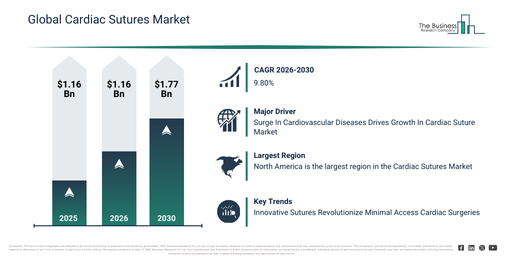
    The cardiac sutures market has experienced substantial growth in its size over recent years. It is forecast to expand from $1.6 billion in 2025 to $1.75 billion in 2026, demonstrating a compound annual growth rate (CAGR) of 9.4%. This historical growth can be linked to an escalating volume of cardiac surgical procedures, improvements in surgical techniques, the expansion of hospital surgical infrastructure, a rising incidence of cardiovascular disorders, and the accessibility of specialized cardiac surgery materials.

    The cardiac sutures market is projected to experience substantial expansion over the coming years. This market is anticipated to reach a valuation of $2.55 billion by 2030, exhibiting a compound annual growth rate (CAGR) of 9.8%. The upward trend during the forecast period is propelled by factors such as the greater acceptance of minimally invasive cardiac procedures, an increasing need for bioengineered sutures, the enlargement of cardiovascular healthcare infrastructure, a heightened emphasis on outcomes related to post-surgical recovery, and growing financial commitments towards sophisticated surgical materials. Significant developments expected during this period involve a greater utilization of advanced synthetic suture products, an expanding preference for absorbable cardiac sutures, an intensified focus on sutures possessing high tensile strength, the broadening availability of instruments for minimally invasive cardiac surgery, and an elevated priority placed on biocompatibility and successful healing results.

    Get A Free Sample Report With In-Depth Market Insights:

    https://thebusinessresearchcompany.com/sample_request?id=92925697&type=smp&name=Cardiac%20Sutures%20Market%20Report%202026&utm_source=Blogs&utm_medium=Paid&utm_campaign=Sep_PR

    Cardiac Sutures Market Industry Drivers: What’s Behind The Revenue Growth?

    The increasing incidence of cardiovascular diseases is anticipated to boost the expansion of the cardiac suture market moving forward. Cardiovascular disease refers to conditions affecting the heart or blood vessels. Cardiac sutures are employed to close incisions and provide the necessary mechanical stability to maintain closure after cardiovascular surgical procedures. For example, in January 2024, data from the American Heart Association, a US-based non-profit entity, indicated that the age-adjusted mortality rate from cardiovascular disease rose to 233.3 per 100,000 in 2024, marking a 4.0% increase from 224.4 per 100,000 in 2023. Therefore, the growing prevalence of cardiovascular diseases will serve as a key driver for the cardiac sutures market.

    Cardiac Sutures Market Segment Performance And Emerging Opportunities

    The cardiac sutures market covered in this report is segmented –

    1) By Type: Absorbable Sutures, Non-Absorbable Sutures

    2) By Material Type: Natural, Synthetic

    3) By End-User: Cardiac & Cardiothoracic Surgery Centers, Specialty Cardiac Hospitals, Academic & Research Hospitals

    Subsegments:

    1) By Absorbable Sutures: Polyglactin Sutures, Polyglycolic Acid Sutures

    2) By Non-Absorbable Sutures: Nylon Sutures, Polyester Sutures, Polypropylene Sutures

    #Cardiac Sutures Market Growth Trends: What’s Shaping The Future Outlook?

    Leading companies active in the cardiac suture market are concentrating on developing technological innovations, including sutures crafted to help maintain tissue integrity and function. Sutures serve as medical instruments used to close wounds and incisions by stitching tissues together, thereby promoting healing and preventing infection. For example, in August 2023, Healthium Medtech, an Indian medical technology firm, introduced TRUMAS, a series of sutures developed to tackle issues faced during suturing in minimal access surgeries. TRUMAS is engineered to provide excellent handling and knot security, enabling surgeons to achieve optimal outcomes in minimally invasive procedures. This innovative range of sutures integrates advanced materials and designs that improve tissue adhesion and reduce the risk of complications. By addressing the specific demands of cardiac surgeons, TRUMAS aims to enhance surgical efficiency and accelerate patient recovery times, underscoring Healthium Medtech’s dedication to advancing medical technology and supporting healthcare professionals in providing high-quality care.

    Cardiac Sutures Market Competitive Analysis Of Leading Industry Participants

    Major companies operating in the cardiac sutures market are B Braun SE, Medtronic plc, Johnson and Johnson, DemeTECH Corporation, Peters Surgical, Sutures India, Surgical Specialties Corporation, Gunze Limited, Assut Medical, Healthium Medtech, Meril Life Sciences, Internacional Farmaceutica SA, Teleflex Incorporated, W L Gore and Associates, Smith and Nephew plc, Dolphin Sutures, Lotus Surgicals, SMI AG, Mani Incorporated, WEGO Surgical Sutures, Kono Seisakusho Co Ltd

    View The Full Cardiac Sutures Market Report:

    https://thebusinessresearchcompany.com/report/cardiac-sutures-global-market-report?utm_source=Blogs&utm_medium=Paid&utm_campaign=Sep_PR

    Cardiac Sutures Market Geographic Spread And Regional Opportunities

    North America was the largest region in the cardiac sutures market in 2025. The regions covered in the cardiac sutures market report are Asia-Pacific, South East Asia, Western Europe, Eastern Europe, North America, South America, Middle East, Africa.

    Reach Out To Our Team:

    The Business Research Company: https://www.thebusinessresearchcompany.com/

    Americas: +1 310-496-7795

    Asia: +44 7882 955267 & +91 8897263534

    Europe: +44 7882 955267

    Email us at: marketing@tbrc.info

    Follow us on:

    LinkedIn: https://in.linkedin.com/company/the-business-research-company

    YouTube: https://www.youtube.com/channel/UC24_fI0rV8cR5DxlCpgmyFQ

    Global Market Model: https://www.thebusinessresearchcompany.com/global-market-model
  • Artificial Ventilation And Anesthesia Masks Market Forecast To Reach $3.18 Billion By 2030: Key Trends Explained

    Artificial Ventilation And Anesthesia Masks Market Forecast To Reach $3.18 Billion By 2030: Key Trends Explained

    Backed by market attractiveness analysis, total addressable market sizing, company benchmarking matrices, interactive Excel dashboards, wider supply chain intelligence, emerging startup coverage, and detailed product-level insights, The Business Research Company’s 2026 market reports are designed to offer research that is more actionable and strategically valuable than ever.

    Artificial Ventilation And Anesthesia Masks Market Set To Climb From $2.48 Billion In 2026 To $3.18 Billion By 2030

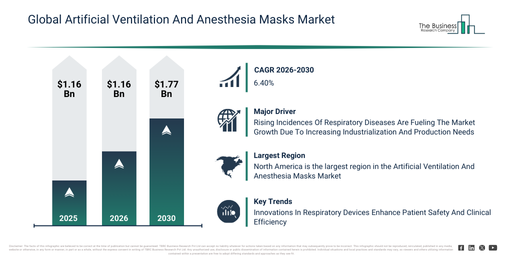
    The artificial ventilation and anesthesia masks market has seen significant expansion over recent years. Its valuation is set to rise from $2.32 billion in 2025 to $2.48 billion in 2026, reflecting a compound annual growth rate (CAGR) of 6.9%. Historically, this growth can be attributed to several factors including the restricted availability of advanced ventilation devices, an uptick in surgical procedures, the development of more ICU infrastructure, a growing prevalence of respiratory conditions, and a reliance on reusable mask solutions.

    The artificial ventilation and anesthesia masks market size is projected to experience significant expansion in the coming years. It is forecast to reach $3.18 billion by 2030, exhibiting a compound annual growth rate (CAGR) of 6.4%. This projected growth can be attributed to technological advancements in both non-invasive and invasive ventilation, an increase in homecare and ambulatory respiratory services, a rising geriatric population, growing demand for disposable masks, and the global expansion of operating rooms and ICU facilities. Prominent trends within the forecast period include a surging demand for advanced ventilation support devices, a greater adoption of disposable masks to minimize cross-contamination, an increasing embrace of homecare and ambulatory ventilation solutions, a heightened focus on patient safety and respiratory monitoring, and the ongoing expansion of intensive care and emergency facilities.

    Get A Free Sample Report With In-Depth Market Insights:

    https://thebusinessresearchcompany.com/sample_request?id=21199717&type=smp&name=Artificial%20Ventilation%20And%20Anesthesia%20Masks%20Market%20Report%202026&utm_source=Blogs&utm_medium=Paid&utm_campaign=Sep_PR

    Artificial Ventilation And Anesthesia Masks Market Opportunity Drivers: What’s Unlocking New Revenue Potential?

    The increasing occurrence of respiratory diseases is anticipated to drive the expansion of the artificial ventilation and anesthesia mask market moving forward. Respiratory diseases are defined as a category of health conditions affecting the respiratory system, including the airways, lungs, and associated musculature. The growing frequency of respiratory diseases is fueled by extended exposure to air pollution, particularly fine particulate matter and toxic gases, which damage lung tissue, trigger inflammation, and heighten the risk of chronic conditions such as asthma, bronchitis, and chronic obstructive pulmonary disease. Artificial ventilation and anesthesia masks assist in the management of respiratory diseases by delivering exact amounts of oxygen or anesthetic gases to patients during surgical procedures, intensive care, or emergencies, thereby helping to sustain stable respiratory function. For instance, in June 2025, the Office for Health Improvement and Disparities, a UK-based government department, reported that between the financial years ending 2023 and 2024, the rate of emergency admissions for respiratory diseases in England increased by 7%, with particular rises of 9% for chronic obstructive pulmonary disease, 17% for adult asthma, and 16% for pneumonia. Therefore, the rising incidence of respiratory diseases is propelling the growth of the artificial ventilation and anesthesia mask market.

    Artificial Ventilation And Anesthesia Masks Market Segment Analysis: What Are The Core Market Categories?

    The artificial ventilation and anesthesia masks market covered in this report is segmented –

    1) By Type: Invasive Ventilation, Non-Invasive Ventilation

    2) By Mask Type: Disposable Masks, Reusable Masks

    3) By Application: Operating Rooms, Intensive Care Unit, Emergency Rooms, Homecare, Ambulatory Surgical Centers

    Subsegments:

    1) By Invasive Ventilation: Volume Controlled Ventilation, Pressure Controlled Ventilation, Pressure Support Ventilation, Synchronized Intermittent Mandatory Ventilation, High Frequency Oscillatory Ventilation

    2) By Non-Invasive Ventilation: Continuous Positive Airway Pressure, Bilevel Positive Airway Pressure, Volume Assured Pressure Support, Negative Pressure Ventilation, Proportional Assist Ventilation

    Artificial Ventilation And Anesthesia Masks Market Innovation Trends Shaping Future Development

    Leading companies within the global artificial ventilation and anesthesia masks market are concentrating on developing inventive solutions, such as aerosol-minimizing non-invasive ventilation (NIV) masks, with the aim of boosting patient safety, lowering exposure for healthcare personnel, and reducing the risk of airborne infections. These aerosol-minimizing NIV masks utilize a negative-pressure gradient design to capture exhaled aerosols, distinguishing them from traditional masks that allow unfiltered exhaled air to disperse freely, thereby providing superior protection in high-risk clinical environments. For instance, in February 2025, GaleMed Corporation, a medical device company based in Taiwan, announced a commercialization partnership with Inspir Labs, an innovator from Israel, to introduce a new NIV mask to the market, promoted as the world’s first aerosol-safe ventilation mask. This mask features a dual-layer silicone cushion, where an inner layer manages patient ventilation and an outer layer connects to suction equipment to actively collect aerosols, consequently diminishing airborne contamination. Its ergonomic form, lightweight construction, and quick-release headgear clips contribute to enhanced comfort and practical use in clinical settings.

    Artificial Ventilation And Anesthesia Masks Market Key Players Shaping Industry Direction

    Major companies operating in the artificial ventilation and anesthesia masks market are Cardinal Health Inc., Air Liquide Medical Systems S.A., Medtronic plc, Koninklijke Philips N.V., GE Healthcare Technologies Inc., ResMed Inc., Teleflex Incorporated, Getinge AB, Fisher & Paykel Healthcare Corporation Limited, Drägerwerk AG & Co. KGaA, Ambu A/S, Hamilton Medical AG, GaleMed Corporation, Armstrong Medical Ltd., Cathwide Medical Inc., Romsons Scientific and Surgical Industries Pvt. Ltd., Trudell Medical International, Besmed Health Business Corporation, Flexicare Medical Limited, Intersurgical Ltd., O-Two Medical Technologies Inc., Hans Rudolph Inc.

    View The Full Artificial Ventilation And Anesthesia Masks Market Report:

    https://thebusinessresearchcompany.com/report/artificial-ventilation-and-anesthesia-masks-global-market-report?utm_source=Blogs&utm_medium=Paid&utm_campaign=Sep_PR

    Artificial Ventilation And Anesthesia Masks Market Regional Analysis: Which Region Leads By Revenue?

    North America was the largest region in the artificial ventilation and anesthesia masks market in 2025. Asia-Pacific is expected to be the fastest-growing region in the forecast period. The regions covered in the artificial ventilation and anesthesia masks market report are Asia-Pacific, South East Asia, Western Europe, Eastern Europe, North America, South America, Middle East, Africa.

    Reach Out To Our Team:

    The Business Research Company: https://www.thebusinessresearchcompany.com/

    Americas: +1 310-496-7795

    Asia: +44 7882 955267 & +91 8897263534

    Europe: +44 7882 955267

    Email us at: marketing@tbrc.info

    Follow us on:

    LinkedIn: https://in.linkedin.com/company/the-business-research-company

    YouTube: https://www.youtube.com/channel/UC24_fI0rV8cR5DxlCpgmyFQ

    Global Market Model: https://www.thebusinessresearchcompany.com/global-market-model
  • Cardiac Rhythm Management (CRM) Devices And Equipment Market Size And Growth In 2026: Key Factors Shaping Future Demand

    Cardiac Rhythm Management (CRM) Devices And Equipment Market Size And Growth In 2026: Key Factors Shaping Future Demand

    Built to provide research that’s more actionable and strategically valuable, The Business Research Company’s 2026 market reports include market attractiveness analysis, total addressable market sizing, company benchmarking matrices, interactive Excel dashboards, broader supply chain intelligence, emerging startup tracking, and in-depth product insights.

    Cardiac Rhythm Management (CRM) Devices And Equipment Market Expansion Outlook: What Revenue Opportunities Are Ahead?

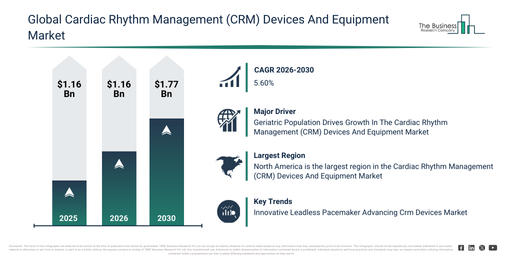
    The market for cardiac rhythm management (crm) devices and equipment has seen rapid expansion in recent years. It is anticipated to increase from $15.52 billion in 2025 to $17.07 billion in 2026, achieving a compound annual growth rate (CAGR) of 10.0%. The historical expansion can be ascribed to several factors, including a higher incidence of cardiac arrhythmias, the proliferation of electrophysiology treatment centers, augmented deployment of pacemakers and defibrillators, advancements in device implantation techniques, and increased understanding of sudden cardiac arrest management.

    The cardiac rhythm management (crm) devices and equipment market is anticipated to show significant growth over the next few years. It is expected to expand to $21.22 billion in 2030, demonstrating a compound annual growth rate (CAGR) of 5.6%. The expansion during this forecast period can be attributed to several factors including increasing demand for home-based cardiac monitoring, the rising adoption of leadless pacemakers, the enlargement of heart failure management programs, growing investments in smart CRM platforms, and continuous innovation in low-power device electronics. Key trends in the upcoming period are set to include the increasing adoption of remote cardiac monitoring devices, the rising use of miniaturized implantable CRM devices, the growing integration of AI-based arrhythmia detection, the expansion of wireless and leadless technologies, and an enhanced focus on battery longevity and device safety.

    Get A Free Sample Report With In-Depth Market Insights:

    https://thebusinessresearchcompany.com/sample_request?id=98695904&type=smp&name=Cardiac%20Rhythm%20Management%20%28CRM%29%20Devices%20And%20Equipment%20Market%20Report%202026&utm_source=Blogs&utm_medium=Paid&utm_campaign=Sep_PR

    Cardiac Rhythm Management (CRM) Devices And Equipment Market Growth Factors: What’s Supporting Expansion?

    The expanding demographic of individuals aged 65 and above, known as the geriatric population, is anticipated to boost the cardiac rhythm management (CRM) devices and equipment market. As this demographic grows, there’s a corresponding increase in cardiovascular disease prevalence, thereby escalating the need for CRM devices. Such devices are crucial for managing heart rhythm irregularities like arrhythmias and enhancing the well-being of older adults. For illustration, data from the Administration for Community Living, a US government body, indicates that the elderly demographic is projected to reach 80.8 million by 2040 and 94.7 million by 2060. Consequently, the rising geriatric population is a key factor propelling the expansion of the cardiac rhythm management (CRM) devices and equipment market. The growing prevalence of cardiovascular diseases is anticipated to accelerate the expansion of the cardiac rhythm management (CRM) devices and equipment market. Cardiovascular diseases encompass various conditions impacting the heart and blood vessels, such as coronary artery disease, heart attacks, strokes, hypertension, heart failure, and arrhythmias. Unhealthy lifestyle choices, including poor diets and insufficient physical activity, significantly contribute to this rise. Cardiac Rhythm Management (CRM) devices and equipment play a vital role in the diagnosis, oversight, and treatment of these diseases, especially those involving abnormal heart rhythms. For example, the American Heart Association, a US non-profit, reported in January 2024 that the age-adjusted death rate from cardiovascular disease climbed to 233.3 per 100,000 in 2024, marking a 4.0% increase from 224.4 per 100,000 in 2023. Consequently, the increasing rates of cardiovascular diseases are a primary catalyst for the growth of the cardiac rhythm management (CRM) devices and equipment market.

    Cardiac Rhythm Management (CRM) Devices And Equipment Market Segment Landscape And Growth Outlook

    The cardiac rhythm management (crm) devices and equipment market covered in this report is segmented –

    1) By Product: Pacemakers, Defibrillators, Cardiac Resynchronization Therapy (CRT)

    2) By Application: Bradycardia, Tachycardia, Heart Failure, Other Applications

    3) By End User: Hospitals, Ambulatory Surgical Centers, Physicians Clinics

    Subsegments:

    1) By Pacemakers: Single-Chamber Pacemakers, Dual-Chamber Pacemakers, Biventricular Pacemakers, Implantable Pacemakers

    2) By Defibrillators: Implantable Cardioverter Defibrillators (ICDs), External Defibrillators, Wearable Defibrillators, Automated External Defibrillators (AEDs)

    3) By Cardiac Resynchronization Therapy (CRT): CRT-P (Pacemaker), CRT-D (Defibrillator), Bi-Ventricular Pacemakers

    Cardiac Rhythm Management (CRM) Devices And Equipment Market Industry Trends: What’s Reshaping Demand?

    Leading companies within the cardiac rhythm management (CRM) devices and equipment market are concentrating on creating leadless and advanced miniature pacemakers, including dual-chamber leadless systems, with the goal of minimizing lead-related complications, increasing patient eligibility, and boosting long-term therapy durability. A dual-chamber/leadless pacemaker system is an implantable pacing solution that delivers atrial and ventricular pacing without transvenous leads. This is achieved using either two small, self-contained implants that communicate or a single miniaturized device with sophisticated sensing, thereby reducing infection and lead-failure risks while maintaining physiological pacing. For instance, in July 2023, Abbott, a US-based medical device company, initiated commercial implants of the AVEIR DR dual-chamber leadless pacemaker system after receiving FDA approval earlier that year, presenting the first leadless alternative to treat both atrial and ventricular pacing indications and enabling implant-to-implant communication for synchronized dual-chamber therapy.

    Cardiac Rhythm Management (CRM) Devices And Equipment Market Leading Companies And Competitive Benchmarking

    Major companies operating in the cardiac rhythm management (crm) devices and equipment market are Abbott Laboratories, Medtronic plc, Biotronik SE & Co. KG, Cardiac Science Corporation, Schiller AG, Integer Holdings, Philips Healthcare, Röchling Medical, CCC Medical Devices, LivaNova plc, ZOLL Medical Corporation, Koninklijke Philips N.V., Applied Cardiac Systems, MicroPort Scientific Corporation, ReliantHeart Inc., Shree Pacetronix Ltd., Shaanxi Qinming Medical Instrument Co. Ltd., Boston Scientific Corporation, Progetti Srl, Medico S.p.A.

    View The Full Cardiac Rhythm Management (CRM) Devices And Equipment Market Report:

    https://thebusinessresearchcompany.com/report/cardiac-rhythm-management-CRM-devices-and-equipment-global-market-report?utm_source=Blogs&utm_medium=Paid&utm_campaign=Sep_PR

    Cardiac Rhythm Management (CRM) Devices And Equipment Market Top Region By Revenue And Market Share

    North America was the largest region in the global cardiac rhythm management (CRM) devices and equipment market in 2025. Western Europe was the second-largest region in the cardiac rhythm management (CRM) devices and equipment market. The regions covered in the cardiac rhythm management (crm) devices and equipment market report are Asia-Pacific, South East Asia, Western Europe, Eastern Europe, North America, South America, Middle East, Africa.

    Reach Out To Our Team:

    The Business Research Company: https://www.thebusinessresearchcompany.com/

    Americas: +1 310-496-7795

    Asia: +44 7882 955267 & +91 8897263534

    Europe: +44 7882 955267

    Email us at: marketing@tbrc.info

    Follow us on:

    LinkedIn: https://in.linkedin.com/company/the-business-research-company

    YouTube: https://www.youtube.com/channel/UC24_fI0rV8cR5DxlCpgmyFQ

    Global Market Model: https://www.thebusinessresearchcompany.com/global-market-model

  • Cardiac Prosthetic Devices Market Forecast 2026–2030: Market Size, Trends And Growth Opportunities

    Cardiac Prosthetic Devices Market Forecast 2026–2030: Market Size, Trends And Growth Opportunities

    Backed by market attractiveness analysis, total addressable market sizing, company benchmarking matrices, interactive Excel dashboards, wider supply chain intelligence, emerging startup coverage, and detailed product-level insights, The Business Research Company’s 2026 market reports are designed to offer research that is more actionable and strategically valuable than ever.

    Cardiac Prosthetic Devices Market Growth Potential: How Will Market Size Shift Through 2030?

    The cardiac prosthetic devices market size has experienced rapid growth in recent years. This market is anticipated to expand from $9.09 billion in 2025 to $10.13 billion in 2026, registering a compound annual growth rate (CAGR) of 11.4%. Historically, this growth has been fueled by the rising prevalence of cardiovascular diseases, increasing incidence of heart valve disorders, growth in cardiac surgical procedures, expanding availability of cardiac care centers, and improving clinical outcomes of prosthetic heart devices.

    The cardiac prosthetic devices market size is projected to experience rapid expansion in the coming years. It is forecast to grow to $15.57 billion in 2030, achieving a compound annual growth rate (CAGR) of 11.3%. This anticipated growth is driven by an aging global population, a heightened demand for minimally invasive cardiac treatments, an escalating number of heart failure cases, improved access to advanced cardiac care in emerging markets, and an increased emphasis on early intervention for structural heart diseases. Significant trends anticipated during this period include the rising adoption of minimally invasive cardiac prosthetic procedures, a greater need for sophisticated heart valve replacement solutions, an expanding application of cardiac prosthetics in heart failure management, the widening scope of transcatheter cardiac device applications, and an enhanced focus on the long-term durability of devices and patient outcomes.

    Get A Free Sample Report With In-Depth Market Insights:

    https://thebusinessresearchcompany.com/sample_request?id=72317200&type=smp&name=Cardiac%20Prosthetic%20Devices%20Market%20Report%202026&utm_source=Blogs&utm_medium=Paid&utm_campaign=Sep_PR

    Cardiac Prosthetic Devices Market Demand Drivers: What’s Powering Industry Growth?

    The increasing occurrence of cardiovascular diseases is anticipated to drive expansion in the cardiac prosthetic devices market moving forward. Cardiovascular diseases (CVDs) encompass various conditions impacting the heart and blood vessels, such as coronary artery disease, heart attacks, and strokes. These diseases are prevalent due to factors like unhealthy lifestyles, high obesity rates, poor dietary habits, insufficient physical activity, elevated stress levels, and an aging demographic. Crucially, cardiac prosthetic devices assist in managing CVDs by either supporting or substituting the heart’s function or its constituent parts. For instance, data released by the British Heart Foundation, a UK-based cardiovascular research charity, in January 2024, indicated that in the UK, approximately 7.6 million people suffer from heart and circulatory diseases, comprising around 4 million males and 3.6 million females. These conditions account for about 27% of all deaths in the UK, amounting to over 170,000 annual fatalities, or roughly 480 deaths daily, which translates to one death every three minutes. Consequently, the widespread presence of cardiovascular diseases is propelling the expansion of the cardiac prosthetic devices market.

    Cardiac Prosthetic Devices Market Breakdown By Product Type And Application

    The cardiac prosthetic devices market covered in this report is segmented –

    1) By Type: Valves, Pacemakers

    2) By Applications: Surgery, Heart Valve Replacement Procedures, Cardiac Rhythm Management

    3) By End User: Hospitals, Clinics Or Cardiac Centers, Ambulatory Surgical Centers, Other End-Users

    Subsegments:

    1) By Valves: Mechanical Valves, Tissue Valves, Transcatheter Heart Valves

    2) By Pacemakers: Single-Chamber Pacemakers, Dual-Chamber Pacemakers, Biventricular Pacemakers

    Cardiac Prosthetic Devices Market Innovation Trends: What Developments Are Reshaping The Industry?

    Leading companies in the cardiac prosthetic devices market are increasingly concentrating on minimally invasive transcatheter therapies. These include transcatheter edge-to-edge repair (TEER) systems, which are clip implants delivered by catheter designed to grasp and bring together the leaflets of a dysfunctional valve, such as the tricuspid valve, thereby lessening regurgitation without requiring open-heart surgery. For example, in April 2024, Abbott, a US-based medical-technology company, introduced its TriClip G4 System, a TEER device intended for the treatment of severe tricuspid regurgitation. The TriClip G4 System is delivered using a femoral-vein catheter; its clip arms articulate to secure the valve leaflets, and it allows for the use of multiple clips to achieve the most effective reduction of leakage.

    Cardiac Prosthetic Devices Market Industry Leaders And Competitive Landscape

    Major companies operating in the cardiac prosthetic devices market are Abbott Laboratories, Medtronic plc, Boston Scientific Corporation, Edwards Lifesciences Corporation, BIOTRONIK SE & Co KG, Terumo Corporation, Lepu Medical Technology Beijing Co Ltd, Abiomed Inc, LivaNova PLC, Meril Life Sciences Pvt Ltd, MicroPort Scientific Corporation, CryoLife Inc, LifeTech Scientific Corporation, Venus Medtech Hangzhou Inc, Braile Biomedica, AtriCure Inc, Aortic Innovations Inc, Pacetronix Limited, TTK Healthcare Limited, Kawasumi Laboratories Inc

    View The Full Cardiac Prosthetic Devices Market Report:

    https://thebusinessresearchcompany.com/report/cardiac-prosthetic-devices-global-market-report?utm_source=Blogs&utm_medium=Paid&utm_campaign=Sep_PR

    Cardiac Prosthetic Devices Market Regional Analysis And Top Geography

    North America was the largest region in the cardiac prosthetic devices market in 2025. Asia-Pacific is expected to be the fastest-growing region in the forecast period. The regions covered in the cardiac prosthetic devices market report are Asia-Pacific, South East Asia, Western Europe, Eastern Europe, North America, South America, Middle East, Africa.

    Reach Out To Our Team:

    The Business Research Company: https://www.thebusinessresearchcompany.com/

    Americas: +1 310-496-7795

    Asia: +44 7882 955267 & +91 8897263534

    Europe: +44 7882 955267

    Email us at: marketing@tbrc.info

    Follow us on:

    LinkedIn: https://in.linkedin.com/company/the-business-research-company

    YouTube: https://www.youtube.com/channel/UC24_fI0rV8cR5DxlCpgmyFQ

    Global Market Model: https://www.thebusinessresearchcompany.com/global-market-model

  • Artificial Organs And Bionic Implants Market Analysis: Understanding The Drivers Behind 7.9% CAGR Through 2030 Growth

    Artificial Organs And Bionic Implants Market Analysis: Understanding The Drivers Behind 7.9% CAGR Through 2030 Growth

    Featuring market attractiveness scoring, total addressable market sizing, company benchmarking matrices, interactive Excel dashboards, deeper supply chain intelligence, emerging startup tracking, and granular product-level insights, The Business Research Company’s 2026 market reports are built to deliver research that is both more actionable and more strategically valuable.

    Artificial Organs And Bionic Implants Market Forecast: Value Set To Climb From $52.76 Billion To $71.53 Billion

    The artificial organs and bionic implants market size has experienced robust growth in recent years. It is projected to expand from $48.75 billion in 2025 to $52.76 billion in 2026, achieving a compound annual growth rate (CAGR) of 8.2%. The growth observed in the historical period can be attributed to factors such as the limited availability of artificial organs, a reliance on mechanical bionics, the high cost associated with early bionic implants, low adoption rates stemming from a lack of awareness, and the dependence on hospital-based implant procedures.

    The artificial organs and bionic implants market is projected to experience substantial expansion in the coming years, reaching $71.53 billion by 2030, driven by a compound annual growth rate (CAGR) of 7.9%. This expansion during the forecast period is fueled by several factors, including developments in electronic bionics and neural interfaces, increased exploration in regenerative medicine, an expanding elderly population and higher rates of chronic illnesses, the proliferation of ambulatory surgical centers, and increased government backing and financial aid for medical device breakthroughs. Key developments anticipated during this period encompass a greater uptake of sophisticated prosthetics and bionic limbs, wider incorporation of neural implants and sensory apparatus, an escalating need for artificial organs due to insufficient organ availability, an emphasis on custom-made and patient-specific implants, and improved technologies for post-operative recovery and support.

    Get A Free Sample Report With In-Depth Market Insights:

    https://thebusinessresearchcompany.com/sample_request?id=38844751&type=smp&name=Artificial%20Organs%20And%20Bionic%20Implants%20Market%20Report%202026&utm_source=Blogs&utm_medium=Paid&utm_campaign=Sep_PR

    Artificial Organs And Bionic Implants Market Growth Momentum: What Factors Are Shaping Demand?

    The expansion of the artificial organs and bionic implants market is anticipated to be driven by the growing frequency of organ transplants. Organ transplantation involves a surgical process where a healthy organ from a donor is placed into a patient whose own organ is either diseased, damaged, or non-functional. This rise in organ transplants is attributed to a higher occurrence of chronic illnesses and organ failures, alongside ongoing progress in medical and surgical technologies. Artificial organs and bionic implants support organ transplantation by offering interim solutions, reducing patient waiting periods, enhancing patient recovery, and serving as alternatives when donor organs are unavailable. For instance, data from the Organ Procurement and Transplantation Network, a US-based non-profit organization, indicated in January 2025 that organ transplants surpassed 48,000 in 2024, representing a 3.3 percent increase compared to transplants performed in 2023. Consequently, the increasing prevalence of organ transplants is a key factor propelling the growth of the artificial organs and bionic implants market.

    Artificial Organs And Bionic Implants Market Segment Breakdown: Which Categories Lead On Revenue?

    The artificial organs and bionic implants market covered in this report is segmented –

    1) By Product: Artificial Organs, Artificial Bionics

    2) By Technology: Mechanical Bionics, Electronic Bionics

    3) By End User: Hospitals, Ambulatory Surgical Centers, Other End Users

    Subsegments:

    1) By Artificial Organs: Artificial Heart, Artificial Kidney, Artificial Liver, Artificial Pancreas, Artificial Lungs

    2) By Artificial Bionics: Bionic Limbs, Bionic Eyes, Bionic Ears, Neural Implants, Bionic Skin

    Artificial Organs And Bionic Implants Market Trends Redefining Industry Growth

    Major companies operating in the artificial organs and bionic implants market are focusing on developing technologically advanced solutions, such as brain implant technology systems, to enhance cognitive function and treat neurological disorders. Brain implant technology systems involve devices that interface with the brain to monitor, stimulate, or modify neural activity for medical treatment, neuroprosthetics, or research purposes. For instance, in May 2023, Neuralink Corp., a US-based neurotechnology company, received Food and Drug Administration (FDA) approval to conduct its first human clinical trials for its brain implant technology, which aims to help individuals with severe paralysis regain the ability to communicate with and control external devices using only their thoughts. The approval marks a significant milestone for the company, which has faced challenges in the past, including a previous rejection due to safety concerns. The trial will test the device’s ability to interpret neural signals and transmit them via Bluetooth to control computers and mobile devices, potentially assisting those with conditions such as amyotrophic lateral sclerosis (ALS).

    Artificial Organs And Bionic Implants Market Competitive Analysis Of Leading Industry Participants

    Major companies operating in the artificial organs and bionic implants market are Medtronic plc, Asahi Kasei Medical Co. Ltd., B. Braun Melsungen AG, Terumo Medical Corp., Edwards Lifesciences Corporation, Ottobock SE and Co. KGaA, Cochlear Limited, Ossur hf., Thoratec Corporation, Berlin Heart GmbH, Jarvik Heart Inc., SynCardia Systems LLC, BiVACOR Inc., Gambro AB, Pixium Vision, ALVI Labs, WillowWood Global LLC, Nano Retina Inc., Organovo Holdings Inc., Abbott Laboratories, ABIOMED Inc., Ekso Bionics Holdings Inc., ReWalk Robotics Ltd, LivaNova PLC, Second Sight Medical Products Inc.

    View The Full Artificial Organs And Bionic Implants Market Report:

    https://thebusinessresearchcompany.com/report/artificial-organs-and-bionic-implants-global-market-report?utm_source=Blogs&utm_medium=Paid&utm_campaign=Sep_PR

    Artificial Organs And Bionic Implants Market Geographic Distribution And Regional Opportunities

    North America was the largest region in the artificial organs and bionic implants market in 2025. Asia-Pacific is expected to be the fastest-growing region in the forecast period. The regions covered in the artificial organs and bionic implants market report are Asia-Pacific, South East Asia, Western Europe, Eastern Europe, North America, South America, Middle East, Africa.

    Reach Out To Our Team:

    The Business Research Company: https://www.thebusinessresearchcompany.com/

    Americas: +1 310-496-7795

    Asia: +44 7882 955267 & +91 8897263534

    Europe: +44 7882 955267

    Email us at: marketing@tbrc.info

    Follow us on:

    LinkedIn: https://in.linkedin.com/company/the-business-research-company

    YouTube: https://www.youtube.com/channel/UC24_fI0rV8cR5DxlCpgmyFQ

    Global Market Model: https://www.thebusinessresearchcompany.com/global-market-model
  • Cardiac Pacemakers Market Size Reaches $5.3 Billion In 2026: What Is Driving Growth?

    Cardiac Pacemakers Market Size Reaches $5.3 Billion In 2026: What Is Driving Growth?

    Featuring market attractiveness scoring, total addressable market sizing, company benchmarking matrices, interactive Excel dashboards, deeper supply chain intelligence, emerging startup tracking, and granular product-level insights, The Business Research Company’s 2026 market reports are built to deliver research that is both more actionable and more strategically valuable.

    Cardiac Pacemakers Market Value Analysis: What Growth Lies Ahead Over The Forecast Period?

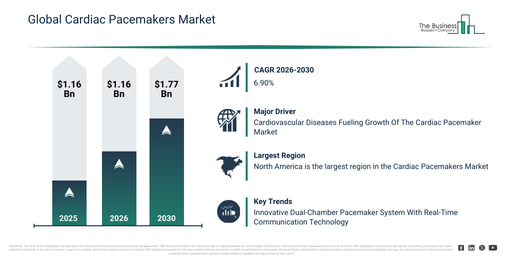
    The cardiac pacemakers market size has exhibited robust growth in recent years. It is anticipated to expand from $4.95 billion in 2025 to $5.3 billion in 2026, achieving a compound annual growth rate (CAGR) of 7.2%. Historically, this expansion has been driven by factors such as the increasing prevalence of cardiac arrhythmias, the broadening of cardiac care infrastructure, the rising adoption of implantable cardiac devices, continuous improvements in pacemaker technology, and the growing aging population.

    The cardiac pacemakers market size is projected to experience substantial growth in the upcoming years. It is anticipated to reach $6.92 billion by 2030, exhibiting a compound annual growth rate (CAGR) of 6.9%. The expansion during this forecast period stems from factors such as heightened demand for remote patient monitoring, increased uptake of smart pacemakers, the proliferation of ambulatory cardiac procedures, a greater emphasis on personalized cardiac therapy, and augmented investments in cardiac digital health. Key trends observed within the forecast timeframe encompass the expanding adoption of leadless pacemakers, the growing utilization of remote cardiac monitoring systems, a stronger inclination towards dual and biventricular devices, the advancement of minimally invasive implantation techniques, and an elevated focus on device longevity and safety.

    Get A Free Sample Report With In-Depth Market Insights:

    https://thebusinessresearchcompany.com/sample_request?id=42612289&type=smp&name=Cardiac%20Pacemakers%20Market%20Report%202026&utm_source=Blogs&utm_medium=Paid&utm_campaign=Sep_PR

    Cardiac Pacemakers Market Growth Drivers: What’s Behind The Acceleration?

    The increasing prevalence of cardiovascular diseases is a significant factor contributing to the expansion of the cardiac pacemaker market. Cardiovascular disease (CVD) refers to conditions affecting the heart or blood vessels, including arrhythmias, aortic disease, congenital heart disease, and heart attacks. Cardiac pacemakers are devices that generate electrical activity, utilized to treat patients suffering from these cardiovascular ailments. For instance, in October 2024, the Centers for Disease Control, a US-based government agency, reported that in 2023, around 919,032 people succumbed to cardiovascular disease, which accounted for 1 in every 3 deaths. This rising incidence of cardiovascular diseases is therefore expected to drive the growth of the cardiac pacemaker market.

    Cardiac Pacemakers Market Segment Analysis And Revenue Potential

    The cardiac pacemakers market covered in this report is segmented –

    1) By Type: Implantable, External

    2) By Technology: Biventricular, Single Chambered, Dual Chambered

    3) By Application: Arrhythmias, Heart Blockage, Congestive Cardiac Failure, Other Applications

    4) By End User: Clinics And Hospitals, Ambulatory Surgical Centers, Cardiac Care Centers

    Subsegments:

    1) By Implantable: Single Chamber Pacemakers, Dual Chamber Pacemakers, Biventricular Pacemakers (CRT-P), Leadless Pacemakers

    2) By External: Temporary External Pulse Generators, Transcutaneous External Pacemakers

    Cardiac Pacemakers Market Trends: What’s Defining The Industry’s Next Phase?

    Leading companies in the cardiac pacemaker market are actively developing innovative products, such as i2i communication technology, which enables immediate communication between devices. This i2i (infrastructure-to-infrastructure) communication technology facilitates seamless data exchange across different infrastructure systems, thereby enhancing automation and operational efficiency. For instance, in November 2023, Abbott Laboratories, a US-based medical device company, launched the AVEIR DR System to address patients experiencing abnormal or slow heart rhythms. This advanced dual-chamber leadless pacemaker system provides synchronized pacing for both the right atrium and ventricle, ensuring proper heart rhythm. It is implanted via a minimally invasive procedure, which reduces both recovery time and potential complications. The advanced implant-to-implant technology allows for real-time communication between the devices, coordinating effective pacing. This technology represents a significant advancement in the field of heart health management.

    Cardiac Pacemakers Market Key Participants And Competitive Landscape

    Major companies operating in the cardiac pacemakers market are Medtronic plc, Abbott Inc, Boston Scientific Corporation, Biotronik SE & Co. KG, Lepu Medical Technology Co. Ltd, MicroPort Scientific Corporation, LivaNova PLC, Zoll Medical Corporation, Oscor Inc, Osypka Medical GmbH, Cardionovum GmbH, Shree Pacetronix Limited, Medico SpA, CCC Medical Devices, Galix Biomedical Instrumentation, Vimecon GmbH, Mediana Co. Ltd, Cardioline SpA, Pacetronix India Pvt Ltd, Beijing Universal Pacing Technology Co. Ltd

    View The Full Cardiac Pacemakers Market Report:

    https://thebusinessresearchcompany.com/report/cardiac-pacemakers-global-market-report?utm_source=Blogs&utm_medium=Paid&utm_campaign=Sep_PR

    Cardiac Pacemakers Market Geographic Analysis: Where Is Demand Rising Fastest?

    North America was the largest region in the cardiac pacemakers market in 2025. Asia-Pacific is expected to be the fastest-growing region in the forecast period. The regions covered in the cardiac pacemakers market report are Asia-Pacific, South East Asia, Western Europe, Eastern Europe, North America, South America, Middle East, Africa.

    Reach Out To Our Team:

    The Business Research Company: https://www.thebusinessresearchcompany.com/

    Americas: +1 310-496-7795

    Asia: +44 7882 955267 & +91 8897263534

    Europe: +44 7882 955267

    Email us at: marketing@tbrc.info

    Follow us on:

    LinkedIn: https://in.linkedin.com/company/the-business-research-company

    YouTube: https://www.youtube.com/channel/UC24_fI0rV8cR5DxlCpgmyFQ

    Global Market Model: https://www.thebusinessresearchcompany.com/global-market-model

  • Cardiac Marker Testing Market Valued At $11.61 Billion In 2026: Key Trends And Growth Drivers

    Cardiac Marker Testing Market Valued At $11.61 Billion In 2026: Key Trends And Growth Drivers

    Built to provide research that’s more actionable and strategically valuable, The Business Research Company’s 2026 market reports include market attractiveness analysis, total addressable market sizing, company benchmarking matrices, interactive Excel dashboards, broader supply chain intelligence, emerging startup tracking, and in-depth product insights.

    Cardiac Marker Testing Market Size Forecast: How Big Could The Market Get By 2030?

    The cardiac marker testing market has experienced substantial expansion in recent years. It is projected to expand from $7.19 billion in 2025 to $7.93 billion in 2026, demonstrating a compound annual growth rate (CAGR) of 10.3%. Historically, this growth can be ascribed to factors such as the restricted availability of high-sensitivity cardiac marker tests, dependence on centralized laboratory testing, the rising occurrence of cardiovascular diseases, heightened awareness among healthcare providers, and traditional manual diagnostic methods.

    The cardiac marker testing market size is poised for substantial growth over the next few years, with projections indicating it will reach $11.61 billion in 2030, advancing at a compound annual growth rate (CAGR) of 10.0%. This anticipated expansion during the forecast period stems from factors such as the development of automated and portable cardiac marker testing devices, increasing adoption of point-of-care diagnostics, integration with digital health platforms, an expanding geriatric population coupled with cardiovascular risk, and enhancements in reagent and kit sensitivity. Prominent trends for this period include a rising uptake of high-sensitivity cardiac biomarker tests, the expansion of point-of-care testing facilities, the integration of automated analyzers and immunoassay systems, a growing application of cardiac marker testing in preventive cardiology, and increasing demand for portable diagnostic devices.

    Get A Free Sample Report With In-Depth Market Insights:

    https://thebusinessresearchcompany.com/sample_request?id=77501814&type=smp&name=Cardiac%20Marker%20Testing%20Market%20Report%202026&utm_source=Blogs&utm_medium=Paid&utm_campaign=Sep_PR

    Cardiac Marker Testing Market Growth Factors Behind Sustained Expansion

    The expanding prevalence of cardiovascular diseases is anticipated to propel the growth of the cardiac marker testing market moving forward. These conditions, known as CVDs, represent a collection of disorders impacting the heart and blood vessels, including issues like coronary artery disease, heart failure, and stroke. The escalating number of cardiovascular disease cases is attributed to factors such as an unhealthy diet, insufficient physical activity, tobacco use, excessive alcohol consumption, and air pollution. Cardiac marker testing is crucial for cardiovascular diseases to accurately diagnose, evaluate the seriousness, and track the progression or response to therapy for heart conditions by identifying particular biomarkers released during myocardial injury. For instance, in January 2024, data from the American Heart Association, a US-based nonprofit organization, indicated that the age-adjusted death rate from cardiovascular disease climbed to 233.3 per 100,000, representing a 4.0% rise from 224.4 per 100,000 when measured against 2023. Thus, the increasing occurrence of cardiovascular diseases drives the cardiac marker testing market.

    Cardiac Marker Testing Market Segmentation And Category Overview

    The cardiac marker testing market covered in this report is segmented –

    1) By Product: Reagents And Kits, Instruments

    2) By Biomarker Type: Troponin I And T, Creatine Kinase-MB (CK-MB), Natriuretic Peptide, Myoglobin, High-Sensitivity C-Reactive Protein, Other Biomarker Types

    3) By Application: Laboratory Testing Facilities, Point-Of-Care Testing Facilities, Academic Institutions

    Subsegments:

    1) By Reagents and Kits: Troponin Test Kits, B-type Natriuretic Peptide (BNP) Test Kits, Creatine Kinase-MB (CK-MB) Test Kits, Myoglobin Test Kits, Other Cardiac Biomarker Reagents

    2) By Instruments: Point-Of-Care Testing Devices, Automated Analyzers, Immunoassay Systems, Portable Diagnostic Devices

    Cardiac Marker Testing Market Industry Trends Fueling Future Revenue Growth

    Leading companies within the cardiac marker testing market are concentrating on developing technologically advanced products, such as cardiac assays, to provide valuable, precise information about heart health and function. Cardiac assays are diagnostic examinations engineered to measure biomarkers or other indicators within blood or other samples to assess heart function, diagnose cardiovascular diseases, or evaluate the risk of heart-related conditions. For instance, in October 2023, Mindray, a China-based medical device company, launched the troponin I (hs-cTnI) and NT-proBNP cardiac biomarkers. The hs-cTnI assay distinguishes itself with exceptional sensitivity, precision, and reliability, surpassing minimum requirements by achieving a 93% detection rate between the limit of detection (LoD) and the 99th percentile upper reference limit (URL) and maintaining an imprecision coefficient of variation (CV) below 5% at the 99th URL, making it highly effective in detecting myocardial injury. Mindray’s NT-proBNP assay is an important cardiac marker for heart failure, showing high precision with a coefficient of variation (CV) of <=5%. It also effectively minimizes interference from 55 common heart disease medications, ensuring accurate detection and management of heart failure.

    Cardiac Marker Testing Market Top Companies Driving Competitive Growth

    Major companies operating in the cardiac marker testing market are F. Hoffmann-La Roche Ltd., Thermo Fisher Scientific Inc., Abbott Laboratories, Danaher Corporation, Siemens Healthineers AG, Laboratory Corporation of America Holdings, Quest Diagnostics Inc., Tosoh Corporation, Guangzhou Wondfo Biotech Co. Ltd., Randox Laboratories Ltd., Getein Biotech Inc., Fujirebio Inc., Mayo Clinic Laboratories, Alere Inc., Nano-Ditech Corporation, Ortho Clinical Diagnostics, QuidelOrtho Corporation, DiaSorin S.p.A., PerkinElmer Inc., Meso Scale Diagnostics LLC, Boditech Med Inc., Response Biomedical Corp.

    View The Full Cardiac Marker Testing Market Report:

    https://thebusinessresearchcompany.com/report/cardiac-marker-testing-global-market-report?utm_source=Blogs&utm_medium=Paid&utm_campaign=Sep_PR

    Cardiac Marker Testing Market Global Footprint: Which Region Leads The Market?

    North America was the largest region in the cardiac marker testing market in 2025. Asia-Pacific is expected to be the fastest-growing region in the forecast period. The regions covered in the cardiac marker testing market report are Asia-Pacific, South East Asia, Western Europe, Eastern Europe, North America, South America, Middle East, Africa.

    Reach Out To Our Team:

    The Business Research Company: https://www.thebusinessresearchcompany.com/

    Americas: +1 310-496-7795

    Asia: +44 7882 955267 & +91 8897263534

    Europe: +44 7882 955267

    Email us at: marketing@tbrc.info

    Follow us on:

    LinkedIn: https://in.linkedin.com/company/the-business-research-company

    YouTube: https://www.youtube.com/channel/UC24_fI0rV8cR5DxlCpgmyFQ

    Global Market Model: https://www.thebusinessresearchcompany.com/global-market-model
  • Artificial Organ And Bionics Market Growth To $63.1 Billion By 2030: What’s Driving The Expansion?

    Artificial Organ And Bionics Market Growth To $63.1 Billion By 2030: What’s Driving The Expansion?

    Built to provide research that’s more actionable and strategically valuable, The Business Research Company’s 2026 market reports include market attractiveness analysis, total addressable market sizing, company benchmarking matrices, interactive Excel dashboards, broader supply chain intelligence, emerging startup tracking, and in-depth product insights.

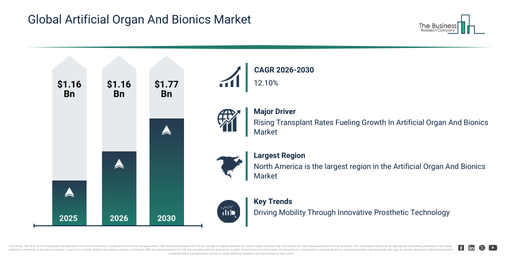
    Artificial Organ And Bionics Market Revenue Growth On Track For A 12.1% CAGR Through 2030

    The artificial organ and bionics market has demonstrated rapid expansion in recent years. Forecasts indicate it will expand from $35.86 billion in 2025 to $40.03 billion in 2026, exhibiting a compound annual growth rate (CAGR) of 11.6%. This historical growth can be linked to factors such as rising shortages of organ transplants, innovations in biomedical engineering, increased uptake of prosthetics, improved survival rates for patients with chronic diseases, and enhancements in surgical implantation techniques.

    The artificial organ and bionics market is projected for significant expansion over the coming years. Its valuation is anticipated to reach $63.1 billion in 2030, demonstrating a compound annual growth rate (CAGR) of 12.1%. This expansion during the forecast period stems from factors such as increasing capital expenditure in biohybrid organ research, a growing need for smart bionic systems, the broader application of brain-computer interfaces, an intensified focus on improving life quality, and the convergence of technologies in therapies for organ replacement. Noteworthy developments throughout this period include the accelerated creation of sophisticated artificial organs, an increase in the uptake of bionic limbs and exoskeletons, greater incorporation of neural interface technologies, the wider availability of implantable life-support devices, and a heightened emphasis on durable organ replacement solutions.

    Get A Free Sample Report With In-Depth Market Insights:

    https://thebusinessresearchcompany.com/sample_request?id=96409083&type=smp&name=Artificial%20Organ%20And%20Bionics%20Market%20Report%202026&utm_source=Blogs&utm_medium=Paid&utm_campaign=Sep_PR

    Artificial Organ And Bionics Market Expansion Drivers: What’s Shaping Future Growth?

    The future expansion of the artificial organ and bionics market is anticipated to be fueled by a rising volume of transplants. A transplant is defined as a surgical operation where body tissue or an organ is moved from a donor to a recipient, or within the same body, in either humans or animals. Artificial organs are devices surgically placed inside the body to substitute a damaged organ and replicate the specific functions of its natural counterpart, thereby enabling patients to resume a normal life. For example, data from January 2025, provided by the Organ Procurement and Transplantation Network, a US-based non-profit scientific and educational entity, showed that the US performed 48,149 organ transplants in 2024. This figure exceeded 48,000 and represented a 3.3% increase over 2023. Among these, 41,119 transplants originated from deceased donors, whereas 7,030 were from living donors. Consequently, this upward trend in transplant numbers is predicted to stimulate the expansion of the artificial organ and bionics market.

    Artificial Organ And Bionics Market Segmentation: How Does The Market Break Down By Category?

    The artificial organ and bionics market covered in this report is segmented –

    1) By Product: Artificial Organs, Artificial Bionics

    2) By Fixation Type: Implantable Artificial Organs and Bionics, Externally Worn Artificial Organs and Bionics, Hybrid Systems

    3) By Technology: Mechanical Bionics, Electronic Bionics

    Subsegments:

    1) By Artificial Organs: Artificial Heart, Artificial Kidney, Artificial Liver, Artificial Pancreas, Artificial Lungs

    2) By Artificial Bionics: Bionic Limbs, Bionic Eyes, Exoskeletons, Neural Prosthetics

    Artificial Organ And Bionics Market Strategic Trends: What Defines The Next Growth Phase?

    Key players in the artificial organs and bionics market are concentrating on cutting-edge technological advancements, such as microprocessor-controlled prosthetic knees, to boost mobility and foster natural, intuitive movement for individuals with lower-limb amputations. Microprocessor-controlled prosthetic knees are devices featuring sensors and embedded processors that dynamically adapt to the user’s gait. For instance, in January 2025, BionicM, a Japan-based startup and University of Tokyo spin-off specializing in robotics and prosthetics, introduced its Bio Leg into the U.S. market. This powered knee, recognized as a CES 2025 Best of Innovation winner, replaces lost muscle function with robotics, delivering fluid movement, enhanced safety, and an improved quality of life for amputees.

    Artificial Organ And Bionics Market Leading Companies And Competitive Benchmarking

    Major companies operating in the artificial organ and bionics market are Abiomed Inc., Asahi Kasei Medical Co. Ltd, Baxter, Berlin Heart GmbH, Cyberonics Inc., Ekso Bionics Holdings Inc., Getinge AB, Medtronic PLC, Bornlife Prosthetic and Orthotic Inc., Nano Retina Ltd, Edwards Lifesciences Corporation, Sonova, Cochlear Limited, Advanced Bionics AG, Ottobock SE & Co. KGaA, Second Sight Medical Products Inc., iWalk Inc., Jarvik Heart Inc., St. Jude Medical Inc., Harmonic Bionics Inc., Open Bionics, Beta Bionics Inc., Bionic Prosthetics and Orthotics, Mobius Bionics, Touch Bionics Ltd

    View The Full Artificial Organ And Bionics Market Report:

    https://thebusinessresearchcompany.com/report/artificial-organ-and-bionics-global-market-report?utm_source=Blogs&utm_medium=Paid&utm_campaign=Sep_PR

    Artificial Organ And Bionics Market Largest Region By Revenue And Market Share

    North America was the largest region in the artificial organ and bionics market in 2025. Asia-Pacific is expected to be the fastest-growing region in the global artificial organ and bionics market report during the forecast period. The regions covered in the artificial organ and bionics market report are Asia-Pacific, South East Asia, Western Europe, Eastern Europe, North America, South America, Middle East, Africa.

    Reach Out To Our Team:

    The Business Research Company: https://www.thebusinessresearchcompany.com/

    Americas: +1 310-496-7795

    Asia: +44 7882 955267 & +91 8897263534

    Europe: +44 7882 955267

    Email us at: marketing@tbrc.info

    Follow us on:

    LinkedIn: https://in.linkedin.com/company/the-business-research-company

    YouTube: https://www.youtube.com/channel/UC24_fI0rV8cR5DxlCpgmyFQ

    Global Market Model: https://www.thebusinessresearchcompany.com/global-market-model
  • Cardiac Marker Market Size In 2026: Growth Outlook And Forecast Through 2030

    Cardiac Marker Market Size In 2026: Growth Outlook And Forecast Through 2030

    Backed by market attractiveness analysis, total addressable market sizing, company benchmarking matrices, interactive Excel dashboards, wider supply chain intelligence, emerging startup coverage, and detailed product-level insights, The Business Research Company’s 2026 market reports are designed to offer research that is more actionable and strategically valuable than ever.

    Cardiac Marker Market Revenue Outlook: What CAGR Lies Ahead Through 2030?

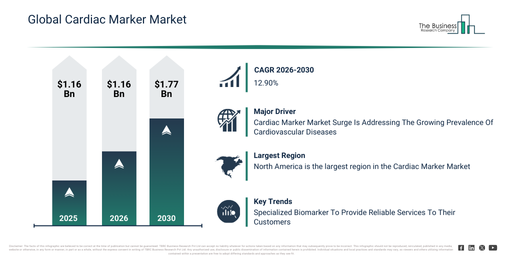
    The cardiac marker market has shown swift growth in recent years. It is anticipated to increase from $12.38 billion in 2025 to $13.95 billion in 2026, demonstrating a compound annual growth rate (CAGR) of 12.7%. This historical expansion can be attributed to several factors including the escalating prevalence of cardiovascular diseases, the development of hospital laboratory infrastructure, the increased demand for emergency cardiac testing, the growing reliance on biomarker-based diagnostics, and advancements in assay sensitivity.

    The cardiac marker market size is anticipated to undergo significant growth over the next few years. This market is set to reach $22.7 billion in 2030, exhibiting a compound annual growth rate (CAGR) of 12.9%. This projected growth is driven by several factors, including a greater need for quick diagnostic test results, the increasing incorporation of cardiac diagnostics with digital platforms, the spread of point-of-care testing sites, the wider use of sophisticated biomarker panels, and a heightened emphasis on precision cardiology. Key developments anticipated during this period involve the increasing application of high-specificity cardiac marker panels, the growing uptake of automated immunoassay systems, a surging need for swift cardiac diagnoses, the broadening of multiparametric testing methods, and an intensified focus on supporting clinical decision-making.

    Get A Free Sample Report With In-Depth Market Insights:

    https://thebusinessresearchcompany.com/sample_request?id=28911642&type=smp&name=Cardiac%20Marker%20Market%20Report%202026&utm_source=Blogs&utm_medium=Paid&utm_campaign=Sep_PR

    Cardiac Marker Market Demand Drivers Opening New Revenue Streams

    The increasing incidence of heart conditions is projected to drive expansion within the cardiac marker market in the foreseeable future. These heart-related ailments encompass various conditions impacting the heart’s structure or function, leading to diverse health issues. To diagnose and keep track of numerous cardiac problems such as heart attacks, angina, heart failure, and other cardiovascular disorders, cardiac markers are employed. Consequently, the need for diagnostic examinations using cardiac markers has grown. As an illustration, data from January 2024 released by the American Heart Association, a US-based non-profit group, indicated that the age-adjusted mortality rate from cardiovascular disease rose to 233.3 per 100,000 in 2024, marking a 4.0% increase from 224.4 per 100,000 in 2023. Hence, the expanding occurrence of cardiac illnesses is set to stimulate the growth of the cardiac marker market.

    Cardiac Marker Market Segment Outlook: Which Categories Are Growing Fastest?

    The cardiac marker market covered in this report is segmented –

    1) By Biomarker: Troponin, Creatine Kinase-MB (CK-MB), B-type Natriuretic Peptide (BNP), Myoglobin, Other Biomarkers

    2) By Product: Reagent, Instrument, Chemiluminescence, Immunofluorescence, Immunochromatography, ELISA

    3) By Indication: Myocardial Infarction, Congestive Heart Failure, Acute Coronary Syndrome, Other Indications

    4) By End User: Laboratory Testing Facilities, Hospital Labs, Reference Labs, Contract Testing Labs, Point-Of-Care Testing Facilities, Academic Institutions

    Subsegments:

    1) By Troponin: Troponin I, Troponin T, Troponin Diagnostic Kits

    2) By Creatine Kinase-MB (CK-MB): CK-MB Test Kits, CK-MB Diagnostic Panels

    3) By B-Type Natriuretic Peptide (BNP): BNP Test Kits, NT-ProBNP Test Kits, BNP Diagnostic Panels

    4) By Myoglobin: Myoglobin Test Kits, Myoglobin Diagnostic Panels

    5) By Other Biomarkers: Ischemia Modified Albumin (IMA), Heart Fatty Acid Binding Protein (HFABP), C-Reactive Protein (CRP)

    Cardiac Marker Market Trends Powering Strategic Industry Growth

    Leading companies in the cardiac marker market are concentrating on innovative offerings like high-sensitivity troponin I (hs-cTnI) and NT-proBNP cardiac biomarkers to boost their revenues. High-sensitivity troponin I (hs-cTnI) and NT-proBNP are two vital cardiac biomarkers employed for diagnosis, classification, and treatment. For example, in October 2023, Shenzhen Mindray Bio-Medical Electronics Co. Ltd., a China-based firm specializing in the creation, manufacturing, and distribution of medical equipment and solutions, introduced troponin I (hs-cTnI) and NT-proBNP cardiac biomarkers. The hs-cTn assay has exceeded the minimum criteria for hs-cTn regarding sensitivity, accuracy, and reliability in detecting myocardial damage. These new offerings are designed to support enhanced treatment for cardiovascular illnesses by providing trustworthy solutions that improve patient outcomes both within and outside the scope of cardiovascular diseases.

    Cardiac Marker Market Leading Players And Competitive Positioning

    Major companies operating in the cardiac marker market are Abbott Laboratories, F Hoffmann-La Roche AG, Siemens Healthineers AG, Danaher Corporation, Thermo Fisher Scientific Inc, bioMérieux SA, Bio-Rad Laboratories Inc, Beckman Coulter Inc, QuidelOrtho Corporation, Randox Laboratories Ltd, DiaSorin SpA, Tosoh Corporation, PerkinElmer Inc, Sysmex Corporation, Mindray Bio-Medical Electronics Co Ltd, Lepu Medical Technology Beijing Co Ltd, Trinity Biotech plc, Fujirebio Holdings Inc, Euroimmun AG, Abcam plc, Creative Diagnostics

    View The Full Cardiac Marker Market Report:

    https://thebusinessresearchcompany.com/report/cardiac-marker-global-market-report?utm_source=Blogs&utm_medium=Paid&utm_campaign=Sep_PR

    Cardiac Marker Market Regional Split: Which Areas Are Fueling Growth?

    North America was the largest region in the cardiac marker market in 2025. The regions covered in the cardiac marker market report are Asia-Pacific, South East Asia, Western Europe, Eastern Europe, North America, South America, Middle East, Africa.

    Reach Out To Our Team:

    The Business Research Company: https://www.thebusinessresearchcompany.com/

    Americas: +1 310-496-7795

    Asia: +44 7882 955267 & +91 8897263534

    Europe: +44 7882 955267

    Email us at: marketing@tbrc.info

    Follow us on:

    LinkedIn: https://in.linkedin.com/company/the-business-research-company

    YouTube: https://www.youtube.com/channel/UC24_fI0rV8cR5DxlCpgmyFQ

    Global Market Model: https://www.thebusinessresearchcompany.com/global-market-model