Category: Medical Equipment

  • Artificial Organ Market Trends Reshaping Industry Growth Through 2030

    Artificial Organ Market Trends Reshaping Industry Growth Through 2030

    Backed by market attractiveness analysis, total addressable market sizing, company benchmarking matrices, interactive Excel dashboards, wider supply chain intelligence, emerging startup coverage, and detailed product-level insights, The Business Research Company’s 2026 market reports are designed to offer research that is more actionable and strategically valuable than ever.

    Artificial Organ Market Value Growth And Long-Term Outlook

    The artificial organ market has experienced rapid expansion recently. This market is projected to expand from $25.73 billion in 2025 to $28.36 billion in 2026, demonstrating a compound annual growth rate (CAGR) of 10.2%. Historically, this growth has been driven by factors such as a rise in organ failure incidents, a scarcity of available donor organs, significant progress in biomedical engineering, the increasing adoption of dialysis and cardiac support treatments, and longer transplant waiting lists.

    The artificial organ market is projected to experience robust expansion over the coming years. The market is set to expand to $41.12 billion by 2030, achieving a compound annual growth rate (CAGR) of 9.7%. This anticipated growth is due to several factors, including heightened investments in bioengineered organs, increased uptake of personalized implant solutions, expanded funding for artificial organ research, advancements in regenerative medicine technology, and greater acceptance of long-term implantable devices. Key trends anticipated during this period encompass a rise in the adoption of implantable artificial organs, an increasing utilization of advanced biomaterials, the growing incorporation of smart and sensor-enabled organs, an expansion of minimally invasive implantation techniques, and a stronger emphasis on long-term biocompatibility.

    Get A Free Sample Report With In-Depth Market Insights:

    https://thebusinessresearchcompany.com/sample_request?id=30715341&type=smp&name=Artificial%20Organ%20Market%20Report%202026&utm_source=Blogs&utm_medium=Paid&utm_campaign=Sep_PR

    Artificial Organ Market Development Factors: What’s Supporting Demand?

    The growing need for organ transplants is anticipated to fuel the expansion of the artificial organ market in the future. Organ transplantation involves a surgical intervention where an organ or tissue from a donor is placed into a recipient to substitute an impaired or non-functioning organ. Artificial organ advancements aid organ transplants by offering provisional or permanent replacement organs, lessening reliance on donor availability, and enhancing patient survival rates. To illustrate this, a report from NHS Blood and Transplant, a UK government body, indicated in July 2025 that as of March 2025, an unprecedented 8,096 patients (comprising 276 children) were on the active transplant waiting list, with an additional 3,883 individuals temporarily paused. Consequently, the heightened demand for organ transplants is boosting the growth of the artificial organ market.

    Artificial Organ Market Segment Trends And Revenue Contributors

    The artificial organ market covered in this report is segmented –

    1) By Organ Type: Artificial Heart, Artificial Kidney, Artificial Liver, Artificial Pancreas

    2) By Material: Silicone, Plastic, Steel, Biomaterials

    3) By Fixation: Implantable, External

    4) By End Users: Hospitals, Ambulatory Surgical Centers, Other End Users

    Subsegments:

    1) By Artificial Heart: Total Artificial Heart, Ventricular Assist Devices (VADs)

    2) By Artificial Kidney: Hemodialysis Systems, Peritoneal Dialysis Devices

    3) By Artificial Liver: Bioartificial Liver Devices, Liver Support Systems

    4) By Artificial Pancreas: Closed-Loop Insulin Delivery Systems, Bionic Pancreas Systems

    Artificial Organ Market Transformation Trends: What Innovations Are Driving Change?

    Leading companies operating in the artificial organ market are concentrating on innovative products like AI-powered pathology solutions to increase their market revenues. AI-powered pathology solutions are transforming the field of pathology by offering pathologists powerful tools to enhance diagnostic accuracy, efficiency, and patient care. For example, in September 2023, Aiosyn, a Netherlands-based medical software company specializing in AI-powered pathology solutions, launched an AI kidney suite. This new suite aims to objectively quantify kidney lesion ratings to improve repeatability and accelerate medication discovery through the application of AI-powered computational pathology techniques. The new platform allows research organizations and biopharma to analyze kidney structures and quantify lesions that impact kidney health by utilizing cutting-edge deep-learning technology.

    Artificial Organ Market Industry Leaders And Competitive Landscape

    Major companies operating in the artificial organ market are Medtronic plc, Abbott Laboratories Inc., SynCardia Systems LLC, Berlin Heart GmbH, ABIOMED Inc., Carmat SA, Jarvik Heart Inc., Baxter International Inc., B. Braun Melsungen AG, Terumo Corporation, Organovo Holdings Inc., Satellite Bio, HeartWare plc, Boston Scientific Services Private Limited, Edwards Lifesciences India Pvt. Ltd., LIVANOVA plc, NeuroPace Inc., Cochlear Limited, Cyberonics Inc., Demant A/S, LifeNet Health Inc., Vivani Medical Inc., Tissium SAS

    View The Full Artificial Organ Market Report:

    https://thebusinessresearchcompany.com/report/artificial-organ-global-market-report?utm_source=Blogs&utm_medium=Paid&utm_campaign=Sep_PR

    Artificial Organ Market Regional Analysis And Leading Geography

    North America was the largest region in the artificial organ market in 2025. Asia-Pacific is expected to be the fastest-growing region in the forecast period. The regions covered in the artificial organ market report are Asia-Pacific, South East Asia, Western Europe, Eastern Europe, North America, South America, Middle East, Africa.

    Reach Out To Our Team:

    The Business Research Company: https://www.thebusinessresearchcompany.com/

    Americas: +1 310-496-7795

    Asia: +44 7882 955267 & +91 8897263534

    Europe: +44 7882 955267

    Email us at: marketing@tbrc.info

    Follow us on:

    LinkedIn: https://in.linkedin.com/company/the-business-research-company

    YouTube: https://www.youtube.com/channel/UC24_fI0rV8cR5DxlCpgmyFQ

    Global Market Model: https://www.thebusinessresearchcompany.com/global-market-model
  • Cardiac Biomarkers Market Trends Supporting 14.9% CAGR Growth Through 2030

    Cardiac Biomarkers Market Trends Supporting 14.9% CAGR Growth Through 2030

    Featuring market attractiveness scoring, total addressable market sizing, company benchmarking matrices, interactive Excel dashboards, deeper supply chain intelligence, emerging startup tracking, and granular product-level insights, The Business Research Company’s 2026 market reports are built to deliver research that is both more actionable and more strategically valuable.

    Cardiac Biomarkers Market Growth Analysis: How Will Revenue Trend Over The Forecast Period?

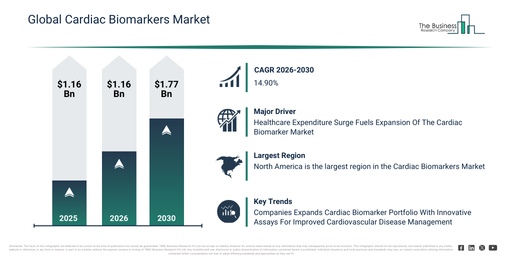
    The cardiac biomarkers market has observed substantial expansion in recent years. It is anticipated to grow from $21.19 billion in 2025 to $24.22 billion in 2026, exhibiting a compound annual growth rate (CAGR) of 14.3%. The market’s past growth can be attributed to factors such as a rise in cardiovascular disease incidence, the broadening of emergency cardiac care services, increased uptake of laboratory diagnostics, the expanding utilization of biomarker-based diagnoses, and enhancements in immunoassay technologies.

    The cardiac biomarkers market is anticipated to experience substantial growth in the coming years, with its size projected to reach $42.21 billion by 2030, exhibiting a compound annual growth rate (CAGR) of 14.9%. This expansion throughout the forecast period stems from factors such as the heightened need for rapid cardiac diagnostics, the increasing acceptance of decentralized testing models, the wider implementation of preventive cardiology screening, rising investments in advanced diagnostic platforms, and the greater integration of digital health analytics. Key trends expected during this period include the growing adoption of high-sensitivity troponin tests, the expanded utilization of point-of-care cardiac testing, an escalating demand for rapid diagnostic kits, the broadening of multiplex cardiac biomarker panels, and a reinforced emphasis on early cardiac risk identification.

    Get A Free Sample Report With In-Depth Market Insights:

    https://thebusinessresearchcompany.com/sample_request?id=86219033&type=smp&name=Cardiac%20Biomarkers%20Market%20Report%202026&utm_source=Blogs&utm_medium=Paid&utm_campaign=Sep_PR

    Cardiac Biomarkers Market Growth Backed By Core Demand Fundamentals

    Increasing healthcare spending is anticipated to fuel the expansion of the cardiac biomarker market in the future. Healthcare spending encompasses all expenses linked to delivering health services, family planning initiatives, nutritional support, and health-focused emergency assistance. The investment in cardiac biomarkers within healthcare aims to enhance early disease identification, offer tailored treatments, and optimize resource deployment, potentially leading to a decrease in the overall expenses connected to cardiovascular conditions. As an illustration, in May 2024, a report from the Office for National Statistics, a UK-based government department, indicated that overall healthcare expenditure saw a 5.6% nominal increase between 2022 and 2023, significantly higher than the mere 0.9% growth recorded in 2022. Consequently, the increase in healthcare spending is a key factor propelling the expansion of the cardiac biomarker market.

    Cardiac Biomarkers Market Segment Landscape: Which Areas Lead Development?

    The cardiac biomarkers market covered in this report is segmented –

    1) By Biomarker Type: Creatine Kinase (CK-Mb), Troponins, Myoglobin, Natriuretic Peptides (BNP And NT-proBNP), Ischemia Modified Albumin (IMA)

    2) By Location Of Testing: Point Of Care Testing, Laboratory Testing

    3) By Application: Myocardial Infarction, Congestive Heart Failure, Acute Coronary Syndrome (ACS), Atherosclerosis, Other Applications

    4) By End User: Hospitals, Specialty Clinics

    Subsegments:

    1) By Creatine Kinase (CK-Mb): CK-Mb Test Kits, CK-Mb Diagnostic Panels

    2) By Troponins: Troponin I Test Kits, Troponin T Test Kits, Troponin Diagnostic Panels

    3) By Myoglobin: Myoglobin Test Kits, Myoglobin Diagnostic Panels

    4) By Natriuretic Peptides (BNP And NT-proBNP): BNP Test Kits, NT-ProBNP Test Kits, Natriuretic Peptides Diagnostic Panels

    5) By Ischemia Modified Albumin (IMA): IMA Test Kits, IMA Diagnostic Panels

    Cardiac Biomarkers Market Growth Trends Reshaping The Competitive Landscape

    Leading firms within the cardiac biomarker markets are concentrating on creating novel assays to broaden their product offerings, thereby enhancing patient care and addressing gaps in medical requirements. These pioneering biomarker assays propel progress in cardiac diagnostics, boosting precision and extending diagnostic functionalities. A case in point is October 2023, when Shenzhen Mindray Bio-Medical Electronics Co., Ltd., a medical devices and solutions provider based in China, introduced two new cardiac biomarkers: high-sensitivity troponin I (hs-cTnI) and NT-proBNP. These additions strengthen Mindray’s extensive collection of cardiac biomarkers, utilized for detecting and treating cardiovascular diseases (CVDs).

    Cardiac Biomarkers Market Competitive Overview And Top Companies

    Major companies operating in the cardiac biomarkers market are F. Hoffmann-La Roche AG, Siemens Healthineers AG, Abbott Laboratories, Thermo Fisher Scientific Inc, Danaher Corporation, Bio-Rad Laboratories Inc, bioMérieux SA, QuidelOrtho Corporation, Randox Laboratories Ltd, Becton Dickinson and Company, Tosoh Corporation, PerkinElmer Inc, Grifols S.A., DiaSorin S.p.A., Sysmex Corporation, Lepu Medical Technology (Beijing) Co. Ltd, Mindray Bio-Medical Electronics Co. Ltd, Fujirebio Holdings Inc, Euroimmun AG, Beckman Coulter Inc, Trinity Biotech plc

    View The Full Cardiac Biomarkers Market Report:

    https://thebusinessresearchcompany.com/report/cardiac-biomarkers-global-market-report?utm_source=Blogs&utm_medium=Paid&utm_campaign=Sep_PR

    Cardiac Biomarkers Market Top Region: Where Does Most Revenue Come From?

    North America was the largest region in the cardiac biomarkers market in 2025. The regions covered in the cardiac biomarkers market report are Asia-Pacific, South East Asia, Western Europe, Eastern Europe, North America, South America, Middle East, Africa.

    Reach Out To Our Team:

    The Business Research Company: https://www.thebusinessresearchcompany.com/

    Americas: +1 310-496-7795

    Asia: +44 7882 955267 & +91 8897263534

    Europe: +44 7882 955267

    Email us at: marketing@tbrc.info

    Follow us on:

    LinkedIn: https://in.linkedin.com/company/the-business-research-company

    YouTube: https://www.youtube.com/channel/UC24_fI0rV8cR5DxlCpgmyFQ

    Global Market Model: https://www.thebusinessresearchcompany.com/global-market-model
  • Cardiac Assist Devices And Equipment Market Forecast Highlights A $3.76 Billion Opportunity For Industry Participants

    Cardiac Assist Devices And Equipment Market Forecast Highlights A $3.76 Billion Opportunity For Industry Participants

    Built to provide research that’s more actionable and strategically valuable, The Business Research Company’s 2026 market reports include market attractiveness analysis, total addressable market sizing, company benchmarking matrices, interactive Excel dashboards, broader supply chain intelligence, emerging startup tracking, and in-depth product insights.

    Cardiac Assist Devices And Equipment Market Forecast: What Value Will The Market Reach By 2030?

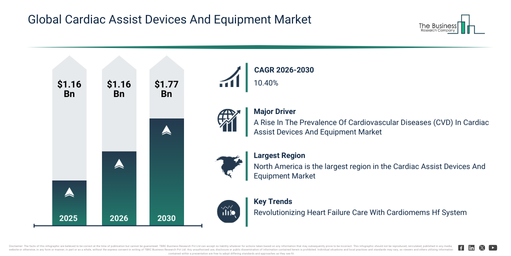
    The cardiac assist devices and equipment market size has experienced robust growth in recent years. This market is projected to expand from $2.35 billion in 2025 to $2.53 billion in 2026, at a compound annual growth rate (CAGR) of 7.9%. Historically, this expansion has been driven by factors such as the increasing prevalence of advanced heart failure, the broadening of cardiac surgery programs, greater adoption of mechanical circulatory support, advancements in implantable device design, and the growing availability of specialized cardiac care centers.

    The cardiac assist devices and equipment market is projected to experience swift expansion over the coming years. This market is anticipated to reach a valuation of $3.76 billion by 2030, demonstrating a compound annual growth rate (CAGR) of 10.4%. The drivers behind this projected growth include an escalating demand for destination therapy devices, a greater uptake of remote monitoring-enabled assist systems, an expansion in bridge-to-transplant applications, increased funding for next-generation cardiac devices, alongside developments in biocompatible materials and device miniaturization. Key trends anticipated during the forecast period encompass a growing acceptance of implantable assist devices, an increased utilization of minimally invasive cardiac support systems, greater incorporation of remote patient monitoring, an expansion into pediatric and specialized cardiac devices, and a heightened emphasis on the long-term reliability of these devices.

    Get A Free Sample Report With In-Depth Market Insights:

    https://thebusinessresearchcompany.com/sample_request?id=29756237&type=smp&name=Cardiac%20Assist%20Devices%20And%20Equipment%20Market%20Report%202026&utm_source=Blogs&utm_medium=Paid&utm_campaign=Sep_PR

    Cardiac Assist Devices And Equipment Market Growth Catalysts And Demand Drivers

    The growing occurrence of cardiovascular diseases (CVD) is boosting the demand for cardiac assist devices and equipment across both developed and developing economies. The heightened requirement for detecting, tracking, treating early, and preventing these critical illnesses further escalates the need for cardiac assist devices. For example, the American Heart Association, a US-based nonprofit organization, projects that by 2035, 45.1% of the US population is projected to have some form of CVD. In the same year, the total expenses related to CVD are anticipated to hit $1.1 trillion, comprising $748.7 billion in direct medical costs and an estimated $368 billion in indirect costs. Consequently, the increased incidence of cardiovascular diseases is a key factor propelling the expansion of the cardiac assist devices and equipment market.

    Cardiac Assist Devices And Equipment Market Segments: Where Is Growth Concentrated?

    The cardiac assist devices and equipment market covered in this report is segmented –

    1) By Type: Ventricular Assist Devices (LVAD), Intra-Aotic Baloon Pumps, Total Artificial Heart

    2) By Modality: Transcutaneous, Implantable

    3) By Application: Hospitals And Cardiac Care Centers, Ambulatory Surgical Centres, Emergency Services

    Subsegments:

    1) By Ventricular Assist Devices (LVAD): Implantable LVADs, Externally Powered LVADs, Pediatric LVADs, Other LVADs

    2) By Intra-Aortic Balloon Pumps: Disposable Intra-Aortic Balloon Pumps, Reusable Intra-Aortic Balloon Pumps

    3) By Total Artificial Heart: Pneumatically Powered Total Artificial Heart, Electrically Powered Total Artificial Heart, Other Total Artificial Heart Types

    Cardiac Assist Devices And Equipment Market Trends Shaping Long-Term Demand

    Leading companies in the cardiac assist devices and equipment market are prioritizing the creation of miniaturized interventional ventricular assist devices (VADs), such as foldable percutaneous VAD systems, to provide less-invasive circulatory support for patients undergoing high-risk percutaneous coronary interventions and experiencing acute cardiogenic shock. A foldable percutaneous VAD system is a mechanical circulatory-support device delivered via catheter, engineered for insertion through a small arterial sheath, thereby reducing vascular access size. Its design allows for rapid left-ventricular unloading at clinically meaningful flow rates and results in lower procedural trauma compared to larger surgical pumps. For example, in September 2023, magAssist, a China-based developer of circulatory-support devices, unveiled the NyokAssist interventional ventricular assist device, which has received U.S. FDA Breakthrough Device designation and completed its first-in-human use. This device is a small-bore (˜9 Fr) foldable catheter pump featuring an external motor to reduce hemolysis risk, designed for easy delivery across the aortic arch, and achieved an average flow of >3 L/min during reported first-in-human high-risk PCI support.

    Cardiac Assist Devices And Equipment Market Competitive Landscape: Which Companies Lead The Industry?

    Major companies operating in the cardiac assist devices and equipment market are Abbott Laboratories, Berlin Heart GmbH, Abiomed Inc., Bivacor Pvt. Ltd., Calon Cardio-Technology Ltd., Cardiobridge GmbH, Cardiac Assist Inc., Braile Biomedica Ltd., Circulite Inc., Evaheart Inc., FineHeart Sarl, Getinge AB, Jarvik Heart Inc., Medtronic plc, OregonHeart, MitiHeart Corporation, Procyrion Inc., Scandinavian Real Heart AB, Syncardia Systems LLC, HeartWare International Inc., Cardiac Power Innovations, Cardionomic Inc., Carmat SA, CorWave SA, Leviticus Cardio Ltd., LivaNova PLC, MicroMed Cardiovascular Inc., Novacor SA, Thoratec Corporation, Ventracor Limited

    View The Full Cardiac Assist Devices And Equipment Market Report:

    https://thebusinessresearchcompany.com/report/cardiac-assist-devices-and-equipment-global-market-report?utm_source=Blogs&utm_medium=Paid&utm_campaign=Sep_PR

    Cardiac Assist Devices And Equipment Market Regional Breakdown: Where Is Demand Concentrated?

    North America was the largest region in global cardiac assist devices and equipment market in 2025. Western Europe was the second-largest region in cardiac assist devices and equipment market. The regions covered in the cardiac assist devices and equipment market report are Asia-Pacific, South East Asia, Western Europe, Eastern Europe, North America, South America, Middle East, Africa.

    Reach Out To Our Team:

    The Business Research Company: https://www.thebusinessresearchcompany.com/

    Americas: +1 310-496-7795

    Asia: +44 7882 955267 & +91 8897263534

    Europe: +44 7882 955267

    Email us at: marketing@tbrc.info

    Follow us on:

    LinkedIn: https://in.linkedin.com/company/the-business-research-company

    YouTube: https://www.youtube.com/channel/UC24_fI0rV8cR5DxlCpgmyFQ

    Global Market Model: https://www.thebusinessresearchcompany.com/global-market-model
  • Artificial Lung Market Growth To $4.27 Billion Creates New Opportunities Across The Industry

    Artificial Lung Market Growth To $4.27 Billion Creates New Opportunities Across The Industry

    Featuring market attractiveness scoring, total addressable market sizing, company benchmarking matrices, interactive Excel dashboards, deeper supply chain intelligence, emerging startup tracking, and granular product-level insights, The Business Research Company’s 2026 market reports are built to deliver research that is both more actionable and more strategically valuable.

    Artificial Lung Market Poised To Hit $4.27 Billion By 2030 With A 10.4% CAGR

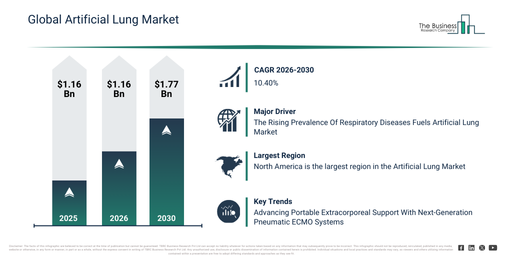
    The artificial lung market has seen substantial growth in recent times. Its valuation is expected to climb from $2.58 billion in 2025 to $2.88 billion in 2026, achieving a compound annual growth rate (CAGR) of 11.6%. This historical expansion can be attributed to several factors, including an increase in acute respiratory failure cases, the early incorporation of heart-lung machines in cardiothoracic operations, a rise in organ transplant procedure volumes, the evolution of membrane artificial lung technology, and the expanding application of extracorporeal life support systems.

    The artificial lung market size is expected to experience substantial growth in the next few years. It is projected to reach $4.27 billion in 2030, achieving a compound annual growth rate (CAGR) of 10.4%. The anticipated expansion during the forecast period can be attributed to an increasing need for critical care life-support devices, a growing emphasis on portable and compact artificial lung systems, rising investment in advanced oxygenation membrane materials, the expansion of applications within emergency and trauma care, and the increasing adoption of minimally invasive extracorporeal support solutions. Key trends during this period include a surging demand for artificial lung systems in cases of severe respiratory failure and critical care management, the rising utilization of extracorporeal support devices in intricate cardiac and lung transplant surgeries, a growing inclination towards minimally invasive and temporary lung support options as alternatives to transplantation, the increasing development of portable and transport-compatible artificial lung units for emergency care settings, and the expanding deployment of membrane-based artificial lung technologies for efficient gas exchange and long-term support.

    Get A Free Sample Report With In-Depth Market Insights:

    https://thebusinessresearchcompany.com/sample_request?id=26165209&type=smp&name=Artificial%20Lung%20Market%20Report%202026&utm_source=Blogs&utm_medium=Paid&utm_campaign=Sep_PR

    Artificial Lung Market Industry Drivers: What’s Behind The Revenue Growth?

    The artificial lung market is expected to expand in the future due to the increasing incidence of respiratory ailments. The rise in respiratory diseases is attributed to a combination of factors, including growing air pollution, climate change, and evolving lifestyle habits, all of which contribute significantly to public health concerns. Artificial lungs are utilized in these conditions to provide oxygenation and remove carbon dioxide from the blood, either supporting or replacing compromised lung function. For example, in June 2024, data from the Australian Institute of Health and Welfare, an Australia-based health and welfare agency, estimated that approximately 8.5 million people in Australia, or 34% of the population, had chronic respiratory conditions. This included an estimated 2.8 million people, or 11% of the population, living with asthma, and 638,000 people, or 2.5% of the population, living with chronic obstructive pulmonary disease (COPD). Thus, the growing prevalence of respiratory diseases is driving the expansion of the artificial lung market.

    Artificial Lung Market Segment Analysis Spotlighting Growth Areas

    The artificial lung market covered in this report is segmented –

    1) By Product Type: Single Roller Pump Heart Lung Machines, Double Roller Pump Heart Lungs Machines, Bubble Artificial Lung, Membrane Artificial Lung

    2) By Application: Cardiac Surgery, Lung Transplant Operation, Acute Respiratory Failure Treatment, Other Applications

    3) By End-Users: Hospital, Emergency Center, Other End-users

    Subsegments:

    1) By Single Roller Pump Heart Lung Machines: Portable Single Roller Pump Heart Lung Machines, Stationary Single Roller Pump Heart Lung Machines

    2) By Double Roller Pump Heart Lung Machines: Portable Double Roller Pump Heart Lung Machines, Stationary Double Roller Pump Heart Lung Machines

    3) By Bubble Artificial Lung: Disposable Bubble Artificial Lung, Reusable Bubble Artificial Lung

    4) By Membrane Artificial Lung: Oxygenator Membrane Artificial Lung, Carbon Dioxide Removal Membrane Artificial Lung

    #Artificial Lung Market Growth Trends: What’s Shaping The Future Outlook?

    Leading companies within the artificial lung market are concentrating on developing innovative solutions, such as truly portable pneumatic ECMO systems, to broaden extracorporeal life support beyond the ICU and facilitate quick transport and deployment in the field. A pneumatic portable ECMO system operates using oxygen-supply-driven pneumatic pumps and integrated gas management to deliver extracorporeal oxygenation and circulatory assistance, without relying on external electric power or heavy motorized components. For instance, in May 2024, Hemovent GmbH, a Germany-based medical device company, reported that MOBYBOX, the world’s first integrated portable pneumatic ECMO system, had finished its initial commercial applications in Europe; MOBYBOX weighs about 2.5 kg, is powered solely by the oxygen supply, allowing it to function without a battery or motor, incorporates Bionique Flow Technology for softer blood handling and better gas exchange, and has obtained Medical Device Regulation certification for its introductory markets.

    Artificial Lung Market Key Participants And Competitive Landscape

    Major companies operating in the artificial lung market are Getinge AB, Medtronic plc, LivaNova PLC, Terumo Corporation, Fresenius Medical Care AG & Co KGaA, ALung Technologies Inc, Xenios AG, Eurosets S.r.l, Nipro Corporation, Braile Biomédica, Hemovent GmbH, MC3 Cardiopulmonary Inc, Abbott Laboratories, Spectrum Medical Ltd, B Braun Melsungen AG, SB‑Kawasumi Laboratories Inc, Senko Medical Instrument Mfg Co Ltd, CARMAT, Technowood International Pte Ltd, Elite Lifecare, Cytosorbents Corporation

    View The Full Artificial Lung Market Report:

    https://thebusinessresearchcompany.com/report/artificial-lung-global-market-report?utm_source=Blogs&utm_medium=Paid&utm_campaign=Sep_PR

    Artificial Lung Market Geographic Analysis: Where Is Demand Accelerating Fastest?

    North America was the largest region in the artificial lung market in 2025. The regions covered in the artificial lung market report are Asia-Pacific, South East Asia, Western Europe, Eastern Europe, North America, South America, Middle East, Africa.

    Reach Out To Our Team:

    The Business Research Company: https://www.thebusinessresearchcompany.com/

    Americas: +1 310-496-7795

    Asia: +44 7882 955267 & +91 8897263534

    Europe: +44 7882 955267

    Email us at: marketing@tbrc.info

    Follow us on:

    LinkedIn: https://in.linkedin.com/company/the-business-research-company

    YouTube: https://www.youtube.com/channel/UC24_fI0rV8cR5DxlCpgmyFQ

    Global Market Model: https://www.thebusinessresearchcompany.com/global-market-model
  • Cardiac Arrhythmia Monitoring Devices Market Analysis: How The Industry Is Evolving Toward A $13.16 Billion Future

    Cardiac Arrhythmia Monitoring Devices Market Analysis: How The Industry Is Evolving Toward A $13.16 Billion Future

    Backed by market attractiveness analysis, total addressable market sizing, company benchmarking matrices, interactive Excel dashboards, wider supply chain intelligence, emerging startup coverage, and detailed product-level insights, The Business Research Company’s 2026 market reports are designed to offer research that is more actionable and strategically valuable than ever.

    Cardiac Arrhythmia Monitoring Devices Market Size Outlook: How Quickly Will Revenue Expand Through 2030?

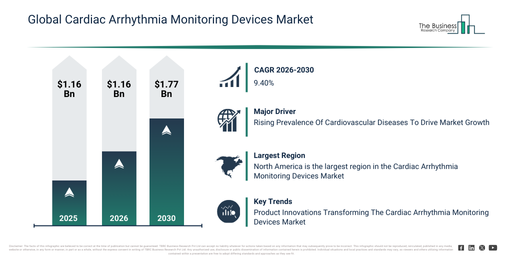
    The cardiac arrhythmia monitoring devices market has experienced robust growth in recent years. It is projected to expand from $8.37 billion in 2025 to $9.19 billion in 2026, demonstrating a compound annual growth rate (CAGR) of 9.7%. This expansion observed in previous periods is attributable to factors like the increasing prevalence of cardiac arrhythmias, the wider application of ambulatory monitoring, advancements in ECG sensor technologies, rising awareness regarding early cardiac diagnosis, and the greater adoption of telecardiology services.

    The cardiac arrhythmia monitoring devices market size is set for robust growth in the upcoming years. It is forecast to expand to $13.16 billion in 2030, achieving a compound annual growth rate (CAGR) of 9.4%. This projected growth over the forecast period is driven by factors such as an escalating demand for remote patient monitoring, increasing investments in digital health platforms, the broadening of AI-enabled arrhythmia detection capabilities, a rising preference for homecare diagnostics, and the expanding integration with mobile health ecosystems. Significant trends anticipated during this period include the increased adoption of wearable cardiac monitoring devices, a rise in the use of remote and home-based monitoring solutions, the growing integration of real-time data analytics, the expansion of implantable monitoring technologies, and an enhanced focus on continuous long-term monitoring.

    Get A Free Sample Report With In-Depth Market Insights:

    https://thebusinessresearchcompany.com/sample_request?id=79377815&type=smp&name=Cardiac%20Arrhythmia%20Monitoring%20Devices%20Market%20Report%202026&utm_source=Blogs&utm_medium=Paid&utm_campaign=Sep_PR

    Cardiac Arrhythmia Monitoring Devices Market Opportunity Drivers: What’s Unlocking New Revenue Potential?

    The increasing incidence of cardiovascular ailments is anticipated to drive the expansion of the cardiac arrhythmia monitoring devices market in the future. These diseases encompass various conditions impacting the heart and its blood vessels, including but not limited to atherosclerosis, angina, heart attacks, and aortic disease. Within the context of cardiovascular diseases, cardiac arrhythmia monitoring devices facilitate event monitoring by tracking the electrical activity of a patient’s heart rhythm and beats (ECG) and by identifying or assessing the likelihood of irregular heartbeats (arrhythmias). A relevant example is from April 2023, where HMP Global, a US-based multi-accredited patient-centered education company, projected that peripheral arterial disease in the US is expected to affect 23.8 million people by 2030, an increase from 21.0 million in 2020. Consequently, the rising occurrence of cardiovascular diseases is fueling the expansion of the cardiac arrhythmia monitoring devices market.

    Cardiac Arrhythmia Monitoring Devices Market Segment Analysis: What Are The Core Market Categories?

    The cardiac arrhythmia monitoring devices market covered in this report is segmented –

    1) By Type: Standards in Ambulatory Cardiac Monitoring, Patient- and Event-activated Intermittent Recorders, External Loop Recorder, Continuous Real-time Attended Remote Cardiac Monitors, Mobile Cardiac Outpatient Telemetry System

    2) By Device: Holter Monitor, Event Recorder, Mobile Cardiac Telemetry, Implantable Cardiac Monitor, Electrocardiogram (ECG) Monitor, Other Devices

    3) By Application: Tachycardia, Bradycardia, Premature Contraction, Other Applications

    4) By End-use: Hospitals and Clinics, Diagnostic Centers, Ambulatory Surgical Centers, Homecare Settings, Other End-uses

    Subsegments:

    1) By Standards In Ambulatory Cardiac Monitoring: Holter Monitors, Mobile Cardiac Telemetry (MCT), Event Monitors

    2) By Patient- And Event-Activated Intermittent Recorders: Handheld Recorders, Wearable Event Monitors

    3) By External Loop Recorder: Pre-Symptom Memory Loop Cardiac Event Recorder, Post-Symptom Event Recorder

    4) By Continuous Real-Time Attended Remote Cardiac Monitors: Hospital-Based Monitors, Home-Based Monitors

    5) By Mobile Cardiac Outpatient Telemetry System: Wireless Telemetry Systems, Real-Time Data Transmission Devices

    Cardiac Arrhythmia Monitoring Devices Market Innovation Trends Shaping Future Development

    Leading enterprises within the cardiac arrhythmia monitoring devices market are actively developing novel insertable cardiac monitoring systems to maintain their competitive edge. These systems are compact, implantable devices that continuously track and log the heart’s electrical activity, furnishing long-term diagnostic information for detecting cardiac arrhythmias and other cardiovascular ailments. As an illustration, in October 2023, Boston Scientific Corporation, a US-based medical equipment manufacturing company, introduced the LUX-Dx II+ Insertable Cardiac Monitor System, engineered for the extended monitoring of arrhythmias. This system features dual-stage algorithms for identifying and confirming potential arrhythmias before clinicians are alerted, alongside remote programming functionalities and programmable algorithms to pinpoint various cardiac conditions. The device delivers improved diagnostic capabilities, specifically designed to eliminate false positives and irrelevant events. Furthermore, patients can utilize a downloadable application for straightforward remote monitoring.

    Cardiac Arrhythmia Monitoring Devices Market Competitive Landscape: Who Leads The Industry?

    Major companies operating in the cardiac arrhythmia monitoring devices market are AliveCor Inc., Biotronik SE & Co. KG, General Electric Company, iRhythm Technologies Inc., Koninklijke Philips N.V., Medtronic PLC, Nihon Kohden Corporation, Abbott Laboratories, Hill-Rom Holdings Inc., Applied Cardiac System Diagnostics Inc., Biotricity Inc., Boston Scientific Corporation, Medicalgorithmics S.A., Siemens AG, Fukuda Denshi Co. Ltd., NUUBO SMART SOLUTIONS S.L., Cardiac Insight Inc., CardioComm Solutions Inc., MicroPort Scientific Corporation, Osypka AG, Spacelabs Healthcare

    View The Full Cardiac Arrhythmia Monitoring Devices Market Report:

    https://thebusinessresearchcompany.com/report/cardiac-arrhythmia-monitoring-devices-global-market-report?utm_source=Blogs&utm_medium=Paid&utm_campaign=Sep_PR

    Cardiac Arrhythmia Monitoring Devices Market Geographic Landscape: Which Region Dominates Industry Growth?

    North America was the largest region in the cardiac arrhythmia monitoring devices market in 2025. Asia-Pacific is expected to be the fastest-growing region in the cardiac arrhythmia monitoring devices market report during the forecast period. The regions covered in the cardiac arrhythmia monitoring devices market report are Asia-Pacific, South East Asia, Western Europe, Eastern Europe, North America, South America, Middle East, Africa.

    Reach Out To Our Team:

    The Business Research Company: https://www.thebusinessresearchcompany.com/

    Americas: +1 310-496-7795

    Asia: +44 7882 955267 & +91 8897263534

    Europe: +44 7882 955267

    Email us at: marketing@tbrc.info

    Follow us on:

    LinkedIn: https://in.linkedin.com/company/the-business-research-company

    YouTube: https://www.youtube.com/channel/UC24_fI0rV8cR5DxlCpgmyFQ

    Global Market Model: https://www.thebusinessresearchcompany.com/global-market-model
  • Artificial Limbs Market Forecast: Breaking Down The Numbers Behind Future Expansion

    Artificial Limbs Market Forecast: Breaking Down The Numbers Behind Future Expansion

    Built to provide research that’s more actionable and strategically valuable, The Business Research Company’s 2026 market reports include market attractiveness analysis, total addressable market sizing, company benchmarking matrices, interactive Excel dashboards, broader supply chain intelligence, emerging startup tracking, and in-depth product insights.

    Artificial Limbs Market Size And Revenue Outlook Through 2030

    The artificial limbs market has experienced significant expansion in recent years. It is forecast to increase from $2.7 billion in 2025 to $2.88 billion in 2026, demonstrating a compound annual growth rate (CAGR) of 6.9%. This historical growth can be linked to factors such as the limited availability of advanced prosthetic technologies, a reliance on conventional body-powered prosthetics, an increasing number of amputation cases due to accidents and diseases, a scarcity of skilled prosthetists, and rising awareness about rehabilitation services.

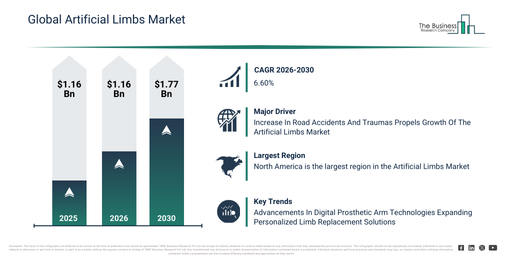
    The artificial limbs market is projected to experience substantial expansion in the coming years, reaching $3.73 billion by 2030, driven by a compound annual growth rate (CAGR) of 6.6%. This anticipated growth is largely due to advancements such as technological innovations in myoelectric and bionic limbs, increased investment in prosthetic research and development, the incorporation of AI and robotics into prosthetic devices, the broadening reach of prosthetic and rehabilitation clinics, and stronger partnerships between manufacturers and healthcare providers. Key developments shaping this period include a greater embrace of myoelectric and electrically powered prosthetics, enhanced customization and personalization of prosthetic limbs, the expansion of rehabilitation and prosthetic facilities, innovations in lightweight and durable materials, and an increasing demand for both cosmetic and functional prosthetics.

    Get A Free Sample Report With In-Depth Market Insights:

    https://thebusinessresearchcompany.com/sample_request?id=33213929&type=smp&name=Artificial%20Limbs%20Market%20Report%202026&utm_source=Blogs&utm_medium=Paid&utm_campaign=Sep_PR

    Artificial Limbs Market Growth Factors: What’s Supporting Expansion?

    The artificial limbs market is anticipated to expand due to the rising incidence of road accidents and traumas. These incidents encompass injuries and fatalities resulting from vehicular collisions and other road events, affecting both motorists and pedestrians. The increase in such occurrences is attributable to factors like distracted driving, excessive speed, subpar road conditions, and insufficient safety provisions. For those affected by road accidents and traumas, artificial limbs offer substantial advantages by reinstating movement and function, thereby enhancing their overall quality of life. Depending on the lost limb, prosthetics enable individuals to recover capacities such as walking, running, or manual dexterity. As an illustration, in September 2025, the Brake, a UK-based Road Safety Charity, reported that during 2024, 1,671 individuals perished on UK roads, and an additional 28,804 sustained severe, life-altering injuries. Consequently, the growing number of road accidents and traumas is serving as a catalyst for the expansion of the artificial limbs market.

    Artificial Limbs Market Segment Performance And Emerging Opportunities

    The artificial limbs market covered in this report is segmented –

    1) By Product: Upper Extremity, Lower Extremity, Liners, Sockets, Other Products

    2) By Material: Titanium, Plastics, Other Materials

    3) By Technology: Body Powered Or Cable Powered, Cosmetic Prosthetics, Myoelectric Or Electrically Powered, Other Technologies

    4) By End User: Hospitals, Orthopedic Clinics, Ambulatory Surgical Centers, Rehabilitation Centers, Prosthetic Clinics

    Subsegments:

    1) By Upper Extremity: Prosthetic Arms, Prosthetic Hands, Elbow Joints, Wrist Joints

    2) By Lower Extremity: Prosthetic Legs, Prosthetic Feet, Knee Joints, Ankle Joints

    3) By Liners: Silicone Liners, Gel Liners, Thermoplastic Liners

    4) By Sockets: Hard Sockets, Soft Sockets, Adjustable Sockets

    5) By Other Products: Accessories, Maintenance Kits, Customization Tools

    Artificial Limbs Market Industry Trends: What’s Reshaping Demand?

    Leading companies within the artificial limbs market are concentrating on developing advanced products, such as digital prosthetic arms, to enhance accessibility and personalization in limb replacement options. A digital prosthetic arm is a bespoke assistive device manufactured using digital technologies like 3D scanning, modeling, and printing, designed to replicate and substitute the function of a lost limb. For example, in October 2025, Motorica, a Russia-based specialist in advanced prosthetic solutions and medical cybernetics, launched its Digital Prosthetics Program in India. This initiative employs 3D imaging, computer-aided design (CAD), and precision 3D printing to create highly individualized mechanical prosthetic arms. By digitally modeling the user’s limb, the program eliminates the necessity for physical molds, considerably accelerating production and delivery. This technique improves comfort, fit, and functionality while broadening access to high-quality prosthetics in underserved areas.

    Artificial Limbs Market Top Companies Driving Competitive Growth

    Major companies operating in the artificial limbs market are Cadence Inc., Nabtesco Corporation, Otto Bock HealthCare GmbH, DJO Global Inc., Össur hf, Hanger Inc., Blatchford Group, Trulife Ltd., Steeper Group Ltd., Fillauer LLC, Orthomerica Products Inc., Cascade Orthopedic Supply LP, The Ohio Willow Wood Company, Spinal Technology Inc., College Park Industries Inc., Comprehensive Prosthetics & Orthotics USA, ALPS South LLC, Touch Bionics Inc., Streifeneder USA Inc., Ekso Bionics Holdings Inc., Freedom Innovations LLC, Proteor USA LLC, United Prosthetics Inc., Liberating Technologies Inc., Naked Prosthetics Inc., Kinetec USA Inc., Endolite North America Inc., Medicare Inc.

    View The Full Artificial Limbs Market Report:

    https://thebusinessresearchcompany.com/report/artificial-limbs-global-market-report?utm_source=Blogs&utm_medium=Paid&utm_campaign=Sep_PR

    Artificial Limbs Market Global Footprint: Which Region Leads The Industry?

    North America was the largest region in the artificial limbs market in 2025. Asia-Pacific is expected to be the fastest-growing region in the forecast period. The regions covered in the artificial limbs market report are Asia-Pacific, South East Asia, Western Europe, Eastern Europe, North America, South America, Middle East, Africa.

    Reach Out To Our Team:

    The Business Research Company: https://www.thebusinessresearchcompany.com/

    Americas: +1 310-496-7795

    Asia: +44 7882 955267 & +91 8897263534

    Europe: +44 7882 955267

    Email us at: marketing@tbrc.info

    Follow us on:

    LinkedIn: https://in.linkedin.com/company/the-business-research-company

    YouTube: https://www.youtube.com/channel/UC24_fI0rV8cR5DxlCpgmyFQ

    Global Market Model: https://www.thebusinessresearchcompany.com/global-market-model
  • Cardiac Ablation Market Outlook Through 2030: Understanding The Growth Opportunity

    Cardiac Ablation Market Outlook Through 2030: Understanding The Growth Opportunity

    Featuring market attractiveness scoring, total addressable market sizing, company benchmarking matrices, interactive Excel dashboards, deeper supply chain intelligence, emerging startup tracking, and granular product-level insights, The Business Research Company’s 2026 market reports are built to deliver research that is both more actionable and more strategically valuable.

    Cardiac Ablation Market Size, Value And Growth Trajectory Through 2030

    The cardiac ablation market has experienced rapid growth in recent years. It is anticipated to expand from $4.9 billion in 2025 to $5.58 billion in 2026, achieving a compound annual growth rate (CAGR) of 13.9%. The historical growth can be attributed to factors like the limited availability of advanced ablation catheters, a reliance on conventional RF ablation, the increasing prevalence of cardiac arrhythmias, a rise in hospital-based cardiac procedures, and limited awareness of minimally invasive options.

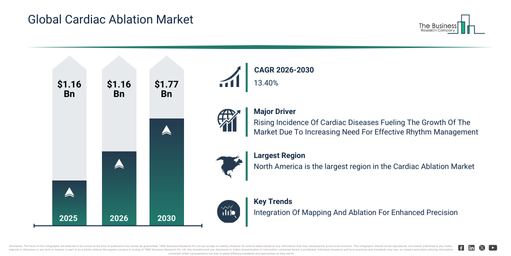
    The cardiac ablation market size is projected to experience substantial growth over the coming years, anticipated to reach $9.24 billion by 2030, exhibiting a compound annual growth rate (CAGR) of 13.4%. This expansion during the forecast period is attributable to several factors, including technological progress in robotic-assisted and hybrid ablation techniques, the increasing embrace of cryoablation and pulsed field ablation systems, a rise in cardiac centers and ambulatory surgical facilities, the growing elderly population facing arrhythmia risks, and the expansion of training initiatives for cardiac specialists. Key trends expected during the forecast period involve a greater uptake of minimally invasive cardiac procedures, increasing demand for robotic-assisted ablation devices, an expansion in treatments for atrial fibrillation and tachycardia, the spread of hybrid and advanced ablation technologies, and an intensified focus on patient safety and the efficiency of procedures.

    Get A Free Sample Report With In-Depth Market Insights:

    https://thebusinessresearchcompany.com/sample_request?id=83866412&type=smp&name=Cardiac%20Ablation%20Market%20Report%202026&utm_source=Blogs&utm_medium=Paid&utm_campaign=Sep_PR

    Cardiac Ablation Market Growth Momentum: What Factors Are Shaping Demand?

    The escalating occurrence of cardiac diseases is anticipated to propel the expansion of the cardiac ablation market moving forward. Cardiac diseases involve a spectrum of conditions affecting the heart’s architecture and function, including coronary artery disease, heart failure, and arrhythmias. This rise in cardiac disease incidence is attributed to sedentary lifestyles, which contribute to obesity, hypertension, and overall poor cardiovascular health. Cardiac ablation contributes to cardiac disease management by precisely locating and eliminating faulty electrical pathways within the heart. It improves patient outcomes by re-establishing a normal rhythm, mitigating symptoms such as palpitations and fatigue, and reducing the dependence on long-term medication. For instance, in October 2023, according to the World Economic Forum, a Switzerland-based non-profit organization, by 2050, the number of stroke deaths could rise by 50%. Thus, the increasing incidence of cardiac diseases is a key driver for the growth of the cardiac ablation market.

    Cardiac Ablation Market Segment Breakdown: Which Categories Lead On Revenue?

    The cardiac ablation market covered in this report is segmented –

    1) By Product Type: Radiofrequency (RF) Ablators, Electrical Ablators, Cryoablation Devices, Ultrasound Ablators, Other Product Types

    2) By Technology: Conventional Technology, Advanced Technology, Hybrid Technology, Robotic-Assisted Technology

    3) By Application: Atrial Fibrillation And Flutter, Tachycardia, Other Applications

    4) By End User: Hospitals, Ambulatory Surgical Centers, Cardiac Centers, Other End Users

    Subsegments:

    1) By Radiofrequency (RF) Ablators: Conventional RF Ablation Catheters, Irrigated-Tip RF Ablation Catheters, Temperature-Controlled RF Ablation Systems

    2) By Electrical Ablators: Direct Current (DC) Ablators, Pulsed Field Ablation (PFA) Systems

    3) By Cryoablation Devices: Cryoballoons, Cryoablation Catheters, Cryosurgical Units

    4) By Ultrasound Ablators: High-Intensity Focused Ultrasound (HIFU) Devices, Intracardiac Echocardiography (ICE)-Guided Ablators

    5) By Other Product Types: Microwave Ablation Systems, Laser Ablation Systems, Hybrid Ablation Devices

    Cardiac Ablation Market Trends Redefining Industry Growth

    Leading companies within the cardiac ablation market are dedicated to developing inventive solutions, including next-generation pulsed-field ablation (PFA) systems with integrated mapping, to address the increasing need for safer, more efficient, and anatomically precise treatments for atrial fibrillation and other arrhythmias. Pulsed-field ablation functions as a non-thermal ablation technology, utilizing ultra-short, high-voltage electrical pulses to induce electroporation in cardiac myocardial cells. This process selectively destroys arrhythmogenic tissue while minimizing collateral damage to adjacent structures like the esophagus, phrenic nerve, or pulmonary veins, contrasting with traditional thermal ablation methods such as radiofrequency (RF) or cryoablation, which rely on heat or freezing and carry greater risks of off-target injury. For example, in October 2024, Abbott Laboratories, a US-based medical device company, introduced its Advisor HD Grid X Mapping Catheter, Sensor Enabled, after receiving FDA clearance to support both PFA and RF ablation cases through advanced high-density mapping. This catheter incorporates a grid design with multiple small, closely spaced electrodes to provide high-resolution electrical mapping of cardiac anatomy, facilitating precise localization of target tissue and improved guidance during ablation, which is particularly valuable in complex PFA workflows where accurate mapping enhances the safety and efficacy of lesion creation.

    Cardiac Ablation Market Company Landscape And Competitive Strategy

    Major companies operating in the cardiac ablation market are Johnson & Johnson, Abbott Laboratories, Medtronic plc, GE HealthCare, Boston Scientific Corporation, Olympus Corporation, CathRx Ltd., Teleflex Incorporated, CONMED Corporation, Lepu Medical Technology Beijing Co. Ltd., MicroPort Scientific Corporation, AtriCure Inc., Japan Lifeline Co. Ltd., AngioDynamics Inc., Biotronik SE, Biosense Webster, Medicover Medical Technologies, Stereotaxis Inc, Cardiofocus Inc, Rhythmia Medical Systems

    View The Full Cardiac Ablation Market Report:

    https://thebusinessresearchcompany.com/report/cardiac-ablation-global-market-report?utm_source=Blogs&utm_medium=Paid&utm_campaign=Sep_PR

    Cardiac Ablation Market Largest Region: Which Geography Holds The Highest Market Share?

    North America was the largest region in the cardiac ablation market in 2025. Europe is expected to be the fastest-growing region in the forecast period. The regions covered in the cardiac ablation market report are Asia-Pacific, South East Asia, Western Europe, Eastern Europe, North America, South America, Middle East, Africa.

    Reach Out To Our Team:

    The Business Research Company: https://www.thebusinessresearchcompany.com/

    Americas: +1 310-496-7795

    Asia: +44 7882 955267 & +91 8897263534

    Europe: +44 7882 955267

    Email us at: marketing@tbrc.info

    Follow us on:

    LinkedIn: https://in.linkedin.com/company/the-business-research-company

    YouTube: https://www.youtube.com/channel/UC24_fI0rV8cR5DxlCpgmyFQ

    Global Market Model: https://www.thebusinessresearchcompany.com/global-market-model
  • Artificial Kidney Market Expected To Grow At 13.2% CAGR Through 2030: What Businesses Need To Know

    Artificial Kidney Market Expected To Grow At 13.2% CAGR Through 2030: What Businesses Need To Know

    Backed by market attractiveness analysis, total addressable market sizing, company benchmarking matrices, interactive Excel dashboards, wider supply chain intelligence, emerging startup coverage, and detailed product-level insights, The Business Research Company’s 2026 market reports are designed to offer research that is more actionable and strategically valuable than ever.

    Artificial Kidney Market Growth From $12.91 Billion In 2026 To $21.18 Billion By 2030 At A CAGR Of 13.2%

    The artificial kidney market size has experienced significant growth in recent years. It is anticipated to expand from $11.43 billion in 2025 to $12.91 billion in 2026, achieving a compound annual growth rate (CAGR) of 13.0%. The market’s historical growth can be attributed to several factors, including the increasing prevalence of end-stage renal disease, the proliferation of dialysis treatment centers, technological progress in dialysis membranes, the rising acceptance of home dialysis options, and better survival outcomes for renal patients.

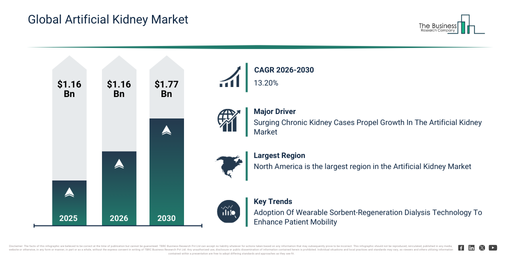
    The artificial kidney market is projected to experience substantial expansion in the coming years. This market is anticipated to reach $21.18 billion by 2030, exhibiting a compound annual growth rate (CAGR) of 13.2%. The projected growth is largely attributable to increasing investments in bioengineered kidney research, a rising demand for portable dialysis solutions, the expansion of remote patient monitoring, a growing focus on reducing dialysis dependency, and technological advancements in artificial organ development. Major trends during this forecast period include the accelerating development of wearable dialysis systems, an increasing focus on implantable artificial kidney solutions, the growing integration of smart monitoring into dialysis devices, the expansion of home-based dialysis technologies, and an enhanced emphasis on patient mobility and comfort.

    Get A Free Sample Report With In-Depth Market Insights:

    https://thebusinessresearchcompany.com/sample_request?id=95015287&type=smp&name=Artificial%20Kidney%20Market%20Report%202026&utm_source=Blogs&utm_medium=Paid&utm_campaign=Sep_PR

    Artificial Kidney Market Demand Drivers: What’s Powering Industry Growth?

    The growing prevalence of chronic kidney conditions is anticipated to drive the expansion of the artificial kidney market in the future. Chronic kidney disease is a prolonged ailment where renal function progressively diminishes over time. Artificial kidneys serve as a primary treatment for chronic kidney disease, effectively eliminating waste products and toxins from the body, managing fluid retention, and ensuring electrolyte balance. For example, data from June 2023, provided by Kidney Research UK, a UK-based charitable organization that conducts research and advocacy efforts to improve understanding, prevention, and treatment of kidney diseases, indicated that approximately 7.19 million individuals in the UK suffered from chronic kidney disease in 2023. This figure accounts for over 10% of the UK population and is forecasted to rise to 7.61 million people by 2033. Consequently, the increasing number of cases of chronic kidney diseases is a key factor propelling the artificial kidney market.

    Artificial Kidney Market Segment Landscape And Growth Outlook

    The artificial kidney market covered in this report is segmented –

    1) By Product Type: Wearable Artificial Kidney, Implantable Artificial Kidney

    2) By Technology: Hemodialysis Systems, Peritoneal Dialysis Systems

    3) By End-User: Hospitals, Specialty Clinics

    Subsegments:

    1) By Wearable Artificial Kidney: Portable Dialysis Systems, Compact Dialysis Units

    2) By Implantable Artificial Kidney: Bioengineered Kidneys, Hybrid Dialysis Systems

    Artificial Kidney Market Innovation Trends: What Developments Are Reshaping The Industry?

    Leading companies within the artificial kidney market are prioritizing the integration of advanced solutions like wearable sorbent-regeneration dialysis technology to boost patient mobility, treatment adaptability, and overall quality of life. This wearable sorbent-regeneration dialysis technology operates with a compact system that consistently purifies and recycles dialysate using sorbent cartridges, thereby enabling features such as continuous portable dialysis, a significant reduction in dialysate volume, and increased patient independence. For example, in June 2023, AWAK Technologies, a Singaporean medical technology company, released AWAK PD, a wearable sorbent-regeneration peritoneal dialysis system engineered to allow individuals with end-stage kidney disease to undergo dialysis while maintaining mobility. The system incorporates an ultra-portable three-kilogram design, a patented sorbent-based dialysate regeneration process that diminishes fluid requirements by up to 90 percent, and a configuration recognized under the FDA Breakthrough Device program. AWAK PD enhances treatment convenience, supports mobility, and improves the overall patient experience.

    Artificial Kidney Market Leading Players And Competitive Positioning

    Major companies operating in the artificial kidney market are Fresenius SE and Co. KGaA, Medtronic plc, Asahi Kasei Medical Co. Ltd., Toray Industries Inc., Baxter International Inc., B. Braun Melsungen AG, Nipro Medical Corporation, Nikkiso Co. Ltd., Kawasumi Laboratories Inc., Quanta Dialysis Technologies Ltd., Triomed AB, WearOptimo, AWAK Technologies Pvt. Ltd., Aethlon Medical Inc., Blood Purification Technologies Inc., Xcorporeal Inc., Nanodialysis B.V., Neokidney Development BV, Wearable Medical Devices Inc., Nephria Bio Inc., US Kidney Research Corporation

    View The Full Artificial Kidney Market Report:

    https://thebusinessresearchcompany.com/report/artificial-kidney-global-market-report?utm_source=Blogs&utm_medium=Paid&utm_campaign=Sep_PR

    Artificial Kidney Market Regional Distribution: Which Areas Power Market Growth?

    North America was the largest region in the artificial kidney market in 2025. Asia-Pacific is expected to be the fastest-growing region in the forecast period. The regions covered in the artificial kidney market report are Asia-Pacific, South East Asia, Western Europe, Eastern Europe, North America, South America, Middle East, Africa.

    Reach Out To Our Team:

    The Business Research Company: https://www.thebusinessresearchcompany.com/

    Americas: +1 310-496-7795

    Asia: +44 7882 955267 & +91 8897263534

    Europe: +44 7882 955267

    Email us at: marketing@tbrc.info

    Follow us on:

    LinkedIn: https://in.linkedin.com/company/the-business-research-company

    YouTube: https://www.youtube.com/channel/UC24_fI0rV8cR5DxlCpgmyFQ

    Global Market Model: https://www.thebusinessresearchcompany.com/global-market-model

  • Capsule Endoscopy System Market Growth Potential: What The Latest Forecast Reveals

    Capsule Endoscopy System Market Growth Potential: What The Latest Forecast Reveals

    Built to provide research that’s more actionable and strategically valuable, The Business Research Company’s 2026 market reports include market attractiveness analysis, total addressable market sizing, company benchmarking matrices, interactive Excel dashboards, broader supply chain intelligence, emerging startup tracking, and in-depth product insights.

    Capsule Endoscopy System Market CAGR Outlook And Future Development

    The capsule endoscopy system market size has experienced swift expansion in recent years. Its valuation is projected to increase from $0.75 billion in 2025 to $0.83 billion in 2026, demonstrating a compound annual growth rate (CAGR) of 10.1%. Historically, this market growth has stemmed from factors such as the increasing occurrence of gastrointestinal conditions, a greater need for non-invasive diagnostic tools, enhancements in hospital diagnostic capacities, wider adoption of video capsule technology, and the introduction of sophisticated imaging sensors.

    The capsule endoscopy system market size is anticipated to experience robust growth in the upcoming years, projected to reach $1.21 billion in 2030, exhibiting a compound annual growth rate (CAGR) of 9.9%. This expansion during the forecast period is attributable to factors such as the increasing adoption of AI-enabled diagnostic software, a rising demand for early GI disease detection, the broadening of ambulatory diagnostic centers, an intensifying focus on personalized gastroenterology care, and continuous technological advancements in capsule design. Significant trends expected in the forecast period include the increasing uptake of capsule-based GI diagnostics, the growing utilization of wireless imaging capsules, the expanding integration of AI-assisted image analysis, the proliferation of minimally invasive diagnostic procedures, and an enhanced focus on patient comfort and compliance.

    Get A Free Sample Report With In-Depth Market Insights:

    https://thebusinessresearchcompany.com/sample_request?id=70656761&type=smp&name=Capsule%20Endoscopy%20System%20Market%20Report%202026&utm_source=Blogs&utm_medium=Paid&utm_campaign=Sep_PR

    Capsule Endoscopy System Market Expansion Drivers: What’s Shaping Future Growth?

    The escalating occurrence of gastrointestinal disorders is anticipated to stimulate the expansion of the capsule endoscopy system market moving forward. Gastrointestinal disorders refer to any condition or disease affecting the gastrointestinal tract, which includes the mouth, esophagus, stomach, small intestine, large intestine, and anus. Capsule endoscopy offers an efficient and rapid technique for screening various gastrointestinal conditions, including obscure GI tract bleeding, thereby assisting in the accurate diagnosis and treatment of these disorders. For instance, in June 2023, according to Crohn’s and Colitis Canada, a Canada-based non-profit organization, over 322,600 Canadians were estimated to be living with inflammatory bowel diseases (IBD) in 2023, accounting for approximately 0.82% of the population. Therefore, the rising prevalence of gastrointestinal disorders is driving the growth of the capsule endoscopy system market.

    Capsule Endoscopy System Market Segmentation: How Does The Market Break Down By Category?

    The capsule endoscopy system market covered in this report is segmented –

    1) By Component: Capsule Endoscope, Work Stations And Recorders

    2) By Application: Esophageal Diseases, Colonic Diseases, Occult GI Bleeding, Crohn’s Disease, Small Bowel Tumors, Celiac Disease, Inherited Polyposis Syndromes

    3) By End-User: Hospitals, Ambulatory Surgery Centers, Other End-Users

    Subsegments:

    1) By Capsule Endoscope: Video Capsule Endoscopes, Capsule Endoscopes For Small Intestine, Capsule Endoscopes For Colon

    2) By Work Stations and Recorders: Work Stations For Image Processing, Data Recorders, Video Recorders, Software For Capsule Endoscopy

    Capsule Endoscopy System Market Strategic Trends: What Defines The Next Growth Phase?

    Major companies in the capsule endoscopy system market are developing advanced capsules, such as the NaviCam small bowel system, to offer a more effective and efficient approach for diagnosing small bowel diseases. For instance, in February 2023, AnX Robotica Corporation, a US-based manufacturer of capsule endoscopy systems, launched the NAVICAM small bowel system. This video capsule endoscopy (VCE) system integrates various advanced technologies to provide a more effective and efficient method for detecting small bowel conditions. The NAVICA capsule is fitted with a magnet, allowing remote steering by a physician, which enables a more complete visualization of the small bowel, even in hard-to-reach areas. It also utilizes artificial intelligence (AI) to automatically identify and flag areas of concern in the video footage, aiding physicians in quickly and accurately pinpointing abnormalities in the small bowel. Moreover, this system is designed to be more effective, efficient, and comfortable for patients, providing physicians with the necessary tools to make precise diagnoses of small bowel diseases.

    Capsule Endoscopy System Market Key Players Shaping Industry Direction

    Major companies operating in the capsule endoscopy system market are Medtronic plc., Fujifilm Holdings Corporation, Koninklijke Philips N.V., Boston Scientific Corporation, Olympus Corporation, Check-Cap Ltd, Medigus Ltd., IntroMedic Co. Ltd., GI View Ltd., SMART Medical Systems Ltd, BodyCap SAS, Advin Healthcare Private Limited, Chongqing Jinshan Science and Technology Group Co. Ltd, SmartPill Corporation, ANKON Technologies Co. Ltd., RF Systems Lab Co. Ltd., CapsoVision Inc., PENTAX Medical Company, Given Imaging Ltd., Lifeline Sciences LLC.

    View The Full Capsule Endoscopy System Market Report:

    https://thebusinessresearchcompany.com/report/capsule-endoscopy-system-global-market-report?utm_source=Blogs&utm_medium=Paid&utm_campaign=Sep_PR

    Capsule Endoscopy System Market Regional Analysis: Which Region Leads By Revenue?

    North America was the largest region in the capsule endoscopy system market in 2025. The regions covered in the capsule endoscopy system market report are Asia-Pacific, South East Asia, Western Europe, Eastern Europe, North America, South America, Middle East, Africa.

    Reach Out To Our Team:

    The Business Research Company: https://www.thebusinessresearchcompany.com/

    Americas: +1 310-496-7795

    Asia: +44 7882 955267 & +91 8897263534

    Europe: +44 7882 955267

    Email us at: marketing@tbrc.info

    Follow us on:

    LinkedIn: https://in.linkedin.com/company/the-business-research-company

    YouTube: https://www.youtube.com/channel/UC24_fI0rV8cR5DxlCpgmyFQ

    Global Market Model: https://www.thebusinessresearchcompany.com/global-market-model
  • Capnography Devices Market Growth Outlook: Why Analysts Expect Continued Expansion

    Capnography Devices Market Growth Outlook: Why Analysts Expect Continued Expansion

    Backed by market attractiveness analysis, total addressable market sizing, company benchmarking matrices, interactive Excel dashboards, wider supply chain intelligence, emerging startup coverage, and detailed product-level insights, The Business Research Company’s 2026 market reports are designed to offer research that is more actionable and strategically valuable than ever.

    Capnography Devices Market Set To Climb From $0.92 Billion In 2026 To $1.44 Billion By 2030

    The capnography devices market size has experienced rapid growth in recent years. It is projected to expand from $0.83 billion in 2025 to $0.92 billion in 2026, achieving a compound annual growth rate (CAGR) of 11.8%. The historical growth of this market can be linked to an increase in surgical procedures, the rising utilization of anesthesia in clinical care, a growing adoption of respiratory monitoring in hospitals, the expansion of emergency medical services, and enhanced awareness regarding patient safety during ventilation.

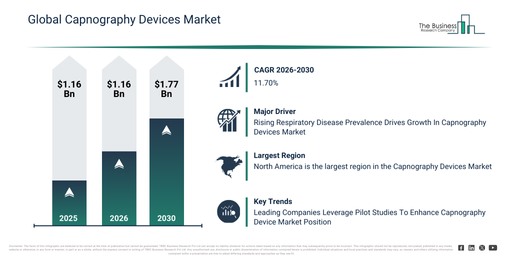
    The capnography devices market is projected for substantial expansion in the upcoming years. Its valuation is anticipated to reach $1.44 billion in 2030, exhibiting a compound annual growth rate (CAGR) of 11.7%. This projected growth during the forecast period is driven by factors such as an increasing incidence of respiratory ailments, a heightened need for continuous monitoring of ventilation, the expansion of ambulatory and outpatient medical interventions, a greater emphasis on the early detection of respiratory issues, and the growing incorporation of capnography in settings outside of hospitals. Key developments expected during this period involve the rising implementation of capnography in emergency and critical care units, its increased application for monitoring patients during procedural sedation, an escalating demand for portable and compact capnography instruments, the broader deployment of capnography beyond surgical operating rooms, and its enhanced integration into multi-parameter monitoring systems.

    Get A Free Sample Report With In-Depth Market Insights:

    https://thebusinessresearchcompany.com/sample_request?id=23015590&type=smp&name=Capnography%20Devices%20Market%20Report%202026&utm_source=Blogs&utm_medium=Paid&utm_campaign=Sep_PR

    Capnography Devices Market Development Factors: What’s Supporting Demand?

    The increasing occurrence of respiratory ailments is anticipated to drive the expansion of the capnography devices market in the future. These conditions encompass a range of medical issues impacting the lungs and respiratory system, such as asthma, chronic obstructive pulmonary disease (COPD), pneumonia, and lung cancer, all of which hinder respiration and may result in serious health problems. The growing incidence of respiratory illnesses is attributed to factors like heightened air pollution, increased smoking, and an aging demographic. Capnography devices find application in respiratory conditions for real-time monitoring and evaluation of patients’ ventilation and for identifying irregularities. As an example, in June 2024, data from the Australian Institute of Health and Welfare, an Australia-based health and welfare agency, indicated that around 8.5 million people in Australia, representing 34% of the population, were estimated to suffer from chronic respiratory conditions. This figure includes an estimated 2.8 million individuals, or 11% of the populace, affected by asthma, and 638,000 individuals, or 2.5% of the populace, living with chronic obstructive pulmonary disease (COPD). Consequently, the increased prevalence of respiratory ailments is fueling the expansion of the capnography devices market.

    Capnography Devices Market Segment Trends And Revenue Contributors

    The capnography devices market covered in this report is segmented –

    1) By Product: Hand-held, Stand-alone, Multi-parameter

    2) By Component: Original Equipment Manufacturer (OEM) Modules, Other Components

    3) By Technology: Mainstream, Sidestream, Microstream

    4) By Application: Emergency Medicine, Pain Management, Procedural Sedation, Critical Care, Other Applications

    5) By End-use: Hospitals, Ambulatory Care, Other End-Uses

    Subsegments:

    1) By Hand-held: Portable Capnographs, Emergency & Transport Capnographs, Point-of-Care Capnography Devices

    2) By Stand-Alone: Bedside Capnography Monitors, ICU Capnography Systems, Operating Room Capnographs

    3) By Multi-parameter: Capnography with Pulse Oximetry (SpO2), Capnography with ECG Monitoring, Integrated Patient Monitoring Systems

    Capnography Devices Market Transformation Trends: What Innovations Are Driving Change?

    Major companies operating in the capnography devices market are increasingly focusing on developing advanced pilot studies to gain a competitive edge. These pilot studies are preliminary research investigations conducted to evaluate the feasibility, effectiveness, and potential impact of these devices in clinical settings. For instance, in March 2024, TidalSense, a UK-based respiratory device company, initiated a pilot study to assess its innovative N-Tidal device for diagnosing asthma in young children. The study, conducted in partnership with the University of Nottingham and Nottingham University Hospitals NHS Trust, will involve 75 children under the age of five who are experiencing asthma and viral wheezing. The N-Tidal device utilizes capnography technology to measure carbon dioxide levels during normal breathing, thereby eliminating the need for challenging spirometry tests often used in pediatric populations. These traditional tests can be difficult for young children, potentially leading to inaccurate diagnoses and prolonged hospital stays.

    Capnography Devices Market Competitive Analysis Of Leading Industry Participants

    Major companies operating in the capnography devices market are Medtronic PLC, GE HealthCare Technologies Inc., Koninklijke Philips NV, Masimo Corporation, Drägerwerk AG & Co. KGaA, Nihon Kohden Corporation, Mindray Medical International Limited, ZOLL Medical Corporation, Spacelabs Healthcare Inc., Vyaire Medical Inc., Edan Instruments Inc., Criticare Systems Inc., Opto Circuits India Limited, Infinium Medical Inc., Weinmann Emergency Medical Technology GmbH & Co. KG, BPL Medical Technologies Pvt Ltd., Smiths Group PLC, Nonin Medical Inc., Shenzhen Creative Industry Co Ltd, Shenzhen Comen Medical Instruments Co Ltd

    View The Full Capnography Devices Market Report:

    https://thebusinessresearchcompany.com/report/capnography-devices-global-market-report?utm_source=Blogs&utm_medium=Paid&utm_campaign=Sep_PR

    Capnography Devices Market Geographic Distribution And Regional Opportunities

    North America was the largest region in the capnography devices market in 2025. Asia-Pacific is expected to be the fastest-growing region in the forecast period. The regions covered in the capnography devices market report are Asia-Pacific, South East Asia, Western Europe, Eastern Europe, North America, South America, Middle East, Africa.

    Reach Out To Our Team:

    The Business Research Company: https://www.thebusinessresearchcompany.com/

    Americas: +1 310-496-7795

    Asia: +44 7882 955267 & +91 8897263534

    Europe: +44 7882 955267

    Email us at: marketing@tbrc.info

    Follow us on:

    LinkedIn: https://in.linkedin.com/company/the-business-research-company

    YouTube: https://www.youtube.com/channel/UC24_fI0rV8cR5DxlCpgmyFQ

    Global Market Model: https://www.thebusinessresearchcompany.com/global-market-model