Category: Medical Equipment

  • Artificial Intelligence-Powered Seizure Prediction Wearable Market Forecast To Reach $3.87 Billion By 2030: Key Trends Explained

    Artificial Intelligence-Powered Seizure Prediction Wearable Market Forecast To Reach $3.87 Billion By 2030: Key Trends Explained

    Featuring market attractiveness scoring, total addressable market sizing, company benchmarking matrices, interactive Excel dashboards, deeper supply chain intelligence, emerging startup tracking, and granular product-level insights, The Business Research Company’s 2026 market reports are built to deliver research that is both more actionable and more strategically valuable.

    Artificial Intelligence-Powered Seizure Prediction Wearable Market Expansion Outlook: What Revenue Opportunities Are Ahead?

    The artificial intelligence-powered seizure prediction wearable market size has experienced substantial expansion in recent years. It is forecast to rise from $1.41 billion in 2025 to $1.73 billion in 2026, achieving a compound annual growth rate (CAGR) of 22.5%. The historical development of this market is attributable to an increase in epilepsy prevalence, advancements in wearable biosensors, the critical need for early seizure warnings, limitations inherent in conventional monitoring, and growing neurological research.

    The artificial intelligence-powered seizure prediction wearable market size is anticipated to experience substantial expansion in the coming years. It is projected to reach $3.87 billion by 2030, exhibiting a compound annual growth rate (CAGR) of 22.3%. This projected increase during the forecast period is due to advancements such as enhanced AI-powered predictive accuracy, the broadening of remote neurology care services, a rising need for real-time alerts, seamless integration with mobile health applications, and an emphasis on patient-centric epilepsy management. Key developments anticipated in this period encompass predictive detection of neurological events, ongoing wearable EEG monitoring, customized seizure alert systems, AI-driven identification of risk patterns, and at-home epilepsy management solutions.

    Get A Free Sample Report With In-Depth Market Insights:

    https://thebusinessresearchcompany.com/sample_request?id=92640567&type=smp&name=Artificial%20Intelligence-Powered%20Seizure%20Prediction%20Wearable%20Market%20Report%202026&utm_source=Blogs&utm_medium=Paid&utm_campaign=Sep_PR

    Artificial Intelligence-Powered Seizure Prediction Wearable Market Growth Drivers: What’s Behind The Acceleration?

    The escalating incidence of neurological disorders is poised to significantly drive the expansion of the artificial intelligence-powered seizure prediction wearable market. These disorders involve diseases or dysfunctions of the nervous system that interfere with the normal activity of the brain, spinal cord, or nerves. The increase in neurological disorders is largely attributable to aging populations, which heightens the risk of neurodegeneration and related brain and nerve conditions. Artificial intelligence-powered seizure prediction wearables assist in addressing neurological disorders by consistently monitoring physiological signals and employing AI to predict seizures, thereby enabling early intervention and enhancing patient safety. For instance, in April 2024, the National Library of Medicine, a US-based medical library, reported that approximately 6.9 million Americans aged 65 and older are currently affected by Alzheimer’s dementia, a figure anticipated to climb to 13.8 million by 2060. Consequently, the growing prevalence of neurological disorders is a key factor propelling the growth of the artificial intelligence-powered seizure prediction wearable market.

    Artificial Intelligence-Powered Seizure Prediction Wearable Market Breakdown By Product Type And Application

    The artificial intelligence-powered seizure prediction wearable market covered in this report is segmented –

    1) By Product Type: Wristbands, Headbands, Smartwatches, Patches

    2) By Technology: Electroencephalography-Based, Accelerometer-based, Multi-Sensor, Other Technologies

    3) By Distribution Channel: Online, Offline

    4) By Application: Hospitals And Clinics, Home Care, Research Institutes, Other Applications

    5) By End User: Adults, Pediatrics, Geriatrics

    Subsegments:

    1) By Wristbands: Heart Rate Monitoring, Motion Detection

    2) By Headbands: Brainwave Analysis, Stress Level Detection

    3) By Smartwatches: Heart Rate Monitoring, Motion Detection

    4) By Patches: Electrodermal Activity Monitoring, Heart Rate Monitoring

    Artificial Intelligence-Powered Seizure Prediction Wearable Market Trends: What’s Defining The Industry’s Next Phase?

    Leading companies within the artificial intelligence-powered seizure prediction wearable market are concentrating on developing sophisticated solutions, including advanced wearable devices that utilize AI and real-time data analytics for precise seizure prediction and improved patient safety. These advanced wearable devices are electronic items worn on the body, featuring sensors and AI capabilities to continuously monitor physiological signals, enabling them to detect, analyze, and forecast health events like seizures. For example, in February 2024, Empatica Inc., a US-based MIT Media Lab spinoff company, introduced its EpiMonitor epilepsy monitoring system, which offers real-time seizure detection and alerts. This system is engineered to identify generalized tonic-clonic seizures with 98% accuracy and dispatch immediate alerts to caregivers for prompt assistance. It also boasts up to seven days of battery life, tracks sleep and activity, and generates comprehensive health reports to assist clinical care. Ultimately, its goal is to enhance safety and empower epilepsy patients by delivering reliable seizure monitoring and extensive health insights.

    Artificial Intelligence-Powered Seizure Prediction Wearable Market Competitive Overview And Top Companies

    Major companies operating in the artificial intelligence-powered seizure prediction wearable market are Empatica Inc., BioSerenity, Epitel Inc., Seer Medical Pty Ltd., mjn.cat (mjn neuro), Neureka Inc., LivAssured B V NightWatch, SeizAlarm, Cove Neurosciences Inc., CeriBell Inc., Brain Sentinel Inc., Epilert Inc., Byteflies, Danish Care Technology ApS Epi-Care, Neurava Inc., NeuroHelp Ltd., Emfit Ltd., Alert-iT, EpiUSA, Zeto Inc., Cadwell Industries

    View The Full Artificial Intelligence-Powered Seizure Prediction Wearable Market Report:

    https://thebusinessresearchcompany.com/report/artificial-intelligence-powered-seizure-prediction-wearable-global-market-report?utm_source=Blogs&utm_medium=Paid&utm_campaign=Sep_PR

    Artificial Intelligence-Powered Seizure Prediction Wearable Market Leading Geography: Which Region Contributes The Most Revenue?

    North America was the largest region in the artificial intelligence-powered seizure prediction wearable market in 2025. Asia-Pacific is expected to be the fastest-growing region in the forecast period. The regions covered in the artificial intelligence-powered seizure prediction wearable market report are Asia-Pacific, South East Asia, Western Europe, Eastern Europe, North America, South America, Middle East, Africa.

    Reach Out To Our Team:

    The Business Research Company: https://www.thebusinessresearchcompany.com/

    Americas: +1 310-496-7795

    Asia: +44 7882 955267 & +91 8897263534

    Europe: +44 7882 955267

    Email us at: marketing@tbrc.info

    Follow us on:

    LinkedIn: https://in.linkedin.com/company/the-business-research-company

    YouTube: https://www.youtube.com/channel/UC24_fI0rV8cR5DxlCpgmyFQ

    Global Market Model: https://www.thebusinessresearchcompany.com/global-market-model
  • Capillary Blood Collection Devices Market Forecast Insights: The Road To $4.68 Billion By 2030

    Capillary Blood Collection Devices Market Forecast Insights: The Road To $4.68 Billion By 2030

    Featuring market attractiveness scoring, total addressable market sizing, company benchmarking matrices, interactive Excel dashboards, deeper supply chain intelligence, emerging startup tracking, and granular product-level insights, The Business Research Company’s 2026 market reports are built to deliver research that is both more actionable and more strategically valuable.

    Capillary Blood Collection Devices Market Forecast: Value Set To Climb From $3.07 Billion To $4.68 Billion

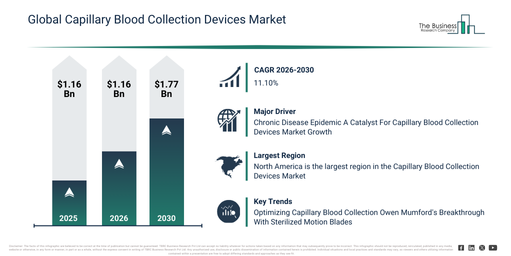
    The capillary blood collection devices market size has seen rapid expansion in recent years. It is projected to grow from $2.72 billion in 2025 to $3.07 billion in 2026, exhibiting a compound annual growth rate (CAGR) of 13.1%. The historical growth in this market can be attributed to several factors, including an increase in routine diagnostic testing, the widespread application of fingerstick glucose testing, the expansion of hospital and diagnostic laboratories, the growing prevalence of chronic diseases, and an escalating demand for pediatric and neonatal testing.

    The market for capillary blood collection devices is projected to experience swift expansion in the upcoming years. It will grow to $4.68 billion in 2030 at a compound annual growth rate (CAGR) of 11.1%. This anticipated growth is driven by several factors, including the surge in home-based diagnostic testing, a greater need for decentralized healthcare services, the rising uptake of rapid diagnostic tests, the broadening of preventive health screening initiatives, and the increasing application of capillary samples in advanced diagnostic procedures. Furthermore, major trends anticipated during this period involve a growing preference for minimally invasive blood collection methods, an elevated demand for point-of-care sample collection, the expanded utilization of capillary sampling for home diagnostics, the broader application of dried blood spot testing, and a heightened emphasis on devices designed for patient comfort and safety.

    Get A Free Sample Report With In-Depth Market Insights:

    https://thebusinessresearchcompany.com/sample_request?id=93223160&type=smp&name=Capillary%20Blood%20Collection%20Devices%20Market%20Report%202026&utm_source=Blogs&utm_medium=Paid&utm_campaign=Sep_PR

    Capillary Blood Collection Devices Market Industry Drivers: What’s Behind The Revenue Growth?

    The anticipated expansion of the capillary blood collection devices market is driven by the rising incidence of chronic ailments. These enduring health conditions demand ongoing care and therapeutic interventions. The escalation in chronic disease cases stems from an aging global demographic, detrimental lifestyle choices, environmental influences, and improved medical diagnostic techniques enabling earlier identification. Capillary blood collection devices empower both patients and medical professionals to manage chronic conditions more effectively through routine, convenient, and minimally invasive blood analyses, which in turn contributes to enhanced patient well-being and an elevated standard of living. As an illustration, data from Allergy UK, a national charity based in the UK, revealed in April 2024 that over 21 million individuals in the UK suffer from allergies, marking them as the most frequently cited chronic health issue in 2022. Forecasts suggest that by 2026, half of Europe’s populace will be impacted by at least one allergy. Consequently, the expanding occurrence of chronic diseases is fueling the growth of the capillary blood collection devices market.

    Capillary Blood Collection Devices Market Segment Analysis Spotlighting Growth Areas

    The capillary blood collection devices market covered in this report is segmented –

    1) By Product: Lancets, Micro-Container Tubes, Micro-Hematocrit Tubes, Warming Devices, Other Product

    2) By Materials: Plastic, Glass, Stainless Steel, Ceramic, Other Materials

    3) By Application: Whole Blood, Serum Protein Tests, Comprehensive Metabolic Panel Tests, Liver Function Tests, Dried Blood Spot Tests

    4) By End-Users: Hospitals And Clinics, Blood Donation Centers, Diagnostic Centers, Home Diagnosis, Pathology Laboratories

    Subsegments:

    1) By Lancets: Safety Lancets, Standard Lancets, Precision Lancets, Multi-Use Lancets

    2) By Micro-Container Tubes: Plastic Micro-Containers, Glass Micro-Containers, Capillary Blood Collection Tubes With Anticoagulants, Capillary Blood Collection Tubes For Serum

    3) By Micro-Hematocrit Tubes: Plastic Micro-Hematocrit Tubes, Glass Micro-Hematocrit Tubes, Capillary Blood Collection Tubes For Hematocrit Testing

    4) By Warming Devices: Thermal Warming Pads, Electric Warming Devices, Infrared Warming Devices, Handheld Warming Devices

    5) By Other Products: Blood Collection Systems, Collection Caps And Caps For Microtubes, Blood Sample Storage Devices

    #Capillary Blood Collection Devices Market Growth Trends: What’s Shaping The Future Outlook?

    Companies actively engaged in the capillary blood collection devices market are concentrating on the development of innovative solutions, such as neonatal and pediatric capillary blood sampling devices. This strategic focus aims to meet specialized requirements and overcome existing challenges within healthcare environments serving infants and young children. For example, in October 2023, Owen Mumford Ltd., a UK-based medical device company, introduced Unistik Heelstik, which is a range of capillary blood sampling products designed for neonates and children. This particular collection includes four distinct blood sample instruments, each specifically engineered for a different developmental stage: Unistik Heelstik Toddler, Full Term, Preemie, and Micro Preemie. These instruments are developed to resolve difficulties associated with capillary blood sampling in newborns and older babies, allowing for the collection of adequate sample volumes while minimizing the baby’s discomfort. The Unistik Heelstik devices are engineered to target only surface blood vessels, thus preventing deep enough penetration to affect the skin’s pain fibers.

    Capillary Blood Collection Devices Market Leading Companies And Competitive Benchmarking

    Major companies operating in the capillary blood collection devices market are Becton Dickinson and Company, Terumo Medical Corporation, Owen Mumford Ltd, Greiner Bio-One International GmbH, SARSTEDT AG & Co. KG, Nipro Corporation, Gerresheimer AG, Abbott Laboratories, F. Hoffmann-La Roche AG, HTL-STREFA S.A., Chengdu Rich Science Industry Co. Ltd, PTS Diagnostics, Vitrex Medical A/S, SteriLance Medical Suzhou Inc., Improve Medical Instruments Co. Ltd, Narang Medical Limited, Sekisui Medical Co. Ltd, Medline Industries LP, VitroCom Inc, FL Medical S.r.l

    View The Full Capillary Blood Collection Devices Market Report:

    https://thebusinessresearchcompany.com/report/capillary-blood-collection-devices-global-market-report?utm_source=Blogs&utm_medium=Paid&utm_campaign=Sep_PR

    Capillary Blood Collection Devices Market Largest Region By Revenue And Market Share

    North America was the largest region in the capillary blood collection devices market in 2025. Asia-Pacific is expected to be the fastest-growing region in the forecast period. The regions covered in the capillary blood collection devices market report are Asia-Pacific, South East Asia, Western Europe, Eastern Europe, North America, South America, Middle East, Africa.

    Reach Out To Our Team:

    The Business Research Company: https://www.thebusinessresearchcompany.com/

    Americas: +1 310-496-7795

    Asia: +44 7882 955267 & +91 8897263534

    Europe: +44 7882 955267

    Email us at: marketing@tbrc.info

    Follow us on:

    LinkedIn: https://in.linkedin.com/company/the-business-research-company

    YouTube: https://www.youtube.com/channel/UC24_fI0rV8cR5DxlCpgmyFQ

    Global Market Model: https://www.thebusinessresearchcompany.com/global-market-model
  • Cancer Supportive Care Products Market Explained: What Is Fueling Growth To $28.24 Billion By 2030?

    Cancer Supportive Care Products Market Explained: What Is Fueling Growth To $28.24 Billion By 2030?

    Built to provide research that’s more actionable and strategically valuable, The Business Research Company’s 2026 market reports include market attractiveness analysis, total addressable market sizing, company benchmarking matrices, interactive Excel dashboards, broader supply chain intelligence, emerging startup tracking, and in-depth product insights.

    Cancer Supportive Care Products Market Revenue Growth On Track For A 4.7% CAGR Through 2030

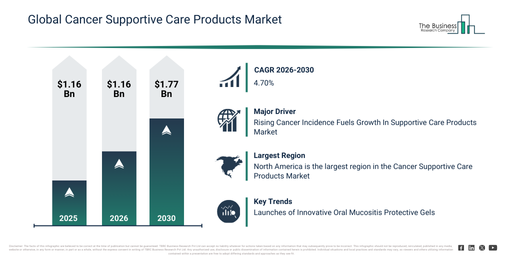
    The cancer supportive care products market has shown consistent expansion in its size recently. This market is set to increase from $22.47 billion in 2025 to $23.54 billion in 2026, with a compound annual growth rate (CAGR) of 4.8%. The growth observed in prior periods can be attributed to an increase in global cancer prevalence, the rising application of chemotherapy and radiation therapy, a greater incidence of treatment-related side effects, the growth of hospital-based oncology services, and improved access to essential supportive drugs.

    The cancer supportive care products market size is projected to demonstrate consistent expansion in the coming years, reaching $28.24 billion by 2030, reflecting a compound annual growth rate (CAGR) of 4.7%. This anticipated growth over the forecast period can be attributed to an aging global population with a heightened risk of cancer, a greater emphasis on patient-centric oncology care, increasing understanding of the advantages of supportive care, the rising volume of cancer treatments worldwide, and a growing necessity for long-term symptom management. Significant trends during this period include an escalating demand for extensive symptom management therapies, an intensified focus on quality-of-life-oriented cancer care, a greater embrace of multimodal supportive drug regimens, the extension of supportive care across various cancer indications, and its increased integration into standard oncology protocols.

    Get A Free Sample Report With In-Depth Market Insights:

    https://thebusinessresearchcompany.com/sample_request?id=48702702&type=smp&name=Cancer%20Supportive%20Care%20Products%20Market%20Report%202026&utm_source=Blogs&utm_medium=Paid&utm_campaign=Sep_PR

    Cancer Supportive Care Products Market Growth Factors: What’s Supporting Expansion?

    The escalating incidence of cancer is anticipated to propel the expansion of the cancer supportive care products market moving forward. As populations grow older, the probability of developing cancer rises due to cellular changes and extended exposure to risk factors. Furthermore, elements such as smoking, an unhealthy diet, insufficient physical activity, and excessive alcohol consumption contribute significantly to cancer susceptibility. Cancer supportive care products are utilized to manage symptoms, enhance the quality of life, and provide support to patients undergoing treatment, thus addressing the increasing demand driven by the growing occurrence of cancer. For instance, in January 2024, the American Cancer Society, a US-based non-profit organization dedicated to eliminating cancer, projected 58,450 cases of oral cavity and pharynx cancer, marking a 7.2% increase from the 54,540 cases reported in 2023. Consequently, the rising cancer incidence will fuel the growth of the cancer supportive care products market.

    Cancer Supportive Care Products Market Segment Performance And Emerging Opportunities

    The cancer supportive care products market covered in this report is segmented –

    1) By Drug Class: Nonsteroidal Anti-Inflammatory Drugs, Anti-Infective, Anti-Emetics, Monoclonal Antibodies, Erythropoietin Stimulating Agents, Opioid Analgesics, Bisphosphonates, Granulocyte Colony Stimulating Factor

    2) By Indication: Lung Cancer, Breast Cancer, Prostate Cancer, Liver Cancer, Bladder Cancer, Leukemia, Ovary Cancer, Melanoma Cancer, Other Indications

    3) By Distribution Channel: Hospital Pharmacies, Retail Pharmacies, Compounding Pharmacies

    Subsegments:

    1) By Nonsteroidal Anti-Inflammatory Drugs (Nsaids): Ibuprofen, Aspirin, Naproxen

    2) By Anti-Infective: Antibiotics, Antifungal Drugs, Antiviral Drugs

    3) By Anti-Emetics: 5-Ht3 Antagonists (Ondansetron), Nk1 Antagonists (Aprepitant), Corticosteroids (Dexamethasone)

    4) By Monoclonal Antibodies: Rituximab, Trastuzumab, Bevacizumab

    5) By Erythropoietin Stimulating Agents: Epoetin Alfa, Darbepoetin Alfa

    6) By Opioid Analgesics: Morphine, Fentanyl, Oxycodone

    7) By Bisphosphonates: Zoledronic Acid, Pamidronate, Ibandronate

    8) By Granulocyte Colony Stimulating Factor: Filgrastim, Pegfilgrastim

    Cancer Supportive Care Products Market Industry Trends: What’s Reshaping Demand?

    Major companies operating in the cancer supportive care products market are concentrating on mechanical-action oral mucosal protective gels, such as Gelclair, to alleviate oral mucositis in patients undergoing chemotherapy or radiotherapy. Here, mechanical-action oral mucosal protective gels refer to gels that physically coat and protect the oral lining, thereby reducing pain and discomfort without depending on numbness or anesthetic action, which consequently improves patients’ ability to eat, drink, and swallow during cancer treatment. For instance, in October 2024, Jaguar Health, a US-based biopharmaceutical company, launched Gelclair, a prescription gel designed for oral mucositis. Gelclair adheres to the oral mucosa to form a protective barrier, providing rapid and long-lasting pain relief and enhancing comfort during eating and swallowing without stinging or numbing the mouth.

    Cancer Supportive Care Products Market Industry Leaders And Competitive Landscape

    Major companies operating in the cancer supportive care products market are Johnson & Johnson, F. Hoffmann-La Roche Ltd., Merck & Co. Inc., AbbVie Inc., Bayer AG, Abbott Laboratories, Novartis AG, GlaxoSmithKline plc, Amgen Inc., Teva Pharmaceutical Industries Limited, Baxter International Inc., Daiichi Sankyo Company Limited, Kyowa Hakko Kirin Co. Ltd., Exelixis Inc., Fagron Group B.V., Tessa Therapeutics Pte Ltd., APR Applied Pharma Science Research S.A., Acacia Pharma Ltd., Helsinn Healthcare SA, Kyowa Kirin International PLC, OncoGenex Pharmaceuticals Inc., Celgene Corporation, Astellas Pharma Inc.

    View The Full Cancer Supportive Care Products Market Report:

    https://thebusinessresearchcompany.com/report/cancer-supportive-care-products-global-market-report?utm_source=Blogs&utm_medium=Paid&utm_campaign=Sep_PR

    Cancer Supportive Care Products Market Regional Analysis And Leading Geography

    North America was the largest region in the cancer supportive care products market in 2025. Asia-Pacific is expected to be the fastest-growing region in the forecast period. The regions covered in the cancer supportive care products market report are Asia-Pacific, South East Asia, Western Europe, Eastern Europe, North America, South America, Middle East, Africa.

    Reach Out To Our Team:

    The Business Research Company: https://www.thebusinessresearchcompany.com/

    Americas: +1 310-496-7795

    Asia: +44 7882 955267 & +91 8897263534

    Europe: +44 7882 955267

    Email us at: marketing@tbrc.info

    Follow us on:

    LinkedIn: https://in.linkedin.com/company/the-business-research-company

    YouTube: https://www.youtube.com/channel/UC24_fI0rV8cR5DxlCpgmyFQ

    Global Market Model: https://www.thebusinessresearchcompany.com/global-market-model
  • Cancer Diagnostics Market Forecast To Reach $44.69 Billion By 2030: Key Trends Explained

    Cancer Diagnostics Market Forecast To Reach $44.69 Billion By 2030: Key Trends Explained

    Backed by market attractiveness analysis, total addressable market sizing, company benchmarking matrices, interactive Excel dashboards, wider supply chain intelligence, emerging startup coverage, and detailed product-level insights, The Business Research Company’s 2026 market reports are designed to offer research that is more actionable and strategically valuable than ever.

    Cancer Diagnostics Market Value Growth And Long-Term Outlook

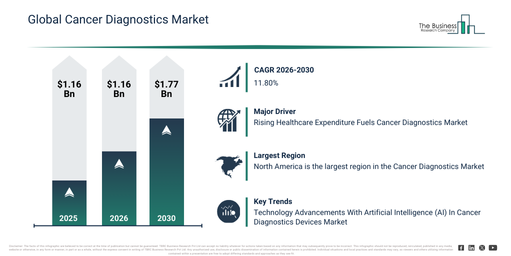
    The cancer diagnostics market has witnessed rapid expansion in recent years. This market is projected to grow from $25.5 billion in 2025 to $28.58 billion in 2026, demonstrating a compound annual growth rate (CAGR) of 12.1%. The growth observed in the past can be attributed to factors such as increasing global cancer prevalence, heightened investments in oncology research, an expansion of hospital diagnostic infrastructure, the rising adoption of imaging-based cancer detection techniques, and improvements in laboratory automation.

    The cancer diagnostics market is anticipated to experience substantial growth over the coming years. This market is projected to reach $44.69 billion by 2030, demonstrating a compound annual growth rate (CAGR) of 11.8%. The expansion during the forecast period can be attributed to the escalating demand for personalized cancer therapies, the rising acceptance of next-generation sequencing diagnostics, the broadening of population-wide cancer screening programs, increasing investments in AI-enabled oncology diagnostics, and continuous innovation in multi-cancer detection tests. Significant trends expected during this period include the greater adoption of molecular and companion diagnostics, the increasing integration of AI in cancer detection, the growing application of biomarker-based testing, the proliferation of high-throughput diagnostic platforms, and an enhanced focus on early cancer screening.

    Get A Free Sample Report With In-Depth Market Insights:

    https://thebusinessresearchcompany.com/sample_request?id=89560793&type=smp&name=Cancer%20Diagnostics%20Market%20Report%202026&utm_source=Blogs&utm_medium=Paid&utm_campaign=Sep_PR

    Cancer Diagnostics Market Demand Drivers: What’s Powering Industry Growth?

    The expansion of the cancer diagnostics market is anticipated to be fueled by the growth in healthcare spending. Healthcare expenditure encompasses all financial resources allocated to healthcare services, such as medical interventions, hospital stays, pharmaceuticals, and public health programs, by governments, corporations, and individuals. The heightened need for healthcare spending stems from the growing occurrence of chronic illnesses, which necessitate prolonged and expensive treatments. Increased healthcare expenditure bolsters cancer diagnostics through promoting advanced screening technologies and widening access to services for early detection. It also elevates diagnostic precision by fostering greater investment in contemporary equipment and specialized laboratories, which facilitates prompt intervention and superior patient results. For instance, in May 2024, according to the Office for National Statistics, a UK-based government department, total healthcare expenditure saw a 5.6% increase in nominal terms in 2023, an increase of 0.9% growth compared to 2022. Consequently, the uptick in healthcare spending is propelling the expansion of the cancer diagnostics market.

    Cancer Diagnostics Market Segment Landscape And Growth Outlook

    The cancer diagnostics market covered in this report is segmented –

    1) By Products: Companion Diagnostics, Molecular Diagnostics

    2) By Method: Biopsy, Endoscopy, Tumor Biomarker Tests, Imaging

    3) By Application: Cervical Cancer, Breast Cancer, Liver Cancer, Blood Cancer, Kidney Cancer, Colorectal Cancer, Pancreatic Cancer, Ovarian Cancer, Melanoma, Other Applications

    4) By End-User: Cancer Research Institutes, Diagnostic Laboratories, Hospitals, Other End Users

    Subsegments:

    1) By Companion Diagnostics: Biomarker-Based Companion Diagnostics, Genetic Testing-Based Companion Diagnostics, Immunohistochemistry-Based Companion Diagnostics, PCR-Based Companion Diagnostics, Other Companion Diagnostics,

    2) By Molecular Diagnostics: Polymerase Chain Reaction (PCR) Diagnostics, Next-Generation Sequencing (NGS) Diagnostics, In Situ Hybridization Diagnostics, Microarray-Based Diagnostics, DNA Or RNA Extraction Kits, Other Molecular Diagnostics

    Cancer Diagnostics Market Innovation Trends: What Developments Are Reshaping The Industry?

    Leading companies within the cancer diagnostic device market are prioritizing the creation of technology that incorporates artificial intelligence (AI), such as QAi Prostate, to achieve a competitive advantage. QAi Prostate functions as a diagnostic instrument for the detection of prostate cancer. As an illustration, in March 2023, Qritive, a Singapore-headquartered firm specializing in AI-powered diagnostic tools for pathologists, unveiled QAi Prostate. QAi Prostate stands as a sophisticated artificial intelligence (AI)-driven tool for diagnosing prostate cancer. It utilizes machine learning algorithms to accurately pinpoint and categorize both malignant and benign areas in prostate tissue samples. The device is engineered to support pathologists in detecting prostate cancer and distinguishing between malignant and benign regions in prostate tissue samples.

    Cancer Diagnostics Market Key Participants And Competitive Landscape

    Major companies operating in the cancer diagnostics market are Abbott Laboratories, Becton Dickinson and Company, Hologic, GE Healthcare Ltd., Thermo Fisher Scientific, Siemens Healthcare GmbH, Biogenex Laboratories, Veracyte, PathAI, Bio-Rad Laboratories, BioChain, DiagnoCure, Illumina, Myriad Genetics, CompanionDx, Epic Sciences, Genomic Health, Affymetrix, Agilent Technologies, Adaptive Biotechnologies, Biocartis, Biocept, Cancer Genetics Inc., Caris Life Sciences, Cepheid, Epigenomics AG, Exact Sciences, Foundation Medicine, GenMark Diagnostics, Guardant Health, HalioDX, Invitae Corporation, NanoString Technologies, Natera, NeoGenomics, Oncura Inc., PerkinElmer, Personal Genome Diagnostics, Qiagen, Roche Diagnostics

    View The Full Cancer Diagnostics Market Report:

    https://thebusinessresearchcompany.com/report/cancer-diagnostics-global-market-report?utm_source=Blogs&utm_medium=Paid&utm_campaign=Sep_PR

    Cancer Diagnostics Market Geographic Analysis: Where Is Demand Accelerating Fastest?

    North America was the largest region in the cancer diagnostics market in 2025. Asia-Pacific was the second-largest region in the global cancer diagnostics market. The regions covered in the cancer diagnostics market report are Asia-Pacific, South East Asia, Western Europe, Eastern Europe, North America, South America, Middle East, Africa.

    Reach Out To Our Team:

    The Business Research Company: https://www.thebusinessresearchcompany.com/

    Americas: +1 310-496-7795

    Asia: +44 7882 955267 & +91 8897263534

    Europe: +44 7882 955267

    Email us at: marketing@tbrc.info

    Follow us on:

    LinkedIn: https://in.linkedin.com/company/the-business-research-company

    YouTube: https://www.youtube.com/channel/UC24_fI0rV8cR5DxlCpgmyFQ

    Global Market Model: https://www.thebusinessresearchcompany.com/global-market-model
  • Cancer Cell Analysis Market Analysis: Understanding The Drivers Behind 8.9% CAGR Through 2030 Growth

    Cancer Cell Analysis Market Analysis: Understanding The Drivers Behind 8.9% CAGR Through 2030 Growth

    Featuring market attractiveness scoring, total addressable market sizing, company benchmarking matrices, interactive Excel dashboards, deeper supply chain intelligence, emerging startup tracking, and granular product-level insights, The Business Research Company’s 2026 market reports are built to deliver research that is both more actionable and more strategically valuable.

    Cancer Cell Analysis Market Poised To Hit $17.5 Billion By 2030 With A 8.9% CAGR

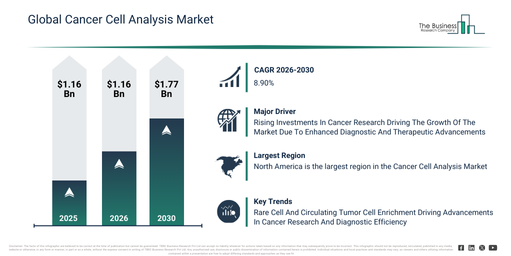
    The cancer cell analysis market has experienced robust expansion over recent years. Forecasts indicate its size will increase from $11.41 billion in 2025 to $12.45 billion in 2026, driven by a compound annual growth rate (CAGR) of 9.2%. The expansion observed in past periods is linked to increasing cancer rates, the constraints of existing diagnostic methods, a scarcity of early detection solutions, the limited integration of multi-omics techniques, and underdeveloped research infrastructure.

    The cancer cell analysis market is anticipated to show robust expansion in the upcoming years. It is projected to reach a valuation of $17.5 billion in 2030, growing at a compound annual growth rate (CAGR) of 8.9%. This growth during the forecast period can be attributed to several factors, including the increasing application of AI-assisted imaging and analysis, the wider adoption of single-cell technologies, the integration of multi-omics platforms, the expansion of high-throughput screening methods, and the rising demand for personalized oncology and precision medicine. Significant trends expected in this period encompass AI-based cancer cell imaging, multi-omics integration, the advancement of single-cell analysis technologies, the development of high-throughput screening platforms, and the provision of personalized oncology insights.

    Get A Free Sample Report With In-Depth Market Insights:

    https://thebusinessresearchcompany.com/sample_request?id=49164515&type=smp&name=Cancer%20Cell%20Analysis%20Market%20Report%202026&utm_source=Blogs&utm_medium=Paid&utm_campaign=Sep_PR

    Cancer Cell Analysis Market Growth Drivers: What’s Behind The Acceleration?

    The future expansion of the cancer cell analysis market is expected to be propelled by increasing investments in cancer research over the upcoming years. Cancer research involves the systematic study of cancer’s causes, methods for diagnosis, various treatments, and prevention strategies, all with the goal of improving patient outcomes and reducing mortality rates. The escalation in funding for cancer research stems from the growing global burden of cancer, prompting both governments and private organizations to allocate more resources to studies focused on enhancing diagnostics and developing effective therapies. Cancer cell analysis plays a critical role in cancer research by providing comprehensive insights into tumor biology, its inherent heterogeneity, and disease progression, thereby enabling researchers to identify new biomarkers, assess responses to treatment, and design targeted therapeutic interventions. For instance, the National Cancer Institute, a US-based government agency, reported a budget of $7.2 billion for cancer research in fiscal year 2024, indicating a 1.7% increase from 2023. Thus, the rising investments in cancer research will directly stimulate demand in the cancer cell analysis market.

    Cancer Cell Analysis Market Breakdown By Product Type And Application

    The cancer cell analysis market covered in this report is segmented –

    1) By Product And Service: Reagents And Consumables, Instruments, Accessories, Software, Service

    2) By Type Of Analysis: Genomic Analysis, Proteomic Analysis, Metabolomic Analysis, Transcriptomic Analysis, Histopathological Analysis

    3) By Technology: Next-Generation Sequencing (NGS), Polymerase Chain Reaction (PCR), Mass Spectrometry, Flow Cytometry, Immunohistochemistry (IHC)

    4) By Application: Biomarker Discovery, Drug Development And Discovery, Precision Medicine, Clinical Diagnosis, Research And Development

    5) By End-Use: Pharmaceutical And Biotechnology Companies, Hospitals And Clinical Testing Laboratories, Academic And Research Institutes, Other End-Uses

    Subsegments:

    1) By Reagents And Consumables: Cell Culture Media, Antibodies, Stains And Dyes, Enzyme Kits, Buffers And Solutions

    2) By Instruments: Flow Cytometers, Microscopes, Cell Analyzers, Automated Cell Counters, Imaging Systems

    3) By Accessories: Pipettes And Tips, Culture Plates And Flasks, Microplates, Filtration Units, Sample Tubes

    4) By Software: Data Analysis Software, Image Analysis Software, Laboratory Information Management Systems, Visualization Tools, Quantification Software

    5) By Service: Technical Support Services, Installation And Maintenance Services, Calibration Services, Training And Education Services, Consultation Services

    Cancer Cell Analysis Market Trends: What’s Defining The Industry’s Next Phase?

    Major companies operating in the cancer cell analysis market are concentrating on advanced innovations like rare cell and circulating tumor cell (CTC) enrichment technologies to enhance cancer research and diagnostic capabilities. Rare cell and CTC enrichment refers to the isolation and capture of extremely low-frequency tumor cells from blood samples, which offers critical insights into tumor heterogeneity, disease progression, and treatment response. For instance, in June 2024, Bio-Rad Laboratories Inc., a U.S.-based life science research and clinical diagnostics company, introduced Celselect Slides 2.0, an advanced microfluidic slide technology engineered to improve rare cell and CTC capture using its Genesis Cell Isolation System. The updated version allows for 2.5 times greater sample capacity per slide, expanding microchambers from 56,400 to 140,800, and supports seamless integration into existing workflows, thereby accelerating cancer research and boosting the efficiency of cell analysis. This technology integrates smoothly into laboratory workflows without necessitating major adjustments.

    Cancer Cell Analysis Market Top Companies Driving Competitive Growth

    Major companies operating in the cancer cell analysis market are F. Hoffmann-La Roche AG, Thermo Fisher Scientific Inc., Abbott Laboratories, Danaher Corporation, Siemens Healthineers AG, Merck KGaA, GE Healthcare Technologies Inc., Becton Dickinson and Company, Agilent Technologies Inc., Olympus Corporation, Illumina Inc., Sartorius AG, PerkinElmer Inc., Sysmex Corporation, Bruker Corporation, Bio-Rad Laboratories Inc., QIAGEN N.V., Tecan Group Ltd., Miltenyi Biotec B.V. & Co. KG, Abcam plc, Promega Corporation, Creative Bioarray Inc., NanoCellect Biomedical Inc., Cell Biolabs Inc., Meiji Techno Co. Ltd.

    View The Full Cancer Cell Analysis Market Report:

    https://thebusinessresearchcompany.com/report/cancer-cell-analysis-global-market-report?utm_source=Blogs&utm_medium=Paid&utm_campaign=Sep_PR

    Cancer Cell Analysis Market Global Footprint: Which Region Leads The Industry?

    North America was the largest region in the cancer cell analysis market in 2025. Asia-Pacific is expected to be the fastest-growing region in the forecast period. The regions covered in the cancer cell analysis market report are Asia-Pacific, South East Asia, Western Europe, Eastern Europe, North America, South America, Middle East, Africa.

    Reach Out To Our Team:

    The Business Research Company: https://www.thebusinessresearchcompany.com/

    Americas: +1 310-496-7795

    Asia: +44 7882 955267 & +91 8897263534

    Europe: +44 7882 955267

    Email us at: marketing@tbrc.info

    Follow us on:

    LinkedIn: https://in.linkedin.com/company/the-business-research-company

    YouTube: https://www.youtube.com/channel/UC24_fI0rV8cR5DxlCpgmyFQ

    Global Market Model: https://www.thebusinessresearchcompany.com/global-market-model
  • Cancer Biomarker Market Growth To $52.63 Billion By 2030: What’s Driving The Expansion?

    Cancer Biomarker Market Growth To $52.63 Billion By 2030: What’s Driving The Expansion?

    Built to provide research that’s more actionable and strategically valuable, The Business Research Company’s 2026 market reports include market attractiveness analysis, total addressable market sizing, company benchmarking matrices, interactive Excel dashboards, broader supply chain intelligence, emerging startup tracking, and in-depth product insights.

    Cancer Biomarker Market Size And Revenue Outlook Through 2030

    The cancer biomarker market has experienced substantial expansion in its size over recent years. This market is projected to expand from $25.09 billion in 2025 to $29.07 billion in 2026, exhibiting a compound annual growth rate (CAGR) of 15.9%. Historically, this growth can be ascribed to a global increase in cancer cases, progress in molecular biology studies, a rise in funding for oncology research, greater acceptance of diagnostics based on biomarkers, and enhancements in imaging and assay techniques.

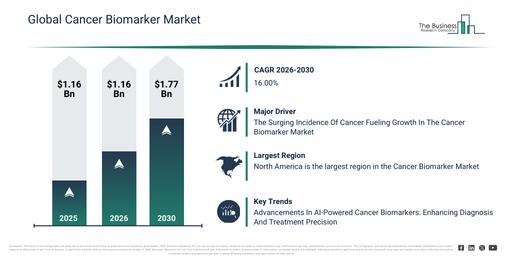
    The cancer biomarker market is anticipated to experience swift expansion in the upcoming years. This market is projected to reach $52.63 billion by 2030, exhibiting a compound annual growth rate (CAGR) of 16.0%. Factors contributing to this growth during the forecast period include a rising demand for tailored oncology treatments, increased investments in precision medicine, the expansion of drug development guided by biomarkers, the growing application of AI-based biomarker analysis, and a heightened emphasis on screening for early-stage cancer. Key trends anticipated over the forecast period involve the expanded utilization of genetic and protein biomarkers, an uptick in the adoption of companion diagnostics, the increasing integration of omics technologies, a broader application of liquid biopsy techniques, and an intensified focus on identifying cancer at early stages.

    Get A Free Sample Report With In-Depth Market Insights:

    https://thebusinessresearchcompany.com/sample_request?id=68172033&type=smp&name=Cancer%20Biomarker%20Market%20Report%202026&utm_source=Blogs&utm_medium=Paid&utm_campaign=Sep_PR

    Cancer Biomarker Market Growth Factors Behind Sustained Expansion

    The escalating prevalence of cancer is fueling expansion within the cancer biomarker market. The cancer incidence rate refers to the count of new cancer cases, specific to a site or type, observed in a particular population over a year, expressed as the number of cancers per 100,000 at-risk individuals. This growing cancer occurrence leads to the extensive adoption of cancer biomarkers, which are instrumental in evaluating disease risk, screening for hidden primary tumors, distinguishing between benign and malignant indicators, or differentiating various forms of malignancy. Cancer biomarkers facilitate early identification, diagnosis, and ongoing monitoring of the disease by signaling its presence or advancement, thereby enabling tailored treatment approaches and enhancing patient results. As an illustration, a report released in May 2024 by the International Agency for Research on Cancer (IARC), a cancer research body based in France, indicated that in 2022, approximately 20 million new cancer cases were documented, leading to 9.7 million deaths. Projections suggest that by 2050, new cancer cases will exceed 35 million, marking a 77% rise from 2022. Consequently, the escalating incidence of cancer is anticipated to drive forward the growth of the cancer biomarker market in the years ahead.

    Cancer Biomarker Market Segment Analysis And Revenue Potential

    The cancer biomarker market covered in this report is segmented –

    1) By Biomarker Type: Protein Biomarkers, Genetic Biomarkers, Other Biomarker Types

    2) By Profiling Technologies: Omics Technologies, Immunoassay, Bioinformatics, Cytogenetics

    3) By Cancer Type: Breast Cancer, Lung Cancer, Colorectal Cancer, Prostate Cancer, Thyroid Cancer, Kidney Cancer, Other Cancers

    4) By Application: Diagnostics, Research And Development, Prognostics, Risk Assessment, Other Applications

    Subsegments:

    1) By Protein Biomarkers: Tumor-Specific Antigens, Circulating Tumor Protein

    2) By Genetic Biomarkers: DNA Mutations, RNA Expression Profiles

    3) By Other Biomarker Types: Epigenetic Biomarkers, Metabolomic Biomarkers

    Cancer Biomarker Market Industry Trends Fueling Future Revenue Growth

    Leading firms within the cancer biomarker market are concentrating their efforts on creating advanced solutions, including AI-powered cancer biomarkers, aimed at improving the precision of diagnoses and tailoring therapeutic strategies for individuals. These AI-powered cancer biomarkers are defined as biological markers of the disease whose detection and examination rely on artificial intelligence technologies. As an illustration, in September 2023, Ibex Medical Analytics, a US-based Ibex Medical Analytics, introduced Galen Breast HER2, an AI-driven solution developed to boost the accuracy and consistency of HER2 scoring for individuals with breast cancer. This cutting-edge platform assists pathologists by automatically identifying invasive tumor regions and measuring HER2 expression in accordance with the 2018 ASCO/CAP guidelines. The Galen Breast HER2 system employs a new computational process to scrutinize immunohistochemistry (IHC)-stained slides, offering comprehensive visual representations of staining patterns and empowering pathologists to render well-grounded treatment choices.

    Cancer Biomarker Market Leading Players And Competitive Positioning

    Major companies operating in the cancer biomarker market are F. Hoffmann-La Roche AG, Thermo Fisher Scientific Inc., QIAGEN NV, Illumina Inc., Bio-Rad Laboratories Inc., Abbott Laboratories, bioMérieux SA, Becton Dickinson and Company, Merck & Co. Inc., Bristol-Myers Squibb Company, PerkinElmer Inc., Siemens AG, Exact Sciences Corporation, Novartis AG, Agilent Technologies Inc., Hologic Inc., Myriad Genetics Inc., Foundation Medicine Inc., Guardant Health Inc., Natera Inc., Sysmex Corporation, Biocartis Group NV, NanoString Technologies Inc., Veracyte Inc., Epic Sciences Inc., Cynvenio Biosystems Inc., Genomic Health Inc., Oncocyte Corporation, Exosome Diagnostics Inc., Grail Inc.

    View The Full Cancer Biomarker Market Report:

    https://thebusinessresearchcompany.com/report/cancer-biomarker-global-market-report?utm_source=Blogs&utm_medium=Paid&utm_campaign=Sep_PR

    Cancer Biomarker Market Regional Distribution: Which Areas Power Market Growth?

    North America was the largest region in the cancer biomaker market in 2025. Asia-Pacific is expected to be the fastest-growing region in the forecast period. The regions covered in the cancer biomarker market report are Asia-Pacific, South East Asia, Western Europe, Eastern Europe, North America, South America, Middle East, Africa.

    Reach Out To Our Team:

    The Business Research Company: https://www.thebusinessresearchcompany.com/

    Americas: +1 310-496-7795

    Asia: +44 7882 955267 & +91 8897263534

    Europe: +44 7882 955267

    Email us at: marketing@tbrc.info

    Follow us on:

    LinkedIn: https://in.linkedin.com/company/the-business-research-company

    YouTube: https://www.youtube.com/channel/UC24_fI0rV8cR5DxlCpgmyFQ

    Global Market Model: https://www.thebusinessresearchcompany.com/global-market-model
  • Cancellous Sponge Market Trends Reshaping Industry Growth Through 2030

    Cancellous Sponge Market Trends Reshaping Industry Growth Through 2030

    Backed by market attractiveness analysis, total addressable market sizing, company benchmarking matrices, interactive Excel dashboards, wider supply chain intelligence, emerging startup coverage, and detailed product-level insights, The Business Research Company’s 2026 market reports are designed to offer research that is more actionable and strategically valuable than ever.

    Cancellous Sponge Market Growth From $7.04 Billion In 2026 To $8.76 Billion By 2030 At A CAGR Of 5.6%

    The cancellous sponge market size has seen significant growth in recent years. It is projected to expand from $6.65 billion in 2025 to $7.04 billion in 2026, achieving a compound annual growth rate (CAGR) of 5.9%. The market’s growth in previous periods can be linked to the limited availability of cancellous sponge materials, a reliance on natural collagen and hydroxyapatite, an increasing number of orthopedic surgeries, greater awareness of bone grafting techniques, and the adoption of traditional wound care methods.

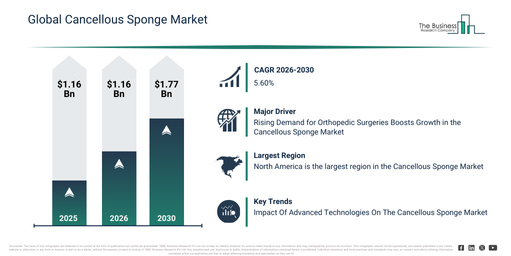
    The cancellous sponge market is projected to experience robust expansion over the coming years, with its size anticipated to reach $8.76 billion by 2030, driven by a compound annual growth rate (CAGR) of 5.6%. This projected increase is largely due to factors such as the development of synthetic and composite cancellous sponges, a growing need in dental and plastic surgical procedures, breakthroughs in bioactive and regenerative materials, the expansion of ambulatory surgical centers, and their incorporation into minimally invasive surgical techniques. Key trends anticipated during this period encompass the increased utilization of collagen and hydroxyapatite-based sponges, a greater uptake of synthetic and composite materials, an uptick in orthopedic and dental procedures, the broadening scope of wound care and plastic surgery applications, and a strong emphasis on biocompatibility for accelerated bone regeneration.

    Get A Free Sample Report With In-Depth Market Insights:

    https://thebusinessresearchcompany.com/sample_request?id=84886928&type=smp&name=Cancellous%20Sponge%20Market%20Report%202026&utm_source=Blogs&utm_medium=Paid&utm_campaign=Sep_PR

    Cancellous Sponge Market Demand Drivers Opening New Revenue Streams

    The rising volume of orthopedic surgeries is anticipated to propel the growth of the cancellous sponge market in the foreseeable future. These procedures, which involve the musculoskeletal system including bones, joints, ligaments, tendons, and muscles, are becoming more common due to factors such as an increasing prevalence of musculoskeletal disorders, advancements in surgical techniques and technology, and a heightened focus on improving patient quality of life through effective pain management and functional recovery. Cancellous sponges aid in stimulating osteoinduction, a process where immature cells are recruited and encouraged to develop into osteoblasts, which are bone-forming cells. This mechanism is crucial for regenerating bone tissue in areas experiencing critical bone loss or damage. For instance, in March 2023, data from the American Academy of Orthopedic Surgeons, a US-based orthopedic organization, projected that the annual volume of primary total joint arthroplasties (TJAs) is expected to increase by 70% to reach 2,257,326. This growth is primarily attributed to a higher demand for total hip arthroplasties (THAs), forecasted to reach 1,219,852, surpassing total knee arthroplasties (TKAs), which are projected at 1,037,474 by 2050. Thus, the increasing number of orthopedic surgeries is a significant driver for the expansion of the cancellous sponge market.

    Cancellous Sponge Market Segmentation And Category Overview

    The cancellous sponge market covered in this report is segmented –

    1) By Product Type: Collagen Based, Hydroxyapatite Based, Chitosan Based, Polyethylene Glycol Based

    2) By Material: Natural, Synthetic, Composite

    3) By Application: Orthopedic Surgeries, Dental Procedures, Wound Care, Plastic Surgery, Other Applications

    4) By End User: Hospitals, Ambulatory Surgical Centers, Specialty Clinics, Other End Users

    Subsegments:

    1) By Collagen Based: Bovine Collagen Sponges, Porcine Collagen Sponges, Synthetic Collagen Sponges

    2) By Hydroxyapatite Based: Synthetic Hydroxyapatite Sponges, Natural Hydroxyapatite Sponges

    3) By Chitosan Based: Chitosan Sponges From Shrimp Shells, Chitosan Sponges From Crab Shells

    4) By Polyethylene Glycol Based: PEG-Based Hydrogels, PEG-Based Sponges With Bioactive Factors

    Cancellous Sponge Market Trends Powering Strategic Industry Growth

    Leading companies within the cancellation sponge market are rolling out innovative products, including allografts and cortical fibers, to deliver enhanced solutions for bone grafting procedures. An allograft refers to a tissue graft sourced from a genetically dissimilar donor, commonly employed in bone repair surgeries to encourage healing without requiring tissue harvesting from the patient. Cortical fibers constitute dense, strong bone tissue that lends structural support and stability in bone grafting applications. For example, in May 2024, Isto Biologics, a US-based biologics and cellular therapy company, unveiled Fibrant Liberty, an advanced allograft solution specifically engineered for bone grafting procedures. This product incorporates a dry blend of robust cortical fibers and mineralized cortical cancellous chips, which ensures rapid hydration and versatility for various surgical uses. Its design is intended to improve ease of handling, prevent graft movement, and stimulate optimal bone growth.

    Cancellous Sponge Market Competitive Overview And Top Companies

    Major companies operating in the cancellous sponge market are Medtronic Inc., Stryker Corporation, DePuy Synthes Inc., Zimmer Biomet Holdings Inc., Smith & Nephew plc, Aesculap Inc., Arthrex Inc., NuVasive Inc., Globus Medical Inc., Wright Medical Group N.V., Bioventus LLC, K2M Group Holdings Inc., LifeNet Health Inc., Paragon 28 Inc., Exactech Inc., RTI Surgical Holdings Inc., Biocomposites Ltd., Integra LifeSciences Holdings Corporation, SeaSpine Holdings Corporation, Xtant Medical Holdings Inc., Orthofix Medical Inc., OsteoMed LLC, Synergy Biomedical LLC, Amedica Corporation, Bone Therapeutics SA

    View The Full Cancellous Sponge Market Report:

    https://thebusinessresearchcompany.com/report/cancellous-sponge-global-market-report?utm_source=Blogs&utm_medium=Paid&utm_campaign=Sep_PR

    Cancellous Sponge Market Leading Geography: Which Region Contributes The Most Revenue?

    North America was the largest region in the cancellous sponge market in 2025. The regions covered in the cancellous sponge market report are Asia-Pacific, South East Asia, Western Europe, Eastern Europe, North America, South America, Middle East, Africa.

    Reach Out To Our Team:

    The Business Research Company: https://www.thebusinessresearchcompany.com/

    Americas: +1 310-496-7795

    Asia: +44 7882 955267 & +91 8897263534

    Europe: +44 7882 955267

    Email us at: marketing@tbrc.info

    Follow us on:

    LinkedIn: https://in.linkedin.com/company/the-business-research-company

    YouTube: https://www.youtube.com/channel/UC24_fI0rV8cR5DxlCpgmyFQ

    Global Market Model: https://www.thebusinessresearchcompany.com/global-market-model
  • Calcium Phosphate Cement Market Growth To $150.83 Billion Creates New Opportunities Across The Industry

    Calcium Phosphate Cement Market Growth To $150.83 Billion Creates New Opportunities Across The Industry

    Featuring market attractiveness scoring, total addressable market sizing, company benchmarking matrices, interactive Excel dashboards, deeper supply chain intelligence, emerging startup tracking, and granular product-level insights, The Business Research Company’s 2026 market reports are built to deliver research that is both more actionable and more strategically valuable.

    Calcium Phosphate Cement Market Expansion Outlook: What Revenue Opportunities Are Ahead?

    The calcium phosphate cement market has experienced robust expansion in recent years. This market is anticipated to grow from $104.76 billion in 2025 to $112.95 billion in 2026, advancing at a compound annual growth rate (CAGR) of 7.8%. The historical growth of the market can be attributed to factors such as the limited availability of biocompatible CPC formulations, a reliance on traditional bone graft materials, an increase in orthopedic and dental procedures, rising awareness of bone repair solutions, and the adoption of standard CPC dosage ranges.

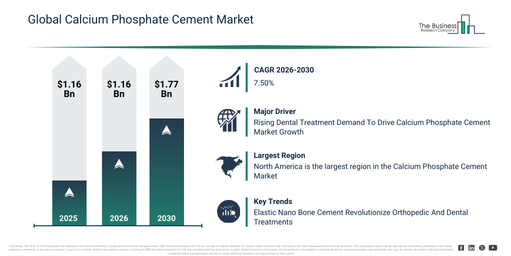
    The calcium phosphate cement market is anticipated to demonstrate robust growth in the coming years. Its value is forecast to reach $150.83 billion by 2030, exhibiting a compound annual growth rate (CAGR) of 7.5%. Factors contributing to this growth include the development of high-dose and specialized CPC products, the expansion of minimally invasive bone repair surgeries, increasing adoption in hospitals and clinics, a rise in regulatory approvals and certifications, and advancements in CPC for complex bone reconstruction. Significant trends for the forecast period encompass a rising adoption of calcium phosphate cement in orthopedic surgeries, increasing utilization of CPC in dental bone repair and regeneration, the development of customized dosage forms for specific applications, growth in ambulatory surgery centers and clinic procedures, and a strong focus on biocompatibility and enhanced bone integration.

    Get A Free Sample Report With In-Depth Market Insights:

    https://thebusinessresearchcompany.com/sample_request?id=51061405&type=smp&name=Calcium%20Phosphate%20Cement%20Market%20Report%202026&utm_source=Blogs&utm_medium=Paid&utm_campaign=Sep_PR

    Calcium Phosphate Cement Market Growth Backed By Core Demand Fundamentals

    The future expansion of the calcium phosphate cement market is anticipated to be fueled by the increasing need for dental care. Dental treatment encompasses professional services for the care and management of teeth, gums, and various oral tissues, covering procedures for the prevention, diagnosis, and remedy of oral health issues. Emphasizing oral health, the increasing prevalence of dental ailments coupled with wider access to cutting-edge dental care technologies escalates the requirement for dental treatment. In dental applications, calcium phosphate cement aids in bone regeneration and integration, a crucial aspect for procedures such as dental implants and the repair of bone defects. An example illustrating this trend comes from a May 2024 report by the National Health Service, a publicly funded healthcare system in the UK, which indicated that the count of adults visiting NHS dentists in England climbed to 18,111,609 in 2023 from 16,409,636 in 2022. Similarly, the number of children receiving treatment grew to 6,372,892, an increase from 5,589,201 in the preceding year. Consequently, the escalating demand for dental care will stimulate expansion within the calcium phosphate cement market.

    Calcium Phosphate Cement Market Segment Outlook: Which Categories Are Growing Fastest?

    The calcium phosphate cement market covered in this report is segmented –

    1) By Product Type: Hydroxyapatite Based, Tricalcium Phosphate (TCP) Based, Other Product Types

    2) By Formulation: Powder Form, Paste Form, Injectable Form

    3) By Sales Channel: Direct Sales, Distributors Or Third-Party Channels, Online Or E-Commerce Platforms

    4) By End User: Hospitals, Dental Clinics, Research And Academic Institutes, Orthopedic And Dental Original Equipment Manufacturers (OEMs), Other End Users

    Subsegments:

    1) By Hydroxyapatite Based: Injectable Hydroxyapatite Cement, Moldable Hydroxyapatite Cement, Pre-Formed Hydroxyapatite Cement, Paste Hydroxyapatite Cement

    2) By Tricalcium Phosphate (TCP) Based: Injectable Tricalcium Phosphate (TCP) Cement, Moldable Tricalcium Phosphate (TCP) Cement, Pre-Formed Tricalcium Phosphate (TCP) Cement, Paste Tricalcium Phosphate (TCP) Cement

    3) By Other Product Types: Composite Calcium Phosphate Cement, Bioactive Glass-Enhanced Cement, Polymer-Modified Calcium Phosphate Cement, Custom Formulation Calcium Phosphate Cement

    Calcium Phosphate Cement Market Growth Trends Reshaping The Competitive Landscape

    Major companies operating in the Calcium Phosphate Cement market are concentrating on creating innovative products, such as highly elastic nano bone cement materials, to deliver strong mechanical support, hasten bone healing, and simplify complex orthopedic surgeries. Highly elastic nano bone cement is a next-generation calcium phosphate-based biomaterial developed using nano-cluster anchoring technology to impart exceptional elasticity, toughness, and strength, closely mimicking the structure and flexibility of natural bone. For instance, in October 2025, the University of Hong Kong’s Li Ka Shing Faculty of Medicine (HKUMed), a China-based academic and clinical research institution focused on orthopedic, trauma, and regenerative medicine innovations, launched a revolutionary nano bone cement. This product, termed ‘nano bone cement,’ is an elastic calcium phosphate cement with a porous structure that not only matches the mechanical properties of human bone but also allows for customizable shaping before hardening. Key features of the product include the integration of organic flexible and inorganic rigid components to achieve high elasticity and compressive strength; its ability to expand after absorbing water for automatic defect filling; and a design that promotes cell adhesion and bone tissue regeneration. The material’s performance enables simpler, faster surgery, reduces the risk of structural failure common in rigid cements, and is expected to improve both patient mobility and surgical outcomes, especially for irregularly shaped or large bone defects.

    Calcium Phosphate Cement Market Competitive Landscape: Which Companies Lead The Industry?

    Major companies operating in the calcium phosphate cement market are Medtronic Plc., Johnson & Johnson Medical Devices Companies Inc., Stryker Corporation, DSM Biomedical Inc., Zimmer Biomet Holdings Inc., Smith & Nephew plc, Straumann Holding AG, Orthofix International N V, Xtant Medical Holdings Inc., Berkeley Advanced Biomaterials Inc., Heraeus Medical GmbH, Curasan AG, INNOTERE S A S, Vivorté Inc., BonAlive Biomaterials Ltd., Teknimed S A S, Graftys S A, Arthrex Inc., Exactech Inc., Cardinal Health Inc., CryoLife Inc., Aap Implantate AG, Sanatmetal Ltd.

    View The Full Calcium Phosphate Cement Market Report:

    https://thebusinessresearchcompany.com/report/calcium-phosphate-cement-global-market-report?utm_source=Blogs&utm_medium=Paid&utm_campaign=Sep_PR

    Calcium Phosphate Cement Market Regional Outlook: Where Is Opportunity Concentrated?

    North America was the largest region in the calcium phosphate cement market in 2025. The regions covered in the calcium phosphate cement market report are Asia-Pacific, South East Asia, Western Europe, Eastern Europe, North America, South America, Middle East, Africa.

    Reach Out To Our Team:

    The Business Research Company: https://www.thebusinessresearchcompany.com/

    Americas: +1 310-496-7795

    Asia: +44 7882 955267 & +91 8897263534

    Europe: +44 7882 955267

    Email us at: marketing@tbrc.info

    Follow us on:

    LinkedIn: https://in.linkedin.com/company/the-business-research-company

    YouTube: https://www.youtube.com/channel/UC24_fI0rV8cR5DxlCpgmyFQ

    Global Market Model: https://www.thebusinessresearchcompany.com/global-market-model
  • Bunion Correction Systems Market Forecast: Breaking Down The Numbers Behind Future Expansion

    Bunion Correction Systems Market Forecast: Breaking Down The Numbers Behind Future Expansion

    Built to provide research that’s more actionable and strategically valuable, The Business Research Company’s 2026 market reports include market attractiveness analysis, total addressable market sizing, company benchmarking matrices, interactive Excel dashboards, broader supply chain intelligence, emerging startup tracking, and in-depth product insights.

    Bunion Correction Systems Market Growth Potential: How Will Market Size Shift Through 2030?

    The bunion correction systems market size has demonstrated robust expansion in recent years. It is projected to increase from $0.84 billion in 2025 to $0.91 billion in 2026, progressing at a compound annual growth rate (CAGR) of 8.0%. The market’s historical growth can be attributed to the reliance on traditional osteotomy and exostectomy techniques, limited availability of specialized correction systems, an increase in orthopedic surgical procedures, the rising prevalence of hallux valgus, and the adoption of hospital-based surgical interventions.

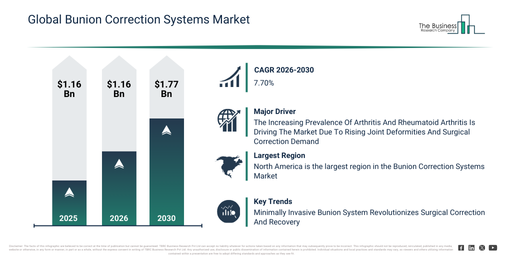
    The bunion correction systems market is projected to experience substantial expansion in the coming years, reaching a valuation of $1.22 billion by 2030, demonstrating a compound annual growth rate (CAGR) of 7.7%. This anticipated growth throughout the forecast period stems from factors such as the creation of sophisticated implants and wearable correction devices, the broadening reach of ambulatory and specialized medical centers, a rise in minimally invasive surgical techniques, the incorporation of digital imaging and surgical planning technologies, and increased patient knowledge leading to a desire for quicker recuperation. Key developments expected during this time include a greater uptake of minimally invasive bunion correction methods, an escalating need for advanced implants and supplementary products, the proliferation of specialized foot care facilities, an emphasis on recovery and rehabilitation after surgery, and a heightened understanding of foot health alongside orthopedic care.

    Get A Free Sample Report With In-Depth Market Insights:

    https://thebusinessresearchcompany.com/sample_request?id=90099424&type=smp&name=Bunion%20Correction%20Systems%20Market%20Report%202026&utm_source=Blogs&utm_medium=Paid&utm_campaign=Sep_PR

    Bunion Correction Systems Market Growth Catalysts And Demand Drivers

    The rising occurrence of arthritis and rheumatoid arthritis is projected to fuel the expansion of the bunion correction systems market in the future. Arthritis broadly refers to the inflammation and deterioration of one or multiple joints, while rheumatoid arthritis (RA) is a long-term autoimmune condition marked by ongoing joint inflammation and worsening tissue damage. The growing incidence of arthritis and RA stems from factors like an aging population, which leads to increased rates of joint wear and autoimmune reactions over time. Bunion correction systems offer efficient surgical remedies to correct deformities and reduce joint strain, consequently enhancing mobility and the quality of life for individuals suffering from arthritis-related foot ailments. For example, data from February 2024, provided by Arthritis Australia, an Australian non-profit dedicated to arthritis awareness and support, indicates that around 15% of Australians across various age brackets suffer from arthritis, positioning it as a leading chronic health issue in the country. Forecasts suggest the population of arthritis patients will reach 5.39 million by 2040, a 31% increase that signifies an additional 1.28 million people affected. By 2040, it is anticipated that 280,040 males and 479,828 females will be living with rheumatoid arthritis. Consequently, the expanding occurrence of arthritis and rheumatoid arthritis is a key driver for the bunion correction systems market.

    Bunion Correction Systems Market Segment Landscape: Which Areas Lead Development?

    The bunion correction systems market covered in this report is segmented –

    1) By Type: Osteotomy, Arthrodesis, Lapidus, Exostectomy

    2) By Surgery Type: Minimally Invasive, Traditional

    3) By End-Use: Hospitals, Ambulatory Centers, Specialty Centers

    Subsegments:

    1) By Osteotomy: Chevron Osteotomy, Scarf Osteotomy, Akin Osteotomy

    2) By Arthrodesis: First Metatarsophalangeal (MTP) Joint Arthrodesis, Midfoot Arthrodesis, Tarsometatarsal Arthrodesis

    3) By Lapidus: Lapidus Procedure With Plate Fixation, Lapidus Procedure With Screw Fixation, Modified Lapidus Procedure

    4) By Exostectomy: Simple Exostectomy, Exostectomy With Soft Tissue Release, Exostectomy With Bunionectomy

    Bunion Correction Systems Market Trends Shaping Long-Term Demand

    Leading companies in the bunion correction systems market are concentrating on developing advanced innovations, such as the minimally invasive bunion correction system, to offer surgeons an improved surgical method that enhances outcomes for bunion correction through less invasive techniques. A minimally invasive bunion correction system refers to a surgical methodology and a suite of specialized instruments engineered to realign the big toe joint and correct bunion deformities using small incisions, thereby lessening tissue damage, shortening recovery time, and reducing postoperative complications. For instance, in February 2024, Paragon 28 Inc., a US-based medical device company specializing in foot and ankle orthopedics, introduced the PRECISION MIS Bunion System, which is a next-generation solution for the minimally invasive surgical correction of bunions. This system is engineered to facilitate distal metatarsal osteotomy through a guided, joint-preserving technique that boosts surgical precision while minimizing tissue disruption. It is designed for tri-planar correction, incorporating an outrigger-based mechanism and specialized cannulated screws to optimize bone alignment and stability, consequently promoting faster healing and reducing postoperative discomfort.

    Bunion Correction Systems Market Competitive Landscape: Who Leads The Industry?

    Major companies operating in the bunion correction systems market are Johnson and Johnson MedTech, Stryker Corporation, Zimmer Biomet Holdings Inc, Arthrex Inc, Enovis Corporation, Wright Medical Technology Inc, Orthofix Holdings Inc, Paragon 28, Acumed LLC, Treace Medical Concepts Inc, Medartis AG, Nextremity Solutions Inc, BioPro Inc, Extremity Medical LLC, Integra LifeSciences Holdings Corporation, Smith and Nephew plc, DePuy Synthes Inc, MicroPort Orthopedics Inc, Aesculap AG, Vilex LLC

    View The Full Bunion Correction Systems Market Report:

    https://thebusinessresearchcompany.com/report/bunion-correction-systems-global-market-report?utm_source=Blogs&utm_medium=Paid&utm_campaign=Sep_PR

    Bunion Correction Systems Market Geographic Landscape: Which Region Leads Industry Growth?

    North America was the largest region in the bunion correction systems market in 2025. Asia-Pacific is expected to be the fastest-growing region in the forecast period. The regions covered in the bunion correction systems market report are Asia-Pacific, South East Asia, Western Europe, Eastern Europe, North America, South America, Middle East, Africa.

    Reach Out To Our Team:

    The Business Research Company: https://www.thebusinessresearchcompany.com/

    Americas: +1 310-496-7795

    Asia: +44 7882 955267 & +91 8897263534

    Europe: +44 7882 955267

    Email us at: marketing@tbrc.info

    Follow us on:

    LinkedIn: https://in.linkedin.com/company/the-business-research-company

    YouTube: https://www.youtube.com/channel/UC24_fI0rV8cR5DxlCpgmyFQ

    Global Market Model: https://www.thebusinessresearchcompany.com/global-market-model
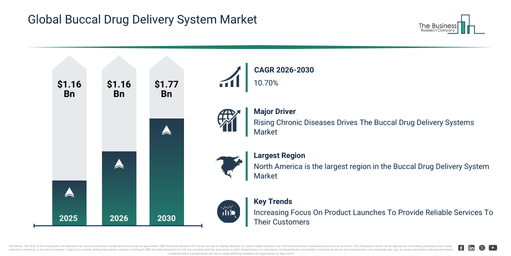
  • Buccal Drug Delivery System Market Expected To Grow At 10.7% CAGR Through 2030: What Businesses Need To Know

    Buccal Drug Delivery System Market Expected To Grow At 10.7% CAGR Through 2030: What Businesses Need To Know

    Backed by market attractiveness analysis, total addressable market sizing, company benchmarking matrices, interactive Excel dashboards, wider supply chain intelligence, emerging startup coverage, and detailed product-level insights, The Business Research Company’s 2026 market reports are designed to offer research that is more actionable and strategically valuable than ever.

    Buccal Drug Delivery System Market Value Analysis: What Growth Lies Ahead Over The Forecast Period?

    The market for buccal drug delivery systems has seen significant growth in recent years. This market is expected to increase from $3.89 billion in 2025 to $4.32 billion in 2026, exhibiting a compound annual growth rate (CAGR) of 11.2%. The historical growth can be linked to factors such as a rising preference for alternative drug administration methods, an expansion in treatments for chronic pain and angina, progress in mucoadhesive formulations, a growing demand for medications with quicker onset, and the broadening of oral pharmaceutical manufacturing.

    The market for buccal drug delivery systems is anticipated to expand quickly over the coming years. Its valuation is projected to reach $6.48 billion by 2030, exhibiting a compound annual growth rate (CAGR) of 10.7%. This expansion during the projection period stems from factors such as augmented investments in transmucosal drug investigations, a heightened need for smoking cessation treatments, the proliferation of personalized drug delivery systems, a stronger emphasis on formulations that promote compliance, and the accelerated creation of innovative buccal medications. Key trends anticipated during the forecast period encompass a wider acceptance of buccal and sublingual dosage methods, an escalating requirement for swift drug absorption mechanisms, a greater concentration on drug delivery systems that are convenient for patients, the evolution of controlled-release buccal formulations, and an intensified focus on non-invasive therapeutic options.

    Get A Free Sample Report With In-Depth Market Insights:

    https://thebusinessresearchcompany.com/sample_request?id=42839220&type=smp&name=Buccal%20Drug%20Delivery%20System%20Market%20Report%202026&utm_source=Blogs&utm_medium=Paid&utm_campaign=Sep_PR

    Buccal Drug Delivery System Market Opportunity Drivers: What’s Unlocking New Revenue Potential?

    The increasing occurrence of long-term illnesses is anticipated to fuel the expansion of the buccal drug delivery systems market in the future. Chronic conditions are defined as health problems lasting a year or more, including examples like cancer, heart disease, stroke, diabetes, and arthritis. These common chronic ailments, which require ongoing nutritional and medical support, are manageable but currently incurable. For many individuals living with chronic diseases like diabetes and cancer, buccal drug delivery systems offer suitable and efficient methods for administering mucosal and transmucosal medications. As an illustration, in June 2024, data from the National Health Service, a UK-based government body, indicated that in 2023, 3,615,330 people registered with a general practitioner (GP) were identified with non-diabetic hyperglycemia or pre-diabetes (a state of elevated blood sugar not yet meeting diabetes criteria). This represented an 18% rise from 3,065,825 instances recorded in 2022. Consequently, the growing incidence of chronic conditions is a key factor boosting the expansion of the buccal drug delivery systems market.

    Buccal Drug Delivery System Market Segments: Where Is Growth Concentrated?

    The buccal drug delivery system market covered in this report is segmented –

    1) By Type: Sublingual, Buccal Tablets And Lozenges, Oral Sprays

    2) By Application: Pain Management, Smoking Cessation, Angina Pectoris

    3) By End-User: Hospitals, Ambulatory Centers, Other End-Users

    Subsegments:

    1) By Sublingual: Sublingual Tablets, Sublingual Films

    2) By Buccal Tablets And Lozenges: Buccal Tablets, Buccal Lozenges

    3) By Oral Sprays: Spray Solutions, Spray Gels

    Buccal Drug Delivery System Market Innovation Trends Shaping Future Development

    Leading companies active in the buccal drug delivery systems market are concentrating on launching products, such as melatonin oral spray, to increase their revenues. Melatonin oral spray is a form of melatonin supplementation provided in a spray format for oral application. For example, in February 2023, Arlak Biotech Private Limited, an India-based pharmaceutical company, introduced melatonin oral spray. This spray assists the body’s inherent melatonin production, consequently improving sleep quality in a straightforward and efficient manner. The medication offers a rapid remedy for individuals struggling with initiating sleep, maintaining sleep, or adjusting to various sleep patterns. Its swift and uncomplicated oral absorption facilitates a quicker initiation of sleep and enhanced sleep quality.

    Buccal Drug Delivery System Market Company Landscape And Competitive Strategy

    Major companies operating in the buccal drug delivery system market are Teva Pharmaceuticals Industries Ltd, Pfizer Incorporated, GlaxoSmithKline Public Limited Company, Indivior PLC, Generex Biotechnology Corporation, Catalent Inc, Arx Limited Liability Company, BioDelivery Science International Incorporated, Cynapsus Therapeutics Incorporated, Endo Pharmaceuticals Public Limited Company, Medlab Clinical Ltd, AstraZeneca PLC, Dr. Reddy’s Laboratories Ltd, Takeda Pharmaceutical Company Limited, Novartis AG, Sanofi SA, Bayer AG, Adare Pharmaceuticals Inc, NAPP Pharmaceutical Ltd, Perrigo Company PLC, Reckitt Benckiser Group PLC, Teligent Pharma Inc, Par Pharmaceutical Companies Inc, Acorda Therapeutics Inc, Opiant Pharmaceuticals Inc

    View The Full Buccal Drug Delivery System Market Report:

    https://thebusinessresearchcompany.com/report/buccal-drug-delivery-system-global-market-report?utm_source=Blogs&utm_medium=Paid&utm_campaign=Sep_PR

    Buccal Drug Delivery System Market Largest Region: Which Geography Holds The Biggest Share?

    North America was the largest region in the buccal drug delivery systems market share in 2025. The regions covered in the buccal drug delivery system market report are Asia-Pacific, South East Asia, Western Europe, Eastern Europe, North America, South America, Middle East, Africa.

    Reach Out To Our Team:

    The Business Research Company: https://www.thebusinessresearchcompany.com/

    Americas: +1 310-496-7795

    Asia: +44 7882 955267 & +91 8897263534

    Europe: +44 7882 955267

    Email us at: marketing@tbrc.info

    Follow us on:

    LinkedIn: https://in.linkedin.com/company/the-business-research-company

    YouTube: https://www.youtube.com/channel/UC24_fI0rV8cR5DxlCpgmyFQ

    Global Market Model: https://www.thebusinessresearchcompany.com/global-market-model