Category: Medical Equipment

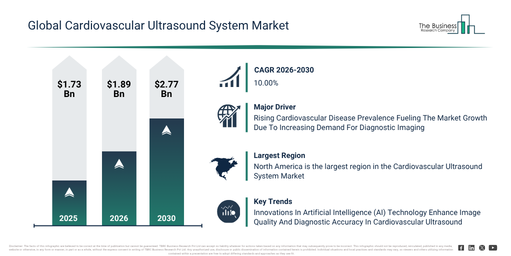
  • Cardiovascular Ultrasound System Market Forecast Highlights Expansion From $1.89 Billion To $2.77 Billion Through 2030

    Cardiovascular Ultrasound System Market Forecast Highlights Expansion From $1.89 Billion To $2.77 Billion Through 2030

    Delivering more actionable and strategically valuable research, The Business Research Company’s 2026 market reports feature market attractiveness analysis, total addressable market evaluation, company benchmarking matrices, interactive Excel dashboards, expanded supply chain intelligence, emerging startup coverage, and detailed product insights.

    Cardiovascular Ultrasound System Market Expected To Reach $2.77 Billion By 2030 At 10% CAGR

    The cardiovascular ultrasound system market has experienced robust expansion in recent years. It is anticipated to increase from $1.73 billion in 2025 to $1.89 billion in 2026, demonstrating a compound annual growth rate (CAGR) of 9.8%. The observed growth in the past can be ascribed to a global increase in cardiovascular disease incidence, the rising preference for echocardiography as a primary diagnostic tool for cardiac health, enhancements in ultrasound imaging resolution and accuracy, rising hospital spending on diagnostic imaging infrastructure, and the establishment of more cardiology departments in tertiary care hospitals.

    The cardiovascular ultrasound system market is projected to experience substantial expansion over the coming years, reaching $2.77 billion by 2030, demonstrating a compound annual growth rate (CAGR) of 10.0%. This anticipated growth can be linked to several factors, such as the rising need for early and non-invasive methods in cardiac diagnostics, the increasing acceptance of portable and handheld ultrasound equipment, the incorporation of AI for automated analysis of cardiac images, an expanding elderly population driving up demand for cardiac screenings, and the spread of telemedicine alongside remote cardiac diagnostic offerings. Key developments anticipated during this period include the wider embrace of AI-aided cardiovascular image interpretation, a growing preference for portable and point-of-care ultrasound devices, an increase in the application of 3D and high-resolution echocardiography imaging, the proliferation of cloud-based cardiac imaging and data-sharing platforms, and the enhanced integration of Doppler imaging for detailed blood flow analysis.

    Download A Free Sample Report For Comprehensive Market Insights:

    https://www.thebusinessresearchcompany.com/sample_request?id=64714286&type=smp

    Cardiovascular Ultrasound System Market Demand Drivers: What Is Fueling Industry Growth?

    The rising occurrence of cardiovascular diseases is anticipated to drive the expansion of the cardiovascular ultrasound system market moving ahead. These diseases encompass ailments impacting the heart and blood vessels, such as coronary artery disease, heart failure, and stroke, necessitating continuous observation, prompt diagnosis, and imaging evaluations. Sedentary lifestyles primarily fuel the growing prevalence of cardiovascular diseases, as diminished physical activity compromises heart health and elevates risk factors like obesity, thereby contributing to a greater occurrence of heart-related ailments. Cardiovascular ultrasound systems offer immediate, non-invasive visualization of cardiac structure and blood flow, facilitating early detection and prompt therapeutic interventions for cardiovascular diseases to enhance patient results. For example, in October 2024, data from the Centers for Disease Control and Prevention, a US-based government agency monitoring public health, indicated that cardiovascular disease deaths rose from 371,506 cases in 2022 to 919,032 deaths in 2023. Consequently, the expanding prevalence of cardiovascular diseases is fueling the development of the cardiovascular ultrasound system market.

    #Cardiovascular Ultrasound System Market Segment Landscape And Growth Potential

    The cardiovascular ultrasound system market covered in this report is segmented –

    1) By Product Type: Echocardiography Systems, Transesophageal Echocardiography Systems, Doppler Ultrasound Systems, Intravascular Ultrasound Systems

    2) By Device Display: Color Display, Black And White Display

    3) By Application: Cardiac Imaging, Vascular Imaging, Peripheral Artery Imaging, Heart Valve Analysis, Congenital Heart Disease Diagnosis

    4) By End User: Hospital And Cardiology Centers, Home And Ambulatory Care Settings, Research Institutes, Medical Device And Pharmaceutical Companies, Other End Users

    Subsegments:

    1) By Echocardiography Systems: Transthoracic Echocardiography Systems, Three-Dimensional Echocardiography Systems, Portable Echocardiography Systems, High-End Echocardiography Systems, Stress Echocardiography Systems

    2) By Transesophageal Echocardiography Systems: Adult Transesophageal Echocardiography Systems, Pediatric Transesophageal Echocardiography Systems, Miniaturized Transesophageal Echocardiography Systems, Three-Dimensional Transesophageal Echocardiography Systems, High Frequency Transesophageal Echocardiography Systems

    3) By Doppler Ultrasound Systems: Color Doppler Ultrasound Systems, Pulsed Wave Doppler Ultrasound Systems, Continuous Wave Doppler Ultrasound Systems, Power Doppler Ultrasound Systems, High Resolution Doppler Ultrasound Systems

    4) By Intravascular Ultrasound Systems: Rotational Intravascular Ultrasound Systems, Solid State Intravascular Ultrasound Systems, High Frequency Intravascular Ultrasound Systems, Automated Pullback Intravascular Ultrasound Systems, Three-Dimensional Intravascular Ultrasound Systems

    Cardiovascular Ultrasound System Market Innovation Trends: Which Developments Are Transforming The Industry?

    Leading companies within the cardiovascular ultrasound system market are concentrating on developing advanced solutions, such as AI-driven image enhancement, to elevate diagnostic accuracy, improve workflow efficiency, and assist in the early detection of cardiovascular conditions. AI-powered image enhancement involves integrating artificial intelligence algorithms into ultrasound systems to automatically optimize image clarity, reduce noise, and support clinicians in accurate interpretation. For instance, in August 2025, Royal Philips, a health technology company from the Netherlands, introduced Transcend Plus for its EPIQ CVx and Affiniti CVx cardiovascular ultrasound systems, delivering outstanding image quality alongside FDA-cleared AI enhancements. This solution is engineered to offer superior visualization, automated measurements, and increased workflow efficiency, enabling clinicians to make faster and more confident diagnostic decisions in cardiac care.

    Cardiovascular Ultrasound System Market Competitive Landscape: Who Are The Leading Companies?

    Major companies operating in the cardiovascular ultrasound system market are Samsung Electronics Co. Ltd., Siemens Healthineers AG, FUJIFILM Holdings Corporation, Koninklijke Philips N. V., GE HealthCare Technologies Inc., Mindray Bio-Medical Electronics Co. Ltd., Canon Medical Systems Corporation, Analogic Corporation, SonoScape Medical Corp., Esaote S. p. A., Trivitron Healthcare Pvt. Ltd., Butterfly Network Inc., Clarius Mobile Health Corp., Shantou Institute of Ultrasonic Instruments Co. Ltd., Shenzhen Whale Imaging Technology Co. Ltd., Wisonic Medical Technology Co. Ltd., ALPINION Medical Systems Co. Ltd., CHISON Medical Technologies Co. Ltd., United Imaging Healthcare Co. Ltd., Shenzhen Landwind Industry Co. Ltd.

    Access The Complete Cardiovascular Ultrasound System Market Report:

    https://www.thebusinessresearchcompany.com/report/cardiovascular-ultrasound-system-market-report

    Cardiovascular Ultrasound System Market Global Footprint: Which Region Holds Market Leadership?

    North America was the largest region in the cardiovascular ultrasound system market in 2025. Asia-Pacific is expected to be the fastest-growing region in the forecast period. The regions covered in the cardiovascular ultrasound system market report are Asia-Pacific, South East Asia, Western Europe, Eastern Europe, North America, South America, Middle East and Africa.

    Get in touch with us:

    The Business Research Company: https://www.thebusinessresearchcompany.com/

    Americas: +1 310-496-7795

    Asia: +44 7882 955267 & +91 8897263534

    Europe: +44 7882 955267

    Email us at: marketing@tbrc.info

    Follow us on:

    LinkedIn: https://in.linkedin.com/company/the-business-research-company

    YouTube: https://www.youtube.com/channel/UC24_fI0rV8cR5DxlCpgmyFQ

    Global Market Model: https://www.thebusinessresearchcompany.com/global-market-model

  • Bovine Pericardial Valve Market Growth Is Accelerating As Industry Transformation Continues

    Bovine Pericardial Valve Market Growth Is Accelerating As Industry Transformation Continues

    Through market attractiveness analysis, total addressable market evaluation, company benchmarking matrices, interactive Excel dashboards, expanded supply chain intelligence, emerging startup coverage, and detailed product insights, The Business Research Company’s 2026 market reports provide more actionable and strategically valuable research.

    Bovine Pericardial Valve Market Growth Analysis: How Will Revenue Expand During The Forecast Period?

    The bovine pericardial valve market size has seen robust growth in recent years. It is projected to increase from $1.57 billion in 2025 to $1.72 billion in 2026, registering a compound annual growth rate (CAGR) of 9.9%. This past growth can be ascribed to the increasing incidence of valvular heart diseases among the aging population, the rising uptake of open heart surgical valve replacement procedures, innovations in cardiac surgery techniques and perioperative care, the expanding availability of bioprosthetic valve choices in hospitals, and greater public awareness of cardiovascular disease treatment options.

    The bovine pericardial valve market size is anticipated to experience rapid growth over the next few years, reaching $2.53 billion by 2030, demonstrating a compound annual growth rate (CAGR) of 10.1%. This expansion during the forecast period is attributed to several factors including increasing demand for minimally invasive and transcatheter procedures, the rising global geriatric population driving valve replacement needs, advancements in tissue engineering and biomaterial innovation, a growing preference for durable and low anticoagulation valve solutions, and the expanding healthcare infrastructure and cardiac care accessibility in emerging markets. Prominent trends observed in this period encompass the increasing adoption of advanced bioprosthetic heart valve materials with enhanced durability, a rising demand for minimally invasive valve replacement procedures, a growing focus on anti-calcification treatment technologies in tissue valves, the expansion of transcatheter heart valve implantation procedures, and an increasing clinical preference for long-lasting biologic valve substitutes over mechanical valves.

    Download A Free Sample Report For Comprehensive Market Insights:

    https://www.thebusinessresearchcompany.com/sample_request?id=54773613&type=smp

    Bovine Pericardial Valve Market Expansion Drivers: What Is Shaping Future Growth?

    The expanding occurrence of cardiovascular diseases is set to drive the growth of the bovine pericardial valve market. These conditions, known as CVDs, encompass various disorders impacting the heart and blood vessels, such as coronary artery disease, ischemic heart disease, heart failure, and valvular issues, and are a primary global cause of illness and death. The increase in CVD prevalence is mainly linked to more sedentary lifestyles, which reduce physical activity, slow metabolism, and contribute to obesity, thereby substantially raising the risk of heart-related ailments. Bovine pericardial valves offer a durable and biocompatible option for surgical valve replacement in individuals with CVDs, particularly for valvular heart disease demanding long-term effectiveness and a lower chance of subsequent operations. For example, the American College of Cardiology, a US-based medical association, reported in September 2025 that cardiovascular disease fatalities globally reached 19. 2 million in 2023, an increase from 2022. Consequently, the increasing prevalence of cardiovascular diseases is boosting the growth of the bovine pericardial valve market.

    Bovine Pericardial Valve Market Segment Breakdown: Which Categories Generate The Most Revenue?

    The bovine pericardial valve market covered in this report is segmented –

    1) By Product Type: Surgical Valves, Transcatheter Valves

    2) By Age Group: Pediatric, Adult

    3) By Application: Aortic Valve Replacement, Mitral Valve Replacement, Tricuspid Valve Replacement

    4) By End User: Hospitals, Cardiac Centers, Ambulatory Surgical Centers

    Subsegments:

    1) By Surgical Valves: Aortic Valve, Mitral Valve, Tricuspid Valve, Pulmonary Valve

    2) By Transcatheter Valves: Transcatheter Aortic Valve, Transcatheter Mitral Valve, Transcatheter Pulmonary Valve, Transcatheter Tricuspid Valve

    Bovine Pericardial Valve Market Strategic Trends: What Is Defining The Next Phase Of Growth?

    Major companies operating in the bovine pericardial valve market are prioritizing the development of advanced products, such as next-generation surgical aortic tissue valves, to boost procedural efficiency and enhance long-term patient outcomes. A next-generation surgical aortic tissue valve represents an advanced bioprosthetic solution designed to replace a diseased aortic valve, offering improved durability and overall performance. It aims to optimize blood flow efficiency and minimize complications, thereby supporting better patient results. For instance, in April 2024, Medtronic, an Ireland-based medical technology company, launched the Avalus Ultra Valve, a next-generation surgical aortic tissue valve engineered to improve ease of use during implantation and support comprehensive patient management throughout their lifetime. The Avalus Ultra Valve incorporates advanced tissue treatment for increased durability, an optimized leaflet design for superior hemodynamic performance, and user-friendly handling characteristics that simplify surgical procedures, ultimately contributing to consistent clinical outcomes and sustained valve reliability.

    Bovine Pericardial Valve Market Key Players And Strategic Industry Positioning

    Major companies operating in the bovine pericardial valve market are Shanghai Cingular Biotechnology Co Ltd, Medtronic plc, Edwards Lifesciences Corporation, Meril Life Sciences Pvt Ltd, Lepu Medical Technology Beijing Co Ltd, MicroPort Scientific Corporation, Braile Biomédica Indústria Comércio e Representações SA, Venus Medtech Hangzhou Inc, Peijia Medical Limited, Artivion Inc, Balance Medical Limited, HighLife SAS, Maverick Biosciences Inc

    Access The Complete Bovine Pericardial Valve Market Report:

    https://www.thebusinessresearchcompany.com/report/bovine-pericardial-valve-market-report

    Bovine Pericardial Valve Market Largest Region By Revenue And Market Share

    North America was the largest region in the bovine pericardial valve market in 2025. Asia-Pacific is expected to be the fastest-growing region in the forecast period. The regions covered in the bovine pericardial valve market report are Asia-Pacific, South East Asia, Western Europe, Eastern Europe, North America, South America, Middle East and Africa.

    Get in touch with us:

    The Business Research Company: https://www.thebusinessresearchcompany.com/

    Americas: +1 310-496-7795

    Asia: +44 7882 955267 & +91 8897263534

    Europe: +44 7882 955267

    Email us at: marketing@tbrc.info

    Follow us on:

    LinkedIn: https://in.linkedin.com/company/the-business-research-company

    YouTube: https://www.youtube.com/channel/UC24_fI0rV8cR5DxlCpgmyFQ

    Global Market Model: https://www.thebusinessresearchcompany.com/global-market-model
  • Biomedical Refrigerator And Freezer Market Growth Through 2030 Creates New Strategic Opportunities

    Biomedical Refrigerator And Freezer Market Growth Through 2030 Creates New Strategic Opportunities

    Enhanced with market attractiveness analysis, total addressable market evaluation, company benchmarking matrices, interactive Excel dashboards, expanded supply chain intelligence, emerging startup coverage, and detailed product insights, The Business Research Company’s 2026 market reports deliver more actionable and strategically valuable research.

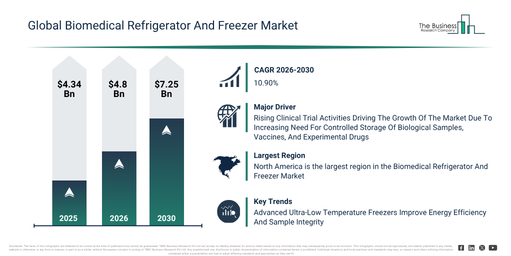
    Biomedical Refrigerator And Freezer Market Expansion From $4.8 Billion In 2026 To $7.25 Billion In 2030

    The biomedical refrigerator and freezer market has experienced substantial growth in recent years. Its valuation is projected to increase from $4.34 billion in 2025 to $4.8 billion by 2026, exhibiting a compound annual growth rate (CAGR) of 10.6%. Historically, this expansion has been driven by several factors, including a greater need for vaccine storage during worldwide immunization initiatives, an escalating requirement for dependable blood and plasma storage in healthcare facilities, the expansion of pharmaceutical research demanding regulated temperature environments, the proliferation of clinical laboratories and diagnostic infrastructure, and the establishment of initial cold chain logistics for health supply networks.

    The biomedical refrigerator and freezer market is poised for significant expansion over the coming years, with its size projected to reach $7.25 billion by 2030, exhibiting a compound annual growth rate (CAGR) of 10.9%. This growth throughout the forecast period can be attributed to several factors, including the increasing demand for biologics and cell-based therapies that necessitate ultra-low temperature storage, a heightened emphasis on vaccine distribution and pandemic preparedness infrastructure, the growing adoption of smart monitoring and connected refrigeration systems, the ongoing expansion of biobanking and genomic research requiring long-term sample preservation, and increasingly stringent regulatory standards for temperature-sensitive medical storage. Major trends anticipated during this period encompass IoMT-enabled biomedical refrigeration systems offering real-time temperature monitoring and predictive alerts, the development of energy-efficient ultra-low temperature freezer designs aimed at reducing their operational carbon footprint, the deployment of cloud-based cold chain monitoring platforms for managing vaccine and biologics storage, the integration of automated inventory and sample tracking capabilities within biomedical storage systems, and advancements in insulation and cryogenic cooling technologies for extended biological preservation.

    Download A Free Sample Report For Comprehensive Market Insights:

    https://www.thebusinessresearchcompany.com/sample_request?id=69712484&type=smp

    Biomedical Refrigerator And Freezer Market Growth Drivers: What Factors Are Accelerating Expansion?

    Rising clinical trial activities are projected to drive the expansion of the biomedical refrigerator and freezer market. These activities involve the planning, execution, oversight, and examination of research investigations aimed at assessing the safety, effectiveness, and results of medical treatments in human subjects. The increase in clinical trials stems from a rising demand for innovative therapies, with pharmaceutical and biotechnology firms increasingly undertaking studies to create new drugs and treatments for global unmet medical requirements. This expansion in clinical trials consequently heightens the demand for biomedical refrigerators and freezers, given the necessity to store a greater volume of biological samples, vaccines, and investigational drugs at controlled temperatures to maintain their safety and efficacy. For example, data from March 2026, released by the UK’s Association of the British Pharmaceutical Industry (ABPI), indicated a 36% rise in commercial clinical trials launched in the UK in 2024 compared to the prior year. This advancement positioned the UK two spots higher, reaching sixth place worldwide for competitiveness in all Phase III trials started that year. Consequently, the growing volume of clinical trial activities is fueling the expansion of the biomedical refrigerator and freezer market.

    #Biomedical Refrigerator And Freezer Market Segment Landscape And Growth Potential

    The biomedical refrigerator and freezer market covered in this report is segmented –

    1) By Product Type: Laboratory Refrigerators, Blood Bank Refrigerators, Pharmacy Refrigerators, Ultra-Low Temperature Freezers, Plasma Freezers, Cryogenic Freezers, Vaccine Storage Refrigerators, Explosion-Proof Refrigerators, Chromatography Refrigerators, Undercounter And Benchtop Units

    2) By Mobility: Stationary Floor-Standing Units, Portable And Transportable Units, Mobile Cart-Mounted Systems, Benchtop And Countertop Models, Transport And Shipping Containers

    3) By Temperature Range: 2°C to 8°C Refrigerators, -20°C Freezers, -40°C Freezers, -80°C Ultra-Low Freezers, Cryogenic Freezers (-150°C And below)

    4) By Application: Vaccine Storage, Blood And Plasma Storage, Drug Storage, Sample Preservation, Biobanking

    5) By End User: Hospitals, Research Laboratories, Pharmacies, Diagnostic Centers, Other End Users

    Subsegments:

    1) By Laboratory Refrigerators: Standard Temperature Units, Low Temperature Units, Glass Door Refrigerators, Solid Door Refrigerators, Undercounter Refrigerators

    2) By Blood Bank Refrigerators: Platelet Storage Units, Red Blood Cell Storage Units, Plasma Storage Units, Dual Temperature Units

    3) By Pharmacy Refrigerators: Vaccine Storage Units, Medication Storage Units, Controlled Room Temperature Units, Compartmentalized Refrigerators

    4) By Ultra-Low Temperature Freezers: Vertical Ultra-Low Freezers, Horizontal Ultra-Low Freezers, Undercounter Ultra-Low Freezers, Stackable Ultra-Low Freezers

    5) By Plasma Freezers: Single Compartment Freezers, Multi Compartment Freezers, Portable Plasma Freezers

    6) By Cryogenic Freezers: Liquid Nitrogen Freezers, Mechanical Cryogenic Freezers, Rack Mounted Cryogenic Freezers

    7) By Vaccine Storage Refrigerators: Purpose Built Vaccine Refrigerators, Undercounter Vaccine Refrigerators, Pharmacy Vaccine Refrigerators

    8) By Explosion-Proof Refrigerators: Flammable Material Refrigerators, Corrosive Material Refrigerators, Hazardous Environment Refrigerators

    9) By Chromatography Refrigerators: Solvent Storage Refrigerators, Sample Storage Refrigerators, Column Storage Refrigerators

    10) By Undercounter And Benchtop Units: Compact Benchtop Refrigerators, Mini Undercounter Refrigerators, Portable Undercounter Units

    Biomedical Refrigerator And Freezer Market Trends: What Is Shaping Future Industry Growth?

    Leading companies in the biomedical refrigerators and freezers market are concentrating on developing advanced solutions, such as ultra-low temperature (ULT) freezers, with the goal of enhancing sample preservation, improving workflow efficiency, and ensuring regulatory compliance in laboratory and clinical environments. Ultra-low temperature (ULT) freezers are refrigeration systems designed to maintain extremely low temperatures, typically from -40°C to -86°C, for the storage of biological materials, pharmaceuticals, and cell- and gene-therapy products. For instance, in April 2024, Thermo Fisher Scientific Inc., a US-based life sciences technology company, launched its TSX Universal Series ULT Freezers. These freezers, crafted to assist scientists across diverse workflows, feature Universal V-Drive technology, tighter temperature control, faster recovery times, and universal voltage support, while achieving ISO Class 5.5 cleanroom compliance. Such advancements enable reliable long-term storage of blood, blood products, and sensitive biological materials in academic, GMP, and research laboratories, simultaneously improving energy efficiency and supporting sustainability goals.

    Biomedical Refrigerator And Freezer Market Competitive Landscape: Who Are The Leading Companies?

    Major companies operating in the biomedical refrigerator and freezer market are Thermo Fisher Scientific Inc., Liebherr Group, Follett LLC, Dometic Group, PHC Holdings Corporation, Eppendorf AG, Telstar SA, Binder GmbH, B Medical Systems S. à r. l., Helmer Inc., Vestfrost Solutions, Arctiko A/S, Jeio Tech Inc., So-Low Environmental Equipment Co. Inc., Migali Industries Inc., Desmon S. p. A., Labcold Ltd., Philipp Kirsch GmbH, Gram Commercial A/S, Haier Biomedical International, Fiocchetti Scientific S. r. l., Evermed S. r. l., Accucold, Froilabo

    Access The Complete Biomedical Refrigerator And Freezer Market Report:

    https://www.thebusinessresearchcompany.com/report/biomedical-refrigerator-and-freezer-market-report

    Biomedical Refrigerator And Freezer Market Leading Geography: Which Region Generates The Most Revenue?

    North America was the largest region in the biomedical refrigerator and freezer market in 2025. Asia-Pacific is expected to be the fastest-growing region in the forecast period. The regions covered in the biomedical refrigerator and freezer market report are Asia-Pacific, South East Asia, Western Europe, Eastern Europe, North America, South America, Middle East and Africa.

    Get in touch with us:

    The Business Research Company: https://www.thebusinessresearchcompany.com/

    Americas: +1 310-496-7795

    Asia: +44 7882 955267 & +91 8897263534

    Europe: +44 7882 955267

    Email us at: marketing@tbrc.info

    Follow us on:

    LinkedIn: https://in.linkedin.com/company/the-business-research-company

    YouTube: https://www.youtube.com/channel/UC24_fI0rV8cR5DxlCpgmyFQ

    Global Market Model: https://www.thebusinessresearchcompany.com/global-market-model
  • Bioabsorbable Orthopedic Implants Market Forecast Highlights Expansion From $1.46 Billion To $2.41 Billion Through 2030

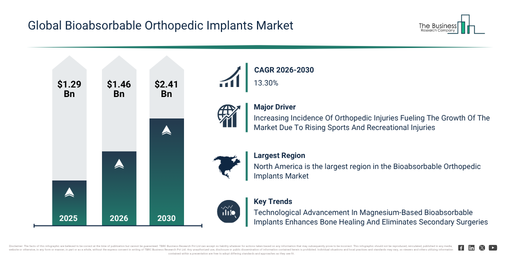
    Bioabsorbable Orthopedic Implants Market Forecast Highlights Expansion From $1.46 Billion To $2.41 Billion Through 2030

    Enhanced with market attractiveness analysis, total addressable market evaluation, company benchmarking matrices, interactive Excel dashboards, expanded supply chain intelligence, emerging startup coverage, and detailed product insights, The Business Research Company’s 2026 market reports deliver more actionable and strategically valuable research.

    Bioabsorbable Orthopedic Implants Market Value Expansion And Long-Term Growth Outlook

    The bioabsorbable orthopedic implants market has experienced swift expansion recently. It is forecast to rise from $1.29 billion in 2025 to $1.46 billion in 2026, achieving a compound annual growth rate (CAGR) of 13.1%. The growth observed in the past can be ascribed to several factors, such as the increased adoption of metallic implants for fracture fixation leading to a need for removal surgeries; a surge in sports injuries and trauma incidents requiring orthopedic interventions; the early development of biocompatible polymer materials suitable for medical applications; an evolving clinical preference for minimally invasive surgical techniques; and the expansion of hospital infrastructure that supports orthopedic procedures.

    The bioabsorbable orthopedic implants market is poised for significant expansion in the foreseeable future, expected to reach $2.41 billion by 2030, at a compound annual growth rate (CAGR) of 13.3%. This growth during the forecast period is driven by various factors, including the increasing integration of biodegradable materials, which helps in reducing the necessity for secondary implant removal procedures. Other contributors are the escalating demand for patient-specific orthopedic solutions utilizing 3D printing technology, a heightened focus on achieving quicker recovery times and minimizing post-surgical complications, advancements in biomaterial science that allow for controlled degradation rates, and the expanding elderly demographic necessitating more orthopedic care. Major trends influencing this period encompass innovations in bioresorbable polymers for advanced orthopedic fixation devices, the development of personalized implant designs through patient-specific anatomical modeling, progress in composite material development for enhanced mechanical strength and controlled degradation, the adoption of minimally invasive orthopedic procedures driving the need for absorbable fixation systems, and the introduction of smart biodegradable implants that provide controlled drug elution for improved bone healing.

    Download A Free Sample Report For Comprehensive Market Insights:

    https://www.thebusinessresearchcompany.com/sample_request?id=66092687&type=smp

    Bioabsorbable Orthopedic Implants Market Expansion Supported By Key Demand Factors

    The anticipated expansion of the bioabsorbable orthopedic implants market is propelled by the growing frequency of orthopedic injuries. These injuries involve harm to the musculoskeletal system, encompassing bones, joints, ligaments, tendons, and muscles, frequently resulting from trauma, sports activities, accidents, or age-related conditions. The heightened occurrence of orthopedic injuries is fueled by greater engagement in sports and physical activities, an expanding elderly population, and an elevated risk of road accidents and trauma incidents. Bioabsorbable orthopedic implants contribute to orthopedic care by offering temporary structural support for bone repair, while naturally breaking down within the body, thereby negating the necessity for surgical extraction, enhancing treatment efficacy, and improving patient care results. For example, data from the Consumer Product Safety Commission indicates that in 2024, sports and recreational injuries requiring emergency department treatment saw a 17% rise compared to 2023, sustaining an upward trend following the pandemic-induced decrease, with total cases reaching around 4. 4 million in 2024. Thus, the rising incidence of orthopedic injuries is a key factor driving the growth of the bioabsorbable orthopedic implants market.

    Bioabsorbable Orthopedic Implants Market Segmentation And Category Breakdown

    The bioabsorbable orthopedic implants market covered in this report is segmented –

    1) By Product Type: Screws, Pins, Plates, Rods, Sutures

    2) By Material Type: Polylactic Acid (PLA), Polyglycolic Acid (PGA), Polycaprolactone (PCL), Composite Materials

    3) By Application: Trauma, Spine, Sports Injury, Craniofacial, Other Applications

    4) By End User: Hospitals, Ambulatory Surgical Centers, Specialty Clinics

    Subsegments:

    1) By Screws: Cannulated Screws, Cortical Screws, Cancellous Screws, Headless Screws

    2) By Pins: Kirschner Pins, Steinmann Pins, Smooth Pins, Threaded Pins

    3) By Plates: Locking Plates, Compression Plates, Reconstruction Plates, Mini Plates

    4) By Rods: Intramedullary Rods, Elastic Rods, Locking Rods, Solid Rods

    5) By Sutures: Absorbable Sutures, Non-Absorbable Sutures, Braided Sutures, Monofilament Sutures

    Bioabsorbable Orthopedic Implants Market Growth Trends Influencing Competitive Dynamics

    Companies in the bioabsorbable orthopedic implants market are directing their efforts toward advancements in magnesium-based bioabsorbable implants, such as magnesium alloy-based fixation devices, responding to the increasing demand for quicker bone healing, less invasive procedures, and the elimination of follow-up surgeries for implant removal. These magnesium-based bioabsorbable implants are sophisticated orthopedic devices crafted from biodegradable metal alloys that offer mechanical strength comparable to conventional titanium implants while gradually dissolving within the body, supporting natural bone regeneration and lessening long-term complications linked to permanent implants. As an illustration, in June 2024, Bioretec Ltd., a medical device company located in Finland, introduced the RemeOs trauma screw. This implant is manufactured from a proprietary magnesium alloy developed to provide considerable mechanical strength alongside controlled biodegradation. It ensures stable fracture fixation while progressively resorbing in parallel with the bone healing process, thus removing the necessity for implant removal surgery. Moreover, the screw encourages bone growth through its biological interaction with surrounding tissue and is suitable for various applications including trauma surgery, osteotomies, and the correction of deformities.

    Bioabsorbable Orthopedic Implants Market Competitive Analysis Of Major Industry Participants

    Major companies operating in the bioabsorbable orthopedic implants market are Johnson & Johnson Services Inc., Stryker Corporation, Evonik Industries AG, B. Braun SE, Zimmer Biomet Holdings Inc., Teijin Limited, Smith & Nephew plc, Arthrex Inc., Meril Life Sciences Pvt. Ltd., CONMED Corporation, Orthofix Medical Inc., Wright Medical Group N. V., KLS Martin Group (Gebrüder Martin GmbH & Co. KG), Cook Biotech Incorporated LLC, Anika Therapeutics Inc., Acumed LLC, OrthoPediatrics Corp., Xtant Medical Holdings Inc., Citieffe S. r. l., Biometrix Ltd., Bioretec Ltd., Orthomed S. A. S., Aziyo Biologics Inc.

    Access The Complete Bioabsorbable Orthopedic Implants Market Report:

    https://www.thebusinessresearchcompany.com/report/bioabsorbable-orthopedic-implants-market-report

    #Bioabsorbable Orthopedic Implants Market Largest Region: Which Geography Holds The Highest Market Share?

    North America was the largest region in the bioabsorbable orthopedic implants market in 2025. Asia-Pacific is expected to be the fastest-growing region in the forecast period. The regions covered in the bioabsorbable orthopedic implants market report are Asia-Pacific, South East Asia, Western Europe, Eastern Europe, North America, South America, Middle East and Africa.

    Get in touch with us:

    The Business Research Company: https://www.thebusinessresearchcompany.com/

    Americas: +1 310-496-7795

    Asia: +44 7882 955267 & +91 8897263534

    Europe: +44 7882 955267

    Email us at: marketing@tbrc.info

    Follow us on:

    LinkedIn: https://in.linkedin.com/company/the-business-research-company

    YouTube: https://www.youtube.com/channel/UC24_fI0rV8cR5DxlCpgmyFQ

    Global Market Model: https://www.thebusinessresearchcompany.com/global-market-model
  • Auto Disable Syringes Market Size Projected To Increase From $21.34 Billion To $41.48 Billion During The Forecast Period

    Auto Disable Syringes Market Size Projected To Increase From $21.34 Billion To $41.48 Billion During The Forecast Period

    Delivering more actionable and strategically valuable research, The Business Research Company’s 2026 market reports feature market attractiveness analysis, total addressable market evaluation, company benchmarking matrices, interactive Excel dashboards, expanded supply chain intelligence, emerging startup coverage, and detailed product insights.

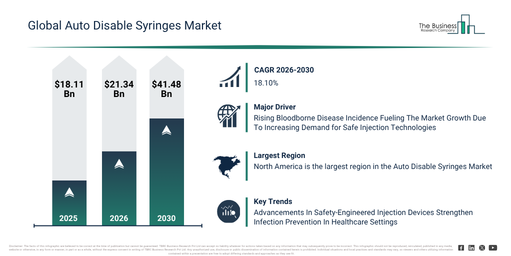
    Auto Disable Syringes Market Expansion From $21.34 Billion In 2026 To $41.48 Billion In 2030

    Recent years have witnessed significant growth in the auto disable syringes market size. Forecasts show it will ascend from $18.11 billion in 2025 to $21.34 billion in 2026, achieving a compound annual growth rate (CAGR) of 17.8%. Historically, this expansion has been driven by several factors: a greater incidence of bloodborne infections linked to unsafe injection practices, the expansion of worldwide vaccination programs and immunization rates, increased understanding of how to prevent needle-stick injuries, the ongoing development of healthcare facilities in emerging markets, and more stringent regulations concerning single-use medical devices.

    The auto disable syringes market is anticipated to experience significant growth over the next few years, with its valuation expected to reach $41.48 billion by 2030, demonstrating a compound annual growth rate (CAGR) of 18.1%. This projected growth during the forecast period can be attributed to the expanding embrace of advanced safety-engineered syringe technologies, increased investments in automated medical device manufacturing facilities, a heightened demand for infection control products in outpatient care settings, rising public healthcare expenditure on vaccination programs, and a growing emphasis on sustainable and recyclable medical consumables. Furthermore, prominent trends for this period include the wider adoption of single-use safety injection devices in immunization efforts, an increasing need for low dead space auto-disable syringes for effective drug delivery, the rising implementation of infection prevention protocols within healthcare facilities, governmental initiatives fostering safe injection practices in developing nations, and an evolving preference for retractable and tamper-proof syringe mechanisms in clinical environments.

    Download A Free Sample Report For Comprehensive Market Insights:

    https://www.thebusinessresearchcompany.com/sample_request?id=80677941&type=smp

    Auto Disable Syringes Market Opportunity Drivers: What Is Creating New Revenue Potential?

    The increasing occurrence of bloodborne illnesses is anticipated to drive the expansion of the auto-disable syringes market. These diseases are infections resulting from pathogens transmitted via contact with contaminated blood or bodily fluids. Their rise is primarily due to continued transmission among vulnerable populations, often involving the use of unsterile needles and inadequate preventative strategies in advanced healthcare environments. Auto-disable syringes prevent reuse by locking after a single application, thereby mitigating the spread of bloodborne illnesses by guaranteeing the safety and sterility of each injection. For example, in April 2025, according to the Centers for Disease Control and Prevention, the number of acute hepatitis C cases grew from 4,848 in 2022 to 4,966 in 2023, an increase of 118 cases. Consequently, the escalating incidence of bloodborne diseases is stimulating expansion in the auto-disable syringe market.

    Auto Disable Syringes Market Segment Outlook: Which Categories Are Expanding The Fastest?

    The auto disable syringes market covered in this report is segmented –

    1) By Product Types: Plastic Auto Disable Syringes, Metal Auto Disable Syringes, Safety Auto Disable Syringes

    2) By Syringe Capacity: 1 Milliliter, 2 Milliliters, 5 Milliliters, 10 Milliliters

    3) By Mechanism: Retractable, Non-Retractable, Other Mechanisms

    4) By Application: Blood Collection, Vaccination, Drug Delivery, Other Applications

    5) By End User: Hospitals, Clinics, Diagnostic Laboratories, Ambulatory Surgical Centers, Other End Users

    Subsegments:

    1) By Plastic Auto Disable Syringes: Single Use Plastic Auto Disable Syringes, Pre-Filled Plastic Auto Disable Syringes, High Volume Plastic Auto Disable Syringes, Low Dead Space Plastic Auto Disable Syringes, Insulin Plastic Auto Disable Syringes

    2) By Metal Auto Disable Syringes: Stainless Steel Metal Auto Disable Syringes, Needle-Integrated Metal Auto Disable Syringes, High Precision Metal Auto Disable Syringes, Reusable Metal Auto Disable Syringes, Syringes With Metal Plungers Auto Disable

    3) By Safety Auto Disable Syringes: Safety Needle Auto Disable Syringes, Retractable Needle Auto Disable Syringes, Shielded Needle Auto Disable Syringes, Tamper-Proof Safety Auto Disable Syringes, Auto-Locking Safety Auto Disable Syringes

    Auto Disable Syringes Market Innovation Trends Driving Future Development

    Leading companies in the auto-disable syringe market are concentrating on acquiring global certifications and developing advanced safety-engineered injection devices. This focus aims to bolster patient safety, prevent product reuse, and diminish the spread of bloodborne infections. Safety-engineered injection devices are tools equipped with protective attributes that lessen needlestick injuries and facilitate secure usage and disposal. For instance, in September 2023, Revital Healthcare, a Kenya-based producer of medical disposable products, achieved World Health Organization (WHO) prequalification for its early activation auto-disable syringe. This achievement confirms the syringe’s adherence to international standards for quality, safety, and performance, thus ensuring dependable reuse prevention and supporting safe immunization practices across global healthcare systems.

    Auto Disable Syringes Market Key Companies And Competitive Benchmarking

    Major companies operating in the auto disable syringes market are Becton Dickinson and Company, B Braun Melsungen SE, Terumo Corporation, Nipro Corporation, ICU Medical Inc, Sol Millennium Medical Group Inc, Vogt Medical Vertrieb GmbH, Weigao Group Co Ltd, Retractable Technologies Inc, Shandong Sinorgmed Co Ltd, Jiangsu Jichun Medical Devices Co Ltd, Hindustan Syringes and Medical Devices Limited, Roma Medical Aids Private Limited, HLL Lifecare Limited, Numedico Technologies Private Limited, Star Syringe Limited, JMI Syringes and Medical Devices Limited, Zhejiang KangKang Medical Devices Co Ltd, PT Oneject Indonesia, Anhui Tiankang Medical Technology Co Ltd, Shanghai Kindly Enterprise Development Group Co Ltd

    Access The Complete Auto Disable Syringes Market Report:

    https://www.thebusinessresearchcompany.com/report/auto-disable-syringes-market-report

    Auto Disable Syringes Market Largest Region By Revenue And Market Share

    North America was the largest region in the auto-disable syringes market in 2025. Asia-Pacific is expected to be the fastest-growing region in the forecast period. The regions covered in the auto disable syringes market report are Asia-Pacific, South East Asia, Western Europe, Eastern Europe, North America, South America, Middle East and Africa.

    Get in touch with us:

    The Business Research Company: https://www.thebusinessresearchcompany.com/

    Americas: +1 310-496-7795

    Asia: +44 7882 955267 & +91 8897263534

    Europe: +44 7882 955267

    Email us at: marketing@tbrc.info

    Follow us on:

    LinkedIn: https://in.linkedin.com/company/the-business-research-company

    YouTube: https://www.youtube.com/channel/UC24_fI0rV8cR5DxlCpgmyFQ

    Global Market Model: https://www.thebusinessresearchcompany.com/global-market-model
  • Artificial Intelligence (AI)-Powered Diagnostic Radiogenomics Devices Market Opportunities Are Emerging Beyond Traditional Growth Areas

    Through market attractiveness analysis, total addressable market evaluation, company benchmarking matrices, interactive Excel dashboards, expanded supply chain intelligence, emerging startup coverage, and detailed product insights, The Business Research Company’s 2026 market reports provide more actionable and strategically valuable research.

    #Artificial Intelligence (AI)-Powered Diagnostic Radiogenomics Devices Market Size And Revenue Forecast Through 2030

    The artificial intelligence (AI)-powered diagnostic radiogenomics devices market has demonstrated rapid expansion in recent years. This market is expected to grow from $0.62 billion in 2025 to $0.74 billion in 2026, achieving a compound annual growth rate (CAGR) of 19.2%. Historically, this expansion can be attributed to the rising prevalence of chronic and complex diseases, the increased adoption of advanced diagnostic imaging technologies, greater investment in precision medicine research initiatives, the broader application of genomic sequencing and molecular profiling, and the escalating demand for data-driven clinical decision-making solutions.

    The artificial intelligence (AI)-powered diagnostic radiogenomics devices market is projected for significant expansion in the coming years, with its size expected to reach $1.5 billion by 2030, exhibiting a compound annual growth rate (CAGR) of 19.5%. This notable growth is largely attributable to several factors, including the increasing demand for AI-enabled personalized treatment planning solutions, the rising adoption of cloud-based radiogenomic data analytics platforms, the growing integration of genomics into diagnostic imaging workflows, a surge in investment towards oncology and neurology precision diagnostics, and a heightened focus on early disease detection and predictive healthcare technologies. Furthermore, major trends anticipated during this forecast period encompass the increasing adoption of multimodal imaging and genomics integration platforms, a growing demand for personalized and precision diagnostic solutions, the rising utilization of predictive analytics for disease prognosis and therapy response assessment, the increasing implementation of automated radiogenomic data interpretation tools, and an expanding emphasis on real-time clinical decision support within diagnostic workflows.

    Download A Free Sample Report For Comprehensive Market Insights:

    https://www.thebusinessresearchcompany.com/sample_request?id=48488920&type=smp

    #Artificial Intelligence (AI)-Powered Diagnostic Radiogenomics Devices Market Growth Factors: Which Forces Are Supporting Market Expansion?

    The increasing use of precision medicine approaches is projected to drive the expansion of the AI-powered diagnostic radiogenomics devices market in the coming years. Precision medicine refers to medical strategies that customize disease prevention, diagnosis, and treatment based on individual genetic, environmental, and lifestyle differences. The rise in precision medicine adoption is primarily fueled by the growing incorporation of genomic data into clinical decision-making within advanced healthcare systems. AI-powered diagnostic radiogenomics devices support this development by combining medical imaging with genomic data to facilitate accurate disease profiling, early diagnosis, and personalized treatment planning. For instance, in February 2024, a report from the Personalized Medicine Coalition (PMC), a US-based nonprofit organization, highlighted that more than one-third of new drug approvals by the U. S. Food and Drug Administration were personalized therapies for four consecutive years through 2023. Therefore, the increasing embrace of precision medicine approaches is stimulating the growth of the AI-powered diagnostic radiogenomics devices market.

    Artificial Intelligence (AI)-Powered Diagnostic Radiogenomics Devices Market Segmentation: How Is The Market Structured Across Key Categories?

    The artificial intelligence (ai)-powered diagnostic radiogenomics devices market covered in this report is segmented –

    1) By Component: Hardware, Software, Services

    2) By Imaging Modality: Magnetic Resonance Imaging, Computed Tomography, Positron Emission Tomography, Ultrasound, X-Ray Or Mammography, Multi-Modal Fusion

    3) By Application: Oncology, Neurology, Cardiology, Infectious Diseases

    4) By End User: Hospitals And Clinics, Diagnostic Imaging Centers, Academic And Research Institutes And Biobanks, Pharmaceutical And Biotechnology Companies And Contract Research Organizations, Government And Public Health Programs

    Subsegments:

    1) By Hardware: Imaging Sensors, Computational Processing Units, Data Storage Systems, Networking And Connectivity Modules, User Interface Devices

    2) By Software: Radiogenomic Analysis Software, Artificial Intelligence Diagnostic Algorithms, Image Processing And Enhancement Software, Data Visualization And Reporting Tools, Machine Learning Model Management Software

    3) By Services: Installation And Setup Services, Calibration And Maintenance Services, Training And Support Services, Data Management And Integration Services, Clinical Workflow Optimization Services

    Artificial Intelligence (AI)-Powered Diagnostic Radiogenomics Devices Market Industry Trends: What Changes Are Reshaping Demand?

    Leading companies in the AI-powered diagnostic radiogenomics devices market are increasingly prioritizing technological innovations, particularly imaging quality assessment tools, to boost diagnostic precision and consistency. An imaging quality assessment tool operates as a software system, employing advanced algorithms to appraise, standardize, and ensure the dependability of medical imaging information. For instance, in June 2025, Quibim, a medical imaging technology company from Spain, introduced AI-QUAL. This solution uses artificial intelligence to automatically evaluate the quality of prostate magnetic resonance imaging, assign standardized scores, and identify artifacts that could affect diagnostic outcomes. The tool streamlines radiology workflows and aids in more reliable clinical decision-making by guaranteeing high-quality imaging data, which is crucial for subsequent applications such as radiogenomics.

    Artificial Intelligence (AI)-Powered Diagnostic Radiogenomics Devices Market Competitive Landscape And Leading Companies

    Major companies operating in the artificial intelligence (ai)-powered diagnostic radiogenomics devices market are Thermo Fisher Scientific Inc., Siemens Healthineers AG, Philips Healthcare (Koninklijke Philips N. V. ), GE HealthCare Technologies Inc., Agilent Technologies Inc., Canon Medical Systems Corporation, Tempus AI Inc., Aidoc Medical Ltd., Owkin Inc., SOPHiA GENETICS SA, Lunit Inc., Synaptive Medical Inc., Median Technologies SA, Perspectum Ltd., Quibim S. L., Seno Medical Instruments Inc., Ultromics Limited, QMENTA Inc., Imbio LLC, Mirada Medical Limited, VUNO Inc., Radiomics. bio Inc., Qlucore AB, CureMetrix Inc.

    Access The Complete Artificial Intelligence (AI)-Powered Diagnostic Radiogenomics Devices Market Report:

    https://www.thebusinessresearchcompany.com/report/artificial-intelligence-ai-powered-diagnostic-radiogenomics-devices-market-report

    Artificial Intelligence (AI)-Powered Diagnostic Radiogenomics Devices Market Leading Geography: Which Region Generates The Most Revenue?

    North America was the largest region in the artificial intelligence (AI)-powered diagnostic radiogenomics devices market in 2025. Asia-Pacific is expected to be the fastest-growing region in the forecast period. The regions covered in the artificial intelligence (AI)-powered diagnostic radiogenomics devices market report are Asia-Pacific, South East Asia, Western Europe, Eastern Europe, North America, South America, Middle East and Africa.

    Get in touch with us:

    The Business Research Company: https://www.thebusinessresearchcompany.com/

    Americas: +1 310-496-7795

    Asia: +44 7882 955267 & +91 8897263534

    Europe: +44 7882 955267

    Email us at: marketing@tbrc.info

    Follow us on:

    LinkedIn: https://in.linkedin.com/company/the-business-research-company

    YouTube: https://www.youtube.com/channel/UC24_fI0rV8cR5DxlCpgmyFQ

    Global Market Model: https://www.thebusinessresearchcompany.com/global-market-model

  • Allergy Point-Of-Care Testing Market Growth Through 2030 Creates New Strategic Opportunities

    Delivering more actionable and strategically valuable research, The Business Research Company’s 2026 market reports feature market attractiveness analysis, total addressable market evaluation, company benchmarking matrices, interactive Excel dashboards, expanded supply chain intelligence, emerging startup coverage, and detailed product insights.

    Allergy Point-Of-Care Testing Market Size, Value And Growth Trends Through 2030

    The allergy point-of-care testing market size has experienced significant expansion in recent years. It is projected to increase from $1.33 billion in 2025 to $1.49 billion in 2026, reflecting a compound annual growth rate (CAGR) of 11.8%. Historically, the market’s expansion can be attributed to rising prevalence of allergic disorders globally, increasing clinical awareness of early allergy diagnosis, expansion of immunoassay technologies in diagnostics, growth in hospital based laboratory testing infrastructure, and increasing pediatric allergy cases.

    The allergy point-of-care testing market is anticipated to experience swift expansion over the coming years. This market is projected to reach $2.34 billion by 2030, exhibiting a compound annual growth rate (CAGR) of 12.0%. The expansion during this forecast period stems from factors such as broader adoption of point-of-care diagnostics, advancements in personalized medicine approaches for allergy management, a surging need for rapid home-based testing solutions, the incorporation of AI-enabled diagnostic interpretation tools, and the increasing move towards decentralized healthcare and expanded outpatient services. Key trends anticipated for the forecast period encompass a greater uptake of rapid immunoglobulin E based allergy diagnostics, a growing preference for portable point-of-care testing devices, the expansion of decentralized allergy screening in primary care environments, an increase in immunoassay-based rapid allergy detection kits, and the deeper integration of digital health platforms into allergy testing workflows.

    Download A Free Sample Report For Comprehensive Market Insights:

    https://www.thebusinessresearchcompany.com/sample_request?id=25183021&type=smp

    Allergy Point-Of-Care Testing Market Development Factors: Which Trends Are Supporting Demand?

    The rising incidence of allergic conditions is anticipated to significantly propel the expansion of the allergy point of care testing market. Allergic conditions are classified as immune system disorders where the body overreacts to otherwise harmless substances, manifesting symptoms such as sneezing, skin rashes, and respiratory distress. The prevalence of these conditions is increasing, largely due to heightened exposure to environmental allergens like pollen, dust, and pollution, which trigger exaggerated immune responses in susceptible individuals. Allergy point of care testing facilitates the swift and convenient detection of specific allergens, thereby empowering healthcare providers to promptly identify triggers, formulate personalized treatment strategies, and effectively help individuals manage and mitigate the impact of allergic conditions. For instance, in November 2025, Asthma Australia, an Australia-based non-profit organization, reported that 322 women died from asthma last year, which was more than double the 156 men. This trend has remained consistent since 2023, with half of the total 478 deaths occurring among women aged 75 and over. Consequently, the increasing occurrence of allergic conditions is a primary factor driving the growth of the allergy point of care testing market. The escalating healthcare expenditure is projected to fuel the growth of the allergy point-of-care testing market moving forward. Healthcare expenditure encompasses the total financial resources spent by governments, private organizations, and individuals on health services, medical products, public health programs, and essential healthcare infrastructure. This spending is growing due to the escalating demand for medical services, as more patients require consultations, treatments, and diagnostic evaluations, leading to higher overall healthcare costs. Increased healthcare expenditure supports the growth of allergy point-of-care (POC) testing by enabling investments in sophisticated diagnostic technologies, facilitating rapid testing close to patient care sites, reducing reliance on centralized laboratories, and enhancing overall efficiency and healthcare outcomes. For example, in January 2026, the Centers for Medicare & Medicaid Services, a US-based government agency, reported that in 2024, National Health Expenditure (NHE) rose by 7.2% to $5.3 trillion, averaging $15,474 per person, and accounted for 18.0% of the Gross Domestic Product (GDP). Therefore, the expanding financial outlay on healthcare is a significant impetus behind the growth of the allergy point-of-care testing market.

    Allergy Point-Of-Care Testing Market Segments: Where Are The Largest Growth Opportunities?

    The allergy point-of-care testing market covered in this report is segmented –

    1) By Product Type: Rapid Specific Immunoglobulin E Kits, Skin Prick Testing Kits, Rapid Anaphylaxis Kits, Sample Collection Devices, Analyzers

    2) By Sample Type: Blood, Serum Or Plasma, Fingerstick Whole Blood

    3) By Allergen Type: Food Allergens, Environmental Allergens, Drug And Insect Venom Allergens

    4) By Application Focus: Primary Care Triage, Pediatric Clinic Workups, Emergency Care Support, Occupational Health Screening, Pharmacy Led Testing

    5) By End User: Specialty Clinics, Hospitals, Retail Pharmacies, Occupational Health Providers, Direct To Consumer

    Subsegments:

    1) By Rapid Specific Immunoglobulin E Kits: Food Allergy Kits, Inhalant Allergy Kits, Drug Allergy Kits, Environmental Allergy Kits

    2) By Skin Prick Testing Kits: Standard Allergen Panels, Custom Allergen Panels, Pediatric Testing Kits, Adult Testing Kits

    3) By Rapid Anaphylaxis Kits: Epinephrine Auto Injectors, Immediate Reaction Detection Kits, Allergic Response Monitoring Kits, Emergency Response Kits

    4) By Sample Collection Devices: Blood Collection Devices, Saliva Collection Devices, Skin Prick Sampling Devices, Capillary Sampling Devices

    5) By Analyzers: Immunoassay Analyzers, Chemiluminescence Analyzers, Integrated Analyzer Systems, Portable Point Of Care Analyzers

    Allergy Point-Of-Care Testing Market Transformation Trends: Which Innovations Are Driving Change?

    Within the allergy point-of-care testing market, major companies are concentrating on developing innovative products, specifically semi-quantitative point-of-care diagnostic devices, to deliver rapid and accurate allergy test results in clinical settings. These semi-quantitative devices are instruments designed to measure approximate levels of specific biomarkers, such as IgE, directly at the clinic, providing swift and reliable outcomes. This capability allows healthcare providers to quickly assess the severity of allergic responses and make immediate, informed treatment decisions, eliminating the wait associated with traditional laboratory tests. For example, in June 2024, Kenota Health, a Canada-based medical technology company, secured U. S. Food and Drug Administration (FDA) clearance and a CLIA waiver for its Kenota 1 Total IgE test system, enabling its deployment in point-of-care clinical environments. The Kenota 1 system is a semi-quantitative diagnostic device that measures total IgE levels from a minimal fingerstick blood sample, delivering results in under 30 minutes with automated operation, a significant improvement over traditional laboratory IgE tests that require venous blood draws and several days for results. This system is engineered for rapid, in-office allergy assessment, featuring a small blood volume requirement of 4.5 microliters per test, easy-to-use operation, and the capacity to run 15–60 tests per session. Its applications include supporting the diagnosis of IgE-mediated allergic disorders and empowering clinicians to make immediate patient care decisions, thereby streamlining allergy management and improving patient outcomes.

    Allergy Point-Of-Care Testing Market Major Participants And Competitive Dynamics

    Major companies operating in the allergy point-of-care testing market are Siemens Healthineers AG, F. Hoffmann-La Roche Ltd, Hitachi Chemical Diagnostic Inc., Thermo Fisher Scientific Inc., Abbott Laboratories, Eurofins Scientific SE, bioMérieux SA, Quidel Corporation, EUROIMMUN Medizinische Labordiagnostika AG, R-Biopharm AG, HOB Biotech Group Corp. Ltd., Hycor Biomedical Inc., Omega Diagnostics Ltd, Lincoln Diagnostics Inc., Alerchek Inc., Abionic SA, Kenota Health Inc.

    Access The Complete Allergy Point-Of-Care Testing Market Report:

    https://www.thebusinessresearchcompany.com/report/allergy-point-of-care-testing-market-report

    Allergy Point-Of-Care Testing Market Regional Distribution: Which Areas Drive Market Expansion?

    North America was the largest region in the allergy point-of-care testing market in 2025. Asia-Pacific is expected to be the fastest-growing region in the forecast period. The regions covered in the allergy point-of-care testing market report are Asia-Pacific, South East Asia, Western Europe, Eastern Europe, North America, South America, Middle East and Africa.

    Get in touch with us:

    The Business Research Company: https://www.thebusinessresearchcompany.com/

    Americas: +1 310-496-7795

    Asia: +44 7882 955267 & +91 8897263534

    Europe: +44 7882 955267

    Email us at: marketing@tbrc.info

    Follow us on:

    LinkedIn: https://in.linkedin.com/company/the-business-research-company

    YouTube: https://www.youtube.com/channel/UC24_fI0rV8cR5DxlCpgmyFQ

    Global Market Model: https://www.thebusinessresearchcompany.com/global-market-model

  • Adaptive Brain Pacemaker Devices Market Trends And Growth Drivers Point To Strong Future Potential

    Adaptive Brain Pacemaker Devices Market Trends And Growth Drivers Point To Strong Future Potential

    Enhanced with market attractiveness analysis, total addressable market evaluation, company benchmarking matrices, interactive Excel dashboards, expanded supply chain intelligence, emerging startup coverage, and detailed product insights, The Business Research Company’s 2026 market reports deliver more actionable and strategically valuable research.

    Adaptive Brain Pacemaker Devices Market Revenue Outlook: What CAGR Is Expected Through 2030?

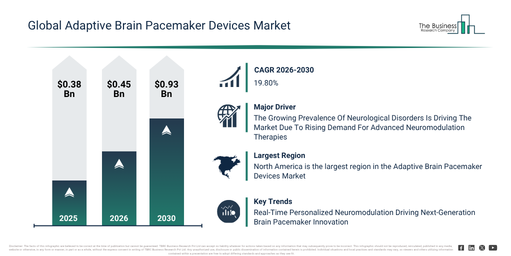
    Recent years have seen a swift increase in the market size for adaptive brain pacemaker devices. This market is projected to expand from $0.38 billion in 2025 to $0.45 billion in 2026, demonstrating a compound annual growth rate (CAGR) of 19.6%. Factors contributing to its historical growth include the growing prevalence of neurological conditions, increased uptake of deep brain stimulation treatments, technological progress in implantable medical devices, higher healthcare spending for neurological services, and heightened recognition of customized treatment approaches.

    The adaptive brain pacemaker devices market is set for substantial expansion over the next few years, with its size forecast to reach $0.93 billion by 2030, advancing at a compound annual growth rate (CAGR) of 19.8%. This projected increase is driven by factors such as the expanding integration of AI-powered neurostimulation algorithms, heightened investments in precision neurology research, an escalating need for remote neurological monitoring systems, broader approvals for adaptive neurostimulation devices, and the increasing creation of rechargeable implantable systems. Prominent trends throughout this period include the rising uptake of closed-loop neurostimulation systems, a growing demand for customized treatments for neurological disorders, the increased deployment of real-time neural signal monitoring technologies, a greater preference for minimally invasive implantable devices, and a stronger emphasis on remote patient monitoring and therapy enhancement.

    Download A Free Sample Report For Comprehensive Market Insights:

    https://www.thebusinessresearchcompany.com/sample_request?id=11326752&type=smp

    Adaptive Brain Pacemaker Devices Market Industry Drivers: What Is Driving Revenue Growth?

    The increasing occurrence of neurological disorders is anticipated to stimulate the expansion of the adaptive brain pacemaker devices market. These conditions affect the central and peripheral nervous system, leading to impairments in movement, cognition, or sensory function. Their rising prevalence is primarily influenced by an aging population, as longer life expectancies contribute to a higher incidence of age-related conditions. Adaptive brain pacemaker devices aid in the management of specific neurological disorders, particularly those related to movement, by delivering targeted electrical stimulation to particular brain regions. This process modulates abnormal neural activity and improves patient outcomes. For instance, in March 2025, data from the Office for Health Improvement and Disparities, a UK-based government department, reported that 483,000 individuals aged 65 and above were living with a formal dementia diagnosis in England by December 2024, emphasizing the broader increase in age-related neurological conditions. Therefore, the growing prevalence of neurological disorders is driving the growth of the adaptive brain pacemaker devices market.

    Adaptive Brain Pacemaker Devices Market Segments: Where Are The Largest Growth Opportunities?

    The adaptive brain pacemaker devices market covered in this report is segmented –

    1) By Product Type: Implantable Pulse Generators, Leads And Electrodes, Extensions, Chargers And Accessories, Software Or Algorithms And Sensing Modules

    2) By Channel: Single-Channel Systems, Dual-Channel (Multi-Channel) Systems

    3) By Indication: Parkinson’s Disease, Essential Tremor, Epilepsy, Dystonia, Obsessive-Compulsive Disorder (OCD) Or Depression, Pain Management, Other Neurological Disorders

    4) By End User: Hospitals And Neurology Centers, Ambulatory Surgical Centers, Specialized Neurology Or Movement-Disorder Clinics, Home-Based Monitoring And Remote Follow-Up

    Subsegments:

    1) By Implantable Pulse Generators: Rechargeable Implantable Pulse Generators, Non Rechargeable Implantable Pulse Generators, Constant Current Implantable Pulse Generators, Constant Voltage Implantable Pulse Generators

    2) By Leads And Electrodes: Directional Leads, Non Directional Leads, Depth Electrodes, Surface Electrodes

    3) By Extensions: Standard Length Extensions, Custom Length Extensions, High Flexibility Extensions, Reinforced Extensions

    4) By Chargers And Accessories: Wireless Chargers, Portable Chargers, Charging Bases And Stations, Patient Controller Devices, Protective Cases And Kits

    5) By Software Or Algorithms And Sensing Modules: Closed Loop Control Algorithms, Open Loop Control Algorithms, Neural Signal Sensing Modules, Data Analysis And Monitoring Software, Remote Programming Software

    #Adaptive Brain Pacemaker Devices Market Growth Trends: What Is Influencing The Future Outlook?

    Major companies within the adaptive brain pacemaker devices market are prioritizing the development of innovative advancements, such as closed-loop neurostimulators, to enable real-time, personalized neuromodulation therapy. A closed-loop neurostimulator is a neurostimulation device that dynamically alters its electrical output based on real-time neural feedback signals. For instance, in February 2025, Medtronic plc, an Ireland-based healthcare technology company, announced a U. S. Food and Drug Administration (FDA) approval of BrainSense Adaptive Deep Brain Stimulation. This system employs brain-computer interface technology to continuously monitor neural signals and automatically adjust stimulation parameters without manual intervention. This advancement enhances symptom control, reduces therapy fluctuations, and represents a significant step toward scalable, precision-based neuromodulation for neurological disorders.

    Adaptive Brain Pacemaker Devices Market Major Participants And Competitive Dynamics

    Major companies operating in the adaptive brain pacemaker devices market are Abbott Laboratories, Medtronic plc, Boston Scientific Corporation, LivaNova PLC, Synchron Inc., Neuralink Corp., NeuroPace Inc., Cala Health Inc., Inbrain Neuroelectronics, Neuroelectrics Barcelona S. L., Paradromics Inc., Blackrock Neurotech, Soterix Medical Inc., Flow Neuroscience AB, Magstim Company Ltd., Newronika S. r. l., Rune Labs Inc., Aleva Neurotherapeutics SA, CorTec GmbH, NeuroSigma Inc.

    Access The Complete Adaptive Brain Pacemaker Devices Market Report:

    https://www.thebusinessresearchcompany.com/report/adaptive-brain-pacemaker-devices-market-report

    Adaptive Brain Pacemaker Devices Market Regional Outlook: Where Are The Largest Opportunities Located?

    North America was the largest region in the adaptive brain pacemaker devices market in 2025. Asia-Pacific is expected to be the fastest-growing region in the forecast period. The regions covered in the adaptive brain pacemaker devices market report are Asia-Pacific, South East Asia, Western Europe, Eastern Europe, North America, South America, Middle East and Africa.

    Get in touch with us:

    The Business Research Company: https://www.thebusinessresearchcompany.com/

    Americas: +1 310-496-7795

    Asia: +44 7882 955267 & +91 8897263534

    Europe: +44 7882 955267

    Email us at: marketing@tbrc.info

    Follow us on:

    LinkedIn: https://in.linkedin.com/company/the-business-research-company

    YouTube: https://www.youtube.com/channel/UC24_fI0rV8cR5DxlCpgmyFQ

    Global Market Model: https://www.thebusinessresearchcompany.com/global-market-model

  • Wound Skin Substitutes  Market Forecast Signals New Revenue Opportunities Through 2030

    Wound Skin Substitutes Market Forecast Signals New Revenue Opportunities Through 2030

    Delivering more actionable and strategically valuable research, The Business Research Company’s 2026 market reports feature market attractiveness analysis, total addressable market evaluation, company benchmarking matrices, interactive Excel dashboards, expanded supply chain intelligence, emerging startup coverage, and detailed product insights.

    Wound Skin Substitutes Market Forecast: What Market Value Is Expected By 2030?

    The wound skin substitutes market size has seen robust growth in recent years. It is projected to increase from $1.19 billion in 2025 to $1.3 billion in 2026, at a compound annual growth rate (CAGR) of 9.7%. The expansion witnessed during the historic period is attributable to a rise in burn injury cases, the increasing prevalence of diabetic ulcers, a growth in surgical procedures, the established adoption of collagen dressings, and the expansion of wound care centers.

    The wound skin substitutes market size is expected to experience significant growth over the next few years. It is projected to reach $1.91 billion in 2030, growing at a compound annual growth rate (CAGR) of 10.0%. The expansion during the forecast period can be attributed to an aging population dealing with chronic wounds, a rising incidence of diabetes, advancements in regenerative medicine, increased spending on advanced wound care, and the proliferation of outpatient wound clinics. Key trends identified for this period encompass bioengineered regenerative skin matrices, cell based advanced wound covers, composite biosynthetic skin substitutes, growth factor enriched dressings, and smart moisture balancing wound covers.

    Download A Free Sample Report For Comprehensive Market Insights:

    https://www.thebusinessresearchcompany.com/sample.aspx?id=33363&type=smp&utm_source=Blogs&utm_medium=Paid&utm_campaign=Jul_PR

    #Wound Skin Substitutes Market Demand Drivers Creating New Revenue Opportunities

    The projected increase in pressure ulcers is anticipated to stimulate the expansion of the wound skin substitutes market. These ulcers are localized injuries impacting the skin and underlying tissue, typically resulting from sustained pressure, often over bony prominences. The rising occurrence of pressure ulcers is attributed to an aging population, given that older adults frequently experience diminished mobility, delicate skin, and chronic health conditions, which heighten their vulnerability to skin breakdown. Wound skin substitutes effectively prevent pressure ulcers by providing skin protection, fostering tissue regeneration, ensuring adequate moisture balance, and enhancing overall skin integrity, thereby collectively mitigating the risk of skin breakdown in susceptible areas. For instance, in November 2023, according to the National Health Service (NHS) England, a UK-based government department, between October 1, 2022, and October 1, 2023, a total of 193 inpatients were reported to have developed bedsores, pressure sores, or pressure ulcers during their hospital stay. Consequently, the escalating prevalence of pressure ulcers is a key factor propelling the growth of the wound skin substitutes market.

    Wound Skin Substitutes Market Segment Analysis And Revenue Opportunities

    The wound skin substitutes market covered in this report is segmented –

    1) By Product Type: Biologic Skin Substitutes; Synthetic Skin Substitutes; Biosynthetic Skin Substitutes; Collagen Dressings; Acellular Dermal Matrices; Cultured Epithelial Autografts; Allograft Skin; Xenograft Skin; Hydrogel Dressings; Foam Dressings

    2) By Technology: Static Skin Substitutes; Dynamic; Smart

    3) By Application Or Indication: Diabetic Foot Ulcers; Pressure Ulcers; Burns; Surgical Wounds; Trauma Wounds; Chronic Wounds

    4) By Distribution Channel: Direct Sales Or Institutional Sales; Medical Device Distributors; Online Retail Or E-commerce

    5) By End User: Hospitals And Burn Centers; Ambulatory Surgical Centers (ASCs); Specialty Wound Care Clinics; Academic And Research Institute

    Subsegments:

    1) By Biologic Skin Substitutes: Human Derived Skin Substitutes; Animal Derived Skin Substitutes; Cellular Based Skin Substitutes; Growth Factor Enriched Skin Substitutes

    2) By Synthetic Skin Substitutes: Polymer Based Skin Substitutes; Silicone Based Skin Substitutes; Polyurethane Based Skin Substitutes; Synthetic Composite Skin Substitutes

    3) By Biosynthetic Skin Substitutes: Collagen And Silicone Based Skin Substitutes; Polymer And Collagen Composite Skin Substitutes; Semi Synthetic Skin Substitutes

    4) By Collagen Dressings: Native Collagen Dressings; Oxidized Regenerated Collagen Dressings; Collagen With Antimicrobial Agents; Collagen With Silver

    5) By Acellular Dermal Matrices: Human Acellular Dermal Matrices; Animal Acellular Dermal Matrices; Cross Linked Dermal Matrices; Non Cross Linked Dermal Matrices

    6) By Cultured Epithelial Autografts: Keratinocyte Based Autografts; Epidermal Sheet Autografts; Spray On Cultured Epithelial Cells

    7) By Allograft Skin: Fresh Allograft Skin; Cryopreserved Allograft Skin; Lyophilized Allograft Skin

    8) By Xenograft Skin: Porcine Derived Xenograft Skin; Bovine Derived Xenograft Skin; Processed Xenograft Skin

    9) By Hydrogel Dressings: Amorphous Hydrogel Dressings; Sheet Hydrogel Dressings; Impregnated Hydrogel Dressings

    10) By Foam Dressings: Polyurethane Foam Dressings; Silicone Foam Dressings; Adhesive Foam Dressings; Non Adhesive Foam Dressings

    Wound Skin Substitutes Market Trends Driving Strategic Industry Expansion

    Major companies operating in the wound skin substitutes market are concentrating on developing innovative products like advanced bioengineered skin grafts, designed to accelerate wound healing, minimize infection risk, and enhance tissue regeneration. These advanced bioengineered skin grafts are either lab-grown or tissue-engineered skin substitutes engineered to emulate natural skin structure, supplying living cells and structural scaffolds that foster more rapid wound recovery, support tissue regrowth, and lower the likelihood of infection compared to conventional dressings. For instance, in May 2025, Tides Medical, a US-based medical device company, introduced Artacent Wound, a next-generation wound skin substitute that leverages an Arta-Pure Process to carefully preserve the entire structure of amniotic tissue, including its crucial spongy intermediate layer, thus maximizing the graft’s natural integrity. The product features a dual-layer configuration that can be applied on either side, remains securely in place without the need for sutures, and assists clinicians in treating chronic wounds by maintaining a biologically active matrix that facilitates tissue repair and mitigates inflammation, differentiating it from traditional dehydrated or highly processed grafts.

    Wound Skin Substitutes Market Leading Players Shaping Industry Direction

    Major companies operating in the wound skin substitutes market are 3M Company, Stryker Corporation, Essity Aktiebolag, Smith & Nephew plc, B. Braun Melsungen AG, Coloplast A/S, ConvaTec Group plc, Mallinckrodt Pharmaceuticals, Integra LifeSciences Corporation, AVITA Medical Inc., MTF Biologics, Organogenesis Inc., MiMedx Group Inc., Vericel Corporation, LifeNet Health, Anika Therapeutics Inc., AlloSource, BioTissue Inc., Tissue Regenix Group plc, Gunze Medical Co. Ltd., and Molecular Biologicals Inc.

    Access The Complete Wound Skin Substitutes Market Report:

    https://www.thebusinessresearchcompany.com/report/wound-skin-substitutes-market-report?utm_source=Blogs&utm_medium=Paid&utm_campaign=Jul_PR

    Wound Skin Substitutes Market Global Footprint: Which Region Holds Market Leadership?

    North America was the largest region in the wound skin substitutes market in 2025. Asia-Pacific is expected to be the fastest-growing region in the forecast period. The regions covered in the wound skin substitutes market report are Asia-Pacific, South East Asia, Western Europe, Eastern Europe, North America, South America, Middle East, Africa.

    Get in touch with us:

    The Business Research Company: https://www.thebusinessresearchcompany.com/

    Americas: +1 310-496-7795

    Asia: +44 7882 955267 & +91 8897263534

    Europe: +44 7882 955267

    Email us at: marketing@tbrc.info

    Follow us on:

    LinkedIn: https://in.linkedin.com/company/the-business-research-company

    YouTube: https://www.youtube.com/channel/UC24_fI0rV8cR5DxlCpgmyFQ

    Global Market Model: https://www.thebusinessresearchcompany.com/global-market-model

  • Wearable Neurotech  Market Expansion Is Reshaping Competitive Dynamics Across The Industry

    Wearable Neurotech Market Expansion Is Reshaping Competitive Dynamics Across The Industry

    Enhanced with market attractiveness analysis, total addressable market evaluation, company benchmarking matrices, interactive Excel dashboards, expanded supply chain intelligence, emerging startup coverage, and detailed product insights, The Business Research Company’s 2026 market reports deliver more actionable and strategically valuable research.

    Wearable Neurotech Market Expansion From $2.61 Billion In 2026 To $5.34 Billion In 2030

    The size of the wearable neurotech market has seen significant growth in recent years. It is projected to expand from $2.18 billion in 2025 to $2.61 billion in 2026, achieving a compound annual growth rate (CAGR) of 19.4%. This historical growth can be attributed to advancements in EEG miniaturization, an increase in digital health device usage, the expansion of brain-computer interface research, the rise of mental wellness technology, and heightened adoption of wearable sensors.

    The wearable neurotech market is projected to experience substantial expansion in the coming years. Its valuation is anticipated to reach $5.34 billion by 2030, demonstrating a compound annual growth rate (CAGR) of 19.7%. This projected growth is driven by factors such as the rise of remote neuro monitoring, increasing demand for tools that enhance cognition, the broadening scope of neuro digital therapeutics, enhanced utilization of sports performance analytics, and a surge in personalized brain health programs. Key trends anticipated during this period encompass the development of consumer brain-computer interfaces, increasing uptake of neurofeedback wearables, the proliferation of portable EEG devices, the incorporation of cognitive monitoring applications, and a rise in at-home neurostimulation devices.

    Download A Free Sample Report For Comprehensive Market Insights:

    https://www.thebusinessresearchcompany.com/sample.aspx?id=33359&type=smp&utm_source=Blogs&utm_medium=Paid&utm_campaign=Jul_PR

    Wearable Neurotech Market Growth Momentum: Which Factors Are Influencing Demand?

    An anticipated driver for the future expansion of the wearable neurotech market is the increasing occurrence of neurological disorders. These disorders are defined as health conditions affecting the brain, spinal cord, or nerves, subsequently influencing functions like movement, sensation, thought processes, or conduct. Their growth can be attributed to the global population’s aging demographic, which, in turn, elevates the incidence of age-associated neurological conditions. Wearable neurotech offers assistance in managing neurological disorders through continuous monitoring of brain and nerve activity, facilitating early diagnosis, tailored therapeutic approaches, and immediate symptom control. To illustrate, in March 2023, the Alzheimer’s Association, a US-based nonprofit voluntary health organization, disclosed that 6.7 million Americans aged 65 and above live with Alzheimer’s, a figure anticipated to escalate to 13.8 million by 2060. Consequently, the expanding prevalence of neurological disorders is a key factor propelling the development of the wearable neurotech market.

    Wearable Neurotech Market Segments: Where Are The Largest Growth Opportunities?

    The wearable neurotech market covered in this report is segmented –

    1) By Product Type: Electroencephalography Headsets; Brain Computer Interface Devices; Neurostimulation Wearables; Neurofeedback Wearable Devices; Wearable Neural Sensors

    2) By Technology: Electroencephalography Technology; Functional Near Infrared Spectroscopy Technology; Magnetoencephalography Technology; Transcranial Direct Current Stimulation Technology; Other Neural Sensing and Stimulation Technologies

    3) By Distribution Channel: Online Stores; Specialty Retail Stores; Direct Sales; Other Distribution Channels

    4) By Application: Healthcare; Consumer Electronics; Sports and Fitness; Other Applications

    5) By End User: Hospitals and Clinics; Research Institutes and Laboratories; Consumer End Users; Sports and Fitness Centers; Academic and Educational Institutions

    Subsegments:

    1) By Electroencephalography Headsets: Portable Electroencephalography Headsets; Wireless Electroencephalography Headsets; Clinical Electroencephalography Headsets

    2) By Brain Computer Interface Devices: Non Invasive Brain Computer Interface Devices; Invasive Brain Computer Interface Devices; Hybrid Brain Computer Interface Devices

    3) By Neurostimulation Wearables: Transcranial Direct Current Stimulation Wearables; Transcranial Magnetic Stimulation Wearables; Vagus Nerve Stimulation Wearables

    4) By Neurofeedback Wearable Devices: Real Time Neurofeedback Wearable Devices; Home Use Neurofeedback Wearable Devices; Clinical Neurofeedback Wearable Devices

    5) By Wearable Neural Sensors: Electroencephalography Sensors; Functional Near-Infrared Spectroscopy Sensors; Magnetoencephalography Sensors; Electromyography Sensors; Cognitive Monitoring Sensors; Brain Computer Interface Sensors

    Wearable Neurotech Market Trends Reshaping Industry Growth

    Leading enterprises within the wearable neurotech market are concentrating their efforts on enhancing non-invasive neurostimulation methods, such as wearable vagus nerve and electrical muscle stimulation devices, to facilitate rehabilitation, overall well-being, or neural regeneration. Wearable vagus nerve devices represent non-invasive systems worn on the body that administer electrical stimulation to the vagus nerve, supporting various health, wellness, or therapeutic outcomes. For example, in February 2025, Neuvotion Inc., a US medical device company, unveiled NeuStim, an FDA-cleared, non-invasive, wearable neurostimulation system engineered to precisely stimulate muscles, assisting in the recovery of hand movement following a stroke or spinal cord injury. This device boasts a lightweight, wrist-worn design, features a user-friendly touchscreen for clinicians to target stimulation, and offers customizable programs accessible through a mobile interface. Correspondingly, in 2025, Pulsetto, based in Lithuania, either introduced or broadened the availability of its wearable vagus nerve stimulation device, intended for stress reduction and improving sleep. This particular neck-worn device provides low-frequency transcutaneous stimulation, includes numerous preset programs via a complementary app, and is designed for everyday, drug-free application. These two examples underscore the growing popularity of noninvasive, wearable neurotechnologies for health management and rehabilitation purposes.

    Wearable Neurotech Market Major Participants And Competitive Dynamics

    Major companies operating in the wearable neurotech market are Kernel Labs Inc., Nuro Corporation, NeuroSky Inc., BrainCo Inc., Emotiv Inc., Cognito Therapeutics Inc., Neuroelectrics Barcelona S.L.U, Q30 Innovations Inc., Halo Neuroscience, Thync, Neurable Inc., Neurovalens Ltd., Neurovalens Ltd., Bitbrain Technologies S.L., Muse (InteraXon), OpenBCI Inc., BrainBit, Nexstem Technologies Pvt. Ltd, Nalu Medical Inc., Alphabeats, Motif Neurotech.

    Access The Complete Wearable Neurotech Market Report:

    https://www.thebusinessresearchcompany.com/report/wearable-neurotech-market-report?utm_source=Blogs&utm_medium=Paid&utm_campaign=Jul_PR

    Wearable Neurotech Market Geographic Landscape: Which Region Dominates Industry Growth?

    North America was the largest region in the wearable neurotech market in 2025. Asia-Pacific is expected to be the fastest-growing region in the forecast period. The regions covered in the wearable neurotech market report are Asia-Pacific, South East Asia, Western Europe, Eastern Europe, North America, South America, Middle East, Africa.

    Get in touch with us:

    The Business Research Company: https://www.thebusinessresearchcompany.com/

    Americas: +1 310-496-7795

    Asia: +44 7882 955267 & +91 8897263534

    Europe: +44 7882 955267

    Email us at: marketing@tbrc.info

    Follow us on:

    LinkedIn: https://in.linkedin.com/company/the-business-research-company

    YouTube: https://www.youtube.com/channel/UC24_fI0rV8cR5DxlCpgmyFQ

    Global Market Model: https://www.thebusinessresearchcompany.com/global-market-model