Category: Medical Equipment

  • Robotic Assisted Endovascular Systems  Market Forecast Highlights Expansion From $34.79 Billion To $48.94 Billion Through 2030

    Robotic Assisted Endovascular Systems Market Forecast Highlights Expansion From $34.79 Billion To $48.94 Billion Through 2030

    Delivering more actionable and strategically valuable research, The Business Research Company’s 2026 market reports feature market attractiveness analysis, total addressable market evaluation, company benchmarking matrices, interactive Excel dashboards, expanded supply chain intelligence, emerging startup coverage, and detailed product insights.

    Robotic Assisted Endovascular Systems Market Revenue Growth Supported By A CAGR Of 48.94% Through 2030

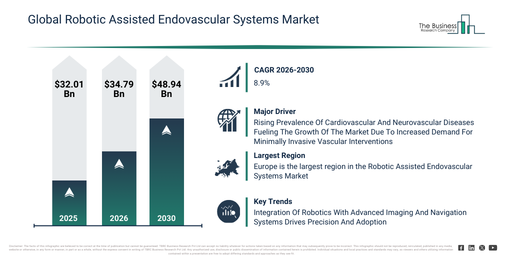
    The robotic assisted endovascular systems market has demonstrated robust growth in recent years. Projections indicate it will expand from $32.01 billion in 2025 to $34.79 billion in 2026, driven by a compound annual growth rate (CAGR) of 8.7%. This historical expansion is primarily attributable to an increase in cardiovascular disease cases, the growth in catheter based interventions, the expansion of interventional radiology units, a rising preference for minimally invasive surgery, and improvements in vascular imaging.

    The market size for robotic assisted endovascular systems is projected to experience substantial expansion in the coming years. It is forecast to reach $48.94 billion by 2030, exhibiting a compound annual growth rate (CAGR) of 8.9%. This projected growth throughout the forecast period can be attributed to factors such as the expansion of robotic vascular laboratories, an increasing demand for precision-guided interventions, the broadening of neurovascular robotic procedures, advancements in remote surgery capabilities, and greater hospital investment in robotic suites. Significant trends anticipated during this period include the development of robotic catheter navigation, increased adoption in minimally invasive vascular procedures, the expansion of imaging-guided robotic platforms, a rise in remote robotic interventions, and the integration of precision vascular control systems.

    Download A Free Sample Report For Comprehensive Market Insights:

    https://www.thebusinessresearchcompany.com/sample.aspx?id=33306&type=smp&utm_source=Blogs&utm_medium=Paid&utm_campaign=Jul_PR

    Robotic Assisted Endovascular Systems Market Demand Drivers: What Is Fueling Industry Growth?

    The increasing occurrence of cardiovascular and neurovascular diseases is expected to propel the growth of the robotic-assisted endovascular systems market going forward. These conditions, affecting the heart, blood vessels, and brain circulation, include coronary artery disease, stroke, and cerebral aneurysms, and are a leading cause of mortality and long-term disability worldwide. The rise in cardiovascular and neurovascular diseases is attributed to aging populations combined with a higher prevalence of lifestyle-related risk factors such as obesity, hypertension, and physical inactivity. Robotic-assisted endovascular systems assist in managing these diseases by enabling highly precise, minimally invasive navigation of blood vessels, which improves treatment accuracy, safety, and clinical outcomes for complex vascular interventions. For instance, in January 2024, according to the American Heart Association, a US-based non-profit organization, the age-adjusted death rate from cardiovascular disease increased to 233.3 per 100,000 in 2024, up 4.0% from 224.4 per 100,000 in 2023. Therefore, the rising prevalence of cardiovascular and neurovascular diseases is driving the growth of the robotic-assisted endovascular systems market.

    Robotic Assisted Endovascular Systems Market Segment Analysis: What Are The Major Market Categories?

    The robotic assisted endovascular systems market covered in this report is segmented –

    1) By Component: Hardware; Software; Services

    2) By Product: Robotic Catheter Systems; Robotic Guidewire Systems; Robotic Angioplasty Systems; Other Products

    3) By Technology: Robotic Catheter Systems; AI-Assisted Navigation Systems; Imaging-Guided Robotic Platforms; Haptic Feedback Systems; Autonomous Robotic Systems

    4) By Application: Coronary Interventions; Peripheral Vascular Interventions; Neurovascular Interventions; Other Applications

    5) By End-User: Hospitals; Specialty Clinics; Ambulatory Surgical Centers; Research And Academic Institutes; Other End-Users

    Subsegments:

    1) By Hardware: Robotic Control Units; Robotic Catheter Systems; Navigation Consoles; Imaging Integration Modules; Surgical Instrument Arms

    2) By Software: Navigation Software Platforms; Imaging Processing Software; Procedure Planning Software; Data Management Software; Clinical Decision Support Software

    3) By Services: Installation Services; Maintenance And Repair Services; Training And Education Services; System Upgradation Services

    Robotic Assisted Endovascular Systems Market Innovation Trends: Which Developments Are Transforming The Industry?

    Leading companies in the robotic assisted endovascular systems market are increasingly focusing on integrating robotics with advanced imaging and navigation systems, such as fully remote endovascular robotic platforms. This strategic integration aims to enhance procedural precision, facilitate complex vascular navigation, and expand patient access to specialist care. Fully remote endovascular robotic platforms are characterized as robotic systems that unify real-time fluoroscopic imaging with preoperative CT and MRI data to guide the robotic manipulation of catheters and guidewires during endovascular procedures, simultaneously allowing clinicians to control operations from a remote console. A notable illustration of this trend occurred in October 2025, when Remedy Robotics, a US-based medical technology company, unveiled the Remedy N1 System. This endovascular surgical robotic platform is specifically engineered to support fully remote neurointerventional procedures. Designed to improve accuracy and optimize clinical workflow, the system integrates automated CT and MRI image preprocessing with live fluoroscopic imaging for real-time navigation, permits simultaneous robotic control of up to four endovascular devices, and comes equipped with a portable operator console featuring secure audiovisual connectivity to support remote procedural execution.

    Robotic Assisted Endovascular Systems Market Leading Companies Driving Competitive Growth

    Major companies operating in the robotic assisted endovascular systems market are Johnson & Johnson, Siemens Healthineers AG, Corindus Vascular Robotics Inc., Cordis Corporation, MicroPort Scientific Corporation, Hansen Medical Inc., Robocath S.A.S., Magnetecs Corporation, Cathbot Robot Co. Ltd., EKOS Corporation, Stereotaxis Inc., Imperative Care Inc., WeMed Medical Technology Co. Ltd., Lombard Medical Limited, Endovascular Robotics Inc., SS Innovations International Inc., Visionary Medicare Co. Ltd., Vantis Vascular Inc., Microbot Medical Inc., Sentante Ltd.

    Access The Complete Robotic Assisted Endovascular Systems Market Report:

    https://www.thebusinessresearchcompany.com/report/robotic-assisted-endovascular-systems-market-report?utm_source=Blogs&utm_medium=Paid&utm_campaign=Jul_PR

    Robotic Assisted Endovascular Systems Market Leading Geography: Which Region Generates The Most Revenue?

    Europe was the largest region in the robotic assisted endovascular systems market in 2025. Asia-Pacific is expected to be the fastest-growing region in the forecast period. The regions covered in the robotic assisted endovascular systems market report are Asia-Pacific, South East Asia, Western Europe, Eastern Europe, North America, South America, Middle East, Africa.

    Get in touch with us:

    The Business Research Company: https://www.thebusinessresearchcompany.com/

    Americas: +1 310-496-7795

    Asia: +44 7882 955267 & +91 8897263534

    Europe: +44 7882 955267

    Email us at: marketing@tbrc.info

    Follow us on:

    LinkedIn: https://in.linkedin.com/company/the-business-research-company

    YouTube: https://www.youtube.com/channel/UC24_fI0rV8cR5DxlCpgmyFQ

    Global Market Model: https://www.thebusinessresearchcompany.com/global-market-model
  • Robot-Assisted Joint Replacement Systems  Market Expected To Reach $4.26 Billion By 2030 As Growth Accelerates At 16.7% CAGR

    Robot-Assisted Joint Replacement Systems Market Expected To Reach $4.26 Billion By 2030 As Growth Accelerates At 16.7% CAGR

    Enhanced with market attractiveness analysis, total addressable market evaluation, company benchmarking matrices, interactive Excel dashboards, expanded supply chain intelligence, emerging startup coverage, and detailed product insights, The Business Research Company’s 2026 market reports deliver more actionable and strategically valuable research.

    Robot-Assisted Joint Replacement Systems Market Value Expansion And Long-Term Growth Outlook

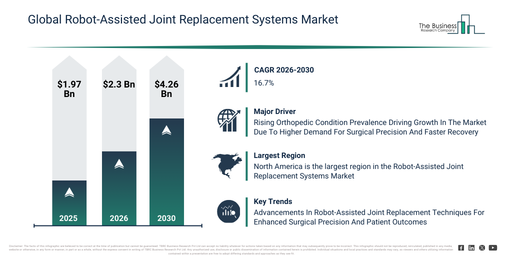
    The market size for robot-assisted joint replacement systems has witnessed rapid expansion in recent years. This market is expected to expand from $1.97 billion in 2025 to $2.3 billion in 2026, indicating a compound annual growth rate (CAGR) of 16.5%. During previous periods, this growth was primarily driven by factors including rising osteoarthritis prevalence, an increase in joint replacement volumes, the expansion of orthopedic specialty hospitals, a growing aging population, and enhancements in surgical imaging systems.

    The market size for robot-assisted joint replacement systems is projected to experience swift expansion in the coming years. This sector is expected to grow to $4.26 billion by 2030, achieving a compound annual growth rate (CAGR) of 16.7%. The anticipated growth during this period can be attributed to various factors including increased investments in robotic surgery, a rising need for precision orthopedics, the proliferation of outpatient joint replacement centers, enhanced surgeon training in robotic platforms, and a greater uptake of premium implants. Furthermore, significant trends within the forecast period involve the increasing adoption of robotic knee replacement systems, advancements in patient-specific surgical planning, the broadening application of robotic arm-assisted orthopedic surgery, a surge in the utilization of real-time intraoperative navigation, and a higher preference for minimally invasive joint procedures.

    Download A Free Sample Report For Comprehensive Market Insights:

    https://www.thebusinessresearchcompany.com/sample.aspx?id=33305&type=smp&utm_source=Blogs&utm_medium=Paid&utm_campaign=Jul_PR

    Robot-Assisted Joint Replacement Systems Market Growth Drivers: What Factors Are Accelerating Expansion?

    The market for robot-assisted joint replacement systems is anticipated to expand in the coming years, propelled by the increasing occurrence of degenerative joint and musculoskeletal (MSK) conditions. Degenerative orthopedic conditions, such as osteoarthritis and age-related joint deterioration, primarily impact the body’s structures responsible for movement and support, frequently leading to persistent pain, restricted mobility, and impaired function. The growing global elderly population contributes significantly to the rising incidence of these conditions, given that older individuals are more prone to joint wear-and-tear, cartilage degradation, and loss of bone density. Robot-assisted systems for joint replacement offer solutions for advanced joint degeneration by boosting surgical accuracy, optimizing implant placement, and delivering more consistent results, thereby potentially reducing complications and accelerating recovery after surgery. For instance, figures from the UK Office for Health Improvement and Disparities show that the proportion of individuals aged 16 and above reporting long-term musculoskeletal conditions rose from 17.6% in 2022 to 18.4% in 2023, signaling an expanding patient base vulnerable to worsening joint degeneration. Consequently, the escalating prevalence of degenerative joint conditions serves as a primary driver for the expansion of the robot-assisted joint replacement systems market.

    Robot-Assisted Joint Replacement Systems Market Segment Breakdown: Which Categories Generate The Most Revenue?

    The robot-assisted joint replacement systems market covered in this report is segmented –

    1) By Product Type: Knee Replacement Systems; Hip Replacement Systems; Shoulder Replacement Systems; Other Product Types

    2) By Technology: Semi-Autonomous Systems; Fully Autonomous Systems

    3) By End-Users: Orthopedic Surgeons; Hospitals; Clinics; Other End-Users

    Subsegments:

    1) By Knee Replacement Systems: Total Knee Replacement; Partial Knee Replacement; Revision Knee Replacement

    2) By Hip Replacement Systems: Total Hip Replacement; Partial Hip Replacement; Revision Hip Replacement

    3) By Shoulder Replacement Systems: Total Shoulder Replacement; Partial Shoulder Replacement; Reverse Shoulder Replacement

    4) By Other Products: Ankle Replacement Systems; Elbow Replacement Systems; Custom Implant Guides

    Robot-Assisted Joint Replacement Systems Market Trends: What Is Shaping Future Industry Growth?

    Leading companies in the robot-assisted joint replacement systems market are concentrating on developing innovative solutions, such as imageless intraoperative registration, to boost surgical precision, shorten operative time, and enhance patient outcomes in joint replacement procedures. Imageless intraoperative registration refers to a technique in robot-assisted joint replacement surgery that builds a digital model of the patient’s joint during the operation itself, utilizing anatomical landmarks and sensors. This method eliminates the need for preoperative imaging while still enabling precise robotic guidance. For example, in October 2023, DePuy Synthes, a US-based orthopedics company, introduced its VELYS Robotic-Assisted Solution for total knee arthroplasty. This system is an imageless, table-mounted solution engineered for accurate total knee arthroplasty (TKA), designed to integrate with the ATTUNE knee system to offer personalized implant positioning and balanced soft tissue results. Its key advantages include improved surgical accuracy, reduced procedure durations, shorter hospital stays (2.5 vs. 3.7 days), and superior early recovery metrics, such as ambulation distance and pain relief at 6 months. Overall, it leads to higher patient satisfaction (95%), better functional scores, and increased surgeon efficiency, simultaneously minimizing errors in bone cuts and gap balancing.

    Robot-Assisted Joint Replacement Systems Market Key Players And Strategic Industry Positioning

    Major companies operating in the robot-assisted joint replacement systems market are Johnson & Johnson, Medtronic plc., Stryker Corporation, B. Braun Melsungen AG., Zimmer Biomet Holdings Inc., Smith & Nephew plc., Meril Life Sciences, Globus Medical Inc., MicroPort Scientific Corporation, Brainlab, Corin Group, Exactech Inc., Think Surgical Inc., Curexo Inc., OMNIlife Science Inc., OrthAlign Inc., Kinamed Inc., Perlove Medical, Guangzhou Aimooe Technology Co. Ltd., Mako Surgical Corp., R2 Surgical,

    Access The Complete Robot-Assisted Joint Replacement Systems Market Report:

    https://www.thebusinessresearchcompany.com/report/robot-assisted-joint-replacement-systems-market-report?utm_source=Blogs&utm_medium=Paid&utm_campaign=Jul_PR

    Robot-Assisted Joint Replacement Systems Market Regional Outlook: Where Are The Largest Opportunities Located?

    North America was the largest region in the robot-assisted joint replacement systems market in 2025. Asia-Pacific is expected to be the fastest-growing region in the forecast period. The regions covered in the robot-assisted joint replacement systems market report are Asia-Pacific, South East Asia, Western Europe, Eastern Europe, North America, South America, Middle East, Africa.

    Get in touch with us:

    The Business Research Company: https://www.thebusinessresearchcompany.com/

    Americas: +1 310-496-7795

    Asia: +44 7882 955267 & +91 8897263534

    Europe: +44 7882 955267

    Email us at: marketing@tbrc.info

    Follow us on:

    LinkedIn: https://in.linkedin.com/company/the-business-research-company

    YouTube: https://www.youtube.com/channel/UC24_fI0rV8cR5DxlCpgmyFQ

    Global Market Model: https://www.thebusinessresearchcompany.com/global-market-model
  • Robot Assisted Surgical Microscope  Market Set To Grow From $138.54 Billion In 2026 To $202.61 Billion By 2030 At A CAGR Of 10%

    Robot Assisted Surgical Microscope Market Set To Grow From $138.54 Billion In 2026 To $202.61 Billion By 2030 At A CAGR Of 10%

    Through market attractiveness analysis, total addressable market evaluation, company benchmarking matrices, interactive Excel dashboards, expanded supply chain intelligence, emerging startup coverage, and detailed product insights, The Business Research Company’s 2026 market reports provide more actionable and strategically valuable research.

    Robot Assisted Surgical Microscope Market Expected To Reach $202.61 Billion By 2030 At 10% CAGR

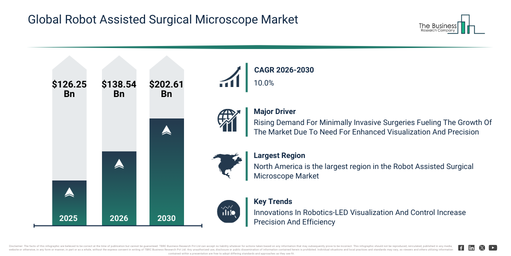
    The market size for robot assisted surgical microscopes has experienced strong growth in recent years. It is anticipated to increase from $126.25 billion in 2025 to $138.54 billion in 2026, reflecting a compound annual growth rate (CAGR) of 9.7%. Historically, this expansion has been driven by the rise in minimally invasive surgeries, increasing neurosurgery procedure volumes, the broader adoption of operating room imaging systems, a heightened demand for surgical precision, and the early uptake of robotic surgery tools.

    The robot assisted surgical microscope market size is projected to experience robust expansion over the coming years. This market is anticipated to reach $202.61 billion by 2030, exhibiting a compound annual growth rate (CAGR) of 10.0%. This anticipated growth is driven by several factors, including the rising number of complex microsurgical procedures, increased investments in hospital robotics, the proliferation of digital operating rooms, surgeons’ growing need for precise visualization, and elevated expenditures on cutting-edge surgical systems. Key trends predicted for this period encompass the increasing uptake of robot-guided visualization systems, the expanding utilization of digitally assisted surgical microscopy, the broader application of image-guided robotic microscopes, the growing incorporation of AI-powered visualization support, and a heightened demand for ergonomic robotic microscope platforms.

    Download A Free Sample Report For Comprehensive Market Insights:

    https://www.thebusinessresearchcompany.com/sample.aspx?id=33304&type=smp&utm_source=Blogs&utm_medium=Paid&utm_campaign=Jul_PR

    Robot Assisted Surgical Microscope Market Growth Factors Supporting Long-Term Expansion

    The growing preference for minimally invasive surgical techniques is projected to drive the expansion of the robot-assisted surgical microscope market moving forward. Minimally invasive surgeries are characterized by the use of small incisions, leading to less tissue damage, reduced post-operative pain, shorter hospital stays, and lower risks of complications compared to traditional open surgeries. The increase in these procedures is attributed to advancements in surgical technology, which allow for smaller incisions, quicker recovery times, and improved patient outcomes. The robot-assisted surgical microscope facilitates the demand for minimally invasive surgeries by providing surgeons with the superior visualization, precision, and control necessary for intricate minimally invasive procedures. An illustrative example shows that in June 2024, the American Society of Plastic Surgeons (ASPS), a US-based professional association, reported approximately 25.4 million cosmetic minimally invasive procedures performed in 2023, signifying a 7% increase from 2022. Thus, the escalating demand for minimally invasive surgeries is a primary catalyst for the growth of the robot-assisted surgical microscope market.

    Robot Assisted Surgical Microscope Market Segmentation: How Is The Market Structured Across Key Categories?

    The robot assisted surgical microscope market covered in this report is segmented –

    1) By Component: Robotic Surgical Microscope Systems; Software And Control Systems; Accessories And Peripheral Devices; Services

    2) By Technology: Digitally Assisted Robotic Microscopy; Artificial Intelligence (AI)-Enabled Robotic Visualization Systems; Image-Guided Robotic Microscopy

    3) By Surgery Type: Neurological Surgery; Orthopedic Surgery; Ophthalmological Surgery; Other Surgery Types

    4) By End User: Hospitals; Ambulatory Surgical Centers; Specialty Clinics

    Subsegments:

    1) By Robotic Surgical Microscope Systems: Standalone Robotic Microscope Units; Integrated Operating Room Microscope Systems; Ceiling Mounted Robotic Microscope Systems; Mobile Robotic Microscope Platforms; Hybrid Robotic Optical Systems

    2) By Software And Control Systems: Image Processing Software; Navigation And Tracking Software; Robotic Motion Control Software; User Interface And Visualization Software; Data Integration And Management Software

    3) By Accessories And Peripheral Devices: High Definition Optical Lenses; Robotic Arm Attachments; Visualization Displays And Monitors; Illumination And Light Management Devices; Foot Control And Hand Control Interfaces

    4) By Services: Installation And System Integration Services; Maintenance And Repair Services; Software Update And Upgrade Services; User Training And Education Services; Technical Support And Consultation Services

    Robot Assisted Surgical Microscope Market Industry Trends Shaping Future Revenue Growth

    Leading companies operating within the robot assisted surgical microscope market are concentrating on creating advanced solutions, including robotic visualization systems for neurosurgery, to enhance surgical precision, streamline workflow efficiency, and improve intraoperative decision-making. Robotic visualization systems for neurosurgery are defined as surgeon-controlled microscope platforms that integrate robotic positioning, high-resolution optical and digital imaging, and software-assisted functions to support intricate microsurgical procedures. For example, in September 2024, Carl Zeiss Meditec AG, a Germany-based medical technology company, launched the ZEISS KINEVO 900 S Robotic Visualization System for neurosurgery. This system is engineered to facilitate high-precision microsurgical workflows, combining 4K 3D digital visualization with robotic assistance, enabling hands-free positioning through surgeon-controlled robotic movement, and incorporating AI-supported features like automated focus and alignment to boost intraoperative efficiency and visualization accuracy.

    Robot Assisted Surgical Microscope Market Competitive Landscape And Leading Companies

    Major companies operating in the robot assisted surgical microscope market are Sony Group Corporation, Danaher Corporation, Stryker Corporation, B. Braun Melsungen AG, Olympus Corporation, Karl Storz SE & Co. KG, Carl Zeiss AG, Leica Microsystems GmbH, Aesculap Inc., Brainlab AG, BHS Technologies GmbH, Medical Microinstruments Inc., Synaptive Medical Inc., Jadak LLC, Zumax Medical Co. Ltd., Perlove Medical Technology Co. Ltd., Mitaka Kohki Co. Ltd., Beijing Surgerii Technology Co. Ltd., Medicaroid Corporation, Medel Tip ve Saglik Ürünleri A.S.

    Access The Complete Robot Assisted Surgical Microscope Market Report:

    https://www.thebusinessresearchcompany.com/report/robot-assisted-surgical-microscope-market-report?utm_source=Blogs&utm_medium=Paid&utm_campaign=Jul_PR

    Robot Assisted Surgical Microscope Market Geographic Landscape: Which Region Dominates Industry Growth?

    North America was the largest region in the robot assisted surgical microscope market in 2025. Asia-Pacific is expected to be the fastest-growing region in the forecast period. The regions covered in the robot assisted surgical microscope market report are Asia-Pacific, South East Asia, Western Europe, Eastern Europe, North America, South America, Middle East, Africa.

    Get in touch with us:

    The Business Research Company: https://www.thebusinessresearchcompany.com/

    Americas: +1 310-496-7795

    Asia: +44 7882 955267 & +91 8897263534

    Europe: +44 7882 955267

    Email us at: marketing@tbrc.info

    Follow us on:

    LinkedIn: https://in.linkedin.com/company/the-business-research-company

    YouTube: https://www.youtube.com/channel/UC24_fI0rV8cR5DxlCpgmyFQ

    Global Market Model: https://www.thebusinessresearchcompany.com/global-market-model
  • Respiratory Endotherapy Devices  Market Trends And Growth Drivers Point To Strong Future Potential

    Respiratory Endotherapy Devices Market Trends And Growth Drivers Point To Strong Future Potential

    Enhanced with market attractiveness analysis, total addressable market evaluation, company benchmarking matrices, interactive Excel dashboards, expanded supply chain intelligence, emerging startup coverage, and detailed product insights, The Business Research Company’s 2026 market reports deliver more actionable and strategically valuable research.

    Respiratory Endotherapy Devices Market Growth Analysis: How Will Revenue Expand During The Forecast Period?

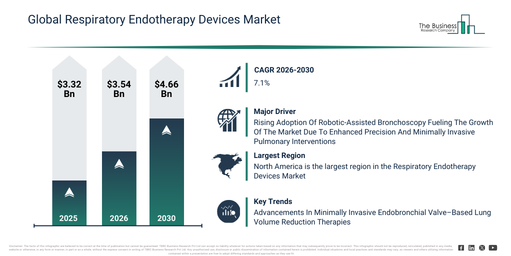
    The respiratory endotherapy devices market has experienced significant expansion in recent years. This market is projected to increase from $3.32 billion in 2025 to $3.54 billion in 2026, achieving a compound annual growth rate (CAGR) of 6.9%. Historically, this growth has been fueled by factors such as an escalation in chronic respiratory diseases, a rise in lung cancer diagnosis, the broadening of interventional pulmonology, the expansion of hospital endoscopy units, and the demand for minimally invasive procedures.

    The market for respiratory endotherapy devices is anticipated to experience substantial expansion in the coming years. This market is projected to reach a valuation of $4.66 billion by 2030, exhibiting a compound annual growth rate (CAGR) of 7.1%. Factors contributing to this growth during the forecast period include the rise in early lung screening programs, the adoption of robotic bronchoscopy, an increase in outpatient pulmonary procedures, the integration of advanced imaging, and the demand for precision airway therapy. Key trends expected over the forecast horizon involve minimally invasive airway intervention devices, the increasing use of disposable bronchoscopes, image-guided bronchoscopic procedures, sophisticated endobronchial ablation systems, and smart navigation bronchoscopy tools.

    Download A Free Sample Report For Comprehensive Market Insights:

    https://www.thebusinessresearchcompany.com/sample.aspx?id=33296&type=smp&utm_source=Blogs&utm_medium=Paid&utm_campaign=Jul_PR

    Respiratory Endotherapy Devices Market Industry Drivers: What Is Driving Revenue Growth?

    The respiratory endotherapy devices market is anticipated to be driven by the growing integration of robotic-assisted bronchoscopy going forward. These advanced robotic-assisted bronchoscopy systems facilitate precise navigation within the respiratory tract, thereby improving diagnostic accuracy and therapeutic outcomes. The increasing demand for these systems arises as healthcare providers seek minimally invasive solutions that can reduce procedure time, enhance patient safety, and improve overall clinical efficiency. Respiratory endotherapy devices equipped with robotic assistance support complex interventions by providing real-time imaging, superior maneuverability, and enhanced control. As an example, in September 2025 , data from the European Respiratory Society International Congress , a Switzerland -based membership organization, showed that the utilization of robotic-assisted bronchoscopy with integrated cone beam CT for peripheral lung lesions increased to 84.6% in 2025 , a significant leap from just 23.1% with conventional bronchoscopy in 2024 . Consequently, the rising adoption of robotic-assisted bronchoscopy is propelling the growth of the respiratory endotherapy devices market .

    Respiratory Endotherapy Devices Market Segment Outlook: Which Categories Are Expanding The Fastest?

    The respiratory endotherapy devices market covered in this report is segmented –

    1) By Product Type: Bronchoscopes; Endobronchial Ultrasound Systems; Biopsy Forceps; Guidewires; Catheters; Airway Stents; Endobronchial Valves; Ablation Devices; Other Endotherapy Accessories

    2) By Diagnostic Devices: Trans Bronchial Aspiration; Biopsy Forceps; Cytology Brushes; Other Diagnostic Devices

    3) By Patient Type: Adult Patients; Pediatric Patients

    4) By Specialist: Hospitals; Diagnostic Centers; Ambulatory Surgical Centers

    5) By End User: Peripheral Vascular Intervention; Endovascular Interventions; Cardiac; Interventional Radiology; Venous; Other End Users

    Subsegments:

    1) By Bronchoscopes: Flexible Bronchoscopes; Rigid Bronchoscopes; Video Bronchoscopes; Disposable Bronchoscopes; Therapeutic Bronchoscopes

    2) By Endobronchial Ultrasound Systems: Radial Endobronchial Ultrasound Systems; Linear Endobronchial Ultrasound Systems; Portable Endobronchial Ultrasound Systems; Cart Based Endobronchial Ultrasound Systems; High Resolution Endobronchial Ultrasound Systems

    3) By Biopsy Forceps: Flexible Biopsy Forceps; Rigid Biopsy Forceps; Disposable Biopsy Forceps; Alligator Jaw Biopsy Forceps; Cup Biopsy Forceps

    4) By Guidewires: Hydrophilic Guidewires; Non Coated Guidewires; Steerable Guidewires; Flexible Tip Guidewires; High Strength Guidewires

    5) By Catheters: Balloon Catheters; Aspiration Catheters; Delivery Catheters; Diagnostic Catheters; Therapeutic Catheters

    6) By Airway Stents: Silicone Airway Stents; Metallic Airway Stents; Covered Airway Stents; Uncovered Airway Stents; Expandable Airway Stents

    7) By Endobronchial Valves: One Way Endobronchial Valves; Permanent Endobronchial Valves; Temporary Endobronchial Valves; Adjustable Endobronchial Valves; Implantable Endobronchial Valves

    8) By Ablation Devices: Radiofrequency Ablation Devices; Cryoablation Devices; Laser Ablation Devices; Thermal Ablation Devices; Microwave Ablation Devices

    9) By Other Endotherapy Accessories: Suction Tubes; Specimen Collection Traps; Bronchoscopy Brushes; Biopsy Needles; Airway Dilators

    #Respiratory Endotherapy Devices Market Growth Trends: What Is Influencing The Future Outlook?

    Leading firms in the respiratory endotherapy devices market are concentrating on creating sophisticated solutions, like endobronchial valves, to lessen treatment risks and accomplish precise lung volume reduction without permanent tissue removal. An endobronchial valve is a minimally invasive implant inserted through bronchoscopy into specific airways to obstruct airflow to affected lung areas, thereby enabling healthier parts to operate more efficiently. For example, in February 2024, Olympus Canada Inc., a medical technology company based in Canada, introduced the Spiration Valve System aimed at treating severe emphysema. This device, shaped like an umbrella, is intended for placement in the most severely afflicted lung regions via a minimally invasive bronchoscopic procedure. It uniquely reroutes airflow from hyperinflated lung zones towards healthier tissue, thereby enhancing respiratory mechanics. Being the sole endobronchial valve therapy presently offered in Canada, it fulfills an unaddressed requirement in managing severe emphysema. Clinical data from the EMPROVE trial indicates sustained advantages over 24 months, encompassing significant enhancements in lung function, reduced breathlessness, and improved patient quality of life.

    Respiratory Endotherapy Devices Market Key Companies And Competitive Benchmarking

    Major companies operating in the respiratory endotherapy devices market are Johnson & Johnson, Medtronic plc, Siemens Healthineers, Stryker Corporation, GE Healthcare Technologies Inc., Boston Scientific Corporation, Intuitive Surgical Inc., Olympus Corporation, Hoya Corporation, Steris Healthcare, Teleflex Incorporated, Karl Storz SE & Co. KG, CookMedical, Merit Medical Systems Inc., Ambu A/S, Vygon, Richard Wolf GmbH, Vapotherm Inc, Scholly Fiberoptic GmbH, Clarus Medical LLC, ENDO-FLEX GmbH, The Lung Docs Inc., and Broncus Medical Inc.

    Access The Complete Respiratory Endotherapy Devices Market Report:

    https://www.thebusinessresearchcompany.com/report/respiratory-endotherapy-devices-market-report?utm_source=Blogs&utm_medium=Paid&utm_campaign=Jul_PR

    Respiratory Endotherapy Devices Market Regional Distribution: Which Areas Drive Market Expansion?

    North America was the largest region in the respiratory endotherapy devices market in 2025. Asia-Pacific is expected to be the fastest-growing region in the forecast period. The regions covered in the respiratory endotherapy devices market report are Asia-Pacific, South East Asia, Western Europe, Eastern Europe, North America, South America, Middle East, Africa.

    Get in touch with us:

    The Business Research Company: https://www.thebusinessresearchcompany.com/

    Americas: +1 310-496-7795

    Asia: +44 7882 955267 & +91 8897263534

    Europe: +44 7882 955267

    Email us at: marketing@tbrc.info

    Follow us on:

    LinkedIn: https://in.linkedin.com/company/the-business-research-company

    YouTube: https://www.youtube.com/channel/UC24_fI0rV8cR5DxlCpgmyFQ

    Global Market Model: https://www.thebusinessresearchcompany.com/global-market-model
  • Regenerative Artificial Skin  Market Forecast Highlights Expansion From $2.41 Billion To $3.84 Billion Through 2030

    Regenerative Artificial Skin Market Forecast Highlights Expansion From $2.41 Billion To $3.84 Billion Through 2030

    Enhanced with market attractiveness analysis, total addressable market evaluation, company benchmarking matrices, interactive Excel dashboards, expanded supply chain intelligence, emerging startup coverage, and detailed product insights, The Business Research Company’s 2026 market reports deliver more actionable and strategically valuable research.

    Regenerative Artificial Skin Market Forecast Highlighting Growth From $2.41 Billion To $3.84 Billion

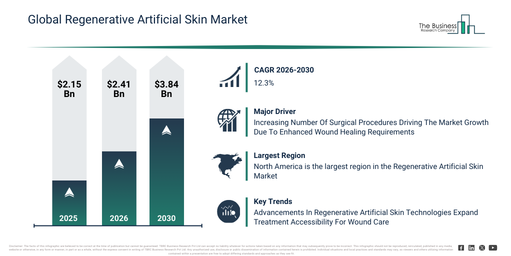
    The regenerative artificial skin market size has experienced rapid expansion in recent years. It is projected to increase from $2.15 billion in 2025 to $2.41 billion in 2026, registering a compound annual growth rate (CAGR) of 12.1%. Historically, this growth can be ascribed to rising burn injury cases, increasing chronic wound prevalence, growth in diabetic ulcer patients, expansion of reconstructive surgeries, and advances in tissue engineering research.

    The market for regenerative artificial skin is projected to experience swift expansion over the coming years. This market is anticipated to reach a valuation of $3.84 billion by 2030, demonstrating a compound annual growth rate (CAGR) of 12.3%. This projected growth during the forecast period is primarily driven by factors such as the increasing adoption of regenerative medicine, a heightened need for restoring skin function, an uptick in clinical trial engagements, the broader application of cell-based therapies, and increased healthcare expenditure on sophisticated wound care solutions. Key trends anticipated within this forecast timeframe encompass sophisticated bioengineered skin substitutes, products for dermal regeneration that are cell-based, composite multilayer skin scaffolds, customized graft design methodologies, and wound platforms designed for accelerated healing.

    Download A Free Sample Report For Comprehensive Market Insights:

    https://www.thebusinessresearchcompany.com/sample.aspx?id=33290&type=smp&utm_source=Blogs&utm_medium=Paid&utm_campaign=Jul_PR

    Regenerative Artificial Skin Market Expansion Supported By Key Demand Factors

    The expanding volume of surgical procedures is anticipated to drive forward the growth of the regenerative artificial skin market. Surgical procedures are defined as medical interventions that entail incisions or manipulation of body tissues to treat injuries, diseases, or deformities. The rising number of these procedures is largely fueled by the aging demographic, as older individuals frequently necessitate more surgical interventions for age-related health issues and chronic ailments. This increase in surgical procedures elevates the demand for regenerative artificial skin, which is vital for effective wound healing and tissue regeneration, ultimately accelerating recovery and mitigating complications in post-surgical patients. For instance, in June 2024, according to the American Society of Plastic Surgeons, a US-based professional medical organization, 2023 saw liposuction continue as the most popular plastic surgery procedure, with nearly 350,000 procedures carried out, representing a 7% increase over 2022. Therefore, the growing number of surgical procedures is a primary driver for the regenerative artificial skin market’s expansion.

    Regenerative Artificial Skin Market Segmentation Trends And Revenue Drivers

    The regenerative artificial skin market covered in this report is segmented –

    1) By Product Type: Synthetic Skin; Biosynthetic Skin; Composite Skin

    2) By Material: Engineered Skin Material; Bi Layered Material; Permanent Skin Material; Single Layer Material; Temporary Skin Material; Temporary Skin Material

    3) By Application: Burn Treatment; Chronic Wound Care; Surgical Reconstruction; Other Applications

    4) By End User: Hospitals; Clinics; Ambulatory Surgical Centers; Other End Users

    Subsegments:

    1) By Synthetic Skin: Polymer Based Synthetic Skin; Silicone Based Synthetic Skin; Elastomer Based Synthetic Skin; Hydrogel Based Synthetic Skin; Nanofiber Based Synthetic Skin

    2) By Biosynthetic Skin: Collagen Based Biosynthetic Skin; Gelatin Based Biosynthetic Skin; Fibrin Based Biosynthetic Skin; Chitosan Based Biosynthetic Skin; Hyaluronic Acid Based Biosynthetic Skin

    3) By Composite Skin: Collagen Polymer Composite Skin; Hydrogel Polymer Composite Skin; Elastomer Fiber Composite Skin; Biopolymer Synthetic Composite Skin; Multilayer Composite Skin

    Regenerative Artificial Skin Market Growth Trends Influencing Competitive Dynamics

    Major companies operating in the regenerative artificial skin market are concentrating on developing advanced solutions, such as fit-for-purpose autologous cell therapy cartridges, to enhance wound coverage, improve accessibility, and optimize resource use for smaller wounds. These fit-for-purpose autologous cell therapy cartridges refer to modified disposable cartridges engineered to efficiently deliver spray-on skin cells for wounds of varying sizes, assisting clinicians in treating smaller full-thickness wounds with minimal waste. For instance, in December 2024, AVITA Medical Inc., a US-based regenerative medicine company, introduced RECELL GO mini, a line extension of its RECELL GO system, which is FDA-approved for treating wounds up to 480 square centimeters. This launch enhances the capacity to deliver fit-for-purpose solutions, enabling clinicians to address the varied needs of patients with full-thickness wounds. The RECELL GO mini utilizes the same multi-use processing device as the standard cartridge but incorporates a smaller disposable cartridge, thereby enabling broader patient access while maintaining high-quality regenerative skin therapy outcomes.

    #Regenerative Artificial Skin Market Industry Leaders: Which Organizations Are Driving Competition?

    Major companies operating in the regenerative artificial skin market are Johnson & Johnson, Medtronic plc, 3M Company, Stryker Corporation, Baxter International Inc., Smith & Nephew plc, Zimmer Biomet Holdings Inc., Mölnlycke Health Care AB, Mallinckrodt plc, Integra LifeSciences Corporation, Gunze Limited, Organogenesis Holdings Inc., MiMedx Group Inc., Vericel Corporation, LifeNet Health Inc., AlloSource Inc., AVITA Medical Inc., Aroa Biosurgery Limited, Cook Biotech Incorporated, Tissue Regenix Group plc, CUTISS AG, and Tides Medical LLC.

    Access The Complete Regenerative Artificial Skin Market Report:

    https://www.thebusinessresearchcompany.com/report/regenerative-artificial-skin-market-report?utm_source=Blogs&utm_medium=Paid&utm_campaign=Jul_PR

    Regenerative Artificial Skin Market Geographic Distribution And Regional Opportunities

    North America was the largest region in the regenerative artificial skin market in 2025. Asia-Pacific is expected to be the fastest-growing region in the forecast period. The regions covered in the regenerative artificial skin market report are Asia-Pacific, South East Asia, Western Europe, Eastern Europe, North America, South America, Middle East, Africa.

    Get in touch with us:

    The Business Research Company: https://www.thebusinessresearchcompany.com/

    Americas: +1 310-496-7795

    Asia: +44 7882 955267 & +91 8897263534

    Europe: +44 7882 955267

    Email us at: marketing@tbrc.info

    Follow us on:

    LinkedIn: https://in.linkedin.com/company/the-business-research-company

    YouTube: https://www.youtube.com/channel/UC24_fI0rV8cR5DxlCpgmyFQ

    Global Market Model: https://www.thebusinessresearchcompany.com/global-market-model
  • Refurbished Cardiovascular And Cardiology Equipment  Market Expected To Reach $7.43 Billion By 2030 As Growth Accelerates At 9.9% CAGR

    Refurbished Cardiovascular And Cardiology Equipment Market Expected To Reach $7.43 Billion By 2030 As Growth Accelerates At 9.9% CAGR

    Through market attractiveness analysis, total addressable market evaluation, company benchmarking matrices, interactive Excel dashboards, expanded supply chain intelligence, emerging startup coverage, and detailed product insights, The Business Research Company’s 2026 market reports provide more actionable and strategically valuable research.

    Refurbished Cardiovascular And Cardiology Equipment Market Revenue Growth Supported By A CAGR Of 7.43% Through 2030

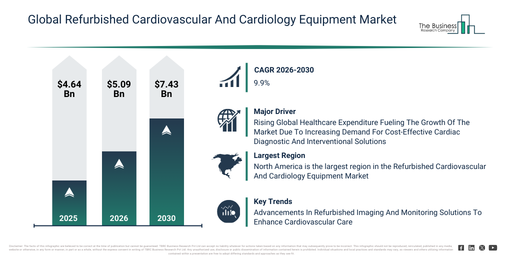
    The refurbished cardiovascular and cardiology equipment market has experienced substantial growth in recent years. This market is anticipated to expand from $4.64 billion in 2025 to $5.09 billion in 2026, exhibiting a compound annual growth rate (CAGR) of 9.7%. The historical expansion of this sector can be attributed to the elevated cost of new cardiology equipment, budget constraints impacting hospitals, the presence of established secondary equipment markets, increasing device replacement cycles, and widening gaps in healthcare infrastructure.

    The refurbished cardiovascular and cardiology equipment market size is projected to experience substantial expansion over the coming years, anticipated to reach a valuation of $7.43 billion by 2030, exhibiting a compound annual growth rate (CAGR) of 9.9%. This growth during the forecast period is primarily driven by an escalating focus on cost-optimized care delivery, an increase in access to cardiac diagnostics, enhanced acceptance of certified refurbished devices, the proliferation of private cardiac clinics, and rising demand in emerging markets. Significant trends expected during this period include a growing demand for certified refurbished systems, the proliferation of cost-effective cardiology equipment, the broader availability of warranty-backed refurbished devices, higher adoption rates in mid-tier hospitals, and an increase in third-party refurbishment providers.

    Download A Free Sample Report For Comprehensive Market Insights:

    https://www.thebusinessresearchcompany.com/sample.aspx?id=33289&type=smp&utm_source=Blogs&utm_medium=Paid&utm_campaign=Jul_PR

    #Refurbished Cardiovascular And Cardiology Equipment Market Growth Drivers And Industry Catalysts

    The global rise in healthcare spending is projected to boost the expansion of the refurbished cardiovascular and cardiology equipment market. This global healthcare expenditure encompasses all financial outlays by governments, insurance providers, and individuals for healthcare services, medical technologies, and public health initiatives worldwide. The upward trend in global healthcare expenditure is primarily driven by an aging demographic, leading to a substantial increase in cardiovascular disease cases and a subsequent rise in the need for diagnostic imaging, interventional treatments, and ongoing cardiac support. Refurbished cardiovascular and cardiology equipment assists in managing this increasing global healthcare expenditure by enabling healthcare providers to enhance their cardiovascular service capabilities and manage capital costs, thanks to their reduced purchase price compared to brand-new devices. As an illustration, Eurostat, a statistical office located in Luxembourg, reported in October 2024 that healthcare spending in 2023 totaled $2,030 billion (€1,720 billion), representing 10.0% of GDP, an increase from $1960 billion (€1,660 billion) and 9.9% of GDP recorded in 2022. Consequently, the global growth in healthcare spending is a key factor propelling the expansion of the refurbished cardiovascular and cardiology equipment market.

    Refurbished Cardiovascular And Cardiology Equipment Market Segment Analysis Highlighting Growth Areas

    The refurbished cardiovascular and cardiology equipment market covered in this report is segmented –

    1) By Product Type: Electrocardiographs; Defibrillators; Cardiac Ultrasound Systems; Stress Testing Systems; Holter Monitors; Other Product Types

    2) By Equipment Condition: Certified Refurbished Equipment; Remanufactured Equipment; Used Equipment With Warranty; Pre-Owned Equipment

    3) By Distribution Channel: Direct Sales; Online Sales Platforms; Third-Party Distributors; Medical Equipment Trade Shows

    4) By End-User: Hospitals And Clinics; Diagnostic Centers; Ambulatory Surgical Centers; Research Institutions; Home Care Settings

    Subsegments:

    1) By Electrocardiographs: Resting Electrocardiographs; Portable Electrocardiographs; Wireless Electrocardiographs; Multichannel Electrocardiographs

    2) By Defibrillators: Automated External Defibrillators; Manual External Defibrillators; Implantable Cardiac Defibrillators; Wearable Cardiac Defibrillators

    3) By Cardiac Ultrasound Systems: Transthoracic Cardiac Ultrasound Systems; Transesophageal Cardiac Ultrasound Systems; Doppler Cardiac Ultrasound Systems; Stress Cardiac Ultrasound Systems

    4) By Stress Testing Systems: Treadmill Based Stress Testing Systems; Bicycle Based Stress Testing Systems; Pharmacological Stress Testing Systems; Integrated Cardiac Stress Testing Systems

    5) By Holter Monitors: Single Channel Holter Monitors; Multi Channel Holter Monitors; Wireless Holter Monitors; Extended Duration Holter Monitors

    6) By Other Product Types: Cardiac Patient Monitoring Systems; Cardiac Event Recorders; Cardiac Output Monitoring Devices; Cardiac Telemetry Systems

    #Refurbished Cardiovascular And Cardiology Equipment Market Trends Influencing Long-Term Demand

    Leading companies within the refurbished cardiovascular and cardiology equipment market are concentrating on developing sophisticated refurbished ultrasound systems. This focus aims to boost diagnostic accuracy, enhance patient outcomes, lower operational expenses, and prolong the service life of medical devices for healthcare providers. The process of refurbishing ultrasound systems involves restoring used or previously owned ultrasound machines to a fully functional and reliable state, enabling their safe reuse in medical settings. For example, in April 2024, GE Healthcare, a US-based medical technology company, launched a new refurbishing unit in Bangladesh dedicated to its A1 SURE ultrasound systems. This unit revitalizes pre-owned ultrasound devices by replacing worn components, updating software, and guaranteeing complete functional performance, further providing a one-year warranty and adaptable financing options to hospitals and clinics. The refurbished systems retain the high-resolution imaging and advanced diagnostic capabilities characteristic of new devices, simultaneously lowering costs and expanding access to vital cardiovascular and cardiology imaging in developing regions.

    Refurbished Cardiovascular And Cardiology Equipment Market Leading Companies: Who Holds Significant Market Presence?

    Major companies operating in the refurbished cardiovascular and cardiology equipment market are Siemens Healthineers AG, Hitachi Ltd., Medtronic plc, Stryker Corporation, Koninklijke Philips N.V., GE HealthCare Technologies Inc., Sanrad Medical Systems, Neusoft Medical Systems Co. Ltd., Soma Technology Inc, Diamond Diagnostics, Amber Diagnostics, Radiology Oncology Systems Inc., Master Medical Equipment, Venture Medical ReQuip Inc, EverX Pty Ltd., Whittemore Enterprises Inc., Fair Medical Co. Ltd., Future Health Concepts Inc., Jaken Medical Inc., Mediproma B.V., and PrimedeQ India Private Limited.

    Access The Complete Refurbished Cardiovascular And Cardiology Equipment Market Report:

    https://www.thebusinessresearchcompany.com/report/refurbished-cardiovascular-and-cardiology-equipment-market-report?utm_source=Blogs&utm_medium=Paid&utm_campaign=Jul_PR

    Refurbished Cardiovascular And Cardiology Equipment Market Largest Region By Revenue And Market Share

    North America was the largest region in the refurbished cardiovascular and cardiology equipment market in 2025. Asia-Pacific is expected to be the fastest-growing region in the forecast period. The regions covered in the refurbished cardiovascular and cardiology equipment market report are Asia-Pacific, South East Asia, Western Europe, Eastern Europe, North America, South America, Middle East, Africa.

    Get in touch with us:

    The Business Research Company: https://www.thebusinessresearchcompany.com/

    Americas: +1 310-496-7795

    Asia: +44 7882 955267 & +91 8897263534

    Europe: +44 7882 955267

    Email us at: marketing@tbrc.info

    Follow us on:

    LinkedIn: https://in.linkedin.com/company/the-business-research-company

    YouTube: https://www.youtube.com/channel/UC24_fI0rV8cR5DxlCpgmyFQ

    Global Market Model: https://www.thebusinessresearchcompany.com/global-market-model
  • Quantitative Brain Function Imaging Device  Market Outlook Highlights The Next Major Growth Opportunities

    Quantitative Brain Function Imaging Device Market Outlook Highlights The Next Major Growth Opportunities

    Enhanced with market attractiveness analysis, total addressable market evaluation, company benchmarking matrices, interactive Excel dashboards, expanded supply chain intelligence, emerging startup coverage, and detailed product insights, The Business Research Company’s 2026 market reports deliver more actionable and strategically valuable research.

    Quantitative Brain Function Imaging Device Market Size Forecast: How Large Could The Market Become By 2030?

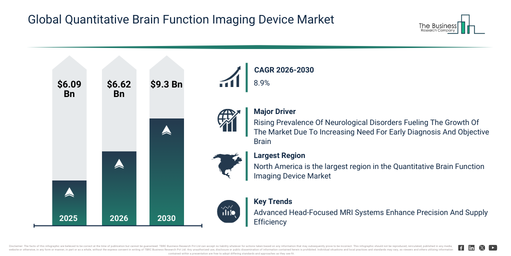
    The quantitative brain function imaging device market has experienced substantial expansion in recent years. It is anticipated to increase from $6.09 billion in 2025 to $6.62 billion in 2026, demonstrating a compound annual growth rate (CAGR) of 8.7%. This historic growth can be attributed to an increase in neurological disorder prevalence, the expansion of neuroscience research funding, improvements in hospital imaging infrastructure, a rise in the use of EEG and PET systems, and the development of advanced brain mapping techniques.

    The quantitative brain function imaging device market is anticipated to experience robust expansion over the coming years. This market is projected to reach $9.3 billion by 2030, exhibiting a compound annual growth rate (CAGR) of 8.9%. This projected growth is primarily propelled by factors such as an increasing demand for quantitative diagnostics, advancements in precision neurology, the expansion of brain-computer interface research, a rising need for mental health diagnostics, and greater investment in neurotechnology platforms. Furthermore, significant trends for this period include the widespread adoption of multi-modal brain imaging, an increase in functional brain mapping, the integration of advanced neuro-signal software, a growing application in psychiatric diagnostics, and the broader development of portable brain monitoring systems.

    Download A Free Sample Report For Comprehensive Market Insights:

    https://www.thebusinessresearchcompany.com/sample.aspx?id=33281&type=smp&utm_source=Blogs&utm_medium=Paid&utm_campaign=Jul_PR

    Quantitative Brain Function Imaging Device Market Growth Drivers: What Factors Are Accelerating Expansion?

    The quantitative brain function imaging device market is anticipated to experience growth driven by the rising incidence of neurological disorders. These conditions, which involve medical issues affecting the brain, spinal cord, or nerves, can lead to impairments in movement, sensation, cognitive abilities, or other bodily functions. The increasing occurrence of neurological disorders is primarily influenced by aging populations, which elevate the risk of conditions such as Alzheimer’s and Parkinson’s, thereby contributing to a growing global healthcare burden. Quantitative brain function imaging devices play a crucial role in managing neurological disorders by offering objective, data-driven assessments of brain activity, facilitating earlier diagnoses, precise disease monitoring, and personalized treatment plans. As an illustration, in March 2023, the Alzheimer’s Association, a US-based nonprofit voluntary health organization, reported that 6.7 million Americans aged 65 and above had Alzheimer’s, a figure projected to increase to 13.8 million by 2060. Hence, the increasing prevalence of neurological disorders is a significant factor propelling the expansion of the quantitative brain function imaging device market.

    Quantitative Brain Function Imaging Device Market Segments: Where Are The Largest Growth Opportunities?

    The quantitative brain function imaging device market covered in this report is segmented –

    1) By Component: Imaging Hardware; Electrodes And Sensors; Data Acquisition Systems; Software Platforms; Accessories And Consumables; Maintenance And Service Kits

    2) By Device Type: Functional Magnetic Resonance Imaging (fMRI); Positron Emission Tomography (PET); Electroencephalography (EEG); Magnetoencephalography (MEG); Near Infrared Spectroscopy (NIRS)

    3) By Modality: Single Modal Imaging; Multi-Modal Imaging

    4) By Application: Neurological Research; Psychiatric Research; Clinical Diagnostics; Brain-Computer Interface (BCI); Cognitive Neuroscience

    5) By End-User: Hospitals; Research Laboratories; Academic Institutes; Diagnostic Centers; Pharmaceutical And Biotechnology Companies

    Subsegments:

    1) By Imaging Hardware: Functional Magnetic Resonance Imaging Systems; Quantitative Electroencephalography Systems; Magnetoencephalography Systems; Functional Near Infrared Spectroscopy Systems

    2) By Electrodes And Sensors: Electroencephalography Electrodes; Magnetoencephalography Sensors; Functional Near Infrared Spectroscopy Optodes; Multimodal Neural Sensors

    3) By Data Acquisition Systems: Signal Amplifiers; Analog To Digital Converters; Neural Signal Recorders; Synchronization And Timing Modules

    4) By Software Platforms: Brain Signal Processing Software; Quantitative Analysis And Visualization Software; Image Reconstruction Software; Data Management And Integration Software

    5) By Accessories And Consumables: Electrode Caps And Headgear; Conductive Gels And Pastes; Cables And Connectors; Disposable Sensors

    6) By Maintenance And Service Kits: Calibration Kits; System Diagnostics Tools; Replacement Parts And Spares; Software Updates And Technical Support Services

    Quantitative Brain Function Imaging Device Market Trends: What Is Shaping Future Industry Growth?

    Leading companies in the quantitative brain function imaging device market are concentrating on technological breakthroughs, such as AI-based quantitative neuroimaging and imaging biomarkers, to achieve more accurate diagnoses, improve clinical decision-making, and support precision neurology through objective, reproducible brain metrics. AI-based quantitative neuroimaging and imaging biomarkers involve employing artificial intelligence algorithms to automatically extract, measure, and analyze objective, numerical indicators from brain imaging data. For instance, in December 2023, Quibim, a Spain-based healthtech company, unveiled QP-Brain, an AI-based quantitative brain imaging software designed to enable automated measurement of brain atrophy and lesion burden, assisting in the early detection and monitoring of neurological diseases. This software facilitates the early identification of subtle brain changes linked to neurodegenerative and neurological disorders. It provides objective, reproducible imaging biomarkers that contribute to earlier and more accurate diagnosis. By integrating seamlessly into existing PACS workflows, it streamlines radiological reporting and lessens dependence on subjective visual assessment.

    Quantitative Brain Function Imaging Device Market Major Participants And Competitive Dynamics

    Major companies operating in the quantitative brain function imaging device market are NeuroPace Inc., NeuroSky Inc, BrainsWay Ltd., Compumedics Limited, Brain Products GmbH, Emotiv Inc., Aspect Imaging Ltd., ANT Neuro/ANT North America Inc., Neuroelectrics Barcelona S.L.U., MR Solutions Ltd., Advanced Brain Monitoring Inc, Cerca Magnetics Limited, Cortech Solutions Inc., FieldLine Inc., Gowerlabs Ltd., Mitsar Co. Ltd, Mind Media B.V., Wearable Sensing LLC, Brain Vision LLC, CereHealth Corp.

    Access The Complete Quantitative Brain Function Imaging Device Market Report:

    https://www.thebusinessresearchcompany.com/report/quantitative-brain-function-imaging-device-market-report?utm_source=Blogs&utm_medium=Paid&utm_campaign=Jul_PR

    #Quantitative Brain Function Imaging Device Market Largest Region: Which Geography Holds The Highest Market Share?

    North America was the largest region in the quantitative brain function dmaging device market in 2025. Asia-Pacific is expected to be the fastest-growing region in the forecast period. The regions covered in the quantitative brain function imaging device market report are Asia-Pacific, South East Asia, Western Europe, Eastern Europe, North America, South America, Middle East, Africa.

    Get in touch with us:

    The Business Research Company: https://www.thebusinessresearchcompany.com/

    Americas: +1 310-496-7795

    Asia: +44 7882 955267 & +91 8897263534

    Europe: +44 7882 955267

    Email us at: marketing@tbrc.info

    Follow us on:

    LinkedIn: https://in.linkedin.com/company/the-business-research-company

    YouTube: https://www.youtube.com/channel/UC24_fI0rV8cR5DxlCpgmyFQ

    Global Market Model: https://www.thebusinessresearchcompany.com/global-market-model
  • Portable Biotoxicity Detectors  Market Growth Is Reshaping Competitive Advantage Across The Industry

    Portable Biotoxicity Detectors Market Growth Is Reshaping Competitive Advantage Across The Industry

    Through market attractiveness analysis, total addressable market evaluation, company benchmarking matrices, interactive Excel dashboards, expanded supply chain intelligence, emerging startup coverage, and detailed product insights, The Business Research Company’s 2026 market reports provide more actionable and strategically valuable research.

    Portable Biotoxicity Detectors Market Growth From $1.21 Billion In 2026 To $2.31 Billion By 2030 At A CAGR Of 17.5%

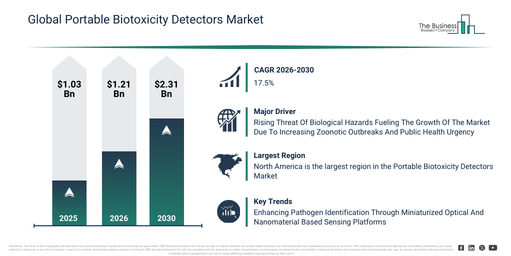
    The market size for portable biotoxicity detectors has seen rapid growth in recent years. This market is expected to expand from $1.03 billion in 2025 to $1.21 billion in 2026, achieving a compound annual growth rate (CAGR) of 17.3%. The historical period’s growth can be attributed to an increase in environmental pollution monitoring demands, previous biohazard and contamination incidents, the development of industrial safety regulations, the expansion of water and air quality testing programs, and a rise in laboratory and field biosensor research.

    The market for portable biotoxicity detectors is anticipated to experience substantial growth in the upcoming years. Its size is projected to reach $2.31 billion by 2030, expanding at a compound annual growth rate (CAGR) of 17.5%.

    This growth over the forecast period stems from factors such as increasing demand for swift on-field diagnostics, the broadening of smart environmental monitoring networks, stricter food and water safety compliance mandates, a rise in investment in portable analytical tools, and greater utilization in defense and homeland security sectors. Significant trends anticipated during this period include the emergence of portable multi-parameter detection devices, quick field biohazard screening capabilities, miniaturized biosensor platforms, continuous real-time environmental toxicity monitoring, and specialized emergency response detection kits.

    Download A Free Sample Report For Comprehensive Market Insights:

    https://www.thebusinessresearchcompany.com/sample.aspx?id=33268&type=smp&utm_source=Blogs&utm_medium=Paid&utm_campaign=Jul_PR

    Portable Biotoxicity Detectors Market Growth Factors Supporting Long-Term Expansion

    The increasing danger posed by biological hazards is anticipated to drive the expansion of the portable biotoxicity detectors market in the future. These hazards encompass disease-causing agents and harmful substances originating from bacteria, viruses, and other living entities, which present dangers to human well-being and ecological systems. The escalation of biological hazards can be attributed to a growing number of zoonotic spillover incidents, which are propelled by shifts in the environment and interactions between humans and animals. Portable biotoxicity detectors assist in managing the escalating threats from biological hazards by facilitating quick on-site detection and containment, thereby preventing extensive contamination. As an illustration, in April 2024, the World Health Organization documented over 7.6 million dengue cases worldwide by 30 April 2024, comprising 3.4 million confirmed cases, upwards of 16,000 severe cases, and more than 3,000 fatalities; notably, the Region of the Americas alone recorded more than seven million cases, which exceeded its 2023 annual total of 4.6 million cases. Consequently, the growing danger of biological hazards is fueling the expansion of the portable biotoxicity detectors market.

    Portable Biotoxicity Detectors Market Segments: Where Are The Largest Growth Opportunities?

    The portable biotoxicity detectors market covered in this report is segmented –

    1) By Product Type: Portable Biotoxicity Detectors; Stationary Biotoxicity Detectors; Handheld Detectors; Wearable Detectors

    2) By Deployment Mode: On-field; On-site; In-lab

    3) By Technology: Biosensors; Luminescent Microorganisms; Enzymatic Biosensors; Electrochemical Biosensors; Microfluidic Devices

    4) By Application: Water Quality Testing; Soil Monitoring; Air Quality Monitoring; Industrial Waste Monitoring; Food Safety Testing

    Subsegments:

    1) By Portable Biotoxicity Detectors: Battery Operated Portable Detectors; Smartphone Integrated Portable Detectors; Multi Parameter Portable Detectors; Field Deployable Rapid Detection Units

    2) By Stationary Biotoxicity Detectors: Bench Top Laboratory Detectors; Fixed Industrial Monitoring Systems; Continuous Monitoring Stationary Units; Automated High Throughput Detection Systems

    3) By Handheld Detectors: Single Use Handheld Detectors; Reusable Handheld Detection Devices; Real Time Handheld Detection Instruments; Compact Manual Sampling Detectors

    4) By Wearable Detectors: Clip On Wearable Detectors; Wrist Mounted Wearable Detectors; Body Mounted Continuous Monitoring Devices; Personal Safety Wearable Detection Systems

    Portable Biotoxicity Detectors Market Industry Trends Shaping Future Revenue Growth

    Major companies operating in the portable biotoxicity detectors market are concentrating on developing innovations in field-deployable diagnostics, such as aptamer-integrated colorimetric detection, to enable highly sensitive, real-time, and cost-effective identification of hazardous substances through automated optical systems and nanomaterial-driven signal amplification. Aptamer-integrated colorimetric detection describes a sensing mechanism utilizing synthetic nucleic acid ligands, or aptamers, specifically designed to bind to toxic targets, thereby triggering a visible color change in gold nanoparticles that can be electronically measured without the need for complex laboratory equipment. For example, in November 2025, the Indian Institute of Technology Madras, an India-based public technical and research university, introduced the Smart Malathion Detection Device (Smart MDD). This smart malathion detection device offers rapid and accurate identification of malathion residues in air, water, and agricultural products. It features real-time monitoring with high sensitivity, ensuring early detection and improved safety. The device is portable, easy to operate, and suitable for both field and laboratory use. With IoT connectivity and data logging, it facilitates remote monitoring and instant alerts.

    Portable Biotoxicity Detectors Market Major Participants And Competitive Dynamics

    Major companies operating in the portable biotoxicity detectors market are Abbott Laboratories, Siemens Healthineers AG, Merck KGaA, Agilent Technologies, Mettler-Toledo International Inc., Bruker Corporation, QIAGEN N.V., DiaSorin S.p.A., Tecan Group Ltd., Neogen Corporation, Smiths Detection Group Ltd., Yokogawa Electric Corporation, Quanterix Corporation, Envirologix Inc., BlueSense Diagnostics A/S, Optosky Technologies, Eurofins Technologies, Alexeter Technologies LLC, Biosensing Instrument Inc., Changsha Langshuo Technology Co. Ltd.

    Access The Complete Portable Biotoxicity Detectors Market Report:

    https://www.thebusinessresearchcompany.com/report/portable-biotoxicity-detectors-market-report?utm_source=Blogs&utm_medium=Paid&utm_campaign=Jul_PR

    Portable Biotoxicity Detectors Market Geographic Distribution And Regional Opportunities

    North America was the largest region in the portable biotoxicity detectors market in 2025. Asia-Pacific is expected to be the fastest-growing region in the forecast period. The regions covered in the portable biotoxicity detectors market report are Asia-Pacific, South East Asia, Western Europe, Eastern Europe, North America, South America, Middle East, Africa.

    Get in touch with us:

    The Business Research Company: https://www.thebusinessresearchcompany.com/

    Americas: +1 310-496-7795

    Asia: +44 7882 955267 & +91 8897263534

    Europe: +44 7882 955267

    Email us at: marketing@tbrc.info

    Follow us on:

    LinkedIn: https://in.linkedin.com/company/the-business-research-company

    YouTube: https://www.youtube.com/channel/UC24_fI0rV8cR5DxlCpgmyFQ

    Global Market Model: https://www.thebusinessresearchcompany.com/global-market-model
  • Orthopedic Casting Tape  Market Growth Is Reshaping Competitive Advantage Across The Industry

    Orthopedic Casting Tape Market Growth Is Reshaping Competitive Advantage Across The Industry

    Delivering more actionable and strategically valuable research, The Business Research Company’s 2026 market reports feature market attractiveness analysis, total addressable market evaluation, company benchmarking matrices, interactive Excel dashboards, expanded supply chain intelligence, emerging startup coverage, and detailed product insights.

    #Orthopedic Casting Tape Market Size And Revenue Forecast Through 2030

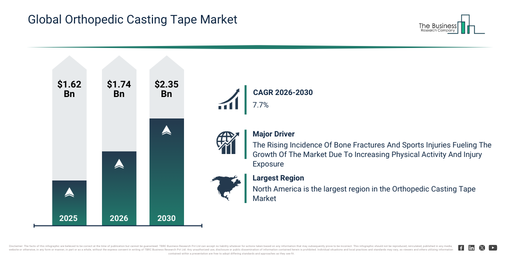
    The orthopedic casting tape market has shown robust expansion over the past few years. Its valuation is expected to climb from $1.62 billion in 2025 to $1.74 billion in 2026, achieving a compound annual growth rate (CAGR) of 7.5%. This growth observed in previous periods is largely due to an increase in fracture occurrences, a rise in orthopedic surgical interventions, a higher incidence of sports-related injuries, the expanding aging demographic, and the wider availability of emergency care centers.

    The orthopedic casting tape market size is anticipated to undergo significant expansion in the upcoming years. It is projected to reach $2.35 billion by 2030, demonstrating a compound annual growth rate (CAGR) of 7.7%. The expected market growth during the forecast period is primarily driven by an escalation in trauma cases, the rise of outpatient orthopedic care, the increasing need for patient comfort materials, the proliferation of ambulatory surgery centers, and a surge in minimally invasive procedures. Prominent trends observed for this period include lightweight fiberglass casting tapes, water resistant casting materials, fast setting synthetic cast tapes, breathable orthopedic casting solutions, and ergonomic easy apply casting rolls.

    Download A Free Sample Report For Comprehensive Market Insights:

    https://www.thebusinessresearchcompany.com/sample.aspx?id=33252&type=smp&utm_source=Blogs&utm_medium=Paid&utm_campaign=Jul_PR

    Orthopedic Casting Tape Market Opportunity Drivers: What Is Creating New Revenue Potential?

    An increasing occurrence of bone fractures and injuries sustained during sports activities is anticipated to drive the expansion of the orthopedic casting tape market in the future. These injuries involve traumatic harm to bones, such as breaks or cracks, resulting from athletic, recreational, or general physical pursuits, necessitating medical immobilization for effective recovery. The frequency of bone fractures and sports injuries is escalating because more individuals are engaging in high-impact and competitive sports, often without adequate training or protective gear, making their bones and muscles susceptible to sudden stress and impacts. Orthopedic casting tape aids in efficient fracture treatment through rigid immobilization, ensuring proper bone alignment, and thus promoting quicker and safer recuperation from injuries linked to sports and other physical activities. For example, data from July 2025 by the Australian Institute of Health and Welfare, an Australia-based government agency, indicated that during 2023–24, cycling was responsible for the largest share of sports-related hospital admissions, comprising 12% (7,500 cases) of total injuries of this type. This was followed by Australian rules football at 8.7% (5,400 cases) and soccer at 8.6% (5,300 cases). Consequently, the increasing prevalence of bone fractures and sports injuries is fueling the expansion of the orthopedic casting tape market.

    Orthopedic Casting Tape Market Segmentation: How Is The Market Structured Across Key Categories?

    The orthopedic casting tape market covered in this report is segmented –

    1) By Type: Knee Braces; Ankle Braces; Wrist and Hand Braces; Back and Spinal Braces; Elbow Braces; Shoulder Braces

    2) By Material Type: Fiberglass Casting Tapes; Polyester Casting Tapes; Plaster of Paris Casting Tapes; Other Synthetic Casting Materials

    3) By Application: Post-Surgical Rehabilitation; Ligament Injury Management; Osteoarthritis Pain Relief; Sports Injury Prevention and Treatment; Spinal Cord Support and Posture Correction

    4) By End-User: Hospitals; Orthopedic Clinics; Ambulatory Surgical Centers; Trauma and Emergency Care Centers

    Subsegments:

    1) By Knee Braces: Hinged Knee Braces; Sleeve Knee Braces; Wraparound Knee Braces; Patella Stabilizing Knee Braces

    2) By Ankle Braces: Lace-Up Ankle Braces; Rigid Ankle Braces; Sleeve Ankle Braces; Strap Ankle Braces

    3) By Wrist and Hand Braces: Wrist Support Braces; Thumb Stabilizing Braces; Finger Splints; Hand Compression Braces

    4) By Back and Spinal Braces: Lumbar Support Braces; Thoracic Support Braces; Full Back Braces; Posture Corrector Braces

    5) By Elbow Braces: Hinged Elbow Braces; Compression Elbow Sleeves; Strap Elbow Braces; Adjustable Elbow Braces

    6) By Shoulder Braces: Immobilizer Shoulder Braces; Posture Corrector Shoulder Braces; Rotator Cuff Shoulder Braces; Support Strap Shoulder Braces

    Orthopedic Casting Tape Market Competitive Landscape And Leading Companies

    Major companies operating in the orthopedic casting tape market are McKesson Corporation, Cardinal Health Inc., 3M Company, Smith & Nephew plc, Paul Hartmann AG, Össur hf., DeRoyal Industries Inc., Tynor Orthotics Pvt. Ltd., Dynamic Techno Medicals Pvt. Ltd., Ansen Medical Technology Co. Ltd., Prime Medical Inc., JMS Plastics Pvt. Ltd., Essity AB, Datt Mediproducts Pvt. Ltd., StayGuard Medical, MIKA Medical Pvt. Ltd., OrthoTape Pvt. Ltd., Gujarat Healthcare Ltd., CNF Medical Pvt. Ltd., DUK-IN Healthcare Pvt. Ltd.

    Access The Complete Orthopedic Casting Tape Market Report:

    https://www.thebusinessresearchcompany.com/report/orthopedic-casting-tape-market-report?utm_source=Blogs&utm_medium=Paid&utm_campaign=Jul_PR

    Orthopedic Casting Tape Market Regional Distribution: Which Areas Drive Market Expansion?

    North America was the largest region in the orthopedic casting tape market in 2025. Asia-Pacific is expected to be the fastest-growing region in the forecast period. The regions covered in the orthopedic casting tape market report are Asia-Pacific, South East Asia, Western Europe, Eastern Europe, North America, South America, Middle East, Africa.

    Get in touch with us:

    The Business Research Company: https://www.thebusinessresearchcompany.com/

    Americas: +1 310-496-7795

    Asia: +44 7882 955267 & +91 8897263534

    Europe: +44 7882 955267

    Email us at: marketing@tbrc.info

    Follow us on:

    LinkedIn: https://in.linkedin.com/company/the-business-research-company

    YouTube: https://www.youtube.com/channel/UC24_fI0rV8cR5DxlCpgmyFQ

    Global Market Model: https://www.thebusinessresearchcompany.com/global-market-model
  • One-Hour Low-Cost Multipurpose Highly Efficient System (HOLMES) Clustered Regularly Interspaced Short Palindromic Repeats (CRISPR) Diagnostics  Market Outlook Highlights The Next Major Growth Opportunities

    One-Hour Low-Cost Multipurpose Highly Efficient System (HOLMES) Clustered Regularly Interspaced Short Palindromic Repeats (CRISPR) Diagnostics Market Outlook Highlights The Next Major Growth Opportunities

    Delivering more actionable and strategically valuable research, The Business Research Company’s 2026 market reports feature market attractiveness analysis, total addressable market evaluation, company benchmarking matrices, interactive Excel dashboards, expanded supply chain intelligence, emerging startup coverage, and detailed product insights.

    One-Hour Low-Cost Multipurpose Highly Efficient System (HOLMES) Clustered Regularly Interspaced Short Palindromic Repeats (CRISPR) Diagnostics Market Growth Potential: How Will Market Size Change Through 2030?

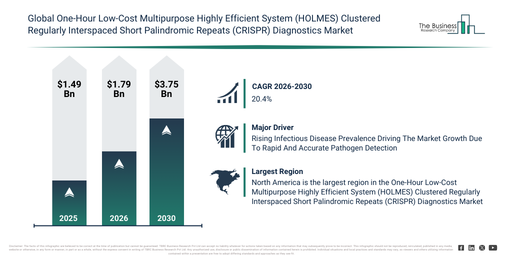
    The market size for the one-hour low-cost multipurpose highly efficient system (holmes) clustered regularly interspaced short palindromic repeats (crispr) diagnostics has witnessed exponential growth in recent years. This market is expected to increase from $1.49 billion in 2025 to $1.79 billion in 2026, achieving a compound annual growth rate (CAGR) of 20.1%. The historical expansion can be attributed to several factors including advances in molecular diagnostics, the broadening scope of crispr research, an increase in infectious disease testing, a surge in demand for rapid tests, and developments in genomics technology.

    The market for the one-hour low-cost multipurpose highly efficient system (holmes) clustered regularly interspaced short palindromic repeats (crispr) diagnostics is projected to experience substantial expansion in the coming years. By 2030, its valuation is anticipated to reach $3.75 billion, showing a compound annual growth rate (CAGR) of 20.4%. This foreseen development is driven by factors such as the proliferation of point-of-care molecular testing, a heightened need for swift pathogen detection, advancements in personalized diagnostics, greater clinical integration of CRISPR, and the availability of broader field-deployable testing options. Prominent trends within this period include rapid CRISPR-based diagnostic assays, point-of-care CRISPR testing kits, multiplex gene detection panels, portable molecular CRISPR platforms, and affordable nucleic acid detection kits.

    Download A Free Sample Report For Comprehensive Market Insights:

    https://www.thebusinessresearchcompany.com/sample.aspx?id=33249&type=smp&utm_source=Blogs&utm_medium=Paid&utm_campaign=Jul_PR

    One-Hour Low-Cost Multipurpose Highly Efficient System (HOLMES) Clustered Regularly Interspaced Short Palindromic Repeats (CRISPR) Diagnostics Market Development Factors: Which Trends Are Supporting Demand?

    The increasing occurrence of infectious diseases is anticipated to boost the expansion of the hybrid oligonucleotide linked modular enzyme system (HOLMES) clustered regularly interspaced short palindromic repeats (CRISPR) diagnostics market in the future. Infectious diseases are conditions caused by harmful microorganisms entering the body and can spread via contact, air, water, or vectors. The rise in these diseases is linked to urbanization and high population density, which promote quicker pathogen transmission. HOLMES CRISPR Diagnostics aids in detecting infectious diseases through the rapid and accurate identification of specific pathogen genetic sequences using CRISPR-Cas enzymes, enabling swift, sensitive, and point-of-care diagnoses. For example, in February 2024, data from GOV.UK, a UK-based government department, indicated that tuberculosis (TB) cases in England saw a 10.7% increase in 2023, moving from 4,380 in 2022 to 4,850. Consequently, the growing prevalence of infectious diseases is propelling the growth of the hybrid oligonucleotide linked modular enzyme system (HOLMES) clustered regularly interspaced short palindromic repeats (CRISPR) diagnostics market. The growing adoption of precision medicine is projected to drive the hybrid oligonucleotide linked modular enzyme system (HOLMES) clustered regularly interspaced short palindromic repeats (CRISPR) diagnostics market forward. Precision medicine delivers personalized healthcare by factoring in an individual’s genetic makeup, environmental influences, and lifestyle choices. This approach is gaining traction due to advancements in genomics, which enable medical professionals to pinpoint genetic variations and formulate targeted treatments, thereby enhancing patient outcomes. The HOLMES CRISPR diagnostics system supports precision medicine by quickly and precisely identifying specific genetic mutations or pathogens in a patient’s DNA or RNA, allowing for customized treatments and early interventions based on a person’s unique genetic profile. As an illustration, in February 2024, according to the Personalized Medicine Coalition, a US-based non-profit organization, the FDA approved 16 new personalized treatments for patients with rare diseases in 2023, an increase from six in 2022. Additionally, the new personalized treatments approved in 2023 included seven cancer drugs and three for other illnesses and conditions. Therefore, the increasing utilization of precision medicine is fostering the growth of the hybrid oligonucleotide-linked modular enzyme system (HOLMES) clustered regularly interspaced short palindromic repeats (CRISPR) diagnostics market.

    One-Hour Low-Cost Multipurpose Highly Efficient System (HOLMES) Clustered Regularly Interspaced Short Palindromic Repeats (CRISPR) Diagnostics Market Segment Performance And Strategic Opportunities

    The one-hour low-cost multipurpose highly efficient system (holmes) clustered regularly interspaced short palindromic repeats (crispr) diagnostics market covered in this report is segmented –

    1) By Product Type: Kits; Instruments; Reagents; Other Product Types

    2) By Service Type: Sample Collection And Preparation Services; Assay Development And Validation Services; Data Interpretation And Reporting Services; Quality Control And Assurance Services

    3) By Application: Infectious Disease Diagnosis; Oncology; Genetic Disease Screening; Other Applications

    4) By End-User: Hospitals And Clinics; Diagnostic Laboratories; Research Institutes; Other End-Users

    Subsegments:

    1) By Kits: Single Target Diagnostic Kits; Multiplex Diagnostic Kits; Point Of Care Testing Kits; Laboratory Use Diagnostic Kits; Disease Specific Diagnostic Kits

    2) By Instruments: Benchtop Diagnostic Instruments; Portable Diagnostic Devices; Automated Detection Systems; Sample Preparation Instruments; Integrated Analysis Platforms

    3) By Reagents: Enzyme Based Reagents; Nucleic Acid Extraction Reagents; Amplification Reaction Reagents; Detection And Reporting Reagents; Sample Stabilization Reagents

    4) By Other Product Types: Consumables And Accessories; Quality Control Materials; Calibration Standards; Disposable Testing Components; Supporting Laboratory Supplies

    One-Hour Low-Cost Multipurpose Highly Efficient System (HOLMES) Clustered Regularly Interspaced Short Palindromic Repeats (CRISPR) Diagnostics Market Key Players: Which Companies Shape Industry Competition?

    Major companies operating in the one-hour low-cost multipurpose highly efficient system (holmes) clustered regularly interspaced short palindromic repeats (crispr) diagnostics market are Thermo Fisher Scientific Inc., Merck KGaA, Danaher Corporation, Agilent Technologies Inc., Bio-Rad Laboratories Inc., Qiagen N.V., Integrated DNA Technologies Inc., GenScript Biotech Corporation, OraSure Technologies Inc., Molbio Diagnostics Pvt. Ltd., New England Biolabs Inc., Horizon Discovery Group plc, Mammoth Biosciences, Synthego Corporation, Binx Health Inc., Sherlock Biosciences Inc., Caspr Biotech, Tolo Biotechnology Co. Ltd., CrisprBits Private Limited, Scope Biosciences.

    Access The Complete One-Hour Low-Cost Multipurpose Highly Efficient System (HOLMES) Clustered Regularly Interspaced Short Palindromic Repeats (CRISPR) Diagnostics Market Report:

    https://www.thebusinessresearchcompany.com/report/one-hour-low-cost-multipurpose-highly-efficient-system-holmes-clustered-regularly-interspaced-short-palindromic-repeats-crispr-diagnostics-market-report?utm_source=Blogs&utm_medium=Paid&utm_campaign=Jul_PR

    One-Hour Low-Cost Multipurpose Highly Efficient System (HOLMES) Clustered Regularly Interspaced Short Palindromic Repeats (CRISPR) Diagnostics Market Geographic Landscape: Which Region Dominates Industry Growth?

    North America was the largest region in the hybrid oligonucleotide linked modular enzyme system (HOLMES) clustered regularly interspaced short palindromic repeats (CRISPR) diagnostics market in 2025. Asia-Pacific is expected to be the fastest-growing region in the forecast period. The regions covered in the one-hour low-cost multipurpose highly efficient system (holmes) clustered regularly interspaced short palindromic repeats (crispr) diagnostics market report are Asia-Pacific, South East Asia, Western Europe, Eastern Europe, North America, South America, Middle East, Africa.

    Get in touch with us:

    The Business Research Company: https://www.thebusinessresearchcompany.com/

    Americas: +1 310-496-7795

    Asia: +44 7882 955267 & +91 8897263534

    Europe: +44 7882 955267

    Email us at: marketing@tbrc.info

    Follow us on:

    LinkedIn: https://in.linkedin.com/company/the-business-research-company

    YouTube: https://www.youtube.com/channel/UC24_fI0rV8cR5DxlCpgmyFQ

    Global Market Model: https://www.thebusinessresearchcompany.com/global-market-model