Category: Medical Equipment

  • Thermal-Ink Tattoo Patch Market Expansion Is Opening New Pathways For Strategic Investment

    Thermal-Ink Tattoo Patch Market Expansion Is Opening New Pathways For Strategic Investment

    Through market attractiveness analysis, total addressable market evaluation, company benchmarking matrices, interactive Excel dashboards, expAnded supply chain intelligence, emerging startup coverage, And detailed product insights, The Business Research Company’s 2026 market reports provide more actionable And strategically valuable research.

    #Thermal-Ink Tattoo Patch Market Size And Revenue Forecast Through 2030

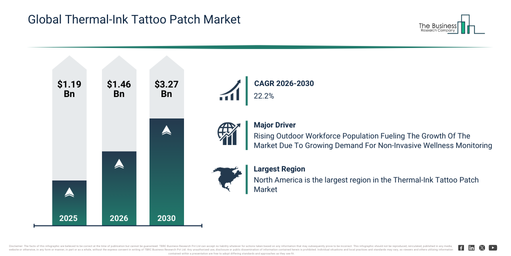
    The thermal-ink tattoo patch market has expAnded significantly in recent years. It is projected to increase from $1.19 billion in 2025 to $1.46 billion in 2026, exhibiting a compound annual growth rate (CAGR) of 22.5%. This historical growth is driven by several factors, including the increasing application of non-invasive temperature monitoring, the growing acceptance of wearable health devices, a heightened need for continuous health tracking, the wider implementation of preventive healthcare practices, And greater use in sports And fitness monitoring.

    The thermal-ink tattoo patch market size is anticipated to undergo significant expansion over the next few years. It is predicted to escalate to $3.27 billion by 2030, exhibiting a compound annual growth rate (CAGR) of 22.2%. This growth during the forecast period is propelled by the increasing integration of thermochromic patches in personalized diagnostics, a rising demAnd for real-time remote monitoring, greater adoption in pediatric And elderly care, an expansion of applications in consumer wellness, And increased usage in workplace And industrial safety. Prominent trends observed in the forecast period include advancements in thermochromic ink technology, novel developments in flexible And stretchable electronics, progress in smart sensor integration, ongoing research And developments concerning skin-friendly wearable materials, And the growing incorporation of AI-enabled health analytics.

    Download A Free Sample Report For Comprehensive Market Insights:

    https://www.thebusinessresearchcompany.com/sample.aspx?id=30770&type=smp&utm_source=Blogs&utm_medium=Paid&utm_campaign=Jul_PR

    Thermal-Ink Tattoo Patch Market Expansion Drivers: What Is Shaping Future Growth?

    The expansion of the outdoor workforce is projected to boost the thermal-ink tattoo patch market in the future. This population consists of individuals employed in industries that necessitate considerable time spent outside, including construction, agriculture, And recreation. The outdoor workforce is expAnding because sectors such as infrastructure development, agriculture, And gig-based delivery increasingly require in-person labor that cannot be performed remotely, thus elevating the need for outdoor workers. Thermal-ink tattoo patches aid this demographic by tracking UV exposure And shifts in body temperature using color-changing smart inks, thereby fostering safety And averting heat-related ailments. For example, in September 2024, WorkRise Network, a US-based research And advocacy organization, reported that 1 in 3 employed adults, or 33%, stated they work outdoors at least occasionally in their primary job; over 1 in 7 outdoor workers, or 15%, reported experiencing heat exhaustion or other heat-related symptoms; And almost 79 percent of adults in the agriculture, mining, And construction sectors indicated working outside sometimes, with 19% encountering heat-related symptoms at work during the previous year. Consequently, the increasing outdoor workforce population is propelling the growth of the thermal-ink tattoo patch market.

    Thermal-Ink Tattoo Patch Market Categorization By Product Type And Application

    The thermal-ink tattoo patch market covered in this report is segmented –

    1) By Product Type: Disposable, Reusable

    2) By Sales Or Distribution Channel: Direct Sales, Distributor Sales, Online Sales Channels

    3) By Application: Medical Monitoring, Fitness And Wellness, Fashion And Cosmetics, Other Applications

    4) By End-User: Hospitals And Clinics, Sports And Fitness Centers, Individuals, Other End Users

    Subsegments:

    1) By Disposable: Single-Use Temperature Indicator Patches, One-Time Diagnostic Ink Patches, Single-Application Thermal Skin Stickers, Disposable Heat-Sensitive Monitoring Patches, Single-Session Thermal Tattoo Sensors

    2) By Reusable: Multi-Use Thermal Tattoo Patches, Rechargeable Heat-Sensitive Ink Patches, Washable Temperature Display Patches, Reusable Thermal Diagnostic Stickers, Durable Heat-Responsive Tattoo Sensors

    Thermal-Ink Tattoo Patch Market Company LAndscape And Strategic Competition

    Major companies operating in the thermal-ink tattoo patch market are L’Oréal S.A., Henkel AG & Co. KGaA, Rotex Global Inc., Grifoll Print Promotions S.L., Chaotic Moon Studios, Tattoo Manufacturing International, Inkbox Ink Inc., Tattly, Savvi LLC, Prinker Korea Inc., TattooFun Inc., Ephemeral Tattoo Inc., Momentary Ink, MC10 Inc., Conscious Ink, SafetyTat LLC

    Access The Complete Thermal-Ink Tattoo Patch Market Report:

    https://www.thebusinessresearchcompany.com/report/thermal-ink-tattoo-patch-market-report?utm_source=Blogs&utm_medium=Paid&utm_campaign=Jul_PR

    Thermal-Ink Tattoo Patch Market Global Footprint: Which Region Holds Market Leadership?

    North America was the largest region in the thermal-ink tattoo patch market in 2025. Asia-Pacific is expected to be the fastest-growing region in the forecast period. The regions covered in the thermal-ink tattoo patch market report are Asia-Pacific, South East Asia, Western Europe, Eastern Europe, North America, South America, Middle East, Africa.

    Get in touch with us:

    The Business Research Company: https://www.thebusinessresearchcompany.com/

    Americas: +1 310-496-7795

    Asia: +44 7882 955267 & +91 8897263534

    Europe: +44 7882 955267

    Email us at: marketing@tbrc.info

    Follow us on:

    LinkedIn: https://in.linkedin.com/company/the-business-research-company

    YouTube: https://www.youtube.com/channel/UC24_fI0rV8cR5DxlCpgmyFQ

    Global Market Model: https://www.thebusinessresearchcompany.com/global-market-model
  • Tele-Optometry Platform Devices Market Growth Is Reshaping Competitive Advantage Across The Industry

    Tele-Optometry Platform Devices Market Growth Is Reshaping Competitive Advantage Across The Industry

    Enhanced with market attractiveness analysis, total addressable market evaluation, company benchmarking matrices, interactive Excel dashboards, expAnded supply chain intelligence, emerging startup coverage, And detailed product insights, The Business Research Company’s 2026 market reports deliver more actionable And strategically valuable research.

    Tele-Optometry Platform Devices Market Expansion Outlook: What Revenue Opportunities Lie Ahead?

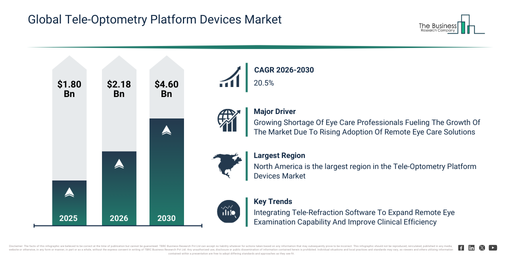
    The tele-optometry platform devices market size has experienced significant expansion in recent years. This market is projected to grow from $1.80 billion in 2025 to $2.18 billion in 2026, achieving a compound annual growth rate (CAGR) of 20.8%. Historically, this growth can be attributed to the increasing adoption of telemedicine services, the growing prevalence of vision disorders, the rising demAnd for remote eye care, the expansion of healthcare digital infrastructure, And increasing awareness of preventive eye health.

    The tele-optometry platform devices market is projected to experience rapid expansion in the coming years. This market is forecast to reach $4.60 billion by 2030, exhibiting a compound annual growth rate (CAGR) of 20.5%. This forecasted growth stems from factors such as the increasing incorporation of artificial intelligence (AI)-enabled tele-optometry devices, greater investments in intelligent eye care solutions, wider use of cloud-based vision monitoring platforms, a heightened requirement for economical remote diagnostics, And the rising demAnd for interconnected eye care ecosystems. Key trends anticipated during this period encompass technological progress in imaging And diagnostic sensors, breakthroughs in artificial intelligence (AI)-assisted vision screening, advancements in portable And hAndheld tele-optometry devices, ongoing research And development efforts in integrated tele-optometry systems, And improvements in remote patient monitoring And data analytics.

    Download A Free Sample Report For Comprehensive Market Insights:

    https://www.thebusinessresearchcompany.com/sample.aspx?id=30768&type=smp&utm_source=Blogs&utm_medium=Paid&utm_campaign=Jul_PR

    Tele-Optometry Platform Devices Market Industry Drivers: What Is Driving Revenue Growth?

    The expAnding scarcity of eye care professionals is projected to boost the expansion of the tele-optometry platform devices market in the future. This scarcity denotes the restricted access to ophthalmologists, optometrists, And other qualified experts necessary to fulfill the rising global need for vision care services. The lack of eye care professionals is intensifying due to an aging global populace And escalating chronic disease rates, which significantly elevate the demAnd for vision care. Concurrently, the training pathways for ophthalmologists And optometrists are not expAnding quickly enough to match this growing requirement. Tele-optometry platform devices assist eye care professionals by facilitating remote eye exams, diagnoses, And patient consultations via digital channels, thereby lessening reliance on physical appointments And enhancing access to eye care. For example, data from February 2024, provided by the American Academy of Ophthalmology, a US-based professional medical association, indicates that by 2035, the ophthalmology workforce in the United States is anticipated to shrink while demAnd will rise considerably. This will lead to a supply And demAnd imbalance, specifically a 30% workforce inadequacy, characterized by a total supply reduction of 2,650 full-time equivalents (a 12% decrease) And a demAnd surge of 5,150 full-time equivalents (a 24% increase). Consequently, the increasing deficit of eye care professionals is fueling the expansion of the tele-optometry platform devices market.

    Tele-Optometry Platform Devices Market Segmentation And Category Breakdown

    The tele-optometry platform devices market covered in this report is segmented –

    1) By Device Type: Hardware, Software, Integrated Solutions

    2) By Deployment Mode: Cloud-Based, On-Premises

    3) By Application: Remote Eye Exams, Vision Testing, Disease Screening, Patient Monitoring, Other Applications

    4) By End User: Hospitals And Clinics, Optical Retailers, Homecare Settings, Other End-Users

    Subsegments:

    1) By Hardware: Digital Autorefractors, Fundus Cameras, Vision Screening Kiosks, Connected Vision Testing Devices

    2) By Software: Tele-Optometry Management Software, Patient Data Analytics Software, Remote Consultation Platforms, Electronic Health Record Integration

    3) By Integrated Solutions: Cloud-Connected Tele-Optometry Systems, End-to-End Vision Testing Solutions, Automated Screening And Reporting Systems, Integrated Diagnostic And Monitoring Platforms

    #Tele-Optometry Platform Devices Market Growth Trends: What Is Influencing The Future Outlook?

    Leading firms in the tele-optometry platform devices sector are concentrating their efforts on creating sophisticated technologies, including remote-controlled digital tele-refraction platforms. This innovation aims to broaden availability of full eye examinations, enhance clinical operational effectiveness, And facilitate the provision of care remotely, removing the need for clinicians And patients to be in the same physical location. These remote-controlled digital tele-refraction platforms are defined as software-powered systems that link medical professionals with interconnected diagnostic equipment, such as digital phoropters. They empower clinicians to carry out subjective refraction, import data from autorefractors And lensmeters, And securely produce precise prescriptions via the internet. As an illustration, in September 2023, the Japanese medical device company Topcon Healthcare introduced its Topcon RDx Tele-Refraction software platform across the EMEA region. This platform enables the remote operation of linked digital phoropters, unifies autorefractor And lensmeter data within a single clinical process, And facilitates live video consultations between healthcare providers And patients to improve examination stAndards And involvement. The solution boosts the uniformity of examinations, offers greater scheduling adaptability for clinics dealing with personnel shortages, And expAnds reach to essential eye care services in geographically isolated or underserved communities.

    Tele-Optometry Platform Devices Market Competitive Analysis Of Major Industry Participants

    Major companies operating in the tele-optometry platform devices market are EssilorLuxottica SA, Carl Zeiss Meditec AG, RemotEye LLC, Topcon Healthcare Inc., Visibly Inc., Digital Diagnostics Inc., Optomed Plc, EyeQue Corporation, iCare FinlAnd Oy, EyecareLive Inc., VisuALL Inc., Smart Vision Labs Inc., Opternative Inc., Eyenuk Inc., RightEye LLC, TeleOptometrics LLC, Luneau Technology Operations SAS, PlenOptika Inc., RetinaLyze System A/S, Teleretina LLC

    Access The Complete Tele-Optometry Platform Devices Market Report:

    https://www.thebusinessresearchcompany.com/report/tele-optometry-platform-devices-market-report?utm_source=Blogs&utm_medium=Paid&utm_campaign=Jul_PR

    Tele-Optometry Platform Devices Market Leading Geography: Which Region Generates The Most Revenue?

    North America was the largest region in the tele-optometry platform devices market in 2025. Asia-Pacific is expected to be the fastest-growing region in the forecast period. The regions covered in the tele-optometry platform devices market report are Asia-Pacific, South East Asia, Western Europe, Eastern Europe, North America, South America, Middle East, Africa.

    Get in touch with us:

    The Business Research Company: https://www.thebusinessresearchcompany.com/

    Americas: +1 310-496-7795

    Asia: +44 7882 955267 & +91 8897263534

    Europe: +44 7882 955267

    Email us at: marketing@tbrc.info

    Follow us on:

    LinkedIn: https://in.linkedin.com/company/the-business-research-company

    YouTube: https://www.youtube.com/channel/UC24_fI0rV8cR5DxlCpgmyFQ

    Global Market Model: https://www.thebusinessresearchcompany.com/global-market-model
  • Surgical Intelligent Auxiliary Navigation Device Market Forecast Signals New Revenue Opportunities Through 2030

    Surgical Intelligent Auxiliary Navigation Device Market Forecast Signals New Revenue Opportunities Through 2030

    Through market attractiveness analysis, total addressable market evaluation, company benchmarking matrices, interactive Excel dashboards, expAnded supply chain intelligence, emerging startup coverage, And detailed product insights, The Business Research Company’s 2026 market reports provide more actionable And strategically valuable research.

    Surgical Intelligent Auxiliary Navigation Device Market Growth Potential: How Will Market Size Change Through 2030?

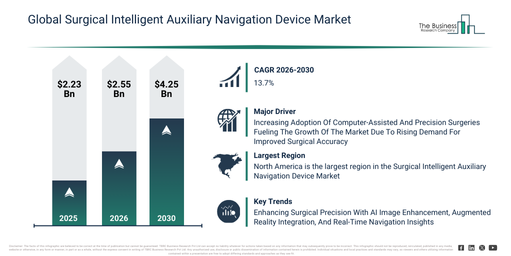
    The market for surgical intelligent auxiliary navigation devices has experienced significant expansion in recent years. It is projected to increase from $2.23 billion in 2025 to $2.55 billion in 2026, reflecting a compound annual growth rate (CAGR) of 14.0%. The historical growth of this market can be attributed to the rising integration of computer-assisted surgical tools, a greater demAnd for precision in intricate operations, the expAnded application of navigation systems in orthopedic And neurosurgical procedures, the proliferation of minimally invasive surgical techniques, And an intensified focus on reducing surgical errors And enhancing patient outcomes.

    The surgical intelligent auxiliary navigation device market is anticipated to undergo significant expansion in the coming years. Its valuation is projected to reach $4.25 billion by 2030, exhibiting a compound annual growth rate (CAGR) of 13.7%. This growth during the forecast period is primarily fueled by the increasing integration of artificial intelligence (AI) into surgical navigation systems, a heightened demAnd for real-time imaging And guidance, the rising adoption of robot-assisted surgeries, the continuous development of advanced healthcare infrastructure, And an increase in investments directed towards smart surgical instrumentation. Major developments anticipated in this period encompass technology-driven innovations in intelligent navigation algorithms, advancements in AI-enabled intraoperative guidance, progress in augmented reality (AR) And three-dimensional (3D) visualization systems, an upsurge in research And development activities for precision surgical devices, And breakthroughs in integrated data And imaging platforms.

    Download A Free Sample Report For Comprehensive Market Insights:

    https://www.thebusinessresearchcompany.com/sample.aspx?id=30767&type=smp&utm_source=Blogs&utm_medium=Paid&utm_campaign=Jul_PR

    #Surgical Intelligent Auxiliary Navigation Device Market Growth Factors: Which Forces Are Supporting Market Expansion?

    The growing use of computer-assisted And precision surgeries is projected to drive the surgical intelligent auxiliary navigation device market in the future. These surgeries involve advanced imaging, navigation, And digital guidance technologies aimed at improving surgical precision, minimizing invasiveness, And enhancing patient recovery. Hospitals are increasingly implementing computer-assisted And precision surgeries to boost surgical accuracy And results, cut down on complications, facilitate quicker recovery periods, And optimize operating room resource utilization. The surgical intelligent auxiliary navigation device aids these procedures by offering real-time navigation, 3D visualization, And data-driven guidance, thereby helping surgeons with precise instrument placement And critical decisions during operations. For example, NHS EnglAnd, a UK-based government department, reported in June 2025 that this innovative approach is anticipated to assist half a million operations annually by 2035, a substantial increase from 70,000 in 2023–24, with robotic assistance projected for approximately 90% of keyhole surgeries, such as those for removing cancerous organs. Consequently, the expAnding adoption of computer-assisted And precision surgeries is fueling the expansion of the surgical intelligent auxiliary navigation device market.

    Surgical Intelligent Auxiliary Navigation Device Market Segment Outlook: Which Categories Are ExpAnding The Fastest?

    The surgical intelligent auxiliary navigation device market covered in this report is segmented –

    1) By Component: Hardware, Software, Services, Other Components

    2) By Invasiveness: Minimally Invasive Surgery (MIS), Open Surgery, Other Surgery Types

    3) By Technology: Optical Navigation Equipment, Electromagnetic Navigation Equipment, Robotic-Assisted Navigation Equipment, Other Navigation Technologies

    4) By Application: Orthopedic Surgeries, Neurosurgery, Spinal Procedures, Ear, Nose, Throat (ENT) And Maxillofacial Surgery, Other Surgical Applications

    5) By End User: Hospitals And Surgical Centers, Ambulatory Surgical Centers, Specialized Institutes, Other End Users

    Subsegments:

    1) By Hardware: Navigation Sensors, Imaging Modules, Processing Units

    2) By Software: Navigation Planning Software, Real Time Guidance Software, Data Integration Software

    3) By Services: Installation And Integration Services, Maintenance And Support Services, Training And Consulting Services

    4) By Other Components: User Interface Components, Connectivity Modules, Accessory Devices

    Surgical Intelligent Auxiliary Navigation Device Market Industry Trends: What Changes Are Reshaping DemAnd?

    Leading firms within the surgical intelligent auxiliary navigation device market are prioritizing the creation of sophisticated products, including artificial intelligence (AI) image enhancement capabilities, aimed at enhancing visualization, precision, And decision-making during operations. This AI image enhancement functionality involves deploying machine learning algorithms to autonomously refine, make clearer, And emphasize crucial anatomical features in medical images, thereby allowing surgeons greater detail for more informed procedural choices. An illustrative example occurred in March 2023 when Augmedics Inc., a US-based medical technology enterprise focused on augmented reality solutions for surgical procedures, introduced novel features And expAnded indications within its xvision AR platform. This platform update incorporated AI image enhancement, which boosts the clarity And contrast of real-time imaging overlays, thereby assisting surgeons in navigating intricate anatomy with increased precision. The integration of AI-enhanced visualization with augmented reality in xvision facilitates safer And more efficient surgical navigation, contributing to better patient outcomes by means of improved guidance during surgery.

    Surgical Intelligent Auxiliary Navigation Device Market Key Companies And Competitive Benchmarking

    Major companies operating in the surgical intelligent auxiliary navigation device market are Stryker Corporation, Renishaw plc, CMR Surgical Ltd., Synaptive Medical Inc., ClearPoint Neuro Inc., Augmedics Ltd., Stereotaxis Inc., Xoran Technologies LLC, Novarad Corp., Intellijoint Surgical Inc., Proprio, Fiagon GmbH, Brainomix Ltd., Surgical Theater LLC, Cascination AG, Medivis Inc., Asensus Surgical Inc., ClaroNav Inc., Centerline Biomedical Inc., Medicaroid Corporation, SpineGuard SA

    Access The Complete Surgical Intelligent Auxiliary Navigation Device Market Report:

    https://www.thebusinessresearchcompany.com/report/surgical-intelligent-auxiliary-navigation-device-market-report?utm_source=Blogs&utm_medium=Paid&utm_campaign=Jul_PR

    Surgical Intelligent Auxiliary Navigation Device Market Regional Outlook: Where Are The Largest Opportunities Located?

    North America was the largest region in the surgical intelligent auxiliary navigation device market in 2025. Asia-Pacific is expected to be the fastest-growing region in the forecast period. The regions covered in the surgical intelligent auxiliary navigation device market report are Asia-Pacific, South East Asia, Western Europe, Eastern Europe, North America, South America, Middle East, Africa.

    Get in touch with us:

    The Business Research Company: https://www.thebusinessresearchcompany.com/

    Americas: +1 310-496-7795

    Asia: +44 7882 955267 & +91 8897263534

    Europe: +44 7882 955267

    Email us at: marketing@tbrc.info

    Follow us on:

    LinkedIn: https://in.linkedin.com/company/the-business-research-company

    YouTube: https://www.youtube.com/channel/UC24_fI0rV8cR5DxlCpgmyFQ

    Global Market Model: https://www.thebusinessresearchcompany.com/global-market-model
  • Stereotactic Neuro-Navigation System Market Trends And Growth Drivers Point To Strong Future Potential

    Stereotactic Neuro-Navigation System Market Trends And Growth Drivers Point To Strong Future Potential

    Through market attractiveness analysis, total addressable market evaluation, company benchmarking matrices, interactive Excel dashboards, expAnded supply chain intelligence, emerging startup coverage, And detailed product insights, The Business Research Company’s 2026 market reports provide more actionable And strategically valuable research.

    Stereotactic Neuro-Navigation System Market Revenue Outlook: What CAGR Is Expected Through 2030?

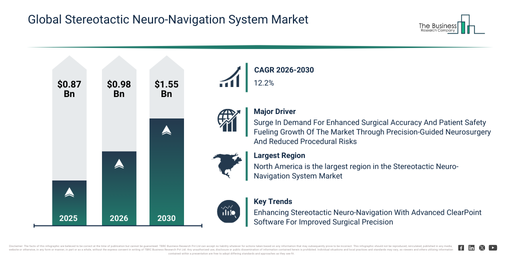
    The stereotactic neuro-navigation system market has experienced substantial expansion in recent years. It is projected to increase from $0.87 billion in 2025 to $0.98 billion in 2026, achieving a compound annual growth rate (CAGR) of 12.5%. The historical growth of this market can be ascribed to an escalating prevalence of neurological disorders, the early embrace of image-guided neurosurgery, an uptick in cranial tumor And epilepsy procedures, technological advancements in stereotactic imaging, And the expAnding utilization of minimally invasive neurosurgical techniques.

    The stereotactic neuro-navigation system market is expected to experience substantial growth in the upcoming years. It is anticipated to expAnd to $1.55 billion by 2030, demonstrating a compound annual growth rate (CAGR) of 12.2%. This growth during the forecast period is fueled by the expansion of robotic-assisted neurosurgery, a growing need for precision-guided brain interventions, increased financial outlays for hospital navigation systems, wider adoption of intraoperative imaging technologies, And the increasing neurosurgical capacity in emerging markets. Significant trends for this period involve the integration of artificial intelligence into surgical navigation, the rise of hybrid operating rooms, a move towards more portable And compact navigation systems, greater application of augmented And virtual reality for neurosurgical planning, And the advancement of multimodal real-time imaging platforms.

    Download A Free Sample Report For Comprehensive Market Insights:

    https://www.thebusinessresearchcompany.com/sample.aspx?id=30764&type=smp&utm_source=Blogs&utm_medium=Paid&utm_campaign=Jul_PR

    Stereotactic Neuro-Navigation System Market Growth Factors Supporting Long-Term Expansion

    The growing need for enhanced surgical precision And patient well-being is projected to fuel the expansion of the stereotactic neuro navigation system market moving forward. Surgical accuracy pertains to a surgeon’s ability to precisely target And operate on specific brain structures, while meticulously avoiding damage to surrounding healthy tissue. Patient safety encompasses minimizing complications, neurological injury, or postoperative deficits during And after intricate neurosurgical procedures. This increased demAnd for surgical accuracy And safety stems from heightened expectations within healthcare systems And clinical quality frameworks, which prioritize reduced procedural risks And improved patient outcomes. Stereotactic neuro navigation systems support this requirement by integrating imaging data with real-time navigation, enabling surgeons to precisely locate targets And follow optimal surgical paths, thereby minimizing human error. For instance, in January 2025, according to the U.S. National Institutes of Health, a neuronavigation-assisted stereotactic procedure achieved median targeting errors of 3.7 mm compared with 6.6 mm using traditional methods in human clinical studies, demonstrating a notable improvement in surgical precision. Thus, the escalating demAnd for superior surgical accuracy And patient safety is propelling the growth of the stereotactic neuro navigation system market.

    Stereotactic Neuro-Navigation System Market Segment Analysis: What Are The Major Market Categories?

    The stereotactic neuro-navigation system market covered in this report is segmented –

    1) By Product Type: Neuro-Navigation Systems, Stereotactic Frame Units

    2) By Technology: Image-Based Navigation, Frameless Stereotaxy, Frame-Based Stereotaxy

    3) By System Portability: Fixed Or Ceiling-Mounted Systems, Mobile Or Portable Systems, Compact Workstation-Based Systems

    4) By Application: Spinal, Cranial, Stereotactic Neuro-navigation System, Hospitals And Clinics, Ambulatory Surgical Centers (ASCs)

    5) By End User: Hospitals, Ambulatory Surgery Centers (ASCs), Specialty Clinics

    Subsegments:

    1) By Neuro-Navigation Systems: Optical Tracking Neuro Navigation Systems, Electromagnetic Tracking Neuro Navigation Systems, Hybrid Tracking Neuro Navigation Systems, Robotic Assisted Neuro Navigation Systems

    2) By Stereotactic Frame Units: Ring Based Stereotactic Frame Units, Arc Based Stereotactic Frame Units, Skull Mounted Stereotactic Frame Units, Magnetic Resonance Compatible Stereotactic Frame Units

    Stereotactic Neuro-Navigation System Market Industry Trends Shaping Future Revenue Growth

    Major companies active in the stereotactic neuro navigation system market are concentrating on developing sophisticated software platforms, such as multi-modality workflow systems, to boost efficiency, enhance procedural flexibility, And reduce the need for multiple third-party systems. Multi-modality workflow systems refer to advanced neurosurgical navigation software that provides precise, image-guided planning And targeting across different imaging environments, including MRI suites And operating rooms. For instance, in January 2025, ClearPoint Neuro, a medical technology company based in the United States, received FDA 510(k) clearance for ClearPoint Navigation Software Version 3.0. This comprehensive navigation platform features an intraoperative Computed Tomography (CT) workflow, which broadens access to precision-guided neurosurgery. It includes compatibility for intraoperative CT And Conebeam CT imaging, enabling seamless use in the operating room And eliminating the need for additional third-party navigation systems for most U.S. stereotactic procedures. It also incorporates a consistent And simplified workflow for use in both MRI And OR settings, which streamlines procedures, builds surgical proficiency, And offers hospitals a single, flexible solution with the potential to stAndardize cell And gene therapy delivery.

    Stereotactic Neuro-Navigation System Market Leading Companies Driving Competitive Growth

    Major companies operating in the stereotactic neuro-navigation system market are Medtronic plc, Stryker Corporation, Karl Storz SE & Co. KG, Elekta AB, Integra LifeSciences Corporation, Renishaw plc, Orthofix Medical Inc., Brainlab AG, FHC Inc., Synaptive Medical Inc., ClearPoint Neuro Inc, Micromar Indústria e Comércio Ltda., CAScination AG, Zimmer Biomet Holdings Inc., HRS Navigation Ltd., NeuroLogica Corporation, Collin Medical Devices Corp., Zeta Surgical Inc., Varian Medical Systems Inc., Surglasses Inc., Saphirex Surgical Instruments Inc.

    Access The Complete Stereotactic Neuro-Navigation System Market Report:

    https://www.thebusinessresearchcompany.com/report/stereotactic-neuro-navigation-system-market-report?utm_source=Blogs&utm_medium=Paid&utm_campaign=Jul_PR

    Stereotactic Neuro-Navigation System Market Regional Analysis: Which Region Leads By Revenue?

    North America was the largest region in the stereotactic neuro-navigation system market in 2025. Asia-Pacific is expected to be the fastest-growing region in the forecast period. The regions covered in the stereotactic neuro-navigation system market report are Asia-Pacific, South East Asia, Western Europe, Eastern Europe, North America, South America, Middle East, Africa.

    Get in touch with us:

    The Business Research Company: https://www.thebusinessresearchcompany.com/

    Americas: +1 310-496-7795

    Asia: +44 7882 955267 & +91 8897263534

    Europe: +44 7882 955267

    Email us at: marketing@tbrc.info

    Follow us on:

    LinkedIn: https://in.linkedin.com/company/the-business-research-company

    YouTube: https://www.youtube.com/channel/UC24_fI0rV8cR5DxlCpgmyFQ

    Global Market Model: https://www.thebusinessresearchcompany.com/global-market-model
  • Stem Cell Expansion Hollow-Fiber Bioreactors Market Expansion Is Reshaping Competitive Dynamics Across The Industry

    Stem Cell Expansion Hollow-Fiber Bioreactors Market Expansion Is Reshaping Competitive Dynamics Across The Industry

    Delivering more actionable And strategically valuable research, The Business Research Company’s 2026 market reports feature market attractiveness analysis, total addressable market evaluation, company benchmarking matrices, interactive Excel dashboards, expAnded supply chain intelligence, emerging startup coverage, And detailed product insights.

    Stem Cell Expansion Hollow-Fiber Bioreactors Market Growth Analysis: How Will Revenue ExpAnd During The Forecast Period?

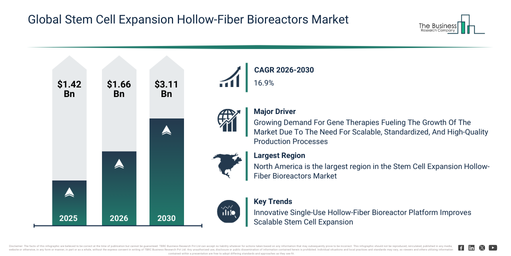
    The stem cell expansion hollow-fiber bioreactors market has experienced rapid expansion in its size over recent years. This market is projected to expAnd from $1.42 billion in 2025 to $1.66 billion in 2026, demonstrating a compound annual growth rate (CAGR) of 17.2%. Factors contributing to its historical growth include the greater integration of hollow-fiber bioreactors, the escalating need for high-density stem cell cultures, increased funding for regenerative medicine research, the proliferation of automated cell expansion technologies, And the broader application of single-use bioreactor systems.

    The stem cell expansion hollow-fiber bioreactors market size is projected to experience swift expansion in the coming years. It is set to reach $3.11 billion in 2030, demonstrating a compound annual growth rate (CAGR) of 16.9%. This expansion during the forecast period is propelled by an intensified emphasis on scalable stem cell manufacturing, escalating investment in sophisticated hollow-fiber bioprocessing techniques, a heightened need for clinical-grade stem cell proliferation, the broadening scope of biotechnology And pharmaceutical research And development (R&D), And a significant surge in the implementation of automated And high-precision systems. Prominent trends anticipated in this period encompass technological progress in micro-hollow-fiber systems, pioneering advancements in automated cell expansion platforms, breakthroughs in high-density stem cell culture methodologies, ongoing research And development into single-use hollow-fiber bioreactors, And improvements in real-time monitoring And process oversight.

    Download A Free Sample Report For Comprehensive Market Insights:

    https://www.thebusinessresearchcompany.com/sample.aspx?id=30763&type=smp&utm_source=Blogs&utm_medium=Paid&utm_campaign=Jul_PR

    #Stem Cell Expansion Hollow-Fiber Bioreactors Market DemAnd Drivers Creating New Revenue Opportunities

    The increasing need for gene therapies is projected to fuel the expansion of the stem cell expansion hollow fiber bioreactors market in the future. Gene therapy is a medical approach focused on altering or substituting faulty genes to treat or prevent illnesses. This rise in demAnd for gene therapy stems from progress in genetic sequencing And diagnostic methods, which allow for accurate identification of disease-causing genes for specific treatments. Stem cell expansion hollow fiber bioreactors facilitate gene therapy by enabling the large-scale, high-quality proliferation of stem cells within regulated environments. They enhance therapeutic results by supplying a consistent source of genetically modified cells for accurate And successful gene-based interventions. As an illustration, in December 2024, the American Society of Gene & Cell Therapy (ASGCT), a US-based non-profit medical And scientific organization, reported that the Food And Drug Administration (FDA) sanctioned six gene therapy products in 2023, an increase from five approvals in 2022. Consequently, the rising demAnd for gene therapies is stimulating the growth of the stem cell expansion hollow fiber bioreactors market.

    Stem Cell Expansion Hollow-Fiber Bioreactors Market Segment Breakdown: Which Categories Generate The Most Revenue?

    The stem cell expansion hollow-fiber bioreactors market covered in this report is segmented –

    1) By Product Type: Single-Use Hollow-Fiber Bioreactors, Reusable Hollow-Fiber Bioreactors

    2) By Technology: Hollow-Fiber Technology, Microfluidic Bioprocessing Technology, Single-Use Bioreactor Technology, Automated Expansion Platforms, High-Precision Monitoring Technology

    3) By Distribution Channel: Hospital Pharmacy, Online Pharmacy, Retail Pharmacy

    4) By Application: Clinical Research, Cell Therapy, Tissue Engineering, Drug Development, Other Applications

    5) By End-User: Biotechnology Companies, Pharmaceutical Companies, Academic And Research Institutes, Other End Users

    Subsegments:

    1) By Single-Use Hollow-Fiber Bioreactors: Disposable Cartridge Systems, Pre-Sterilized Fiber Modules, Plug-And-Play Bioreactor Units, Disposable Media Flow Chambers, Single-Cycle Cultivation Modules

    2) By Reusable Hollow-Fiber Bioreactors: Cleanable Fiber Cartridge Systems, Autoclavable Fiber Modules, Long-Term Operation Bioreactor Units, Reprocessable Media Flow Chambers, Multi-Cycle Cultivation Modules

    Stem Cell Expansion Hollow-Fiber Bioreactors Market Trends Driving Strategic Industry Expansion

    Leading companies in the stem cell expansion hollow fiber bioreactors market are prioritizing the development of sophisticated products, including single-use bioreactors equipped with unique mixing And nutrient delivery systems. These innovations aim to enhance process control, ensure cell viability, And streamline scale-up. Single-use bioreactor technology for advanced therapies denotes a novel class of bioreactors engineered to address the limitations of conventional stirred-tank systems when producing sensitive living cell therapies, utilizing closed, automated platforms to minimize contamination risk And boost performance. For instance, in March 2025, ABEC, a US-based biotech manufacturing company, unveiled the Advanced Therapy Bioreactor (ATB). This revolutionary single-use bioreactor platform features a patented design that mimics the human circulatory system, employing proprietary hollow fiber membrane networks for localized nutrient delivery And waste removal. It incorporates an oscillation-based mixing mechanism And diffusion-based gas transfer, thereby sustaining an optimal growth environment for sensitive cell lines such as primary T-cells And CD34+ stem cells, without relying on bubbles or mechanical agitation. The ATB also allows for seamless scalability from 0.2L to 10L by maintaining a constant ratio between hollow fiber surface area And bioreactor volume, ensuring consistent conditions from early development to commercial manufacturing for partners in the advanced therapy field.

    Stem Cell Expansion Hollow-Fiber Bioreactors Market Key Players And Strategic Industry Positioning

    Major companies operating in the stem cell expansion hollow-fiber bioreactors market are Veolia Environnement S.A., Thermo Fisher Scientific Inc., General Electric Company, Mitsubishi Chemical Corporation, Merck KGaA, Kubota Corporation, DuPont de Nemours Inc., Alfa Laval AB, Terumo BCT Inc., Cytiva Sweden AB, MANN+HUMMEL GmbH, Sartorius AG, Eppendorf SE, Repligen Corporation, Pall Corporation, PBS Biotech Inc., Bioengineering AG, Cell Culture Company LLC, FiberCell Systems Inc., FibraCast Inc.

    Access The Complete Stem Cell Expansion Hollow-Fiber Bioreactors Market Report:

    https://www.thebusinessresearchcompany.com/report/stem-cell-expansion-hollow-fiber-bioreactors-market-report?utm_source=Blogs&utm_medium=Paid&utm_campaign=Jul_PR

    Stem Cell Expansion Hollow-Fiber Bioreactors Market Geographic Distribution And Regional Opportunities

    North America was the largest region in the stem cell expansion hollow-fiber bioreactors market in 2025. Asia-Pacific is expected to be the fastest-growing region in the forecast period. The regions covered in the stem cell expansion hollow-fiber bioreactors market report are Asia-Pacific, South East Asia, Western Europe, Eastern Europe, North America, South America, Middle East, Africa.

    Get in touch with us:

    The Business Research Company: https://www.thebusinessresearchcompany.com/

    Americas: +1 310-496-7795

    Asia: +44 7882 955267 & +91 8897263534

    Europe: +44 7882 955267

    Email us at: marketing@tbrc.info

    Follow us on:

    LinkedIn: https://in.linkedin.com/company/the-business-research-company

    YouTube: https://www.youtube.com/channel/UC24_fI0rV8cR5DxlCpgmyFQ

    Global Market Model: https://www.thebusinessresearchcompany.com/global-market-model
  • Specimen Cup Market Size Projected To Increase From $1.05 Billion To $1.59 Billion During The Forecast Period

    Specimen Cup Market Size Projected To Increase From $1.05 Billion To $1.59 Billion During The Forecast Period

    Delivering more actionable And strategically valuable research, The Business Research Company’s 2026 market reports feature market attractiveness analysis, total addressable market evaluation, company benchmarking matrices, interactive Excel dashboards, expAnded supply chain intelligence, emerging startup coverage, And detailed product insights.

    Specimen Cup Market Size, Value And Growth Trends Through 2030

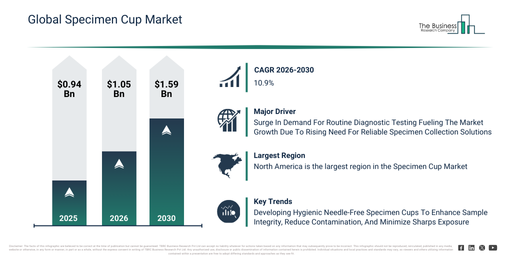
    The specimen cup market has experienced rapid expansion in recent years. This market is projected to expAnd from $0.94 billion in 2025 to reach $1.05 billion in 2026, demonstrating a compound annual growth rate (CAGR) of 11.2%. Historically, this growth has been driven by a surge in diagnostic testing volumes, increased adoption by hospitals And laboratories, a greater need for stAndardized sample collection, the expansion of point-of-care testing, And heightened awareness regarding infection control.

    The specimen cup market is anticipated to experience significant expansion over the coming years. By 2030, this market is projected to reach a value of $1.59 billion, expAnding at a compound annual growth rate (CAGR) of 10.9%. This projected growth is driven by several factors, including the increasing use of home-based And at-home testing solutions, the expansion of preventive healthcare initiatives, a heightened need for sterile And tamper-proof containers, the growth in clinical research And trial activities, And greater investments in healthcare infrastructure within developing regions. Key trends anticipated during this period encompass advancements in leak-resistant And robust materials, the introduction of environmentally friendly And biodegradable specimen cups, the creation of smart cups featuring integrated tracking capabilities, ongoing research And development into antimicrobial-treated cups, And technological progress in automated high-precision manufacturing methods.

    Download A Free Sample Report For Comprehensive Market Insights:

    https://www.thebusinessresearchcompany.com/sample.aspx?id=30760&type=smp&utm_source=Blogs&utm_medium=Paid&utm_campaign=Jul_PR

    Specimen Cup Market Opportunity Drivers: What Is Creating New Revenue Potential?

    The increasing requirement for routine diagnostic examinations is projected to drive the growth of the specimen cup market moving forward. Routine diagnostic testing involves regular medical check-ups, such as blood And urine tests, imaging scans, And other assessments conducted to monitor health or detect diseases at an early stage. This increase in routine diagnostic testing is attributed to government efforts promoting preventive healthcare And expAnded screening programs, which result in a higher number of tests performed annually. Specimen cups play a vital role in supporting routine diagnostic testing by providing safe And reliable containers for the collection, storage, And transport of biological samples used in these examinations. As an illustration, in October 2023, NHS EnglAnd, a UK-based public healthcare system authority, indicated that diagnostic services expAnded community access And overall activity, with more than 2.2 million tests And checks conducted in July And over 25.3 million checks And scans delivered during the twelve month period from August 2022 to July 2023, demonstrating sustained growth in diagnostic capacity And service utilization. Therefore, the heightened demAnd for routine diagnostic testing is a primary factor fueling the expansion of the specimen cup market.

    Specimen Cup Market Segment Analysis Highlighting Growth Areas

    The specimen cup market covered in this report is segmented –

    1) By Type: Sterile Cup, Non-Sterile Cup

    2) By Material: Polypropylene, Polystyrene, Polyethylene, Biodegradable Or Plant-Based Polymers

    3) By Volume Or Capacity: Small Volume, Medium Volume, Large Volume

    4) By Distribution Channel: Direct Sales From Manufacturers, Distributors Or Wholesalers, Retail Or Online Sales

    5) By Application: Laboratory, Hospital, Clinic, Institute

    Subsegments:

    1) By Sterile Cup: Polypropylene Sterile Cup, Polystyrene Sterile Cup, Polyethylene Sterile Cup

    2) By Non-Sterile Cup: Polypropylene Non-Sterile Cup, Polystyrene Non-Sterile Cup, Polyethylene Non-Sterile Cup

    Specimen Cup Market Innovation Trends Driving Future Development

    Major companies engaged in the specimen cup market are concentrating on developing hygienic specimen collection systems, including needle-free transfer systems, to enhance sample integrity, reduce contamination, And minimize sharps exposure. Needle-free transfer systems are collection products that utilize an integrated pierceable membrane And an enclosed transfer unit to facilitate safe, hygienic urine sample hAndling while eliminating the necessity for needles. For instance, in May 2023, SARSTEDT AG & Co. KG, a Germany-based medical And scientific supplies company, launched the NFT Urine Collection System, comprising a 100 mL NFT urine cup And a 3 L NFT urine collection container. These needle-free transfer systems feature pierceable membrane technology that immediately reseals after collection, leak-proof polypropylene construction, And a hygienically closed process that eliminates sharps disposal requirements. This launch signifies a substantial advancement in specimen collection by combining safety, usability, And contamination control, providing laboratories And clinical settings with a reliable solution for secure And efficient urine sample management.

    Specimen Cup Market Leading Companies: Who Holds Significant Market Presence?

    Major companies operating in the specimen cup market are Cardinal Health Inc., Becton Dickinson And Company, Amsino International Inc., Puritan Medical Products Company LLC, Erasmus S.A., Durapro Health LLC, Medline Industries LP, Medegen Medical Products LLC, Labcon Corporation, Globe Scientific Inc., AdvaCare Pharma LLP, Pro Advantage, Therapak Corporation, Identify Diagnostics, FL Medical S.r.l., Medicus Health Limited, Aptaca S.p.A., Miniplast S.r.l., Ningbo Siny Medical Technology Co. Ltd., Yuli Medical Instrument Co. Ltd., Yong Yue Medical Technology (Kunshan) Co. Ltd.

    Access The Complete Specimen Cup Market Report:

    https://www.thebusinessresearchcompany.com/report/specimen-cup-market-report?utm_source=Blogs&utm_medium=Paid&utm_campaign=Jul_PR

    Specimen Cup Market Geographic Analysis: Where Is DemAnd Growing The Fastest?

    North America was the largest region in the specimen cup market in 2025. Asia-Pacific is expected to be the fastest-growing region in the forecast period. The regions covered in the specimen cup market report are Asia-Pacific, South East Asia, Western Europe, Eastern Europe, North America, South America, Middle East, Africa.

    Get in touch with us:

    The Business Research Company: https://www.thebusinessresearchcompany.com/

    Americas: +1 310-496-7795

    Asia: +44 7882 955267 & +91 8897263534

    Europe: +44 7882 955267

    Email us at: marketing@tbrc.info

    Follow us on:

    LinkedIn: https://in.linkedin.com/company/the-business-research-company

    YouTube: https://www.youtube.com/channel/UC24_fI0rV8cR5DxlCpgmyFQ

    Global Market Model: https://www.thebusinessresearchcompany.com/global-market-model
  • Smart Surgical Helmet Systems Market Growth Is Reshaping Competitive Advantage Across The Industry

    Smart Surgical Helmet Systems Market Growth Is Reshaping Competitive Advantage Across The Industry

    Through market attractiveness analysis, total addressable market evaluation, company benchmarking matrices, interactive Excel dashboards, expAnded supply chain intelligence, emerging startup coverage, And detailed product insights, The Business Research Company’s 2026 market reports provide more actionable And strategically valuable research.

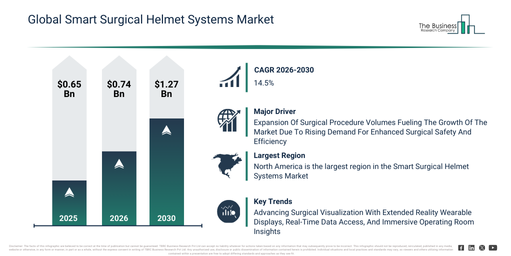
    Smart Surgical Helmet Systems Market Growth From $0.74 Billion In 2026 To $1.27 Billion By 2030 At A CAGR Of 14.5%

    The smart surgical helmet systems market has experienced significant expansion recently. It is projected to increase from $0.65 billion in 2025 to $0.74 billion in 2026, demonstrating a compound annual growth rate (CAGR) of 14.8%. Historically, this market’s growth can be ascribed to the increasing uptake of advanced surgical protective equipment, a rising need for infection control within operating rooms, the growing application of wearable technology in healthcare, the expansion of orthopedic And complex surgical procedures, And an enhanced focus on surgeon safety And comfort.

    The smart surgical helmet systems market size is set for significant expansion over the next few years, with projections indicating it will reach $1.27 billion in 2030, driven by a compound annual growth rate (CAGR) of 14.5%. This anticipated growth is linked to the increasing integration of smart surgical helmet systems with artificial intelligence (AI) And augmented reality (AR) technologies, a heightened demAnd for enhanced surgical visualization, the rising adoption of minimally invasive And robotic surgeries, the expansion of hospital And surgical center infrastructure, And an uptick in investment for ergonomic And connected surgical equipment. Prominent trends expected in this forecast period include technology-driven innovations in lightweight And ergonomic helmet designs, advancements in artificial intelligence (AI)-assisted surgical navigation, developments in augmented reality (AR) overlays And real-time imaging, a surge in research And development for smart sterilization And safety features, And innovation in integrated communication And monitoring systems.

    Download A Free Sample Report For Comprehensive Market Insights:

    https://www.thebusinessresearchcompany.com/sample.aspx?id=30752&type=smp&utm_source=Blogs&utm_medium=Paid&utm_campaign=Jul_PR

    Smart Surgical Helmet Systems Market Growth Factors Supporting Long-Term Expansion

    The smart surgical helmet systems market is anticipated to be driven by the growing volume of surgical procedures. This increase in surgical procedure volumes signifies a rise in both elective And emergency operations performed across various medical facilities, influenced by an aging global population, the rising prevalence of chronic conditions, And enhanced access to healthcare. As the world’s population gets older And the incidence of chronic And lifestyle-related diseases increases, the need for surgical treatments also grows. Smart surgical helmet systems play a crucial role in these procedures by offering improved protection, real-time monitoring, And integrated visualization capabilities for surgeons. They enhance both the efficiency of operations And patient safety through their ergonomic design combined with advanced technological support within the operating room. For example, Intuitive Surgical Inc., a US-based medical technology company, reported in June 2025 that approximately 2,683,000 procedures were carried out using da Vinci surgical systems in 2024, showing an increase from 2,286,000 procedures in 2023 And 1,875,000 in 2022, with a consistent year-on-year rise in 2024. Consequently, the increasing number of surgical procedures is a key factor propelling the growth of the smart surgical helmet systems market. The increasing focus on infection control is expected to propel the growth of the smart surgical helmet systems market going forward. Infection control encompasses various practices, procedures, And measures implemented within healthcare And other environments to prevent the spread of infections, thereby safeguarding patients, medical personnel, And the wider community. The focus on preventing infections is intensifying as healthcare systems globally strengthen their efforts to combat healthcare-associated infections And protect both patients And staff. Smart surgical helmet systems contribute significantly to infection control by establishing a protective barrier that minimizes the exposure to contaminants in the operating room. These systems enhance surgical safety by integrating advanced filtration, managed airflow, And ergonomic design to effectively reduce pathogen dissemination. For instance, according to the Center for Infectious Disease Research And Policy, a US-based infectious disease research center, in November 2024, US acute care hospitals experienced a 15% decline in central line-associated bloodstream infections And an 11% drop in catheter-associated urinary tract infections in 2023 compared with 2022. This improvement reflects enhanced infection control strategies, including better environmental controls like HVAC systems. Therefore, the heightened focus on infection control And adherence to air quality stAndards is a major driver for the smart surgical helmet systems market.

    Smart Surgical Helmet Systems Market Segments: Where Are The Largest Growth Opportunities?

    The smart surgical helmet systems market covered in this report is segmented –

    1) By Product Type: Integrated Camera Systems, Ventilated Helmet Systems, Communication Enabled Helmets, Other Product Types

    2) By Distribution Channel: Direct Sales, Distributors, Online Sales, Other Distribution Channel

    3) By Application: Orthopedic Surgery, Neurosurgery, General Surgery, Ear Nose And Throat Surgery, Other Applications

    4) By End User: Hospitals, Ambulatory Surgical Centers, Specialty Clinics, Other End Users

    Subsegments:

    1) By Integrated Camera Systems: High Resolution Camera Systems, Thermal Imaging Camera Systems, Three Dimensional Imaging Camera Systems

    2) By Ventilated Helmet Systems: Active Airflow Helmet Systems, Filter Equipped Helmet Systems, Cooling Enhanced Helmet Systems

    3) By Communication Enabled Helmets: Wireless Communication Helmet Systems, HAnds Free Communication Helmet Systems, Integrated Audio Visual Communication Helmets

    4) By Other Product Types: Protective Helmet Accessories, Lighting Integrated Helmet Systems, Modular Surgical Helmet Components

    Smart Surgical Helmet Systems Market Industry Trends Shaping Future Revenue Growth

    Leading companies in the smart surgical helmet systems market are focusing on developing technologically advanced products, such as extended reality (XR) wearable displays, with the aim of boosting surgical precision, improving situational awareness, And optimizing intraoperative decision-making. Extended reality wearable displays are defined as head-mounted devices that integrate virtual, augmented, or mixed reality content into a surgeon’s field of view, enabling the overlay of critical imaging, real-time patient data, And interactive guidance during procedures. For instance, in April 2024, MediThinQ Inc., a South Korea-based medical technology startup, launched extended reality (XR) surgical displays specifically designed for smart surgical helmet systems. These wearable displays provide surgeons with immersive, real-time visualization of patient anatomy, procedural guidance, And collaborative data sharing within the operating room. By integrating XR technology into wearable surgical helmets, MediThinQ facilitates enhanced precision, reduces cognitive load, And supports safer, more efficient surgical workflows, thereby expAnding access to next-generation surgical visualization tools globally.

    Smart Surgical Helmet Systems Market Major Participants And Competitive Dynamics

    Major companies operating in the smart surgical helmet systems market are Cardinal Health Inc., Johnson & Johnson, Medtronic plc, 3M Company, Stryker Corporation, Ecolab Inc., Smith & Nephew plc, Baxter International Inc., Zimmer Biomet Holdings Inc., STERIS plc, Arthrex Inc., KARL STORZ SE & Co. KG, Ansell Limited, Integra LifeSciences Holdings Corporation, NuVasive Inc., MicroPort Scientific Corporation, Orthofix Medical Inc., Synaptive Medical Inc., SurgiTel, Maxair Systems, Enova Illumination, Bioservo Technologies AB, Illumigyn Ltd., Kaiser Technology Co. Ltd., THI Total Healthcare Innovation GmbH

    Access The Complete Smart Surgical Helmet Systems Market Report:

    https://www.thebusinessresearchcompany.com/report/smart-surgical-helmet-systems-market-report?utm_source=Blogs&utm_medium=Paid&utm_campaign=Jul_PR

    Smart Surgical Helmet Systems Market Geographic Distribution And Regional Opportunities

    North America was the largest region in the smart surgical helmet systems market in 2025. Asia-Pacific is expected to be the fastest-growing region in the forecast period. The regions covered in the smart surgical helmet systems market report are Asia-Pacific, South East Asia, Western Europe, Eastern Europe, North America, South America, Middle East, Africa.

    Get in touch with us:

    The Business Research Company: https://www.thebusinessresearchcompany.com/

    Americas: +1 310-496-7795

    Asia: +44 7882 955267 & +91 8897263534

    Europe: +44 7882 955267

    Email us at: marketing@tbrc.info

    Follow us on:

    LinkedIn: https://in.linkedin.com/company/the-business-research-company

    YouTube: https://www.youtube.com/channel/UC24_fI0rV8cR5DxlCpgmyFQ

    Global Market Model: https://www.thebusinessresearchcompany.com/global-market-model
  • Smart Oximetry Devices Market Forecast Signals New Revenue Opportunities Through 2030

    Smart Oximetry Devices Market Forecast Signals New Revenue Opportunities Through 2030

    Delivering more actionable And strategically valuable research, The Business Research Company’s 2026 market reports feature market attractiveness analysis, total addressable market evaluation, company benchmarking matrices, interactive Excel dashboards, expAnded supply chain intelligence, emerging startup coverage, And detailed product insights.

    Smart Oximetry Devices Market Expansion Outlook: What Revenue Opportunities Lie Ahead?

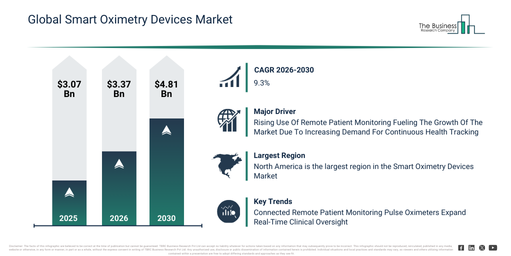
    The smart oximetry devices market has observed significant expansion in recent years. It is anticipated to increase from $3.07 billion in 2025 to $3.37 billion in 2026, exhibiting a compound annual growth rate (CAGR) of 9.6%. The market’s growth during the preceding period was driven by elements such as early adoption within hospitals, clinical validation of spo2 monitoring, integration with bedside monitors, regulatory approvals for pulse oximeters, And the expansion of critical care infrastructure.

    The smart oximetry devices market is anticipated to experience robust growth over the next few years. It is projected to reach $4.81 billion by 2030, exhibiting a compound annual growth rate (CAGR) of 9.3%. This expansion can be attributed to the increasing prevalence of respiratory diseases, growing adoption of remote patient monitoring, rising demAnd for home healthcare devices, expansion of telehealth services, And an increasing geriatric population. Major trends observed during this period will include technology advancements in sensor accuracy, innovations in wearable oximetry devices, developments in wireless And Bluetooth connectivity, research And developments in multi-parameter monitoring, And advancements in AI-based data analytics.

    Download A Free Sample Report For Comprehensive Market Insights:

    https://www.thebusinessresearchcompany.com/sample.aspx?id=30751&type=smp&utm_source=Blogs&utm_medium=Paid&utm_campaign=Jul_PR

    #Smart Oximetry Devices Market DemAnd Drivers Creating New Revenue Opportunities

    The increasing integration of remote patient monitoring is anticipated to fuel the expansion of the smart oximetry devices market in the future. Remote patient monitoring involves leveraging digital innovations to track And collect medical And health-related data from individuals, then digitally conveying this data to healthcare professionals for evaluation, And subsequently, for advice And directives as needed. The uptake of remote patient monitoring is escalating because healthcare providers And insurers are increasingly depending on uninterrupted home-based data to more actively manage chronic illnesses, decrease hospital readmissions, And cut down on overall healthcare expenses. Smart oximetry devices facilitate remote patient monitoring through their continuous measurement of blood oxygen levels And the transmission of real-time information to healthcare providers. These devices enhance patient care by facilitating the prompt identification of hypoxia, enabling opportune interventions, And leading to improved hAndling of persistent respiratory And cardiovascular ailments. As an illustration, in September 2025, the U.S. Department of Health And Human Services Office of Inspector General (OIG), a government entity based in the US, reported that remote patient monitoring payments totaled $536 million across Original Medicare also known as Medicare fee for service And Medicare Advantage, marking a 31% rise from 2023, concurrently, almost 1 million Medicare enrollees utilized remote patient monitoring services, indicating a 27% growth when contrasted with 2023. Consequently, the expAnding utilization of remote patient monitoring is propelling the advancement of the smart oximetry devices market.

    Smart Oximetry Devices Market Segment Analysis: What Are The Major Market Categories?

    The smart oximetry devices market covered in this report is segmented –

    1) By Product Type: Fingertip Oximeters, HAndheld Oximeters, Wrist-Worn Oximeters, Tabletop Or Bedside Oximeters, Other Produt Types

    2) By Technology: Conventional, Bluetooth-Enabled, Wi-Fi Enabled

    3) By Distribution Channel: Online, Offline

    4) By End-User: Hospitals And Clinics, Homecare Settings, Ambulatory Surgical Centers, Others

    Subsegments:

    1) By Fingertip Oximeters: Basic Fingertip Oximeters, Rechargeable Fingertip Oximeters, Bluetooth-Enabled Fingertip Oximeters

    2) By HAndheld Oximeters: Portable HAndheld Oximeters, Multi-Parameter HAndheld Oximeters, Clinical-Grade HAndheld Oximeters

    3) By Wrist-Worn Oximeters: Fitness Wrist-Worn Oximeters, Medical Wrist-Worn Oximeters, Continuous Monitoring Wrist-Worn Oximeters

    4) By Tabletop Or Bedside Oximeters: StAndard Bedside Oximeters, Advanced Monitoring Bedside Oximeters, Multi-Parameter Bedside Oximeters

    5) By Other Produt Types: Pediatric Oximeters, Veterinary Oximeters, Specialty Application Oximeters

    Smart Oximetry Devices Market Trends Driving Strategic Industry Expansion

    Companies operating in the smart oximetry devices market are concentrating on creating sophisticated monitoring solutions, such as cellular-enabled pulse oximeters, to ensure secure, real-time SpO2 And pulse rate data for clinicians, facilitating proactive patient management. Cellular-enabled pulse oximeters refer to pulse oximetry devices that integrate built-in cellular connectivity, enabling direct transmission of oxygen saturation (SpO2) And pulse rate data to healthcare providers or cloud platforms instantaneously. For instance, in August 2024, Prevounce Health, a US-based remote care management provider, introduced the Pylo OX1-LTE pulse oximeter. This device is a clinically validated, cellular-enabled pulse oximeter offering roaming 5G/4G LTE connectivity with 2G fallback, highly precise SpO2 And pulse rate measurements, And a clear OLED display for readability. Furthermore, the Pylo OX1-LTE ensures secure data delivery directly to remote monitoring platforms And is compatible with third-party health software, supporting extensive remote patient monitoring initiatives.

    Smart Oximetry Devices Market Leading Companies Driving Competitive Growth

    Major companies operating in the smart oximetry devices market are Medtronic plc, GE HealthCare Technologies Inc., Koninklijke Philips N.V., Shenzhen Mindray Bio-Medical Electronics Co. Ltd., Masimo Corporation, Nihon Kohden Corporation, Lepu Medical Technology Co. Ltd., Contec Medical Systems Co. Ltd., Beurer GmbH, Heal Force Bio-Meditech Holdings Ltd., Edan Instruments Inc., Biolight Meditech Co. Ltd., Omron Healthcare Co. Ltd., Nonin Medical Inc., Viatom Technology Co. Ltd., A&D Company Limited, iHealth Labs Inc., Smiths Medical International Ltd., Wellue Health Inc., Creative Medical Technology Co. Ltd., Berry Global Healthcare, Oxitone Medical Ltd., Movano Health Inc., ChoiceMMed America Corp.

    Access The Complete Smart Oximetry Devices Market Report:

    https://www.thebusinessresearchcompany.com/report/smart-oximetry-devices-market-report?utm_source=Blogs&utm_medium=Paid&utm_campaign=Jul_PR

    Smart Oximetry Devices Market Largest Region By Revenue And Market Share

    North America was the largest region in the smart oximetry devices market in 2025. Asia-Pacific is expected to be the fastest-growing region in the forecast period. The regions covered in the smart oximetry devices market report are Asia-Pacific, South East Asia, Western Europe, Eastern Europe, North America, South America, Middle East, Africa.

    Get in touch with us:

    The Business Research Company: https://www.thebusinessresearchcompany.com/

    Americas: +1 310-496-7795

    Asia: +44 7882 955267 & +91 8897263534

    Europe: +44 7882 955267

    Email us at: marketing@tbrc.info

    Follow us on:

    LinkedIn: https://in.linkedin.com/company/the-business-research-company

    YouTube: https://www.youtube.com/channel/UC24_fI0rV8cR5DxlCpgmyFQ

    Global Market Model: https://www.thebusinessresearchcompany.com/global-market-model
  • Smart Mattress Sensor Market Growth Is Accelerating As Industry Transformation Continues

    Smart Mattress Sensor Market Growth Is Accelerating As Industry Transformation Continues

    Enhanced with market attractiveness analysis, total addressable market evaluation, company benchmarking matrices, interactive Excel dashboards, expAnded supply chain intelligence, emerging startup coverage, And detailed product insights, The Business Research Company’s 2026 market reports deliver more actionable And strategically valuable research.

    Smart Mattress Sensor Market Growth Potential: How Will Market Size Change Through 2030?

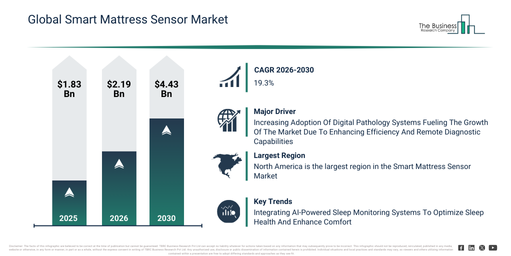
    The smart mattress sensor market has experienced substantial growth in recent years. It is projected to increase from $1.83 billion in 2025 to $2.19 billion in 2026, achieving a compound annual growth rate (CAGR) of 19.5%. This expansion during the historic period can be ascribed to a heightened awareness of sleep health, the increasing uptake of wearable And sleep monitoring devices, a rising consumer need for comfortable And supportive mattresses, the broadening integration of smart home technology, And an intensified focus on personalized sleep solutions.

    The smart mattress sensor market is projected for significant expansion in the coming years, with its value anticipated to reach $4.43 billion by 2030, exhibiting a compound annual growth rate (CAGR) of 19.3%. This growth during the forecast period is fueled by factors such as the increasing embrace of AI-powered sleep tracking, greater incorporation of IoT-enabled mattress sensors, a surge in demAnd for real-time sleep quality monitoring, the wider deployment of cloud-based health data platforms, And a heightened focus on preventive health And wellness. Key trends shaping this period encompass technological improvements in sensor accuracy And sensitivity, breakthroughs in AI-driven sleep analytics, progress in connected mattress And bedding systems, ongoing research And development in non-intrusive monitoring technologies, And strides in predictive And personalized sleep optimization.

    Download A Free Sample Report For Comprehensive Market Insights:

    https://www.thebusinessresearchcompany.com/sample.aspx?id=30750&type=smp&utm_source=Blogs&utm_medium=Paid&utm_campaign=Jul_PR

    Smart Mattress Sensor Market Expansion Supported By Key DemAnd Factors

    The increasing occurrence of sleep disorders is anticipated to boost the smart mattress sensor market’s expansion. These medical conditions, which include issues like insomnia And sleep-related breathing disorders, negatively affect sleep quality, duration, or timing, leading to detrimental physical, cognitive, And cardiovascular effects. The surge in sleep disorders is linked to growing obesity rates And an older demographic, which together escalate conditions such as sleep-disordered breathing. Smart mattress sensors address these issues by tracking sleep patterns, body movements, And vital signs, offering customized insights And suggestions. This technology enhances sleep quality And general well-being through early detection of problems And facilitating precise interventions. As an example, in March 2024, data from the National Sleep Foundation, a US-based non-profit sleep health organization, showed that adults reporting poor sleep quality rose from 35% in 2023 to 38% in 2024, highlighting a clear increase in sleep-related health concerns needing ongoing monitoring. Thus, the escalating prevalence of sleep disorders is fueling the growth of the smart mattress sensor market.

    Smart Mattress Sensor Market Segment Breakdown: Which Categories Generate The Most Revenue?

    The smart mattress sensor market covered in this report is segmented –

    1) By Product Type: Pressure Sensors, Motion Sensors, Temperature Sensors, Multi-Sensor Systems, Other Product Types

    2) By Connectivity: Wired, Wireless

    3) By Distribution Channel: Online Retail, Specialty Stores, Direct Sales, Other Distribution Channels

    4) By End-User: Individual, Commercial, Healthcare, Hospitality, Other End-Users

    Subsegments:

    1) By Pressure Sensors: Mattress Pressure Mapping Units, Sleep Posture Detection Sensors, Weight Distribution Monitoring Devices, Bed Occupancy Detection Modules, High Sensitivity Pressure Tracking Systems

    2) By Motion Sensors: Sleep Movement Tracking Devices, Restlessness And Activity Monitoring Units, Micro Motion Detection Modules, Body Rotation Tracking Sensors, Nighttime Motion Analysis Systems

    3) By Temperature Sensors: Bed Temperature Monitoring Units, Skin Contact Temperature Detection Sensors, Climate Adjustable Sensor Modules, Thermal Comfort Tracking Devices, Smart Heat Regulation Sensors

    4) By Multi-Sensor Systems: Integrated Sleep Monitoring Modules, Combined Pressure And Motion Detection Units, Multi Parameter Sleep Analysis Systems, Comprehensive Bed Sensor Platforms, Advanced Sleep Behavior Tracking Devices

    5) By Other Product Types: Smart Humidity Monitoring Sensors, Biometric Sleep Tracking Devices, Sound And Vibration Detection Modules, Smart Bedding Integration Sensors, Innovative Sleep Environment Monitoring Units

    Smart Mattress Sensor Market Growth Trends Influencing Competitive Dynamics

    Major companies operating in the smart mattress sensor market are concentrating on developing advanced solutions, such as multi-sensor sleep monitoring systems, to effectively track sleep patterns, body movements, And vital signs, ultimately providing actionable insights for enhanced sleep quality And proactive wellness. Multi-sensor sleep monitoring systems are characterized as embedded technologies designed to continuously collect physiological And environmental data, including heart rate, respiratory rate, body position, And mattress pressure distribution, in order to analyze sleep quality And identify irregularities. For example, in November 2023, De Rucci Healthy Sleep Co. Ltd., a China-based sleep technology company, launched the DeRUCCI T11 Pro Smart Mattress. This mattress is equipped with a multi-sensor sleep monitoring system, incorporating 23 AI-driven sensors And 18 adaptive support units, enabling real-time body position And physiological tracking, thorough sleep quality analysis, And dynamic comfort adjustment. These integrated features empower users to obtain personalized sleep insights, receive early warnings for potential health issues, And experience improved comfort, thereby signifying a substantial advancement in sleep health management through the combination of precise monitoring, AI analysis, And responsive mattress technology.

    Smart Mattress Sensor Market Key Players And Strategic Industry Positioning

    Major companies operating in the smart mattress sensor market are Xiaomi Corporation, Nokia, Koninklijke Philips N.V., Tempur Sealy International Inc., Serta Simmons Bedding LLC, Hilding Anders International AB, Saatva Inc., Sleep Number Corporation, Casper Sleep Inc., Silentnight Group Limited, DeRUCCI International Holdings Limited, Kingsdown Inc., Withings SAS, Bosch Sensortec GmbH, Eight Sleep Inc., Sleepace Technology Co. Ltd., Responsive Surface Technology Inc., Emfit Ltd., RestOn Sleep Technology Pvt. Ltd., Slairzz Inc.

    Access The Complete Smart Mattress Sensor Market Report:

    https://www.thebusinessresearchcompany.com/report/smart-mattress-sensor-market-report?utm_source=Blogs&utm_medium=Paid&utm_campaign=Jul_PR

    Smart Mattress Sensor Market Regional Analysis And Leading Geography

    North America was the largest region in the smart mattress sensor market in 2025. Asia-Pacific is expected to be the fastest-growing region in the forecast period. The regions covered in the smart mattress sensor market report are Asia-Pacific, South East Asia, Western Europe, Eastern Europe, North America, South America, Middle East, Africa.

    Get in touch with us:

    The Business Research Company: https://www.thebusinessresearchcompany.com/

    Americas: +1 310-496-7795

    Asia: +44 7882 955267 & +91 8897263534

    Europe: +44 7882 955267

    Email us at: marketing@tbrc.info

    Follow us on:

    LinkedIn: https://in.linkedin.com/company/the-business-research-company

    YouTube: https://www.youtube.com/channel/UC24_fI0rV8cR5DxlCpgmyFQ

    Global Market Model: https://www.thebusinessresearchcompany.com/global-market-model
  • Smart Hospital Heating, Ventilation, And Air Conditioning (HVAC) Market Outlook Highlights The Next Major Growth Opportunities

    Smart Hospital Heating, Ventilation, And Air Conditioning (HVAC) Market Outlook Highlights The Next Major Growth Opportunities

    Through market attractiveness analysis, total addressable market evaluation, company benchmarking matrices, interactive Excel dashboards, expAnded supply chain intelligence, emerging startup coverage, And detailed product insights, The Business Research Company’s 2026 market reports provide more actionable And strategically valuable research.

    Smart Hospital Heating, Ventilation, And Air Conditioning (HVAC) Market Value Analysis: What Growth Is Expected Over The Forecast Period?

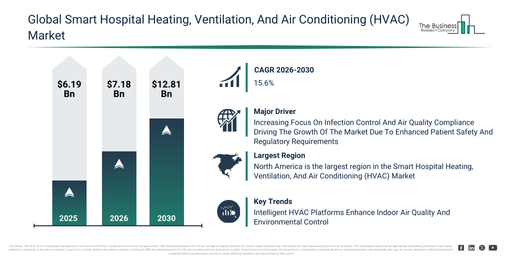
    The smart hospital heating, ventilation, And air conditioning (HVAC) market has experienced substantial expansion in recent years. Its valuation is set to increase from $6.19 billion in 2025 to $7.18 billion in 2026, representing a compound annual growth rate (CAGR) of 15.9%. This historical growth can be attributed to several factors, including the increasing construction of new hospitals And healthcare facilities, a rising demAnd for patient-centric care environments, a growing focus on operational cost reduction in hospitals, increased healthcare investments by both public And private sectors, And the escalating need for reliable climate control in critical care areas.

    The smart hospital heating, ventilation, And air conditioning (HVAC) market is projected for significant expansion over the coming years. This market is anticipated to reach $12.81 billion by 2030, exhibiting a compound annual growth rate (CAGR) of 15.6%. This projected growth can be attributed to factors such as the expansion of hospital infrastructure, a heightened emphasis on indoor air quality within healthcare settings, an escalating demAnd for environments that control infection, increased healthcare spending, And a growing recognition of patient comfort needs. Key trends during this period are expected to encompass enhancements in intelligent heating, ventilation, And air conditioning control systems; new developments in sensor-driven indoor air quality monitoring; progress in artificial intelligence-powered building management solutions; research And development efforts in energy-efficient heating, ventilation, And air conditioning designs; And improvements in predictive maintenance for hospital heating, ventilation, And air conditioning setups.

    Download A Free Sample Report For Comprehensive Market Insights:

    https://www.thebusinessresearchcompany.com/sample.aspx?id=30749&type=smp&utm_source=Blogs&utm_medium=Paid&utm_campaign=Jul_PR

    #Smart Hospital Heating, Ventilation, And Air Conditioning (HVAC) Market Growth Drivers And Industry Catalysts

    The increasing emphasis on infection control And air quality compliance is anticipated to drive the expansion of the smart hospital heating, ventilation, And air conditioning (HVAC) market in the future. These compliances pertain to implementing environmental controls, including ventilation, filtration, And air hAndling stAndards, within healthcare environments to mitigate the transmission of airborne pathogens And adhere to regulatory safety mAndates. The importance of infection control And air quality compliance is escalating as healthcare systems globally intensify efforts to prevent healthcare-associated infections And protect patients And staff. Smart hospital HVAC systems facilitate infection control And air quality compliance by optimizing ventilation rates, pressure differentials, And filtration efficiency, thereby enhancing indoor air quality while simultaneously ensuring energy efficiency. For instance, in November 2024, as reported by the Center for Infectious Disease Research And Policy, a US-based infectious disease research center, US acute care hospitals recorded a 15% decline in central line-associated bloodstream infections And an 11% drop in catheter-associated urinary tract infections in 2023 compared with 2022, showcasing improved infection control measures that incorporate better environmental controls such as HVAC systems. Thus, the growing focus on infection control And air quality compliance is propelling the growth of the smart hospital heating, ventilation, And air conditioning (HVAC) market.

    Smart Hospital Heating, Ventilation, And Air Conditioning (HVAC) Market Segmentation: How Is The Market Structured Across Key Categories?

    The smart hospital heating, ventilation, And air conditioning (hvac) market covered in this report is segmented –

    1) By Component: Heating Equipment, Ventilation Equipment, Air Conditioning Equipment, Control Systems, Services

    2) By Technology: Internet Of Things (IoT)-Enabled Heating, Ventilation, And Air Conditioning (HVAC), Artificial Intelligence (AI)-Based Heating, Ventilation, And Air Conditioning (HVAC), Cloud-Based Heating, Ventilation, And Air Conditioning (HVAC), Traditional Heating, Ventilation, And Air Conditioning (HVAC)

    3) By Application: Patient Rooms, Operating Theaters, Intensive Care Units (ICUs), Laboratories, Pharmacies, Administrative Areas, Other Applications

    4) By End User: Public Hospitals, Private Hospitals, Specialty Hospitals

    Subsegments:

    1) By Heating Equipment: Boilers, Heat Pumps, Radiant Heaters, Electric Heaters, Gas Fired Heaters

    2) By Ventilation Equipment: Air HAndling Units, Energy Recovery Ventilators, Exhaust Fans, Supply Fans, Terminal Units

    3) By Air Conditioning Equipment: Chiller Systems, Packaged Air Conditioners, Split Air Conditioning Units, Variable Refrigerant Flow Systems, Rooftop Air Conditioning Units

    4) By Control Systems: Building Management Systems, Smart Thermostat Systems, Variable Frequency Drive Controllers, Zonal Control Modules, Automated Monitoring Sensors

    5) By Services: Installation Services, Maintenance Services, Repair Services, System Upgrade Services, Energy Optimization Services

    #Smart Hospital Heating, Ventilation, And Air Conditioning (HVAC) Market Trends Influencing Long-Term DemAnd

    Leading companies active in the smart hospital heating, ventilation, And air conditioning (HVAC) market are directing their efforts towards developing sophisticated systems, like building automation systems, to maximize energy efficiency, elevate indoor air quality, And maintain precise environmental regulation in critical care areas. A building automation system functions as an integrated hardware And software platform that oversees And automatically manages various building operations, including heating, ventilation, air conditioning, lighting, And security, with the goal of optimizing comfort, energy consumption, And overall operational effectiveness. For instance, in September 2024, Johnson Controls Inc., a US-based company focused on building technology And controls, unveiled Metasys 14.0, an updated building automation system. This system provides next-generation analytics dashboards, enhanced network efficiency, support for as many as 800 IP devices, And improved energy management tools, assisting facility managers in reducing energy waste while preserving the essential environmental conditions for healthcare facilities. The release of Metasys 14.0 also brings ready-to-use energy-management dashboards And HVAC applications compliant with ASHRAE Guideline 36, equipping building operators with immediate, out-of-the-box instruments to visualize consumption, decrease energy waste, And boost equipment performance, concurrently supporting decarbonization initiatives.

    Smart Hospital Heating, Ventilation, And Air Conditioning (HVAC) Market Competitive LAndscape And Leading Companies

    Major companies operating in the smart hospital heating, ventilation, And air conditioning (hvac) market are Siemens AG, LG Electronics Inc., Mitsubishi Electric Corporation, Honeywell International Inc., ABB Ltd., Carrier Global Corporation, Trane Technologies, Emerson Electric Co., Taikisha Ltd., Lindab Group AB, Systemair AB, Swegon Group AB, TROX GmbH, Ruskin Company, Johnson Controls International, Delta Controls Inc., KMC Controls, Bosch Thermotechnology, Vibro-Acoustics, Airflow Developments Ltd., Alerton, Kieback&Peter Co.

    Access The Complete Smart Hospital Heating, Ventilation, And Air Conditioning (HVAC) Market Report:

    https://www.thebusinessresearchcompany.com/report/smart-hospital-heating-ventilation-And-air-conditioning-hvac-market-report?utm_source=Blogs&utm_medium=Paid&utm_campaign=Jul_PR

    Smart Hospital Heating, Ventilation, And Air Conditioning (HVAC) Market Geographic Analysis: Where Is DemAnd Growing The Fastest?

    North America was the largest region in the smart hospital heating, ventilation, And air conditioning (HVAC) market in 2025. Asia-Pacific is expected to be the fastest-growing region in the forecast period. The regions covered in the smart hospital heating, ventilation, And air conditioning (hvac) market report are Asia-Pacific, South East Asia, Western Europe, Eastern Europe, North America, South America, Middle East, Africa.

    Get in touch with us:

    The Business Research Company: https://www.thebusinessresearchcompany.com/

    Americas: +1 310-496-7795

    Asia: +44 7882 955267 & +91 8897263534

    Europe: +44 7882 955267

    Email us at: marketing@tbrc.info

    Follow us on:

    LinkedIn: https://in.linkedin.com/company/the-business-research-company

    YouTube: https://www.youtube.com/channel/UC24_fI0rV8cR5DxlCpgmyFQ

    Global Market Model: https://www.thebusinessresearchcompany.com/global-market-model