Category: Medical Equipment

  • Remote Visualization Workstations Market Forecast Highlights Expansion From $5.44 Billion To $9.53 Billion Through 2030

    Remote Visualization Workstations Market Forecast Highlights Expansion From $5.44 Billion To $9.53 Billion Through 2030

    Enhanced with market attractiveness analysis, total addressable market evaluation, company benchmarking matrices, interactive Excel dashboards, expanded supply chain intelligence, emerging startup coverage, and detailed product insights, The Business Research Company’s 2026 market reports deliver more actionable and strategically valuable research.

    Remote Visualization Workstations Market Size, Value And Growth Trends Through 2030

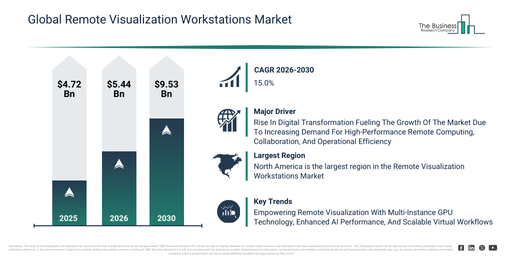
    The remote visualization workstations market size has experienced rapid growth in recent years. Projections show it will expand from $4.72 billion in 2025 to $5.44 billion in 2026, achieving a compound annual growth rate (CAGR) of 15.3%. This expansion historically stems from the increasing adoption of remote work models, rising demand for high-performance remote computing solutions, the ongoing digital transformation across industries, the broader implementation of virtualization and remote desktop infrastructure, and the escalating need for secure remote access and collaboration tools.

    The remote visualization workstations market is expected to demonstrate significant expansion in the coming years. It is projected to reach $9.53 billion by 2030, growing at a compound annual growth rate (CAGR) of 15.0%. The anticipated growth during this period can be attributed to the increasing demand for hybrid and remote work setups, the expanding reach of cloud-based remote visualization platforms, the rising adoption of AI and machine-learning powered visualization tools, deeper penetration into emerging economies and underserved industries, and the growing need for integrated hardware-software-services remote visualization solutions. Prominent trends for the forecast period include technological advancements in graphics processing unit (GPU) and processor performance, alongside enhanced graphics capabilities, innovations in artificial intelligence (AI), machine learning (ML), and advanced analytics integration, the evolution of immersive visualization through augmented reality (AR) and virtual reality (VR) and sophisticated remote collaboration tools, the expansion of cloud-based and hybrid deployment models for visualization workstations, and increased research and development investment leading to more scalable, efficient, and secure remote visualization environments.

    Download A Free Sample Report For Comprehensive Market Insights:

    https://www.thebusinessresearchcompany.com/sample.aspx?id=30726&type=smp&utm_source=Blogs&utm_medium=Paid&utm_campaign=Jul_PR

    Remote Visualization Workstations Market Expansion Supported By Key Demand Factors

    The increasing trend of digital transformation is anticipated to boost the growth of the remote visualization workstations market. Digital transformation refers to the integration of digital technologies throughout business operations to optimize processes, improve value delivery, and foster innovation, adopting agile and data-driven methodologies. This surge in digital transformation is driven by the rising necessity to provide faster, more personalized, and seamless customer experiences to maintain a competitive edge. Remote visualization workstations enhance digital transformation by enabling secure, remote access to high-performance computing and graphics processing. They support collaborative workflows, reduce reliance on physical infrastructure, and accelerate decision-making across various industries like engineering, healthcare, and media, thereby improving flexibility, scalability, and operational efficiency. For example, in July 2024, the Office for National Statistics, a UK-based government agency, reported that the digital infrastructure program received a $535 million (£434 million) investment by 2022, with an additional $907 million (£736 million) allocated for the period of 2023 to 2025. Thus, the escalating digital transformation is propelling the growth of the remote visualization workstations market.

    Remote Visualization Workstations Market Segments: Where Are The Largest Growth Opportunities?

    The remote visualization workstations market covered in this report is segmented –

    1) By Component: Hardware, Software, Services

    2) By Deployment Mode: On-Premises, Cloud-Based, Hybrid

    3) By Application: Engineering And Design, Medical Imaging, Scientific Research, Media And Entertainment, Oil And Gas, Other Applications

    4) By End-User: Healthcare, Education, Manufacturing, Energy, Media And Entertainment, Research Institutes, Other End-Users

    Subsegments:

    1) By Hardware: Central Processing Unit, Graphics Processing Unit, Memory, Storage, Input Devices, Output Devices

    2) By Software: Virtualization Software, Rendering Software, Simulation Software, Monitoring Software, Collaboration Software

    3) By Services: Installation Services, Maintenance Services, Consulting Services, Training Services, Technical Support Services

    Remote Visualization Workstations Market Growth Trends Influencing Competitive Dynamics

    Major companies operating in the remote visualization workstations market are focusing on developing advanced hardware and software capabilities, such as Multi-Instance GPU (MIG) technology, to facilitate high-density virtualized graphics, accelerated AI workloads, and responsive remote compute experiences. Multi-Instance GPU (MIG) refers to a GPU architecture that partitions a single physical GPU into multiple isolated instances, enabling the concurrent execution of multiple tasks or user sessions with guaranteed performance and resource allocation, making it ideal for distributed visualization, simulation, and AI inference in virtual environments. For instance, in March 2025, NVIDIA Corporation, a US-based provider of accelerated computing, launched its Blackwell RTX platform for professional workstations and servers, featuring support for Multi-Instance GPU (MIG) configurations. This technology allows enterprises to run multiple remote visualization sessions and agentic AI workflows simultaneously from a single GPU, thereby enhancing utilization efficiency and delivering consistent performance for designers, engineers, and content creators working with complex 3D visuals or large datasets. By embedding Multi-Instance GPU technology into its RTX-powered workstations and servers, NVIDIA enables organizations to virtualize high-end graphics and AI workloads effectively, reduce infrastructure costs, and support flexible distributed work environments across sectors such as media and entertainment, engineering, and scientific research.

    Remote Visualization Workstations Market Major Participants And Competitive Dynamics

    Major companies operating in the remote visualization workstations market are Amazon Web Services Inc., Google LLC, Microsoft Corporation, Dell Technologies Inc., Lenovo Group Limited, Intel Corporation, HP Inc., NVIDIA Corporation, Fujitsu Limited, Atos SE, Super Micro Computer Inc., CoreWeave Inc., Red Hat Inc., Penguin Solutions Inc., Recently Published, Scale Computing Inc., Cirrascale Cloud Services LLC, Puget Systems Inc., BOXX Technologies Inc., NoMachine S.à r.l.

    Access The Complete Remote Visualization Workstations Market Report:

    https://www.thebusinessresearchcompany.com/report/remote-visualization-workstations-market-report?utm_source=Blogs&utm_medium=Paid&utm_campaign=Jul_PR

    Remote Visualization Workstations Market Global Footprint: Which Region Holds Market Leadership?

    North America was the largest region in the remote visualization workstations market in 2025. Asia-Pacific is expected to be the fastest-growing region in the forecast period. The regions covered in the remote visualization workstations market report are Asia-Pacific, South East Asia, Western Europe, Eastern Europe, North America, South America, Middle East, Africa.

    Get in touch with us:

    The Business Research Company: https://www.thebusinessresearchcompany.com/

    Americas: +1 310-496-7795

    Asia: +44 7882 955267 & +91 8897263534

    Europe: +44 7882 955267

    Email us at: marketing@tbrc.info

    Follow us on:

    LinkedIn: https://in.linkedin.com/company/the-business-research-company

    YouTube: https://www.youtube.com/channel/UC24_fI0rV8cR5DxlCpgmyFQ

    Global Market Model: https://www.thebusinessresearchcompany.com/global-market-model
  • RadioFrequency ElectroSurgery Generators Market Forecast Signals New Revenue Opportunities Through 2030

    RadioFrequency ElectroSurgery Generators Market Forecast Signals New Revenue Opportunities Through 2030

    Through market attractiveness analysis, total addressable market evaluation, company benchmarking matrices, interactive Excel dashboards, expanded supply chain intelligence, emerging startup coverage, and detailed product insights, The Business Research Company’s 2026 market reports provide more actionable and strategically valuable research.

    #RadioFrequency ElectroSurgery Generators Market Size And Revenue Forecast Through 2030

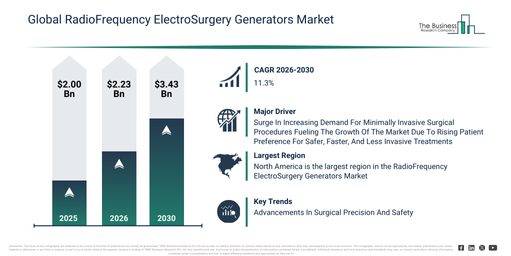
    The market size for radiofrequency electrosurgery generators has experienced rapid expansion in recent years. This market is projected to increase from $2.00 billion in 2025 to $2.23 billion in 2026, achieving a compound annual growth rate (CAGR) of 11.6%. The growth observed in the historic period can be attributed to the increasing adoption of minimally invasive surgeries, the growing prevalence of chronic diseases, the rising demand for electrosurgical procedures, the expanding hospital and surgical center infrastructure, and the increasing usage of radiofrequency (RF)-based coagulation and cutting tools.

    The radiofrequency electrosurgery generator market size is anticipated to experience significant growth in the coming years. It is projected to climb to $3.43 billion by 2030, achieving a compound annual growth rate (CAGR) of 11.3%. This expansion throughout the forecast period can be attributed to a growing demand for precision surgical systems, increased adoption of advanced RF energy platforms, a rising volume of outpatient surgical procedures, expanding healthcare investments in surgical technology, and a heightened preference for minimally invasive radiofrequency (RF)-based treatments. Major trends expected in this period include technological advancements in radiofrequency (RF) energy delivery systems, innovations in safety and power modulation features, developments in integrated electrosurgery platforms, ongoing research and development into smart and automated generators, and progress in digital monitoring and connectivity features.

    Download A Free Sample Report For Comprehensive Market Insights:

    https://www.thebusinessresearchcompany.com/sample.aspx?id=30719&type=smp&utm_source=Blogs&utm_medium=Paid&utm_campaign=Jul_PR

    #RadioFrequency ElectroSurgery Generators Market Growth Factors: Which Forces Are Supporting Market Expansion?

    The increasing demand for minimally invasive surgical procedures is projected to fuel the expansion of the radiofrequency electrosurgery generators market in the future. These surgeries, performed through small incisions using specialized instruments, offer benefits like reduced tissue damage, shorter hospital stays, and quicker recovery compared to traditional open surgeries. The rising preference for minimally invasive surgical procedures stems from patients seeking less postoperative pain, lower infection risks, and a faster return to daily routines, along with clinicians valuing precision and operational efficiency. Radiofrequency electrosurgery generators aid minimally invasive surgical procedures by enabling precise tissue cutting and controlled coagulation, leading to less bleeding, faster healing, and improved patient outcomes. For instance, in June 2024, according to the American Society of Plastic Surgeons, a US-based non-profit organization, minimally invasive procedures grew by 7% in 2023, surpassing the growth rate of surgical procedures by 2%. Hand surgeries including carpal tunnel, arthritis, and trigger finger amounted to 207,887 procedures, reflecting a 2% increase from 2022. Thus, the growing trend toward minimally invasive surgery is propelling the growth of the radiofrequency electrosurgery generators market.

    #RadioFrequency ElectroSurgery Generators Market Segment Landscape And Growth Potential

    The radiofrequency electrosurgery generators market covered in this report is segmented –

    1) By Product Type: Monopolar Radiofrequency (RF) Electrosurgery Generators, Bipolar Radiofrequency (RF) Electrosurgery Generators, Hybrid Or Combo Radiofrequency (RF) Electrosurgery Generators, Portable Radiofrequency (RF) Electrosurgery Generators, High-Power Radiofrequency (RF) Electrosurgery Generators

    2) By Technology: Analog Radiofrequency (RF) Generators, Digital Radiofrequency (RF) Generators, Automated Power Control Generators, Impedance-Controlled Radiofrequency (RF) Generators

    3) By Application: General Surgery, Cardiovascular Surgery, Orthopedic Surgery, Gynecological Surgery, Urological Surgery, Neurological Surgery, Ear, Nose, And Throat (ENT) Surgical, Other Applications

    4) By End-User: Hospitals, Ambulatory Surgical Centers (ASCs), Dentistry And Oral Surgery Clinics, Specialty Clinics, Pain Management Clinics, Burn And Trauma Centers, Endoscopy Centers, Orthopedic And Sports Medicine Clinics, Research And Clinical Trial Centers, Other End-Users

    Subsegments:

    1) By Monopolar Radiofrequency (RF) Electrosurgery Generators: Cutting Generators, Coagulation Generators, Combination Generators

    2) By Bipolar Radiofrequency (RF) Electrosurgery Generators: Standard Bipolar Generators, Advanced Bipolar Generators, Precision Bipolar Generators

    3) By Hybrid Or Combo Radiofrequency (RF) Electrosurgery Generators: Monopolar/Bipolar Combo Generators, Energy Adjustable Generators, Multi-Mode Generators

    4) By Portable Radiofrequency (RF) Electrosurgery Generators: Battery Operated Generators, Compact Tabletop Generators, Handheld Generators

    5) By High-Power Radiofrequency (RF) Electrosurgery Generators: Industrial Use Generators, Hospital Use Generators, Research Use Generators

    RadioFrequency ElectroSurgery Generators Market Industry Trends: What Changes Are Reshaping Demand?

    Major companies active in the radiofrequency electrosurgery generators market are concentrating on developing innovative solutions, such as next-generation electrosurgical devices, to achieve a competitive edge. Next-generation electrosurgical devices are advanced surgical instruments that deliver controlled radiofrequency energy to cut, coagulate, or ablate tissue with enhanced precision, improved safety features, and reduced collateral damage compared to traditional electrosurgical tools. For instance, in October 2025, Medtronic plc, a US-based medical devices company, introduced its next-generation electrosurgical device in India, featuring adaptive energy control for consistent performance, an ergonomic design for improved surgical handling, and integrated safety monitoring to reduce complications. This trend reflects the increasing emphasis on patient safety, procedural efficiency, and clinical outcomes. While adoption requires investment in training and infrastructure, the benefits of precision and reliability are driving widespread interest among hospitals and surgical centers in the radiofrequency electrosurgery generators market.

    RadioFrequency ElectroSurgery Generators Market Competitive Landscape: Who Are The Leading Companies?

    Major companies operating in the radiofrequency electrosurgery generators market are Johnson & Johnson, Medtronic plc, Stryker Corporation, Boston Scientific Corporation, B. Braun Melsungen Aktiengesellschaft, Telea Electronic Engineering S.r.l., Olympus Corporation, Smith & Nephew plc, Shenzhen Mindray Bio-Medical Electronics Co. Ltd., Cook Medical LLC, Integra LifeSciences Holdings Corporation, Merit Medical Systems Inc., CONMED Corporation, Erbe Elektromedizin GmbH, XcelLance Medical Technologies Private Limited, Sutter Medizintechnik GmbH, Elliquence LLC, Utah Medical Products Inc., BOWA-Electronic GmbH & Co. KG, Creo Medical Group plc

    Access The Complete RadioFrequency ElectroSurgery Generators Market Report:

    https://www.thebusinessresearchcompany.com/report/radiofrequency-electrosurgery-generators-market-report?utm_source=Blogs&utm_medium=Paid&utm_campaign=Jul_PR

    RadioFrequency ElectroSurgery Generators Market Geographic Distribution And Regional Opportunities

    North America was the largest region in the radiofrequency electrosurgery generator market in 2025. Asia-Pacific is expected to be the fastest-growing region in the forecast period. The regions covered in the radiofrequency electrosurgery generators market report are Asia-Pacific, South East Asia, Western Europe, Eastern Europe, North America, South America, Middle East, Africa.

    Get in touch with us:

    The Business Research Company: https://www.thebusinessresearchcompany.com/

    Americas: +1 310-496-7795

    Asia: +44 7882 955267 & +91 8897263534

    Europe: +44 7882 955267

    Email us at: marketing@tbrc.info

    Follow us on:

    LinkedIn: https://in.linkedin.com/company/the-business-research-company

    YouTube: https://www.youtube.com/channel/UC24_fI0rV8cR5DxlCpgmyFQ

    Global Market Model: https://www.thebusinessresearchcompany.com/global-market-model
  • Portable Point-of-Care Ultrasound Diagnostic System Market Set To Grow From $3.78 Billion In 2026 To $6.32 Billion By 2030 At A CAGR Of 13.7%

    Portable Point-of-Care Ultrasound Diagnostic System Market Set To Grow From $3.78 Billion In 2026 To $6.32 Billion By 2030 At A CAGR Of 13.7%

    Enhanced with market attractiveness analysis, total addressable market evaluation, company benchmarking matrices, interactive Excel dashboards, expanded supply chain intelligence, emerging startup coverage, and detailed product insights, The Business Research Company’s 2026 market reports deliver more actionable and strategically valuable research.

    Portable Point-of-Care Ultrasound Diagnostic System Market CAGR Analysis And Future Market Development

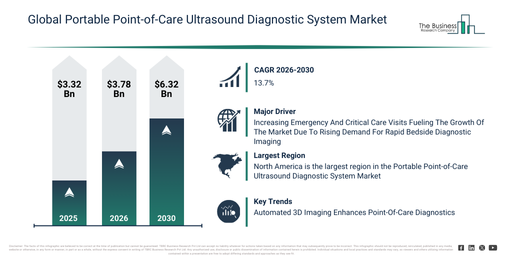
    The portable point-of-care ultrasound diagnostic system market size has experienced swift expansion in recent years. It is forecast to rise from $3.32 billion in 2025 to $3.78 billion in 2026, demonstrating a compound annual growth rate (CAGR) of 14.0%. The growth observed in the historic period stems from technology advancements in handheld and wireless ultrasound systems, innovations in artificial intelligence-assisted image interpretation, developments in cloud-enabled storage and remote consultation, research and developments in high-resolution pediatric transducers, and advancements in long-lasting battery technology.

    The market size for portable point-of-care ultrasound diagnostic systems is projected for rapid expansion in the coming years. This market is expected to reach $6.32 billion by 2030, growing at a compound annual growth rate (CAGR) of 13.7%. The anticipated growth during the forecast period can be attributed to factors such as the increasing demand for lightweight handheld and wireless ultrasound devices, the expanding application of portable ultrasound in newborn and pediatric care, a rising need for immediate field-based diagnostic support, the broader implementation of point-of-care ultrasound training among clinicians, and a growing preference for battery-powered mobile systems. Significant trends during this forecast period encompass technological advancements in handheld and wireless ultrasound systems, innovations in artificial intelligence-assisted image interpretation, developments in cloud-enabled storage and remote consultation, ongoing research and developments in high-resolution pediatric transducers, and improvements in long-lasting battery technology.

    Download A Free Sample Report For Comprehensive Market Insights:

    https://www.thebusinessresearchcompany.com/sample.aspx?id=30708&type=smp&utm_source=Blogs&utm_medium=Paid&utm_campaign=Jul_PR

    Portable Point-of-Care Ultrasound Diagnostic System Market Industry Drivers: What Is Driving Revenue Growth?

    The increasing number of emergency and critical care visits is projected to drive the growth of the portable point-of-care ultrasound diagnostic system market in the future. This refers to the rising influx of patients who require immediate medical attention in emergency departments and intensive care units, often due to acute illnesses or trauma. Advances in compact medical technology aid in managing these increasing visits, as they allow clinicians to perform immediate diagnostic assessments directly at the patient’s bedside without requiring patient transport. Portable point-of-care ultrasound diagnostic systems enable rapid diagnostic capabilities by offering high-quality, real-time imaging in a mobile format, which facilitates quick decision-making in time-sensitive situations. For instance, in December 2025, according to the Canadian Institute for Health Information (CIHI), a Canada-based independent, not-for-profit organization, there were more than 16.1 million unscheduled emergency department visits in Canada from April 2024 to March 2025, an increase from almost 15.5 million in 2023-2024. Therefore, the growing number of emergency and critical care visits is fueling the expansion of the portable point-of-care ultrasound diagnostic system market.

    Portable Point-of-Care Ultrasound Diagnostic System Market Segment Analysis Highlighting Growth Areas

    The portable point-of-care ultrasound diagnostic system market covered in this report is segmented –

    1) By Type: Equipment, Consumables

    2) By Product Type: Handheld Ultrasound Systems, Trolley-Mounted Or Cart-Based Portable Systems

    3) By Imaging Technology: Two-Dimensional Ultrasound Imaging (2D Ultrasound), Three-Dimensional Ultrasound Imaging (3D Ultrasound), Four-Dimensional Ultrasound Imaging (4D Ultrasound), Doppler Ultrasound Imaging

    4) By Application: Newborn Application, Child Application, Adult Application

    5) By End User: Hospitals, Emergency And Intensive Care Units (ICU), Outpatient Clinics, Ambulatory Care Centers, Remote And Rural Healthcare Facilities, Home-Care Settings

    Subsegments:

    1) By Equipment: Ultrasound Transducer Probes, Portable Imaging Units, Display And Control Consoles, Battery And Power Supply Modules, Wireless Connectivity Modules, Protective Carrying Cases

    2) By Consumables: Ultrasound Transmission Gel, Disposable Probe Covers, Cleaning And Disinfection Wipes, Single Use Coupling Pads, Sterile Application Kits, Packaging And Storage Supplies

    #Portable Point-of-Care Ultrasound Diagnostic System Market Growth Trends: What Is Influencing The Future Outlook?

    Major companies operating in the portable point-of-care ultrasound diagnostic system market are concentrating on developing advanced products, such as automated 3D imaging modes enabled by semiconductor chips, to enhance diagnostic confidence, optimize user efficiency, and minimize the physical and technical barriers to high-quality scanning. These automated imaging modes refer to sophisticated software functionalities within handheld ultrasound devices that intelligently capture and process images, simplifying complex examinations. For instance, in February 2024, Butterfly Network Inc., a US-based digital health company, introduced the Butterfly iQ3. This next-generation, handheld whole-body ultrasound system features a proprietary Ultrasound-on-Chip™ with the world’s fastest digital data transfer, allowing for unparalleled image quality and new automated 3D capabilities. It includes iQ Slice™, an automated sequential capture mode for organs, and iQ Fan™, a dedicated tool for real-time lung imaging, enabling the seamless acquisition of diagnostic-quality images without requiring extensive operator skill. It also incorporates an ergonomic design that is 17% smaller and 7% shorter for better access, alongside a battery that charges 2.5x faster and provides up to 2 hours of continuous scanning, thereby boosting workflow efficiency and reducing physical strain for healthcare providers.

    Portable Point-of-Care Ultrasound Diagnostic System Market Leading Companies: Who Holds Significant Market Presence?

    Major companies operating in the portable point-of-care ultrasound diagnostic system market are Hitachi Ltd., Siemens Healthineers AG, FUJIFILM Holdings Corp., Koninklijke Philips N.V., GE HealthCare Technologies Inc., Shenzhen Mindray Bio-Medical Electronics Co. Ltd., Samsung Medison Co. Ltd., Esaote S.p.A, EDAN Instruments Inc., Canon Medical Systems Corporation, Viatom Technology Co. Ltd., Butterfly Network Inc., CHISON Medical Technologies Co. Ltd., Clarius Mobile Health Corp., Terason, BMV AG, EchoNous Inc., Konted Medical Technology Co. Ltd., Mindray Medical International Limited, Healcerion Co. Ltd.

    Access The Complete Portable Point-of-Care Ultrasound Diagnostic System Market Report:

    https://www.thebusinessresearchcompany.com/report/portable-point-of-care-ultrasound-diagnostic-system-market-report?utm_source=Blogs&utm_medium=Paid&utm_campaign=Jul_PR

    Portable Point-of-Care Ultrasound Diagnostic System Market Geographic Distribution And Regional Opportunities

    North America was the largest region in the portable point-of-care ultrasound diagnostic system market in 2025. Asia-Pacific is expected to be the fastest-growing region in the forecast period. The regions covered in the portable point-of-care ultrasound diagnostic system market report are Asia-Pacific, South East Asia, Western Europe, Eastern Europe, North America, South America, Middle East, Africa.

    Get in touch with us:

    The Business Research Company: https://www.thebusinessresearchcompany.com/

    Americas: +1 310-496-7795

    Asia: +44 7882 955267 & +91 8897263534

    Europe: +44 7882 955267

    Email us at: marketing@tbrc.info

    Follow us on:

    LinkedIn: https://in.linkedin.com/company/the-business-research-company

    YouTube: https://www.youtube.com/channel/UC24_fI0rV8cR5DxlCpgmyFQ

    Global Market Model: https://www.thebusinessresearchcompany.com/global-market-model
  • Portable Full Digital Color Ultrasound Diagnosis System Market Opportunities Are Emerging Beyond Traditional Growth Areas

    Portable Full Digital Color Ultrasound Diagnosis System Market Opportunities Are Emerging Beyond Traditional Growth Areas

    Through market attractiveness analysis, total addressable market evaluation, company benchmarking matrices, interactive Excel dashboards, expanded supply chain intelligence, emerging startup coverage, and detailed product insights, The Business Research Company’s 2026 market reports provide more actionable and strategically valuable research.

    Portable Full Digital Color Ultrasound Diagnosis System Market Expansion From $3.06 Billion In 2026 To $4.49 Billion In 2030

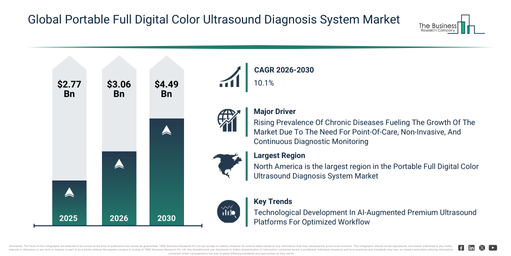
    The market size for the portable full digital color ultrasound diagnosis system has experienced rapid expansion in recent years. It is projected to increase from $2.77 billion in 2025 to $3.06 billion in 2026, demonstrating a compound annual growth rate (CAGR) of 10.3%. The historical period’s growth can be attributed to several factors, including increasing diagnostic adoption, growing portable device usage, rising chronic disease burden, expanding point-of-care demand, and increasing healthcare digitization.

    The portable full digital color ultrasound diagnosis system market size is projected to experience significant expansion over the coming years. This market is set to reach $4.49 billion by 2030, exhibiting a compound annual growth rate (CAGR) of 10.1%. Factors contributing to this anticipated growth include the expansion of remote healthcare services, an increasing inclination towards mobile imaging solutions, heightened investment in medical devices, the growing use of real-time imaging, and the escalating demand for rapid diagnostic tools. Key trends identified for this period encompass ongoing technology advancements, breakthroughs in imaging, progress in software development, increased research and development initiatives, and the modernization of digital workflows.

    Download A Free Sample Report For Comprehensive Market Insights:

    https://www.thebusinessresearchcompany.com/sample.aspx?id=30707&type=smp&utm_source=Blogs&utm_medium=Paid&utm_campaign=Jul_PR

    #Portable Full Digital Color Ultrasound Diagnosis System Market Growth Factors: Which Forces Are Supporting Market Expansion?

    The increasing incidence of chronic illnesses is anticipated to drive the expansion of the portable full digital color ultrasound diagnosis system market in the coming period. These conditions are defined as enduring medical ailments that often persist and necessitate continuous care or therapy, encompassing examples like diabetes, heart disease, arthritis, asthma, and numerous autoimmune disorders. The growing occurrence of chronic diseases stems from inactive lifestyles resulting from insufficient physical activity, alongside extended exposure to environmental and behavioral risk factors. Portable full digital color ultrasound diagnosis systems offer support to patients with chronic conditions by facilitating quick, precise, and non-invasive observation of organs and blood flow directly at the point of care, thereby enhancing early detection, informing treatment choices, and aiding in long-term disease management. As an illustration, in April 2025, data from the NHS Confederation, a national association in the UK, projected that by 2035, approximately 17% of the UK populace might be living with four or more chronic conditions. Consequently, the escalating prevalence of chronic diseases acts as a key driver for the portable full digital color ultrasound diagnosis system market.

    Portable Full Digital Color Ultrasound Diagnosis System Market Segment Performance And Strategic Opportunities

    The portable full digital color ultrasound diagnosis system market covered in this report is segmented –

    1) By Device Type: Portable Ultrasound System, Handheld Ultrasound System, Laptop-Based Ultrasound System, Tablet-Based Ultrasound System

    2) By Imaging Modality: Color Ultrasound Imaging, Color Doppler Ultrasound Imaging, Full Digital Ultrasound Imaging, Real Time Ultrasound Imaging

    3) By Technology: Digital Beamforming Technology, Color Doppler Imaging Systems, Three Dimensional (3D) And Four Dimensional (4D) Ultrasound Imaging, Artificial Intelligence (AI) Enhanced Systems

    4) By Application: Cardiology Imaging, Obstetrics And Gynecology Imaging, Musculoskeletal Imaging, Radiology Imaging, Urology Imaging, Gastroenterology Imaging, Emergency Care Imaging

    5) By End User: Hospitals And Clinics, Diagnostic Imaging Centers, Ambulatory Surgical Centers, Point-Of-Care Settings, Veterinary Hospitals And Clinics

    Subsegments:

    1) By Portable Ultrasound System: Compact Portable Device, Mobile Portable Device, Wireless Portable Device

    2) By Handheld Ultrasound System: Single Probe Handheld Device, Dual Probe Handheld Device, Multi Probe Handheld Device

    3) By Laptop-Based Ultrasound System: Standard Laptop Integrated Device, Advanced Laptop Imaging Device, High Performance Laptop Diagnostic Device

    4) By Tablet-Based Ultrasound System: Touchscreen Tablet Imaging Device, Detachable Tablet Diagnostic Device, Hybrid Tablet Ultrasound Device

    Portable Full Digital Color Ultrasound Diagnosis System Market Industry Trends: What Changes Are Reshaping Demand?

    Major companies operating in the portable full digital color ultrasound diagnosis system market are concentrating on creating sophisticated products, such as artificial intelligence-integrated ultrasound systems, to enhance diagnostic efficiency, elevate the operator experience, and improve clinical outcomes. Artificial intelligence-integrated ultrasound systems are defined as premium imaging devices that utilize native AI-based application management to streamline workflows, accelerate analysis, and facilitate advanced clinical solutions. As an illustration, Esaote S.p.A., an Italy-based biomedical company, introduced the MyLab X90 in January 2023. This new premium ultrasound system incorporates a refreshed XCrystal probe family and an exclusive dual-layer eLed monitor from Barco, which together provide exceptional on-screen image display with very high contrast resolution, surpassing other product lines. It includes native AI-based application management and sophisticated ergonomic features, allowing for seamless optimization of routine workflows and expanded data analysis capabilities without compromising diagnostic certainty. Furthermore, its design emphasizes automation to improve the accessibility and utility of advanced technologies in everyday clinical practice, aiming to transform the operator experience and patient care across healthcare systems.

    Portable Full Digital Color Ultrasound Diagnosis System Market Key Players: Which Companies Shape Industry Competition?

    Major companies operating in the portable full digital color ultrasound diagnosis system market are General Electric Company, Siemens Healthineers AG, FUJIFILM Holdings Corporation, Koninklijke Philips N.V., Konica Minolta Inc., Canon Medical Systems Corporation, Samsung Medison Co. Ltd., SonoScape Medical Corp., Esaote S.p.A., Edan Instruments Inc., Butterfly Network Inc., Chison Medical Imaging Co. Ltd., Clarius Mobile Health Corp., Terason Ultrasound Inc., BenQ Medical Devices Co. Ltd., Mindray Medical International Limited, Healcerion Co. Ltd., Wuhan Youcare Technology Co. Ltd., ZONARE Medical Systems Inc., Mobisante Inc.

    Access The Complete Portable Full Digital Color Ultrasound Diagnosis System Market Report:

    https://www.thebusinessresearchcompany.com/report/portable-full-digital-color-ultrasound-diagnosis-system-market-report?utm_source=Blogs&utm_medium=Paid&utm_campaign=Jul_PR

    Portable Full Digital Color Ultrasound Diagnosis System Market Largest Region By Revenue And Market Share

    North America was the largest region in the portable full digital color ultrasound diagnosis system in 2025. Asia-Pacific is expected to be the fastest-growing region in the forecast period. The regions covered in the portable full digital color ultrasound diagnosis system market report are Asia-Pacific, South East Asia, Western Europe, Eastern Europe, North America, South America, Middle East, Africa.

    Get in touch with us:

    The Business Research Company: https://www.thebusinessresearchcompany.com/

    Americas: +1 310-496-7795

    Asia: +44 7882 955267 & +91 8897263534

    Europe: +44 7882 955267

    Email us at: marketing@tbrc.info

    Follow us on:

    LinkedIn: https://in.linkedin.com/company/the-business-research-company

    YouTube: https://www.youtube.com/channel/UC24_fI0rV8cR5DxlCpgmyFQ

    Global Market Model: https://www.thebusinessresearchcompany.com/global-market-model
  • Point-Of-Care International Normalized Ratio (INR) Testing Market Forecast Signals New Revenue Opportunities Through 2030

    Point-Of-Care International Normalized Ratio (INR) Testing Market Forecast Signals New Revenue Opportunities Through 2030

    Delivering more actionable and strategically valuable research, The Business Research Company’s 2026 market reports feature market attractiveness analysis, total addressable market evaluation, company benchmarking matrices, interactive Excel dashboards, expanded supply chain intelligence, emerging startup coverage, and detailed product insights.

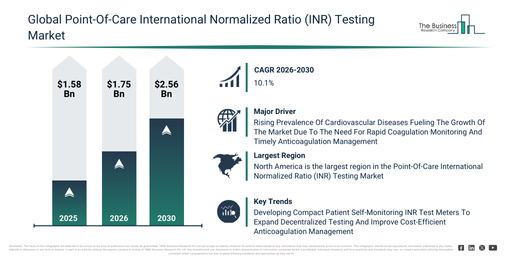
    Point-Of-Care International Normalized Ratio (INR) Testing Market Expected To Reach $2.56 Billion By 2030 At 10.1% CAGR

    The point-of-care inr testing market size has experienced rapid expansion recently. It is anticipated to grow from $1.58 billion in 2025 to $1.75 billion in 2026, at a compound annual growth rate (CAGR) of 10.4%. Historically, this growth was driven by factors such as the increasing prevalence of cardiovascular diseases, the growing adoption of anticoagulant therapy, a rising incidence of atrial fibrillation, the expansion of outpatient and homecare settings, and an increasing demand for rapid coagulation testing.

    The point-of-care inr testing market is projected for swift expansion over the coming years. Its valuation is anticipated to reach $2.56 billion by 2030, demonstrating a compound annual growth rate (CAGR) of 10.1%. This growth during the forecast period is primarily driven by an escalating demand for at-home monitoring solutions, the expanding elderly demographic receiving long-term anticoagulation therapy, an intensifying emphasis on individualized anticoagulation management, the proliferation of decentralized healthcare frameworks, and greater integration into primary care settings. Key trends projected for this period encompass technological enhancements in portable coagulation analysis devices, breakthroughs in biosensor and microfluidic advancements, progress in wireless connectivity and data integration capabilities, ongoing research and development into highly accurate test strips, and improvements in smartphone-assisted inr testing.

    Download A Free Sample Report For Comprehensive Market Insights:

    https://www.thebusinessresearchcompany.com/sample.aspx?id=30703&type=smp&utm_source=Blogs&utm_medium=Paid&utm_campaign=Jul_PR

    #Point-Of-Care International Normalized Ratio (INR) Testing Market Demand Drivers Creating New Revenue Opportunities

    The increasing occurrence of heart-related ailments is projected to boost the expansion of the point-of-care International Normalized Ratio (INR) testing market in the future. These conditions encompass diseases impacting the heart and blood vessels, such as cardiac arrests, cerebrovascular accidents, and high blood pressure. The rise in cardiovascular diseases is attributable to unhealthy habits like inadequate nutrition, insufficient physical activity, and tobacco use. Point-of-care International Normalized Ratio (INR) testing assists in diagnosing cardiovascular conditions by allowing for quick evaluation of blood clotting at patient’s side or in a clinical setting. This method enhances medical decision-making through its capacity for prompt identification of coagulation irregularities and for directing anticoagulant treatments. For example, data from the Centers for Disease Control, a US-based government entity, indicated that in October 2024, around 919,032 individuals succumbed to cardiovascular disease in 2023, representing 1 in every 3 fatalities. Consequently, the growing incidence of cardiovascular illnesses is fueling the expansion of the point-of-care International Normalized Ratio (INR) testing market.

    Point-Of-Care International Normalized Ratio (INR) Testing Market Segmentation And Category Breakdown

    The point-of-care international normalized ratio (inr) testing market covered in this report is segmented –

    1) By Product Type: Devices, Consumables, Software

    2) By Technology: Electrochemical, Optical, Others

    3) By Distribution Channel: Direct Sales, Retail Pharmacies, Online Or E-Commerce, Others

    4) By Application: Hospitals, Clinics, Home Care, Diagnostic Centers, Others

    5) By End-User: Healthcare Professionals, Patients

    Subsegments:

    1) By Devices: Portable Testing Devices, Handheld Testing Devices, Desktop Testing Devices

    2) By Consumables: Test Strips, Cartridges, Control Solutions

    3) By Software: Data Management Software, Remote Monitoring Software, Analytical Software

    Point-Of-Care International Normalized Ratio (INR) Testing Market Trends Driving Strategic Industry Expansion

    Companies operating in the point-of-care International Normalized Ratio (INR) testing market are concentrating on developing sophisticated products, such as patient self-monitoring coagulation analyzers, to expand decentralized testing and redirect recurring demand towards lower-cost consumables. These patient self-monitoring coagulation analyzers are portable devices that enable individuals to perform PT/INR testing at home using a small capillary blood sample, thereby supporting frequent monitoring and reducing the need for clinical visits. For instance, in March 2024, Universal Biosensors, an Australia-based medical device company, introduced the Xprecia Prime 4U Coagulation Analyzer specifically for patient self-monitoring. This self-monitoring coagulation analyzer is designed to fit in the palm of the hand, delivers rapid PT/INR results from just one drop of capillary blood, and employs an electrochemical strip format that supports various regulatory approvals, including 510(k) clearance and CLIA waiver for the U.S. market. This launch represents a significant stride in INR testing by facilitating wider access to home monitoring, increasing the frequency of tests, and improving cost efficiency through enhanced consumable utilization, all while maintaining clinical accuracy.

    Point-Of-Care International Normalized Ratio (INR) Testing Market Competitive Analysis Of Major Industry Participants

    Major companies operating in the point-of-care international normalized ratio (inr) testing market are Abbott Laboratories, Danaher Corporation, Siemens Healthineers AG, Becton, Dickinson and Company, Hoffmann-La Roche Ltd., QuidelOrtho Corporation, Sysmex Corporation, Bio-Rad Laboratories Inc., Werfen S.A., HORIBA Ltd., Microvisk Ltd., Randox Laboratories Ltd., Nova Biomedical Corporation, Agappe Diagnostics Ltd., Visby Medical Inc., EKF Diagnostics Holdings plc, Trinity Biotech plc, HemoSonics LLC, Human Diagnostics Worldwide GmbH, CoaguSense Inc.

    Access The Complete Point-Of-Care International Normalized Ratio (INR) Testing Market Report:

    https://www.thebusinessresearchcompany.com/report/point-of-care-international-normalized-ratio-inr-testing-market-report?utm_source=Blogs&utm_medium=Paid&utm_campaign=Jul_PR

    Point-Of-Care International Normalized Ratio (INR) Testing Market Regional Distribution: Which Areas Drive Market Expansion?

    North America was the largest region in the Point-of-Care INR Testing market in 2025. Asia-Pacific is expected to be the fastest-growing region in the forecast period. The regions covered in the point-of-care international normalized ratio (inr) testing market report are Asia-Pacific, South East Asia, Western Europe, Eastern Europe, North America, South America, Middle East, Africa.

    Get in touch with us:

    The Business Research Company: https://www.thebusinessresearchcompany.com/

    Americas: +1 310-496-7795

    Asia: +44 7882 955267 & +91 8897263534

    Europe: +44 7882 955267

    Email us at: marketing@tbrc.info

    Follow us on:

    LinkedIn: https://in.linkedin.com/company/the-business-research-company

    YouTube: https://www.youtube.com/channel/UC24_fI0rV8cR5DxlCpgmyFQ

    Global Market Model: https://www.thebusinessresearchcompany.com/global-market-model
  • Peritoneal Dialysis Remote Monitoring Hubs Market Opportunities Are Emerging Beyond Traditional Growth Areas

    Peritoneal Dialysis Remote Monitoring Hubs Market Opportunities Are Emerging Beyond Traditional Growth Areas

    Delivering more actionable and strategically valuable research, The Business Research Company’s 2026 market reports feature market attractiveness analysis, total addressable market evaluation, company benchmarking matrices, interactive Excel dashboards, expanded supply chain intelligence, emerging startup coverage, and detailed product insights.

    Peritoneal Dialysis Remote Monitoring Hubs Market CAGR Analysis And Future Market Development

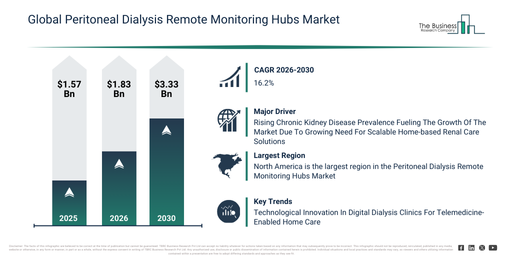
    The peritoneal dialysis remote monitoring hubs market size has experienced rapid expansion in recent years. It is anticipated to grow from $1.57 billion in 2025 to $1.83 billion in 2026, at a compound annual growth rate (CAGR) of 16.5%. The market’s growth in the historic period is attributable to increasing chronic kidney disease incidence, rising demand for home-based dialysis, growing awareness of patient-centric care, expansion of telehealth adoption, and increasing healthcare expenditure.

    The peritoneal dialysis remote monitoring hubs market is projected to experience substantial growth in the coming years. It is anticipated to reach $3.33 billion by 2030, growing at a compound annual growth rate (CAGR) of 16.2%. This expansion throughout the forecast period is driven by factors such as the increasing adoption of remote monitoring systems, the rising integration of IoT and cloud platforms, a greater emphasis on patient convenience, the expansion of home healthcare infrastructure, and increased investment in digital health solutions. Noteworthy trends expected during this period include technological progress in remote patient monitoring, innovations in automated peritoneal dialysis devices, research and developments in AI-driven fluid management, the creation of cloud-based and wireless monitoring platforms, and advancements in connected medical devices and sensors.

    Download A Free Sample Report For Comprehensive Market Insights:

    https://www.thebusinessresearchcompany.com/sample.aspx?id=30691&type=smp&utm_source=Blogs&utm_medium=Paid&utm_campaign=Jul_PR

    #Peritoneal Dialysis Remote Monitoring Hubs Market Demand Drivers Creating New Revenue Opportunities

    The increasing prevalence of chronic kidney disease (CKD) is projected to drive the expansion of the peritoneal dialysis remote monitoring hubs market moving forward. This escalating prevalence refers to the growing number of individuals suffering from a progressive loss of kidney function, ultimately leading to end-stage renal disease and the requirement for renal replacement therapy. Advances in telehealth and connected health technologies are instrumental in managing this rising CKD prevalence, as they offer scalable solutions for remote patient monitoring and help reduce the burden on in-center dialysis facilities. Peritoneal dialysis remote monitoring hubs contribute to creating safe and effective home treatment programs by collecting treatment data in real-time and alerting healthcare teams to potential complications, thereby ensuring patient compliance and safety. For instance, in February 2025, data from the Scientific Registry of Transplant Recipients (SRTR), a US-based entity responsible for the national database of organ transplantation, indicated that the total number of adult candidates waiting for a kidney transplant in 2023 (including those listed at multiple centers) saw a slight rise to 141,886, compared with 140,124 in 2022. Therefore, the growing prevalence of chronic kidney disease is a key driver for the growth of the peritoneal dialysis remote monitoring hubs market.

    Peritoneal Dialysis Remote Monitoring Hubs Market Segment Analysis And Revenue Opportunities

    The peritoneal dialysis remote monitoring hubs market covered in this report is segmented –

    1) By Product Type: Hardware, Software, Services

    2) By Connectivity: Wired, Wireless

    3) By Application: Chronic Kidney Disease, Acute Kidney Injury, Other Applications

    4) By End-User: Hospitals, Home Care Settings, Dialysis Centers, Other End Users

    Subsegments:

    1) By Hardware: Monitoring Devices, Connectivity Modules, Sensor Enabled Units, Data Transmission Equipment, Integrated Control Consoles

    2) By Software: Remote Monitoring Platforms, Data Analytics Systems, Cloud Management Solutions, Patient Tracking Software, Care Coordination Applications

    3) By Services: Installation Services, Remote Support Services, Maintenance Services, Training And Education Services, Managed Monitoring Services

    Peritoneal Dialysis Remote Monitoring Hubs Market Trends Driving Strategic Industry Expansion

    Major companies engaged in the peritoneal dialysis remote monitoring hubs market are increasingly concentrating on technological progress, such as developing digital dialysis clinics that merge automated treatment equipment with telemedicine supervision platforms. These integrated frameworks allow patients to conduct dialysis exchanges securely at home while remaining under continuous remote observation from healthcare professionals. These professionals can adjust prescriptions and address problems in real-time through cloud-connected dashboards. As an example, in January 2023, liberDi Ltd., an Israel-based medical device company, secured U.S. Food and Drug Administration (FDA) 510(k) clearance for its Intelligent Dialysis Assistant (IDA). This system operates as a digital dialysis clinic, enabling patients to perform automatic peritoneal dialysis exchanges outside of clinical settings, with remote oversight from physicians provided via a dedicated medical supervision portal and a patient-facing smartphone application.

    Peritoneal Dialysis Remote Monitoring Hubs Market Leading Players Shaping Industry Direction

    Major companies operating in the peritoneal dialysis remote monitoring hubs market are Medtronic plc, Fresenius Medical Care AG & Co. KGaA, Asahi Kasei Corporation, DaVita Inc., Baxter International Inc., B. Braun Melsungen AG, Nipro Corporation, Nikkiso Co. Ltd., NxStage Medical Inc., Outset Medical Inc., DigiGone LLC, CloudCath Inc., JMS Co. Ltd.

    Access The Complete Peritoneal Dialysis Remote Monitoring Hubs Market Report:

    https://www.thebusinessresearchcompany.com/report/peritoneal-dialysis-remote-monitoring-hubs-market-report?utm_source=Blogs&utm_medium=Paid&utm_campaign=Jul_PR

    Peritoneal Dialysis Remote Monitoring Hubs Market Leading Geography: Which Region Generates The Most Revenue?

    North America was the largest region in the peritoneal dialysis remote monitoring hubs in 2025. Asia-Pacific is expected to be the fastest-growing region in the forecast period. The regions covered in the peritoneal dialysis remote monitoring hubs market report are Asia-Pacific, South East Asia, Western Europe, Eastern Europe, North America, South America, Middle East, Africa.

    Get in touch with us:

    The Business Research Company: https://www.thebusinessresearchcompany.com/

    Americas: +1 310-496-7795

    Asia: +44 7882 955267 & +91 8897263534

    Europe: +44 7882 955267

    Email us at: marketing@tbrc.info

    Follow us on:

    LinkedIn: https://in.linkedin.com/company/the-business-research-company

    YouTube: https://www.youtube.com/channel/UC24_fI0rV8cR5DxlCpgmyFQ

    Global Market Model: https://www.thebusinessresearchcompany.com/global-market-model
  • Overground Walking Systems Market Growth Is Reshaping Competitive Advantage Across The Industry

    Overground Walking Systems Market Growth Is Reshaping Competitive Advantage Across The Industry

    Delivering more actionable and strategically valuable research, The Business Research Company’s 2026 market reports feature market attractiveness analysis, total addressable market evaluation, company benchmarking matrices, interactive Excel dashboards, expanded supply chain intelligence, emerging startup coverage, and detailed product insights.

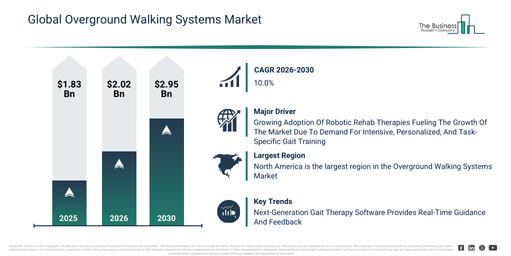
    Overground Walking Systems Market Revenue Growth Supported By A CAGR Of 2.95% Through 2030

    The overground walking systems market has shown substantial growth in recent years. Its valuation is expected to rise from $1.83 billion in 2025 to $2.02 billion in 2026, exhibiting a compound annual growth rate (CAGR) of 10.3%. This historical expansion can be attributed to several factors, including an increasing aging population, the rising prevalence of neurological disorders, heightened awareness regarding rehabilitation, the development of healthcare infrastructure, and the growing incorporation of these systems in research and clinical studies.

    The overground walking systems market is anticipated to experience substantial growth in the upcoming years. It is projected to expand to $2.95 billion by 2030, driven by a compound annual growth rate (CAGR) of 10.0%. This expansion during the forecast period can be attributed to an increasing inclination towards home-based rehabilitation, heightened investment from significant market participants, augmented government and institutional financial support, a rise in orthopedic conditions, and a growing number of physical therapy professionals. Prominent trends for the forecast period encompass technological advancements in robotics and sensors, innovations in wearable and motion capture devices, the evolution of portable and lightweight systems, ongoing research and development in data-driven personalized therapy, and the integration of tele-rehabilitation and remote monitoring solutions.

    Download A Free Sample Report For Comprehensive Market Insights:

    https://www.thebusinessresearchcompany.com/sample.aspx?id=30688&type=smp&utm_source=Blogs&utm_medium=Paid&utm_campaign=Jul_PR

    Overground Walking Systems Market Opportunity Drivers: What Is Creating New Revenue Potential?

    The increasing use of robotic rehabilitation therapies is projected to fuel the expansion of the overground walking systems market in the future. These robotic rehab therapies refer to the application of automated, programmable devices to help patients regain motor function after sustaining injuries or neurological disorders. The acceptance of robotic rehab therapies is escalating as healthcare providers seek highly repeatable, task-specific training that can offer intensive, personalized exercises with precise motion tracking and objective progress data for the expanding populations of stroke and neuro-musculoskeletal patients. Overground walking systems aid robotic rehabilitation therapies by enabling natural gait training, complete with real-time assistance and feedback in controlled environments. They improve patient recovery by enhancing mobility, balance, and functional independence during rehabilitation programs. For instance, in October 2024, the International Federation of Robotics, a Germany-based robotics industry organization, reported that sales of medical robots grew by 36% to approximately 6,100 units in 2023, while sales of rehabilitation and non-invasive therapy robots surged by 128%, reflecting significant growth in healthcare robotics adoption. Therefore, the rising adoption of robotic rehab therapies is stimulating the growth of the overground walking systems market.

    Overground Walking Systems Market Segment Landscape: Which Areas Lead Market Development?

    The overground walking systems market covered in this report is segmented –

    1) By Product Type: Treadmill-Based Systems, Robotic Systems, Exoskeletons, Others Product Types

    2) By Technology: Mechanical Systems, Electromechanical Or Robotic Systems, Sensor And Tracking Systems

    3) By Application: Rehabilitation Centers, Hospitals, Clinics, Home Care Settings

    4) By End-User: Adults, Pediatrics, Geriatrics

    Subsegments:

    1) By Treadmill-Based Systems: Self Paced Treadmill, Body Weight Support Treadmill, Split Belt Treadmill, Rehabilitation Training Treadmill

    2) By Robotic Systems: Robotic Gait Trainer, Robotic Walker System, Overground Robotic Mobility Device, Robotic Assistive Walking Platform

    3) By Exoskeletons: Lower Limb Exoskeleton, Full Body Exoskeleton, Pediatric Exoskeleton, Rehabilitation Support Exoskeleton

    4) By Others Product Types: Hybrid Walking Support Device, Multi Modal Mobility System, Assistive Walking Aid, Experimental Gait Training Device

    Overground Walking Systems Market Innovation Trends Driving Future Development

    Leading companies in the overground walking systems market are concentrating on developing advanced software, such as next-generation gait therapy software, to optimize the functionality of robotic exoskeletons. This next-generation gait therapy software equips therapists with specific, real-time guidance and feedback during sessions, simplifying the operation of robotic devices and enabling more targeted adjustments to address individual patient deficits, which consequently enhances user trust and operational efficiency in clinical settings. For instance, in January 2024, Ekso Bionics Holdings Inc., a US-based developer of exoskeleton solutions for medical and industrial use, launched its GaitCoach software for the EksoNR device. This platform is engineered to serve as an additional set of clinical eyes by offering impactful feedback and goals-based guidance, integrating features that help customize sessions for a broad spectrum of patients. The solution also provides next-generation gait therapy software that 96% of users found easy to use, accelerating patient progression and making robotic rehabilitation more accessible to less experienced therapists.

    Overground Walking Systems Market Industry Leaders And Market Competition

    Major companies operating in the overground walking systems market are Ottobock SE & Co. KGaA, Shanghai Fourier Intelligence Co. Ltd., HIWIN Technologies Corp., Wandercraft SAS, Cyberdyne Inc., CYBERDYNE Inc., Tyromotion GmbH, Hocoma AG, Motek Medical B.V., Ekso Bionics Holdings Inc., ExoAtlet Global SA, Aretech LLC, B-Temia Inc., Rex Bionics Ltd., Trexo Robotics Inc., Aretech LLC, Technaid S.L., Able Human Motion S.L., Shenzhen MileBot Robotics Co. Ltd., Roki Robotics, Beijing Hypershell Technology Co. Ltd.

    Access The Complete Overground Walking Systems Market Report:

    https://www.thebusinessresearchcompany.com/report/overground-walking-systems-market-report?utm_source=Blogs&utm_medium=Paid&utm_campaign=Jul_PR

    #Overground Walking Systems Market Largest Region: Which Geography Holds The Highest Market Share?

    North America was the largest region in the overground walking systems market in 2025. Asia-Pacific is expected to be the fastest-growing region in the forecast period. The regions covered in the overground walking systems market report are Asia-Pacific, South East Asia, Western Europe, Eastern Europe, North America, South America, Middle East, Africa.

    Get in touch with us:

    The Business Research Company: https://www.thebusinessresearchcompany.com/

    Americas: +1 310-496-7795

    Asia: +44 7882 955267 & +91 8897263534

    Europe: +44 7882 955267

    Email us at: marketing@tbrc.info

    Follow us on:

    LinkedIn: https://in.linkedin.com/company/the-business-research-company

    YouTube: https://www.youtube.com/channel/UC24_fI0rV8cR5DxlCpgmyFQ

    Global Market Model: https://www.thebusinessresearchcompany.com/global-market-model
  • Online Adaptive Radiotherapy Systems Market Outlook Highlights The Next Major Growth Opportunities

    Online Adaptive Radiotherapy Systems Market Outlook Highlights The Next Major Growth Opportunities

    Delivering more actionable and strategically valuable research, The Business Research Company’s 2026 market reports feature market attractiveness analysis, total addressable market evaluation, company benchmarking matrices, interactive Excel dashboards, expanded supply chain intelligence, emerging startup coverage, and detailed product insights.

    #Online Adaptive Radiotherapy Systems Market Size And Revenue Forecast Through 2030

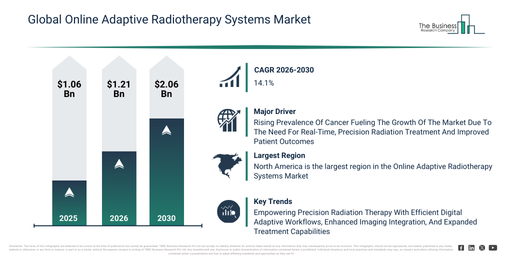
    The market size for online adaptive radiotherapy systems has experienced swift expansion recently. It is projected to increase from $1.06 billion in 2025 to $1.21 billion in 2026, demonstrating a compound annual growth rate (CAGR) of 14.3%. Historically, this growth can be ascribed to factors such as rising cancer incidence, increased demand for precision radiation therapy, the expanding use of real-time imaging, greater investment in oncology infrastructure, a growing necessity to minimize side effects, enhanced clinical acceptance of adaptive therapy, the development of integrated radiotherapy solutions, heightened awareness among clinicians, the increasing requirement for improved targeting accuracy, and advancements in radiotherapy technology research and development.

    The online adaptive radiotherapy systems market size is projected to experience significant expansion in the coming years. It is forecast to reach $2.06 billion by 2030, exhibiting a compound annual growth rate (CAGR) of 14.1%. This expansion during the forecast period is propelled by factors such as rising cancer cases in developing regions, increased investment in oncology advancement, a growing demand for personalized treatment, expanded use of imaging-guided radiotherapy, the rising adoption of dose-adaptation workflows, increasing global healthcare spending, growing institutional support for advanced radiotherapy, more frequent collaborations between tech firms and hospitals, wider use of remote radiotherapy systems, and increasing awareness of adaptive therapy. Significant trends expected in this timeframe involve advancements in AI-driven solutions, progress in automation technologies, enhanced data analytics applications, innovation in product design and functionality, improvements in process optimization, novel sustainable and eco-friendly methods, the integration of IoT and smart devices, the incorporation of cloud-based platforms, the use of predictive analytics for decision making, and the integration of personalized and customized solutions.

    Download A Free Sample Report For Comprehensive Market Insights:

    https://www.thebusinessresearchcompany.com/sample.aspx?id=30684&type=smp&utm_source=Blogs&utm_medium=Paid&utm_campaign=Jul_PR

    Online Adaptive Radiotherapy Systems Market Development Factors: Which Trends Are Supporting Demand?

    The expanding occurrence of cancer is projected to fuel the advancement of the online adaptive radiotherapy systems market in the future. Cancer is a condition defined by the uncontrolled multiplication and dispersion of irregular cells, which can harm nearby tissues and organs if left untreated. The incidence of cancer is on the rise, attributed to lifestyle factors like unhealthy eating habits, tobacco use, alcohol intake, and exposure to environmental contaminants, which collectively heighten the chances of developing diverse forms of cancer. Online adaptive radiotherapy systems assist in managing cancer through constant, real-time modifications to radiation treatment plans, adapting to shifts in tumor dimensions, form, or patient’s bodily structure. These systems enhance patient results by boosting the accuracy of treatment, minimizing harm to healthy cells, and elevating the overall efficacy of therapy. As an illustration, in October 2025, data from NHS Digital, a UK government organisation, revealed 354,820 new cancer diagnoses in England during 2023, averaging 972 daily diagnoses and showing an increment of 8,605 cases compared to 2022. Prostate cancer emerged as the most frequently identified cancer, accounting for 58,137 new cases, which signified a 6% rise in registrations over the preceding year. Consequently, the growing occurrence of cancer is fueling the expansion of the online adaptive radiotherapy systems market.

    Online Adaptive Radiotherapy Systems Market Segment Breakdown: Which Categories Generate The Most Revenue?

    The online adaptive radiotherapy systems market covered in this report is segmented –

    1) By Component: Hardware, Software, Services

    2) By Product Type: MRI-Linac Systems, CT-Linac Systems, CBCT-Based Systems, Ultrasound-Guided Systems

    3) By Technology: MR Guided Online Adaptive RT, CT Or CBCT Guided Online Adaptive RT, AI Driven Adaptive Planning

    4) By Application: Prostate Cancer, Head And Neck Cancer, Lung Cancer, Breast Cancer, Other Applications

    5) By End User: Hospitals, Cancer Treatment Centers, Research Institutes, Other End Users

    Subsegments:

    1) By Hardware: Sensors, Processors, Communication Modules, Power Or Battery Systems, Displays, Wearable Enclosures, Embedded Boards, Data Storage Units

    2) By Software: Mobile Applications, Cloud Platforms, Data Analytics Tools, Device Management Software, Real-Time Monitoring Dashboards, Firmware, API And Integration Software, Predictive Analytics Software

    3) By Services: Installation Services, Maintenance Services, Training And Support, Remote Monitoring Services, Consulting Services, Data Management Services, Subscription Services, Customization Services

    Online Adaptive Radiotherapy Systems Market Transformation Trends: Which Innovations Are Driving Change?

    Major companies within the online adaptive radiotherapy systems market are prioritizing the development of advanced technologies, such as the HyperSight imaging solution, to enhance workflow automation, personalize treatment, and improve clinical outcomes in cancer care. The HyperSight imaging solution is a high-speed cone-beam CT imaging platform integrated into radiotherapy systems, offering CT-like image quality, accurate Hounsfield Units, and an expanded field of view to enable precise and workflow-efficient adaptive radiation treatment. For example, in July 2024, Varian Medical Systems Inc., a US-based provider of radiotherapy solutions, introduced significant new functionality for its Ethos adaptive radiotherapy system, aimed at increasing its versatility and connectivity for real-time treatment adjustments. These latest updates provide clinical teams with streamlined daily adaptation workflows across a wider array of anatomical sites, enhanced algorithms that improve the Intelligent Optimization Engine for faster planning and dose delivery, direct integration of HyperSight imaging data into the planning software for precise, same-day anatomical dose calculations, and an expanded library of AI-segmented anatomical structures to decrease manual contouring time. Additionally, these advancements support seamless data exchange with oncology management systems, boosting both clinical and operational efficiency in adaptive radiotherapy delivery.

    Online Adaptive Radiotherapy Systems Market Key Players And Strategic Industry Positioning

    Major companies operating in the online adaptive radiotherapy systems market are Hitachi Ltd., Siemens Healthineers AG, General Electric (GE) Healthcare, Sumitomo Heavy Industries Ltd., Elekta AB, United Imaging Healthcare Co. Ltd., Mirion Technologies Inc., Ion Beam Applications S.A., Accuray Incorporated, Brainlab AG, RaySearch Laboratories AB, Mevion Medical Systems Inc., ViewRay Inc., Vision RT Ltd., Provision Healthcare LLC, Optivus Proton Therapy Inc., Mvision AI Ltd., Radformation Inc., ProNova Solutions LLC, Therapanacea SAS, Spectronic Medical AB, OncoSoft Inc., Perspective Therapeutics Inc.

    Access The Complete Online Adaptive Radiotherapy Systems Market Report:

    https://www.thebusinessresearchcompany.com/report/one-to-one-platform-for-online-english-foreign-teachers-market-report?utm_source=Blogs&utm_medium=Paid&utm_campaign=Jul_PR

    Online Adaptive Radiotherapy Systems Market Largest Region By Revenue And Market Share

    North America was the largest region in the online adaptive radiotherapy systems market in 2025. Asia-Pacific is expected to be the fastest-growing region in the forecast period. The regions covered in the online adaptive radiotherapy systems market report are Asia-Pacific, South East Asia, Western Europe, Eastern Europe, North America, South America, Middle East, Africa.

    Get in touch with us:

    The Business Research Company: https://www.thebusinessresearchcompany.com/

    Americas: +1 310-496-7795

    Asia: +44 7882 955267 & +91 8897263534

    Europe: +44 7882 955267

    Email us at: marketing@tbrc.info

    Follow us on:

    LinkedIn: https://in.linkedin.com/company/the-business-research-company

    YouTube: https://www.youtube.com/channel/UC24_fI0rV8cR5DxlCpgmyFQ

    Global Market Model: https://www.thebusinessresearchcompany.com/global-market-model
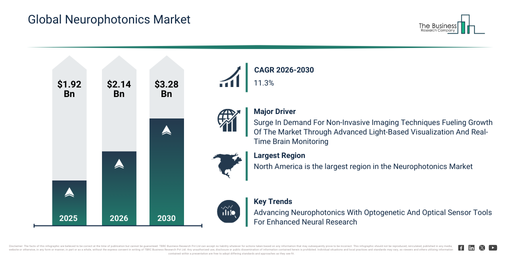
  • Neurophotonics Market Growth Outlook Reveals A CAGR Of 11.3% And A Market Value Of $3.28 Billion By 2030

    Neurophotonics Market Growth Outlook Reveals A CAGR Of 11.3% And A Market Value Of $3.28 Billion By 2030

    Delivering more actionable and strategically valuable research, The Business Research Company’s 2026 market reports feature market attractiveness analysis, total addressable market evaluation, company benchmarking matrices, interactive Excel dashboards, expanded supply chain intelligence, emerging startup coverage, and detailed product insights.

    Neurophotonics Market Revenue Outlook: What CAGR Is Expected Through 2030?

    The neurophotonics market has experienced substantial expansion in recent years. It is projected to grow from $1.92 billion in 2025 to $2.14 billion in 2026, achieving a compound annual growth rate (CAGR) of 11.6%. The historical growth of this market can be attributed to factors such as the increasing demand for noninvasive neuroimaging, the growing integration of optical imaging in neuroscience research, the rising prevalence of neurological disorders driving diagnostic requirements, the expanding application of brain mapping technologies in academic institutions, and increasing investment in biomedical photonics by government and private organizations.

    The neurophotonics market is projected to experience substantial expansion over the upcoming years, with its size anticipated to reach $3.28 billion by 2030, exhibiting a compound annual growth rate (CAGR) of 11.3%. This projected growth during the forecast period is fueled by a heightened emphasis on early diagnosis of mental health conditions and neurodegenerative ailments, the expanding use of optical neuromodulation in therapeutic contexts, the increasing incorporation of artificial intelligence into the analysis of neuroimaging data, a rise in clinical trials utilizing photonic tools for brain monitoring, and greater commercial deployment of sophisticated laser-based neurotechnology platforms. Key developments expected within this timeframe include progress in optical coherence and functional spectroscopy technologies, new developments in multimodal brain imaging systems, swift advancements in noninvasive neural stimulation technology, ongoing research and development efforts in monitoring photonic brain signals, and the incorporation of cloud-based and real-time analytical tools for neuroscience data.

    Download A Free Sample Report For Comprehensive Market Insights:

    https://www.thebusinessresearchcompany.com/sample.aspx?id=30679&type=smp&utm_source=Blogs&utm_medium=Paid&utm_campaign=Jul_PR

    #Neurophotonics Market Demand Drivers Creating New Revenue Opportunities

    The anticipated expansion of the neurophotonics market is primarily driven by the increasing need for non-invasive imaging methods. These techniques enable researchers and medical professionals to observe internal neurological structures and their activity, bypassing surgical intervention or bodily penetration, by employing technologies like MRI, fMRI, EEG, MEG, and optical imaging. The heightened demand for such techniques stems from neuroscience research’s growing need for tools that are safer, repeatable, and offer high resolution to study brain structure and function without posing risks to participants. Neurophotonics addresses this need by offering sophisticated light-based imaging solutions, facilitating accurate visualization of neural circuits and real-time observation of brain activity. For example, the ultra-high-resolution Connectome 2.0 MRI scanner was developed in 2023, as per the National Institutes of Health (NIH) BRAIN Initiative, a US government research program, reported in July 2025. Consequently, the neurophotonics market is projected to grow at a compound annual growth rate (CAGR) of approximately 10.7–11.2% from 2025 to 2033, with estimates showing a market valuation of about USD 5.1 billion by 2033, spurred by the increasing clinical and research integration of light-based neuroimaging. This reaffirms that the escalating requirement for non-invasive imaging techniques is indeed fueling the expansion of the neurophotonics market.

    Neurophotonics Market Categorization By Product Type And Application

    The neurophotonics market covered in this report is segmented –

    1) By Component: Devices And Equipment, Software And Data Analysis Platforms, Consumables And Accessories, Services

    2) By Technology: Optical Coherence Tomography, Laser Stimulation And Modulation Systems, Photoacoustic Imaging, Optogenetics, Fluorescence Imaging, Functional Near-Infrared Spectroscopy, Two-Photon Microscopy

    3) By Distribution Channel: Online Platforms, Distributors And Channel Partners, Direct Sales

    4) By Application: Research, Diagnostics, Therapeutics

    5) By End-User: Academic And Research Institutes, Hospitals And Clinics, Pharma And Biotech Companies

    Subsegments:

    1) By Devices And Equipment: Optical Neuroimaging Devices, Laser Stimulation Systems, Photonic Sensors, Fiber Optic Instruments, Imaging Accessories

    2) By Software And Data Analysis Platforms: Neuroimaging Data Analysis Software, Brain Mapping Software, Visualization Platforms, Signal Processing Software, Cloud Based Analytics Platforms

    3) By Consumables And Accessories: Optical Fibers, Imaging Reagents, Laser Safety Equipment, Photonic Consumables, Calibration Kits

    4) By Services: Training And Support Services, Research And Development Services, Clinical Consultation Services, Data Management Services

    Neurophotonics Market Trends Driving Strategic Industry Expansion

    Prominent companies operating in the Neurophotonics market are dedicating resources to developing advanced tools, such as optogenetic and optical sensor instruments, to enhance the measurement and control of neural activity, alongside translational neuroscience research. Optogenetic and optical sensor instruments are defined as engineered light delivery systems and optical sensors capable of stimulating and recording neural activity at cellular resolution, providing crucial insights into nervous system function. For instance, in September 2025, the NIH Common Fund Venture Program allocated grants under the Advancing Non Invasive Optical Imaging Approaches for Biological Systems initiative to bolster the creation of real-time optical imaging systems that can achieve deep tissue imaging and molecular contrast, encompassing methods like synthetic wavelength imaging. These federally funded programs play a key role in enabling the development of next-generation neurophotonics tools for adoption and commercialization by industry players in research and clinical settings.

    Neurophotonics Market Company Landscape And Strategic Competition

    Major companies operating in the neurophotonics market are Hitachi Ltd., Olympus Corporation, Coherent Corp., Bruker Corporation, HORIBA Ltd., Hamamatsu Photonics K.K., Leica Microsystems GmbH, Thorlabs Inc., Spectra-Physics, NeuroLight Technologies Ltd., Inscopix Inc., NeuroNexus Technologies Inc., Intelligent Imaging Innovations Inc., Femtonics Limited, NIRx Medical Technologies LLC, Hemophotonics S.L., Carl Zeiss AG, Artinis Medical Systems B.V., Plexon Inc., Vielight Inc., Nanoscope Technologies LLC, Neurophotometrics Ltd.

    Access The Complete Neurophotonics Market Report:

    https://www.thebusinessresearchcompany.com/report/neurophotonics-market-report?utm_source=Blogs&utm_medium=Paid&utm_campaign=Jul_PR

    Neurophotonics Market Regional Outlook: Where Are The Largest Opportunities Located?

    North America was the largest region in the neurophotonics market in 2025. Asia-Pacific is expected to be the fastest-growing region in the forecast period. The regions covered in the neurophotonics market report are Asia-Pacific, South East Asia, Western Europe, Eastern Europe, North America, South America, Middle East, Africa.

    Get in touch with us:

    The Business Research Company: https://www.thebusinessresearchcompany.com/

    Americas: +1 310-496-7795

    Asia: +44 7882 955267 & +91 8897263534

    Europe: +44 7882 955267

    Email us at: marketing@tbrc.info

    Follow us on:

    LinkedIn: https://in.linkedin.com/company/the-business-research-company

    YouTube: https://www.youtube.com/channel/UC24_fI0rV8cR5DxlCpgmyFQ

    Global Market Model: https://www.thebusinessresearchcompany.com/global-market-model
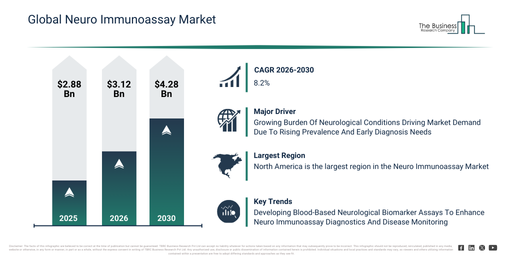
  • Neuro Immunoassay Market Set To Grow From $3.12 Billion In 2026 To $4.28 Billion By 2030 At A CAGR Of 8.2%

    Neuro Immunoassay Market Set To Grow From $3.12 Billion In 2026 To $4.28 Billion By 2030 At A CAGR Of 8.2%

    Delivering more actionable and strategically valuable research, The Business Research Company’s 2026 market reports feature market attractiveness analysis, total addressable market evaluation, company benchmarking matrices, interactive Excel dashboards, expanded supply chain intelligence, emerging startup coverage, and detailed product insights.

    Neuro Immunoassay Market Size Outlook: How Fast Will Revenue Grow Through 2030?

    The neuro immunoassay (NIA) market size has experienced significant expansion in recent years. It is anticipated to increase from $2.88 billion in 2025 to $3.12 billion in 2026, demonstrating a compound annual growth rate (CAGR) of 8.5%. The historical growth of this market can be attributed to the escalating demand for sensitive neurological diagnostics, the increased integration of immunoassay techniques in neuroscience research, the rising incidence of neurodegenerative disorders, the expansion of clinical and research laboratories, and an intensified focus on early disease detection and monitoring.

    The neuro immunoassay (NIA) market is projected to experience substantial expansion in the coming years, reaching $4.28 billion by 2030, driven by a compound annual growth rate (CAGR) of 8.2%. This growth during the forecast period is attributable to several factors, including the increasing integration of neuro immunoassay (NIA) with artificial intelligence (AI) for data analysis, rising investments in biomarker discovery, wider adoption of personalized medicine and therapeutic monitoring, the expansion of high-throughput screening platforms, and an increasing demand for automated and precise immunoassay systems. Key trends anticipated over the forecast period encompass technology-driven innovations enhancing assay sensitivity and specificity, progress in artificial intelligence (AI)-enabled data interpretation, the evolution of multiplexed and lab-on-a-chip immunoassay systems, intensified research and development efforts in identifying neuro biomarkers, and novel integrated and automated neurodiagnostic platforms.

    Download A Free Sample Report For Comprehensive Market Insights:

    https://www.thebusinessresearchcompany.com/sample.aspx?id=30676&type=smp&utm_source=Blogs&utm_medium=Paid&utm_campaign=Jul_PR

    Neuro Immunoassay Market Opportunity Drivers: What Is Creating New Revenue Potential?

    The escalating occurrence of neurological disorders is anticipated to propel the future growth of the neuro immunoassay market. Neurological disorders are medical conditions that impact the brain, spinal cord, and nerves, thereby disrupting normal nervous system function and resulting in impairments concerning movement, cognition, sensation, behavior, or overall bodily control. The increasing prevalence of these disorders arises from unhealthy lifestyle habits, such as poor diet, physical inactivity, smoking, excessive alcohol consumption, and chronic stress. Neuro immunoassays assist in detecting specific biomarkers within the nervous system, facilitating early diagnosis and targeted treatment for neurological patients. For instance, in April 2024, according to the National Institutes of Health (NIH), a US-based government agency, an estimated 6.9 million Americans aged 65 and older are currently living with Alzheimer’s dementia, and this figure is projected to nearly double to 13.8 million by 2060. Consequently, the rising prevalence of neurological disorders drives the neuro immunoassay market.

    Neuro Immunoassay Market Segment Outlook: Which Categories Are Expanding The Fastest?

    The neuro immunoassay market covered in this report is segmented –

    1) By Product Type: Reagents And Kits, Analyzers

    2) By Technology: Radioimmunoassays (RIA), Polymerase Chain Reaction (PCR), Enzyme-Linked Immunosorbent Assay (ELISA), Western Blot, Rapid Tests, Enzyme-Linked Immunospot Assay (ELISPOT)

    3) By Analyte Or Biomarker Type: Amyloid-Beta (Aß), Tau Protein (p-Tau), Alpha-Synuclein (a-syn), Neurofilament Light Chain (NfL), Autoantibodies, Cytokines, Glial Fibrillary Acidic Protein (GFAP), Neuron-Specific Enolase (NSE), Ubiquitin C-Terminal Hydrolase L1 (UCH-L1), Brain-Derived Neurotrophic Factor (BDNF)

    4) By Application: Alzheimer’s Disease, Parkinson’s Disease (PD), Huntington’s Disease, Amyotrophic Lateral Sclerosis (ALS), Spinal Muscular Atrophy (SMA)

    5) By End-User: Hospitals, Clinics, Academic Organizations, Biopharmaceutical Companies, Pharmaceutical Companies, Other End-Users

    Subsegments:

    1) By Reagents And Kits: Enzyme Linked Immunosorbent Assay Reagents, Western Blotting Kits, Multiplex Assay Kits

    2) By Analyzers: Automated Immunoassay Analysers, Point Of Care Immunoassay Analysers, High Throughput Immunoassay Analysers

    Neuro Immunoassay Market Innovation Trends Driving Future Development

    Leading firms within the neuro immunoassay market are concentrating on creating sophisticated solutions, including blood-based neurological biomarker assays, to improve the tracking of diseases, elevate prognostic precision, and assist clinical choices for neurological conditions. These blood-based assays are tests designed to quantify particular proteins, like Neurofilament Light Chain (NfL), found in human serum or plasma, with the goal of evaluating neuronal damage and the level of disease activity. An illustrative instance occurred in June 2024, when Siemens Healthineers, an in vitro diagnostics company based in Germany, obtained CE marking for its Neurofilament Light Chain blood test, intended for deployment on the Atellica IM Analyzer and ADVIA Centaur systems. This particular test measures NfL levels to assist in foreseeing the risk of neuronal injury in adults experiencing relapsing multiple sclerosis, serving as an addition to existing clinical, imaging, and laboratory evaluations. The CE mark signifies adherence to European In Vitro Diagnostic Regulations, thereby broadening the availability of standardized neuro immunoassay diagnostics across laboratories throughout Europe.

    Neuro Immunoassay Market Key Companies And Competitive Benchmarking

    Major companies operating in the neuro immunoassay market are Thermo Fisher Scientific Inc., Merck KGaA, Bio-Rad Laboratories Inc., GenScript Biotech Corporation, Abcam plc, BioLegend Inc., Meso Scale Diagnostics LLC, Sino Biological Inc., Quanterix Corporation, Cusabio Technology LLC, OriGene Technologies Inc., Elabscience Biotechnology Inc., RayBiotech Life Inc., Enzo Life Sciences Inc., Rockland Immunochemicals Inc., Assay Genie Ltd., Novus Biologicals LLC, Creative Diagnostics, MyBioSource Inc., Immuno-Biological Laboratories Co. Ltd., Boster Biological Technology, Cloud-Clone Corp., FineTest Biotech Inc., Abbexa Ltd.

    Access The Complete Neuro Immunoassay Market Report:

    https://www.thebusinessresearchcompany.com/report/neuro-immunoassay-market-report?utm_source=Blogs&utm_medium=Paid&utm_campaign=Jul_PR

    Neuro Immunoassay Market Regional Analysis: Which Region Leads By Revenue?

    North America was the largest region in the neuro immunoassay (NIA) market in 2025. Asia-Pacific is expected to be the fastest-growing region in the forecast period. The regions covered in the neuro immunoassay market report are Asia-Pacific, South East Asia, Western Europe, Eastern Europe, North America, South America, Middle East, Africa.

    Get in touch with us:

    The Business Research Company: https://www.thebusinessresearchcompany.com/

    Americas: +1 310-496-7795

    Asia: +44 7882 955267 & +91 8897263534

    Europe: +44 7882 955267

    Email us at: marketing@tbrc.info

    Follow us on:

    LinkedIn: https://in.linkedin.com/company/the-business-research-company

    YouTube: https://www.youtube.com/channel/UC24_fI0rV8cR5DxlCpgmyFQ

    Global Market Model: https://www.thebusinessresearchcompany.com/global-market-model