Category: Medical Equipment

  • Digital Stethoscope Tele-auscultation Hubs Market Growth Is Reshaping Competitive Advantage Across The Industry

    Digital Stethoscope Tele-auscultation Hubs Market Growth Is Reshaping Competitive Advantage Across The Industry

    Enhanced with market attractiveness analysis, total addressable market evaluation, company benchmarking matrices, interactive Excel dashboards, expanded supply chain intelligence, emerging startup coverage, and detailed product insights, The Business Research Company’s 2026 market reports deliver more actionable and strategically valuable research.

    Digital Stethoscope Tele-auscultation Hubs Market Growth Analysis: How Will Revenue Expand During The Forecast Period?

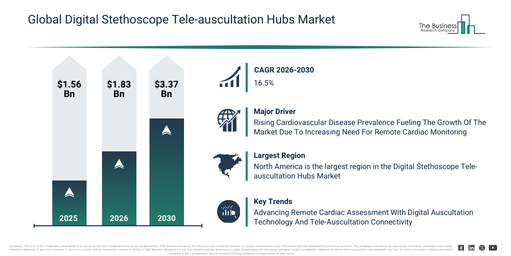
    The digital stethoscope tele-auscultation hubs market size has shown swift expansion in recent years. Its valuation is projected to climb from $1.56 billion in 2025 to $1.83 billion in 2026, exhibiting a compound annual growth rate (CAGR) of 16.8%. The increase observed in the past can be attributed to the rising prevalence of hypertension, increased adoption of home healthcare, a greater necessity for continuous patient monitoring, the expanded use of digital health tools, and heightened patient awareness for self-monitoring.

    The digital stethoscope tele-auscultation hubs market is anticipated to experience substantial expansion over the upcoming years. This market is projected to reach $3.37 billion by 2030, demonstrating a compound annual growth rate (CAGR) of 16.5%. Factors contributing to this growth during the forecast period include the increasing demand for remote monitoring solutions, the greater integration of smart connected devices, a noticeable move towards preventive healthcare, enhanced telehealth reimbursement support, and an intensified focus on managing chronic diseases. Key trends anticipated for the forecast period encompass technological progress in telemonitoring platforms, new developments in wireless blood pressure devices, advances in artificial intelligence-based analytics, ongoing research and development in remote patient monitoring systems, and improvements in cloud-based health data integration.

    Download A Free Sample Report For Comprehensive Market Insights:

    https://www.thebusinessresearchcompany.com/sample.aspx?id=30576&type=smp&utm_source=Blogs&utm_medium=Paid&utm_campaign=Jul_PR

    Digital Stethoscope Tele-auscultation Hubs Market Industry Drivers: What Is Driving Revenue Growth?

    The increasing occurrence of cardiovascular diseases is projected to drive expansion in the digital stethoscope tele-auscultation hubs market in the future. These ailments encompass disorders impacting the heart and blood vessels, such as heart attacks, strokes, and hypertension. Their escalation is attributed to unhealthy habits, including inadequate nutrition, insufficient physical activity, and tobacco use. Digital stethoscopes along with tele-auscultation hubs assist in managing cardiovascular diseases through facilitating distant, live monitoring and examination of cardiac acoustics. These technologies enhance patient results by allowing for prompt diagnosis, ongoing surveillance, and appropriate action for heart-related ailments. As an illustration, in October 2024, figures from the Centers for Disease Control, a US-based government agency, indicated that in 2023, around 919,032 individuals succumbed to cardiovascular disease, representing 1 in every 3 deaths. Consequently, the growing occurrence of cardiovascular diseases is fueling the expansion of the digital stethoscope tele-auscultation hubs market.

    #Digital Stethoscope Tele-auscultation Hubs Market Segment Landscape And Growth Potential

    The digital stethoscope tele-auscultation hubs market covered in this report is segmented –

    1) By Component: Hardware, Software, Services

    2) By Product Type: Wired Digital Stethoscopes, Wireless Digital Stethoscopes, Integrated Tele-auscultation Systems

    3) By Technology: Artificial Intelligence (AI) Enabled Auscultation, Internet Of Things (IoT) Integrated Platforms, Cloud Based Tele-Auscultation Systems, Bluetooth Enabled Diagnostic Devices, Others Type

    4) By Application: Cardiology, Pulmonology, Primary Care, Remote Patient Monitoring, Other Applications

    5) By End User: Hospitals, Clinics, Ambulatory Surgical Centers, Homecare Settings, Other End-Users

    Subsegments:

    1) By Hardware: High Fidelity Digital Stethoscopes, Wireless Auscultation Devices, Bluetooth Enabled Stethoscopes, Smart Connected Stethoscopes, Diagnostic Integration Tools

    2) By Software: Cloud Based Tele-Auscultation Platforms, Artificial Intelligence (Artificial Intelligence) Enabled Analysis Software, Mobile Health Application Software, Real Time Sound Processing Software, Data Encryption And Security Software

    3) By Services: Remote Patient Monitoring Services, Telemedicine Consultation Services, Device Maintenance And Support Services, Clinical Training And Implementation Services, Software Subscription And Update Services

    #Digital Stethoscope Tele-auscultation Hubs Market Growth Trends: What Is Influencing The Future Outlook?

    Leading companies in the digital stethoscope tele-auscultation hubs market are focusing on creating sophisticated solutions, like digital auscultation technology, to empower clinicians to remotely listen to, record, and transmit heart and lung sounds with clinical accuracy. This digital auscultation technology improves conventional listening by amplifying sounds, reducing background noise, and transforming acoustic signals into digital data suitable for telehealth workflows. An example is Eko Health Inc., a US-based digital health firm specializing in AI-powered cardiac care solutions, which introduced its CORE 500 Digital Stethoscope and Eko+ membership in Canada in April 2025. This launch equips clinicians with a digital auscultation device that incorporates patented audio technology developed to enhance clinical evaluations. It features three specialized listening modes (pulmonary, wide, and cardiac), integrated electrocardiogram (ECG) capability, and active noise cancellation to guarantee clear auscultation. The membership further provides smooth connectivity with Eko’s web and mobile applications for capturing patient data, alongside remote sharing and monitoring, aiming to boost workflow efficiency and patient care coordination for healthcare providers.

    Digital Stethoscope Tele-auscultation Hubs Market Competitive Landscape: Who Are The Leading Companies?

    Major companies operating in the digital stethoscope tele-auscultation hubs market are 3M Company, Baxter International Inc., Solventum Corp., TaiDoc Technology Corporation, GlobalMed, Linktop, Thinklabs Medical, Visionflex Pty Ltd., Eko Health Inc., HD Medical Inc., Cardionics Inc., Ayu Devices Pvt. Ltd., Ai Health Highway India Pvt Ltd., Aevice Health Pte Ltd., Strados Labs, Sonavi Labs Inc., GV Concepts Inc., Stethome Sp. z o.o., CliniCloud, Saintiant Technologies

    Access The Complete Digital Stethoscope Tele-auscultation Hubs Market Report:

    https://www.thebusinessresearchcompany.com/report/digital-stethoscope-tele-auscultation-hubs-market-report?utm_source=Blogs&utm_medium=Paid&utm_campaign=Jul_PR

    Digital Stethoscope Tele-auscultation Hubs Market Geographic Distribution And Regional Opportunities

    North America was the largest region in the digital stethoscope tele-auscultation hubs in 2025. Asia-Pacific is expected to be the fastest-growing region in the forecast period. The regions covered in the digital stethoscope tele-auscultation hubs market report are Asia-Pacific, South East Asia, Western Europe, Eastern Europe, North America, South America, Middle East, Africa.

    Get in touch with us:

    The Business Research Company: https://www.thebusinessresearchcompany.com/

    Americas: +1 310-496-7795

    Asia: +44 7882 955267 & +91 8897263534

    Europe: +44 7882 955267

    Email us at: marketing@tbrc.info

    Follow us on:

    LinkedIn: https://in.linkedin.com/company/the-business-research-company

    YouTube: https://www.youtube.com/channel/UC24_fI0rV8cR5DxlCpgmyFQ

    Global Market Model: https://www.thebusinessresearchcompany.com/global-market-model
  • Digital Slide Scanners Market Forecast Signals New Revenue Opportunities Through 2030

    Digital Slide Scanners Market Forecast Signals New Revenue Opportunities Through 2030

    Through market attractiveness analysis, total addressable market evaluation, company benchmarking matrices, interactive Excel dashboards, expanded supply chain intelligence, emerging startup coverage, and detailed product insights, The Business Research Company’s 2026 market reports provide more actionable and strategically valuable research.

    Digital Slide Scanners Market Forecast: What Market Value Is Expected By 2030?

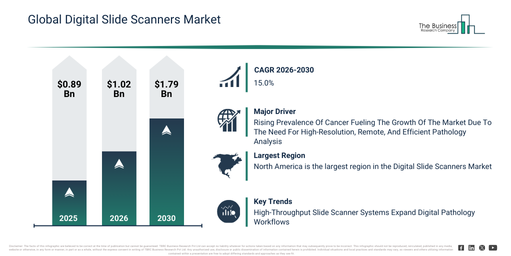
    The digital slide scanners market has experienced significant expansion in recent years. This market is projected to expand from $0.89 billion in 2025 to reach $1.02 billion in 2026, demonstrating a compound annual growth rate (CAGR) of 15.3%. Historically, this expansion has been driven by factors such as the increasing embrace of digital pathology, a surging demand for high-resolution imaging, the escalating requirement for streamlined pathology workflows, the expanding deployment of telepathology solutions, and a heightened emphasis on precise disease diagnosis.

    The market for digital slide scanners is projected to experience swift expansion over the coming years. This market is anticipated to reach $1.79 billion by 2030, exhibiting a compound annual growth rate (CAGR) of 15.0%. Factors contributing to this growth during the forecast period include the increasing incorporation of AI-assisted slide analysis, a heightened demand for remote diagnostic solutions, the expanding use of whole-slide imaging within hospitals, greater investment in digital pathology infrastructure, and an increased focus on laboratory workflow automation. Key trends expected over the forecast horizon encompass technological progress in high-speed slide scanning, novel developments in AI-driven image interpretation, the evolution of cloud-based pathology platforms, ongoing research and development in ultra-high-resolution imaging systems, and improvements in interoperable digital pathology ecosystems.

    Download A Free Sample Report For Comprehensive Market Insights:

    https://www.thebusinessresearchcompany.com/sample.aspx?id=30575&type=smp&utm_source=Blogs&utm_medium=Paid&utm_campaign=Jul_PR

    #Digital Slide Scanners Market Growth Factors: Which Forces Are Supporting Market Expansion?

    The increasing incidence of cancer is anticipated to drive the expansion of the digital slide scanners market. Cancer is defined as an illness marked by the uncontrolled multiplication and dispersion of abnormal cells, which can harm nearby tissues and organs without effective treatment. The occurrence of cancer is escalating, attributed to lifestyle factors like unhealthy eating habits, tobacco use, alcohol intake, and exposure to environmental contaminants, thereby heightening the susceptibility to diverse cancers. Digital slide scanners play a role in cancer management by transforming physical tissue specimens into high-resolution digital images suitable for analysis and distribution. These scanners enhance diagnostic precision, facilitate remote consultations, and optimize pathology processes, thus aiding in prompt and accurate treatment choices. To illustrate, in October 2025, data from NHS Digital, a UK government organisation, revealed 354,820 new cancer diagnoses in England during 2023. This equated to an average of 972 diagnoses daily and signified an increase of 8,605 cases compared to 2022. Prostate cancer was identified as the most frequent diagnosis, with 58,137 new cases, showing a 6% rise in registrations over the preceding year. Consequently, the growing incidence of cancer is fueling the expansion of the digital slide scanners market.

    Digital Slide Scanners Market Categorization By Product Type And Application

    The digital slide scanners market covered in this report is segmented –

    1) By Product Type: Brightfield Scanners, Fluorescence Scanners, Whole Slide Imaging Scanners, Other Product Types

    2) By Technology: Automated, Semi-Automated, Manual

    3) By Distribution Channel: Direct Sales, Distributors, Online Retail, Third-Party E-Commerce Platforms

    4) By Application: Pathology, Research, Education, Other Applications

    5) By End-User: Hospitals, Diagnostic Laboratories, Academic And Research Institutes, Other End-Users

    Subsegments:

    1) By Brightfield Scanners: High Resolution Brightfield Imaging Units, Automated Tissue Section Scanning Systems, Rapid Slide Digitization Modules, Clinical Grade Brightfield Scanner Device, Multi Magnification Brightfield Imaging Platforms

    2) By Fluorescence Scanners: Multi Channel Fluorescence Imaging Units, High Sensitivity Fluorescent Detection Systems, Advanced Fluorescent Marker Scanning Modules, Low Noise Fluorescence Signal Capture Devices, Multi Spectrum Fluorescence Imaging Platforms

    3) By Whole Slide Imaging Scanners: Large Format Whole Slide Capture Systems, High Throughput Slide Imaging Units, Automated Pathology Slide Digitization Platforms, Ultra High Resolution Whole Slide Scanning Devices, Multi Modal Whole Slide Imaging Modules

    4) By Other Product Types: Hybrid Brightfield And Fluorescence Scanners, Portable Digital Slide Scanning Devices, Cloud Connected Slide Imaging Units, Specialized Research Grade Scanning Platforms, Innovative Digital Pathology Imaging Systems

    Digital Slide Scanners Market Industry Trends: What Changes Are Reshaping Demand?

    Leading companies in the digital slide scanners market are focusing on developing advanced products, such as high-throughput, high-capacity slide scanner systems. This initiative aims to accelerate digital pathology adoption, enhance operational efficiency, and support large-scale diagnostic workflows. These high-throughput, high-capacity slide scanner systems are automated digital pathology scanners capable of rapidly digitizing substantial batches of glass slides in a single run, all while maintaining consistent diagnostic-grade image quality and requiring minimal manual intervention. For instance, in April 2025, Hamamatsu Photonics K.K., a Japan-based imaging technology company, introduced the NanoZoomer S540MD slide scanner system. This system functions as a high-throughput scanner tailored for extensive digital pathology workflows, able to process up to 540 slides per batch and allowing for continuous cassette loading. This design boosts efficiency and shortens turnaround times without sacrificing image quality. Additionally, it features a touchscreen interface and supports common slide racks like Leica and Sakura, ensuring smooth integration into existing laboratory setups.

    Digital Slide Scanners Market Company Landscape And Strategic Competition

    Major companies operating in the digital slide scanners market are F. Hoffmann-La Roche AG, Danaher Corporation, Koninklijke Philips N.V., Olympus Corporation, Nikon Corporation, Hologic Inc., Carl Zeiss Microscopy GmbH, Excelitas Technologies Corp., Hamamatsu Photonics K.K., Motic Instruments Inc., Dakewe Medical Equipment Co. Ltd., OptraSCAN Inc., Paige AI Inc., Proscia Inc., Pramana Inc., Grundium Oy, 3DHISTECH Ltd., Ibex Medical Analytics Ltd., Huron Technologies International Inc., Mikroscan Technologies Inc.

    Access The Complete Digital Slide Scanners Market Report:

    https://www.thebusinessresearchcompany.com/report/digital-slide-scanners-market-report?utm_source=Blogs&utm_medium=Paid&utm_campaign=Jul_PR

    Digital Slide Scanners Market Largest Region By Revenue And Market Share

    North America was the largest region in the digital slide scanners market in 2025. Asia-Pacific is expected to be the fastest-growing region in the forecast period. The regions covered in the digital slide scanners market report are Asia-Pacific, South East Asia, Western Europe, Eastern Europe, North America, South America, Middle East, Africa.

    Get in touch with us:

    The Business Research Company: https://www.thebusinessresearchcompany.com/

    Americas: +1 310-496-7795

    Asia: +44 7882 955267 & +91 8897263534

    Europe: +44 7882 955267

    Email us at: marketing@tbrc.info

    Follow us on:

    LinkedIn: https://in.linkedin.com/company/the-business-research-company

    YouTube: https://www.youtube.com/channel/UC24_fI0rV8cR5DxlCpgmyFQ

    Global Market Model: https://www.thebusinessresearchcompany.com/global-market-model
  • Digital Papanicolaou (PAP) Smear Analyzer Market Trends And Growth Drivers Point To Strong Future Potential

    Digital Papanicolaou (PAP) Smear Analyzer Market Trends And Growth Drivers Point To Strong Future Potential

    Through market attractiveness analysis, total addressable market evaluation, company benchmarking matrices, interactive Excel dashboards, expanded supply chain intelligence, emerging startup coverage, and detailed product insights, The Business Research Company’s 2026 market reports provide more actionable and strategically valuable research.

    Digital Papanicolaou (PAP) Smear Analyzer Market CAGR Analysis And Future Market Development

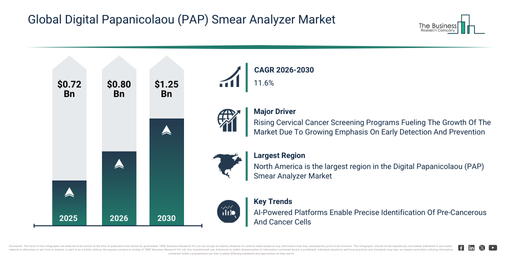
    The market size for digital papanicolaou (PAP) smear analyzers has shown substantial expansion in recent years. This market is projected to expand from $0.72 billion in 2025 to $0.80 billion by 2026, demonstrating a compound annual growth rate (CAGR) of 11.9%. Historically, this expansion has been driven by factors such as the increasing worldwide occurrence of cervical cancer, greater government investment in women’s health initiatives, wider acceptance of liquid-based cytology (LBC), the escalating demand for minimizing human bias in slide analysis, and the rising integration of laboratory automation for enhanced throughput.

    The market size for digital papanicolaou (PAP) smear analyzers is projected to experience swift expansion over the coming years. This market is anticipated to reach $1.25 billion by 2030, exhibiting a compound annual growth rate (CAGR) of 11.6%. Factors contributing to this growth during the forecast period include the expanding use of AI-powered primary screening algorithms, the increasing acceptance of co-testing methods that merge hpv and digital pap, a heightened need for integrated telepathology and remote diagnostic services, the broadening of screening programs in low- and middle-income nations, and increased hospital investments in digital health infrastructure. Key trends anticipated for this period encompass technological progress in deep learning algorithms used for cell classification, novel approaches in volumetric imaging and whole-slide scanning resolution, improvements in robotics for automated staining and slide preparation, ongoing research and development in integrating dual-stain cytology with AI, and enhancements in cloud-based data analysis and secure storage platforms.

    Download A Free Sample Report For Comprehensive Market Insights:

    https://www.thebusinessresearchcompany.com/sample.aspx?id=30572&type=smp&utm_source=Blogs&utm_medium=Paid&utm_campaign=Jul_PR

    Digital Papanicolaou (PAP) Smear Analyzer Market Growth Factors Supporting Long-Term Expansion

    Increasing cervical cancer screening initiatives are projected to boost the expansion of the digital papanicolaou (PAP) smear analyzer market in the future. These programs are structured public health efforts aimed at identifying precancerous alterations and nascent cervical cancers, thereby preventing disease advancement. The uptick in cervical cancer screening programs stems from heightened awareness regarding the advantages of early detection, coupled with robust government and public health strategies that broaden access to PAP and HPV testing for women at risk. Digital PAP smear analyzers aid cervical cancer screening programs by automating the examination of cytology slides, which improves diagnostic precision, lessens manual labor, and accelerates the delivery of results for extensive screenings. For example, NHS England, the UK’s primary publicly funded healthcare authority, reported in May 2025 that cervical screening coverage for women aged 25 to 49 reached 67.0% in March 2023, subsequently rising modestly to 67.5% in March 2024, indicating a year-over-year increase of 0.5 percentage points. Consequently, the expansion of cervical cancer screening initiatives is fueling the growth of the digital papanicolaou (PAP) smear analyzer market.

    Digital Papanicolaou (PAP) Smear Analyzer Market Segment Outlook: Which Categories Are Expanding The Fastest?

    The digital papanicolaou (pap) smear analyzer market covered in this report is segmented –

    1) By Product Type: Standalone Systems, Integrated Systems

    2) By Technology: Image Analysis, Artificial Intelligence, Computer-Assisted Screening

    3) By Distribution Channel Segment: Direct Sales, Distributors Or Wholesalers, E-commerce Platforms, Retail

    4) By End-User: Hospitals, Diagnostic Centers, Academic And Research Institutes, Others End User

    Subsegments:

    1) By Standalone Systems: Manual Slide Scanning Units, Automated Slide Scanning Units, Basic Digital Imaging Units, Enhanced High-Resolution Imaging Units, Computer-Linked Digital Viewing Units

    2) By Integrated Systems: Fully Automated Digital Cytology Platforms, Workflow-Integrated Imaging And Analysis Systems, High-Throughput Digital Screening Systems, Artificial Intelligence-Enabled Cytology Platforms, Laboratory Information System Integrated Solutions

    Digital Papanicolaou (PAP) Smear Analyzer Market Industry Trends Shaping Future Revenue Growth

    Leading companies active in the digital papanicolaou (PAP) smear analyzer market are prioritizing the development of sophisticated analytical techniques, such as deep-learning-based artificial intelligence volumetric imaging, to elevate the accuracy of disease detection. This deep-learning-based artificial intelligence volumetric imaging works by digitizing glass slides and applying advanced algorithms to identify pre-cancerous lesions and cancer cells with greater precision than traditional microscopic reviews. This also facilitates remote collaboration among pathologists and helps in reducing the rate of false negatives. For example, in January 2024, Hologic Inc., a US-based medical technology company focused on women’s health, obtained Food and Drug Administration (FDA) clearance for its Genius Digital Diagnostics System. This platform is engineered to be the premier digital cytology system to integrate AI with advanced volumetric imaging, incorporating the Genius Cervical AI algorithm to pinpoint suspicious cells for examination. The solution additionally provides a scalable ecosystem that includes image acquisition, management, and remote review stations, enhancing workflow efficiency and yielding a 28% reduction in false negatives for high-grade lesions when compared to standard methods.

    Digital Papanicolaou (PAP) Smear Analyzer Market Key Companies And Competitive Benchmarking

    Major companies operating in the digital papanicolaou (pap) smear analyzer market are Siemens Healthineers AG, Hologic Inc., Hamamatsu Photonics K.K., Leica Biosystems GmbH, Motic Digital Pathology, OptraScan Inc, Proscia Inc., Techcyte Inc., 3DHISTECH Fejleszto Korlátolt Felelosségu Társaság, Visiopharm A/S, Indica Labs Inc., Grundium Oy, West Medica Produktions-und Handels-GmbH, CellSolutions LLC, Noul Co. Ltd., WM-Vision GmbH, Wuhan Landing Intelligence Medical Co. Ltd., Konfoong Bioinformation Tech Co. Ltd., EPS Bio Technology Corp.

    Access The Complete Digital Papanicolaou (PAP) Smear Analyzer Market Report:

    https://www.thebusinessresearchcompany.com/report/digital-papanicolaou-pap-smear-analyzer-market-report?utm_source=Blogs&utm_medium=Paid&utm_campaign=Jul_PR

    Digital Papanicolaou (PAP) Smear Analyzer Market Global Footprint: Which Region Holds Market Leadership?

    North America was the largest region in the digital papanicolaou (PAP) smear analyzer market in 2025. Asia-Pacific is expected to be the fastest-growing region in the forecast period. The regions covered in the digital papanicolaou (pap) smear analyzer market report are Asia-Pacific, South East Asia, Western Europe, Eastern Europe, North America, South America, Middle East, Africa.

    Get in touch with us:

    The Business Research Company: https://www.thebusinessresearchcompany.com/

    Americas: +1 310-496-7795

    Asia: +44 7882 955267 & +91 8897263534

    Europe: +44 7882 955267

    Email us at: marketing@tbrc.info

    Follow us on:

    LinkedIn: https://in.linkedin.com/company/the-business-research-company

    YouTube: https://www.youtube.com/channel/UC24_fI0rV8cR5DxlCpgmyFQ

    Global Market Model: https://www.thebusinessresearchcompany.com/global-market-model
  • Deep Brain Stimulation In Parkinson`s Disease Market Size Projected To Increase From $3.49 Billion To $4.49 Billion During The Forecast Period

    Deep Brain Stimulation In Parkinson`s Disease Market Size Projected To Increase From $3.49 Billion To $4.49 Billion During The Forecast Period

    Delivering more actionable and strategically valuable research, The Business Research Company’s 2026 market reports feature market attractiveness analysis, total addressable market evaluation, company benchmarking matrices, interactive Excel dashboards, expanded supply chain intelligence, emerging startup coverage, and detailed product insights.

    Deep Brain Stimulation In Parkinson`s Disease Market Value Expansion And Long-Term Growth Outlook

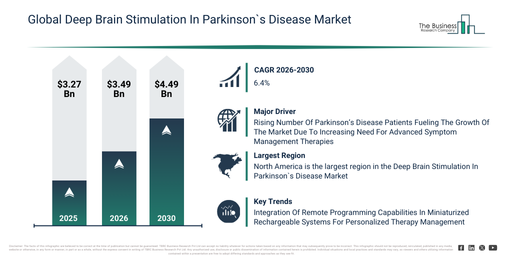
    The deep brain stimulation in parkinson’s disease market has experienced robust expansion over recent years. This market is projected to expand from $3.27 billion in 2025 to reach $3.49 billion by 2026, exhibiting a compound annual growth rate (CAGR) of 6.7%. Historically, this market’s upward trend has stemmed from factors such as the rising incidence of Parkinson’s disease, greater acceptance of DBS devices, enhanced understanding of sophisticated neuromodulation treatments, improvements in neurosurgical facilities, and an increase in expenditure on healthcare.

    The deep brain stimulation in parkinson’s disease market is projected to experience robust expansion over the coming years. It is anticipated to reach $4.49 billion by 2030, exhibiting a compound annual growth rate (CAGR) of 6.4%. This projected growth during the forecast timeframe is attributable to several factors, including an escalating demand for customized neuromodulation treatments, increased capital allocated to research and clinical studies, improved availability of tele-neurology services, broader reimbursement options, and the growing uptake of MRI-safe and rechargeable equipment. Key trends expected during this period encompass technological progress in both closed-loop and directional stimulation, novel developments in rechargeable and extended-life Implantable Pulse Generators (IPGs), advancements in AI-supported DBS programming, ongoing research and development into less invasive surgical methods, and enhancements in remote patient monitoring and telemedicine functionalities.

    Download A Free Sample Report For Comprehensive Market Insights:

    https://www.thebusinessresearchcompany.com/sample.aspx?id=30568&type=smp&utm_source=Blogs&utm_medium=Paid&utm_campaign=Jul_PR

    Deep Brain Stimulation In Parkinson`s Disease Market Opportunity Drivers: What Is Creating New Revenue Potential?

    The increasing number of individuals affected by Parkinson’s disease is poised to stimulate the expansion of the deep brain stimulation in Parkinson’s disease market. Parkinson’s disease is a progressive neurological condition impacting movement, characterized by symptoms like tremors, stiffness, slowed movements, and impaired balance due to the deterioration of dopamine-producing neurons in the brain. The growth in Parkinson’s disease patient numbers is linked to the aging global population, as the risk of developing the disorder rises significantly with age. Deep brain stimulation assists in managing Parkinson’s disease by delivering precise electrical impulses to specific brain areas, which helps diminish motor symptoms, improve life quality, and reduce the need for long-term medication. For instance, the Parkinson’s Foundation estimated that 1.1 million people in the United States were living with Parkinson’s disease in 2025, a number expected to climb to 1.2 million by 2030, with approximately 90,000 new diagnoses occurring annually and over 10 million individuals affected worldwide. Therefore, the escalating prevalence of Parkinson’s disease patients is a primary catalyst for the growth of the deep brain stimulation in Parkinson’s disease market. Rising healthcare expenditure is anticipated to drive the growth of the deep brain stimulation in Parkinson’s disease market moving forward. Healthcare expenditure denotes the total financial investment from governments, businesses, and individuals into healthcare services, covering medical treatments, hospital care, pharmaceuticals, and public health programs. The increased demand for healthcare funding stems from the growing incidence of chronic diseases, which demand extensive and costly long-term treatments. Elevated healthcare expenditure facilitates deep brain stimulation in Parkinson’s disease by providing financial backing for advanced surgical procedures, essential equipment, and subsequent care. This funding enhances patient outcomes by improving access to this effective therapy, which works to alleviate motor symptoms and elevate quality of life. For example, in May 2024, the Office for National Statistics reported that total healthcare expenditure experienced a 5.6% increase in nominal terms in 2023, showing a 0.9% growth compared to 2022. Consequently, the increasing healthcare expenditure is fueling the expansion of the deep brain stimulation in Parkinson’s disease market.

    Deep Brain Stimulation In Parkinson`s Disease Market Segment Breakdown: Which Categories Generate The Most Revenue?

    The deep brain stimulation in parkinson`s disease market covered in this report is segmented –

    1) By Product Type: Implantable Pulse Generators (IPGs), Electrodes And Leads, External Programmers, Accessories And Consumables

    2) By Technology: Conventional Deep Brain Stimulation (DBS) Systems, Closed Loop Deep Brain Stimulation (DBS) Systems, Wireless Deep Brain Stimulation (DBS) Systems

    3) By Service Type: Pre-Surgical Evaluation Services, Surgical Implantation Services, Device Programming Services, Patient Monitoring Services, Maintenance And Follow-Up Services, Rehabilitation Support Services, Tele-Neurology Support Services, Training And Education Services

    4) By Application: Tremor Management, Rigidity And Stiffness Management, Bradykinesia (Slow Movement) Management, Dyskinesia Management

    5) By End-Users: Hospitals, Ambulatory Surgical Centres, Neurology Clinics

    Subsegments:

    1) By Implantable Pulse Generators (IPGs): Rechargeable Implantable Pulse Generators, Non-Rechargeable Implantable Pulse Generators, Directional Implantable Pulse Generators

    2) By Electrodes And Leads: Cylindrical Electrodes, Directional Electrodes, Stimulation Leads

    3) By External Programmers: Handheld External Programmers, Desktop External Programmers, Wireless External Programmers

    4) By Accessories And Consumables: Extension Cables, Battery Chargers, Surgical Tool Kits

    Deep Brain Stimulation In Parkinson`s Disease Market Innovation Trends Driving Future Development

    Major companies operating in the deep brain stimulation in Parkinson’s disease market are prioritizing the creation of advanced products, including miniaturized rechargeable implantable pulse generators and integrated remote programming platforms, to enhance patient comfort and improve access to care. Miniaturizing rechargeable implantable pulse generators involves designing these battery-powered neurostimulation devices in much smaller, thinner forms for less invasive implantation, while still providing reliable therapeutic electrical pulses for long durations. For instance, in January 2024, Abbott Laboratories, a US-based multinational medical devices and healthcare company, launched its Liberta RC DBS system. This platform is a miniaturized rechargeable deep brain stimulation system featuring remote programming capabilities, developed to treat individuals with movement disorders such as Parkinson’s disease and essential tremor. The solution also delivers the longest recharge interval of any FDA-approved DBS system, necessitating only 10 recharge sessions a year for most people, and incorporates the NeuroSphere Virtual Clinic to allow patients to communicate with their doctors and receive treatment adjustments from their homes.

    Deep Brain Stimulation In Parkinson`s Disease Market Key Players And Strategic Industry Positioning

    Major companies operating in the deep brain stimulation in parkinson`s disease market are Abbott Laboratories, Medtronic plc, Boston Scientific Corporation, Mayo Foundation for Medical Education and Research, Cleveland Clinic, Renishaw plc, Neuralink Corp., NeuroPace Inc., PINS Medical Co. Ltd., Neurosoft Ltd., BrainsWay Ltd., Medscape, Inomed Medizintechnik GmbH, SceneRay Corporation Ltd., Neuroelectrics Barcelona S.L., Soterix Medical Inc., CorTec GmbH, Aleva Neurotherapeutics SA, NeuroSigma Inc., BrainGate Company Inc.

    Access The Complete Deep Brain Stimulation In Parkinson`s Disease Market Report:

    https://www.thebusinessresearchcompany.com/report/deep-brain-stimulation-in-parkinsons-disease-market-report?utm_source=Blogs&utm_medium=Paid&utm_campaign=Jul_PR

    Deep Brain Stimulation In Parkinson`s Disease Market Geographic Landscape: Which Region Dominates Industry Growth?

    North America was the largest region in the deep brain stimulation in parkinson’s disease market in 2025. Asia-Pacific is expected to be the fastest-growing region in the forecast period. The regions covered in the deep brain stimulation in parkinson`s disease market report are Asia-Pacific, South East Asia, Western Europe, Eastern Europe, North America, South America, Middle East, Africa.

    Get in touch with us:

    The Business Research Company: https://www.thebusinessresearchcompany.com/

    Americas: +1 310-496-7795

    Asia: +44 7882 955267 & +91 8897263534

    Europe: +44 7882 955267

    Email us at: marketing@tbrc.info

    Follow us on:

    LinkedIn: https://in.linkedin.com/company/the-business-research-company

    YouTube: https://www.youtube.com/channel/UC24_fI0rV8cR5DxlCpgmyFQ

    Global Market Model: https://www.thebusinessresearchcompany.com/global-market-model
  • Craniomaxillofacial Bone Plate Market Expected To Reach $2.3 Billion By 2030 As Growth Accelerates At 8.1% CAGR

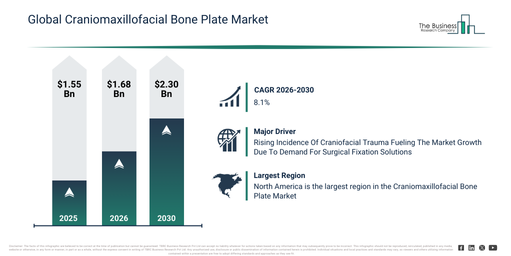
    Craniomaxillofacial Bone Plate Market Expected To Reach $2.3 Billion By 2030 As Growth Accelerates At 8.1% CAGR

    Delivering more actionable and strategically valuable research, The Business Research Company’s 2026 market reports feature market attractiveness analysis, total addressable market evaluation, company benchmarking matrices, interactive Excel dashboards, expanded supply chain intelligence, emerging startup coverage, and detailed product insights.

    Craniomaxillofacial Bone Plate Market Growth From $1.68 Billion In 2026 To $2.3 Billion By 2030 At A CAGR Of 8.1%

    The craniomaxillofacial bone plate market size has demonstrated strong expansion in recent years. It is anticipated to increase from $1.55 billion in 2025 to $1.68 billion in 2026, with a compound annual growth rate (CAGR) of 8.4%. This historical growth can be attributed to several factors, including an escalating incidence of facial trauma, a rising demand for reconstructive surgeries, the increasing adoption of titanium plates, the expansion of hospitals and specialty clinics, and a growing awareness of minimally invasive surgical techniques.

    The craniomaxillofacial bone plate market is projected for significant expansion over the coming years, expected to reach $2.30 billion by 2030, driven by an 8.1% compound annual growth rate (CAGR). This anticipated growth during the forecast period is fueled by several factors, including a greater demand for patient-specific implants, the increasing acceptance of bioresorbable materials, heightened investment in 3D printing technologies, the broader implementation of robotic-assisted surgeries, and the improvement of healthcare infrastructure in developing economies. Concurrently, key trends influencing this period involve ongoing technological progress in 3D printing, breakthroughs in bioresorbable materials, the creation of minimally invasive fixation methods, intensive research into antibacterial and drug-eluting coatings, and the integration of AI and AR into surgical planning.

    Download A Free Sample Report For Comprehensive Market Insights:

    https://www.thebusinessresearchcompany.com/sample.aspx?id=30565&type=smp&utm_source=Blogs&utm_medium=Paid&utm_campaign=Jul_PR

    Craniomaxillofacial Bone Plate Market Development Factors: Which Trends Are Supporting Demand?

    The growing occurrence of facial trauma and accidents is projected to drive the expansion of the craniomaxillofacial bone plate market. These incidents encompass injuries to the skull and facial bones that often require surgical stabilization, such as bone plates, to restore their anatomical structure and support the healing process. The rise in facial trauma and accidents is attributed to an increasing number of emergency department visits for unintentional injuries, reflecting a greater exposure to falls, accidents, and other traumatic events. Craniomaxillofacial bone plates play a crucial role in addressing facial trauma and accidents by enabling surgeons to reconstruct anatomy and achieve better recovery outcomes. For instance, in April 2025, the Royal Society for the Prevention of Accidents, a UK-based charity focused on accident prevention, reported that accident-related hospital admissions for serious injuries in England have increased by 48% over the last two decades, with over 740,000 people admitted to hospital due to an accident in England in 2022/23 and over 870,000 people across the United Kingdom. Therefore, the escalating incidence of facial trauma and accidents is stimulating the growth of the craniomaxillofacial bone plate market.

    Craniomaxillofacial Bone Plate Market Segment Analysis Highlighting Growth Areas

    The craniomaxillofacial bone plate market covered in this report is segmented –

    1) By Product Type: Locking Plates, Non-Locking Plates, Reconstruction Plates, Mesh And Flap Fixation Systems

    2) By Material Type: Titanium, Polylactic Acid, Other Material Types

    3) By Mechanism: Standard Plates, Customized And Patient-Specific Implants

    4) By Application: Orthognathic Surgery, Neurosurgery, Plastic Surgery, ENT Surgery, Other Applications

    5) By End-User: Hospitals, Ambulatory Surgical Centers, Specialty Clinics, Other End-Users

    Subsegments:

    1) By Locking Plates: Pre-Contoured Plates, Straight Plates, Mini Plates, Micro Plates, Pediatric Plates

    2) By Non-Locking Plates: Standard Plates, Reconstruction Plates, Mini Plates, Micro Plates

    3) By Reconstruction Plates: Mandibular Plates, Maxillofacial Plates, Zygomatic Plates, Orbital Plates

    4) By Mesh and Flap Fixation Systems: Titanium Mesh, Resorbable Mesh, Bone Flap Fixation System, Plate and Screw System

    Craniomaxillofacial Bone Plate Market Leading Companies: Who Holds Significant Market Presence?

    Major companies operating in the craniomaxillofacial bone plate market are Johnson & Johnson, Medtronic plc, Stryker Corporation, B. Braun Melsungen AG, Zimmer Biomet Holdings Inc., Integra LifeSciences Corporation, Orthofix Medical Inc., KLS Martin Group, Medartis AG, Acumed LLC, Titaniumfix GmbH, Inion Oy, Jeil Medical Corporation, Aesculap Implant Systems LLC, OsteoMed L.P., Stema Medizintechnik GmbH, Changzhou Huida Medical Equipment Co. Ltd., Xilloc Medical B.V., Zhengtian Medical, Calavera Surgical Design

    Access The Complete Craniomaxillofacial Bone Plate Market Report:

    https://www.thebusinessresearchcompany.com/report/craniomaxillofacial-bone-plate-market-report?utm_source=Blogs&utm_medium=Paid&utm_campaign=Jul_PR

    Craniomaxillofacial Bone Plate Market Geographic Distribution And Regional Opportunities

    North America was the largest region in the craniomaxillofacial bone plate market in 2025. Asia-Pacific is expected to be the fastest-growing region in the forecast period. The regions covered in the craniomaxillofacial bone plate market report are Asia-Pacific, South East Asia, Western Europe, Eastern Europe, North America, South America, Middle East, Africa.

    Get in touch with us:

    The Business Research Company: https://www.thebusinessresearchcompany.com/

    Americas: +1 310-496-7795

    Asia: +44 7882 955267 & +91 8897263534

    Europe: +44 7882 955267

    Email us at: marketing@tbrc.info

    Follow us on:

    LinkedIn: https://in.linkedin.com/company/the-business-research-company

    YouTube: https://www.youtube.com/channel/UC24_fI0rV8cR5DxlCpgmyFQ

    Global Market Model: https://www.thebusinessresearchcompany.com/global-market-model
  • Cortical Grid Electrodes Market Set To Grow From $1.25 Billion In 2026 To $1.77 Billion By 2030 At A CAGR Of 9.2%

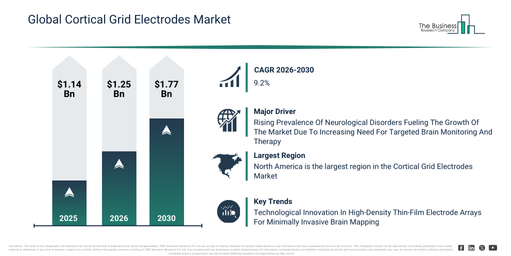
    Cortical Grid Electrodes Market Set To Grow From $1.25 Billion In 2026 To $1.77 Billion By 2030 At A CAGR Of 9.2%

    Enhanced with market attractiveness analysis, total addressable market evaluation, company benchmarking matrices, interactive Excel dashboards, expanded supply chain intelligence, emerging startup coverage, and detailed product insights, The Business Research Company’s 2026 market reports deliver more actionable and strategically valuable research.

    Cortical Grid Electrodes Market Expansion Outlook: What Revenue Opportunities Lie Ahead?

    The cortical grid electrodes market has shown significant growth in recent years. This market is anticipated to expand from $1.14 billion in 2025 to $1.25 billion in 2026, achieving a compound annual growth rate (CAGR) of 9.4%. The observed growth during the historical period is attributable to increasing demand for neuroprosthetics, growing funding for neurological research, rising prevalence of neurological disorders, expanding applications in brain-computer interfaces, and technological advancements in electrodes.

    The market for cortical grid electrodes is anticipated to experience substantial expansion over the upcoming years. This market is projected to reach a valuation of $1.77 billion by 2030, exhibiting a compound annual growth rate (CAGR) of 9.2%. The projected growth during this period stems from factors such as an escalating need for neurological interventions, expanding uses in brain-related studies, augmented financial commitments to research and development, broadening clinical implementation, and a heightened emphasis on customized neuromodulation solutions. Key trends anticipated during the forecast encompass technological progress in making electrodes smaller, novel approaches in conductive polymer substances, the evolution of high-density electrode configurations, ongoing research and development in AI-driven brain mapping techniques, and improvements in integration with neurosurgical systems.

    Download A Free Sample Report For Comprehensive Market Insights:

    https://www.thebusinessresearchcompany.com/sample.aspx?id=30564&type=smp&utm_source=Blogs&utm_medium=Paid&utm_campaign=Jul_PR

    Cortical Grid Electrodes Market Industry Drivers: What Is Driving Revenue Growth?

    The increasing incidence of neurological conditions is projected to drive the expansion of the cortical grid electrodes market. These medical conditions impact the brain, spinal cord, and nerves, resulting in various symptoms like cognitive, motor, and sensory deficits. The growing occurrence of neurological disorders is tied to an aging demographic, as advanced age progressively diminishes neuronal capabilities, reduces brain adaptability, and heightens oxidative stress, thereby fostering the onset and progression of these ailments. Cortical grid electrodes assist in managing neurological disorders by allowing accurate monitoring and stimulation of brain activity to restore or adjust neural function. They enhance patient results through supporting focused treatments for conditions such as epilepsy, movement disorders, and chronic pain. For instance, in July 2024, the National Health Service, a UK-based government agency, reported 487,432 patients diagnosed with dementia (a progressive brain disorder affecting memory, thinking, and daily activities) by June 30, 2024, marking an increase of 3,155 cases from May 31, 2024. Consequently, the rising prevalence of neurological disorders is propelling the growth of the cortical grid electrodes market.

    Cortical Grid Electrodes Market Segment Performance And Strategic Opportunities

    The cortical grid electrodes market covered in this report is segmented –

    1) By Product: Epidural Cortical Grid Electrodes, High-Density Cortical Grid Electrodes, Flexible Cortical Grid Electrodes, Penetrating Cortical Grid Electrodes, Multi-Contact Cortical Grid Electrodes, Customized Cortical Grid Electrodes, Reusable Cortical Grid Electrodes

    2) By Material Type: Silicone, Polyimide, Metal, Conductive Polymer

    3) By Electrode Configuration: Strip Electrode, Grid Electrode, Cylindrical Electrode, Custom Designs

    4) By Application: Neuroprosthetics, Brain Mapping, Seizure Monitoring, Research

    5) By End User: Hospitals, Research Institutions, Neurology Clinics, Educational Institutions

    Subsegments:

    1) By Epidural Cortical Grid Electrodes: Single Contact Epidural Electrode, Multi Contact Epidural Electrode, Strip Epidural Electrode, Square Grid Epidural Electrode, Rectangular Grid Epidural Electrode

    2) By High Density Cortical Grid Electrodes: Ultra High Density Electrode, Dense Array Electrode, Small Contact Spacing Electrode, High Resolution Electrode, Compact High Density Electrode

    3) By Flexible Cortical Grid Electrodes: Silicone Based Flexible Electrode, Polyimide Flexible Electrode, Stretchable Flexible Electrode, Conformable Flexible Electrode, Thin Film Flexible Electrode

    4) By Penetrating Cortical Grid Electrodes: Microwire Penetrating Electrode, Depth Penetrating Electrode, Multi Shank Penetrating Electrode, Linear Array Penetrating Electrode, Three Dimensional Penetrating Electrode

    5) By Multi Contact Cortical Grid Electrodes: Double Contact Electrode, Triple Contact Electrode, Quadruple Contact Electrode, Multiple Contact Strip Electrode, High Contact Count Electrode

    6) By Customized Cortical Grid Electrodes: Patient Specific Electrode, Tailor Made Electrode, Bespoke Size Electrode, Custom Shape Electrode, Special Design Electrode

    7) By Reusable Cortical Grid Electrodes: Sterilizable Reusable Electrode, Durable Reusable Electrode, Long Life Reusable Electrode, Multiple Use Reusable Electrode, Washable Reusable Electrode

    #Cortical Grid Electrodes Market Growth Trends: What Is Influencing The Future Outlook?

    Leading companies in the cortical grid electrodes market are concentrating on developing advanced products, such as high-density thin-film electrode arrays, to improve the resolution and safety of neural recording. These high-density thin-film electrode arrays utilize flexible, biocompatible substrates like polyimide to create micro-electrode arrays that conform closely to the brain’s surface, enabling the recording of thousands of channels of neural data with minimal tissue displacement and reversibility, thereby overcoming the limitations of traditional, rigid subdural grids. For instance, in March 2025, Precision Neuroscience Corporation, a US-based brain-computer interface company, obtained Food and Drug Administration (FDA) 510(k) clearance for its Layer 7-T (Layer 7 Cortical Interface). This device is a high-density thin-film 1024-channel cortical electrode array designed for temporary use (less than 30 days) to record, monitor, and stimulate electrical signals on the brain’s surface. The system allows surgeons to map brain activity with exceptional resolution using a minimally invasive micro-slit technique, aiding in the preservation of eloquent tissue during neurosurgical procedures.

    Cortical Grid Electrodes Market Key Players: Which Companies Shape Industry Competition?

    Major companies operating in the cortical grid electrodes market are Abbott Laboratories, Medtronic plc, Integra Life Sciences Corporation, Nihon Kohden Corporation, Natus Medical Incorporated, NeuroPace Inc., Blackrock Neurotech LLC, Cadwell Industries Inc., Precision Neuroscience Corporation, AD-tech Medical Instrument, Inomed Medizintechnik Gmbh, PMT Corporation, Ripple Neuro LLC, Neuroone Medical Technology corporation, Plexon Inc., Cortec Gmbh, Microprobes for Lifesciences Inc, Dixi Medical SAS, Cortera Neurotechnologies Inc., Neurosoft Bioelectronics Ltd., Alpha Omega Engineering Ltd.

    Access The Complete Cortical Grid Electrodes Market Report:

    https://www.thebusinessresearchcompany.com/report/cortical-grid-electrodes-market-report?utm_source=Blogs&utm_medium=Paid&utm_campaign=Jul_PR

    Cortical Grid Electrodes Market Largest Region By Revenue And Market Share

    North America was the largest region in the cortical grid electrodes market in 2025. Asia-Pacific is expected to be the fastest-growing region in the forecast period. The regions covered in the cortical grid electrodes market report are Asia-Pacific, South East Asia, Western Europe, Eastern Europe, North America, South America, Middle East, Africa.

    Get in touch with us:

    The Business Research Company: https://www.thebusinessresearchcompany.com/

    Americas: +1 310-496-7795

    Asia: +44 7882 955267 & +91 8897263534

    Europe: +44 7882 955267

    Email us at: marketing@tbrc.info

    Follow us on:

    LinkedIn: https://in.linkedin.com/company/the-business-research-company

    YouTube: https://www.youtube.com/channel/UC24_fI0rV8cR5DxlCpgmyFQ

    Global Market Model: https://www.thebusinessresearchcompany.com/global-market-model
  • Cloud-Connected Automated Intravenous (IV) Compounding Market Growth Is Accelerating As Industry Transformation Continues

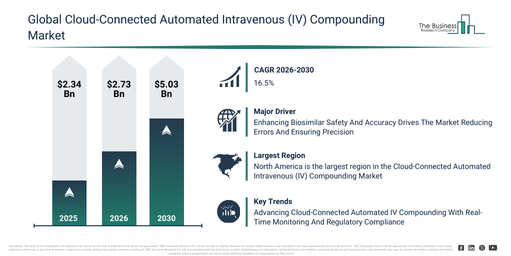
    Cloud-Connected Automated Intravenous (IV) Compounding Market Growth Is Accelerating As Industry Transformation Continues

    Enhanced with market attractiveness analysis, total addressable market evaluation, company benchmarking matrices, interactive Excel dashboards, expanded supply chain intelligence, emerging startup coverage, and detailed product insights, The Business Research Company’s 2026 market reports deliver more actionable and strategically valuable research.

    Cloud-Connected Automated Intravenous (IV) Compounding Market Forecast: What Market Value Is Expected By 2030?

    The cloud-connected automated intravenous (IV) compounding market has expanded significantly over recent years. Its value is forecast to increase from $2.34 billion in 2025 to $2.73 billion in 2026, demonstrating a compound annual growth rate (CAGR) of 16.8%. Historically, this expansion has been driven by several factors, including the rising adoption of automated IV compounding systems, an increasing demand for medication safety and accuracy, greater hospital investments in pharmacy automation, the expansion of oncology and specialized treatment centers, and a heightened awareness of sterile compounding standards.

    The cloud-connected automated intravenous (IV) compounding market is projected to experience substantial growth in the upcoming years. It is anticipated to expand to $5.03 billion by 2030, demonstrating a compound annual growth rate (CAGR) of 16.5%. This growth throughout the forecast period can be attributed to the rising integration of cloud-based monitoring solutions, the advancing development of AI-powered error detection systems, increased investment in compact and modular robotic designs, the expansion of homecare and decentralized pharmacy applications, and a heightened focus on interoperability and data analytics platforms. Prominent trends for the forecast period include technological advancements in cloud-connected workflow management, innovations in AI and machine learning for predictive compounding, the creation of smart consumables and sensors, dedicated research and development in oncology-specific automation solutions, and strategic investment in scalable and remote monitoring deployment models.

    Download A Free Sample Report For Comprehensive Market Insights:

    https://www.thebusinessresearchcompany.com/sample.aspx?id=30558&type=smp&utm_source=Blogs&utm_medium=Paid&utm_campaign=Jul_PR

    Cloud-Connected Automated Intravenous (IV) Compounding Market Expansion Supported By Key Demand Factors

    The escalating need for biosimilars is projected to fuel the expansion of the cloud-connected automated IV compounding market moving forward. Biosimilars are biologic medical products that exhibit high similarity to an already approved reference biologic, demonstrating no clinically significant distinctions in terms of safety, purity, or efficacy. The growing requirement for biosimilars is attributed to their greater cost-effectiveness compared to branded biologics. Automated IV compounding enhances the secure and precise preparation of biosimilars by minimizing human error, guaranteeing accurate dosing, and preserving product integrity. For instance, in January 2023, according to Cardinal Health Inc., a US-based healthcare company, the U.S. had 33 FDA-approved biosimilar products as of January 2022, with 21 available on the market, and by 2023, this figure rose to 40 FDA-approved biosimilars, 25 of which were commercially available. Consequently, the rising demand for biosimilars is a key impetus for the cloud-connected automated IV compounding market.

    Cloud-Connected Automated Intravenous (IV) Compounding Market Segment Landscape: Which Areas Lead Market Development?

    The cloud-connected automated intravenous (iv) compounding market covered in this report is segmented –

    1) By Product Type: Robotic Compounding Systems, Software Solutions, Consumables

    2) By Deployment Mode: Cloud-Hosted Deployment, Hybrid Cloud Deployment, On-Premise With Cloud Integration

    3) By Application: Hospital Pharmacies, Oncology Centers, Homecare Settings, Other Applications

    4) By End User: Hospitals, Clinics, Ambulatory Surgical Centers, Other End-Users

    Subsegments:

    1) By Robotic Compounding Systems: Automated Intravenous Preparation Robots, Modular Robotic Compounding Units, Sterile Compounding Robotic Arms, Integrated Safety Monitoring Systems

    2) By Software Solutions: Workflow Management Software, Inventory Management Software, Dose Verification Software, Remote Monitoring And Analytics Software

    3) By Consumables: Sterile Syringes, Intravenous Bags, Vials And Ampoules, Filters And Tubing Sets, Protective Personal Equipment

    Cloud-Connected Automated Intravenous (IV) Compounding Market Growth Trends Influencing Competitive Dynamics

    Leading companies within the cloud-connected automated intravenous (IV) compounding market are prioritizing enhancements to automated systems, such as cloud-enabled monitoring and compliance tracking, to boost sterile preparation accuracy, decrease medication errors, and strengthen regulatory adherence. Cloud-enabled monitoring and compliance tracking involves integrated software and hardware features that allow healthcare facilities to access real-time data on IV compounding processes, maintain electronic audit trails, and ensure adherence to sterility and quality standards across various sites. As an illustration, in May 2025, the United States Food and Drug Administration (FDA), a US-based regulatory authority, highlighted updated guidance and enforcement initiatives under section 503B of the Federal Food, Drug, and Cosmetic Act, which mandates outsourcing facilities to maintain rigorous quality control and documentation for compounded sterile products. These directives promote the adoption of automated IV compounding systems equipped with cloud-based monitoring, electronic record-keeping, and remote quality oversight functionalities.

    Cloud-Connected Automated Intravenous (IV) Compounding Market Industry Leaders And Market Competition

    Major companies operating in the cloud-connected automated intravenous (iv) compounding market are McKesson Corporation, Becton Dickinson and Company, Baxter International Inc., B. Braun Melsungen SE, Fresenius Kabi AG, Grifols S.A., ICU Medical Inc., Syntegon Technology GmbH, Omnicell Inc., Marchesini Group S.p.A., Swisslog Healthcare, ScriptPro LLC, Parata Systems LLC, ARxIUM Inc., Equashield LLC, Health Robotics S.r.l., Rommelag AG, NewIcon Oy, DoseEdge, Aesynt Inc.

    Access The Complete Cloud-Connected Automated Intravenous (IV) Compounding Market Report:

    https://www.thebusinessresearchcompany.com/report/cloud-connected-automated-intravenous-iv-compounding-market-report?utm_source=Blogs&utm_medium=Paid&utm_campaign=Jul_PR

    Cloud-Connected Automated Intravenous (IV) Compounding Market Regional Outlook: Where Are The Largest Opportunities Located?

    North America was the largest region in the cloud-connected automated intravenous (IV) compounding market in 2025. Asia-Pacific is expected to be the fastest-growing region in the forecast period. The regions covered in the cloud-connected automated intravenous (iv) compounding market report are Asia-Pacific, South East Asia, Western Europe, Eastern Europe, North America, South America, Middle East, Africa.

    Get in touch with us:

    The Business Research Company: https://www.thebusinessresearchcompany.com/

    Americas: +1 310-496-7795

    Asia: +44 7882 955267 & +91 8897263534

    Europe: +44 7882 955267

    Email us at: marketing@tbrc.info

    Follow us on:

    LinkedIn: https://in.linkedin.com/company/the-business-research-company

    YouTube: https://www.youtube.com/channel/UC24_fI0rV8cR5DxlCpgmyFQ

    Global Market Model: https://www.thebusinessresearchcompany.com/global-market-model
  • Cell Therapy Manufacturing Automation Market Growth Outlook Reveals A CAGR Of 14.5% And A Market Value Of $3.58 Billion By 2030

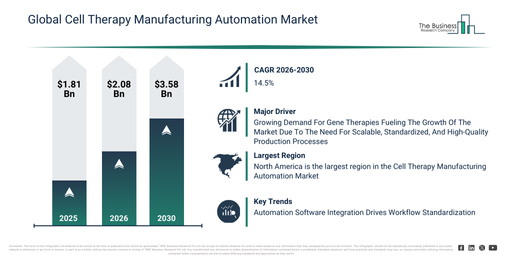
    Cell Therapy Manufacturing Automation Market Growth Outlook Reveals A CAGR Of 14.5% And A Market Value Of $3.58 Billion By 2030

    Through market attractiveness analysis, total addressable market evaluation, company benchmarking matrices, interactive Excel dashboards, expanded supply chain intelligence, emerging startup coverage, and detailed product insights, The Business Research Company’s 2026 market reports provide more actionable and strategically valuable research.

    Cell Therapy Manufacturing Automation Market Value Expansion And Long-Term Growth Outlook

    The cell therapy manufacturing market’s size has expanded swiftly in recent years. It is anticipated to grow from $1.81 billion in 2025 to $2.08 billion by 2026, at a compound annual growth rate (CAGR) of 14.8%. This historical expansion can be attributed to several factors, including heightened cell-processing demand, an increasing need for manufacturing scalability, the rising adoption of automated bioreactors, the expansion of GMP-compliant workflows, and a greater emphasis on production consistency.

    The cell therapy manufacturing market is projected to experience swift expansion in the coming years, with its size set to reach $3.58 billion by 2030, exhibiting a compound annual growth rate (CAGR) of 14.5%. During the forecast period, this growth is anticipated due to several factors, including the increasing volume of personalized therapies, greater investment in automation platforms, a growing demand for contamination-free workflows, the expansion of large-scale commercial manufacturing, and more stringent regulatory quality requirements. Key trends expected over this period encompass technological advancements in closed systems, process innovations driven by automation, the evolution of integrated workflows, research into real-time analytics, and ongoing research and development in advanced robotics.

    Download A Free Sample Report For Comprehensive Market Insights:

    https://www.thebusinessresearchcompany.com/sample.aspx?id=30551&type=smp&utm_source=Blogs&utm_medium=Paid&utm_campaign=Jul_PR

    #Cell Therapy Manufacturing Automation Market Growth Factors: Which Forces Are Supporting Market Expansion?

    The increasing need for gene therapies is anticipated to drive the expansion of the cell therapy manufacturing automation market in the future. Gene therapy is defined as a medical approach where faulty genes are altered or substituted to address or avert illnesses. This rising demand for gene therapy stems from progress in genetic sequencing and diagnostic methods, allowing for accurate identification of disease-causing genes to enable specific treatments. Cell therapy manufacturing automation aids gene therapy by simplifying and standardizing intricate production procedures, guaranteeing uniform quality and scalability. It improves therapeutic development through error reduction, increased efficiency, and the facilitation of dependable, large-scale production of gene-modified cells. As an illustration, in December 2024, the American Society of Gene & Cell Therapy (ASGCT), a US-based non-profit medical and scientific organization, reported that the Food and Drug Administration (FDA) approved six gene therapy products in 2023, an increase from five approvals in 2022. Consequently, the expanding demand for gene therapies is fueling the growth of the cell therapy manufacturing automation market.

    Cell Therapy Manufacturing Automation Market Segment Performance And Strategic Opportunities

    The cell therapy manufacturing automation market covered in this report is segmented –

    1) By Component: Hardware, Software, Services

    2) By Cell Type: T-Cells, Stem Cells, Natural Killer (NK) Cells, Other Cell Types

    3) By Process: Upstream Processing, Downstream Processing, Fill-Finish, Quality Control, Other Processes

    4) By End-User: Pharmaceutical And Biotechnology Companies, Research Institutes, Contract Manufacturing Organizations (CMOs), Other End-Users

    Subsegments:

    1) By Hardware: Automated Bioreactor Systems, Robotic Handling Platforms, Automated Separation Devices, Automated Expansion Units, In Line Quality Analyzers

    2) By Software: Electronic Batch Record Software, Manufacturing Execution Software, Workflow Management Software, Data Monitoring Software, Compliance Management Software

    3) By Services: Installation Services, Maintenance Services, Validation Services, Training Services, Technical Support Services

    Cell Therapy Manufacturing Automation Market Industry Trends: What Changes Are Reshaping Demand?

    Leading companies active in the cell therapy manufacturing automation market are concentrating on creating sophisticated solutions, like automated cell therapy systems, to consolidate multi-stage manufacturing processes into unified, validated digital structures that diminish manual involvement and bolster regulatory adherence. An automated cell therapy system denotes a readily available, validated automation offering that electronically connects various cell therapy instruments, such as magnetic separation, centrifugation, electroporation, and incubators, into a single control panel. This integration ensures traceability, repeatability, and cGMP compliance across all production stages. As an illustration, in January 2024, Thermo Fisher Scientific Inc., a US-based life sciences enterprise, unveiled Gibco CTS Cellmation Software, an unprecedented automation solution. This is a unique, off-the-shelf validated software system designed to digitally link instruments from Thermo Fisher’s extensive cell therapy portfolio to automate manufacturing workflows. It incorporates a pre-validated automation infrastructure powered by Emerson’s DeltaV technology, facilitating seamless integration and command over multiple instruments without the need for costly bespoke projects. Additionally, it establishes traceable and repeatable workflows that help guarantee compliance with cGMP and data security regulations, thus reducing manual touchpoints for developers of cell and gene therapies.

    Cell Therapy Manufacturing Automation Market Key Players: Which Companies Shape Industry Competition?

    Major companies operating in the cell therapy manufacturing automation market are Thermo Fisher Scientific Inc., Merck KGaA, Fujifilm Holdings Corporation, Corning Incorporated, Lonza Group AG, Cytiva, WuXi AppTecCo. Ltd., Hitachi High Technologies Corp., CatalentInc., Sartorius AG, Beckman Coulter Life Sciences, Terumo BCT Inc., Miltenyi Biotec, Oxford Biomedica Plc, National Resilience LLC, Minaris Regenerative Medicine LLC, Tulip Interfaces Inc., Invetech Pty Ltd., BlueRock Therapeutics LLC, Cellares Inc., Ascential Medical & Life Sciences, Cell and Gene Therapy Catapult

    Access The Complete Cell Therapy Manufacturing Automation Market Report:

    https://www.thebusinessresearchcompany.com/report/cell-therapy-manufacturing-automation-market-report?utm_source=Blogs&utm_medium=Paid&utm_campaign=Jul_PR

    Cell Therapy Manufacturing Automation Market Geographic Analysis: Where Is Demand Growing The Fastest?

    North America was the largest region in the cell therapy manufacturing market in 2025. Asia-Pacific is expected to be the fastest-growing region in the forecast period. The regions covered in the cell therapy manufacturing automation market report are Asia-Pacific, South East Asia, Western Europe, Eastern Europe, North America, South America, Middle East, Africa.

    Get in touch with us:

    The Business Research Company: https://www.thebusinessresearchcompany.com/

    Americas: +1 310-496-7795

    Asia: +44 7882 955267 & +91 8897263534

    Europe: +44 7882 955267

    Email us at: marketing@tbrc.info

    Follow us on:

    LinkedIn: https://in.linkedin.com/company/the-business-research-company

    YouTube: https://www.youtube.com/channel/UC24_fI0rV8cR5DxlCpgmyFQ

    Global Market Model: https://www.thebusinessresearchcompany.com/global-market-model
  • Cell Therapy Bioreactors Market Forecast Highlights Expansion From $1.44 Billion To $2.61 Billion Through 2030

    Cell Therapy Bioreactors Market Forecast Highlights Expansion From $1.44 Billion To $2.61 Billion Through 2030

    Delivering more actionable and strategically valuable research, The Business Research Company’s 2026 market reports feature market attractiveness analysis, total addressable market evaluation, company benchmarking matrices, interactive Excel dashboards, expanded supply chain intelligence, emerging startup coverage, and detailed product insights.

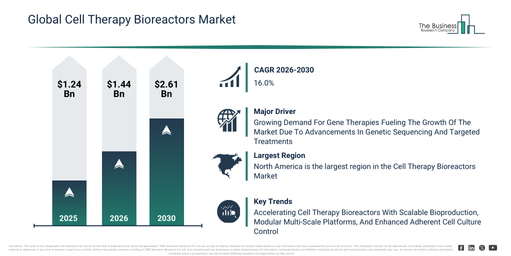
    Cell Therapy Bioreactors Market Expected To Reach $2.61 Billion By 2030 At 16% CAGR

    The cell therapy bioreactors market has experienced rapid growth in recent years. Its size is projected to increase from $1.24 billion in 2025 to $1.44 billion in 2026, reflecting a compound annual growth rate (CAGR) of 16.3%. This expansion in the preceding period can be linked to a rising demand for cell-based therapies, increasing investment in regenerative medicine, the growing adoption of automated cell culture systems, the ongoing expansion of stem cell research, and an escalating need for scalable cell production.

    The cell therapy bioreactors market is anticipated to experience significant expansion over the coming years. By 2030, its value is projected to reach $2.61 billion, demonstrating a compound annual growth rate (CAGR) of 16.0%. This growth during the forecast period is attributable to several factors, including the increasing integration of cell therapy bioreactors in manufacturing processes, greater investment in sophisticated bioprocessing technologies, an enhanced emphasis on optimizing processes and ensuring quality control, the broadening scope of clinical trials for cell therapies, and the escalating need for personalized medicine solutions. Key trends anticipated in this period encompass improvements in automated cell culture techniques, novel designs for bioreactors to boost scalability, progress in platforms for stem cell expansion, ongoing research and development into systems for process monitoring and control, and the advent of integrated manufacturing solutions for cell therapy.

    Download A Free Sample Report For Comprehensive Market Insights:

    https://www.thebusinessresearchcompany.com/sample.aspx?id=30550&type=smp&utm_source=Blogs&utm_medium=Paid&utm_campaign=Jul_PR

    Cell Therapy Bioreactors Market Demand Drivers: What Is Fueling Industry Growth?

    The expanding need for gene therapies is anticipated to boost the growth of the cell therapy bioreactors market in the coming years. Gene therapy, a medical approach, involves altering or substituting faulty genes to address or avert illnesses. This heightened demand for gene therapy stems from progress in genetic sequencing and diagnostic tools, which facilitate the accurate detection of disease-causing genes for precise treatments. Cell therapy bioreactors expedite gene therapies by offering ideal conditions for the cultivation, alteration, and proliferation of therapeutic cells. These bioreactors improve treatment advancement and scale-up by guaranteeing uniform cell quality, enhancing efficiency, and aiding quicker creation of customized gene-based therapies. For example, in December 2024, the American Society of Gene & Cell Therapy (ASGCT), a US-based non-profit medical and scientific organization, reported that the Food and Drug Administration (FDA) sanctioned 6 gene therapy products in 2023, an increase from 5 approvals in 2022. Consequently, the rising demand for gene therapies is fueling the expansion of the cell therapy bioreactors market. Increasing Prevalence Of Chronic And Rare Diseases Fueling The Growth Of The Market Due To Rising Demand For Advanced Cell-Based Therapies

    #Cell Therapy Bioreactors Market Segment Landscape And Growth Potential

    The cell therapy bioreactors market covered in this report is segmented –

    1) By Product: Stirred Tank Bioreactors, Wave-Induced Bioreactors, Fixed-Bed Bioreactors, Other Products

    2) By Cell Type: Stem Cells, Immune Cells, Differentiated Cells, Other Cell Types

    3) By Material: Single-Use Bioreactors, Reusable Bioreactors

    4) By Application: Research, Clinical, Commercial Production

    5) By End-Users: Pharmaceutical And Biotechnology Companies, Academic And Research Institutes, Contract Manufacturing Organizations (CMOs), Other End Users

    Subsegments:

    1) By Stirred Tank Bioreactors: Stainless Steel Stirred Tank Systems, Glass Stirred Tank Systems, Single Use Stirred Tank Systems, Automated Stirred Tank Systems

    2) By Wave Induced Bioreactors: Rocking Motion Bioreactor Systems, Single Use Wave Bag Systems, Modular Wave Platform Systems, Automated Wave Based Culture Systems

    3) By Fixed Bed Bioreactors: Packed Bed Bioreactor Systems, Scaffold Based Fixed Bed Systems, Microcarrier Based Fixed Bed Systems, Perfusion Enabled Fixed Bed Systems

    4) By Other Products: Hollow Fiber Bioreactor Systems, Perfusion Bioreactor Systems, Rotary Cell Culture Systems, Microfluidic Bioreactor Systems

    Cell Therapy Bioreactors Market Innovation Trends: Which Developments Are Transforming The Industry?

    Companies prominent in the cell therapy bioreactors market are concentrating on creating advanced platforms, like modular, multi-scale bioreactor platforms, with the goal of enhancing process scalability, cell expansion efficiency, and consistency across all stages, from initial research to commercial manufacturing. Such a modular multi-scale bioreactor platform is defined as an adaptable system that allows researchers to carry out small-scale experiments concurrently, refine conditions, and transition smoothly to mid- or large-scale production, all while preserving consistent culture environments and achieving high yields. As an illustration, in July 2024, EXO-Harvest, a biomanufacturing technology firm based in Belgium, introduced its innovative multi-scale bioreactor platform designed for the effective manufacturing of mesenchymal stem cells and extracellular vesicles, thereby facilitating scalable adherent cell culture from the discovery phase to industrial production. This platform encompasses small-scale multi-bioreactor screening alongside mid/large-scale systems, all structured to quicken development, decrease expenditures, and provide high-quality cultures under accurate environmental regulation.

    Cell Therapy Bioreactors Market Competitive Landscape: Who Are The Leading Companies?

    Major companies operating in the cell therapy bioreactors market are Thermo Fisher Scientific Inc., Merck KGaA, FUJIFILM Holdings Corporation, Danaher Corporation, Corning Incorporated, Lonza Group, Terumo Corporation, Sartorius AG, Eppendorf AG, Miltenyi Biotec B.V. & Co. KG, PBS Biotech Inc., Meissner Filtration Products Inc., Infors AG, Bionet Engineering & Technologies Pvt. Ltd., Wilson Wolf Manufacturing Corporation, Synthecon Incorporated, Cellexus Limited, Celartia Inc., Able Biott Inc., CelVivo ApS

    Access The Complete Cell Therapy Bioreactors Market Report:

    https://www.thebusinessresearchcompany.com/report/cell-therapy-bioreactors-market-report?utm_source=Blogs&utm_medium=Paid&utm_campaign=Jul_PR

    Cell Therapy Bioreactors Market Global Footprint: Which Region Holds Market Leadership?

    North America was the largest region in the cell therapy bioreactors market in 2025. Asia-Pacific is expected to be the fastest-growing region in the forecast period. The regions covered in the cell therapy bioreactors market report are Asia-Pacific, South East Asia, Western Europe, Eastern Europe, North America, South America, Middle East, Africa.

    Get in touch with us:

    The Business Research Company: https://www.thebusinessresearchcompany.com/

    Americas: +1 310-496-7795

    Asia: +44 7882 955267 & +91 8897263534

    Europe: +44 7882 955267

    Email us at: marketing@tbrc.info

    Follow us on:

    LinkedIn: https://in.linkedin.com/company/the-business-research-company

    YouTube: https://www.youtube.com/channel/UC24_fI0rV8cR5DxlCpgmyFQ

    Global Market Model: https://www.thebusinessresearchcompany.com/global-market-model

  • Cell Therapy Bioreactors Market Forecast Highlights Expansion From $1.44 Billion To $2.61 Billion Through 2030

    Delivering more actionable and strategically valuable research, The Business Research Company’s 2026 market reports feature market attractiveness analysis, total addressable market evaluation, company benchmarking matrices, interactive Excel dashboards, expanded supply chain intelligence, emerging startup coverage, and detailed product insights.

    Cell Therapy Bioreactors Market Expected To Reach $2.61 Billion By 2030 At 16% CAGR

    The cell therapy bioreactors market has experienced rapid growth in recent years. Its size is projected to increase from $1.24 billion in 2025 to $1.44 billion in 2026, reflecting a compound annual growth rate (CAGR) of 16.3%. This expansion in the preceding period can be linked to a rising demand for cell-based therapies, increasing investment in regenerative medicine, the growing adoption of automated cell culture systems, the ongoing expansion of stem cell research, and an escalating need for scalable cell production.

    The cell therapy bioreactors market is anticipated to experience significant expansion over the coming years. By 2030, its value is projected to reach $2.61 billion, demonstrating a compound annual growth rate (CAGR) of 16.0%. This growth during the forecast period is attributable to several factors, including the increasing integration of cell therapy bioreactors in manufacturing processes, greater investment in sophisticated bioprocessing technologies, an enhanced emphasis on optimizing processes and ensuring quality control, the broadening scope of clinical trials for cell therapies, and the escalating need for personalized medicine solutions. Key trends anticipated in this period encompass improvements in automated cell culture techniques, novel designs for bioreactors to boost scalability, progress in platforms for stem cell expansion, ongoing research and development into systems for process monitoring and control, and the advent of integrated manufacturing solutions for cell therapy.

    Download A Free Sample Report For Comprehensive Market Insights:

    https://www.thebusinessresearchcompany.com/sample.aspx?id=30550&type=smp&utm_source=Blogs&utm_medium=Paid&utm_campaign=Jul_PR

    Cell Therapy Bioreactors Market Demand Drivers: What Is Fueling Industry Growth?

    The expanding need for gene therapies is anticipated to boost the growth of the cell therapy bioreactors market in the coming years. Gene therapy, a medical approach, involves altering or substituting faulty genes to address or avert illnesses. This heightened demand for gene therapy stems from progress in genetic sequencing and diagnostic tools, which facilitate the accurate detection of disease-causing genes for precise treatments. Cell therapy bioreactors expedite gene therapies by offering ideal conditions for the cultivation, alteration, and proliferation of therapeutic cells. These bioreactors improve treatment advancement and scale-up by guaranteeing uniform cell quality, enhancing efficiency, and aiding quicker creation of customized gene-based therapies. For example, in December 2024, the American Society of Gene & Cell Therapy (ASGCT), a US-based non-profit medical and scientific organization, reported that the Food and Drug Administration (FDA) sanctioned 6 gene therapy products in 2023, an increase from 5 approvals in 2022. Consequently, the rising demand for gene therapies is fueling the expansion of the cell therapy bioreactors market. Increasing Prevalence Of Chronic And Rare Diseases Fueling The Growth Of The Market Due To Rising Demand For Advanced Cell-Based Therapies

    #Cell Therapy Bioreactors Market Segment Landscape And Growth Potential

    The cell therapy bioreactors market covered in this report is segmented –

    1) By Product: Stirred Tank Bioreactors, Wave-Induced Bioreactors, Fixed-Bed Bioreactors, Other Products

    2) By Cell Type: Stem Cells, Immune Cells, Differentiated Cells, Other Cell Types

    3) By Material: Single-Use Bioreactors, Reusable Bioreactors

    4) By Application: Research, Clinical, Commercial Production

    5) By End-Users: Pharmaceutical And Biotechnology Companies, Academic And Research Institutes, Contract Manufacturing Organizations (CMOs), Other End Users

    Subsegments:

    1) By Stirred Tank Bioreactors: Stainless Steel Stirred Tank Systems, Glass Stirred Tank Systems, Single Use Stirred Tank Systems, Automated Stirred Tank Systems

    2) By Wave Induced Bioreactors: Rocking Motion Bioreactor Systems, Single Use Wave Bag Systems, Modular Wave Platform Systems, Automated Wave Based Culture Systems

    3) By Fixed Bed Bioreactors: Packed Bed Bioreactor Systems, Scaffold Based Fixed Bed Systems, Microcarrier Based Fixed Bed Systems, Perfusion Enabled Fixed Bed Systems

    4) By Other Products: Hollow Fiber Bioreactor Systems, Perfusion Bioreactor Systems, Rotary Cell Culture Systems, Microfluidic Bioreactor Systems

    Cell Therapy Bioreactors Market Innovation Trends: Which Developments Are Transforming The Industry?

    Companies prominent in the cell therapy bioreactors market are concentrating on creating advanced platforms, like modular, multi-scale bioreactor platforms, with the goal of enhancing process scalability, cell expansion efficiency, and consistency across all stages, from initial research to commercial manufacturing. Such a modular multi-scale bioreactor platform is defined as an adaptable system that allows researchers to carry out small-scale experiments concurrently, refine conditions, and transition smoothly to mid- or large-scale production, all while preserving consistent culture environments and achieving high yields. As an illustration, in July 2024, EXO-Harvest, a biomanufacturing technology firm based in Belgium, introduced its innovative multi-scale bioreactor platform designed for the effective manufacturing of mesenchymal stem cells and extracellular vesicles, thereby facilitating scalable adherent cell culture from the discovery phase to industrial production. This platform encompasses small-scale multi-bioreactor screening alongside mid/large-scale systems, all structured to quicken development, decrease expenditures, and provide high-quality cultures under accurate environmental regulation.

    Cell Therapy Bioreactors Market Competitive Landscape: Who Are The Leading Companies?

    Major companies operating in the cell therapy bioreactors market are Thermo Fisher Scientific Inc., Merck KGaA, FUJIFILM Holdings Corporation, Danaher Corporation, Corning Incorporated, Lonza Group, Terumo Corporation, Sartorius AG, Eppendorf AG, Miltenyi Biotec B.V. & Co. KG, PBS Biotech Inc., Meissner Filtration Products Inc., Infors AG, Bionet Engineering & Technologies Pvt. Ltd., Wilson Wolf Manufacturing Corporation, Synthecon Incorporated, Cellexus Limited, Celartia Inc., Able Biott Inc., CelVivo ApS

    Access The Complete Cell Therapy Bioreactors Market Report:

    https://www.thebusinessresearchcompany.com/report/cell-therapy-bioreactors-market-report?utm_source=Blogs&utm_medium=Paid&utm_campaign=Jul_PR

    Cell Therapy Bioreactors Market Global Footprint: Which Region Holds Market Leadership?

    North America was the largest region in the cell therapy bioreactors market in 2025. Asia-Pacific is expected to be the fastest-growing region in the forecast period. The regions covered in the cell therapy bioreactors market report are Asia-Pacific, South East Asia, Western Europe, Eastern Europe, North America, South America, Middle East, Africa.

    Get in touch with us:

    The Business Research Company: https://www.thebusinessresearchcompany.com/

    Americas: +1 310-496-7795

    Asia: +44 7882 955267 & +91 8897263534

    Europe: +44 7882 955267

    Email us at: marketing@tbrc.info

    Follow us on:

    LinkedIn: https://in.linkedin.com/company/the-business-research-company

    YouTube: https://www.youtube.com/channel/UC24_fI0rV8cR5DxlCpgmyFQ

    Global Market Model: https://www.thebusinessresearchcompany.com/global-market-model