Category: Medical Equipment

  • Artificial Intelligence (AI) Brain Magnetic Resonance Imaging (MRI) Lesion Detection Market Size Projected To Increase From $2.15 Billion To $5.75 Billion During The Forecast Period

    Artificial Intelligence (AI) Brain Magnetic Resonance Imaging (MRI) Lesion Detection Market Size Projected To Increase From $2.15 Billion To $5.75 Billion During The Forecast Period

    Enhanced with market attractiveness analysis, total addressable market evaluation, company benchmarking matrices, interactive Excel dashboards, expanded supply chain intelligence, emerging startup coverage, and detailed product insights, The Business Research Company’s 2026 market reports deliver more actionable and strategically valuable research.

    Artificial Intelligence (AI) Brain Magnetic Resonance Imaging (MRI) Lesion Detection Market CAGR Analysis And Future Market Development

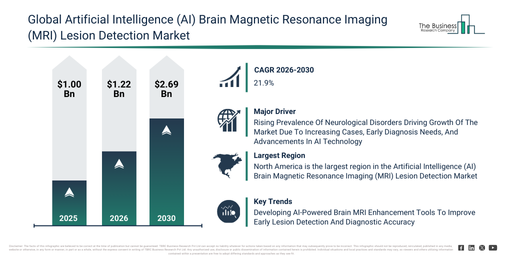
    The market size for AI brain MRI lesion detection has experienced substantial growth in recent years. It is projected to expand from $1.00 billion in 2025 to $1.22 billion in 2026, demonstrating a compound annual growth rate (CAGR) of 22.2%. This historical growth can be linked to the increased utilization of MRI in neurology, the rising adoption of digital radiology, a surge in the incidence of brain tumors and stroke, expanding hospital investments in advanced imaging systems, and the growing necessity for early disease diagnosis.

    The AI brain MRI lesion detection market is anticipated to experience substantial growth in the upcoming years. Its size is projected to expand to $2.69 billion by 2030, demonstrating a compound annual growth rate (CAGR) of 21.9%. This impressive growth during the forecast period, along with the key trends influencing the market, stems from several factors: increasing demand for AI-enabled diagnostics, greater government backing for healthcare AI, the expanding adoption of cloud medical imaging, enhanced integration of AI with PACS systems, and a rise in investments toward tele-radiology solutions.

    Download A Free Sample Report For Comprehensive Market Insights:

    https://www.thebusinessresearchcompany.com/sample.aspx?id=30504&type=smp&utm_source=Blogs&utm_medium=Paid&utm_campaign=Jul_PR

    Artificial Intelligence (AI) Brain Magnetic Resonance Imaging (MRI) Lesion Detection Market Industry Drivers: What Is Driving Revenue Growth?

    The market for artificial intelligence (AI) brain MRI lesion detection is anticipated to expand due to the rising occurrence of neurological disorders. These conditions are defined as medical ailments impacting the brain, spinal cord, and nerves, which disrupt typical nervous system function and lead to impairments in movement, cognitive abilities, sensation, behavior, or general bodily control. The growing incidence of neurological disorders stems from detrimental lifestyle practices such as inadequate diet, lack of physical activity, smoking, overconsumption of alcohol, and persistent stress. AI brain MRI lesion detection assists patients with neurological disorders by allowing for quicker and more precise identification of brain irregularities, thus aiding in early diagnosis, customized treatment strategies, and better patient outcomes overall. As an illustration, in April 2024, data from the National Institutes of Health (NIH), a leading US government biomedical research agency, indicated that roughly 6.9 million Americans aged 65 and above are presently afflicted with Alzheimer’s dementia, a number predicted to almost double to 13.8 million by 2060. Consequently, the rising occurrence of neurological disorders is a key driver for the artificial intelligence (AI) brain MRI lesion detection market.

    Artificial Intelligence (AI) Brain Magnetic Resonance Imaging (MRI) Lesion Detection Market Segment Analysis: What Are The Major Market Categories?

    The artificial intelligence (AI) brain magnetic resonance imaging (mri) lesion detection market covered in this report is segmented –

    1) By Component: Software, Hardware, Services

    2) By Lesion Type: Tumor Lesions, Vascular Lesions, Demyelinating Lesions, Traumatic Lesions, Other Lesion Types

    3) By Modality: 3D MRI, 2D MRI, Other Modalitys

    4) By Application: Tumor Detection, Multiple Sclerosis, Stroke, Traumatic Brain Injury, Other Applications

    5) By End-User: Hospitals, Diagnostic Imaging Centers, Research Institutes, Other End-Users

    Subsegments:

    1) By Software: Deep Learning Detection Software, Image Processing Software, Clinical Decision Support Software, Diagnostic Reporting Software, Annotation and Labeling Software

    2) By Hardware: Magnetic Resonance Imaging Scanners, Graphics Processing Units, Edge Computing Devices, Image Acquisition Systems

    3) By Services: Installation And Integration Services, Model Training And Customization Services, Maintenance And Support Services, Data Annotation And Validation Services

    #Artificial Intelligence (AI) Brain Magnetic Resonance Imaging (MRI) Lesion Detection Market Growth Trends: What Is Influencing The Future Outlook?

    Leading companies in the artificial intelligence (AI) brain MRI lesion detection market are concentrating on developing innovative solutions, such as AI-powered contrast enhancement systems, to advance the early identification of subtle brain abnormalities and boost diagnostic accuracy. These AI-powered contrast enhancement systems utilize advanced algorithms to increase lesion visibility on contrast-enhanced MRI scans, thereby improving lesion-to-brain and contrast-to-noise ratios without altering standard acquisition protocols. For example, in October 2024, Bracco Diagnostics, a US-based medical imaging company, and Subtle Medical, a US-based AI healthcare company, unveiled AiMIFY software. This AI-based brain MRI enhancement tool significantly amplifies contrast enhancement up to two times compared with standard gadolinium-based imaging, improving lesion visibility while maintaining existing scanning workflows. This launch signifies a considerable technological leap, integrating AI with conventional imaging to bridge advanced computational analysis with clinical radiology practice. It delivers a scalable, efficient solution aimed at enhancing diagnostic confidence and facilitating early lesion detection in neurological imaging.

    Artificial Intelligence (AI) Brain Magnetic Resonance Imaging (MRI) Lesion Detection Market Leading Companies Driving Competitive Growth

    Major companies operating in the artificial intelligence (AI) brain magnetic resonance imaging (mri) lesion detection market are Aidoc Medical Ltd., RapidAI Inc., Annalise.ai Pty Ltd., Quibim S.L., Olea Medical Imaging SAS, DeepTek.ai Inc., Image Analysis Group Ltd., Subtle Medical Inc., Gleamer SAS, Raidium Ltd., Invicro LLC, CorTechs.ai Inc., Omniscient Neurotechnology Inc., NeoSoma Inc., Oxipit Ltd., Cerebriu Inc., BrainReader ApS, MedImaging AI Solutions Ltd., NeuroVision Imaging Inc., NeuroQuant Analytics Inc.

    Access The Complete Artificial Intelligence (AI) Brain Magnetic Resonance Imaging (MRI) Lesion Detection Market Report:

    https://www.thebusinessresearchcompany.com/report/artificial-intelligence-ai-brain-magnetic-resonance-imaging-mri-lesion-detection-market-report?utm_source=Blogs&utm_medium=Paid&utm_campaign=Jul_PR

    Artificial Intelligence (AI) Brain Magnetic Resonance Imaging (MRI) Lesion Detection Market Leading Geography: Which Region Generates The Most Revenue?

    North America was the largest region in the AI brain MRI lesion detection market in 2025. Asia-Pacific is expected to be the fastest-growing region in the forecast period. The regions covered in the artificial intelligence (AI) brain magnetic resonance imaging (mri) lesion detection market report are Asia-Pacific, South East Asia, Western Europe, Eastern Europe, North America, South America, Middle East, Africa.

    Get in touch with us:

    The Business Research Company: https://www.thebusinessresearchcompany.com/

    Americas: +1 310-496-7795

    Asia: +44 7882 955267 & +91 8897263534

    Europe: +44 7882 955267

    Email us at: marketing@tbrc.info

    Follow us on:

    LinkedIn: https://in.linkedin.com/company/the-business-research-company

    YouTube: https://www.youtube.com/channel/UC24_fI0rV8cR5DxlCpgmyFQ

    Global Market Model: https://www.thebusinessresearchcompany.com/global-market-model
  • 4D Radiotherapy Equipment Market Trends And Growth Drivers Point To Strong Future Potential

    4D Radiotherapy Equipment Market Trends And Growth Drivers Point To Strong Future Potential

    Enhanced with market attractiveness analysis, total addressable market evaluation, company benchmarking matrices, interactive Excel dashboards, expanded supply chain intelligence, emerging startup coverage, and detailed product insights, The Business Research Company’s 2026 market reports deliver more actionable and strategically valuable research.

    4D Radiotherapy Equipment Market Revenue Outlook: What CAGR Is Expected Through 2030?

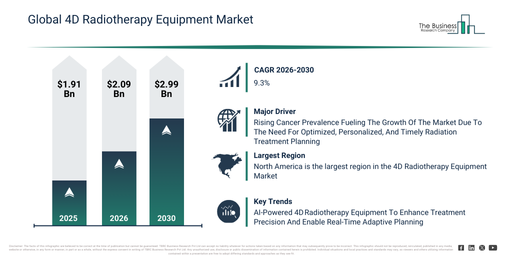
    The 4D radiotherapy equipment market size has experienced significant growth in recent years. This market is projected to expand from $1.91 billion in 2025 to $2.09 billion by 2026, demonstrating a compound annual growth rate (CAGR) of 9.6%. Historically, this expansion can be linked to several factors, including the increasing need for motion-adaptive radiation therapy, the wider embrace of advanced imaging systems, a heightened emphasis on reducing treatment errors, the broader application of real-time patient monitoring, and a rising inclination towards high-precision radiotherapy.

    The 4D radiotherapy equipment market is set to experience substantial expansion in the coming years, with its size projected to reach $2.99 billion by 2030, growing at a compound annual growth rate (CAGR) of 9.3%. This expansion during the forecast period is driven by factors such as increased investment in next-generation radiotherapy technologies, wider adoption of 4D treatment systems, growing demand for precise tumor-tracking solutions, the expanding integration of AI-enabled motion management, and a heightened need for personalized radiation therapy. Significant trends in this period include technological progress in motion-synchronized radiotherapy systems, breakthroughs in real-time imaging capabilities, the development of adaptive treatment delivery platforms, intensified research and development in tumor-tracking technologies, and advancements in imaging-guided radiotherapy solutions.

    Download A Free Sample Report For Comprehensive Market Insights:

    https://www.thebusinessresearchcompany.com/sample.aspx?id=30492&type=smp&utm_source=Blogs&utm_medium=Paid&utm_campaign=Jul_PR

    4D Radiotherapy Equipment Market Industry Drivers: What Is Driving Revenue Growth?

    The growing incidence of cancer is projected to drive the expansion of the 4D radiotherapy equipment market in the future. Cancer is a condition marked by the unchecked multiplication and dissemination of atypical cells, which, if not properly managed, can harm adjacent tissues and organs. The increase in cancer cases stems from lifestyle factors such as unhealthy eating habits, tobacco use, alcohol intake, and exposure to environmental contaminants, which heighten the likelihood of developing various forms of cancer. 4D radiotherapy equipment aids in treating cancer by administering extremely accurate, motion-adaptive radiation therapies that consider tumor shifts during respiration. This technology enhances patient results by optimizing tumor targeting, reducing harm to healthy cells, and improving treatment efficacy. For example, in October 2025, NHS Digital, a UK government organisation, reported 354,820 new cancer diagnoses in England in 2023, averaging 972 diagnoses daily and marking an increase of 8,605 cases from 2022. Prostate cancer was the most frequently diagnosed, with 58,137 new cases, showing a 6% rise in registrations compared to the prior year. Consequently, the rising prevalence of cancer is propelling the growth of the 4D radiotherapy equipment market. The increase in healthcare expenditure is anticipated to drive the expansion of the 4D radiotherapy equipment market moving forward. Healthcare spending in emerging markets denotes the financial allocations made by governments, private organizations, and medical service providers to enhance medical facilities, access to innovative treatments, and patient support. This spending is growing in emerging markets because expanding middle-class populations are experiencing greater incomes and extended lifespans, which, in turn, fuels demand for improved medical services, hospital facilities, and insurance coverage. 4D radiotherapy equipment contributes to this development by offering accurate, image-guided radiation therapy that considers tumor movement, thereby enhancing treatment results while reducing harm to surrounding healthy tissue. For instance, in June 2025, Statistics Austria, the national statistical office of Austria, reported that total healthcare expenditure in Austria reached approximately $61.6 billion (€57 billion) in 2024, funded by both public and private sectors. This marked an increase of about $4.6 billion (€4.25 billion) compared to the prior year, and the proportion of healthcare spending relative to gross domestic product climbed from 11.2% in 2023 to 11.8% in 2024. Consequently, the rising healthcare spending in emerging markets is stimulating the growth of the 4D radiotherapy equipment market.

    4D Radiotherapy Equipment Market Segments: Where Are The Largest Growth Opportunities?

    The 4D radiotherapy equipment market covered in this report is segmented –

    1) By Product Type Or Component: 4D Gating/RT Systems, Linear Accelerators (LINACs), 4D Imaging Modalities, SGRT Systems, Treatment Planning Software

    2) By Motion Management Technique: Respiratory Gating, Real-Time Tumor Tracking, Breath-Hold Techniques, Adaptive Radiotherapy (ART)

    3) By Application: Lung Cancer, Liver Cancers, Pancreatic Cancer, Breast Cancer, Lymphoma, Other Cancers

    4) By End User: Hospitals, Cancer Treatment Centers, Specialty Radiotherapy Clinics, Research Institutions

    Subsegments:

    1) By 4D Gating / RT Systems: Respiratory Gating Systems, Real-Time Tumor Tracking Systems, Motion Management Platforms, Adaptive Radiation Delivery Systems

    2) By Linear Accelerators: Standard Linear Accelerators, Image Guided Linear Accelerators, Motion Compensated Linear Accelerators, Stereotactic Body Radiation Therapy Linear Accelerators

    3) By 4D Imaging Modalities: Four Dimensional Computed Tomography, Four Dimensional Magnetic Resonance Imaging, Four Dimensional Positron Emission Tomography, Four Dimensional Cone Beam Computed Tomography

    4) By SGRT Systems: Surface Guided Patient Positioning Systems, Optical Surface Monitoring Systems, Real-Time Surface Tracking Systems, Motion Compensated Surface Imaging Systems

    5) By Treatment Planning Software: Motion Adaptive Planning Software, Dose Calculation Software, Image Fusion Planning Software, Tumor Contouring And Delineation Software

    #4D Radiotherapy Equipment Market Growth Trends: What Is Influencing The Future Outlook?

    Leading companies in the 4D radiotherapy equipment market are concentrating on developing high-definition imaging systems, such as AI-powered CT-Linac platforms, to enhance treatment precision, facilitate real-time plan adjustments, and boost workflow efficiency. AI-powered CT-Linac platforms are integrated computed tomography–linear accelerator systems that leverage artificial intelligence for high-definition imaging, adaptive treatment planning, and real-time dose adjustment, delivering highly precise personalized radiation therapy for cancer patients. For example, in May 2024, Elekta AB, a medical technology company based in Sweden, unveiled Elekta Evo, a CT-Linac equipped with AI-enhanced imaging and both online and offline adaptive radiotherapy capabilities. This system empowers clinicians to visualize target anatomy with exceptional clarity and modify radiation delivery on a per-session basis to account for patient movement and anatomical variations. This launch signifies a major technological progression, integrating high-precision imaging and adaptive therapy into routine clinical workflows, thereby linking traditional radiotherapy with AI-driven adaptive 4D planning and offering clinicians a scalable, efficient solution for superior patient outcomes.

    4D Radiotherapy Equipment Market Major Participants And Competitive Dynamics

    Major companies operating in the 4D radiotherapy equipment market are Hitachi Ltd., Siemens Healthineers AG, GE HealthCare Technologies Inc., Koninklijke Philips N.V., Varian Medical Systems Inc., Elekta AB, Shanghai United Imaging Healthcare Co. Ltd., Accuray Incorporated, Brainlab AG, Canon Medical Systems Corporation, RefleXion Medical, Vision RT Ltd., C-Rad AB, MVision AI Ltd., Anzai Medical Co. Ltd., ViewRay Technologies Inc., DYN’R Medical Systems, Ion Beam Applications SA (IBA SA)

    Access The Complete 4D Radiotherapy Equipment Market Report:

    https://www.thebusinessresearchcompany.com/report/4d-radiotherapy-equipment-market-report?utm_source=Blogs&utm_medium=Paid&utm_campaign=Jul_PR

    4D Radiotherapy Equipment Market Regional Outlook: Where Are The Largest Opportunities Located?

    North America was the largest region in the 4D radiotherapy equipment market in 2025. Asia-Pacific is expected to be the fastest-growing region in the forecast period. The regions covered in the 4D radiotherapy equipment market report are Asia-Pacific, South East Asia, Western Europe, Eastern Europe, North America, South America, Middle East, Africa.

    Get in touch with us:

    The Business Research Company: https://www.thebusinessresearchcompany.com/

    Americas: +1 310-496-7795

    Asia: +44 7882 955267 & +91 8897263534

    Europe: +44 7882 955267

    Email us at: marketing@tbrc.info

    Follow us on:

    LinkedIn: https://in.linkedin.com/company/the-business-research-company

    YouTube: https://www.youtube.com/channel/UC24_fI0rV8cR5DxlCpgmyFQ

    Global Market Model: https://www.thebusinessresearchcompany.com/global-market-model
  • 3D Neuroscience Market Expansion Is Reshaping Competitive Dynamics Across The Industry

    3D Neuroscience Market Expansion Is Reshaping Competitive Dynamics Across The Industry

    Through market attractiveness analysis, total addressable market evaluation, company benchmarking matrices, interactive Excel dashboards, expanded supply chain intelligence, emerging startup coverage, and detailed product insights, The Business Research Company’s 2026 market reports provide more actionable and strategically valuable research.

    3D Neuroscience Market Growth Analysis: How Will Revenue Expand During The Forecast Period?

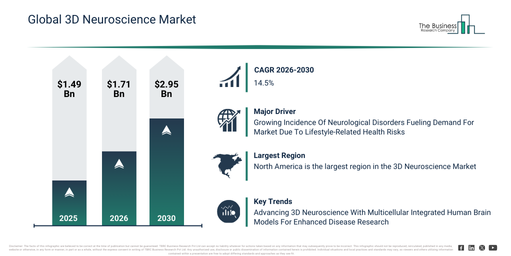
    The three-dimensional (3D) neuroscience market has seen rapid expansion in recent years. It is anticipated to increase from $1.49 billion in 2025 to $1.71 billion in 2026, exhibiting a compound annual growth rate (CAGR) of 14.8%. This historical growth can be linked to the rising adoption of three-dimensional (3D) brain modeling techniques, a greater need for sophisticated neurological research tools, its expanding application in drug discovery and neuropharmacology, the development of imaging and visualization technologies, and an increasing emphasis on deciphering intricate neural networks.

    The three-dimensional (3D) neuroscience market is anticipated to experience substantial growth over the next few years, projected to reach $2.95 billion by 2030 with a compound annual growth rate (CAGR) of 14.5%. This growth during the forecast period is fueled by the increasing integration of 3D models with artificial intelligence (AI) analytics, heightened investment in personalized neuroscience research, expanding adoption in disease modeling and therapeutic development, the proliferation of high-resolution imaging and data acquisition platforms, and a surging demand for predictive and translational neuroscience studies. Key trends anticipated in this period include technology-driven innovations in three-dimensional (3D) neural tissue modeling, advancements in artificial intelligence (AI)-enabled data analysis, progress in organoid and lab-grown neural systems, intensified research and development in imaging and simulation platforms, and innovation in integrated neuroscience modeling and visualization tools.

    Download A Free Sample Report For Comprehensive Market Insights:

    https://www.thebusinessresearchcompany.com/sample.aspx?id=30491&type=smp&utm_source=Blogs&utm_medium=Paid&utm_campaign=Jul_PR

    #3D Neuroscience Market Growth Factors: Which Forces Are Supporting Market Expansion?

    The rising occurrence of neurological conditions is anticipated to boost the expansion of the 3D neuroscience market in the future. These disorders are health issues impacting the brain, spinal cord, and nerves, thereby disturbing typical nervous system operations and causing deficits in aspects like movement, thinking, feeling, conduct, or general bodily management. The growing incidence of neurological conditions stems from unhealthy lifestyle choices, such as inadequate nutrition, lack of physical activity, tobacco use, high alcohol intake, and persistent stress. 3D neuroscience improves comprehension of the brain’s form and operations, facilitating more accurate diagnoses and tailored therapies for individuals suffering from neurological issues. As an illustration, in April 2024, data from the National Institutes of Health (NIH), a US government entity, indicated that approximately 6.9 million Americans aged 65 and above are currently afflicted with Alzheimer’s dementia, with this number expected to nearly double to 13.8 million by the year 2060. Consequently, the expanding occurrence of neurological disorders is a key driver for the 3D neuroscience market.

    3D Neuroscience Market Segment Analysis: What Are The Major Market Categories?

    The 3D neuroscience market covered in this report is segmented –

    1) By Component: Instruments And Consumables, Software And Services

    2) By Technology: Brain Imaging, Neuro-Microscopy, Electrophysiology, Neurophotonic Analysis, Other Technologies

    3) By Scale Of Analysis: Macro-Scale Connectomics (MSC), Meso-Scale Connectomics (MeSC), Micro-Scale Connectomics (MiSC), Nanoscale Or Synaptic Analysis (NSA)

    4) By Application: Disease Modeling And Drug Discovery, Brain Mapping And Connectomics, Developmental Neuroscience, Diagnostics And Surgical Planning

    5) By End-User: Hospitals, Diagnostic Laboratories, Research and Academic Institutes, Other End-Users

    Subsegments:

    1) By Instruments And Consumables: Imaging Devices, Microelectrodes, Sensors, Reagents, Laboratory Consumables

    2) By Software And Services: Data Analysis Software, Visualization Software, Modeling And Simulation Software, Technical Support Services, Training And Consultation Services

    3D Neuroscience Market Industry Trends: What Changes Are Reshaping Demand?

    Leading companies in the 3D neuroscience market are concentrating on creating sophisticated 3D human brain tissue platforms, such as multicellular integrated brain models, to better disease modeling, speed up drug testing, and deliver more physiologically accurate outcomes. Multicellular integrated brain models are defined as three-dimensional laboratory-grown constructs derived from induced pluripotent stem cells that contain multiple primary brain cell types, allowing for thorough examination of cellular interactions, pathology, and drug responses. For example, in November 2025, Massachusetts Institute of Technology (MIT), a US-based research institution, introduced Multicellular Integrated Brains (miBrains), which is a customizable 3D human brain tissue system. This platform incorporates six key brain cell types, facilitates genetic engineering for individualized disease studies, and can be scaled for extensive research projects, thus improving the availability and practicality of intricate in vitro models for neuroscience research.

    3D Neuroscience Market Leading Companies Driving Competitive Growth

    Major companies operating in the 3D neuroscience market are Siemens Healthineers AG, Merck KGaA, Koninklijke Philips N.V., GE Healthcare Technologies Inc., Corning Incorporated, Bruker Corporation, STEMCELL Technologies Inc., Greiner Bio-One International GmbH, American Type Culture Collection, Cellink AB, Aspect Biosystems Ltd., InSphero AG, Axion BioSystems Inc., Emulate Inc., Mimetas B.V., NeuroNexus Technologies Inc., Tessara Therapeutics Inc., TheWell Bioscience Inc., Kirkstall Ltd., Pelobiotech GmbH, 3D Biotek LLC, Mightex Systems Inc., Advanced BioMatrix Inc.

    Access The Complete 3D Neuroscience Market Report:

    https://www.thebusinessresearchcompany.com/report/3d-neuroscience-market-report?utm_source=Blogs&utm_medium=Paid&utm_campaign=Jul_PR

    3D Neuroscience Market Geographic Landscape: Which Region Dominates Industry Growth?

    North America was the largest region in the three dimensional (3D) neuroscience market in 2025. Asia-Pacific is expected to be the fastest-growing region in the forecast period. The regions covered in the 3D neuroscience market report are Asia-Pacific, South East Asia, Western Europe, Eastern Europe, North America, South America, Middle East, Africa.

    Get in touch with us:

    The Business Research Company: https://www.thebusinessresearchcompany.com/

    Americas: +1 310-496-7795

    Asia: +44 7882 955267 & +91 8897263534

    Europe: +44 7882 955267

    Email us at: marketing@tbrc.info

    Follow us on:

    LinkedIn: https://in.linkedin.com/company/the-business-research-company

    YouTube: https://www.youtube.com/channel/UC24_fI0rV8cR5DxlCpgmyFQ

    Global Market Model: https://www.thebusinessresearchcompany.com/global-market-model
  • 3D Digital X-Ray Systems Market Forecast Reveals Where Future Industry Value Will Be Created

    3D Digital X-Ray Systems Market Forecast Reveals Where Future Industry Value Will Be Created

    Delivering more actionable and strategically valuable research, The Business Research Company’s 2026 market reports feature market attractiveness analysis, total addressable market evaluation, company benchmarking matrices, interactive Excel dashboards, expanded supply chain intelligence, emerging startup coverage, and detailed product insights.

    3D Digital X-Ray Systems Market Forecast: What Market Value Is Expected By 2030?

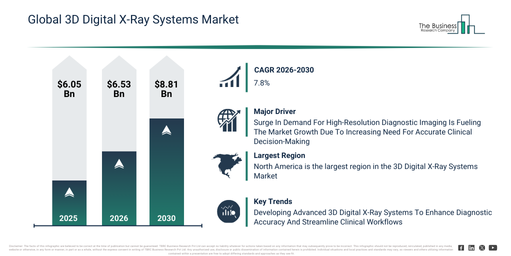
    The 3D digital X-Ray systems market size has demonstrated significant expansion over recent years. It is anticipated to expand from $6.05 billion in 2025 to $6.53 billion in 2026, progressing at a compound annual growth rate (CAGR) of 8.1%. This historical growth can be ascribed to a heightened demand for advanced diagnostic imaging, an increasing prevalence of chronic and orthopedic diseases, a wider embrace of digital radiography, expanded application of 3D imaging in dental care, increased awareness regarding early disease detection, a growing inclination towards minimally invasive diagnosis, enhanced integration of imaging within outpatient settings, rising healthcare expenditure, greater availability of portable 3D x-ray devices, and a stronger preference for highly accurate diagnostics.

    The 3D digital X-Ray systems market size is set to witness robust growth over the next few years. It is foreseen to expand to $8.81 billion by 2030, achieving a compound annual growth rate (CAGR) of 7.8%. This projected increase is propelled by the escalating adoption of digital radiography, a rising preference for accurate 3D imaging, the expanding demand for early diagnosis tools, increasing investment in imaging innovations, ongoing hospital modernization programs, the greater utilization of imaging in chronic disease management, a growing shift towards automated radiology tools, the surge in tele-radiology adoption, a preference for low-dose imaging techniques, and the increasing deployment of portable digital x-ray units. Significant trends anticipated in this period include advancements in high-resolution 3D imaging technology, progress in low-dose radiation solutions, improvements in portable 3D x-ray devices, innovations in AI-based diagnostic tools, advancements in automated image enhancement, the development of workflow-digital platforms, integration with cloud-based storage, integration with hospital digital ecosystems, the combination of 3D imaging with robotics, and progress in making digital radiography more affordable.

    Download A Free Sample Report For Comprehensive Market Insights:

    https://www.thebusinessresearchcompany.com/sample.aspx?id=30490&type=smp&utm_source=Blogs&utm_medium=Paid&utm_campaign=Jul_PR

    3D Digital X-Ray Systems Market Demand Drivers: What Is Fueling Industry Growth?

    The increasing need for high-resolution diagnostic imaging is anticipated to drive the expansion of the 3D Digital X-Ray Systems market in the future. This type of imaging involves medical technologies that produce sharp, clear pictures of internal body parts, facilitating precise diagnoses and effective clinical choices. The need for such imaging is growing because healthcare providers are broadening their services to identify intricate conditions sooner, enhance patient care, and boost the effectiveness of diagnostics. The 3D Digital X-Ray Systems facilitates high-resolution diagnostic imaging by offering sophisticated systems that provide excellent image clarity, boost diagnostic precision, and optimize patient flow in healthcare environments. For example, data from March 2024 from the Australian Institute of Health and Welfare (AIHW), an Australian government health body, indicated that approximately 2 in 5 Australians (39%) utilized more than 27 million Medicare-subsidised diagnostic imaging services. The rate of imaging services per 100 individuals increased from 103 in 2022–23 to 106 in 2023–24, showing an annual rise and increased adoption of modern imaging techniques. Consequently, the increased demand for high-resolution diagnostic imaging is fueling the expansion of the 3D Digital X-Ray Systems market.

    3D Digital X-Ray Systems Market Segment Breakdown: Which Categories Generate The Most Revenue?

    The 3D digital x-ray systems market covered in this report is segmented –

    1) By Product Type: Stationary 3D Digital X-Ray Systems, Portable 3D Digital X-Ray Systems, Mobile 3D Digital X-Ray Systems

    2) By Detector Type: Flat Panel Detectors, Charge-Coupled Devices (CCD), Image Intensifier Detectors, Computed Radiography (CR) Systems, Line-Scanning Detectors

    3) By Technology: Computed Tomography (CT) Systems, Digital Radiography (DR) Systems, Fluoroscopy Systems, X-Ray Systems With Dual Energy, Portable X-Ray Systems

    4) By Application: Orthopedics, Dental Imaging, Oncology, Pediatric Imaging, Cardiology

    5) By End-User: Hospitals, Diagnostic Imaging Centers, Outpatient Surgery Centers, Research Institutions, Veterinary Clinics

    Subsegments:

    1) By Stationary 3D Digital X-Ray Systems: Fixed-Room 3D Imaging Systems, Hospital Radiology Department Systems, High-Capacity 3D X-Ray Units, Floor-Mounted 3D X-Ray Systems, Ceiling-Mounted 3D X-Ray Systems, Advanced Diagnostic 3D Systems, Large-Format 3D Orthopedic Imaging Units

    2) By Portable 3D Digital X-Ray Systems: Handheld 3D X-Ray Devices, Backpack-Style Portable 3D Systems, Battery-Powered Portable 3D X-Ray Units, Emergency Or Trauma Portable 3D Systems, Field-Use Portable 3D Devices, Compact Point-Of-Care 3D X-Ray Units

    3) By Mobile 3D Digital X-Ray Systems: Cart-Based Mobile 3D X-Ray Systems, Motorized Mobile 3D Systems, Mobile 3D C-Arm Units, ICU Or Mobile Ward 3D Imaging Systems, Mobile Surgical 3D X-Ray Units, Mobile Diagnostic Screening Units

    3D Digital X-Ray Systems Market Innovation Trends: Which Developments Are Transforming The Industry?

    Leading companies in the 3D digital X-ray systems market are prioritizing the creation of clinical imaging solutions, including multi-purpose 3D dental imaging platforms, to improve diagnostic precision, assist with treatment planning, and streamline surgical procedures. Multi-purpose 3D dental imaging platforms are technologies used for acquiring volumetric images, planning interventions, and facilitating accurate clinical decision-making in dental and oral surgery settings. For instance, in September 2024, Dental Imaging Technologies Corporation (DEXIS), a US-based dental imaging technology company, unveiled the ORTHOPANTOMOGRAPH OP 3D EX. This 3D X-ray platform incorporates flexible field of view choices, advanced imaging software for chairside treatment planning, and integrated utilities to quickly produce surgical guides within practice environments. It is specifically engineered for general practitioners aiming to enhance their diagnostic capabilities with 3D imaging, supporting a wide array of clinical indications through various field of view sizes.

    3D Digital X-Ray Systems Market Key Players And Strategic Industry Positioning

    Major companies operating in the 3D digital x-ray systems market are Siemens Healthineers AG, Fujifilm Holdings Corporation, Koninklijke Philips N.V., GE HealthCare Technologies Inc., Mindray Medical International Limited, Dentsply Sirona Inc., Shimadzu Corporation, Canon Medical Systems Corporation, Acteon Group Ltd., United Imaging Healthcare Co. Ltd., Hamamatsu Photonics K.K., Agfa-Gevaert Group, Carestream Health Inc., Samsung Medison Co. Ltd., Analogic Corporation, Planmed Oy, Vatech Co. Ltd., Carestream Dental LLC, Ziehm Imaging GmbH, EOS Imaging S.A.

    Access The Complete 3D Digital X-Ray Systems Market Report:

    https://www.thebusinessresearchcompany.com/report/3d-digital-x-ray-systems-market-report?utm_source=Blogs&utm_medium=Paid&utm_campaign=Jul_PR

    #3D Digital X-Ray Systems Market Largest Region: Which Geography Holds The Highest Market Share?

    North America was the largest region in the 3D digital X-Ray systems market in 2025. Asia-Pacific is expected to be the fastest-growing region in the forecast period. The regions covered in the 3D digital x-ray systems market report are Asia-Pacific, South East Asia, Western Europe, Eastern Europe, North America, South America, Middle East, Africa.

    Get in touch with us:

    The Business Research Company: https://www.thebusinessresearchcompany.com/

    Americas: +1 310-496-7795

    Asia: +44 7882 955267 & +91 8897263534

    Europe: +44 7882 955267

    Email us at: marketing@tbrc.info

    Follow us on:

    LinkedIn: https://in.linkedin.com/company/the-business-research-company

    YouTube: https://www.youtube.com/channel/UC24_fI0rV8cR5DxlCpgmyFQ

    Global Market Model: https://www.thebusinessresearchcompany.com/global-market-model
  • Smart Orthopedic Implants Market Expansion Is Reshaping Competitive Dynamics Across The Industry

    Smart Orthopedic Implants Market Expansion Is Reshaping Competitive Dynamics Across The Industry

    Delivering more actionable and strategically valuable research, The Business Research Company’s 2026 market reports feature market attractiveness analysis, total addressable market evaluation, company benchmarking matrices, interactive Excel dashboards, expanded supply chain intelligence, emerging startup coverage, and detailed product insights.

    Smart Orthopedic Implants Market Size Outlook: How Fast Will Revenue Grow Through 2030?

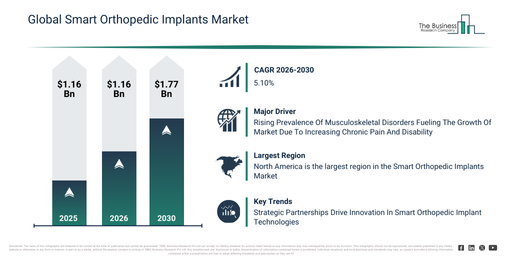
    The smart orthopedic implants market has experienced robust expansion in recent years, with projections indicating an increase from $25.92 billion in 2025 to $27.33 billion in 2026, reflecting a compound annual growth rate (CAGR) of 5.4%. This historical growth has been driven by factors such as a higher prevalence of orthopedic conditions, constraints in early diagnostic approaches, traditional methods of implant surveillance, a significant rate of complications following surgery, and growing public recognition of the benefits associated with joint replacement procedures.

    Over the coming years, the smart orthopedic implants market is projected to experience robust expansion. By 2030, its value is anticipated to reach $33.36 billion, progressing at a compound annual growth rate (CAGR) of 5.1%. This upward trajectory in the forecast period is driven by factors such as the rising acceptance of intelligent implants, progress in implantable sensor technology, the infusion of artificial intelligence into orthopedics, a growing call for customized medical solutions, and an expanding elderly population. Key developments shaping this period include the rise of remote patient monitoring, predictive analytics in orthopedics, tailored rehabilitation strategies, timely identification of complications, and the adoption of minimally invasive implant techniques.

    Download A Free Sample Report For Comprehensive Market Insights:

    https://www.thebusinessresearchcompany.com/sample.aspx?id=25906&type=smp

    #Smart Orthopedic Implants Market Demand Drivers Creating New Revenue Opportunities

    The growing occurrence of musculoskeletal disorders is anticipated to fuel the expansion of the smart orthopedic implants market in the coming period. Musculoskeletal disorders encompass conditions affecting bones, muscles, joints, tendons, and ligaments, frequently leading to persistent pain, reduced mobility, and lasting disability. The rise in such conditions is driven by an aging population, inactive lifestyles, and the increasing prevalence of chronic noncommunicable diseases. Smart orthopedic implants support this upward trend by delivering real-time biomechanical data, early-warning notifications, and enhanced monitoring after surgery, leading to better patient outcomes and fewer revision surgeries needed. For example, in January 2024, the Office for Health Improvement and Disparities, a UK government department, reported that in 2023, 18.4% of individuals aged 16 and over indicated having a long-term musculoskeletal condition, slightly higher than 17.6% in 2022. These conditions were less commonly reported by men (15.8%) compared to women (20.9%). Consequently, the increasing frequency of musculoskeletal disorders is propelling growth in the smart orthopedic implants market.

    Smart Orthopedic Implants Market Categorization By Product Type And Application

    The smart orthopedic implants market covered in this report is segmented –

    1) By Type Of Implant: Smart Knee Implants, Smart Hip Implants, Smart Spine Implants, Smart Shoulder Implants, Smart Ankle Implants

    2) By Material: Ceramic Implants, Metallic Implants, Polymeric Implants

    3) By Technology Integration: Data Analytics And Artificial Intelligence Integration, Microelectronic Sensors, Telemedicine Capabilities

    4) By Application: Fracture Fixation, Joint Replacement, Osteotomy, Spinal Fusion

    5) By End-Use: Ambulatory Surgical Centers, Hospitals, Specialty Clinics, Other End-Uses

    Subsegments:

    1) By Smart Knee Implants: Total Knee Replacement, Partial Knee Replacement, Unicompartmental Knee Implants, Revision Knee Implants

    2) By Smart Hip Implants: Total Hip Replacement, Partial Hip Replacement, Hip Resurfacing Implants, Revision Hip Implants

    3) By Smart Spine Implants: Cervical Spine Implants, Thoracolumbar Spine Implants, Interbody Fusion Devices, Pedicle Screw Systems

    4) By Smart Shoulder Implants: Total Shoulder Replacement, Reverse Shoulder Replacement, Partial Shoulder Replacement, Revision Shoulder Implants

    5) By Smart Ankle Implants: Total Ankle Replacement, Ankle Fusion Implants, Revision Ankle Implants, Ankle Fracture Fixation Devices

    Smart Orthopedic Implants Market Trends Driving Strategic Industry Expansion

    Major players within the smart orthopedic implants market are increasingly pursuing strategic partnerships as a means to broaden their international presence and enhance the delivery of advanced patient care solutions. A strategic partnership refers to a formalized collaboration among two or more organizations designed to leverage their complementary strengths for achieving shared, long-term goals. Through such arrangements, partners can exchange resources, expertise, and innovative ideas without sacrificing their individual autonomy. For example, in June 2025, NanoHive Medical LLC, a US-based company specializing in 3D-printed spinal implants, partnered with DirectSync Surgical, a US-based producer of human-powered smart implants, to create the Hive Soft Titanium spinal interbody fusion device—a smart spine implant. This joint effort aims to incorporate bone-stimulating and remote monitoring sensor technology into NanoHive’s proprietary 3D-printed spinal fusion systems, taking advantage of their distinctive rhombic dodecahedron lattice structure to efficiently transmit energy from piezoelectric sensors. The initiative represents an advancement aimed at improving patient care by enabling better data collection, facilitating bone stimulation, and fostering connectivity with cutting-edge surgical tools and artificial intelligence.

    Smart Orthopedic Implants Market Company Landscape And Strategic Competition

    Major companies operating in the smart orthopedic implants market are Johnson And Johnson, Medtronic plc, Stryker Corporation, Zimmer Biomet Holdings Inc, Enovis Corporation, Orthofix Medical Inc, Exactech Inc, Xenco Medical LLC, Heraeus Medical GmbH, Intelligent Implants GmbH, Statera Medical Inc, SpineGuard SA, BoneTag Technologies, DirectSync Surgical Inc, AK Medical Holdings Limited, Mathys Ltd, Smith And Nephew plc, Globus Medical Inc, NuVasive Inc, Alphatec Spine Inc, Life Spine Inc, restor3d Inc

    Access The Complete Smart Orthopedic Implants Market Report:

    https://www.thebusinessresearchcompany.com/report/smart-orthopedic-implants-global-market-report

    #Smart Orthopedic Implants Market Largest Region: Which Geography Holds The Highest Market Share?

    North America was the largest region in the smart orthopedic implants market in 2025. Asia-Pacific is expected to be the fastest-growing region in the forecast period. The regions covered in the smart orthopedic implants market report are Asia-Pacific, South East Asia, Western Europe, Eastern Europe, North America, South America, Middle East, Africa.

    Access a Customized Smart Orthopedic Implants Market Report for Deeper Competitive Insights

    https://www.thebusinessresearchcompany.com/sample.aspx?id=28917&type=smp

    Get in touch with us:

    The Business Research Company: https://www.thebusinessresearchcompany.com/

    Americas: +1 310-496-7795

    Asia: +44 7882 955267 & +91 8897263534

    Europe: +44 7882 955267

    Email us at: marketing@tbrc.info

    Follow us on:

    LinkedIn: https://in.linkedin.com/company/the-business-research-company

    YouTube: https://www.youtube.com/channel/UC24_fI0rV8cR5DxlCpgmyFQ

    Global Market Model: https://www.thebusinessresearchcompany.com/global-market-model
  • Edge-GPU Breast Tomosynthesis Box Market Forecast Reveals Where Future Industry Value Will Be Created

    Edge-GPU Breast Tomosynthesis Box Market Forecast Reveals Where Future Industry Value Will Be Created

    Enhanced with market attractiveness analysis, total addressable market evaluation, company benchmarking matrices, interactive Excel dashboards, expanded supply chain intelligence, emerging startup coverage, and detailed product insights, The Business Research Company’s 2026 market reports deliver more actionable and strategically valuable research.

    Edge-GPU Breast Tomosynthesis Box Market Size, Value And Growth Trends Through 2030

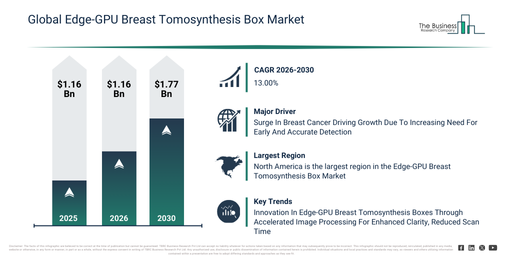
    The market for edge-gpu breast tomosynthesis boxes has experienced swift expansion in recent times, with its value projected to climb from $0.53 billion in 2025 to $0.61 billion in 2026, reflecting a compound annual growth rate (CAGR) of 13.3%. Historical growth has been driven by the uptake of breast tomosynthesis technology, progress in edge-gpu computing, a need for detailed 3D imaging, the rise of breast cancer screening initiatives, and improvements in imaging detectors.

    The market for edge-GPU breast tomosynthesis boxes is projected to experience substantial expansion in the coming years. By 2030, its value is anticipated to reach $0.99 billion, reflecting a compound annual growth rate (CAGR) of 13.0%. This forecasted growth is fueled by AI-driven diagnostic tools, the growth of portable screening units, integration with cloud-based imaging platforms, faster image processing capabilities, and broader adoption in both clinical and research settings. Key trends shaping the forecast period include real-time 3D imaging, GPU-accelerated processing, heightened diagnostic precision, AI-based image analysis, and the availability of portable imaging solutions.

    Download A Free Sample Report For Comprehensive Market Insights:

    https://www.thebusinessresearchcompany.com/sample.aspx?id=29048&type=smp

    Edge-GPU Breast Tomosynthesis Box Market Expansion Supported By Key Demand Factors

    The anticipated growth of the edge-GPU breast tomosynthesis box market is being driven by the increasing incidence of breast cancer. This condition involves the uncontrolled proliferation of abnormal cells within the breast, forming malignant tumors that can metastasize, yet early detection through screening and heightened awareness markedly enhances treatment success and survival. Lifestyle modifications, including poor dietary habits, diminished physical activity, and hormonal changes, are major contributors to the growing number of breast cancer diagnoses globally, as they elevate the risk of abnormal cell development in breast tissue. By delivering high-resolution 3D imaging, the edge-GPU breast tomosynthesis box aids in the early and precise identification of tumors, boosts diagnostic accuracy, and facilitates quicker, more efficient image processing to improve treatment planning. A report from the American Cancer Society (ACS) in July 2024, a U.S.-based nonprofit focused on cancer research and patient support, indicated that approximately 310,720 new invasive breast cancer cases are expected to be diagnosed among American women in 2024, with 16% affecting those under 50, along with an additional 56,500 cases of DCIS (stage 0). Consequently, the rising prevalence of breast cancer is fueling the expansion of the edge-GPU breast tomosynthesis box market.

    Edge-GPU Breast Tomosynthesis Box Market Segment Analysis And Revenue Opportunities

    The edge-gpu breast tomosynthesis box market covered in this report is segmented –

    1) By Product Type: Standalone Edge-GPU Box, Integrated Edge-GPU Systems

    2) By Distribution Channel: Direct Sales, Distributors, Other Distribution Types

    3) By Application Type: Breast Cancer Screening, Diagnostic Imaging

    4) By End-User: Hospitals, Diagnostic Centers

    Subsegments:

    1) By Standalone Edge-GPU Box: Compact Edge-GPU Box, High-Performance Edge-GPU Box, Modular Edge-GPU Box

    2) By Integrated Edge-GPU Systems: Hospital Integrated Systems, Diagnostic Center Integrated Systems

    Edge-GPU Breast Tomosynthesis Box Market Growth Trends Influencing Competitive Dynamics

    Key players in the Edge-GPU breast tomosynthesis box space are prioritizing technological advancements such as accelerated image processing, which boosts image quality, shortens scanning duration, and enhances the early identification of breast cancer during screenings. Accelerated image processing involves leveraging high-performance computing resources, including GPUs or specialized hardware, to quickly process and refine digital images, thereby enabling swifter reconstruction, analysis, and visualization of intricate imaging data while increasing both efficiency and precision in medical imaging. For example, in June 2025, QT Imaging, Inc., a U.S.-based medical device firm, unveiled its latest breast imaging reconstruction software, which leverages NVIDIA L40 GPU acceleration to deliver faster and more accurate image processing, heightened diagnostic precision, and better workflow efficiency for clinicians—a major milestone in breast imaging technology. This release is designed to streamline breast cancer screening by facilitating quicker and more reliable detection, alleviating the workload on radiologists, and ultimately enhancing patient outcomes via cutting-edge, high-performance imaging technology.

    Edge-GPU Breast Tomosynthesis Box Market Leading Players Shaping Industry Direction

    Major companies operating in the edge-gpu breast tomosynthesis box market are Hologic Inc., GE Healthcare, Fujifilm Holdings Corporation, Siemens Healthineers, Canon Medical Systems Corporation, Planmed Oy, Metaltronica S.p.A., General Medical Merate (IMS GIOTTO), Villa Sistemi Medicali, DMS Imaging, DRTECH Corporation, Stephanix, Delphinus Medical Technologies, Konica Minolta, Carestream Health, Agfa-Gevaert N.V., IDETEC Medical Imaging, Xenox (Xenox Medical), Aurora Imaging Technology, Micrima Ltd., Neusoft Medical Systems, Landwind Medical

    Access The Complete Edge-GPU Breast Tomosynthesis Box Market Report:

    https://www.thebusinessresearchcompany.com/report/edge-gpu-breast-tomosynthesis-box-global-market-report

    Edge-GPU Breast Tomosynthesis Box Market Regional Analysis: Which Region Leads By Revenue?

    North America was the largest region in the edge-GPU breast tomosynthesis box market in 2025. Asia-Pacific is expected to be the fastest-growing region in the forecast period. The regions covered in the edge-gpu breast tomosynthesis box market report are Asia-Pacific, South East Asia, Western Europe, Eastern Europe, North America, South America, Middle East, Africa.

    Access a Customized Edge-GPU Breast Tomosynthesis Box Market Report for Deeper Competitive Insights

    https://www.thebusinessresearchcompany.com/sample.aspx?id=28130&type=smp

    Get in touch with us:

    The Business Research Company: https://www.thebusinessresearchcompany.com/

    Americas: +1 310-496-7795

    Asia: +44 7882 955267 & +91 8897263534

    Europe: +44 7882 955267

    Email us at: marketing@tbrc.info

    Follow us on:

    LinkedIn: https://in.linkedin.com/company/the-business-research-company

    YouTube: https://www.youtube.com/channel/UC24_fI0rV8cR5DxlCpgmyFQ

    Global Market Model: https://www.thebusinessresearchcompany.com/global-market-model
  • Digital Twin Cardio-Pulmonary Bypass Market Growth Through 2030 Creates New Strategic Opportunities

    Digital Twin Cardio-Pulmonary Bypass Market Growth Through 2030 Creates New Strategic Opportunities

    Through market attractiveness analysis, total addressable market evaluation, company benchmarking matrices, interactive Excel dashboards, expanded supply chain intelligence, emerging startup coverage, and detailed product insights, The Business Research Company’s 2026 market reports provide more actionable and strategically valuable research.

    Digital Twin Cardio-Pulmonary Bypass Market CAGR Analysis And Future Market Development

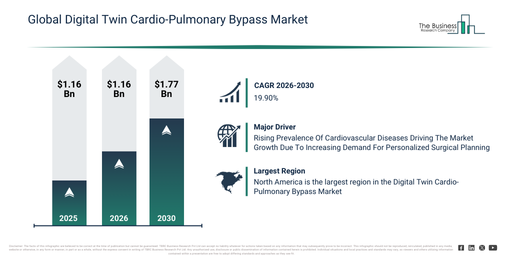
    The market for digital twin cardio-pulmonary bypass has experienced explosive growth over recent years. Expanding from $0.6 billion in 2025 to $0.72 billion in 2026, this increase reflects a compound annual growth rate (CAGR) of 20.1%. Several factors have driven historical expansion, including the widespread use of simulation software in cardiac procedures, progress in modeling the cardio-pulmonary system, the creation of real-time monitoring tools, the incorporation of predictive analytics, and a growing demand for safe training environments.

    The projected expansion of the digital twin cardiopulmonary bypass market remains exceptionally strong over the coming years. By 2030, its value is forecast to reach $1.49 billion, reflecting a compound annual growth rate (CAGR) of 19.9%. Several factors will drive this growth during the forecast period, including the incorporation of AI-based decision support tools, the broadening of remote surgical monitoring applications, the rising utilization of these systems in clinical training settings, more sophisticated predictive modeling for patient outcomes, and greater adoption across hospitals and research institutions. Among the most significant trends shaping this period are real-time hemodynamic simulations, predictive planning for surgeries, optimization of procedures via artificial intelligence, the creation of virtual training environments for surgeons, and the expanded use of remote patient monitoring technologies.

    Download A Free Sample Report For Comprehensive Market Insights:

    https://www.thebusinessresearchcompany.com/sample.aspx?id=29032&type=smp

    #Digital Twin Cardio-Pulmonary Bypass Market Growth Drivers And Industry Catalysts

    The growing incidence of cardiovascular diseases (CVDs) is anticipated to drive the expansion of the digital twin cardio-pulmonary bypass market in the coming period. Cardiovascular diseases (CVDs) encompass a range of disorders impacting the heart and blood vessels, including coronary artery disease, heart failure, stroke, and hypertension. This rise in CVD prevalence is largely attributed to aging populations, as advancing age gradually weakens blood vessels and the heart, thereby elevating the likelihood of heart-related conditions. Digital twin cardio-pulmonary bypass technology enables the simulation of a patient’s heart and circulatory system, empowering clinicians to forecast surgical outcomes, refine procedures, and minimize complications, thus directly aiding in the management and treatment of CVDs. For example, in October 2024, the Centers for Disease Control and Prevention, a US government agency, reported that cardiovascular disease caused 919,032 deaths in 2023, representing one in every three fatalities. Coronary heart disease remained the most common form of heart disease, and notably, approximately one in six cardiovascular deaths occurred among adults under 65 years old. Consequently, the escalating prevalence of cardiovascular diseases is fueling growth in the digital twin cardio-pulmonary bypass market.

    Digital Twin Cardio-Pulmonary Bypass Market Driver: Increasing Demand For Precision Medicine Driving The Market Growth Due To Patient-Specific Treatment Planning

    The rising demand for precision medicine is expected to accelerate the growth of the digital twin cardio-pulmonary bypass market moving forward. Precision medicine is a medical approach that customizes treatment and prevention strategies based on an individual’s unique genetic makeup, environment, and lifestyle. This demand is increasing because progress in genomics enables doctors to comprehend a patient’s genetic profile, facilitating more targeted and effective therapies. Digital twin cardio-pulmonary bypass supports precision medicine by generating a detailed, patient-specific virtual model of the cardiovascular system, allowing clinicians to simulate procedures, predict individual responses, and optimize treatment plans tailored to each patient’s distinct genetic and physiological characteristics. For instance, in February 2024, the Personalized Medicine Coalition, a US-based nonprofit, noted that the FDA approved 16 new personalized therapies for rare disease patients in 2023, a significant increase from the six approvals in 2022. Thus, the growing demand for precision medicine is propelling the digital twin cardio-pulmonary bypass market forward.

    Digital Twin Cardio-Pulmonary Bypass Market Driver: Increasing Investments In Medical Research Driving The Growth Of The Market Due To Advancements In Personalized And Precise Cardiac Care

    The surge in investments in medical research is expected to drive the growth of the digital twin cardio-pulmonary bypass market in the future. Medical research involves systematic investigation aimed at understanding human health, diseases, and medical conditions, as well as developing new treatments, drugs, devices, and technologies to enhance patient care. These investments are increasing because healthcare systems and patients seek more advanced, effective, and personalized medical solutions, necessitating the creation of innovative technologies and treatments. Funding in medical research accelerates the development and refinement of digital twin cardio-pulmonary bypass technology by supporting the creation of high-fidelity simulation models that precisely replicate human cardiovascular physiology, thereby improving surgical planning, patient safety, and treatment outcomes. For example, in December 2023, the Department for Science, Innovation & Technology, a UK government department, reported that the United States has allocated $2 billion toward biotechnology and biomanufacturing. Japan aims to achieve “the world’s most advanced bioeconomy” by 2030. France is investing USD 870 million (€800 million) to develop and produce biomedicines. Meanwhile, China’s latest Five-Year Plan commits to “accelerate the development” and “expand the size and strength” of its bioeconomy. Therefore, rising investments in medical research are fueling the expansion of the digital twin cardio-pulmonary bypass market.

    Digital Twin Cardio-Pulmonary Bypass Market Segmentation And Category Breakdown

    The digital twin cardio-pulmonary bypass market covered in this report is segmented –

    1) By Component: Software, Hardware, Services

    2) By Deployment Mode: On-Premises, Cloud-Based

    3) By Application: Cardiac Surgery, Pulmonary Surgery, Research And Development, Training And Education, Other Applications

    4) By End-User: Hospitals, Specialty Clinics, Academic And Research Institutes, Other End-Users

    Subsegments:

    1) By Software: Simulation Software, Data Analytics Software, Monitoring Software, Integration Software

    2) By Hardware: Sensors And Monitoring Devices, Computing Systems, Imaging Devices, Connectivity Modules

    3) By Services: Implementation Services, Maintenance Services, Training Services, Consulting Services

    Digital Twin Cardio-Pulmonary Bypass Market Competitive Analysis Of Major Industry Participants

    Major companies operating in the digital twin cardio-pulmonary bypass market are Tata Consultancy Services Limited (TCS), Medtronic plc, Siemens Healthineers AG, Koninklijke Philips N.V., GE HealthCare Technologies Inc., Boston Scientific Corporation, Dassault Systèmes SE, Terumo Corporation, Synopsys Inc., Getinge AB, LivaNova PLC, Materialise NV, HeartFlow Inc., CFD Research Corporation (CFDRC), Kitware Inc., Circle Cardiovascular Imaging Inc., Keya Medical Inc., inHEART SAS, PrediSurge Inc., InSilicoTrials Technologies SA

    Access The Complete Digital Twin Cardio-Pulmonary Bypass Market Report:

    https://www.thebusinessresearchcompany.com/report/digital-twin-cardio-pulmonary-bypass-global-market-report

    Digital Twin Cardio-Pulmonary Bypass Market Geographic Distribution And Regional Opportunities

    North America was the largest region in the digital twin cardio-pulmonary bypass market in 2025. Asia-Pacific is expected to be the fastest-growing region in the forecast period. The regions covered in the digital twin cardio-pulmonary bypass market report are Asia-Pacific, South East Asia, Western Europe, Eastern Europe, North America, South America, Middle East, Africa.

    Access a Customized Digital Twin Cardio-Pulmonary Bypass Market Report for Deeper Competitive Insights

    https://www.thebusinessresearchcompany.com/sample.aspx?id=28127&type=smp

    Get in touch with us:

    The Business Research Company: https://www.thebusinessresearchcompany.com/

    Americas: +1 310-496-7795

    Asia: +44 7882 955267 & +91 8897263534

    Europe: +44 7882 955267

    Email us at: marketing@tbrc.info

    Follow us on:

    LinkedIn: https://in.linkedin.com/company/the-business-research-company

    YouTube: https://www.youtube.com/channel/UC24_fI0rV8cR5DxlCpgmyFQ

    Global Market Model: https://www.thebusinessresearchcompany.com/global-market-model
  • Digital Twin Cardiac Cath Lab Market Size Projected To Increase From $2.12 Billion To $5.24 Billion During The Forecast Period

    Digital Twin Cardiac Cath Lab Market Size Projected To Increase From $2.12 Billion To $5.24 Billion During The Forecast Period

    Delivering more actionable and strategically valuable research, The Business Research Company’s 2026 market reports feature market attractiveness analysis, total addressable market evaluation, company benchmarking matrices, interactive Excel dashboards, expanded supply chain intelligence, emerging startup coverage, and detailed product insights.

    Digital Twin Cardiac Cath Lab Market Expansion From $2.12 Billion In 2026 To $5.24 Billion In 2030

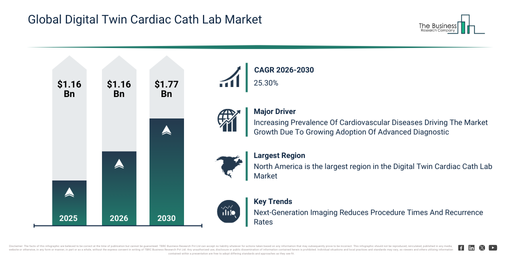
    Over recent years, the digital twin cardiac cath lab market has experienced exponential expansion. Projected to rise from $1.7 billion in 2025 to $2.13 billion in 2026, it demonstrates a compound annual growth rate (CAGR) of 25.5%. This historic growth has been driven by the early integration of digital twin technology within healthcare, advancements in sophisticated imaging systems, the incorporation of data analytics in cath labs, an increasing preference for minimally invasive procedures, and escalated investments in healthcare IT infrastructure.

    The market for digital twin cardiac catheterization laboratories is projected to experience explosive growth over the coming years. By 2030, its valuation is anticipated to reach $5.24 billion, reflecting a compound annual growth rate (CAGR) of 25.3%. Several factors are fueling this expansion during the forecast period, including the use of AI-driven predictive modeling, the broadening of remote training initiatives, the linkage of these systems with hospital ERP platforms, the growing implementation of immersive AR and VR simulations, and a heightened need for real-time procedure refinement. Key developments shaping this sector involve live procedural simulation, artificial intelligence-based workflow streamlining, anticipatory equipment maintenance, digital training and educational tools, and improved clinical decision-assistance capabilities.

    Download A Free Sample Report For Comprehensive Market Insights:

    https://www.thebusinessresearchcompany.com/sample.aspx?id=29031&type=smp

    Digital Twin Cardiac Cath Lab Market Opportunity Drivers: What Is Creating New Revenue Potential?

    The anticipated rise in cardiovascular disease cases is set to accelerate the expansion of the digital twin cardiac cath lab market moving forward. These diseases encompass heart and blood vessel disorders, including coronary artery disease, heart attacks, and strokes, and their growing frequency is driven by sedentary lifestyles, where physical inactivity and poor diet, along with extended life expectancy, heighten the population at risk for cardiac conditions. Digital twin cardiac cath lab systems aid in managing cardiovascular disease by constructing virtual models of patients’ hearts and blood vessels, allowing cardiologists to simulate and refine intricate interventional procedures prior to execution, thus boosting treatment accuracy, cutting procedural risks, and improving outcomes for patients in cardiac catheterization suites. As an illustration, in October 2024, the Centers for Disease Control and Prevention, a US federal agency, reported that cardiovascular disease caused 919,032 deaths in 2023, representing one out of every three fatalities. Coronary heart disease was the most common heart disease type, and notably, roughly one in six cardiovascular deaths occurred among individuals under 65 years old. Consequently, the escalating prevalence of cardiovascular diseases is fueling growth in the digital twin cardiac cath lab market.

    Digital Twin Cardiac Cath Lab Market Segment Outlook: Which Categories Are Expanding The Fastest?

    The digital twin cardiac cath lab market covered in this report is segmented –

    1) By Component: Software, Hardware, Services

    2) By Deployment Mode: On-Premises, Cloud-Based

    3) By Application: Cardiac Diagnostics, Interventional Cardiology, Training And Education, Research And Development, Other Applications

    4) By End User: Hospitals, Specialty Clinics, Academic And Research Institutes, Other End Users

    Subsegments:

    1) By Software: Cardiac Simulation Software, Imaging And Visualization Software, Data Integration And Analytics Platforms, Procedure Planning And Optimization Tools

    2) By Hardware: Imaging Systems, Catheterization Equipment, Sensors And Monitoring Devices, Computing And Storage Systems

    3) By Services: Implementation And Integration Services, Training And Education Services, Maintenance And Support Services, Consulting Services

    Digital Twin Cardiac Cath Lab Market Innovation Trends Driving Future Development

    Key players within the digital twin cardiac catheterization laboratory market are increasingly adopting advanced technologies, specifically artificial intelligence (AI)-powered imaging, to boost procedural accuracy, cut down on operating times, and enhance patient recovery. AI-driven imaging involves applying machine learning algorithms to examine medical scans, automatically detecting and interpreting anatomical features, thereby delivering quicker and more precise insights, supporting tailored treatment strategies, and elevating both procedural effectiveness and clinical outcomes. A notable example is from March 2024, when inHEART, an AI-focused medical technology firm based in the United States, secured FDA 510(k) clearance for its AI software module, which automates the segmentation of CT images to construct detailed 3D heart models. This innovation enables clinicians to refine therapeutic approaches, plan interventions with greater efficiency, and slash ventricular tachycardia (VT) procedure duration by as much as 60%, in addition to decreasing recurrence frequencies. By employing AI algorithms to process pre-procedure imaging data, the software generates highly accurate, patient-tailored cardiac representations that can be effortlessly incorporated into key electroanatomic mapping (EAM) systems deployed in catheterization laboratories.

    Digital Twin Cardiac Cath Lab Market Key Companies And Competitive Benchmarking

    Major companies operating in the digital twin cardiac cath lab market are Tata Consultancy Services Limited, Siemens Healthineers AG, Koninklijke Philips N.V., GE HealthCare Technologies Inc., Dassault Systèmes SE, Materialise NV, HeartFlow Inc., Stereotaxis Inc., Imricor Medical Systems Inc., Circle Cardiovascular Imaging Inc., Medis Medical Imaging Systems BV, VirtaMed AG, Volta Medical SAS, DASI Simulations Inc., inHEART SAS, PrediSurge Inc., InSilicoTrials Technologies SA, Canon Medical Systems Corporation, Abbott Laboratories, Boston Scientific Corporation, Johnson & Johnson MedTech

    Access The Complete Digital Twin Cardiac Cath Lab Market Report:

    https://www.thebusinessresearchcompany.com/report/digital-twin-cardiac-cath-lab-global-market-report

    Digital Twin Cardiac Cath Lab Market Largest Region By Revenue And Market Share

    North America was the largest region in the digital twin cardiac cath lab market in 2025. Asia-Pacific is expected to be the fastest-growing region in the forecast period. The regions covered in the digital twin cardiac cath lab market report are Asia-Pacific, South East Asia, Western Europe, Eastern Europe, North America, South America, Middle East, Africa.

    Access a Customized Digital Twin Cardiac Cath Lab Market Report for Deeper Competitive Insights

    https://www.thebusinessresearchcompany.com/sample.aspx?id=28126&type=smp

    Get in touch with us:

    The Business Research Company: https://www.thebusinessresearchcompany.com/

    Americas: +1 310-496-7795

    Asia: +44 7882 955267 & +91 8897263534

    Europe: +44 7882 955267

    Email us at: marketing@tbrc.info

    Follow us on:

    LinkedIn: https://in.linkedin.com/company/the-business-research-company

    YouTube: https://www.youtube.com/channel/UC24_fI0rV8cR5DxlCpgmyFQ

    Global Market Model: https://www.thebusinessresearchcompany.com/global-market-model

  • Digital Twin Cardiac Ablation Suite Market Growth Outlook Reveals A CAGR Of 22.6% And A Market Value Of $2.73 Billion By 2030

    Digital Twin Cardiac Ablation Suite Market Growth Outlook Reveals A CAGR Of 22.6% And A Market Value Of $2.73 Billion By 2030

    Enhanced with market attractiveness analysis, total addressable market evaluation, company benchmarking matrices, interactive Excel dashboards, expanded supply chain intelligence, emerging startup coverage, and detailed product insights, The Business Research Company’s 2026 market reports deliver more actionable and strategically valuable research.

    Digital Twin Cardiac Ablation Suite Market Forecast Highlighting Growth From $1.21 Billion To $2.73 Billion

    The market for digital twin cardiac ablation suites has seen a massive expansion in recent years. Its value is projected to rise from $0.99 billion in 2025 to $1.21 billion in 2026, reflecting a compound annual growth rate (CAGR) of 22.9%. Driving this historic growth are factors including the high cost of conventional ablation instruments, restricted availability of patient-tailored modeling, dependence on human-led planning, disorganized healthcare information systems, and the sluggish uptake of cutting-edge simulation tools.

    The market for digital twin cardiac ablation suites is projected to experience remarkable expansion in the coming years. Its value is anticipated to reach $2.73 billion by 2030, driven by a compound annual growth rate (CAGR) of 22.6%. This upward trajectory during the forecast period is fueled by a growing need for precise cardiac interventions, wider acceptance of digital twin technologies, the incorporation of artificial intelligence into procedural planning, heightened investments in healthcare IT infrastructure, and the rise of telecardiology alongside remote monitoring solutions. Key developments anticipated in the forecast period involve individualized procedure optimization, continuous real-time patient oversight, preventive maintenance for medical equipment, simulation-driven surgical training, and seamless links with electronic health records.

    Download A Free Sample Report For Comprehensive Market Insights:

    https://www.thebusinessresearchcompany.com/sample.aspx?id=29030&type=smp

    Digital Twin Cardiac Ablation Suite Market Growth Momentum: Which Factors Are Influencing Demand?

    The anticipated expansion of the digital twin cardiac ablation suite market is being driven by the increasing incidence of cardiovascular diseases. These conditions, which impair the heart and blood vessels, often result in heart attacks, strokes, and other severe health issues. Their rising prevalence is linked to aging populations in developed countries, as older age significantly heightens the risk of heart-related ailments and complications. Digital twin cardiac ablation suites aid in managing cardiovascular diseases by generating virtual replicas of patients’ hearts, allowing doctors to simulate and refine ablation procedures beforehand, thereby enhancing outcomes and lowering complications for individuals with cardiac arrhythmias. For example, in October 2024, the Centers for Disease Control and Prevention, a US government agency, reported that cardiovascular disease led to 919,032 fatalities, representing one in every three deaths. Coronary heart disease was the most common type of heart disease, and notably, approximately one in six cardiovascular disease deaths occurred among adults under 65 years old. Consequently, the rising prevalence of cardiovascular diseases is fueling the growth of the digital twin cardiac ablation suite market.

    The digital twin cardiac ablation suite market growth is being fueled by a heightened focus on precision medicine. This medical approach customizes treatments and healthcare decisions for individual patients, taking into account their genetic profile, lifestyle, and environmental factors. The increasing emphasis on precision medicine stems from progress in genomic sequencing and data analytics, which empower healthcare professionals to detect specific biomarkers and craft targeted therapies that boost treatment effectiveness for each patient. Within this context, digital twin cardiac ablation suites enable precision medicine by developing patient-specific virtual heart models, enabling clinicians to simulate and optimize ablation strategies that are tailored to each individual’s unique heart structure and arrhythmia patterns prior to conducting actual procedures. In February 2024, the Personalized Medicine Coalition, a US nonprofit, noted that the FDA approved 16 new personalized treatments for rare diseases in 2023, a substantial rise from the six approvals in 2022. Thus, the growing emphasis on precision medicine is propelling the expansion of the digital twin cardiac ablation suite market.

    Digital Twin Cardiac Ablation Suite Market Segment Landscape: Which Areas Lead Market Development?

    The digital twin cardiac ablation suite market covered in this report is segmented –

    1) By Component: Software, Hardware, Services

    2) By Deployment Mode: On-Premises, Cloud-Based

    3) By Application: Preoperative Planning, Intraoperative Guidance, Postoperative Assessment, Training And Education, Other Applications

    4) By End-Users: Hospitals, Specialty Clinics, Research Institutes, Other End-Users

    Subsegments:

    1) By Software: Virtual Heart Modeling, Cardiac Simulation Software, Electrophysiology Simulation Tools, Patient Specific Cardiac Modeling, Three Dimensional Cardiac Mapping

    2) By Hardware: Imaging Devices, Computing Systems, Data Storage Devices

    3) By Services: Installation And Integration Services, Maintenance And Support Services, Training And Education Services, Consulting Services, Remote Monitoring Services

    Digital Twin Cardiac Ablation Suite Market Industry Leaders And Market Competition

    Major companies operating in the digital twin cardiac ablation suite market are Siemens Healthineers AG, Koninklijke Philips N.V., GE HealthCare Technologies Inc., Boston Scientific Corporation, Medtronic Public Limited Company, Abbott Laboratories, Dassault Systèmes SE, Stereotaxis Inc., Johnson & Johnson, Kardium Inc., CathWorks Ltd., inHEART SAS, Volta Medical SAS, Circle Cardiovascular Imaging Inc., Imricor Medical Systems Inc., CardioFocus Inc., CathVision ApS, HeartFlow Inc., Lepu Medical Technology Beijing Co. Ltd., Ortus Solutions Ltd., Biosense Webster Inc.

    Access The Complete Digital Twin Cardiac Ablation Suite Market Report:

    https://www.thebusinessresearchcompany.com/report/digital-twin-cardiac-ablation-suite-global-market-report

    Digital Twin Cardiac Ablation Suite Market Regional Analysis And Leading Geography

    North America was the largest region in the digital twin cardiac ablation suite market in 2025. Asia-Pacific is expected to be the fastest-growing region in the forecast period. The regions covered in the digital twin cardiac ablation suite market report are Asia-Pacific, South East Asia, Western Europe, Eastern Europe, North America, South America, Middle East, Africa.

    Access a Customized Digital Twin Cardiac Ablation Suite Market Report for Deeper Competitive Insights

    https://www.thebusinessresearchcompany.com/sample.aspx?id=28125&type=smp

    Get in touch with us:

    The Business Research Company: https://www.thebusinessresearchcompany.com/

    Americas: +1 310-496-7795

    Asia: +44 7882 955267 & +91 8897263534

    Europe: +44 7882 955267

    Email us at: marketing@tbrc.info

    Follow us on:

    LinkedIn: https://in.linkedin.com/company/the-business-research-company

    YouTube: https://www.youtube.com/channel/UC24_fI0rV8cR5DxlCpgmyFQ

    Global Market Model: https://www.thebusinessresearchcompany.com/global-market-model

  • Fifth Generation (5G) Tele-Mentored Robotic Surgery Market Forecast Highlights Expansion From $2.45 Billion To $6.14 Billion Through 2030

    Fifth Generation (5G) Tele-Mentored Robotic Surgery Market Forecast Highlights Expansion From $2.45 Billion To $6.14 Billion Through 2030

    Through market attractiveness analysis, total addressable market evaluation, company benchmarking matrices, interactive Excel dashboards, expanded supply chain intelligence, emerging startup coverage, and detailed product insights, The Business Research Company’s 2026 market reports provide more actionable and strategically valuable research.

    Fifth Generation (5G) Tele-Mentored Robotic Surgery Market Revenue Growth Supported By A CAGR Of 6.14% Through 2030

    The market for fifth-generation (5G) tele-mentored robotic surgery has seen explosive expansion in recent years. Valued at $1.95 billion in 2025, it is projected to climb to $2.46 billion by 2026, achieving a compound annual growth rate (CAGR) of 26.0%. This historical growth has been driven by factors such as the early embrace of telemedicine, the increased integration of robotic surgery, a pressing need for surgeon education, advancements in wireless network technology, and a growing demand for surgical accuracy.

    The market for fifth-generation (5G) tele-mentored robotic surgery is anticipated to experience exponential growth over the coming years, projected to reach a value of $6.15 billion by 2030, with a compound annual growth rate (CAGR) of 25.7%. This expansion in the forecast timeframe is driven by several factors, including the availability of low-latency communication via 5G, a scarcity of specialized surgeons globally, increasing requirements for cutting-edge surgical techniques, the development of surgical education platforms, and greater investments in digital healthcare. Key developments predicted for this period encompass remote expert mentorship for surgical procedures, real-time transfer of surgical skills, the widening scope of virtual surgical training, higher usage in intricate operations, and the establishment of collaborative surgical networks.

    Download A Free Sample Report For Comprehensive Market Insights:

    https://www.thebusinessresearchcompany.com/sample.aspx?id=28223&type=smp

    Fifth Generation (5G) Tele-Mentored Robotic Surgery Market Expansion Drivers: What Is Shaping Future Growth?

    The expansion of the fifth generation (5G) tele-mentored robotic surgery market is anticipated to be driven by the growing acceptance of telemedicine solutions. These solutions involve the remote delivery of healthcare services via digital communication technologies, which allow for patient consultations and medical procedures without the need for in-person visits. This trend is primarily fueled by the digitization of healthcare systems, where integrated electronic health record systems and advanced communication networks enable smooth virtual care delivery. As medical professionals increasingly depend on telemedicine, there is a corresponding need for 5G tele-mentored robotic surgery systems, which require ultra-fast, minimal-delay connectivity to offer real-time surgical mentorship and precise robotic operation guidance from distant locations. In April 2025, as reported by the American Hospital Association (AHA), a US-based national trade organization, over 12.6% of Medicare beneficiaries utilized telehealth services in the last quarter of 2023. Consequently, the rising adoption of telemedicine is propelling the growth of the 5G tele-mentored robotic surgery market.

    The market for fifth generation (5G) tele-mentored robotic surgery is expected to be propelled forward by the increasing demand for minimally invasive procedures. Such procedures involve surgical techniques that minimize the size and number of incisions, thereby reducing bodily trauma. This growing demand is attributed to advantages like less pain for patients, quicker recovery periods, and a decreased risk of complications in comparison to traditional open surgeries. These techniques allow surgeons to perform operations remotely with high accuracy, enhancing patient outcomes and fostering broader adoption of tele-mentored robotic surgery. For example, in June 2024, the American Society of Plastic Surgeons, a nonprofit organization based in the US, reported that minimally invasive procedures increased by 7% in 2023, surpassing the growth rate of surgical procedures by 2%. Furthermore, hand surgeries addressing conditions like carpal tunnel, arthritis, and trigger finger reached 207,887 procedures, marking a 2% increase from 2022. Thus, the rising preference for minimally invasive methods is fueling the expansion of the 5G tele-mentored robotic surgery market.

    Fifth Generation (5G) Tele-Mentored Robotic Surgery Market Segments: Where Are The Largest Growth Opportunities?

    The fifth generation (5g) tele-mentored robotic surgery market covered in this report is segmented –

    1) By Component: Hardware, Software, Services

    2) By Surgery Type: General Surgery, Orthopedic Surgery, Neurosurgery, Urology, Gynecology, Other Surgery Types

    3) By Application: Training And Education, Remote Surgery, Consultation, Other Applications

    4) By End-User: Hospitals, Ambulatory Surgical Centers, Specialty Clinics, Other End-Users

    Subsegments:

    1) By Hardware: Surgical Robots, Imaging Devices, Communication Devices, Haptic Devices, Sensors

    2) By Software: Surgical Planning Software, Remote Monitoring Software, Data Analytics Software, Simulation Software, Control Software

    3) By Services: Installation And Integration, Training And Education, Maintenance And Support, Consulting Services, Telecommunication Services

    Fifth Generation (5G) Tele-Mentored Robotic Surgery Market Strategic Trends: What Is Defining The Next Phase Of Growth?

    Key players in the fifth-generation (5G) tele-mentored robotic surgery market are concentrating on creating cutting-edge solutions, like real-time force feedback systems, to boost surgical accuracy and give surgeons a sense of touch during remote operations. These force feedback technologies deliver instant tactile sensations from robotic instruments, replicating the experience of touch in surgery, which enhances precision, lowers the risk of tissue injury, and improves safety in remote or minimally invasive procedures. As an example, in December 2024, Shanghai MicroPort MedBot (Group) Co., Ltd., a manufacturer based in China, secured market authorization from Brazil’s National Health Surveillance Agency (ANVISA) for its Toumai Laparoscopic Surgical Robot. This robot features real-time force-sensing capabilities, enabling surgeons to obtain tactile feedback during operations, thereby increasing precision and minimizing tissue damage. Additionally, it supports long-distance remote surgeries, facilitating intercontinental tele-mentored procedures, and represents a significant leap forward in minimally invasive and 5G-enabled robotic surgery in Latin America. This development paves the way for wider acceptance of remote surgical solutions, expands patient access to high-quality care, and establishes a new standard for combining robotics, artificial intelligence, and advanced network technologies in contemporary healthcare systems.

    Fifth Generation (5G) Tele-Mentored Robotic Surgery Market Major Participants And Competitive Dynamics

    Major companies operating in the fifth generation (5g) tele-mentored robotic surgery market are Huawei Technologies Co. Ltd., Telefonaktiebolaget LM Ericsson (publ), Nokia Corporation, Siemens Healthineers AG, Stryker Corporation, Intuitive Surgical Inc., PT Telekomunikasi Selular, Karl Storz SE & Co. KG, CMR Surgical Limited, Proximie Ltd., Mentice AB, Tianjin Tinavi Medical Technology Co. Ltd., Sovato Inc., Virtual Incision Corporation, Avatera Medical GmbH, SS Innovations International Inc., Medicaroid Corporation, Shenzhen Edge Medical Co. Ltd., KangDuo Robot Co. Ltd., Sina Robotics Inc.

    Access The Complete Fifth Generation (5G) Tele-Mentored Robotic Surgery Market Report:

    https://www.thebusinessresearchcompany.com/report/fifth-generation-5g-tele-mentored-robotic-surgery-global-market-report

    Fifth Generation (5G) Tele-Mentored Robotic Surgery Market Geographic Analysis: Where Is Demand Growing The Fastest?

    North America was the largest region in the fifth generation (5G) tele-mentored robotic surgery market in 2025. Asia-Pacific is expected to be the fastest-growing region in the forecast period. The regions covered in the fifth generation (5g) tele-mentored robotic surgery market report are Asia-Pacific, South East Asia, Western Europe, Eastern Europe, North America, South America, Middle East, Africa.

    Access a Customized Fifth Generation (5G) Tele-Mentored Robotic Surgery Market Report for Deeper Competitive Insights

    https://www.thebusinessresearchcompany.com/sample.aspx?id=28123&type=smp

    Get in touch with us:

    The Business Research Company: https://www.thebusinessresearchcompany.com/

    Americas: +1 310-496-7795

    Asia: +44 7882 955267 & +91 8897263534

    Europe: +44 7882 955267

    Email us at: marketing@tbrc.info

    Follow us on:

    LinkedIn: https://in.linkedin.com/company/the-business-research-company

    YouTube: https://www.youtube.com/channel/UC24_fI0rV8cR5DxlCpgmyFQ

    Global Market Model: https://www.thebusinessresearchcompany.com/global-market-model