Category: Medical Equipment

  • Smart Skin Analyzer Device Market Expansion Is Reshaping Competitive Dynamics Across The Industry

    Smart Skin Analyzer Device Market Expansion Is Reshaping Competitive Dynamics Across The Industry

    Delivering more actionable and strategically valuable research, The Business Research Company’s 2026 market reports feature market attractiveness analysis, total addressable market evaluation, company benchmarking matrices, interactive Excel dashboards, expanded supply chain intelligence, emerging startup coverage, and detailed product insights.

    The smart skin analyzer device market has been witnessing remarkable growth recently, driven by rising skincare awareness and technological advancements. As consumers and professionals alike seek better diagnostic tools, this sector is set to expand significantly in the coming years. Let’s explore the current market size, key drivers, leading companies, and emerging trends shaping the future of this industry.

    Significant Growth and Market Projections for Smart Skin Analyzer Devices

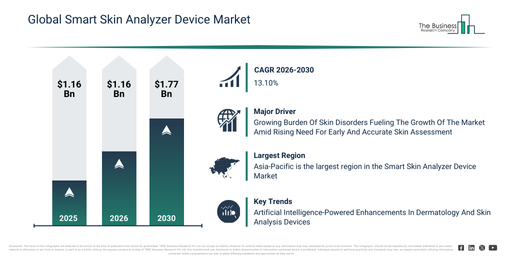
    The market for smart skin analyzer devices has expanded swiftly over recent years. It is projected to increase from $1.45 billion in 2025 to $1.64 billion in 2026, representing a compound annual growth rate (CAGR) of 13.4%. This growth during the historical period is largely due to rising skincare awareness, the proliferation of beauty clinics, increased demand for non-invasive diagnostics, the growth of cosmetic dermatology, and the integration of consumer electronics with skincare devices. Looking ahead, the market is expected to reach $2.68 billion by 2030, growing at a CAGR of 13.1%. Key factors fueling this forecast include advancements in AI-powered predictive skin analytics, tighter integration with beauty applications, the rise of direct-to-consumer devices, broader adoption of smart mirrors, and expanding beauty markets in emerging regions. Major trends anticipated during this period involve AI-driven skin assessment, personalized skincare recommendations, portable diagnostic tools, consumer-friendly at-home skin analysis, and imaging-based facial mapping technology.

    Download A Free Sample Report For Comprehensive Market Insights:

    https://www.thebusinessresearchcompany.com/sample.aspx?id=30398&type=smp

    Primary Drivers Behind the Growth of Smart Skin Analyzer Devices

    One of the main forces propelling the smart skin analyzer device market is the increasing prevalence of skin disorders worldwide. These conditions, which range from common ailments like acne and eczema to more serious diseases such as melanoma, affect the skin’s structure, function, and appearance. Rising exposure to harmful ultraviolet (UV) radiation has contributed to the surge in skin disorders, increasing the urgency for effective early diagnosis and monitoring solutions. Smart skin analyzers use advanced imaging and analytical technologies to detect early signs of skin problems, enabling more precise and personalized treatment plans.

    A clear example highlighting this demand comes from Australia, where in 2023, there were 1,527 melanoma-related deaths reported, including 1,038 males and 489 females, according to Cancer Australia. This underscores the critical need for improved skin health monitoring, which supports the ongoing expansion of the smart skin analyzer device market.

    Access The Complete Smart Skin Analyzer Device Market Report:

    https://www.thebusinessresearchcompany.com/report/global-smart-skin-analyzer-device-market-report

    Breakdown of Segments Expanding Rapidly in the Smart Skin Analyzer Device Market

    The smart skin analyzer device market is categorized by several key segments:

    1) Product Type: Handheld Devices, Desktop Devices, Portable Devices

    2) Distribution Channel: Online, Offline

    3) Technology: Artificial Intelligence (AI)-Based, Sensor-Based, Imaging-Based, Other Technologies

    4) Application: Dermatology Clinics, Beauty Salons and Spas, Home Use, Research and Academia, Other Applications

    5) End-User: Professional, Consumer

    Further product-specific subsegments include:

    – Handheld Devices like Compact Skin Scanners, Wireless Skin Analyzers, Pocket Diagnostic Tools, Moisture Meters, and Portable Imaging Devices

    – Desktop Devices such as Multi-Parameter Analysis Stations, High-Resolution Facial Imaging Systems, Professional Dermatology Units, Facial Mapping Systems, and Clinical Grade Platforms

    – Portable Devices including Travel-Friendly Analyzers, Battery-Operated Diagnostic Units, Compact Facial Imaging Devices, Moisture and Oil Meters, and Mobile Assessment Tools

    Innovative Trends Shaping the Future of Smart Skin Analyzer Devices

    Leading companies in this space are heavily investing in artificial intelligence to improve diagnostic precision, automate processes, and enable real-time evaluations. AI systems utilize machine learning algorithms trained on extensive skin image datasets to identify patterns, classify abnormalities, and assist clinical decisions. These capabilities include automated lesion analysis, enhanced imaging clarity, and personalized skin assessments. For instance, in May 2024, FotoFinder Systems GmbH from Germany introduced Skeen, an AI-powered wireless digital dermatoscope designed for advanced skin and hair analysis. This device incorporates AI-supported image evaluation, cloud-based data storage, and high-resolution wireless imaging, significantly enhancing clinical workflow efficiency, accuracy, and remote patient data access. Such technological advancements reinforce the growing role of AI-powered tools in professional dermatology and smart skin diagnostics.

    Competitive Landscape of the Smart Skin Analyzer Device Market

    Key players leading the smart skin analyzer device market include Perfect Corp., FotoFinder Systems GmbH, lululab Inc., Beijing ADSS Development Co. Ltd., Beijing Sanhe Beauty Science and Technology Co. Ltd., Shanghai May Skin Information Technology Co. Ltd., Zemits, Sylton Inc., Cortex Technology Inc., FitSkin Inc., Aram Huvis Co. Ltd., Bomtech Electronics Co. Ltd., Changsha GOMECY Electronics Co. Ltd., Guangzhou Mico AEST Technology Co. Ltd., Miramhoo Aesthetics, Medelink Enterprise Inc., Sea Heart Group, Callegari S.p.A., Canfield Scientific Inc., and Pixience SAS. These companies are shaping the market through innovation, expanding product offerings, and strategic collaborations.

    Geographical Insights: Leading Regions in the Smart Skin Analyzer Device Market

    In 2025, Asia-Pacific emerged as the largest regional market for smart skin analyzer devices. This region is also expected to experience the fastest growth during the forecast period. Other important regions covered in the market analysis include South East Asia, Western Europe, Eastern Europe, North America, South America, the Middle East, and Africa, providing a full global perspective on market trends and opportunities.

    Get in touch with us:

    The Business Research Company: https://www.thebusinessresearchcompany.com/

    Americas: +1 310-496-7795

    Asia: +44 7882 955267 & +91 8897263534

    Europe: +44 7882 955267

    Email us at: marketing@tbrc.info

    Follow us on:

    LinkedIn: https://in.linkedin.com/company/the-business-research-company

    YouTube: https://www.youtube.com/channel/UC24_fI0rV8cR5DxlCpgmyFQ

    Global Market Model: https://www.thebusinessresearchcompany.com/global-market-model
  • Smart Ring Hormone Tracker Market Forecast Reveals Where Future Industry Value Will Be Created

    Smart Ring Hormone Tracker Market Forecast Reveals Where Future Industry Value Will Be Created

    Enhanced with market attractiveness analysis, total addressable market evaluation, company benchmarking matrices, interactive Excel dashboards, expanded supply chain intelligence, emerging startup coverage, and detailed product insights, The Business Research Company’s 2026 market reports deliver more actionable and strategically valuable research.

    The market for smart ring hormone trackers is rapidly evolving as more people prioritize monitoring their hormonal health with innovative wearable technology. This sector is experiencing significant growth driven by advances in health tracking capabilities and a deeper understanding of hormonal influences on overall well-being. Let’s explore the current market figures, key growth factors, leading players, and emerging trends shaping this promising industry.

    Smart Ring Hormone Tracker Market Size and Future Growth Projections

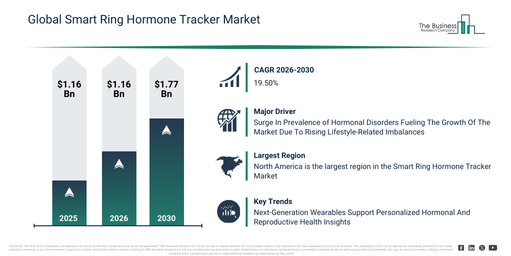
    The smart ring hormone tracker market has shown impressive expansion in recent years. Between 2025 and 2026, the market size is expected to increase from $1.36 billion to $1.63 billion, reflecting a strong compound annual growth rate (CAGR) of 19.8%. This growth during the historical period stems from heightened awareness of hormonal health, the rising popularity of wearable health devices, greater adoption of fertility tracking, the demand for non-invasive diagnostic tools, and the broadening landscape of women’s health solutions. Looking ahead, the market is projected to reach $3.32 billion by 2030, maintaining a CAGR of 19.5%. Key drivers in the forecast period include advancements in AI-driven hormone prediction, integration with digital health platforms, increasing demand for menopause monitoring, expansion of personalized healthcare services, and growing consumer use of health data. Noteworthy trends for the coming years feature continuous tracking of hormonal biomarkers, the rise of ring-based non-invasive wearables, real-time fertility and cycle insights, monitoring stress and recovery hormones, and tailored hormonal analytics.

    Download A Free Sample Report For Comprehensive Market Insights:

    https://www.thebusinessresearchcompany.com/sample.aspx?id=29207&type=smp

    Key Factors Fueling Market Demand for Smart Ring Hormone Trackers

    A primary factor propelling demand for smart ring hormone trackers is the increasing prevalence of hormonal disorders worldwide. These disorders arise due to imbalances caused by either excessive or insufficient hormone production, disrupting vital bodily functions such as growth, metabolism, and reproduction. Changing lifestyles characterized by poor diets, high stress levels, and sedentary habits contribute significantly to the rising incidence of these conditions. Smart ring hormone trackers play a crucial role in managing such disorders by offering continuous monitoring of hormone levels and physiological signals, enabling early detection and supporting tailored health interventions.

    Real-world data highlights this concern: In December 2023, the Australian Institute of Health and Welfare reported that endometriosis accounted for 8,213 Years Lived with Disability (YLD) in Australia, equating to 0.61 YLD per 1,000 females. The highest disease burden was found among women aged 30 to 34 years, at a rate of 1.71 YLD per 1,000 females. This growing prevalence of hormonal conditions is a significant driver encouraging the adoption of smart ring hormone trackers.

    Access The Complete Smart Ring Hormone Tracker Market Report:

    https://www.thebusinessresearchcompany.com/report/smart-ring-hormone-tracker-global-market-report

    Market Segmentation Overview of the Smart Ring Hormone Tracker Industry

    The smart ring hormone tracker market is divided into several important segments:

    1) Product Type: Fertility Tracking Rings, Menstrual Cycle Tracking Rings, Menopause Monitoring Rings

    2) Sensor Type: Temperature Sensors, Heart Rate Sensors, Other Sensor Types

    3) Application Areas: Women’s Health, Sports and Fitness, Other Applications

    4) End-User Categories: Individuals, Clinics, Hospitals, Other End-Users

    5) Distribution Channels: Online Stores, Pharmacies, Specialty Stores, Other Distribution Channels

    Further sub-segments include:

    – Fertility Tracking Rings such as Ovulation Prediction Rings and Conception Support Rings

    – Menstrual Cycle Tracking Rings including Period Prediction Rings, Cycle Symptom Tracking Rings, and Hormonal Fluctuation Monitoring Rings

    – Menopause Monitoring Rings like Hot Flash Detection Rings and Sleep Disruption Monitoring Rings

    Innovations Shaping Competitive Dynamics in the Smart Ring Hormone Tracker Market

    Leading market participants are heavily invested in technological innovation, focusing on smart sensing platforms that adapt dynamically to an individual’s physiology. These platforms combine advanced sensors with intelligent algorithms to deliver continuous, accurate biometric data and personalized insights related to hormonal and reproductive health. For instance, in October 2024, Oura Health from Finland launched Oura Ring 4, a next-generation smart ring featuring the Smart Sensing platform. This device continuously tracks temperature, heart rate, blood oxygen, and sleep metrics with adaptive sensors. Its lightweight titanium design offers comfort for 24/7 wear without compromising accuracy. Specifically designed for women’s health, it provides cycle insights, fertile window detection, and pregnancy-related tracking by analyzing basal body temperature and physiological signals. This enables users to identify hormonal imbalances and ovulation irregularities, supporting personalized reproductive wellness.

    Leading Companies Driving the Smart Ring Hormone Tracker Market

    The smart ring hormone tracker industry features a range of key players, including Oura Health Oy, Ultrahuman, Circular, Nova Smart Ring, RingConn, Kyri Cycles, Femometer, Movano Health, Belle Health, Luna Zone, Happy Health, Motiv Inc, BodiMetrics (circul+), Cloven Technology, Gabit, boAt, Samsung Electronics Co., Bellabeat, SLEEPON, and FYFIT. These companies compete by focusing on product innovation, expanding distribution, and enhancing consumer engagement with personalized hormonal health tracking.

    Regional Market Breakdown and Growth Opportunities

    In 2025, North America held the largest share of the smart ring hormone tracker market. However, the Asia-Pacific region is expected to demonstrate the fastest growth over the coming years. The market analysis spans several regions, including Asia-Pacific, South East Asia, Western Europe, Eastern Europe, North America, South America, the Middle East, and Africa, providing a comprehensive global perspective on market potential and development trends.

    Get in touch with us:

    The Business Research Company: https://www.thebusinessresearchcompany.com/

    Americas: +1 310-496-7795

    Asia: +44 7882 955267 & +91 8897263534

    Europe: +44 7882 955267

    Email us at: marketing@tbrc.info

    Follow us on:

    LinkedIn: https://in.linkedin.com/company/the-business-research-company

    YouTube: https://www.youtube.com/channel/UC24_fI0rV8cR5DxlCpgmyFQ

    Global Market Model: https://www.thebusinessresearchcompany.com/global-market-model
  • Smart Pulse Oximeter Ring Market Growth Through 2030 Creates New Strategic Opportunities

    Smart Pulse Oximeter Ring Market Growth Through 2030 Creates New Strategic Opportunities

    Through market attractiveness analysis, total addressable market evaluation, company benchmarking matrices, interactive Excel dashboards, expanded supply chain intelligence, emerging startup coverage, and detailed product insights, The Business Research Company’s 2026 market reports provide more actionable and strategically valuable research.

    The smart pulse oximeter ring market is gaining significant traction as health monitoring technologies become more integrated into daily life. These innovative wearable devices offer convenient and continuous tracking of vital signs, driving strong demand across various user groups and healthcare settings. Let’s explore the current market landscape, key growth factors, major players, and future trends shaping this expanding industry.

    Market Size and Growth Outlook for the Smart Pulse Oximeter Ring Market

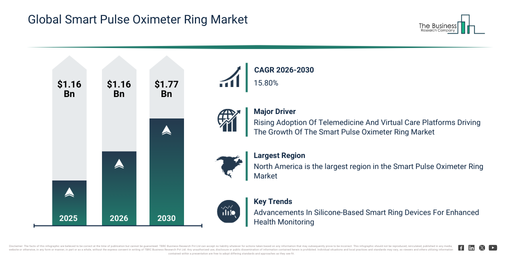
    The smart pulse oximeter ring market has been rapidly expanding in recent years. It is projected to grow from $1.14 billion in 2025 to $1.33 billion in 2026, representing a compound annual growth rate (CAGR) of 16.1%. This increase during the past period has been fueled by greater awareness of respiratory health, the need for COVID-19 related monitoring, widespread adoption of wearable health devices, growth in homecare monitoring, and the rising popularity of fitness tracking. Moving forward, the market is expected to reach $2.39 billion by 2030, growing at a CAGR of 15.8%. Key factors supporting this forecast include preventive health monitoring, managing chronic illnesses, diagnosing sleep disorders, telehealth integration, and advancements in miniaturized sensor technology. Emerging trends within this space consist of continuous SpO2 monitoring rings, wellness and sleep-tracking features, smartphone connectivity, compact non-invasive designs, and extended battery life wearables.

    Download A Free Sample Report For Comprehensive Market Insights:

    https://www.thebusinessresearchcompany.com/sample.aspx?id=29206&type=smp

    Driving Forces Behind the Smart Pulse Oximeter Ring Market Growth

    One major factor propelling the smart pulse oximeter ring market is the rising use of telemedicine and virtual care platforms. These digital healthcare services enable patients to consult with medical professionals remotely through online or mobile applications. Increasing accessibility and convenience have accelerated adoption, allowing patients to receive care without traveling. Smart pulse oximeter rings complement these platforms by offering continuous remote monitoring of vital signs such as oxygen saturation and heart rate, facilitating real-time health tracking. For instance, a survey conducted by Rock Health in February 2023 found that 76% of individuals over 55 had used telemedicine, while 80% of all respondents accessed care this way at some point during 2023. This growing reliance on virtual care is thus a significant driver for market expansion.

    Technology Innovation Encouraging Market Adoption

    Another important growth catalyst is the advancement in wearable health technologies that enhance comfort, accuracy, and ease of use. The development of silicone ring devices, which are soft and flexible, provides users with safe and comfortable options for continuous or spot health monitoring during physical activities or daily wear. For example, in February 2025, Viatom, a medical device manufacturer based in China, received FDA approval for its Smart Ring Pulse Oximeter-O2Ring. This lightweight silicone ring measures SpO2, heart rate, and perfusion index and is suitable for use in homes, hospitals, long-term care, and sleep labs. While not intended for continuous real-time tracking, the device features vibration alerts to notify users when readings surpass preset thresholds, helping adjust sleep posture discreetly. Its integrated SpO2 sensors and noise-reduction technology ensure precise data collection, which syncs instantly to the Vihealth app for detailed clinical reports.

    Access The Complete Smart Pulse Oximeter Ring Market Report:

    https://www.thebusinessresearchcompany.com/report/smart-pulse-oximeter-ring-global-market-report

    Key Segments Offering Opportunities in the Smart Pulse Oximeter Ring Market

    The market is segmented across multiple dimensions including product type, distribution channel, application, and end-user categories. Product types include Bluetooth-Enabled, Wi-Fi Enabled, and Standalone devices. Distribution channels span online retail, pharmacies, specialty stores, and others. Applications cover home care, hospitals and clinics, sports and fitness, along with other uses. End-users are divided into adults, pediatrics, and geriatrics. Further subcategories for Bluetooth-enabled rings focus on features like real-time data synchronization, smartphone integration, fitness tracking, sleep monitoring, and health alerts. Wi-Fi-enabled products emphasize cloud data uploading, remote monitoring, web portal access, home healthcare integration, and long-duration tracking. Standalone rings offer built-in memory, local display, vibration alerts, independent operation, and extended battery life.

    Market Leaders and Competitive Landscape in the Smart Pulse Oximeter Ring Industry

    Several prominent players are driving innovation and competition in this market. Notable companies include Ultrahuman Healthcare, Circular (Circulsense), RingConn, Amazfit (Zepp Health Corporation), Fitbit (Google LLC), Apple Inc., McLear Ltd., Motivi Inc., Prevention (Prevention Circul+ ring brand), Sleepon Inc., Go2Sleep (SleepOn rings), Movano Health, Happy Health (Happy Ring), ArcX Technology, Boogear, Dcare Smart Ring, Wellue, Omni Health Ring (in development), Owl Ring (upcoming), and SmartRing Labs. These firms focus on developing differentiated products with advanced features to capture a broad spectrum of consumers and institutional clients.

    Regional Insights Highlighting Market Potential and Trends

    In 2025, North America held the largest share of the smart pulse oximeter ring market by revenue. However, the Asia-Pacific region is expected to experience the fastest growth during the forecast period. The geographic analysis also includes key regions such as South East Asia, Western Europe, Eastern Europe, South America, the Middle East, and Africa, providing a comprehensive view of global market dynamics and opportunities.

    Get in touch with us:

    The Business Research Company: https://www.thebusinessresearchcompany.com/

    Americas: +1 310-496-7795

    Asia: +44 7882 955267 & +91 8897263534

    Europe: +44 7882 955267

    Email us at: marketing@tbrc.info

    Follow us on:

    LinkedIn: https://in.linkedin.com/company/the-business-research-company

    YouTube: https://www.youtube.com/channel/UC24_fI0rV8cR5DxlCpgmyFQ

    Global Market Model: https://www.thebusinessresearchcompany.com/global-market-model
  • Smart Prosthetics Market Size Projected To Increase From $2.23 Billion To $3.18 Billion During The Forecast Period

    Smart Prosthetics Market Size Projected To Increase From $2.23 Billion To $3.18 Billion During The Forecast Period

    Delivering more actionable and strategically valuable research, The Business Research Company’s 2026 market reports feature market attractiveness analysis, total addressable market evaluation, company benchmarking matrices, interactive Excel dashboards, expanded supply chain intelligence, emerging startup coverage, and detailed product insights.

    The smart prosthetics sector has been witnessing significant growth, driven by technological advancements and increasing demand for enhanced mobility solutions. This evolving market is set to expand further as innovations continue to improve prosthetic functionality and user comfort, meeting the needs of a growing population affected by limb loss.

    Market Size and Expected Growth Trajectory of the Smart Prosthetics Market

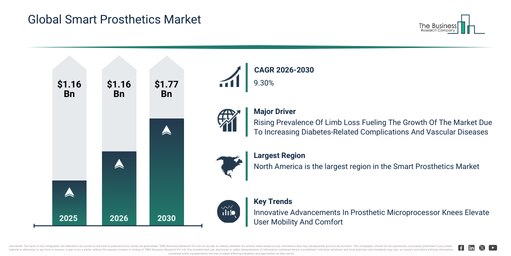
    The smart prosthetics market has experienced a strong upward trend in recent years. It is projected to increase from $2.03 billion in 2025 to $2.23 billion in 2026, representing a compound annual growth rate (CAGR) of 9.9%. This historical growth is largely due to the limited capabilities of traditional prosthetics, heavy dependence on mechanical limbs, expansion of orthopedic clinics, rising awareness about mobility aids, and early adoption by rehabilitation centers. Looking ahead, the market is forecasted to reach $3.18 billion by 2030, growing at a CAGR of 9.3%. This anticipated rise is attributed to breakthroughs in bionic and hybrid prosthetic technologies, the integration of AI and sensor systems, increased use in pediatric care, a growing elderly population requiring prosthetics, and the widening availability of direct and online sales channels. Key trends during this period include greater adoption of microprocessor-controlled prosthetics, sensor-based movement recognition, demand for myoelectric and hybrid models, and a focus on customized solutions for both pediatric and adult users.

    Download A Free Sample Report For Comprehensive Market Insights:

    https://www.thebusinessresearchcompany.com/sample.aspx?id=27417&type=smp

    Key Factors Contributing to Growth in the Smart Prosthetics Market

    A primary driver behind the market’s expansion is the rising prevalence of limb loss worldwide. Limb loss can occur due to injuries, diseases, or congenital conditions, and the numbers are increasing, especially linked to diabetes-related complications such as peripheral artery disease and neuropathic ulcers—common causes of non-traumatic lower limb amputations. Smart prosthetics play a vital role in restoring natural movement for individuals affected by limb loss by interpreting muscle signals and adapting in real time to various activities. This enhances mobility, independence, dexterity, control, and comfort, ultimately improving the quality of daily life. For example, a December 2024 report from the Archives of Rehabilitation Research and Clinical Translation estimated that about 2,309,000 people in the United States live with limb loss. Of this group, approximately 91% have undergone lower extremity amputations, while 9.2% have upper extremity amputations. This figure is projected to rise by 145% by 2060, signaling a growing demand for smart prosthetic solutions.

    Segment Breakdown of the Smart Prosthetics Market

    The smart prosthetics market is divided into several core segments:

    1) Product Type: Bionic Limbs, Myoelectric Prosthetics, Hybrid Prosthetics

    2) Technology: Microprocessor-Controlled, Bluetooth-Enabled, Sensor-Integrated, and Other Technologies

    3) Distribution Channel: Direct Sales, Distributors, Online Sales, and Other Distribution Methods

    4) Application: Orthopedic Clinics, Hospitals, Rehabilitation Centers, and Other Uses

    5) End User: Adults and Pediatrics

    Further subdivisions include, for instance, upper-limb and lower-limb bionic prosthetics, modular and lightweight bionic limbs; single-joint, multi-joint, sensor-integrated, and adaptive myoelectric prosthetics; as well as mechanical-electrical combinations, sensor-assisted, custom-fit, and multifunctional hybrid prosthetics.

    Access The Complete Smart Prosthetics Market Report:

    https://www.thebusinessresearchcompany.com/report/smart-prosthetics-global-market-report

    Innovation Trends Shaping the Future of the Smart Prosthetics Market

    Leading companies in this market are concentrating on developing cutting-edge products such as prosthetic microprocessor knees designed to enhance user mobility, improve stability, and reduce energy use during movement. These knees incorporate built-in computers to automatically adjust motions, delivering a smoother and more natural walking experience. For example, in July 2024, Ottobock UK introduced the Genium X4, an advanced prosthetic microprocessor knee that features Optimized Physiological Gait (OPG) 3.0 technology. This innovation offers users improved abilities such as better slope climbing, start-to-walk functionality, enhanced stance phase stability, dynamic backward movement, and an intuitive cycling mode. The knee is waterproof, corrosion-resistant, provides up to five days of battery life, and includes customizable MyMode presets.

    Top Companies Leading the Smart Prosthetics Industry

    The smart prosthetics landscape is shaped by several prominent companies, including Hanger Inc., Ottobock SE & Co. KGaA, Össur hf., Blatchford Group Limited, Trulife Limited, RSLSteeper, PROTEOR SAS, Fillauer LLC, WillowWood LLC, CURE International Inc., Advanced Arm Dynamics Inc., Open Bionics Ltd., Syntouch LLC, Coapt LLC, COVVI Ltd., Endolite India Private Limited, Medical Center Orthotics & Prosthetics Inc., Infinite Biomedical Technologies, Taska Prosthetics, and LimbLogic Prosthetics.

    Regional Overview and Market Leadership in Smart Prosthetics

    In 2025, North America held the largest share of the smart prosthetics market. However, the Asia-Pacific region is expected to become the fastest-growing market throughout the forecast period. The analysis covers several key regions including Asia-Pacific, South East Asia, Western Europe, Eastern Europe, North America, South America, the Middle East, and Africa, providing a broad perspective on global market trends.

    Get in touch with us:

    The Business Research Company: https://www.thebusinessresearchcompany.com/

    Americas: +1 310-496-7795

    Asia: +44 7882 955267 & +91 8897263534

    Europe: +44 7882 955267

    Email us at: marketing@tbrc.info

    Follow us on:

    LinkedIn: https://in.linkedin.com/company/the-business-research-company

    YouTube: https://www.youtube.com/channel/UC24_fI0rV8cR5DxlCpgmyFQ

    Global Market Model: https://www.thebusinessresearchcompany.com/global-market-model
  • Smart Posture Correction Market Growth Outlook Reveals A CAGR Of 18% And A Market Value Of $3.47 Billion By 2030

    Smart Posture Correction Market Growth Outlook Reveals A CAGR Of 18% And A Market Value Of $3.47 Billion By 2030

    Enhanced with market attractiveness analysis, total addressable market evaluation, company benchmarking matrices, interactive Excel dashboards, expanded supply chain intelligence, emerging startup coverage, and detailed product insights, The Business Research Company’s 2026 market reports deliver more actionable and strategically valuable research.

    The smart posture correction market is rapidly gaining traction as more people seek effective solutions to improve their posture and overall musculoskeletal health. With changing work habits and increasing awareness about ergonomic wellness, this market is expanding quickly and shows promising growth prospects. Let’s explore the current market size, growth drivers, segmentation, emerging trends, key players, and regional insights shaping the future of smart posture correction technologies.

    Steady Growth in Smart Posture Correction Market Size

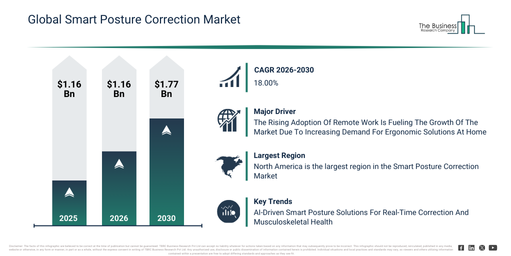
    The smart posture correction market has witnessed swift expansion in recent years, growing from $1.52 billion in 2025 to $1.79 billion in 2026, representing a compound annual growth rate (CAGR) of 18.3%. This past growth has been largely fueled by the rise in sedentary lifestyles, greater awareness of workplace ergonomics, increased occurrence of musculoskeletal disorders, the popularity of wearable technology, and trends in fitness tracking. Looking ahead, the market is projected to accelerate further, reaching $3.47 billion by 2030 with a CAGR of 18.0%. The anticipated growth is driven by factors such as expanded remote work arrangements, corporate wellness initiatives, preventive care for musculoskeletal health, AI-enabled posture analytics, and an emphasis on home ergonomics solutions. Key trends expected to influence the market include real-time posture monitoring wearables, haptic feedback devices, app-based coaching, workplace ergonomic assessments, and continuous spinal alignment tracking.

    Download A Free Sample Report For Comprehensive Market Insights:

    https://www.thebusinessresearchcompany.com/sample.aspx?id=29205&type=smp

    Work From Home Trends Encouraging Market Expansion

    The increase in remote working is a significant contributor to the expanding smart posture correction market. Remote work allows employees to perform their duties outside traditional office settings, often from home. Organizations are adopting this model to cut costs related to office spaces while maintaining productivity through digital tools. However, working from home for extended periods often results in less optimal ergonomic setups, prompting users to seek smart posture correction devices to monitor and improve their sitting and standing postures during the workday. For example, the US Bureau of Labor Statistics reported that the percentage of employees working from home on workdays rose from 34% in 2022 to 35% in 2023, highlighting the growing reliance on home-based work environments and the corresponding demand for posture support technologies.

    Musculoskeletal Disorders Increasing Need for Posture Solutions

    The rising incidence of musculoskeletal disorders (MSDs) is another critical factor propelling the smart posture correction market. MSDs affect muscles, bones, joints, tendons, ligaments, and nerves, causing pain, stiffness, and limited mobility. The surge in these conditions is primarily linked to sedentary work habits and prolonged screen time, which often lead to poor posture and strain on the spine, neck, and shoulders. Smart posture correction devices address this problem by offering real-time feedback and personalized guidance to help users maintain proper alignment and reduce physical stress during daily activities. For instance, data from the UK’s Office for Health Improvement & Disparities revealed that in 2023, 18.4% of people aged 16 and older reported having a long-term musculoskeletal condition, up from 17.6% the previous year, underscoring the growing need for effective posture management solutions.

    Access The Complete Smart Posture Correction Market Report:

    https://www.thebusinessresearchcompany.com/report/smart-posture-correction-global-market-report

    Smart Posture Correction Market Segmentation Overview

    This market is divided into several key segments to better understand demand patterns:

    1) Product Type: Wearable Devices and Smart Chairs

    2) Sensor Type: Accelerometers, Gyroscopes, Magnetometers, and other sensor technologies

    3) Distribution Channel: Online Stores, Specialty Stores, Retail Pharmacies, and others

    4) Application: Personal Use, Healthcare, Fitness and Wellness, Corporate sectors, and more

    Within wearable devices, subcategories include clip-on posture trackers, sensor-embedded posture shirts, haptic feedback braces, smart neckbands that provide coaching, and vibration cue adhesive patches. Smart chairs segment includes gaming chairs with posture coaching features, executive chairs that offer posture alerts, and educational chairs integrated with sensors.

    AI and Technology Trends Transforming Smart Posture Correction

    Leading companies in the smart posture correction market are focusing heavily on AI-powered posture technologies to provide personalized corrective feedback and encourage improved posture habits for long-term musculoskeletal health. AI-driven solutions continually assess body posture in real time, delivering actionable feedback to help users correct alignment issues and prevent musculoskeletal problems. A notable example is Neurabody, a South Korean startup that in July 2024 launched Posture AI, an advanced system that combines embedded sensors with analytics to help address global back pain. Their product range includes smart posture sensors and ergonomic correction shirts, with plans to introduce smart posture seats and lumbar support devices in 2025 and 2026. This platform targets office workers, insurance companies, and esports players, using machine learning to predict back pain risks and recommend tailored exercises, enabling millions to self-manage posture effectively.

    Key Players Driving Innovation and Market Leadership

    Several prominent companies are shaping the smart posture correction market, including Upright Technologies Ltd, Wearable X Inc, dorsaVi Limited, Lumo Bodytech Inc, IntelliSkin Inc, AlignMed Corp, Kinetisense Inc, Soter Analytics Pty Ltd, Modjoul Inc, Ergo Impact LLC, TuMeke Ergonomics Ltd, YogiFi Inc, Kaia Health Inc, Ottobock SE & Co KGaA, Xiaomi Corporation, TruPosture Inc, Posture360 Ltd, PostureNOW Inc, PostureMedic LLC, BackJoy Orthotics LLC, and Oska Wellness Inc. These organizations are investing in research and development to continuously improve product offerings and expand market reach.

    Regional Insights Highlight Growth Opportunities

    In 2025, North America held the largest share of the smart posture correction market, benefiting from high awareness and advanced healthcare infrastructure. However, Asia-Pacific is poised to be the region with the fastest growth during the forecast period, driven by increasing adoption of wearable technologies, rising corporate wellness programs, and growing interest in preventive healthcare. The market report covers major regions including Asia-Pacific, South East Asia, Western Europe, Eastern Europe, North America, South America, the Middle East, and Africa, providing a comprehensive overview of global market dynamics.

    Get in touch with us:

    The Business Research Company: https://www.thebusinessresearchcompany.com/

    Americas: +1 310-496-7795

    Asia: +44 7882 955267 & +91 8897263534

    Europe: +44 7882 955267

    Email us at: marketing@tbrc.info

    Follow us on:

    LinkedIn: https://in.linkedin.com/company/the-business-research-company

    YouTube: https://www.youtube.com/channel/UC24_fI0rV8cR5DxlCpgmyFQ

    Global Market Model: https://www.thebusinessresearchcompany.com/global-market-model
  • Smart Portable Ultrasound Market Forecast Highlights Expansion From $4.34 Billion To $7.43 Billion Through 2030

    Smart Portable Ultrasound Market Forecast Highlights Expansion From $4.34 Billion To $7.43 Billion Through 2030

    Through market attractiveness analysis, total addressable market evaluation, company benchmarking matrices, interactive Excel dashboards, expanded supply chain intelligence, emerging startup coverage, and detailed product insights, The Business Research Company’s 2026 market reports provide more actionable and strategically valuable research.

    The smart portable ultrasound market is rapidly evolving, driven by technological progress and growing healthcare demands worldwide. As healthcare providers seek faster, more accessible diagnostic tools, this market is set to experience significant growth. Let’s explore the current market size, key growth factors, segmentation, leading players, and regional trends shaping its future.

    Projected Market Size and Expansion of the Smart Portable Ultrasound Market

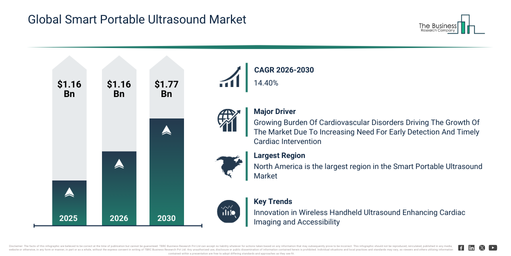
    The smart portable ultrasound market has witnessed impressive growth recently and is poised to expand further. It is anticipated to increase from $3.78 billion in 2025 to $4.34 billion in 2026, representing a compound annual growth rate (CAGR) of 14.7%. This upward trend during the historical period is largely due to the rising need for quick diagnostic solutions, optimization of hospital workflows, widespread adoption of portable imaging devices, growth in emergency medicine, and continuous advancements in imaging technology. Looking ahead, the market is expected to reach $7.44 billion by 2030, growing at a CAGR of 14.4%. Factors propelling this future growth include the adoption of tele-ultrasound services, integration of AI-based diagnostics, expansion of healthcare access in rural areas, demand for cost-effective imaging, and increasing use of homecare diagnostics. Emerging trends shaping this period involve handheld point-of-care ultrasound devices, AI-assisted image interpretation, wireless ultrasound connectivity, cloud-based image storage, and enhanced emergency diagnostic imaging solutions.

    Download A Free Sample Report For Comprehensive Market Insights:

    https://www.thebusinessresearchcompany.com/sample.aspx?id=29204&type=smp

    Key Factors Supporting Smart Portable Ultrasound Market Growth

    One significant driver behind the expanding smart portable ultrasound market is the rising prevalence of cardiovascular disorders. These conditions, which include heart attacks, strokes, hypertension, and heart failure, pose a growing healthcare challenge globally. Lifestyle factors such as unhealthy diets, lack of physical activity, and smoking contribute to increasing cardiovascular disease rates. Portable ultrasound devices play a vital role in managing this burden by enabling early and accurate detection of heart and vascular abnormalities. This timely diagnosis allows for prompt intervention and better patient outcomes. For instance, data released in January 2024 by the American Heart Association, a US-based nonprofit organization, indicated a slight increase in cardiovascular-related deaths in 2024, with the total reaching 931,578—up by fewer than 3,000 from the 928,741 reported in 2023. This growing cardiovascular disease prevalence is a key element driving demand for smart portable ultrasound technologies.

    Smart Portable Ultrasound Market Growth Influenced by Healthcare Trends

    Beyond cardiovascular disease, the market is being driven forward by a broader push toward improving diagnostic efficiency and access. Portable ultrasound devices help streamline workflows in hospitals and clinics, offering rapid and reliable imaging without the need for bulky equipment. Furthermore, growing interest in telehealth and remote patient monitoring is encouraging adoption of portable and wireless ultrasound systems that can be used outside traditional healthcare facilities, including in rural and underserved areas.

    Access The Complete Smart Portable Ultrasound Market Report:

    https://www.thebusinessresearchcompany.com/report/smart-portable-ultrasound-global-market-report

    Comprehensive Segmentation of the Smart Portable Ultrasound Market

    The smart portable ultrasound market is segmented into various categories to better understand its structure. These include:

    1) Product Type: Handheld Ultrasound Devices, Laptop-based Ultrasound Devices, and Tablet-based Ultrasound Devices.

    2) Technology: 2D, 3D or 4D imaging, Doppler technology, and other imaging technologies.

    3) Application: Cardiology, Obstetrics, Gynecology, Urology, Musculoskeletal, Emergency Medicine, and other medical uses.

    4) End-User: Hospitals, Diagnostic Centers, Ambulatory Surgical Centers, Clinics, and other healthcare providers.

    Further subcategories break down product types such as handheld devices into point-of-care, pocket, and compact diagnostic ultrasound devices; laptop-based devices into portable cardiology, obstetrics, and abdominal ultrasound systems; and tablet-based devices into mobile emergency, musculoskeletal, and vascular ultrasound solutions.

    Innovations Steering the Next Phase of Smart Portable Ultrasound Development

    Leading companies in the market are pushing boundaries by introducing innovative wireless handheld ultrasound devices. These portable, cordless tools connect to smartphones or tablets, enabling real-time imaging at the point of care and enhancing clinical decision-making. One example is GE HealthCare’s April 2024 launch of Caption AI integrated with the Vscan Air SL wireless handheld ultrasound system. This advanced platform uses artificial intelligence to provide step-by-step guidance to users, including those with limited ultrasound experience, helping capture high-quality cardiac images efficiently. This automation simplifies imaging processes, reduces dependence on expert operators, and accelerates cardiac evaluations through real-time visual prompts for optimal probe positioning.

    Top Competitors Leading the Smart Portable Ultrasound Market

    The competitive landscape of the smart portable ultrasound market includes several major global players, such as GE HealthCare Technologies Inc., Koninklijke Philips N.V., Siemens Healthineers AG, Fujifilm Holdings Corporation (Fujifilm SonoSite), Mindray Medical International Limited, Canon Medical Systems Corporation, Samsung Medison Co. Ltd., Butterfly Network Inc., Clarius Mobile Health Corp., Healcerion Co. Ltd., Esaote S.p.A., Chison Medical Technologies Co. Ltd., Sonoscanner SARL, Telemed Medical Systems S.r.l., Vinno Technology (Suzhou) Co. Ltd., Terason (Teratech Corporation), SonoScape Medical Corp., BenQ Medical Technology Corp., ALPINION Medical Systems Co. Ltd., Bionet Co. Ltd., EDAN Instruments Inc., Exo Imaging Inc., Vave Health Inc., Pulsenmore Ltd., and Biim Ultrasound AS.

    Global Market Presence and Regional Growth Patterns

    In 2025, North America held the largest share of the smart portable ultrasound market, reflecting strong healthcare infrastructure and adoption rates. Meanwhile, the Asia-Pacific region is projected to be the fastest-growing market over the forecast period, driven by expanding healthcare access, increased investments in medical technologies, and growing demand for portable diagnostic tools. The market analysis encompasses regions including Asia-Pacific, South East Asia, Western Europe, Eastern Europe, North America, South America, the Middle East, and Africa, offering a comprehensive global perspective on market trends and growth opportunities.

    Get in touch with us:

    The Business Research Company: https://www.thebusinessresearchcompany.com/

    Americas: +1 310-496-7795

    Asia: +44 7882 955267 & +91 8897263534

    Europe: +44 7882 955267

    Email us at: marketing@tbrc.info

    Follow us on:

    LinkedIn: https://in.linkedin.com/company/the-business-research-company

    YouTube: https://www.youtube.com/channel/UC24_fI0rV8cR5DxlCpgmyFQ

    Global Market Model: https://www.thebusinessresearchcompany.com/global-market-model
  • Smart Portable Oxygen Generator Market Expected To Reach $3.52 Billion By 2030 As Growth Accelerates At 9.9% CAGR

    Smart Portable Oxygen Generator Market Expected To Reach $3.52 Billion By 2030 As Growth Accelerates At 9.9% CAGR

    Delivering more actionable and strategically valuable research, The Business Research Company’s 2026 market reports feature market attractiveness analysis, total addressable market evaluation, company benchmarking matrices, interactive Excel dashboards, expanded supply chain intelligence, emerging startup coverage, and detailed product insights.

    The smart portable oxygen generator market has gained significant attention as advances in healthcare and the rising incidence of respiratory conditions increase demand for convenient oxygen therapy solutions. With innovations making devices more user-friendly and portable, the market is set for continued growth in the coming years. Let’s explore the current market size, growth drivers, industry innovations, and key players shaping this expanding sector.

    Market Size and Projected Growth Trajectory of the Smart Portable Oxygen Generator Market

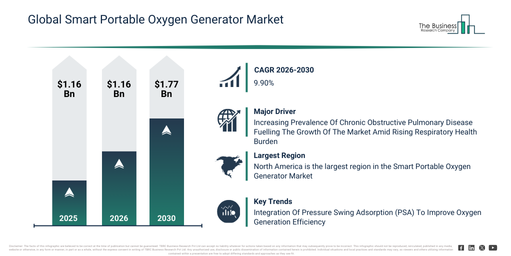
    The market for smart portable oxygen generators has grown swiftly in recent years. It is projected to rise from $2.2 billion in 2025 to $2.42 billion in 2026, reflecting a compound annual growth rate (CAGR) of 10.1%. This past growth was largely fueled by increasing respiratory diseases, an aging population, heightened oxygen demand during the COVID-19 pandemic, hospital capacity challenges, and a growing preference for homecare oxygen solutions. Looking ahead, the market is expected to reach $3.53 billion by 2030, maintaining a strong CAGR of 9.9%. Factors driving this growth include the rising prevalence of chronic respiratory illnesses, expansion of home oxygen therapy, demand for travel-friendly oxygen devices, advancements in smart respiratory monitoring, and a focus on emergency readiness. Emerging trends shaping the market’s future involve portable oxygen therapy systems, intelligent flow adjustment technologies, lightweight travel oxygen generators, home-based respiratory support devices, and battery-operated oxygen units.

    Download A Free Sample Report For Comprehensive Market Insights:

    https://www.thebusinessresearchcompany.com/sample.aspx?id=29203&type=smp

    Key Factors Fueling Demand in the Smart Portable Oxygen Generator Market

    The growing incidence of chronic obstructive pulmonary disease (COPD) stands out as a major catalyst for market expansion. COPD describes a group of progressive lung diseases, including emphysema and chronic bronchitis, which cause airflow obstruction and breathing difficulties. The condition is becoming more prevalent due to an aging population, prolonged exposure to environmental pollutants, lifestyle factors, and natural declines in lung function with age. Smart portable oxygen generators play a crucial role by automatically adjusting oxygen delivery to maintain optimal blood oxygen levels. This helps reduce breathlessness and enhances patient mobility and independence during daily activities. For instance, data from the Centers for Disease Control and Prevention (CDC) revealed that in 2023, the age-adjusted prevalence of diagnosed COPD among U.S. adults aged 18 and over was 3.8%, resulting in 141,733 deaths. This rising disease burden continues to drive demand for smart portable oxygen generators.

    Market Drivers Related to Usage and Technology Adoption

    In addition to COPD prevalence, the expansion of home oxygen therapy programs is propelling the market forward. Patients increasingly prefer receiving oxygen treatment at home, supported by devices that are compact and easy to use. The growing need for travel-friendly oxygen generators also boosts demand, as patients seek mobility without compromising oxygen therapy. Furthermore, technological improvements such as intelligent respiratory monitoring and adaptive oxygen delivery systems are enhancing device effectiveness and user convenience. Emergency preparedness initiatives emphasizing portable oxygen solutions further strengthen market growth prospects.

    Access The Complete Smart Portable Oxygen Generator Market Report:

    https://www.thebusinessresearchcompany.com/report/smart-portable-oxygen-generator-global-market-report

    Segmentation Patterns in the Smart Portable Oxygen Generator Market

    This market is categorized by product type into continuous flow, pulse flow, and dual flow oxygen generators. It also segments by technology, including pressure swing adsorption (PSA), membrane oxygen concentrators, and other technologies. Distribution channels encompass both online and offline sales. Applications cover homecare, travel, and other uses. Within continuous flow products, subtypes include single mode, variable flow, high and low capacity, compact design, and stationary support. Pulse flow devices break down into automatic adjustment, fixed pulse, breath-responsive, multi-setting, portable compact, and lightweight travel models. Dual flow generators feature manual and automatic switching, combined modes, adaptive flow, hybrid output, and multi-user support options.

    Innovations Driving Transformation in the Smart Portable Oxygen Generator Market

    Leading companies in this sector are focusing on enhancing technology to improve oxygen purity, device efficiency, and reliability. Pressure swing adsorption (PSA) technology is a key advancement, using molecular sieves to separate nitrogen from ambient air under pressure, delivering high-purity oxygen with stable performance and minimal maintenance. For example, in July 2025, VARON, a U.S.-based manufacturer specializing in portable respiratory and home oxygen products, launched the VP-8G Portable Oxygen Concentrator. This PSA-powered smart device offers an intelligent pulse flow system synchronized with the user’s breathing, eight adjustable flow settings, and a lightweight, travel-friendly design featuring replaceable filters and batteries. The VP-8G enhances user convenience, mobility, and oxygen delivery efficiency.

    Prominent Competitors Shaping the Smart Portable Oxygen Generator Market

    Key players driving competition in this market include Koninklijke Philips N.V., Omron Corporation, Inogen Inc., Precision Medical Inc., OxyGo LLC, O2 Concepts LLC, Nidek Medical Products Inc., Healthgenie India Private Limited, Rhythm Healthcare LLC, Besco Medical Limited, Longfian Scitech Co. Ltd., Belluscura Plc, Canta Medical Tech Co. Ltd., AngelBiss Medical Technology Co. Ltd., Zhengzhou Olive Electronic Technology Co. Ltd., Foshan Keyhub Electronic Industries Co. Ltd., Teijin Pharma Limited, Devilbiss Healthcare LLC, CAIRE Inc., and Sante International Pvt. Ltd.

    Regional Market Outlook and Growth Hotspots

    In 2025, North America accounted for the largest share of the smart portable oxygen generator market. However, the Asia-Pacific region is anticipated to be the fastest-growing market in the forecast period. The comprehensive market analysis considers regions including Asia-Pacific, South East Asia, Western Europe, Eastern Europe, North America, South America, the Middle East, and Africa, providing a global perspective on market expansion.

    Get in touch with us:

    The Business Research Company: https://www.thebusinessresearchcompany.com/

    Americas: +1 310-496-7795

    Asia: +44 7882 955267 & +91 8897263534

    Europe: +44 7882 955267

    Email us at: marketing@tbrc.info

    Follow us on:

    LinkedIn: https://in.linkedin.com/company/the-business-research-company

    YouTube: https://www.youtube.com/channel/UC24_fI0rV8cR5DxlCpgmyFQ

    Global Market Model: https://www.thebusinessresearchcompany.com/global-market-model
  • Smart Portable Electrocardiogram (ECG) Device Market Set To Grow From $2.28 Billion In 2026 To $3.57 Billion By 2030 At A CAGR Of 11.8%

    Smart Portable Electrocardiogram (ECG) Device Market Set To Grow From $2.28 Billion In 2026 To $3.57 Billion By 2030 At A CAGR Of 11.8%

    Enhanced with market attractiveness analysis, total addressable market evaluation, company benchmarking matrices, interactive Excel dashboards, expanded supply chain intelligence, emerging startup coverage, and detailed product insights, The Business Research Company’s 2026 market reports deliver more actionable and strategically valuable research.

    The smart portable electrocardiogram (ECG) device market is witnessing significant advancement as healthcare technology evolves to meet the increasing demand for convenient and accurate cardiac monitoring solutions. This sector is gaining traction due to factors such as rising cardiovascular health concerns and the adoption of wearable devices, setting the stage for robust growth in the coming years. Let’s explore the current market landscape, the key drivers behind its expansion, notable segments, emerging trends, and leading companies making an impact.

    Current and Projected Market Size for Smart Portable ECG Devices

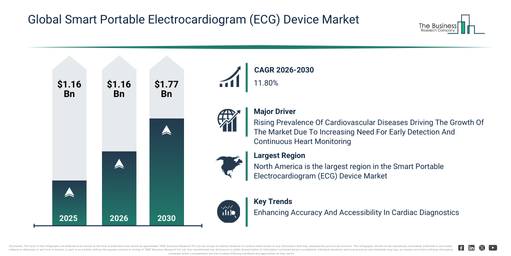
    The market for smart portable electrocardiogram devices has experienced rapid growth recently and is expected to continue this trajectory. It is projected to increase from $2.04 billion in 2025 to $2.29 billion in 2026, reflecting a compound annual growth rate (CAGR) of 12.1%. Over the longer term, the market is anticipated to reach $3.58 billion by 2030, growing at a CAGR of 11.8%. This expansion is driven by the rise in remote cardiac monitoring programs, advancements in AI-based arrhythmia detection, an aging global population, increased homecare diagnostics, and a stronger focus on preventive cardiology. Additionally, trends such as real-time portable cardiac monitoring, smartphone-compatible ECG devices, continuous ambulatory tracking, compact consumer-friendly models, and early cardiac abnormality detection technologies are shaping the industry’s future.

    Download A Free Sample Report For Comprehensive Market Insights:

    https://www.thebusinessresearchcompany.com/sample.aspx?id=29202&type=smp

    Increasing Cardiovascular Disease Prevalence as a Market Catalyst

    One of the primary factors fueling growth in the smart portable ECG device market is the escalating prevalence of cardiovascular diseases worldwide. These conditions, which affect the heart and blood vessels, are closely linked to rising rates of hypertension and obesity. The growing burden of cardiovascular illness underscores the need for early diagnosis and ongoing monitoring, roles that smart portable ECG devices fulfill effectively by facilitating timely medical intervention and improved disease management.

    Impact of Cardiovascular Disease Statistics on Market Growth

    For instance, data from September 2025 by a UK government agency highlights that over 7.6 million people in the UK live with cardiovascular disease, including more than 4 million men and 3.6 million women. This number is expected to increase by 1 million by 2030 and by 2 million compared to current levels by 2040. This projected rise in affected individuals emphasizes the expanding demand for smart portable ECG devices to monitor heart health continuously and efficiently.

    Access The Complete Smart Portable Electrocardiogram (ECG) Device Market Report:

    https://www.thebusinessresearchcompany.com/report/smart-portable-electrocardiogram-ecg-device-global-market-report

    Detailed Segmentation of the Smart Portable ECG Device Market

    This market can be analyzed through several key segments:

    1) Product Type: Handheld ECG Devices, Wearable ECG Devices, Patch-Based ECG Devices

    2) Technology: Bluetooth, Wireless Fidelity (Wi-Fi), Universal Serial Bus (USB), and other technologies

    3) Distribution Channel: Online and Offline sales

    4) Application Areas: Home Care, Hospitals and Clinics, Ambulatory Surgical Centers, and others

    5) End Users: Personal users, healthcare professionals, and other categories

    Each product type further breaks down into subcategories. Handheld devices include single-channel, multi-channel, portable diagnostic, and compact screening devices. Wearable devices cover smartwatch-based and chest strap devices. Patch-based ECG devices include disposable, reusable, wireless patches, and adhesive sensor patches, offering users a wide range of monitoring options.

    Innovations and Future Trends Shaping the Smart Portable ECG Device Market

    Leading companies in this space are investing heavily in advanced technologies, such as AI-powered ECG systems, to improve the accuracy and convenience of cardiac monitoring. These AI-enabled devices can automatically analyze cardiac signals, allowing for quicker and more precise identification of abnormalities.

    A prime example is the launch of AliveCor’s Kardia 12L handheld ECG system in India in September 2025, following regulatory approval from the Central Drugs Standard Control Organization (CDSCO). This device offers 12-lead ECG testing capabilities in a compact, single-cable design that healthcare professionals can use anywhere. Integrated with AliveCor’s digital health platform, the system supports remote consultations and streamlines the management of cardiac data, enhancing patient care while making advanced diagnostics more accessible.

    Top Players in the Smart Portable ECG Device Market

    The smart portable ECG device market features several prominent companies, including Koninklijke Philips N.V., OMRON Healthcare Co. Ltd., Mindray Bio-Medical Electronics Co. Ltd., Nihon Kohden Corporation, Contec Medical Systems Co. Ltd., iRhythm Technologies Inc., Beurer GmbH, Schiller AG, Edan Instruments Inc., Withings S.A., Bittium Corporation, BPL Medical Technologies Pvt. Ltd., Eko Health Inc., SHL Telemedicine Ltd., Qardio Inc., Sunfox Technologies Pvt. Ltd., Biotricity Inc., Peerbridge Health Inc., QT Medical Inc., Wellue Health Inc., and AliveCor Inc. These companies are driving innovation and expanding the availability of portable ECG solutions worldwide.

    Regional Overview Highlighting Market Leadership and Growth

    In 2025, North America led the smart portable ECG device market in terms of revenue. However, Asia-Pacific is forecasted to be the fastest-growing region during the coming years. The comprehensive market report also examines other regions such as South East Asia, Western Europe, Eastern Europe, South America, the Middle East, and Africa, providing a broad perspective on global market trends and opportunities.

    Get in touch with us:

    The Business Research Company: https://www.thebusinessresearchcompany.com/

    Americas: +1 310-496-7795

    Asia: +44 7882 955267 & +91 8897263534

    Europe: +44 7882 955267

    Email us at: marketing@tbrc.info

    Follow us on:

    LinkedIn: https://in.linkedin.com/company/the-business-research-company

    YouTube: https://www.youtube.com/channel/UC24_fI0rV8cR5DxlCpgmyFQ

    Global Market Model: https://www.thebusinessresearchcompany.com/global-market-model
  • Smart Pills Market Opportunities Are Emerging Beyond Traditional Growth Areas

    Smart Pills Market Opportunities Are Emerging Beyond Traditional Growth Areas

    Through market attractiveness analysis, total addressable market evaluation, company benchmarking matrices, interactive Excel dashboards, expanded supply chain intelligence, emerging startup coverage, and detailed product insights, The Business Research Company’s 2026 market reports provide more actionable and strategically valuable research.

    The smart pills market is quickly gaining traction thanks to advances in medical technology and a growing focus on patient-centered healthcare. This sector is expected to experience significant expansion in the coming years as more healthcare providers and patients adopt ingestible devices for diagnostics, monitoring, and drug delivery. Let’s explore the market’s current size, the factors driving its growth, key industry players, and emerging trends shaping its future.

    Smart Pills Market Size and Growth Forecast to 2030

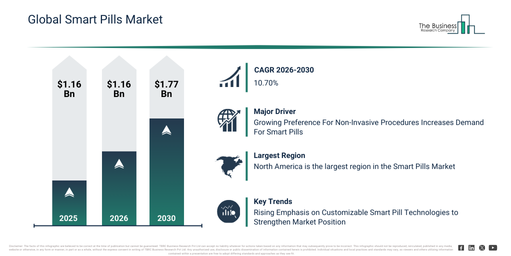
    The smart pills market has seen rapid expansion recently, with its value projected to rise from $6.11 billion in 2025 to $6.75 billion in 2026, reflecting a strong compound annual growth rate (CAGR) of 10.5%. This historical growth has been fueled by factors such as the increasing prevalence of chronic illnesses, a stronger focus on patient compliance monitoring, the rise of digital health initiatives, availability of sophisticated ingestible sensors, and growing adoption in clinical research. Looking ahead, the market is predicted to grow even more swiftly, reaching $10.13 billion by 2030 with a CAGR of 10.7%. This expected increase is driven by rising demand for personalized medicine, greater investment in digital therapeutics, expanded remote patient monitoring, and widespread acceptance of smart drug delivery platforms. Regulatory support for connected health technologies and advances in miniaturized electronics further contribute to this optimistic outlook.

    Download A Free Sample Report For Comprehensive Market Insights:

    https://www.thebusinessresearchcompany.com/sample.aspx?id=2846&type=smp

    Factors Influencing Growth in the Smart Pills Market Part One

    One important factor supporting the smart pills market expansion is the increasing preference for non-invasive medical procedures. These methods avoid surgical incisions or tissue removal, thereby reducing patient risk and shortening recovery time. The appeal of minimally invasive diagnostics and treatments comes from their ability to deliver effective outcomes without imposing significant physical stress on patients. Smart pills fit this trend perfectly by enabling internal imaging and physiological monitoring through swallowable devices, offering clinicians valuable diagnostic insights with minimal discomfort.

    Factors Influencing Growth in the Smart Pills Market Part Two

    For example, in March 2024, NHS England reported that over 5,400 patients across 53 sites benefited from colon capsule endoscopy pill-cam pilots. This illustrates how non-invasive smart pill technologies are being successfully integrated into healthcare systems, driving demand for these innovative solutions. The growing recognition of these advantages is a key driver propelling the smart pills market forward.

    Access The Complete Smart Pills Market Report:

    https://www.thebusinessresearchcompany.com/report/smart-pills-global-market-report

    How Rising Healthcare Expenditure Supports Smart Pills Market

    Another significant driver behind the smart pills market growth is rising healthcare spending, especially investments targeting long-term mental health treatments. Healthcare expenditure encompasses all funds allocated toward medical services, treatments, facilities, research, and public health efforts aimed at improving patient outcomes. The increased prevalence of chronic mental health conditions necessitating ongoing care and medication has led to increased funding in this area. This financial support facilitates the development of advanced smart pill technologies focused on improved drug delivery, patient monitoring, and adherence. For instance, data from December 2024 shows that the Centers for Medicare and Medicaid Services (CMS) in the US reported a 7.5% rise in national health expenditures, reaching $4.9 trillion in 2023 and representing 17.6% of the country’s GDP. Projections indicate that between 2023 and 2032, healthcare spending will continue to grow at an average rate of 5.6% annually, driving the health share of GDP to nearly 20% by 2032. This upward trend in healthcare investment strongly supports the smart pills market growth.

    Market Segmentation and Strategic Opportunities in Smart Pills

    This report segments the smart pills market into various categories to clarify its scope and opportunities:

    1) By Target Area: Esophagus, Stomach, Small Intestine, Large Intestine

    2) By Disease Indication: Esophageal Diseases, Colon Diseases, Small Bowel Diseases, Other Indications

    3) By Application: Capsule Endoscopy, Patient Monitoring, Drug Delivery

    4) By End User: Hospitals, Diagnostic Centers, Research Institutes

    Further subcategories include diagnostic pills for esophageal disorders and monitoring esophageal motility; pills for gastric emptying and stomach disorder diagnosis; pills designed for absorption studies and small bowel disease diagnostics; and colonoscopy alternatives alongside pills detecting colorectal conditions.

    Industry Innovations Shaping the Smart Pills Market

    Leading companies in the smart pills sector are investing heavily in creating customizable ingestible devices featuring multi-sensor technology for tailored drug delivery and in-vivo monitoring. These smart pills enable clinicians to configure sensing, data collection, and triggerable actions specific to individual patients’ needs. For example, in 2025, Belgium’s Interuniversity Microelectronics Centre introduced a prototype ingestible sensor for gut health. This device integrates multiple sensing modalities—including chemical, mechanical, and electrical—along with on-board signal processing, power management, and real-time data transmission for remote patient monitoring. Its design highlights miniaturization and full system integration, allowing customizable clinical applications.

    Key Players Driving Competition in the Smart Pills Market

    Several major companies are shaping the competitive landscape of the smart pills market, including Medtronic plc, Olympus Corporation, CapsoVision Inc., Novartis AG, Proteus Digital Health Inc., Koninklijke Philips N.V., MicroCHIPS Inc., Bio-Images Drug Delivery Ltd., Given Imaging Ltd., Vitality Inc., Boston Scientific Corporation, HQ Inc., Fujifilm Holdings Corporation, General Electric Company, Check-Cap Ltd., IntroMedic Co. Ltd., Jinshan Science & Technology Co. Ltd., PENTAX Medical, etectRx Inc., Pixie Scientific HQ Inc., ANX Robotica Corp., RF Co. Ltd., Shenzhen Jifu Medical Technology Co. Ltd., Otsuka America Pharmaceutical Inc., Medimetrics Personalized Drug Delivery B.V., Smart Pill Inc., Medisafe Inc., AdhereTech LLC, and TabSafe Medical Services Inc. These organizations are at the forefront of advancing smart pill technologies and expanding their applications.

    Geographical Insights: Where Smart Pills Are Most Prominent

    In 2025, North America held the largest share of the smart pills market, reflecting strong adoption and investment in health tech innovation. Western Europe ranked second in market size. The overall market analysis includes other regions such as Asia-Pacific, Southeast Asia, Eastern Europe, South America, the Middle East, and Africa, offering a global perspective on where growth opportunities lie.

    Get in touch with us:

    The Business Research Company: https://www.thebusinessresearchcompany.com/

    Americas: +1 310-496-7795

    Asia: +44 7882 955267 & +91 8897263534

    Europe: +44 7882 955267

    Email us at: marketing@tbrc.info

    Follow us on:

    LinkedIn: https://in.linkedin.com/company/the-business-research-company

    YouTube: https://www.youtube.com/channel/UC24_fI0rV8cR5DxlCpgmyFQ

    Global Market Model: https://www.thebusinessresearchcompany.com/global-market-model
  • Smart Pain Relief Wearable Market Trends Are Creating New Opportunities For Industry Leaders

    Smart Pain Relief Wearable Market Trends Are Creating New Opportunities For Industry Leaders

    Enhanced with market attractiveness analysis, total addressable market evaluation, company benchmarking matrices, interactive Excel dashboards, expanded supply chain intelligence, emerging startup coverage, and detailed product insights, The Business Research Company’s 2026 market reports deliver more actionable and strategically valuable research.

    The smart pain relief wearable sector has experienced significant growth recently, driven by advancements in technology and evolving healthcare needs. As more individuals seek effective, non-invasive pain management solutions, this market is set to expand rapidly in the coming years. Let’s explore the current market size, growth factors, key players, and emerging trends shaping this promising industry.

    Market Size and Projected Growth in the Smart Pain Relief Wearable Market

    The market for smart pain relief wearables has surged notably in recent times. It is forecasted to increase from $1.79 billion in 2025 to $2.04 billion in 2026, representing a compound annual growth rate (CAGR) of 13.8%. This historic growth is largely fueled by the rise in chronic pain cases, limitations associated with traditional pharmaceutical pain treatments, increased adoption of wearable devices, growing demand for non-invasive therapy options, and the rise of homecare pain management solutions.

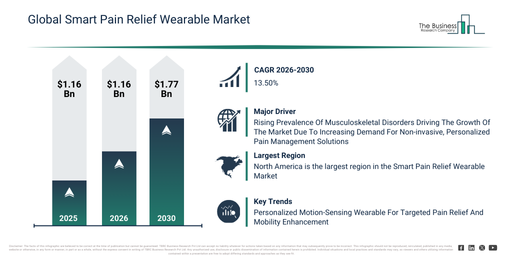
    Looking ahead, the market is expected to continue this upward trajectory, reaching $3.38 billion by 2030 with a CAGR of 13.5%. Key drivers for this expansion include advancements in AI-driven pain analytics, the widening scope of home healthcare, increased demand for sports injury rehabilitation, innovations in smart wearable technology, and the growing acceptance of digital therapeutic approaches. Important trends in the forecast period involve personalized pain management devices, integration of multi-modal therapies, app-controlled pain relief systems, continuous monitoring through wearables, and non-drug, non-invasive treatment options.

    Download A Free Sample Report For Comprehensive Market Insights:

    https://www.thebusinessresearchcompany.com/sample.aspx?id=29201&type=smp

    Prevalence of Musculoskeletal Disorders Boosting Market Demand

    One of the primary factors fueling the smart pain relief wearable market is the increasing incidence of musculoskeletal disorders. These conditions affect muscles, bones, joints, tendons, ligaments, and nerves, often causing pain, stiffness, and restricted movement due to overuse, strain, or injury.

    The rise in sedentary lifestyles contributes significantly to this trend, as poor posture and weakening muscles become more common. Smart pain relief wearables provide valuable support by offering targeted, non-invasive pain relief and promoting faster muscle recovery through continuous monitoring and personalized therapy programs. For example, in July 2025, the Institute for Health Transformation (IHT) in Australia reported that fracture rates had increased to one every 2.7 minutes in 2023, with predictions showing a dramatic rise to one fracture every 30 seconds by 2033. This growing burden of musculoskeletal conditions is a major factor stimulating demand for smart pain relief technologies.

    Smart Pain Relief Wearable Market Breakdown by Product Type and Application

    This market is categorized by product type, distribution channel, application, and end-user to provide a detailed picture:

    1) Product Types include Transcutaneous Electrical Nerve Stimulation (TENS) Devices, Electrical Muscle Stimulation (EMS) Devices, Heat Therapy Wearables, Vibration Therapy Wearables, and Other Products.

    2) Distribution Channels encompass Online Stores, Pharmacies, Specialty Stores, and other outlets.

    3) Applications cover Chronic Pain, Acute Pain, Postoperative Pain, Sports Injuries, and other uses.

    4) End-Users include Hospitals and Clinics, Home Care settings, Sports and Fitness Centers, among others.

    Further product subcategories offer specific device types such as portable and wireless TENS and EMS devices, various forms of heat therapy wearables like infrared and microwave, different vibration therapy devices including full-body and localized options, and other therapy wearables such as cold therapy, ultrasound, compression, and combination devices.

    Access The Complete Smart Pain Relief Wearable Market Report:

    https://www.thebusinessresearchcompany.com/report/smart-pain-relief-wearable-global-market-report

    Innovations and Technology Trends Driving Market Advancements

    Leading companies in this space are focused on pioneering sensor technologies like patented motion-sensing systems designed to enhance personalized pain relief. These advanced sensors analyze individual movement patterns in real time, enabling precisely timed therapeutic treatments and improving outcomes.

    For instance, in July 2025, US-based SomaTX Design Inc. introduced KneeMo, a smart wearable intended to revolutionize knee pain management by reducing discomfort and improving muscle function during activity. Developed through decades of research by experts including Dr. Tom Andriacchi and Dr. Jenny Hledik, this device reflects how technology is aligning with the needs of an aging yet active population.

    Competitive Environment in the Smart Pain Relief Wearable Market

    The market features several major players, including OMRON Healthcare Inc., Beurer GmbH, Electrostim Medical Services Inc., Therabody Inc., Electronic Waveform Lab Inc., Nooro Inc., TensCare Limited, Soterix Medical Inc., ExcelHealth Inc., JOGO Inc., Theranica Bio-Electronics Ltd., BioElectronics Corporation, Oska Wellness Inc., Healables Digital Health Inc., NeuroMetrix Inc., OrthoCor Medical Inc., Livia Health Inc., Quell (NeuroMetrix’s product line), ActiPatch (under BioElectronics), Cefaly Technology (CEFALY International), and PainShield Technologies. These companies are actively competing through innovation, product development, and strategic collaborations to capture a larger share of the growing market.

    Regional Market Leadership and Growth Prospects

    In 2025, North America held the largest share of the smart pain relief wearable market. However, the Asia-Pacific region is predicted to be the fastest-growing market during the forecast period due to rising healthcare awareness and increasing adoption of wearable technologies. Other key regions covered in market analyses include South East Asia, Western Europe, Eastern Europe, South America, the Middle East, and Africa, providing a broad understanding of global growth opportunities.

    Get in touch with us:

    The Business Research Company: https://www.thebusinessresearchcompany.com/

    Americas: +1 310-496-7795

    Asia: +44 7882 955267 & +91 8897263534

    Europe: +44 7882 955267

    Email us at: marketing@tbrc.info

    Follow us on:

    LinkedIn: https://in.linkedin.com/company/the-business-research-company

    YouTube: https://www.youtube.com/channel/UC24_fI0rV8cR5DxlCpgmyFQ

    Global Market Model: https://www.thebusinessresearchcompany.com/global-market-model