Category: Medical Equipment

  • Smart Orthopedic Implants Market Growth Is Reshaping Competitive Advantage Across The Industry

    Smart Orthopedic Implants Market Growth Is Reshaping Competitive Advantage Across The Industry

    Through market attractiveness analysis, total addressable market evaluation, company benchmarking matrices, interactive Excel dashboards, expanded supply chain intelligence, emerging startup coverage, and detailed product insights, The Business Research Company’s 2026 market reports provide more actionable and strategically valuable research.

    The smart orthopedic implants market has witnessed significant expansion in recent years, driven by advancements in technology and growing healthcare needs. As the global population ages and the prevalence of musculoskeletal conditions rises, this sector is set to experience further robust growth. Here, we explore the current market size, key growth factors, leading players, and emerging trends shaping the future of smart orthopedic implants.

    Market Size and Growth Projections for the Smart Orthopedic Implants Market

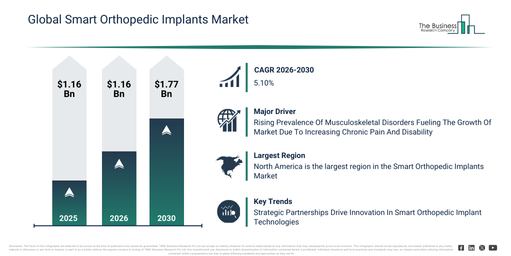
    The smart orthopedic implants market has shown strong growth, with its value expected to increase from $25.92 billion in 2025 to $27.33 billion in 2026, representing a compound annual growth rate (CAGR) of 5.4%. Looking ahead, the market is forecast to reach $33.36 billion by 2030, growing at a CAGR of 5.1%. This expansion is fueled by factors such as the rising incidence of orthopedic disorders, challenges in early diagnosis, conventional implant monitoring practices, high rates of post-operative complications, and heightened awareness around joint replacement procedures. Innovations in implantable technology and enhanced patient monitoring are also contributing to this upward trend.

    Download A Free Sample Report For Comprehensive Market Insights:

    https://www.thebusinessresearchcompany.com/sample.aspx?id=25906&type=smp

    Key Factors Supporting Growth in the Smart Orthopedic Implants Market

    A major driver behind the market’s expansion is the increasing prevalence of musculoskeletal disorders, which affect bones, muscles, joints, tendons, and ligaments. These conditions often lead to chronic pain, restricted mobility, and long-term disability. Their rise is linked to aging populations, sedentary lifestyles, and the growing burden of chronic diseases. Smart orthopedic implants offer real-time biomechanical feedback and early-warning systems, which enhance post-operative care and lower the risk of revision surgeries, thus improving patient outcomes.

    The growing awareness and demand for advanced orthopedic solutions are further propelling market growth. For example, data from January 2024 by the UK’s Office for Health Improvement and Disparities showed that in 2023, 18.4% of individuals aged 16 and above reported living with a long-term musculoskeletal condition, a slight increase from 17.6% in 2022. Women reported higher rates (20.9%) than men (15.8%), underscoring the widespread nature of these disorders and their impact on market demand.

    Access The Complete Smart Orthopedic Implants Market Report:

    https://www.thebusinessresearchcompany.com/report/smart-orthopedic-implants-global-market-report

    Comprehensive Segmentation Analysis and Revenue Opportunities in the Smart Orthopedic Implants Market

    This market is divided into multiple segments to capture the diverse product types, materials, technological integrations, applications, and end-use sectors. Key implant types include smart knee, hip, spine, shoulder, and ankle implants. Materials cover ceramic, metallic, and polymeric implants. Technology integration involves data analytics and artificial intelligence, microelectronic sensors, and telemedicine capabilities. Applications span fracture fixation, joint replacement, osteotomy, and spinal fusion, while end-users comprise ambulatory surgical centers, hospitals, specialty clinics, and other healthcare facilities.

    Further subcategories provide detailed breakdowns such as types of smart knee implants (total, partial, unicompartmental, revision), smart hip implants (total, partial, resurfacing, revision), smart spine implants (cervical, thoracolumbar, interbody fusion, pedicle screw systems), smart shoulder implants (total, reverse, partial, revision), and smart ankle implants (total replacement, fusion implants, revision, fracture fixation devices). This detailed segmentation helps identify lucrative revenue streams and targeted growth areas.

    Innovative Industry Collaborations and Trends in the Smart Orthopedic Implants Market

    Leading companies in the smart orthopedic implants space are increasingly forming strategic partnerships to enhance innovation and global market presence. These collaborations allow firms to combine expertise, share resources, and accelerate development while operating independently. For instance, in June 2025, NanoHive Medical LLC, specializing in 3D-printed spinal implants, partnered with DirectSync Surgical, a manufacturer of human-powered smart implants. Together, they are developing the Hive Soft Titanium spinal interbody fusion device, integrating bone-stimulating and remote monitoring sensor technologies. This device leverages a unique 3D lattice design to efficiently transfer energy from piezoelectric sensors, aiming to improve patient outcomes through enhanced data collection and AI-enabled surgical integration.

    Prominent Market Players Leading the Smart Orthopedic Implants Sector

    The smart orthopedic implants industry is shaped by several influential companies, including Johnson and Johnson, Medtronic plc, Stryker Corporation, Zimmer Biomet Holdings Inc, Enovis Corporation, Orthofix Medical Inc, Exactech Inc, Xenco Medical LLC, Heraeus Medical GmbH, Intelligent Implants GmbH, Statera Medical Inc, SpineGuard SA, BoneTag Technologies, DirectSync Surgical Inc, AK Medical Holdings Limited, Mathys Ltd, Smith and Nephew plc, Globus Medical Inc, NuVasive Inc, Alphatec Spine Inc, Life Spine Inc, and restor3d Inc. These organizations play a crucial role in advancing implant technologies, expanding product portfolios, and driving market growth.

    Regional Dynamics and Market Leadership in the Smart Orthopedic Implants Industry

    North America held the largest market share for smart orthopedic implants in 2025, reflecting the region’s advanced healthcare infrastructure and high adoption rates of innovative medical technologies. Meanwhile, the Asia-Pacific region is projected to be the fastest-growing market during the forecast period, driven by increasing healthcare investments, rising geriatric populations, and improving access to advanced orthopedic care. The market report also covers other key regions including South East Asia, Western Europe, Eastern Europe, South America, the Middle East, and Africa, offering a thorough global perspective on market developments.

    Get in touch with us:

    The Business Research Company: https://www.thebusinessresearchcompany.com/

    Americas: +1 310-496-7795

    Asia: +44 7882 955267 & +91 8897263534

    Europe: +44 7882 955267

    Email us at: marketing@tbrc.info

    Follow us on:

    LinkedIn: https://in.linkedin.com/company/the-business-research-company

    YouTube: https://www.youtube.com/channel/UC24_fI0rV8cR5DxlCpgmyFQ

    Global Market Model: https://www.thebusinessresearchcompany.com/global-market-model
  • Smart Medical Devices Market Forecast Signals New Revenue Opportunities Through 2030

    Smart Medical Devices Market Forecast Signals New Revenue Opportunities Through 2030

    Delivering more actionable and strategically valuable research, The Business Research Company’s 2026 market reports feature market attractiveness analysis, total addressable market evaluation, company benchmarking matrices, interactive Excel dashboards, expanded supply chain intelligence, emerging startup coverage, and detailed product insights.

    The smart medical devices market is witnessing impressive growth as innovations and healthcare needs converge to transform patient care. With rising demand for connected, real-time health monitoring and personalized treatments, this sector is set to expand significantly in the coming years. Let’s explore the market’s current size, growth drivers, key players, and emerging trends shaping its future trajectory.

    Steady Expansion of the Smart Medical Devices Market Size

    The market for smart medical devices has grown rapidly in recent times, reaching $46.89 billion in 2025. It is projected to increase further to $53.2 billion by 2026, reflecting a strong compound annual growth rate (CAGR) of 13.5%. This historic growth has been driven by factors such as the increasing prevalence of chronic diseases, widespread hospital digitalization, advancements in sensor miniaturization, the aging global population, and higher healthcare spending.

    Download A Free Sample Report For Comprehensive Market Insights:

    https://www.thebusinessresearchcompany.com/sample.aspx?id=20639&type=smp

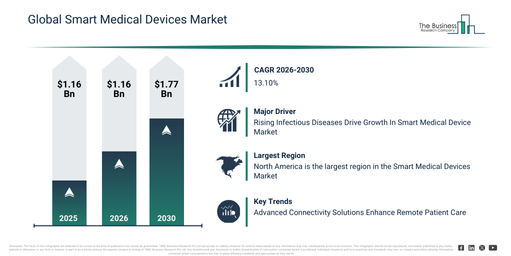
    Looking ahead, the smart medical devices market is expected to continue its upward trajectory, reaching an estimated $87.14 billion by 2030 at a CAGR of 13.1%. Key growth factors in this forecast period include greater adoption of homecare technologies, increased demand for real-time health data, a shift towards personalized treatment approaches, expansion of remote clinical workflows, and the rise of value-based healthcare models. Notable trends influencing this growth include the broadening use of remote patient monitoring, integration of smart wearables in homecare, development of interoperable device ecosystems, and a growing focus on preventive and personalized healthcare solutions.

    Infectious Disease Trends Boosting Demand for Smart Medical Devices

    An important driver of market growth is the rising incidence of infectious diseases, which continue to pose significant global health challenges. These diseases, caused by bacteria, viruses, fungi, or parasites, spread more easily due to increased global travel, accelerating the transmission of pathogens across borders. Smart medical devices play a vital role in managing infectious diseases by enabling continuous real-time monitoring, early symptom detection, and timely medical interventions.

    Access The Complete Smart Medical Devices Market Report:

    https://www.thebusinessresearchcompany.com/report/smart-medical-devices-global-market-report

    For example, data from February 2024 by the UK Health Security Agency shows tuberculosis cases in England increased by 10.7% in 2023 compared to the previous year, rising from 4,380 to 4,850 cases. This surge highlights the crucial role of smart devices in infection control, reducing in-person hospital visits through remote monitoring, and enhancing patient care with accurate, timely health information.

    Segments Defining the Smart Medical Devices Market

    The smart medical devices market is categorized by product, distribution channel, modality, and end-user to provide a detailed understanding of its structure. Product segmentation includes Diagnostics and Monitoring devices as well as Therapeutic devices. Distribution channels cover pharmacies and online platforms. Devices are further classified by modality into portable and wearable types. End-user segments comprise homecare settings, hospitals, and other healthcare environments.

    Within diagnostics and monitoring, subcategories include wearable health monitors, remote patient monitoring devices, smart glucose monitors, continuous blood pressure monitors, smart stethoscopes, and mobile health applications. Therapeutic devices encompass smart insulin delivery systems, drug delivery devices, smart inhalers, neuromodulation devices, smart rehabilitation equipment, and implantable devices.

    Advancements and Trends Shaping Smart Medical Devices

    Leading companies in the market are increasingly focusing on enhancing connectivity features, particularly telehealth integration, to improve clinical workflow efficiency, patient safety, and enable remote care. Telehealth integration allows medical devices to securely transmit patient data directly to centralized monitoring platforms, facilitating real-time condition tracking by healthcare providers regardless of their location.

    For instance, in August 2024, Masimo Corporation, a US-based medical tech firm, received FDA 510(k) clearance for its Masimo SafetyNet telemonitoring system. This approval enables the Masimo W1 watch to automatically and securely send vital sign data, including pulse, respiration, and hemoglobin levels, to a cloud-based platform. This innovation supports remote patient assessment without requiring manual data entry, streamlining healthcare delivery.

    Competitive Landscape of the Smart Medical Devices Market

    The smart medical devices market features several prominent industry players driving innovation and market penetration. Key companies include Johnson & Johnson, Abbott Laboratories, Medtronic plc, Becton Dickinson and Company, Stryker Corporation, GE Healthcare, Boston Scientific Corporation, Edwards Lifesciences Corporation, ResMed Inc, Dexcom Inc, Insulet Corporation, LivaNova plc, iRhythm Technologies Inc, Proteus Digital Health Inc, AliveCor Inc, Masimo Corporation, Koninklijke Philips N V, Omron Healthcare Inc, Apple Inc, CAIRE Inc, Qardio Inc, BioIntelliSense Inc, Senseonics Holdings Inc, Withings SA, and Current Health Ltd.

    Regional Market Distribution and Growth Prospects

    In 2025, North America accounted for the largest share of the smart medical devices market, driven by advanced healthcare infrastructure and high adoption rates of new technologies. Meanwhile, the Asia-Pacific region is projected to be the fastest-growing market during the forecast period, supported by expanding healthcare access, increasing chronic disease prevalence, and rising government investments. The report also examines other significant regions including South East Asia, Western Europe, Eastern Europe, South America, the Middle East, and Africa, providing a comprehensive global outlook.

    Get in touch with us:

    The Business Research Company: https://www.thebusinessresearchcompany.com/

    Americas: +1 310-496-7795

    Asia: +44 7882 955267 & +91 8897263534

    Europe: +44 7882 955267

    Email us at: marketing@tbrc.info

    Follow us on:

    LinkedIn: https://in.linkedin.com/company/the-business-research-company

    YouTube: https://www.youtube.com/channel/UC24_fI0rV8cR5DxlCpgmyFQ

    Global Market Model: https://www.thebusinessresearchcompany.com/global-market-model
  • Smart Mattress Overlay (Hospital) Market Growth Is Accelerating As Industry Transformation Continues

    Smart Mattress Overlay (Hospital) Market Growth Is Accelerating As Industry Transformation Continues

    Enhanced with market attractiveness analysis, total addressable market evaluation, company benchmarking matrices, interactive Excel dashboards, expanded supply chain intelligence, emerging startup coverage, and detailed product insights, The Business Research Company’s 2026 market reports deliver more actionable and strategically valuable research.

    The smart mattress overlay market for hospitals is gaining significant traction as healthcare facilities increasingly focus on patient comfort and safety. Innovations and rising healthcare demands are driving market growth, with projections indicating promising expansion in the coming years. Let’s explore the market’s size, growth drivers, segmentation, key players, and regional trends shaping its future.

    Rapid Expansion and Market Size of the Smart Mattress Overlay (Hospital) Market

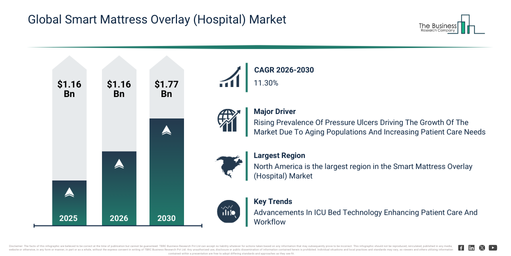
    The smart mattress overlay (hospital) market has seen swift growth in recent years. It is projected to increase from $1.99 billion in 2025 to $2.23 billion in 2026, reflecting a compound annual growth rate (CAGR) of 11.6%. Looking ahead, this market is expected to reach $3.41 billion by 2030, growing at a CAGR of 11.3%. The historical growth was largely fueled by longer hospital stays, the rising incidence of pressure ulcers, an aging patient population, increased demand for comfort, and enhanced hospital safety protocols. Future growth will be supported by the adoption of smart hospital infrastructure, AI-driven patient positioning solutions, homecare bed technologies, reduction in nursing workloads, and real-time patient monitoring systems. Key trends anticipated during this period include pressure ulcer prevention devices, sensor-integrated mattress overlays, automated pressure redistribution, patient movement tracking, and integration with smart hospital beds.

    Download A Free Sample Report For Comprehensive Market Insights:

    https://www.thebusinessresearchcompany.com/sample.aspx?id=29200&type=smp

    Primary Factors Propelling Growth in the Smart Mattress Overlay (Hospital) Market

    The increasing occurrence of pressure ulcers is a major factor driving demand in the smart mattress overlay (hospital) market. Pressure ulcers develop from extended pressure on skin and underlying tissues, commonly affecting patients with limited mobility. The aging demographic, which experiences slower tissue regeneration and greater mucosal vulnerability, contributes significantly to this growing prevalence. Smart mattress overlays aid in preventing and managing these ulcers by distributing body weight evenly, minimizing prolonged pressure points, and enhancing patient comfort and skin condition. For example, in February 2024, the Society of Tissue Viability (SOTV), a UK-based charity, reported that nearly 500,000 people in the UK are affected by at least one pressure ulcer each year. These ulcers cause substantial pain, reduce quality of life, and impose an estimated cost of approximately USD 2.55 billion annually on the NHS, with increasing litigation expenses. This rising burden underlines the expanding need for smart mattress overlays in healthcare settings.

    Additional Demand Drivers Influencing the Smart Mattress Overlay (Hospital) Market

    Beyond pressure ulcer prevalence, hospitals and care facilities are adopting smart mattress overlays to improve patient comfort and safety while optimizing care delivery. Increasing awareness of patient care quality and the integration of advanced monitoring technologies are encouraging healthcare providers to invest in these solutions. Additionally, the shift towards homecare and outpatient care is creating demand for portable and user-friendly smart overlays that can be used in non-hospital environments.

    Access The Complete Smart Mattress Overlay (Hospital) Market Report:

    https://www.thebusinessresearchcompany.com/report/smart-mattress-overlay-hospital-global-market-report

    Breakdown of Smart Mattress Overlay (Hospital) Market Segments

    This market is segmented into several categories to capture its diverse offerings:

    1) Product Types include Pressure Relief Overlays, Alternating Pressure Overlays, Low Air Loss Overlays, and other specialized types.

    2) Materials used range from Foam, Gel, Air, to other components.

    3) Technologies comprise Sensor-Based, Air-Filled, Gel-Based, and other technological variations.

    4) Applications cover Acute Care, Long-Term Care, Home Care, and other healthcare settings.

    5) End-Users involve Hospitals, Clinics, Homecare Settings, and additional clients.

    Further subcategories elaborate on specific types, such as foam, gel, air-filled pressure relief overlays; dynamic, static, hybrid, and portable alternating pressure overlays; and various low air loss overlays with features like continuous airflow and microclimate management. Other product types include combination therapy overlays, self-adjusting smart overlays, sensor-integrated systems, and customizable therapeutic mattress solutions.

    Innovations Shaping the Competitive Landscape of the Smart Mattress Overlay (Hospital) Market

    Leading companies in this market are focusing on technological advancements aimed at enhancing patient care and easing caregiver workloads. One notable innovation is the intelligent ICU bed platform, designed to improve monitoring, safety, and comfort in critical care units while streamlining workflow for medical staff. For instance, in February 2023, Stryker Corporation launched SmartMedic, a system compatible with existing ICU beds. SmartMedic tracks patient weight and repositioning and supports bedside radiographic imaging, reducing patient discomfort and minimizing manual handling. Its wireless integration with nurse call systems boosts efficiency and enables timely, accurate care delivery, representing a significant step forward in critical care management.

    Key Players Driving the Smart Mattress Overlay (Hospital) Market

    The market features several prominent companies, including Stryker Corporation, Hill-Rom Holdings Inc., Arjo AB, LINET Group SE, Talley Group Ltd., DeRoyal Industries Inc., Direct Healthcare Group, Blue Chip Medical Products, Invacare Corporation, Med-Mizer Inc., Drive DeVilbiss Healthcare, Permobil AB, Winncare Group, Apex Medical Corporation, EHOB Inc., Benmor Medical, Joerns Healthcare, Ossenberg GmbH, Reha-Bed Sp. z o.o., Malvestio S.p.A., and Novis Healthcare. These organizations compete by developing advanced products and expanding their market reach.

    Regional Market Outlook and Growth Patterns

    In 2025, North America dominated the smart mattress overlay (hospital) market in terms of revenue and market share. However, the Asia-Pacific region is anticipated to be the fastest-growing area over the forecast period. The market analysis includes regions such as Asia-Pacific, South East Asia, Western Europe, Eastern Europe, North America, South America, the Middle East, and Africa, providing a comprehensive global perspective on market trends and opportunities.

    Get in touch with us:

    The Business Research Company: https://www.thebusinessresearchcompany.com/

    Americas: +1 310-496-7795

    Asia: +44 7882 955267 & +91 8897263534

    Europe: +44 7882 955267

    Email us at: marketing@tbrc.info

    Follow us on:

    LinkedIn: https://in.linkedin.com/company/the-business-research-company

    YouTube: https://www.youtube.com/channel/UC24_fI0rV8cR5DxlCpgmyFQ

    Global Market Model: https://www.thebusinessresearchcompany.com/global-market-model
  • Smart Insulin Pens Market Outlook Highlights The Next Major Growth Opportunities

    Smart Insulin Pens Market Outlook Highlights The Next Major Growth Opportunities

    Through market attractiveness analysis, total addressable market evaluation, company benchmarking matrices, interactive Excel dashboards, expanded supply chain intelligence, emerging startup coverage, and detailed product insights, The Business Research Company’s 2026 market reports provide more actionable and strategically valuable research.

    The smart insulin pens market is steadily advancing as diabetes prevalence continues to rise worldwide. Innovations in technology and increasing awareness around precise insulin management are contributing to the escalating demand for these devices. Let’s explore the current market size, driving factors, segment breakdowns, emerging trends, key players, and regional dynamics shaping this sector.

    Market Size and Expected Growth Trajectory of the Smart Insulin Pens Market

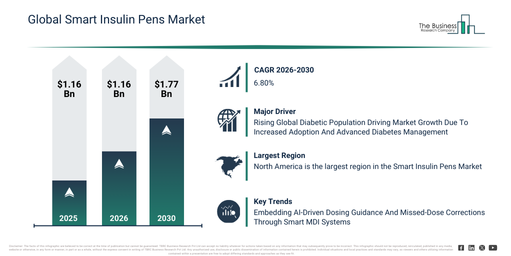
    The smart insulin pens market has witnessed significant growth over recent years. It is projected to increase from $0.11 billion in 2025 to $0.12 billion in 2026, with a compound annual growth rate (CAGR) of 7.2%. This past growth is primarily due to the rising number of people living with diabetes, an expanding population reliant on insulin, greater awareness concerning dosage accuracy, advancements in home healthcare offerings, and the availability of digital health platforms. Looking ahead, the market is anticipated to continue its upward momentum, reaching $0.16 billion by 2030, driven by a CAGR of 6.8%. Growth in the forecast period will be supported by deeper integration with digital diabetes ecosystems, increased use of personalized insulin therapies, wider adoption of remote patient monitoring, emphasis on data-driven diabetes care models, and rising investments in smart drug delivery technology. Key trends expected to influence the market include the growing use of connected insulin delivery devices, real-time dose tracking solutions, home-based diabetes management tools, mobile app-connected insulin pens, along with a heightened focus on patient adherence and safety.

    Download A Free Sample Report For Comprehensive Market Insights:

    https://www.thebusinessresearchcompany.com/sample.aspx?id=3090&type=smp

    Factors Stimulating Growth in the Smart Insulin Pens Market

    One of the primary forces behind the smart insulin pens market expansion is the increasing global diabetes population. Diabetes, characterized by elevated blood glucose levels, is becoming more common due to rising obesity rates and decreased physical activity worldwide, which are major contributors to Type 2 diabetes. These pens enhance diabetes management by providing accurate insulin dose tracking, timely reminders, and integration of usage data, which collectively improve treatment adherence and blood sugar control.

    For instance, in 2025, the International Diabetes Federation reported approximately 589 million adults aged 20 to 79 living with diabetes, with projections estimating this will reach 853 million by 2050. Notably, over 80% of adults with diabetes reside in low- and middle-income countries, further emphasizing the demand for accessible and efficient insulin delivery solutions. This trend underscores the growing importance and expansion potential of the smart insulin pens market.

    Access The Complete Smart Insulin Pens Market Report:

    https://www.thebusinessresearchcompany.com/report/smart-insulin-pens-global-market-report

    Detailed Segmentation of the Smart Insulin Pens Market

    The smart insulin pens market is segmented as follows:

    1) By Type:

    – First Generation Pens

    – Second Generation Pens

    2) By Usability:

    – Prefilled Pens

    – Reusable Pens

    3) By Application:

    – Type 1 Diabetes

    – Type 2 Diabetes

    4) By End User:

    – Hospitals and Clinics

    – Ambulatory Surgical Centres

    – Home Care Settings

    Within the first generation category, products typically include basic smart insulin pens featuring standard functionalities and simple connectivity to mobile applications designed for dose tracking and logging. On the other hand, second generation pens offer advanced capabilities such as real-time data sharing with healthcare providers and caregivers, plus sophisticated mobile apps that support comprehensive diabetes management.

    Innovations and Trends Shaping the Future Demand for Smart Insulin Pens

    Leading companies in the sector are developing integrated systems that combine real-time glucose monitoring, automated dose calculations, and missed-dose detection to simplify insulin therapy and minimize hypoglycemia risks. These systems often incorporate Bluetooth-enabled pens, mobile applications, and compact continuous glucose monitors to provide users with personalized dosing recommendations, error corrections, and enhanced glycemic control.

    For example, in December 2024, Medtronic, a US-based medical device company, introduced its Smart MDI System, which pairs a smart insulin pen with the Simplera continuous glucose monitor (CGM). This product is notable as the first to offer missed-meal dose detection and correction prompts, helping users identify and adjust for missed or inaccurate insulin doses. Data from real-world users showed that those who followed these alerts achieved Time in Range (TIR) levels between 67% and 71%, demonstrating the effectiveness of this technology in improving blood sugar management.

    Key Players Driving Competition in the Smart Insulin Pens Market

    Several prominent companies dominate the smart insulin pens market, including Companion Medical, Novo Nordisk A/S, F. Hoffmann-La Roche AG, Emperra GmbH E-Health Technologies, Diamesco Co. Ltd., Digital Medics Pvt Ltd., Bigfoot Biomedical, Diabnext, Insulet Corporation, Sanofi India, Becton Dickinson, Biocon Ltd, Johnson & Johnson, Terumo, NIPRO, Medtronic PLC, Ypsomed Holding AG, Patients Pending Ltd, Dexcom, Insujet, Eli Lilly, Abbott Laboratories, and Tandem Diabetes Care Inc. These organizations are at the forefront of innovation, pushing the boundaries of smart insulin delivery solutions.

    Geographical Overview and Regional Market Leadership

    In 2025, North America held the largest share within the smart insulin pens market, showcasing strong adoption and technology integration. Western Europe ranked as the second-largest market region. The broader market analysis also includes regions such as Asia-Pacific, South East Asia, Eastern Europe, South America, the Middle East, and Africa, providing a global perspective on market trends and growth opportunities.

    Get in touch with us:

    The Business Research Company: https://www.thebusinessresearchcompany.com/

    Americas: +1 310-496-7795

    Asia: +44 7882 955267 & +91 8897263534

    Europe: +44 7882 955267

    Email us at: marketing@tbrc.info

    Follow us on:

    LinkedIn: https://in.linkedin.com/company/the-business-research-company

    YouTube: https://www.youtube.com/channel/UC24_fI0rV8cR5DxlCpgmyFQ

    Global Market Model: https://www.thebusinessresearchcompany.com/global-market-model
  • Smart Infusion Pumps Market Trends And Growth Drivers Point To Strong Future Potential

    Smart Infusion Pumps Market Trends And Growth Drivers Point To Strong Future Potential

    Delivering more actionable and strategically valuable research, The Business Research Company’s 2026 market reports feature market attractiveness analysis, total addressable market evaluation, company benchmarking matrices, interactive Excel dashboards, expanded supply chain intelligence, emerging startup coverage, and detailed product insights.

    The smart infusion pumps market has witnessed significant growth recently, reflecting increasing demand across healthcare settings worldwide. With advancements in technology and rising healthcare needs, this sector is positioned for continued expansion, driven by innovation and evolving patient care requirements. Let’s explore the market’s size, key growth factors, important players, and future trends shaping this dynamic industry.

    Market Size and Growth Outlook for Smart Infusion Pumps

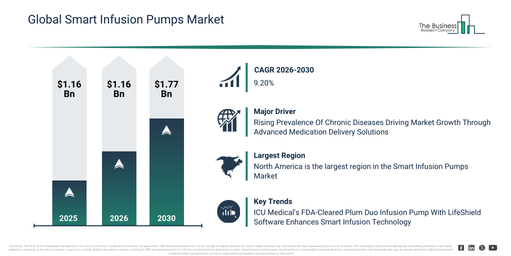
    The smart infusion pumps market has experienced substantial growth, rising from $8.88 billion in 2025 to an anticipated $9.73 billion in 2026, marking a compound annual growth rate (CAGR) of 9.5%. This expansion during the historic period is largely due to reliance on conventional infusion pumps, limited integration with hospital IT systems, an increasing number of oncology and pediatric patients, improvements in hospital infrastructure, and wider adoption of single-channel volumetric pumps. Looking ahead, the market is projected to grow further to $13.84 billion by 2030 at a CAGR of 9.2%. This future growth is expected to be driven by innovations such as multi-channel and programmable infusion systems, seamless integration with electronic medical records (EMR), rising demand for home infusion therapies, and the increased use of MRI-compatible and wireless pumps. Key trends shaping the market include expanding use of smart pump technologies, wireless and closed-loop infusion systems, growth in home and ambulatory care settings, enhanced focus on reducing medication errors, and the extension of infusion pump use in specialty clinics and oncology centers.

    Download A Free Sample Report For Comprehensive Market Insights:

    https://www.thebusinessresearchcompany.com/sample.aspx?id=24705&type=smp

    Factors Contributing to Market Growth in Smart Infusion Pumps

    One of the primary factors fueling the smart infusion pumps market is the rising prevalence of chronic diseases worldwide. Chronic conditions require ongoing care and medical management, increasing the need for precise and automated medication delivery that smart pumps provide. These devices minimize human error and improve treatment outcomes by offering controlled dosing and automated functions.

    For instance, in April 2025, the International Diabetes Federation (IDF) reported that nearly 589 million adults between 20 and 79 years old were living with diabetes globally, a figure expected to surge to 853 million by 2050. This surge in chronic illnesses like diabetes, obesity, and cardiovascular diseases, largely driven by sedentary lifestyles, is a major growth driver for smart infusion pump adoption across healthcare facilities.

    Key Market Segments Highlighting Growth Opportunities in Smart Infusion Pumps

    The smart infusion pumps market is categorized by type, technology, application, and end user to identify areas with the highest growth potential.

    By type, it includes Large Volumetric Infusion Pumps, Patient Controlled Analgesia (PCA) Pumps, Syringe Infusion Systems, Electronic-Ambulatory Infusion Systems, Implantable Infusion Systems, MRI-Compatible IV Infusion Pump Systems, Disposable Elastomeric Infusion Systems, and others.

    Technological divisions cover Smart Pump Technology, Digital Infusion Systems, Wireless Infusion Systems, Standard Infusion Pumps, and Closed-Loop Systems.

    Applications span chemotherapy or oncology, pediatrics or neonatology, gastroenterology, hematology, diabetes, and other medical uses.

    End users include hospitals, ambulatory surgical centers, home care providers, specialty clinics, and other healthcare settings.

    Subcategories further break down product types, such as single-channel and multi-channel volumetric pumps, disposable and electronic PCA pumps, programmable and non-programmable ambulatory pumps, intrathecal drug delivery and insulin implantable pumps, shielded and non-shielded MRI-compatible pumps, continuous flow and patient-controlled elastomeric pumps, as well as enteral feeding, insulin infusion, and chemotherapy infusion pumps.

    Access The Complete Smart Infusion Pumps Market Report:

    https://www.thebusinessresearchcompany.com/report/smart-infusion-pumps-global-market-report

    Innovations Driving the Future of Smart Infusion Pumps

    Leading companies in the smart infusion pumps market are heavily investing in innovations aimed at improving the accuracy and safety of medication administration. A notable advancement is the development of cassette-based infusion pumps, which use disposable cassettes to deliver fluids or drugs with enhanced precision.

    For example, in August 2023, ICU Medical Inc., a US-based medical device company, gained FDA 510(k) clearance for its Plum Duo infusion pump, which incorporates cloud-based LifeShield software. This dual-channel pump allows simultaneous delivery of two IV therapies, improving workflow efficiency and patient care. Its advanced drug library integration and automated programming help reduce medication errors, while LifeShield software provides real-time monitoring, data analytics, and clinical decision support to ensure infusion safety and compliance with hospital protocols.

    Major Players Steering the Smart Infusion Pumps Market

    The competitive landscape of the smart infusion pumps market features several prominent companies, including Fresenius Kabi AG, Medtronic plc, Becton Dickinson and Company, Baxter International Inc, Terumo Corporation, Mindray Medical International Limited, Moog Inc, ICU Medical Inc, Insulet Corporation, Avanos Medical Inc, JMS Co Ltd, Vygon SA, B Braun Melsungen AG, Eitan Group, Heka Healthcare B V, PROMECON GmbH, Micrel Medical Devices SA, Smiths Medical, Zyno Medical LLC, CME Medical, Bionical Emas, and Nipro Corporation. These organizations focus on expanding product portfolios, technological advancements, and strategic collaborations to maintain market leadership.

    Regional Market Insights and Demand Trends for Smart Infusion Pumps

    In 2025, North America led the smart infusion pumps market in terms of size, owing to advanced healthcare infrastructure and high adoption rates of medical technologies. Meanwhile, the Asia-Pacific region is forecasted to experience the fastest market growth over the coming years, driven by increasing healthcare investments, rising chronic disease burden, and expanding healthcare access. The market analysis also covers regions including South East Asia, Western Europe, Eastern Europe, South America, the Middle East, and Africa, providing a comprehensive view of global market dynamics.

    Get in touch with us:

    The Business Research Company: https://www.thebusinessresearchcompany.com/

    Americas: +1 310-496-7795

    Asia: +44 7882 955267 & +91 8897263534

    Europe: +44 7882 955267

    Email us at: marketing@tbrc.info

    Follow us on:

    LinkedIn: https://in.linkedin.com/company/the-business-research-company

    YouTube: https://www.youtube.com/channel/UC24_fI0rV8cR5DxlCpgmyFQ

    Global Market Model: https://www.thebusinessresearchcompany.com/global-market-model
  • Smart Implants Market Expansion Is Reshaping Competitive Dynamics Across The Industry

    Smart Implants Market Expansion Is Reshaping Competitive Dynamics Across The Industry

    Enhanced with market attractiveness analysis, total addressable market evaluation, company benchmarking matrices, interactive Excel dashboards, expanded supply chain intelligence, emerging startup coverage, and detailed product insights, The Business Research Company’s 2026 market reports deliver more actionable and strategically valuable research.

    The smart implants market is experiencing remarkable growth, driven by advances in medical technology and the rising need for improved patient care. As healthcare continues to evolve, smart implants are becoming essential tools in enhancing treatment effectiveness and enabling personalized medical solutions. Here’s an in-depth look at the market’s size, key growth factors, segmentation, trends, leading players, and regional outlook.

    Current and Projected Market Size of the Smart Implants Industry

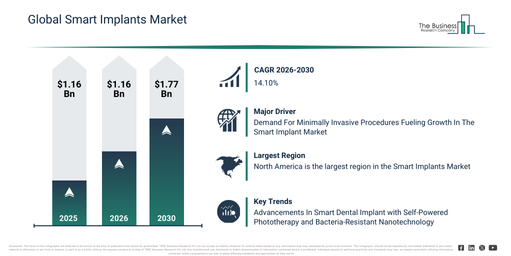
    The smart implants market has seen significant expansion in recent years. Forecasts indicate that the market will grow from $5.19 billion in 2025 to $6.05 billion in 2026, reflecting a strong compound annual growth rate (CAGR) of 16.6%. This upward trajectory is largely due to the increasing prevalence of chronic illnesses, wider adoption of implantable devices, continual progress in biomedical engineering, growing popularity of minimally invasive surgical techniques, and the expansion of hospital infrastructure worldwide. Looking further ahead, the market is expected to reach $10.26 billion by 2030, with a compound annual growth rate of 14.1%. Factors such as rising demand for personalized healthcare, integration of AI-powered diagnostics, investments in connected medical technologies, the growth of remote patient monitoring, and a shift toward outcome-based healthcare models will continue to drive this expansion. Emerging trends during this period include greater use of sensor-enabled implants, wireless data transmission, minimally invasive smart implant procedures, and tailored implant solutions.

    Download A Free Sample Report For Comprehensive Market Insights:

    https://www.thebusinessresearchcompany.com/sample.aspx?id=15671&type=smp

    Factors Encouraging the Rise of Smart Implants

    The increasing preference for minimally invasive surgeries is a significant engine for smart implant market growth. These procedures cause minimal disruption to the body’s natural structure and function, resulting in reduced tissue damage, less pain, quicker recoveries, and fewer complications. Such advantages have made minimally invasive techniques highly attractive to both patients and healthcare providers. Smart implants are pivotal in this context, offering real-time feedback during surgeries, enhancing precision, allowing remote adjustments, supporting integrated data analysis, and improving patient monitoring and recovery outcomes.

    A growing trend toward minimally invasive interventions is reflected in actual market spending. For example, in August 2023, The Aesthetic Society reported that Americans spent more than $11.8 billion on minimally invasive aesthetic procedures in 2023 — a 2% increase from 2022. This rising demand clearly supports the expanding role of smart implants in medical treatments.

    Access The Complete Smart Implants Market Report:

    https://www.thebusinessresearchcompany.com/report/smart-implants-global-market-report

    Segmentation Overview of the Smart Implants Market

    The smart implants market is segmented based on several key factors:

    1) By Type: Orthopedic Implants, Cardiovascular Implants, Dental Implants, and Other Types

    2) By Surgery Type: Open Surgery and Minimally Invasive Surgery

    3) By Application: Knee and Hip Arthroplasty, Spine Fusion, Stents, Intraocular Lenses, and Pacing Devices

    4) By End-User: Hospitals, Ambulatory Surgical Centers, Specialty Clinics, and Other End-Users

    Further subcategories include orthopedic implants such as smart hip, knee, and spinal implants; cardiovascular devices like smart pacemakers, implantable cardioverter defibrillators (ICDs), and smart stents; dental implants including smart endosteal and subperiosteal implants; and other specialized types such as smart cochlear and neural implants.

    Innovations and Trends Driving Transformation in the Smart Implants Sector

    Leading market players are increasingly focused on innovative technologies like piezoelectric-based implants to improve implant durability and patient health outcomes. Piezoelectric implants generate electricity from natural body movements, which can power features including antibacterial surfaces and phototherapy treatments, thereby enhancing healing without needing external batteries.

    A notable example is a smart dental implant developed in February 2023 by researchers at the University of Pennsylvania. This implant incorporates a bacteria-resistant nanoparticle biofilm and integrated phototherapy light that protects periodontal tissue from inflammation. Using piezoelectric technology, it converts oral movements into electricity to power the phototherapy light, promoting tissue health while eliminating the need for batteries. Additionally, barium titanate nanoparticles provide a lasting negative charge that repels harmful bacteria, extending implant lifespan and reducing the need for replacements.

    Key Players Leading the Smart Implants Market

    Several prominent companies are driving growth and innovation in the smart implants market. These include Johnson And Johnson Services Inc., Abbott Laboratories, Medtronic plc, Stryker, Boston Scientific Corporation, Zimmer Biomet, Terumo Corporation, Smith And Nephew plc, Biotronik, Integra LifeSciences, Cochlear Ltd., CONMED Corporation, Globus Medical Inc., Penumbra Inc., Orthofix Medical Inc., Nevro Corp., Exactech Inc., Senseonics, Canary Medical Inc., Aleva Neurotherapeutics SA, Intelligent Implants, and Rejoint srl.

    Regional Market Leadership and Growth Forecast

    In 2025, North America held the dominant share of the smart implants market. However, the Asia-Pacific region is expected to witness the fastest growth throughout the forecast period. The market report covers a wide geographic area including Asia-Pacific, South East Asia, Western Europe, Eastern Europe, North America, South America, the Middle East, and Africa, providing a comprehensive view of global market dynamics.

    Get in touch with us:

    The Business Research Company: https://www.thebusinessresearchcompany.com/

    Americas: +1 310-496-7795

    Asia: +44 7882 955267 & +91 8897263534

    Europe: +44 7882 955267

    Email us at: marketing@tbrc.info

    Follow us on:

    LinkedIn: https://in.linkedin.com/company/the-business-research-company

    YouTube: https://www.youtube.com/channel/UC24_fI0rV8cR5DxlCpgmyFQ

    Global Market Model: https://www.thebusinessresearchcompany.com/global-market-model
  • Smart Hearing Aids Market Forecast Reveals Where Future Industry Value Will Be Created

    Smart Hearing Aids Market Forecast Reveals Where Future Industry Value Will Be Created

    Through market attractiveness analysis, total addressable market evaluation, company benchmarking matrices, interactive Excel dashboards, expanded supply chain intelligence, emerging startup coverage, and detailed product insights, The Business Research Company’s 2026 market reports provide more actionable and strategically valuable research.

    The smart hearing aids market is witnessing significant momentum as awareness about hearing health improves and technology advances. With growing numbers of people affected by hearing loss and innovations enhancing user experience, this sector is on track for steady expansion. Let’s explore the current market size, key factors driving growth, important segments, leading companies, and regional trends shaping the smart hearing aids industry.

    Smart Hearing Aids Market Size and Anticipated Growth

    Download A Free Sample Report For Comprehensive Market Insights:

    https://www.thebusinessresearchcompany.com/sample.aspx?id=25905&type=smp

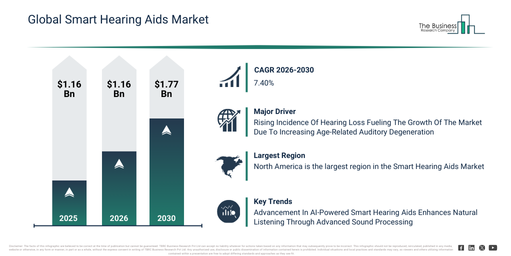
    The market for smart hearing aids has experienced robust growth in recent years, with revenue expected to rise from $7.14 billion in 2025 to $7.7 billion in 2026 at a compound annual growth rate (CAGR) of 7.8%. Looking ahead, the market is projected to reach $10.26 billion by 2030, growing at a CAGR of 7.4%. This sustained expansion reflects factors such as increased prevalence of hearing loss, heightened health awareness, technological advances in sound amplification, an aging population, and steady adoption of traditional hearing aids. The forecast period’s growth is also driven by the integration of artificial intelligence (AI) and the internet of things (IoT), expansion of smart audiology clinics, development of rechargeable and Bluetooth-enabled devices, rising demand for pediatric hearing solutions, and progress in tinnitus management technologies. Noteworthy trends include personalized hearing experiences, wireless audio streaming, remote device management, noise reduction, speech enhancement, and sleek, ergonomic designs.

    Increasing Prevalence of Hearing Loss as a Growth Catalyst

    Access The Complete Smart Hearing Aids Market Report:

    https://www.thebusinessresearchcompany.com/report/smart-hearing-aids-global-market-report

    A key factor supporting the smart hearing aids market is the rising number of people experiencing hearing loss. This condition, which involves partial or complete inability to hear sounds in one or both ears, impacts communication and sound perception. Hearing loss often results from natural auditory system decline with age, making the growing elderly population a primary contributor to increased incidence rates. Smart hearing aids help users by amplifying sounds, reducing background noise, and improving speech clarity through advanced digital processing. These devices adapt automatically to various listening environments, enhancing overall hearing and communication abilities.

    Government data illustrates this trend clearly. For example, in May 2024, the Department of Health, Disability, and Ageing in Australia reported that around 3.6 million people had some degree of hearing loss, with projections estimating this figure will nearly double to 7.8 million by 2060. Such rising prevalence underlines the expanding demand for smart hearing aids to address hearing health challenges.

    Key Product Categories Driving Revenue in the Smart Hearing Aids Market

    This market is segmented into several major categories. By product type, the offerings include Behind-The-Ear (BTE), In-The-Ear (ITE), In-The-Canal (ITC), Completely-In-Canal (CIC), and Receiver-In-Canal (RIC) devices. The technology segment covers Bluetooth-enabled, AI-powered, rechargeable models, tinnitus masking solutions, and others. Distribution channels encompass online stores, audiology clinics, hospitals and clinics, retail pharmacies, and various other outlets. End-users are classified as adults and pediatric patients.

    Further detailed subsegments reflect variations within these categories. For instance, BTE devices include standard, mini, power, rechargeable, and Bluetooth-enabled models. ITE types vary from full shell, half shell, wireless, telecoil-equipped, to custom designs. ITC devices feature standard, mini, rechargeable, directional microphone, and wireless options. CIC segments include invisible-in-canal, wireless, programmable, remote-controlled, and vented models. RIC offerings range from mini and power to rechargeable, open fit, and wireless variants.

    How Advancements in AI and Technology Are Shaping Market Growth

    Leading smart hearing aid manufacturers are heavily investing in AI-powered products that enhance natural hearing experiences through sophisticated sound processing. These intelligent devices dynamically adjust to changing sound environments and improve speech comprehension, learning user preferences over time to deliver personalized and more seamless hearing.

    For example, in February 2025, Danish company GN Store Nord A/S unveiled ReSound Vivia, an advanced hearing aid portfolio that uses a specialized Deep Neural Network (DNN) chip trained on millions of speech samples. This innovation provides superior speech clarity even in noisy surroundings, while maintaining discreet design and long battery life. Features like Intelligent Focus mimic natural listening by prioritizing sounds based on where the user is looking, offering a more intuitive and effortless hearing experience.

    Prominent Players and Their Role in the Smart Hearing Aids Industry

    The smart hearing aids market includes several major players such as Sonova Holding AG, GN Store Nord A/S, WS Audiology, Starkey Hearing Technologies, Jabra Enhance, Widex, Beltone, Unitron, Amplifon Hearing Health Care, Eargo Inc., Audicus, iHEAR Medical, MDHearing, SoundWorld Solutions, Lexie Hearing, Audien Hearing, Melosound, Austar Hearing Science and Technology Xiamen Co Ltd, Soundwave Hearing LLC, Tweak Hearing, Rexton Hearing, Phonak, and Oticon. These companies drive innovation, expand product portfolios, and strengthen market presence globally.

    Regional Market Distribution and Growth Patterns

    In 2025, North America held the largest share of the smart hearing aids market. Other important regions covered in market analyses include Asia-Pacific, Southeast Asia, Western and Eastern Europe, South America, the Middle East, and Africa. While North America remains dominant, rapid growth is anticipated in Asia-Pacific and other emerging markets due to increasing healthcare access, rising awareness, and technological adoption in these areas.

    Overall, the smart hearing aids market is on a promising trajectory, propelled by demographic shifts, technological breakthroughs, and evolving consumer preferences that favor more intelligent and user-friendly hearing solutions.

    Get in touch with us:

    The Business Research Company: https://www.thebusinessresearchcompany.com/

    Americas: +1 310-496-7795

    Asia: +44 7882 955267 & +91 8897263534

    Europe: +44 7882 955267

    Email us at: marketing@tbrc.info

    Follow us on:

    LinkedIn: https://in.linkedin.com/company/the-business-research-company

    YouTube: https://www.youtube.com/channel/UC24_fI0rV8cR5DxlCpgmyFQ

    Global Market Model: https://www.thebusinessresearchcompany.com/global-market-model
  • Smart Foley Catheters Market Growth Through 2030 Creates New Strategic Opportunities

    Smart Foley Catheters Market Growth Through 2030 Creates New Strategic Opportunities

    Delivering more actionable and strategically valuable research, The Business Research Company’s 2026 market reports feature market attractiveness analysis, total addressable market evaluation, company benchmarking matrices, interactive Excel dashboards, expanded supply chain intelligence, emerging startup coverage, and detailed product insights.

    The smart foley catheters market is experiencing rapid growth driven by advances in healthcare technology and an increasing need for improved patient monitoring. With rising rates of chronic illnesses and a growing elderly population, the demand for these intelligent medical devices is expected to accelerate significantly in the coming years. Below is a detailed overview of the market’s size, key drivers, segmentation, leading players, and regional performance.

    Market Value Expansion and Growth Projections for Smart Foley Catheters

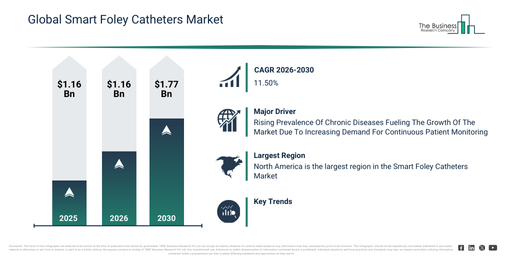
    The smart foley catheters market has shown remarkable expansion recently, with its size projected to increase from $1.73 billion in 2025 to $1.93 billion in 2026, reflecting a compound annual growth rate (CAGR) of 11.8%. This growth during the historical period is mainly due to high rates of catheter-associated infections, an increase in surgical procedures, rising demand for continuous patient monitoring, an aging population, and hospital safety initiatives. Looking ahead, the market is forecasted to reach $2.99 billion by 2030, growing at a CAGR of 11.5%. Key factors contributing to this growth include the adoption of remote patient monitoring, the integration of AI-based alert systems, expansion in home healthcare settings, development of smart hospital infrastructures, and supportive regulatory policies emphasizing patient safety. Innovations such as real-time urine monitoring, infection-preventive catheter designs, wireless data transmission, sensor-integrated catheter systems, and early complication detection are expected to shape future market trends.

    Download A Free Sample Report For Comprehensive Market Insights:

    https://www.thebusinessresearchcompany.com/sample.aspx?id=30396&type=smp

    Key Trends Boosting Demand for Smart Foley Catheters

    The increasing prevalence of chronic diseases is a primary factor driving the smart foley catheters market. Chronic illnesses develop gradually and require extended medical attention, often linked to sedentary lifestyles that raise risks for conditions like heart disease and diabetes. Smart foley catheters play a vital role in managing these diseases by continuously monitoring urine output, pressure, and temperature, reducing the need for manual checks and enabling timely alerts to healthcare providers. For example, in June 2024, the UK’s National Health Service reported that 3,615,330 patients were diagnosed with non-diabetic hyperglycemia or pre-diabetes in 2023, marking an 18% increase from the previous year. Such rising chronic disease rates enhance the demand for smart catheter technologies.

    Healthcare Spending Trends Supporting Smart Foley Catheter Market Growth

    Another significant driver of market expansion is the rising healthcare expenditure globally. Increased investments in medical services, research, and advanced patient care technologies enable healthcare facilities to adopt smart monitoring devices that improve clinical efficiency and patient outcomes. Higher healthcare spending is often a response to the growing burden of chronic diseases, necessitating long-term and costly treatments. For instance, in May 2024, the UK’s Office for National Statistics noted a 5.6% nominal increase in total healthcare expenditure in 2023 compared to 2022. This upward spending trend helps fuel the adoption of smart foley catheters by hospitals and care centers.

    Access The Complete Smart Foley Catheters Market Report:

    https://www.thebusinessresearchcompany.com/report/global-smart-foley-catheters-market-report

    The Aging Population’s Influence on Smart Foley Catheter Demand

    The expanding geriatric population is also a key factor encouraging the use of smart foley catheters. Older adults, generally aged 65 and above, often require more specialized and continuous healthcare support due to age-related health challenges. Advances in healthcare have extended life expectancy, resulting in a larger elderly demographic that benefits from innovations in patient monitoring. Smart foley catheters offer continuous tracking of vital urinary parameters, reducing the need for manual intervention and enhancing patient safety. According to the Population Reference Bureau in January 2024, the US population aged 65 and above is projected to rise from 58 million in 2022 to 82 million by 2050, a 47% increase. This demographic shift is thus a significant growth driver for the market.

    Smart Foley Catheters Market Segmentation Overview

    The market for smart foley catheters is categorized across several dimensions to address diverse clinical needs:

    By Product Type:

    – Sensor-Enabled Indwelling Smart Foley Catheters

    – Wireless-Connected Smart Foley Catheters

    – Temperature-Monitoring Smart Foley Catheters

    – Pressure and Flow-Sensing Smart Foley Catheters

    – Infection-Detection and Antimicrobial Smart Foley Catheters

    By Application:

    – Urinary Incontinence

    – Surgery

    – Prostate Gland Surgery

    – Spinal Cord Injury

    – Other Applications

    By End-User:

    – Hospitals

    – Clinics

    – Long-Term Care Facilities

    Further subcategories include specific variations such as two-way and three-way sensor-integrated catheters, Bluetooth or Wi-Fi-enabled wireless catheters, core body temperature sensing types, intravesical pressure monitoring, and biofilm or early UTI detection models. These detailed classifications allow for tailored solutions to varying patient and clinical requirements.

    Competitive Landscape and Key Players in the Market

    The smart foley catheters market is home to numerous established and emerging companies that drive innovation and market expansion. Leading players include Bactiguard AB, Potrero Medical Inc (Accuryn), FIZE Medical, Becton Dickinson and Company, Medtronic plc, DeRoyal Industries Inc., UNOQUIP, Boen Medical Co. Ltd., Biometrix, Cook Medical LLC, Teleflex Incorporated, B. Braun Melsungen AG, Coloplast A/S, Convatec Group Plc, Hollister Incorporated, Poly Medicure Limited, Romsons Group of Industries Pvt. Ltd., Angiplast Pvt. Ltd., Well Lead Medical Co. Ltd., and Medline Industries LP. These organizations compete by advancing product technologies, expanding distribution networks, and complying with evolving healthcare regulations.

    Geographical Outlook: Market Leaders and Fastest Growing Regions

    In 2025, North America accounted for the largest share of the smart foley catheters market, benefiting from advanced healthcare infrastructure and strong adoption of innovative medical technologies. Meanwhile, the Asia-Pacific region is expected to emerge as the fastest-growing market during the forecast period due to increasing healthcare investments, rising awareness, and expanding patient populations. The market report covers several regions including Asia-Pacific, South East Asia, Western Europe, Eastern Europe, North America, South America, the Middle East, and Africa, providing a comprehensive global perspective on market trajectories.

    Get in touch with us:

    The Business Research Company: https://www.thebusinessresearchcompany.com/

    Americas: +1 310-496-7795

    Asia: +44 7882 955267 & +91 8897263534

    Europe: +44 7882 955267

    Email us at: marketing@tbrc.info

    Follow us on:

    LinkedIn: https://in.linkedin.com/company/the-business-research-company

    YouTube: https://www.youtube.com/channel/UC24_fI0rV8cR5DxlCpgmyFQ

    Global Market Model: https://www.thebusinessresearchcompany.com/global-market-model
  • Smart Exoskeleton Market Size Projected To Increase From $4.77 Billion To $8 Billion During The Forecast Period

    Smart Exoskeleton Market Size Projected To Increase From $4.77 Billion To $8 Billion During The Forecast Period

    Enhanced with market attractiveness analysis, total addressable market evaluation, company benchmarking matrices, interactive Excel dashboards, expanded supply chain intelligence, emerging startup coverage, and detailed product insights, The Business Research Company’s 2026 market reports deliver more actionable and strategically valuable research.

    The smart exoskeleton sector is rapidly advancing, driven by technological innovations and rising demand across various industries. This market is attracting significant attention due to its potential to enhance human mobility and performance in settings such as healthcare, military, and industrial applications. Let’s explore the current market size, key growth drivers, segmentation, leading companies, and regional opportunities shaping the future of smart exoskeletons.

    Smart Exoskeleton Market Size and Growth Trajectory

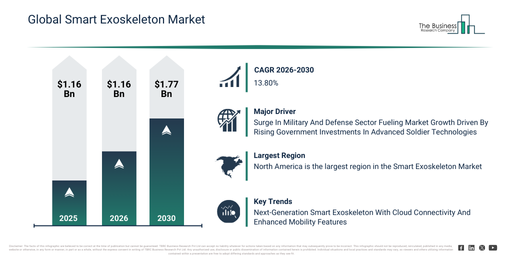
    The smart exoskeleton market has seen a swift increase in recent years, with its value projected to grow from $4.18 billion in 2025 to $4.77 billion in 2026, representing a compound annual growth rate (CAGR) of 14.1%. This past growth has been largely fueled by the need to reduce workplace injuries, support the mobility of aging populations, enhance military performance, adopt early rehabilitation robotics, and improve industrial productivity. Looking ahead, the market is expected to reach $8.01 billion by 2030, maintaining a strong CAGR of 13.8%. Factors contributing to this forecast include advancements in AI-driven adaptive control systems, broader use of home rehabilitation programs, cost efficiencies from mass production, integration with digital health platforms, and growing adoption in emerging markets. Key trends to watch are AI-assisted motion control, soft and ultra-soft exoskeletons, optimized human-machine interfaces, rehabilitation-oriented wearable robotics, and designs focused on lightweight and modular features.

    Download A Free Sample Report For Comprehensive Market Insights:

    https://www.thebusinessresearchcompany.com/sample.aspx?id=30395&type=smp

    Military and Defense Sector’s Role in Smart Exoskeleton Market Growth

    One of the primary forces propelling smart exoskeleton market expansion is the increasing focus on military and defense applications. These technologies help boost soldier strength, endurance, and mobility while minimizing fatigue and injury risks during demanding operations. The rising demand for advanced wearable devices that improve soldier efficiency and combat readiness is encouraging greater investment in smart exoskeletons dedicated to military logistics and combat support roles. By enhancing physical capabilities, these exoskeletons enable soldiers to carry heavy equipment more easily, move more efficiently, and sustain longer mission durations. For example, in April 2024, the Stockholm International Peace Research Institute reported that global military spending hit $2,443 billion in 2023, marking a 6.8% increase from the previous year. This growth in defense budgets supports the expanding use of smart exoskeletons in armed forces worldwide.

    Diverse Segmentation of the Smart Exoskeleton Market

    The smart exoskeleton market is divided into several key segments to capture the breadth of technologies and applications included in the industry. These are categorized by components such as hardware, software, and services; by types including rigid and soft smart exoskeletons; by targeted body parts—upper body, lower body, and full body; and by end users covering industrial, healthcare, military, and other sectors. Further breakdowns within components include hardware elements like sensors, actuators, power sources, control systems, frames, processors, and communication modules. Software subcategories cover motion control, AI and machine learning algorithms, data analytics, user interfaces, and cloud platforms. Services involve training and support, maintenance, system integration, consulting, and after-sales upgrades, highlighting the comprehensive ecosystem supporting smart exoskeleton deployment.

    Access The Complete Smart Exoskeleton Market Report:

    https://www.thebusinessresearchcompany.com/report/global-smart-exoskeleton-market-report

    Innovations and Technological Advancements Shaping Market Growth

    Companies in the smart exoskeleton market are increasingly focusing on innovations that allow customization and real-time monitoring to elevate user experience and broaden application areas. Customizable exoskeletons are wearable robotic devices tailored to individual body sizes, physical needs, and functional goals, useful in rehabilitation, mobility assistance, or performance enhancement. A notable example is Lifeward Ltd., an Israeli medical tech firm, which in April 2025 launched the ReWalk 7 Personal Exoskeleton nationwide. This seventh-generation device includes cloud connectivity and adjustable walking speeds, offering users a personalized and effective walking experience. Developed with input from healthcare professionals and patients, it integrates cutting-edge technologies to improve safety, comfort, and mobility, empowering individuals with spinal cord injuries to walk confidently in daily life and improve overall quality of living.

    Key Players Competing in the Smart Exoskeleton Market

    The competitive landscape of the smart exoskeleton market features prominent companies such as Ottobock SE & Co. KGaA, Fourier Intelligence, CYBERDYNE INC., Hocoma AG, GERMAN BIONIC SYSTEMS GMBH, Ekso Bionics Holdings Inc., ReWalk Robotics, ExoAtlet, Rex Bionics Ltd., Bionik Laboratories Corp., SuitX, B-Temia Inc., Technaid Inc., Bioservo Technologies AB, DIH Medical, Honda Motor Co. Ltd., Hyundai Motor Company, Lockheed Martin Corporation, Parker Hannifin Corporation, and Gogoa Mobility Robots. These organizations are driving innovation, expanding product offerings, and investing in research to meet the growing demand for smart exoskeleton solutions across multiple sectors.

    Regional Markets and Growth Opportunities in Smart Exoskeletons

    In 2025, North America was the leading region in the smart exoskeleton market, holding the largest share. However, the fastest expansion is expected in the Asia-Pacific region during the forecast period. The market report evaluates regional dynamics across Asia-Pacific, South East Asia, Western Europe, Eastern Europe, North America, South America, the Middle East, and Africa, providing a detailed outlook on where growth opportunities are most pronounced globally.

    Get in touch with us:

    The Business Research Company: https://www.thebusinessresearchcompany.com/

    Americas: +1 310-496-7795

    Asia: +44 7882 955267 & +91 8897263534

    Europe: +44 7882 955267

    Email us at: marketing@tbrc.info

    Follow us on:

    LinkedIn: https://in.linkedin.com/company/the-business-research-company

    YouTube: https://www.youtube.com/channel/UC24_fI0rV8cR5DxlCpgmyFQ

    Global Market Model: https://www.thebusinessresearchcompany.com/global-market-model
  • Smart Disposable Medical Device Market Growth Outlook Reveals A CAGR Of 19.9% And A Market Value Of $16.1 Billion By 2030

    Smart Disposable Medical Device Market Growth Outlook Reveals A CAGR Of 19.9% And A Market Value Of $16.1 Billion By 2030

    Through market attractiveness analysis, total addressable market evaluation, company benchmarking matrices, interactive Excel dashboards, expanded supply chain intelligence, emerging startup coverage, and detailed product insights, The Business Research Company’s 2026 market reports provide more actionable and strategically valuable research.

    The smart disposable medical device sector has witnessed remarkable expansion recently, driven by advancements in healthcare technology and the growing need for safer, more efficient medical solutions. This market continues to evolve rapidly, with innovations aimed at improving patient care and reducing infection risks. Below is an overview of the current state, growth factors, key players, and future trends shaping this dynamic industry.

    Market Size and Growth Outlook for the Smart Disposable Medical Device Market

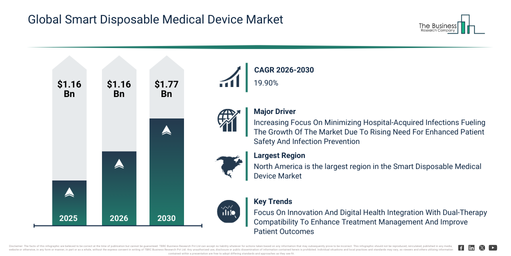
    The smart disposable medical device market has experienced significant growth over the past few years. It is projected to increase from $6.49 billion in 2025 to $7.8 billion in 2026, reflecting a compound annual growth rate (CAGR) of 20.2%. The expansion during this period is mainly driven by concerns over hospital-acquired infections, demand for devices that do not require sterilization, the rise in chronic disease monitoring, the adoption of wearable technology, and stringent regulatory safety standards. Looking ahead, the market is expected to grow even faster, reaching $16.1 billion by 2030 with a CAGR of 19.9%. Factors fueling this growth include the expansion of remote monitoring capabilities, smart drug adherence technologies, innovations in sustainable materials, integration with digital health platforms, and the growth of outpatient care services. Key trends anticipated in the coming years involve single-use connected devices, disposable tools embedded with sensors, infection control-focused products, real-time data transmitting disposables, and intelligent drug delivery systems.

    Download A Free Sample Report For Comprehensive Market Insights:

    https://www.thebusinessresearchcompany.com/sample.aspx?id=29194&type=smp

    The Role of Infection Control in Boosting the Smart Disposable Medical Device Market

    One of the primary drivers behind the growth of this market is the increasing emphasis on reducing hospital-acquired infections (HAIs). These infections occur when patients contract illnesses during their stay in healthcare facilities, typically appearing 48 hours or more after admission and not present initially. Minimizing HAIs is crucial because it improves patient safety by lowering the risk of complications and promoting better recovery outcomes. Smart disposable medical devices contribute significantly to this goal by ensuring sterility through single-use designs while offering real-time monitoring to prevent cross-contamination and enhance patient safety. For example, in March 2025, the Health Security Agency in the UK reported that 7.6% of hospital patients in 2023 experienced HAIs, with pneumonia and lower respiratory tract infections accounting for 29.6%, urinary tract infections at 17.5%, and sepsis or disseminated infections at 10.6%. This focus on infection control is a vital factor propelling market growth.

    Product Segmentation and Key Growth Areas in the Smart Disposable Medical Device Market

    This market is segmented into various categories to capture its broad scope:

    1) By Product Type: Smart Syringes, Smart Wearable Patches, and Smart Pills

    2) By Connectivity Options: Bluetooth and Near Field Communication (NFC)

    3) By Application: Patient Monitoring, Drug Delivery, and Diagnostics

    4) By End-User: Hospitals and Clinics, Home Care, and Ambulatory Surgical Centers

    Further subdivisions include types of smart syringes such as connected insulin syringes, vaccination syringes, needle-free syringes, and prefilled syringes. For smart wearable patches, categories include monitoring patches, drug delivery patches, pain management patches, and cardiac monitoring patches. Smart pills are divided into ingestible monitoring, drug delivery, temperature sensing, and diagnostic pills.

    Access The Complete Smart Disposable Medical Device Market Report:

    https://www.thebusinessresearchcompany.com/report/smart-disposable-medical-device-global-market-report

    Innovations Driving Demand in the Smart Disposable Medical Device Market

    Leading companies in this market are focusing on innovative solutions like dual-therapy compatibility, which allows a single connected device to track and manage multiple drug types simultaneously. This advancement helps improve treatment adherence and patient outcomes by offering precision and convenience. For instance, in January 2023, Biocorp, a medical technology firm based in France, received FDA approval for Mallya, a smart device designed for disposable injector pens. Mallya enables users of both insulin and GLP-1 receptor agonist pens to connect their devices to smartphones, monitoring dosage, injection timing, and frequency. This connectivity feature supports better therapy management through real-time tracking.

    Leading Corporations With a Strong Presence in the Smart Disposable Medical Device Market

    Several prominent companies are steering the smart disposable medical device market, including Abbott Laboratories, Medtronic plc, Boston Scientific Corporation, Terumo Corporation, Dexcom Inc., Insulet Corporation, iRhythm Technologies Inc., Ypsomed Holding AG, Biotricity Inc., Tasso Inc., Gentag Inc., Nemaura Medical Inc., Proteus Digital Health Inc., SmartTab Systems Inc., Celero Systems Inc., BlueSpark Technologies Inc., Bodytrak Inc., Element Science Inc., Becton Dickinson and Company, Roche Diagnostics, and VitalConnect Inc.

    Geographic Market Analysis Highlighting Regional Leadership

    North America dominated the smart disposable medical device market in 2025, holding the largest share. Other regions covered in market analyses include Asia-Pacific, South East Asia, Western Europe, Eastern Europe, South America, the Middle East, and Africa. While North America leads in size, other regions are also poised for considerable growth as adoption of smart medical devices expands worldwide.

    Get in touch with us:

    The Business Research Company: https://www.thebusinessresearchcompany.com/

    Americas: +1 310-496-7795

    Asia: +44 7882 955267 & +91 8897263534

    Europe: +44 7882 955267

    Email us at: marketing@tbrc.info

    Follow us on:

    LinkedIn: https://in.linkedin.com/company/the-business-research-company

    YouTube: https://www.youtube.com/channel/UC24_fI0rV8cR5DxlCpgmyFQ

    Global Market Model: https://www.thebusinessresearchcompany.com/global-market-model