Category: Medical Equipment

  • Sphygmomanometer Market Forecast Signals New Revenue Opportunities Through 2030

    Sphygmomanometer Market Forecast Signals New Revenue Opportunities Through 2030

    Enhanced with market attractiveness analysis, total addressable market evaluation, company benchmarking matrices, interactive Excel dashboards, expanded supply chain intelligence, emerging startup coverage, and detailed product insights, The Business Research Company’s 2026 market reports deliver more actionable and strategically valuable research.

    The market for sphygmomanometers has experienced significant growth recently, driven by increasing health awareness and advances in medical technology. This sector continues to evolve rapidly, influenced by rising rates of hypertension and a shift toward more modern, connected healthcare devices. Below, we explore the current market size, key drivers, segmentation, emerging trends, leading players, and regional outlook shaping the future of the sphygmomanometer industry.

    Sphygmomanometer Market Size and Expected Growth Trajectory

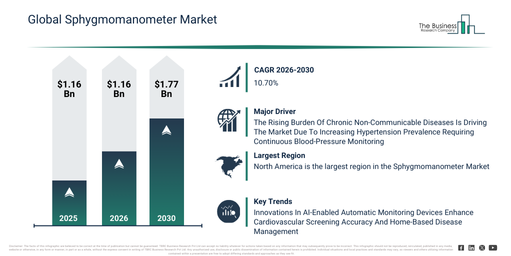
    The sphygmomanometer market has expanded steadily in recent years and is projected to grow from $3.2 billion in 2025 to $3.53 billion in 2026, at a compound annual growth rate (CAGR) of 10.3%. This growth during the past period is largely due to the increasing prevalence of hypertension, the historical reliance on mercury-based devices, more frequent clinical screenings, the expansion of primary healthcare centers, and ongoing use of manual and aneroid models.

    Download A Free Sample Report For Comprehensive Market Insights:

    https://www.thebusinessresearchcompany.com/sample.aspx?id=10396&type=smp

    Looking ahead, the market is expected to grow even faster, reaching $5.31 billion by 2030 with a CAGR of 10.7%. This forecasted increase is driven by rising demand for remote patient monitoring, wider adoption of connected healthcare technology, growth in telemedicine services, a stronger focus on preventive cardiovascular care, and the gradual replacement of mercury-based sphygmomanometers. Key trends include the growing popularity of digital blood pressure monitors, the surge in home-based monitoring, integration of data connectivity, portable and wearable device options, and an emphasis on accuracy and user-friendliness.

    Factors Behind Rising Demand in the Sphygmomanometer Market

    A major contributor to market growth is the escalating burden of chronic non-communicable diseases (NCDs), especially hypertension and cardiovascular disorders. These long-term conditions progress slowly and require continuous monitoring and management. Hypertension, in particular, is a significant global health issue and a leading risk factor for cardiovascular complications, making regular blood pressure monitoring critical for early diagnosis and effective treatment.

    Access The Complete Sphygmomanometer Market Report:

    https://www.thebusinessresearchcompany.com/report/sphygmomanometer-global-market-report

    Lifestyle factors such as an aging global population, unhealthy diets, reduced physical activity, and increasing obesity rates are fueling the rise in blood pressure irregularities worldwide. Sphygmomanometers are essential tools for timely diagnosis, ongoing monitoring, and enhanced management of cardiovascular risks in both clinical environments and home settings. For example, the World Health Organization (WHO) reported that in 2024, approximately 1.4 billion adults aged 30 to 79 were living with hypertension, constituting 33 percent of this demographic. Notably, two-thirds of these individuals reside in low- and middle-income countries, with about 600 million undiagnosed and roughly 630 million receiving treatment. This substantial global health challenge is a key factor driving sphygmomanometer market expansion.

    How the Growth of Ambulatory Surgery Centers is Boosting Market Demand

    Another important driver for the sphygmomanometer market is the rapid increase in ambulatory surgery centers (ASCs). These specialized medical facilities focus on performing surgical procedures that do not require overnight hospitalization. ASCs depend heavily on sphygmomanometers—commonly known as blood pressure cuffs—to monitor patients’ vital signs before, during, and after surgeries.

    In the United States, the number of ambulatory surgery centers is growing steadily. According to CliftonLarsonAllen LLP, as of July 2025, there are over 10,000 ASCs nationwide, with industry revenues projected to rise from approximately $45 billion in 2024 to about $57 billion by 2030. This expansion underscores the increasing demand for sphygmomanometers within these facilities, further stimulating market growth.

    Detailed Segmentation of the Sphygmomanometer Market

    This market is segmented by product type, configuration, operation mode, and end user. The product categories include Electronic Sphygmomanometers, Aneroid Sphygmomanometers, and Mercury Sphygmomanometers. Configurations are divided into Portable, Desk Mounted, Floor Standing, and Wall Mounted devices. Operational types cover Electric, Manual, Automatic, and Semi-automatic models. End users comprise Hospitals, Ambulatory Surgical Centers and Clinics, Home Healthcare, and other sectors.

    Further breakdowns include subtypes such as Upper Arm, Wrist, and Finger Electronic Sphygmomanometers; Manual and Digital Aneroid types; and Standard versus Portable Mercury Sphygmomanometers, allowing for a comprehensive understanding of the market’s structure.

    Innovations and Trends Driving the Future of the Sphygmomanometer Market

    Leading companies are increasingly focusing on developing advanced automatic blood pressure monitors that incorporate AI-driven diagnostic technologies. These innovations aim to enhance measurement accuracy, facilitate early detection of cardiovascular irregularities, and improve the convenience of home health monitoring.

    For example, in November 2024, OMRON Healthcare, a Japan-based company specializing in health equipment, received FDA De Novo authorization for its next-generation home blood pressure monitor featuring IntelliSense AFib. This AI-powered atrial fibrillation detection algorithm analyzes over 300 pulse-wave indices, achieving clinical performance with 95% sensitivity and 98% specificity. This advancement highlights the transformation of automatic oscillometric devices from simple blood pressure tools into comprehensive cardiovascular screening technologies, supporting early diagnosis, ongoing monitoring, and better clinical decision-making.

    Key Players Leading the Sphygmomanometer Market Competition

    The sphygmomanometer market features several prominent companies driving innovation and competition. Notable players include A&D Company Ltd., American Diagnostic Corporation, Omron Healthcare Inc., Microlife Corporation, Beurer GmbH, CIGA Healthcare Ltd., Rossmax International Ltd., Rudolf Riester GmbH, Welch Allyn Inc., Koninklijke Philips N.V., Paul Hartmann AG, Spengler, Holtex Ltd., Timesco Healthcare Ltd., Bremed Ltd., iHealth Labs Inc., Contec Medical Systems Co. Ltd., SunTech Medical Inc., General Electric Company, Amico Group of Companies, HEINE Optotechnik GmbH & Co. KG, Hill-Rom Services Inc., and Halma plc.

    Regional Market Leadership and Growth Forecast

    In 2025, North America held the largest share of the global sphygmomanometer market due to its advanced healthcare infrastructure and technology adoption. However, the Asia-Pacific region is anticipated to be the fastest-growing market during the forecast period, driven by increasing healthcare investments and rising awareness about cardiovascular health. The market analysis covers key territories including Asia-Pacific, South East Asia, Western Europe, Eastern Europe, North America, South America, the Middle East, and Africa, offering a broad perspective on regional market dynamics.

    Get in touch with us:

    The Business Research Company: https://www.thebusinessresearchcompany.com/

    Americas: +1 310-496-7795

    Asia: +44 7882 955267 & +91 8897263534

    Europe: +44 7882 955267

    Email us at: marketing@tbrc.info

    Follow us on:

    LinkedIn: https://in.linkedin.com/company/the-business-research-company

    YouTube: https://www.youtube.com/channel/UC24_fI0rV8cR5DxlCpgmyFQ

    Global Market Model: https://www.thebusinessresearchcompany.com/global-market-model
  • Spectrum Therapy Instrument Market Growth Is Accelerating As Industry Transformation Continues

    Spectrum Therapy Instrument Market Growth Is Accelerating As Industry Transformation Continues

    Through market attractiveness analysis, total addressable market evaluation, company benchmarking matrices, interactive Excel dashboards, expanded supply chain intelligence, emerging startup coverage, and detailed product insights, The Business Research Company’s 2026 market reports provide more actionable and strategically valuable research.

    The spectrum therapy instrument market is experiencing significant growth driven by rising health awareness and expanding applications across dermatology and musculoskeletal care. As demand for non-invasive treatment options increases, this sector is set to see continued expansion fueled by advancements in technology and shifting patient preferences. Below is a detailed look into the market’s current size, key growth drivers, segmentation, industry trends, leading players, and regional dynamics.

    Steady Growth and Market Size of the Spectrum Therapy Instrument Market

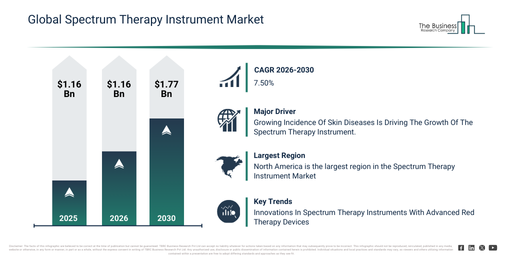
    The spectrum therapy instrument market has demonstrated strong growth in recent years, with its size increasing from $1.2 billion in 2025 to $1.29 billion in 2026, reflecting a compound annual growth rate (CAGR) of 7.8%. This upward trend during the historical period is driven by factors such as the growing prevalence of skin disorders, expansion of dermatology clinics, greater awareness about phototherapy, rising demand for cosmetic treatments, and higher hospital adoption rates.

    Download A Free Sample Report For Comprehensive Market Insights:

    https://www.thebusinessresearchcompany.com/sample.aspx?id=19716&type=smp

    Looking ahead, the market is forecasted to continue its robust trajectory, reaching $1.73 billion by 2030 at a CAGR of 7.5%. This growth will be supported by the increasing adoption of home-based therapy solutions, growth in the wellness industry, rising demand for chronic pain management, advances in dermatological technologies, and the expansion of outpatient care services. Emerging trends shaping the forecast period include wider use of non-invasive light therapies, development of home phototherapy devices, growing incorporation in dermatology treatments, greater interest in pain management alternatives, and the rising importance of wellness and aesthetic applications.

    Key Factors Behind the Growth in the Spectrum Therapy Instrument Market

    The increasing incidence of skin diseases is a major driver propelling the spectrum therapy instrument market forward. Skin conditions such as infections, inflammations, acne, eczema, and psoriasis are becoming more common, partly due to worsening environmental pollution that exacerbates skin irritation and allergic reactions. Spectrum therapy instruments, which harness specific wavelengths of light in phototherapy, treat these skin ailments by penetrating the skin and influencing cellular activity to achieve therapeutic results. For example, in January 2024, Cancer Australia estimated 18,257 new melanoma skin cancer cases in 2023, with 10,639 males and 7,618 females affected. This rising prevalence directly supports market expansion.

    Access The Complete Spectrum Therapy Instrument Market Report:

    https://www.thebusinessresearchcompany.com/report/spectrum-therapy-instrument-global-market-report

    Growing Prevalence of Musculoskeletal Disorders as a Catalyst for Market Expansion

    Another critical growth driver is the rising number of musculoskeletal disorders, which affect muscles, bones, joints, tendons, and ligaments, resulting in pain and mobility issues. This increase is largely linked to an aging global population, as natural joint degeneration and bone density loss become more widespread. Spectrum therapy instruments provide non-invasive light-based treatments that help reduce pain and inflammation, facilitate faster recovery, and improve mobility for patients. For instance, the UK’s Office for Health Improvement and Disparities reported in January 2024 that 18.4% of individuals aged 16 and above self-reported long-term musculoskeletal conditions in 2023, up from 17.6% in 2022. This trend supports growing demand within the market.

    Detailed Market Segments Defining the Spectrum Therapy Instrument Industry

    This market is classified across several key segments to provide a clear understanding of growth areas:

    1) By Type: Light Emitting Diode (LED) Spectrum Therapy Instruments and Carbon-Light Spectrum Therapy Instruments

    2) By Technology: Low Level Laser Therapy and Pulsed Electromagnetic Field Therapy

    3) By Patient Demographics: Adults and Pediatrics

    4) By Distribution Channel: Direct Sales and Distributors

    5) By Application: Hospitals, Beauty Salons, and Home Use

    Subcategories further breakdown these segments, including Red, Blue, and Infrared LED therapies, alongside Carbon Dioxide and Carbon Laser therapies under the Carbon-Light instrument category.

    Evolving Strategic Trends Driving the Spectrum Therapy Instrument Market’s Next Phase

    Leading companies in this sector are focusing on developing red light therapy devices to boost therapeutic effectiveness and broaden treatment possibilities, making advanced non-invasive therapy accessible for more patients. Red light therapy devices emit red and near-infrared light, which penetrates the skin to aid healing, decrease inflammation, and relieve pain. For example, in January 2024, Lumaflex, a US-based medical device manufacturer, launched the Lumaflex Essential. This portable, waterproof device utilizes red and near-infrared light to stimulate cellular activity, promoting natural healing, pain relief, enhanced energy, faster injury recovery, and muscle growth support. Designed for ease of use, it enables targeted treatment for specific body areas in quick, 10-minute sessions, suitable for home, gym, or travel.

    Prominent Market Players Steering the Spectrum Therapy Instrument Industry

    Key companies with significant presence in the spectrum therapy instrument market include BTL Industries Inc., Beurer GmbH, Cutera Inc., Syneron Candela, BioPhotas Inc., LightStim Inc., Verilux Inc., BioLight Technologies LLC, Hooga Health LLC, Joovv Inc., LED Technologies Inc., Mito Red Light LLC, Red Therapy Co Ltd, TheraLight LLC, Trophy Skin Inc., GembaRed LLC, Rouge Red Light Therapy Inc., Erchonia Corporation, Vielight Inc., Lumenis Ltd, PlatinumLED Therapy Lights LLC, Red Light Rising Ltd, Apira Science Inc., KONINKLIJKE PHILIPS N.V., Northern Light Technologies, HAIRMAX, Ultralux Health, ClearlightRed, Daavlin, and Eleve Health. These organizations drive innovation and market expansion through continuous development and strategic launches.

    Geographical Outlook Highlighting Regional Strengths in the Spectrum Therapy Instrument Market

    In 2025, North America held the largest share of the spectrum therapy instrument market. However, the Asia-Pacific region is expected to be the fastest-growing market during the forecast period. The report covers key regions including Asia-Pacific, South East Asia, Western Europe, Eastern Europe, North America, South America, the Middle East, and Africa, offering a comprehensive outlook on global market trends and opportunities.

    Get in touch with us:

    The Business Research Company: https://www.thebusinessresearchcompany.com/

    Americas: +1 310-496-7795

    Asia: +44 7882 955267 & +91 8897263534

    Europe: +44 7882 955267

    Email us at: marketing@tbrc.info

    Follow us on:

    LinkedIn: https://in.linkedin.com/company/the-business-research-company

    YouTube: https://www.youtube.com/channel/UC24_fI0rV8cR5DxlCpgmyFQ

    Global Market Model: https://www.thebusinessresearchcompany.com/global-market-model
  • Spectroscopy Software Market Outlook Highlights The Next Major Growth Opportunities

    Spectroscopy Software Market Outlook Highlights The Next Major Growth Opportunities

    Delivering more actionable and strategically valuable research, The Business Research Company’s 2026 market reports feature market attractiveness analysis, total addressable market evaluation, company benchmarking matrices, interactive Excel dashboards, expanded supply chain intelligence, emerging startup coverage, and detailed product insights.

    The spectroscopy software market has been experiencing swift development, driven by expanding applications across various industries. With advancements in technology and growing demand for precise analytical tools, this sector is set to continue its upward trajectory. Let’s delve into the current market size, the factors fueling growth, key players, and emerging trends shaping the future of spectroscopy software.

    Market Size Expansion and Growth Outlook for Spectroscopy Software

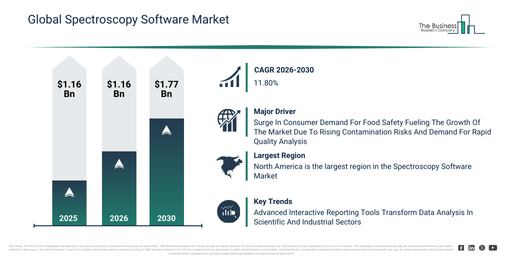
    The spectroscopy software market has witnessed significant growth in recent years. It is projected to increase from $1.49 billion in 2025 to $1.67 billion in 2026, registering a compound annual growth rate (CAGR) of 12.1%. This historical growth is largely due to the rising use of spectroscopy in pharmaceuticals, heightened demand for quality assurance within the food industry, broader adoption in environmental testing, innovations in UV-Vis and IR spectroscopy software, and the expansion of analytical laboratories worldwide.

    Looking ahead, the market is expected to expand rapidly, reaching $2.61 billion by 2030 with a CAGR of 11.8%. This future growth is anticipated to be driven by the integration of artificial intelligence (AI) and machine learning technologies into spectroscopy software, the increasing adoption of cloud-based and hybrid deployment models, growing forensic science applications, automation trends in pharmaceutical and biotech laboratories, and the rise of remote and collaborative research platforms. Leading trends include automated spectral data processing, seamless integration with laboratory information management systems (LIMS), real-time instrument monitoring, enhanced visualization and reporting capabilities, and tools that support remote and joint data analysis.

    Download A Free Sample Report For Comprehensive Market Insights:

    https://www.thebusinessresearchcompany.com/sample.aspx?id=25910&type=smp

    Growing Consumer Demand for Food Safety Boosts Spectroscopy Software

    One of the key factors driving market expansion is the rising consumer focus on food safety, which has become critical due to the globalization of food supply chains. This global spread increases the risk of contamination during various stages such as production, processing, and distribution. Spectroscopy software plays a vital role in maintaining food safety by enabling quick, non-destructive testing methods that detect contaminants, verify ingredient authenticity, and monitor quality throughout the supply chain.

    For example, in April 2024, the Public Interest Research Group (PIRG), a nonprofit organization based in the US, reported an 8% increase in food and beverage recalls in 2023 compared to 6% in 2022. This upward trend highlights growing concerns about food safety, which in turn drives demand for advanced spectroscopy software solutions.

    Spectroscopy Software Market Segmentation and Strategic Opportunities

    This market report organizes the spectroscopy software industry into several distinct segments:

    1) By Type of Spectroscopy:

    – Ultraviolet-Visible (UV-Vis) Spectroscopy Software

    – Infrared (IR) Spectroscopy Software

    – Nuclear Magnetic Resonance (NMR) Spectroscopy Software

    – Mass Spectrometry Software

    – Fluorescence Spectroscopy Software

    2) By Deployment Type:

    – On-Premise Software

    – Cloud-Based Software

    – Hybrid Software

    3) By Functionality:

    – Data Acquisition

    – Data Analysis

    – Data Management

    – Reporting and Visualization

    – Instrument Control

    4) By Application:

    – Food Testing

    – Environmental Testing

    – Forensic Science

    – Pharmaceuticals

    – Other Applications

    5) By End-User:

    – Pharmaceutical and Biotechnology Industries

    – Forensics

    – Food Industries

    – Polymers and Organic Chemistry Industries

    Access The Complete Spectroscopy Software Market Report:

    https://www.thebusinessresearchcompany.com/report/spectroscopy-software-global-market-report

    Further subcategories provide more detailed classifications, such as the types of UV-Vis software (single-beam, double-beam, array-based, portable), IR spectroscopy types (NIR, MIR, FIR, FTIR), NMR software variations (1D, 2D/3D, solid-state, high-resolution), mass spectrometry software kinds (GC-MS, LC-MS, MALDI, tandem MS), and fluorescence software (steady-state, time-resolved, lifetime imaging, FRET).

    Innovations Driving Change in the Spectroscopy Software Market

    Leading companies in this space are focusing on creating advanced software solutions that enhance data visualization and enable comprehensive analysis. Interactive reporting tools have become a key innovation, offering dynamic and user-friendly features that allow scientists and industry professionals to explore, filter, and visualize spectroscopy data in real time.

    For instance, in June 2023, Mirion Technologies, Inc., a US-based tech and manufacturing company, released Genie 4.0, a significant update to its flagship spectroscopy software. This version improves user experience with interactive reports, boosts accuracy through sophisticated algorithms, and increases automation capabilities via Python scripting. Genie 4.0 supports both new and experienced users with a smooth transition and provides flexible subscription and perpetual licensing models. It became available for download in mid-July.

    Key Companies Influencing the Spectroscopy Software Industry

    Several prominent firms shape the competitive landscape of the spectroscopy software market. These include:

    – Thermo Fisher Scientific Inc.

    – Danaher Corporation

    – Agilent Technologies Inc.

    – PerkinElmer Inc.

    – Mettler-Toledo International Inc.

    – Shimadzu Corporation

    – Waters Corporation

    – Bruker Corporation

    – HORIBA Ltd.

    – JEOL Ltd.

    – Anton Paar GmbH

    – Renishaw plc

    – Metrohm AG

    – Genedata AG

    – HunterLab Europe GmbH

    – Avantes B.V.

    – JASCO Corporation

    – Wasatch Photonics Inc.

    – Lablicate GmbH

    – StellarNet Inc.

    Geographical Insights Revealing Growth Hotspots in Spectroscopy Software

    In 2025, North America was the largest regional market for spectroscopy software. However, the Asia-Pacific region is expected to lead growth during the forecast period, outpacing other areas. The market analysis covers key global regions, including Asia-Pacific, South East Asia, Western Europe, Eastern Europe, North America, South America, as well as the Middle East and Africa, providing a thorough perspective on worldwide market trends and opportunities.

    Get in touch with us:

    The Business Research Company: https://www.thebusinessresearchcompany.com/

    Americas: +1 310-496-7795

    Asia: +44 7882 955267 & +91 8897263534

    Europe: +44 7882 955267

    Email us at: marketing@tbrc.info

    Follow us on:

    LinkedIn: https://in.linkedin.com/company/the-business-research-company

    YouTube: https://www.youtube.com/channel/UC24_fI0rV8cR5DxlCpgmyFQ

    Global Market Model: https://www.thebusinessresearchcompany.com/global-market-model
  • Spectacle Lens Market Trends And Growth Drivers Point To Strong Future Potential

    Spectacle Lens Market Trends And Growth Drivers Point To Strong Future Potential

    Enhanced with market attractiveness analysis, total addressable market evaluation, company benchmarking matrices, interactive Excel dashboards, expanded supply chain intelligence, emerging startup coverage, and detailed product insights, The Business Research Company’s 2026 market reports deliver more actionable and strategically valuable research.

    The spectacle lens market is experiencing consistent growth, driven by rising vision-related health issues and technological advancements. As awareness increases around eye care and more innovative products enter the market, the demand for various types of spectacle lenses continues to climb. Let’s explore the current market size, key factors behind growth, major players, and emerging trends that are shaping the future of this industry.

    Steady Expansion of the Spectacle Lens Market Size

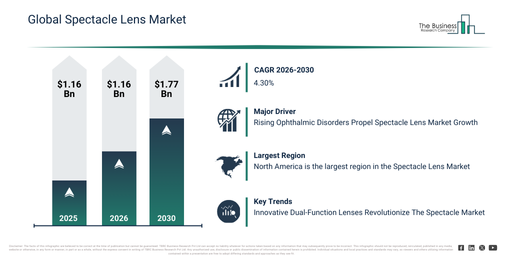
    The spectacle lens market has shown a steady upward trend in recent years. It is forecasted to grow from $62.02 billion in 2025 to $64.24 billion in 2026, marking a compound annual growth rate (CAGR) of 3.6%. This historical growth has been fueled by the growing prevalence of vision impairments, an aging global population, increased routine eye exams, the expansion of optical retail stores, and advances in lens manufacturing technologies. Looking ahead, the market is expected to continue its steady rise, reaching $75.91 billion by 2030 with a CAGR of 4.3%. Factors driving this forecast include the rising demand for premium and personalized eyewear, the uptake of digital eye testing solutions, growth in online eyewear sales, the focus on blue light protection lenses, and ongoing innovations in lens materials. Key trends anticipated during this period include a surge in demand for customized vision correction lenses, wider adoption of progressive and multifocal lenses, the use of lightweight high-index materials, expansion of digitally designed lenses, and increased emphasis on comfort and aesthetics.

    Download A Free Sample Report For Comprehensive Market Insights:

    https://www.thebusinessresearchcompany.com/sample.aspx?id=15674&type=smp

    Increasing Prevalence of Eye Disorders Boosting Spectacle Lens Demand

    One of the primary factors propelling the spectacle lens market is the rising occurrence of ophthalmic disorders. These conditions, which include common vision problems like refractive errors as well as more severe diseases such as glaucoma and macular degeneration, are becoming more widespread. The increase is linked to factors like extended screen time, frequent use of digital devices, and an aging population, all contributing to issues like digital eye strain, myopia, and age-related macular degeneration. Spectacle lenses serve an important role by correcting these disorders—such as myopia, hyperopia, astigmatism, and presbyopia—by properly focusing light on the retina, which enhances visual clarity and reduces eye strain. For example, in August 2024, the Welsh Government reported that ophthalmology departments in Wales recorded over 35,000 admissions in 2023-24, a 5.8% rise from the previous year, highlighting the growing need for vision care solutions.

    Additional Drivers Amplifying Market Growth

    Another factor supporting growth is the broader awareness surrounding eye health and the increasing number of routine eye check-ups worldwide. With more people getting their vision tested regularly, the demand for corrective lenses naturally increases. The expansion of optical retail networks further eases access to these products, while technological advancements improve the quality and variety of lenses available. These combined influences create a favorable environment for sustained market expansion.

    Access The Complete Spectacle Lens Market Report:

    https://www.thebusinessresearchcompany.com/report/spectacle-lens-global-market-report

    How the Spectacle Lens Market Is Categorized Across Segments

    This market is segmented across various dimensions to capture its diversity:

    1) By Product Type: Single Vision Lenses, Progressive Lenses, Bifocal Lenses, and Trifocal Lenses

    2) By Material: Plastic Lenses, Polycarbonate Lenses, Trivex Lenses, High-Index Lenses, and Glass Lenses

    3) By Sales Channel: Retail Sales and Institutional Sales

    4) By Application: Vision Correction, Fashion and Aesthetic Use, and Other Applications

    Further breakdowns include subcategories such as distance and near vision lenses under Single Vision, standard and custom options for Progressive and Trifocal lenses, and different styles like flat top and round segment under Bifocal lenses.

    Innovations and Trends Shaping the Future of Spectacle Lenses

    Leading companies are increasingly focusing on developing lenses that serve dual purposes, combining vision correction with protection against harmful blue light, glare, and UV radiation. These multifunctional lenses cater to growing consumer demand for health-conscious eyewear. For instance, in April 2023, Hoya Vision Care introduced the MiyoSmart Sun Spectacles, which use patented defocus incorporating multiple segments (DIMS) technology to slow myopia progression in children. Along with vision correction, these lenses offer UV protection—making them ideal for outdoor activities and supporting children’s eye health.

    Prominent Players Driving the Spectacle Lens Market

    The competitive landscape includes major global players such as EssilorLuxottica SA, Bausch Health Companies Inc., Hoya Corporation, Carl Zeiss AG, KODAK Lens, Rodenstock GmbH, Warby Parker Inc., Norville Group Ltd, Vision Rx Lab Pvt. Ltd., ABB Optical Group, Walman Optical, Younger Optics, Vision-Ease Lens Ltd, Mingyue Optical Lens Co Ltd, X-Cel Optical Company, Jiangsu Hongchen Optical Co Ltd, Visioneering Technologies Inc., Tokai Optical Co. Ltd., Kbco Lens Ltd, Sola Optical, and Seiko Optical Products Co. Ltd.

    Regional Market Leadership and Growth Outlook

    In 2025, North America was the largest market for spectacle lenses, demonstrating strong demand and well-established optical care infrastructure. Other important regions covered in market analyses include Asia-Pacific, South East Asia, Western Europe, Eastern Europe, South America, the Middle East, and Africa. Among these, Asia-Pacific is expected to see some of the fastest growth rates due to increasing urbanization, rising population, expanding healthcare access, and growing consumer awareness in these markets.

    Get in touch with us:

    The Business Research Company: https://www.thebusinessresearchcompany.com/

    Americas: +1 310-496-7795

    Asia: +44 7882 955267 & +91 8897263534

    Europe: +44 7882 955267

    Email us at: marketing@tbrc.info

    Follow us on:

    LinkedIn: https://in.linkedin.com/company/the-business-research-company

    YouTube: https://www.youtube.com/channel/UC24_fI0rV8cR5DxlCpgmyFQ

    Global Market Model: https://www.thebusinessresearchcompany.com/global-market-model
  • Specialty Catheters Market Expansion Is Reshaping Competitive Dynamics Across The Industry

    Specialty Catheters Market Expansion Is Reshaping Competitive Dynamics Across The Industry

    Through market attractiveness analysis, total addressable market evaluation, company benchmarking matrices, interactive Excel dashboards, expanded supply chain intelligence, emerging startup coverage, and detailed product insights, The Business Research Company’s 2026 market reports provide more actionable and strategically valuable research.

    The specialty catheters market has been witnessing substantial growth recently, driven by rising healthcare needs and technological advancements. As medical procedures become more sophisticated and patient populations age, the demand for specialized catheters continues to rise. Below is a detailed overview of the market’s size, key drivers, segmentation, emerging trends, and leading companies shaping its future.

    Specialty Catheters Market Size and Growth Prospects

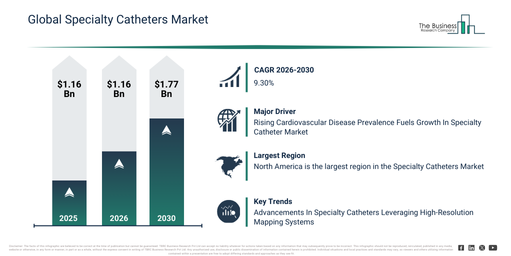
    The specialty catheters market has demonstrated significant expansion in the past years. It is projected to grow from $6.95 billion in 2025 to $7.62 billion in 2026, achieving a compound annual growth rate (CAGR) of 9.6%. This historical growth can be attributed to factors such as the increasing burden of cardiovascular diseases, the expansion of intensive care units (ICUs), rising surgical volumes, heightened focus on infection control, and the development of hospital infrastructure. Looking ahead, the market is expected to continue its strong upward trajectory, reaching $10.87 billion by 2030 with a slightly moderated CAGR of 9.3%. The forecasted expansion is fueled by an aging population, higher critical care admissions, advancements in surgical techniques, growing demand for precise medical interventions, and increased hospital capacities. Key trends shaping this growth include a rising preference for procedure-specific catheters, the surge in minimally invasive surgeries, adoption of multi-lumen catheters, expanded use in critical care environments, and customization of catheter designs.

    Download A Free Sample Report For Comprehensive Market Insights:

    https://www.thebusinessresearchcompany.com/sample.aspx?id=20646&type=smp

    Factors Supporting Specialty Catheters Market Expansion

    One of the primary forces propelling the specialty catheters market is the growing prevalence of cardiovascular diseases worldwide. These diseases encompass a variety of disorders affecting the heart and blood vessels, such as coronary artery disease, hypertension, and heart failure. The rise in these conditions is driven by risk factors including obesity, diabetes, high blood pressure, sedentary lifestyles, and an aging global population.

    Specialty catheters play a vital role in managing cardiovascular diseases by enabling targeted, precise interventions like drug delivery, angioplasty, and stent placement, all of which improve blood flow and lower the risk of severe cardiac events. For example, in May 2024, the US Centers for Disease Control and Prevention (CDC) reported that 702,880 people died from heart disease in the United States during 2022, while global deaths from heart disease are expected to reach 23 million by 2030. This increasing disease burden is a significant driver for the expanding specialty catheters market.

    Access The Complete Specialty Catheters Market Report:

    https://www.thebusinessresearchcompany.com/report/specialty-catheters-global-market-report

    Product and End-Use Segments Defining the Specialty Catheters Market

    This report categorizes the specialty catheters market into key segments as follows:

    1) By Product Type: Wound Catheters, Oximetry Catheters, Thermodilution Catheters, and Other Products

    2) By Lumen Type: Triple-Lumen, Quadruple-Lumen, and Other Lumens

    3) By End-Use Sector: Hospitals, Ambulatory Surgical Centers, and Other End Users

    Within these classifications, subcategories include negative pressure wound therapy catheters, surgical drainage catheters, catheters for wound irrigation, pulmonary artery catheters with oximetry, central venous catheters with oximetry, peripheral oximetry catheters, thermodilution catheters for cardiac output measurement, pulmonary artery thermodilution catheters, and those with continuous cardiac output monitoring. Other products consist of gastrostomy, urological, and infusion catheters.

    Innovations and Trends Reshaping Specialty Catheters Demand

    Leading players in the specialty catheters market are focusing on developing cutting-edge technologies to boost the functionality and precision of their devices. One notable example is the integration of TRUEref technology, which is an advanced high-resolution mapping system designed to improve electrophysiological accuracy in complex cardiac arrhythmias.

    For instance, in July 2023, Biosense Webster Inc., a US-based medical technology firm, launched the OPTRELL Mapping Catheter, featuring TRUEref technology. This high-density diagnostic catheter offers detailed electrophysiological mapping through a fixed array of electrodes, enabling accurate diagnosis and treatment of complicated arrhythmias such as persistent atrial fibrillation, atrial tachycardia, and ventricular tachycardia. This innovation illustrates how technology is advancing the capabilities and effectiveness of specialty catheters.

    Key Players Competing in the Specialty Catheters Market

    The specialty catheters market features several prominent companies driving competition and innovation. These include Cardinal Health Inc., Abbott Laboratories, Medline Industries Inc., Becton Dickinson and Company, Boston Scientific Corporation, B Braun Melsungen AG, Terumo Corporation, Edwards Lifesciences Corporation, Nipro Corporation, Smiths Medical Inc., Cook Medical, Teleflex Incorporated, ICU Medical Inc., Merit Medical Systems Inc., LivaNova plc, Cordis Corporation, Penumbra Inc., Asahi Intecc Co. Ltd., Spectranetics Corporation, AngioDynamics Inc., Bard Medical, and Vascular Solutions Inc. These companies are continuously enhancing their product portfolios to meet evolving clinical demands.

    Regional Insights and Growth Drivers in the Specialty Catheters Market

    In 2025, North America held the largest share of the specialty catheters market. Other regions covered in the market analysis include Asia-Pacific, South East Asia, Western Europe, Eastern Europe, South America, Middle East, and Africa. While North America currently dominates, regions such as Asia-Pacific and South East Asia are anticipated to experience notable market expansion due to increasing healthcare investments and growing prevalence of chronic diseases. This geographic diversity underscores the global nature of demand for specialty catheters and highlights opportunities for market players to expand their presence internationally.

    Get in touch with us:

    The Business Research Company: https://www.thebusinessresearchcompany.com/

    Americas: +1 310-496-7795

    Asia: +44 7882 955267 & +91 8897263534

    Europe: +44 7882 955267

    Email us at: marketing@tbrc.info

    Follow us on:

    LinkedIn: https://in.linkedin.com/company/the-business-research-company

    YouTube: https://www.youtube.com/channel/UC24_fI0rV8cR5DxlCpgmyFQ

    Global Market Model: https://www.thebusinessresearchcompany.com/global-market-model
  • Spatial omics Market Forecast Reveals Where Future Industry Value Will Be Created

    Spatial omics Market Forecast Reveals Where Future Industry Value Will Be Created

    Delivering more actionable and strategically valuable research, The Business Research Company’s 2026 market reports feature market attractiveness analysis, total addressable market evaluation, company benchmarking matrices, interactive Excel dashboards, expanded supply chain intelligence, emerging startup coverage, and detailed product insights.

    The spatial omics field is rapidly evolving, offering new ways to explore the spatial organization of molecules within tissues. This emerging technology is gaining traction thanks to advances in research funding, imaging methods, and data analysis tools. Let’s delve into the current market size, key growth drivers, segment breakdown, innovation trends, major players, and leading regions shaping the future of spatial omics.

    Spatial Omics Market Size and Growth Projections

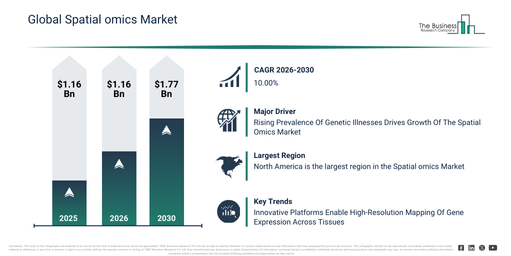
    The spatial omics market has witnessed swift expansion in recent years. It is projected to grow from $0.33 billion in 2025 to $0.37 billion in 2026, reflecting a strong compound annual growth rate (CAGR) of 11.3%. This historic growth has been driven by increased funding for genomics research, growth in academic life sciences, technological advancements in molecular imaging, broader access to omics consumables, and a heightened emphasis on disease biology studies. Looking ahead, the market is expected to reach $0.54 billion by 2030, maintaining a robust CAGR of 10.0%. Factors fueling this future expansion include the growing use of spatial omics in drug discovery, rising investments in precision medicine, the integration of AI for biological data analysis, increasing demand for spatially resolved biomarkers, and heightened pharmaceutical R&D expenditures. Key trends anticipated to influence the market include the adoption of spatial transcriptomics platforms, multi-omics data integration, utilization of high-resolution imaging technologies, development of advanced data visualization tools, and a stronger focus on tissue-level molecular mapping.

    Download A Free Sample Report For Comprehensive Market Insights:

    https://www.thebusinessresearchcompany.com/sample.aspx?id=15927&type=smp

    Key Factors Pushing Spatial Omics Market Growth

    The increasing prevalence of genetic disorders is a significant factor propelling the spatial omics market forward. Genetic diseases, caused by DNA abnormalities inherited from parents, are becoming more common due to heightened awareness, improved diagnostic methods, lifestyle changes, and environmental influences leading to mutations. Spatial omics technologies provide a powerful way to study these illnesses by generating detailed spatial maps of molecular and genetic features within tissues. For example, in July 2025, Australia’s National Blood Authority reported that the number of patients living with hereditary haemophilia A rose to 2,788 in 2023–2024, up from 2,681 in the previous year. This increase highlights the growing need for advanced tools like spatial omics to better understand and manage genetic diseases.

    Additional Factors Driving Spatial Omics Demand

    Alongside genetic disease prevalence, the demand for spatial omics is also fueled by its expanding applications in drug development and personalized medicine. Pharmaceutical companies are increasingly investing in spatial omics to identify new biomarkers and therapeutic targets, enhancing the precision of treatments. Furthermore, advances in artificial intelligence and machine learning are enabling more sophisticated analysis of spatially resolved biological data, making these technologies more accessible and valuable to researchers and clinicians alike.

    Access The Complete Spatial omics Market Report:

    https://www.thebusinessresearchcompany.com/report/spatial-omics-global-market-report

    Breaking Down the Spatial Omics Market by Segments

    This market can be categorized into several key segments:

    1) Product Types: Instruments, Consumables, and Software

    2) Sample Types: Formalin-Fixed Paraffin-Embedded (FFPE) and Fresh Frozen samples

    3) Workflows: Sample Preparation, Instrumental Analysis, and Data Analysis

    4) Technologies: Spatial Transcriptomics, Spatial Genomics, and Spatial Proteomics

    5) End-Use Sectors: Academic and Translational Research Institutes, and Pharmaceutical and Biotechnology Companies

    Within the instrument category, subtypes include spatial transcriptomics instruments, imaging systems, and mass spectrometers. Consumables cover reagents, kits, and preparation materials. Software options include data analysis platforms, visualization tools, and integration systems. This detailed segmentation allows stakeholders to target specific areas of opportunity within the spatial omics landscape.

    Innovation Trends Driving Spatial Omics Advancement

    Leading players in the spatial omics arena are focusing on developing integrated, end-to-end spatial transcriptomics platforms to provide comprehensive insights into gene expression within tissue contexts. These platforms streamline the entire process from sample preparation to data interpretation, enabling more precise biological analysis. For instance, in February 2025, Illumina Inc. introduced a groundbreaking spatial transcriptomics technology designed to transform tissue analysis and cellular mapping. This innovation offers unbiased whole-transcriptome profiling at single-cell resolution with remarkable sensitivity, allowing researchers to study complex tissues in unprecedented detail. The system features a capture area nine times larger and four times higher resolution than existing methods, facilitating analysis of millions of cells per experiment and identification of rare cell types. Additionally, the technology integrates seamlessly with Illumina’s NextSeq and NovaSeq sequencers and is supported by the Illumina Connected Multiomics platform, which enhances multiomic data visualization and analysis.

    Key Companies Influencing the Spatial Omics Market

    Several prominent companies are shaping the direction of the spatial omics market, including Agilent Technologies Inc., PerkinElmer Inc., Illumina Inc., Bruker Corporation, QIAGEN N.V., 10x Genomics Inc., Luminex Corporation, Takara Bio Inc., Oxford Nanopore Technologies, NanoString Technologies Inc., Standard BioTools Inc., Akoya Biosciences Inc., CrestOptics, Indica Labs Inc., Resolve Biosciences GmbH, Pixelgen Technologies, Ionpath Inc., RareCyte Inc., S2 Genomics Inc., Vizgen Inc., BioSpyder Technologies, and Ultivue Inc. These organizations are investing heavily in research and development to drive innovation and expand the capabilities of spatial omics technologies.

    Regional Market Insights Highlighting Leadership and Growth

    In 2025, North America commanded the largest share of the spatial omics market, serving as a hub for research institutions and pharmaceutical innovation. However, the Asia-Pacific region is anticipated to experience the fastest growth during the forecast period, driven by increasing investments in life sciences research and expanding biotechnology sectors. The market analysis covers a broad set of regions including Asia-Pacific, South East Asia, Western Europe, Eastern Europe, North America, South America, the Middle East, and Africa, providing a comprehensive view of global market dynamics.

    Get in touch with us:

    The Business Research Company: https://www.thebusinessresearchcompany.com/

    Americas: +1 310-496-7795

    Asia: +44 7882 955267 & +91 8897263534

    Europe: +44 7882 955267

    Email us at: marketing@tbrc.info

    Follow us on:

    LinkedIn: https://in.linkedin.com/company/the-business-research-company

    YouTube: https://www.youtube.com/channel/UC24_fI0rV8cR5DxlCpgmyFQ

    Global Market Model: https://www.thebusinessresearchcompany.com/global-market-model
  • Software As A Medical Device (SaMD) Market Growth Through 2030 Creates New Strategic Opportunities

    Software As A Medical Device (SaMD) Market Growth Through 2030 Creates New Strategic Opportunities

    Enhanced with market attractiveness analysis, total addressable market evaluation, company benchmarking matrices, interactive Excel dashboards, expanded supply chain intelligence, emerging startup coverage, and detailed product insights, The Business Research Company’s 2026 market reports deliver more actionable and strategically valuable research.

    The software as a medical device (SaMD) sector has witnessed remarkable expansion recently, driven by technological advancements and changing healthcare needs. As digital health solutions become more integrated into medical practices, this market is set for significant growth in the coming years. Here, we explore the current market size, key growth factors, segmentation, industry trends, major players, and regional insights shaping the future of SaMD.

    Steady Market Growth and Revenue Projections for Software as a Medical Device

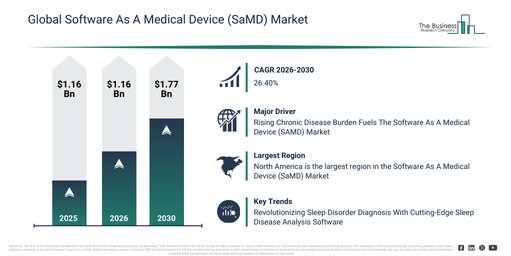
    The SaMD market has experienced rapid growth in recent times. From a valuation of $38.02 billion in 2025, it is expected to rise to $47.26 billion in 2026, reflecting an impressive compound annual growth rate (CAGR) of 24.3%. This growth during the historical period has been fueled by the widespread adoption of telemedicine, increased smartphone usage, substantial digital health investments, clearer regulations, and a growing demand for remote healthcare services. Looking ahead, the market is predicted to expand even more dramatically, reaching $120.54 billion by 2030 at a CAGR of 26.4%. This surge is anticipated to be supported by the expanding virtual care sector, advances in software-driven diagnostics, the adoption of cloud-based healthcare platforms, outcome-based reimbursement models, and modernization of hospital software systems. Emerging trends during this forecast period include the growth of clinical decision support software, increased use of remote diagnostic tools, enhanced regulatory approvals for medical software, subscription-based business models for SaMD, and greater integration with electronic health records.

    Download A Free Sample Report For Comprehensive Market Insights:

    https://www.thebusinessresearchcompany.com/sample.aspx?id=12446&type=smp

    Key Factors Propelling Growth in the Software as a Medical Device Market

    One of the main drivers behind the expanding SaMD market is the rising prevalence of chronic diseases. Conditions such as diabetes, heart disease, and arthritis are long-term illnesses that generally worsen over time, requiring continuous medical management and lifestyle adjustments. The increase in chronic diseases can largely be attributed to unhealthy habits including poor nutrition, lack of physical activity, and smoking, which elevate risks for diabetes, cardiovascular issues, and obesity. SaMD technologies play an important role by enabling constant monitoring of patient health metrics, facilitating early identification of potential complications. This continuous oversight improves treatment results through personalized guidance and supports remote care, reducing the need for frequent hospital visits. For example, in June 2024, the National Health Service in the UK reported that 3,615,330 people registered with a general practitioner had non-diabetic hyperglycemia or pre-diabetes in 2023, which is an 18% increase from 3,065,825 cases in 2022. This upward trend in chronic disease incidence is a strong catalyst for SaMD market growth.

    Detailed Breakdown of Software as a Medical Device Market Segments

    The SaMD market is categorized into several key segments for better clarity:

    1) Device Type: Wearable Devices, PCs and Laptops, Smartphones and Tablets

    2) Deployment Method: Cloud-Based and On-Premise solutions

    3) Application Area: Diagnostic and Clinical Management

    Access The Complete Software As A Medical Device (SaMD) Market Report:

    https://www.thebusinessresearchcompany.com/report/samd-software-as-a-medical-device-global-market-report

    Further subcategories include:

    – Wearable Devices such as smartwatches with health monitoring features, fitness trackers, and wearable ECG and blood pressure monitors

    – PCs and Laptops featuring medical diagnostic software, clinical decision support systems, and telemedicine platforms

    – Smartphones and Tablets hosting mobile health (mHealth) applications, remote patient monitoring software, and diagnostic imaging apps

    Emerging Trends Shaping the Future of the SaMD Market

    Leading companies in the SaMD industry are heavily investing in cutting-edge software to gain a competitive advantage. A notable example is SOMNUM, an advanced sleep disorder analysis software that combines the latest artificial intelligence (AI) research with diagnostic algorithms based on multi-channel sleep biosignal data rather than traditional video images. In September 2023, South Korean firm HoneyNaps Co. Ltd. received approval from the United States Food and Drug Administration (USFDA) for SOMNUM. This software utilizes deep learning AI to analyze various biosignals in real time—such as electroencephalograms, electrooculograms, electromyograms, electrocardiograms, respiratory airflow and effort, and oxygen saturation. It offers higher precision than conventional techniques and dramatically reduces the time needed for patient sleep data analysis to less than five minutes.

    Leading Industry Players Driving Innovation in SaMD

    Some of the major organizations active in the software as a medical device market include Apple Inc., Abbott Laboratories, Siemens Healthcare GmbH, GE HealthCare Technologies Inc., Roche Diagnostics, Cerner Corporation, Philips Medical Systems Ltd., Dexcom Inc., Carl Zeiss Meditec AG, Nihon Kohden Corporation, Viz.ai Inc., S3 Connected Health, Arterys Inc., BrightInsight Inc., Agfa HealthCare Corp., iSchemaView Inc., VitalConnect Inc., Volpara Health Technologies, Greenfinch Technology Ltd., MaxQ AI Ltd., and IDx Technologies Inc.

    Regional Market Insights Highlighting Growth Opportunities

    In 2025, North America held the largest share of the SaMD market. However, the Asia-Pacific region is expected to grow at the fastest pace during the forecast period. The comprehensive market overview includes key regions such as Asia-Pacific, South East Asia, Western Europe, Eastern Europe, North America, South America, the Middle East, and Africa, providing a global perspective on emerging trends and growth prospects.

    Get in touch with us:

    The Business Research Company: https://www.thebusinessresearchcompany.com/

    Americas: +1 310-496-7795

    Asia: +44 7882 955267 & +91 8897263534

    Europe: +44 7882 955267

    Email us at: marketing@tbrc.info

    Follow us on:

    LinkedIn: https://in.linkedin.com/company/the-business-research-company

    YouTube: https://www.youtube.com/channel/UC24_fI0rV8cR5DxlCpgmyFQ

    Global Market Model: https://www.thebusinessresearchcompany.com/global-market-model
  • Soft Tissue Allograft Market Size Projected To Increase From $5.24 Billion To $6.97 Billion During The Forecast Period

    Soft Tissue Allograft Market Size Projected To Increase From $5.24 Billion To $6.97 Billion During The Forecast Period

    Through market attractiveness analysis, total addressable market evaluation, company benchmarking matrices, interactive Excel dashboards, expanded supply chain intelligence, emerging startup coverage, and detailed product insights, The Business Research Company’s 2026 market reports provide more actionable and strategically valuable research.

    The soft tissue allograft market is experiencing notable growth fueled by advancements in medical procedures and increasing demand for effective tissue repair solutions. This sector is witnessing heightened attention due to rising orthopedic injuries and surgical interventions, paving the way for further expansion in the coming years. Let’s explore the market size, key growth drivers, major segments, emerging trends, leading companies, and regional dynamics shaping this industry.

    Soft Tissue Allograft Market Size and Projected Growth Trajectory

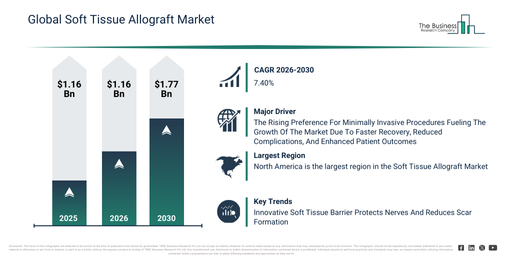
    The market for soft tissue allografts has seen strong expansion recently. In 2025, it was valued at $4.87 billion and is projected to reach $5.24 billion by 2026, growing at a compound annual growth rate (CAGR) of 7.7%. This past growth primarily stems from an increase in orthopedic injuries, rising numbers of sports-related surgeries, better availability of donor tissues, improvements in sterilization techniques, and enhanced hospital transplant programs. Looking ahead, the market is poised to continue growing steadily, expected to reach $6.97 billion by 2030 with a CAGR of 7.4%. The forecasted growth is driven by factors such as an aging population, growing demand for joint reconstruction procedures, expansion of sports medicine, innovations in tissue preservation methods, and harmonization of regulatory standards. Key trends anticipated during this period include a focus on orthopedic reconstruction surgeries, the use of sports medicine allografts, adoption of sterilized tissue processing, minimally invasive grafting procedures, and growth in hospital-based tissue banking.

    Download A Free Sample Report For Comprehensive Market Insights:

    https://www.thebusinessresearchcompany.com/sample.aspx?id=28335&type=smp

    Increasing Popularity of Minimally Invasive Procedures Bolsters Market Growth

    One significant factor propelling the soft tissue allograft market is the rising preference for minimally invasive surgeries. These procedures involve small incisions or entry points that reduce patient trauma and shorten recovery times, making them very attractive options. The benefits of minimally invasive surgeries—lower risk of complications, less pain, smaller scars, and quicker recuperation—are encouraging more patients to opt for these treatments. Soft tissue allografts align well with these procedures by providing ready-to-use, donor-derived tissues that facilitate faster healing and simplify the surgical process.

    The growing demand for minimally invasive options is clearly reflected in recent data. For example, according to the American Society of Plastic Surgeons in June 2024, minimally invasive procedures increased by 7 percent in 2023, outpacing traditional surgical procedures by 2 percent. Neuromodulator injections and hyaluronic acid fillers alone accounted for over 9 million and 5 million treatments, respectively. This trend reinforces the expanding role of soft tissue allografts in supporting less invasive, more efficient surgical techniques.

    Access The Complete Soft Tissue Allograft Market Report:

    https://www.thebusinessresearchcompany.com/report/soft-tissue-allograft-global-market-report

    Breakdown of Soft Tissue Allograft Market Segments and Categories

    The soft tissue allograft market can be segmented by several criteria to better understand where growth is occurring:

    – By Type: Cartilage Allograft, Tendon Allograft, Meniscus Allograft, and Other Types

    – By Processing Technique: Fresh Frozen, Irradiated, Dehydrated, Sterilized, and Other Methods

    – By Application: Musculoskeletal Repair and Reconstruction, Plastic and Reconstructive Surgery, and Other Medical Uses

    – By End-User: Hospitals, Ambulatory Surgical Centers, and Private Clinics

    Further subcategories within these groups include, for example, osteochondral, particulate, and juvenile types of cartilage allografts; specific tendons such as Achilles, anterior tibialis, posterior tibialis, and semitendinosus; lateral and medial meniscus allografts; and other types like skin, fascia, and nerve allografts.

    Innovations in Tissue Processing Shaping Soft Tissue Allograft Market Advancements

    Leading companies in the soft tissue allograft sector are heavily investing in new tissue processing and sterilization technologies. One notable advancement is the development of resorbable soft tissue allografts, which provide temporary structural support and gradually dissolve as the patient’s own tissue regenerates. This approach helps enhance tissue repair, speed up recovery, and improve clinical outcomes.

    For instance, in June 2024, Axogen Inc., a medical technology company based in the US, introduced the Avive Soft Tissue Matrix. This innovative product is a resorbable, multi-layer amniotic membrane allograft designed to act as a soft tissue barrier during peripheral nerve healing. It protects nerves from damage and reduces scar tissue formation, especially for patients with compression or non-transected nerve injuries. The matrix’s multi-layer structure ensures ease of handling and suturing during surgery, marking an important step forward in nerve protection and repair.

    Key Players Driving Competition in the Soft Tissue Allograft Industry

    The market features numerous influential companies that play a major role in advancing the soft tissue allograft field. These include Stryker Corporation, Zimmer Biomet, Arthrex Inc., Integra LifeSciences Holdings Corporation, CONMED Corporation, MTF Biologics, MiMedx Group Inc., RTI Surgical Holdings Inc., LifeNet Health, AlloSource Inc., Xtant Medical Holdings Inc., Acera Surgical Inc., Skye Biologics Inc., StimLabs LLC, Applied Biologics LLC, Human Regenerative Technologies LLC, AxoGen Inc., Aziyo Biologics Inc., BioTissue Holdings Inc., and Orthofix Medical Inc. This competitive landscape drives ongoing innovation and product development.

    Regional Overview Highlighting Market Leadership and Growth Hotspots

    As of 2025, North America held the largest share of the soft tissue allograft market, maintaining leadership due to advanced healthcare infrastructure and strong adoption of innovative treatments. Meanwhile, the Asia-Pacific region is predicted to be the fastest-growing market over the forecast period, supported by increased healthcare investments and rising awareness of advanced grafting techniques. The market analysis covers various regions including Asia-Pacific, South East Asia, Western Europe, Eastern Europe, North America, South America, the Middle East, and Africa to present a comprehensive picture of global market trends and opportunities.

    Get in touch with us:

    The Business Research Company: https://www.thebusinessresearchcompany.com/

    Americas: +1 310-496-7795

    Asia: +44 7882 955267 & +91 8897263534

    Europe: +44 7882 955267

    Email us at: marketing@tbrc.info

    Follow us on:

    LinkedIn: https://in.linkedin.com/company/the-business-research-company

    YouTube: https://www.youtube.com/channel/UC24_fI0rV8cR5DxlCpgmyFQ

    Global Market Model: https://www.thebusinessresearchcompany.com/global-market-model
  • Soft Contact Lenses Market Growth Outlook Reveals A CAGR Of 7% And A Market Value Of $13.49 Billion By 2030

    Soft Contact Lenses Market Growth Outlook Reveals A CAGR Of 7% And A Market Value Of $13.49 Billion By 2030

    Delivering more actionable and strategically valuable research, The Business Research Company’s 2026 market reports feature market attractiveness analysis, total addressable market evaluation, company benchmarking matrices, interactive Excel dashboards, expanded supply chain intelligence, emerging startup coverage, and detailed product insights.

    The soft contact lenses market has witnessed robust growth in recent times, driven by several key factors that enhance eye care and vision correction. As awareness around eye health expands and technological advancements continue, this sector is poised for sustained development. Let’s explore the current market size, the driving forces propelling growth, major trends, leading companies, and the regional outlook shaping the future of soft contact lenses.

    Steady Market Growth and Revenue Outlook in the Soft Contact Lenses Market

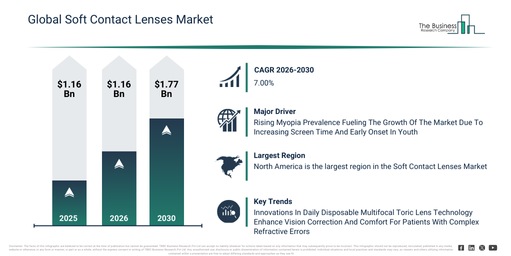
    The soft contact lenses market has experienced significant expansion, with its value forecasted to rise from $9.57 billion in 2025 to $10.28 billion in 2026, reflecting a strong compound annual growth rate (CAGR) of 7.4%. This growth in the historical period is mainly attributed to the increasing incidence of refractive errors, heightened awareness about eye care, innovations in hydrogel lens technology, wider availability of daily disposable lenses, and the broadening reach of optical retail networks. Looking ahead, the market is expected to continue its upward trajectory, growing to $13.49 billion by 2030 at a CAGR of 7.0%. Key factors driving this future expansion include the adoption of silicone hydrogel lenses, a surge in demand for cosmetic and colored lenses, rising e-commerce sales, innovations in smart and connected lenses, and growing use of therapeutic and specialty lenses. Upcoming market trends emphasize personalized lens development, improved oxygen permeability, optimized comfort and moisture retention, increasing popularity of cosmetic lenses, and advancements in therapeutic and medical contact lenses.

    Download A Free Sample Report For Comprehensive Market Insights:

    https://www.thebusinessresearchcompany.com/sample.aspx?id=25908&type=smp

    Rising Myopia Cases Power Growth in the Soft Contact Lenses Market

    One of the main forces behind the market’s growth is the growing prevalence of myopia. This common vision defect causes distant objects to blur due to the elongation of the eyeball or excessive curvature of the cornea, which results in light focusing in front of the retina instead of directly on it. The rise in myopia cases is closely linked to increased screen time and reduced outdoor activities among children and adolescents. Extended exposure to digital screens accelerates the onset and progression of this condition worldwide. By providing comfortable and effective vision correction through daily and extended-wear lenses, soft contact lenses play a crucial role in addressing myopia. Furthermore, some advanced lens designs are specifically engineered to slow myopic progression. For example, as reported by the National Institutes of Health (NIH) in February 2025, the global prevalence of myopia is projected to reach 36.59% by 2040 and 39.80% by 2050, with more than 740 million affected individuals expected by 2050. This escalating prevalence strongly supports the growing demand for soft contact lenses.

    Product and Segment Breakdown Key to Understanding the Soft Contact Lenses Market

    The soft contact lenses market is categorized into several key segments to better understand its landscape. These include:

    1) Product Type: Daily Disposable Lenses, Extended Wear Lenses, Frequent Replacement Lenses, Multifocal Lenses, and Toric Lenses for Astigmatism.

    2) Material Composition: Hydrogel Lenses, Silicone Hydrogel Lenses, Polyhema Lenses, Non-Ionogenic Lenses, and Ultraviolet Blocking Lenses.

    3) Age Group: Children, Teenagers, Young Adults, Middle-aged Adults, and Senior Citizens.

    4) Distribution Channels: Online Retailers, Optical Stores, Pharmacies, Hospital and Clinic Sales, and Direct-to-Consumer Brands.

    5) Applications: Corrective, Therapeutic, Cosmetic, Prosthetic, and Lifestyle-oriented uses.

    Access The Complete Soft Contact Lenses Market Report:

    https://www.thebusinessresearchcompany.com/report/soft-contact-lenses-global-market-report

    Further subcategories detail specific types within these segments. For instance, daily disposable lenses include single vision, multifocal, toric for astigmatism, colored, and ultraviolet blocking variants. Extended wear lenses are divided by wear duration such as seven-day, fourteen-day, and thirty-day continuous wear, including silicone hydrogel and overnight therapeutic options. Frequent replacement lenses consist of two-week and monthly replacements, custom designs, colored lenses, and hydrogel-based products. Multifocal lenses and toric lenses for astigmatism are further segmented by daily disposable, extended wear, monthly replacement, multifocal, and custom fit types, highlighting the market’s diversity.

    Innovations and Trends Accelerating Expansion in Soft Contact Lenses

    Leading manufacturers in the soft contact lenses market are focusing on creating advanced products that cater to evolving consumer needs, particularly those addressing astigmatism and presbyopia. A significant development is the introduction of daily disposable multifocal toric lenses, which combine correction for astigmatism with multifocal features that support near, intermediate, and distance vision. These lenses offer users the convenience of single-use products without the maintenance required by traditional lenses, enhancing comfort and hygiene.

    A notable example occurred in June 2025 when Johnson & Johnson launched ACUVUE OASYS MAX 1-Day MULTIFOCAL for ASTIGMATISM. This lens is designed specifically for individuals who have both astigmatism and presbyopia. It features high oxygen permeability, Blink-Stabilized technology for rotational stability, TearStable technology to retain moisture, an OptiBlue filter to reduce high-energy visible (HEV) light exposure, and a pupil-optimized multifocal design. These features combine to provide stable, sharp vision under various lighting conditions and ensure all-day comfort for wearers.

    Competitive Landscape and Leading Players in the Soft Contact Lenses Market

    The soft contact lenses sector is led by several major companies with a strong global presence. Prominent players include Johnson & Johnson, EssilorLuxottica SA, Alcon Laboratories Inc, Hoya Corporation, Bausch and Lomb Incorporated, The Cooper Companies Inc, Menicon Co Ltd, Polytouch Contact Lens Co, ABB Optical Group LLC, Contamac Ltd, Art Optical Contact Lens Inc, Clearlab SG Pte Ltd, X Cel Specialty Contacts, Daysoft Limited, Seed Co Ltd, Cantor and Nissel Ltd, Metro Optics Inc, SpecialEyes LLC, TruForm Optics Inc, UltraVision CLPL Limited, Viscon Contact Lens Manufacturing Ltd, and CooperVision Specialty EyeCare. These companies invest heavily in research and development to stay at the forefront of innovation and market growth.

    Regional Dynamics Highlight North America’s Dominance in Soft Contact Lenses Market

    In 2025, North America held the largest share of the soft contact lenses market, reflecting the region’s high awareness about eye care, well-developed healthcare infrastructure, and widespread adoption of contact lenses. Meanwhile, the Asia-Pacific region is expected to witness the fastest growth during the forecast period, driven by increasing urbanization, rising disposable incomes, and growing consumer interest in vision correction products. The market report encompasses key regions including Asia-Pacific, South East Asia, Western Europe, Eastern Europe, North America, South America, the Middle East, and Africa, providing a comprehensive overview of global market trends and growth opportunities.

    Get in touch with us:

    The Business Research Company: https://www.thebusinessresearchcompany.com/

    Americas: +1 310-496-7795

    Asia: +44 7882 955267 & +91 8897263534

    Europe: +44 7882 955267

    Email us at: marketing@tbrc.info

    Follow us on:

    LinkedIn: https://in.linkedin.com/company/the-business-research-company

    YouTube: https://www.youtube.com/channel/UC24_fI0rV8cR5DxlCpgmyFQ

    Global Market Model: https://www.thebusinessresearchcompany.com/global-market-model
  • Smart Wearable Snore Detector Market Forecast Highlights Expansion From $1.04 Billion To $1.64 Billion Through 2030

    Smart Wearable Snore Detector Market Forecast Highlights Expansion From $1.04 Billion To $1.64 Billion Through 2030

    Enhanced with market attractiveness analysis, total addressable market evaluation, company benchmarking matrices, interactive Excel dashboards, expanded supply chain intelligence, emerging startup coverage, and detailed product insights, The Business Research Company’s 2026 market reports deliver more actionable and strategically valuable research.

    The market for smart wearable snore detectors has been rapidly evolving, driven by growing consumer interest in sleep health and innovative wearable technology. As awareness of sleep-related disorders increases, this sector is poised to experience substantial growth in the coming years. Below is a detailed look at the market’s current size, growth drivers, key players, trends, and regional outlook.

    Smart Wearable Snore Detector Market Size and Projected Growth Through 2030

    The smart wearable snore detector market has seen significant expansion recently. It is expected to grow from $0.93 billion in 2025 to $1.04 billion in 2026, reflecting a compound annual growth rate (CAGR) of 12.4%. This growth in the past period has been driven by limited availability of these devices, dependence on conventional snore monitoring methods, increasing awareness of sleep apnea, a rise in home healthcare adoption, and early integration with mobile health applications.

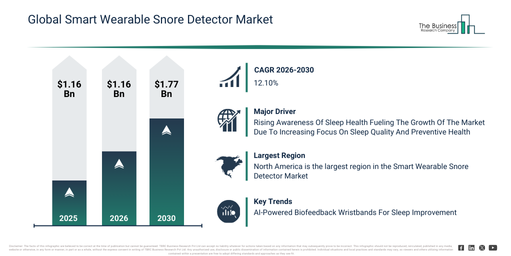
    Looking ahead, the market is forecasted to reach $1.64 billion by 2030, with a CAGR of 12.1%. This future growth will be supported by advancements in AI-driven snore detection algorithms, broader acceptance of wearable health technologies, growing investments in home sleep monitoring, integration with smart home systems, and collaborative efforts between technology and healthcare firms. Key trends expected to shape the market include the expanding use of wearable sleep trackers, integration of snore detection features with mobile apps, heightened awareness of sleep disorders, development of comfortable and non-invasive devices, and growth in sleep clinics and home care services.

    Download A Free Sample Report For Comprehensive Market Insights:

    https://www.thebusinessresearchcompany.com/sample.aspx?id=27420&type=smp

    Rising Awareness of Sleep Health as a Market Growth Catalyst

    Increasing public awareness about the importance of sleep health is a crucial factor propelling the smart wearable snore detector market. People are becoming more conscious of how quality and sufficient sleep impact overall wellness, productivity, and the prevention of chronic diseases such as obesity, diabetes, and cardiovascular conditions.

    Smart wearable snore detectors contribute to this awareness by providing real-time data and insights that help users identify potential sleep problems early. For example, in December 2023, the Sleep Foundation reported that around 37% of adults in the U.S. indicated a decline in sleep quality compared to 28% in previous years. This growing concern about sleep health is driving demand for effective snore detection technologies.

    Smart Wearable Snore Detector Market Segmentation Highlighting Growth Areas

    This market is divided into several key segments for better product and application analysis:

    1) By Product Type: Wristband Snore Detectors, Patch Snore Detectors, Headband Snore Detectors, and Other Product Types

    2) By Technology: Sound-Based, Vibration-Based, Motion Sensor-Based, and Other Technologies

    3) By Distribution Channel: Online Stores, Pharmacies, Specialty Stores, and Other Channels

    4) By Application: Home Care, Sleep Clinics, Hospitals, and Other Applications

    Further subcategories include specialized products such as vibration-based alerts and Bluetooth-enabled wristbands, adhesive chest patches and multi-sensor sleep patches, EEG-based and bone conduction feedback headbands, as well as other types like smart neckbands, in-ear monitors, jaw-support wearables, and smart sleep masks with snore detection.

    Access The Complete Smart Wearable Snore Detector Market Report:

    https://www.thebusinessresearchcompany.com/report/smart-wearable-snore-detector-global-market-report

    Market Trends Influencing Competition in the Smart Wearable Snore Detector Space

    Leading companies in this market are investing heavily in the development of advanced, AI-powered products aimed at improving sleep quality and reducing snoring episodes. Among these innovations are biofeedback-enabled wristbands that use artificial intelligence to monitor bodily signals and gently vibrate to encourage beneficial behavioral changes.

    For instance, in September 2024, Israel-based digital health company AppYea Inc. launched AppySleep, a sophisticated AI-driven wearable wristband designed to detect snoring and abnormal breathing. The device connects to a smartphone app, delivering gentle vibrations to encourage users to change sleep positions, which can improve airflow. Users can customize vibration intensity and receive detailed sleep analytics and long-term progress reports via a personal cloud account.

    Key Players and Competitive Landscape in the Smart Wearable Snore Detector Market

    The market features several prominent companies, including Samsung Electronics Co. Ltd., Koninklijke Philips N.V., Fitbit Inc., Zeus Sleep Inc., Ozlo Inc., Hupnos Inc., Imagimob AB, VVFLY Electronics Co. Ltd., Meditas Ltd., AppYea Inc., Beddr Inc., Shenzhen Xinhui Technology Co. Ltd., Snore Circle, Wellue Health, Go2Silence, Sleepmi, Walkervo, Snooor Ltd., ELBME, and AMAZHEAL. These players continue to innovate and compete by enhancing product features, improving user experience, and expanding distribution channels.

    Regional Market Analysis and Revenue Leadership

    In 2025, North America emerged as the largest regional market for smart wearable snore detectors. However, the Asia-Pacific region is anticipated to show the fastest growth throughout the forecast period. The market study also covers additional regions such as South East Asia, Western Europe, Eastern Europe, South America, the Middle East, and Africa, providing a well-rounded view of global trends and opportunities.

    Get in touch with us:

    The Business Research Company: https://www.thebusinessresearchcompany.com/

    Americas: +1 310-496-7795

    Asia: +44 7882 955267 & +91 8897263534

    Europe: +44 7882 955267

    Email us at: marketing@tbrc.info

    Follow us on:

    LinkedIn: https://in.linkedin.com/company/the-business-research-company

    YouTube: https://www.youtube.com/channel/UC24_fI0rV8cR5DxlCpgmyFQ

    Global Market Model: https://www.thebusinessresearchcompany.com/global-market-model