Category: Medical Equipment

  • Touch Free Sanitizer Stand Market Forecast Signals New Revenue Opportunities Through 2030

    Touch Free Sanitizer Stand Market Forecast Signals New Revenue Opportunities Through 2030

    Enhanced with market attractiveness analysis, total addressable market evaluation, company benchmarking matrices, interactive Excel dashboards, expanded supply chain intelligence, emerging startup coverage, and detailed product insights, The Business Research Company’s 2026 market reports deliver more actionable and strategically valuable research.

    The touch free sanitizer stand market has witnessed remarkable growth recently, fueled by heightened hygiene concerns and technological advancements. With the ongoing emphasis on health and safety, this market is set to continue its upward trajectory, driven by innovations and expanding applications worldwide. Let’s explore its current size, key growth factors, leading players, and emerging trends shaping its future.

    Touch Free Sanitizer Stand Market Size and Growth Forecast Through 2030

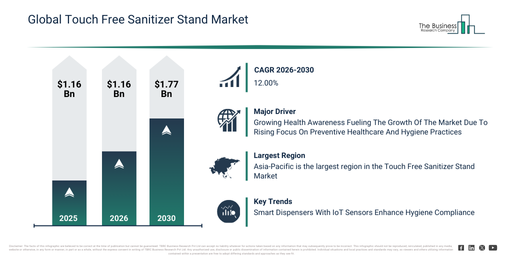
    The market for touch free sanitizer stands has experienced rapid expansion in recent years. It is projected to increase from $1.56 billion in 2025 to $1.75 billion in 2026, growing at a compound annual rate (CAGR) of 12.3%. This rise during the historical period is largely due to heightened hygiene awareness triggered by the pandemic, public health mandates, growing demand for commercial sanitation, widespread adoption of contactless technologies, and strict institutional safety protocols.

    Looking ahead, the market is anticipated to maintain a strong growth pace, reaching $2.75 billion by 2030, with a CAGR of 12.0%. Factors contributing to this surge include integration with smart building systems, a shift toward sustainable materials, expansion within transportation hubs, increased uptake in developing regions, and cost-effective mass deployment. Key trends forecasted to dominate the market include sensor-based automatic dispensers, widespread use in high-traffic public spaces, eco-friendly refillable designs, availability of both battery-powered and mains-powered units, and systems with integrated hygiene monitoring.

    Download A Free Sample Report For Comprehensive Market Insights:

    https://www.thebusinessresearchcompany.com/sample.aspx?id=30419&type=smp

    Health Awareness as a Catalyst in the Touch Free Sanitizer Stand Market

    Rising health consciousness is playing a crucial role in propelling the touch free sanitizer stand market. Health awareness encompasses the level of knowledge individuals possess about health risks, preventive care, and lifestyles that promote overall wellness. This awareness has grown due to the increasing prevalence of lifestyle-related illnesses and an intensified focus on preventive health measures.

    Touch free sanitizer stands support this movement by encouraging hygienic behavior through contactless hand sanitization, thereby minimizing germ transmission risks. They promote frequent use and help maintain safer environments in both public and private settings. For example, in April 2025, the UK’s Office for National Statistics reported that healthcare spending reached approximately $428.33 billion (£317 billion) in 2024, marking a 6.5% rise from 2023. Such data highlights the growing investment in health, which directly supports market expansion.

    Product and Application Segments Defining the Touch Free Sanitizer Stand Market

    This report categorizes the touch free sanitizer stand market across several segments.

    1) Product Type: Automatic and Foot Operated

    2) Material: Metal, Plastic, Stainless Steel, and Others

    3) Mounting Type: Floor Standing, Wall Mounted, Tabletop

    4) Distribution Channel: Online Stores, Supermarkets/Hypermarkets, and Other Channels

    5) Application: Commercial, Residential, Industrial, Healthcare, Educational Institutions, and Various Other Uses

    Further breakdowns include subtypes such as automatic stands featuring infrared motion sensors, ultrasonic presence sensors, timed sensors, proximity sensors with adjustable sensitivity, as well as battery and mains powered units. Foot operated models include pedal-operated floor stands, foot pumps with spring return, foot levers with locking mechanisms, hands-free foot valves, and portable versions.

    Access The Complete Touch Free Sanitizer Stand Market Report:

    https://www.thebusinessresearchcompany.com/report/global-touch-free-sanitizer-stand-market-report

    Innovations and Trends Driving Touch Free Sanitizer Stand Market Growth

    Leading companies in this market are increasingly focused on smart, connected products that leverage Internet of Things (IoT) technology to optimize hygiene management. IoT-enabled systems provide real-time data on dispenser usage and supply levels, enhancing operational efficiency and reducing manual maintenance.

    A notable example is GOJO Industries Inc., which in November 2025 introduced the CX10 Countermount Dispensing System—a compact, intelligent dispenser designed for busy locations such as checkout counters, reception areas, and healthcare stations. It incorporates IoT sensors to monitor usage patterns and send automatic alerts when sanitizer or soap levels run low, ensuring the dispenser remains stocked. This system also offers real-time compliance monitoring, allowing facility managers to track hygiene practices without manual audits.

    Key Players Shaping the Touch Free Sanitizer Stand Market Landscape

    Several prominent companies lead the touch free sanitizer stand market, including GOJO Industries Inc., Ophardt Hygiene GmbH, SVAVO Intelligent Technology Co. Ltd., Hokwang Industries Co. Ltd., Bobrick Washroom Equipment Inc., Rubbermaid Commercial Products LLC, American Specialties Inc., ASI Group, Palmer Fixture Inc., San Jamar Inc., Dolphy Ltd., Toshi Automatic Systems Pvt. Ltd., Euronics Industries Pvt. Ltd., Blue Eagle Safety Products Pvt. Ltd., Udyogi Safety Pvt. Ltd., Centurion Safety Products Ltd., JVD Group, Stern Engineering Ltd., Mediclinics S.A., and Ille Papier-Service GmbH. These companies are instrumental in driving innovation and expanding market reach globally.

    Regional Market Dynamics and Leadership

    In 2025, Asia-Pacific emerged as the largest regional market for touch free sanitizer stands. This region is also expected to be the fastest-growing market moving forward. The market report covers a broad geographical spectrum, including Asia-Pacific, South East Asia, Western Europe, Eastern Europe, North America, South America, the Middle East, and Africa, providing a well-rounded perspective on global market trends and regional opportunities.

    Get in touch with us:

    The Business Research Company: https://www.thebusinessresearchcompany.com/

    Americas: +1 310-496-7795

    Asia: +44 7882 955267 & +91 8897263534

    Europe: +44 7882 955267

    Email us at: marketing@tbrc.info

    Follow us on:

    LinkedIn: https://in.linkedin.com/company/the-business-research-company

    YouTube: https://www.youtube.com/channel/UC24_fI0rV8cR5DxlCpgmyFQ

    Global Market Model: https://www.thebusinessresearchcompany.com/global-market-model
  • Total Ankle Replacement Market Growth Is Accelerating As Industry Transformation Continues

    Total Ankle Replacement Market Growth Is Accelerating As Industry Transformation Continues

    Through market attractiveness analysis, total addressable market evaluation, company benchmarking matrices, interactive Excel dashboards, expanded supply chain intelligence, emerging startup coverage, and detailed product insights, The Business Research Company’s 2026 market reports provide more actionable and strategically valuable research.

    The total ankle replacement market is experiencing notable growth as advancements in medical technology and rising orthopedic needs drive demand. This sector is evolving rapidly, fueled by increasing awareness of joint health, new surgical techniques, and innovative prosthetic designs. Below is a detailed overview of the market size, key factors propelling growth, major players, and emerging trends shaping the future of ankle replacement solutions.

    Steady Growth Trajectory of the Total Ankle Replacement Market

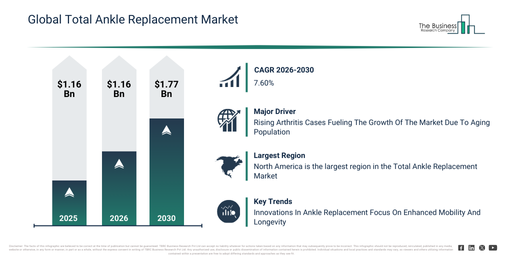
    The total ankle replacement market has seen significant expansion, with its value rising from $0.99 billion in 2025 to $1.06 billion in 2026, reflecting a compound annual growth rate (CAGR) of 7.7%. This growth in the past years can be linked to the limited availability of advanced ankle prosthetics, continued reliance on fixed-bearing systems, traditional anterior surgical methods, a rising number of orthopedic trauma cases, and increased awareness about the benefits of joint replacement procedures. Looking ahead, the market is projected to further grow to $1.43 billion by 2030 at a CAGR of 7.6%. This optimistic forecast is supported by innovations such as bionic ankle replacement systems, the integration of robotics and navigation in total ankle replacement (TAR) surgeries, the rising adoption of minimally invasive and lateral surgical approaches, and a growing population of orthopedic and elderly patients. Additionally, increased emphasis on post-operative rehabilitation and mobility restoration will continue to boost market demand. Key trends anticipated during this period include a surge in minimally invasive surgeries, a preference for mobile-bearing ankle systems, advances in cementless fixation techniques, growth in rehabilitation services, and a rise in ankle arthritis and trauma incidences.

    Download A Free Sample Report For Comprehensive Market Insights:

    https://www.thebusinessresearchcompany.com/sample.aspx?id=24415&type=smp

    Rising Arthritis Cases as a Major Growth Catalyst in the Total Ankle Replacement Market

    The increasing prevalence of arthritis is a significant driver for the total ankle replacement market’s expansion. Arthritis encompasses a range of conditions characterized by joint inflammation, pain, stiffness, and swelling, often resulting in reduced mobility and impaired joint function. The growing aging population contributes to a higher incidence of arthritis, as longer life expectancy leads to more extensive joint wear and degeneration over time. This demographic shift makes older adults increasingly susceptible to arthritis, necessitating interventions like total ankle replacement to alleviate chronic pain and restore joint function. For example, data from July 2025 released by the U.S. National Center for Health Statistics (NCHS) shows that the age-adjusted prevalence of diagnosed arthritis among U.S. adults (aged 18 and above) stood at 18.9% in 2022 and is expected to rise to 21.3% by 2024, according to CDC FastStats. This upward trend in arthritis cases continues to propel the demand for ankle replacement surgeries.

    Key Segments Highlighting Opportunities in the Total Ankle Replacement Market

    This report categorizes the total ankle replacement market into several important segments based on product type, material, surgical approach, and end user. The product types include fixed-bearing total ankle replacement systems, mobile-bearing total ankle replacement systems, and bionic ankle replacement systems. Materials used in these prosthetics consist of metal, plastic, and ceramic. Surgical approaches are divided into anterior, posterior, lateral, and minimally invasive techniques. End users of these products primarily include hospitals, ambulatory surgical centers, orthopedic clinics, and rehabilitation centers. Further sub-segmentation is detailed for each product type: fixed-bearing systems are split into cemented and cementless variants; mobile-bearing systems also include cemented and cementless options; bionic ankle replacements are divided into powered and non-powered systems.

    Access The Complete Total Ankle Replacement Market Report:

    https://www.thebusinessresearchcompany.com/report/total-ankle-replacement-global-market-report

    Innovations and Strategic Trends Defining the Future of the Total Ankle Replacement Market

    Leading companies in the total ankle replacement market are focusing on the development of advanced solutions like mobile-bearing ankle systems, which improve joint stability and enhance patient mobility. These systems feature a bearing surface that moves relative to the tibia, allowing for more natural ankle motion and reducing wear compared to fixed-bearing designs. For instance, in August 2024, Enovis Corporation, a U.S.-based medical technology firm, introduced the Scandinavian Total Ankle Replacement (STAR Ankle) with e+ Polyethylene. This material is engineered to resist oxidation, maintain consistent wear rates, and provide lasting mechanical strength. The non-cemented design offers 225 patient-specific configurations with a single surgical technique, improving surgical flexibility and lessening bone stress. Additionally, the e+ Polyethylene enhances durability and works seamlessly with patient-specific instrumentation (PSI) for more precise surgical planning.

    Prominent Players and Competitive Landscape in the Total Ankle Replacement Market

    The total ankle replacement market features several key players driving innovation and competition. Notable companies include Stryker Corporation, Zimmer Biomet Holdings Inc, Smith and Nephew plc, Enovis Corporation, Wright Medical Group NV, Exactech Inc, Paragon 28 Inc, FH Orthopedics, Vilex LLC, XLO Inc, restor3d Inc, BioPro Inc, MatOrtho Limited, Corin Group PLC, MicroPort Orthopedics Inc, Integra LifeSciences Holdings Corporation, DJO LLC, Allegra Orthopaedics Limited, Orthofix Medical Inc, and LimaCorporate S.p.A. These companies are actively engaged in expanding their product portfolios and advancing ankle replacement technologies to meet growing patient needs.

    Regional Market Dynamics Driving Total Ankle Replacement Adoption

    In 2025, North America held the largest share of the total ankle replacement market, reflecting strong healthcare infrastructure and high adoption rates of advanced technologies. Meanwhile, the Asia-Pacific region is expected to be the fastest-growing market throughout the forecast period, driven by rising healthcare expenditure, increasing awareness about orthopedic treatments, and growing demand from an expanding elderly population. The comprehensive market coverage includes regions such as Asia-Pacific, South East Asia, Western Europe, Eastern Europe, North America, South America, the Middle East, and Africa, providing a global perspective on market trends and growth opportunities.

    Get in touch with us:

    The Business Research Company: https://www.thebusinessresearchcompany.com/

    Americas: +1 310-496-7795

    Asia: +44 7882 955267 & +91 8897263534

    Europe: +44 7882 955267

    Email us at: marketing@tbrc.info

    Follow us on:

    LinkedIn: https://in.linkedin.com/company/the-business-research-company

    YouTube: https://www.youtube.com/channel/UC24_fI0rV8cR5DxlCpgmyFQ

    Global Market Model: https://www.thebusinessresearchcompany.com/global-market-model
  • Topoisomerase I Inhibitors Market Outlook Highlights The Next Major Growth Opportunities

    Topoisomerase I Inhibitors Market Outlook Highlights The Next Major Growth Opportunities

    Delivering more actionable and strategically valuable research, The Business Research Company’s 2026 market reports feature market attractiveness analysis, total addressable market evaluation, company benchmarking matrices, interactive Excel dashboards, expanded supply chain intelligence, emerging startup coverage, and detailed product insights.

    The topoisomerase I inhibitors market has seen significant momentum in recent years, driven by advances in cancer treatment and growing demand for targeted therapies. With innovations in drug development and expanding clinical research, this market is set to continue its upward trajectory. Let’s explore the current market size, key growth drivers, segmentation, emerging trends, leading players, and regional outlook to better understand the opportunities ahead.

    Strong Growth Outlook for the Topoisomerase I Inhibitors Market

    The market for topoisomerase I inhibitors has demonstrated solid expansion, increasing from $5.46 billion in 2025 to an anticipated $5.79 billion in 2026, reflecting a compound annual growth rate (CAGR) of 6.1%. Past growth has been propelled by the limited availability of these inhibitors, a heavy reliance on camptothecin derivatives, a rising prevalence of cancer, increased oncology hospital services, and slow progress in developing non-camptothecin compounds.

    Download A Free Sample Report For Comprehensive Market Insights:

    https://www.thebusinessresearchcompany.com/sample.aspx?id=24414&type=smp

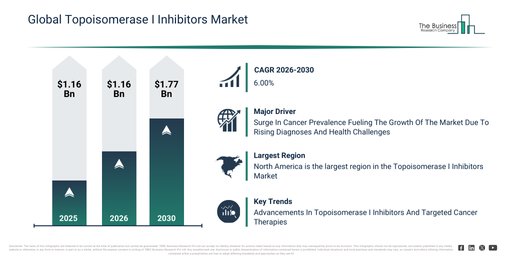
    Looking forward, the market is poised to reach $7.31 billion by 2030, growing at a CAGR of 6.0%. This forecasted growth is expected to be driven by the development of novel non-camptothecin inhibitors such as LMP-400 and indenoisoquinolines, the rise of both oral and injectable formulations, expansion in oncology research and clinical trials, faster regulatory approvals, and the commercialization of new drugs. Additionally, the integration of personalized medicine and targeted therapies will play a pivotal role. Key trends shaping the future market landscape include wider adoption of topoisomerase I inhibitors in cancer treatment, growth in injectable and oral chemotherapy options, heightened clinical research activities, and a stronger focus on tailored cancer therapies. The demand from hospitals and clinics for innovative anticancer agents is also increasing.

    Cancer Prevalence as a Key Driver for Market Expansion

    The rising incidence of cancer worldwide is expected to significantly boost the demand for topoisomerase I inhibitors in the coming years. Cancer encompasses a variety of diseases characterized by uncontrolled cell growth and spread, often leading to severe health consequences and mortality. This increase in cancer cases is largely linked to lifestyle-related risk factors such as unhealthy diets, insufficient physical activity, and tobacco use.

    Access The Complete Topoisomerase I Inhibitors Market Report:

    https://www.thebusinessresearchcompany.com/report/topoisomerase-i-inhibitors-global-market-report

    Topoisomerase I inhibitors play a critical role in cancer therapy by disrupting the DNA replication process in cancer cells, causing DNA damage that halts cell division and induces cell death. For example, in February 2024, the World Health Organization, a Switzerland-based intergovernmental body, projected that by 2050, there will be over 35 million new cancer cases—a 77% increase compared to the 20 million cases predicted for 2022. This sharp rise underscores the growing need for effective cancer treatments, which, in turn, propels the expansion of the topoisomerase I inhibitors market.

    Topoisomerase I Inhibitors Market Segmentation Overview

    The topoisomerase I inhibitors market is classified into several key segments to better understand the landscape:

    1) By Type: Camptothecin Derivatives and Non-Camptothecin inhibitors

    2) By Route of Administration: Oral, Injectable, and Other Routes

    3) By Application: Hospitals, Clinics, and Other uses

    Further breakdown of the type segment includes subcategories like Irinotecan and Topotecan under camptothecin derivatives, and LMP-400 along with indenoisoquinolines under non-camptothecin inhibitors.

    Innovations Driving Transformation in the Topoisomerase I Inhibitors Market

    Leading companies in this space are focusing on developing advanced therapies such as antibody-drug conjugates (ADCs) to address drug resistance by harnessing the precision of antibodies. ADCs are targeted treatments that combine antibodies with cytotoxic drugs, delivering these agents directly to cancer cells and reducing harm to healthy tissue.

    For instance, in July 2024, Canadian biotechnology firm Zymeworks Inc. announced FDA approval of an investigational new drug application for ZW191. This novel ADC targets the folate receptor-alpha (FRα) and delivers a topoisomerase I inhibitor payload. ZW191 is designed for tumors expressing FRα, including ovarian and other gynecological cancers, as well as non-small cell lung cancer (NSCLC). The drug-antibody ratio was optimized to balance safety and effectiveness, aiming to improve tolerability and therapeutic outcomes.

    Key Players Leading the Topoisomerase I Inhibitors Market

    The competitive landscape features several prominent companies driving innovation and growth, including Pfizer Inc, AstraZeneca PLC, Novartis AG, Merck KGaA, Daiichi Sankyo Company Limited, Ipsen Pharma SAS, Fresenius Kabi AG, Debiopharm Group SA, Sigma Tau Industrie Farmaceutiche Riunite SPA, Sagent Pharmaceuticals Inc, Gibson Oncology LLC, TopoGEN Inc, DualityBio Inc, Iksuda Therapeutics Ltd, Nektar Therapeutics, Exelixis Inc, BeiGene Ltd, Takeda Pharmaceutical Company Limited, Amgen Inc, and Hutchmed China Limited.

    Regional Insights Highlighting Market Revenue Leaders and Growth Areas

    In 2025, North America held the largest share of the topoisomerase I inhibitors market. However, the Asia-Pacific region is anticipated to experience the fastest growth during the forecast period. The comprehensive market analysis encompasses key regions including Asia-Pacific, South East Asia, Western Europe, Eastern Europe, North America, South America, the Middle East, and Africa, providing a global perspective on market dynamics and opportunities.

    Get in touch with us:

    The Business Research Company: https://www.thebusinessresearchcompany.com/

    Americas: +1 310-496-7795

    Asia: +44 7882 955267 & +91 8897263534

    Europe: +44 7882 955267

    Email us at: marketing@tbrc.info

    Follow us on:

    LinkedIn: https://in.linkedin.com/company/the-business-research-company

    YouTube: https://www.youtube.com/channel/UC24_fI0rV8cR5DxlCpgmyFQ

    Global Market Model: https://www.thebusinessresearchcompany.com/global-market-model
  • Topical Hemostat Market Trends And Growth Drivers Point To Strong Future Potential

    Topical Hemostat Market Trends And Growth Drivers Point To Strong Future Potential

    Enhanced with market attractiveness analysis, total addressable market evaluation, company benchmarking matrices, interactive Excel dashboards, expanded supply chain intelligence, emerging startup coverage, and detailed product insights, The Business Research Company’s 2026 market reports deliver more actionable and strategically valuable research.

    The topical hemostat market is experiencing significant momentum as demand for effective bleeding control in surgeries continues to rise. Growing surgical volumes and technological advancements are key contributors to this market’s development. Let’s explore the market size, influential factors, leading companies, and emerging trends shaping its future trajectory.

    Market Size and Projected Growth of the Topical Hemostat Market

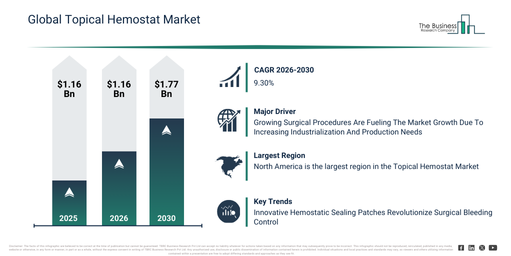
    The topical hemostat market has seen robust expansion recently. It is expected to increase from $5.45 billion in 2025 to $5.97 billion in 2026, reflecting a compound annual growth rate (CAGR) of 9.5%. This growth has been driven by the rising number of surgical procedures, demand for fast-acting hemostatic solutions, improvements in biomaterial technology, expanded hospital surgical capacities, and new regulatory approvals for hemostatic agents. Looking ahead, the market is projected to reach $8.53 billion by 2030, growing at a CAGR of 9.3%. Factors supporting this forecast include the adoption of bioactive and combination hemostats, integration with AI and digital surgical platforms, growth in ambulatory surgical centers, patient-tailored hemostatic treatments, and infrastructure development in emerging surgical markets. Anticipated trends involve minimally invasive hemostasis techniques, next-generation bioactive products, personalized hemostatic options, increased use in emergency and trauma care, and the rise of outpatient surgery procedures.

    Download A Free Sample Report For Comprehensive Market Insights:

    https://www.thebusinessresearchcompany.com/sample.aspx?id=25926&type=smp

    Increasing Surgical Procedures as a Key Growth Driver

    The rising number of surgeries worldwide is a primary force behind the topical hemostat market’s expansion. Surgical interventions encompass manual techniques and specialized instruments used to diagnose, treat, or repair various conditions. The global aging population contributes significantly to the increase in surgical cases, as older individuals often require surgery to manage chronic diseases and improve quality of life. Topical hemostatic agents assist surgeons by controlling bleeding rapidly during operations, improving visibility, reducing blood loss, and lowering postoperative complication risks. For example, Intuitive Surgical Inc., a US medical device firm, reported that outside the US general surgery procedures grew by approximately 35% in 2024, following a 42% rise in 2023. Colorectal surgeries accounted for the majority of this growth. This trend underlines how the increasing surgical volume is propelling demand for topical hemostats.

    Topical Hemostat Market’s Extensive Segmentation and Revenue Contributors

    This market is divided into several key segments to better understand revenue sources:

    1) By Type: including Fibrin, Thrombin, Cellulose, Collagen, Gelatin, Adhesives, and Other Types

    2) By Distribution Channel: covering Direct Sales, Distributors, Hospital Pharmacies, and Online platforms

    3) By Application: encompassing General Surgery, Neurosurgery, Vascular Surgery, Cardiovascular Surgery, and Other uses

    4) By End-Use: consisting of Hospitals, Ambulatory Surgical Centers, and other facilities

    Further breakdowns include subcategories such as fibrin sealants and patches, human and bovine thrombin, oxidized cellulose forms, microfibrillar collagen, gelatin sponges and powders, various adhesive types like cyanoacrylate-based and polyethylene glycol sealants, along with other specialized hemostats such as polysaccharide and chitosan-based products.

    Access The Complete Topical Hemostat Market Report:

    https://www.thebusinessresearchcompany.com/report/topical-hemostat-global-market-report

    Innovations and Trends Enhancing Market Growth Prospects

    Leading companies in the topical hemostat industry are prioritizing the development of novel products to improve surgical bleeding control. One notable advancement is hemostatic sealing patches, designed to provide rapid and targeted hemostasis by adhering to tissues and promoting clot formation during surgery. For instance, in November 2023, Ethicon, Inc., a US surgical technology company, launched the ETHIZIA Hemostatic Sealing Patch. This synthetic polymer-based device is clinically validated to halt bleeding on internal organs swiftly—within 30 seconds for 80% of patients in trials—outperforming established fibrin sealants by six times. Its unique design enables versatility, allowing trimming, rolling, or shaping for both open and minimally invasive surgeries. The patch’s mechanism involves dehydrating blood and accelerating coagulation through a gelatin carrier infused with polyoxazoline polymer that forms a strong adhesive hydrogel bonding to tissue.

    Dominant Players and Strategic Positioning in the Topical Hemostat Market

    Several prominent companies are steering the topical hemostat market through innovation and strategic positioning. These include Pfizer Inc, Johnson And Johnson, Medtronic Plc, Medline Industries, Stryker Corporation, Baxter International, Meril Life Sciences Pvt Ltd, Teleflex Incorporated, Samyang Holdings, Integra LifeSciences, B Braun SE, Advanced Medical Solutions Group Plc, Axio Biosolutions, Marine Polymer Technologies Inc, Hangzhou Singclean Medical Products, Neo Modulus Medical Sci-Tech, Tricol Biomedical, HemCon Medical Technologies Inc, Hemostasis LLC, KATSAN Medical Devices, Zhejiang Perfectseal New Materials, Z Medica LLC, Arch Therapeutics Inc, and Medcura Inc. These companies are actively investing in R&D to deliver cutting-edge hemostatic solutions and expand their market reach globally.

    Regional Market Overview and Growth Opportunities

    In 2025, North America held the largest share of the topical hemostat market. However, the Asia-Pacific region is expected to be the fastest-growing market throughout the forecast period. The geographic coverage of this market analysis includes Asia-Pacific, South East Asia, Western Europe, Eastern Europe, North America, South America, the Middle East, and Africa. Emerging markets in Asia-Pacific are benefiting from expanded surgical infrastructure and increasing healthcare investments, creating substantial opportunities for market players.

    Get in touch with us:

    The Business Research Company: https://www.thebusinessresearchcompany.com/

    Americas: +1 310-496-7795

    Asia: +44 7882 955267 & +91 8897263534

    Europe: +44 7882 955267

    Email us at: marketing@tbrc.info

    Follow us on:

    LinkedIn: https://in.linkedin.com/company/the-business-research-company

    YouTube: https://www.youtube.com/channel/UC24_fI0rV8cR5DxlCpgmyFQ

    Global Market Model: https://www.thebusinessresearchcompany.com/global-market-model
  • Topical Drug Delivery Market Expansion Is Reshaping Competitive Dynamics Across The Industry

    Topical Drug Delivery Market Expansion Is Reshaping Competitive Dynamics Across The Industry

    Through market attractiveness analysis, total addressable market evaluation, company benchmarking matrices, interactive Excel dashboards, expanded supply chain intelligence, emerging startup coverage, and detailed product insights, The Business Research Company’s 2026 market reports provide more actionable and strategically valuable research.

    The topical drug delivery market has been experiencing significant expansion recently, driven by advances in pharmaceutical technologies and changing healthcare needs. This sector is poised for continued growth as more patients and providers turn to non-invasive and targeted treatment options. The following analysis explores the market size, growth drivers, segmentation, emerging trends, key players, and regional dynamics shaping the future of topical drug delivery.

    Steady Market Growth and Size Forecast in the Topical Drug Delivery Market

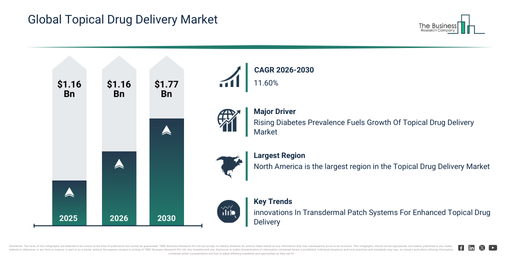
    The topical drug delivery market has witnessed rapid growth in recent years, with projections estimating an increase from $177.82 billion in 2025 to $198.71 billion in 2026. This represents a compound annual growth rate (CAGR) of 11.8%. Historical growth has been fueled by factors such as a rising incidence of dermatological disorders, growing use of topical treatments for chronic diseases, expansion in pharmaceutical manufacturing capabilities, a patient preference shift toward non-invasive therapies, and the availability of a wide variety of formulation technologies.

    Download A Free Sample Report For Comprehensive Market Insights:

    https://www.thebusinessresearchcompany.com/sample.aspx?id=7564&type=smp

    Looking ahead, the market is expected to expand further, reaching $308.14 billion by 2030 with a CAGR of 11.6%. This forecasted surge is supported by increasing investments in advanced transdermal platforms, heightened demand for precise drug delivery systems, broader adoption of home healthcare, an emphasis on improving drug bioavailability, and ongoing development of combination topical therapies. Trends likely to shape the market include a rising acceptance of transdermal drug delivery systems, greater usage of semi-solid formulations, expanding application of microneedle technologies, growth in controlled-release topical products, and a stronger focus on patient-centric delivery solutions.

    Growing Diabetes Prevalence as a Key Driver of Market Expansion

    One of the primary factors propelling the topical drug delivery market is the increasing prevalence of diabetes worldwide. Diabetes is a chronic condition characterized by impaired insulin production or utilization, leading to elevated blood sugar levels and potential health complications if not managed properly. Unhealthy dietary habits, such as high consumption of sugars and processed foods, contribute significantly to the rising incidence of this disease. Topical drug delivery offers a promising approach to diabetes management by enabling medications to be absorbed directly through the skin, helping to control blood glucose levels while reducing systemic side effects.

    Access The Complete Topical Drug Delivery Market Report:

    https://www.thebusinessresearchcompany.com/report/topical-drug-delivery-global-market-report

    For example, according to a 2025 report from the International Diabetes Federation, approximately 589 million adults aged 20 to 79 are living with diabetes globally. This includes over 9.5 million individuals with type 1 diabetes, among whom nearly 1.9 million are children and adolescents under 20 years old. Projections indicate that by 2050, this number could increase to 853 million. In 2024 alone, more than 3.4 million adults in this age group died due to diabetes-related causes. These statistics highlight the growing impact of diabetes on global health and its role in driving demand for improved topical drug delivery solutions.

    Topical Drug Delivery Market Segmentation Across Products and Users

    This market is categorized comprehensively by product type, administration route, and end users. The product types include semi-solid formulations such as creams, ointments, gels, and pastes; liquid formulations including solutions, suspensions, emulsions, and lotions; solid formulations like powders, granules, and solid sticks; as well as transdermal products featuring patches, microneedle systems, and gels.

    Regarding routes of administration, the market covers dermal, ophthalmic, rectal, vaginal, and nasal drug delivery pathways. End users in this sector comprise hospitals, clinics, home healthcare providers, diagnostic centers, and other healthcare facilities. This structured segmentation provides insight into how diverse applications and delivery methods are driving innovation and specialization within the topical drug delivery space.

    Innovations and Industry Trends Reshaping Demand in Topical Drug Delivery

    Key players in the topical drug delivery market are increasingly focusing on developing cutting-edge technologies to meet the growing need for patient-friendly, non-invasive, and long-lasting therapies. A prominent example is the advancement of transdermal patch systems that utilize high-adhesion, solvent-free adhesives to provide sustained drug release while minimizing skin irritation and residue.

    In March 2024, Medherant, a pharmaceutical technology firm based in the UK, announced a collaboration with Bayer to develop a transdermal patch for an already approved oral medication, using Medherant’s proprietary TEPI Patch technology. This innovative patch incorporates a unique pressure-sensitive adhesive that maintains strong skin adhesion even when wet, leaves no dark residue after removal, and can carry high drug loads—up to approximately 50% by weight—for prolonged delivery. The technology also allows for customized release profiles by including permeation enhancers or excipients, making it suitable for therapies such as hormone treatment. Medherant’s leading candidate, a testosterone TEPI Patch designed for post-menopausal women, recently showed promising results in Phase 1 clinical trials regarding skin delivery and tolerability.

    Key Competitors Leading the Topical Drug Delivery Market

    The competitive landscape of the topical drug delivery market includes several major pharmaceutical companies such as Glenmark Pharmaceuticals Ltd., Galderma SA, Johnson & Johnson Private Limited, GlaxoSmithKline PLC., Bausch Health Companies Inc., Novartis AG, Merck & Co., Hisamitsu Pharmaceuticals, Bayer AG, Cipla Limited, Viatris Inc., 3M Company, Crescita Therapeutics Inc., Boehringer Ingelheim International GmbH, Pfizer Inc., Teva Pharmaceuticals Industries Ltd., Bristol Myers Squibb, Lavipharm SA, AbbVie Inc., CMP Pharma Inc., Encore Dermatology Inc., Rusan Pharma Ltd., LEO Pharma A/S, Almirall S.A., Sun Pharmaceutical Industries Ltd., Fougera Pharmaceuticals Inc., Perrigo Company plc, Taro Pharmaceutical Industries Ltd., and MedPharm Ltd. These companies invest heavily in research and development to introduce innovative topical drug delivery systems and strengthen their market positions.

    Regional Dynamics and Market Growth Outlook

    In 2025, North America held the largest share of the topical drug delivery market, reflecting strong healthcare infrastructure and high adoption of advanced drug delivery technologies in the region. Meanwhile, the Asia-Pacific region is expected to be the fastest-growing market during the forecast period, driven by increasing healthcare spending, rising prevalence of chronic diseases, and expanding pharmaceutical manufacturing capabilities. Other regions analyzed include South East Asia, Western Europe, Eastern Europe, South America, the Middle East, and Africa, each contributing uniquely to the global market’s evolution.

    Get in touch with us:

    The Business Research Company: https://www.thebusinessresearchcompany.com/

    Americas: +1 310-496-7795

    Asia: +44 7882 955267 & +91 8897263534

    Europe: +44 7882 955267

    Email us at: marketing@tbrc.info

    Follow us on:

    LinkedIn: https://in.linkedin.com/company/the-business-research-company

    YouTube: https://www.youtube.com/channel/UC24_fI0rV8cR5DxlCpgmyFQ

    Global Market Model: https://www.thebusinessresearchcompany.com/global-market-model
  • Topical Absorbable Hemostats Market Forecast Reveals Where Future Industry Value Will Be Created

    Topical Absorbable Hemostats Market Forecast Reveals Where Future Industry Value Will Be Created

    Delivering more actionable and strategically valuable research, The Business Research Company’s 2026 market reports feature market attractiveness analysis, total addressable market evaluation, company benchmarking matrices, interactive Excel dashboards, expanded supply chain intelligence, emerging startup coverage, and detailed product insights.

    The topical absorbable hemostats market is experiencing significant growth as advancements in surgical procedures and increasing healthcare demands continue to unfold. This sector is evolving rapidly due to technological innovations, demographic shifts, and a growing focus on patient safety, offering promising opportunities for stakeholders across the globe. Let’s explore the current market size, key growth factors, segmentation, innovation trends, leading companies, and regional insights shaping this industry’s future.

    Market Size Expansion and Forecast in the Topical Absorbable Hemostats Market

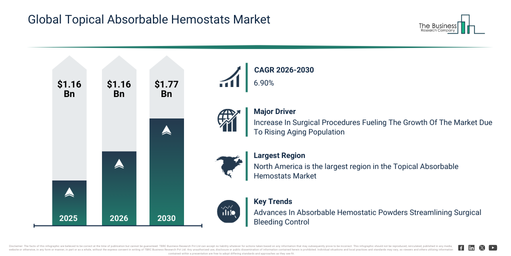
    The market for topical absorbable hemostats has witnessed a robust expansion in recent years. It is projected to increase from $2.17 billion in 2025 to $2.32 billion in 2026, reflecting a compound annual growth rate (CAGR) of 6.9%. This historical growth has been driven by a rise in orthopedic and cardiothoracic surgeries, widespread use of traditional hemostats, improvements in hospital infrastructure within developed regions, prevalence of trauma and bleeding disorders, and growing awareness regarding surgical safety protocols. Looking ahead, the market size is forecasted to reach $3.03 billion by 2030, maintaining the same CAGR of 6.9%. Factors contributing to this anticipated growth include innovations in absorbable hemostatic materials, the increasing number of minimally invasive surgeries, expansion of ambulatory surgical centers, an aging population, and heightened demand for faster recovery times and shorter hospital stays. Notable trends during this period encompass the adoption of minimally invasive procedures, the rising volume of surgical interventions, increased emphasis on patient safety and blood loss reduction, growth of ambulatory surgical facilities, and the development of biocompatible and quickly absorbing hemostatic products.

    Download A Free Sample Report For Comprehensive Market Insights:

    https://www.thebusinessresearchcompany.com/sample.aspx?id=25924&type=smp

    Surgical Procedure Growth as a Catalyst for the Topical Absorbable Hemostats Market

    A primary factor driving the expansion of the topical absorbable hemostats market is the rising number of surgical operations worldwide. Surgical procedures involve medically performed interventions that entail incisions or manipulation of body tissues to diagnose, treat, or improve health outcomes. This increase is largely due to the growing elderly population, who are more prone to chronic diseases and degenerative conditions requiring surgical intervention. Topical absorbable hemostats are favored in surgeries because they effectively control bleeding rapidly and do not need to be removed, which helps reduce operation durations and lowers the risk of complications.

    Supporting this growth, in June 2024, the International Society of Aesthetic Plastic Surgery reported that aesthetic procedures reached nearly 35 million in 2023, marking a 3.4% increase to 34.9 million total surgical and non-surgical procedures. This upward trend in surgical activity further fuels demand for topical absorbable hemostats, highlighting their critical role in modern surgical care.

    Access The Complete Topical Absorbable Hemostats Market Report:

    https://www.thebusinessresearchcompany.com/report/topical-absorbable-hemostats-global-market-report

    Market Segmentation and Key Revenue Drivers in the Topical Absorbable Hemostats Industry

    This report segments the topical absorbable hemostats market across various categories to provide a detailed overview:

    1) By Type: Gelatin-Based Hemostats, Collagen-Based Hemostats, Fibrin-Based Hemostats, Cellulose-Based Hemostats, and Other Types

    2) By Delivery Method: Surgical Sprays, Pads and Gauzes, Foams and Films, Injectable Solutions

    3) By Application: Orthopedic Surgery, Cardiothoracic Surgery, General Surgery, Neurosurgery, Urology, and Gynecological Surgery

    4) By End-User: Hospitals, Ambulatory Surgical Centers (ASCs), Specialty Clinics, Research Institutions

    Further subcategories include specific forms within each type, such as gelatin sponges and powders, collagen films and pads, fibrin sealant sprays and glues, cellulose meshes and powders, along with other types like chitosan-based and synthetic polymer-based hemostats. This segmentation helps identify targeted growth areas and informs development strategies for manufacturers.

    Innovations and Technological Advances Driving the Topical Absorbable Hemostats Market

    Leading companies in this market are actively investing in the development of advanced products to enhance bleeding management during surgeries. One significant innovation is absorbable hemostatic powders, which provide quick bleeding control, especially in complex or irregular wound sites, without the need for product removal. This reduces infection risks and simplifies postoperative care.

    For instance, in July 2023, Baxter International introduced PERCLOT, an absorbable hemostatic powder designed to offer surgeons a comprehensive range of active and passive bleeding control solutions. The product features specially engineered granules that rapidly absorb moisture, forming an adhesive gel that seals tissue surfaces. This gel concentrates platelets, red blood cells, and clotting factors like thrombin and fibrinogen, accelerating the body’s natural coagulation process. Reliable control of intraoperative bleeding with PERCLOT can decrease blood transfusion requirements, minimize major complications, and ultimately reduce overall treatment costs.

    Key Industry Players Leading Competition in the Topical Absorbable Hemostats Market

    Several prominent companies dominate the competitive landscape of the topical absorbable hemostats market, including:

    Johnson And Johnson Services Inc, Baxter International Inc, Integra LifeSciences Holdings Corp, Teleflex Inc, Gelita Medical, Advanced Medical Solutions Group Plc, 3D Matrix Ltd, Advanced Biotech Products Pvt Ltd, Curasan AG, Hemostasis LLC, Medcura Inc, Endomedix Incorporated, BioCer Entwicklungs GmbH, Starch Medical Inc, Arch Therapeutics Inc, Cura Medical BV, Z Medica LLC, Marine Polymer Technologies Inc, Ferrosan Medical Devices, Pfizer Hospital Products, and Ethicon Biosurgery.

    These companies are crucial in driving innovation, expanding market reach, and shaping industry standards.

    Regional Market Leadership and Growth Forecast

    In 2025, North America held the largest share of the topical absorbable hemostats market, reflecting the region’s advanced healthcare infrastructure and high adoption rates of surgical innovations. Meanwhile, the Asia-Pacific region is expected to experience the fastest growth during the forecast period due to rising healthcare investments, increasing surgical volumes, and expanding medical infrastructure across emerging economies. The market report covers an extensive range of regions including Asia-Pacific, South East Asia, Western Europe, Eastern Europe, North America, South America, the Middle East, and Africa, offering a comprehensive global perspective on market trends and opportunities.

    Get in touch with us:

    The Business Research Company: https://www.thebusinessresearchcompany.com/

    Americas: +1 310-496-7795

    Asia: +44 7882 955267 & +91 8897263534

    Europe: +44 7882 955267

    Email us at: marketing@tbrc.info

    Follow us on:

    LinkedIn: https://in.linkedin.com/company/the-business-research-company

    YouTube: https://www.youtube.com/channel/UC24_fI0rV8cR5DxlCpgmyFQ

    Global Market Model: https://www.thebusinessresearchcompany.com/global-market-model
  • Tooth Filling Materials Market Growth Through 2030 Creates New Strategic Opportunities

    Tooth Filling Materials Market Growth Through 2030 Creates New Strategic Opportunities

    Enhanced with market attractiveness analysis, total addressable market evaluation, company benchmarking matrices, interactive Excel dashboards, expanded supply chain intelligence, emerging startup coverage, and detailed product insights, The Business Research Company’s 2026 market reports deliver more actionable and strategically valuable research.

    The tooth filling materials industry has been steadily advancing, driven by rising dental health concerns and evolving treatment preferences worldwide. As the demand for restorative dental solutions grows, this market shows promising opportunities, shaped by innovation and increasing patient awareness. Below is a detailed examination of the current market status, growth drivers, key players, trends, and regional dynamics.

    Market Size and Growth Trajectory of the Tooth Filling Materials Market

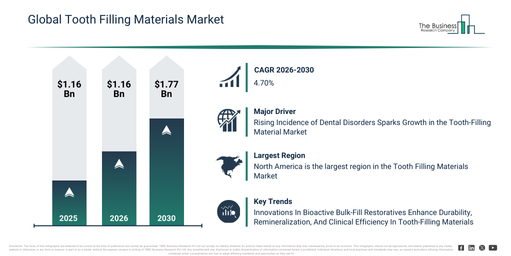
    The tooth filling materials market has experienced consistent growth in recent years. It is projected to increase from $1.92 billion in 2025 to $2.01 billion in 2026, representing a compound annual growth rate (CAGR) of 4.8%. This historical growth is mainly fueled by the widespread occurrence of dental caries and tooth decay globally, the extensive clinical use of amalgam and composite filling materials, an uptick in restorative dental procedures in hospitals and clinics, greater awareness around oral hygiene and cavity prevention, as well as the availability of various filling materials across different price ranges.

    Download A Free Sample Report For Comprehensive Market Insights:

    https://www.thebusinessresearchcompany.com/sample.aspx?id=13546&type=smp

    Looking ahead, the market is set to continue its upward trajectory, reaching $2.42 billion by 2030 with a CAGR of 4.7%. This upcoming growth phase will be supported by increasing demand for aesthetically pleasing tooth-colored fillings, a rising movement toward mercury-free and bioactive dental restorative options, the adoption of cutting-edge bonding and adhesion technologies, growth in indirect restorations and multi-layer filling methods, and expanding access to dental care in emerging regions. Key trends in the forecast period include a shift toward composite resin and glass ionomer fillings, wider use of minimally invasive restorative techniques, growing popularity of multi-material filling systems to boost durability and tooth preservation, and a stronger preference for mercury-free, biocompatible alternatives in clinical practice.

    Factors Driving the Expansion of the Tooth Filling Materials Market

    One of the primary forces propelling this market is the high prevalence of dental disorders worldwide. Conditions affecting the teeth, gums, jaw, and surrounding oral structures—including tooth decay, gum disease, and malocclusion—create a substantial need for restorative dental treatments in which filling materials play a crucial role by repairing minor fractures or decay.

    Access The Complete Tooth Filling Materials Market Report:

    https://www.thebusinessresearchcompany.com/report/tooth-filling-materials-global-market-report

    For example, data from the National Library of Medicine in September 2023 highlights that the older adult population in the US suffering from periodontal disease is expected to increase by 54.57% by 2050. Similarly, the number of older adults with carious teeth is projected to rise by 62.06% within the same timeframe. These demographic trends underscore the increasing demand for tooth filling materials as dental health challenges grow more widespread.

    Detailed Segmentation of the Tooth Filling Materials Market

    The report categorizes the tooth filling materials market into several segments to highlight growth areas:

    1) By Product Type:

    – Composite Resin

    – Silver Amalgam

    – Glass Ionomer

    – Gold Fillings

    – Other Products

    2) By Filling Type:

    – Direct

    – Indirect

    3) By End Use:

    – Hospitals

    – Dental Clinics

    – Other End Uses

    Further sub-classifications include:

    – Composite Resin: Light-Cured and Dual-Cured Composite Resins

    – Silver Amalgam: Dental Amalgam Alloy and Mercury-Based Amalgam

    – Glass Ionomer: Resin-Modified and Conventional Glass Ionomers

    – Gold Fillings: Cast and Preformed Gold Fillings

    – Other Products: Resin Ionomer and Ceramic Fillings

    Emerging Trends and Innovations Influencing the Tooth Filling Materials Market

    Leading companies in this sector are focusing on developing advanced restorative materials that enhance long-term performance while supporting tooth health. A notable innovation is bioactive bulk-fill restoratives, designed to release beneficial ions, promote remineralization, resist recurring decay, and allow single-step bulk placement without compromising strength or appearance.

    For instance, in December 2024, Pulpdent Corporation introduced ACTIVA BioACTIVE Bulk Flow, a dual-cure bioactive bulk-fill restorative offering unlimited depth of cure. This product incorporates a stress-reducing monomer to minimize shrinkage during polymerization and features universal shade matching to improve esthetics and remineralization. Such advancements highlight the market’s move toward technologically enhanced materials that improve clinical outcomes.

    Top Companies Making an Impact in the Tooth Filling Materials Market

    Key players in the tooth filling materials market include:

    3M Corporation, Dentsply Sirona, Kerr Corporation, Ultradent Products Inc., Ivoclar Vivadent AG, Septodont Inc., Shofu Inc., Pentron Clinical Technologies LLC, SDI Limited, DenMat Holdings LLC, GC America Inc., Coltene Group, VOCO GmbH, Zest Dental Solutions, Angelus Indústria de Produtos Odontológicos S/A, Premier Dental Products Company, Centrix Inc., BISCO Dental Products Inc., Vista Dental Products, Parkell Inc., DMG America LLC, Kuraray Noritake Dental Inc., Cosmedent Inc., and Tokuyama Dental America Inc.

    Regional Market Analysis Highlighting Leading Areas by Revenue

    In 2025, North America held the largest share of the tooth filling materials market. Meanwhile, the Asia-Pacific region is projected to experience the fastest growth during the forecast period. The market report covers significant regions, including Asia-Pacific, South East Asia, Western Europe, Eastern Europe, North America, South America, the Middle East, and Africa, providing a comprehensive view of global market trends.

    Get in touch with us:

    The Business Research Company: https://www.thebusinessresearchcompany.com/

    Americas: +1 310-496-7795

    Asia: +44 7882 955267 & +91 8897263534

    Europe: +44 7882 955267

    Email us at: marketing@tbrc.info

    Follow us on:

    LinkedIn: https://in.linkedin.com/company/the-business-research-company

    YouTube: https://www.youtube.com/channel/UC24_fI0rV8cR5DxlCpgmyFQ

    Global Market Model: https://www.thebusinessresearchcompany.com/global-market-model
  • Tissue Microarray Market Size Projected To Increase From $14.67 Billion To $23.6 Billion During The Forecast Period

    Tissue Microarray Market Size Projected To Increase From $14.67 Billion To $23.6 Billion During The Forecast Period

    Through market attractiveness analysis, total addressable market evaluation, company benchmarking matrices, interactive Excel dashboards, expanded supply chain intelligence, emerging startup coverage, and detailed product insights, The Business Research Company’s 2026 market reports provide more actionable and strategically valuable research.

    The tissue microarray sector has experienced swift expansion in recent years, driven by advancements in cancer research and diagnostic technologies. As the demand for more precise and efficient tissue analysis grows, this market is set to continue its strong upward trajectory. Below is an overview of the current market status, main growth drivers, segment breakdowns, major trends, competitive landscape, and regional outlook.

    Rapid Expansion and Future Outlook of the Tissue Microarray Market

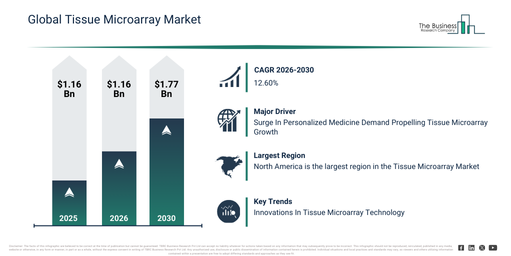
    The tissue microarray market has demonstrated significant growth recently, with its size expected to increase from $13.11 billion in 2025 to $14.68 billion in 2026, reflecting a compound annual growth rate (CAGR) of 12.0%. This past growth stems from factors such as rising cancer research activities, broader use of immunohistochemistry techniques, growing academic pathology research, increased demand for biomarker validation tools, and the widespread availability of paraffin-embedded tissue samples. Looking ahead, the market is predicted to surge further, reaching $23.61 billion by 2030, with a slightly higher CAGR of 12.6%. The forecasted growth is largely supported by greater investment in precision oncology, wider adoption of digital pathology solutions, expansion in translational research initiatives, rising demand for multi-omics analysis, and increased utilization of tissue microarrays in drug discovery. Key trends shaping the market include the adoption of high-throughput tissue analysis platforms, multiplex immunohistochemistry, standardized tissue arrays, automated microarray construction, and integration with molecular diagnostics.

    Download A Free Sample Report For Comprehensive Market Insights:

    https://www.thebusinessresearchcompany.com/sample.aspx?id=12236&type=smp

    How the Demand for Personalized Medicine is Fueling Tissue Microarray Growth

    One of the primary forces propelling the tissue microarray market is the growing emphasis on personalized medicine. This approach customizes medical treatments based on individual patient characteristics, making healthcare more targeted and effective. Tissue microarrays play a crucial role here by enabling rapid evaluation of multiple tissue samples simultaneously, which helps identify biomarkers essential for tailored therapies. To illustrate this trend, in February 2024, the Personalized Medicine Coalition—a US-based nonprofit—reported that the USFDA approved 16 new personalized treatments for rare diseases in 2023, a notable rise from just 6 in 2022. Such developments clearly indicate how the expanding personalized medicine landscape is boosting demand for tissue microarray technologies.

    Segment Overview and Strategic Market Opportunities in Tissue Microarrays

    This report categorizes the tissue microarray market into several key segments:

    1) By Type: Immunohistochemistry, Fluorescent In Situ Hybridization (FISH), Frozen Tissue Array, Other Types

    2) By Technology: Immunohistochemistry (IHC)-Based Detection, In Situ Hybridization (ISH) Technologies, Digital Pathology and Image Analysis, Tissue Microarray Construction Technologies, Signal Detection and Visualization Technologies

    3) By Application: Oncology Research and Biomarker Validation, Drug Discovery and Development, Translational and Clinical Research, Protein Expression and Localization Analysis, Gene and RNA Expression Analysis (Tissue-Based), Comparative Pathology and Toxicology Studies

    4) By End-User: Pharmaceutical and Biotechnological Companies, Research Organizations, Hospitals

    Further subcategories include:

    – Immunohistochemistry: Automated, Manual, Multiplex

    – Fluorescent In Situ Hybridization: Single-Color, Multi-Color, DNA FISH

    – Frozen Tissue Array: Tissue Microarray from Frozen Samples, Snap-Frozen Tissue Array

    – Other Types: RNA In Situ Hybridization, Paraffin-Embedded Tissue Array

    This segmentation highlights diverse market applications and technological approaches, offering strategic avenues for growth and specialization.

    Access The Complete Tissue Microarray Market Report:

    https://www.thebusinessresearchcompany.com/report/tissue-microarray-global-market-report

    Industry Trends Driving Innovation and Growth in Tissue Microarrays

    Leading players in the tissue microarray space are prioritizing the development of advanced platforms that enhance precision and throughput in tissue analysis. These microarray platforms enable the simultaneous examination of multiple genes or biomolecules on a compact surface, facilitating detailed genetic and expression studies. For example, in June 2023, MARGenomics—a research institute affiliated with Spain’s Hospital del Mar—introduced the Applied Biosystems GeneChip 3000 Dx v2. This cutting-edge microarray platform, supported by funding from the Carlos III Health Institute and the European Union’s NextGenerationEU program, became the first in both Europe and the US to receive regulatory approval for diagnostic use, including IVD-R certification. The system supports a broad range of functionalities, covering genomic and expression microarrays, reflecting the market’s push toward more integrated and powerful diagnostic tools.

    Key Industry Players Influencing the Tissue Microarray Market

    Several prominent companies are shaping competition within the tissue microarray market. These include BioIVT LLC, BioChain Institute Inc., Creative Bioarray Co., 3DHISTECH Ltd., OriGene Technologies Inc., Bio SB Inc., ProteoGenex Inc., US Biomax Inc., AMS Biotechnology Ltd., TissueArray.Com LLC, Pantomics Inc., Zyagen Inc., Asterand Bioscience, Indivumed GmbH, PrecisionMed Inc., Conversant Bio AB, RayBiotech Life Inc., Novus Biologicals LLC, Tristar Group, and iSpecimen Inc. These organizations are at the forefront of innovation, product development, and expanding market reach.

    Regional Market Share and Growth Prospects of Tissue Microarrays

    In 2025, North America commanded the largest share of the tissue microarray market, benefiting from substantial research infrastructure and healthcare investment. Meanwhile, the Asia-Pacific region is poised to be the fastest-growing market over the forecast period. The tissue microarray market report covers multiple regions including Asia-Pacific, South East Asia, Western Europe, Eastern Europe, North America, South America, the Middle East, and Africa, providing a comprehensive view of global opportunities and dynamics.

    Get in touch with us:

    The Business Research Company: https://www.thebusinessresearchcompany.com/

    Americas: +1 310-496-7795

    Asia: +44 7882 955267 & +91 8897263534

    Europe: +44 7882 955267

    Email us at: marketing@tbrc.info

    Follow us on:

    LinkedIn: https://in.linkedin.com/company/the-business-research-company

    YouTube: https://www.youtube.com/channel/UC24_fI0rV8cR5DxlCpgmyFQ

    Global Market Model: https://www.thebusinessresearchcompany.com/global-market-model
  • Tissue Heart Valves Market Growth Outlook Reveals A CAGR Of 2.5% And A Market Value Of $1.71 Billion By 2030

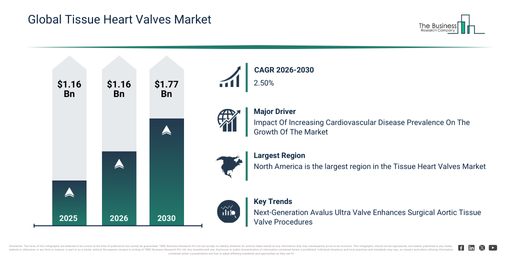
    Tissue Heart Valves Market Growth Outlook Reveals A CAGR Of 2.5% And A Market Value Of $1.71 Billion By 2030

    Delivering more actionable and strategically valuable research, The Business Research Company’s 2026 market reports feature market attractiveness analysis, total addressable market evaluation, company benchmarking matrices, interactive Excel dashboards, expanded supply chain intelligence, emerging startup coverage, and detailed product insights.

    The tissue heart valves market has been steadily advancing, driven by growing cardiovascular health challenges and innovations in valve technology. As medical procedures evolve and patient needs increase, this sector is set to experience continued growth and development. Below is a detailed examination of the market size, key drivers, segments, trends, major players, and regional outlook.

    Current and Future Market Size of the Tissue Heart Valves Market

    The tissue heart valves market has demonstrated consistent growth, with its size projected to rise from $1.52 billion in 2025 to $1.56 billion in 2026, representing a compound annual growth rate (CAGR) of 2.6%. This upward trend in the past years has largely been supported by the rising incidence of cardiovascular diseases, the limitations tied to mechanical valves, increased adoption of surgical valve replacements, improvements in hospital cardiac infrastructure, and an aging population. Moving ahead, the market is anticipated to continue expanding, reaching $1.72 billion by 2030 at a CAGR of 2.5%. Key factors behind this forecast include the increased use of transcatheter aortic valve replacement (TAVR) procedures, growth in minimally invasive cardiac surgeries, innovations aimed at extending valve durability, improved access to healthcare, and a rise in cardiology specialization. Prominent trends projected to influence the market include a preference for bioprosthetic valves, more transcatheter valve interventions, advances in tissue preservation, decreased reliance on long-term anticoagulation therapies, and higher demand driven by aging populations needing valve replacements.

    Download A Free Sample Report For Comprehensive Market Insights:

    https://www.thebusinessresearchcompany.com/sample.aspx?id=21302&type=smp

    Primary Factors Fueling Growth in the Tissue Heart Valves Market

    The growing burden of cardiovascular diseases is a major driver propelling the tissue heart valves market forward. Cardiovascular diseases encompass a range of conditions affecting the heart and blood vessels, including heart attacks, strokes, hypertension, and related disorders. This rise is attributed to several factors such as unhealthy lifestyle choices, aging demographics, increased presence of risk factors, poor nutritional habits, physical inactivity, smoking, stress, and urban living, all contributing to greater rates of heart-related illnesses worldwide.

    Tissue heart valves play a critical role in treating cardiovascular diseases by offering biocompatible, durable, and less thrombogenic solutions for patients requiring valve replacement. These valves help improve heart function over time while minimizing complications. For example, a September 2024 report by the Heart Failure Society of America highlighted that nearly 6.7 million Americans aged 20 and above currently live with heart failure, with projections estimating this will rise to 8.7 million by 2030, 10.3 million by 2040, and 11.4 million by 2050. This growing patient base directly supports the expanding demand for tissue heart valves.

    Detailed Segmentation and Growth Opportunities in the Tissue Heart Valves Market

    The tissue heart valves market is categorized into distinct segments to provide a clearer picture of opportunities and growth patterns. These include:

    1) By Type: Stented Tissue Heart Valves and Stentless Tissue Heart Valves

    2) By Procedure Type: Surgical Aortic Valve Replacement (SAVR) and Transcatheter Aortic Valve Replacement (TAVR)

    3) By End-User: Hospitals, Ambulatory Surgical Centers, and Other End-Users

    Further classifications break down stented tissue heart valves into bovine pericardial valves and porcine valves, while stentless tissue heart valves include bovine pericardial stentless valves and homograft valves. This segmentation allows for targeted insights into product demand and technological advancements across various patient groups and treatment methods.

    Access The Complete Tissue Heart Valves Market Report:

    https://www.thebusinessresearchcompany.com/report/tissue-heart-valves-global-market-report

    Emerging Innovations Shaping the Tissue Heart Valves Industry

    Industry leaders in the tissue heart valves market are prioritizing the development of advanced products that simplify implantation and enhance long-term patient outcomes. Among these is the surgical aortic tissue valve, a biologically derived prosthetic valve used to replace damaged aortic valves during surgery.

    For instance, in June 2024, Medtronic plc., an Ireland-headquartered technology company, introduced the Avalus Ultra valve. This next-generation surgical aortic tissue valve is designed to improve ease of use during implantation and support ongoing patient care. Building on a decade of clinical experience with the Avalus valve, the Avalus Ultra features a low-profile design, a polyetheretherketone (PEEK) base frame ensuring consistent circularity, and an industry-leading Effective Orifice Area (EOA) that promotes better blood flow. It also incorporates a radiopaque coil for enhanced visibility during future valve-in-valve procedures, providing durable treatment options for patients with aortic stenosis.

    Key Players Leading the Tissue Heart Valves Market

    Several prominent companies dominate the tissue heart valves market, including Abbott Laboratories, Medtronic PLC, Edwards Lifesciences Corporation, LivaNova PLC, Meril Life Sciences Pvt. Ltd., MicroPort Scientific Corporation, LifeNet Health Inc., TTK Healthcare Ltd., Braile Biomédica, Anteris Technologies Ltd., Labcor Laboratórios Ltd., CARDION s.r.o., CryoLife Inc., Colibri Heart Valve LLC, Foldax Inc., Balance Medical Technologies Co. Ltd., MiCardia Corporation, St. Jude Medical Inc., Sorin Group, and Hancock J & Co. Their ongoing innovations and market strategies play a crucial role in shaping industry dynamics and expanding access to advanced heart valve therapies.

    Regional Market Insights and Growth Dynamics

    In 2025, North America stood as the largest regional market for tissue heart valves. However, looking ahead, the Asia-Pacific region is expected to experience the fastest growth during the forecast period. The overall market analysis covers several key regions, including Asia-Pacific, South East Asia, Western Europe, Eastern Europe, North America, South America, the Middle East, and Africa, providing a comprehensive perspective on global developments and regional opportunities.

    Get in touch with us:

    The Business Research Company: https://www.thebusinessresearchcompany.com/

    Americas: +1 310-496-7795

    Asia: +44 7882 955267 & +91 8897263534

    Europe: +44 7882 955267

    Email us at: marketing@tbrc.info

    Follow us on:

    LinkedIn: https://in.linkedin.com/company/the-business-research-company

    YouTube: https://www.youtube.com/channel/UC24_fI0rV8cR5DxlCpgmyFQ

    Global Market Model: https://www.thebusinessresearchcompany.com/global-market-model
  • Tissue Fixation Devices Market Forecast Highlights Expansion From $17.53 Billion To $21.68 Billion Through 2030

    Tissue Fixation Devices Market Forecast Highlights Expansion From $17.53 Billion To $21.68 Billion Through 2030

    Enhanced with market attractiveness analysis, total addressable market evaluation, company benchmarking matrices, interactive Excel dashboards, expanded supply chain intelligence, emerging startup coverage, and detailed product insights, The Business Research Company’s 2026 market reports deliver more actionable and strategically valuable research.

    The tissue fixation devices market has demonstrated notable growth recently, driven by advancements in medical procedures and rising healthcare demands. This sector is expected to continue expanding as innovations and increasing surgical needs shape its future trajectory. Let’s explore the market size, key growth factors, product categories, competitive landscape, and regional outlook to better understand its development.

    Market Size and Growth Prospects of the Tissue Fixation Devices Market

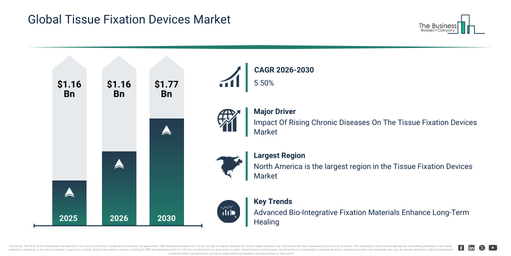
    The tissue fixation devices market has experienced strong expansion in recent years, with revenues projected to increase from $16.58 billion in 2025 to $17.53 billion in 2026, reflecting a compound annual growth rate (CAGR) of 5.8%. This historical growth has been largely fueled by the rising number of orthopedic surgeries, trauma incidents, sports-related injuries, technological improvements in implants, and enhanced hospital surgical capacities. Looking ahead, the market is expected to sustain robust growth, reaching $21.68 billion by 2030 at a CAGR of 5.5%. The anticipated expansion is driven by broader adoption of bioabsorbable materials, growth in minimally invasive procedures, increased demand in sports medicine, reconstructive surgery needs, and an aging population. Key emerging trends include a rise in demand for bioabsorbable fixation devices, a surge in orthopedic and sports injury cases, growing utilization in minimally invasive surgeries, innovative fixation materials, and the expansion of trauma and reconstructive surgical procedures.

    Download A Free Sample Report For Comprehensive Market Insights:

    https://www.thebusinessresearchcompany.com/sample.aspx?id=20665&type=smp

    Factors Contributing to Growth in the Tissue Fixation Devices Market

    The rising number of chronic diseases worldwide is a major factor fueling the tissue fixation devices market. Chronic conditions such as diabetes, heart disease, and arthritis, which develop gradually and require ongoing management, are becoming more common due to unhealthy lifestyle factors like poor diet, sedentary behavior, and smoking. These diseases often necessitate medical interventions that rely on tissue fixation devices for effective repair and stabilization of bones and soft tissues. By improving patient outcomes through reducing re-injury risk and supporting faster recovery, these devices play a crucial role in chronic disease management.

    A Real-World Example of Chronic Disease Impact on Market Demand

    For instance, in June 2024, the UK’s National Health Service reported that 3,615,330 people registered with general practitioners were diagnosed with non-diabetic hyperglycemia (pre-diabetes) in 2023, marking an 18% rise from 3,065,825 cases in 2022. This increase in chronic conditions highlights the growing need for tissue fixation devices, as they are essential in treating complications and injuries related to such diseases, thereby driving market growth.

    Access The Complete Tissue Fixation Devices Market Report:

    https://www.thebusinessresearchcompany.com/report/tissue-fixation-devices-global-market-report

    Product Types and Application Areas of the Tissue Fixation Devices Market

    This market is segmented based on product types, applications, and end users. Product categories include sutures and suture anchors, interference screws, plates and pins, buttons, arrows, darts, and other types such as staples, spikes, and wires. Applications cover routine histology, immunohistochemistry, in situ hybridization, electron microscopy, and molecular diagnostics. End users range across hospitals, diagnostic laboratories, research institutes, biomedical companies, and forensic laboratories. Further segmentation breaks down sutures and anchors into absorbable and non-absorbable types, interference screws into bioabsorbable and metallic versions, plates and pins similarly divided, and buttons, arrows, and darts categorized by bioabsorbable and metallic materials.

    Innovations Shaping the Tissue Fixation Devices Market Competition

    Leading companies in the tissue fixation devices market are focusing on developing cutting-edge products such as bio-integrative fixation materials that promote natural healing and reduce complications associated with traditional metal implants. These innovative materials gradually integrate with bone and tissue, supporting regeneration without the permanence of metal. For example, in June 2025, OSSIO, a US-based orthopedic device manufacturer, launched the OSSIOFiber 2.5 mm Suture Anchor. This product features a unique metal-free mineral fiber matrix offering 55% greater pull-out strength compared to leading bio-composite anchors. It maintains standard surgical workflows with familiar instrumentation and comes in both unloaded and pre-loaded configurations to suit surgeon preferences. The fully bio-integrative design targets applications across various extremities, combining strong mechanical performance with biocompatibility and resorbability.

    Key Players Defining the Tissue Fixation Devices Market Landscape

    The market includes several prominent companies such as Medtronic plc, Stryker Corporation, Boston Scientific Corporation, B. Braun Group, Zimmer Biomet Holdings Inc., Smith & Nephew plc, Ethicon Inc., Cook Medical Incorporated, Arthrex Inc., Integra LifeSciences Holdings Corporation, In2Bones Global Inc., Conmed Corporation, Wright Medical Group N.V., Orthofix Medical Inc., LimaCorporate S.p.A., Exactech Inc., RTI Surgical Holdings Inc., Medartis AG, Aap Implantate AG, and Promedics Orthopaedic Ltd. These firms are actively competing by investing in product innovation and expanding their market reach.

    Geographical Overview and Regional Market Insights

    In 2025, North America dominated the tissue fixation devices market, holding the largest share. However, other regions such as Asia-Pacific, South East Asia, Western Europe, Eastern Europe, South America, the Middle East, and Africa are also covered in market analyses, each presenting different growth opportunities and challenges. The Asia-Pacific region, in particular, is expected to exhibit significant growth potential driven by increasing healthcare infrastructure development and rising incidence of orthopedic and trauma cases.

    Get in touch with us:

    The Business Research Company: https://www.thebusinessresearchcompany.com/

    Americas: +1 310-496-7795

    Asia: +44 7882 955267 & +91 8897263534

    Europe: +44 7882 955267

    Email us at: marketing@tbrc.info

    Follow us on:

    LinkedIn: https://in.linkedin.com/company/the-business-research-company

    YouTube: https://www.youtube.com/channel/UC24_fI0rV8cR5DxlCpgmyFQ

    Global Market Model: https://www.thebusinessresearchcompany.com/global-market-model