Category: Medical Equipment

  • Tumor Ablation Therapy Devices Market Opportunities Are Emerging Beyond Traditional Growth Areas

    Tumor Ablation Therapy Devices Market Opportunities Are Emerging Beyond Traditional Growth Areas

    Through market attractiveness analysis, total addressable market evaluation, company benchmarking matrices, interactive Excel dashboards, expanded supply chain intelligence, emerging startup coverage, and detailed product insights, The Business Research Company’s 2026 market reports provide more actionable and strategically valuable research.

    The tumor ablation therapy devices market has experienced substantial growth recently, driven by advancements in cancer treatment and increasing demand for less invasive options. As cancer rates rise globally, the need for effective and targeted therapies is pushing this market forward. Let’s explore the current market size, the factors fueling its expansion, key segments, industry trends, prominent companies, and regional insights shaping its future.

    Steady Expansion in the Tumor Ablation Therapy Devices Market Size

    The tumor ablation therapy devices market is forecasted to grow significantly over the coming years. It is projected to increase from $0.82 billion in 2025 to $0.95 billion in 2026, representing a strong compound annual growth rate (CAGR) of 15.0%. This growth in the recent past is largely attributable to rising cancer incidence, the establishment of more oncology treatment centers, wider adoption of minimally invasive therapies, improvements in imaging technologies, and a growing preference for treatments that preserve organ function.

    Download A Free Sample Report For Comprehensive Market Insights:

    https://www.thebusinessresearchcompany.com/sample.aspx?id=3351&type=smp

    Looking ahead, the market is expected to expand further and reach $1.61 billion by 2030, with a CAGR of 14.2%. Key drivers during this period include increased investments in precision oncology, higher demand for outpatient cancer treatments, continuous development of advanced ablation technologies, enhanced integration of imaging with therapy systems, and a stronger focus on personalized cancer care. Upcoming trends include the rising use of image-guided ablation systems, greater adoption of minimally invasive tumor ablation procedures, expansion of percutaneous treatment techniques, and the growing popularity of organ-specific ablation technologies.

    The Rising Impact of Cancer Prevalence on Market Growth

    A major force propelling the tumor ablation therapy devices market is the increasing prevalence of cancer worldwide. Cancer ranks as the second leading cause of death, with about one in six deaths globally attributed to the disease. The growing number of cancer cases is closely linked to aging populations, as older adults face a higher lifetime risk of developing various cancers. Tumor ablation procedures are commonly used to treat tumors in organs like the lung, liver, kidney, and bones due to their minimally invasive nature.

    Access The Complete Tumor Ablation Therapy Devices Market Report:

    https://www.thebusinessresearchcompany.com/report/tumor-ablation-therapy-devices-global-market-report

    For example, in 2023, the American Cancer Society projected that 1,958,310 new cancer cases would be diagnosed in the United States, marking an increase from 1,918,030 cases in 2022. Since tumor ablation is an effective option for patients who have not responded well to chemotherapy or radiotherapy, this supports steady demand for ablation devices and fuels market growth.

    Detailed Segmentation of the Tumor Ablation Therapy Devices Market

    This market is categorized by technology, treatment type, application, and end user to better understand growth opportunities. Technologies include Radiofrequency Ablation, Microwave Ablation, Cryoablation, Irreversible Electroporation Ablation, and others. Treatment types are divided into surgical, laparoscopic, and percutaneous methods. Applications span various cancers such as kidney, liver, breast, lung, prostate, and others. End users range from hospitals to oncology clinics and other facilities.

    Further subsegments include monopolar and bipolar devices for Radiofrequency Ablation; high- and low-frequency options for Microwave Ablation; liquid nitrogen and argon gas devices under Cryoablation; NanoKnife systems and high-voltage pulse generators for Irreversible Electroporation; and additional technologies like laser ablation, ultrasound-guided high-intensity focused ultrasound (HIFU), and chemical ablation techniques.

    Innovations and Industry Shifts Reshaping Demand in Tumor Ablation Devices

    Leading companies in this sector are concentrating on developing minimally invasive therapies that provide precise tumor targeting while minimizing damage to surrounding tissues. Such advancements help maintain treatment effectiveness while reducing complications and recovery time.

    For instance, in August 2023, Francis Medical Inc., a US-based provider specializing in minimally invasive cancer treatments, received Breakthrough Device Designation from the FDA for its Vanquish water vapor ablation therapy targeting prostate cancer. This designation aims to accelerate the device’s development and regulatory review, potentially allowing faster patient access. The Vanquish system delivers thermal energy through sterile water via a simple transurethral procedure, destroying cancer cells while protecting nearby tissues and lowering the risk of side effects commonly seen with other prostate cancer treatments.

    Prominent Players Leading the Tumor Ablation Therapy Devices Market

    Several key companies hold significant positions in this market, including Galil Medical Inc., Misonix Inc., HealthTronics Inc., AngioDynamics Inc., Boston Scientific Corporation, Medtronic plc, EDAP TMS S.A., NeuWave Medical Inc., BVM Medical Limited, Erbe Elektromedizin GmbH, Theraclion, INTIO Inc., Olympus Corporation, Stryker Corporation, Merit Medical Systems Inc., Insightec Ltd., Terumo Corporation, Monteris Medical Corporation, IceCure Medical Ltd., Profound Medical Inc., Alpinion Medical Systems Co. Ltd., Sonacare Medical, Hologic Inc., Endocare Inc., and Bovie Medical Corporation.

    Regions Driving Revenue and Market Leadership in Tumor Ablation Therapy Devices

    In 2025, North America emerged as the largest regional market for tumor ablation therapy devices, benefiting from a well-established healthcare infrastructure and high adoption of advanced technologies. Asia-Pacific ranked as the second-largest market, showing promising growth potential due to increasing healthcare investments and rising cancer incidence. The market outlook also covers other areas such as South East Asia, Western Europe, Eastern Europe, South America, the Middle East, and Africa, offering a comprehensive global perspective.

    Get in touch with us:

    The Business Research Company: https://www.thebusinessresearchcompany.com/

    Americas: +1 310-496-7795

    Asia: +44 7882 955267 & +91 8897263534

    Europe: +44 7882 955267

    Email us at: marketing@tbrc.info

    Follow us on:

    LinkedIn: https://in.linkedin.com/company/the-business-research-company

    YouTube: https://www.youtube.com/channel/UC24_fI0rV8cR5DxlCpgmyFQ

    Global Market Model: https://www.thebusinessresearchcompany.com/global-market-model
  • Tumor Ablation Market Expansion Is Opening New Pathways For Strategic Investment

    Tumor Ablation Market Expansion Is Opening New Pathways For Strategic Investment

    Delivering more actionable and strategically valuable research, The Business Research Company’s 2026 market reports feature market attractiveness analysis, total addressable market evaluation, company benchmarking matrices, interactive Excel dashboards, expanded supply chain intelligence, emerging startup coverage, and detailed product insights.

    The tumor ablation market is experiencing rapid expansion as advancements in cancer treatment technologies continue to evolve. Increasing demand for less invasive procedures and precision therapies is reshaping the landscape, paving the way for significant market growth. This overview highlights the market size, growth drivers, key segments, innovations, leading companies, and regional opportunities shaping the tumor ablation industry.

    Steady Growth in Tumor Ablation Market Size and Future Projections

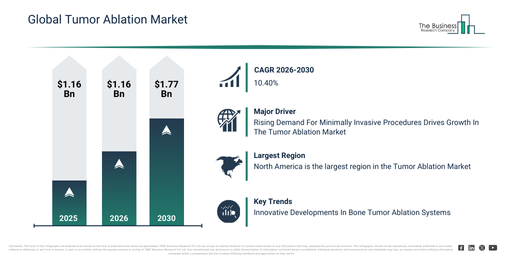
    The tumor ablation market has witnessed swift growth recently and is projected to rise from $1.62 billion in 2025 to $1.81 billion in 2026, reflecting a compound annual growth rate (CAGR) of 11.8%. This growth during the past years is largely due to the increasing cases of solid tumors, higher adoption of minimally invasive cancer therapies, expansion of oncology centers, availability of advanced imaging techniques, and improved treatment outcomes with ablation. Looking ahead, the market is expected to continue its upward trajectory, reaching $2.69 billion by 2030, with a CAGR of 10.4%. Factors contributing to this forecast include growing demand for targeted cancer treatments, rising investments in precision oncology, growth in outpatient cancer care facilities, integration of AI in treatment planning, and a stronger focus on patient-centered cancer management. Key trends anticipated in the coming years are the increased use of minimally invasive ablation methods, widespread adoption of image-guided technologies, preference for thermal ablation techniques, expansion of outpatient tumor treatment settings, and enhanced emphasis on precision oncology.

    Download A Free Sample Report For Comprehensive Market Insights:

    https://www.thebusinessresearchcompany.com/sample.aspx?id=17283&type=smp

    Increasing Popularity of Minimally Invasive Procedures Driving Market Expansion

    One of the primary factors propelling the tumor ablation market is the rising preference for minimally invasive techniques. These procedures, which include robot-assisted surgeries, use small or no incisions, leading to quicker recovery, reduced complications, and less postoperative pain. This shift is fueled by patient demand for faster healing times, advances in surgical robotics, and more accurate imaging-guided treatments. Tumor ablation technologies such as radiofrequency, microwave, and cryoablation align perfectly with these trends by precisely targeting cancerous cells while sparing healthy tissue.

    Supporting Evidence of Growth in Minimally Invasive Approaches

    For example, data from June 2024 released by the American Society of Plastic Surgeons, a US-based non-profit organization, showed a 7% increase in minimally invasive procedures in 2023, outpacing the growth of surgical procedures by 2%. Specifically, hand surgeries including carpal tunnel release, arthritis, and trigger finger treatment reached 207,887 procedures, representing a 2% rise from 2022. This growing shift towards minimally invasive techniques is a significant driver for the expanding tumor ablation market.

    Access The Complete Tumor Ablation Market Report:

    https://www.thebusinessresearchcompany.com/report/tumor-ablation-global-market-report

    Key Segments and Strategic Opportunities in the Tumor Ablation Market

    The tumor ablation market is divided into several important segments in this report:

    1) By Type: Thermal Ablation and Chemical Ablation

    2) By Treatment Method: Percutaneous, Laparoscopic, and Surgical

    3) By Application: Kidney Cancer, Liver Cancer, Breast Cancer, Lung Cancer, Prostate Cancer, and Other Cancers

    4) By End User: Hospitals, Oncology Centers, and Other Healthcare Providers

    Further subcategories under thermal ablation include radiofrequency ablation (RFA), microwave ablation (MWA), cryoablation, laser ablation, and high-intensity focused ultrasound (HIFU). Chemical ablation methods cover ethanol ablation, acetic acid ablation, and transarterial chemoembolization. These segments provide a detailed framework for understanding market dynamics and identifying growth opportunities.

    Innovations Transforming the Tumor Ablation Industry

    Leading companies in the tumor ablation space are developing cutting-edge solutions to improve treatment effectiveness and expand therapeutic options. For instance, specialized bone tumor ablation systems are designed to treat painful bone metastases and benign bone tumors with minimally invasive techniques. A notable example is Medtronic plc, which in March 2024 received FDA 510(k) clearance for its OsteoCool 2.0 bone tumor ablation system. This next-generation device allows for the simultaneous use of four internally cooled probes, enabling treatment of two vertebral bodies at once or creating larger ablation zones in other areas. It delivers 20 watts per channel, more than double the power of competing devices like the Stryker OptaBlate system, significantly enhancing treatment capabilities.

    The Competitive Landscape of the Tumor Ablation Market

    Key players shaping the tumor ablation industry include Medtronic plc, Siemens Healthineers AG, Boston Scientific Corporation, Olympus Corporation, Terumo Corporation, Varian Medical Systems Inc., Merit Medical Systems Inc., Accuray Incorporated, AngioDynamics Inc., EDAP TMS S.A., NeuWave Medical Inc., Mirabilis Medical Inc., STARMed Co. Ltd., Profound Medical Corp., RF Medical Co. Ltd., IceCure Medical Ltd., MedWaves Inc., Chongqing Haifu Medical Technology Co. Ltd., Hologic Inc., and Johnson & Johnson MedTech. These companies are driving innovation, expanding product portfolios, and competing to meet growing market demand.

    Geographical Distribution and Market Growth Opportunities

    In 2025, North America held the largest share of the tumor ablation market, supported by advanced healthcare infrastructure and high adoption rates of innovative technologies. Meanwhile, the Asia-Pacific region is anticipated to be the fastest-growing market during the forecast period, reflecting increased healthcare investments, rising cancer incidence, and expansion of oncology treatment facilities. The tumor ablation market report covers regions including Asia-Pacific, South East Asia, Western Europe, Eastern Europe, North America, South America, the Middle East, and Africa, providing a comprehensive analysis of global growth opportunities.

    Get in touch with us:

    The Business Research Company: https://www.thebusinessresearchcompany.com/

    Americas: +1 310-496-7795

    Asia: +44 7882 955267 & +91 8897263534

    Europe: +44 7882 955267

    Email us at: marketing@tbrc.info

    Follow us on:

    LinkedIn: https://in.linkedin.com/company/the-business-research-company

    YouTube: https://www.youtube.com/channel/UC24_fI0rV8cR5DxlCpgmyFQ

    Global Market Model: https://www.thebusinessresearchcompany.com/global-market-model
  • Tuberculosis Diagnostics Market Trends Are Creating New Opportunities For Industry Leaders

    Tuberculosis Diagnostics Market Trends Are Creating New Opportunities For Industry Leaders

    Enhanced with market attractiveness analysis, total addressable market evaluation, company benchmarking matrices, interactive Excel dashboards, expanded supply chain intelligence, emerging startup coverage, and detailed product insights, The Business Research Company’s 2026 market reports deliver more actionable and strategically valuable research.

    The tuberculosis diagnostics market has been witnessing significant advancement, driven by the critical need for timely and precise detection of tuberculosis infections worldwide. As healthcare systems prioritize early diagnosis and treatment, the market is set to experience robust growth in the coming years. Here is a detailed overview of the current market landscape, its growth factors, leading companies, and emerging trends shaping its future.

    Steady Growth Outlook for the Tuberculosis Diagnostics Market

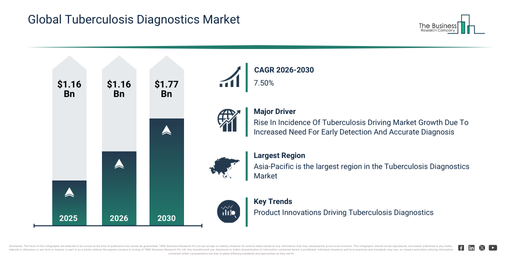
    The tuberculosis diagnostics industry has seen notable expansion in recent years, with its market size expected to rise from $2.34 billion in 2025 to $2.52 billion in 2026, reflecting a compound annual growth rate (CAGR) of 7.9%. Looking ahead, the market is projected to reach $3.37 billion by 2030, growing at a CAGR of 7.5%. This upward trajectory is largely fueled by a combination of factors including the global tuberculosis burden, the expansion of public health screening initiatives, widespread availability of smear microscopy facilities, international funding for tuberculosis control, and the increasing adoption of culture-based diagnostic techniques.

    Download A Free Sample Report For Comprehensive Market Insights:

    https://www.thebusinessresearchcompany.com/sample.aspx?id=8165&type=smp

    Key Factors Accelerating Tuberculosis Diagnostics Market Expansion

    One of the primary drivers behind the tuberculosis diagnostics market growth is the rising incidence of tuberculosis worldwide. Tuberculosis, a contagious bacterial infection mainly affecting the lungs, requires prompt detection to reduce complications and halt transmission. The increasing prevalence of HIV/AIDS, which compromises immune defenses, significantly contributes to the heightened susceptibility to active tuberculosis infections. This has created an urgent need for rapid, accurate, and point-of-care diagnostic solutions that support early treatment and effective disease management.

    Recent data underscores this trend. For example, in October 2025, the UK Health Security Agency reported a 13.6 percent rise in tuberculosis cases in England during 2024 compared to the previous year, with 5,490 notifications in 2024 versus 4,831 in 2023. This surge in TB cases is directly influencing the demand and growth of the tuberculosis diagnostics market globally.

    Access The Complete Tuberculosis Diagnostics Market Report:

    https://www.thebusinessresearchcompany.com/report/tuberculosis-diagnostics-global-market-report

    Detailed Segmentation and Growth Potential in Tuberculosis Diagnostics

    The report segments the tuberculosis diagnostics market in several ways to provide comprehensive insight:

    1) By Test Type: including Radiographic Tests, Nucleic Acid Testing, Cytokine Detection Tests, Drug Resistance Tests, Skin Test / Mantoux Test (TST), Blood/Serology Test, Smear Microscopy Tests, Cell Culture-Based Tests, and Other Test Types.

    2) By Disease Stage: categorized into Latent Tuberculosis and Active Tuberculosis.

    3) By End-User: covering Hospitals and Diagnostic Laboratories, Physician’s Office Laboratories, Reference Laboratories, and Academic and Research Institutions.

    Further breakdown includes specific test types such as Chest X-rays and CT Scans under Radiographic Tests; Polymerase Chain Reaction (PCR) and Nucleic Acid Amplification Tests (NAATs) under Nucleic Acid Testing; Interferon Gamma Release Assays (IGRAs) for Cytokine Detection; GeneXpert MTB/RIF and Line Probe Assays for Drug Resistance; Tuberculin Skin Test (TST) under Skin Test; Serological Tests for Blood or Serology; Acid-Fast Bacilli (AFB) Smear Test in Smear Microscopy; Solid and Liquid Media Cultures under Cell Culture-Based Tests; and other molecular and advanced imaging tests.

    Innovations and Trends Shaping Tuberculosis Diagnostics Industry Growth

    Leading players in this market are heavily investing in innovative product development to enhance tuberculosis diagnostic capabilities. These advancements focus on creating fast, reliable, and comprehensive testing solutions that can identify active TB, latent infections, and drug-resistant strains to ensure timely and targeted treatment. For example, in February 2023, Redcliffe Labs in India introduced the BD MAX MDR TB test, performed on the BD MAX molecular diagnostic system. This test allows clinicians to rapidly detect tuberculosis bacteria along with mutations linked to resistance against key first-line drugs, Isoniazid (INH) and Rifampicin (RIF), facilitating quicker clinical decision-making.

    Major Industry Participants Competing in the Tuberculosis Diagnostics Market

    The tuberculosis diagnostics sector features several prominent companies, including Beckton Dickinson and Company, F. Hoffmann-La Roche Ltd, Qiagen N.V., BioMerieux SA, Danaher Corporation, PerkinElmer, Thermo Fisher Scientific Inc., Creative Diagnostics, Lionex GmbH, Biocartis, Bio-Rad Laboratories India Pvt. Ltd., Zhejiang Di’an Diagnostics Technology Co. Ltd, Kindstar Global, Siemens AG, LumiraDx Limited, TestLine Clinical Diagnostics s.r.o., Hologic, Meridian Bioscience, Abbott Laboratories Immunodiagnostic Systems Holdings PLC, Mesa Biotech Inc, Akonni Biosystems Inc, Epistem Limited, Gen-Probe, Bio Certica, and BixBio. These companies focus on expanding their product portfolios and strengthening their market positions through research and innovation.

    Regional Market Leadership and Emerging Areas of Growth

    In 2025, the Asia-Pacific region emerged as the largest market for tuberculosis diagnostics. The broader geographic scope considered in the market analysis includes Asia-Pacific, South East Asia, Western Europe, Eastern Europe, North America, South America, the Middle East, and Africa. While Asia-Pacific currently leads in market share, other regions continue to demonstrate potential growth opportunities due to the rising tuberculosis burden and healthcare infrastructure improvements.

    Get in touch with us:

    The Business Research Company: https://www.thebusinessresearchcompany.com/

    Americas: +1 310-496-7795

    Asia: +44 7882 955267 & +91 8897263534

    Europe: +44 7882 955267

    Email us at: marketing@tbrc.info

    Follow us on:

    LinkedIn: https://in.linkedin.com/company/the-business-research-company

    YouTube: https://www.youtube.com/channel/UC24_fI0rV8cR5DxlCpgmyFQ

    Global Market Model: https://www.thebusinessresearchcompany.com/global-market-model
  • Tubeless Insulin Pump Market Growth Is Reshaping Competitive Advantage Across The Industry

    Tubeless Insulin Pump Market Growth Is Reshaping Competitive Advantage Across The Industry

    Through market attractiveness analysis, total addressable market evaluation, company benchmarking matrices, interactive Excel dashboards, expanded supply chain intelligence, emerging startup coverage, and detailed product insights, The Business Research Company’s 2026 market reports provide more actionable and strategically valuable research.

    The tubeless insulin pump market is experiencing remarkable growth as it becomes an increasingly preferred method for diabetes management. With advancements in technology and a rising global diabetic population, this sector is positioned for substantial expansion in the coming years. Let’s explore the current market size, key factors driving growth, product segments, industry trends, major players, and regional insights shaping this promising market.

    Rapid Expansion of the Tubeless Insulin Pump Market Size and Revenue

    The market for tubeless insulin pumps has witnessed swift growth recently and is projected to continue this momentum. It is forecasted to increase from $2.2 billion in 2025 to $2.63 billion in 2026, marking a compound annual growth rate (CAGR) of 19.3%. Historically, this expansion was driven by the limited availability of tubeless pumps, dependence on traditional insulin delivery methods, the rising incidence of diabetes, increasing hospital adoption of insulin pumps, and early use of basic continuous glucose monitoring (CGM) systems.

    Download A Free Sample Report For Comprehensive Market Insights:

    https://www.thebusinessresearchcompany.com/sample.aspx?id=27440&type=smp

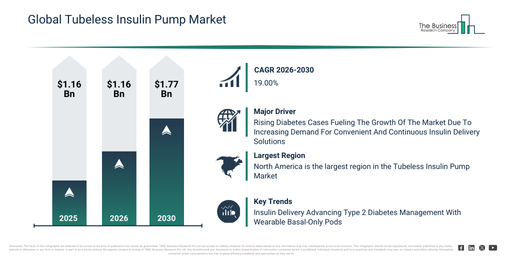
    Looking ahead, the market is expected to grow even more rapidly, reaching $5.28 billion by 2030 with a CAGR of 19.0%. This future growth will be supported by innovations such as advanced wearable and implantable insulin pumps, widespread integration of artificial intelligence (AI) and smart monitoring systems, expansion of remote patient monitoring services, rising patient awareness and acceptance, as well as the growth of e-commerce and telemedicine platforms. Key trends anticipated during this period include increased adoption of wearable insulin pumps among diabetic patients, seamless integration of CGM with tubeless pumps, demand for Bluetooth-enabled and remote-controlled devices, preference for both disposable and reusable patch pumps, and broader distribution through e-commerce channels.

    Rising Diabetes Cases Fueling Tubeless Insulin Pump Market Growth

    One of the most significant factors propelling the tubeless insulin pump market is the growing prevalence of diabetes worldwide. Diabetes is a chronic condition characterized by high blood sugar levels due to the body’s inability to produce or effectively use insulin. The surge in diabetes cases is mainly linked to increasing obesity rates, often caused by poor diets and lack of physical activity. Tubeless insulin pumps provide continuous and controlled insulin delivery, reducing the need for multiple daily injections and improving blood sugar management for patients.

    Access The Complete Tubeless Insulin Pump Market Report:

    https://www.thebusinessresearchcompany.com/report/tubeless-insulin-pump-global-market-report

    For instance, in June 2023, the Institute for Health Metrics and Evaluation reported that over half a billion people globally were living with diabetes. This number is expected to more than double by 2050, reaching 1.3 billion. Such statistics highlight the expanding pool of potential users driving demand within the tubeless insulin pump market.

    Product and Application Segmentation in the Tubeless Insulin Pump Market

    This market is divided into several segments based on product type, technology, and end users. By product, the categories include wearable insulin pumps and implantable insulin pumps. Technology-wise, the market differentiates between continuous glucose monitoring (CGM) integrated pumps and standard tubeless pumps. In terms of end users, the segmentation covers hospitals, pharmacies, e-commerce platforms, and other users.

    Further subcategories break down wearable insulin pumps into patch pumps, remote-controlled pumps, Bluetooth-enabled pumps, disposable pumps, and reusable pumps. Implantable insulin pumps include programmable implantable pumps, refillable implantable pumps, microelectromechanical system (MEMS)-based pumps, long-acting implantable pumps, and biocompatible coated pumps.

    Innovations and Trends Steering the Tubeless Insulin Pump Industry

    Leading companies in the tubeless insulin pump market are advancing their offerings by developing new solutions such as basal-only insulin pods, which simplify insulin delivery and reduce costs for patients with type 2 diabetes requiring only background insulin. A basal-only insulin pod is a wearable device that continuously delivers background insulin to help control blood glucose levels.

    For example, in April 2023, Insulet Corporation introduced Omnipod GO, a wearable insulin delivery system authorized for adults with type 2 diabetes who use long-acting insulin injections. The Omnipod GO features a tubeless and waterproof pod that delivers rapid-acting insulin continuously for up to 72 hours across seven preset daily rates. Notably, it operates independently without needing a mobile device for regulation.

    Key Players and Competitive Landscape in the Tubeless Insulin Pump Market

    The tubeless insulin pump industry features several prominent companies innovating and competing to capture market share. Some of these key players include F. Hoffmann-La Roche AG, Sanofi SA, Abbott Laboratories, Medtronic plc, Eli Lilly and Company, Becton Dickinson & Company, Fresenius Kabi AG, Terumo Corporation, Insulet Corporation, Tandem Diabetes Care Inc., Ypsomed AG, Ascensia Diabetes Care, MicroTech Medical, Menarini Diagnostics, Bigfoot Biomedical, Debiotech SA, Medtrum Technologies Inc., Diabeloop, SOOIL Development, and Beta Bionics.

    Geographical Analysis Highlights North America’s Lead and Asia-Pacific’s Rapid Growth

    In 2025, North America held the largest share of the tubeless insulin pump market, reflecting strong adoption rates and advanced healthcare infrastructure. However, the Asia-Pacific region is anticipated to be the fastest-growing market throughout the forecast period. This growth is driven by increasing diabetes prevalence, improving healthcare accessibility, and rising awareness across countries in Asia-Pacific. The market report also includes analysis of other regions such as South East Asia, Western Europe, Eastern Europe, South America, the Middle East, and Africa, providing a broad global perspective on market dynamics.

    Get in touch with us:

    The Business Research Company: https://www.thebusinessresearchcompany.com/

    Americas: +1 310-496-7795

    Asia: +44 7882 955267 & +91 8897263534

    Europe: +44 7882 955267

    Email us at: marketing@tbrc.info

    Follow us on:

    LinkedIn: https://in.linkedin.com/company/the-business-research-company

    YouTube: https://www.youtube.com/channel/UC24_fI0rV8cR5DxlCpgmyFQ

    Global Market Model: https://www.thebusinessresearchcompany.com/global-market-model
  • Trocars Market Forecast Signals New Revenue Opportunities Through 2030

    Trocars Market Forecast Signals New Revenue Opportunities Through 2030

    Delivering more actionable and strategically valuable research, The Business Research Company’s 2026 market reports feature market attractiveness analysis, total addressable market evaluation, company benchmarking matrices, interactive Excel dashboards, expanded supply chain intelligence, emerging startup coverage, and detailed product insights.

    The trocars market is experiencing significant growth, driven by advancements in minimally invasive surgical techniques and expanding healthcare infrastructure worldwide. As surgical procedures become increasingly sophisticated and less invasive, the demand for reliable and efficient trocar systems is on the rise. Below, we explore the current market size, key growth drivers, major trends, leading companies, and regional dynamics shaping this evolving sector.

    Strong Market Growth Trajectory in the Trocars Industry

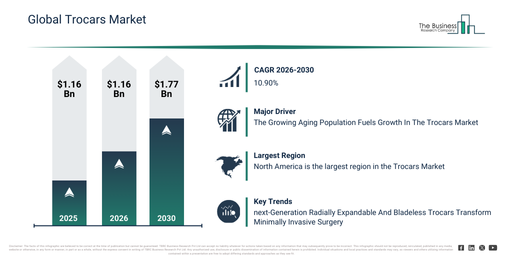
    The trocars market has shown rapid expansion over recent years, with its value projected to increase from $0.95 billion in 2025 to $1.06 billion in 2026, reflecting a robust compound annual growth rate (CAGR) of 11.5%. This upward trend is largely fueled by the growing use of minimally invasive surgeries, wider acceptance of laparoscopic methods, enhancement of hospital surgical facilities, increased attention to infection control, and availability of advanced surgical tools. Moving forward, the market is expected to reach $1.6 billion by 2030, growing at a CAGR of 10.9%. Factors contributing to this forecast include a rise in outpatient surgeries, greater preference for single-use devices, expansion in bariatric and gynecological surgeries, increased emphasis on ergonomic designs for surgeons, and adoption of cutting-edge access technologies. Trending innovations during this period encompass the growing use of bladeless trocar designs, disposable surgical access devices, optical trocars in minimally invasive procedures, ergonomic trocar systems, and heightened focus on patient safety.

    Download A Free Sample Report For Comprehensive Market Insights:

    https://www.thebusinessresearchcompany.com/sample.aspx?id=5298&type=smp

    Demographic Shifts as a Key Driver in the Trocars Market

    One of the primary factors propelling the trocars market is the expanding elderly population, which is associated with a higher prevalence of age-related medical conditions. As the global population ages, there is a corresponding increase in demand for surgical interventions that are less invasive and have quicker recovery times. Laparoscopic surgery, which uses trocars for abdominal access, is increasingly replacing traditional open surgeries among older patients. For instance, data from January 2024 by the Population Reference Bureau indicates that the number of Americans aged 65 and older is projected to rise from 58 million in 2022 to 82 million by 2050, reflecting a 47% increase. This demographic trend strongly supports growth in the trocars market.

    Expanding Surgical Practices Fuel Market Demand

    Beyond demographics, the trocars market is also benefiting from the rising number of outpatient surgical procedures. Hospitals and surgical centers are increasingly adopting minimally invasive techniques that reduce hospital stays and improve patient outcomes. Additionally, the growing focus on surgeon ergonomics is driving demand for advanced trocar systems designed to reduce fatigue and improve procedural precision. The increasing volume of bariatric and gynecologic surgeries further contributes to the expanding market for specialized trocar products.

    Access The Complete Trocars Market Report:

    https://www.thebusinessresearchcompany.com/report/trocars-global-market-report

    Detailed Segmentation and Revenue Opportunities in the Trocars Market

    This market is segmented into several key categories:

    1) Product Types: Disposable trocars, reposable trocars, reusable trocars, and accessories

    2) Tip Designs: Bladeless trocars, optical trocars, bladed trocars, and blunt trocars

    3) Applications: General surgery, gynecological surgery, urological surgery, bariatric surgery, and other surgical areas

    Subcategories include single-use disposable trocars available in various sizes and configurations; reposable trocars designed for multiple uses with easy cleaning and sterilization features; reusable trocars crafted from durable materials for repeated applications; and various accessories such as sheaths, cannulas, and blades.

    Innovations and Trends Shaping the Future of the Trocars Market

    Leading companies in the trocars field are focusing heavily on innovation to meet growing demands for safer, more efficient laparoscopic devices. New-generation trocars feature optimized cannula designs, built-in safety mechanisms, and ergonomic handles to minimize tissue damage and improve surgical outcomes. Unlike traditional models that may rely on rigid structures and manual insertion, these advanced devices provide controlled penetration and reduce complications. A notable example occurred in December 2023 when Xpan Inc., a US-based medical device manufacturer, received FDA 510(k) clearance for its next-generation trocar system. This system offers precise cannula and obturator engineering combined with safety features such as reduced insertion force, safety shields, and ergonomic grips. It is compatible with a broad range of laparoscopic instruments and is applicable across multiple surgical specialties including general surgery, gynecology, urology, and bariatrics, delivering benefits like fewer complications, higher efficiency, and better patient recovery.

    Key Players Leading the Trocars Market Industry

    The trocars market is dominated by several prominent companies, including Johnson & Johnson, B. Braun Melsungen AG, Medtronic plc, Teleflex Incorporated, CONMED Corporation, Applied Medical Resources Corporation, Purple Surgical Manufacturing Ltd., Olympus Corporation, Stryker Corporation, Grena Ltd., Maxer Endoscopy GmbH, Microline Surgical Inc., Ackermann Instrumente GmbH, Reda Instrumente GmbH, Taut Inc., CooperSurgical Inc., MedGyn Products Inc., Unimax Medical Systems Inc., EndoMed Systems GmbH, Seemann Technologies GmbH, and Silex Medical LLC.

    Regional Market Overview and Revenue Leadership

    In 2025, North America held the largest share of the global trocars market, supported by advanced healthcare infrastructure, high adoption of minimally invasive techniques, and favorable reimbursement policies. Europe ranked as the second-largest market for trocars. Other key regions covered in market analyses include Asia-Pacific, South East Asia, Western Europe, Eastern Europe, South America, the Middle East, and Africa. The Asia-Pacific region is expected to witness significant growth in the coming years due to expanding healthcare access, increasing surgical volumes, and rising investments in medical technology.

    Get in touch with us:

    The Business Research Company: https://www.thebusinessresearchcompany.com/

    Americas: +1 310-496-7795

    Asia: +44 7882 955267 & +91 8897263534

    Europe: +44 7882 955267

    Email us at: marketing@tbrc.info

    Follow us on:

    LinkedIn: https://in.linkedin.com/company/the-business-research-company

    YouTube: https://www.youtube.com/channel/UC24_fI0rV8cR5DxlCpgmyFQ

    Global Market Model: https://www.thebusinessresearchcompany.com/global-market-model
  • Treatment Planning Systems And Advanced Image Processing Market Growth Is Accelerating As Industry Transformation Continues

    Treatment Planning Systems And Advanced Image Processing Market Growth Is Accelerating As Industry Transformation Continues

    Enhanced with market attractiveness analysis, total addressable market evaluation, company benchmarking matrices, interactive Excel dashboards, expanded supply chain intelligence, emerging startup coverage, and detailed product insights, The Business Research Company’s 2026 market reports deliver more actionable and strategically valuable research.

    The treatment planning systems and advanced image processing market is experiencing remarkable growth, driven by technological innovations and rising healthcare needs. With the increasing burden of chronic illnesses and cancer worldwide, these systems are becoming indispensable in medical diagnostics and treatment. Below, we explore the market’s size, key drivers, segmentation, competitive landscape, and regional prospects in detail.

    Treatment Planning Systems and Advanced Image Processing Market Size and Growth Outlook

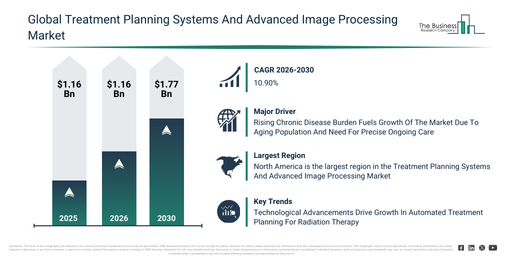
    The market for treatment planning systems and advanced image processing has seen rapid expansion in recent years. It is projected to grow from $2.51 billion in 2025 to $2.79 billion in 2026, representing a compound annual growth rate (CAGR) of 11.2%. This growth during the historical period is largely fueled by the rising prevalence of cancer and chronic diseases, continuous improvements in imaging technologies, greater adoption of radiation therapy, increasing demand for precision medicine, and enhanced hospital infrastructure.

    Download A Free Sample Report For Comprehensive Market Insights:

    https://www.thebusinessresearchcompany.com/sample.aspx?id=25927&type=smp

    Looking ahead, the market is expected to continue its rapid trajectory, reaching $4.22 billion by 2030 at a CAGR of 10.9%. The forecasted growth is supported by higher demand for personalized oncology treatments, widespread use of AI-powered treatment planning systems, expansion of cloud-based healthcare platforms, growth of advanced imaging capabilities in emerging markets, and the integration of real-time monitoring and adaptive radiotherapy. Key trends shaping the market include multi-modality imaging integration, customized treatment planning, real-time image-guided therapies, collaborative cloud platforms, and predictive analytics for treatment results.

    Growing Burden of Chronic Diseases as a Market Growth Catalyst

    One of the primary factors driving the expansion of the treatment planning systems and advanced image processing market is the increasing incidence of chronic diseases. Chronic illnesses are long-lasting health conditions requiring continuous care and management, often affecting patients’ quality of life. The aging global population contributes significantly to this rising prevalence, as older individuals are more susceptible to such health issues.

    Access The Complete Treatment Planning Systems And Advanced Image Processing Market Report:

    https://www.thebusinessresearchcompany.com/report/treatment-planning-systems-and-advanced-image-processing-global-market-report

    These advanced systems facilitate the management of chronic diseases by enabling precise diagnosis, targeted treatment plans, and ongoing monitoring, which leads to better accuracy and improved patient outcomes. For instance, according to the Centers for Disease Control and Prevention in April 2025, 76.4% of Americans reported having at least one chronic condition in 2023, with prevalence rates ranging from 59.5% among younger adults to 93.0% in older populations. This growing health challenge is a key driver for market growth.

    Market Segmentation of Treatment Planning Systems and Advanced Image Processing

    This market is segmented into several categories to capture its diverse components and applications. By component, it is divided into advanced image processing software and treatment planning software. Techniques include 3D image reconstruction, in-room imaging, and image registration using graphics processor units (GPUs). Technologies encompass MRI-based planning, CT-based planning, and radiation therapy.

    Applications cover online monitoring, dose accumulation, tracking, adaptive radiotherapy, validation of image registration, and other uses. End-users include hospitals, cancer research institutes, diagnostic and treatment centers, among others. Subsegments further break down into specific software types such as 3D image reconstruction and GPU-based image registration within advanced image processing software, and MRI-based planning, radiation therapy, and CT-based planning within treatment planning software.

    Technological Advancements Driving Competitive Edge in the Market

    Leading companies in the treatment planning systems and advanced image processing market are focusing on innovations like automated treatment planning to improve precision, efficiency, and patient outcomes in radiation therapy. Automated planning uses sophisticated software algorithms and artificial intelligence to create optimized radiation treatment plans with minimal human intervention, enhancing consistency and speed.

    For example, in May 2025, RaySearch Laboratories from Sweden introduced RayStation v2025, which supports adaptive therapy with rapid, automated radiation planning powered by advanced machine learning. This system also supports upright treatment approaches, contributing to more personalized and efficient cancer care.

    Key Players Shaping the Treatment Planning Systems and Advanced Image Processing Market

    The competitive landscape includes several major companies such as Hitachi Ltd, Siemens Healthineers AG, Koninklijke Philips NV, GE HealthCare Technologies Inc, Varian Medical Systems, Elekta AB, Agfa Gevaert Group, Accuray Incorporated, Brainlab AG, Canon Medical Systems Corporation, ViewRay Inc, MIM Software, C RAD AB, IntraOp Medical Corporation, DOSIsoft SA, Mirada Medical Limited, RaySearch Laboratories AB, Philips Radiation Oncology Systems, RaySearch Americas Inc, Mediso Ltd, Spectronic Medical AB, and Advanced Radiotherapy Technologies Inc.

    Regional Market Analysis and Prospects

    In 2025, North America held the largest share of the treatment planning systems and advanced image processing market. However, Asia-Pacific is anticipated to be the fastest-growing region during the forecast period. The market research covers extensive regions including Asia-Pacific, South East Asia, Western Europe, Eastern Europe, North America, South America, the Middle East, and Africa, providing a comprehensive global perspective on emerging opportunities and growth trends.

    Get in touch with us:

    The Business Research Company: https://www.thebusinessresearchcompany.com/

    Americas: +1 310-496-7795

    Asia: +44 7882 955267 & +91 8897263534

    Europe: +44 7882 955267

    Email us at: marketing@tbrc.info

    Follow us on:

    LinkedIn: https://in.linkedin.com/company/the-business-research-company

    YouTube: https://www.youtube.com/channel/UC24_fI0rV8cR5DxlCpgmyFQ

    Global Market Model: https://www.thebusinessresearchcompany.com/global-market-model
  • Traumatic Brain Injury Diagnostic Equipment Market Outlook Highlights The Next Major Growth Opportunities

    Traumatic Brain Injury Diagnostic Equipment Market Outlook Highlights The Next Major Growth Opportunities

    Through market attractiveness analysis, total addressable market evaluation, company benchmarking matrices, interactive Excel dashboards, expanded supply chain intelligence, emerging startup coverage, and detailed product insights, The Business Research Company’s 2026 market reports provide more actionable and strategically valuable research.

    The traumatic brain injury diagnostic equipment sector has witnessed significant progress lately, driven by advancements in medical technology and increasing awareness of brain injury assessments. This report explores the current market size, key growth drivers, evolving trends, competitive landscape, and regional market dynamics shaping the future of this industry.

    Market Size Expansion and Forecast for the Traumatic Brain Injury Diagnostic Equipment Market

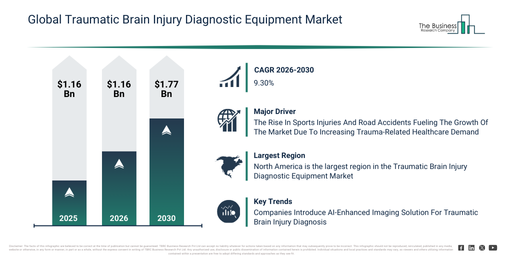
    The market for traumatic brain injury diagnostic equipment has experienced rapid growth in recent years. It is anticipated to rise from $2.41 billion in 2025 to $2.67 billion in 2026, growing at a compound annual growth rate (CAGR) of 11.0%. This upward trend during the historic period is mainly due to the expansion of emergency medical services, increased usage of CT and MRI scanners, heightened awareness about brain injury diagnosis, improvements in hospital imaging infrastructure, and greater availability of specialized diagnostic tools. Moving forward, the market is projected to reach $3.81 billion by 2030, with a CAGR of 9.3%. The forecasted growth is supported by rising investments in smart diagnostic imaging centers, growing demand for real-time brain monitoring devices, the integration of AI-driven diagnostic workflows, broader adoption of portable imaging equipment, and a growing emphasis on rapid trauma diagnosis. Significant trends expected to influence this period include wider use of advanced neuroimaging systems, AI-based diagnostic software, noninvasive diagnostic methods, comprehensive imaging and monitoring platforms, and a stronger focus on early and precise detection.

    Download A Free Sample Report For Comprehensive Market Insights:

    https://www.thebusinessresearchcompany.com/sample.aspx?id=15689&type=smp

    Key Factors Propelling Growth in the Traumatic Brain Injury Diagnostic Equipment Market

    One major factor driving the market’s expansion is the rising incidence of sports-related injuries and road traffic accidents. Sports injuries refer to physical trauma sustained during athletic or recreational activities, while road accidents involve collisions on public roads resulting in trauma or fatalities. The increase in these incidents is fueled by greater participation in sports, higher traffic volumes, distracted driving, and ongoing deficiencies in road safety infrastructure. Traumatic brain injury diagnostic equipment plays a vital role in public health by enabling fast identification, assessment, and monitoring of brain injuries, which supports better treatment decisions, lowers risks of long-term disability, and improves patient outcomes.

    The growing burden of injuries from sports and accidents is clearly reflected in healthcare statistics. For example, in 2025, the National Safety Council (NSC), a US nonprofit organization, reported that approximately 4.4 million individuals were treated in emergency departments in 2024 for injuries related to sports and recreational equipment—a 17% increase compared to 2023. This surge highlights the importance of advanced diagnostic tools, thereby driving the demand for traumatic brain injury diagnostic equipment.

    Access The Complete Traumatic Brain Injury Diagnostic Equipment Market Report:

    https://www.thebusinessresearchcompany.com/report/traumatic-brain-injury-diagnostic-equipment-global-market-report

    Segments Experiencing Rapid Growth in the Traumatic Brain Injury Diagnostic Equipment Market

    The market is categorized based on various classifications to better understand growth areas:

    1) By Device Type: Imaging Devices and Monitoring Devices

    2) By Technique: Noninvasive, Invasive, and Combination Techniques

    3) By End User: Hospitals, Clinics, Diagnostic Centers, and Other Users

    Further breakdown of subsegments includes:

    – Imaging Devices: CT Scanners, MRI Scanners, PET Scanners

    – Monitoring Devices: Intracranial Pressure (ICP) Monitors, EEG (Electroencephalogram) Monitors, Cerebral Oxygenation Monitors, and Blood Flow Monitors

    These segments reveal where innovation and demand are concentrating, with imaging and monitoring technologies playing a critical role in advancing brain injury diagnosis.

    Technological Innovations and Trends Shaping the Market’s Future

    Leading players in the traumatic brain injury diagnostic equipment sector are heavily investing in integrating cutting-edge technologies like AI-based smart speed image-reconstruction. This technology employs artificial intelligence algorithms to quickly reconstruct medical images at improved quality, thereby reducing scan times while enhancing diagnostic accuracy across MRI and CT imaging.

    For instance, in March 2024, Koninklijke Philips N.V., a health tech company from the Netherlands, collaborated with SyntheticMR AB, based in Sweden, to launch the Smart Quant Neuro 3D system. This AI-powered quantitative brain imaging tool is designed to elevate neurology care by improving imaging speed by almost threefold and increasing resolution by up to 65%. It supports faster patient scanning and enhances radiology department efficiency. The system also provides quantitative measures of brain tissues such as myelin volumes, which are essential for proper nerve impulse transmission, allowing objective assessment of traumatic brain injuries that were traditionally evaluated through symptom-based testing.

    Key Players Influencing the Traumatic Brain Injury Diagnostic Equipment Market

    Several prominent companies dominate this market, fostering innovation and competition. Major participants include Hitachi Medical, Canon Medical Systems Corporation, Siemens Healthineers AG, FUJIFILM Medical Systems Inc., Koninklijke Philips N.V., GE Healthcare Technologies, Bruker Corporation, Nihon Kohden Corporation, Carestream Health, Bittium Corporation, Brainlab AG, Esaote SpA, Natus Medical Incorporated, Magstim Co. Ltd., Nico Corporation, BrainCheck Inc., BrainScope Company Inc., NeuroWave Systems Inc., Cerora Inc., and InfraScan Inc.

    Regional Market Overview Highlighting North America’s Leading Position

    In 2025, North America accounted for the largest share of the traumatic brain injury diagnostic equipment market. The report also covers other significant regions including Asia-Pacific, Southeast Asia, Western Europe, Eastern Europe, South America, the Middle East, and Africa. While North America leads in size, other regions are expected to see notable growth owing to increasing healthcare infrastructure development and rising awareness about brain injury diagnostics around the world.

    Get in touch with us:

    The Business Research Company: https://www.thebusinessresearchcompany.com/

    Americas: +1 310-496-7795

    Asia: +44 7882 955267 & +91 8897263534

    Europe: +44 7882 955267

    Email us at: marketing@tbrc.info

    Follow us on:

    LinkedIn: https://in.linkedin.com/company/the-business-research-company

    YouTube: https://www.youtube.com/channel/UC24_fI0rV8cR5DxlCpgmyFQ

    Global Market Model: https://www.thebusinessresearchcompany.com/global-market-model
  • Traumatic Brain Injuries Assessment And Management Devices Market Trends And Growth Drivers Point To Strong Future Potential

    Traumatic Brain Injuries Assessment And Management Devices Market Trends And Growth Drivers Point To Strong Future Potential

    Delivering more actionable and strategically valuable research, The Business Research Company’s 2026 market reports feature market attractiveness analysis, total addressable market evaluation, company benchmarking matrices, interactive Excel dashboards, expanded supply chain intelligence, emerging startup coverage, and detailed product insights.

    The market for traumatic brain injuries assessment and management devices has seen significant growth recently, reflecting advancements in medical technology and increased awareness of brain injury care. This sector is on track for continued expansion as innovations and rising healthcare demands drive progress. Let’s explore the current market size, key growth drivers, major players, and emerging trends shaping this important healthcare segment.

    Current Market Size and Projected Growth in Traumatic Brain Injuries Assessment and Management Devices

    In recent years, the traumatic brain injuries assessment and management devices market has experienced robust growth. It is projected to increase from $3.76 billion in 2025 to $4.1 billion in 2026, representing a compound annual growth rate (CAGR) of 8.9%. This upward trajectory during the historical period is mainly driven by a rise in road accidents and sports-related injuries, expansion of trauma care centers, increased utilization of CT and MRI imaging technologies, greater awareness about brain injury management, and the availability of advanced neurological equipment.

    Download A Free Sample Report For Comprehensive Market Insights:

    https://www.thebusinessresearchcompany.com/sample.aspx?id=15945&type=smp

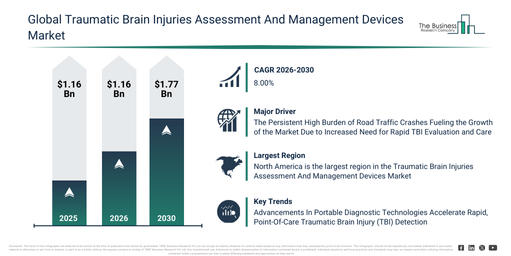
    Looking ahead, the market is anticipated to grow further, reaching a value of $5.58 billion by 2030, with a CAGR of 8.0%. Factors fueling this growth include the increasing adoption of remote patient monitoring technologies, higher investments in neurocritical care infrastructure, expansion of wearable brain monitoring devices, a stronger focus on personalized rehabilitation strategies, and the integration of AI-based clinical decision support tools. Key trends expected to influence the market include wider use of AI-assisted TBI diagnostic tools, continuous brain monitoring system deployments, greater acceptance of portable neurodiagnostic devices, multimodal imaging integration, and an intensified emphasis on early injury detection.

    Primary Factors Contributing to Market Growth

    One of the main drivers behind the expansion of the traumatic brain injuries assessment and management devices market is the persistently high occurrence of road traffic accidents worldwide. These crashes, involving vehicles on public roads, frequently result in injuries, fatalities, and property damage, making them a leading cause of traumatic brain injuries globally. Growth in these incidents is attributed to issues such as distracted driving, speeding, rising vehicle density, and infrastructural shortcomings.

    Access The Complete Traumatic Brain Injuries Assessment And Management Devices Market Report:

    https://www.thebusinessresearchcompany.com/report/traumatic-brain-injuries-assessment-and-management-devices-global-market-report

    The critical role that TBI assessment and management devices play in emergency and acute care settings further supports market growth. These devices enable rapid diagnosis, intracranial pressure monitoring, and continuous neurological evaluation, which are essential for timely and potentially life-saving interventions for accident victims. For example, in August 2025, the International Transport Forum reported that Australia recorded 1,297 road deaths in 2024—a 4% increase compared to the previous year—highlighting the ongoing challenge posed by road traffic crashes and the corresponding demand for effective brain injury management technologies.

    Segmentation of the Traumatic Brain Injuries Assessment and Management Devices Market

    This market is categorized based on various parameters to provide a detailed understanding of its landscape. By device type, the market splits into imaging devices and monitoring devices. In terms of technology, it includes intracranial pressure (ICP) monitoring and brain tissue oxygen monitoring. The end-user segment covers hospitals, diagnostic centers, and other healthcare providers.

    Delving deeper, imaging devices are further classified into computed tomography (CT) scanners, magnetic resonance imaging (MRI) scanners, and positron emission tomography (PET) scanners. Monitoring devices consist of intracranial pressure (ICP) monitors, electroencephalogram (EEG) machines, near-infrared spectroscopy (NIRS) monitors, and transcranial Doppler (TCD) devices.

    Emerging Innovations Shaping the Future of TBI Assessment and Management

    Leading companies and research institutions in the TBI device market are focusing increasingly on developing portable, hand-held diagnostic tools that facilitate rapid evaluation at the point of care, especially in pre-hospital and field environments. These devices leverage cutting-edge technologies such as eye-safe lasers, spectroscopy, and AI-driven analytics to deliver fast, non-invasive brain injury detection immediately after trauma.

    A notable example is from February 2024, when the University of Birmingham in the UK introduced a prototype diagnostic device that combines a class-1 eye-safe laser with Raman spectroscopy to measure biochemical biomarkers at the back of the eye. This device is designed to evolve into a portable, point-of-care tool suited for roadside emergencies, sports venues, and military settings, thereby supporting early triage and informed clinical decision-making through prompt TBI assessment.

    Key Market Players and Competitive Landscape in Traumatic Brain Injuries Devices

    The market features several prominent companies that are instrumental in driving innovation and supplying TBI assessment and management devices globally. These include Abbott Laboratories, Medtronic plc, Siemens Healthineers AG, Philips Healthcare, GE HealthCare Technologies Inc., Canon Medical Systems Corporation, Masimo Corporation, Nihon Kohden Corporation, Natus Medical Incorporated, Neurosoft SA, Cadwell Industries Inc., NeuroPace Inc., Compumedics Limited, Micromed LLC, Electrical Geodesics Inc., ANT Neuro, Neuroelectrics Corporation, BrainScope Company Inc., Hyperfine Research Inc., and Advanced Brain Monitoring Inc.

    Regional Market Insights and Geographic Outlook

    In 2025, North America held the largest share of the traumatic brain injuries assessment and management devices market. However, the Asia-Pacific region is expected to witness the fastest growth during the forecast period. The market analysis includes regions such as Asia-Pacific, South East Asia, Western Europe, Eastern Europe, North America, South America, the Middle East, and Africa, offering a comprehensive view of global market trends and opportunities.

    Get in touch with us:

    The Business Research Company: https://www.thebusinessresearchcompany.com/

    Americas: +1 310-496-7795

    Asia: +44 7882 955267 & +91 8897263534

    Europe: +44 7882 955267

    Email us at: marketing@tbrc.info

    Follow us on:

    LinkedIn: https://in.linkedin.com/company/the-business-research-company

    YouTube: https://www.youtube.com/channel/UC24_fI0rV8cR5DxlCpgmyFQ

    Global Market Model: https://www.thebusinessresearchcompany.com/global-market-model
  • Trauma Fixation Devices And Equipment Market Expansion Is Reshaping Competitive Dynamics Across The Industry

    Trauma Fixation Devices And Equipment Market Expansion Is Reshaping Competitive Dynamics Across The Industry

    Enhanced with market attractiveness analysis, total addressable market evaluation, company benchmarking matrices, interactive Excel dashboards, expanded supply chain intelligence, emerging startup coverage, and detailed product insights, The Business Research Company’s 2026 market reports deliver more actionable and strategically valuable research.

    The trauma fixation devices and equipment sector has experienced steady growth in recent years, driven by various factors affecting patient care and surgical advancements. As the need for effective treatment of fractures and injuries rises worldwide, this market is set to witness notable expansion through 2030. The following analysis explores the current market size, the forces propelling growth, key segments, emerging trends, and leading companies shaping this industry.

    Trauma Fixation Devices and Equipment Market Size and Growth Outlook

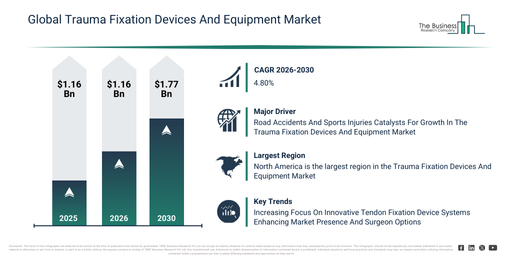
    The trauma fixation devices and equipment market is on a consistent growth trajectory. It is projected to increase from $12.11 billion in 2025 to $12.49 billion in 2026, reflecting a compound annual growth rate (CAGR) of 3.2%. Looking further ahead, the market is expected to reach $15.08 billion by 2030, expanding at a CAGR of 4.8%. This steady rise is supported by factors such as the growing number of road accidents and sports-related injuries, increased orthopedic surgeries, expansion of trauma care facilities, better availability of standardized fixation devices, and improvements in surgical training programs.

    Download A Free Sample Report For Comprehensive Market Insights:

    https://www.thebusinessresearchcompany.com/sample.aspx?id=2403&type=smp

    Key Factors Behind the Rising Demand in the Trauma Fixation Devices Market

    One of the main drivers of market growth is the increasing incidence of road accidents and sports injuries. These injuries result from vehicle collisions and physical trauma during athletic activities, often linked to risky behaviors like speeding or neglecting safety equipment. Trauma fixation devices play a crucial role in treating these injuries by stabilizing fractures, ensuring proper alignment, and supporting faster recovery. For example, the International Transport Forum reported that Australia experienced 1,297 road fatalities in 2024, up 4% from the previous year, highlighting the rising need for effective trauma management solutions.

    Increasing Orthopedic Disease Prevalence Boosts Market Expansion

    Another significant factor accelerating market growth is the rising incidence of orthopedic conditions, which affect the musculoskeletal system. Trauma fixation devices are essential in orthopedics for managing fractures, correcting deformities, and promoting healing. Research published in February 2023 by the National Library of Medicine forecasts substantial increases in joint replacement surgeries, with total hip arthroplasty (THA) and total knee arthroplasty (TKA) procedures expected to reach 1,982,099 and 2,917,959 respectively by 2060. This surge in orthopedic treatments underlines the growing demand for fixation devices.

    Access The Complete Trauma Fixation Devices And Equipment Market Report:

    https://www.thebusinessresearchcompany.com/report/trauma-fixation-devices-and-equipment-global-market-report

    Breakdown of Trauma Fixation Devices and Equipment Market Segments

    This market is categorized across several segments:

    1) Device Type: Internal Fixation Devices and External Fixation Devices

    2) Product Type: Metal Plates and Screws, Pins/Wires, Nails and Rods, Circular Fixators, Hybrid Fixators, and Unilateral Fixators

    3) End-User: Hospitals, Trauma Centers, and Ambulatory Surgical Centers

    Further subdivisions include:

    – Internal Fixation Devices such as Plates and Screws, Intramedullary Nails, Rods and Pins, Bone Screws, and Compression Plates

    – External Fixation Devices including External Fixators, Ring Fixators, Hybrid Fixators, and Soft Tissue Fixators

    Innovations and Trends Driving Changes in the Trauma Fixation Devices Market

    Leading companies in this market are focusing on developing innovative solutions like advanced tendon fixation device systems to differentiate themselves and increase market share. These systems often incorporate resorbable materials with unique chemical and mechanical properties designed for orthopedic surgeries. For example, in July 2024, Anika Therapeutics introduced the Integrity Implant System, a hyaluronic acid-based implant that combines bone and tendon fixation components with single-use arthroscopic tools. This system protects injured tendons and supports healing through a flexible, porous scaffold made from proprietary materials that encourage tissue regeneration while maintaining strength for surgical handling.

    Competitive Landscape in the Trauma Fixation Devices and Equipment Market

    The market features prominent players such as Johnson & Johnson, DePuy Synthes, Stryker Corporation, Smith & Nephew plc, Zimmer Biomet Holdings, Arthrex Inc., B. Braun Group, Orthofix Medical Inc, Xinrong, Suzhou Sunan Zimmered, Double Medical, Jiangsu Trauhui, Wright Medical Group, Greenbone Ortho, Medartis AG, MedSilesia, IlluminOss, CONMED Corporation, Baumer S.A., Biomecanica Group, Engimplan, GMReis, NEOORTHO, Trauma Solutions S.A.C., ZygoFix, CarboFix Orthopedic Ltd, Carevature Medical Ltd, ARNICA FAM PARAND, Tibbi Aletler San.Tic.Ltd.Sti., Atamed, and EgiFix medical.

    Regional Market Dynamics and Growth Hotspots

    In 2025, North America led the trauma fixation devices and equipment market, holding the largest regional share. Western Europe followed as the second-largest market. The broader report also covers regions including Asia-Pacific, South East Asia, Eastern Europe, South America, the Middle East, and Africa, providing a global perspective on demand and growth trends across these key areas.

    Get in touch with us:

    The Business Research Company: https://www.thebusinessresearchcompany.com/

    Americas: +1 310-496-7795

    Asia: +44 7882 955267 & +91 8897263534

    Europe: +44 7882 955267

    Email us at: marketing@tbrc.info

    Follow us on:

    LinkedIn: https://in.linkedin.com/company/the-business-research-company

    YouTube: https://www.youtube.com/channel/UC24_fI0rV8cR5DxlCpgmyFQ

    Global Market Model: https://www.thebusinessresearchcompany.com/global-market-model
  • Transradial Access Products Market Forecast Reveals Where Future Industry Value Will Be Created

    Transradial Access Products Market Forecast Reveals Where Future Industry Value Will Be Created

    Through market attractiveness analysis, total addressable market evaluation, company benchmarking matrices, interactive Excel dashboards, expanded supply chain intelligence, emerging startup coverage, and detailed product insights, The Business Research Company’s 2026 market reports provide more actionable and strategically valuable research.

    The transradial access products market is witnessing significant growth, supported by technological advancements and increasing demand for minimally invasive cardiovascular procedures. This sector is evolving rapidly, driven by rising cases of cardiovascular diseases and innovations aimed at improving patient care. Let’s explore the current market scenario, key growth drivers, segmentation, strategic developments, prominent players, and regional dynamics shaping this market’s future.

    Market Size and Growth Trajectory of the Transradial Access Products Market

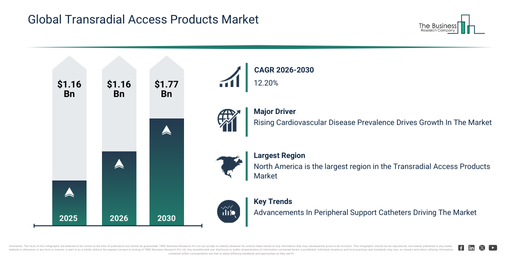
    The transradial access products market has experienced swift expansion in recent years. From a market size of $2.47 billion in 2025, it is expected to reach $2.77 billion by 2026, growing at a compound annual growth rate (CAGR) of 12.5%. This historic growth has been driven by factors such as the rising prevalence of coronary artery disease, increased use of angiography procedures, expansion of hospital catheterization labs, successful clinical outcomes of radial artery access, and greater adoption of specialized physician training.

    Looking ahead, the market is projected to continue its upward trajectory, reaching an estimated $4.39 billion by 2030 with a CAGR of 12.2%. The forecast period’s growth will be fueled by the increasing preference for minimally invasive cardiology techniques, a shift toward outpatient procedures, innovations in guidewire materials, heightened focus on patient safety, and the overall rise in cardiac interventions worldwide. Notable trends through this period include transitioning from femoral to radial access, reduced post-procedure complications, growth in interventional cardiology, advancements in hemostatic device designs, and faster patient recovery times.

    Download A Free Sample Report For Comprehensive Market Insights:

    https://www.thebusinessresearchcompany.com/sample.aspx?id=21303&type=smp

    How Cardiovascular Disease Trends Support Expansion of the Transradial Access Products Market

    The growing prevalence of cardiovascular diseases is a major factor propelling the expansion of the transradial access products market. Cardiovascular diseases encompass a wide array of conditions affecting the heart and blood vessels, including coronary artery disease, heart failure, and stroke. The surge in these conditions is linked to lifestyle factors such as inactivity, poor diet, obesity, tobacco use, excessive alcohol intake, and an aging population. These risk factors contribute to higher rates of hypertension, diabetes, and other complications.

    Transradial access products are instrumental in improving treatment outcomes by facilitating minimally invasive catheterization procedures. These products help reduce procedural complications, enhance patient comfort, and speed up recovery. For instance, in January 2024, the American Heart Association reported that the age-adjusted death rate from cardiovascular disease in the US rose to 233.3 per 100,000 people, marking a 4.0% increase from the previous year’s 224.4 per 100,000. This rising burden of cardiovascular conditions is a key driver for the market’s growth.

    Breakdown of Transradial Access Products Market Segments

    This market is organized into several essential categories to provide a clear overview:

    1) By Product Type: Catheters, Guidewires, Sheaths, and Other Products

    2) By Application: Diagnostic and Interventional Procedures, Drug Administration, Blood Transfusion, and Other Uses

    3) By End-User: Hospitals and Clinics, Ambulatory Surgical Centers, and Other Healthcare Facilities

    Within these groups, further subsegments include:

    – Catheters: Diagnostic Catheters, Guiding Catheters, Balloon Catheters

    – Guidewires: Hydrophilic Guidewires, Nitinol Guidewires, Stainless Steel Guidewires

    – Sheaths: Introducer Sheaths, Radial Sheath Sets, Hydrophilic-Coated Sheaths

    – Other Products: Hemostatic Devices, Compression Bands, Vascular Closure Devices

    Access The Complete Transradial Access Products Market Report:

    https://www.thebusinessresearchcompany.com/report/transradial-access-products-global-market-report

    Innovations and Strategic Developments Shaping the Transradial Access Products Market

    Key players in the transradial access products market are focusing on launching innovative solutions to boost procedural efficiency and improve patient outcomes. One notable development is the introduction of peripheral support catheters, designed to provide enhanced support and stability during complex peripheral vascular interventions, such as navigating tortuous vessels or crossing chronic total occlusions.

    For example, in December 2024, Terumo Interventional Systems, part of Terumo Corporation, introduced its R2P NaviCross Peripheral Support Catheter. This product supports guidewire navigation for challenging peripheral vascular procedures, facilitating access to difficult lesions and enhancing intervention success rates. Terumo’s broad portfolio includes catheters, guidewires, sheaths, and other devices used in cardiovascular and peripheral interventions.

    Top Companies Leading the Competitive Landscape of the Transradial Access Products Market

    Several leading companies dominate the transradial access products market, including:

    Johnson & Johnson, Abbott Vascular, Medtronic plc, Boston Scientific Corporation, Terumo Corporation, Edwards Lifesciences Corporation, Teleflex Incorporated, Cook Medical, Biotronik SE & Co., Merit Medical Systems Inc., Penumbra Inc., Angiodynamics Inc., Oscor Inc., Asahi Intecc Co. Ltd., Nipro Medical Corporation, Vascular Solutions Inc., Cardinal Health Inc., BD Interventional, B. Braun Melsungen AG, and Medline Industries LP. These organizations are driving innovation and expanding their product portfolios to maintain competitive advantages.

    Regional Market Insights Highlighting North America’s Leading Position

    In 2025, North America held the largest share of the transradial access products market. The report also covers significant regions such as Asia-Pacific, South East Asia, Western Europe, Eastern Europe, South America, the Middle East, and Africa. While North America leads in market size, emerging regions like Asia-Pacific are expected to witness substantial growth driven by improving healthcare infrastructure and rising cardiovascular disease prevalence.

    Get in touch with us:

    The Business Research Company: https://www.thebusinessresearchcompany.com/

    Americas: +1 310-496-7795

    Asia: +44 7882 955267 & +91 8897263534

    Europe: +44 7882 955267

    Email us at: marketing@tbrc.info

    Follow us on:

    LinkedIn: https://in.linkedin.com/company/the-business-research-company

    YouTube: https://www.youtube.com/channel/UC24_fI0rV8cR5DxlCpgmyFQ

    Global Market Model: https://www.thebusinessresearchcompany.com/global-market-model