Category: Medical Equipment

  • Polymerase Chain Reactions (PCR) Devices, Reagents And Uses Market Expected To Reach $9.84 Billion By 2030 As Growth Accelerates At 9% CAGR

    Polymerase Chain Reactions (PCR) Devices, Reagents And Uses Market Expected To Reach $9.84 Billion By 2030 As Growth Accelerates At 9% CAGR

    Through market attractiveness analysis, total addressable market evaluation, company benchmarking matrices, interactive Excel dashboards, expanded supply chain intelligence, emerging startup coverage, and detailed product insights, The Business Research Company’s 2026 market reports provide more actionable and strategically valuable research.

    The market for polymerase chain reaction (PCR) devices, reagents, and their applications has experienced significant growth in recent years. This expansion reflects the increasing importance of these technologies in diverse fields such as diagnostics, research, and personalized medicine. Let’s explore the current market size, key drivers behind growth, important segments, leading companies, and regional developments shaping this industry.

    Market Expansion and Forecast for the Polymerase Chain Reaction Devices, Reagents and Uses Market

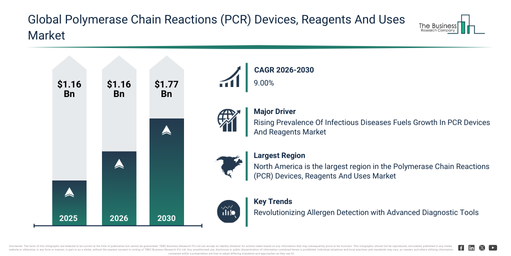
    The PCR devices, reagents, and uses market is on an upward trajectory, with projections showing growth from $6.51 billion in 2025 to $6.97 billion in 2026, representing a compound annual growth rate (CAGR) of 7.2%. This positive trend stems from factors such as outbreaks of infectious diseases, growth in genomics research, increased clinical diagnostic laboratories, demand for COVID-19 testing, and broader adoption of molecular biology techniques. Looking further ahead, the market is expected to reach $9.84 billion by 2030, growing at a faster CAGR of 9.0%. This anticipated boost is fueled by rising personalized medicine practices, expanding cancer diagnostics, wider genetic screening, enhanced research funding, and growing demand for rapid diagnostic solutions. Key trends shaping the market include the surge in molecular diagnostics, expanded infectious disease testing, greater use of real-time PCR, intensified research-based PCR applications, and the miniaturization of PCR instruments.

    Download A Free Sample Report For Comprehensive Market Insights:

    https://www.thebusinessresearchcompany.com/sample.aspx?id=2485&type=smp

    How Infectious Diseases Are Propelling Market Growth in PCR Devices, Reagents and Uses

    The increasing incidence of infectious diseases is a major driver for the PCR devices and reagents market. These diseases, caused by pathogens like bacteria, viruses, fungi, or parasites, spread through direct or indirect contact among individuals. The rise in global travel has accelerated the transmission of such diseases across borders, highlighting the need for rapid and accurate diagnostic tools. PCR technologies play a crucial role in this context by amplifying genetic material to quickly identify infections and improve laboratory efficiency. For example, in February 2024, the UK Health Security Agency reported that tuberculosis cases in England rose by 10.7% in 2023 compared to 2022, reaching 4,850 cases. This growing prevalence underscores the importance of PCR methods in disease management and supports market growth.

    Additional Factors Supporting the Expansion of the PCR Devices, Reagents and Uses Market

    Beyond infectious diseases, the adoption of PCR technologies is increasing due to broader applications in clinical diagnostics, pharmaceutical development, and biotechnology. The demand for faster, more reliable genetic testing methods is driving investments and innovations in PCR platforms. Laboratories and research organizations are embracing these tools to enhance accuracy and speed, addressing needs from early disease detection to environmental monitoring and food safety testing.

    Access The Complete Polymerase Chain Reactions (PCR) Devices, Reagents And Uses Market Report:

    https://www.thebusinessresearchcompany.com/report/polymerase-chain-reactions-devices-reagents-and-uses-global-market-report

    Breakdown of Market Segments Within PCR Devices, Reagents and Uses

    The PCR market can be divided into several key segments for better understanding:

    1) By Product Type: Instruments, Reagents, Consumables

    2) By Instrument Category: Standard PCR, RT-PCR, Digital PCR

    3) By End Users: Pharmaceutical and Biotechnology Industries, Clinical Diagnostics Labs and Hospitals, Academic and Research Organizations

    Further subcategories include types of instruments such as thermal cyclers, real-time PCR systems, and digital PCR systems. Reagents are classified into master mixes, primers and probes, enzymes, and nucleotides. Consumables include PCR tubes, PCR plates, seals and films, and pipette tips. This detailed segmentation reflects the wide range of products necessary to support diverse PCR applications.

    Innovations and Market Trends Shaping the Future of PCR Devices and Reagents

    Leading companies in the PCR market are prioritizing the development of cutting-edge diagnostic tools that enhance the precision and speed of genetic testing. These advancements improve early detection of diseases and support a broad array of research efforts spanning healthcare, environmental studies, and food safety. For example, in August 2023, Germany-based Gold Standard Diagnostics launched DNAllergen RT-PCR kits designed for highly sensitive detection of specific allergens in food products. These kits utilize real-time PCR technology to identify allergens like almond, celery, and fish with improved accuracy, addressing challenges that traditional testing methods face.

    Competitive Landscape and Major Players in the PCR Devices, Reagents and Uses Market

    Key industry leaders dominating the PCR space include Bio-Rad Laboratories Inc., F. Hoffmann-La Roche AG, Thermo Fisher Scientific Inc., Becton Dickinson and Company, Abbott Laboratories, bioMérieux S.A., Agilent Technologies Inc., QIAGEN N.V., Siemens Healthcare GmbH, Fluidigm Corporation, SYGNIS Pharma AG, Takara Bio Inc., Cepheid, Lontech Laboratories, Eppendorf India Private Limited, GE Healthcare, Kapa Biosystems, Maxim Biomedical Inc., Promega Corporation, RainDance Technologies Inc., Affymetrix Inc., Beckman Coulter Inc., Enzo Life Sciences Inc., Roche Diagnostics GmbH, Merck KGaA, Danaher Corporation, Stilla Technologies, Meridian Bioscience Inc., BioFire Diagnostics LLC, Luminex Corporation, and GenMark Diagnostics Inc. These companies focus on product innovation, strategic collaborations, and expanding their market reach.

    Geographical Breakdown and Regional Market Development for PCR Devices and Reagents

    In 2025, North America was the largest market for PCR devices and reagents, reflecting established healthcare infrastructure and strong research capabilities. Western Europe ranked as the second-largest region globally. The analysis also covers regions such as Asia-Pacific, South East Asia, Eastern Europe, South America, Middle East, and Africa, highlighting global market dynamics and opportunities for expansion across different geographies.

    Get in touch with us:

    The Business Research Company: https://www.thebusinessresearchcompany.com/

    Americas: +1 310-496-7795

    Asia: +44 7882 955267 & +91 8897263534

    Europe: +44 7882 955267

    Email us at: marketing@tbrc.info

    Follow us on:

    LinkedIn: https://in.linkedin.com/company/the-business-research-company

    YouTube: https://www.youtube.com/channel/UC24_fI0rV8cR5DxlCpgmyFQ

    Global Market Model: https://www.thebusinessresearchcompany.com/global-market-model
  • Polymer Biomaterial Market Set To Grow From $109.73 Billion In 2026 To $197.21 Billion By 2030 At A CAGR Of 15.8%

    Polymer Biomaterial Market Set To Grow From $109.73 Billion In 2026 To $197.21 Billion By 2030 At A CAGR Of 15.8%

    Delivering more actionable and strategically valuable research, The Business Research Company’s 2026 market reports feature market attractiveness analysis, total addressable market evaluation, company benchmarking matrices, interactive Excel dashboards, expanded supply chain intelligence, emerging startup coverage, and detailed product insights.

    The polymer biomaterial sector is experiencing swift expansion, driven by advancements in medical procedures and growing healthcare demands worldwide. As this market evolves, it is important to understand its current scale, growth factors, leading players, and emerging trends that are shaping its future trajectory.

    Current Market Size and Growth Outlook for Polymer Biomaterials

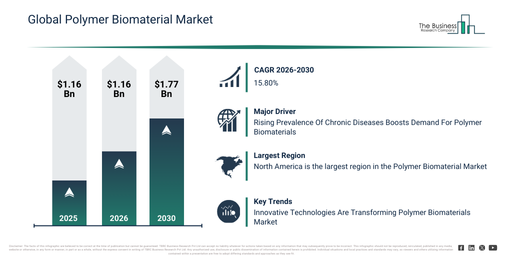
    The polymer biomaterial market has witnessed significant growth recently and is projected to expand from $94.98 billion in 2025 to $109.73 billion in 2026, which corresponds to a compound annual growth rate (CAGR) of 15.5%. This growth during the historical period is mainly due to increased orthopedic surgeries, the rise in dental implant procedures, more cardiovascular surgeries, higher demand for plastic surgery, and broader adoption of synthetic materials. Looking ahead, the market is expected to reach $197.22 billion by 2030, growing at a CAGR of 15.8%. Key drivers for this forecasted growth include advancements in regenerative medicine, the rising prevalence of chronic diseases, expansion in implant technologies, increased demand for biodegradable materials, and progress in polymer chemistry. Important trends anticipated to influence this market include greater demand for biocompatible polymers, growth in implantable medical devices, wider use of synthetic biomaterials, tissue engineering applications, and the development of durable long-term polymers.

    Download A Free Sample Report For Comprehensive Market Insights:

    https://www.thebusinessresearchcompany.com/sample.aspx?id=3416&type=smp

    How Chronic Diseases Act as a Catalyst for Polymer Biomaterial Market Growth

    The rising incidence of chronic diseases plays a crucial role in propelling the polymer biomaterial market forward. Chronic diseases, often called non-communicable diseases (NCDs), are long-lasting medical conditions that typically develop slowly and persist over time. Polymer biomaterials are integral in manufacturing implantable medical devices such as drug delivery pumps and electrodes used in neuromodulation therapies. These devices significantly improve symptom management and the quality of life for patients living with chronic conditions. For example, in June 2024, data from the UK’s National Health Service revealed that 3,615,330 people registered with a general practitioner were diagnosed with non-diabetic hyperglycemia (pre-diabetes) in 2023, an 18% increase from 3,065,825 people in 2022. This sharp increase in chronic disease cases underlines the growing need for polymer biomaterials in healthcare.

    Segments Driving Development in the Polymer Biomaterial Market

    This market is divided into several key segments to better understand its landscape:

    1) By Type: Nylon, Silicone Rubber, Polyester, Polymethyl Methacrylate (PMMA), Polyethylene (PE), Polyvinyl Chloride, and other types

    2) By Nature: Natural and Synthetic

    3) By Application: Cardiovascular, Ophthalmology, Dental, Plastic Surgery, Wound Healing, Tissue Engineering, Orthopedics, Neurological Disorders or Central Nervous System, and others

    Further breakdowns include:

    – Nylon types such as Nylon 6 and Nylon 66

    – Silicone Rubber variants including Liquid Silicone Rubber (LSR) and Solid Silicone Rubber (SSR)

    – Polyester subtypes like Polyethylene Terephthalate (PET) and Polybutylene Terephthalate (PBT)

    – PMMA in clear and colored forms

    – Polyethylene forms including High-Density (HDPE), Low-Density (LDPE), and Linear Low-Density (LLDPE)

    – Polyvinyl Chloride as rigid and flexible types

    – Other polymers like Polyurethane (PU) and Polycarbonate (PC)

    Access The Complete Polymer Biomaterial Market Report:

    https://www.thebusinessresearchcompany.com/report/polymer-biomaterial-global-market-report

    Innovations Advancing the Polymer Biomaterial Market

    Leading companies are focusing on innovative technologies to boost market performance, such as designed enzymatic biomaterials (DEB) technology. DEB represents a breakthrough platform for producing high-performance polysaccharides with enhanced properties. For instance, in June 2023, International Flavors & Fragrances Inc., a US-based company specializing in cosmetics and flavors, introduced this sustainable biopolymer technology. It allows for the production of biopolymers that mimic the qualities of petroleum-based polymers but with greater customization options. This technology enables direct transfer of desired functionalities from petroleum-based materials into biopolymer compounds, providing tailored and high-performing alternatives.

    Key Players Competing in the Polymer Biomaterial Industry

    The polymer biomaterial market features a variety of prominent companies including BASF SE, Corbion N.V., Zimmer Biomet Holdings Inc., Royal DSM N.V., Covestro AG, Evonik Industries AG, Starch Medical Inc., Victrex plc, W. L. Gore and Associates Inc., DSM Biomedical B.V., Purac Biomaterials, Ticona LLC, Invibo LLC, Covalon Technologies Ltd., Osteotech Inc., Medtronic plc, Stryker Corporation, Synthes Inc., Polyfibre Industries Pte Ltd., Toray Industries Inc., Stein Fibers Ltd., Bezwada Biomedical LLC, Collagen Solutions plc, Gelita AG, AorTech Biomaterials Pty Ltd., Berkeley Advanced Biomaterials Inc., Biocomposites Ltd., BioHorizons IPH Inc., Biomerics LLC, Bioteque Corporation, CollPlant Holdings Ltd., EndoShape Inc., PolyNovo Biomaterials Pty Ltd., and Secant Group LLC. These companies are pivotal in driving innovation and expanding market reach.

    Geographical Revenue Leaders in the Polymer Biomaterial Sector

    In 2025, North America led the global polymer biomaterial market in terms of revenue, holding the largest market share. Western Europe ranked second in size. The market report also analyzes other significant regions including Asia-Pacific, South East Asia, Eastern Europe, South America, the Middle East, and Africa, providing a detailed global view of the market’s performance and prospects.

    Get in touch with us:

    The Business Research Company: https://www.thebusinessresearchcompany.com/

    Americas: +1 310-496-7795

    Asia: +44 7882 955267 & +91 8897263534

    Europe: +44 7882 955267

    Email us at: marketing@tbrc.info

    Follow us on:

    LinkedIn: https://in.linkedin.com/company/the-business-research-company

    YouTube: https://www.youtube.com/channel/UC24_fI0rV8cR5DxlCpgmyFQ

    Global Market Model: https://www.thebusinessresearchcompany.com/global-market-model
  • Poly-L-Lactic Acid (PLA) Thread Lift Market Opportunities Are Emerging Beyond Traditional Growth Areas

    Poly-L-Lactic Acid (PLA) Thread Lift Market Opportunities Are Emerging Beyond Traditional Growth Areas

    Enhanced with market attractiveness analysis, total addressable market evaluation, company benchmarking matrices, interactive Excel dashboards, expanded supply chain intelligence, emerging startup coverage, and detailed product insights, The Business Research Company’s 2026 market reports deliver more actionable and strategically valuable research.

    The poly-L-lactic acid (PLA) thread lift market has been experiencing swift growth recently, driven by evolving consumer preferences and advances in cosmetic technologies. This sector is attracting considerable attention as patients increasingly seek effective, minimally invasive methods for facial rejuvenation. Below, we explore the market’s current status, key growth drivers, major players, and regional prospects shaping its trajectory.

    Steady Market Expansion Forecast in the Poly-L-Lactic Acid (PLA) Thread Lift Market

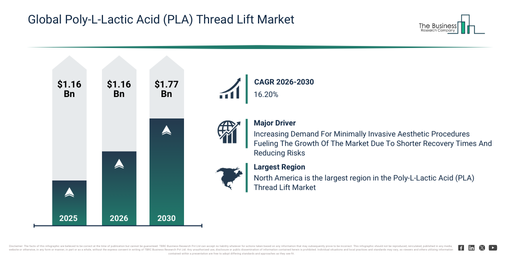
    The PLA thread lift market is set to grow from $1.49 billion in 2025 to $1.74 billion in 2026, achieving a compound annual growth rate (CAGR) of 16.5%. This upward trend during the past years has been fueled by rising demand for less invasive cosmetic treatments, innovations in thread materials, heightened aesthetic awareness, disposable income growth, and the accessibility of specialized clinics. Looking ahead, the market is projected to reach $3.17 billion by 2030, maintaining a strong CAGR of 16.2%. Factors such as the development of new thread types, customized cosmetic procedures, expansion of outpatient and specialty clinics, integration of AI-driven procedure planning, and collaborations between device manufacturers and clinics will continue to encourage this growth. Notable trends include the increasing use of barbed, smooth, screw, combination, and absorbable threads.

    Download A Free Sample Report For Comprehensive Market Insights:

    https://www.thebusinessresearchcompany.com/sample.aspx?id=28303&type=smp

    Growing Demand for Minimally Invasive Procedures Boosts the PLA Thread Lift Market

    One of the primary forces propelling the PLA thread lift market is the rising preference for minimally invasive aesthetic procedures. These treatments improve appearance with minimal pain, no large incisions, and faster recovery, making them highly appealing to patients. Their shorter downtime, reduced complication risks, less discomfort, and smaller scars are attracting more individuals seeking safe and effective cosmetic enhancements. PLA thread lifts support these procedures by providing skin lifting and tightening without surgery, stimulating collagen production to improve firmness and elasticity with minimal downtime. For instance, in November 2024, the American Society of Plastic Surgeons reported that 25,442,640 minimally invasive cosmetic procedures were performed in the U.S. in 2023, a 7% rise from 23,672,269 in 2022, underscoring the increasing adoption of such treatments.

    Medical Tourism’s Influence on the Poly-L-Lactic Acid (PLA) Thread Lift Market

    Another significant factor driving the market is the surge in medical tourism, where patients travel abroad to access affordable yet high-quality cosmetic treatments. The cost advantages offered by international clinics have made PLA thread lift procedures more accessible to a broader population. This trend enables patients to receive skilled treatments with modern facilities while benefiting from lower prices. For example, a survey published in January 2025 by the National Center for Biotechnology Information (NCBI) found that approximately 431,000 UK residents traveled overseas for medical care in 2023, up from 348,000 in 2022. This increase in medical tourism is positively impacting the demand for PLA thread lift procedures worldwide.

    Access The Complete Poly-L-Lactic Acid (PLA) Thread Lift Market Report:

    https://www.thebusinessresearchcompany.com/report/poly-l-lactic-acid-pla-thread-lift-global-market-report

    The Role of Increased Healthcare Spending in Fueling Market Growth

    Rising healthcare expenditure also plays a crucial role in expanding the PLA thread lift market. Healthcare spending comprises the total investment in medical treatments, facilities, research, and public health efforts aimed at improving health outcomes. The increasing burden of chronic diseases is driving higher healthcare budgets, indirectly boosting consumer affordability for elective cosmetic procedures. This financial growth empowers more patients to opt for minimally invasive treatments such as PLA thread lifts. To illustrate, the Office for National Statistics in the UK reported a 5.6% nominal increase in total healthcare expenditure in 2023, which represents a 0.9% rise compared to 2022. This growing investment in healthcare supports wider access to aesthetic procedures, aiding market expansion.

    Segments Highlighting Growth Potential in the Poly-L-Lactic Acid (PLA) Thread Lift Market

    This market is segmented by product type, application, and end user to capture its diverse opportunities:

    1) Product Types include Barbed Threads, Smooth Threads, Screw Threads, and Other Product Types.

    2) Applications cover Face Lift, Neck Lift, Nose Lift, Eyebrow Lift, and Other uses.

    3) End Users consist of Hospitals, Ambulatory Surgical Centers, Specialty Clinics, and other healthcare facilities.

    Further breakdowns include subcategories such as Mono, Cog, Spiral, and Anchor Threads under Barbed Threads; Monofilament, Twisted, Braided, and Polished Threads among Smooth Threads; Single Helix, Double Helix, Triple Helix, and Barrel Threads within Screw Threads; and Combination, Absorbable, and Specialty Threads categorized as Other Product Types.

    Key Players Steering the Poly-L-Lactic Acid (PLA) Thread Lift Market

    Several prominent companies are leading the PLA thread lift market, including Aptos LLC, HansBiomed Co. Ltd., Croma-Pharma GmbH, Sinclair Pharmaceuticals Ltd., Merz Pharma GmbH & Co. KGaA, Healux Corporation, N-Finders Co. Ltd., Intraline Technologies Inc., NovaThreads Inc., Surgiform Technology Ltd., Yavo Medical Technology Suzhou Co. Ltd., Metro Korea Co. Ltd., Diaminy Aesthetics Inc., Les Encres SAS, GEM S.r.l., River Aesthetics Inc., Yastrid Inc., Aesthetic Experts Labs Inc., Dr. Korman Laboratories Ltd., Auro Inc., and Amabelle Medical Technologies Pvt. Ltd.

    Regional Market Outlook Points to North America’s Dominance and Asia-Pacific’s Rapid Growth

    In 2025, North America held the largest share of the PLA thread lift market. However, the Asia-Pacific region is forecasted to be the fastest-growing market over the upcoming years. The report covers key geographic areas such as Asia-Pacific, South East Asia, Western Europe, Eastern Europe, North America, South America, the Middle East, and Africa, providing a comprehensive perspective on global market trends and opportunities.

    Get in touch with us:

    The Business Research Company: https://www.thebusinessresearchcompany.com/

    Americas: +1 310-496-7795

    Asia: +44 7882 955267 & +91 8897263534

    Europe: +44 7882 955267

    Email us at: marketing@tbrc.info

    Follow us on:

    LinkedIn: https://in.linkedin.com/company/the-business-research-company

    YouTube: https://www.youtube.com/channel/UC24_fI0rV8cR5DxlCpgmyFQ

    Global Market Model: https://www.thebusinessresearchcompany.com/global-market-model
  • Polyetheretherketone (PEEK) Implants Market Expansion Is Opening New Pathways For Strategic Investment

    Polyetheretherketone (PEEK) Implants Market Expansion Is Opening New Pathways For Strategic Investment

    Through market attractiveness analysis, total addressable market evaluation, company benchmarking matrices, interactive Excel dashboards, expanded supply chain intelligence, emerging startup coverage, and detailed product insights, The Business Research Company’s 2026 market reports provide more actionable and strategically valuable research.

    The market for polyetheretherketone (PEEK) implants has witnessed significant growth recently, fueled by advancements in medical procedures and material technologies. As demand rises across various healthcare sectors, the outlook for PEEK implants remains robust, promising continued expansion driven by innovation and demographic trends. This overview highlights the current market size, key growth drivers, segmentation, major players, strategic directions, and regional dynamics shaping this evolving industry.

    Market Size and Projected Growth Trajectory of the Polyetheretherketone (PEEK) Implants Market

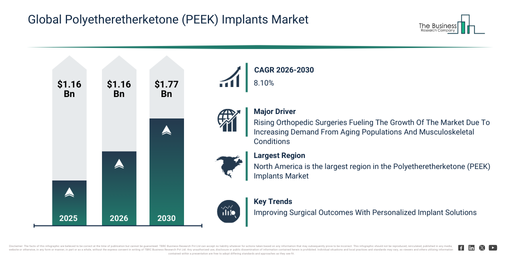
    The polyetheretherketone (PEEK) implants market has shown strong progression over the past years. Market revenue is expected to increase from $1.55 billion in 2025 to $1.68 billion in 2026, reflecting a compound annual growth rate (CAGR) of 8.4%. This earlier growth phase has been propelled by a rise in spinal and orthopedic surgeries, heightened awareness about biocompatible implant options, greater demand for trauma surgery devices, technological advancements in polymer materials, and the expansion of healthcare infrastructure globally. Looking ahead, the market is forecasted to grow steadily, reaching $2.29 billion by 2030 with a CAGR of 8.1%. This future expansion is expected to be driven by wider adoption of 3D-printed implants, an increasing elderly population, growth in minimally invasive surgical techniques, material innovations in PEEK, and the development of emerging markets. Key trends anticipated in the period include a shift toward radiolucent implants, customization through 3D printing, enhanced biocompatibility and implant durability, and the use of lightweight implant materials.

    Download A Free Sample Report For Comprehensive Market Insights:

    https://www.thebusinessresearchcompany.com/sample.aspx?id=25880&type=smp

    Rising Orthopedic Surgeries as a Key Growth Catalyst for the PEEK Implants Market

    The increasing volume of orthopedic surgeries is a major factor fueling the polyetheretherketone (PEEK) implants market expansion. Orthopedic procedures address conditions impacting the musculoskeletal system—including bones, joints, ligaments, tendons, and muscles—often requiring implants to repair or replace damaged structures. The surge in these surgeries is primarily driven by the aging worldwide population, which faces higher incidences of musculoskeletal ailments such as arthritis, joint deterioration, and fractures. As life expectancy rises, so does the need for interventions that preserve mobility and improve quality of life. PEEK implants offer a biocompatible, durable alternative to traditional metal implants, providing flexibility, strength, and radiolucency that facilitates better imaging and long-term stabilization of joints and bones. For example, data from the UK Health Security Agency (UKHSA) shows a 7.3% increase in orthopedic surgeries reported under mandatory surveillance between 2022 and 2023, reaching 102,027 procedures, underscoring the growing demand for such implants.

    Technological Progress and Polymer Innovations Supporting Market Demand

    Aside from surgery volume, the advancement in polymer technologies is playing a crucial role in boosting the polyetheretherketone (PEEK) implants market. Enhanced material properties, such as improved biocompatibility and durability, are increasing the appeal of PEEK implants over conventional options. Additionally, developments in minimally invasive surgical procedures are driving demand for implants tailored to less invasive techniques. These innovations contribute to improved patient outcomes, shorter recovery times, and broader clinical adoption, further propelling market growth.

    Access The Complete Polyetheretherketone (PEEK) Implants Market Report:

    https://www.thebusinessresearchcompany.com/report/polyetheretherketone-peek-implants-global-market-report

    Breakdown of Polyetheretherketone (PEEK) Implants Market by Types and Applications

    The PEEK implants market is categorized based on various factors to provide a detailed view of its structure. By type, products include interbody devices, screws, fixation plates, rods, and cages. From an application perspective, the market covers spinal fusion, trauma surgery, craniomaxillofacial surgery, and sports medicine. The end-user segment consists primarily of hospitals and clinics, ambulatory surgical centers, and other healthcare facilities. More specific subsegments include cervical, lumbar, thoracic, and 3D-printed interbody cages; different screw types like pedicle, cortical, cannulated, and locking screws; fixation plates including cranial, maxillofacial, orthopedic trauma, and spinal fixation plates; rods used for spinal stabilization, dynamic stabilization, posterior fixation, and custom contoured types; as well as a variety of cages such as anterior lumbar interbody fusion (ALIF), posterior lumbar interbody fusion (PLIF), transforaminal lumbar interbody fusion (TLIF), and expandable cages.

    Cutting-Edge Innovations and 3D Printing Shaping the Future of PEEK Implants

    Top players in the PEEK implants market are investing heavily in technological innovations, particularly 3D printing, to advance personalized implants that better fit individual patient anatomy. Such additive manufacturing techniques enhance implant customization, improve surgical results, and potentially shorten recovery periods. For instance, in April 2024, 3D Systems, Inc., a US-based company specializing in 3D printing solutions, obtained FDA 510(k) clearance for its VSP PEEK Cranial Implant. This product combines advanced segmentation and 3D modeling software with Evonik’s VESTAKEEP i4 3DF PEEK material and utilizes the EXT 220 MED 3D printer. The approach allows production of patient-specific cranial implants using up to 85% less material than traditional machining methods, significantly cutting costs associated with high-grade PEEK implants.

    Prominent Corporations Driving Innovation and Competition in the PEEK Implants Market

    The polyetheretherketone (PEEK) implants sector is shaped by several leading companies actively pushing competitive growth through innovation and expansion. Notable players include Stryker Corporation, NuVasive Inc., 3D Systems Inc., Zypeek Medical Technology Co. Ltd., Innovasis Inc., HAPPE Spine LLC, Cavendish Implants Ltd., Junsun Medical Technology Co. Ltd., Medtronic plc, Zimmer Biomet Holdings Inc., Globus Medical Inc., Orthofix Medical Inc., Alphatec Spine Inc., Xtant Medical Holdings Inc., Life Spine Inc., SeaSpine Holdings Corporation, CoreLink LLC, Aurora Spine Corporation, ChoiceSpine LLC, DePuy Synthes Spine, Aesculap Spine, K2M Group Holdings Inc., and Curiteva Inc. These companies focus on developing advanced implant solutions, enhancing surgical tools, and expanding their presence across key geographic markets.

    Regional Market Leadership and Emerging Growth Hotspots in PEEK Implants

    In 2025, North America was the largest regional market for polyetheretherketone (PEEK) implants, benefiting from established healthcare infrastructure and high adoption rates of advanced medical technologies. However, the Asia-Pacific region is expected to experience the most rapid growth during the forecast period, driven by increasing healthcare investments, rising patient awareness, and expanding surgical volumes. The market analysis also includes other important regions such as South East Asia, Western Europe, Eastern Europe, South America, the Middle East, and Africa, offering a comprehensive global perspective on current and future market trends.

    Get in touch with us:

    The Business Research Company: https://www.thebusinessresearchcompany.com/

    Americas: +1 310-496-7795

    Asia: +44 7882 955267 & +91 8897263534

    Europe: +44 7882 955267

    Email us at: marketing@tbrc.info

    Follow us on:

    LinkedIn: https://in.linkedin.com/company/the-business-research-company

    YouTube: https://www.youtube.com/channel/UC24_fI0rV8cR5DxlCpgmyFQ

    Global Market Model: https://www.thebusinessresearchcompany.com/global-market-model
  • Polyether Ether Ketone (PEEK) Interbody Devices Market Trends Are Creating New Opportunities For Industry Leaders

    Polyether Ether Ketone (PEEK) Interbody Devices Market Trends Are Creating New Opportunities For Industry Leaders

    Delivering more actionable and strategically valuable research, The Business Research Company’s 2026 market reports feature market attractiveness analysis, total addressable market evaluation, company benchmarking matrices, interactive Excel dashboards, expanded supply chain intelligence, emerging startup coverage, and detailed product insights.

    The Polyether Ether Ketone (PEEK) interbody devices market has seen significant progress in recent years, driven by advancements in spinal care and growing patient needs. This sector is set for continued expansion as innovations and increasing demand for spinal treatments shape its future trajectory. Let’s explore the current market size, the factors fueling growth, key segment details, recent technological developments, and the major players involved in this evolving industry.

    Market Size Growth and Forecast of the Polyether Ether Ketone (PEEK) Interbody Devices Market

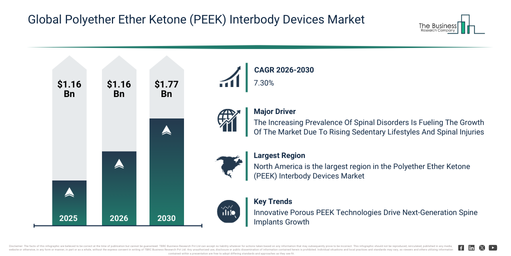
    The market for PEEK interbody devices has experienced strong growth and is anticipated to continue this trend. It is projected to rise from $1.92 billion in 2025 to $2.07 billion in 2026, reflecting a compound annual growth rate (CAGR) of 7.8%. Looking further ahead, the market is expected to reach $2.74 billion by 2030, growing at a CAGR of 7.3%. This positive momentum is driven by factors such as the increasing prevalence of degenerative disc disease, more frequent spinal trauma cases, the adoption of conventional spinal implants, an expanding elderly population, and limited awareness surrounding advanced interbody devices. Additional growth drivers include advances in PEEK materials and designs, the rise of minimally invasive surgery, expanding hospital infrastructure, growing demand for personalized implants, and the global increase in spinal fusion procedures.

    Download A Free Sample Report For Comprehensive Market Insights:

    https://www.thebusinessresearchcompany.com/sample.aspx?id=25879&type=smp

    Factors Contributing to the Expansion of the PEEK Interbody Devices Market

    The rising number of spinal disorders is a key factor boosting demand for PEEK interbody devices. Spinal disorders, which affect the vertebrae, discs, nerves, and muscles, have become more common due to sedentary lifestyles and reduced physical activity. These behaviors weaken the muscles supporting the spine, leading to increased strain and issues that require intervention. PEEK interbody devices provide strong yet flexible support between vertebrae, enhancing spinal stability and promoting natural bone growth while ensuring clear imaging during post-operative evaluations. To illustrate this trend, in May 2023, Spinal Cord Inc., a US-based resource supporting spinal cord injury patients, reported approximately 18,000 new spinal cord injury cases in the United States in 2023, with an estimated 302,000 individuals living with such injuries nationwide. This growing patient base underpins the expanding market for PEEK interbody devices.

    Technological Trends and Innovations Shaping the PEEK Interbody Devices Market

    Innovation plays a critical role in the evolution of the PEEK interbody devices sector. Leading companies are focusing on developing advanced solutions like porous PEEK interbody spacers, which feature a bone-like porous structure designed to enhance osseointegration and improve spinal fusion outcomes. These implants encourage bone ingrowth, offering better biological fixation compared to traditional smooth PEEK devices. For example, in March 2025, Globus Medical Inc., a US musculoskeletal technology firm, launched the COHERE ALIF Spacer, the first porous PEEK spacer specifically designed for anterior lumbar interbody fusion (ALIF) surgery. This device combines Globus Medical’s proprietary porous PEEK architecture with the benefits of PEEK’s imaging compatibility and mechanical strength, aiming to boost bone integration and improve surgical results.

    Access The Complete Polyether Ether Ketone (PEEK) Interbody Devices Market Report:

    https://www.thebusinessresearchcompany.com/report/polyether-ether-ketone-peek-interbody-devices-global-market-report

    Segment Analysis Detailing the PEEK Interbody Devices Market Categories

    This market is segmented in multiple ways. By product type, it includes Posterolateral Fusion Devices, Interbody Fusion Devices, Anterior Lumbar Interbody Fusion Devices (ALIF), Extreme Lateral Interbody Fusion Devices (XLIF), Posterior Lumbar Interbody Fusion Devices (PLIF), and Transforaminal Lumbar Interbody Fusion Devices (TLIF). Applications cover spinal fusion surgery, degenerative disc disease, spinal trauma, and spinal deformity. Distribution is managed through direct sales and third-party distributors, while end users encompass hospitals and clinics, ambulatory surgery centers, and specialty spine centers. Each product segment further breaks down into subcategories, such as single-level, multi-level and expandable devices within posterolateral fusion, or flat-profile, curved-profile, and cage-style devices in ALIF.

    Prominent Companies Driving the Polyether Ether Ketone (PEEK) Interbody Devices Market

    Several key players dominate this market, including Medtronic Inc., Stryker Corporation, Zimmer Biomet Holdings Inc., Globus Medical Inc., NuVasive Inc., Orthofix Medical Inc., Xtant Medical Holdings Inc., Alphatec Spine Inc., Spinal Elements Inc., Providence Medical Technology Inc., FossiLabs LLC, Life Spine Inc., Curiteva Inc., Medacta International S.A., LDR Holding Corporation, Cavendish Implants Limited, DePuy Synthes Spine, SeaSpine Holdings Corporation, Aesculap Spine, CoreLink LLC, Aurora Spine Corporation, ChoiceSpine LLC, and K2M Group Holdings Inc. These companies are investing heavily in research and development to enhance implant design and patient outcomes.

    Regional Market Distribution and Growth Outlook for PEEK Interbody Devices

    In 2025, North America held the largest market share for PEEK interbody devices. However, the Asia-Pacific region is expected to experience the fastest growth during the forecast period. The market report covers regions including Asia-Pacific, South East Asia, Western Europe, Eastern Europe, North America, South America, the Middle East, and Africa, providing a comprehensive view of global market trends.

    Get in touch with us:

    The Business Research Company: https://www.thebusinessresearchcompany.com/

    Americas: +1 310-496-7795

    Asia: +44 7882 955267 & +91 8897263534

    Europe: +44 7882 955267

    Email us at: marketing@tbrc.info

    Follow us on:

    LinkedIn: https://in.linkedin.com/company/the-business-research-company

    YouTube: https://www.youtube.com/channel/UC24_fI0rV8cR5DxlCpgmyFQ

    Global Market Model: https://www.thebusinessresearchcompany.com/global-market-model
  • Point-Of-Care-Testing (POCT) Market Growth Is Reshaping Competitive Advantage Across The Industry

    Point-Of-Care-Testing (POCT) Market Growth Is Reshaping Competitive Advantage Across The Industry

    Enhanced with market attractiveness analysis, total addressable market evaluation, company benchmarking matrices, interactive Excel dashboards, expanded supply chain intelligence, emerging startup coverage, and detailed product insights, The Business Research Company’s 2026 market reports deliver more actionable and strategically valuable research.

    The point-of-care testing (POCT) market is rapidly evolving as healthcare systems worldwide seek faster, more accessible diagnostic solutions. With technological advances and shifting healthcare delivery models, this sector is poised for significant expansion. Let’s explore the current market size, key growth drivers, segmentation, emerging trends, main competitors, and regional dynamics shaping the POCT industry.

    Current Market Size and Projected Growth Trajectory for the POCT Market

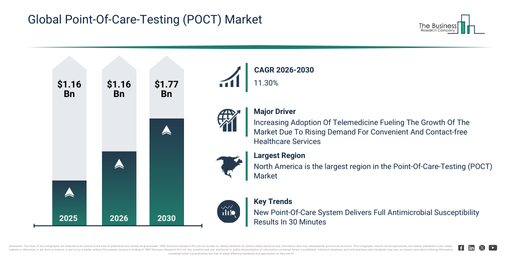
    The POCT market has witnessed swift development over recent years. Its valuation is projected to rise from $50.79 billion in 2025 to $56.68 billion in 2026, marking a compound annual growth rate (CAGR) of 11.6%. This growth during the historical period results from increasing chronic disease rates, the urgent need for quick clinical decisions, expansion in emergency and critical care services, limited access to centralized labs, and the demand for immediate diagnostic results. Moving forward, the market is expected to surge further, reaching $86.91 billion by 2030, with a CAGR of 11.3%. Factors driving this forecasted growth include ongoing miniaturization of POCT devices, the rise of home care and remote patient monitoring, frequent outbreaks of infectious diseases, decentralization of healthcare, and wider adoption of self-testing diagnostics. Key trends anticipated during this period comprise greater use of rapid diagnostic testing at the point of care, rising consumer preference for home-based and self-testing options, expansion of over-the-counter diagnostic products, increased focus on early disease detection and screening, and improvements in the accuracy and sensitivity of POCT devices.

    Download A Free Sample Report For Comprehensive Market Insights:

    https://www.thebusinessresearchcompany.com/sample.aspx?id=27391&type=smp

    The Role of Telemedicine in Boosting Demand for POCT

    One of the strongest drivers of POCT market growth is the expanding adoption of telemedicine services. Telemedicine involves delivering healthcare remotely through digital platforms such as video conferencing, phone calls, or secure messaging. The COVID-19 pandemic accelerated the acceptance of telemedicine by emphasizing the need for convenient, timely, and contactless care options. POCT complements telemedicine by enabling rapid and reliable diagnostic results that can be instantly shared with healthcare providers located remotely. For example, data from the American Hospital Association indicated that in 2023, over 12.6% of Medicare beneficiaries in the US used telehealth services. Moreover, projections show that by 2036, the physician workforce in the country could reach approximately 86,000, with telehealth playing a crucial role in alleviating healthcare provider shortages. This growing reliance on telemedicine is thus a key factor propelling the expansion of the POCT market.

    Segments and Structure within the Point-of-Care Testing Market

    The POCT market is systematically divided into several main segments:

    1) Type of Test: Blood Glucose Testing, Infectious Diseases Testing, Cardiac Markers Testing, Coagulation Testing, Pregnancy and Fertility Testing, Blood Gas or Electrolytes Testing, Urinalysis Testing, and Other Types

    2) Mode of Purchase: Over-the-Counter Products and Prescribed Products

    3) Technology Utilized: Immunoassays, Molecular Diagnostics, Microbial Detection, Polymerase Chain Reaction (PCR) Testing, and Biochemical Testing

    4) End-User Categories: Clinical Laboratories, Ambulatory Care Facilities and Physician Offices, Pharmacies, Retail Clinics and E-Commerce Platforms, Hospitals, Critical Care Centers, Urgent Care Centers, Home Care and Self-Testing, and Other End-Users

    Access The Complete Point-Of-Care-Testing (POCT) Market Report:

    https://www.thebusinessresearchcompany.com/report/point-of-care-testing-poct-global-market-report

    Further breakdowns include subcategories such as:

    – Blood Glucose Testing: Self-Monitoring Devices, Continuous Glucose Monitoring Devices, Flash Glucose Monitoring Devices

    – Infectious Diseases Testing: HIV, Hepatitis, Influenza, COVID-19, and other infections

    – Cardiac Markers Testing: Troponin, CK-MB, Myoglobin, BNP tests

    – Coagulation Testing: Prothrombin Time, Activated Partial Thromboplastin Time, International Normalized Ratio

    – Pregnancy and Fertility Testing: Pregnancy test kits, Ovulation test kits, Fertility hormone tests

    – Blood Gas or Electrolytes Testing: Arterial and Venous blood gas tests, Electrolyte tests

    – Urinalysis Testing: Urine chemistry analysis, Microscopic examination, Culture testing

    – Other Types: Drug abuse, Allergy, Cholesterol, Thyroid function tests

    Advancements and Technological Innovations Influencing POCT Growth

    Leading players in the POCT market are channeling resources into cutting-edge technologies to meet the increasing desire for faster, clinic-level diagnostics. A prominent example is microfluidic rapid antimicrobial susceptibility testing (AST) systems, which use tiny fluid channels to culture and detect bacteria from patient samples such as urine. These systems can determine antibiotic susceptibility much faster than traditional culture methods that take days to yield results. For instance, in June 2023, Japan-based Sysmex Corporation launched the PA 100 AST System, a compact POCT analyzer that employs proprietary microfluidic cartridges to detect bacteria in roughly 15 minutes and deliver complete antimicrobial susceptibility results in about 30 minutes. This user-friendly device requires minimal training, as healthcare workers simply load the sample into a cartridge and insert it into the analyzer for automated results. The quick turnaround enables timely antibiotic treatment decisions during the initial patient consultation, helping reduce inappropriate prescriptions and combat antimicrobial resistance.

    Key Companies Leading the Point-of-Care Testing Market

    The POCT market features several prominent companies that shape the competitive landscape. These include Johnson & Johnson, F. Hoffmann-La Roche Ltd., Abbott Laboratories, Danaher Corporation, Siemens Healthineers AG, Becton Dickinson and Company, BioMérieux SA, QuidelOrtho Corporation, Sysmex Corporation, Nova Biomedical Corporation, LifeScan Inc., Ascensia Diabetes Care Holdings AG, Trividia Health Inc., Trinity Biotech Plc, Sinocare Inc., Menarini Diagnostics, Princeton BioMeditech, Helena Laboratories, Chembio Diagnostics, ARKRAY, Accriva, ACON Laboratories, Sekisui Diagnostics, PTS Diagnostics, and Meridian Bioscience.

    Regional Market Insights and Growth Patterns

    In 2025, North America held the largest share of the POCT market. However, the Asia-Pacific region is anticipated to experience the fastest growth throughout the forecast period. The report analyzes various regions, including Asia-Pacific, South East Asia, Western Europe, Eastern Europe, North America, South America, the Middle East, and Africa, offering a broad perspective on global market trends and opportunities.

    Get in touch with us:

    The Business Research Company: https://www.thebusinessresearchcompany.com/

    Americas: +1 310-496-7795

    Asia: +44 7882 955267 & +91 8897263534

    Europe: +44 7882 955267

    Email us at: marketing@tbrc.info

    Follow us on:

    LinkedIn: https://in.linkedin.com/company/the-business-research-company

    YouTube: https://www.youtube.com/channel/UC24_fI0rV8cR5DxlCpgmyFQ

    Global Market Model: https://www.thebusinessresearchcompany.com/global-market-model
  • Point-of-Care Technology Market Forecast Signals New Revenue Opportunities Through 2030

    Point-of-Care Technology Market Forecast Signals New Revenue Opportunities Through 2030

    Through market attractiveness analysis, total addressable market evaluation, company benchmarking matrices, interactive Excel dashboards, expanded supply chain intelligence, emerging startup coverage, and detailed product insights, The Business Research Company’s 2026 market reports provide more actionable and strategically valuable research.

    The point-of-care technology sector has been witnessing significant growth recently, driven by ongoing innovations and increasing healthcare demands. This market is evolving rapidly as healthcare providers seek faster, more accessible diagnostic solutions, especially in decentralized and homecare settings. Let’s explore the market’s current size, key growth drivers, segmentation, industry trends, leading companies, and regional outlook.

    Point-of-Care Technology Market Size and Growth Forecast

    The point-of-care technology market has experienced substantial expansion over recent years. It is anticipated to grow from $43.21 billion in 2025 to $47.41 billion in 2026, reflecting a compound annual growth rate (CAGR) of 9.7%. This growth during the historical period is mainly linked to a heavy reliance on centralized lab testing, limited access to rapid diagnostics in remote locations, an increasing burden of infectious diseases, rising hospital patient volumes, and early adoption of fundamental point-of-care devices.

    Download A Free Sample Report For Comprehensive Market Insights:

    https://www.thebusinessresearchcompany.com/sample.aspx?id=27390&type=smp

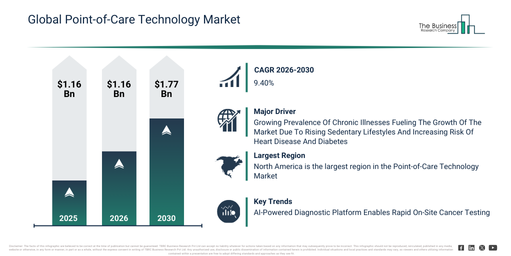
    Looking ahead, the market is expected to expand further, reaching $67.94 billion by 2030 with a CAGR of 9.4%. Factors contributing to this forecasted growth include advances in microfluidics and polymerase chain reaction (PCR) technologies, a rising prevalence of chronic and lifestyle diseases, the expansion of homecare and decentralized healthcare models, increasing healthcare digitization, and supportive regulatory policies encouraging rapid diagnostics. Key trends shaping the future include growing demand for rapid point-of-care tests, wider adoption of home and remote testing solutions, growth in portable and handheld diagnostic devices, and a stronger focus on user-friendly and fast-result systems.

    Factors Propelling the Point-of-Care Technology Market

    One of the main forces driving growth in the point-of-care technology market is the rising incidence of chronic conditions. Chronic diseases are long-term health issues that require ongoing management and lifestyle adjustments. Sedentary lifestyles, characterized by prolonged sitting and limited physical activity, are increasing risks for illnesses such as heart disease and diabetes. Point-of-care technologies facilitate the management of these chronic conditions by providing quick, on-site diagnostic testing, which is particularly beneficial in clinical, home, and remote care environments.

    Access The Complete Point-of-Care Technology Market Report:

    https://www.thebusinessresearchcompany.com/report/point-of-care-technology-global-market-report

    This technology helps minimize treatment delays by delivering immediate results, enhancing patient monitoring, and improving overall healthcare convenience. For example, in June 2024, the UK’s National Health Service reported that 3,615,330 patients registered with general practitioners were diagnosed with non-diabetic hyperglycemia or pre-diabetes in 2023, marking an 18% increase from 3,065,825 cases in 2022. This growing prevalence of chronic illness is a significant driver of market expansion.

    Point-of-Care Technology Market Segmentation and Revenue Contributors

    This report segments the point-of-care technology market across several dimensions:

    By Product Type:

    – Diagnostics Devices

    – Monitoring Devices

    – Therapeutic Devices

    – Data Management Systems

    By Ownership Model:

    – Standalone Solutions

    – Integrated Solutions

    – Cloud-Based Solutions

    By Technology:

    – Microfluidics

    – Polymerase Chain Reaction (PCR)

    – Immunoassays

    By Application:

    – Infectious Disease Testing

    – Glucose Monitoring

    – Cardiometabolic Monitoring

    – Pregnancy and Fertility Testing

    – Other Applications

    By End-User:

    – Hospitals

    – Clinics

    – Homecare Settings

    – Ambulatory Surgical Centers

    Further subcategories include diagnostics devices such as blood glucose monitoring, infectious disease testing, cardiac marker testing, coagulation testing, pregnancy and fertility testing, urinalysis, hematology, and cholesterol testing. Monitoring devices involve vital signs, continuous glucose, cardiac, and respiratory monitoring. Therapeutic devices include insulin delivery systems, nebulizers, dialysis machines, and infusion pumps. Data management systems cover point-of-care data integration, middleware solutions, and analytics platforms.

    Emerging Industry Changes Shaping Point-of-Care Demand

    Innovation within the point-of-care technology market is increasingly focused on developing AI-powered diagnostic tools to enhance accuracy, speed, and accessibility of disease detection. These advanced platforms utilize artificial intelligence to analyze medical data swiftly, allowing real-time, on-site testing for critical illnesses like cancer.

    For instance, in February 2025, Avitia Inc., a Canadian diagnostics company, introduced an AI-based platform designed for rapid cancer testing at the point of care. This system combines machine learning algorithms with portable diagnostic devices, enabling healthcare professionals to conduct fast and precise cancer screenings outside traditional laboratory environments. Such technology reduces turnaround times, supports early diagnosis, and lowers the need for complex infrastructure, improving access to advanced diagnostics in underserved and remote regions.

    Key Industry Players Leading the Point-of-Care Technology Market

    The point-of-care technology market is highly competitive, with several major companies driving innovation and growth. Prominent players include F. Hoffmann-La Roche AG, Thermo Fisher Scientific Inc., Abbott Laboratories, Danaher Corporation, Siemens Healthineers AG, Hologic Inc., bioMérieux SA, Quidel Corporation, Sysmex Corporation, Cepheid Inc., Radiometer Medical ApS, Nova Biomedical, Sekisui Diagnostics LLC, Abaxis Inc., BHR Biosynex, EKF Diagnostics Holdings plc, Acon Laboratories Inc., Trinity Biotech plc, Chembio Diagnostics Inc., Arkray Inc., Orchard Software Corporation, and Point of Care Biomedical Private Limited.

    Regional Market Overview and Growth Opportunities

    In 2025, North America maintained its position as the largest regional market for point-of-care technology. However, the Asia-Pacific region is expected to experience the fastest growth during the forecast period. The market analysis includes key regions such as Asia-Pacific, South East Asia, Western Europe, Eastern Europe, North America, South America, the Middle East, and Africa, providing a comprehensive global perspective on market developments and opportunities.

    Get in touch with us:

    The Business Research Company: https://www.thebusinessresearchcompany.com/

    Americas: +1 310-496-7795

    Asia: +44 7882 955267 & +91 8897263534

    Europe: +44 7882 955267

    Email us at: marketing@tbrc.info

    Follow us on:

    LinkedIn: https://in.linkedin.com/company/the-business-research-company

    YouTube: https://www.youtube.com/channel/UC24_fI0rV8cR5DxlCpgmyFQ

    Global Market Model: https://www.thebusinessresearchcompany.com/global-market-model
  • Point-Of-Care Molecular Diagnostics Market Growth Is Accelerating As Industry Transformation Continues

    Point-Of-Care Molecular Diagnostics Market Growth Is Accelerating As Industry Transformation Continues

    Delivering more actionable and strategically valuable research, The Business Research Company’s 2026 market reports feature market attractiveness analysis, total addressable market evaluation, company benchmarking matrices, interactive Excel dashboards, expanded supply chain intelligence, emerging startup coverage, and detailed product insights.

    The point-of-care molecular diagnostics sector is experiencing rapid expansion, driven by technological advancements and an increasing need for swift diagnostic solutions. This market’s evolution reflects growing healthcare demands and innovations aimed at improving early disease detection and patient management. Let’s explore the current market size, key drivers, major players, and emerging trends shaping this important healthcare segment.

    Point-of-Care Molecular Diagnostics Market Size and Growth Outlook

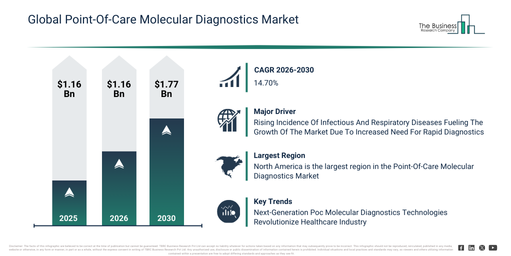
    The point-of-care molecular diagnostics market has witnessed impressive growth recently, with its size expected to rise from $3.98 billion in 2025 to $4.58 billion in 2026, representing a compound annual growth rate (CAGR) of 15.0%. Looking ahead, the market is projected to expand further, reaching $7.91 billion by 2030 at a CAGR of 14.7%. Factors contributing to this surge include the growing adoption of home-based molecular testing, increased investment in rapid diagnostic infrastructure, broader use in respiratory and oncology testing, greater integration of cloud-based diagnostic platforms, and a heightened focus on early disease detection. Key trends anticipated during this period encompass the widespread adoption of rapid molecular testing solutions, the rise of decentralized diagnostics, enhanced automated sample processing, expansion of syndromic testing panels, and efforts to reduce turnaround times.

    Download A Free Sample Report For Comprehensive Market Insights:

    https://www.thebusinessresearchcompany.com/sample.aspx?id=7046&type=smp

    Primary Factors Contributing to Point-of-Care Molecular Diagnostics Market Growth

    The rising incidence of infectious and respiratory diseases is a major factor propelling the growth of the point-of-care molecular diagnostics market. Respiratory infections caused by viruses or bacteria affect the respiratory tract and spread through coughing, sneezing, or direct contact. These illnesses often require a combination of inhalers, oral and intravenous medications, and point-of-care molecular diagnostic tests to provide effective treatment.

    To illustrate, data from the UK Health Security Agency in June 2024 showed a sharp increase in influenza-related critical care admissions within NHS trusts in England. Between week 40 of 2022 and week 15 of 2023, there were 1,681 such admissions reported across 108 trusts, compared to 182 admissions across 114 trusts in the previous season, which rose to 316 by week 39 of 2022. This substantial rise in infectious and respiratory cases highlights the urgent need for timely diagnostic testing, supporting market growth.

    Access The Complete Point-Of-Care Molecular Diagnostics Market Report:

    https://www.thebusinessresearchcompany.com/report/point-of-care-molecular-diagnostics-global-market-report

    Detailed Breakdown of the Point-of-Care Molecular Diagnostics Market Segments

    This market is segmented in the report based on product types, applications, and end-users. The product category includes Assays and Kits, as well as Instruments and Analyzers. Applications cover Respiratory Infections, Gastrointestinal Infections, Sexually Transmitted Infections (STIs), Hospital-Acquired Infections (HAIs), and Bloodstream and Sepsis-Related Infections. End-users comprise Decentralized Labs, Hospitals, Home Care, and Assisted Living Healthcare Facilities.

    Within Assays and Kits, subsegments feature Nucleic Acid Amplification Tests (NAATs), Rapid Diagnostic Tests, Molecular Detection Kits, and Reagents and Consumables. Instruments and Analyzers include microfluidic devices and point-of-care analyzers, emphasizing the diversity of available technologies.

    Innovative Advances Transforming the Point-of-Care Molecular Diagnostics Industry

    Leading market players are focused on enhancing their portfolios by adopting cutting-edge technologies, including enzyme-linked immunosorbent assay (ELISA), polymerase chain reaction (PCR), mass spectrometry (MS), situ hybridizations, spectral karyotyping imaging, and DNA microarrays. These innovations aim to accelerate test result times while minimizing costs.

    For example, in May 2023, US-based Sensible Diagnostics unveiled a 10-minute point-of-care PCR system. Drawing from Curative’s extensive pandemic testing experience—having conducted over two million molecular point-of-care COVID-19 tests—this platform delivers rapid results, demonstrating the sector’s drive towards improving efficiency and accessibility.

    Key Players Shaping the Point-of-Care Molecular Diagnostics Market

    Several major companies maintain a significant presence in this market, including Abbott Laboratories, F Hoffmann La Roche Ltd, BioMérieux SA, Hologic Inc, Becton Dickinson and Company, Siemens Healthineers AG, QuidelOrtho Corporation, Bio Rad Laboratories Inc, Qiagen N V, Biocartis Group NV, DiaSorin S p A, SD Biosensor Inc, Cue Health Inc, Visby Medical Inc, Binx Health Inc, Molbio Diagnostics Pvt Ltd, Credo Diagnostics Biomedical Pvt Ltd, Genetron Health, Mammoth Biosciences Inc, and Seegene Inc. These firms play a vital role in driving innovation and expanding market reach.

    Regional Market Leaders and Growth Prospects

    In 2025, North America accounted for the largest share of the point-of-care molecular diagnostics market. However, the Asia-Pacific region is expected to experience the fastest growth during the forecast period. The market analysis includes comprehensive coverage of regions such as Asia-Pacific, South East Asia, Western Europe, Eastern Europe, North America, South America, the Middle East, and Africa, providing a broad perspective on global market dynamics.

    Get in touch with us:

    The Business Research Company: https://www.thebusinessresearchcompany.com/

    Americas: +1 310-496-7795

    Asia: +44 7882 955267 & +91 8897263534

    Europe: +44 7882 955267

    Email us at: marketing@tbrc.info

    Follow us on:

    LinkedIn: https://in.linkedin.com/company/the-business-research-company

    YouTube: https://www.youtube.com/channel/UC24_fI0rV8cR5DxlCpgmyFQ

    Global Market Model: https://www.thebusinessresearchcompany.com/global-market-model
  • Point-of-Care Diagnostics Devices And Equipment Market Outlook Highlights The Next Major Growth Opportunities

    Point-of-Care Diagnostics Devices And Equipment Market Outlook Highlights The Next Major Growth Opportunities

    Enhanced with market attractiveness analysis, total addressable market evaluation, company benchmarking matrices, interactive Excel dashboards, expanded supply chain intelligence, emerging startup coverage, and detailed product insights, The Business Research Company’s 2026 market reports deliver more actionable and strategically valuable research.

    The point-of-care diagnostics devices and equipment market has experienced significant growth recently, driven by technological advances and shifting healthcare needs. As rapid, on-site testing becomes more vital in managing patient care, this sector is on track for continued expansion. Let’s explore the current market size, key growth drivers, leading companies, emerging trends, and regional insights shaping this dynamic industry.

    Point-of-Care Diagnostics Devices and Equipment Market Size and Growth Outlook

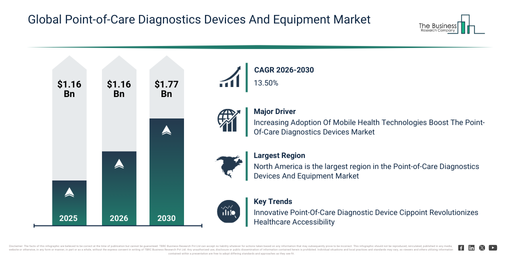
    The market for point-of-care diagnostics devices and equipment has expanded swiftly in recent years. It is projected to grow from $64.11 billion in 2025 to $71.62 billion in 2026, representing a compound annual growth rate (CAGR) of 11.7%. This progress during the historic period can be attributed to the increasing prevalence of chronic diseases, rising demand for faster clinical decision-making, growth of outpatient healthcare services, greater use of portable diagnostic tools, and a surge in preventive healthcare adoption. Moving forward, the market is expected to accelerate further, reaching $118.72 billion by 2030 with a CAGR of 13.5%. This anticipated boost is fueled by growing interest in home healthcare diagnostics, expansion of digital health ecosystems, broader infectious disease screening initiatives, integration of AI-assisted diagnostic support, and heightened emphasis on remote patient monitoring. Key trends during the forecast period include the rapid uptake of quick diagnostic tests, rising popularity of decentralized diagnostic solutions, increasing use of connected point-of-care platforms, growth in home-based testing options, and a focus on user-friendly device designs.

    Download A Free Sample Report For Comprehensive Market Insights:

    https://www.thebusinessresearchcompany.com/sample.aspx?id=2387&type=smp

    The Role of Mobile Health Technology in Market Expansion

    One of the primary factors driving the growth of the point-of-care diagnostics devices market is the rising adoption of mobile health (mHealth) technologies. These technologies utilize mobile devices like smartphones and tablets, alongside wireless wearables, to deliver healthcare services, disseminate information, and monitor health data in real time. Point-of-care diagnostic devices are essential to mHealth as they provide fast, convenient testing and data collection near the patient’s location, often integrating with mobile apps or smartphone platforms for efficient data management and sharing. For example, in February 2025, PharmiWeb reported that about 23% of healthcare interactions are expected to occur virtually, highlighting how mobile health adoption boosts demand for connected diagnostic devices.

    Growing Importance of Mobile Health for Convenient Testing

    Mobile health technology not only supports rapid diagnostics but also enhances accessibility and patient engagement by allowing testing to be performed outside traditional clinical settings. This shift responds to the increasing need for convenient, on-the-go health monitoring, particularly as outpatient and home-based healthcare gain traction. With advancements in wireless communication and device miniaturization, point-of-care devices are becoming more integrated and user-friendly, further propelling market growth.

    Access The Complete Point-of-Care Diagnostics Devices And Equipment Market Report:

    https://www.thebusinessresearchcompany.com/report/point-of-care-diagnostics-devices-and-equipment-global-market-report

    Detailed Market Segmentation and Opportunities in Point-of-Care Diagnostics

    This market is divided into various segments to better understand product types, prescription methods, and end users. By product type, it includes infectious disease testing kits, cardiometabolic monitoring kits, cholesterol testing kits, pregnancy and fertility test kits, tumor or cancer markers, urinalysis testing kits, hematology testing kits, drugs of abuse testing kits, fecal occult testing kits, and other specialized types. Prescription mode segments comprise prescription-based testing devices and over-the-counter (OTC) testing devices. End users cover professional diagnostic centers, hospitals and critical care centers, outpatient healthcare settings, ambulatory care environments, research laboratories, and home use. Each segment contains further subcategories—for instance, infectious disease kits such as HIV, hepatitis, malaria, influenza, and COVID-19 testing kits; cardiometabolic kits including blood glucose and blood pressure monitors; and tumor marker kits like PSA and CA-125 tests, among others.

    Innovative Trends Enhancing the Point-of-Care Diagnostics Market

    Leading companies in the point-of-care diagnostics field are focusing on product innovation to improve healthcare access and reduce diagnostic times. A notable example is the launch of Cippoint in January 2023 by Cipla Limited, an India-based pharmaceutical firm. Cippoint is a sophisticated point-of-care testing device capable of analyzing multiple health parameters including cardiac markers, diabetes, infectious diseases, fertility, thyroid function, inflammation, metabolic markers, and coagulation factors. Utilizing immunofluorescence technology, it delivers results within 3 to 15 minutes, enabling faster clinical decision-making. The device is also designed for ease of use across various settings such as hospitals, clinics, and mobile healthcare vans, making it highly versatile.

    Key Industry Players Defining the Competitive Landscape

    Major companies shaping the point-of-care diagnostics devices and equipment market include Abbott Laboratories, F. Hoffmann-La Roche AG, Siemens Healthineers, Danaher, Beckman Coulter, Becton Dickinson and Company, Qiagen N.V., Johnson & Johnson, Alere, BioMerieux, Chembio Diagnostic Systems, Quidel Corporation, EKF Diagnostics, Trinity Biotech Plc, OraSure Technologies, Sysmex Corporation, Radiometer Medical ApS, Response Biomedical Corporation, Bio-Rad Laboratories, Illumina, Thermo Fisher Scientific Inc., LabCorp, Luminex Corporation, LifeScan, Nova, Sekisui Diagnostics, Hemocue AB, and Akers Biosciences. These organizations are driving innovation, expanding product portfolios, and strengthening their market presence globally.

    Regional Insights Highlighting Market Leadership and Expansion

    In 2025, North America is expected to hold the largest share of the point-of-care diagnostics devices and equipment market. Meanwhile, Asia-Pacific stands as the second-largest region and is anticipated to see significant growth due to increasing healthcare infrastructure investments and rising demand for diagnostic services. The broader market analysis encompasses regions such as Asia-Pacific, Southeast Asia, Western Europe, Eastern Europe, North America, South America, the Middle East, and Africa, offering a comprehensive view of the global market landscape and emerging opportunities.

    Get in touch with us:

    The Business Research Company: https://www.thebusinessresearchcompany.com/

    Americas: +1 310-496-7795

    Asia: +44 7882 955267 & +91 8897263534

    Europe: +44 7882 955267

    Email us at: marketing@tbrc.info

    Follow us on:

    LinkedIn: https://in.linkedin.com/company/the-business-research-company

    YouTube: https://www.youtube.com/channel/UC24_fI0rV8cR5DxlCpgmyFQ

    Global Market Model: https://www.thebusinessresearchcompany.com/global-market-model
  • Point-of-Care (POC) Coagulation Testing Devices Market Trends And Growth Drivers Point To Strong Future Potential

    Point-of-Care (POC) Coagulation Testing Devices Market Trends And Growth Drivers Point To Strong Future Potential

    Through market attractiveness analysis, total addressable market evaluation, company benchmarking matrices, interactive Excel dashboards, expanded supply chain intelligence, emerging startup coverage, and detailed product insights, The Business Research Company’s 2026 market reports provide more actionable and strategically valuable research.

    The point-of-care coagulation testing devices market is experiencing rapid growth, driven by advancements in healthcare diagnostics and an increasing need for efficient blood clotting assessments. As demand rises for quick and reliable testing, this sector is set to expand significantly over the coming years. Below is a detailed breakdown of the market’s size, growth factors, key players, and emerging trends shaping its future.

    Steady Market Growth Expected in Point-of-Care Coagulation Testing Devices

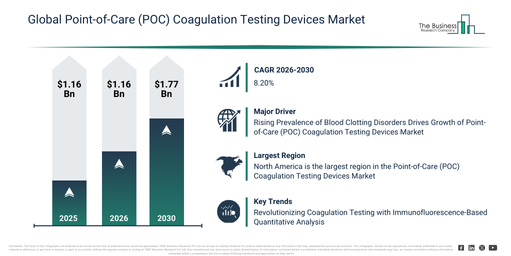
    The market for point-of-care coagulation testing devices has shown strong expansion recently. It is projected to increase from $2.32 billion in 2025 to $2.55 billion in 2026, registering a compound annual growth rate (CAGR) of 9.7%. This historical growth reflects factors such as a rising incidence of coagulation disorders, broader use of anticoagulant medications, growth in decentralized healthcare models, higher adoption rates of point-of-care diagnostic tools, and technological improvements in coagulation testing.

    Download A Free Sample Report For Comprehensive Market Insights:

    https://www.thebusinessresearchcompany.com/sample.aspx?id=15636&type=smp

    Looking ahead, the market is anticipated to continue this positive trajectory and reach $3.49 billion by 2030, with a CAGR of 8.2% during the forecast period. This future growth is fueled by increasing demand for home-based healthcare diagnostics, a stronger focus on personalized medicine, the proliferation of telehealth-enabled diagnostic platforms, an aging global population, and ongoing innovation in microfluidic testing technologies. Key trends include wider adoption of portable coagulation monitors, a growing preference for rapid point-of-care diagnostic tests, increased utilization of home testing kits, integration of wireless data connectivity in devices, and heightened emphasis on improving test accuracy and reliability.

    Factors Propelling the Point-of-Care Coagulation Testing Devices Market

    One of the main drivers behind the growth of the point-of-care coagulation testing devices market is the rising prevalence of blood clotting disorders. Such conditions impair the blood’s ability to clot normally, leading to serious health risks. Lifestyle factors like smoking, excessive alcohol intake, and a sedentary way of life contribute to these disorders by damaging blood vessels, altering clotting protein levels, and disrupting blood flow.

    Access The Complete Point-of-Care (POC) Coagulation Testing Devices Market Report:

    https://www.thebusinessresearchcompany.com/report/point-of-care-poc-coagulation-testing-devices-global-market-report

    Point-of-care coagulation devices provide healthcare professionals with quick and precise information about a patient’s clotting status, enabling timely adjustments to treatment plans and medication dosages. For example, data from the National Blood Authority in Australia show that in the 2023–2024 period, there were 2,788 individuals diagnosed with hereditary haemophilia A (HMA), an increase from 2,681 patients in the previous year. This steady rise in blood clotting disorders is a key factor supporting market growth.

    Product and Application Segments in the Point-of-Care Coagulation Testing Devices Market

    The market for point-of-care coagulation testing devices is segmented comprehensively to cover various facets:

    1) Product Type: Coagulation Monitors, Consumables, and Coagulation Analyzers

    2) Technology: Optical Technology, Mechanical Technology, and Electrochemical Technology

    3) Method: Prothrombin Time and International Normalized Ratio, Viscoelastic Coagulation Monitoring, and Other Methods

    4) Application: Coagulation Testing and Other Applications

    5) End-User: Hospitals, Diagnostic Laboratories, Clinics, and Other End-Users

    Further subcategories include types of coagulation monitors such as Prothrombin Time (PT) Monitors, International Normalized Ratio (INR) Monitors, Activated Partial Thromboplastin Time (APTT) Monitors, Whole Blood Coagulation Monitors, and Clotting Time Monitors. Consumables cover test strips, reagents, control solutions, calibration kits, lancets, and needles. Coagulation analyzers range from portable and benchtop devices to fully automated and semi-automated analyzers, as well as testing kits designed for home use.

    Innovations Shaping the Point-of-Care Coagulation Testing Devices Industry

    Leading companies in this market are focusing heavily on the development of immunofluorescence-based quantitative analyzers that enhance the diagnosis and management of coagulation disorders. These analyzers utilize immunofluorescence technology to identify and quantify specific proteins involved in blood clotting, improving diagnostic precision.

    For instance, in January 2023, Cipla Limited from India introduced its product Cippoint, an immunofluorescence-based quantitative analyzer. This device delivers rapid test results within 3 to 15 minutes, supporting faster clinical decisions. Its user-friendly design and comprehensive testing capabilities have positioned it as a valuable tool for improving diagnostic workflows and patient outcomes.

    Primary Competitors Leading the Point-of-Care Coagulation Testing Devices Market

    The market is dominated by several key players, including Roche Diagnostics, Abbott Laboratories, Siemens Healthineers, Bio-Rad Laboratories Inc., Werfen, Haemonetics Corporation, HemoSonics LLC, Sysmex Corporation, Nihon Kohden Corporation, HORIBA Medical, Helena Laboratories Corporation, Diagnostica Stago, Sekisui Diagnostics, Instrumentation Laboratory, Trinity Biotech plc, CoaguSense Inc., iLine Microsystems, Medirox AB, Hemochron Systems, and Axis-Shield Diagnostics.

    Regional Markets Where Demand Is Accelerating Fastest

    In 2025, North America held the largest share of the point-of-care coagulation testing devices market. However, demand is quickly growing in other regions covered by the report, such as Asia-Pacific, South East Asia, Western Europe, Eastern Europe, South America, the Middle East, and Africa. These regions collectively contribute to shaping the global outlook for this dynamic market segment.

    Get in touch with us:

    The Business Research Company: https://www.thebusinessresearchcompany.com/

    Americas: +1 310-496-7795

    Asia: +44 7882 955267 & +91 8897263534

    Europe: +44 7882 955267

    Email us at: marketing@tbrc.info

    Follow us on:

    LinkedIn: https://in.linkedin.com/company/the-business-research-company

    YouTube: https://www.youtube.com/channel/UC24_fI0rV8cR5DxlCpgmyFQ

    Global Market Model: https://www.thebusinessresearchcompany.com/global-market-model