Category: Medical Equipment

  • Plantar Fasciitis Sleeve Market Trends Are Creating New Opportunities For Industry Leaders

    Plantar Fasciitis Sleeve Market Trends Are Creating New Opportunities For Industry Leaders

    Enhanced with market attractiveness analysis, total addressable market evaluation, company benchmarking matrices, interactive Excel dashboards, expanded supply chain intelligence, emerging startup coverage, and detailed product insights, The Business Research Company’s 2026 market reports deliver more actionable and strategically valuable research.

    The plantar fasciitis sleeve market has been witnessing significant growth recently, driven by increased awareness of foot health and advancements in supportive technologies. With the rising prevalence of foot-related conditions and a growing active lifestyle, this market is set to expand further in the coming years. Let’s delve into the current market size, key drivers, important segments, leading companies, and regional trends shaping this industry.

    Plantar Fasciitis Sleeve Market Size and Growth Outlook

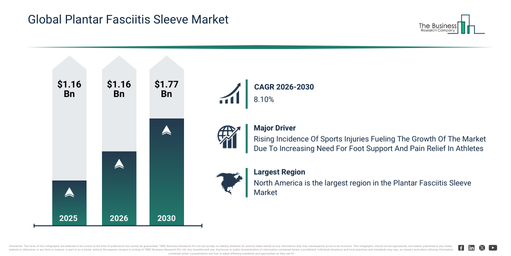
    The market for plantar fasciitis sleeves demonstrated strong momentum in recent years, with its size advancing from $0.84 billion in 2025 to $0.91 billion in 2026, marking a compound annual growth rate (CAGR) of 8.4%. This growth has been driven by a rise in plantar fasciitis cases, increased attention to foot care, adoption of non-invasive treatment options, greater sports participation, and improvements in the materials used for sleeves. Projections indicate that the market will continue to grow robustly, reaching $1.24 billion by 2030 at a CAGR of 8.1%. Future expansion is expected to be supported by innovations such as smart adjustable sleeves, integration with wearable sensor technology, growth in sports and athletic applications, development of multi-functional sleeves, and wider online distribution channels. Popular product trends include compression sleeves, night splints, arch support sleeves, gel sleeves, and custom orthotic sleeves.

    Download A Free Sample Report For Comprehensive Market Insights:

    https://www.thebusinessresearchcompany.com/sample.aspx?id=28299&type=smp

    Increasing Sports Injuries Fueling Demand for Plantar Fasciitis Sleeves

    A major factor propelling market growth is the rising occurrence of sports-related injuries. These injuries, which range from minor strains to severe fractures, often result from repetitive stress or improper movements that overwhelm the body’s natural repair mechanisms. Plantar fasciitis sleeves provide critical support for the foot arch, helping to reduce strain and alleviate heel pain during both activity and recovery periods. For example, in November 2023, Howden Group Holdings Ltd, a UK insurance intermediary, reported a 170% increase in ankle injury severity in the English Premier League between October 2022 and January 2023, alongside a 200% rise in calf or shin injuries and a 130% increase in hamstring injuries after the FIFA World Cup Qatar 2022. This surge in sports injuries is a key driver of market demand.

    Obesity Trends Increasing Need for Foot Support Sleeves

    Another important growth driver is the increasing prevalence of obesity, which raises the demand for supportive footwear and related accessories like plantar fasciitis sleeves. Obesity rates have climbed due to unhealthy dietary patterns, including higher consumption of processed and sugary foods, leading to excess fat accumulation. Plantar fasciitis sleeves help overweight individuals by providing additional cushioning and support to the foot, reducing plantar fascia strain and improving comfort during weight-bearing activities—important for managing joint stress in this population. According to the UK’s Office for Health Improvement & Disparities, as of 2023-2024, 64.5% of adults in England were classified as overweight or obese, up from 64.0% the previous year, indicating a continuing upward trend that supports market expansion.

    Access The Complete Plantar Fasciitis Sleeve Market Report:

    https://www.thebusinessresearchcompany.com/report/plantar-fasciitis-sleeve-global-market-report

    Increasing Diabetes Prevalence Boosting Market Growth

    The growing number of people living with diabetes also contributes to the demand for plantar fasciitis sleeves. Diabetes, a chronic disease characterized by insufficient insulin production or ineffective insulin use, is increasing globally due to sedentary lifestyles and poor eating habits. These sleeves offer targeted compression and support to improve blood flow, reduce inflammation, and ease foot pain—critical aspects in managing diabetic foot complications and preventing ulcers. For instance, a June 2023 report by the Institute for Health Metrics and Evaluation noted that over 500 million people worldwide currently have diabetes, with projections estimating this number will more than double to 1.3 billion by 2050. This trend highlights the expanding need for supportive foot care products.

    Breakdown of the Plantar Fasciitis Sleeve Market Segments

    This market is divided into several key segments for a clearer understanding of growth areas:

    1) Product Types include Compression Sleeves, Arch Support Sleeves, and Gel Sleeves.

    2) Materials used cover Neoprene, Fabric, Silicone, and others.

    3) Application sectors consist of Sports and Athletics, Medical Use, Personal Use, and other areas.

    4) Distribution Channels include Online Stores, Pharmacies, Specialty Stores, and additional outlets.

    Further subcategories specify types such as Ankle Compression Sleeves, Full Foot Compression Sleeves, Graduated Compression Sleeves, Open-Toe and Closed-Toe Compression Sleeves for compression sleeves; Elastic, Gel-Padded, Adjustable Strap, Low-Profile, and Multi-Zone Compression Arch Sleeves for arch supports; and Heel Cushion Gel, Silicone Gel, and Open-Heel Gel Sleeves among gel sleeve options.

    Key Players Driving the Plantar Fasciitis Sleeve Market

    The market features several prominent companies shaping its landscape, including 3M Company, BSN Medical GmbH, Össur hf., SIGVARIS Group AG, United Pacific Industries Limited, Bauerfeind AG, Cramer Products Inc., Darco International Inc., Spenco Medical Corporation, The Strassburg Sock Company Inc., Feetures Inc., Medi-Dyne Healthcare Products Ltd., ShoeInsoles.co.uk Limited, Scholl’s Wellness Company LLC, Algeos Limited, Zensah LLC, Copper Compression LLC, Stable Step LLC, Vive Health LLC, and ING Source Inc.

    Regional Market Dynamics and Growth Opportunities

    In 2025, North America held the largest share of the plantar fasciitis sleeve market, driven by high healthcare awareness and established distribution networks. However, Asia-Pacific is anticipated to exhibit the fastest growth throughout the forecast period, supported by increasing sports participation, rising obesity and diabetes rates, and expanding medical infrastructure. The market analysis encompasses regions such as Asia-Pacific, South East Asia, Western Europe, Eastern Europe, North America, South America, the Middle East, and Africa, providing a comprehensive view of global market trends.

    Get in touch with us:

    The Business Research Company: https://www.thebusinessresearchcompany.com/

    Americas: +1 310-496-7795

    Asia: +44 7882 955267 & +91 8897263534

    Europe: +44 7882 955267

    Email us at: marketing@tbrc.info

    Follow us on:

    LinkedIn: https://in.linkedin.com/company/the-business-research-company

    YouTube: https://www.youtube.com/channel/UC24_fI0rV8cR5DxlCpgmyFQ

    Global Market Model: https://www.thebusinessresearchcompany.com/global-market-model
  • Pipetting Robots Market Growth Is Reshaping Competitive Advantage Across The Industry

    Pipetting Robots Market Growth Is Reshaping Competitive Advantage Across The Industry

    Through market attractiveness analysis, total addressable market evaluation, company benchmarking matrices, interactive Excel dashboards, expanded supply chain intelligence, emerging startup coverage, and detailed product insights, The Business Research Company’s 2026 market reports provide more actionable and strategically valuable research.

    The pipetting robots market is experiencing rapid growth, driven by advances in laboratory automation and the increasing demands of research and clinical testing. As laboratories seek greater efficiency and precision, pipetting robots are becoming essential tools. This overview explores the market’s current size, growth factors, key players, technological trends, and regional insights shaping the industry’s future.

    Steady Growth in the Pipetting Robots Market Size

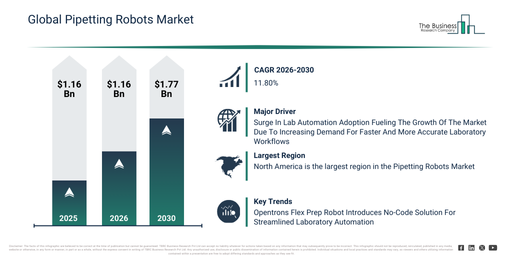
    The pipetting robots market has shown significant expansion and is expected to continue this upward trajectory. From $1.09 billion in 2025, market value is projected to reach $1.22 billion by 2026, growing at a compound annual growth rate (CAGR) of 12.0%. Over the longer term, the market is forecasted to surge to $1.9 billion by 2030, maintaining a strong CAGR of 11.8%. This growth reflects increasing reliance on automated liquid handling in laboratories, driven by rising research workloads, the need for reproducibility, and the limitations of manual pipetting.

    Download A Free Sample Report For Comprehensive Market Insights:

    https://www.thebusinessresearchcompany.com/sample.aspx?id=30354&type=smp

    The Role of Lab Automation in Boosting Market Demand

    One of the main forces propelling the pipetting robots market is the widespread adoption of laboratory automation. Automated tools and software streamline routine lab tasks such as testing and sample processing, enabling faster and more accurate workflows with minimal human intervention. As sample volumes grow and accuracy requirements tighten, labs turn increasingly to automation to enhance efficiency and reduce errors.

    Pipetting robots are pivotal to this shift, handling precise and repetitive liquid transfers automatically. This improves consistency and speed while reducing manual effort and variability. For example, in August 2024, the Pistoia Alliance reported that adoption of lab automation technologies, including artificial intelligence and machine learning, jumped from 54% in 2023 to 68% in 2024 among surveyed labs. This surge underlines how automation is rapidly becoming a standard in laboratory operations, directly fueling the pipetting robots market’s expansion.

    Access The Complete Pipetting Robots Market Report:

    https://www.thebusinessresearchcompany.com/report/global-pipetting-robots-market-report

    Segment Details and Strategic Market Opportunities in Pipetting Robots

    The pipetting robots market is categorized into several segments that capture the diversity of products and applications:

    – By Type: Automated Pipetting Systems, Semi-Automated Pipetting Systems, Multichannel Pipetting Robots, Single Channel Pipetting Robots

    – By Technology: Microplate Pipetting Robots, Multisample Pipetting Robotic Systems, Robotic Liquid Handling Systems, Automated Workstations, Custom Pipetting Systems

    – By Operating Environment: Laboratory Environment, Clean Room Environment, Clinical Environment

    – By Application: Drug Discovery, Clinical Diagnostics, Genomics and Proteomics, Food and Beverage Testing, Environmental Testing

    – By End-User: Pharmaceutical Companies, Biotechnology Firms, Academic and Research Institutions, Contract Research Organizations (CROs), Hospitals and Clinical Laboratories

    Further subcategories include specialized types of automated and semi-automated systems, various channel configurations for multichannel robots, and precision levels for single channel robots, offering users tailored solutions for diverse laboratory needs.

    Innovations and Industry Trends Shaping Pipetting Robots Development

    Leading companies in the pipetting robots market are focusing on innovations such as no-code robotic platforms, which simplify laboratory automation by allowing users to program pipetting tasks without coding expertise. This advancement enhances workflow flexibility and reduces manual errors, making automation accessible to more users.

    For instance, in September 2024, US-based Opentrons Labworks Inc. introduced the Opentrons Flex Prep robot, which combines hardware with no-code software. This system enables scientists to design and execute liquid-handling procedures via a touchscreen interface in under a minute, streamlining the experimental process. By integrating this solution with their existing automation portfolio, Opentrons offers an affordable, user-friendly option that boosts lab productivity and precision.

    Prominent Companies Driving Competition in the Pipetting Robots Market

    Several well-established firms dominate the pipetting robots industry, including Thermo Fisher Scientific Inc., Agilent Technologies Inc., Mettler-Toledo International Inc., Beckman Coulter Inc., Tecan Group Ltd., Eppendorf AG, Hamilton Company, INTEGRA Biosciences AG, Gilson Incorporated, SPT Labtech Ltd., Opentrons Labworks Inc., Formulatrix Inc., HighRes Biosolutions Inc., BioTek Instruments Inc., Analytik Jena GmbH + Co KG, BRAND GmbH + Co KG, Dynamic Devices Ltd., Revvity Inc., Hudson Robotics, Andrew Alliance SA, and Zinsser Analytic GmbH. These companies are instrumental in advancing technology and expanding market reach.

    Regional Market Leadership and Growth Prospects

    As of 2025, North America leads the global pipetting robots market in size. However, the Asia-Pacific region is expected to experience the fastest growth during the forecast period. The market analysis encompasses key regions such as Asia-Pacific, South East Asia, Western Europe, Eastern Europe, North America, South America, the Middle East, and Africa, providing a comprehensive global perspective on market trends and opportunities.

    Get in touch with us:

    The Business Research Company: https://www.thebusinessresearchcompany.com/

    Americas: +1 310-496-7795

    Asia: +44 7882 955267 & +91 8897263534

    Europe: +44 7882 955267

    Email us at: marketing@tbrc.info

    Follow us on:

    LinkedIn: https://in.linkedin.com/company/the-business-research-company

    YouTube: https://www.youtube.com/channel/UC24_fI0rV8cR5DxlCpgmyFQ

    Global Market Model: https://www.thebusinessresearchcompany.com/global-market-model
  • Pipettes And Accessories Market Forecast Signals New Revenue Opportunities Through 2030

    Pipettes And Accessories Market Forecast Signals New Revenue Opportunities Through 2030

    Delivering more actionable and strategically valuable research, The Business Research Company’s 2026 market reports feature market attractiveness analysis, total addressable market evaluation, company benchmarking matrices, interactive Excel dashboards, expanded supply chain intelligence, emerging startup coverage, and detailed product insights.

    The pipettes and accessories market is witnessing steady advancement, driven by increasing research activities and technological progress in various scientific fields. As laboratories and pharmaceutical sectors continue to expand, demand for accurate liquid measurement tools is rising, positioning this market for sustained growth in the coming years. Below is a detailed overview of the market’s current size, growth drivers, segment composition, trends, key players, and regional dynamics.

    Market Size and Growth Projections for the Pipettes and Accessories Market

    The pipettes and accessories market has experienced consistent growth recently. It is projected to increase from $1.48 billion in 2025 to $1.55 billion in 2026, reflecting a compound annual growth rate (CAGR) of 4.8%. This expansion during the historic period is largely attributed to increased laboratory research activities, growth in pharmaceutical manufacturing, rising funding for academic research, higher demand for precise liquid measurement, and widespread adoption of standardized laboratory practices.

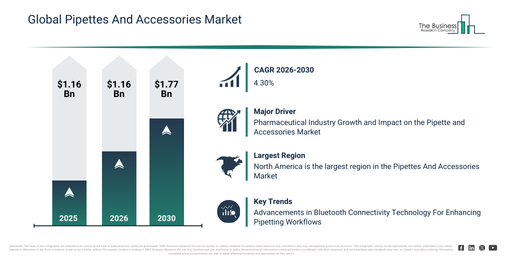
    Looking ahead, the market is expected to reach $1.84 billion by 2030, growing at a CAGR of 4.3%. Factors propelling this forecasted growth include greater investments in biotechnology research, a heightened focus on automation in labs, emphasis on improving laboratory efficiency, the expanding volume of diagnostic testing, and ongoing innovations in liquid handling technologies. Notable trends anticipated during this period include rising adoption of electronic and programmable pipettes, increased demand for high-precision liquid handling, wider use of multi-channel pipettes in research, ergonomic and user-friendly design advancements, as well as intensified attention to contamination-free pipetting.

    Download A Free Sample Report For Comprehensive Market Insights:

    https://www.thebusinessresearchcompany.com/sample.aspx?id=16148&type=smp

    Pharmaceutical Industry Growth as a Key Driver for Pipettes and Accessories Market

    The expansion of the pharmaceutical sector is expected to significantly boost demand for pipettes and related accessories. This industry primarily focuses on the research, development, manufacturing, and distribution of drugs used for medical treatments and therapies. The pharmaceutical sector’s growth is fueled by rising incidences of chronic diseases, technological advancements in research, and healthcare reforms that drive higher healthcare spending. Pipettes are essential tools in pharmaceutical workflows, used for precise liquid measurement required in drug formulation, sample preparation, and analytical testing.

    For instance, in April 2025, Eurostat reported that the European Union’s exports of medicinal and pharmaceutical products increased by 13.5% from 2023, reaching a value of $339.0 billion. This robust pharmaceutical market expansion is a significant factor propelling the pipettes and accessories market forward.

    Breakdown of Pipettes and Accessories Market Segments

    This market is categorized into several segments for a clearer understanding of its structure:

    1) By Type: Manual Pipettes, Electronic Pipettes, and Accessories

    2) By Channel Type: Single Channel and Multi-Channel

    3) By Application: Hospitals, Academic and Research Institutes, Pharmaceutical and Biotechnology Companies, and Other Applications

    Further subcategories include:

    – Manual Pipettes: Single-Channel Manual, Multi-Channel Manual, Adjustable Volume Manual, Fixed Volume Manual

    – Electronic Pipettes: Single-Channel Electronic, Multi-Channel Electronic, Digital Electronic, Programmable Electronic

    – Accessories: Pipette Tips, Calibration Tools, Stands and Holders, Servicing and Maintenance Kits, and Filters

    Access The Complete Pipettes And Accessories Market Report:

    https://www.thebusinessresearchcompany.com/report/pipettes-and-accessories-global-market-report

    Innovations and Trends Driving the Pipettes and Accessories Market

    Leading companies in this market are focusing on developing advanced products incorporating cutting-edge technologies like Bluetooth connectivity to improve laboratory workflows and data management. The integration of Bluetooth in electronic pipettes enables seamless connection with various laboratory software, facilitating efficient data transfer, real-time sharing, and streamlined operations.

    For example, in September 2023, Sartorius AG, a German manufacturer of pharmaceutical and laboratory equipment, introduced the Picus 2 electronic pipette featuring Bluetooth connectivity. This device supports connection to the Sartorius Pipetting mobile app and other laboratory systems. It offers user-friendly operation, lightweight design, customizable programming, safety features, and easy cleaning capabilities, enhancing overall pipetting efficiency.

    Top Players Leading the Pipettes and Accessories Market

    Several prominent companies shape the competitive landscape of this market, including Thermo Fisher Scientific Inc., Corning Incorporated, VWR International LLC, Mettler Toledo, Bio-Rad Laboratories Inc., Eppendorf SE, Sarstedt AG and Co. KG, Hamilton Company, Greiner Bio-One International GmbH, Cole-Parmer Instrument Company LLC, Biotix Inc., Integra Biosciences AG, Gilson Incorporated, Brand GMBH and Co KG, Socorex ISBA SA, Ajanta Export Industries, Microlit, Heathrow Scientific, Vistalab Technologies Inc., Capp, Oxford Lab Products, Nichiryo Co. Ltd., Phoenix Instruments, and Kartell Labware. These organizations continuously invest in research and development to maintain their market position and respond to evolving customer needs.

    Regional Market Distribution and Growth Patterns

    In 2025, North America held the largest share of the pipettes and accessories market. Meanwhile, the Asia-Pacific region is set to experience the fastest growth during the forecast period. The report’s regional coverage includes Asia-Pacific, South East Asia, Western Europe, Eastern Europe, North America, South America, the Middle East, and Africa, providing a comprehensive global perspective on market expansion and emerging opportunities.

    Get in touch with us:

    The Business Research Company: https://www.thebusinessresearchcompany.com/

    Americas: +1 310-496-7795

    Asia: +44 7882 955267 & +91 8897263534

    Europe: +44 7882 955267

    Email us at: marketing@tbrc.info

    Follow us on:

    LinkedIn: https://in.linkedin.com/company/the-business-research-company

    YouTube: https://www.youtube.com/channel/UC24_fI0rV8cR5DxlCpgmyFQ

    Global Market Model: https://www.thebusinessresearchcompany.com/global-market-model
  • Pipette Tips Market Growth Is Accelerating As Industry Transformation Continues

    Pipette Tips Market Growth Is Accelerating As Industry Transformation Continues

    Enhanced with market attractiveness analysis, total addressable market evaluation, company benchmarking matrices, interactive Excel dashboards, expanded supply chain intelligence, emerging startup coverage, and detailed product insights, The Business Research Company’s 2026 market reports deliver more actionable and strategically valuable research.

    The pipette tips market has seen notable growth over recent years, driven by rising demand in various laboratory and healthcare applications. With ongoing advancements in research and technology, this market is positioned for continued expansion in the foreseeable future. Let’s explore the current market size, key factors fueling growth, important players, and emerging trends shaping this sector.

    Steady Growth and Market Size Forecast for Pipette Tips

    The pipette tips market has experienced substantial expansion, increasing from $2.44 billion in 2025 to an anticipated $2.64 billion in 2026, reflecting a compound annual growth rate (CAGR) of 8.3%. This upward trend during the historical period is largely credited to the growth in laboratory research activities, pharmaceutical and biotech R&D, the widespread use of automated liquid handling systems, rising volumes of diagnostic testing, and the prevalent adoption of disposable lab consumables.

    Download A Free Sample Report For Comprehensive Market Insights:

    https://www.thebusinessresearchcompany.com/sample.aspx?id=10835&type=smp

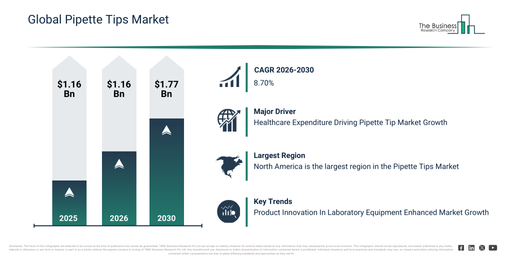
    Looking ahead, the market is projected to maintain strong momentum, reaching $3.69 billion by 2030 with a CAGR of 8.7%. Drivers for this forecasted growth include increased investments in life sciences research, expanding demand for high-throughput screening processes, the extension of automated laboratory workflows, and a growing focus on sustainability in laboratory plastics. Innovations in precision liquid handling consumables also play a crucial role, alongside trends such as the adoption of filtered and low-retention pipette tips, robotic-compatible tips, contamination-free handling, and RNase- and DNase-free consumables.

    Factors Propelling Demand in the Pipette Tips Market

    The expansion of healthcare facilities is a significant catalyst for the pipette tips market. Healthcare settings encompass a broad range of institutions, including acute care hospitals, urgent care centers, rehabilitation clinics, nursing homes, and other long-term care facilities. Pipettes are essential tools in these environments, used to accurately transfer microliter volumes of liquids for various procedures such as DNA amplification, molecular screening, ELISA diagnostic tests, and kinetic studies.

    Access The Complete Pipette Tips Market Report:

    https://www.thebusinessresearchcompany.com/report/pipette-tips-global-market-report

    For instance, in May 2023, The American Hospital Association reported an increase in the total number of hospitals in the US from 6,093 in 2022 to 60,129 in 2023. In addition, admissions in community hospitals rose from 31,393,318 to 31,967,073 over the same period. This surge in healthcare infrastructure and patient admissions directly supports greater demand for pipette tips.

    Detailed Segmentation of the Pipette Tips Market

    This market is segmented based on product types, technology, and application areas. Product categories include Standard, Filtered, Low-Retention, and other specialized pipette tips. In terms of technology, the market splits into robotic and non-robotic solutions. Application-wise, sectors such as Diagnostics and Healthcare, Pharma and Biotechnology, Academia and Education, and various other fields are covered.

    Further sub-segmentation includes Standard pipette tips classified into Non-Sterile, Sterile, and Universal Fit tips. Filtered tips are divided into Low-Filter, High-Filter, and RNase- and DNase-Free filtered variants. Low-Retention tips consist of Hydrophobic, Coated, and Non-Coated types. Other products cover Extended Length, Wide-Bore, Gel Loading, and Conductive tips.

    Emerging Trends Enhancing Market Competition and Product Innovation

    Key players in the pipette tips market are emphasizing the launch of advanced products designed to improve efficiency and precision. One noteworthy trend is the introduction of large-volume pipette tips, which allow for the transfer of bigger liquid quantities with accuracy, a vital need in many laboratory processes.

    For example, in July 2024, GenFollower Biotech Co., Ltd., a China-based manufacturer, introduced two types of 5mL large-volume pipette tips. These tips exhibit excellent compatibility with various pipette brands such as GILSON, Rainin UNV, Eppendorf, DragonLab, LABSERV, and Sartorius. Made from medical-grade polypropylene, the tips offer high transparency to facilitate easy visualization of liquids. Their clear, precise graduations ensure accurate measurement of samples, significantly boosting laboratory productivity.

    Key Players and Competitive Landscape in the Pipette Tips Industry

    The pipette tips market is dominated by several established companies, including Eppendorf, Thermo Fisher Scientific, Sartorius AG, Corning Incorporated, Sarstedt, Brand GmbH, Hamilton Company, Bio-Rad Laboratories Inc., VWR International, Greiner Bio-One International GmbH, Tecan Group Ltd., Gilson, Starlab Scientific Co. Ltd., AHN Biotechnologie GmbH, Sorenson BioScience, USA Scientific, Drummond Scientific Company, Socorex Isba SA, Mettler-Toledo Rainin LLC, Analytik Jena GmbH, Integra Holding AG, and Mettler Toledo. These firms continuously innovate and compete to meet evolving market demands.

    Geographical Insights: Pipette Tips Market Dominance

    In 2025, North America emerged as the largest region for pipette tips revenue. The market coverage extends globally, encompassing regions such as Asia-Pacific, South East Asia, Western Europe, Eastern Europe, South America, the Middle East, and Africa, each contributing to different facets of the market’s growth trajectory.

    Get in touch with us:

    The Business Research Company: https://www.thebusinessresearchcompany.com/

    Americas: +1 310-496-7795

    Asia: +44 7882 955267 & +91 8897263534

    Europe: +44 7882 955267

    Email us at: marketing@tbrc.info

    Follow us on:

    LinkedIn: https://in.linkedin.com/company/the-business-research-company

    YouTube: https://www.youtube.com/channel/UC24_fI0rV8cR5DxlCpgmyFQ

    Global Market Model: https://www.thebusinessresearchcompany.com/global-market-model
  • Pill Dispenser Internet Of Things (IoT) Market Outlook Highlights The Next Major Growth Opportunities

    Pill Dispenser Internet Of Things (IoT) Market Outlook Highlights The Next Major Growth Opportunities

    Through market attractiveness analysis, total addressable market evaluation, company benchmarking matrices, interactive Excel dashboards, expanded supply chain intelligence, emerging startup coverage, and detailed product insights, The Business Research Company’s 2026 market reports provide more actionable and strategically valuable research.

    The integration of Internet of Things (IoT) technology in healthcare is transforming medication management, particularly through smart pill dispensers. This sector is expanding rapidly as healthcare providers and patients increasingly seek innovative solutions to ensure proper medication adherence and improve treatment outcomes. Below is a detailed overview of the current market size, growth drivers, key segments, and emerging trends shaping the pill dispenser IoT market.

    Robust Growth Forecast for the Pill Dispenser Internet of Things Market

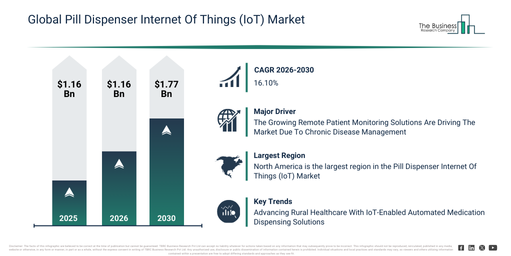
    The pill dispenser IoT market has experienced significant expansion in recent years. It is projected to grow from $2.6 billion in 2025 to $3.03 billion in 2026, representing a compound annual growth rate (CAGR) of 16.4%. This upward trend reflects factors such as the rising elderly population, the increasing prevalence of chronic diseases, heightened awareness about medication adherence, the growing adoption of smart home healthcare solutions, and advances in IoT-enabled devices. Looking ahead, the market is expected to reach $5.5 billion by 2030, maintaining a steady CAGR of 16.1%. Key contributors to this future growth include AI-driven adherence monitoring, integration with telehealth platforms, expansion within long-term care facilities, the emergence of wearable-connected pill devices, and innovations in predictive medication management. Important trends anticipated in this period involve smart pill dispensers, multi-dose automated devices, remote monitoring and alert systems, caregiver app integration, and connected pill organizers.

    Download A Free Sample Report For Comprehensive Market Insights:

    https://www.thebusinessresearchcompany.com/sample.aspx?id=29149&type=smp

    Expanding Influence of Remote Patient Monitoring Solutions

    One of the critical factors propelling the pill dispenser IoT market forward is the rise of remote patient monitoring (RPM) technologies. RPM enables continuous health supervision outside traditional clinical environments, facilitating early detection of health issues and promoting better adherence to treatment regimens. The surge in chronic disease cases has fueled the demand for RPM, as patients require ongoing monitoring to manage their conditions effectively. Pill dispenser IoT devices enhance these RPM solutions by allowing real-time tracking of medication intake, thus helping healthcare professionals oversee patient compliance more accurately. For example, as of September 2025, the Center for Connected Health Policy (CCHP) reported that forty-one state Medicaid programs in the United States reimburse remote patient monitoring services, indicating growing acceptance and integration of these technologies nationwide.

    Pill Dispenser Internet of Things Market Segmentation and Revenue Potential

    This market is divided into several key segments that define its structure and opportunities:

    1) Product Type: Automatic Pill Dispensers, Smart Pill Bottles, Connected Pill Organizers

    2) Connectivity: Wi-Fi, Bluetooth, Cellular, Other Connectivity Options

    3) Distribution Channel: Online and Offline Retail

    4) Application Areas: Home Healthcare, Hospitals and Clinics, Long-Term Care Facilities, Pharmacies, and Other Uses

    5) End-User Groups: Elderly Individuals, Patients with Chronic Diseases, Caregivers, and Other Users

    Access The Complete Pill Dispenser Internet Of Things (IoT) Market Report:

    https://www.thebusinessresearchcompany.com/report/pill-dispenser-internet-of-things-iot-global-market-report

    Further subdivisions include Automatic Pill Dispensers categorized by Timed Dispensing Devices, Multi-Dose Dispensing Devices, and Single Dose Dispensing Devices; Smart Pill Bottles segmented by Bluetooth-Enabled, Wi-Fi-Enabled, and Cellular-Enabled Options; Connected Pill Organizers classified as Weekly, Monthly, and Portable Organizers. These segments highlight diverse customer needs and technological approaches within the market.

    Innovative Developments Shaping Market Trends in Pill Dispenser IoT

    Leading market players are focusing on introducing advanced products that improve medication access and management, especially in underserved and remote regions. Automated medicine kiosks are an example of this innovation, functioning as connected devices that dispense medications on demand, monitor inventory in real-time, and integrate with remote prescription and healthcare management systems. For instance, in April 2025, Medyseva, a healthcare technology company based in India, launched MedyVend. This system enables healthcare providers to prescribe medications remotely through teleconsultations, which patients can then receive instantly at satellite clinics. MedyVend also supports real-time inventory tracking, cashless payment methods, and seamless telemedicine integration, facilitating continuous access to necessary medications in rural areas.

    Key Companies Leading the Pill Dispenser Internet of Things Market

    The pill dispenser IoT landscape features several prominent companies that are driving innovation and market expansion. Notable players include Omnicell Inc., MedMinder Systems Inc., Hero Health Inc., Spencer Health Solutions Inc., e-pill LLC., MedReady Inc., Vaica Medical, Medissimo, Wisepill Technologies CC, Medido, Pivotell Limited, Addinex Technologies Inc., Dose Health LLC, Omcare Inc., PharmAdva LLC, TSC Connected Care, CarePredict Inc., LiviSense Inc., TabTimer Pty Ltd, and QMedRx Inc. These organizations are instrumental in advancing product development, enhancing connectivity solutions, and expanding market reach.

    Geographical Insights and Regional Market Dynamics

    In 2025, North America was the dominant region for the pill dispenser IoT market, capturing the largest share. However, the Asia-Pacific region is anticipated to be the fastest-growing market during the forecast period, driven by increasing healthcare infrastructure investments, aging populations, and the adoption of smart healthcare technologies. Other regions analyzed in the market report include South East Asia, Western Europe, Eastern Europe, South America, the Middle East, and Africa, providing a comprehensive view of global market opportunities and challenges.

    Get in touch with us:

    The Business Research Company: https://www.thebusinessresearchcompany.com/

    Americas: +1 310-496-7795

    Asia: +44 7882 955267 & +91 8897263534

    Europe: +44 7882 955267

    Email us at: marketing@tbrc.info

    Follow us on:

    LinkedIn: https://in.linkedin.com/company/the-business-research-company

    YouTube: https://www.youtube.com/channel/UC24_fI0rV8cR5DxlCpgmyFQ

    Global Market Model: https://www.thebusinessresearchcompany.com/global-market-model
  • Physiotherapy Equipment And Accessories Market Trends And Growth Drivers Point To Strong Future Potential

    Physiotherapy Equipment And Accessories Market Trends And Growth Drivers Point To Strong Future Potential

    Delivering more actionable and strategically valuable research, The Business Research Company’s 2026 market reports feature market attractiveness analysis, total addressable market evaluation, company benchmarking matrices, interactive Excel dashboards, expanded supply chain intelligence, emerging startup coverage, and detailed product insights.

    The physiotherapy equipment and accessories market has experienced considerable growth recently, driven by rising health awareness and expanding rehabilitation needs. As healthcare evolves, this sector is poised for further development, supported by technological advancements and changing patient care approaches. Let’s explore the current market size, key growth factors, major players, innovation trends, and regional dynamics shaping this industry.

    Physiotherapy Equipment and Accessories Market Size and Growth Outlook

    The market for physiotherapy equipment and accessories has shown strong expansion in recent years. From $19.46 billion in 2025, it is projected to increase to $20.66 billion in 2026, registering a compound annual growth rate (CAGR) of 6.1%. This historical growth stems from factors such as a rising prevalence of musculoskeletal disorders, the broadening network of physiotherapy clinics, increased demand for rehabilitation after surgery, a shift towards non-invasive therapy methods, and a wider availability of diverse physiotherapy tools.

    Download A Free Sample Report For Comprehensive Market Insights:

    https://www.thebusinessresearchcompany.com/sample.aspx?id=18429&type=smp

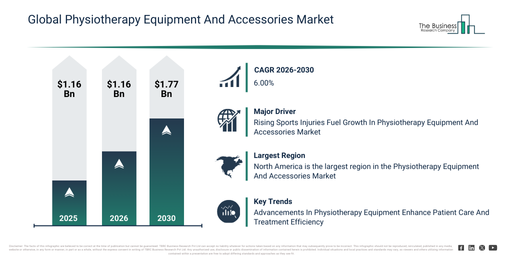
    Looking ahead, the market is expected to maintain robust growth, reaching $26.06 billion by 2030 with a CAGR of 6.0%. Key drivers for this forecast include the growing elderly population, increased adoption of remote physiotherapy services, stronger emphasis on preventive rehabilitation strategies, expansion of home healthcare offerings, and continual innovation in physiotherapy equipment design. Notable trends during this period involve rising use of portable rehabilitation devices, greater demand for home-use physiotherapy equipment, integration of digital therapy monitoring technologies, development of ergonomic accessories, and enhanced focus on pain management solutions.

    Factors Propelling Growth in the Physiotherapy Equipment and Accessories Market

    One significant factor fueling market growth is the increasing number of sports-related injuries. These injuries, which occur during athletic activities or exercise, have become more common due to growing participation in high-intensity sports and inadequate injury prevention measures. Physiotherapy equipment and accessories play a crucial role in aiding recovery by relieving pain, promoting tissue healing, improving mobility, and supporting effective rehabilitation.

    Access The Complete Physiotherapy Equipment And Accessories Market Report:

    https://www.thebusinessresearchcompany.com/report/physiotherapy-equipment-and-accessories-global-market-report

    For instance, in October 2024, Inside World Football, a UK-based sports news platform, reported that sports injuries totaled 4,123 during the 2023-24 season, marking a 4% increase compared to the previous year. This rising incidence directly contributes to the expanded need for physiotherapy tools and accessories, further driving the market.

    Physiotherapy Equipment and Accessories Market Segmentation Overview

    This market is categorized across multiple segments for better analysis and understanding:

    1) Product Type: Equipment and Accessories

    2) Application Areas: Musculoskeletal, Neurology, Pediatrics, Cardiovascular and Pulmonary, and other medical uses

    3) End Users: Hospitals and Clinics, Physiotherapy and Rehabilitation Centers, and other healthcare providers

    Within equipment, further subdivisions include Therapeutic Ultrasound Devices, Electrical Stimulation Devices, Laser Therapy Equipment, Cryotherapy Units, Traction Equipment, Hydrotherapy Equipment, Exercise and Rehabilitation Equipment, and Cryo-Chambers and Ice Compressors. Accessories encompass Electrodes for Stimulation Devices, Gel and Conductive Pads, Therapy Belts and Straps, Ball and Foam Rollers, Therapy Gloves and Braces, Cushions and Support Pads, Weight Training Equipment and Accessories, as well as Stretching and Rehabilitation Tools.

    Innovation Trends Transforming the Physiotherapy Equipment and Accessories Market

    Leading companies in this sector increasingly focus on integrating advanced technologies to improve treatment outcomes. One such innovation is the use of artificial intelligence (AI) in physiotherapy devices, which personalizes and optimizes therapy sessions with greater precision.

    For example, in August 2023, AI Rehab Ltd, based in the UK, launched Slider — an AI-enabled exercise and remote physiotherapy device designed specifically for patients with knee arthritis. This device supports both hospital and home use, aiding pre-operative and post-operative rehabilitation. Slider employs AI algorithms and wearable sensors to track motion and force during knee exercises. It also incorporates gamification elements, engaging users through interactive games that encourage movement, helping to reduce the monotony often associated with conventional physiotherapy routines.

    Competitive Landscape of the Physiotherapy Equipment and Accessories Market

    The physiotherapy equipment and accessories market features several prominent companies shaping its development. Key players include Enovis Corporation, DJO Global, BTL Corporate, Performance Health, Zynex Medical Inc, Dynatronics Corporation, Storz Medical AG, Enraf-Nonius B.V., A. Algeo Ltd, Zimmer Medizin System GmbH, Mectronic Medicale S.r.l, SEERS Medical Ltd, Life Care Systems, GymnaUniphy N.V., EMS Physio Ltd., ITO Co Ltd, HMS Medical Systems, Chinesport S.p.A., Johari Digital Healthcare, and RehabMedic Srl, among others.

    Regional Analysis Reveals Market Leadership and Growth Potential

    In 2025, North America held the largest share of the physiotherapy equipment and accessories market, reflecting a mature healthcare infrastructure and high adoption rates. Meanwhile, the Asia-Pacific region is anticipated to experience the fastest growth throughout the forecast period. This growth is supported by expanding healthcare access, increasing awareness of physiotherapy benefits, and rising investments in medical infrastructure. The market report also considers regions such as South East Asia, Western Europe, Eastern Europe, South America, the Middle East, and Africa for a comprehensive global perspective.

    Get in touch with us:

    The Business Research Company: https://www.thebusinessresearchcompany.com/

    Americas: +1 310-496-7795

    Asia: +44 7882 955267 & +91 8897263534

    Europe: +44 7882 955267

    Email us at: marketing@tbrc.info

    Follow us on:

    LinkedIn: https://in.linkedin.com/company/the-business-research-company

    YouTube: https://www.youtube.com/channel/UC24_fI0rV8cR5DxlCpgmyFQ

    Global Market Model: https://www.thebusinessresearchcompany.com/global-market-model
  • Physiotherapy Equipment Market Expansion Is Reshaping Competitive Dynamics Across The Industry

    Physiotherapy Equipment Market Expansion Is Reshaping Competitive Dynamics Across The Industry

    Enhanced with market attractiveness analysis, total addressable market evaluation, company benchmarking matrices, interactive Excel dashboards, expanded supply chain intelligence, emerging startup coverage, and detailed product insights, The Business Research Company’s 2026 market reports deliver more actionable and strategically valuable research.

    The physiotherapy equipment sector has witnessed remarkable growth recently, driven by increasing health challenges and advancements in rehabilitation technologies. As the demand for effective recovery solutions rises globally, this market is set to expand further, fueled by evolving treatment methods, technological progress, and shifting patient needs.

    Strong Expansion in Physiotherapy Equipment Market Size and Projections

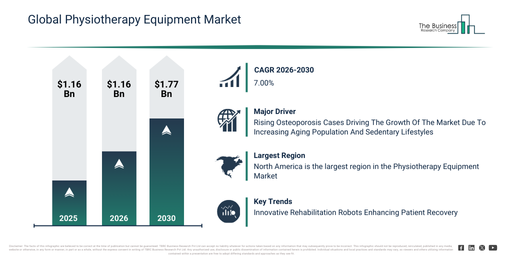
    In recent years, the physiotherapy equipment market has shown significant growth, with its value expected to increase from $20.91 billion in 2025 to $22.38 billion in 2026 at a steady compound annual growth rate (CAGR) of 7.0%. This upward trajectory is largely due to the rise in musculoskeletal disorders, more frequent physical injuries, growth in rehabilitation centers, an increasing need for post-surgical recovery, and an aging global population. Looking ahead, the market is anticipated to reach $29.29 billion by 2030, maintaining the same CAGR of 7.0%. The forecast period’s growth is supported by factors such as the adoption of remote physiotherapy, the popularity of wearable rehabilitation devices, the prevalence of chronic pain, the frequency of sports injuries, and the rise of digital therapy platforms. Key trends expected to influence this growth include the expansion of home-based rehabilitation programs, the increased use of electrotherapy devices, the demand for non-invasive pain treatments, a boost in sports rehabilitation services, and the integration of smart therapy equipment.

    Download A Free Sample Report For Comprehensive Market Insights:

    https://www.thebusinessresearchcompany.com/sample.aspx?id=22097&type=smp

    Rising Osteoporosis Rates as a Major Market Driver

    A significant factor propelling growth in the physiotherapy equipment market is the increasing occurrence of osteoporosis. This condition, characterized by weakened bones and a higher risk of fractures due to reduced bone density, is becoming more common with aging populations, more sedentary lifestyles, and unhealthy diets. As life expectancy rises, a larger portion of the population is entering older age brackets where bone density naturally diminishes, making osteoporosis more prevalent. Physiotherapy equipment plays a vital role in managing this condition by providing treatments that strengthen bones, enhance balance, and improve muscle function, thereby lowering the risk of falls and fractures. For example, in July 2025, the Institute for Health Transformation from Australia reported that in 2023, a fracture occurred every 2.7 minutes, with projections showing this could increase to one fracture every 30 seconds by 2033. This trend underlines how the growing incidence of osteoporosis is driving demand within the physiotherapy equipment market.

    Additional Factors Contributing to Market Demand

    Beyond osteoporosis, other elements also contribute to the market’s expansion. The increasing number of physical injuries, whether from accidents or sports, along with a surge in rehabilitation centers globally, is creating more opportunities for physiotherapy equipment usage. Additionally, the need for effective post-surgical recovery processes and the aging demographic worldwide further stimulate demand. These factors combined ensure that the market remains on a steady growth path as healthcare providers seek better recovery tools and patients look for enhanced rehabilitation options.

    Access The Complete Physiotherapy Equipment Market Report:

    https://www.thebusinessresearchcompany.com/report/physiotherapy-equipment-global-market-report

    Detailed Breakdown of Physiotherapy Equipment Market Segments

    This market is segmented into several categories to better understand its composition:

    1) By Type: This includes Cryotherapy, Hydrotherapy, Continuous Passive Motion (CPM), Ultrasound, Electric Stimulation, Heat Therapy, Therapeutic Exercise, and other types.

    2) By Application: Segments include Neurology, Musculoskeletal, Pediatric, Cardiovascular and Pulmonary, and other applications.

    3) By End-User: Covers Hospitals and Clinics, Rehabilitation Centers, and other users.

    Within these, subcategories provide further detail such as:

    – Cryotherapy devices like Ice Packs, Cold Compression Therapy Units, Cryo Chambers, and Vapocoolant Sprays.

    – Hydrotherapy equipment including Whirlpool Therapy Equipment, Underwater Treadmills, Aquatic Therapy Pools, and Hydrotherapy Tanks.

    – CPM machines for knees, shoulders, elbows, and ankles.

    – Ultrasound devices such as Therapeutic Ultrasound, High-Intensity Focused Ultrasound (HIFU), and Low-Intensity Pulsed Ultrasound (LIPUS).

    – Electric Stimulation tools including TENS Units, Neuromuscular Electrical Stimulation (NMES), Functional Electrical Stimulation (FES), and Interferential Current Therapy (IFC) Units.

    – Heat Therapy products like Infrared Lamps, Heating Pads, Paraffin Wax Baths, and Hot Packs.

    – Therapeutic Exercise equipment such as Resistance Bands, Balance and Stability Tools, Exercise Balls, and Strength Training Machines.

    – Other types like Laser Therapy Devices, Traction Therapy Equipment, Shockwave Machines, and Magnetotherapy Devices.

    Innovations and Trends Changing the Physiotherapy Equipment Landscape

    Key players in the physiotherapy equipment market are pushing the envelope by introducing sophisticated products like rehabilitation robots to improve patient recovery and treatment results. These cutting-edge machines incorporate advanced technologies such as artificial intelligence (AI), brain-computer interfaces (BCI), and high-precision sensors, which help restore motor functions and enhance rehabilitation effectiveness. For instance, in November 2023, Syrebo, a technology company based in China, unveiled two new products: the Hand Rehabilitation Robot (BCI) SY-BR09 and the Upper Limb Rehabilitation Robot SY-UEA2. The SY-BR09 robot leverages BCI technology to stimulate brain activity, promoting neural reshaping and improving active movement awareness, which significantly boosts rehabilitation success. Meanwhile, the SY-UEA2 comes with a fully mobile chassis and precise optical positioning systems, offering targeted training for upper limbs to aid functional recovery.

    Top Companies Leading the Physiotherapy Equipment Market

    The physiotherapy equipment market features several prominent players, including Medtronic plc, Zimmer Biomet Holdings Inc., Oceanic Healthcare, Dynatronics Corporation, Chirag Electronics Pvt. Ltd., HMS Medical Systems, Bio-Med International Pvt Ltd., Naugra Medical, Hi-Tech Surgical Company, Bit & Byte Technosys Private Limited, Physio Medicare, Cerabest Healthcare, Bharath Medical Systems, Divine Physiotherapy Equipments, JaincoLab, Syrebo, Sonka Medical, Maktrex International, Life Care Systems, and Tapsi Electro Medical Systems & Services. These companies are integral to advancing market technologies and expanding global reach.

    Geographical Insights Highlighting North America’s Market Leadership

    In 2025, North America held the top position as the largest market for physiotherapy equipment. The overall market outlook also includes key regions such as Asia-Pacific, South East Asia, Western Europe, Eastern Europe, South America, the Middle East, and Africa, reflecting a broad global landscape with diverse growth patterns across different geographies.

    Get in touch with us:

    The Business Research Company: https://www.thebusinessresearchcompany.com/

    Americas: +1 310-496-7795

    Asia: +44 7882 955267 & +91 8897263534

    Europe: +44 7882 955267

    Email us at: marketing@tbrc.info

    Follow us on:

    LinkedIn: https://in.linkedin.com/company/the-business-research-company

    YouTube: https://www.youtube.com/channel/UC24_fI0rV8cR5DxlCpgmyFQ

    Global Market Model: https://www.thebusinessresearchcompany.com/global-market-model
  • Physiotherapy Devices Market Forecast Reveals Where Future Industry Value Will Be Created

    Physiotherapy Devices Market Forecast Reveals Where Future Industry Value Will Be Created

    Through market attractiveness analysis, total addressable market evaluation, company benchmarking matrices, interactive Excel dashboards, expanded supply chain intelligence, emerging startup coverage, and detailed product insights, The Business Research Company’s 2026 market reports provide more actionable and strategically valuable research.

    The physiotherapy devices market has experienced notable growth in recent years and is anticipated to continue expanding steadily. This upward trend is driven by several factors, including the increasing prevalence of musculoskeletal disorders and the growing demand for effective rehabilitation solutions. Let’s explore the current market size, key growth drivers, segmentation, leading players, strategic trends, and regional dynamics shaping the physiotherapy devices sector.

    Physiotherapy Devices Market Size and Forecasted Growth Trajectory

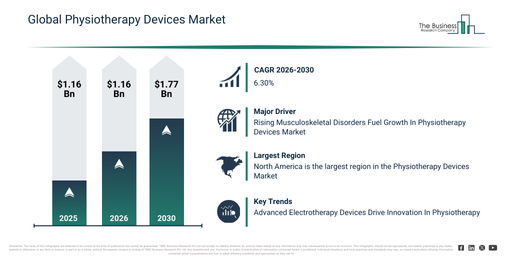
    The market for physiotherapy devices is projected to increase from $23.15 billion in 2025 to $24.67 billion in 2026, reflecting a compound annual growth rate (CAGR) of 6.6%. Historically, this growth has been fueled by a rise in musculoskeletal disorders, an expanding geriatric population, the growth of rehabilitation centers, higher rates of road accident injuries, and the adoption of non-invasive therapeutic methods. Looking ahead, the market is expected to reach $31.49 billion by 2030, growing at a CAGR of 6.3%. Factors contributing to this growth include the rise in home-based rehabilitation, an uptick in sports-related injuries, an increased focus on post-surgical recovery, the expansion of physiotherapy clinics, and a growing demand for portable devices. Key trends anticipated to influence the market include the broader use of home-based physiotherapy equipment, increased demand for pain management devices, growth in sports injury rehabilitation, the rise of wearable therapy devices, and the integration of multimodal therapy solutions.

    Download A Free Sample Report For Comprehensive Market Insights:

    https://www.thebusinessresearchcompany.com/sample.aspx?id=20590&type=smp

    Rising Cases of Musculoskeletal Disorders Boosting Physiotherapy Devices Market

    One of the primary factors propelling the physiotherapy devices market is the increasing occurrence of musculoskeletal disorders (MSDs). These conditions, which affect muscles, bones, joints, tendons, ligaments, and surrounding tissues, cause pain, stiffness, and limited movement. The aging population is particularly vulnerable, as natural degeneration of bones, joints, and muscles makes older adults more susceptible to these ailments. Physiotherapy devices play a crucial role in managing MSDs by alleviating pain, enhancing mobility, and supporting rehabilitation through targeted treatments.

    Growing Aging Population Intensifies Demand for Therapeutic Devices

    For example, in January 2024, the UK-based Office for Health Improvement & Disparities reported that 18.4% of individuals aged 16 and above had a long-term musculoskeletal condition in 2023, up from 17.6% in 2022. This upward trend highlights the increasing need for effective therapies and devices tailored to manage such conditions, which in turn is driving demand within the physiotherapy devices market.

    Access The Complete Physiotherapy Devices Market Report:

    https://www.thebusinessresearchcompany.com/report/physiotherapy-devices-global-market-report

    Segmentation of the Physiotherapy Devices Market by Type and Application

    This market is categorized into three key segments: Type, Application, and End User. Under Type, the segments include Equipment, Kits, and Accessories. Application-wise, the market covers Musculoskeletal, Neurology, Cardiovascular, and other specialized areas. End Users comprise Hospitals, Physiotherapy Clinics, Rehabilitation Centers, and other related facilities.

    Breaking down the Equipment segment further, it includes Electrical Stimulation Devices, Ultrasound Therapy Machines, Traction Equipment, Laser Therapy Devices, Cryotherapy Equipment, Heat Therapy Devices, Electrotherapy Units, and Exercise Equipment. Kits are subdivided into Physiotherapy Treatment Kits, Mobility Assistance Kits, Pain Relief Kits, Post-Surgery Recovery Kits, and Home Physiotherapy Kits. Accessories encompass Massage Rollers, Therapy Balls, Resistance Bands and Tubes, Knee and Back Supports, Foot and Ankle Supports, Electrode Pads for Electrotherapy, Therapy Straps and Bands, and Posture Correction Devices.

    Innovations in Home-Use Electrotherapy Devices Shaping Market Growth

    Leading companies in the physiotherapy devices sector are focusing on developing home-use solutions, especially electrotherapy devices, to improve therapeutic outcomes and accelerate patient recovery. Electrotherapy devices deliver electrical currents for purposes such as pain relief, muscle stimulation, and tissue healing.

    For instance, in March 2023, US-based Zynex Inc. introduced NexWave, an advanced electrotherapy device designed for pain management. NexWave provides pain relief up to 50 times stronger than standard transcutaneous electrical nerve stimulation (TENS) units without side effects. It works by blocking pain signals at the nervous system level, offering a safer alternative to pain medications. This device is especially beneficial for patients recovering from surgery or those experiencing chronic pain. Designed for home use, NexWave delivers higher frequencies and stronger electrical output than typical over-the-counter devices, garnering strong recommendations from both healthcare providers and patients.

    Key Market Players Leading the Physiotherapy Devices Industry

    The physiotherapy devices market features several prominent companies, including 3M Company, DJO LLC, BTL Industries Inc., Performance Health Holding Inc., Zynex Medical Inc., Morris Group International Inc., Dynatronics Corporation, Storz Medical AG, Chattanooga Group, Zimmer MedizinSysteme GmbH, Mectronic Medicale S.r.l., Mettler Electronics Corp., EMS Physio Ltd., International Electro Medical Co., Medisport S.r.l., Enovis Corporation, Enraf Nonius B.V., ITO Co Ltd, Whitehall Manufacturing Inc., Richmar, HMS Medical Systems Pvt Ltd, Life Care Systems Pvt Ltd, Meden-Inmed, Gymna Uniphy, and CoolSystems Inc.

    Regional Insights Highlight North America as Market Leader

    In terms of regional performance, North America dominated the physiotherapy devices market in 2025. However, Asia-Pacific is expected to record the fastest growth over the coming years. Other regions analyzed in the market report include South East Asia, Western Europe, Eastern Europe, South America, the Middle East, and Africa, providing a comprehensive view of global market dynamics.

    Get in touch with us:

    The Business Research Company: https://www.thebusinessresearchcompany.com/

    Americas: +1 310-496-7795

    Asia: +44 7882 955267 & +91 8897263534

    Europe: +44 7882 955267

    Email us at: marketing@tbrc.info

    Follow us on:

    LinkedIn: https://in.linkedin.com/company/the-business-research-company

    YouTube: https://www.youtube.com/channel/UC24_fI0rV8cR5DxlCpgmyFQ

    Global Market Model: https://www.thebusinessresearchcompany.com/global-market-model
  • Photochromic Lenses Market Growth Through 2030 Creates New Strategic Opportunities

    Photochromic Lenses Market Growth Through 2030 Creates New Strategic Opportunities

    Delivering more actionable and strategically valuable research, The Business Research Company’s 2026 market reports feature market attractiveness analysis, total addressable market evaluation, company benchmarking matrices, interactive Excel dashboards, expanded supply chain intelligence, emerging startup coverage, and detailed product insights.

    The photochromic lenses market has experienced significant growth recently, driven by expanding consumer awareness and technological advancements. These lenses, which adapt to changing light conditions, have become increasingly popular due to their convenience and eye protection benefits. Let’s explore the market’s size, key growth drivers, segmentation, innovation trends, and major players shaping its future.

    Photochromic Lenses Market Size and Expected Growth Trajectory

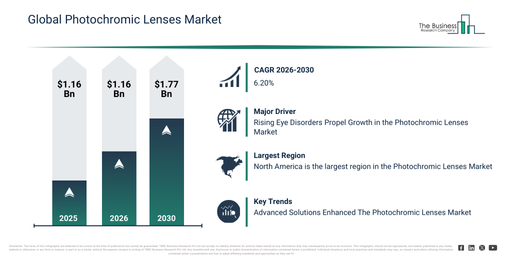
    The photochromic lenses market is set for steady expansion, increasing from $6.98 billion in 2025 to $7.46 billion in 2026, with a compound annual growth rate (CAGR) of 7.0%. This growth during the recent years is largely influenced by a rising need for vision correction, heightened consumer understanding of UV eye protection, broader optical retail networks, growing acceptance of prescription eyewear, and advancements in lens materials. Looking ahead, the market is projected to reach $9.48 billion by 2030, expanding at a CAGR of 6.2%. Continued demand for adaptive eyewear, higher adoption of premium optical products, growth in online sales channels, focus on sustainable materials, and ongoing innovation in photochromic technology will all contribute to this positive outlook. Key trends expected include faster-reacting lens materials, growing interest in scratch-resistant and durable coatings, preference for lightweight high-index lenses, and an emphasis on fashionable, aesthetically appealing designs with integrated UV protection.

    Download A Free Sample Report For Comprehensive Market Insights:

    https://www.thebusinessresearchcompany.com/sample.aspx?id=16765&type=smp

    Increasing Prevalence of Eye Disorders Boosting Photochromic Lenses Demand

    A growing number of eye-related conditions such as myopia, cataracts, glaucoma, and age-related macular degeneration are a significant factor supporting market growth. These disorders, which affect vision and eye health, are becoming more common due to aging populations, prolonged screen exposure, environmental pollution, poor nutrition, and higher rates of chronic illnesses like diabetes. Photochromic lenses offer relief by reducing eye strain and providing effective UV protection, which enhances comfort and visual health for those affected. For example, in July 2025, the UK government’s vision health report highlighted that nearly 3.7 million people attended 9.8 million outpatient vision appointments in England during the financial year ending 2024, with cataract surgeries and injection therapies on the rise. This increased demand for clinical eye care services underlines the growing need for adaptive optical solutions like photochromic lenses.

    The Role of an Aging Population in Driving Market Expansion

    The expanding elderly demographic, typically those aged 65 and above, is a key driver fueling the photochromic lenses market. This group requires specialized healthcare due to physiological changes linked to aging, and their increasing numbers stem from longer life expectancies combined with lower birth rates. Photochromic lenses are particularly beneficial for older adults because they automatically adjust to light changes, reducing glare, enhancing comfort, and minimizing eye strain — especially important for those with heightened light sensitivity. According to data from the UK Parliament’s House of Commons Library in July 2024, the UK had 12.7 million people aged 65 or older in 2022, representing 19% of the population, with projections rising to 22.1 million by 2072, or 27% of the population. This demographic trend strongly supports market growth.

    Access The Complete Photochromic Lenses Market Report:

    https://www.thebusinessresearchcompany.com/report/photochromic-lenses-global-market-report

    Detailed Segmentation Highlighting Growth Opportunities in the Photochromic Lenses Market

    This market can be broken down into several important segments:

    1) By Material: Glass, Polycarbonate, Plastic, and Other Materials

    2) By Technology: Ultra-Violet (UV) and Visible Light, Imbibing and Trans-bonding, In Mass, and Other Technologies

    3) By Distribution Channel: Online, Optical Chains, and Independent Eye Care Professionals (ECPs)

    4) By Application: Corrective and Preventive

    Subcategories include:

    – Glass lenses such as standard, high-index, ultra-thin, scratch-resistant coated, and prescription-specific options

    – Polycarbonate lenses including standard, high-impact, sports eyewear, UV-protected, and children’s eyewear varieties

    – Plastic lenses featuring standard CR-39, high-index, lightweight, anti-reflective coated, and fashion eyewear types

    – Other materials like Trivex, acrylic, biodegradable plastics, polyurethane, and lenses made from recycled materials

    Innovative Technologies Shaping Photochromic Lens Development

    Leading companies in this market are focusing on creating advanced photochromic lenses that deliver superior clarity, quicker transitions between light and dark, and enhanced UV protection. These lenses automatically adjust tint levels depending on ambient light, improving visual comfort and eye safety. For example, in May 2024, LensCrafters introduced Transitions GEN S, a product that offers ultra-fast light adaptation, a broad palette of vibrant colors at varying darkness levels, and improved protection against UV and blue-violet light. Such developments fulfill growing consumer demands for seamless visual transitions and stronger eye protection.

    Key Market Players Driving Competition and Innovation

    The photochromic lenses sector features major players such as EssilorLuxottica SA, Mitsui Chemicals Inc., Carl Zeiss AG, HOYA Corporation, Rodenstock GmbH, Shanghai Conant Optics Co. Ltd., Younger Optics Inc., Vision Ease LP, Signet Armorlite Inc., SEIKO Optical Europe GmbH, S.T International Ltd, Optiswiss AG, GKB Optic Technologies Pvt. Ltd., Nikon Lenswear, BBGR Ltd, Norville Opticians Co, Tokai Optical Co. Ltd., Shamir Optical Industry Ltd., Indo Optical Company, and Essilor India Pvt. Ltd. These companies continuously push forward with product innovation and market expansion strategies.

    Regional Overview of the Photochromic Lenses Market and Growth Hotspots

    In 2025, North America held the largest share of the photochromic lenses market. However, the Asia-Pacific region is expected to experience the fastest growth during the forecast period. Other key regions analyzed in this market include South East Asia, Western Europe, Eastern Europe, South America, the Middle East, and Africa, giving a broad perspective on global market dynamics.

    Get in touch with us:

    The Business Research Company: https://www.thebusinessresearchcompany.com/

    Americas: +1 310-496-7795

    Asia: +44 7882 955267 & +91 8897263534

    Europe: +44 7882 955267

    Email us at: marketing@tbrc.info

    Follow us on:

    LinkedIn: https://in.linkedin.com/company/the-business-research-company

    YouTube: https://www.youtube.com/channel/UC24_fI0rV8cR5DxlCpgmyFQ

    Global Market Model: https://www.thebusinessresearchcompany.com/global-market-model
  • Pharmacy Repackaging Systems Market Size Projected To Increase From $2.58 Billion To $3.68 Billion During The Forecast Period

    Pharmacy Repackaging Systems Market Size Projected To Increase From $2.58 Billion To $3.68 Billion During The Forecast Period

    Enhanced with market attractiveness analysis, total addressable market evaluation, company benchmarking matrices, interactive Excel dashboards, expanded supply chain intelligence, emerging startup coverage, and detailed product insights, The Business Research Company’s 2026 market reports deliver more actionable and strategically valuable research.

    The pharmacy repackaging systems market is gaining significant traction as healthcare facilities increasingly demand efficient and precise medication packaging solutions. As chronic diseases become more prevalent and pharmacy automation advances, this sector is set for considerable growth in the coming years. Below is a detailed overview of the market’s size, key drivers, major segments, emerging trends, and competitive landscape.

    Market Size and Expected Growth Trajectory of the Pharmacy Repackaging Systems Market

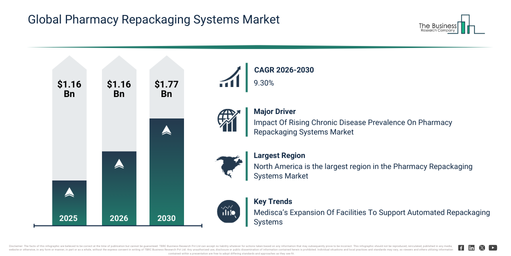
    The pharmacy repackaging systems market has seen robust growth in recent years. It is projected to increase from $2.36 billion in 2025 to $2.59 billion in 2026, marking a compound annual growth rate (CAGR) of 9.3%. This expansion during the historical period is largely driven by factors such as the rise of hospital pharmacy automation, initiatives aimed at reducing medication errors, growth in long-term care pharmacies, higher prescription volumes, and advancements in pharmaceutical packaging technologies.

    Looking ahead, the market is forecasted to reach $3.69 billion by 2030, maintaining a CAGR of 9.3%. This anticipated growth stems from broader adoption of smart pharmacy systems, growing emphasis on traceability and regulatory compliance, expansion of mail-order pharmacy services, increasing demand for high-throughput repackaging, and rising investments in automation technologies. Key trends expected to shape the market include wider use of automated unit dose packaging, surge in blister and pouch packaging automation, integration of barcode and tracking technologies, development of high-speed repackaging solutions, and a stronger focus on medication safety and accuracy.

    Download A Free Sample Report For Comprehensive Market Insights:

    https://www.thebusinessresearchcompany.com/sample.aspx?id=18697&type=smp

    Understanding the Impact of Chronic Diseases on Pharmacy Repackaging Systems Market

    A major factor propelling the pharmacy repackaging systems market is the increasing prevalence of chronic diseases globally. These long-term health conditions, which often require continuous medical management and can limit daily activities, are becoming more common due to aging populations, lifestyle factors like poor diet and inactivity, urbanization, and environmental influences.

    Pharmacy repackaging systems play a crucial role in managing medications for chronic disease patients by ensuring accurate dosing, improving adherence, and enhancing safety through efficient packaging into patient-specific doses. For example, data from June 2024 by the UK’s National Health Service indicated that in 2023, 3,615,330 individuals registered with general practitioners were diagnosed with non-diabetic hyperglycemia or pre-diabetes—a rise of 18% from 3,065,825 cases in 2022. This trend highlights how the growing burden of chronic illnesses is driving demand in this market.

    Detailed Segmentation of the Pharmacy Repackaging Systems Market

    This market is categorized based on several dimensions:

    1) By Type: Blister Card Packaging Systems, Pouch Packaging Automation Systems, Liquid Medication Packaging Systems, and Bottle Filling Automation Systems.

    2) By Dosage Type: Unit Dose Packaging and Multiple Unit Packaging.

    3) By End Use: Retail or Community Pharmacies, Hospital Pharmacies, Long-Term Care Pharmacies, and Mail Order Pharmacies.

    Further subsegments include various levels of automation within blister card packaging—from manual to fully automatic systems. Pouch packaging segments cover single-use, multi-dose, and automatic sealing and filling systems. Liquid medication packaging is broken down into vial filling, syringe and ampoule filling, and bottle filling and capping automation. Bottle filling systems are also segmented into single-stage, multi-stage, and high-speed filling and capping solutions.

    Access The Complete Pharmacy Repackaging Systems Market Report:

    https://www.thebusinessresearchcompany.com/report/pharmacy-repackaging-systems-global-market-report

    Emerging Trends Highlighting the Future Market Outlook

    Leading companies in the pharmacy repackaging systems market are investing heavily in automation to meet the growing need for precise medication management globally. Automated repackaging systems reduce human error, speed up processes, and improve overall efficiency in pharmacies and healthcare facilities.

    For instance, in June 2024, MEDISCA Plattsburgh, a US pharmaceutical compounding firm, inaugurated a new repackaging facility equipped with state-of-the-art technology for customized medication repackaging. This facility features advanced dosage measurement tools and labeling systems designed to ensure accuracy and regulatory compliance. Additionally, it includes ISO-rated production areas and sophisticated warehouse management for full traceability, which supports high-quality output and personnel safety while enabling timely deliveries for an international customer base.

    Key Market Players Driving Competitive Dynamics in Pharmacy Repackaging Systems

    The competitive landscape of the pharmacy repackaging systems market is shaped by several prominent companies, including McKesson Corporation, Becton Dickinson And Company, Baxter International Inc., Syntegon Technology GmbH, Omnicell Inc., ACG Worldwide, Swisslog Holding Ltd., ScriptPro LLC, Capsa Healthcare, ARxIUM, Yuyama Co. Ltd., Kirby Lester, RxSafe LLC, Deenova S.r.l., Noritsu Pharmacy Automation, Pearson Medical Technologies, Takazono Corporation, JVM Co. Ltd., TCGRx, and Parata Systems. These players are focusing on innovation and facility expansion to capture growing market opportunities.

    Regional Market Leadership and Growth Prospects

    In terms of regional market share, North America was the leading region in the pharmacy repackaging systems market in 2025. However, Asia-Pacific is anticipated to experience the fastest growth during the forecast period. The market report covers significant regions including Asia-Pacific, South East Asia, Western Europe, Eastern Europe, North America, South America, the Middle East, and Africa, providing a comprehensive view of global market trends.

    Get in touch with us:

    The Business Research Company: https://www.thebusinessresearchcompany.com/

    Americas: +1 310-496-7795

    Asia: +44 7882 955267 & +91 8897263534

    Europe: +44 7882 955267

    Email us at: marketing@tbrc.info

    Follow us on:

    LinkedIn: https://in.linkedin.com/company/the-business-research-company

    YouTube: https://www.youtube.com/channel/UC24_fI0rV8cR5DxlCpgmyFQ

    Global Market Model: https://www.thebusinessresearchcompany.com/global-market-model