
Category: Medical Equipment

  • Chlorhexidine Gluconate (CHG) Wipes Market Forecast Signals New Revenue Opportunities Through 2030

    Chlorhexidine Gluconate (CHG) Wipes Market Forecast Signals New Revenue Opportunities Through 2030

    Delivering more actionable and strategically valuable research, The Business Research Company’s 2026 market reports feature market attractiveness analysis, total addressable market evaluation, company benchmarking matrices, interactive Excel dashboards, expanded supply chain intelligence, emerging startup coverage, and detailed product insights.

    The chlorhexidine gluconate (CHG) wipes market has witnessed consistent growth over recent years, driven by evolving healthcare needs and increasing infection control measures. As healthcare facilities continue to prioritize hygiene and infection prevention, the demand for effective antiseptic wipes is set to rise steadily. This overview explores the current market size, key growth drivers, major players, and emerging trends shaping the industry’s future.

    Chlorhexidine Gluconate Wipes Market Size and Forecast Through 2030

    The market for chlorhexidine gluconate wipes is expanding steadily. From a valuation of $52.53 billion in 2025, it is projected to grow to $54.67 billion in 2026, registering a compound annual growth rate (CAGR) of 4.1%. This growth during the historic period is linked to factors such as limited availability of antiseptic wipes, continued dependence on traditional cleaning methods, an increase in surgical procedures, heightened concerns over hospital-acquired infections, and the adoption of fundamental hygiene protocols.

    Looking ahead, the market is expected to accelerate, reaching $70.45 billion by 2030 with a CAGR of 6.5%. This boost can be attributed to innovations in CHG-infused wipes, wider implementation of infection prevention programs, growing use in ambulatory surgical centers, rising awareness of multi-drug resistant organisms, and integration with hospital digital hygiene monitoring systems. Key trends anticipated in the coming years include the increasing use of pre-surgical skin preparation wipes, expanded focus on preventing hospital-acquired infections, broader application in central line and catheter-associated infection control, growing popularity of alcohol-based antiseptic wipes, and an overall emphasis on stringent hygiene and sterilization practices.

    Download A Free Sample Report For Comprehensive Market Insights:

    https://www.thebusinessresearchcompany.com/sample.aspx?id=12277&type=smp

    Rising Surgical Procedures Fueling Demand for CHG Wipes

    One of the primary factors driving the chlorhexidine gluconate wipes market is the steady increase in surgical interventions. Surgical procedures, which involve incisions and the use of instruments to treat diseases or injuries, require effective skin disinfection to prevent microbial contamination. CHG wipes play a critical role by eliminating harmful microbes on the skin and inhibiting further microbial growth during these operations.

    For instance, in June 2024, the International Society of Aesthetic Plastic Surgery (ISAPS), a US-based organization, reported that aesthetic procedures nearly reached 35 million in 2023, with an overall increase of 3.4% to 34.9 million for both surgical and non-surgical treatments. This steady rise in surgical volumes directly supports the growing demand for CHG wipes as a preventive healthcare solution.

    Breakdown of Chlorhexidine Gluconate Wipes Market Segments

    The CHG wipes market is categorized into several important segments to better understand growth areas:

    1) By Type: Chlorhexidine Gluconate Bath Wipes and Chlorhexidine Gluconate Alcohol-Based Wipes

    2) By Application: Surgical Site Infections, Central Line-Associated Bloodstream Infections, Catheter-Associated Urinary Tract Infections, and other applications

    3) By Distribution Channel: Pharmacies, Supermarkets, Specialty Stores, and Direct Sales

    4) By End User: Hospitals, Clinics, Ambulatory Surgical Centers, and other end users

    Further sub-segmentation includes pre-packaged bath wipes and disposable bath cloths under bath wipes, and antiseptic wipes along with surface disinfection wipes under alcohol-based wipes. This detailed segmentation highlights the diverse product offerings and end-use areas within the market.

    Access The Complete Chlorhexidine Gluconate (CHG) Wipes Market Report:

    https://www.thebusinessresearchcompany.com/report/chlorhexidine-gluconate-chg-wipes-global-market-report

    Innovation Trends Shaping the CHG Wipes Industry

    Key players in the chlorhexidine gluconate wipes market are actively focusing on innovation to meet the rising demand for versatile antiseptic solutions. Many companies are developing advanced antiseptic formulations that effectively kill or inhibit bacteria, viruses, and fungi on living tissue.

    For example, in June 2023, US-based HR Pharmaceuticals Inc. launched CliniClean Chlorhexidine Gluconate 4%, a powerful antiseptic solution designed to provide comprehensive skin protection against a broad spectrum of microorganisms. This product is suitable for a variety of uses including pre-operative patient preparation, surgical hand scrubs, healthcare personnel hand hygiene, and general skin and wound cleansing. Clinical studies have demonstrated that repeated use of CliniClean significantly reduces skin bacteria and maintains antimicrobial effectiveness for extended periods post-application.

    Leading Companies Influencing the CHG Wipes Market Landscape

    Several prominent companies hold a major presence in the chlorhexidine gluconate wipes industry. These include Cardinal Health Inc., 3M Co, Johnson & Johnson MedTech, McKesson Medical-Surgical Inc., Medline Industries Inc., Becton Dickinson and Company, Stryker Corporation, Ecolab Inc., Smith & Nephew Plc., Ethicon Inc., Coloplast AS, Purdue Products L.P., Owens & Minor Inc., Pal International, Molnlycke Health Care AB, Halyard Health Inc., Nice-Pak Products Inc., Sage Products LLC, GAMA Healthcare Ltd., Dynarex-Corporation, AvaCare Medical LLC, PDI Ltd., Lernapharm Inc., Carenow Medical Pvt. Ltd., and Clinicept Healthcare Ltd. These organizations play a critical role in advancing product development and expanding distribution networks.

    Regional Markets and Growth Potential for CHG Wipes

    In 2025, North America accounted for the largest share of the chlorhexidine gluconate wipes market. However, the Asia-Pacific region is forecasted to experience the fastest growth throughout the forecast period. The market analysis also covers important regions including South East Asia, Western Europe, Eastern Europe, South America, the Middle East, and Africa, providing a comprehensive global perspective on market dynamics and regional opportunities.

    Get in touch with us:

    The Business Research Company: https://www.thebusinessresearchcompany.com/

    Americas: +1 310-496-7795

    Asia: +44 7882 955267 & +91 8897263534

    Europe: +44 7882 955267

    Email us at: marketing@tbrc.info

    Follow us on:

    LinkedIn: https://in.linkedin.com/company/the-business-research-company

    YouTube: https://www.youtube.com/channel/UC24_fI0rV8cR5DxlCpgmyFQ

    Global Market Model: https://www.thebusinessresearchcompany.com/global-market-model
  • Continuous Renal Replacement Therapy Machine Market Growth Outlook Reveals A CAGR Of 8.6% And A Market Value Of $2.07 Billion By 2030

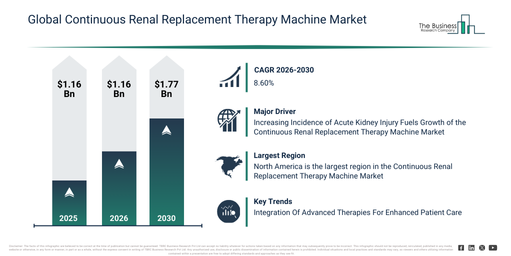
    Continuous Renal Replacement Therapy Machine Market Growth Outlook Reveals A CAGR Of 8.6% And A Market Value Of $2.07 Billion By 2030

    Enhanced with market attractiveness analysis, total addressable market evaluation, company benchmarking matrices, interactive Excel dashboards, expanded supply chain intelligence, emerging startup coverage, and detailed product insights, The Business Research Company’s 2026 market reports deliver more actionable and strategically valuable research.

    The continuous renal replacement therapy machine market has witnessed significant advancement recently, driven by medical needs and technological progress. As healthcare providers increasingly focus on critical care solutions, this market is set for continued expansion. Let’s explore the current market size, main factors fueling growth, key players, and important trends shaping its future.

    Current Size and Growth Forecast for Continuous Renal Replacement Therapy Machine Market

    The market for continuous renal replacement therapy (CRRT) machines has shown solid growth over recent years. It is projected to increase from $1.37 billion in 2025 to $1.49 billion in 2026, achieving a compound annual growth rate (CAGR) of 8.7%. This growth during the historical period is primarily due to a rise in acute kidney injury cases in intensive care units (ICU), an increase in sepsis and multi-organ failure incidents, the expansion of critical care infrastructure, greater adoption of continuous renal support therapies, and improved survival rates among critically ill patients.

    Download A Free Sample Report For Comprehensive Market Insights:

    https://www.thebusinessresearchcompany.com/sample.aspx?id=18799&type=smp

    Looking ahead, the CRRT machine market is expected to continue this upward trajectory, reaching $2.07 billion by 2030 with a CAGR of 8.6%. Key factors supporting this growth include an aging population more susceptible to acute kidney injury, heightened demand for gentle renal replacement therapies, rising ICU admission rates worldwide, a growing emphasis on personalized critical care treatment, and the development of advanced critical care facilities in emerging markets. Forecast trends also highlight greater use of CRRT machines in ICUs, increasing preference for continuous dialysis in hemodynamically unstable patients, a shift toward mobile and portable CRRT devices, expanding applications in pediatric and geriatric care, and enhanced focus on precise fluid and solute management.

    Primary Drivers Behind Continuous Renal Replacement Therapy Machine Market Expansion

    One of the main forces propelling the CRRT machine market growth is the increasing prevalence of acute kidney injury (AKI). AKI is characterized by a sudden loss of kidney function, which impairs the body’s ability to eliminate waste and maintain fluid and electrolyte balance. It results from reduced blood flow to the kidneys, direct damage from toxins or infections, or urinary tract obstructions.

    Access The Complete Continuous Renal Replacement Therapy Machine Market Report:

    https://www.thebusinessresearchcompany.com/report/continuous-renal-replacement-therapy-machine-global-market-report

    CRRT machines provide continuous and gentle dialysis, gradually removing waste and excess fluids, thereby stabilizing patients’ conditions and minimizing complications. For example, a UK-based charity, Kidney Research, reported in June 2023 that there were approximately 615,000 cases of AKI in 2022, with projections indicating a 4% increase to 637,000 cases by 2033. This rising incidence is a significant factor driving demand for continuous renal replacement therapy machines.

    Detailed Breakdown of Continuous Renal Replacement Therapy Machine Market Segments

    This market is analyzed across multiple segments to offer a detailed view of product types and applications:

    1) Type: Mobile and Fixed CRRT machines

    2) Modality: Slow Continuous Ultrafiltration (SCUF), Continuous Venovenous Hemofiltration (CVVH), Continuous Venovenous Hemodialysis (CVVHD), Continuous Venovenous Hemodiafiltration (CVVHDF)

    3) Age Group: Pediatric, Adult, Geriatric patients

    4) Application: Acute Renal Failure, Chronic Renal Failure, and other uses

    5) End-User: Hospitals, Clinics, Dialysis Centers, Home Care settings, and other users

    Subcategories include mobile units such as compact and portable CRRT machines, and fixed units ranging from standard to high-performance devices.

    Innovations and Market Trends Shaping the Continuous Renal Replacement Therapy Machine Industry

    Leading companies in the CRRT machine sector are investing in cutting-edge technologies, including augmented reality (AR), to enhance patient care and clinical decision-making. AR integration enables real-time monitoring and improved visualization of patient data by overlaying critical information directly into the healthcare provider’s field of view.

    For instance, in March 2024, Germany’s Fresenius Medical Care introduced an innovative AR-based training program specifically designed for its Continuous Kidney Replacement Therapy device, the multiFiltrate PRO. This program was launched during the International Symposium on Intensive Care and Emergency Medicine (ISICEM) held in Brussels, highlighting the sector’s commitment to advancing clinical education and patient outcomes through technology.

    Key Players Steering the Continuous Renal Replacement Therapy Machine Market

    Several prominent companies are leading the charge in the CRRT machine market, including:

    – Medtronic plc

    – Fresenius Medical Care AG KGaA

    – GE HealthCare Technologies Inc.

    – Baxter International Inc.

    – Terumo Corporation

    – Shenzhen Mindray Bio-Medical Electronics Co Ltd

    – Nipro Corporation

    – B Braun Medical Inc.

    – Shandong Weigao Blood Purification Products Co Ltd

    – Nikkiso Co Ltd

    – JMS Co Ltd

    – NxStage Medical Inc.

    – Guangdong Biolight Meditech Co Ltd

    – Quanta Dialysis Technologies Ltd

    – Medica S.p.A.

    – Anjue Medical Equipment Co Ltd

    – Infomed SA

    – SWS Hemodialysis Care Co Ltd

    – Kawasumi Laboratories Incorporated

    – Toray Industries Inc

    Regional Outlook and Growth Potential for CRRT Machines

    In 2025, North America dominated the continuous renal replacement therapy machine market in terms of size. However, the Asia-Pacific region is expected to exhibit the fastest growth rate over the coming years. The market report covers key regions including Asia-Pacific, South East Asia, Western Europe, Eastern Europe, North America, South America, the Middle East, and Africa, providing a comprehensive perspective on global market dynamics.

    Get in touch with us:

    The Business Research Company: https://www.thebusinessresearchcompany.com/

    Americas: +1 310-496-7795

    Asia: +44 7882 955267 & +91 8897263534

    Europe: +44 7882 955267

    Email us at: marketing@tbrc.info

    Follow us on:

    LinkedIn: https://in.linkedin.com/company/the-business-research-company

    YouTube: https://www.youtube.com/channel/UC24_fI0rV8cR5DxlCpgmyFQ

    Global Market Model: https://www.thebusinessresearchcompany.com/global-market-model
  • Chemotherapy Infusion Pumps Market Growth Is Accelerating As Industry Transformation Continues

    Chemotherapy Infusion Pumps Market Growth Is Accelerating As Industry Transformation Continues

    Enhanced with market attractiveness analysis, total addressable market evaluation, company benchmarking matrices, interactive Excel dashboards, expanded supply chain intelligence, emerging startup coverage, and detailed product insights, The Business Research Company’s 2026 market reports deliver more actionable and strategically valuable research.

    The chemotherapy infusion pumps market has witnessed significant growth recently, driven by advances in cancer treatment and increasing patient demand for precise drug delivery. As healthcare systems evolve and cancer incidences rise worldwide, the demand for effective infusion solutions continues to strengthen. Here is an in-depth look at the market size, key drivers, segmentation, competitive landscape, and regional trends shaping this sector.

    Market Size and Growth Expectations in the Chemotherapy Infusion Pumps Market

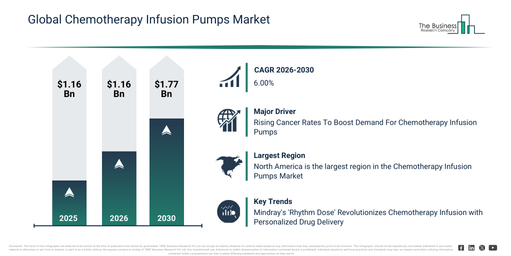
    The chemotherapy infusion pumps market has experienced robust expansion, with its value expected to rise from $5.2 billion in 2025 to $5.51 billion in 2026, reflecting a compound annual growth rate (CAGR) of 6.0%. This growth during the recent years can be linked to the increasing global incidence of cancer, broader use of chemotherapy as a frontline therapy, the proliferation of oncology treatment centers, enhanced adoption of infusion-based drug delivery systems, and ongoing improvements in pump safety protocols. Moving forward, the market is projected to reach $6.95 billion by 2030, maintaining a steady CAGR of 6.0%. Factors contributing to this forecast include a shift toward outpatient cancer care, rising preference for home-based oncology treatments, efforts to reduce hospital stays, increased focus on personalized chemotherapy regimens, and expanding access to cancer therapies in emerging markets. Emerging trends such as ambulatory chemotherapy delivery, demand for precise dosing, preference for disposable pump systems, continuous infusion protocols, and initiatives to improve patient comfort and adherence will further influence the market landscape.

    Download A Free Sample Report For Comprehensive Market Insights:

    https://www.thebusinessresearchcompany.com/sample.aspx?id=18534&type=smp

    Key Drivers Fueling Growth in the Chemotherapy Infusion Pumps Market

    One of the primary factors propelling market growth is the rising incidence of cancer globally. Cancer, characterized by uncontrolled cell growth and spread, is influenced by lifestyle changes, genetic factors, and environmental exposures like smoking, radiation, chemicals, and infections. The increasing number of cancer cases drives demand for efficient chemotherapy delivery methods. Chemotherapy infusion pumps play a vital role in this context by providing accurate, continuous administration of chemotherapy drugs, which helps optimize treatment effectiveness while minimizing side effects.

    Supporting this trend, the World Health Organization reported in February 2024 that new cancer cases worldwide are expected to exceed 35 million by 2050—a 77% increase from the estimated 20 million in 2022. This alarming growth underscores the critical role chemotherapy infusion pumps will play in managing cancer treatment in the coming decades.

    Access The Complete Chemotherapy Infusion Pumps Market Report:

    https://www.thebusinessresearchcompany.com/report/chemotherapy-infusion-pumps-global-market-report

    Market Segments and Strategic Opportunities in Chemotherapy Infusion Pumps

    This market is categorized across several key segments for a comprehensive understanding of its dynamics:

    1) By Type: Large Volume Pumps, Syringe Pumps, Elastomeric Pumps, Ambulatory Infusion Pumps, and Other Types

    2) By Usage: Disposable and Reusable Pumps

    3) By End User: Hospitals, Clinics, Home Care, and Other End Users

    Further breakdowns include:

    – Large Volume Pumps: Traditional and Volumetric Infusion Pumps

    – Syringe Pumps: Manual and Electronic Syringe Pumps

    – Elastomeric Pumps: Disposable and Reusable Variants

    – Ambulatory Infusion Pumps: Disposable and Reusable Options

    – Other Types: Smart Infusion Pumps and Patient-Controlled Analgesia (PCA) Pumps

    This detailed segmentation creates opportunities for targeted innovation and tailored solutions that meet diverse clinical needs in chemotherapy administration.

    Emerging Trends Shaping Market Competition in Chemotherapy Infusion Pumps

    Leading companies in this sector are adopting advanced technological innovations to enhance treatment personalization and precision. Customizable infusion rates for chemotherapy drugs now allow healthcare providers to adjust dosing speeds and schedules tailored to individual patient requirements, improving therapeutic outcomes. For example, in May 2023, Mindray, a China-based medical device manufacturer, launched its BeneFusion i/u infusion pump series featuring an innovative “Rhythm Dose” infusion mode. This feature is designed to optimize continuous intravenous delivery of multiple chemotherapy drugs at varying rates, enabling more effective and patient-specific treatment plans.

    Prominent Players Steering the Chemotherapy Infusion Pumps Market

    The chemotherapy infusion pumps market is shaped by several leading corporations, including:

    – Becton Dickinson and Company

    – Baxter International Inc.

    – B Braun Melsungen AG

    – ICU Medical Inc.

    – Fresenius Kabi AG

    – Medtronic plc

    – Smiths Medical

    – Terumo Corporation

    – Moog Inc.

    – Nipro Corporation

    – Micrel Medical Devices SA

    – Zyno Medical LLC

    – Mindray Medical International Limited

    – Insulet Corporation

    – Tandem Diabetes Care Inc.

    – CME Medical

    – Eitan Medical

    – Codan Medizinische Geräte GmbH & Co KG

    – SOOIL Development Co Ltd

    – Q-Core Medical Ltd

    These companies continuously invest in R&D and strategic partnerships to maintain competitive advantage and address evolving market needs.

    Regional Market Leadership and Growth Dynamics

    In 2025, North America held the largest share of the chemotherapy infusion pumps market. However, the Asia-Pacific region is expected to exhibit the fastest growth in the forecast period. The market analysis includes key geographical areas such as Asia-Pacific, South East Asia, Western Europe, Eastern Europe, North America, South America, the Middle East, and Africa, offering a well-rounded view of global market trends and regional growth prospects.

    Get in touch with us:

    The Business Research Company: https://www.thebusinessresearchcompany.com/

    Americas: +1 310-496-7795

    Asia: +44 7882 955267 & +91 8897263534

    Europe: +44 7882 955267

    Email us at: marketing@tbrc.info

    Follow us on:

    LinkedIn: https://in.linkedin.com/company/the-business-research-company

    YouTube: https://www.youtube.com/channel/UC24_fI0rV8cR5DxlCpgmyFQ

    Global Market Model: https://www.thebusinessresearchcompany.com/global-market-model
  • Continuous Renal Replacement Therapy Market Forecast Highlights Expansion From $1.91 Billion To $2.76 Billion Through 2030

    Continuous Renal Replacement Therapy Market Forecast Highlights Expansion From $1.91 Billion To $2.76 Billion Through 2030

    Through market attractiveness analysis, total addressable market evaluation, company benchmarking matrices, interactive Excel dashboards, expanded supply chain intelligence, emerging startup coverage, and detailed product insights, The Business Research Company’s 2026 market reports provide more actionable and strategically valuable research.

    The continuous renal replacement therapy (CRRT) market has experienced rapid advancements in recent years, driven by evolving healthcare needs and technological improvements. As critical care continues to expand globally, this market is set to witness substantial growth, with increasing adoption of sophisticated renal support therapies playing a key role. Below is an overview of the market’s current status, growth factors, major players, and emerging trends shaping its future.

    Strong Progress and Forecast of the Continuous Renal Replacement Therapy Market

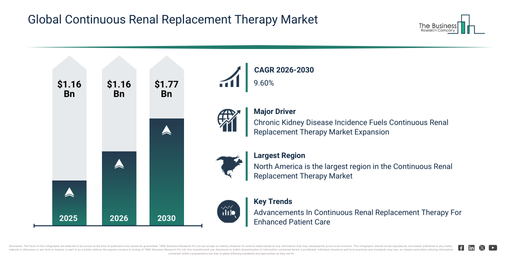
    The CRRT market has seen significant expansion, growing from $1.73 billion in 2025 to $1.92 billion in 2026, with a compound annual growth rate (CAGR) of 10.8%. This historical growth has been largely driven by factors such as a higher occurrence of acute kidney injury in critical care settings, an increase in ICU admissions for sepsis and multi-organ failure, broader use of renal support therapies, expanding critical care infrastructure, and improved survival rates among critically ill patients. Looking ahead, the market is projected to reach $2.77 billion by 2030, growing at a CAGR of 9.6%. Key growth drivers during this forecast period include an aging population prone to acute kidney injury, rising cases of critical illnesses, greater adoption of advanced renal support technologies, a focus on personalized critical care treatments, and enhanced ICU capacity in emerging economies. Important market trends will also include wider use of CRRT in intensive care units, increased preference for continuous therapies for hemodynamically unstable patients, growing demand for precise fluid and electrolyte management, expansion of CRRT applications in pediatric and neonatal care, and rising preference for integrated CRRT systems and consumables.

    Download A Free Sample Report For Comprehensive Market Insights:

    https://www.thebusinessresearchcompany.com/sample.aspx?id=15777&type=smp

    Increasing Incidence of Chronic Kidney Disease Boosting CRRT Market Growth

    One of the primary factors propelling the continuous renal replacement therapy market is the rising prevalence of chronic kidney diseases (CKD). CKD is a progressive condition that diminishes the kidneys’ ability to filter waste efficiently. Its increasing occurrence is linked to lifestyle changes, aging populations, and higher rates of diabetes and hypertension worldwide. CRRT plays a vital role in managing acute complications and fluid balance in CKD patients. For example, data from May 2024 reported by the Centers for Disease Control and Prevention (CDC) indicate that over 35.5 million adults in the United States—more than 1 in 7—are affected by CKD. Alarmingly, nearly 90% of these patients remain unaware of their condition, highlighting a critical need for early detection and awareness efforts. This growing CKD burden is a significant driver behind the expanding CRRT market.

    Segment Overview Highlighting Key Revenue Contributors in the Continuous Renal Replacement Therapy Market

    This report segments the CRRT market into several categories that help identify the main sources of revenue:

    1) Product Type: Systems and Consumables

    2) Therapy Type: Renal and Non-Renal

    3) Modality: Slow Continuous Ultra-Filtration (SCUF), Continuous Venovenous Hemofiltration (CVVH), Continuous Venovenous Hemodialysis (CVVHD), and Continuous Venovenous Hemodiafiltration (CVVHDF)

    4) Age Group: Adults and Pediatrics/Neonates

    5) End-User: Hospitals and Ambulatory Care Facilities

    Further breakdown includes systems such as hemofilters, CRRT machines, and blood tubing sets; consumables like dialysate solutions, replacement fluids, catheters, and bloodline sets, providing a comprehensive view of the market structure.

    Access The Complete Continuous Renal Replacement Therapy Market Report:

    https://www.thebusinessresearchcompany.com/report/continuous-renal-replacement-therapy-global-market-report

    Innovations and Strategic Focus Defining Future Directions in the Continuous Renal Replacement Therapy Market

    Leading players in the CRRT space are concentrating efforts on developing innovative renal therapies that enhance treatment outcomes, improve patient comfort, and minimize complications compared to traditional dialysis methods. CRRT is designed to operate continuously, generally over a 24-hour period, offering a gentler approach suitable for patients with acute kidney injuries or severe medical conditions. For instance, in January 2023, Peconic Bay Medical Center in the US introduced a new renal therapy option aimed at delivering improved comfort for dialysis patients who may struggle with standard dialysis procedures. Administered more slowly, this therapy reduces physical stress on critically ill individuals, highlighting the industry’s push toward more patient-friendly solutions.

    Prominent Market Participants and Their Positions in the Continuous Renal Replacement Therapy Sector

    The CRRT market features several key companies that shape its competitive landscape, including:

    Medtronic Plc, Fresenius Medical Care AG & Co. KGaA, Asahi Kasei Corporation, Toray Industries Inc., Baxter International Inc., B. Braun Melsungen AG, Terumo Corporation, Nipro Corporation, NxStage Medical Inc., Gambro AB, JMS Co. Ltd., Quanta Dialysis Technologies Ltd., Bellco S.r.l., Ningbo Tianyi Medical Devices Co. Ltd., Kawasumi Laboratories Inc., Medica S.p.A., Infomed SA, Nikkiso Co. Ltd., Anjue Medical Equipment Co. Ltd., Toray Medical Co. Ltd., and Kawasumi Hemofiltration Inc.

    Geographic Market Insights Showing Regional Performance in Continuous Renal Replacement Therapy

    In 2025, North America held the largest share of the CRRT market. Meanwhile, the Asia-Pacific region is expected to experience the fastest growth during the forecast period. The market overview covers major regions including Asia-Pacific, South East Asia, Western Europe, Eastern Europe, North America, South America, the Middle East, and Africa, providing a detailed perspective on global market dynamics.

    Get in touch with us:

    The Business Research Company: https://www.thebusinessresearchcompany.com/

    Americas: +1 310-496-7795

    Asia: +44 7882 955267 & +91 8897263534

    Europe: +44 7882 955267

    Email us at: marketing@tbrc.info

    Follow us on:

    LinkedIn: https://in.linkedin.com/company/the-business-research-company

    YouTube: https://www.youtube.com/channel/UC24_fI0rV8cR5DxlCpgmyFQ

    Global Market Model: https://www.thebusinessresearchcompany.com/global-market-model
  • Chemiluminescence Immunoassay Analyzer Market Outlook Highlights The Next Major Growth Opportunities

    Chemiluminescence Immunoassay Analyzer Market Outlook Highlights The Next Major Growth Opportunities

    Through market attractiveness analysis, total addressable market evaluation, company benchmarking matrices, interactive Excel dashboards, expanded supply chain intelligence, emerging startup coverage, and detailed product insights, The Business Research Company’s 2026 market reports provide more actionable and strategically valuable research.

    The chemiluminescence immunoassay analyzer market has witnessed substantial growth recently and continues to show promising potential. This sector is playing an essential role in advancing clinical diagnostics, driven by the increasing need for precise testing methods and evolving healthcare demands worldwide. Let’s explore the market’s current size, key growth drivers, major players, trends, and future outlook in detail.

    Current Market Size and Expected Growth in the Chemiluminescence Immunoassay Analyzer Market

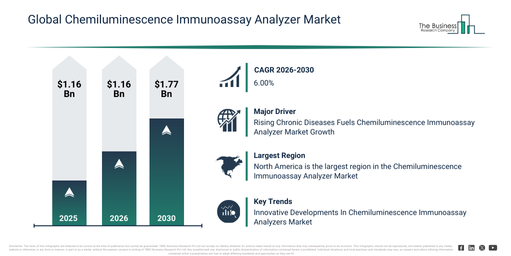
    The chemiluminescence immunoassay analyzer market has demonstrated strong expansion, with its value projected to increase from $6.03 billion in 2025 to $6.44 billion in 2026, representing a compound annual growth rate (CAGR) of 6.8%. This rise in recent years has been largely driven by the growing volume of clinical diagnostic testing, higher prevalence of infectious diseases, increased demand for accurate hormone assays, expanded hospital laboratory infrastructure, and the widespread adoption of automated laboratory systems. Looking ahead, the market is expected to continue its upward trajectory, reaching $8.15 billion by 2030 at a CAGR of 6.0%. Factors such as the rising burden of chronic and autoimmune diseases, the growing emphasis on early disease detection, expansion of diagnostic testing in developing markets, efforts to improve laboratory workflow efficiency, and increasing use of point-of-care immunoassay solutions are forecast to fuel this growth. Key trends predicted to influence the market include heightened demand for high-sensitivity diagnostics, broader adoption of fully automated immunoassay analyzers, expanding use of CLIA analyzers in infectious disease testing, and growing applications in oncology and endocrinology, alongside a preference for high-throughput laboratory equipment.

    Download A Free Sample Report For Comprehensive Market Insights:

    https://www.thebusinessresearchcompany.com/sample.aspx?id=16649&type=smp

    Primary Factors Accelerating Growth in the Chemiluminescence Immunoassay Analyzer Market

    One of the major forces propelling the chemiluminescence immunoassay analyzer market is the rising prevalence of chronic diseases. Conditions like diabetes, cardiovascular diseases, and autoimmune disorders are becoming more common due to aging populations, unhealthy lifestyle choices, and medical advancements that prolong survival with chronic ailments. This has heightened the need for sensitive and accurate biomarker detection provided by these analyzers, which play a crucial role in diagnosing and monitoring long-term illnesses.

    For example, data from the Centers for Disease Control and Prevention (CDC) in April 2025 reported that in 2023, about 194 million adults in the United States—equivalent to 76.4%—had at least one chronic condition. The occurrence rates were 59.5% among young adults, 78.4% in midlife adults, and 93.0% in older adults, underscoring the widespread nature of chronic health issues and their contribution to market growth.

    Diverse Market Segments Shaping the Chemiluminescence Immunoassay Analyzer Industry

    This market is divided into multiple important segments to capture the breadth of products and applications.

    By product type, it includes fully automated chemiluminescence immunoassay analyzers and semi-automated analyzers.

    From a technology standpoint, the market is categorized into sequential injection analyzers, random access analyzers, and batch analyzers.

    Applications encompass oncology and endocrinology, hepatitis and retroviruses, cardiac markers, infectious diseases, bone and mineral disorders, autoimmune diseases, allergy testing, gastrointestinal stool testing, as well as drug discovery and development.

    End users range from hospitals and clinics to medical and diagnostic laboratories, along with pharmaceutical companies.

    Further product subcategories include high-, medium-, and low-throughput analyzers within fully automated systems, and bench-top or portable point-of-care analyzers under the semi-automated segment.

    Access The Complete Chemiluminescence Immunoassay Analyzer Market Report:

    https://www.thebusinessresearchcompany.com/report/chemiluminescence-immunoassay-analyzer-global-market-report

    Innovations and Trends Driving Demand in the Chemiluminescence Immunoassay Analyzer Market

    Leading firms in the chemiluminescence immunoassay analyzer market are focusing on developing cutting-edge diagnostic technologies that enhance decision-making and streamline laboratory workflows. Automated analyzers, which carry out testing procedures without manual intervention, are becoming increasingly popular due to their efficiency and accuracy.

    For instance, in July 2023, China-based life sciences company Fapon Biotech Inc. introduced the Shine i8000/9000 chemiluminescence immunoassay system. This fully automated, high-speed analyzer delivers up to 900 tests per hour, with initial results available within just 10 minutes. Its high throughput of 377 tests per hour per square meter makes it ideal for medium to large laboratories handling significant sample volumes while maintaining consistent accuracy. This launch underscores the ongoing technological advancements enhancing market capabilities.

    Prominent Players Defining the Chemiluminescence Immunoassay Analyzer Market

    Several global companies hold leading positions in this sector, including F. Hoffmann-La Roche AG, Abbott Laboratories Inc., Siemens Healthineers AG, Wiener Lab Group, PerkinElmer Inc., BioMérieux SA, Beckman Coulter Life Sciences, Tosoh Bioscience LLC, Bio-Rad Laboratories Inc., Shenzhen Mindray Bio-Medical Electronics Co. Ltd., DiaSorin SpA, Euroimmun AG, Autobio Diagnostics Co. Ltd., Maccura Biotechnology Co. Ltd., Luminex Corporation, Fujirebio Holdings Inc., Randox Laboratories Ltd., Shenzhen Yhlo Biotech Co. Ltd., Addcare Bio-Tech Co. Ltd., Inova Diagnostics, Immunodiagnostic Systems Holdings (IDS), Dynex Technologies Inc., and Nanjing Poclight Biotechnology Co. Ltd. These organizations continue to invest in innovation and product development to maintain competitive advantages.

    Regional Market Insights Highlighting Growth Opportunities

    In 2025, North America accounted for the largest share of the chemiluminescence immunoassay analyzer market. However, the Asia-Pacific region is expected to emerge as the fastest-growing market in the years ahead. The report covers a broad geographic scope including Asia-Pacific, South East Asia, Western Europe, Eastern Europe, North America, South America, the Middle East, and Africa, providing a comprehensive view of global market trends and regional dynamics.

    Get in touch with us:

    The Business Research Company: https://www.thebusinessresearchcompany.com/

    Americas: +1 310-496-7795

    Asia: +44 7882 955267 & +91 8897263534

    Europe: +44 7882 955267

    Email us at: marketing@tbrc.info

    Follow us on:

    LinkedIn: https://in.linkedin.com/company/the-business-research-company

    YouTube: https://www.youtube.com/channel/UC24_fI0rV8cR5DxlCpgmyFQ

    Global Market Model: https://www.thebusinessresearchcompany.com/global-market-model
  • Cervical Traction Collars Market Trends And Growth Drivers Point To Strong Future Potential

    Cervical Traction Collars Market Trends And Growth Drivers Point To Strong Future Potential

    Delivering more actionable and strategically valuable research, The Business Research Company’s 2026 market reports feature market attractiveness analysis, total addressable market evaluation, company benchmarking matrices, interactive Excel dashboards, expanded supply chain intelligence, emerging startup coverage, and detailed product insights.

    The cervical traction collars market has been witnessing substantial growth recently, driven by rising awareness of neck health and the increasing prevalence of cervical spine issues. As medical technology advances and more people seek non-invasive treatment options, this market is set for remarkable expansion in the coming years. Let’s explore the market’s current size, key growth drivers, product segments, innovation trends, competitive landscape, and regional outlook.

    Market Size and Projected Growth of the Cervical Traction Collars Market

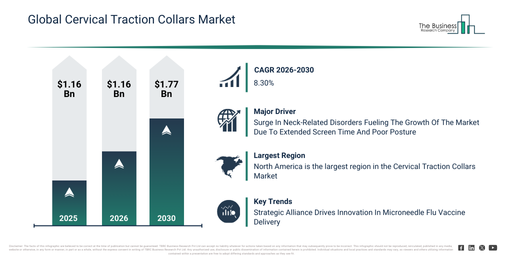
    In recent years, the cervical traction collars market has experienced significant growth, with its value climbing from $2.63 billion in 2025 to an anticipated $2.85 billion in 2026, reflecting a compound annual growth rate (CAGR) of 8.2%. This historic expansion is largely due to factors such as the rising prevalence of cervical spondylosis, widespread use of soft cervical collars, growth in outpatient orthopedic care, heightened awareness around neck injury management, and the availability of affordable cervical support products. Moving forward, the market is forecasted to continue its strong growth trajectory, reaching $3.92 billion by 2030 at a CAGR of 8.3%. This upcoming phase of growth is expected to be fueled by increasing demand for ergonomic and advanced collars, growing adoption of home rehabilitation devices, expansion of non-invasive spinal care methods, a stronger focus on preventive neck support, and ongoing innovations in wearable medical technology. Key trends during this period include a rising preference for adjustable and air-inflatable collars, lightweight and comfortable designs, use in posture correction therapies, growth in home-based cervical support products, and an emphasis on long-term neck support solutions.

    Download A Free Sample Report For Comprehensive Market Insights:

    https://www.thebusinessresearchcompany.com/sample.aspx?id=24189&type=smp

    Factors Contributing to the Rise of the Cervical Traction Collars Market

    One of the primary growth drivers for the cervical traction collars market is the increasing incidence of neck-related disorders. These conditions affect the cervical spine, including muscles, ligaments, nerves, vertebrae, and intervertebral discs, and have become more prevalent due to lifestyle factors such as extended screen time, which encourages poor posture and prolonged strain on neck muscles and the spine. Cervical traction collars provide an effective, non-invasive solution by gently stretching the cervical spine to relieve pressure on compressed discs and pinched nerves, improve blood flow, promote proper alignment, and ease muscle tension. This makes them highly effective in managing chronic neck pain and stiffness. For example, data from the National Library of Medicine in February 2024 indicates that by 2050, global cases of neck discomfort are projected to reach 269 million—a 32.5% increase from 2020—highlighting the growing demand for cervical support products.

    Breakdown of Product Types and Applications in the Cervical Traction Collars Market

    The cervical traction collars market is segmented in several important ways for a comprehensive understanding. By design, the collars are classified into soft cervical collars, rigid cervical collars, and adjustable cervical collars. Product types include foam-based collars, plastic-based collars, and inflatable collars. Materials used in production range from polyurethane and polyethylene to cotton. In terms of application, these collars serve patients dealing with cervical spondylosis, forward head posture, degenerative disc disease, cervical spine instability and neck strain, among other conditions. End users of these products span hospitals, clinics, rehabilitation centers, home care settings, and additional healthcare providers. Further detailed subcategories include foam, inflatable, and fabric-covered collars within the soft cervical collar segment; two-piece, plastic shell, and cervicothoracic immobilization collars in the rigid category; and Velcro-strap, air-adjustable, and height-adjustable collars among adjustable options.

    Access The Complete Cervical Traction Collars Market Report:

    https://www.thebusinessresearchcompany.com/report/cervical-traction-collars-global-market-report

    Technology Advancements and Innovations Influencing the Cervical Traction Collars Market

    Innovation continues to reshape the cervical traction collars sector, with companies focusing on developing ergonomic designs and smart wearable features. These advancements aim to improve user comfort, effectiveness, and convenience, contributing to better patient compliance and outcomes. The integration of lightweight materials and adjustable features allows for personalized fitting and enhanced mobility. Furthermore, the trend toward home-based rehabilitation devices offers patients greater flexibility, reducing the need for frequent clinical visits and promoting continuous care outside medical centers.

    Key Players and Competitive Strategies in the Cervical Traction Collars Market

    The market for cervical traction collars is highly competitive, with several prominent companies leading the landscape. Notable players include Enovis Corporation, Compass Health, DeRoyal Industries Inc., Breg Inc., Trulife Limited, Dynamic Techno Medicals Pvt. Ltd., Orthomerica Products Inc., Bauerfeind AG, Jiangsu Folee Medical Equipment Co. Ltd., Aspen Medical Products LLC, Advanced Orthopaedics Inc., Saunders Group, Thuasne Group, Meditrac Ltd., Orthoservice AG, Everyway Medical Instruments Co. Ltd., DJO Global (Chattanooga), Ottobock SE & Co. KGaA, Össur hf., and Alcare Co. Ltd. These companies are leveraging product innovation, strategic partnerships, and geographic expansion to maintain and grow their market share.

    Regional Insights and Emerging Market Opportunities for Cervical Traction Collars

    In 2025, North America held the largest share of the cervical traction collars market, supported by advanced healthcare infrastructure and high awareness of neck-related health issues. Meanwhile, the Asia-Pacific region is expected to emerge as the fastest-growing market during the forecast period. Factors such as increasing healthcare expenditures, rising incidence of cervical spine disorders, and growing adoption of home care solutions contribute to this rapid growth. The market analysis covers key regions including Asia-Pacific, South East Asia, Western Europe, Eastern Europe, North America, South America, the Middle East, and Africa, providing a broad and detailed view of global market dynamics.

    Get in touch with us:

    The Business Research Company: https://www.thebusinessresearchcompany.com/

    Americas: +1 310-496-7795

    Asia: +44 7882 955267 & +91 8897263534

    Europe: +44 7882 955267

    Email us at: marketing@tbrc.info

    Follow us on:

    LinkedIn: https://in.linkedin.com/company/the-business-research-company

    YouTube: https://www.youtube.com/channel/UC24_fI0rV8cR5DxlCpgmyFQ

    Global Market Model: https://www.thebusinessresearchcompany.com/global-market-model
  • Continuous Positive Airway Pressure Devices Market Expected To Reach $4.2 Billion By 2030 As Growth Accelerates At 6.5% CAGR

    Continuous Positive Airway Pressure Devices Market Expected To Reach $4.2 Billion By 2030 As Growth Accelerates At 6.5% CAGR

    Delivering more actionable and strategically valuable research, The Business Research Company’s 2026 market reports feature market attractiveness analysis, total addressable market evaluation, company benchmarking matrices, interactive Excel dashboards, expanded supply chain intelligence, emerging startup coverage, and detailed product insights.

    The continuous positive airway pressure (CPAP) devices market has seen significant growth recently and is on track for further expansion. With rising awareness of sleep disorders and technological advancements, this market offers promising revenue opportunities. Let’s explore the current market size, growth drivers, segmentation, innovations, key players, and regional trends shaping the future of CPAP devices.

    Steady Market Growth and Projections for Continuous Positive Airway Pressure Devices

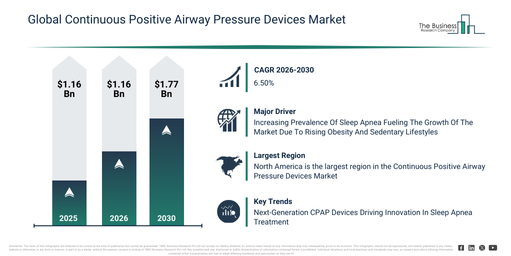
    The CPAP devices market is expanding at a robust pace, increasing from $3.07 billion in 2025 to $3.27 billion in 2026, reflecting a compound annual growth rate (CAGR) of 6.7%. This growth has been fueled by factors such as the prevalence of sleep apnea, rising obesity rates, increased respiratory care needs in hospitals, growing awareness of sleep disorders, and greater acceptance of CPAP therapy. Looking ahead, the market is predicted to reach $4.21 billion by 2030 with a CAGR of 6.5%. Key drivers during this forecast period include the integration of telemonitoring systems, the use of AI for sleep analysis, an aging global population, advancements in wearable sleep diagnostics, and the expansion of home healthcare services. Emerging trends like a rise in homecare CPAP use, smart and connected devices, auto-adjusting CPAP systems, more comfortable mask designs, and portable CPAP units are expected to further accelerate market growth.

    Download A Free Sample Report For Comprehensive Market Insights:

    https://www.thebusinessresearchcompany.com/sample.aspx?id=23352&type=smp

    Factors Fueling Demand in the Continuous Positive Airway Pressure Devices Market

    One of the main factors driving the CPAP devices market is the increasing rate of sleep apnea, a disorder marked by repeated breathing interruptions during sleep often caused by airway blockage or collapse. The growing incidence of sleep apnea is linked to lifestyle changes, including higher obesity rates, an aging population, and sedentary behaviors that contribute to respiratory difficulties during sleep. CPAP devices play a critical role in managing this condition by delivering consistent pressurized air to keep airways open through the night. For example, in February 2024, data from GOV.UK showed that the number of people sleeping rough in England rose from 5.4 per 100,000 in 2022 to 6.8 per 100,000 in 2023, indicating increasing challenges related to health and respiratory issues. This trend supports the expanding need for CPAP devices.

    How Lifestyle and Health Trends Increase CPAP Device Usage

    The rise in obesity and aging demographics continues to elevate the prevalence of respiratory disorders that require intervention, such as sleep apnea. This demographic shift is prompting more individuals to seek diagnosis and treatment, thereby increasing demand for CPAP devices. In addition, growing awareness about sleep health and the benefits of CPAP therapy are encouraging more patients to adopt these devices as part of their treatment regimen.

    Access The Complete Continuous Positive Airway Pressure Devices Market Report:

    https://www.thebusinessresearchcompany.com/report/continuous-positive-airway-pressure-devices-global-market-report

    Structure and Key Segments of the Continuous Positive Airway Pressure Devices Market

    This market is segmented into several categories to better address diverse needs:

    1) Product Types: CPAP Masks, CPAP Motors, CPAP Hoses, and Other Related Products.

    2) Automation Levels: Automatic and Manual Devices.

    3) Distribution Channels: Offline sales and Online platforms.

    4) End-Use Settings: Home Care, Hospitals and Clinics, and other end-users.

    Further breakdown of product segments includes:

    – CPAP Masks such as Nasal Masks, Full-Face Masks, Nasal Pillow Masks, and Hybrid Masks.

    – CPAP Motors including Standard CPAP Motors, Auto-Adjusting CPAP Motors, and Bi-Level Positive Airway Pressure (BiPAP) Motors.

    – CPAP Hoses categorized as Standard, Heated, and Lightweight Hoses.

    – Other Products comprising CPAP Filters, Humidifiers, Batteries, and Power Adaptors.

    Innovations Shaping the Continuous Positive Airway Pressure Devices Market

    Developing next-generation CPAP devices is a key focus for leading companies aiming to improve user comfort, compliance, and treatment outcomes. These advanced machines come equipped with enhanced features such as personalized data tracking and connectivity options. For instance, in January 2025, US-based ResMed Inc. launched the AirSense 11—a state-of-the-art CPAP device designed to improve sleep apnea treatment. It includes digital health tools like a personal therapy assistant and care check-in, which offer users tailored support to initiate and maintain therapy. The AirSense 11 also incorporates AutoSet technology that automatically adjusts air pressure based on breathing patterns, a built-in heated humidifier for comfort, and wireless connectivity enabling remote monitoring via the myAir app.

    Key Players Driving Growth in the Continuous Positive Airway Pressure Devices Market

    The CPAP market features several prominent manufacturers, including Philips Respironics, ResMed Inc., Fisher & Paykel Healthcare, Invacare Corporation, BMC Medical, Apex Medical Corporation, Medline Industries, Medovent Solutions Inc., Guangzhou HuaFang Medical Equipment Co Ltd, Shenzhen Well Motion Technology Co Ltd, DeVilbiss Healthcare, Circadiance Inc., Löwenstein Medical (Weinmann), Shenzhen Beneng Health Technology Co Ltd, Puritan Bennett, Respiratory Care Innovations Inc., Drive DeVilbiss Healthcare, Transcend Sleep (Somnetics), React Health, 3B Medical, Nidek Medical Products, and Curative Medical Inc. These companies continuously innovate and expand their product portfolios to meet evolving market demands.

    Regional Overview Reveals North America Leading, Asia-Pacific Growing Rapidly

    In 2025, North America held the largest share of the CPAP devices market, driven by high healthcare standards, established distribution networks, and widespread awareness of sleep disorders. Meanwhile, the Asia-Pacific region is expected to be the fastest-growing market through the forecast period. Factors such as increasing population, rising healthcare infrastructure, growing prevalence of sleep apnea, and increasing disposable income contribute to this rapid regional growth. The market report covers multiple regions including Asia-Pacific, South East Asia, Western Europe, Eastern Europe, North America, South America, the Middle East, and Africa, providing a comprehensive picture of global market dynamics.

    Get in touch with us:

    The Business Research Company: https://www.thebusinessresearchcompany.com/

    Americas: +1 310-496-7795

    Asia: +44 7882 955267 & +91 8897263534

    Europe: +44 7882 955267

    Email us at: marketing@tbrc.info

    Follow us on:

    LinkedIn: https://in.linkedin.com/company/the-business-research-company

    YouTube: https://www.youtube.com/channel/UC24_fI0rV8cR5DxlCpgmyFQ

    Global Market Model: https://www.thebusinessresearchcompany.com/global-market-model

  • Cervical Traction Chair Market Expansion Is Reshaping Competitive Dynamics Across The Industry

    Cervical Traction Chair Market Expansion Is Reshaping Competitive Dynamics Across The Industry

    Enhanced with market attractiveness analysis, total addressable market evaluation, company benchmarking matrices, interactive Excel dashboards, expanded supply chain intelligence, emerging startup coverage, and detailed product insights, The Business Research Company’s 2026 market reports deliver more actionable and strategically valuable research.

    The cervical traction chair market is experiencing significant growth as awareness of spinal health and non-surgical treatment options continues to rise. This segment is set to expand steadily, driven by increasing health concerns, advancements in rehabilitation technology, and a growing elderly population seeking effective pain management. Let’s explore the market’s size, growth drivers, segmentation, key players, and regional dynamics shaping its future.

    Cervical Traction Chair Market Size and Growth Prospects

    The market for cervical traction chairs has seen strong momentum in recent years. It is forecasted to increase from $2.69 billion in 2025 to $2.87 billion in 2026, reflecting a compound annual growth rate (CAGR) of 6.6%. This historical growth is largely fueled by a rise in cervical spine disorders, wider use of non-surgical pain relief therapies, expansion in physiotherapy clinics, greater awareness about posture-related ailments, and the availability of manual traction therapy products. Looking ahead, the market is projected to reach $3.7 billion by 2030, growing at a CAGR of 6.5%. Factors expected to drive this growth include higher demand for advanced rehabilitation devices, increased adoption of home healthcare solutions, broader outpatient rehab services, an aging population with spinal issues, and ongoing innovation in physical therapy equipment. Key trends shaping the future include a growing preference for electric and programmable traction chairs, ergonomic and adjustable designs, expanded use in rehabilitation and physical therapy centers, and a focus on patient safety and comfort.

    Download A Free Sample Report For Comprehensive Market Insights:

    https://www.thebusinessresearchcompany.com/sample.aspx?id=24188&type=smp

    Primary Factors Enhancing Demand in the Cervical Traction Chair Market

    The rising prevalence of back pain is a major contributor to the market’s expansion. Back pain, which can affect various parts of the spine, often results from poor posture or extended periods of sitting that strain the muscles and spinal structures. Cervical traction chairs help alleviate such pain by gently stretching the spine, easing pressure on spinal discs and nerves, and encouraging proper alignment and muscle relaxation. For example, a report from the UK’s Office for Health Improvement and Disparities in January 2024 noted that 18.4% of people aged 16 and older reported having long-term musculoskeletal conditions in 2023, up from 17.6% in 2022. This growing incidence of back pain is thus pushing demand for cervical traction chairs.

    Healthcare Spending Growth as a Key Market Driver

    Increasing healthcare expenditure is another important factor supporting cervical traction chair market growth. Healthcare spending encompasses the resources allocated to services and treatments, which tends to rise with an aging population requiring more medical attention and long-term care. Cervical traction chairs offer a cost-effective, non-invasive alternative to expensive surgeries and medications, potentially reducing overall healthcare costs. For instance, the UK’s Department of Health and Social Care is projected to raise its spending from $235.625 billion (£188.5 billion) to $269.15 billion (£215.6 billion) between the fiscal years 2023-24 and 2025-26, representing a real growth rate of 3.2% annually, according to the Health Foundation in November 2024. This increasing investment in healthcare services supports market expansion by making such therapeutic devices more accessible.

    Access The Complete Cervical Traction Chair Market Report:

    https://www.thebusinessresearchcompany.com/report/cervical-traction-chair-global-market-report

    Chronic Disease Prevalence Driving Market Demand

    The growing number of chronic diseases is also accelerating the adoption of cervical traction chairs. Chronic diseases are long-lasting health conditions that require ongoing management rather than cures. As the population ages, more people develop ailments like heart disease that require continuous care. Cervical traction therapy helps patients with chronic issues by stretching the neck to relieve spinal and nerve pressure, reduce pain, improve mobility, and promote healing without invasive procedures. For example, NHS England reported in June 2024 that 3,615,330 people registered with general practitioners had been diagnosed with non-diabetic hyperglycemia (pre-diabetes) in 2023, an 18% increase compared to 3,065,825 cases in 2022. Rising rates of such chronic conditions are thus propelling the cervical traction chair market forward.

    Segmentation and Revenue Opportunities Within the Cervical Traction Chair Market

    This market is divided into several key segments:

    1) Product Type: Manual Cervical Traction Chair and Electric Cervical Traction Chair

    2) Application: Neck Pain Relief, Spinal Alignment, Posture Correction, Muscle Relaxation, Rehabilitation

    3) End User: Hospitals, Clinics, Home Care Settings, Rehabilitation Centers

    Further subcategories include:

    – Manual Cervical Traction Chairs such as Portable, Adjustable, Lightweight, and Compact models

    – Electric Cervical Traction Chairs including Adjustable, Remote-Controlled, Programmable, and High-End variants

    These divisions highlight the diverse range of products tailored to meet specific therapeutic needs and user preferences.

    Leading Companies Influencing the Cervical Traction Chair Market

    Several prominent players are shaping the direction of this market, including: Guangzhou Lety Medical Limited, India Medico Instruments, Wanrooemed, Henan Eminent Medical Devices Co. Ltd., Zhangjiagang Yongxin Medical Equipment Co. Ltd., Youjian (Hebei) Medical Equipment Co. Ltd., Guangzhou MeCan Medical Limited, Chinesport S.p.A., Chattanooga Group (DJO Global), Enraf-Nonius B.V., Zynex Medical Inc., Dynatronics Corporation, OG Wellness Technologies Co. Ltd., Cybertech Medical, Bird & Cronin LLC, Whitehall Manufacturing, Pivotal Health Solutions, Fisiotech S.r.l., HMS Medical Systems, and V2U Healthcare.

    Regional Market Landscape and Growth Patterns

    In 2025, North America dominated the cervical traction chair market in terms of revenue. However, the Asia-Pacific region is anticipated to be the fastest-growing market in the coming years. The report covers several regions, including Asia-Pacific, South East Asia, Western Europe, Eastern Europe, North America, South America, the Middle East, and Africa, offering a comprehensive view of global market trends and opportunities.

    Get in touch with us:

    The Business Research Company: https://www.thebusinessresearchcompany.com/

    Americas: +1 310-496-7795

    Asia: +44 7882 955267 & +91 8897263534

    Europe: +44 7882 955267

    Email us at: marketing@tbrc.info

    Follow us on:

    LinkedIn: https://in.linkedin.com/company/the-business-research-company

    YouTube: https://www.youtube.com/channel/UC24_fI0rV8cR5DxlCpgmyFQ

    Global Market Model: https://www.thebusinessresearchcompany.com/global-market-model
  • Cervical Total Disc Replacement Device Market Forecast Reveals Where Future Industry Value Will Be Created

    Cervical Total Disc Replacement Device Market Forecast Reveals Where Future Industry Value Will Be Created

    Through market attractiveness analysis, total addressable market evaluation, company benchmarking matrices, interactive Excel dashboards, expanded supply chain intelligence, emerging startup coverage, and detailed product insights, The Business Research Company’s 2026 market reports provide more actionable and strategically valuable research.

    The cervical total disc replacement device market is witnessing remarkable growth as advancements in spinal care continue to evolve. This sector is increasingly gaining attention due to rising spinal health issues and innovations in treatment options that preserve mobility and improve patient outcomes. Let’s explore the current market size, the key factors propelling its expansion, segmentation details, strategic developments, major players, and regional performance.

    Steady Increase in Market Size and Future Outlook of the Cervical Total Disc Replacement Device Market

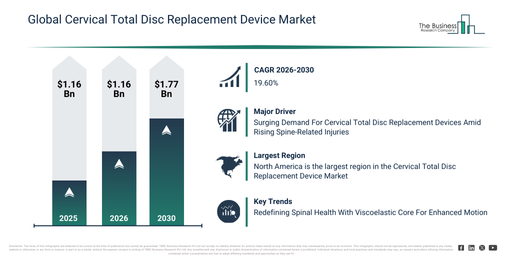
    The market for cervical total disc replacement devices has shown significant progress, expected to rise from $3.33 billion in 2025 to $3.96 billion in 2026, reflecting a strong compound annual growth rate (CAGR) of 18.8%. This upward trend during the past years is driven by several factors such as the growing incidence of cervical spine disorders, a shift in preference from spinal fusion to disc replacement, improvements in surgical techniques, increasing surgeon familiarity with these procedures, and the availability of better implant materials. Looking ahead, the market is projected to further accelerate, reaching $8.09 billion by 2030 at a CAGR of 19.6%. This forecasted growth is fueled by rising demand for motion-preserving spinal therapies, the growing uptake of outpatient spine surgeries, an expanding aging population suffering from degenerative disc disease, greater investment in implant innovation, and a higher rate of regulatory approvals for next-generation devices. Additionally, trends such as minimally invasive cervical procedures, advanced biocompatible materials, personalized disc designs, and a focus on implant durability are shaping the future market landscape.

    Download A Free Sample Report For Comprehensive Market Insights:

    https://www.thebusinessresearchcompany.com/sample.aspx?id=13264&type=smp

    Factors Contributing to Market Growth Through Increasing Spinal Injuries

    One of the primary growth drivers for the cervical total disc replacement device market is the rising number of spine-related injuries. These injuries involve damage to the spinal cord, spinal nerves, or vertebrae and often lead to spinal instability, a condition where the neck bones are misaligned. Cervical total disc replacement devices play a critical role in treating such conditions and improving patient mobility.

    For example, data from May 2023 released by Spinalcord, a U.S.-based resource for individuals affected by spinal cord injuries, indicates that approximately 18,000 new spinal cord injuries occur annually in the United States. This translates to around 54 cases per million people. Currently, about 302,000 Americans live with traumatic spinal cord injuries, with men accounting for 79% of new cases, mostly those aged 16 to 30. This prevalence of spinal injuries underlines the growing demand for cervical total disc replacement devices, supporting market expansion.

    Diverse Segmentation in the Cervical Total Disc Replacement Device Market

    The report categorizes the cervical total disc replacement device market into several segments for a detailed understanding:

    1) By Disc Type:

    – Metal on a Biocompatible Material (M-o-B)

    – Metal on Metal (M-o-M)

    2) By Material:

    – Polymeric

    – Metallic

    – Biocompatible

    3) By Design:

    – Constrained

    – Semi-Constrained

    – Unconstrained

    4) By End User:

    – Hospitals

    – Ambulatory Surgical Centers

    – Specialty Clinics

    – Clinics

    Further breakdowns include specific types within the Metal on a Biocompatible Material segment such as Titanium on Polyethylene, Cobalt-Chromium on Bioceramic, and PEEK with Metal Coating. Similarly, the Metal on Metal group includes combinations like Cobalt-Chromium on Cobalt-Chromium, Titanium on Titanium, and Stainless Steel on Stainless Steel.

    Access The Complete Cervical Total Disc Replacement Device Market Report:

    https://www.thebusinessresearchcompany.com/report/cervical-total-disc-replacement-device-global-market-report

    Innovations and Strategic Trends Defining the Cervical Total Disc Replacement Device Market

    Leading companies in this market are focusing heavily on innovative features to enhance patient outcomes. One prominent development is the introduction of articulating viscoelastic cores that provide improved mobility and spinal stability by mimicking natural cervical movement. These cores combine shock absorption with progressive resistance, simulating the behavior of natural tissue under stress.

    In May 2024, NGMedical GmbH from Germany launched the MOVE-C Cervical Artificial Disc Prosthesis, a cutting-edge implant designed to replicate natural cervical motion using such an articulating surface and viscoelastic core technology. This advancement aims to offer patients more physiological motion with gradual resistance, representing a significant step forward in cervical spine surgery solutions.

    Key Industry Players Dominating the Cervical Total Disc Replacement Device Market

    Several major corporations shape this market, including:

    – Medtronic plc

    – Johnson and Johnson Pvt Ltd.

    – Stryker Corporation

    – Zimmer Biomet Holdings Inc.

    – DePuy Synthes Inc.

    – NuVasive Inc.

    – Globus Medical Inc.

    – ZimVie Inc.

    – Orthofix Medical Inc.

    – Aesculap Implant Systems Inc.

    – Alphatec Holdings Inc.

    – LDR Holding Corporation

    – Centinel Spine Inc.

    – Spineart SA

    – CoreLink LLC

    – Innovative Spinal Technologies Inc.

    – Precision Spine Inc.

    – Spinal Elements Inc.

    – Applied Spine Technologies Inc.

    – Spinal Kinetics LLC

    – Paradigm Spine LLC

    – Implanet SA

    – Osimplant

    – AxioMed LLC

    Regional Market Insights Highlighting Growth Patterns

    In 2025, North America held the largest share of the cervical total disc replacement device market, driven by advanced healthcare infrastructure and high awareness levels. Meanwhile, the Asia-Pacific region is expected to experience the fastest growth rate during the forecast period, fueled by increasing healthcare investments, expanding aging populations, and growing awareness about spinal health. The market report covers regions including Asia-Pacific, South East Asia, Western Europe, Eastern Europe, North America, South America, the Middle East, and Africa to provide a comprehensive global perspective.

    Get in touch with us:

    The Business Research Company: https://www.thebusinessresearchcompany.com/

    Americas: +1 310-496-7795

    Asia: +44 7882 955267 & +91 8897263534

    Europe: +44 7882 955267

    Email us at: marketing@tbrc.info

    Follow us on:

    LinkedIn: https://in.linkedin.com/company/the-business-research-company

    YouTube: https://www.youtube.com/channel/UC24_fI0rV8cR5DxlCpgmyFQ

    Global Market Model: https://www.thebusinessresearchcompany.com/global-market-model

  • Continuous Metabolite Monitor Patch Market Set To Grow From $2.27 Billion In 2026 To $3.96 Billion By 2030 At A CAGR Of 14.9%

    Continuous Metabolite Monitor Patch Market Set To Grow From $2.27 Billion In 2026 To $3.96 Billion By 2030 At A CAGR Of 14.9%

    Enhanced with market attractiveness analysis, total addressable market evaluation, company benchmarking matrices, interactive Excel dashboards, expanded supply chain intelligence, emerging startup coverage, and detailed product insights, The Business Research Company’s 2026 market reports deliver more actionable and strategically valuable research.

    The continuous metabolite monitor patch market is witnessing significant advancements as demand for real-time health monitoring continues to rise. With increasing awareness around chronic disease management and technological innovations, this sector is set to experience robust growth in the coming years. Here is an in-depth look at the market size, key drivers, segmentation, trends, leading players, and regional dynamics shaping its future.

    Market Size Expansion and Growth Outlook for the Continuous Metabolite Monitor Patch Market

    The continuous metabolite monitor patch market has seen rapid development recently, projected to grow from $1.97 billion in 2025 to $2.27 billion in 2026, marking a compound annual growth rate (CAGR) of 15.2%. Historically, growth was somewhat restrained due to limited continuous patch technologies, low patient uptake, high costs, dependence on manual sampling, and narrow biomarker detection capabilities. Looking ahead, the market is expected to reach $3.96 billion by 2030, maintaining a strong CAGR of 14.9%. This surge is driven by heightened demand for diabetes and metabolic disorder management, expansion of connected healthcare ecosystems, advancements in multi-analyte patches, AI-driven data insights, and a growing preference for homecare solutions. Emerging trends include non-invasive metabolite monitoring, multi-biomarker tracking, remote health data collection, integration with wearable devices and mobile applications, and innovations tailored to chronic disease management.

    Download A Free Sample Report For Comprehensive Market Insights:

    https://www.thebusinessresearchcompany.com/sample.aspx?id=29001&type=smp

    Rising Chronic Disease Prevalence as a Key Growth Catalyst

    One of the main factors propelling the continuous metabolite monitor patch market is the increasing incidence of chronic diseases worldwide. Chronic disease prevalence reflects the number of individuals living with long-term conditions such as diabetes, cardiovascular diseases, or hypertension within a population. This rise is largely influenced by an aging global population, with older adults being more susceptible to such illnesses. Longer life expectancies mean that more people are managing conditions like diabetes, heart disease, and arthritis over extended periods. Continuous metabolite monitor patches enable real-time tracking of critical metabolic biomarkers, supporting earlier detection, more effective management, and personalized care for these diseases.

    Supporting this, data from April 2025 by the US Centers for Disease Control and Prevention (CDC) showed that in 2023, 76.4% of US adults—around 194 million people—reported at least one chronic condition. This included prevalence rates of 59.5% in young adults, 78.4% in midlife adults, and 93.0% among older adults. Such statistics highlight the growing need for effective management tools like continuous metabolite monitoring, reinforcing market growth.

    Access The Complete Continuous Metabolite Monitor Patch Market Report:

    https://www.thebusinessresearchcompany.com/report/continuous-metabolite-monitor-patch-global-market-report

    Detailed Segmentation and Revenue Drivers in the Continuous Metabolite Monitor Patch Market

    The continuous metabolite monitor patch market is categorized into several segments for comprehensive analysis:

    1) Product Type: Glucose Monitoring Patch, Lactate Monitoring Patch, Ketone Monitoring Patch, Multi-Metabolite Monitoring Patch, Other Product Types

    2) Distribution Channel: Online Pharmacies, Retail Pharmacies, Other Distribution Channels

    3) End-User: Hospitals, Clinics, Home-care Settings, Sports and Fitness Centers, Research Institutes, Other End-Users

    Further subsegments by product type include:

    – Glucose Monitoring Patch: Disposable, Reusable, Wireless, Adhesive-Based, Non-Invasive

    – Lactate Monitoring Patch: Disposable, Reusable, Sweat-Based, Wireless, Continuous

    – Ketone Monitoring Patch: Disposable, Reusable, Sweat-Based, Blood-Based, Non-Invasive

    – Multi-Metabolite Monitoring Patch: Integrated Multi-Analyte, Wearable, Wireless, Sweat-Based, Advanced Sensor

    – Other Products: Amino Acid, Cortisol, Alcohol, Electrolyte, Uric Acid Monitoring Patches

    This detailed segmentation allows for targeted product development and marketing strategies tailored to specific user needs and distribution methods.

    Innovations and Technological Trends Shaping the Market Landscape

    Leading companies in the continuous metabolite monitor patch market are prioritizing innovation, particularly focusing on non-invasive glucose monitoring solutions. These technologies aim to improve patient comfort by eliminating the need for blood draws or skin punctures while providing accurate and real-time metabolic data. Non-invasive approaches may include sensor patches, optical devices, or other wearable technologies that continuously track glucose levels.

    For example, in June 2024, Abbott Laboratories teamed up with Dexcom, Inc. to launch the first over-the-counter (OTC) continuous glucose monitors. These devices offer real-time glucose readings via smartphone apps, eliminating the need for routine finger pricks. Enhanced accuracy, extended wear time, and seamless connectivity make these monitors suitable for both diabetic and health-conscious consumers seeking personalized metabolic insights.

    Industry Leaders Driving Competition in the Continuous Metabolite Monitor Patch Sector

    Several prominent companies dominate the continuous metabolite monitor patch market, including Abbott Laboratories, Dexcom Inc., Medtronic Public Limited Company, Ascensia Diabetes Care Holdings AG, Roche Diabetes Care Inc., LifeScan IP Holdings LLC, Nutromics Pty Ltd, Profusa Inc., Biolinq Inc., Afon Technology Ltd, GraphWear Technologies Inc., i-Sens Inc., DiaMonTech AG, Medtrum Technologies Inc., PercuSense Inc., GENTAG Inc., Changzhou RECOO Healthcare Co. Ltd, Ultrahuman Healthcare Private Limited, Nemaura Medical Inc., and MediWise Ltd. These organizations are actively innovating and competing to capture increasing market share through advancements in technology and expanded product offerings.

    Regional Market Insights Highlight North America’s Leadership and Asia-Pacific’s Rapid Growth

    In 2025, North America held the largest share of the continuous metabolite monitor patch market, supported by advanced healthcare infrastructure, high healthcare expenditure, and early adoption of technological innovations. Meanwhile, the Asia-Pacific region is forecasted to be the fastest-growing market during the coming years. Factors such as rising healthcare awareness, growing prevalence of metabolic disorders, expanding healthcare infrastructure, and increasing disposable income contribute to the rapid growth in this region. The market analysis also covers other key regions including South East Asia, Western Europe, Eastern Europe, South America, the Middle East, and Africa to provide a comprehensive global perspective.

    Get in touch with us:

    The Business Research Company: https://www.thebusinessresearchcompany.com/

    Americas: +1 310-496-7795

    Asia: +44 7882 955267 & +91 8897263534

    Europe: +44 7882 955267

    Email us at: marketing@tbrc.info

    Follow us on:

    LinkedIn: https://in.linkedin.com/company/the-business-research-company

    YouTube: https://www.youtube.com/channel/UC24_fI0rV8cR5DxlCpgmyFQ

    Global Market Model: https://www.thebusinessresearchcompany.com/global-market-model