Category: Medical Equipment

  • Cell Free Tumor Deoxyribonucleic Acid (DNA) Detection Market Forecast Signals New Revenue Opportunities Through 2030

    Cell Free Tumor Deoxyribonucleic Acid (DNA) Detection Market Forecast Signals New Revenue Opportunities Through 2030

    Enhanced with market attractiveness analysis, total addressable market evaluation, company benchmarking matrices, interactive Excel dashboards, expanded supply chain intelligence, emerging startup coverage, and detailed product insights, The Business Research Company’s 2026 market reports deliver more actionable and strategically valuable research.

    The cell free tumor deoxyribonucleic acid (DNA) detection market is witnessing remarkable expansion as advancements in cancer diagnostics continue to evolve. With increasing innovation and rising demand for minimally invasive testing, this sector is set to experience significant growth in the coming years. Let’s delve into the current market size, driving factors, segmentation, emerging trends, key players, and regional outlook shaping this dynamic industry.

    Market Size and Growth Outlook in the Cell Free Tumor DNA Detection Market

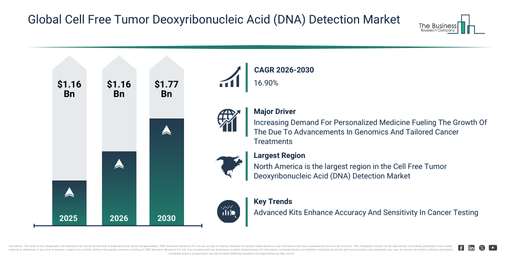
    The cell free tumor DNA detection market has seen swift growth recently and is projected to expand further. From a market value of $2.58 billion in 2025, it is expected to reach $3.02 billion in 2026, representing a compound annual growth rate (CAGR) of 17.2%. This past surge is largely driven by the increasing prevalence of cancer, technological advancements in molecular diagnostics, growing preference for non-invasive testing methods, adoption of Polymerase Chain Reaction (PCR) and Next-Generation Sequencing (NGS) technologies, and the rise in clinical research studies.

    Download A Free Sample Report For Comprehensive Market Insights:

    https://www.thebusinessresearchcompany.com/sample.aspx?id=28159&type=smp

    Looking ahead, the market is forecasted to climb to $5.64 billion by 2030, maintaining a robust CAGR of 16.9%. Factors contributing to this accelerated growth include the expansion of precision medicine, continuous technological breakthroughs in circulating tumor DNA (ctDNA) analysis, incorporation of artificial intelligence (AI) in diagnostics, increased healthcare investments in emerging markets, and heightened focus on early cancer detection programs. Key trends anticipated to influence the market include broader liquid biopsy adoption, integration with genomic data platforms, real-time tumor tracking, non-invasive cancer diagnostic methods, and development of advanced ctDNA detection technologies.

    Personalized Medicine as a Catalyst for Market Growth

    The rising emphasis on personalized medicine is a significant force propelling demand within the cell free tumor DNA detection market. Personalized medicine involves tailoring medical treatments and preventive measures to an individual’s genetic profile, lifestyle, and environment. Advances in genomics have accelerated this approach, enabling precise identification of genetic variations and customized therapies.

    https://www.thebusinessresearchcompany.com/report/cell-free-tumor-deoxyribonucleic-acid-dna-detection-global-market-report

    Cell Free Tumor Deoxyribonucleic Acid (DNA) Detection Market Regional Analysis And Leading Geography

    Cell free tumor DNA detection plays a crucial role by providing non-invasive, real-time insights into tumor genetics. This allows healthcare providers to customize treatments based on mutation profiles, efficiently monitor treatment responses, and detect cancer recurrence at early stages, thereby improving patient outcomes. For example, the Personalized Medicine Coalition reported that in 2023, the U.S. Food and Drug Administration (FDA) approved 26 new personalized medicines, more than doubling the 12 approvals in 2022. This rising demand for personalized healthcare directly supports the growth of the cell free tumor DNA detection market.

    Diverse Segmentation Defining the Cell Free Tumor DNA Detection Market

    This report breaks down the cell free tumor DNA detection market into several core segments:

    1) Technology: Polymerase Chain Reaction (PCR), Next-Generation Sequencing (NGS), and Digital Polymerase Chain Reaction (dPCR).

    2) Source: Plasma, Serum, and Urine.

    3) Application: Oncology, Non-Invasive Prenatal Testing, Transplantation, and other uses.

    4) End-User: Hospitals, Diagnostic Laboratories, Academic and Research Institutes, and other end-users.

    Further detailed subsegments include:

    – PCR types such as Real-Time PCR (qPCR), Multiplex PCR, Allele-Specific PCR, High-Resolution Melting (HRM) Analysis, and Beaming PCR.

    – NGS categories like Whole Genome Sequencing (WGS), Whole Exome Sequencing (WES), Targeted Gene Panels, RNA Sequencing (RNA-seq), and Methylation Sequencing.

    – dPCR variations including Droplet Digital PCR (ddPCR), Chip-Based dPCR, and Nanofluidic dPCR.

    Innovations and Trends Shaping the Cell Free Tumor DNA Detection Market

    Leading market players are concentrating on developing cutting-edge products to improve the precision, sensitivity, and efficiency of cancer testing. One notable innovation is the creation of advanced library preparation kits, which streamline the process of preparing DNA or RNA samples for sequencing by fragmenting, tagging, and amplifying genetic material for accurate analysis.

    For instance, in February 2024, Twist Bioscience Corporation introduced the cfDNA Library Preparation Kit aimed at increasing the sensitivity and accuracy of liquid biopsy applications. This product facilitates the generation of high-quality cfDNA libraries compatible with Illumina sequencing platforms, addressing challenges related to low quantity and degraded DNA samples. Such advancements improve the reliability of liquid biopsies, supporting earlier and more accurate cancer detection as well as better monitoring of treatment effectiveness.

    Competitive Landscape in the Cell Free Tumor DNA Detection Market

    The cell free tumor DNA detection market features several major companies driving innovation and competition. These include F. Hoffmann-La Roche AG, Thermo Fisher Scientific Inc., Labcorp Holdings Inc., Illumina Inc., Sysmex Inostics Inc., Bio-Rad Laboratories Inc., QIAGEN N.V., Natera Inc., Guardant Health Inc., Invitae Corporation, Foundation Medicine Inc., Adaptive Biotechnologies Corporation, Freenome Holdings Inc., Grail Inc., Biodesix Inc., Personal Genome Diagnostics Inc., Agena Bioscience Inc., Menarini Silicon Biosystems SpA, Exosome Diagnostics Inc., and Lucence Health Inc. These companies are continuously advancing product portfolios and expanding their market reach.

    Regional Market Distribution and Growth Patterns

    In 2025, North America held the largest share of the cell free tumor DNA detection market, driven by advanced healthcare infrastructure and high adoption rates of molecular diagnostics. Meanwhile, the Asia-Pacific region is projected to be the fastest-growing market throughout the forecast period, propelled by increasing healthcare investments, growing cancer incidence, and expanding early detection programs. The analysis covers key regions including Asia-Pacific, South East Asia, Western Europe, Eastern Europe, North America, South America, the Middle East, and Africa, providing a comprehensive global perspective on market dynamics.

    Get in touch with us:

    The Business Research Company: https://www.thebusinessresearchcompany.com/

    Americas: +1 310-496-7795

    Asia: +44 7882 955267 & +91 8897263534

    Europe: +44 7882 955267

    Email us at: marketing@tbrc.info

    Follow us on:

    LinkedIn: https://in.linkedin.com/company/the-business-research-company

    YouTube: https://www.youtube.com/channel/UC24_fI0rV8cR5DxlCpgmyFQ

    Global Market Model: https://www.thebusinessresearchcompany.com/global-market-model
  • Cell Culture Plates Market Growth Is Accelerating As Industry Transformation Continues

    Cell Culture Plates Market Growth Is Accelerating As Industry Transformation Continues

    Through market attractiveness analysis, total addressable market evaluation, company benchmarking matrices, interactive Excel dashboards, expanded supply chain intelligence, emerging startup coverage, and detailed product insights, The Business Research Company’s 2026 market reports provide more actionable and strategically valuable research.

    The cell culture plates market has witnessed significant growth in recent years, driven by advancements in biomedical research and evolving laboratory needs. With increasing investments and technological progress, the market is set for continued expansion, reflecting the rising importance of cell culture techniques in various scientific fields. Below, we explore the market size, growth drivers, key segments, strategic trends, major players, and regional demand patterns shaping this sector.

    Market Size and Growth Trajectory of the Cell Culture Plates Market

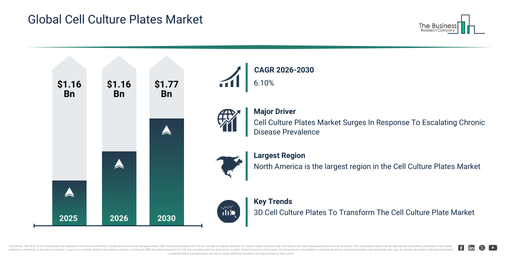
    The cell culture plates market has experienced substantial growth and is projected to grow from $2.29 billion in 2025 to $2.44 billion in 2026, at a compound annual growth rate (CAGR) of 6.2%. This expansion in recent years has been fueled by the broadening scope of biomedical research, the rising utilization of in vitro testing models, increased pharmaceutical research and development (R&D) expenditures, growing reliance on cell-based assays, and the availability of standardized laboratory consumables. Looking ahead, the market is expected to reach $3.09 billion by 2030, maintaining a CAGR of 6.1%. Factors contributing to this forecast include rising demand for sophisticated cell culture models, greater investments in regenerative medicine, growth in biopharmaceutical manufacturing, wider adoption of automated laboratory workflows, and an increasing emphasis on precision medicine research. Emerging market trends during this period feature the adoption of high-throughput cell culture plates, increased use of 3D cell culture systems, growing demand for coated culture surfaces, expansion of plates tailored for organoid and stem cell research, and a stronger focus on reproducibility in cell-based assays.

    Download A Free Sample Report For Comprehensive Market Insights:

    https://www.thebusinessresearchcompany.com/sample.aspx?id=12438&type=smp

    Key Factors Supporting the Cell Culture Plates Market Growth

    One significant driver of the cell culture plates market is the growing prevalence of chronic diseases worldwide. Chronic diseases, which persist for extended periods and require ongoing medical management, limit daily activities and necessitate continuous care. Cell culture plates enable the integration of multiple cell types into organized systems that help researchers understand disease progression, optimize culture conditions, test new therapies, and evaluate drug efficacy in research and development. For example, in June 2024, the National Health Service in the UK reported that 3,615,330 individuals registered with general practitioners were diagnosed with non-diabetic hyperglycemia or pre-diabetes in 2023, reflecting an 18% increase from 3,065,825 cases in 2022. This rising prevalence of chronic conditions is a major factor propelling the demand for advanced cell culture plates.

    Expanding Research and Development Activities Boost Market Demand

    Another key element driving the market is the increasing focus on regenerative medicine and biopharmaceutical production, which necessitates sophisticated cell culture tools. These sectors are investing heavily in advanced technologies and models that allow for more accurate simulation of physiological conditions, facilitating breakthroughs in drug discovery and therapeutic development. The adoption of automated workflows in laboratories further enhances efficiency and reproducibility, encouraging the use of cutting-edge culture plates designed for diverse applications.

    https://www.thebusinessresearchcompany.com/report/cell-culture-plates-global-market-report

    Cell Culture Plates Market Geographic Analysis: Where Is Demand Growing The Fastest?

    Comprehensive Segmentation Within the Cell Culture Plates Market

    The cell culture plates market is divided into several important segments to better cater to diverse research and industrial needs. By type, the market includes Standard Cell Culture Plates, Coated Cell Culture Plates, and Specialty Cell Culture Plates. Material-wise, products are categorized into Polystyrene, Glass, and other materials. Surface treatments classify plates as Treated or Untreated. In terms of application, key areas include Drug Discovery and Development, Biopharmaceutical Production, Tissue Engineering and Regenerative Medicine, and additional uses. The end-users comprise Research Institutes, Pharmaceutical and Biotechnology companies, and Diagnostic Laboratories.

    Further subcategories provide more detailed classifications such as:

    – Standard Plates: 6-Well, 12-Well, 24-Well, 48-Well, 96-Well, and 384-Well Plates

    – Coated Plates: Collagen-Coated, Poly-D-Lysine-Coated, and Fibronectin-Coated Plates

    – Specialty Plates: 3D Cell Culture Plates, Microplates for High-Throughput Screening, Plates for Stem Cell Culture, and Plates for Organoid Culture

    Innovation and Strategic Developments Steering Future Market Growth

    Leading companies in the cell culture plates market are prioritizing the development of advanced products like 3D Cell Culture Plates to meet the demand for more physiologically relevant models. These innovations play a crucial role across various research and development areas, improving the accuracy and effectiveness of experimental outcomes. For instance, in May 2024, TheWell Bioscience, a biotechnology firm based in the US, introduced VitroPrime Spread-Attach Plates. These plates are designed to support both hydrogel-based 3D and traditional 2D cell culture by offering enhanced hydrogel spreading and cell attachment, ensuring uniform gel distribution, reducing edge effects, and promoting rapid cell proliferation ideal for high-throughput studies.

    Key Players Driving the Evolution of the Cell Culture Plates Market

    Several prominent companies dominate the cell culture plates market, shaping its direction through innovation and strategic initiatives. These include Thermo Fisher Scientific Inc., Corning Inc., Merck KGaA, Lonza Group AG, Sartorius AG, Eppendorf AG, Greiner Bio-One International GmbH, Sarstedt AG & Co., TPP Techno Plastic Products AG, Sumitomo Bakelite Co. Ltd., USA Scientific Inc., Himedia Laboratories Pvt. Ltd., Porvair PLC, Brand GmbH & Co. KG, Stemcell Technologies Inc., MatTek Corporation, Celltreat Scientific Products, Crystalgen Inc., Jet Bio-Filtration Co. Ltd., Zhejiang Sorfa Life Science Research Co. Ltd., Wuxi NEST Biotechnology Co. Ltd., and Cellvis.

    Regional Demand Patterns and Market Outlook

    In terms of geographic distribution, North America held the largest share of the cell culture plates market in 2025. However, the market report also highlights significant growth potential across other regions including Asia-Pacific, South East Asia, Western Europe, Eastern Europe, South America, the Middle East, and Africa. These areas are expected to increasingly contribute to the global demand for cell culture plates, driven by expanding biomedical research activities and the establishment of advanced healthcare infrastructure.

    Get in touch with us:

    The Business Research Company: https://www.thebusinessresearchcompany.com/

    Americas: +1 310-496-7795

    Asia: +44 7882 955267 & +91 8897263534

    Europe: +44 7882 955267

    Email us at: marketing@tbrc.info

    Follow us on:

    LinkedIn: https://in.linkedin.com/company/the-business-research-company

    YouTube: https://www.youtube.com/channel/UC24_fI0rV8cR5DxlCpgmyFQ

    Global Market Model: https://www.thebusinessresearchcompany.com/global-market-model
  • Cell Culture Media Storage Containers Market Outlook Highlights The Next Major Growth Opportunities

    Cell Culture Media Storage Containers Market Outlook Highlights The Next Major Growth Opportunities

    Delivering more actionable and strategically valuable research, The Business Research Company’s 2026 market reports feature market attractiveness analysis, total addressable market evaluation, company benchmarking matrices, interactive Excel dashboards, expanded supply chain intelligence, emerging startup coverage, and detailed product insights.

    The market for cell culture media storage containers is experiencing significant momentum, fueled by advancements in life sciences and biopharmaceutical sectors. As research activities expand and demand for specialized storage solutions rises, this market is set to witness substantial growth in the coming years. Let’s explore the current market size, key growth drivers, segmentation, emerging innovations, leading companies, and regional dynamics shaping this industry.

    Cell Culture Media Storage Containers Market Size and Growth Forecast

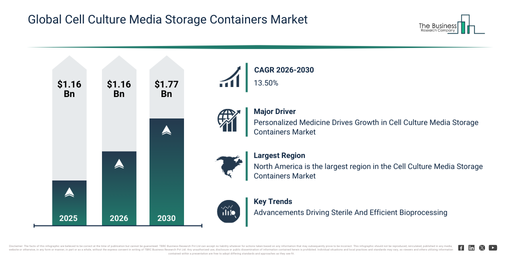
    The cell culture media storage containers market has seen rapid expansion recently, with revenues rising from $2.88 billion in 2025 to $3.32 billion in 2026, reflecting a strong CAGR of 15.1%. This historic growth has been propelled by increasing cell-based research, the growth of biopharmaceutical manufacturing, broader use of in vitro testing, heightened investments in academic life sciences, and growing adoption of tissue culture techniques. Moving forward, the market is projected to reach $5.51 billion by 2030, growing at a CAGR of 13.5%. This surge is driven by higher demand for biologics and biosimilars, the expansion of regenerative medicine research, increasing outsourcing to CROs and CMOs, a focus on scalable cell culture processes, and investments in advanced laboratory infrastructure. Trends such as demand for sterile, contamination-free storage, single-use solutions, and leak-proof containers will continue to shape market dynamics.

    Download A Free Sample Report For Comprehensive Market Insights:

    https://www.thebusinessresearchcompany.com/sample.aspx?id=15756&type=smp

    Personalized Medicine as a Key Growth Driver in Cell Culture Media Storage Containers

    A significant factor pushing the cell culture media storage containers market is the growing emphasis on personalized medicine. This approach, which tailors treatment to individual patient characteristics, demands precise and reliable cell culture preservation to enable patient-specific therapies. Advances in genomics and precision healthcare technologies have accelerated this focus. For instance, in February 2024, the Personalized Medicine Coalition highlighted that the U.S. FDA approved 16 new personalized treatments for rare diseases, up from 6 in 2022, underscoring the expanding role of personalized therapies. As such, personalized medicine applications are increasingly driving the need for specialized storage containers in cell culture.

    Additional Factors Supporting Market Expansion

    Beyond personalized medicine, the market’s growth is supported by rising biopharmaceutical production and regenerative medicine research. The push for better contamination control, scalable bioprocessing, and standardized laboratory storage solutions further contributes to demand. Companies and research institutions are seeking containers that offer durability, sterility, and compatibility with various bioprocessing workflows, which accelerates innovation and adoption within the market.

    https://www.thebusinessresearchcompany.com/report/cell-culture-media-storage-containers-global-market-report

    Cell Culture Media Storage Containers Market Global Footprint: Which Region Holds Market Leadership?

    Key Segments Within the Cell Culture Media Storage Containers Market

    This market is categorized into distinct segments to cover diverse product types, applications, and end users. By product, the categories include storage bags, storage bottles, and storage bins and drums. The application segments cover biopharmaceutical production, tissue engineering, diagnostics, and regenerative medicine. End-use divisions include pharmaceutical and biotechnology firms, contract research and manufacturing organizations, as well as academic and research institutions. Further subsegmentation breaks down products such as single-use, biopharmaceutical, and sterile storage bags; polycarbonate, plastic, and glass bottles; and plastic, metal, and food-grade storage bins and drums, providing a comprehensive market overview.

    Innovations Transforming the Cell Culture Media Storage Containers Market

    Leading players are focusing on pioneering solutions such as next-generation single-use mixing technologies to enhance media homogeneity, sterility, and processing efficiency. These technologies, often magnetically driven and contact-free, ensure uniform blending of cell culture media and buffers without contamination risks. For example, in April 2024, Cytiva launched the Xcellerex Magnetic Mixer at Interphex, a scalable and contamination-free mixing system designed to optimize upstream and downstream bioprocessing. Such innovations cater to the industry’s trend toward single-use bioprocessing and greater operational flexibility.

    Major Players Competing in the Cell Culture Media Storage Containers Industry

    Several globally recognized companies dominate this market space, including Merck KGaA, Thermo Fisher Scientific Inc, FUJIFILM Holdings Corporation, Becton Dickinson and Company, Corning Incorporated, Avantor Inc, Danaher Life Sciences LLC, Lonza Group AG, Sartorius AG, Bio-Rad Laboratories Inc, and Eppendorf AG. Others contributing significantly are STEMCELL Technologies Inc, Greiner Bio-One International GmbH, SARSTEDT AG & Co KG, Cole-Parmer Instrument Company LLC, BioLife Solutions Inc, DWK Life Sciences, MP Biomedicals LLC, HiMedia Laboratories Pvt Ltd, OriGen Biomedical Inc, ThermoGenesis Holdings Inc, CELLTREAT Scientific Products, and TPP Techno Plastic Products AG, reflecting a competitive and innovative market landscape.

    Regional Insights Highlighting Market Leadership and Growth Potential

    In 2025, North America led the cell culture media storage containers market in terms of size. However, the Asia-Pacific region is anticipated to be the fastest-growing market during the forecast period. The comprehensive regional analysis includes Asia-Pacific, South East Asia, Western Europe, Eastern Europe, North America, South America, the Middle East, and Africa, painting a detailed picture of global market trends and opportunities.

    Get in touch with us:

    The Business Research Company: https://www.thebusinessresearchcompany.com/

    Americas: +1 310-496-7795

    Asia: +44 7882 955267 & +91 8897263534

    Europe: +44 7882 955267

    Email us at: marketing@tbrc.info

    Follow us on:

    LinkedIn: https://in.linkedin.com/company/the-business-research-company

    YouTube: https://www.youtube.com/channel/UC24_fI0rV8cR5DxlCpgmyFQ

    Global Market Model: https://www.thebusinessresearchcompany.com/global-market-model
  • Cell Culture Consumables And Equipment Market Trends And Growth Drivers Point To Strong Future Potential

    Cell Culture Consumables And Equipment Market Trends And Growth Drivers Point To Strong Future Potential

    Enhanced with market attractiveness analysis, total addressable market evaluation, company benchmarking matrices, interactive Excel dashboards, expanded supply chain intelligence, emerging startup coverage, and detailed product insights, The Business Research Company’s 2026 market reports deliver more actionable and strategically valuable research.

    The cell culture consumables and equipment sector is experiencing robust growth, driven by increasing research activities and technological advancements. This market plays a crucial role in supporting breakthroughs in biotechnology, pharmaceuticals, and regenerative medicine. Let’s explore the current state, key drivers, product segments, industry innovations, leading companies, and regional influences shaping this dynamic market.

    Cell Culture Consumables and Equipment Market Size and Growth Outlook

    The market for cell culture consumables and equipment has shown impressive expansion recently. It is forecasted to rise from $14.69 billion in 2025 to $16.05 billion in 2026, representing a compound annual growth rate (CAGR) of 9.3%. The historical growth is largely due to the scarcity of specialized cell culture instruments, dependence on traditional culture media, escalating research in academic and industrial sectors, increased vaccine and biologics development, and a growing focus on the promise of regenerative medicine.

    Download A Free Sample Report For Comprehensive Market Insights:

    https://www.thebusinessresearchcompany.com/sample.aspx?id=2463&type=smp

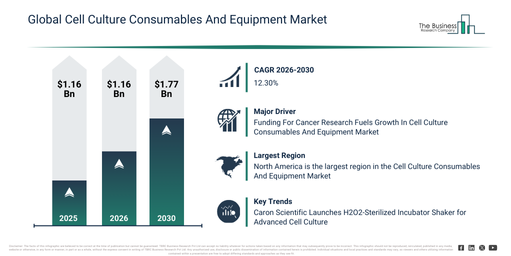
    Looking ahead, the market is expected to accelerate considerably, reaching $25.49 billion by 2030 with a CAGR of 12.3%. This anticipated surge is fueled by advancements in bioreactors and automated incubators, rising investments in stem cell and gene therapy research, expansion of the biotechnology and pharmaceutical industries, adoption of high-throughput screening technologies, and the integration of intelligent automated laboratory equipment. Key trends driving the market during this period include the growing demand for sophisticated cell culture consumables, expansion in stem cell and regenerative medicine research, increasing usage of automated cell culture instruments, growth in drug screening and development applications, and an emphasis on high-quality culture media and reagents.

    Funding as a Vital Factor Accelerating Market Growth

    One of the primary forces behind the expansion of the cell culture consumables and equipment market is the increased financial support for cancer research. Funding, which involves allocating monetary resources to support specific projects or initiatives, plays a significant role in advancing the development and availability of these products.

    https://www.thebusinessresearchcompany.com/report/cell-culture-consumables-and-equipment-global-market-report

    Cell Culture Consumables And Equipment Market Regional Distribution: Which Areas Drive Market Expansion?

    For example, in September 2023, the National Cancer Institute, a US government agency, was allocated a budget of $7.3 billion for fiscal year 2023 by the United States Congress. This represents a $408 million increase compared to 2022. Such enhanced funding boosts research capabilities and drives demand for cell culture consumables and equipment, fueling market growth.

    Breakdown of Expanding Segments in the Cell Culture Consumables and Equipment Market

    This market can be categorized into several segments to better understand growth areas:

    1) By Product Type: Consumables and Instruments

    2) By Application: Vaccination, Toxicity Testing, Cancer Research, Drug Screening and Development, Recombinant Products, Stem Cell Technology, Regenerative Medicine, and Other Applications

    3) By End User: Industrial, Biotechnology, Agriculture, and Other End Users

    Delving deeper, consumables include culture media, cell culture reagents, serum and supplements, cell culture vials and flasks, culture plates and dishes, pipettes, and pipette tips. Instruments cover cell culture incubators, bioreactors, centrifuges, microscopes, cell counters, as well as shakers and stirring systems.

    Innovations Shaping the Market’s Future Outlook

    Leading companies in this field are focusing on innovative product development to enhance efficiency and reduce contamination risks in cell culture processes. One notable innovation is the introduction of in-unit dry hydrogen-peroxide (H2O2) fogging sterilization, which significantly lowers contamination chances and downtime in GMP cell culture production. This sterilization uses vapor-phase hydrogen peroxide without condensation, ensuring effective decontamination without water pooling.

    For instance, in March 2025, Caron Scientific, a US-based provider of environmental testing and bioprocess equipment, unveiled its 7406 Series Incubator Shaker. This system offers the highest single-chamber capacity in its category while maintaining a compact vertical design. It provides tightly controlled temperature ranges (20 °C–60 °C), CO2 regulation (0–20%), humidity control (ambient to 90%), and adjustable shaking parameters. Its integrated dry H2O2 decontamination cycle, monitored by a humidity sensor and electronic controls, prevents condensation and allows immediate reuse after sterilization—a pioneering feature in incubator-shaker design. These capabilities make it ideal for high-throughput, GMP-compliant biologics production, improving operational efficiency and contamination control.

    Key Industry Players and Competitive Landscape in Cell Culture Consumables and Equipment

    The market landscape comprises several prominent companies, including Becton Dickinson and Company, Corning Inc., Danaher Corporation, Eppendorf AG, HiMedia Laboratories Private Limited, Lonza Group AG, Merck KGAA, Promocell GmbH, Sartorius AG, Thermo Fisher Scientific Inc., Irvine Scientific Sales Company Inc., CellGenix GmbH, InVitria Inc., Cytiva, Bio-Techne Corporation, GenScript Biotech Corporation, Gedeon Richter Plc., Hetero Drugs Limited, Intas Pharmaceuticals Ltd., LG Chem Ltd., Lupin Limited, Bio-Rad Laboratories Inc., Illumina Inc., Qiagen NV, F. Hoffmann-La Roche Ltd, Norgen Biotek Corporation, and Tecan Group Ltd.

    Regions Driving Cell Culture Consumables and Equipment Market Expansion

    In 2025, North America held the largest share of the cell culture consumables and equipment market. Western Europe ranked as the second-largest region globally. Other key regions covered in the market analysis include Asia-Pacific, South East Asia, Eastern Europe, South America, the Middle East, and Africa. These regions collectively contribute to the global growth trajectory and offer diverse opportunities for market players.

    Get in touch with us:

    The Business Research Company: https://www.thebusinessresearchcompany.com/

    Americas: +1 310-496-7795

    Asia: +44 7882 955267 & +91 8897263534

    Europe: +44 7882 955267

    Email us at: marketing@tbrc.info

    Follow us on:

    LinkedIn: https://in.linkedin.com/company/the-business-research-company

    YouTube: https://www.youtube.com/channel/UC24_fI0rV8cR5DxlCpgmyFQ

    Global Market Model: https://www.thebusinessresearchcompany.com/global-market-model
  • Cell Counting Market Expansion Is Reshaping Competitive Dynamics Across The Industry

    Cell Counting Market Expansion Is Reshaping Competitive Dynamics Across The Industry

    Through market attractiveness analysis, total addressable market evaluation, company benchmarking matrices, interactive Excel dashboards, expanded supply chain intelligence, emerging startup coverage, and detailed product insights, The Business Research Company’s 2026 market reports provide more actionable and strategically valuable research.

    The cell counting market has witnessed significant growth recently, driven by advances in life sciences and increasing research activities worldwide. As demand for precise and efficient cell analysis continues to rise across various sectors, this market is set to experience substantial expansion in the coming years. Below is an overview of the market size, key drivers, trends, major players, and regional insights shaping its future.

    Current and Projected Cell Counting Market Size and Growth

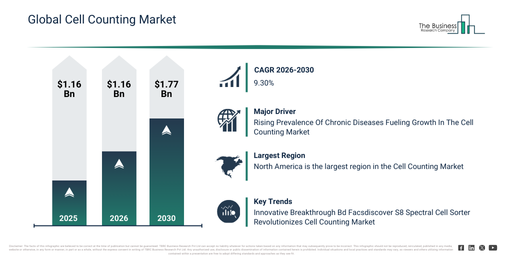
    The cell counting market has demonstrated robust growth, with its size expected to increase from $11.39 billion in 2025 to $12.49 billion in 2026, reflecting a compound annual growth rate (CAGR) of 9.7%. This growth in the past years has been propelled by the expansion of life sciences research, broader use of cell culture techniques, escalating investments in pharmaceutical research, increased funding for academic studies, and the widespread adoption of laboratory automation technologies.

    Download A Free Sample Report For Comprehensive Market Insights:

    https://www.thebusinessresearchcompany.com/sample.aspx?id=6489&type=smp

    Looking ahead, the market is forecasted to continue its upward trajectory, reaching $17.83 billion by 2030 at a CAGR of 9.3%. Key factors supporting this expansion include the growing demand for cell-based therapies, greater use of precision diagnostics, widening biotechnology research pipelines, enhanced utilization of AI-driven laboratory analytics, and a stronger focus on standardizing laboratory workflows. The forecast period will also see trends such as greater adoption of automated cell counting systems, increased use of flow cytometry in cell analysis, rising demand for high-throughput cell counting methods, growth in cell-based research applications, and an intensified emphasis on data accuracy and reproducibility.

    Rising Chronic Disease Rates Fuel Cell Counting Market Demand

    One of the major forces behind the cell counting market’s growth is the increasing prevalence of chronic diseases. These conditions typically persist for a year or longer and require ongoing medical attention, often impacting daily life and functionality. Due to their complex causes, multiple risk factors, and prolonged courses, chronic diseases demand precise diagnostic and monitoring tools. Cell counting plays a crucial role in managing these illnesses by helping healthcare professionals detect and track changes in cell populations, providing valuable insights into how diseases progress and how effective treatments are.

    https://www.thebusinessresearchcompany.com/report/cell-counting-global-market-report

    Cell Counting Market Leading Geography: Which Region Generates The Most Revenue?

    For instance, in June 2024, the UK’s National Health Service reported that 3,615,330 people registered with general practitioners were diagnosed with non-diabetic hyperglycemia or pre-diabetes in 2023. This marked an 18% increase compared to 3,065,825 cases in 2022, illustrating the growing burden of chronic metabolic disorders. Such trends are significant drivers for the expanding use of cell counting technologies.

    Key Segments Driving the Cell Counting Market Development

    The cell counting market is organized into several primary segments based on product, consumables, application, and end-user categories. Consumables and accessories include media, sera and reagents, assay kits, and microplates. Product types cover multi-mode readers, manual and automated cell counters, hemocytometers, and flow cytometers. Applications span research, clinical and diagnostic purposes, and industrial uses. End-users mainly consist of hospitals, diagnostic centers, research institutions, pharmaceutical and biotechnology companies, along with other specialized users.

    Additional subcategories within consumables feature types of media such as cell culture media and specialized growth media. Sera and reagents include fetal bovine serum (FBS), human serum, and cell viability reagents. Assay kits are divided into cell counting kits and apoptosis detection kits, while microplates include 96-well plates, 384-well plates, and specialized cell culture plates.

    Innovative Technologies Reshaping the Cell Counting Market

    Leading companies in the cell counting sector are prioritizing innovation to cater to evolving customer demands. A notable advancement is the introduction of spectral cell sorting, which combines advanced spectral flow cytometry with high-speed imaging technology to sort cells based on visual characteristics, offering more detailed analysis than traditional methods.

    For example, in May 2023, Becton, Dickinson and Company launched their BD FACSDiscover S8 Cell Sorter. This device integrates two groundbreaking technologies: BD CellView Image Technology, allowing researchers to capture detailed microscopic images and perform real-time cell sorting based on visual attributes, and BD SpectralFX Technology, enabling high-parameter studies with full-spectrum cell sorting and enhanced performance via a flexible optical design and smart algorithms. These innovations significantly enhance research capabilities in fields like drug discovery, immuno-oncology, and genomics, promising to transform cell-based therapy development.

    Leading Market Players in the Cell Counting Industry

    Several prominent companies lead the cell counting market, including Thermo Fisher Scientific Inc., Merck KGaA, PerkinElmer Inc., Bio-Rad Laboratories Inc., Danaher Corporation, Olympus Corporation, HORIBA Ltd., Logos Biosystems Inc., Becton Dickinson and Company, GE Healthcare, Agilent Technologies Inc., BioTek Instruments Inc., DeNovix Inc., Sysmex Corporation, Nexcelom Bioscience LLC, Beckman Coulter Inc., Roche Diagnostics International Ltd., Miltenyi Biotec GmbH, AccuBioTech Co. Ltd., ChemoMetec A/S, Countstar Microscopy Systems, Luminex Corporation, NanoEnTek Inc., Partec GmbH, Advanced Instruments Inc., Analytik Jena AG, Integra Biosciences AG, Meridian Bioscience Inc., Promega Corporation, and Sartorius AG.

    Regional Overview of the Cell Counting Market

    In 2025, North America held the largest share in the cell counting market, reflecting its strong infrastructure and advanced healthcare ecosystem. Meanwhile, the Asia-Pacific region is projected to experience the fastest growth during the forecast period, propelled by increasing research activities, rising healthcare investments, and expanding biopharmaceutical industries. This report also analyzes other crucial regions, including South East Asia, Western Europe, Eastern Europe, South America, the Middle East, and Africa, providing a comprehensive viewpoint on global market trends.

    Get in touch with us:

    The Business Research Company: https://www.thebusinessresearchcompany.com/

    Americas: +1 310-496-7795

    Asia: +44 7882 955267 & +91 8897263534

    Europe: +44 7882 955267

    Email us at: marketing@tbrc.info

    Follow us on:

    LinkedIn: https://in.linkedin.com/company/the-business-research-company

    YouTube: https://www.youtube.com/channel/UC24_fI0rV8cR5DxlCpgmyFQ

    Global Market Model: https://www.thebusinessresearchcompany.com/global-market-model
  • CBCT Dental Imaging Market Forecast Reveals Where Future Industry Value Will Be Created

    CBCT Dental Imaging Market Forecast Reveals Where Future Industry Value Will Be Created

    Delivering more actionable and strategically valuable research, The Business Research Company’s 2026 market reports feature market attractiveness analysis, total addressable market evaluation, company benchmarking matrices, interactive Excel dashboards, expanded supply chain intelligence, emerging startup coverage, and detailed product insights.

    The CBCT dental imaging market has witnessed significant growth recently, driven by advancements in dental technology and increasing demand for precise diagnostic tools. This sector is rapidly evolving, supported by innovations and expanding applications in various dental treatments. Below, we explore the current market size, key drivers, major players, and future prospects shaping this industry.

    Steady Expansion in CBCT Dental Imaging Market Size and Future Outlook

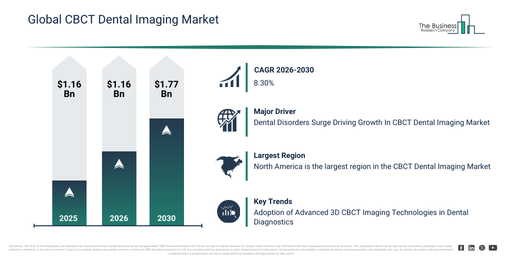
    The CBCT dental imaging market has experienced robust growth and is projected to continue expanding. From $1.35 billion in 2025, it is expected to rise to $1.46 billion in 2026, marking a compound annual growth rate (CAGR) of 8.5%. This growth during the historical period is primarily fueled by an increasing number of dental implant procedures, wider acceptance of orthodontic treatments, enhanced investment in dental diagnostic infrastructure, heightened awareness of advanced imaging technologies, and the availability of compact CBCT systems.

    Download A Free Sample Report For Comprehensive Market Insights:

    https://www.thebusinessresearchcompany.com/sample.aspx?id=13401&type=smp

    Looking ahead, the market is anticipated to grow strongly, reaching $2.02 billion by 2030 with a CAGR of 8.3%. This forecasted expansion is supported by the rising adoption of digital dentistry solutions, growing demand for minimally invasive diagnostic tools, expansion of dental clinics in emerging economies, greater integration of AI-based image analysis, and an amplified focus on improving workflow efficiency in dental practices. Emerging trends include the use of high-resolution 3D dental imaging devices, seamless incorporation of CBCT with digital dentistry workflows, advanced image processing software, wider deployment of compact in-clinic CBCT units, and increased attention to optimizing radiation dose.

    Key Factors Stimulating Growth in the CBCT Dental Imaging Market

    One of the primary drivers propelling the CBCT dental imaging market is the growing incidence of dental diseases. These disorders encompass a variety of issues affecting the teeth, gums, and surrounding oral structures, which require precise diagnosis and treatment. CBCT imaging technology plays a critical role in identifying dental conditions, locating impacted teeth, and supporting improved treatment outcomes.

    https://www.thebusinessresearchcompany.com/report/cbct-dental-imaging-global-market-report

    CBCT Dental Imaging Market Regional Outlook: Where Are The Largest Opportunities Located?

    For example, in October 2024, the Australian Institute of Health and Welfare reported that there were approximately 87,400 hospital admissions related to dental conditions in 2022–23. Children aged 5 to 9 years exhibited the highest rate of preventable hospitalizations, with 12.3 hospitalizations per 1,000 population. Such data underscores the increasing prevalence of dental problems, which in turn fuels the demand for advanced CBCT imaging systems.

    Breakdown of Segments Offering Growth Potential in the CBCT Dental Imaging Market

    This market is segmented into several key categories to better understand growth opportunities:

    1) Product Type: Flat Panel Detectors, Image Intensifiers, and Other Product Types.

    2) Applications: Dental Implants, Orthodontics, Endodontics, and Other Applications.

    3) End Users: Hospitals, Dental Clinics, Academic and Research Institutes, and Others.

    Further subdivisions include:

    – Flat Panel Detectors split into Active Matrix Flat Panel Detectors and Thin-Film Transistor (TFT) Flat Panel Detectors.

    – Image Intensifiers divided into Single-Field and Dual-Field variants.

    – Other Product Types such as Charge-Coupled Device (CCD) and Complementary Metal-Oxide-Semiconductor (CMOS) technologies.

    How Innovations Are Transforming the CBCT Dental Imaging Landscape

    Leading companies in the CBCT dental imaging space are pushing the boundaries by developing systems that integrate cutting-edge features, such as multi-modal 3D CBCT platforms. These devices use cone-shaped X-ray beams to capture detailed volumetric images of the oral and maxillofacial regions and simultaneously support other imaging modes like cephalometric or 3D-object scanning within a single device, enhancing both flexibility and diagnostic precision.

    For example, in February 2024, US-based Carestream Dental introduced the CS 8200 3D Access system—a compact 4-in-1 platform offering panoramic 2D imaging, 3D CBCT scans, 3D-object scanning, and optional cephalometric imaging. This system boasts ultra-high-resolution imaging at 75 microns, up to six selectable fields of view ranging from 4 × 4 cm to 10 × 10 cm, and AI-powered automatic panoramic curve and nerve mapping, which collectively elevate diagnostic accuracy and clinical workflow.

    Leading Players Driving Competition in the CBCT Dental Imaging Market

    Several prominent companies dominate the CBCT dental imaging industry, including:

    – Dentsply Sirona Inc.

    – Carestream Health

    – Cefla s.c.

    – KaVo Dental GmbH

    – Gendex

    – Acteon Group

    – Planmeca Group

    – Vatech Network

    – Genoray Co Ltd

    – J. Morita Mfg. Corp.

    – Shanghai Handy Medical Equipment Co Ltd

    – Air Techniques International

    – Soredex

    – Xoran Technologies

    – NewTom

    – PreXion Inc.

    – Fona Dental SRO

    – Owandy Radiology

    – Launca Medical Device Technology Co Ltd

    – Planmeca Oy

    – Morita Corporation

    Regional Market Perspectives Highlighting Growth Hotspots

    In 2025, North America held the largest share of the CBCT dental imaging market, serving as a significant hub for advanced dental imaging technologies. Meanwhile, Asia-Pacific is poised to be the fastest-growing region throughout the forecast period. The market analysis encompasses regions such as Asia-Pacific, South East Asia, Western Europe, Eastern Europe, North America, South America, the Middle East, and Africa, providing a comprehensive view of global market trends and opportunities.

    Get in touch with us:

    The Business Research Company: https://www.thebusinessresearchcompany.com/

    Americas: +1 310-496-7795

    Asia: +44 7882 955267 & +91 8897263534

    Europe: +44 7882 955267

    Email us at: marketing@tbrc.info

    Follow us on:

    LinkedIn: https://in.linkedin.com/company/the-business-research-company

    YouTube: https://www.youtube.com/channel/UC24_fI0rV8cR5DxlCpgmyFQ

    Global Market Model: https://www.thebusinessresearchcompany.com/global-market-model
  • Catheters Market Growth Through 2030 Creates New Strategic Opportunities

    Catheters Market Growth Through 2030 Creates New Strategic Opportunities

    Enhanced with market attractiveness analysis, total addressable market evaluation, company benchmarking matrices, interactive Excel dashboards, expanded supply chain intelligence, emerging startup coverage, and detailed product insights, The Business Research Company’s 2026 market reports deliver more actionable and strategically valuable research.

    The catheters market has seen significant expansion recently, driven by rising healthcare needs and technological advancements. As medical procedures become more sophisticated and accessible, the demand for various catheter types continues to grow, signaling promising prospects for the industry. Below is an in-depth look at the market’s current size, growth drivers, key segments, emerging trends, leading players, and regional developments.

    Steady Growth and Market Size of the Catheters Industry

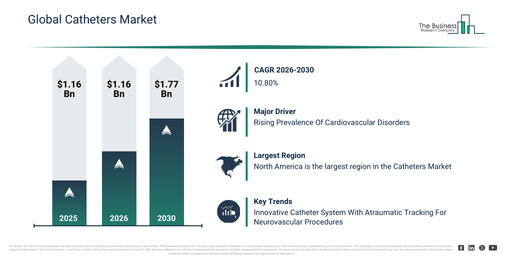
    The catheters market has experienced rapid growth over recent years and is projected to increase from $33.8 billion in 2025 to $37.43 billion in 2026, registering a compound annual growth rate (CAGR) of 10.7%. This expansion during the historical period is largely due to the rising prevalence of chronic illnesses, higher hospitalization rates, an increase in cardiovascular and urology procedures, better access to clinical care, and the broader availability of disposable medical devices.

    Download A Free Sample Report For Comprehensive Market Insights:

    https://www.thebusinessresearchcompany.com/sample.aspx?id=5860&type=smp

    Forecasted Surge in Catheters Market Value by 2030

    Looking ahead, the market is expected to continue its strong upward trajectory, reaching $56.38 billion by 2030 with a CAGR of 10.8%. This anticipated growth is fueled by an increasing demand for advanced catheter materials, a stronger emphasis on minimizing hospital-acquired infections, the growing use of catheters in outpatient and homecare settings, expanding adoption of image-guided catheterization techniques, and ongoing product innovations. Key trends shaping the future market include widespread use of antimicrobial-coated catheters, heightened demand for specialty and multi-lumen catheters, rising popularity of minimally invasive procedures, growing preference for single-use disposable catheters, and a pronounced focus on patient safety and infection control measures.

    Rising Cardiovascular Disease Rates Fueling Catheters Demand

    One of the primary factors accelerating the catheters market is the increasing incidence of cardiovascular diseases. Cardiac catheterization, which involves threading a catheter through blood vessels to the heart for diagnostic and therapeutic purposes, is becoming more prevalent due to the growing number of cardiovascular patients. For example, in January 2024, the American Heart Association reported that the age-adjusted death rate from cardiovascular disease rose to 233.3 per 100,000 in 2024 from 224.4 in 2023, reflecting a 4.0% increase. This upward trend in cardiovascular conditions is expected to significantly boost catheter demand throughout the forecast period.

    https://www.thebusinessresearchcompany.com/report/catheters-global-market-report

    Catheters Market Geographic Landscape: Which Region Dominates Industry Growth?

    Expansion of Catheter Usage Across Medical Specialties

    Besides cardiovascular care, the broader rise in chronic diseases and hospitalization rates also contribute to the market’s growth. Increased clinical interventions, advancements in medical technologies, and better healthcare infrastructure have led to a higher frequency of procedures requiring catheters, supporting steady demand across multiple medical fields.

    Overview of Key Market Segments in Catheters

    The catheters market is categorized into several major segments for better analysis:

    1) Product Types: Cardiovascular Catheters, Neurovascular Catheters, Urology Catheters, Intravenous Catheters, and Specialty Catheters.

    2) Lumen Types: Single-lumen, Double-lumen, and Triple-lumen catheters.

    3) End Users: Hospitals & Clinics, Ambulatory Surgical Centers.

    Further classifications include:

    – Cardiovascular Catheters subdivided into Angiographic, Balloon, Electrophysiology, and Stent Delivery catheters.

    – Neurovascular Catheters including Microcatheters, Guiding Catheters, and Balloon Catheters.

    – Urology Catheters split into Foley, Intermittent, and Suprapubic types.

    – Intravenous Catheters comprising Peripheral IV, Central Venous Catheters (CVCs), and Peripherally Inserted Central Catheters (PICC).

    – Specialty Catheters such as Dialysis, Temperature Monitoring, and Gastrostomy catheters.

    Innovations and Trends Driving the Catheters Market Forward

    Leading companies in the catheter industry are focusing on technological innovations aimed at improving patient outcomes and procedural efficiency. One notable advancement is atraumatic tracking, which minimizes trauma and potential damage during catheter navigation. This approach enhances safety and comfort during medical interventions.

    A practical example is the July 2024 launch of the FreeClimb 88 Catheter System by Route 92 Medical, Inc., a US-based medical device manufacturer. This system is designed for navigating complex neurovascular structures with ease. The catheter received FDA 510(k) clearance, confirming its safety and efficacy. Available in lengths of 125 cm and 132 cm, it features a soft, tapered tip that reduces the ‘ledge effect’ for smooth passage through delicate arteries. Its innovative design simplifies clinical procedures by reducing setup complexity while improving vessel size compatibility and flow control.

    Prominent Companies Shaping the Catheters Market Landscape

    Several leading corporations dominate the catheters market, contributing to technological advancements and market expansion. Some of the key players include Boston Scientific Corporation, Coloplast A/S, ConvaTec Group Plc, Edwards Lifesciences Corporation, Hollister Incorporated, Johnson & Johnson, Medtronic Plc, B. Braun Melsungen AG, Terumo Corporation, Cook Medical Inc., Becton Dickinson and Company, Stryker Corporation, Merit Medical Systems Inc., Abbott Laboratories, Manfred Sauer GmbH, Koninklijke Philips N.V., Teleflex Incorporated, C. R. Bard Inc., Vascular Solutions Inc., Cordis Corporation, Rochester Medical Corporation, Navilyst Medical Inc., AngioDynamics Inc., Cardinal Health Inc., Olympus Corporation, Penumbra Inc., Siemens Healthineers AG, and Smiths Medical Inc.

    Regional Market Performance and Growth Outlook

    In 2025, North America held the largest share of the catheters market, driven by advanced healthcare infrastructure and high adoption rates of innovative medical technologies. Meanwhile, the Asia-Pacific region is expected to emerge as the fastest-growing market over the forecast period due to increasing healthcare investments, expanding patient populations, and rising awareness about minimally invasive procedures. Other regions covered in the market analysis include South East Asia, Western Europe, Eastern Europe, South America, the Middle East, and Africa, providing a comprehensive global perspective.

    Get in touch with us:

    The Business Research Company: https://www.thebusinessresearchcompany.com/

    Americas: +1 310-496-7795

    Asia: +44 7882 955267 & +91 8897263534

    Europe: +44 7882 955267

    Email us at: marketing@tbrc.info

    Follow us on:

    LinkedIn: https://in.linkedin.com/company/the-business-research-company

    YouTube: https://www.youtube.com/channel/UC24_fI0rV8cR5DxlCpgmyFQ

    Global Market Model: https://www.thebusinessresearchcompany.com/global-market-model
  • Wearable Fertility Trackers Market Growth Potential: What The Latest Forecast Reveals

    Wearable Fertility Trackers Market Growth Potential: What The Latest Forecast Reveals

    The Business Research Company’s 2026 market reports include new capabilities such as market attractiveness scoring and analysis, total addressable market analysis, company scoring matrix, interactive excel data dashboard, improved supply chain analysis, upcoming startups in the market, and overview of key products, aimed at improving the depth, usability, and strategic value of the insights delivered.

    How Much Larger Will The Wearable Fertility Trackers Market Become By 2030 Compared To 2026?

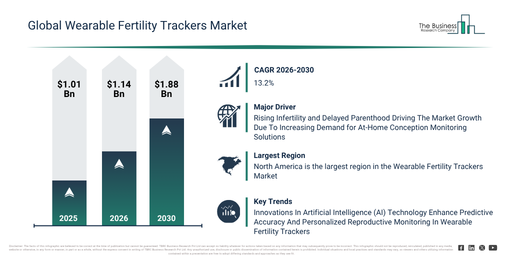
    The market for wearable fertility trackers has seen swift growth in recent years. This market is expected to expand from $1.01 billion in 2025 to $1.14 billion in 2026, achieving a compound annual growth rate (CAGR) of 13.0%. The expansion observed in the past can be attributed to rising awareness of fertility health, adoption of wearable health devices, growth of menstrual tracking apps, increasing female health awareness, and expansion of mobile health platforms.

    The market for wearable fertility trackers is projected to experience swift expansion over the coming years. This market is anticipated to reach $1.88 billion by 2030, exhibiting a compound annual growth rate (CAGR) of 13.2%. This expansion during the projection period stems from factors such as the integration of AI-based predictive algorithms, the inclusion of multi-sensor smart wearables, a rise in the uptake of hormone monitoring devices, the broadening of telehealth services, and an increasing need for customized fertility solutions. Key developments expected within this period encompass continuous hormone monitoring, basal body temperature tracking, analysis of sleep patterns, fertility insights integrated into applications, and predictive ovulation modeling.

    Download A Free Sample Report For Comprehensive Market Insights:

    https://www.thebusinessresearchcompany.com/sample_request?id=16775202&type=smp

    Which Major Factors Are Contributing To The Development Of The Wearable Fertility Trackers Market?

    The anticipated expansion of the wearable fertility tracker market is fueled by an increase in infertility cases and the trend of postponed parenthood. Infertility is defined as the inability to achieve conception following 12 months or more of consistent, unprotected sexual activity, whereas delayed parenthood describes individuals and couples opting to commence families later in life. This growing occurrence of infertility and deferred parenthood is largely linked to evolving societal priorities, wherein an increasing number of people prioritize advanced education and professional development, leading them to put off family planning until their late 30s and 40s, a time when natural fertility substantially diminishes. The heightened incidence of infertility and postponed parenthood fuels the need for wearable fertility trackers, as people look for accurate, real-time tracking of ovulation cycles and reproductive health metrics to maximize their prospects of natural conception. For example, data from August 2025, published by the UK government’s Office for National Statistics, indicated that in 2024, the overall infertility rate stood at 1.41 children per woman, slightly down from 1.42 recorded in 2023. Additionally, an April 2025 report by the Society for Assisted Reproductive Technology (SART), a US-based professional medical body compiling national IVF data for its member clinics, showed that the cumulative number of IVF cycles performed by these clinics increased from 389,993 in 2022 to 432,641 in 2023, representing an increment of 42,648 cycles. Consequently, the escalating rates of infertility and deferred parenthood are acting as key drivers for the expansion of the wearable fertility tracker market.

    What Are The Major Segment Categories Within The Wearable Fertility Trackers Market?

    The wearable fertility trackers market covered in this report is segmented –

    1) By Product Type: Bracelets, Rings, Patches, Smartwatches, Other Product Types

    2) By Technology: Sensor-based, App-integrated, Temperature-based, Hormone-based, Other Technologies

    3) By Distribution Channel: Online Retail, Pharmacies, Specialty Stores, Other Distribution Channels

    4) By Application: Ovulation Prediction, Menstrual Cycle Tracking, Pregnancy Planning, Other Applications

    5) By End-Users: Women, Healthcare Providers, Other End Users

    Subsegments:

    1) By Bracelets: Temperature Sensing Bracelets, Heart Rate Variability Bracelets, Hormone Monitoring Bracelets, Sleep Tracking Bracelets, Multi Sensor Bracelets

    2) By Rings: Continuous Temperature Rings, Ovulation Prediction Rings, Basal Body Temperature Rings, Smart Notification Rings, Rechargeable Battery Rings

    3) By Patches: Disposable Skin Patches, Reusable Adhesive Patches, Hormone Detection Patches, Sweat Analysis Patches, Wireless Sync Patches

    4) By Smartwatches: Integrated Fertility Tracking Smartwatches, Third Party App Compatible Smartwatches, Medical Grade Sensor Smartwatches, Cycle Prediction Smartwatches, Wellness Focused Smartwatches

    5) By Other Product Types: Clip On Sensors, Underwear Embedded Sensors, Bedside Sensor Devices, Handheld Fertility Monitors, Hybrid Wearable Devices

    What Trends Are Shaping The Wearable Fertility Trackers Market Structure?

    Leading companies in the wearable fertility trackers market are prioritizing the creation of advanced AI-driven fertility monitoring solutions to improve real-time cycle prediction and offer data-backed reproductive health advice. AI-powered fertility monitoring represents a technology-focused system that utilizes artificial intelligence to analyze physiological and hormonal data obtained via wearable sensors or digital platforms. This delivers personalized, real-time insights for precise predictions of ovulation, menstrual cycles, and fertility windows, supporting better reproductive planning. For example, in December 2025, OTO Fertility, a Canada-based digital health and biometric intelligence company, unveiled the world’s first AI-powered platform, integrated with a wearable device, for predictive reproductive insight. This solution integrates continuous physiological monitoring with advanced analytics to provide tailored fertility forecasts, early identification of cycle irregularities, and practical reproductive health recommendations, thereby enabling users with more accurate and proactive fertility management.

    Who Are The Major Companies Operating In The Wearable Fertility Trackers Market?

    Major companies operating in the wearable fertility trackers market are Apple Inc., Samsung Electronics Co. Ltd., Ultrahuman PTE. Ltd., Garmin Ltd., Natural Cycles AB, Ava AG, Bellabeat d.o.o., kegg Fertility Inc., kegg Health Inc., Lady Technologies Inc., Tempdrop Ltd., VE Valley Electronics GmbH, Oura Health Oy, Mira Laboratories Inc., Trackle GmbH, WHOOP Inc., Femometer, Inito, OvuFirst Ltd., OTO Fertility, Movano Health.

    Access The Complete Wearable Fertility Trackers Market Report:

    https://www.thebusinessresearchcompany.com/report/wearable-fertility-trackers-market-report

    Which Geographic Region Represents The Largest Wearable Fertility Trackers Market Share?

    North America was the largest region in the wearable fertility trackers market in 2025. Asia-Pacific is expected to be the fastest-growing region in the forecast period. The regions covered in the wearable fertility trackers market report are Asia-Pacific, South East Asia, Western Europe, Eastern Europe, North America, South America, Middle East, Africa.

    Access a Customized Wearable Fertility Trackers Market Report for Deeper Competitive Insights

    https://www.thebusinessresearchcompany.com/sample_request?id=16775202&type=smp

    Get in touch with us:

    The Business Research Company: https://www.thebusinessresearchcompany.com/

    Americas: +1 310-496-7795

    Asia: +44 7882 955267 & +91 8897263534

    Europe: +44 7882 955267

    Email us at: marketing@tbrc.info

    Follow us on:

    LinkedIn: https://in.linkedin.com/company/the-business-research-company

    YouTube: https://www.youtube.com/channel/UC24_fI0rV8cR5DxlCpgmyFQ

    Global Market Model: https://www.thebusinessresearchcompany.com/global-market-model
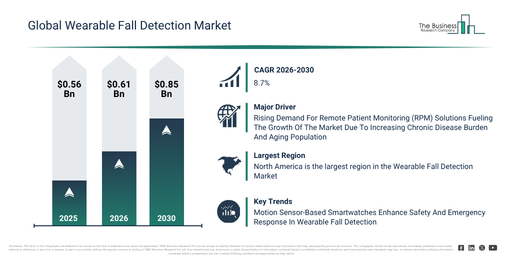
  • Wearable Fall Detection Market Forecast To Reach $0.85 Billion By 2030: Key Trends Explained

    Wearable Fall Detection Market Forecast To Reach $0.85 Billion By 2030: Key Trends Explained

    The Business Research Company’s 2026 market reports include new capabilities such as market attractiveness scoring and analysis, total addressable market analysis, company scoring matrix, interactive excel data dashboard, improved supply chain analysis, upcoming startups in the market, and overview of key products, aimed at improving the depth, usability, and strategic value of the insights delivered.

    What Growth In Market Value Is Anticipated For The Wearable Fall Detection Market Between 2026 And 2030?

    The market for wearable fertility trackers has seen swift growth in recent years. This market is expected to expand from $1.01 billion in 2025 to $1.14 billion in 2026, achieving a compound annual growth rate (CAGR) of 13.0%. The expansion observed in the past can be attributed to rising awareness of fertility health, adoption of wearable health devices, growth of menstrual tracking apps, increasing female health awareness, and expansion of mobile health platforms.

    The market for wearable fertility trackers is projected to experience swift expansion over the coming years. This market is anticipated to reach $1.88 billion by 2030, exhibiting a compound annual growth rate (CAGR) of 13.2%. This expansion during the projection period stems from factors such as the integration of AI-based predictive algorithms, the inclusion of multi-sensor smart wearables, a rise in the uptake of hormone monitoring devices, the broadening of telehealth services, and an increasing need for customized fertility solutions. Key developments expected within this period encompass continuous hormone monitoring, basal body temperature tracking, analysis of sleep patterns, fertility insights integrated into applications, and predictive ovulation modeling.

    Download A Free Sample Report For Comprehensive Market Insights:

    https://www.thebusinessresearchcompany.com/sample_request?id=58572496&type=smp

    What Key Growth Drivers Are Influencing The Wearable Fall Detection Market?

    The escalating need for remote patient monitoring (RPM) solutions is anticipated to fuel the expansion of the wearable fall detection market. Remote patient monitoring refers to the deployment of connected digital technologies and wearable devices to gather medical and health-related data from individuals at one location and electronically transmit it to healthcare providers for evaluation and recommendations. The increasing prevalence of chronic conditions, the expanding aging population, and the necessity for continuous monitoring outside conventional clinical settings are driving this demand for RPM solutions. Wearable fall detection devices support remote patient monitoring by allowing real-time tracking of patient movement, automatically detecting falls, and instantly alerting caregivers or medical professionals, thereby enhancing patient safety and improving response times. As an illustration, in August 2025, the U.S. Department of Health & Human Services reported that in 2024, Medicare spending on remote patient monitoring exceeded US$536 million, reflecting a 31% increase compared to 2023, while nearly 1 million beneficiaries utilized RPM services, representing a 27% year-over-year rise, and approximately 4,600 medical practices regularly billed for RPM services. Thus, the growing demand for remote patient monitoring (RPM) solutions is a significant impetus for the growth of the wearable fall detection market.

    How Is The Wearable Fall Detection Market Distributed Across Key Segments?

    The wearable fall detection market covered in this report is segmented –

    1) By Product Type: Smart Watches, Pendants, Clip-Ons, Belt-Worn Devices, Other Product Types

    2) By Technology: Accelerometer-Based, Gyroscope-Based, Multi-Sensor, Other Technologies

    3) By Distribution Channel: Online, Offline

    4) By Application: Home Care, Senior Living Facilities, Hospitals And Clinics, Other Applications

    5) By End-User: Elderly, Patients with Chronic Diseases, Other End-Users

    Subsegments:

    1) By Smart Watches: Standalone Smart Watches, Companion Smart Watches, Medical Alert Smart Watches, Cellular-Enabled Smart Watches

    2) By Pendants: Emergency Response Pendants, Fall Detection Pendants, Waterproof Pendants, Two Way Communication Pendants

    3) By Clip-Ons: Waist Clip Devices, Pocket Clip Devices, Magnetic Clip Devices, Lightweight Clip Devices

    4) By Belt-Worn Devices: Motion Sensor Devices, Impact Detection Devices, GPS-Enabled Devices, Rechargeable Belt Devices

    5) By Other Product Types: Smart Insoles, Smart Patches, Smart Clothing, Wristbands

    Which Trends Are Supporting The Evolution Of The Wearable Fall Detection Market?

    Leading companies in the wearable fall detection market are concentrating on producing cutting-edge items like motion sensor-based fall detection and prevention watches, aiming to offer improved safety and autonomy for the elderly and high-risk individuals. These sensor-driven timepieces are advanced wearable gadgets equipped with motion and positioning sensors, designed to identify unexpected falls and quickly dispatch emergency alerts for immediate intervention. Illustratively, in September 2023, Antara Senior Care, an India-based integrated senior care service provider, unveiled ‘AGEasy ‘Empower’ Smart Watches to augment its integrated care ecosystem for seniors. These smartwatches boast sophisticated fall detection via motion sensors that automatically alert emergency contacts if a user is unresponsive following a fall. Furthermore, they provide real-time health tracking (heart rate, blood pressure, SpO2, and temperature), GPS location, geo-fencing, and two-way voice/video calling, having been developed in collaboration with US firm LifeQ and being accessible on the AGEasyByAntara site and Amazon India.

    Which Companies Are Influencing The Wearable Fall Detection Market?

    Major companies operating in the wearable fall detection market are Apple Inc., Samsung Electronics Co. Ltd., Huawei Technologies Co. Ltd., Xiaomi Corporation, Koninklijke Philips N.V., Garmin Ltd., Blackline Safety Corp, LifeStation Inc., Medical Guardian LLC, LifeFone Inc., VitalConnect Inc., UnaliWear Inc., Mytrex Inc., CarePredict Inc., AlertOne Services LLC, Ranix Co. Ltd., Qmedic Health Inc., Bay Alarm Medical LLC, Aloe Care Health Inc., FallCall Solutions LLC.

    Access The Complete Wearable Fall Detection Market Report:

    https://www.thebusinessresearchcompany.com/report/wearable-fall-detection-market-report

    Which Region Leads The Wearable Fall Detection Market By Size?

    North America was the largest region in the wearable fall detection market in 2025. Asia-Pacific is expected to be the fastest-growing region in the forecast period. The regions covered in the wearable fall detection market report are Asia-Pacific, South East Asia, Western Europe, Eastern Europe, North America, South America, Middle East, Africa.

    Access a Customized Wearable Fall Detection Market Report for Deeper Competitive Insights

    https://www.thebusinessresearchcompany.com/sample_request?id=58572496&type=smp

    Get in touch with us:

    The Business Research Company: https://www.thebusinessresearchcompany.com/

    Americas: +1 310-496-7795

    Asia: +44 7882 955267 & +91 8897263534

    Europe: +44 7882 955267

    Email us at: marketing@tbrc.info

    Follow us on:

    LinkedIn: https://in.linkedin.com/company/the-business-research-company

    YouTube: https://www.youtube.com/channel/UC24_fI0rV8cR5DxlCpgmyFQ

    Global Market Model: https://www.thebusinessresearchcompany.com/global-market-model
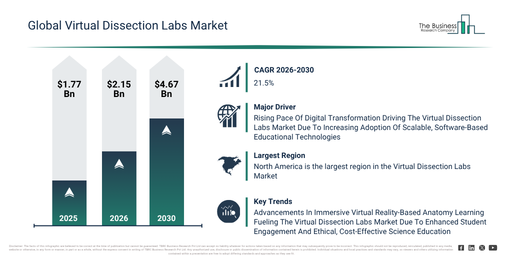
  • Emerging Virtual Dissection Labs Market Trends Changing Industry Priorities

    Emerging Virtual Dissection Labs Market Trends Changing Industry Priorities

    The Business Research Company’s 2026 market reports include new capabilities such as market attractiveness scoring and analysis, total addressable market analysis, company scoring matrix, interactive excel data dashboard, improved supply chain analysis, upcoming startups in the market, and overview of key products, aimed at improving the depth, usability, and strategic value of the insights delivered.

    How Will The Market Value Of The Virtual Dissection Labs Market Change Between 2026 And 2030?

    The virtual patient avatars market size has experienced significant, rapid expansion over recent years. It is projected to increase from $1.48 billion in 2025 to $1.86 billion in 2026, exhibiting a compound annual growth rate (CAGR) of 25.3%. This historical growth can be primarily attributed to factors such as the increasing adoption of simulation-based medical training, the integration of basic digital health records, a rising demand for personalized medicine, the development of academic and research institutes, and the expansion of clinical trial activities.

    The virtual patient avatars market size is anticipated to experience significant expansion over the next few years. This market is projected to reach $4.6 billion by 2030, achieving a compound annual growth rate (CAGR) of 25.5%. The impetus behind this growth in the forecast period stems from factors such as AI-driven predictive analytics, the integration of multi-omics data, the deployment of cloud-based avatars, the widening scope of virtual therapy solutions, and the adoption of immersive AR/VR platforms for medical training. Key trends identified for this period include real-time patient simulation, predictive disease modeling, personalized therapy planning, enhanced integration with electronic health records, and the emergence of virtual clinical trial platforms.

    Download A Free Sample Report For Comprehensive Market Insights:

    https://www.thebusinessresearchcompany.com/sample_request?id=76204773&type=smp

    What Primary Factors Are Fueling The Expansion Of The Virtual Dissection Labs Market?

    The future expansion of the virtual dissection labs market is anticipated to be fueled by the accelerating pace of digital transformation. This transformation involves incorporating sophisticated technologies such as cloud computing, artificial intelligence, 3D visualization, and immersive learning platforms into existing structures to boost effectiveness, reach, and data-driven decision-making. The push for this shift stems from the rising need for adaptable, software-centric solutions that allow quicker implementation and remote availability across various fields like education and healthcare. Virtual dissection labs contribute to digital transformation by providing interactive, digital environments for anatomy learning, thereby lessening reliance on physical cadavers, broadening access, and embedding advanced visualization and analytical tools into medical instruction and training. For instance, in December 2023, according to Eurostat, a Luxemburg-based government agency, approximately 45.2% of European Union enterprises acquired cloud computing services in 2023, representing a 12% rise from previous year. Consequently, the expanding scope of digital transformation is a significant catalyst for the growth of the virtual dissection labs market.

    How Is The Virtual Dissection Labs Market Examined Through Segment Analysis?

    The virtual dissection labs market covered in this report is segmented –

    1) By Component: Software, Hardware, Services

    2) By Deployment Mode: On-Premises, Cloud-Based

    3) By Application: Medical Education, Veterinary Education, Biological Research, K-12 Education, Other Applications

    4) By End-User: Academic Institutions, Research Centers, Hospitals And Clinics, Other End-Users

    Subsegments:

    1) By Software: Anatomy Visualization Software, Simulation And Modeling Software, Analytics And Assessment Tools

    2) By Hardware: Virtual Dissection Tables, VR/AR Devices, Interactive Displays, Tracking Sensors And Controllers

    3) By Services: Installation And Integration, Training Services, Content Customization, Support And Maintenance

    Which Trends Are Expected To Shape The Virtual Dissection Labs Market?

    Major companies operating within the virtual dissection labs market are increasingly concentrating on developing advanced solutions, such as immersive virtual reality-based anatomy learning platforms, to improve student engagement and interactive science education. Immersive virtual reality-based anatomy learning leverages VR environments to enable students to explore and dissect digital specimens within a realistic three-dimensional space, removing the need for physical materials while facilitating repeatable and self-paced practice. For example, in April 2024, Xennial Digital, a US-based education technology company, launched the VR Dissection Lab, a virtual reality learning platform tailored for middle and high school biology programs. This solution empowers students to conduct dissections in a fully guided virtual environment that aligns with curriculum objectives, providing a safe and ethical alternative to traditional specimen use. The platform supports repeated exploration, interactive visualization of anatomical structures, and teacher-led instruction through an easily implementable classroom system, contributing to broader adoption of virtual dissection labs in K–12 education while simultaneously reducing preparation time and material costs.

    Who Are The Leading Firms Participating In The Virtual Dissection Labs Market?

    Major companies operating in the virtual dissection labs market are Pearson Education, Mentice AB, Froggipedia, Leap Motion, Eisco Scientific, zSpace, Synaptive Medical, Labster, Anatomage, Realityworks, BioDigital, Inovus Medical, Visible Body, 3D4Medical, Touch of Life Technologies (TolTech), VIVED Learning, Brahmarsive, Elsevier, Cyber-Anatomy, Medical Augmented Intelligence (MedAI), Immersive Labz, Primal Pictures, Pirogov Interactive Anatomy.

    Access The Complete Virtual Dissection Labs Market Report:

    https://www.thebusinessresearchcompany.com/report/virtual-dissection-labs-market-report

    Which Region Holds The Largest Share In The Virtual Dissection Labs Market?

    North America was the largest region in the virtual dissection Labs market in 2025. Asia-Pacific is expected to be the fastest-growing region in the forecast period. The regions covered in the virtual dissection labs market report are Asia-Pacific, South East Asia, Western Europe, Eastern Europe, North America, South America, Middle East, Africa.

    Access a Customized Virtual Dissection Labs Market Report for Deeper Competitive Insights

    https://www.thebusinessresearchcompany.com/sample_request?id=76204773&type=smp

    Get in touch with us:

    The Business Research Company: https://www.thebusinessresearchcompany.com/

    Americas: +1 310-496-7795

    Asia: +44 7882 955267 & +91 8897263534

    Europe: +44 7882 955267

    Email us at: marketing@tbrc.info

    Follow us on:

    LinkedIn: https://in.linkedin.com/company/the-business-research-company

    YouTube: https://www.youtube.com/channel/UC24_fI0rV8cR5DxlCpgmyFQ

    Global Market Model: https://www.thebusinessresearchcompany.com/global-market-model