Category: Medical Equipment

  • Cervical Pillows Market Growth Through 2030 Creates New Strategic Opportunities

    Cervical Pillows Market Growth Through 2030 Creates New Strategic Opportunities

    Delivering more actionable and strategically valuable research, The Business Research Company’s 2026 market reports feature market attractiveness analysis, total addressable market evaluation, company benchmarking matrices, interactive Excel dashboards, expanded supply chain intelligence, emerging startup coverage, and detailed product insights.

    The cervical pillows market has witnessed significant growth recently, driven by increasing awareness of neck and spinal health and a rise in related disorders. With lifestyle changes and technological advancements shaping consumer preferences, this market is set to expand further in the coming years. Let’s explore its current size, growth factors, key segments, and emerging trends shaping the future landscape.

    Strong Growth Outlook for the Cervical Pillows Market

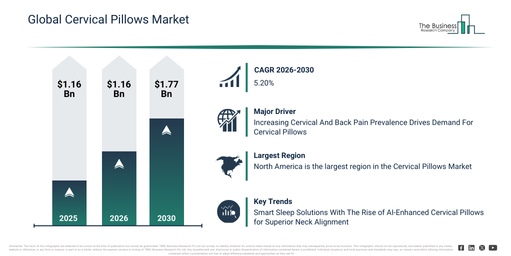
    The cervical pillows market is projected to expand steadily, rising from $4.37 billion in 2025 to $4.62 billion in 2026, reflecting a compound annual growth rate (CAGR) of 5.7%. This historical growth is largely fueled by a greater incidence of neck and spine conditions, heightened awareness about the importance of sleep posture, increased use of orthopedic support products, growth in hospital and physiotherapy recommendations, and a rise in work-related neck strain cases. Over the forecast period, the market is expected to reach $5.66 billion by 2030, growing at a CAGR of 5.2%. Factors supporting this future surge include more sedentary lifestyles paired with increased screen time, rising demand for non-invasive pain relief options, growing consumer investment in sleep wellness, expansion of e-commerce channels, and a stronger focus on preventive care for musculoskeletal health. Key market trends anticipated include higher demand for ergonomic sleep support, increased attention to neck pain prevention, wider adoption of memory foam and adaptive pillows, use of cervical pillows beyond medical needs, and growing preference for adjustable and custom designs.

    Download A Free Sample Report For Comprehensive Market Insights:

    https://www.thebusinessresearchcompany.com/sample.aspx?id=15761&type=smp

    Rising Prevalence of Neck and Back Pain Fueling Market Expansion

    The increasing occurrence of cervical and back pain is a crucial element driving market growth. These common conditions affecting the neck and upper spine often lead to discomfort and disrupted sleep patterns. Contributing factors include sedentary behavior, excessive use of digital devices, poor posture, and ageing populations. Cervical pillows help by supporting the natural curve of the neck, promoting proper spinal alignment during sleep and alleviating pain. For example, a May 2023 study by the Institute for Health Metrics and Evaluation at the University of Washington reported that 619 million people globally suffered from lower back pain, with projections estimating this number will rise to 843 million by 2050. The study also forecasts a 36.4% increase in low back pain cases by 2050, particularly in Asia and Africa. This growing burden of cervical and back pain is thus a significant factor boosting demand for cervical pillows.

    Healthcare Spending as a Key Market Growth Driver

    Increasing healthcare expenditure also plays a vital role in advancing the cervical pillows market. Healthcare spending encompasses all costs related to medical services, family planning, nutrition programs, and emergency health support. This spending is influenced by demographic changes, advances in technology, higher rates of chronic diseases, expanded healthcare access, inflation, and global health challenges. With rising costs, there is a stronger push toward preventive care to avoid expensive treatments. Public health campaigns and education often stress the importance of good sleep posture and ergonomics, which helps drive cervical pillow demand. For instance, in June 2025, a US government agency reported that hospital expenditures in 2023 jumped 10.4% to $1,519.7 billion, accelerating sharply compared to the 3.2% rise seen in 2022. This trend underscores how rising healthcare investment encourages preventive products like cervical pillows.

    Access The Complete Cervical Pillows Market Report:

    https://www.thebusinessresearchcompany.com/report/cervical-pillows-global-market-report

    Breakdown of Cervical Pillow Market Segments

    The cervical pillows market is categorized into several segments:

    1) Product Type: Standard Pillows, Rolls, Water-Based Pillows, Other Types

    2) Material Type: Foam, Fiber-Filled

    3) Function: Displacement, Support

    4) Application: Cervical Spondylosis, Whiplash Injuries, Temporomandibular Disorders, Other Uses

    5) Distribution Channel: Hospitals, Retail Pharmacies, E-Commerce

    Further subcategories include traditional and memory foam cervical pillows under standard pillows; neck support and travel rolls under rolls; adjustable and therapeutic water pillows; and other types such as gel-filled, air inflatable, and hybrid cervical pillows.

    Innovative Technologies Transforming the Cervical Pillows Market

    Leading companies in the cervical pillows space are focusing on new designs and advanced materials that improve sleep quality and provide optimal neck support. One notable innovation is AI adjustment technology, where mattresses automatically adapt their support based on real-time analysis of the user’s sleeping position and movements, enhancing comfort and spinal alignment. For example, in September 2024, Heka, a US-based AI life science firm, introduced its sixth-generation AI mattress featuring faster response times and improved adaptive learning to promote deeper sleep and better spinal health. This highlights the growing role of AI in ergonomic sleep solutions.

    Key Players Competing in the Cervical Pillows Market

    Prominent companies shaping the cervical pillows market include Tempur-Pedic, Mediflow Inc, Coop Home Goods, Sleep Number, Brookstone, Nature’s Sleep, Contour Products Inc, Pillow Cube, Classic Brands, Blue Chip Group, EPIC Therapeutics, Home Therapy Products, MedCline, Sable, Therapeutica, Emma – The Sleep Company, Sleepsia, Dr Trust, MyPillow Inc, and Yippo Labs.

    Regional Market Dynamics and Growth Hotspots

    In 2025, North America held the largest share of the cervical pillows market. However, the Asia-Pacific region is expected to experience the fastest growth over the forecast period. The market analysis includes key regions such as Asia-Pacific, South East Asia, Western Europe, Eastern Europe, North America, South America, the Middle East, and Africa, providing a broad overview of global demand patterns.

    Get in touch with us:

    The Business Research Company: https://www.thebusinessresearchcompany.com/

    Americas: +1 310-496-7795

    Asia: +44 7882 955267 & +91 8897263534

    Europe: +44 7882 955267

    Email us at: marketing@tbrc.info

    Follow us on:

    LinkedIn: https://in.linkedin.com/company/the-business-research-company

    YouTube: https://www.youtube.com/channel/UC24_fI0rV8cR5DxlCpgmyFQ

    Global Market Model: https://www.thebusinessresearchcompany.com/global-market-model
  • Cervical Cancer Diagnostics Market Size Projected To Increase From $10.37 Billion To $12.88 Billion During The Forecast Period

    Cervical Cancer Diagnostics Market Size Projected To Increase From $10.37 Billion To $12.88 Billion During The Forecast Period

    Enhanced with market attractiveness analysis, total addressable market evaluation, company benchmarking matrices, interactive Excel dashboards, expanded supply chain intelligence, emerging startup coverage, and detailed product insights, The Business Research Company’s 2026 market reports deliver more actionable and strategically valuable research.

    The cervical cancer diagnostics market is experiencing notable growth as advances in screening technologies and rising health awareness continue to improve early detection and treatment outcomes. This sector is evolving rapidly due to innovations in molecular diagnostics and digital pathology, which are transforming how cervical cancer is identified and managed worldwide. Below is an in-depth overview of the market size, key drivers, leading companies, trends, and regional dynamics shaping this important healthcare field.

    Current Size and Projected Growth of the Cervical Cancer Diagnostics Market

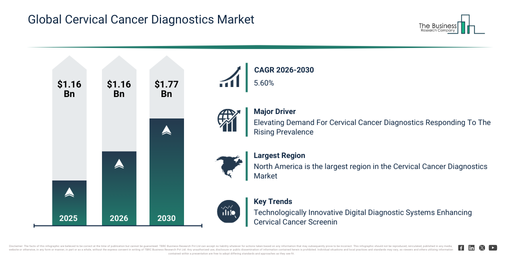
    The cervical cancer diagnostics market has seen substantial progress recently, with its value expected to increase from $9.76 billion in 2025 to $10.37 billion in 2026, representing a compound annual growth rate (CAGR) of 6.3%. This growth during the past years is largely due to the wider implementation of cervical cancer screening programs, heightened awareness around women’s health, greater availability of pap smear testing technologies, expansion of diagnostic laboratory infrastructures, and an increasing incidence of cervical cancer cases. Looking ahead, the market is forecasted to expand further, reaching $12.89 billion by 2030 with a CAGR of 5.6%. This anticipated rise is driven by growing adoption of molecular diagnostic tests, higher investments in cancer prevention initiatives, increased use of digital pathology, a focus on detecting cancer at early stages, and ongoing innovations in diagnostic tools. Emerging trends include the broader implementation of HPV-based screening programs, increased utilization of digital and optical colposcopy systems, the integration of AI-supported diagnostic technologies, expansion of population-wide screening campaigns, and an enhanced emphasis on early cancer identification.

    Download A Free Sample Report For Comprehensive Market Insights:

    https://www.thebusinessresearchcompany.com/sample.aspx?id=3285&type=smp

    Factors Fueling Growth in the Cervical Cancer Diagnostics Market

    The rising occurrence of cervical cancer is a significant factor propelling the cervical cancer diagnostics market forward. Cervical cancer originates in the cervix, the narrow lower portion of the uterus that connects to the vagina, and early diagnosis is critical to effective treatment. Diagnostics play a vital role in detecting the disease at an early stage and guiding appropriate interventions. To illustrate, in February 2023, Cancer.net, which is maintained by the American Society of Clinical Oncology (ASCO), estimated that 13,960 women in the United States would be diagnosed with invasive cervical cancer. This growing prevalence underscores the essential need for advanced diagnostic solutions, helping to expand the market.

    Advancements in Screening and Diagnostic Technologies Encouraging Market Development

    Technological progress is accelerating the cervical cancer diagnostics market by enabling more precise and accessible screening options. Molecular diagnostic tests and digital pathology tools are transforming traditional screening methods, allowing for faster, more accurate detection of cervical abnormalities. These improvements contribute to better patient outcomes and optimize healthcare provider workflows. Additionally, population-based screening programs and AI-enhanced diagnostics are gaining traction, offering more efficient and widespread access to cervical cancer screening.

    Access The Complete Cervical Cancer Diagnostics Market Report:

    https://www.thebusinessresearchcompany.com/report/cervical-cancer-diagnostics-global-market-report

    Improving Early Detection with AI and Digital Systems

    Innovations in digital diagnostic platforms are reshaping the cervical cancer diagnostic landscape by leveraging artificial intelligence to improve detection accuracy and streamline clinical operations. For example, in February 2024, Hologic Inc., a US-based health technology firm, received FDA clearance for its Genius Digital Diagnostics System. This cutting-edge solution combines deep learning AI algorithms with volumetric imaging technology to enhance detection of pre-cancerous lesions and cervical cancer cells. The system reduces false negatives by 28% compared to conventional techniques and supports cytologists and pathologists by digitizing cytology slides. It also facilitates remote collaboration among healthcare professionals, improving diagnostic efficiency and early intervention capabilities.

    Leading Companies Driving Innovation and Market Presence

    The cervical cancer diagnostics market features key players known for their technological innovations and comprehensive product portfolios. Prominent companies include Abbott Laboratories, Becton Dickinson and Company, Bio-Rad Laboratories Inc., F. Hoffmann-La Roche Ltd., Hologic Inc., QIAGEN N.V., Quest Diagnostics Incorporated, Siemens Healthineers AG, Zilico Ltd., Guided Therapeutics Inc., Thermo Fisher Scientific Inc., Carl Zeiss AG, Arbor Vita Corporation, Micromedic Technologies Ltd., Roche Diagnostics, Nucleix Ltd., BGI Genomics Co. Ltd., Cepheid, Exact Sciences Corporation, Invitae Corporation, NeoGenomics Laboratories Inc., PerkinElmer Inc., Sysmex Corporation, Veracyte Inc., and Zymo Research Corporation. These organizations focus on developing advanced diagnostic technologies that improve access and accuracy in cervical cancer detection.

    Market Segmentation by Diagnostic Methods and End Users

    This market is categorized based on diagnostic tests, patient age groups, and end-user settings. Diagnostic tests include Pap smear tests (conventional and liquid-based), HPV tests (DNA-based, RNA-based, hybrid capture, and others), colposcopy (standard, digital, optical), biopsies and endocervical curettage (punch biopsy, ECC, cone biopsy, colposcopic biopsy), and other diagnostic methods such as visual inspection with acetic acid (VIA), cervical cytology testing, molecular screening, and specialty tests. Age segmentation ranges from below 21 years to over 65 years. End users encompass hospitals, specialty clinics, cancer and radiation therapy centers, and diagnostic centers, reflecting the broad application of cervical cancer diagnostics across healthcare facilities.

    Regional Market Leadership and Growth Patterns

    In 2025, North America held the largest share of the cervical cancer diagnostics market, supported by advanced healthcare infrastructure, extensive screening programs, and high adoption of innovative diagnostic tools. Asia-Pacific ranked as the second-largest region and is positioned for significant growth due to increasing healthcare investments, rising disease prevalence, and expanding public health initiatives. The broader geographical coverage of this market includes Asia-Pacific, South East Asia, Western Europe, Eastern Europe, North America, South America, the Middle East, and Africa, each contributing to the evolving global market dynamics.

    Get in touch with us:

    The Business Research Company: https://www.thebusinessresearchcompany.com/

    Americas: +1 310-496-7795

    Asia: +44 7882 955267 & +91 8897263534

    Europe: +44 7882 955267

    Email us at: marketing@tbrc.info

    Follow us on:

    LinkedIn: https://in.linkedin.com/company/the-business-research-company

    YouTube: https://www.youtube.com/channel/UC24_fI0rV8cR5DxlCpgmyFQ

    Global Market Model: https://www.thebusinessresearchcompany.com/global-market-model
  • Cerebrospinal Fluid Management (CSF) Devices And Equipment Market Growth Outlook Reveals A CAGR Of 6.3% And A Market Value Of $1.64 Billion By 2030

    Cerebrospinal Fluid Management (CSF) Devices And Equipment Market Growth Outlook Reveals A CAGR Of 6.3% And A Market Value Of $1.64 Billion By 2030

    Through market attractiveness analysis, total addressable market evaluation, company benchmarking matrices, interactive Excel dashboards, expanded supply chain intelligence, emerging startup coverage, and detailed product insights, The Business Research Company’s 2026 market reports provide more actionable and strategically valuable research.

    The cerebrospinal fluid management devices and equipment market is witnessing steady progress as advancements in neurological healthcare continue to evolve. Growing awareness of neurological conditions and improvements in medical technology are contributing to the increased demand for effective cerebrospinal fluid (CSF) management solutions. Let’s explore the current market size, growth drivers, key players, and emerging trends shaping this sector.

    Market Size and Growth Trajectory of the Cerebrospinal Fluid Management Devices and Equipment Market

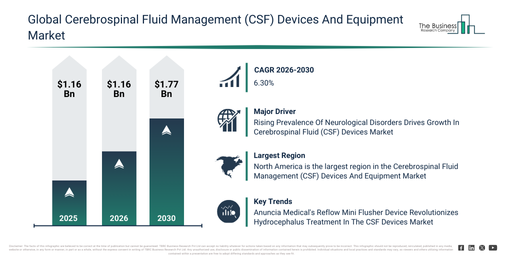
    The cerebrospinal fluid management devices and equipment market has shown significant growth in recent years. It is anticipated to rise from $1.21 billion in 2025 to $1.28 billion in 2026, registering a compound annual growth rate (CAGR) of 5.8%. This growth can be linked to a higher number of hydrocephalus diagnoses, an expansion in neurosurgical treatment centers, increased adoption of shunt therapies, availability of more advanced drainage options, and a growing focus on pediatric neurology care. Looking ahead, the market is expected to reach $1.64 billion by 2030, expanding at a CAGR of 6.3%. Future growth will be driven by demand for smart and adjustable CSF shunts, increased attention to infection-resistant materials, growth in geriatric neurosurgical care, rising investments in neurological disorder management, and technological progress in intracranial pressure monitoring. Key trends anticipated to influence the market include wider adoption of programmable shunt systems, greater use of minimally invasive CSF drainage devices, integration of pressure monitoring technologies, expansion of pediatric hydrocephalus treatments, and an enhanced focus on long-term patient care.

    Download A Free Sample Report For Comprehensive Market Insights:

    https://www.thebusinessresearchcompany.com/sample.aspx?id=2432&type=smp

    Increasing Prevalence of Neurological Disorders as a Major Growth Factor in the CSF Devices Market

    A significant driver of the cerebrospinal fluid devices market is the rising incidence of neurological disorders. These disorders affect the brain, spinal cord, and nerves throughout the body. CSF devices play an essential role in diagnosing, monitoring, and treating these conditions, ultimately aiming to improve patients’ quality of life. For instance, according to the 2023 Alzheimer’s Disease Facts and Figures report by the Alzheimer’s Association, Alzheimer’s and other dementias cost the United States $345 billion in 2023, with projections to reach nearly $1 trillion by 2050. This growing burden of neurological diseases is fueling increased demand for CSF management solutions.

    Growing Number of Brain Surgeries and Traumatic Brain Injuries Supporting Market Demand

    The rising volume of brain surgeries is also propelling the growth of the cerebrospinal fluid devices market. CSF devices are critical for treating traumatic brain injury (TBI), with shunts used to drain excess cerebrospinal fluid accumulating near the brain. In the United States, TBI remains a leading cause of death, with roughly 1.5 to 2 million people affected annually, including both adults and children. Of these, about 235,000 patients are hospitalized with moderate to severe head injuries, while approximately 50,000 cases result in death. Most injuries are mild and do not require hospitalization. Given this high incidence of brain injuries, the market for CSF devices is expected to maintain strong growth.

    Access The Complete Cerebrospinal Fluid Management (CSF) Devices And Equipment Market Report:

    https://www.thebusinessresearchcompany.com/report/cerebrospinal-fluid-management-csf-devices-and-equipment-global-market-report

    Key Segments Offering Growth Opportunities in the Cerebrospinal Fluid Management Devices Market

    The cerebrospinal fluid devices and equipment market is segmented by type, age group, and end user. The product types include CSF shunts and CSF drainage systems. Age groups served by these devices are pediatric, adult, and geriatric patients. End users primarily consist of hospitals and ambulatory surgical centers. Further subcategories include shunts such as ventriculoperitoneal (VP), ventriculoatrial (VA), and lumboperitoneal (LP) types. Drainage systems are classified into external ventricular drainage (EVD), lumbar drainage, continuous drainage, and intermittent drainage systems. These classifications highlight the range of treatment options available and the diverse market segments poised for growth.

    Innovations and Trends Reshaping Demand for CSF Devices

    Leading companies in the cerebrospinal fluid devices market are focusing on innovation to meet unmet clinical needs. For example, the ReFlow Mini Flusher device, launched in July 2023 by Anuncia Medical Inc., represents a new generation of treatment for hydrocephalus. This device is a compact implanted system combining a flushing mechanism with a ventricular catheter. Its unique design, smaller size, and ease of use make it a promising advancement in hydrocephalus management. Such innovations demonstrate how the market is evolving through enhanced functionality and improved patient outcomes.

    Technological Advancements and Product Development Shaping the CSF Devices Market

    The market is seeing increased investment in the development of smart, programmable shunts and minimally invasive drainage devices. Integration of intracranial pressure monitoring technology is becoming more prevalent, supporting better patient management over the long term. Additionally, growing emphasis on infection-resistant materials and expanded pediatric treatment options are key trends driving product development. These advancements contribute to the overall enhancement of CSF management and are expected to fuel market growth in the coming years.

    Leading Players and Competitive Landscape in the Cerebrospinal Fluid Management Devices Market

    Prominent companies active in the cerebrospinal fluid management devices and equipment market include Medtronic plc, Johnson & Johnson Services Inc, B. Braun Melsungen AG, Integra LifeSciences Holdings Corporation, Sophysa S.A, Spiegelberg GmbH & Co. KG, Natus Medical Incorporated, Möller Medical GmbH, Dispomedica GmbH, Raumedic AG, Christoph Miethke GmbH & Co. KG, Flowonix Medical Inc, Phoenix Biomedical Corporation, Orsan Medical Technologies, Beckersmith Medical Inc, SOMATEX Medical Technologies, Neurosign, Medsit Medical, Delta Surgical Limited, G. Surgiwear Ltd, Tokibo Co. Ltd, Nikkiso Co. Ltd, and Medtronic Neuro. These companies are driving market innovation and competition through research and development activities.

    Regional Market Distribution and Growth Dynamics

    In 2025, North America dominated the global cerebrospinal fluid management devices and equipment market. Asia-Pacific ranked as the second-largest regional market. Other regions covered include South East Asia, Western Europe, Eastern Europe, South America, the Middle East, and Africa. The report offers a global perspective on market trends and growth opportunities across these diverse geographic areas, reflecting varying demand and healthcare infrastructure developments worldwide.

    Get in touch with us:

    The Business Research Company: https://www.thebusinessresearchcompany.com/

    Americas: +1 310-496-7795

    Asia: +44 7882 955267 & +91 8897263534

    Europe: +44 7882 955267

    Email us at: marketing@tbrc.info

    Follow us on:

    LinkedIn: https://in.linkedin.com/company/the-business-research-company

    YouTube: https://www.youtube.com/channel/UC24_fI0rV8cR5DxlCpgmyFQ

    Global Market Model: https://www.thebusinessresearchcompany.com/global-market-model
  • Centesis Catheters Market Forecast Highlights Expansion From $0.55 Billion To $0.71 Billion Through 2030

    Centesis Catheters Market Forecast Highlights Expansion From $0.55 Billion To $0.71 Billion Through 2030

    Delivering more actionable and strategically valuable research, The Business Research Company’s 2026 market reports feature market attractiveness analysis, total addressable market evaluation, company benchmarking matrices, interactive Excel dashboards, expanded supply chain intelligence, emerging startup coverage, and detailed product insights.

    The centesis catheters market has experienced steady growth fueled by advancements in medical procedures and an increasing need for effective fluid management solutions. As healthcare systems evolve and patient care standards rise, demand for these specialized catheters continues to expand across various clinical settings. This overview explores the market’s current status, growth drivers, key segments, innovations, and leading players shaping its future.

    Market Growth Forecast and Size of the Centesis Catheters Market

    The centesis catheters market has witnessed significant expansion in recent years. Its valuation is expected to climb from $0.52 billion in 2025 to $0.55 billion in 2026, supported by a compound annual growth rate (CAGR) of 6.9%. Historical growth has been driven by limited options in catheter materials, the prevalent use of traditional large bore catheters, an upsurge in hospital and surgical procedures, heightened infection control awareness, and adherence to standardized diagnostic protocols.

    Download A Free Sample Report For Comprehensive Market Insights:

    https://www.thebusinessresearchcompany.com/sample.aspx?id=24499&type=smp

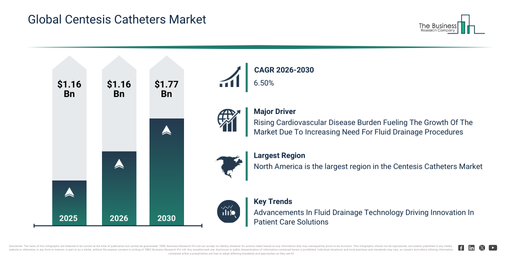
    Looking ahead, the market is projected to maintain robust momentum, reaching $0.71 billion by 2030 with a CAGR of 6.5%. This future growth is attributed to innovations such as advanced pigtail and curved catheters, broader adoption of minimally invasive procedures, rising demand within ambulatory surgical centers, stricter regulatory compliance, quality certifications, and integration with imaging-guided catheter placement technologies. Key market trends include growing preference for minimally invasive catheter methods, use of biocompatible and flexible materials, increased applications in therapeutic and palliative care, broader utilization of both small and large bore catheters, and a stronger focus on sterility and patient safety practices.

    Increasing Cardiovascular Disease Cases Driving Market Demand

    One major factor propelling the centesis catheters market is the rising prevalence of cardiovascular diseases worldwide. These conditions affect the heart and blood vessels, impairing normal functioning and circulation. Sedentary lifestyles contribute to this increase by promoting weight gain, reduced cardiovascular fitness, and elevated risk of heart complications. Centesis catheters play a critical role in cardiovascular care by draining excess fluid from areas such as the pericardium, pleural space, or abdomen. This helps alleviate pressure on vital organs like the heart and lungs, providing symptom relief and valuable diagnostic information. For example, in January 2024, the American Heart Association reported that the age-adjusted death rate from cardiovascular disease rose to 233.3 per 100,000, up 4.0% from 224.4 per 100,000 in 2023. This upward trend in cardiovascular conditions is expected to boost demand for centesis catheters.

    Access The Complete Centesis Catheters Market Report:

    https://www.thebusinessresearchcompany.com/report/centesis-catheters-global-market-report

    Oncology-Related Fluid Management Needs Support Market Expansion

    Another important driver of the centesis catheters market is the growing incidence of cancer. Cancer involves the uncontrolled growth and division of cells, often forming tumors that can spread throughout the body. The rise in cancer cases is largely due to an aging population, as older individuals accumulate genetic mutations and experience weakened immune systems, increasing cancer risk. Centesis catheters are essential in oncology for managing fluid buildup caused by the disease or its treatments. They are commonly used for thoracentesis (fluid removal near the lungs), paracentesis (draining abdominal fluid), and pericardiocentesis (removing fluid surrounding the heart), helping to improve patient comfort and relieve symptoms. According to the World Health Organization in February 2024, new cancer cases are projected to exceed 35 million by 2050, marking a 77% increase from 20 million cases recorded in 2022. This projected rise underscores the expanding need for fluid management solutions in cancer care, supporting centesis catheters market growth.

    Key Segments Defining the Centesis Catheters Market

    This market is categorized into several primary segments for a comprehensive understanding:

    1) By Type: Small Bore, Large Bore

    2) By Procedure: Paracentesis, Thoracentesis, Arthrocentesis, Amniocentesis, Other Procedures

    3) By Application: Diagnosis, Therapeutics, Palliative Care

    4) By End User: Hospitals, Ambulatory Surgical Centers, Other End Users

    Within these, small bore catheters include pigtail, straight, and curved types, while large bore catheters feature thoracentesis, paracentesis, and abscess drainage varieties. This segmentation helps tailor products and services to specific clinical needs and end-user requirements.

    Innovations and Technological Advances Reshaping the Market

    Leading companies in the centesis catheters space are investing in cutting-edge products designed to improve fluid drainage and patient outcomes. A notable example is the introduction of fluid drainage devices that enable continuous monitoring and management of fluid output. In January 2024, Laborie Medical Technologies Inc., a US-based medical technology firm, launched the RenovaRP Centesis System. This device enhances the original RenovaRP paracentesis pump by also supporting thoracentesis procedures. It includes improved ergonomic features in the handle and nest, boosting ease of use for healthcare providers. The system offers a minimally invasive, safe, and practical solution that promotes patient comfort and accelerates recovery.

    Leading Market Participants Powering Industry Competition

    The centesis catheters market features a variety of prominent companies competing to innovate and expand their presence. Key players include Cardinal Health Inc, Becton Dickinson and Company, Boston Scientific Corporation, Cook Medical LLC, Merit Medical Systems Inc, Argon Medical Devices Inc, AngioDynamics Inc, B Braun Melsungen AG, Polymedicure Ltd, Medical Components Inc, Galt Medical Corp, Mermaid Medical AS, PFM Medical Inc, REDAX Spa, Rocket Medical Inc, Axiom Medical Inc, Blue Neem Medical Devices Pvt Ltd, KM Medical Inc, Ningbo Honde Medical Instruments Co Ltd, Bassil Scientific Pvt Ltd, Teleflex Incorporated, and Vygon SA.

    Regional Market Leadership and Growth Outlook

    In 2025, North America held the largest share of the centesis catheters market. However, the Asia-Pacific region is anticipated to be the fastest-growing market during the forecast period. The report covers key geographic areas including Asia-Pacific, South East Asia, Western Europe, Eastern Europe, North America, South America, the Middle East, and Africa, providing a broad perspective on global industry trends and opportunities.

    Get in touch with us:

    The Business Research Company: https://www.thebusinessresearchcompany.com/

    Americas: +1 310-496-7795

    Asia: +44 7882 955267 & +91 8897263534

    Europe: +44 7882 955267

    Email us at: marketing@tbrc.info

    Follow us on:

    LinkedIn: https://in.linkedin.com/company/the-business-research-company

    YouTube: https://www.youtube.com/channel/UC24_fI0rV8cR5DxlCpgmyFQ

    Global Market Model: https://www.thebusinessresearchcompany.com/global-market-model
  • Cementless Total Knee Systems Market Expected To Reach $6.06 Billion By 2030 As Growth Accelerates At 5.2% CAGR

    Cementless Total Knee Systems Market Expected To Reach $6.06 Billion By 2030 As Growth Accelerates At 5.2% CAGR

    Enhanced with market attractiveness analysis, total addressable market evaluation, company benchmarking matrices, interactive Excel dashboards, expanded supply chain intelligence, emerging startup coverage, and detailed product insights, The Business Research Company’s 2026 market reports deliver more actionable and strategically valuable research.

    The market for cementless total knee systems has witnessed significant growth recently, supported by advances in medical technology and changing patient needs. This sector is set to continue its upward trajectory as innovations and increasing healthcare demands drive expansion. Let’s explore the market’s present value, growth drivers, segment distribution, emerging trends, leading companies, and regional prospects.

    Current Market Size and Future Growth of the Cementless Total Knee Systems Market

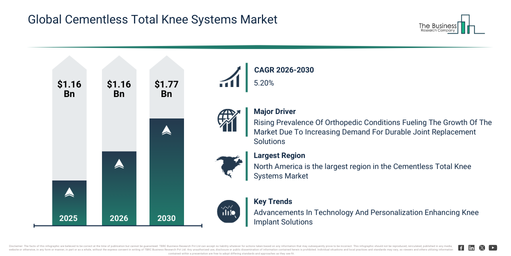
    The cementless total knee systems market has demonstrated solid progress in recent years. Its value is projected to rise from $4.68 billion in 2025 to $4.94 billion in 2026, growing at a compound annual growth rate (CAGR) of 5.6%. This historical growth is mainly due to factors such as the limited availability of cementless implants, the continued reliance on traditional cemented knee systems, an aging population afflicted by osteoarthritis, an increase in hospital orthopedic surgeries, and heightened awareness of knee replacement benefits. Looking ahead, the market is anticipated to reach $6.06 billion by 2030, registering a CAGR of 5.2%. Key contributors to this forecasted expansion include innovations in 3D-printing and porous coating technologies, a growing preference for minimally invasive surgical methods, the development of orthopedic healthcare infrastructure, the adoption of robotic-assisted knee replacements, and increased investment in patient-specific implants. Emerging trends emphasize the greater use of cementless implants, porous-coated and 3D-printed components, expansion of orthopedic centers, focus on minimally invasive procedures, and improved post-operative recovery and outcomes.

    Download A Free Sample Report For Comprehensive Market Insights:

    https://www.thebusinessresearchcompany.com/sample.aspx?id=25719&type=smp

    Factors Fueling Growth in the Cementless Total Knee Systems Market

    An important driver behind the cementless total knee systems market is the rising prevalence of orthopedic diseases. These conditions affect the musculoskeletal system—including bones, joints, muscles, ligaments, and tendons—resulting in pain, limited mobility, and impaired function. As populations age, there is a growing demand for long-term solutions that reduce joint pain and improve movement while enabling an active lifestyle with minimal medical intervention. Cementless total knee systems offer a reliable and biologically integrated solution by promoting natural bone growth, reducing implant loosening, and restoring joint function without the use of bone cement.

    To illustrate, a report from January 2024 by the UK’s Office for Health Improvement & Disparities revealed that the proportion of individuals aged 16 and older who self-reported having a long-term musculoskeletal (MSK) disease—a type of orthopedic disorder—increased from 17.6% in 2022 to 18.4% in 2023. This upward trend in orthopedic diseases is a key factor propelling the growth of the cementless total knee systems market.

    Access The Complete Cementless Total Knee Systems Market Report:

    https://www.thebusinessresearchcompany.com/report/cementless-total-knee-systems-global-market-report

    Revenue-Generating Segments of the Cementless Total Knee Systems Market

    This market is divided into several important segments to better understand revenue sources:

    1) Components: Tibial Component and Femoral Component

    2) Fixation Methods: Primary Fixation and Hybrid Fixation

    3) End Users: Hospitals, Orthopedic Centers, and Other End Users

    Further breakdowns include:

    – Tibial Components such as Fixed-Bearing Tibial Baseplates, Mobile-Bearing Tibial Baseplates, Modular Tibial Components, Monoblock Tibial Components, Porous-Coated Tibial Components, and 3D-Printed Tibial Components.

    – Femoral Components including Posterior-Stabilized Femoral Components, Cruciate-Retaining Femoral Components, Ultra-Congruent Femoral Components, Asymmetric Femoral Components, Anatomical Femoral Components, and Cementless Porous-Coated Femoral Components.

    Innovations and Technological Advances Guiding the Cementless Total Knee Systems Market

    Industry players are strongly focusing on technological innovation to enhance implant performance and patient outcomes. A notable advancement is the development of TIDAL technology, an advanced 3D-printed porous implant design that improves bone integration by optimizing mechanical strength, fatigue resistance, and load distribution for longer-lasting implant stability.

    For example, in April 2025, Restor3D Inc., a US-based medical device company, received FDA 510(k) clearance for its iTotal Identity CR 3DP porous total knee system—the company’s first patient-specific cementless implant. This innovative system utilizes cutting-edge 3D printing and porous technology to improve bone integration and stability. Its custom surgical instruments and pre-navigated surgical approach help surgeons achieve greater precision and efficiency during procedures.

    Notable Companies and Their Strategic Roles in the Cementless Total Knee Systems Market

    Key market players dominating the cementless total knee systems landscape include Johnson And Johnson Services Inc, Stryker Corporation, Zimmer Biomet Holdings Inc, Smith And Nephew plc, Enovis Corporation, MicroPort Scientific Corporation, Medacta International SA, B Braun Melsungen AG, Waldemar Link GmbH And Co KG, Restor3D Inc, Implantcast GmbH, United Orthopedic Corporation, Signature Orthopaedics Pty Ltd, Gruppo Bioimpianti Srl, Permedica SPA, Evolutis SAS, Euromed Implants GmbH, X NOV SAS, Beijing Chunli Zhongke Bio Tech Co Ltd, Exactech Inc, Corin Group, and LimaCorporate SPA. These organizations invest heavily in research and development to maintain a competitive edge and drive market growth.

    Regional Market Overview and Growth Potential in Cementless Total Knee Systems

    In 2025, North America held the largest share of the cementless total knee systems market. However, the Asia-Pacific region is expected to be the fastest-growing market during the forecast period. The comprehensive market analysis covers key regions including Asia-Pacific, South East Asia, Western Europe, Eastern Europe, North America, South America, the Middle East, and Africa, providing a detailed understanding of global market dynamics and opportunities.

    Get in touch with us:

    The Business Research Company: https://www.thebusinessresearchcompany.com/

    Americas: +1 310-496-7795

    Asia: +44 7882 955267 & +91 8897263534

    Europe: +44 7882 955267

    Email us at: marketing@tbrc.info

    Follow us on:

    LinkedIn: https://in.linkedin.com/company/the-business-research-company

    YouTube: https://www.youtube.com/channel/UC24_fI0rV8cR5DxlCpgmyFQ

    Global Market Model: https://www.thebusinessresearchcompany.com/global-market-model
  • Cementless Total Knee Arthroplasty Market Set To Grow From $3.31 Billion In 2026 To $5.19 Billion By 2030 At A CAGR Of 11.9%

    Cementless Total Knee Arthroplasty Market Set To Grow From $3.31 Billion In 2026 To $5.19 Billion By 2030 At A CAGR Of 11.9%

    Through market attractiveness analysis, total addressable market evaluation, company benchmarking matrices, interactive Excel dashboards, expanded supply chain intelligence, emerging startup coverage, and detailed product insights, The Business Research Company’s 2026 market reports provide more actionable and strategically valuable research.

    The cementless total knee arthroplasty market is experiencing robust growth, driven by medical advancements and increasing demand for durable, effective knee replacement solutions. As the population ages and awareness of orthopedic options rises, this market is set to expand significantly. Let’s explore the market’s current status, growth factors, segmentation, key players, and regional outlook.

    Market Size and Projected Expansion of the Cementless Total Knee Arthroplasty Market

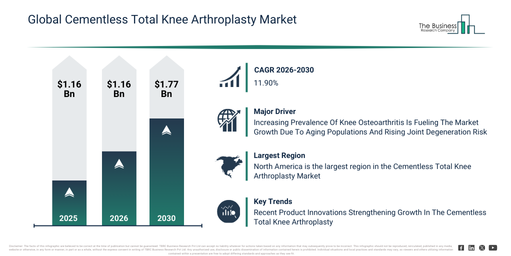
    The cementless total knee arthroplasty market has seen rapid growth in recent years. It is predicted to increase from $2.95 billion in 2025 to $3.31 billion in 2026, growing at a compound annual growth rate (CAGR) of 12.2%. This rise in the historic period is mainly due to the growing prevalence of osteoarthritis, an aging population, advances in traditional knee arthroplasty techniques, more frequent orthopedic surgeries, and greater awareness of the long-term durability of implants. Looking ahead, the market is expected to reach $5.19 billion by 2030, with a CAGR of 11.9%. This forecasted growth is supported by innovations in cementless implant coatings, a growing preference for minimally invasive surgery, expansion of orthopedic healthcare infrastructure, increased use of patient-specific implants, and incorporation of robotic-assisted knee arthroplasty. Key trends shaping the future include wider adoption of cementless knee implants, rising demand for less invasive procedures, improvements in implant surface technologies, growth of orthopedic surgery centers, and a focus on customized knee implant solutions.

    Download A Free Sample Report For Comprehensive Market Insights:

    https://www.thebusinessresearchcompany.com/sample.aspx?id=27248&type=smp

    Factors Driving Growth in the Cementless Total Knee Arthroplasty Market

    The rising incidence of knee osteoarthritis is a major factor propelling the expansion of the cementless total knee arthroplasty market. Knee osteoarthritis is a degenerative condition that causes joint pain, swelling, and stiffness, severely limiting mobility. Its increasing prevalence is closely linked to the growing rates of obesity, as excess body weight puts added strain on knee joints, accelerating cartilage breakdown and joint deterioration. Cementless total knee arthroplasty addresses this condition by replacing damaged joint surfaces with prosthetic components designed to encourage natural bone growth, which enhances long-term implant stability and joint function.

    For example, in February 2024, Arthritis Australia reported that osteoarthritis is expected to affect 2.35 million Australians by 2025, accounting for 57% of all arthritis cases and making it the most common form of arthritis in the country. This number is projected to rise by 32% to 3.11 million people by 2040, reflecting an additional 762,515 individuals living with osteoarthritis compared to 2025. This data highlights the growing patient base driving demand for cementless knee arthroplasty solutions.

    Access The Complete Cementless Total Knee Arthroplasty Market Report:

    https://www.thebusinessresearchcompany.com/report/cementless-total-knee-arthroplasty-global-market-report

    How the Cementless Total Knee Arthroplasty Market Is Organized by Segment

    This market is segmented across various categories to reflect diverse product offerings and end-user needs:

    1) By Product Type: Fixed-Bearing and Mobile-Bearing implants

    2) By Material: Titanium, Cobalt-Chromium, Polyethylene, and Ceramic

    3) By Distribution Channel: Direct Sales, Distributors, and Resellers

    4) By Application: Primary Total Knee Arthroplasty and Revision Total Knee Arthroplasty

    5) By End User: Hospitals, Specialty Clinics, Ambulatory Surgery Centers, and Other End Users

    More detailed subsegments include:

    – Fixed-Bearing: Posterior Stabilized, Cruciate Retaining, Medial Pivot

    – Mobile-Bearing: Rotating Platform, Meniscal Bearing, Dual Mobility

    Emerging Industry Trends in the Cementless Total Knee Arthroplasty Sector

    Leading companies in this market are heavily investing in the development of 3D-printed, patient-specific cementless implants aimed at improving biological integration, long-term fixation, and outcomes for younger, more active patients. These implants use additive manufacturing to create porous lattice structures that promote bone in-growth, enabling osseointegration, unlike traditional cemented implants which rely on bone cement for initial fixation.

    For example, in April 2025, restor3D Inc., a US-based medical technology firm, obtained FDA 510(k) clearance for its iTotal Identity CR 3DP Porous Total Knee Replacement System. This marked the company’s first patient-specific cementless implant offering. Featuring proprietary TIDAL Technology, the system uses a high-strength porous lattice optimized for bone ingrowth, fatigue resistance, and load distribution. It includes custom-designed femoral, tibial, and patellar components tailored to individual anatomy, along with personalized, pre-navigated surgical tools supplied in a sterile single-use kit that enhances surgical precision and efficiency. This combination of customized design and advanced surface technology offers improved implant longevity and a more natural joint feel compared to traditional cemented implants.

    Key Players Dominating the Cementless Total Knee Arthroplasty Market

    The market is shaped by several prominent companies, including Johnson & Johnson, Stryker Corporation, Zimmer Biomet Holdings Inc., Smith & Nephew Plc, Enovis Corporation, CONMED Corporation, Globus Medical Inc., MicroPort Scientific Corporation, Medacta Group SA, B. Braun Melsungen SE, TTK Healthcare Limited, Waldemar Link GmbH & Co. KG, United Orthopedic Corporation, Symbios Orthopédie SA, Gruppo Bioimpianti S.p.A., Permedica Orthopaedics S.p.A., Uteshiya Medicare Private Limited, LINK Orthopaedics GmbH, Plus Orthopaedics India Pvt. Ltd., and XLO India Pvt. Ltd. These companies continue to innovate and expand their product ranges to meet growing global demand.

    Regional Market Overview and Growth Outlook

    In 2025, North America held the largest share of the cementless total knee arthroplasty market. However, Asia-Pacific is projected to be the fastest-growing region during the forecast period. The market report covers critical regions including Asia-Pacific, South East Asia, Western Europe, Eastern Europe, North America, South America, the Middle East, and Africa, providing a comprehensive view of global trends and opportunities.

    Get in touch with us:

    The Business Research Company: https://www.thebusinessresearchcompany.com/

    Americas: +1 310-496-7795

    Asia: +44 7882 955267 & +91 8897263534

    Europe: +44 7882 955267

    Email us at: marketing@tbrc.info

    Follow us on:

    LinkedIn: https://in.linkedin.com/company/the-business-research-company

    YouTube: https://www.youtube.com/channel/UC24_fI0rV8cR5DxlCpgmyFQ

    Global Market Model: https://www.thebusinessresearchcompany.com/global-market-model
  • Cell-Free DNA (cfDNA) Kits Market Opportunities Are Emerging Beyond Traditional Growth Areas

    Cell-Free DNA (cfDNA) Kits Market Opportunities Are Emerging Beyond Traditional Growth Areas

    Delivering more actionable and strategically valuable research, The Business Research Company’s 2026 market reports feature market attractiveness analysis, total addressable market evaluation, company benchmarking matrices, interactive Excel dashboards, expanded supply chain intelligence, emerging startup coverage, and detailed product insights.

    The cell-free DNA (cfDNA) kits market is experiencing swift growth, driven by advances in medical diagnostics and expanding applications in healthcare. As the demand for non-invasive testing rises, this sector is set to undergo significant expansion over the coming years. Let’s explore the current market size, key growth drivers, leading companies, and future trends shaping this dynamic industry.

    Market Size and Growth Forecast for the Cell-Free DNA Kits Market

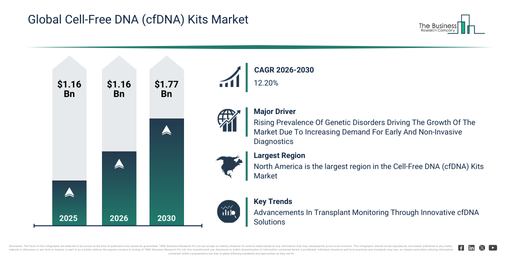
    The market for cell-free DNA kits has seen rapid development in recent years and continues to grow strongly. From a valuation of $1.8 billion in 2025, it is projected to reach $2.02 billion by 2026, reflecting a healthy compound annual growth rate (CAGR) of 12.4%. This past growth has been fueled by increasing adoption of liquid biopsy techniques, wider usage of cancer diagnostics, rising prenatal testing demand, advancements in PCR and next-generation sequencing (NGS) technologies, and the growth of research laboratories. Looking ahead, the market is expected to expand even faster, reaching $3.2 billion by 2030 with a CAGR of 12.2%. This future surge will be supported by innovations in cfDNA kit technology, a growing focus on non-invasive diagnostic methods, integration of artificial intelligence (AI) in data analysis, the spread of molecular testing into emerging markets, and enhanced research and development efforts targeting cancer biomarkers. Key trends anticipated during this period include highly sensitive DNA isolation techniques, automation in sample preparation, seamless integration with NGS platforms, faster DNA extraction processes, and standardized cfDNA kit offerings.

    Download A Free Sample Report For Comprehensive Market Insights:

    https://www.thebusinessresearchcompany.com/sample.aspx?id=28161&type=smp

    Growing Impact of Genetic Disorders Driving the Cell-Free DNA Kits Market

    One significant factor fueling demand for cfDNA kits is the increasing prevalence of genetic disorders. These conditions, caused by mutations in single or multiple genes or chromosomal abnormalities, are becoming more common due to lifestyle shifts and environmental influences such as pollution and unhealthy diet patterns. These factors contribute to genetic mutations or exacerbate inherited diseases. Cell-free DNA kits allow for early, non-invasive detection of genetic abnormalities by analyzing DNA fragments found in blood or other bodily fluids. This enables quicker diagnosis and aids healthcare professionals in making timely, accurate treatment decisions. For example, in November 2024, data from the Centers for Disease Control and Prevention (CDC) showed that approximately 1 in every 33 newborns in the US is born with a birth defect, many of which are linked to genetic causes. This rising incidence of genetic disorders is thus a key driver expanding the cfDNA kits market.

    Technological Advances Supporting Market Expansion of Cell-Free DNA Kits

    The growing emphasis on innovative molecular diagnostic tools also plays a critical role in market growth. Technologies such as polymerase chain reaction (PCR) and next-generation sequencing (NGS) have become more sophisticated and accessible, enhancing the accuracy and efficiency of cfDNA analysis. Moreover, the integration of AI in these processes improves the interpretation of complex genetic data, allowing for more precise and personalized diagnostics. Additionally, the increasing availability of molecular testing in emerging economies is widening the user base for cfDNA kits, spurring further market expansion.

    https://www.thebusinessresearchcompany.com/report/cell-free-dna-cfdna-kits-global-market-report

    #Cell-Free DNA (cfDNA) Kits Market Largest Region: Which Geography Holds The Highest Market Share?

    Detailed Market Segmentation Within the Cell-Free DNA Kits Industry

    This market is categorized across several dimensions to better understand its scope and opportunities. By product type, segments include plasma cfDNA kits, serum cfDNA kits, urine cfDNA kits, and other specialized products. Technology-wise, offerings are divided into next-generation sequencing (NGS), polymerase chain reaction (PCR), microarray technology, and digital PCR. In terms of application, the kits are used for cancer diagnostics, prenatal testing, transplant rejection monitoring, and non-invasive disease detection. Distribution occurs through direct sales, retail pharmacies, online platforms, and distributors. The end users range from hospitals and research laboratories to diagnostic labs and academic institutions. Further subcategories delve deeper, such as plasma cfDNA kits including single-stranded DNA kits, double-stranded DNA kits, high-sensitivity DNA kits, and rapid extraction kits, while serum cfDNA kits encompass low-volume, high-yield, automated, and manual extraction types. Urine cfDNA kits focus on early detection, concentration, high-purity, and long-term stability, and other product types cover saliva, cerebrospinal fluid, amniotic fluid, and tissue-derived DNA kits.

    Innovative Trends Advancing the Cell-Free DNA Kits Market

    Industry players are heavily investing in developing cutting-edge products, particularly those utilizing digital PCR for absolute quantification, which enhances the detection sensitivity and precision of cfDNA analyses. This method allows for highly accurate identification of rare genetic variants with consistent results, essential for applications such as cancer diagnostics, prenatal screening, and transplant rejection monitoring. A notable example occurred in June 2024 when Omixon, a molecular diagnostics firm based in Hungary, introduced HoloGRAFT ONE, a research-use-only kit designed to monitor donor-derived cfDNA post-transplant. This kit employs proprietary genetic markers and digital PCR to differentiate donor DNA from the recipient’s, measuring absolute and relative amounts of donor-derived cfDNA through copy-number variant analysis. The innovation aims to enable early transplant rejection detection, improve patient monitoring, and assist clinicians in delivering personalized post-transplant care based on precise cfDNA data.

    Key Players Competing in the Cell-Free DNA Kits Market

    The competition within the cfDNA kits market is led by significant corporations including F. Hoffmann-La Roche Ltd, Thermo Fisher Scientific Inc., Agilent Technologies Inc., Illumina Inc., Bio-Rad Laboratories Inc., QIAGEN N.V., Natera Inc., Myriad Genetics Inc., Guardant Health Inc., Bioneer Corporation, Streck Inc., Freenome Holdings Inc., GRAIL Inc., Zymo Research Corporation, Geneseeq Technology Inc., Covaris LLC, Active Motif Inc., Norgen Biotek Corp, AMSBIO LLC, EpiGentek Group Inc., Paragon Genomics Inc., and Suzhou Beaver Biomedical Engineering. These companies focus on innovation and strategic initiatives to maintain their leadership positions.

    Regional Market Insights and Growth Outlook

    Geographically, North America emerged as the largest market for cell-free DNA kits in 2025, benefiting from advanced healthcare infrastructure and widespread adoption of molecular diagnostics. However, the Asia-Pacific region is expected to experience the fastest growth during the forecast period, driven by expanding healthcare access, increasing government initiatives for early disease detection, and rising investments in medical technology. The market report also covers other key regions, including South East Asia, Western Europe, Eastern Europe, South America, the Middle East, and Africa, providing a comprehensive view of global market dynamics.

    Get in touch with us:

    The Business Research Company: https://www.thebusinessresearchcompany.com/

    Americas: +1 310-496-7795

    Asia: +44 7882 955267 & +91 8897263534

    Europe: +44 7882 955267

    Email us at: marketing@tbrc.info

    Follow us on:

    LinkedIn: https://in.linkedin.com/company/the-business-research-company

    YouTube: https://www.youtube.com/channel/UC24_fI0rV8cR5DxlCpgmyFQ

    Global Market Model: https://www.thebusinessresearchcompany.com/global-market-model
  • Cell-Free DNA (cfDNA) Blood Collection Tube Market Expansion Is Opening New Pathways For Strategic Investment

    Cell-Free DNA (cfDNA) Blood Collection Tube Market Expansion Is Opening New Pathways For Strategic Investment

    Enhanced with market attractiveness analysis, total addressable market evaluation, company benchmarking matrices, interactive Excel dashboards, expanded supply chain intelligence, emerging startup coverage, and detailed product insights, The Business Research Company’s 2026 market reports deliver more actionable and strategically valuable research.

    The cell-free DNA (cfDNA) blood collection tube market has experienced significant growth recently, driven by advancements in medical diagnostics and growing demand across various applications. This sector is on track for continued expansion as innovations and rising healthcare needs fuel its development. Let’s explore the market’s size, key drivers, important segments, leading companies, and regional outlook to better understand its trajectory.

    Steady Increase in Cell-Free DNA Blood Collection Tube Market Size

    The market for cell-free DNA blood collection tubes has seen rapid growth over the past few years. It is projected to rise from $1.33 billion in 2025 to $1.51 billion in 2026, reflecting a strong compound annual growth rate (CAGR) of 13.6%. This historic growth is largely due to escalating demand for prenatal testing, expanded cancer diagnostic procedures, wider adoption of cfDNA in research applications, increased laboratory automation, and the growth of diagnostic centers worldwide.

    Download A Free Sample Report For Comprehensive Market Insights:

    https://www.thebusinessresearchcompany.com/sample.aspx?id=28160&type=smp

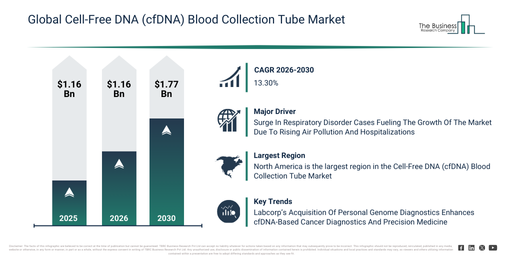
    Looking ahead, the market is expected to grow even faster, reaching $2.49 billion by 2030 with a CAGR of 13.3%. Factors propelling this future growth include improvements in blood tube preservatives, the integration of artificial intelligence (AI) diagnostics, expansion of the liquid biopsy segment, growth in clinical trials, and rising demand from emerging markets. Key trends anticipated to shape the industry in the coming years cover enhanced sample preservation technologies, standardized blood collection protocols, greater automation in sample processing, and the development of highly stable tube designs.

    Rising Respiratory Disorders as a Growth Factor for cfDNA Blood Collection Tubes

    One major factor driving growth in the cfDNA blood collection tube market is the increasing prevalence of respiratory diseases. These conditions, which affect the lungs and respiratory system, compromise breathing efficiency and oxygen exchange. The rise in respiratory disorders is attributed primarily to worsening air pollution, which irritates airways, impairs lung function, and raises the risk of illnesses such as asthma, bronchitis, and chronic obstructive pulmonary disease (COPD).

    https://www.thebusinessresearchcompany.com/report/cell-free-dna-cfdna-blood-collection-tube-global-market-report

    Cell-Free DNA (cfDNA) Blood Collection Tube Market Regional Analysis: Which Region Leads By Revenue?

    Cell-free DNA blood collection tubes play a critical role in managing these disorders by enabling genetic mutation detection, tracking disease progression, and assessing treatment responses through non-invasive blood tests. This reduces the need for more intrusive lung biopsies. For example, in late 2024, the Centers for Disease Control and Prevention estimated that respiratory syncytial virus (RSV) caused between 17,000 and 34,000 hospitalizations in the US over two months, illustrating the impact of respiratory illnesses and their influence on market demand.

    Cancer Incidence and Lifestyle Factors Boosting cfDNA Tube Market Growth

    The rising number of cancer cases worldwide is another key driver behind the expansion of the cell-free DNA blood collection tube market. Increasing cancer rates are linked to lifestyle habits such as unhealthy diets, tobacco use, and physical inactivity. These tubes are vital in cancer management because they enable liquid biopsies, which detect tumor-related genetic mutations, monitor how the disease progresses, evaluate treatment effectiveness, and identify resistance mutations—all through a simple blood sample instead of invasive tissue biopsies.

    For instance, the National Cancer Institute projected in May 2024 that the number of cancer survivors in the United States will grow from 18.1 million in 2022 to 26 million by 2040. This growing cancer population underpins rising demand for cfDNA blood collection tubes used in diagnostics and monitoring.

    Breakdown of the Cell-Free DNA Blood Collection Tube Market Segmentation

    The cfDNA blood collection tube market is categorized into several important segments, which help target specific customer needs and applications:

    1) By Type: 5ml and 10ml tubes

    2) By Sample Type: Plasma, Serum, and Whole Blood

    3) By Application: In Vitro Diagnostics and Scientific Research

    4) By End-User: Diagnostic Laboratories, Hospitals or Clinical Centers, Genetic Diagnostic Labs, Cancer Research Centers, Research and Development Institutions, and Conventional Diagnostic Centers

    Further subcategories include types of 5ml tubes such as single-use tubes, vacuum blood collection tubes, and gel separator tubes. For 10ml tubes, the distinctions include double draw tubes, high volume collection tubes, and anticoagulant treated tubes.

    Technological Advances and Automation Shaping Market Competition

    Key players in the cfDNA blood collection tube market are focusing heavily on automating the extraction of cfDNA to improve laboratory workflows. Automation involves using robotic instruments and standardized procedures to isolate cfDNA from blood samples with minimal manual input, which enhances efficiency, accuracy, and consistency, while cutting down turnaround times and human error.

    A notable example occurred in September 2023, when Yourgene Health plc, a UK molecular diagnostics firm, introduced the MagBench Automated DNA Extraction Instrument and Kit. This bench-top robotic solution is designed for cfDNA extraction in non-invasive prenatal testing workflows, offering faster processing, higher throughput, and greater reproducibility while reducing hands-on labor and operational costs.

    Key Industry Players Maintaining a Strong Market Presence

    Several major corporations hold significant positions in the cell-free DNA blood collection tube market. These include Roche Holding AG, Thermo Fisher Scientific Inc., Becton Dickinson (BD), Qiagen N.V., SARSTEDT AG & Co. KG, Guangzhou Improve Medical Technology, Streck Inc., DiaCarta Inc., Zymo Research Corporation, Biomatrica Inc., PreAnalytiX GmbH, Beijing Cowin Bioscience Co. Ltd., Norgen Biotek Corporation, Nonacus Limited, Guangdong Ardent Biomed Co. Ltd, MagBio Genomics Inc., VanGenes, BEAVER, Hebei Xinle Science & Technology Co. Ltd., and Nasmed Diagnostics Pvt. Ltd.

    Geographic Market Analysis Showing Regional Leadership and Growth

    In terms of regional revenue, North America held the largest share of the cfDNA blood collection tube market in 2025. However, the Asia-Pacific region is anticipated to experience the fastest growth over the forecast period. The market analysis spans regions including Asia-Pacific, South East Asia, Western Europe, Eastern Europe, North America, South America, the Middle East, and Africa, providing a comprehensive global perspective on market trends and opportunities.

    Get in touch with us:

    The Business Research Company: https://www.thebusinessresearchcompany.com/

    Americas: +1 310-496-7795

    Asia: +44 7882 955267 & +91 8897263534

    Europe: +44 7882 955267

    Email us at: marketing@tbrc.info

    Follow us on:

    LinkedIn: https://in.linkedin.com/company/the-business-research-company

    YouTube: https://www.youtube.com/channel/UC24_fI0rV8cR5DxlCpgmyFQ

    Global Market Model: https://www.thebusinessresearchcompany.com/global-market-model
  • Cell Surface Marker Detection Market Trends Are Creating New Opportunities For Industry Leaders

    Cell Surface Marker Detection Market Trends Are Creating New Opportunities For Industry Leaders

    Through market attractiveness analysis, total addressable market evaluation, company benchmarking matrices, interactive Excel dashboards, expanded supply chain intelligence, emerging startup coverage, and detailed product insights, The Business Research Company’s 2026 market reports provide more actionable and strategically valuable research.

    The cell surface marker detection market is experiencing swift expansion, driven by advancements in biomedical research and growing applications in diagnostics and drug discovery. With increasing investments in life sciences and the integration of cutting-edge technologies, this market presents significant revenue opportunities and promising growth prospects in the coming years.

    Cell Surface Marker Detection Market Size and Projected Growth Path

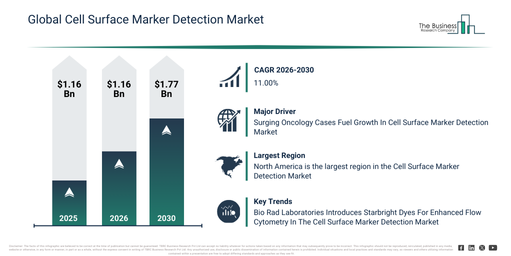
    The market for cell surface marker detection has seen rapid growth recently and is anticipated to increase from $6.39 billion in 2025 to $7.11 billion in 2026, marking a compound annual growth rate (CAGR) of 11.2%. This expansion during the historical period is largely fueled by heightened biomedical research activities, broader pharmaceutical drug discovery initiatives, the rising use of flow cytometry in diagnostics, increased funding in life sciences, and greater availability of laboratory automation tools.

    Looking ahead, the market is projected to continue its robust ascent, reaching $10.81 billion by 2030 with a sustained CAGR of 11.0%. The future growth is expected to be supported by wider adoption of precision medicine, growing demand for single-cell analysis, expansion of translational research, increased use of AI-assisted cell analysis, and more investments in advanced diagnostic laboratories. Key trends shaping the market include the rise in high-throughput flow cytometry systems, demand for sophisticated reagents and kits, growth in automated cell analysis platforms, expansion of marker-based precision diagnostics, and a focus on multiparameter cell profiling.

    Download A Free Sample Report For Comprehensive Market Insights:

    https://www.thebusinessresearchcompany.com/sample.aspx?id=8619&type=smp

    Key Factors Propelling Growth in the Cell Surface Marker Detection Market

    One of the primary drivers of this market is the growing prevalence of oncology diseases worldwide. Cancer, characterized by uncontrolled cell growth and spread, has seen an uptick due to lifestyle factors such as adoption of western diets, chemical exposure, sedentary habits, and poor nutrition. The ability of cell surface marker detection technology to provide point-of-care predictions for patient responses to cancer drugs significantly boosts its demand.

    For instance, the World Health Organization forecasted in February 2024 that new cancer cases could exceed 35 million by 2050, a 77% rise from the estimated 20 million cases in 2022. This alarming increase in oncology incidents underlines the essential role of cell surface marker detection in cancer diagnostics and treatment, thereby fostering market growth.

    Segments and Strategic Opportunities Within the Cell Surface Marker Detection Market

    This market is segmented based on product types, applications, and end-user categories.

    By product, it includes Flow Cytometry and Reagents and Kits.

    Applications cover Disease Diagnosis, Disease Identification, Drug Discovery Research, and Cytological Academic Research.

    End-users span Pharmaceutical and Biotechnology Companies, Hospitals and Clinical Testing Laboratories, Academic and Research Institutes, along with other users.

    Further subcategories break down flow cytometry into Benchtop, Portable, and High-Throughput devices, while reagents and kits include Antibodies and Conjugates, Staining Kits, and Calibration and Control Kits. These detailed segments highlight various opportunities for specialization and targeted growth strategies in the market.

    https://www.thebusinessresearchcompany.com/report/cell-surface-marker-detection-global-market-report

    Cell Surface Marker Detection Market Geographic Distribution And Regional Opportunities

    Innovations and Market Trends Shaping Demand in Cell Surface Marker Detection

    Leading industry players are investing heavily in new technologies such as advanced fluorescent dyes and antibodies to improve multicolor flow cytometry. This innovation enhances the precision and efficiency of immunological research and diagnostic processes.

    For example, Bio-Rad Laboratories expanded its StarBright Violet Dye series by adding 29 well-validated antibodies conjugated with different StarBright Violet Dyes to improve detection across human and animal studies. In May 2024, the company introduced three new StarBright Red Dyes—StarBright Red 715, 775, and 815—broadening their portfolio to 32 fluorescent dyes optimized for both conventional and full-spectrum flow cytometry. These dyes offer minimal background noise compared to traditional cyanine tandem dyes and maintain stability under formalin or alcohol-based fixatives, preserving signal quality.

    Top Companies Steering Competition in the Cell Surface Marker Detection Industry

    Several prominent corporations dominate the cell surface marker detection market, including Thermo Fisher Scientific Inc, Beckman Coulter Inc, Bio-Rad Laboratories Inc, Becton Dickinson and Company, BD Biosciences, Agilent Inc, Sigma-Aldrich, Qiagen NV, Abcam PLC, GenScript Biotech, BioLegend, Cell Signaling Technology Inc, Merck KGaA, Bio-Techne Corporation, Affymetrix, Danaher Corporation, Miltenyi Biotec, R&D Systems, Siemens Healthineers, F Hoffmann-La Roche Ltd, Sartorius, Sysmex Corporation, Nihon Kohden Corporation, Diasorin SpA, and Janssen Diagnostics. These companies play a crucial role in advancing technology and expanding market reach.

    Regional Market Insights and Growth Opportunities

    In 2025, North America held the largest share of the cell surface marker detection market. However, the Asia-Pacific region is expected to witness the fastest growth during the forecast period. The market analysis incorporates key regions such as Asia-Pacific, South East Asia, Western Europe, Eastern Europe, North America, South America, the Middle East, and Africa, providing a comprehensive view of the global market landscape and regional opportunities.

    Get in touch with us:

    The Business Research Company: https://www.thebusinessresearchcompany.com/

    Americas: +1 310-496-7795

    Asia: +44 7882 955267 & +91 8897263534

    Europe: +44 7882 955267

    Email us at: marketing@tbrc.info

    Follow us on:

    LinkedIn: https://in.linkedin.com/company/the-business-research-company

    YouTube: https://www.youtube.com/channel/UC24_fI0rV8cR5DxlCpgmyFQ

    Global Market Model: https://www.thebusinessresearchcompany.com/global-market-model
  • Cell Processing Instruments Market Growth Is Reshaping Competitive Advantage Across The Industry

    Cell Processing Instruments Market Growth Is Reshaping Competitive Advantage Across The Industry

    Delivering more actionable and strategically valuable research, The Business Research Company’s 2026 market reports feature market attractiveness analysis, total addressable market evaluation, company benchmarking matrices, interactive Excel dashboards, expanded supply chain intelligence, emerging startup coverage, and detailed product insights.

    The cell processing instruments market has been showing remarkable growth recently, driven by advancements in technology and increasing applications in biopharmaceutical research and cell therapy. As the industry evolves, it is expected to witness continued expansion fueled by automation and innovation. Below is a detailed overview of the market size, growth drivers, key segments, emerging trends, competitive landscape, and regional insights shaping its future.

    Steady Growth in Market Size for Cell Processing Instruments

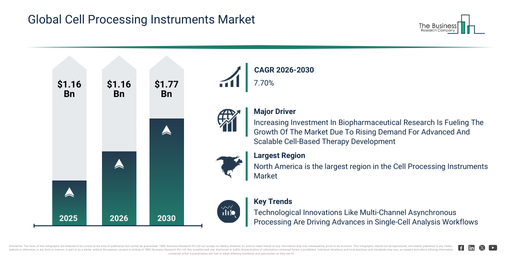
    The cell processing instruments market has experienced substantial growth over recent years. It is projected to increase from $6.95 billion in 2025 to $7.51 billion in 2026, reflecting a compound annual growth rate (CAGR) of 8.1%. Historically, this expansion has been driven by limited automation in cell processing workflows, reliance on manual methods for cell counting and separation, a surge in academic and research activities, growing demand for precise cell analysis, and the rise of flow cytometry technologies.

    Download A Free Sample Report For Comprehensive Market Insights:

    https://www.thebusinessresearchcompany.com/sample.aspx?id=27242&type=smp

    Expectations for Continued Expansion Through 2030

    Looking ahead, the market is forecasted to grow strongly, reaching $10.1 billion by 2030 with a CAGR of 7.7%. This anticipated rise is attributed to the advancement of integrated cell processing platforms, increased funding in cell therapy and regenerative medicine, wider adoption of digital and automated imaging systems, growth in contract research and manufacturing activities, and progress in live cell analysis and high-content screening. Key trends shaping the market include the growing preference for automated cell processing systems, expanded use of flow cytometry and high-content imaging, rising applications in regenerative medicine, a focus on standardization and regulatory compliance, and the integration of multifunctional cell analysis platforms.

    Increasing Investment in Biopharmaceutical Research as a Growth Catalyst

    The surge in investment within biopharmaceutical research is set to significantly drive the cell processing instruments market forward. Biopharmaceutical research focuses on the development of therapeutic products derived from biological sources or designed to replicate biological molecules, aimed at diagnosing, preventing, or treating various diseases. Growing demand for innovative therapies to combat chronic illnesses and address unmet medical needs has fueled increased research and development activities targeting more effective treatments.

    https://www.thebusinessresearchcompany.com/report/cell-processing-instruments-global-market-report

    Cell Processing Instruments Market Largest Region By Revenue And Market Share

    How Cell Processing Instruments Support Biopharmaceutical Advancements

    Cell processing instruments play a crucial role in biopharmaceutical research by enabling efficient, standardized, and scalable cell handling. This capability accelerates the advancement and production of sophisticated cell-based therapies. For example, in January 2025, the UK’s BioIndustry Association reported that the UK biotech sector achieved substantial growth in 2024, securing £3.5 billion (approximately $4.4 billion) in investment—an impressive 94% increase from the prior year. Such robust investment trends are propelling growth within the cell processing instruments market.

    Comprehensive Segmentation of the Cell Processing Instruments Market

    The market is segmented based on type, application, and end-use.

    By type, the categories include Cell Counters, Cell Imaging Systems, Flow Cytometers, Cell Separator Systems, Automated Cell Processing Systems, and Other Instruments.

    Applications cover Cell Isolation or Separation, Cell Imaging and Counting, Cell Viability and Proliferation, and Other Uses.

    End-users consist of Pharmaceutical and Biotechnology Companies, Contract Research Organizations (CROs) and Contract Manufacturing Organizations (CMOs), Academic and Research Institutes, and additional sectors.

    Detailed Breakdown of Subsegments

    Further classification involves:

    – Cell Counters: Manual, Automated, and Digital.

    – Cell Imaging Systems: Brightfield, Fluorescence, High-Content, and Live Cell Imaging.

    – Flow Cytometers: Analog, Digital, Benchtop, and Clinical models.

    – Cell Separator Systems: Magnetic-Activated Cell Sorting (MACS), Fluorescence-Activated Cell Sorting (FACS), and Centrifugal Elutriation.

    – Automated Cell Processing Systems: Cell Expansion, Cell Washing and Concentration, Cell Harvesting, and Integrated Platforms.

    – Other Instruments: Cell Disruption Systems, Cell Viability Analyzers, Centrifuges for Cell Processing, and Cell Freezing and Thawing Systems.

    Innovative Trends Advancing the Cell Processing Instruments Market

    Leading companies are focusing on novel innovations such as multi-channel asynchronous processing, which enhances efficiency and flexibility by enabling simultaneous independent workflows on different channels. This technology supports the parallel operation of various processes without delays. For instance, in June 2023, Germany-based Singleron Biotechnologies GmbH introduced two new instruments—Python Junior and Matrix NEO—to streamline and standardize single-cell analysis. Python Junior facilitates the dissociation of solid tissues into high-quality single-cell suspensions using dual channels and combined mechanical and enzymatic approaches, while Matrix NEO provides high-throughput, fully automated single-cell library preparation across four channels, serving diverse research and clinical needs.

    Key Players Leading the Cell Processing Instruments Market

    The competitive landscape features several prominent companies, including Thermo Fisher Scientific Inc., Danaher Corporation, Merck KGaA, Becton Dickinson and Company, Avantor Inc., Agilent Technologies Inc., Sartorius AG, Revvity Inc., Bio-Rad Laboratories Inc., Eppendorf SE, Tecan Group Ltd., Bio-Techne Corporation, STEMCELL Technologies Inc., Miltenyi Biotec B.V. & Co. KG, Takara Bio Inc., 10x Genomics Inc., Promega Corporation, Esco Lifesciences Group Ltd., NanoCellect Biomedical Inc., and InGeneron Inc.

    Regional Market Leadership and Growth Prospects

    In 2025, North America was the largest revenue contributor to the cell processing instruments market. Meanwhile, the Asia-Pacific region is projected to experience the fastest growth during the forecast period. The market analysis also includes regions such as South East Asia, Western Europe, Eastern Europe, South America, the Middle East, and Africa, providing a broad perspective on global market dynamics.

    Get in touch with us:

    The Business Research Company: https://www.thebusinessresearchcompany.com/

    Americas: +1 310-496-7795

    Asia: +44 7882 955267 & +91 8897263534

    Europe: +44 7882 955267

    Email us at: marketing@tbrc.info

    Follow us on:

    LinkedIn: https://in.linkedin.com/company/the-business-research-company

    YouTube: https://www.youtube.com/channel/UC24_fI0rV8cR5DxlCpgmyFQ

    Global Market Model: https://www.thebusinessresearchcompany.com/global-market-model