Category: Medical Equipment

  • Rising Surgical Volumes Fuel Demand in the Ligation Devices Market

    Rising Surgical Volumes Fuel Demand in the Ligation Devices Market

    The Business Research Company’s 2026 market reports feature advanced enhancements such as market attractiveness analysis, total addressable market evaluation, company benchmarking matrices, interactive Excel dashboards, expanded supply chain intelligence, emerging startup coverage, and detailed product insights, delivering more actionable and strategically valuable research.

    What Is The Estimated Growth In Market Size Of The Ligation Devices Market During 2026–2030?

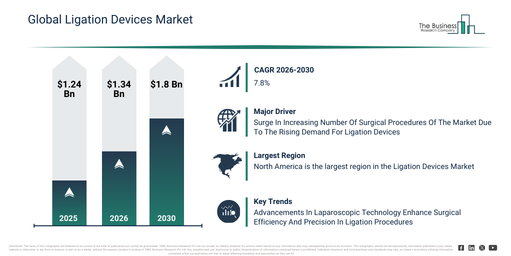
    The ligation devices market has shown significant growth in recent years. It is anticipated to increase from $1.24 billion in 2025 to $1.34 billion in 2026, demonstrating a compound annual growth rate (CAGR) of 7.6%. This past growth can be attributed to a rising volume of surgical procedures, the expansion of hospital infrastructure, the growing adoption of laparoscopic surgeries, increased availability of advanced surgical instruments, and the rising prevalence of chronic diseases.

    The ligation devices market is projected to experience robust expansion over the coming years. Its valuation is set to reach $1.8 billion in 2030, driven by a compound annual growth rate (CAGR) of 7.8%. This anticipated growth during the forecast timeframe is primarily driven by factors such as a surge in demand for minimally invasive interventions, escalating investments in advancements within surgical technology, the proliferation of ambulatory surgical centers, an intensified emphasis on operational efficiency in procedures, and the expanding embrace of sophisticated endoscopic instruments. Key trends anticipated during this period encompass the wider acceptance of minimally invasive ligation methods, the escalating utilization of disposable and single-use ligation tools, a heightened need for accurate clip application systems, the broadening scope of endoscopic and laparoscopic ligation approaches, and an elevated commitment to patient safety alongside surgical effectiveness.

    Download A Free Sample Report For Comprehensive Market Insights:

    https://www.thebusinessresearchcompany.com/sample.aspx?id=33200&type=smp

    Which Drivers Are Advancing The Ligation Devices Market Growth?

    The increasing volume of surgical procedures is anticipated to drive the expansion of the ligation devices market. Surgical procedures involve clinical interventions executed by trained health professionals to address diseases, repair injuries, or optimize physiological functions. The quantity of surgeries is escalating as healthcare systems augment their capacity, tackle unmet surgical requirements, and enhance the accessibility of surgical care across various populations. Ligation devices facilitate this rise in surgical activity by empowering surgeons to achieve secure vessel closure, efficient hemostasis, and precise tissue approximation, which in turn enhances procedural safety and operational effectiveness. For instance, in June 2024, the International Society of Aesthetic Plastic Surgery (ISAPS), an association of aesthetic surgeons, reported that total surgical and non-surgical procedures grew by 3.4% in 2023, with more than 15.8 million surgical procedures performed worldwide, a higher count compared with prior years. Thus, the escalating number of surgical procedures is a key driver for the growth of the ligation devices market.

    What Are The Core Segment Classifications In The Ligation Devices Market?

    The ligation devices market covered in this report is segmented –

    1) By Product Type: Clip Appliers; Endoscopic Ligators; Accessories

    2) By Material Type: Metal Ligation Devices; Polymer Ligation Devices

    3) By Application: Gastrointestinal Surgeries; Gynecological Surgeries; Cardiovascular Surgeries; Urological Surgeries; Other Applications

    4) By End-User: Hospitals; Ambulatory Surgical Centers; Specialty Clinics; Other End-Users

    Subsegments:

    1) By Clip Appliers: Reusable Clip Appliers; Disposable Clip Appliers; Laparoscopic Clip Appliers; Open Surgery Clip Appliers; Multi Fire Clip Appliers

    2) By Endoscopic Ligators: Band Ligation Devices; Loop Ligation Devices; Single Use Endoscopic Ligators; Multiple Band Endoscopic Ligators; Therapeutic Endoscopic Ligators

    3) By Accessories: Ligation Clips; Ligation Bands; Loading Cartridges; Applicator Handles; Replacement Components

    Which Trends Are Supporting The Evolution Of The Ligation Devices Market?

    Leading companies in the ligation devices market are prioritizing the development of innovative, minimally invasive surgical solutions, such as advanced laparoscopic vessel sealing and ligation systems, which are designed to enhance procedural control, shorten operative times, and enable precise tissue handling during complex surgical interventions. These sophisticated laparoscopic vessel sealing and ligation systems are instruments crafted to apply controlled energy for both occluding and severing blood vessels and tissue masses, while also incorporating user-friendly ergonomic designs and improved access capabilities in confined anatomical areas to boost surgical accuracy and achieve better hemostasis. As an illustration, in March 2023, Medtronic, an Ireland-based medical technology company, launched the LigaSure Exact Dissector, a laparoscopic vessel sealing and dissection device that incorporates sophisticated bipolar energy technology to ensure reliable sealing, features a curved jaw configuration enhancing visibility and reach, and includes a nano-coated jaw surface to reduce tissue adherence and facilitate smoother procedures.

    Which Key Players Are Active In The Ligation Devices Market?

    Major companies operating in the ligation devices market are Johnson & Johnson Services Inc., Abbott Laboratories, Medtronic plc, Stryker Corporation, Boston Scientific Corporation, B. Braun Melsungen AG, Olympus Corporation, Smith & Nephew Plc, The Cooper Companies Inc., Teleflex Incorporated, Cook Medical LLC, Merit Medical Systems Inc., ConMed Corporation, CooperSurgical Inc., AngioDynamics Inc., Argon Medical Devices Inc., Scanlan International Inc., Purple Surgical, Unimicro Medical Systems Co. Ltd., Ovesco Endoscopy AG, Applied Medical Resources Corporation, Grena Think Medical, Genicon Inc., and Hakko Co. Ltd.

    Access The Complete Ligation Devices Market Report:

    https://www.thebusinessresearchcompany.com/report/ligation-devices-market-report

    Which Region Stands As The Largest Contributor To The Ligation Devices Market?

    North America was the largest region in the ligation devices market in 2025. Asia-Pacific is expected to be the fastest-growing region in the forecast period. The regions covered in the ligation devices market report are Asia-Pacific, South East Asia, Western Europe, Eastern Europe, North America, South America, Middle East, Africa.

    Access a Customized Ligation Devices Market Report for Deeper Competitive Insights

    Get in touch with us:

    The Business Research Company: https://www.thebusinessresearchcompany.com/

    Americas: +1 310-496-7795

    Asia: +44 7882 955267 & +91 8897263534

    Europe: +44 7882 955267

    Email us at: marketing@tbrc.info

    Follow us on:

    LinkedIn: https://in.linkedin.com/company/the-business-research-company

    YouTube: https://www.youtube.com/channel/UC24_fI0rV8cR5DxlCpgmyFQ

    Global Market Model: https://www.thebusinessresearchcompany.com/global-market-model
  • IoMT-Based Drug Delivery Market Anticipated to Reach $10.09 Billion by 2030

    IoMT-Based Drug Delivery Market Anticipated to Reach $10.09 Billion by 2030

    The Business Research Company’s 2026 market reports feature advanced enhancements such as market attractiveness analysis, total addressable market evaluation, company benchmarking matrices, interactive Excel dashboards, expanded supply chain intelligence, emerging startup coverage, and detailed product insights, delivering more actionable and strategically valuable research.

    How Is The Internet Of Medical Things (IOMT) For Drug Delivery Market’s Market Value Anticipated To Evolve From 2026 To 2030?

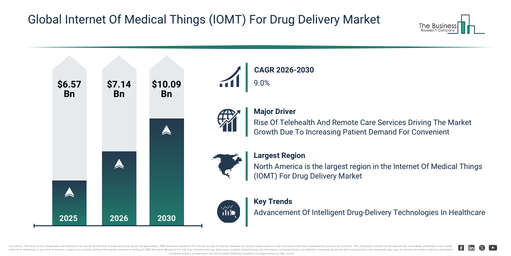
    The internet of medical things (iomt) for drug delivery market size has shown substantial growth in recent years. This market is set to expand from $6.57 billion in 2025 to $7.14 billion in 2026, achieving a compound annual growth rate (CAGR) of 8.8%. Throughout the historical period, this expansion can be linked to factors like the increasing occurrence of chronic diseases, the prompt uptake of smart infusion and monitoring equipment, the development of home healthcare provisions, a heightened emphasis on medication adherence, and the enhancement of digital health infrastructure.

    The internet of medical things (IoMT) for drug delivery market is projected to experience substantial expansion over the upcoming years. This market is predicted to reach $10.09 billion by 2030, driven by a compound annual growth rate (CAGR) of 9.0%. Factors contributing to this anticipated growth include the broadening of personalized medicine applications, increased investments in connected healthcare platforms, a surging need for remote patient management, greater incorporation of AI-powered dosing algorithms, and enhanced regulatory backing for digital therapeutics. Key trends expected during the forecast period encompass a rise in the uptake of connected drug delivery devices, more widespread utilization of real-time patient monitoring platforms, increasing integration of wearable and implantable delivery systems, the development of personalized dosage management solutions, and a heightened emphasis on remote therapy management.

    Download A Free Sample Report For Comprehensive Market Insights:

    https://www.thebusinessresearchcompany.com/sample.aspx?id=33187&type=smp

    What Market Drivers Are Helping Shape The Internet Of Medical Things (IOMT) For Drug Delivery Market Expansion?

    The increasing prevalence of telehealth and remote care solutions is anticipated to drive the expansion of the Internet of Medical Things (IoMT) for drug delivery market in the future. These services involve providing healthcare via digital platforms, allowing individuals to get medical advice, oversight, and therapy from their residences, eliminating the need for physical visits. The growth in telehealth and remote care can be attributed to a surge in patient desire for accessible, immediate healthcare, enabling them to consult physicians, track their well-being, and manage therapies from home, thereby reducing hospital trips. The Internet of Medical Things (IoMT) for drug delivery facilitates telehealth and remote care by offering real-time tracking of how well patients follow their medication, precise and automated drug delivery, and smooth information exchange with healthcare professionals. This empowers doctors to remotely oversee treatment evolution, modify dosages, and provide customized care without needing physical appointments. For example, in April 2023, FAIR Health Inc., a US-based non-profit organization, reported that national telehealth utilization saw an increase of 7.3%, climbing from 5.5% of medical claim lines in December 2022 to 5.9% in January 2023. Consequently, the expanding embrace of telemedicine platforms is fueling the expansion of the Internet of Medical Things (IoMT) for drug delivery market.

    How Is The Internet Of Medical Things (IOMT) For Drug Delivery Market Distributed Across Key Segments?

    The internet of medical things (iomt) for drug delivery market covered in this report is segmented –

    1) By Type: Wearable Drug Delivery Devices; Smart Inhalers; Injectable Drug Delivery Systems; Implantable Drug Delivery Devices; Remote Drug Monitoring

    2) By Connectivity: Bluetooth And Low Energy Connectivity; Wi Fi Connectivity; Cellular Connectivity; Near Field Communication; Cloud And Edge Based Connectivity

    3) By Application: Chronic Disease Management; Acute Care Drug Delivery; Home Based Drug Administration; Hospital And Clinical Drug Delivery; Personalized And Precision Medicine

    4) By End User: Hospitals And Clinics; Home Care Settings; Pharmaceutical And Biotechnology Companies; Research And Development Organizations; Contract Research And Clinical Trial Centers

    Subsegments:

    1) By Wearable Drug Delivery Devices: On Body Infusion Pumps; Patch Based Drug Delivery Systems; Wearable Insulin Delivery Devices; Wearable Pain Management Devices

    2) By Smart Inhalers: Connected Metered Dose Inhalers; Connected Dry Powder Inhalers; Medication Adherence Monitoring Inhalers; Dose Tracking Inhaler Systems

    3) By Injectable Drug Delivery Systems: Connected Auto Injectors; Smart Pen Injectors; Pre Filled Smart Syringes; Electronic Injection Monitoring Systems

    4) By Implantable Drug Delivery Devices: Implantable Infusion Pumps; Controlled Release Implant Systems; Programmable Drug Delivery Implants; Long Term Therapeutic Implants

    5) By Remote Drug Monitoring: Medication Adherence Monitoring Systems; Real Time Dosage Tracking Platforms; Remote Therapy Management Systems; Patient Compliance Monitoring Solutions

    Which Trends Are Shaping The Internet Of Medical Things (IOMT) For Drug Delivery Market Landscape?

    Prominent companies within the internet of medical things (IoMT) for drug delivery market are dedicating efforts to developing inventive solutions, such as connected smart drug-delivery devices equipped with real-time monitoring. These advancements are designed to enable personalized dosing, enhance treatment adherence, and elevate patient outcomes. Connected smart drug-delivery devices with real-time monitoring are defined as medical instruments that autonomously track medication dispensation and patient data, sharing this information wirelessly with applications or healthcare systems to optimize dosing, improve adherence, and facilitate timely clinical decisions. For instance, in November 2024, the Ireland-based healthcare technology company, Medtronic plc, launched its Smart MDI system, which incorporates the InPen app with Simplera CGM. This system integrates a smart insulin pen with a disposable, all-in-one continuous glucose monitor (CGM) to offer real-time, personalized insulin dosing insights, including recommendations for identifying and correcting missed or inaccurate mealtime doses. It consistently monitors glucose levels, records insulin administration, and analyzes patient data through a mobile application to mitigate hyperglycemia risk and support improved glycemic control. Unlike conventional insulin pens, this solution provides automated data capture, intelligent alerts, and comprehensive clinical decision support, thereby significantly reducing dosing uncertainties and contributing to better patient outcomes.

    Which Companies Form The Competitive Landscape Of The Internet Of Medical Things (IOMT) For Drug Delivery Market?

    Major companies operating in the internet of medical things (iomt) for drug delivery market are Siemens AG, F. Hoffmann-La Roche AG, IBM Corporation, Bayer AG, Oracle Corporation, Abbott Laboratories, Honeywell Life Care Solutions Inc., Medtronic plc, Koninklijke Philips N.V., GE HealthCare Technologies Inc., Becton Dickinson and Company, Cognizant Technology Solutions Corporation, Biogen Inc., Omron Healthcare Co. Ltd., Dexcom Inc., Insulet Corporation, Tandem Diabetes Care Inc., Senseonics Inc., AdhereTech Inc., Adherium Limited

    Access The Complete Internet Of Medical Things (IOMT) For Drug Delivery Market Report:

    https://www.thebusinessresearchcompany.com/report/internet-of-medical-things-iomt-for-drug-delivery-market-report

    Which Region Holds The Largest Share In The Internet Of Medical Things (IOMT) For Drug Delivery Market?

    North America was the largest region in the internet of medical things (IOMT) for drug delivery market in 2025. The regions covered in the internet of medical things (iomt) for drug delivery market report are Asia-Pacific, South East Asia, Western Europe, Eastern Europe, North America, South America, Middle East, Africa.

    Access a Customized Internet Of Medical Things (IOMT) For Drug Delivery Market Report for Deeper Competitive Insights

    Get in touch with us:

    The Business Research Company: https://www.thebusinessresearchcompany.com/

    Americas: +1 310-496-7795

    Asia: +44 7882 955267 & +91 8897263534

    Europe: +44 7882 955267

    Email us at: marketing@tbrc.info

    Follow us on:

    LinkedIn: https://in.linkedin.com/company/the-business-research-company

    YouTube: https://www.youtube.com/channel/UC24_fI0rV8cR5DxlCpgmyFQ

    Global Market Model: https://www.thebusinessresearchcompany.com/global-market-model
  • Implantable Neural Probes Market Gaining Momentum Toward $3.55 Billion by 2030

    Implantable Neural Probes Market Gaining Momentum Toward $3.55 Billion by 2030

    The Business Research Company’s 2026 market reports feature advanced enhancements such as market attractiveness analysis, total addressable market evaluation, company benchmarking matrices, interactive Excel dashboards, expanded supply chain intelligence, emerging startup coverage, and detailed product insights, delivering more actionable and strategically valuable research.

    How Does The Forecasted Market Size Of The Implantable Neural Probes Market Compare Between 2026 And 2030?

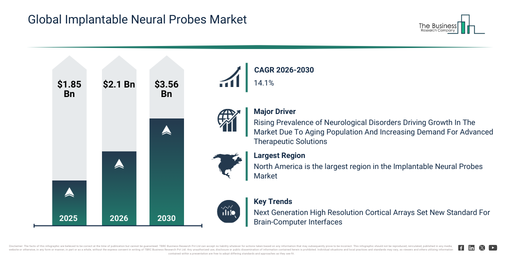
    The implantable neural probes market has seen significant expansion in recent times. It is anticipated to increase from $1.85 billion in 2025 to $2.1 billion in 2026, registering a compound annual growth rate (CAGR) of 13.8%. The reasons for this growth in the past include developments in neuroscience research instruments, the increasing deployment of depth electrodes for monitoring epilepsy, the expansion of academic brain research initiatives, the early incorporation of brain-computer interface technologies, and advancements in microfabrication methods.

    The implantable neural probes market size is expected to undergo significant expansion in the coming years, with projections indicating it will reach $3.56 billion by 2030, demonstrating a compound annual growth rate (CAGR) of 14.1%. This anticipated growth during the forecast period is attributed to the increasing demand for neuroprosthetics, rising investment in brain-machine interfaces, the expansion of clinical neuromodulation therapies, a heightened focus on chronic neural implants, and continuous innovation in biocompatible materials. Major trends expected over the forecast period include the increasing adoption of high-density microelectrode arrays, a growing demand for flexible and biocompatible neural probes, the expanding integration of wireless neural recording systems, the development of multi-site and multi-modal neural probes, and an enhanced emphasis on long-term implant stability.

    Download A Free Sample Report For Comprehensive Market Insights:

    https://www.thebusinessresearchcompany.com/sample.aspx?id=33180&type=smp

    Which Growth Factors Are Strengthening The Implantable Neural Probes Market Landscape?

    The anticipated expansion of the implantable neural probes market is fueled by the rising occurrence of neurological disorders. These disorders encompass medical conditions impacting the nervous system, such as the brain, spinal cord, and their connecting nerves. Their incidence is on the rise, primarily attributed to an aging demographic, given that advanced age is a significant risk factor for conditions like Alzheimer’s disease, Parkinson’s disease, and stroke. Implantable neural probes play a crucial role in managing and treating these disorders. They facilitate accurate, real-time recording and stimulation of neural activity, which in turn supports precise diagnosis, ongoing monitoring, and tailored therapeutic strategies for conditions including epilepsy, Parkinson’s disease, and paralysis. As an illustration, data from March 2023 by the Alzheimer’s Association, a US-based nonprofit voluntary health organization, indicated that around 6.7 million Americans aged 65 and older were living with Alzheimer’s dementia in 2023, with projections showing this figure reaching 13.8 million by 2060. Consequently, the growing prevalence of neurological disorders serves as a key driver for the expansion of the implantable neural probes market.

    Which Segment Divisions Form The Structure Of The Implantable Neural Probes Market?

    The implantable neural probes market covered in this report is segmented –

    1) By Product Type: Microelectrodes; Microelectrode Arrays; Depth Probes; Surface Probes; Other Product Types

    2) By Material: Silicon; Glass; Polymer; Metal; Other Materials

    3) By Application: Neuroscience Research; Clinical Diagnostics; Brain-Computer Interfaces; Other Applications

    4) By End-User: Research Institutes; Hospitals; Diagnostic Centers; Other End-Users

    Subsegments:

    1) By Microelectrodes: Platinum Microelectrodes; Tungsten Microelectrodes; Iridium Oxide Microelectrodes; Gold Microelectrodes; Silicon Microelectrodes

    2) By Microelectrode Arrays: Planar Microelectrode Arrays; Three Dimensional Microelectrode Arrays; Flexible Microelectrode Arrays; High Density Microelectrode Arrays; Custom Designed Microelectrode Arrays

    3) By Depth Probes: Single Shank Depth Probes; Multi Shank Depth Probes; Glass Insulated Depth Probes; Metal Coated Depth Probes; Custom Configured Depth Probes

    4) By Surface Probes: Electrocorticography Surface Probes; Flexible Surface Probes; Grid Surface Probes; Strip Surface Probes; Custom Fabricated Surface Probes

    5) By Other Product Types: Optical Neural Probes; Wireless Neural Probes; Nano Fabricated Neural Probes; Multi Modal Neural Probes; Custom Engineered Neural Probes

    What Trends Are Affecting The Implantable Neural Probes Market Dynamics?

    Companies operating within the implantable neural probes market are prioritizing technological advancements, such as high-resolution cortical electrode arrays, to enhance neural signal accuracy and expand brain-computer interface applications. A high-resolution cortical electrode array is an implantable neural probe type, featuring a thin, flexible film embedded with hundreds to thousands of microelectrodes. For instance, in April 2025, Precision Neuroscience Corporation, a US-based neurotechnology firm developing advanced brain-computer interface systems, launched the Layer 7 Cortical Interface. This next-generation implantable microelectrode array received U.S. Food and Drug Administration (FDA) 510(k) clearance for recording, monitoring, and stimulating electrical activity on the brain’s surface for up to 30 days. The device incorporates a high-density array of 1,024 microelectrodes on a flexible polyimide film, conforming to cortical anatomy to provide detailed neural data while minimizing tissue damage risks. It supports real-time mapping during neurosurgery and establishes a platform for future wireless BCI applications addressing conditions like paralysis and communication impairments. The product’s clearance and functionalities signify a move towards safer, higher-resolution implantable neural probes with expanded clinical utility.

    Who Are The Businesses Driving Activity In The Implantable Neural Probes Market?

    Major companies operating in the implantable neural probes market are Abbott Laboratories, Medtronic plc, Boston Scientific Corporation, Neuralink Corp., NeuroPace Inc., NeuroOne Medical Technologies Corporation, Alpha Omega Engineering Ltd., INBRAIN Neuroelectronics, Paradromics Inc., Axoft Inc, Synchron Inc., Ripple Neuro LLC, NeuroNexus Technologies Inc., Plexon Inc., CorTec Advanced Neuroscience GmbH, Cambridge NeuroTech Ltd, Spike Neuro LLC, Aleva Neurotherapeutics SA, Optogenix Inc., Precision Neuroscience Corporation.

    Access The Complete Implantable Neural Probes Market Report:

    https://www.thebusinessresearchcompany.com/report/implantable-neural-probes-market-report

    Which Region Commands The Largest Share Of The Implantable Neural Probes Market?

    North America was the largest region in the implantable neural probes market in 2025. Asia-Pacific is expected to be the fastest-growing region in the forecast period. The regions covered in the implantable neural probes market report are Asia-Pacific, South East Asia, Western Europe, Eastern Europe, North America, South America, Middle East, Africa.

    Access a Customized Implantable Neural Probes Market Report for Deeper Competitive Insights

    Get in touch with us:

    The Business Research Company: https://www.thebusinessresearchcompany.com/

    Americas: +1 310-496-7795

    Asia: +44 7882 955267 & +91 8897263534

    Europe: +44 7882 955267

    Email us at: marketing@tbrc.info

    Follow us on:

    LinkedIn: https://in.linkedin.com/company/the-business-research-company

    YouTube: https://www.youtube.com/channel/UC24_fI0rV8cR5DxlCpgmyFQ

    Global Market Model: https://www.thebusinessresearchcompany.com/global-market-model
  • Human Acellular Dermis Market Projected to Hit $2.27 Billion by 2030 with Consistent Growth

    Human Acellular Dermis Market Projected to Hit $2.27 Billion by 2030 with Consistent Growth

    The Business Research Company’s 2026 market reports feature advanced enhancements such as market attractiveness analysis, total addressable market evaluation, company benchmarking matrices, interactive Excel dashboards, expanded supply chain intelligence, emerging startup coverage, and detailed product insights, delivering more actionable and strategically valuable research.

    How Will The Market Size Of The Human Acellular Dermis Market Progress Through 2030?

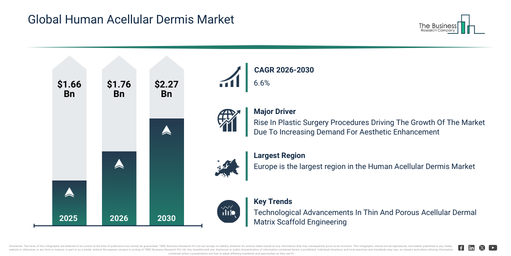
    The human acellular dermis market has experienced robust growth in recent years. This market is projected to expand from $1.66 billion in 2025 to $1.76 billion in 2026, demonstrating a compound annual growth rate (CAGR) of 6.3%. Historically, this expansion has been driven by factors such as an increasing volume of reconstructive surgeries, a rise in burn injury cases, developments in tissue processing technologies, the proliferation of cosmetic and plastic surgery procedures, and enhanced availability of donor tissue.

    The human acellular dermis market is anticipated to show significant expansion over the next few years. It is projected to reach $2.27 billion in 2030, achieving a compound annual growth rate (CAGR) of 6.6%. This projected increase is driven by factors such as the rising adoption in regenerative medicine, a growing demand for minimally invasive reconstruction solutions, the broadening use in orthopedic and soft tissue repair applications, an increased focus on advanced wound management, and continuous innovation in biomaterial processing. Key trends expected during this period include the expanding application of acellular dermal matrices in reconstruction, greater utilization in burn and wound care, an escalating demand for ready-to-use dermal grafts, an increase in plastic and reconstructive surgery procedures, and an enhanced focus on biocompatibility and integration.

    Download A Free Sample Report For Comprehensive Market Insights:

    https://www.thebusinessresearchcompany.com/sample.aspx?id=33172&type=smp

    Which Major Factors Are Contributing To The Development Of The Human Acellular Dermis Market?

    The expansion of plastic surgery procedures is anticipated to fuel the growth of the human acellular dermis market moving forward. Plastic surgery procedures are medical interventions designed to reshape, restore, or enhance the body’s appearance and function through surgical techniques. The rising prevalence of these procedures is attributed to increased awareness and a growing demand for aesthetic enhancement, as more individuals seek to improve their appearance and self-confidence via advanced, minimally invasive surgical options. Human acellular dermis (HAD) offers benefits in plastic surgery by serving as a biologically compatible scaffold that integrates with a patient’s own tissue, thereby supporting new tissue growth, minimizing scar formation, and improving both the aesthetic and functional outcomes of reconstructive or cosmetic surgeries. For example, in June 2024, data from the International Society of Aesthetic Plastic Surgery, a US-based professional organization, indicated that facial and head aesthetic procedures experienced substantial growth compared to the prior year in 2023, totaling over 6.5 million interventions and reflecting a 19.6% rise. Thus, the increasing scope of plastic surgery procedures is propelling the growth of the human acellular dermis market.

    What Segment Categories Are Evaluated In The Human Acellular Dermis Market Study?

    The human acellular dermis market covered in this report is segmented –

    1) By Product Type: Recombinant Acellular Dermis; Lyophilized Acellular Dermis; Decellularized Acellular Dermis; Fresh Acellular Dermis

    2) By Structure Type: Sheet Type Acellular Dermis; Mesh Type Acellular Dermis; Gel Type Acellular Dermis

    3) By Distribution Channel: Direct Sales; Distributors; Online Retailing

    4) By Application: Burn Treatment; Soft Tissue Reconstruction; Wound Management; Plastic Surgery; Orthopedic Surgery

    5) By End User: Hospitals; Ambulatory Surgical Centers (ASCs); Specialty Clinics; Research Institutions

    Subsegments:

    1) By Recombinant Acellular Dermis: Collagen Based Recombinant Dermis; Elastin Enriched Recombinant Dermis; Growth Factor Integrated Recombinant Dermis; Synthetic Hybrid Recombinant Dermis

    2) By Lyophilized Acellular Dermis: Single Layer Lyophilized Dermis; Multi Layer Lyophilized Dermis; Sterile Lyophilized Dermis; Long Shelf Life Lyophilized Dermis

    3) By Decellularized Acellular Dermis: Human Donor Derived Dermis; Enzyme Processed Decellularized Dermis; Detergent Treated Decellularized Dermis; Minimally Processed Decellularized Dermis

    4) By Fresh Acellular Dermis: Cryopreserved Fresh Dermis; Hydrated Fresh Dermis; Ready To Use Fresh Dermis; Short Term Stored Fresh Dermis

    What Trends Are Impacting The Human Acellular Dermis Market?

    Major companies within the human acellular dermis market are concentrating on developing innovative products, such as thin and porous acellular dermal matrix scaffold technology, to enhance handling and conformability for complex wound geometries, thus enabling simpler placement and more consistent clinical outcomes. This technology involves crafting acellular dermal matrices with reduced thickness and interconnected porous structures that promote cellular infiltration, vascularization, and tissue integration, leading to faster wound healing with fewer clinical applications. For example, in April 2025, LifeNet Health, a US-based regenerative medicine company, introduced Dermacell Porous, an acellular dermal matrix designed to be thin, durable, and naturally porous. It offers enhanced retention of extracellular matrix proteins and cytokines, along with easy non-sided application straight from its packaging, facilitating broader clinical adoption for complex wound cases requiring fewer interventions. Engineered to support chronic wound closure in four or fewer applications, Dermacell Porous is also one of 26 skin substitute grafts and cellular or tissue-based products covered under Medicare’s new Local Coverage Determinations effective January 1, 2026. This addition strengthens LifeNet Health’s regenerative wound care portfolio and emphasizes its commitment to delivering advanced and accessible clinical solutions.

    Who Are The Major Companies Operating In The Human Acellular Dermis Market?

    Major companies operating in the human acellular dermis market are Medtronic Plc, Stryker Corporation, Zimmer Biomet Holdings Inc., Integra LifeSciences Corporation, Conmed Corporation, MTF Biologics, MiMedx Group Inc., BioHorizons IPH Inc., LifeNet Health, BioBridge Global, Hans Biomed Corp., PolyNovo Limited, Tissue Regenix Group Plc, CG Bio Inc., Parametrics Medical, Meccellis Biotech, Promethean LifeSciences Inc., Bimini Health Tech LLC, Citagenix Inc., and Aziyo Biologics.

    Access The Complete Human Acellular Dermis Market Report:

    https://www.thebusinessresearchcompany.com/report/human-acellular-dermis-market-report

    Which Region Is The Primary Market For The Human Acellular Dermis Market?

    Europe was the largest region in the human acellular dermis market in 2025. Asia-Pacific is expected to be the fastest-growing region in the forecast period. The regions covered in the human acellular dermis market report are Asia-Pacific, South East Asia, Western Europe, Eastern Europe, North America, South America, Middle East, Africa.

    Access a Customized Human Acellular Dermis Market Report for Deeper Competitive Insights

    Get in touch with us:

    The Business Research Company: https://www.thebusinessresearchcompany.com/

    Americas: +1 310-496-7795

    Asia: +44 7882 955267 & +91 8897263534

    Europe: +44 7882 955267

    Email us at: marketing@tbrc.info

    Follow us on:

    LinkedIn: https://in.linkedin.com/company/the-business-research-company

    YouTube: https://www.youtube.com/channel/UC24_fI0rV8cR5DxlCpgmyFQ

    Global Market Model: https://www.thebusinessresearchcompany.com/global-market-model
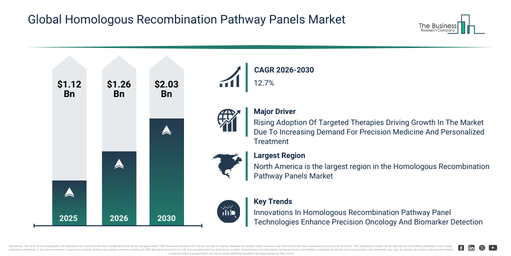
  • Homologous Recombination Pathway Panels Market to Reach $2.02 Billion by 2030 at 12.7% CAGR

    Homologous Recombination Pathway Panels Market to Reach $2.02 Billion by 2030 at 12.7% CAGR

    The Business Research Company’s 2026 market reports feature advanced enhancements such as market attractiveness analysis, total addressable market evaluation, company benchmarking matrices, interactive Excel dashboards, expanded supply chain intelligence, emerging startup coverage, and detailed product insights, delivering more actionable and strategically valuable research.

    What Market Size Is Forecasted For The Homologous Recombination Pathway Panels Market By 2030 Based On Its 2026 Value?

    The homologous recombination pathway panels market has experienced rapid expansion in recent years. It is anticipated to grow from $1.12 billion in 2025 to $1.26 billion in 2026, exhibiting a compound annual growth rate (CAGR) of 12.5%. This historical growth can be attributed to the expansion of precision oncology research, the increasing utilization of genetic testing in cancer diagnosis, the growth in hereditary cancer screening programs, the wider availability of NGS technologies, and rising collaboration between diagnostics and pharmaceutical companies.

    The homologous recombination pathway panels market is poised for significant expansion in the coming years. This market is projected to reach a valuation of $2.03 billion in 2030, exhibiting a compound annual growth rate (CAGR) of 12.7%. The anticipated growth during the forecast timeframe is attributable to several factors, including the increasing integration of companion diagnostics, the escalating need for individualized cancer treatments, the broader implementation of clinical genomics within healthcare facilities, the expanded application of AI-powered variant interpretation, and a rise in regulatory approvals for genomic panels. Key developments characterizing this period involve the greater uptake of extensive HRD testing panels, the expanding utilization of NGS-based homologous recombination assays, an increasing preference for panels designed for therapy selection, the proliferation of integrated genomic profiling kits, and a heightened emphasis on diagnostic panels offering quick results.

    Download A Free Sample Report For Comprehensive Market Insights:

    https://www.thebusinessresearchcompany.com/sample.aspx?id=33170&type=smp

    Which Core Factors Are Supporting The Expansion Of The Homologous Recombination Pathway Panels Market?

    The growing integration of targeted therapies is anticipated to fuel the expansion of the homologous recombination pathway panels market in the future. These therapies are treatments developed to precisely identify and act upon specific disease-causing molecules or genetic defects within cells, thereby suppressing their proliferation while limiting harm to healthy cells. The increasing application of targeted therapies is boosting the need for precision medicine, given that both patients and medical professionals favor treatments offering greater efficacy and reduced adverse effects over traditional approaches. Homologous recombination (HR) pathway panels play a crucial role in complementing targeted therapies by pinpointing individuals who are probable responders to DNA damage-targeting medications, which allows clinicians to customize treatment strategies and improve patient results. An illustration of this trend is observed in July 2023, where data from the American Society of Gene & Cell Therapy, a US-based non-profit medical and scientific organization, indicated a 10% increase in the number of gene therapies undergoing Phase III clinical trials during the fourth quarter of 2023, representing the initial quarterly rise since the third quarter of 2022. Consequently, the widespread integration of targeted therapies is actively driving the growth of the homologous recombination pathway panels market.

    Which Segment Groups Define The Homologous Recombination Pathway Panels Market Landscape?

    The homologous recombination pathway panels market covered in this report is segmented –

    1) By Panel Type: Comprehensive Homologous Recombination Deficiency Panels; Focused Or Core Homologous Recombination Repair Gene Panels; Custom Or Research Panels; Integrated Genomic Profiling Kits

    2) By Technology: Next-Generation Sequencing (NGS); Polymerase Chain Reaction (PCR); Microarray Based Panels; Other Molecular Diagnostic Techniques

    3) By Application: Cancer Research; Genetic Disorder Studies; Drug Discovery; Clinical Diagnostics; Other Applications

    4) By End User: Hospitals And Clinics; Diagnostic Laboratories; Research Institutes; Biotechnology Companies; Pharmaceutical Companies

    Subsegments:

    1) By Comprehensive Homologous Recombination Deficiency Panels: Broad Gene Coverage Panels; Clinical Grade Diagnostic Panels; Therapy Selection Panels; Prognostic Risk Assessment Panels

    2) By Focused Or Core Homologous Recombination Repair Gene Panels: Single Pathway Targeted Panels; Small Gene Set Panels; Cost Optimized Clinical Panels; Rapid Turnaround Testing Panels

    3) By Custom Or Research Panels: Disease Specific Research Panels; Institution Designed Gene Panels; Exploratory Genomic Study Panels; Preclinical Research Panels

    4) By Integrated Genomic Profiling Kits: Multigene Sequencing Kits; Combined Mutation And Structural Variant Kits; End To End Genomic Analysis Kits; Clinical Workflow Integrated Kits

    What Trends Are Influencing The Homologous Recombination Pathway Panels Market?

    Leading companies operating in the homologous recombination pathway panels market are focusing on the development of advanced comprehensive genomic profiling solutions. These solutions aim to identify DNA repair deficiencies, guide targeted therapies, and enable personalized treatment strategies for cancer patients. Comprehensive genomic profiling refers to an advanced testing approach that simultaneously examines hundreds of genes to identify genetic alterations, biomarkers, and molecular signatures, thereby enabling precision medicine and informed therapeutic strategies. For instance, in September 2024, Integrated DNA Technologies, a US-based biotechnology company, introduced Archer homologous recombination deficiency (HRD) technology, designed to detect homologous recombination deficiencies and guide targeted cancer therapies. These technologies assess homologous recombination deficiency (HRD) in solid tumors to enhance comprehensive genomic profiling (CGP) for cancer research. Their purpose is to detect key biomarkers like HRD, alongside MSI and TMB, from low-input samples, supporting precision medicine through flexible NGS panels without requiring workflow overhauls. Among the advantages is AMP chemistry, which facilitates standalone, spike-in, or integrated use, optimizing resources and customization.

    Who Are The Companies Shaping The Homologous Recombination Pathway Panels Market Landscape?

    Major companies operating in the homologous recombination pathway panels market are F. Hoffmann-La Roche AG, Thermo Fisher Scientific Inc., Merck KGaA, Eurofins Scientific SE, Agilent Technologies Inc., Illumina Inc., Bio-Rad Laboratories Inc., QIAGEN N.V., Integrated DNA Technologies Inc., NeoGenomics Laboratories Inc., Promega Corporation, Invitae Corporation, Caris Life Sciences Inc., Fulgent Genetics Inc., Foundation Medicine Inc., Metropolis Healthcare Limited, AmoyDx Diagnostics Co. Ltd., CD Genomics, iGeneTech Inc., and Paragon Genomics Inc.

    Access The Complete Homologous Recombination Pathway Panels Market Report:

    https://www.thebusinessresearchcompany.com/report/homologous-recombination-pathway-panels-market-report

    Which Region Leads The Homologous Recombination Pathway Panels Market By Size?

    North America was the largest region in the homologous recombination pathway panels market in 2025. Asia-Pacific is expected to be the fastest-growing region in the forecast period. The regions covered in the homologous recombination pathway panels market report are Asia-Pacific, South East Asia, Western Europe, Eastern Europe, North America, South America, Middle East, Africa.

    Access a Customized Homologous Recombination Pathway Panels Market Report for Deeper Competitive Insights

    Get in touch with us:

    The Business Research Company: https://www.thebusinessresearchcompany.com/

    Americas: +1 310-496-7795

    Asia: +44 7882 955267 & +91 8897263534

    Europe: +44 7882 955267

    Email us at: marketing@tbrc.info

    Follow us on:

    LinkedIn: https://in.linkedin.com/company/the-business-research-company

    YouTube: https://www.youtube.com/channel/UC24_fI0rV8cR5DxlCpgmyFQ

    Global Market Model: https://www.thebusinessresearchcompany.com/global-market-model
  • High-Fidelity Long-Read Sequencing Market Insights and Strategic Outlook for 2026–2030

    High-Fidelity Long-Read Sequencing Market Insights and Strategic Outlook for 2026–2030

    The Business Research Company’s 2026 market reports feature advanced enhancements such as market attractiveness analysis, total addressable market evaluation, company benchmarking matrices, interactive Excel dashboards, expanded supply chain intelligence, emerging startup coverage, and detailed product insights, delivering more actionable and strategically valuable research.

    What Are The Forecasted Market Size Figures For The High-Fidelity Long-Read Sequencing Market In 2026 And 2030?

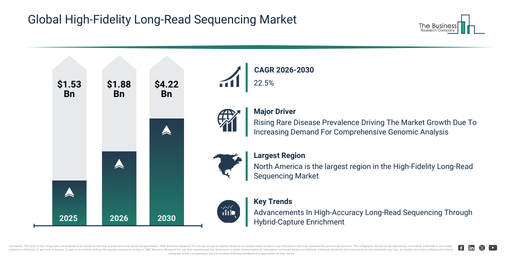
    The high-fidelity long-read sequencing market size has seen substantial growth in recent years. It is expected to expand from $1.53 billion in 2025 to $1.88 billion in 2026, exhibiting a compound annual growth rate (CAGR) of 22.2%. This historical growth can be attributed to several factors, including improvements in sequencing chemistry accuracy, initial adoption within genomics research institutions, the expansion of large-scale genome projects, increasing demand for structural variant analysis, and advancements in sequencing hardware performance.

    The high-fidelity long-read sequencing market is projected to experience rapid expansion over the coming years. This market is anticipated to reach $4.22 billion by 2030, exhibiting a compound annual growth rate (CAGR) of 22.5%. This expansion during the projected timeframe is driven by factors such as the increasing application of precision medicine, heightened investments in genomics-based drug discovery, the broadening scope of rare disease research, greater clinical implementation of long-read sequencing, and improvements in sequencing cost-effectiveness. Key trends for this period encompass the growing integration of long-read sequencing into clinical diagnostics, an escalating need for highly accurate variant detection, the expanding utilization of de novo genome assembly techniques, the widening range of epigenetic and transcriptomic analysis applications, and improved incorporation of advanced bioinformatics tools.

    Download A Free Sample Report For Comprehensive Market Insights:

    https://www.thebusinessresearchcompany.com/sample.aspx?id=33166&type=smp

    Which Growth Drivers Are Expected To Support The High-Fidelity Long-Read Sequencing Market Forward?

    The growing prevalence of rare diseases is anticipated to drive the expansion of the HiFi long-read sequencing market moving forward. These rare conditions are disorders that impact a small number of individuals, often characterized by complex symptoms and limited treatment avenues. The increase in rare diseases is attributed to advancements in genetic sequencing and diagnostic technologies, which allow for earlier and more accurate identification of previously undiagnosed or misclassified conditions. HiFi long-read sequencing aids in tackling rare diseases by enabling highly accurate, exhaustive detection of intricate genetic variants frequently overlooked by short-read sequencing, thereby leading to faster and more precise diagnoses. For instance, in July 2023, according to the Department of Health & Social Care, a UK-based government department, it is estimated that more than 7,000 rare diseases exist, with new conditions continually being discovered as research advances. Approximately 80% of these rare diseases are known to have a genetic basis. Consequently, the rising occurrence of rare diseases is fostering the growth of the HiFi long-read sequencing market.

    How Is Segment Classification Applied In The High-Fidelity Long-Read Sequencing Market?

    The high-fidelity long-read sequencing market covered in this report is segmented –

    1) By Product Type: Instruments; Consumables; Software

    2) By Sequencing Technology: Single-Molecule Real-Time Sequencing; Nanopore Sequencing; Other Sequencing Technologies

    3) By Application: Clinical Diagnostics; Genomics Research; Oncology; Rare Disease Detection; Agriculture And Animal Research; Other Applications

    4) By End-User: Academic And Research Institutes; Hospitals And Clinics; Pharmaceutical And Biotechnology Companies; Other End-Users

    Subsegments:

    1) By Instruments: Sequencers; Library Preparation Systems; Sample Preparation Instruments; Data Collection Devices; Quality Control Instruments

    2) By Consumables: Sequencing Kits; Flow Cells; Reagents; Pipette Tips; Sample Tubes

    3) By Software: Data Analysis Software; Visualization Software; Sequence Alignment Software; Genome Assembly Software; Quality Assessment Software

    What Trends Are Influencing The Future Of The High-Fidelity Long-Read Sequencing Market?

    Major companies operating in the HiFi long-read sequencing market are focusing on developing innovative solutions, such as hybrid-capture target enrichment, to enhance sequencing accuracy, increase coverage of complex genomic regions, and accelerate the detection of structural variants for advanced research and clinical applications. Hybrid-capture target enrichment refers to a genomic sequencing technique that selectively isolates specific regions of DNA or RNA from a sample using complementary probes, allowing for focused, high-accuracy sequencing of target regions while reducing the analysis of non-relevant regions. For instance, in July 2025, QIAGEN N.V., a Netherlands-based biotechnology company, launched QIAseq xHYB Long Read Panels to expand its next-generation sequencing (NGS) offerings. This product uses hybrid-capture enrichment to enable precise long-read sequencing of complex genomic regions like repeats and structural variants, overcoming short-read limitations. These panels offer superior uniformity, specificity, and complete coverage for applications in cancer profiling, HLA typing, and haplotype phasing, with flexible fixed or custom formats and integrated workflows from DNA prep to bioinformatics analysis. Benefits include streamlined efficiency and deeper insights for precision medicine.

    Which Organizations Are Involved In The High-Fidelity Long-Read Sequencing Market?

    Major companies operating in the high-fidelity long-read sequencing market are Azenta Inc., BGI Genomics Co. Ltd., GenScript Biotech Corporation, Novogene Co. Ltd., Takara Bio Inc., Pacific Biosciences of California Inc., Macrogen Inc., MedGenome Inc., MGI Tech Co. Ltd., Discovery Life Sciences Inc., Eurofins Genomics LLC, CD Genomics, BaseClear B.V., Psomagen Inc., Health in Code S.L., Creative Biogene Inc., Nucleome Informatics Private Limited, Genevia Technologies Oy, JS Link Co. Ltd., SeqCenter LLC, Theragen Bio Co. Ltd.

    Access The Complete High-Fidelity Long-Read Sequencing Market Report:

    https://www.thebusinessresearchcompany.com/report/high-fidelity-long-read-sequencing-market-report

    Which Region Stands As The Largest Contributor To The High-Fidelity Long-Read Sequencing Market?

    North America was the largest region in the HiFi long-read sequencing market in 2025. Asia-Pacific is expected to be the fastest-growing region in the forecast period. The regions covered in the high-fidelity long-read sequencing market report are Asia-Pacific, South East Asia, Western Europe, Eastern Europe, North America, South America, Middle East, Africa.

    Access a Customized High-Fidelity Long-Read Sequencing Market Report for Deeper Competitive Insights

    Get in touch with us:

    The Business Research Company: https://www.thebusinessresearchcompany.com/

    Americas: +1 310-496-7795

    Asia: +44 7882 955267 & +91 8897263534

    Europe: +44 7882 955267

    Email us at: marketing@tbrc.info

    Follow us on:

    LinkedIn: https://in.linkedin.com/company/the-business-research-company

    YouTube: https://www.youtube.com/channel/UC24_fI0rV8cR5DxlCpgmyFQ

    Global Market Model: https://www.thebusinessresearchcompany.com/global-market-model
  • Global Gynecological Dilators Market Forecast 2026–2035 with Long-Term Insights

    Global Gynecological Dilators Market Forecast 2026–2035 with Long-Term Insights

    The Business Research Company’s 2026 market reports feature advanced enhancements such as market attractiveness analysis, total addressable market evaluation, company benchmarking matrices, interactive Excel dashboards, expanded supply chain intelligence, emerging startup coverage, and detailed product insights, delivering more actionable and strategically valuable research.

    What Is The Expected Market Value Outlook For The Gynecological Dilators Market Through 2030?

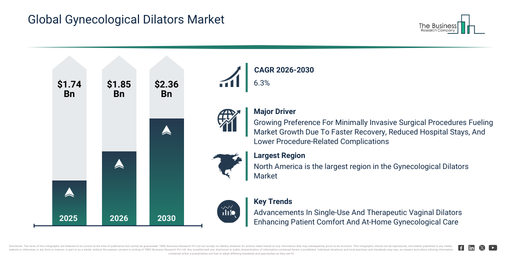
    The gynecological dilators market has experienced substantial expansion in its size over recent years. Projections indicate its growth from $1.74 billion in 2025 to $1.85 billion in 2026, demonstrating a compound annual growth rate (CAGR) of 6.1%. This historical growth is attributable to factors such as an escalating number of gynecological procedures, heightened awareness regarding vaginal health therapies, the expansion of hospital and clinic infrastructure, the availability of various dilator materials, and an increase in outpatient gynecological care.

    The gynecological dilators market size is projected to experience substantial expansion over the upcoming years. It is anticipated to reach a valuation of $2.36 billion by 2030, exhibiting a compound annual growth rate (CAGR) of 6.3%. This growth throughout the forecast period stems from several factors, including a heightened emphasis on patient-centric medical devices, the increasing prevalence of minimally invasive gynecological procedures, the broadening reach of online medical device distribution channels, a rising need for tailored treatment solutions, and a stronger focus on hygiene and safety protocols. Key trends during this period encompass the growing integration of medical-grade silicone dilators, an increasing desire for customizable and graduated dilator sets, a developing inclination towards reusable and sterilizable instruments, the expansion of their therapeutic application in home settings, and an intensified focus on patient comfort and safety.

    Download A Free Sample Report For Comprehensive Market Insights:

    https://www.thebusinessresearchcompany.com/sample.aspx?id=33146&type=smp

    What Primary Factors Are Fueling The Expansion Of The Gynecological Dilators Market?

    An increasing inclination towards minimally invasive surgical procedures is anticipated to fuel the expansion of the gynecological dilators market in the future. These procedures involve gynecological interventions that utilize smaller entry points and modern techniques, including hysteroscopy, laparoscopy, and image-guided tools, as opposed to conventional open operations. Their wider acceptance stems from advantages such as quicker patient recuperation, reduced hospital durations, less pain after surgery, and a decreased likelihood of procedure-associated complications. Gynecological dilators play a crucial role in supporting these surgeries by allowing for progressive and regulated dilation of the cervix or vagina with minimal damage to tissues, thus ensuring secure entry to the uterine cavity and reproductive organs during both diagnostic and therapeutic procedures. For example, data from the American Society of Plastic Surgeons, a US-based non-profit organization, shows that in 2024, minimally invasive procedures grew by 1.5% from 25,442,640 in 2023 to 28,243,407 in 2024. Consequently, the rising preference for minimally invasive surgical procedures is propelling the growth of the gynecological dilators market.

    Which Segment-Based Categories Are Covered In The Gynecological Dilators Market?

    The gynecological dilators market covered in this report is segmented –

    1) By Product Type: Silicone Dilators; Plastic Dilators; Metal Dilators; Glass Dilators

    2) By Size: Medium Dilators; Small Dilators; Large Dilators; Customizable Size Dilators

    3) By Application: Medical; Personal

    4) By Distribution Channel: Hospitals And Clinics; Online Retailers; Medical Supply Stores; Pharmacies

    Subsegments:

    1) By Silicone Dilators: Medical Grade Silicone Dilators; Soft Silicone Dilators; Graduated Silicone Dilators; Flexible Silicone Dilators

    2) By Plastic Dilators: Polyethylene Dilators; Polypropylene Dilators; Polycarbonate Dilators; Disposable Plastic Dilators

    3) By Metal Dilators: Stainless Steel Dilators; Titanium Dilators; Reusable Metal Dilators; Surgical Grade Metal Dilators

    4) By Glass Dilators: Borosilicate Glass Dilators; Tempered Glass Dilators; Reusable Glass Dilators; Medical Grade Glass Dilators

    Which Trends Are Supporting The Evolution Of The Gynecological Dilators Market?

    Major companies in the gynecological dilators market are concentrating on developing advanced single-use and disposable therapeutic vaginal dilators designed for both home and clinical environments. This strategic focus aims to address the growing demand for successful management of gynecological conditions, including vaginismus, pelvic floor dysfunction, and dyspareunia, while also improving patient comfort, safety, and compliance with therapy. Therapeutic vaginal dilators, as medical devices, function by gently stretching and relaxing vaginal tissues, which helps restore elasticity, alleviate pain, and enhance vaginal function; they are frequently utilized in pelvic floor therapy, recovery post-surgery, aftercare for radiation therapy, and the treatment of conditions like vaginismus and vaginal stenosis. As an illustration, in June 2024, Materna Medical, Inc., a U.S.-based obstetrics and gynecology (OBGYN) platform company, commenced a virtual clinical trial to evaluate the Milli Vaginal Dilator, an innovative instrument crafted for controlled vaginal dilation and symptom management in individuals with vaginismus. The Milli Vaginal Dilator is made from medical-grade materials and features an ergonomic, user-friendly design appropriate for both at-home and clinical use, offering progressive and comfortable tissue expansion, guided therapy methods, and reduced anxiety and discomfort compared with traditional rigid dilators.

    Who Are The Leading Firms Participating In The Gynecological Dilators Market?

    Major companies operating in the gynecological dilators market are Medline Industries L.P., STERIS plc, Hologic Inc., Karl Storz SE & Co. KG, Cook Medical LLC, Integra LifeSciences Corporation, CooperSurgical Inc., KLS Martin Group, MedGyn Products Inc., Sklar Surgical Instruments Corporation, MEDICON eG, Advin Health Care, Medicem Group a.s., Pelican Feminine Healthcare Ltd., Intimate Rose LLC, Syracuse Medical Products Inc., Laboratoires Gyneas, Surgical Holdings, Vagiwell AB, Panpac Medical Corp., Aqueduct Medical Inc., Sculape India Pvt. Ltd.

    Access The Complete Gynecological Dilators Market Report:

    https://www.thebusinessresearchcompany.com/report/gynecological-dilators-market-report

    Which Regional Market Leads The Gynecological Dilators Market?

    North America was the largest region in the gynecological dilators market in 2025. Asia-Pacific is expected to be the fastest-growing region in the forecast period. The regions covered in the gynecological dilators market report are Asia-Pacific, South East Asia, Western Europe, Eastern Europe, North America, South America, Middle East, Africa.

    Access a Customized Gynecological Dilators Market Report for Deeper Competitive Insights

    Get in touch with us:

    The Business Research Company: https://www.thebusinessresearchcompany.com/

    Americas: +1 310-496-7795

    Asia: +44 7882 955267 & +91 8897263534

    Europe: +44 7882 955267

    Email us at: marketing@tbrc.info

    Follow us on:

    LinkedIn: https://in.linkedin.com/company/the-business-research-company

    YouTube: https://www.youtube.com/channel/UC24_fI0rV8cR5DxlCpgmyFQ

    Global Market Model: https://www.thebusinessresearchcompany.com/global-market-model
  • Smart wearable devices transforming the Fertility Tracking Sensor Market

    Smart wearable devices transforming the Fertility Tracking Sensor Market

    The Business Research Company’s 2026 market reports feature advanced enhancements such as market attractiveness analysis, total addressable market evaluation, company benchmarking matrices, interactive Excel dashboards, expanded supply chain intelligence, emerging startup coverage, and detailed product insights, delivering more actionable and strategically valuable research.

    How Is The Fertility Tracking Sensor Market’s Market Value Anticipated To Evolve From 2026 To 2030?

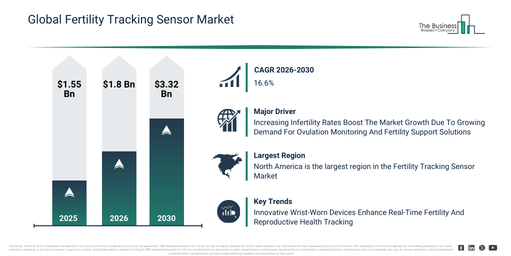
    The fertility tracking sensor market size has observed rapid expansion in recent years. It is anticipated to grow from $1.55 billion in 2025 to $1.8 billion in 2026, achieving a compound annual growth rate (CAGR) of 16.4%. This historical growth can be linked to factors such as increasing awareness of reproductive health management, a greater adoption of digital health wearables, an escalating demand for natural family planning tools, the broadening of women-focused health technology, and the accessibility of affordable sensor technologies.

    The fertility tracking sensor market is projected to experience substantial expansion over the next few years, with its valuation expected to reach $3.32 billion in 2030, demonstrating a compound annual growth rate (CAGR) of 16.6%. This anticipated growth is driven by factors such as the increasing deployment of AI-powered fertility analytics, a heightened consumer demand for personalized reproductive health insights, the broadening availability of telehealth-supported fertility management services, the rising acceptance of remote patient monitoring, and the deeper integration of fertility data platforms within healthcare systems. Significant developments expected during this timeframe include the increasing uptake of continuous ovulation monitoring devices, a surge in the usage of wearable fertility sensors, the expanding incorporation of AI-based cycle prediction algorithms, the proliferation of smartphone-connected fertility tracking solutions, and a stronger emphasis on non-invasive monitoring technologies.

    Download A Free Sample Report For Comprehensive Market Insights:

    https://www.thebusinessresearchcompany.com/sample.aspx?id=33111&type=smp

    What Important Drivers Are Powering The Fertility Tracking Sensor Market Growth?

    The rising incidence of infertility is anticipated to fuel the expansion of the fertility tracking sensor market moving forward. Infertility describes a reproductive health issue where a pair cannot conceive naturally even after extended, regular attempts. The increase in infertility is primarily attributable to delayed parenthood, as a greater number of people opt to start families at an older age, leading to a natural decrease in fertility and a heightened risk of reproductive health complications. Fertility tracking sensors assist in addressing infertility by continuously monitoring vital reproductive indicators, including basal body temperature and hormonal shifts, which allows couples to precisely pinpoint their fertile window and enhance their likelihood of conceiving. For example, data from April 2023 released by the World Health Organization (WHO), a Switzerland-based intergovernmental body, indicated that around 17.5% of adults, or roughly 1 in 6 individuals globally, experience infertility. This underscores the urgent necessity to enhance the availability of affordable, high-quality fertility treatment for affected persons. Consequently, the growing prevalence of infertility is a key factor propelling the development of the fertility tracking sensor market.

    What Segment Categories Are Evaluated In The Fertility Tracking Sensor Market Study?

    The fertility tracking sensor market covered in this report is segmented –

    1) By Product Type: Wearable Sensors; Implantable Sensors; Patch Sensors; Other Product Types

    2) By Technology: Temperature Sensors; Hormone Sensors; Electrochemical Sensors; Optical Sensors; Other Technologies

    3) By Application: Ovulation Prediction; Menstrual Cycle Tracking; Pregnancy Detection; Other Applications

    4) By Distribution Channel: Online; Pharmacies; Retail Stores; Other Distribution Channels

    5) By End-User: Homecare Settings; Hospitals And Clinics; Fertility Centers; Other End-Users

    Subsegments:

    1) By Wearable Sensors: Smart Wristbands; Smart Rings; Smart Patches; Smart Garments

    2) By Implantable Sensors: Subcutaneous Implants; Intrauterine Devices; Microchip Implants

    3) By Patch Sensors: Adhesive Skin Patches; Transdermal Patches; Disposable Patches

    4) By Other Product Types: Portable Monitors; Smartphone Compatible Devices; Non Invasive Devices

    What Trends Are Affecting The Fertility Tracking Sensor Market Dynamics?

    Major companies within the fertility tracking sensor market are prioritizing the creation of innovative solutions, such as wrist-worn wearables, to deliver real-time fertility monitoring, boost cycle accuracy, and aid in managing women’s reproductive health via data-driven insights. A wrist-worn wearable is defined as a compact electronic device worn on the wrist that gathers and interprets physiological data, including temperature, heart rate, or hormone-related signals, to track health metrics and offer actionable information, specifically concerning fertility and reproductive health. For example, in January 2026, Natural Cycles, a digital health company based in Sweden, released an NC° Band that streamlines fertility tracking by automatically measuring temperature during sleep. This device is engineered for seamless fertility tracking, replacing manual thermometers by automatically recording overnight skin temperature, heart rate, and movement. Its objective is to power the app’s NC° Fertility algorithm for identifying fertile windows, thereby enabling hormone-free birth control (93% typical effectiveness), alongside support for pregnancy planning, postpartum recovery, and perimenopause.

    Which Firms Are Competing In The Fertility Tracking Sensor Market?

    Major companies operating in the fertility tracking sensor market are Swiss Precision Diagnostics GmbH, Natural Cycles Nordic AB, Alfa Scientific Designs Inc., kegg Inc., Quidel Corporation, Tempdrop Ltd., Valley Electronics AG., Babystart Ltd., Bongmi Technology, Fairhaven Health LLC, Femometer Inc., Inito Health Tech Private Limited, Oura Health Oy, Prima-Temp LLC, Quanovate Tech Inc., Raiing Medical Company, Samplytics Technologies Pvt. Ltd., YONO Labs Inc., bioZhena Corporation, Welltwigs.

    Access The Complete Fertility Tracking Sensor Market Report:

    https://www.thebusinessresearchcompany.com/report/fertility-tracking-sensor-market-report

    Which Geographic Region Represents The Largest Fertility Tracking Sensor Market Share?

    North America was the largest region in the fertility tracking sensor market in 2025. Asia-Pacific is expected to be the fastest-growing region in the forecast period. The regions covered in the fertility tracking sensor market report are Asia-Pacific, South East Asia, Western Europe, Eastern Europe, North America, South America, Middle East, Africa.

    Access a Customized Fertility Tracking Sensor Market Report for Deeper Competitive Insights

    Get in touch with us:

    The Business Research Company: https://www.thebusinessresearchcompany.com/

    Americas: +1 310-496-7795

    Asia: +44 7882 955267 & +91 8897263534

    Europe: +44 7882 955267

    Email us at: marketing@tbrc.info

    Follow us on:

    LinkedIn: https://in.linkedin.com/company/the-business-research-company

    YouTube: https://www.youtube.com/channel/UC24_fI0rV8cR5DxlCpgmyFQ

    Global Market Model: https://www.thebusinessresearchcompany.com/global-market-model
  • Global EEG Cap Market Forecast Reflecting Growth Trends from 2026–2030

    Global EEG Cap Market Forecast Reflecting Growth Trends from 2026–2030

    The Business Research Company’s 2026 market reports feature advanced enhancements such as market attractiveness analysis, total addressable market evaluation, company benchmarking matrices, interactive Excel dashboards, expanded supply chain intelligence, emerging startup coverage, and detailed product insights, delivering more actionable and strategically valuable research.

    How Will The Market Size Of The Electroencephalography (EEG) Cap Market Progress Through 2030?

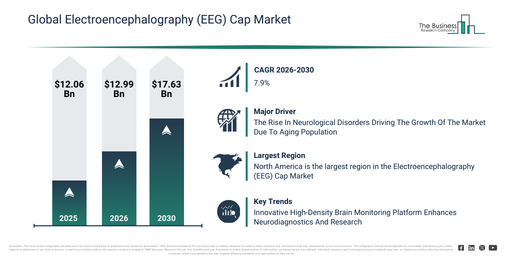
    The electroencephalography (EEG) cap market has experienced significant expansion recently. Projections indicate its size will increase from $12.06 billion in 2025 to $12.99 billion in 2026, achieving a compound annual growth rate (CAGR) of 7.7%. This historical growth can be attributed to several factors, including the widening scope of clinical neurology diagnostics, the increasing prevalence of neurological conditions, a rise in the use of EEG for sleep studies, intensified academic neuroscience research, and the availability of standardized electrode placement systems.

    The electroencephalography (eeg) cap market is projected to experience substantial expansion over the coming years, anticipated to reach a valuation of $17.63 billion by 2030, exhibiting a compound annual growth rate (CAGR) of 7.9%. This growth throughout the forecast period can be linked to several factors, including the expanding adoption of brain–computer interface research, a heightened need for remote neurological monitoring, the broader integration of digital health into diagnostic practices, increasing financial commitments to neuroscience research, and the rising application of eeg in personalized medicine. Key developments expected during this timeframe encompass the wider use of wireless eeg caps, a greater inclination towards high-density electrode configurations, the increasing implementation of dry and semi-dry electrode technologies, the spread of portable and home-based eeg monitoring solutions, and an intensified emphasis on both patient comfort and signal accuracy.

    Download A Free Sample Report For Comprehensive Market Insights:

    https://www.thebusinessresearchcompany.com/sample.aspx?id=33100&type=smp

    Which Growth Drivers Are Expected To Support The Electroencephalography (EEG) Cap Market Forward?

    The increasing occurrence of neurological conditions is anticipated to fuel the expansion of the electroencephalography (EEG) cap market in the future. A neurological disorder refers to any illness or state impacting the typical structure or operation of the central nervous system (comprising the brain and spinal cord) or the peripheral nervous system. This surge in neurological disorder prevalence largely stems from demographic aging, given that the likelihood of conditions like Alzheimer’s, Parkinson’s, and stroke escalates with advancing age, consequently resulting in greater overall incidence among older populations. The electroencephalography (EEG) cap assists in the management of neurological disorders through its capacity for real-time brain activity monitoring, which contributes to precise diagnosis, effective treatment planning, and the evaluation of therapeutic progress. As an illustration, the Alzheimer’s Association, a US-based nonprofit voluntary health organization, reported in March 2023 that approximately 6.7 million Americans aged 65 and older were affected by Alzheimer’s dementia in 2023, with projections indicating this figure will reach 13.8 million by 2060. Consequently, the growing occurrence of neurological disorders is a key impetus for the expansion of the electroencephalography (EEG) cap market.

    What Are The Core Segment Classifications In The Electroencephalography (EEG) Cap Market?

    The electroencephalography (eeg) cap market covered in this report is segmented –

    1) By Type: Electroencephalography (EEG) Caps for Adults; Electroencephalography (EEG) Caps for Babies

    2) By Technology: Wireless Electroencephalography (EEG) Caps; High-Density Electroencephalography (EEG) Caps

    3) By Application: Clinical Diagnostics; Neurology; Epilepsy Monitoring; Sleep Studies; Brain–Computer Interface Research; Neuroscience Research

    4) By End-User: Hospitals; Diagnostic Centers; Clinics And Ambulatory Surgical Centers; Academic And Research Institutes; Home-Care Settings

    Subsegments:

    1) By Electroencephalography (EEG) Caps for Adults: Wet Electrode Caps; Dry Electrode Caps; Semi-Dry Electrode Caps; Wireless Electroencephalography Caps; High-Density Electrode Caps

    2) By Electroencephalography (EEG) Caps for Babies: Soft Fabric Caps; Stretchable Silicone Caps; Wireless Baby Electroencephalography Caps; High-Density Electrode Caps For Babies; Infant Sleep Monitoring Caps

    Which Trends Are Guiding The Development Of The Electroencephalography (EEG) Cap Market?

    Leading companies in the electroencephalography (EEG) cap market are prioritizing the development of innovative solutions, such as high-density electroencephalography platforms, to improve capabilities in brain monitoring, neurodiagnostics, and research. A high-density electroencephalography platform constitutes an advanced brain-monitoring system that utilizes hundreds of closely positioned electrodes to record highly detailed electrical brain activity for both research and clinical applications. For instance, in September 2025, Electrical Geodesics Inc., a US-based technology company, unveiled the Geodesic EEG System 500 (GES 500) with the aim of advancing high-resolution brain monitoring and neuroscience research. This platform supports the acquisition of up to 256 channels of high-density EEG data, thus enabling precise mapping of brain activity. It integrates hardware and software into a cohesive ecosystem, compatible with both proprietary analytics and widely used open-source neuroscience tools. Moreover, the GES 500 facilitates combined recording and stimulation workflows, including seamless operation with transcranial magnetic stimulation (TMS) systems, which promotes cutting-edge studies in brain function, neurological disorders, and cognitive research.

    Which Organizations Are Involved In The Electroencephalography (EEG) Cap Market?

    Major companies operating in the electroencephalography (eeg) cap market are NeuroSky Inc., ADInstruments Pty Ltd, Inomed Medizintechnik GmbH, Brain Products GmbH, Emotiv Inc., ANT Neuro B.V., BioSemi B.V., Electrical Geodesics Inc., BIOPAC Systems Inc., Medical Computer Systems GmbH, Compumedics Neuroscan, Neuroelectrics SL, Electro-Cap International Inc., MAG & More GmbH, Mind Media B.V., NIRx Medizintechnik GmbH, NR Sign Ltd, TELEMEDX Inc., Tenocom Medical GmbH, Wearable Sensing LLC.

    Access The Complete Electroencephalography (EEG) Cap Market Report:

    https://www.thebusinessresearchcompany.com/report/electroencephalography-eeg-cap-market-report

    Which Region Contributes The Most To The Electroencephalography (EEG) Cap Market?

    North America was the largest region in the EEG cap market in 2025. Asia-Pacific is expected to be the fastest-growing region in the forecast period. The regions covered in the electroencephalography (eeg) cap market report are Asia-Pacific, South East Asia, Western Europe, Eastern Europe, North America, South America, Middle East, Africa.

    Access a Customized Electroencephalography (EEG) Cap Market Report for Deeper Competitive Insights

    Get in touch with us:

    The Business Research Company: https://www.thebusinessresearchcompany.com/

    Americas: +1 310-496-7795

    Asia: +44 7882 955267 & +91 8897263534

    Europe: +44 7882 955267

    Email us at: marketing@tbrc.info

    Follow us on:

    LinkedIn: https://in.linkedin.com/company/the-business-research-company

    YouTube: https://www.youtube.com/channel/UC24_fI0rV8cR5DxlCpgmyFQ

    Global Market Model: https://www.thebusinessresearchcompany.com/global-market-model

  • Electric Mobile X-Ray Van Market Trends and Demand Outlook 2026–2030

    Electric Mobile X-Ray Van Market Trends and Demand Outlook 2026–2030

    The Business Research Company’s 2026 market reports feature advanced enhancements such as market attractiveness analysis, total addressable market evaluation, company benchmarking matrices, interactive Excel dashboards, expanded supply chain intelligence, emerging startup coverage, and detailed product insights, delivering more actionable and strategically valuable research.

    What Is The Expected Market Size Of The Electric Mobile X-Ray Van Market In 2026 And How Much Will It Reach By 2030?

    The electric mobile x-ray van market has seen swift expansion over recent years. It is anticipated to increase from $196.52 billion in 2025 to $223.29 billion in 2026, achieving a compound annual growth rate (CAGR) of 13.6%. The historical surge in this market can be linked to the proliferation of mobile healthcare programs, a growing need for diagnostic access in remote regions, breakthroughs in digital imaging technologies, an elevated focus on widespread population health screening, and the availability of electric vehicle bases for medical applications.

    The electric mobile x-ray van market size is projected to experience substantial expansion in the upcoming period. This market is predicted to reach $375.25 billion in 2030, exhibiting a compound annual growth rate (CAGR) of 13.9%. Several factors are driving this anticipated growth, including heightened investments in electric healthcare mobility, a surge in the adoption of telemedicine-supported diagnostics, the broadening of public health outreach initiatives, an intensified emphasis on sustainable medical transport solutions, and the increased integration of AI-assisted image analysis. Key trends during this period are expected to encompass the expanded deployment of electric mobile diagnostic units, an increase in the adoption of digital radiography systems within mobile vans, a rising demand for healthcare vehicles with low emissions, the extension of community-based diagnostic services, and a heightened emphasis on remote and preventive healthcare.

    Download A Free Sample Report For Comprehensive Market Insights:

    https://www.thebusinessresearchcompany.com/sample.aspx?id=33099&type=smp

    What Influential Factors Are Boosting The Electric Mobile X-Ray Van Market Demand?

    The electric mobile X-ray van market is projected to expand due to the increasing adoption of preventive healthcare programs. These programs are structured initiatives or services designed to promote, maintain, or restore health, frequently focusing on specific populations, conditions, or preventive care objectives. The rise in preventive healthcare programs is largely attributed to a greater emphasis from governments and payers on early disease identification and cost reduction through proactive care strategies. The electric mobile X-ray van plays a crucial role in these healthcare programs by delivering high-quality diagnostic imaging directly to patients in remote, underserved, or point-of-care settings, thereby improving access, enabling early detection, and facilitating timely medical intervention. For instance, in May 2024, data from the Office for National Statistics, a UK-based government department, revealed that healthcare spending in the UK grew by 5.6% between 2022 and 2023, a notable increase compared to the 0.9% growth in 2022. The UK’s total healthcare expenditure amounted to around $317.63 billion (£292 billion) in 2023. This evidence underscores how the expansion of preventive healthcare programs is consequently driving the growth of the electric mobile X-ray van market.

    How Is The Electric Mobile X-Ray Van Market Structured Across Different Market Segments?

    The electric mobile x-ray van market covered in this report is segmented –

    1) By Vehicle Type: Light Duty; Medium Duty; Heavy Duty

    2) By Power Source: Battery Electric; Hybrid Electric

    3) By Technology: Digital Radiography Systems; Computed Radiography Systems; Battery-Electric Propulsion

    4) By Application: Hospitals; Diagnostic Centers; Emergency Services; Military And Defense; Other Applications

    5) By End-User: Public Sector; Private Sector

    Subsegments:

    1) By Light Duty: Passenger Van; Compact Utility Van; Small Box Van

    2) By Medium Duty: Step Van; Medium Box Truck; Chassis Cab Truck

    3) By Heavy Duty: Large Box Truck; Rigid Truck; Specialty Medical Truck

    What Trends Are Influencing The Future Of The Electric Mobile X-Ray Van Market?

    Major companies in the electric mobile X-ray van market are concentrating on developing innovative technologies, such as mobile radiography units for TB screening, to enable rapid, on-site chest imaging, improve early disease detection, and expand diagnostic access in remote and underserved regions. Mobile Radiography Units for TB Screening are defined as self-contained, vehicle-mounted diagnostic systems equipped with digital chest X-ray technology that facilitate on-site tuberculosis screening and early detection in remote, rural, or underserved areas. For instance, in February 2024, the Philippine Business for Social Progress (PBSP), a Philippines-based non-profit organization, partnered with the Department of Health, a Philippines-based government agency, and launched a mobile TB X-ray van to enhance access to tuberculosis (TB) care. This van features integrated TB screening and diagnostic facilities, enabling early detection and faster initiation of treatment directly within communities. The van supports decentralized service delivery by bringing testing, consultation, and follow-up closer to patients, reducing travel time and access barriers. Additionally, it is configured to support awareness programs, patient monitoring, and coordination with local health systems, helping strengthen TB care outreach, continuity of treatment, and the overall public health response.

    Who Are The Firms Contributing To The Electric Mobile X-Ray Van Market Ecosystem?

    Major companies operating in the electric mobile x-ray van market are Siemens Healthineers AG, Royal Philips N.V., GE HealthCare Technologies Inc., Hologic Inc., Agfa HealthCare, Hubei Ruitu Technology Co. Ltd., Chengli Special Automobile Co. Ltd., Summit Bodyworks Inc., Shimadzu Medical Systems, Canon Medical Systems Corporation, Hubei Hengsheng Special Vehicle Co. Ltd., Fujifilm Medical Systems, MinXray Inc., Craftsmen Industries Inc.

    Access The Complete Electric Mobile X-Ray Van Market Report:

    https://www.thebusinessresearchcompany.com/report/electric-mobile-x-ray-van-market-report

    Which Regional Market Leads The Electric Mobile X-Ray Van Market?

    North America was the largest region in the electric mobile X-ray van market in 2025. Asia-Pacific is expected to be the fastest-growing region in the forecast period. The regions covered in the electric mobile x-ray van market report are Asia-Pacific, South East Asia, Western Europe, Eastern Europe, North America, South America, Middle East, Africa.

    Access a Customized Electric Mobile X-Ray Van Market Report for Deeper Competitive Insights

    Get in touch with us:

    The Business Research Company: https://www.thebusinessresearchcompany.com/

    Americas: +1 310-496-7795

    Asia: +44 7882 955267 & +91 8897263534

    Europe: +44 7882 955267

    Email us at: marketing@tbrc.info

    Follow us on:

    LinkedIn: https://in.linkedin.com/company/the-business-research-company

    YouTube: https://www.youtube.com/channel/UC24_fI0rV8cR5DxlCpgmyFQ

    Global Market Model: https://www.thebusinessresearchcompany.com/global-market-model