Category: Medical Equipment

  • Global Brain Bionics Market Expected to Reach $7.35 Billion by 2030 at 13.8% CAGR

    Global Brain Bionics Market Expected to Reach $7.35 Billion by 2030 at 13.8% CAGR

    The Business Research Company’s 2026 market reports feature advanced enhancements such as market attractiveness analysis, total addressable market evaluation, company benchmarking matrices, interactive Excel dashboards, expanded supply chain intelligence, emerging startup coverage, and detailed product insights, delivering more actionable and strategically valuable research.

    What Market Value Expansion Is Expected For The Brain Bionics Market Over The Forecast Period?

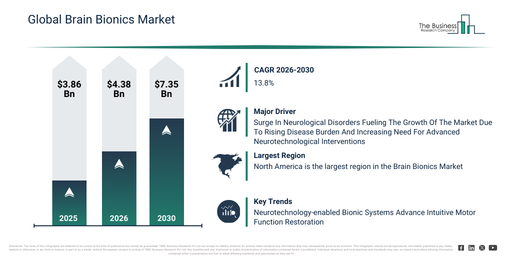
    The brain bionics market has experienced rapid growth in recent years. Its valuation is set to increase from $3.86 billion in 2025 to $4.38 billion in 2026, achieving a compound annual growth rate (CAGR) of 13.6%. This historical growth can be linked to developments in neuroscience research, the rising occurrence of neurological disorders, the early clinical implementation of deep brain stimulation, the expansion of academic neurotechnology programs, and increasing investments in medical device innovation.

    The brain bionics market is anticipated to experience substantial growth in the upcoming years, with its value projected to reach $7.35 billion in 2030, exhibiting a compound annual growth rate (CAGR) of 13.8%. This expansion over the forecast period is driven by factors such as the increasing demand for personalized neurotherapies, the expansion of brain-computer interface clinical trials, the growing integration of cloud-based neural data platforms, the rising adoption of home-based neurofeedback systems, and increasing regulatory approvals for implantable neurodevices. Significant trends observed during this period include the increasing adoption of implantable neural interfaces, the rising integration of AI-driven neural signal processing, the growing use of non-invasive brain-computer interfaces, the expansion of closed-loop neuromodulation systems, and an enhanced focus on personalized neurotherapy solutions.

    Download A Free Sample Report For Comprehensive Market Insights:

    https://www.thebusinessresearchcompany.com/sample.aspx?id=33045&type=smp

    Which Growth Drivers Are Expected To Support The Brain Bionics Market Forward?

    The increasing occurrence of neurological disorders is projected to boost the expansion of the brain bionics market moving forward. Neurological disorders encompass conditions and diseases impacting the brain, spinal cord, and nerves, leading to diminished movement, cognitive abilities, sensation, or behavior. The rise in neurological disorders is primarily attributed to an aging population, which heightens the risk of conditions like Parkinson’s disease, epilepsy, stroke, and dementia. Brain bionics facilitates the management and treatment of neurological disorders through direct interaction between neural circuits and artificial systems, aiming to restore lost functions, modulate atypical brain activity, and enhance rehabilitation results. For instance, in December 2025, the Medical Republic, an Australia-based media company, stated that neurological conditions accounted for over 350,000 hospital admissions and 130,000 emergency department visits during 2023–24. Thus, the growing prevalence of neurological disorders is a significant driver for the brain bionics market’s growth.

    Which Segment-Based Categories Are Covered In The Brain Bionics Market?

    The brain bionics market covered in this report is segmented –

    1) By Product Type: Neuroprosthetics; Brain-Machine Interfaces (BMIs); Neuromodulation Devices; Transcranial Magnetic Stimulation Devices

    2) By Technology: Electrodes And Sensors; Software And Algorithms; Cloud-Based Platforms; Wearable Devices

    3) By User Demographics: Adults; Pediatrics; Elderly

    4) By Application: Neurorehabilitation; Cognitive Enhancement; Pain Management; Neurodegenerative Disorders; Acute Interstitial Nephritis Disorders

    5) By End User: Hospitals; Academic And Research Institutes; Home Care Settings; Pharmaceutical And Biotech Companies

    Subsegments:

    1) By Neuroprosthetics: Cochlear Implants; Retinal Implants; Deep Brain Stimulation Implants; Spinal Cord Stimulation Implants; Peripheral Nerve Stimulation Implants

    2) By Brain-Machine Interfaces (BMIs): Invasive Brain-Machine Interfaces; Partially Invasive Brain-Machine Interfaces; Non-Invasive Brain-Machine Interfaces; Assistive Communication Brain-Machine Interfaces; Motor Control Brain-Machine Interfaces

    3) By Neuromodulation Devices: Deep Brain Stimulation Devices; Spinal Cord Stimulation Devices; Vagus Nerve Stimulation Devices; Sacral Nerve Stimulation Devices; Peripheral Nerve Stimulation Devices

    4) By Transcranial Magnetic Stimulation Devices: Repetitive Transcranial Magnetic Stimulation Devices; Deep Transcranial Magnetic Stimulation Devices; Single-Pulse Transcranial Magnetic Stimulation Devices; Paired-Pulse Transcranial Magnetic Stimulation Devices; Portable Transcranial Magnetic Stimulation Devices

    Which Trends Are Affecting The Brain Bionics Market Framework?

    Leading companies within the brain bionics market are actively pursuing the creation of advanced solutions, such as brain-controlled bionic prosthetics, to improve the restoration of motor functions, enhance user control precision, and facilitate more natural human-machine interactions. These brain-controlled bionic systems refer to prosthetic devices powered by neurotechnology, utilizing brain-computer interface (BCI) signals to translate neural activity into exact mechanical movements, thereby allowing individuals to operate artificial limbs through thought rather than physical input. For example, in October 2025, BrainCo Inc., a US-based neurotechnology firm, unveiled a brain-controlled bionic hand specifically designed to assist amputees in regaining functional hand movements by interpreting brain signals in real-time. This bionic hand incorporates non-invasive brain-sensing technology alongside sophisticated AI algorithms to decode user intent and convert it into smooth, responsive motion. This methodology significantly boosts control precision, shortens the learning period for users, and enables more intuitive interaction compared to traditional myoelectric prosthetics. Through the convergence of neuroscience, artificial intelligence, and robotics, this innovation fosters improved rehabilitation outcomes and greater independence for users, aligning with the broader market’s increasing demand for intelligent, brain-actuated bionic technologies.

    Which Organizations Are Involved In The Brain Bionics Market?

    Major companies operating in the brain bionics market are NeuroPace Inc., Medtronic plc, BrainsWay Ltd., Boston Scientific Corporation, Kernel Labs Inc., LivaNova plc, Neuronetics Inc., Neuralink Corporation, Synchron Inc., Cala Health Inc., MindMaze SA, Emotiv Inc., Abbott Neuromodulation, MagVenture A/S, Paradromics Inc., Axoft LLC, Neuroelectrics Barcelona S.L.U., Blackrock Neurotech Inc., Soterix Medical Inc., Neurable Inc., Bitbrain Technologies S.L., BrainGate Consortium.

    Access The Complete Brain Bionics Market Report:

    https://www.thebusinessresearchcompany.com/report/brain-bionics-market-report

    Which Area Represents The Largest Portion Of The Brain Bionics Market?

    North America was the largest region in the brain bionics market in 2025. Asia-Pacific is expected to be the fastest-growing region in the forecast period. The regions covered in the brain bionics market report are Asia-Pacific, South East Asia, Western Europe, Eastern Europe, North America, South America, Middle East, Africa.

    Access a Customized Brain Bionics Market Report for Deeper Competitive Insights

    Get in touch with us:

    The Business Research Company: https://www.thebusinessresearchcompany.com/

    Americas: +1 310-496-7795

    Asia: +44 7882 955267 & +91 8897263534

    Europe: +44 7882 955267

    Email us at: marketing@tbrc.info

    Follow us on:

    LinkedIn: https://in.linkedin.com/company/the-business-research-company

    YouTube: https://www.youtube.com/channel/UC24_fI0rV8cR5DxlCpgmyFQ

    Global Market Model: https://www.thebusinessresearchcompany.com/global-market-model

  • Biothreat Detection Systems Market Forecast to Reach $3.49 Billion by 2030 at 10% CAGR

    Biothreat Detection Systems Market Forecast to Reach $3.49 Billion by 2030 at 10% CAGR

    The Business Research Company’s 2026 market reports feature advanced enhancements such as market attractiveness analysis, total addressable market evaluation, company benchmarking matrices, interactive Excel dashboards, expanded supply chain intelligence, emerging startup coverage, and detailed product insights, delivering more actionable and strategically valuable research.

    What Is The Forecasted Rise In Market Size Of The Biothreat Detection Systems Market During The Forecast Period?

    The biothreat detection systems market has experienced robust expansion in recent years. It is projected to increase from $2.18 billion in 2025 to $2.39 billion in 2026, achieving a compound annual growth rate (CAGR) of 9.7%. The historical growth in this sector is attributable to factors such as heightened public health surveillance initiatives, augmented investment in biodefense programs, the expansion of laboratory diagnostic capabilities, an increasing awareness of pandemic preparedness, and the implementation of molecular detection platforms.

    The biothreat detection systems market is projected for significant expansion over the coming years. It is anticipated to reach $3.49 billion in 2030, exhibiting a compound annual growth rate (CAGR) of 10.0%. This anticipated growth during the forecast period stems from factors such as a heightened demand for early-warning biothreat systems, the escalating integration of AI-driven analytics, the broadening of environmental monitoring networks, an intensified focus on national biosecurity strategies, and the increasing uptake of portable, field-deployable systems. Key trends expected within this period encompass the increased deployment of automated bioaerosol monitoring systems, a surge in the adoption of rapid molecular detection technologies, the expansion of integrated surveillance networks, the growing utilization of portable detection kits, and an elevated emphasis on real-time threat analytics.

    Download A Free Sample Report For Comprehensive Market Insights:

    https://www.thebusinessresearchcompany.com/sample.aspx?id=33043&type=smp

    Which Drivers Are Advancing The Biothreat Detection Systems Market Growth?

    The future growth of the biothreat detection systems market is projected to be propelled by the increasing defense and homeland security budgets. These budgets denote government-allocated financial resources specifically for national defense, military operations, intelligence, border protection, counterterrorism, emergency preparedness, and the safeguarding of critical infrastructure and public safety. Such defense and homeland security budgets are on the rise due to escalating geopolitical tensions, which necessitate greater investment in national security and threat readiness. Biothreat detection systems aid defense and homeland security budgets by enabling the early identification and rapid response to biological threats, thereby reducing the cost and impact of large-scale outbreaks, emergency interventions, and national security incidents. For instance, in April 2025, according to the Stockholm International Peace Research Institute (SIPRI), a Sweden-based independent international institute, in 2024 United Kingdom raised its military spending by 2.8% to $81.8 billion, positioning it as the world’s sixth-largest defense spender. Thus, the expansion of defense and homeland security budgets is actively driving the growth of the biothreat detection systems market.

    How Is The Biothreat Detection Systems Market Distributed Across Key Segments?

    The biothreat detection systems market covered in this report is segmented –

    1. By Technology: Polymerase Chain Reaction Based Detection; Immunological Detection; Biosensors; Microarrays; Other Technologies

    2. By Detection Type: Biological Agents; Chemical Agents; Radiological Agents

    3. By Application: Military And Defense; Public Health; Environmental Monitoring; Agriculture; Other Applications

    4. By End-User: Government Agencies; Hospitals And Healthcare Facilities; Research Laboratories; Commercial And Industrial; Other End-Users

    Subsegments:

    1. By Polymerase Chain Reaction Based Detection: Real Time Polymerase Chain Reaction; Digital Polymerase Chain Reaction; Multiplex Polymerase Chain Reaction; Reverse Transcription Polymerase Chain Reaction; Quantitative Polymerase Chain Reaction

    2. By Immunological Detection: Enzyme Linked Immunosorbent Assay; Lateral Flow Assay; Agglutination Assay; Western Blot Assay; Immunofluorescence Assay

    3. By Biosensors: Electrochemical Biosensors; Optical Biosensors; Piezoelectric Biosensors; Thermal Biosensors; Magnetic Biosensors

    4. By Microarrays: DNA Microarrays; Protein Microarrays; Antibody Microarrays; Peptide Microarrays; Cell Microarrays

    5. By Other Technologies: Next Generation Sequencing; Flow Cytometry; Mass Spectrometry; Microfluidics Platforms; Lab On A Chip Systems

    Which Trends Are Guiding The Development Of The Biothreat Detection Systems Market?

    Major companies within the biothreat detection systems market are concentrating on developing advanced continuous biological surveillance technologies, including real-time aerosol-based pathogen monitoring systems. This effort is aimed at enabling the swift detection of airborne biological threats in public environments and critical infrastructure. Real-time aerosol-based pathogen monitoring systems operate by continuously collecting and examining air samples to pinpoint biological agents, thereby allowing authorities to identify emerging health threats or deliberate releases before extensive exposure can take place. For example, in August 2023, BioFlyte Inc., a US-based biodefense technology company, launched an innovative biothreat surveillance pilot program at Pittsburgh International Airport. This pilot involves deploying autonomous units for air sampling and pathogen detection across airport facilities, which facilitates the near real-time identification of airborne biological threats. It also integrates alerting capabilities to assist rapid responses by public health and security personnel, strengthening early-warning preparedness for high-traffic transportation hubs.

    Which Key Players Are Active In The Biothreat Detection Systems Market?

    Major companies operating in the biothreat detection systems market are Roche Diagnostics AG, Thermo Fisher Scientific Inc., Abbott Laboratories, Eurofins Scientific SE, Agilent Technologies Inc., Battelle Memorial Institute, Illumina Inc., Smiths Group, Shimadzu Corporation, Bruker Corporation, Bio Rad Laboratories Inc., QIAGEN NV, Tecan Group Ltd., DiaSorin S.p.A., Emergent BioSolutions Inc., Physical Sciences Inc, DetectaChem Inc., PositiveID Corporation, AdVnt Biotechnologies, Alexeter Technologies LLC.

    Access The Complete Biothreat Detection Systems Market Report:

    https://www.thebusinessresearchcompany.com/report/biothreat-detection-systems-market-report

    Which Region Accounts For The Highest Share Of The Biothreat Detection Systems Market?

    North America was the largest region in the biothreat detection systems market in 2025. Asia-Pacific is expected to be the fastest-growing region in the forecast period. The regions covered in the biothreat detection systems market report are Asia-Pacific, South East Asia, Western Europe, Eastern Europe, North America, South America, Middle East, Africa.

    Access a Customized Biothreat Detection Systems Market Report for Deeper Competitive Insights

    Get in touch with us:

    The Business Research Company: https://www.thebusinessresearchcompany.com/

    Americas: +1 310-496-7795

    Asia: +44 7882 955267 & +91 8897263534

    Europe: +44 7882 955267

    Email us at: marketing@tbrc.info

    Follow us on:

    LinkedIn: https://in.linkedin.com/company/the-business-research-company

    YouTube: https://www.youtube.com/channel/UC24_fI0rV8cR5DxlCpgmyFQ

    Global Market Model: https://www.thebusinessresearchcompany.com/global-market-model
  • Aortic Valve Replacement Devices Market Forecast 2026–2035 Driven by Key Industry Factors

    Aortic Valve Replacement Devices Market Forecast 2026–2035 Driven by Key Industry Factors

    The Business Research Company’s 2026 market reports feature advanced enhancements such as market attractiveness analysis, total addressable market evaluation, company benchmarking matrices, interactive Excel dashboards, expanded supply chain intelligence, emerging startup coverage, and detailed product insights, delivering more actionable and strategically valuable research.

    What Market Size Is Forecasted For The Aortic Valve Replacement Devices Market By 2030 Based On Its 2026 Value?

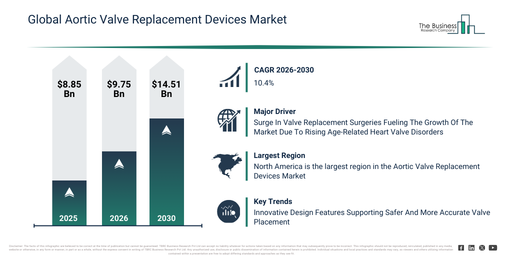
    The aortic valve replacement devices market has experienced significant growth in recent years. It is anticipated to increase from $8.85 billion in 2025 to $9.75 billion in 2026, achieving a compound annual growth rate (CAGR) of 10.2%. Historically, this expansion has been driven by an aging population with valvular diseases, the broadening of cardiac surgery capabilities, a rise in the diagnosis of aortic stenosis, the early adoption of surgical valve replacements, and advancements in cardiovascular imaging.

    The market for aortic valve replacement devices is projected to experience substantial expansion over the coming years. By 2030, its valuation is anticipated to reach $14.51 billion, growing at a compound annual growth rate (CAGR) of 10.4%. This projected increase during the forecast period stems from factors such as a greater inclination towards transcatheter procedures, increased financial commitments to structural heart initiatives, a rising need for outpatient cardiac interventions, the broader application of advanced biomaterials, and improved procedural success rates. Key developments foreseen in this period encompass the growing adoption of minimally invasive valve replacement, wider utilization of transcatheter valve technologies, an escalating demand for self-expandable valves, the proliferation of patient-specific valve designs, and a heightened emphasis on the long-term durability of valves.

    Download A Free Sample Report For Comprehensive Market Insights:

    https://www.thebusinessresearchcompany.com/sample.aspx?id=33017&type=smp

    What Important Drivers Are Powering The Aortic Valve Replacement Devices Market Growth?

    The expanding volume of valve replacement procedures is anticipated to fuel the progress of the aortic valve replacement devices market in the foreseeable future. These surgeries are medical interventions aimed at mending or substituting impaired heart valves to re-establish proper blood circulation and enhance heart performance. The surge in valve replacement surgeries, largely attributable to the growing prevalence of age-associated heart valve conditions, is creating a greater need for surgical solutions to address declining valve functionality and avert complications. Aortic valve replacement devices facilitate these procedures by allowing for safer and more efficacious valve repair or replacement, thereby enhancing patient outcomes and promoting broader surgical implementation. As an illustration, in June 2025, information from the British Heart Foundation, a UK-based cardiovascular research charity, indicates that in the United Kingdom during 2022/23, more than 13,034 aortic valve replacement (AVR) and almost 7,695 transcatheter aortic valve implantation (TAVI) procedures were carried out. The rise in TAVI procedures highlights the increasing embrace of less invasive valve replacement techniques. Consequently, the expanding volume of valve replacement operations is stimulating the advancement of the aortic valve replacement devices market.

    What Key Segment Areas Are Included In The Aortic Valve Replacement Devices Market Assessment?

    The aortic valve replacement devices market covered in this report is segmented –

    1) By Product: Balloon-Expandable; Self-Expandable; Mechanically Expandable; Aortic Regurgitation

    2) By Leaflet Material: Bovine Pericardium; Porcine Pericardium

    3) By Frame Material: Cobalt-Chromium; Nitinol

    4) By End-Use: Inpatient Facilities; Outpatient Facilities

    Subsegments:

    1) By Balloon-Expandable: Balloon Pre-Dilation; Balloon Post-Dilation; Balloon Valves

    2) By Self-Expandable: Supra-Annular Valves; Intra-Annular Valves; Resheathable Valves

    3) By Mechanically Expandable: Mechanically Adjustable Valves; Radial Force Valves; Repositionable Valves

    4) By Aortic Regurgitation: Surgical Valve Replacement; Transcatheter Valve Replacement; Repair Devices

    Which Trends Are Shaping The Aortic Valve Replacement Devices Market Landscape?

    Major companies operating in the aortic valve replacement devices market are prioritizing advanced innovations, such as three radiopaque vision markers, to boost procedural visibility, improve deployment accuracy, and enable precise valve positioning during transcatheter implantation procedures. These three radiopaque vision markers are distinct reference points embedded within a medical device that amplify fluoroscopic visibility, aiding clinicians in accurately positioning and deploying the device during minimally invasive procedures. For instance, in January 2025, Abbott Laboratories, the US-based healthcare company, introduced Navitor Vision in India, which is the latest iteration of its transcatheter aortic valve implantation/replacement (TAVI/TAVR) system. This device is engineered to treat patients diagnosed with symptomatic severe aortic stenosis who present with high or extreme surgical risk. Navitor Vision incorporates three radiopaque vision markers for heightened visibility during implantation, features a dynamic sealing cuff to minimize blood leakage, and is deployed using Abbott’s FlexNav delivery system for accurate, minimally invasive valve placement. It presents a less invasive option compared to surgical aortic valve replacement, thereby enhancing outcomes and accessibility for high-risk patients.

    Which Firms Are Competing In The Aortic Valve Replacement Devices Market?

    Major companies operating in the aortic valve replacement devices market are Abbott Laboratories, Medtronic Plc, Boston Scientific Corporation, Edwards Lifesciences Corporation, Bracco SpA, Biotronik SE & Co. KG, LivaNova Plc, Lepu Medical Technology Co. Ltd., MicroPort Scientific Corporation, Artivion Inc., LifeTech Scientific Corporation, TTK Healthcare Limited, Braile Biomedica, Venus Medtech Inc., SMT Pvt Ltd, JenaValve Technology Inc., Peijia Medical Limited, CryoLife Inc., CorLife, and Colibri Heart Valve LLC.

    Access The Complete Aortic Valve Replacement Devices Market Report:

    https://www.thebusinessresearchcompany.com/report/aortic-valve-replacement-devices-market-report

    Which Regional Market Leads The Aortic Valve Replacement Devices Market?

    North America was the largest region in the aortic valve replacement devices market in 2025. Asia-Pacific is expected to be the fastest-growing region in the forecast period. The regions covered in the aortic valve replacement devices market report are Asia-Pacific, South East Asia, Western Europe, Eastern Europe, North America, South America, Middle East, Africa.

    Access a Customized Aortic Valve Replacement Devices Market Report for Deeper Competitive Insights

    Get in touch with us:

    The Business Research Company: https://www.thebusinessresearchcompany.com/

    Americas: +1 310-496-7795

    Asia: +44 7882 955267 & +91 8897263534

    Europe: +44 7882 955267

    Email us at: marketing@tbrc.info

    Follow us on:

    LinkedIn: https://in.linkedin.com/company/the-business-research-company

    YouTube: https://www.youtube.com/channel/UC24_fI0rV8cR5DxlCpgmyFQ

    Global Market Model: https://www.thebusinessresearchcompany.com/global-market-model

  • Global Adaptive Neuromodulation Therapy Devices Market Forecast 2026–2035 with Long-Term Growth Perspective

    Global Adaptive Neuromodulation Therapy Devices Market Forecast 2026–2035 with Long-Term Growth Perspective

    The Business Research Company’s 2026 market reports feature advanced enhancements such as market attractiveness analysis, total addressable market evaluation, company benchmarking matrices, interactive Excel dashboards, expanded supply chain intelligence, emerging startup coverage, and detailed product insights, delivering more actionable and strategically valuable research.

    What Are The Forecasted Market Size Figures For The Adaptive Neuromodulation Therapy Devices Market In 2026 And 2030?

    The adaptive neuromodulation therapy devices market size has seen significant expansion in recent years. This market is set to increase from $7.09 billion in 2025 to $7.82 billion in 2026, exhibiting a compound annual growth rate (CAGR) of 10.4%. The historical growth of the market can be linked to several factors, including advancements in implantable neuromodulation devices, a rising prevalence of neurological disorders, the initial adoption of deep brain stimulation therapies, enhancements in neural signal processing, and the establishment of more specialized neurology centers.

    The adaptive neuromodulation therapy devices market is anticipated to experience significant expansion in the coming years. Projections indicate that it will reach a valuation of $11.7 billion by 2030, demonstrating a compound annual growth rate (CAGR) of 10.6%. This projected growth during the forecast period is primarily driven by factors such as an increasing demand for personalized neuromodulation therapies, growing investments in brain-computer interface technologies, the broader application of non-invasive neuromodulation techniques, an enhanced emphasis on long-term therapy management, and the increasing incorporation of AI-driven adaptive stimulation. Key trends anticipated during this period include the wider adoption of closed-loop neuromodulation systems, a rise in the integration of real-time neural sensing, the expanded utilization of personalized stimulation algorithms, the proliferation of wearable and non-invasive neuromodulation devices, and a heightened focus on optimizing therapy outcomes while reducing side effects.

    Download A Free Sample Report For Comprehensive Market Insights:

    https://www.thebusinessresearchcompany.com/sample.aspx?id=33007&type=smp

    What Key Growth Drivers Are Influencing The Adaptive Neuromodulation Therapy Devices Market?

    The expanding occurrence of long-term neurological conditions is anticipated to boost the adaptive neuromodulation therapy devices market. These conditions are chronic disorders impacting the brain, spinal cord, or nervous system, leading to ongoing issues with movement, thinking, sensation, or behavior. The growing burden of such conditions stems from increased life expectancy, which fosters a greater incidence of age-related neurological decline and prolonged illness. Adaptive neuromodulation therapy devices aid in managing these conditions by providing tailored, real-time electrical stimulation that adapts to individual neural activity, thus enhancing symptom management and long-term neurological results. For example, in March 2023, the Alzheimer’s Association, a US-based nonprofit voluntary health organization, stated that 6.7 million Americans aged 65+ suffer from Alzheimer’s, with this figure expected to reach 13.8 million by 2060. Consequently, the rising prevalence of long-term neurological conditions is propelling the growth of the adaptive neuromodulation therapy devices market.

    What Are The Core Segment Classifications In The Adaptive Neuromodulation Therapy Devices Market?

    The adaptive neuromodulation therapy devices market covered in this report is segmented –

    1) By Product Type: Implantable Adaptive Neuromodulation Devices; Non-Implantable Adaptive Neuromodulation Devices; Rechargeable Adaptive Neuromodulation Devices; Non-Rechargeable Adaptive Neuromodulation Devices

    2) By Device Type: Deep Brain Stimulation Systems; Spinal Cord Stimulation Systems; Vagus Nerve Stimulation Systems; Sacral Nerve Stimulation Systems; Responsive Neurostimulation Systems

    3) By Technology: Closed-Loop Electrical Neuromodulation Technology; Closed-Loop Magnetic Neuromodulation Technology; Responsive Neurostimulation Technology; Adaptive Deep Brain Stimulation Technology

    4) By Application: Epilepsy; Parkinson’s Disease (PD); Mixed Urinary Incontinence (MUI); Other Applications

    5) By End User: Hospitals; Neurology Clinics; Specialty Neurosurgical Centers; Research And Academic Institutes

    Subsegments:

    1) By Implantable Adaptive Neuromodulation Devices: Deep Brain Stimulation Systems; Spinal Cord Stimulation Systems; Vagus Nerve Stimulation Systems; Sacral Nerve Stimulation Systems; Peripheral Nerve Stimulation Systems

    2) By Non-Implantable Adaptive Neuromodulation Devices: Transcranial Magnetic Stimulation Devices; Transcranial Direct Current Stimulation Devices; External Vagus Nerve Stimulation Devices; Wearable Neurostimulation Systems

    3) By Rechargeable Adaptive Neuromodulation Devices: Rechargeable Implantable Pulse Generators; Wireless Rechargeable Neurostimulators; Long Life Rechargeable Stimulation Systems

    4) By Non-Rechargeable Adaptive Neuromodulation Devices: Primary Cell Implantable Neurostimulators; Single Use Implantable Stimulation Devices; Fixed Life Pulse Generator Systems

    Which Trends Are Expected To Shape The Adaptive Neuromodulation Therapy Devices Market?

    Leading companies active in the adaptive neuromodulation therapy devices market are concentrating on creating advanced solutions, like flexible wireless charging, to enable patients to stay active while recharging and decrease therapy interruptions. This flexible wireless charging allows patients to power their neuromodulation devices without stopping their daily activities. As an illustration, in January 2024, Abbott Laboratories, a US-based medical device company, released the Liberta RC DBS system, which is a rechargeable deep brain stimulation platform developed to treat movement disorders with increased flexibility and patient ease. The system includes one of the smallest available rechargeable implantable pulse generators, which enhances patient comfort and supports minimally invasive implantation. It provides remote programming and monitoring, giving clinicians the ability to adjust therapy settings without needing frequent in-person visits. Moreover, Liberta RC supports adaptive stimulation functionalities that allow for personalized therapy optimization over time, based on how the patient responds, thereby improving treatment consistency and long-term disease management.

    Which Companies Are Influencing The Adaptive Neuromodulation Therapy Devices Market?

    Major companies operating in the adaptive neuromodulation therapy devices market are Abbott Laboratories, Medtronic Plc, Boston Scientific Corporation, Biotronik AG, LivaNova plc, Bioventus LLC, NEVRO Corp., Axonics, Inc, Neuronetics, Inc., NeuroPace, Inc., Cala Health Inc, BrainsWay Ltd, SPR Therapeutics, Inc., ElectroCore, Inc., Mainstay Medical Ltd., Blackrock Neurotech, Inc., Soterix Medical Inc., Synapse Biomedical Inc., NeuroSigma, Inc., Aleva Neurotherapeutics SA, Magstim Company Ltd.

    Access The Complete Adaptive Neuromodulation Therapy Devices Market Report:

    https://www.thebusinessresearchcompany.com/report/adaptive-neuromodulation-therapy-devices-market-report

    Which Region Is The Dominant Market In The Adaptive Neuromodulation Therapy Devices Market?

    North America was the largest region in the adaptive neuromodulation therapy devices market in 2025. Asia-Pacific is expected to be the fastest-growing region in the forecast period. The regions covered in the adaptive neuromodulation therapy devices market report are Asia-Pacific, South East Asia, Western Europe, Eastern Europe, North America, South America, Middle East, Africa.

    Access a Customized Adaptive Neuromodulation Therapy Devices Market Report for Deeper Competitive Insights

    Get in touch with us:

    The Business Research Company: https://www.thebusinessresearchcompany.com/

    Americas: +1 310-496-7795

    Asia: +44 7882 955267 & +91 8897263534

    Europe: +44 7882 955267

    Email us at: marketing@tbrc.info

    Follow us on:

    LinkedIn: https://in.linkedin.com/company/the-business-research-company

    YouTube: https://www.youtube.com/channel/UC24_fI0rV8cR5DxlCpgmyFQ

    Global Market Model: https://www.thebusinessresearchcompany.com/global-market-model
  • Global Abdominal Surgical Robot Market Outlook 2026–2035 Showcasing Growth Potential and Future Opportunities

    Global Abdominal Surgical Robot Market Outlook 2026–2035 Showcasing Growth Potential and Future Opportunities

    The Business Research Company’s 2026 market reports feature advanced enhancements such as market attractiveness analysis, total addressable market evaluation, company benchmarking matrices, interactive Excel dashboards, expanded supply chain intelligence, emerging startup coverage, and detailed product insights, delivering more actionable and strategically valuable research.

    What Growth In Market Value Is Anticipated For The Abdominal Surgical Robot Market Between 2026 And 2030?

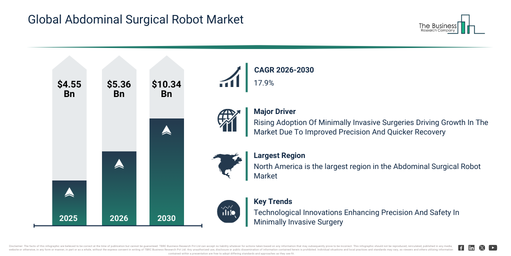
    The abdominal surgical robot market has experienced rapid expansion recently. It is projected to grow from $4.55 billion in 2025 to $5.36 billion in 2026, at a compound annual growth rate (CAGR) of 17.6%. This historical growth can be attributed to the increasing adoption of minimally invasive surgeries, rising investments in hospital robotic infrastructure, growing surgeon acceptance of robotic assistance, improvements in surgical imaging technologies, and the expansion of specialized surgical training programs.

    The abdominal surgical robot market is projected for substantial expansion over the coming years. This market is set to reach a value of $10.34 billion by 2030, with a compound annual growth rate (CAGR) of 17.9%. This anticipated growth can be linked to several factors, including a surging demand for highly precise surgical interventions, the increasing incorporation of AI-driven decision-making support, the broader application of robotic-assisted procedures across diverse medical disciplines, escalating investments in intelligent operating room technologies, and a heightened commitment to optimizing patient outcomes. Key trends emerging in this forecast period encompass the growing embrace of AI-powered surgical navigation, the progressive integration of advanced robotic instrumentation, the expanding utilization of 3D visualization and imaging systems, the development and deployment of modular and upgradable robotic platforms, and an intensified focus on achieving precision in minimally invasive surgeries.

    Download A Free Sample Report For Comprehensive Market Insights:

    https://www.thebusinessresearchcompany.com/sample.aspx?id=33005&type=smp

    What Are The Main Drivers Accelerating The Growth Of The Abdominal Surgical Robot Market?

    The future expansion of the abdominal surgical robot market is anticipated, driven by the increasing acceptance of minimally invasive surgeries. These are medical procedures that utilize small incisions and sophisticated instruments, such as laparoscopic and endoscopic tools, to treat conditions with reduced trauma to surrounding tissues. The rising adoption of minimally invasive surgeries is due to advantages like quicker patient recovery, shorter hospital stays, and a faster return to daily activities compared to conventional open operations. Abdominal surgical robots are increasingly deployed in complex minimally invasive abdominal procedures, offering enhanced precision, improved dexterity, and superior three-dimensional visualization. This allows surgeons to perform intricate operations through small cuts, resulting in less tissue damage and better patient outcomes. For instance, in June 2024, according to the American Society of Plastic Surgeons, a US-based organization, minimally invasive procedures rose by 7% in 2023 compared to the previous year, reflecting a broader trend of increased minimally invasive surgical adoption across various medical specialties. Consequently, the expanding use of minimally invasive surgeries is propelling the growth of the abdominal surgical robot market.

    Which Segment-Based Categories Are Covered In The Abdominal Surgical Robot Market?

    The abdominal surgical robot market covered in this report is segmented –

    1) By Product Type: Robotic Systems; Instruments And Accessories; Services

    2) By Application: General Surgery; Gynecological Surgery; Urological Surgery; Colorectal Surgery; Other Applications

    3) By End-Users: Hospitals; Ambulatory Surgical Centers; Specialty Clinics; Other End-Users

    Subsegments:

    1) By Robotic Systems: Standalone Robotic Platforms; Integrated Robotic Operating Suites; Modular Robotic Systems

    2) By Instruments And Accessories: Robotic Graspers; Robotic Scissors; Robotic Suturing Instruments; Endoscopic Cameras And Scopes; Energy Devices For Robotic Surgery

    3) By Services: Installation And Setup Services; Maintenance And Technical Support; Surgical Training And Education; Software Updates And Upgrades

    Which Trends Are Influencing The Expansion Of The Abdominal Surgical Robot Market?

    Major companies operating in the abdominal surgical robot market are concentrating on technological advancements such as sophisticated visualization, haptic feedback, and AI-enabled sensing to enable more precise, minimally invasive surgeries and optimize surgical workflows. These innovations provide surgeons with improved three-dimensional views of internal anatomy, real-time tactile responses, and data-driven insights, allowing complex procedures to be executed with greater accuracy and control. For instance, in March 2024, Intuitive Surgical Inc., a US-based technology company, introduced the da Vinci 5 robotic system, which integrates innovative force feedback technology enabling surgeons to perceive subtle tissue forces during operations. This system advances minimally invasive surgery by reducing tissue force by up to 43%, furnishing up to 10,000 times greater computing power to support AI analytics, and incorporating an ergonomic design to alleviate surgeon fatigue. It is engineered for use across abdominal, urologic, gynecologic, and thoracic procedures through smaller incisions, offering patient benefits such as faster recovery, reduced pain, lower blood loss, and a decreased risk of infection.

    Which Industry Players Are Present In The Abdominal Surgical Robot Market?

    Major companies operating in the abdominal surgical robot market are Johnson & Johnson, Medtronic Plc., Intuitive Surgical Inc., KUKA AG., Meril Life Sciences, Titan Medical Inc., Avatera Medical, CMR Surgical Ltd., Cornerstone Robotics Ltd., Distalmotion, Vicarious Surgical Inc., MicroPort MedBot, Virtual Incision Corporation, Endorobotics Co. Ltd., EndoQuest Robotics, MOON Surgical, SS Innovations International Inc., Beijing Surgerii Robotics Co. Ltd, Medrobotics Corporation, Shandong WEGO Surgery Robot Co. Ltd., Shenzhen Edge Medical Co. Ltd, Sina Robotics and Medical Innovators Co. Ltd.

    Access The Complete Abdominal Surgical Robot Market Report:

    https://www.thebusinessresearchcompany.com/report/abdominal-surgical-robot-market-report

    Which Region Commands The Largest Share Of The Abdominal Surgical Robot Market?

    North America was the largest region in the abdominal surgical robot market in 2025. Asia-Pacific is expected to be the fastest-growing region in the forecast period. The regions covered in the abdominal surgical robot market report are Asia-Pacific, South East Asia, Western Europe, Eastern Europe, North America, South America, Middle East, Africa.

    Access a Customized Abdominal Surgical Robot Market Report for Deeper Competitive Insights

    Get in touch with us:

    The Business Research Company: https://www.thebusinessresearchcompany.com/

    Americas: +1 310-496-7795

    Asia: +44 7882 955267 & +91 8897263534

    Europe: +44 7882 955267

    Email us at: marketing@tbrc.info

    Follow us on:

    LinkedIn: https://in.linkedin.com/company/the-business-research-company

    YouTube: https://www.youtube.com/channel/UC24_fI0rV8cR5DxlCpgmyFQ

    Global Market Model: https://www.thebusinessresearchcompany.com/global-market-model
  • Thermoformed Medical Packaging Market Forecast Assessing Growth Potential And Industry Direction

    Thermoformed Medical Packaging Market Forecast Assessing Growth Potential And Industry Direction

    The Business Research Company’s 2026 market reports feature advanced enhancements such as market attractiveness analysis, total addressable market evaluation, company benchmarking matrices, interactive Excel dashboards, expanded supply chain intelligence, emerging startup coverage, and detailed product insights, delivering more actionable and strategically valuable research.

    How Will The Market Value Of The Thermoformed Medical Packaging Market Change Between 2026 And 2030?

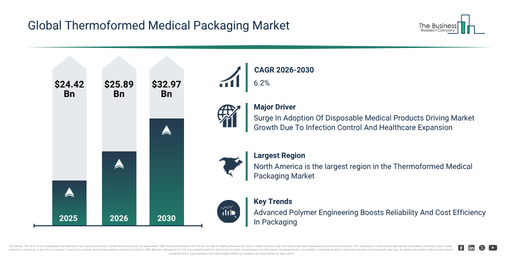
    The thermoformed medical packaging market size has experienced significant expansion in recent years. It is projected to increase from $24.42 billion in 2025 to $25.89 billion in 2026, demonstrating a compound annual growth rate (CAGR) of 6.0%. Historically, this market’s robust growth was a result of factors such as growing pharmaceutical production, increasing medical device usage, rising regulatory compliance for packaging, the adoption of PETG and APET materials, and the expansion of healthcare infrastructure.

    The thermoformed medical packaging market is anticipated to experience substantial expansion over the upcoming years. This market is projected to reach **$32.97 billion by 2030, with a compound annual growth rate (CAGR) of 6.2%**. Factors driving this expansion during the forecast period include a heightened need for tailored medical packaging, greater integration of biodegradable and sustainable materials, the increasing application of automation in thermoforming, the broadening scope of sterile packaging for vaccines and injectables, and a rising imperative for packaging traceability and serialization. Key developments expected within the forecast period encompass a surging need for sterile and tamper-evident packaging, increased acceptance of bespoke thermoformed trays and clamshells, an expanding application of high-barrier materials for pharmaceutical safeguarding, the wider deployment of single-use medical packaging options, and an enhanced emphasis on economical packaging for drug delivery.

    Download A Free Sample Report For Comprehensive Market Insights:

    https://www.thebusinessresearchcompany.com/sample_request?id=40425015&type=smp&name=Thermoformed%20Medical%20Packaging%20Market%20Report%202026

    Which Significant Factors Are Encouraging Growth In The Thermoformed Medical Packaging Market?

    The increasing use of disposable medical products is anticipated to drive expansion in the thermoformed medical packaging market in the future. These products are single-use medical items, including syringes, catheters, surgical trays, surgical gowns, diagnostic kits, and protective equipment, intended for one-time use before disposal to prevent contamination and infection. Their increased adoption stems from rising concerns regarding infection control, as they effectively prevent cross-contamination and enhance patient safety. Thermoformed medical packaging improves disposable medical products through sterile, durable, and precisely shaped protective solutions that guarantee safety, prolong shelf life, and preserve product integrity during storage and transit. For example, the Government Commercial Function, a UK-based government agency, reported that clinical teams at Barts Health NHS Trust are forecast to utilize around 400,000 gowns annually across their theaters by February 2026. Consequently, the expanding use of disposable medical products fuels the growth of the thermoformed medical packaging market.

    What Segment Categories Are Evaluated In The Thermoformed Medical Packaging Market Study?

    The thermoformed medical packaging market covered in this report is segmented –

    1) By Product Type: Blister Packs, Trays And Lids, Clamshells, Vials And Ampoules

    2) By Material: Polyethylene Terephthalate Glycol (PETG), Amorphous Polyethylene Terephthalate (APET), Polypropylene (PP), Polystyrene (PS), Polyvinyl Chloride (PVC), Other Materials

    3) By Application: Medical Devices And Instruments, Pharmaceuticals And Drug Delivery, Implants And Prosthetics, Surgical And Wound Care Products, Other Applications

    4) By End-User: Pharmaceutical And Biotechnology Companies, Medical Device Manufacturers

    Subsegments:

    1) By Blister Packs: Pharmaceutical Tablets, Capsules, Medical Devices, Nutraceuticals

    2) By Trays And Lids: Surgical Trays, Diagnostic Trays, Instrument Trays, Sample Collection Trays

    3) By Clamshells: Medical Device Packaging, Surgical Instrument Packaging, Diagnostic Kit Packaging, Laboratory Equipment Packaging

    4) By Vials And Ampoules: Injectable Medicines, Vaccines, Blood Collection, Laboratory Reagents

    What Trends Are Affecting The Thermoformed Medical Packaging Market Dynamics?

    Leading companies in the thermoformed medical packaging market are prioritizing technological advancements, such as amorphous polyethylene terephthalate (APET)-based material, to improve packaging transparency, durability, sterilization suitability, and environmental sustainability, concurrently boosting manufacturing efficiency. An amorphous polyethylene terephthalate (APET)-based formulation describes a kind of polyethylene terephthalate plastic where the polymer chains are structured in a non-crystalline (amorphous) arrangement, providing it with high transparency and significant mechanical strength. For example, in October 2025, Amcor plc., a packaging firm based in Switzerland, is set to launch AmSecure, an advanced thermoformed medical and pharmaceutical packaging offering utilizing amorphous polyethylene terephthalate (APET). This solution delivers superior clarity, excellent mechanical performance, and compatibility with conventional sterilization processes, while also supporting diverse raw material sourcing options to bolster supply chain reliability and satisfy recyclability standards. It offers healthcare manufacturers a cost-efficient and environmentally responsible packaging foundation. The solution is accessible in pre-formed trays and roll stock formats that are compatible with various lids and pouches, facilitating adaptable packaging setups for medical devices and pharmaceutical goods while upholding sterility, convenience, and ease of handling during storage and clinical application.

    Who Are The Key Market Participants In The Thermoformed Medical Packaging Market?

    Major companies operating in the thermoformed medical packaging market are Amcor plc, TOPPAN Holdings, Klockner Pentaplast Group, Constantia Flexibles Group GmbH, Gerresheimer AG, Winpak Ltd., Inteplast Group Corporation, Prent Corporation, Nelipak Corporation, Placon Corporation, Plastic Ingenuity Inc., Brentwood Industries Inc., Display Pack Inc., TO Plastics Inc., Dordan Manufacturing Company, Dordan Manufacturing Company Inc., Tru-Form Plastics Inc., GY Packaging USA Inc., Abon Plastic S.r.l., TekPak Solutions Inc.

    Access The Complete Thermoformed Medical Packaging Market Report:

    https://www.thebusinessresearchcompany.com/report/thermoformed-medical-packaging-market-report

    What Is The Largest Regional Market In The Thermoformed Medical Packaging Market?

    North America was the largest region in the thermoformed medical packaging market in 2025. Asis-Pacific is expected to be the fastest-growing region in the forecast period. The regions covered in the thermoformed medical packaging market report are Asia-Pacific, South East Asia, Western Europe, Eastern Europe, North America, South America, Middle East, Africa.

    Get in touch with us:

    The Business Research Company: https://www.thebusinessresearchcompany.com/

    Americas: +1 310-496-7795

    Asia: +44 7882 955267 & +91 8897263534

    Europe: +44 7882 955267

    Email us at: marketing@tbrc.info

    Follow us on:

    LinkedIn: https://in.linkedin.com/company/the-business-research-company

    YouTube: https://www.youtube.com/channel/UC24_fI0rV8cR5DxlCpgmyFQ

    Global Market Model: https://www.thebusinessresearchcompany.com/global-market-model
  • Spa Equipment Trolley Market Growth Forecast With Analysis Of Industry Progress Through 2030

    Spa Equipment Trolley Market Growth Forecast With Analysis Of Industry Progress Through 2030

    The Business Research Company’s 2026 market reports feature advanced enhancements such as market attractiveness analysis, total addressable market evaluation, company benchmarking matrices, interactive Excel dashboards, expanded supply chain intelligence, emerging startup coverage, and detailed product insights, delivering more actionable and strategically valuable research.

    By 2030, How Much Growth In Market Size Is Expected For The Spa Equipment Trolley Market?

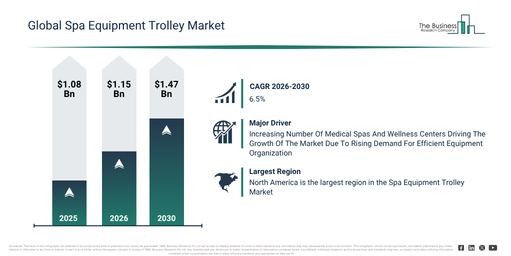
    The spa equipment trolley market size has demonstrated strong growth in recent years. It is projected to expand from $1.08 billion in 2025 to $1.15 billion in 2026, exhibiting a compound annual growth rate (CAGR) of 6.3%. The market’s historic growth can be attributed to several factors including the expansion of beauty salons and wellness centers, the increasing demand for spa treatments, the adoption of stainless steel and plastic trolleys, a growing need for organized treatment setups, and the broadening of mobile treatment services.

    The spa equipment trolley market is projected to experience substantial expansion in the coming years, reaching $1.47 billion by 2030, driven by a compound annual growth rate (CAGR) of 6.5%. This anticipated growth during the forecast period is fueled by several factors, including a heightened demand for modular and multifunctional trolleys, the increasing use of electric and motorized spa trolleys, an elevated emphasis on ergonomics and staff efficiency, the broadening reach of online sales and specialty stores, and a greater embrace of eco-friendly and sustainable materials. Key developments expected within this period involve the wider acceptance of mobile spa trolleys, an escalating need for multi-shelf and adjustable trolleys, a sharpened concentration on durable and hygienic materials, the proliferation of specialty and compact spa carts, and the increasing incorporation of ergonomic and space-saving designs.

    Download A Free Sample Report For Comprehensive Market Insights:

    https://www.thebusinessresearchcompany.com/sample_request?id=31917576&type=smp&name=Spa%20Equipment%20Trolley%20Market%20Report%202026

    What Important Drivers Are Powering The Spa Equipment Trolley Market Growth?

    The spa equipment trolley market is projected to expand in the future due to the increasing prevalence of medical spas and wellness centers. These establishments integrate traditional spa services with advanced aesthetic and therapeutic interventions, such as skin procedures, laser treatments, and holistic well-being programs. The rise in medical spas and wellness centers is primarily attributable to consumers’ heightened awareness of self-care and greater disposable incomes. Within these environments, spa equipment trolleys play a crucial role by efficiently organizing, storing, and transporting essential tools and devices, thereby enabling practitioners to deliver seamless and hygienic treatments while enhancing operational efficiency. For example, in November 2024, the American Med Spa Association, a US-based industry body providing education, resources, and advocacy for medical spa professionals, reported a significant increase in the total number of medical spas, growing from 8,899 locations in 2022 to 10,488 in 2023, which indicates robust sector expansion. Consequently, the growing presence of medical spas and wellness centers is fueling the growth of the spa equipment trolley market. The spa equipment trolley market is anticipated to see further expansion driven by the rapid growth of e-commerce. E-commerce involves the digital exchange of goods and services, allowing businesses to access a wider customer base more conveniently and efficiently. The escalating adoption of e-commerce is propelled by increased smartphone penetration and a consumer shift towards online purchasing, attracted by convenience, competitive pricing, and a broader selection of products. Spa equipment trolleys are increasingly distributed through e-commerce platforms, offering spa owners, wellness centers, and independent practitioners the ability to effortlessly compare items, access a greater variety of choices, and benefit from direct delivery to their location, thereby simplifying procurement. For instance, in March 2026, the United States Census Bureau, a US-based primary agency for collecting and analyzing population and economic data, stated that e-commerce sales in the fourth quarter of 2025 registered an estimated rise of 5.6% (±1.8%) compared to the corresponding period in 2024. As a result, the swift expansion of e-commerce is contributing to the growth of the spa equipment trolley market.

    What Key Segment Areas Are Included In The Spa Equipment Trolley Market Assessment?

    The spa equipment trolley market covered in this report is segmented –

    1) By Product Type: Single-Shelf Trolleys, Multi-Shelf Trolleys, Mobile Trolleys, Stationary Trolleys, Other Product Types

    2) By Material: Stainless Steel, Wood, Plastic, Other Materials

    3) By Distribution Channel: Online Stores, Specialty Stores, Direct Sales, Other Distribution Channels

    4) By Application: Beauty Salons, Spas, Wellness Centers, Other Applications

    Subsegments:

    1) By Single-Shelf Trolleys: Wooden Single-Shelf Trolleys, Metal Single-Shelf Trolleys, Plastic Single-Shelf Trolleys, Stainless Steel Single-Shelf Trolleys, Acrylic Single-Shelf Trolleys

    2) By Multi-Shelf Trolleys: Adjustable Multi-Shelf Trolleys, Fixed Multi-Shelf Trolleys, Metal Multi-Shelf Trolleys, Wooden Multi-Shelf Trolleys, Plastic Multi-Shelf Trolleys

    3) By Mobile Trolleys: Wheeled Spa Trolleys, Folding Mobile Trolleys, Electric Mobile Trolleys, Compact Mobile Trolleys, Modular Mobile Trolleys

    4) By Stationary Trolleys: Wall Mounted Stationary Trolleys, Fixed Frame Stationary Trolleys, Countertop Stationary Trolleys, Heavy Duty Stationary Trolleys, Multi-Purpose Stationary Trolleys

    5) By Other Product Types: Corner Trolleys, Compact Spa Carts, Pedicure Trolleys, Adjustable Height Trolleys, Specialty Treatment Trolleys

    Which Firms Are Competing In The Spa Equipment Trolley Market?

    Major companies operating in the spa equipment trolley market are Ellisons Limited, Oakworks Inc., Beauty Solutions by Jacko Ltd, Gharieni Group GmbH, Living Earth Crafts LLC, REM UK Ltd, ComfortSoul Spa Equipment Ltd, Lemi Group S.r.l., DIR Salon Furniture Co. Ltd., Belava LLC, Spa Source LLC, Comfortel Furniture Pty Ltd, Spa Vision Ltd, Salon Ambience S.r.l., Kingwin Salon Equipment Co. Ltd., Tom Spa Beauty Salon Equipment Co. Ltd., Kangmei Beauty Equipment Co. Ltd., NJ Salon Furniture Co. Ltd., PJS Beauty Salon Equipment Ltd, Glow Beauty Case Ltd.

    Access The Complete Spa Equipment Trolley Market Report:

    https://www.thebusinessresearchcompany.com/report/spa-equipment-trolley-market-report

    Which Region Holds The Largest Share In The Spa Equipment Trolley Market?

    North America was the largest region in the spa equipment trolley market in 2025. Asia-Pacific is expected to be the fastest-growing region in the forecast period. The regions covered in the spa equipment trolley market report are Asia-Pacific, South East Asia, Western Europe, Eastern Europe, North America, South America, Middle East, Africa.

    Get in touch with us:

    The Business Research Company: https://www.thebusinessresearchcompany.com/

    Americas: +1 310-496-7795

    Asia: +44 7882 955267 & +91 8897263534

    Europe: +44 7882 955267

    Email us at: marketing@tbrc.info

    Follow us on:

    LinkedIn: https://in.linkedin.com/company/the-business-research-company

    YouTube: https://www.youtube.com/channel/UC24_fI0rV8cR5DxlCpgmyFQ

    Global Market Model: https://www.thebusinessresearchcompany.com/global-market-model
  • Global Smoking Condensate Filtration Systems Market Forecast Highlighting Expansion And Competitive Dynamics

    Global Smoking Condensate Filtration Systems Market Forecast Highlighting Expansion And Competitive Dynamics

    The Business Research Company’s 2026 market reports feature advanced enhancements such as market attractiveness analysis, total addressable market evaluation, company benchmarking matrices, interactive Excel dashboards, expanded supply chain intelligence, emerging startup coverage, and detailed product insights, delivering more actionable and strategically valuable research.

    What Market Value Trend Is Expected For The Smoking Condensate Filtration Systems Market From 2026 To 2030?

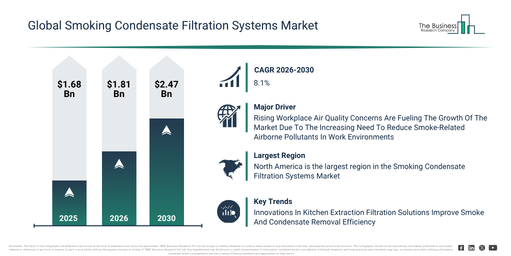
    The market for smoking condensate filtration systems has experienced significant expansion recently. This market is projected to grow from $1.68 billion in 2025 to $1.81 billion by 2026, reflecting a compound annual growth rate (CAGR) of 7.9%. Historically, this expansion can be attributed to elements such as increasing tobacco and cigarette production, a growing demand for clean lab environments, the adoption of mechanical filtration systems, rising environmental regulations, and increasing research in smoke analysis.

    The market size for smoking condensate filtration systems is anticipated to experience substantial expansion over the next few years. This market is projected to reach $2.47 billion by 2030, exhibiting a compound annual growth rate (CAGR) of 8.1%. This projected growth during the forecast period is fueled by factors such as the increasing uptake of hybrid filtration systems, an intensified focus on industrial and commercial uses, greater integration with automated smoking equipment, the broadening of direct and online sales channels, and an escalating need for highly efficient condensate capture systems. Furthermore, key trends anticipated during this period encompass the wider adoption of activated carbon filtration systems, a surge in demand for multi-stage electrostatic precipitators, the increasing incorporation of hybrid filtration solutions, the diversification of synthetic and composite filtration media, and an elevated emphasis on filtration systems designed for industrial smoke analysis.

    Download A Free Sample Report For Comprehensive Market Insights:

    https://www.thebusinessresearchcompany.com/sample_request?id=89865150&type=smp&name=Smoking%20Condensate%20Filtration%20Systems%20Market%20Report%202026

    Which Major Factors Are Contributing To The Development Of The Smoking Condensate Filtration Systems Market?

    The growing worries regarding workplace air quality are anticipated to boost the expansion of the smoking condensate filtration systems market. Workplace air quality denotes the state and purity of air in occupational settings, which affects employee health, safety, and output. Concerns about workplace air quality are increasing due to greater exposure to harmful airborne particles and smoke-related pollutants that can negatively impact respiratory health and overall well-being at work. Smoking condensate filtration systems effectively tackle these air quality issues by capturing condensed smoke particles and sticky residues from exhaust air streams, thereby reducing airborne contaminants and fostering cleaner indoor working environments. For example, in April 2024, the American Lung Association, a US-based nonprofit health organization, reported that 131 million people in the United States, roughly 39% of the population, live in areas with unhealthy levels of air pollution. This indicates a significant rise in exposure to harmful airborne pollutants, which heightens workplace air quality concerns. Therefore, the escalating concern over workplace air quality is a key driver for the smoking condensate filtration systems market’s growth. Increased Number Of Restaurants And Commercial Kitchens Propelling Market Growth Due To Rising Demand for Filtration Solutions in Food Service Operations

    How Is Segment Classification Applied In The Smoking Condensate Filtration Systems Market?

    The smoking condensate filtration systems market covered in this report is segmented –

    1) By Product Type: Electrostatic Precipitators, Mechanical Filters, Activated Carbon Filters, Hybrid Systems, Other Product Types

    2) By Filtration Media: Synthetic, Natural, Composite, Other Filtration Media

    3) By Distribution Channel: Direct Sales, Distributors, Online Sales, Other Distribution Channels

    4) By Application: Industrial, Commercial, Residential, Other Applications

    5) By End-User: Tobacco Industry, Food Processing, Chemical Industry, Hospitality, Other End-Users

    Subsegments:

    1) By Electrostatic Precipitators: Dry Electrostatic Precipitators, Wet Electrostatic Precipitators, Single Stage Electrostatic Precipitators, Multi Stage Electrostatic Precipitators

    2) By Mechanical Filters: Cartridge Mechanical Filters, Baghouse Mechanical Filters, Panel Mechanical Filters, Pleated Mechanical Filters

    3) By Activated Carbon Filters: Granular Activated Carbon Filters, Powdered Activated Carbon Filters, Pelletized Activated Carbon Filters, Impregnated Activated Carbon Filters

    4) By Hybrid Systems: Electrostatic And Mechanical Hybrid Systems, Electrostatic And Activated Carbon Hybrid Systems, Mechanical And Activated Carbon Hybrid Systems, Multi Stage Integrated Hybrid Systems

    5) By Other Product Types: Water Based Scrubber Filtration Systems, Cyclone Based Filtration Systems, Thermal Oxidation Filtration Systems, Catalytic Filtration Systems

    What Trends Are Influencing The Smoking Condensate Filtration Systems Market?

    Leading companies in the smoking condensate filtration systems market are concentrating on developing advanced solutions, such as integrated kitchen extraction filtration products, to improve smoke capture efficiency, lessen condensate accumulation, and maintain cleaner exhaust systems. Kitchen extraction filtration products are specialized solutions engineered to eliminate grease, smoke condensate, and airborne particles from commercial kitchen exhaust systems, thereby contributing to better hygiene and improved air quality. For example, in April 2025, Plasma Clean Air, a UK-based manufacturer of air movement and filtration equipment, introduced Electro-clean ESP, Electro-clean UV, and Carb-clean activated carbon, a new collection of kitchen filtration products designed to keep extraction systems clean from canopy to extract. Electro-clean ESP functions as an electrostatic precipitator, specifically designed to capture grease and smoke particles from kitchen extraction systems, which helps maintain cleaner ductwork and reduces fire risks. Electro-clean UV combines electrostatic precipitation with UV ozone technology to effectively remove grease, smoke, and cooking odors, all while minimizing requirements for duct cleaning. Carb-clean activated carbon is an odor control filtration system that eliminates VOCs, ozone, and airborne contaminants utilizing a lightweight honeycomb carbon structure. These systems collectively deliver energy-efficient control of grease, smoke, and odors, and also support modular integration and regulatory compliance.

    Who Are The Major Companies Operating In The Smoking Condensate Filtration Systems Market?

    Major companies operating in the smoking condensate filtration systems market are Honeywell International Inc., Cerulean, Pushpam Group, Walker Filtration Limited, KMA Umwelttechnik GmbH, Air Quality Engineering Inc., Borgwaldt KC GmbH, Cleankek, R.K. Engg. Works Pvt. Ltd., Plasma Clean Air Ltd., Hastings Air Energy Control Inc., Ecotone Systems Private Limited, Ventsys Industries, Ontrack Enterprises, Blue Ox Air Cleaners Inc., PP Aquatech Private Limited, Breetee, Veeaar Engineering, Beijing Taktvoll Technology Co. Ltd., Aeppl Air Pollution Control Systems Pvt. Ltd.

    Access The Complete Smoking Condensate Filtration Systems Market Report:

    https://www.thebusinessresearchcompany.com/report/smoking-condensate-filtration-systems-market-report

    Which Region Is The Dominant Market In The Smoking Condensate Filtration Systems Market?

    North America was the largest region in the smoking condensate filtration systems market in 2025. Asia-Pacific is expected to be the fastest-growing region in the forecast period. The regions covered in the smoking condensate filtration systems market report are Asia-Pacific, South East Asia, Western Europe, Eastern Europe, North America, South America, Middle East, Africa.

    Get in touch with us:

    The Business Research Company: https://www.thebusinessresearchcompany.com/

    Americas: +1 310-496-7795

    Asia: +44 7882 955267 & +91 8897263534

    Europe: +44 7882 955267

    Email us at: marketing@tbrc.info

    Follow us on:

    LinkedIn: https://in.linkedin.com/company/the-business-research-company

    YouTube: https://www.youtube.com/channel/UC24_fI0rV8cR5DxlCpgmyFQ

    Global Market Model: https://www.thebusinessresearchcompany.com/global-market-model
  • Surge In Stroke And Intracranial Stenosis Fueling The Growth Of The Market Due To Aging Populations And Increased Risk Of Cerebrovascular Events Is Affecting The Direction Of The Neurointerventional Balloon Dilatation Catheter Market

    Surge In Stroke And Intracranial Stenosis Fueling The Growth Of The Market Due To Aging Populations And Increased Risk Of Cerebrovascular Events Is Affecting The Direction Of The Neurointerventional Balloon Dilatation Catheter Market

    The Business Research Company’s 2026 market reports feature advanced enhancements such as market attractiveness analysis, total addressable market evaluation, company benchmarking matrices, interactive Excel dashboards, expanded supply chain intelligence, emerging startup coverage, and detailed product insights, delivering more actionable and strategically valuable research.

    What Market Size Is Forecasted For The Neurointerventional Balloon Dilatation Catheter Market By 2030 Based On Its 2026 Value?

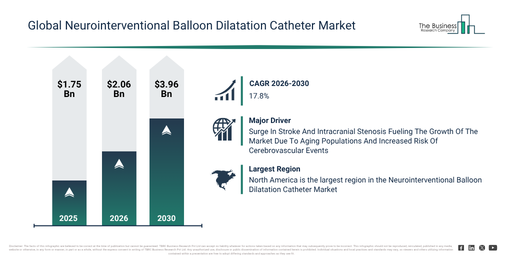
    The neurointerventional balloon dilatation catheter market size has seen rapid expansion in recent years. It is projected to grow from $1.75 billion in 2025 to $2.06 billion in 2026, achieving a compound annual growth rate (CAGR) of 17.5%. Historically, this growth can be attributed to the increasing prevalence of cerebrovascular diseases, progress in catheter design and materials, a rising volume of neurovascular surgeries, the expansion of hospital and specialty clinic infrastructure, and heightened awareness of minimally invasive procedures.

    The neurointerventional balloon dilatation catheter market size is projected for substantial expansion in the coming years, with expectations to achieve $3.96 billion by 2030, demonstrating a compound annual growth rate (CAGR) of 17.8%. This growth during the projected timeframe is driven by innovations in compliant and non-compliant balloon technologies, an increased adoption of drug-coated balloons, the expansion of ambulatory surgical centers, the integration with AI-assisted imaging systems, and the broadening of intracranial treatment applications. Prominent developments anticipated over this period encompass a rising embrace of neurointerventional procedures, an increasing application of drug-coated balloon technologies, a growing preference for steerable and tapered balloons, the extension of intracranial and extracranial uses, and the integration of imaging and navigation systems within balloon catheters.

    Download A Free Sample Report For Comprehensive Market Insights:

    https://www.thebusinessresearchcompany.com/sample_request?id=33674452&type=smp&name=Neurointerventional%20Balloon%20Dilatation%20Catheter%20Market%20Report%202026

    What Influential Factors Are Boosting The Neurointerventional Balloon Dilatation Catheter Market Demand?

    The **neurointerventional balloon dilatation catheter market** is anticipated to expand due to the increasing incidence of stroke and intracranial stenosis. Intracranial stenosis, a condition characterized by constricted brain arteries that elevate the likelihood of ischemic events, frequently accompanies stroke. The growing occurrence of both conditions is largely attributed to aging populations, given that elderly individuals are more prone to arterial constriction and cerebrovascular incidents. **Neurointerventional balloon dilatation catheters** offer a solution by expanding these narrowed brain arteries, thereby reinstating proper blood flow and diminishing the risk of ischemic events. For example, data from the **Stroke Foundation**, an Australia-based non-profit organization, indicated in December 2025 that stroke ranks among Australia’s leading five causes of death, accounting for **9,147 lives in 2024** and affecting **one person experiencing a stroke every 11 minutes**. Consequently, the escalating prevalence of stroke and intracranial stenosis is projected to fuel the expansion of the **neurointerventional balloon dilatation catheter market**. The increasing demand for minimally invasive procedures is expected to propel the growth of the **neurointerventional balloon dilatation catheter market**. These procedures involve medical or cosmetic treatments conducted with minimal cuts or tissue harm, often utilizing tools like needles, catheters, or small instruments. The appeal of minimally invasive procedures stems from their reduced risk of complications, as they require smaller incisions and lead to fewer chances of infection or bleeding. **Neurointerventional balloon dilatation catheters** facilitate such procedures by enabling accurate widening of constricted brain arteries through small vascular entry points, diminishing the necessity for open surgery and shortening recovery periods. For instance, in June 2024, the **American Society of Plastic Surgeons** reported that minimally invasive procedures reached **5.29 million in 2023**, marking an **8% increase over 2022**. Thus, the rising preference for minimally invasive procedures is anticipated to stimulate the expansion of the **neurointerventional balloon dilatation catheter market**.

    How Is The Neurointerventional Balloon Dilatation Catheter Market Distributed Across Key Segments?

    The neurointerventional balloon dilatation catheter market covered in this report is segmented –

    1) By Product Type: Compliant, Non Compliant, Semi Compliant

    2) By Balloon Shape: Standard, Steerable, Tapered

    3) By Coating Technology: Drug Coated, Plain

    4) By Application: Extracranial, Intracranial

    5) By End-User: Ambulatory Surgical Centers, Hospitals, Specialty Clinics

    Subsegments:

    1) By Compliant: Low Pressure Compliant Balloon, Medium Pressure Compliant Balloon, High Elasticity Compliant Balloon

    2) By Non Compliant: High Pressure Non Compliant Balloon, Ultra High Pressure Non Compliant Balloon, Controlled Diameter Non Compliant Balloon

    3) By Semi Compliant: Moderate Pressure Semi Compliant Balloon, Balanced Compliance Balloon, Flexible Semi Compliant Balloon

    Who Are The Firms Contributing To The Neurointerventional Balloon Dilatation Catheter Market Ecosystem?

    Major companies operating in the neurointerventional balloon dilatation catheter market are Johnson & Johnson, Medtronic plc, Stryker Corporation, Koninklijke Philips N.V., Boston Scientific Corporation, B. Braun Melsungen AG, Terumo Corporation, Kaneka Corporation, Nipro Corporation, Penumbra Inc., Lepu Medical Technology Co. Ltd., MicroPort Scientific Corporation, Asahi Intecc Co. Ltd., APT Medical Inc., Sino Medical Sciences Technology Inc., Peijia Medical Limited, Scientia Vascular Inc., Wallaby Medical Inc., Zylox-Tonbridge Medical Technology Co. Ltd., Acandis GmbH & Co. KG, Princeton Medical Scientific Inc., Cordis a Cardinal Health Company, DK MEDTECH Corporation.

    Access The Complete Neurointerventional Balloon Dilatation Catheter Market Report:

    https://www.thebusinessresearchcompany.com/report/neurointerventional-balloon-dilatation-catheter-market-report

    Which Geographic Region Represents The Largest Neurointerventional Balloon Dilatation Catheter Market Share?

    North America was the largest region in the neurointerventional balloon dilatation catheter market in 2025. Asia-Pacific is expected to be the fastest-growing region in the forecast period. The regions covered in the neurointerventional balloon dilatation catheter market report are Asia-Pacific, South East Asia, Western Europe, Eastern Europe, North America, South America, Middle East, Africa.

    Get in touch with us:

    The Business Research Company: https://www.thebusinessresearchcompany.com/

    Americas: +1 310-496-7795

    Asia: +44 7882 955267 & +91 8897263534

    Europe: +44 7882 955267

    Email us at: marketing@tbrc.info

    Follow us on:

    LinkedIn: https://in.linkedin.com/company/the-business-research-company

    YouTube: https://www.youtube.com/channel/UC24_fI0rV8cR5DxlCpgmyFQ

    Global Market Model: https://www.thebusinessresearchcompany.com/global-market-model
  • Increasing Adoption Of Rising Manufacturing Activities Driving The Growth Of The Market Due To Increasing Demand For Cleaner And Higher-Quality Production Processes Is Influencing The Microfiber Glass Filter Media Market

    Increasing Adoption Of Rising Manufacturing Activities Driving The Growth Of The Market Due To Increasing Demand For Cleaner And Higher-Quality Production Processes Is Influencing The Microfiber Glass Filter Media Market

    The Business Research Company’s 2026 market reports feature advanced enhancements such as market attractiveness analysis, total addressable market evaluation, company benchmarking matrices, interactive Excel dashboards, expanded supply chain intelligence, emerging startup coverage, and detailed product insights, delivering more actionable and strategically valuable research.

    What Are The Forecasted Market Size Figures For The Microfiber Glass Filter Media Market In 2026 And 2030?

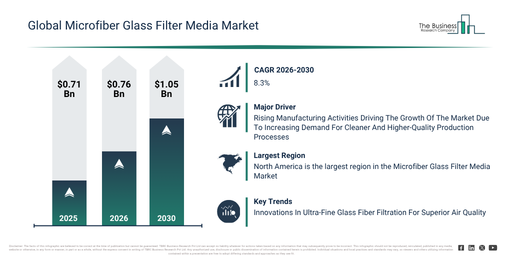
    The microfiber glass filter media market size has witnessed strong expansion in recent years. It is forecast to rise from $0.71 billion in 2025 to $0.76 billion in 2026, achieving a compound annual growth rate (CAGR) of 8.1%. The growth observed in the past can be attributed to an increased focus on indoor air quality, the development of the healthcare and pharmaceutical sectors, rising levels of industrial pollution, the adoption of cleanroom standards, and regulatory mandates for air filtration efficiency.

    The microfiber glass filter media market is projected to experience substantial expansion in the coming years, reaching $1.05 billion by 2030, exhibiting a compound annual growth rate (CAGR) of 8.3%. This anticipated growth during the forecast period is fueled by several factors, including the increasing number of cleanroom facilities, a rising need for energy-efficient filtration solutions, advancements in the technology for producing microfiber glass filters, greater investment in environmental monitoring, and the expanded application of filtration in research laboratories. Key trends observed in this period encompass a heightened demand for high-efficiency air filtration systems, increased uptake of HEPA and ULPA filter media, broader application of microfiber glass filters within the healthcare and pharmaceutical sectors, the diversification of industrial and laboratory filtration uses, and an emphasis on achieving low pressure drop along with high dust holding capacity.

    Download A Free Sample Report For Comprehensive Market Insights:

    https://www.thebusinessresearchcompany.com/sample_request?id=61393581&type=smp&name=Microfiber%20Glass%20Filter%20Media%20Market%20Report%202026

    What Primary Factors Are Fueling The Expansion Of The Microfiber Glass Filter Media Market?

    The expanding scope of manufacturing operations is projected to boost the microfiber glass filter media market in the future. These activities involve converting raw materials or parts into final products utilizing labor, equipment, and technological advancements. A surge in consumer demand for products is fueling this rise, prompting businesses to enlarge their production capabilities and implement advanced technologies to satisfy market requirements. Microfiber glass filter media improves manufacturing by trapping minute airborne or liquid particles, thereby ensuring cleaner production settings and consistently superior product quality. For example, in April 2026, the House of Commons Library, a UK-based information resource for the British Parliament’s lower house, reported that monthly manufacturing output increased by 0.1% in January 2026, with growth observed in five out of 13 subsectors. Furthermore, manufacturing output saw a 1.5% increase over the three months leading up to January 2026, relative to the prior quarter. Consequently, the expansion of manufacturing operations is anticipated to stimulate the growth of the microfiber glass filter media market.

    What Segment Types Are Included In The Microfiber Glass Filter Media Market Analysis?

    The microfiber glass filter media market covered in this report is segmented –

    1) By Product Type: Glass Microfiber Filter Paper, Glass Microfiber Filter Membranes, High Efficiency Particulate Air (HEPA) Filter Media Sheets, Ultra Low Penetration Air (ULPA) Filter Media Sheets, Glass Fiber Filter Pads, Glass Microfiber Filter Discs, Glass Microfiber Filter Rolls

    2) By Filtration Type: Air Filtration, Liquid Filtration

    3) By Distribution Channel: Direct Sales, Distributors And Wholesalers, Online Sales

    4) By Application: American Society Of Heating, Refrigerating And Air-Conditioning Engineers (ASHRAE), High Efficiency Particulate Air (HEPA), Ultra Low Penetration Air (ULPA)

    5) By End-User Industry: Healthcare Or Pharmaceuticals, Environmental Or Water Treatment, Manufacturing Or Industrial, Laboratories Or Research

    Subsegments:

    1) By Glass Microfiber Filter Paper: Quantitative Filter Paper, Qualitative Filter Paper, Binder Free Filter Paper, Binder Containing Filter Paper

    2) By Glass Microfiber Filter Membranes: Hydrophilic Glass Microfiber Membranes, Hydrophobic Glass Microfiber Membranes, Reinforced Glass Microfiber Membranes, Non Reinforced Glass Microfiber Membranes

    3) By High Efficiency Particulate Air (HEPA) Filter Media Sheets: Standard Efficiency High Efficiency Particulate Air (HEPA) Media Sheets, High Dust Holding High Efficiency Particulate Air (HEPA) Media Sheets, Low Pressure Drop High Efficiency Particulate Air (HEPA) Media Sheets, High Temperature Resistant High Efficiency Particulate Air (HEPA) Media Sheets

    4) By Ultra Low Penetration Air (ULPA) Filter Media Sheets: Ultra High Efficiency Filter Media Sheets, Cleanroom Grade Filter Media Sheets, Low Resistance Ultra Fine Filter Media Sheets, High Capacity Particle Retention Filter Media Sheets

    5) By Glass Fiber Filter Pads: Pre Filtration Glass Fiber Pads, High Efficiency Glass Fiber Pads, Coarse Particle Filtration Pads, Fine Particle Filtration Pads

    6) By Glass Microfiber Filter Discs: Sterile Filtration Discs, Analytical Filtration Discs, Laboratory Grade Filtration Discs, High Purity Filtration Discs

    7) By Glass Microfiber Filter Rolls: Industrial Filtration Rolls, Laboratory Filtration Rolls, High Efficiency Filtration Rolls, Continuous Process Filtration Rolls

    Which Trends Are Influencing The Direction Of The Microfiber Glass Filter Media Market?

    Leading companies operating in the microfiber glass filter media market are concentrating on developing technological advancements in ultra-fine glass fiber production, such as improved thermal stability, in addition to advanced microfiber glass filtration media, aiming to achieve higher particle capture efficiency, enhanced airflow performance, and increased durability for high-efficiency air filtration applications. Enhanced thermal stability refers to the ability of microfiber glass filtration media to maintain its structural integrity and filtration performance even under high-temperature operating conditions, ensuring reliability in demanding HVAC and industrial environments. For example, in November 2024, Johns Manville, a US-based manufacturer of insulation and engineered products, introduced a state-of-the-art micro fiberglass production line at its Wertheim, Germany facility to produce Evalith micro fiberglass nonwovens. These materials are engineered to capture particles as small as one micrometer, including viruses, bacteria, and dust, while simultaneously ensuring durability and consistent filtration performance. The solution also boosts energy efficiency, enabling filter manufacturers to attain higher ratings, decrease energy consumption, and promote environmentally sustainable indoor air solutions.

    Who Are The Leading Firms Participating In The Microfiber Glass Filter Media Market?

    Major companies operating in the microfiber glass filter media market are Parker-Hannifin Corporation, Johns Manville, Sinoma Science & Technology Co. Ltd., Ahlstrom-Munksjö Oyj, Alkegen LLC, Sogefi Group S.p.A, Camfil AB, Hollingsworth & Vose Company, Freudenberg Filtration Technologies GmbH & Co. KG, Chongqing Zaisheng Technology Co. Ltd., Macherey-Nagel GmbH & Co. KG, Hokuetsu Corporation, Spectrum Chemical Manufacturing Corp., Porvair Filtration Group Plc, MANN+HUMMEL Gruppe, Meissner Filtration Products Inc., Cobetter Filtration Co. Ltd., I.W. Tremont Corporation, Sterlitech Corporation, HI-Q Environmental Products Inc.

    Access The Complete Microfiber Glass Filter Media Market Report:

    https://www.thebusinessresearchcompany.com/report/microfiber-glass-filter-media-market-report

    Which Region Has The Strongest Presence In The Microfiber Glass Filter Media Market?

    North America was the largest region in the microfiber glass filter media market in 2025. Asia-Pacific is expected to be the fastest-growing region in the forecast period. The regions covered in the microfiber glass filter media market report are Asia-Pacific, South East Asia, Western Europe, Eastern Europe, North America, South America, Middle East, Africa.

    Get in touch with us:

    The Business Research Company: https://www.thebusinessresearchcompany.com/

    Americas: +1 310-496-7795

    Asia: +44 7882 955267 & +91 8897263534

    Europe: +44 7882 955267

    Email us at: marketing@tbrc.info

    Follow us on:

    LinkedIn: https://in.linkedin.com/company/the-business-research-company

    YouTube: https://www.youtube.com/channel/UC24_fI0rV8cR5DxlCpgmyFQ

    Global Market Model: https://www.thebusinessresearchcompany.com/global-market-model