Category: Medical Equipment

  • Dynamic Retractor Systems Market Outlook Showing Growth Toward $1.89 Billion by 2030

    Dynamic Retractor Systems Market Outlook Showing Growth Toward $1.89 Billion by 2030

    The Business Research Company’s 2026 market reports feature advanced enhancements such as market attractiveness analysis, total addressable market evaluation, company benchmarking matrices, interactive Excel dashboards, expanded supply chain intelligence, emerging startup coverage, and detailed product insights, delivering more actionable and strategically valuable research.

    What Are The Forecasted Market Size Figures For The Dynamic Retractor Systems Market In 2026 And 2030?

    The dynamic retractor systems market has observed significant growth in recent years. Its valuation is anticipated to rise from $1.25 billion in 2025 to $1.36 billion in 2026, achieving a compound annual growth rate (CAGR) of 8.3%. The expansion observed historically is attributable to an escalating volume of intricate surgical procedures, the proliferation of minimally invasive surgeries, an increasing need for enhanced access to operative sites, innovations in surgical instrument engineering, and greater hospital investment in advanced surgical tools.

    The dynamic retractor systems market is projected to experience robust growth in the coming years, expected to reach $1.89 billion in 2030, demonstrating a compound annual growth rate (CAGR) of 8.6%. This anticipated expansion during the forecast period is driven by several factors, including the increasing adoption of robotic-assisted surgeries, a heightened focus on infection prevention through the use of disposable instruments, the proliferation of outpatient surgical centers, a growing demand for procedure-specific retractor solutions, and increased investments in advanced surgical infrastructure. Concurrently, major trends in this period will involve the increasing integration of modular dynamic retractor systems, a rising demand for ergonomic surgical instrument designs, the growing utilization of lightweight and hybrid material retractors, the expansion of disposable and single-use retraction systems, and an enhanced emphasis on achieving surgical precision and visibility.

    Download A Free Sample Report For Comprehensive Market Insights:

    https://www.thebusinessresearchcompany.com/sample.aspx?id=33096&type=smp

    Which Strategic Drivers Are Supporting The Dynamic Retractor Systems Market Development?

    The increasing number of surgical procedures is anticipated to fuel the expansion of the dynamic retractor systems market moving forward. Surgical procedure volumes refer to the growing quantity of operations conducted worldwide across specializations such as orthopedics, general surgery, and minimally invasive techniques. This escalation in surgical procedures is propelled by aging populations, the rising prevalence of chronic conditions, and enhanced access to healthcare, all of which contribute to more patients requiring surgical interventions annually. The dynamic retractor systems benefits from this surge in surgical procedure volumes by supplying advanced devices that improve operative visibility, lessen tissue trauma, and boost surgeon efficiency across a broad array of procedures. For instance, according to the Agency for Healthcare Research and Quality (AHRQ), a US-based government agency, the total number of in-scope ambulatory surgery encounters increased by 9%, from 12.4 million in 2022 to 13.5 million. Therefore, the expanding surgical procedure volumes are a significant driver of growth for the dynamic retractor systems market.

    How Is The Dynamic Retractor Systems Market Distributed Across Key Segments?

    The dynamic retractor systems market covered in this report is segmented –

    1) By Product Type: Self-Retaining Retractors; Hand-Held Retractors; Table-Mounted Retractors; Other Product Types

    2) By Material Type: Stainless Steel; Titanium; Polymer Based; Other Material Types

    3) By Usage: Reusable Retractor Systems; Disposable Or Single-Use Retractor Systems

    4) By Application: Neurosurgery; Orthopedic Surgery; Cardiothoracic Surgery; Abdominal Surgery; Other Applications

    5) By End User: Hospitals; Ambulatory Surgical Centers; Specialty Clinics; Other End Users

    Subsegments:

    1) By Self-Retaining Retractors: Ratchet Mechanism; Spring Mechanism; Screw Mechanism; Lever Lock Mechanism; Lightweight Self-Retaining Retractors

    2) By Hand-Held Retractors: Single Hand Retractors; Double Hand Retractors; Palm Grip Retractors; Disposable Hand-Held Retractors; Ergonomic Grip Hand-Held Retractors

    3) By Table-Mounted Retractors: Fixed Arm Table Retractors; Adjustable Arm Table Retractors; Quick-Release Table Retractors; Modular Table Retractor Systems; Heavy-Duty Table-Mounted Retractors

    4) By Other Product Types: Custom Surgical Retractors; Specialty Procedure Retractors; Disposable Specialty Retractors; Novel Design Retractors

    Which Trends Are Supporting The Evolution Of The Dynamic Retractor Systems Market?

    Leading enterprises within the dynamic retractor systems market are concentrating on technological advancements, including improved exposure capabilities via multi-blade control, to secure a competitive edge, elevate surgical efficiency, and satisfy the escalating demand for minimally invasive procedures. These systems are engineered to refine the precision of surgical access, augment visualization, and streamline operational sequences in minimally invasive spine surgery, consequently fostering efficiency and better clinical outcomes in a competitive surgical tools landscape. As an example, in April 2023, Orthofix Medical Inc., a US-based medical device company, launched its Lattus Lateral Access System and the Fathom Pedicle-Based Retractor System. The Lattus Lateral Access System provides a comprehensive solution for lateral minimally invasive spine (MIS) surgery, crafted to enhance both access and the procedural workflow for surgeons performing lateral lumbar interbody fusion and related lateral spine procedures. The Lattus Lateral Access System and Fathom Pedicle-Based Retractor System represent advanced dynamic (self-retaining) retractor systems created by Orthofix Medical Inc. for minimally invasive spine surgery. These systems facilitate hands-free, adaptable, and stable surgical exposure through small incisions, employing independently controlled or telescoping blades that can be dynamically adjusted during a procedure to suit individual patient anatomy.

    Which Companies Are Engaged In The Dynamic Retractor Systems Market Environment?

    Major companies operating in the dynamic retractor systems market are Johnson And Johnson, Medtronic plc, Stryker Corporation, B. Braun Melsungen SE, STERIS plc, Getinge AB, Teleflex Incorporated, Cook Medical LLC, Integra LifeSciences Holdings Corporation, CONMED Corporation, CooperSurgical Inc., Tecomet Inc., KLS Martin Group, Innomed Inc., Mediflex Surgical Products Inc., Advin Health Care Private Limited, Auxein Medical Pvt. Ltd., Thompson Surgical Instruments Inc., Chamfond Biotech Co. Ltd., Advanced Surgical Retractor Systems Inc.

    Access The Complete Dynamic Retractor Systems Market Report:

    https://www.thebusinessresearchcompany.com/report/dynamic-retractor-systems-market-report

    Which Area Represents The Largest Portion Of The Dynamic Retractor Systems Market?

    North America was the largest region in the dynamic retractor system market in 2025. Asia-Pacific is expected to be the fastest-growing region in the forecast period. The regions covered in the dynamic retractor systems market report are Asia-Pacific, South East Asia, Western Europe, Eastern Europe, North America, South America, Middle East, Africa.

    Access a Customized Dynamic Retractor Systems Market Report for Deeper Competitive Insights

    Get in touch with us:

    The Business Research Company: https://www.thebusinessresearchcompany.com/

    Americas: +1 310-496-7795

    Asia: +44 7882 955267 & +91 8897263534

    Europe: +44 7882 955267

    Email us at: marketing@tbrc.info

    Follow us on:

    LinkedIn: https://in.linkedin.com/company/the-business-research-company

    YouTube: https://www.youtube.com/channel/UC24_fI0rV8cR5DxlCpgmyFQ

    Global Market Model: https://www.thebusinessresearchcompany.com/global-market-model

  • Dental Implant Fixtures Market Revenue Expected to Reach $6.37 Billion by 2030 at 8.1% CAGR

    Dental Implant Fixtures Market Revenue Expected to Reach $6.37 Billion by 2030 at 8.1% CAGR

    The Business Research Company’s 2026 market reports feature advanced enhancements such as market attractiveness analysis, total addressable market evaluation, company benchmarking matrices, interactive Excel dashboards, expanded supply chain intelligence, emerging startup coverage, and detailed product insights, delivering more actionable and strategically valuable research.

    How Will The Market Value Of The Dental Implant Fixtures Market Increase Between 2026 And 2030?

    The dental implant fixtures market has experienced substantial growth in recent years. It is projected to expand from $4.32 billion in 2025 to $4.66 billion in 2026, demonstrating a compound annual growth rate (CAGR) of 7.9%. Historically, this expansion can be linked to factors such as a rise in the occurrence of dental problems, the wider acceptance of implant dentistry, heightened public awareness concerning oral health, the expansion of dental clinic facilities, and better access to sophisticated implant materials.

    The dental implant fixtures market is anticipated to show significant expansion in the coming years, with its size expected to reach $6.37 billion by 2030, exhibiting a compound annual growth rate (CAGR) of 8.1%. This projected growth during the forecast period is fueled by several factors, including increasing consumer desire for aesthetic dental solutions, a growing elderly demographic experiencing tooth loss, the rising integration of digital dentistry workflows, the broader application of minimally invasive implant procedures, and increased investments in sophisticated biomaterials. Notable trends foreseen in this period involve the greater adoption of surface-treated implant fixtures, the increasing utilization of zirconia-based implant systems, a rising need for short and narrow implants, the expansion of custom implant designs, and a stronger focus on long-term osseointegration efficacy.

    Download A Free Sample Report For Comprehensive Market Insights:

    https://www.thebusinessresearchcompany.com/sample.aspx?id=33085&type=smp

    What Core Drivers Are Transforming The Dental Implant Fixtures Market?

    The dental implant fixtures market is expected to experience growth driven by the rising incidence of dental disorders. These conditions, encompassing issues like cavities, periodontal disease, and tooth loss, affect the teeth, gums, and oral cavity, detrimental to both oral health and general well-being. The increase in dental disorders is attributable to poor dietary habits, insufficient oral hygiene practices, and the aging global population, leading to a higher demand for restorative dental solutions. Dental implant fixtures address these disorders by providing a secure, enduring foundation that substitutes missing tooth roots, rehabilitates proper chewing capabilities, hinders bone deterioration, and supports overall oral health and structural integrity. As an illustration, in March 2025, the UK’s Office for Health Improvement and Disparities reported that during the 2023 to 2024 period, 5-year-old schoolchildren in the most deprived fifth of the country were more than twice as likely to have experienced dentinal decay (32.2%) compared to their counterparts in the least deprived fifth (13.6%). Therefore, the increasing prevalence of dental disorders is a key factor propelling the dental implant fixtures market forward.

    How Are Different Segment Groups Identified Within The Dental Implant Fixtures Market?

    The dental implant fixtures market covered in this report is segmented –

    1) By Product Type: Endosteal Implants; Subperiosteal Implants; Transosteal Implants

    2) By Material: Titanium Implants; Zirconia Implants

    3) By Implant Length: Short Implants; Standard Implants; Long Implants

    4) By Surgery Type: Single-Tooth Implant; Multiple-Tooth Implant; Full-Mouth Implant

    5) By End-User: Dental Clinics; Hospitals; Dental Laboratories

    Subsegments:

    1) By Endosteal Implants: Root Form Implants; Blade Form Implants; Cylinder Implants; Screw Type Implants

    2) By Subperiosteal Implants: Custom Framework Implants; Cobalt Chromium Implants; Titanium Mesh Implants; Plate Form Implants

    3) By Transosteal Implants: Mandibular Staple Implants; Transmandibular Implants; Hollow Cylinder Implants; Plate and Pin Implants

    Which Trends Are Shaping The Dental Implant Fixtures Market Landscape?

    Major companies within the dental implant fixtures market are prioritizing the creation of innovative products, such as advanced digital-integrated implant systems, to enhance surgical precision, minimize treatment time, and improve patient outcomes. These advanced digital-integrated implant systems are comprehensive implant solutions that combine conventional implant fixtures with digital instruments like CAD/CAM planning, intraoral scanning, and guided surgery, which assist clinicians in achieving greater placement accuracy, faster procedures, and more predictable clinical results compared to conventional manual techniques. For example, in September 2025, Dentalkart, an India-based dental products e-commerce company, launched the ApexKonnect dental implant system, a patented implant technology developed with a novel macro fixture and bioactive nanotechnology surface treatment. This system is designed to enhance primary stability, facilitate immediate placement with fewer drills, and integrate smoothly with major CAD software platforms. It helps reduce surgical time, alleviate postoperative discomfort, and supports digital workflows across clinical environments, simultaneously improving bone-to-implant contact and osseointegration. The ApexKonnect system exemplifies the industry’s progression towards digitally compatible, clinician-centric implant solutions that deliver both procedural efficiency and superior clinical outcomes, particularly in challenging bone conditions and immediate loading protocols.

    Which Organizations Are Operating Within The Dental Implant Fixtures Market?

    Major companies operating in the dental implant fixtures market are Zimmer Biomet Holdings Inc., DENTSPLY International Inc., Institut Straumann AG, Nobel Biocare Holding AG, Osstem Implant Co. Ltd., Invibio Ltd., Dentium Co. Ltd., MIS Implants Technologies Ltd., BioHorizons Inc., Keystone Dental Inc., Bicon LLC, Zest Dental Solutions Inc., Neoss Limited, Thommen Medical AG, Southern Implants (Pty) Ltd., MegaGen Implant Co. Ltd., CAMLOG Biotechnologies AG, Anthogyr SAS, Adin Dental Implant Systems Ltd., Sweden & Martina S.p.A., Medentis Medical GmbH, Alpha-Bio Tec Ltd., NTA Implant GmbH.

    Access The Complete Dental Implant Fixtures Market Report:

    https://www.thebusinessresearchcompany.com/report/dental-implant-fixtures-market-report

    Which Geographic Region Represents The Largest Dental Implant Fixtures Market Share?

    North America was the largest region in the dental implant fixtures market in 2025. Asia-Pacific is expected to be the fastest-growing region in the forecast period. The regions covered in the dental implant fixtures market report are Asia-Pacific, South East Asia, Western Europe, Eastern Europe, North America, South America, Middle East, Africa.

    Access a Customized Dental Implant Fixtures Market Report for Deeper Competitive Insights

    Get in touch with us:

    The Business Research Company: https://www.thebusinessresearchcompany.com/

    Americas: +1 310-496-7795

    Asia: +44 7882 955267 & +91 8897263534

    Europe: +44 7882 955267

    Email us at: marketing@tbrc.info

    Follow us on:

    LinkedIn: https://in.linkedin.com/company/the-business-research-company

    YouTube: https://www.youtube.com/channel/UC24_fI0rV8cR5DxlCpgmyFQ

    Global Market Model: https://www.thebusinessresearchcompany.com/global-market-model

  • Cuffless Blood Pressure Monitor Market Expected to Reach $1.88 Billion by 2030 at 14.8% CAGR

    Cuffless Blood Pressure Monitor Market Expected to Reach $1.88 Billion by 2030 at 14.8% CAGR

    The Business Research Company’s 2026 market reports feature advanced enhancements such as market attractiveness analysis, total addressable market evaluation, company benchmarking matrices, interactive Excel dashboards, expanded supply chain intelligence, emerging startup coverage, and detailed product insights, delivering more actionable and strategically valuable research.

    What Is The Estimated Growth In Market Size Of The Cuffless Blood Pressure Monitor Market During 2026–2030?

    The cuffless blood pressure monitor market has experienced substantial growth in recent years. This market is expected to expand from $0.94 billion in 2025 to $1.08 billion in 2026, exhibiting a compound annual growth rate (CAGR) of 14.6%. Historically, this expansion can be linked to the increasing prevalence of hypertension, the widespread adoption of consumer wearable health devices, a heightened awareness of preventive healthcare, the rise of digital health platforms, and improvements in sensor miniaturization technologies.

    The cuffless blood pressure monitor market size is anticipated to experience significant expansion over the coming years. Projections indicate it will reach $1.88 billion by 2030, demonstrating a compound annual growth rate (CAGR) of 14.8%. This expansion during the forecast period is primarily driven by the increasing embrace of remote healthcare solutions, a heightened need for ongoing cardiovascular monitoring, the widespread development of AI-powered health analytics, rising capital expenditure in interconnected medical devices, and an intensified emphasis on individualized health management. Key developments expected during this period involve the greater uptake of continuous blood pressure monitoring devices, increased incorporation of wearable health sensors, expanding utilization of smartphone-integrated BP monitoring, the broadening scope of remote patient monitoring applications, and a stronger commitment to user comfort and adherence.

    Download A Free Sample Report For Comprehensive Market Insights:

    https://www.thebusinessresearchcompany.com/sample.aspx?id=33076&type=smp

    What Important Drivers Are Powering The Cuffless Blood Pressure Monitor Market Growth?

    The escalating occurrence of hypertension is anticipated to fuel the expansion of the cuffless blood pressure monitor market. This condition involves persistently high blood pressure, elevating the chances of heart disease, stroke, and kidney issues. The surge in hypertension, stemming from inactive lifestyles and poor eating habits, is resulting in a greater incidence of high blood pressure worldwide, burdening healthcare systems. Cuffless blood pressure monitors contribute to mitigating the increase of hypertension through continuous, non-invasive blood pressure tracking, which facilitates early identification, improved management, and prompt action for vulnerable individuals. A case in point is the data from June 2025: the British Heart Foundation, a UK-based organization dedicated to cardiovascular research, reported that more than 15.0% of adults in the United Kingdom were diagnosed with hypertension in 2023, totaling around 10.9 million individuals listed on national health registers. This illustrates the significant extent of this cardiovascular risk factor. Consequently, the rising incidence of hypertension is a primary factor driving the expansion of the cuffless blood pressure monitor market.

    How Is The Cuffless Blood Pressure Monitor Market Examined Through Segment Analysis?

    The cuffless blood pressure monitor market covered in this report is segmented –

    1) By Service Type: Screening And Imaging Services; Radiology Interpretation And Reporting; Diagnostic Follow-Up Procedures; Risk Assessment And Patient Counseling; Telehealth And Remote Consultation Services

    2) By Type: Automated; Manual

    3) By Size: Infants To Young Adults; Adults To Long Adults; Large To Extra-Large Adults

    4) By Distribution Channel: Health Facilities; Retail Pharmacies; Online Pharmacies

    5) By End Users: Hospitals; Home Care Setting; Ambulatory Care Centers; Urgent Care Centers; Primary Centers; Other End Users

    Subsegments:

    1) By Screening And Imaging Services: Preventive Blood Pressure Screening; Community Health Screening Programs; Workplace Health Screening Services; Mobile Screening Units; Home Based Screening Services

    2) By Radiology Interpretation And Reporting: Integrated Vital Sign Reporting; Cardiovascular Risk Imaging Support; Clinical Decision Support Reporting; Longitudinal Patient Data Reporting; Remote Diagnostic Reporting Services

    3) By Diagnostic Follow-Up Procedures: Continuous Blood Pressure Monitoring; Post Diagnosis Monitoring Services; Chronic Condition Follow Up; Treatment Response Monitoring; Physician Guided Follow Up Services

    4) By Risk Assessment And Patient Counseling: Hypertension Risk Evaluation; Lifestyle Modification Counseling; Preventive Health Risk Assessment; Personalized Patient Education Services; Term Cardiovascular Risk Counseling

    5) By Telehealth And Remote Consultation Services: Virtual Blood Pressure Monitoring; Remote Physician Consultation; Home Based Digital Health Services; Continuous Remote Patient Monitoring; Integrated Telemedicine Care Services

    Which Trends Are Expected To Shape The Cuffless Blood Pressure Monitor Market?

    Leading companies in the cuffless blood pressure monitor market are concentrating on advanced innovations, such as continuous multi-parameter monitoring, to gain a competitive advantage. This approach allows cuffless blood pressure devices to concurrently measure heart rate, ECG, respiration, SpO2, activity, and sleep, thereby offering a comprehensive understanding of a patient’s physiological status. For example, in August 2023, Corsano Health BV, a MedTech company based in the Netherlands, launched the CardioWatch 287-2, an EU-MDR-certified, medical-grade wearable developed for continuous, cuffless blood pressure monitoring as part of a broader multi-parameter vital signs platform. The device was unveiled at the European Society of Cardiology (ESC) Congress in Amsterdam, where Corsano presented the integration of cuffless, non-invasive blood pressure measurement alongside continuous tracking of heart rate, respiration rate, ECG, SpO2, body temperature, activity, and sleep. The collected data are transmitted wirelessly via an accompanying app or gateway to cloud-based systems for storage and advanced analysis.

    Which Firms Are Competing In The Cuffless Blood Pressure Monitor Market?

    Major companies operating in the cuffless blood pressure monitor market are Samsung Electronics, Huawei Technologies, Medtronic plc, Philips Healthcare, Omron Healthcare, Withings, Valencell, Rockley Photonics, Sotera Wireless, Corsano Health, CardieX, Healthstats International, Biobeat, Biospectal, Charmcare, CardiacSense, SOMNOmedics, Aktiia, LiveMetric, and Movano Health.

    Access The Complete Cuffless Blood Pressure Monitor Market Report:

    https://www.thebusinessresearchcompany.com/report/cuffless-blood-pressure-monitor-market-report

    Which Region Has The Strongest Presence In The Cuffless Blood Pressure Monitor Market?

    North America was the largest region in the cuffless blood pressure monitor market in 2025. Asia-Pacific is expected to be the fastest-growing region in the forecast period. The regions covered in the cuffless blood pressure monitor market report are Asia-Pacific, South East Asia, Western Europe, Eastern Europe, North America, South America, Middle East, Africa.

    Access a Customized Cuffless Blood Pressure Monitor Market Report for Deeper Competitive Insights

    Get in touch with us:

    The Business Research Company: https://www.thebusinessresearchcompany.com/

    Americas: +1 310-496-7795

    Asia: +44 7882 955267 & +91 8897263534

    Europe: +44 7882 955267

    Email us at: marketing@tbrc.info

    Follow us on:

    LinkedIn: https://in.linkedin.com/company/the-business-research-company

    YouTube: https://www.youtube.com/channel/UC24_fI0rV8cR5DxlCpgmyFQ

    Global Market Model: https://www.thebusinessresearchcompany.com/global-market-model

  • Cleanroom Shelving Systems Market Trends and Growth Opportunities Through 2026–2030

    Cleanroom Shelving Systems Market Trends and Growth Opportunities Through 2026–2030

    The Business Research Company’s 2026 market reports feature advanced enhancements such as market attractiveness analysis, total addressable market evaluation, company benchmarking matrices, interactive Excel dashboards, expanded supply chain intelligence, emerging startup coverage, and detailed product insights, delivering more actionable and strategically valuable research.

    How Is The Cleanroom Shelving Systems Market’s Market Value Anticipated To Evolve From 2026 To 2030?

    The cleanroom shelving systems market size has demonstrated strong expansion in recent years. This market is set to expand from $1.4 billion in 2025 to $1.51 billion in 2026, registering a compound annual growth rate (CAGR) of 7.9%. The market’s growth during the preceding period stemmed from factors such as the increase in pharmaceutical manufacturing facilities, the growth of semiconductor cleanroom environments, rising investments in biotechnology research laboratories, wider acceptance of controlled environment storage, and more stringent regulatory compliance mandates.

    The cleanroom shelving systems market is anticipated to experience substantial expansion over the coming years. It is projected to reach $2.07 billion by 2030, exhibiting a compound annual growth rate (CAGR) of 8.2%. This expansion during the forecast period is driven by factors such as the increasing development of sophisticated cleanroom facilities, heightened demand from the life sciences and electronics industries, a greater emphasis on adaptable cleanroom configurations, the proliferation of modular cleanroom infrastructure, and increased funding for contamination control measures. Key trends anticipated for the forecast period encompass a wider acceptance of modular cleanroom shelving systems, a surge in the need for stainless steel and polymer shelving, a heightened focus on storage designs that control contamination, the spread of adjustable and mobile shelving options, and a stronger commitment to adhering to cleanroom standards.

    Download A Free Sample Report For Comprehensive Market Insights:

    https://www.thebusinessresearchcompany.com/sample.aspx?id=33065&type=smp

    What Are The Main Drivers Accelerating The Growth Of The Cleanroom Shelving Systems Market?

    The future expansion of the cleanroom shelving systems market is anticipated due to a rise in pharmaceutical output. This production involves the industrial manufacture of medicines, transforming active pharmaceutical ingredients (APIs) and excipients into complete dosage forms like tablets, capsules, injections, or syrups, all while adhering to strict quality regulations. The surge in pharmaceutical manufacturing stems from the growing incidence of chronic and infectious diseases, which, in turn, fuels the necessity for a consistent and high-volume supply of vital medications. Cleanroom shelving systems facilitate pharmaceutical production by offering organized, contamination-free storage that ensures regulatory compliance, enhances material movement, and preserves product integrity during manufacturing. An example illustrates this trend: in November 2024, the European Federation of Pharmaceutical Industries and Associations (EFPIA), a Belgium-based trade group for the European pharmaceutical sector, indicated that total pharmaceutical production in Europe reached $475,200 million (€440,000 million) in 2024, marking an increase from approximately $438,158 million (€405,701 million) in 2023. Consequently, the expanding pharmaceutical production is a key factor propelling the growth of the cleanroom shelving systems market.

    What Are The Core Segment Classifications In The Cleanroom Shelving Systems Market?

    The cleanroom shelving systems market covered in this report is segmented –

    1) By Product Type: Wire Shelving; Solid Shelving; Modular Shelving; Mobile Shelving; Other Product Types

    2) By Material: Stainless Steel; Aluminum; Plastic; Other Materials

    3) By Application: Pharmaceuticals; Biotechnology; Hospitals And Healthcare; Electronics; Food And Beverage; Other Applications

    4) By Distribution Channel: Direct Sales; Distributors; Online Retail; Other Distribution Channels

    5) By End User: Laboratories; Manufacturing Facilities; Research Institutes; Other End Users

    Subsegments:

    1) By Wire Shelving: Standard Wire Shelving; Heavy-Duty Wire Shelving; Chrome Wire Shelving; Epoxy-Coated Wire Shelving; Powder-Coated Wire Shelving

    2) By Solid Shelving: Wooden Solid Shelving; Metal Solid Shelving; Laminate Solid Shelving; Stainless Steel Solid Shelving; Industrial Solid Shelving

    3) By Modular Shelving: Adjustable Modular Shelving; Fixed Modular Shelving; Multi-Level Modular Shelving; Knockdown Modular Shelving; Expandable Modular Shelving

    4) By Mobile Shelving: Manual Mobile Shelving; Electrically Operated Mobile Shelving; Mobile Compactor Shelving; Rail-Mounted Mobile Shelving; High-Density Mobile Shelving

    5) By Other Product Types: Plastic Shelving; Resin Shelving; Hybrid Shelving; Custom-Engineered Shelving; Specialty Shelving

    Which Trends Are Affecting The Cleanroom Shelving Systems Market Framework?

    Companies operating in the cleanroom shelving systems market are concentrating on developing advanced storage solutions, such as modular stainless-steel shelving, to improve contamination control, increase workflow efficiency, and support regulatory compliance in controlled environments. Modular stainless-steel shelving refers to precisely engineered, corrosion-resistant racks designed for cleanroom applications, allowing for customizable configurations while minimizing particle generation. For example, in October 2025, Schiller Automatisierungstechnik, a Germany-based provider of laboratory and cleanroom solutions, launched its dedicated cleanroom division as an independent entity. This division offers a variety of shelving systems optimized for pharmaceutical, biotechnology, and semiconductor manufacturing, featuring easy-to-clean surfaces, adjustable components, and enhanced load-bearing capabilities. These solutions help maintain strict cleanliness standards, streamline inventory management, and improve operational efficiency in highly controlled production settings.

    Which Industry Players Are Present In The Cleanroom Shelving Systems Market?

    Major companies operating in the cleanroom shelving systems market are Stora Solutions, Metro (InterMetro Industries Corporation), GMP Technical Solutions, Lista International Corp., Terra Universal, Connect 2 Cleanrooms, Teknomek, Clean Air Products, PortaFab Corporation, Abtech, Cleatech LLC, Clean Rooms International, Gerbig Engineering Company, Icleantech (Iclean), MRC Cleanrooms, Modular Cleanrooms Inc., Palbam Class, Liberty Industries, SPS CleanTech, and Clean Room Depot.

    Access The Complete Cleanroom Shelving Systems Market Report:

    https://www.thebusinessresearchcompany.com/report/cleanroom-shelving-systems-market-report

    Which Regional Market Leads The Cleanroom Shelving Systems Market?

    North America was the largest region in the cleanroom shelving systems market in 2025. Asia-Pacific is expected to be the fastest-growing region in the forecast period. The regions covered in the cleanroom shelving systems market report are Asia-Pacific, South East Asia, Western Europe, Eastern Europe, North America, South America, Middle East, Africa.

    Access a Customized Cleanroom Shelving Systems Market Report for Deeper Competitive Insights

    Get in touch with us:

    The Business Research Company: https://www.thebusinessresearchcompany.com/

    Americas: +1 310-496-7795

    Asia: +44 7882 955267 & +91 8897263534

    Europe: +44 7882 955267

    Email us at: marketing@tbrc.info

    Follow us on:

    LinkedIn: https://in.linkedin.com/company/the-business-research-company

    YouTube: https://www.youtube.com/channel/UC24_fI0rV8cR5DxlCpgmyFQ

    Global Market Model: https://www.thebusinessresearchcompany.com/global-market-model

  • Cervical Intraepithelial Neoplasia Market Growth Outlook 2026–2030 with Innovation Trends

    Cervical Intraepithelial Neoplasia Market Growth Outlook 2026–2030 with Innovation Trends

    The Business Research Company’s 2026 market reports feature advanced enhancements such as market attractiveness analysis, total addressable market evaluation, company benchmarking matrices, interactive Excel dashboards, expanded supply chain intelligence, emerging startup coverage, and detailed product insights, delivering more actionable and strategically valuable research.

    What Increase In Market Value Is Predicted For The Cervical Intraepithelial Neoplasia Market During The 2026–2030 Period?

    The cervical intraepithelial neoplasia market size has experienced significant expansion in recent years. It is forecast to rise from $1.14 billion in 2025 to $1.22 billion in 2026, demonstrating a compound annual growth rate (CAGR) of 7.8%. This historical growth can be attributed to the proliferation of cervical cancer screening programs, an increase in the detection of precancerous lesions, the adoption of colposcopy-guided diagnostic approaches, the availability of excisional treatment devices, and the expanding role of specialty gynecology clinics.

    The cervical intraepithelial neoplasia market is poised for significant expansion in the coming years. By 2030, its value is projected to climb to $1.66 billion, demonstrating a compound annual growth rate (CAGR) of 8.0%. This growth during the forecast period is fueled by an escalating demand for early intervention strategies, the increasing adoption of biomarker-driven treatment decisions, the expansion of community-based cervical care initiatives, a heightened focus on fertility-preserving treatments, and the integration of AI-assisted diagnostic imaging technologies. Concurrently, major trends expected over this period include a greater uptake of biomarker-based triage methods, the rising utilization of minimally invasive treatment devices, the growing integration of digital colposcopy systems, an expansion of outpatient CIN treatment procedures, and an intensified concentration on early lesion risk stratification.

    Download A Free Sample Report For Comprehensive Market Insights:

    https://www.thebusinessresearchcompany.com/sample.aspx?id=33061&type=smp

    What Primary Factors Are Fueling The Expansion Of The Cervical Intraepithelial Neoplasia Market?

    The increasing prevalence of human papillomavirus (HPV) infection is anticipated to propel the expansion of the cervical intraepithelial neoplasia (CIN) market. HPV infection, a widespread viral condition, originates from a group of related viruses primarily spread through skin-to-skin or sexual contact, which can lead to warts, precancerous lesions, and specific cancers, particularly of the cervix, anus, throat, and genitals. The rise in HPV infection is attributed to low vaccination coverage in many populations, enabling the ongoing transmission of the virus. Cervical intraepithelial neoplasia (CIN) assists in assessing human papillomavirus (HPV) infection by serving as a measurable precancerous lesion that indicates persistent HPV infection and the risk of disease progression. For example, in July 2025, Brieflands, a Netherlands-based science and medical data publisher, reported that the prevalence of high-risk human papillomavirus (hrHPV) infection climbed from 12.78 percent in 2023 to 13.47 percent in 2024, marking an approximate increase of 5.4 percent. Thus, the escalating incidence of HPV infection is driving the growth of the cervical intraepithelial neoplasia (CIN) market.

    How Is The Cervical Intraepithelial Neoplasia Market Distributed Across Key Segments?

    The cervical intraepithelial neoplasia market covered in this report is segmented –

    1) By Cervical Intraepithelial Neoplasia (CIN) Grade: Cervical Intraepithelial Neoplasia (CIN) I; Cervical Intraepithelial Neoplasia (CIN) II; Cervical Intraepithelial Neoplasia (CIN) III

    2) By Diagnostic Method: Pap Smear; Human Papillomavirus (HPV) Testing; Colposcopy; Biomarker Triage

    3) By Treatment: Cryotherapy; Loop Electrosurgical Excision Procedure (LEEP); Cold Knife Conization; Immunotherapy

    4) By Distribution Channel: Direct Sales; Distributors And Retail Channels; Online Sales

    5) By End User: Hospitals; Specialty Clinics; Diagnostic Labs; Community Health Centers

    Subsegments:

    1) By Cervical Intraepithelial Neoplasia (CIN) I: Mild Dysplasia; Low Grade Squamous Intraepithelial Lesion; Human Papillomavirus Associated Changes

    2) By Cervical Intraepithelial Neoplasia (CIN) II: Moderate Dysplasia; High Grade Squamous Intraepithelial Lesion; Human Papillomavirus Induced Cellular Abnormalities

    3) By Cervical Intraepithelial Neoplasia (CIN) III: Severe Dysplasia; Carcinoma In Situ; High Grade Squamous Intraepithelial Lesion Progression

    Which Trends Are Contributing To Changes In The Cervical Intraepithelial Neoplasia Market?

    Leading companies in the cervical intraepithelial neoplasia market are prioritizing the development of innovative solutions, such as non-invasive cervical cancer screening, to enable earlier detection, improve patient compliance, and enhance overall treatment outcomes. Non-invasive cervical cancer screening refers to medical tests designed to identify precancerous or cancerous changes in the cervix without requiring surgical procedures or tissue removal, typically utilizing methods like Pap smears, HPV DNA tests, or liquid-based cytology. For instance, in September 2025, PHASE Scientific International Limited, a biotechnology company based in China, launched a urine-based clinical study for cervical cancer (HPV) screening, aimed at advancing non-invasive early detection methods. This study is enrolling 17,000 women in China to validate the non-invasive detection of cervical intraepithelial neoplasia (CIN) and cancer. Utilizing PHASiFY technology, the method concentrates HPV DNA over 10,000 times, achieving 93.42% sensitivity and high concordance with standard swabs, thereby promoting WHO’s 90-70-90 elimination targets through convenient self-sampling, AI colposcopy, and scalable public health impact.

    Who Are The Leading Firms Participating In The Cervical Intraepithelial Neoplasia Market?

    Major companies operating in the cervical intraepithelial neoplasia market are F. Hoffmann-La Roche Ltd., Merck & Co. Inc., Pfizer Inc., Thermo Fisher Scientific Inc., Abbott Laboratories, GlaxoSmithKline plc., Quest Diagnostics Inc., Hologic Inc., QIAGEN N.V., Inovio Pharmaceuticals Inc., CooperSurgical Inc., PDS Biotechnology Corporation, Nykode Therapeutics ASA, Antiva Biosciences Inc., Genexine Inc., Papivax LLC, Zilico Ltd., TruScreen Group Limited, Arbor Vita Corporation, Frantz Viral Therapeutics Inc., Barinthus Biotherapeutics Inc.

    Access The Complete Cervical Intraepithelial Neoplasia Market Report:

    https://www.thebusinessresearchcompany.com/report/cervical-intraepithelial-neoplasia-market-report

    Which Region Commands The Largest Share Of The Cervical Intraepithelial Neoplasia Market?

    North America was the largest region in the cervical intraepithelial neoplasia market in 2025. Asia-Pacific is expected to be the fastest-growing region in the forecast period. The regions covered in the cervical intraepithelial neoplasia market report are Asia-Pacific, South East Asia, Western Europe, Eastern Europe, North America, South America, Middle East, Africa.

    Access a Customized Cervical Intraepithelial Neoplasia Market Report for Deeper Competitive Insights

    Get in touch with us:

    The Business Research Company: https://www.thebusinessresearchcompany.com/

    Americas: +1 310-496-7795

    Asia: +44 7882 955267 & +91 8897263534

    Europe: +44 7882 955267

    Email us at: marketing@tbrc.info

    Follow us on:

    LinkedIn: https://in.linkedin.com/company/the-business-research-company

    YouTube: https://www.youtube.com/channel/UC24_fI0rV8cR5DxlCpgmyFQ

    Global Market Model: https://www.thebusinessresearchcompany.com/global-market-model

  • Cervical HPV mRNA Testing Market Forecast 2026–2035 with Key Data Insights

    Cervical HPV mRNA Testing Market Forecast 2026–2035 with Key Data Insights

    The Business Research Company’s 2026 market reports feature advanced enhancements such as market attractiveness analysis, total addressable market evaluation, company benchmarking matrices, interactive Excel dashboards, expanded supply chain intelligence, emerging startup coverage, and detailed product insights, delivering more actionable and strategically valuable research.

    How Will The Market Size Of The Cervical Human Papillomavirus (HPV) Messenger Ribonucleic Acid (mRNA) Testing Market Progress Through 2030?

    The market for cervical human papillomavirus (hpv) messenger ribonucleic acid (mrna) testing has experienced rapid expansion in recent years. It will grow from $1.06 billion in 2025 to $1.22 billion in 2026 at a compound annual growth rate (CAGR) of 14.6%. This historical growth is attributable to several key factors, including increased coverage of cervical cancer screening programs, the integration of molecular diagnostics in gynecology, growing awareness of the risks associated with hr-hpv infection, the widespread availability of automated pcr platforms, and the expansion of centralized diagnostic laboratories.

    The cervical human papillomavirus (hpv) messenger ribonucleic acid (mrna) testing market is projected for significant expansion in the coming years. This market is anticipated to reach a valuation of $2.12 billion by 2030, exhibiting a compound annual growth rate (CAGR) of 14.9%. Factors driving this growth during the forecast period include a rising preference for primary HPV screening, a greater need for highly specific cancer risk assessment, the proliferation of population-based screening initiatives, the adoption of digital pathology and reporting systems, and heightened investments in precision diagnostics. Key trends expected over the forecast horizon involve the wider uptake of mRNA-based assays for primary cervical screening, the expanding deployment of fully automated molecular testing platforms, the increasing incorporation of genotype-specific reflex testing, the development of advanced high-specificity screening algorithms, and a stronger emphasis on identifying clinically actionable HPV.

    Download A Free Sample Report For Comprehensive Market Insights:

    https://www.thebusinessresearchcompany.com/sample.aspx?id=33060&type=smp

    Which Strategic Drivers Are Supporting The Cervical Human Papillomavirus (HPV) Messenger Ribonucleic Acid (mRNA) Testing Market Development?

    How Does Segment Analysis Break Down The Cervical Human Papillomavirus (HPV) Messenger Ribonucleic Acid (mRNA) Testing Market Structure?

    The cervical human papillomavirus (hpv) messenger ribonucleic acid (mrna) testing market covered in this report is segmented –

    1) By Product Type: Assay Kits; Instruments; Reagents And Consumables

    2) By Application: Cervical Cancer Screening; Research; Other Applications

    3) By End User: Hospitals And Clinics; Diagnostic Laboratories; Research Institutes; Other End Users

    Subsegments:

    1) By Assay Kits: Messenger Ribonucleic Acid Detection Kits; Multiplex Testing Kits; High Risk Genotype Specific Kits; Screening And Diagnostic Kits

    2) By Instruments: Real Time Polymerase Chain Reaction Systems; Automated Molecular Analyzers; Sample Preparation Systems; Nucleic Acid Extraction Instruments

    3) By Reagents And Consumables: Primers And Probes; Enzymes And Buffers; Controls And Standards; Extraction And Purification Consumables

    What Trends Are Shaping The Cervical Human Papillomavirus (HPV) Messenger Ribonucleic Acid (mRNA) Testing Market Structure?

    Key players in the cervical human papillomavirus messenger ribonucleic acid (mRNA) testing market are concentrating on technological advancements, such as multiplex real-time PCR innovations, to gain a competitive advantage. Their efforts aim to enhance diagnostic accuracy, facilitate simultaneous E6/E7 mRNA detection and high-risk HPV genotyping, minimize false positives, reduce testing costs, and expand adoption. Multiplex real-time PCR innovations are defined by their capacity to detect and quantify multiple HPV E6/E7 mRNA targets and high-risk genotypes concurrently within a single PCR reaction, thus boosting the accuracy, efficiency, and clinical relevance of cervical HPV testing. As an example, in July 2024, Medicon Hellas S.A., a Greece-based diagnostics company, launched a multiplex real time pcr kit for hpv e6/e7 mrna genotyping, acting as the exclusive distributor for uni-medica in Greece and Cyprus. This kit offers compatibility with multiple PCR instruments like bio-rad cfx96 and hongshi slan-96 series for fluorochrome analysis with ct values. It is applicable to diverse samples, including semen, urine, and anal swabs, beyond traditional cytology, carries CE-IVD marking, and provides results in 2.5 hours.

    Which Companies Are Engaged In The Cervical Human Papillomavirus (HPV) Messenger Ribonucleic Acid (mRNA) Testing Market Environment?

    Major companies operating in the cervical human papillomavirus (hpv) messenger ribonucleic acid (mrna) testing market are F. Hoffmann-La Roche Ltd., Thermo Fisher Scientific Inc., Becton, Dickinson and Company, Eurofins Scientific, Agilent Technologies Inc., bioMérieux SA, Bio-Rad Laboratories Inc., Bio-Techne Corporation, Co-Dx Ltd., Promega Corporation, Seegene Inc., Molbio Diagnostics, QIAGEN N.V., Sansure Biotech Inc., Xiamen Zeesan Biotech Co. Ltd., DiaCarta Inc., Operon S.A., AB ANALITICA s.r.l., Arbor Vita Corporation, Mylab Discovery Solutions, Guangdong Hybribio Biotech Co. Ltd., Atila Biosystems, GeneFirst Ltd., Advanced Molecular Diagnostics.

    Access The Complete Cervical Human Papillomavirus (HPV) Messenger Ribonucleic Acid (mRNA) Testing Market Report:

    https://www.thebusinessresearchcompany.com/report/cervical-human-papillomavirus-hpv-messenger-ribonucleic-acid-mrna-testing-market-report

    Which Region Accounts For The Highest Share Of The Cervical Human Papillomavirus (HPV) Messenger Ribonucleic Acid (mRNA) Testing Market?

    North America was the largest region in the cervical human papillomavirus (HPV) messenger ribonucleic acid (mRNA) testing market in 2025. Asia-Pacific is expected to be the fastest-growing region in the forecast period. The regions covered in the cervical human papillomavirus (hpv) messenger ribonucleic acid (mrna) testing market report are Asia-Pacific, South East Asia, Western Europe, Eastern Europe, North America, South America, Middle East, Africa.

    Access a Customized Cervical Human Papillomavirus (HPV) Messenger Ribonucleic Acid (mRNA) Testing Market Report for Deeper Competitive Insights

    Get in touch with us:

    The Business Research Company: https://www.thebusinessresearchcompany.com/

    Americas: +1 310-496-7795

    Asia: +44 7882 955267 & +91 8897263534

    Europe: +44 7882 955267

    Email us at: marketing@tbrc.info

    Follow us on:

    LinkedIn: https://in.linkedin.com/company/the-business-research-company

    YouTube: https://www.youtube.com/channel/UC24_fI0rV8cR5DxlCpgmyFQ

    Global Market Model: https://www.thebusinessresearchcompany.com/global-market-model

  • Advancements in next-generation aortic valve design transforming the Cardiovascular Repair and Reconstruction Devices Market

    Advancements in next-generation aortic valve design transforming the Cardiovascular Repair and Reconstruction Devices Market

    The Business Research Company’s 2026 market reports feature advanced enhancements such as market attractiveness analysis, total addressable market evaluation, company benchmarking matrices, interactive Excel dashboards, expanded supply chain intelligence, emerging startup coverage, and detailed product insights, delivering more actionable and strategically valuable research.

    What Are The Forecasted Market Size Figures For The Cardiovascular Repair And Reconstruction Devices Market In 2026 And 2030?

    The cardiovascular repair and reconstruction devices market size has experienced strong growth in recent years. Its valuation is set to climb from $6.1 billion in 2025 to $6.65 billion in 2026, achieving a compound annual growth rate (CAGR) of 9.0%. This historical growth can be linked to several factors, including a rising incidence of congenital and structural heart diseases, an expansion of cardiovascular surgical capabilities, continuous improvements in implant material science, the increasing adoption of stent-based interventions, and a greater awareness of advanced cardiac repair options.

    The cardiovascular repair and reconstruction devices market is anticipated to show significant expansion over the coming years. Its size is projected to reach $9.45 billion in 2030, progressing at a compound annual growth rate (CAGR) of 9.2%. This projected growth can be linked to factors such as an increasing demand for minimally invasive cardiac surgeries, an expanding aging population dealing with vascular conditions, rising investments in advanced implant technologies, the growth in personalized cardiovascular care, and the increasing adoption of hybrid surgical-interventional approaches. Prominent trends within the forecast period include the increasing uptake of minimally invasive repair devices, a rising use of bioprosthetic and hybrid implants, a growing demand for customized cardiovascular implants, the expansion of endovascular reconstruction techniques, and an enhanced focus on the long-term durability of devices.

    Download A Free Sample Report For Comprehensive Market Insights:

    https://www.thebusinessresearchcompany.com/sample.aspx?id=33056&type=smp

    What Core Drivers Are Transforming The Cardiovascular Repair And Reconstruction Devices Market?

    The increasing adoption of minimally invasive procedures is projected to fuel the expansion of the cardiovascular repair and reconstruction devices market. These procedures involve medical interventions carried out via small cuts or natural orifices, leading to less tissue damage, quicker recovery periods, and diminished procedural hazards when contrasted with conventional open surgeries. Patients’ desire for expedited recovery and reduced procedural risks is driving the heightened preference for minimally invasive techniques. Cardiovascular repair and reconstruction devices facilitate this trend by widely supplying coronary stents and delivery equipment crucial for PCI. As an illustration, data from Jun 2024, provided by the American Society of Plastic Surgeons, a US-based organization comprising board-certified plastic surgeons, indicates that minimally invasive procedures saw a 7% rise in 2023, surpassing the growth rate of traditional surgical procedures by 2%. Consequently, the rising inclination towards minimally invasive procedures is propelling the growth of the cardiovascular repair and reconstruction devices market.

    What Segment Categories Are Evaluated In The Cardiovascular Repair And Reconstruction Devices Market Study?

    The cardiovascular repair and reconstruction devices market covered in this report is segmented –

    1) By Product Type: Valve Repair Devices; Vascular Grafts; Occluders; Annuloplasty Rings; Tissue Patches

    2) By Material: Biological Tissue; Synthetic Polymers; Metals And Alloys

    3) By Application: Congenital Heart Defect Closure; Vascular Reconstruction; Cardiac Structural Repair; Other Cardiovascular Repair Procedures

    4) By End User: Hospitals; Cardiac Catheterization Laboratories; Ambulatory Surgical Centers; Specialty Clinics; Other End Users

    Subsegments:

    1) By Valve Repair Devices: Mechanical Valve Repair Devices; Bioprosthetic Valve Repair Devices; Minimally Invasive Valve Repair Devices; Sutureless Valve Repair Devices

    2) By Vascular Grafts: Autologous Vascular Grafts; Allograft Vascular Grafts; Synthetic Vascular Grafts; Hybrid Vascular Grafts

    3) By Occluders: Atrial Septal Defect Occluders; Ventricular Septal Defect Occluders; Patent Foramen Ovale Occluders; Multi-Chamber Occluders

    4) By Annuloplasty Rings: Flexible Annuloplasty Rings; Semi-Rigid Annuloplasty Rings; Rigid Annuloplasty Rings; Adjustable Annuloplasty Rings

    5) By Tissue Patches: Biological Tissue Patches; Synthetic Tissue Patches; Composite Tissue Patches; Reinforced Tissue Patches

    What Trends Are Driving Changes In The Cardiovascular Repair And Reconstruction Devices Market?

    Leading companies in the cardiovascular repair and reconstruction devices market are concentrating on advancing surgical bioprosthetic valve technologies, exemplified by next-generation aortic tissue valves developed for simple implantation and future reintervention support. These next-generation aortic tissue valves are sophisticated bioprosthetic heart valves crafted with enhanced biomaterials and structural designs to replace diseased aortic valves through surgical or minimally invasive interventions, simultaneously boosting implant ease, hemodynamic performance, durability, and compatibility with subsequent valve-in-valve procedures. For example, in April 2024, Medtronic plc, an Ireland–based medical technology entity, launched the Avalus Ultra valve. This valve features a polyetheretherketone (PEEK) base frame to ensure consistent circularity, a low valve profile for easier implant placement, and a radiopaque coil for clear visibility during future valve-in-valve procedures, thereby streamlining lifetime patient management. Its polyetheretherketone (PEEK) base frame guarantees consistent circularity during implantation. It provides an industry-leading Effective Orifice Area (EOA), potentially facilitating improved blood flow, as evidenced by clinical data. Moreover, the valve incorporates a radiopaque coil, which offers clear visibility to support future valve-in-valve procedures.

    Which Organizations Are Operating Within The Cardiovascular Repair And Reconstruction Devices Market?

    Major companies operating in the cardiovascular repair and reconstruction devices market are Johnson & Johnson Services Inc., Abbott Laboratories, Medtronic plc, Stryker Corporation, Siemens Healthineers AG, Philips Healthcare, Becton Dickinson and Company, Boston Scientific Corporation, Baxter International Inc., Zimmer Biomet, Terumo Corporation, Getinge, Teleflex Incorporated, Cook Medical Inc, Merit Medical Systems, MicroPort Scientific Corporation, Shockwave, Artivion, Endologix Inc., LeMaitre Vascular Inc., W. L. Gore & Associates Inc., and Sorin Group.

    Access The Complete Cardiovascular Repair And Reconstruction Devices Market Report:

    https://www.thebusinessresearchcompany.com/report/cardiovascular-repair-and-reconstruction-devices-market-report

    Which Region Has The Strongest Presence In The Cardiovascular Repair And Reconstruction Devices Market?

    North America was the largest region in the cardiovascular repair and reconstruction devices market in 2025. Asia-Pacific is expected to be the fastest-growing region in the forecast period. The regions covered in the cardiovascular repair and reconstruction devices market report are Asia-Pacific, South East Asia, Western Europe, Eastern Europe, North America, South America, Middle East, Africa.

    Access a Customized Cardiovascular Repair And Reconstruction Devices Market Report for Deeper Competitive Insights

    Get in touch with us:

    The Business Research Company: https://www.thebusinessresearchcompany.com/

    Americas: +1 310-496-7795

    Asia: +44 7882 955267 & +91 8897263534

    Europe: +44 7882 955267

    Email us at: marketing@tbrc.info

    Follow us on:

    LinkedIn: https://in.linkedin.com/company/the-business-research-company

    YouTube: https://www.youtube.com/channel/UC24_fI0rV8cR5DxlCpgmyFQ

    Global Market Model: https://www.thebusinessresearchcompany.com/global-market-model

  • Collaborative innovation emerging as a key trend in the Cardiovascular Microcatheter Market

    Collaborative innovation emerging as a key trend in the Cardiovascular Microcatheter Market

    The Business Research Company’s 2026 market reports feature advanced enhancements such as market attractiveness analysis, total addressable market evaluation, company benchmarking matrices, interactive Excel dashboards, expanded supply chain intelligence, emerging startup coverage, and detailed product insights, delivering more actionable and strategically valuable research.

    How Much Larger Will The Cardiovascular Microcatheter Market Become By 2030 Compared To 2026?

    In recent years, the cardiovascular microcatheter market size has experienced substantial growth. This market is projected to expand from $1.08 billion in 2025 to $1.17 billion in 2026, demonstrating a compound annual growth rate (CAGR) of 8.5%. Historically, this growth has been driven by factors such as the rising prevalence of cardiovascular diseases, the wider application of minimally invasive interventional procedures, advancements in catheter material engineering, increased uptake of catheter-based diagnostics, and the expansion of cardiac catheterization laboratories.

    The cardiovascular microcatheter market is projected to experience substantial expansion in the coming years. Its size is anticipated to reach $1.63 billion by 2030, exhibiting a compound annual growth rate (CAGR) of 8.7%. This expansion during the forecast period can be attributed to factors such as the growing need for intricate endovascular procedures, an increasing elderly demographic suffering from vascular conditions, a rise in neurovascular procedure volumes, continuous innovation in microcatheter design, and the widening acceptance of minimally invasive cardiology therapies. Key trends throughout the forecast period encompass the increasing integration of steerable and braided microcatheters, a heightened demand for neurovascular and complex coronary interventions, the escalating utilization of balloon-assisted and infusion microcatheters, the broadening availability of guidewire-compatible precision instruments, and an increased emphasis on trackability and torque control capabilities.

    Download A Free Sample Report For Comprehensive Market Insights:

    https://www.thebusinessresearchcompany.com/sample.aspx?id=33055&type=smp

    Which Growth Factors Are Strengthening The Cardiovascular Microcatheter Market Landscape?

    The expansion of the cardiovascular microcatheter market is anticipated due to the rising incidence of cardiovascular diseases. These conditions, collectively known as CVDs, encompass various heart and blood vessel disorders like heart attacks, strokes, and high blood pressure. The growing prevalence of CVDs can largely be attributed to increasingly sedentary lifestyles linked to urban development, fostering issues such as obesity, hypertension, and metabolic imbalances. Cardiovascular microcatheters are instrumental in managing these diseases by facilitating accurate navigation within small, intricate blood vessels, allowing for the delivery of guidewires, contrast agents, or therapeutic instruments directly to the affected area with reduced damage. As an illustration, the American Heart Association, a non-profit organization based in the US, reported in January 2024 that the age-adjusted mortality rate for cardiovascular disease climbed to 233.3 per 100,000 in 2024, marking a 4.0% increase from 224.4 per 100,000 in 2023. Consequently, the expanding occurrence of cardiovascular diseases is a primary catalyst for the growth of the cardiovascular microcatheter market.

    How Is The Cardiovascular Microcatheter Market Examined Through Segment Analysis?

    The cardiovascular microcatheter market covered in this report is segmented –

    1) By Product Type: Guiding Catheters; Diagnostic Catheters; Therapeutic Catheters; Balloon Catheters; Ablation Catheters

    2) By Material Type: Polyurethane; Polyvinyl Chloride (PVC); Silicone; Other Specialty Polymers

    3) By Application: Coronary Intervention; Peripheral Intervention; Neurovascular Intervention; Pediatric Cardiology Applications

    4) By End-User: Hospitals; Cardiac Catheterization Labs; Ambulatory Surgical Centers; Research; Academic Institutions

    Subsegments:

    1) By Guiding Catheters: Judkins Left Guiding Catheters; Judkins Right Guiding Catheters; Amplatz Left Guiding Catheters; Amplatz Right Guiding Catheters; Multipurpose Guiding Catheters

    2) By Diagnostic Catheters: Coronary Angiography Catheters; Left Heart Diagnostic Catheters; Right Heart Diagnostic Catheters; Pigtail Diagnostic Catheters; Multipurpose Diagnostic Catheters

    3) By Therapeutic Catheters: Drug Delivery Catheters; Thrombectomy Catheters; Embolic Protection Catheters; Aspiration Catheters; Infusion Catheters

    4) By Balloon Catheters: Percutaneous Transluminal Coronary Angioplasty Balloon Catheters; Cutting Balloon Catheters; Scoring Balloon Catheters; Drug Coated Balloon Catheters; High Pressure Balloon Catheters

    5) By Ablation Catheters: Radiofrequency Ablation Catheters; Cryoablation Catheters; Laser Ablation Catheters; Microwave Ablation Catheters; Ultrasound Ablation Catheters

    Which Trends Are Shaping The Cardiovascular Microcatheter Market Landscape?

    Leading companies in the cardiovascular microcatheter market are adopting strategic partnerships to improve technology integration and expand their market reach. A strategic partnership typically involves a collaborative relationship between two or more organizations, combining their resources, expertise, and efforts to achieve shared goals or objectives. For example, in February 2024, BIOTRONIK, a Germany-based medical technology company, unveiled the Micro Rx catheter, a rapid exchange microcatheter developed to enhance guidewire support during percutaneous coronary interventions (PCI). This device, manufactured by Interventional Medical Device Solutions (IMDS) and exclusively distributed by BIOTRONIK, expands BIOTRONIK’s U.S. product portfolio of IMDS-developed items, which also includes the NHancer Rx, TrapIT, and ReCross catheters. The Micro Rx catheter features a reinforced distal shaft with a core wire placed between dual braided layers for optimized pushability and support, complemented by a tapered tip with an ultra-small leading edge for high penetration capability. It also incorporates a proximal-end-stop design, allowing for smooth integration with guide extension catheters to offer additional procedural support.

    Who Are The Businesses Driving Activity In The Cardiovascular Microcatheter Market?

    Major companies operating in the cardiovascular microcatheter market are Medtronic Plc, Stryker Corporation, Becton Dickinson and Company (BD), Boston Scientific Corporation, Terumo Corporation, Teleflex Incorporated, Cook Medical LLC, Integer Holdings Corporation, Merit Medical Systems Inc., Lepu Medical Technology Co. Ltd., Asahi Intecc Co. Ltd., Baylis Medical Company Inc., ACIST Medical Systems Inc., Acandis GmbH, BrosMed Medical Co. Ltd., Relisys Medical Devices Limited, Sahajanand Medical Technologies Ltd. (SMT), Reflow Medical Inc., Acrostak AG, and ShanghAI Kindly Medical Instruments Co. Ltd.

    Access The Complete Cardiovascular Microcatheter Market Report:

    https://www.thebusinessresearchcompany.com/report/cardiovascular-microcatheter-market-report

    Which Region Stands As The Largest Contributor To The Cardiovascular Microcatheter Market?

    North America was the largest region in the cardiovascular microcatheter market in 2025. Asia-Pacific is expected to be the fastest-growing region in the forecast period. The regions covered in the cardiovascular microcatheter market report are Asia-Pacific, South East Asia, Western Europe, Eastern Europe, North America, South America, Middle East, Africa.

    Access a Customized Cardiovascular Microcatheter Market Report for Deeper Competitive Insights

    Get in touch with us:

    The Business Research Company: https://www.thebusinessresearchcompany.com/

    Americas: +1 310-496-7795

    Asia: +44 7882 955267 & +91 8897263534

    Europe: +44 7882 955267

    Email us at: marketing@tbrc.info

    Follow us on:

    LinkedIn: https://in.linkedin.com/company/the-business-research-company

    YouTube: https://www.youtube.com/channel/UC24_fI0rV8cR5DxlCpgmyFQ

    Global Market Model: https://www.thebusinessresearchcompany.com/global-market-model

  • Rising cardiovascular disease prevalence driving growth in the Cardiovascular Calcification Market

    Rising cardiovascular disease prevalence driving growth in the Cardiovascular Calcification Market

    The Business Research Company’s 2026 market reports feature advanced enhancements such as market attractiveness analysis, total addressable market evaluation, company benchmarking matrices, interactive Excel dashboards, expanded supply chain intelligence, emerging startup coverage, and detailed product insights, delivering more actionable and strategically valuable research.

    What Is The Expected Market Value Outlook For The Cardiovascular Calcification Market Through 2030?

    The cardiovascular calcification market has witnessed significant expansion in recent years. Its valuation is projected to rise from $1.9 billion in 2025 to $2.05 billion in 2026, achieving a compound annual growth rate (CAGR) of 7.7%. The market’s past growth can be attributed to several factors, including an aging population, the increasing prevalence of cardiovascular diseases, the expansion of diagnostic imaging infrastructure, the greater utilization of CT and MRI systems, and a growing awareness of vascular calcification risks.

    The cardiovascular calcification market is anticipated to experience robust expansion over the next few years. It is forecast to reach $2.78 billion by 2030, demonstrating a compound annual growth rate (CAGR) of 7.9%. This projected growth throughout the forecast period stems from factors such as increasing demand for precise cardiovascular diagnostics, rising adoption of AI-assisted imaging analysis, the expansion of minimally invasive diagnostic procedures, growing investments in preventive cardiology, and an increased focus on early intervention strategies. Prominent trends expected during this period include the rising adoption of advanced cardiovascular imaging modalities, an increase in the use of calcium scoring and risk stratification tools, the growing integration of AI in diagnostic imaging, the expansion of catheter-based diagnostic technologies, and an enhanced focus on early disease detection.

    Download A Free Sample Report For Comprehensive Market Insights:

    https://www.thebusinessresearchcompany.com/sample.aspx?id=33053&type=smp

    Which Major Factors Are Contributing To The Development Of The Cardiovascular Calcification Market?

    The growing incidence of cardiovascular diseases is projected to fuel the expansion of the cardiovascular calcification market in the future. Cardiovascular diseases are conditions that adversely affect the heart and blood vessels, leading to complications such as heart disease, stroke, and high blood pressure. The surge in cardiovascular diseases is primarily instigated by sedentary lifestyles and poor dietary choices, which elevate risks like hypertension, obesity, and arterial harm. Cardiovascular calcification assists in managing cardiovascular diseases by serving as a key marker for atherosclerosis and plaque buildup, facilitating the prompt detection of heart and vessel damage and guiding appropriate preventive or therapeutic interventions. For example, in August 2025, according to the National Institutes of Health, a US-based government agency, forecasts indicate that between 2025 and 2050, cardiovascular prevalence is anticipated to rise by 90%, mortality by 73%, and DALYs by 55%, with the number of deaths increasing from 20.5 million to 35.6 million. Thus, the escalating prevalence of cardiovascular diseases is a significant driver for the growth of the cardiovascular calcification market.

    What Key Segment Areas Are Included In The Cardiovascular Calcification Market Assessment?

    The cardiovascular calcification market covered in this report is segmented –

    1) By Product Type: Imaging Systems; Atherectomy Devices; Stents; Transcatheter Valves

    2) By Diagnosis: Computed Tomography (CT) Calcium Scoring; Echocardiography; Intravascular Ultrasound; Biomarkers

    3) By Application: Coronary Artery Disease; Aortic Valve Stenosis; Peripheral Artery Disease; Chronic Kidney Disease (CKD) Related Vascular Calcification

    4) By End User: Hospitals; Ambulatory Surgical Centers; Cardiac Clinics; Dialysis And Nephrology Centers

    Subsegments:

    1) By Imaging Systems: Magnetic Resonance Imaging; Computed Tomography Imaging; Ultrasound Imaging; Nuclear Imaging

    2) By Atherectomy Devices: Rotational Atherectomy Devices; Directional Atherectomy Devices; Orbital Atherectomy Devices; Laser Atherectomy Devices

    3) By Stents: Drug Eluting Stents; Bare Metal Stents; Bioabsorbable Stents; Balloon Expandable Stents

    4) By Transcatheter Valves: Transcatheter Aortic Valves; Transcatheter Mitral Valves; Transcatheter Pulmonary Valves; Transcatheter Tricuspid Valves

    Which Trends Are Expected To Shape The Cardiovascular Calcification Market?

    Major companies operating in the cardiovascular calcification market are directing their efforts toward developing innovative solutions, such as targeted intravascular shockwave energy delivery technology, to enhance the treatment of heavily calcified lesions. This technology aims to improve lesion crossing, increase vessel compliance, and boost procedural success rates. Targeted intravascular shockwave energy delivery functions as a catheter-based therapy that releases controlled acoustic pressure waves inside blood vessels to fragment calcified plaque, all while preserving the integrity of surrounding soft tissue and the vessel itself. For instance, in March 2025, Shockwave Medical Inc., a US-based medical device company, launched a novel forward intravascular lithotripsy platform in the US, designed to transform the management of difficult-to-cross calcified lesions. This system utilizes forward sonic pressure waves to break down calcium in challenging peripheral artery lesions without the need for balloon inflation. Its purpose is to enable safe catheter advancement and vessel modification in complex PAD cases like CLTI, leading to better outcomes than traditional tools. Key advantages, as indicated by FORWARD PAD trial data, include a 99% technical success rate, minimal complications (1.1% major events), reduced risks of perforation or embolization, and improved efficiency for below-the-knee treatments.

    Who Are The Major Companies Operating In The Cardiovascular Calcification Market?

    Major companies operating in the cardiovascular calcification market are Abbott Laboratories, Medtronic plc, Siemens Healthineers AG, Fujifilm Holdings Corporation, Royal Philips Healthcare, GE HealthCare Technologies Inc., Boston Scientific Corporation, Shimadzu Corporation, HeartFlow Inc., Aidoc Ltd., Neusoft Medical Systems Co. Ltd., Medis Medical Imaging Systems B.V., Pie Medical Imaging B.V., Canon Medical Systems Corporation, Keya Medical Technology Co. Ltd., Coreline Soft Co. Ltd., FastWave Medical Inc., Cleerly Inc., United Imaging Healthcare Co. Ltd., Zebra Medical Vision Ltd., Circle Cardiovascular Imaging Inc

    Access The Complete Cardiovascular Calcification Market Report:

    https://www.thebusinessresearchcompany.com/report/cardiovascular-calcification-market-report

    Which Region Contributes The Most To The Cardiovascular Calcification Market?

    North America was the largest region in the cardiovascular calcification market in 2025. Asia-Pacific is expected to be the fastest-growing region in the forecast period. The regions covered in the cardiovascular calcification market report are Asia-Pacific, South East Asia, Western Europe, Eastern Europe, North America, South America, Middle East, Africa.

    Access a Customized Cardiovascular Calcification Market Report for Deeper Competitive Insights

    Get in touch with us:

    The Business Research Company: https://www.thebusinessresearchcompany.com/

    Americas: +1 310-496-7795

    Asia: +44 7882 955267 & +91 8897263534

    Europe: +44 7882 955267

    Email us at: marketing@tbrc.info

    Follow us on:

    LinkedIn: https://in.linkedin.com/company/the-business-research-company

    YouTube: https://www.youtube.com/channel/UC24_fI0rV8cR5DxlCpgmyFQ

    Global Market Model: https://www.thebusinessresearchcompany.com/global-market-model
  • Brain-Controlled Lower-Limb Prosthesis Market Insights Highlighting Growth Drivers Through 2030

    Brain-Controlled Lower-Limb Prosthesis Market Insights Highlighting Growth Drivers Through 2030

    The Business Research Company’s 2026 market reports feature advanced enhancements such as market attractiveness analysis, total addressable market evaluation, company benchmarking matrices, interactive Excel dashboards, expanded supply chain intelligence, emerging startup coverage, and detailed product insights, delivering more actionable and strategically valuable research.

    What Is The Estimated Growth In Market Size Of The Brain-Controlled Lower-Limb Prosthesis Market During 2026–2030?

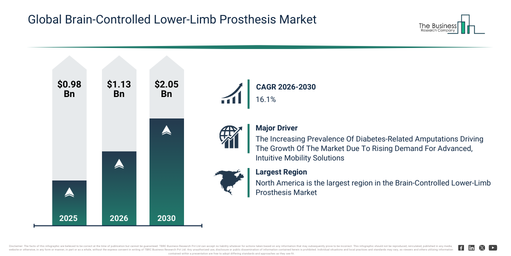
    The brain-controlled lower-limb prosthesis market has seen substantial growth recently. It is projected to expand from $0.98 billion in 2025 to $1.13 billion in 2026, achieving a compound annual growth rate (CAGR) of 15.8%. This historical growth is attributable to several factors, including advancements in myoelectric prosthetics, the increasing incidence of limb loss, the early adoption of microprocessor-controlled limbs, the expansion of rehabilitation infrastructure, and improvements in prosthetic material science.

    The brain-controlled lower-limb prosthesis market is anticipated to see substantial growth over the next few years, with its value projected to reach $2.05 billion in 2030, achieving a compound annual growth rate (CAGR) of 16.1%. This expansion during the forecast period can be attributed to an increasing demand for brain-controlled mobility solutions, the rising integration of AI and machine learning into prosthetics, the spread of personalized prosthetic fitting technologies, the growing adoption of smart rehabilitation platforms, and increased insurance coverage for advanced prosthetic systems. Key trends for the forecast period involve the increasing adoption of AI-controlled prosthetic gait systems, a rising use of multi-modal neural signal integration, a growing demand for adaptive and self-learning prosthetic limbs, the expansion of sensory feedback-enabled prostheses, and an enhanced focus on restoring natural mobility.

    Download A Free Sample Report For Comprehensive Market Insights:

    https://www.thebusinessresearchcompany.com/sample.aspx?id=33046&type=smp

    What Are The Main Drivers Accelerating The Growth Of The Brain-Controlled Lower-Limb Prosthesis Market?

    The increasing prevalence of diabetes-related amputations is anticipated to stimulate the expansion of the brain-controlled lower-limb prosthesis market. Diabetes-related amputations are surgical procedures involving the removal of a lower limb part, which become necessary due to complications arising from long-term, inadequately managed diabetes. The escalating occurrence of these amputations stems from poor glycemic control, a condition that hastens vascular damage, neuropathy, and chronic foot ulcers, frequently progressing to severe infections and tissue loss. A brain-controlled lower-limb prosthesis assists individuals with diabetes-related amputations by re-establishing intuitive mobility and balance via direct neural control, which facilitates a safer gait, lowers the chance of secondary complications, and improves long-term independence. For example, according to data from March 2025 provided by the Office for Health Improvement and Disparities, a UK-based government agency, the GP-recorded adult prevalence of type 2 diabetes in England rose to 7.0% among individuals aged 17 and over in 2024, up from 6.8% in March 2023. Therefore, the rising prevalence of diabetes-related amputations is a significant driver of growth for the brain-controlled lower-limb prosthesis market.

    How Is The Brain-Controlled Lower-Limb Prosthesis Market Structured Across Different Market Segments?

    The brain-controlled lower-limb prosthesis market covered in this report is segmented –

    1) By Product Type: Myoelectric Prosthesis; Bionic Prosthesis; Hybrid Prosthesis; Other Product Types

    2) By Technology: Electroencephalography-Based; Electromyography-Based; Electrocorticography-Based; Other Technologies

    3) By Application: Hospitals; Rehabilitation Centers; Prosthetic Clinics; Other Applications

    4) By End-User: Adults; Pediatrics; Elderly

    Subsegments:

    1) By Myoelectric Prosthesis: Surface Electrode Controlled Prosthesis; Implanted Electrode Controlled Prosthesis; Pattern Recognition Based Prosthesis; Adaptive Control Myoelectric Prosthesis; Multi Signal Input Myoelectric Prosthesis

    2) By Bionic Prosthesis: Neural Interface Controlled Prosthesis; Sensory Feedback Enabled Prosthesis; Artificial Intelligence Integrated Prosthesis; Fully Integrated Bionic Limb Systems; Smart Actuator Based Bionic Prosthesis

    3) By Hybrid Prosthesis: Myoelectric And Mechanical Combined Prosthesis; Neural And Myoelectric Integrated Prosthesis; Sensor Assisted Hybrid Prosthesis; Adaptive Hybrid Control Prosthesis; Multi Modal Control Hybrid Prosthesis

    4) By Other Product Types: Mechanically Controlled Prosthesis; Microprocessor Assisted Prosthesis; Externally Powered Prosthesis; Custom Designed Prosthetic Systems; Experimental Prototype Prosthesis

    Which Industry Players Are Present In The Brain-Controlled Lower-Limb Prosthesis Market?

    Major companies operating in the brain-controlled lower-limb prosthesis market are Ottobock SE And Co. KGaA, Össur hf., Blatchford Limited, Fillauer Companies Inc., College Park Industries Inc., Exiii Inc., Advanced Arm Dynamics Inc., Open Bionics Ltd., BrainRobotics Inc., Blackrock Neurotech Inc., Coapt LLC, Hi-Tech Artificial Limbs Pvt. Ltd., Integrum AB, Liberating Technologies Inc., Limbitless Solutions Inc., Symbionic Inc., Unlimited Tomorrow Inc., Vincent Systems GmbH, Bionik Laboratories Corp., Credence Prosthetic Pvt. Ltd.

    Access The Complete Brain-Controlled Lower-Limb Prosthesis Market Report:

    https://www.thebusinessresearchcompany.com/report/brain-controlled-lower-limb-prosthesis-market-report

    Which Region Is The Dominant Market In The Brain-Controlled Lower-Limb Prosthesis Market?

    North America was the largest region in the brain-controlled lower-limb prosthesis market in 2025. Asia-Pacific is expected to be the fastest-growing region in the forecast period. The regions covered in the brain-controlled lower-limb prosthesis market report are Asia-Pacific, South East Asia, Western Europe, Eastern Europe, North America, South America, Middle East, Africa.

    Access a Customized Brain-Controlled Lower-Limb Prosthesis Market Report for Deeper Competitive Insights

    Get in touch with us:

    The Business Research Company: https://www.thebusinessresearchcompany.com/

    Americas: +1 310-496-7795

    Asia: +44 7882 955267 & +91 8897263534

    Europe: +44 7882 955267

    Email us at: marketing@tbrc.info

    Follow us on:

    LinkedIn: https://in.linkedin.com/company/the-business-research-company

    YouTube: https://www.youtube.com/channel/UC24_fI0rV8cR5DxlCpgmyFQ

    Global Market Model: https://www.thebusinessresearchcompany.com/global-market-model