Category: Medical Equipment

  • Digital Slide Scanners Market Growth Forecast With Analysis Of Industry Progress Through 2030

    Digital Slide Scanners Market Growth Forecast With Analysis Of Industry Progress Through 2030

    The Business Research Company’s 2026 market reports feature advanced enhancements such as market attractiveness analysis, total addressable market evaluation, company benchmarking matrices, interactive Excel dashboards, expanded supply chain intelligence, emerging startup coverage, and detailed product insights, delivering more actionable and strategically valuable research.

    What Is The Estimated Growth In Market Size Of The Digital Slide Scanners Market During 2026–2030?

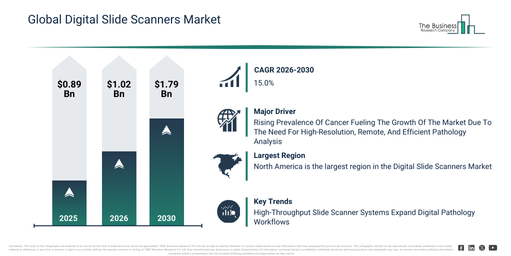
    The market size for digital slide scanners has expanded significantly in recent years. It is anticipated to increase from $0.89 billion in 2025 to $1.02 billion in 2026, at a compound annual growth rate (CAGR) of 15.3%. This historical growth can be attributed to the rising adoption of digital pathology, the growing demand for high-resolution imaging, the increasing need for efficient pathology workflows, the expanding utilization of telepathology solutions, and a heightened focus on accurate disease diagnosis.

    The market for digital slide scanners is projected to experience swift expansion over the coming years. By 2030, this market is anticipated to reach $1.79 billion, demonstrating a compound annual growth rate (CAGR) of 15.0%. This anticipated growth throughout the forecast period stems from factors such as the increasing incorporation of AI-assisted slide analysis, a heightened demand for remote diagnostic options, the rising uptake of whole-slide imaging within hospitals, expanded investments in digital pathology infrastructure, and a stronger focus on automating laboratory workflows. Key trends anticipated during this period encompass technological progress in high-speed slide scanning, breakthroughs in AI-driven image interpretation, the evolution of cloud-based pathology platforms, ongoing research and development into ultra-high-resolution imaging systems, and improvements in interoperable digital pathology ecosystems.

    Download A Free Sample Report For Comprehensive Market Insights:

    https://www.thebusinessresearchcompany.com/sample.aspx?id=30575&type=smp

    What Important Drivers Are Powering The Digital Slide Scanners Market Growth?

    The increasing occurrence of cancer is projected to boost the expansion of the digital slide scanners market in the future. Cancer involves the unchecked multiplication and dissemination of atypical cells, which can harm adjacent tissues and organs if left untreated. This rise in cancer cases stems from lifestyle factors like unhealthy eating habits, tobacco use, excessive alcohol intake, and exposure to environmental contaminants, all of which heighten the chances of developing different types of cancer. Digital slide scanners aid in cancer management by transforming physical tissue specimens into detailed digital images suitable for examination and distribution. These devices enhance the precision of diagnoses, facilitate remote expert consultations, and optimize pathology processes, thereby contributing to prompt and accurate treatment choices. As an illustration, in October 2025, NHS Digital, a UK government organisation, reported 354,820 new cancer diagnoses in England in 2023, amounting to an average of 972 diagnoses daily and marking an increase of 8,605 cases from 2022. Prostate cancer was the most frequently identified type, with 58,137 new instances, indicating a 6% rise in registrations compared to the previous year. Consequently, the growing incidence of cancer is a key factor propelling the expansion of the digital slide scanners market.

    How Is The Digital Slide Scanners Market Examined Through Segment Analysis?

    The digital slide scanners market covered in this report is segmented –

    1) By Product Type: Brightfield Scanners, Fluorescence Scanners, Whole Slide Imaging Scanners, Other Product Types

    2) By Technology: Automated, Semi-Automated, Manual

    3) By Distribution Channel: Direct Sales, Distributors, Online Retail, Third-Party E-Commerce Platforms

    4) By Application: Pathology, Research, Education, Other Applications

    5) By End-User: Hospitals, Diagnostic Laboratories, Academic And Research Institutes, Other End-Users

    Subsegments:

    1) By Brightfield Scanners: High Resolution Brightfield Imaging Units, Automated Tissue Section Scanning Systems, Rapid Slide Digitization Modules, Clinical Grade Brightfield Scanner Device, Multi Magnification Brightfield Imaging Platforms

    2) By Fluorescence Scanners: Multi Channel Fluorescence Imaging Units, High Sensitivity Fluorescent Detection Systems, Advanced Fluorescent Marker Scanning Modules, Low Noise Fluorescence Signal Capture Devices, Multi Spectrum Fluorescence Imaging Platforms

    3) By Whole Slide Imaging Scanners: Large Format Whole Slide Capture Systems, High Throughput Slide Imaging Units, Automated Pathology Slide Digitization Platforms, Ultra High Resolution Whole Slide Scanning Devices, Multi Modal Whole Slide Imaging Modules

    4) By Other Product Types: Hybrid Brightfield And Fluorescence Scanners, Portable Digital Slide Scanning Devices, Cloud Connected Slide Imaging Units, Specialized Research Grade Scanning Platforms, Innovative Digital Pathology Imaging Systems

    Which Trends Are Expected To Shape The Digital Slide Scanners Market?

    Major companies in the digital slide scanners market are concentrating on developing advanced products, such as high-throughput, high-capacity slide scanner systems. This effort aims to accelerate the adoption of digital pathology, enhance operational efficiency, and support large-scale diagnostic workflows. High-throughput, high-capacity slide scanner systems are automated digital pathology scanners designed to rapidly digitize numerous glass slides in a single run, maintaining consistent diagnostic-grade image quality and requiring minimal manual intervention. For example, in April 2025, Hamamatsu Photonics K.K., a Japan-based imaging technology company, introduced the NanoZoomer S540MD slide scanner system. This system functions as a high-throughput scanner suited for large digital pathology workflows, capable of processing up to 540 slides per batch. It also allows continuous cassette loading to improve efficiency and reduce turnaround time without compromising image quality. Featuring a touchscreen interface, it supports common slide racks like Leica and Sakura, ensuring smooth integration into existing laboratory setups.

    Which Firms Are Competing In The Digital Slide Scanners Market?

    Major companies operating in the digital slide scanners market are F. Hoffmann-La Roche AG, Danaher Corporation, Koninklijke Philips N.V., Olympus Corporation, Nikon Corporation, Hologic Inc., Carl Zeiss Microscopy GmbH, Excelitas Technologies Corp., Hamamatsu Photonics K.K., Motic Instruments Inc., Dakewe Medical Equipment Co. Ltd., OptraSCAN Inc., Paige AI Inc., Proscia Inc., Pramana Inc., Grundium Oy, 3DHISTECH Ltd., Ibex Medical Analytics Ltd., Huron Technologies International Inc., Mikroscan Technologies Inc.

    Access The Complete Digital Slide Scanners Market Report:

    https://www.thebusinessresearchcompany.com/report/digital-slide-scanners-market-report

    Which Region Has The Strongest Presence In The Digital Slide Scanners Market?

    North America was the largest region in the digital slide scanners market in 2025. Asia-Pacific is expected to be the fastest-growing region in the forecast period. The regions covered in the digital slide scanners market report are Asia-Pacific, South East Asia, Western Europe, Eastern Europe, North America, South America, Middle East, Africa.

    Access a Customized Digital Slide Scanners Market Report for Deeper Competitive Insights

    https://www.thebusinessresearchcompany.com/sample.aspx?id=30575&type=smp

    Get in touch with us:

    The Business Research Company: https://www.thebusinessresearchcompany.com/

    Americas: +1 310-496-7795

    Asia: +44 7882 955267 & +91 8897263534

    Europe: +44 7882 955267

    Email us at: marketing@tbrc.info

    Follow us on:

    LinkedIn: https://in.linkedin.com/company/the-business-research-company

    YouTube: https://www.youtube.com/channel/UC24_fI0rV8cR5DxlCpgmyFQ

    Global Market Model: https://www.thebusinessresearchcompany.com/global-market-model
  • Global Digital Rights Management Software Market Forecast Highlighting Expansion And Competitive Dynamics

    Global Digital Rights Management Software Market Forecast Highlighting Expansion And Competitive Dynamics

    The Business Research Company’s 2026 market reports feature advanced enhancements such as market attractiveness analysis, total addressable market evaluation, company benchmarking matrices, interactive Excel dashboards, expanded supply chain intelligence, emerging startup coverage, and detailed product insights, delivering more actionable and strategically valuable research.

    What Market Value Expansion Is Expected For The Digital Rights Management Software Market Over The Forecast Period?

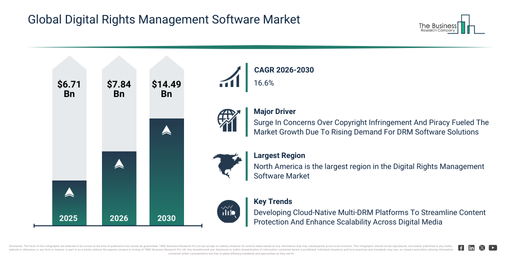
    The digital rights management software market has seen rapid expansion in recent years. It is projected to increase from $6.71 billion in 2025 to $7.84 billion in 2026, exhibiting a compound annual growth rate (CAGR) of 16.9%. Historically, this growth has been driven by factors such as rising digital piracy stimulating demand for content protection, the increasing adoption of online video and music platforms, a growing need for secure software licensing management, the expansion of digital publishing and electronic book usage, and the increasing shift of enterprises towards digital content distribution.

    The digital rights management software market is projected to experience swift expansion over the coming years, reaching $14.49 billion by 2030, driven by a compound annual growth rate (CAGR) of 16.6%. This anticipated growth can be attributed to several factors, including the increasing embrace of cloud-based rights management solutions, the escalating need for secure content access across multiple devices, the greater incorporation of artificial intelligence for automated content safeguarding, the proliferation of subscription-based digital monetization strategies, and the expanding requirement for secure digital learning and remote workforce content platforms. Key trends expected during this period involve progress in blockchain-based rights verification technologies, new approaches in forensic watermarking to combat piracy, advancements in machine learning-powered content surveillance, ongoing research and development into next-generation encryption architectures, and technological improvements in automated rights lifecycle management systems.

    Download A Free Sample Report For Comprehensive Market Insights:

    https://www.thebusinessresearchcompany.com/sample.aspx?id=30574&type=smp

    Which Major Factors Are Contributing To The Development Of The Digital Rights Management Software Market?

    Anticipated to drive the expansion of the digital rights management software market, increasing worries about copyright infringement and piracy are significant. These activities involve the unapproved utilization, replication, and sharing of digital assets like music, films, books, and software, bypassing the consent of the rights holder and thus compromising intellectual property safeguards. The rise in online consumption of digital content, coupled with instances where consumers turn to illicit sources due to the unavailability or high cost of legitimate access, has intensified anxieties regarding copyright infringement and piracy. Digital rights management software plays a crucial role in these endeavors by offering technology designed to enforce access permissions, block unauthorized usage, and safeguard the intellectual property rights of both content creators and distributors. An illustration of this trend occurred in June 2025, when the UK Intellectual Property Office, a UK-based government agency, reported findings from the 13th wave of the Online Copyright Infringement Tracker Survey, indicating that the proportion of UK internet users engaging with unauthorized content rose from 24 % in 2024 to 26 % in 2025, representing an 8.3 % increase over the prior year. Consequently, the escalating worries about copyright infringement and piracy are a key impetus for the expansion of the DRM Software market.

    Which Segment Groups Define The Digital Rights Management Software Market Landscape?

    The digital rights management software market covered in this report is segmented –

    1) By Component: Software, Services

    2) By Deployment Mode: On Premises, Cloud

    3) By Organization Size: Small And Medium Enterprises, Large Enterprises

    4) By Application: Video Content, Electronic Books, Software, Games, Music, Other Applications

    5) By End User: Media And Entertainment, Banking, Financial Services, And Insurance, Information Technology And Telecommunications, Education, Healthcare, Government, Other End Users

    Subsegments:

    1) By Software: Content Protection Software, License Management Software, Encryption Management Software, Access Control Software, Digital Content Monitoring Software

    2) By Services: Implementation Services, Consulting Services, Support and Maintenance Services, Managed Digital Rights Services, Training and Integration Services

    What Trends Are Affecting The Digital Rights Management Software Market Dynamics?

    Leading companies in the digital rights management software market are concentrating on creating advanced solutions, specifically cloud-native multi-DRM platforms, to facilitate integration, boost scalability, and simplify licensing across numerous digital platforms. Cloud-native multi-DRM platforms denote software deployed through cloud environments that deliver centralized DRM services, encompassing key management, license delivery, and policy enforcement, without requiring on-premises hardware. As an illustration, in September 2023, NAGRA, a US-based content security company, unveiled its Multi-DRM service on the AWS Marketplace. This service delivers scalable content protection built upon Amazon EKS, OpenSearch, S3, and RDS, enabling streaming developers to integrate DRM through a SaaS model that includes a free trial option. This introduction marks a substantial technological stride by uniting cloud scalability with enterprise-grade DRM features, connecting secure content delivery with streamlined deployment. It offers content providers a versatile, effective solution for safeguarding digital media and managing licenses across various platforms.

    Who Are The Major Companies Operating In The Digital Rights Management Software Market?

    Major companies operating in the digital rights management software market are Apple Inc., Google LLC, Microsoft Corporation, Synamedia Ltd., Irdeto B.V., Viaccess-Orca SAS, JW Player LLC, Verimatrix Inc., Wowza Media Systems LLC, Seclore Inc., Wibu-Systems AG, Axinom GmbH, Locklizard Limited, Intertrust Technologies Corporation, Vitrium Systems Inc., BuyDRM Inc., EZDRM Inc., castLabs GmbH, VdoCipher Pvt. Ltd., FileOpen Systems Inc.

    Access The Complete Digital Rights Management Software Market Report:

    https://www.thebusinessresearchcompany.com/report/digital-rights-management-software-market-report

    Which Region Stands As The Largest Contributor To The Digital Rights Management Software Market?

    North America was the largest region in the digital rights management software market in 2025. Asia-Pacific is expected to be the fastest-growing region in the forecast period. The regions covered in the digital rights management software market report are Asia-Pacific, South East Asia, Western Europe, Eastern Europe, North America, South America, Middle East, Africa.

    Access a Customized Digital Rights Management Software Market Report for Deeper Competitive Insights

    https://www.thebusinessresearchcompany.com/sample.aspx?id=30574&type=smp

    Get in touch with us:

    The Business Research Company: https://www.thebusinessresearchcompany.com/

    Americas: +1 310-496-7795

    Asia: +44 7882 955267 & +91 8897263534

    Europe: +44 7882 955267

    Email us at: marketing@tbrc.info

    Follow us on:

    LinkedIn: https://in.linkedin.com/company/the-business-research-company

    YouTube: https://www.youtube.com/channel/UC24_fI0rV8cR5DxlCpgmyFQ

    Global Market Model: https://www.thebusinessresearchcompany.com/global-market-model
  • Digital Neuro Biomarkers Market Analysis Through 2030 Focusing On Demand Trends And Growth Drivers

    Digital Neuro Biomarkers Market Analysis Through 2030 Focusing On Demand Trends And Growth Drivers

    The Business Research Company’s 2026 market reports feature advanced enhancements such as market attractiveness analysis, total addressable market evaluation, company benchmarking matrices, interactive Excel dashboards, expanded supply chain intelligence, emerging startup coverage, and detailed product insights, delivering more actionable and strategically valuable research.

    How Will The Market Value Of The Digital Neuro Biomarkers Market Change Between 2026 And 2030?

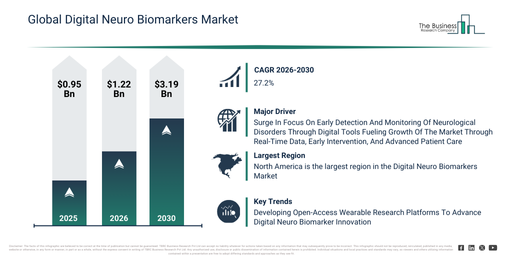
    The digital neuro biomarkers market has experienced rapid expansion in recent times. Its projected trajectory indicates an increase from $0.95 billion in 2025 to $1.22 billion in 2026, at a compound annual growth rate (CAGR) of 27.5%. This historical growth can be attributed to the rising prevalence of neurological disorders, increasing adoption of wearable devices, a growing focus on cognitive assessment, advancements in neuroimaging technologies, and early research in digital biomarker development.

    The digital neuro biomarkers market is projected to experience substantial expansion over the upcoming years. By 2030, its valuation is set to reach $3.19 billion, exhibiting a compound annual growth rate (CAGR) of 27.2%. This anticipated growth is driven by several factors, including the increasing application of artificial intelligence in diagnosing neurological conditions, the rising need for remote patient observation, the expansion of tele-neurology offerings, increased funding for neuroscience studies, and the creation of tailored neurology treatment approaches. Key developments foreseen during this period encompass the more widespread utilization of cloud-powered neurological data analysis, the implementation of brain monitoring tools that operate in real-time, the proliferation of mobile applications for cognitive evaluation, the incorporation of machine learning into biomarker scrutiny, and the emergence of platforms focused on predictive and precise neurology.

    Download A Free Sample Report For Comprehensive Market Insights:

    https://www.thebusinessresearchcompany.com/sample.aspx?id=30571&type=smp

    What Key Growth Drivers Are Influencing The Digital Neuro Biomarkers Market?

    A greater emphasis on the early identification and continuous tracking of neurological disorders is projected to boost the expansion of the digital neuro biomarkers market. This approach to early detection and monitoring leverages digital technologies such as wearable devices, mobile applications, and sensors to consistently assess neurological function, cognition, and behavior, thereby enabling the swift recognition of neurological conditions. This focus is intensifying due to public health initiatives and clinical priorities aimed at identifying cognitive impairment and neurodegenerative diseases before more severe symptoms manifest. Digital neuro biomarkers support these efforts by delivering objective, real-time data that helps clinicians and researchers detect subtle neurological changes and initiate timely interventions. For instance, in 2024, according to the U.S. Centres for Disease Control and Prevention’s Healthy Brain Initiative, neurological disorders affect approximately one billion people globally, including around 50 million individuals with epilepsy and 24 million with Alzheimer’s disease. Therefore, the increasing focus on early detection and monitoring of neurological disorders through digital tools is driving the growth of the digital neuro biomarkers market.

    What Key Segment Areas Are Included In The Digital Neuro Biomarkers Market Assessment?

    The digital neuro biomarkers market covered in this report is segmented –

    1) By Type: Wearable, Mobile-Based Applications, Sensors, Other Types

    2) By Deployment Mode: Cloud-Based Platforms, On-Premise Platforms, Hybrid Deployment Models

    3) By Biomarker Type: Cognitive Digital Biomarkers, Motor Function Digital Biomarkers, Speech And Language Digital Biomarkers, Behavioral Digital Biomarkers

    4) By End-User: Healthcare Companies, Healthcare Providers, Payers, Other End-Users

    Subsegments:

    1) By Wearable: Smart Wristbands, Smart Headbands, Smart Watches, Smart Clothing, Implantable Devices

    2) By Mobile-Based Applications: Cognitive Assessment Applications, Neurological Monitoring Applications, Mental Health Tracking Applications, Motor Function Assessment Applications, Speech And Language Tracking Applications

    3) By Sensors: Electroencephalography Sensors, Electrocardiography Sensors, Eye Tracking Sensors, Motion Tracking Sensors, Biometric Monitoring Sensors

    4) By Other Types: Cloud Based Platforms, Data Analytics Tools, Digital Therapeutic Platforms, Artificial Intelligence Enabled Assessment Tools, Virtual Reality Based Assessment Tools

    Which Trends Are Influencing The Expansion Of The Digital Neuro Biomarkers Market?

    Leading companies in the digital neuro biomarkers market are concentrating on establishing open-access research infrastructures, such as WearGait PD, to facilitate the creation, validation, and regulatory appraisal of wearable-based digital neuro biomarkers for various neurological disorders. WearGait PD serves as a regulatory science dataset that supplies synchronized wearable sensor and gait data from individuals with Parkinson’s disease and age-matched controls, thereby enabling the extraction and evaluation of gait-derived digital biomarkers for disease monitoring and progression assessment. For example, in July 2024, the U.S. Food and Drug Administration (FDA), a U.S.-based regulatory agency, published “WearGait PD: Wearables Dataset for Gait in Parkinson’s Disease and Age-Matched Controls,” an open-access dataset designed to assist researchers and industry developers in deriving and validating digital biomarkers. This dataset contains raw inertial measurement unit (IMU) acceleration and rotational velocity data, insole pressure recordings, and synchronized gait annotations, which supports algorithm testing, metric validation, and the development of wearable sensor-based monitoring tools.

    Which Companies Are Influencing The Digital Neuro Biomarkers Market?

    Major companies operating in the digital neuro biomarkers market are F. Hoffmann-La Roche AG, Merck KGaA, Biogen Inc., Evidation Health Inc., Huma Therapeutics Limited, Altoida Inc, Cogstate Limited, Quibim S.L., Empatica Inc., Linus Health Inc., Cambridge Cognition Holdings plc, Brainomix Limited, Mindstrong Health Inc., Neurotrack Technologies Inc., Feel Therapeutics Inc., BrainCheck Inc., IXICO plc, NeuraMetrix Inc., NeuraLight Ltd., Koneksa Health Inc., Sonde Health Inc., Aural Analytics Inc., Winterlight Labs Inc.

    Access The Complete Digital Neuro Biomarkers Market Report:

    https://www.thebusinessresearchcompany.com/report/digital-neuro-biomarkers-market-report

    What Is The Largest Regional Market In The Digital Neuro Biomarkers Market?

    North America was the largest region in the digital neuro biomarkers market in 2025. Asia-Pacific is expected to be the fastest-growing region in the forecast period. The regions covered in the digital neuro biomarkers market report are Asia-Pacific, South East Asia, Western Europe, Eastern Europe, North America, South America, Middle East, Africa.

    Access a Customized Digital Neuro Biomarkers Market Report for Deeper Competitive Insights

    https://www.thebusinessresearchcompany.com/sample.aspx?id=30571&type=smp

    Get in touch with us:

    The Business Research Company: https://www.thebusinessresearchcompany.com/

    Americas: +1 310-496-7795

    Asia: +44 7882 955267 & +91 8897263534

    Europe: +44 7882 955267

    Email us at: marketing@tbrc.info

    Follow us on:

    LinkedIn: https://in.linkedin.com/company/the-business-research-company

    YouTube: https://www.youtube.com/channel/UC24_fI0rV8cR5DxlCpgmyFQ

    Global Market Model: https://www.thebusinessresearchcompany.com/global-market-model
  • Growing Exposure Of Industrial Robots To Cyber Threats And Attacks Driving The Growth Of The C Market Due To Rising Connectivity And Automation In Industrial Environments Is Supporting Development Across The Cybersecurity In Robotics Market

    Growing Exposure Of Industrial Robots To Cyber Threats And Attacks Driving The Growth Of The C Market Due To Rising Connectivity And Automation In Industrial Environments Is Supporting Development Across The Cybersecurity In Robotics Market

    The Business Research Company’s 2026 market reports feature advanced enhancements such as market attractiveness analysis, total addressable market evaluation, company benchmarking matrices, interactive Excel dashboards, expanded supply chain intelligence, emerging startup coverage, and detailed product insights, delivering more actionable and strategically valuable research.

    By 2030, How Much Growth In Market Size Is Expected For The Cybersecurity In Robotics Market?

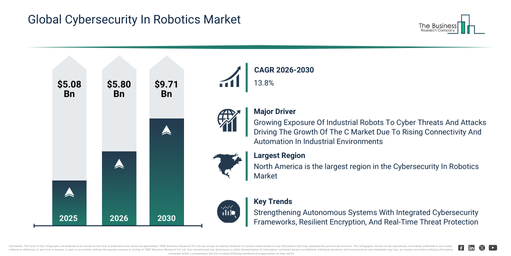
    The cybersecurity in robotics market size has experienced significant expansion in recent years. This market is projected to expand from $5.08 billion in 2025 to $5.80 billion by 2026, demonstrating a compound annual growth rate (CAGR) of 14.1%. Historically, this expansion has been driven by several factors, including the wider acceptance of connected robotics, the increasing integration of artificial intelligence within robotic systems, the proliferation of cyber threats against automated operations, the broader deployment of cloud-based robotic platforms, and the escalating demand for secure industrial automation.

    The cybersecurity in robotics market is projected to experience substantial expansion over the coming years, reaching a valuation of $9.71 billion by 2030, demonstrating a compound annual growth rate (CAGR) of 13.8%. This anticipated growth is primarily driven by several factors, including heightened investment in sophisticated robotic security solutions, the expanding deployment of autonomous mobile robots, increasingly stringent compliance demands for robotic cybersecurity, the wider application of robotics across vital industries, and a greater need for secure interactions between humans and robots. Key trends anticipated during this period encompass technological progress in detecting robotic threats, breakthroughs in autonomous cybersecurity functionalities, enhancements in secure communication systems for robots, dedicated research and development efforts into machine learning-powered robotic defense, and ongoing advancements in encryption techniques for robotic networks.

    Download A Free Sample Report For Comprehensive Market Insights:

    https://www.thebusinessresearchcompany.com/sample.aspx?id=30567&type=smp

    Which Growth Drivers Are Expected To Support The Cybersecurity In Robotics Market Forward?

    The increasing vulnerability of industrial robots to cyber threats and attacks is anticipated to fuel the expansion of the cybersecurity in robotics market in the future. Cyber threats encompass malicious actions like malware, ransomware, and unauthorized access attempts that target robotic systems, potentially compromising their security, functionality, or safety. The risk to industrial robots from these threats is escalating as manufacturing facilities, warehouses, and factories increasingly adopt highly connected and automated robotic systems, which depend on networked controls and cloud platforms. Cybersecurity solutions in robotics play a crucial role in mitigating these cyber threats and attacks by protecting communication protocols, sensors, control systems, and cloud platforms, thereby ensuring that robots operate safely, securely, and without interruptions. For instance, in April 2025, Check Point Software Technologies, an Israel-based cybersecurity firm, reported a 47% surge in cyber attacks per organization during the first quarter, reaching an average of 1,925 weekly attacks. Industrial manufacturing, specifically, experienced 1,554 attacks, marking a 63% increase. Consequently, the rising exposure of industrial robots to cyber threats and attacks is propelling the growth of the cybersecurity in robotics market.

    How Is The Cybersecurity In Robotics Market Structured Across Different Market Segments?

    The cybersecurity in robotics market covered in this report is segmented –

    1) By Component: Software, Hardware, Services

    2) By Deployment Type: On-Premises Solutions, Cloud-Based Systems, Hybrid Deployments

    3) By Robot Type: Industrial Robots, Service Robots, Autonomous Mobile Robots, Collaborative Robots

    4) By Solution: Authentication, Encryption, Denial Of Service Protection, Secure Communication, Risk And Vulnerability Management

    5) By Industry Vertical: Manufacturing, Healthcare, Defense, Transportation, Energy And Utilities

    Subsegments:

    1) By Software: Secure Operating Systems, Threat Detection Platforms, Encryption Management Tools, Identity Access Solutions

    2) By Hardware: Secure Network Gateways, Robotic Control Units, Authentication Hardware Modules, Cybersecure Sensor Systems

    3) By Services: Managed Security Services, Integration and Implementation Services, Consulting and Advisory Services, Training and Support Services

    What Trends Are Influencing The Cybersecurity In Robotics Market?

    Major companies operating in the cybersecurity in robotics market are concentrating on creating advanced protection technologies, including immunity cybersecurity encryption software suites, to safeguard autonomous drones and robotic platforms from emerging cyber threats while upholding operational integrity and data security. Immunity cybersecurity encryption software suites denote comprehensive security toolsets that combine encryption, intrusion detection, and immunization features, specifically engineered to defend autonomous systems against unauthorized access, manipulation, and signal interference. For instance, in October 2025, Mobilicom Ltd., an Israel-based provider of secured autonomy solutions, introduced its Secured Autonomy cybersecurity framework, recognized as the industry’s first end-to-end cybersecurity platform tailored for autonomous drones and robotics. A key element of this framework is the ICE software suite, which delivers robust encryption, real-time threat detection, secure communication channels, and hardware-agnostic protection layers to deter cyber intrusions and ensure ongoing mission operations.

    Which Organizations Are Involved In The Cybersecurity In Robotics Market?

    Major companies operating in the cybersecurity in robotics market are Siemens Aktiengesellschaft, Honeywell International Inc., Kaspersky Lab, Tenable Holdings Inc., Rapid7 Inc., Darktrace Ltd., Forcepoint LLC, Bitdefender LLC, Armis Inc., Forescout Technologies Inc., Claroty Ltd., OPSWAT Inc., Dragos Inc., Nozomi Networks Ltd., FORT Robotics Inc., Radiflow Ltd., Cynerio Ltd, Alias Robotics SL, MedCrypt Inc., Asimily Inc., Arxan Technologies

    Access The Complete Cybersecurity In Robotics Market Report:

    https://www.thebusinessresearchcompany.com/report/cybersecurity-in-robotics-market-report

    Which Region Holds The Largest Share In The Cybersecurity In Robotics Market?

    North America was the largest region in the cybersecurity in robotics in 2025. Asia-Pacific is expected to be the fastest-growing region in the forecast period. The regions covered in the cybersecurity in robotics market report are Asia-Pacific, South East Asia, Western Europe, Eastern Europe, North America, South America, Middle East, Africa.

    Access a Customized Cybersecurity In Robotics Market Report for Deeper Competitive Insights

    https://www.thebusinessresearchcompany.com/sample.aspx?id=30567&type=smp

    Get in touch with us:

    The Business Research Company: https://www.thebusinessresearchcompany.com/

    Americas: +1 310-496-7795

    Asia: +44 7882 955267 & +91 8897263534

    Europe: +44 7882 955267

    Email us at: marketing@tbrc.info

    Follow us on:

    LinkedIn: https://in.linkedin.com/company/the-business-research-company

    YouTube: https://www.youtube.com/channel/UC24_fI0rV8cR5DxlCpgmyFQ

    Global Market Model: https://www.thebusinessresearchcompany.com/global-market-model
  • Technological Innovation In High-Density Thin-Film Electrode Arrays For Minimally Invasive Brain Mapping Is Affecting The Direction Of The Cortical Grid Electrodes Market

    Technological Innovation In High-Density Thin-Film Electrode Arrays For Minimally Invasive Brain Mapping Is Affecting The Direction Of The Cortical Grid Electrodes Market

    The Business Research Company’s 2026 market reports feature advanced enhancements such as market attractiveness analysis, total addressable market evaluation, company benchmarking matrices, interactive Excel dashboards, expanded supply chain intelligence, emerging startup coverage, and detailed product insights, delivering more actionable and strategically valuable research.

    What Market Value Trend Is Expected For The Cortical Grid Electrodes Market From 2026 To 2030?

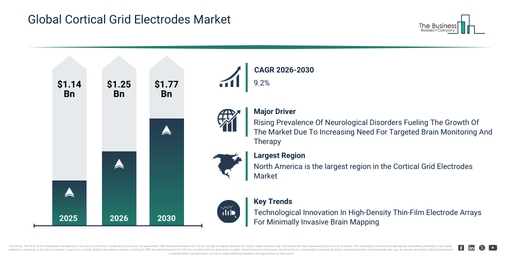
    The cortical grid electrodes market has observed substantial growth over recent years. It is projected to expand from $1.14 billion in 2025 to $1.25 billion in 2026, progressing at a compound annual growth rate (CAGR) of 9.4%. This historical growth can be attributed to several factors including increasing demand for neuroprosthetics, growing funding for neurological research, the rising prevalence of neurological disorders, expanding applications in brain-computer interfaces, and technological advancements in electrodes.

    The market for cortical grid electrodes is anticipated to experience substantial expansion over the upcoming years. This market is projected to reach a valuation of $1.77 billion by 2030, demonstrating a compound annual growth rate (CAGR) of 9.2%. This projected expansion is primarily driven by an increasing need for neurological treatments, broadening uses in brain studies, greater financial commitments to research and development, wider acceptance in clinical settings, and an intensified emphasis on customized neuromodulation solutions. Key developments expected during this period encompass technological progress in making electrodes smaller, novelties in conductive polymer substances, improvements in high-density electrode systems, advancements in AI-driven brain mapping research, and enhanced integration with existing neurosurgical platforms.

    Download A Free Sample Report For Comprehensive Market Insights:

    https://www.thebusinessresearchcompany.com/sample.aspx?id=30564&type=smp

    What Influential Factors Are Boosting The Cortical Grid Electrodes Market Demand?

    The cortical grid electrodes market is anticipated to experience growth driven by the increasing occurrence of neurological disorders. These are medical conditions affecting the brain, spinal cord, and nerves, leading to diverse symptoms such as impairments in cognition, motor skills, and sensation. The heightened prevalence of neurological disorders is linked to an aging population, given that aging progressively impairs neuronal function, reduces brain plasticity, and elevates oxidative stress, all contributing to the development and advancement of these conditions. Cortical grid electrodes contribute to the treatment of neurological disorders by enabling precise monitoring and stimulation of brain activity to either restore or modulate neural function. They enhance patient outcomes by supporting targeted therapies for conditions including epilepsy, movement disorders, and chronic pain. For instance, in July 2024, the National Health Service, a UK-based government agency, reported that by June 30, 2024, there were 487,432 patients diagnosed with dementia (a progressive brain disorder affecting memory, thinking, and daily activities), which represented an increase of 3,155 cases compared to May 31, 2024. Consequently, the rising prevalence of neurological disorders is propelling the expansion of the cortical grid electrodes market.

    Which Segment-Based Categories Are Covered In The Cortical Grid Electrodes Market?

    The cortical grid electrodes market covered in this report is segmented –

    1) By Product: Epidural Cortical Grid Electrodes, High-Density Cortical Grid Electrodes, Flexible Cortical Grid Electrodes, Penetrating Cortical Grid Electrodes, Multi-Contact Cortical Grid Electrodes, Customized Cortical Grid Electrodes, Reusable Cortical Grid Electrodes

    2) By Material Type: Silicone, Polyimide, Metal, Conductive Polymer

    3) By Electrode Configuration: Strip Electrode, Grid Electrode, Cylindrical Electrode, Custom Designs

    4) By Application: Neuroprosthetics, Brain Mapping, Seizure Monitoring, Research

    5) By End User: Hospitals, Research Institutions, Neurology Clinics, Educational Institutions

    Subsegments:

    1) By Epidural Cortical Grid Electrodes: Single Contact Epidural Electrode, Multi Contact Epidural Electrode, Strip Epidural Electrode, Square Grid Epidural Electrode, Rectangular Grid Epidural Electrode

    2) By High Density Cortical Grid Electrodes: Ultra High Density Electrode, Dense Array Electrode, Small Contact Spacing Electrode, High Resolution Electrode, Compact High Density Electrode

    3) By Flexible Cortical Grid Electrodes: Silicone Based Flexible Electrode, Polyimide Flexible Electrode, Stretchable Flexible Electrode, Conformable Flexible Electrode, Thin Film Flexible Electrode

    4) By Penetrating Cortical Grid Electrodes: Microwire Penetrating Electrode, Depth Penetrating Electrode, Multi Shank Penetrating Electrode, Linear Array Penetrating Electrode, Three Dimensional Penetrating Electrode

    5) By Multi Contact Cortical Grid Electrodes: Double Contact Electrode, Triple Contact Electrode, Quadruple Contact Electrode, Multiple Contact Strip Electrode, High Contact Count Electrode

    6) By Customized Cortical Grid Electrodes: Patient Specific Electrode, Tailor Made Electrode, Bespoke Size Electrode, Custom Shape Electrode, Special Design Electrode

    7) By Reusable Cortical Grid Electrodes: Sterilizable Reusable Electrode, Durable Reusable Electrode, Long Life Reusable Electrode, Multiple Use Reusable Electrode, Washable Reusable Electrode

    Which Trends Are Guiding The Development Of The Cortical Grid Electrodes Market?

    Major companies operating in the cortical grid electrodes market are concentrating on developing advanced products, such as high-density thin-film electrode arrays, aimed at improving the precision and safety of neural data capture. These high-density thin-film arrays employ pliable, biocompatible materials like polyimide to form micro-electrode arrays that closely adapt to the brain’s contour. This allows for the acquisition of thousands of channels of neural information with minimal tissue disturbance and ensures reversibility, effectively addressing the shortcomings of conventional, rigid subdural grids. As an illustration, in March 2025, Precision Neuroscience Corporation, a US-based firm specializing in brain-computer interfaces, secured Food and Drug Administration (FDA) 510(k) clearance for its Layer 7-T (Layer 7 Cortical Interface). This particular device is a high-density thin-film 1024-channel cortical electrode array, intended for temporary application (less than 30 days) to record, track, and stimulate electrical signals directly on the brain’s surface. The system empowers surgeons to map brain activity with unparalleled detail through a minimally invasive micro-slit method, which aids in safeguarding eloquent tissue during neurosurgical interventions.

    Who Are The Firms Contributing To The Cortical Grid Electrodes Market Ecosystem?

    Major companies operating in the cortical grid electrodes market are Abbott Laboratories, Medtronic plc, Integra Life Sciences Corporation, Nihon Kohden Corporation, Natus Medical Incorporated, NeuroPace Inc., Blackrock Neurotech LLC, Cadwell Industries Inc., Precision Neuroscience Corporation, AD-tech Medical Instrument, Inomed Medizintechnik Gmbh, PMT Corporation, Ripple Neuro LLC, Neuroone Medical Technology corporation, Plexon Inc., Cortec Gmbh, Microprobes for Lifesciences Inc, Dixi Medical SAS, Cortera Neurotechnologies Inc., Neurosoft Bioelectronics Ltd., Alpha Omega Engineering Ltd.

    Access The Complete Cortical Grid Electrodes Market Report:

    https://www.thebusinessresearchcompany.com/report/cortical-grid-electrodes-market-report

    Which Region Is The Dominant Market In The Cortical Grid Electrodes Market?

    North America was the largest region in the cortical grid electrodes market in 2025. Asia-Pacific is expected to be the fastest-growing region in the forecast period. The regions covered in the cortical grid electrodes market report are Asia-Pacific, South East Asia, Western Europe, Eastern Europe, North America, South America, Middle East, Africa.

    Access a Customized Cortical Grid Electrodes Market Report for Deeper Competitive Insights

    https://www.thebusinessresearchcompany.com/sample.aspx?id=30564&type=smp

    Get in touch with us:

    The Business Research Company: https://www.thebusinessresearchcompany.com/

    Americas: +1 310-496-7795

    Asia: +44 7882 955267 & +91 8897263534

    Europe: +44 7882 955267

    Email us at: marketing@tbrc.info

    Follow us on:

    LinkedIn: https://in.linkedin.com/company/the-business-research-company

    YouTube: https://www.youtube.com/channel/UC24_fI0rV8cR5DxlCpgmyFQ

    Global Market Model: https://www.thebusinessresearchcompany.com/global-market-model

  • The Connected Packaging Market Is Advancing With Support From Rising E-Commerce Activities Fueling The Market Due To Enhanced Consumer Convenience And Digital Retail Expansion

    The Connected Packaging Market Is Advancing With Support From Rising E-Commerce Activities Fueling The Market Due To Enhanced Consumer Convenience And Digital Retail Expansion

    The Business Research Company’s 2026 market reports feature advanced enhancements such as market attractiveness analysis, total addressable market evaluation, company benchmarking matrices, interactive Excel dashboards, expanded supply chain intelligence, emerging startup coverage, and detailed product insights, delivering more actionable and strategically valuable research.

    How Does The Forecasted Market Size Of The Connected Packaging Market Compare Between 2026 And 2030?

    The connected packaging market has experienced swift expansion recently. Projections indicate its expansion from $34.63 billion in 2025 to $38.40 billion in 2026, demonstrating a compound annual growth rate (CAGR) of 10.9%. Historically, this growth stemmed from factors such as a heightened demand for product authentication, the expanding use of smart labels, escalating consumer engagement efforts, wider supply chain traceability, and adherence to regulatory compliance.

    The connected packaging market is anticipated to undergo significant expansion in the coming years, reaching a value of $57.55 billion by 2030, exhibiting a compound annual growth rate (CAGR) of 10.6%. This expansion during the forecast period is primarily driven by an increased focus on digital integration, the growing adoption of IoT-enabled packaging, a rising demand for anti-counterfeiting solutions, the expansion of e-commerce and retail channels, and a heightened emphasis on sustainability in packaging. Key trends identified for this period include advancements in augmented reality packaging, innovations in intelligent sensors, developments in connected packaging platforms, research and developments in data analytics solutions, and the integration of blockchain for enhanced traceability.

    Download A Free Sample Report For Comprehensive Market Insights:

    https://www.thebusinessresearchcompany.com/sample.aspx?id=30563&type=smp

    Which Drivers Are Advancing The Connected Packaging Market Growth?

    The connected packaging market is projected to expand significantly due to the rise in e-commerce activities. E-commerce involves the digital processes of purchasing, selling, marketing, payment, delivery, and servicing of products or services across digital networks, primarily the internet, facilitating interactions among businesses, consumers, and platforms. This surge in e-commerce stems from the convenience of online shopping, which enables consumers to browse, compare, and acquire products anytime and anywhere with minimal effort. Connected packaging supports e-commerce by enhancing product traceability, improving customer engagement through digital interactions, enabling real-time tracking, and building trust between brands and online consumers. For example, according to Sellers Commerce, a US-based e-commerce platform, United States e-commerce sales were $1.19 trillion in 2024 as of May 2025, marking an 8.2% increase from the previous year. Consequently, the expanding e-commerce sector is fueling the growth of the connected packaging market.

    What Are The Major Segment Categories Within The Connected Packaging Market?

    The connected packaging market covered in this report is segmented –

    1) By Type: Active Packaging, Interactive Packaging, Intelligent Packaging

    2) By Service: Data Analytics Services, Digital Integration Services, Supply Chain Monitoring Services, Customer Engagement Services, Smart Labeling Services, Implementation Services, Maintenance And Support Services

    3) By Technology: QR Codes, Near Field Communication, Radio Frequency Identification, Augmented Reality, Other Technology

    4) By Application: Food And Beverage, Pharmaceuticals, Personal Care, Consumer Electronics, Other Applications

    5) By End-User: Retail, Healthcare, Logistics, Other End-Users

    Subsegments:

    1) By Active Packaging: Time Temperature Indicators, Oxygen Scavengers, Ethylene Scavengers, Moisture Absorbers, Antimicrobial Packaging

    2) By Interactive Packaging: Quick Response Codes, Augmented Reality Packaging, Near Field Communication, Scratch and Reveal Codes, Digital Triggered Content

    3) By Intelligent Packaging: Radio Frequency Identification Tags, Sensors for Freshness, Tamper Evident Indicators, Smart Labels, Temperature Monitoring Devices

    What Trends Are Influencing The Future Of The Connected Packaging Market?

    Major companies operating in the connected packaging market are focusing on developing innovative solutions, such as consumer-connected packaging technologies, to accelerate the adoption of connected tools like QR codes, NFC tags, and RFID for enhancing consumer engagement, product authentication, and supply chain transparency. Consumer-connected packaging technologies are digital solutions embedded directly into product packaging, enabling interactive experiences, secure tracking, and real-time data collection across the entire product lifecycle. For instance, in November 2023, the Active & Intelligent Packaging Industry Association (AIPIA) launched the Consumer Connected Packaging initiative. This program brings together brands and technology partners to promote QR codes, NFC, RFID, AR, and blockchain, thereby facilitating interactive traceability and transparent consumer engagement that support the large-scale deployment of connected packaging. This initiative represents a significant technological advancement by integrating digital innovations with packaging and supply chain needs, effectively bridging interactive consumer experiences with operational efficiency. It offers a scalable and effective solution for enhancing transparency, engagement, and traceability across product networks.

    Which Key Players Are Active In The Connected Packaging Market?

    Major companies operating in the connected packaging market are International Paper Company, Tetra Pak International S.A., Amcor plc, Ball Corporation, Avery Dennison Corporation, Mondi plc, Smurfit Kappa Group plc, CCL Industries Inc., Multi-Color Corporation, Fedrigoni S.p.A., SML Group Limited, Impinj Inc., ePac Flexible Packaging, Paragon ID, Identiv Inc., PragmatIC Semiconductor Ltd., Wiliot Ltd., Tadbik Ltd., WestRock Company, Touchcode Inc.

    Access The Complete Connected Packaging Market Report:

    https://www.thebusinessresearchcompany.com/report/connected-packaging-market-report

    Which Area Represents The Largest Portion Of The Connected Packaging Market?

    North America was the largest region in the connected packaging market in 2025. Asia-Pacific is expected to be the fastest-growing region in the forecast period. The regions covered in the connected packaging market report are Asia-Pacific, South East Asia, Western Europe, Eastern Europe, North America, South America, Middle East, Africa.

    Access a Customized Connected Packaging Market Report for Deeper Competitive Insights

    https://www.thebusinessresearchcompany.com/sample.aspx?id=30563&type=smp

    Get in touch with us:

    The Business Research Company: https://www.thebusinessresearchcompany.com/

    Americas: +1 310-496-7795

    Asia: +44 7882 955267 & +91 8897263534

    Europe: +44 7882 955267

    Email us at: marketing@tbrc.info

    Follow us on:

    LinkedIn: https://in.linkedin.com/company/the-business-research-company

    YouTube: https://www.youtube.com/channel/UC24_fI0rV8cR5DxlCpgmyFQ

    Global Market Model: https://www.thebusinessresearchcompany.com/global-market-model
  • Increasing Adoption Of Cloud Healthcare IT Fueling The Growth Of The Market Due To Rising Demand For Scalable And Collaborative Diagnostic Solutions Continues To Impact The Growth Of The Cloud Medical Imaging Platform Market

    Increasing Adoption Of Cloud Healthcare IT Fueling The Growth Of The Market Due To Rising Demand For Scalable And Collaborative Diagnostic Solutions Continues To Impact The Growth Of The Cloud Medical Imaging Platform Market

    The Business Research Company’s 2026 market reports feature advanced enhancements such as market attractiveness analysis, total addressable market evaluation, company benchmarking matrices, interactive Excel dashboards, expanded supply chain intelligence, emerging startup coverage, and detailed product insights, delivering more actionable and strategically valuable research.

    How Will The Market Size Of The Cloud Medical Imaging Platform Market Progress Through 2030?

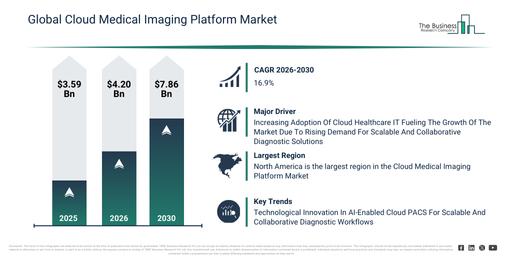
    The cloud medical imaging platform market has seen significant growth in recent years. It is anticipated to increase from $3.59 billion in 2025 to $4.20 billion in 2026, exhibiting a compound annual growth rate (CAGR) of 17.6%. The historical expansion of this market can be attributed to the rising integration of cloud-based healthcare IT systems, the increasing need for distant access to medical images, a surge in imaging volume across hospitals and diagnostic facilities, the development of telemedicine and teleradiology offerings, and a greater demand for economical imaging storage solutions.

    The cloud medical imaging platform market is projected to experience substantial expansion in the coming years, with its size expected to reach $7.86 billion by 2030, reflecting a compound annual growth rate (CAGR) of 16.9%. This growth throughout the forecast period is attributed to several factors, including the increasing adoption of artificial intelligence-enabled imaging tools, a growing shift toward hybrid cloud deployment models, heightened demand for multi-facility image sharing and collaboration, the expansion of healthcare digitalization initiatives in emerging economies, and an increased emphasis on workflow automation in radiology departments. Key trends during this period encompass advancements in artificial intelligence-powered cloud imaging analytics, technological innovations in zero-footprint medical image viewers, developments in vendor-neutral archive-based cloud systems, ongoing research and development for secure blockchain imaging exchange, and new innovations in mobile-compatible cloud imaging applications.

    Download A Free Sample Report For Comprehensive Market Insights:

    https://www.thebusinessresearchcompany.com/sample.aspx?id=30557&type=smp

    Which Strategic Drivers Are Supporting The Cloud Medical Imaging Platform Market Development?

    The expansion of the cloud medical imaging platform market is anticipated to be fueled by the rising integration of cloud healthcare IT. This growing adoption of cloud healthcare IT signifies the broad implementation of internet-based computing services for storing, managing, and processing medical information off-site, instead of relying on localized servers. Progress in cloud computing infrastructure facilitates this increased uptake of cloud healthcare IT, providing medical professionals with scalable storage solutions, improved data security, and immediate access to information. Cloud medical imaging platforms contribute to streamlined diagnostic processes by allowing for the effortless storage, recovery, and dissemination of detailed medical images across various healthcare settings and devices. As an illustration, in September 2025, data from the Office of the National Coordinator for Health Information Technology, a US-based staff division within the Department of Health and Human Services, indicated that 71% of hospitals utilized predictive AI incorporated with electronic health records in 2024, an increase from 66% in 2023. Consequently, the expanding use of cloud healthcare IT is a primary catalyst for the growth of the cloud medical imaging platform market.

    How Does Segment Analysis Break Down The Cloud Medical Imaging Platform Market Structure?

    The cloud medical imaging platform market covered in this report is segmented –

    1) By Component: Software, Services

    2) By Imaging Modality: X-ray, Computed Tomography (CT), Magnetic Resonance Imaging (MRI), Ultrasound, Nuclear Imaging, Other Imaging Modalities

    3) By Pricing Model: Subscription-Based (Software As A Service), Pay-Per-Use Or Consumption-Based, Hybrid Pricing Models

    4) By Deployment Mode: Public Cloud, Private Cloud, Hybrid Cloud

    5) By End-User: Hospitals, Diagnostic Centers, Research And Academic Institutes, Other End-Users

    Subsegments:

    1) By Software: Picture Archiving And Communication System Software, Radiology Information System Software, Vendor Neutral Archive Software, Enterprise Viewers And Universal Workstations, Image Analysis Software, Telemedicine Platform Software

    2) By Services: Implementation And Integration Services, Training And Education Services, Support And Maintenance Services, Consulting Services, Managed Services

    What Trends Are Shaping The Cloud Medical Imaging Platform Market Structure?

    Key players in the cloud medical imaging platform market are concentrating on technological breakthroughs, particularly next-generation cloud-based Picture Archiving and Communication Systems (PACS) that are integrated with artificial intelligence (AI). These platforms are engineered to optimize diagnostic workflows by providing high-speed remote access, automated study orchestration, and advanced image processing from any location, thereby diminishing IT infrastructure expenditures and boosting operational efficiency. For instance, in November 2023, Royal Philips, a Netherlands-based health technology company, introduced HealthSuite Imaging, a cloud-based PACS solution powered by Amazon Web Services (AWS). This platform delivers high-speed remote access for diagnostic reading, integrated reporting, and AI-enabled workflow orchestration, allowing healthcare systems to expand their operations securely while alleviating the load of on-premises IT management.

    Which Companies Are Engaged In The Cloud Medical Imaging Platform Market Environment?

    Major companies operating in the cloud medical imaging platform market are FUJIFILM Holdings Corp., GE HealthCare Technologies Inc., Sectra AB, Viz.ai Inc., Aidoc Medical Ltd., Arterys Inc., Lunit Inc., INFINITT Healthcare Co. Ltd., Qure.ai Technologies Pvt. Ltd., Novarad Corporation, RamSoft Inc., Annalise.ai Pty Ltd., Subtle Medical Inc., Gleamer SAS, VUNO Inc., PaxeraHealth Inc., Medixant Sp. z o.o., Medicai Ltd., MedDream UAB, Visbion Ltd., Studycast Inc.

    Access The Complete Cloud Medical Imaging Platform Market Report:

    https://www.thebusinessresearchcompany.com/report/cloud-medical-imaging-platform-market-report

    Which Region Accounts For The Highest Share Of The Cloud Medical Imaging Platform Market?

    North America was the largest region in the cloud medical imaging platform market in 2025. Asia-Pacific is expected to be the fastest-growing region in the forecast period. The regions covered in the cloud medical imaging platform market report are Asia-Pacific, South East Asia, Western Europe, Eastern Europe, North America, South America, Middle East, Africa.

    Access a Customized Cloud Medical Imaging Platform Market Report for Deeper Competitive Insights

    https://www.thebusinessresearchcompany.com/sample.aspx?id=30557&type=smp

    Get in touch with us:

    The Business Research Company: https://www.thebusinessresearchcompany.com/

    Americas: +1 310-496-7795

    Asia: +44 7882 955267 & +91 8897263534

    Europe: +44 7882 955267

    Email us at: marketing@tbrc.info

    Follow us on:

    LinkedIn: https://in.linkedin.com/company/the-business-research-company

    YouTube: https://www.youtube.com/channel/UC24_fI0rV8cR5DxlCpgmyFQ

    Global Market Model: https://www.thebusinessresearchcompany.com/global-market-model
  • Cell Therapy Bioreactors Market Revenue Anticipated To Reach $2.6 Billion By 2030 With 16% CAGR

    Cell Therapy Bioreactors Market Revenue Anticipated To Reach $2.6 Billion By 2030 With 16% CAGR

    The Business Research Company’s 2026 market reports feature advanced enhancements such as market attractiveness analysis, total addressable market evaluation, company benchmarking matrices, interactive Excel dashboards, expanded supply chain intelligence, emerging startup coverage, and detailed product insights, delivering more actionable and strategically valuable research.

    What Market Size Is Forecasted For The Cell Therapy Bioreactors Market By 2030 Based On Its 2026 Value?

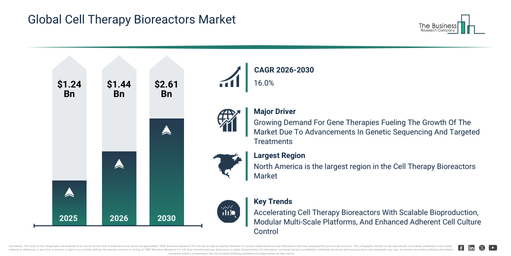
    The cell therapy bioreactors market has experienced significant expansion recently. It is projected to increase from $1.24 billion in 2025 to $1.44 billion in 2026, achieving a compound annual growth rate (CAGR) of 16.3%. This historical growth can be ascribed to factors such as the increasing demand for cell-based therapies, growing investment in regenerative medicine, the rising adoption of automated cell culture systems, the expansion of stem cell research, and the increasing need for scalable cell production.

    The cell therapy bioreactors market is projected to experience substantial growth over the next few years. It is forecast to reach $2.61 billion by 2030, demonstrating a compound annual growth rate (CAGR) of 16.0%. This expansion during the forecast period can be attributed to the increasing adoption of cell therapy bioreactors in manufacturing, rising investment in advanced bioprocessing technologies, a heightened focus on process optimization and quality control, the expansion of clinical trials involving cell therapies, and a growing demand for personalized medicine applications. Key trends for this period include advancements in automated cell culture technologies, innovations in bioreactor design for improved scalability, developments in stem cell expansion platforms, ongoing research and development in process monitoring and control systems, and emerging upgrades in integrated cell therapy manufacturing solutions.

    Download A Free Sample Report For Comprehensive Market Insights:

    https://www.thebusinessresearchcompany.com/sample.aspx?id=30550&type=smp

    What Market Drivers Are Helping Shape The Cell Therapy Bioreactors Market Expansion?

    The increasing need for gene therapies is anticipated to stimulate the expansion of the cell therapy bioreactors market. Gene therapy, a medical method, focuses on altering or substituting faulty genes to address or avert illnesses. This rise in demand for gene therapy stems from progress in genetic sequencing and diagnostic tools, which facilitate accurate identification of disease-causing genes for precise interventions. Cell therapy bioreactors play a crucial role in advancing gene therapies by offering ideal settings for the proliferation, modification, and expansion of therapeutic cells. These systems improve treatment creation and scaling by guaranteeing uniform cell quality, boosting operational effectiveness, and enabling swifter production of individualized gene-based treatments. For example, as reported in December 2024 by the American Society of Gene & Cell Therapy (ASGCT), a US-based non-profit medical and scientific body, the Food and Drug Administration (FDA) authorized 6 gene therapy products in 2023, an increase from 5 approvals in 2022. Consequently, the escalating demand for gene therapies is propelling the growth of the cell therapy bioreactors market.

    Which Segment Divisions Form The Structure Of The Cell Therapy Bioreactors Market?

    The cell therapy bioreactors market covered in this report is segmented –

    1) By Product: Stirred Tank Bioreactors, Wave-Induced Bioreactors, Fixed-Bed Bioreactors, Other Products

    2) By Cell Type: Stem Cells, Immune Cells, Differentiated Cells, Other Cell Types

    3) By Material: Single-Use Bioreactors, Reusable Bioreactors

    4) By Application: Research, Clinical, Commercial Production

    5) By End-Users: Pharmaceutical And Biotechnology Companies, Academic And Research Institutes, Contract Manufacturing Organizations (CMOs), Other End Users

    Subsegments:

    1) By Stirred Tank Bioreactors: Stainless Steel Stirred Tank Systems, Glass Stirred Tank Systems, Single Use Stirred Tank Systems, Automated Stirred Tank Systems

    2) By Wave Induced Bioreactors: Rocking Motion Bioreactor Systems, Single Use Wave Bag Systems, Modular Wave Platform Systems, Automated Wave Based Culture Systems

    3) By Fixed Bed Bioreactors: Packed Bed Bioreactor Systems, Scaffold Based Fixed Bed Systems, Microcarrier Based Fixed Bed Systems, Perfusion Enabled Fixed Bed Systems

    4) By Other Products: Hollow Fiber Bioreactor Systems, Perfusion Bioreactor Systems, Rotary Cell Culture Systems, Microfluidic Bioreactor Systems

    What Trends Are Affecting The Growth Of The Cell Therapy Bioreactors Market?

    Companies in the cell therapy bioreactors market are concentrating on developing sophisticated platforms, such as modular, multi-scale bioreactor platforms, to improve process scalability, cell expansion efficiency, and uniformity from early research stages through to commercial manufacturing. A modular multi-scale bioreactor platform denotes a flexible framework that allows researchers to conduct parallel small-scale experiments, optimize settings, and smoothly scale up to mid- or large-scale production while maintaining consistent culture conditions and high output. For instance, in July 2024, EXO-Harvest, a Belgium-based biomanufacturing technology company, unveiled its advanced multi-scale bioreactor platform designed for the effective manufacturing of mesenchymal stem cells and extracellular vesicles, facilitating scalable adherent cell culture from initial discovery to industrial-level production. The platform comprises small-scale multi-bioreactor screening and mid/large-scale systems, engineered to accelerate development, cut costs, and deliver premium cultures with precise environmental management.

    Which Companies Form The Competitive Landscape Of The Cell Therapy Bioreactors Market?

    Major companies operating in the cell therapy bioreactors market are Thermo Fisher Scientific Inc., Merck KGaA, FUJIFILM Holdings Corporation, Danaher Corporation, Corning Incorporated, Lonza Group, Terumo Corporation, Sartorius AG, Eppendorf AG, Miltenyi Biotec B.V. & Co. KG, PBS Biotech Inc., Meissner Filtration Products Inc., Infors AG, Bionet Engineering & Technologies Pvt. Ltd., Wilson Wolf Manufacturing Corporation, Synthecon Incorporated, Cellexus Limited, Celartia Inc., Able Biott Inc., CelVivo ApS

    Access The Complete Cell Therapy Bioreactors Market Report:

    https://www.thebusinessresearchcompany.com/report/cell-therapy-bioreactors-market-report

    Which Geographic Region Represents The Largest Cell Therapy Bioreactors Market Share?

    North America was the largest region in the cell therapy bioreactors market in 2025. Asia-Pacific is expected to be the fastest-growing region in the forecast period. The regions covered in the cell therapy bioreactors market report are Asia-Pacific, South East Asia, Western Europe, Eastern Europe, North America, South America, Middle East, Africa.

    Access a Customized Cell Therapy Bioreactors Market Report for Deeper Competitive Insights

    https://www.thebusinessresearchcompany.com/sample.aspx?id=30550&type=smp

    Get in touch with us:

    The Business Research Company: https://www.thebusinessresearchcompany.com/

    Americas: +1 310-496-7795

    Asia: +44 7882 955267 & +91 8897263534

    Europe: +44 7882 955267

    Email us at: marketing@tbrc.info

    Follow us on:

    LinkedIn: https://in.linkedin.com/company/the-business-research-company

    YouTube: https://www.youtube.com/channel/UC24_fI0rV8cR5DxlCpgmyFQ

    Global Market Model: https://www.thebusinessresearchcompany.com/global-market-model
  • Carbon Farming Market Outlook Assessing Future Opportunities And Growth Prospects

    Carbon Farming Market Outlook Assessing Future Opportunities And Growth Prospects

    The Business Research Company’s 2026 market reports feature advanced enhancements such as market attractiveness analysis, total addressable market evaluation, company benchmarking matrices, interactive Excel dashboards, expanded supply chain intelligence, emerging startup coverage, and detailed product insights, delivering more actionable and strategically valuable research.

    How Is The Market Value Of The Carbon Farming Market Projected To Expand During 2026–2030?

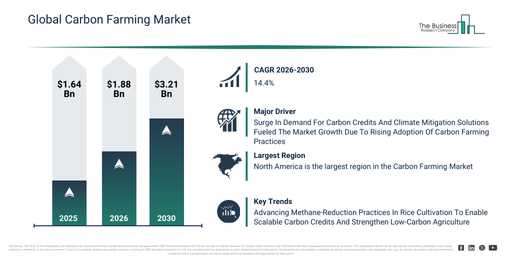
    The carbon farming market has seen substantial expansion in recent years. Its valuation is predicted to climb from $1.64 billion in 2025 to $1.88 billion in 2026, achieving a compound annual growth rate (CAGR) of 14.7%. This historical growth can be linked to factors such as increased recognition of soil degradation, the rising uptake of regenerative agriculture practices, a heightened focus on climate-smart farming, the nascent development of voluntary carbon markets, and an escalating requirement for sustainable land management.

    The carbon farming market size is anticipated to undergo significant expansion in the coming years. It is projected to achieve a value of $3.21 billion by 2030, exhibiting a compound annual growth rate (CAGR) of 14.4%. This anticipated growth is influenced by the rising demand for high-quality carbon credits, increasing investment in carbon measurement technologies, growing government support for climate mitigation programs, the expansion of corporate net-zero commitments, and the increasing adoption of digital carbon monitoring platforms. Prominent trends expected during this period include advancements in soil carbon measurement tools, the rising development of carbon credit verification technologies, greater utilization of remote sensing in carbon monitoring, increasing innovation in regenerative agriculture methods, and the expansion of digital platforms for carbon trading.

    Download A Free Sample Report For Comprehensive Market Insights:

    https://www.thebusinessresearchcompany.com/sample.aspx?id=30549&type=smp

    Which Significant Factors Are Encouraging Growth In The Carbon Farming Market?

    The increasing need for carbon credits and climate mitigation solutions is anticipated to drive the expansion of the carbon farming market in the future. Carbon credits are formal certificates representing one ton of carbon dioxide either reduced, removed, or avoided through various climate mitigation activities. This growing demand for carbon credits and climate solutions arises from intensified regulatory pressure on companies to decrease their greenhouse gas (GHG) emissions. Carbon farming aids carbon credits and climate mitigation solutions by implementing agricultural practices designed to capture and store atmospheric carbon within soil and vegetation. It contributes to improved environmental outcomes by lowering greenhouse gas emissions, creating tradable carbon credits, and fostering sustainable climate action. For instance, in December 2023, the World Bank, a US-based international financial institution, projected that in 2024, 15 countries are expected to produce more than 24 million carbon credits, a number set to increase to as many as 126 million credits by 2028. Consequently, the rising demand for carbon credits and climate mitigation solutions is fueling the growth of the carbon farming market.

    How Are Different Segment Groups Identified Within The Carbon Farming Market?

    The carbon farming market covered in this report is segmented –

    1) By Offering: Carbon Credit Generation Services, Carbon Monitoring, Reporting, And Verification Solutions, Soil And Biomass Measurement Technologies, Carbon Project Development Services, Advisory And Consulting Services

    2) By Practice Type: Agroforestry, Conservation Tillage And No-Till Farming, Managed Grazing, Crop Rotation And Diversification, Cover Cropping, Composting And Biochar, Wetland And Peatland Restoration

    3) By Carbon Credit Type: Soil Carbon Credits, Forestry Carbon Credits, Livestock Methane Reduction Credits, Biochar And Compost Credits

    4) By Application: Agriculture, Forestry And Land Use

    5) By End-User: Farmers And Ranchers, Government Agencies, Corporations, Non-Profit Organizations

    Subsegments:

    1) By Carbon Credit Generation Services: Afforestation and Reforestation Projects, Soil Carbon Sequestration Projects, Improved Agricultural Practice Projects, Agroforestry Projects, Grassland and Wetland Restoration Projects

    2) By Carbon Monitoring, Reporting, and Verification Solutions: Remote Sensing Solutions, Satellite Imaging Solutions, Field Sampling Solutions, Carbon Data Analytics Solutions, Verification and Certification Solutions

    3) By Soil and Biomass Measurement Technologies: Soil Carbon Sampling Tools, Biomass Assessment Devices, Sensor-Based Soil Monitoring Systems, Laboratory Analysis Technologies, Digital Mapping and Modeling Tools

    4) By Carbon Project Development Services: Feasibility Assessment Services, Project Design and Planning Services, Carbon Protocol Compliance Services, Carbon Credit Registration Services, Long-Term Project Management Services

    5) By Advisory and Consulting Services: Carbon Offset Strategy Consulting, Sustainable Land Management Consulting, Regulatory and Policy Advisory Services, Financial Modeling and Valuation Services, Training and Capacity Building Services

    Which Trends Are Influencing The Direction Of The Carbon Farming Market?

    Companies active in the carbon farming market are prioritizing the development of advanced solutions, such as methane-reduction strategies in rice cultivation, to mitigate agricultural emissions, improve sustainability outcomes, and generate verified carbon credits. Methane-reduction initiatives in rice cultivation encompass agricultural practices and monitoring frameworks specifically designed to lower methane emissions from flooded paddy fields, while also enabling measurement, reporting, and verification necessary for participation in both voluntary and compliance carbon markets. For instance, in April 2025, Green Carbon Co., Ltd., a Japan-based carbon credit developer, launched a substantial rice paddy carbon credit project in Nghe An Province, Vietnam. This project received approval under major international standards, including Gold Standard and Verra, and integrates Alternate Wetting and Drying (AWD) irrigation practices to significantly decrease methane emissions from rice farming. This endeavor facilitates registration under recognized carbon standards and supports the long-term generation of carbon credits connected to sustainable agricultural practices. It provides a scalable and replicable avenue for farmers, project developers, and buyers to aid methane mitigation, simultaneously reinforcing the economic viability of low-carbon agriculture.

    Who Are The Key Market Participants In The Carbon Farming Market?

    Major companies operating in the carbon farming market are Anthesis Group Ltd., Indigo Agriculture Inc., Loam Bio Pty Ltd., Agreena ApS, Regrow Agriculture Inc., Green Collar Group Pty Ltd., Soil Capital NV, Landbanking Group Ltd., Truterra LLC, Arva Intelligence Ltd., Agoro Carbon Alliance, Continuum Ag Inc., Boomitra Inc., CIBO Technologies Inc., AgriCapture Inc., Carbon Credit Capital Inc., Carbon Asset Solutions Pty Ltd., AgriProve Pty Ltd., CarbonLink Pty Ltd., Ecosystem Services Market Consortium (ESMC), Varaha ClimateAg Pvt Ltd., InSoil Inc.

    Access The Complete Carbon Farming Market Report:

    https://www.thebusinessresearchcompany.com/report/carbon-farming-market-report

    Which Region Leads The Carbon Farming Market By Size?

    North America was the largest region in the carbon farming market in 2025. Asia-Pacific is expected to be the fastest-growing region in the forecast period. The regions covered in the carbon farming market report are Asia-Pacific, South East Asia, Western Europe, Eastern Europe, North America, South America, Middle East, Africa.

    Access a Customized Carbon Farming Market Report for Deeper Competitive Insights

    https://www.thebusinessresearchcompany.com/sample.aspx?id=30549&type=smp

    Get in touch with us:

    The Business Research Company: https://www.thebusinessresearchcompany.com/

    Americas: +1 310-496-7795

    Asia: +44 7882 955267 & +91 8897263534

    Europe: +44 7882 955267

    Email us at: marketing@tbrc.info

    Follow us on:

    LinkedIn: https://in.linkedin.com/company/the-business-research-company

    YouTube: https://www.youtube.com/channel/UC24_fI0rV8cR5DxlCpgmyFQ

    Global Market Model: https://www.thebusinessresearchcompany.com/global-market-model
  • BioSafety Level P3 and P4 Cleanrooms Market Growth Outlook Indicating Expansion To $4.66 Billion By 2030

    BioSafety Level P3 and P4 Cleanrooms Market Growth Outlook Indicating Expansion To $4.66 Billion By 2030

    The Business Research Company’s 2026 market reports feature advanced enhancements such as market attractiveness analysis, total addressable market evaluation, company benchmarking matrices, interactive Excel dashboards, expanded supply chain intelligence, emerging startup coverage, and detailed product insights, delivering more actionable and strategically valuable research.

    What Growth In Market Value Is Anticipated For The BioSafety Level P3 and P4 Cleanrooms Market Between 2026 And 2030?

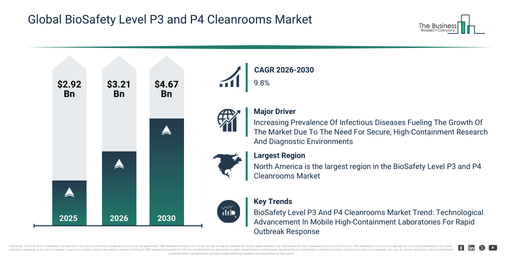
    The market for biosafety level P3 and P4 cleanrooms has seen rapid expansion in recent years. It is forecast to increase from $2.92 billion in 2025 to $3.21 billion in 2026, at a compound annual growth rate (CAGR) of 10.1%. The growth observed in the past can be ascribed to an uptick in biocontainment infrastructure investments, rising demand for infectious disease research, the increasing integration of HEPA and ULPA filtration systems, the enlargement of pharmaceutical and biotech manufacturing facilities, and a heightened governmental emphasis on biosafety compliance.

    The biosafety level P3 and P4 cleanrooms market is projected to experience substantial expansion, reaching a value of $4.67 billion by 2030, demonstrating a compound annual growth rate (CAGR) of 9.8%. This anticipated growth during the forecast period is fueled by several factors, including the increasing demand for high-containment laboratories necessary for novel pathogens, augmented investments in the creation of vaccines and antiviral treatments, enhanced expenditures on improving biosafety in hospitals and laboratories, wider implementation of automation within cleanroom activities, and greater government financial support for biodefense initiatives. Key trends expected over the forecast period encompass technological progress in intelligent cleanroom monitoring, novelties in modular and quickly deployable cleanrooms, advancements in sophisticated HVAC and containment systems, ongoing research and development into automated biosafety options, and the growing incorporation of artificial intelligence and the Internet of Things into cleanroom administration.

    Download A Free Sample Report For Comprehensive Market Insights:

    https://www.thebusinessresearchcompany.com/sample.aspx?id=30540&type=smp

    What Important Drivers Are Powering The BioSafety Level P3 and P4 Cleanrooms Market Growth?

    The rising occurrence of infectious diseases is projected to boost the expansion of the BioSafety level P3 and P4 cleanrooms market in the coming years. These diseases are conditions resulting from detrimental microorganisms like bacteria, viruses, fungi, or parasites, capable of transmission directly or indirectly between individuals, animals, or their surroundings. The heightened prevalence of infectious diseases stems from accelerated global travel and concentrated urban populations, facilitating the simpler dissemination of pathogens among communities. BioSafety level P3 and P4 cleanrooms assist those affected by infectious diseases by offering extremely regulated and protected settings for the secure research, diagnosis, and creation of therapies for highly transmissible and hazardous pathogens. For example, data from March 2024, supplied by the Centers for Disease Control and Prevention, a US-based government agency, indicated an increase in tuberculosis cases from 8,320 in 2022 to 9,615 in 2023, signifying an increment of 1,295 cases. Consequently, the escalating incidence of infectious diseases is a key driver for the BioSafety level P3 and P4 cleanrooms market.

    Which Segment Groups Define The BioSafety Level P3 and P4 Cleanrooms Market Landscape?

    The biosafety level p3 and p4 cleanrooms market covered in this report is segmented –

    1) By Type Of Cleanroom: Modular Cleanrooms, Hardwall Cleanrooms, Softwall Cleanrooms, Portable Cleanrooms, Containment Cleanrooms

    2) By Equipment: Air Filtration Systems, Heating, Ventilation, And Air Conditioning (HVAC) Systems, Monitoring And Control Systems, Personal Protective Equipment (PPE), Cleaning And Disinfection Equipment

    3) By Application: Vaccine Production, Cell And Gene Therapy, Research And Development, Diagnostics, Environmental Testing

    4) By Industry: Pharmaceutical Industry, Biotechnology Industry, Healthcare Sector, Agriculture And Food Safety, Research And Development Institutions

    Subsegments:

    1) By Modular Cleanrooms: Prefabricated Modular Units, Expandable Modular Units, Wall Panel Modular Units, Ceiling Grid Modular Units, Mobile Modular Units

    2) By Hardwall Cleanrooms: Steel Panel Hardwalls, Aluminum Panel Hardwalls, Glass Panel Hardwalls, Composite Panel Hardwalls, Insulated Panel Hardwalls

    3) By Softwall Cleanrooms: Vinyl Curtain Softwalls, PVC Panel Softwalls, Polyethylene Panel Softwalls, Fabric Panel Softwalls, Modular Frame Softwalls

    4) By Portable Cleanrooms: Portable Containment Units, Mobile Laboratory Units, Temporary Modular Units, Field Deployable Units, Collapsible Units

    5) By Containment Cleanrooms: Biosafety Cabinet Integrated Units, Negative Pressure Containment Units, Positive Pressure Containment Units, Isolated Containment Units, Barrier Containment Units

    What Trends Are Influencing The BioSafety Level P3 and P4 Cleanrooms Market Outlook?

    Leading companies operating within the biosafety level P3 and P4 cleanrooms market are concentrating on technological advancements, notably the engineering of mobile high-containment laboratories capable of swift deployment to areas demanding immediate infectious disease control. These portable units are constructed to uphold the same stringent safety standards as fixed facilities, incorporating negative pressure environments, advanced filtration, and secure containment protocols to facilitate on-site research, diagnostics, and pathogen isolation during public health emergencies. For instance, in July 2023, Germfree Laboratories Inc., a US-based manufacturer of biocontainment environments, delivered a Mobile BioSafety Level 3 (BSL-3) Laboratory Ventura. This unit is a 55-foot, self-contained laboratory built on a semi-trailer platform, specifically designed to handle high-risk pathogens such as SARS-CoV-2 and influenza. It possesses rapid deployment capabilities, enabling its stationing at local schools and public locations for immediate outbreak response. The laboratory’s design ensures robust containment for critical disease research and diagnostics, directly enhancing Ventura County’s capacity to control the spread of infectious diseases.

    Which Firms Are Competing In The BioSafety Level P3 and P4 Cleanrooms Market?

    Major companies operating in the biosafety level p3 and p4 cleanrooms market are Thermo Fisher Scientific Inc., G-Con Manufacturing Inc., Cytiva, Steris Life Sciences, Portakabin Ltd., Bioquell Inc., Labconco Corporation, Germfree Laboratories Inc., GuardTech Group, Klenzaids, Laboratory Infrastructure Solutions (LIS), Biosafe Lab Pvt Ltd., Magenta Labscience, Microflow GmbH, Fabtech Inc., Bioxia

    Access The Complete BioSafety Level P3 and P4 Cleanrooms Market Report:

    https://www.thebusinessresearchcompany.com/report/biosafety-level-p3-and-p4-cleanrooms-market-report

    What Is The Largest Regional Market In The BioSafety Level P3 and P4 Cleanrooms Market?

    North America was the largest region in the biosafety level P3 and P4 cleanrooms market in 2025. Asia-Pacific is expected to be the fastest-growing region in the forecast period. The regions covered in the biosafety level p3 and p4 cleanrooms market report are Asia-Pacific, South East Asia, Western Europe, Eastern Europe, North America, South America, Middle East, Africa.

    Access a Customized BioSafety Level P3 and P4 Cleanrooms Market Report for Deeper Competitive Insights

    https://www.thebusinessresearchcompany.com/sample.aspx?id=30540&type=smp

    Get in touch with us:

    The Business Research Company: https://www.thebusinessresearchcompany.com/

    Americas: +1 310-496-7795

    Asia: +44 7882 955267 & +91 8897263534

    Europe: +44 7882 955267

    Email us at: marketing@tbrc.info

    Follow us on:

    LinkedIn: https://in.linkedin.com/company/the-business-research-company

    YouTube: https://www.youtube.com/channel/UC24_fI0rV8cR5DxlCpgmyFQ

    Global Market Model: https://www.thebusinessresearchcompany.com/global-market-model