Category: Medical Equipment

  • 4D Radiotherapy Equipment Market Analysis Through 2030 Focusing On Demand Trends And Growth Drivers

    4D Radiotherapy Equipment Market Analysis Through 2030 Focusing On Demand Trends And Growth Drivers

    The Business Research Company’s 2026 market reports feature advanced enhancements such as market attractiveness analysis, total addressable market evaluation, company benchmarking matrices, interactive Excel dashboards, expanded supply chain intelligence, emerging startup coverage, and detailed product insights, delivering more actionable and strategically valuable research.

    What Are The Forecasted Market Size Figures For The 4D Radiotherapy Equipment Market In 2026 And 2030?

    The 4D radiotherapy equipment market size has demonstrated robust growth in recent years. This market is expected to expand from $1.91 billion in 2025 to $2.09 billion in 2026, exhibiting a compound annual growth rate (CAGR) of 9.6%. The historical surge can be attributed to several factors, including the increasing demand for motion-adaptive radiation therapy, the growing adoption of advanced imaging systems, a rising focus on minimizing treatment errors, the expanding use of real-time patient monitoring, and an increasing preference for high-precision radiotherapy.

    The 4D radiotherapy equipment market size is anticipated to experience robust expansion over the coming years, projected to reach $2.99 billion by 2030, demonstrating a compound annual growth rate (CAGR) of 9.3%. This growth during the forecast period is primarily driven by increasing investment in next-generation radiotherapy technologies, the growing adoption of 4D treatment systems, a rising demand for accurate tumor-tracking solutions, the expanding integration of AI-enabled motion management, and the increasing need for personalized radiation therapy. Significant trends in the forecast horizon include technological advancements in motion-synchronized radiotherapy systems, innovations in real-time imaging capabilities, developments in adaptive treatment delivery platforms, ongoing research and development in tumor-tracking technologies, and progress in imaging-guided radiotherapy solutions.

    Download A Free Sample Report For Comprehensive Market Insights:

    https://www.thebusinessresearchcompany.com/sample.aspx?id=30492&type=smp

    What Key Growth Drivers Are Influencing The 4D Radiotherapy Equipment Market?

    An anticipated increase in cancer cases is projected to drive the expansion of the 4D radiotherapy equipment market. Cancer is defined as an illness marked by the unchecked multiplication and dissemination of atypical cells, which, if untreated, can harm nearby tissues and organs. The rise in cancer prevalence is attributed to lifestyle factors like inadequate nutrition, smoking, alcohol consumption, and contact with environmental contaminants, all of which heighten the risk of developing various cancers. 4D radiotherapy equipment assists in managing cancer by delivering highly accurate, motion-adjusted radiation treatments that consider tumor movement during respiration. This technology enhances patient results by optimizing tumor targeting, reducing harm to healthy tissues, and boosting treatment efficacy. For instance, in October 2025, NHS Digital, a UK government organisation, reported 354,820 new cancer diagnoses in England in 2023, averaging 972 diagnoses daily and indicating an 8,605 case increase from 2022, with prostate cancer being the most frequently diagnosed at 58,137 new cases, marking a 6% rise in registrations year-over-year. Consequently, the growing incidence of cancer is propelling the growth of the 4D radiotherapy equipment market. The expansion of the 4D radiotherapy equipment market is anticipated to be driven by increasing healthcare expenditure. In emerging markets, healthcare spending involves investments by governments, private entities, and medical providers aimed at enhancing medical infrastructure, access to cutting-edge treatments, and patient care. This rise in healthcare spending in emerging markets is occurring as growing middle-class populations enjoy higher incomes and extended lifespans, consequently increasing the need for superior medical services, hospital facilities, and insurance coverage. 4D radiotherapy equipment supports this progression by delivering accurate, image-guided radiation therapy that considers tumor movement, thereby improving treatment results while reducing harm to surrounding healthy tissue. For example, in June 2025, Statistics Austria, the national statistical office of Austria, reported that Austria’s total healthcare expenditure reached approximately $61.6 billion (€57 billion) in 2024, funded by both public and private sectors. This represented an increase of about $4.6 billion (€4.25 billion) from the previous year, and the proportion of healthcare spending relative to gross domestic product climbed from 11.2% in 2023 to 11.8% in 2024. Hence, the increasing healthcare spending in emerging markets is fostering the growth of the 4D radiotherapy equipment market.

    What Are The Core Segment Classifications In The 4D Radiotherapy Equipment Market?

    The 4D radiotherapy equipment market covered in this report is segmented –

    1) By Product Type Or Component: 4D Gating/RT Systems, Linear Accelerators (LINACs), 4D Imaging Modalities, SGRT Systems, Treatment Planning Software

    2) By Motion Management Technique: Respiratory Gating, Real-Time Tumor Tracking, Breath-Hold Techniques, Adaptive Radiotherapy (ART)

    3) By Application: Lung Cancer, Liver Cancers, Pancreatic Cancer, Breast Cancer, Lymphoma, Other Cancers

    4) By End User: Hospitals, Cancer Treatment Centers, Specialty Radiotherapy Clinics, Research Institutions

    Subsegments:

    1) By 4D Gating / RT Systems: Respiratory Gating Systems, Real-Time Tumor Tracking Systems, Motion Management Platforms, Adaptive Radiation Delivery Systems

    2) By Linear Accelerators: Standard Linear Accelerators, Image Guided Linear Accelerators, Motion Compensated Linear Accelerators, Stereotactic Body Radiation Therapy Linear Accelerators

    3) By 4D Imaging Modalities: Four Dimensional Computed Tomography, Four Dimensional Magnetic Resonance Imaging, Four Dimensional Positron Emission Tomography, Four Dimensional Cone Beam Computed Tomography

    4) By SGRT Systems: Surface Guided Patient Positioning Systems, Optical Surface Monitoring Systems, Real-Time Surface Tracking Systems, Motion Compensated Surface Imaging Systems

    5) By Treatment Planning Software: Motion Adaptive Planning Software, Dose Calculation Software, Image Fusion Planning Software, Tumor Contouring And Delineation Software

    Which Trends Are Expected To Shape The 4D Radiotherapy Equipment Market?

    Major companies operating in the 4D radiotherapy equipment market are prioritizing the development of advanced high-definition imaging systems, including AI-powered CT-Linac platforms. This focus aims to enhance treatment precision, allow for real-time plan modifications, and improve workflow efficiency. AI-powered CT-Linac platforms are defined as integrated computed tomography-linear accelerator systems that leverage artificial intelligence for high-definition imaging, adaptive treatment planning, and real-time dose adjustments, thereby providing highly precise, personalized radiation therapy for cancer patients. As an example, in May 2024, Elekta AB, a Sweden-based medical technology company, launched Elekta Evo, a CT-Linac featuring AI-enhanced imaging and both online and offline adaptive radiotherapy capabilities. This system empowers clinicians to visualize the target anatomy with clarity and adjust radiation delivery on a per-session basis to accommodate patient motion and anatomical shifts. This launch represents a significant technological leap, integrating high-precision imaging and adaptive therapy into routine clinical practices, bridging traditional radiotherapy with AI-driven adaptive 4D planning, and furnishing clinicians with a scalable, efficient solution designed to improve patient outcomes.

    Which Companies Are Influencing The 4D Radiotherapy Equipment Market?

    Major companies operating in the 4D radiotherapy equipment market are Hitachi Ltd., Siemens Healthineers AG, GE HealthCare Technologies Inc., Koninklijke Philips N.V., Varian Medical Systems Inc., Elekta AB, Shanghai United Imaging Healthcare Co. Ltd., Accuray Incorporated, Brainlab AG, Canon Medical Systems Corporation, RefleXion Medical, Vision RT Ltd., C-Rad AB, MVision AI Ltd., Anzai Medical Co. Ltd., ViewRay Technologies Inc., DYN’R Medical Systems, Ion Beam Applications SA (IBA SA)

    Access The Complete 4D Radiotherapy Equipment Market Report:

    https://www.thebusinessresearchcompany.com/report/4d-radiotherapy-equipment-market-report

    Which Region Is The Dominant Market In The 4D Radiotherapy Equipment Market?

    North America was the largest region in the 4D radiotherapy equipment market in 2025. Asia-Pacific is expected to be the fastest-growing region in the forecast period. The regions covered in the 4D radiotherapy equipment market report are Asia-Pacific, South East Asia, Western Europe, Eastern Europe, North America, South America, Middle East, Africa.

    Access a Customized 4D Radiotherapy Equipment Market Report for Deeper Competitive Insights

    https://www.thebusinessresearchcompany.com/sample.aspx?id=30492&type=smp

    Get in touch with us:

    The Business Research Company: https://www.thebusinessresearchcompany.com/

    Americas: +1 310-496-7795

    Asia: +44 7882 955267 & +91 8897263534

    Europe: +44 7882 955267

    Email us at: marketing@tbrc.info

    Follow us on:

    LinkedIn: https://in.linkedin.com/company/the-business-research-company

    YouTube: https://www.youtube.com/channel/UC24_fI0rV8cR5DxlCpgmyFQ

    Global Market Model: https://www.thebusinessresearchcompany.com/global-market-model
  • 3D Neuroscience Market Projected To Surpass $2.94 Billion By 2030 At 14.5% CAGR

    3D Neuroscience Market Projected To Surpass $2.94 Billion By 2030 At 14.5% CAGR

    The Business Research Company’s 2026 market reports feature advanced enhancements such as market attractiveness analysis, total addressable market evaluation, company benchmarking matrices, interactive Excel dashboards, expanded supply chain intelligence, emerging startup coverage, and detailed product insights, delivering more actionable and strategically valuable research.

    How Much Larger Will The 3D Neuroscience Market Become By 2030 Compared To 2026?

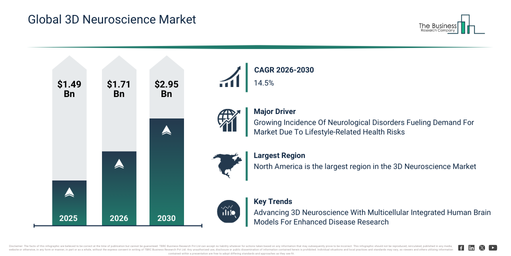
    The three-dimensional (3D) neuroscience market size has witnessed rapid expansion in recent years. It is anticipated to grow from $1.49 billion in 2025 to $1.71 billion in 2026, at a compound annual growth rate (CAGR) of 14.8%. The historical growth can be ascribed to the increasing adoption of three-dimensional (3D) brain modeling techniques, a rising demand for advanced neurological research tools, its expanding application in drug discovery and neuropharmacology, the development of imaging and visualization technologies, and an intensified focus on comprehending complex neural networks.

    The three-dimensional (3D) neuroscience market is projected to experience significant expansion over the next few years, with its size expected to reach $2.95 billion by 2030, demonstrating a compound annual growth rate (CAGR) of 14.5%. This growth during the forecast period is primarily driven by the increasing integration of three-dimensional (3D) models with artificial intelligence (AI) analytics, a rise in investment within personalized neuroscience research, wider adoption in disease modeling and therapeutic development, the expansion of high-resolution imaging and data acquisition platforms, and an elevated demand for predictive and translational neuroscience studies. Concurrently, major developments foreseen include technology-driven innovations in three-dimensional (3D) neural tissue modeling, advancements in artificial intelligence (AI)-enabled data analysis, the evolution of organoid and lab-grown neural systems, increasing research and development in imaging and simulation platforms, and breakthroughs in integrated neuroscience modeling and visualization tools.

    Download A Free Sample Report For Comprehensive Market Insights:

    https://www.thebusinessresearchcompany.com/sample.aspx?id=30491&type=smp

    Which Core Factors Are Supporting The Expansion Of The 3D Neuroscience Market?

    The expanding incidence of neurological ailments is anticipated to drive the advancement of the 3D neuroscience market in the future. These conditions are health issues impacting the brain, spinal cord, and nerves, thereby disturbing typical nervous system operations and resulting in difficulties with movement, thought processes, perception, conduct, or general bodily management. The rising occurrence of neurological disorders is linked to detrimental lifestyle choices, such as inadequate nutrition, lack of exercise, smoking, excessive drinking, and persistent stress. 3D neuroscience offers improved comprehension of brain architecture and function, facilitating more accurate diagnoses and tailored therapies for individuals suffering from neurological conditions. For instance, in April 2024, according to the National Institutes of Health (NIH), a US-based government agency, an estimated 6.9 million Americans aged 65 and older are currently living with Alzheimer’s dementia, and this figure is projected to nearly double to 13.8 million by 2060. Consequently, the growing prevalence of neurological disorders acts as a significant catalyst for the 3D neuroscience market.

    How Is The 3D Neuroscience Market Structured Across Different Market Segments?

    The 3D neuroscience market covered in this report is segmented –

    1) By Component: Instruments And Consumables, Software And Services

    2) By Technology: Brain Imaging, Neuro-Microscopy, Electrophysiology, Neurophotonic Analysis, Other Technologies

    3) By Scale Of Analysis: Macro-Scale Connectomics (MSC), Meso-Scale Connectomics (MeSC), Micro-Scale Connectomics (MiSC), Nanoscale Or Synaptic Analysis (NSA)

    4) By Application: Disease Modeling And Drug Discovery, Brain Mapping And Connectomics, Developmental Neuroscience, Diagnostics And Surgical Planning

    5) By End-User: Hospitals, Diagnostic Laboratories, Research and Academic Institutes, Other End-Users

    Subsegments:

    1) By Instruments And Consumables: Imaging Devices, Microelectrodes, Sensors, Reagents, Laboratory Consumables

    2) By Software And Services: Data Analysis Software, Visualization Software, Modeling And Simulation Software, Technical Support Services, Training And Consultation Services

    What Trends Are Affecting The 3D Neuroscience Market Dynamics?

    Leading companies active in the 3D neuroscience market are directing their attention towards creating sophisticated 3D human brain tissue platforms, including multicellular integrated brain models, with the goal of improving disease modeling, accelerating drug testing, and delivering more physiologically relevant outcomes. Multicellular integrated brain models are characterized as three-dimensional constructs grown in labs from induced pluripotent stem cells, which incorporate multiple significant brain cell types. This design permits an exhaustive investigation into cellular interactions, pathology, and drug responses. As an illustration, in November 2025, Massachusetts Institute of Technology (MIT), a US-based research institution, introduced Multicellular Integrated Brains (miBrains), a flexible 3D human brain tissue system. This platform integrates six major brain cell types, facilitates genetic engineering for individualized disease studies, and can be scaled to support extensive research projects, thereby enhancing the provision and applicability of complex in vitro models for neuroscience research.

    Who Are The Companies Shaping The 3D Neuroscience Market Landscape?

    Major companies operating in the 3D neuroscience market are Siemens Healthineers AG, Merck KGaA, Koninklijke Philips N.V., GE Healthcare Technologies Inc., Corning Incorporated, Bruker Corporation, STEMCELL Technologies Inc., Greiner Bio-One International GmbH, American Type Culture Collection, Cellink AB, Aspect Biosystems Ltd., InSphero AG, Axion BioSystems Inc., Emulate Inc., Mimetas B.V., NeuroNexus Technologies Inc., Tessara Therapeutics Inc., TheWell Bioscience Inc., Kirkstall Ltd., Pelobiotech GmbH, 3D Biotek LLC, Mightex Systems Inc., Advanced BioMatrix Inc.

    Access The Complete 3D Neuroscience Market Report:

    https://www.thebusinessresearchcompany.com/report/3d-neuroscience-market-report

    Which Area Represents The Largest Portion Of The 3D Neuroscience Market?

    North America was the largest region in the three dimensional (3D) neuroscience market in 2025. Asia-Pacific is expected to be the fastest-growing region in the forecast period. The regions covered in the 3D neuroscience market report are Asia-Pacific, South East Asia, Western Europe, Eastern Europe, North America, South America, Middle East, Africa.

    Access a Customized 3D Neuroscience Market Report for Deeper Competitive Insights

    https://www.thebusinessresearchcompany.com/sample.aspx?id=30491&type=smp

    Get in touch with us:

    The Business Research Company: https://www.thebusinessresearchcompany.com/

    Americas: +1 310-496-7795

    Asia: +44 7882 955267 & +91 8897263534

    Europe: +44 7882 955267

    Email us at: marketing@tbrc.info

    Follow us on:

    LinkedIn: https://in.linkedin.com/company/the-business-research-company

    YouTube: https://www.youtube.com/channel/UC24_fI0rV8cR5DxlCpgmyFQ

    Global Market Model: https://www.thebusinessresearchcompany.com/global-market-model
  • 3D Digital X-Ray Systems Market Forecast Through 2030 Featuring Industry Drivers And Opportunities

    3D Digital X-Ray Systems Market Forecast Through 2030 Featuring Industry Drivers And Opportunities

    The Business Research Company’s 2026 market reports feature advanced enhancements such as market attractiveness analysis, total addressable market evaluation, company benchmarking matrices, interactive Excel dashboards, expanded supply chain intelligence, emerging startup coverage, and detailed product insights, delivering more actionable and strategically valuable research.

    What Growth In Market Value Is Anticipated For The 3D Digital X-Ray Systems Market Between 2026 And 2030?

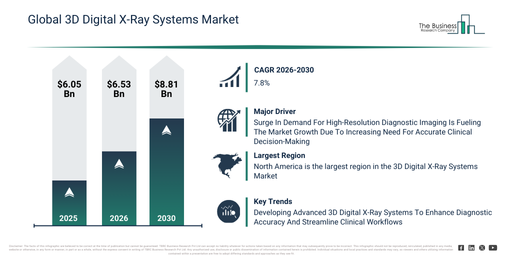
    The 3D digital X-Ray systems market has demonstrated significant expansion in recent years. Its value is anticipated to rise from $6.05 billion in 2025 to $6.53 billion in 2026, achieving a compound annual growth rate (CAGR) of 8.1%. The market’s growth in the past can be attributed to a heightened demand for advanced diagnostic imaging, an increasing prevalence of chronic and orthopedic conditions, the rising adoption of digital radiography, the expanded utilization of 3D imaging in dental care, greater awareness concerning early disease detection, a growing inclination towards minimally invasive diagnosis, increased integration of imaging in outpatient settings, escalating healthcare expenditure, the expanding availability of portable 3D x-ray devices, and a stronger preference for highly accurate diagnostic solutions.

    Significant expansion is anticipated for the 3D digital X-Ray systems market in the coming years. This market is projected to reach $8.81 billion by 2030, exhibiting a compound annual growth rate (CAGR) of 7.8%. Several factors will drive this expansion, including the increasing integration of digital radiography, a greater demand for precise 3D imaging, the rising need for early diagnostic instruments, heightened investment in imaging innovations, ongoing hospital modernization initiatives, the expanded application of imaging in managing chronic diseases, a move towards automated radiology solutions, the growing use of tele-radiology, a preference for low-dose imaging, and the increased availability of portable digital x-ray devices. Key trends during this period are expected to encompass breakthroughs in high-resolution 3D imaging technology, enhancements in low-dose radiation methods, progress in portable 3D x-ray equipment, novel AI-powered diagnostic instruments, advancements in automated image improvement, innovations in digital workflow platforms, integration with cloud-based data storage, incorporation into hospital digital infrastructures, the convergence of 3D imaging with robotics, and the development of more economical digital radiography solutions.

    Download A Free Sample Report For Comprehensive Market Insights:

    https://www.thebusinessresearchcompany.com/sample.aspx?id=30490&type=smp

    What Are The Main Drivers Accelerating The Growth Of The 3D Digital X-Ray Systems Market?

    The increasing need for high-resolution diagnostic imaging is anticipated to drive the expansion of the 3D Digital X-Ray Systems market in the future. High-resolution diagnostic imaging involves medical imaging techniques that produce clear, detailed pictures of internal body parts, facilitating precise diagnosis and effective clinical decisions. The demand for high-resolution diagnostic imaging is growing because healthcare providers are broadening their services to identify complex illnesses sooner, better manage patients, and boost the efficiency of diagnostics. The 3D Digital X-Ray Systems facilitates high-resolution diagnostic imaging through advanced systems that offer excellent image resolution, enhance diagnostic precision, and optimize patient flow in clinical environments. For example, in March 2024, data from the Australian Institute of Health and Welfare (AIHW), an Australia-based government health authority, indicated that nearly 2 in 5 Australians (39%) accessed over 27 million Medicare-subsidised diagnostic imaging services. The number of imaging services per 100 people increased from 103 in 2022–23 to 106 in 2023–24, demonstrating a year-over-year rise and expanded use of advanced imaging technologies. Consequently, the increasing need for high-resolution diagnostic imaging is fueling the expansion of the 3D Digital X-Ray Systems market.

    Which Segment-Based Categories Are Covered In The 3D Digital X-Ray Systems Market?

    The 3D digital x-ray systems market covered in this report is segmented –

    1) By Product Type: Stationary 3D Digital X-Ray Systems, Portable 3D Digital X-Ray Systems, Mobile 3D Digital X-Ray Systems

    2) By Detector Type: Flat Panel Detectors, Charge-Coupled Devices (CCD), Image Intensifier Detectors, Computed Radiography (CR) Systems, Line-Scanning Detectors

    3) By Technology: Computed Tomography (CT) Systems, Digital Radiography (DR) Systems, Fluoroscopy Systems, X-Ray Systems With Dual Energy, Portable X-Ray Systems

    4) By Application: Orthopedics, Dental Imaging, Oncology, Pediatric Imaging, Cardiology

    5) By End-User: Hospitals, Diagnostic Imaging Centers, Outpatient Surgery Centers, Research Institutions, Veterinary Clinics

    Subsegments:

    1) By Stationary 3D Digital X-Ray Systems: Fixed-Room 3D Imaging Systems, Hospital Radiology Department Systems, High-Capacity 3D X-Ray Units, Floor-Mounted 3D X-Ray Systems, Ceiling-Mounted 3D X-Ray Systems, Advanced Diagnostic 3D Systems, Large-Format 3D Orthopedic Imaging Units

    2) By Portable 3D Digital X-Ray Systems: Handheld 3D X-Ray Devices, Backpack-Style Portable 3D Systems, Battery-Powered Portable 3D X-Ray Units, Emergency Or Trauma Portable 3D Systems, Field-Use Portable 3D Devices, Compact Point-Of-Care 3D X-Ray Units

    3) By Mobile 3D Digital X-Ray Systems: Cart-Based Mobile 3D X-Ray Systems, Motorized Mobile 3D Systems, Mobile 3D C-Arm Units, ICU Or Mobile Ward 3D Imaging Systems, Mobile Surgical 3D X-Ray Units, Mobile Diagnostic Screening Units

    Which Trends Are Influencing The Expansion Of The 3D Digital X-Ray Systems Market?

    Leading companies active in the 3D digital X-ray systems market are concentrating on developing clinical imaging solutions, including multi-purpose 3D dental imaging platforms, aimed at boosting diagnostic precision, assisting in treatment planning, and streamlining surgical operations. These multi-purpose 3D dental imaging platforms are technologies employed to acquire volumetric images, strategize interventions, and support accurate clinical decision-making within dental and oral surgery practices. For example, in September 2024, Dental Imaging Technologies Corporation (DEXIS), a US-based dental imaging technology company, introduced the ORTHOPANTOMOGRAPH OP 3D EX. This 3D X-ray platform is equipped with flexible field of view options, advanced imaging software for chairside treatment planning, and integrated utilities to quickly produce surgical guides directly within practice settings. It is specifically engineered for general practitioners who wish to leverage 3D imaging to elevate their diagnostic skills, supporting a wide array of clinical requirements with its extensive range of field of view sizes.

    Which Industry Players Are Present In The 3D Digital X-Ray Systems Market?

    Major companies operating in the 3D digital x-ray systems market are Siemens Healthineers AG, Fujifilm Holdings Corporation, Koninklijke Philips N.V., GE HealthCare Technologies Inc., Mindray Medical International Limited, Dentsply Sirona Inc., Shimadzu Corporation, Canon Medical Systems Corporation, Acteon Group Ltd., United Imaging Healthcare Co. Ltd., Hamamatsu Photonics K.K., Agfa-Gevaert Group, Carestream Health Inc., Samsung Medison Co. Ltd., Analogic Corporation, Planmed Oy, Vatech Co. Ltd., Carestream Dental LLC, Ziehm Imaging GmbH, EOS Imaging S.A.

    Access The Complete 3D Digital X-Ray Systems Market Report:

    https://www.thebusinessresearchcompany.com/report/3d-digital-x-ray-systems-market-report

    Which Region Commands The Largest Share Of The 3D Digital X-Ray Systems Market?

    North America was the largest region in the 3D digital X-Ray systems market in 2025. Asia-Pacific is expected to be the fastest-growing region in the forecast period. The regions covered in the 3D digital x-ray systems market report are Asia-Pacific, South East Asia, Western Europe, Eastern Europe, North America, South America, Middle East, Africa.

    Access a Customized 3D Digital X-Ray Systems Market Report for Deeper Competitive Insights

    https://www.thebusinessresearchcompany.com/sample.aspx?id=30490&type=smp

    Get in touch with us:

    The Business Research Company: https://www.thebusinessresearchcompany.com/

    Americas: +1 310-496-7795

    Asia: +44 7882 955267 & +91 8897263534

    Europe: +44 7882 955267

    Email us at: marketing@tbrc.info

    Follow us on:

    LinkedIn: https://in.linkedin.com/company/the-business-research-company

    YouTube: https://www.youtube.com/channel/UC24_fI0rV8cR5DxlCpgmyFQ

    Global Market Model: https://www.thebusinessresearchcompany.com/global-market-model
  • Wide Format Printers Market Expansion Outlook Through 2030 With Revenue Growth Insights

    Wide Format Printers Market Expansion Outlook Through 2030 With Revenue Growth Insights

    The Business Research Company’s 2026 market reports feature advanced enhancements such as market attractiveness analysis, total addressable market evaluation, company benchmarking matrices, interactive Excel dashboards, expanded supply chain intelligence, emerging startup coverage, and detailed product insights, delivering more actionable and strategically valuable research.

    What Is The Estimated Growth In Market Size Of The Wide Format Printers Market During 2026–2030?

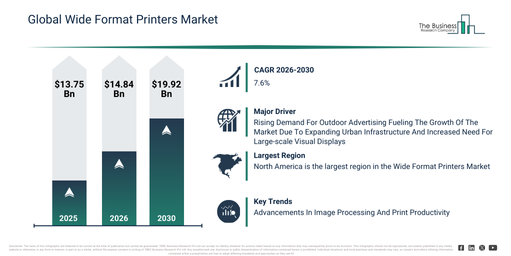
    The wide format printers market size has demonstrated strong growth in recent years. It is forecast to expand from $13.75 billion in 2025 to $14.84 billion in 2026, at a compound annual growth rate (CAGR) of 7.9%. This historical growth can be attributed to an increasing demand for large-scale advertising and outdoor signage, the growing adoption of digital printing for short-run production, the rising use of wide-format printers in architectural and technical drawings, the expansion of textile and apparel printing, and the growing replacement of older solvent-based printers with eco-friendly systems.

    The wide format printers market size is projected for significant expansion in the coming years, reaching $19.92 billion by 2030, driven by a compound annual growth rate (CAGR) of 7.6%. This anticipated growth stems from several factors, including the rising adoption of UV-curable and latex inks, the increasing demand for high-resolution printing in commercial uses, a surge in on-demand and customized print requirements, the broadening scope of interior décor and exhibition graphics applications, and the greater integration of workflow automation and cloud-based print management systems. Key trends expected during this period involve technological progress in high-speed inkjet printing, new developments in digital textile printing, the creation of hybrid roll-to-roll and flatbed printers, ongoing research and development in environmentally friendly inks and sustainable printing methods, and advancements in AI-assisted print quality and predictive maintenance technologies.

    Download A Free Sample Report For Comprehensive Market Insights:

    https://www.thebusinessresearchcompany.com/sample.aspx?id=30786&type=smp

    What Major Growth Factors Are Impacting The Wide Format Printers Market?

    The increasing need for outdoor advertising is anticipated to fuel the expansion of the wide format printers market in the future. Outdoor advertising constitutes a marketing strategy that utilizes physical displays like billboards, transit posters, and street furniture to engage consumers in public environments. This growth in outdoor advertising stems from increasing urbanization, where expanding urban populations and greater commuter volumes generate more chances to connect with extensive audiences in public areas. Wide format printers facilitate outdoor advertising by producing large, high-quality, and weather-resistant visuals, enabling brands to convey impactful and enduring messages in public settings. As an illustration, in March 2025, data from the Out of Home Advertising Association of America, a US-based trade organization, indicated that out-of-home advertising revenue surpassed $9.1 billion in 2024, showing a 4.5% year-on-year increase from the previous year. Consequently, the escalating demand for outdoor advertising is a primary impetus for the wide format printers market.

    How Is Segment Classification Applied In The Wide Format Printers Market?

    The wide format printers market covered in this report is segmented –

    1) By Technology: Inkjet, Laser, Other Ink Types

    2) By Ink Type: Aqueous, Solvent, UV-Curable, Latex, Dye Sublimation

    3) By Print Width: 17″–24″, 24″–36″, 36″–44″, 44″–60″, 60″–72″, Above 72″

    4) By Application: Advertising, Apparel And Textile Printing, CAD And Technical Printing, Signage, Other Applications

    5) By End User: Commercial Print Service Providers, In-House Corporate Print Departments, Textile And Apparel Manufacturers, Engineering And Construction Firms, Retail And Advertising Agencies, Residential And Consumer Users

    Subsegments:

    1) By Inkjet: Thermal Inkjet, Piezoelectric Inkjet, Continuous Inkjet, Drop On Demand Inkjet, Solvent Inkjet, Water Based Inkjet, Ultraviolet Curable Inkjet, Latex Inkjet

    2) By Laser: Monochrome Laser, Color Laser, Single Function Laser, Multifunction Laser, Electrophotographic Laser, Dry Toner Laser, Wet Toner Laser

    What Trends Are Affecting The Wide Format Printers Market Dynamics?

    Leading companies within the wide format printers market are concentrating on technological advancements, including enhanced image processing and productivity optimization technologies, to achieve superior print quality, increased throughput, and operational efficiency, thereby meeting evolving professional and commercial printing requirements. These enhanced image processing and productivity optimization technologies represent innovations designed to refine color reproduction, print speed, media handling intelligence, and workflow efficiency in wide-format printing systems, enabling vivid output with reduced downtime and higher user productivity. For instance, in January 2025, Canon India Pvt. Ltd., an India-based imaging technologies company, introduced the imagePROGRAF TZ-5320 and TX Series wide-format printers. These introduced printers deliver enhanced color vibrancy and sharpness with new image processing and magenta ink for deeper, more vivid prints, increased print speeds and smart paper handling features to boost productivity with minimal downtime, and eco-friendly design elements that reduce energy consumption and support sustainable operation.

    Who Are The Prominent Players Across The Wide Format Printers Market?

    Major companies operating in the wide format printers market are HP Inc., Canon Inc., Fujifilm Holdings Corporation, Ricoh Company Ltd., Konica Minolta Inc., Lexmark International Inc., Brother International Corporation, Epson America Inc., OKI Data Americas Inc., Xerox Holdings Corporation, Kyocera Document Solutions Inc., Durst Phototechnik AG, Océ-Tektronix, Mimaki Engineering Co. Ltd., Electronics For Imaging Inc., Roland DG Corporation, AstroNova Inc., Mutoh America Inc., SwissQprint AG, Seiko Instruments Inc.

    Access The Complete Wide Format Printers Market Report:

    https://www.thebusinessresearchcompany.com/report/wide-format-printers-market-report

    Which Region Accounts For The Highest Share Of The Wide Format Printers Market?

    North America was the largest region in the wide format printers market in 2025. Asia-Pacific is expected to be the fastest-growing region in the forecast period. The regions covered in the wide format printers market report are Asia-Pacific, South East Asia, Western Europe, Eastern Europe, North America, South America, Middle East, Africa.

    Access a Customized Wide Format Printers Market Report for Deeper Competitive Insights

    https://www.thebusinessresearchcompany.com/sample.aspx?id=30786&type=smp

    Get in touch with us:

    The Business Research Company: https://www.thebusinessresearchcompany.com/

    Americas: +1 310-496-7795

    Asia: +44 7882 955267 & +91 8897263534

    Europe: +44 7882 955267

    Email us at: marketing@tbrc.info

    Follow us on:

    LinkedIn: https://in.linkedin.com/company/the-business-research-company

    YouTube: https://www.youtube.com/channel/UC24_fI0rV8cR5DxlCpgmyFQ

    Global Market Model: https://www.thebusinessresearchcompany.com/global-market-model
  • Wearable Technology Market Industry Analysis Covering Trends, Drivers, And Future Outlook

    Wearable Technology Market Industry Analysis Covering Trends, Drivers, And Future Outlook

    The Business Research Company’s 2026 market reports feature advanced enhancements such as market attractiveness analysis, total addressable market evaluation, company benchmarking matrices, interactive Excel dashboards, expanded supply chain intelligence, emerging startup coverage, and detailed product insights, delivering more actionable and strategically valuable research.

    What Market Value Expansion Is Expected For The Wearable Technology Market Over The Forecast Period?

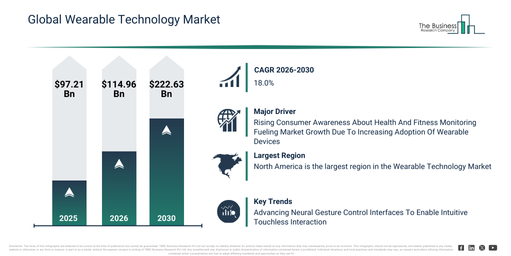
    The wearable technology market size has experienced substantial expansion in recent years. It is anticipated to grow from $97.21 billion in 2025 to $114.96 billion in 2026, exhibiting a compound annual growth rate (CAGR) of 18.3%. The market’s growth during the historic period was driven by factors such as a heightened consumer emphasis on fitness and well-being, the rising uptake of smartwatches and fitness bands, the expanded application of wearables in monitoring sports performance, the proliferation of remote patient monitoring solutions within the healthcare sector, and the enhanced integration of Bluetooth and smartphone capabilities into these devices.

    The wearable technology market is anticipated to experience significant expansion over the coming years. This market is projected to reach $222.63 billion by 2030, achieving a compound annual growth rate (CAGR) of 18.0%. Factors contributing to this growth during the forecast period include an escalating demand for personalized health data and predictive analysis, the increasing uptake of clinical-grade medical wearables, greater corporate spending on employee wellness and safety initiatives, the widening application of augmented reality and virtual reality (AR/VR) wearables across business and entertainment sectors, and the growing subscription earnings from high-end digital coaching and cloud offerings. Key trends foreseen in the same period encompass technological progress in artificial intelligence (AI)-driven health analytics, novelties in smart clothing and e-textiles, advancements in multimodal biometrics and non-invasive medical sensing, ongoing research and development in battery efficiency and ultra-low-power chip technologies, and improvements in AR/VR wearables for captivating metaverse-integrated applications.

    Download A Free Sample Report For Comprehensive Market Insights:

    https://www.thebusinessresearchcompany.com/sample.aspx?id=30783&type=smp

    What Market Drivers Are Helping Shape The Wearable Technology Market Expansion?

    Heightened consumer awareness regarding health and fitness tracking is projected to fuel the expansion of the wearable technology market. This awareness signifies individuals’ active participation in overseeing their physiological and wellness data through technologies that track health metrics such as heart rate, activity, and sleep, thereby increasingly shaping lifestyle and wellness decisions worldwide. The surge in this awareness is attributed to a greater emphasis on preventive health and proactive wellness management, prompting more people to adopt devices for health monitoring. Wearable technology aids health and fitness monitoring by delivering real-time insights into activity, sleep, and vital signs, enabling users to make informed lifestyle and fitness choices. For example, in January 2025, the China Internet Network Information Center, a China-based research organization, indicated that as of December 2024, China had 418 million users of internet healthcare services, marking an increase of 3.72 million from December 2023, and representing 37.7% of the total online population. Thus, the escalating consumer awareness about health and fitness monitoring is a primary driver for the growth of the wearable technology market.

    What Are The Core Segment Classifications In The Wearable Technology Market?

    The wearable technology market covered in this report is segmented –

    1) By Product Type: Smartwatches, Fitness And Activity Trackers, Smart Clothing Or E-Textiles, Augmented Reality And Virtual Reality Headsets Or Smart Glasses, Medical And Clinical Wearables, Hearables Or Smart Earbuds, Other Wearable Accessories

    2) By Connectivity: Bluetooth, Wi-Fi, Cellular Or LTE Or 5G, Near Field Communication (NFC), Other Internet Of Things Low-Power Networks

    3) By Distribution Channel: Online Retail Or E-Commerce, Brand Stores Or OEM Stores, Consumer Electronics Retailers, Healthcare And Medical Distribution Networks, Enterprise Or Institutional Sales

    4) By Application Or Use-Case: Health And Fitness Monitoring, Medical Diagnostics And Remote Patient Monitoring, Sports And Performance Analytics, Gaming, Virtual Reality, Entertainment And Immersive Training, Workplace Safety And Productivity, Lifestyle And Personal Assistance, Defense And Tactical Operations

    5) By End-Users: Individual Consumers, Healthcare Providers And Patients, Enterprise And Industrial Users, Athletes And Sports Organizations

    Subsegments:

    1) By Smartwatches: Fitness Tracking Smartwatches, Health Monitoring Smartwatches, Communication Smartwatches, Kids Smartwatches, Luxury Smartwatches

    2) By Fitness And Activity Trackers: Daily Activity Trackers, Sports Performance Trackers, Sleep Tracking Bands, Heart Rate Monitoring Bands, Posture And Movement Trackers

    3) By Smart Clothing Or E-Textiles: Smart Sportswear, Smart Workwear, Smart Military Apparel, Smart Fashion Wear, Smart Thermal Regulating Clothing

    4) By Augmented Reality And Virtual Reality Headsets Or Smart Glasses: Augmented Reality Smart Glasses, Virtual Reality Headsets, Mixed Reality Wearables, Industrial Smart Glasses, Consumer Entertainment Smart Glasses

    5) By Medical And Clinical Wearables: Remote Patient Monitoring Wearables, Cardiac Monitoring Wearables, Glucose Monitoring Wearables, Vital Signs Tracking Wearables, Rehabilitation And Therapy Wearables

    6) By Hearables Or Smart Earbuds: Health Monitoring Earbuds, Noise Cancellation Earbuds, Language Translation Earbuds, Fitness Tracking Earbuds, Gaming And Entertainment Earbuds

    7) By Other Wearable Accessories: Smart Rings, Smart Belts, Smart Helmets, Smart Jewelry, Smart Insoles

    Which Trends Are Influencing The Expansion Of The Wearable Technology Market?

    Major companies in the wearable technology market are focusing on creating advanced wearables, including AI-enabled neural interface wristbands, to speed up human-computer interaction, expand device utility, and improve accessibility within digital ecosystems. AI-enabled neural interface wristbands are wearable devices designed to read, interpret, or interact with neural signals (brain or nerve activity) and deliver real-time feedback, control, or insights through artificial intelligence. For instance, in January 2025, Wearable Devices Ltd., an Israel-based technology company, launched the Mudra Link neural gesture-control wristband. This product was the first neural wristband compatible with Android, macOS, and Windows platforms, featuring sophisticated gesture recognition through surface nerve conductance sensors, cross-platform compatibility for smooth control of smart devices, and customizable gesture mapping for specific user interaction patterns. This innovation enables intuitive hands-free control across augmented reality systems and smart environments, marking a significant evolution in wearable interaction by replacing traditional input methods with neural gesture-based command execution.

    Which Companies Form The Competitive Landscape Of The Wearable Technology Market?

    Major companies operating in the wearable technology market are Google LLC, Samsung Electronics Co. Ltd., Huawei Technologies Co. Ltd., Sony Corporation, LG Electronics Inc., Nike Inc., Xiaomi Corporation, Adidas AG, ASUSTeK Computer Inc., OPPO Mobile Telecommunications Corp. Ltd., Garmin Ltd., Michael Kors Holdings Limited, Casio America Inc., OnePlus Technology Co. Ltd., Fossil Group Inc., Withings SA, Vuzix Corporation, Fitbit Inc., hDrop Technologies Inc., Bearmind AG

    Access The Complete Wearable Technology Market Report:

    https://www.thebusinessresearchcompany.com/report/wearable-technology-market-report

    Which Region Is The Primary Market For The Wearable Technology Market?

    North America was the largest region in the wearable technology market in 2025. Asia-Pacific is expected to be the fastest-growing region in the forecast period. The regions covered in the wearable technology market report are Asia-Pacific, South East Asia, Western Europe, Eastern Europe, North America, South America, Middle East, Africa.

    Access a Customized Wearable Technology Market Report for Deeper Competitive Insights

    https://www.thebusinessresearchcompany.com/sample.aspx?id=30783&type=smp

    Get in touch with us:

    The Business Research Company: https://www.thebusinessresearchcompany.com/

    Americas: +1 310-496-7795

    Asia: +44 7882 955267 & +91 8897263534

    Europe: +44 7882 955267

    Email us at: marketing@tbrc.info

    Follow us on:

    LinkedIn: https://in.linkedin.com/company/the-business-research-company

    YouTube: https://www.youtube.com/channel/UC24_fI0rV8cR5DxlCpgmyFQ

    Global Market Model: https://www.thebusinessresearchcompany.com/global-market-model

  • Waterproofing Membrane Market Forecast Assessing Growth Potential And Industry Direction

    Waterproofing Membrane Market Forecast Assessing Growth Potential And Industry Direction

    The Business Research Company’s 2026 market reports feature advanced enhancements such as market attractiveness analysis, total addressable market evaluation, company benchmarking matrices, interactive Excel dashboards, expanded supply chain intelligence, emerging startup coverage, and detailed product insights, delivering more actionable and strategically valuable research.

    How Will The Market Value Of The Waterproofing Membrane Market Change Between 2026 And 2030?

    The waterproofing membrane market size has experienced robust expansion in recent years. This market is projected to expand from $34.10 billion in 2025 to $36.84 billion in 2026, demonstrating a compound annual growth rate (CAGR) of 8.0%. Historically, this growth has been driven by factors such as increasing urbanization, growing construction activities, a rising need for moisture protection, expanding industrial infrastructure, and an increasing demand for durable building materials.

    The waterproofing membrane market size is anticipated to demonstrate substantial growth over the next few years, projected to reach $49.61 billion by 2030, expanding at a compound annual growth rate (CAGR) of 7.7%. This expansion during the forecast period can be attributed to several factors: increasing utilization of waterproofing in residential constructions, rising investments in commercial infrastructure, a surge in renovation and remodeling projects, broadening application in transportation and tunneling, and a growing demand for eco-friendly waterproofing solutions. Significant trends emerging in this period include technological progress in membrane performance, the development of innovative self-adhesive and spray-applied products, advancements in products designed for superior durability and chemical resistance, increased research and development into sustainable membranes, and the integration of technology for quicker installation and better monitoring.

    Download A Free Sample Report For Comprehensive Market Insights:

    https://www.thebusinessresearchcompany.com/sample.aspx?id=30780&type=smp

    Which Significant Factors Are Encouraging Growth In The Waterproofing Membrane Market?

    The projected growth of the waterproofing membrane market is anticipated to be fueled by the ongoing expansion in construction and infrastructure. This development encompasses the widening scope of residential, commercial, and industrial buildings, as well as transportation and public infrastructure projects, all of which require enduring structural strength. The surge in construction and infrastructure development is primarily attributed to increased government investment in large-scale infrastructure initiatives. Waterproofing membranes support these developments by providing materials that inhibit water ingress, bolster structural soundness, and prolong the operational life of buildings and infrastructure. As an illustration, in May 2025, data from the Office for National Statistics, a UK government agency, indicated that total construction new orders rose by 26.6% (£2,447 million) in Q1 2025 compared to Q4 2024, largely driven by an uptick in new infrastructure work and private industrial projects. Consequently, the rising construction and infrastructure development is a key factor propelling the growth of the waterproofing membrane market.

    How Is The Waterproofing Membrane Market Structured Across Different Market Segments?

    The waterproofing membrane market covered in this report is segmented –

    1) By Product Type: Liquid-Applied Membrane, Sheet Membrane

    2) By Raw Material: Bitumen, Polymers, Rubber, Other Raw Materials

    3) By Distribution Channel: Direct Sales, Distributors And Dealers, Online Or E-Commerce Supply

    4) By Application: Roofing, Basement And Foundation, Walls And Facades, Landfills And Tunnels, Other Applications

    5) By End Use: Residential, Commercial, Industrial, Infrastructure

    Subsegments:

    1) By Liquid-Applied Membrane: Bituminous, Cementitious, Polyurethane, Polyurea

    2) By Sheet Membrane: Bituminous, Thermoplastic, Rubber, Polyvinyl Chloride

    What Trends Are Impacting The Waterproofing Membrane Market?

    Leading companies in the waterproofing membrane market are concentrating on developing sophisticated products, such as hybrid polymer systems, to improve performance, increase durability, and simplify installation. These hybrid polymer systems are advanced formulations that integrate various polymer-modified bitumen technologies into one sheet, providing a versatile membrane suitable for a wide range of climates and uses. As an illustration, in February 2025, Sika Corporation, a US-based construction materials firm, introduced the SikaShield HB79 membrane. This distinctive “hybrid” modified bitumen membrane boasts a patented blend of APAO and SBS polymer technologies, removing the necessity for multiple membrane varieties and significantly streamlining material choices. Its dual-layer polymer design features an APAO top layer for resistance to heat and longevity, alongside an SBS bottom layer for flexibility in cold conditions and adhesion to substrates, ensuring dependable performance across diverse seasonal changes without compromise. Furthermore, it incorporates reinforcement from both polyester and glass fiber to enhance strength, tear resistance, and dimensional stability, thereby extending roof lifespan and lowering long-term maintenance expenses for property owners.

    Who Are The Key Market Participants In The Waterproofing Membrane Market?

    Major companies operating in the waterproofing membrane market are Sika AG, MAPEI S.p.A., Asian Paints Limited, Johns Manville Corporation, Bostik SA, SOPREMA Group, BMI Group, Tremco CPG Inc., GAF Materials LLC, Fosroc International Limited, ARDEX GmbH, IKO Industries Ltd., Polyglass U.S.A. Inc., CICO Technologies Limited, Paul Bauder GmbH & Co. KG, RENOLIT SE, SCHOMBURG GmbH, KÖSTER Bauchemie AG, Pidilite Industries Limited, ALUJET GmbH

    Access The Complete Waterproofing Membrane Market Report:

    https://www.thebusinessresearchcompany.com/report/waterproofing-membrane-market-report

    Which Geographic Region Represents The Largest Waterproofing Membrane Market Share?

    Asia‑Pacific was the largest region in the waterproofing membrane market in 2025. Asia‑Pacific is expected to be the fastest-growing region in the forecast period. The regions covered in the waterproofing membrane market report are Asia-Pacific, South East Asia, Western Europe, Eastern Europe, North America, South America, Middle East, Africa.

    Access a Customized Waterproofing Membrane Market Report for Deeper Competitive Insights

    https://www.thebusinessresearchcompany.com/sample.aspx?id=30780&type=smp

    Get in touch with us:

    The Business Research Company: https://www.thebusinessresearchcompany.com/

    Americas: +1 310-496-7795

    Asia: +44 7882 955267 & +91 8897263534

    Europe: +44 7882 955267

    Email us at: marketing@tbrc.info

    Follow us on:

    LinkedIn: https://in.linkedin.com/company/the-business-research-company

    YouTube: https://www.youtube.com/channel/UC24_fI0rV8cR5DxlCpgmyFQ

    Global Market Model: https://www.thebusinessresearchcompany.com/global-market-model
  • Surgical Intelligent Auxiliary Navigation Device Market Growth Forecast With Analysis Of Industry Progress Through 2030

    Surgical Intelligent Auxiliary Navigation Device Market Growth Forecast With Analysis Of Industry Progress Through 2030

    The Business Research Company’s 2026 market reports feature advanced enhancements such as market attractiveness analysis, total addressable market evaluation, company benchmarking matrices, interactive Excel dashboards, expanded supply chain intelligence, emerging startup coverage, and detailed product insights, delivering more actionable and strategically valuable research.

    By 2030, How Much Growth In Market Size Is Expected For The Surgical Intelligent Auxiliary Navigation Device Market?

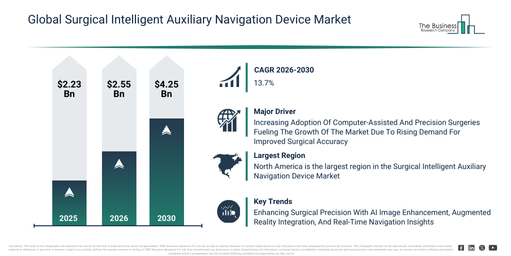
    The market size for surgical intelligent auxiliary navigation devices has experienced substantial growth in recent years. It is projected to expand from $2.23 billion in 2025 to $2.55 billion in 2026, achieving a compound annual growth rate (CAGR) of 14.0%. This expansion during the historic period can be attributed to the increasing adoption of computer-assisted surgical tools, a greater demand for precision in complex surgeries, the rising use of navigation systems in orthopedic and neurosurgical procedures, the expansion of minimally invasive surgical techniques, and an increased focus on reducing surgical errors and improving patient outcomes.

    The market for surgical intelligent auxiliary navigation devices is set for substantial growth over the next few years, projected to achieve a size of $4.25 billion by 2030, with a compound annual growth rate (CAGR) of 13.7%. This forecasted expansion is largely driven by the increasing integration of artificial intelligence (AI) within surgical navigation systems, a heightened demand for real-time imaging and guidance, the rising adoption of robot-assisted surgeries, the advancement of healthcare infrastructure, and an uptick in investment in smart surgical instrumentation. Significant trends anticipated during this period include technology-driven innovations in intelligent navigation algorithms, progress in artificial intelligence (AI)-enabled intraoperative guidance, developments in augmented reality (AR) and three-dimensional (3D) visualization systems, increased research and development efforts in precision surgical devices, and innovation in integrated data and imaging platforms.

    Download A Free Sample Report For Comprehensive Market Insights:

    https://www.thebusinessresearchcompany.com/sample.aspx?id=30767&type=smp

    What Important Drivers Are Powering The Surgical Intelligent Auxiliary Navigation Device Market Growth?

    The increasing adoption of computer-assisted and precision surgeries is expected to propel the surgical intelligent auxiliary navigation device market going forward. Computer-assisted and precision surgeries refer to procedures that employ advanced imaging, navigation, and digital guidance technologies to improve surgical accuracy, reduce invasiveness, and enhance patient outcomes. The uptake of computer-assisted and precision surgeries is escalating as hospitals aim to boost surgical accuracy and results while minimizing complications, leading to shorter recovery times and more efficient utilization of operating room resources. The surgical intelligent auxiliary navigation device supports computer-assisted and precision surgeries by providing real-time navigation, 3D visualization, and data-driven guidance that assist surgeons in accurate instrument positioning and decision-making during operations. For instance, in June 2025, according to the NHS England, a UK-based government department, by 2035, the trailblazing approach is expected to support half a million operations annually, a significant rise from 70,000 in 2023–24, with robotic assistance anticipated to be used in around 90% of keyhole surgeries, including procedures to remove cancer-affected organs. Therefore, the increasing adoption of computer-assisted and precision surgeries is driving the growth of the surgical intelligent auxiliary navigation device market.

    How Is The Surgical Intelligent Auxiliary Navigation Device Market Distributed Across Key Segments?

    The surgical intelligent auxiliary navigation device market covered in this report is segmented –

    1) By Component: Hardware, Software, Services, Other Components

    2) By Invasiveness: Minimally Invasive Surgery (MIS), Open Surgery, Other Surgery Types

    3) By Technology: Optical Navigation Equipment, Electromagnetic Navigation Equipment, Robotic-Assisted Navigation Equipment, Other Navigation Technologies

    4) By Application: Orthopedic Surgeries, Neurosurgery, Spinal Procedures, Ear, Nose, Throat (ENT) And Maxillofacial Surgery, Other Surgical Applications

    5) By End User: Hospitals And Surgical Centers, Ambulatory Surgical Centers, Specialized Institutes, Other End Users

    Subsegments:

    1) By Hardware: Navigation Sensors, Imaging Modules, Processing Units

    2) By Software: Navigation Planning Software, Real Time Guidance Software, Data Integration Software

    3) By Services: Installation And Integration Services, Maintenance And Support Services, Training And Consulting Services

    4) By Other Components: User Interface Components, Connectivity Modules, Accessory Devices

    Which Trends Are Supporting The Evolution Of The Surgical Intelligent Auxiliary Navigation Device Market?

    Key companies in the surgical intelligent auxiliary navigation device market are concentrating on creating advanced offerings, such as artificial intelligence (AI) image enhancement functionality, to enhance visualization, precision, and decision-making during operations. AI image enhancement functionality utilizes machine learning algorithms to autonomously optimize, clarify, and emphasize critical anatomical structures in medical imaging, allowing surgeons to perceive more detail and make more informed choices during procedures. For example, in March 2023, Augmedics Inc., a US-based medical technology firm focused on augmented reality solutions for surgery, rolled out new features and indications within its xvision AR platform. This update incorporates AI image enhancement functionality, which improves the clarity and contrast of real-time imaging overlays, thereby aiding surgeons in navigating intricate anatomy with greater accuracy. By integrating AI-enhanced visualization with augmented reality, xvision facilitates safer, more efficient surgical navigation and contributes to better patient outcomes through improved intraoperative guidance.

    Which Firms Are Competing In The Surgical Intelligent Auxiliary Navigation Device Market?

    Major companies operating in the surgical intelligent auxiliary navigation device market are Stryker Corporation, Renishaw plc, CMR Surgical Ltd., Synaptive Medical Inc., ClearPoint Neuro Inc., Augmedics Ltd., Stereotaxis Inc., Xoran Technologies LLC, Novarad Corp., Intellijoint Surgical Inc., Proprio, Fiagon GmbH, Brainomix Ltd., Surgical Theater LLC, Cascination AG, Medivis Inc., Asensus Surgical Inc., ClaroNav Inc., Centerline Biomedical Inc., Medicaroid Corporation, SpineGuard SA

    Access The Complete Surgical Intelligent Auxiliary Navigation Device Market Report:

    https://www.thebusinessresearchcompany.com/report/surgical-intelligent-auxiliary-navigation-device-market-report

    Which Region Stands As The Largest Contributor To The Surgical Intelligent Auxiliary Navigation Device Market?

    North America was the largest region in the surgical intelligent auxiliary navigation device market in 2025. Asia-Pacific is expected to be the fastest-growing region in the forecast period. The regions covered in the surgical intelligent auxiliary navigation device market report are Asia-Pacific, South East Asia, Western Europe, Eastern Europe, North America, South America, Middle East, Africa.

    Access a Customized Surgical Intelligent Auxiliary Navigation Device Market Report for Deeper Competitive Insights

    https://www.thebusinessresearchcompany.com/sample.aspx?id=30767&type=smp

    Get in touch with us:

    The Business Research Company: https://www.thebusinessresearchcompany.com/

    Americas: +1 310-496-7795

    Asia: +44 7882 955267 & +91 8897263534

    Europe: +44 7882 955267

    Email us at: marketing@tbrc.info

    Follow us on:

    LinkedIn: https://in.linkedin.com/company/the-business-research-company

    YouTube: https://www.youtube.com/channel/UC24_fI0rV8cR5DxlCpgmyFQ

    Global Market Model: https://www.thebusinessresearchcompany.com/global-market-model

  • Global Sugar Beet Pulp Pellets Market Forecast Highlighting Expansion And Competitive Dynamics

    Global Sugar Beet Pulp Pellets Market Forecast Highlighting Expansion And Competitive Dynamics

    The Business Research Company’s 2026 market reports feature advanced enhancements such as market attractiveness analysis, total addressable market evaluation, company benchmarking matrices, interactive Excel dashboards, expanded supply chain intelligence, emerging startup coverage, and detailed product insights, delivering more actionable and strategically valuable research.

    What Market Value Trend Is Expected For The Sugar Beet Pulp Pellets Market From 2026 To 2030?

    The sugar beet pulp pellets market has demonstrated robust expansion in recent years. It is projected to increase from $2.26 billion in 2025 to $2.41 billion in 2026, registering a compound annual growth rate (CAGR) of 6.8%. During the historical period, this growth was primarily driven by the increasing demand for livestock feed, the growing adoption of high-fiber animal diets, a rising dairy cattle population, the expansion of sugar beet processing capacity, and the increasing use of low-cost feed ingredients.

    The sugar beet pulp pellets market is projected to experience robust expansion over the coming years, with its valuation set to reach $3.11 billion by 2030, exhibiting a compound annual growth rate (CAGR) of 6.6%. This anticipated growth during the forecast period is primarily driven by factors such as the increasing need for energy-dense animal feed, a heightened emphasis on animal digestive well-being, the wider acceptance of sustainable feed alternatives, the expansion of commercial livestock operations, and the rising use of byproducts from agriculture and industry. Key trends anticipated over the forecast period encompass technological advancements in pellet manufacturing, breakthroughs in creating nutrient-fortified beet pulp mixtures, improvements in techniques for boosting feed quality, ongoing research and development in environmentally friendly animal nutrition, and the growing integration of automation into feed production processes.

    Download A Free Sample Report For Comprehensive Market Insights:

    https://www.thebusinessresearchcompany.com/sample.aspx?id=30766&type=smp

    Which Major Factors Are Contributing To The Development Of The Sugar Beet Pulp Pellets Market?

    The increasing need for animal feed is anticipated to boost the expansion of the sugar beet pulp pellets market in the future. Cost-effective animal feed denotes feed components that provide sufficient nutrition, assisting livestock producers in controlling expenses for feeding while preserving the well-being and output of their animals. An uptick in animal feed demand is occurring because farmers and feed producers are encountering escalating costs for raw materials, prompting them to look for budget-friendly substitutes for conventional feed elements like grains and soybean meal. Sugar beet pulp pellets address animal feed needs by supplying a feed component that is rich in fiber, easily digestible, and economical, thereby improving rumen health and boosting feed efficiency in various livestock including cattle, horses, and other livestock. As an illustration, data from February 2025 by the Institute for Feed Education and Research, a US-based organization focused on animal feed research and education, showed that in 2023, approximately 283.6 million tons of feed were consumed by US livestock, poultry, and farmed aquaculture. This included 61.5 million tons by broilers, 48.7 million tons by dairy cattle, and 17.7 million tons by egg-laying hens, not counting harvested forages and roughages. Consequently, the increasing need for economical animal feed is propelling the expansion of the sugar beet pulp pellets market. The expansion of livestock and dairy farming operations is projected to boost the sugar beet pulp pellets market in the future. These activities encompass the extensive raising of cattle, sheep, and other animals to produce milk, meat, and associated agricultural goods, necessitating a steady supply of well-balanced, nutritious feed. Livestock and dairy farming is increasing because a growing global populace and improved incomes are fueling continuous demand for animal protein and dairy items, thereby prompting farmers to enlarge their herds and implement more intensive farming methods. Sugar beet pulp pellets aid livestock and dairy farming by offering a feed ingredient that is rich in fiber, highly digestible, and provides ample energy, which in turn enhances rumen health and increases milk production in dairy animals. For example, in September 2025, data from the United States Department of Agriculture Economic Research Service, a US-based government agency, indicated that U.S. milk production reached a total of 19.570 billion pounds in July 2025. This averaged 631 million pounds daily, marking a 3.4-percent increase compared to July 2024. The average number of milk cows on farms was 9.485 million head, an increase of 159,000 head from the prior year and 10,000 head more than the preceding month, with average milk production per cow standing at 2,063 pounds, a rise of 34 pounds from July 2024. Thus, the expansion of livestock and dairy farming activities is stimulating the growth of the sugar beet pulp pellets market.

    How Does Segment Analysis Break Down The Sugar Beet Pulp Pellets Market Structure?

    The sugar beet pulp pellets market covered in this report is segmented –

    1) By Type: Conventional, Organic

    2) By Distribution Channel: Direct Sales (B2B), Agricultural Cooperatives, Retail Stores And Online Platforms

    3) By Application: Ruminant Feed (Cattle, Sheep, Goats), Equine Feed, Swine Feed, Other Applications

    4) By End User: Commercial Livestock Farms, Feed Manufacturers And Formulators, Individual Animal Owners (Small Farms, Equine Owners, Pet Owners), Agricultural Cooperatives And Feed Distributors

    Subsegments:

    1) By Conventional: Dried Beet Pulp Pellets, Molassed Beet Pulp Pellets, Unmolassed Beet Pulp Pellets, Blended Pellet Formulations

    2) By Organic: Dried Beet Pulp Pellets, Molassed Beet Pulp Pellets, Unmolassed Beet Pulp Pellets, Blended Pellet Formulations

    Who Are The Major Companies Operating In The Sugar Beet Pulp Pellets Market?

    Major companies operating in the sugar beet pulp pellets market are Archer Daniels Midland Company, Louis Dreyfus Company B.V., Associated British Foods plc, Südzucker AG, Tereos S.A., AGRANA Beteiligungs-AG, Nordzucker AG, Cristal Union S.A.S., Pfeifer & Langen GmbH & Co. KG, Rogers Sugar Inc., Amalgamated Sugar Company LLC, American Crystal Sugar Company, Astarta Holding PLC, Michigan Sugar Company, Western Sugar Cooperative, Damask Investment Ltd., LaBudde Group Inc., Midwest Agri Commodities Inc., United Sugars Corporation, Sucden, Royal Cosun Cooperative U.A.

    Access The Complete Sugar Beet Pulp Pellets Market Report:

    https://www.thebusinessresearchcompany.com/report/sugar-beet-pulp-pellets-market-report

    What Is The Largest Regional Market In The Sugar Beet Pulp Pellets Market?

    Europe was the largest region in the sugar beet pulp pellets market in 2025. Asia-Pacific is expected to be the fastest-growing region in the forecast period. The regions covered in the sugar beet pulp pellets market report are Asia-Pacific, South East Asia, Western Europe, Eastern Europe, North America, South America, Middle East, Africa.

    Access a Customized Sugar Beet Pulp Pellets Market Report for Deeper Competitive Insights

    https://www.thebusinessresearchcompany.com/sample.aspx?id=30766&type=smp

    Get in touch with us:

    The Business Research Company: https://www.thebusinessresearchcompany.com/

    Americas: +1 310-496-7795

    Asia: +44 7882 955267 & +91 8897263534

    Europe: +44 7882 955267

    Email us at: marketing@tbrc.info

    Follow us on:

    LinkedIn: https://in.linkedin.com/company/the-business-research-company

    YouTube: https://www.youtube.com/channel/UC24_fI0rV8cR5DxlCpgmyFQ

    Global Market Model: https://www.thebusinessresearchcompany.com/global-market-model
  • Sports Psychology Services Market Analysis Through 2030 Focusing On Demand Trends And Growth Drivers

    Sports Psychology Services Market Analysis Through 2030 Focusing On Demand Trends And Growth Drivers

    The Business Research Company’s 2026 market reports feature advanced enhancements such as market attractiveness analysis, total addressable market evaluation, company benchmarking matrices, interactive Excel dashboards, expanded supply chain intelligence, emerging startup coverage, and detailed product insights, delivering more actionable and strategically valuable research.

    How Does The Forecasted Market Size Of The Sports Psychology Services Market Compare Between 2026 And 2030?

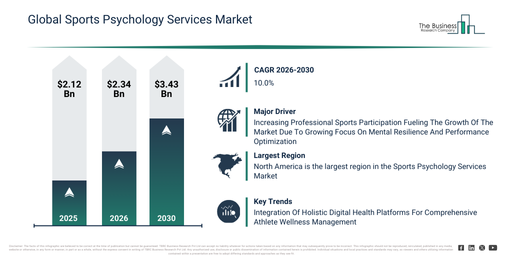
    The sports psychology services market size has experienced rapid growth in recent years. It is anticipated to expand from $2.12 billion in 2025 to $2.34 billion in 2026, registering a compound annual growth rate (CAGR) of 10.3%. This historical growth can be attributed to several factors including increasing awareness of athlete mental health, a growing focus on performance enhancement, rising adoption of sports counseling programs, expanding participation in competitive sports, and increasing demand for stress and anxiety management in athletes.

    The sports psychology services market size is anticipated to experience rapid expansion in the coming years, with projections indicating it will reach $3.43 billion by 2030, exhibiting a compound annual growth rate (CAGR) of 10.0%. This growth during the forecast period is attributed to the increasing integration of digital mental training tools, the rising adoption of personalized psychological coaching, a growing demand for data-driven performance assessment, the expanding use of virtual and remote therapy platforms, and a greater emphasis on the holistic well-being of athletes. Major trends expected in the forecast period include technological advancements in digital mental training platforms, innovations in AI-supported performance psychology tools, developments in biofeedback and neurofeedback systems, ongoing research and development in cognitive performance enhancement methods, and progress in immersive VR-based mental conditioning tools.

    Download A Free Sample Report For Comprehensive Market Insights:

    https://www.thebusinessresearchcompany.com/sample.aspx?id=30762&type=smp

    What Key Growth Drivers Are Influencing The Sports Psychology Services Market?

    The anticipated rise in professional sports participation is projected to drive the expansion of the sports psychology services market moving ahead. This refers to individuals engaging in structured athletic pursuits as their main profession, which includes intensive training and competing at top-tier levels. The increase in professional sports participation stems from enhanced media exposure and profitable sponsorship opportunities that draw in more athletes, providing them with financial security and worldwide recognition. Sports psychology services aid professional sports participation through offering mental conditioning techniques designed to sharpen concentration, handle competition-related stress, and boost overall performance reliability. For example, data from August 2024, provided by the Bureau of Labor Statistics, a US-based federal government agency, indicates that the employment of athletes and sports competitors in the United States is forecasted to expand by 5% between 2024 and 2034. Consequently, the expanding engagement in professional sports is fueling the growth of the sports psychology services market.

    What Segment Types Are Included In The Sports Psychology Services Market Analysis?

    The sports psychology services market covered in this report is segmented –

    1) By Service Type: Performance Enhancement, Counseling, Mental Skills Training, Rehabilitation, Other Service Types

    2) By Delivery Mode: In-Person, Online Or Telehealth

    3) By Provider Type: Independent Sports Psychologists, Sports Psychology Clinics, Sports Performance Centers, University And Institutional Providers, Multidisciplinary Wellness Centers

    4) By Application: Individual Athletes, Teams, Coaches, Other Applications

    5) By End-User: Professional Sports, Amateur Sports, Educational Institutions, Other End-Users

    Subsegments:

    1) By Performance Enhancement: Goal Setting And Achievement Planning, Focus And Concentration Improvement Sessions, Competitive Strategy Development Programs, Reaction Time And Agility Training, Motivation And Confidence Building Programs

    2) By Counseling: Stress And Anxiety Management Counseling, Career Transition And Retirement Counseling, Personal Development And Self Awareness Sessions, Team Dynamics And Interpersonal Counseling, Emotional Resilience Support Programs

    3) By Mental Skills Training: Visualization And Imagery Training Programs, Attention And Concentration Enhancement Sessions, Cognitive Behavioral Techniques For Athletes, Mindfulness And Relaxation Skill Development, Performance Anxiety Reduction Programs

    4) By Rehabilitation: Post Injury Psychological Recovery Sessions, Rehabilitation Motivation And Support Programs, Mental Recovery Planning For Athletes, Coping Strategy Development For Injured Athletes, Resilience And Confidence Restoration Programs

    5) By Other Service Types: Nutritional Psychology Counseling Sessions, Sleep And Recovery Optimization Programs, Stress Management Workshops For Teams, Sports Related Trauma Counseling, Integrative Mental Health Enhancement Programs

    Which Trends Are Contributing To Changes In The Sports Psychology Services Market?

    Leading companies in the sports psychology services market are concentrating on developing advanced solutions, such as integrated digital health platforms, to deliver comprehensive support for athletes’ mental and physical health. These integrated digital health platforms are extensive software systems that merge multiple digital health services and tools into a single, unified interface, enabling the collection, management, analysis, and sharing of health data among patients, providers, and various care settings. For example, in October 2023, CaringWire LLC, a US-based digital health platform provider, collaborated with the U.S. Council for Athletes’ Health (USCAH) to unveil Holistic Athlete Health Solutions (HAHS). This platform connects athletes with telehealth providers and offers self-paced online courses and webinars on subjects concerning sports health, wellness, and mental resilience. The solution is engineered for seamless integration into existing athletic department programs, offering round-the-clock access to care that addresses the physical, mental, and emotional needs of today’s athletes.

    Which Companies Are Influencing The Sports Psychology Services Market?

    Major companies operating in the sports psychology services market are California Baptist University (CBU), United States Olympic & Paralympic Committee, Conscious Mind Solutions, Discovery Sport & Performance Lab, ORKA Performance, Premier Sport Psychology, Performance in Mind, Jo Hopkins Consulting, KPEX Consulting, Flourish & Thrive, Grow Wellness Group, SportPsych Consulting, Athlete Mind Performance (AMP), The Performance Pursuit Consulting, Head In The Game, Pete Jackson Sport Psychology, Focus Perform, Clark Performance Consulting, University of Wisconsin–Green Bay, Nudge Sports, Tacomi Training Solutions Pvt. Ltd.

    Access The Complete Sports Psychology Services Market Report:

    https://www.thebusinessresearchcompany.com/report/sports-psychology-services-market-report

    Which Region Contributes The Most To The Sports Psychology Services Market?

    North America was the largest region in the sports psychology services market in 2025. Asia-Pacific is expected to be the fastest-growing region in the forecast period. The regions covered in the sports psychology services market report are Asia-Pacific, South East Asia, Western Europe, Eastern Europe, North America, South America, Middle East, Africa.

    Access a Customized Sports Psychology Services Market Report for Deeper Competitive Insights

    https://www.thebusinessresearchcompany.com/sample.aspx?id=30762&type=smp

    Get in touch with us:

    The Business Research Company: https://www.thebusinessresearchcompany.com/

    Americas: +1 310-496-7795

    Asia: +44 7882 955267 & +91 8897263534

    Europe: +44 7882 955267

    Email us at: marketing@tbrc.info

    Follow us on:

    LinkedIn: https://in.linkedin.com/company/the-business-research-company

    YouTube: https://www.youtube.com/channel/UC24_fI0rV8cR5DxlCpgmyFQ

    Global Market Model: https://www.thebusinessresearchcompany.com/global-market-model

  • Space Intelligence Services Market Forecast Through 2030 Featuring Industry Drivers And Opportunities

    Space Intelligence Services Market Forecast Through 2030 Featuring Industry Drivers And Opportunities

    The Business Research Company’s 2026 market reports feature advanced enhancements such as market attractiveness analysis, total addressable market evaluation, company benchmarking matrices, interactive Excel dashboards, expanded supply chain intelligence, emerging startup coverage, and detailed product insights, delivering more actionable and strategically valuable research.

    How Will The Market Size Of The Space Intelligence Services Market Progress Through 2030?

    The space intelligence services market has experienced significant expansion in recent years. It is projected to grow from $9.06 billion in 2025 to $10.32 billion in 2026, achieving a compound annual growth rate (CAGR) of 14.0%. The past growth in this market can be attributed to several factors, including an escalating demand for satellite-based monitoring, the increasing integration of geospatial analytics in defense operations, a rising requirement for environmental and climate surveillance, the proliferation of commercial earth observation constellations, and the expanded application of remote sensing for agricultural insights.

    The space intelligence services market is projected to expand significantly in the coming years, with its size expected to reach $17.26 billion by 2030, exhibiting a compound annual growth rate (CAGR) of 13.7%. This expansion during the forecast period is driven by an increasing demand for high-frequency imaging and rapid revisit capabilities, the growing integration of artificial intelligence into space intelligence workflows, a rising need for precision agriculture and resource optimization, the widening scope of security and border surveillance applications, and the increasing commercial adoption of space-based risk assessment tools. Major developments anticipated in this period include technological progress in high-resolution imaging sensors, innovations in artificial intelligence-driven geospatial analytics, the evolution of cloud-based intelligence delivery platforms, ongoing research and development in multi-sensor fusion techniques, and advancements in hyperspectral and radar satellite systems.

    Download A Free Sample Report For Comprehensive Market Insights:

    https://www.thebusinessresearchcompany.com/sample.aspx?id=30759&type=smp

    What Are The Main Drivers Accelerating The Growth Of The Space Intelligence Services Market?

    The future expansion of the space intelligence services market is projected to be fueled by increasing investments in space exploration. This involves investigating and understanding outer space using crewed and uncrewed spacecraft, satellites, and cutting-edge technologies. A key factor behind this surge in investment is intense geopolitical rivalry, with nations striving for strategic leadership and technological advantage in the cosmos. Such investments bolster space intelligence services through improved satellite capabilities, sophisticated sensors, and advanced data collection methods. This leads to better situational awareness and more informed decision-making, thanks to the delivery of precise, real-time data concerning space operations, orbiting bodies, and ambient conditions. As an illustration, Novaspace, a France-based space governance provider, reported in September 2023 that government expenditure on space exploration hit $27 billion in 2024, with projections indicating a rise to nearly $31 billion by 2034. Consequently, increased financial commitments to space exploration are a significant impetus for the expansion of the space intelligence services market.

    How Are Different Segment Groups Identified Within The Space Intelligence Services Market?

    The space intelligence services market covered in this report is segmented –

    1) By Service Type: Satellite Imaging, Geospatial Analytics, Data Processing, Remote Sensing, Other Service Types

    2) By Platform: Satellites, Unmanned Aerial Vehicles (UAVs), Ground Stations, Other Platforms

    3) By Application: Defense And Security, Agriculture, Environmental Monitoring, Urban Planning, Disaster Management, Other Applications

    4) By End-User: Government, Commercial, Military, Other End-Users

    Subsegments:

    1) By Satellite Imaging: Very High Resolution Optical Imagery, Medium Resolution Multispectral Imagery, Synthetic Aperture Radar Imagery, Hyperspectral and Thermal Imagery, Video from Space

    2) By Geospatial Analytics: Change Detection and Monitoring, Feature Extraction and Classification, Measurements and Modeling, Predictive Analytics and Forecasting, Visualization and Reporting

    3) By Data Processing: Image Correction and Enhancement, Data Fusion and Integration, Cloud Storage and Management, Automated Processing Pipelines, Quality Assurance and Validation

    4) By Remote Sensing: Land Cover and Land Use Mapping, Maritime Domain Awareness, Environmental Parameter Monitoring, Disaster Impact Assessment, Infrastructure Health Monitoring

    5) By Other Service Types: Consulting and Solution Design, Data Acquisition Planning, Training and Capacity Building, Intelligence Report Subscription, Custom Application Development

    Which Trends Are Supporting The Evolution Of The Space Intelligence Services Market?

    Major companies operating in the space intelligence services market are focusing on developing advanced solutions, such as flexible spectrum collection options, to improve the accessibility, accuracy, and versatility of RF signal monitoring and analysis. Flexible spectrum collection options refer to the ability to capture and analyze radio frequency data across multiple bands and configurations, allowing operators to tailor data acquisition to diverse mission needs, maximize coverage, and adapt to changing signal environments. For instance, in September 2023, Hawkeye 360 Inc., a US-based space analytics company, launched the RFIQ product, which provides industry-leading flexible spectrum collection capabilities to deliver deeper insights into RF activity. The product enables users to monitor a wide range of radio spectrum bands with adjustable collection parameters, supporting both tactical and strategic applications in communications, defense, and maritime domains. By leveraging flexible spectrum collection, the solution allows analysts to efficiently capture and interpret RF signals in real time, enhancing situational awareness and decision-making capabilities.

    Which Industry Players Are Present In The Space Intelligence Services Market?

    Major companies operating in the space intelligence services market are Maxar Technologies Inc., ICEYE Ltd., Planet Labs PBC, EarthDaily Analytics Inc., Spire Global Inc., BlackSky Technology Inc., LeoLabs Inc., Capella Space Corp., Synspective Inc., GHGSat Inc., SpaceKnow Inc., HawkEye 360 Inc., Kayrros SAS, Satellogic Inc., Slingshot Aerospace Inc., Albedo Space Inc., Umbra Lab Inc., Kleos Space SA, Unseenlabs SAS, SkyWatch Space Applications Inc., Privateer Space Inc.

    Access The Complete Space Intelligence Services Market Report:

    https://www.thebusinessresearchcompany.com/report/space-intelligence-services-market-report

    Which Region Holds The Largest Share In The Space Intelligence Services Market?

    North America was the largest region in the space intelligence services market in 2025. Asia-Pacific is expected to be the fastest-growing region in the forecast period. The regions covered in the space intelligence services market report are Asia-Pacific, South East Asia, Western Europe, Eastern Europe, North America, South America, Middle East, Africa.

    Access a Customized Space Intelligence Services Market Report for Deeper Competitive Insights

    https://www.thebusinessresearchcompany.com/sample.aspx?id=30759&type=smp

    Get in touch with us:

    The Business Research Company: https://www.thebusinessresearchcompany.com/

    Americas: +1 310-496-7795

    Asia: +44 7882 955267 & +91 8897263534

    Europe: +44 7882 955267

    Email us at: marketing@tbrc.info

    Follow us on:

    LinkedIn: https://in.linkedin.com/company/the-business-research-company

    YouTube: https://www.youtube.com/channel/UC24_fI0rV8cR5DxlCpgmyFQ

    Global Market Model: https://www.thebusinessresearchcompany.com/global-market-model