Category: Medical Equipment

  • Cybersecurity In Robotics Market Growth Projection: Expected to Surpass $9.7 Billion by 2030 at 13.8% CAGR

    Cybersecurity In Robotics Market Growth Projection: Expected to Surpass $9.7 Billion by 2030 at 13.8% CAGR

    Uncover key drivers, emerging technologies, and competitive movements shaping the cybersecurity in robotics market from 2026–2035 with trusted insights from The Business Research Company

    What long-term size projections exist for the Cybersecurity In Robotics Market covering 2026–2035?

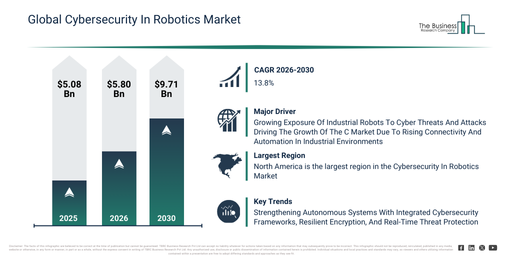
    The cybersecurity in robotics market has experienced swift expansion over recent years. Its valuation is anticipated to climb from $5.08 billion in 2025 to $5.80 billion in 2026, registering a compound annual growth rate (CAGR) of 14.1%. The growth observed in prior periods can be attributed to the rising adoption of connected robotics, the increased incorporation of artificial intelligence in robotic systems, the proliferation of cyber threats targeting automated operations, the broadened use of cloud-based robotic platforms, and the heightened necessity for secure industrial automation.

    The market for cybersecurity in robotics is projected to experience swift expansion in the upcoming years. This sector is anticipated to reach **$9.71 billion in 2030 at a compound annual growth rate (CAGR) of 13.8%.** This projected increase can be attributed to factors such as heightened investment in sophisticated robotic security, the growing implementation of autonomous mobile robots, stricter compliance needs for robotic cybersecurity, broader application of robotics in vital sectors, and a rising need for secure interactions between humans and robots. Key developments during this timeframe are expected to encompass technological improvements in detecting robotic threats, breakthroughs in autonomous cybersecurity functionalities, progress in secure communication systems for robots, dedicated research and development into machine learning-powered robotic safeguards, and advancements in encryption techniques for robotic networks.

    Access Your Free Sample Report for In-Depth Market Insights:

    https://www.thebusinessresearchcompany.com/sample.aspx?id=30567&type=smp

    Which Drivers Are Impacting The Competitive Landscape Of The Cybersecurity In Robotics Market?

    The increasing vulnerability of industrial robots to cyber threats and malicious attacks is anticipated to fuel the expansion of the cybersecurity in robotics market. Cyber threats are defined as harmful activities targeting robotic systems, including malware, ransomware, and unauthorized access attempts, which can compromise the security, functionality, or safety of robots. The exposure of industrial robots to cyber threats and attacks is intensifying as factories, warehouses, and manufacturing facilities integrate highly connected and automated robotic systems that rely on networked controls and cloud platforms. Cybersecurity in robotics assists in mitigating these cyber threats and attacks by safeguarding communication protocols, sensors, control systems, and cloud platforms, ensuring that robots operate safely, securely, and without disruption. For instance, in April 2025, according to Check Point Software Technologies, an Israel-based cybersecurity company, cyber attacks per organization increased by 47% in the first quarter, reaching an average of 1,925 weekly attacks, with industrial manufacturing experiencing 1,554 attacks, reflecting an increase of 63%. Therefore, the heightened exposure of industrial robots to cyber threats and attacks is a key driver for the growth of the cybersecurity in robotics market.

    What Segments Are Identified Within The Structure Of The Cybersecurity In Robotics Market?

    The cybersecurity in robotics market covered in this report is segmented –

    1) By Component: Software, Hardware, Services

    2) By Deployment Type: On-Premises Solutions, Cloud-Based Systems, Hybrid Deployments

    3) By Robot Type: Industrial Robots, Service Robots, Autonomous Mobile Robots, Collaborative Robots

    4) By Solution: Authentication, Encryption, Denial Of Service Protection, Secure Communication, Risk And Vulnerability Management

    5) By Industry Vertical: Manufacturing, Healthcare, Defense, Transportation, Energy And Utilities

    Subsegments:

    1) By Software: Secure Operating Systems, Threat Detection Platforms, Encryption Management Tools, Identity Access Solutions

    2) By Hardware: Secure Network Gateways, Robotic Control Units, Authentication Hardware Modules, Cybersecure Sensor Systems

    3) By Services: Managed Security Services, Integration and Implementation Services, Consulting and Advisory Services, Training and Support Services

    Which Trends Are Guiding The Evolution Of The Cybersecurity In Robotics Market?

    Leading companies in the cybersecurity in robotics market are focused on developing advanced protection technologies, such as immunity cybersecurity encryption software suites, to secure autonomous drones and robotic platforms against evolving cyber threats while maintaining operational integrity and data security. Immunity cybersecurity encryption software suites are comprehensive security toolsets that integrate encryption, intrusion detection, and immunization capabilities specifically designed to safeguard autonomous systems from unauthorized access, manipulation, and signal interference. For example, in October 2025, Mobilicom Ltd., an Israel-based provider of secured autonomy solutions, introduced its Secured Autonomy cybersecurity framework, which is the industry’s first end-to-end cybersecurity platform designed for autonomous drones and robotics. A key component of this framework is the ICE software suite, offering resilient encryption, real-time threat detection, secure communication channels, and hardware-agnostic protection layers to prevent cyber intrusions and ensure mission continuity.

    Which Major Firms Are Strengthening Their Position In The Cybersecurity In Robotics Market?

    Major companies operating in the cybersecurity in robotics market are Siemens Aktiengesellschaft, Honeywell International Inc., Kaspersky Lab, Tenable Holdings Inc., Rapid7 Inc., Darktrace Ltd., Forcepoint LLC, Bitdefender LLC, Armis Inc., Forescout Technologies Inc., Claroty Ltd., OPSWAT Inc., Dragos Inc., Nozomi Networks Ltd., FORT Robotics Inc., Radiflow Ltd., Cynerio Ltd, Alias Robotics SL, MedCrypt Inc., Asimily Inc., Arxan Technologies

    Access The Complete Report For Deeper Market Insights:

    https://www.thebusinessresearchcompany.com/report/cybersecurity-in-robotics-market-report

    Which Region Shows The Strongest Potential For Future Expansion In The Cybersecurity In Robotics Market?

    North America was the largest region in the cybersecurity in robotics in 2025. Asia-Pacific is expected to be the fastest-growing region in the forecast period. The regions covered in the cybersecurity in robotics market report are Asia-Pacific, South East Asia, Western Europe, Eastern Europe, North America, South America, Middle East, Africa.

    Request Your Customized Cybersecurity In Robotics Market Research Report for Competitive Advantage:

    https://www.thebusinessresearchcompany.com/customise?id=30567&type=smp

    Browse Through More Reports Similar to the Global Cybersecurity In Robotics Market 2026, By The Business Research Company

    Cybersecurity Market Report 2026

    https://www.thebusinessresearchcompany.com/report/cybersecurity-global-market-report

    Ai In Cybersecurity Market Report 2026

    https://www.thebusinessresearchcompany.com/report/ai-in-cybersecurity-global-market-report

    robotics technology global market report

    https://www.thebusinessresearchcompany.com/report/robotics-technology-global-market-report

    Get in touch with us:

    The Business Research Company: https://www.thebusinessresearchcompany.com/

    Americas +1 310-496-7795

    Asia +44 7882 955267 & +91 8897263534

    Europe +44 7882 955267

    Email us at marketing@tbrc.info

    Follow us on:

    LinkedIn: https://in.linkedin.com/company/the-business-research-company

    YouTube: https://www.youtube.com/channel/UC24_fI0rV8cR5DxlCpgmyFQ

    Global Market Model: https://www.thebusinessresearchcompany.com/global-market-model
  • Cortical Grid Electrodes Market Forecast 2026–2035: How to Leverage Market Growth

    Cortical Grid Electrodes Market Forecast 2026–2035: How to Leverage Market Growth

    Uncover key drivers, emerging technologies, and competitive movements shaping the cortical grid electrodes market from 2026–2035 with trusted insights from The Business Research Company

    What total market size is anticipated for the Cortical Grid Electrodes Market in 2030?

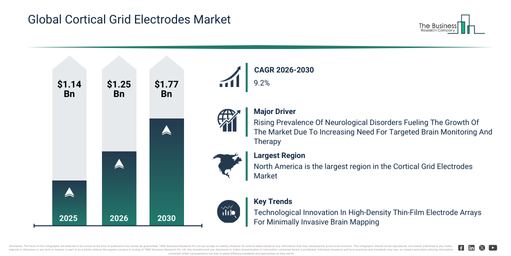
    The cortical grid electrodes market has shown significant expansion in recent years. Its value is anticipated to increase from $1.14 billion in 2025 to $1.25 billion in 2026, achieving a compound annual growth rate (CAGR) of 9.4%. This historical market expansion is attributable to increasing demand for neuroprosthetics, growing funding for neurological research, rising prevalence of neurological disorders, expanding applications in brain-computer interfaces, and technological advancements in electrodes.

    The cortical grid electrodes market is projected to experience robust expansion over the coming years. Its valuation is set to reach $1.77 billion in 2030, exhibiting a compound annual growth rate (CAGR) of 9.2%. This anticipated growth during the forecast period stems from factors such as increasing requirements for neurological treatments, expanding uses in brain research, heightened investments in research and development, broader clinical integration, and an elevated emphasis on tailored neuromodulation therapies. Key patterns expected during this period involve technological progress in electrode miniaturization, novel developments in conductive polymer substances, the creation of high-density electrode configurations, research and progress in AI-driven brain mapping, and improvements in integration with neurosurgical systems.

    Access Your Free Sample Report for In-Depth Market Insights:

    https://www.thebusinessresearchcompany.com/sample.aspx?id=30564&type=smp

    What Drivers Are Influencing Production Trends In The Cortical Grid Electrodes Market?

    The escalating occurrence of neurological conditions is set to drive the expansion of the cortical grid electrodes market in the coming years. Such medical conditions encompass diseases impacting the brain, spinal cord, and nerves, manifesting in diverse symptoms like cognitive, motor, and sensory deficits. This surge in neurological disorder cases is connected to the aging population, as the aging process progressively diminishes neuronal function, lessens brain plasticity, and elevates oxidative stress, thereby fostering the emergence and progression of these conditions. Cortical grid electrodes assist in managing neurological disorders through their capacity for accurate monitoring and stimulation of brain activity, aiming to restore or adjust neural function. These devices enhance patient prognosis by facilitating specific treatments for ailments like epilepsy, movement disorders, and persistent pain. An example of this trend is observed in July 2024, when the National Health Service, a UK-based government agency, indicated that 487,432 patients had been diagnosed with dementia (a progressive brain disorder affecting memory, thinking, and daily activities) by June 30, 2024, marking an increase of 3,155 cases compared to May 31, 2024. Consequently, the growing occurrence of neurological disorders is propelling the expansion of the cortical grid electrodes market.

    Which Segments Are Gaining Traction In The Cortical Grid Electrodes Market?

    The cortical grid electrodes market covered in this report is segmented –

    1) By Product: Epidural Cortical Grid Electrodes, High-Density Cortical Grid Electrodes, Flexible Cortical Grid Electrodes, Penetrating Cortical Grid Electrodes, Multi-Contact Cortical Grid Electrodes, Customized Cortical Grid Electrodes, Reusable Cortical Grid Electrodes

    2) By Material Type: Silicone, Polyimide, Metal, Conductive Polymer

    3) By Electrode Configuration: Strip Electrode, Grid Electrode, Cylindrical Electrode, Custom Designs

    4) By Application: Neuroprosthetics, Brain Mapping, Seizure Monitoring, Research

    5) By End User: Hospitals, Research Institutions, Neurology Clinics, Educational Institutions

    Subsegments:

    1) By Epidural Cortical Grid Electrodes: Single Contact Epidural Electrode, Multi Contact Epidural Electrode, Strip Epidural Electrode, Square Grid Epidural Electrode, Rectangular Grid Epidural Electrode

    2) By High Density Cortical Grid Electrodes: Ultra High Density Electrode, Dense Array Electrode, Small Contact Spacing Electrode, High Resolution Electrode, Compact High Density Electrode

    3) By Flexible Cortical Grid Electrodes: Silicone Based Flexible Electrode, Polyimide Flexible Electrode, Stretchable Flexible Electrode, Conformable Flexible Electrode, Thin Film Flexible Electrode

    4) By Penetrating Cortical Grid Electrodes: Microwire Penetrating Electrode, Depth Penetrating Electrode, Multi Shank Penetrating Electrode, Linear Array Penetrating Electrode, Three Dimensional Penetrating Electrode

    5) By Multi Contact Cortical Grid Electrodes: Double Contact Electrode, Triple Contact Electrode, Quadruple Contact Electrode, Multiple Contact Strip Electrode, High Contact Count Electrode

    6) By Customized Cortical Grid Electrodes: Patient Specific Electrode, Tailor Made Electrode, Bespoke Size Electrode, Custom Shape Electrode, Special Design Electrode

    7) By Reusable Cortical Grid Electrodes: Sterilizable Reusable Electrode, Durable Reusable Electrode, Long Life Reusable Electrode, Multiple Use Reusable Electrode, Washable Reusable Electrode

    What Trends Are Projected To Support The Growth Of The Cortical Grid Electrodes Market?

    Leading companies in the cortical grid electrodes market are prioritizing the development of advanced products, such as high-density thin-film electrode arrays, to enhance both the resolution and safety of neural recording. These high-density thin-film electrode arrays leverage flexible, biocompatible substrates like polyimide to create micro-electrode arrays that closely conform to the brain’s surface. This allows for the recording of thousands of channels of neural data with minimal tissue displacement and reversibility, thereby addressing the limitations of traditional, rigid subdural grids. For instance, in March 2025, Precision Neuroscience Corporation, a US-based brain-computer interface company, secured Food and Drug Administration (FDA) 510(k) clearance for its Layer 7-T (Layer 7 Cortical Interface). This device is a high-density thin-film 1024-channel cortical electrode array, designed for temporary use (less than 30 days), to record, monitor, and stimulate electrical signals on the brain’s surface. The system enables surgeons to map brain activity with unparalleled resolution using a minimally invasive micro-slit technique, which facilitates the preservation of eloquent tissue during neurosurgical procedures.

    Who Are The Primary Competitors In The Global Cortical Grid Electrodes Market?

    Major companies operating in the cortical grid electrodes market are Abbott Laboratories, Medtronic plc, Integra Life Sciences Corporation, Nihon Kohden Corporation, Natus Medical Incorporated, NeuroPace Inc., Blackrock Neurotech LLC, Cadwell Industries Inc., Precision Neuroscience Corporation, AD-tech Medical Instrument, Inomed Medizintechnik Gmbh, PMT Corporation, Ripple Neuro LLC, Neuroone Medical Technology corporation, Plexon Inc., Cortec Gmbh, Microprobes for Lifesciences Inc, Dixi Medical SAS, Cortera Neurotechnologies Inc., Neurosoft Bioelectronics Ltd., Alpha Omega Engineering Ltd.

    Access The Complete Report For Deeper Market Insights:

    https://www.thebusinessresearchcompany.com/report/cortical-grid-electrodes-market-report

    Which Global Regions Are Shaping The Competitive Landscape Of The Cortical Grid Electrodes Market?

    North America was the largest region in the cortical grid electrodes market in 2025. Asia-Pacific is expected to be the fastest-growing region in the forecast period. The regions covered in the cortical grid electrodes market report are Asia-Pacific, South East Asia, Western Europe, Eastern Europe, North America, South America, Middle East, Africa.

    Request Your Customized Cortical Grid Electrodes Market Research Report for Competitive Advantage:

    https://www.thebusinessresearchcompany.com/customise?id=30564&type=smp

    Browse Through More Reports Similar to the Global Cortical Grid Electrodes Market 2026, By The Business Research Company

    Medical Electrodes Market Report 2026

    https://www.thebusinessresearchcompany.com/report/medical-electrodes-global-market-report

    Electrophysiology Devices And Equipment Market Report 2026

    https://www.thebusinessresearchcompany.com/report/electrophysiology-devices-and-equipment-global-market-report

    brain mapping instruments global market report

    https://www.thebusinessresearchcompany.com/report/brain-mapping-instruments-global-market-report

    Get in touch with us:

    The Business Research Company: https://www.thebusinessresearchcompany.com/

    Americas +1 310-496-7795

    Asia +44 7882 955267 & +91 8897263534

    Europe +44 7882 955267

    Email us at marketing@tbrc.info

    Follow us on:

    LinkedIn: https://in.linkedin.com/company/the-business-research-company

    YouTube: https://www.youtube.com/channel/UC24_fI0rV8cR5DxlCpgmyFQ

    Global Market Model: https://www.thebusinessresearchcompany.com/global-market-model
  • Global Connected Packaging Market 2026–2030: Forecast Insights for Business Planning

    Global Connected Packaging Market 2026–2030: Forecast Insights for Business Planning

    Uncover key drivers, emerging technologies, and competitive movements shaping the connected packaging market from 2026–2035 with trusted insights from The Business Research Company

    What is the expected shift in the Connected Packaging Market’s size between 2026 and 2030?

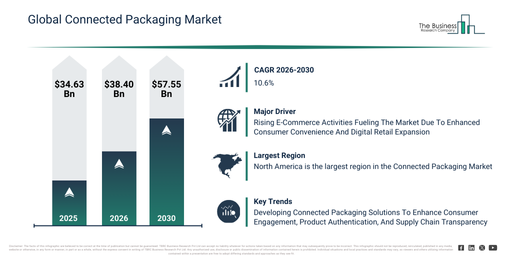
    The connected packaging market has experienced significant expansion recently. Projections indicate its size will increase from $34.63 billion in 2025 to $38.40 billion in 2026, demonstrating a compound annual growth rate (CAGR) of 10.9%. Historically, this expansion has been driven by factors such as a greater need for product authentication, wider adoption of smart labels, an increase in consumer engagement efforts, enhanced supply chain traceability, and adherence to regulatory compliance standards.

    The connected packaging market is anticipated to experience substantial growth over the coming years, projected to reach $57.55 billion by 2030, demonstrating a compound annual growth rate (CAGR) of 10.6%. This expansion during the forecast period is driven by an increasing focus on digital integration, the rising adoption of IoT-enabled packaging, a growing demand for anti-counterfeiting solutions, the expansion of e-commerce and retail channels, and a heightened emphasis on sustainability in packaging. Furthermore, significant trends expected during this period include advancements in augmented reality packaging, innovations in intelligent sensors, the development of connected packaging platforms, ongoing research and development in data analytics solutions, and the integration of blockchain for traceability.

    Access Your Free Sample Report for In-Depth Market Insights:

    https://www.thebusinessresearchcompany.com/sample.aspx?id=30563&type=smp

    Which Drivers Are Shaping Strategic Decisions In The Connected Packaging Market?

    The rising volume of e-commerce activities is anticipated to fuel the expansion of the connected packaging market. E-commerce involves the processes of buying, selling, marketing, payment, delivery, and servicing products or services through digital networks, primarily the internet, facilitating interactions among businesses, consumers, and various platforms. The increasing trend in e-commerce operations stems from the inherent convenience of online shopping, which allows consumers to effortlessly browse, compare, and purchase items at any time and from any location. Connected packaging supports e-commerce by enhancing product traceability, improving customer engagement via digital interactions, enabling real-time tracking, and fostering trust between brands and their online clientele. For instance, in May 2025, according to Sellers Commerce, a US-based e-commerce platform, United States e-commerce sales stood at $1.19 trillion in 2024, an increase of 8.2% from the previous year. Hence, the growing e-commerce activities are significantly driving the connected packaging market’s growth.

    What Segment Categories Are Covered In The Connected Packaging Market?

    The connected packaging market covered in this report is segmented –

    1) By Type: Active Packaging, Interactive Packaging, Intelligent Packaging

    2) By Service: Data Analytics Services, Digital Integration Services, Supply Chain Monitoring Services, Customer Engagement Services, Smart Labeling Services, Implementation Services, Maintenance And Support Services

    3) By Technology: QR Codes, Near Field Communication, Radio Frequency Identification, Augmented Reality, Other Technology

    4) By Application: Food And Beverage, Pharmaceuticals, Personal Care, Consumer Electronics, Other Applications

    5) By End-User: Retail, Healthcare, Logistics, Other End-Users

    Subsegments:

    1) By Active Packaging: Time Temperature Indicators, Oxygen Scavengers, Ethylene Scavengers, Moisture Absorbers, Antimicrobial Packaging

    2) By Interactive Packaging: Quick Response Codes, Augmented Reality Packaging, Near Field Communication, Scratch and Reveal Codes, Digital Triggered Content

    3) By Intelligent Packaging: Radio Frequency Identification Tags, Sensors for Freshness, Tamper Evident Indicators, Smart Labels, Temperature Monitoring Devices

    Which Trends Are Influencing The Performance And Direction Of The Connected Packaging Market?

    Major companies operating in the connected packaging market are focusing on developing advanced solutions, such as consumer connected packaging technologies, to accelerate the adoption of connected tools like QR codes, NFC tags, and RFID for consumer engagement, product authentication, and supply chain transparency. Consumer connected packaging technologies are digital solutions integrated into product packaging that enable interactive experiences, secure tracking, and real-time data collection throughout the product lifecycle. For instance, in November 2023, the Active & Intelligent Packaging Industry Association (AIPIA) launched the Consumer Connected Packaging initiative. This program brings together brands and technology partners to champion QR codes, NFC, RFID, AR, and blockchain, facilitating interactive traceability and transparent consumer engagement that supports large-scale connected packaging deployment. This initiative represents a notable technological advancement by integrating digital innovations with packaging and supply chain needs, bridging interactive consumer experiences with operational efficiency. It offers a scalable and effective solution for enhancing transparency, engagement, and traceability across product networks.

    Which Key Market Players Are Investing In Expansion And Innovation Within The Connected Packaging Market?

    Major companies operating in the connected packaging market are International Paper Company, Tetra Pak International S.A., Amcor plc, Ball Corporation, Avery Dennison Corporation, Mondi plc, Smurfit Kappa Group plc, CCL Industries Inc., Multi-Color Corporation, Fedrigoni S.p.A., SML Group Limited, Impinj Inc., ePac Flexible Packaging, Paragon ID, Identiv Inc., PragmatIC Semiconductor Ltd., Wiliot Ltd., Tadbik Ltd., WestRock Company, Touchcode Inc.

    Access The Complete Report For Deeper Market Insights:

    https://www.thebusinessresearchcompany.com/report/connected-packaging-market-report

    Which Regions Are Poised For Strategic Growth In The Connected Packaging Market?

    North America was the largest region in the connected packaging market in 2025. Asia-Pacific is expected to be the fastest-growing region in the forecast period. The regions covered in the connected packaging market report are Asia-Pacific, South East Asia, Western Europe, Eastern Europe, North America, South America, Middle East, Africa.

    Request Your Customized Connected Packaging Market Research Report for Competitive Advantage:

    https://www.thebusinessresearchcompany.com/customise?id=30563&type=smp

    Browse Through More Reports Similar to the Global Connected Packaging Market 2026, By The Business Research Company

    Advanced Packaging Technologies Market Report 2026

    https://www.thebusinessresearchcompany.com/report/advanced-packaging-technologies-global-market-report

    Single Use Packaging Market Report 2026

    https://www.thebusinessresearchcompany.com/report/single-use-packaging-global-market-report

    industrial packaging global market report

    https://www.thebusinessresearchcompany.com/report/industrial-packaging-global-market-report

    Get in touch with us:

    The Business Research Company: https://www.thebusinessresearchcompany.com/

    Americas +1 310-496-7795

    Asia +44 7882 955267 & +91 8897263534

    Europe +44 7882 955267

    Email us at marketing@tbrc.info

    Follow us on:

    LinkedIn: https://in.linkedin.com/company/the-business-research-company

    YouTube: https://www.youtube.com/channel/UC24_fI0rV8cR5DxlCpgmyFQ

    Global Market Model: https://www.thebusinessresearchcompany.com/global-market-model
  • Cloud Medical Imaging Platform Market 2026–2030: Emerging Trends and Forecast Opportunities

    Cloud Medical Imaging Platform Market 2026–2030: Emerging Trends and Forecast Opportunities

    Uncover key drivers, emerging technologies, and competitive movements shaping the cloud medical imaging platform market from 2026–2035 with trusted insights from The Business Research Company

    How much larger will the Cloud Medical Imaging Platform Market be in 2030 compared with 2026?

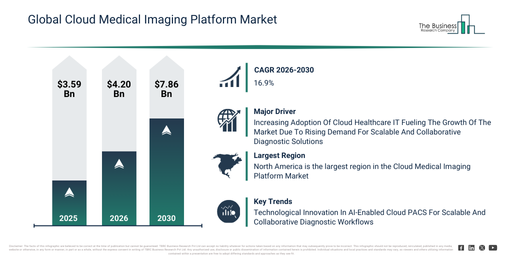
    The cloud medical imaging platform market size has experienced significant expansion in recent years. This market is projected to grow from $3.59 billion in 2025 to $4.20 billion in 2026, exhibiting a compound annual growth rate (CAGR) of 17.6%. Historically, this growth can be attributed to the increasing adoption of cloud-based healthcare IT systems, the rising demand for remote access to medical images, the escalating imaging volume in hospitals and diagnostic centers, the expansion of telemedicine and teleradiology services, and the growing need for cost-efficient imaging storage solutions.

    The cloud medical imaging platform market is projected to experience substantial expansion over the upcoming years, with its size anticipated to reach $7.86 billion by 2030, exhibiting a compound annual growth rate (CAGR) of 16.9%. This expected growth during the forecast period stems from various factors, including the increasing integration of artificial intelligence-enabled imaging tools, a growing shift towards hybrid cloud deployment models, and the rising demand for multi-facility image sharing and collaboration. Additionally, the expansion of healthcare digitalization initiatives in emerging economies and a greater focus on automating workflows in radiology departments are contributing to this trend. Major developments expected in this period include advancements in AI-powered cloud imaging analytics, technological innovations in zero-footprint medical image viewers, the evolution of vendor-neutral archive-based cloud systems, ongoing research and development into secure blockchain imaging exchange, and innovations in mobile-compatible cloud imaging applications.

    Access Your Free Sample Report for In-Depth Market Insights:

    https://www.thebusinessresearchcompany.com/sample.aspx?id=30557&type=smp

    What Drivers Are Guiding Growth Patterns In The Cloud Medical Imaging Platform Market?

    The rising embrace of cloud healthcare IT is anticipated to boost the expansion of the cloud medical imaging platform market in the future. This growing adoption of cloud healthcare IT involves the broad integration of internet-based computing services for storing, managing, and processing medical information from a distance, instead of relying on local servers. Progress in cloud computing infrastructure fuels this heightened adoption of cloud healthcare IT, providing medical professionals with benefits like scalable storage, improved data security, and immediate access. Cloud medical imaging platforms facilitate efficient diagnostic processes by allowing for the smooth storage, retrieval, and sharing of high-resolution medical images across various healthcare settings and devices. As an illustration, in September 2025, the Office of the National Coordinator for Health Information Technology, a US-based staff division within the Department of Health and Human Services, reported that 71% of hospitals utilized predictive AI integrated with electronic health records in 2024, an increase from 66% in 2023. Consequently, the expanding use of cloud healthcare IT is fueling the development of the cloud medical imaging platform market.

    How Is The Cloud Medical Imaging Platform Market Divided Into Segments?

    The cloud medical imaging platform market covered in this report is segmented –

    1) By Component: Software, Services

    2) By Imaging Modality: X-ray, Computed Tomography (CT), Magnetic Resonance Imaging (MRI), Ultrasound, Nuclear Imaging, Other Imaging Modalities

    3) By Pricing Model: Subscription-Based (Software As A Service), Pay-Per-Use Or Consumption-Based, Hybrid Pricing Models

    4) By Deployment Mode: Public Cloud, Private Cloud, Hybrid Cloud

    5) By End-User: Hospitals, Diagnostic Centers, Research And Academic Institutes, Other End-Users

    Subsegments:

    1) By Software: Picture Archiving And Communication System Software, Radiology Information System Software, Vendor Neutral Archive Software, Enterprise Viewers And Universal Workstations, Image Analysis Software, Telemedicine Platform Software

    2) By Services: Implementation And Integration Services, Training And Education Services, Support And Maintenance Services, Consulting Services, Managed Services

    Which Market Trends Are Opening Growth Opportunities In The Cloud Medical Imaging Platform Market?

    Companies operating within the cloud medical imaging platform market are concentrating on technological advancements, including next-generation cloud-based Picture Archiving and Communication Systems (PACS) integrated with artificial intelligence (AI). These systems are designed to improve diagnostic workflows by offering high-speed remote access, automated study coordination, and advanced image processing from any location, thereby cutting IT infrastructure costs and boosting operational efficiency. For example, in November 2023, Royal Philips, a Netherlands-based health technology company, unveiled HealthSuite Imaging, a cloud-based PACS solution hosted on Amazon Web Services (AWS). This platform provides rapid remote access for diagnostic analysis, integrated reporting, and AI-driven workflow orchestration, enabling healthcare organizations to scale their operations securely while reducing the complexities of on-premises IT management.

    Which Major Industry Participants Are Leading The Cloud Medical Imaging Platform Market Growth?

    Major companies operating in the cloud medical imaging platform market are FUJIFILM Holdings Corp., GE HealthCare Technologies Inc., Sectra AB, Viz.ai Inc., Aidoc Medical Ltd., Arterys Inc., Lunit Inc., INFINITT Healthcare Co. Ltd., Qure.ai Technologies Pvt. Ltd., Novarad Corporation, RamSoft Inc., Annalise.ai Pty Ltd., Subtle Medical Inc., Gleamer SAS, VUNO Inc., PaxeraHealth Inc., Medixant Sp. z o.o., Medicai Ltd., MedDream UAB, Visbion Ltd., Studycast Inc.

    Access The Complete Report For Deeper Market Insights:

    https://www.thebusinessresearchcompany.com/report/cloud-medical-imaging-platform-market-report

    Which Region Is Expected To Experience The Fastest Growth In The Cloud Medical Imaging Platform Market?

    North America was the largest region in the cloud medical imaging platform market in 2025. Asia-Pacific is expected to be the fastest-growing region in the forecast period. The regions covered in the cloud medical imaging platform market report are Asia-Pacific, South East Asia, Western Europe, Eastern Europe, North America, South America, Middle East, Africa.

    Request Your Customized Cloud Medical Imaging Platform Market Research Report for Competitive Advantage:

    https://www.thebusinessresearchcompany.com/customise?id=30557&type=smp

    Browse Through More Reports Similar to the Global Cloud Medical Imaging Platform Market 2026, By The Business Research Company

    Healthcare Cloud Infrastructure Market Report 2026

    https://www.thebusinessresearchcompany.com/report/healthcare-cloud-infrastructure-global-market-report

    Healthcare Cloud Computing Market Report 2026

    https://www.thebusinessresearchcompany.com/report/healthcare-cloud-computing-global-market-report

    diagnostic imaging services global market report

    https://www.thebusinessresearchcompany.com/report/diagnostic-imaging-services-global-market-report

    Get in touch with us:

    The Business Research Company: https://www.thebusinessresearchcompany.com/

    Americas +1 310-496-7795

    Asia +44 7882 955267 & +91 8897263534

    Europe +44 7882 955267

    Email us at marketing@tbrc.info

    Follow us on:

    LinkedIn: https://in.linkedin.com/company/the-business-research-company

    YouTube: https://www.youtube.com/channel/UC24_fI0rV8cR5DxlCpgmyFQ

    Global Market Model: https://www.thebusinessresearchcompany.com/global-market-model
  • Cell Therapy Bioreactors Market 2026–2030: Forecasting Business Opportunities Ahead

    Cell Therapy Bioreactors Market 2026–2030: Forecasting Business Opportunities Ahead

    Uncover key drivers, emerging technologies, and competitive movements shaping the cell therapy bioreactors market from 2026–2035 with trusted insights from The Business Research Company

    Across 2026–2030, what is the expected market valuation path of the Cell Therapy Bioreactors Market?

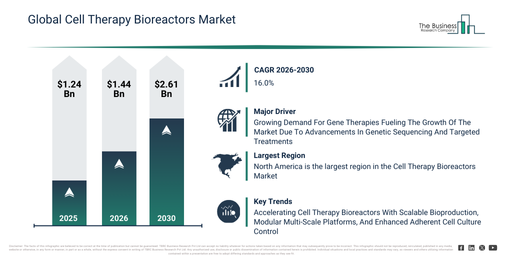
    The cell therapy bioreactors market size has seen swift expansion in recent years. It is anticipated to increase from $1.24 billion in 2025 to $1.44 billion in 2026, demonstrating a compound annual growth rate (CAGR) of 16.3%. The historical growth can be linked to the escalating demand for cell-based therapies, greater investment in regenerative medicine, wider implementation of automated cell culture systems, progress in stem cell research, and an elevated need for scalable cell production.

    The cell therapy bioreactors market is poised for rapid expansion in the coming years, with projections indicating it will reach $2.61 billion in 2030, growing at a compound annual growth rate (CAGR) of 16.0%. This anticipated growth is driven by the increasing adoption of cell therapy bioreactors in manufacturing, rising investment in advanced bioprocessing technologies, a greater emphasis on process optimization and quality control, the expansion of clinical trials for cell therapies, and the growing demand for personalized medicine applications. Key trends during this period include advancements in automated cell culture technologies, innovations in bioreactor design for enhanced scalability, developments in stem cell expansion platforms, research and development in process monitoring and control systems, and emerging upgrades in integrated cell therapy manufacturing solutions.

    Access Your Free Sample Report for In-Depth Market Insights:

    https://www.thebusinessresearchcompany.com/sample.aspx?id=30550&type=smp

    Which Drivers Are Supporting The Rise Of The Cell Therapy Bioreactors Market?

    The escalating need for gene therapies is anticipated to boost the expansion of the cell therapy bioreactors market in the coming years. Gene therapy is defined as a medical approach where faulty genes are altered or substituted to manage or prevent illnesses. This heightened demand for gene therapy stems from progress in genetic sequencing and diagnostic methods, which allow for accurate identification of disease-causing genes for specific treatments. Cell therapy bioreactors facilitate gene therapies by offering ideal conditions for the cultivation, modification, and proliferation of therapeutic cells. They improve treatment creation and scaling by guaranteeing uniform cell quality, boosting effectiveness, and enabling quicker manufacturing of tailored gene-based treatments. As an illustration, in December 2024, the American Society of Gene & Cell Therapy (ASGCT), a US-based non-profit medical and scientific organization, reported that the Food and Drug Administration (FDA) authorized 6 gene therapy products in 2023, which was an increase from 5 approvals in 2022. Consequently, the rising demand for gene therapies is fueling the growth of the cell therapy bioreactors market.

    What Leading Segments Are Studied In The Cell Therapy Bioreactors Market?

    The cell therapy bioreactors market covered in this report is segmented –

    1) By Product: Stirred Tank Bioreactors, Wave-Induced Bioreactors, Fixed-Bed Bioreactors, Other Products

    2) By Cell Type: Stem Cells, Immune Cells, Differentiated Cells, Other Cell Types

    3) By Material: Single-Use Bioreactors, Reusable Bioreactors

    4) By Application: Research, Clinical, Commercial Production

    5) By End-Users: Pharmaceutical And Biotechnology Companies, Academic And Research Institutes, Contract Manufacturing Organizations (CMOs), Other End Users

    Subsegments:

    1) By Stirred Tank Bioreactors: Stainless Steel Stirred Tank Systems, Glass Stirred Tank Systems, Single Use Stirred Tank Systems, Automated Stirred Tank Systems

    2) By Wave Induced Bioreactors: Rocking Motion Bioreactor Systems, Single Use Wave Bag Systems, Modular Wave Platform Systems, Automated Wave Based Culture Systems

    3) By Fixed Bed Bioreactors: Packed Bed Bioreactor Systems, Scaffold Based Fixed Bed Systems, Microcarrier Based Fixed Bed Systems, Perfusion Enabled Fixed Bed Systems

    4) By Other Products: Hollow Fiber Bioreactor Systems, Perfusion Bioreactor Systems, Rotary Cell Culture Systems, Microfluidic Bioreactor Systems

    Which Innovation Trends Are Advancing Developments Within The Cell Therapy Bioreactors Market?

    Major companies operating in the cell therapy bioreactors market are prioritizing the development of advanced platforms, such as modular, multi-scale bioreactor platforms. These efforts aim to enhance process scalability, boost cell expansion efficiency, and ensure consistency from initial research stages through to commercial manufacturing. A modular multi-scale bioreactor platform is defined as a flexible system that allows researchers to conduct parallel small-scale experiments, optimize conditions, and seamlessly scale up to mid- or large-scale production, all while maintaining uniform culture conditions and achieving high yields. For instance, in July 2024, EXO-Harvest, a Belgium-based biomanufacturing technology company, launched its cutting-edge multi-scale bioreactor platform. This platform is designed for the efficient manufacturing of mesenchymal stem cells and extracellular vesicles, supporting scalable adherent cell culture from the discovery phase to industrial production. The platform encompasses small-scale multi-bioreactor screening and mid/large-scale systems, engineered to accelerate development, reduce costs, and deliver high-quality cultures under precise environmental control.

    Which Key Players Are Driving Competition In The Cell Therapy Bioreactors Market?

    Major companies operating in the cell therapy bioreactors market are Thermo Fisher Scientific Inc., Merck KGaA, FUJIFILM Holdings Corporation, Danaher Corporation, Corning Incorporated, Lonza Group, Terumo Corporation, Sartorius AG, Eppendorf AG, Miltenyi Biotec B.V. & Co. KG, PBS Biotech Inc., Meissner Filtration Products Inc., Infors AG, Bionet Engineering & Technologies Pvt. Ltd., Wilson Wolf Manufacturing Corporation, Synthecon Incorporated, Cellexus Limited, Celartia Inc., Able Biott Inc., CelVivo ApS

    Access The Complete Report For Deeper Market Insights:

    https://www.thebusinessresearchcompany.com/report/cell-therapy-bioreactors-market-report

    Which Region Is Projected To Lead The Cell Therapy Bioreactors Market During The Forecast Period?

    North America was the largest region in the cell therapy bioreactors market in 2025. Asia-Pacific is expected to be the fastest-growing region in the forecast period. The regions covered in the cell therapy bioreactors market report are Asia-Pacific, South East Asia, Western Europe, Eastern Europe, North America, South America, Middle East, Africa.

    Request Your Customized Cell Therapy Bioreactors Market Research Report for Competitive Advantage:

    https://www.thebusinessresearchcompany.com/customise?id=30550&type=smp

    Browse Through More Reports Similar to the Global Cell Therapy Bioreactors Market 2026, By The Business Research Company

    Cell Therapy Technologies Market Report 2026

    https://www.thebusinessresearchcompany.com/report/cell-therapy-technologies-global-market-report

    Membrane Bioreactor Market Report 2026

    https://www.thebusinessresearchcompany.com/report/membrane-bioreactor-global-market-report

    cell therapy human raw materials global market report

    https://www.thebusinessresearchcompany.com/report/cell-therapy-human-raw-materials-global-market-report

    Get in touch with us:

    The Business Research Company: https://www.thebusinessresearchcompany.com/

    Americas +1 310-496-7795

    Asia +44 7882 955267 & +91 8897263534

    Europe +44 7882 955267

    Email us at marketing@tbrc.info

    Follow us on:

    LinkedIn: https://in.linkedin.com/company/the-business-research-company

    YouTube: https://www.youtube.com/channel/UC24_fI0rV8cR5DxlCpgmyFQ

    Global Market Model: https://www.thebusinessresearchcompany.com/global-market-model

  • Global Carbon Farming Market Report 2026–2035: Key Forecasts and Growth Areas

    Global Carbon Farming Market Report 2026–2035: Key Forecasts and Growth Areas

    Uncover key drivers, emerging technologies, and competitive movements shaping the carbon farming market from 2026–2035 with trusted insights from The Business Research Company

    What size range is anticipated for the Carbon Farming Market from 2026 to 2030?

    The carbon farming market has experienced rapid growth in recent years. It is expected to expand from $1.64 billion in 2025 to $1.88 billion in 2026, at a compound annual growth rate (CAGR) of 14.7%. This historical growth can be ascribed to several factors, including increasing awareness of soil degradation, greater adoption of regenerative agriculture practices, a growing focus on climate-smart farming, the initial development of voluntary carbon markets, and a rising need for sustainable land management.

    The carbon farming market is projected for significant expansion in the coming years. Its valuation is set to reach $3.21 billion by 2030, demonstrating a compound annual growth rate (CAGR) of 14.4%. This anticipated growth throughout the forecast period stems from factors such as a heightened demand for premium carbon credits, increased capital allocated to carbon measurement technologies, enhanced governmental backing for climate mitigation initiatives, the broadening of corporate net-zero pledges, and the wider integration of digital platforms for carbon monitoring. Key trends expected during this period involve improvements in tools for measuring soil carbon, the ongoing evolution of carbon credit verification technologies, a greater reliance on remote sensing for carbon tracking, more innovation in regenerative agricultural practices, and the proliferation of digital platforms designed for carbon trading.

    Access Your Free Sample Report for In-Depth Market Insights:

    https://www.thebusinessresearchcompany.com/sample.aspx?id=30549&type=smp

    What Drivers Are Affecting Demand In The Carbon Farming Market?

    The increasing need for carbon credits and climate mitigation solutions is anticipated to drive the expansion of the carbon farming market in the future. These carbon credits are certified documents, each signifying the reduction, removal, or avoidance of one ton of carbon dioxide through various climate mitigation efforts. This growing demand stems from escalating regulatory mandates compelling businesses to decrease their greenhouse gas (GHG) emissions. Carbon farming contributes to carbon credits and climate mitigation solutions by employing agricultural methods that capture and sequester atmospheric carbon within soil and plant life. It enhances environmental benefits through the reduction of greenhouse gas emissions, the creation of tradable carbon credits, and its role in sustainable climate initiatives. For example, the World Bank, a US-based international financial institution, reported in December 2023 that 15 countries are forecasted to generate over 24 million carbon credits in 2024, with this figure expected to climb to as much as 126 million credits by 2028. Consequently, the increasing need for carbon credits and climate mitigation solutions is fueling the expansion of the carbon farming market.

    Which Segment Groups Are Influencing The Carbon Farming Market?

    The carbon farming market covered in this report is segmented –

    1) By Offering: Carbon Credit Generation Services, Carbon Monitoring, Reporting, And Verification Solutions, Soil And Biomass Measurement Technologies, Carbon Project Development Services, Advisory And Consulting Services

    2) By Practice Type: Agroforestry, Conservation Tillage And No-Till Farming, Managed Grazing, Crop Rotation And Diversification, Cover Cropping, Composting And Biochar, Wetland And Peatland Restoration

    3) By Carbon Credit Type: Soil Carbon Credits, Forestry Carbon Credits, Livestock Methane Reduction Credits, Biochar And Compost Credits

    4) By Application: Agriculture, Forestry And Land Use

    5) By End-User: Farmers And Ranchers, Government Agencies, Corporations, Non-Profit Organizations

    Subsegments:

    1) By Carbon Credit Generation Services: Afforestation and Reforestation Projects, Soil Carbon Sequestration Projects, Improved Agricultural Practice Projects, Agroforestry Projects, Grassland and Wetland Restoration Projects

    2) By Carbon Monitoring, Reporting, and Verification Solutions: Remote Sensing Solutions, Satellite Imaging Solutions, Field Sampling Solutions, Carbon Data Analytics Solutions, Verification and Certification Solutions

    3) By Soil and Biomass Measurement Technologies: Soil Carbon Sampling Tools, Biomass Assessment Devices, Sensor-Based Soil Monitoring Systems, Laboratory Analysis Technologies, Digital Mapping and Modeling Tools

    4) By Carbon Project Development Services: Feasibility Assessment Services, Project Design and Planning Services, Carbon Protocol Compliance Services, Carbon Credit Registration Services, Long-Term Project Management Services

    5) By Advisory and Consulting Services: Carbon Offset Strategy Consulting, Sustainable Land Management Consulting, Regulatory and Policy Advisory Services, Financial Modeling and Valuation Services, Training and Capacity Building Services

    Which Competitive Trends Are Impacting The Structure Of The Carbon Farming Market?

    Leading companies in the carbon farming market are concentrating on developing advanced solutions, such as methane-reduction initiatives in rice cultivation, to decrease agricultural emissions, enhance sustainability outcomes, and generate verified carbon credits. Methane-reduction initiatives in rice cultivation refer to agricultural practices and monitoring frameworks created to reduce methane emissions from flooded paddy fields, while also allowing for measurement, reporting, and verification essential for participation in voluntary and compliance carbon markets. For example, in April 2025, Green Carbon Co., Ltd., a Japan-based carbon credit developer, initiated a large-scale rice paddy carbon credit project in Nghe An Province, Vietnam. The project gained acceptance under significant international standards, including Gold Standard and Verra, and incorporates the implementation of Alternate Wetting and Drying (AWD) irrigation practices to substantially lower methane emissions from rice farming. This initiative facilitates registration under recognized carbon standards and supports the long-term generation of carbon credits linked to sustainable agricultural practices. It provides a scalable and replicable avenue for farmers, project developers, and buyers to contribute to methane mitigation, simultaneously reinforcing the economic viability of low-carbon agriculture.

    Who Are The Top-Performing Companies In The Carbon Farming Market In Recent Years?

    Major companies operating in the carbon farming market are Anthesis Group Ltd., Indigo Agriculture Inc., Loam Bio Pty Ltd., Agreena ApS, Regrow Agriculture Inc., Green Collar Group Pty Ltd., Soil Capital NV, Landbanking Group Ltd., Truterra LLC, Arva Intelligence Ltd., Agoro Carbon Alliance, Continuum Ag Inc., Boomitra Inc., CIBO Technologies Inc., AgriCapture Inc., Carbon Credit Capital Inc., Carbon Asset Solutions Pty Ltd., AgriProve Pty Ltd., CarbonLink Pty Ltd., Ecosystem Services Market Consortium (ESMC), Varaha ClimateAg Pvt Ltd., InSoil Inc.

    Access The Complete Report For Deeper Market Insights:

    https://www.thebusinessresearchcompany.com/report/carbon-farming-market-report

    Which Region Currently Holds The Largest Share Of The Carbon Farming Market?

    North America was the largest region in the carbon farming market in 2025. Asia-Pacific is expected to be the fastest-growing region in the forecast period. The regions covered in the carbon farming market report are Asia-Pacific, South East Asia, Western Europe, Eastern Europe, North America, South America, Middle East, Africa.

    Request Your Customized Carbon Farming Market Research Report for Competitive Advantage:

    https://www.thebusinessresearchcompany.com/customise?id=30549&type=smp

    Browse Through More Reports Similar to the Global Carbon Farming Market 2026, By The Business Research Company

    Carbon Management System Market Report 2026

    https://www.thebusinessresearchcompany.com/report/carbon-management-system-global-market-report

    Organic Farming Market Report 2026

    https://www.thebusinessresearchcompany.com/report/organic-farming-global-market-report

    carbon credit for agriculture forestry and land use global market report

    https://www.thebusinessresearchcompany.com/report/carbon-credit-for-agriculture-forestry-and-land-use-global-market-report

    Get in touch with us:

    The Business Research Company: https://www.thebusinessresearchcompany.com/

    Americas +1 310-496-7795

    Asia +44 7882 955267 & +91 8897263534

    Europe +44 7882 955267

    Email us at marketing@tbrc.info

    Follow us on:

    LinkedIn: https://in.linkedin.com/company/the-business-research-company

    YouTube: https://www.youtube.com/channel/UC24_fI0rV8cR5DxlCpgmyFQ

    Global Market Model: https://www.thebusinessresearchcompany.com/global-market-model

  • BioSafety Level P3 and P4 Cleanrooms Market Outlook 2026–2030: Key Business Drivers and Trends

    BioSafety Level P3 and P4 Cleanrooms Market Outlook 2026–2030: Key Business Drivers and Trends

    Uncover key drivers, emerging technologies, and competitive movements shaping the biosafety level p3 and p4 cleanrooms market from 2026–2035 with trusted insights from The Business Research Company

    What level of growth is expected in the BioSafety Level P3 and P4 Cleanrooms Market between 2026 and 2030?

    The biosafety level P3 and P4 cleanrooms market has seen rapid growth in recent years. It is anticipated to expand from $2.92 billion in 2025 to $3.21 billion in 2026, showing a compound annual growth rate (CAGR) of 10.1%. The market’s past growth was fueled by increasing investments in biocontainment infrastructure, a rising demand for infectious disease research, greater adoption of HEPA and ULPA filtration systems, the expansion of pharmaceutical and biotech manufacturing facilities, and an escalating government focus on biosafety compliance.

    The biosafety level P3 and P4 cleanrooms market is anticipated to experience robust expansion over the coming years. It is projected to reach **$4.67 billion in 2030, exhibiting a compound annual growth rate (CAGR) of 9.8%.** This expansion during the forecast period is driven by several factors, including the increasing demand for high-containment laboratories to handle emerging pathogens, a surge in investments aimed at developing vaccines and antivirals, greater expenditures on enhancing biosafety in hospitals and laboratories, the wider implementation of automation within cleanroom operations, and increased government allocations for biodefense initiatives. Key trends shaping the forecast period encompass technological progress in smart cleanroom monitoring, novel approaches in modular and quickly deployable cleanrooms, advancements in sophisticated HVAC and containment systems, ongoing research and development into automated biosafety solutions, and the rising incorporation of AI and IoT within cleanroom management practices.

    Access Your Free Sample Report for In-Depth Market Insights:

    https://www.thebusinessresearchcompany.com/sample.aspx?id=30540&type=smp

    Which Drivers Are Expected To Impact The BioSafety Level P3 and P4 Cleanrooms Market During The Forecast Period?

    The BioSafety level P3 and P4 cleanrooms market is expected to expand moving forward due to the increasing prevalence of infectious diseases. These illnesses, caused by harmful microorganisms such as bacteria, viruses, fungi, or parasites, are becoming more common as rapid global travel and urban crowding enable pathogens to spread more easily. BioSafety level P3 and P4 cleanrooms are essential for supporting infectious disease efforts by offering highly controlled and secure environments for safely studying, diagnosing, and developing treatments for highly contagious and dangerous pathogens. For instance, in March 2024, the Centers for Disease Control and Prevention, a US-based government agency, reported that tuberculosis cases increased from 8,320 in 2022 to 9,615 in 2023, showing a rise of 1,295 cases. Therefore, the growing occurrence of infectious diseases is a significant driver for the BioSafety level P3 and P4 cleanrooms market.

    Which Segments Are Driving Activity In The BioSafety Level P3 and P4 Cleanrooms Market?

    The biosafety level p3 and p4 cleanrooms market covered in this report is segmented –

    1) By Type Of Cleanroom: Modular Cleanrooms, Hardwall Cleanrooms, Softwall Cleanrooms, Portable Cleanrooms, Containment Cleanrooms

    2) By Equipment: Air Filtration Systems, Heating, Ventilation, And Air Conditioning (HVAC) Systems, Monitoring And Control Systems, Personal Protective Equipment (PPE), Cleaning And Disinfection Equipment

    3) By Application: Vaccine Production, Cell And Gene Therapy, Research And Development, Diagnostics, Environmental Testing

    4) By Industry: Pharmaceutical Industry, Biotechnology Industry, Healthcare Sector, Agriculture And Food Safety, Research And Development Institutions

    Subsegments:

    1) By Modular Cleanrooms: Prefabricated Modular Units, Expandable Modular Units, Wall Panel Modular Units, Ceiling Grid Modular Units, Mobile Modular Units

    2) By Hardwall Cleanrooms: Steel Panel Hardwalls, Aluminum Panel Hardwalls, Glass Panel Hardwalls, Composite Panel Hardwalls, Insulated Panel Hardwalls

    3) By Softwall Cleanrooms: Vinyl Curtain Softwalls, PVC Panel Softwalls, Polyethylene Panel Softwalls, Fabric Panel Softwalls, Modular Frame Softwalls

    4) By Portable Cleanrooms: Portable Containment Units, Mobile Laboratory Units, Temporary Modular Units, Field Deployable Units, Collapsible Units

    5) By Containment Cleanrooms: Biosafety Cabinet Integrated Units, Negative Pressure Containment Units, Positive Pressure Containment Units, Isolated Containment Units, Barrier Containment Units

    How Are New Market Trends Shaping The Landscape Of The BioSafety Level P3 and P4 Cleanrooms Market?

    Leading companies in the biosafety level P3 and P4 cleanrooms market are emphasizing technological advancements, such as the creation of mobile high-containment laboratories that can be rapidly deployed to areas requiring immediate infectious disease control. These mobile units are engineered to deliver the same stringent safety standards as fixed facilities, including negative pressure environments, advanced filtration, and secure containment protocols, facilitating on-site research, diagnostics, and pathogen isolation during public health emergencies. For instance, in July 2023, Germfree Laboratories Inc., a US-based manufacturer of biocontainment environments, supplied a Mobile BioSafety Level 3 (BSL-3) Laboratory Ventura. This facility is a 55-foot, self-contained laboratory built on a semi-trailer platform, specifically designed to manage high-risk pathogens like SARS-CoV-2 and influenza. It possesses rapid deployment capabilities, allowing it to be positioned at local schools and public locations for on-site outbreak response. The unit’s design ensures robust containment for critical disease research and diagnostics, directly bolstering Ventura County’s capability to control the spread of infectious diseases.

    Which Major Firms Are Strengthening Their Position In The BioSafety Level P3 and P4 Cleanrooms Market?

    Major companies operating in the biosafety level p3 and p4 cleanrooms market are Thermo Fisher Scientific Inc., G-Con Manufacturing Inc., Cytiva, Steris Life Sciences, Portakabin Ltd., Bioquell Inc., Labconco Corporation, Germfree Laboratories Inc., GuardTech Group, Klenzaids, Laboratory Infrastructure Solutions (LIS), Biosafe Lab Pvt Ltd., Magenta Labscience, Microflow GmbH, Fabtech Inc., Bioxia

    Access The Complete Report For Deeper Market Insights:

    https://www.thebusinessresearchcompany.com/report/biosafety-level-p3-and-p4-cleanrooms-market-report

    Which Region Shows The Strongest Potential For Future Expansion In The BioSafety Level P3 and P4 Cleanrooms Market?

    North America was the largest region in the biosafety level P3 and P4 cleanrooms market in 2025. Asia-Pacific is expected to be the fastest-growing region in the forecast period. The regions covered in the biosafety level p3 and p4 cleanrooms market report are Asia-Pacific, South East Asia, Western Europe, Eastern Europe, North America, South America, Middle East, Africa.

    Request Your Customized BioSafety Level P3 and P4 Cleanrooms Market Research Report for Competitive Advantage:

    https://www.thebusinessresearchcompany.com/customise?id=30540&type=smp

    Browse Through More Reports Similar to the Global BioSafety Level P3 and P4 Cleanrooms Market 2026, By The Business Research Company

    Bioreactors And Fermenters Market Report 2026

    https://www.thebusinessresearchcompany.com/report/bioreactors-and-fermenters-global-market-report

    Bioprocess Containers Market Report 2026

    https://www.thebusinessresearchcompany.com/report/bioprocess-containers-global-market-report

    biosimulation global market report

    https://www.thebusinessresearchcompany.com/report/biosimulation-global-market-report

    Get in touch with us:

    The Business Research Company: https://www.thebusinessresearchcompany.com/

    Americas +1 310-496-7795

    Asia +44 7882 955267 & +91 8897263534

    Europe +44 7882 955267

    Email us at marketing@tbrc.info

    Follow us on:

    LinkedIn: https://in.linkedin.com/company/the-business-research-company

    YouTube: https://www.youtube.com/channel/UC24_fI0rV8cR5DxlCpgmyFQ

    Global Market Model: https://www.thebusinessresearchcompany.com/global-market-model
  • Bilirubin Oxidase Global Forecast: Market to Scale Up to $2.63 Billion by 2030 at 9.2% CAGR

    Bilirubin Oxidase Global Forecast: Market to Scale Up to $2.63 Billion by 2030 at 9.2% CAGR

    Uncover key drivers, emerging technologies, and competitive movements shaping the bilirubin oxidase market from 2026–2035 with trusted insights from The Business Research Company

    How much is the Bilirubin Oxidase Market valued at in 2026, and what valuation is forecast for 2030?

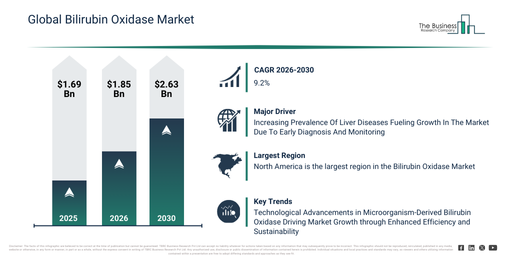
    The bilirubin oxidase market has experienced substantial expansion in recent years. This market is projected to expand from $1.69 billion in 2025 to $1.85 billion by 2026, exhibiting a compound annual growth rate (CAGR) of 9.5%. Historically, this growth has been driven by factors such as the increasing prevalence of liver disorders, a rise in neonatal jaundice cases, the growing demand for enzyme-based diagnostics, the expansion of clinical testing infrastructure, and heightened awareness of liver health.

    The bilirubin oxidase market is projected to demonstrate significant expansion over the next few years, reaching a valuation of $2.63 billion by 2030, driven by a compound annual growth rate (CAGR) of 9.2%. This expected increase during the forecast period is attributable to the heightened adoption of point-of-care testing, increased investment within the biotechnology sector, a growing application of bilirubin oxidase in various research contexts, the expansion of newborn screening programs, and rising healthcare expenditures in emerging economies. Key trends anticipated during this period include advancements in enzyme technology, innovations in biosensors and diagnostic devices, the development of recombinant enzyme variants, ongoing research and development in bioelectronic applications, and the wider integration of bilirubin oxidase into clinical diagnostics.

    Access Your Free Sample Report for In-Depth Market Insights:

    https://www.thebusinessresearchcompany.com/sample.aspx?id=30538&type=smp

    What Drivers Are Influencing The Growth Of The Bilirubin Oxidase Market?

    The bilirubin oxidase market is projected to expand due to the escalating prevalence of liver diseases. These conditions, which impair critical liver functions such as detoxification and protein synthesis, can be acute or chronic, stemming from factors like viral infections, alcohol abuse, fatty liver accumulation, autoimmune responses, genetic defects, or toxins. The rise in liver diseases is linked to unhealthy dietary habits, including high consumption of fatty foods and sugary drinks, which contribute to liver damage. Bilirubin oxidase aids in addressing the growing incidence of liver diseases by enabling precise measurement of bilirubin levels, essential for early diagnosis and monitoring liver function. For instance, in December 2024, according to the Official Statistics, a UK-based government agency, premature deaths attributed to alcoholic liver disease saw a 3.6% increase in 2023, reaching 5,984 compared to 5,776 in 2022. This increasing prevalence of liver diseases is thus driving the growth of the bilirubin oxidase market.

    How Is The Bilirubin Oxidase Market Organized Into Various Segments?

    The bilirubin oxidase market covered in this report is segmented –

    1) By Type: Fungal Bilirubin Oxidase, Bacterial Bilirubin Oxidase, Recombinant Bilirubin Oxidase, High-Purity Clinical-Grade Enzyme

    2) By Grade: Dominant, Research Grade, Industrial

    3) By Application: Clinical Diagnostics, Biosensors and Bioelectronics, Biofuel Cells and Enzymatic Energy Systems, Pharmaceutical Research, Enzymatic Dye Oxidation, Academic and Industrial Biotechnology

    4) By End-User: Diagnostic Kit and Reagent Manufacturers, Hospitals and Clinical Labs, Biotechnology Companies, Research Institutes and Universities, Bioelectronics and Sensor Technology Firms

    Subsegments:

    1) By Fungal Bilirubin Oxidase: Solid Form Enzymes, Liquid Form Enzymes, Immobilized Enzyme Variants, High Activity Enzyme Blends, Industrial Grade Enzyme Preparations

    2) By Bacterial Bilirubin Oxidase: Purified Enzyme Extracts, Fermentation Derived Enzymes, Stabilized Enzyme Formulations, Diagnostic Grade Enzyme Products, Enzyme Concentrate Powders

    3) By Recombinant Bilirubin Oxidase: Genetically Engineered Enzyme Variants, High Yield Expression Systems, Enhanced Stability Enzyme Forms, Research Grade Enzyme Solutions, Bioprocess Optimized Enzyme Products

    4) By High-Purity Clinical-Grade Enzyme: Pharmaceutical Grade Enzyme Solutions, Clinical Diagnostic Enzyme Kits, Sterile Enzyme Preparations, High Precision Enzyme Reagents, Ultra Purified Enzyme Concentrates

    Which Trends Are Expected To Influence The Bilirubin Oxidase Market In The Upcoming Years?

    Leading companies in the bilirubin oxidase market are increasingly focusing on technological advancements, such as microorganism-derived bilirubin oxidase, to address the escalating demand for more effective and environmentally sustainable therapies for jaundice and bilirubin-related disorders. Microorganism-derived bilirubin oxidase provides a biocatalytic solution that outperforms traditional chemical-based methods, offering a safer and more natural approach to bilirubin degradation. For instance, in December 2023, Creative Enzymes, a US-based biotechnology company, unveiled a novel Microorganism-Derived Bilirubin Oxidase, an enzyme specifically engineered to enhance bilirubin breakdown in medical applications. This enzyme is derived from genetically engineered microorganisms and demonstrates superior efficiency in breaking down bilirubin compared to traditional chemical processes. The enzyme’s composition is highly purified, ensuring greater stability and better performance in clinical settings. It is projected to have extensive applications in treating neonatal jaundice and other bilirubin-induced diseases, potentially diminishing the necessity for invasive procedures such as blood transfusions.

    Who Are The Primary Competitors In The Global Bilirubin Oxidase Market?

    Major companies operating in the bilirubin oxidase market are Sigma-Aldrich Co. LLC, MP Biomedicals LLC, Sekisui Diagnostics LLC, Aladdin Reagent Co. Ltd., J & K Scientific Ltd., BuyersGuideChem.com, Bluetiger Scientific, ChemicalBook Inc., SRL Inc., MedChemExpress LLC, MyBioSource Inc., Creative Biogene Inc., Creative Enzymes, Lori Industry Co. Ltd., BioHippo, Anjing Dulai Biotechnology Co. Ltd., ANHUI WITOP BIOTECH CO. LTD., Kalikund Enterprises, Career Henan Chemical Co., Wuhan Fortuna Chemical Co. Ltd.

    Access The Complete Report For Deeper Market Insights:

    https://www.thebusinessresearchcompany.com/report/bilirubin-oxidase-market-report

    Which Global Regions Are Shaping The Competitive Landscape Of The Bilirubin Oxidase Market?

    North America was the largest region in the bilirubin oxidase market in 2025. Asia-Pacific is expected to be the fastest-growing region in the forecast period. The regions covered in the bilirubin oxidase market report are Asia-Pacific, South East Asia, Western Europe, Eastern Europe, North America, South America, Middle East, Africa.

    Request Your Customized Bilirubin Oxidase Market Research Report for Competitive Advantage:

    https://www.thebusinessresearchcompany.com/customise?id=30538&type=smp

    Browse Through More Reports Similar to the Global Bilirubin Oxidase Market 2026, By The Business Research Company

    Bilirubin Blood Test Market Report 2026

    https://www.thebusinessresearchcompany.com/report/bilirubin-blood-test-global-market-report

    Glucose Market Report 2026

    https://www.thebusinessresearchcompany.com/report/glucose-global-market-report

    bilirubin meters global market report

    https://www.thebusinessresearchcompany.com/report/bilirubin-meters-global-market-report

    Get in touch with us:

    The Business Research Company: https://www.thebusinessresearchcompany.com/

    Americas +1 310-496-7795

    Asia +44 7882 955267 & +91 8897263534

    Europe +44 7882 955267

    Email us at marketing@tbrc.info

    Follow us on:

    LinkedIn: https://in.linkedin.com/company/the-business-research-company

    YouTube: https://www.youtube.com/channel/UC24_fI0rV8cR5DxlCpgmyFQ

    Global Market Model: https://www.thebusinessresearchcompany.com/global-market-model
  • Automated Tray Management For Operating Room (OR) Implants Market Future Outlook: Strong Growth Expected Toward $3.55 Billion by 2030

    Automated Tray Management For Operating Room (OR) Implants Market Future Outlook: Strong Growth Expected Toward $3.55 Billion by 2030

    Uncover key drivers, emerging technologies, and competitive movements shaping the automated tray management for operating room (or) implants market from 2026–2035 with trusted insights from The Business Research Company

    By how much is the Automated Tray Management For Operating Room (OR) Implants Market expected to grow between 2026 and 2030?

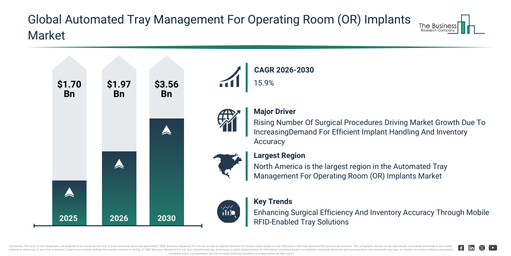
    The automated tray management for OR implants market size has experienced rapid growth in recent years. It will grow from $1.70 billion in 2025 to $1.97 billion in 2026 at a compound annual growth rate (CAGR) of 16.2%. This historical expansion can be attributed to an increasing focus on surgical workflow efficiency, the growing adoption of instrument tracking systems, a rising demand for sterilization accuracy, the expansion of hospital digitalization efforts, and the increasing need for error reduction in operating rooms.

    The automated tray management for OR implants market size is anticipated to experience significant growth in the upcoming years, expanding to $3.56 billion by 2030, at a compound annual growth rate (CAGR) of 15.9%. This expansion over the forecast period is largely attributed to increasing investment in healthcare automation, the growing integration of cloud-based tray management systems, a rising demand for real-time instrument visibility, the widespread digital transformation in hospitals, and a heightened focus on patient safety compliance. Prominent trends for the forecast period include technological advancements in automated tray systems, new innovations in AI-driven tracking solutions, progress in IoT-enabled monitoring platforms, dedicated research and development in sterilization automation, and further advancements in predictive analytics for OR management.

    Access Your Free Sample Report for In-Depth Market Insights:

    https://www.thebusinessresearchcompany.com/sample.aspx?id=30529&type=smp

    Which Drivers Are Influencing Market Acceleration In The Automated Tray Management For Operating Room (OR) Implants Market?

    The increasing volume of surgical procedures is anticipated to fuel the expansion of the automated tray management for operating room (OR) implants market in the coming years. These procedures encompass frequent orthopedic and ophthalmologic operations, such as hip/knee replacements, cataract removals, and spinal fusions, primarily performed on elderly individuals to address impairments in mobility and vision. The uptick in surgeries stems from the aging demographic’s increased requirement for interventions related to chronic conditions like joint replacements and cardiovascular issues. Automated tray management systems for operating room (OR) implants facilitate these operations by digitally organizing, tracking, and preparing surgical trays and implants, ensuring that the necessary instruments are accessible precisely when needed, thereby minimizing human errors and operational delays. For example, in May 2025, the World Health Organization, a Switzerland-based public health body, reported that over 300 million surgical procedures were carried out globally in 2023, an increase from 290 million in 2022, representing a 3.4% rise in surgical activity and highlighting a growing need for efficient and error-reducing solutions in operating rooms. Consequently, the rising number of surgeries is propelling the growth of the automated tray management for operating room (OR) implants market.

    What Segments Are Identified Within The Structure Of The Automated Tray Management For Operating Room (OR) Implants Market?

    The automated tray management for operating room (or) implants market covered in this report is segmented –

    1) By Component: Software, Hardware, Services

    2) By Deployment Mode: On-Premises, Cloud-Based

    3) By Application: Orthopedic Implants, Cardiovascular Implants, Neurosurgical Implants, Other Applications

    4) By End User: Hospitals, Ambulatory Surgical Centers, Specialty Clinics, Other End-Users

    Subsegments:

    1) By Software: Electronic Health Record Integration, Predictive Analytics Platforms, Risk Scoring Systems, Clinical Decision Support Tools

    2) By Hardware: Servers, Sensors, Monitoring Devices, Data Storage Devices

    3) By Services: Data Analytics Services, Predictive Modeling Services, Integration And Deployment Services, Training And Support Services, Monitoring And Reporting Services

    What Trends Are Driving The Growth Trajectory Of The Automated Tray Management For Operating Room (OR) Implants Market?

    Leading companies in the automated tray management for operating room (OR) implants market are focusing on developing sophisticated systems, such as mobile RFID-enabled inventory management systems, to automate the real-time tracking of surgical trays, implant supplies, and inventory, thereby reducing setup time and enhancing operational efficiency. Mobile RFID-enabled inventory management refers to configurable mobile case carts equipped with integrated RFID readers and software that continuously capture item-level usage and location data, enabling seamless tracking of implant kits, surgical supplies, and procedural trays without requiring manual scanning. For instance, in July 2024, Mobile Aspects, a US-based healthcare logistics technology company, launched SurgiCart, an RFID-enabled mobile case cart designed for hospital procedural environments that provides automated inventory visibility, real-time implant and supply tracking, and direct integration with electronic health records (EHRs) for expedited documentation and compliance. SurgiCart incorporates integrated RFID tracking for tray and implant status, offers mobility to support multi-area procedures without manually relocating supplies, and features automated EHR documentation to enhance surgical readiness and minimize errors, representing a significant advancement in perioperative tray and implant management.

    Which Key Market Players Are Investing In Expansion And Innovation Within The Automated Tray Management For Operating Room (OR) Implants Market?

    Major companies operating in the automated tray management for operating room (or) implants market are Becton Dickinson and Company, STERIS plc, Zebra Technologies Corporation, Getinge Group, Belimed AG, InVita Healthcare Technologies LLC, GAO RFID Inc., Censis Technologies Inc., Terso Solutions Inc., Xerafy Singapore Pte. Ltd., Mobile Aspects Inc., RFID4U, RFID Discovery Inc., STANLEY Healthcare Solutions Inc., Paragon Data Systems Inc., Haldor Advanced Technologies Ltd., IDENTI Medical Ltd., RFID Canada Inc., SpaTrack Medical Ltd., CaseChek Inc.

    Access The Complete Report For Deeper Market Insights:

    https://www.thebusinessresearchcompany.com/report/automated-tray-management-for-operating-room-or-implants-market-report

    Which Regions Are Poised For Strategic Growth In The Automated Tray Management For Operating Room (OR) Implants Market?

    North America was the largest region in the automated tray management for OR implants market in 2025. Asia-Pacific is expected to be the fastest-growing region in the forecast period. The regions covered in the automated tray management for operating room (or) implants market report are Asia-Pacific, South East Asia, Western Europe, Eastern Europe, North America, South America, Middle East, Africa.

    Request Your Customized Automated Tray Management For Operating Room (OR) Implants Market Research Report for Competitive Advantage:

    https://www.thebusinessresearchcompany.com/customise?id=30529&type=smp

    Browse Through More Reports Similar to the Global Automated Tray Management For Operating Room (OR) Implants Market 2026, By The Business Research Company

    Medical Device Tray Market Report 2026

    https://www.thebusinessresearchcompany.com/report/medical-device-tray-global-market-report

    Procedure Trays Market Report 2026

    https://www.thebusinessresearchcompany.com/report/procedure-trays-global-market-report

    Operating Room Equipment Market

    https://www.thebusinessresearchcompany.com/report/operating-room-equipment-market

    Get in touch with us:

    The Business Research Company: https://www.thebusinessresearchcompany.com/

    Americas +1 310-496-7795

    Asia +44 7882 955267 & +91 8897263534

    Europe +44 7882 955267

    Email us at marketing@tbrc.info

    Follow us on:

    LinkedIn: https://in.linkedin.com/company/the-business-research-company

    YouTube: https://www.youtube.com/channel/UC24_fI0rV8cR5DxlCpgmyFQ

    Global Market Model: https://www.thebusinessresearchcompany.com/global-market-model
  • Revenue of the Automated Peritoneal Dialysis Market Predicted to Achieve $3.52 Billion by 2030, Driven by 8.3% CAGR

    Revenue of the Automated Peritoneal Dialysis Market Predicted to Achieve $3.52 Billion by 2030, Driven by 8.3% CAGR

    Uncover key drivers, emerging technologies, and competitive movements shaping the automated peritoneal dialysis market from 2026–2035 with trusted insights from The Business Research Company

    What is the estimated market size of the Automated Peritoneal Dialysis Market by the end of 2030?

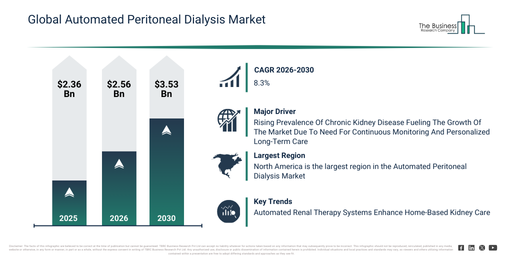
    The automated peritoneal dialysis market size has shown robust growth over recent years. It is anticipated to expand from $2.36 billion in 2025 to $2.56 billion in 2026, exhibiting a compound annual growth rate (CAGR) of 8.7%. The market’s historical expansion can be attributed to the increasing prevalence of chronic kidney disease, a rising demand for home-based dialysis options, greater adoption of automated peritoneal dialysis, an aging population more prone to renal complications, and improved patient awareness and education concerning APD.

    The automated peritoneal dialysis market size is anticipated to experience substantial growth in the upcoming years, with projections indicating it will reach $3.53 billion in 2030, expanding at a compound annual growth rate (CAGR) of 8.3%. This growth during the forecast period can be attributed to an increased focus on patient-centric care, the rising adoption of hybrid and portable APD systems, growing investments in research and development, the expansion of home dialysis programs in emerging markets, and increasing healthcare expenditure along with enhanced reimbursement support. Key trends anticipated in this period include advancements in automated cycler technology, the integration of technology with telehealth and remote monitoring, innovations in disposable sets and consumables, continued research and development in biocompatible PD solutions, and the incorporation of data analytics and AI-based treatment optimization.

    Access Your Free Sample Report for In-Depth Market Insights:

    https://www.thebusinessresearchcompany.com/sample.aspx?id=30528&type=smp

    What Drivers Are Shaping Future Opportunities In The Automated Peritoneal Dialysis Market?

    The increasing occurrence of chronic kidney disease is anticipated to fuel the expansion of the automated peritoneal dialysis market in the future. Chronic kidney disease (CKD) is defined as an enduring ailment where the kidneys fail to function optimally, resulting in the buildup of waste products and liquids within the body. This increase in CKD prevalence is primarily attributed to a rise in diabetes and high blood pressure cases, conditions that progressively harm kidney blood vessels and diminish the organs’ capacity to effectively filter waste. Automated peritoneal dialysis (APD) aids in managing chronic kidney disease by providing accurate, pre-set dialysis treatments with very little human involvement, frequently while the patient sleeps. APD enhances patient results by ensuring consistent treatment, lessening the strain on caregivers, and promoting an improved quality of life via adaptable home care solutions. For example, data from June 2023, provided by Kidney Research UK, a non-profit organization situated in the United Kingdom, indicated that around 7.2 million individuals in the United Kingdom suffered from chronic kidney disease, accounting for more than 10% of the population. Of these, 3.25 million were in advanced stages and 3.9 million were in early stages, with projections showing the total number of affected people increasing to 7.61 million by 2033. Consequently, the growing prevalence of chronic kidney disease is propelling the expansion of the automated peritoneal dialysis market.

    Which Segments Are Gaining Traction In The Automated Peritoneal Dialysis Market?

    The automated peritoneal dialysis market covered in this report is segmented –

    1) By Product Type: Cyclers, Peritoneal Dialysis Solutions, Accessories

    2) By Disease Type: End-Stage Renal Disease (ESRD), Chronic Kidney Disease (CKD)

    3) By Application: Treatment, Training And Education, Research And Development

    4) By End-User: Hospitals, Clinics, Home Care Settings

    Subsegments:

    1) By Cyclers: Home Use Cycler Devices, Portable Cycler Devices, Continuous Ambulatory Compatible Cyclers, Touchscreen Enabled Cyclers, Remote Monitoring Enabled Cyclers

    2) By Peritoneal Dialysis Solutions: Glucose Based Solutions, Icodextrin Based Solutions, Amino Acid Based Solutions, Low Glucose Degradation Solutions, Neutral Ph Balanced Solutions

    3) By Accessories: Transfer Sets, Catheter Sets, Tubing And Connectors, Drain Bags, Solution Warmers

    What Upcoming Trends Are Likely To Define The Future Path Of The Automated Peritoneal Dialysis Market?

    Major companies in the automated peritoneal dialysis market are focusing on creating advanced renal therapy solutions, including automated peritoneal dialysis (APD) systems, with the goal of improving patient outcomes, reducing the workload on caregivers, and supporting kidney care at home. An automated peritoneal dialysis system is a device that conducts dialysis exchanges automatically, typically overnight, by regulating fluid inflow and outflow based on programmed treatment prescriptions, thereby offering greater convenience, safety, and adherence when compared to manual dialysis. For instance, in May 2025, By Onyks Inc., a US-based medical device company, obtained FDA 510(k) clearance for its X1 automated peritoneal dialysis (APD) cycler, which is engineered to transform chronic kidney disease management. This automated peritoneal dialysis system combines user-friendly automation with precise control over dwell times, fluid volumes, and treatment cycles to facilitate individualized therapy plans while minimizing patient and caregiver effort. The introduction of this system highlights the growing adoption of connected, automated dialysis technologies that enable efficient treatment delivery in both clinical settings and at home.

    Who Are The Core Companies Influencing Trends In The Automated Peritoneal Dialysis Market?

    Major companies operating in the automated peritoneal dialysis market are Fresenius Medical Care, Asahi Kasei Medical Co. Ltd., Toray Industries, Baxter International, DaVita Inc., Terumo Corporation, Diaverum AB, WEGO Blood Purification, Satellite Healthcare, JMS Co. Ltd., Zhejiang Tiancheng Medical Technology Co. Ltd, Kawasumi Laboratories Inc., Weigao Group, Mitra Industries Pvt. Ltd., Infomed Fluids S.r.l., Debiotech, Medionics International Inc, Renax Biomedical Tech Co. Ltd., Shenzhen Shenkang Medtech Co. Ltd., Newsol Technologies Inc., Shenzhen Landwind Industry Co. Ltd

    Access The Complete Report For Deeper Market Insights:

    https://www.thebusinessresearchcompany.com/report/automated-peritoneal-dialysis-market-report

    Which Regions Are Projected To Dominate The Automated Peritoneal Dialysis Market In The Coming Years?

    North America was the largest region in the automated peritoneal dialysis market in 2025. Asia-Pacific is expected to be the fastest-growing region in the forecast period. The regions covered in the automated peritoneal dialysis market report are Asia-Pacific, South East Asia, Western Europe, Eastern Europe, North America, South America, Middle East, Africa.

    Request Your Customized Automated Peritoneal Dialysis Market Research Report for Competitive Advantage:

    https://www.thebusinessresearchcompany.com/customise?id=30528&type=smp

    Browse Through More Reports Similar to the Global Automated Peritoneal Dialysis Market 2026, By The Business Research Company

    Hemodialysis And Peritoneal Dialysis Market Report 2026

    https://www.thebusinessresearchcompany.com/report/hemodialysis-and-peritoneal-dialysis-global-market-report

    Kidney Dialysis Market Report 2026

    https://www.thebusinessresearchcompany.com/report/kidney-dialysis-global-market-report

    hemodialysis global market report

    https://www.thebusinessresearchcompany.com/report/hemodialysis-global-market-report

    Get in touch with us:

    The Business Research Company: https://www.thebusinessresearchcompany.com/

    Americas +1 310-496-7795

    Asia +44 7882 955267 & +91 8897263534

    Europe +44 7882 955267

    Email us at marketing@tbrc.info

    Follow us on:

    LinkedIn: https://in.linkedin.com/company/the-business-research-company

    YouTube: https://www.youtube.com/channel/UC24_fI0rV8cR5DxlCpgmyFQ

    Global Market Model: https://www.thebusinessresearchcompany.com/global-market-model