Category: Medical Equipment

  • In Situ Hybridization Market Forecast 2026–2030 Highlighting Expansion Across Industries

    In Situ Hybridization Market Forecast 2026–2030 Highlighting Expansion Across Industries

    The Business Research Company’s 2026 market reports feature enhanced tools like market attractiveness analysis, TAM assessment, and company scoring matrices, along with interactive dashboards, deeper supply chain insights, and startup coverage strengthening the depth, usability, and strategic value of insights.

    By 2030, What Market Size Is The In Situ Hybridization Market Expected To Reach Based On Its 2026 Value?

    The in situ hybridization market size has experienced rapid growth in recent years. It is forecast to expand from $1.81 billion in 2025 to $2.01 billion in 2026, demonstrating a compound annual growth rate (CAGR) of 10.8%. The historical increase can be attributed to the broadening of molecular pathology research, a rising demand for cancer diagnostics, the expansion of cytogenetic testing applications, the availability of advanced laboratory infrastructure, and the increasing adoption of FISH techniques.

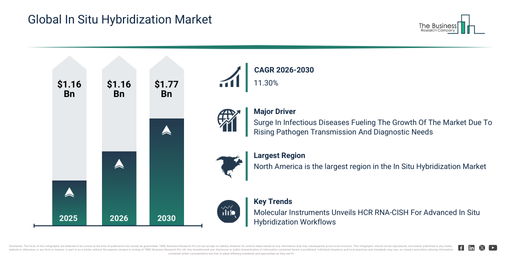
    The in situ hybridization market is projected to undergo significant expansion in the upcoming years, with its valuation expected to reach $3.08 billion by 2030, reflecting an impressive compound annual growth rate (CAGR) of 11.3%. This anticipated growth throughout the forecast period is primarily driven by factors such as the increasing demand for personalized medicine diagnostics, the rising integration of AI-based image analysis, the expansion of companion diagnostics applications, growing investments in genomic research, and the increasing use of in situ hybridization in infectious disease detection. Key trends during this period are expected to include the increasing adoption of fluorescence-based hybridization techniques, a rising demand for molecular diagnostic accuracy, the growing use of automated imaging and analysis systems, the expansion of cancer diagnostic applications, and enhanced integration of digital pathology tools.

    Access Your Free Sample Report For In-Depth Market Analysis:

    https://www.thebusinessresearchcompany.com/sample.aspx?id=24571&type=smp

    Which Key Drivers Are Affecting The In Situ Hybridization Market Development?

    The in-situ hybridization market is anticipated to expand moving forward, primarily fueled by the growing number of infectious diseases. These diseases are defined as conditions that spread between individuals via tainted food and beverages, as well as through pathogens like viruses, bacteria, fungi, and parasites. In situ hybridization (ISH) works by utilizing labeled nucleic acid sequences, known as probes, specific to an infectious organism to detect complementary nucleic acid sequences present in tissue. Therefore, the increase in infectious diseases directly boosts the development of the in-situ hybridization market. For instance, in March 2024, the Centers for Disease Control and Prevention, a US-based government agency, reported that tuberculosis cases rose from 8,320 in 2022 to 9,615 in 2023, an increase of 1,295 cases. This ongoing rise in infectious diseases is a significant factor propelling the growth of the in-situ hybridization market.

    Which Segment Types Are Examined In The In Situ Hybridization Market Segment Study?

    The in situ hybridization market covered in this report is segmented –

    1) By Product: Analytical Instruments, Kits and Reagents, Software and Services

    2) By Technique: Fluorescence In Situ Hybridization (FISH), Chromogenic In Situ Hybridization (CISH)

    3) By Probe: Deoxyribonucleic Acid (DNA), Ribonucleic Acid (RNA)

    4) By Application: Cancer, Cytogenetics, Developmental Biology, Infectious Diseases

    5) By End Use: Research And Diagnostic Laboratories, Contract Research Organization (CROs), Academic Institutes

    Subsegments:

    1) By Analytical Instruments: Fluorescence Microscopes, Imaging Systems, Hybridization Systems

    2) By Kits and Reagents: Hybridization Kits, Detection Kits, Probes And Reagents

    3) By Software and Services: Image Analysis Software, Data Management Software, Consulting And Support Services

    What Trends Are Transforming The In Situ Hybridization Market?

    Companies active in the in situ hybridization market are concentrating on inventive product offerings, including HCR RNA-CISH (Hybridization Chain Reaction RNA Chromogenic in situ Hybridization), to boost their market profitability. Hybridization chain Reaction RNA chromogenic in situ hybridization is defined as a method facilitating the visualization of RNA molecules within cells and tissues, characterized by high resolution and sensitivity. As an illustration, Molecular Instruments (MI), a biotech entity originating from the California Institute of Technology, introduced HCR RNA-CISH in February 2023. This launch aimed to improve automated chromogenic in situ hybridization (ISH) workflows that rely on RNAscope. These HCR RNA-CISH kits deliver superior performance compared to current chromogenic in situ hybridization methods, offering double the turnaround time and half the cost. Additionally, the solution includes inherent support for IHC (Immunohistochemistry) codetection and comprehensive compatibility across all leading automation platforms.

    Which Players Are Part Of The Competitive Landscape Of The In Situ Hybridization Market?

    Major companies operating in the in situ hybridization market are Thermo Fisher Scientific Inc., Bio SB Inc., BioGenex Laboratories, Advanced Cell Diagnostics Inc., Exiqon A/S, Agilent Technologies Inc., F. Hoffmann-La Roche AG, Abbott Laboratories Inc., Merck KGaA, PerkinElmer Inc., Biocare Medical LLC, Genemed Biotechnologies, Danaher Corporation, Leica Biosystems Nussloch GmbH, Bio-Rad Laboratories Inc., Oxford Gene Technology, Qiagen, Bio-Techne Corporation, Cytocell Ltd., Enzo Life Sciences Inc., Eurofins Scientific SE, Zytomed System GmbH, Akoya Biosciences Inc., Becton Dickinson and Company (BD), DAKO Systemtechnik und Service GmbH & Co, NanoString Technologies Inc., Visiopharm A/S

    Get The Full In Situ Hybridization Market Report:

    https://www.thebusinessresearchcompany.com/report/in-situ-hybridization-global-market-report

    Which Region Represents The Largest Share Of The In Situ Hybridization Market?

    North America was the largest region in the in situ hybridization market in 2025. Asia-Pacific is expected to be the fastest-growing region in the global in situ hybridization market during the forecast period. The regions covered in the in situ hybridization market report are Asia-Pacific, South East Asia, Western Europe, Eastern Europe, North America, South America, Middle East, Africa.

    Request A Customized In Situ Hybridization Market Report For Competitive Insights:

    https://www.thebusinessresearchcompany.com/customise?id=24571&type=smp

    Browse Through More Reports Similar to the Global In Situ Hybridization Market 2026, By The Business Research Company

    Hybrid Seeds Market Report 2026

    https://www.thebusinessresearchcompany.com/report/hybrid-seeds-global-market-report

    Biocomposites Market Report 2026

    https://www.thebusinessresearchcompany.com/report/biocomposites-global-market-report

    Hybrid Cloud Market Report 2026

    https://www.thebusinessresearchcompany.com/report/hybrid-cloud-global-market-report

    Get in touch with us:

    The Business Research Company: https://www.thebusinessresearchcompany.com/

    Americas +1 310-496-7795

    Asia +44 7882 955267 & +91 8897263534

    Europe +44 7882 955267

    Email us at info@tbrc.info

    Follow us on:

    LinkedIn: https://in.linkedin.com/company/the-business-research-company

    YouTube: https://www.youtube.com/channel/UC24_fI0rV8cR5DxlCpgmyFQ

    Global Market Model: https://www.thebusinessresearchcompany.com/global-market-model

  • Global In Flight Telemedicine System Market Analysis For 2026–2030 With Strategic Insights

    Global In Flight Telemedicine System Market Analysis For 2026–2030 With Strategic Insights

    The Business Research Company’s 2026 market reports feature enhanced tools like market attractiveness analysis, TAM assessment, and company scoring matrices, along with interactive dashboards, deeper supply chain insights, and startup coverage strengthening the depth, usability, and strategic value of insights.

    What Is The Anticipated Rise In Market Value Of The In Flight Telemedicine System Market During The Forecast Period?

    The in flight telemedicine system market size has experienced rapid expansion in recent years. This market is projected to expand from $1.71 billion in 2025 to reach $1.99 billion in 2026, demonstrating a compound annual growth rate (CAGR) of 16.4%. Factors contributing to this historical growth include an increase in long-haul air travel, a rise in the occurrence of in-flight medical emergencies, the widespread availability of satellite communication technologies, the early uptake of telemedicine platforms, and an increasing emphasis by airlines on passenger safety.

    The in flight telemedicine system market size is projected to experience substantial expansion in the coming years. This market is anticipated to reach a valuation of $3.62 billion by 2030, demonstrating a compound annual growth rate (CAGR) of 16.1%. This growth during the projected period can be attributed to several factors, including greater financial commitment to connected aircraft systems, a rising need for remote medical care options, broader implementation of telemedicine rules within the aviation sector, the increasing deployment of AI-powered diagnostic instruments, and enhanced partnerships between airlines and medical service providers. Key developments anticipated during this timeframe involve a wider embrace of real-time in-flight medical consultation platforms, the expanding incorporation of wearable health trackers, the advancement of satellite-driven medical communication capabilities, an escalating need for urgent medical assistance during air travel, and a heightened emphasis on safeguarding data and patient confidentiality.

    Access Your Free Sample Report For In-Depth Market Analysis:

    https://www.thebusinessresearchcompany.com/sample.aspx?id=24248&type=smp

    What Factors Are Contributing To The Growth Of The In Flight Telemedicine System Market?

    The future expansion of the in-flight telemedicine system market is anticipated to be driven by a rising count of air travelers. These travelers are people utilizing air transport to reach either domestic or global destinations for reasons like business, recreation, or transfers. The population of air travelers is expanding because ongoing economic prosperity and greater disposable incomes allow more individuals to afford flying, transforming air travel from an exclusive luxury into a readily available method of transport for both professional and recreational use. For air travelers, an in-flight telemedicine system proves extremely beneficial, facilitating immediate medical support during flights by linking the onboard crew with healthcare experts on the ground. To illustrate, in December 2024, Eurostat, a Luxembourg-based government agency, reported that air travel within the EU totaled 973 million passengers in 2023, representing a 19.3% rise from the 816 million observed in 2022. Consequently, the growing population of air travelers is a key factor propelling the expansion of the in-flight telemedicine system market.

    How Are Different Segments Classified In The In Flight Telemedicine System Market Segment Analysis?

    The in flight telemedicine system market covered in this report is segmented –

    1) By Component: Hardware, Software, Services

    2) By Technology: Video Conferencing Systems, Mobile Health Applications, Wearable Medical Devices, Mobile Telemedicine Kits, Integrated Ground Support Systems

    3) By Patient Demographics: Pediatric Patients, Adult Patients, Geriatric Patients, Patients With Chronic Illnesses, Patients Needing Psychiatric Services

    4) By Application: Routine Check-Ups, Emergency Medical Services, Chronic Disease Management, Health Education And Promotion, Medication Management Services

    5) By End-User: Airlines, Aerospace Health Services, Private Aviation Companies, Government Agencies, Insurance Providers

    Subsegments:

    1) By Hardware: Satellite Communication Systems, Onboard Medical Devices, Camera And Video Systems, In-Flight Connectivity Equipment, Display And Interface Units

    2) By Software: Telemedicine Platform Software, Real-Time Health Monitoring Applications, Data Encryption And Cybersecurity Software, Electronic Health Records (EHR) Integration Tools, Diagnostic Decision-Support Systems

    3) By Services: Installation And Integration Services, Training And Education Services, Maintenance And Support Services, Remote Monitoring Services, Data Analytics And Reporting Services

    What Trends Are Shaping The Future Of The In Flight Telemedicine System Market?

    Leading companies within the in-flight telemedicine system market are concentrating on developing innovative solutions, such as in-flight diagnostic platforms, to provide enhanced real-time medical assistance for passengers and improve health outcomes during emergencies at high altitudes. In-flight diagnostic platforms are defined as onboard medical systems that facilitate real-time monitoring and remote diagnosis of passengers’ health conditions throughout a flight. For instance, in April 2025, Aircare International, a US-based aviation company, launched the Aircare Emergency Diagnostic Platform (AEDP), an advanced in-flight telemedicine solution specifically for business aviation. This tablet-centric system employs wireless sensors to transmit live patient data and encrypted video to board-certified physicians located on the ground, enabling immediate remote medical intervention during critical situations. By integrating with Aircare’s 24/7 global telemedicine services, the AEDP significantly boosts in-flight safety and emergency medical care for both passengers and crew.

    Who Are The Companies Driving Activity In The In Flight Telemedicine System Market?

    Major companies operating in the in flight telemedicine system market are Airbus Group, Honeywell International Inc., Thales S.A., International SOS Pte Ltd, Viasat Inc., Sierra Nevada Corporation, Inmarsat Group Limited, Gogo Business Aviation LLC, American Well Corporation, MedAire Inc., Air Care International Ltd, MD Onboard, Blue Sky Network LLC, Brotecs Technologies Ltd, Parsys Telemedecine SAS, SnapMD Inc., MIME Technologies Limited, Philips Healthcare (Telehealth Solutions), GE HealthCare Digital, Siemens Healthineers Digital Health, SITAONAIR, Panasonic Avionics Corporation

    Get The Full In Flight Telemedicine System Market Report:

    https://www.thebusinessresearchcompany.com/report/in-flight-telemedicine-system-global-market-report

    Which Geographic Region Dominates The In Flight Telemedicine System Market?

    North America was the largest region in the in-flight telemedicine system market in 2025. Asia-Pacific is expected to be the fastest-growing region in the forecast period. The regions covered in the in flight telemedicine system market report are Asia-Pacific, South East Asia, Western Europe, Eastern Europe, North America, South America, Middle East, Africa.

    Request A Customized In Flight Telemedicine System Market Report For Competitive Insights:

    https://www.thebusinessresearchcompany.com/customise?id=24248&type=smp

    Browse Through More Reports Similar to the Global In Flight Telemedicine System Market 2026, By The Business Research Company

    Telemedicine Services Market 2026

    https://www.thebusinessresearchcompany.com/report/telemedicine-services-market

    Telemedicine Equipment Market Report 2026

    https://www.thebusinessresearchcompany.com/report/telemedicine-equipment-global-market-report

    Aerospace And Defense Telemetry Market Report 2026

    https://www.thebusinessresearchcompany.com/report/aerospace-and-defense-telemetry-global-market-report

    Get in touch with us:

    The Business Research Company: https://www.thebusinessresearchcompany.com/

    Americas +1 310-496-7795

    Asia +44 7882 955267 & +91 8897263534

    Europe +44 7882 955267

    Email us at info@tbrc.info

    Follow us on:

    LinkedIn: https://in.linkedin.com/company/the-business-research-company

    YouTube: https://www.youtube.com/channel/UC24_fI0rV8cR5DxlCpgmyFQ

    Global Market Model: https://www.thebusinessresearchcompany.com/global-market-model
  • Implantable Remote Patient Monitoring Devices Market Outlook 2026–2030 Driven By Growth Factors And Projections

    Implantable Remote Patient Monitoring Devices Market Outlook 2026–2030 Driven By Growth Factors And Projections

    The Business Research Company’s 2026 market reports feature enhanced tools like market attractiveness analysis, TAM assessment, and company scoring matrices, along with interactive dashboards, deeper supply chain insights, and startup coverage strengthening the depth, usability, and strategic value of insights.

    How Is The Market Size Of The Implantable Remote Patient Monitoring Devices Market Expected To Scale Between 2026 And 2030?

    The implantable remote patient monitoring devices market has experienced significant growth in recent years. This market is projected to expand from $10.26 billion in 2025 to $12.51 billion in 2026, exhibiting a compound annual growth rate (CAGR) of 21.9%. Historically, the market’s development was characterized by factors including limited awareness of remote monitoring benefits, a dependence on conventional in-hospital monitoring, the slow adoption of implantable devices, restricted wireless connectivity, and the high cost of early monitoring devices.

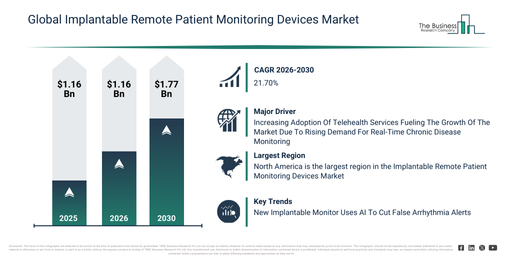
    The implantable remote patient monitoring devices market is projected to experience rapid expansion over the coming years. It is anticipated to reach $27.48 billion by 2030, demonstrating a compound annual growth rate (CAGR) of 21.7%. This growth during the projected period can be attributed to several factors, including technological advancements in implantable sensors, the growing prevalence of chronic diseases, their integration with telemedicine platforms, an expanding elderly population, and supportive government reimbursement policies. Key trends anticipated in the forecast period encompass the increasing adoption of continuous glucose monitoring devices, the expansion of implantable cardiac monitoring systems, the growing utilization of smart weight monitoring devices, the broader deployment of remote home care monitoring solutions, and a heightened emphasis on real-time data transmission and ensuring patient safety.

    Access Your Free Sample Report For In-Depth Market Analysis:

    https://www.thebusinessresearchcompany.com/sample.aspx?id=27316&type=smp

    Which Strong Drivers Are Impacting The Implantable Remote Patient Monitoring Devices Market Growth?

    The expanding use of telehealth services is anticipated to fuel the expansion of the implantable remote patient monitoring devices market in the future. These services involve delivering healthcare remotely via phones, video calls, or applications, enabling patients to consult medical professionals without physical clinic or hospital visits. The rising uptake of telehealth is driven by an increasing need for ongoing, real-time health monitoring for individuals with chronic illnesses, facilitating prompt medical actions without numerous hospital trips. Telehealth significantly improves implantable remote patient monitoring devices by facilitating immediate data exchange between patients and healthcare providers, thereby aiding swift medical decisions and lessening the necessity for physical appointments. They enhance the management of chronic diseases through continuous oversight and early intervention, boosting healthcare efficiency and patient convenience. For example, FAIR Health Inc., a US-based non-profit organization, reported in April 2023 that national telehealth utilization grew by 7.3% in 2023, moving from 5.5% of medical claim lines in December 2022 to 5.9% in January 2023. Consequently, the increasing embrace of telehealth services is propelling the expansion of the implantable remote patient monitoring devices market.

    How Is The Implantable Remote Patient Monitoring Devices Market Categorized Across Its Segment Groups?

    The implantable remote patient monitoring devices market covered in this report is segmented –

    1) By Device Type: Implantable Glucose Monitoring Devices, Implantable Cardiac Monitoring Devices, Implantable Multiparameter And Specialty Monitors

    2) By Technology: Continuous Glucose Monitoring (Cgm), Implantable Loop Recorders, Implantable Respiratory Monitors, Implantable Temperature Monitors, Implantable Neuromonitoring Devices, Implantable Multiparameter Monitors

    3) By Patient Age Group: Adults (Aged 18-64), Seniors (Aged 65 And Above), Pediatric Patients (Aged 0-17), Middle-Aged Adults (Aged 45-64)

    4) By Distribution Channel: Direct Sales, Online Sales, Health Care Institutions, Ambulatory Surgery Centers

    5) By End User: Hospitals, Home Care Settings, Ambulatory Surgery Centers, Other End Users

    Subsegments:

    1) By Implantable Glucose Monitoring Devices: Continuous Glucose Monitoring (Cgm) Devices, Long-Term Implantable Cgm Devices

    2) By Implantable Cardiac Monitoring Devices: Implantable Loop Recorders, Implantable Cardiac Telemetry Devices

    3) By Implantable Multiparameter And Specialty Monitors: Implantable Respiratory Monitoring Devices, Implantable Temperature Monitoring Devices, Implantable Neuromonitoring Devices, Implantable Multiparameter Monitors

    Which Trends Are Contributing To Changes In The Implantable Remote Patient Monitoring Devices Market?

    Major companies operating in the implantable remote patient monitoring devices market are focusing on developing advanced products, such as implantable cardiac monitors, to enhance targeting efficiency in monitoring for cardiac arrhythmias. An implantable cardiac monitor (ICM), also known as an implantable loop recorder (ILR), is a small device implanted just beneath the skin, typically on the left side of the chest, to continuously monitor and record the heart’s electrical activity over an extended period. For instance, in June 2023, Biotronik AG, a Switzerland-based medical technology company, launched BIOMONITOR IV implantable cardiac monitor. It is a state-of-the-art ICM that pairs BIOTRONIK’s SmartECG technology with artificial intelligence to reduce all false positive detections by 86% while preserving 98% of true episodes. This monitor is also capable of distinguishing between premature atrial contractions (PACs) and premature ventricular contractions (PVCs) to provide healthcare professionals with better tools for risk stratification and diagnosis.

    Which Firms Are Influencing Competition In The Implantable Remote Patient Monitoring Devices Market?

    Major companies operating in the implantable remote patient monitoring devices market are Abbott Laboratories, Medtronic plc, Boston Scientific Corporation, Dexcom Inc., LivaNova PLC, MicroPort Scientific Corporation, NeuroPace Inc., Profusa Inc., Senseonics Holdings Inc., Xeltis AG, GlySens Inc., Biotronik SE & Co KG, Impulse Dynamics NV, CVRx Inc., Vectorious Medical Technologies, EBR Systems Inc., Axonics Modulation Technologies Inc., Synchron Inc., Neuralink Corp, Orchestra BioMed Holdings Inc., Second Sight Medical Products Inc.

    Get The Full Implantable Remote Patient Monitoring Devices Market Report:

    https://www.thebusinessresearchcompany.com/report/implantable-remote-patient-monitoring-devices-global-market-report

    Which Region Is The Leading Market For The Implantable Remote Patient Monitoring Devices Market?

    North America was the largest region in the implantable remote patient monitoring devices market in 2025. The regions covered in the implantable remote patient monitoring devices market report are Asia-Pacific, South East Asia, Western Europe, Eastern Europe, North America, South America, Middle East, Africa.

    Request A Customized Implantable Remote Patient Monitoring Devices Market Report For Competitive Insights:

    https://www.thebusinessresearchcompany.com/customise?id=27316&type=smp

    Browse Through More Reports Similar to the Global Implantable Remote Patient Monitoring Devices Market 2026, By The Business Research Company

    Motor Insurance Market Report 2026

    https://www.thebusinessresearchcompany.com/report/motor-insurance-global-market-report

    Car Insurance Aggregators Market Report 2026

    https://www.thebusinessresearchcompany.com/report/car-insurance-aggregators-global-market-report

    Automobile Insurance Carriers Market Report 2026

    https://www.thebusinessresearchcompany.com/report/automobile-insurance-carriers-global-market-report

    Get in touch with us:

    The Business Research Company: https://www.thebusinessresearchcompany.com/

    Americas +1 310-496-7795

    Asia +44 7882 955267 & +91 8897263534

    Europe +44 7882 955267

    Email us at info@tbrc.info

    Follow us on:

    LinkedIn: https://in.linkedin.com/company/the-business-research-company

    YouTube: https://www.youtube.com/channel/UC24_fI0rV8cR5DxlCpgmyFQ

    Global Market Model: https://www.thebusinessresearchcompany.com/global-market-model
  • Implantable Pulse Generator Market Developments And Opportunities Across 2026–2030

    Implantable Pulse Generator Market Developments And Opportunities Across 2026–2030

    The Business Research Company’s 2026 market reports feature enhanced tools like market attractiveness analysis, TAM assessment, and company scoring matrices, along with interactive dashboards, deeper supply chain insights, and startup coverage strengthening the depth, usability, and strategic value of insights.

    What Level Of Market Value Growth Is Predicted For The Implantable Pulse Generator Market From 2026 To 2030?

    The implantable pulse generator market size has seen rapid expansion in recent years. It is projected to expand from $147.01 billion in 2025 to $162.9 billion in 2026, at a compound annual growth rate (CAGR) of 10.8%. The historical growth can be primarily linked to several factors, including the increasing prevalence of chronic pain conditions, the rising incidence of cardiovascular diseases, the growing adoption of implantable medical devices, the expansion of hospital-based surgical procedures, and an elevated awareness of neuromodulation therapies.

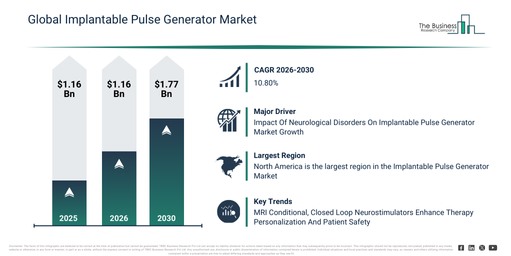
    The implantable pulse generator market is poised for rapid growth over the next few years, with its size projected to reach $245.56 billion in 2030, demonstrating a compound annual growth rate (CAGR) of 10.8%. This expansion during the forecast period is driven by factors such as the increasing demand for minimally invasive treatments, a growing aging population, the rising prevalence of neurological disorders, expanding access to advanced implantable therapies, and a heightened focus on long-term disease management. Key trends expected in the coming years include the growing adoption of neuromodulation therapies, increased utilization of implantable pulse generators for chronic pain management, a rising preference for rechargeable implantable pulse generators, the broadening of implantable pulse generator applications in movement disorders, and a growing demand for long-term implantable stimulation devices.

    Access Your Free Sample Report For In-Depth Market Analysis:

    https://www.thebusinessresearchcompany.com/sample.aspx?id=18639&type=smp

    What Key Factors Are Shaping The Implantable Pulse Generator Market Landscape?

    The expanding prevalence of neurological conditions is projected to drive the expansion of the implantable pulse generator market in the future. These disorders encompass conditions that impact the brain, spinal cord, and nervous system, thereby affecting vital functions including movement, sensation, and cognitive abilities. The increasing occurrence of neurological disorders is frequently linked to factors like an aging demographic, shifts in lifestyle, environmental factors, and enhancements in diagnostic methods. Implantable pulse generators offer assistance for neurological disorders by delivering focused electrical impulses to regulate irregular neural activity and ease associated symptoms. As an illustration, in October 2023, the World Federation of Neurology, a UK-based non-profit organization, reported that over 40% of the worldwide population is presently affected by a neurological condition, with this burden anticipated to nearly double in subsequent years. Consequently, the growing incidence of neurological disorders is fueling the expansion of the implantable pulse generator market.

    How Are Segments Identified Within The Implantable Pulse Generator Market Segment Framework?

    The implantable pulse generator market covered in this report is segmented –

    1) By Product Type: Functional Electrical Stimulation (FES) Devices for Motor Function Restoration, Spinal Cord Stimulation (SCS) Devices, Deep Brain Stimulation (DBS) Devices, Vagus Nerve Stimulation (VNS) Devices, Sacral Nerve Stimulation (SNS) Devices

    2) By Charging Type: Rechargeable, Non-Rechargeable

    3) By Application: Movement Disorders, Chronic Pain Management, Neurological Disorders, Other Applications

    4) By End User: Hospitals, Ambulatory Surgical Centers, Clinics, Home Care and Remote Monitoring Settings

    Subsegments:

    1) By Functional Electrical Stimulation (FES) Devices: For Motor Function Restoration, For Muscle Strengthening, For Rehabilitation Post-Stroke or Injury

    2) By Spinal Cord Stimulation (SCS) Devices: Conventional SCS Systems, High-Frequency SCS Systems, Burst SCS Systems

    3) By Deep Brain Stimulation (DBS) Devices: Parkinson’s Disease DBS Systems, Essential Tremor DBS Systems, Dystonia DBS Systems, Other Neurological Disorder DBS Systems

    4) By Vagus Nerve Stimulation (VNS) Devices: Epilepsy Treatment VNS Devices, Depression Treatment VNS Devices

    5) By Sacral Nerve Stimulation (SNS) Devices: Urinary Incontinence SNS Devices, Fecal Incontinence SNS Devices, Other Pelvic Floor Disorder SNS Devices

    What Market Trends Are Affecting The Implantable Pulse Generator Market?

    Leading firms within the implantable pulse generator (IPG) market are strategically focusing on MRI-conditional neurostimulators, including sensing-enabled rechargeable IPGs, to enhance their competitive standing. As an illustration, during April 2024, Medtronic, a US-based healthcare company, secured FDA approval for its Inceptiv closed-loop spinal cord stimulator. This device continuously monitors evoked compound action potentials (ECAPs) 50 times per second to dynamically modify stimulation and is compatible with full-body 1.5 T and 3 T MRI scans. Likewise, in January 2024, Medtronic unveiled the Percept RC rechargeable deep brain stimulation neurostimulator. It incorporates BrainSense sensing technology, boasts a 15-year battery life, and supports full-body MRI at 1.5 T and 3 T while therapy remains active. Such innovations improve the customization of therapy and patient safety, even if they potentially incur greater development and device expenditures.

    Who Are The Companies Competing Within The Implantable Pulse Generator Market?

    Major companies operating in the implantable pulse generator market are Abbott Laboratories, Boston Scientific Corporation, Medtronic PLC, Nevro Corp, LivaNova PLC, NeuroPace Inc, NeuroSigma Inc, Saluda Medical Pty Ltd, Synapse Biomedical Inc, Nuvectra Medical Inc, MainStay Medical International PLC, Aleva Neurotherapeutics SA, Bioness Inc, EnteroMedics Inc, Neuronetics Inc, Axonics Inc, Sceneray Co Ltd, Cirtec Medical, BlueWind Medical, Syntach AB, Osaka Medical Devices, Gimer Medical, Saluda Medical

    Get The Full Implantable Pulse Generator Market Report:

    https://www.thebusinessresearchcompany.com/report/implantable-pulse-generator-global-market-report

    Where Is The Implantable Pulse Generator Market Primarily Concentrated By Region?

    North America was the largest region in the implantable pulse generator market in 2025. The regions covered in the implantable pulse generator market report are Asia-Pacific, South East Asia, Western Europe, Eastern Europe, North America, South America, Middle East, Africa.

    Request A Customized Implantable Pulse Generator Market Report For Competitive Insights:

    https://www.thebusinessresearchcompany.com/customise?id=18639&type=smp

    Browse Through More Reports Similar to the Global Implantable Pulse Generator Market 2026, By The Business Research Company

    Implantable Heart Pacemaker Market Report 2026

    https://www.thebusinessresearchcompany.com/report/implantable-heart-pacemaker-global-market-report

    Implantable Cardiac Rhythm Management Device Market Report 2026

    https://www.thebusinessresearchcompany.com/report/implantable-cardiac-rhythm-management-device-global-market-report

    Cardiovascular Implants Market Report 2026

    https://www.thebusinessresearchcompany.com/report/cardiovascular-implants-global-market-report

    Get in touch with us:

    The Business Research Company: https://www.thebusinessresearchcompany.com/

    Americas +1 310-496-7795

    Asia +44 7882 955267 & +91 8897263534

    Europe +44 7882 955267

    Email us at info@tbrc.info

    Follow us on:

    LinkedIn: https://in.linkedin.com/company/the-business-research-company

    YouTube: https://www.youtube.com/channel/UC24_fI0rV8cR5DxlCpgmyFQ

    Global Market Model: https://www.thebusinessresearchcompany.com/global-market-model

  • Implantable Neurostimulators Market Forecast 2026–2030 Presenting Long-Term Industry Insights

    Implantable Neurostimulators Market Forecast 2026–2030 Presenting Long-Term Industry Insights

    The Business Research Company’s 2026 market reports feature enhanced tools like market attractiveness analysis, TAM assessment, and company scoring matrices, along with interactive dashboards, deeper supply chain insights, and startup coverage strengthening the depth, usability, and strategic value of insights.

    How Will The Market Value Of The Implantable Neurostimulators Market Progress Between 2026 And 2030?

    The implantable neurostimulators market size has experienced rapid expansion in recent years. It is forecast to grow from $6.76 billion in 2025 to $7.52 billion in 2026, demonstrating a compound annual growth rate (CAGR) of 11.4%. Several factors have contributed to this growth in the historic period, including the increasing prevalence of chronic pain disorders, the early adoption of spinal cord stimulation therapies, the limited availability of alternatives to pharmacological pain management, rising neurological disorder diagnosis rates, and the growth in hospital-based neurosurgical procedures.

    The implantable neurostimulators market is projected for significant expansion in the coming years, reaching a valuation of $11.44 billion by 2030, exhibiting a compound annual growth rate (CAGR) of 11.0%. This anticipated growth during the forecast period is due to factors such as ongoing progress in neurostimulation technology, broader applications for conditions like Parkinson’s disease and epilepsy, an increasing elderly demographic suffering from neurological ailments, stronger clinical backing for neuromodulation, and better access to healthcare and reimbursement policies. Key developments expected in this period encompass a rise in the use of implantable neurostimulators for managing chronic pain, a greater inclination towards rechargeable neurostimulation units, an increasing need for less invasive neuromodulation treatments, the extension of their use beyond just pain and movement disorders, and a heightened emphasis on device durability and patient comfort.

    Access Your Free Sample Report For In-Depth Market Analysis:

    https://www.thebusinessresearchcompany.com/sample.aspx?id=20566&type=smp

    Which Factors Are Influencing The Growth Of The Implantable Neurostimulators Market?

    The growing incidence of neurological disorders is anticipated to fuel the expansion of the implantable neurostimulators market in the future. These conditions impact the nervous system, encompassing the brain and spinal cord, thereby affecting functions like movement and cognitive abilities. The surge in neurological disorders primarily stems from an aging demographic, as extended lifespans elevate susceptibility to ailments such as Alzheimer’s and Parkinson’s. Neurostimulators are devices surgically placed to emit electrical impulses, managing symptoms such as tremors and pain associated with conditions like epilepsy and Parkinson’s. For example, in October 2023, the World Federation of Neurology, a UK-based association of national neurological societies, reported that more than 40% of the worldwide population currently experiences some form of neurological condition, with this impact predicted to almost double by 2050. Consequently, the increasing occurrence of neurological disorders is a key driver for the growth of the implantable neurostimulators market.

    What Are The Key Segment Divisions In The Implantable Neurostimulators Market Segment Structure?

    The implantable neurostimulators market covered in this report is segmented –

    1) By Product Type: Spinal Cord Stimulators, Deep Brain Stimulators, Sacral Nerve Stimulators, Vagus Nerve Stimulators, Other Product Types

    2) By Application: Pain Management, Parkinson’s Disease, Urinary And Fecal Incontinence, Epilepsy, Gastroparesis, Other Applications

    3) By End-Use: Hospitals, Ambulatory Surgical Centers (ASCs), Other End-Uses

    Subsegments:

    1) By Spinal Cord Stimulators: Conventional Spinal Cord Stimulators, Rechargeable Spinal Cord Stimulators, Non-Rechargeable Spinal Cord Stimulators, High-Frequency Spinal Cord Stimulators

    2) By Deep Brain Stimulators: Single Lead Deep Brain Stimulators, Dual Lead Deep Brain Stimulators, Rechargeable Deep Brain Stimulators, Non-Rechargeable Deep Brain Stimulators

    3) By Sacral Nerve Stimulators: Rechargeable Sacral Nerve Stimulators, Non-Rechargeable Sacral Nerve Stimulators, Implantable Pulse Generators For Sacral Nerve Stimulation

    4) By Vagus Nerve Stimulators: Rechargeable Vagus Nerve Stimulators, Non-Rechargeable Vagus Nerve Stimulators, Vagus Nerve Stimulation Systems For Epilepsy Treatment

    5) By Other Product Types: Transcranial Magnetic Stimulation (TMS) Devices, Peripheral Nerve Stimulators, Cochlear Implants

    Which Trends Are Influencing Demand In The Implantable Neurostimulators Market?

    Leading companies in the implantable neurostimulators market are concentrating on sophisticated innovations, including advanced rechargeable systems that boost existing deep brain stimulation (DBS) solutions and facilitate more personalized care for patients with movement disorders. These contemporary devices boast extended battery life, adjustable therapy parameters, and live brain-signal detection in a compact, convenient format for patients. For instance, in December 2024, Medtronic, a US-based medical technology company, introduced its FDA-approved Percept RC neurostimulator in India to treat conditions such as Parkinson’s disease, essential tremor, dystonia, and epilepsy. The Percept RC is recognized as the most miniature and slimmest dual-channel rechargeable neurostimulator, incorporating BrainSense technology to monitor and decipher brain activity for precise, individualized therapy modifications. It offers a remarkably durable battery engineered to surpass 15 years, quick recharging, full-body MRI compatibility under specific guidelines, and is prepared for software updates to enable future advancements, consequently allowing for more data-driven and flexible deep brain stimulation therapy.

    Which Organizations Are Engaged In The Implantable Neurostimulators Market?

    Major companies operating in the implantable neurostimulators market are Abbott Laboratories, Medtronic plc, Boston Scientific Corporation, LivaNova plc, Inspire Medical Systems Inc., Nevro Corporation, Axonics Inc., Cirtec Medical Systems LLC, SPR Therapeutics Inc., BlueWind Medical Ltd., NeuroPace Inc., Bioness Inc., ReShape Lifesciences Inc., Synapse Biomedical Inc., Autonomic Technologies Inc., Comphya SA, Mainstay Medical Holdings plc, Sigenics Inc., Nalu Medical Inc., Aleva Neurotherapeutics SA, Nuvectra Corporation

    Get The Full Implantable Neurostimulators Market Report:

    https://www.thebusinessresearchcompany.com/report/implantable-neurostimulators-global-market-report

    Which Region Has The Greatest Market Share In The Implantable Neurostimulators Market?

    North America was the largest region in the implantable neurostimulators market in 2025. Asia-Pacific is expected to be the fastest-growing region in the forecast period. The regions covered in the implantable neurostimulators market report are Asia-Pacific, South East Asia, Western Europe, Eastern Europe, North America, South America, Middle East, Africa.

    Request A Customized Implantable Neurostimulators Market Report For Competitive Insights:

    https://www.thebusinessresearchcompany.com/customise?id=20566&type=smp

    Browse Through More Reports Similar to the Global Implantable Neurostimulators Market 2026, By The Business Research Company

    Pediatric Neurology Device Market Report 2026

    https://www.thebusinessresearchcompany.com/report/pediatric-neurology-device-global-market-report

    Neurology Devices Market Report 2026

    https://www.thebusinessresearchcompany.com/report/neurology-devices-global-market-report

    Interventional Neurology Devices And Equipment Market Report 2026

    https://www.thebusinessresearchcompany.com/report/interventional-neurology-devices-and-equipment-global-market-report

    Get in touch with us:

    The Business Research Company: https://www.thebusinessresearchcompany.com/

    Americas +1 310-496-7795

    Asia +44 7882 955267 & +91 8897263534

    Europe +44 7882 955267

    Email us at info@tbrc.info

    Follow us on:

    LinkedIn: https://in.linkedin.com/company/the-business-research-company

    YouTube: https://www.youtube.com/channel/UC24_fI0rV8cR5DxlCpgmyFQ

    Global Market Model: https://www.thebusinessresearchcompany.com/global-market-model

  • Implantable Neurostimulation Devices Market Growth Analysis 2026–2030 Highlighting Innovation And Competitive Landscape

    Implantable Neurostimulation Devices Market Growth Analysis 2026–2030 Highlighting Innovation And Competitive Landscape

    The Business Research Company’s 2026 market reports feature enhanced tools like market attractiveness analysis, TAM assessment, and company scoring matrices, along with interactive dashboards, deeper supply chain insights, and startup coverage strengthening the depth, usability, and strategic value of insights.

    What Are The Market Size Estimates For The Implantable Neurostimulation Devices Market In 2026 And 2030?

    The implantable neurostimulation devices market has experienced rapid expansion recently. This market is anticipated to expand from $5.62 billion in 2025 to $6.27 billion in 2026, achieving an 11.7% compound annual growth rate (CAGR). The historical development of this market is attributable to factors such as rising prevalence of neurological disorders, expansion of pain management treatments, adoption of implantable stimulation technologies, increasing clinical acceptance of neuromodulation, and availability of implantable electronic systems.

    The implantable neurostimulation devices market size is projected to experience swift expansion in the coming years, anticipated to reach $10.02 billion by 2030, with a compound annual growth rate (CAGR) of 12.4%. This significant growth is primarily attributed to factors such as increasing demand for non-pharmacological therapies, a rising focus on precision neuromodulation, the expansion of outpatient neurological treatments, growing investment in brain-machine interface research, and increasing innovation in stimulation algorithms. Concurrently, major trends expected during this period include the increasing deployment of advanced neurostimulation therapies, a rising adoption of rechargeable stimulation devices, the growing use of personalized neuromodulation treatments, expansion of multi-indication neurostimulation systems, and an enhanced focus on long-term therapy effectiveness.

    Access Your Free Sample Report For In-Depth Market Analysis:

    https://www.thebusinessresearchcompany.com/sample.aspx?id=19520&type=smp

    What Leading Drivers Are Supporting The Implantable Neurostimulation Devices Market Expansion?

    The increasing occurrence of neurological conditions is anticipated to propel the expansion of the implantable neurostimulation device market moving forward. A neurological disorder is defined as any ailment affecting the nervous system’s structure or function, leading to various symptoms such as paralysis, seizures, and cognitive impairments. Enhanced exposure to risk factors like high blood pressure, developmental abnormalities, trauma, or injury results in higher detection rates of neurological disorders. Implantable neurostimulation devices are utilized for neurological disorders to modulate nerve activity and alleviate symptoms when other treatments are ineffective or insufficient. For instance, in 2024, according to the Alzheimer’s Association, a US-based non-profit voluntary health organization, an estimated 6.9 million Americans aged 65 and older are living with Alzheimer’s disease, with 73% being age 75 or older. This number is projected to grow to 12.7 million by 2050. Therefore, the rising prevalence of neurological disorders will drive the implantable neurostimulation device market.

    Which Segment Categories Are Included In The Implantable Neurostimulation Devices Market Segment Analysis?

    The implantable neurostimulation devices market covered in this report is segmented –

    1) By Type: Spinal Cord Stimulation (SCS), Gastric Electric Stimulation (GES), Deep Brain Stimulation (DBS), Sacral Nerve Stimulation (SNS), Vagus Nerve Stimulation (VNS), Other Types

    2) By Application: Pain Management, Parkinson’s Disease, Urinary And Fecal Incontinence, Epilepsy, Gastroparesis, Other Applications

    3) By End-User: Hospitals, Clinics, Ambulatory Surgical Centers

    Subsegments:

    1) By Spinal Cord Stimulation (SCS): Rechargeable SCS Devices, Non-Rechargeable SCS Devices

    2) By Gastric Electric Stimulation (GES): Implantable Gastric Stimulators, Adjustable Gastric Stimulators

    3) By Deep Brain Stimulation (DBS): DBS Devices for Movement Disorders, DBS Devices for Psychiatric Disorders

    4) By Sacral Nerve Stimulation (SNS): SNS Devices for Urinary Incontinence, SNS Devices for Fecal Incontinence

    5) By Vagus Nerve Stimulation (VNS): VNS Devices for Epilepsy, VNS Devices for Depression

    6) By Other Types: Peripheral Nerve Stimulation (PNS), Cortical Stimulation Devices, Novel Neurostimulation Technologies

    What Emerging Trends Are Seen In The Implantable Neurostimulation Devices Market?

    Companies operating within the implantable neurostimulation devices market are prioritizing the development of sophisticated systems, such as rechargeable brain-sensing neurostimulators, to provide more personalized and adaptive therapy for individuals suffering from movement and neurological disorders. Rechargeable brain-sensing neurostimulators are implantable devices engineered to record real-time brain signals while simultaneously delivering targeted stimulation, empowering clinicians to adjust therapy with greater precision based on individual neural activity and long-term treatment requirements. For instance, in January 2024, Medtronic, a US-based medical device company, announced that its Percept RC neurostimulator, a rechargeable deep brain stimulation (DBS) system equipped with exclusive BrainSense technology for capturing and tracking brain signals to optimize personalized therapy, had received U.S. Food and Drug Administration (FDA) approval. This device offers an extended service life of at least 15 years, provides flexible and directional stimulation programming, and features rapid recharging capabilities, thereby offering patients a more durable and customizable treatment alternative for managing movement disorders.

    Who Are The Active Companies Shaping The Implantable Neurostimulation Devices Market?

    Major companies operating in the implantable neurostimulation devices market are Abbott Laboratories, Medtronic PLC, Boston Scientific Corporation, St. Jude Medical LLC, LivaNova PLC, Nevro Corp., Axonics Inc., NeuroPace Inc., Bioness Inc., Saluda Medical Pty Ltd., SceneRay Co. Ltd., NeuroMetrix Inc., Synapse Biomedical Inc., NeuroSigma Inc., Nuvectra Corporation, MicroTransponder Inc., Curonix LLC, Inspire Medical Systems Inc., SetPoint Medical Corporation, ElectroCore Inc.

    Get The Full Implantable Neurostimulation Devices Market Report:

    https://www.thebusinessresearchcompany.com/report/implantable-neurostimulation-devices-global-market-report

    Which Region Accounts For The Largest Portion Of The Implantable Neurostimulation Devices Market?

    North America was the largest region in the implantable neurostimulation devices market in 2025. Asia-Pacific is expected to be the fastest-growing region in the forecast period. The regions covered in the implantable neurostimulation devices market report are Asia-Pacific, South East Asia, Western Europe, Eastern Europe, North America, South America, Middle East, Africa.

    Request A Customized Implantable Neurostimulation Devices Market Report For Competitive Insights:

    https://www.thebusinessresearchcompany.com/customise?id=19520&type=smp

    Browse Through More Reports Similar to the Global Implantable Neurostimulation Devices Market 2026, By The Business Research Company

    Neurostimulation Devices Market Report 2026

    https://www.thebusinessresearchcompany.com/report/neurostimulation-devices-global-market-report

    Internal Neuromodulation Devices Market Report 2026

    https://www.thebusinessresearchcompany.com/report/internal-neuromodulation-devices-global-market-report

    Neural Implants Market Report 2026

    https://www.thebusinessresearchcompany.com/report/neural-implants-global-market-report

    Get in touch with us:

    The Business Research Company: https://www.thebusinessresearchcompany.com/

    Americas +1 310-496-7795

    Asia +44 7882 955267 & +91 8897263534

    Europe +44 7882 955267

    Email us at info@tbrc.info

    Follow us on:

    LinkedIn: https://in.linkedin.com/company/the-business-research-company

    YouTube: https://www.youtube.com/channel/UC24_fI0rV8cR5DxlCpgmyFQ

    Global Market Model: https://www.thebusinessresearchcompany.com/global-market-model

  • Implantable Medical Devices Market Forecast Through 2030 With Insights On Market Patterns And Developments

    Implantable Medical Devices Market Forecast Through 2030 With Insights On Market Patterns And Developments

    The Business Research Company’s 2026 market reports feature enhanced tools like market attractiveness analysis, TAM assessment, and company scoring matrices, along with interactive dashboards, deeper supply chain insights, and startup coverage strengthening the depth, usability, and strategic value of insights.

    What Expansion In Market Value Is Forecasted For The Implantable Medical Devices Market Between 2026 And 2030?

    The market size for implantable medical devices has seen substantial growth in recent years. It is anticipated to increase from $109.97 billion in 2025 to $117.13 billion in 2026, achieving a compound annual growth rate (CAGR) of 6.5%. Historically, this expansion has been influenced by factors such as the restricted availability of advanced implant materials, a reliance on conventional metallic and polymer implants, the increasing occurrence of cardiovascular and orthopedic disorders, a rise in surgical procedures performed in hospitals, and greater recognition of implant-based treatments.

    The implantable medical devices market is projected to experience robust expansion in the coming years. This market is set to reach $148.87 billion by 2030, exhibiting a compound annual growth rate (CAGR) of 6.2%. This expansion during the forecast period is fueled by advancements in bioresorbable and smart implant technologies, an increasing need for personalized and patient-specific implants, the proliferation of minimally invasive surgical methods, the widening use of cochlear and neural interface implants, and the incorporation of AI with digital monitoring solutions. Key trends anticipated for this period encompass a surge in the acceptance of cardiovascular and orthopedic implants, a growing preference for minimally invasive implant operations, the development of individualized and customizable implants, the broadening application of neurostimulator and drug delivery implants, and improvements in regulatory adherence and safety protocols.

    Access Your Free Sample Report For In-Depth Market Analysis:

    https://www.thebusinessresearchcompany.com/sample.aspx?id=24569&type=smp

    Which Key Factors Are Driving The Implantable Medical Devices Market Growth?

    The future expansion of the implantable medical devices market is anticipated to be driven by the rising need for minimally invasive surgical interventions. These procedures involve medical operations conducted via small cuts or access points, thereby lessening patient injury and shortening recuperation periods. The rising popularity of minimally invasive surgeries stems from their benefits, which include quicker healing, lower complication risks, less discomfort, and minimal scarring, making them highly desirable for individuals seeking faster and safer medical solutions. Implantable medical devices improve minimally invasive operations by facilitating precise treatment application and continuous observation. Such devices contribute to quicker healing, a decreased likelihood of issues, and better long-term patient results via customized and accurate interventions. As an illustration, data from November 2024, provided by the American Society of Plastic Surgeons, a US-based non-profit organization, indicated that cosmetic minimally invasive procedures totaled 25,442,640 in 2023, representing a 7% surge from 23,672,269 in 2022. Consequently, the expanding requirement for minimally invasive surgical techniques propels the development of the implantable medical devices market.

    How Is The Implantable Medical Devices Market Broken Down By Segment Categories?

    The implantable medical devices market covered in this report is segmented –

    1) By Product Type: Cardiovascular Implants, Orthopedic Implants, Ophthalmology Implants, Dental Implants, Cochlear Implants, Microchip Implants, Other Product Types

    2) By Biomaterial: Ceramic, Metallic, Polymers, Natural

    3) By End Use: Hospitals, Ambulatory Surgical Centers, Multi-Specialty Centers, Clinics, Other End Uses

    Subsegments:

    1) By Cardiovascular Implants: Pacemakers, Implantable Cardioverter Defibrillators, Stents, Heart Valves, Cardiac Resynchronization Therapy Devices

    2) By Orthopedic Implants: Hip Implants, Knee Implants, Spinal Implants, Shoulder Implants, Trauma Implants

    3) By Ophthalmology Implants: Intraocular Lenses, Glaucoma Drainage Implants, Corneal Implants, Retinal Implants

    4) By Dental Implants: Endosteal Implants, Subperiosteal Implants, Zygomatic Implants, Mini Dental Implants

    5) By Cochlear Implants: Unilateral Cochlear Implants, Bilateral Cochlear Implants

    6) By Microchip Implants: Radiofrequency Identification Implants, Biosensor Microchips, Neural Interface Microchips

    7) By Other Product Types: Neurostimulators, Contraceptive Implants, Drug Delivery Implants, Breast Implants, Penile Implants

    Which Trends Are Guiding The Direction Of The Implantable Medical Devices Market?

    Companies operating within the implantable medical devices market are concentrating on developing and securing approvals for technologically advanced products, including bioelectric medicine. This focus aims to improve treatment efficacy, minimize side effects, and provide personalized, minimally invasive therapeutic solutions. Bioelectric medicine involves utilizing electrical signals to diagnose, treat, or stimulate the body’s nervous system to enhance health and manage diseases. For example, in July 2023, Boston Scientific Corporation, a US-based biotechnology company, obtained U.S. Food and Drug Administration (FDA) approval for its Vercise Neural Navigator 5 Software. When integrated into Vercise Genus deep brain stimulation (DBS) systems, this software furnishes clinicians with uncomplicated and actionable data for efficient programming in addressing Parkinson’s disease or essential tremor. It offers increased flexibility in programming, enabling customized treatment plans that can adapt to each patient’s distinct symptoms and needs.

    Which Players Are Present In The Implantable Medical Devices Market Space?

    Major companies operating in the implantable medical devices market are Johnson & Johnson, Abbott Laboratories, Medtronic plc, Stryker Corporation, Boston Scientific Corporation, Alcon Inc., Zimmer Biomet Holdings Inc., Terumo Corporation, Terumo Medical Corporation, Smith & Nephew plc, W. L. Gore & Associates Inc., Edwards Lifesciences Corporation, Dentsply Sirona Inc., Demant A S, Institut Straumann AG, Biotronik SE & Co. KG, Integra LifeSciences Holdings Corporation, Globus Medical Inc., LivaNova Public Limited Company, MicroPort Scientific Corporation, B. Braun Melsungen Aktiengesellschaft, Cochlear Limited

    Get The Full Implantable Medical Devices Market Report:

    https://www.thebusinessresearchcompany.com/report/implantable-medical-devices-global-market-report

    Which Region Holds The Highest Market Share In The Implantable Medical Devices Market?

    North America was the largest region in the implantable medical devices market in 2025. Asia-Pacific is expected to be the fastest-growing region in the forecast period. The regions covered in the implantable medical devices market report are Asia-Pacific, South East Asia, Western Europe, Eastern Europe, North America, South America, Middle East, Africa.

    Request A Customized Implantable Medical Devices Market Report For Competitive Insights:

    https://www.thebusinessresearchcompany.com/customise?id=24569&type=smp

    Browse Through More Reports Similar to the Global Implantable Medical Devices Market 2026, By The Business Research Company

    Implantable Drug Delivery Devices Market Report 2026

    https://www.thebusinessresearchcompany.com/report/implantable-drug-delivery-devices-global-market-report

    Microelectronic Medical Implants Market Report 2026

    https://www.thebusinessresearchcompany.com/report/microelectronic-medical-implants-global-market-report

    Smart Implants Market Report 2026

    https://www.thebusinessresearchcompany.com/report/smart-implants-global-market-report

    Get in touch with us:

    The Business Research Company: https://www.thebusinessresearchcompany.com/

    Americas +1 310-496-7795

    Asia +44 7882 955267 & +91 8897263534

    Europe +44 7882 955267

    Email us at info@tbrc.info

    Follow us on:

    LinkedIn: https://in.linkedin.com/company/the-business-research-company

    YouTube: https://www.youtube.com/channel/UC24_fI0rV8cR5DxlCpgmyFQ

    Global Market Model: https://www.thebusinessresearchcompany.com/global-market-model

  • Implantable Loop Recorders Market Outlook For 2026–2030 Covering Growth Drivers And Industry Trends

    Implantable Loop Recorders Market Outlook For 2026–2030 Covering Growth Drivers And Industry Trends

    The Business Research Company’s 2026 market reports feature enhanced tools like market attractiveness analysis, TAM assessment, and company scoring matrices, along with interactive dashboards, deeper supply chain insights, and startup coverage strengthening the depth, usability, and strategic value of insights.

    How Large Will The Implantable Loop Recorders Market Be By 2030 Compared To Its 2026 Market Size?

    The implantable loop recorders market size has demonstrated considerable expansion over recent years. Projections indicate it will expand from $1.91 billion in 2025 to $2.21 billion in 2026, achieving a compound annual growth rate (CAGR) of 16.0%. This historic expansion is due to several factors, including the increasing occurrence of cardiac arrhythmias, a greater uptake of implantable monitoring devices, more widespread cardiac care centers, innovations in device miniaturization, and an escalating reliance on remote patient monitoring.

    The implantable loop recorders market is projected for rapid expansion in the coming years. It is forecast to reach $3.97 billion by 2030, growing at a compound annual growth rate (CAGR) of 15.8%. This growth during the forecast period is driven by factors such as the heightened demand for early arrhythmia detection, increased adoption of telecardiology solutions, the expansion of home-based cardiac monitoring, technological enhancements in battery longevity, and growing investments in digital cardiac health. Key trends anticipated in the same period encompass the increasing adoption of remote cardiac monitoring devices, the rising utilization of continuous rhythm monitoring systems, the growing integration of AI-based arrhythmia detection, the expansion of minimally invasive cardiac diagnostics, and an enhanced focus on long-term patient monitoring.

    Access Your Free Sample Report For In-Depth Market Analysis:

    https://www.thebusinessresearchcompany.com/sample.aspx?id=8737&type=smp

    What Primary Drivers Are Shaping The Implantable Loop Recorders Market?

    The increasing incidence of cardiac conditions is projected to drive the implantable loop recorder market forward. These heart and blood vessel disorders constitute a primary global cause of illness and death. The surge in cardiac ailments is influenced by factors such as an aging population, inactive lifestyles, and a higher prevalence of co-occurring conditions like diabetes and hypertension, which has heightened the demand for continuous heart rhythm monitoring. Implantable loop recorders enhance cardiac care by enabling prolonged observation of patients’ heart activity, thereby assisting in prompt diagnosis and treatment. For example, in January 2024, the American Heart Association, a US-based non-profit organization, reported that the age-adjusted death rate from cardiovascular disease escalated to 233.3 per 100,000 in 2024, a 4.0% increase from 224.4 per 100,000 in 2023. Thus, the global rise in cardiac disorders is propelling the expansion of the implantable loop recorder market.

    What Are The Different Segment Types In The Implantable Loop Recorders Market Segment Breakdown?

    The implantable loop recorders market covered in this report is segmented –

    1) By Product: Manual, Automatic

    2) By Application: Atrial fibrillation, Cardiac Arrhythmia, Cardiac Syncope

    3) By End Users: Hospitals, Cardiac Centers And Clinics, Ambulatory Surgical Centers

    Subsegments:

    1) By Manual: Manual Activation Loop Recorders, Handheld Programming Devices

    2) By Automatic: Continuous Monitoring Loop Recorders, Event-Triggered Loop Recorders

    What Trends Are Affecting The Growth Of The Implantable Loop Recorders Market?

    Leading companies in the implantable loop recorder market are focused on developing innovative devices, such as artificial intelligence (AI)-based cardiac monitors, to enhance the detection and diagnosis of cardiac arrhythmias. An AI-powered cardiac monitor functions as a medical device for continuous monitoring of heart activity. It utilizes AI algorithms to analyze data in real time, identify irregularities, and anticipate potential cardiac events, thus facilitating timely clinical intervention. For example, in September 2023, BIOTRONIK SE & Co. KG, a Germany-based medical device company, launched the BIOMONITOR IV implantable cardiac monitor (ICM). This particular device combines the company’s SmartECG technology with artificial intelligence (AI) to revolutionize the monitoring of cardiac arrhythmias. The BIOMONITOR IV is engineered to provide unmatched efficiency in detecting and diagnosing cardiac irregularities.

    Who Are The Well-Known Companies In The Implantable Loop Recorders Market?

    Major companies operating in the implantable loop recorders market are Abbott Laboratories, Medtronic PLC, BIOTRONIK, Boston Scientific Corporation, Vectorious, Angel Medical Systems Inc., Implicity, EBR Systems Inc., Cardiac Insight Inc., iRhythm Technologies Inc., Acutus Medical Inc., LifeWatch AG, Osypka Medical GmbH, BioTelemetry Inc., Philips Healthcare, GE HealthCare Technologies Inc., Siemens Healthineers, ZOLL Medical Corporation, CardioNet, AliveCor

    Get The Full Implantable Loop Recorders Market Report:

    https://www.thebusinessresearchcompany.com/report/implantable-loop-recorders-global-market-report

    Where Is The Implantable Loop Recorders Market Most Concentrated Geographically?

    North America was the largest region in the implantable loop recorder market in 2025. Asia-Pacific is expected to be the fastest-growing region in the forecast period. The regions covered in the implantable loop recorders market report are Asia-Pacific, South East Asia, Western Europe, Eastern Europe, North America, South America, Middle East, Africa.

    Request A Customized Implantable Loop Recorders Market Report For Competitive Insights:

    https://www.thebusinessresearchcompany.com/customise?id=8737&type=smp

    Browse Through More Reports Similar to the Global Implantable Loop Recorders Market 2026, By The Business Research Company

    Active Implantable Medical Devices Market Report 2026

    https://www.thebusinessresearchcompany.com/report/active-implantable-medical-devices-global-market-report

    Smart Implants Market Report 2026

    https://www.thebusinessresearchcompany.com/report/smart-implants-global-market-report

    Implantable Drug Delivery Devices Market Report 2026

    https://www.thebusinessresearchcompany.com/report/implantable-drug-delivery-devices-global-market-report

    Get in touch with us:

    The Business Research Company: https://www.thebusinessresearchcompany.com/

    Americas +1 310-496-7795

    Asia +44 7882 955267 & +91 8897263534

    Europe +44 7882 955267

    Email us at info@tbrc.info

    Follow us on:

    LinkedIn: https://in.linkedin.com/company/the-business-research-company

    YouTube: https://www.youtube.com/channel/UC24_fI0rV8cR5DxlCpgmyFQ

    Global Market Model: https://www.thebusinessresearchcompany.com/global-market-model
  • Rising Diabetes Rates Fuel Expansion of Implantable Insulin Pump Market Is Supporting Expansion In The Implantable Insulin Pump Market

    Rising Diabetes Rates Fuel Expansion of Implantable Insulin Pump Market Is Supporting Expansion In The Implantable Insulin Pump Market

    The Business Research Company’s 2026 market reports feature enhanced tools like market attractiveness analysis, TAM assessment, and company scoring matrices, along with interactive dashboards, deeper supply chain insights, and startup coverage strengthening the depth, usability, and strategic value of insights.

    What Is The Projected Increase In Market Value Of The Implantable Insulin Pump Market During 2026–2030?

    The implantable insulin pump market has experienced robust growth in recent years. This market is projected to expand from $3.88 billion in 2025 to $4.26 billion in 2026, exhibiting a compound annual growth rate (CAGR) of 9.7%. Historically, this expansion has been driven by factors such as the rising incidence of type 1 diabetes, the drawbacks associated with multiple daily insulin injections, the initial advancements in implantable pump technology, increasing recognition of intensive insulin therapy, and established hospital-based diabetes care methods.

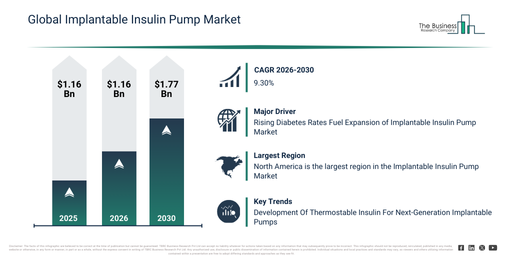
    The implantable insulin pump market is projected for significant expansion in the coming years, reaching $6.09 billion by 2030, driven by a compound annual growth rate (CAGR) of 9.3%. This expansion during the forecast period is fueled by factors such as the increasing embrace of automated insulin delivery systems, innovations in implantable medical device design, a growing need for tailored diabetes care, the broadening scope of home-based diabetes management, and beneficial reimbursement coupled with regulatory assistance. Key trends anticipated for this period encompass a surge in the uptake of implantable insulin delivery systems, a rising inclination towards closed-loop insulin pumps, better glycemic management via continuous insulin infusion, greater acceptance of long-term implantable devices for diabetes, and a heightened emphasis on patient comfort and adherence to treatment.

    Access Your Free Sample Report For In-Depth Market Analysis:

    https://www.thebusinessresearchcompany.com/sample.aspx?id=20565&type=smp

    Which Major Drivers Are Influencing The Expansion Of The Implantable Insulin Pump Market?

    The increasing prevalence of diabetes is anticipated to drive the growth of the implantable insulin pump market in the foreseeable future. Diabetes is defined as a chronic condition where the body struggles to maintain normal blood sugar levels, either due to insufficient insulin production or the cells’ impaired response to insulin. The escalation in diabetes cases is attributable to factors such as elevated obesity rates, reduced physical activity, poor dietary habits, and an aging population. An implantable insulin pump provides accurate, uninterrupted insulin delivery, which helps stabilize blood glucose, reduces the frequency of injections, and ultimately enhances overall diabetes management and patients’ quality of life. For example, in May 2024, Diabetes UK, a UK-based charity dedicated to people with diabetes, reported that over 5.6 million individuals in the UK are living with diabetes, with the 2022–23 figures indicating an increase of 167,822 cases from the previous year. Therefore, the growing incidence of diabetes is indeed propelling the implantable insulin pump market forward.

    Which Segment Classifications Are Used In The Implantable Insulin Pump Market Segment Analysis?

    The implantable insulin pump market covered in this report is segmented –

    1) By Type: Fully Implantable Insulin Pump, Semi-Implantable Insulin Pump

    2) By Application: Type 1 Diabetes, Type 2 Diabetes

    3) By End-User: Hospitals, Diabetes Clinics, Home-Care

    Subsegments:

    1) By Fully Implantable Insulin Pump: Fully Automated Implantable Insulin Pump, Implantable Insulin Pump with Continuous Glucose Monitoring (CGM), Implantable Insulin Pump with Adaptive Insulin Delivery

    2) By Semi-Implantable Insulin Pump: Semi-Automated Semi-Implantable Insulin Pump, Basal-Bolus Semi-Implantable Insulin Pump, Patch-Assisted Semi-Implantable Insulin Pump, Remote-Controlled Semi-Implantable Insulin Pump

    Which Trends Are Shaping The Implantable Insulin Pump Market?

    Leading companies in the implantable insulin pump market are increasingly establishing strategic collaborations to create high-concentration, thermostable insulin formulations specifically designed for next-generation implantable pumps. For instance, in May 2024, Arecor Therapeutics plc, a US-based biopharmaceutical company, collaborated with Medtronic Diabetes, a US-based medical technology company, to produce a new insulin utilizing Arecor’s Arestat technology platform. This refined formulation is intended for a specific group of patients who have limited choices with traditional insulin delivery methods. The objective of the new insulin is to improve clinical outcomes by allowing direct hepatic absorption, decreasing pump maintenance necessities, increasing physician utilization, and potentially reducing healthcare expenses. This partnership signifies important progress in diabetes care by combining innovative drug formulation with advanced implantable delivery technology to better assist patients requiring intensive insulin management.

    Which Firms Are Contributing To The Implantable Insulin Pump Market Ecosystem?

    Major companies operating in the implantable insulin pump market are Sanofi S.A., Abbott Laboratories, Medtronic plc, Dexcom Inc., Insulet Corporation, Tandem Diabetes Care Inc., Ypsomed Holding AG, Air Liquide Healthcare Ltd., Diabeloop SA, Glooko Inc., ViCentra B.V., Bigfoot Biomedical Inc., Beta Bionics Inc., Senseonics Holdings Inc., INREDA DIABETIC B.V., TIDEPOOL Inc., Medtrum Technologies Inc., Sernova Corp., PhysioLogic Devices Inc., EOFLOW CO. LTD., CamDiab Ltd.

    Get The Full Implantable Insulin Pump Market Report:

    https://www.thebusinessresearchcompany.com/report/implantable-insulin-pump-global-market-report

    Which Region Dominates The Implantable Insulin Pump Market By Market Share?

    North America was the largest region in the implantable insulin pump market in 2025. Asia-Pacific is expected to be the fastest-growing region in the forecast period. The regions covered in the implantable insulin pump market report are Asia-Pacific, South East Asia, Western Europe, Eastern Europe, North America, South America, Middle East, Africa.

    Request A Customized Implantable Insulin Pump Market Report For Competitive Insights:

    https://www.thebusinessresearchcompany.com/customise?id=20565&type=smp

    Browse Through More Reports Similar to the Global Implantable Insulin Pump Market 2026, By The Business Research Company

    Insulin Drugs Market Report 2026

    https://www.thebusinessresearchcompany.com/report/insulin-drugs-global-market-report

    Smart Insulin Pens Market Report 2026

    https://www.thebusinessresearchcompany.com/report/smart-insulin-pens-global-market-report

    Insulin Pens Syringes Pumps And Injectors Market Report 2026

    https://www.thebusinessresearchcompany.com/report/insulin-pens-syringes-pumps-and-injectors-global-market-report

    Get in touch with us:

    The Business Research Company: https://www.thebusinessresearchcompany.com/

    Americas +1 310-496-7795

    Asia +44 7882 955267 & +91 8897263534

    Europe +44 7882 955267

    Email us at info@tbrc.info

    Follow us on:

    LinkedIn: https://in.linkedin.com/company/the-business-research-company

    YouTube: https://www.youtube.com/channel/UC24_fI0rV8cR5DxlCpgmyFQ

    Global Market Model: https://www.thebusinessresearchcompany.com/global-market-model

  • Rising Aging Population Driving Market Growth Due To Increased Demand For Chronic Disease Management Solutions Is Contributing To Changes In The Implantable Infusion Pumps Market

    Rising Aging Population Driving Market Growth Due To Increased Demand For Chronic Disease Management Solutions Is Contributing To Changes In The Implantable Infusion Pumps Market

    The Business Research Company’s 2026 market reports feature enhanced tools like market attractiveness analysis, TAM assessment, and company scoring matrices, along with interactive dashboards, deeper supply chain insights, and startup coverage strengthening the depth, usability, and strategic value of insights.

    How Is The Market Size Of The Implantable Infusion Pumps Market Expected To Change From 2026 To 2030?

    The implantable infusion pumps market size has experienced significant expansion in recent years. This market is projected to expand from $20.32 billion in 2025 to $21.73 billion in 2026, recording a compound annual growth rate (CAGR) of 6.9%. The growth observed in previous periods can be linked to the increasing occurrence of chronic pain conditions, a growing incidence of diabetes, the rise in oncology treatment procedures, continuous innovations in implantable pump technology, and the development of specialty clinical care services.

    The implantable infusion pumps market is anticipated to experience substantial growth in the upcoming years, with its size expected to reach $28.25 billion by 2030, exhibiting a compound annual growth rate (CAGR) of 6.8%. This growth during the forecast period is driven by increasing adoption of smart infusion technologies, rising demand for remote patient monitoring, the expansion of personalized dosing regimens, growing investments in digital therapeutics, and the increasing use of implantable pumps in homecare environments. Major developments expected in this period include the increasing adoption of programmable infusion pumps, a rising demand for long-term pain management solutions, the growing deployment of smart and connected pumps, the expansion of implantable insulin delivery systems, and an enhanced focus on dose accuracy.

    Access Your Free Sample Report For In-Depth Market Analysis:

    https://www.thebusinessresearchcompany.com/sample.aspx?id=3347&type=smp

    What Key Drivers Are Fueling The Growth Of The Implantable Infusion Pumps Market?

    A projected rise in the elderly demographic is anticipated to stimulate expansion within the implantable infusion pumps market. This demographic is defined as the proportion of individuals aged 65 and above relative to the employed population aged 18 to 64. The growth of this older demographic stems from extended life expectancies, a consequence of improvements in healthcare and general living conditions, enabling more individuals to live longer lives. Given that implantable infusion pumps are commonly utilized for managing chronic illnesses, an expanding aging population directly translates into a larger base of prospective patients who could benefit from these medical devices. For example, data from Eurostat, the European Union’s statistical office based in Luxembourg, indicated that as of February 2025, the EU’s estimated population in 2024 was around 449 million individuals. Of these, over one-fifth, or 21.6%, were aged 65 and older, and the median age was 44.7 years. Furthermore, the old-age dependency ratio in the EU increased by 0.5 pp between 2023 and 2024, moving from 33.4% to 33.9%. Consequently, the expansion of the aging population is a primary catalyst for the growth experienced in the implantable infusion pumps market.

    How Is The Implantable Infusion Pumps Market Organized By Segment Classification?

    The implantable infusion pumps market covered in this report is segmented –

    1) By Type: Patient-Controlled Analgesia (PCA) Pumps, Enteral Pumps, Insulin Pumps, Elastomeric Pumps, Syringe Pumps, Other Types

    2) By Applications: Oncology, Pediatrics Or Neonatology, Gastroenterology, Hematology, Diabetes, Other Applications

    3) By End User: Hospitals, Ambulatory Surgical Centers, Specialty Clinics

    Subsegments:

    1) By Patient-Controlled Analgesia (PCA) Pumps: Morphine PCA Pumps, Fentanyl PCA Pumps, Other Opioid PCA Pumps

    2) By Enteral Pumps: Tube Feeding Pumps, Syringe-based Enteral Pumps, Continuous Or Intermittent Feeding Pumps

    3) By Insulin Pumps: Insulin Delivery Pumps, Insulin Patch Pumps, Smart Insulin Pumps

    4) By Elastomeric Pumps: Disposable Elastomeric Pumps, Reusable Elastomeric Pumps

    5) By Syringe Pumps: Small Volume Syringe Pumps, Large Volume Syringe Pumps

    6) By Other Types: Chemotherapy Infusion Pumps, Antibiotic Infusion Pumps, Pain Management Pumps

    What Trends Are Influencing The Implantable Infusion Pumps Market?

    Leading companies in the implantable infusion pumps market are developing new products like insulin pumps to attract broader customer bases, increase sales, and boost revenue. Insulin pumps are medical devices created to help people with diabetes manage their blood sugar levels. For example, in April 2023, Medtronic, an Ireland-based medical device company, announced FDA approval for its MiniMed 780G System, which includes meal detection technology. A distinct feature of this product is its capability to set the lowest glucose target, as low as 100 mg/dL, among all automated insulin pumps currently available, thereby closely emulating the average glucose levels of individuals without diabetes. This setting enables the pump to operate on a treat-to-target approach, automatically adjusting basal insulin and making autocorrections to reach a specific target. Moreover, it is unique as the only pump that features an infusion set designed for comfortable use for an extended period of up to 7 days. This prolonged wear time is achieved by utilizing advanced materials that reduce insulin preservative loss and maintain consistent insulin flow and stability, ultimately decreasing the probability of infusion set occlusion.

    Who Are The Industry Participants Involved In The Implantable Infusion Pumps Market?

    Major companies operating in the implantable infusion pumps market are Medtronic plc, Boston Scientific Corporation, Baxter International Inc., B. Braun Melsungen AG, Fresenius Kabi AG, Smiths Medical a Smiths Group company, Terumo Corporation, Johnson & Johnson, Greatbatch Medical, Primetech Corporation, Flowonix Medical Inc., F. Hoffmann-La Roche Ltd, Shenzhen Mindray Bio-Medical Electronics Co. Ltd., Micrel Medical, Insulet Corporation, ICU Medical Inc., Becton Dickinson and Company (BD), Roche Diagnostics International AG, Abbott Laboratories, Hospira, Teleflex Incorporated, C. R. Bard Inc., AngioDynamics Inc., Merit Medical Systems Inc., NIPRO Medical Corporation, IRadimed Corporation, Zyno Medical, Tricumed Medizintechnik GmbH, Q Core Medical Ltd., Ivenix Inc., Tandem Diabetes Care Inc.

    Get The Full Implantable Infusion Pumps Market Report:

    https://www.thebusinessresearchcompany.com/report/implantable-infusion-pumps-global-market-report

    Which Region Is The Largest In The Implantable Infusion Pumps Market?

    North America was the largest region in the implantable infusion pumps market in 2025. Asia-Pacific was the second-largest region in the implantable infusion pumps market. The regions covered in the implantable infusion pumps market report are Asia-Pacific, South East Asia, Western Europe, Eastern Europe, North America, South America, Middle East, Africa.

    Request A Customized Implantable Infusion Pumps Market Report For Competitive Insights:

    https://www.thebusinessresearchcompany.com/customise?id=3347&type=smp

    Browse Through More Reports Similar to the Global Implantable Infusion Pumps Market 2026, By The Business Research Company

    Infusion Pump Market Report 2026

    https://www.thebusinessresearchcompany.com/report/infusion-pump-global-market-report

    Ambulatory Iv Infusion Pumps Market Report 2026

    https://www.thebusinessresearchcompany.com/report/ambulatory-iv-infusion-pumps-global-market-report

    Intravenous Infusion Pumps Market Report 2026

    https://www.thebusinessresearchcompany.com/report/intravenous-infusion-pumps-global-market-report

    Get in touch with us:

    The Business Research Company: https://www.thebusinessresearchcompany.com/

    Americas +1 310-496-7795

    Asia +44 7882 955267 & +91 8897263534

    Europe +44 7882 955267

    Email us at info@tbrc.info

    Follow us on:

    LinkedIn: https://in.linkedin.com/company/the-business-research-company

    YouTube: https://www.youtube.com/channel/UC24_fI0rV8cR5DxlCpgmyFQ

    Global Market Model: https://www.thebusinessresearchcompany.com/global-market-model