Category: Medical Equipment

  • Immunodiagnostics Market Developments Shaping Growth Across The Forecast Period

    Immunodiagnostics Market Developments Shaping Growth Across The Forecast Period

    The Business Research Company’s 2026 market reports feature enhanced tools like market attractiveness analysis, TAM assessment, and company scoring matrices, along with interactive dashboards, deeper supply chain insights, and startup coverage strengthening the depth, usability, and strategic value of insights.

    What Level Of Market Value Growth Is Predicted For The Immunodiagnostics Market From 2026 To 2030?

    The immunodiagnostics market size has demonstrated significant growth over recent years. It is anticipated to expand from $24.32 billion in 2025 to $26.16 billion in 2026, achieving a compound annual growth rate (CAGR) of 7.5%. This historical expansion can be attributed to several factors, including the rising occurrence of infectious and chronic conditions, the expansion of clinical laboratory infrastructures, an increasing demand for early disease detection, the growing application of antibody-based diagnostics, and the widespread availability of standardized immunoassay technologies.

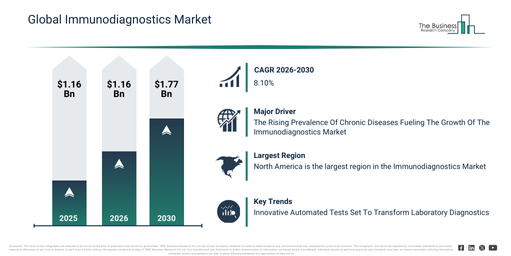
    The immunodiagnostics market is projected to experience substantial expansion over the upcoming years, reaching a valuation of $35.76 billion by 2030, driven by a compound annual growth rate (CAGR) of 8.1%. This anticipated growth during the forecast period is primarily fueled by factors such as the greater acceptance of personalized diagnostics, increased funding for automated laboratories, the broadened reach of point-of-care immunodiagnostics, the developing integration of AI for result interpretation, and a heightened emphasis on preventive healthcare screening. Key trends expected within this timeframe involve the rising implementation of automated immunoassay analyzers, an increasing need for highly sensitive diagnostic evaluations, the expanded utilization of rapid immunodiagnostic kits, the broadening of multiplex testing capacities, and improved integration of laboratory data management systems.

    Access Your Free Sample Report For In-Depth Market Analysis:

    https://www.thebusinessresearchcompany.com/sample.aspx?id=10093&type=smp

    Which Factors Are Influencing The Growth Of The Immunodiagnostics Market?

    The rising occurrence of chronic illnesses is anticipated to boost the expansion of the immunodiagnostics market in the foreseeable future. These are persistent health issues that typically advance gradually, including conditions like diabetes, heart disease, and arthritis, frequently demanding continuous medical care and lifestyle adjustments to manage indicators and avert adverse outcomes. The rise in chronic diseases is primarily attributed to unhealthy habits, such as inadequate nutrition, lack of physical activity, and tobacco use, all of which elevate the likelihood of developing conditions like diabetes, heart disease, and obesity. Immunodiagnostic tools assist in the diagnosis of chronic illnesses by allowing precise identification of biomarkers and immune reactions linked to enduring health problems. These tools facilitate the prompt discovery and surveillance of ailments like diabetes, autoimmune conditions, and cardiovascular issues, thereby optimizing patient care and aiding in quick treatment choices. A pertinent example is provided by the National Health Service, a UK-based government department, which reported in June 2024 that 3,615,330 people registered with a general practitioner (GP) received a diagnosis of non-diabetic hyperglycemia or pre-diabetes (a state characterized by heightened blood sugar levels, insufficient for a diabetes classification) in 2023. This represented an 18% surge from 3,065,825 instances recorded in 2022. Consequently, the expanding occurrence of both chronic and infectious diseases is propelling the expansion of the immunodiagnostics market.

    Which Segment Categories Are Included In The Immunodiagnostics Market Segment Analysis?

    The immunodiagnostics market covered in this report is segmented –

    1) By Product: Reagents And Consumables, Instruments

    2) By Technology: Enzyme-Linked Immunosorbent Assay, Chemiluminescence Immunoassay, Fluorescent Immunoassay, Rapid Test, Other Technologies

    3) By Application: Infectious Diseases, Oncology And Endocrinology, Bone And Mineral Diseases, Autoimmunity Disorders, Cardiac Biomarkers, Drug Monitoring, Other Applications

    4) By End User: Hospitals, Clinics, Diagnostic Laboratories

    Subsegments:

    1) By Reagents And Consumables: Antibodies, Assay Kits, Buffers And Substrates

    2) By Instruments: Immunoassay Analyzers, ELISA Readers

    Which Trends Are Influencing Demand In The Immunodiagnostics Market?

    Major companies engaged in the immunodiagnostics market are increasingly concentrating on developing innovative solutions, such as automated chemiluminescence immunoassays (CLIAs), to improve diagnostic accuracy, reduce testing time, and enhance laboratory efficiency. Automated chemiluminescence immunoassays (CLIAs) are laboratory tests that utilize light-emitting chemical reactions and automation to quickly and accurately detect specific proteins or antibodies in blood or other samples. For example, in September 2025, DiaSorin S.p.A., an Italy-based diagnostics company, introduced the LIAISON® TSH-R Ab assay for autoimmune thyroid disorder assessment. This test offers features like enhanced antibody specificity through its double-bridge assay architecture, seamless integration into existing LIAISON analyzers to streamline laboratory workflows, and CE-marked compatibility supporting deployment across numerous regulated regions.

    Who Are The Active Companies Shaping The Immunodiagnostics Market?

    Major companies operating in the immunodiagnostics market are Abbott Laboratories, F. Hoffmann-La Roche Ltd., Siemens Healthineers AG, Danaher Corporation, Thermo Fisher Scientific Inc., Bio-Rad Laboratories Inc., DiaSorin S.p.A., bioMérieux SA, Sysmex Corporation, Becton Dickinson and Company, Grifols S.A., Ortho Clinical Diagnostics, Beckman Coulter Inc., Fujirebio Holdings Inc., Quidel Corporation, Luminex Corporation, Bio-Techne Corporation, PerkinElmer Inc., Merck KGaA, Gold Standard Diagnostics Corp., OraSure Technologies Inc., Immunodiagnostic Systems Holdings Plc (IDS)

    Get The Full Immunodiagnostics Market Report:

    https://www.thebusinessresearchcompany.com/report/immunodiagnostics-global-market-report

    Where Is The Immunodiagnostics Market Most Concentrated Geographically?

    North America was the largest region in the immunodiagnostics market in 2025. The regions covered in the immunodiagnostics market report are Asia-Pacific, South East Asia, Western Europe, Eastern Europe, North America, South America, Middle East, Africa.

    Request A Customized Immunodiagnostics Market Report For Competitive Insights:

    https://www.thebusinessresearchcompany.com/customise?id=10093&type=smp

    Browse Through More Reports Similar to the Global Immunodiagnostics Market 2026, By The Business Research Company

    Immunohematology Market Report 2026

    https://www.thebusinessresearchcompany.com/report/immunohematology-global-market-report

    Immunoassay Market Report 2026

    https://www.thebusinessresearchcompany.com/report/immunoassay-global-market-report

    Automated Immunoassay Analyzers Market Report 2026

    https://www.thebusinessresearchcompany.com/report/automated-immunoassay-analyzers-global-market-report

    Get in touch with us:

    The Business Research Company: https://www.thebusinessresearchcompany.com/

    Americas +1 310-496-7795

    Asia +44 7882 955267 & +91 8897263534

    Europe +44 7882 955267

    Email us at info@tbrc.info

    Follow us on:

    LinkedIn: https://in.linkedin.com/company/the-business-research-company

    YouTube: https://www.youtube.com/channel/UC24_fI0rV8cR5DxlCpgmyFQ

    Global Market Model: https://www.thebusinessresearchcompany.com/global-market-model

  • Immunochemistry Diagnostic Devices And Equipment Market Forecast With Insights On Demand And Industry Growth

    Immunochemistry Diagnostic Devices And Equipment Market Forecast With Insights On Demand And Industry Growth

    The Business Research Company’s 2026 market reports feature enhanced tools like market attractiveness analysis, TAM assessment, and company scoring matrices, along with interactive dashboards, deeper supply chain insights, and startup coverage strengthening the depth, usability, and strategic value of insights.

    How Will The Market Value Of The Immunochemistry Diagnostic Devices And Equipment Market Progress Between 2026 And 2030?

    The market size for immunochemistry diagnostic devices and equipment has seen rapid expansion in recent years. This market is projected to grow from $3.67 billion in 2025 to $4.11 billion in 2026, at a compound annual growth rate (CAGR) of 11.9%. The historical growth can be attributed to the increase in clinical diagnostic testing volumes, the rising prevalence of chronic and infectious diseases, the development of centralized diagnostic laboratories, the growing application of immunoassays in oncology and endocrinology, and improvements in laboratory infrastructure.

    The immunochemistry diagnostic devices and equipment market is projected to experience substantial expansion over the upcoming years. This market is anticipated to reach a valuation of $6.22 billion by 2030, exhibiting a compound annual growth rate (CAGR) of 10.9%. The expansion during this forecast period stems from various factors, including a heightened demand for accurate diagnostics, a greater uptake of automated lab systems, the broadening of personalized medicine applications, increased capital allocation towards advanced diagnostic tools, and a sharpened emphasis on early disease identification. Key developments expected in the forecast timeframe encompass the wider integration of automated immunoassay analyzers, an escalating need for highly sensitive diagnostic reagents, a greater deployment of multiplex testing platforms, the growth of laboratory automation solutions, and a stronger emphasis on operational efficiency and precision.

    Access Your Free Sample Report For In-Depth Market Analysis:

    https://www.thebusinessresearchcompany.com/sample.aspx?id=2547&type=smp

    What Leading Drivers Are Supporting The Immunochemistry Diagnostic Devices And Equipment Market Expansion?

    The increasing need for customized medical care is projected to boost the expansion of the immunochemistry diagnostic devices and equipment market. This medical strategy tailors healthcare choices and treatment plans by leveraging a person’s distinct genetic, genomic, and clinical traits, with the goal of improving patient results and reducing negative reactions. The heightened desire for personalized medicine stems from greater understanding and adoption of treatments customized to individual genetic makeup, lifestyle, and environmental influences, leading to better patient recovery. The practice of personalized medicine requires the creation and use of sophisticated immunochemistry assays to pinpoint specific biomarkers and inform individualized treatment approaches for patients. As an illustration, in February 2024, the Personalized Medicine Coalition, a US-based non-profit advocating for tailored treatments, reported that out of 53 novel therapeutic molecular entities approved by the Food and Drug Administration in 2023, 20 were categorized as personalized medicines, alongside six new gene and cell-based therapies. This represented roughly 38 percent of all new molecular entities sanctioned in the nation. Consequently, the expanding requirement for personalized medicine is propelling the future growth of the immunochemistry diagnostic devices and equipment market.

    How Is The Immunochemistry Diagnostic Devices And Equipment Market Broken Down By Segment Categories?

    The immunochemistry diagnostic devices and equipment market covered in this report is segmented –

    1) By Product Type: Immunochemistry Analyzers, Immunochemistry Stainers, Incubators, Microscopes, Centrifuges, Autoclaves, Consumables

    2) By Consumables: Antibodies, Antigens, Enzymes, Reagents, Stains, Buffers, Disposables, Other Consumables

    3) By Application: Endocrinology, Oncology, Cardiology, Therapeutic Drug Development And Monitoring, Infectious Disease Testing, Drugs Of Abuse Testing, Other Applications

    4) By End Users: Hospitals And Clinics, Diagnostic Laboratories, Research Labs And Institutes, Biopharmaceutical And Biotechnology Companies, Other End Users

    Subsegments:

    1) By Immunochemistry Analyzers: Chemiluminescence Immunoassay (CLIA) Analyzers, Enzyme-Linked Immunosorbent Assay (ELISA) Analyzers, Radioimmunoassay (RIA) Analyzers, Fluorescence Immunoassay (FIA) Analyzers

    2) By Immunochemistry Stainers: Automated Stainers, Manual Stainers

    3) By Incubators: CO2 Incubators, Shaking Incubators, Heated Incubators

    4) By Microscopes: Light Microscopes, Fluorescence Microscopes, Electron Microscopes

    5) By Centrifuges: Microcentrifuges, Refrigerated Centrifuges, Ultracentrifuges

    6) By Autoclaves: Tabletop Autoclaves, Vertical Autoclaves, Horizontal Autoclaves

    7) By Consumables: Reagents and Kits, Test Plates, Filters and Membranes, Microplates and Accessories

    What Emerging Trends Are Seen In The Immunochemistry Diagnostic Devices And Equipment Market?

    Leading companies in the immunochemistry market are developing new offerings, such as multiplex assays, to secure a competitive advantage. Multiplex assays are laboratory techniques that facilitate the simultaneous measurement and analysis of multiple analytes within a single biological sample, thereby offering a thorough and streamlined method for examining various factors or biomarkers in one experiment. For instance, in June 2023, Navigate BioPharma Services, Inc., a US-based biotechnology company, introduced new multiplex digital PCR assays designed for the precise quantification of chimeric antigen receptor (CAR) T cells, a significant breakthrough in cancer immunotherapy. These assays, which leverage the Qiagen QIAcuity digital PCR System, enable concurrent measurement of CAR-T cell count, function, and persistence in clinical blood and bone marrow samples, without requiring standard curves, and can detect CAR-T cells at levels as low as 0.01%. This innovative assay supports clinicians in monitoring responses and safety during clinical trials, accelerating the progress of CAR-T therapies due to its sensitivity, specificity, and efficiency.

    Which Players Are Present In The Immunochemistry Diagnostic Devices And Equipment Market Space?

    Major companies operating in the immunochemistry diagnostic devices and equipment market are Abbott Diagnostics, Roche Diagnostics, Siemens Healthcare Diagnostics, Diamond Diagnostics Inc., Dynex Technologies Inc., Grifols S.A., Hycor Biomedical LLC, Immunodiagnostic Systems, Inova Diagnostics, LabCorp, Mindray Medical International Limited, Ortho Clinical Diagnostics, Quest Diagnostics, Randox Laboratories, Sysmex Corporation, ThermoFisher Scientific Inc., Tosoh Bioscience, Danaher Corporation, Johnson & Johnson, Boditech Med Inc., Beckman Coulter Inc., Bio-Rad Laboratories, bioMérieux Clinical Diagnostics, Carolina Liquid Chemistries Corporate, DiaSorin Inc., Agilent Technologies Inc., Merck KGAA, Eagle Biosciences Inc., Biocare Medical LLC, Elabscience Biotechnology Inc., Bio-Genex Laboratories Inc., Diagnostic Biosystem, Histo-Line Laboratories, Rockland Immunochemicals Inc., Abcam plc, Becton Dickinson & Company, Cell Signaling Technology Inc., ImmunoChemistry Technologies LLC, Genemed Biotechnologies Inc., Miltenyi Biotec GmbH, PerkinElmer Inc., Takara Bio. Inc, Immucor Inc., Quidel Corporation

    Get The Full Immunochemistry Diagnostic Devices And Equipment Market Report:

    https://www.thebusinessresearchcompany.com/report/immunochemistry-diagnostic-devices-and-equipment-global-market-report

    Which Region Dominates The Immunochemistry Diagnostic Devices And Equipment Market By Market Share?

    North America was the largest region in the global immunochemistry diagnostic devices and equipment market in 2025. Asia-Pacific was the second-largest region in the immunochemistry diagnostic devices and equipment market. The regions covered in the immunochemistry diagnostic devices and equipment market report are Asia-Pacific, South East Asia, Western Europe, Eastern Europe, North America, South America, Middle East, Africa.

    Request A Customized Immunochemistry Diagnostic Devices And Equipment Market Report For Competitive Insights:

    https://www.thebusinessresearchcompany.com/customise?id=2547&type=smp

    Browse Through More Reports Similar to the Global Immunochemistry Diagnostic Devices And Equipment Market 2026, By The Business Research Company

    Hematology Diagnostic Devices And Equipment Market Report 2026

    https://www.thebusinessresearchcompany.com/report/hematology-diagnostic-devices-and-equipment-global-market-report

    Automated Immunoassay Analyzers Market Report 2026

    https://www.thebusinessresearchcompany.com/report/automated-immunoassay-analyzers-global-market-report

    Molecular Diagnostics Devices And Equipment Market Report 2026

    https://www.thebusinessresearchcompany.com/report/molecular-diagnostics-devices-and-equipment-global-market-report

    Get in touch with us:

    The Business Research Company: https://www.thebusinessresearchcompany.com/

    Americas +1 310-496-7795

    Asia +44 7882 955267 & +91 8897263534

    Europe +44 7882 955267

    Email us at info@tbrc.info

    Follow us on:

    LinkedIn: https://in.linkedin.com/company/the-business-research-company

    YouTube: https://www.youtube.com/channel/UC24_fI0rV8cR5DxlCpgmyFQ

    Global Market Model: https://www.thebusinessresearchcompany.com/global-market-model
  • Immunoassay Market Outlook Highlighting Key Drivers And Market Evolution

    Immunoassay Market Outlook Highlighting Key Drivers And Market Evolution

    The Business Research Company’s 2026 market reports feature enhanced tools like market attractiveness analysis, TAM assessment, and company scoring matrices, along with interactive dashboards, deeper supply chain insights, and startup coverage strengthening the depth, usability, and strategic value of insights.

    What Are The Market Size Estimates For The Immunoassay Market In 2026 And 2030?

    The immunoassay market has experienced robust expansion in recent years. Projections indicate it will expand from $37.32 billion in 2025 to reach $40.07 billion by 2026, demonstrating a compound annual growth rate (CAGR) of 7.4%. Historically, this growth has been driven by factors such as the increasing prevalence of infectious and chronic diseases, higher clinical laboratory testing volumes, the broad acceptance of elisa-based diagnostics, a surge in pharmaceutical research activities, and the escalating need for early disease detection.

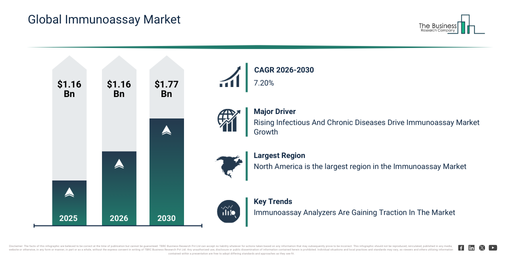
    The immunoassay market size is projected to experience substantial expansion in the coming years, with an anticipated increase to $52.83 billion by 2030, exhibiting a compound annual growth rate (CAGR) of 7.2%. This growth during the forecast period is primarily driven by several factors, including the escalating demand for rapid diagnostic solutions, greater investments in personalized medicine, the broadening of decentralized testing approaches, the expanding integration of digital laboratory workflows, and a heightened emphasis on companion diagnostics. Key trends expected over the forecast horizon encompass the increasing uptake of high-sensitivity immunoassay kits, the greater utilization of automated immunoassay analyzers, the rising need for point-of-care immunoassay testing, the development of multiplex immunoassay platforms, and improved integration of data management software.

    Access Your Free Sample Report For In-Depth Market Analysis:

    https://www.thebusinessresearchcompany.com/sample.aspx?id=9838&type=smp

    Which Key Factors Are Driving The Immunoassay Market Growth?

    A growing prevalence of infectious and chronic diseases is projected to drive the expansion of the immunoassay market. These conditions are defined as ailments originating from pathogens or persistent health issues demanding continuous oversight, diagnosis, and care. Their increase is linked to heightened exposure to environmental pollutants, which compromises immune systems and raises vulnerability to diseases. Consequently, the immunoassay market is experiencing higher demand, as the swift spread of these illnesses compels businesses to utilize sophisticated diagnostic methods for prompt detection, disease tracking, and precise clinical judgments. For illustration, data from June 2025 by the UK Health Security Agency (UKHSA), a public health entity in the United Kingdom, indicated that reported Campylobacter cases in England rose from 60,055 in 2023 to 70,352 in 2024. This signifies an increase of 10,297 cases (17.1%) and an elevated reporting rate from 104.1 to 121.9 per 100,000 population. Thus, the growing incidence of infectious and chronic diseases is fueling the demand within the immunoassay market.

    What Are The Different Segment Types In The Immunoassay Market Segment Breakdown?

    The immunoassay market covered in this report is segmented –

    1) By Product: Reagents And Kits, Analyzers Or Instruments, Software And Services

    2) By Specimen: Blood, Saliva, Urine, Other Specimens

    3) By Application: Therapeutic Drug Monitoring, Oncology, Cardiology, Endocrinology, Infectious Disease Testing, Autoimmune Diseases, Other Applications

    4) By End User: Research And Academic Laboratories, Pharmaceutical And Biotechnology Companies And CROs, Hospitals And Clinics, Clinical Laboratories

    Subsegments:

    1) By Reagents And Kits: ELISA Kits, Rapid Test Kits, Control Reagents, Assay Development Reagents

    2) By Analyzers Or Instruments: Automated Analyzers, Point-Of-Care Testing Devices, Microplate Readers, Luminometers

    3) By Software And Services: Data Management Software, Analytical Software, Support And Maintenance Services, Consulting Services

    Which Trends Are Guiding The Direction Of The Immunoassay Market?

    Major companies in the immunoassay market are launching innovative immunoassay analyzers to gain a competitive advantage. These laboratory instruments are designed to automate and facilitate the detection and quantification of biological molecules, such as proteins or hormones, through immunological reactions. For instance, in May 2023, Beckman Coulter Diagnostics, a US-based company focused on simplifying, automating, and innovating complex biomedical testing, introduced the DxI 9000 Access Immunoassay Analyzer. The DxI 9000 Access Immunoassay Analyzer addresses the demands of clinical laboratories regarding speed, reliability, reproducibility, quality, and menu expansion. It has demonstrated the capability to develop increasingly sensitive and clinically relevant assays, thereby amplifying the impact of new pharmaceutical therapies and ultimately improving patient outcomes. Its innovations include new analyte processing and detection technology, precision sensors, smart algorithms, and remote real-time system monitoring, making it the only immunoassay analyzer system that requires no daily maintenance.

    Who Are The Well-Known Companies In The Immunoassay Market?

    Major companies operating in the immunoassay market are Siemens Healthineers GmbH, bioMérieux, Abbott, Beckman Coulter Inc., Quidel Corporation, Ortho Clinical Diagnostics, Sysmex Corporation, Bio-Rad Laboratories Inc., Becton Dickinson and Company, F. Hoffmann-La Roche Ltd, Thermo Fisher Scientific Inc., Merck KGaA, Agilent Technologies Inc., PerkinElmer Inc, WAK-Chemie Medical GmbH, J Mitra & Co Pvt Ltd, Kamiya Biomedical Company, Tosoh Corporation, Gyros Protein Technologies AB, BioCheck Inc., Bio-Techn, DiaSorin S.p.A, Meso Scale Diagnostics LLC, QIAGE, Randox Laboratories Ltd., Shenzhen Mindray Bio-Medical Electronics Co Ltd, Danaher Corporation, Hologic Inc., Tecan Trading AG, Eurofins Scientific, Abcam plc, Enzo Biochem Inc., Luminex Corporation, Quanterix Corporation, Roche Diagnostics, ZEUS Scientific Inc.

    Get The Full Immunoassay Market Report:

    https://www.thebusinessresearchcompany.com/report/immunoassay-global-market-report

    Which Region Is The Largest In The Immunoassay Market?

    North America was the largest region in the immunoassay market in 2025. Asia-Pacific is expected to be the fastest-growing region in the immunoassay market report during the forecast period. The regions covered in the immunoassay market report are Asia-Pacific, South East Asia, Western Europe, Eastern Europe, North America, South America, Middle East, Africa.

    Request A Customized Immunoassay Market Report For Competitive Insights:

    https://www.thebusinessresearchcompany.com/customise?id=9838&type=smp

    Browse Through More Reports Similar to the Global Immunoassay Market 2026, By The Business Research Company

    Immunohematology Market Report 2026

    https://www.thebusinessresearchcompany.com/report/immunohematology-global-market-report

    Immunomodulator Market Report 2026

    https://www.thebusinessresearchcompany.com/report/immunomodulator-global-market-report

    Immune Health Supplements Market Report 2026

    https://www.thebusinessresearchcompany.com/report/immune-health-supplements-global-market-report

    Get in touch with us:

    The Business Research Company: https://www.thebusinessresearchcompany.com/

    Americas +1 310-496-7795

    Asia +44 7882 955267 & +91 8897263534

    Europe +44 7882 955267

    Email us at info@tbrc.info

    Follow us on:

    LinkedIn: https://in.linkedin.com/company/the-business-research-company

    YouTube: https://www.youtube.com/channel/UC24_fI0rV8cR5DxlCpgmyFQ

    Global Market Model: https://www.thebusinessresearchcompany.com/global-market-model

  • Heart Attack Diagnostic Market Future Outlook Showing Growth Toward $17.89 Billion By 2030

    Heart Attack Diagnostic Market Future Outlook Showing Growth Toward $17.89 Billion By 2030

    The Business Research Company’s 2026 market reports feature enhanced tools like market attractiveness analysis, TAM assessment, and company scoring matrices, along with interactive dashboards, deeper supply chain insights, and startup coverage strengthening the depth, usability, and strategic value of insights.

    How Does The Market Size Of The Heart Attack Diagnostic Market Compare Between 2026 And 2030?

    The heart attack diagnostic market has demonstrated robust expansion in recent years. Forecasts indicate it will expand from $11.54 billion in 2025 to $12.64 billion in 2026, registering a compound annual growth rate (CAGR) of 9.5%. Historically, this growth can be ascribed to factors such as the increasing prevalence of cardiovascular diseases, the enhancement of hospital diagnostic capabilities, greater availability of cardiac imaging technologies, heightened awareness regarding early heart attack detection, and progress in laboratory testing methods.

    The heart attack diagnostic market size is expected to undergo significant expansion in the coming years. It is forecast to grow to $17.9 billion by 2030, exhibiting a compound annual growth rate (CAGR) of 9.1%. This anticipated growth over the forecast period stems from the increasing demand for swift diagnostic solutions, the expanding integration of digital health platforms, the growth of remote cardiac monitoring, rising investments in advanced imaging technologies, and the increasing adoption of precision cardiology diagnostics. Prominent trends for the forecast period include the increasing uptake of AI-assisted diagnostic tools, the rising utilization of high-sensitivity cardiac biomarkers, the growing integration of point-of-care testing devices, the expansion of non-invasive diagnostic procedures, and an enhanced focus on rapid emergency diagnostics.

    Access Your Free Sample Report For In-Depth Market Analysis:

    https://www.thebusinessresearchcompany.com/sample.aspx?id=8498&type=smp

    Which Strong Drivers Are Impacting The Heart Attack Diagnostic Market Growth?

    The escalating incidence of cardiac disorders is driving the growth of the heart attack diagnostics market. Cardiac disorders (CVD) refer to a range of conditions affecting the heart and blood vessels. Unhealthy diets, lack of physical activity, use of tobacco products, and alcohol abuse are primary contributors to heart disease and stroke. Heart attack diagnosis aids in understanding the causes and severity of heart attacks, strokes, and heart failure. For instance, in January 2024, the American Heart Association, a US-based non-profit organization, reported that the age-adjusted death rate from cardiovascular disease increased to 233.3 per 100,000 in 2024, marking a 4.0% rise from 224.4 per 100,000 in 2023. Thus, the growing frequency of cardiovascular illnesses will continue to propel the heart attack diagnostics market.

    Which Segment Classifications Are Used In The Heart Attack Diagnostic Market Segment Analysis?

    The heart attack diagnostic market covered in this report is segmented –

    1) By Test Type: Electrocardiogram (ECG Or EKG), Blood Tests, Echocardiogram, Coronary Catheterization (Angiogram)

    2) By Procedure: Invasive Procedure, Non-Invasive Procedure

    3) By End-Use Industry: Hospitals, Ambulatory Surgical Centers, Diagnostics Centers, Other End-Users

    Subsegments:

    1) By Electrocardiogram (ECG Or EKG): Resting ECG, Holter Monitor, Event Monitor

    2) By Blood Tests: Cardiac Biomarkers, Lipid Panel, B-Type Natriuretic Peptide (BNP)

    3) By Echocardiogram: Transthoracic Echocardiogram (TTE), Transesophageal Echocardiogram (TEE), Doppler Echocardiogram

    4) By Coronary Catheterization (Angiogram): Coronary Angiography, Right Heart Catheterization, Left Heart Catheterization

    Which Trends Are Contributing To Changes In The Heart Attack Diagnostic Market?

    Leading companies within the heart attack diagnostics market are actively developing innovative products, such as coronary heart disease detection tests, to cater to expanded customer bases, generate increased sales, and boost revenue. Coronary heart disease (CHD) detection tests refer to medical assessments and diagnostic procedures specifically designed to identify the presence of coronary heart disease, a condition characterized by the narrowing or blockage of the coronary arteries that supply blood to the heart muscle. For instance, in August 2023, Cardio Diagnostics Holdings Inc., a US-based biotechnology company, unveiled PrecisionCHD. The PrecisionCHD test, a significant innovation, is a blood-based method for detecting coronary heart disease (CHD), distinguished as the only detection technology that seamlessly integrates epigenetic and genetic biomarkers with Artificial Intelligence (AI). This unique test requires only a straightforward blood sample, which can be conveniently collected at a doctor’s office or through a simple at-home procedure, and it utilizes the same highly scalable laboratory technique employed in COVID-19 testing. With results ready for review within a swift 10 business days, the PrecisionCHD test presents a rapid and efficient alternative to conventional first-line CHD detection tools like stress echocardiograms.

    Which Firms Are Contributing To The Heart Attack Diagnostic Market Ecosystem?

    Major companies operating in the heart attack diagnostic market are Abbott Laboratories, F. Hoffmann-La Roche AG, General Electric Co., Koninklijke Philips NV, Siemens AG, Canon Medical Systems Corporation, GE Healthcare, Roche Diagnostics, Beckman Coulter Inc., Schiller AG, Becton Dickinson and Company, Danaher Corporation, Thermo Fisher Scientific Inc., Quest Diagnostics, Bio-Rad Laboratories Inc., Hitachi Ltd., Toshiba Corp., Fujifilm Holdings, Midmark Corp., Welch Allyn Inc., HILL ROM HOLDINGS Inc., HeartFlow, Cardio Diagnostics Holdings Inc.

    Get The Full Heart Attack Diagnostic Market Report:

    https://www.thebusinessresearchcompany.com/report/heart-attack-diagnostic-global-market-report

    Where Is The Heart Attack Diagnostic Market Most Concentrated Geographically?

    North America was the largest region in the heart attack diagnostics market in 2025. Asia-Pacific is expected to be the fastest-growing region in the forecast period. The regions covered in the heart attack diagnostic market report are Asia-Pacific, South East Asia, Western Europe, Eastern Europe, North America, South America, Middle East, Africa.

    Request A Customized Heart Attack Diagnostic Market Report For Competitive Insights:

    https://www.thebusinessresearchcompany.com/customise?id=8498&type=smp

    Browse Through More Reports Similar to the Global Heart Attack Diagnostic Market 2026, By The Business Research Company

    Cardiac Biomarkers Market Report 2026

    https://www.thebusinessresearchcompany.com/report/cardiac-biomarkers-global-market-report

    Cardiac Biomarkers Testing Market Report 2026

    https://www.thebusinessresearchcompany.com/report/cardiac-biomarkers-testing-global-market-report

    Cardiovascular Clinical Trials Market Report 2026

    https://www.thebusinessresearchcompany.com/report/cardiovascular-clinical-trials-global-market-report

    Get in touch with us:

    The Business Research Company: https://www.thebusinessresearchcompany.com/

    Americas +1 310-496-7795

    Asia +44 7882 955267 & +91 8897263534

    Europe +44 7882 955267

    Email us at info@tbrc.info

    Follow us on:

    LinkedIn: https://in.linkedin.com/company/the-business-research-company

    YouTube: https://www.youtube.com/channel/UC24_fI0rV8cR5DxlCpgmyFQ

    Global Market Model: https://www.thebusinessresearchcompany.com/global-market-model

  • Hearing Screening And Diagnostic Devices Market Revenue Growth Forecast To Reach $13.39 Billion By 2030 At 9.3% CAGR

    Hearing Screening And Diagnostic Devices Market Revenue Growth Forecast To Reach $13.39 Billion By 2030 At 9.3% CAGR

    The Business Research Company’s 2026 market reports feature enhanced tools like market attractiveness analysis, TAM assessment, and company scoring matrices, along with interactive dashboards, deeper supply chain insights, and startup coverage strengthening the depth, usability, and strategic value of insights.

    What Is The Forecasted Market Size Trajectory Of The Hearing Screening And Diagnostic Devices Market From 2026 To 2030?

    The hearing screening and diagnostic devices market has experienced significant expansion over recent years. Forecasts predict its value will increase from $8.56 billion in 2025 to $9.37 billion in 2026, achieving a compound annual growth rate (CAGR) of 9.5%. This historical growth can be attributed to increasing awareness of hearing health, the expansion of neonatal screening programs, the rising prevalence of age-related hearing loss, the availability of standardized diagnostic protocols, and the growth of audiology clinics.

    The hearing screening and diagnostic devices market is anticipated to experience substantial expansion in the coming years, projected to reach a size of $13.39 billion by 2030, demonstrating a compound annual growth rate (CAGR) of 9.3%. This growth during the forecast period can be attributed to several factors, including heightened demand for early intervention in hearing care, the increasing adoption of connected diagnostic platforms, the expansion of remote hearing assessment services, a growing emphasis on preventive healthcare, and continuous technological advancements in auditory testing devices. Key trends anticipated during the forecast period involve the wider adoption of portable hearing diagnostic devices, an increased demand for newborn hearing screening solutions, the expanding integration of digital audiometry systems, the growth of tele-audiology services, and an intensified focus on the early detection of hearing loss.

    Access Your Free Sample Report For In-Depth Market Analysis:

    https://www.thebusinessresearchcompany.com/sample.aspx?id=20827&type=smp

    What Key Factors Are Shaping The Hearing Screening And Diagnostic Devices Market Landscape?

    The projected rise in the occurrence of hearing loss is set to drive the expansion of the hearing screening and diagnostic devices market in the future. Hearing loss describes a state where an individual’s capacity to perceive sounds is diminished, affecting their ability to communicate and their overall quality of life. This growing prevalence, also known as presbycusis, stems from the deterioration of structures within the inner ear, the demise of sensory hair cells, and alterations in the auditory nerve pathways. These devices address hearing loss by facilitating early identification, precise evaluation, and tailored treatment strategies, empowering individuals to comprehend their auditory health, track developments, and secure suitable interventions to enhance their communication skills and quality of life. For example, in February 2024, the World Health Organization (WHO), a United Nations agency based in Switzerland, reported that approximately 430 million people, including 34 million children, are anticipated to need rehabilitation for disabling hearing loss, accounting for over 5% of the global population; furthermore, by 2050, this number is forecast to reach nearly 2.5 billion people experiencing some level of hearing loss, with at least 700 million requiring hearing rehabilitation services. Consequently, the escalating occurrence of hearing loss acts as a significant impetus for the hearing screening and diagnostic devices market. An increase in healthcare spending is expected to propel the growth of the hearing screening and diagnostic devices market in the coming years. Healthcare expenditure signifies the financial outlay on health-related expenses, encompassing the aggregate funds disbursed for healthcare products and services within a particular healthcare system or national economy. This increase in spending is fueled by the growing occurrence of chronic illnesses, which necessitate continuous care, regular medical procedures, and persistent management. Investment in healthcare is vital for fostering the advancement, availability, and deployment of hearing screening and diagnostic equipment. For example, in May 2023, a report from the Office for National Statistics, a UK government department, indicated that UK healthcare spending between 2022 and 2023 saw a 5.6% rise, contrasting with a 0.9% increase in 2022. The UK’s healthcare expenditure reached approximately $317.63 billion (£292 billion) in 2023. Thus, the escalation in healthcare expenditure is stimulating the expansion of the hearing screening and diagnostic devices market.

    How Is The Hearing Screening And Diagnostic Devices Market Organized By Segment Classification?

    The hearing screening and diagnostic devices market covered in this report is segmented –

    1) By Product Type: OAE (Otoacoustic Emission) And ABR (Auditory Brainstem Response) Testing Devices, Audiometers, Immittance Screeners

    2) By Age Group: Newborn Hearing Screening, Other Age Group

    3) By Indication: Conductive Hearing Loss, Sensorineural Hearing Loss, Combination Hearing Loss, Other Indications

    4) By Test: Pure-Tone Test, Bone Conduction Test, Tests Of The Middle Ear, Speech Discrimination Test, Speech Recognition Threshold Test, Most Comfortable Listening Test, Uncomfortable Loudness Level Test

    5) By End User: Hospitals And Clinics, Diagnostic Centers, Other End Users

    Subsegments:

    1) By OAE (Otoacoustic Emission) And ABR (Auditory Brainstem Response) Testing Devices: Portable OAE And ABR Testing Devices, Standalone OAE And ABR Testing Devices

    2) By Audiometers: Clinical Audiometers, Screening Audiometers, Diagnostic Audiometers

    3) By Immittance Screeners: Tympanometers, Acoustic Reflex Testers, Middle Ear Analyzers

    What Market Trends Are Affecting The Hearing Screening And Diagnostic Devices Market?

    Key players within the hearing screening and diagnostic devices market are emphasizing technological innovations, particularly AI-based hearing technology, to improve diagnostic precision, enhance patient results, and offer bespoke hearing solutions. This AI-powered hearing technology pertains to sophisticated hearing aids that employ artificial intelligence to automatically modify sound processing for different settings, thereby improving speech clarity, diminishing background noise, and customizing listening experiences by learning from user interactions. As an illustration, in February 2023, Starkey Hearing Technologies, a US-based producer of hearing aids, released its Edge AI and Genesis AI hearing aids, representing a considerable advancement in performance, connectivity, and user experience. These devices feature unique attributes like the G2 Neuro Processor for superior speech clarity and noise reduction, up to 51 hours of battery life, and a waterproof construction. They additionally provide Bluetooth LE Audio connectivity, health monitoring, including fall detection and balance assessments, and an easy-to-use voice-activated assistant driven by generative AI.

    Who Are The Industry Participants Involved In The Hearing Screening And Diagnostic Devices Market?

    Major companies operating in the hearing screening and diagnostic devices market are Medtronic Plc, Baxter International Inc., Henry Schein Inc., Demant Group, William Demant Holding Group, Amplivox Limited, Starkey Hearing Technologies, Natus Medical Incorporated, Heine Optotechnik GmbH & Co. KG, Maico Diagnostics GmbH, Interacoustics A/S, Vivosonic Inc., Path Medical GmbH, Grason-Stadler Inc., Inventis Srl, Intelligent Hearing Systems Corporation, Otodynamics Limited, Echodia SAS, MeCan Medical Limited, Western Surgical & Medical

    Get The Full Hearing Screening And Diagnostic Devices Market Report:

    https://www.thebusinessresearchcompany.com/report/hearing-screening-and-diagnostic-devices-global-market-report

    Which Region Dominates The Hearing Screening And Diagnostic Devices Market By Market Share?

    North America was the largest region in the hearing screening and diagnostic devices market in 2025. Asia Pacific is expected to be the fastest-growing region in the forecast period. The regions covered in the hearing screening and diagnostic devices market report are Asia-Pacific, South East Asia, Western Europe, Eastern Europe, North America, South America, Middle East, Africa.

    Request A Customized Hearing Screening And Diagnostic Devices Market Report For Competitive Insights:

    https://www.thebusinessresearchcompany.com/customise?id=20827&type=smp

    Browse Through More Reports Similar to the Global Hearing Screening And Diagnostic Devices Market 2026, By The Business Research Company

    Hearing Aid Devices And Equipment Market Report 2026

    https://www.thebusinessresearchcompany.com/report/hearing-aid-devices-and-equipment-global-market-report

    Hearing Implants Market Report 2026

    https://www.thebusinessresearchcompany.com/report/hearing-implants-global-market-report

    Hearing Loop Market Report 2026

    https://www.thebusinessresearchcompany.com/report/hearing-loop-global-market-report

    Get in touch with us:

    The Business Research Company: https://www.thebusinessresearchcompany.com/

    Americas +1 310-496-7795

    Asia +44 7882 955267 & +91 8897263534

    Europe +44 7882 955267

    Email us at info@tbrc.info

    Follow us on:

    LinkedIn: https://in.linkedin.com/company/the-business-research-company

    YouTube: https://www.youtube.com/channel/UC24_fI0rV8cR5DxlCpgmyFQ

    Global Market Model: https://www.thebusinessresearchcompany.com/global-market-model
  • Hearing Loop Market Expected To Grow Steadily And Approach $18.13 Billion By 2030

    Hearing Loop Market Expected To Grow Steadily And Approach $18.13 Billion By 2030

    The Business Research Company’s 2026 market reports feature enhanced tools like market attractiveness analysis, TAM assessment, and company scoring matrices, along with interactive dashboards, deeper supply chain insights, and startup coverage strengthening the depth, usability, and strategic value of insights.

    How Much Will The Market Value Of The Hearing Loop Market Grow Between 2026 And 2030?

    The hearing loop market has experienced robust expansion in recent years. It is anticipated to grow from $11.6 billion in 2025 to $12.72 billion in 2026, at a compound annual growth rate (CAGR) of 9.7%. The growth observed in the historic period is credited to increasing awareness of hearing impairment accessibility, the enforcement of disability compliance regulations, the expansion of healthcare infrastructure, a rise in the use of assistive listening devices, and an expanding aging population.

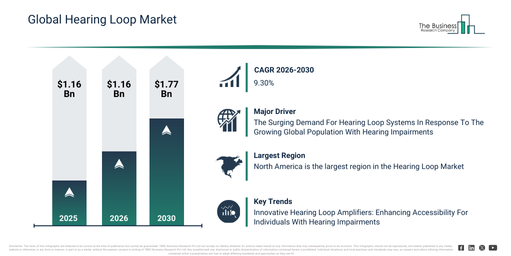
    The hearing loop market is projected to experience substantial expansion over the upcoming years, reaching a valuation of $18.13 billion by 2030, demonstrating a compound annual growth rate (CAGR) of 9.3%. This anticipated growth is driven by several factors, including an escalating emphasis on inclusive public infrastructure, the increasing integration of smart assistive audio technologies, the broadening availability of home-based hearing solutions, a rise in investments aimed at healthcare accessibility, and a growing need for retrofit hearing loop installations. Key developments expected during this period involve a surge in hearing loop installations within public spaces, the wider acceptance of wireless and interference-free audio systems, an increased call for comprehensive accessibility solutions, the proliferation of compact and portable hearing loop systems, and a heightened priority placed on ensuring signal clarity and quality of coverage.

    Access Your Free Sample Report For In-Depth Market Analysis:

    https://www.thebusinessresearchcompany.com/sample.aspx?id=9434&type=smp

    Which Factors Are Influencing The Growth Of The Hearing Loop Market?

    The increasing population of patients with hearing impairments is anticipated to propel the growth of the hearing loop market moving forward. Hearing impairment signifies a partial or complete reduction in one’s hearing abilities and is categorized by its degree and kind, including mild, moderate, severe, and profound hearing impairment. Hearing loop systems are advantageous for all individuals experiencing hearing loss who wish to improve their understanding of speech and background noise. For example, in September 2024, the National Institutes of Health, a US-based government agency, reported that within the United States, approximately 1 in 8 individuals (13%, or around 30 million) aged 12 and older experience hearing loss in both ears, as identified by standard hearing tests. Among adults aged 45-54, about 5% have disabling hearing loss, a figure that climbs to 10% for those aged 55-64. Consequently, the expanding patient demographic with hearing impairments is driving the growth of the hearing loop market.

    Which Segments Define The Hearing Loop Market Segment Structure?

    The hearing loop market covered in this report is segmented –

    1) By Component: Loop Amplifiers, Induction Loop Cables, Microphones And Audio Input Devices, Power Supplies, Control And Interface Units

    2) By Installation Type: Permanent Hearing Loop Systems, Portable Hearing Loop Systems

    3) By Coverage Area: Room-Level Hearing Loops, Counter-Level Hearing Loops, Large-Area Hearing Loops

    4) By Application Area: Healthcare Facilities, Educational Institutions, Transportation Hubs, Government And Public Buildings, Religious And Community Centers, Commercial Spaces

    Subsegments:

    1) By Loop Amplifiers: Small-Area Loop Amplifiers, Medium-Area Loop Amplifiers, Large-Area And Multi-Loop Amplifiers, Digital Signal Processing (DSP) Loop Amplifiers

    2) By Induction Loop Cables: Flat Copper Tape Cables, Round Insulated Loop Wires, Perimeter Loop Cables, Phased Array Loop Cables

    3) By Microphones And Audio Input Devices: Gooseneck Microphones, Boundary Microphones, Wireless Microphone Receivers, Line-Level Audio Inputs

    4) By Power Supplies: Internal Power Supply Units, External Power Supply Modules, Battery-Powered Power Units, Redundant Power Supply Systems

    5) By Control And Interface Units: Audio Mixers And Preamplifiers, Signal Conditioners And Equalizers, Monitoring And Status Indicator Units, Remote Control And Configuration Interfaces

    Which Trends Are Influencing Demand In The Hearing Loop Market?

    Leading companies operating in the hearing loop market are concentrating on developing innovative solutions, such as hearing loop amplifiers, to elevate the audio experience for individuals with hearing impairments. A hearing loop amplifier is a device employed within assistive listening systems, specifically designed to enhance sound clarity for those with hearing challenges. For example, in June 2024, Williams AV, a US-based manufacturer and designer of professional audiovisual equipment, unveiled the Digi-Loop 104. This compact hearing loop amplifier is engineered to improve accessibility for individuals with hearing impairments in smaller locations like meeting rooms and assisted living facilities. The Digi-Loop 104 includes Class D amplification for high efficiency and automatic gain control for optimal sound quality, allowing it to cover areas up to 919 square feet. Its user-friendly interface and discreet installation options make it suitable for various settings, while advanced safety features ensure reliable operation.

    Who Are The Established Players Within The Hearing Loop Market?

    Major companies operating in the hearing loop market are Ampetronic Ltd, Contacta Inc, Bo Edin AB, Williams AV, Audio Frequency Induction Loop Systems Ltd, Hearing Loop Systems Ltd, Oval Window Audio, Univox, Induction Loop Services, Loop America, Gent Sound Systems, P C Werth Ltd, Assistive Hearing Systems Ltd, Sound Induction Systems Ltd, Audionet Hearing Loop Systems, Hearing Enhancement Solutions, Aurora Group, Hal Hen Company Inc, Sarabec Ltd, TecEar, Global Deaf Solutions

    Get The Full Hearing Loop Market Report:

    https://www.thebusinessresearchcompany.com/report/hearing-loop-global-market-report

    Which Region Is The Largest In The Hearing Loop Market?

    North America was the largest region in the hearing loop market in 2025. The regions covered in the hearing loop market report are Asia-Pacific, South East Asia, Western Europe, Eastern Europe, North America, South America, Middle East, Africa.

    Request A Customized Hearing Loop Market Report For Competitive Insights:

    https://www.thebusinessresearchcompany.com/customise?id=9434&type=smp

    Browse Through More Reports Similar to the Global Hearing Loop Market 2026, By The Business Research Company

    Hearing Implants Market Report 2026

    https://www.thebusinessresearchcompany.com/report/hearing-implants-global-market-report

    Ear Health Market Report 2026

    https://www.thebusinessresearchcompany.com/report/ear-health-global-market-report

    Hearing Amplifiers Market Report 2026

    https://www.thebusinessresearchcompany.com/report/hearing-amplifiers-global-market-report

    Get in touch with us:

    The Business Research Company: https://www.thebusinessresearchcompany.com/

    Americas +1 310-496-7795

    Asia +44 7882 955267 & +91 8897263534

    Europe +44 7882 955267

    Email us at info@tbrc.info

    Follow us on:

    LinkedIn: https://in.linkedin.com/company/the-business-research-company

    YouTube: https://www.youtube.com/channel/UC24_fI0rV8cR5DxlCpgmyFQ

    Global Market Model: https://www.thebusinessresearchcompany.com/global-market-model
  • Hearing Implants Market Expansion Forecast Reaching $7.4 Billion By 2030 At 9.8% CAGR

    Hearing Implants Market Expansion Forecast Reaching $7.4 Billion By 2030 At 9.8% CAGR

    The Business Research Company’s 2026 market reports feature enhanced tools like market attractiveness analysis, TAM assessment, and company scoring matrices, along with interactive dashboards, deeper supply chain insights, and startup coverage strengthening the depth, usability, and strategic value of insights.

    What Changes In Market Value Are Expected For The Hearing Implants Market Over The 2026–2030 Period?

    The hearing implants market size has experienced strong growth in recent years. It is projected to increase from $4.68 billion in 2025 to $5.1 billion in 2026, with a compound annual growth rate (CAGR) of 9.0%. This historical expansion can be attributed to the rising prevalence of hearing loss, enhanced awareness of implantable hearing solutions, the expansion of ENT specialty clinics, advancements in surgical implantation techniques, and the presence of government-supported hearing programs.

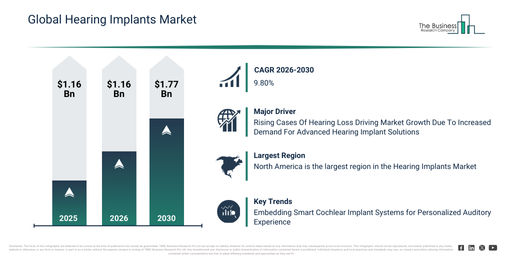
    The hearing implants market is anticipated to show significant growth in the upcoming years. Its valuation is set to climb to $7.41 billion by 2030, exhibiting a compound annual growth rate (CAGR) of 9.8%. This projected expansion during the forecast timeframe stems from a heightened need for tailored hearing solutions, the increased adoption of smart and connected implants, an expanding older adult population, greater investments in auditory healthcare innovations, and continuous improvements in implant materials and processors. Noteworthy trends for the forecast period include the growing acceptance of advanced cochlear implant technologies, an increasing need for pediatric hearing implants, the wider integration of wireless and smart connectivity features, the progression of minimally invasive implantation techniques, and an elevated focus on sound processing performance.

    Access Your Free Sample Report For In-Depth Market Analysis:

    https://www.thebusinessresearchcompany.com/sample.aspx?id=2445&type=smp

    What Leading Drivers Are Supporting The Hearing Implants Market Expansion?

    The growing incidence of hearing loss is anticipated to boost the expansion of the hearing implants market in the future. Hearing loss, defined as a reduction in one’s auditory capabilities, is categorized by severity and type, including moderate, mild, severe, and profound hearing impairment. The escalating occurrence of hearing loss stems from prolonged exposure to loud sounds, which damages inner ear hair cells essential for transmitting sound to the brain. Hearing implant systems offer advantages to individuals with hearing loss, aiming to enhance their comprehension of speech and ambient noise. For example, in February 2023, the World Health Organization, an intergovernmental organization located in Switzerland, projected that by 2050, around 2.5 billion individuals would experience some level of hearing impairment, with at least 700 million requiring hearing rehabilitation. Consequently, the rising instances of hearing loss are propelling the growth of the hearing implants market.

    How Is The Hearing Implants Market Segmented Across Different Segment Categories?

    The hearing implants market covered in this report is segmented –

    1) By Type: Cochlear Implants, Middle Ear Implants, Bone Conduction Implants, Auditory Brainstem Implant

    2) By Age: Adult, Pediatric

    3) By End-User: Hospitals, ENT clinics, Ambulatory Surgical Centres

    Subsegments:

    1) By Cochlear Implants: Conventional Cochlear Implants, Hybrid Cochlear Implants

    2) By Middle Ear Implants: Active Middle Ear Implants, Passive Middle Ear Implants

    3) By Bone Conduction Implants: Softband Bone Conduction Implants, Surgically Implanted Bone Conduction Devices

    4) By Auditory Brainstem Implants: Implantable Auditory Brainstem Implants (ABI), Fully Implantable ABI Systems

    What Emerging Trends Are Seen In The Hearing Implants Market?

    Leading companies in the hearing implants market are concentrating on technological advancements, such as smart cochlear implant systems, with the goal of improving hearing performance, enabling real-time sound environment adaptation, and boosting patient engagement through connected digital tools. These advanced systems enable users to adjust settings via mobile applications, monitor device performance, and receive personalized auditory experiences tailored to their lifestyle and hearing needs. For instance, in July 2025, Cochlear, an Australia-based manufacturer of hearing device implants, introduced the world’s first and only smart cochlear implant system. This system was designed to integrate AI-driven sound processing and mobile connectivity to deliver a seamless hearing experience. The system facilitates real-time sound adaptation, personalized hearing profiles, and remote monitoring, assisting audiologists in remotely fine-tuning device performance. This innovation represents a significant advancement in the smart hearing technology trend, offering patients enhanced auditory perception, convenience, and connectivity, while also supporting clinicians with actionable data for improved outcomes.

    Which Organizations Play A Role In The Hearing Implants Market Landscape?

    Major companies operating in the hearing implants market are Sonova Holdings AG, Advanced Bionics AG, William Demant Holding Group, Widex A/S, MED-EL, Cochlear Ltd., Oticon, Phonak, Unitron, Sonic Innovations Inc., Nurotron Biotechnology Co. Ltd., Envoy Medical Corporation, Sivantos Group, Neurelec SA, Otologics LLC, Ototronix LLC, Sonitus Medical Inc., Medtronic plc, Siemens AG

    Get The Full Hearing Implants Market Report:

    https://www.thebusinessresearchcompany.com/report/hearing-implants-global-market-report

    Which Region Leads The Hearing Implants Market In Terms Of Market Share?

    North America was the largest region in the global hearing implants devices and equipment market in 2025. Asia-Pacific was the second-largest region in the hearing implants devices and equipment market. The regions covered in the hearing implants market report are Asia-Pacific, South East Asia, Western Europe, Eastern Europe, North America, South America, Middle East, Africa.

    Request A Customized Hearing Implants Market Report For Competitive Insights:

    https://www.thebusinessresearchcompany.com/customise?id=2445&type=smp

    Browse Through More Reports Similar to the Global Hearing Implants Market 2026, By The Business Research Company

    Cochlear Implant Market Report 2026

    https://www.thebusinessresearchcompany.com/report/cochlear-implant-global-market-report

    Hearing Aid Devices And Equipment Market Report 2026

    https://www.thebusinessresearchcompany.com/report/hearing-aid-devices-and-equipment-global-market-report

    Dental Implants Market Report 2026

    https://www.thebusinessresearchcompany.com/report/dental-implants-global-market-report

    Get in touch with us:

    The Business Research Company: https://www.thebusinessresearchcompany.com/

    Americas +1 310-496-7795

    Asia +44 7882 955267 & +91 8897263534

    Europe +44 7882 955267

    Email us at info@tbrc.info

    Follow us on:

    LinkedIn: https://in.linkedin.com/company/the-business-research-company

    YouTube: https://www.youtube.com/channel/UC24_fI0rV8cR5DxlCpgmyFQ

    Global Market Model: https://www.thebusinessresearchcompany.com/global-market-model

  • Hearing Diagnostic Devices And Equipment Market Revenue Projected To Hit $4 Billion By 2030 With 10.2% CAGR

    Hearing Diagnostic Devices And Equipment Market Revenue Projected To Hit $4 Billion By 2030 With 10.2% CAGR

    The Business Research Company’s 2026 market reports feature enhanced tools like market attractiveness analysis, TAM assessment, and company scoring matrices, along with interactive dashboards, deeper supply chain insights, and startup coverage strengthening the depth, usability, and strategic value of insights.

    By 2030, What Market Size Is The Hearing Diagnostic Devices And Equipment Market Expected To Reach Based On Its 2026 Value?

    The hearing diagnostic devices and equipment market has experienced robust growth in recent times. Projections indicate it will expand from $2.48 billion in 2025 to $2.71 billion in 2026, exhibiting a compound annual growth rate (CAGR) of 9.4%. This historical expansion can be linked to factors such as the broadening of clinical hearing assessment practices, a rise in the diagnosis of hearing disorders, the increased accessibility of audiometric equipment, the proliferation of ENT clinics, and the implementation of standardized diagnostic protocols.

    The hearing diagnostic devices and equipment market size is poised for substantial expansion over the next few years. It is projected to reach $4 billion by 2030, demonstrating a compound annual growth rate (CAGR) of 10.2%. This projected growth can be linked to factors such as the increasing need for point-of-care diagnostics, the rising application of telehealth-enabled hearing examinations, the enlargement of pediatric and geriatric screening initiatives, advancements in diagnostic accuracy through technology, and increasing investments in digital healthcare diagnostics. Significant trends anticipated during this forecast period include the expanding adoption of automated hearing screening systems, the growing deployment of portable diagnostic devices, the wider integration of software-based audiometry, the broadening of remote hearing assessment solutions, and a greater emphasis on technologies for early detection.

    Access Your Free Sample Report For In-Depth Market Analysis:

    https://www.thebusinessresearchcompany.com/sample.aspx?id=2429&type=smp

    Which Key Factors Are Driving The Hearing Diagnostic Devices And Equipment Market Growth?

    The growing occurrence of hearing loss is anticipated to drive the expansion of the hearing diagnostic devices and equipment market in the foreseeable future. This condition, defined as a partial or complete inability to perceive sounds in one or both ears, is influenced by elements like noise exposure, genetic disorders, ototoxic drugs, ear diseases, birth-related issues, and the aging process. The increasing number of hearing loss cases stems from escalating noise pollution, an expanding elderly population, and a proliferation of medical conditions impacting auditory well-being. For example, data from February 2025 by the World Health Organization (WHO), a Switzerland-based intergovernmental entity, indicates that more than 5% of the worldwide population, totaling 430 million individuals, currently experience disabling hearing loss. Forecasts suggest this number will reach 700 million by 2050. Approximately 80% of those impacted reside in nations with low to middle incomes. The severity of this condition escalates considerably with advancing age, with over 25% of adults aged above 60 suffering from disabling hearing loss. Consequently, the escalating occurrence of hearing impairments and losses is fostering the development of the hearing diagnostic devices and equipment market.

    What Are The Main Segments Within The Hearing Diagnostic Devices And Equipment Market Segment Structure?

    The hearing diagnostic devices and equipment market covered in this report is segmented –

    1) By Type: Otoacoustic Emission (OAE), Audiometers, Otoscopes, Tympanometers, Other Types

    2) By Indication: Conductive Hearing Loss, Sensorineural Hearing Loss, Combination Hearing Loss, Other Indications

    3) By End-User: Hospitals, Clinics, Personal Care, Ambulatory Care

    Subsegments:

    1) By Otoacoustic Emission (OAE) Devices: Transient Evoked OAE (TEOAE) Devices, Distortion Product OAE (DPOAE) Devices

    2) By Audiometers: Diagnostic Audiometers, Screening Audiometers, Portable Audiometers, Computerized Audiometers

    3) By Otoscopes: Pocket Otoscopes, Video Otoscopes, Digital Otoscopes

    4) By Tympanometers: Conventional Tympanometers, Portable Tympanometers, Multifunction Tympanometers

    5) By Other Types: Hearing Screeners, Speech Audiometry Equipment, Impedance Audiometers

    Which Trends Are Guiding The Direction Of The Hearing Diagnostic Devices And Equipment Market?

    Leading companies within the hearing diagnostic devices and equipment market are developing AI-based hearing diagnostic devices to gain a competitive advantage. These AI-based hearing diagnostic devices are medical instruments and tools that integrate artificial intelligence (AI) technology to aid in the assessment and diagnosis of hearing-related conditions and disorders. For example, in September 2023, Starkey Hearing Technologies, a US-based hearing aid company, launched its Genesis AI hearing aids. Starkey introduced a new Neuro Processor that boasts six times more transistors and four times the speed. This processor is engineered to mimic the central auditory system via a new compression system and an on-chip Deep Neural Network (DNN) accelerator. The Edge Mode+, an intelligent, on-demand feature, has been enhanced with improvements to its DNN algorithm, making it more effective across a diverse range of sounds. Furthermore, Genesis AI offers additional advancements for both professionals and patients, including an offline mode, improved 2-way audio, feedback canceller updates, and firmware update notifications through the My Starkey app. These innovations aim to provide an enhanced and versatile hearing experience.

    Who Are The Companies Participating In The Hearing Diagnostic Devices And Equipment Market?

    Major companies operating in the hearing diagnostic devices and equipment market are Demant A/S, WS Audiology, Natus Medical Incorporated, Grason Stadler, MeCan Medical, Amplivox, Inventis, Western Surgical, Xion Medical, Interacoustics, MAICO Diagnostics, Luxamed, Sibelmed, Vivosonic, Oticon, Phonak, KaWe Medical, Hangzhou AcoSound Technology Co. Ltd, Microson, Zumax Medical

    Get The Full Hearing Diagnostic Devices And Equipment Market Report:

    https://www.thebusinessresearchcompany.com/report/hearing-diagnostic-devices-and-equipment-global-market-report

    Which Region Leads The Hearing Diagnostic Devices And Equipment Market In Overall Market Size?

    North America was the largest region in the global hearing diagnostic devices and equipment market in 2025. Asia-Pacific was the second largest market in hearing diagnostic devices and equipment market. The regions covered in the hearing diagnostic devices and equipment market report are Asia-Pacific, South East Asia, Western Europe, Eastern Europe, North America, South America, Middle East, Africa.

    Request A Customized Hearing Diagnostic Devices And Equipment Market Report For Competitive Insights:

    https://www.thebusinessresearchcompany.com/customise?id=2429&type=smp

    Browse Through More Reports Similar to the Global Hearing Diagnostic Devices And Equipment Market 2026, By The Business Research Company

    Hearing Aid Devices And Equipment Market Report 2026

    https://www.thebusinessresearchcompany.com/report/hearing-aid-devices-and-equipment-global-market-report

    Hearing Implants Market Report 2026

    https://www.thebusinessresearchcompany.com/report/hearing-implants-global-market-report

    Hearing Amplifiers Market Report 2026

    https://www.thebusinessresearchcompany.com/report/hearing-amplifiers-global-market-report

    Get in touch with us:

    The Business Research Company: https://www.thebusinessresearchcompany.com/

    Americas +1 310-496-7795

    Asia +44 7882 955267 & +91 8897263534

    Europe +44 7882 955267

    Email us at info@tbrc.info

    Follow us on:

    LinkedIn: https://in.linkedin.com/company/the-business-research-company

    YouTube: https://www.youtube.com/channel/UC24_fI0rV8cR5DxlCpgmyFQ

    Global Market Model: https://www.thebusinessresearchcompany.com/global-market-model

  • Global Hearing Aid Devices And Equipment Market Set To Expand To $19.18 Billion By 2030 At 8.1% CAGR

    Global Hearing Aid Devices And Equipment Market Set To Expand To $19.18 Billion By 2030 At 8.1% CAGR

    The Business Research Company’s 2026 market reports feature enhanced tools like market attractiveness analysis, TAM assessment, and company scoring matrices, along with interactive dashboards, deeper supply chain insights, and startup coverage strengthening the depth, usability, and strategic value of insights.

    What Is The Anticipated Rise In Market Value Of The Hearing Aid Devices And Equipment Market During The Forecast Period?

    The market size for hearing aid devices and equipment has demonstrated strong growth in recent years. This market is anticipated to expand from $12.97 billion in 2025 to $14.02 billion by 2026, exhibiting a compound annual growth rate (CAGR) of 8.1%. Historically, this expansion has been propelled by factors such as the increasing aging population, a rising prevalence of hearing loss, enhanced awareness of hearing health, technological progress in digital hearing aids, and the broader provision of audiology services.

    The hearing aid devices and equipment market is projected for substantial expansion in the coming years, with its size expected to reach $19.18 billion by 2030, exhibiting an 8.1% compound annual growth rate (CAGR). This growth during the forecast period is attributable to the increasing embrace of smart hearing devices, a rising need for personalized hearing solutions, the expanding availability of over-the-counter hearing aids, the extension of tele-audiology services, and continuous breakthroughs in sound enhancement algorithms. Noteworthy trends anticipated in this period encompass the growing adoption of AI-enabled sound processing, an increasing demand for wireless and Bluetooth-enabled hearing aids, a heightened focus on miniaturized and discreet devices, the spread of rechargeable hearing aid solutions, and improved integration with smartphone connectivity.

    Access Your Free Sample Report For In-Depth Market Analysis:

    https://www.thebusinessresearchcompany.com/sample.aspx?id=2428&type=smp

    What Primary Drivers Are Shaping The Hearing Aid Devices And Equipment Market?

    The increasing occurrence of hearing loss is projected to fuel the expansion of the hearing aid devices and equipment market moving forward. Hearing loss signifies a partial or complete inability to perceive sounds, frequently resulting from factors such as aging, exposure to noise, infections, or genetic predispositions, and its rising frequency is leading to a larger demographic requiring auditory assistance solutions. This condition is becoming more common as extended usage of personal audio devices subjects the inner ear’s delicate hair cells to damaging loud noise, leading to gradual or permanent impairment. Consequently, with the rise in hearing impairment, the demand for advanced hearing aids, cochlear implants, and other assistive listening technologies is significantly increasing. For instance, in February 2025, the World Health Organization (WHO), a Switzerland-based intergovernmental organization, reported that over 5% of the global population, amounting to approximately 430 million individuals including 34 million children, require rehabilitation for disabling hearing loss. Furthermore, forecasts indicate that by 2050, more than 700 million people, or 1 in 10 worldwide, will experience disabling hearing loss. Therefore, the expanding prevalence of hearing loss is propelling the growth of the hearing aid devices and equipment market.

    How Is Segmentation Applied In The Hearing Aid Devices And Equipment Market Segment Analysis?

    The hearing aid devices and equipment market covered in this report is segmented –

    1) By Product: Receiver-In-The-Ear Hearing Aids (RTE), Behind-The-Ear Hearing (BTE) Aids, In-The-Ear Hearing (ITE) Aids, In-The-Canal Hearing (ITC) Aids, Completely-In-The-Canal Hearing (CIC) Aids

    2) By Technology: Conventional Hearing Aids, Digital Hearing Aids

    3) By Patient: Adult, Pediatric, Elderly

    4) By Hearing Loss: Conductive Hearing Loss, Sensorineural Hearing Loss

    5) By Distribution Channel: Audiology And ENT Clinics, Pharmacies, Online Sales, Others Distribution Channel

    Subsegments:

    1) By Receiver-In-The-Ear Hearing Aids (RTE): Standard RTE, RTE With Telecoil, RTE With Bluetooth Connectivity

    2) By Behind-The-Ear Hearing Aids (BTE): Standard BTE, Mini BTE, BTE With Wireless Features

    3) By In-The-Ear Hearing Aids (ITE): Full-Size ITE, Half-Size ITE, Custom-Fit ITE

    4) By In-The-Canal Hearing Aids (ITC): Standard ITC, ITC With Wireless Connectivity, ITC With Noise Management

    5) By Completely-In-The-Canal Hearing Aids (CIC): Standard CIC, CIC With Remote Controls, CIC With Enhanced Sound Features

    What Trends Are Affecting The Growth Of The Hearing Aid Devices And Equipment Market?

    Major companies operating in the hearing aids market are developing rechargeable hearing aids to gain a competitive edge. A rechargeable hearing aid is a type of hearing device that can be charged and reused, eliminating the need for disposable batteries. For instance, in August 2023, Unitron, a Canada-based hearing aid manufacturing company, launched Moxi V-RS, a rechargeable hearing device operating on the Vivante platform. It offers individual left and right-side instruments for comfort and comes with a magnetic charging case for convenience. This innovative device also ensures seamless connectivity with digital devices, allowing wearers to effortlessly stream calls, music, and more. They can easily control their hearing aids through tap controls, making for a user-friendly experience. Moxi V-RS enhances the overall user experience by providing personalized hearing control, improved sound performance, and a modern design through the Remote Plus app.

    Who Are The Companies Participating In The Hearing Aid Devices And Equipment Market Environment?

    Major companies operating in the hearing aid devices and equipment market are Sonova Holding AG, WS Audiology A/S, Demant AS, Starkey Hearing Technologies, GN Store Nord A/S, Eargo Inc., RION Co. Ltd, Zounds Hearing, Audina Hearing Instruments Inc., SeboTek Hearing Systems LLC, Widex India Pvt Ltd., Oticon India, Phonak India, Unitron India, Bernafon India, Beltone India Private Limited, Signia Australia, GN Hearing Australia Pty. Ltd, Cortiton Hearing Aid Co Ltd, Narang Medical Limited

    Get The Full Hearing Aid Devices And Equipment Market Report:

    https://www.thebusinessresearchcompany.com/report/hearing-aid-devices-and-equipment-global-market-report

    Which Region Is The Top Contributor To The Hearing Aid Devices And Equipment Market By Share?

    Asia-Pacific was the largest region in global hearing aid devices and equipment market in 2025. North America was the second-largest region in the hearing aid devices and equipment market. The regions covered in the hearing aid devices and equipment market report are Asia-Pacific, South East Asia, Western Europe, Eastern Europe, North America, South America, Middle East, Africa.

    Request A Customized Hearing Aid Devices And Equipment Market Report For Competitive Insights:

    https://www.thebusinessresearchcompany.com/customise?id=2428&type=smp

    Browse Through More Reports Similar to the Global Hearing Aid Devices And Equipment Market 2026, By The Business Research Company

    Hearing Diagnostic Devices And Equipment Market Report 2026

    https://www.thebusinessresearchcompany.com/report/hearing-diagnostic-devices-and-equipment-global-market-report

    Hearing Implants Market Report 2026

    https://www.thebusinessresearchcompany.com/report/hearing-implants-global-market-report

    Audio Equipment Market Report 2026

    https://www.thebusinessresearchcompany.com/report/audio-equipment-global-market-report

    Get in touch with us:

    The Business Research Company: https://www.thebusinessresearchcompany.com/

    Americas +1 310-496-7795

    Asia +44 7882 955267 & +91 8897263534

    Europe +44 7882 955267

    Email us at info@tbrc.info

    Follow us on:

    LinkedIn: https://in.linkedin.com/company/the-business-research-company

    YouTube: https://www.youtube.com/channel/UC24_fI0rV8cR5DxlCpgmyFQ

    Global Market Model: https://www.thebusinessresearchcompany.com/global-market-model

  • Healthcare Smart Card Reader Market Growth Expected To Reach $3.67 Billion By 2030 At 17.7% CAGR

    Healthcare Smart Card Reader Market Growth Expected To Reach $3.67 Billion By 2030 At 17.7% CAGR

    The Business Research Company’s 2026 market reports feature enhanced tools like market attractiveness analysis, TAM assessment, and company scoring matrices, along with interactive dashboards, deeper supply chain insights, and startup coverage strengthening the depth, usability, and strategic value of insights.

    How Is The Market Size Of The Healthcare Smart Card Reader Market Expected To Scale Between 2026 And 2030?

    The healthcare smart card reader market size has seen rapid expansion in recent years. It is anticipated to increase from $1.62 billion in 2025 to $1.91 billion in 2026, achieving a compound annual growth rate (CAGR) of 18.0%. The historical growth in this market can be attributed to various factors including the reliance on traditional paper-based patient records, the limited adoption of smart card technologies, a growing need for patient identification solutions, the increasing digitization within hospitals and clinics, and the standardization of medical card formats.

    The healthcare smart card reader market is projected to undergo substantial expansion over the upcoming years. Its valuation is anticipated to climb to $3.67 billion by 2030, exhibiting a compound annual growth rate (CAGR) of 17.7%. This growth during the forecast period is propelled by factors such as integration with cloud-based healthcare systems, the rise of biometric and multi-application card readers, increasing government regulations on data security, the expansion of smart healthcare infrastructure, and the growth of telemedicine and remote patient monitoring. Significant trends expected during this period encompass the increasing adoption of contactless and dual interface card readers, growing integration with electronic health records (ehr) systems, a rising focus on patient data security and authentication, the expansion of smart card readers in medication dispensing, and enhanced efficiency in hospital and clinic administrative processes.

    Access Your Free Sample Report For In-Depth Market Analysis:

    https://www.thebusinessresearchcompany.com/sample.aspx?id=25778&type=smp

    Which Major Drivers Are Influencing The Expansion Of The Healthcare Smart Card Reader Market?

    The increasing integration of electronic health records is projected to drive the expansion of the healthcare smart card reader market going forward. These digital versions of patient medical histories are securely stored and accessible by authorized healthcare providers to support improved diagnosis and treatment. The growing adoption of electronic health records is a response to the demand for efficient healthcare that conserves time, minimizes paperwork, and guarantees swift, accurate access to patient data. Healthcare smart card readers improve the functionality of electronic health records by enabling secure and rapid access to patient information, facilitating precise identification, smooth data integration, and effective information exchange among healthcare professionals. For instance, in October 2024, NHS England, a UK-based government healthcare agency, reported that by November 2023, it had achieved 90% adoption of Electronic Patient Records (EPR) systems across trusts, allowing authorized clinicians to access essential patient information. Thus, the escalating adoption of electronic health records is propelling the growth of the healthcare smart card reader market.

    What Segment Categories Shape The Healthcare Smart Card Reader Market Segment Landscape?

    The healthcare smart card reader market covered in this report is segmented –

    1) By Product Type: Contact-Based Card Readers, Contactless Card Readers, Dual Interface Card Readers, Other Product Types

    2) By Card Type: Memory-Based Smart Cards, Micro-Controller-Based Smart Cards

    3) By Application: Patient Identification, Medical Records Management, Medication Dispensing, Access Control

    4) By End User: Hospitals And Clinics, Pharmacies, Medical Labs, Insurance Companies

    Subsegments:

    1) By Contact-Based Card Readers: Universal Serial Bus (USB) Smart Card Readers, Serial Port Readers, Keyboard Integrated Readers, PIN Pad Readers, Mobile Device Readers

    2) By Contactless Card Readers: Radio Frequency Identification Readers, Near Field Communication-Enabled Readers, Bluetooth Contactless Readers, Wi-Fi Contactless Readers, Embedded Contactless Modules

    3) By Dual Interface Card Readers: Hybrid Smart Card Readers, Biometric Dual Interface Readers, Multi-Application Smart Card Readers, Secure Access Module (SAM) Compatible Readers, Desktop and Handheld Dual Interface Readers

    4) By Other Product Types: Wearable Smart Card Readers, All-In-One Authentication Terminals, Tablet Or Phone Slot Readers, Integrated Point-Of-Care Terminals, Smart Card Reader Software Solutions

    Which Trends Are Shaping The Healthcare Smart Card Reader Market?

    Leading companies within the healthcare smart card reader market are prioritizing the adoption of next-generation contactless communication (NCC) technologies. These technologies allow smart card readers to facilitate high-speed, multi-protocol card interactions for uses such as patient identification, asset tracking, and secure access. NCC provides functionalities including real-time card data processing, multi-standard card interoperability, and seamless integration into enterprise systems. For instance, in January 2024, Advanced Card Systems Ltd., a China-based smart-card reader and module manufacturer, launched the ACR1552 Series. This NCC-enhanced reader family, designed for sectors like healthcare, finance, and government, features communication speeds of up to 848 kbps, a built-in secure access module (SAM) slot for secure transactions, and broad smart-card compatibility (ISO 14443, ISO 15693, NFC) across various form factors. The ACR1552 Series enhances secure, efficient access to health-card systems, supports flexible deployment scenarios, and improves interoperability in clinical and administrative environments.

    Who Are The Companies Operating Across The Healthcare Smart Card Reader Market Value Chain?

    Major companies operating in the healthcare smart card reader market are Thales S.A., Infineon Technologies AG, NXP Semiconductors N.V., ASSA ABLOY AB, Giesecke+Devrient GmbH, Advantech Co. Ltd., Identiv Inc., FEITIAN Technologies Co. Ltd., rf IDEAS Inc., WISeKey International Holding Ltd., Advanced Card Systems Ltd., On Track Innovations Ltd. (OTI), ID Tech Solutions Pvt. Ltd., IDEMIA Group, IDENTOS Inc., SecuGen Corporation, Rayton Solutions Pte Ltd., CardLogix Corporation, Shenzhen HCC Technology Co. Ltd., Creator Tech Co. Ltd.

    Get The Full Healthcare Smart Card Reader Market Report:

    https://www.thebusinessresearchcompany.com/report/healthcare-smart-card-reader-global-market-report

    Which Region Represents The Largest Share Of The Healthcare Smart Card Reader Market?

    Europe was the largest region in the healthcare smart card reader market in 2025. Asia-Pacific is expected to be the fastest-growing region in the forecast period. The regions covered in the healthcare smart card reader market report are Asia-Pacific, South East Asia, Western Europe, Eastern Europe, North America, South America, Middle East, Africa.

    Request A Customized Healthcare Smart Card Reader Market Report For Competitive Insights:

    https://www.thebusinessresearchcompany.com/customise?id=25778&type=smp

    Browse Through More Reports Similar to the Global Healthcare Smart Card Reader Market 2026, By The Business Research Company

    Smart Card In Healthcare Market Report 2026

    https://www.thebusinessresearchcompany.com/report/smart-card-in-healthcare-global-market-report

    Mobile Card Reader Market Report 2026

    https://www.thebusinessresearchcompany.com/report/mobile-card-reader-global-market-report

    Smart Card Market Report 2026

    https://www.thebusinessresearchcompany.com/report/smart-card-global-market-report

    Get in touch with us:

    The Business Research Company: https://www.thebusinessresearchcompany.com/

    Americas +1 310-496-7795

    Asia +44 7882 955267 & +91 8897263534

    Europe +44 7882 955267

    Email us at info@tbrc.info

    Follow us on:

    LinkedIn: https://in.linkedin.com/company/the-business-research-company

    YouTube: https://www.youtube.com/channel/UC24_fI0rV8cR5DxlCpgmyFQ

    Global Market Model: https://www.thebusinessresearchcompany.com/global-market-model