Category: Medical Equipment

  • Biothreat Detection Systems Market Forecast to Reach $3.49 Billion by 2030 at 10% CAGR

    Biothreat Detection Systems Market Forecast to Reach $3.49 Billion by 2030 at 10% CAGR

    The Business Research Company’s 2026 market reports include new capabilities such as market attractiveness scoring and analysis, total addressable market analysis, company scoring matrix, interactive excel data dashboard, improved supply chain analysis, upcoming startups in the market, and overview of key products, aimed at improving the depth, usability, and strategic value of the insights delivered.

    How Will The Market Size Of The Biothreat Detection Systems Market Evolve From 2026 To 2030?

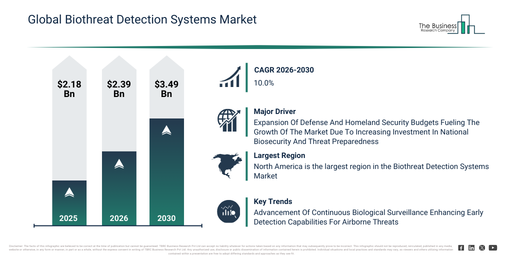
    The biothreat detection systems market has demonstrated robust expansion in recent years. Its valuation is projected to increase from $2.18 billion in 2025 to $2.39 billion in 2026, exhibiting a compound annual growth rate (CAGR) of 9.7%. This past growth is largely attributable to increasing public health surveillance initiatives, rising investment in biodefense programs, expansion of laboratory diagnostic capabilities, growing awareness of pandemic preparedness, and adoption of molecular detection platforms.

    The biothreat detection systems market size is anticipated to undergo significant expansion in the next few years. It is projected to grow to $3.49 billion in 2030, demonstrating a compound annual growth rate (CAGR) of 10.0%. This growth during the forecast period can be attributed to several factors, including an escalating demand for early-warning biothreat systems, the increasing integration of AI-driven analytics, the broadening of environmental monitoring networks, a heightened emphasis on national biosecurity strategies, and the rising adoption of portable field-deployable systems. Significant trends expected in this period encompass the increased deployment of automated bioaerosol monitoring systems, the growing embrace of rapid molecular detection technologies, the expansion of integrated surveillance networks, a rise in the use of portable detection kits, and an intensified focus on real-time threat analytics.

    Download the Free Sample Report to Explore Key Market Insights:

    https://www.thebusinessresearchcompany.com/sample.aspx?id=33043&type=smp

    What Key Drivers Are Influencing The Growth Of The Biothreat Detection Systems Market?

    The anticipated increase in defense and homeland security budgets is set to boost the expansion of the biothreat detection systems market in the future. These budgets denote governmental financial allocations specifically designated for national defense, military activities, intelligence gathering, border security, counterterrorism efforts, readiness for emergencies, and the safeguarding of vital infrastructure and public well-being. Their growth is attributed to heightened geopolitical tensions, necessitating increased spending on national security and preparedness against various threats. Biothreat detection systems support these budgets by facilitating the prompt identification and swift response to biological dangers, thereby mitigating the expense and consequences of extensive outbreaks, urgent interventions, and national security events. As an illustration, in April 2025, the Stockholm International Peace Research Institute (SIPRI), an independent international institute based in Sweden, reported that in 2024, the United Kingdom increased its military expenditure by 2.8% to $81.8 billion, making it the world’s sixth-largest defense spender. Consequently, the augmentation of defense and homeland security budgets is fueling the expansion of the biothreat detection systems market.

    Which Segment Areas Are Covered In The Biothreat Detection Systems Market Analysis?

    The biothreat detection systems market covered in this report is segmented –

    1. By Technology: Polymerase Chain Reaction Based Detection; Immunological Detection; Biosensors; Microarrays; Other Technologies

    2. By Detection Type: Biological Agents; Chemical Agents; Radiological Agents

    3. By Application: Military And Defense; Public Health; Environmental Monitoring; Agriculture; Other Applications

    4. By End-User: Government Agencies; Hospitals And Healthcare Facilities; Research Laboratories; Commercial And Industrial; Other End-Users

    Subsegments:

    1. By Polymerase Chain Reaction Based Detection: Real Time Polymerase Chain Reaction; Digital Polymerase Chain Reaction; Multiplex Polymerase Chain Reaction; Reverse Transcription Polymerase Chain Reaction; Quantitative Polymerase Chain Reaction

    2. By Immunological Detection: Enzyme Linked Immunosorbent Assay; Lateral Flow Assay; Agglutination Assay; Western Blot Assay; Immunofluorescence Assay

    3. By Biosensors: Electrochemical Biosensors; Optical Biosensors; Piezoelectric Biosensors; Thermal Biosensors; Magnetic Biosensors

    4. By Microarrays: DNA Microarrays; Protein Microarrays; Antibody Microarrays; Peptide Microarrays; Cell Microarrays

    5. By Other Technologies: Next Generation Sequencing; Flow Cytometry; Mass Spectrometry; Microfluidics Platforms; Lab On A Chip Systems

    What Key Developments And Trends Are Impacting The Biothreat Detection Systems Market?

    Major companies within the biothreat detection systems market are concentrating on advancing continuous biological surveillance technologies, such as real-time aerosol-based pathogen monitoring systems. This focus is intended to enable the early detection of airborne biological threats in public and critical infrastructure settings. Real-time aerosol-based pathogen monitoring systems work by continuously collecting and analyzing air samples to identify biological agents, thereby allowing authorities to uncover emerging health threats or deliberate releases before widespread exposure can occur. For instance, in August 2023, BioFlyte Inc., a US-based biodefense technology company, launched an initial biothreat surveillance pilot program at Pittsburgh International Airport. This pilot project involves the deployment of autonomous air-sampling and pathogen detection units throughout the airport’s facilities, enabling near real-time identification of airborne biological threats and integrating alerting capabilities to support rapid response by public health and security teams, ultimately strengthening early-warning preparedness for high-traffic transportation hubs.

    Which Global Companies Are Actively Competing In The Biothreat Detection Systems Market?

    Major companies operating in the biothreat detection systems market are Roche Diagnostics AG, Thermo Fisher Scientific Inc., Abbott Laboratories, Eurofins Scientific SE, Agilent Technologies Inc., Battelle Memorial Institute, Illumina Inc., Smiths Group, Shimadzu Corporation, Bruker Corporation, Bio Rad Laboratories Inc., QIAGEN NV, Tecan Group Ltd., DiaSorin S.p.A., Emergent BioSolutions Inc., Physical Sciences Inc, DetectaChem Inc., PositiveID Corporation, AdVnt Biotechnologies, Alexeter Technologies LLC.

    Read the full biothreat detection systems market report here:

    https://www.thebusinessresearchcompany.com/report/biothreat-detection-systems-market-report

    Which Region Currently Holds The Largest Share Of The Biothreat Detection Systems Market?

    North America was the largest region in the biothreat detection systems market in 2025. Asia-Pacific is expected to be the fastest-growing region in the forecast period. The regions covered in the biothreat detection systems market report are Asia-Pacific, South East Asia, Western Europe, Eastern Europe, North America, South America, Middle East, Africa.

    Request A Tailored Biothreat Detection Systems Market Research Report For Competitive Advantage:

    https://www.thebusinessresearchcompany.com/customise?id=33043&type=smp

    Browse Through More Reports Similar to the Global Biothreat Detection Systems Market 2026, By The Business Research Company

    Bioprocess Analyzers Market Report 2026

    https://www.thebusinessresearchcompany.com/report/bioprocess-analyzers-global-market-report

    Small Scale Bioreactors Market Report 2026

    https://www.thebusinessresearchcompany.com/report/small-scale-bioreactors-global-market-report

    Membrane Bioreactor Market Report 2026

    https://www.thebusinessresearchcompany.com/report/membrane-bioreactor-global-market-report

    Get in touch with us:

    The Business Research Company: https://www.thebusinessresearchcompany.com/

    Americas +1 310-496-7795

    Asia +44 7882 955267 & +91 8897263534

    Europe +44 7882 955267

    Email us at info@tbrc.info

    Follow us on:

    LinkedIn: https://in.linkedin.com/company/the-business-research-company

    YouTube: https://www.youtube.com/channel/UC24_fI0rV8cR5DxlCpgmyFQ

    Global Market Model: https://www.thebusinessresearchcompany.com/global-market-model

  • Aortic Valve Replacement Devices Market Forecast 2026–2035 Driven by Key Industry Factors

    Aortic Valve Replacement Devices Market Forecast 2026–2035 Driven by Key Industry Factors

    The Business Research Company’s 2026 market reports include new capabilities such as market attractiveness scoring and analysis, total addressable market analysis, company scoring matrix, interactive excel data dashboard, improved supply chain analysis, upcoming startups in the market, and overview of key products, aimed at improving the depth, usability, and strategic value of the insights delivered.

    What Market Value Is Anticipated For The Aortic Valve Replacement Devices Market Over The Period 2026–2030?

    The aortic valve replacement devices market has seen rapid expansion in its size recently. This market is projected to expand from $8.85 billion in 2025 to $9.75 billion in 2026, demonstrating a compound annual growth rate (CAGR) of 10.2%. Factors contributing to its historical growth include an increase in the aging population suffering from valvular diseases, the expansion of cardiac surgery capabilities, more frequent diagnoses of aortic stenosis, the early adoption of surgical valve replacements, and advancements in cardiovascular imaging.

    The market for aortic valve replacement devices is expected to undergo rapid expansion in the coming years. It is projected to achieve a value of **$14.51 billion by 2030, demonstrating a compound annual growth rate (CAGR) of 10.4%.** This growth during the forecast period is primarily driven by an increasing preference for transcatheter procedures, heightened investments in structural heart programs, a rising demand for outpatient cardiac interventions, the broader use of advanced biomaterials, and improved procedural success rates. Significant trends anticipated for this period include the wider adoption of minimally invasive valve replacement, a surge in the application of transcatheter valve technologies, an increasing need for self-expandable valves, the development of patient-specific valve designs, and a stronger focus on the long-term durability of valves.

    Download the Free Sample Report to Explore Key Market Insights:

    https://www.thebusinessresearchcompany.com/sample.aspx?id=33017&type=smp

    What Underlying Factors Are Accelerating The Growth Of The Aortic Valve Replacement Devices Market?

    The increasing number of valve replacement operations is anticipated to drive the future expansion of the aortic valve replacement devices market. These medical procedures involve either mending or replacing damaged heart valves to restore normal blood circulation and improve cardiac performance. The rise in valve replacement surgeries, largely due to the increasing prevalence of age-related heart valve conditions, is generating a higher demand for surgical interventions to manage deteriorating valve function and prevent complications. Aortic valve replacement devices contribute to valve replacement surgeries by enabling safer and more effective valve repair or replacement, thereby improving procedural outcomes and supporting wider surgical adoption. For example, in June 2025, according to the British Heart Foundation, a UK-based cardiovascular research charity, more than 13,034 aortic valve replacement (AVR) and nearly 7,695 transcatheter aortic valve implantation (TAVI) procedures were carried out in the United Kingdom during 2022/23, with TAVI procedures showing an increase, signifying a growing adoption of less invasive valve replacement techniques. Thus, the escalating volume of valve replacement surgeries is a significant factor propelling the growth of the aortic valve replacement devices market.

    How Is The Aortic Valve Replacement Devices Market Divided Into Its Major Segments?

    The aortic valve replacement devices market covered in this report is segmented –

    1) By Product: Balloon-Expandable; Self-Expandable; Mechanically Expandable; Aortic Regurgitation

    2) By Leaflet Material: Bovine Pericardium; Porcine Pericardium

    3) By Frame Material: Cobalt-Chromium; Nitinol

    4) By End-Use: Inpatient Facilities; Outpatient Facilities

    Subsegments:

    1) By Balloon-Expandable: Balloon Pre-Dilation; Balloon Post-Dilation; Balloon Valves

    2) By Self-Expandable: Supra-Annular Valves; Intra-Annular Valves; Resheathable Valves

    3) By Mechanically Expandable: Mechanically Adjustable Valves; Radial Force Valves; Repositionable Valves

    4) By Aortic Regurgitation: Surgical Valve Replacement; Transcatheter Valve Replacement; Repair Devices

    How Are Trends Transforming The Aortic Valve Replacement Devices Market Landscape?

    Companies operating in the aortic valve replacement devices market are primarily focused on advanced innovations, including the implementation of three radiopaque vision markers to improve procedural visibility, enhance deployment accuracy, and enable precise valve positioning during transcatheter implantation procedures. These three radiopaque vision markers are distinct, visible reference points integrated into a medical device that boost fluoroscopic visibility, aiding clinicians in accurately positioning and deploying the device during minimally invasive procedures. For example, in January 2025, Abbott Laboratories, the US-based healthcare company, launched Navitor Vision in India, which is the latest version of its transcatheter aortic valve implantation/replacement (TAVI/TAVR) system. This device is designed to treat patients with symptomatic severe aortic stenosis who are at high or extreme surgical risk. Navitor Vision features three radiopaque vision markers for improved visibility during implantation, a dynamic sealing cuff to minimize blood leakage, and is delivered using Abbott’s FlexNav delivery system for precise, minimally invasive valve placement. It provides a less invasive alternative to surgical aortic valve replacement, thereby improving outcomes and accessibility for high-risk patients.

    Who Are The Prominent Organizations Shaping The Aortic Valve Replacement Devices Market?

    Major companies operating in the aortic valve replacement devices market are Abbott Laboratories, Medtronic Plc, Boston Scientific Corporation, Edwards Lifesciences Corporation, Bracco SpA, Biotronik SE & Co. KG, LivaNova Plc, Lepu Medical Technology Co. Ltd., MicroPort Scientific Corporation, Artivion Inc., LifeTech Scientific Corporation, TTK Healthcare Limited, Braile Biomedica, Venus Medtech Inc., SMT Pvt Ltd, JenaValve Technology Inc., Peijia Medical Limited, CryoLife Inc., CorLife, and Colibri Heart Valve LLC.

    Read the full aortic valve replacement devices market report here:

    https://www.thebusinessresearchcompany.com/report/aortic-valve-replacement-devices-market-report

    Which Geographic Areas Are Emerging As Strong Markets For The Aortic Valve Replacement Devices Market?

    North America was the largest region in the aortic valve replacement devices market in 2025. Asia-Pacific is expected to be the fastest-growing region in the forecast period. The regions covered in the aortic valve replacement devices market report are Asia-Pacific, South East Asia, Western Europe, Eastern Europe, North America, South America, Middle East, Africa.

    Request A Tailored Aortic Valve Replacement Devices Market Research Report For Competitive Advantage:

    https://www.thebusinessresearchcompany.com/customise?id=33017&type=smp

    Browse Through More Reports Similar to the Global Aortic Valve Replacement Devices Market 2026, By The Business Research Company

    Transcatheter Aortic Valve Replacement Market Report 2026

    https://www.thebusinessresearchcompany.com/report/transcatheter-aortic-valve-replacement-global-market-report

    Prosthetic Heart Valve Devices And Equipment Market Report 2026

    https://www.thebusinessresearchcompany.com/report/prosthetic-heart-valve-devices-and-equipment-global-market-report

    Abdominal Aortic Aneurysm Aaa Repair Devices Market Report 2026

    https://www.thebusinessresearchcompany.com/report/abdominal-aortic-aneurysm-aaa-repair-devices-global-market-report

    Get in touch with us:

    The Business Research Company: https://www.thebusinessresearchcompany.com/

    Americas +1 310-496-7795

    Asia +44 7882 955267 & +91 8897263534

    Europe +44 7882 955267

    Email us at info@tbrc.info

    Follow us on:

    LinkedIn: https://in.linkedin.com/company/the-business-research-company

    YouTube: https://www.youtube.com/channel/UC24_fI0rV8cR5DxlCpgmyFQ

    Global Market Model: https://www.thebusinessresearchcompany.com/global-market-model
  • Global Polyetheretherketone (PEEK) Implants Industry Trends and Market Growth Forecast for 2026–2030

    Global Polyetheretherketone (PEEK) Implants Industry Trends and Market Growth Forecast for 2026–2030

    The Business Research Company’s 2026 market reports include new capabilities such as market attractiveness scoring and analysis, total addressable market analysis, company scoring matrix, interactive excel data dashboard, improved supply chain analysis, upcoming startups in the market, and overview of key products, aimed at improving the depth, usability, and strategic value of the insights delivered.

    What Will Be The Estimated Market Valuation Of The Polyetheretherketone (PEEK) Implants Market By The End Of 2030?

    The polyetheretherketone (peek) implants market has experienced robust growth in recent years. Projections indicate its expansion from $1.55 billion in 2025 to $1.68 billion in 2026, demonstrating a compound annual growth rate (CAGR) of 8.4%. This historical expansion is largely due to an increase in spinal and orthopedic surgical procedures, greater recognition of biocompatible implant benefits, a surge in demand for trauma surgery equipment, continuous progress in polymer technology, and the development of healthcare infrastructure.

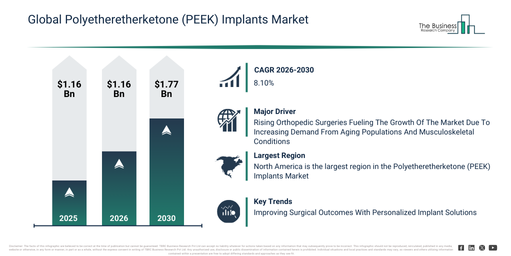
    The market size for polyetheretherketone (peek) implants is anticipated to experience robust growth in the coming years. It is projected to expand to $2.29 billion by 2030, driven by a compound annual growth rate (CAGR) of 8.1%. This expansion during the forecast period stems from factors such as the increasing acceptance of 3D-printed implants, a growing elderly demographic, the rise in minimally invasive procedures, advancements in PEEK material technologies, and the expansion of developing markets. Noteworthy trends over the forecast horizon include the adoption of radiolucent implants, a prevalence of minimally invasive surgical techniques, the emergence of customized 3D-printed PEEK implants, a focus on biocompatibility and prolonged implant durability, and the utilization of lightweight implant materials.

    Download the Free Sample Report to Explore Key Market Insights:

    https://www.thebusinessresearchcompany.com/sample.aspx?id=25880&type=smp

    Which Market Drivers Are Supporting The Expansion Of The Polyetheretherketone (PEEK) Implants Market?

    The expanding volume of orthopedic surgeries is anticipated to fuel growth in the polyetheretherketone (PEEK) implants market in the coming years. Orthopedic surgeries are medical procedures designed to address conditions impacting the musculoskeletal system, encompassing bones, joints, ligaments, tendons, and muscles, often requiring implants for repair or replacement. The increase in these surgeries primarily stems from the world’s aging population, which is more prone to musculoskeletal ailments such as arthritis, joint degeneration, and fractures. As longevity extends, so does the demand for surgical interventions aimed at maintaining mobility and overall quality of life. PEEK implants are utilized in orthopedic surgeries as durable, biocompatible substitutes for metal implants, offering strength, flexibility, and radiolucency to facilitate improved imaging and long-term stabilization of joints or bones. For instance, in December 2023, data from the UK Health Security Agency (UKHSA), a UK-based government agency, indicated that operations reported under mandatory orthopedic surveillance increased by 7.3%, from 102,027 procedures, between the financial years 2022 and 2023. Thus, the rising number of orthopedic surgeries is driving the expansion of the polyetheretherketone (PEEK) implants market.

    Which Segment Classifications Shape The Polyetheretherketone (PEEK) Implants Market?

    The polyetheretherketone (peek) implants market covered in this report is segmented –

    1) By Type: Interbody Devices, Screws, Fixation Plates, Rods, Cages

    2) By Application: Spinal Fusion, Trauma Surgery, Craniomaxillofacial Surgery, Sports Medicine

    3) By End User: Hospitals And Clinics, Ambulatory Surgical Centers, Other End Users

    Subsegments:

    1) By Interbody Devices: Cervical Interbody Cages, Lumbar Interbody Cages, Thoracic Interbody Cages, 3D-printed Interbody Implants

    2) By Screws: Pedicle Screws, Cortical Screws, Cannulated Screws, Locking Screws

    3) By Fixation Plates: Cranial Fixation Plates, Maxillofacial Fixation Plates, Orthopedic Trauma Plates, Spinal Fixation Plates

    4) By Rods: Spinal Stabilization Rods, Dynamic Stabilization Rods, Posterior Fixation Rods, Custom Contoured Rods

    5) By Cages: Anterior Lumbar Interbody Fusion (ALIF) Cages, Posterior Lumbar Interbody Fusion (PLIF) Cages, Transforaminal Lumbar Interbody Fusion (TLIF) Cages, Expandable Cages

    How Are Trends Impacting The Polyetheretherketone (PEEK) Implants Market?

    Major companies in the polyetheretherketone (PEEK) implants market are prioritizing technological advancements, such as 3D-printed implants, to boost patient-specific customization, improve surgical outcomes, and hasten recovery times. A 3D-printed implant is a tailored medical device produced via additive manufacturing technology to precisely match an individual’s unique anatomy, thereby enhancing fit, functionality, and overall treatment effectiveness. For example, in April 2024, 3D Systems, Inc., a US-based 3D printing solutions firm, obtained 510(k) clearance from the U.S. Food and Drug Administration (FDA) for its VSP PEEK Cranial Implant, a 3D-printed, patient-specific cranial implant solution. This offering features a fully FDA-cleared workflow comprising advanced segmentation and 3D modeling software, the EXT 220 MED 3D printer from 3D Systems, Evonik’s VESTAKEEP i4 3DF PEEK material, and a standardized production process. By employing additive manufacturing, this technology enables the creation of customized cranial implants using up to 85% less material compared to conventional machining techniques, leading to a substantial reduction in costs associated with expensive implant-grade PEEK.

    Which Companies Are Expanding Their Footprint In The Polyetheretherketone (PEEK) Implants Market?

    Major companies operating in the polyetheretherketone (peek) implants market are Stryker Corporation, NuVasive Inc., 3D Systems Inc., Zypeek Medical Technology Co. Ltd., Innovasis Inc., HAPPE Spine LLC, Cavendish Implants Ltd., Junsun Medical Technology Co. Ltd., Medtronic plc, Zimmer Biomet Holdings Inc., Globus Medical Inc., Orthofix Medical Inc., Alphatec Spine Inc., Xtant Medical Holdings Inc., Life Spine Inc., SeaSpine Holdings Corporation, CoreLink LLC, Aurora Spine Corporation, ChoiceSpine LLC, DePuy Synthes Spine, Aesculap Spine, K2M Group Holdings Inc., Curiteva Inc.

    Read the full polyetheretherketone (peek) implants market report here:

    https://www.thebusinessresearchcompany.com/report/polyetheretherketone-peek-implants-global-market-report

    How Is The Polyetheretherketone (PEEK) Implants Market Distributed Across Key Geographic Regions?

    North America was the largest region in the polyetheretherketone (PEEK) implants market in 2025. Asia-Pacific is expected to be the fastest-growing region in the forecast period. The regions covered in the polyetheretherketone (peek) implants market report are Asia-Pacific, South East Asia, Western Europe, Eastern Europe, North America, South America, Middle East, Africa.

    Request A Tailored Polyetheretherketone (PEEK) Implants Market Research Report For Competitive Advantage:

    https://www.thebusinessresearchcompany.com/customise?id=25880&type=smp

    Browse Through More Reports Similar to the Global Polyetheretherketone (PEEK) Implants Market 2026, By The Business Research Company

    Silicone Elastomers Market Report 2026

    https://www.thebusinessresearchcompany.com/report/silicone-elastomers-global-market-report

    Polyethylene Pipes Market Report 2026

    https://www.thebusinessresearchcompany.com/report/polyethylene-pipes-global-market-report

    Interbody Fusion Cages Market Report 2026

    https://www.thebusinessresearchcompany.com/report/interbody-fusion-cages-global-market-report

    Get in touch with us:

    The Business Research Company: https://www.thebusinessresearchcompany.com/

    Americas +1 310-496-7795

    Asia +44 7882 955267 & +91 8897263534

    Europe +44 7882 955267

    Email us at info@tbrc.info

    Follow us on:

    LinkedIn: https://in.linkedin.com/company/the-business-research-company

    YouTube: https://www.youtube.com/channel/UC24_fI0rV8cR5DxlCpgmyFQ

    Global Market Model: https://www.thebusinessresearchcompany.com/global-market-model
  • Polyether Ether Ketone (PEEK) Interbody Devices Market Size Outlook and Demand Growth Across 2026–2030

    Polyether Ether Ketone (PEEK) Interbody Devices Market Size Outlook and Demand Growth Across 2026–2030

    The Business Research Company’s 2026 market reports include new capabilities such as market attractiveness scoring and analysis, total addressable market analysis, company scoring matrix, interactive excel data dashboard, improved supply chain analysis, upcoming startups in the market, and overview of key products, aimed at improving the depth, usability, and strategic value of the insights delivered.

    What Market Size Growth Is Projected For The Polyether Ether Ketone (PEEK) Interbody Devices Market During The Forecast Period 2026–2030?

    The polyether ether ketone (peek) interbody devices market has experienced substantial growth in recent years. It is projected to expand from $1.92 billion in 2025 to $2.07 billion in 2026, achieving a compound annual growth rate (CAGR) of 7.8%. Historically, this market expansion can be attributed to several factors, including the rising prevalence of degenerative disc disease, an increase in spinal trauma cases, the adoption of conventional spinal implants, a growing geriatric population, and limited awareness concerning advanced interbody devices.

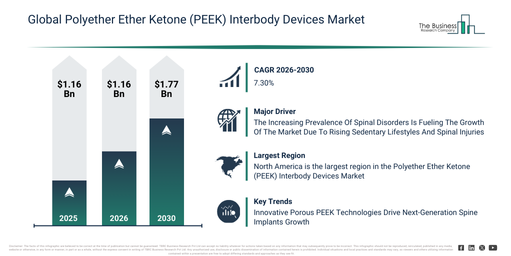
    The polyether ether ketone (peek) interbody devices market size is anticipated to expand significantly over the coming years. It will grow to $2.74 billion in 2030 at a compound annual growth rate (CAGR) of 7.3%. This expansion during the forecast period is largely due to advancements in PEEK material and design, an increase in minimally invasive surgeries, improvements in hospital infrastructure, a rising demand for personalized implants, and the global spread of spinal fusion procedures. Key trends for the forecast period include the use of minimally invasive surgical techniques, enhanced biocompatibility and material innovation, the development of radiolucent implants, personalized spinal implants, and a continued growth in spinal fusion surgeries.

    Download the Free Sample Report to Explore Key Market Insights:

    https://www.thebusinessresearchcompany.com/sample.aspx?id=25879&type=smp

    What Underlying Factors Are Accelerating The Growth Of The Polyether Ether Ketone (PEEK) Interbody Devices Market?

    The expanding occurrence of spinal disorders is projected to fuel the expansion of the PEEK interbody devices market in the future. Spinal disorders encompass medical conditions impacting the spine, such as those affecting bones, discs, nerves, and muscles. The rise in spinal disorders stems from sedentary lifestyles, where extended periods of sitting and limited physical movement weaken muscles supporting the spine and intensify spinal strain. PEEK interbody devices assist in treating spinal disorders by offering robust yet adaptable support between vertebrae, fostering spinal stability, and stimulating natural bone growth, all while ensuring clear imaging for subsequent scans. For example, in May 2023, data from Spinal Cord Inc., a US-based resource for those impacted by spinal cord injuries and their relatives, indicated that the United States registered roughly 18,000 new cases of spinal cord injuries (SCI) in 2023, with an estimated 302,000 individuals living with SCI nationwide. Consequently, the growing incidence of spinal disorders is accelerating the expansion of the PEEK interbody devices market.

    What Market Segments Are Evaluated Within The Polyether Ether Ketone (PEEK) Interbody Devices Market?

    The polyether ether ketone (peek) interbody devices market covered in this report is segmented –

    1) By Product Type: Posterolateral Fusion Devices, Interbody Fusion Devices, Anterior Lumbar Interbody Fusion Devices (Alif), Extreme Lateral Interbody Fusion Devices (Xlif), Posterior Lumbar Interbody Fusion Devices (Plif), Transforaminal Lumbar Interbody Fusion Devices (Tlif)

    2) By Application: Spinal Fusion Surgery, Degenerative Disc Disease, Spinal Trauma, Spinal Deformity

    3) By Distribution Channel: Direct Sales, Third-Party Distributors

    4) By End-User: Hospitals And Clinics, Ambulatory Surgery Clinics, Specialty Spine Centers

    Subsegments:

    1) By Posterolateral Fusion Devices: Single-Level Devices, Multi-Level Devices, Expandable Devices

    2) By Interbody Fusion Devices: Cervical Fusion Devices, Lumbar Fusion Devices, Hybrid Devices

    3) By Anterior Lumbar Interbody Fusion Devices (ALIF): Flat-Profile Devices, Curved-Profile Devices, Cage-Style Devices

    4) By Extreme Lateral Interbody Fusion Devices (XLIF): Plated Devices, Cage-Style Devices, Oblique Devices

    5) By Posterior Lumbar Interbody Fusion Devices (PLIF): Lordotic Devices, Flat-Cage Devices, Mesh Or Porous Devices

    6) By Transforaminal Lumbar Interbody Fusion Devices (TLIF): Hollow Devices, Expandable Cages, Radiolucent Devices

    What Industry Trends Are Redefining The Polyether Ether Ketone (PEEK) Interbody Devices Market?

    Major companies in the polyether ether ketone (PEEK) interbody devices market are concentrating on developing innovative solutions, such as porous PEEK interbody spacers, to enhance osseointegration and promote better spinal fusion outcomes. These porous PEEK interbody spacers are spinal implants crafted from polyether ether ketone, featuring a bone-like porous structure that enables bone ingrowth, thereby aiding in improved osseointegration and spinal fusion stability. For example, in March 2025, Globus Medical Inc., a US-based musculoskeletal technology company, introduced the COHERE ALIF Spacer, which the company described as the first Porous PEEK interbody spacer specifically designed for anterior lumbar interbody fusion (ALIF) surgery. The COHERE ALIF Spacer utilizes Globus Medical’s Porous PEEK advanced materials architecture, engineered to encourage bone ingrowth while retaining PEEK’s imaging and mechanical benefits. It is indicated for ALIF procedures and was developed as part of an anterior spine portfolio expansion, featuring a porous surface/structure intended to increase biological fixation when compared with smooth PEEK implants.

    Who Are The Top Market Participants Influencing The Polyether Ether Ketone (PEEK) Interbody Devices Market?

    Major companies operating in the polyether ether ketone (peek) interbody devices market are Medtronic Inc., Stryker Corporation, Zimmer Biomet Holdings Inc., Globus Medical Inc., NuVasive Inc., Orthofix Medical Inc., Xtant Medical Holdings Inc., Alphatec Spine Inc., Spinal Elements Inc., Providence Medical Technology Inc., FossiLabs LLC, Life Spine Inc., Curiteva Inc., Medacta International S.A., LDR Holding Corporation, Cavendish Implants Limited, DePuy Synthes Spine, SeaSpine Holdings Corporation, Aesculap Spine, CoreLink LLC, Aurora Spine Corporation, ChoiceSpine LLC, K2M Group Holdings Inc.

    Read the full polyether ether ketone (peek) interbody devices market report here:

    https://www.thebusinessresearchcompany.com/report/polyether-ether-ketone-peek-interbody-devices-global-market-report

    Which Region Is Projected To Dominate The Polyether Ether Ketone (PEEK) Interbody Devices Market During The Forecast Period?

    North America was the largest region in the polyether ether ketone (PEEK) interbody devices market in 2025. Asia-Pacific is expected to be the fastest-growing region in the forecast period. The regions covered in the polyether ether ketone (peek) interbody devices market report are Asia-Pacific, South East Asia, Western Europe, Eastern Europe, North America, South America, Middle East, Africa.

    Request A Tailored Polyether Ether Ketone (PEEK) Interbody Devices Market Research Report For Competitive Advantage:

    https://www.thebusinessresearchcompany.com/customise?id=25879&type=smp

    Browse Through More Reports Similar to the Global Polyether Ether Ketone (PEEK) Interbody Devices Market 2026, By The Business Research Company

    Scissor Lift Market Report 2026

    https://www.thebusinessresearchcompany.com/report/scissor-lift-global-market-report

    Vertical Mast Lifts Market Report 2026

    https://www.thebusinessresearchcompany.com/report/vertical-mast-lifts-global-market-report

    Polylactic Acid Market Report 2026

    https://www.thebusinessresearchcompany.com/report/polylactic-acid-global-market-report

    Get in touch with us:

    The Business Research Company: https://www.thebusinessresearchcompany.com/

    Americas +1 310-496-7795

    Asia +44 7882 955267 & +91 8897263534

    Europe +44 7882 955267

    Email us at info@tbrc.info

    Follow us on:

    LinkedIn: https://in.linkedin.com/company/the-business-research-company

    YouTube: https://www.youtube.com/channel/UC24_fI0rV8cR5DxlCpgmyFQ

    Global Market Model: https://www.thebusinessresearchcompany.com/global-market-model
  • Point-Of-Care Molecular Diagnostics Market Future Outlook Showing Expansion Toward $7.91 Billion by 2030

    Point-Of-Care Molecular Diagnostics Market Future Outlook Showing Expansion Toward $7.91 Billion by 2030

    The Business Research Company’s 2026 market reports include new capabilities such as market attractiveness scoring and analysis, total addressable market analysis, company scoring matrix, interactive excel data dashboard, improved supply chain analysis, upcoming startups in the market, and overview of key products, aimed at improving the depth, usability, and strategic value of the insights delivered.

    What Market Size Increase Is Anticipated For The Point-Of-Care Molecular Diagnostics Market Over The 2026–2030 Period?

    The point-of-care molecular diagnostics market size has seen rapid growth in recent years. This market is expected to expand from $3.98 billion in 2025 to $4.58 billion in 2026, at a compound annual growth rate (CAGR) of 15.0%. Historically, this expansion has been driven by factors including the increasing prevalence of infectious diseases, the wider availability of emergency diagnostic testing, a growing demand for rapid clinical decision support, continuous improvements in molecular assay technologies, and the increasing utilization of point-of-care diagnostics in hospitals.

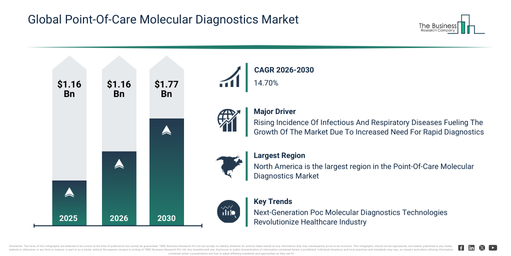
    The point-of-care molecular diagnostics market is projected for swift expansion in the coming years. Its valuation is anticipated to reach $7.91 billion by 2030, driven by a compound annual growth rate (CAGR) of 14.7%. This expansion during the projection period stems from factors such as the greater acceptance of home molecular testing, increased funding in rapid diagnostic facilities, broader uses for respiratory and oncology tests, expanding integration of cloud-based diagnostic systems, and a sharpened focus on detecting diseases earlier. Key developments anticipated within the forecast timeframe encompass the wider embrace of rapid molecular testing platforms, a heightened need for decentralized diagnostic approaches, increasing incorporation of automated sample handling, the broadening of syndromic testing panels, and an improved emphasis on quick result delivery.

    Download the Free Sample Report to Explore Key Market Insights:

    https://www.thebusinessresearchcompany.com/sample.aspx?id=7046&type=smp

    Which Major Factors Are Driving The Expansion Of The Point-Of-Care Molecular Diagnostics Market?

    The swift increase in the occurrence of infectious and respiratory diseases is anticipated to notably fuel the expansion of the point-of-care molecular diagnostics market. Respiratory infections, such as viruses or bacteria, stem from microorganisms that affect the respiratory system. These microbes can spread via coughing, sneezing, or direct physical contact. The management of severe respiratory conditions involves various inhalers, oral medications, intravenous treatments, and point-of-care molecular diagnostic methods to treat patients. For instance, in June 2024, as reported by the UK Health Security Agency, a UK-based government agency, between week 40 of 2022 and week 15 of 2023, 108 NHS trusts in England documented 1,681 critical care admissions for confirmed influenza. In contrast, the preceding season recorded 182 admissions across 114 trusts, escalating to 316 by week 39 of 2022. Hence, the rapid incidence of infectious and respiratory diseases and associated mortality will propel the point-of-care molecular diagnostics market.

    How Is The Point-Of-Care Molecular Diagnostics Market Segmented Across Key Categories?

    The point-of-care molecular diagnostics market covered in this report is segmented –

    1) By Product: Assays And Kits, Instruments And Analyzers

    2) By Application: Respiratory Infections, Gastrointestinal Infections, Sexually Transmitted Infections (STIs), Hospital-Acquired Infections (HAIs), Bloodstream and Sepsis-Related Infections

    3) By End-User: Decentralized Labs, Hospitals, Home Care, Assisted Living Healthcare Facilities

    Subsegments:

    1) By Assays And Kits: Nucleic Acid Amplification Tests (NAATs), Rapid Diagnostic Tests, Molecular Detection Kits, Reagents And Consumables

    2) By Instruments And Analyzers: Microfluidic Devices, Point-of-Care Analyzers

    Which Upcoming Trends Are Expected To Influence The Point-Of-Care Molecular Diagnostics Market?

    Leading companies in the point-of-care molecular diagnostics market are concentrating on providing technologically advanced solutions to bolster their market position. These organizations are deploying next-generation point-of-care molecular diagnostics technologies and associated services, such as enzyme-linked immunosorbent assay (ELISA), polymerase chain reaction (PCR), mass spectrometry (MS), situ hybridizations, spectral karyotyping imaging, and DNA microarrays, among others. These advancements are being implemented on POC devices to accelerate analysis times and lower costs. For instance, in May 2023, Sensible Diagnostics, a US-based diagnostics company, introduced a 10-minute point-of-care PCR system. Sensible Diagnostics is leveraging the expertise Curative gained from its diagnostics business during the pandemic. The firm stated it has performed more than two million molecular point-of-care COVID-19 tests, and its PCR platform boasts a 10-minute time-to-result.

    Who Are The Dominant Players Shaping The Point-Of-Care Molecular Diagnostics Market Landscape?

    Major companies operating in the point-of-care molecular diagnostics market are Abbott Laboratories, F Hoffmann La Roche Ltd, BioMérieux SA, Hologic Inc, Becton Dickinson and Company, Siemens Healthineers AG, QuidelOrtho Corporation, Bio Rad Laboratories Inc, Qiagen N V, Biocartis Group NV, DiaSorin S p A, SD Biosensor Inc, Cue Health Inc, Visby Medical Inc, Binx Health Inc, Molbio Diagnostics Pvt Ltd, Credo Diagnostics Biomedical Pvt Ltd, Genetron Health, Mammoth Biosciences Inc, Seegene Inc

    Read the full point-of-care molecular diagnostics market report here:

    https://www.thebusinessresearchcompany.com/report/point-of-care-molecular-diagnostics-global-market-report

    Which Region Currently Holds The Largest Share Of The Point-Of-Care Molecular Diagnostics Market?

    North America was the largest region in the point-of-care molecular diagnostics market in 2025. Asia-Pacific is expected to be the fastest-growing region in the forecast period. The regions covered in the point-of-care molecular diagnostics market report are Asia-Pacific, South East Asia, Western Europe, Eastern Europe, North America, South America, Middle East, Africa.

    Request A Tailored Point-Of-Care Molecular Diagnostics Market Research Report For Competitive Advantage:

    https://www.thebusinessresearchcompany.com/customise?id=7046&type=smp

    Browse Through More Reports Similar to the Global Point-Of-Care Molecular Diagnostics Market 2026, By The Business Research Company

    Molecular Diagnostics Devices And Equipment Market Report 2026

    https://www.thebusinessresearchcompany.com/report/molecular-diagnostics-devices-and-equipment-global-market-report

    Point Of Care Diagnostics Market Report 2026

    https://www.thebusinessresearchcompany.com/report/point-of-care-diagnostics-global-market-report

    Biomarker Clinical Phase Outsourcing Services Market Report 2026

    https://www.thebusinessresearchcompany.com/report/biomarker-clinical-phase-outsourcing-services-global-market-report

    Get in touch with us:

    The Business Research Company: https://www.thebusinessresearchcompany.com/

    Americas +1 310-496-7795

    Asia +44 7882 955267 & +91 8897263534

    Europe +44 7882 955267

    Email us at info@tbrc.info

    Follow us on:

    LinkedIn: https://in.linkedin.com/company/the-business-research-company

    YouTube: https://www.youtube.com/channel/UC24_fI0rV8cR5DxlCpgmyFQ

    Global Market Model: https://www.thebusinessresearchcompany.com/global-market-model

  • Medical Tricorder Industry Expansion Forecast Showing Market Size of $18.87 Billion by 2030 at 19.7% CAGR

    Medical Tricorder Industry Expansion Forecast Showing Market Size of $18.87 Billion by 2030 at 19.7% CAGR

    The Business Research Company’s 2026 market reports include new capabilities such as market attractiveness scoring and analysis, total addressable market analysis, company scoring matrix, interactive excel data dashboard, improved supply chain analysis, upcoming startups in the market, and overview of key products, aimed at improving the depth, usability, and strategic value of the insights delivered.

    What Is The Estimated Market Size Of The Medical Tricorder Market During 2026–2030?

    The medical tricorder market has experienced swift expansion in recent years. Its valuation is projected to increase from $7.71 billion in 2025 to $9.21 billion in 2026, exhibiting a compound annual growth rate (CAGR) of 19.4%. Historically, this market’s growth has been driven by several factors, including the increased use of portable medical devices, a growing need for quick diagnostic capabilities, the expansion of telemedicine services, the enhanced availability of compact imaging sensors, and the widespread adoption of digital health platforms.

    The medical tricorder market is poised for substantial growth in the upcoming years. It is forecast to achieve a valuation of **$18.88 billion in 2030, demonstrating a compound annual growth rate (CAGR) of 19.7%.** This expansion during the forecast period is fueled by an escalating demand for home-based diagnostics, increased investment in AI-powered medical devices, the broadening of remote healthcare delivery models, a heightened emphasis on preventive healthcare, and improved integration with electronic health records. Prominent trends throughout this period include the rising adoption of handheld diagnostic devices, an increase in the application of AI-based health assessment tools, the growing incorporation of wireless medical imaging, the expansion of point-of-care diagnostic solutions, and a stronger focus on remote patient monitoring.

    Download the Free Sample Report to Explore Key Market Insights:

    https://www.thebusinessresearchcompany.com/sample.aspx?id=5315&type=smp

    What Underlying Factors Are Accelerating The Growth Of The Medical Tricorder Market?

    The growing incidence of long-term health conditions is projected to boost the expansion of the medical tricorder market in the future. These conditions, such as diabetes, heart disease, cancer, and respiratory ailments, are persistent health issues demanding continuous healthcare and oversight. The increasing occurrence of chronic disorders is fueled by the aging demographic in developed nations, where people over 65 years old face considerably elevated rates of several chronic conditions, stemming from accumulated health hazards and age-associated bodily alterations. This expanding prevalence of chronic disorders underscores the demand for sophisticated diagnostic tools capable of facilitating continuous health tracking, prompt identification of issues, and immediate disease control across various indicators in accessible point-of-care environments. An example of this trend is observed in June 2024, when the UK’s government body, the National Health Service, reported that 3,615,330 individuals registered with a general practitioner (GP) had been diagnosed with non-diabetic hyperglycemia or pre-diabetes (a condition characterized by higher-than-normal blood sugar, though not yet diabetes) in 2023. This figure represents an 18% rise from 3,065,825 cases recorded in 2022. Consequently, the growing impact of chronic diseases is a key factor propelling the expansion of the medical tricorder market.

    How Are The Various Segments Of The Medical Tricorder Market Categorized?

    The medical tricorder market covered in this report is segmented –

    1) By Device Type: Multi-Parameter Diagnostic Tricorders, Vital Signs Monitoring Tricorders, AI-Enabled Diagnostic Tricorders, Smartphone-Integrated Tricorders, Wearable-Linked Tricorder Devices

    2) By Diagnostic Capability: Cardiovascular Assessment, Respiratory Assessment, Metabolic And Temperature Assessment, Neurological And General Health Assessment, Multi-Condition Screening

    3) By Connectivity Type: Wired Connectivity, Wireless Connectivity

    4) By Application: Diagnosis, Continuous Or Intermittent Monitoring, Early Disease Screening, Remote Health Assessment

    5) By End User: Hospitals, Clinics And Primary Care Centers, Home Care Settings, Remote And Telehealth Providers

    Subsegments:

    1) By Multi-Parameter Diagnostic Tricorders: Vital Signs And Physiological Monitoring Tricorders, Biochemical And Metabolic Assessment Tricorders, Multi-Sensor Integrated Tricorders, Point-Of-Care Diagnostic Tricorders

    2) By Vital Signs Monitoring Tricorders: Cardiovascular Vital Monitoring Tricorders, Respiratory Vital Monitoring Tricorders, Temperature And Oxygen Saturation Tricorders, Continuous And Spot-Check Monitoring Tricorders

    3) By AI-Enabled Diagnostic Tricorders: AI-Assisted Clinical Decision Support Tricorders, Predictive And Risk-Assessment Tricorders, Symptom-Analysis And Pattern-Recognition Tricorders, Cloud-Based AI Diagnostic Tricorders

    4) By Smartphone-Integrated Tricorders: App-Based Diagnostic Tricorders, Sensor-Enabled Smartphone Tricorders, Camera And Sensor-Assisted Tricorders, Smartphone-Connected Peripheral Tricorders

    5) By Wearable-Linked Tricorder Devices: Smartwatch-Integrated Tricorders, Patch And Biosensor-Linked Tricorders, Continuous Remote Monitoring Tricorders, Multi-Wearable Data Aggregation Tricorders

    What Trends Are Affecting The Expansion Of The Medical Tricorder Market?

    Leading companies in the medical tricorder market are achieving new approvals, specifically for smart health-tracking devices. These smart health-tracking devices are wearable or portable technologies that continuously monitor and gather health-related data, such as heart rate, physical activity, sleep patterns, and vital signs, empowering users with real-time information to effectively manage their health and overall wellness. As an illustration, in January 2024, Withings, a France-based firm known for producing smart health-tracking devices, unveiled the BeamO, a versatile 4-in-1 health scanner. The BeamO multiscope incorporates several health monitoring features into a singular device, including ECG, pulse oximeter, stethoscope, and thermometer functions. Referred to by Withings as the thermometer of the future, it not only measures temperature but also delivers insights into heart and lung health. This device incorporates electrodes along its sides to monitor blood oxygen levels and heart rate, along with performing a 1-lead ECG, much like the ECG function found in the Apple Watch. It utilizes a temperature scanner to read body temperature from the temporal artery and incorporates a piezoelectric disc to capture acoustic soundwaves from the chest or back, which can be conveniently shared with a physician during telehealth consultations.

    Which Major Firms Influence Developments In The Medical Tricorder Market?

    Major companies operating in the medical tricorder market are Cloud DX Inc., Scanadu Inc., Basil Leaf Technologies LLC, Healthy.io Ltd., Aidar Health Inc., Accurable Ltd., Care Taker Medical LLC, ChroniSense Medical Ltd., Cardiomo Inc., VitalConnect Inc., Avidhrt Inc., SensoDX II LLC, Final Frontier Medical Devices Inc., Medipense Inc., AliveCor Inc., iHealth Labs Inc., Omron Healthcare Inc., Withings SA, BioTelemetry Inc., Qardio Inc., Empatica Inc., EarlySense Ltd.

    Read the full medical tricorder market report here:

    https://www.thebusinessresearchcompany.com/report/medical-tricorder-global-market-report

    Which Region Is Projected To Dominate The Medical Tricorder Market During The Forecast Period?

    North America was the largest region in the medical tricorder market in 2025. Europewas the second-largest market in the medical tricorder market. The regions covered in the medical tricorder market report are Asia-Pacific, South East Asia, Western Europe, Eastern Europe, North America, South America, Middle East, Africa.

    Request A Tailored Medical Tricorder Market Research Report For Competitive Advantage:

    https://www.thebusinessresearchcompany.com/customise?id=5315&type=smp

    Browse Through More Reports Similar to the Global Medical Tricorder Market 2026, By The Business Research Company

    Digital Camcorders Market Report 2026

    https://www.thebusinessresearchcompany.com/report/digital-camcorders-global-market-report

    Precision Medicine Market Report 2026

    https://www.thebusinessresearchcompany.com/report/precision-medicine-global-market-report

    Hydrocortisone Market Report 2026

    https://www.thebusinessresearchcompany.com/report/hydrocortisone-global-market-report

    Get in touch with us:

    The Business Research Company: https://www.thebusinessresearchcompany.com/

    Americas +1 310-496-7795

    Asia +44 7882 955267 & +91 8897263534

    Europe +44 7882 955267

    Email us at info@tbrc.info

    Follow us on:

    LinkedIn: https://in.linkedin.com/company/the-business-research-company

    YouTube: https://www.youtube.com/channel/UC24_fI0rV8cR5DxlCpgmyFQ

    Global Market Model: https://www.thebusinessresearchcompany.com/global-market-model
  • Global X-Ray Systems Devices And Equipment Market Set for Strong Expansion Reaching $22.37 Billion by 2030 at 6.6% CAGR

    Global X-Ray Systems Devices And Equipment Market Set for Strong Expansion Reaching $22.37 Billion by 2030 at 6.6% CAGR

    The Business Research Company’s 2026 market reports include new capabilities such as market attractiveness scoring and analysis, total addressable market analysis, company scoring matrix, interactive excel data dashboard, improved supply chain analysis, upcoming startups in the market, and overview of key products, aimed at improving the depth, usability, and strategic value of the insights delivered.

    What Market Valuation Is Forecasted For The X-Ray Systems Devices And Equipment Market By 2030 Starting From Its 2026 Size?

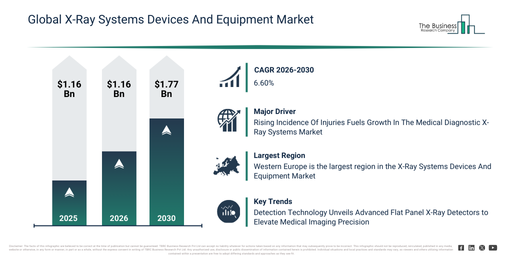
    The x-ray systems devices and equipment market has demonstrated consistent expansion in recent years. Its valuation is set to rise from $16.71 billion in 2025 to $17.35 billion in 2026, achieving a compound annual growth rate (CAGR) of 3.8%. This historical growth can be attributed to several factors including the increasing incidence of chronic and acute conditions, improvements in diagnostic imaging infrastructure, heightened hospital investments in imaging devices, broader application of x-ray systems in emergency medical care, and the technological evolution from analog to digital x-ray.

    The x-ray systems devices and equipment market is set for robust expansion over the next few years. It is projected to climb to $22.38 billion in 2030, achieving a compound annual growth rate (CAGR) of 6.6%. This anticipated growth during the forecast period can be attributed to several factors, including an increasing need for advanced diagnostic accuracy, the rising adoption of AI-assisted radiology workflows, the expansion of outpatient imaging centers, growing investments in portable imaging solutions, and an increasing focus on optimizing radiation safety. Key trends expected throughout this period involve the increasing uptake of digital radiography systems, the rising use of portable and mobile x-ray devices, the growing integration of AI-based image analysis, the expansion of 3D and 4D imaging capabilities, and an enhanced focus on low-dose imaging technologies.

    Download the Free Sample Report to Explore Key Market Insights:

    https://www.thebusinessresearchcompany.com/sample.aspx?id=3810&type=smp

    What Drivers Are Shaping The Future Growth Of The X-Ray Systems Devices And Equipment Market?

    The global increase in injuries is a key factor propelling the medical diagnostic X-ray systems, devices, and equipment market. This uptick in injuries is predominantly attributed to heightened human activity and greater exposure to hazards, leading to a surge in accidents and trauma cases. X-ray systems, devices, and equipment play a crucial role in managing injuries by offering precise internal imaging, which in turn facilitates accurate diagnosis and detailed treatment planning, thus promoting swift and efficient recovery. For example, in May 2025, data released by the Department for Transport, a UK-based government agency, indicated an estimated 1,633 road fatalities in Great Britain during 2024, representing a 1% increase from 2023. Notably, motorcyclists recorded the most significant rise in fatalities, with a 9% increase compared to 2023. Consequently, the growing global prevalence of injuries continues to fuel the expansion of the medical diagnostic X-ray systems, devices, and equipment market.

    Which Segment Categories Define The X-Ray Systems Devices And Equipment Market?

    The x-ray systems devices and equipment market covered in this report is segmented –

    1) By Mobility: Portable Type, Stationary Type

    2) By Product Type: Computed Tomography, Mobile X-Ray Devices, C-Arm Devices, Dental X-Ray, Mammography, Other Product Types

    3) By Image Type: 2D images, 3D images, 4D images

    4) By Technology: Analog X-Ray Machine, Digital X-Ray Machine

    5) By Application: Cardiovascular, Respiratory, Mammography, Dental, Orthopedics, Other Applications

    Subsegments:

    1) By Portable Type: Mobile X-Ray Systems, Handheld X-Ray Devices, Veterinary X-Ray Systems

    2) By Stationary Type: Conventional X-Ray Systems, Computed Radiography (CR) Systems, Digital Radiography (DR) Systems, Fluoroscopy X-Ray Systems

    What Major Market Trends Are Driving Changes In The X-Ray Systems Devices And Equipment Market?

    Leading companies within the x-ray systems devices and equipment market are prioritizing innovations such as high-frame-rate, high-resolution flat panel detectors utilizing a-Si (amorphous silicon) and IGZO (indium gallium zinc oxide) TFT designs. These advancements aim to enhance image quality, minimize radiation dose, and broaden applicability across numerous medical uses. These High-Frame-Rate, High-Resolution Flat Panel Detectors facilitate quick image acquisition with superior spatial precision and a broad dynamic range, making them useful for image-guided surgery, fluoroscopy, CBCT, oncology, dental imaging, and portable radiography. An example is when, in November 2024, Detection Technology, a medical imaging solutions company based in Finland, introduced a range of 20 advanced flat panel X-ray detectors at RSNA 2024. These included the X-Panel 2121a FDM, featuring a 200 µm a-Si-TFT pixel, and the X-Panel 3030z FDM-TG-X, which has a 99 µm IGZO-TFT pixel and a 10 G Ethernet interface. These new detectors offer high-speed 40 fps imaging capability and diverse application compatibility, thereby improving accuracy in diagnoses and operational effectiveness across hospitals and imaging centers.

    Who Are The Top Companies Competing In The X-Ray Systems Devices And Equipment Market?

    Major companies operating in the x-ray systems devices and equipment market are Siemens Healthcare, Carestream Health, Philips Healthcare, Hitachi Medical, GE Healthcare, Shimadzu Corporation, Fujifilm Holdings, Toshiba Medical Systems Corporation, Canon Inc., Agfa HealthCare N.V., Hologic Inc., Konica Minolta, Samsung, Analogic Corporation, Summit Industries, Swissray International Inc., Ziehm Imaging GmbH, RMS India, KUB Technologies Inc., Source Ray Inc., Allengers Medical Systems, MinXray Inc., Varian Medical Systems, Angell Technology, Control-X Medical, DMS Imaging, Esaote, IAE SPA, Infimed Sp. z o.o., Medonica Healthcare Private Limited, PerkinElmer Inc., Planmed Oy

    Read the full x-ray systems devices and equipment market report here:

    https://www.thebusinessresearchcompany.com/report/x-ray-systems-devices-and-equipment-global-market-report

    Which Geographic Regions Are Influencing Demand In The X-Ray Systems Devices And Equipment Market?

    Western Europe was the largest region in the global X-ray devices and equipment market in 2025. North America was the second-largest region in global X-ray devices and equipment market share. The regions covered in the x-ray systems devices and equipment market report are Asia-Pacific, South East Asia, Western Europe, Eastern Europe, North America, South America, Middle East, Africa.

    Request A Tailored X-Ray Systems Devices And Equipment Market Research Report For Competitive Advantage:

    https://www.thebusinessresearchcompany.com/customise?id=3810&type=smp

    Browse Through More Reports Similar to the Global X-Ray Systems Devices And Equipment Market 2026, By The Business Research Company

    Patient Derived Xenograft Pdx Models Market Report 2026

    https://www.thebusinessresearchcompany.com/report/patient-derived-xenograft-pdx-models-global-market-report

    Xylitol Market Report 2026

    https://www.thebusinessresearchcompany.com/report/xylitol-global-market-report

    Varenicline Market Report 2026

    https://www.thebusinessresearchcompany.com/report/varenicline-global-market-report

    Get in touch with us:

    The Business Research Company: https://www.thebusinessresearchcompany.com/

    Americas +1 310-496-7795

    Asia +44 7882 955267 & +91 8897263534

    Europe +44 7882 955267

    Email us at info@tbrc.info

    Follow us on:

    LinkedIn: https://in.linkedin.com/company/the-business-research-company

    YouTube: https://www.youtube.com/channel/UC24_fI0rV8cR5DxlCpgmyFQ

    Global Market Model: https://www.thebusinessresearchcompany.com/global-market-model
  • Xerosis Treatment Market Growth Expected to Reach $12.12 Billion by 2030 with 5.2% CAGR

    Xerosis Treatment Market Growth Expected to Reach $12.12 Billion by 2030 with 5.2% CAGR

    The Business Research Company’s 2026 market reports include new capabilities such as market attractiveness scoring and analysis, total addressable market analysis, company scoring matrix, interactive excel data dashboard, improved supply chain analysis, upcoming startups in the market, and overview of key products, aimed at improving the depth, usability, and strategic value of the insights delivered.

    How Is The Market Size Of The Xerosis Treatment Market Expected To Change Between 2026 And 2030?

    The xerosis treatment market size has seen robust expansion in recent years. It is projected to increase from $9.4 billion in 2025 to $9.9 billion in 2026, demonstrating a compound annual growth rate (CAGR) of 5.3%. The historical period’s growth can be attributed to factors such as the limited availability of specialized xerosis treatments, the growing prevalence of dry skin conditions, increasing hospital and clinic skincare initiatives, reliance on traditional medications, and low consumer awareness of advanced moisturizers.

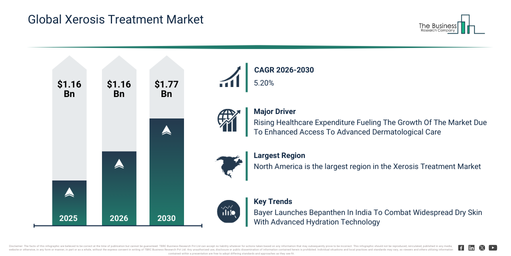
    The xerosis treatment market is projected to experience robust expansion over the next few years. It is expected to swell to $12.12 billion in 2030, demonstrating a compound annual growth rate (CAGR) of 5.2%. This projected growth throughout the forecast period can be attributed to factors such as the advancement of innovative emollients and humectants, the broadening reach of dermatology and homecare facilities, an increasing geriatric and pediatric demographic, a rising preference for multi-symptom care products, and the incorporation of digital skincare monitoring systems. Significant trends anticipated during this period include a surging demand for moisturizers and emollients, an increase in at-home skincare routines, greater public awareness regarding skin hydration and maintenance, the expansion of fragrance-free and sensitive skin product lines, and the integration of products offering relief for multiple symptoms.

    Download the Free Sample Report to Explore Key Market Insights:

    https://www.thebusinessresearchcompany.com/sample.aspx?id=24432&type=smp

    Which Economic Or Industry Drivers Are Impacting The Xerosis Treatment Market?

    The xerosis treatment market is projected to grow due to the escalation in healthcare expenditure. This expenditure represents the cumulative funds allocated by individuals, governments, and organizations for health services, including disease prevention, diagnosis, treatment, and ongoing management. Advances in medical technology are escalating healthcare costs, as the development, implementation, and continuous patient care for novel diagnostic tools and therapies often incur higher expenses. Enhanced healthcare spending improves access to dermatological services, thereby enabling early detection and consistent handling of xerosis through expert guidance and advanced treatment alternatives. For instance, according to the Office for National Statistics in May 2024, total healthcare spending climbed by 5.6% in 2023, and long-term health and social care expenditure increased by 2.8% in real terms in 2022. Thus, the rising healthcare expenditure is fostering the expansion of the xerosis treatment market.

    How Is The Xerosis Treatment Market Structured Across Different Segments?

    The xerosis treatment market covered in this report is segmented –

    1) By Type: Medication, Personal Care Products

    2) By Form: Tablets, Lotion, Cream, Ointment, Shower Forms, Other Forms

    3) By Symptoms: Roughness, Tightness, Itching, Flaky Skin

    4) By End Users: Hospitals, Clinics, Homecare Settings, Other End Users

    Subsegments:

    1) By Medication: Topical Corticosteroids, Oral Antihistamines, Immunomodulators, Antibacterial Agents, Antifungal Agents

    2) By Personal Care Products: Moisturizers, Emollients, Humectants, Bath Additives, Cleansers

    Which Trends Are Shaping The Future Of The Xerosis Treatment Market?

    Key companies operating within the xerosis treatment market are prioritizing the development of technological advancements, such as dexpanthenol, to improve skin hydration and repair. Dexpanthenol, a compound derived from pantothenic acid (vitamin B5), aids in moisturizing and repairing the skin. It readily absorbs into the skin, fostering healing and regeneration. As an illustration, in October 2024, Bayer, a German pharmaceutical and biotechnology firm, introduced Bepanthen in India, intending to boost skin hydration and facilitate the recovery of dry or damaged skin. Bayer’s release of Bepanthen in India underscored its efforts to address widespread dry skin, affecting nearly half of the population. The product is formulated to offer profound hydration, bolster skin barrier mending, and encourage natural skin regeneration, making it apt for routine skincare.

    Which Major Players Dominate The Xerosis Treatment Market?

    Major companies operating in the xerosis treatment market are Pfizer Inc., The Procter & Gamble Company, Johnson & Johnson, Unilever PLC, Bayer AG, Sanofi S.A., L’Oréal S.A., GlaxoSmithKline plc, Bausch Health Companies Inc., Sun Pharmaceutical Industries Ltd., Galderma S.A., Dr. Reddy’s Laboratories Ltd., LEO Pharma A/S, Arcutis Biotherapeutics Inc., Neutrogena, Aveeno, CeraVe, La Roche-Posay, Nivea, Cetaphil.

    Read the full xerosis treatment market report here:

    https://www.thebusinessresearchcompany.com/report/xerosis-treatment-global-market-report

    What Are The Top-Performing Regions Within The Xerosis Treatment Market?

    North America was the largest region in the xerosis treatment market in 2025. Asia-Pacific is expected to be the fastest-growing region in the forecast period. The regions covered in the xerosis treatment market report are Asia-Pacific, South East Asia, Western Europe, Eastern Europe, North America, South America, Middle East, Africa.

    Request A Tailored Xerosis Treatment Market Research Report For Competitive Advantage:

    https://www.thebusinessresearchcompany.com/customise?id=24432&type=smp

    Browse Through More Reports Similar to the Global Xerosis Treatment Market 2026, By The Business Research Company

    Digital Xray Devices Market Report 2026

    https://www.thebusinessresearchcompany.com/report/digital-xray-devices-global-market-report

    Medical X Ray Equipment And Imaging Software Market Report 2026

    https://www.thebusinessresearchcompany.com/report/medical-x-ray-equipment-and-imaging-software-global-market-report

    X Ray Detectors Market Report 2026

    https://www.thebusinessresearchcompany.com/report/x-ray-detectors-global-market-report

    Get in touch with us:

    The Business Research Company: https://www.thebusinessresearchcompany.com/

    Americas +1 310-496-7795

    Asia +44 7882 955267 & +91 8897263534

    Europe +44 7882 955267

    Email us at info@tbrc.info

    Follow us on:

    LinkedIn: https://in.linkedin.com/company/the-business-research-company

    YouTube: https://www.youtube.com/channel/UC24_fI0rV8cR5DxlCpgmyFQ

    Global Market Model: https://www.thebusinessresearchcompany.com/global-market-model
  • Wound Debridement Market Forecast 2026–2035 Reflecting Expansion Opportunities Across Industries

    Wound Debridement Market Forecast 2026–2035 Reflecting Expansion Opportunities Across Industries

    The Business Research Company’s 2026 market reports include new capabilities such as market attractiveness scoring and analysis, total addressable market analysis, company scoring matrix, interactive excel data dashboard, improved supply chain analysis, upcoming startups in the market, and overview of key products, aimed at improving the depth, usability, and strategic value of the insights delivered.

    What Is The Market Size Of The Wound Debridement Market In 2026 And What Value Is Projected For 2030?

    The wound debridement market size has experienced strong growth in recent years. It is projected to increase from $5.49 billion in 2025 to $5.92 billion in 2026, at a compound annual growth rate (CAGR) of 7.8%. This historical growth can be linked to factors such as the rising prevalence of chronic wounds, an increasing incidence of diabetes-related ulcers, the expansion of hospital-based wound care services, a growing geriatric population, and improved availability of specialized wound care products.

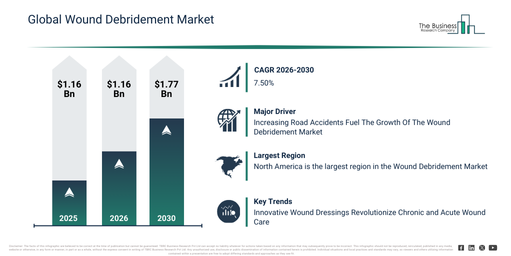
    The wound debridement market is projected to experience substantial expansion over the coming years, reaching $7.91 billion by 2030, demonstrating a compound annual growth rate (CAGR) of 7.5%. This anticipated growth during the forecast period is fueled by several factors, including the greater uptake of sophisticated wound management techniques, an escalating need for less invasive debridement choices, the proliferation of outpatient wound care facilities, a heightened emphasis on achieving quicker wound healing, and increased spending on chronic wound care within healthcare. Key trends identified for this period encompass the wider acceptance of enzymatic and autolytic debridement products, an increase in the deployment of ultrasonic debridement devices, a growing inclination towards non-surgical debridement approaches, the broadening of advanced wound care protocols, and a stronger emphasis on results related to infection control.

    Download the Free Sample Report to Explore Key Market Insights:

    https://www.thebusinessresearchcompany.com/sample.aspx?id=6575&type=smp

    What Major Drivers Are Influencing Demand In The Wound Debridement Market?

    The escalating count of road accidents is projected to stimulate growth within the wound debridement market in the foreseeable future. These incidents are defined as unexpected crashes or occurrences involving vehicles, pedestrians, or other road users, leading to injury, death, or property damage, frequently caused by human error, substandard road conditions, or vehicle malfunctions. The surge in road accidents primarily stems from imprudent driving, such as speeding, abrupt lane switching, and disregarding traffic regulations, which elevates the probability of collisions and exposes both drivers and pedestrians to greater peril. Wound debridement assists road accident victims by removing necrotic or infected tissue, thereby promoting quicker recovery, diminishing the likelihood of infection, and improving overall healing outcomes. For instance, in December 2023, a report issued by the World Health Organization, a Switzerland-based intergovernmental organization, indicated that around 1.19 million people lose their lives annually due to road traffic accidents, while an additional 20 to 50 million sustain non-fatal injuries, many of which lead to long-term disabilities. Thus, the increasing occurrence of road accidents is propelling the wound debridement market.

    What Are The Key Segments Of The Wound Debridement Market?

    The wound debridement market covered in this report is segmented –

    1) By Product: Enzymatic Debridement Products, Autolytic Debridement Products, Gels, Ointments, Mechanical Debridement Products, Ultrasonic Debridement Products, Other Products

    2) By Method: Surgical Method, Enzymatic Method, Mechanical Method, Autolytic Method, Other Methods

    3) By Wound Type: Venous Leg Ulcers, Diabetic Foot Ulcers, Pressure Ulcers, Surgical and Traumatic Wounds, Other Wound Types

    4) By End User: Hospitals, Clinics, Other End Users

    Subsegments:

    1) By Enzymatic Debridement Products: Proteolytic Enzymes, Collagenase-Based Products

    2) By Autolytic Debridement Products: Hydrocolloid Dressings, Transparent Film Dressings

    3) By Gels: Hydrogels, Alginate Gels

    4) By Ointments: Antimicrobial Ointments, Antibiotic Ointments

    5) By Mechanical Debridement Products: Debridement Scissors, Wound Irrigation Devices

    6) By Ultrasonic Debridement Products: Ultrasonic Devices, Ultrasonic Wound Cleaners

    7) By Other Products: Surgical Debridement Instruments, Non-contact Thermal Devices

    What Key Trends Are Influencing The Development Of The Wound Debridement Market?

    Leading companies in the wound debridement market are developing innovative products, such as new wound dressings, to meet the varied requirements of chronic and acute wound care. A wound dressing functions as a sterile material applied to a wound to protect it from infection, absorb excess fluid, promote healing, and foster an optimal environment for tissue regeneration. These dressings are effective in preventing contamination, regulating moisture levels, and can also deliver medications to assist the healing process. For example, in September 2024, Solventum, a US-based healthcare company, introduced the V.A.C. Peel and Place Dressing. This convenient dressing and drape can be applied in under two minutes and worn for up to seven days. Unlike older negative pressure wound therapy dressings, which demand extensive application and multiple steps, this all-in-one design streamlines the procedure. It also features a perforated, non-adherent layer to minimize tissue ingrowth and make removal less painful.

    Who Are The Leading Companies Operating In The Wound Debridement Market?

    Major companies operating in the wound debridement market are Smith & Nephew plc, B. Braun Melsungen AG, Coloplast A/S, ConvaTec Group PLC, Lohmann & Rauscher International, Integra LifeSciences Corporation, Arobella Medical LLC, Medline Industries Inc., Acelity L.P. Inc., DeRoyal Industries Inc., Advanced Medical Solutions Group, Söring GmbH, Mölnlycke Healthcare, Advancis Medical, Sanara MedTech Inc., Derma Sciences Inc., 3M Company, Misonix Inc., BSN medical GmbH, BioMonde Ltd., Celleration Inc., Covallon Technologies Ltd.

    Read the full wound debridement market report here:

    https://www.thebusinessresearchcompany.com/report/wound-debridement-global-market-report

    Which Region Shows The Strongest Potential For Future Growth In The Wound Debridement Market?

    North America was the largest region in the wound debridement market in 2025. Asia-Pacific is expected to be the fastest-growing region in the forecast period. The regions covered in the wound debridement market report are Asia-Pacific, South East Asia, Western Europe, Eastern Europe, North America, South America, Middle East, Africa.

    Request A Tailored Wound Debridement Market Research Report For Competitive Advantage:

    https://www.thebusinessresearchcompany.com/customise?id=6575&type=smp

    Browse Through More Reports Similar to the Global Wound Debridement Market 2026, By The Business Research Company

    Chronic Wound Care Market Report 2026

    https://www.thebusinessresearchcompany.com/report/chronic-wound-care-global-market-report

    Biomaterial Wound Dressing Market Report 2026

    https://www.thebusinessresearchcompany.com/report/biomaterial-wound-dressing-global-market-report

    Advanced Wound Care Market Report 2026

    https://www.thebusinessresearchcompany.com/report/advanced-wound-care-global-market-report

    Get in touch with us:

    The Business Research Company: https://www.thebusinessresearchcompany.com/

    Americas +1 310-496-7795

    Asia +44 7882 955267 & +91 8897263534

    Europe +44 7882 955267

    Email us at info@tbrc.info

    Follow us on:

    LinkedIn: https://in.linkedin.com/company/the-business-research-company

    YouTube: https://www.youtube.com/channel/UC24_fI0rV8cR5DxlCpgmyFQ

    Global Market Model: https://www.thebusinessresearchcompany.com/global-market-model
  • Global Wound Contact Layer Dressing Market Analysis for 2026–2030 with Strategic Forecast Insights for Businesses

    Global Wound Contact Layer Dressing Market Analysis for 2026–2030 with Strategic Forecast Insights for Businesses

    The Business Research Company’s 2026 market reports include new capabilities such as market attractiveness scoring and analysis, total addressable market analysis, company scoring matrix, interactive excel data dashboard, improved supply chain analysis, upcoming startups in the market, and overview of key products, aimed at improving the depth, usability, and strategic value of the insights delivered.

    What Will Be The Estimated Market Valuation Of The Wound Contact Layer Dressing Market By The End Of 2030?

    The market for wound contact layer dressings has expanded rapidly in recent years. This market is projected to grow from $0.44 billion in 2025 to $0.49 billion in 2026, exhibiting a compound annual growth rate (CAGR) of 11.6%. The historical expansion of this market can be attributed to the increasing prevalence of chronic wounds, the broadening of hospital wound care services, a rising incidence of diabetes-related ulcers, greater adoption of advanced wound dressings, and enhanced clinical awareness of moist healing principles.

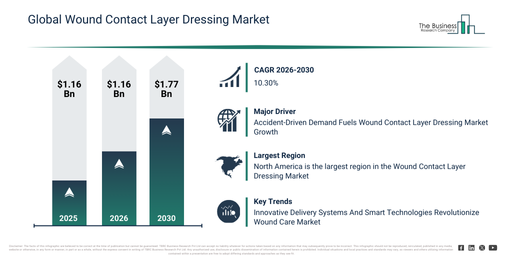
    The wound contact layer dressing market is anticipated to experience substantial expansion in the coming years. This market is forecast to reach $0.72 billion by 2030, demonstrating a compound annual growth rate (CAGR) of 10.3%. This projected growth is driven by factors such as an escalating demand for home-based wound care, the increasing uptake of antimicrobial dressings, an expanding aging population, a heightened emphasis on preventing infections, and advancements in wound material technology. Noteworthy trends expected during this period encompass the increased use of silicone-based contact layer dressings, a greater need for antimicrobial wound interfaces, broader application in chronic wound management, the proliferation of moist wound healing solutions, and an intensified focus on dressings that allow for pain-free removal.

    Download the Free Sample Report to Explore Key Market Insights:

    https://www.thebusinessresearchcompany.com/sample.aspx?id=15964&type=smp

    Which Market Drivers Are Supporting The Expansion Of The Wound Contact Layer Dressing Market?

    The increasing occurrence of accidents necessitating effective healing methods is projected to boost the growth of the wound contact layer dressing market moving forward. These accidents are on the rise due to heightened vehicle usage, distracted driving behaviors, and inadequate safety measures. Wound contact layer dressings are utilized in accident situations to safeguard the wound site, promote recovery by maintaining a moist environment, and minimize pain and trauma during changes. For instance, the World Health Organization (WHO), a US-based specialized agency, reported in December 2023 that the number of annual road traffic deaths globally was approximately 1.19 million in 2023. Therefore, the escalating number of accidents requiring efficient healing techniques will propel the expansion of the wound contact layer dressing market.

    Which Segment Classifications Shape The Wound Contact Layer Dressing Market?

    The wound contact layer dressing market covered in this report is segmented –

    1) By Material Type: Silver, Silicone, Honey, Other Types

    2) By Product: Antimicrobial, Non-Antimicrobial

    3) By Application: Hospital, Clinic, Homecare, Other Applications

    Subsegments:

    1) By Silver: Antimicrobial Silver Dressings, Silver-Infused Contact Layer Dressings

    2) By Silicone: Silicone-Based Contact Layer Dressings, Silicone Gel Sheets

    3) By Honey: Medical-Grade Honey Dressings, Honey-Infused Contact Layer Dressings

    4) By Other Types: Alginate Dressings, Hydrocolloid Dressings, Foam Dressings, Collagen Dressings, Hydrogel Dressings

    How Are Trends Impacting The Wound Contact Layer Dressing Market?

    Leading companies in the wound contact layer dressing market are concentrating on the development of negative pressure wound therapies that incorporate smart technologies, such as dynamic exudate removal technology, to enhance both wound healing outcomes and patient comfort. Dynamic exudate removal technology represents an innovative method for effectively managing wound exudate by employing dynamic mechanisms to boost fluid removal from the wound bed, thereby fostering optimal conditions for wound healing. For instance, in August 2023, Medela, a Swiss-based medical equipment manufacturer, launched its Invia integrated wound dressing. This sterile dressing is appropriate for a variety of wound types, including closed surgical incisions, and can be used conveniently in home or hospital settings for periods of up to seven days. The company secured approval from the US Food and Drug Administration (FDA) for its ‘peel-and-stick’ adhesive. It features a three-layer fluid handling pad with a skin-friendly silicone adhesive border. Additionally, the new dressing includes a Quick-Connector, which is a standard component across all of the company’s NPWT products, simplifying pump-to-dressing connections.

    Which Companies Are Expanding Their Footprint In The Wound Contact Layer Dressing Market?

    Major companies operating in the wound contact layer dressing market are Cardinal Health Inc., Johnson & Johnson, 3M Company, Medline Industries Inc., Lohmann & Rauscher GmbH & Co KG, B Braun Melsungen AG, Smith & Nephew plc, Coloplast A/S, PAUL HARTMANN AG, Aspen Medical Europe Ltd, ConvaTec Group plc, Mölnlycke Health Care AB, Integra LifeSciences Holdings Corporation, Hollister Incorporated, BSN medical GmbH, DeRoyal Industries Inc., Aso LLC, DermaRite Industries LLC, Advancis Medical, AdvaCare Pharma, Systagenix Wound Management Limited, Urgo Medical, Winner Medical Group Inc., Aspide Medical

    Read the full wound contact layer dressing market report here:

    https://www.thebusinessresearchcompany.com/report/wound-contact-layer-dressing-global-market-report

    How Is The Wound Contact Layer Dressing Market Distributed Across Key Geographic Regions?

    North America was the largest region in the wound contact layer dressing market in 2025. Asia-Pacific is expected to be the fastest-growing region in the forecast period. The regions covered in the wound contact layer dressing market report are Asia-Pacific, South East Asia, Western Europe, Eastern Europe, North America, South America, Middle East, Africa.

    Request A Tailored Wound Contact Layer Dressing Market Research Report For Competitive Advantage:

    https://www.thebusinessresearchcompany.com/customise?id=15964&type=smp

    Browse Through More Reports Similar to the Global Wound Contact Layer Dressing Market 2026, By The Business Research Company

    Biomaterial Wound Dressing Market Report 2026

    https://www.thebusinessresearchcompany.com/report/biomaterial-wound-dressing-global-market-report

    Moist Wound Dressings Market Report 2026

    https://www.thebusinessresearchcompany.com/report/moist-wound-dressings-global-market-report

    Interactive Wound Dressing Market Report 2026

    https://www.thebusinessresearchcompany.com/report/interactive-wound-dressing-global-market-report

    Get in touch with us:

    The Business Research Company: https://www.thebusinessresearchcompany.com/

    Americas +1 310-496-7795

    Asia +44 7882 955267 & +91 8897263534

    Europe +44 7882 955267

    Email us at info@tbrc.info

    Follow us on:

    LinkedIn: https://in.linkedin.com/company/the-business-research-company

    YouTube: https://www.youtube.com/channel/UC24_fI0rV8cR5DxlCpgmyFQ

    Global Market Model: https://www.thebusinessresearchcompany.com/global-market-model