Category: Medical Equipment

  • Brain Bionics Market Anticipated to Record Steady Gains, Advancing to $7.35 Billion by 2030

    Brain Bionics Market Anticipated to Record Steady Gains, Advancing to $7.35 Billion by 2030

    Uncover key drivers, emerging technologies, and competitive movements shaping the brain bionics market from 2026–2035 with trusted insights from The Business Research Company

    What are the forecasted starting (2026) and ending (2030) market sizes for the Brain Bionics Market?

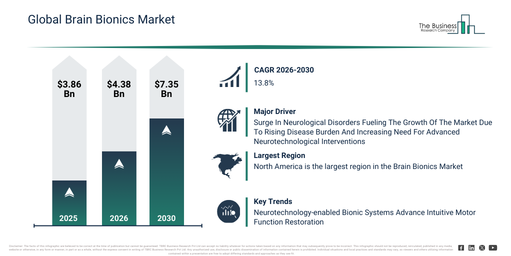
    The brain bionics market has seen swift growth in recent years. This market is forecast to increase from $3.86 billion in 2025 to $4.38 billion in 2026, with a compound annual growth rate (CAGR) of 13.6%. The expansion observed in the past can be attributed to advancements in neuroscience research, increasing prevalence of neurological disorders, early clinical adoption of deep brain stimulation, growth in academic neurotechnology programs, and rising investments in medical device innovation.

    Projections indicate the brain bionics market size will expand significantly over the coming years, reaching $7.35 billion by 2030, exhibiting a compound annual growth rate (CAGR) of 13.8%. This anticipated growth throughout the forecast period stems from factors such as a heightened demand for personalized neurotherapies, the broadening of brain-computer interface clinical trials, the expanding integration of cloud-based neural data platforms, a rise in the adoption of home-based neurofeedback systems, and more frequent regulatory approvals for implantable neurodevices. Key trends during this period are expected to encompass an escalating uptake of implantable neural interfaces, increasing integration of AI-driven neural signal processing, wider application of non-invasive brain-computer interfaces, the broadening of closed-loop neuromodulation systems, and a stronger emphasis on individualized neurotherapy solutions.

    Access Your Free Sample Report for In-Depth Market Insights:

    https://www.thebusinessresearchcompany.com/sample.aspx?id=33045&type=smp

    What Drivers Are Supporting Technological Adoption In The Brain Bionics Market?

    The increasing occurrence of neurological disorders is projected to fuel the expansion of the brain bionics market moving forward. Neurological disorders are defined as illnesses and states that impact the brain, spinal cord, and nerves, leading to impairments in movement, cognition, sensation, or behavior. The rise in neurological disorder prevalence is primarily linked to an aging population, which increases the likelihood of conditions such as Parkinson’s disease, epilepsy, stroke, and dementia. Brain bionics assists in the management and treatment of neurological disorders by enabling direct interaction between neural circuits and artificial systems to restore lost functions, modulate abnormal brain activity, and enhance rehabilitation outcomes. For instance, in December 2025, according to the Medical Republic, an Australia-based media company, reported that neurological conditions resulted in over 350,000 hospital admissions and 130,000 emergency department visits during 2023–24. Therefore, the growing prevalence of neurological disorders is propelling the growth of the brain bionics market.

    Which Segments Are Contributing To The Growth Of The Brain Bionics Market?

    The brain bionics market covered in this report is segmented –

    1) By Product Type: Neuroprosthetics; Brain-Machine Interfaces (BMIs); Neuromodulation Devices; Transcranial Magnetic Stimulation Devices

    2) By Technology: Electrodes And Sensors; Software And Algorithms; Cloud-Based Platforms; Wearable Devices

    3) By User Demographics: Adults; Pediatrics; Elderly

    4) By Application: Neurorehabilitation; Cognitive Enhancement; Pain Management; Neurodegenerative Disorders; Acute Interstitial Nephritis Disorders

    5) By End User: Hospitals; Academic And Research Institutes; Home Care Settings; Pharmaceutical And Biotech Companies

    Subsegments:

    1) By Neuroprosthetics: Cochlear Implants; Retinal Implants; Deep Brain Stimulation Implants; Spinal Cord Stimulation Implants; Peripheral Nerve Stimulation Implants

    2) By Brain-Machine Interfaces (BMIs): Invasive Brain-Machine Interfaces; Partially Invasive Brain-Machine Interfaces; Non-Invasive Brain-Machine Interfaces; Assistive Communication Brain-Machine Interfaces; Motor Control Brain-Machine Interfaces

    3) By Neuromodulation Devices: Deep Brain Stimulation Devices; Spinal Cord Stimulation Devices; Vagus Nerve Stimulation Devices; Sacral Nerve Stimulation Devices; Peripheral Nerve Stimulation Devices

    4) By Transcranial Magnetic Stimulation Devices: Repetitive Transcranial Magnetic Stimulation Devices; Deep Transcranial Magnetic Stimulation Devices; Single-Pulse Transcranial Magnetic Stimulation Devices; Paired-Pulse Transcranial Magnetic Stimulation Devices; Portable Transcranial Magnetic Stimulation Devices

    Which Trends Are Influencing The Development Of The Brain Bionics Market?

    Leading companies operating in the brain bionics market are concentrating on developing advanced solutions, such as brain-controlled bionic prosthetics, to improve motor function restoration, enhance user control accuracy, and facilitate more natural human–machine interaction. Brain-controlled bionic systems refer to neurotechnology-enabled prosthetic devices that utilize brain–computer interface (BCI) signals to transform neural activity into precise mechanical movements, allowing individuals to control artificial limbs via thought rather than physical input. For instance, in October 2025, BrainCo Inc., a US-based neurotechnology company, developed a brain-controlled bionic hand intended to assist amputees in regaining functional hand movements by interpreting brain signals in real time. This bionic hand integrates non-invasive brain-sensing technology with advanced AI algorithms to decode user intent and convert it into smooth, responsive motion. This methodology improves control precision, reduces the learning curve for users, and enables more intuitive interaction when compared with traditional myoelectric prosthetics. By combining neuroscience, artificial intelligence, and robotics, this solution supports enhanced rehabilitation outcomes and greater independence for users, reflecting a broader market demand for intelligent, brain-driven bionic technologies.

    Who Are The Prominent Global Companies Shaping The Brain Bionics Market Landscape?

    Major companies operating in the brain bionics market are NeuroPace Inc., Medtronic plc, BrainsWay Ltd., Boston Scientific Corporation, Kernel Labs Inc., LivaNova plc, Neuronetics Inc., Neuralink Corporation, Synchron Inc., Cala Health Inc., MindMaze SA, Emotiv Inc., Abbott Neuromodulation, MagVenture A/S, Paradromics Inc., Axoft LLC, Neuroelectrics Barcelona S.L.U., Blackrock Neurotech Inc., Soterix Medical Inc., Neurable Inc., Bitbrain Technologies S.L., BrainGate Consortium.

    Access The Complete Report For Deeper Market Insights:

    https://www.thebusinessresearchcompany.com/report/brain-bionics-market-report

    Which Geographic Areas Are Emerging As Strong Markets For The Brain Bionics Market?

    North America was the largest region in the brain bionics market in 2025. Asia-Pacific is expected to be the fastest-growing region in the forecast period. The regions covered in the brain bionics market report are Asia-Pacific, South East Asia, Western Europe, Eastern Europe, North America, South America, Middle East, Africa.

    Request Your Customized Brain Bionics Market Research Report for Competitive Advantage:

    https://www.thebusinessresearchcompany.com/customise?id=33045&type=smp

    Browse Through More Reports Similar to the Global Brain Bionics Market 2026, By The Business Research Company

    Brain Health Supplements Market Report 2026

    https://www.thebusinessresearchcompany.com/report/brain-health-supplements-global-market-report

    Bionics Market Report 2026

    https://www.thebusinessresearchcompany.com/report/bionics-global-market-report

    Bionic Devices Market Report 2026

    https://www.thebusinessresearchcompany.com/report/bionic-devices-global-market-report

    Get in touch with us:

    The Business Research Company: https://www.thebusinessresearchcompany.com/

    Americas +1 310-496-7795

    Asia +44 7882 955267 & +91 8897263534

    Europe +44 7882 955267

    Email us at info@tbrc.info

    Follow us on:

    LinkedIn: https://in.linkedin.com/company/the-business-research-company

    YouTube: https://www.youtube.com/channel/UC24_fI0rV8cR5DxlCpgmyFQ

    Global Market Model: https://www.thebusinessresearchcompany.com/global-market-model
  • Biothreat Detection Systems Market Performance Outlook 2026–2030: Revenue to Hit $3.49 Billion at 10% CAGR

    Biothreat Detection Systems Market Performance Outlook 2026–2030: Revenue to Hit $3.49 Billion at 10% CAGR

    Uncover key drivers, emerging technologies, and competitive movements shaping the biothreat detection systems market from 2026–2035 with trusted insights from The Business Research Company

    What level of CAGR-driven expansion is anticipated in the Biothreat Detection Systems Market between 2026 and 2030?

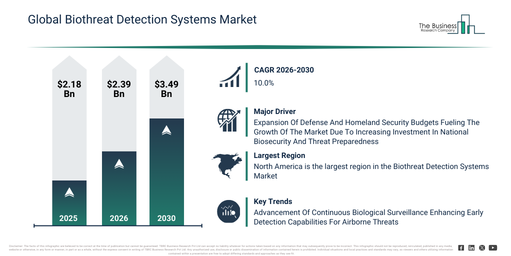
    The market size for biothreat detection systems has demonstrated strong growth in recent years. Its value is expected to increase from $2.18 billion in 2025 to $2.39 billion in 2026, showing a compound annual growth rate (CAGR) of 9.7%. Historically, this growth has been fueled by factors such as increasing public health surveillance initiatives, rising investment in biodefense programs, the expansion of laboratory diagnostic capabilities, a growing awareness of pandemic preparedness, and the adoption of molecular detection platforms.

    The biothreat detection systems market size is anticipated to experience substantial expansion over the coming years. It is projected to reach $3.49 billion by 2030, exhibiting a compound annual growth rate (CAGR) of 10.0%. This expansion during the projected timeframe is attributable to factors such as increasing demand for early-warning biothreat systems, rising integration of AI-driven analytics, expansion of environmental monitoring networks, growing focus on national biosecurity strategies, and increasing adoption of portable field-deployable systems. Key developments anticipated within the forecast period encompass increasing deployment of automated bioaerosol monitoring systems, rising adoption of rapid molecular detection technologies, expansion of integrated surveillance networks, growing use of portable detection kits, and an enhanced focus on real-time threat analytics.

    Access Your Free Sample Report for In-Depth Market Insights:

    https://www.thebusinessresearchcompany.com/sample.aspx?id=33043&type=smp

    What Drivers Are Affecting Demand-Supply Dynamics In The Biothreat Detection Systems Market?

    The projected expansion of defense and homeland security budgets is anticipated to boost the growth of the biothreat detection systems market in the future. These budgets represent financial resources allocated by governments for national defense, military operations, intelligence gathering, border security, counterterrorism efforts, emergency readiness, and safeguarding critical infrastructure and public safety. The increase in defense and homeland security budgets stems from escalating geopolitical tensions, necessitating enhanced investment in national security and preparedness against threats. Biothreat detection systems support these budgets by facilitating the early identification and swift response to biological threats, thereby minimizing the financial cost and overall impact of widespread outbreaks, emergency operations, and national security events. For example, as reported in April 2025 by the Stockholm International Peace Research Institute (SIPRI), a Sweden-based independent international institute, the United Kingdom increased its military spending in 2024 by 2.8% to $81.8 billion, making it the world’s sixth-largest defense spender. Consequently, the growing defense and homeland security budgets are fueling the expansion of the biothreat detection systems market.

    What Segments Are Included Within The Biothreat Detection Systems Market?

    The biothreat detection systems market covered in this report is segmented –

    1. By Technology: Polymerase Chain Reaction Based Detection; Immunological Detection; Biosensors; Microarrays; Other Technologies

    2. By Detection Type: Biological Agents; Chemical Agents; Radiological Agents

    3. By Application: Military And Defense; Public Health; Environmental Monitoring; Agriculture; Other Applications

    4. By End-User: Government Agencies; Hospitals And Healthcare Facilities; Research Laboratories; Commercial And Industrial; Other End-Users

    Subsegments:

    1. By Polymerase Chain Reaction Based Detection: Real Time Polymerase Chain Reaction; Digital Polymerase Chain Reaction; Multiplex Polymerase Chain Reaction; Reverse Transcription Polymerase Chain Reaction; Quantitative Polymerase Chain Reaction

    2. By Immunological Detection: Enzyme Linked Immunosorbent Assay; Lateral Flow Assay; Agglutination Assay; Western Blot Assay; Immunofluorescence Assay

    3. By Biosensors: Electrochemical Biosensors; Optical Biosensors; Piezoelectric Biosensors; Thermal Biosensors; Magnetic Biosensors

    4. By Microarrays: DNA Microarrays; Protein Microarrays; Antibody Microarrays; Peptide Microarrays; Cell Microarrays

    5. By Other Technologies: Next Generation Sequencing; Flow Cytometry; Mass Spectrometry; Microfluidics Platforms; Lab On A Chip Systems

    Which Trends Are Guiding The Evolution Of The Biothreat Detection Systems Market?

    Leading companies in the biothreat detection systems market are concentrating on advancing continuous biological surveillance technologies, such as real-time aerosol-based pathogen monitoring systems, to enable the early detection of airborne biological threats in public and critical infrastructure environments. These real-time aerosol-based pathogen monitoring systems continually collect and analyze air samples to identify biological agents, allowing authorities to detect nascent health threats or intentional releases before extensive exposure. For instance, in August 2023, BioFlyte Inc., a US-based biodefense technology company, initiated an unprecedented biothreat surveillance pilot program at Pittsburgh International Airport. This pilot program deploys autonomous air-sampling and pathogen detection units across airport facilities, permitting near real-time identification of airborne biological threats, and incorporates alerting functionalities to support prompt responses by public health and security teams, thereby fortifying early-warning preparedness for major transportation hubs.

    Who Are The Top-Performing Companies In The Biothreat Detection Systems Market In Recent Years?

    Major companies operating in the biothreat detection systems market are Roche Diagnostics AG, Thermo Fisher Scientific Inc., Abbott Laboratories, Eurofins Scientific SE, Agilent Technologies Inc., Battelle Memorial Institute, Illumina Inc., Smiths Group, Shimadzu Corporation, Bruker Corporation, Bio Rad Laboratories Inc., QIAGEN NV, Tecan Group Ltd., DiaSorin S.p.A., Emergent BioSolutions Inc., Physical Sciences Inc, DetectaChem Inc., PositiveID Corporation, AdVnt Biotechnologies, Alexeter Technologies LLC.

    Access The Complete Report For Deeper Market Insights:

    https://www.thebusinessresearchcompany.com/report/biothreat-detection-systems-market-report

    Which Region Currently Holds The Largest Share Of The Biothreat Detection Systems Market?

    North America was the largest region in the biothreat detection systems market in 2025. Asia-Pacific is expected to be the fastest-growing region in the forecast period. The regions covered in the biothreat detection systems market report are Asia-Pacific, South East Asia, Western Europe, Eastern Europe, North America, South America, Middle East, Africa.

    Request Your Customized Biothreat Detection Systems Market Research Report for Competitive Advantage:

    https://www.thebusinessresearchcompany.com/customise?id=33043&type=smp

    Browse Through More Reports Similar to the Global Biothreat Detection Systems Market 2026, By The Business Research Company

    Bioprocess Analyzers Market Report 2026

    https://www.thebusinessresearchcompany.com/report/bioprocess-analyzers-global-market-report

    Small Scale Bioreactors Market Report 2026

    https://www.thebusinessresearchcompany.com/report/small-scale-bioreactors-global-market-report

    Membrane Bioreactor Market Report 2026

    https://www.thebusinessresearchcompany.com/report/membrane-bioreactor-global-market-report

    Get in touch with us:

    The Business Research Company: https://www.thebusinessresearchcompany.com/

    Americas +1 310-496-7795

    Asia +44 7882 955267 & +91 8897263534

    Europe +44 7882 955267

    Email us at info@tbrc.info

    Follow us on:

    LinkedIn: https://in.linkedin.com/company/the-business-research-company

    YouTube: https://www.youtube.com/channel/UC24_fI0rV8cR5DxlCpgmyFQ

    Global Market Model: https://www.thebusinessresearchcompany.com/global-market-model
  • Aortic Valve Replacement Devices Market 2026–2030: Forecasting Business Opportunities Ahead

    Aortic Valve Replacement Devices Market 2026–2030: Forecasting Business Opportunities Ahead

    Uncover key drivers, emerging technologies, and competitive movements shaping the aortic valve replacement devices market from 2026–2035 with trusted insights from The Business Research Company

    What size range is anticipated for the Aortic Valve Replacement Devices Market from 2026 to 2030?

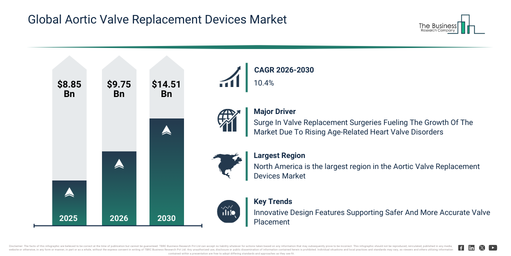
    The aortic valve replacement devices market has seen rapid expansion in recent years. It is anticipated to increase from $8.85 billion in 2025 to $9.75 billion in 2026, exhibiting a compound annual growth rate (CAGR) of 10.2%. This historical growth can be attributed to several factors including the rising aging population affected by valvular diseases, enhanced cardiac surgery capabilities, an increase in aortic stenosis diagnoses, the prompt adoption of surgical valve replacements, and improvements in cardiovascular imaging.

    The market for aortic valve replacement devices is projected to experience significant expansion in the coming years. This market is anticipated to reach $14.51 billion by 2030, demonstrating a compound annual growth rate (CAGR) of 10.4%. Key factors driving this growth during the forecast period include a heightened preference for transcatheter methods, increased investment in structural heart initiatives, a surge in demand for outpatient cardiac treatments, wider application of advanced biomaterials, and improved procedural success rates. Prominent trends expected over this period encompass the increased uptake of minimally invasive valve replacement techniques, a surge in the application of transcatheter valve technologies, an escalating demand for self-expandable valves, the evolution of patient-specific valve designs, and a stronger emphasis on the long-term durability of valves.

    Access Your Free Sample Report for In-Depth Market Insights:

    https://www.thebusinessresearchcompany.com/sample.aspx?id=33017&type=smp

    What Drivers Are Affecting Demand In The Aortic Valve Replacement Devices Market?

    The increasing volume of valve replacement procedures is projected to drive the expansion of the aortic valve replacement devices market moving forward. These surgeries are medical interventions that involve repairing or substituting damaged heart valves to restore normal blood flow and enhance cardiac function. The growing incidence of age-related heart valve disorders is leading to an uptick in valve replacement surgeries, thereby increasing the demand for surgical solutions to manage deteriorating valve function and prevent complications. Aortic valve replacement devices facilitate these procedures by enabling safer, more effective valve repair or replacement, which improves patient outcomes and encourages broader surgical adoption. As an illustration, the British Heart Foundation, a UK-based cardiovascular research charity, reported in June 2025 that in 2022/23, over 13,034 aortic valve replacement (AVR) and nearly 7,695 transcatheter aortic valve implantation (TAVI) procedures were carried out in the United Kingdom, with the rise in TAVI procedures signifying an increasing preference for less invasive valve replacement methods. Consequently, the increasing volume of valve replacement surgeries is propelling the growth of the aortic valve replacement devices market.

    Which Segments Are Gaining Traction In The Aortic Valve Replacement Devices Market?

    The aortic valve replacement devices market covered in this report is segmented –

    1) By Product: Balloon-Expandable; Self-Expandable; Mechanically Expandable; Aortic Regurgitation

    2) By Leaflet Material: Bovine Pericardium; Porcine Pericardium

    3) By Frame Material: Cobalt-Chromium; Nitinol

    4) By End-Use: Inpatient Facilities; Outpatient Facilities

    Subsegments:

    1) By Balloon-Expandable: Balloon Pre-Dilation; Balloon Post-Dilation; Balloon Valves

    2) By Self-Expandable: Supra-Annular Valves; Intra-Annular Valves; Resheathable Valves

    3) By Mechanically Expandable: Mechanically Adjustable Valves; Radial Force Valves; Repositionable Valves

    4) By Aortic Regurgitation: Surgical Valve Replacement; Transcatheter Valve Replacement; Repair Devices

    What Industry Trends Are Transforming The Aortic Valve Replacement Devices Market?

    Key players within the aortic valve replacement devices market are concentrating on advanced innovations, such as three radiopaque vision markers, to boost procedural visibility, enhance deployment accuracy, and facilitate precise valve positioning during transcatheter implantation procedures. These three radiopaque vision markers are distinct reference points integrated into a medical device that improve fluoroscopic visibility, aiding clinicians in accurately positioning and deploying the device during minimally invasive interventions. For instance, in January 2025, Abbott Laboratories, the US-based healthcare company, introduced Navitor Vision in India, representing the latest iteration of its transcatheter aortic valve implantation/replacement (TAVI/TAVR) system. This device is engineered to address patients with symptomatic severe aortic stenosis who carry a high or extreme surgical risk. Navitor Vision is equipped with three radiopaque vision markers for superior visibility during implantation, a dynamic sealing cuff to lessen blood leakage, and is delivered using Abbott’s FlexNav delivery system for accurate, minimally invasive valve placement. It presents a less intrusive alternative to surgical aortic valve replacement, thereby improving patient outcomes and accessibility for high-risk individuals.

    Who Are The Prominent Global Companies Shaping The Aortic Valve Replacement Devices Market Landscape?

    Major companies operating in the aortic valve replacement devices market are Abbott Laboratories, Medtronic Plc, Boston Scientific Corporation, Edwards Lifesciences Corporation, Bracco SpA, Biotronik SE & Co. KG, LivaNova Plc, Lepu Medical Technology Co. Ltd., MicroPort Scientific Corporation, Artivion Inc., LifeTech Scientific Corporation, TTK Healthcare Limited, Braile Biomedica, Venus Medtech Inc., SMT Pvt Ltd, JenaValve Technology Inc., Peijia Medical Limited, CryoLife Inc., CorLife, and Colibri Heart Valve LLC.

    Access The Complete Report For Deeper Market Insights:

    https://www.thebusinessresearchcompany.com/report/aortic-valve-replacement-devices-market-report

    Which Geographic Areas Are Emerging As Strong Markets For The Aortic Valve Replacement Devices Market?

    North America was the largest region in the aortic valve replacement devices market in 2025. Asia-Pacific is expected to be the fastest-growing region in the forecast period. The regions covered in the aortic valve replacement devices market report are Asia-Pacific, South East Asia, Western Europe, Eastern Europe, North America, South America, Middle East, Africa.

    Request Your Customized Aortic Valve Replacement Devices Market Research Report for Competitive Advantage:

    https://www.thebusinessresearchcompany.com/customise?id=33017&type=smp

    Browse Through More Reports Similar to the Global Aortic Valve Replacement Devices Market 2026, By The Business Research Company

    Transcatheter Aortic Valve Replacement Market Report 2026

    https://www.thebusinessresearchcompany.com/report/transcatheter-aortic-valve-replacement-global-market-report

    Prosthetic Heart Valve Devices And Equipment Market Report 2026

    https://www.thebusinessresearchcompany.com/report/prosthetic-heart-valve-devices-and-equipment-global-market-report

    Abdominal Aortic Aneurysm Aaa Repair Devices Market Report 2026

    https://www.thebusinessresearchcompany.com/report/abdominal-aortic-aneurysm-aaa-repair-devices-global-market-report

    Get in touch with us:

    The Business Research Company: https://www.thebusinessresearchcompany.com/

    Americas +1 310-496-7795

    Asia +44 7882 955267 & +91 8897263534

    Europe +44 7882 955267

    Email us at info@tbrc.info

    Follow us on:

    LinkedIn: https://in.linkedin.com/company/the-business-research-company

    YouTube: https://www.youtube.com/channel/UC24_fI0rV8cR5DxlCpgmyFQ

    Global Market Model: https://www.thebusinessresearchcompany.com/global-market-model
  • Adaptive Neuromodulation Therapy Devices Market 2026–2030: Forecast, Innovation, and Competitive Trends

    Adaptive Neuromodulation Therapy Devices Market 2026–2030: Forecast, Innovation, and Competitive Trends

    Uncover key drivers, emerging technologies, and competitive movements shaping the adaptive neuromodulation therapy devices market from 2026–2035 with trusted insights from The Business Research Company

    What market expansion outlook does the Adaptive Neuromodulation Therapy Devices Market show for the 2026–2030 period?

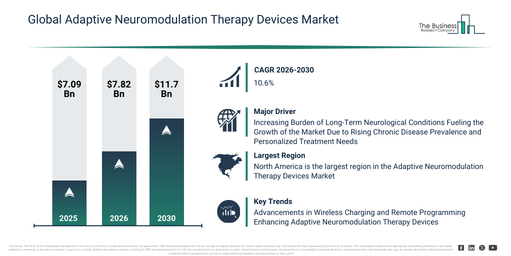
    The market for adaptive neuromodulation therapy devices has experienced rapid expansion in recent years. This market is projected to increase from $7.09 billion in 2025 to $7.82 billion in 2026, demonstrating a compound annual growth rate (CAGR) of 10.4%. The historical growth of this market can be attributed to advancements in implantable neuromodulation devices, an increasing prevalence of neurological disorders, the early adoption of deep brain stimulation therapies, improvements in neural signal processing, and the expansion of specialized neurology centers.

    The adaptive neuromodulation therapy devices market is set for considerable expansion in the coming years. It is projected to achieve a value of $11.7 billion by 2030, progressing at a compound annual growth rate (CAGR) of 10.6%. The anticipated growth within the forecast timeframe is primarily driven by increasing demand for personalized neuromodulation therapies, rising investments in brain-computer interface technologies, expansion of non-invasive neuromodulation applications, growing focus on long-term therapy management, and increasing integration of AI-driven adaptive stimulation. Key developments expected during this period involve increasing adoption of closed-loop neuromodulation systems, rising integration of real-time neural sensing, growing use of personalized stimulation algorithms, expansion of wearable and non-invasive neuromodulation devices, and enhanced focus on therapy optimization and side effect reduction.

    Access Your Free Sample Report for In-Depth Market Insights:

    https://www.thebusinessresearchcompany.com/sample.aspx?id=33007&type=smp

    What Drivers Are Shaping The Development Of The Adaptive Neuromodulation Therapy Devices Market?

    The adaptive neuromodulation therapy devices market is expected to experience growth due to the increasing occurrence of long-term neurological conditions. These conditions are chronic disorders that affect the brain, spinal cord, or nervous system, resulting in persistent impairments in movement, cognition, sensation, or behavior. The rising burden of these conditions is fueled by increased life expectancy, which contributes to a higher prevalence of age-related neurological degeneration and an extended disease burden. Adaptive neuromodulation therapy devices assist in managing long-term neurological conditions by delivering personalized, real-time electrical stimulation that dynamically adjusts to patient-specific neural activity, thereby improving symptom control and long-term neurological outcomes. For instance, in March 2023, the Alzheimer’s Association, a US-based nonprofit voluntary health organization, reported that 6.7 million Americans aged 65+ have Alzheimer’s, a figure projected to rise to 13.8 million by 2060. Thus, the increasing prevalence of long-term neurological conditions is a key factor driving the expansion of the adaptive neuromodulation therapy devices market.

    Which Segments Are Contributing To The Growth Of The Adaptive Neuromodulation Therapy Devices Market?

    The adaptive neuromodulation therapy devices market covered in this report is segmented –

    1) By Product Type: Implantable Adaptive Neuromodulation Devices; Non-Implantable Adaptive Neuromodulation Devices; Rechargeable Adaptive Neuromodulation Devices; Non-Rechargeable Adaptive Neuromodulation Devices

    2) By Device Type: Deep Brain Stimulation Systems; Spinal Cord Stimulation Systems; Vagus Nerve Stimulation Systems; Sacral Nerve Stimulation Systems; Responsive Neurostimulation Systems

    3) By Technology: Closed-Loop Electrical Neuromodulation Technology; Closed-Loop Magnetic Neuromodulation Technology; Responsive Neurostimulation Technology; Adaptive Deep Brain Stimulation Technology

    4) By Application: Epilepsy; Parkinson’s Disease (PD); Mixed Urinary Incontinence (MUI); Other Applications

    5) By End User: Hospitals; Neurology Clinics; Specialty Neurosurgical Centers; Research And Academic Institutes

    Subsegments:

    1) By Implantable Adaptive Neuromodulation Devices: Deep Brain Stimulation Systems; Spinal Cord Stimulation Systems; Vagus Nerve Stimulation Systems; Sacral Nerve Stimulation Systems; Peripheral Nerve Stimulation Systems

    2) By Non-Implantable Adaptive Neuromodulation Devices: Transcranial Magnetic Stimulation Devices; Transcranial Direct Current Stimulation Devices; External Vagus Nerve Stimulation Devices; Wearable Neurostimulation Systems

    3) By Rechargeable Adaptive Neuromodulation Devices: Rechargeable Implantable Pulse Generators; Wireless Rechargeable Neurostimulators; Long Life Rechargeable Stimulation Systems

    4) By Non-Rechargeable Adaptive Neuromodulation Devices: Primary Cell Implantable Neurostimulators; Single Use Implantable Stimulation Devices; Fixed Life Pulse Generator Systems

    How Are New Market Trends Shaping The Landscape Of The Adaptive Neuromodulation Therapy Devices Market?

    Major companies operating within the adaptive neuromodulation therapy devices market are concentrating on developing innovative solutions, such as flexible wireless charging, to allow patients to remain active during the recharging process and minimize therapy interruptions. This functionality enables patients to charge their neuromodulation devices wirelessly while continuing with their daily activities. For instance, in January 2024, Abbott Laboratories, a US-based medical device company, launched the Liberta RC DBS system. This rechargeable deep brain stimulation platform is engineered to treat movement disorders with improved flexibility and patient convenience. The system incorporates one of the smallest rechargeable implantable pulse generators available, which enhances patient comfort and supports minimally invasive implantation. It also offers remote programming and monitoring, empowering clinicians to adjust therapy settings without the need for frequent in-clinic visits. Moreover, Liberta RC supports adaptive stimulation capabilities that allow for personalized therapy optimization over time based on patient response, thereby improving treatment continuity and long-term disease management.

    Who Are The Top-Performing Companies In The Adaptive Neuromodulation Therapy Devices Market In Recent Years?

    Major companies operating in the adaptive neuromodulation therapy devices market are Abbott Laboratories, Medtronic Plc, Boston Scientific Corporation, Biotronik AG, LivaNova plc, Bioventus LLC, NEVRO Corp., Axonics, Inc, Neuronetics, Inc., NeuroPace, Inc., Cala Health Inc, BrainsWay Ltd, SPR Therapeutics, Inc., ElectroCore, Inc., Mainstay Medical Ltd., Blackrock Neurotech, Inc., Soterix Medical Inc., Synapse Biomedical Inc., NeuroSigma, Inc., Aleva Neurotherapeutics SA, Magstim Company Ltd.

    Access The Complete Report For Deeper Market Insights:

    https://www.thebusinessresearchcompany.com/report/adaptive-neuromodulation-therapy-devices-market-report

    Which Region Currently Holds The Largest Share Of The Adaptive Neuromodulation Therapy Devices Market?

    North America was the largest region in the adaptive neuromodulation therapy devices market in 2025. Asia-Pacific is expected to be the fastest-growing region in the forecast period. The regions covered in the adaptive neuromodulation therapy devices market report are Asia-Pacific, South East Asia, Western Europe, Eastern Europe, North America, South America, Middle East, Africa.

    Request Your Customized Adaptive Neuromodulation Therapy Devices Market Research Report for Competitive Advantage:

    https://www.thebusinessresearchcompany.com/customise?id=33007&type=smp

    Browse Through More Reports Similar to the Global Adaptive Neuromodulation Therapy Devices Market 2026, By The Business Research Company

    Internal Neuromodulation Devices Market Report 2026

    https://www.thebusinessresearchcompany.com/report/internal-neuromodulation-devices-global-market-report

    Implantable Neurostimulation Devices Market Report 2026

    https://www.thebusinessresearchcompany.com/report/implantable-neurostimulation-devices-global-market-report

    Neuromodulation Market Report 2026

    https://www.thebusinessresearchcompany.com/report/neuromodulation-global-market-report

    Get in touch with us:

    The Business Research Company: https://www.thebusinessresearchcompany.com/

    Americas +1 310-496-7795

    Asia +44 7882 955267 & +91 8897263534

    Europe +44 7882 955267

    Email us at info@tbrc.info

    Follow us on:

    LinkedIn: https://in.linkedin.com/company/the-business-research-company

    YouTube: https://www.youtube.com/channel/UC24_fI0rV8cR5DxlCpgmyFQ

    Global Market Model: https://www.thebusinessresearchcompany.com/global-market-model
  • Abdominal Surgical Robot Market Outlook 2026–2030: Key Business Drivers and Trends

    Abdominal Surgical Robot Market Outlook 2026–2030: Key Business Drivers and Trends

    Uncover key drivers, emerging technologies, and competitive movements shaping the abdominal surgical robot market from 2026–2035 with trusted insights from The Business Research Company

    How much is the Abdominal Surgical Robot Market valued at in 2026, and what valuation is forecast for 2030?

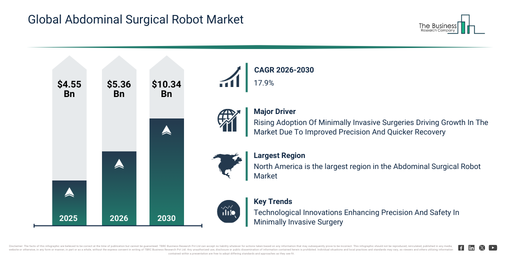
    The abdominal surgical robot market has demonstrated rapid expansion in recent years. It is anticipated to increase from $4.55 billion in 2025 to $5.36 billion in 2026, achieving a compound annual growth rate (CAGR) of 17.6%. This historical growth can be ascribed to factors such as the increasing embrace of minimally invasive surgeries, rising capital investments in hospital robotic infrastructure, growing surgeon comfort with robotic assistance, enhancements in surgical imaging technologies, and the expansion of specialized surgical training initiatives.

    The abdominal surgical robot market size is anticipated to experience swift expansion over the next few years. It is projected to reach $10.34 billion by 2030, demonstrating a compound annual growth rate (CAGR) of 17.9%. This growth throughout the forecast period can be attributed to a heightened demand for precision-guided surgical procedures, the growing incorporation of AI-driven decision support systems, the widening scope of robotic-assisted operations across various medical specialties, increased investments in smart operating rooms, and a stronger emphasis on optimizing patient outcomes. Noteworthy trends during this period include a greater uptake of AI-assisted surgical navigation, the increasing integration of advanced robotic instruments, a broader application of 3D visualization and imaging technologies, the proliferation of modular and upgradable robotic platforms, and a sharpened focus on minimally invasive surgical precision.

    Access Your Free Sample Report for In-Depth Market Insights:

    https://www.thebusinessresearchcompany.com/sample.aspx?id=33005&type=smp

    What Drivers Are Influencing The Growth Of The Abdominal Surgical Robot Market?

    The projected expansion of the abdominal surgical robot market is anticipated to be driven by the growing embrace of minimally invasive surgical techniques. These procedures involve using small cuts and sophisticated instruments, including laparoscopic and endoscopic tools, to address medical conditions while minimizing damage to adjacent tissues. The rising popularity of minimally invasive surgeries stems from advantages like quicker patient recovery, shorter durations of hospitalization, and a faster return to daily routines when contrasted with conventional open surgeries. Abdominal surgical robots are increasingly deployed in intricate minimally invasive abdominal operations, offering greater precision, enhanced maneuverability, and superior three-dimensional visualization. This allows surgeons to execute complex procedures via small incisions, leading to less tissue harm and better patient results. An example is the American Society of Plastic Surgeons, a US-based organization, reporting in June 2024 that minimally invasive procedures saw a 7% increase in 2023 over the prior year, illustrating the wider acceptance of these surgeries across various medical fields. Consequently, the growing utilization of minimally invasive surgeries is a key factor fueling the expansion of the abdominal surgical robot market.

    What Segments Are Included Within The Abdominal Surgical Robot Market?

    The abdominal surgical robot market covered in this report is segmented –

    1) By Product Type: Robotic Systems; Instruments And Accessories; Services

    2) By Application: General Surgery; Gynecological Surgery; Urological Surgery; Colorectal Surgery; Other Applications

    3) By End-Users: Hospitals; Ambulatory Surgical Centers; Specialty Clinics; Other End-Users

    Subsegments:

    1) By Robotic Systems: Standalone Robotic Platforms; Integrated Robotic Operating Suites; Modular Robotic Systems

    2) By Instruments And Accessories: Robotic Graspers; Robotic Scissors; Robotic Suturing Instruments; Endoscopic Cameras And Scopes; Energy Devices For Robotic Surgery

    3) By Services: Installation And Setup Services; Maintenance And Technical Support; Surgical Training And Education; Software Updates And Upgrades

    What Trends Are Driving The Growth Trajectory Of The Abdominal Surgical Robot Market?

    Leading companies in the abdominal surgical robot market are concentrating on technological breakthroughs such as advanced visualization, force feedback, and AI-enabled sensing to enable more precise, minimally invasive operations and streamline surgical workflows. These innovations furnish surgeons with enhanced three-dimensional views of internal anatomy, real-time tactile feedback, and data-driven insights, facilitating the execution of complex procedures with improved accuracy and control. For instance, in March 2024, Intuitive Surgical Inc., a US-based technology company, unveiled the da Vinci 5 robotic system, which incorporates innovative force feedback technology that enables surgeons to perceive subtle tissue forces during procedures. This system advances minimally invasive surgery by reducing tissue force by up to 43%, offering up to 10,000 times greater computing power to support AI analytics, and integrating an ergonomic design to minimize surgeon fatigue. It is engineered for application across abdominal, urologic, gynecologic, and thoracic procedures through smaller incisions, yielding patient benefits such as faster recovery, reduced pain, lower blood loss, and a decreased risk of infection.

    Who Are The Major Companies Operating In The Abdominal Surgical Robot Market?

    Major companies operating in the abdominal surgical robot market are Johnson & Johnson, Medtronic Plc., Intuitive Surgical Inc., KUKA AG., Meril Life Sciences, Titan Medical Inc., Avatera Medical, CMR Surgical Ltd., Cornerstone Robotics Ltd., Distalmotion, Vicarious Surgical Inc., MicroPort MedBot, Virtual Incision Corporation, Endorobotics Co. Ltd., EndoQuest Robotics, MOON Surgical, SS Innovations International Inc., Beijing Surgerii Robotics Co. Ltd, Medrobotics Corporation, Shandong WEGO Surgery Robot Co. Ltd., Shenzhen Edge Medical Co. Ltd, Sina Robotics and Medical Innovators Co. Ltd.

    Access The Complete Report For Deeper Market Insights:

    https://www.thebusinessresearchcompany.com/report/abdominal-surgical-robot-market-report

    Which Region Is Anticipated To See The Fastest Growth In The Abdominal Surgical Robot Market?

    North America was the largest region in the abdominal surgical robot market in 2025. Asia-Pacific is expected to be the fastest-growing region in the forecast period. The regions covered in the abdominal surgical robot market report are Asia-Pacific, South East Asia, Western Europe, Eastern Europe, North America, South America, Middle East, Africa.

    Request Your Customized Abdominal Surgical Robot Market Research Report for Competitive Advantage:

    https://www.thebusinessresearchcompany.com/customise?id=33005&type=smp

    Browse Through More Reports Similar to the Global Abdominal Surgical Robot Market 2026, By The Business Research Company

    Surgical Robots Market Report 2026

    https://www.thebusinessresearchcompany.com/report/surgical-robots-global-market-report

    Surgical Robot Accessories Market Report 2026

    https://www.thebusinessresearchcompany.com/report/surgical-robot-accessories-global-market-report

    Robotic Surgery Services Market Report 2026

    https://www.thebusinessresearchcompany.com/report/robotic-surgery-services-global-market-report

    Get in touch with us:

    The Business Research Company: https://www.thebusinessresearchcompany.com/

    Americas +1 310-496-7795

    Asia +44 7882 955267 & +91 8897263534

    Europe +44 7882 955267

    Email us at info@tbrc.info

    Follow us on:

    LinkedIn: https://in.linkedin.com/company/the-business-research-company

    YouTube: https://www.youtube.com/channel/UC24_fI0rV8cR5DxlCpgmyFQ

    Global Market Model: https://www.thebusinessresearchcompany.com/global-market-model
  • Global Quantitative Brain Function Imaging Device Market Report 2026–2035: Key Forecasts and Growth Areas

    Global Quantitative Brain Function Imaging Device Market Report 2026–2035: Key Forecasts and Growth Areas

    Uncover key drivers, emerging technologies, and competitive movements shaping the quantitative brain function imaging device market from 2026–2035 with trusted insights from The Business Research Company

    How much is the Quantitative Brain Function Imaging Device Market valued at in 2026, and what valuation is forecast for 2030?

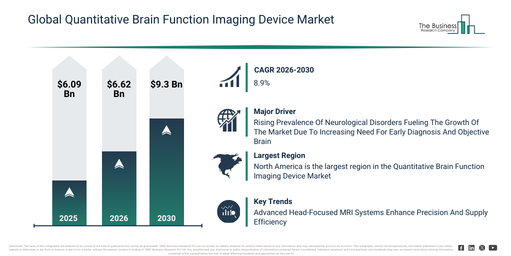
    The quantitative brain function imaging device market has shown significant growth in recent years. Its value is projected to expand from $6.09 billion in 2025 to $6.62 billion in 2026, achieving a compound annual growth rate (CAGR) of 8.7%. This expansion observed during the historic period stems from factors such as an increase in the prevalence of neurological disorders, greater investment in neuroscience research funding, improvements in hospital imaging infrastructure, the enhanced utilization of EEG and PET systems, and the evolution of brain mapping techniques.

    The market for quantitative brain function imaging devices is projected to experience substantial expansion in the coming years. This market is anticipated to reach $9.3 billion by 2030, exhibiting a compound annual growth rate (CAGR) of 8.9%. Factors driving this growth during the forecast period include a heightened need for quantitative diagnostics, advancements in precision neurology, increased research in brain-computer interfaces, a surge in demand for mental health diagnostics, and greater investment in neurotechnology platforms. Key trends shaping the market over this period encompass the adoption of multi-modal brain imaging, an increase in functional brain mapping, the integration of sophisticated neuro signal software, growing application in psychiatric diagnostics, and the development of portable brain monitoring systems.

    Access Your Free Sample Report for In-Depth Market Insights:

    https://www.thebusinessresearchcompany.com/sample.aspx?id=33281&type=smp

    What Drivers Are Influencing The Growth Of The Quantitative Brain Function Imaging Device Market?

    The increasing occurrence of neurological conditions is projected to stimulate the expansion of the quantitative brain function imaging device market in the future. Neurological disorders are medical states affecting the brain, spinal cord, or nerves, leading to impairments in movement, sensation, cognition, or other bodily functions. The escalating prevalence of these disorders is propelled by aging populations, which heighten the risk of conditions like Alzheimer’s and Parkinson’s and contribute to a rising global healthcare burden. A quantitative brain function imaging device supports the management of neurological disorders by offering objective, data-driven measurements of brain activity, enabling earlier diagnosis, precise disease monitoring, and customized treatment planning. For instance, in March 2023, the Alzheimer’s Association, a US-based nonprofit voluntary health organization, stated that 6.7 million Americans aged 65+ have Alzheimer’s, with this number anticipated to climb to 13.8 million by 2060. Therefore, the growing prevalence of neurological disorders is a significant driver for the quantitative brain function imaging device market.

    What Segments Are Included Within The Quantitative Brain Function Imaging Device Market?

    The quantitative brain function imaging device market covered in this report is segmented –

    1) By Component: Imaging Hardware; Electrodes And Sensors; Data Acquisition Systems; Software Platforms; Accessories And Consumables; Maintenance And Service Kits

    2) By Device Type: Functional Magnetic Resonance Imaging (fMRI); Positron Emission Tomography (PET); Electroencephalography (EEG); Magnetoencephalography (MEG); Near Infrared Spectroscopy (NIRS)

    3) By Modality: Single Modal Imaging; Multi-Modal Imaging

    4) By Application: Neurological Research; Psychiatric Research; Clinical Diagnostics; Brain-Computer Interface (BCI); Cognitive Neuroscience

    5) By End-User: Hospitals; Research Laboratories; Academic Institutes; Diagnostic Centers; Pharmaceutical And Biotechnology Companies

    Subsegments:

    1) By Imaging Hardware: Functional Magnetic Resonance Imaging Systems; Quantitative Electroencephalography Systems; Magnetoencephalography Systems; Functional Near Infrared Spectroscopy Systems

    2) By Electrodes And Sensors: Electroencephalography Electrodes; Magnetoencephalography Sensors; Functional Near Infrared Spectroscopy Optodes; Multimodal Neural Sensors

    3) By Data Acquisition Systems: Signal Amplifiers; Analog To Digital Converters; Neural Signal Recorders; Synchronization And Timing Modules

    4) By Software Platforms: Brain Signal Processing Software; Quantitative Analysis And Visualization Software; Image Reconstruction Software; Data Management And Integration Software

    5) By Accessories And Consumables: Electrode Caps And Headgear; Conductive Gels And Pastes; Cables And Connectors; Disposable Sensors

    6) By Maintenance And Service Kits: Calibration Kits; System Diagnostics Tools; Replacement Parts And Spares; Software Updates And Technical Support Services

    Which Innovation Trends Are Advancing Developments Within The Quantitative Brain Function Imaging Device Market?

    Major companies operating in the quantitative brain function imaging device market are prioritizing technological advancements, such as AI-based quantitative neuroimaging and imaging biomarkers. This focus aims to achieve more precise diagnoses, improve clinical decision-making, and support precision neurology through objective, reproducible brain metrics. AI-based quantitative neuroimaging and imaging biomarkers refer to the application of artificial intelligence algorithms to automatically extract, measure, and analyze objective, numerical indicators from brain imaging data. For instance, in December 2023, Quibim, a Spain-based healthtech company, launched QP-Brain, an AI-based quantitative brain imaging software. This software enables automated measurement of brain atrophy and lesion burden to support the early detection and monitoring of neurological diseases. It facilitates the early identification of subtle brain changes associated with neurodegenerative and neurological disorders. The software provides objective, reproducible imaging biomarkers that assist in earlier and more accurate diagnosis. By integrating directly into existing PACS workflows, it streamlines radiological reporting and reduces reliance on subjective visual assessment.

    Who Are The Primary Competitors In The Global Quantitative Brain Function Imaging Device Market?

    Major companies operating in the quantitative brain function imaging device market are NeuroPace Inc., NeuroSky Inc, BrainsWay Ltd., Compumedics Limited, Brain Products GmbH, Emotiv Inc., Aspect Imaging Ltd., ANT Neuro/ANT North America Inc., Neuroelectrics Barcelona S.L.U., MR Solutions Ltd., Advanced Brain Monitoring Inc, Cerca Magnetics Limited, Cortech Solutions Inc., FieldLine Inc., Gowerlabs Ltd., Mitsar Co. Ltd, Mind Media B.V., Wearable Sensing LLC, Brain Vision LLC, CereHealth Corp.

    Access The Complete Report For Deeper Market Insights:

    https://www.thebusinessresearchcompany.com/report/quantitative-brain-function-imaging-device-market-report

    Which Global Regions Are Shaping The Competitive Landscape Of The Quantitative Brain Function Imaging Device Market?

    North America was the largest region in the quantitative brain function dmaging device market in 2025. Asia-Pacific is expected to be the fastest-growing region in the forecast period. The regions covered in the quantitative brain function imaging device market report are Asia-Pacific, South East Asia, Western Europe, Eastern Europe, North America, South America, Middle East, Africa.

    Request Your Customized Quantitative Brain Function Imaging Device Market Research Report for Competitive Advantage:

    https://www.thebusinessresearchcompany.com/customise?id=33281&type=smp

    Browse Through More Reports Similar to the Global Quantitative Brain Function Imaging Device Market 2026, By The Business Research Company

    Brain And Neuroimaging Devices Market Report 2026

    https://www.thebusinessresearchcompany.com/report/brain-and-neuroimaging-devices-global-market-report

    Brain Mapping Instruments Market Report 2026

    https://www.thebusinessresearchcompany.com/report/brain-mapping-instruments-global-market-report

    Brain Monitoring Market Report 2026

    https://www.thebusinessresearchcompany.com/report/brain-monitoring-global-market-report

    Get in touch with us:

    The Business Research Company: https://www.thebusinessresearchcompany.com/

    Americas +1 310-496-7795

    Asia +44 7882 955267 & +91 8897263534

    Europe +44 7882 955267

    Email us at info@tbrc.info

    Follow us on:

    LinkedIn: https://in.linkedin.com/company/the-business-research-company

    YouTube: https://www.youtube.com/channel/UC24_fI0rV8cR5DxlCpgmyFQ

    Global Market Model: https://www.thebusinessresearchcompany.com/global-market-model
  • Global Portable Biotoxicity Detectors Market Report 2026: Emerging Trends and Growth Scenarios

    Global Portable Biotoxicity Detectors Market Report 2026: Emerging Trends and Growth Scenarios

    Uncover key drivers, emerging technologies, and competitive movements shaping the portable biotoxicity detectors market from 2026–2035 with trusted insights from The Business Research Company

    What are the forecasted starting (2026) and ending (2030) market sizes for the Portable Biotoxicity Detectors Market?

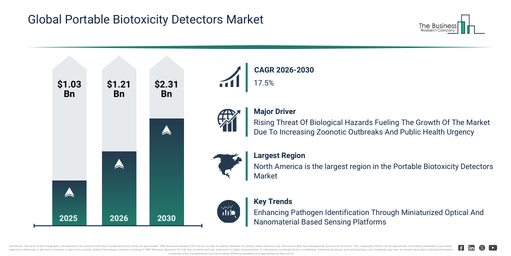
    The market for portable biotoxicity detectors has observed rapid growth in recent years. It is anticipated to expand from $1.03 billion in 2025 to $1.21 billion in 2026, demonstrating a compound annual growth rate (CAGR) of 17.3%. This historical development can be ascribed to a surge in environmental pollution monitoring requirements, past occurrences of biohazard and contamination, the proliferation of industrial safety regulations, the widening scope of water and air quality testing programs, and an increase in laboratory and field biosensor research.

    The portable biotoxicity detectors market size is anticipated to experience significant expansion over the coming years. It is projected to climb to $2.31 billion in 2030, demonstrating a compound annual growth rate (CAGR) of 17.5%. This projected growth is driven by the increasing demand for rapid on-field diagnostics, the broadening of smart environmental monitoring networks, stricter requirements for food and water safety compliance, greater investment in portable analytical instrumentation, and increased adoption in defense and homeland security applications. Prominent trends for the forecast period include portable multi parameter detection devices, quick field biohazard screening, compact biosensor platforms, real-time environmental toxicity surveillance, and emergency response detection kits.

    Access Your Free Sample Report for In-Depth Market Insights:

    https://www.thebusinessresearchcompany.com/sample.aspx?id=33268&type=smp

    What Drivers Are Supporting Technological Adoption In The Portable Biotoxicity Detectors Market?

    The increasing danger from biological threats is anticipated to fuel expansion in the portable biotoxicity detectors market in the future. These hazards encompass disease-causing agents and harmful substances originating from bacteria, viruses, or different organisms, presenting dangers to both human well-being and ecosystems. The surge in biological hazards originates from a growing number of zoonotic spillover incidents, which are propelled by shifts in the environment and interactions between humans and animals. Portable biotoxicity detectors assist in managing the escalating biological hazard threats by facilitating swift identification and localized control at the site, thus preventing extensive spread of contamination. An illustration of this trend is found in data from April 2024, where the World Health Organization disclosed that over 7.6 million dengue cases were documented worldwide by 30 April 2024. This total encompassed 3.4 million confirmed cases, upwards of 16,000 severe cases, and more than 3,000 fatalities. Notably, the Region of the Americas alone recorded more than seven million cases, thereby surpassing its total of 4.6 million cases reported for the full year of 2023. Consequently, the escalating danger from biological hazards is fueling the expansion of the portable biotoxicity detectors market.

    What Segment Types Are Examined In The Portable Biotoxicity Detectors Market?

    The portable biotoxicity detectors market covered in this report is segmented –

    1) By Product Type: Portable Biotoxicity Detectors; Stationary Biotoxicity Detectors; Handheld Detectors; Wearable Detectors

    2) By Deployment Mode: On-field; On-site; In-lab

    3) By Technology: Biosensors; Luminescent Microorganisms; Enzymatic Biosensors; Electrochemical Biosensors; Microfluidic Devices

    4) By Application: Water Quality Testing; Soil Monitoring; Air Quality Monitoring; Industrial Waste Monitoring; Food Safety Testing

    Subsegments:

    1) By Portable Biotoxicity Detectors: Battery Operated Portable Detectors; Smartphone Integrated Portable Detectors; Multi Parameter Portable Detectors; Field Deployable Rapid Detection Units

    2) By Stationary Biotoxicity Detectors: Bench Top Laboratory Detectors; Fixed Industrial Monitoring Systems; Continuous Monitoring Stationary Units; Automated High Throughput Detection Systems

    3) By Handheld Detectors: Single Use Handheld Detectors; Reusable Handheld Detection Devices; Real Time Handheld Detection Instruments; Compact Manual Sampling Detectors

    4) By Wearable Detectors: Clip On Wearable Detectors; Wrist Mounted Wearable Detectors; Body Mounted Continuous Monitoring Devices; Personal Safety Wearable Detection Systems

    How Are New Market Trends Shaping The Landscape Of The Portable Biotoxicity Detectors Market?

    Leading firms in the portable biotoxicity detectors market are concentrating on advancing field-deployable diagnostic innovations, including aptamer-integrated colorimetric detection, to facilitate the highly sensitive, real-time, and economical detection of dangerous substances using automated optical systems and signal enhancement powered by nanomaterials. Aptamer-integrated colorimetric detection describes a sensing method employing synthetic nucleic acid ligands, known as aptamers, which are engineered to specifically attach to toxic targets, causing a noticeable color shift in gold nanoparticles, measurable electronically without needing sophisticated lab apparatus. As an illustration, in November 2025, the Indian Institute of Technology Madras, a public technical and research university located in India, unveiled the Smart Malathion Detection Device (Smart MDD). This smart malathion detection device provides quick and precise identification of malathion traces across air, water, and agricultural goods. It incorporates highly sensitive real-time monitoring for early discovery and enhanced safety. The apparatus is portable, user-friendly, and apt for both on-site and laboratory applications, while its IoT capabilities and data recording features allow for distant surveillance and immediate notifications.

    Who Are The Prominent Global Companies Shaping The Portable Biotoxicity Detectors Market Landscape?

    Major companies operating in the portable biotoxicity detectors market are Abbott Laboratories, Siemens Healthineers AG, Merck KGaA, Agilent Technologies, Mettler-Toledo International Inc., Bruker Corporation, QIAGEN N.V., DiaSorin S.p.A., Tecan Group Ltd., Neogen Corporation, Smiths Detection Group Ltd., Yokogawa Electric Corporation, Quanterix Corporation, Envirologix Inc., BlueSense Diagnostics A/S, Optosky Technologies, Eurofins Technologies, Alexeter Technologies LLC, Biosensing Instrument Inc., Changsha Langshuo Technology Co. Ltd.

    Access The Complete Report For Deeper Market Insights:

    https://www.thebusinessresearchcompany.com/report/portable-biotoxicity-detectors-market-report

    Which Geographic Areas Are Emerging As Strong Markets For The Portable Biotoxicity Detectors Market?

    North America was the largest region in the portable biotoxicity detectors market in 2025. Asia-Pacific is expected to be the fastest-growing region in the forecast period. The regions covered in the portable biotoxicity detectors market report are Asia-Pacific, South East Asia, Western Europe, Eastern Europe, North America, South America, Middle East, Africa.

    Request Your Customized Portable Biotoxicity Detectors Market Research Report for Competitive Advantage:

    https://www.thebusinessresearchcompany.com/customise?id=33268&type=smp

    Browse Through More Reports Similar to the Global Portable Biotoxicity Detectors Market 2026, By The Business Research Company

    Portable Food Safety Detectors Market Report 2026

    https://www.thebusinessresearchcompany.com/report/portable-food-safety-detectors-global-market-report

    Ecotoxicological Studies Market Report 2026

    https://www.thebusinessresearchcompany.com/report/ecotoxicological-studies-global-market-report

    Hand Held Chemical And Metal Detector Market Report 2026

    https://www.thebusinessresearchcompany.com/report/hand-held-chemical-and-metal-detector-global-market-report

    Get in touch with us:

    The Business Research Company: https://www.thebusinessresearchcompany.com/

    Americas +1 310-496-7795

    Asia +44 7882 955267 & +91 8897263534

    Europe +44 7882 955267

    Email us at info@tbrc.info

    Follow us on:

    LinkedIn: https://in.linkedin.com/company/the-business-research-company

    YouTube: https://www.youtube.com/channel/UC24_fI0rV8cR5DxlCpgmyFQ

    Global Market Model: https://www.thebusinessresearchcompany.com/global-market-model
  • Orthopedic Casting Tape Market Research: Growth Projections and Trends 2030

    Orthopedic Casting Tape Market Research: Growth Projections and Trends 2030

    Uncover key drivers, emerging technologies, and competitive movements shaping the orthopedic casting tape market from 2026–2035 with trusted insights from The Business Research Company

    Starting from its 2026 valuation, what market size is the Orthopedic Casting Tape Market expected to reach by 2030?

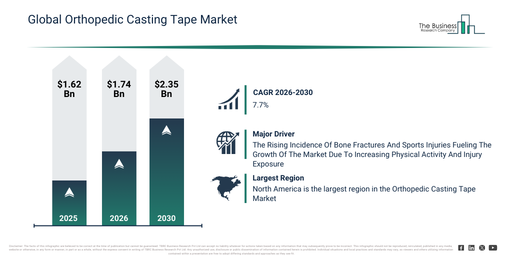
    The orthopedic casting tape market size has demonstrated robust expansion in recent years. It is projected to grow from $1.62 billion in 2025 to $1.74 billion in 2026, achieving a compound annual growth rate (CAGR) of 7.5%. This market’s historical growth can be attributed to several factors including an increase in fracture cases, a rise in orthopedic surgeries, growing sports injury incidence, the expansion of the aging population, and the proliferation of emergency care centers.

    The orthopedic casting tape market size is projected to experience substantial growth in the coming years. By 2030, it is anticipated to reach $2.35 billion, achieving a compound annual growth rate (CAGR) of 7.7%. This expansion during the forecast period is driven by factors such as an increase in trauma cases, the growth of outpatient orthopedic care, a rising demand for patient comfort materials, the proliferation of ambulatory surgery centers, and a surge in minimally invasive procedures. Prominent trends for the forecast period include lightweight fiberglass casting tapes, water resistant casting materials, fast setting synthetic cast tapes, breathable orthopedic casting solutions, and ergonomic easy apply casting rolls.

    Access Your Free Sample Report for In-Depth Market Insights:

    https://www.thebusinessresearchcompany.com/sample.aspx?id=33252&type=smp

    What Drivers Are Driving Adoption Within The Orthopedic Casting Tape Market?

    An increasing occurrence of bone fractures and sports injuries is anticipated to drive the expansion of the orthopedic casting tape market in the future. These injuries involve breaks, cracks, or other damage to bones resulting from athletic, recreational, or physical pursuits, necessitating medical immobilization for effective recovery. The uptick in these injuries stems from greater involvement in high-impact and competitive sports, coupled with insufficient training and protective gear, making bones and muscles more susceptible to sudden stress and trauma. Orthopedic casting tape aids in managing fractures effectively by providing rigid immobilization, ensuring correct bone alignment, and promoting quicker, safer healing for injuries sustained during sports and other physical activities. For example, data from July 2025 by the Australian Institute of Health and Welfare, an Australia-based government agency, indicated that in 2023–24, cycling was responsible for the largest share of sports-related hospitalizations, at 12% (7,500 cases) of all such injuries. This was followed by Australian rules football at 8.7% (5,400 cases) and soccer at 8.6% (5,300 cases). Consequently, the growing occurrence of bone fractures and sports injuries is propelling the expansion of the orthopedic casting tape market.

    What Segments Are Included Within The Orthopedic Casting Tape Market?

    The orthopedic casting tape market covered in this report is segmented –

    1) By Type: Knee Braces; Ankle Braces; Wrist and Hand Braces; Back and Spinal Braces; Elbow Braces; Shoulder Braces

    2) By Material Type: Fiberglass Casting Tapes; Polyester Casting Tapes; Plaster of Paris Casting Tapes; Other Synthetic Casting Materials

    3) By Application: Post-Surgical Rehabilitation; Ligament Injury Management; Osteoarthritis Pain Relief; Sports Injury Prevention and Treatment; Spinal Cord Support and Posture Correction

    4) By End-User: Hospitals; Orthopedic Clinics; Ambulatory Surgical Centers; Trauma and Emergency Care Centers

    Subsegments:

    1) By Knee Braces: Hinged Knee Braces; Sleeve Knee Braces; Wraparound Knee Braces; Patella Stabilizing Knee Braces

    2) By Ankle Braces: Lace-Up Ankle Braces; Rigid Ankle Braces; Sleeve Ankle Braces; Strap Ankle Braces

    3) By Wrist and Hand Braces: Wrist Support Braces; Thumb Stabilizing Braces; Finger Splints; Hand Compression Braces

    4) By Back and Spinal Braces: Lumbar Support Braces; Thoracic Support Braces; Full Back Braces; Posture Corrector Braces

    5) By Elbow Braces: Hinged Elbow Braces; Compression Elbow Sleeves; Strap Elbow Braces; Adjustable Elbow Braces

    6) By Shoulder Braces: Immobilizer Shoulder Braces; Posture Corrector Shoulder Braces; Rotator Cuff Shoulder Braces; Support Strap Shoulder Braces

    Who Are The Core Companies Influencing Trends In The Orthopedic Casting Tape Market?

    Major companies operating in the orthopedic casting tape market are McKesson Corporation, Cardinal Health Inc., 3M Company, Smith & Nephew plc, Paul Hartmann AG, Össur hf., DeRoyal Industries Inc., Tynor Orthotics Pvt. Ltd., Dynamic Techno Medicals Pvt. Ltd., Ansen Medical Technology Co. Ltd., Prime Medical Inc., JMS Plastics Pvt. Ltd., Essity AB, Datt Mediproducts Pvt. Ltd., StayGuard Medical, MIKA Medical Pvt. Ltd., OrthoTape Pvt. Ltd., Gujarat Healthcare Ltd., CNF Medical Pvt. Ltd., DUK-IN Healthcare Pvt. Ltd.

    Access The Complete Report For Deeper Market Insights:

    https://www.thebusinessresearchcompany.com/report/orthopedic-casting-tape-market-report

    Which Regions Are Projected To Dominate The Orthopedic Casting Tape Market In The Coming Years?

    North America was the largest region in the orthopedic casting tape market in 2025. Asia-Pacific is expected to be the fastest-growing region in the forecast period. The regions covered in the orthopedic casting tape market report are Asia-Pacific, South East Asia, Western Europe, Eastern Europe, North America, South America, Middle East, Africa.

    Request Your Customized Orthopedic Casting Tape Market Research Report for Competitive Advantage:

    https://www.thebusinessresearchcompany.com/customise?id=33252&type=smp

    Browse Through More Reports Similar to the Global Orthopedic Casting Tape Market 2026, By The Business Research Company

    Medical Adhesive Tapes Market Report 2026

    https://www.thebusinessresearchcompany.com/report/medical-adhesive-tapes-global-market-report

    Healthcare Adhesive Tapes Market Report 2026

    https://www.thebusinessresearchcompany.com/report/healthcare-adhesive-tapes-global-market-report

    Orthopedic Devices Market Report 2026

    https://www.thebusinessresearchcompany.com/report/orthopedic-devices-global-market-report

    Get in touch with us:

    The Business Research Company: https://www.thebusinessresearchcompany.com/

    Americas +1 310-496-7795

    Asia +44 7882 955267 & +91 8897263534

    Europe +44 7882 955267

    Email us at info@tbrc.info

    Follow us on:

    LinkedIn: https://in.linkedin.com/company/the-business-research-company

    YouTube: https://www.youtube.com/channel/UC24_fI0rV8cR5DxlCpgmyFQ

    Global Market Model: https://www.thebusinessresearchcompany.com/global-market-model
  • Global One-Hour Low-Cost Multipurpose Highly Efficient System (HOLMES) Clustered Regularly Interspaced Short Palindromic Repeats (CRISPR) Diagnostics Industry Insights: Key Trends and Growth Estimates

    Global One-Hour Low-Cost Multipurpose Highly Efficient System (HOLMES) Clustered Regularly Interspaced Short Palindromic Repeats (CRISPR) Diagnostics Industry Insights: Key Trends and Growth Estimates

    Uncover key drivers, emerging technologies, and competitive movements shaping the one-hour low-cost multipurpose highly efficient system (holmes) clustered regularly interspaced short palindromic repeats (crispr) diagnostics market from 2026–2035 with trusted insights from The Business Research Company

    Across 2026–2030, what is the expected market valuation path of the One-Hour Low-Cost Multipurpose Highly Efficient System (HOLMES) Clustered Regularly Interspaced Short Palindromic Repeats (CRISPR) Diagnostics Market?

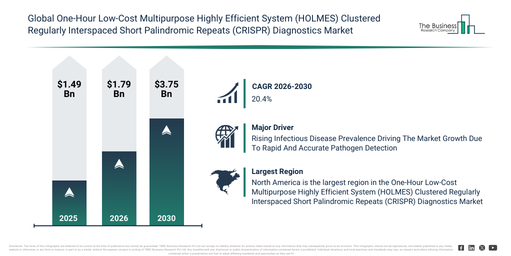
    The one-hour low-cost multipurpose highly efficient system (holmes) clustered regularly interspaced short palindromic repeats (crispr) diagnostics market has experienced exponential growth in size in recent years. It is projected to expand from $1.49 billion in 2025 to $1.79 billion in 2026, exhibiting a compound annual growth rate (CAGR) of 20.1%. The historical expansion can be attributed to several factors such as the growth in molecular diagnostics, the broadening of CRISPR research, an increase in infectious disease testing, a surge in demand for rapid tests, and advancements in genomics technology.

    The one-hour low-cost multipurpose highly efficient system (holmes) clustered regularly interspaced short palindromic repeats (crispr) diagnostics market is projected to experience substantial expansion in the coming years. This market is anticipated to reach $3.75 billion by 2030, exhibiting a compound annual growth rate (CAGR) of 20.4%. The growth during the forecast period is attributable to the increasing availability of point-of-care molecular testing, a heightened need for rapid pathogen detection, advancements in personalized diagnostics, greater clinical adoption of CRISPR technology, and the development of broader field-deployable testing options. Key trends expected in the forecast period include the emergence of rapid CRISPR-based diagnostic assays, point-of-care CRISPR testing kits, multiplex gene detection panels, portable molecular CRISPR platforms, and affordable nucleic acid detection kits.

    Access Your Free Sample Report for In-Depth Market Insights:

    https://www.thebusinessresearchcompany.com/sample.aspx?id=33249&type=smp

    Which Drivers Are Supporting The Rise Of The One-Hour Low-Cost Multipurpose Highly Efficient System (HOLMES) Clustered Regularly Interspaced Short Palindromic Repeats (CRISPR) Diagnostics Market?

    The growing occurrence of infectious diseases is anticipated to boost the expansion of the hybrid oligonucleotide linked modular enzyme system (HOLMES) clustered regularly interspaced short palindromic repeats (CRISPR) diagnostics market in the future. Such diseases are ailments caused by harmful microorganisms entering the body, capable of spreading via contact, air, water, or carriers. The rise in infectious diseases stems from urbanization and dense populations, which accelerate pathogen transmission. HOLMES CRISPR Diagnostics aids in the detection of infectious diseases through the utilization of CRISPR-Cas enzymes, which precisely and swiftly pinpoint particular genetic sequences of pathogens, thus allowing for quick, sensitive, and on-site diagnoses. For instance, in February 2024, according to GOV.UK, a UK-based government department, cases of tuberculosis (TB) in England increased by 10.7% in 2023, rising from 4,380 in 2022 to 4,850. Consequently, the increasing occurrence of infectious diseases is propelling the expansion of the hybrid oligonucleotide linked modular enzyme system (HOLMES) clustered regularly interspaced short palindromic repeats (CRISPR) diagnostics market.

    What Leading Segments Are Studied In The One-Hour Low-Cost Multipurpose Highly Efficient System (HOLMES) Clustered Regularly Interspaced Short Palindromic Repeats (CRISPR) Diagnostics Market?

    The one-hour low-cost multipurpose highly efficient system (holmes) clustered regularly interspaced short palindromic repeats (crispr) diagnostics market covered in this report is segmented –

    1) By Product Type: Kits; Instruments; Reagents; Other Product Types

    2) By Service Type: Sample Collection And Preparation Services; Assay Development And Validation Services; Data Interpretation And Reporting Services; Quality Control And Assurance Services

    3) By Application: Infectious Disease Diagnosis; Oncology; Genetic Disease Screening; Other Applications

    4) By End-User: Hospitals And Clinics; Diagnostic Laboratories; Research Institutes; Other End-Users

    Subsegments:

    1) By Kits: Single Target Diagnostic Kits; Multiplex Diagnostic Kits; Point Of Care Testing Kits; Laboratory Use Diagnostic Kits; Disease Specific Diagnostic Kits

    2) By Instruments: Benchtop Diagnostic Instruments; Portable Diagnostic Devices; Automated Detection Systems; Sample Preparation Instruments; Integrated Analysis Platforms

    3) By Reagents: Enzyme Based Reagents; Nucleic Acid Extraction Reagents; Amplification Reaction Reagents; Detection And Reporting Reagents; Sample Stabilization Reagents

    4) By Other Product Types: Consumables And Accessories; Quality Control Materials; Calibration Standards; Disposable Testing Components; Supporting Laboratory Supplies

    Which Major Industry Participants Are Leading The One-Hour Low-Cost Multipurpose Highly Efficient System (HOLMES) Clustered Regularly Interspaced Short Palindromic Repeats (CRISPR) Diagnostics Market Growth?

    Major companies operating in the one-hour low-cost multipurpose highly efficient system (holmes) clustered regularly interspaced short palindromic repeats (crispr) diagnostics market are Thermo Fisher Scientific Inc., Merck KGaA, Danaher Corporation, Agilent Technologies Inc., Bio-Rad Laboratories Inc., Qiagen N.V., Integrated DNA Technologies Inc., GenScript Biotech Corporation, OraSure Technologies Inc., Molbio Diagnostics Pvt. Ltd., New England Biolabs Inc., Horizon Discovery Group plc, Mammoth Biosciences, Synthego Corporation, Binx Health Inc., Sherlock Biosciences Inc., Caspr Biotech, Tolo Biotechnology Co. Ltd., CrisprBits Private Limited, Scope Biosciences.

    Access The Complete Report For Deeper Market Insights:

    https://www.thebusinessresearchcompany.com/report/one-hour-low-cost-multipurpose-highly-efficient-system-holmes-clustered-regularly-interspaced-short-palindromic-repeats-crispr-diagnostics-market-report

    Which Region Is Expected To Experience The Fastest Growth In The One-Hour Low-Cost Multipurpose Highly Efficient System (HOLMES) Clustered Regularly Interspaced Short Palindromic Repeats (CRISPR) Diagnostics Market?

    North America was the largest region in the hybrid oligonucleotide linked modular enzyme system (HOLMES) clustered regularly interspaced short palindromic repeats (CRISPR) diagnostics market in 2025. Asia-Pacific is expected to be the fastest-growing region in the forecast period. The regions covered in the one-hour low-cost multipurpose highly efficient system (holmes) clustered regularly interspaced short palindromic repeats (crispr) diagnostics market report are Asia-Pacific, South East Asia, Western Europe, Eastern Europe, North America, South America, Middle East, Africa.

    Request Your Customized One-Hour Low-Cost Multipurpose Highly Efficient System (HOLMES) Clustered Regularly Interspaced Short Palindromic Repeats (CRISPR) Diagnostics Market Research Report for Competitive Advantage:

    https://www.thebusinessresearchcompany.com/customise?id=33249&type=smp

    Browse Through More Reports Similar to the Global One-Hour Low-Cost Multipurpose Highly Efficient System (HOLMES) Clustered Regularly Interspaced Short Palindromic Repeats (CRISPR) Diagnostics Market 2026, By The Business Research Company

    Crispr Technology Market 2026

    https://www.thebusinessresearchcompany.com/report/crispr-technology-market

    Crispr Gene Editing Market Report 2026

    https://www.thebusinessresearchcompany.com/report/crispr-gene-editing-global-market-report

    Crispr And Cas Gene Market Report 2026

    https://www.thebusinessresearchcompany.com/report/crispr-and-cas-gene-global-market-report

    Get in touch with us:

    The Business Research Company: https://www.thebusinessresearchcompany.com/

    Americas +1 310-496-7795

    Asia +44 7882 955267 & +91 8897263534

    Europe +44 7882 955267

    Email us at info@tbrc.info

    Follow us on:

    LinkedIn: https://in.linkedin.com/company/the-business-research-company

    YouTube: https://www.youtube.com/channel/UC24_fI0rV8cR5DxlCpgmyFQ

    Global Market Model: https://www.thebusinessresearchcompany.com/global-market-model
  • Offloading Devices Market Report 2026: Strategic Insights and Revenue Outlook

    Offloading Devices Market Report 2026: Strategic Insights and Revenue Outlook

    Uncover key drivers, emerging technologies, and competitive movements shaping the offloading devices market from 2026–2035 with trusted insights from The Business Research Company

    How is the Offloading Devices Market size predicted to change over the forecast window of 2026–2035?

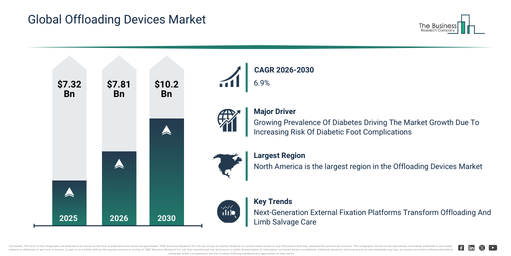
    The offloading devices market size has shown significant expansion in recent years. It is anticipated to increase from $7.32 billion in 2025 to $7.81 billion in 2026, exhibiting a compound annual growth rate (CAGR) of 6.7%. Historically, the market’s growth has been fueled by factors such as the rise in diabetic foot ulcers, the growth of the aging population, an increase in podiatric care, the expansion of orthopedic device use, and higher post surgical recovery needs.

    The offloading devices market is projected to experience substantial expansion over the coming years. This market is forecast to reach a valuation of $10.2 billion by 2030, demonstrating a compound annual growth rate (CAGR) of 6.9%. This anticipated growth is driven by several factors, including an increase in diabetes prevalence, a rise in home care treatment options, the expansion of preventive wound care solutions, the demand for custom orthotics, and a greater availability of outpatient recovery devices. Key developments anticipated during this period encompass custom molded offloading footwear, advanced pressure redistribution insoles, lightweight composite offloading boots, 3D printed orthotic devices, and modular removable cast walkers.

    Access Your Free Sample Report for In-Depth Market Insights:

    https://www.thebusinessresearchcompany.com/sample.aspx?id=33244&type=smp

    Which Drivers Are Contributing To The Expansion Of The Offloading Devices Market?

    The increasing occurrence of diabetes is projected to fuel the expansion of the offloading devices market in the future. Diabetes is a long-term condition disrupting the body’s food-to-energy conversion process, resulting in elevated blood sugar levels capable of causing serious health issues. The rise in diabetes cases is largely attributed to escalating obesity rates, as excessive body fat contributes to insulin resistance and subsequently higher blood sugar. Offloading devices assist individuals with diabetes by alleviating strain on vulnerable regions, averting foot ulcers, facilitating quicker wound recovery, and diminishing the likelihood of severe issues like infections or amputations, thus enhancing movement, well-being, and comprehensive diabetic treatment results. For example, in June 2024, the National Health Service, a UK-based government department, reported that 3,615,330 persons registered with a general practitioner (GP) received a diagnosis of non-diabetic hyperglycemia or pre-diabetes in 2023, representing an 18% surge from 3,065,825 instances in 2022. Consequently, the expanding incidence of diabetes is propelling the growth of the offloading devices market.

    What Segment Classifications Make Up The Offloading Devices Market?

    The offloading devices market covered in this report is segmented –

    1) By Product Type: Nonremovable Knee-High Offloading Devices; Removable Knee-High Offloading Devices; Air-Assisted Lateral Transfer Systems; Replacement Sliding Sheets; Wheelchairs

    2) By Material: Foam; Plastics; Rubber; Composite Materials; Advanced Polymers

    3) By Application: Diabetic Foot Ulcer Management; Pressure Ulcer Prevention And Treatment; Surgical Recovery; Post-Operative Care; Diagnostics; Long-Term Rehabilitation

    4) By End-User: Hospitals; Ambulatory Surgery Centers; Nursing Homes; Long-Term Care Facilities; Home Care Settings

    Subsegments:

    1) By Nonremovable Knee-High Offloading Devices: Total Contact Cast Systems; Fiberglass Casting Systems; Plaster Based Casting Systems; Custom Molded Immobilization Devices

    2) By Removable Knee-High Offloading Devices: Removable Cast Walkers; Adjustable Walking Boots; Modular Immobilization Braces; Custom Fit Removable Devices

    3) By Air-Assisted Lateral Transfer Systems: Single Patient Use Air Transfer Systems; Reusable Air Transfer Systems; Inflatable Air Cushion Transfer Systems; Powered Air Assisted Transfer Systems

    4) By Replacement Sliding Sheets: Disposable Sliding Sheets; Reusable Sliding Sheets; Low Friction Coated Sliding Sheets; Waterproof Sliding Sheets

    5) By Wheelchairs: Manual Wheelchairs; Powered Wheelchairs; Transport Wheelchairs; Custom Configured Wheelchairs

    Which Market Trends Are Opening Growth Opportunities In The Offloading Devices Market?

    Leading companies in the offloading devices market are prioritizing advanced external fixation platforms to improve wound protection, facilitate precise pressure redistribution, and streamline limb preservation procedures. External fixation platforms are orthopedic support systems that stabilize bones and joints using external structures, often connected to the skeleton via pins or wires. Their common applications include fracture management, limb reconstruction, and post-surgical recovery. For instance, in January 2026, BlueOcean Global, a US-based medical device firm, announced FDA 510(k) clearance for Excelsior, a compact, surgeon-deployable platform intended for limb salvage in high-risk patients. This system allows clinicians to securely integrate offloading rings and bars into existing fixation setups using standard components, addressing diabetes-related ulcers, infections, trauma, and non-healing wounds in underserved clinical areas such as Charcot reconstruction. These modular frames alleviate soft tissues from core skeletal loads, enhance stability in complex cases, and are managed through BlueOcean’s proprietary FAST protocols to ensure optimal healing and seamless patient outcomes.

    Which Key Players Are Driving Competition In The Offloading Devices Market?

    Major companies operating in the offloading devices market are Medline Industries LP, Stryker Corporation, Ottobock SE & Co KGaA, Arjo Group, Invacare Corporation, Guldmann A/S, Etac AB, Permobil AB, Sunrise Medical LLC, Frontier Medical Group, Drive DeVilbiss Healthcare, Joerns Healthcare LLC, AliMed Inc, Seneca Devices Inc., DARCO International Inc., HoverTech International, Beechfield Healthcare Ltd, Next Health LLC, Jewell Nursing Solutions, and Posey Products LLC.

    Access The Complete Report For Deeper Market Insights:

    https://www.thebusinessresearchcompany.com/report/offloading-devices-market-report

    Which Region Is Projected To Lead The Offloading Devices Market During The Forecast Period?

    North America was the largest region in the offloading devices market in 2025. Asia-Pacific is expected to be the fastest-growing region in the forecast period. The regions covered in the offloading devices market report are Asia-Pacific, South East Asia, Western Europe, Eastern Europe, North America, South America, Middle East, Africa.

    Request Your Customized Offloading Devices Market Research Report for Competitive Advantage:

    https://www.thebusinessresearchcompany.com/customise?id=33244&type=smp

    Browse Through More Reports Similar to the Global Offloading Devices Market 2026, By The Business Research Company

    Over The Top Devices And Services Market Report 2026

    https://www.thebusinessresearchcompany.com/report/over-the-top-devices-and-services-global-market-report

    Ultra Portable Internet Devices Market Report 2026

    https://www.thebusinessresearchcompany.com/report/ultra-portable-internet-devices-global-market-report

    Ultra Mobile Devices Market Report 2026

    https://www.thebusinessresearchcompany.com/report/ultra-mobile-devices-global-market-report

    Get in touch with us:

    The Business Research Company: https://www.thebusinessresearchcompany.com/

    Americas +1 310-496-7795

    Asia +44 7882 955267 & +91 8897263534

    Europe +44 7882 955267

    Email us at info@tbrc.info

    Follow us on:

    LinkedIn: https://in.linkedin.com/company/the-business-research-company

    YouTube: https://www.youtube.com/channel/UC24_fI0rV8cR5DxlCpgmyFQ

    Global Market Model: https://www.thebusinessresearchcompany.com/global-market-model