Category: Medical Equipment

  • Magnetic Navigation Surgical Robot Market 2026–2030: Forecasting Business Opportunities Ahead

    Magnetic Navigation Surgical Robot Market 2026–2030: Forecasting Business Opportunities Ahead

    Uncover key drivers, emerging technologies, and competitive movements shaping the magnetic navigation surgical robot market from 2026–2035 with trusted insights from The Business Research Company

    What market expansion outlook does the Magnetic Navigation Surgical Robot Market show for the 2026–2030 period?

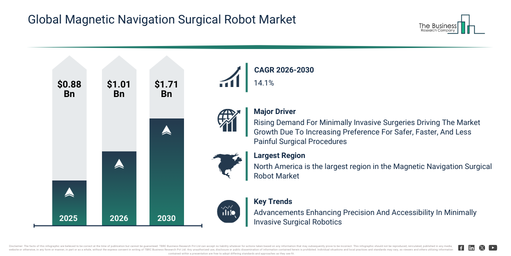
    The market size for magnetic navigation surgical robots has experienced rapid growth in recent years. It is forecast to expand from $0.88 billion in 2025 to $1.01 billion in 2026, driven by a compound annual growth rate (CAGR) of 13.9%. The historical growth of this market can be attributed to several factors, including the increasing prevalence of minimally invasive surgery, the early adoption of surgical robotics, the demand for higher procedural precision, a rise in complex cardiac interventions, and hospital investments in advanced operating rooms.

    The magnetic navigation surgical robot market size is anticipated to undergo substantial growth in the next few years. It is projected to increase to $1.71 billion by 2030, achieving a compound annual growth rate (CAGR) of 14.1%. The expansion during the forecast period can be attributed to the rise in robotic assisted surgeries, the broadening of image guided interventions, a greater demand for precision navigation systems, the proliferation of specialty surgical centers, and enhanced surgeon training in robotic platforms. Noteworthy trends expected in the forecast period include magnetic guided minimally invasive procedures, integrated surgical planning software, robotic catheter navigation systems, high precision instrument control modules, and various procedure simulation and planning tools.

    Access Your Free Sample Report for In-Depth Market Insights:

    https://www.thebusinessresearchcompany.com/sample.aspx?id=33207&type=smp

    What Drivers Are Shaping The Development Of The Magnetic Navigation Surgical Robot Market?

    The increasing requirement for minimally invasive surgeries is projected to advance the magnetic navigation surgical robot market in the future. These medical procedures, performed through small incisions using specialized instruments and techniques, result in less tissue damage, reduced pain, and faster patient recovery compared to traditional open surgeries. The growth of minimally invasive surgery is due to advancements in surgical instruments and imaging technologies, allowing for enhanced precision with less patient trauma and quicker recovery periods. Magnetic navigation surgical robots improve minimally invasive surgeries by giving surgeons precise, real-time control of instruments via tiny incisions, boosting accuracy, minimizing tissue damage, and enabling complex operations that would be challenging or risky with conventional methods. For instance, in June 2024, according to the American Society of Plastic Surgeons, a US-based non-profit organization, in 2023, a total of 347,782 liposuction procedures were performed, representing a 7% increase compared to 2022. Minimally invasive procedures also grew by 7% during the year, surpassing the growth of surgical procedures by 2 percentage points. Overall, plastic surgeries rose 5% year-over-year, while minimally invasive treatments saw a 7% increase. Therefore, the growing demand for minimally invasive surgeries is fueling the expansion of the magnetic navigation surgical robot market.

    Which Segments Are Contributing To The Growth Of The Magnetic Navigation Surgical Robot Market?

    The magnetic navigation surgical robot market covered in this report is segmented –

    1) By Component: Hardware; Software; Services

    2) By Technology: Active Magnetic Navigation; Passive Magnetic Navigation

    3) By Distribution Channel: Direct Sales; Distributors

    4) By Application: Spine Surgery; Orthopedic Surgery; Neurosurgery; Interventional Cardiology; Ear, Nose, And Throat (ENT) Surgery; Other Surgical Applications

    5) By End-User: Hospitals; Ambulatory Surgical Centers; Specialty Clinics

    Subsegments:

    1) By Hardware: Robotic Manipulation Units; Magnetic Field Generation Systems; Surgical Instrument Navigation Components; Sensor And Imaging Hardware; Control And Power Supply Units

    2) By Software: Navigation And Guidance Software; Imaging Integration Software; Motion Control And Planning Software; User Interface And Visualization Software; Data Processing And Analytics Software

    3) By Services: Installation And System Integration Services; Clinical Training And Education Services; Maintenance And Technical Support Services; Calibration And Performance Optimization Services; Regulatory Compliance And Validation Services

    Which Innovation Trends Are Advancing Developments Within The Magnetic Navigation Surgical Robot Market?

    Leading firms within the magnetic navigation surgical robot market are concentrating their efforts on creating novel solutions, including sophisticated endovascular robotic surgery systems, aiming to enhance surgical accuracy and mitigate procedural dangers. These advanced endovascular robotic surgery solutions represent robotic frameworks employing precise, computer-guided navigation to direct instruments through vascular pathways, thereby enabling surgeons to execute intricate operations with heightened precision, less invasiveness, and enhanced patient well-being. A notable example is Stereotaxis Inc., a US-based medical technology company, which secured U.S. FDA 510(k) clearance in November 2025 for its GenesisX Robotic Magnetic Navigation System. This innovative surgical robot was engineered to streamline setup and expand the availability of magnetic navigation technology for endovascular procedures, underscoring continuous advancements in this domain. Such robotic frameworks not only boost the accuracy of procedures but also shorten recovery periods by empowering surgeons to conduct challenging interventions with superior command. Given that hospitals and surgical facilities are increasingly looking for technologies that improve patient results while simultaneously optimizing infrastructure and operational effectiveness, magnetic navigation surgical robots are emerging as a crucial foundational technology.

    Who Are The Prominent Global Companies Shaping The Magnetic Navigation Surgical Robot Market Landscape?

    Major companies operating in the magnetic navigation surgical robot market are Medtronic plc, Stereotaxis Inc., Globus Medical Inc., MicroPort Scientific Corporation, Genesis Robotic Magnetic Navigation System, ZimVie Inc., Northern Digital Inc., Brain Navi Biotechnology Co. Ltd., Synaptive Medical Inc., ClearPoint Neuro Inc., Naviq Inc., Polhemus Incorporated, Levita Magnetics International Corp., Flux Robotics Inc., Radwave Technologies Inc., Magnetecs Corporation, EndoQuest Robotics Inc., Nanoflex Robotics AG, Theranautilus Private Limited, Magnendo Corp.

    Access The Complete Report For Deeper Market Insights:

    https://www.thebusinessresearchcompany.com/report/magnetic-navigation-surgical-robot-market-report

    Which Geographic Areas Are Emerging As Strong Markets For The Magnetic Navigation Surgical Robot Market?

    North America was the largest region in the magnetic navigation surgical robot market in 2025. Asia-Pacific is expected to be the fastest-growing region in the forecast period. The regions covered in the magnetic navigation surgical robot market report are Asia-Pacific, South East Asia, Western Europe, Eastern Europe, North America, South America, Middle East, Africa.

    Request Your Customized Magnetic Navigation Surgical Robot Market Research Report for Competitive Advantage:

    https://www.thebusinessresearchcompany.com/customise?id=33207&type=smp

    Browse Through More Reports Similar to the Global Magnetic Navigation Surgical Robot Market 2026, By The Business Research Company

    Surgical Navigation Systems Market Report 2026

    https://www.thebusinessresearchcompany.com/report/surgical-navigation-systems-global-market-report

    Robotic Surgery Services Market Report 2026

    https://www.thebusinessresearchcompany.com/report/robotic-surgery-services-global-market-report

    Surgical Robots Market Report 2026

    https://www.thebusinessresearchcompany.com/report/surgical-robots-global-market-report

    Get in touch with us:

    The Business Research Company: https://www.thebusinessresearchcompany.com/

    Americas +1 310-496-7795

    Asia +44 7882 955267 & +91 8897263534

    Europe +44 7882 955267

    Email us at info@tbrc.info

    Follow us on:

    LinkedIn: https://in.linkedin.com/company/the-business-research-company

    YouTube: https://www.youtube.com/channel/UC24_fI0rV8cR5DxlCpgmyFQ

    Global Market Model: https://www.thebusinessresearchcompany.com/global-market-model

  • Ligation Devices Market 2026–2030: Forecast, Innovation, and Competitive Trends

    Ligation Devices Market 2026–2030: Forecast, Innovation, and Competitive Trends

    Uncover key drivers, emerging technologies, and competitive movements shaping the ligation devices market from 2026–2035 with trusted insights from The Business Research Company

    How much is the Ligation Devices Market valued at in 2026, and what valuation is forecast for 2030?

    The ligation devices market size has experienced significant expansion in recent years. It is anticipated to grow from $1.24 billion in 2025 to $1.34 billion in 2026, demonstrating a compound annual growth rate (CAGR) of 7.6%. The expansion observed in the historic period can be attributed to an elevated volume of surgical procedures, the development of hospital infrastructure, the increasing embrace of laparoscopic surgeries, improved access to sophisticated surgical instruments, and a rising occurrence of chronic diseases.

    The ligation devices market is expected to witness robust expansion in the coming years. Its valuation is projected to reach $1.8 billion by 2030, demonstrating a compound annual growth rate (CAGR) of 7.8%. The anticipated growth during this forecast period is primarily driven by the escalating demand for minimally invasive procedures, increased investments in surgical technology innovation, the expansion of ambulatory surgical centers, a growing emphasis on procedural efficiency, and the rising adoption of advanced endoscopic tools. Major developments expected over this period include the increasing uptake of minimally invasive ligation solutions, a rise in the use of disposable and single-use ligation devices, the growing demand for precision clip application systems, the wider application of endoscopic and laparoscopic ligation techniques, and an enhanced focus on patient safety and surgical efficiency.

    Access Your Free Sample Report for In-Depth Market Insights:

    https://www.thebusinessresearchcompany.com/sample.aspx?id=33200&type=smp

    What Drivers Are Influencing The Growth Of The Ligation Devices Market?

    The expanding volume of surgical operations is anticipated to boost the ligation devices market in the coming period. Surgical procedures involve medical operations conducted by qualified healthcare professionals to address illnesses, repair injuries, or enhance physiological function. The frequency of surgeries is escalating as healthcare systems expand their capabilities, address previously unmet surgical demands, and enhance the availability of surgical care across various populations. Ligation devices facilitate this rise in surgical activity by allowing surgeons to achieve dependable vessel closure, effective hemostasis, and precise tissue approximation, thereby enhancing procedural safety and operational efficiency. For example, in June 2024, data from the International Society of Aesthetic Plastic Surgery (ISAPS), an organization of aesthetic surgeons, revealed that total surgical and non-surgical procedures collectively grew by 3.4% in 2023, with over 15.8 million surgical procedures conducted globally, a greater figure than in previous years. Consequently, the rising number of surgical interventions is fueling the expansion of the ligation devices market.

    What Segments Are Included Within The Ligation Devices Market?

    The ligation devices market covered in this report is segmented –

    1) By Product Type: Clip Appliers; Endoscopic Ligators; Accessories

    2) By Material Type: Metal Ligation Devices; Polymer Ligation Devices

    3) By Application: Gastrointestinal Surgeries; Gynecological Surgeries; Cardiovascular Surgeries; Urological Surgeries; Other Applications

    4) By End-User: Hospitals; Ambulatory Surgical Centers; Specialty Clinics; Other End-Users

    Subsegments:

    1) By Clip Appliers: Reusable Clip Appliers; Disposable Clip Appliers; Laparoscopic Clip Appliers; Open Surgery Clip Appliers; Multi Fire Clip Appliers

    2) By Endoscopic Ligators: Band Ligation Devices; Loop Ligation Devices; Single Use Endoscopic Ligators; Multiple Band Endoscopic Ligators; Therapeutic Endoscopic Ligators

    3) By Accessories: Ligation Clips; Ligation Bands; Loading Cartridges; Applicator Handles; Replacement Components

    What Industry Trends Are Transforming The Ligation Devices Market?

    Leading firms within the ligation devices market are prioritizing advancements in minimally invasive surgical techniques, including sophisticated laparoscopic vessel sealing and ligation systems designed to enhance procedural command, decrease operation duration, and facilitate accurate tissue manipulation in intricate surgical procedures. These advanced systems denote tools specifically developed to provide regulated energy for sealing and severing blood vessels and tissue structures, simultaneously featuring ergonomic construction and improved reach within confined anatomical areas, thereby boosting surgical accuracy and blood clot formation control. As an illustration, Medtronic, an Ireland-based medical technology company, launched the LigaSure Exact Dissector in March 2023. This laparoscopic vessel sealing and dissection device incorporates state-of-the-art bipolar energy delivery for reliable sealing, a curved jaw configuration for better visibility and reach, and a nano-coated jaw to reduce tissue adhesion and streamline the surgical process.

    Who Are The Top-Performing Companies In The Ligation Devices Market In Recent Years?

    Major companies operating in the ligation devices market are Johnson & Johnson Services Inc., Abbott Laboratories, Medtronic plc, Stryker Corporation, Boston Scientific Corporation, B. Braun Melsungen AG, Olympus Corporation, Smith & Nephew Plc, The Cooper Companies Inc., Teleflex Incorporated, Cook Medical LLC, Merit Medical Systems Inc., ConMed Corporation, CooperSurgical Inc., AngioDynamics Inc., Argon Medical Devices Inc., Scanlan International Inc., Purple Surgical, Unimicro Medical Systems Co. Ltd., Ovesco Endoscopy AG, Applied Medical Resources Corporation, Grena Think Medical, Genicon Inc., and Hakko Co. Ltd.

    Access The Complete Report For Deeper Market Insights:

    https://www.thebusinessresearchcompany.com/report/ligation-devices-market-report

    Which Region Currently Holds The Largest Share Of The Ligation Devices Market?

    North America was the largest region in the ligation devices market in 2025. Asia-Pacific is expected to be the fastest-growing region in the forecast period. The regions covered in the ligation devices market report are Asia-Pacific, South East Asia, Western Europe, Eastern Europe, North America, South America, Middle East, Africa.

    Request Your Customized Ligation Devices Market Research Report for Competitive Advantage:

    https://www.thebusinessresearchcompany.com/customise?id=33200&type=smp

    Browse Through More Reports Similar to the Global Ligation Devices Market 2026, By The Business Research Company

    Ligases Enzyme Market Report 2026

    https://www.thebusinessresearchcompany.com/report/ligases-enzyme-global-market-report

    Connected Drug Delivery Devices Market Report 2026

    https://www.thebusinessresearchcompany.com/report/connected-drug-delivery-devices-global-market-report

    Specialty Devices Market Report 2026

    https://www.thebusinessresearchcompany.com/report/specialty-devices-global-market-report

    Get in touch with us:

    The Business Research Company: https://www.thebusinessresearchcompany.com/

    Americas +1 310-496-7795

    Asia +44 7882 955267 & +91 8897263534

    Europe +44 7882 955267

    Email us at info@tbrc.info

    Follow us on:

    LinkedIn: https://in.linkedin.com/company/the-business-research-company

    YouTube: https://www.youtube.com/channel/UC24_fI0rV8cR5DxlCpgmyFQ

    Global Market Model: https://www.thebusinessresearchcompany.com/global-market-model
  • COVID-19 Rapid Test Kits Market Size and Demand Forecast 2026–2030

    COVID-19 Rapid Test Kits Market Size and Demand Forecast 2026–2030

    Uncover key drivers, emerging technologies, and competitive movements shaping the workstation graphics processing unit (gpu) market from 2026–2035 with trusted insights from The Business Research Company

    What long-term size projections exist for the COVID-19 Rapid Test Kits Market covering 2026–2035?

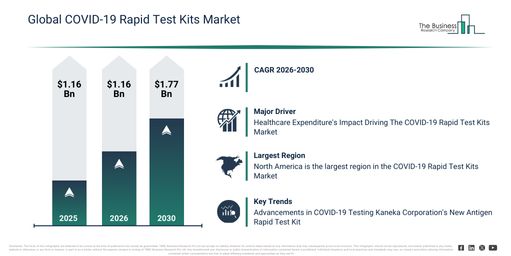
    The covid-19 rapid test kits market size has undergone a steep decline over the past few years. However, it is projected to begin its growth trajectory from $67.38 billion in 2025. The historical decrease is largely due to factors such as a lower incidence of infectious diseases, inadequate development of diagnostic laboratory infrastructure, a scarcity of public health testing efforts, and constrained rapid test manufacturing output.

    Access Your Free Sample Report for In-Depth Market Insights:

    https://www.thebusinessresearchcompany.com/sample.aspx?id=4013&type=smp

    Which Drivers Are Impacting The Competitive Landscape Of The COVID-19 Rapid Test Kits Market?

    The expansion of the COVID-19 rapid test kits market is anticipated to be driven by increasing healthcare expenditure in the coming years. Healthcare expenditure denotes the funds allocated to healthcare costs, representing the aggregate sum spent on goods and services related to health within a specific healthcare system or economy. This spending plays a critical role in fostering the development and accessibility of COVID-19 rapid test kits. For instance, data from June 2025, released by the US-based federal agency, Centers for Medicare & Medicaid Services (CMS), indicated that the National Health Expenditure (NHE) surged by 7.5% to $4.9 trillion in 2023, translating to $14,570 per person, and accounted for 17.6% of Gross Domestic Product (GDP). Hospital expenditures notably climbed by 10.4% to $1,519.7 billion in 2023, which was a faster rate compared to the 3.2% growth recorded in 2022. Thus, the rising healthcare expenditure is propelling the growth of the COVID-19 rapid test kits market.

    What Leading Segments Are Studied In The COVID-19 Rapid Test Kits Market?

    The covid-19 rapid test kits market covered in this report is segmented –

    1) By Test Type: RT PCR Test, Rapid Antigen Test, Rapid Antibody Test, Other Test Types

    2) By Specimen Type: Nasopharyngeal Swab, Oropharyngeal Swab, Nasal Swab, Blood, Others

    3) By End-Users: Hospitals And Clinics, Diagnostic Laboratories, Home Care, Other End-Users

    Subsegments:

    1) By RT PCR Test: Conventional RT PCR Tests, Real-Time RT PCR Tests, Automated RT PCR Systems

    2) By Rapid Antigen Test: Nasal Swab Antigen Tests, Saliva-Based Antigen Tests, Lateral Flow Assays

    3) By Rapid Antibody Test: IgM Or IgG Rapid Tests, Lateral Flow Serological Tests, Enzyme-Linked Immunosorbent Assay (ELISA) Kits

    4) By Other Test Types: Combination Tests, Molecular Diagnostic Tests, Home Test Kits

    What Long-Term Trends Are Expected To Shape The Future Of The COVID-19 Rapid Test Kits Market?

    Companies operating significantly within the COVID-19 Rapid Test Kits market are innovating new products, including Antigen Rapid Test Kits, to offer swifter and more precise virus detection, thereby efficiently contributing to infection spread control. Antigen Rapid Test Kits work by identifying viral proteins linked to infections like COVID-19, delivering results within 15-30 minutes from either a nasal or throat swab. Despite being less sensitive than PCR tests, they prove effective for rapid screening across large populations. For example, in June 2023, Kaneka Corporation, a Japan-based chemical manufacturing company, introduced KANEKA Immunochromatography Flu A/B and SARS-CoV-2 Ag. This particular test kit enables quick and accurate detection of COVID-19 and influenza viruses using a single nasal swab sample, with results appearing in about ten minutes. Its straightforward design removes the necessity for specialized equipment, making it available for both medical facilities and personal self-testing. Moreover, the kit’s ability to simultaneously detect multiple viruses increases its practicality in clinical environments, supporting timely diagnoses and appropriate treatment planning.

    Which Key Players Are Driving Competition In The COVID-19 Rapid Test Kits Market?

    Major companies operating in the covid-19 rapid test kits market are Abbott Laboratories, F. Hoffmann-La Roche AG, Becton Dickinson and Company, Quidel Corporation, DiaSorin S.p.A., Mylab Discovery Solutions, Beijing Jinwofu Bioengineering Technology Company, Zhejiang Orient Gene Biotech Co. Ltd, Transasia Bio Medicals, Vanguard Diagnostics, SD Biosensor, Getein Biotech, Hangzhou Biotest Biotech, Boditech Med Inc, Beijing Tigsun Diagnostics, Hunan Lituo Biotechnology, Vivacheck Lab, Fujirebio, Atomo Diagnostics, Senova, CerTest Biotec, Omega Diagnostics, Abingdon Health, Novacyt Group, BioMaxima S.A, SensDx S.A, OraSure Technologies Inc, Sorrento Therapeutics, Monocent Inc, Aurora Biomed, Hologic, Mesa Biotech, Healgen Scientific Limited Liability Company, NTBIO Diagnostics, Motologic, ACRO Biotech, Cellex Inc, Advagen Biotech Ltd, BioMedomics, CapeBio

    Access The Complete Report For Deeper Market Insights:

    https://www.thebusinessresearchcompany.com/report/covid-19-rapid-test-kits-global-market-report

    Which Region Is Projected To Lead The COVID-19 Rapid Test Kits Market During The Forecast Period?

    North America was the largest region in the COVID-19 rapid test kits market in 2025. Western Europe was the second largest region in the global COVID-19 rapid test kits market share. The regions covered in the covid-19 rapid test kits market report are Asia-Pacific, South East Asia, Western Europe, Eastern Europe, North America, South America, Middle East, Africa.

    Request Your Customized COVID-19 Rapid Test Kits Market Research Report for Competitive Advantage:

    https://www.thebusinessresearchcompany.com/customise?id=4013&type=smp

    Browse Through More Reports Similar to the Global COVID-19 Rapid Test Kits Market 2026, By The Business Research Company

    Covid 19 Rapid Test Kits Global Market Report 2026

    https://www.thebusinessresearchcompany.com/report/covid-19-rapid-test-kits-global-market-report

    Coronavirus Current Therapy Global Market Report 2026

    https://www.thebusinessresearchcompany.com/report/coronavirus-current-therapy-global-market-report

    Remdesivir Global Market Report 2026

    https://www.thebusinessresearchcompany.com/report/remdesivir-global-market-report

    Get in touch with us:

    The Business Research Company: https://www.thebusinessresearchcompany.com/

    Americas +1 310-496-7795

    Asia +44 7882 955267 & +91 8897263534

    Europe +44 7882 955267

    Email us at info@tbrc.info

    Follow us on:

    LinkedIn: https://in.linkedin.com/company/the-business-research-company

  • Cell Culture Media Storage Containers Market Trends and Insights: Global Forecast to 2030

    Cell Culture Media Storage Containers Market Trends and Insights: Global Forecast to 2030

    Uncover key drivers, emerging technologies, and competitive movements shaping the wearable cardiac monitor patch market from 2026–2035 with trusted insights from The Business Research Company

    What growth pattern is forecast for the Cell Culture Media Storage Containers Market size between 2026 and 2035?

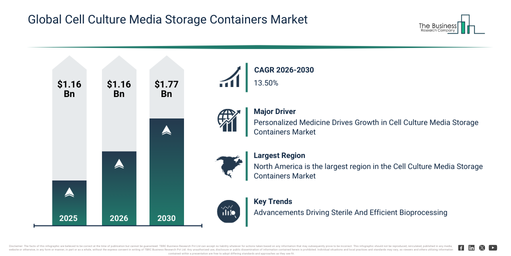
    The market size for cell culture media storage containers has experienced rapid expansion over recent years. Projections indicate it will expand from $2.88 billion in 2025 to $3.32 billion in 2026, demonstrating a compound annual growth rate (CAGR) of 15.1%. Historically, this growth is primarily attributable to several factors, including the increase in cell-based research activities, the expansion of biopharmaceutical production, the rising use of in vitro testing methods, increased investment in academic life sciences research, and the growing adoption of tissue culture techniques.

    The cell culture media storage containers market size is projected to experience substantial growth over the next few years, reaching $5.51 billion in 2030, with a compound annual growth rate (CAGR) of 13.5%. This growth during the forecast period can be attributed to the escalating demand for biologics and biosimilars, the expanding scope of regenerative medicine research, increased outsourcing to CROs and CMOs, a stronger emphasis on scalable cell culture processes, and growing investment in advanced laboratory infrastructure. Concurrently, significant trends for the forecast period include the rising need for sterile and contamination-free media storage, the increasing adoption of single-use cell culture storage solutions, a greater preference for high-durability and leak-proof containers, the expansion of media storage requirements in biopharmaceutical manufacturing, and improved standardization of storage containers across laboratories.

    Access Your Free Sample Report for In-Depth Market Insights:

    https://www.thebusinessresearchcompany.com/sample.aspx?id=15756&type=smp

    Which Drivers Are Impacting Market Performance In The Cell Culture Media Storage Containers Market?

    An increased emphasis on personalized medicine is projected to drive the cell culture media storage containers market in the future. Personalized medicine, also known as precision medicine, represents a medical approach that customizes treatments and healthcare practices based on the unique characteristics of each patient. The growing attention to personalized medicine stems from the demand for more targeted and effective treatments, alongside advancements in genomics and precision healthcare technologies. Cell culture media storage containers find use in the development of personalized medicine to maintain and preserve cell cultures, thereby enabling the production of patient-specific therapies and tailored treatments. For instance, in February 2024, the Personalized Medicine Coalition, a US-based organization advocating for personalized medicine, reported that the U.S. Food and Drug Administration approved 16 new personalized treatments for rare disease patients, an increase from 6 in 2022. Consequently, the growing focus on personalized medicine fuels the expansion of the cell culture media storage containers market.

    Which Segments Are Contributing To The Growth Of The Cell Culture Media Storage Containers Market?

    The cell culture media storage containers market covered in this report is segmented –

    1) By Product: Storage Bag, Storage Bottle, Storage Bin And Drum

    2) By Application: Biopharmaceutical Production, Tissue Engineering, Diagnostic, Regenerative Medicine

    3) By End Use: Pharmaceutical And Biotechnology Companies, Contract Research Organizations And Contract Manufacturing Organizations, Academic And Research Institutes

    Subsegments:

    1) By Storage Bag: Single-Use Storage Bags, Biopharmaceutical Storage Bags, Sterile Storage Bags

    2) By Storage Bottle: Polycarbonate Storage Bottles, Plastic Storage Bottles, Glass Storage Bottles

    3) By Storage Bin And Drum: Plastic Storage Bins, Metal Storage Drums, Food-Grade Storage Bins

    Which Trends Are Shaping Activity Within The Cell Culture Media Storage Containers Market?

    Leading companies in the cell culture media storage containers market are concentrating on creating advanced solutions, including next-generation single-use mixing technologies, with the aim of boosting media homogeneity, improving sterility, and facilitating streamlined bioprocessing workflows. These next-generation single-use mixing technologies are defined as contact-free, magnetically driven systems engineered to provide consistent and aseptic blending of cell culture media, buffers, and other process liquids. An illustrative example occurred in April 2024 when Cytiva, a US-based technology firm, unveiled its Xcellerex Magnetic Mixer at Interphex. This particular solution was designed to offer scalable, efficient, and contamination-free mixing, thereby assisting biomanufacturers in upholding consistent media quality and enhancing both upstream and downstream processing performance. Such an innovation contributes to increased operational flexibility and aligns well with the evolving industry preference for single-use bioprocessing technologies.

    Who Are The Prominent Global Companies Shaping The Cell Culture Media Storage Containers Market Landscape?

    Major companies operating in the cell culture media storage containers market are Merck KGaA, Thermo Fisher Scientific Inc, FUJIFILM Holdings Corporation, Becton Dickinson and Company, Corning Incorporated, Avantor Inc, Danaher Life Sciences LLC, Lonza Group AG, Sartorius AG, Bio-Rad Laboratories Inc, Eppendorf AG, STEMCELL Technologies Inc, Greiner Bio-One International GmbH, SARSTEDT AG & Co KG, Cole-Parmer Instrument Company LLC, BioLife Solutions Inc, DWK Life Sciences, MP Biomedicals LLC, HiMedia Laboratories Pvt Ltd, OriGen Biomedical Inc, ThermoGenesis Holdings Inc, CELLTREAT Scientific Products, TPP Techno Plastic Products AG

    Access The Complete Report For Deeper Market Insights:

    https://www.thebusinessresearchcompany.com/report/cell-culture-media-storage-containers-global-market-report

    Which Geographic Areas Are Emerging As Strong Markets For The Cell Culture Media Storage Containers Market?

    North America was the largest region in the cell culture media storage containers market in 2025. Asia-Pacific is expected to be the fastest-growing region in the forecast period. The regions covered in the cell culture media storage containers market report are Asia-Pacific, South East Asia, Western Europe, Eastern Europe, North America, South America, Middle East, Africa.

    Request Your Customized Cell Culture Media Storage Containers Market Research Report for Competitive Advantage:

    https://www.thebusinessresearchcompany.com/customise?id=15756&type=smp

    Browse Through More Reports Similar to the Global Cell Culture Media Storage Containers Market 2026, By The Business Research Company

    Cells Therapy Global Market Report 2026

    https://www.thebusinessresearchcompany.com/report/cells-therapy-global-market-report

    Cellulars Immunotherapy Global Market Report 2026

    https://www.thebusinessresearchcompany.com/report/cellulars-immunotherapy-global-market-report

    Cell And Genes Therapy Global Market Report 2026

    https://www.thebusinessresearchcompany.com/report/cell-and-genes-therapy-global-market-report

    Get in touch with us:

    The Business Research Company: https://www.thebusinessresearchcompany.com/

    Americas +1 310-496-7795

    Asia +44 7882 955267 & +91 8897263534

    Europe +44 7882 955267

    Email us at info@tbrc.info

    Follow us on:

    LinkedIn: https://in.linkedin.com/company/the-business-research-company

  • Global Robotic Surgery Devices Market Report 2026: Emerging Trends and Growth Scenarios

    Global Robotic Surgery Devices Market Report 2026: Emerging Trends and Growth Scenarios

    Uncover key drivers, emerging technologies, and competitive movements shaping the worker heat stress monitoring wearable market from 2026–2035 with trusted insights from The Business Research Company

    What is the estimated market size of the Robotic Surgery Devices Market by the end of 2030?

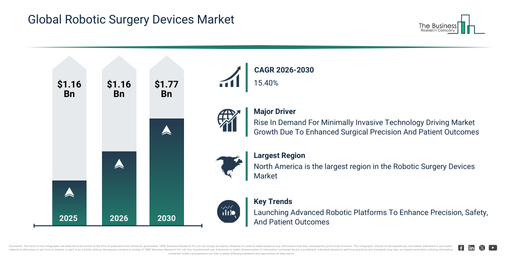
    The robotic surgery devices market size has witnessed significant expansion in recent years. It is forecast to rise from $8.81 billion in 2025 to $10.19 billion in 2026, achieving a compound annual growth rate (CAGR) of 15.7%. The market’s past growth can be attributed to the broadening scope of minimally invasive surgical procedures, a growing preference among surgeons for robotic assistance, increased hospital investments in cutting-edge surgery systems, an uptick in complex surgical cases, and enhancements in robotic instrumentation.

    The robotic surgery devices market is poised for significant expansion over the next few years, with projections indicating a rise to $18.08 billion by 2030, driven by a compound annual growth rate (CAGR) of 15.4%. This anticipated growth during the forecast period is fueled by several factors, including the increasing adoption of autonomous surgical functions, a heightened demand for precision surgery, the expansion of robotic surgery training programs, the growing integration of AI-assisted decision support, and an increase in outpatient robotic procedures. Furthermore, major trends expected in this period encompass the increasing prevalence of robot-assisted minimally invasive surgeries, a rising demand for multi-specialty robotic platforms, the growing use of advanced surgical visualization systems, the expansion of remote and teleoperated surgery, and an enhanced focus on surgical precision and outcomes.

    Access Your Free Sample Report for In-Depth Market Insights:

    https://www.thebusinessresearchcompany.com/sample.aspx?id=2482&type=smp

    What Drivers Are Shaping Future Opportunities In The Robotic Surgery Devices Market?

    The increasing need for minimally invasive technology is expected to boost the robotic surgery devices market going forward. This technology encompasses surgical operations performed through small incisions, employing sophisticated instruments and robotic systems to minimize tissue damage and reduce recovery periods. The growing patient preference for quicker recovery, fewer post-operative complications, and shorter hospital stays is the reason for this heightened demand. This increased demand for minimally invasive technology supports the robotic surgery devices market by accelerating the adoption of robotic-assisted platforms that improve precision, enable more complex procedures, and enhance overall surgical outcomes. For instance, in June 2024, the American Society of Plastic Surgeons, a US-based non-profit organization, reported that minimally invasive procedures grew by 7% in 2023, exceeding the growth rate of surgical procedures by 2%. Hand surgeries, including carpal tunnel, arthritis, and trigger finger, reached a total of 207,887 procedures, reflecting a 2% increase from 2022. Thus, the rising demand for minimally invasive technology is a significant driver for the growth of the robotic surgery devices market.

    Which Segment Groups Are Influencing The Robotic Surgery Devices Market?

    The robotic surgery devices market covered in this report is segmented –

    1) By Product: Robotic systems, Instruments & Accessories, Services

    2) By Application: General Surgery, Urological Surgery, Gynecological Surgery, Orthopaedics Surgery, Neurosurgery, Other Applications.

    3) By End-Use: Hospitals, Ambulatory Surgery Centers (Ascs)

    Subsegments:

    1) By Robotic Systems: Surgical Robotic Systems, Teleoperated Robotic Systems, Autonomous Robotic Systems

    2) By Instruments And Accessories: Surgical Instruments, Endoscopes, Vision Systems, Energy Devices

    3) By Services: Maintenance And Repair Services, Training And Support Services, Consulting Services

    Which Trends Are Expected To Influence The Robotic Surgery Devices Market In The Upcoming Years?

    Leading firms in the robotic surgery devices sector are prioritizing technological innovations, particularly robotic surgery platforms, to boost procedural effectiveness, accuracy of treatment, and overall financial gains. These platforms are developed with the aim of minimizing radiation exposure, enhancing surgeon ergonomics, and improving patient recuperation via less invasive surgical methods. The R-One+ is a medical robot specifically designed for cardiac surgery. As an example, in May 2023, Robocath, a medical technology firm based in France, introduced R-One+, a novel robotic system for cardiac procedures. The R-One+ robotic platform aims to elevate treatment accuracy and safety, reduce radiation exposure, and generally enhance the patient’s experience. This robotic solution allows interventional cardiologists to perform coronary angioplasties using a tablet and a joystick. The R-One+ robotic platform represents a significant advancement in interventional cardiology, providing medical professionals with an innovative instrument to improve patient results and mitigate complication risks during interventions.

    Who Are The Prominent Global Companies Shaping The Robotic Surgery Devices Market Landscape?

    Major companies operating in the robotic surgery devices market are Intuitive Surgical Inc., Stryker Corporation, Medtronic plc, Smith & Nephew plc, Johnson & Johnson, TransEnterix Inc., Zimmer Biomet Holdings Inc., Auris Health Inc., CMR Surgical Ltd., Verb Surgical Inc., Renishaw plc, Think Surgical Inc., Corindus Vascular Robotics Inc., Mazor Robotics Ltd., Titan Medical Inc., Virtual Incision Corporation, Medrobotics Corporation, Preceyes BV, Microbot Medical Inc., Asensus Surgical Inc., Avatera Medical GmbH, Medicaroid Corporation, Hansen Medical Inc., Edge Surgical Inc., Synaptive Medical, Aesculap Inc.

    Access The Complete Report For Deeper Market Insights:

    https://www.thebusinessresearchcompany.com/report/robotic-surgery-devices-global-market-report

    How Does The Robotic Surgery Devices Market Perform Across Major Global Regions?

    North America was the largest region in the robotic surgery devices market in 2025. Western Europe was the second largest market in global robotic surgery devices market. The regions covered in the robotic surgery devices market report are Asia-Pacific, South East Asia, Western Europe, Eastern Europe, North America, South America, Middle East, Africa.

    Request Your Customized Robotic Surgery Devices Market Research Report for Competitive Advantage:

    https://www.thebusinessresearchcompany.com/customise?id=2482&type=smp

    Browse Through More Reports Similar to the Global Robotic Surgery Devices Market 2026, By The Business Research Company

    Robotic Surgery Services Global Market Report 2026

    https://www.thebusinessresearchcompany.com/report/robotic-surgery-services-global-market-report

    Surgical Robot Accessories Global Market Report 2026

    https://www.thebusinessresearchcompany.com/report/surgical-robot-accessories-global-market-report

    Surgical Robots Global Market Report 2026

    https://www.thebusinessresearchcompany.com/report/surgical-robots-global-market-report

    Get in touch with us:

    The Business Research Company: https://www.thebusinessresearchcompany.com/

    Americas +1 310-496-7795

    Asia +44 7882 955267 & +91 8897263534

    Europe +44 7882 955267

    Email us at info@tbrc.info

    Follow us on:

    LinkedIn: https://in.linkedin.com/company/the-business-research-company

  • Robotic Surgery Consumables Market Forecast 2026: Where the Industry Is Headed

    Robotic Surgery Consumables Market Forecast 2026: Where the Industry Is Headed

    Uncover key drivers, emerging technologies, and competitive movements shaping the workstation graphics processing unit (gpu) market from 2026–2035 with trusted insights from The Business Research Company

    What was the valuation of the Robotic Surgery Consumables Market in 2026, and what figure is it projected to hit by 2030?

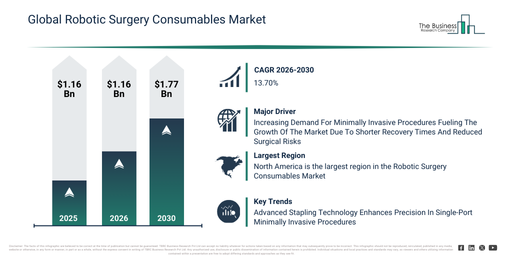
    The robotic surgery consumables market has shown rapid expansion in recent years. It is anticipated to grow from $5.73 billion in 2025 to $6.53 billion in 2026, achieving a compound annual growth rate (CAGR) of 14.0%. The historical growth of this market can be attributed to the early adoption of robotic surgical systems, an increasing number of complex surgical procedures, the demand for improved surgical precision, growth in hospital investments for advanced surgery, and a reliance on reusable surgical instruments.

    The market for robotic surgery consumables is projected to experience swift expansion over the coming years. This market is anticipated to reach $10.9 billion by 2030, exhibiting a compound annual growth rate (CAGR) of 13.7%. This projected growth can be ascribed to several factors, including the increasing adoption of robotic-assisted surgeries, higher healthcare spending on sophisticated medical procedures, a greater inclination towards disposable and sterile consumables, innovations in robotic platforms, and the expansion of ambulatory surgical centers. Key developments expected during this forecast period encompass a growing uptake of single-use robotic surgery consumables, a heightened need for highly precise and sterile surgical supplies, an increase in minimally invasive and robotic-assisted procedures, the broader application of robotic surgery across various medical specialties, and an emphasis on minimizing surgical site infections and operative duration.

    Access Your Free Sample Report for In-Depth Market Insights:

    https://www.thebusinessresearchcompany.com/sample.aspx?id=27409&type=smp

    Which Drivers Are Affecting Market Participation In The Robotic Surgery Consumables Market?

    The increasing preference for minimally invasive procedures is anticipated to drive the expansion of the robotic surgery consumables market. These medical interventions are performed through small incisions or openings, which lessens patient trauma and shortens recovery periods. The rising appeal of minimally invasive surgical procedures is attributed to benefits like quicker recovery times, reduced risks of complications, less pain, and smaller scars, making them highly desirable for patients seeking efficient and safer treatment options. Robotic surgery consumables improve the efficiency and precision of minimally invasive procedures by offering specialized instruments and tools, ensuring accurate movements and consistent performance. They also lower surgical risks and procedure duration, enhancing patient outcomes and overall operating room productivity. For instance, in June 2024, according to the American Society of Plastic Surgeons, a US-based non-profit organization, minimally invasive procedures grew by 7% in 2023, compared to 2022. Consequently, the escalating demand for minimally invasive procedures is a primary factor propelling the growth of the robotic consumables market.

    What Segment Classifications Make Up The Robotic Surgery Consumables Market?

    The robotic surgery consumables market covered in this report is segmented –

    1) By Product Type: Electrosurgical Devices, Robotic Surgical Instruments, Auxiliary Surgical Instruments, Imaging Systems, Consumable Supplies

    2) By Consumables: Surgical Sutures, Electrosurgical Devices, Needles, Catheters, Fluid Management Systems

    3) By Application: General Surgery, Gynecology Surgical Procedure, Urology Surgical Procedure, Orthopedic Surgical Procedure, Cardiology Surgical Procedure, Head And Neck Surgical Procedure, Other Surgical Procedure

    4) By Distribution Channel: Direct Sales, Distributors, Online Sales, Wholesale Suppliers, Third-party Logistics (3PL) Providers

    5) By End-User: Hospitals, Ambulatory Surgical Centers (ASCs), Research And Academic Institutions, Specialty Clinics, Other End-Users

    Subsegments:

    1) By Electrosurgical Devices: Monopolar Devices, Bipolar Devices, Electrosurgical Generators, Smoke Evacuation Systems

    2) By Robotic Surgical Instruments: Forceps And Graspers, Scissors, Needle Holders, Dissectors, Staplers

    3) By Auxiliary Surgical Instruments: Trocars And Cannulas, Insufflators, Suturing Devices, Suction Or Irrigation Systems

    4) By Imaging Systems: 3D Imaging Systems, Fluorescence Imaging Systems, Endoscopic Cameras, Navigation And Tracking Systems

    5) By Consumable Supplies: Surgical Drapes, Sutures And Staples, Surgical Blades, Sterile Barriers, Robotic Arm Covers

    What Trends Are Driving The Growth Trajectory Of The Robotic Surgery Consumables Market?

    Leading firms within the robotic surgery consumables sector are concentrating on creating sophisticated offerings, including single-port wristed staplers, aiming to improve surgical accuracy and facilitate entry via smaller cuts in minimally invasive operations. These single-port wristed staplers represent advanced tools crafted to navigate through a singular incision, providing articulation similar to a wrist, which enables surgeons to execute exact stapling within restricted anatomical regions. As an illustration, Intuitive Surgical Inc., a US-based medical device enterprise, secured authorization from the U.S. Food and Drug Administration (FDA) in April 2025 for its SP SureForm 45. This surgical stapler was designed particularly for integration with their single-port (SP) robotic surgical system, known as the da Vinci SP. The stapler integrates SmartFire technology, which consistently monitors and modifies tissue compression both prior to and during deployment, thereby improving staple line uniformity and lessening tissue damage. Furthermore, its comprehensive wristed configuration delivers 120° of articulation, empowering surgeons to attain meticulous control and flexibility directly from the console during single-port robotic interventions.

    Which Key Players Are Driving Competition In The Robotic Surgery Consumables Market?

    Major companies operating in the robotic surgery consumables market are Medtronic plc, Johnson & Johnson, Stryker Corporation, Zimmer Biomet Holdings Inc., Intuitive Surgical Inc., Smith & Nephew Plc., Karl Storz SE And Co. KG, Globus Medical Inc., MicroPort Scientific Corporation, Accuray Incorporated, CMR Surgical Ltd., B. Braun SE, Meerecompany Inc., Procept BioRobotics., Beijing Tinavi Medical Technology Co. Ltd., Perlove Medical Equipment Co. Ltd., Titan Medical Inc., Asensus Surgical US Inc., Avatera Medical GmbH, Robocath SAS

    Access The Complete Report For Deeper Market Insights:

    https://www.thebusinessresearchcompany.com/report/robotic-surgery-consumables-global-market-report

    Which Region Is Anticipated To See The Fastest Growth In The Robotic Surgery Consumables Market?

    North America was the largest region in the robotic surgery consumables market in 2025. Asia-Pacific is expected to be the fastest-growing region in the forecast period. The regions covered in the robotic surgery consumables market report are Asia-Pacific, South East Asia, Western Europe, Eastern Europe, North America, South America, Middle East, Africa.

    Request Your Customized Robotic Surgery Consumables Market Research Report for Competitive Advantage:

    https://www.thebusinessresearchcompany.com/customise?id=27409&type=smp

    Browse Through More Reports Similar to the Global Robotic Surgery Consumables Market 2026, By The Business Research Company

    Post Consumer Recycled Plastics Global Market Report 2026

    https://www.thebusinessresearchcompany.com/report/post-consumer-recycled-plastics-global-market-report

    Plastic Recycling Global Market Report 2026

    https://www.thebusinessresearchcompany.com/report/plastic-recycling-global-market-report

    Recycled Glass Global Market Report 2026

    https://www.thebusinessresearchcompany.com/report/recycled-glass-global-market-report

    Get in touch with us:

    The Business Research Company: https://www.thebusinessresearchcompany.com/

    Americas +1 310-496-7795

    Asia +44 7882 955267 & +91 8897263534

    Europe +44 7882 955267

    Email us at info@tbrc.info

    Follow us on:

    LinkedIn: https://in.linkedin.com/company/the-business-research-company

  • Robotic Orthodontic Systems Industry Growth Insights: Revenue Forecast to 2030

    Robotic Orthodontic Systems Industry Growth Insights: Revenue Forecast to 2030

    Uncover key drivers, emerging technologies, and competitive movements shaping the worker heat stress monitoring wearable market from 2026–2035 with trusted insights from The Business Research Company

    What are the forecasted starting (2026) and ending (2030) market sizes for the Robotic Orthodontic Systems Market?

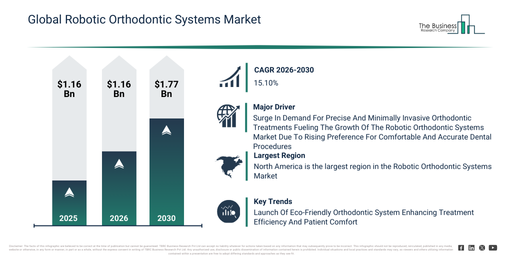
    The market size for robotic orthodontic systems has experienced rapid expansion in recent years. It is projected to increase from $1.07 billion in 2025 to $1.23 billion in 2026, demonstrating a compound annual growth rate (CAGR) of 15.4%. This historical growth can be attributed to several factors, including the escalating demand for orthodontic care, the growth of cosmetic dentistry, limitations inherent in manual orthodontic techniques, the early adoption of digital orthodontics, and patients’ preference for faster treatment.

    The robotic orthodontic systems market is projected for substantial expansion over the next few years. Its valuation is anticipated to reach $2.16 billion by 2030, exhibiting a compound annual growth rate (CAGR) of 15.1%. This anticipated growth during the forecast period stems from factors such as increasing clear aligner usage, AI driven dental planning, the expansion of dental clinics, a rise in adult orthodontics, and investments in digital dentistry. Key developments expected in this period encompass precision tooth alignment automation, a reduction in orthodontic treatment time, enhanced treatment predictability, the integration of digital treatment planning, and automated bracket and aligner placement.

    Access Your Free Sample Report for In-Depth Market Insights:

    https://www.thebusinessresearchcompany.com/sample.aspx?id=30375&type=smp

    What Drivers Are Supporting Technological Adoption In The Robotic Orthodontic Systems Market?

    The increasing demand for precise, minimally invasive orthodontic treatments is anticipated to drive the expansion of the robotic orthodontic systems market. These treatments are sophisticated dental procedures that employ accurate and gentle techniques to align teeth effectively, resulting in minimal discomfort, reduced tissue damage, and faster healing while preserving the natural tooth structure. The rising preference for these treatments comes from patients seeking comfortable and quicker dental solutions that offer accurate results with less pain and shorter recovery times. Robotic orthodontic systems facilitate precise and minimally invasive treatments through automated and highly accurate technology, enabling the planning and execution of tooth movements with superior precision and less manual intervention. For instance, in July 2025, the American Association of Orthodontists (AAO), a US-based professional organization for orthodontists, reported that the number of patients in active orthodontic treatment per orthodontist member grew from 574 in 2022 to 696 in 2024, marking a 21% increase over two years. This escalating demand for precise, minimally invasive orthodontic treatments is therefore a significant force behind the growth of the robotic orthodontic systems market.

    What Segment Types Are Examined In The Robotic Orthodontic Systems Market?

    The robotic orthodontic systems market covered in this report is segmented –

    1) By Product Type: Fully Automated Systems, Semi-Automated Systems

    2) By Technology: Artificial Intelligence, Machine Learning, Other Technologys

    3) By Application: Clear Aligner Planning and Fabrication, Automated Bracket Placement and Bonding, Robotic Archwire Design and Bending, Digital Scanning and Treatment Simulation, Orthodontic Treatment Monitoring and Adjustment

    4) By End-User: Dental Clinics and Orthodontic Practices, Hospitals and Multi-Specialty Dental Centers, Academic and Research Institutes, Dental Service Organizations (DSOs) and Corporate Dental Chains, Orthodontic Laboratories and Digital Manufacturing Centers

    Subsegments:

    1) By Fully Automated Systems: Clear Aligner Robotics, Bracket Placement Robotics, Archwire Bending Robotics, Scanning And Imaging Robotics

    2) By Semi-Automated Systems: Assisted Bracket Positioning, Guided Tooth Movement, Hybrid Scanning Solutions

    What Upcoming Trends Are Likely To Define The Future Path Of The Robotic Orthodontic Systems Market?

    Leading companies within the robotic orthodontic systems market are concentrating on developing advanced solutions, including innovative and eco-friendly orthodontic systems, to enhance treatment efficiency and patient comfort. An eco-friendly solution refers to a sustainable technology or approach that minimizes environmental impact by reducing material waste, optimizing energy use, and promoting digital workflows. For instance, in July 2024, Dror Ortho-Design Inc., a US-based orthodontic technology company, launched the ZSMILE product brand, an innovative solution that corrects smiles by straightening teeth using pulsating air delivered through a single custom-made smart aligner. This system replaces traditional multi-aligner treatments by utilizing advanced digital and robotic processes to achieve precise tooth movement with minimal environmental footprint. It provides real-time monitoring and treatment adjustments through a connected digital platform, enabling orthodontists to customize therapies efficiently while reducing material usage and clinic visits. Integrated with Dror Ortho-Design’s intelligent orthodontic technologies, it offers a seamless, eco-friendly, and patient-centric orthodontic experience. The ZSMILE system enhances treatment outcomes, simplifies clinical operations, and supports the global shift toward sustainable and digital orthodontic care.

    Who Are The Top-Performing Companies In The Robotic Orthodontic Systems Market In Recent Years?

    Major companies operating in the robotic orthodontic systems market are Align Technology Inc., Dentsply Sirona Inc., Straumann Holding AG, Envista Holdings Corporation, Angelalign Technology Inc., Smartee Denti-Technology Co. Ltd., LightForce Orthodontics Inc., uLab Systems Inc., ArchForm Inc., Planmeca Oy, 3Shape A/S, Ormco Corporation, Henry Schein Orthodontics Inc., TP Orthodontics Inc., GC Orthodontics Inc., Great Lakes Dental Technologies, American Orthodontics Corporation, Forestadent Bernhard Förster GmbH, Dentaurum GmbH & Co. KG, Rocky Mountain Orthodontics Inc.

    Access The Complete Report For Deeper Market Insights:

    https://www.thebusinessresearchcompany.com/report/global-robotic-orthodontic-systems-market-report

    Which Region Is Anticipated To See The Fastest Growth In The Robotic Orthodontic Systems Market?

    North America was the largest region in the robotic orthodontic systems market in 2025. Asia-Pacific is expected to be the fastest-growing region in the forecast period. The regions covered in the robotic orthodontic systems market report are Asia-Pacific, South East Asia, Western Europe, Eastern Europe, North America, South America, Middle East, Africa.

    Request Your Customized Robotic Orthodontic Systems Market Research Report for Competitive Advantage:

    https://www.thebusinessresearchcompany.com/customise?id=30375&type=smp

    Browse Through More Reports Similar to the Global Robotic Orthodontic Systems Market 2026, By The Business Research Company

    Orthopedic Surgical Robots Global Market Report 2026

    https://www.thebusinessresearchcompany.com/report/orthopedic-surgical-robots-global-market-report

    Prosthetics And Orthotics Global Market Report 2026

    https://www.thebusinessresearchcompany.com/report/prosthetics-and-orthotics-global-market-report

    Robotic Prosthetics Global Market Report 2026

    https://www.thebusinessresearchcompany.com/report/robotic-prosthetics-global-market-report

    Get in touch with us:

    The Business Research Company: https://www.thebusinessresearchcompany.com/

    Americas +1 310-496-7795

    Asia +44 7882 955267 & +91 8897263534

    Europe +44 7882 955267

    Email us at info@tbrc.info

    Follow us on:

    LinkedIn: https://in.linkedin.com/company/the-business-research-company

  • Global Robotic Endoscopy Devices Market Performance Report: Global Trends 2026–2030

    Global Robotic Endoscopy Devices Market Performance Report: Global Trends 2026–2030

    Uncover key drivers, emerging technologies, and competitive movements shaping the workstation graphics processing unit (gpu) market from 2026–2035 with trusted insights from The Business Research Company

    What upper market value could the Robotic Endoscopy Devices Market reach by 2030 starting from 2026 levels?

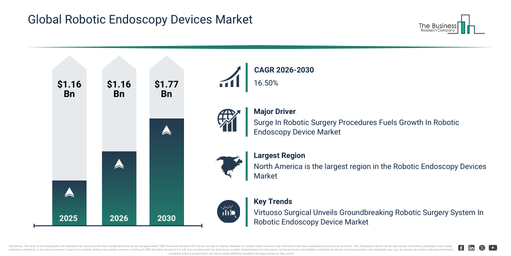
    The robotic endoscopy devices market size has shown rapid expansion in recent years. It is anticipated to grow from $2.96 billion in 2025 to $3.42 billion in 2026, at a compound annual growth rate (CAGR) of 15.8%. This historical growth can be attributed to the rising prevalence of gastrointestinal and pulmonary disorders, increased adoption of minimally invasive diagnostic procedures, greater hospital investments in robotic platforms, the expanding clinical application of flexible endoscopy, and enhancements in imaging and visualization technologies.

    The robotic endoscopy devices market is projected to experience substantial expansion in the coming years, anticipated to reach a valuation of $6.3 billion by 2030, demonstrating a compound annual growth rate (CAGR) of 16.5%. This projected growth can be attributed to several factors, including a heightened demand for precise diagnostics, the increasing uptake of robotic-assisted surgery platforms, the broadening scope of outpatient diagnostic procedures, a greater emphasis on automating hospital workflows, and the expanding integration of AI-powered clinical decision support. Key trends foreseen during this period encompass the wider adoption of robot-assisted flexible endoscopy, the growing incorporation of AI-guided navigation systems, an increasing need for minimally invasive diagnostic instruments, the broadening of automated imaging and biopsy functionalities, and an elevated focus on both precision and operator control.

    Access Your Free Sample Report for In-Depth Market Insights:

    https://www.thebusinessresearchcompany.com/sample.aspx?id=12562&type=smp

    Which Drivers Are Influencing Long-Term Growth In The Robotic Endoscopy Devices Market?

    The increasing volume of robotic surgery procedures is anticipated to fuel the growth of the robotic endoscopy device market moving forward. Robotic surgery represents an advanced surgical technique where robotic systems assist surgeons during operations. Robotic devices are widely employed in endoscopy procedures, offering improved maneuverability and efficiency, and simplifying complex tasks by enhancing visualization, exposure, and tissue manipulation. For instance, in November 2024, the Private Healthcare Information Network (PHIN), a UK-based government-mandated organization, reported that robot-assisted procedures reached 22,700 in Q1 2024, driven by rising adoption. This figure indicates a 45 percent increase over the same period in 2023 and a 12 percent rise compared with the final quarter of 2023. Therefore, the expanding number of robotic surgery procedures is propelling the robotic endoscopy device market.

    Which Segments Are Driving Activity In The Robotic Endoscopy Devices Market?

    The robotic endoscopy devices market covered in this report is segmented –

    1) By Product: Robotic Diagnostic Endoscopy Systems, Robotic-Assisted Therapeutic Endoscopy Systems

    2) By Application: Colonoscopy, Bronchoscopy, Gastrointestinal Endoscopy, Other Application

    3) By End User: Hospitals, Ambulatory Surgical Centers, Other End Users

    Subsegments:

    1) By Robotic Diagnostic Endoscopy Systems: Robotic Flexible Endoscopes, Robotic Capsule Endoscopy Systems, Robotic Imaging And Visualization Systems, Robotic Navigation And Control Platforms, Robotic Biopsy And Sampling Tools

    2) By Robotic-Assisted Therapeutic Endoscopy Systems: Robotic Endoscopic Resection Systems, Robotic Endoscopic Suturing And Closure Systems, Robotic Endoscopic Ablation Systems, Robotic Endoscopic Laser Therapy Systems, Robotic Endoscopic Stent Placement And Retrieval Systems

    Which Trends Are Shaping Activity Within The Robotic Endoscopy Devices Market?

    Leading companies in the robotic endoscopy devices market are concentrating on developing advanced technologies, such as robotic micro-manipulator endoscopic systems. These robotic micro-manipulator endoscopic systems are ultra-miniaturized, robotically controlled instruments that are integrated at the tip of a rigid endoscope, allowing surgeons to perform highly dexterous, two-handed movements deep inside the body with millimeter-scale precision. For example, in May 2023, Virtuoso Surgical, a US-based manufacturer of minimally invasive surgery devices, introduced its new robotic surgery system. This new system employs revolutionary technology to assist surgeons in endoscopic procedures. The technology enables surgeons to use two hands to make dexterous movements at the end of an endoscope deep inside the body. The rigid endoscope tip of the Virtuoso Surgical system, which includes two robotically operated, needle-sized manipulators, is less than half the diameter of a U.S. dime. The manipulators measure 1mm in diameter, and the scope itself is significantly smaller than the equipment used by conventional robotic endoscopes.

    Which Leading Companies Dominate The Robotic Endoscopy Devices Market Share?

    Major companies operating in the robotic endoscopy devices market are Olympus Corporation, FUJIFILM Holdings Corporation, Medtronic PLC, Boston Scientific Corporation, Karl Storz SE And Co KG, Richard Wolf GmbH, Medrobotics Corporation, EndoMaster Pte Ltd, Virtuoso Surgical Inc, ENDO Robotics Co Ltd, CapsoVision Inc, Asensus Surgical Inc, Renishaw plc, Medineering GmbH, ConMed Corporation, Ambu AS, Ovesco Endoscopy AG, Fortimedix Surgical BV, Smith And Nephew, Stryker Corporation

    Access The Complete Report For Deeper Market Insights:

    https://www.thebusinessresearchcompany.com/report/robotic-endoscopy-devices-global-market-report

    Which Global Regions Are Shaping The Competitive Landscape Of The Robotic Endoscopy Devices Market?

    North America was the largest region in the robotic endoscopy devices market in 2025. The regions covered in the robotic endoscopy devices market report are Asia-Pacific, South East Asia, Western Europe, Eastern Europe, North America, South America, Middle East, Africa.

    Request Your Customized Robotic Endoscopy Devices Market Research Report for Competitive Advantage:

    https://www.thebusinessresearchcompany.com/customise?id=12562&type=smp

    Browse Through More Reports Similar to the Global Robotic Endoscopy Devices Market 2026, By The Business Research Company

    Endoscopy Devices And Equipment Global Market Report 2026

    https://www.thebusinessresearchcompany.com/report/endoscopy-devices-and-equipment-global-market-report

    Dermatology Endoscopy Devices Global Market Report 2026

    https://www.thebusinessresearchcompany.com/report/dermatology-endoscopy-devices-global-market-report

    Robot Assisted Endoscope Global Market Report 2026

    https://www.thebusinessresearchcompany.com/report/robot-assisted-endoscope-global-market-report

    Get in touch with us:

    The Business Research Company: https://www.thebusinessresearchcompany.com/

    Americas +1 310-496-7795

    Asia +44 7882 955267 & +91 8897263534

    Europe +44 7882 955267

    Email us at info@tbrc.info

    Follow us on:

    LinkedIn: https://in.linkedin.com/company/the-business-research-company

  • Robotic Biobanking Systems Market Future Outlook 2026: Key Drivers and Growth Potential

    Robotic Biobanking Systems Market Future Outlook 2026: Key Drivers and Growth Potential

    Uncover key drivers, emerging technologies, and competitive movements shaping the worker heat stress monitoring wearable market from 2026–2035 with trusted insights from The Business Research Company

    What level of CAGR-driven expansion is anticipated in the Robotic Biobanking Systems Market between 2026 and 2030?

    The robotic biobanking systems market size has experienced rapid growth in recent years. It is anticipated to expand from $2.3 billion in 2025 to $2.65 billion in 2026, demonstrating a compound annual growth rate (CAGR) of 14.9%. The historical period’s expansion can be ascribed to an increase in clinical research samples, investments in biobank infrastructure, the imperative for sample traceability, the constraints of manual storage, and the initial embrace of automation.

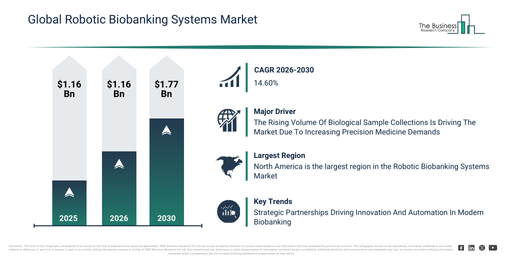
    The robotic biobanking systems market is anticipated to experience substantial expansion in the coming years, with its valuation projected to reach $4.57 billion by 2030, exhibiting a compound annual growth rate (CAGR) of 14.6%. This growth throughout the forecast period is driven by factors such as the advancement of precision medicine, the broadening of genomic studies, the execution of large-scale clinical trials, the implementation of digital biorepository management, and the integration of AI-enabled sample analytics. Key trends expected in the forecast period involve automated sample storage and retrieval processes, improved sample traceability, the optimization of high-throughput biobank operations, a reduction in human handling errors, and comprehensive long-term sample integrity management.

    Access Your Free Sample Report for In-Depth Market Insights:

    https://www.thebusinessresearchcompany.com/sample.aspx?id=30373&type=smp

    What Drivers Are Affecting Demand-Supply Dynamics In The Robotic Biobanking Systems Market?

    An increasing volume of biological sample collections is projected to drive the expansion of the robotic biobanking systems market in the coming years. Biological sample collections are defined as systematically acquired and preserved biological materials, such as blood, tissue, saliva, or other biospecimens, along with their associated data, stored for application in biomedical research, diagnostics, and the development of therapies. This growth in biological sample collections is primarily fueled by the growing emphasis on precision medicine, as contemporary healthcare increasingly depends on extensive, well-characterized biospecimen repositories to facilitate genomic research, biomarker discovery, and the creation of individualized treatment strategies. Robotic biobanking systems support this expansion by automating the handling, storage, and retrieval of samples, thereby ensuring scalability, accuracy, and efficiency in managing rapidly increasing sample inventories. For instance, in July 2025, according to the UK Biobank Limited, a large-scale UK-based biomedical database, UK Biobank plans to relocate over 11 million samples to its new Manchester headquarters in 2026. This new facility will feature four next-generation automated freezers designed to accommodate up to 20 million samples, and robotic systems will be capable of retrieving around 1 million samples annually, which is four times faster than current capacity. Therefore, the rising volume of biological sample collections is a key driver of growth for the robotic biobanking systems market.

    How Is The Robotic Biobanking Systems Market Organized Into Various Segments?

    The robotic biobanking systems market covered in this report is segmented –

    1) By Product Type: Automated Sample Storage Systems, Automated Sample Retrieval Systems, Automated Sample Processing Systems

    2) By Sample Type: Blood, Tissue, Cells, Deoxyribonucleic Acid (DNA) Or Ribonucleic Acid (RNA)

    3) By Storage Type: Cryogenic, Ambient, Refrigerated

    4) By Application: Clinical Research, Pharmaceutical And Biotech Research, Academic And Research Institutes, Biobank Management

    5) By End-User: Hospitals, Research Institutes, Pharma And Biotech, Contract Research Organizations (CROs)

    Subsegments:

    1) By Automated Sample Storage Systems: Modular Storage Units, High-Throughput Storage Systems, Compact Storage Systems, Integrated Storage And Tracking Platforms

    2) By Automated Sample Retrieval Systems: Barcode-Based Retrieval Systems, Robotic Arm Retrieval Systems, Automated Carousel Retrieval Systems, Vertical Lift Retrieval Systems

    3) By Automated Sample Processing Systems: Automated Sample Aliquoting Systems, Automated Sample Sorting Systems, Automated Sample Labeling Systems, Automated Sample Tracking Systems

    Which Trends Are Influencing The Development Of The Robotic Biobanking Systems Market?

    Companies at the forefront of the robotic biobanking systems market are concentrating on forging strategic collaborations to enhance technological capabilities, broaden service accessibility, and accelerate the integration of automation into advanced biobanking workflows. Such strategic collaborations are defined as mutually beneficial partnerships among technology providers, healthcare institutions, and research organizations, geared towards leveraging complementary strengths to foster innovation, optimize operational efficiency, and expand market presence. For instance, in October 2025, Abu Dhabi Biobank, a UAE-based hybrid cord blood bank, entered a partnership with NMC Healthcare, a UAE-based healthcare provider, with the goal of extending access to private and public cord blood banking services across major hospitals in the region, thereby supporting personalized healthcare and advancing stem cell research through the adoption of robotic and automated biobanking systems. This collaboration seeks to establish one of the region’s largest repositories of cord blood samples, underpinned by sophisticated robotic handling and long-term automated storage technologies. Furthermore, it is dedicated to promoting awareness and educating the public about the benefits of cord blood preservation, thereby empowering families to contribute to future-oriented biomedical research and regenerative medicine initiatives.

    Who Are The Major Companies Operating In The Robotic Biobanking Systems Market?

    Major companies operating in the robotic biobanking systems market are Thermo Fisher Scientific Inc., Beckman Coulter Inc., Tecan Group Ltd., Hamilton Company, Azenta Life Sciences, Haier Biomedical Co., BICO, SPT Labtech Ltd., HighRes Biosolutions Inc., LiCONiC AG, ASKION GmbH, Angelantoni Life Science Srl, SciRobotics Ltd., MGI Tech Co. Ltd., B Medical Systems S.a.r.l, Sakura Finetek Japan Co. Ltd., Panasonic Healthcare Co. Ltd., Brooks Automation Inc., Labcyte Inc., RTS Life Science Ltd., Kriosystem Life Sciences S.r.l.

    Access The Complete Report For Deeper Market Insights:

    https://www.thebusinessresearchcompany.com/report/global-robotic-biobanking-systems-market-report

    Which Regions Are Poised For Strategic Growth In The Robotic Biobanking Systems Market?

    North America was the largest region in the robotic biobanking systems market in 2025. Asia-Pacific is expected to be the fastest-growing region in the forecast period. The regions covered in the robotic biobanking systems market report are Asia-Pacific, South East Asia, Western Europe, Eastern Europe, North America, South America, Middle East, Africa.

    Request Your Customized Robotic Biobanking Systems Market Research Report for Competitive Advantage:

    https://www.thebusinessresearchcompany.com/customise?id=30373&type=smp

    Browse Through More Reports Similar to the Global Robotic Biobanking Systems Market 2026, By The Business Research Company

    Medical Robots Global Market Report 2026

    https://www.thebusinessresearchcompany.com/report/medical-robots-global-market-report

    Robotic Process Automation In Healthcare Global Market Report 2026

    https://www.thebusinessresearchcompany.com/report/robotic-process-automation-in-healthcare-global-market-report

    Artificial Intelligence Ai In Biopharmaceuticals Global Market Report 2026

    https://www.thebusinessresearchcompany.com/report/artificial-intelligence-ai-in-biopharmaceuticals-global-market-report

    Get in touch with us:

    The Business Research Company: https://www.thebusinessresearchcompany.com/

    Americas +1 310-496-7795

    Asia +44 7882 955267 & +91 8897263534

    Europe +44 7882 955267

    Email us at info@tbrc.info

    Follow us on:

    LinkedIn: https://in.linkedin.com/company/the-business-research-company

  • Robot-Assisted Percutaneous Coronary Intervention (PCI) Market Trends and Insights: Global Forecast to 2030

    Robot-Assisted Percutaneous Coronary Intervention (PCI) Market Trends and Insights: Global Forecast to 2030

    Uncover key drivers, emerging technologies, and competitive movements shaping the workstation graphics processing unit (gpu) market from 2026–2035 with trusted insights from The Business Research Company

    What long-term size projections exist for the Robot-Assisted Percutaneous Coronary Intervention (PCI) Market covering 2026–2035?

    The market size for robot-assisted percutaneous coronary intervention (PCI) has shown substantial growth in recent years. This market is forecasted to increase from $27.56 billion in 2025 to $38.73 billion in 2026, achieving a compound annual growth rate (CAGR) of 40.5%. The expansion observed historically can be credited to factors such as the rising prevalence of coronary artery disease, the precision limitations of manual PCI procedures, the increasing application of catheter-based interventions, a greater understanding of radiation risks, and the establishment of more cardiac catheterization labs.

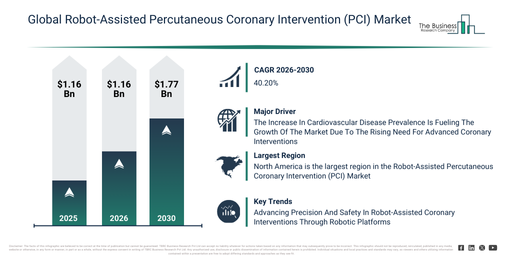
    The market for robot-assisted percutaneous coronary intervention (pci) is anticipated to experience substantial expansion in the coming years. By 2030, this market is projected to reach $149.68 billion, advancing at a compound annual growth rate (CAGR) of 40.2%. During the projected period, this expansion is fueled by progress in robotic-assisted intervention techniques, the increased integration of automation within cardiology, greater financial commitments to digital healthcare frameworks, a heightened need for intricate and risky pci operations, and favorable regulatory endorsements for robotic platforms. Significant trends anticipated throughout the forecast period encompass the increasing acceptance of minimally invasive cardiac surgeries, a stronger emphasis on minimizing radiation exposure for medical professionals, a surging requirement for exactness and accuracy in procedures, the broadening of capabilities for complex coronary interventions, and enhanced patient well-being along with better clinical results.

    Access Your Free Sample Report for In-Depth Market Insights:

    https://www.thebusinessresearchcompany.com/sample.aspx?id=27408&type=smp

    Which Drivers Are Impacting The Competitive Landscape Of The Robot-Assisted Percutaneous Coronary Intervention (PCI) Market?

    The rising occurrence of heart and blood vessel conditions is anticipated to fuel the expansion of the robot-assisted percutaneous coronary intervention (PCI) market moving ahead. These conditions encompass a range of ailments affecting the heart and vascular system, such as coronary artery disease, myocardial infarctions, and cerebrovascular accidents. An increase in cardiovascular diseases is primarily attributed to inactive lifestyles, resulting in weight gain, high blood pressure, and suboptimal cardiac well-being. Robot-assisted percutaneous coronary intervention (PCI) addresses cardiovascular diseases by precisely clearing obstructed or constricted coronary arteries, thereby re-establishing blood circulation to the heart, while minimizing procedural hazards and radiation exposure, leading to improved patient results. For instance, in December 2024, GOV.UK, a UK-based government agency, reported that in March 2024, nearly 2.24 million adults in England—about 4.4% of those aged 18 and over—had a GP-recorded diagnosis of CKD. This reflected an increase from 2.09 million cases the previous year. Consequently, the growing incidence of cardiovascular diseases is propelling the expansion of the robot-assisted percutaneous coronary intervention (PCI) market.

    What Segments Are Identified Within The Structure Of The Robot-Assisted Percutaneous Coronary Intervention (PCI) Market?

    The robot-assisted percutaneous coronary intervention (pci) market covered in this report is segmented –

    1) By Component: Robotic Systems, Catheters And Guidewires, Control Consoles

    2) By Application: Coronary Angioplasty, Stent Placement, Thrombectomy

    3) By End-User: Hospitals, Cardiac Catheterization Laboratories, Ambulatory Surgical Centers, Other End-Users

    Subsegments:

    1) By Robotic Systems: Electromechanical Robotic Arms, Imaging Integration Units, Robotic Drive Systems

    2) By Catheters And Guidewires: Coronary Guidewires, Balloon Catheters, Drug-Eluting Catheters

    3) By Control Consoles: Touchscreen Interfaces, Joystick Controllers, Imaging Display Panels

    What Trends Are Expected To Impact The Competitive Landscape Of The Robot-Assisted Percutaneous Coronary Intervention (PCI) Market?

    Leading companies in the robot-assisted percutaneous coronary intervention (PCI) market are concentrating on developing sophisticated robotic cardiologist platforms to enhance patient safety and streamline complex coronary interventions. A robotic cardiology platform is an advanced technological system that assists cardiologists in performing precise and controlled coronary procedures, boosting accuracy, minimizing human error, and reducing radiation exposure for both patients and medical staff. For instance, in May 2023, Robocath SAS, a France-based company specializing in robotic solutions for vascular interventions, launched the R-One+. This advanced robotic solution empowers interventional cardiologists to perform coronary angioplasties (percutaneous coronary intervention, or PCI) by manipulating devices through an integrated command unit located in the catheterization lab or control room. The R-One+ increases precision in device handling, improves safety for patients and medical staff by decreasing radiation exposure, and provides more comfortable working conditions for operators. The launch occurred at the EuroPCR conference in Paris, where the platform demonstrated new capabilities that simplify and secure PCI procedures while protecting the cardiology team from radiation-induced injuries. This innovation highlights Robocath’s dedication to advancing cardiovascular disease treatments with intelligent robotic assistance.

    Which Major Firms Are Strengthening Their Position In The Robot-Assisted Percutaneous Coronary Intervention (PCI) Market?

    Major companies operating in the robot-assisted percutaneous coronary intervention (pci) market are Medtronic plc, Siemens Healthineers AG, Boston Scientific Corporation, Intuitive Surgical, BIOTRONIK SE & Co. KG, MicroPort Scientific Corporation, Biosensors International Group Ltd., OrbusNeich Medical Group Holdings Limited, Stereotaxis Inc., Perfint Healthcare, Robocath Inc., Meril Life Sciences Pvt. Ltd., Abbott Laboratories, Philips Healthcare, Terumo Corporation, Asahi Intecc, Catheter Precision, Cardiobot, Remedics, meerecompany Inc., AngioDynamics, Clear Surgical Inc., GE Healthcare, Canon Medical Systems, Asensus Surgical, Endovascular Robotics

    Access The Complete Report For Deeper Market Insights:

    https://www.thebusinessresearchcompany.com/report/robot-assisted-percutaneous-coronary-intervention-pci-global-market-report

    Which Regions Are Projected To Dominate The Robot-Assisted Percutaneous Coronary Intervention (PCI) Market In The Coming Years?

    North America was the largest region in the robot-assisted percutaneous coronary intervention (PCI) market in 2025. Asia-Pacific is expected to be the fastest-growing region in the forecast period. The regions covered in the robot-assisted percutaneous coronary intervention (pci) market report are Asia-Pacific, South East Asia, Western Europe, Eastern Europe, North America, South America, Middle East, Africa.

    Request Your Customized Robot-Assisted Percutaneous Coronary Intervention (PCI) Market Research Report for Competitive Advantage:

    https://www.thebusinessresearchcompany.com/customise?id=27408&type=smp

    Browse Through More Reports Similar to the Global Robot-Assisted Percutaneous Coronary Intervention (PCI) Market 2026, By The Business Research Company

    Post Consumer Recycled Plastics Global Market Report 2026

    https://www.thebusinessresearchcompany.com/report/post-consumer-recycled-plastics-global-market-report

    Plastic Recycling Global Market Report 2026

    https://www.thebusinessresearchcompany.com/report/plastic-recycling-global-market-report

    Asphalt Shingles Global Market Report 2026

    https://www.thebusinessresearchcompany.com/report/asphalt-shingles-global-market-report

    Get in touch with us:

    The Business Research Company: https://www.thebusinessresearchcompany.com/

    Americas +1 310-496-7795

    Asia +44 7882 955267 & +91 8897263534

    Europe +44 7882 955267

    Email us at info@tbrc.info

    Follow us on:

    LinkedIn: https://in.linkedin.com/company/the-business-research-company