Category: Pharmaceuticals

  • Headache Disorders Market Growth In 2026: Market Size, Key Drivers And Future Outlook

    Headache Disorders Market Growth In 2026: Market Size, Key Drivers And Future Outlook

    Backed by market attractiveness analysis, total addressable market sizing, company benchmarking matrices, interactive Excel dashboards, wider supply chain intelligence, emerging startup coverage, and detailed product-level insights, The Business Research Company’s 2026 market reports are designed to offer research that is more actionable and strategically valuable than ever.

    Headache Disorders Market Set To Climb From $5.34 Billion In 2026 To $7.44 Billion By 2030

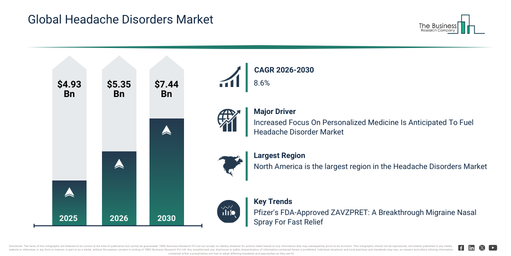
    The headache disorders market has demonstrated robust growth in recent years. It is projected to expand from $4.93 billion in 2025 to $5.35 billion in 2026, achieving a compound annual growth rate (CAGR) of 8.3%. This historical growth can be linked to the high prevalence of migraine disorders, an increase in the use of analgesics and triptans, growing awareness of neurological disorders, the expansion of hospital-based neurology services, and a rise in the adoption of diagnostic imaging.

    The headache disorders market size is projected to experience robust expansion over the coming years. Its valuation is set to reach $7.44 billion by 2030, demonstrating a compound annual growth rate (CAGR) of 8.6%. This anticipated growth during the forecast period is fueled by several factors, including advancements in targeted biologic therapies, a growing demand for personalized headache treatment approaches, the expansion of homecare and self-management solutions, increased healthcare spending in the field of neurology, and broader access to sophisticated diagnostic technologies. Key trends anticipated within this forecast timeframe encompass the increasing adoption of CGRP-based therapies, a noticeable shift towards preventive strategies for headache management, the rising utilization of non-pharmacological treatments, the broadening scope of home-based headache care, and an intensified focus on achieving early and precise diagnoses.

    Get A Free Sample Report With In-Depth Market Insights:

    https://thebusinessresearchcompany.com/sample_request?id=49624489&type=smp&name=Headache%20Disorders%20Market%20Report%202026&utm_source=Blogs&utm_medium=Paid&utm_campaign=Oct_PR

    Headache Disorders Market Growth Drivers: What’s Behind The Acceleration?

    The rising emphasis on personalized medicine is anticipated to boost the expansion of the headache disorder market in the future. Personalized medicine, also termed precision medicine, denotes a novel strategy in medical treatment and healthcare, customizing medical choices, methods, and interventions to suit an individual’s unique traits. Within personalized medicine, the customized treatment for headache disorders employs individualized methodologies considering genetic, molecular, and lifestyle elements to enhance therapeutic results for every patient. For example, data from the Personalized Medicine Coalition (PMC), a US-based non-profit, showed that in 2023, personalized medicines constituted roughly 38% of all recently approved therapeutic molecular entities, marking an increase from 34% in 2022. Consequently, the growing attention on personalized medicine is serving as a key driver for the headache disorder market.

    Headache Disorders Market Segment Analysis Spotlighting Growth Areas

    The headache disorders market covered in this report is segmented –

    1) By Type: Migraine, Tension-Type Headache, Cluster Headache, Medication-Overuse Headache, Other Types

    2) By Treatment: Medication, Heat Therapy, Diet Changes, Acupuncture, Oxygen Therapy

    3) By Diagnosis: Complete Blood Count, Skull X-Rays, Sinus X-Rays, CT Scan, Magnetic Resonance Imaging (MRI)

    4) By Route Of Administration: Oral, Parenteral, Other Route Of Administrations

    5) By End-User: Hospitals, Specialty Clinics, Homecare, Other End-Users

    Subsegments:

    1) By Migraine: Chronic Migraine, Episodic Migraine, Migraine With Aura, Migraine Without Aura

    2) By Tension-Type Headache: Episodic Tension-Type Headache, Chronic Tension-Type Headache

    3) By Cluster Headache: Chronic Cluster Headache, Episodic Cluster Headache

    4) By Medication-Overuse Headache: Analgesic-Overuse Headache, Caffeine-Withdrawal Headache

    5) By Other Types: Sinus Headache, Hormonal Headache, Thunderclap Headache, Other Primary And Secondary Headaches

    Headache Disorders Market Trends: What’s Defining The Industry’s Next Phase?

    Leading companies in the headache disorder market are concentrating on developing innovative products, such as migraine nasal sprays, to offer faster relief by delivering medication directly through the nasal passages, thereby enhancing treatment efficacy for patients. These migraine nasal sprays are rapid-acting treatments that administer medication nasally, providing quicker alleviation of migraine symptoms, particularly beneficial for individuals experiencing nausea or difficulty swallowing pills. For instance, in March 2023, Pfizer Inc., a US-based pharmaceutical and biotechnology corporation, obtained FDA approval for its nasal spray, making it the first calcitonin gene-related peptide (CGRP) receptor antagonist in this form for the acute treatment of migraines in adults. Demonstrating considerable effectiveness in clinical trials, ZAVZPRET delivers pain relief in as little as 15 minutes and is indicated for use with or without aura, with a recommended dosage of one 10 mg spray into a single nostril per day. While typically well-tolerated, common adverse effects include taste disorders and nausea.

    Headache Disorders Market Leading Companies: Who Holds The Strongest Market Presence?

    Major companies operating in the headache disorders market are Teva Pharmaceutical Industries Ltd., Hikma Pharmaceuticals PLC, Dr. Reddy’s Laboratories Ltd, Novartis AG, Eli Lilly and Company, F. Hoffmann-La Roche Ltd., Sun Pharmaceutical Industries Ltd, Emcure Pharmaceuticals Limited, Endo International plc, WorldMeds LLC, AstraZeneca plc, Bausch & Lomb Incorporated, Nichi-Iko Pharmaceutical Co, Upsher-Smith Laboratories LLC, Bristol-Myers Squibb Company, Bayer AG, Boehringer Ingelheim International GmbH., Gilead Sciences Inc., Amgen Inc., Pfizer Inc., GlaxoSmithKline plc, Johnson & Johnson, Merck & Co. Inc., AbbVie Inc., Eisai Co. Ltd., Impax Laboratories LLC, Lannett Company Inc., Lupin Pharmaceuticals Inc.

    View The Full Headache Disorders Market Report:

    https://thebusinessresearchcompany.com/report/headache-disorders-global-market-report?utm_source=Blogs&utm_medium=Paid&utm_campaign=Oct_PR

    Headache Disorders Market Geographic Analysis: Where Is Demand Rising Fastest?

    North America was the largest region in the headache disorders market in 2025. The regions covered in the headache disorders market report are Asia-Pacific, South East Asia, Western Europe, Eastern Europe, North America, South America, Middle East, Africa.

    Reach Out To Our Team:

    The Business Research Company: https://www.thebusinessresearchcompany.com/

    Americas: +1 310-496-7795

    Asia: +44 7882 955267 & +91 8897263534

    Europe: +44 7882 955267

    Email us at: marketing@tbrc.info

    Follow us on:

    LinkedIn: https://in.linkedin.com/company/the-business-research-company

    YouTube: https://www.youtube.com/channel/UC24_fI0rV8cR5DxlCpgmyFQ

    Global Market Model: https://www.thebusinessresearchcompany.com/global-market-model
  • Head And Neck Cancer Therapeutics Market Size And Forecast 2026–2030: Trends Driving Industry Expansion

    Head And Neck Cancer Therapeutics Market Size And Forecast 2026–2030: Trends Driving Industry Expansion

    Featuring market attractiveness scoring, total addressable market sizing, company benchmarking matrices, interactive Excel dashboards, deeper supply chain intelligence, emerging startup tracking, and granular product-level insights, The Business Research Company’s 2026 market reports are built to deliver research that is both more actionable and more strategically valuable.

    Head And Neck Cancer Therapeutics Market Forecast: Value Set To Climb From $2.07 Billion To $3.12 Billion

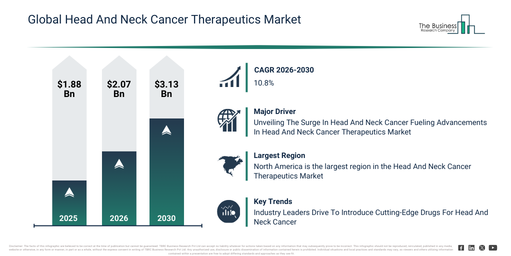
    The head and neck cancer therapeutics market size has experienced rapid expansion in recent years. It is forecast to grow from $1.88 billion in 2025 to $2.07 billion in 2026, at a compound annual growth rate (CAGR) of 10.1%. The growth observed in previous periods can be attributed to the increasing prevalence of head and neck cancers, the limited supply of targeted therapies, the common use of conventional chemotherapy and radiation, a greater emphasis on early diagnosis awareness, and the establishment of more hospital-based treatment centers.

    The head and neck cancer therapeutics market is anticipated to experience significant expansion in the coming years. This market is projected to reach $3.13 billion by 2030, demonstrating a compound annual growth rate (CAGR) of 10.8%. The growth during this forecast period is attributed to the advancement of targeted immunotherapies, the integration of AI-powered diagnostics, the proliferation of outpatient and precision treatment centers, increasing investment in biotechnology research, and the adoption of personalized medicine approaches. Key trends anticipated in the forecast period include the uptake of precision proton therapy, the broader application of immunotherapy, the use of multimodal treatment strategies, the development of minimally invasive surgical techniques, and the comprehensive integration of personalized medicine.

    Get A Free Sample Report With In-Depth Market Insights:

    https://thebusinessresearchcompany.com/sample_request?id=12426&type=smp&name=Head%20And%20Neck%20Cancer%20Therapeutics%20Market%20Report%202026&utm_source=Blogs&utm_medium=Paid&utm_campaign=Oct_PR

    Head And Neck Cancer Therapeutics Market Growth Factors Behind Sustained Expansion

    The rising incidence of head and neck cancer is projected to boost the expansion of the head and neck cancer therapeutics market in the coming years. Head and neck cancer is defined as a condition where cells begin to multiply uncontrollably within the tissues of the head and neck area. A growing number of cases emphasizes the necessity for enhanced diagnosis and treatment to manage mutations and abnormalities in cancer cells. For instance, in 2023, Cancer Research UK, a UK-based independent cancer research organization, indicated that the incidence of head and neck cancer in the UK is estimated to increase by 3% between 2023 and 2025, while fatalities attributed to head and neck cancers are anticipated to go up by 12% during the same timeframe. Hence, the increasing prevalence of head and neck cancer is serving as a significant impetus for the head and neck cancer therapeutics market.

    Head And Neck Cancer Therapeutics Market Segment Performance And Emerging Opportunities

    The head and neck cancer therapeutics market covered in this report is segmented –

    1) By Type: Programmed Cell Death (PD) Inhibitors, Microtubule Inhibitors, Epidermal Growth Factor Receptor (EGFR) Inhibitors

    2) By Route Of Administration: Injectable, Oral

    3) By Distribution Channel: Retail And Specialty Pharmacies, Hospital Pharmacies, Online Pharmacies

    4) By Application: Surgery, Radiation Therapy, Chemotherapy, Immunotherapy, Other Applications

    Subsegments:

    1) By Programmed Cell Death (PD) Inhibitors: PD-1 Inhibitors, PD-L1 Inhibitors

    2) By Microtubule Inhibitors: Taxanes, Vinca Alkaloids

    3) By Epidermal Growth Factor Receptor (EGFR) Inhibitors: Monoclonal Antibodies, Tyrosine Kinase Inhibitors

    Head And Neck Cancer Therapeutics Market Industry Trends Fueling Future Revenue Growth

    Major companies within the head and neck cancer therapeutics market are focusing their efforts on introducing innovative drug treatments for patients suffering from head and neck cancer therapeutics. Drug treatment refers to the application of pharmaceutical substances or medications to address, manage, or alleviate medical conditions, diseases, or symptoms in individuals. For instance, in October 2023, Coherus BioSciences Inc., a US-based biopharmaceutical company, announced the FDA approval for its latest drug ‘Loqtorzi’. It is also known as toripalimab-tpzi, and the approval was granted for its use alongside cisplatin and gemcitabine as the initial treatment for adults diagnosed with metastatic or recurrent, locally advanced nasopharyngeal carcinoma. During the trial, adverse reactions occurred in fewer than 20% of patients, both when the treatment was used as a first-line option and when administered as a single-agent therapy.

    Head And Neck Cancer Therapeutics Market Key Players: Which Companies Lead Industry Competition?

    Major companies operating in the head and neck cancer therapeutics market are Pfizer Inc., F. Hoffmann-La Roche Ltd., Merck & Co. Inc., AbbVie Inc., Bayer AG, Novartis AG, Sanofi Aventis LLC, Bristol-Myers Squibb Company, AstraZeneca PLC, GlaxoSmithKline plc., Takeda Pharmaceutical Company Limited, Eli Lilly and Company, Amgen Inc., Boehringer Ingelheim International GmbH, Teva Pharmaceutical Industries Ltd., Astellas Pharma Inc., Daiichi Sankyo Company Limited, Eisai Co. Ltd., Sun Pharmaceutical Industries Ltd., Incyte Corporation, Ono Pharmaceutical Co. Ltd., Kyowa Kirin Co. Ltd., Ligand Pharmaceuticals, Acceleron Pharma Inc., Taiho Pharmaceutical Co. Ltd., AB Science SA

    View The Full Head And Neck Cancer Therapeutics Market Report:

    https://thebusinessresearchcompany.com/report/head-and-neck-cancer-therapeutics-global-market-report?utm_source=Blogs&utm_medium=Paid&utm_campaign=Oct_PR

    Head And Neck Cancer Therapeutics Market Global Footprint: Which Region Leads The Market?

    North America was the largest region in the head and neck cancer therapeutics market in 2025. Asia-Pacific is expected to be the fastest-growing region in the forecast period. The regions covered in the head and neck cancer therapeutics market report are Asia-Pacific, South East Asia, Western Europe, Eastern Europe, North America, South America, Middle East, Africa.

    Reach Out To Our Team:

    The Business Research Company: https://www.thebusinessresearchcompany.com/

    Americas: +1 310-496-7795

    Asia: +44 7882 955267 & +91 8897263534

    Europe: +44 7882 955267

    Email us at: marketing@tbrc.info

    Follow us on:

    LinkedIn: https://in.linkedin.com/company/the-business-research-company

    YouTube: https://www.youtube.com/channel/UC24_fI0rV8cR5DxlCpgmyFQ

    Global Market Model: https://www.thebusinessresearchcompany.com/global-market-model
  • Hand Cream and Hand Lotion Market 2026 Outlook: Market Size, CAGR And Key Growth Opportunities

    Hand Cream and Hand Lotion Market 2026 Outlook: Market Size, CAGR And Key Growth Opportunities

    Built to provide research that’s more actionable and strategically valuable, The Business Research Company’s 2026 market reports include market attractiveness analysis, total addressable market sizing, company benchmarking matrices, interactive Excel dashboards, broader supply chain intelligence, emerging startup tracking, and in-depth product insights.

    Hand Cream and Hand Lotion Market Revenue Growth On Track For A 12.8% CAGR Through 2030

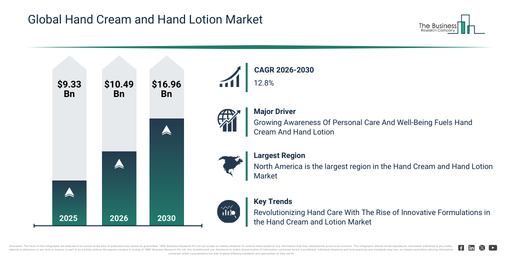
    The market for hand cream and hand lotion has experienced substantial expansion in recent times. It is projected to increase from $9.33 billion in 2025 to $10.49 billion in 2026, exhibiting a compound annual growth rate (CAGR) of 12.3%. Historically, this expansion has been driven by factors such as a heightened understanding of the importance of skin hydration and hand cleanliness, the development of the personal care and cosmetics sectors, greater exposure to demanding work environments, the proliferation of retail and pharmacy distribution channels, and the impact of evolving beauty and skincare trends.

    The hand cream and hand lotion market is projected to experience substantial expansion over the upcoming years, reaching a valuation of $16.96 billion by 2030, demonstrating a compound annual growth rate (CAGR) of 12.8%. This anticipated growth is primarily driven by factors such as an increasing preference for clean label and organic product formulations, enhanced e-commerce presence within the personal care sector, a heightened emphasis on skin repair and protection, advancements in multifunctional hand care products, and the expansion of offerings for baby and sensitive skin. Key developments expected during this period include a greater demand for deep moisturizing and restorative formulations, a rising inclination towards natural and organic hand care options, increased adoption of barrier and protective hand lotions, a move towards premium products like anti-aging and specialized hand crèmes, and the broadening of online and direct-to-consumer sales channels.

    Get A Free Sample Report With In-Depth Market Insights:

    https://thebusinessresearchcompany.com/sample_request?id=96669209&type=smp&name=Hand%20Cream%20and%20Hand%20Lotion%20Market%20Report%202026&utm_source=Blogs&utm_medium=Paid&utm_campaign=Oct_PR

    Hand Cream and Hand Lotion Market Demand Drivers Opening New Revenue Streams

    An increasing understanding of personal care and well-being is anticipated to fuel the expansion of the hand cream and hand lotion market. This concept of personal care and well-being involves routines and behaviors designed to enhance physical, mental, and emotional health, along with general self-care. Essential hydration for the skin is delivered by hand cream and hand lotion, contributing to complete hand health and comfort. As an illustration, data from September 2024 by the Bureau of Labor Statistics, a US-based government agency, showed a 9.7% rise in expenditure on personal care products and services between 2022 and 2023; concurrently, their proportion of total annual spending stayed consistent at 1.2% in both years. Consequently, the heightened awareness surrounding personal care and well-being is propelling the expansion of the hand cream and hand lotion market.

    Hand Cream and Hand Lotion Market Segment Landscape And Growth Outlook

    The hand cream and hand lotion market covered in this report is segmented –

    1) By Type: Moisturizing Hand Lotion, Protective Hand Lotion, Repair Hand Crème, Other Types

    2) By Application: Adult, Baby

    3) By Distribution Channel: Supermarket/Hypermarket, Specialty Store, Beauty Salon, Pharma & Drug Store, Online Store

    Subsegments:

    1) By Moisturizing Hand Lotion: Hydrating Lotions, Daily Moisturizers, Lightweight Formulas

    2) By Protective Hand Lotion: Barrier Lotions, Anti-Bacterial Lotions, SPF-Infused Lotions

    3) By Repair Hand Crème: Intensive Repair Crèmes, Healing Crèmes For Damaged Skin, Crèmes For Cracked Or Dry Hands

    4) By Other Types: Anti-Aging Hand Lotions, Scented Hand Lotions, Natural Or Organic Hand Lotions

    Hand Cream and Hand Lotion Market Trends Powering Strategic Industry Growth

    Leading companies in the hand cream and hand lotion market are concentrating on developing advanced body care solutions, incorporating natural ingredients, cutting-edge moisturizing technologies, and eco-friendly packaging to meet the increasing demand for effective, sustainable skincare products. Advanced body care solutions refer to innovative skincare items that extend beyond basic moisturizing to tackle various skin health requirements. These solutions frequently contain state-of-the-art components, such as hyaluronic acid, ceramides, and antioxidants, aimed at improving skin hydration, elasticity, and overall appearance. For instance, in February 2023, The Vitamin Shoppe, a US-based omnichannel retailer, unveiled TrueYou Beauty, an innovative body care collection featuring body washes, scrubs, lotions, and body butter tailored to women’s specific skincare needs. This collection aims to inspire self-care and empower women. This launch aligns with a rising trend where consumers perceive beauty through a holistic wellness perspective, integrating skincare with overall health.

    Hand Cream and Hand Lotion Market Competitive Landscape: Who Leads The Industry?

    Major companies operating in the hand cream and hand lotion market are Johnson & Johnson, Procter & Gamble Company, Unilever plc, L’Oréal SA, Henkel AG & Co. KGaA., Colgate-Palmolive Company., Estée Lauder Companies Inc., Kao Corporation, Beiersdorf Ag, Amway Corporation, Shiseido Company Limited, Natura & Co Holding SA, LG Household & Health Care Ltd., Coty Inc., Galderma SA, Amorepacific Corporation, Avon Products Inc., Mary Kay Inc., Yves Rocher International, Revlon Inc., Jahwa Group Co. Ltd., Oriflame Holding AG, Body Shop International Limited, Weleda AG, Burt’s Bees Inc., Clarins Group, Jurlique International Pty Ltd., Crabtree & Evelyn Ltd., Aveeno, O’Keeffe’s Company

    View The Full Hand Cream and Hand Lotion Market Report:

    https://thebusinessresearchcompany.com/report/Hand-Cream-And-Hand-Lotions-global-market-report?utm_source=Blogs&utm_medium=Paid&utm_campaign=Oct_PR

    Hand Cream and Hand Lotion Market Regional Split: Which Areas Are Fueling Growth?

    North America was the largest region in the hand cream and hand lotion market in 2025. The regions covered in the hand cream and hand lotion market report are Asia-Pacific, South East Asia, Western Europe, Eastern Europe, North America, South America, Middle East, Africa.

    Reach Out To Our Team:

    The Business Research Company: https://www.thebusinessresearchcompany.com/

    Americas: +1 310-496-7795

    Asia: +44 7882 955267 & +91 8897263534

    Europe: +44 7882 955267

    Email us at: marketing@tbrc.info

    Follow us on:

    LinkedIn: https://in.linkedin.com/company/the-business-research-company

    YouTube: https://www.youtube.com/channel/UC24_fI0rV8cR5DxlCpgmyFQ

    Global Market Model: https://www.thebusinessresearchcompany.com/global-market-model
  • Halal Empty Capsules Market Size Growth: From $1.43 Billion In 2026 To $1.88 Billion By 2030

    Halal Empty Capsules Market Size Growth: From $1.43 Billion In 2026 To $1.88 Billion By 2030

    Backed by market attractiveness analysis, total addressable market sizing, company benchmarking matrices, interactive Excel dashboards, wider supply chain intelligence, emerging startup coverage, and detailed product-level insights, The Business Research Company’s 2026 market reports are designed to offer research that is more actionable and strategically valuable than ever.

    Halal Empty Capsules Market Value Growth And Long-Term Outlook

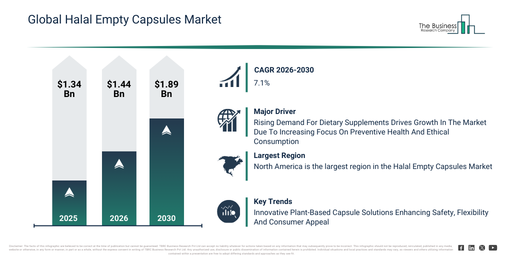
    The halal empty capsules market size has experienced strong growth in recent years. It is projected to expand from $1.34 billion in 2025 to $1.44 billion in 2026, demonstrating a compound annual growth rate (CAGR) of 7.3%. This historical growth can be linked to several factors including the limited availability of halal-certified capsules previously, a reliance on bovine gelatin, increasing awareness regarding religious compliance, the expansion of pharmaceutical and nutraceutical industries, and the adoption of traditional distribution channels.

    The halal empty capsules market is anticipated to experience substantial growth over the coming years. It is forecasted to reach $1.89 billion by 2030, exhibiting a compound annual growth rate (CAGR) of 7.1%. This expansion during the projection period can be attributed to several factors, including the emergence of plant-based capsule alternatives, the widening reach of e-commerce and specialty retail outlets, a growing worldwide halal consumer population, more stringent regulatory guidelines for halal certification, and advancements in pullulan and starch-based capsules. Significant trends observed in the forecast period encompass an escalating demand for halal-certified pharmaceutical and nutraceutical items, a growing inclination towards plant-based and non-gelatin capsules, the broadening of online and specialty distribution channels, increased integration into dietary supplements and functional foods, and a heightened emphasis on adherence to regulatory requirements and quality benchmarks.

    Get A Free Sample Report With In-Depth Market Insights:

    https://thebusinessresearchcompany.com/sample_request?id=39259339&type=smp&name=Halal%20Empty%20Capsules%20Market%20Report%202026&utm_source=Blogs&utm_medium=Paid&utm_campaign=Oct_PR

    Halal Empty Capsules Market Growth Backed By Core Demand Fundamentals

    The escalating demand for dietary supplements is anticipated to fuel the future expansion of the halal empty capsules market. Dietary supplements are ingestible items designed to supply nutrients or beneficial compounds that might be insufficient or absent in an individual’s usual diet. The increasing consumption of these supplements is driven by a heightened focus on preventive healthcare, as people aim to enhance their nutrition and lessen the risk of chronic diseases. Halal empty capsules bolster dietary supplements by providing a permissible and plant-based choice that adheres to religious and ethical dietary specifications. For instance, in September 2024, as reported by HerbalGram, a US-based nonprofit organization, the total annual sales of herbal dietary supplements in the US ascended from $12.018 billion in 2022 to $12.551 billion in 2023, representing a growth of 4.4%. Hence, the increasing appetite for dietary supplements is a primary force behind the growth of the halal empty capsules market.

    Halal Empty Capsules Market Breakdown By Product Type And Application

    The halal empty capsules market covered in this report is segmented –

    1) By Type: Gelatin, Non-Gelatin

    2) By Distribution Channel: Online Stores, Pharmacies, Specialty Stores, Other Distribution Channels

    3) By End-User: Pharmaceutical Companies, Nutraceutical Companies, Research Organizations, Other End Users

    Subsegments:

    1) By Gelatin: Bovine Gelatin, Fish Gelatin

    2) By Non-Gelatin: Hydroxypropyl Methylcellulose(Hpmc), Starch-Based Capsules, Pullulan Capsules

    Halal Empty Capsules Market Growth Trends Reshaping The Competitive Landscape

    Companies operating within the halal empty capsules market are prioritizing the creation of advanced products like plant-based, plasticizer-free premixes to improve safety, adhere to halal certification requirements, and attract health-aware buyers. A plant-based, plasticizer-free premix is defined as a natural formulation composed of plant-sourced components, free from chemical plasticizers, and employed in the manufacturing of halal-certified empty capsules. As an illustration, in May 2024, Roquette Frères, a France-based food company, introduced Lycagel Flex, an advanced plant-derived capsule product. This solution provides producers with the adaptability to tailor formulations, boasts rapid processing capabilities (5-minute degassing), and results in durable, steady capsules resisting sticking or leakage even following extended storage. The aim of this solution is to offer a superior-performing, vegan substitute for traditional gelatin capsules in nutraceutical and pharmaceutical sectors, catering to varied consumer preferences and manufacturing demands.

    Halal Empty Capsules Market Company Landscape And Competitive Strategy

    Major companies operating in the halal empty capsules market are Lonza Group, ACG Group, Gelita AG, Aenova Group, Nitta Gelatin Inc., Qualicaps, Zhejiang Huili Capsules Co. Ltd., Sterling Biotech Ltd., India Gelatine & Chemicals Ltd., Capscanada Corporation, Natural Capsules Limited, Fortcaps Healthcare Ltd., Erawat Pharma Limited, Sunil Healthcare Limited, SaintyCo Group, Dah Feng Capsule Co. Ltd., Bright Pharma Caps GmbH, HealthCaps India Ltd.

    View The Full Halal Empty Capsules Market Report:

    https://thebusinessresearchcompany.com/report/halal-empty-capsules-global-market-report?utm_source=Blogs&utm_medium=Paid&utm_campaign=Oct_PR

    Halal Empty Capsules Market Top Region: Where Does Most Revenue Come From?

    North America was the largest region in the halal empty capsules market in 2025. Asia-Pacific is expected to be the fastest-growing region in the forecast period. The regions covered in the halal empty capsules market report are Asia-Pacific, South East Asia, Western Europe, Eastern Europe, North America, South America, Middle East, Africa.

    Reach Out To Our Team:

    The Business Research Company: https://www.thebusinessresearchcompany.com/

    Americas: +1 310-496-7795

    Asia: +44 7882 955267 & +91 8897263534

    Europe: +44 7882 955267

    Email us at: marketing@tbrc.info

    Follow us on:

    LinkedIn: https://in.linkedin.com/company/the-business-research-company

    YouTube: https://www.youtube.com/channel/UC24_fI0rV8cR5DxlCpgmyFQ

    Global Market Model: https://www.thebusinessresearchcompany.com/global-market-model
  • Hair Removal Devices Market Analysis 2026: Market Size, Growth Trends And Industry Outlook

    Hair Removal Devices Market Analysis 2026: Market Size, Growth Trends And Industry Outlook

    Featuring market attractiveness scoring, total addressable market sizing, company benchmarking matrices, interactive Excel dashboards, deeper supply chain intelligence, emerging startup tracking, and granular product-level insights, The Business Research Company’s 2026 market reports are built to deliver research that is both more actionable and more strategically valuable.

    Hair Removal Devices Market Poised To Hit $4.35 Billion By 2030 With A 14% CAGR

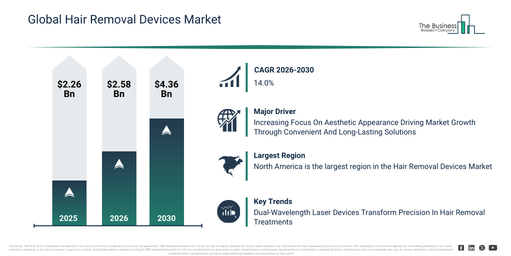
    The hair removal devices market size has shown significant growth in recent years. This market is expected to expand from $2.26 billion in 2025 to $2.58 billion in 2026, achieving a compound annual growth rate (CAGR) of 14.2%. Historically, this growth has been driven by the increase in cosmetic procedures, a heightened awareness of personal appearance, the wider availability of laser devices, the expansion of beauty clinics, and continuous technological improvements in hair removal.

    The hair removal devices market is projected for significant expansion over the coming years. It is forecast to reach $4.36 billion in 2030, exhibiting a compound annual growth rate (CAGR) of 14.0%. This anticipated growth during the forecast period is largely driven by factors such as a heightened demand for non-invasive aesthetic procedures, an increase in disposable income, advancements in portable devices, the proliferation of home-use beauty technology, and an expanding male grooming sector. Key trends anticipated within this period encompass a greater embrace of energy-based hair removal technologies, a surging demand for at-home hair removal devices, a rising inclination towards solutions offering long-lasting hair reduction, the proliferation of aesthetic and beauty clinics, and an increased consumer emphasis on personal grooming.

    Get A Free Sample Report With In-Depth Market Insights:

    https://thebusinessresearchcompany.com/sample_request?id=59310430&type=smp&name=Hair%20Removal%20Devices%20Market%20Report%202026&utm_source=Blogs&utm_medium=Paid&utm_campaign=Oct_PR

    Hair Removal Devices Market Growth Catalysts And Demand Drivers

    The rising importance placed on aesthetic appeal is anticipated to drive the expansion of the hair removal devices market moving forward. Aesthetic appearance refers to a person’s visual attributes that contribute to their overall physical attractiveness, encompassing elements such as skin texture, hair grooming, and body shape, all of which are influenced by personal care and cosmetic treatments. The widespread adoption of social media and digital culture has amplified beauty ideals, fostering an increased focus on aesthetic appearance. Hair removal devices help maintain aesthetic appearance by offering smooth, hair-free skin through convenient, long-lasting, and non-invasive treatments. For example, according to the International Society of Aesthetic Plastic Surgery (ISAPS), total aesthetic (surgical + non-surgical) procedures grew from 33.84 million in 2022 to 34.99 million in 2023, indicating a 3.4% increase. Therefore, the increasing emphasis on aesthetic appearance is propelling the growth of the hair removal devices market.

    Hair Removal Devices Market Segment Analysis And Revenue Potential

    The hair removal devices market covered in this report is segmented –

    1) By Product: Energy-Based Devices, Laser Devices, Intense Pulsed Light (IPL) Devices, Other Products

    2) By Distribution Channel: Supermarkets And Hypermarkets, Drug-Stores, Online

    3) By Application: Facial Hair Removal, Legs, Hands, Other Applications

    4) By End-Users: Dermatology Clinics, Beauty Clinics, Home Use, Other End-Users

    Subsegments:

    1) By Energy-Based Devices: Radiofrequency Devices, Ultrasound-Based Devices, Infrared-Based Devices

    2) By Laser Devices: Diode Laser Devices, Nd:YAG Laser Devices, Alexandrite Laser Devices, Ruby Laser Devices

    3) By Intense Pulsed Light (IPL) Devices: Handheld IPL Devices, Professional IPL Systems

    4) By Other Products: Razor Devices, Epilators, Waxing Devices, Threading Devices

    Hair Removal Devices Market Trends Shaping Long-Term Demand

    Leading companies within the hair removal devices market are concentrating on developing sophisticated products, such as dual-wavelength laser devices, to elevate the performance and adaptability of professional hair removal procedures. A dual-wavelength laser device functions as a laser system emitting light at two distinct wavelengths, which allows for precise targeting of different chromophores or tissue depths in the skin, enhancing treatment flexibility and efficacy. For example, in April 2025, Lumenis Be Ltd., an Israel-based medical technology company, expanded its offerings with the introduction of the LightSheer INFINITY and LightSheer DESIRE laser hair removal systems, thereby strengthening its primary products in the aesthetic treatment sector. These cutting-edge devices utilize diode laser technology, delivering effective and comfortable hair removal solutions suitable for a wide range of skin types and hair colors. Significantly, the LightSheer INFINITY provides dual-wavelength capabilities, empowering practitioners to customize treatments for individual patient needs, while the LightSheer DESIRE prioritizes ease of operation and efficient performance, consequently boosting patient satisfaction and clinic throughput.

    Hair Removal Devices Market Key Players Shaping Industry Direction

    Major companies operating in the hair removal devices market are Procter & Gamble Company, Panasonic Corporation, Koninklijke Philips N.V., Lumenis Be Ltd., Cynosure Inc., Solta Medical, Cutera Inc., Lutronic Corp., Venus Concept, Sciton Inc., Syska, Silk’n – Home Skinovations Ltd., Tria Beauty, CosBeauty, Iskin, Lynton Lasers Ltd., iluminage Beauty Inc., LASERBIO OPTOTECH LLP, Dermacell Pvt. Ltd., SmoothSkin.

    View The Full Hair Removal Devices Market Report:

    https://thebusinessresearchcompany.com/report/hair-removal-devices-global-market-report?utm_source=Blogs&utm_medium=Paid&utm_campaign=Oct_PR

    Hair Removal Devices Market Regional Breakdown: Where Is Demand Concentrated?

    North America was the largest region in the hair removal devices market in 2025. Asia-Pacific is expected to be the fastest-growing region in the forecast period. The regions covered in the hair removal devices market report are Asia-Pacific, South East Asia, Western Europe, Eastern Europe, North America, South America, Middle East, Africa.

    Reach Out To Our Team:

    The Business Research Company: https://www.thebusinessresearchcompany.com/

    Americas: +1 310-496-7795

    Asia: +44 7882 955267 & +91 8897263534

    Europe: +44 7882 955267

    Email us at: marketing@tbrc.info

    Follow us on:

    LinkedIn: https://in.linkedin.com/company/the-business-research-company

    YouTube: https://www.youtube.com/channel/UC24_fI0rV8cR5DxlCpgmyFQ

    Global Market Model: https://www.thebusinessresearchcompany.com/global-market-model
  • Hair Loss Treatment Products Market Forecast To 2030: Starting From $4.05 Billion In 2026

    Hair Loss Treatment Products Market Forecast To 2030: Starting From $4.05 Billion In 2026

    Built to provide research that’s more actionable and strategically valuable, The Business Research Company’s 2026 market reports include market attractiveness analysis, total addressable market sizing, company benchmarking matrices, interactive Excel dashboards, broader supply chain intelligence, emerging startup tracking, and in-depth product insights.

    Hair Loss Treatment Products Market Size And Revenue Outlook Through 2030

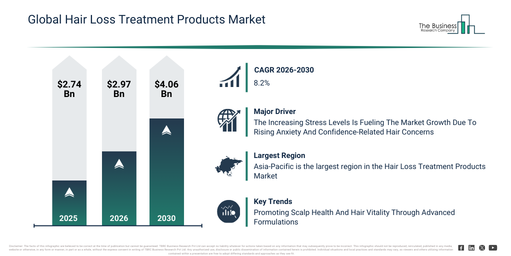
    The hair loss treatment products market has observed significant expansion in recent years. It is anticipated to grow from $2.74 billion in 2025 to $2.97 billion in 2026, demonstrating a compound annual growth rate (CAGR) of 8.2%. This historical growth can be attributed to an increasing incidence of alopecia conditions, the broad adoption of minoxidil products, the proliferation of dermatology clinics, heightened consumer awareness regarding grooming, and the wider availability of over-the-counter hair care solutions.

    The hair loss treatment products market is projected to experience robust expansion over the coming years. It will grow to $4.06 billion in 2030 at a compound annual growth rate (CAGR) of 8.2%. This anticipated growth during the forecast period is primarily attributed to factors such as the development of personalized hair care products, a rise in demand for plant-based formulations, the expansion of e-commerce sales channels, an increase in stress-related hair loss cases, and innovation in non-invasive hair treatments. Key trends in the forecast period encompass a heightened demand for topical hair regrowth solutions, the growing use of nutritional supplements for hair health, an increasing preference for natural and herbal products, the expansion of at-home hair loss treatments, and greater awareness of hair loss linked to stress and hormones.

    Get A Free Sample Report With In-Depth Market Insights:

    https://thebusinessresearchcompany.com/sample_request?id=72269520&type=smp&name=Hair%20Loss%20Treatment%20Products%20Market%20Report%202026&utm_source=Blogs&utm_medium=Paid&utm_campaign=Oct_PR

    Hair Loss Treatment Products Market Opportunity Drivers: What’s Unlocking New Revenue Potential?

    Elevated stress levels are projected to boost the expansion of the hair loss treatment products market moving forward. Stress levels denote the mental or emotional pressure an individual encounters. A key contributor to escalating stress is growing work demands, with staff confronting extended hours, stricter deadlines, and heightened performance standards in intense professional settings. Higher stress contributes to an increase in instances of hair loss, encouraging a greater number of individuals to look for treatment options. This escalating worry is fueling the need for hair loss treatment products. For example, data from May 2024, shared by the American Psychiatric Association, a US-based organization, indicated that in 2024, 43% of U.S. adults experienced increased anxiety compared to the prior year, an increase from 37% in 2023 and 32% in 2022, underscoring a consistent upward trend in anxiety levels over the last three years. Consequently, heightened stress levels are a significant factor propelling the expansion of the hair loss treatment products market.

    Hair Loss Treatment Products Market Segmentation And Category Overview

    The hair loss treatment products market covered in this report is segmented –

    1) By Product Type: Shampoo And Conditioner, Supplements And Vitamins, Serum And Oil, Other Product Types

    2) By Disease Type: Alopecia Areata, Cicatricial Alopecia, Traction Alopecia, Alopecia Totalis, Alopecia Universalis, Other Disease Types

    3) By Distribution Channel: Supermarkets And Hypermarkets, Convenience Stores, Specialist Retailers, Pharmacies Or Drugstores, Online Retail, Medical Or Pharmacy Stores, E-Commerce, Departmental Stores, Other Distribution Channels

    4) By End-User: Hospitals, Home Healthcare Settings, Dermatology Centres, Other End-Users

    Subsegments:

    1) By Shampoo And Conditioner: Anti-Dandruff Shampoo, Thickening Or Volumizing Shampoo, Sulfate-Free Shampoo, Hair Regrowth Conditioner, Herbal Or Natural Shampoo And Conditioner

    2) By Supplements And Vitamins: Biotin Supplements, Multivitamins, Iron Supplements, Collagen Supplements, Omega-3 Fatty Acids

    3) By Serum And Oil: Minoxidil-Based Serums, Herbal Hair Serums, Essential Oil Blends, Argan Oil-Based Products, Castor Oil-Based Treatments

    4) By Other Product Types: Hair Masks, Hair Sprays and Mists, Scalp Exfoliators, Leave-In Treatments, Laser Hair Growth Devices

    Hair Loss Treatment Products Market Innovation Trends Shaping Future Development

    Leading businesses in the hair loss treatment products market are concentrating on creating novel solutions, including anti-hair loss systems, to improve effectiveness and cater to varied consumer requirements. An anti-hair loss system, defined as a collective of products or therapies engineered to halt hair thinning and foster growth, aids in addressing hair loss by enriching the scalp, fortifying hair follicles, and diminishing hair fall. As an illustration, in July 2024, Aveda Corporation, a cosmetics firm located in the US, introduced the Invati Ultra Advanced Collection. This collection is formulated to lessen hair loss and reinforce thinning hair through plant-derived technology. It comprises a shampoo, conditioner, and scalp serum, all crafted with botanical components. Its objective is to provide noticeably thicker, fuller hair when used consistently. Furthermore, the line promotes a healthy scalp setting, encouraging sustained hair vitality.

    Hair Loss Treatment Products Market Competitive Analysis Of Leading Industry Participants

    Major companies operating in the hair loss treatment products market are Pfizer Inc., Johnson & Johnson Services Inc., Unilever PLC, Bayer Aktiengesellschaft, L’Oréal S.A., The Estée Lauder Companies Inc., Kao Corporation, Shiseido Company Limited, Galderma S.A., Dr. Reddy’s Laboratories Ltd., Taisho Pharmaceutical Holdings Co. Ltd., Revlon Inc., Merz Pharma GmbH & Co. KGaA, Hims & Hers Health Inc., Pierre Fabre S.A., Roman Health Ventures Inc, Aclaris Therapeutics Inc., HUM Nutrition Inc., OMI Industries Inc., Thirty Madison Inc., ULO LLC, TYPEBEA Inc.

    View The Full Hair Loss Treatment Products Market Report:

    https://thebusinessresearchcompany.com/report/hair-loss-treatment-products-global-market-report?utm_source=Blogs&utm_medium=Paid&utm_campaign=Oct_PR

    Hair Loss Treatment Products Market Geographic Landscape: Which Region Dominates Industry Growth?

    Asia-Pacific was the largest region in the hair loss treatment products market in 2025. North America is expected to be the fastest-growing region in the forecast period. The regions covered in the hair loss treatment products market report are Asia-Pacific, South East Asia, Western Europe, Eastern Europe, North America, South America, Middle East, Africa.

    Reach Out To Our Team:

    The Business Research Company: https://www.thebusinessresearchcompany.com/

    Americas: +1 310-496-7795

    Asia: +44 7882 955267 & +91 8897263534

    Europe: +44 7882 955267

    Email us at: marketing@tbrc.info

    Follow us on:

    LinkedIn: https://in.linkedin.com/company/the-business-research-company

    YouTube: https://www.youtube.com/channel/UC24_fI0rV8cR5DxlCpgmyFQ

    Global Market Model: https://www.thebusinessresearchcompany.com/global-market-model
  • H2 Receptor Antagonist Market Size In 2026 And Beyond: Understanding Future Growth Potential

    H2 Receptor Antagonist Market Size In 2026 And Beyond: Understanding Future Growth Potential

    Backed by market attractiveness analysis, total addressable market sizing, company benchmarking matrices, interactive Excel dashboards, wider supply chain intelligence, emerging startup coverage, and detailed product-level insights, The Business Research Company’s 2026 market reports are designed to offer research that is more actionable and strategically valuable than ever.

    H2 Receptor Antagonist Market Growth From $4.49 Billion In 2026 To $5.5 Billion By 2030 At A CAGR Of 5.2%

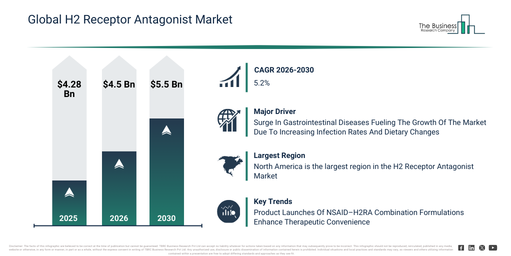
    The h2 receptor antagonist market has experienced significant expansion in recent years. It is projected to increase from $4.28 billion in 2025 to $4.5 billion in 2026, at a compound annual growth rate (CAGR) of 5.2%. The historical growth in this sector can be primarily attributed to a high prevalence of acid-related disorders, the widespread adoption of ranitidine and famotidine, the expansion of hospital pharmacy networks, an increase in GERD diagnoses, and the growth of treatments for peptic ulcers.

    The h2 receptor antagonist market is poised for substantial expansion in the upcoming years. Its value is expected to escalate to $5.5 billion by 2030, exhibiting a compound annual growth rate (CAGR) of 5.2%. This anticipated increase during the forecast period can be attributed to several factors, including the surging need for cost-effective acid suppressants, the growth in generic drug manufacturing, an uptick in self-medication practices, the proliferation of online pharmacy channels, and an aging population prone to digestive issues. Prominent trends for the forecast period encompass the sustained application of h2 blockers in acid suppression therapies, a rising preference for oral medications to reduce acid, the wider availability of generic h2 receptor antagonists, steady demand in the management of gastrointestinal disorders, and improved accessibility via both retail and online pharmacies.

    Get A Free Sample Report With In-Depth Market Insights:

    https://thebusinessresearchcompany.com/sample_request?id=31760708&type=smp&name=H2%20Receptor%20Antagonist%20Market%20Report%202026&utm_source=Blogs&utm_medium=Paid&utm_campaign=Oct_PR

    H2 Receptor Antagonist Market Growth Momentum: What Factors Are Shaping Demand?

    The rising occurrence of gastrointestinal illnesses is projected to fuel the expansion of the H2 receptor antagonist market moving ahead. These diseases encompass ailments impacting the digestive system, such as infections, inflammation, and various disorders of the stomach and intestines. The surge in gastrointestinal diseases stems from poor dietary habits and a greater intake of processed foods, factors that can impair gut health and trigger numerous digestive ailments like acid reflux, irritable bowel syndrome (IBS), and ulcers. H2 receptor antagonists aid in managing gastrointestinal conditions by inhibiting histamine receptors in the stomach, thereby decreasing acid secretion and easing symptoms like acid reflux, ulcers, and gastritis. An example illustrating this trend is provided by the American Cancer Society (ACS), a professional organization based in the US, which reported in January 2023 that gastrointestinal cancer cases within the United States saw an increase of 3.18%, rising from 338,090 in 2022 to 348,840 in 2023. Consequently, the escalating prevalence of gastrointestinal diseases is propelling the growth of the H2 receptor antagonist market.

    H2 Receptor Antagonist Market Segment Outlook: Which Categories Are Growing Fastest?

    The h2 receptor antagonist market covered in this report is segmented –

    1) By Drug Class: Cimetidine, Ranitidine, Famotidine, Nizatidine

    2) By Route of Administration: Oral, Intravenous, Intramuscular

    3) By Indication: Gastroesophageal Reflux Disease (GERD), Peptic Ulcers, Zollinger-Ellison Syndrome, Other Indications

    4) By Distribution Channel: Hospital Pharmacies, Retail Pharmacies, Online Pharmacies, Other Distribution Channels

    5) By End-User: Hospitals, Clinics, Home Care Settings

    Subsegments:

    1) By Cimetidine: Standard-Dose Formulations, Low-Dose Maintenance Therapy, Hospital-Use Injectable Formulations

    2) By Ranitidine: Oral Solid Dosage Forms, Injectable Ranitidine Formulations, Short-Term Acid Suppression Therapy

    3) By Famotidine: Low-Dose OTC Formulations, Prescription-Strength Formulations, Injectable Famotidine Preparations

    4) By Nizatidine: Oral Capsule Formulations, Oral Liquid Formulations, Maintenance Acid-Reduction Therapy

    H2 Receptor Antagonist Market Trends Redefining Industry Growth

    Leading companies operating within the H2 receptor antagonists market are concentrating on product advancements, such as NSAID–H2RA fixed-dose combination tablets, to enhance therapeutic convenience and ensure gastrointestinal safety. These NSAID–H2RA fixed-dose combination tablets are single-tablet formulations that combine a nonsteroidal anti-inflammatory drug with an H2 receptor antagonist, aiming to provide pain relief while simultaneously diminishing the risk of NSAID-induced gastric and duodenal ulcers. For instance, in March 2024, Endo International plc, a U.-based specialty pharmaceutical company, introduced Ibuprofen-Famotidine Tablets 800 mg/26.6 mg, the generic alternative to DUEXIS. This launch offers a high-strength ibuprofen dose suitable for managing chronic pain, features integrated gastroprotection through famotidine, and presents a cost-effective generic option designed to improve affordability for long-term therapy.

    H2 Receptor Antagonist Market Leading Companies And Competitive Benchmarking

    Major companies operating in the h2 receptor antagonist market are Pfizer Inc., Sanofi S.A., Abbott Laboratories, Novartis AG, GlaxoSmithKline plc, Takeda Pharmaceutical Company Limited, Eli Lilly and Company, Viatris Inc., Teva Pharmaceutical Industries Limited, Boehringer Ingelheim International GmbH, Sun Pharmaceutical Industries Limited, Apotex Inc., Aurobindo Pharma Limited, Dr. Reddy’s Laboratories Limited, Cipla Limited, Hikma Pharmaceuticals plc, Lupin Ltd., Zydus Lifesciences Limited, Torrent Pharmaceuticals Limited, Accord Healthcare Limited

    View The Full H2 Receptor Antagonist Market Report:

    https://thebusinessresearchcompany.com/report/h2-receptor-antagonist-global-market-report?utm_source=Blogs&utm_medium=Paid&utm_campaign=Oct_PR

    H2 Receptor Antagonist Market Largest Region: Which Geography Holds The Highest Market Share?

    North America was the largest region in the H2 receptor antagonist market in 2025. Asia-Pacific is expected to be the fastest-growing region in the forecast period. The regions covered in the h2 receptor antagonist market report are Asia-Pacific, South East Asia, Western Europe, Eastern Europe, North America, South America, Middle East, Africa.

    Reach Out To Our Team:

    The Business Research Company: https://www.thebusinessresearchcompany.com/

    Americas: +1 310-496-7795

    Asia: +44 7882 955267 & +91 8897263534

    Europe: +44 7882 955267

    Email us at: marketing@tbrc.info

    Follow us on:

    LinkedIn: https://in.linkedin.com/company/the-business-research-company

    YouTube: https://www.youtube.com/channel/UC24_fI0rV8cR5DxlCpgmyFQ

    Global Market Model: https://www.thebusinessresearchcompany.com/global-market-model
  • H2 Antagonists Market Reaches $25.13 Billion In 2026: Key Developments Shaping Expansion

    H2 Antagonists Market Reaches $25.13 Billion In 2026: Key Developments Shaping Expansion

    Featuring market attractiveness scoring, total addressable market sizing, company benchmarking matrices, interactive Excel dashboards, deeper supply chain intelligence, emerging startup tracking, and granular product-level insights, The Business Research Company’s 2026 market reports are built to deliver research that is both more actionable and more strategically valuable.

    H2 Antagonists Market Expansion Outlook: What Revenue Opportunities Are Ahead?

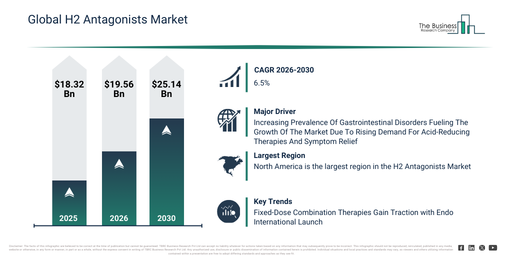
    The h2 antagonists market has experienced robust expansion in recent years. Projections show it will increase from $18.32 billion in 2025 to $19.56 billion in 2026, exhibiting a compound annual growth rate (CAGR) of 6.8%. Key drivers for this historical growth include the prevalence of peptic ulcers, the incidence of GERD, the adoption of OTC drugs, the expansion of hospital pharmacies, and heightened awareness of gastrointestinal disorders.

    The h2 antagonists market size is anticipated to experience robust expansion over the next few years. It is projected to reach $25.14 billion in 2030, demonstrating a compound annual growth rate (CAGR) of 6.5%. This growth in the forecast period is primarily driven by an aging population, the increasing demand for affordable acid reducers, a rise in self-medication practices, the expansion of online pharmacies, and effective management of chronic GERD. Significant trends during this period include a sustained need for acid suppression therapies, the increasing over-the-counter (OTC) availability of h2 antagonists, their expanded application in managing mild GERD and ulcers, the proliferation of liquid and injectable formulations, and a rising preference for cost-effective medications for acid control.

    Get A Free Sample Report With In-Depth Market Insights:

    https://thebusinessresearchcompany.com/sample_request?id=21342610&type=smp&name=H2%20Antagonists%20Market%20Report%202026&utm_source=Blogs&utm_medium=Paid&utm_campaign=Oct_PR

    H2 Antagonists Market Expansion Drivers: What’s Shaping Future Growth?

    The escalating occurrence of gastrointestinal disorders is projected to stimulate the expansion of the H2 antagonists market in the coming period. Gastrointestinal (GI) disorders are defined as medical conditions that impact the digestive system, encompassing organs such as the esophagus, stomach, intestines, liver, pancreas, and gallbladder. The rising frequency of these disorders is attributed to unhealthy eating habits, which promote excessive stomach acid generation and irritate the digestive tract. H2 antagonists aid in the management of gastrointestinal disorders by lowering stomach acid production, proving effective for treating conditions like acid reflux and ulcers. They contribute to improved patient comfort by offering rapid symptom relief and fostering long-term digestive health. For example, in March 2024, the World Health Organization (WHO), a specialized agency of the United Nations based in Switzerland, reported that diarrheal diseases cause roughly 1.7 billion cases each year and lead to approximately 443,832 deaths in children under the age of 5, in addition to 50,851 deaths among children aged 5 to 9. Consequently, the increasing prevalence of gastrointestinal disorders is a key driver for the growth of the H2 antagonists market.

    H2 Antagonists Market Segment Landscape: Which Areas Lead Development?

    The h2 antagonists market covered in this report is segmented –

    1) By Drug Type: Prescription H2 Antagonists, Over-The-Counter H2 Antagonists

    2) By Indication: Gastroesophageal Reflux Disease (GERD), Peptic Ulcer Disease, Zollinger-Ellison Syndrome, Other Indications

    3) By Dosage Form: Tablets, Capsules, Injectable Solutions, Liquid Formulations

    4) By Distribution Channel: Retail Pharmacies, Hospital Pharmacies, Online Pharmacies, Drug Stores

    Subsegments:

    1) By Prescription H2 Antagonists: Gastroesophageal Reflux Disease (GERD), Peptic Ulcers, Zollinger-Ellison Syndrome

    2) By Over-The-Counter (OTC) H2 Antagonist: Heartburn, Occasional Acid Reflux, Indigestion

    H2 Antagonists Market Strategic Trends: What Defines The Next Growth Phase?

    Leading companies in the H2 antagonists market are concentrating on developing innovative solutions, such as fixed-dose combination therapies, to enhance patient compliance and reduce gastrointestinal side effects. These combination therapies integrate two or more active drugs into a single dosage form, thereby streamlining treatment regimens, improving patient adherence, and lessening the risk of side effects compared to taking multiple individual medications. For example, in March 2024, Endo International plc, a US-based pharmaceutical company, introduced ibuprofen-famotidine 800 mg/26.6 mg tablets, which is a generic version of the brand combination previously marketed as Duexis. This novel product comprises 800 mg of the non-steroidal anti-inflammatory drug ibuprofen along with 26.6 mg of the H2-receptor antagonist famotidine. It is formulated to relieve symptoms of rheumatoid arthritis and osteoarthritis (through ibuprofen) while simultaneously reducing the danger of NSAID-induced upper gastrointestinal ulcers (through famotidine). Key characteristics include its fixed-dose co-formulation within a single tablet, simplifying the regimen compared to separate administration of an NSAID and a gastro-protective agent; its suitability for patients requiring chronic NSAID therapy with concurrent ulcer-risk mitigation; and the advantage of cost-effective generic access in the US market.

    H2 Antagonists Market Industry Leaders And Competitive Landscape

    Major companies operating in the h2 antagonists market are Aurobindo Pharma Limited, Cipla Limited, Lupin Limited, Alkem Laboratories Limited, Intas Pharmaceuticals Limited, Mylan N.V. (Viatris Inc.), Glenmark Pharmaceuticals Limited, Hikma Pharmaceuticals PLC, Zydus Lifesciences Limited, Wockhardt Limited, Sandoz International GmbH, Alembic Pharmaceuticals Limited, Micro Labs Limited, IPCA Laboratories Limited, Emcure Pharmaceuticals Limited

    View The Full H2 Antagonists Market Report:

    https://thebusinessresearchcompany.com/report/h2-antagonists-global-market-report?utm_source=Blogs&utm_medium=Paid&utm_campaign=Oct_PR

    H2 Antagonists Market Regional Analysis: Which Region Leads By Revenue?

    North America was the largest region in the H2 receptor antagonists market in 2025. Asia-Pacific is expected to be the fastest-growing region in the forecast period. The regions covered in the h2 antagonists market report are Asia-Pacific, South East Asia, Western Europe, Eastern Europe, North America, South America, Middle East, Africa.

    Reach Out To Our Team:

    The Business Research Company: https://www.thebusinessresearchcompany.com/

    Americas: +1 310-496-7795

    Asia: +44 7882 955267 & +91 8897263534

    Europe: +44 7882 955267

    Email us at: marketing@tbrc.info

    Follow us on:

    LinkedIn: https://in.linkedin.com/company/the-business-research-company

    YouTube: https://www.youtube.com/channel/UC24_fI0rV8cR5DxlCpgmyFQ

    Global Market Model: https://www.thebusinessresearchcompany.com/global-market-model
  • H1N1 Vaccine Market Growth Outlook For 2026: Drivers, Trends And Future Opportunities

    H1N1 Vaccine Market Growth Outlook For 2026: Drivers, Trends And Future Opportunities

    Built to provide research that’s more actionable and strategically valuable, The Business Research Company’s 2026 market reports include market attractiveness analysis, total addressable market sizing, company benchmarking matrices, interactive Excel dashboards, broader supply chain intelligence, emerging startup tracking, and in-depth product insights.

    H1N1 Vaccine Market Growth Potential: How Will Market Size Shift Through 2030?

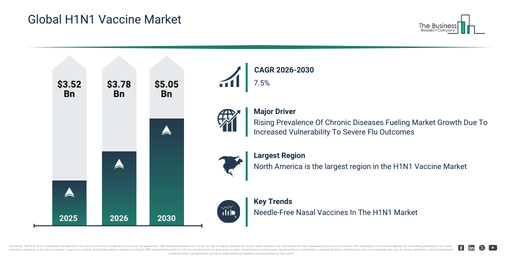
    The h1n1 vaccine market size has demonstrated significant expansion in recent years. Its value is expected to grow from $3.52 billion in 2025 to $3.78 billion in 2026, reflecting a compound annual growth rate (CAGR) of 7.3%. Historically, this market’s growth has been driven by factors such as past h1n1 pandemic outbreaks, extensive government-led mass immunization campaigns, increasing global influenza incidence, dedicated public health funding for vaccines, and the presence of established cold chain infrastructure.

    The h1n1 vaccine market is projected to experience substantial expansion over the coming years. It will grow to $5.05 billion in 2030 at a compound annual growth rate (CAGR) of 7.5%. This anticipated growth during the forecast period is fueled by factors such as enhanced pandemic readiness efforts, the escalating susceptibility of the older demographic, broader national immunization programs, improved healthcare accessibility within developing nations, and the continuous threat of influenza virus mutations. Key trends anticipated during the same period involve the enlargement of both seasonal and pandemic influenza immunization campaigns, the growing adoption of intranasal vaccines to boost patient adherence, increased governmental reserves of h1n1 vaccines, improved vaccination rates among children and the elderly, and a heightened emphasis on swift vaccine delivery during disease outbreaks.

    Get A Free Sample Report With In-Depth Market Insights:

    https://thebusinessresearchcompany.com/sample_request?id=22553209&type=smp&name=H1N1%20Vaccine%20Market%20Report%202026&utm_source=Blogs&utm_medium=Paid&utm_campaign=Oct_PR

    H1N1 Vaccine Market Development Factors: What’s Supporting Demand?

    The increasing occurrence of chronic diseases is anticipated to boost the expansion of the H1N1 vaccine market in the future. These conditions are persistent health issues, typically lasting over three months, demanding continuous medical care or management, encompassing ailments like diabetes, cardiac disease, and arthritis. The growth in chronic diseases is largely attributable to unhealthy lifestyle habits such as inadequate diet, lack of physical activity, and consumption of tobacco or alcohol, which lead to obesity, elevated blood pressure, and other enduring health risks. H1N1 vaccines are vital for safeguarding individuals suffering from chronic diseases, mitigating the likelihood of severe influenza complications and averting the worsening of conditions, hospital admissions, or fatalities within susceptible populations. For example, in June 2024, the National Health Service, a UK-based government department, reported that 3,615,330 individuals registered with a general practitioner (GP) had been diagnosed with non-diabetic hyperglycemia or pre-diabetes (a state characterized by higher-than-normal blood sugar levels, yet not meeting the criteria for diabetes) in 2023, representing an 18% surge from 3,065,825 instances in 2022. Consequently, the growing prevalence of chronic diseases is fueling the development of the H1N1 vaccine market.

    H1N1 Vaccine Market Segments: Where Is Growth Concentrated?

    The h1n1 vaccine market covered in this report is segmented –

    1) By Product Type: Inactivated Vaccine, Live Attenuated Vaccine

    2) By Route Of Administration: Intradermal Vaccination, Intramuscular Vaccination, Subcutaneous Vaccination

    3) By End Users: Hospitals, Clinics, Research And Diagnostic Laboratories, Other End Users

    Subsegments:

    1) By Inactivated Vaccine: Injectable Inactivated Vaccine, Intranasal Inactivated Vaccine

    2) By Live Attenuated Vaccine: Injectable Live Attenuated Vaccine, Intranasal Live Attenuated Vaccine

    H1N1 Vaccine Market Transformation Trends: What Innovations Are Driving Change?

    Leading firms within the H1N1 vaccine market are introducing novel products and innovative solutions, for instance, a unique needle-free nasal vaccine, aiming to maintain their competitive standing. This form of vaccination, a needle-free nasal vaccine, dispenses with conventional needles or syringes. Rather, its administration occurs via a non-invasive, pain-free, and needleless method, predominantly through the nasal passage. As an illustration, during October 2023, Serum Institute, an India-based manufacturer of vaccines, partnered with Mylab, an India-based diagnostic company, to release Nasovac S4. This needle-free nasal influenza vaccine is designed to provide active immunity against influenza resulting from the H1N1 virus and H3N2 virus. It employs strains from the Type A and Type B virus to generate antibodies combating influenza. Nasovac S4 is suitable for all individuals older than the age of 2, assisting in stimulating the immune system’s defense against influenza.

    H1N1 Vaccine Market Key Participants And Competitive Landscape

    Major companies operating in the h1n1 vaccine market are Sanofi SA, GlaxoSmithKline PLC, CSL Limited, AstraZeneca Inc., Zydus Lifesciences Limited, Merck and Co.Inc., Novavax Inc., Panacea Biotec Ltd., Sinovac Biotech Ltd., Green Cross Corp., Pfizer Inc., Seqirus Ltd., Cipla Inc., Protein Sciences Corporation, Hualan Biological Engineering Inc., Changsheng Bio-Technology Co. Ltd., Bharat Biotech International Limited, Serum Institute of India Pvt. Ltd., Bio Farma Group, PT Kalbe Farma Tbk, Moderna Inc., CureVac NV, BioNTech SE, Inovio Pharmaceuticals Inc., Vaxart Inc., Altimmune Inc., Dynavax Technologies Corporation, VBI Vaccines Inc., GeoVax Labs Inc.

    View The Full H1N1 Vaccine Market Report:

    https://thebusinessresearchcompany.com/report/H1N1-vaccine-global-market-report?utm_source=Blogs&utm_medium=Paid&utm_campaign=Oct_PR

    H1N1 Vaccine Market Geographic Distribution And Regional Opportunities

    North America was the largest region in the H1N1 vaccine market in 2025. The regions covered in the h1n1 vaccine market report are Asia-Pacific, South East Asia, Western Europe, Eastern Europe, North America, South America, Middle East, Africa.

    Reach Out To Our Team:

    The Business Research Company: https://www.thebusinessresearchcompany.com/

    Americas: +1 310-496-7795

    Asia: +44 7882 955267 & +91 8897263534

    Europe: +44 7882 955267

    Email us at: marketing@tbrc.info

    Follow us on:

    LinkedIn: https://in.linkedin.com/company/the-business-research-company

    YouTube: https://www.youtube.com/channel/UC24_fI0rV8cR5DxlCpgmyFQ

    Global Market Model: https://www.thebusinessresearchcompany.com/global-market-model
  • Gynecology Drugs Market Size Forecast From 2026 To 2030: Key Industry Trends

    Gynecology Drugs Market Size Forecast From 2026 To 2030: Key Industry Trends

    Backed by market attractiveness analysis, total addressable market sizing, company benchmarking matrices, interactive Excel dashboards, wider supply chain intelligence, emerging startup coverage, and detailed product-level insights, The Business Research Company’s 2026 market reports are designed to offer research that is more actionable and strategically valuable than ever.

    Gynecology Drugs Market Value Analysis: What Growth Lies Ahead Over The Forecast Period?

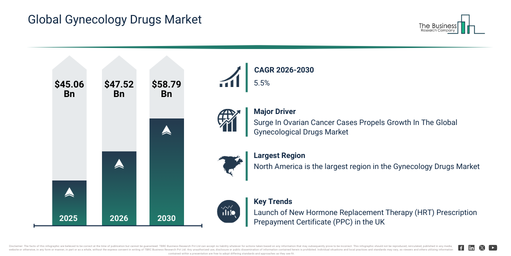
    The gynecology drugs market size has shown robust growth in recent years. Projections indicate it will expand from $45.06 billion in 2025 to $47.52 billion in 2026, exhibiting a compound annual growth rate (CAGR) of 5.5%. Historically, the market’s expansion stemmed from factors such as the increasing incidence of gynecological conditions, heightened awareness regarding women’s health, an increase in hospital networks, the availability of generic gynecology medications, and the uptake of traditional hormonal therapies.

    The gynecology drugs market size is anticipated to experience robust growth in the upcoming years. It is forecasted to grow to $58.79 billion in 2030, achieving a compound annual growth rate (CAGR) of 5.5%. The expansion during the forecast period can be attributed to advancements in personalized medicine, an increase in telemedicine adoption, enhanced investment in reproductive health research, the creation of minimally invasive drug delivery systems, and the broadening of online pharmacy channels. Significant trends for this period include personalized gynecology treatments, the adoption of telemedicine and remote consultations, innovations in minimally invasive drug delivery, an increase in fertility and reproductive health therapies, and a heightened awareness of women’s health issues.

    Get A Free Sample Report With In-Depth Market Insights:

    https://thebusinessresearchcompany.com/sample_request?id=51942621&type=smp&name=Gynecology%20Drugs%20Market%20Report%202026&utm_source=Blogs&utm_medium=Paid&utm_campaign=Oct_PR

    Gynecology Drugs Market Industry Drivers: What’s Behind The Revenue Growth?

    The increasing number of women afflicted with ovarian cancer is anticipated to propel the growth of the global gynecological drugs market. Ovarian cancer refers to a malignancy that originates in the ovaries, which are vital organs of the female reproductive system. Gynecological medications play a significant role in the treatment of ovarian cancer by offering targeted and effective therapeutic choices, thereby boosting survival rates and elevating patients’ quality of life. For instance, in February 2023, according to the National Center for Biotechnology Information, a US-based government agency, the global incidence of ovarian cancer is projected to rise to 434,184 new cases, with an estimated 293,039 deaths by 2040. This escalating incidence of ovarian cancer is expected to invigorate the market for gynecological drugs in the forecast period.

    Gynecology Drugs Market Segment Analysis: What Are The Core Market Categories?

    The gynecology drugs market covered in this report is segmented –

    1) By Therapeutics: Hormonal Therapy, Non-Hormonal Therapy

    2) By Indication: Gynecology Cancers, Menopausal Disorder, Polycystic Ovary Syndrome, Contraception, Other Indications

    3) By Distribution Channel: Hospital Pharmacies, Retail Pharmacies, Online Pharmacies

    Subsegments:

    1) By Hormonal Therapy: Estrogen Replacement Therapy, Progesterone Therapy, Combination Hormonal Therapy

    2) By Non-Hormonal Therapy: Antidepressants (For menopausal symptoms), Non-Hormonal Anticonvulsants, Herbal And Dietary Supplements

    #Gynecology Drugs Market Growth Trends: What’s Shaping The Future Outlook?

    Leading companies in the gynecology drug market are concentrating on developing innovative therapies like hormone replacement therapy to secure a competitive advantage. Hormone Replacement Therapy (HRT) is a medical treatment involving hormone administration to relieve symptoms linked to menopause, such as hot flashes, night sweats, mood swings, and vaginal dryness, thereby improving the general well-being of women undergoing these changes. For example, in April 2023, the Department of Health and Social Care, a UK government administration, alongside NHS England and the NHS Business Services Authority, a UK non-departmental public body, launched a new Hormone Replacement Therapy (HRT) prescription prepayment certificate (PPC). This new Hormone Replacement Therapy (HRT) PPC allows women in England to access HRT for only £19.30 per year (approximately $24.50 USD), considerably easing the financial cost of managing menopause symptoms.

    Gynecology Drugs Market Top Companies Driving Competitive Growth

    Major companies operating in the gynecology drugs market are Pfizer Inc., Bayer AG, Merck & Co. Inc., Teva Pharmaceutical Industries Ltd., Ferring Pharmaceuticals, Lupin Pharmaceuticals, Organon & Co., Allergan plc, Gedeon Richter, Besins Healthcare, Theramex, Amgen Inc., Agile Therapeutics, Sanofi S.A., Novartis AG, Eli Lilly and Company, Johnson & Johnson, AstraZeneca Plc, Cipla Limited, Kissei Pharmaceutical, Shionogi, Mylan N.V., Bristol-Myers Squibb Company, Endo International PLC, Apothecus Pharmaceutical Corp., Ani Pharmaceuticals, Medicines360, Blairex Laboratories

    View The Full Gynecology Drugs Market Report:

    https://thebusinessresearchcompany.com/report/gynecology-drugs-global-market-report?utm_source=Blogs&utm_medium=Paid&utm_campaign=Oct_PR

    Gynecology Drugs Market Largest Region By Revenue And Market Share

    North America was the largest region in the gynecology drugs market in 2025. Asia-Pacific is expected to be the fastest-growing region in the forecast period. The regions covered in the gynecology drugs market report are Asia-Pacific, South East Asia, Western Europe, Eastern Europe, North America, South America, Middle East, Africa.

    Reach Out To Our Team:

    The Business Research Company: https://www.thebusinessresearchcompany.com/

    Americas: +1 310-496-7795

    Asia: +44 7882 955267 & +91 8897263534

    Europe: +44 7882 955267

    Email us at: marketing@tbrc.info

    Follow us on:

    LinkedIn: https://in.linkedin.com/company/the-business-research-company

    YouTube: https://www.youtube.com/channel/UC24_fI0rV8cR5DxlCpgmyFQ

    Global Market Model: https://www.thebusinessresearchcompany.com/global-market-model