Category: Pharmaceuticals

  • Genome Sequencing Market Outlook Through 2030: Understanding The Growth Opportunity

    Genome Sequencing Market Outlook Through 2030: Understanding The Growth Opportunity

    Built to provide research that’s more actionable and strategically valuable, The Business Research Company’s 2026 market reports include market attractiveness analysis, total addressable market sizing, company benchmarking matrices, interactive Excel dashboards, broader supply chain intelligence, emerging startup tracking, and in-depth product insights.

    Genome Sequencing Market Value Growth And Long-Term Outlook

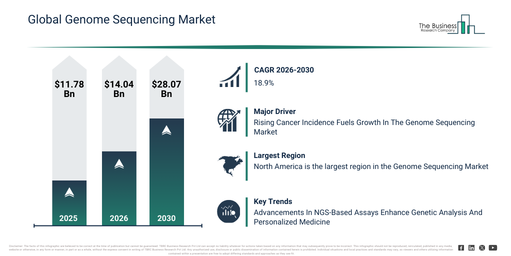
    The genome sequencing market has recently undergone rapid expansion. Its value is expected to escalate from $11.78 billion in 2025 to $14.04 billion in 2026, showing a compound annual growth rate (CAGR) of 19.2%. This growth in the preceding period can be attributed to various elements, including the restricted availability of advanced sequencing systems, continued reliance on conventional Sanger sequencing, burgeoning genomics research initiatives, increased government investment in genome projects, and a heightened understanding of personalized medicine.

    The genome sequencing market is poised for significant expansion in the coming years, projected to reach $28.07 billion in 2030, exhibiting a compound annual growth rate (CAGR) of 18.9%. This anticipated growth during the forecast period is driven by several factors, including advancements in next-generation sequencing systems, the broadening of bioinformatics platforms, greater integration of precision medicine programs, increased partnerships between biotech and pharmaceutical firms, and the proliferation of solutions for genomic data storage and management. Key trends expected within this period encompass the growing acceptance of next-generation sequencing (NGS) technologies, an escalating need for precision medicine and tailored therapies, the broadening scope of bioinformatics and data analysis offerings, an uptick in environmental and microbiome genomics applications, and the incorporation of specialized genome sequencing solutions into research.

    Get A Free Sample Report With In-Depth Market Insights:

    https://thebusinessresearchcompany.com/sample_request?id=22664680&type=smp&name=Genome%20Sequencing%20Market%20Report%202026&utm_source=Blogs&utm_medium=Paid&utm_campaign=Oct_PR

    Genome Sequencing Market Development Factors: What’s Supporting Demand?

    The increasing incidence of cancer is poised to boost the growth of the genome sequencing market moving forward. Cancer, a group of conditions defined by the unrestrained proliferation and dissemination of abnormal cells which can be fatal if not controlled, is becoming more prevalent. This rise in cancer cases stems from several factors, including an aging population, lifestyle choices, environmental exposures, and genetic predispositions. Genome sequencing is instrumental in pinpointing genetic mutations and susceptibilities to cancer, thus enabling prompt detection and customized treatment plans. It further identifies inherited cancer risks and assists in tracking the development of cancerous cells. As an illustration, in February 2024, the World Health Organization, a Switzerland-based intergovernmental body, forecasted that new cancer cases are expected to surpass 35 million by 2050, representing a 77% increase compared to 20 million cases in 2022. Therefore, the escalating occurrence of cancer is a primary catalyst for the expansion of the genome sequencing market.

    Genome Sequencing Market Segment Landscape: Which Areas Lead Development?

    The genome sequencing market covered in this report is segmented –

    1) By Product: Consumables, Systems And Software, Services

    2) By Technology: Polymerase Chain Reaction (PCR), Sequencing, Microarray, Nucleic Acid Extraction, Purification, Other Technologies

    3) By Applications: Diagnostics, Drug Discovery, Precision Medicine, Environmental Genomics, Research, Other Applications

    4) By End-User: Hospitals And Clinics, Biotechnology And Pharmaceutical Companies, Contract Research Organizations (CROs), Government, Research Centers, Academic And Government Institutes, Other End-Users

    Subsegments:

    1) By Consumables: Reagents And Kits, Sequencing Chips And Plates, Sample Preparation Products, Library Preparation Kits, DNA And RNA Extraction Kits

    2) By Systems And Software: Next-Generation Sequencing (NGS) Systems, Sanger Sequencing Systems, Bioinformatics Software And Analysis Tools, Data Management And Storage Solutions, Laboratory Information Management Systems (LIMS)

    3) By Services: Sequencing Services, Bioinformatics Analysis Services, Consultation And Support Services, Custom Genome Sequencing Solutions, Sample Collection And Preparation Services.

    Genome Sequencing Market Transformation Trends: What Innovations Are Driving Change?

    Leading companies in the genome sequencing market are concentrating on developing sophisticated solutions, particularly next-generation sequencing (NGS)-based assays, to improve the precision of genetic analysis and support personalized medicine approaches. Next-generation sequencing (NGS)-based assays refer to advanced genomic technologies that allow for swift, high-throughput sequencing of DNA or RNA to examine genetic material. NGS facilitates the simultaneous sequencing of millions of DNA or RNA fragments, generating substantial amounts of data quickly and cost-effectively. As an illustration, in April 2023, Centogene N.V., a Germany-based company specializing in genetic diagnostics for rare diseases, unveiled CentoGenome, an enhanced NGS-based assay. This assay provides continuous diagnostic assistance through proactive diagnosis confirmation and reclassification programs at no additional charge, ensuring consistent patient care and accurate disease management. Utilizing a PCR-free method, CentoGenome reduces bias and boosts sequencing quality, resulting in improved coverage of challenging genomic regions and better insights into coding, regulatory, and intronic areas. The platform incorporates an automated bioinformatics pipeline and medical expert analysis, drawing upon CENTOGENE’s vast bio databank, which comprises data from approximately 700,000 patients across more than 120 countries. This extensive dataset significantly enhances the detection of disease-causing variants, including those associated with spinal muscular atrophy and Parkinson’s disease.

    Genome Sequencing Market Industry Leaders And Competitive Landscape

    Major companies operating in the genome sequencing market are F. Hoffmann-La Roche Ltd., Thermo Fisher Scientific Inc., Abbott Laboratories, Danaher Corporation, Merck KGaA, Siemens Healthineers, Becton Dickinson and Company, Eurofins Genomics, Agilent Technologies Inc., PerkinElmer, Illumina Inc., bioMérieux, Bio-Rad Laboratories Inc., QIAGEN N.V., 10x Genomics Inc., BGI Group, Oxford Nanopore Technologies plc, Pacific Biosciences of California Inc., GENEWIZ Inc., LI-COR Inc., CENTOGENE N.V., Bioneer Corporation, Strand Life Sciences Pvt Ltd., Nebula Genomics

    View The Full Genome Sequencing Market Report:

    https://thebusinessresearchcompany.com/report/genome-sequencing-global-market-report?utm_source=Blogs&utm_medium=Paid&utm_campaign=Oct_PR

    Genome Sequencing Market Top Region By Revenue And Market Share

    North America was the largest region in the genome sequencing market in 2025. Asia-Pacific is expected to be the fastest-growing region in the forecast period. The regions covered in the genome sequencing market report are Asia-Pacific, South East Asia, Western Europe, Eastern Europe, North America, South America, Middle East, Africa.

    Reach Out To Our Team:

    The Business Research Company: https://www.thebusinessresearchcompany.com/

    Americas: +1 310-496-7795

    Asia: +44 7882 955267 & +91 8897263534

    Europe: +44 7882 955267

    Email us at: marketing@tbrc.info

    Follow us on:

    LinkedIn: https://in.linkedin.com/company/the-business-research-company

    YouTube: https://www.youtube.com/channel/UC24_fI0rV8cR5DxlCpgmyFQ

    Global Market Model: https://www.thebusinessresearchcompany.com/global-market-model
  • Genitourinary Drugs Market Growth Potential: What The Latest Forecast Reveals

    Genitourinary Drugs Market Growth Potential: What The Latest Forecast Reveals

    Backed by market attractiveness analysis, total addressable market sizing, company benchmarking matrices, interactive Excel dashboards, wider supply chain intelligence, emerging startup coverage, and detailed product-level insights, The Business Research Company’s 2026 market reports are designed to offer research that is more actionable and strategically valuable than ever.

    Genitourinary Drugs Market Poised To Hit $35.69 Billion By 2030 With A 2.8% CAGR

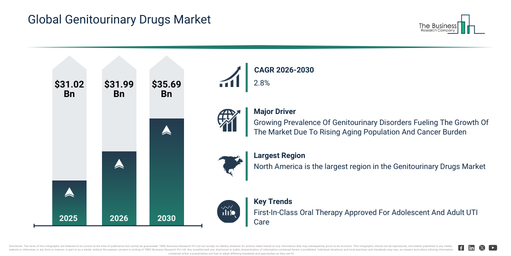
    The genitourinary drugs market size has expanded consistently in recent years. It is forecast to increase from $31.02 billion in 2025 to $31.99 billion in 2026, growing at a compound annual growth rate (CAGR) of 3.1%. The expansion observed in the historical period can be attributed to factors such as the prevalence of urinary tract infections, an aging populace, the incidence of hormonal disorders, the broadening of hospital pharmacies, and the uptake of prescription drugs.

    The genitourinary drugs market is anticipated to experience consistent expansion in the coming years. Its valuation is projected to reach $35.69 billion by 2030, demonstrating a compound annual growth rate (CAGR) of 2.8%. This projected growth during the forecast timeframe is primarily driven by factors such as personalized urology treatments, the rise of digital health platforms, increasing reproductive health awareness, the adoption of minimally invasive therapies, and the expansion of specialty clinics. Key trends anticipated within this period encompass an escalating demand for UTI and BPH treatments, the increasing application of hormonal and fertility therapies, a wider availability of oral and topical drug formulations, an enhanced emphasis on women’s and men’s urological health, and the proliferation of online pharmacy distribution channels.

    Get A Free Sample Report With In-Depth Market Insights:

    https://thebusinessresearchcompany.com/sample_request?id=59312941&type=smp&name=Genitourinary%20Drugs%20Market%20Report%202026&utm_source=Blogs&utm_medium=Paid&utm_campaign=Oct_PR

    Genitourinary Drugs Market Industry Drivers: What’s Behind The Revenue Growth?

    The increasing occurrence of genitourinary disorders is anticipated to boost the expansion of the genitourinary drugs market moving forward. These disorders are medical ailments impacting the genitourinary system, which encompasses both urinary and reproductive organs, covering infections, cancers, and functional or structural problems. The rising incidence of genitourinary disorders stems from the aging population, as age-related changes heighten the risk of urinary and reproductive health conditions. Genitourinary drugs assist in managing these disorders by addressing conditions of the urinary and reproductive systems, offering alleviation from infections, inflammation, and dysfunction. They enhance patient outcomes by facilitating effective, convenient, and tailored treatment, thereby improving overall quality of life. For example, in April 2024, data from the American Cancer Society, a US-based non-profit organization, indicated that around 20 million new cancer cases were identified worldwide in 2022, resulting in 9.7 million deaths, with the number of cancer cases projected to increase to 35 million by 2050. Consequently, the expanding prevalence of genitourinary disorders is propelling the growth of the genitourinary drugs market.

    Genitourinary Drugs Market Segments: Where Is Growth Concentrated?

    The genitourinary drugs market covered in this report is segmented –

    1) By Product: Urologicals, Hormonal Therapy, Gynecological, Anti-Infectives, Other Products

    2) By Route Of Administration: Oral, Parenteral, Topical

    3) By Application: Urinary Tract Infections (UTIs), Benign Prostatic Hyperplasia (BPH), Prostate Cancer, Overactive Bladder, Bladder Cancer, Other Applications

    4) By Distribution Channel: Hospital Pharmacies, Drug Store And Retail Pharmacies, Online Pharmacies

    Subsegments:

    1) By Urologicals: Benign Prostatic Hyperplasia (BPH) Drugs, Urinary Incontinence Drugs, Overactive Bladder (OAB) Drugs, Urolithiasis (Kidney Stone) Drugs, Erectile Dysfunction Drugs

    2) By Hormonal Therapy: Estrogen Therapy, Progestin Therapy, Gonadotropin-Releasing Hormone (GnRH) Agonists/Antagonists, Androgen Replacement Therapy, Selective Estrogen Receptor Modulators (SERMs)

    3) By Gynecological: Contraceptives, Menopausal Hormone Therapy, Fertility Drugs, Drugs for Endometriosis, Drugs for Polycystic Ovary Syndrome (PCOS)

    4) By Anti-Infectives: Urinary Tract Infection (UTI) Drugs, Sexually Transmitted Infection (STI) Drugs, Vaginal Antifungals, Antivirals

    5) By Other Products: Drugs for Chronic Pelvic Pain, Bladder Cancer Therapies, Interstitial Cystitis Drugs, Pelvic Organ Prolapse Treatment Drugs, Adjunctive Therapies

    #Genitourinary Drugs Market Growth Trends: What’s Shaping The Future Outlook?

    Major companies operating in the genitourinary drugs market are concentrating on creating novel products, like oral antibiotics, to boost the convenience of treatment, improve patient compliance, and effectively fight infections. Oral antibiotics are antibacterial medicines taken by mouth to address infections caused by bacteria. For instance, in March 2025, GSK plc, a UK-based pharmaceutical company, received approval from the US Food and Drug Administration (FDA) for Blujepa (gepotidacin) for treating uncomplicated urinary tract infections caused by susceptible bacteria in women and girls aged 12 and older. This medication is a novel, first-in-class oral antibiotic that functions by impeding the replication of bacterial DNA, targeting two critical enzymes, namely DNA gyrase and topoisomerase IV. Unlike traditional antibiotics, it attaches to unique sites to overcome resistance, offering a targeted mechanism with enhanced safety and efficacy.

    Genitourinary Drugs Market Key Participants And Competitive Landscape

    Major companies operating in the genitourinary drugs market are Pfizer Inc., Johnson & Johnson, F. Hoffmann-La Roche AG, Merck & Co. Inc., Bayer AG, Novartis AG, Sanofi S.A., Bristol Myers Squibb, AstraZeneca plc, Abbott Laboratories, GSK plc, Eli Lilly and Company, Amgen Inc., Teva Pharmaceutical Industries Ltd., Astellas Pharma Inc., Ipsen Société Anonyme, Aurobindo Pharma Limited, Dr. Reddy’s Laboratories Limited, Cipla Limited, Hikma Pharmaceuticals Public Limited Company, Endo International Public Limited Company, Takeda Pharmaceutical Company Limited, Zydus Lifesciences Limited, Melinta Therapeutics Inc., Asieris Pharmaceuticals, Sun Pharmaceutical Industries Ltd.

    View The Full Genitourinary Drugs Market Report:

    https://thebusinessresearchcompany.com/report/genitourinary-drugs-global-market-report?utm_source=Blogs&utm_medium=Paid&utm_campaign=Oct_PR

    Genitourinary Drugs Market Regional Analysis And Top Geography

    North America was the largest region in the genitourinary drugs market in 2025. Asia-Pacific is expected to be the fastest-growing region in the forecast period. The regions covered in the genitourinary drugs market report are Asia-Pacific, South East Asia, Western Europe, Eastern Europe, North America, South America, Middle East, Africa.

    Reach Out To Our Team:

    The Business Research Company: https://www.thebusinessresearchcompany.com/

    Americas: +1 310-496-7795

    Asia: +44 7882 955267 & +91 8897263534

    Europe: +44 7882 955267

    Email us at: marketing@tbrc.info

    Follow us on:

    LinkedIn: https://in.linkedin.com/company/the-business-research-company

    YouTube: https://www.youtube.com/channel/UC24_fI0rV8cR5DxlCpgmyFQ

    Global Market Model: https://www.thebusinessresearchcompany.com/global-market-model

  • Genetic Mutation Analysis Market Growth Outlook: Why Analysts Expect Continued Expansion

    Genetic Mutation Analysis Market Growth Outlook: Why Analysts Expect Continued Expansion

    Featuring market attractiveness scoring, total addressable market sizing, company benchmarking matrices, interactive Excel dashboards, deeper supply chain intelligence, emerging startup tracking, and granular product-level insights, The Business Research Company’s 2026 market reports are built to deliver research that is both more actionable and more strategically valuable.

    Genetic Mutation Analysis Market Size And Revenue Outlook Through 2030

    The genetic mutation analysis market has seen substantial growth in its size over recent years. Its value is forecast to rise from $6.65 billion in 2025 to $7.43 billion in 2026, achieving a compound annual growth rate (CAGR) of 11.7%. The expansion observed in prior periods can be linked to several factors, including limited availability of advanced sequencing technologies, increasing public awareness of genetic disorders, intensified research in oncology and inherited diseases, the widespread adoption of PCR and microarray technologies, and the early development of bioinformatics tools.

    The genetic mutation analysis market is projected to expand quickly over the coming years, anticipated to reach $11.47 billion by 2030, exhibiting a compound annual growth rate (CAGR) of 11.5%. This expansion during the projection period stems from progress in CRISPR and NGS platforms, a broadening of pharmacogenomics research, increased funding for genetic testing infrastructure, the incorporation of AI-powered data interpretation tools, and growing partnerships between research institutions and biotechnology firms. Key trends observed for this period encompass a greater uptake of next-generation sequencing and CRISPR technologies, a surge in the need for personalized medicine and targeted treatments, the broadening of genetic testing provisions within clinical diagnostics, the amalgamation of bioinformatics and data analysis platforms, and increased investigation into rare genetic disorders and pharmacogenomics.

    Get A Free Sample Report With In-Depth Market Insights:

    https://thebusinessresearchcompany.com/sample_request?id=20369708&type=smp&name=Genetic%20Mutation%20Analysis%20Market%20Report%202026&utm_source=Blogs&utm_medium=Paid&utm_campaign=Oct_PR

    Genetic Mutation Analysis Market Growth Factors: What’s Supporting Expansion?

    The increasing incidence of genetic conditions is anticipated to drive the expansion of the genetic mutation analysis market in the coming years. These disorders are illnesses resulting from anomalies or changes in an individual’s DNA, which can be passed down or emerge spontaneously. A contributing factor to the heightened occurrence of genetic disorders is advanced parental age, as it elevates the risk of genetic mutations during reproduction, subsequently increasing the probability of these conditions in children. Genetic mutation analysis identifies alterations in genes that may cause or indicate genetic disorders, facilitating early detection, precise treatment strategies, and well-informed choices regarding reproduction or lifestyle. For example, in October 2024, data from the Cystic Fibrosis Trust, a UK-based charity dedicated to supporting people with cystic fibrosis, showed that 11,148 cystic fibrosis patients were registered in 2022, and this figure rose to 11,318 in 2023, representing a 1.5% increase in patient registrations year-over-year. Consequently, the growing prevalence of genetic disorders is fueling the expansion of the genetic mutation analysis market.

    Genetic Mutation Analysis Market Segment Analysis: What Are The Core Market Categories?

    The genetic mutation analysis market covered in this report is segmented –

    1) By Component: Hardware, Software, Services

    2) By Technology: Next-Generation Sequencing (NGS), Polymerase Chain Reaction (PCR), Microarray, Sanger Sequencing, Clustered Regularly Interspaced Short Palindromic Repeats (CRISPR)

    3) By Application: Oncology, Cardiovascular Diseases, Neurological Disorders, Infectious Diseases, Genetic Disorders, Pharmacogenomics

    4) By End User: Hospitals And Clinics, Research Institutes, Pharmaceutical And Biotechnology Companies, Diagnostic Laboratories

    Subsegments:

    1) By Hardware: Sequencers, Polymerase Chain Reaction (PCR) Machines, Microarray Instruments, Electrophoresis Systems, Imaging Systems

    2) By Software: Data Analysis Software, Sequence Alignment Tools, Variant Calling Software, Genome Annotation Software, Visualization Tools

    3) By Services: Genetic Testing Services, Data Interpretation Services, Bioinformatics Services, Sample Preparation Services, Clinical Reporting Services

    Genetic Mutation Analysis Market Industry Trends: What’s Reshaping Demand?

    Companies operating in the genetic mutation analysis market are concentrating on creating advanced solutions, such as tissue-based next-generation sequencing (NGS) tests, to improve accuracy in detecting actionable genetic changes and inform tailored treatment approaches. Tissue-based next-generation sequencing (NGS) tests serve as sophisticated diagnostic instruments that examine DNA or RNA from tissue samples to find genetic mutations, alterations, or biomarkers linked to conditions like cancer. As an illustration, Guardant Health Inc., a US-based oncology firm, introduced the Guardant360 TissueNext test in June 2024, which expanded the detection of genes in a tumor tissue sample to 498. These specific genes, or cancer biomarkers, assist oncologists in pinpointing the most effective targeted therapies or treatment strategies for individuals with advanced cancer. Furthermore, Guardant has enhanced the test’s operational processes for quicker results. The new Guardant360 TissueNext test will be eligible for coverage for Medicare fee-for-service patients suffering from advanced solid tumor cancers as a distinct offering, according to coverage provided by Palmetto GBA, a Medicare administrative contractor for the Molecular Diagnostics Services program (MolDX), under the existing local coverage determination.

    Genetic Mutation Analysis Market Top Companies Driving Competitive Growth

    Major companies operating in the genetic mutation analysis market are F. Hoffmann-La Roche Ltd., Thermo Fisher Scientific Inc., Agilent Technologies Inc., Illumina Inc., Revvity Inc., Bio-Rad Laboratories Inc., QIAGEN N.V., Natera Inc., Myriad Genetics Inc., GenScript Biotech Corporation, Takara Bio Inc., 10x Genomics Inc., Oxford Nanopore Technologies Plc, Genomic Health Inc., Color Genomics Inc., Blueprint Medicines Corporation, GENEWIZ Inc., Pacific Biosciences of California Inc., Standard BioTools Inc., Personalis Inc., LGC Biosearch Technologies LLC, BGI Genomics Co. Ltd.

    View The Full Genetic Mutation Analysis Market Report:

    https://thebusinessresearchcompany.com/report/genetic-mutation-analysis-global-market-report?utm_source=Blogs&utm_medium=Paid&utm_campaign=Oct_PR

    Genetic Mutation Analysis Market Geographic Analysis: Where Is Demand Rising Fastest?

    North America was the largest region in the genetic mutation analysis market in 2025. The regions covered in the genetic mutation analysis market report are Asia-Pacific, South East Asia, Western Europe, Eastern Europe, North America, South America, Middle East, Africa.

    Reach Out To Our Team:

    The Business Research Company: https://www.thebusinessresearchcompany.com/

    Americas: +1 310-496-7795

    Asia: +44 7882 955267 & +91 8897263534

    Europe: +44 7882 955267

    Email us at: marketing@tbrc.info

    Follow us on:

    LinkedIn: https://in.linkedin.com/company/the-business-research-company

    YouTube: https://www.youtube.com/channel/UC24_fI0rV8cR5DxlCpgmyFQ

    Global Market Model: https://www.thebusinessresearchcompany.com/global-market-model
  • Genetic Analysis Market Forecast Insights: The Road To $18.75 Billion By 2030

    Genetic Analysis Market Forecast Insights: The Road To $18.75 Billion By 2030

    Built to provide research that’s more actionable and strategically valuable, The Business Research Company’s 2026 market reports include market attractiveness analysis, total addressable market sizing, company benchmarking matrices, interactive Excel dashboards, broader supply chain intelligence, emerging startup tracking, and in-depth product insights.

    Genetic Analysis Market Growth From $11.62 Billion In 2026 To $18.75 Billion By 2030 At A CAGR Of 12.7%

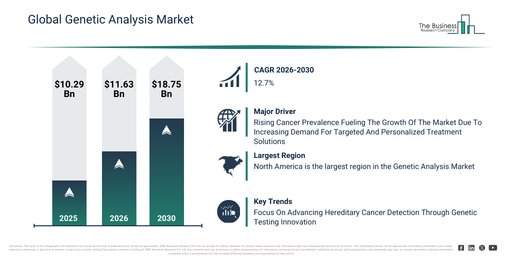
    The genetic analysis market has seen substantial expansion in recent years. Its value is anticipated to rise from $10.29 billion in 2025 to $11.63 billion in 2026, achieving a compound annual growth rate (CAGR) of 13.0%. This historical growth can be attributed to several factors including the restricted access to high-throughput sequencing platforms, a reliance on conventional genetic testing methods, increasing public understanding of genetic disorders, greater investment in research laboratories, and a growing number of diagnostic facilities.

    The genetic analysis market size is anticipated to experience substantial growth in the coming years. It is projected to reach $18.75 billion by 2030, demonstrating a compound annual growth rate (CAGR) of 12.7%. This expansion during the forecast period is propelled by advancements in NGS and real-time PCR technologies, the development of cloud-based genomic data platforms, increasing embrace of personalized medicine, rising government initiatives for genetic disease screening, and the integration of AI and bioinformatics tools within diagnostics. Notable trends expected in this period include the broadening of next-generation sequencing (NGS) and PCR-based genetic testing, a growing adoption of pharmacogenomic testing for personalized medicine, an increase in prenatal and newborn genetic screening programs, a heightened focus on rare disease and cancer genetic diagnostics, and the integration of bioinformatics and genomic data analysis tools.

    Get A Free Sample Report With In-Depth Market Insights:

    https://thebusinessresearchcompany.com/sample_request?id=65183864&type=smp&name=Genetic%20Analysis%20Market%20Report%202026&utm_source=Blogs&utm_medium=Paid&utm_campaign=Oct_PR

    Genetic Analysis Market Demand Drivers: What’s Powering Industry Growth?

    The genetic analysis market is projected to expand due to the growing incidence of cancer. Cancer is a condition where body cells multiply uncontrollably and can spread to other areas. The rise in cancer cases is linked to an aging demographic, given that elderly individuals are more prone to developing genetic mutations and prolonged exposure to environmental and lifestyle factors associated with cancer. Genetic analysis proves valuable in cancer care by identifying particular genetic mutations causing the illness, enabling physicians to select more effective targeted therapies with reduced side effects. For example, a report from the National Cancer Institute (NCI), a US-based entity focused on cancer research and training, stated in May 2025 that approximately 20 million individuals globally received a new cancer diagnosis in 2022, and around 9.7 million succumbed to the disease. Projections indicate that by 2050, the yearly figure for new cancer diagnoses might reach 33 million, with cancer fatalities anticipated to increase to 18.2 million. Consequently, the escalating number of cancer cases is fueling the expansion of the genetic analysis market.

    Genetic Analysis Market Segment Breakdown: Which Categories Lead On Revenue?

    The genetic analysis market covered in this report is segmented –

    1) By Product: Reagents And Kits, Instruments, Software

    2) By Test: Predictive Genetic Testing, Carrier Testing, Prenatal And Newborn Testing, Disease Diagnostic Testing, Pharmacogenomic Testing, Other Tests

    3) By Technology: Next-Generation Sequencing (NGS), Real-Time PCR System, Other Technologies

    4) By Application: Cancer, Genetic Diseases, Cardiovascular Diseases, Rare Diseases, Infectious Diseases, Other Applications

    5) By End-Use: Hospitals, Research And Development Laboratories, Diagnostic Centers, Other End-Uses

    Subsegments:

    1) By Reagents And Kits: DNA Extraction Kits, RNA Extraction Kits, PCR Reagents, Sequencing Reagents, Library Preparation Kits, Electrophoresis Reagents, Microarray Kits, Genotyping Assay Kits, Target Enrichment Kits, Nucleic Acid Labeling Kits

    2) By Instruments: DNA Sequencers, PCR Machines, Microarray Scanners, Electrophoresis Systems, Real-Time PCR Systems, Automated Sample Preparation Systems, Genetic Analyzers, Bioanalyzers, Fragment Analyzers, Next-Generation Sequencing (NGS) Platforms

    3) By Software: Data Analysis Software, Bioinformatics Tools, Laboratory Information Management Systems (LIMS), Genomic Data Interpretation Software, DNA Sequence Alignment Tools, Variant Annotation Software, Clinical Decision Support Software, Cloud-Based Genomic Platforms, Workflow Management Software, Data Visualization Tools

    Genetic Analysis Market Innovation Trends: What Developments Are Reshaping The Industry?

    Leading companies in the genetic analysis market are concentrating on developing advanced solutions, such as genetic testing, to facilitate preventive measures or early monitoring. Genetic testing involves analyzing a person’s DNA to identify changes or variations in genes that might be linked to specific health conditions or inherited traits. For example, in June 2023, Devyser, a Sweden-based company specializing in diagnostic kit development, launched Devyser LynchFAP and Devyser BRCA PALB2, two genetic testing solutions designed for hereditary cancer. Devyser LynchFAP distinguishes itself by offering a complete solution for analyzing PMS2 and nine additional genes associated with hereditary colorectal cancer, effectively resolving the intricate challenge of differentiating PMS2 from its pseudogene PMS2CL. It represents the first commercial kit specifically engineered for the precise analysis of the PMS2 gene. Devyser BRCA PALB2 allows for the targeted detection of genetic variants in BRCA1, BRCA2, and PALB2, which are key genes linked to an increased risk of breast and ovarian cancer. Its user-friendly design enables quick integration into lab workflows and supports the analysis of DNA from both blood and tumor samples within a single test.

    Genetic Analysis Market Leading Players And Competitive Positioning

    Major companies operating in the genetic analysis market are Hoffmann-La Roche AG, Thermo Fisher Scientific Inc., Abbott Laboratories Inc., Danaher Corporation, Quest Diagnostics Inc., Illumina Inc., PerkinElmer Inc., BioRad Laboratories Inc., Qiagen NV, Oxford Nanopore Technologies Plc, 23andMe Inc., ELITech Group, MyHeritage Ltd., Dante Labs Inc., AutoGenomics Inc., IntegraGen SA, Family Tree DNA, 24 genetics, Centrillion Biosciences Inc., DNA Worldwide Group Ltd., Genebase.

    View The Full Genetic Analysis Market Report:

    https://thebusinessresearchcompany.com/report/genetic-analysis-global-market-report?utm_source=Blogs&utm_medium=Paid&utm_campaign=Oct_PR

    Genetic Analysis Market Global Footprint: Which Region Leads The Market?

    North America was the largest region in the genetic analysis market in 2025. Asia-Pacific is expected to be the fastest-growing region in the forecast period. The regions covered in the genetic analysis market report are Asia-Pacific, South East Asia, Western Europe, Eastern Europe, North America, South America, Middle East, Africa.

    Reach Out To Our Team:

    The Business Research Company: https://www.thebusinessresearchcompany.com/

    Americas: +1 310-496-7795

    Asia: +44 7882 955267 & +91 8897263534

    Europe: +44 7882 955267

    Email us at: marketing@tbrc.info

    Follow us on:

    LinkedIn: https://in.linkedin.com/company/the-business-research-company

    YouTube: https://www.youtube.com/channel/UC24_fI0rV8cR5DxlCpgmyFQ

    Global Market Model: https://www.thebusinessresearchcompany.com/global-market-model
  • Generic Pharmaceuticals Contract Manufacturing Market Explained: What Is Fueling Growth To $93.56 Billion By 2030?

    Generic Pharmaceuticals Contract Manufacturing Market Explained: What Is Fueling Growth To $93.56 Billion By 2030?

    Backed by market attractiveness analysis, total addressable market sizing, company benchmarking matrices, interactive Excel dashboards, wider supply chain intelligence, emerging startup coverage, and detailed product-level insights, The Business Research Company’s 2026 market reports are designed to offer research that is more actionable and strategically valuable than ever.

    Generic Pharmaceuticals Contract Manufacturing Market Expansion Outlook: What Revenue Opportunities Are Ahead?

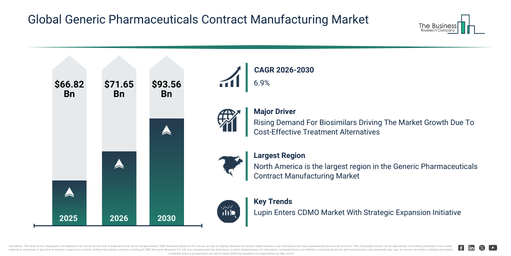
    The market size for generic pharmaceuticals contract manufacturing has shown substantial growth in recent years. It is anticipated to expand from $66.82 billion in 2025 to $71.65 billion in 2026, at a compound annual growth rate (CAGR) of 7.2%. The growth observed during the past period stemmed from factors such as limited contract manufacturing alternatives, a reliance on in-house generic drug manufacturing, an increasing demand for off-patent APIs, a rise in generic drug approvals, and cost containment pressures affecting pharmaceutical companies.

    The generic pharmaceuticals contract manufacturing market is projected to experience substantial expansion in the coming years. Its value is forecast to reach $93.56 billion by 2030, driven by a compound annual growth rate (CAGR) of 6.9%. This anticipated growth is due to several factors, including an increase in worldwide generic drug demand, the enlargement of contract manufacturing organizations (CMOs), the integration of sophisticated formulation technologies, a heightened emphasis on biologics and intricate generics, and stronger international regulatory partnerships. Key trends during this period are expected to encompass a surge in the outsourcing of generic drug production, an emphasis on economical production and packaging methods, the broadening of services for manufacturing injectables and tablets, enhanced regulatory assistance and compliance provisions, and an increase in licensing and technology transfer for generic items.

    Get A Free Sample Report With In-Depth Market Insights:

    https://thebusinessresearchcompany.com/sample_request?id=96273534&type=smp&name=Generic%20Pharmaceuticals%20Contract%20Manufacturing%20Market%20Report%202026&utm_source=Blogs&utm_medium=Paid&utm_campaign=Oct_PR

    Generic Pharmaceuticals Contract Manufacturing Market Growth Drivers: What’s Behind The Acceleration?

    The increasing demand for biosimilars is anticipated to drive the expansion of the generic pharmaceuticals contract manufacturing market moving forward. Biosimilars are biological medical products that are very similar to already approved reference biologics, showing no clinically meaningful differences in their safety, purity, or potency. This growing demand for biosimilars primarily stems from their capacity to offer cost-effective alternatives to expensive biologic drugs, thereby enhancing the accessibility of advanced treatments for patients and healthcare systems. Generic pharmaceuticals contract manufacturing supports biosimilars by providing economical, large-scale production capabilities and the necessary regulatory expertise to accelerate their market entry and ensure consistent quality. For instance, in January 2023, according to Cardinal Health Inc., a US-based healthcare company, as of January 2022, the U.S. had 33 biosimilar products approved by the FDA, with 21 of them available on the market and by 2023, the number of FDA-approved biosimilars had risen to 40, with 25 commercially available. Thus, the escalating demand for biosimilars is propelling the growth of the generic pharmaceuticals contract manufacturing market.

    Generic Pharmaceuticals Contract Manufacturing Market Segmentation: How Does The Market Break Down By Category?

    The generic pharmaceuticals contract manufacturing market covered in this report is segmented –

    1) By Drug Type: Branded Generics, Unbranded Generics

    2) By Product Type: Pharmaceutical Active Pharmaceutical Ingredients, Formulations, Capsules, Tablets, Injectables

    3) By Route Of Administration: Oral, Parenteral, Topical, Other Routes Of Administration

    4) By Application: Oncology, Immunology, Antidiabetic, Neurology, Anticoagulants, Cardiovascular, Respiratory, Pain, Human Immunodeficiency Virus Antivirals

    5) By End-User Industry: Pharmaceutical Companies, Contract Research Organizations, Biotechnology Companies, Generic Drug Manufacturers

    Subsegments:

    1) By Branded Generics: Contract Development of Branded Formulations, Branded Generic Tablet Manufacturing, Branded Injectable Manufacturing, Packaging and Labeling for Branded Generics, Regulatory Support For Branded Generics

    2) By Unbranded Generics: Bulk Manufacturing of Off-Patent Active Pharmaceutical Ingredients, Generic Tablet Or Capsule Production, Parenteral Or Injectable Generic Manufacturing, Cost-Efficient Packaging for Unbranded Products, Licensing And Tech Transfer for Generic Products

    Generic Pharmaceuticals Contract Manufacturing Market Trends: What’s Defining The Industry’s Next Phase?

    Leading firms within the generic pharmaceutical contract manufacturing sector are broadening their range of services through the formation of specialized subsidiaries, addressing the increasing need for external development and manufacturing capabilities. The strategic establishment of these focused subsidiaries allows entities to optimize the manufacturing process for active pharmaceutical ingredients (APIs), guaranteeing adherence to regulations, capacity for growth, and streamlined operations throughout the entire drug development timeline. An example of this is seen in July 2025, when Lupin, an India-based generic pharmaceutical company, unveiled its new subsidiary, Lupin Manufacturing Solutions (LMS), to penetrate the contract development and manufacturing organization (CDMO) market. This specialized division is designed to facilitate the development, production, and distribution of APIs for its international pharmaceutical collaborators. Comprising a leadership team with extensive experience in the biotechnology and pharmaceutical sectors, the subsidiary is well-placed to provide premium contract services, assisting pharmaceutical enterprises in shortening their market entry timelines while upholding regulatory compliance and cost-effectiveness.

    Generic Pharmaceuticals Contract Manufacturing Market Competitive Overview And Top Companies

    Major companies operating in the generic pharmaceuticals contract manufacturing market are WuXi AppTec Co. Ltd., Recipharm AB, Siegfried Holding AG, Curia Global Inc., Piramal Pharma Solutions, Laurus Labs Limited., Cambrex Corp., Alcami Corp. Inc, Neuland Laboratories Limited.

    View The Full Generic Pharmaceuticals Contract Manufacturing Market Report:

    https://thebusinessresearchcompany.com/report/generic-pharmaceuticals-contract-manufacturing-global-market-report?utm_source=Blogs&utm_medium=Paid&utm_campaign=Oct_PR

    Generic Pharmaceuticals Contract Manufacturing Market Regional Split: Which Areas Are Fueling Growth?

    North America was the largest region in the generic pharmaceuticals contract manufacturing market in 2025. Asia-Pacific is expected to be the fastest-growing region in the forecast period. The regions covered in the generic pharmaceuticals contract manufacturing market report are Asia-Pacific, South East Asia, Western Europe, Eastern Europe, North America, South America, Middle East, Africa.

    Reach Out To Our Team:

    The Business Research Company: https://www.thebusinessresearchcompany.com/

    Americas: +1 310-496-7795

    Asia: +44 7882 955267 & +91 8897263534

    Europe: +44 7882 955267

    Email us at: marketing@tbrc.info

    Follow us on:

    LinkedIn: https://in.linkedin.com/company/the-business-research-company

    YouTube: https://www.youtube.com/channel/UC24_fI0rV8cR5DxlCpgmyFQ

    Global Market Model: https://www.thebusinessresearchcompany.com/global-market-model
  • Generic Pharmaceuticals Market Forecast To Reach $588.23 Billion By 2030: Key Trends Explained

    Generic Pharmaceuticals Market Forecast To Reach $588.23 Billion By 2030: Key Trends Explained

    Featuring market attractiveness scoring, total addressable market sizing, company benchmarking matrices, interactive Excel dashboards, deeper supply chain intelligence, emerging startup tracking, and granular product-level insights, The Business Research Company’s 2026 market reports are built to deliver research that is both more actionable and more strategically valuable.

    Generic Pharmaceuticals Market Growth Potential: How Will Market Size Shift Through 2030?

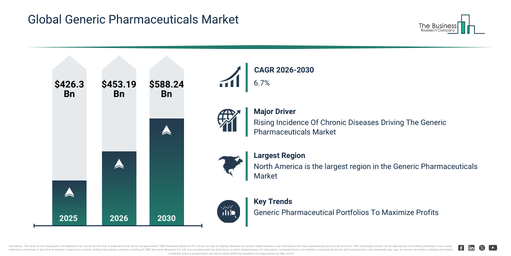
    The generic pharmaceuticals market size has experienced significant expansion in recent years. It is projected to increase from $426.3 billion in 2025 to $453.19 billion in 2026, demonstrating a compound annual growth rate (CAGR) of 6.3%. The historic growth in this market can be attributed to factors such as the expiry of patents for major drugs, rising concerns about healthcare expenses, increased understanding and acceptance of generics among patients and doctors, the expansion of hospital and retail pharmacy networks, and the wider adoption of oral and injectable generic formulations.

    The generic pharmaceuticals market is projected to experience substantial expansion in the coming years, reaching $588.24 billion in 2030 at a compound annual growth rate (CAGR) of 6.7%. This anticipated growth during the forecast period is largely driven by factors such as the introduction of complex generics and extended-release formulations, augmented government backing for generics, escalating demand for biosimilars, the expansion of e-pharmacy platforms, and strategic investments in manufacturing automation and digital quality control. Key trends expected during this period involve a growing inclination towards cost-effective generic medications, broadening of generic drug offerings across various therapeutic segments, increased uptake of branded generics and over-the-counter (OTC) generics, the development of online and physical retail pharmacy distribution networks, and a heightened emphasis on regulatory adherence and quality assurance within generic drug production.

    Get A Free Sample Report With In-Depth Market Insights:

    https://thebusinessresearchcompany.com/sample_request?id=21454769&type=smp&name=Generic%20Pharmaceuticals%20Market%20Report%202026&utm_source=Blogs&utm_medium=Paid&utm_campaign=Oct_PR

    Generic Pharmaceuticals Market Growth Factors Behind Sustained Expansion

    The increasing prevalence of chronic diseases is anticipated to propel the growth of the generic pharmaceuticals market in the coming years. Chronic diseases are long-term medical conditions that usually advance gradually and demand ongoing medical attention, examples being diabetes, cardiovascular diseases, and hypertension. This rise in chronic disease incidence is fueled by elements like aging populations, sedentary lifestyles, and unhealthy dietary habits. Generic pharmaceuticals effectively support the management of chronic diseases by providing cost-effective, widely available, and therapeutically equivalent substitutes for brand-name medications. This contributes to improved long-term treatment adherence, reduces financial strain on patients and healthcare systems, and enhances overall disease control and patient quality of life. For instance, in January 2023, the Centers for Disease Control and Prevention (CDC), a US-based federal agency, reported that in 2023, 76.4% of U.S. adults, approximately 194 million people, stated they had at least one chronic condition, with prevalence rates reaching 59.5% among young adults, 78.4% among midlife adults, and 93.0% among older adults. Therefore, the expanding incidence of chronic diseases is a significant driver for the growth of the generic pharmaceuticals market.

    Generic Pharmaceuticals Market Segment Trends And Revenue Contributors

    The generic pharmaceuticals market covered in this report is segmented –

    1) By Type: Biosimilars, Generics

    2) By Drug Delivery: Oral, Injectables, Dermal/Topical, Inhaled

    3) By Therapy: CNS, Cardiovascular, Dermatology, Genitourinary/Harmonal, Respiratory, Rheumatology, Diabetes, Oncology, Biosimilars, Others

    4) By Distribution Channel: Hospital Pharmacies, Retail Pharmacies, And Online Pharmacies

    Subsegments:

    1) By Biosimilars: Monoclonal Antibodies, Recombinant Proteins, Other Biologic Products

    2) By Generics: Branded Generics, Generic Small Molecules, Generic Extended-Release Formulations, Over-The-Counter (OTC) Generics

    Generic Pharmaceuticals Market Industry Trends Fueling Future Revenue Growth

    Leading companies within the generic pharmaceuticals market are increasingly focusing their efforts on introducing new generic drug products to maximize their market profits. The launch of generic pharmaceutical products involves making available a generic variant of a branded medication in the market. For example, in July 2023, Amneal Pharmaceuticals Inc., a publicly traded generics and specialty pharmaceutical company based in the US, introduced its authorized generic version of Xyrem 1 (Sodium Oxybate) oral solution CIII across the United States. Sodium oxybate oral solution, 0.5 g/mL, is a central nervous system depressant prescribed for narcolepsy patients aged seven years and older who experience cataplexy or excessive daytime sleepiness (EDS).

    Generic Pharmaceuticals Market Competitive Landscape: Which Companies Lead The Industry?

    Major companies operating in the generic pharmaceuticals market are Teva Pharmaceutical Industries Ltd., Sun Pharmaceutical Industries Ltd., Fresenius Kabi, Aurobindo Pharma Limited, Cipla Limited, Stada Arzneimittel AG, Lupin Pharmaceuticals Inc., Dr. Reddy’s Laboratories, Mylan Inc., Shanghai Generic Pharmaceuticals, Shanghai Acebright Generic Pharmaceuticals Group Co. Ltd., Sandoz, Glenmark, Kent Pharma, Zentiva, Apotex, Accord Healthcare Inc., AA Pharma Inc, LABORATORIOS SENOSIAIN SA DE CV (Senosiain), EMS Pharma, Eurofarma, Teuto Brasileiro, Biolab Farmaceutica, Cristalia, União Quimica, Mantecorp Farmasa, Libbs, Cimed, FQM Grupo, Spimaco, Jamjoom Pharma, Tabuk Pharmaceutical Manufacturing, Jazeera Pharmaceutical Industries, Adcock Ingram, Eurolab, Ranbaxy (Pty) Ltd, Aspen

    View The Full Generic Pharmaceuticals Market Report:

    https://thebusinessresearchcompany.com/report/generic-pharmaceuticals-global-market-report?utm_source=Blogs&utm_medium=Paid&utm_campaign=Oct_PR

    Generic Pharmaceuticals Market Top Region: Where Does Most Revenue Come From?

    North America was the largest region in the generic pharmaceuticals market in 2025. Middle East is expected to be the fastest-growing region in the generic pharmaceuticals market report during the forecast period. The regions covered in the generic pharmaceuticals market report are Asia-Pacific, South East Asia, Western Europe, Eastern Europe, North America, South America, Middle East, Africa.

    Reach Out To Our Team:

    The Business Research Company: https://www.thebusinessresearchcompany.com/

    Americas: +1 310-496-7795

    Asia: +44 7882 955267 & +91 8897263534

    Europe: +44 7882 955267

    Email us at: marketing@tbrc.info

    Follow us on:

    LinkedIn: https://in.linkedin.com/company/the-business-research-company

    YouTube: https://www.youtube.com/channel/UC24_fI0rV8cR5DxlCpgmyFQ

    Global Market Model: https://www.thebusinessresearchcompany.com/global-market-model

  • Generic Oncology Drugs Market Analysis: Understanding The Drivers Behind 7% CAGR Through 2030 Growth

    Generic Oncology Drugs Market Analysis: Understanding The Drivers Behind 7% CAGR Through 2030 Growth

    Built to provide research that’s more actionable and strategically valuable, The Business Research Company’s 2026 market reports include market attractiveness analysis, total addressable market sizing, company benchmarking matrices, interactive Excel dashboards, broader supply chain intelligence, emerging startup tracking, and in-depth product insights.

    Generic Oncology Drugs Market Value Analysis: What Growth Lies Ahead Over The Forecast Period?

    The generic oncology drugs market size has experienced robust expansion in recent years. It is forecast to increase from $28.75 billion in 2025 to $30.52 billion in 2026, demonstrating a compound annual growth rate (CAGR) of 6.1%. Historically, this growth was driven by the expiration of patents on blockbuster oncology drugs, the worldwide growth of cancer prevalence, enhanced awareness regarding affordable cancer treatments, the emergence of hospital and retail pharmacies, and government incentives for generic drug manufacturing.

    The generic oncology drugs market size is projected to experience substantial expansion in the coming years, with expectations to reach $39.99 billion in 2030, exhibiting a compound annual growth rate (CAGR) of 7.0%. This growth during the forecast period is primarily driven by the increasing adoption of precision medicine technologies, the incorporation of AI in drug development, the proliferation of online pharmacies, improvements in healthcare infrastructure within emerging markets, and strategic alliances for the distribution of oncology drugs. Key trends anticipated over the forecast period encompass the growing prominence of biosimilars in cancer therapy, the broadening of generic drug production in developing economies, the rising preference for oral and parenteral chemotherapy methods, strategic cooperative ventures and licensing deals among pharmaceutical firms, and a strong emphasis on affordable cancer treatment options.

    Get A Free Sample Report With In-Depth Market Insights:

    https://thebusinessresearchcompany.com/sample_request?id=11642193&type=smp&name=Generic%20Oncology%20Drugs%20Market%20Report%202026&utm_source=Blogs&utm_medium=Paid&utm_campaign=Oct_PR

    Generic Oncology Drugs Market Demand Drivers Opening New Revenue Streams

    An anticipated substantial increase in individuals suffering from cancer is poised to drive the expansion of the generic oncology drugs market in the future. Cancer is characterized by unregulated cellular proliferation, affecting numerous organs and being a major cause of illness and death globally. The presence of affordable generic oncology drugs is vital for treating cancer, as it enhances accessibility to crucial treatments, fosters competition within the market, and lowers expenses in the healthcare sector. For example, data from January 2022 by the National Cancer Institute (NCI), a US-based government entity, indicated that roughly 5.4% of the population, amounting to 18.1 million people, in the United States had survived cancer. Furthermore, in 2022, 623,405 individuals were living with metastatic forms of breast, prostate, lung, colorectal, or bladder cancer, or metastatic melanoma, with this number anticipated to grow to 693,452 by 2025. Consequently, the notable increase in individuals with cancer is fueling the expansion of the generic oncology drugs market.

    Generic Oncology Drugs Market Segment Analysis Spotlighting Growth Areas

    The generic oncology drugs market covered in this report is segmented –

    1) By Molecule Type: Large Molecule, Small Molecule

    2) By Route Of Administration: Oral, Parenteral

    3) By Distribution Channel: Hospital Pharmacy, Retail Pharmacy, Online Pharmacies, Managed Care Institutions

    Subsegments:

    1) By Large Molecule: Monoclonal Antibodies, Biologics, Biosimilars

    2) By Small Molecule: Chemotherapeutics, Targeted Therapy Agents, Hormonal Therapy Drugs

    Generic Oncology Drugs Market Trends Powering Strategic Industry Growth

    Major companies operating in the generic oncology drugs market are directing their attention towards developing innovative advancements, particularly next-generation oral oncology generics, with the goal of improving treatment accessibility, enhancing patient convenience, and ensuring therapeutic equivalence to high-cost branded cancer therapies. Next-generation oral oncology generics refer to advanced, bioequivalent oral formulations of established oncology drugs that incorporate improved dosing flexibility, enhanced stability, and patient-friendly administration features, thereby expanding access to high-value cancer treatments in cost-constrained healthcare settings. For instance, in January 2023, MSN Laboratories Private Limited, an India-based pharmaceutical company specializing in generic drugs, launched Palborest, the world’s first generic Palbociclib tablets for advanced breast cancer treatment. This generic breast cancer drug offers a cost-effective alternative to the innovator tablet while maintaining bioequivalence. Its tablet dosage form provides a notable advantage over capsules as it can be taken with or without food and co-administered with proton pump inhibitors or antacids. Furthermore, the tablet formulation is free from lactose and gelatin, enhancing the drug’s efficacy.

    Generic Oncology Drugs Market Leading Companies: Who Holds The Strongest Market Presence?

    Major companies operating in the generic oncology drugs market are Pfizer Inc., AbbVie, Novartis AG, Bristol-Myers Squibb Company, AstraZeneca Plc, Abbott Laboratories, Fresenius Kabi AG, GlaxoSmithKline PLC, Eli Lilly and Company, Merck & Co. Inc., Baxter International Inc., Mylan N.V., Sun Pharmaceutical Industries Ltd., Teva Pharmaceutical Industries Ltd., Dr. Reddy’s Laboratories Ltd., Aurobindo Pharma Limited, Cipla Inc., Hikma Pharmaceuticals, Lupin Limited, Torrent Pharmaceuticals Ltd., Cadila Healthcare Ltd., Accord Healthcare

    View The Full Generic Oncology Drugs Market Report:

    https://thebusinessresearchcompany.com/report/generic-oncology-drugs-global-market-report?utm_source=Blogs&utm_medium=Paid&utm_campaign=Oct_PR

    Generic Oncology Drugs Market Regional Breakdown: Where Is Demand Concentrated?

    North America was the largest region in the generic oncology drugs market in 2025. The regions covered in the generic oncology drugs market report are Asia-Pacific, South East Asia, Western Europe, Eastern Europe, North America, South America, Middle East, Africa.

    Reach Out To Our Team:

    The Business Research Company: https://www.thebusinessresearchcompany.com/

    Americas: +1 310-496-7795

    Asia: +44 7882 955267 & +91 8897263534

    Europe: +44 7882 955267

    Email us at: marketing@tbrc.info

    Follow us on:

    LinkedIn: https://in.linkedin.com/company/the-business-research-company

    YouTube: https://www.youtube.com/channel/UC24_fI0rV8cR5DxlCpgmyFQ

    Global Market Model: https://www.thebusinessresearchcompany.com/global-market-model

  • Generic Musculoskeletal Disorders Drugs Market Growth To $0.08 Billion By 2030: What’s Driving The Expansion?

    Generic Musculoskeletal Disorders Drugs Market Growth To $0.08 Billion By 2030: What’s Driving The Expansion?

    Backed by market attractiveness analysis, total addressable market sizing, company benchmarking matrices, interactive Excel dashboards, wider supply chain intelligence, emerging startup coverage, and detailed product-level insights, The Business Research Company’s 2026 market reports are designed to offer research that is more actionable and strategically valuable than ever.

    Generic Musculoskeletal Disorders Drugs Market Size Forecast: How Big Could The Market Get By 2030?

    The generic musculoskeletal disorders drugs market size has experienced significant growth in recent years. It is projected to expand from $0.06 billion in 2025 to $0.07 billion in 2026, achieving a compound annual growth rate (CAGR) of 6.9%. The expansion observed in the historic period was driven by the high prevalence of osteoarthritis and arthritis, an increasing aging demographic, the widespread use of pain management drugs, the expansion of hospital and retail pharmacies, and the availability of low-cost generics.

    The market for generic musculoskeletal disorder drugs is projected to experience substantial expansion over the upcoming years, reaching $0.09 billion in 2030 at a compound annual growth rate (CAGR) of 6.9%. This anticipated growth during the forecast period is largely due to factors such as an escalating occurrence of lifestyle-associated musculoskeletal conditions, enhanced healthcare accessibility in developing nations, a heightened emphasis on prompt diagnosis and therapeutic interventions, the proliferation of online pharmacy channels, and a greater need for economical solutions for chronic pain management. Key trends expected during this period involve the increasing uptake of generic NSAIDs and analgesics, a growing inclination towards oral drug forms, the broadening availability of over-the-counter medications for musculoskeletal pain, a rising requirement for long-term treatments that are also cost-efficient, and a more extensive application of combination drug regimens.

    Get A Free Sample Report With In-Depth Market Insights:

    https://thebusinessresearchcompany.com/sample_request?id=21564770&type=smp&name=Generic%20Musculoskeletal%20Disorders%20Drugs%20Market%20Report%202026&utm_source=Blogs&utm_medium=Paid&utm_campaign=Oct_PR

    Generic Musculoskeletal Disorders Drugs Market Growth Backed By Core Demand Fundamentals

    The growing integration of telemedicine is anticipated to fuel the expansion of the generic musculoskeletal disorders drugs market in the future. Telemedicine involves leveraging telecommunications and digital tools to offer healthcare services from a distance to both patients and medical professionals. Through telemedicine, patients can connect with medical experts remotely, facilitating prompt advice, enhancing accessibility, ensuring ongoing care, lowering medical expenditures, boosting adherence to prescriptions, and streamlining interactions between patients and providers. As an illustration, data from April 2023, provided by FAIR Health Inc., a US-based non-profit organization, showed that national telehealth utilization rose by 7.3%, moving from 5.5% of medical claim lines in December 2022 to 5.9% in January 2023. Consequently, the expanding use of telemedicine is a significant factor propelling the growth of the generic musculoskeletal disorders drugs market.

    Generic Musculoskeletal Disorders Drugs Market Segment Performance And Emerging Opportunities

    The generic musculoskeletal disorders drugs market covered in this report is segmented –

    1) By Treatment Type: Medication, Therapy, Other Treatment Types

    2) By Disorder Type: Osteoarthritis, Rheumatoid Arthritis, Spondylarthritis, Juvenile Idiopathic Arthritis, Psoriatic Arthritis, Fibromyalgia, Other Disorder Types

    3) By Route Of Administration: Oral, Parenteral, Other Routes

    4) By Distribution Channel: Hospital Pharmacy, Retail Pharmacy, Drug Store, Online Pharmacy

    Subsegments:

    1) By Medication: Non-Steroidal Anti-Inflammatory Drugs (NSAIDs), Analgesics, Corticosteroids, Disease-Modifying Antirheumatic Drugs (DMARDs), Biologics

    2) By Therapy: Physical Therapy, Occupational Therapy, Chiropractic Treatment, Massage Therapy

    3) By Other Treatment Types: Lifestyle Modifications, Alternative Therapies, Assistive Devices

    Generic Musculoskeletal Disorders Drugs Market Growth Trends Reshaping The Competitive Landscape

    Major companies operating in the generic musculoskeletal disorders drugs market are concentrating on innovative products, such as the non-permanent ossiofiber compression staple, to enhance their revenue streams. This non-permanent ossiofiber compression staple is a medical device utilized in orthopedic and musculoskeletal surgeries for the purpose of fracture fixation and bone fusion, specifically engineered to offer temporary stability and compression that facilitates the healing and fusion of bones. For instance, in February 2023, Ossio Inc., a US-based company specializing in creating advanced products for orthopedic and musculoskeletal applications, launched the non-permanent ossiofiber compression staple. Ossiofiber combines mechanical strength with spontaneous bone regeneration, providing an alternative to traditional resorbable and allograft implants and permanent metal hardware. By employing Ossiofiber Compression Staples, the company can provide solutions for various midfoot and hindfoot procedures, including flatfoot corrective procedures, Lapidus fusions, and midfoot fusions.

    Generic Musculoskeletal Disorders Drugs Market Key Players: Which Companies Lead Industry Competition?

    Major companies operating in the generic musculoskeletal disorders drugs market are Pfizer Inc., Sanofi S.A., Eli Lilly and Company, Ampio Pharmaceuticals Inc., Amgen Inc., Boehringer Ingelheim International GmbH, Merck & Co. Inc., Sun Pharmaceutical Industries Ltd., Teva Pharmaceuticals Industries Ltd., AstraZeneca plc, Mitsubishi Tanabe Pharma Corporation, Horizon Therapeutics plc, Eisai Co. Ltd., Biogen Inc., Sino Biopharmaceutical Limited, Bristol-Myers Squibb Company, Johnson & Johnson Services Inc., AbbVie Inc., Novartis AG, F. Hoffmann-La Roche Ltd., Bayer AG, Mylan Pharmaceuticals Inc., Taisho Pharmaceutical Holdings Co. Ltd., Flexion Therapeutics Inc.

    View The Full Generic Musculoskeletal Disorders Drugs Market Report:

    https://thebusinessresearchcompany.com/report/generic-musculoskeletal-disorders-drugs-global-market-report?utm_source=Blogs&utm_medium=Paid&utm_campaign=Oct_PR

    Generic Musculoskeletal Disorders Drugs Market Geographic Landscape: Which Region Dominates Industry Growth?

    Asia-Pacific was the largest region in the generic musculoskeletal disorders drugs market in 2025. The regions covered in the generic musculoskeletal disorders drugs market report are Asia-Pacific, South East Asia, Western Europe, Eastern Europe, North America, South America, Middle East, Africa.

    Reach Out To Our Team:

    The Business Research Company: https://www.thebusinessresearchcompany.com/

    Americas: +1 310-496-7795

    Asia: +44 7882 955267 & +91 8897263534

    Europe: +44 7882 955267

    Email us at: marketing@tbrc.info

    Follow us on:

    LinkedIn: https://in.linkedin.com/company/the-business-research-company

    YouTube: https://www.youtube.com/channel/UC24_fI0rV8cR5DxlCpgmyFQ

    Global Market Model: https://www.thebusinessresearchcompany.com/global-market-model
  • Generic Injectables Market Trends Reshaping Industry Growth Through 2030

    Generic Injectables Market Trends Reshaping Industry Growth Through 2030

    Featuring market attractiveness scoring, total addressable market sizing, company benchmarking matrices, interactive Excel dashboards, deeper supply chain intelligence, emerging startup tracking, and granular product-level insights, The Business Research Company’s 2026 market reports are built to deliver research that is both more actionable and more strategically valuable.

    Generic Injectables Market Revenue Outlook: What CAGR Lies Ahead Through 2030?

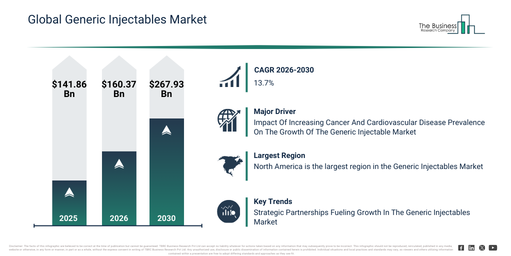
    The generic injectables market has seen substantial growth recently. Its value is anticipated to rise from $141.86 billion in 2025 to $160.37 billion in 2026, achieving a compound annual growth rate (CAGR) of 13.0%. This historical expansion is attributable to several factors, including the expiry of patents for branded injectables, a growing incidence of chronic diseases, increased healthcare spending, the rising demand for biosimilars, and advancements in sterile manufacturing technologies.

    The generic injectables market is projected to experience swift expansion over the coming years, reaching $267.93 billion by 2030, driven by a compound annual growth rate (CAGR) of 13.7%. This anticipated growth during the forecast period is fueled by several factors, including progress in biosimilar research, the development of healthcare infrastructure in emerging markets, enhanced government support for generic medications, the incorporation of AI and digital technologies into manufacturing, and an increase in collaborations among pharmaceutical firms. Key trends expected within this period encompass a rise in the adoption of generic biologics, a growing preference for more affordable injectable medications, an increase in regulatory clearances for biosimilars, the expansion of hospital and retail pharmacy networks, and a heightened emphasis on sterility and quality assurance.

    Get A Free Sample Report With In-Depth Market Insights:

    https://thebusinessresearchcompany.com/sample_request?id=48451064&type=smp&name=Generic%20Injectables%20Market%20Report%202026&utm_source=Blogs&utm_medium=Paid&utm_campaign=Oct_PR

    Generic Injectables Market Growth Catalysts And Demand Drivers

    The increasing incidence of cancer and cardiovascular ailments is anticipated to drive the expansion of the generic injectable market moving forward. Cardiovascular diseases encompass a range of conditions affecting the heart and blood vessels, while cancer is characterized by uncontrolled cellular growth and migration within the body. Generic injectables are employed in the treatment of cancer and cardiac conditions, offering comparable pharmaceutical equivalence or bioequivalence to brand-name drugs, along with improved drug availability and accessibility for more economical treatment. For example, data released by the American Cancer Society, a US-based non-profit organization, in January 2024, projected that the United States would record 2,001,140 new cancer cases and 611,720 cancer fatalities in 2024, a rise from 1,958,310 cases and 609,820 deaths in 2023. Furthermore, in September 2025, the British Heart Foundation, a UK-based charity, reported that over 7.6 million people in the UK, including more than 4 million men and over 3.6 million women, are living with cardiovascular disease. Projections indicate that this number might increase by approximately 1 million by 2030 and about 2 million by 2040, influenced by an aging population and enhanced survival rates. Hence, the growing occurrence of cancer and cardiovascular diseases is propelling the growth of the generic injectable market.

    Generic Injectables Market Segment Landscape And Growth Outlook

    The generic injectables market covered in this report is segmented –

    1) By Product Type: Monoclonal Antibodies, Cytokines, Insulin, Vaccines, Other Products

    2) By Container Type: Vials, Ampoules, Premix, Prefilled Syringes, Other Containers

    3) By Route Of Administration: Intravenous, Intramuscular, Subcutaneous, Other Routes Of Administration

    4) By Distribution Channel: Hospital Pharmacy, Retail Pharmacy, Drug Stores, Online Prescription Stores

    5) By Application: Oncology, Diabetes , Infectious Diseases , Blood Disorders , Musculoskeletal Disorders , Hormonal Disorders , Pain Management , CNS Diseases , Cardiovascular Diseases

    Subsegments:

    1) By Monoclonal Antibodies: IgG Monoclonal Antibodies, IgM Monoclonal Antibodies, Other Types Of Monoclonal Antibodies

    2) By Cytokines: Interferons, Interleukins, Tumor Necrosis Factor (TNF) Inhibitors

    3) By Insulin: Rapid-Acting Insulin, Long-Acting Insulin, Combination Insulin

    4) By Vaccines: Inactivated Vaccines, Live Attenuated Vaccines, Recombinant Vaccines

    5) By Other Products: Hormones, Peptides, Enzymes

    Generic Injectables Market Trends Shaping Long-Term Demand

    Key players in the generic injectables market are engaging in strategic alliances and collaborations to uphold their presence. These strategic partnerships are cooperative relationships established between two or more organizations to achieve specific commercial goals or objectives. For example, in December 2023, ITAAN Pharma, a Canada-based pharmaceutical company specializing in injectable medications, formed a partnership with ACIC Pharmaceuticals, also a Canada-based pharmaceutical company. Through this collaboration, both companies are combining their efforts in a joint venture to develop generic injectables for the North American market.

    Generic Injectables Market Competitive Landscape: Who Leads The Industry?

    Major companies operating in the generic injectables market are Baxter International Inc., Sanofi SA, AstraZeneca plc., Johnson & Johnson, Merck & Co. Inc., Biocon Limited, Lupin Limited, Dr. Reddy’s Laboratories Ltd., Teva Pharmaceutical Industries Ltd., Cipla Limited, Aurobindo Pharma Limited, Samsung Biologics Co. Ltd., Piramal Pharma Limited, Bristol-Myers Squibb Company, Pfizer Inc., Hikma Pharmaceuticals PLC, Sandoz International GmbH, Mylan N.V., Sun Pharmaceutical Industries Ltd., Wockhardt Limited

    View The Full Generic Injectables Market Report:

    https://thebusinessresearchcompany.com/report/generic-injectables-global-market-report?utm_source=Blogs&utm_medium=Paid&utm_campaign=Oct_PR

    Generic Injectables Market Largest Region: Which Geography Holds The Highest Market Share?

    North America was the largest region in the generic injectable market in 2025. Asia-Pacific is expected to be the fastest-growing region in the forecast period. The regions covered in the generic injectables market report are Asia-Pacific, South East Asia, Western Europe, Eastern Europe, North America, South America, Middle East, Africa.

    Reach Out To Our Team:

    The Business Research Company: https://www.thebusinessresearchcompany.com/

    Americas: +1 310-496-7795

    Asia: +44 7882 955267 & +91 8897263534

    Europe: +44 7882 955267

    Email us at: marketing@tbrc.info

    Follow us on:

    LinkedIn: https://in.linkedin.com/company/the-business-research-company

    YouTube: https://www.youtube.com/channel/UC24_fI0rV8cR5DxlCpgmyFQ

    Global Market Model: https://www.thebusinessresearchcompany.com/global-market-model
  • Generic Central Nervous System Drugs Market Growth To $132.44 Billion Creates New Opportunities Across The Industry

    Generic Central Nervous System Drugs Market Growth To $132.44 Billion Creates New Opportunities Across The Industry

    Built to provide research that’s more actionable and strategically valuable, The Business Research Company’s 2026 market reports include market attractiveness analysis, total addressable market sizing, company benchmarking matrices, interactive Excel dashboards, broader supply chain intelligence, emerging startup tracking, and in-depth product insights.

    Generic Central Nervous System Drugs Market Growth Analysis: How Will Revenue Trend Over The Forecast Period?

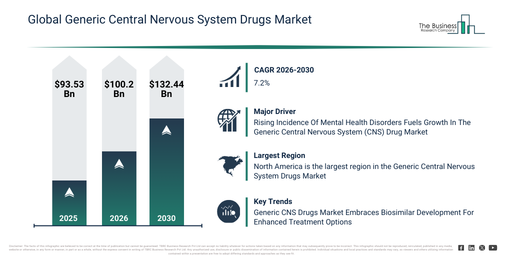
    The generic central nervous system drugs market has experienced robust expansion over recent years. This market is projected to expand from $93.53 billion in 2025 to $100.2 billion in 2026, demonstrating a compound annual growth rate (CAGR) of 7.1%. Factors contributing to its historical growth include an escalating incidence of anxiety and insomnia, the restricted availability of branded CNS drugs, increased research and development spending on generics, heightened public awareness concerning mental health, and existing cost limitations within healthcare systems.

    The market for generic central nervous system drugs is projected to experience substantial expansion in the coming years. This market is anticipated to reach $132.44 billion by 2030, exhibiting a compound annual growth rate (CAGR) of 7.2%. This projected growth is driven by factors such as the expansion of generic drug production, the uptake of digital therapeutics, the incorporation of AI into CNS drug discovery, a rising need for outpatient and home care services, and an increase in the population affected by neurodegenerative diseases. Key trends expected during this period involve a growing incidence of neurological disorders, an increase in the embrace of generic drugs, the spread of home-based and outpatient care, a heightened emphasis on mental health and stress management, and the creation of multi-mechanism CNS drugs.

    Get A Free Sample Report With In-Depth Market Insights:

    https://thebusinessresearchcompany.com/sample_request?id=89036401&type=smp&name=Generic%20Central%20Nervous%20System%20Drugs%20Market%20Report%202026&utm_source=Blogs&utm_medium=Paid&utm_campaign=Oct_PR

    Generic Central Nervous System Drugs Market Opportunity Drivers: What’s Unlocking New Revenue Potential?

    The growing prevalence of mental health disorders is anticipated to fuel the expansion of the generic central nervous system (CNS) drug market in the coming years. A mental health disorder is defined as a clinically significant impairment in an individual’s cognition, emotional regulation, or behavior, often associated with distress or functional difficulties in crucial areas. Generic central nervous system (CNS) drugs play a critical role in managing mental health disorders by offering affordable and accessible treatment options. For example, in November 2023, the National Health Service, a UK-based government department, reported that in 2023, approximately one in five individuals aged 8 to 25 years were estimated to have a probable mental disorder, affecting 20.3% of 8 to 16-year-olds, 23.3% of 17 to 19-year-olds, and 21.7% of 20 to 25-year-olds. Therefore, the increasing incidence of mental health disorders is serving as a key driver for the generic central nervous system (CNS) drug market.

    Generic Central Nervous System Drugs Market Breakdown By Product Type And Application

    The generic central nervous system drugs market covered in this report is segmented –

    1) By Type: Multiple Sclerosis (MS), Anti-Psychotic, Analgesics, Anti-Parkinson Drugs, Anesthetics, Anti-Epileptics, Anti-Depressants, Other Types

    2) By Drug Classification: Branded Drugs, Generic Drugs

    3) By Disease: Neurovascular Diseases, CNS Trauma, Mental Health, Neurodegenerative Diseases, Infectious Diseases, CNS Cancer

    4) By Route Of Administration: Oral, Intravenous, Intranasal Or Inhalation, Other Route Of Administrations

    5) By Mode Of Purchase: Over-The-counter drugs, Prescription-Based Drugs

    6) By Distribution Channel: Hospital Pharmacies, Retail Pharmacies, Other Distribution Channels

    Subsegments:

    1) By Multiple Sclerosis (MS): Interferons, Glatiramer Acetate, Sphingosine-1 Phosphate Receptor Modulators, Monoclonal Antibodies

    2) By Anti-Psychotic: Atypical Antipsychotics, Typical Antipsychotics

    3) By Analgesics: Non-Opioid Analgesics, Opioid Analgesics, Combination Analgesics

    4) By Anti-Parkinson Drugs: Dopamine Agonists, MAO-B Inhibitors, COMT Inhibitors, Anticholinergics

    5) By Anesthetics: General Anesthetics, Local Anesthetics

    6) By Anti-Epileptics: Sodium Channel Blockers, GABA Enhancers, Glutamate Modulators, Other Mechanisms

    7) By Anti-Depressants: Selective Serotonin Reuptake Inhibitors (SSRIs), Serotonin-Norepinephrine Reuptake Inhibitors (SNRIs), Tricyclic Antidepressants (TCAs), Monoamine Oxidase Inhibitors (MAOIs), Atypical Antidepressants

    8) By Other Types: Cognitive Enhancers, Anxiolytics, Sleep Aids

    Generic Central Nervous System Drugs Market Innovation Trends Shaping Future Development

    Key players within the generic central nervous system drugs market are concentrating on developing biosimilar versions for central nervous system (CNS) conditions. The emergence and authorization of biosimilars for specific biologic medications used in CNS disorders are observed as a growing pattern, providing more economical options compared to their branded counterparts. An illustration of this is Sandoz, a pharmaceutical firm based in Switzerland, which in October 2023, introduced natalizumab-sztn, notable as the inaugural biosimilar designed for treating recurrent types of multiple sclerosis (MS). This encompasses clinically isolated syndrome, relapsing-remitting MS, and active secondary progressive MS. MS is characterized as a chronic and progressive autoimmune illness that impacts the central nervous system. Most individuals afflicted by the disease experience cycles of remission and relapse, which detrimentally affects their quality of life. This therapy is not suitable for patients suffering from progressive multifocal leukoencephalopathy (PML) or those with a history of PML.

    Generic Central Nervous System Drugs Market Company Landscape And Competitive Strategy

    Major companies operating in the generic central nervous system drugs market are Biogen Inc., Johnson & Johnson, Hoffmann-La Roche Ltd, Novartis AG, UCB, Sanofi, Pfizer Inc., Merck KGaA, Sumitomo Dainippon Pharma, AbbVie, Recipharm AB, Neuraxpharm, Sun Pharmaceutical Ltd, Ranbaxy Laboratories, Merz Pharma GmbH & Co. KGaA, AstraZeneca, Apotex, Bayer, GlaxoSmithKline, Amgen, Abbott Laboratories, Janssen Pharmaceutica, Teva Canada, Accord Healthcare Inc., Acerus Pharmaceuticals, EMS Pharma, Hypermarcas, Eurofarma, Teuto Brasileiro, Biolab Farmaceutica, Cristalia, União Quimica, Boehringer Ingelheim, Eli Lilly and Company, Adcock Ingram

    View The Full Generic Central Nervous System Drugs Market Report:

    https://thebusinessresearchcompany.com/report/generic-central-nervous-system-drugs-global-market-report?utm_source=Blogs&utm_medium=Paid&utm_campaign=Oct_PR

    Generic Central Nervous System Drugs Market Regional Analysis: Which Region Leads By Revenue?

    North America was the largest region in the generic central nervous system drugs market in 2025. The regions covered in the generic central nervous system drugs market report are Asia-Pacific, South East Asia, Western Europe, Eastern Europe, North America, South America, Middle East, Africa.

    Reach Out To Our Team:

    The Business Research Company: https://www.thebusinessresearchcompany.com/

    Americas: +1 310-496-7795

    Asia: +44 7882 955267 & +91 8897263534

    Europe: +44 7882 955267

    Email us at: marketing@tbrc.info

    Follow us on:

    LinkedIn: https://in.linkedin.com/company/the-business-research-company

    YouTube: https://www.youtube.com/channel/UC24_fI0rV8cR5DxlCpgmyFQ

    Global Market Model: https://www.thebusinessresearchcompany.com/global-market-model