Category: Pharmaceuticals

  • Overview Of The Cytotoxic Drugs Market 2024: Size, Drivers, And Trends

    Overview Of The Cytotoxic Drugs Market 2024: Size, Drivers, And Trends

    The Business Research Company’s global market reports are now updated with the latest market sizing information for the year 2024 and forecasted to 2033

    According to The Business Research Company’s Cytotoxic Drugs Global Market Report 2023, the cytotoxic drugs market is expected to show promising growth in the forecast period.

    • The cytotoxic drugs market has shown robust growth in recent years.
    • It grew from $14.54 billion in 2023 to $15.35 billion in 2024, at a CAGR of 5.6%.
    • The market is projected to reach $19.21 billion by 2028, with a CAGR of 5.8%.

    Key Drivers of Market Growth

    • Rising Cancer Prevalence: Increasing global cancer cases are a significant driver.
    • Healthcare Expenditure: Growth in healthcare spending has fueled market expansion.
    • Aging Population: A growing elderly population, more susceptible to cancer, boosts demand.
    • Government Support: Availability of funding and grants aids market growth.
    • Public Awareness: Increased awareness of cancer treatments drives demand for cytotoxic drugs.

    View More On The Cytotoxic Drugs Market Report 2024 –
    https://www.thebusinessresearchcompany.com/report/cytotoxic-drugs-global-market-report

    Future Market Prospects

    • Personalized Medicine: Adoption of personalized approaches in treatment is driving market growth.
    • Specialized Centers: Growth in specialized cancer treatment centers is expanding market reach.
    • Lifestyle Changes: Changes in lifestyle contributing to higher cancer rates will propel the market.
    • Combination Therapies: Rising demand for combination therapies enhances treatment effectiveness.
    • Government Initiatives: Continued support for cancer treatment and research will support market growth.

    Emerging Trends in Cytotoxic Drugs

    • Targeted Therapies: Shift towards targeted therapies over traditional chemotherapy is a key trend.
    • Biologics and Biosimilars: Increasing use of biologics and biosimilars in cancer treatment.
    • Artificial Intelligence (AI): Integration of AI in drug discovery and development is on the rise.
    • Collaborations: Increased collaborations between biotech firms and academic institutions.

    Impact of Target Diseases on Market Growth

    • Target Diseases: Diseases like cancer, autoimmune disorders, and genetic conditions are driving market demand.
    • Increased Incidence: Factors like genetic predisposition and environmental influences contribute to the rise.
    • Cytotoxic Drugs: These drugs are critical in reducing disease incidence by targeting and inhibiting cell growth.
    • Example: In 2022, the IARC reported 20 million new cancer cases, with projections indicating a 77% increase by 2050.

    Leading Companies in the Cytotoxic Drugs Market

    • Major Players: Pfizer, Johnson & Johnson, Roche, Merck, and Novartis are key players in the market.
    • Product Innovations: Companies are focusing on advanced solutions like CAR T cell therapies.
    • Innovation Example: In March 2024, Bristol Myers Squibb received FDA approval for Breyanzi, a CD19-directed CAR T cell therapy for CLL and SLL.

    Strategic Acquisitions and Regional Insights

    • Johnson & Johnson Acquisition: Acquired Ambrx Biopharma for $2.0 billion, enhancing their oncology portfolio.
    • Regional Growth: North America was the largest market in 2023, with Asia-Pacific expected to grow the fastest during the forecast period.

    Market Segmentation

    • By Drug Type: Alkylating Agents, Antitumor Antibiotics, Antimetabolites, Plant Alkaloids, Other Drug Types.
    • By Therapy: Chemotherapy, Radiotherapy, Immunotherapy, Stem Cell Transplantation, Other Therapies.
    • By Application: Oncology, Rheumatoid Arthritis, Multiple Sclerosis, Other Applications.
    • By End User: Hospitals, Cancer Research Centers, Drug Testing Laboratories, CDMOs.

    The cytotoxic drugs market is poised for continued growth, driven by advancements in treatment approaches and increasing global demand for effective cancer therapies.

    Request A Sample Of The Global Cytotoxic Drugs Market Report 2024:
    https://www.thebusinessresearchcompany.com/sample_request?id=15781&type=smp

  • Dipeptide Peptidase 4 Inhibitors Market Forecast 2024: Forecast Market Size, Drivers And Key Segments

    Dipeptide Peptidase 4 Inhibitors Market Forecast 2024: Forecast Market Size, Drivers And Key Segments

    The Business Research Company’s global market reports are now updated with the latest market sizing information for the year 2024 and forecasted to 2033

    Market Growth Overview

    • Current Market Size:
      • The dipeptide peptidase 4 (DPP-4) inhibitors market grew from $10.73 billion in 2023 to $11.30 billion in 2024, reflecting a steady compound annual growth rate (CAGR) of 5.3%.
    • Future Outlook:
      • Projected to reach $13.93 billion by 2028, the market is expected to grow at a CAGR of 5.4%, driven by an increasing focus on effective diabetes management and personalized medicine.

    Key Drivers of Market Growth

    • Rising Prevalence of Diabetes:
      • The growing number of diabetes cases, primarily driven by sedentary lifestyles and poor dietary habits, is a major factor propelling the DPP-4 inhibitors market.
      • Example: The International Diabetes Federation estimates that diabetes cases will rise from 537 million in 2021 to 643 million by 2030, further fueling market demand.
    • Government Initiatives in Diabetes Management:
      • Government programs are playing a crucial role in expanding access to diabetes treatments and fostering innovation in the DPP-4 inhibitors market.
      • Example: The Australian National Diabetes Strategy 2021-2030 emphasizes preventing, detecting, and managing diabetes, aligning with global policies like the WHO Global Diabetes Compact.

    View More On The Dipeptide Peptidase 4 Inhibitors Market Report 2024 – https://www.thebusinessresearchcompany.com/report/dipeptide-peptidase-4-inhibitors-global-market-report

    Trends Shaping the Market

    • Collaborations and Product Approvals:
      • Pharmaceutical companies are increasingly collaborating to develop new DPP-4 inhibitors and expand their diabetes treatment portfolios.
    • Research and Development:
      • Continuous R&D efforts are leading to the approval of new DPP-4 inhibitors, providing more treatment options and improving patient outcomes.

    Market Leaders and Strategic Moves

    • Major Companies:
      • Key players in the DPP-4 inhibitors market include Merck & Co. Inc., Novartis AG, Bristol Myers Squibb, AstraZeneca Plc, and Eli Lilly and Company.
    • Strategic Acquisitions:
      • Example: In August 2023, Lupin acquired diabetes brands ONDERO and ONDERO MET from Boehringer Ingelheim to strengthen its anti-diabetes portfolio.

    Market Segmentation and Regional Insights

    • Segmentation by Type:
      • The market is segmented into various types of DPP-4 inhibitors, including Sitagliptin, Saxagliptin, Linagliptin, Alogliptin, and Vildagliptin.
    • Distribution Channels:
      • These inhibitors are distributed through hospital pharmacies, retail pharmacies, and online channels.
    • Application Areas:
      • DPP-4 inhibitors are used in managing Type 2 Diabetes, Gestational Diabetes, Metabolic Syndrome, and other related conditions.
    • Regional Trends:
      • Asia-Pacific:The largest market for DPP-4 inhibitors in 2023, with a strong focus on diabetes management.
      • Latin America:Expected to be the fastest-growing region during the forecast period, driven by increasing healthcare investments and diabetes prevalence.

    Conclusion

    The DPP-4 inhibitors market is on a strong growth trajectory, driven by rising diabetes cases, government initiatives, and continuous innovation. As the demand for effective diabetes management solutions increases, this market is expected to play a crucial role in improving global health outcomes.

    Request A Sample Of The Global Dipeptide Peptidase 4 Inhibitors Market Report 2024:
    https://www.thebusinessresearchcompany.com/sample_request?id=15791&type=smp

  • Understand How The Concierge Medicine Market Is Poised To Grow Through 2024-2033

    Understand How The Concierge Medicine Market Is Poised To Grow Through 2024-2033

    The Business Research Company’s market reports offer an in-depth analysis on the market’s growth potential, major drivers, key trends and more.

    The concierge medicine market has experienced substantial growth and is expected to continue expanding rapidly in the coming years. Here’s an analysis of the market’s current status and future trends.

    Current Market Dynamics

    • Market Size: The market grew from $18.38 billion in 2023 to $20.43 billion in 2024.
    • Growth Rate: This represents a compound annual growth rate (CAGR) of 11.2%.
    • Historical Drivers:
      • Increasing demand for personalized healthcare.
      • Physician burnout leading to a shift in healthcare models.
      • Rising healthcare costs driving demand for premium services.
      • Shift in consumer preferences toward personalized care.
      • Corporate wellness initiatives promoting concierge services.

    Read More On The Concierge Medicine Market Report 2024 –
    https://www.thebusinessresearchcompany.com/report/concierge-medicine-global-market-report

    Future Market Projections

    • Projected Growth: Expected to reach $31.39 billion by 2028.
    • Forecast CAGR: Reflects a CAGR of 11.3%.
    • Future Drivers:
      • Integration of alternative therapies into concierge services.
      • Urbanization and lifestyle changes increasing demand for personalized care.
      • Healthcare disparities leading to a demand for tailored healthcare solutions.
      • Regulatory changes promoting concierge medicine.
      • Rising health consciousness, particularly among millennials.

    Impact of Increasing Healthcare Expenditure

    • Market Growth: The rise in healthcare expenditure is driving the expansion of the concierge medicine market.
    • Healthcare Expenditure:
      • Includes costs for hospital care, physician services, medications, and other health-related services.
      • Rising due to advancements in medical technology and the prevalence of chronic diseases.
    • Concierge Medicine Role: Offers personalized, premium medical services, enhancing patient access and care.
    • Example: In Canada, total health expenditure reached $329 billion in 2021, up by $23 billion from 2020 (CIHI, November 2023).

    Technological Innovation in Concierge Medicine

    • Online Medical Directories: Companies are enhancing services by integrating comprehensive online medical directories.
      • Example: HealthLynked Corporation launched an online concierge service in March 2023, allowing patients to book doctor appointments nationwide through an extensive online directory.
      • Benefits: Streamlines appointment bookings and provides easy access to personalized healthcare services.

    Strategic Acquisitions in the Market

    • Amazon’s Acquisition of One Medical: In February 2023, Amazon acquired One Medical for $3.9 billion.
      • Purpose: To expand Amazon’s healthcare offerings and provide convenient access to medical services for employees.
      • One Medical: A US-based company in concierge medicine offering membership-based primary care designed around patient needs.

    Market Segmentation

    • By Ownership:
      • Group
      • Standalone
    • By Application:
      • Cardiology
      • Primary Care
      • Psychiatry
      • Pediatrics
      • Osteopathy
      • Neurology
      • Other Applications
    • By End User:
      • Individual
      • Corporate Organization

    Regional Insights

    • Europe: The largest region in the concierge medicine market in 2023.
    • North America: Expected to be the fastest-growing region during the forecast period.

    The concierge medicine market is on a robust growth path, driven by increasing healthcare expenditure, technological advancements, and strategic acquisitions. With the rising demand for personalized healthcare and the integration of innovative solutions, the market is poised for significant expansion in the coming years.

    Request for A Sample Of The Global Concierge Medicine Market Report:
    https://www.thebusinessresearchcompany.com/sample_request?id=15773&type=smp

  • Overview Of The Compound Camphor Ointment Market 2024-2033: Growth And Major Players Analysis

    Overview Of The Compound Camphor Ointment Market 2024-2033: Growth And Major Players Analysis

    The Business Research Company’s global market reports are now updated with the latest market sizing information for the year 2024 and forecasted to 2033

    The compound camphor ointment market has experienced robust growth in recent years and is poised for continued expansion. Here’s an overview of the market’s current status and future outlook.

    Current Market Overview

    • Market Size: The market grew from $2.47 billion in 2023 to $2.61 billion in 2024.
    • Growth Rate: This represents a compound annual growth rate (CAGR) of 5.7%.
    • Historical Drivers: Key factors driving this growth include:
      • Rising preference for topical analgesics.
      • Expanding geriatric population.
      • Increasing demand for natural remedies.

    Future Market Projections

    • Projected Growth: The market is expected to reach $3.28 billion by 2028.
    • Forecast CAGR: This reflects a CAGR of 5.9%.
    • Future Drivers:
      • Increasing prevalence of musculoskeletal disorders.
      • Growing aging population.
      • Rising healthcare expenditure.
      • Increasing preference for traditional medicine.

    View More On The Compound Camphor Ointment Market Report 2024 –
    https://www.thebusinessresearchcompany.com/report/compound-camphor-ointment-global-market-report

    Rising Prevalence of Musculoskeletal Disorders

    • Impact on Market: The growing number of musculoskeletal disorders is expected to drive market growth.
    • Disorder Statistics:
      • Approximately 1.71 billion people globally suffer from musculoskeletal conditions (WHO, July 2022).
      • The number of musculoskeletal disorders in the US is projected to increase by 115% from 2020 to 2050 (IHME, October 2023).
    • Role of Camphor Ointment: Used for pain and inflammation in joints and muscles, camphor ointment’s analgesic and anti-inflammatory properties make it effective for treating these conditions.

    Innovation and Advancements

    • New Product Launches: Companies are innovating with new topical pain relief formulations.
      • Example: AleveX by Aleve, launched in July 2021, includes menthol and camphor in various formats like lotion, spray, and roll-on.
    • Focus on Efficacy: These innovations aim to enhance pain relief, improve patient comfort, and address specific needs.

    Strategic Acquisitions

    • Kobayashi Pharmaceutical’s Acquisition: In October 2023, Kobayashi Pharmaceutical acquired Focus Consumer Healthcare LLC, a key player in the camphor ointment market.
    • Strategic Impact: This acquisition highlights TrueNorth’s role in facilitating growth and value creation in the healthcare sector.

    Market Segmentation

    • By Formulation:
      • Internal Use
      • Topical Use
    • By Distribution:
      • Retail Pharmacies
      • Hospital Pharmacies
      • Online Pharmacies
    • By Application:
      • Pain Relief
      • Anti-Itching
      • Fungal Infection
      • Other Applications

    Regional Insights

    • North America:
      • Current Status: Largest region in the compound camphor ointment market as of 2023.
      • Future Growth: Expected to be the fastest-growing region in the forecast period.

    The compound camphor ointment market is set for significant growth, driven by increasing prevalence of musculoskeletal disorders, advancements in product formulations, and strategic acquisitions. The market’s robust expansion reflects ongoing innovation and a rising demand for effective topical treatments.

    Request A Sample Of The Global Compound Camphor Ointment Market Report 2024:
    https://www.thebusinessresearchcompany.com/sample_request?id=15771&type=smp

  • In-Vitro Lung Model Market Forecast 2024: Forecast Market Size, Drivers And Key Segments

    In-Vitro Lung Model Market Forecast 2024: Forecast Market Size, Drivers And Key Segments

    The Business Research Company’s global market reports are now updated with the latest market sizing information for the year 2024 and forecasted to 2033

    The in vitro lung model market has experienced substantial growth in recent years, driven by various factors and technological advancements. Here’s an overview of the market size, growth drivers, trends, and major players shaping the future of this industry.

    Market Size and Growth Rates

    • 2023-2024 Growth: The in vitro lung model market is expected to grow from $0.37 billion in 2023 to $0.44 billion in 2024, at a compound annual growth rate (CAGR) of 21%.
    • 2024-2028 Projections: The market is forecasted to reach $0.96 billion by 2028, continuing its robust growth with a CAGR of 21.1%.

    Key Drivers of Market Growth

    • Growing Prevalence of Respiratory Diseases: The rising incidence of respiratory illnesses is fueling demand for advanced research models.
    • Personalized and Precision Medicine: Increased focus on personalized and precision medicine approaches has highlighted the need for accurate in vitro lung models.
    • Drug Development and Preclinical Testing: The growing necessity for drug testing and the development of new treatments are driving the market.
    • Environmental Health Awareness: Greater awareness of environmental health risks and respiratory toxicology is boosting demand for in vitro models.

    View More On The In-Vitro Lung Model Market Report 2024 – https://www.thebusinessresearchcompany.com/report/in-vitro-lung-model-global-market-report

    Technological Trends Shaping the Market

    • 3D Printing and Organ-on-Chip Technologies: Advancements in these areas are enhancing the physiological relevance of lung models, allowing for more accurate simulation of human lung function.
    • Artificial Intelligence (AI) and Machine Learning: These technologies are being integrated to improve predictive analytics and model accuracy.
    • Expansion Beyond Pharmaceuticals: There’s an increasing use of in vitro lung models in areas like environmental research and consumer product testing.

    Increasing Clinical Studies Propel Market Growth

    • Role of Clinical Trials: In vitro lung models are becoming essential in clinical trials, providing a controlled environment to study the effects of substances on lung tissue. This is vital for drug testing, toxicity assessments, and understanding disease mechanisms.
    • Rising Number of Trials: For example, as of January 2024, there were 477,230 clinical trials registered globally on ClinicalTrials.gov, up from 437,508 in 2022. This growth in clinical studies significantly boosts the in vitro lung model market.

    Major Companies and Market Leaders

    • Key Players: Leading companies in the market include Thermo Fisher Scientific Inc., Lonza Group AG, PerkinElmer Inc., Charles River Laboratories International Inc., and Epithelix. These companies are at the forefront of innovation, developing new models and expanding applications.

    Advancements in 3D Respiratory Tissue Models

    • Development of 3D Models: Major companies are focusing on creating more complex 3D respiratory tissue models that mimic the lung’s structure and function more closely.
    • Case Study – MatTek Corporation: In April 2023, MatTek introduced EpiNasal, a 3D respiratory tissue model made from human nasal epithelial cells. This model provides a realistic platform for studying pharmaceuticals, chemicals, and pathogens, expanding the company’s portfolio and market influence.

    Strategic Acquisitions to Drive Innovation

    • CELLINK Acquires MatTek Corporation: In March 2021, CELLINK acquired MatTek Corporation to enhance its capabilities in developing ethical alternative test models, reducing the reliance on animal testing. This acquisition aligns with CELLINK’s goal of revolutionizing medicine through accurate and ethical testing models.

    Market Segmentation

    • By Type: The market is divided into two-dimensional (2D) and three-dimensional (3D) models.
    • By Application: Applications include drug discovery and toxicology studies, physiological research, 3D model development, and other applications.
    • By End-User: End-users range from academic research institutes to pharmaceutical and biotechnology companies.

    Regional Insights

    • North America: Was the largest region in the in vitro lung model market in 2023.
    • Asia-Pacific: Expected to be the fastest-growing region during the forecast period, driven by increasing healthcare investments and research activities.

    The in vitro lung model market is on a growth trajectory, propelled by technological advancements, increased research activities, and the rising demand for ethical and precise testing models. With continued innovation and expanding applications, the market is set to play a crucial role in advancing respiratory health research and development.

    Request A Sample Of The Global In-Vitro Lung Model Market Report 2024:
    https://www.thebusinessresearchcompany.com/sample_request?id=15837&type=smp

  • How Is The Influenza Treatment Market Expected To Grow Through 2024-2033

    How Is The Influenza Treatment Market Expected To Grow Through 2024-2033

    The Business Research Company’s global market reports are now updated with the latest market sizing information for the year 2024 and forecasted to 2033

    According to The Business Research Company’s Influenza Treatment Global Market Report 2024, the influenza treatment market is expected to show promising growth in the forecast period.

    The influenza treatment market has experienced steady growth in recent years, with significant expansion expected in the coming years. Here’s a look at the key factors driving this growth and the major trends shaping the market.

    Current Market Size and Growth

    • 2023 Market Size: The influenza treatment market was valued at $6.34 billion in 2023.
    • 2024 Projection: It is projected to grow to $6.60 billion in 2024, reflecting a compound annual growth rate (CAGR) of 4.2%.
    • Growth Drivers: The market’s expansion is fueled by a rise in influenza cases, increased government funding for research, public awareness campaigns promoting vaccination, global influenza surveillance systems, and improved healthcare facilities.

    Future Market Outlook

    • 2028 Projection: The market is expected to grow to $7.83 billion by 2028, with a CAGR of 4.4%.
    • Contributing Factors: This growth is anticipated due to the introduction of new antiviral drugs, expanded vaccination programs, an increasing elderly population, and advancements in healthcare infrastructure and treatment options.

    View More On The Influenza Treatment Market Report 2024 – https://www.thebusinessresearchcompany.com/report/influenza-treatment-global-market-report

    Rising Prevalence of Contagious Respirato
    ry Illnesses

    • Influenza and Other Illnesses: Contagious respiratory illnesses like influenza, RSV, and measles are on the rise, driving demand for treatments.
    • Market Impact: The increase in these illnesses, due to factors like higher population densities, inadequate healthcare infrastructure, and international travel, is boosting the influenza treatment market.
    • CDC Data: For example, in September 2023, the Centers for Disease Control and Prevention (CDC) reported a significant rise in RSV hospitalizations, highlighting the need for effective influenza and respiratory illness treatments.

    Major Companies and Innovations

    • Leading Companies: Some key players in the influenza treatment market include Pfizer Inc., F. Hoffmann-La Roche Ltd., Merck & Co. Inc., AbbVie Inc., Bristol-Myers Squibb Company, AstraZeneca plc, and GlaxoSmithKline Plc.
    • Single-Dose Oral Medicines: Companies are focusing on expanding their product offerings with innovative treatments like single-dose oral medicines, which enhance patient compliance and improve treatment outcomes.
      • Genentech’s Xofluza: In August 2022, Genentech Inc. received FDA approval for Xofluza, the first single-dose oral medicine for treating uncomplicated influenza in children.

    Strategic Acquisitions and Market Expansion

    • Pfizer and ReViral: In June 2022, Pfizer Inc. acquired ReViral, a UK-based biotechnology company specializing in therapies for viral diseases. This acquisition aims to expand Pfizer’s RSV treatment portfolio with innovative therapies like Sisunatovir, an orally administered RSV inhibitor.

    Market Segmentation and Regional Insights

    • Product Type: The market includes products like Peramivir, Zanamivir, Oseltamivir Phosphate, Baloxavir Marboxil, and other treatments.
    • Route of Administration: Treatments are administered orally or through other routes, depending on the product.
    • Distribution Channels: These include retail pharmacies, hospital pharmacies, and other distribution channels.
    • Regional Performance: North America was the largest region in the influenza treatment market in 2023. The Asia-Pacific region is expected to be the fastest-growing market in the forecast period, driven by improvements in healthcare infrastructure and increased awareness of influenza treatments.

    Conclusion
    The influenza treatment market is poised for significant growth in the coming years, driven by rising rates of respiratory illnesses, innovations in treatment options, and strategic acquisitions by major pharmaceutical companies. With continued advancements in healthcare and increasing awareness of the importance of influenza prevention and treatment, the market is set to expand steadily, offering new opportunities for stakeholders across the globe.

    Request A Sample Of The Global Influenza Treatment Market Report 2024:
    https://www.thebusinessresearchcompany.com/sample_request?id=15832&type=smp

  • Key Trends And Drivers In The In-Vitro Transcription Templates Market 2024

    Key Trends And Drivers In The In-Vitro Transcription Templates Market 2024

    The Business Research Company’s market reports offer an in-depth analysis on the market’s growth potential, major drivers, key trends and more.

    Exponential Market Growth

    • Market Expansion: The in-vitro transcription templates market has been growing rapidly. From 2023 to 2024, it is projected to increase from $0.82 billion to $1.01 billion, at a compound annual growth rate (CAGR) of 23.4%.
    • Historical Growth Drivers: This growth is attributed to several factors:
      • Rise in chronic diseases
      • Increased investments in healthcare and pharmaceutical R&D
      • Advances in gene therapy technologies
      • Collaborations and partnerships within the sector

    Future Market Projections

    • Continued Growth: The market is expected to reach $2.35 billion by 2028, with a CAGR of 23.5%.
    • Key Factors Driving Future Growth:
      • Advancements in biotechnology
      • Increased focus on R&D activities
      • Rising use of in-vitro transcription templates
      • Growing demand for early disease diagnosis
      • Increased need for mRNA-based vaccines

    Read More On The In-Vitro Transcription Templates Market Report 2024 – https://www.thebusinessresearchcompany.com/report/in-vitro-transcription-templates-global-market-report

    Trends Shaping the Market

    • Technological Innovations: Significant trends anticipated in the market include:
      • Developments in RNA synthesis technologies
      • Technological advancements in enzymatic synthesis techniques
      • Integration of automation and digitalization in production processes

    Gene Therapy Advancements: A Key Market Driver

    • Focus on Gene Therapy: The increasing emphasis on gene therapy is propelling the growth of the in-vitro transcription templates market.
      • Gene therapy modifies genes to treat or prevent diseases, and advancements in this field, such as CRISPR, have heightened its focus.
      • In-vitro transcription templates provide RNA molecules essential for mRNA-based therapies, enabling the treatment of genetic disorders.
    • Regulatory Support: The FDA’s approval of 36 gene therapies in 2024, with over 500 in development, highlights the potential and demand for in-vitro transcription templates in gene therapy.

    Major Players and Technological Innovations

    • Leading Companies: Key companies in the market include Thermo Fisher Scientific, Danaher Corporation, Merck KGaA, Eurofins Genomics, and others.
    • Innovative Services: Companies are developing self-amplifying RNA synthesis services to enhance RNA-based therapies.
      • Example: GenScript Biotech Corporation launched a self-amplifying RNA (saRNA) synthesis service in May 2024, aiming to reduce production costs and improve patient outcomes by enhancing protein expression with minimal RNA input.

    Strategic Partnerships and Collaborations

    • Lonza and Touchlight Collaboration: In September 2022, Lonza partnered with Touchlight to integrate innovative DNA technology into mRNA development and manufacturing.
      • Technology Integration: Touchlight’s doggybone DNA (dbDNA) technology offers faster, scalable, and purer alternatives to traditional plasmid DNA (pDNA) methods, enhancing Lonza’s mRNA manufacturing capabilities.

    Market Segmentation

    • Treatment Types: The market is segmented by treatments, including vaccines and therapeutics.
    • Research Stages: It is divided into exploratory and clinical research stages.
    • Disease Applications: Applications cover various diseases, such as cancer, infectious diseases, lifestyle diseases, and genetic disorders.
    • End Users: Key end users include pharmaceutical and biotechnology companies, CROs, CMOs, academics, and research institutions.

    Regional Insights

    • Current Market Leaders: North America was the largest market in 2023.
    • Future Growth Hotspots: Asia-Pacific is expected to be the fastest-growing region in the forecast period, driven by rising investments and advancements in biotechnology.

    The in-vitro transcription templates market is poised for significant growth, driven by technological advancements, strategic partnerships, and an increasing focus on gene therapy and mRNA-based solutions.

    Request for A Sample Of The Global In-Vitro Transcription Templates Market Report:
    https://www.thebusinessresearchcompany.com/sample_request?id=15838&type=smp

  • 5 Key Insights On The Lipid Regulators Market 2024

    5 Key Insights On The Lipid Regulators Market 2024

    The Business Research Company’s global market reports are now updated with the latest market sizing information for the year 2024 and forecasted to 2033

    As per The Business Research Company’s Lipid Regulators Global Market Report 2024, the lipid regulators market is expected to show significant growth in the forecast period.

    • Market Size and Growth: The lipid regulators market has shown robust growth in recent years. It expanded from $6.83 billion in 2023 to $7.29 billion in 2024, registering a compound annual growth rate (CAGR) of 6.8%.
    • Drivers of Growth: This growth is attributed to several factors, including a rise in lifestyle diseases, an aging population, increased awareness of lipid regulators, higher healthcare expenditure, and a stronger focus on preventive healthcare.

    Future Prospects of the Lipid Regulators Market

    • Projected Market Expansion: The market is expected to continue its upward trajectory, growing to $9.55 billion by 2028 at a CAGR of 7%.
    • Key Growth Factors: Future growth will be driven by the rising prevalence of cardiovascular diseases, increasing cases of atherosclerosis among the aging population, higher obesity rates, the spread of metabolic syndrome, and a growing emphasis on personalized medicine.

    Trends Shaping the Lipid Regulators Market

    • Drug Development and Digital Health: Advancements in drug development, integration of digital health solutions, and the adoption of value-based pricing models are major trends expected to shape the market.
    • Increasing OTC Demand: There is also an increasing demand for over-the-counter (OTC) lipid regulators, reflecting a shift towards patient-centered medication and self-care.

    View More On The Lipid Regulators Market Report 2024 – https://www.thebusinessresearchcompany.com/report/lipid-regulators-global-market-report

    Impact of Ischemic Heart Disease on the Lipid Regulators Market

    • Rising Prevalence: The increasing prevalence of ischemic heart disease (IHD) is a significant factor driving the market for lipid regulators. IHD, also known as coronary artery disease (CAD), is characterized by reduced blood flow to the heart due to narrowed or blocked coronary arteries.
    • Health Statistics: Unhealthy lifestyles, smoking, obesity, hypertension, and diabetes are contributing to the rise in IHD. In Australia, between 2020 and 2021, there were 160,000 hospitalizations for IHD, causing 17,300 deaths in 2021.
    • Role of Lipid Regulators: Lipid regulators play a crucial role in managing IHD by lowering LDL cholesterol, raising HDL cholesterol, stabilizing arterial plaques, reducing inflammation, and enhancing endothelial function, ultimately reducing the risk and severity of ischemic events.

    Innovations in Lipid-Lowering Drugs

    • Advanced Drug Development: Leading companies in the lipid regulators market are focusing on developing advanced oral lipid-lowering drugs to manage high LDL cholesterol in patients with heart diseases.
    • Case Study – Bempedoic Acid: Sun Pharmaceutical Industries Limited launched Bempedoic Acid Brillo in India in May 2022. This oral drug offers an innovative therapy for high LDL cholesterol, particularly in individuals with cardiac conditions. It functions by inhibiting an enzyme involved in cholesterol synthesis and activating a regulatory enzyme, making it a convenient once-daily medication.

    Collaborations for Cholesterol Management Solutions

    • Strategic Partnerships: In April 2023, Luye Pharma Group partnered with Duopharma Marketing Sdn Bhd to introduce an innovative cholesterol management solution. This collaboration combines Duopharma Biotech’s expertise in cardiovascular health with Luye Pharma’s advanced fermentation technology.
    • Product Innovation: The partnership focuses on developing a traditional Chinese medicine using unique red yeast rice, effectively managing cholesterol levels.

    Market Segmentation and Regional Insights

    • Segmentation: The lipid regulators market is segmented by type, indication, administration, and application. Types include lipid regulators and various other therapeutic agents. Indications cover conditions like hypercholesterolemia and coronary artery disease, while administration routes include oral and injectable forms. Applications span pharmaceuticals, vaccines, scientific research, and more.
    • Regional Overview: In 2023, North America was the largest market for lipid regulators. However, Asia-Pacific is expected to be the fastest-growing region in the coming years, driven by increasing health awareness and rising incidences of lifestyle-related diseases.

    The lipid regulators market is poised for substantial growth, driven by a combination of demographic trends, increasing disease prevalence, and ongoing innovations in drug development and personalized medicine.

    Request A Sample Of The Global Lipid Regulators Market Report 2024:
    https://www.thebusinessresearchcompany.com/sample_request?id=15848&type=smp

  • Kinase Inhibitors Market Growth Analysis Till 2033 By The Business Research Company

    Kinase Inhibitors Market Growth Analysis Till 2033 By The Business Research Company

    The Business Research Company’s market reports offer an in-depth analysis on the market’s growth potential, major drivers, key trends and more.

    The kinase inhibitors market has been experiencing robust growth and is poised for further expansion in the coming years. Here’s a closer look at the factors driving this market, key trends, and recent developments shaping its future.

    Market Overview and Growth Drivers

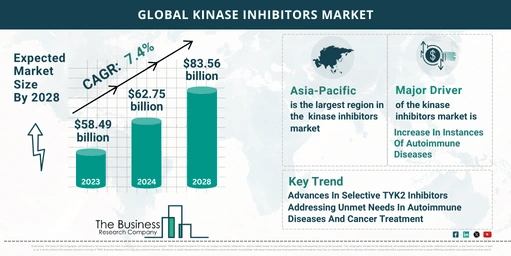
    • Strong Market Growth: The kinase inhibitors market grew from $58.49 billion in 2023 to $62.75 billion in 2024, with a compound annual growth rate (CAGR) of 7.3%.
    • Historical Growth Factors: This growth can be attributed to several factors:
      • Increasing prevalence of cancer.
      • Advancements in targeted therapy.
      • Rising healthcare expenditure.
      • Approval of new kinase inhibitors.
      • Growing adoption of personalized medicine.

    Future Market Projections

    • Continued Market Expansion: The kinase inhibitors market is expected to grow to $83.56 billion by 2028 at a CAGR of 7.4%.
    • Key Growth Drivers: Several factors are expected to propel market growth in the forecast period:
      • Ongoing research and development activities.
      • Introduction of novel kinase inhibitors.
      • Expanding applications beyond oncology.
      • Increasing investment in biotechnology.
      • Growing awareness about precision medicine.

    Read More On The Kinase Inhibitors Market Report 2024 – https://www.thebusinessresearchcompany.com/report/kinase-inhibitors-global-market-report

    Trends Shaping the Future of Kinase Inhibitors

    • Expansion of Precision Oncology Treatments: Increasing focus on developing therapies tailored to individual genetic profiles.
    • Development of Combination Therapies: Combining different kinase inhibitors to enhance treatment efficacy and overcome resistance.
    • Focus on Rare and Hard-to-Treat Cancers: Addressing unmet needs in treating challenging cancer types.
    • Advancements in Biomarker-Driven Drug Development: Utilizing biomarkers to identify patients who are most likely to benefit from specific kinase inhibitors.
    • Adoption of Next-Generation Sequencing Technologies: Leveraging advanced sequencing technologies for better understanding of cancer genetics and more precise treatment strategies.

    Rising Autoimmune Diseases Drive Market Growth

    • Increasing Cases of Autoimmune Diseases: Autoimmune diseases are a significant driver of growth in the kinase inhibitors market.
      • These diseases involve abnormal immune responses, where the immune system attacks healthy cells.
      • The prevalence of autoimmune diseases is increasing due to various factors, including lifestyle changes, genetic predisposition, and the rise in chronic diseases like obesity and diabetes.
    • Role of Kinase Inhibitors: Kinase inhibitors help manage autoimmune diseases by modulating the immune system and reducing inflammation.
      • For example, they are used to treat conditions like psoriatic and rheumatoid arthritis.

    Advances in TYK2 Inhibitors for Autoimmune Diseases and Cancer

    • Development of Selective TYK2 Inhibitors: Major companies are developing selective tyrosine kinase 2 (TYK2) inhibitors to address unmet needs in autoimmune and inflammatory diseases.
      • These inhibitors modulate immune responses and reduce inflammation, which can enhance the body’s ability to target and destroy cancer cells.
    • Notable Example: In September 2022, Bristol-Myers Squibb received approval for Sotyktu (deucravacitinib) from the U.S. FDA.
      • Sotyktu is an oral selective TYK2 inhibitor for treating moderate-to-severe plaque psoriasis in adults.

    Strategic Moves in the Kinase Inhibitors Market

    • Bristol Myers Squibb’s Acquisition of Turning Point Therapeutics: In August 2022, Bristol Myers Squibb acquired Turning Point Therapeutics Inc. for $4.1 billion.
      • This acquisition expanded Bristol Myers Squibb’s oncology portfolio, adding a late-stage kinase inhibitor candidate in repotrectinib.
      • The deal strengthens Bristol Myers Squibb’s position in treating ROS1-positive non-small cell lung cancer (NSCLC) and other solid tumors.

    Market Segmentation

    • By Type: Tyrosine Kinase Inhibitors, Multikinase Inhibitors, mTOR Kinase Inhibitors, Other Types.
    • By Route of Administration: Oral, Parenteral, Other Routes.
    • By Application: Oncology, Inflammatory Diseases.
    • By Distribution Channel: Hospital Pharmacy, Online Pharmacy, Retail Pharmacy.
    • By End User: Hospitals, Homecare, Specialty Clinics, Other End-Users.

    Regional Insights

    • Largest Market: Asia-Pacific was the largest region in the kinase inhibitors market in 2023.
    • Fastest-Growing Region: Asia-Pacific is expected to be the fastest-growing region during the forecast period, driven by rising healthcare investments, increasing prevalence of chronic diseases, and expanding access to advanced therapies.

    The kinase inhibitors market is on a strong growth trajectory, driven by advancements in targeted therapies and increasing demand for precision medicine. With ongoing innovations and strategic acquisitions, the market is set to expand further, offering new opportunities for stakeholders in the healthcare sector.

    Request for A Sample Of The Global Kinase Inhibitors Market Report:
    https://www.thebusinessresearchcompany.com/sample_request?id=15841&type=smp

  • What’s The Growth Forecast For In Vitro Diagnostics Enzymes Market Through 2024-2033?

    What’s The Growth Forecast For In Vitro Diagnostics Enzymes Market Through 2024-2033?

    The Business Research Company’s global market reports provide comprehensive analysis on the various markets in 27 industries across 60 geographies.

    Market Growth and Drivers

    • Strong Recent Growth: The in vitro diagnostics enzymes market has seen significant growth recently, expanding from $1.98 billion in 2023 to $2.14 billion in 2024, reflecting a compound annual growth rate (CAGR) of 7.9%.
    • Key Drivers:
      • Rising Disease Incidence: Increase in diseases such as cancer and HIV/AIDS has heightened the need for diagnostic testing.
      • Aging Population: Growing need for monitoring age-related diseases is contributing to market growth.
      • Lifestyle Changes: Changes in diet and physical activity are influencing health, increasing demand for diagnostics.
      • Regulatory Approvals: More diagnostic assays and products are being approved, driving market expansion.
      • Healthcare Spending: Globally, healthcare expenditures are rising, which supports market growth.

    View More On The In Vitro Diagnostics Enzymes Market Report 2024 – https://www.thebusinessresearchcompany.com/report/in-vitro-diagnostics-enzymes-global-market-report

    Future Market Outlook

    • Continued Growth Expected: The market is projected to grow to $2.94 billion by 2028, with a CAGR of 8.2%.
    • Factors Fueling Future Growth:
      • Personalized Healthcare: Increased focus on personalized treatment is boosting demand for advanced diagnostic tools.
      • Improving Healthcare Infrastructure: Better healthcare facilities in emerging markets are increasing the adoption of in vitro diagnostics.
      • Rising Disposable Incomes: As incomes rise, especially in emerging markets, more individuals can afford advanced healthcare services.
      • Collaborations and Innovation: Partnerships between companies and research institutions are fostering innovation.
      • Demand for Rapid Diagnostics: There is an increasing demand for quick and easy diagnostic solutions.

    Technological Advancements and Trends

    • Adoption of Microfluidics: New technologies, like microfluidics, are revolutionizing diagnostic testing by enabling precise, rapid analysis with small sample volumes.
    • Novel Enzyme Substrates and Detection Methods: Development of new substrates and detection techniques is enhancing the sensitivity and specificity of diagnostic tests.
    • Point-of-Care Platforms: Enzyme-based amplification techniques integrated into point-of-care platforms are making diagnostics more accessible and faster.
    • Integration with CRISPR and Liquid Biopsies: Advanced methods like CRISPR-based technologies and liquid biopsies are being combined with enzyme assays for better diagnostics.
    • Advanced Data Analytics: Utilization of data analytics and bioinformatics is improving the accuracy and efficiency of diagnostics.

    Rising Cancer Prevalence Drives Market Growth

    • Increasing Cancer Cases: The rise in cancer prevalence is a significant driver for the market. Cancer diagnostics rely heavily on enzymes for accurate and early detection.
    • Role of IVD Enzymes: Enzymes in in vitro diagnostics are crucial across the cancer care continuum, from detection and diagnosis to treatment monitoring.
    • Future Projections: According to the World Health Organization (WHO), cancer cases are expected to rise by 77% by 2050, which will further drive the market for diagnostics enzymes.

    Key Market Players and Innovations

    • Leading Companies: Major players include F. Hoffmann-La Roche Ltd., Thermo Fisher Scientific Inc., Danaher Corporation, and Merck KGaA, among others.
    • Innovative Products: Companies are focusing on developing innovative diagnostic tools to stay competitive. For instance, the launch of autoimmune disorder detection kits by NeoDx Biotech Labs Pvt Ltd. in September 2023 demonstrates the market’s focus on innovation.
    • Recent Acquisitions: Strategic acquisitions, like the purchase of Meridian Bioscience Inc. by SD Biosensor Inc. and SJL Partners LLC in February 2023, show a trend towards consolidation and expansion in the market.

    Market Segmentation

    • By Enzyme Type: The market is categorized into Proteases, Polymerase and Transcriptase, Ribonuclease, and Other Enzyme Types.
    • By Disease Type: Segments include Infectious Disease, Diabetes, Oncology, Cardiology, Nephrology, Autoimmune Diseases, and Other Disease Types.
    • By Technology: Technologies used in the market are Histology Assays, Molecular Diagnostics, Clinical Chemistry, among others.
    • By End Use: End users are classified into Pharma and Biotech, Hospital and Diagnostic Labs, Contract Research Organizations (CROs), and Academic Labs.

    Regional Insights

    • North America: Dominated the market in 2023, driven by advanced healthcare infrastructure and high healthcare spending.
    • Asia-Pacific: Expected to be the fastest-growing region, due to improving healthcare infrastructure and rising disposable incomes.

    The in vitro diagnostics enzymes market is poised for robust growth, driven by technological advancements, rising disease prevalence, and increasing demand for personalized and rapid diagnostic solutions. As innovations continue to emerge, the market will likely see further expansion and diversification.

    Request A Sample Of The Global In Vitro Diagnostics Enzymes Market Report 2024:
    https://www.thebusinessresearchcompany.com/sample_request?id=15830&type=smp