Category: Pharmaceuticals

  • Nervous System APIs Market Forecast to Reach $334.11 Billion by 2030

    Nervous System APIs Market Forecast to Reach $334.11 Billion by 2030

    The Business Research Company’s 2026 market reports feature advanced enhancements such as market attractiveness analysis, total addressable market evaluation, company benchmarking matrices, interactive Excel dashboards, expanded supply chain intelligence, emerging startup coverage, and detailed product insights, delivering more actionable and strategically valuable research.

    What Market Value Expansion Is Expected For The Nervous System Active Pharmaceutical Ingredients Market Over The Forecast Period?

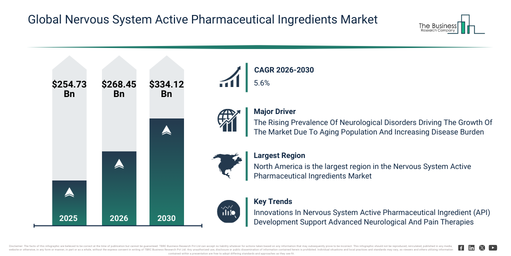
    The nervous system active pharmaceutical ingredients market size has seen significant expansion in recent years. It is anticipated to increase from $254.73 billion in 2025 to $268.45 billion in 2026, exhibiting a compound annual growth rate (CAGR) of 5.4%. This historical growth can be attributed to factors such as the rising incidence of neurological disorders, increased utilization of psychiatric drugs, growth in the manufacturing of generic APIs, a surge in CNS drug approvals, and the expansion of contract API production.

    The market for active pharmaceutical ingredients used in the nervous system is projected to experience substantial expansion over the upcoming years. It is anticipated to reach $334.12 billion in 2030 at a compound annual growth rate (CAGR) of 5.6%. This anticipated growth during the forecast period is primarily driven by factors such as the increasing prevalence of neurodegenerative diseases, the broadening availability of specialized CNS therapies, the escalating need for high-purity APIs, a rise in outsourced API production, and the development of biologic neuro drugs. Key developments expected within this period encompass the creation of high-potency neurology APIs, the synthesis of intricate CNS molecules, the emergence of peptide-based neuro APIs, innovative controlled-release neuro API formulations, and collaborative partnerships with specialized neuro API CDMOs.

    Download A Free Sample Report For Comprehensive Market Insights:

    https://www.thebusinessresearchcompany.com/sample.aspx?id=33240&type=smp

    What Are The Main Drivers Accelerating The Growth Of The Nervous System Active Pharmaceutical Ingredients Market?

    The escalating incidence of neurological disorders is anticipated to propel the future growth of the nervous system active pharmaceutical ingredients market. These conditions encompass a broad spectrum of medical issues that disrupt the normal functioning of the central and peripheral nervous system, often resulting in symptoms such as seizures, paralysis, memory loss, or coordination difficulties. The rise in neurological disorders is primarily due to the aging global population, as older individuals are more susceptible to neurodegenerative conditions like Alzheimer’s and Parkinson’s disease because nerve cells naturally decline and become more vulnerable to damage over time. Nervous system active pharmaceutical ingredients assist in managing neurological disorders by modulating neural signaling and protecting nerve cells, thereby slowing disease progression and enhancing symptom control in conditions such as epilepsy, multiple sclerosis, and various neurodegenerative diseases. An illustration of this trend is provided by the Australian Institute of Health and Welfare, an Australia-based government agency, which reported in December 2025 that approximately 425,000 Australians were living with dementia in 2024. This figure is projected to increase 2.5 times, reaching over 1.1 million by 2065, a total that includes approximately 662,000 women and 390,000 men. Hence, the escalating prevalence of neurological disorders is a key driver for the expansion of the nervous system active pharmaceutical ingredients market.

    How Is The Nervous System Active Pharmaceutical Ingredients Market Examined Through Segment Analysis?

    The nervous system active pharmaceutical ingredients market covered in this report is segmented –

    1) By Product: Cytokines; Vaccines; Fusion Proteins; Therapeutic Enzymes

    2) By Expression System: Mammalian; Microbial Yeast

    3) By Application: Diabetes; Cardiovascular Diseases; Oncology; Neurological Disorder

    4) By End User: Pharmaceutical Companies; Biopharmaceutical Companies; Contract Development And Manufacturing Organizations; Research And Development Laboratories; Generic Drug Manufacturers

    Subsegments:

    1) By Cytokines: Interleukin Cytokines; Interferon Cytokines; Tumor Necrosis Factor Cytokines; Growth Factor Cytokines; Chemokine Cytokines

    2) By Vaccines: Inactivated Vaccines; Live Attenuated Vaccines; Subunit Vaccines; Recombinant Vaccines; Conjugate Vaccines

    3) By Fusion Proteins: Antibody Fusion Proteins; Receptor Fusion Proteins; Enzyme Fusion Proteins; Ligand Fusion Proteins; Multifunctional Fusion Proteins

    4) By Therapeutic Enzymes: Replacement Enzymes; Digestive Enzymes; Metabolic Enzymes; Detoxifying Enzymes; Neuroprotective Enzymes

    Which Trends Are Contributing To Changes In The Nervous System Active Pharmaceutical Ingredients Market?

    Companies operating within the nervous system active pharmaceutical ingredients market are increasingly focusing on developing inventive solutions, such as cannabinoid-based active pharmaceutical ingredients, to enhance the efficacy, safety, and targeted administration of treatments for neurological disorders. These cannabinoid-based active pharmaceutical ingredients (APIs) are highly purified natural or synthetic compounds that deliver therapeutic effects by engaging the body’s endocannabinoid system to manage pain, epilepsy, nausea, and various neurological conditions. For instance, in March 2024, Brains Bioceutical Corp., a Canada-based pharmaceutical company, launched solid D9 Tetrahydrocannabinol (THC), a cannabinoid-based active pharmaceutical ingredient engineered to advance pharmaceutical research and drug development for neurological and pain management applications. This solid D9-THC API features a crystalline structure that improves storage stability and dosing accuracy compared to traditional cannabinoid extracts, thus facilitating its use in research and formulation development across therapeutic areas where CNS-active agents are critical. The development of this product underscores the industry’s shift towards more sophisticated API formats that can support precise, scalable pharmaceutical manufacturing.

    Which Industry Players Are Present In The Nervous System Active Pharmaceutical Ingredients Market?

    Major companies operating in the nervous system active pharmaceutical ingredients market are F. Hoffmann-La Roche Ltd., Pfizer Inc., Novartis AG., Thermo Fisher Scientific Inc., GSK plc, Eli Lilly and Company, Boehringer Ingelheim International GmbH, Teva Pharmaceutical Industries Ltd., Cipla Limited, Zydus Lifesciences Limited, Biocon Ltd., Siegfried Holding AG., Alkem Laboratories Ltd., Almac Group, Torrent Pharmaceuticals Ltd., Granules India Ltd., Wockhardt Ltd., Neuland Laboratories Ltd., Hetero Labs Ltd., MSN Laboratories Pvt. Ltd., and Piramal Pharma.

    Access The Complete Nervous System Active Pharmaceutical Ingredients Market Report:

    https://www.thebusinessresearchcompany.com/report/nervous-system-active-pharmaceutical-ingredients-market-report

    Which Region Accounts For The Highest Share Of The Nervous System Active Pharmaceutical Ingredients Market?

    North America was the largest region in the nervous system active pharmaceutical ingredients market in 2025. Asia-Pacific is expected to be the fastest-growing region in the forecast period The regions covered in the nervous system active pharmaceutical ingredients market report are Asia-Pacific, South East Asia, Western Europe, Eastern Europe, North America, South America, Middle East, Africa.

    Access a Customized Nervous System Active Pharmaceutical Ingredients Market Report for Deeper Competitive Insights

    Get in touch with us:

    The Business Research Company: https://www.thebusinessresearchcompany.com/

    Americas: +1 310-496-7795

    Asia: +44 7882 955267 & +91 8897263534

    Europe: +44 7882 955267

    Email us at: marketing@tbrc.info

    Follow us on:

    LinkedIn: https://in.linkedin.com/company/the-business-research-company

    YouTube: https://www.youtube.com/channel/UC24_fI0rV8cR5DxlCpgmyFQ

    Global Market Model: https://www.thebusinessresearchcompany.com/global-market-model
  • Monogenetic Disease Therapy Market Expanding Across Multiple Healthcare Segments

    Monogenetic Disease Therapy Market Expanding Across Multiple Healthcare Segments

    The Business Research Company’s 2026 market reports feature advanced enhancements such as market attractiveness analysis, total addressable market evaluation, company benchmarking matrices, interactive Excel dashboards, expanded supply chain intelligence, emerging startup coverage, and detailed product insights, delivering more actionable and strategically valuable research.

    How Is The Monogenetic Disease Therapy Market’s Market Value Anticipated To Evolve From 2026 To 2030?

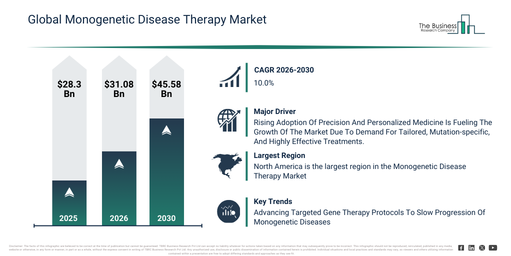
    The monogenetic disease therapy market has demonstrated strong expansion in recent years. It is anticipated to grow from $28.3 billion in 2025 to $31.08 billion in 2026, achieving a compound annual growth rate (CAGR) of 9.8%. This historical development can be attributed to advancements in human genome research, initial gene therapy trials, an increase in rare disease diagnosis, incentives for orphan drugs, and improvements in viral vectors.

    The monogenetic disease therapy market is projected to experience substantial growth in the upcoming years. It will grow to $45.58 billion in 2030 at a compound annual growth rate (CAGR) of 10.0%. This anticipated expansion over the forecast period is driven by factors such as advancements in gene editing platforms, an expanding pipeline for rare diseases, increased genetic screening rates, greater funding for personalized therapies, and broader regulatory approvals. Significant trends during this period are expected to include single gene targeted therapies, gene replacement treatment programs, RNA-based genetic treatments, rare disease gene correction, and precision genetic drug design.

    Download A Free Sample Report For Comprehensive Market Insights:

    https://www.thebusinessresearchcompany.com/sample.aspx?id=33229&type=smp

    Which Drivers Are Advancing The Monogenetic Disease Therapy Market Growth?

    The expanding acceptance of precision and personalized medicine is anticipated to fuel the progression of the monogenetic disease therapy market in the coming years. This medical strategy involves customizing disease prevention, diagnosis, and treatment according to an individual’s unique genetic, molecular, or lifestyle characteristics, with the goal of maximizing therapeutic efficacy and minimizing adverse effects. The increasing prominence of precision and personalized medicine arises from healthcare providers and patients seeking bespoke treatments that enhance therapeutic efficacy, reduce adverse reactions, and address individual genetic, molecular, or lifestyle attributes. Monogenetic disease therapy aligns with precision and personalized medicine by directly targeting a patient’s specific genetic mutation, thereby enabling highly customized and effective interventions. For example, in February 2024, the Personalized Medicine Coalition, a US-based hospital and health care organization, reported that the FDA approved 16 new personalized treatments for rare disease patients in 2023, which is an increase from six in 2022. Thus, the growing adoption of precision and personalized medicine is propelling the development of the monogenetic disease therapy market.

    How Is Segment Classification Applied In The Monogenetic Disease Therapy Market?

    The monogenetic disease therapy market covered in this report is segmented –

    1) By Therapy Type: Pharmacological; Surgical; Blood Transfusion; Gene Therapies; Other Therapy Types

    2) By Inheritance Pattern: Autosomal; Chromosomal

    3) By Application: Cystic Fibrosis; Sickle Cell Anemia; Phenylketonuria; Other Applications

    4) By Distribution Channel: Hospital Pharmacy; Retail Pharmacy; Online Pharmacy

    5) By End-Users: Clinics; Hospitals; Diagnostic Centres; Home Healthcare; Other End-Users

    Subsegments:

    1) By Pharmacological: Small Molecule Drugs; Enzyme Replacement Therapies; Protein Replacement Therapies; Immunomodulatory Drugs; Targeted Molecular Therapies

    2) By Surgical: Organ Transplant Procedures; Tissue Repair Surgeries; Gene Editing Assisted Surgeries; Minimally Invasive Surgeries; Corrective Surgical Interventions

    3) By Blood Transfusion: Red Blood Cell Transfusions; Platelet Transfusions; Plasma Transfusions; Stem Cell Infusions; Autologous Blood Transfusions

    4) By Gene Therapies: Ex Vivo Gene Therapy; In Vivo Gene Therapy; Viral Vector Based Gene Therapy; Non Viral Vector Gene Therapy; Genome Editing Based Therapy

    5) By Other Therapy Types: Cell Based Therapies; RNA Based Therapies; Protein Based Therapies; Combination Therapies; Experimental Therapies

    What Trends Are Affecting The Growth Of The Monogenetic Disease Therapy Market?

    Major companies within the monogenetic disease therapy market are concentrating on developing innovative gene therapies, such as Duchenne muscular dystrophy (DMD)–focused protocols, with the aim of slowing disease progression and improving long-term patient outcomes. These Duchenne muscular dystrophy–targeted protocols are structured clinical or therapeutic guidelines specifically designed to diagnose, monitor, and manage patients with Duchenne muscular dystrophy, emphasizing the deceleration of disease progression, enhancement of muscle function, and management of associated complications. For instance, in January 2026, Sarepta Therapeutics Inc, a US-based biopharmaceutical company, launched Elevidys for ambulatory patients aged four and older with DMD. This launch reported up to a 73% reduction in the rate of functional decline over three years when compared with an external control group, underscoring the significance of early intervention in altering the disease course and improving quality of life.

    Which Key Players Are Active In The Monogenetic Disease Therapy Market?

    Major companies operating in the monogenetic disease therapy market are Pfizer Inc., Sanofi S.A., Astellas Pharma Inc., Vertex Pharmaceuticals Incorporated, Sarepta Therapeutics Inc., Ptc therapeutics inc., Crispr therapeutics ag, CRISPR Therapeutics, Voyager Therapeutics Inc., Oxford Biomedica plc, REGENXBIO INC., Arcturus therapeutics holdings inc., Editas medicine Inc., American Gene Technologies, UniQure NV., MeiraGTx Limited, Prime medicine, Abeona therapeutics Inc., Blue Cross Blue Shield Association, Rocket pharmaceuticals Inc.

    Access The Complete Monogenetic Disease Therapy Market Report:

    https://www.thebusinessresearchcompany.com/report/monogenetic-disease-therapy-market-report

    Which Region Leads The Monogenetic Disease Therapy Market By Size?

    North America was the largest region in the monogenetic disease therapy market in 2025. Asia-Pacific is expected to be the fastest-growing region in the forecast period. The regions covered in the monogenetic disease therapy market report are Asia-Pacific, South East Asia, Western Europe, Eastern Europe, North America, South America, Middle East, Africa.

    Access a Customized Monogenetic Disease Therapy Market Report for Deeper Competitive Insights

    Get in touch with us:

    The Business Research Company: https://www.thebusinessresearchcompany.com/

    Americas: +1 310-496-7795

    Asia: +44 7882 955267 & +91 8897263534

    Europe: +44 7882 955267

    Email us at: marketing@tbrc.info

    Follow us on:

    LinkedIn: https://in.linkedin.com/company/the-business-research-company

    YouTube: https://www.youtube.com/channel/UC24_fI0rV8cR5DxlCpgmyFQ

    Global Market Model: https://www.thebusinessresearchcompany.com/global-market-model
  • MAPK Inhibitors Market Developments and Emerging Opportunities Through 2030

    MAPK Inhibitors Market Developments and Emerging Opportunities Through 2030

    The Business Research Company’s 2026 market reports feature advanced enhancements such as market attractiveness analysis, total addressable market evaluation, company benchmarking matrices, interactive Excel dashboards, expanded supply chain intelligence, emerging startup coverage, and detailed product insights, delivering more actionable and strategically valuable research.

    How Does The Forecasted Market Size Of The Mitogen-Activated Protein Kinase Inhibitors Market Compare Between 2026 And 2030?

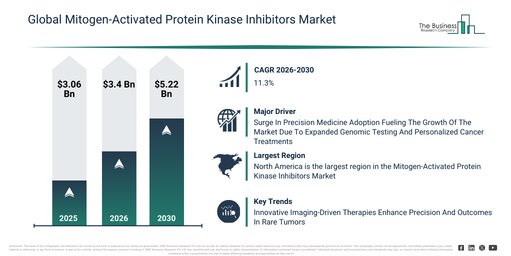
    The mitogen-activated protein kinase inhibitors market has seen substantial expansion in recent years. It will grow from $3.06 billion in 2025 to $3.4 billion in 2026 at a compound annual growth rate (CAGR) of 11.1%. This historical growth can be attributed to the rise of targeted cancer therapy, the discovery of MAPK pathway mutations, early BRAF and RAS research, the growth in precision oncology, and initial MEK drug approvals.

    The mitogen-activated protein kinase inhibitors market is projected to experience swift expansion over the coming years. It is anticipated to reach a valuation of $5.22 billion by 2030, demonstrating a compound annual growth rate (CAGR) of 11.3%. This projected growth is driven by factors such as the rise in combination oncology trials, increased biomarker testing rates, the evolution of personalized cancer care, wider approvals for specific indications, and a growing pipeline of oncology drugs. Key trends anticipated during this period encompass selective MEK targeted therapies, combined targeted oncology regimens, biomarker-guided MEK treatments, oral targeted cancer inhibitors, and the development of next-generation MEK molecules.

    Download A Free Sample Report For Comprehensive Market Insights:

    https://www.thebusinessresearchcompany.com/sample.aspx?id=33222&type=smp

    What Major Growth Factors Are Impacting The Mitogen-Activated Protein Kinase Inhibitors Market?

    The future expansion of the mitogen-activated protein kinase kinase (MEK) inhibitors market is anticipated to be driven by the increasing integration of precision medicine. This healthcare strategy involves tailoring disease prevention, diagnosis, and treatment according to an individual’s unique genetic profile, lifestyle choices, and environmental influences. The increased uptake of precision medicine stems from its enhanced treatment efficacy, as personalized therapies based on a patient’s genetic and molecular makeup result in superior clinical outcomes and minimize the need for trial-and-error approaches in treatment. MEK inhibitors support precision medicine by specifically targeting particular genetic mutations within the MAPK/ERK pathway, thereby facilitating customized cancer treatments that boost effectiveness and lessen harm to healthy cells. For example, the National Health Service, a UK-based government body, reported that in February 2025, its NHS Genomic Medicine Service had conducted over 810,000 genomic tests throughout England in 2024, representing an 8% increase over 2023. These tests are crucial for early diagnosis, patient stratification, and personalized treatment, which are fundamental elements of precision medicine. Consequently, the expanding implementation of precision medicine is propelling the development of the mitogen-activated protein kinase kinase (MEK) inhibitors market.

    Which Segment-Based Categories Are Covered In The Mitogen-Activated Protein Kinase Inhibitors Market?

    The mitogen-activated protein kinase inhibitors market covered in this report is segmented –

    1) By Product Type: Allosteric Mitogen Activated Protein Kinase Kinase Inhibitors; Adenosine Triphosphate Competitive Mitogen Activated Protein Kinase Kinase Inhibitors

    2) By Target: Mitogen Activated Protein Kinase Kinase 1; Mitogen Activated Protein Kinase Kinase 2

    3) By Route Of Administration: Oral; Injectable

    4) By Application: Non Small Cell Lung Cancer; Metastatic Melanoma; Kirsten Rat Sarcoma Viral Oncogene Homolog And Neuroblastoma RAS Viral Oncogene Homolog Mutated Tumors; Thyroid Carcinoma; Lung Carcinoma; Other Applications

    5) By Distribution Channel: Hospital Pharmacy; Retail Pharmacy; Online Pharmacy

    Subsegments:

    1) By Allosteric Mitogen Activated Protein Kinase Kinase Inhibitors: First Generation Allosteric Inhibitors; Second Generation Allosteric Inhibitors; Highly Selective Allosteric Inhibitors; Dual Pathway Allosteric Inhibitors; Orally Active Allosteric Inhibitors

    2) By Adenosine Triphosphate Competitive Mitogen Activated Protein Kinase Kinase Inhibitors: First Generation Competitive Inhibitors; Second Generation Competitive Inhibitors; Highly Potent Competitive Inhibitors; Broad Spectrum Competitive Inhibitors; Targeted Competitive Inhibitors

    Which Trends Are Shaping The Mitogen-Activated Protein Kinase Inhibitors Market Landscape?

    Major companies operating in the mitogen-activated protein kinase kinase (MEK) inhibitors market are focusing on establishing effectiveness through volumetric MRI with central review. This initiative aims to refine treatment accuracy, optimize patient outcomes, and expedite regulatory approvals for uncommon and challenging-to-treat tumors. Efficacy based on volumetric MRI with central review involves evaluating tumor response by precisely measuring 3D MRI-derived tumor volumes, with assessments independently verified by a centralized expert panel to ensure accuracy and consistency. For instance, in February 2025, SpringWorks Therapeutics Inc., a US-based biopharmaceutical company, introduced Gomekli (mirdametinib), an orally administered MEK inhibitor sanctioned by the U.S. Food and Drug Administration (FDA) for the management of adult and pediatric patients aged 2 years and older who have neurofibromatosis type 1 (NF1)-associated symptomatic plexiform neurofibromas (PN). Gomekli operates by specifically inhibiting MEK enzymes involved in the MAPK signaling cascade, leading to diminished tumor growth and symptomatic relief in a rare genetic disorder context where surgical alternatives are often restricted, and it enhances treatment availability through both capsule and dispersible tablet formulations, addressing patient groups with swallowing difficulties.

    Who Are The Prominent Players Across The Mitogen-Activated Protein Kinase Inhibitors Market?

    Major companies operating in the mitogen-activated protein kinase inhibitors market are ShanghAI Fosun Pharmaceutical (Group) Co. Ltd., F. Hoffmann-La Roche AG, Pfizer Inc., Bayer AG, Novartis AG, AstraZeneca PLC, GlaxoSmithKline plc, Takeda Pharmaceutical Company Limited, Merck KGaA, Boehringer Ingelheim International GmbH, Ono Pharmaceutical Co. Ltd., Exelixis Inc., Laboratoires Pierre Fabre S.A., Day One Biopharmaceuticals Inc., CStone Pharmaceuticals Co. Ltd., Chia TAI Tianqing Pharmaceutical Group Co. Ltd., Immuneering Corporation, Atriva Therapeutics GmbH, ShanghAI Kechow Pharmaceutical Co. Ltd., NFlection Therapeutics Inc., and Verastem Inc.

    Access The Complete Mitogen-Activated Protein Kinase Inhibitors Market Report:

    https://www.thebusinessresearchcompany.com/report/mitogen-activated-protein-kinase-inhibitors-market-report

    What Is The Largest Regional Market In The Mitogen-Activated Protein Kinase Inhibitors Market?

    North America was the largest region in the mitogen-activated protein kinase kinase (MEK) inhibitors market in 2025. Asia-Pacific is expected to be the fastest-growing region in the forecast period. The regions covered in the mitogen-activated protein kinase inhibitors market report are Asia-Pacific, South East Asia, Western Europe, Eastern Europe, North America, South America, Middle East, Africa.

    Access a Customized Mitogen-Activated Protein Kinase Inhibitors Market Report for Deeper Competitive Insights

    Get in touch with us:

    The Business Research Company: https://www.thebusinessresearchcompany.com/

    Americas: +1 310-496-7795

    Asia: +44 7882 955267 & +91 8897263534

    Europe: +44 7882 955267

    Email us at: marketing@tbrc.info

    Follow us on:

    LinkedIn: https://in.linkedin.com/company/the-business-research-company

    YouTube: https://www.youtube.com/channel/UC24_fI0rV8cR5DxlCpgmyFQ

    Global Market Model: https://www.thebusinessresearchcompany.com/global-market-model
  • mRNA Manufacturing Services Market Set for Long-Term Expansion Through 2035

    mRNA Manufacturing Services Market Set for Long-Term Expansion Through 2035

    The Business Research Company’s 2026 market reports feature advanced enhancements such as market attractiveness analysis, total addressable market evaluation, company benchmarking matrices, interactive Excel dashboards, expanded supply chain intelligence, emerging startup coverage, and detailed product insights, delivering more actionable and strategically valuable research.

    What Is The Expected Market Size Of The Messenger Ribonucleic Acid (MRNA) Manufacturing Service Market In 2026 And How Much Will It Reach By 2030?

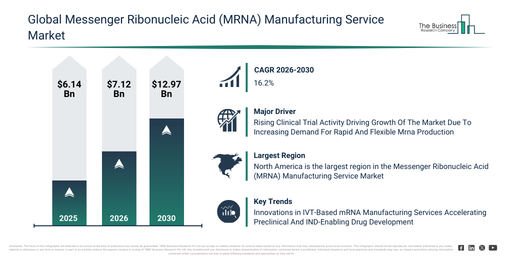
    The market for messenger ribonucleic acid (mrna) manufacturing services has experienced significant expansion recently. This market is projected to expand from $6.14 billion in 2025 to reach $7.12 billion by 2026, at a compound annual growth rate (CAGR) of 15.9%. Historically, this expansion can be ascribed to several factors, including the increasing research into mrna therapeutics, urgent demand for vaccine manufacturing, insufficient internal mrna production capabilities, the proliferation of CDMO collaborations, and the broadening of biotechnology pipelines.

    The market for messenger ribonucleic acid (mrna) manufacturing services is anticipated to experience significant expansion in the coming years. This market is projected to reach $12.97 billion by 2030, exhibiting a compound annual growth rate (CAGR) of 16.2%. Factors contributing to this projected growth include a rise in mRNA therapy trials, an expanding demand for contract manufacturing, advancements in personalized medicine, increased outsourcing by biotechnology companies, and the scaling up of commercial mRNA products. Key trends anticipated during the forecast period involve integrated mRNA process development services, large-scale in vitro transcription production, comprehensive LNP encapsulation services, swift technology transfer programs, and GMP-grade mRNA batch manufacturing.

    Download A Free Sample Report For Comprehensive Market Insights:

    https://www.thebusinessresearchcompany.com/sample.aspx?id=33216&type=smp

    What Core Drivers Are Transforming The Messenger Ribonucleic Acid (MRNA) Manufacturing Service Market?

    The increased clinical trial activity is anticipated to fuel the expansion of the messenger ribonucleic acid (mRNA) manufacturing service market moving forward. Clinical trial activity encompasses all processes involved in conducting and managing clinical studies to assess medical interventions in humans. This activity is on the rise due to the growing adoption of digital and decentralized trial models, which enable faster patient recruitment, remote monitoring, and more efficient data collection across broader populations. Messenger ribonucleic acid (mRNA) manufacturing services support clinical trial activity by ensuring the rapid and flexible production of mRNA-based therapies, facilitating timely supply for multiple trial phases and accelerating drug development. For instance, in December 2024, as reported by the Association of the British Pharmaceutical Industry (ABPI), a UK-based trade association, the number of industry clinical trials initiated in the UK rose to 426 in 2023, from 411 in 2022. Thus, the escalating clinical trial activity is propelling the growth of the messenger ribonucleic acid (mRNA) manufacturing service market.

    How Does Segment Analysis Break Down The Messenger Ribonucleic Acid (MRNA) Manufacturing Service Market Structure?

    The messenger ribonucleic acid (mrna) manufacturing service market covered in this report is segmented –

    1) By Service Type: Process Development; Analytical Testing; Manufacturing; Fill-Finish; Other Service Types

    2) By Scale of Operation: Research And Preclinical Scale; Clinical Scale; Commercial Scale

    3) By Application: Vaccines; Therapeutics; Research; Other Applications

    4) By End-User: Pharmaceutical And Biotechnology Companies; Academic And Research Institutes; Other End-Users

    Subsegments:

    1) By Process Development: Template Design And Optimization; In Vitro Transcription Process Design; Formulation Development; Process Scale-Up And Technology Transfer; Process Validation Support

    2) By Analytical Testing: Identity And Purity Testing; Potency And Functional Assays; Impurity And Contaminant Analysis; Stability And Shelf Life Studies; Quality Control Release Testing

    3) By Manufacturing: Plasmid Deoxyribonucleic Acid Production; In Vitro Transcription Manufacturing; Enzymatic Capping And Tailoring; Purification And Concentration; Large-Scale Batch Production

    4) By Fill-Finish: Aseptic Filling Services; Vial And Syringe Filling; Lyophilization Services; Labeling And Packaging; Cold Chain Handling And Storage

    5) By Other Service Types: Regulatory Support Services; Quality Assurance And Documentation; Supply Chain And Logistics Support; Technology Consulting Services; Custom Manufacturing Solutions

    What Trends Are Influencing The Future Of The Messenger Ribonucleic Acid (MRNA) Manufacturing Service Market?

    Major companies operating in the messenger ribonucleic acid (mRNA) manufacturing service market are increasingly focused on developing advanced solutions, such as in vitro transcription (IVT), to accelerate the production of high-quality, clinical-grade mRNA essential for vaccines and personalized therapies. In vitro transcription (IVT) refers to a laboratory method for synthesizing messenger RNA (mRNA) from a DNA template using RNA polymerase enzymes, enabling the creation of mRNA outside of living cells for research, therapeutic, or vaccine purposes. For example, in May 2025, GenScript Biotech Corporation, a China-based biotechnology company, introduced a GMP-like mRNA manufacturing service designed to support preclinical studies and IND-enabling research. This solution provides highly pure, scalable in vitro transcription (IVT) processes with strict control over critical quality attributes, including capping efficiency, poly(A) tail length, and impurity profiles. It facilitates a rapid transition from preclinical to clinical stages by ensuring consistent batch-to-batch production, offering flexible customization for various mRNA constructs, and reducing development timelines. Additionally, the GMP-like framework enhances regulatory readiness through improved traceability, standardized workflows, and comprehensive quality documentation, helping developers mitigate risks in later-stage manufacturing and accelerate overall clinical progress.

    Which Organizations Are Operating Within The Messenger Ribonucleic Acid (MRNA) Manufacturing Service Market?

    Major companies operating in the messenger ribonucleic acid (mrna) manufacturing service market are Thermo Fisher Scientific Inc., Merck KGaA, FUJIFILM Biotechnologies, Evonik Industries AG, Lonza Group AG, Charles River Laboratories International Inc., Samsung Biologics Co. Ltd., WuXi Biologics Inc., Recipharm AB, Curia Global Inc., Emergent BioSolutions Inc., AGC Biologics Inc., Corden Pharma International GmbH, Rentschler Biopharma SE, GenScript ProBio, ST Pharm Co. Ltd., etherna Immunotherapies NV, BIOMAY AG., Porton Advanced Solutions Ltd., Wacker Biotech GmbH.

    Access The Complete Messenger Ribonucleic Acid (MRNA) Manufacturing Service Market Report:

    https://www.thebusinessresearchcompany.com/report/messenger-ribonucleic-acid-mrna-manufacturing-service-market-report

    Which Region Holds The Largest Share In The Messenger Ribonucleic Acid (MRNA) Manufacturing Service Market?

    North America was the largest region in the mRNA manufacturing service market in 2025. Asia-Pacific is expected to be the fastest-growing region in the forecast period. The regions covered in the messenger ribonucleic acid (mrna) manufacturing service market report are Asia-Pacific, South East Asia, Western Europe, Eastern Europe, North America, South America, Middle East, Africa.

    Access a Customized Messenger Ribonucleic Acid (MRNA) Manufacturing Service Market Report for Deeper Competitive Insights

    Get in touch with us:

    The Business Research Company: https://www.thebusinessresearchcompany.com/

    Americas: +1 310-496-7795

    Asia: +44 7882 955267 & +91 8897263534

    Europe: +44 7882 955267

    Email us at: marketing@tbrc.info

    Follow us on:

    LinkedIn: https://in.linkedin.com/company/the-business-research-company

    YouTube: https://www.youtube.com/channel/UC24_fI0rV8cR5DxlCpgmyFQ

    Global Market Model: https://www.thebusinessresearchcompany.com/global-market-model
  • Next-Generation mRNA Vaccine Platforms Driving Innovation in Global Markets

    Next-Generation mRNA Vaccine Platforms Driving Innovation in Global Markets

    The Business Research Company’s 2026 market reports feature advanced enhancements such as market attractiveness analysis, total addressable market evaluation, company benchmarking matrices, interactive Excel dashboards, expanded supply chain intelligence, emerging startup coverage, and detailed product insights, delivering more actionable and strategically valuable research.

    What Market Size Is Forecasted For The Messenger Ribonucleic Acid (mRNA) And Next-Generation Vaccine Platforms Market By 2030 Based On Its 2026 Value?

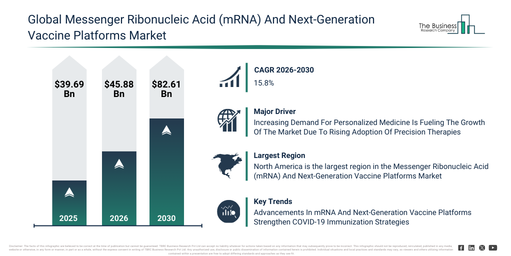
    The messenger ribonucleic acid (mrna) and next-generation vaccine platforms market has witnessed swift growth recently. It is projected to increase from $39.69 billion in 2025 to $45.88 billion in 2026, at a compound annual growth rate (CAGR) of 15.6%. The expansion observed in the past can be attributed to breakthroughs in COVID-19 vaccines, preceding viral vector research, global pandemic readiness programs, developments in genomic sequencing, and early trials of nucleic acid vaccines.

    The messenger ribonucleic acid (mrna) and next-generation vaccine platforms market is anticipated to undergo rapid expansion in the coming years. It is projected to reach $82.61 billion in 2030, demonstrating a compound annual growth rate (CAGR) of 15.8%. This anticipated growth can be attributed to factors such as the rise of personalized cancer vaccines, the expansion of infectious disease pipelines, quicker platform-based approvals, increased funding in biotechnology, and broader use of therapeutic vaccines. Key trends during the forecast period are expected to include self-amplifying mRNA platforms, optimized lipid nanoparticle delivery, modular vaccine platform designs, rapid adaptation to pathogen targets, and advanced adjuvant systems.

    Download A Free Sample Report For Comprehensive Market Insights:

    https://www.thebusinessresearchcompany.com/sample.aspx?id=33215&type=smp

    Which Growth Factors Are Strengthening The Messenger Ribonucleic Acid (mRNA) And Next-Generation Vaccine Platforms Market Landscape?

    The rising need for personalized medicine is anticipated to fuel the expansion of the messenger ribonucleic acid (mRNA) and next-generation vaccine platforms market moving ahead. This medical strategy involves customizing disease prevention and treatment approaches according to an individual’s genetic makeup, molecular traits, and unique health circumstances. The surge in personalized medicine demand stems from the increasing occurrence of complex and persistent illnesses, which necessitate precise and patient-focused therapeutic interventions to enhance treatment effectiveness and safety results. Messenger ribonucleic acid (mRNA) and next-generation vaccine platforms facilitate personalized medicine by allowing for swift, adaptable, and highly targeted vaccine and treatment designs, which can be adapted to specific genetic and disease profiles, thereby supporting precision healthcare. For example, in February 2024, data from the Personalized Medicine Coalition, a US-based hospital and healthcare body, showed that in 2023, the FDA sanctioned 16 novel personalized therapies for rare disease patients, an increase from six in 2022. Consequently, the escalating demand for personalized medicine is propelling the expansion of the messenger ribonucleic acid (mRNA) and next-generation vaccine platforms market.

    What Segment Types Are Included In The Messenger Ribonucleic Acid (mRNA) And Next-Generation Vaccine Platforms Market Analysis?

    The messenger ribonucleic acid (mrna) and next-generation vaccine platforms market covered in this report is segmented –

    1) By Vaccine Type: Messenger Ribonucleic Acid Vaccines; Deoxyribonucleic Acid (DNA) Vaccines; Viral Vector Vaccines; Protein Subunit Vaccines; Peptide Vaccines; Other Vaccine Types

    2) By Technology or Platform: Lipid Nanoparticle (LNP) Delivery; Self-Amplifying Messenger Ribonucleic Acid; Circular Messenger Ribonucleic Acid; Replicon or Non-replicating Platforms; Viral Vector Technologies

    3) By Disease Indication: Infectious Diseases; Oncology; Rare Diseases; Other Disease Indications

    4) By End User: Pharmaceutical and Biotechnology Companies; Contract Research Organizations (CROs); Academic and Research Institutes; Hospitals and Clinics

    Subsegments:

    1) By Messenger Ribonucleic Acid Vaccines: Conventional Messenger Ribonucleic Acid Vaccines; Self Amplifying Messenger Ribonucleic Acid Vaccines; Modified Messenger Ribonucleic Acid Vaccines; Circular Messenger Ribonucleic Acid Vaccines

    2) By Deoxyribonucleic Acid Vaccines: Plasmid Deoxyribonucleic Acid Vaccines; Viral Assisted Deoxyribonucleic Acid Vaccines; Synthetic Deoxyribonucleic Acid Vaccines; Gene Based Deoxyribonucleic Acid Vaccines

    3) By Viral Vector Vaccines: Adenovirus Based Viral Vector Vaccines; Lentivirus Based Viral Vector Vaccines; Poxvirus Based Viral Vector Vaccines; Measles Virus Based Viral Vector Vaccines

    4) By Protein Subunit Vaccines: Recombinant Protein Vaccines; Virus Like Particle Vaccines; Toxoid Based Protein Vaccines; Polysaccharide Conjugate Vaccines

    5) By Peptide Vaccines: Synthetic Peptide Vaccines; Personalized Peptide Vaccines; Multi Epitope Peptide Vaccines; Long Peptide Vaccines

    6) By Other Vaccine Types: Protein Subunit Vaccines, Virus-Like Particle Vaccines, Inactivated Vaccines, Live Attenuated Vaccines, Recombinant Vector Vaccines

    Which Trends Are Contributing To Changes In The Messenger Ribonucleic Acid (mRNA) And Next-Generation Vaccine Platforms Market?

    Leading enterprises within the mRNA and next-generation vaccine platforms market are concentrating on creating advanced mRNA-based COVID-19 vaccines, with the goal of strengthening immune persistence, expanding protection against variants, and elevating overall vaccine efficacy. These advanced mRNA vaccines utilize enhanced mRNA engineering and delivery methods, offering more extensive and lasting protection against current and developing SARS-CoV-2 variants. They also boost safety, stability, and ease of storage, alongside enabling swift adjustments to evolving viruses. An illustration of this is Moderna Inc., a US-based biotechnology company, launching mNEXSPIKE in June 2025. This next-generation COVID-19 vaccine is engineered to bolster defenses against both prevalent and newly appearing SARS-CoV-2 variants, featuring an updated spike protein antigen that more accurately aligns with recent variants. Its objective is to provide superior immune durability and efficacy, thereby assisting current COVID-19 prevention initiatives and future booster approaches.

    Who Are The Businesses Driving Activity In The Messenger Ribonucleic Acid (mRNA) And Next-Generation Vaccine Platforms Market?

    Major companies operating in the messenger ribonucleic acid (mrna) and next-generation vaccine platforms market are Pfizer Inc., Sanofi S.A., AstraZeneca PLC, Thermo Fisher Scientific Inc., GSK plc, Takeda Pharmaceutical Company Limited, Daiichi Sankyo Company Limited, Moderna Inc., BioNTech SE, Novavax Inc., Walvax Biotechnology Co Ltd, Arcturus Therapeutics Inc, Gennova Biopharmaceuticals Ltd, Vaxxas Pty Ltd, Vaxart Inc, Ethris GmbH, The Biologicals and Vaccines Institute of Southern Africa Proprietary Limited, eTheRNA Immunotherapies NV, Stemirna Therapeutics Co Ltd, Primrose Bio Inc, Acuitas Therapeutics Inc, and Incepta Vaccine Ltd.

    Access The Complete Messenger Ribonucleic Acid (mRNA) And Next-Generation Vaccine Platforms Market Report:

    https://www.thebusinessresearchcompany.com/report/messenger-ribonucleic-acid-mrna-and-next-generation-vaccine-platforms-market-report

    Which Region Is The Dominant Market In The Messenger Ribonucleic Acid (mRNA) And Next-Generation Vaccine Platforms Market?

    North America was the largest region in the messenger ribonucleic acid (mRNA) and next-generation vaccine platforms market in 2025. Asia-Pacific is expected to be the fastest-growing region in the forecast period. The regions covered in the messenger ribonucleic acid (mrna) and next-generation vaccine platforms market report are Asia-Pacific, South East Asia, Western Europe, Eastern Europe, North America, South America, Middle East, Africa.

    Access a Customized Messenger Ribonucleic Acid (mRNA) And Next-Generation Vaccine Platforms Market Report for Deeper Competitive Insights

    Get in touch with us:

    The Business Research Company: https://www.thebusinessresearchcompany.com/

    Americas: +1 310-496-7795

    Asia: +44 7882 955267 & +91 8897263534

    Europe: +44 7882 955267

    Email us at: marketing@tbrc.info

    Follow us on:

    LinkedIn: https://in.linkedin.com/company/the-business-research-company

    YouTube: https://www.youtube.com/channel/UC24_fI0rV8cR5DxlCpgmyFQ

    Global Market Model: https://www.thebusinessresearchcompany.com/global-market-model
  • mRNA Vaccine CDMO Market Insights and Growth Patterns Through 2035

    mRNA Vaccine CDMO Market Insights and Growth Patterns Through 2035

    The Business Research Company’s 2026 market reports feature advanced enhancements such as market attractiveness analysis, total addressable market evaluation, company benchmarking matrices, interactive Excel dashboards, expanded supply chain intelligence, emerging startup coverage, and detailed product insights, delivering more actionable and strategically valuable research.

    How Is The Market Value Of The Messenger Ribo Nucleic Acid (mRNA) Vaccine Contract Development And Manufacturing Organization (CDMO) Market Projected To Expand During 2026–2030?

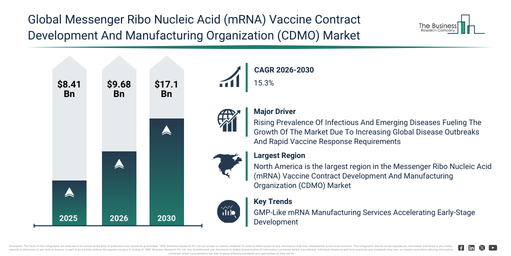
    The messenger ribo nucleic acid (mrna) vaccine contract development and manufacturing organization (cdmo) market size has experienced rapid growth in recent years. It is anticipated to increase from $8.41 billion in 2025 to $9.68 billion in 2026, exhibiting a compound annual growth rate (CAGR) of 15.1%. This historical expansion can be attributed to elements such as COVID-19 vaccine programs, the rise of biotech startups, constrained in-house manufacturing capacity, a surge in contract manufacturing, and the quick validation of mRNA platforms.

    The market for messenger ribonucleic acid (mRNA) vaccine contract development and manufacturing organizations (CDMOs) is projected to experience substantial expansion over the upcoming years. This market is forecast to reach $17.1 billion by 2030, exhibiting a compound annual growth rate (CAGR) of 15.3%. Factors contributing to this anticipated growth include the development of mRNA cancer vaccines, the rise of personalized vaccines, an increase in CDMO collaborations, the need for swift manufacturing at scale, and a growing number of mRNA therapies in development. Key trends anticipated during this period encompass services related to lipid nanoparticle formulation, accelerated mRNA process scaling, outsourced integrated fill-finish operations, adaptable modular vaccine manufacturing facilities, and comprehensive end-to-end mRNA development solutions.

    Download A Free Sample Report For Comprehensive Market Insights:

    https://www.thebusinessresearchcompany.com/sample.aspx?id=33214&type=smp

    What Important Drivers Are Powering The Messenger Ribo Nucleic Acid (mRNA) Vaccine Contract Development And Manufacturing Organization (CDMO) Market Growth?

    The mRNA vaccine CDMO market is projected to expand due to the increasing occurrence of infectious and emerging diseases. These diseases are defined as conditions stemming from pathogenic microorganisms, which either spread quickly or manifest newly, often influenced by environmental shifts, urbanization, and enhanced global connections. Increased global travel, higher population densities, and interwoven supply chains have expedited the spread of pathogens, leading to more frequent, extensive, and challenging-to-control disease outbreaks. mRNA vaccine CDMOs are vital in tackling these issues, facilitating the swift development, scalable manufacturing, and adaptable production of vaccines essential for confronting evolving infectious threats. Given the need for specialized manufacturing infrastructure and technical know-how for mRNA technologies, vaccine developers increasingly depend on contract development and manufacturing organizations to speed up development and guarantee production readiness during outbreaks. As an illustration, the World Health Organization (WHO), a Switzerland-based United Nations’ specialized agency for global health, reported in May 2024 that by 30 April 2024, global dengue cases exceeded 7.6 million, with 3.4 million confirmed cases, over 16,000 severe cases, and more than 3,000 deaths. This surge was especially noticeable in the Region of the Americas, where cases reached over seven million by April 2024, surpassing the entire 2023 annual total of 4.6 million cases. Consequently, the increasing occurrence of infectious and emerging diseases is a key factor propelling the expansion of the mRNA vaccine CDMO market.

    Which Segment Divisions Form The Structure Of The Messenger Ribo Nucleic Acid (mRNA) Vaccine Contract Development And Manufacturing Organization (CDMO) Market?

    The messenger ribo nucleic acid (mrna) vaccine contract development and manufacturing organization (cdmo) market covered in this report is segmented –

    1) By Service Type: Process Development; Manufacturing; Analytical And Quality Control; Fill Finish; Packaging; Other Service Types

    2) By Vaccine Type: COVID-19 Vaccines; Cancer Vaccines; Infectious Disease Vaccines; Other Vaccine Types

    3) By Scale of Operation: Preclinical; Clinical; Commercial

    4) By End-User: Pharmaceutical Companies; Biotechnology Companies; Research Institutes; Other End-Users

    Subsegments:

    1) By Process Development: Formulation Optimization; Cell Line Development; Upstream Process Development; Process Scale-Up

    2) By Manufacturing: Lipid Nanoparticle Production; Enzymatic Capping; Purification Process

    3) By Analytical And Quality Control: Potency Testing; Purity Analysis; Stability Testing; Identity Testing; Microbial Testing

    4) By Fill Finish: Aseptic Filling; Vial Filling; Syringe Filling; Lyophilization

    5) By Packaging: Primary Packaging; Secondary Packaging; Labeling Operations; Cold Chain Packaging; Unit Dose Packaging

    6) By Other Service Types: Regulatory Support Services; Technology Transfer Services; Contract Development Services; Consulting Services; Supply Chain Management

    What Trends Are Impacting The Messenger Ribo Nucleic Acid (mRNA) Vaccine Contract Development And Manufacturing Organization (CDMO) Market?

    Leading firms within the mRNA vaccine CDMO market are increasingly prioritizing cutting-edge advancements, including phase-appropriate GMP mRNA contract development and manufacturing solutions, to expedite preclinical and IND-enabling development while upholding regulatory-compliant quality standards and achieving quicker turnaround times. This approach, known as phase-appropriate GMP-like mRNA manufacturing, describes a production method intended to provide premium, regulatory-conscious mRNA material suitable for preclinical and initial development phases, circumventing the expenses and operational intricacies typically linked with comprehensive GMP manufacturing. As an illustration, in May 2025, GenScript Biotech Corporation, a global biotechnology reagents and services provider based in China, introduced a GMP-like mRNA manufacturing service designed to aid preclinical and IND-enabling development. This offering yields high-quality, regulatory-aware mRNA, featuring faster delivery and decreased expenditures when contrasted with conventional full GMP manufacturing, exemplifying the rising need for adaptable, phase-appropriate CDMO solutions within the mRNA vaccine market.

    Which Firms Are Competing In The Messenger Ribo Nucleic Acid (mRNA) Vaccine Contract Development And Manufacturing Organization (CDMO) Market?

    Major companies operating in the messenger ribo nucleic acid (mrna) vaccine contract development and manufacturing organization (cdmo) market are Sanofi S.A., Thermo Fisher Scientific Inc., FUJIFILM Diosynth Biotechnologies U.S.A. Inc., Danaher Corporation, Boehringer Ingelheim BioXcellence GmbH & Co. KG, AGC Biologics A/S, Eurofins Scientific SE, Lonza Group AG, BioNTech SE, Samsung Biologics Co. Ltd., WuXi Biologics (Cayman) Inc., Siegfried Holding AG, Recipharm AB, Vetter Pharma International GmbH, CordenPharma GmbH & Co. KG, Ajinomoto Bio-Pharma Services Inc., Novasep Holding S.A.S., Rentschler Biopharma SE, IDT Biologika GmbH, Wacker Biotech GmbH

    Access The Complete Messenger Ribo Nucleic Acid (mRNA) Vaccine Contract Development And Manufacturing Organization (CDMO) Market Report:

    https://www.thebusinessresearchcompany.com/report/messenger-ribo-nucleic-acid-mrna-vaccine-contract-development-and-manufacturing-organization-cdmo-market-report

    Which Area Represents The Largest Portion Of The Messenger Ribo Nucleic Acid (mRNA) Vaccine Contract Development And Manufacturing Organization (CDMO) Market?

    North America was the largest region in the mRNA vaccine contract development and manufacturing organization (CDMO) market in 2025. Asia-Pacific is expected to be the fastest-growing region in the forecast period. The regions covered in the messenger ribo nucleic acid (mrna) vaccine contract development and manufacturing organization (cdmo) market report are Asia-Pacific, South East Asia, Western Europe, Eastern Europe, North America, South America, Middle East, Africa.

    Access a Customized Messenger Ribo Nucleic Acid (mRNA) Vaccine Contract Development And Manufacturing Organization (CDMO) Market Report for Deeper Competitive Insights

    Get in touch with us:

    The Business Research Company: https://www.thebusinessresearchcompany.com/

    Americas: +1 310-496-7795

    Asia: +44 7882 955267 & +91 8897263534

    Europe: +44 7882 955267

    Email us at: marketing@tbrc.info

    Follow us on:

    LinkedIn: https://in.linkedin.com/company/the-business-research-company

    YouTube: https://www.youtube.com/channel/UC24_fI0rV8cR5DxlCpgmyFQ

    Global Market Model: https://www.thebusinessresearchcompany.com/global-market-model
  • Biologic Drug Adoption Accelerates Growth of Lipid Nanoparticle Delivery Systems Market

    Biologic Drug Adoption Accelerates Growth of Lipid Nanoparticle Delivery Systems Market

    The Business Research Company’s 2026 market reports feature advanced enhancements such as market attractiveness analysis, total addressable market evaluation, company benchmarking matrices, interactive Excel dashboards, expanded supply chain intelligence, emerging startup coverage, and detailed product insights, delivering more actionable and strategically valuable research.

    What Will Be The Estimated Market Size Of The Lipid Nanoparticle Delivery System Market By 2030?

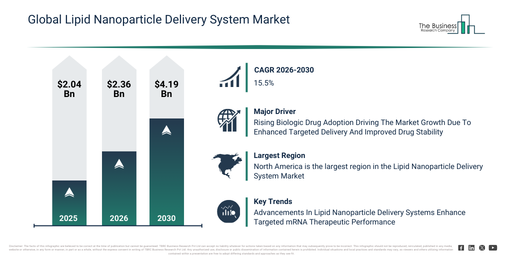
    The lipid nanoparticle delivery system market has experienced substantial growth in recent years. It is anticipated to expand from $2.04 billion in 2025 to $2.36 billion in 2026, achieving a compound annual growth rate (CAGR) of 15.3%. This growth during the historic period can be ascribed to advancements in lipid chemistry research, growth of nucleic acid therapeutics, expansion of vaccine development programs, increased funding for gene therapy research, and the establishment of nanoparticle manufacturing capabilities.

    The lipid nanoparticle delivery system market is projected to experience substantial expansion in the coming years, reaching a valuation of $4.19 billion by 2030, demonstrating a compound annual growth rate (CAGR) of 15.5%. This anticipated growth during the forecast period is primarily driven by factors such as a burgeoning pipeline of RNA-based drugs, increased investments in precision medicine initiatives, the broader expansion of personalized therapeutics, a rising need for scalable delivery platforms, and a higher number of regulatory green lights for gene therapies. Key trends anticipated during this period encompass the growing integration of mRNA-based therapeutics delivery, an escalating demand for ionizable lipid formulations, a sharpened focus on advanced targeted drug delivery systems, the development of scalable nanoparticle manufacturing techniques, and a stronger emphasis on optimizing both delivery efficiency and stability.

    Download A Free Sample Report For Comprehensive Market Insights:

    https://www.thebusinessresearchcompany.com/sample.aspx?id=33202&type=smp

    What Influential Factors Are Boosting The Lipid Nanoparticle Delivery System Market Demand?

    The increasing use of biologic drugs is anticipated to drive the expansion of the lipid nanoparticle delivery system market in the future. These drugs are therapeutic agents derived from living organisms, including proteins, antibodies, or cells, employed to manage conditions unresponsive to conventional chemical medications. The uptake of biologic drugs is growing because of the escalating incidence of chronic and intricate diseases demanding specific treatments. Lipid nanoparticle delivery systems enhance the adoption of biologic drugs by encasing them to prevent breakdown, aiding their absorption by cells, and ensuring accurate delivery to specific tissues. To illustrate this trend, Cardinal Health Inc., a US-based healthcare firm, reported in January 2023 that by January 2022, the US had 33 biosimilar products cleared by the FDA, with 21 accessible in the market. By 2023, the number of FDA-approved biosimilars had risen to 40, with 25 readily available for commercial use. Consequently, the growing acceptance of biologic drugs is a key factor propelling the expansion of the lipid nanoparticle delivery system market.

    How Is Segment Classification Applied In The Lipid Nanoparticle Delivery System Market?

    The lipid nanoparticle delivery system market covered in this report is segmented –

    1) By Product Type: Solid Lipid Nanoparticles; Nanostructured Lipid Carriers; Liposomes; Other Product Types

    2) By Route Of Administration: Oral; Injectable; Topical; Other Route Of Administrations

    3) By Application: Drug Delivery; Gene Therapy; Vaccines; Cosmetics; Other Applications

    4) By End-User: Pharmaceutical And Biotechnology Companies; Research Institutes; Hospitals And Clinics; Other End Users

    Subsegments:

    1) By Solid Lipid Nanoparticles: Glyceryl Monostearate Based; Glyceryl Behenate Based; Stearic Acid Based; Compritol Based

    2) By Nanostructured Lipid Carriers: Type I Nanostructured Lipid Carriers; Type II Nanostructured Lipid Carriers; Type III Nanostructured Lipid Carriers

    3) By Liposomes: Multilamellar Vesicles; Small Unilamellar Vesicles; Large Unilamellar Vesicles; Giant Unilamellar Vesicles

    4) By Other Product Types: Polymeric Lipid Nanoparticles; Lipid Polymer Hybrids; Micelles

    What Trends Are Shaping The Lipid Nanoparticle Delivery System Market Structure?

    Companies operating significantly within the lipid nanoparticle delivery system market are concentrating on developing advanced solutions, such as targeted mRNA delivery systems, to bolster the precision, efficiency, and safety of gene therapies and vaccines. A targeted mRNA delivery system refers to a technology that utilizes lipid nanoparticles or other carriers to deliver messenger RNA (mRNA) specifically to intended cells or tissues, ensuring effective protein expression while minimizing unintended effects and immune responses. For instance, in November 2025, Acuitas Therapeutics Inc., a biotechnology company based in Canada, introduced Next-Generation Lipid Nanoparticle Advancements to enhance the targeted delivery and efficacy of mRNA therapeutics. This innovation provides up to fourfold potency gains for gene editing and vaccines, features optimized lipids that reduce liver exposure while maintaining efficacy in mouse models, and includes DARPin-conjugated LNPs for targeted T-lymphocyte delivery. These advancements improve ALC-315, a component in Pfizer-BioNTech’s COMIRNATY vaccine, by enabling superior intramuscular mRNA delivery for cancer vaccines at lower doses, with wider applications in CAR T-cell therapies, epigenetic treatments, multivalent vaccines for malaria or HIV or TB, and personalized oncology, thereby accelerating the development of safer, more effective mRNA therapies beyond liver-specific targeting.

    Who Are The Firms Contributing To The Lipid Nanoparticle Delivery System Market Ecosystem?

    Major companies operating in the lipid nanoparticle delivery system market are Johnson and Johnson, Pfizer Inc, AstraZeneca plc, Avanti Polar Lipids Inc, Evonik Industries AG, Moderna Inc, Sanofi SA, BioNTech SE, Alnylam Pharmaceuticals Inc, Ascendia Pharmaceuticals Inc, Arcturus Therapeutics Holdings Inc, Lipoid GmbH, Creative Biolabs Inc, Acuitas Therapeutics Inc, Genevant Sciences GmbH, Polymun Scientific Immunbiologische Forschung GmbH, Carcell Biopharma Inc, Integrated Nanotherapeutics Inc, Sinopeg Biotech Co Ltd, CureVac NV, ReCode Therapeutics Inc, and Intellia Therapeutics Inc.

    Access The Complete Lipid Nanoparticle Delivery System Market Report:

    https://www.thebusinessresearchcompany.com/report/lipid-nanoparticle-delivery-system-market-report

    Which Region Has The Strongest Presence In The Lipid Nanoparticle Delivery System Market?

    North America was the largest region in the lipid nanoparticle delivery system market in 2025. Asia-Pacific is expected to be the fastest-growing region in the forecast period. The regions covered in the lipid nanoparticle delivery system market report are Asia-Pacific, South East Asia, Western Europe, Eastern Europe, North America, South America, Middle East, Africa.

    Access a Customized Lipid Nanoparticle Delivery System Market Report for Deeper Competitive Insights

    Get in touch with us:

    The Business Research Company: https://www.thebusinessresearchcompany.com/

    Americas: +1 310-496-7795

    Asia: +44 7882 955267 & +91 8897263534

    Europe: +44 7882 955267

    Email us at: marketing@tbrc.info

    Follow us on:

    LinkedIn: https://in.linkedin.com/company/the-business-research-company

    YouTube: https://www.youtube.com/channel/UC24_fI0rV8cR5DxlCpgmyFQ

    Global Market Model: https://www.thebusinessresearchcompany.com/global-market-model
  • Kinase Drug Discovery Solutions Market Trends and Growth Forecast for 2026–2030

    Kinase Drug Discovery Solutions Market Trends and Growth Forecast for 2026–2030

    The Business Research Company’s 2026 market reports feature advanced enhancements such as market attractiveness analysis, total addressable market evaluation, company benchmarking matrices, interactive Excel dashboards, expanded supply chain intelligence, emerging startup coverage, and detailed product insights, delivering more actionable and strategically valuable research.

    What Market Value Expansion Is Expected For The Kinase Drug Discovery Solutions Market Over The Forecast Period?

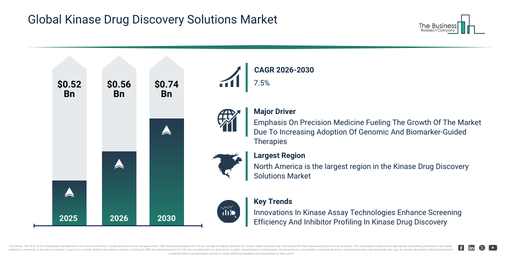
    The kinase drug discovery solutions market size has seen robust growth in recent years. It is expected to expand from $0.52 billion in 2025 to $0.56 billion in 2026, exhibiting a compound annual growth rate (CAGR) of 7.3%. The market’s historical growth can be attributed to factors such as the increasing prevalence of kinase-driven diseases, the expansion of oncology research pipelines, advancements in assay development technologies, the growth of contract research services, and increasing pharmaceutical research and development investments.

    The kinase drug discovery solutions market is projected to experience substantial growth over the coming years, expanding to $0.74 billion by 2030, demonstrating a compound annual growth rate (CAGR) of 7.5%. This anticipated growth is driven by several factors, including the increasing embrace of precision oncology methods, greater integration of computational modeling in drug discovery processes, the broadening scope of biologics and gene editing applications, a heightened need for quicker lead optimization, and a rise in collaborations between pharmaceutical companies and Contract Research Organizations (CROs). Key trends expected during this period involve the expanding utilization of AI for kinase target identification, increased adoption of structure-based drug design platforms, a surging demand for high-throughput screening services, the development of comprehensive medicinal chemistry solutions, and a stronger emphasis on developing selective kinase inhibitors.

    Download A Free Sample Report For Comprehensive Market Insights:

    https://www.thebusinessresearchcompany.com/sample.aspx?id=33191&type=smp

    What Primary Factors Are Fueling The Expansion Of The Kinase Drug Discovery Solutions Market?

    The increasing focus on precision medicine is anticipated to propel the growth of the kinase drug discovery solutions market going forward. Precision medicine refers to the growing commitment within healthcare systems to developing and deploying treatments tailored to individual patient characteristics, employing genetic, molecular, and biomarker information to improve therapeutic outcomes. The adoption of personalized medicine is escalating due to advancements in genomic and sequencing technologies, which have reduced the time, cost, and complexity of genetic testing. Kinase drug discovery solutions support precision medicine by offering the assays, screening technologies, and analytical tools essential for identifying and optimizing kinase inhibitors that precisely target disease-relevant pathways and enhance treatment outcomes. For instance, in February 2024, the Personalized Medicine Coalition, a US-based nonprofit group, stated that in 2023, the FDA approved 16 new personalized therapies for rare disease patients, a substantial increase from just six approvals in 2022. Therefore, the heightened emphasis on precision medicine is driving the growth of the kinase drug discovery solutions market.

    How Is The Kinase Drug Discovery Solutions Market Structured Across Different Market Segments?

    The kinase drug discovery solutions market covered in this report is segmented –

    1) By Type: Small Molecules; Biologies; Antibodies; Gene Editing

    2) By Technology: High-Throughput Screening; Structure-Based Drug Design

    3) By Application: Cancer Research; Cardiovascular Diseases; Neurological Disorders; Metabolic Disorders; Autoimmune Diseases

    4) By End-User: Pharmaceutical Companies; Biotechnology Firms; Research Institutions; Academic Organizations

    Subsegments:

    1) By Small Molecules: Kinase Inhibitor Compounds; Allosteric Modulator Compounds; Covalent Inhibitor Compounds; Selective Kinase Modulator Compounds; Multi Target Kinase Inhibitor Compounds

    2) By Biologies: Recombinant Protein Therapeutics; Enzyme Based Therapeutics; Peptide Based Therapeutics; Fusion Protein Therapeutics; Protein Degradation Therapeutics

    3) By Antibodies: Monoclonal Antibodies; Bispecific Antibodies; Antibody Fragment Therapeutics; Conjugated Antibody Therapeutics; Humanized Antibody Therapeutics

    4) By Gene Editing: Clustered Regularly Interspaced Short Palindromic Repeats Based Editing; Transcription Activator Like Effector Nuclease Based Editing; Zinc Finger Nuclease Based Editing; Base Editing Technologies; Prime Editing Technologies

    What Trends Are Affecting The Growth Of The Kinase Drug Discovery Solutions Market?

    Leading companies operating in the kinase drug discovery solutions market are prioritizing the development of advanced offerings, such as ready-to-use kinase activity detection kits, to enhance assay consistency and streamline inhibitor profiling during early-stage drug discovery. A ready-to-use kinase activity detection kit serves as a fully prepared assay solution, enabling rapid measurement of kinase enzyme activity with minimal setup. It provides sensitive and accurate detection of phosphorylation events, thereby facilitating efficient analysis of signaling pathways in both research and drug development. For instance, in January 2026, Sino Biological, a US-based biotechnology company, introduced the SwiftFluo TR-FRET Kinase Assay Kits, a ready-to-use, high-performance solution specifically designed to support high-throughput screening of kinase inhibitors in drug discovery workflows. These kits utilize time-resolved fluorescence resonance energy transfer (TR-FRET) technology to achieve robust signal stability, reduced background interference, and improved assay consistency, ultimately allowing for faster and more precise identification of promising kinase inhibitor candidates for therapeutic development.

    Who Are The Leading Firms Participating In The Kinase Drug Discovery Solutions Market?

    Major companies operating in the kinase drug discovery solutions market are Thermo Fisher Scientific Inc., Eurofins Scientific SE, Pharmaron Incorporated, KMD Bioscience Co. Ltd., GenScript Biotech Corporation, Sino Biological Inc., Reaction Biology Corp, Domainex Ltd, Creative Bioarray Inc, Carna Biosciences Inc., BPS Bioscience Inc., Syngene International Ltd, MedChemExpress LLC, Creative Biogene Inc, Kinexus Bioinformatics Corporation, Enzymlogic S.L., AssayQuant Technologies Inc., LC Sciences LLC, Luceome Biotechnologies LLC, and BOC Sciences Inc.

    Access The Complete Kinase Drug Discovery Solutions Market Report:

    https://www.thebusinessresearchcompany.com/report/kinase-drug-discovery-solutions-market-report

    What Is The Largest Regional Market In The Kinase Drug Discovery Solutions Market?

    North America was the largest region in the kinase drug discovery solutions market in 2025. Asia-Pacific is expected to be the fastest-growing region in the forecast period. The regions covered in the kinase drug discovery solutions market report are Asia-Pacific, South East Asia, Western Europe, Eastern Europe, North America, South America, Middle East, Africa.

    Access a Customized Kinase Drug Discovery Solutions Market Report for Deeper Competitive Insights

    Get in touch with us:

    The Business Research Company: https://www.thebusinessresearchcompany.com/

    Americas: +1 310-496-7795

    Asia: +44 7882 955267 & +91 8897263534

    Europe: +44 7882 955267

    Email us at: marketing@tbrc.info

    Follow us on:

    LinkedIn: https://in.linkedin.com/company/the-business-research-company

    YouTube: https://www.youtube.com/channel/UC24_fI0rV8cR5DxlCpgmyFQ

    Global Market Model: https://www.thebusinessresearchcompany.com/global-market-model
  • JAK3 Inhibitor Market Trends, Opportunities, and Growth Drivers Through 2030

    JAK3 Inhibitor Market Trends, Opportunities, and Growth Drivers Through 2030

    The Business Research Company’s 2026 market reports feature advanced enhancements such as market attractiveness analysis, total addressable market evaluation, company benchmarking matrices, interactive Excel dashboards, expanded supply chain intelligence, emerging startup coverage, and detailed product insights, delivering more actionable and strategically valuable research.

    What Is The Forecasted Rise In Market Size Of The Janus Kinase (JAK) 3 Inhibitor Market During The Forecast Period?

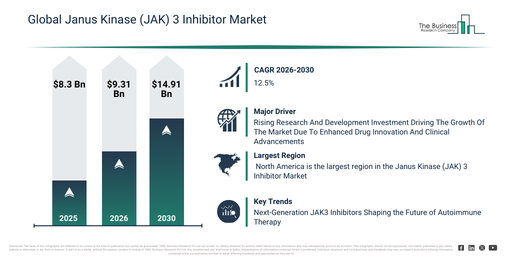
    The market size for janus kinase (jak) 3 inhibitors has expanded significantly in recent years. This market is expected to surge from $8.3 billion in 2025 to $9.31 billion in 2026, exhibiting a compound annual growth rate (CAGR) of 12.2%. The historical expansion of this market can be attributed to advances in kinase inhibitor drug discovery, the rising occurrence of autoimmune diseases, the initial clinical achievements of selective JAK inhibition, the wider availability of oral immunomodulatory therapies, and the progress in targeted therapy research.

    The janus kinase (jak) 3 inhibitor market is projected to experience substantial expansion over the coming years. Its valuation is anticipated to reach $14.91 billion in 2030, exhibiting a compound annual growth rate (CAGR) of 12.5%. This forecasted growth is primarily driven by the proliferation of precision immunology treatments, a heightened need for secure long-term immune therapies, greater incorporation of biomarker-guided treatment choices, increased capital allocation towards advanced jak inhibitors, and a broader range of approved therapeutic uses. Key developments expected during this period involve a surge in the creation of highly selective jak3 inhibitors, a heightened emphasis on minimizing unintended immunosuppression, increased adoption of companion diagnostics, the spread of oral small molecule therapies, and more robust clinical investigations into autoimmune and inflammatory conditions.

    Download A Free Sample Report For Comprehensive Market Insights:

    https://www.thebusinessresearchcompany.com/sample.aspx?id=33189&type=smp

    What Major Growth Factors Are Impacting The Janus Kinase (JAK) 3 Inhibitor Market?

    Growing investments in research and development are projected to drive the expansion of the janus kinase 3 (JAK3) inhibitor market in the future. Research and development (R&D) encompasses a structured approach to exploring, innovating, and developing novel products, services, or methods, aiming to advance knowledge and stimulate business or technological progress. The increase in research and development funding stems from heightened competition, prompting companies to invest more in innovation to distinguish their offerings and sustain a technological advantage within dynamic markets. Investments in research and development support Janus kinase 3 (JAK3) inhibitors by financing comprehensive studies essential for comprehending the drug’s mechanism, optimizing its chemical structure for enhanced specificity, and evaluating its safety and effectiveness in clinical trials, resulting in superior treatments with reduced side effects for ailments such as autoimmune diseases and organ transplant rejection. For example, as reported by Eurostat, a Luxembourg-based statistical office, in November 2025, the European Union dedicated $475 billion (€403) billion to research and development in 2024, with this expenditure accounting for 2.24% of the region’s GDP. Consequently, the expanding investment in research and development is propelling the growth of the janus kinase 3 (JAK3) inhibitor market.

    What Are The Major Segment Categories Within The Janus Kinase (JAK) 3 Inhibitor Market?

    The janus kinase (jak) 3 inhibitor market covered in this report is segmented –

    1) By Product Type: Selective Janus Kinase (JAK)3 Inhibitors; Pan-Janus Kinase (JAK) Inhibitors with Janus Kinase (JAK) 3 Activity

    2) By Therapeutic Indication: Rheumatoid Arthritis; Psoriasis; Ulcerative Colitis; Hematologic Malignancies; Other Therapeutic Indications

    3) By Route of Administration: Oral Tablets and Capsules; Topical Creams and Ointments; Subcutaneous and Parenteral Injections; Transdermal Drug Delivery Systems

    4) By Distribution Channel: Direct Sales to Healthcare Providers; Pharmaceutical Distributors and Wholesalers; Online and E-Pharmacy Channels

    5) By End User: Hospitals; Specialty Clinics; Retail Pharmacies and Outpatient Centers; Academic and Research Institutions

    Subsegments:

    1) By Selective Janus Kinase (JAK)3 Inhibitors: First Generation Selective Janus Kinase Three Inhibitors; Next Generation Highly Selective Janus Kinase Three Inhibitors; Oral Small Molecule Selective Janus Kinase Three Inhibitors; Immune Targeted Selective Janus Kinase Three Inhibitors

    2) By Pan-Janus Kinase (JAK) Inhibitors with JAK3 Activity: Multi Kinase Pan Janus Kinase Inhibitors; Broad Spectrum Immune Modulating Janus Kinase Inhibitors; Oral Systemic Pan Janus Kinase Therapies; Combination Activity Janus Kinase Inhibitor Therapies

    What Trends Are Driving Changes In The Janus Kinase (JAK) 3 Inhibitor Market?

    Leading companies in the janus kinase 3 (JAK3) inhibitor market are concentrating on developing innovative solutions, such as selective oral small-molecule JAK3 inhibitors, to satisfy the increasing demand for targeted treatments for autoimmune and inflammatory diseases with enhanced safety profiles. Selective oral small-molecule JAK3 inhibitors are low-molecular-weight, orally administered drugs specifically designed to inhibit Janus kinase 3 (JAK3) while sparing other JAK family members (JAK1, JAK2, and TYK2). For instance, in June 2023, Pfizer Inc., a US-based biopharmaceutical company, obtained U.S. Food and Drug Administration (FDA) approval for LITFULO (ritlecitinib), an innovative once-daily oral JAK3-selective inhibitor for treating severe alopecia areata in adults and adolescents aged 12 years and older. Ritlecitinib selectively inhibits JAK3 and TEC family kinases, which are vital in immune-mediated inflammation affecting hair follicles. This selective mechanism differentiates it from conventional JAK inhibitors by providing a more focused immunomodulatory approach. The FDA approval was underpinned by positive results from the ALLEGRO Phase 2b/3 clinical trials, which demonstrated significant scalp hair regrowth and established LITFULO as a landmark advancement in the JAK3 inhibitor market.

    Who Are The Prominent Players Across The Janus Kinase (JAK) 3 Inhibitor Market?

    Major companies operating in the janus kinase (jak) 3 inhibitor market are Merck & Co. Inc., Pfizer Inc., AbbVie Inc., Novartis AG, GlaxoSmithKline Plc, Eli Lilly and Company, Takeda Pharmaceutical Company Limited, Vertex Pharmaceuticals Incorporated, Sun Pharmaceutical Industries Limited, Incyte Corporation, LEO Pharma A/S, Alfasigma S.p.A., Karyopharm Therapeutics Inc., Rigel Pharmaceuticals Inc., Arcutis Biotherapeutics Inc., Theravance Biopharma Inc., Celon Pharma S.A., Aclaris Therapeutics Inc., Dizal Pharmaceutical Co. Ltd., Asana BioSciences LLC, Ajax Therapeutics Inc., Sareum Holdings plc, and MaxiNovel Pharmaceuticals Co. Ltd.

    Access The Complete Janus Kinase (JAK) 3 Inhibitor Market Report:

    https://www.thebusinessresearchcompany.com/report/janus-kinase-jak-3-inhibitor-market-report

    Which Regional Market Leads The Janus Kinase (JAK) 3 Inhibitor Market?

    North America was the largest region in the janus kinase 3 (JAK3) inhibitor market in 2025. Asia-Pacific is expected to be the fastest-growing region in the forecast period. The regions covered in the janus kinase (jak) 3 inhibitor market report are Asia-Pacific, South East Asia, Western Europe, Eastern Europe, North America, South America, Middle East, Africa.

    Access a Customized Janus Kinase (JAK) 3 Inhibitor Market Report for Deeper Competitive Insights

    Get in touch with us:

    The Business Research Company: https://www.thebusinessresearchcompany.com/

    Americas: +1 310-496-7795

    Asia: +44 7882 955267 & +91 8897263534

    Europe: +44 7882 955267

    Email us at: marketing@tbrc.info

    Follow us on:

    LinkedIn: https://in.linkedin.com/company/the-business-research-company

    YouTube: https://www.youtube.com/channel/UC24_fI0rV8cR5DxlCpgmyFQ

    Global Market Model: https://www.thebusinessresearchcompany.com/global-market-model
  • IL-2 Mutein Therapies Market Expected to Approach $1.43 Billion by 2030

    IL-2 Mutein Therapies Market Expected to Approach $1.43 Billion by 2030

    The Business Research Company’s 2026 market reports feature advanced enhancements such as market attractiveness analysis, total addressable market evaluation, company benchmarking matrices, interactive Excel dashboards, expanded supply chain intelligence, emerging startup coverage, and detailed product insights, delivering more actionable and strategically valuable research.

    By 2030, How Much Growth In Market Size Is Expected For The Interleukin-2 (IL-2) Mutein Therapies Market?

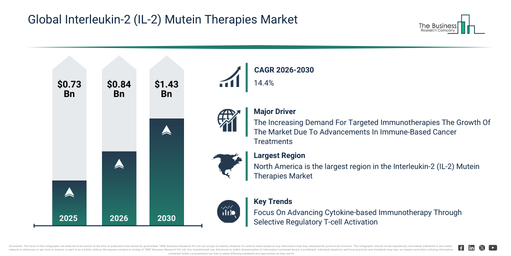
    The interleukin-2 (il-2) mutein therapies market has seen rapid growth in its size in recent years. Its value is expected to increase from $0.73 billion in 2025 to $0.84 billion in 2026, representing a compound annual growth rate (CAGR) of 14.1%. This historical growth can be linked to advancements in cytokine engineering techniques, an enhanced understanding of immune signaling pathways, early positive clinical results from modified IL-2 therapies, a rise in investment within immuno-oncology research, and the increasing occurrence of immune-mediated diseases.

    The interleukin-2 (il-2) mutein therapies market size is projected to experience substantial expansion in the coming years, with expectations to reach **$1.43 billion by 2030, demonstrating a compound annual growth rate (CAGR) of 14.4%.** This anticipated growth over the forecast period stems from factors such as the broader adoption of personalized immunotherapy approaches, an increase in clinical trial activity for next-generation cytokines, a rising requirement for safer immune modulators, growing regulatory backing for innovative biologics, and an increase in partnerships formed between biotechnology and pharmaceutical companies. Significant trends during this period encompass the escalating development of receptor-biased il-2 muteins, a heightened focus on minimizing cytokine toxicity profiles, the expanded utilization of combination immunotherapy regimens, the proliferation of precision immune modulation strategies, and intensified clinical pipeline activity for both autoimmune and oncology indications.

    Download A Free Sample Report For Comprehensive Market Insights:

    https://www.thebusinessresearchcompany.com/sample.aspx?id=33185&type=smp

    Which Significant Factors Are Encouraging Growth In The Interleukin-2 (IL-2) Mutein Therapies Market?

    The heightened need for targeted immunotherapies is anticipated to fuel expansion within the interleukin-2 (IL-2) mutein therapies market. These specialized treatments are formulated to modify the immune system, enabling it to specifically target and eliminate cancer cells while minimizing harm to healthy tissues. The impetus for these therapies is growing as medical professionals and researchers increasingly seek safer and more potent alternatives to traditional chemotherapy and radiation therapy, which frequently entail considerable toxicity and lack specificity. IL-2 mutein therapies contribute to the progress of targeted immunotherapies by employing modified versions of interleukin-2 that selectively activate immune effector cells crucial for anti-tumor responses, simultaneously mitigating the activation of pathways linked to systemic toxicity. For example, in April 2025, the Cancer Research Institute, a US-based non-profit organization, reported that the FDA approved 17 new targeted immunotherapy agents in 2024, thereby broadening available choices for immune-based cancer treatment and enlarging the demographic of patients who could benefit from such interventions. Consequently, the rising demand for targeted immunotherapies is propelling the growth of the interleukin-2 (IL-2) mutein therapies market.

    How Does Segment Analysis Break Down The Interleukin-2 (IL-2) Mutein Therapies Market Structure?

    The interleukin-2 (il-2) mutein therapies market covered in this report is segmented –

    1) By Product Type: Monotherapy; Combination Therapy

    2) By Route Of Administration: Intravenous; Subcutaneous; Other Route Of Administrations

    3) By Application: Cancer; Autoimmune Diseases; Infectious Diseases; Other Applications

    4) By End User: Hospitals; Specialty Clinics; Research Institutes; Other End Users

    Subsegments:

    1) By Monotherapy: Single Agent Interleukin Two Mutein Therapy; Standalone Cytokine Based Immunotherapy; Targeted Immune Modulation Therapy

    2) By Combination Therapy: Interleukin Two Mutein With Immune Checkpoint Inhibitors; Interleukin Two Mutein With Chemotherapy; Interleukin Two Mutein With Targeted Biologic Therapies; Interleukin Two Mutein With Cell Based Therapies

    What Trends Are Influencing The Interleukin-2 (IL-2) Mutein Therapies Market Outlook?

    Key players within the interleukin-2 (IL-2) mutein therapies market are increasingly prioritizing technological progress in cytokine-based immunotherapy, specifically focusing on the targeted activation of regulatory T-cells (Tregs) via engineered IL-2 muteins. This targeted Treg activation using engineered IL-2 muteins employs genetically altered IL-2 proteins crafted to selectively activate Tregs while concurrently restricting the stimulation of effector immune cells. As an illustration, Almirall S.A., a Spanish pharmaceutical firm, commenced the initial Phase I clinical investigation of its engineered IL-2 mutein fusion protein, ALM223, in December 2023. This study aims to assess its safety, pharmacokinetics, immunogenicity, and pharmacodynamics in the context of autoimmune diseases. This specific candidate incorporates features like selective Treg activation, a modified Fc fusion designed to enhance molecular stability, and an optimized cytokine backbone engineered for superior immune modulation. Although these technological strides underscore the potential of IL-2 muteins for precise immunomodulation and wider application in autoimmune conditions, their actual clinical effectiveness and sustained safety profiles still require confirmation through current and upcoming trials.

    Who Are The Key Market Participants In The Interleukin-2 (IL-2) Mutein Therapies Market?

    Major companies operating in the interleukin-2 (il-2) mutein therapies market are Merck & Co. Inc., Sanofi S.A., Roche Holding AG, Bristol-Myers Squibb, Amgen Inc., Lonza Group AG, Alkermes plc, BioNTech SE, Xencor Inc., Innovent Biologics Inc., Ascendis Pharma A/S, ShanghAI Junshi Biosciences Co. Ltd., Mural Oncology Inc., ProBioGen AG, Werewolf Therapeutics Ltd., Philogen S.p.A., Cue Biopharma Inc., Medicenna Therapeutics Corp., Bright Peak Therapeutics Inc., Iovance Biotherapeutics Inc.

    Access The Complete Interleukin-2 (IL-2) Mutein Therapies Market Report:

    https://www.thebusinessresearchcompany.com/report/interleukin-2-il-2-mutein-therapies-market-report

    Which Region Is The Dominant Market In The Interleukin-2 (IL-2) Mutein Therapies Market?

    North America was the largest region in the interleukin 2 (IL-2) mutein therapies market in 2025. Asia-Pacific is expected to be the fastest-growing region in the forecast period. The regions covered in the interleukin-2 (il-2) mutein therapies market report are Asia-Pacific, South East Asia, Western Europe, Eastern Europe, North America, South America, Middle East, Africa.

    Access a Customized Interleukin-2 (IL-2) Mutein Therapies Market Report for Deeper Competitive Insights

    Get in touch with us:

    The Business Research Company: https://www.thebusinessresearchcompany.com/

    Americas: +1 310-496-7795

    Asia: +44 7882 955267 & +91 8897263534

    Europe: +44 7882 955267

    Email us at: marketing@tbrc.info

    Follow us on:

    LinkedIn: https://in.linkedin.com/company/the-business-research-company

    YouTube: https://www.youtube.com/channel/UC24_fI0rV8cR5DxlCpgmyFQ

    Global Market Model: https://www.thebusinessresearchcompany.com/global-market-model