Category: Pharmaceuticals

  • Donepezil Market Outlook 2026–2030: Growth Trends, Market Dynamics And Emerging Opportunities

    Donepezil Market Outlook 2026–2030: Growth Trends, Market Dynamics And Emerging Opportunities

    Featuring market attractiveness scoring, total addressable market sizing, company benchmarking matrices, interactive Excel dashboards, deeper supply chain intelligence, emerging startup tracking, and granular product-level insights, The Business Research Company’s 2026 market reports are built to deliver research that is both more actionable and more strategically valuable.

    Donepezil Market Value Growth And Long-Term Outlook

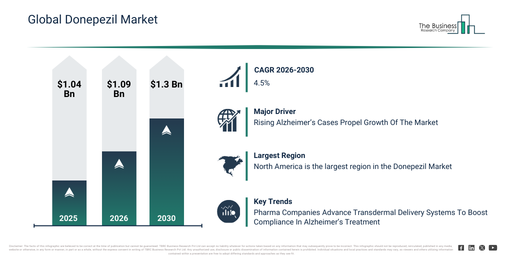
    The donepezil market size has seen consistent growth in recent years. It is anticipated to increase from $1.04 billion in 2025 to $1.09 billion in 2026, achieving a compound annual growth rate (CAGR) of 4.5%. This historical expansion can be attributed to an aging global population, the rising prevalence of Alzheimer’s disease, the widespread adoption of cholinesterase inhibitors, improved rates of dementia diagnosis, and the expansion of neurology treatment facilities.

    The donepezil market size is anticipated to undergo consistent growth in the upcoming years. It is projected to expand to $1.3 billion by 2030, achieving a compound annual growth rate (CAGR) of 4.5%. This growth throughout the forecast period can be attributed to the rising global elderly population, increased awareness concerning early dementia treatment, growing demand for cost-effective generic medications, the expansion of home-based cognitive care services, and escalating healthcare expenditure on neurodegenerative conditions. Key trends expected during this period include the increasing long-term usage in Alzheimer’s disease management, a growing preference for oral cognitive enhancement therapies, rising demand for generic donepezil formulations, the broadening of treatment for mild to moderate Alzheimer’s cases, and an intensified focus on geriatric neurology care.

    Get A Free Sample Report With In-Depth Market Insights:

    https://thebusinessresearchcompany.com/sample_request?id=97244662&type=smp&name=Donepezil%20Market%20Report%202026&utm_source=Blogs&utm_medium=Paid&utm_campaign=Oct_PR

    Donepezil Market Expansion Drivers: What’s Shaping Future Growth?

    The increasing prevalence of Alzheimer’s disease is anticipated to drive the expansion of the donepezil market going forward. Alzheimer’s disease is a progressive neurological condition characterized by the degeneration and death of brain cells, leading to memory loss, cognitive decline, and changes in behavior. The cases of Alzheimer’s disease are on the rise due to various reasons, including an aging population, overall population growth, lifestyle-related factors, an increase in chronic diseases, genetic predispositions, and environmental exposures. Donepezil serves as an effective symptomatic therapy for Alzheimer’s disease by enhancing cognitive function and daily living skills through its impact on acetylcholine levels in the brain. For instance, in May 2024, a report by the Alzheimer’s Association, a US-based nonprofit organization dedicated to Alzheimer’s care, support, and research, noted that the number of Americans aged 65 and older diagnosed with Alzheimer’s dementia increased from 6.5 million in 2022 to an estimated 6.9 million in 2024. Therefore, the rising incidence of Alzheimer’s is fueling the growth of the donepezil market.

    Donepezil Market Segment Analysis: What Are The Core Market Categories?

    The donepezil market covered in this report is segmented –

    1) By Type: 5mg, 10mg, 23mg

    2) By Route Of Administration: Oral, Transdermal

    3) By Application: Hospitals, Clinics, Drugstore

    Donepezil Market Strategic Trends: What Defines The Next Growth Phase?

    Leading companies in the donepezil market are prioritizing the creation of advanced drug delivery technologies, such as once-weekly and extended-release transdermal systems, to boost patient compliance and lessen treatment-related discomfort for Alzheimer’s patients. A donepezil transdermal system delivers the medication through the skin at a controlled rate, circumventing first-pass metabolism and reducing the incidence of gastrointestinal side effects often linked with oral dosing. For instance, in March 2024, Corium, Inc., a US-based biopharmaceutical company, launched its new-generation Adlarity formulation, featuring enhanced patch adhesion, improved skin tolerability, and a more stable 7-day release profile, which ensures uninterrupted therapeutic exposure. Corium designed this updated system to streamline Alzheimer’s care by easing the dosing burden and improving adherence for older adults who struggle with daily oral medication regimens.

    Donepezil Market Top Companies Driving Competitive Growth

    Major companies operating in the donepezil market are AbbVie Inc., Pfizer Inc., Teva Pharmaceutical Inc., Intas Pharmaceuticals Ltd., Mylan NV, Sandoz Group AG, Hetero Drugs Ltd., Sun Pharmaceutical Inc., Eisai Co. Ltd., Cipla Ltd., Dr Reddy’s Laboratories, Apotex Inc., H Lundbeck A/S, Zydus Cadila, Amneal Pharmaceuticals LLC, Torrent Pharmaceuticals Ltd, Alkem Laboratories Ltd., Jubilant Pharmova Ltd., Wockhardt Ltd., Luoxin Pharmaceuticals Group

    View The Full Donepezil Market Report:

    https://thebusinessresearchcompany.com/report/donepezil-global-market-report?utm_source=Blogs&utm_medium=Paid&utm_campaign=Oct_PR

    Donepezil Market Regional Analysis: Which Region Leads By Revenue?

    North America was the largest region in the donepezil market in 2025. Asia-Pacific is expected to be the fastest-growing region in the forecast period. The regions covered in the donepezil market report are Asia-Pacific, South East Asia, Western Europe, Eastern Europe, North America, South America, Middle East, Africa.

    Reach Out To Our Team:

    The Business Research Company: https://www.thebusinessresearchcompany.com/

    Americas: +1 310-496-7795

    Asia: +44 7882 955267 & +91 8897263534

    Europe: +44 7882 955267

    Email us at: marketing@tbrc.info

    Follow us on:

    LinkedIn: https://in.linkedin.com/company/the-business-research-company

    YouTube: https://www.youtube.com/channel/UC24_fI0rV8cR5DxlCpgmyFQ

    Global Market Model: https://www.thebusinessresearchcompany.com/global-market-model
  • Docosahexaenoic Acid (DHA) Supplements Market Growth Outlook From $2.33 Billion In 2026 To $3.43 Billion By 2030

    Docosahexaenoic Acid (DHA) Supplements Market Growth Outlook From $2.33 Billion In 2026 To $3.43 Billion By 2030

    Built to provide research that’s more actionable and strategically valuable, The Business Research Company’s 2026 market reports include market attractiveness analysis, total addressable market sizing, company benchmarking matrices, interactive Excel dashboards, broader supply chain intelligence, emerging startup tracking, and in-depth product insights.

    Docosahexaenoic Acid (DHA) Supplements Market Poised To Hit $3.43 Billion By 2030 With A 10.1% CAGR

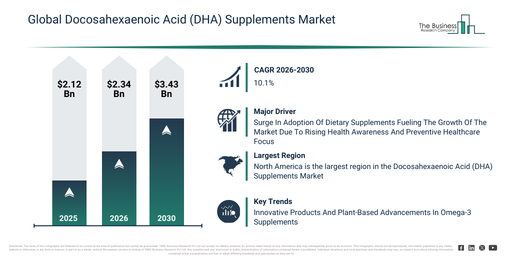
    The market for docosahexaenoic acid (dha) supplements has experienced rapid expansion in recent years. Its valuation is set to increase from $2.12 billion in 2025 to $2.34 billion in 2026, achieving a compound annual growth rate (CAGR) of 10.3%. This historical growth can be attributed to a growing awareness of omega-3 health benefits, increased utilization of dha in infant nutrition, the expansion of dietary supplement consumption, a rising prevalence of lifestyle-related health concerns, and the availability of marine-derived dha sources.

    The docosahexaenoic acid (dha) supplements market is anticipated to show significant expansion over the next few years. It is forecast to reach $3.43 billion in 2030, growing at a compound annual growth rate (CAGR) of 10.1%. This projected growth can be attributed to factors such as the increasing demand for plant-based omega-3 supplements, a rising emphasis on sustainable DHA sourcing, the broadening of functional food fortification, the increasing uptake of preventive healthcare supplements, and ongoing innovation in DHA delivery formats. Key trends in the forecast period include the growing adoption of algal-based DHA sources, an increasing demand for prenatal and infant DHA supplements, the expansion of microencapsulation technologies, a greater preference for clean-label omega-3 products, and an intensified focus on brain and cognitive health.

    Get A Free Sample Report With In-Depth Market Insights:

    https://thebusinessresearchcompany.com/sample_request?id=68224333&type=smp&name=Docosahexaenoic%20Acid%20%28DHA%29%20Supplements%20Market%20Report%202026&utm_source=Blogs&utm_medium=Paid&utm_campaign=Oct_PR

    Docosahexaenoic Acid (DHA) Supplements Market Development Factors: What’s Supporting Demand?

    The growing use of dietary supplements is anticipated to drive the expansion of the docosahexaenoic acid (DHA) supplements market in the future. These supplements are items comprising vitamins, minerals, herbs, or various nutrients intended to boost nutrition and promote general health. The consumption of dietary supplements is increasing due to heightened consumer awareness regarding health and wellness, which prompts individuals to pursue extra nutrients for disease prevention and nutritional balance. Amidst this trend, DHA supplements have become popular because of their contribution to addressing nutritional deficiencies, aiding cognitive growth, boosting cardiovascular health, and enhancing general well-being. As an illustration, data from September 2025, provided by the Australian Bureau of Statistics, an Australia-based national statistical agency, indicated that approximately 33.6% of individuals aged 2 years and older, totaling about 8.5 million people, consumed dietary supplements in 2023, marking a 17% rise from 2022. Consequently, the rising uptake of dietary supplements is fueling the expansion of the docosahexaenoic acid (DHA) supplements market.

    Docosahexaenoic Acid (DHA) Supplements Market Segment Breakdown: Which Categories Lead On Revenue?

    The docosahexaenoic acid (dha) supplements market covered in this report is segmented –

    1) By Lipid Type: Fatty Acids, Phospholipids, Seafood Fats And Oils, Other Lipid Types

    2) By Product Type: Capsules, Softgels, Gummies, Powders, Other Product Types

    3) By Source: Fish Oil, Algal Oil, Krill Oil, Other Sources

    4) By Distribution Channel: Online Stores, Supermarkets Or Hypermarkets, Specialty Stores, Other Distribution Channels

    5) By Application: Infant Formula, Dietary Supplements, Functional Food And Beverages, Pharmaceuticals, Other Applications

    Subsegments:

    1) By Fatty Acids: Docosahexaenoic Acid Rich Oil, Eicosapentaenoic Acid and Docosahexaenoic Acid Combination

    2) By Phospholipids: Phosphatidylserine, Phosphatidylcholine

    3) By Seafood Fats And Oils: Fish Oil, Cod Liver Oil, Krill Oil

    4) By Other Types: Algal Oil, Microencapsulated Docosahexaenoic Acid, Plant Based Docosahexaenoic Acid

    Docosahexaenoic Acid (DHA) Supplements Market Transformation Trends: What Innovations Are Driving Change?

    Leading companies in the docosahexaenoic acid (DHA) supplements market are prioritizing the creation of innovative products, such as polyunsaturated fatty acid (PUFA) supplements sourced from algal oil, to boost bioavailability, enhance sustainability, and offer specific health benefits to consumers. An algal oil-derived polyunsaturated fatty acid (PUFA) supplement is a nutrient-rich product extracted from algae, providing significant levels of omega-3 fatty acids, particularly DHA, which supports cognitive function, cardiovascular health, and overall wellness. For example, in December 2024, Nature’s Bounty, a US-based dietary supplements company, introduced a plant-based omega-3 supplement as a vegetarian alternative to traditional fish oil. A single softgel delivers 520 mg of omega-3s, including EPA and DHA, which are beneficial for heart, joint, and skin health. This plant-based offering is sustainably manufactured, odorless, and suitable for those seeking plant-based wellness with advantages for general circulation, energy metabolism, and cardiovascular support.

    Docosahexaenoic Acid (DHA) Supplements Market Leading Players And Competitive Positioning

    Major companies operating in the docosahexaenoic acid (dha) supplements market are Archer Daniels Midland Company, BASF SE, Stepan Company, Corbion N.V., Pharmavite LLC, Neptune Wellness Solutions Inc., NOW Foods, Bioplus Life Sciences Private Limited, KD Pharma Group SA, Nordic Naturals Inc., Clover Corporation Limited, Arjuna Natural Extracts Ltd., Aker BioMarine AS, Source Omega LLC, Epax Norway AS, Jiangsu Auqi Marine Biotechnology Co. Ltd., Navchetana Kendra Health Care Private Limited, Novotech Nutraceuticals Inc., AlgalR NutraPharms, Koninklijke DSM N.V., Huve Nutraceuticals Ltd.

    View The Full Docosahexaenoic Acid (DHA) Supplements Market Report:

    https://thebusinessresearchcompany.com/report/global-docosahexaenoic-acid-dha-supplements-market-report?utm_source=Blogs&utm_medium=Paid&utm_campaign=Oct_PR

    Docosahexaenoic Acid (DHA) Supplements Market Geographic Distribution And Regional Opportunities

    North America was the largest region in the docosahexaenoic acid (DHA) supplements market in 2025. The regions covered in the docosahexaenoic acid (dha) supplements market report are Asia-Pacific, South East Asia, Western Europe, Eastern Europe, North America, South America, Middle East, Africa.

    Reach Out To Our Team:

    The Business Research Company: https://www.thebusinessresearchcompany.com/

    Americas: +1 310-496-7795

    Asia: +44 7882 955267 & +91 8897263534

    Europe: +44 7882 955267

    Email us at: marketing@tbrc.info

    Follow us on:

    LinkedIn: https://in.linkedin.com/company/the-business-research-company

    YouTube: https://www.youtube.com/channel/UC24_fI0rV8cR5DxlCpgmyFQ

    Global Market Model: https://www.thebusinessresearchcompany.com/global-market-model
  • Throat Soothing Hard Candy Market Analysis: How The Industry Is Evolving Toward A $6.42 Billion Future

    Throat Soothing Hard Candy Market Analysis: How The Industry Is Evolving Toward A $6.42 Billion Future

    Backed by market attractiveness analysis, total addressable market sizing, company benchmarking matrices, interactive Excel dashboards, wider supply chain intelligence, emerging startup coverage, and detailed product-level insights, The Business Research Company’s 2026 market reports are designed to offer research that is more actionable and strategically valuable than ever.

    Throat Soothing Hard Candy Market Set To Climb From $5.09 Billion In 2026 To $6.42 Billion By 2030

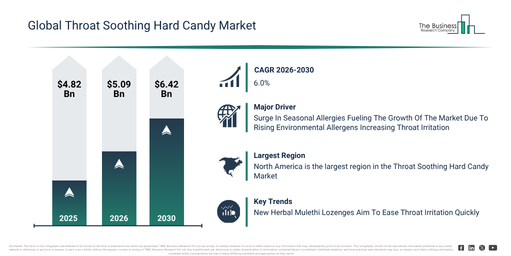
    The throat soothing hard candy market has demonstrated robust expansion over recent years. It is anticipated to increase from $4.82 billion in 2025 to $5.09 billion in 2026, registering a compound annual growth rate (CAGR) of 5.7%. This historic period’s growth can be linked to a rise in throat infections and irritation cases, greater understanding of natural remedies, the escalating preference for menthol-infused products, the expansion of retail pharmacy networks, and the incorporation of traditional herbal ingredients into candies.

    The throat soothing hard candy market is anticipated to experience substantial expansion over the upcoming years. It is forecast to reach $6.42 billion by 2030, exhibiting a compound annual growth rate (CAGR) of 6.0%. This expansion during the forecast period is attributable to several factors, including an increasing demand for functional and immunity-enhancing candies, a growing preference for organic and natural sweetening agents, the widening of online and direct-to-consumer sales channels, an increased emphasis on wellness for both children and adults, and the incorporation of novel formulations and diverse flavor profiles. Key trends anticipated during the same period encompass a heightened demand for herbal and natural components, the increasing use of sugar-free options, the rising appeal of honey-infused soothing candies, the expansion of online and e-commerce distribution platforms, and a growing emphasis on products aimed at both children and adults.

    Get A Free Sample Report With In-Depth Market Insights:

    https://thebusinessresearchcompany.com/sample_request?id=64052456&type=smp&name=Throat%20Soothing%20Hard%20Candy%20Market%20Report%202026&utm_source=Blogs&utm_medium=Paid&utm_campaign=Oct_PR

    Throat Soothing Hard Candy Market Demand Drivers: What’s Powering Industry Growth?

    The rising occurrence of seasonal allergies is anticipated to drive the expansion of the throat soothing hard candy market in the future. These allergies are allergic responses caused by environmental irritants like pollen, mold spores, and airborne particles, typically manifesting at specific times of the year and often leading to throat irritation, coughing, and dryness. The increase in seasonal allergies is primarily due to elevated pollen levels, growing air pollution, and evolving climate conditions, which prolong allergy seasons and heighten exposure to allergens. Throat soothing hard candy provides relief for symptoms linked to seasonal allergies through accessible over-the-counter products containing ingredients such as menthol, honey, and herbal extracts that alleviate throat irritation and dryness. For example, in January 2026, the Centers for Disease Control and Prevention (CDC) reported that 31.7% of US adults had a diagnosed allergic condition, including seasonal allergies, eczema, or food allergies. Consequently, the increasing incidence of seasonal allergies is fostering the growth of the throat soothing hard candy market.

    Throat Soothing Hard Candy Market Segment Landscape And Growth Outlook

    The throat soothing hard candy market covered in this report is segmented –

    1) By Product Type: Herbal Throat Soothing Hard Candy, Menthol Throat Soothing Hard Candy, Honey-Based Throat Soothing Hard Candy, Other Product Types

    2) By Formulation: Sugar-Based, Sugar-Free

    3) By Distribution Channel: Supermarkets And Hypermarkets, Pharmacies, Online Stores, Convenience Stores, Other Distribution Channels

    4) By End-User: Adults, Children

    Subsegments:

    1) By Herbal Throat Soothing Hard Candy: Tulsi Based Hard Candy, Ginger Extract Hard Candy, Licorice Root Hard Candy, Eucalyptus Herbal Hard Candy

    2) By Menthol Throat Soothing Hard Candy: Strong Menthol Hard Candy, Cooling Mint Hard Candy, Extra Strength Menthol Candy, Sugar Free Menthol Candy

    3) By Honey-Based Throat Soothing Hard Candy: Pure Honey Hard Candy, Honey Lemon Hard Candy, Honey Ginger Hard Candy, Organic Honey Hard Candy

    4) By Other Product Types: Vitamin Enriched Hard Candy, Propolis Infused Hard Candy, Herbal Blend Hard Candy, Fruit Infused Hard Candy

    Throat Soothing Hard Candy Market Innovation Trends: What Developments Are Reshaping The Industry?

    Major companies in the throat soothing hard candy market are focusing on developing natural ingredient-based formulations, such as herbal flavor infusions. These are designed to enhance throat comfort, reduce irritation, and offer relief from soreness and dryness. Herbal flavor infusions denote throat candy formulations that include natural ingredients like mulethi (licorice), honey, or menthol, traditionally recognized for their soothing and anti-inflammatory attributes that help alleviate throat irritation and ease coughing. For instance, in March 2026, Cofsils, an India-based confectionery and healthcare brand, broadened its throat lozenge variety with a new Mulethi flavor, specifically intended to provide quick relief for sore throats. This product, developed to assist consumers experiencing seasonal allergies, cold symptoms, or throat discomfort, merges traditional herbal ingredients with modern confectionery technology to deliver soothing relief, a pleasant taste, and improved overall oral comfort.

    Throat Soothing Hard Candy Market Leading Companies And Competitive Benchmarking

    Major companies operating in the throat soothing hard candy market are Procter & Gamble Co., GlaxoSmithKline plc, Mondelez International, Inc., Reckitt Benckiser Group plc, Cipla Limited, Dabur India Ltd., Prestige Consumer Healthcare Inc., Ricola AG, Himalaya Wellness Company, Bliss GVS Pharma Ltd., Gelnova Laboratories Pvt. Ltd., Healing Pharma India Pvt. Ltd., Multani Pharmaceuticals Pvt. Ltd., Biovencer Healthcare Pvt. Ltd., Zinda Tilismath, Doetsch Grether AG, Ernest Jackson & Co., Lofthouse of Fleetwood Ltd, Nin Jiom Medicine Manufactory Ltd, Throat Discs Ltd.

    View The Full Throat Soothing Hard Candy Market Report:

    https://thebusinessresearchcompany.com/report/throat-soothing-hard-candy-market-report?utm_source=Blogs&utm_medium=Paid&utm_campaign=Oct_PR

    Throat Soothing Hard Candy Market Largest Region By Revenue And Market Share

    North America was the largest region in the throat soothing hard candy market in 2025. Asia-Pacific is expected to be the fastest-growing region in the forecast period. The regions covered in the throat soothing hard candy market report are Asia-Pacific, South East Asia, Western Europe, Eastern Europe, North America, South America, Middle East, Africa.

    Reach Out To Our Team:

    The Business Research Company: https://www.thebusinessresearchcompany.com/

    Americas: +1 310-496-7795

    Asia: +44 7882 955267 & +91 8897263534

    Europe: +44 7882 955267

    Email us at: marketing@tbrc.info

    Follow us on:

    LinkedIn: https://in.linkedin.com/company/the-business-research-company

    YouTube: https://www.youtube.com/channel/UC24_fI0rV8cR5DxlCpgmyFQ

    Global Market Model: https://www.thebusinessresearchcompany.com/global-market-model

  • Teen Acne Sulfur Mask Market Forecast To Reach $1.64 Billion By 2030: Key Trends Explained

    Teen Acne Sulfur Mask Market Forecast To Reach $1.64 Billion By 2030: Key Trends Explained

    Backed by market attractiveness analysis, total addressable market sizing, company benchmarking matrices, interactive Excel dashboards, wider supply chain intelligence, emerging startup coverage, and detailed product-level insights, The Business Research Company’s 2026 market reports are designed to offer research that is more actionable and strategically valuable than ever.

    Teen Acne Sulfur Mask Market Growth From $1.22 Billion In 2026 To $1.64 Billion By 2030 At A CAGR Of 7.6%

    The teen acne sulfur mask market has demonstrated robust expansion recently. Its value is projected to rise from $1.14 billion in 2025 to $1.22 billion in 2026, exhibiting a compound annual growth rate (CAGR) of 7.4%. Historically, this growth has stemmed from factors such as the rising incidence of teenage acne, the uptake of sulfur-based skincare items, heightened awareness of over-the-counter (OTC) skincare, the growing impact of social media on teenage skincare routines, and an increase in dermatology-endorsed product availability.

    The teen acne sulfur mask market is anticipated to experience substantial expansion in the coming years. This market is projected to reach $1.64 billion by 2030, demonstrating a compound annual growth rate (CAGR) of 7.6%. Factors driving this growth during the forecast period include an increasing need for customized teen skincare, greater use of masks with multiple ingredients, the spread of e-commerce and internet-based retail, a heightened understanding of skin sensitivity and safety, and the creation of potent, dermatologist-developed masks. Significant trends expected during this period involve the growing appeal of readily available sulfur masks, an increased desire for products tailored to teens’ skin, the broader integration of multi-ingredient formulas, the extension of online sales platforms, and a greater emphasis on facial application and precise acne solutions.

    Get A Free Sample Report With In-Depth Market Insights:

    https://thebusinessresearchcompany.com/sample_request?id=53166287&type=smp&name=Teen%20Acne%20Sulfur%20Mask%20Market%20Report%202026&utm_source=Blogs&utm_medium=Paid&utm_campaign=Oct_PR

    Teen Acne Sulfur Mask Market Opportunity Drivers: What’s Unlocking New Revenue Potential?

    The increasing occurrence of teenage acne is anticipated to fuel the expansion of the teen acne sulfur mask market moving forward. This skin condition, common in adolescents, is characterized by pimples, blackheads, and whiteheads, primarily resulting from hormonal shifts and excessive oil production. The surge in teenage acne is largely attributed to hormonal changes during puberty, leading to heightened sebum production, pore blockages, and an ideal environment for acne-causing bacteria. Teen acne sulfur masks combat this by diminishing oiliness, alleviating inflammation, and fostering clearer skin through their antibacterial and exfoliating properties. For instance, a May 2024 report from the Journal of the American Academy of Dermatology, a US-based scientific publication, indicated an overall acne prevalence of 20.5%, with the highest incidence, 28.3%, noted in the 16 to 24 age demographic. Consequently, the growing prevalence of teenage acne is stimulating the growth of the teen acne sulfur mask market. The upward trend in personal care expenditures is anticipated to boost the teen acne sulfur mask market in the coming years. Personal care spending encompasses the funds consumers allocate to products and services aimed at hygiene, grooming, and aesthetic improvement, including items for skincare, haircare, cosmetics, and personal grooming services. This increase in personal care spending is driven by a heightened consumer focus on self-care and appearance, leading to greater demand for hygiene, skincare, and grooming products. Elevated personal care spending consequently stimulates the demand for products such as teen acne sulfur masks, as individuals are more inclined to invest in specific skincare solutions for both preventing and treating acne. For instance, data from the Bureau of Labor Statistics, a US-based government agency, indicated in December 2025 that personal care product and service spending grew from $950 in 2023 to $978 in 2024, marking a 2.9% increase, which followed a robust 9.7% growth from 2022 to 2023, signifying consistent consumer spending growth in this area. Therefore, the rising spending on personal care is propelling the growth of the teen acne sulfur mask market.

    Teen Acne Sulfur Mask Market Segments: Where Is Growth Concentrated?

    The teen acne sulfur mask market covered in this report is segmented –

    1) By Product Type: Over-The-Counter, Prescription

    2) By Formulation: Cream, Gel, Mask, Cleanser, Other Formulations

    3) By Distribution Channel: Online Stores, Pharmacies, Supermarkets, Specialty Stores, Other Distribution Channels

    4) By Application: Face, Body

    5) By End User: Teenagers, Young Adults

    Subsegments:

    1) By Over-The-Counter: Sulfur Clay Mask, Sulfur Cream Mask, Sulfur Gel Mask, Sulfur Peel Off Mask

    2) By Prescription: High Strength Sulfur Mask, Sulfur And Salicylic Acid Mask, Sulfur And Benzoyl Peroxide Mask, Dermatologist Formulated Sulfur Mask

    Teen Acne Sulfur Mask Market Innovation Trends Shaping Future Development

    Leading companies in the teen acne sulfur mask market are concentrating on developing innovative solutions like tri-active clay masks to effectively address excess oil, clear clogged pores, and minimize acne breakouts in teenagers. A tri-active clay mask is a skincare product that cleanses, exfoliates, and soothes the skin to assist in preventing and treating acne. For example, in July 2023, Murad, a US-based skincare brand, introduced its Rapid Relief Acne Sulfur Mask, which is a tri-active clay mask created for quick acne treatment. This mask combines sulfur, salicylic acid, and Austrian peat extract to effectively target pimples and blackheads. It promises rapid oil reduction, pimple shrinkage, and redness relief, supported by clinical findings demonstrating 92% less oil after a single use. Its non-drying, easy-rinse formula quickly gained popularity at retailers such as Ulta and Sephora.

    Teen Acne Sulfur Mask Market Competitive Landscape: Which Companies Lead The Industry?

    Major companies operating in the teen acne sulfur mask market are Clinique Laboratories LLC, Dermalogica Inc., Murad LLC, Peter Thomas Roth Labs LLC, Bioelements Inc., Sunday Riley Modern Skincare LLC, GlyMed Plus, Bubble Skincare Ltd., Herbivore Botanicals LLC, Topicals Inc., CLARA Dermatology LLC, Versed Skincare LLC, Control Corrective Skincare Systems Inc., Joesoef Skin Care LLC, Raya Beauty Inc., The Facial Lounge LLC, Starface World Inc., Cocokind Inc., Ebanel Laboratories Inc., The Bolden Company LLC, Vivant Skin Care LLC, DAHL Skincare LLC.

    View The Full Teen Acne Sulfur Mask Market Report:

    https://thebusinessresearchcompany.com/report/teen-acne-sulfur-mask-market-report?utm_source=Blogs&utm_medium=Paid&utm_campaign=Oct_PR

    Teen Acne Sulfur Mask Market Regional Outlook: Where Is Opportunity Concentrated?

    North America was the largest region in the teen acne sulfur mask market in 2025. Asia-Pacific is expected to be the fastest-growing region in the forecast period. The regions covered in the teen acne sulfur mask market report are Asia-Pacific, South East Asia, Western Europe, Eastern Europe, North America, South America, Middle East, Africa.

    Reach Out To Our Team:

    The Business Research Company: https://www.thebusinessresearchcompany.com/

    Americas: +1 310-496-7795

    Asia: +44 7882 955267 & +91 8897263534

    Europe: +44 7882 955267

    Email us at: marketing@tbrc.info

    Follow us on:

    LinkedIn: https://in.linkedin.com/company/the-business-research-company

    YouTube: https://www.youtube.com/channel/UC24_fI0rV8cR5DxlCpgmyFQ

    Global Market Model: https://www.thebusinessresearchcompany.com/global-market-model

  • Spare Parts Kitting For Aseptic Fillers Market 2026 Market Size And Growth Forecast: Key Trends To Watch

    Spare Parts Kitting For Aseptic Fillers Market 2026 Market Size And Growth Forecast: Key Trends To Watch

    Built to provide research that’s more actionable and strategically valuable, The Business Research Company’s 2026 market reports include market attractiveness analysis, total addressable market sizing, company benchmarking matrices, interactive Excel dashboards, broader supply chain intelligence, emerging startup tracking, and in-depth product insights.

    Spare Parts Kitting For Aseptic Fillers Market Revenue Outlook: What CAGR Lies Ahead Through 2030?

    The spare parts kitting for aseptic fillers market size has experienced strong growth over recent years. It is projected to increase from $1.22 billion in 2025 to $1.33 billion in 2026, exhibiting a compound annual growth rate (CAGR) of 9.1%. This historical expansion can be attributed to various factors, including the increasing implementation of aseptic fillers, a rise in downtime due to equipment malfunctions, growth in the production capacities of the pharmaceutical and dairy industries, the adoption of standardized spare parts kits, and intensified regulatory oversight regarding sterile production processes.

    The market for spare parts kitting for aseptic fillers is projected to experience substantial expansion over the upcoming years. This market is anticipated to reach a value of $1.9 billion by 2030, demonstrating a compound annual growth rate (CAGR) of 9.4%. This growth during the forecast period is primarily driven by factors such as the increasing need for predictive maintenance strategies, the growing adoption of personalized spare parts kits, enhanced automation within aseptic filler operations, the proliferation of online platforms for industrial spares, and a heightened emphasis on reducing production downtime. Key trends defining this period involve the increasing uptake of preventive maintenance spare kits, an elevated demand for tailored spare parts kits, the broader incorporation of real-time inventory tracking, the expansion of OEM and direct-to-plant distribution networks, and an intensified commitment to ensuring sterility and compliance.

    Get A Free Sample Report With In-Depth Market Insights:

    https://thebusinessresearchcompany.com/sample_request?id=43691147&type=smp&name=Spare%20Parts%20Kitting%20For%20Aseptic%20Fillers%20Market%20Report%202026&utm_source=Blogs&utm_medium=Paid&utm_campaign=Oct_PR

    Spare Parts Kitting For Aseptic Fillers Market Growth Backed By Core Demand Fundamentals

    The increasing need for packaged beverages is anticipated to drive the expansion of the spare parts kitting for aseptic fillers market in the future. These beverages encompass ready-to-drink fruit juices, nectars, dairy-based options, functional drinks, and soft drinks, which undergo processing and sealing to guarantee safety, quality, and a longer shelf life. Consumers’ preference for convenient, hygienic, and products with extended shelf life is fueling the rise in demand for packaged beverages, a trend further bolstered by urbanization, evolving lifestyles, and a greater intake of on-the-go drinks across worldwide markets. Spare parts kitting for aseptic fillers plays a crucial role in packaged beverage production by guaranteeing the prompt supply of essential replacement parts, minimizing downtime associated with maintenance, and facilitating effective preventive servicing for aseptic filling lines. This capability assists manufacturers in sustaining uninterrupted production, uniform quality, and high levels of operational efficiency. As an illustration, data from the International Juice and Soft Drinks Review by AIJN, a Belgium-based fruit juice association, indicated that in September 2024, the European Union (EU)-27 consumed 6.8 billion liters of fruit juices and nectars in 2023, representing a 7% year-on-year increase. Consequently, the rising demand for aseptic packaging is projected to stimulate the expansion of the spare parts kitting for the aseptic fillers market.

    Spare Parts Kitting For Aseptic Fillers Market Segment Analysis And Revenue Potential

    The spare parts kitting for aseptic fillers market covered in this report is segmented –

    1) By Filler Type: Vial Aseptic Fillers, Syringe Aseptic Fillers, Cartridge Aseptic Fillers, Bottle Aseptic Fillers, Ampoule Aseptic Fillers

    2) By Kit Type: Preventive Maintenance Kits, Corrective Maintenance Kits, Consumable Spare Parts Kits, Critical Spare Parts Kits, Customized Spare Parts Kits

    3) By Distribution Channel: Original Equipment Manufacturer Sales, Third Party Service Providers, Online Industrial Spare Platforms, Direct To Plant Contracts, Specialized Regional Machinery Distributors

    4) By End User Industry: Dairy And Beverage Production, Pharmaceutical And Biotech Firms, Processed Food Packaging Facilities, Cosmetic And Personal Care, Contract Development And Manufacturing Organizations (CDMOs)

    Subsegments:

    1) By Vial Aseptic Fillers: Rotary Vial Fillers, Linear Vial Fillers, Blow Fill Seal Vial Fillers, Stopper Placement Vial Fillers

    2) By Syringe Aseptic Fillers: Prefilled Syringe Fillers, Manual Syringe Fillers, Automatic Syringe Fillers, Semi Automatic Syringe Fillers

    3) By Cartridge Aseptic Fillers: Single Cartridge Fillers, Multi Cartridge Fillers, Rotary Cartridge Fillers, Linear Cartridge Fillers

    4) By Bottle Aseptic Fillers: Glass Bottle Fillers, Plastic Bottle Fillers, Rotary Bottle Fillers, Linear Bottle Fillers

    5) By Ampoule Aseptic Fillers: Small Volume Ampoule Fillers, Large Volume Ampoule Fillers, Rotary Ampoule Fillers, Linear Ampoule Fillers

    Spare Parts Kitting For Aseptic Fillers Market Growth Trends Reshaping The Competitive Landscape

    Leading companies in the spare parts kitting for aseptic fillers market are increasingly concentrating on technological innovations, specifically AI-powered predictive parts and kit management, to achieve a competitive advantage. These solutions harness artificial intelligence to foresee maintenance demands, forecast component failures within aseptic filling systems, and automatically restock vital spare parts kits, thereby enhancing operational efficiency and cutting down on unexpected downtime in regulated production settings. For instance, in September 2024, ThroughPut.AI, a US-based supply chain analytics company, unveiled AI-powered predictive parts and kit management features created to support high-precision manufacturing equipment, including aseptic filling lines utilized in pharmaceutical and biopharmaceutical facilities. This platform delivers real-time forecasts for aseptic filler spare part needs, intelligent prioritization of essential versus non-essential components, and agile safety stock optimization.

    Spare Parts Kitting For Aseptic Fillers Market Competitive Landscape: Which Companies Lead The Industry?

    Major companies operating in the spare parts kitting for aseptic fillers market are Tetra Pak International S.A., GEA Group AG, Krones AG, SIG Group AG, Coesia S.p.A., Syntegon Technology GmbH, SIDEL Group, SPX FLOW Inc., OPTIMA packaging group GmbH, Marchesini Group S.p.A., Bausch+Ströbel SE + Co. KG, Watson-Marlow Fluid Technology Solutions, Dara Pharmaceutical Packaging, Serac Group, Serac Inc., KHS GmbH, IMA S.p.A., Ronchi Mario S.p.A., Groninger & Co. GmbH, IC Filling Systems S.r.l.

    View The Full Spare Parts Kitting For Aseptic Fillers Market Report:

    https://thebusinessresearchcompany.com/report/spare-parts-kitting-for-aseptic-fillers-market-report?utm_source=Blogs&utm_medium=Paid&utm_campaign=Oct_PR

    Spare Parts Kitting For Aseptic Fillers Market Regional Outlook: Where Is Opportunity Concentrated?

    North America was the largest region in the spare parts kitting for aseptic fillers market in 2025. Asia-Pacific is expected to be the fastest-growing region in the forecast period. The regions covered in the spare parts kitting for aseptic fillers market report are Asia-Pacific, South East Asia, Western Europe, Eastern Europe, North America, South America, Middle East, Africa.

    Reach Out To Our Team:

    The Business Research Company: https://www.thebusinessresearchcompany.com/

    Americas: +1 310-496-7795

    Asia: +44 7882 955267 & +91 8897263534

    Europe: +44 7882 955267

    Email us at: marketing@tbrc.info

    Follow us on:

    LinkedIn: https://in.linkedin.com/company/the-business-research-company

    YouTube: https://www.youtube.com/channel/UC24_fI0rV8cR5DxlCpgmyFQ

    Global Market Model: https://www.thebusinessresearchcompany.com/global-market-model
  • Postbiotic Ferment Lysates Market Growth To $2.19 Billion By 2030: What’s Driving The Expansion?

    Postbiotic Ferment Lysates Market Growth To $2.19 Billion By 2030: What’s Driving The Expansion?

    Built to provide research that’s more actionable and strategically valuable, The Business Research Company’s 2026 market reports include market attractiveness analysis, total addressable market sizing, company benchmarking matrices, interactive Excel dashboards, broader supply chain intelligence, emerging startup tracking, and in-depth product insights.

    Postbiotic Ferment Lysates Market Growth From $1.31 Billion In 2026 To $2.19 Billion By 2030 At A CAGR Of 13.7%

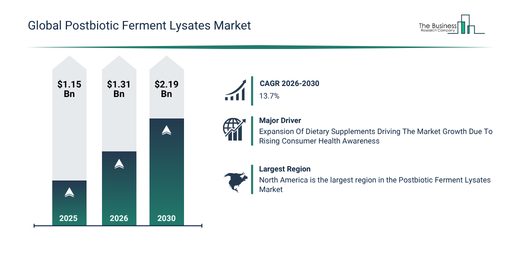
    The postbiotic ferment lysates market has seen rapid expansion over the past few years. It is anticipated to grow from $1.15 billion in 2025 to $1.31 billion in 2026, achieving a compound annual growth rate (CAGR) of 13.4%. This historical growth can be attributed to several factors, including increasing awareness of skin microbiome health, the greater incorporation of probiotics in personal care products, the adoption of postbiotic formulations in cosmetics, a rising demand for natural and bioactive ingredients, and the expansion of skincare and haircare product portfolios.

    The market for postbiotic ferment lysates is projected to experience substantial expansion over the coming years, reaching $2.19 billion by 2030, exhibiting a compound annual growth rate (CAGR) of 13.7%. This anticipated growth during the forecast period is driven by an intensified focus on functional and therapeutic postbiotics, heightened research and development activities concerning bacterial and yeast ferment lysates, an escalating demand across pharmaceutical and nutraceutical sectors, the broadening of online and specialized distribution channels, and an increasing consumer inclination towards anti-aging and hydration solutions. Key trends identified for the forecast period encompass the greater adoption of postbiotic products in liquid and serum formats, a surging demand for bacterial and yeast-derived lysates, their increasing incorporation into skincare and haircare formulations, the proliferation of freeze-dried and spray-dried powder variants, and a heightened emphasis on benefits related to anti-aging and hydration.

    Get A Free Sample Report With In-Depth Market Insights:

    https://thebusinessresearchcompany.com/sample_request?id=82147627&type=smp&name=Postbiotic%20Ferment%20Lysates%20Market%20Report%202026&utm_source=Blogs&utm_medium=Paid&utm_campaign=Oct_PR

    Postbiotic Ferment Lysates Market Demand Drivers: What’s Powering Industry Growth?

    The postbiotic ferment lysates market is anticipated to expand due to the increasing growth of dietary supplements. These supplements are manufactured goods designed to enhance a person’s diet by supplying essential nutrients such as vitamins, minerals, amino acids, and other bioactive compounds that might not be adequately obtained through regular food consumption alone. The primary factor behind the rising proliferation of dietary supplements is a heightened consumer interest in preventive healthcare, as people increasingly look for proactive, scientifically supported nutritional approaches to manage their long-term health, rather than relying solely on traditional medical interventions. This increase in the adoption of dietary supplements directly boosts the need for postbiotic ferment lysates, given their growing inclusion in supplement formulas to provide benefits like gut health, immune system support, and microbiome balance. For illustration, according to HerbalGram, a US-based international nonprofit organization, in September 2024, the total annual sales of herbal dietary supplements in the US saw an increase from $12.018 billion in 2022 to $12.551 billion in 2023, representing a growth of 4.4%. Consequently, the expansion of dietary supplements is a key driver for the growth of the postbiotic ferment lysates market. The growing cosmetic industry is projected to fuel the expansion of the postbiotic ferment lysates market in the future. This sector encompasses the creation, distribution, and sale of items designed to cleanse, beautify, and improve the human body’s appearance, including various skincare, haircare, makeup, and personal care formulations. The cosmetic industry’s ascent is primarily fueled by increasing consumer consciousness regarding skin health and the broad impact of social media, which has heightened the desire for inventive, scientifically supported beauty products, especially among younger populations. This boost in cosmetic activity directly elevates the need for advanced bioactive components such as postbiotic ferment lysates, which are increasingly integrated into high-end skincare products for their abilities to strengthen the skin barrier, reduce inflammation, and balance the microbiome. For example, a report released by the British Beauty Council, a UK-based organization, in July 2024, indicated that the personal care sector contributed £27.2 billion ($30.44 billion) to the GDP in 2023, marking an 11% increase compared to 2022. This expansion is attributed to a 10% rise in household expenditure on personal care goods and services across the UK. Therefore, the expanding cosmetic industry is a significant driver for the growth of the postbiotic ferment lysates market.

    Postbiotic Ferment Lysates Market Segment Outlook: Which Categories Are Growing Fastest?

    The postbiotic ferment lysates market covered in this report is segmented –

    1) By Product Type: Liquid, Powder, Cream, Serum, Other Product Types

    2) By Source: Bacterial, Yeast, Fungal, Other Sources

    3) By Distribution Channel: Online Stores, Supermarkets Or Hypermarkets, Specialty Stores, Other Distribution Channels

    4) By Application: Skincare, Haircare, Pharmaceuticals, Nutraceuticals, Other Applications

    5) By End-User: Cosmetic Industry, Pharmaceutical Industry, Personal Care, Other End-Users

    Subsegments:

    1) By Liquid: Water-Based, Oil-Based, Alcohol-Based, Glycerin-Based

    2) By Powder: Freeze-Dried, Spray-Dried, Granular, Micronized

    3) By Cream: Emulsion, Lotion, Balm, Gel-Cream

    4) By Serum: Hydrating, Anti-Aging, Brightening, Repairing

    5) By Other Product Types: Capsule, Tablet, Stick, Sheet Mask

    Postbiotic Ferment Lysates Market Key Players Shaping Industry Direction

    Major companies operating in the postbiotic ferment lysates market are The Procter & Gamble Company, DSM-Firmenich AG, International Flavors & Fragrances Inc., Lallemand Inc., Seppic SA, Mibelle AG, Lucas Meyer Cosmetics by IFF, Active Concepts LLC, Bloomage Biotechnology Corporation Limited, Codif Technologie Naturelle SAS, Greentech SA, Biocogent LLC, Vytrus Biotech S.A., Chemisches Laboratorium Dr. Kurt Richter GmbH, Codex Beauty Labs Inc., Lactobio A/S, Lipotrue S.L., Senyuan Biotechnology Co. Ltd., Active Cells Biotechnology S.r.l., Dermat India.

    View The Full Postbiotic Ferment Lysates Market Report:

    https://thebusinessresearchcompany.com/report/postbiotic-ferment-lysates-market-report?utm_source=Blogs&utm_medium=Paid&utm_campaign=Oct_PR

    Postbiotic Ferment Lysates Market Regional Analysis: Which Region Leads By Revenue?

    North America was the largest region in the postbiotic ferment lysates market in 2025. Asia-Pacific is expected to be the fastest-growing region in the forecast period. The regions covered in the postbiotic ferment lysates market report are Asia-Pacific, South East Asia, Western Europe, Eastern Europe, North America, South America, Middle East, Africa.

    Reach Out To Our Team:

    The Business Research Company: https://www.thebusinessresearchcompany.com/

    Americas: +1 310-496-7795

    Asia: +44 7882 955267 & +91 8897263534

    Europe: +44 7882 955267

    Email us at: marketing@tbrc.info

    Follow us on:

    LinkedIn: https://in.linkedin.com/company/the-business-research-company

    YouTube: https://www.youtube.com/channel/UC24_fI0rV8cR5DxlCpgmyFQ

    Global Market Model: https://www.thebusinessresearchcompany.com/global-market-model
  • Pharmaceutical Depyrogenation Equipment Market Growth Forecast: Market Size, Key Trends And Emerging Opportunities Through 2030

    Pharmaceutical Depyrogenation Equipment Market Growth Forecast: Market Size, Key Trends And Emerging Opportunities Through 2030

    Built to provide research that’s more actionable and strategically valuable, The Business Research Company’s 2026 market reports include market attractiveness analysis, total addressable market sizing, company benchmarking matrices, interactive Excel dashboards, broader supply chain intelligence, emerging startup tracking, and in-depth product insights.

    Pharmaceutical Depyrogenation Equipment Market Size Outlook: How Quickly Will Revenue Expand Through 2030?

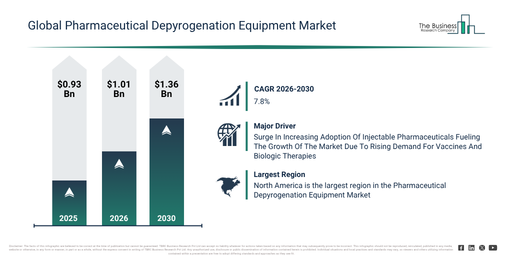
    The pharmaceutical depyrogenation equipment market has shown substantial growth in recent years. This market is anticipated to increase from $0.93 billion in 2025 to $1.01 billion in 2026, achieving a compound annual growth rate (CAGR) of 7.6%. The expansion witnessed in the past can be attributed to factors such as increasing pharmaceutical production volumes, a rising incidence of injectable drug manufacturing, the demand for sterile glassware and containers, regulatory requirements for endotoxin-free products, and the adoption of conventional batch depyrogenation systems.

    The pharmaceutical depyrogenation equipment market is projected to experience substantial expansion in the coming years. This market is anticipated to reach $1.36 billion by 2030, exhibiting a compound annual growth rate (CAGR) of 7.8%. The projected increase during this period is driven by factors such as the rise in vaccine and biologics manufacturing, the uptake of automated and high-throughput depyrogenation solutions, increased research and development efforts in sterile manufacturing technologies, the incorporation of sophisticated monitoring and IoT-enabled control systems, and the global proliferation of contract manufacturing organizations (CMOs). Key trends foreseen for the forecast period encompass a growing need for automated depyrogenation systems, a greater embrace of high-temperature dry heat sterilization, the broadening application of depyrogenation equipment in vaccine and biologics production, an escalating emphasis on regulatory adherence and sterility benchmarks, and the incorporation of real-time monitoring and process control mechanisms.

    Get A Free Sample Report With In-Depth Market Insights:

    https://thebusinessresearchcompany.com/sample_request?id=12917917&type=smp&name=Pharmaceutical%20Depyrogenation%20Equipment%20Market%20Report%202026&utm_source=Blogs&utm_medium=Paid&utm_campaign=Oct_PR

    Pharmaceutical Depyrogenation Equipment Market Expansion Drivers: What’s Shaping Future Growth?

    The increasing adoption of injectable pharmaceuticals is anticipated to fuel the expansion of the pharmaceutical depyrogenation equipment market in the coming years. Injectable drugs are sterile formulations administered directly into the body via syringes or infusions, bypassing the digestive system. Their rise is attributed to the growing prevalence of chronic conditions such as diabetes and cancer, which demand prompt and effective drug delivery. Pharmaceutical depyrogenation equipment plays a crucial role in supporting injectable pharmaceuticals by eliminating pyrogens and endotoxins from drug containers, thereby guaranteeing sterility and patient safety. For example, in July 2024, data from the United Nations Children’s Fund (UNICEF), a US-based international organization that provides humanitarian and developmental aid to children worldwide, indicated that the worldwide percentage of adolescent girls receiving at least one dose of the HPV vaccine saw an increase from 20% in 2022 to 27% in 2023, representing a 7-percentage-point rise. Consequently, the rising use of injectable pharmaceuticals is propelling the growth of the pharmaceutical depyrogenation equipment market. The growth of the biopharmaceutical and biotechnology industry is projected to drive forward the pharmaceutical depyrogenation equipment market. This industry focuses on developing medical treatments utilizing biological systems and advancing drug discovery, vaccine development, and therapies through innovations like genetic engineering and molecular biology. The rapid expansion of this sector is largely due to increased investment in the research and development of new biologics, biosimilars, and advanced therapies, all of which require extremely controlled and contamination-free manufacturing environments. The escalating scale of biopharmaceutical production heightens the necessity for depyrogenation equipment, as these systems are vital for ensuring endotoxin-free conditions essential for the safe production of injectable drugs, vaccines, and biological treatments. As an illustration, in January 2023, Cardinal Health Inc., a US-based healthcare company, reported that as of January 2022, the US had 33 FDA-approved biosimilar products, with 21 commercially available. By 2023, the number of FDA-approved biosimilars had risen to 40, with 25 available in the market. Therefore, the expansion of the biopharmaceutical and biotechnology industry is a key driver for the growth of the pharmaceutical depyrogenation equipment market.

    Pharmaceutical Depyrogenation Equipment Market Segment Performance And Emerging Opportunities

    The pharmaceutical depyrogenation equipment market covered in this report is segmented –

    1) By Equipment Type: Depyrogenation Tunnels, Dry Heat Sterilizers, Depyrogenation Ovens, Vial And Ampoule Depyrogenation Systems, Automated Depyrogenation Chambers

    2) By Technology: Conveyor-Based Systems, Batch Processing Ovens, Continuous Flow Tunnels, High-Temperature Plasma Systems

    3) By Application: Ampoules, Penicillin Bottles, Syringes

    4) By End-User: Pharmaceutical Manufacturers, Biotechnology Companies, Contract Manufacturing Organizations (CMOs), Research And Academic Institutes, Vaccine And Biologics Manufacturing Facilities

    Subsegments:

    1) By Depyrogenation Tunnels: Conveyor Depyrogenation Tunnels, Modular Depyrogenation Tunnels, High Throughput Depyrogenation Tunnels, Compact Depyrogenation Tunnels

    2) By Dry Heat Sterilizers: Horizontal Dry Heat Sterilizers, Vertical Dry Heat Sterilizers, Laboratory Dry Heat Sterilizers, Industrial Dry Heat Sterilizers

    3) By Depyrogenation Ovens: Bench Top Depyrogenation Ovens, Floor Standing Depyrogenation Ovens, High Capacity Depyrogenation Ovens, Programmable Depyrogenation Ovens

    4) By Vial And Ampoule Depyrogenation Systems: Glass Vial Depyrogenation Systems, Ampoule Depyrogenation Systems, Combined Vial And Ampoule Depyrogenation Systems, High Speed Container Depyrogenation Systems

    5) By Automated Depyrogenation Chambers: Fully Automated Depyrogenation Chambers, Semi Automated Depyrogenation Chambers, Programmable Depyrogenation Chambers, Large Capacity Depyrogenation Chambers

    Pharmaceutical Depyrogenation Equipment Market Competitive Landscape: Which Companies Lead The Industry?

    Major companies operating in the pharmaceutical depyrogenation equipment market are STERIS Public Limited Company, Getinge Aktiebolag, Azbil Telstar Sociedad Limitada Unipersonal, Syntegon Technology Gesellschaft mit beschränkter Haftung, Belimed Aktiengesellschaft, Shibuya Corporation (Kabushiki Kaisha Shibuya Kogyo), OPTIMA Packaging Group Gesellschaft mit beschränkter Haftung, Marchesini Group Società per Azioni, Bausch + Ströbel SE & Co. Kommanditgesellschaft, Shanghai Tofflon Science and Technology Group Co. Ltd., Zhangjiagang Tofflon Machinery Co. Ltd., Fedegari Autoclavi Società per Azioni, Pharmalab India Private Limited, Steriline Società a responsabilità limitata, De Lama Società per Azioni, Dara Pharmaceutical Packaging S.A., Neelam Industries Private Limited, Lodha International Limited Liability Partnership, Stericox India Private Limited, Steelco.

    View The Full Pharmaceutical Depyrogenation Equipment Market Report:

    https://thebusinessresearchcompany.com/report/pharmaceutical-depyrogenation-equipment-market-report?utm_source=Blogs&utm_medium=Paid&utm_campaign=Oct_PR

    Pharmaceutical Depyrogenation Equipment Market Regional Outlook: Where Is Opportunity Concentrated?

    North America was the largest region in the pharmaceutical depyrogenation equipment market in 2025. Asia-Pacific is expected to be the fastest-growing region in the forecast period. The regions covered in the pharmaceutical depyrogenation equipment market report are Asia-Pacific, South East Asia, Western Europe, Eastern Europe, North America, South America, Middle East, Africa.

    Reach Out To Our Team:

    The Business Research Company: https://www.thebusinessresearchcompany.com/

    Americas: +1 310-496-7795

    Asia: +44 7882 955267 & +91 8897263534

    Europe: +44 7882 955267

    Email us at: marketing@tbrc.info

    Follow us on:

    LinkedIn: https://in.linkedin.com/company/the-business-research-company

    YouTube: https://www.youtube.com/channel/UC24_fI0rV8cR5DxlCpgmyFQ

    Global Market Model: https://www.thebusinessresearchcompany.com/global-market-model
  • On-The-Go Greens Sticks Market Analysis: $1.74 Billion Market Size In 2026 And Future Growth Prospects

    On-The-Go Greens Sticks Market Analysis: $1.74 Billion Market Size In 2026 And Future Growth Prospects

    Featuring market attractiveness scoring, total addressable market sizing, company benchmarking matrices, interactive Excel dashboards, deeper supply chain intelligence, emerging startup tracking, and granular product-level insights, The Business Research Company’s 2026 market reports are built to deliver research that is both more actionable and more strategically valuable.

    On-The-Go Greens Sticks Market Growth Potential: How Will Market Size Shift Through 2030?

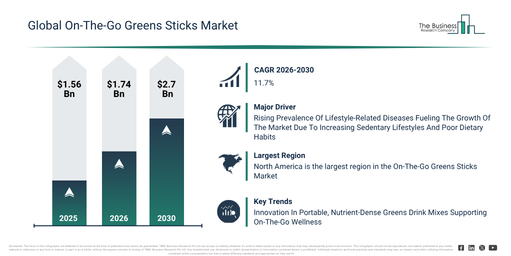
    The on-the-go greens sticks market has experienced rapid expansion in recent years. It is anticipated to grow from $1.56 billion in 2025 to $1.74 billion in 2026, reflecting a compound annual growth rate (CAGR) of 11.4%. The historical increase in market size can be attributed to several factors including consumers’ increasing health consciousness, a rising awareness of nutritional deficiencies, the expanding urban population with busy lifestyles, the growth of retail and e-commerce channels, and the adoption of superfood and functional ingredients.

    The market for on-the-go greens sticks is projected for substantial expansion in the coming years, reaching $2.7 billion by 2030, exhibiting a compound annual growth rate (CAGR) of 11.7%. This projected growth is driven by factors such as the increasing popularity of plant-based and organic dietary habits, the rising need for customized nutrition, greater integration of artificial intelligence and data analytics for product suggestions, the proliferation of online health and wellness platforms, and an enhanced emphasis on immune and digestive system well-being. Key trends anticipated during this period encompass a heightened demand for easily accessible nutritional options for active lifestyles, an increasing inclination towards ingredients derived from plants and superfoods, the wider use of functional supplements aimed at digestive health, the broadening availability of individualized nutrition and wellness offerings, and the growing favorability of powdered stick packs for individuals with demanding schedules.

    Get A Free Sample Report With In-Depth Market Insights:

    https://thebusinessresearchcompany.com/sample_request?id=34796384&type=smp&name=On-The-Go%20Greens%20Sticks%20Market%20Report%202026&utm_source=Blogs&utm_medium=Paid&utm_campaign=Oct_PR

    On-The-Go Greens Sticks Market Growth Momentum: What Factors Are Shaping Demand?

    The increasing incidence of lifestyle-related diseases is anticipated to boost the growth of the on-the-go greens sticks market in the future. These diseases are chronic health conditions that primarily arise from unhealthy habits such as poor diet, insufficient physical activity, excessive calorie intake, and prolonged sedentary behavior. The rising prevalence of lifestyle-related diseases stems from increasingly sedentary lifestyles, with more individuals dedicating extended hours to desk work and digital activities involving limited physical movement. On-the-go greens sticks assist in managing lifestyle-related health risks by providing a convenient source of plant-based nutrients, vitamins, and minerals, thereby facilitating balanced nutrition even when fresh foods are less accessible. For instance, in March 2025, the World Obesity Federation, a UK-based membership organization, predicted that by 2030, nearly 3 billion adults, representing about 50% of the global adult population, will be affected by overweight or obesity. This growing prevalence of lifestyle-related diseases is, therefore, fueling the expansion of the on-the-go greens sticks market.

    On-The-Go Greens Sticks Market Segment Trends And Revenue Contributors

    The on-the-go greens sticks market covered in this report is segmented –

    1) By Product Type: Superfood Greens Sticks, Protein Greens Sticks, Detox Greens Sticks, Other Product Types

    2) By Distribution Channel: Online Stores, Supermarkets And Hypermarkets, Convenience Stores, Specialty Stores, Other Distribution Channels

    3) By Application: Nutritional Supplements, Meal Replacements, Sports Nutrition, Other Applications

    4) By End User: Adults, Children, Elderly, Other End Users

    Subsegments:

    1) By Superfood Greens Sticks: Organic Superfood Greens Sticks, Fruit And Greens Blend Sticks, Algae Based Greens Sticks, Herbal Superfood Greens Sticks, Vegetable Greens Blend Sticks

    2) By Protein Greens Sticks: Plant Protein Greens Sticks, Pea Protein Greens Sticks, Rice Protein Greens Sticks, Hemp Protein Greens Sticks, Mixed Plant Protein Greens Sticks

    3) By Detox Greens Sticks: Herbal Detox Greens Sticks, Fiber Enriched Detox Greens Sticks, Chlorophyll Detox Greens Sticks, Alkalizing Detox Greens Sticks, Liver Support Detox Greens Sticks

    4) By Other Product Types: Probiotic Greens Sticks, Vitamin Enriched Greens Sticks, Adaptogenic Greens Sticks, Energy Boost Greens Sticks, Immune Support Greens Sticks

    On-The-Go Greens Sticks Market Trends Redefining Industry Growth

    Major companies operating in the on-the-go greens sticks market are focusing on developing convenient and nutrient-dense solutions, such as portable tangerine-flavored drink mixes, to support daily nutrition, improve portability, and cater to busy consumer lifestyles. A portable tangerine-flavored drink mix is a convenient powdered or stick-pack beverage that dissolves in water to deliver a refreshing citrus drink with added hydration or nutritional benefits. For instance, in May 2025, Good Enough Brands, a US-based health and wellness company, launched a Good Enough Greens Mix, a tangerine-flavored drink mix designed to deliver enhanced nutrition in a portable, easy-to-use format. The product combines a blend of plant-based ingredients, including leafy greens, fruits, and functional nutrients, aimed at supporting energy, digestion, and overall wellness while enabling consumers to maintain healthy habits on the go.

    On-The-Go Greens Sticks Market Competitive Landscape: Which Companies Lead The Industry?

    Major companies operating in the on-the-go greens sticks market are Nestlé S.A., Glanbia plc, 1st Phorm LLC, Grove Collaborative Inc., Nutricost LLC, Athletic Greens International Inc., Life Extension Foundation Buyers Club Inc., Organifi LLC, Grüns LLC, Zeon Lifesciences Limited, Sunwarrior LLC, Organixx LLC, Bare Performance Nutrition LLC, Pines International Inc., Beam Organics Inc., WelleCo Pty Ltd, Axe & Sledge Supplements LLC, MuscleSport LLC, NutraChamps LLC, MacroLife Naturals Inc., Vimergy LLC, Codeage LLC, Ora Organic LLC, Rewind Greens LLC, Kuli Kuli Foods Inc.

    View The Full On-The-Go Greens Sticks Market Report:

    https://thebusinessresearchcompany.com/report/on-the-go-greens-sticks-market-report?utm_source=Blogs&utm_medium=Paid&utm_campaign=Oct_PR

    On-The-Go Greens Sticks Market Regional Breakdown: Where Is Demand Concentrated?

    North America was the largest region in the on-the-go greens sticks market in 2025. Asia-Pacific is expected to be the fastest-growing region in the forecast period. The regions covered in the on-the-go greens sticks market report are Asia-Pacific, South East Asia, Western Europe, Eastern Europe, North America, South America, Middle East, Africa.

    Reach Out To Our Team:

    The Business Research Company: https://www.thebusinessresearchcompany.com/

    Americas: +1 310-496-7795

    Asia: +44 7882 955267 & +91 8897263534

    Europe: +44 7882 955267

    Email us at: marketing@tbrc.info

    Follow us on:

    LinkedIn: https://in.linkedin.com/company/the-business-research-company

    YouTube: https://www.youtube.com/channel/UC24_fI0rV8cR5DxlCpgmyFQ

    Global Market Model: https://www.thebusinessresearchcompany.com/global-market-model

  • Multi-Arm Polyethylene Glycol (PEG) Derivatives Market Size And Growth In 2026: Key Factors Shaping Future Demand

    Multi-Arm Polyethylene Glycol (PEG) Derivatives Market Size And Growth In 2026: Key Factors Shaping Future Demand

    Built to provide research that’s more actionable and strategically valuable, The Business Research Company’s 2026 market reports include market attractiveness analysis, total addressable market sizing, company benchmarking matrices, interactive Excel dashboards, broader supply chain intelligence, emerging startup tracking, and in-depth product insights.

    Multi-Arm Polyethylene Glycol (PEG) Derivatives Market Expansion Outlook: What Revenue Opportunities Are Ahead?

    The multi-arm polyethylene glycol (PEG) derivatives market has experienced swift expansion in recent years. This market is projected to expand from $6.02 billion in 2025 to $6.72 billion in 2026, exhibiting a compound annual growth rate (CAGR) of 11.6%. Historically, this expansion has been driven by factors such as progress in polymer chemistry, increased pharmaceutical research and development, a rise in biomedical research endeavors, a heightened emphasis on drug formulation stability, and the broadening of tissue engineering applications.

    The multi-arm polyethylene glycol (PEG) derivatives market size is anticipated to experience substantial growth in the upcoming years. It is projected to expand to $10.5 billion by 2030, achieving a compound annual growth rate (CAGR) of 11.8%. This expansion during the forecast period is primarily driven by the increasing integration of targeted drug delivery systems, advancements in regenerative medicine and tissue engineering, a growing need for personalized medicine, technological innovations in functionalization methods, and the expanding use in cosmetics and biomaterials applications. Significant trends anticipated for this period include a heightened demand for functionalized multi-arm PEG derivatives, expanding applications in drug delivery and tissue engineering, an increased focus on bioconjugation and pegylation techniques, broadening usage in diagnostics and medical devices, and greater adoption across cosmetics, personal care, and surface coatings.

    Get A Free Sample Report With In-Depth Market Insights:

    https://thebusinessresearchcompany.com/sample_request?id=35063442&type=smp&name=Multi-Arm%20Polyethylene%20Glycol%20%28PEG%29%20Derivatives%20Market%20Report%202026&utm_source=Blogs&utm_medium=Paid&utm_campaign=Oct_PR

    Multi-Arm Polyethylene Glycol (PEG) Derivatives Market Growth Factors: What’s Supporting Expansion?

    The expanding biopharmaceutical and biotechnology sectors are projected to fuel the expansion of the multi-arm polyethylene glycol (PEG) derivatives market in the foreseeable future. These industries encompass businesses and research facilities focused on creating biologics, vaccines, cell therapies, and gene-based treatments through biological processes and molecular techniques. Their growth is accelerating because of increased global investment in research and development initiatives for biological therapeutics. Multi-arm polyethylene glycol (PEG) derivatives aid biopharmaceutical advancements by enhancing the solubility, stability, and bioavailability of therapeutic proteins, peptides, and antibodies, thus facilitating effective drug formulation and delivery. For example, GOV.UK, a public sector information website from the UK, reported in October 2025 that the South East region had the highest life sciences employment across all UK ITL 1 regions, with 84,800 employees in 2023/2024, making up 24% of the total workforce. Consequently, the expansion of the biopharmaceutical and biotechnology industries is a key factor propelling the multi-arm polyethylene glycol (PEG) derivatives market forward.

    Multi-Arm Polyethylene Glycol (PEG) Derivatives Market Segment Landscape And Growth Outlook

    The multi-arm polyethylene glycol (PEG) derivatives market covered in this report is segmented –

    1) By Type: 3-Arm Polyethylene Glycol (PEG) Derivatives, 4-Arm Polyethylene Glycol (PEG) Derivatives, 6-Arm Polyethylene Glycol (PEG) Derivatives, 8-Arm Polyethylene Glycol (PEG) Derivatives, Other Multi-Arm PEG Derivatives

    2) By Functional Group: Amine Polyethylene Glycol (PEG) Derivatives, N-Hydroxysuccinimide Ester Polyethylene Glycol (PEG) Derivatives, Maleimide Polyethylene Glycol (PEG) Derivatives, Thiol Polyethylene Glycol (PEG) Derivatives, Azide Polyethylene Glycol (PEG) Derivatives, Vinyl Sulfone Polyethylene Glycol (PEG) Derivatives

    3) By Purity Grade: Monodisperse (Uniform), Polydisperse

    4) By Application: Drug Delivery, Tissue Engineering, Medical Devices, Bioconjugation And PEGylation, Diagnostics, Cosmetics And Personal Care, Surface Coatings And Biomaterials

    5) By End User: Pharmaceutical Companies, Biotechnology Companies, Research And Academic Institutes, Medical Device Manufacturers, Cosmetics And Personal Care Manufacturers

    Subsegments:

    1) By 3-Arm Polyethylene Glycol Derivatives: 3-Arm Hydroxyl Functionalized Polyethylene Glycol Derivatives, 3-Arm Amine Functionalized Polyethylene Glycol Derivatives, 3-Arm Carboxyl Functionalized Polyethylene Glycol Derivatives, 3-Arm Maleimide Functionalized Polyethylene Glycol Derivatives, 3-Arm Succinimidyl Functionalized Polyethylene Glycol Derivatives

    2) By 4-Arm Polyethylene Glycol Derivatives: 4-Arm Hydroxyl Functionalized Polyethylene Glycol Derivatives, 4-Arm Amine Functionalized Polyethylene Glycol Derivatives, 4-Arm Carboxyl Functionalized Polyethylene Glycol Derivatives, 4-Arm Maleimide Functionalized Polyethylene Glycol Derivatives, 4-Arm Succinimidyl Functionalized Polyethylene Glycol Derivatives

    3) By 6-Arm Polyethylene Glycol Derivatives: 6-Arm Hydroxyl Functionalized Polyethylene Glycol Derivatives, 6-Arm Amine Functionalized Polyethylene Glycol Derivatives, 6-Arm Carboxyl Functionalized Polyethylene Glycol Derivatives, 6-Arm Maleimide Functionalized Polyethylene Glycol Derivatives, 6-Arm Succinimidyl Functionalized Polyethylene Glycol Derivatives

    4) By 8-Arm Polyethylene Glycol Derivatives: 8-Arm Hydroxyl Functionalized Polyethylene Glycol Derivatives, 8-Arm Amine Functionalized Polyethylene Glycol Derivatives, 8-Arm Carboxyl Functionalized Polyethylene Glycol Derivatives, 8-Arm Maleimide Functionalized Polyethylene Glycol Derivatives, 8-Arm Succinimidyl Functionalized Polyethylene Glycol Derivatives

    5) By Other Multi-Arm Polyethylene Glycol Derivatives: Multi Arm Thiol Functionalized Polyethylene Glycol Derivatives, Multi Arm Aldehyde Functionalized Polyethylene Glycol Derivatives, Multi Arm Vinyl Sulfone Functionalized Polyethylene Glycol Derivatives, Multi Arm Epoxy Functionalized Polyethylene Glycol Derivatives, Multi Arm Methacrylate Functionalized Polyethylene Glycol Derivatives

    Multi-Arm Polyethylene Glycol (PEG) Derivatives Market Industry Trends: What’s Reshaping Demand?

    Leading companies in the multi-arm polyethylene glycol (PEG) derivatives market are concentrating on advancing precision polymer architecture design, including the development of multi-functionalized star-shaped polyethylene glycol linkers. These linkers are crucial for enabling controlled crosslinking, targeted attachment of biomolecules, and the formation of tunable hydrogels for various biomedical applications. Multi-functionalized star-shaped polyethylene glycol linkers are polymers where multiple polyethylene glycol chains emanate from a central core and conclude with reactive functional groups, such as maleimide, thiol, or norbornene, which facilitate accurate molecular coupling and the creation of stable polymer networks. For instance, in August 2024, Biopharma PEG Scientific Inc., a US-based biotechnology company, expanded its Multi-Arm PEG Product Line. This initiative was undertaken to bolster its range of high-purity PEG derivatives, specifically designed for advanced drug delivery, bioconjugation, and therapeutic development, thereby enhancing functionality, stability, and customization for intricate biopharmaceutical formulations. These derivatives are instrumental in efficient hydrogel formation, boosting cross-linking performance in drug delivery systems, and supporting improved stability and function in regenerative medicine and three-dimensional cell culture research.

    Multi-Arm Polyethylene Glycol (PEG) Derivatives Market Leading Companies And Competitive Benchmarking

    Major companies operating in the multi-arm polyethylene glycol (PEG) derivatives market are Merck KGaA, NOF Corporation, Avanti Polar Lipids Inc., JenKem Technology Co. Ltd., Huateng Pharmaceuticals Co. Ltd., Biochempeg Scientific Inc., Nanocs Inc., PEGWorks, Iris Biotech GmbH, Biopharma PEG Scientific Inc., Laysan Bio Inc., BroadPharm, Quanta BioDesign Ltd., Polypure AS, SunBio Corporation, PurePEG, Rapp Polymere GmbH, Advanced Biochemicals LLC, CD Bioparticles, BOC Sciences, Xiamen Sinopeg Biotech Co. Ltd.

    View The Full Multi-Arm Polyethylene Glycol (PEG) Derivatives Market Report:

    https://thebusinessresearchcompany.com/report/multi-arm-polyethylene-glycol-peg-derivatives-market-report?utm_source=Blogs&utm_medium=Paid&utm_campaign=Oct_PR

    Multi-Arm Polyethylene Glycol (PEG) Derivatives Market Top Region By Revenue And Market Share

    North America was the largest region in the multi-arm polyethylene glycol (PEG) derivatives market in 2025. Asia-Pacific is expected to be the fastest-growing region in the forecast period. The regions covered in the multi-arm polyethylene glycol (PEG) derivatives market report are Asia-Pacific, South East Asia, Western Europe, Eastern Europe, North America, South America, Middle East, Africa.

    Reach Out To Our Team:

    The Business Research Company: https://www.thebusinessresearchcompany.com/

    Americas: +1 310-496-7795

    Asia: +44 7882 955267 & +91 8897263534

    Europe: +44 7882 955267

    Email us at: marketing@tbrc.info

    Follow us on:

    LinkedIn: https://in.linkedin.com/company/the-business-research-company

    YouTube: https://www.youtube.com/channel/UC24_fI0rV8cR5DxlCpgmyFQ

    Global Market Model: https://www.thebusinessresearchcompany.com/global-market-model
  • Human Fibroblast Growth Factor Market Growth Forecast: Market Size, Key Trends And Emerging Opportunities Through 2030

    Human Fibroblast Growth Factor Market Growth Forecast: Market Size, Key Trends And Emerging Opportunities Through 2030

    Built to provide research that’s more actionable and strategically valuable, The Business Research Company’s 2026 market reports include market attractiveness analysis, total addressable market sizing, company benchmarking matrices, interactive Excel dashboards, broader supply chain intelligence, emerging startup tracking, and in-depth product insights.

    Human Fibroblast Growth Factor Market Growth Analysis: How Will Revenue Trend Over The Forecast Period?

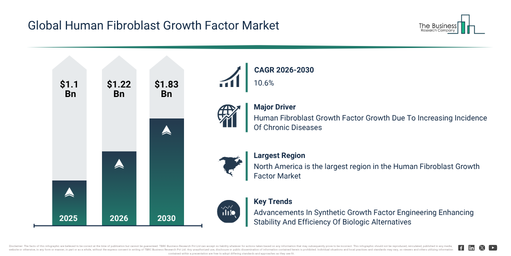
    The human fibroblast growth factor market has experienced rapid expansion in recent years. It is anticipated to grow from $1.1 billion in 2025 to $1.22 billion in 2026, registering a compound annual growth rate (CAGR) of 10.4%. The significant increase observed in prior periods can be attributed to developments in regenerative medicine research, a growing demand for human tissue derived proteins, increased investment in biotech R&D, the broadening of hospital and research institute networks, and the incorporation of hfgf into diagnostic applications.

    The human fibroblast growth factor market is projected for substantial expansion over the coming years. Its value is anticipated to reach $1.83 billion by 2030, exhibiting a compound annual growth rate (CAGR) of 10.6%. This projected increase is driven by factors such as the rising acceptance of recombinant hfgf products, the expansion of tissue engineering and cell therapy sectors, growing utilization in high-throughput drug screening, innovations in protein stabilization technologies, and the broadening reach of direct sales and e-commerce platforms. Key developments expected during this period involve a greater focus on developing recombinant hfgf variants, increased application of hfgf in tissue engineering, the wider availability of high-purity and lyophilized formulations, expanded adoption of hfgf in drug screening systems, and the incorporation of hfgf solutions into cell proliferation research.

    Get A Free Sample Report With In-Depth Market Insights:

    https://thebusinessresearchcompany.com/sample_request?id=81358654&type=smp&name=Human%20Fibroblast%20Growth%20Factor%20Market%20Report%202026&utm_source=Blogs&utm_medium=Paid&utm_campaign=Oct_PR

    Human Fibroblast Growth Factor Market Demand Drivers: What’s Powering Industry Growth?

    A rising prevalence of chronic diseases is anticipated to drive expansion in the human fibroblast growth factor market moving ahead. These are defined as enduring health conditions, typically lasting at least three months, which frequently advance gradually and are not generally curable, though their symptoms can be controlled, and they often necessitate continuous medical care or prolonged medication. The surge in chronic diseases stems from lifestyle modifications and environmental elements linked to contemporary living, which gradually accumulate to precipitate extended health issues. Human fibroblast growth factor assists in preventing chronic illnesses by enabling tissue repair, new blood vessel formation, and the reduction of persistent inflammation within the body, thereby diminishing the risk and advancement of prolonged health conditions. For example, reports from The Northern Arizona Medical Group, a US-based healthcare provider, indicated that by 2025, nearly three-quarters of the global population is expected to be living with at least one chronic illness, with the prevalence consistently rising. Specifically, in the United States, about 76.4% of adults in 2023 stated they had at least one chronic condition, and 51.4% reported having two or more. Consequently, the escalating occurrence of chronic diseases is propelling the expansion of the human fibroblast growth factor market.

    Human Fibroblast Growth Factor Market Segment Breakdown: Which Categories Lead On Revenue?

    The human fibroblast growth factor market covered in this report is segmented –

    1) By Product Type: Animal Derived, Natural, Recombinant

    2) By Form: Liquid, Lyophilized, Powder

    3) By Sales Channel: Direct Sales, Distributor, E Commerce

    4) By Application: Cell Proliferation, Diagnostics, Drug Screening, Tissue Engineering

    5) By End User: Biotech Companies, Hospitals, Pharmaceutical Companies, Research Institutes

    Subsegments:

    1) By Animal Derived: Bovine Derived Fibroblast Growth Factor, Porcine Derived Fibroblast Growth Factor, Other Animal Sources

    2) By Natural: Tissue Extracted Fibroblast Growth Factor, Plant Derived Fibroblast Growth Factor, Human Tissue Derived Fibroblast Growth Factor

    3) By Recombinant: Recombinant Human Fibroblast Growth Factor 1, Recombinant Human Fibroblast Growth Factor 2, Recombinant Human Fibroblast Growth Factor 7, Recombinant Human Fibroblast Growth Factor 10

    Human Fibroblast Growth Factor Market Innovation Trends: What Developments Are Reshaping The Industry?

    Companies operating in the human fibroblast growth factor market are increasingly concentrating on technological advancements, such as synthetic growth factor engineering. This allows for the development of engineered peptide or protein mimetics that replicate the biological activity of native FGFs, while providing enhanced stability, reduced degradation, improved receptor specificity, and lower production costs. Synthetic growth factor engineering involves the design and development of artificially created or modified molecules that mimic or enhance the biological activity of natural growth factors, concurrently improving properties like stability, specificity, and manufacturability. For instance, in October 2024, PeptiGrowth Inc, a Japan-based biotechnology company, launched a novel synthetic peptide growth factor. This factor offers enhanced biological performance by mimicking natural growth factor activity while also improving stability and efficiency. It delivers prolonged activity in cell culture systems, reducing the need for frequent media replacement. Additionally, these peptides exhibit greater resistance to degradation, ensuring consistent results across experiments.

    Human Fibroblast Growth Factor Market Competitive Landscape: Who Leads The Industry?

    Major companies operating in the human fibroblast growth factor market are Thermo Fisher Scientific Inc., Merck KGaA, Lonza Group AG, Bio-Techne Corporation, STEMCELL Technologies Inc., GenScript Biotech Corporation, Promega Corporation, Sino Biological Inc., Cell Signaling Technology Inc, ACROBiosystems Co. Ltd., RayBiotech Inc., Proteintech Group Inc., PromoCell GmbH, Creative Biolabs Co. Ltd., BPS Bioscience Inc., MedChemExpress LLC, ProSpec-Tany Technogene Ltd., Novoprotein Scientific Inc., Elabscience Biotechnology Inc., Enzo Life Sciences Inc.

    View The Full Human Fibroblast Growth Factor Market Report:

    https://thebusinessresearchcompany.com/report/human-fibroblast-growth-factor-market-report?utm_source=Blogs&utm_medium=Paid&utm_campaign=Oct_PR

    Human Fibroblast Growth Factor Market Geographic Landscape: Which Region Dominates Industry Growth?

    North America was the largest region in the human fibroblast growth factor market in 2025. Asia-Pacific is expected to be the fastest-growing region in the forecast period. The regions covered in the human fibroblast growth factor market report are Asia-Pacific, South East Asia, Western Europe, Eastern Europe, North America, South America, Middle East, Africa.

    Reach Out To Our Team:

    The Business Research Company: https://www.thebusinessresearchcompany.com/

    Americas: +1 310-496-7795

    Asia: +44 7882 955267 & +91 8897263534

    Europe: +44 7882 955267

    Email us at: marketing@tbrc.info

    Follow us on:

    LinkedIn: https://in.linkedin.com/company/the-business-research-company

    YouTube: https://www.youtube.com/channel/UC24_fI0rV8cR5DxlCpgmyFQ

    Global Market Model: https://www.thebusinessresearchcompany.com/global-market-model