Category: Pharmaceuticals

  • Iodine Deficiency Drug Market Outlook 2026–2030: Growth Trends, Market Dynamics And Emerging Opportunities

    Iodine Deficiency Drug Market Outlook 2026–2030: Growth Trends, Market Dynamics And Emerging Opportunities

    Backed by market attractiveness analysis, total addressable market sizing, company benchmarking matrices, interactive Excel dashboards, wider supply chain intelligence, emerging startup coverage, and detailed product-level insights, The Business Research Company’s 2026 market reports are designed to offer research that is more actionable and strategically valuable than ever.

    Iodine Deficiency Drug Market CAGR Outlook And Future Development

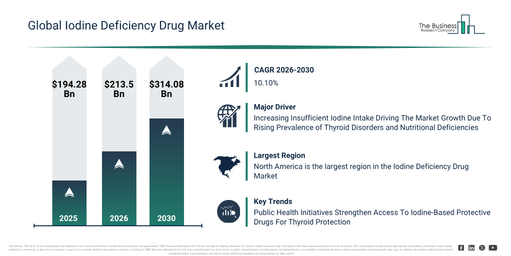
    The iodine deficiency drug market has experienced robust expansion in recent years. It is projected to grow from $194.28 billion in 2025 to $213.5 billion in 2026, demonstrating a compound annual growth rate (CAGR) of 9.9%. Historically, this market growth can be attributed to widespread iodine deficiency in developing regions, limited access to iodized salt programs, an increasing prevalence of thyroid disorders, low awareness of micronutrient nutrition, and inadequate public health screening systems.

    The iodine deficiency drug market size is projected to experience substantial growth in the upcoming years. It is anticipated to reach $314.08 billion by 2030, exhibiting a compound annual growth rate (CAGR) of 10.1%. Factors contributing to this growth during the forecast period include the expansion of national iodine supplementation programs, the increasing embrace of preventive healthcare nutrition strategies, the progress in precision nutrition and personalized medicine, enhanced digital health monitoring for dietary deficiencies, and developments in biofortified food programs. Key trends expected in this period encompass AI-enabled systems for thyroid disorder diagnostics and monitoring, the integration of digital health into iodine deficiency screening programs, cloud-based platforms for nutritional deficiency surveillance, intelligent public health supply chain tracking for micronutrient distribution, and optimization of iodine supplementation therapy through precision medicine.

    Get A Free Sample Report With In-Depth Market Insights:

    https://thebusinessresearchcompany.com/sample_request?id=67876820&type=smp&name=Iodine%20Deficiency%20Drug%20Market%20Report%202026&utm_source=Blogs&utm_medium=Paid&utm_campaign=Oct_PR

    Iodine Deficiency Drug Market Growth Backed By Core Demand Fundamentals

    The iodine deficiency drug market is anticipated to expand due to the escalating problem of insufficient iodine intake. This condition arises when dietary iodine consumption falls short of the daily amounts needed for proper thyroid function and metabolic control. A primary factor contributing to this widespread deficiency is changing eating habits, specifically a significant reduction in the intake of essential iodine-rich foods like dairy products, iodized salt, and bread, leading to a continuous decrease in iodine levels throughout the population. The escalating occurrence of inadequate iodine intake drives the need for iodine-deficiency drugs, which are crucial for correcting hormonal imbalances and averting related health issues such as goiter, hypothyroidism, and hindered neurodevelopment. For example, the Iodine Global Network, a Canada-based non-profit, non-government organization, reported in April 2025 that the count of nations experiencing insufficient iodine intake rose to 23 in 2025, an increase from 19 in 2022. Consequently, the rising instances of insufficient iodine intake are fueling the expansion of the iodine deficiency drug market.

    Iodine Deficiency Drug Market Segment Performance And Emerging Opportunities

    The iodine deficiency drug market covered in this report is segmented –

    1) By Drug Type: Iodine Supplements, Potassium Iodide, Other Drug Types

    2) By Formulation: Tablets, Liquid Solutions, Injectables

    3) By Route Of Administration: Oral, Intravenous, Other Routes Of Administration

    4) By Distribution Channel: Hospital Pharmacy, Retail Pharmacy, Online Pharmacy

    5) By End Users: Hospitals, Sleep Clinics, Homecare Settings, Other End Users

    Subsegments:

    1) By Iodine Supplements: Oral Iodine Tablets, Liquid Iodine Solutions, Iodine Capsules, Iodine Syrup Formulations, Sustained Release Iodine Supplements

    2) By Potassium Iodide: Potassium Iodide Tablets, Potassium Iodide Oral Solutions, Potassium Iodide Emergency Prophylaxis Formulations, Potassium Iodide Drops, Potassium Iodide Pediatric Formulations

    3) By Other Drug Types: Iodine Fortified Multivitamin Preparations, Combination Thyroid Hormone And Iodine Drugs, Iodine Enriched Nutritional Supplements, Topical Iodine Deficiency Treatment Preparations, Iodine Based Injectable Preparations

    Iodine Deficiency Drug Market Growth Trends Reshaping The Competitive Landscape

    Within the iodine deficiency drug market, major companies, government entities, and public health organizations are increasingly focusing on the supply of iodine-based medications to enhance thyroid protection and prevent related disorders. Initiatives for distributing iodine-based drugs aim to ensure timely access to essential medications, improve emergency preparedness, and safeguard vulnerable populations from thyroid-related health risks. For instance, in September 2025, the Delaware Emergency Management Agency (DEMA), a U. S.-based government office, announced the provision of potassium iodide tablets to residents in Townsend, U. S., as part of a public safety program designed to protect the thyroid gland during a nuclear emergency. This initiative underscores the growing emphasis on proactive distribution strategies and public awareness to mitigate iodine deficiency and radiation-related health risks.

    Iodine Deficiency Drug Market Leading Companies And Competitive Benchmarking

    Major companies operating in the iodine deficiency drug market are Pfizer Inc., Bayer AG, Sanofi S. A., Abbott Laboratories, Sun Pharmaceutical Industries Limited, Macleods Pharmaceuticals Limited, Amway Corp., Cadila Healthcare Ltd., Alembic Pharmaceuticals Limited, NOW Health Group Inc., Eris Lifesciences Limited, Emcure Pharmaceuticals Limited, Jarrow Formulas Inc., Life Extension Foundation Buyers Club Inc., Nature’s Way Products LLC, Pure Encapsulations LLC, Calibre Chemicals Pvt Ltd, Biotics Research Corporation, Thorne HealthTech Inc., Eskay Iodine Pvt Ltd, Samrat Pharmachem Limited

    View The Full Iodine Deficiency Drug Market Report:

    https://thebusinessresearchcompany.com/report/iodine-deficiency-drug-market-report?utm_source=Blogs&utm_medium=Paid&utm_campaign=Oct_PR

    Iodine Deficiency Drug Market Largest Region By Revenue And Market Share

    North America was the largest region in the iodine deficiency drug market in 2025. Asia-Pacific is expected to be the fastest-growing region in the forecast period. The regions covered in the iodine deficiency drug market report are Asia-Pacific, South East Asia, Western Europe, Eastern Europe, North America, South America, Middle East and Africa.

    Reach Out To Our Team:

    The Business Research Company: https://www.thebusinessresearchcompany.com/

    Americas: +1 310-496-7795

    Asia: +44 7882 955267 & +91 8897263534

    Europe: +44 7882 955267

    Email us at: marketing@tbrc.info

    Follow us on:

    LinkedIn: https://in.linkedin.com/company/the-business-research-company

    YouTube: https://www.youtube.com/channel/UC24_fI0rV8cR5DxlCpgmyFQ

    Global Market Model: https://www.thebusinessresearchcompany.com/global-market-model
  • Intracranial Hematoma Drug Market Research 2026: Market Size, Trends, Segments And Growth Forecast

    Intracranial Hematoma Drug Market Research 2026: Market Size, Trends, Segments And Growth Forecast

    Backed by market attractiveness analysis, total addressable market sizing, company benchmarking matrices, interactive Excel dashboards, wider supply chain intelligence, emerging startup coverage, and detailed product-level insights, The Business Research Company’s 2026 market reports are designed to offer research that is more actionable and strategically valuable than ever.

    Intracranial Hematoma Drug Market Revenue Growth On Track For A 9.7% CAGR Through 2030

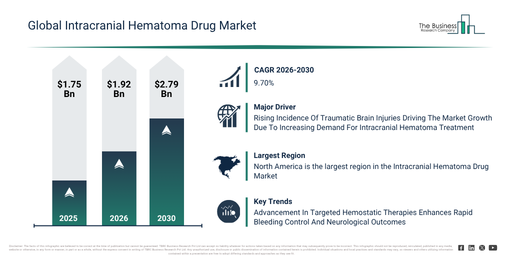
    The intracranial hematoma drug market has shown substantial growth over recent years. This market is projected to expand from $1.75 billion in 2025 to $1.92 billion in 2026, registering a compound annual growth rate (CAGR) of 9.5%. The historical growth can be attributed to the escalating occurrence of traumatic brain injuries, the restricted supply of sophisticated neurocritical care medications, an increase in hospitalizations for stroke and hemorrhage, greater uptake of osmotic therapy drugs, and the development of emergency care facilities.

    The intracranial hematoma drug market is projected to experience substantial expansion over the upcoming years. This market is set to reach $2.79 billion by 2030, exhibiting a compound annual growth rate (CAGR) of 9.7%. Key drivers for this growth include advancements in neuroprotective drug development, the integration of AI-based neurological monitoring systems, a rising demand for targeted intracranial pressure management therapies, the expansion of precision medicine for brain disorders, and increased investment in neurocritical care research. Significant trends anticipated during this period encompass AI-driven neurocritical care decision support systems, precision drug delivery systems designed for intracranial pressure management, the integration of real-time brain imaging analytics into emergency care, smart ICU monitoring solutions for neurotrauma patients, and cloud-based platforms for neurological patient data management.

    Get A Free Sample Report With In-Depth Market Insights:

    https://thebusinessresearchcompany.com/sample_request?id=62707085&type=smp&name=Intracranial%20Hematoma%20Drug%20Market%20Report%202026&utm_source=Blogs&utm_medium=Paid&utm_campaign=Oct_PR

    Intracranial Hematoma Drug Market Growth Momentum: What Factors Are Shaping Demand?

    An anticipated increase in the occurrence of traumatic brain injuries is set to boost the expansion of the intracranial hematoma drug market. These injuries, known as TBIs, involve impaired brain function resulting from head trauma like a bump, blow, jolt, or a penetrating wound. The expanding prevalence of TBIs is predominantly fueled by an older demographic, given that elderly individuals are more prone to falls, thereby increasing severe head injuries necessitating medical treatment. With the increased frequency of traumatic brain injuries, there is a heightened demand for intracranial hematoma drug specifically for intracranial hematomas, as internal skull bleeding represents one of the gravest and most life-threatening outcomes of these injuries. As an illustration, the South Dakota Department of Health, a US government health body, reported in September 2025 that TBI-related fatalities within the state climbed from 241 in 2023 to 267 in 2024, indicating an 11% surge. Consequently, the escalating occurrence of traumatic brain injuries is a key factor propelling the expansion of the intracranial hematoma drug market.

    Intracranial Hematoma Drug Market Segment Analysis And Revenue Potential

    The intracranial hematoma drug market covered in this report is segmented –

    1) By Drug Class: Hemostatic Agents, Antihypertensive Agents, Osmotic Agents, Anticonvulsants, Antifibrinolytic Agents, Calcium Channel Blockers, Sedatives And Analgesics

    2) By Mechanism Of Action: Coagulation Enhancers, Blood Pressure Reduction Agents, Intracranial Pressure Reduction Agents, Neuroprotective Agents, Anti-Inflammatory And Edema Reduction Agents, Seizure Prevention Agents

    3) By Route Of Administration: Intravenous, Oral, Intramuscular, Intrathecal

    4) By Distribution Channel: Hospital Pharmacies, Retail Pharmacies, Online Pharmacies

    5) By End User: Hospitals, Sleep Clinics, Homecare Settings, Other End Users

    Subsegments:

    1) By Hemostatic Agents: Activated Factor Seven, Tranexamic Acid, Aminocaproic Acid, Fibrinogen Concentrate

    2) By Antihypertensive Agents: Beta Blockers, Angiotensin Converting Enzyme Inhibitors, Angiotensin Receptor Blockers, Diuretics, Vasodilators

    3) By Osmotic Agents: Mannitol, Hypertonic Saline, Glycerol, Urea

    4) By Anticonvulsants: Phenytoin, Levetiracetam, Valproic Acid, Carbamazepine

    5) By Antifibrinolytic Agents: Tranexamic Acid, Aminocaproic Acid, Aprotinine

    6) By Calcium Channel Blockers: Nimodipine, Nicardipine, Diltiazem, Verapamil

    7) By Sedatives And Analgesics: Propofol, Midazolam, Fentanyl, Morphine, Dexmedetomidine

    Intracranial Hematoma Drug Market Trends Redefining Industry Growth

    Leading companies in the intracranial hematoma drug market are concentrating on developing innovative treatments, such as ready-to-use injectables, to meet clinical needs, enhance patient survival rates, and facilitate quicker emergency interventions. Ready-to-use injectables are sterile, pre-formulated medications designed for immediate administration without the requirement for dilution or reconstitution. For instance, in April 2023, Alveron Pharma, a Netherlands-based developer of a unique coagulation platform technology, initiated a Phase 1 clinical trial for its novel drug candidate OKL-1111, intended for the treatment of intracranial hemorrhage. This drug is designed as a rapid, first-line therapy with a universal mode of action that does not necessitate identification of the specific anticoagulant, thereby significantly reducing treatment delays. It is being developed as a ready-to-use injectable solution, eliminating time-consuming preparation steps, and aims to swiftly reverse the effects of anticoagulants and platelet inhibitors to prevent hematoma expansion. Moreover, preclinical data indicate a low risk of thrombotic complications, allowing for faster administration and potential use even in emergency settings, such as ambulances, consequently improving overall patient outcomes.

    Intracranial Hematoma Drug Market Top Companies Driving Competitive Growth

    Major companies operating in the intracranial hematoma drug market are Johnson & Johnson Services Inc., Pfizer Inc., Bayer AG, AstraZeneca PLC, Boehringer Ingelheim International GmbH, Teva Pharmaceutical Industries Ltd., Baxter International Inc., Grifols S. A., Sun Pharmaceutical Industries Limited, Aurobindo Pharma Limited, Dr. Reddy’s Laboratories Limited, Octapharma AG, Amneal Pharmaceuticals Inc., Zydus Lifesciences Limited, CSL Behring LLC, Otsuka Pharmaceutical Co. Ltd., Alveron Pharma AB, Acticor Biotech SA, Aegis Lifesciences Private Limited, Acasti Pharma Inc.

    View The Full Intracranial Hematoma Drug Market Report:

    https://thebusinessresearchcompany.com/report/intracranial-hematoma-drug-market-report?utm_source=Blogs&utm_medium=Paid&utm_campaign=Oct_PR

    Intracranial Hematoma Drug Market Global Footprint: Which Region Leads The Industry?

    North America was the largest region in the intracranial hematoma drug market in 2025. Asia-Pacific is expected to be the fastest-growing region in the forecast period. The regions covered in the intracranial hematoma drug market report are Asia-Pacific, South East Asia, Western Europe, Eastern Europe, North America, South America, Middle East and Africa.

    Reach Out To Our Team:

    The Business Research Company: https://www.thebusinessresearchcompany.com/

    Americas: +1 310-496-7795

    Asia: +44 7882 955267 & +91 8897263534

    Europe: +44 7882 955267

    Email us at: marketing@tbrc.info

    Follow us on:

    LinkedIn: https://in.linkedin.com/company/the-business-research-company

    YouTube: https://www.youtube.com/channel/UC24_fI0rV8cR5DxlCpgmyFQ

    Global Market Model: https://www.thebusinessresearchcompany.com/global-market-model
  • Hormone-Refractory Oncology Drug Market Size Reaches $4.4 Billion In 2026: What Is Driving Growth?

    Hormone-Refractory Oncology Drug Market Size Reaches $4.4 Billion In 2026: What Is Driving Growth?

    Featuring market attractiveness scoring, total addressable market sizing, company benchmarking matrices, interactive Excel dashboards, deeper supply chain intelligence, emerging startup tracking, and granular product-level insights, The Business Research Company’s 2026 market reports are built to deliver research that is both more actionable and more strategically valuable.

    Hormone-Refractory Oncology Drug Market Expansion Outlook: What Revenue Opportunities Are Ahead?

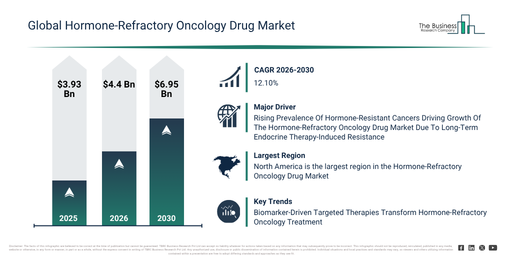
    The hormone-refractory oncology drug market has seen rapid growth in its size over recent years. Its expansion is anticipated to be from $3.93 billion in 2025 to $4.4 billion in 2026, achieving a compound annual growth rate (CAGR) of 11.9%. Several factors underpin this historical growth, including the increasing global prevalence of prostate and breast cancer cases, a greater dependence on hormone therapy for early-stage cancer treatment, the broadening scope of oncology drug research and clinical trials, the growing acceptance of chemotherapy and endocrine therapy combinations, and heightened healthcare spending on cancer treatment and improvements in hospital oncology infrastructure.

    The hormone-refractory oncology drug market is projected to experience substantial expansion in the coming years. This market is anticipated to reach $6.95 billion by 2030, exhibiting a compound annual growth rate (CAGR) of 12.1%. Factors contributing to this growth during the forecast period include the rise of precision medicine and biomarker-driven oncology therapies, greater development of advanced targeted cancer treatments, the increasing uptake of combination immunotherapy and small molecule drugs, the expansion of individualized oncology treatment routes within hospitals, and a surge in regulatory approvals for innovative refractory cancer medications. Key trends anticipated in the same period involve a growing embrace of targeted kinase inhibitors and next-generation biologics for challenging cancer types, an increased reliance on combination therapy strategies to address hormone resistance in cancer care, the broadening of precision oncology via biomarker-guided treatment selection for advanced malignancies, expanding development of immunotherapy-based options for managing hormone-refractory cancer, and a noticeable move towards oral oncology drugs to enhance patient adherence in prolonged treatments.

    Get A Free Sample Report With In-Depth Market Insights:

    https://thebusinessresearchcompany.com/sample_request?id=41541215&type=smp&name=Hormone-Refractory%20Oncology%20Drug%20Market%20Report%202026&utm_source=Blogs&utm_medium=Paid&utm_campaign=Oct_PR

    Hormone-Refractory Oncology Drug Market Growth Catalysts And Demand Drivers

    The rising occurrence of hormone-resistant cancers is anticipated to fuel the expansion of the hormone-refractory oncology drug market in the future. These are malignancies that persist in growing or spreading even when patients receive hormone-blocking treatments, including conditions such as castration-resistant prostate cancer (CRPC) or endocrine-resistant breast cancer. The increasing prevalence of hormone-resistant cancers stems from extended exposure to endocrine (hormone) therapies, prompting tumor cells to adapt and evolve resistance mechanisms over a period. The development of hormone-refractory oncology drugs aids in managing these resistant disease states by offering specific therapeutic alternatives when standard hormone therapies prove ineffective. For instance, in October 2025, according to NHS England, a UK-based publicly funded healthcare system, there were 354,820 new cancer diagnoses in 2023, representing an increase of 8,605 from 2022. Consequently, the growing incidence of hormone-resistant cancers is a key factor propelling the expansion of the hormone-refractory oncology drug market.

    Hormone-Refractory Oncology Drug Market Segment Analysis Spotlighting Growth Areas

    The hormone-refractory oncology drug market covered in this report is segmented –

    1) By Drug Type: Anti-Androgens, Aromatase Inhibitors, Estrogen Receptor Modulators, Gonadotropin Releasing Hormone Agonists/Antagonists, Other Drug Types

    2) By Therapy Approach: Monotherapy, Combination Therapy

    3) By Route Of Administration: Oral, Injectable

    4) By Distribution Channel: Hospital Pharmacies, Retail Pharmacies, Online Pharmacies

    5) By Application: Prostate Cancer, Breast Cancer, Other Cancers

    Subsegments:

    1) By Anti-Androgens: Non Steroidal Anti Androgens, Steroidal Anti Androgens, Second Generation Anti Androgens

    2) By Aromatase Inhibitors: Non Steroidal Aromatase Inhibitors, Steroidal Aromatase Inhibitors

    3) By Estrogen Receptor Modulators: Selective Estrogen Receptor Modulators, Selective Estrogen Receptor Degraders

    4) By Gonadotropin Releasing Hormone Agonists / Antagonists: Gonadotropin Releasing Hormone Agonists, Gonadotropin Releasing Hormone Antagonists

    5) By Other Drug Types: Androgen Biosynthesis Inhibitors, Targeted Kinase Inhibitors, Immunotherapy Agents

    Hormone-Refractory Oncology Drug Market Trends Shaping Long-Term Demand

    Major companies within the hormone-refractory oncology drug market are focusing on biomarker-driven targeted therapies that inhibit specific molecular pathways contributing to resistance to hormone treatment. These therapies are designed to identify genetic alterations and selectively block signaling pathways that promote tumor growth after endocrine therapy has failed. For example, in November 2023, AstraZeneca, a UK-based pharmaceutical company, secured U. S. Food and Drug Administration (FDA) approval for Truqap (capivasertib). This approval was for its use in combination with fulvestrant for the treatment of hormone receptor-positive, HER2-negative advanced breast cancer with PIK3CA, AKT1, or PTEN alterations following disease progression. This therapy specifically inhibits the AKT signaling pathway and employs biomarker-based patient selection to enhance treatment outcomes. The approval was substantiated by positive results from the Phase III CAPItello-291 trial, which demonstrated improved progression-free survival in patients with these genetic alterations, thereby strengthening AstraZeneca’s oncology portfolio and expanding treatment options for patients suffering from hormone-resistant breast cancer.

    Hormone-Refractory Oncology Drug Market Top Companies Driving Competitive Growth

    Major companies operating in the hormone-refractory oncology drug market are Johnson & Johnson, F. Hoffmann-La Roche Ltd., Merck & Co. Inc., Pfizer Inc., AbbVie Inc., Bayer AG, Sanofi S. A., Novartis AG, AstraZeneca plc, Bristol-Myers Squibb Company, GlaxoSmithKline plc, Eli Lilly and Company, Takeda Pharmaceutical Company Limited, Amgen Inc., Astellas Pharma Inc., Daiichi Sankyo Company Limited, Incyte Corporation, Ipsen S. A., Exelixis Inc., Arvinas Inc., Nuvation Bio Inc., Immunic Inc., Noxopharm Limited, Accutar Biotechnology Inc.

    View The Full Hormone-Refractory Oncology Drug Market Report:

    https://thebusinessresearchcompany.com/report/hormone-refractory-oncology-drug-market-report?utm_source=Blogs&utm_medium=Paid&utm_campaign=Oct_PR

    Hormone-Refractory Oncology Drug Market Global Footprint: Which Region Leads The Industry?

    North America was the largest region in the hormone-refractory oncology drug market in 2025. Asia-Pacific is expected to be the fastest-growing region in the forecast period. The regions covered in the hormone-refractory oncology drug market report are Asia-Pacific, South East Asia, Western Europe, Eastern Europe, North America, South America, Middle East and Africa.

    Reach Out To Our Team:

    The Business Research Company: https://www.thebusinessresearchcompany.com/

    Americas: +1 310-496-7795

    Asia: +44 7882 955267 & +91 8897263534

    Europe: +44 7882 955267

    Email us at: marketing@tbrc.info

    Follow us on:

    LinkedIn: https://in.linkedin.com/company/the-business-research-company

    YouTube: https://www.youtube.com/channel/UC24_fI0rV8cR5DxlCpgmyFQ

    Global Market Model: https://www.thebusinessresearchcompany.com/global-market-model
  • Hair Growth Botanical Blends Market Forecast To Reach $3.05 Billion By 2030: Key Trends Explained

    Hair Growth Botanical Blends Market Forecast To Reach $3.05 Billion By 2030: Key Trends Explained

    Featuring market attractiveness scoring, total addressable market sizing, company benchmarking matrices, interactive Excel dashboards, deeper supply chain intelligence, emerging startup tracking, and granular product-level insights, The Business Research Company’s 2026 market reports are built to deliver research that is both more actionable and more strategically valuable.

    Hair Growth Botanical Blends Market Growth Potential: How Will Market Size Shift Through 2030?

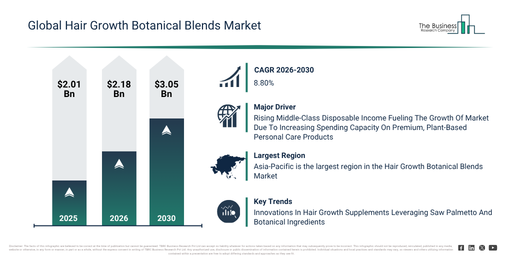
    The hair growth botanical blends market size has demonstrated robust growth in recent years. It is projected to expand from $2. 01 billion in 2025 to $2. 18 billion in 2026, at a compound annual growth rate (CAGR) of 8. 6%. The expansion during the historic period can be attributed to the adoption of traditional herbal medicine in hair care, a rising prevalence of stress-induced hair loss, an increasing consumer inclination towards natural cosmetics, the expansion of salon-based hair treatment services, and growing awareness of personal care products free from chemicals.

    The hair growth botanical blends market is poised for significant expansion in the coming years, with its size projected to reach $3.05 billion by 2030, exhibiting a compound annual growth rate (CAGR) of 8.8%. This anticipated growth during the forecast period is propelled by factors such as the rise of personalized botanical hair care formulations, enhanced clinical validation of plant-based active ingredients, increasing consumer demand for solutions targeting the scalp microbiome, the incorporation of bioactive peptides into botanical blends, and the proliferation of direct-to-consumer digital hair care brands. Key trends identified for the forecast timeframe encompass the renewed interest in Ayurvedic and traditional herbal remedies for hair care, the development of scalp microbiome-balancing formulations, the emergence of adaptogenic botanical blends addressing stress-related hair loss, herbal hair protection systems designed for pollution defense, and multi-functional plant-based scalp tonics and densifying treatments.

    Get A Free Sample Report With In-Depth Market Insights:

    https://thebusinessresearchcompany.com/sample_request?id=99012049&type=smp&name=Hair%20Growth%20Botanical%20Blends%20Market%20Report%202026&utm_source=Blogs&utm_medium=Paid&utm_campaign=Oct_PR

    Hair Growth Botanical Blends Market Growth Factors: What’s Supporting Expansion?

    The market for hair growth botanical blends is anticipated to experience growth due to the increasing disposable income of the middle class. Disposable income represents the funds an individual or household has available for spending or saving after all taxes have been paid. This rise in disposable incomes is primarily driven by economic expansion, which leads to the creation of more jobs and higher wages, thereby increasing the amount of money individuals retain post-tax for spending and saving. The growth in disposable income among the higher middle class fuels the demand for hair growth botanical blends, as it enables consumers to invest more in premium, plant-based products that demonstrate proven efficacy, consequently boosting the adoption of high-quality, results-oriented hair care solutions. As an illustration, in March 2026, the Bureau of Economic Analysis (BEA), a US-based government agency, reported that disposable personal income (DPI), which is personal income after deducting current taxes, advanced by $219.9 billion (0.9%), concurrently, personal consumption expenditures (PCE) increased by $81.1 billion (0.4%). Thus, the expanding middle-class disposable income is a significant driver for the growth of the hair growth botanical blends market.

    Hair Growth Botanical Blends Market Segmentation And Category Overview

    The hair growth botanical blends market covered in this report is segmented –

    1) By Product: Shampoos, Serums, Oils, Supplements, Other Products

    2) By Distribution Channel: Online Stores, Supermarkets Or Hypermarkets, Pharmacies, Specialty Stores, Other Distribution Channels

    3) By Application: Men, Women, Unisex

    4) By End User: Individual Consumers, Professional Salons, Dermatology Clinics, Hair Care Treatment Centers

    Subsegments:

    1) By Shampoos: Herbal Infused Shampoos, Botanical Extract Shampoos, Plant Based Nourishing Shampoos, Sulfate Free Botanical Shampoos, Scalp Revitalizing Herbal Shampoos

    2) By Serums: Botanical Hair Growth Serums, Herbal Concentrate Serums, Plant Extract Strengthening Serums, Scalp Repair Botanical Serums, Natural Follicle Stimulating Serums

    3) By Oils: Herbal Infused Hair Oils, Botanical Blend Hair Oils, Plant Extract Nourishing Oils, Scalp Therapy Botanical Oils, Cold Pressed Herbal Hair Oils

    4) By Supplements: Botanical Hair Growth Capsules, Herbal Nutritional Supplements, Plant Based Hair Health Tablets, Botanical Extract Hair Support Supplements, Natural Hair Strengthening Supplements

    5) By Other Products: Botanical Hair Growth Sprays, Herbal Hair Masks And Creams, Scalp Treatment Tonics, Leave In Conditioning Treatments, Natural Hair Growth Kits

    Hair Growth Botanical Blends Market Industry Trends: What’s Reshaping Demand?

    Leading companies in the hair growth botanical blends market are concentrating on developing innovative products, such as saw palmetto extract, to foster a healthy scalp environment, which in turn can promote stronger and healthier hair growth. Saw palmetto extract is a natural, plant-derived substance sourced from the berries of the saw palmetto palm, commonly utilized to support hair health and hormonal balance. For instance, in March 2026, Live Conscious, a US-based lifestyle wellness brand, launched Clinical Hair Growth+, an advanced hair growth supplement featuring Serevelle, a scientifically validated saw palmetto extract. A double-blind, randomized, placebo-controlled study demonstrated its ability to boost hair growth by 35% within 90 days. This product is specifically formulated for men and women experiencing age-related hair thinning, shedding, or reduced density. It combines clinically supported ingredients, collagen, botanicals, and essential vitamins to nourish hair from within. The supplement works to decrease everyday hair shedding, strengthen hair structure, and support visible hair density. Additionally, it encourages healthy hair growth at the root while maintaining overall scalp health.

    Hair Growth Botanical Blends Market Competitive Analysis Of Leading Industry Participants

    Major companies operating in the hair growth botanical blends market are Rahua Beauty, Blossom Kochhar Aroma Magic Pvt. Ltd., The Good Glamm Group, WishCare, Hindustan Unilever Limited, Innersense Organic Beauty Inc., Rolland S. r. l., Brillare Science Pvt. Ltd., Lotus Herbals Pvt. Ltd., Juicy Chemistry Pvt. Ltd., Biotique Bio Veda Action Research Company, Soulflower Co. Pvt. Ltd., Khadi Natural Healthcare Pvt. Ltd., Forest Essentials Pvt. Ltd., Kama Ayurveda Pvt. Ltd., Briogeo Hair Care LLC, Herbal Hills Wellness India Pvt. Ltd., EVOLVh Inc., Bo International Pvt. Ltd., Nakshtra Botanique Pvt. Ltd.

    View The Full Hair Growth Botanical Blends Market Report:

    https://thebusinessresearchcompany.com/report/hair-growth-botanical-blends-market-report?utm_source=Blogs&utm_medium=Paid&utm_campaign=Oct_PR

    Hair Growth Botanical Blends Market Geographic Distribution And Regional Opportunities

    Asia-Pacific was the largest region in the hair growth botanical blends market in 2025. North America is expected to be the fastest-growing region in the forecast period. The regions covered in the hair growth botanical blends market report are Asia-Pacific, South East Asia, Western Europe, Eastern Europe, North America, South America, Middle East and Africa.

    Reach Out To Our Team:

    The Business Research Company: https://www.thebusinessresearchcompany.com/

    Americas: +1 310-496-7795

    Asia: +44 7882 955267 & +91 8897263534

    Europe: +44 7882 955267

    Email us at: marketing@tbrc.info

    Follow us on:

    LinkedIn: https://in.linkedin.com/company/the-business-research-company

    YouTube: https://www.youtube.com/channel/UC24_fI0rV8cR5DxlCpgmyFQ

    Global Market Model: https://www.thebusinessresearchcompany.com/global-market-model
  • Drug Resistant Virus Treatment Market Growth Potential: What The Latest Forecast Reveals

    Drug Resistant Virus Treatment Market Growth Potential: What The Latest Forecast Reveals

    Built to provide research that’s more actionable and strategically valuable, The Business Research Company’s 2026 market reports include market attractiveness analysis, total addressable market sizing, company benchmarking matrices, interactive Excel dashboards, broader supply chain intelligence, emerging startup tracking, and in-depth product insights.

    Drug Resistant Virus Treatment Market Forecast: What Value Will The Market Reach By 2030?

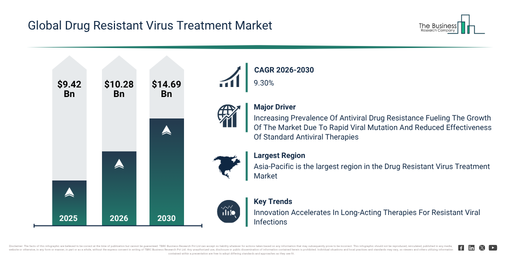
    The market for drug-resistant virus treatments has experienced strong growth in recent years. It is projected to increase from $9. 42 billion in 2025 to $10. 28 billion in 2026, achieving a compound annual growth rate (CAGR) of 9. 1%. This historical growth can be attributed to limited diversity in antiviral drugs, the emergence of drug resistance cases in HIV and hepatitis, reliance on single-mechanism antiviral therapies, the expansion of global viral outbreak monitoring systems, and an increase in hospital-based infectious disease treatment protocols.

    The drug resistant virus treatment market is set for significant expansion over the next few years. It is forecast to achieve a valuation of $14.69 billion by 2030, growing at a compound annual growth rate (CAGR) of 9.3%. This anticipated growth can be attributed to factors such as the development of precision antiviral therapies, the increasing occurrence of multi-drug resistant viral strains, heightened investment in monoclonal antibody research, the expansion of genomic-based resistance tracking, and the strengthening of global pandemic preparedness programs. Prominent trends expected during this forecast period include the adoption of next-generation antiviral drug combination therapies, the creation of broad-spectrum antiviral resistance inhibitors, personalized viral resistance profiling diagnostics, the use of adaptive clinical trial designs for resistant viral strains, and the broadening of monoclonal antibody-based rescue therapies.

    Get A Free Sample Report With In-Depth Market Insights:

    https://thebusinessresearchcompany.com/sample_request?id=28184972&type=smp&name=Drug%20Resistant%20Virus%20Treatment%20Market%20Report%202026&utm_source=Blogs&utm_medium=Paid&utm_campaign=Oct_PR

    Drug Resistant Virus Treatment Market Growth Factors Behind Sustained Expansion

    The rising occurrence of antiviral drug resistance is anticipated to drive the expansion of the drug-resistant virus treatment market in the future. This resistance refers to a virus’s capacity to evolve and persist even when exposed to antiviral drugs, thereby diminishing the medication’s efficacy. The increase in antiviral drug resistance stems from the fast mutation rates of viruses, allowing them to rapidly acquire resistance against current therapies. Treatments for drug-resistant viruses address antiviral drug resistance through the use of alternative or combined antiviral therapies. These therapies aim at various viral mechanisms to suppress strains that have become unresponsive to conventional medications. As an illustration, in November 2025, the World Health Organization (WHO), an intergovernmental organization headquartered in Switzerland, indicated that if no mitigation strategies are implemented, HIV drug resistance to Dolutegravir (DTG) is foreseen to significantly increase among individuals experiencing failure of DTG-based ART, climbing from 18% in 2023 to 42% by 2035. Consequently, the growing prevalence of antiviral drug resistance is a key factor propelling the expansion of the drug-resistant virus treatment market.

    Drug Resistant Virus Treatment Market Segmentation And Category Overview

    The drug resistant virus treatment market covered in this report is segmented –

    1) By Virus Type: Human Immunodeficiency Virus Drug Resistant, Hepatitis B Virus Treatment Experienced, Cytomegalovirus Resistant Or Refractory, Influenza Resistant Strains, Herpes Simplex Virus Or Varicella Zoster Virus Acyclovir Resistant, Other Virus Types

    2) By Therapy Class: Small Molecule Antivirals, Long Acting Injectables, Monoclonal Antibodies, Host Targeted Therapies, Combination Regimens

    3) By Treatment Setting: Outpatient, Inpatient, Specialty Infusion Centers

    4) By Route Of Administration: Oral, Intravenous, Subcutaneous, Intramuscular

    5) By End User: Hospitals, Specialty Clinics, Homecare Settings

    Subsegments:

    1) By Human Immunodeficiency Virus Drug Resistant: First Line Resistance, Second Line Resistance, Multi Drug Resistance, Transmitted Drug Resistance, Acquired Drug Resistance

    2) By Hepatitis B Virus Treatment Experienced: Nucleoside Analogue Resistant, Lamivudine Resistant, Entecavir Resistant, Tenofovir Partial Response, Multi Drug Resistant Hepatitis B

    3) By Cytomegalovirus Resistant Or Refractory: Ganciclovir Resistant, Foscarnet Resistant, Cidofovir Resistant, Multi Drug Resistant Cytomegalovirus, Refractory Cytomegalovirus Infection

    4) By Influenza Resistant Strains: Neuraminidase Inhibitor Resistant, Adamantane Resistant, Oseltamivir Resistant, Zanamivir Reduced Susceptibility, Multi Drug Resistant Influenza

    5) By Herpes Simplex Virus Or Varicella Zoster Virus Acyclovir Resistant: Acyclovir Resistant Herpes Simplex, Acyclovir Resistant Varicella Zoster, Foscarnet Resistant Herpes Virus, Cidofovir Resistant Herpes Virus, Multi Drug Resistant Herpes Virus

    6) By Other Virus Types: Respiratory Syncytial Virus Resistant, Adenovirus Resistant, Enterovirus Resistant, Norovirus Resistant, Emerging Viral Resistant Infections

    Drug Resistant Virus Treatment Market Industry Trends Fueling Future Revenue Growth

    Major companies within the drug resistant virus treatment market are prioritizing the development of innovative therapies, notably twice-yearly long-acting capsid inhibitor prophylactics, to enhance adherence and deliver sustained protection against drug-resistant viral infections. These twice-yearly long-acting capsid inhibitor prophylactics are injectable antiviral treatments designed to target the viral capsid, thereby blocking replication over an extended duration, which helps patients maintain viral suppression and prevent drug-resistant infections with just two doses per year. For instance, in June 2025, Gilead Sciences Inc., a US-based biopharmaceutical company, obtained U. S. Food and Drug Administration (FDA) approval for Yeztugo (lenacapavir), a twice-yearly long-acting HIV-1 capsid inhibitor. This approval is specifically for pre-exposure prophylaxis (PrEP) to mitigate the risk of sexually acquired HIV-1 infection in adults and adolescents weighing at least 35 kg, establishing it as the first and sole twice-yearly PrEP option sanctioned in the United States. Yeztugo comprises lenacapavir, which obstructs the HIV capsid protein essential for viral assembly and replication, and is administered via two subcutaneous injections that offer up to six months of protection, providing significant advantages such as extended dosing intervals, exceptional efficacy in clinical trials (= 99.9% protection), and improved adherence compared with daily oral PrEP regimens such as FTC/TDF.

    Drug Resistant Virus Treatment Market Competitive Overview And Top Companies

    Major companies operating in the drug resistant virus treatment market are Johnson & Johnson, F. Hoffmann-La Roche Ltd., Merck & Co. Inc., Pfizer Inc., AbbVie Inc., Sanofi S. A., Novartis AG, AstraZeneca plc, Bristol-Myers Squibb Company, GlaxoSmithKline plc, Gilead Sciences Inc., Regeneron Pharmaceuticals Inc., Moderna Inc., BioNTech SE, Alnylam Pharmaceuticals Inc., Enanta Pharmaceuticals Inc., Vir Biotechnology Inc., Atea Pharmaceuticals Inc., Arbutus Biopharma Corporation, Chimerix Inc.

    View The Full Drug Resistant Virus Treatment Market Report:

    https://thebusinessresearchcompany.com/report/drug-resistant-virus-treatment-market-report?utm_source=Blogs&utm_medium=Paid&utm_campaign=Oct_PR

    Drug Resistant Virus Treatment Market Top Region: Where Does Most Revenue Come From?

    Asia-Pacific was the largest region in the drug resistant virus treatment market in 2025. Asia-Pacific is expected to be the fastest-growing region in the forecast period. The regions covered in the drug resistant virus treatment market report are Asia-Pacific, South East Asia, Western Europe, Eastern Europe, North America, South America, Middle East and Africa.

    Reach Out To Our Team:

    The Business Research Company: https://www.thebusinessresearchcompany.com/

    Americas: +1 310-496-7795

    Asia: +44 7882 955267 & +91 8897263534

    Europe: +44 7882 955267

    Email us at: marketing@tbrc.info

    Follow us on:

    LinkedIn: https://in.linkedin.com/company/the-business-research-company

    YouTube: https://www.youtube.com/channel/UC24_fI0rV8cR5DxlCpgmyFQ

    Global Market Model: https://www.thebusinessresearchcompany.com/global-market-model
  • Dental Caries And Endodontic Market Forecast To Reach $28.02 Billion By 2030: Key Trends Explained

    Dental Caries And Endodontic Market Forecast To Reach $28.02 Billion By 2030: Key Trends Explained

    Featuring market attractiveness scoring, total addressable market sizing, company benchmarking matrices, interactive Excel dashboards, deeper supply chain intelligence, emerging startup tracking, and granular product-level insights, The Business Research Company’s 2026 market reports are built to deliver research that is both more actionable and more strategically valuable.

    Dental Caries And Endodontic Market Expansion Outlook: What Revenue Opportunities Are Ahead?

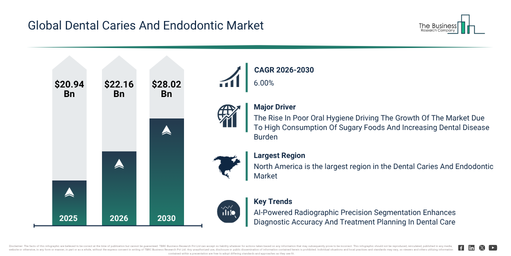
    The dental caries and endodontic market has experienced robust expansion over the past few years. Its size is projected to increase from $20.94 billion in 2025 to $22.16 billion in 2026, achieving a compound annual growth rate (CAGR) of 5.8%. This historical growth can be attributed to factors such as the increasing incidence of dental caries and pulp infections, heightened public awareness concerning oral hygiene and preventative dental care, the worldwide expansion of dental clinic facilities, the increasing use of restorative dental procedures, and continuous technological progress in endodontic tools.

    The dental caries and endodontic market size is anticipated to experience robust expansion over the next few years. It is projected to reach $28.02 billion by 2030, demonstrating a compound annual growth rate (CAGR) of 6.0%. This growth during the forecast period can be attributed to the escalating demand for regenerative endodontic treatments, the increasing embrace of digital dentistry solutions, the greater application of advanced dental biomaterials, the expanding elderly population suffering from dental disorders, and rising investments in cosmetic and restorative dentistry. Prominent trends expected in the forecast period encompass AI-driven caries detection and endodontic diagnostic imaging, advancements in regenerative endodontics and biomaterial innovations, the integration of cloud-based dental records and treatment planning, smart connected dental devices for real-time monitoring, and the adoption of AR/VR-based dental training and procedure simulation.

    Get A Free Sample Report With In-Depth Market Insights:

    https://thebusinessresearchcompany.com/sample_request?id=94076752&type=smp&name=Dental%20Caries%20And%20Endodontic%20Market%20Report%202026&utm_source=Blogs&utm_medium=Paid&utm_campaign=Oct_PR

    Dental Caries And Endodontic Market Growth Drivers: What’s Behind The Acceleration?

    An increase in poor oral hygiene is projected to stimulate expansion within the dental caries and endodontic markets moving forward. This inadequate oral cleanliness involves insufficient care of the mouth, resulting in the buildup of plaque, bacteria, and residual food, which can lead to various dental and gum ailments. The surge in poor oral hygiene largely stems from significant intake of sugary foods and beverages, fostering the proliferation of detrimental bacteria orally and elevating the chances of tooth decay and periodontal disease. Services in dental caries and endodontics contribute to tackling poor oral hygiene by providing early diagnosis and treatment for tooth decay and root canal infections, thus halting the advancement of oral illnesses and enhancing general dental well-being. A notable example is data from December 2024, where the Parliament of the United Kingdom reported that around 31,165 children were admitted to hospitals in 2022–23 specifically for the removal of decayed teeth. Consequently, the escalating problem of poor oral hygiene is anticipated to fuel the expansion of the dental caries and endodontic market.

    Dental Caries And Endodontic Market Breakdown By Product Type And Application

    The dental caries and endodontic market covered in this report is segmented –

    1) By Product Type: Dental Restoratives, Endodontic Instruments, Dental Biomaterials, Other Product Types

    2) By Treatment Type: Direct Restoration, Indirect Restoration, Endodontic Treatment

    3) By Material Type: Biomaterials, Metals, Ceramics, Metals Ceramics

    4) By Application: Diagnosis, Prevention, Treatment, Restorative Procedures, Root Canal Therapy, Regenerative Endodontics

    5) By End User: Dental Clinics, Hospitals, Academic And Research Institutes

    Subsegments:

    1) By Dental Restoratives: Composite Restoratives, Amalgam Restoratives, Glass Ionomer Restoratives, Resin Modified Glass Ionomer Restoratives, Compomers, Temporary Restoratives

    2) By Endodontic Instruments: Endodontic Files, Endodontic Reamers, Broaches, Endodontic Irrigation Needles, Endodontic Obturation Instruments, Endodontic Handpieces

    3) By Dental Biomaterials: Filling Materials, Bonding Agents, Dental Cements, Pulp Capping Materials, Root Canal Sealers, Regenerative Materials

    4) By Other Product Types: Dental Adhesives, Disinfectants And Irrigants, Isolation Materials, Matrix Systems, Finishing And Polishing Materials, Temporary Filling Materials

    Dental Caries And Endodontic Market Trends: What’s Defining The Industry’s Next Phase?

    Companies operating in the dental caries and endodontic market are concentrating on creating innovative solutions, such as AI-powered radiographic precision segmentation systems, to elevate diagnostic accuracy, facilitate precise lesion mapping, and optimize treatment planning efficiency in dental care. These AI-powered radiographic precision segmentation systems are artificial intelligence tools designed to analyze dental X-rays or other radiographic images, accurately defining and isolating specific structures or diseased regions, like tooth decay or bone loss, with intricate spatial detail for better diagnosis and treatment planning. For instance, in June 2025, Pearl Inc., a US-based software development company, broadened its FDA-cleared Second Opinion dental AI platform by incorporating precision segmentation capabilities for caries and periapical radiolucency on 2D radiographs. This improvement allows the system to generate exceptionally accurate, pixel-level outlining of pathological regions, presenting clinicians with enhanced visualization over conventional bounding-box detection methods.

    Dental Caries And Endodontic Market Competitive Overview And Top Companies

    Major companies operating in the dental caries and endodontic market are Kuraray Noritake Dental Inc., Dentsply Sirona Inc., Envista Holdings Corporation, Ultradent Products Inc., Septodont Holding, Coltene Holding AG, Mani Inc., Voco GmbH, Brasseler USA Inc, GC Corporation, Ivoclar Vivadent AG, Meta Biomed Co Ltd., Pearl Inc., VDW GmbH, Micro-Mega SA, FKG Dentaire SA, Produits Dentaires SA, DiaDent Group International, EdgeEndo, Prevest DenPro Limited

    View The Full Dental Caries And Endodontic Market Report:

    https://thebusinessresearchcompany.com/report/dental-caries-and-endodontic-market-report?utm_source=Blogs&utm_medium=Paid&utm_campaign=Oct_PR

    Dental Caries And Endodontic Market Leading Geography: Which Region Contributes The Most Revenue?

    North America was the largest region in the dental caries and endodontic market in 2025. Asia-Pacific is expected to be the fastest-growing region in the forecast period. The regions covered in the dental caries and endodontic market report are Asia-Pacific, South East Asia, Western Europe, Eastern Europe, North America, South America, Middle East and Africa.

    Reach Out To Our Team:

    The Business Research Company: https://www.thebusinessresearchcompany.com/

    Americas: +1 310-496-7795

    Asia: +44 7882 955267 & +91 8897263534

    Europe: +44 7882 955267

    Email us at: marketing@tbrc.info

    Follow us on:

    LinkedIn: https://in.linkedin.com/company/the-business-research-company

    YouTube: https://www.youtube.com/channel/UC24_fI0rV8cR5DxlCpgmyFQ

    Global Market Model: https://www.thebusinessresearchcompany.com/global-market-model
  • Dental Anaesthetic Market Outlook From 2026 To 2030: Key Growth Factors And Future Opportunities

    Dental Anaesthetic Market Outlook From 2026 To 2030: Key Growth Factors And Future Opportunities

    Featuring market attractiveness scoring, total addressable market sizing, company benchmarking matrices, interactive Excel dashboards, deeper supply chain intelligence, emerging startup tracking, and granular product-level insights, The Business Research Company’s 2026 market reports are built to deliver research that is both more actionable and more strategically valuable.

    Dental Anaesthetic Market Value Analysis: What Growth Lies Ahead Over The Forecast Period?

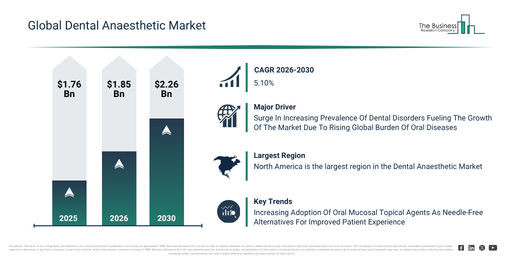
    The dental anaesthetic market size has experienced consistent growth in recent years. It is projected to expand from $1.76 billion in 2025 to $1.85 billion in 2026, at a compound annual growth rate (CAGR) of 4.9%. This historical growth can be attributed to an increase in dental procedures globally, the rising prevalence of oral diseases, a growing embrace of local anesthetics in dental practices, the expansion of dental clinic infrastructure, and enhancements in injectable anesthetic formulations.

    The dental anaesthetic market is anticipated to show significant expansion in the coming years, reaching a size of $2.26 billion by 2030, demonstrating a compound annual growth rate (CAGR) of 5.1%. This expansion during the projection period stems from various factors, including the increasing desire for pain-free dental procedures, the adoption of computer-controlled anesthetic delivery systems, the growing requirements in pediatric dental care, an increase in outpatient dental surgeries, and advancements in long-acting and safer anesthetic drugs. Prominent trends expected in this forecast period encompass AI-assisted precision anesthesia dosage planning and monitoring, intelligent dental injection systems that provide automated pain control feedback, innovations in minimally invasive needle-free anesthetic delivery, digitally integrated patient pain response tracking systems for dentistry, and the development of long-acting biodegradable anesthetic formulations for extended procedures.

    Get A Free Sample Report With In-Depth Market Insights:

    https://thebusinessresearchcompany.com/sample_request?id=36046245&type=smp&name=Dental%20Anaesthetic%20Market%20Report%202026&utm_source=Blogs&utm_medium=Paid&utm_campaign=Oct_PR

    Dental Anaesthetic Market Demand Drivers Opening New Revenue Streams

    The rising occurrence of dental issues is projected to fuel the expansion of the dental anaesthetic market in the future. These disorders are defined as health conditions impacting the teeth, gums, and other oral cavity components, including dental caries (cavities), periodontal (gum) diseases, tooth loss, and infections of the mouth. The frequency of dental disorders is escalating because of greater intake of sugar-laden and processed foods, combined with inadequate oral hygiene, both of which foster the development of cavities, gum ailments, and various other oral health complications. Dental anaesthetics play a crucial role in treating dental disorders by facilitating pain-free interventions like cavity fillings, tooth extractions, root canal therapies, and periodontal treatments. This not only motivates patients to get prompt care but also enables dental professionals to conduct intricate and extended procedures effectively, ultimately leading to enhanced oral health results. As an illustration, in December 2024, data from the Parliament of the United Kingdom, a UK-based governing body, indicated that during 2022-23, roughly 31,165 children were admitted to hospitals for the extraction of decayed teeth. Consequently, the expanding occurrence of dental disorders is anticipated to propel the expansion of the dental anaesthetic market.

    Dental Anaesthetic Market Segmentation And Category Overview

    The dental anaesthetic market covered in this report is segmented –

    1) By Anesthesia Type: Local Anesthesia, General Anesthesia, Sedation Anesthesia

    2) By Drug Type: Lidocaine, Articaine, Mepivacaine, Bupivacaine, Prilocaine, Other Drug Types

    3) By Delivery Mode: Injectable, Topical, Inhalation And Conscious Sedation Agents, Computer Controlled Local Anesthetic Delivery, Emerging Electronic Or Needle Free Systems

    4) By Application: Restorative Dentistry, Oral Surgery, Endodontics, Pediatric Dentistry, Periodontics

    5) By End User: Hospitals, Dental Clinics, Ambulatory Surgical Centers, Academic And Research Institutes

    Subsegments:

    1) By Local Anesthesia: Infiltration Anesthesia, Nerve Block Anesthesia, Periodontal Ligament Anesthesia, Intraosseous Anesthesia, Intrapulpal Anesthesia

    2) By General Anesthesia: Intravenous General Anesthesia, Inhalational General Anesthesia, Balanced General Anesthesia

    3) By Sedation Anesthesia: Minimal Sedation, Moderate Sedation, Deep Sedation, Oral Sedation, Intravenous Sedation, Inhalation Sedation

    Dental Anaesthetic Market Trends Powering Strategic Industry Growth

    Major companies operating in the Dental Anaesthetic market are prioritizing the development of innovative formulations, such as oral mucosal anesthetics, to enhance patient comfort and mitigate injection-related anxiety. These oral mucosal anesthetics are topical agents directly applied to the mouth’s mucous membranes to numb the surface tissue, effectively reducing pain and discomfort during dental procedures while minimizing the need for injections. For instance, in June 2025, VCS Medicals, a US-based medical device company, secured U. S. Food and Drug Administration approval for its oral topical anesthetic spray, DentalJect. DentalJect is a spray-based formulation that delivers active anesthetic agents directly to the mucosal tissue, ensuring rapid onset and precise numbing without requiring injections. Its key features include ease of application, a long-lasting effect, and suitability for patients with needle phobia, making it an ideal choice for routine dental procedures such as fillings, cleanings, and minor oral surgeries.

    Dental Anaesthetic Market Competitive Landscape: Who Leads The Industry?

    Major companies operating in the dental anaesthetic market are Pfizer Inc., Henry Schein Inc., Patterson Companies Inc., Dentsply Sirona Inc., Laboratorios Normon S. A., ZimVie Inc., Septodont Holding SAS, Shofu Inc., Hu-Friedy Mfg. Co. LLC, S. S. White Burs Inc., Laboratorios Inibsa S. A., Pierrel S. p. A., Centrix Inc., Young Innovations Inc., Laboratorios Zeyco S. A. de C. V., Sintetica S. A., Cetylite Industries Inc., Dentalhitec S. A. S., VCS Medical LLC, Sultan Healthcare Inc.

    View The Full Dental Anaesthetic Market Report:

    https://thebusinessresearchcompany.com/report/dental-anaesthetic-market-report?utm_source=Blogs&utm_medium=Paid&utm_campaign=Oct_PR

    Dental Anaesthetic Market Geographic Landscape: Which Region Leads Industry Growth?

    North America was the largest region in the dental anaesthetic market in 2025. Asia-Pacific is expected to be the fastest-growing region in the forecast period. The regions covered in the dental anaesthetic market report are Asia-Pacific, South East Asia, Western Europe, Eastern Europe, North America, South America, Middle East and Africa.

    Reach Out To Our Team:

    The Business Research Company: https://www.thebusinessresearchcompany.com/

    Americas: +1 310-496-7795

    Asia: +44 7882 955267 & +91 8897263534

    Europe: +44 7882 955267

    Email us at: marketing@tbrc.info

    Follow us on:

    LinkedIn: https://in.linkedin.com/company/the-business-research-company

    YouTube: https://www.youtube.com/channel/UC24_fI0rV8cR5DxlCpgmyFQ

    Global Market Model: https://www.thebusinessresearchcompany.com/global-market-model
  • Clinical Drug Supply Chain Services Market Size Forecast From 2026 To 2030: Key Industry Trends

    Clinical Drug Supply Chain Services Market Size Forecast From 2026 To 2030: Key Industry Trends

    Built to provide research that’s more actionable and strategically valuable, The Business Research Company’s 2026 market reports include market attractiveness analysis, total addressable market sizing, company benchmarking matrices, interactive Excel dashboards, broader supply chain intelligence, emerging startup tracking, and in-depth product insights.

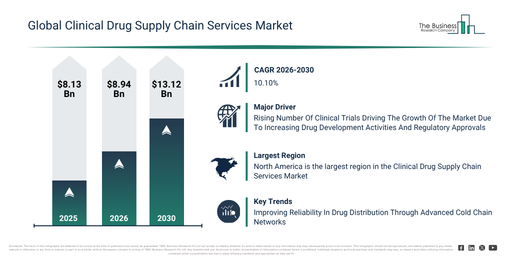
    Clinical Drug Supply Chain Services Market Set To Climb From $8.94 Billion In 2026 To $13.12 Billion By 2030

    The clinical drug supply chain services market has experienced significant growth in recent years. It is anticipated to increase from $8.13 billion in 2025 to $8.94 billion in 2026, at a compound annual growth rate (CAGR) of 9.8%. The historical growth can be attributed to several factors including the globalization of clinical trials, the increasing complexity of biologic drugs, stringent regulatory compliance requirements, the expansion of contract research organizations, and the broader scope of multi-region clinical studies.

    The clinical drug supply chain services market is expected to experience significant expansion in the coming years. Its size is projected to reach $13.12 billion by 2030, exhibiting a compound annual growth rate (CAGR) of 10.1%. This anticipated growth is primarily driven by factors such as AI-enabled predictive supply chain optimization, the increasing prevalence of decentralized and hybrid clinical trials, the rising implementation of real-time supply chain monitoring, developments in personalized medicine and cell and gene therapy trials, and heightened automation in clinical logistics operations. Noteworthy trends during this period include enhanced cold chain optimization for clinical trial logistics, the adoption of decentralized clinical trial drug distribution models, improved real-time shipment visibility and tracking across global trials, a greater reliance on outsourcing to clinical supply specialists, and a growing need for patient-centric investigational drug delivery models.

    Get A Free Sample Report With In-Depth Market Insights:

    https://thebusinessresearchcompany.com/sample_request?id=70548427&type=smp&name=Clinical%20Drug%20Supply%20Chain%20Services%20Market%20Report%202026&utm_source=Blogs&utm_medium=Paid&utm_campaign=Oct_PR

    Clinical Drug Supply Chain Services Market Growth Backed By Core Demand Fundamentals

    The rising volume of clinical trials is projected to fuel the expansion of the clinical drug supply chain services market moving forward. Clinical trials are structured research endeavors conducted with human participants to evaluate the safety, effectiveness, and dosage of new medications and medical treatments. The uptick in clinical trials is primarily driven by increased drug development activities and the granting of regulatory approvals within developed healthcare systems. Clinical drug supply chain services support this by managing the manufacturing, packaging, storage, and distribution of drugs, ensuring the timely and compliant delivery of investigational products across trial sites. For instance, in December 2024, according to the National Library of Medicine (ClinicalTrials.gov), a US-based government clinical trial registry, the total number of registered clinical studies climbed from approximately 479,859 studies in January 2024 to over 570,636 studies by December 2024. Thus, the increasing number of clinical trials is a significant driver of growth for the clinical drug supply chain services market.

    Clinical Drug Supply Chain Services Market Segment Analysis And Revenue Potential

    The clinical drug supply chain services market covered in this report is segmented –

    1) By Type: Cold Chain Logistics, Serialization And Track Trace, Specialized Clinical Packaging

    2) By Drug Type: Small Molecule, Biologics Products, Cell Therapy, Other Drug Types

    3) By Application: Clinical Trial Drug Distribution, Temperature Controlled Drug Shipping, Regulatory Compliant Labeling, Return And Destruction Services

    4) By End User: Pharmaceutical Companies, Biotechnology Companies, Contract Research Organizations

    Subsegments:

    1) By Cold Chain Logistics: Temperature Controlled Storage Services, Refrigerated Transportation Services, Frozen Drug Distribution Services, Real-Time Temperature Monitoring Solutions, Cryogenic Shipping Services

    2) By Serialization And Track Trace: Unique Product Identifier Management, Aggregation And Deaggregation Services, Regulatory Compliance Reporting, Real-Time Track And Trace Software, Anti-Counterfeiting Verification Solutions

    3) By Specialized Clinical Packaging: Blister Packaging Services, Bottle And Vial Packaging Services, Unit Dose Packaging Solutions, Customized Clinical Trial Kits, Tamper-Evident Packaging Solutions

    Clinical Drug Supply Chain Services Market Growth Trends Reshaping The Competitive Landscape

    Major companies in the clinical drug supply chain services market are focusing on expanding their cold chain freight forwarding capabilities, establishing state-of-the-art temperature-controlled cross-dock and logistics networks to maintain precise conditions for sensitive pharmaceutical products throughout transit. These capacities combine strategically located global facilities with integrated monitoring and certification systems to ensure the quality and compliance of clinical drug shipments. For instance, in August 2025, UPS Healthcare, a US-based logistics and supply chain services provider, expanded its global cold chain freight forwarding network by adding 20 advanced cross-dock facilities in key cities, including Chicago, Singapore, Amsterdam, and Shanghai. These facilities feature refrigerated and controlled room temperature handling, inbound/outbound consolidation with thermal blankets and dry ice support, and multiple certifications such as GDP and IATA CEIV Pharma to enhance package integrity. While regional infrastructure requirements and operational costs remain considerations, these enhancements significantly strengthen precision handling and delivery reliability for clinical drug supply chains worldwide.

    Clinical Drug Supply Chain Services Market Competitive Analysis Of Leading Industry Participants

    Major companies operating in the clinical drug supply chain services market are United Parcel Service Inc., DHL International GmbH, FedEx Corporation, Thermo Fisher Scientific Inc., Kuehne + Nagel International AG, IQVIA Holdings Inc., Yusen Logistics Co. Ltd., ICON Public Limited Company, Lonza Group AG, Catalent Inc., Parexel International Corporation, PCI Services LLC, Almac Group Limited, World Courier Management Inc., Marken Limited, Piramal Pharma Limited, Movianto International GmbH, Clinigen Group plc, Sharp Clinical Services Inc., Biocair International Limited, Ancillare LP, Bilcare Limited, Myonex Inc.

    View The Full Clinical Drug Supply Chain Services Market Report:

    https://thebusinessresearchcompany.com/report/clinical-drug-supply-chain-services-market-report?utm_source=Blogs&utm_medium=Paid&utm_campaign=Oct_PR

    Clinical Drug Supply Chain Services Market Geographic Spread And Regional Opportunities

    North America was the largest region in the clinical drug supply chain services market in 2025. Asia-Pacific is expected to be the fastest-growing region in the forecast period. The regions covered in the clinical drug supply chain services market report are Asia-Pacific, South East Asia, Western Europe, Eastern Europe, North America, South America, Middle East and Africa.

    Reach Out To Our Team:

    The Business Research Company: https://www.thebusinessresearchcompany.com/

    Americas: +1 310-496-7795

    Asia: +44 7882 955267 & +91 8897263534

    Europe: +44 7882 955267

    Email us at: marketing@tbrc.info

    Follow us on:

    LinkedIn: https://in.linkedin.com/company/the-business-research-company

    YouTube: https://www.youtube.com/channel/UC24_fI0rV8cR5DxlCpgmyFQ

    Global Market Model: https://www.thebusinessresearchcompany.com/global-market-model
  • Chromatography And Filtration Reagents Market Forecast 2026–2030: Market Size, Trends And Growth Opportunities

    Chromatography And Filtration Reagents Market Forecast 2026–2030: Market Size, Trends And Growth Opportunities

    Backed by market attractiveness analysis, total addressable market sizing, company benchmarking matrices, interactive Excel dashboards, wider supply chain intelligence, emerging startup coverage, and detailed product-level insights, The Business Research Company’s 2026 market reports are designed to offer research that is more actionable and strategically valuable than ever.

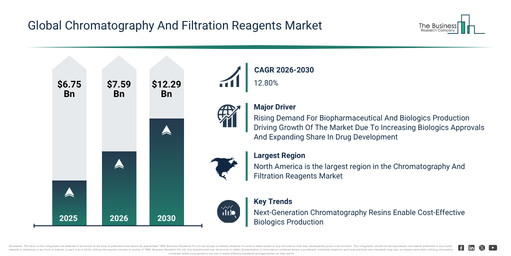
    Chromatography And Filtration Reagents Market Poised To Hit $12.29 Billion By 2030 With A 12.8% CAGR

    The chromatography and filtration reagents market size has experienced swift expansion recently. This market is projected to expand from $6.75 billion in 2025 to $7.59 billion in 2026, demonstrating a compound annual growth rate (CAGR) of 12.6%. Historically, this growth can be attributed to several factors, including the increasing demand for pharmaceutical quality control testing, the expansion of research and academic laboratories, the rise in generic drug manufacturing, the greater application of analytical testing in food safety, and the evolution of standardized chromatography techniques.

    The chromatography and filtration reagents market size is expected to see rapid growth in the next few years. It will grow to $12. 29 billion by 2030 at a compound annual growth rate (CAGR) of 12. 8%. The expansion projected for this period is attributable to the increasing adoption of biologics and biosimilar testing, a rising demand for precision analytical techniques in genomics, developments in personalized medicine and biomarker analysis, an increase in environmental monitoring regulations, and a growing move toward automated and high-throughput laboratory systems. Major trends observed within the forecast period encompass the escalating adoption of high-performance liquid chromatography and UHPLC consumables, a growing need for advanced membrane filtration systems, an expanding use of green chromatography solvents, the development of automated laboratory sample preparation systems, and a deeper integration of digital analytics into separation workflows.

    Get A Free Sample Report With In-Depth Market Insights:

    https://thebusinessresearchcompany.com/sample_request?id=83588644&type=smp&name=Chromatography%20And%20Filtration%20Reagents%20Market%20Report%202026&utm_source=Blogs&utm_medium=Paid&utm_campaign=Oct_PR

    Chromatography And Filtration Reagents Market Expansion Drivers: What’s Shaping Future Growth?

    The escalating need for biopharmaceutical and biologic production is anticipated to fuel the expansion of the chromatography and filtration reagents market moving forward. This type of production involves crafting complex therapeutic items such as monoclonal antibodies, vaccines, and recombinant proteins, by employing living cells and advanced bioprocessing techniques. The increasing demand for biopharmaceutical and biologics output is driven by a rising number of biologics approvals and their growing proportion in overall drug development. Chromatography and filtration reagents are crucial in supporting biopharmaceutical and biologic production as they enable the precise purification, separation, and quality control processes vital for regulatory adherence and large-scale manufacturing. For example, official UK government statistics published in October 2025 revealed that life sciences manufacturing turnover reached $61. 57 billion (£46. 5 billion) in 2023–2024, constituting 32% of the total sector turnover. Hence, the increasing demand for biopharmaceutical and biologic production is a key driver for the growth of the chromatography and filtration reagents market.

    Chromatography And Filtration Reagents Market Segments: Where Is Growth Concentrated?

    The chromatography and filtration reagents market covered in this report is segmented –

    1) By Type: Solvents, Buffers, Derivatization Reagents, Ion Pair Reagents, Other Types

    2) By Technique: Liquid Chromatography, Gas Chromatography, Thin-Layer Chromatography, Supercritical Fluid Chromatography, Other Techniques

    3) By Grade: High Performance Liquid Chromatography And Ultra High Performance Liquid Chromatography Grade Reagents, Gas Chromatography Grade Reagents, Analytical Grade Reagents, Liquid Chromatography–Mass Spectrometry Grade Reagents, Preparative Grade Reagents, Biotechnology Grade Reagents, Technical Grade Filtration Products

    4) By Filtration Type: Microfiltration Products, Ultrafiltration Reagents, Nanofiltration Membranes, Reverse Osmosis Filters, Depth Filtration Media, Sterile Filtration Products, Tangential Flow Filtration

    5) By End-User: Pharmaceutical And Biotechnology Companies, Contract Research Organizations, Contract Manufacturing Organizations, Academic And Research Institutions, Clinical And Diagnostic Laboratories, Food And Beverage Testing Laboratories, Environmental Testing Laboratories, Government And Regulatory Agencies, Chemical And Industrial Manufacturing Companies

    Subsegments:

    1) By Solvents: Aqueous Solvents, Organic Solvents, Polar Solvents, Non Polar Solvents, High Performance Liquid Chromatography Grade Solvents

    2) By Buffers: Phosphate Buffers, Acetate Buffers, Tris Buffers, Citrate Buffers, Carbonate Buffers

    3) By Derivatization Reagents: Pre Column Derivatization Reagents, Post Column Derivatization Reagents, Fluorescence Derivatization Reagents, Ultraviolet Derivatization Reagents, Gas Chromatography Derivatization Reagents

    4) By Ion Pair Reagents: Alkyl Sulfonates, Quaternary Ammonium Salts, Perfluorinated Carboxylic Acids, Tetraalkylammonium Salts, Ion Pairing Acids

    5) By Other Types: Affinity Reagents, Size Exclusion Media, Chromatography Resins, Filter Membranes, Sample Preparation Reagents

    Chromatography And Filtration Reagents Market Strategic Trends: What Defines The Next Growth Phase?

    Leading companies in the chromatography and filtration reagents market are prioritizing the development of robust resins, such as high-cycle-life chromatography resins, to decrease purification expenses and enhance process scalability. High-cycle-life chromatography resins are advanced purification media engineered to withstand repeated cleaning and reuse cycles while maintaining binding efficiency and structural stability, thereby reducing the cost per batch in biologics manufacturing. For instance, in June 2024, Ecolab Inc., a US-based life sciences and specialty chemicals company, introduced Purolite DurA Cycle chromatography resin. The resin supports large-scale monoclonal antibody purification, offers extended reuse through enhanced alkaline stability, and improves manufacturing efficiency by lowering the cost of goods and enabling consistent high-throughput processing.

    Chromatography And Filtration Reagents Market Top Companies Driving Competitive Growth

    Major companies operating in the chromatography and filtration reagents market are Thermo Fisher Scientific Inc., Honeywell International Inc., 3M Company, Merck KGaA, Tosoh Corporation, Agilent Technologies Inc., Daicel Corporation, Sartorius AG, Shimadzu Corporation, Waters Corporation, Bio-Rad Laboratories Inc., Hamilton Company, Pall Corporation, Repligen Corporation, Porvair plc, Macherey-Nagel GmbH & Co. KG, Cole-Parmer, Restek Corporation, GFS Chemicals Inc., Membrane Solutions LLC, Regis Technologies Inc., Tedia Company Inc., KNAUER Wissenschaftliche Geräte GmbH, Sterlitech Corporation

    View The Full Chromatography And Filtration Reagents Market Report:

    https://thebusinessresearchcompany.com/report/chromatography-and-filtration-reagents-market-report?utm_source=Blogs&utm_medium=Paid&utm_campaign=Oct_PR

    Chromatography And Filtration Reagents Market Global Footprint: Which Region Leads The Market?

    North America was the largest region in the chromatography and filtration reagents market in 2025. Asia-Pacific is expected to be the fastest-growing region in the forecast period. The regions covered in the chromatography and filtration reagents market report are Asia-Pacific, South East Asia, Western Europe, Eastern Europe, North America, South America, Middle East and Africa.

    Reach Out To Our Team:

    The Business Research Company: https://www.thebusinessresearchcompany.com/

    Americas: +1 310-496-7795

    Asia: +44 7882 955267 & +91 8897263534

    Europe: +44 7882 955267

    Email us at: marketing@tbrc.info

    Follow us on:

    LinkedIn: https://in.linkedin.com/company/the-business-research-company

    YouTube: https://www.youtube.com/channel/UC24_fI0rV8cR5DxlCpgmyFQ

    Global Market Model: https://www.thebusinessresearchcompany.com/global-market-model
  • Cell Culture Media Ingredients Market Forecast Highlights A $4.81 Billion Opportunity For Industry Participants

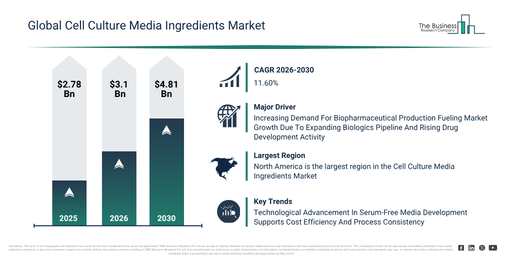
    Cell Culture Media Ingredients Market Forecast Highlights A $4.81 Billion Opportunity For Industry Participants

    Built to provide research that’s more actionable and strategically valuable, The Business Research Company’s 2026 market reports include market attractiveness analysis, total addressable market sizing, company benchmarking matrices, interactive Excel dashboards, broader supply chain intelligence, emerging startup tracking, and in-depth product insights.

    Cell Culture Media Ingredients Market Value Analysis: What Growth Lies Ahead Over The Forecast Period?

    The cell culture media ingredients market size has seen rapid expansion in recent years. It is forecast to grow from $2. 78 billion in 2025 to $3. 1 billion in 2026, exhibiting a compound annual growth rate (CAGR) of 11. 4%. The historical increase in this market can be ascribed to factors such as the rising adoption of cell culture techniques in research, heightened demand in biopharmaceutical manufacturing, the broadening of vaccine development programs, increased academic and clinical research activities, and the proliferation of contract research organizations.

    The cell culture media ingredients market is expected to demonstrate substantial expansion over the next few years. It is forecast to grow to $4.81 billion by 2030, achieving a compound annual growth rate (CAGR) of 11.6%. This anticipated growth during the forecast period can be attributed to several factors, including the increasing number of cell and gene therapy pipelines, a rising need for personalized medicine, expanded use of recombinant proteins and growth factors, the adoption of single-use bioprocessing technologies, and advancements in optimized and custom media formulations. Major trends for this period are expected to include the widespread adoption of serum-free and chemically defined media, the expansion of single-use bioprocessing systems, a growing demand for contamination-free aseptic processing, the rise of high-throughput cell culture screening platforms, and the increasing embrace of 3D cell culture and organoid systems.

    Get A Free Sample Report With In-Depth Market Insights:

    https://thebusinessresearchcompany.com/sample_request?id=15266047&type=smp&name=Cell%20Culture%20Media%20Ingredients%20Market%20Report%202026&utm_source=Blogs&utm_medium=Paid&utm_campaign=Oct_PR

    Cell Culture Media Ingredients Market Growth Drivers: What’s Behind The Acceleration?

    The growth of the cell culture media ingredients market is significantly propelled by the increasing demand for biopharmaceutical production. This type of production involves the large-scale manufacturing of biologic-based medicines, including monoclonal antibodies, vaccines, and cell and gene therapies, by utilizing living cells. The rising demand is attributed to the rapid expansion of biologics pipelines, which require advanced cell culture systems for both their development and manufacturing. Cell culture media ingredients are essential for these processes, supplying critical nutrients, growth factors, and supplements necessary for optimal cell growth, viability, and productivity. For instance, in December 2024, according to the International Federation of Pharmaceutical Manufacturers & Associations, a Switzerland-based global industry association, over 12,700 medicines are in various stages of clinical development globally, with approximately half classified as biologics. This expanding pipeline is expected to heighten manufacturing demand, with around 700 new medicines projected to be launched by 2035. Therefore, the increasing demand for biopharmaceutical production is driving the growth of the cell culture media ingredients market.

    Cell Culture Media Ingredients Market Segment Analysis Spotlighting Growth Areas

    The cell culture media ingredients market covered in this report is segmented –

    1) By Type: Amino Acids, Vitamins, Sugars, Salts, Buffers, Other Types

    2) By Form: Liquid, Powder

    3) By Application: Biopharmaceutical Production, Vaccine Production, Drug Discovery And Development, Regenerative Medicine, Cell And Gene Therapy, Diagnostics, Toxicology Testing, Other Applications

    4) By End Users: Biotechnology Companies, Pharmaceutical Companies, Academic And Research Institutes, Contract Research Organizations

    Subsegments:

    1) By Amino Acids: Essential Amino Acids, Non Essential Amino Acids, Conditionally Essential Amino Acids, Branched Chain Amino Acids

    2) By Vitamins: Fat Soluble Vitamins, Water Soluble Vitamins, Vitamin B Complex, Vitamin C

    3) By Sugars: Monosaccharides, Disaccharides, Polysaccharides, Sugar Alcohols

    4) By Salts: Inorganic Salts, Organic Salts, Trace Element Salts, Balanced Salt Solutions

    5) By Buffers: Phosphate Buffers, Bicarbonate Buffers, Organic Buffers, Zwitterionic Buffers

    6) By Other Types: Growth Factors, Hormones, Lipids, Proteins, Serum Additives

    Cell Culture Media Ingredients Market Trends: What’s Defining The Industry’s Next Phase?

    Leading firms within the cell culture media ingredients market are prioritizing technological innovations in the creation of serum-free media, including products like efficient-pro medium (+) insulin, with the goal of enhancing production efficiency, minimizing variability, and decreasing reliance on components sourced from animals. Specifically, Efficient-Pro Medium (+) Insulin is characterized as an advanced serum-free and animal-origin-free cell culture medium. It incorporates vital nutrients and growth-promoting elements, notably insulin, directly into its composition to boost cell growth and protein output, thereby removing the requirement for additional external supplements. An illustrative example is the launch of Gibco Efficient-Pro Medium (+) Insulin by Thermo Fisher Scientific, a life sciences company based in the US, in September 2025. This product offers an increase of up to 61% in protein titers, facilitates high viable cell densities with dependable quality, and features sophisticated granulation technology to ensure quick reconstitution and scalability, rendering it exceptionally well-suited for biopharmaceutical manufacturing processes.

    Cell Culture Media Ingredients Market Company Landscape And Competitive Strategy

    Major companies operating in the cell culture media ingredients market are Thermo Fisher Scientific Inc., Merck KGaA, FUJIFILM Wako Pure Chemical Corporation, Danaher Corporation, GE Healthcare Life Sciences (Cytiva), Becton Dickinson and Company, Corning Incorporated, Lonza Group AG, Avantor Inc., Agilent Technologies Inc., Sartorius AG, Bio-Rad Laboratories Inc., STEMCELL Technologies Inc., Miltenyi Biotec B. V. & Co. KG, Takara Bio Inc., Imperial Life Sciences Pvt. Ltd., PromoCell GmbH, BioLamina AB, Equitech-Bio Inc., Axol Bioscience Ltd., Nucleus Biologics LLC, Plant Cell Technology Inc., Cell Applications Inc.

    View The Full Cell Culture Media Ingredients Market Report:

    https://thebusinessresearchcompany.com/report/cell-culture-media-ingredients-market-report?utm_source=Blogs&utm_medium=Paid&utm_campaign=Oct_PR

    Cell Culture Media Ingredients Market Largest Region: Which Geography Holds The Highest Market Share?

    North America was the largest region in the cell culture media ingredients market in 2025. Asia-Pacific is expected to be the fastest-growing region in the forecast period. The regions covered in the cell culture media ingredients market report are Asia-Pacific, South East Asia, Western Europe, Eastern Europe, North America, South America, Middle East and Africa.

    Reach Out To Our Team:

    The Business Research Company: https://www.thebusinessresearchcompany.com/

    Americas: +1 310-496-7795

    Asia: +44 7882 955267 & +91 8897263534

    Europe: +44 7882 955267

    Email us at: marketing@tbrc.info

    Follow us on:

    LinkedIn: https://in.linkedin.com/company/the-business-research-company

    YouTube: https://www.youtube.com/channel/UC24_fI0rV8cR5DxlCpgmyFQ

    Global Market Model: https://www.thebusinessresearchcompany.com/global-market-model