Category: Pharmaceuticals

  • Targeted LNPs For Extrahepatic Delivery Market Developments And Opportunities Across 2026–2030

    Targeted LNPs For Extrahepatic Delivery Market Developments And Opportunities Across 2026–2030

    The Business Research Company’s 2026 market reports feature enhanced tools like market attractiveness analysis, TAM assessment, and company scoring matrices, along with interactive dashboards, deeper supply chain insights, and startup coverage strengthening the depth, usability, and strategic value of insights.

    What Is The Projected Increase In Market Value Of The Targeted LNPs For Extrahepatic Delivery Market During 2026–2030?

    The targeted lnps for extrahepatic delivery market has experienced significant growth over recent years. It is anticipated to expand from $1.81 billion in 2025 to $2.19 billion in 2026, exhibiting a compound annual growth rate (CAGR) of 20.7%. This historical progression can be attributed to several factors, including the accomplishments of hepatic LNP delivery systems, the expansion of mRNA vaccine platforms, increased nanomedicine research, the growing number of gene therapy trials, and the rising complexities associated with biologic drug delivery.

    The targeted lnps for extrahepatic delivery market size is expected to undergo substantial expansion in the coming years, projected to reach $4.68 billion by 2030, demonstrating a compound annual growth rate (CAGR) of 20.9%. This growth during the forecast period is driven by factors such as a burgeoning pipeline of RNA therapeutics, increasing demand for tissue-targeted delivery solutions, the evolution of precision drug delivery platforms, intensified oncology nanoparticle research, and a rise in biotech delivery partnerships. Key trends anticipated in this period include the development of extrahepatic targeted LNP formulations, ligand-directed nanoparticle delivery methods, tissue-specific RNA delivery systems, advanced ionizable lipid designs, and modular targeted nanocarrier platforms.

    Access Your Free Sample Report For In-Depth Market Analysis:

    https://www.thebusinessresearchcompany.com/sample.aspx?id=33338&type=smp

    What Leading Drivers Are Supporting The Targeted LNPs For Extrahepatic Delivery Market Expansion?

    A projected expansion of the targeted lipid nanoparticles (LNPs) for extrahepatic delivery market is anticipated, driven by the increasing need for personalized medicine (PM). Personalized medicine (PM) involves therapeutic approaches customized to an individual’s unique genetic makeup, disease attributes, or biological markers, aiming to optimize treatment effectiveness and reduce adverse reactions. The adoption of personalized therapies is being expedited by progress in molecular diagnostics, the discovery of biomarkers, and the development of precision-oriented drugs. Targeted lipid nanoparticles are instrumental in facilitating personalized medicine through their ability to precisely deliver therapeutic agents to particular tissues or cell types, including extrahepatic targets, thereby boosting therapeutic efficacy and ensuring safety. For example, data from the Personalized Medicine Coalition, a US-based hospital and health care organization, indicates that the U.S. Food and Drug Administration sanctioned 16 novel personalized treatments for rare disease patients in 2023, an increase from six in 2022. Consequently, the heightened demand for personalized medicine (PM) is fueling the expansion of the targeted lipid nanoparticles (LNPs) for extrahepatic delivery market.

    Which Segment Classifications Are Used In The Targeted LNPs For Extrahepatic Delivery Market Segment Analysis?

    The targeted lnps for extrahepatic delivery market covered in this report is segmented –

    1) By Product Type: Ionizable Lipid-Based Lipid Nanoparticles; Cationic Lipid-Based Lipid Nanoparticles; Polyethylene Glycol-Coated Lipid Nanoparticles; Other Lipid Nanoparticle Formulations

    2) By Therapeutic Area: Oncology; Infectious Diseases; Genetic Disorders; Metabolic Diseases; Other Therapeutic Area

    3) By Application: Gene Therapy; Messenger Ribonucleic Acid Vaccines; Small Interfering Ribonucleic Acid Delivery; Protein Delivery; Other Application

    4) By End-User: Pharmaceutical Companies; Biotechnology Companies; Academic and Research Institutes; Other End-Users

    Subsegments:

    1) By Ionizable Lipid-Based Lipid Nanoparticles: Single Chain Ionizable Lipids; Multi-Chain Ionizable Lipids; Functionalized Ionizable Lipids

    2) By Cationic Lipid-Based Lipid Nanoparticles: Quaternary Ammonium Cationic Lipids; Permanent Cationic Lipids; Helper Lipids in Cationic Formulations

    3) By Polyethylene Glycol-Coated Lipid Nanoparticles: Polyethylene Glycolylated Lipids with Different Chain Lengths; Polyethylene Glycol-Lipid Conjugates with Targeting Ligands; Polyethylene Glycolylated Lipid Combinations for Stability

    4) By Other Lipid Nanoparticle Formulations: Sphingomyelin-Based Lipid Nanoparticles; Biodegradable Lipid Nanoparticles; Modular or Hybrid Lipid Nanoparticles; Stimulus-Responsive Lipid Nanoparticles

    What Market Trends Are Affecting The Targeted LNPs For Extrahepatic Delivery Market?

    Major companies engaged in the targeted lipid nanoparticles (LNPs) for extrahepatic delivery market are concentrating on technological improvements in targeted LNP platforms, including DARPin-conjugated systems, to achieve selective delivery to immune and tissue-specific cells. DARPin-conjugated lipid nanoparticles refer to LNPs functionalized with Designed Ankyrin Repeat Proteins (DARPins), which are engineered binding proteins capable of highly specific interactions with chosen cell surface receptors. This specific targeting capability enables improved uptake by particular cell types, thereby supporting extrahepatic applications such as immune cell modulation and tissue-specific gene delivery. As an example, in November 2025, Acuitas Therapeutics Inc., a Canada-based biotechnology company, introduced next-generation LNP technologies specifically designed for extrahepatic targeting. These included platforms aimed at T-lymphocyte delivery, mucous-penetrant formulations for airway epithelial cells, and a pre-formed vesicle manufacturing approach intended to improve scalability, cost efficiency, and storage stability. These advancements expand the potential applications of mRNA-LNP therapeutics beyond the liver and support broader use cases in gene editing, vaccines, and personalized medicine.

    Which Firms Are Contributing To The Targeted LNPs For Extrahepatic Delivery Market Ecosystem?

    Major companies operating in the targeted lnps for extrahepatic delivery market are Pfizer Inc., Sanofi S.A., Merck KGaA, FUJIFILM Pharmaceuticals U.S.A. Inc., Evonik Industries AG, Recipharm, CordenPharma International GmbH, Ardena Nanomedicines, Arcturus Therapeutics Holdings Inc., BIOVECTRA Inc., Ascendia Pharmaceuticals Inc., ABITEC Corporation, Creative Biolabs, Genevant Sciences GmbH, Polymun Scientific Immunbiologische Forschung GmbH, ST Pharm, eTheRNA immunotherapies NV, NanoVation Therapeutics, DIANT Pharma, Curapath, Phosphorex Inc.

    Get The Full Targeted LNPs For Extrahepatic Delivery Market Report:

    https://www.thebusinessresearchcompany.com/report/targeted-lnps-for-extrahepatic-delivery-market-report

    Which Region Holds The Highest Market Share In The Targeted LNPs For Extrahepatic Delivery Market?

    North America was the largest region in the targeted lipid nanoparticles (LNPs) for extrahepatic delivery market in 2025. Asia-Pacific is expected to be the fastest-growing region in the forecast period. The regions covered in the targeted lnps for extrahepatic delivery market report are Asia-Pacific, South East Asia, Western Europe, Eastern Europe, North America, South America, Middle East, Africa.

    Request A Customized Targeted LNPs For Extrahepatic Delivery Market Report For Competitive Insights:

    https://www.thebusinessresearchcompany.com/customise?id=33338&type=smp

    Browse Through More Reports Similar to the Global Targeted LNPs For Extrahepatic Delivery Market 2026, By The Business Research Company

    Liver Health Supplements Market Report 2026

    https://www.thebusinessresearchcompany.com/report/liver-health-supplements-global-market-report

    Liver Diseases Therapeutics Market Report 2026

    https://www.thebusinessresearchcompany.com/report/liver-diseases-therapeutics-global-market-report

    Fatty Liver Treatment Market Report 2026

    https://www.thebusinessresearchcompany.com/report/fatty-liver-treatment-global-market-report

    Get in touch with us:

    The Business Research Company: https://www.thebusinessresearchcompany.com/

    Americas +1 310-496-7795

    Asia +44 7882 955267 & +91 8897263534

    Europe +44 7882 955267

    Email us at info@tbrc.info

    Follow us on:

    LinkedIn: https://in.linkedin.com/company/the-business-research-company

    YouTube: https://www.youtube.com/channel/UC24_fI0rV8cR5DxlCpgmyFQ

    Global Market Model: https://www.thebusinessresearchcompany.com/global-market-model
  • Systemic Amyloidosis Therapeutic Market Forecast 2026–2030 Presenting Long-Term Industry Insights

    Systemic Amyloidosis Therapeutic Market Forecast 2026–2030 Presenting Long-Term Industry Insights

    The Business Research Company’s 2026 market reports feature enhanced tools like market attractiveness analysis, TAM assessment, and company scoring matrices, along with interactive dashboards, deeper supply chain insights, and startup coverage strengthening the depth, usability, and strategic value of insights.

    How Is The Market Size Of The Systemic Amyloidosis Therapeutic Market Expected To Change From 2026 To 2030?

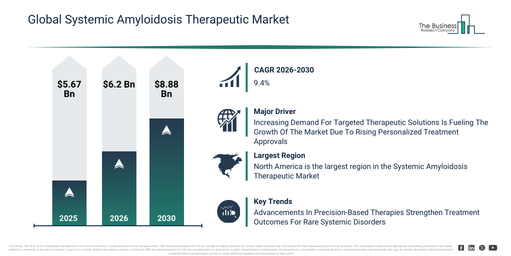
    The systemic amyloidosis therapeutic market has experienced robust expansion recently. Projections indicate its expansion from $5.67 billion in 2025 to $6.2 billion in 2026, demonstrating a compound annual growth rate (CAGR) of 9.2%. Several factors contributed to this historic growth, including the past underdiagnosis of amyloidosis, a dependence on chemotherapy treatments, the rise in hematology treatment centers, heightened awareness of rare diseases, and the initial uptake of proteasome inhibitors.

    The systemic amyloidosis therapeutic market is projected to experience substantial expansion over the coming years. This market is forecast to reach $8.88 billion by 2030, demonstrating a compound annual growth rate (CAGR) of 9.4%. Factors contributing to this growth during the forecast period include an increase in rare disease diagnosis rates, the proliferation of targeted biologic medications, a rise in gene silencing therapy approvals, the expansion of specialized clinic networks, and more robust orphan drug incentives. Key trends anticipated during this period encompass the development of targeted amyloid protein stabilizer drugs, gene silencing amyloidosis therapies, treatments based on monoclonal antibodies, combination regimen treatment protocols, and organ-specific supportive drug strategies.

    Access Your Free Sample Report For In-Depth Market Analysis:

    https://www.thebusinessresearchcompany.com/sample.aspx?id=33337&type=smp

    Which Key Factors Are Driving The Systemic Amyloidosis Therapeutic Market Growth?

    The expansion in the use of personalized medicine strategies is anticipated to boost the growth of the systemic amyloidosis therapeutic market in the future. This medical method involves tailoring treatment and prevention plans to an individual’s genetic makeup, biomarkers, and specific disease traits. The increasing need for personalized medicine stems from advancements in genomic and biomarker technologies, which enable medical professionals to accurately pinpoint disease causes and customize therapies, thereby enhancing effectiveness and minimizing side effects for individual patients. The integration of personalized medicine elevates the demand for systemic amyloidosis therapeutics because individuals suffering from systemic amyloidosis exhibit distinct amyloid subtypes (e.g., AL, ATTR) and genetic variations. Consequently, successful treatment necessitates therapies precisely engineered to address the patient’s particular disease profile, guaranteeing optimal efficacy and reduced adverse reactions. For instance, in April 2025, as reported by the Personalized Medicine Coalition (PMC), a US-based based nonprofit advocacy and educational organization, the FDA sanctioned 16 new personalized treatments for rare disease patients in 2023, marking an increase from six in 2022. Thus, the increasing embrace of personalized medicine approaches is fueling the expansion of the systemic amyloidosis therapeutic market.

    How Is The Systemic Amyloidosis Therapeutic Market Organized By Segment Classification?

    The systemic amyloidosis therapeutic market covered in this report is segmented –

    1) By Product Type: Small Molecule Drugs; Biologic Therapies; Monoclonal Antibodies; Chemotherapy Based Regimens; Targeted Therapies; Supportive Treatments

    2) By Formulation: Tablets; Capsules; Injection

    3) By Route of Administration: Oral; Intravenous; Subcutaneous

    4) By Distribution Channel: Hospital Pharmacies; Retail Pharmacies; Online Pharmacies

    5) By End User: Hospitals; Specialty Clinics; Specialty Pharmacies; Research and Academic Institutes; Other End Users

    Subsegments:

    1) By Small Molecule Drugs: Proteasome Inhibitors; Stabilizers of Transthyretin Protein; Amyloid Fibril Disruptors; Immunomodulatory Small Molecules

    2) By Biologic Therapies: Recombinant Protein Therapies; Gene Silencing Biologic Agents; Plasma Derived Biologic Products

    3) By Monoclonal Antibodies: Anti Amyloid Fibril Antibodies; Anti Light Chain Antibodies; Targeted Clearance Antibodies

    4) By Chemotherapy Based Regimens: Alkylating Agent Based Regimens; Proteasome Inhibitor Based Chemotherapy; Combination Chemotherapy Protocols

    5) By Targeted Therapies: Targeted Light Chain Suppression Therapies; Targeted Transthyretin Reduction Therapies; Organ Specific Targeted Treatments

    6) By Supportive Treatments: Cardiac Supportive Therapies; Renal Supportive Therapies; Neurological Symptom Management Therapies; Nutritional and Palliative Care Therapies

    Which Trends Are Influencing Demand In The Systemic Amyloidosis Therapeutic Market?

    Leading companies in the systemic amyloidosis therapeutic market are increasingly concentrating on developing advanced, targeted treatment strategies, particularly RNA interference-based therapies. These approaches aim to tackle the fundamental genetic factors contributing to protein misfolding conditions, slow down disease progression, and enhance long-term health outcomes for patients. RNA interference-based therapies function by specifically deactivating genes that cause disease, thereby diminishing the creation of detrimental proteins responsible for systemic organ damage. As an illustration, in March 2025, Alnylam Pharmaceuticals, a biotechnology firm based in the US, introduced AMVUTTRA. AMVUTTRA provides a focused, disease-modifying therapy for adults experiencing transthyretin amyloidosis with cardiomyopathy (ATTR-CM). This therapeutic, developed by Alnylam Pharmaceuticals, marks the first RNAi treatment proven to lessen cardiovascular fatalities, hospital admissions, and urgent heart failure incidents in this patient demographic. AMVUTTRA operates by swiftly inhibiting transthyretin production at its origin, addressing the root cause of amyloid accumulation. It exhibits steady positive effects on cardiovascular health indicators, physical capability, and overall quality of life.

    Who Are The Industry Participants Involved In The Systemic Amyloidosis Therapeutic Market?

    Major companies operating in the systemic amyloidosis therapeutic market are Johnson & Johnson Services Inc., Sanofi SA, Novartis Plc, AstraZeneca Plc, GSK Plc, Novo Nordisk A/S, Takeda Pharmaceutical Company Limited, Regeneron Pharmaceuticals Inc., Alnylam Pharmaceuticals Inc., Ionis Pharmaceuticals, Arcturus Therapeutics Inc, Prothena Biosciences, Fortress Biotech Inc., Intellia Therapeutics Inc., Zentalis Pharmaceuticals Inc., BridgeBio Pharma Inc., Neurimmune AG, HaemaLogix Pty Ltd., Attralus Inc., and Oncopeptides AB.

    Get The Full Systemic Amyloidosis Therapeutic Market Report:

    https://www.thebusinessresearchcompany.com/report/systemic-amyloidosis-therapeutic-market-report

    Where Is The Systemic Amyloidosis Therapeutic Market Most Concentrated Geographically?

    North America was the largest region in the systemic amyloidosis therapeutic market in 2025. Asia-Pacific is expected to be the fastest-growing region in the forecast period. The regions covered in the systemic amyloidosis therapeutic market report are Asia-Pacific, South East Asia, Western Europe, Eastern Europe, North America, South America, Middle East, Africa.

    Request A Customized Systemic Amyloidosis Therapeutic Market Report For Competitive Insights:

    https://www.thebusinessresearchcompany.com/customise?id=33337&type=smp

    Browse Through More Reports Similar to the Global Systemic Amyloidosis Therapeutic Market 2026, By The Business Research Company

    Transthyretin Amyloidosis Treatment Market Report 2026

    https://www.thebusinessresearchcompany.com/report/transthyretin-amyloidosis-treatment-global-market-report

    Atrophic Glossitis Treatment Market Report 2026

    https://www.thebusinessresearchcompany.com/report/atrophic-glossitis-treatment-global-market-report

    Rare Neurological Disease Treatment Market Report 2026

    https://www.thebusinessresearchcompany.com/report/rare-neurological-disease-treatment-global-market-report

    Get in touch with us:

    The Business Research Company: https://www.thebusinessresearchcompany.com/

    Americas +1 310-496-7795

    Asia +44 7882 955267 & +91 8897263534

    Europe +44 7882 955267

    Email us at info@tbrc.info

    Follow us on:

    LinkedIn: https://in.linkedin.com/company/the-business-research-company

    YouTube: https://www.youtube.com/channel/UC24_fI0rV8cR5DxlCpgmyFQ

    Global Market Model: https://www.thebusinessresearchcompany.com/global-market-model
  • Super Generics Market Forecast Through 2030 With Insights On Market Patterns And Developments

    Super Generics Market Forecast Through 2030 With Insights On Market Patterns And Developments

    The Business Research Company’s 2026 market reports feature enhanced tools like market attractiveness analysis, TAM assessment, and company scoring matrices, along with interactive dashboards, deeper supply chain insights, and startup coverage strengthening the depth, usability, and strategic value of insights.

    How Much Growth In Market Value Is Expected For The Super Generics Market Between 2026 And 2030?

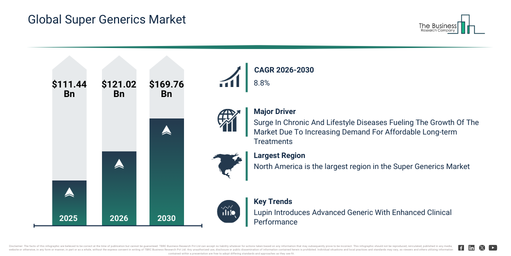
    The super generics market size has shown strong expansion in recent years. It is forecast to grow from $111.44 billion in 2025 to $121.02 billion in 2026, achieving a compound annual growth rate (CAGR) of 8.6%. The historical increase in this market can be linked to the expiration of patents for branded pharmaceuticals, a rise in demand for generic medications, increasing pressure from healthcare costs, the expansion of generic manufacturing, and supportive policies for generic substitution.

    The size of the super generics market is anticipated to experience robust expansion over the coming years. This market is projected to reach $169.76 billion by 2030, achieving a compound annual growth rate (CAGR) of 8.8%. Several factors are contributing to this growth during the forecast period, including the development of specialty generic pipelines, an increasing need for enhanced generics, broader capabilities in complex formulations, a greater emphasis by payers on cost-efficient treatments, and the growing prevalence of chronic diseases. Key trends anticipated within this period encompass the creation of value-added reformulations, an increase in extended-release generic medications, wider acceptance of abuse-deterrent formulations, the diversification of drug delivery methods, and a rise in patient-convenient dosage forms.

    Access Your Free Sample Report For In-Depth Market Analysis:

    https://www.thebusinessresearchcompany.com/sample.aspx?id=33331&type=smp

    Which Major Drivers Are Influencing The Expansion Of The Super Generics Market?

    The expanding occurrence of chronic and lifestyle illnesses is anticipated to stimulate the growth of the super generics market in the upcoming years. These enduring health conditions, encompassing diabetes, cardiovascular disorders, and obesity, are shaped by aspects such as diet, lack of physical activity, stress, an aging populace, and advancements in disease diagnosis. The increasing burden of these health challenges has resulted in a consistent demand for long-term and cost-effective therapeutic options. Super generics are instrumental in the management of chronic and lifestyle diseases, providing affordable, high-quality versions of intricate and value-added medications, particularly in areas like cardiovascular, metabolic, and respiratory care, thereby enhancing patient access and aiding in prolonged disease management. For instance, according to recent data cited by Wecovr, based on UK health statistics, more than 17 million adults in England—over one-third of the population are living with two or more chronic conditions, with a growing proportion of individuals in their 40s and 50s affected. Thus, the escalating prevalence of chronic and lifestyle diseases serves as a crucial catalyst for the expansion of the super generics market.

    How Is The Super Generics Market Segmented Across Different Segment Categories?

    The super generics market covered in this report is segmented –

    1) By Product Type: Generic Pharmaceuticals; Branded Generic Pharmaceuticals; Over-the-Counter (OTC) Products

    2) By Therapeutic Area: Cardiovascular; Oncology; Neurology; Diabetes; Anti-infective

    3) By Formulation Type: Tablet; Capsule; Injectable; Topical; Syrup

    4) By Distribution Channel: Hospital Pharmacies; Retail Pharmacies; Online

    5) By End User: Hospitals and Specialty Clinics; Homecare Settings; Ambulatory Surgical Centers

    Subsegments:

    1) By Generic Pharmaceuticals: Immediate Release Formulations; Modified Release Formulations; Fixed Dose Combination Products; Improved Bioavailability Formulations

    2) By Branded Generic Pharmaceuticals: Value Added Formulations; Patient Friendly Dosage Forms; Therapeutically Enhanced Products; Reformulated Established Medicines

    3) By Over The Counter Products: Pain Relief Products; Cold and Cough Remedies; Digestive Health Products; Vitamin and Mineral Supplements

    Which Trends Are Guiding The Direction Of The Super Generics Market?

    Major companies in the super generics market are increasingly directing their efforts towards developing advanced solutions, such as enhanced formulation platforms, to boost drug performance and offer cost-effective therapeutic options. These enhanced formulation platforms involve altering existing drug formulations or delivery mechanisms to improve factors like bioavailability, stability, dosing convenience, or patient adherence, all while upholding established safety and efficacy standards. Such strategies empower companies to differentiate their products from traditional generics and meet unmet clinical demands without inventing entirely new molecules. For example, Lupin, an Indian pharmaceutical firm, has expanded its super generics offerings in the United States by introducing value-added formulations aimed at highly sought-after therapeutic segments. These products are engineered to provide superior clinical performance compared to standard generics, while also remaining economically viable for healthcare systems and providers. Through the application of advanced formulation technologies, rigorous quality controls, and manufacturing processes that adhere to regulations, companies endeavor to ensure uniform potency, safety, and reliability.

    Which Organizations Play A Role In The Super Generics Market Landscape?

    Major companies operating in the super generics market are Teva Pharmaceutical Industries Ltd, Viatris Inc., Baxter International Inc., Sandoz Group AG, Sun Pharmaceutical Industries Ltd, Aurobindo Pharma, Dr. Reddy’s Laboratories Ltd, Cipla Ltd, Hikma Pharmaceuticals, Lupin Limited, Zydus Lifesciences., Glenmark Pharmaceuticals, Torrent Pharmaceuticals, Ascendia Pharmaceutical Solutions, Accord Healthcare, Neurelis Inc, Latitude Pharmaceuticals, Biovista Inc, CritiTech Inc, Crossject SA

    Get The Full Super Generics Market Report:

    https://www.thebusinessresearchcompany.com/report/super-generics-market-report

    Which Region Is The Largest In The Super Generics Market?

    North America was the largest region in the super generics market in 2025. Asia-Pacific is expected to be the fastest-growing region in the forecast period. The regions covered in the super generics market report are Asia-Pacific, South East Asia, Western Europe, Eastern Europe, North America, South America, Middle East, Africa.

    Request A Customized Super Generics Market Report For Competitive Insights:

    https://www.thebusinessresearchcompany.com/customise?id=33331&type=smp

    Browse Through More Reports Similar to the Global Super Generics Market 2026, By The Business Research Company

    Specialty Generics Market Report 2026

    https://www.thebusinessresearchcompany.com/report/specialty-generics-global-market-report

    Branded Generics Market Report 2026

    https://www.thebusinessresearchcompany.com/report/branded-generics-global-market-report

    Generic Oncology Drugs Market Report 2026

    https://www.thebusinessresearchcompany.com/report/generic-oncology-drugs-global-market-report

    Get in touch with us:

    The Business Research Company: https://www.thebusinessresearchcompany.com/

    Americas +1 310-496-7795

    Asia +44 7882 955267 & +91 8897263534

    Europe +44 7882 955267

    Email us at info@tbrc.info

    Follow us on:

    LinkedIn: https://in.linkedin.com/company/the-business-research-company

    YouTube: https://www.youtube.com/channel/UC24_fI0rV8cR5DxlCpgmyFQ

    Global Market Model: https://www.thebusinessresearchcompany.com/global-market-model
  • Single-use Membrane Chromatography Systems Market Forecast Highlighting Key Drivers And Expansion Potential

    Single-use Membrane Chromatography Systems Market Forecast Highlighting Key Drivers And Expansion Potential

    The Business Research Company’s 2026 market reports feature enhanced tools like market attractiveness analysis, TAM assessment, and company scoring matrices, along with interactive dashboards, deeper supply chain insights, and startup coverage strengthening the depth, usability, and strategic value of insights.

    What Is The Projected Increase In Market Value Of The Single-use Membrane Chromatography Systems Market During 2026–2030?

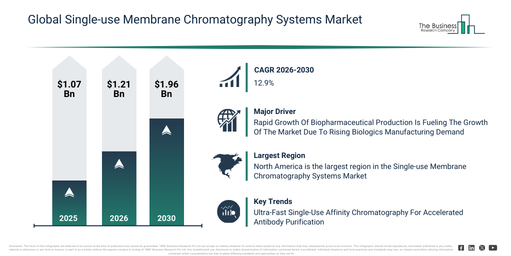
    The single-use membrane chromatography systems market has experienced rapid expansion in recent years. It is forecast to grow from $1.07 billion in 2025 to $1.21 billion in 2026, demonstrating a compound annual growth rate (CAGR) of 12.6%. This historical growth can be attributed to several factors including an increase in biologics manufacturing, the expansion of vaccine production, the rise of single-use bioprocessing, the need for faster purification cycles, and the growth in contract manufacturing.

    The single-use membrane chromatography systems market is projected to experience substantial expansion over the upcoming years. By 2030, this market is predicted to reach $1.96 billion, exhibiting a compound annual growth rate (CAGR) of 12.9%. This expansion over the forecast period is driven by several factors, such as the increasing development in gene and cell therapy, the wider implementation of modular bioprocess plants, a growing need for flexible purification, the application in viral vector production, and the scaling of continuous bioprocessing. Significant developments expected during the forecast timeframe feature disposable high flow membrane modules, accelerated downstream purification platforms, pre-packed single-use capsules, ongoing membrane processing systems, and designs focused on reduced buffer consumption.

    Access Your Free Sample Report For In-Depth Market Analysis:

    https://www.thebusinessresearchcompany.com/sample.aspx?id=33316&type=smp

    Which Important Drivers Are Guiding The Single-use Membrane Chromatography Systems Market Growth?

    The rapid expansion of biopharmaceutical manufacturing is projected to fuel the growth of the single-use membrane chromatography systems market in the coming period. This increase in biopharmaceutical production stems from the rising global demand for biologic therapies, including monoclonal antibodies, vaccines, and advanced therapies. Single-use membrane chromatography systems aid biopharmaceutical production by providing high-throughput, disposable purification solutions that allow for quicker and more efficient processing of biologics, such as monoclonal antibodies. For instance, in November 2025, according to a report published by the Ministry of Trade, Industry and Resources, a South Korea–based government ministry of the Republic, Korea’s bioindustry production reached KRW 22.9 trillion, marking a 9.8% increase from the previous year. Consequently, the significant growth in biopharmaceutical production has driven the expansion of the single-use membrane chromatography systems market.

    How Is The Single-use Membrane Chromatography Systems Market Organized By Segment Classification?

    The single-use membrane chromatography systems market covered in this report is segmented –

    1) By Product Type: Anion Exchange Membrane Chromatography; Cation Exchange Membrane Chromatography; Mixed-Mode Membrane Chromatography

    2) By Technique: Ion Exchange Membrane Chromatography; Affinity Membrane Chromatography; Hydrophobic Interaction Membrane Chromatography; Mixed-Mode Membrane Chromatography

    3) By Application: Biopharmaceuticals; Clinical Research; Academic Research; Other Applications

    4) By End-User: Pharmaceutical and Biotechnology Companies; Academic and Research Institutes; Contract Research Organizations; Other End-Users

    Subsegments:

    1) By Anion Exchange Membrane Chromatography: High Capacity Anion Exchange Membrane; Strong Anion Exchange Membrane; Weak Anion Exchange Membrane; Disposable Anion Exchange Membrane

    2) By Cation Exchange Membrane Chromatography: Strong Cation Exchange Membrane; Weak Cation Exchange Membrane; High Capacity Cation Exchange Membrane; Disposable Cation Exchange Membrane

    3) By Mixed-Mode Membrane Chromatography: Cation Anion Mixed Mode Membrane; Hydrophobic Interaction Mixed Mode Membrane; Affinity Mixed Mode Membrane; Disposable Mixed Mode Membrane

    What Trends Are Influencing The Evolution Of The Single-use Membrane Chromatography Systems Market?

    Leading companies in the single-use membrane chromatography systems market are concentrating on technological advancements, including ultra-fast single-use affinity chromatography, to achieve greater downstream processing efficiency, faster antibody capture, reduced purification cycle times, and enhanced scalability from research to commercial manufacturing. Ultra-fast single-use affinity chromatography denotes disposable, membrane-based chromatography systems that employ high-flow affinity ligands to capture specific biomolecules. For example, in October 2024, Sartorius AG, a Germany-based firm, introduced Sartobind Rapid A Lab. Sartobind Rapid A Lab offers a plug-and-play, single-use Protein A membrane chromatography solution created to accelerate antibody purification workflows. It enables ultra-fast antibody capture in under three minutes through a high-flow membrane matrix, which provides significantly higher lifetime yields than traditional resin columns. This unit functions without the need for column packing, buffer degassing, or cleaning-in-place, thus reducing process complexity and setup time. It also supports flexible operation using syringes, pumps, or liquid chromatography systems, eliminating the requirement for dedicated chromatography infrastructure.

    Who Are The Industry Participants Involved In The Single-use Membrane Chromatography Systems Market?

    Major companies operating in the single-use membrane chromatography systems market are Thermo Fisher Scientific Inc., 3M Company, Merck Millipore, Danaher Corporation, GE Healthcare, Asahi Kasei Corporation, Agilent Technologies Inc., Cytiva, Sartorius AG, Bio-Rad Laboratories Inc., Repligen Corporation, Phenomenex Inc., Cole-Parmer Instrument Company LLC, Membrane Solutions LLC, Graver Technologies LLC, Regis Technologies Inc., Purilogics Inc., BIA Separations d.o.o., Cobetter Filtration Equipment Co. Ltd., i3 Membrane Partnership Ltd.

    Get The Full Single-use Membrane Chromatography Systems Market Report:

    https://www.thebusinessresearchcompany.com/report/single-use-membrane-chromatography-systems-market-report

    Which Region Has The Greatest Market Share In The Single-use Membrane Chromatography Systems Market?

    North America was the largest region in the single-use membrane chromatography systems market in 2025. Asia-Pacific is expected to be the fastest-growing region in the forecast period. The regions covered in the single-use membrane chromatography systems market report are Asia-Pacific, South East Asia, Western Europe, Eastern Europe, North America, South America, Middle East, Africa.

    Request A Customized Single-use Membrane Chromatography Systems Market Report For Competitive Insights:

    https://www.thebusinessresearchcompany.com/customise?id=33316&type=smp

    Browse Through More Reports Similar to the Global Single-use Membrane Chromatography Systems Market 2026, By The Business Research Company

    Membrane Filtration Market Report 2026

    https://www.thebusinessresearchcompany.com/report/membrane-filtration-global-market-report

    Membrane Separation Technology Market Report 2026

    https://www.thebusinessresearchcompany.com/report/membrane-separation-technology-global-market-report

    High Performance Liquid Chromatography Market Report 2026

    https://www.thebusinessresearchcompany.com/report/high-performance-liquid-chromatography-global-market-report

    Get in touch with us:

    The Business Research Company: https://www.thebusinessresearchcompany.com/

    Americas +1 310-496-7795

    Asia +44 7882 955267 & +91 8897263534

    Europe +44 7882 955267

    Email us at info@tbrc.info

    Follow us on:

    LinkedIn: https://in.linkedin.com/company/the-business-research-company

    YouTube: https://www.youtube.com/channel/UC24_fI0rV8cR5DxlCpgmyFQ

    Global Market Model: https://www.thebusinessresearchcompany.com/global-market-model
  • Global Recombinant Vaccines Market Analysis For 2026–2030 With Strategic Insights

    Global Recombinant Vaccines Market Analysis For 2026–2030 With Strategic Insights

    The Business Research Company’s 2026 market reports feature enhanced tools like market attractiveness analysis, TAM assessment, and company scoring matrices, along with interactive dashboards, deeper supply chain insights, and startup coverage strengthening the depth, usability, and strategic value of insights.

    What Level Of Market Value Growth Is Predicted For The Recombinant Vaccines Market From 2026 To 2030?

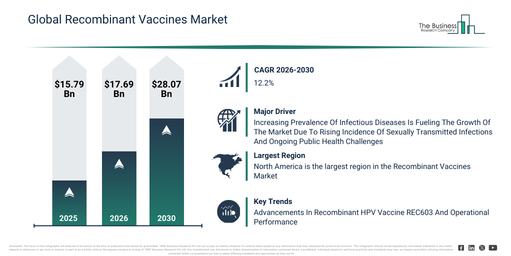
    The recombinant vaccines market size has experienced swift expansion in recent years. It is projected to increase from $15.79 billion in 2025 to $17.69 billion in 2026, demonstrating a compound annual growth rate (CAGR) of 12.0%. The growth observed in previous periods is largely due to the effectiveness of hepatitis B recombinant vaccines, established global vaccination programs, a rise in awareness concerning viral diseases, increased funding for immunization, and regulatory encouragement for safer vaccine platforms.

    The recombinant vaccines market size is projected to undergo significant expansion in the upcoming years. It is forecast to reach $28.07 billion by 2030, driven by a compound annual growth rate (CAGR) of 12.2%. This growth over the forecast period is primarily due to the increasing demand for precision vaccines, the expansion of vaccines for emerging diseases, a rise in adult booster programs, growing global immunization coverage, and a strong pipeline of recombinant candidates. Noteworthy trends during this period include an increase in recombinant subunit vaccines, the broadening of vector-based vaccine platforms, a rise in adult immunization initiatives, the growth of combination recombinant vaccines, and an enhanced focus on long-duration immunity.

    Access Your Free Sample Report For In-Depth Market Analysis:

    https://www.thebusinessresearchcompany.com/sample.aspx?id=33287&type=smp

    Which Drivers Are Supporting The Recombinant Vaccines Market Growth?

    The escalating occurrence of infectious diseases is anticipated to drive the recombinant vaccines market’s growth in the foreseeable future. An infectious disease is defined as an illness caused by various germs, including bacteria, viruses, fungi, or parasites, capable of spreading between individuals either directly or indirectly. The rise in infectious disease prevalence is attributed to poor sanitation and hygiene, where insufficient access to clean water, proper sanitation facilities, and effective waste management enables the facile transmission of harmful microorganisms through contaminated food, water, and personal interactions, thereby elevating the risk of infections. Recombinant vaccines work by utilizing biologically engineered genetic material derived from pathogens to elicit an immune response, thus preventing infectious diseases without inducing illness. For instance, in July 2024, according to the Australian Institute of Health and Welfare, an Australia-based national agency, the most frequently reported sexually transmitted infections in Australia in 2023 included over 109,000 notifications of chlamydia and more than 40,000 of gonorrhea, along with over 6,400 cases of infectious syphilis, underscoring the augmented incidence and ongoing public health challenges. Thus, the increasing prevalence of infectious diseases is a key factor propelling the expansion of the recombinant vaccines market.

    How Is The Recombinant Vaccines Market Broken Down By Segment Categories?

    The recombinant vaccines market covered in this report is segmented –

    1) By Type: Subunit Vaccines; Vector-Based Vaccines

    2) By Disease Indication: Human Papillomavirus (HPV); Herpes Zoster; Hepatitis B; Other Diseases

    3) By Route Of Administration: Parenteral; Other Route Of Administrations

    4) By End User: Pediatric; Adults

    Subsegments:

    1) By Subunit Vaccines: Protein Subunit Vaccines; Polysaccharide Subunit Vaccines; Conjugate Subunit Vaccines; Glycopeptide Subunit Vaccines; Recombinant Subunit Vaccines

    2) By Vector-Based Vaccines: Viral Vector Vaccines; Non Viral Vector Vaccines; Replicating Vector Vaccines; Non Replicating Vector Vaccines; Bacterial Vector Vaccines

    Which Trends Are Expected To Impact The Recombinant Vaccines Market?

    Major companies operating in the recombinant vaccines market are prioritizing the development of novel vaccines, exemplified by the recombinant 9-valent HPV vaccine, to gain a competitive edge. The recombinant 9-valent HPV vaccine is designed to protect against nine types of human papillomavirus (HPV) and is produced using recombinant DNA technology, meaning it is created in a laboratory setting without live virus and assists in preventing HPV-related diseases such as cervical cancer and genital warts. For instance, in August 2023, Jiangsu Recbio Technology Co. Ltd., a China-based biopharmaceutical company, advanced REC603, its recombinant 9-valent HPV vaccine, through Phase III clinical follow-up, with 24-month observations continuing. The vaccine demonstrated strong immunogenicity, a favorable safety profile, scalable manufacturing potential, and long-term efficacy, thereby supporting its potential for broad HPV prevention and commercialization.

    Which Players Are Present In The Recombinant Vaccines Market Space?

    Major companies operating in the recombinant vaccines market are Johnson And Johnson, Merck And Co Inc., Pfizer Inc., Sanofi S. A., Novartis AG, AstraZeneca Plc, GlaxoSmithKline Plc, Mitsubishi Chemical Group Corporation, CSL Limited, Sinovac Biotech Ltd., Boehringer Ingelheim International GmbH, Zoetis Services Llc, Elanco Animal Health, BioNTech Se, Green Cross Corporation (Gc Biopharma), Bavarian Nordic A S, VBI Vaccines Inc., Vaxart Inc., Biological E Limited, Novavax Inc., Serum Institute Of India Private Limited, Vaxcyte Inc., Bharat Biotech International Limited, and Transgene S A.

    Get The Full Recombinant Vaccines Market Report:

    https://www.thebusinessresearchcompany.com/report/recombinant-vaccines-market-report

    Where Is The Recombinant Vaccines Market Primarily Concentrated By Region?

    North America was the largest region in the recombinant vaccines market in 2025. Asia-Pacific is expected to be the fastest-growing region in the forecast period. The regions covered in the recombinant vaccines market report are Asia-Pacific, South East Asia, Western Europe, Eastern Europe, North America, South America, Middle East, Africa.

    Request A Customized Recombinant Vaccines Market Report For Competitive Insights:

    https://www.thebusinessresearchcompany.com/customise?id=33287&type=smp

    Browse Through More Reports Similar to the Global Recombinant Vaccines Market 2026, By The Business Research Company

    Therapeutic Bcg Vaccines Market Report 2026

    https://www.thebusinessresearchcompany.com/report/therapeutic-bcg-vaccines-global-market-report

    Ruminant Vaccines Market Report 2026

    https://www.thebusinessresearchcompany.com/report/ruminant-vaccines-global-market-report

    Vaccine Contract Manufacturing Market Report 2026

    https://www.thebusinessresearchcompany.com/report/vaccine-contract-manufacturing-global-market-report

    Get in touch with us:

    The Business Research Company: https://www.thebusinessresearchcompany.com/

    Americas +1 310-496-7795

    Asia +44 7882 955267 & +91 8897263534

    Europe +44 7882 955267

    Email us at info@tbrc.info

    Follow us on:

    LinkedIn: https://in.linkedin.com/company/the-business-research-company

    YouTube: https://www.youtube.com/channel/UC24_fI0rV8cR5DxlCpgmyFQ

    Global Market Model: https://www.thebusinessresearchcompany.com/global-market-model

  • Recombinant Proteins Manufacturing Services Market Outlook 2026–2030 Driven By Growth Factors And Projections

    Recombinant Proteins Manufacturing Services Market Outlook 2026–2030 Driven By Growth Factors And Projections

    The Business Research Company’s 2026 market reports feature enhanced tools like market attractiveness analysis, TAM assessment, and company scoring matrices, along with interactive dashboards, deeper supply chain insights, and startup coverage strengthening the depth, usability, and strategic value of insights.

    How Will The Market Value Of The Recombinant Proteins Manufacturing Services Market Progress Between 2026 And 2030?

    The recombinant proteins manufacturing services market has seen rapid expansion in recent years. It is anticipated to increase from $3.7 billion in 2025 to $4.21 billion in 2026, exhibiting a compound annual growth rate (CAGR) of 13.8%. The growth observed in the past can be ascribed to factors including the expansion of biologics research programs, a rise in academic protein studies, the development of contract manufacturing models, increasing monoclonal antibody development, and the historic growth of biotech startups.

    The recombinant proteins manufacturing services market size is projected to experience substantial growth in the upcoming years. It is forecasted to expand to $7.12 billion by 2030, achieving a compound annual growth rate (CAGR) of 14.0%. This anticipated growth is driven by factors such as an expanding pipeline of protein therapeutics, increased outsourcing by pharmaceutical firms, a heightened demand for scalable bioprocessing, the progression of clinical stage biologics, and a rising necessity for facilities that meet regulatory compliance. Significant trends during this forecast period include the broadening of outsourced protein production, an increase in custom expression services, a growing need for GMP protein manufacturing, the implementation of integrated end-to-end service models, and a greater adoption of single-use bioprocess systems.

    Access Your Free Sample Report For In-Depth Market Analysis:

    https://www.thebusinessresearchcompany.com/sample.aspx?id=33286&type=smp

    What Key Factors Are Affecting The Recombinant Proteins Manufacturing Services Market Demand?

    The increasing need for biopharmaceuticals and biosimilars is anticipated to drive the expansion of the recombinant proteins manufacturing services market in the future. Biopharmaceuticals and biosimilars are defined as biological medicines and their highly similar versions, which are employed to treat chronic, rare, and complex ailments, including cancer, autoimmune disorders, and metabolic conditions. The escalating demand for biopharmaceuticals and biosimilars is attributed to the rising prevalence of chronic and life-threatening diseases, advancements in biologic drug development, and expanded patient access to targeted therapies across significant healthcare markets. Recombinant proteins manufacturing services support the development and commercialization of biopharmaceuticals and biosimilars by offering scalable, high-quality, and regulatory-compliant production of protein-based drugs, thereby enabling pharmaceutical and biotechnology companies to accelerate development timelines and maintain a consistent supply. For instance, according to GOV.UK, a UK-based government website, businesses within the biopharmaceutical subsector reported a combined turnover of $135.5 billion (£98.9 billion) during the 2023/2024 period, representing a 15% increase from the previous year. Hence, the growing demand for biopharmaceuticals and biosimilars is propelling the growth of the recombinant proteins manufacturing services market.

    What Are The Different Segment Types In The Recombinant Proteins Manufacturing Services Market Segment Breakdown?

    The recombinant proteins manufacturing services market covered in this report is segmented –

    1) By Service Type: Process Development; Upstream Manufacturing; Downstream Manufacturing; Analytical Development and Quality Control; Finish And Lyophilization

    2) By Protein Type: Monoclonal Antibodies And Antibody Fragments; Vaccines And Viral Proteins; Enzymes And Growth Factors; Hormones And Cytokines; Other Therapeutic And Diagnostic Proteins

    3) By Host Cell: Mammalian Cells; Bacterial Cells; Insect Cells; Yeast And Fungi; Other Host Cell

    4) By Application: Therapeutics; Research And Development; Diagnostics; Other Applications

    5) By End-User: Pharmaceutical And Biotechnology Companies; Academic And Research Institutes

    Subsegments:

    1) By Process Development: Cell Line Development; Expression System Optimization; Process Scale Up; Process Validation

    2) By Upstream Manufacturing: Microbial Fermentation; Mammalian Cell Culture; Insect Cell Culture; Media And Feed Optimization

    3) By Downstream Manufacturing: Protein Purification; Chromatography Processing; Filtration And Concentration; Viral Clearance

    4) By Analytical Development And Quality Control: Method Development; Stability Testing; Purity And Potency Testing; Batch Release Testing

    5) By Finish And Lyophilization: Sterile Filling; Freeze Drying; Packaging And Labeling; Storage And Distribution Preparation

    What Trends Are Influencing Changes In The Recombinant Proteins Manufacturing Services Market?

    Major companies in the recombinant proteins manufacturing services market are increasingly concentrating on technological improvements in high-yield protein expression and optimization methods, such as research-grade and scalable mammalian recombinant protein manufacturing capabilities. This focus is intended to enhance production efficiency, elevate protein quality, shorten development timelines, and boost flexibility in addressing diverse biopharmaceutical development requirements. Research-grade and scalable mammalian recombinant protein manufacturing capabilities signify advancements in cell culture systems, expression technologies, and process controls that enable the efficient generation of high-quality recombinant proteins at small research scales, while also facilitating a seamless move to larger manufacturing volumes. For instance, in September 2024, Axio BioPharma, a U.S.-based biotechnology company, launched recombinant protein manufacturing services designed to support research-grade monoclonal antibody production and scalable mammalian protein expression solutions. This recombinant protein manufacturing services platform offers research-grade and scalable mammalian protein production capabilities, aiding in the expression of high-quality monoclonal antibodies and recombinant proteins for early-stage development. With adaptable production volumes, ranging from minimal laboratory-scale batches to extensive scalable systems, the platform guarantees reliable protein output while upholding consistency and biological activity.

    Who Are The Well-Known Companies In The Recombinant Proteins Manufacturing Services Market?

    Major companies operating in the recombinant proteins manufacturing services market are Thermo Fisher Scientific Inc., Lonza Group Ltd., Charles River Laboratories International Inc., Catalent Inc., Samsung Biologics Co. Ltd., Recipharm AB, Bio-Techne Corporation, FUJIFILM Diosynth Biotechnologies, AGC Biologics A/S, WuXi Biologics (Cayman) Inc., KBI Biopharma Inc., GenScript Biotech Corporation, Rentschler Biopharma SE, Abzena Ltd., ProBioGen AG, NorthX Biologics AB, Creative Biolabs Inc., evitria AG, Boster Biological Technology Co. Ltd., Icosagen Group AS

    Get The Full Recombinant Proteins Manufacturing Services Market Report:

    https://www.thebusinessresearchcompany.com/report/recombinant-proteins-manufacturing-services-market-report

    Which Region Has The Greatest Market Share In The Recombinant Proteins Manufacturing Services Market?

    North America was the largest region in the recombinant proteins manufacturing services market in 2025. Asia-Pacific is expected to be the fastest-growing region in the forecast period. The regions covered in the recombinant proteins manufacturing services market report are Asia-Pacific, South East Asia, Western Europe, Eastern Europe, North America, South America, Middle East, Africa.

    Request A Customized Recombinant Proteins Manufacturing Services Market Report For Competitive Insights:

    https://www.thebusinessresearchcompany.com/customise?id=33286&type=smp

    Browse Through More Reports Similar to the Global Recombinant Proteins Manufacturing Services Market 2026, By The Business Research Company

    Recombinant Proteins Market Report 2026

    https://www.thebusinessresearchcompany.com/report/recombinant-proteins-global-market-report

    Protein Engineering Market Report 2026

    https://www.thebusinessresearchcompany.com/report/protein-engineering-global-market-report

    Recombinant Dna Technology Market Report 2026

    https://www.thebusinessresearchcompany.com/report/recombinant-dna-technology-global-market-report

    Get in touch with us:

    The Business Research Company: https://www.thebusinessresearchcompany.com/

    Americas +1 310-496-7795

    Asia +44 7882 955267 & +91 8897263534

    Europe +44 7882 955267

    Email us at info@tbrc.info

    Follow us on:

    LinkedIn: https://in.linkedin.com/company/the-business-research-company

    YouTube: https://www.youtube.com/channel/UC24_fI0rV8cR5DxlCpgmyFQ

    Global Market Model: https://www.thebusinessresearchcompany.com/global-market-model

  • Recombinant Human Granulocyte Colonystimulating Factor Injection Rhgcsf Market Developments And Opportunities Across 2026–2030

    Recombinant Human Granulocyte Colonystimulating Factor Injection Rhgcsf Market Developments And Opportunities Across 2026–2030

    The Business Research Company’s 2026 market reports feature enhanced tools like market attractiveness analysis, TAM assessment, and company scoring matrices, along with interactive dashboards, deeper supply chain insights, and startup coverage strengthening the depth, usability, and strategic value of insights.

    What Are The Market Size Estimates For The Recombinant Human Granulocyte Colonystimulating Factor Injection Rhgcsf Market In 2026 And 2030?

    The recombinant human granulocyte colonystimulating factor injection rhgcsf market size has seen substantial growth recently. It is projected to expand from $3.89 billion in 2025 to $4.21 billion in 2026, exhibiting a compound annual growth rate (CAGR) of 8.3%. This historical growth can be attributed to several factors, including the increasing global volumes of chemotherapy treatments, a rise in neutropenia cases, the expansion of oncology treatment centers, the established adoption of colony stimulating factors, and strong clinical guideline support for GCSF use.

    The recombinant human granulocyte colonystimulating factor injection rhgcsf market is projected to experience robust expansion over the coming years. This market is anticipated to reach a valuation of $5.86 billion by 2030, demonstrating a compound annual growth rate (CAGR) of 8.6%. The projected growth during the forecast period can be attributed to factors such as increasing cancer prevalence rates, a greater demand for long-acting injectable formulations, the proliferation of biosimilar drug approvals, enhanced access to specialized biologics, and the expansion of supportive care protocols within hospitals. Key trends influencing this period encompass the rise of biosimilar GCSF injections, the wider availability of prefilled syringe formats, increased utilization in chemotherapy support care, a sustained demand for long-acting pegylated formulations, and the growing application of combination supportive therapies.

    Access Your Free Sample Report For In-Depth Market Analysis:

    https://www.thebusinessresearchcompany.com/sample.aspx?id=33285&type=smp

    Which Primary Drivers Are Impacting The Recombinant Human Granulocyte Colonystimulating Factor Injection Rhgcsf Market Growth?

    A growing occurrence of neutropenia is projected to boost the expansion of the recombinant human granulocyte colony-stimulating factor injection (rhG-CSF) market in the foreseeable future. Neutropenia is a medical state defined by unusually low levels of neutrophils, which are white blood cells vital for combating infections, consequently making individuals highly vulnerable to bacterial and fungal infections. The rising incidence of neutropenia stems primarily from the increased use of intensive chemotherapy regimens for cancer treatment. Modern oncology protocols often employ more aggressive dosing schedules to enhance patient survival rates, which in turn elevates the frequency and severity of chemotherapy-induced bone marrow suppression. Recombinant human granulocyte colony-stimulating factor injection (rhG-CSF) addresses neutropenia by stimulating the bone marrow to proliferate and differentiate neutrophil precursors, thereby accelerating the release of mature neutrophils into the bloodstream. This action reduces the duration and severity of neutropenia and lowers the infection risk in affected patients. For example, in February 2025, the UK Health Security Agency (UKHSA), a UK-based government agency, reported that febrile neutropenia (FN) or other manifestations of infection in immunocompromised hosts without a clear anatomical site comprised 206 cases, accounting for 1.4% of all diagnoses in the community setting. Therefore, the increasing incidence of neutropenia is driving the growth of the recombinant human granulocyte colony-stimulating factor injection (rhG-CSF) market.

    Which Segment Classifications Are Used In The Recombinant Human Granulocyte Colonystimulating Factor Injection Rhgcsf Market Segment Analysis?

    The recombinant human granulocyte colonystimulating factor injection rhgcsf market covered in this report is segmented –

    1) By Type: Filgrastim; Lenograstim

    2) By Route Of Administration: Subcutaneous Injection; Intravenous Injection

    3) By Patient Type: Pediatric Patients; Adult Patients

    4) By Application: Cancer; Bone Marrow Disorders

    5) By Distribution Channel: Hospital Pharmacies; Retail Pharmacies

    Subsegments:

    1) By Filgrastim: Neupogen; Zarxio; Accofil; Granix

    2) By Lenograstim: Neutrogin; Lenograstim Biosimilar; Lenograstim Standard Formulation; Lenograstim Lyophilized Powder

    Which Trends Are Shaping Growth In The Recombinant Human Granulocyte Colonystimulating Factor Injection Rhgcsf Market?

    Leading companies in the recombinant human granulocyte colony-stimulating factor injection (rhG-CSF) market are focused on developing advanced formulations, such as PEG-free recombinant G-CSF fusion proteins. This development aims to prolong drug half-life, decrease the frequency of injections, and enhance patient adherence, while also effectively preventing chemotherapy-induced neutropenia. These PEG-free recombinant G-CSF fusion proteins are engineered molecules that combine G-CSF with a human Fc fragment without incorporating polyethylene glycol (PEG). This design extends the drug’s half-life, boosts its stability, and reduces the need for frequent injections, thus improving patient compliance and efficiently stimulating neutrophil production to avert chemotherapy-induced neutropenia. For example, in November 2024, Evive Biotech Co. Ltd., a China-based biopharmaceutical company, alongside APOGEPHA Arzneimittel GmbH, a Germany-based pharmaceutical company, launched Ryzneuta (Efbemalenograstim alfa Injection), an innovative, long-acting, PEG-free rhG-CSF product in the German market. Ryzneuta is manufactured using Chinese Hamster Ovary (CHO) cells, which ensures a mammalian glycosylation pattern, and it functions by binding to the G-CSF receptor to stimulate the survival, proliferation, and differentiation of neutrophil precursors and mature neutrophils. Its distinct Fc-fusion design extends its half-life, lowers injection frequency, and strengthens immune function, helping to prevent reductions or delays in chemotherapy doses. This product has demonstrated both efficacy and safety in multi-center, randomized, active-controlled trials, representing a significant progression beyond conventional rhG-CSF injections.

    Which Firms Are Contributing To The Recombinant Human Granulocyte Colonystimulating Factor Injection Rhgcsf Market Ecosystem?

    Major companies operating in the recombinant human granulocyte colonystimulating factor injection rhgcsf market are Pfizer Inc., Novartis AG, Amgen Inc., Intas Pharmaceuticals Ltd., Kyowa Kirin Co. Ltd., Dr. Reddy’s Laboratories Ltd., Cadila Pharmaceuticals Ltd., Biocon Limited, North China Pharmaceutical Group Corporation, Shijiazhuang Pharmaceutical Group Co. Ltd., Emcure Pharmaceuticals Ltd., Harbin Pharmaceutical Group Co. Ltd., Reliance Life Sciences Pvt. Ltd., Jiuyuan Gene Engineering Co. Ltd., Qilu Pharmaceutical Co. Ltd., Amoytop Biotech Co. Ltd., Kexing Biopharm Co. Ltd., Sunway Biotech Co. Ltd., Apotex Inc., and Wuzhong Pharmaceutical Group Co. Ltd.

    Get The Full Recombinant Human Granulocyte Colonystimulating Factor Injection Rhgcsf Market Report:

    https://www.thebusinessresearchcompany.com/report/recombinant-human-granulocyte-colonystimulating-factor-injection-rhgcsf-market-report

    Which Region Accounts For The Largest Portion Of The Recombinant Human Granulocyte Colonystimulating Factor Injection Rhgcsf Market?

    North America was the largest region in the recombinant human granulocyte colony-stimulating factor injection (rhG-CSF) market in 2025. Asia-Pacific is expected to be the fastest-growing region in the forecast period. The regions covered in the recombinant human granulocyte colonystimulating factor injection rhgcsf market report are Asia-Pacific, South East Asia, Western Europe, Eastern Europe, North America, South America, Middle East, Africa.

    Request A Customized Recombinant Human Granulocyte Colonystimulating Factor Injection Rhgcsf Market Report For Competitive Insights:

    https://www.thebusinessresearchcompany.com/customise?id=33285&type=smp

    Browse Through More Reports Similar to the Global Recombinant Human Granulocyte Colonystimulating Factor Injection Rhgcsf Market 2026, By The Business Research Company

    Gmp Cell Therapy Consumables Market Report 2026

    https://www.thebusinessresearchcompany.com/report/gmp-cell-therapy-consumables-global-market-report

    Hemostasis Products Market Report 2026

    https://www.thebusinessresearchcompany.com/report/hemostasis-products-global-market-report

    Biopharmaceutical Cmo Market Report 2026

    https://www.thebusinessresearchcompany.com/report/biopharmaceutical-cmo-global-market-report

    Get in touch with us:

    The Business Research Company: https://www.thebusinessresearchcompany.com/

    Americas +1 310-496-7795

    Asia +44 7882 955267 & +91 8897263534

    Europe +44 7882 955267

    Email us at info@tbrc.info

    Follow us on:

    LinkedIn: https://in.linkedin.com/company/the-business-research-company

    YouTube: https://www.youtube.com/channel/UC24_fI0rV8cR5DxlCpgmyFQ

    Global Market Model: https://www.thebusinessresearchcompany.com/global-market-model
  • Pyoderma Gangrenosum Treatment Market Growth Analysis 2026–2030 Highlighting Innovation And Competitive Landscape

    Pyoderma Gangrenosum Treatment Market Growth Analysis 2026–2030 Highlighting Innovation And Competitive Landscape

    The Business Research Company’s 2026 market reports feature enhanced tools like market attractiveness analysis, TAM assessment, and company scoring matrices, along with interactive dashboards, deeper supply chain insights, and startup coverage strengthening the depth, usability, and strategic value of insights.

    How Large Will The Pyoderma Gangrenosum Treatment Market Be By 2030 Compared To Its 2026 Market Size?

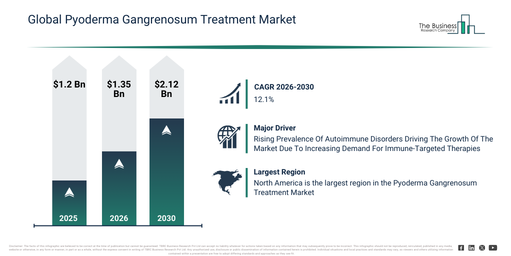
    The pyoderma gangrenosum treatment market has experienced rapid expansion in recent years. It is projected to grow from $1.2 billion in 2025 to $1.35 billion in 2026, exhibiting a compound annual growth rate (CAGR) of 11.8%. This historical growth can be attributed to an increase in the incidence of autoimmune diseases, the expansion of dermatology specialty care, growing awareness of rare skin disorders, the proliferation of hospital wound care units, and improved access to diagnostic testing.

    The pyoderma gangrenosum treatment market is projected to experience significant expansion over the next few years. It is expected to reach $2.12 billion by 2030, with a compound annual growth rate (CAGR) of 12.1%. This anticipated growth during the forecast period can be attributed to advancements in targeted immunotherapy development, the increasing availability of specialty biologic drugs, growing investment in treatments for rare diseases, a rise in outpatient dermatology centers, and expanded insurance coverage for advanced therapies. Key trends identified for the forecast period include the wider adoption of biologic therapies, an increase in the use of combination drug regimens, the growth of advanced wound care therapies, a rise in personalized treatment protocols, and more comprehensive clinical monitoring and follow-up programs.

    Access Your Free Sample Report For In-Depth Market Analysis:

    https://www.thebusinessresearchcompany.com/sample.aspx?id=33280&type=smp

    Which Important Drivers Are Guiding The Pyoderma Gangrenosum Treatment Market Growth?

    The increasing incidence of autoimmune conditions is anticipated to fuel the expansion of the pyoderma gangrenosum treatment market. These disorders involve the body’s immune system erroneously attacking its own tissues, leading to persistent inflammation and tissue damage. The rise in autoimmune disorders is attributed to aging populations, who are more prone to immune system irregularities. Pyoderma gangrenosum treatments offer advantages for these conditions by moderating the overactive immune response, thereby helping to manage inflammation and prevent harm to healthy tissues, addressing both dermatological ulcers and wider issues associated with autoimmune diseases. For instance, as of September 2025, the National Institutes of Health, a US-based medical research agency, estimated that 23.5 million to 50 million Americans, representing between 7% and 8% of the U.S. population, were affected by one or more autoimmune diseases, with this prevalence steadily increasing due to intricate genetic, environmental, and societal influences. Consequently, the growing occurrence of autoimmune disorders is propelling the pyoderma gangrenosum treatment market forward.

    Which Segments Define The Pyoderma Gangrenosum Treatment Market Segment Structure?

    The pyoderma gangrenosum treatment market covered in this report is segmented –

    1) By Treatment Type: Topical Treatments; Systemic Treatments; Surgical Treatments; Wound Care Therapies

    2) By Drug Class: Immunosuppressive Drugs; Tumour Necrosis Factor Inhibitors; Antibacterial Agents

    3) By Route of Administration: Oral; Injectable; Topical

    4) By Distribution Channel: Hospital Pharmacies; Retail Pharmacies; Other Distribution Channels

    5) By End User: Hospitals; Dermatology Clinics; Outpatient Care Centers

    Subsegments:

    1) By Topical Treatments: Topical Corticosteroids; Topical Immunomodulators; Topical Antibiotics; Topical Antiseptic Agents

    2) By Systemic Treatments: Systemic Corticosteroids; Systemic Immunosuppressive Drugs; Biologic Therapies; Anti Inflammatory Medications

    3) By Surgical Treatments: Surgical Debridement; Skin Grafting Procedures; Reconstructive Surgical Procedures

    4) By Wound Care Therapies: Advanced Wound Dressings; Negative Pressure Wound Therapy; Moist Wound Healing Solutions; Infection Control Wound Care

    Who Are The Established Players Within The Pyoderma Gangrenosum Treatment Market?

    Major companies operating in the pyoderma gangrenosum treatment market are Johnson & Johnson Services Inc., Roche Holding AG, Merck & Co. Inc., Pfizer Inc., AbbVie Inc., Sanofi SA, Novartis AG, Bristol-Myers Squibb Company, GlaxoSmithKline Plc, Amgen Inc., Boehringer Ingelheim Inc., Teva Pharmaceutical Industries Ltd., Biogen Inc., Fresenius Kabi AG, Intas Pharmaceuticals Ltd., UCB SA, Swedish Orphan Biovitrum AB, Celltrion Inc., InflaRx NV, and Aclaris Therapeutics Inc.

    Get The Full Pyoderma Gangrenosum Treatment Market Report:

    https://www.thebusinessresearchcompany.com/report/pyoderma-gangrenosum-treatment-market-report

    Where Is The Pyoderma Gangrenosum Treatment Market Most Concentrated Geographically?

    North America was the largest region in the pyoderma gangrenosum treatment market in 2025. Asia-Pacific is expected to be the fastest-growing region in the forecast period. The regions covered in the pyoderma gangrenosum treatment market report are Asia-Pacific, South East Asia, Western Europe, Eastern Europe, North America, South America, Middle East, Africa.

    Request A Customized Pyoderma Gangrenosum Treatment Market Report For Competitive Insights:

    https://www.thebusinessresearchcompany.com/customise?id=33280&type=smp

    Browse Through More Reports Similar to the Global Pyoderma Gangrenosum Treatment Market 2026, By The Business Research Company

    Monkey Pox Treatment Market Report 2026

    https://www.thebusinessresearchcompany.com/report/monkey-pox-treatment-global-market-report

    Rare Diseases Treatment Market Report 2026

    https://www.thebusinessresearchcompany.com/report/rare-diseases-treatment-global-market-report

    Rare Neurological Disease Treatment Market Report 2026

    https://www.thebusinessresearchcompany.com/report/rare-neurological-disease-treatment-global-market-report

    Get in touch with us:

    The Business Research Company: https://www.thebusinessresearchcompany.com/

    Americas +1 310-496-7795

    Asia +44 7882 955267 & +91 8897263534

    Europe +44 7882 955267

    Email us at info@tbrc.info

    Follow us on:

    LinkedIn: https://in.linkedin.com/company/the-business-research-company

    YouTube: https://www.youtube.com/channel/UC24_fI0rV8cR5DxlCpgmyFQ

    Global Market Model: https://www.thebusinessresearchcompany.com/global-market-model
  • The Rising Prevalence Of Myeloproliferative Diseases Driving Market Growth Due to Aging-Related Hematological Abnormalities Is Contributing To Changes In The Polycythemia Market

    The Rising Prevalence Of Myeloproliferative Diseases Driving Market Growth Due to Aging-Related Hematological Abnormalities Is Contributing To Changes In The Polycythemia Market

    The Business Research Company’s 2026 market reports feature enhanced tools like market attractiveness analysis, TAM assessment, and company scoring matrices, along with interactive dashboards, deeper supply chain insights, and startup coverage strengthening the depth, usability, and strategic value of insights.

    How Much Growth In Market Value Is Expected For The Polycythemia Market Between 2026 And 2030?

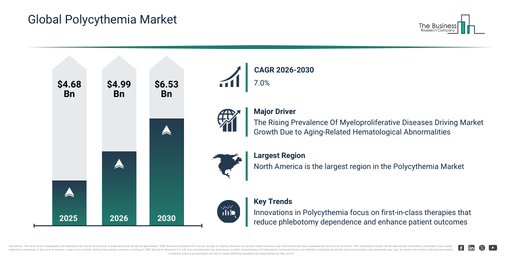
    The polycythemia market has demonstrated significant expansion over recent years. Its value is anticipated to rise from $4.68 billion in 2025 to $4.99 billion in 2026, exhibiting a compound annual growth rate (CAGR) of 6.7%. This historical growth can be linked to the increasing occurrence of myeloproliferative disorders, greater public understanding of rare blood diseases, the establishment of more specialty hematology centers, an increase in diagnostic testing, and the expanded use of cytoreductive drugs.

    The polycythemia market is anticipated to show significant expansion in the coming years. It is projected to reach $6.53 billion by 2030, demonstrating a compound annual growth rate (CAGR) of 7.0%. This growth throughout the forecast period stems from progress in targeted JAK2 therapies, the increasing embrace of genetic screening, a surging requirement for personalized treatment strategies, enhanced accessibility to specialty biologics, and an expanding elderly demographic. Prominent trends expected during this period encompass the growing adoption of Janus Kinase inhibitors, the rising application of interferon-based injectable treatments, a heightened inclination towards therapeutic phlebotomy procedures, the broadening scope of hematocrit monitoring diagnostics, and a shift towards combination drug therapy approaches.

    Access Your Free Sample Report For In-Depth Market Analysis:

    https://www.thebusinessresearchcompany.com/sample.aspx?id=33266&type=smp

    Which Strong Drivers Are Impacting The Polycythemia Market Growth?

    The polycythemia market is anticipated to grow as a result of the increasing occurrence of myeloproliferative diseases. Myeloproliferative diseases represent a collection of uncommon blood conditions characterized by the abnormal overproduction of blood cells in the bone marrow, leading to impaired blood function and circulation. A primary factor contributing to the rising incidence of these disorders is the growing prevalence of age-related hematological abnormalities, as aging populations exhibit greater susceptibility to bone marrow dysfunction. Polycythemia, being a significant subtype of myeloproliferative diseases involving the excessive production of red blood cells, plays a vital role in enhancing clinical understanding, diagnosis, and ongoing monitoring of these conditions, thereby supporting market expansion. For instance, in September 2024, Blood Cancer United, a US-based nonprofit dedicated to curing blood cancers, reported that an estimated 120,000 people in the United States were living with or in remission from myeloproliferative neoplasms (MPNs) in 2023, highlighting an increased prevalence of these chronic hematologic disorders. Consequently, the rising incidence of myeloproliferative diseases is a key driver for the growth of the polycythemia market.

    What Segment Categories Shape The Polycythemia Market Segment Landscape?

    The polycythemia market covered in this report is segmented –

    1) By Type: Primary polycythemia; Secondary polycythemia; Pseudopolycythemia

    2) By Drug Class: Antimetabolites; Janus Kinase 2 Inhibitors; Myelosuppressive Agents; Selective Serotonin Reuptake Inhibitors; Folic Acid; Other Drug Classes

    3) By Route Of Administration: Oral; Intravenous; Intramuscular

    4) By End Users: Hospital Pharmacies; Retail Pharmacies; Online Pharmacies

    Subsegments:

    1) By Primary Polycythemia: Polycythemia Vera; Familial Primary Polycythemia

    2) By Secondary Polycythemia: Hypoxia Induced Polycythemia; Tumor Associated Polycythemia; Drug Induced Polycythemia; Hormone Induced Polycythemia

    3) By Pseudopolycythemia: Stress Related Polycythemia; Dehydration Related Polycythemia; Plasma Volume Contraction Related Polycythemia

    Which Trends Are Contributing To Changes In The Polycythemia Market?

    Major companies operating in the polycythemia market are concentrating on advanced innovations, with rusfertide standing out as a first-in-class hepcidin mimetic peptide. This innovation effectively lessens the requirement for frequent phlebotomies, simultaneously enhancing hematocrit control and the quality of life for patients. A hepcidin mimetic is defined as a drug or compound engineered to mimic hepcidin, which is the body’s chief hormone for regulating iron balance. As an example, in March 2025, Takeda Pharmaceutical Company Limited, a biopharmaceutical company based in Japan, disclosed positive topline findings from its Phase 3 VERIFY study of rusfertide in patients with polycythemia vera. The study results demonstrated a significant decrease in phlebotomy dependence, improved hematocrit control, and valuable patient-reported outcomes, all while sustaining a favorable safety profile.

    Who Are The Companies Operating Across The Polycythemia Market Value Chain?

    Major companies operating in the polycythemia market are Bristol Myers Squibb Company, Roche Holding AG, Merck And Company Inc., Bayer AG, Novartis AG, Takeda Pharmaceutical Company, Gilead Sciences Inc., Teva Pharmaceutical Industries Ltd., Incyte Corporation, Ionis Pharmaceuticals Inc., CTI BioPharma Corp., AOP Orphan Pharmaceuticals AG, Silence Therapeutics Plc, Italfarmaco S.p.A., PharmaEssentia Corporation, Karyopharm Therapeutics Inc., Protagonist Therapeutics Inc., Kartos Therapeutics Inc., Geron Corporation, and Perseus Proteomics Inc.

    Get The Full Polycythemia Market Report:

    https://www.thebusinessresearchcompany.com/report/polycythemia-market-report

    Which Region Leads The Polycythemia Market In Overall Market Size?

    North America was the largest region in the polycythemia market in 2025. Asia-Pacific is expected to be the fastest-growing region in the forecast period. The regions covered in the polycythemia market report are Asia-Pacific, South East Asia, Western Europe, Eastern Europe, North America, South America, Middle East, Africa.

    Request A Customized Polycythemia Market Report For Competitive Insights:

    https://www.thebusinessresearchcompany.com/customise?id=33266&type=smp

    Browse Through More Reports Similar to the Global Polycythemia Market 2026, By The Business Research Company

    Medical Polycarbonate Market Report 2026

    https://www.thebusinessresearchcompany.com/report/medical-polycarbonate-global-market-report

    Hyperlipidemia Market Report 2026

    https://www.thebusinessresearchcompany.com/report/hyperlipidemia-global-market-report

    Polycystic Ovarian Syndrome Treatment Market Report 2026

    https://www.thebusinessresearchcompany.com/report/polycystic-ovarian-syndrome-treatment-global-market-report

    Get in touch with us:

    The Business Research Company: https://www.thebusinessresearchcompany.com/

    Americas +1 310-496-7795

    Asia +44 7882 955267 & +91 8897263534

    Europe +44 7882 955267

    Email us at info@tbrc.info

    Follow us on:

    LinkedIn: https://in.linkedin.com/company/the-business-research-company

    YouTube: https://www.youtube.com/channel/UC24_fI0rV8cR5DxlCpgmyFQ

    Global Market Model: https://www.thebusinessresearchcompany.com/global-market-model
  • The Plant-Derived Analgesics Market Is Evolving Due To Increasing Prevalence Of Chronic Pain Conditions Fueling Market Growth Due To Rising Awareness Of Side Effects And Addiction Risks Associated With Conventional Pain Medications

    The Plant-Derived Analgesics Market Is Evolving Due To Increasing Prevalence Of Chronic Pain Conditions Fueling Market Growth Due To Rising Awareness Of Side Effects And Addiction Risks Associated With Conventional Pain Medications

    The Business Research Company’s 2026 market reports feature enhanced tools like market attractiveness analysis, TAM assessment, and company scoring matrices, along with interactive dashboards, deeper supply chain insights, and startup coverage strengthening the depth, usability, and strategic value of insights.

    What Is The Estimated Market Size Of The Plant-Derived Analgesics Market In 2026, And How Will Its Value Evolve By 2030?

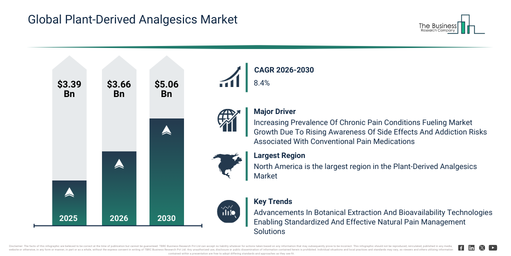
    The plant-derived analgesics market has experienced robust growth in recent years. It is anticipated to expand from $3.39 billion in 2025 to $3.66 billion in 2026, demonstrating a compound annual growth rate (CAGR) of 8.2%. This historical expansion can be linked to factors such as the adoption of traditional medicine, a rising demand for natural pain relief, increased usage of herbal supplements, concerns over opioid side effects, and the growth in botanical extraction techniques.

    The plant-derived analgesics market size is projected for substantial expansion over the upcoming years. This market is anticipated to reach $5.06 billion by 2030, exhibiting a compound annual growth rate (CAGR) of 8.4%. The anticipated increase during this period stems from factors such as a growing inclination towards natural therapeutics, the advancement of cannabinoid medicines, the broadening of plant-based drug pipelines, enhanced clinical validation of botanicals, and a broader embrace of integrative care. Key developments expected in the forecast period encompass standardized botanical pain extracts, the isolation of high purity phytochemicals, the development of combination herbal analgesic formulas, advancements in plant actives for enhanced bioavailability, and the adoption of evidence-based botanical therapies.

    Access Your Free Sample Report For In-Depth Market Analysis:

    https://www.thebusinessresearchcompany.com/sample.aspx?id=33264&type=smp

    What Key Factors Are Shaping The Plant-Derived Analgesics Market Landscape?

    The rising occurrence of chronic pain conditions is projected to drive the expansion of the plant-derived analgesics market in the coming years. Chronic pain conditions encompass persistent pain disorders such as musculoskeletal pain, arthritis, neuropathic pain, and inflammatory issues that demand ongoing management. The global increase in chronic pain is attributed to factors like aging populations, sedentary lifestyles, rising obesity rates, and the growing burden of chronic diseases. Plant-derived analgesics contribute to managing these conditions by offering pain relief options derived from botanical extracts, herbs, and active plant compounds, which are increasingly adopted as complementary or alternative approaches for pain management. For instance, in November 2024, data from the Centers for Disease Control and Prevention (CDC), a US-based federal public health agency, indicated that about 24.3% of adults in the United States experienced chronic pain in 2023, with 8.5% reporting high-impact chronic pain. Thus, the growing prevalence of chronic pain conditions in major healthcare markets is fueling the growth of the plant-derived analgesics market.

    Which Segment Types Are Examined In The Plant-Derived Analgesics Market Segment Study?

    The plant-derived analgesics market covered in this report is segmented –

    1) By Product Type: Morphine; Codeine; Salicin; Cannabinoids; Curcumin

    2) By Formulation Type: Tablets; Capsules; Creams; Injectable Forms; Oils

    3) By Source: Plant-derived opioid alkaloids; Salicylate-type analgesics; Cannabinoids And hemp-derived; Polyphenolic; Other phytochemicals

    4) By Sales Channel: Hospitals; Clinics; Retail Sales; Online Sales; Hypermarkets And Supermarkets

    5) By Application: Chronic Pain Management; Acute Pain Relief; Post-Surgical Pain; Neuropathic Pain

    Subsegments:

    1) By Morphine: Immediate Release Formulations; Extended Release Formulations; Injectable Preparations; Oral Solid Dosage Forms

    2) By Codeine: Single Ingredient Analgesics; Combination Pain Relief Products; Oral Solid Dosage Forms; Liquid Oral Formulations

    3) By Salicin: Standardized Plant Extracts; Oral Solid Dosage Forms; Liquid Herbal Preparations; Combination Botanical Formulations

    4) By Cannabinoids: Tetrahydrocannabinol Dominant Products; Cannabidiol Dominant Products; Balanced Cannabinoid Formulations; Full Spectrum Plant Extracts

    5) By Curcumin: Standard Curcumin Extracts; Enhanced Bioavailability Formulations; Combination Herbal Products; Oral Solid Dosage Forms

    What Market Trends Are Affecting The Plant-Derived Analgesics Market?

    Major companies in the plant-derived analgesics market are increasingly focusing on technological advancements in techniques for botanical extraction, purification, and formulation, including plant-based formulation and bioavailability enhancement. This effort aims to reduce variability from batch to batch and enhance both regulatory acceptance and consumer confidence. Plant-based formulation and bioavailability enhancement specifically refer to the scientific optimization of plant-derived analgesic products through advanced formulation approaches designed to improve the stability, solubility, and absorption of bioactive botanical compounds, thereby supporting more consistent product performance and improved therapeutic delivery. For instance, in January 2023, Medterra CBD, LLC., a US-based botanical wellness company, launched its Natural Pain Relief capsules, expanding consumer access to plant-based pain management solutions. These Natural Pain Relief capsules are presented as a plant-based, non-opioid pain management option, formulated with standardized botanical ingredients such as turmeric and Levagen+ palmitoylethanolamide (PEA), with the goal of enhancing bioavailability and providing relief from muscle pain, joint stiffness, and inflammation.

    Which Players Are Part Of The Competitive Landscape Of The Plant-Derived Analgesics Market?

    Major companies operating in the plant-derived analgesics market are Dabur India Limited, Patanjali Ayurved Limited, Blackmores Limited, Bionorica SE, Emami Limited, Himalaya Wellness Company, Biologische Heilmittel Heel GmbH, Charak Pharma Private Limited, Indena S.p.A., Nature’s Way Products LLC, Arya Vaidya Sala Kottakkal, Gaia Herbs Farm Inc., Hamdard Laboratories (India), Shree Dhootapapeshwar Limited, Sri Sri Tattva, Euromed S.A., Sami-Sabinsa Group Limited, Martin Bauer Group, Shree Baidyanath Ayurved Bhawan Private Limited, Organic India Private Limited

    Get The Full Plant-Derived Analgesics Market Report:

    https://www.thebusinessresearchcompany.com/report/plant-derived-analgesics-market-report

    Which Region Is The Top Contributor To The Plant-Derived Analgesics Market By Share?

    North America was the largest region in the plant-derived analgesics market in 2025. Asia-Pacific is expected to be the fastest-growing region in the forecast period. The regions covered in the plant-derived analgesics market report are Asia-Pacific, South East Asia, Western Europe, Eastern Europe, North America, South America, Middle East, Africa.

    Request A Customized Plant-Derived Analgesics Market Report For Competitive Insights:

    https://www.thebusinessresearchcompany.com/customise?id=33264&type=smp

    Browse Through More Reports Similar to the Global Plant-Derived Analgesics Market 2026, By The Business Research Company

    Analgesics Market Report 2026

    https://www.thebusinessresearchcompany.com/report/analgesics-global-market-report

    Pain Management Drugs Market Report 2026

    https://www.thebusinessresearchcompany.com/report/pain-management-drugs-global-market-report

    Topical Pain Relief Market Report 2026

    https://www.thebusinessresearchcompany.com/report/topical-pain-relief-global-market-report

    Get in touch with us:

    The Business Research Company: https://www.thebusinessresearchcompany.com/

    Americas +1 310-496-7795

    Asia +44 7882 955267 & +91 8897263534

    Europe +44 7882 955267

    Email us at info@tbrc.info

    Follow us on:

    LinkedIn: https://in.linkedin.com/company/the-business-research-company

    YouTube: https://www.youtube.com/channel/UC24_fI0rV8cR5DxlCpgmyFQ

    Global Market Model: https://www.thebusinessresearchcompany.com/global-market-model